
A caravan can put a surprising amount of pressure on a touring ute’s weight limits.
Add a bullbar, winch, canopy, drawers, fridge and recovery gear, then factor in passengers and luggage, and an Isuzu D-MAX can be carrying a substantial load before the trailer is even hitched up.
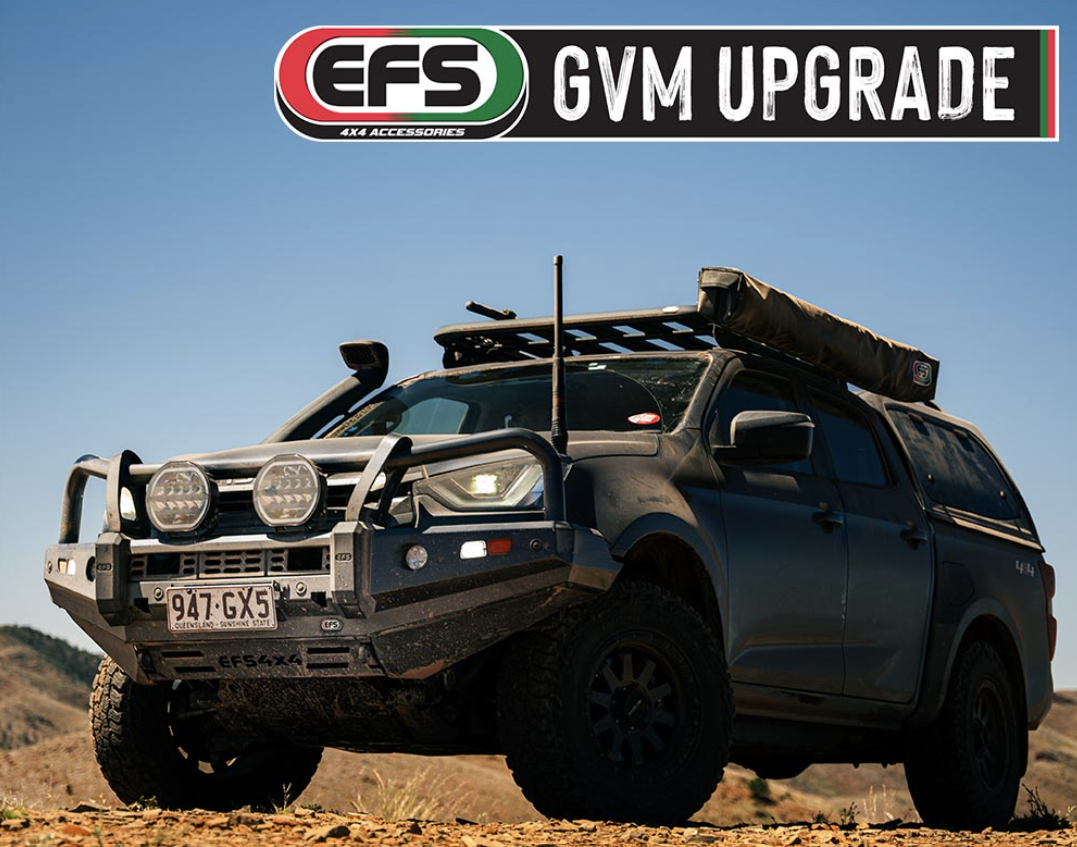
For eligible RG-series D-MAX 4WD models, EFS 4WD offers a GVM upgrade from 3100kg to 3650kg (↗), adding 550kg to the vehicle’s permitted maximum mass. That’s useful extra capacity for a heavily equipped ute, but it doesn’t change the D-MAX’s towing rating or remove the need to stay within axle and combination limits.
Isuzu D-MAX payload: How much weight can you carry?
For the RG-series D-MAX models covered by the EFS upgrade (↗), the standard gross vehicle mass (GVM) is 3100kg. This is the maximum permitted weight of the vehicle when loaded, including passengers, fuel, accessories, luggage and towball download.
The important figure is how much payload remains once the vehicle is fitted out. A canopy and drawer system can add well over 100kg, depending on the setup. Add a bullbar, winch, roof rack, fridge and electrical system, and you could use several hundred kilograms before packing for a trip.
It’s also possible to exceed an individual axle rating while remaining under the overall GVM. Accessories and luggage don’t always distribute their weight evenly, so it’s worth weighing the front and rear axles separately rather than relying on the payload figure in the brochure.
The best starting point is to weigh the D-MAX as you actually use it, with its usual accessories, fuel and occupants. That gives you a much clearer idea of how much capacity remains for food, water, camping gear and anything else you’re taking away.
EFS 3650kg GVM upgrade for the Isuzu D-MAX
EFS offers an approved GVM upgrade for eligible RG-series Isuzu D-MAX 4WD models (↗), increasing the published standard GVM from 3100kg to 3650kg.
That’s an additional 550kg of permitted vehicle mass, provided the correct installation and certification requirements are met. The package uses vehicle-specific suspension components, including front and rear dampers, springs and associated hardware. Unlike a conventional suspension lift, an approved GVM upgrade changes the vehicle’s permitted maximum mass once the correct components are fitted and certification is completed.
The extra capacity can make a substantial difference to a D-MAX carrying permanent touring accessories or work equipment. However, the upgrade doesn’t remove other restrictions, including axle ratings and towing requirements. The kit must be matched to the individual vehicle and installed through an authorised EFS installer.
Does a D-MAX GVM upgrade increase towing capacity?
Increasing GVM doesn’t automatically increase the D-MAX’s maximum braked towing capacity or gross combination mass (GCM). GVM limits the loaded vehicle, while GCM limits the combined weight of the loaded ute and trailer.
Towball download is part of the load carried by the D-MAX, counting towards its GVM and axle weights. A caravan with a 280kg towball download, for example, adds that much weight to the ute. Add passengers, a canopy, fridge, recovery equipment and luggage, and the available capacity can disappear quickly.
That means you can’t assume you can use the full extra 550kg of vehicle capacity and still tow the same fully loaded caravan. If GCM is already the limiting factor, a higher GVM won’t solve the problem. Weigh the ute and trailer in their normal travelling configuration and check the vehicle’s GVM, GCM, axle ratings and the trailer’s own limits.
What should you consider before upgrading a D-MAX?
A GVM upgrade isn’t the same as fitting a suspension lift.
A lift changes ride height, while an approved GVM upgrade involves specific components and a certification process that increases the vehicle’s permitted maximum mass. Simply fitting heavier springs or shock absorbers doesn’t legally increase GVM.
Suspension also needs to suit the way the D-MAX is used. A ute carrying a permanent canopy, drawers and tools has different requirements from one driven empty most of the week. The same applies to vehicles that regularly tow or spend long stretches on rough outback tracks.
The heaviest springs aren’t necessarily the best choice. A setup that’s too firm can be uncomfortable when the ute is lightly loaded, while an unsuitable suspension package may struggle to control a heavily equipped touring vehicle. The aim is to match the setup to the vehicle’s real operating weight and intended use.
It’s also worth checking the approval pathway before booking. A federal Second Stage of Manufacture approval may be relevant to an upgrade completed before first registration, while an already-registered D-MAX may require a different state or territory engineering and certification process. Check the requirements with an authorised installer before proceeding.
Cost will depend on the kit specification, fitting labour and applicable certification requirements. Ask an authorised EFS installer for a complete fitted quote, and explain how the vehicle will be used, including its permanent accessories, typical loads and towing requirements.
For eligible RG-series D-MAX 4WD models, EFS’s 3650kg GVM upgrade (↗) is worth investigating if your build is pushing the standard weight limits.
Quickfire FAQs
What is the standard GVM of an Isuzu D-MAX?
For the eligible RG-series models covered by the EFS upgrade, the published standard GVM is 3100kg.
What does the EFS D-MAX GVM upgrade increase it to?
The upgrade raises GVM to 3650kg, an increase of 550kg.
Does a GVM upgrade increase the D-MAX’s towing capacity?
No. It doesn’t automatically increase the vehicle’s braked towing capacity or GCM.
Do I need a GVM upgrade to tow a caravan?
Not necessarily. It depends on the loaded weight of your D-MAX, including towball download, and whether it remains within its GVM, axle and GCM limits.
Is a suspension lift the same as a GVM upgrade?
No. A lift changes ride height, while an approved GVM upgrade changes the vehicle’s legally permitted maximum mass after the required installation and certification.
Can I upgrade my D-MAX after registration?
Potentially, but the approval process may differ from an upgrade completed before first registration. Check the applicable state or territory requirements with an authorised installer.
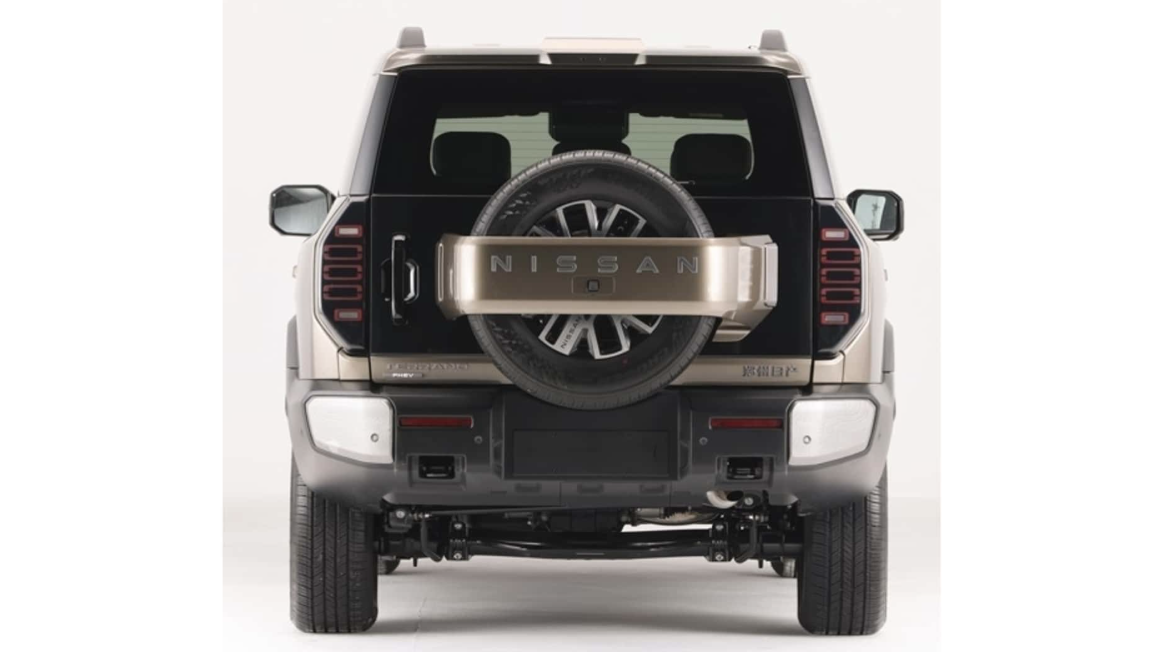
Nissan’s new Terrano has been detailed in Chinese homologation documents, putting the rugged off-roader firmly on the radar as a potential addition to the Australian market.
The five-seat ladder-frame SUV could give Nissan a direct rival to the Toyota Prado, complementing the larger Patrol, which is due to arrive in Australia later this year.
The Terrano was first shown as a plug-in hybrid concept at the Beijing motor show in April 2026. Images accompanying the latest Chinese homologation filings show a vehicle that retains much of the concept’s boxy styling, with a side-opening tailgate and externally mounted spare wheel. The filings list dimensions of 5098mm long, 1980mm wide and 1960mm tall, with a 2850mm wheelbase.
Reports suggest all versions will feature a mechanical, shaft-driven four-wheel-drive system. The Chinese homologation details list two rows of seating for five occupants, with approach and departure angles of 36 and 31 degrees respectively. Ground clearance and ramp-over angle have not been confirmed. The Chinese homologation documents list a 2500kg towing capacity.
The homologation documents also list three powertrains: a 2.0-litre turbo-petrol producing 190kW, a 2.3-litre turbo-diesel producing 140kW, and a plug-in hybrid. The PHEV pairs a 152kW 2.0-litre turbo-petrol engine with an electric motor rated at 57kW, with peak output of 200kW, and a lithium iron phosphate (LFP) battery. Combined system power and torque, battery capacity and electric driving range are not specified in the filings.
Nissan has indicated the Terrano is being considered for selected global markets, but has stopped short of announcing an Australian launch. Nissan Australia is reportedly actively considering the model, which could fill a gap between the X-Trail and Patrol and give the brand a body-on-frame 4×4 to compete with the Prado.
Australian pricing, specifications and launch timing for the Terrano remain unconfirmed.
FAQs
Is the Nissan Terrano coming to Australia?
Nissan Australia is reportedly considering the Terrano, but a local launch has not been confirmed.
Is the Nissan Terrano a proper 4×4?
Reports suggest it will use a ladder-frame chassis and mechanical, shaft-driven four-wheel drive.
What engines does the Nissan Terrano have?
Reports list a 2.0-litre turbo-petrol, 2.3-litre turbo-diesel and 2.0-litre plug-in hybrid.
How much can the Nissan Terrano tow?
Chinese homologation documents reportedly list a 2500kg towing capacity.
How many seats does the new Nissan Terrano have?
The Chinese filings list a five-seat, two-row SUV.
BLUETTI (↗) has launched its Apex 200 in Australia, packing a 2560Wh lithium iron phosphate (LFP) battery, expandable storage, and up to 3.6kW of AC output into a 26.9kg package.
Designed for home backup, caravans and off-grid use, the Apex 200 portable power station (↗) builds on the modular setup of the larger Apex 300, letting owners start with a single unit and add battery capacity as needed. The Apex 200 starts at $2599 during its introductory period, with bundles available alongside solar panels, expansion batteries and charging equipment. The standalone unit normally retails for $3099. Full pricing below.
“After the well-acclaimed Apex 300, the number one piece of feedback we heard was simple: Users loved the modular versatility, but wanted it in a package they could easily manage day-to-day,” said James Ray, Marketing Director at BLUETTI. “The Apex 200 is our answer. It’s not just a smaller battery, it’s a flexible everyday powerhouse built to start smaller for whole-home energy independence, with a clear, stress-free path to scale up as your life and power needs grow.”
Expandable power for touring and home backup
The Apex 200 (↗) has 2560Wh of battery capacity and 3.2kW of standard AC output, rising to 3.6kW when connected to expansion batteries or while solar or AC input is active.
A single unit can be expanded to 33.28kWh by connecting up to six B500K expansion batteries. Alternatively, one or two B300K batteries can extend essential home backup to two or three days. For larger setups, up to three Apex 200 units can be connected in parallel using the HUB A1, delivering up to 10.8kW of continuous AC output and around 100kWh of combined storage.
Solar input is rated at up to 3kW across two independent channels: a 2kW high-voltage MC4 input with a 60V–450V MPPT range, and a 1kW low-voltage XT60 input. Paired with BLUETTI’s SORA 500 portable solar panels (↗), the Apex 200 can charge from zero to 80 per cent in 50 minutes, or reach a full charge in 1.7 hours using solar alone. Combined with mains power, compatible gas generators and vehicle charging, it serves as a flexible home battery backup (↗) system for severe weather and outdoor adventures.

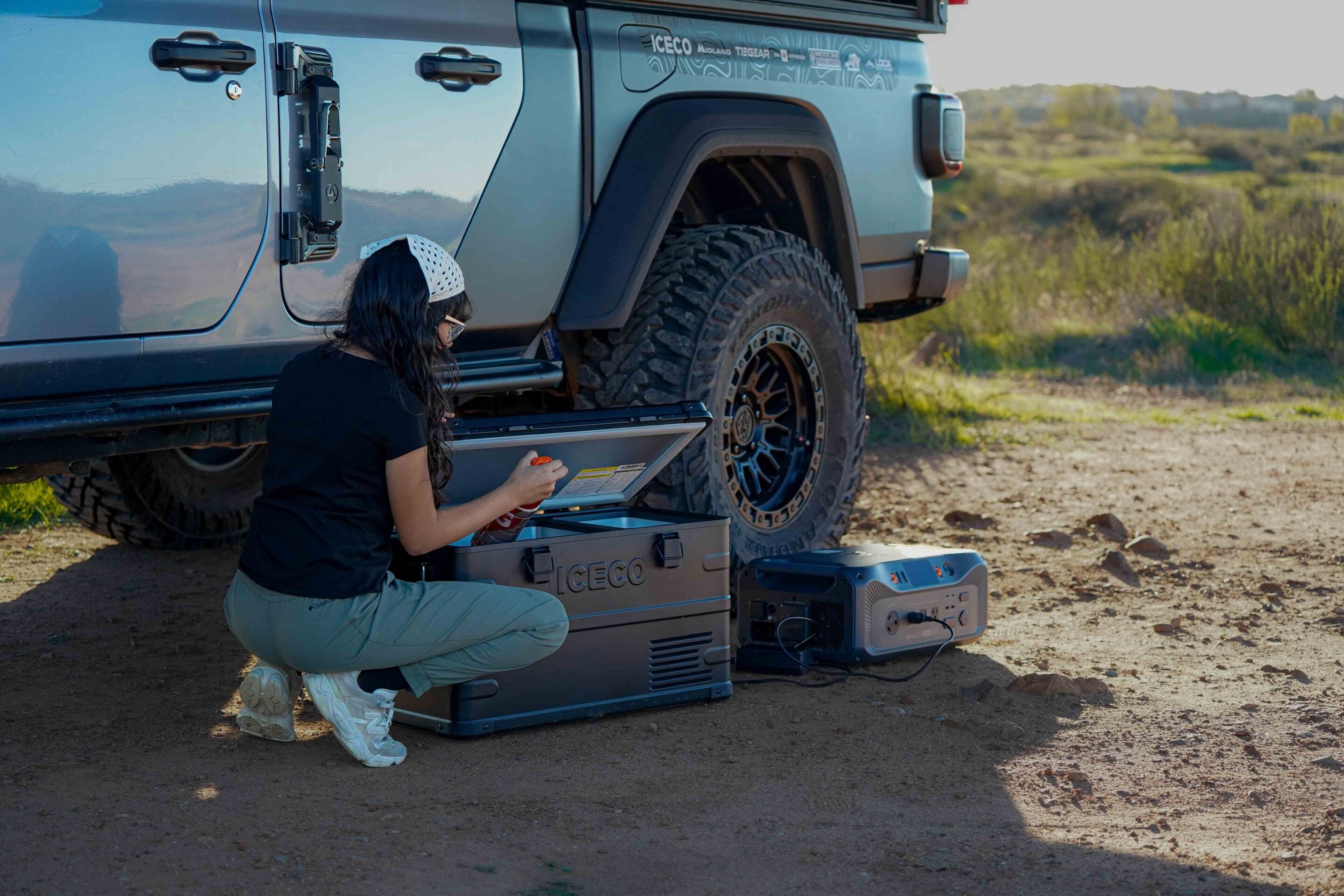
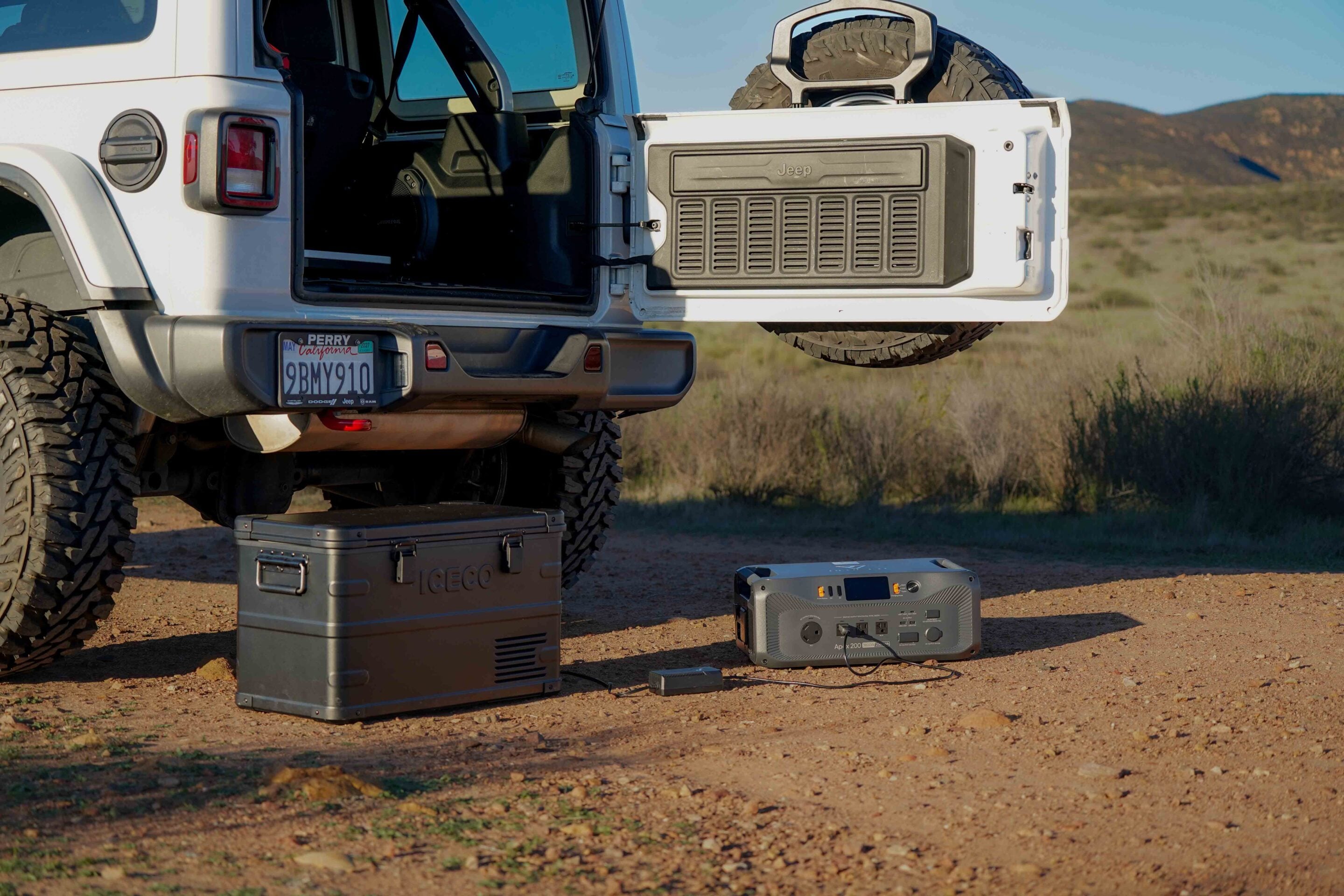
For touring, the Apex 200 (↗) has a 36.2-litre enclosure and nine output ports, including three 15A AC outlets and a 12V/30A Anderson connection. The Anderson port supplies 12V power directly to compatible high-draw accessories such as portable fridges and communications equipment, avoiding the need for AC conversion.
The three 15A AC outlets can power caravan and RV equipment, while each can be controlled independently through the BLUETTI app, with remote switching, scheduling and state-of-charge settings to help preserve power for priority appliances. When travelling between campsites, the Apex 200 can pair with the Charger 2 alternator and solar dual charger (↗) for faster on-the-go charging.
Other features include 10ms UPS switching for sensitive electronics, compatibility with Amazon Alexa, Google Home and Home Assistant, and 10.5W standby consumption when AC output is enabled and the display is off.
BLUETTI Apex 200 Australian pricing and bundles
The Apex 200 (↗) is now available in Australia, with introductory pricing across the standalone unit and several bundles. Launch packages include:
- Apex 200 standalone: $2599 (regularly $3099)
- Apex 200 + 350W solar panel: $3448 (regularly $4198)
- Apex 200 + SORA 500 solar panel: $3798 (regularly $4698)
- Apex 200 + Charger 2: $3198 (regularly $3798)
- Apex 200 + B300K expansion battery: $4698 (regularly $5198)
- Apex 200 + B500K expansion battery: $5498 (regularly $6598)
Introductory pricing is listed as running until December 23, although the supplied pricing information also gives an end time of December 24 at 11:59pm AEDT.
4X4 Australia readers can also get an additional 8 per cent off bundles with the exclusive checkout code 4X4AP200.
The JAC Hunter and Ford Ranger PHEVs take quite different approaches to electrification.
The JAC pairs a turbo-petrol engine with two electric motors, delivering a claimed 360kW and whopping 1010Nm. The Ford uses a single electric motor integrated with its 2.3-litre turbo-petrol engine, producing a combined 207kW and 697Nm.
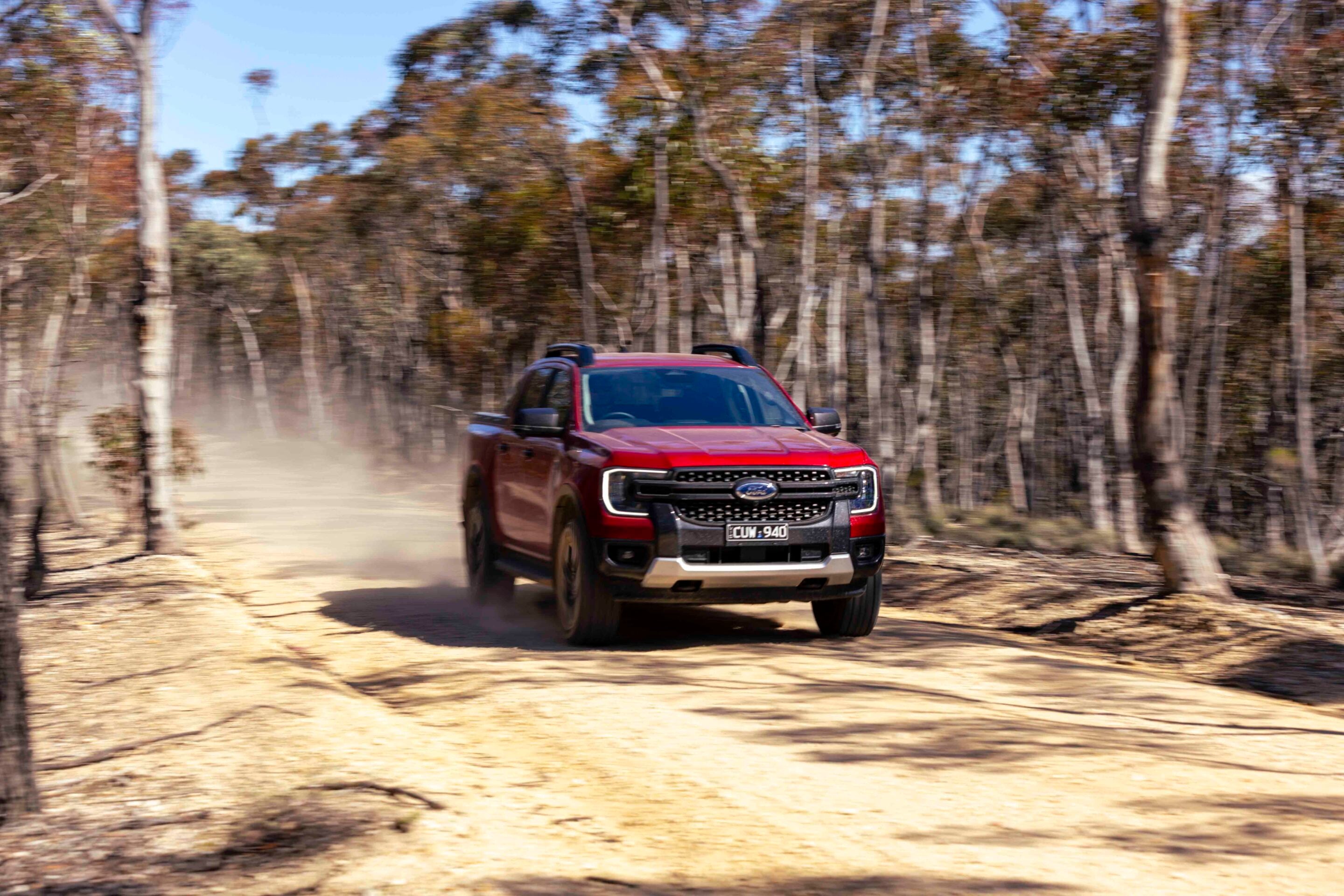
Both are rated to tow 3500kg and offer four-wheel drive, but the JAC has a larger battery and longer claimed electric driving range. The Ford counters with a conventional low-range transfer case, a locking rear differential and the familiar Ranger platform.
The JAC Hunter X is priced at $54,844 before on-road costs, while the Ranger PHEV XL is currently advertised from $59,000 drive-away. Even with on-road costs added, the JAC should still sneak in below the Ranger’s advertised price. Here’s how the two stack up as of November 2026.
Quick verdict
- Cheaper: JAC Hunter X, at $54,844 before on-road costs. Even with on-road costs added, it should still come in below the Ranger PHEV XL’s advertised $59,000 drive-away price.
- More power: JAC Hunter X, with 360kW/1010Nm compared with the Ford’s 207kW/697Nm.
- Longer claimed electric range: JAC Hunter X, with 100km NEDC against the Ranger’s 50km NEDC.
- Better conventional off-road hardware: Ford Ranger PHEV, with full-time 4WD, low range and a locking rear differential.
- More payload: Ford Ranger PHEV XL, with 1019kg, followed by the Sport (966kg) and Wildtrak (921kg). The JAC Hunter X offers 915kg, just 6kg shy of the Wildtrak.
Specs
| Specification | JAC Hunter X | Ford Ranger PHEV |
|---|---|---|
| Price | $54,844 + ORC | XL $59,900 drive-away; Sport $66,000 drive-away; Wildtrak $70,000 drive-away |
| Engine | 2.0L turbo-petrol | 2.3L turbo-petrol |
| Engine power | 160kW | 138kW |
| Engine torque | 370Nm | 411Nm |
| Electric motor | Front: 130kW/300Nm; rear: 150kW/340Nm | 75kW |
| Combined system output | 360kW/1010Nm | 207kW/697Nm |
| Transmission | Four-speed dedicated hybrid transmission (4DHT) | 10-speed Modular Hybrid Transmission |
| Drivetrain | Electric 4WD | Full-time 4WD |
| Battery | 31.2kWh LFP | 11.8kWh |
| Claimed EV range | 100km NEDC | 45km WLTP |
| Claimed fuel consumption | 1.6L/100km NEDC | 2.9L/100km |
| Fuel tank | 77L | 70L |
| Maximum braked towing | 3500kg | 3500kg |
| Payload | 915kg | 808-973kg, depending on grade and spare-wheel fitment |
| GVM | 3470kg | 3500kg |
| GCM | 6430kg | 6580kg |
| Kerb weight | 2555kg | 2527-2692kg, depending on grade |
| Ground clearance | 200mm | 215-228mm |
| Wading depth | 550mm | 800mm |
| Approach angle | 28 degrees | 28.9-30.2 degrees |
| Departure angle | 23 degrees | 23.9-24.7 degrees |
| Rampover angle | 23 degrees | 19.6-20.4 degrees |
| Low range | No conventional low range | Yes |
| Differential locks | Front and rear | Locking rear differential |
| Maximum external power | 6.6kW V2L | 6.9kW Pro Power Onboard |
| Maximum AC charging | 11kW | 3.5kW |
| DC fast charging | Up to 46kW | Not available |
| Vehicle warranty | Seven years/unlimited kilometres | Five years/unlimited kilometres |
| Battery warranty | Eight years/150,000km | Eight years/160,000km |
Ford’s kerb weights and payloads are based on the lightest possible factory equipment combination. Its optional full-size spare wheel adds 39kg. The Ranger figures are from Ford’s 2027MY specification sheet.
The JAC’s electric range and fuel consumption are quoted under NEDC testing. Ford also quotes NEDC electric range, making the two figures directly comparable on the same test cycle. Actual results will vary with conditions and driving style.
Price and equipment
The JAC Hunter range starts at $49,988 before on-road costs for the Hunter Pro, with the higher-spec Hunter X priced at $54,844. Ford’s 2027MY Ranger PHEV range is currently advertised from $59,000 drive-away for the XL, rising to $66,000 for the Sport and $70,000 for the Wildtrak.
Although the prices aren’t directly comparable, both JAC variants should still sneak in below the entry-level Ranger once on-road costs are added. The Hunter X is $4156 below the Ranger XL on list price, while the lower-spec Hunter Pro widens that gap to $9012. The difference is more substantial against the Sport and Wildtrak, with those Ford grades advertised $11,156 and $15,156 above the Hunter X, respectively.
The Hunter X is the higher-specification version of the JAC range, with front and rear differential locks included as standard. It also gets black exterior styling details, heated front seats, electric adjustment for both front seats, a 10.4-inch infotainment screen, a 10.25-inch digital instrument display, wireless Apple CarPlay and Android Auto, and a 360-degree camera.
The Ranger PHEV is now offered in XL, Sport and Wildtrak grades. All three use the same plug-in hybrid powertrain and full-time four-wheel-drive system, with equipment increasing as you move up the range. The XL has a 12-inch touchscreen, wireless Apple CarPlay and Android Auto, a 12.4-inch digital instrument cluster and a locking rear differential. The Sport adds features including LED lighting, side steps, privacy glass and a 360-degree camera, while the Wildtrak adds a B&O premium audio system, roof rails and further convenience equipment.
The Ranger also has a factory option for all-terrain tyres and a full-size spare across the range. Ford offers a range of load-box accessories, although buyers should factor their weight into the remaining payload.
The Hunter is now in stock and available for immediate delivery. Its suspension and handling also benefit from a local vehicle dynamics tune developed by Multimatic engineer Michael Barber. JAC says it incorporated all of his recommendations into production vehicles.
Power and performance
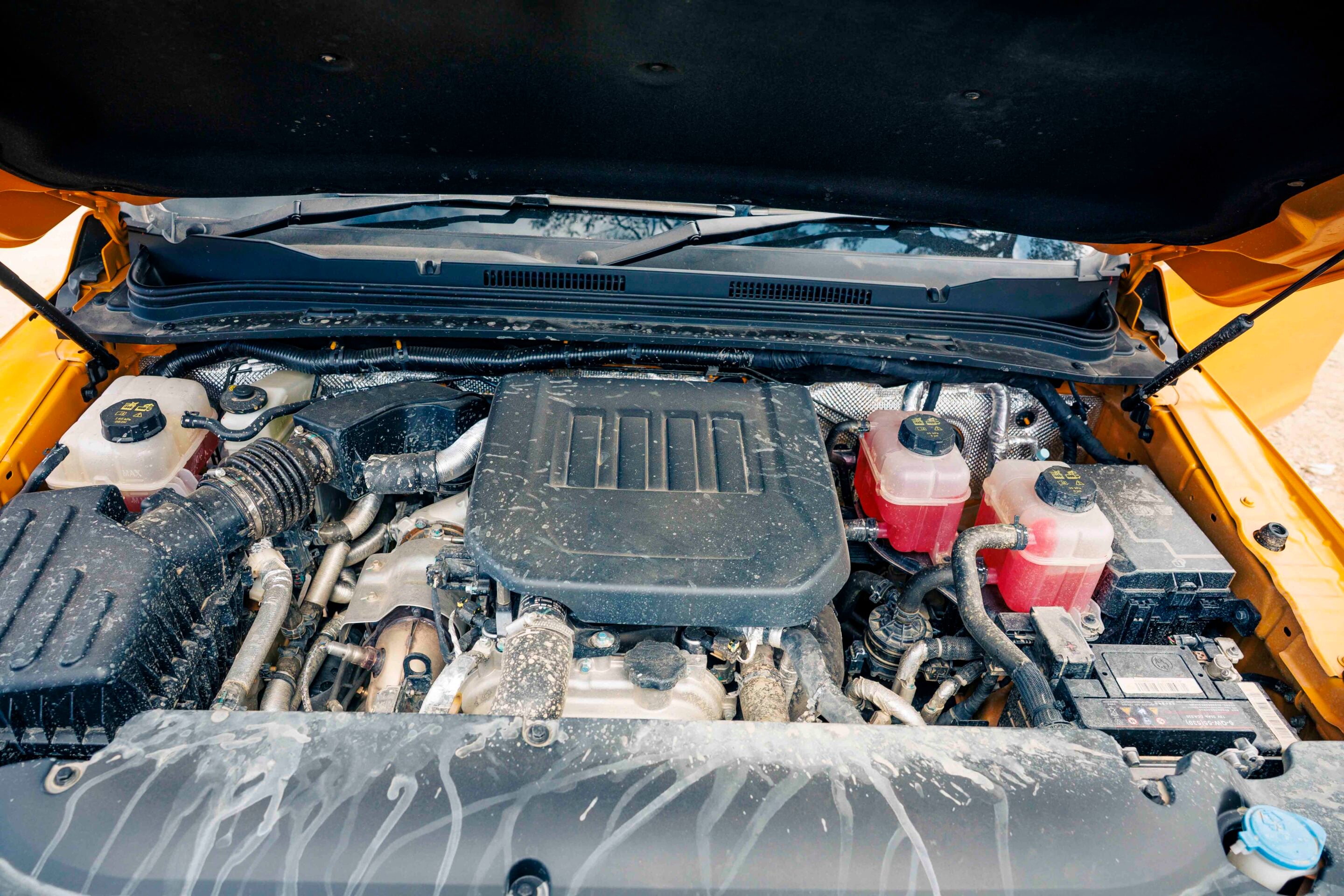
The JAC Hunter X has a substantial advantage in combined output. Its 2.0-litre turbo-petrol engine produces 160kW and 370Nm, supported by two electric motors.
The front motor produces 130kW and 300Nm, while the rear motor contributes 150kW and 340Nm. Combined system output is quoted at 360kW and 1010Nm, with power managed through a four-speed dedicated hybrid transmission (4DHT).
The Ford Ranger PHEV uses a 2.3-litre turbocharged four-cylinder petrol engine producing 138kW and 411Nm, paired with a 75kW electric motor. Combined system output is 207kW and 697Nm, delivered through a 10-speed Modular Hybrid Transmission.
That gives the JAC a claimed 153kW and 313Nm advantage in combined output. These are manufacturer-claimed system totals and shouldn’t be interpreted as a direct comparison of individual motor outputs or torque delivered at the wheels.
The Ford’s hybrid system is integrated with its conventional transmission and full-time four-wheel-drive hardware. The JAC instead uses separate electric motors to drive the front and rear axles, without a conventional low-range transfer case.
Electric range, fuel consumption and charging
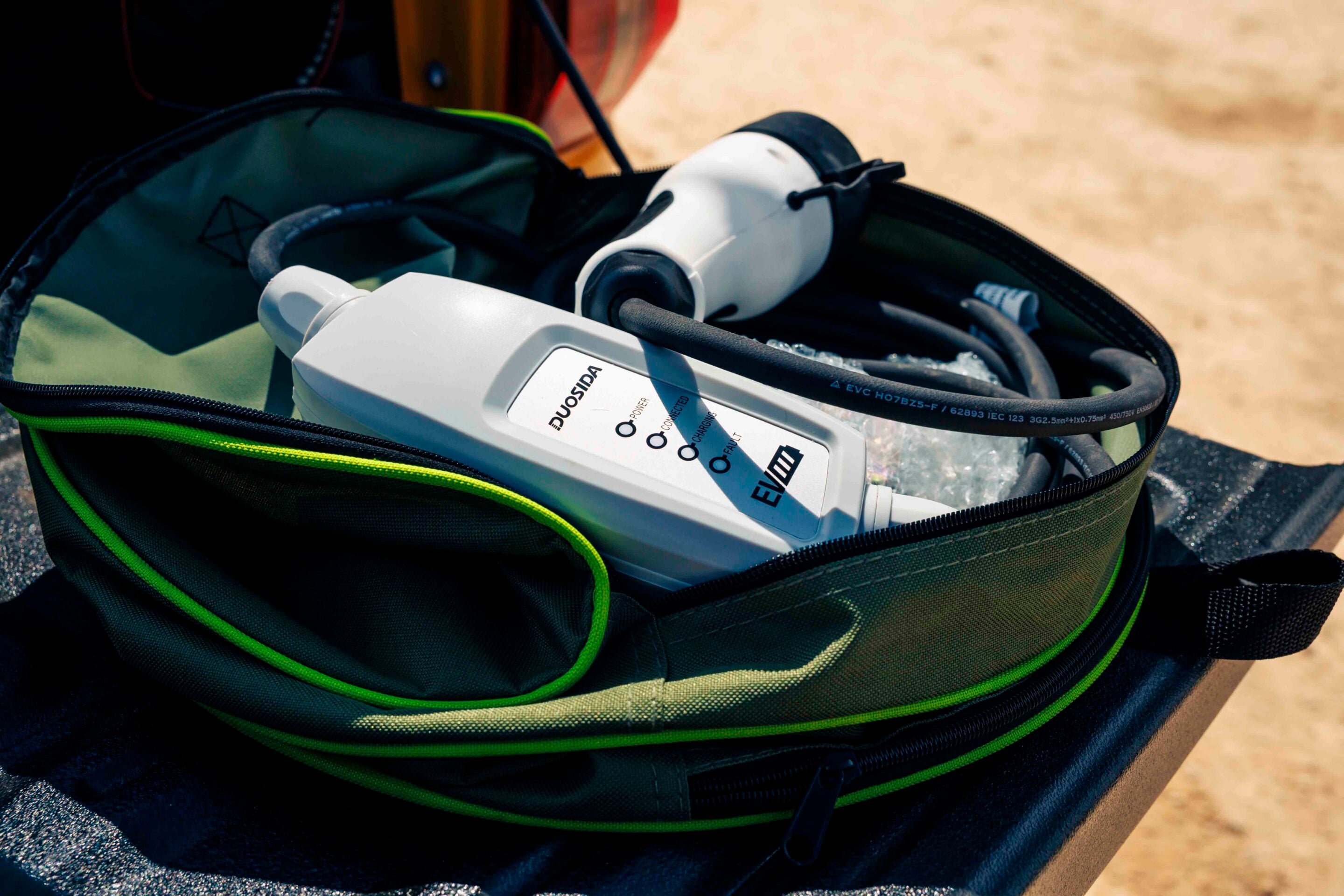
Battery capacity is one of the biggest differences between these two utes. The JAC Hunter X has a 31.2kWh lithium iron phosphate battery, while the Ranger PHEV uses an 11.8kWh usable battery.
JAC claims up to 100km of electric driving under the NEDC test cycle. Ford quotes 50km NEDC for all three Ranger PHEV grades. On the same test cycle, the JAC has double the claimed electric range.
The Hunter X is also quoted at 1.6L/100km combined fuel consumption and a 1005km overall driving range, both under NEDC testing. Ford’s 2027MY specification sheet lists combined fuel consumption of 3.1L/100km for the Ranger PHEV, but doesn’t provide an equivalent combined range figure. The JAC has a 77-litre fuel tank, compared with 70 litres in the Ford.
These are laboratory figures rather than guaranteed real-world results. Actual electric range and fuel use will depend on driving conditions, speed, load, temperature and how regularly the battery is charged. Plug-in hybrid fuel consumption is particularly dependent on starting with a charged battery and plugging in regularly.
Charging is another area where the JAC has the advantage. It supports AC charging at up to 11kW and DC fast charging at up to 46kW. The Ranger PHEV supports AC charging at up to 3.5kW but doesn’t offer DC fast charging. Ford quotes a full charge time of six hours and 53 minutes using a 2.3kW supply, or four hours using a 3.5kW supply. It also supplies a Mode 2 home charging cable.
Both utes can also use the petrol engine to replenish the battery while driving. The Ranger has an EV Charge mode, while the Hunter X can charge the battery in HEV mode, which appears to maintain the state of charge at around 70 per cent. Both systems use petrol to generate electricity, providing another way to manage battery charge when plugging in isn’t practical.
Towing, payload and GCM
Both utes are rated to tow up to 3500kg braked, but their payload and gross combination mass (GCM) figures determine how much they can carry when towing.
The JAC Hunter X has a 915kg payload. The Ranger PHEV’s payload varies by grade: the XL offers 1019kg, the Sport 966kg and the Wildtrak 921kg, based on Ford’s published kerb weights. That gives the Ranger XL 104kg more payload than the JAC, increasing to 51kg for the Sport and just 6kg for the Wildtrak. The Ranger has a payload advantage across all three grades, although the difference is marginal against the Wildtrak.
The Ranger has a 3500kg GVM across all three grades and a 6520kg GCM. The JAC has a 3470kg GVM and 6430kg GCM. GCM is just as important as the maximum towing figure when working out how much weight a ute can carry while towing. Using the formula below:
GCM − trailer weight − kerb weight = remaining allowance
- JAC Hunter X: 6430kg GCM − 3500kg trailer − 2555kg kerb weight = 375kg
- Ford Ranger PHEV XL: 6520kg GCM − 3500kg trailer − 2481kg kerb weight = 539kg
- Ford Ranger PHEV Sport: 6520kg GCM − 3500kg trailer − 2534kg kerb weight = 486kg
- Ford Ranger PHEV Wildtrak: 6520kg GCM − 3500kg trailer − 2579kg kerb weight = 441kg
The Ranger XL has the greatest theoretical remaining allowance at 539kg, followed by the Sport at 486kg and Wildtrak at 441kg. Even the heaviest Ranger grade has 66kg more theoretical allowance than the Hunter X when towing 3500kg.
These calculations use kerb weight and maximum trailer weight, so they’re theoretical rather than a guaranteed usable payload. The remaining allowance must cover occupants, luggage, accessories and towball download. The vehicle must also remain within its GVM and individual axle limits.
Ford notes that its kerb weights include a full tank of fuel but exclude occupants, luggage and cargo. The optional full-size spare wheel adds 39kg, reducing payload and remaining GCM allowance by the same amount. Actual vehicle weights can also vary with factory options and accessories.
The Ranger has the advantage in GCM and payload across all three grades, with the XL offering the greatest theoretical carrying allowance when towing. However, neither ute can carry its maximum payload while towing its maximum trailer weight. Buyers planning to tow regularly should weigh their vehicle once fitted with accessories and loaded for travel.
Off-road capability
The Ford Ranger PHEV has the advantage when it comes to conventional four-wheel-drive hardware. It uses a full-time 4WD system with a dual-range transfer case and locking rear differential, giving it the low-speed gearing needed for more demanding off-road driving.
The JAC Hunter X takes a different approach, using separate electric motors to drive the front and rear axles. It has front and rear differential locks, but no conventional low-range transfer case.
The Ford also has more ground clearance, with 215mm for the XL, 228mm for the Sport and 226mm for the Wildtrak. All three have a quoted 800mm wading depth, compared with the Hunter’s 200mm ground clearance and 550mm wading depth.
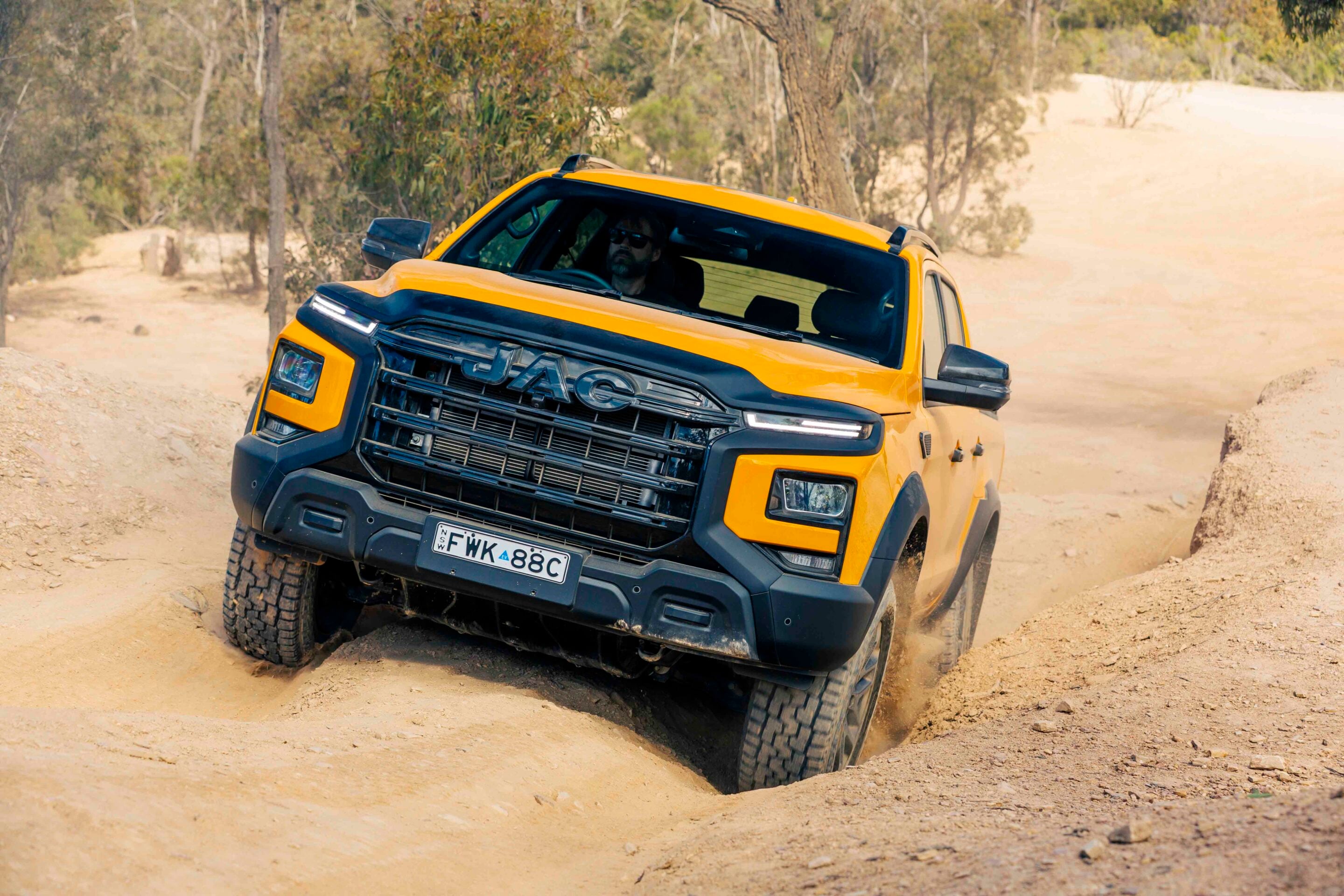
Approach and departure angles also favour the Ranger. The XL quotes 28.9 degrees and 23.9 degrees respectively, the Sport 30.1 and 24.7 degrees, and the Wildtrak 30.2 and 24.2 degrees. The JAC quotes 28 degrees approach and 23 degrees departure.
The Hunter has the better rampover angle, at 23 degrees against 19.6 degrees for the XL, 20.6 degrees for the Sport and 20.4 degrees for the Wildtrak.
The JAC’s twin differential locks are useful equipment, but they don’t replace the gearing advantage of a low-range transfer case. The Ford is the more conventional off-road package, with greater ground clearance and wading depth, while the JAC offers a different electric-drive approach and the added traction of a front locker.
For buyers regularly tackling slow, technical tracks, the Ranger’s low range is a significant advantage. The Hunter’s lack of conventional low range is worth considering before choosing it as a serious touring or off-road work vehicle.
Camping and external power
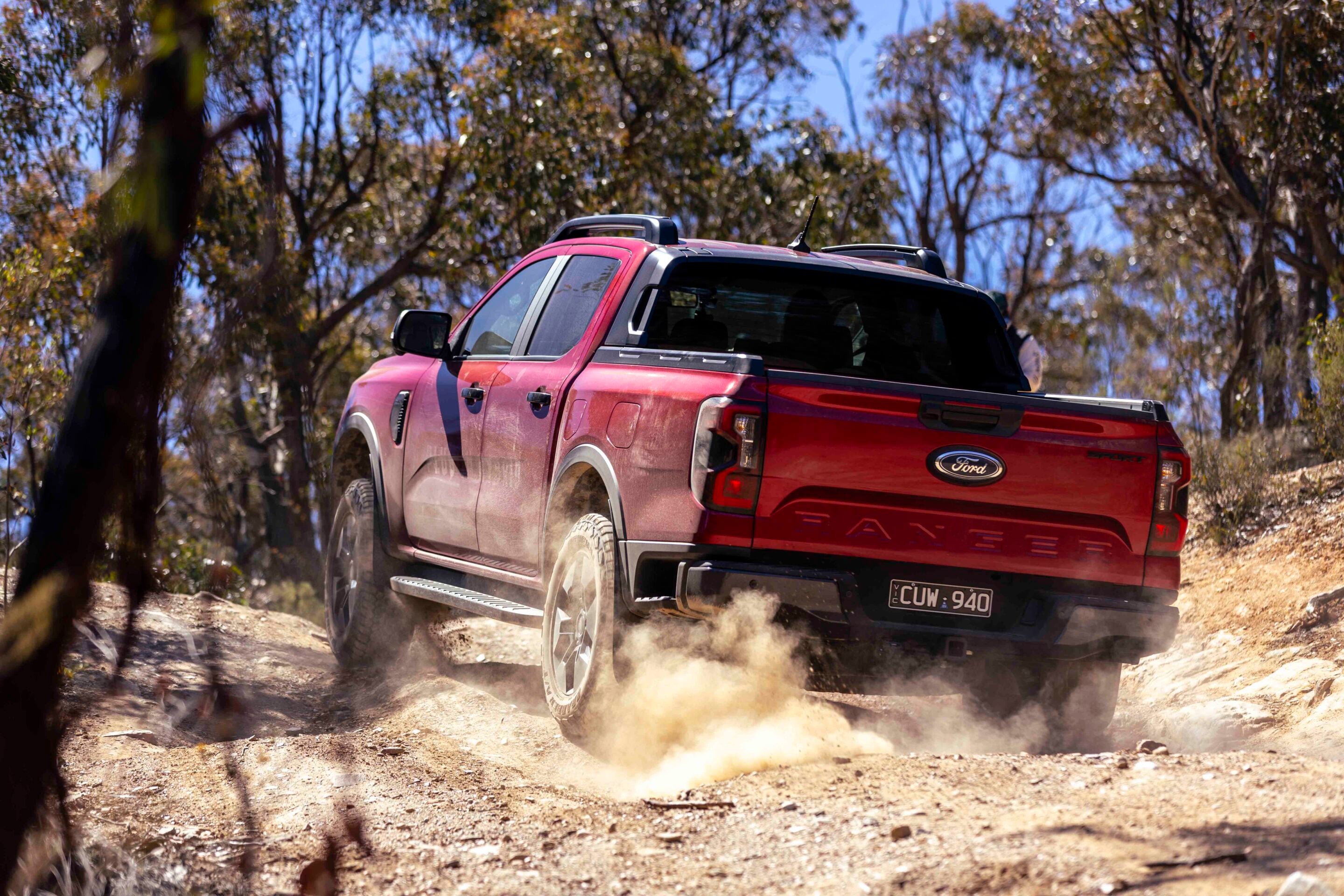
Both utes can supply power to external equipment, but Ford’s Pro Power Onboard system has a slight advantage in total output.
The JAC Hunter X offers up to 6.6kW of vehicle-to-load output, along with a 220V internal power outlet. That’s enough to run a range of camping equipment and appliances, provided the load stays within the system’s limits.
The Ranger PHEV’s Pro Power Onboard system delivers up to 6.9kW in total. It has two 3.45kW outlets in the tub and a 2.3kW outlet in the cabin. Ford notes that when all three outlets are used simultaneously, each is limited to 2.3kW, with the system’s maximum combined output remaining 6.9kW.
The Ford’s integrated outlets are useful for tradies and campers, while the JAC’s higher AC charging rate and DC fast-charging capability make it more flexible when replenishing its battery. Both systems draw from the vehicle’s battery, so sustained use of high-power equipment will affect available charge.
Warranty and ownership
The JAC Hunter X comes with a seven-year/unlimited-kilometre vehicle warranty, an eight-year/150,000km high-voltage battery warranty, seven years of roadside assistance and seven years of capped-price servicing.
JAC also offers a Ute for Ute loan program for qualifying warranty repairs that leave a vehicle off the road. A replacement JAC ute can be arranged, with same-day metro and next-business-day regional arrangements subject to the program’s conditions and booking cut-off.
Ford’s new-vehicle warranty is five years/unlimited kilometres as standard. For vehicles with a warranty commencement date on or after September 1, 2026, it can extend to seven years/unlimited kilometres if all scheduled servicing is completed on time by an authorised Ford dealer. The extended warranty is conditional on continuing to service the vehicle through Ford’s dealer network.
The supplied Ranger specification sheet doesn’t detail a separate high-voltage battery warranty, so that figure should be confirmed with Ford before publication rather than assumed from the general vehicle warranty.
The JAC has a longer stated battery warranty and includes seven years of roadside assistance and capped-price servicing. Ford’s conditional seven-year vehicle warranty is also worth factoring in, particularly for buyers who already service through the dealer network.
Which plug-in hybrid ute should you buy?
The JAC Hunter X makes a strong case on price, power and electric range.
It’s cheaper than the current Ranger PHEV range, has a battery more than twice the usable capacity, double the claimed NEDC electric range and significantly higher quoted combined system output. Its 915kg payload is also competitive, although it falls just short of all three Ranger grades.
The Ford Ranger PHEV is the more conventional all-round 4×4. Its low-range transfer case, locking rear differential, greater ground clearance and 800mm wading depth make it the more reassuring option for buyers who regularly head off-road. The XL also has the highest payload of the four variants compared here, while all three grades have a higher GCM than the JAC.
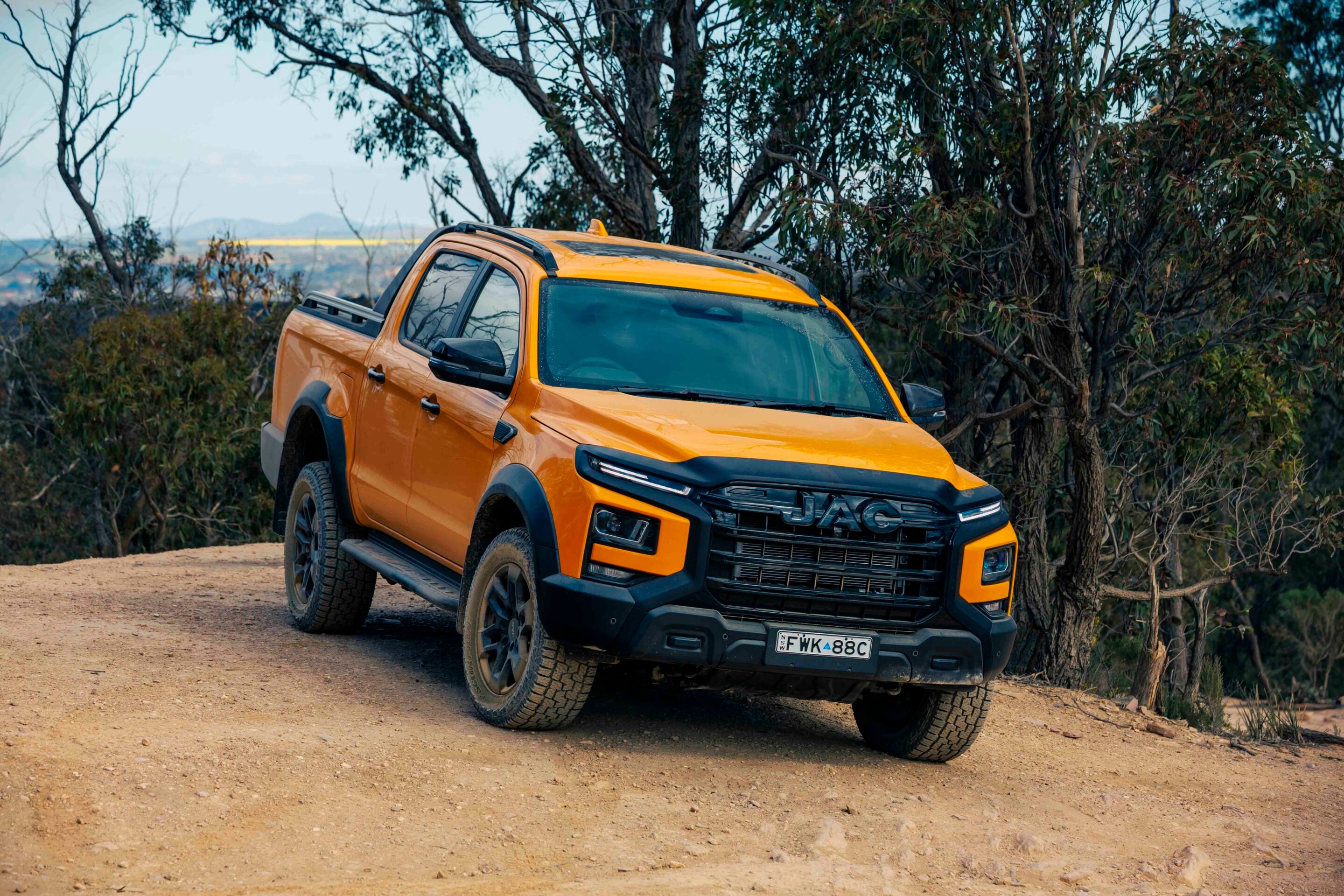
The Ford’s smaller battery, slower AC charging and lack of DC fast charging are disadvantages for buyers who want to make the most of electric driving. The JAC’s lack of conventional low range, meanwhile, is a significant consideration for serious off-road use.
For buyers prioritising price, electric range, charging flexibility and outright system output, the JAC Hunter X is the stronger value proposition. Those wanting a familiar ute platform with conventional low-range 4WD hardware, a higher GCM and integrated power outlets may find the Ranger PHEV worth the extra money.
Neither is a clear winner across every category. The choice comes down to whether the JAC’s powertrain and value advantages outweigh the Ford’s more traditional off-road capability and stronger towing-weight figures.
FAQs
How much does the JAC Hunter X cost compared with the Ford Ranger PHEV?
The JAC Hunter X costs $54,844 before on-road costs. The 2027MY Ford Ranger PHEV range is currently advertised from $59,000 drive-away for the XL, $66,000 for the Sport and $70,000 for the Wildtrak.
Which has more power, the JAC Hunter X or Ford Ranger PHEV?
The JAC Hunter X has the higher quoted combined output, at 360kW and 1010Nm. The Ford Ranger PHEV produces 207kW and 697Nm.
Does the Ford Ranger PHEV have low range?
Yes. The Ranger PHEV has full-time four-wheel drive with a dual-range transfer case and a locking rear differential.
How far can the JAC Hunter X and Ford Ranger PHEV travel on electric power?
JAC claims up to 100km for the Hunter X under the NEDC test cycle. Ford quotes 50km NEDC for all three Ranger PHEV grades.
Which has the higher payload, the JAC Hunter X or Ford Ranger PHEV?
The Ranger XL has the highest published payload at 1019kg, followed by the Sport at 966kg and Wildtrak at 921kg. The JAC Hunter X has a 915kg payload, just 6kg less than the Wildtrak.
Can the JAC Hunter X and Ford Ranger PHEV tow 3500kg?
Yes. Both have a maximum braked towing capacity of 3500kg. Their GVM, GCM, payload, axle limits and towball download must still be considered when towing at that rating.
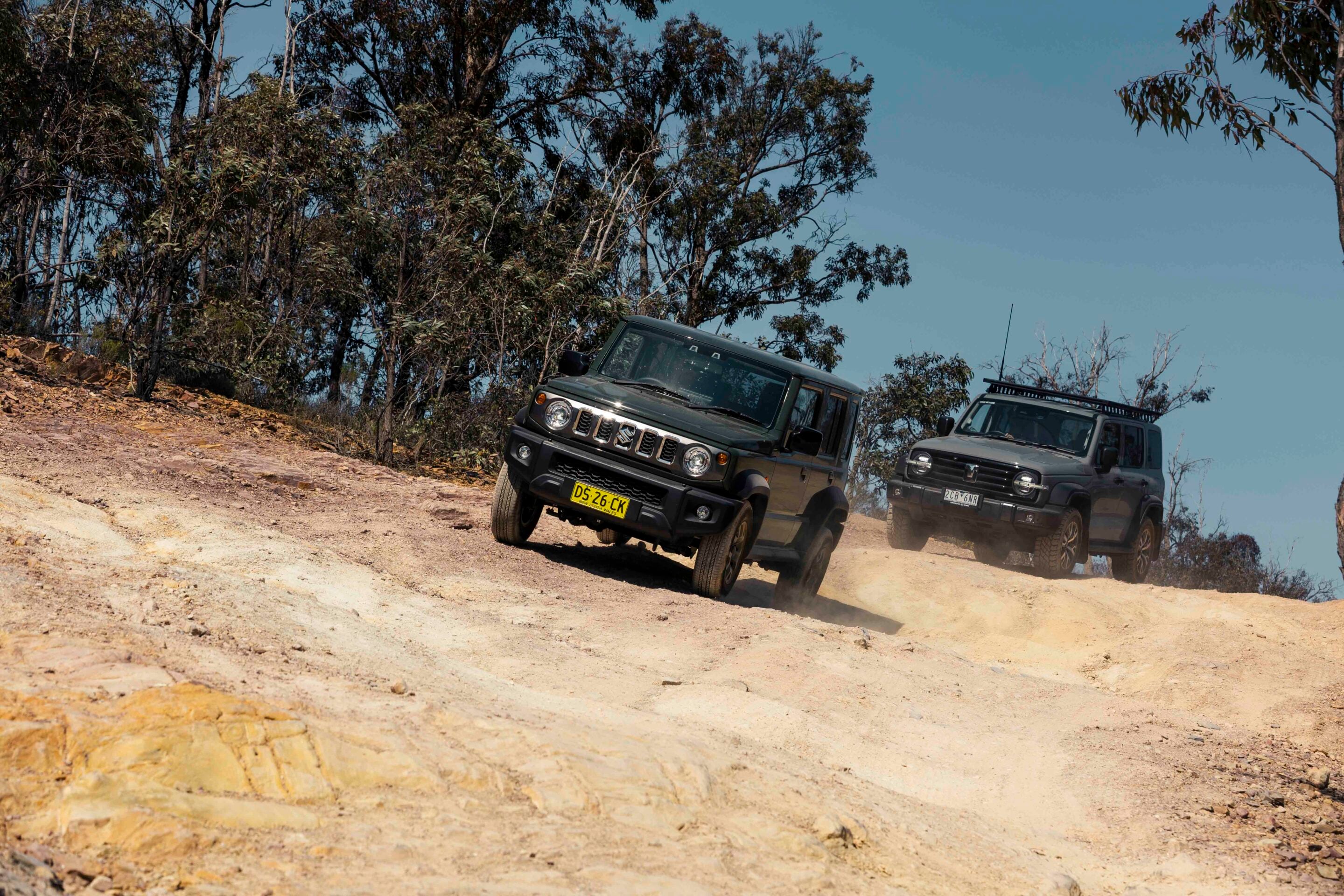
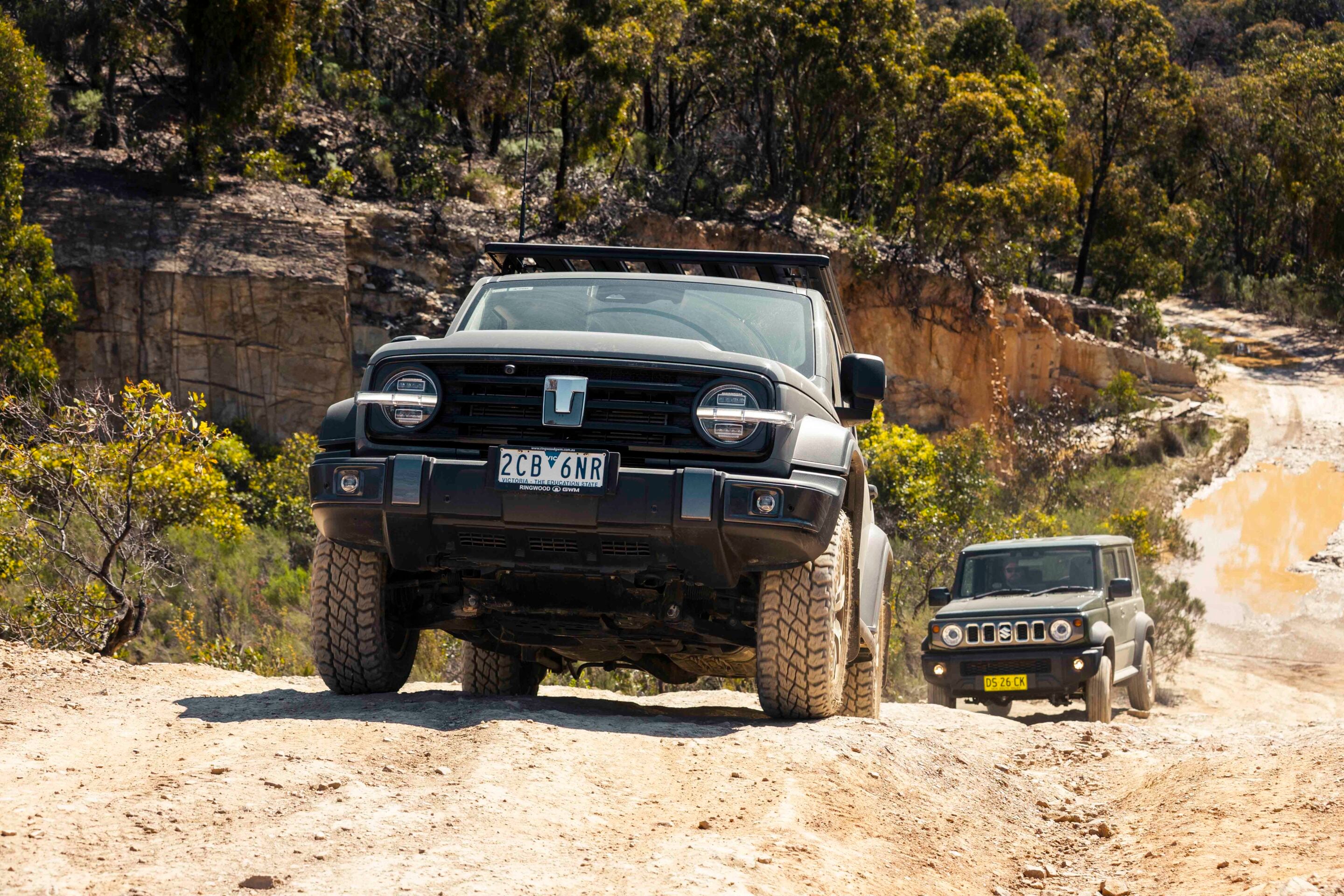
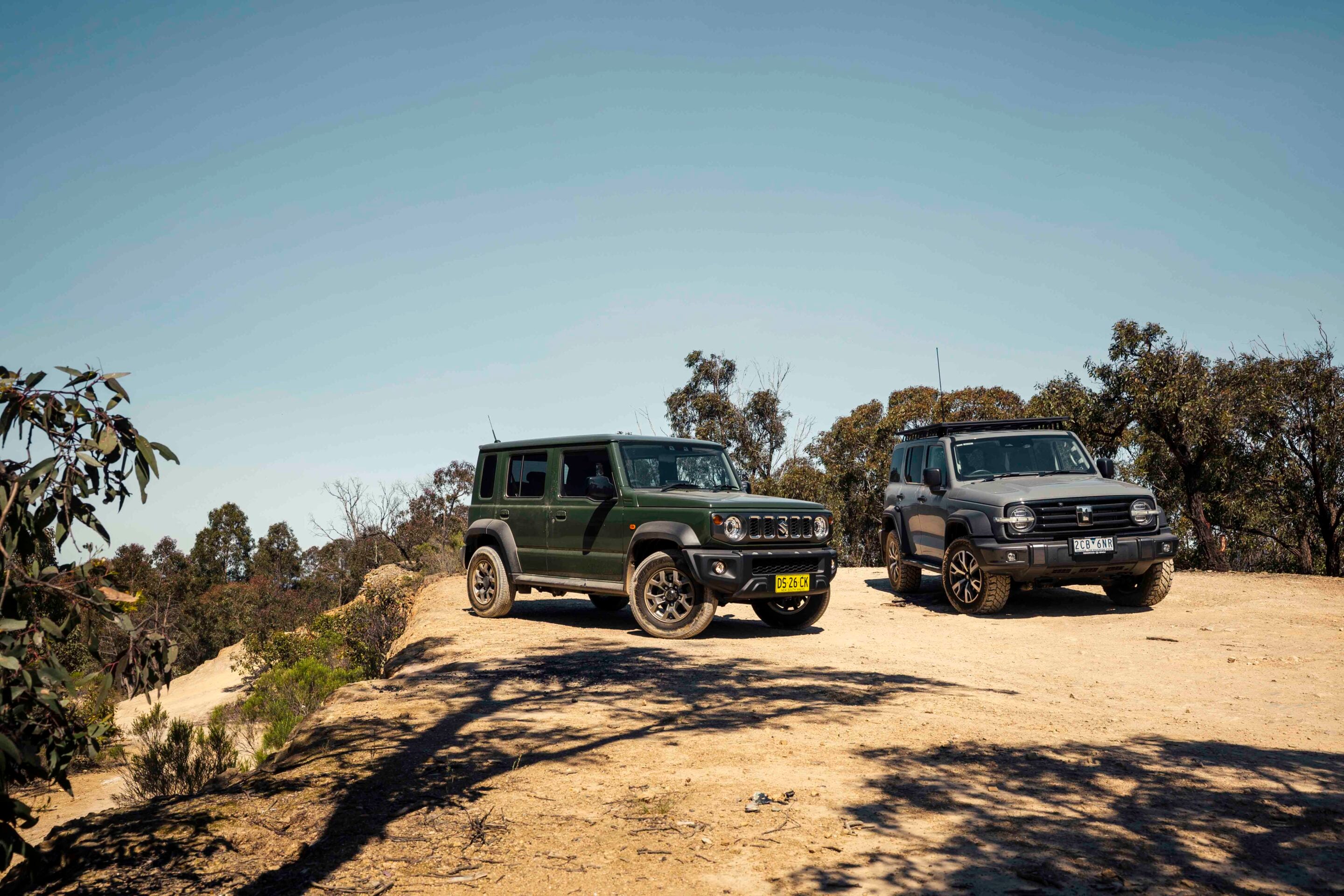
Park a Suzuki Jimny XL next to a GWM Tank 300 and it’s hard to believe they’re rivals.
The Jimny looks like a toy beside a rig that could pass for a Prado. Yet both have a ladder-frame chassis and proper low range, and they’re the cheapest new wagons in Australia that I could get my hands on. About $9500 separates these two. The question is what that money buys.
Jimny pros
- Compact dimensions and excellent manoeuvrability
- Lightweight, simple mechanical package
- Huge aftermarket and passionate owner community
Jimny cons
- Just 345kg payload and 1300kg towing capacity
- No mechanical diff locks
- Noisy, underpowered and less comfortable on-road
Tank 300 pros
- Strong 2.4-litre turbo-diesel with 480Nm
- Front and rear locking differentials and impressive off-road capability
- Comfortable, well-equipped cabin with five-star ANCAP rating
Tank 300 cons
- Larger dimensions make tight tracks harder to navigate
- Heavy 2280kg kerb weight
- Less settled suspension when pushed hard over rough terrain
JUMP AHEAD
- Price and value
- Equipment
- On-road comfort and daily driving
- Safety
- Off-road performance
- What $9500 buys
- Ownership and community
- Verdict
- Specs compared
Jimny XL vs Tank 300: Price and value
Buying an affordable, genuinely capable four-wheel drive has always meant accepting compromises. The question is which compromises you can live with.
At $40,490 drive-away, the Jimny XL isn’t exactly cheap for such a small, basic vehicle. But it’s also one of the few remaining ways to buy a brand-new, low-range four-wheel drive without spending considerably more money. Then there’s the Tank 300 Ultra Diesel at $49,990 drive-away.
For another $9500, GWM is offering something that looks, feels and is equipped like a vehicle from an entirely different price bracket. And that presents Suzuki with a fairly uncomfortable question: just how much are buyers prepared to sacrifice for the Jimny’s compact dimensions, simplicity and character?
We’re not expecting the Jimny to match the Tank in every discipline. But when the price difference is relatively modest, its advantages need to amount to more than simply being small and likeable. That’s what we’re here to find out.
Equipment
The GWM Tank 300 Ultra Diesel is an extraordinary amount of four-wheel drive for the money.
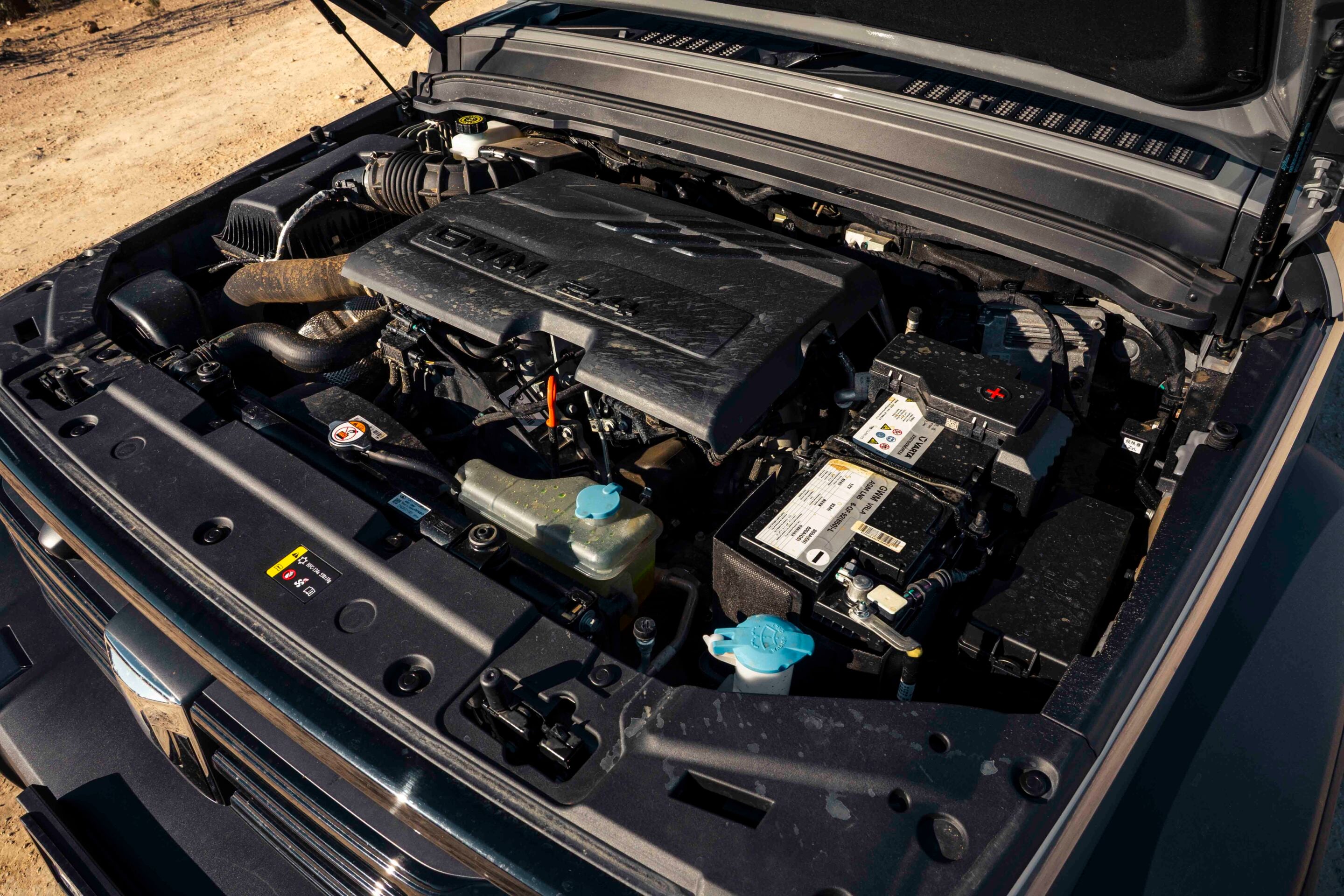
Its 2.4-litre turbo-diesel produces 135kW and 480Nm, driving through a nine-speed automatic. There’s a ladder-frame chassis, double-wishbone independent front suspension, a coil-sprung live rear axle, low-range gearing and front and rear locking differentials. Multiple terrain modes and electronic traction aids complete a fairly serious off-road package.
It’s a substantial rig, too. At 4760mm long, 1930mm wide and 1903mm tall, with a 2750mm wheelbase, it weighs 2280kg. GVM is 2880kg, leaving a 600kg payload, while braked towing capacity is 3000kg. Ground clearance is a respectable 224mm.
For context, the Jimny XL is 795mm shorter, 285mm narrower and 178mm lower. Its wheelbase is just 2590mm, and at 1200kg, it weighs a remarkable 1080kg less than the Tank. That difference in mass and footprint is enormous, particularly when you’re negotiating tight tracks or trying to maintain composure over rough ground.
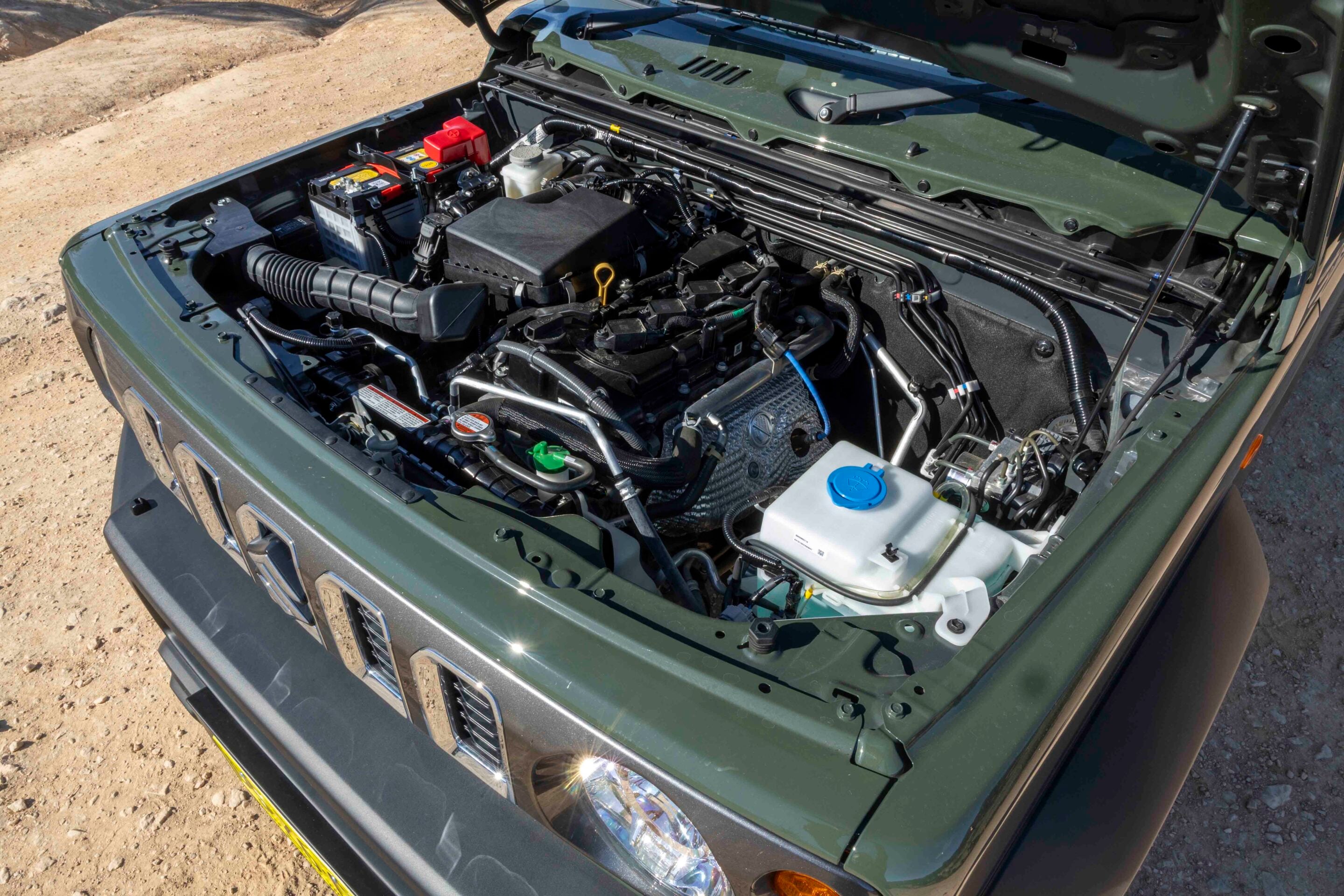
The Suzuki’s mechanical package is decidedly old-school. Its 1.5-litre naturally aspirated petrol four-cylinder produces 75kW and 130Nm, driving through a four-speed automatic. Live axles sit at both ends, located by three-link suspension with coil springs, while a manually operated transfer case selects between 2H, 4H and 4L.
There’s no selectable differential lock at either end, although Suzuki’s brake-based traction control helps manage wheelspin. The Jimny’s simplicity comes with some fairly serious compromises. Its 1545kg GVM leaves just 345kg of payload, and its braked towing capacity is 1300kg. Ground clearance is 210mm.
The Tank’s mechanical advantages are substantial, but GWM hasn’t stopped there. Twin 12.3-inch displays, heated and ventilated seats, high-definition surround-view cameras and an extensive equipment list give it the sort of specification we’d ordinarily associate with a considerably more expensive wagon.
The Jimny traces its philosophy back through Suzuki’s SJ413 and earlier lightweight four-wheel drives. It’s a formula built around compact dimensions, low weight and mechanical simplicity. GWM has taken almost the opposite approach, giving buyers more power, more space, more capability and more equipment. The question is how those very different engineering decisions translate once you’re behind the wheel.
On-road comfort and daily driving
If the specification sheets suggest the Tank is the more comfortable proposition, the first few kilometres confirm it.
There’s a reassuring solidity to the GWM that I wasn’t necessarily expecting at this price. Close a door and you get a satisfying thud. The cabin is beautifully insulated from road and wind noise, and even over rough surfaces there’s remarkably little in the way of rattles or squeaks. It feels genuinely well built, rather than simply dressed up with expensive-looking materials.
The diesel is another highlight. With 480Nm available, the Tank has no trouble getting its considerable mass moving, while the nine-speed automatic keeps things relaxed at highway speeds. It’s quiet, comfortable and the sort of rig I’d happily point towards the horizon for an 800km day.
The Jimny requires a rather different mindset. Its little petrol engine has a sewing-machine quality to it, working hard and revving enthusiastically to make progress. The four-speed automatic doesn’t have enough ratios to disguise the lack of torque, and at 110km/h the wind and mechanical noise are constant companions. Overtaking takes planning.
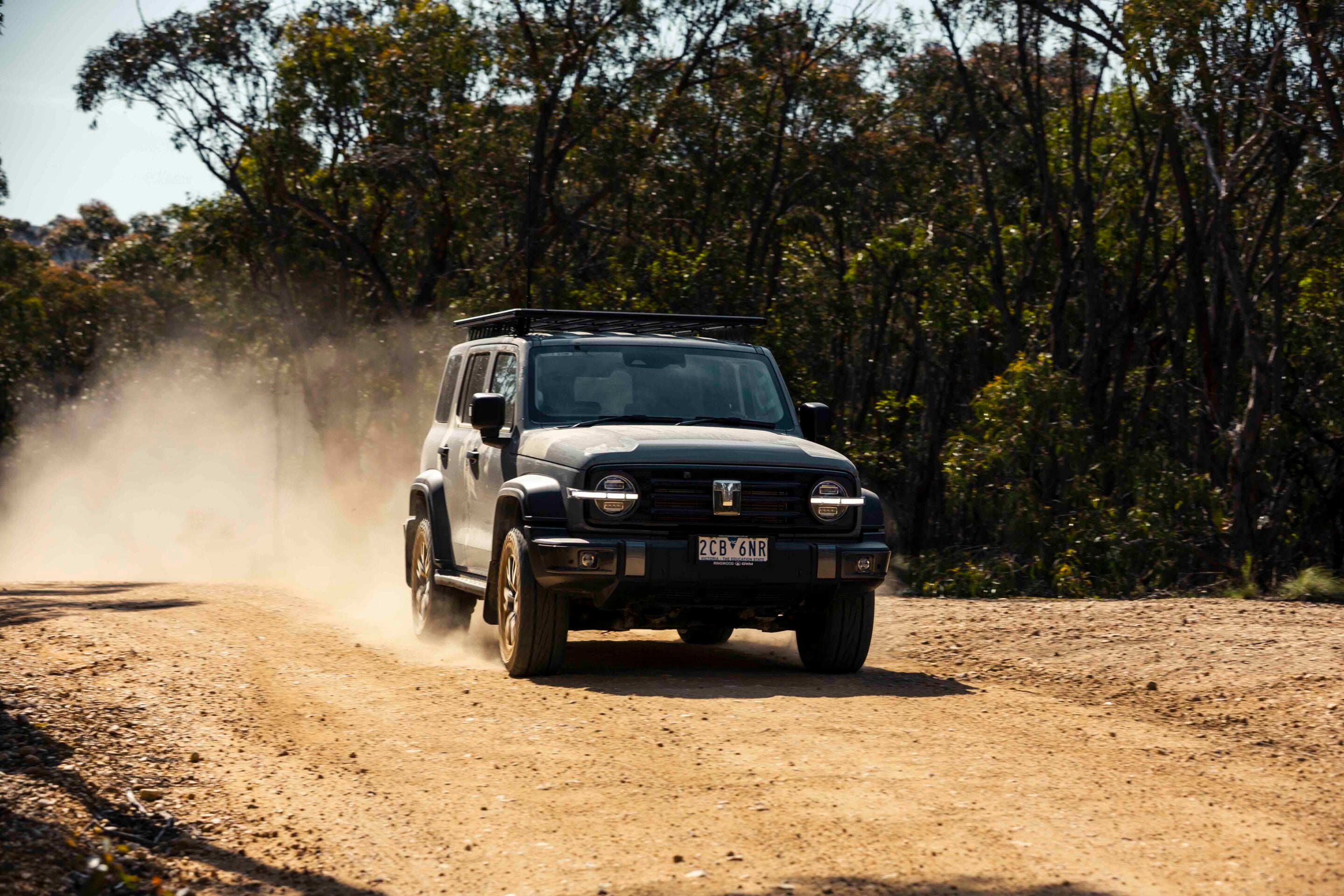
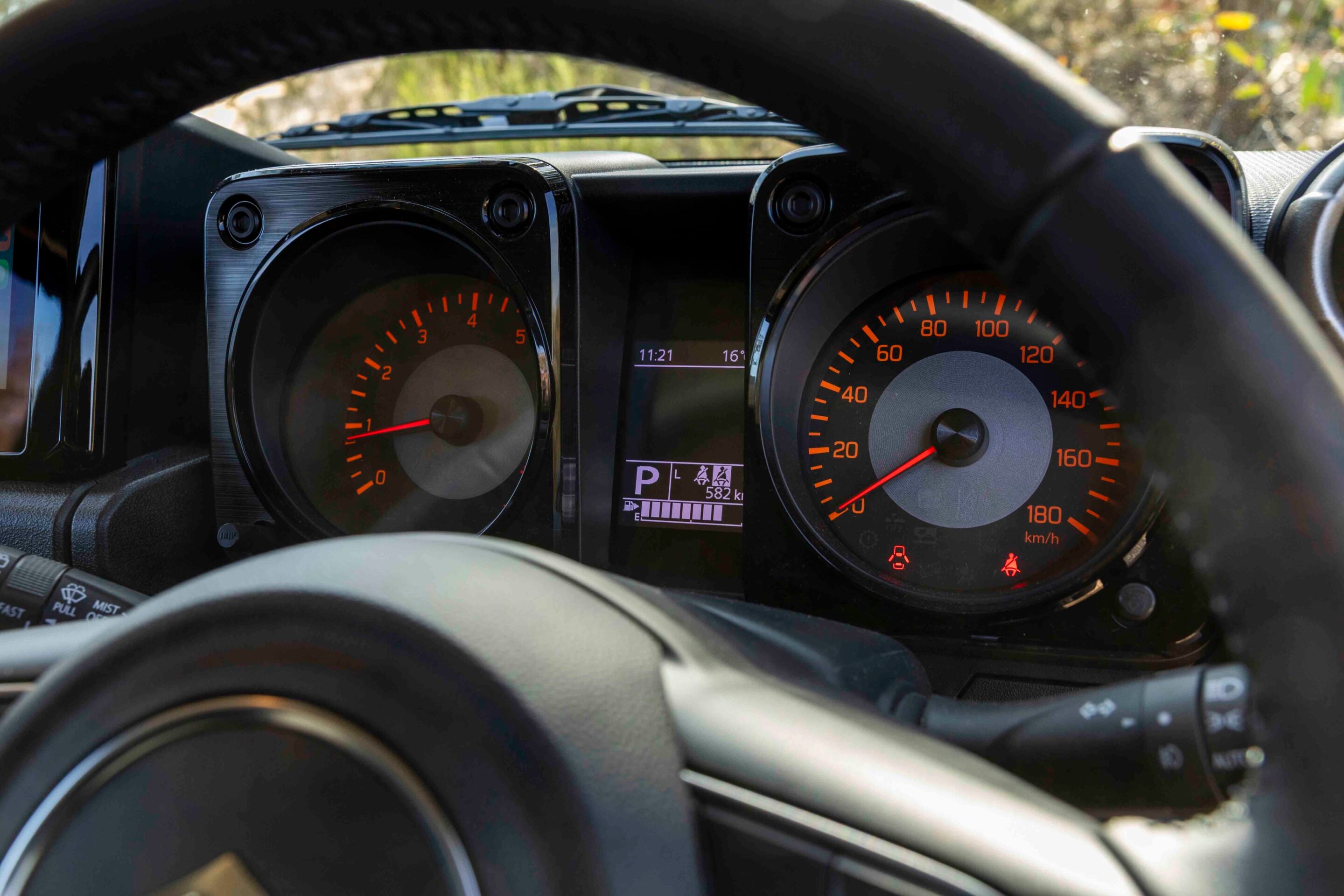
Ergonomically, it’s basic. There’s precious little elbow support, and the driving position isn’t particularly adjustable, although I found the seats more tolerable than their appearance suggests. What I genuinely love is the visibility. The upright glasshouse and compact dimensions make placing the Jimny on the road or track wonderfully easy.
There’s also a practical distinction no amount of charm can erase: the Jimny XL has four seats to the Tank’s five. If this is your only vehicle and you regularly carry family or friends, that’s worth thinking about before the test drive.
On gravel, the differences become more pronounced. The Jimny’s narrow footprint lets you thread between potholes and pick lines that simply aren’t available to larger wagons. But its short wheelbase, light weight and live front axle make it flighty over corrugations and larger undulations. There’s not enough mass or suspension sophistication to settle things down, and maintaining momentum becomes hard work.
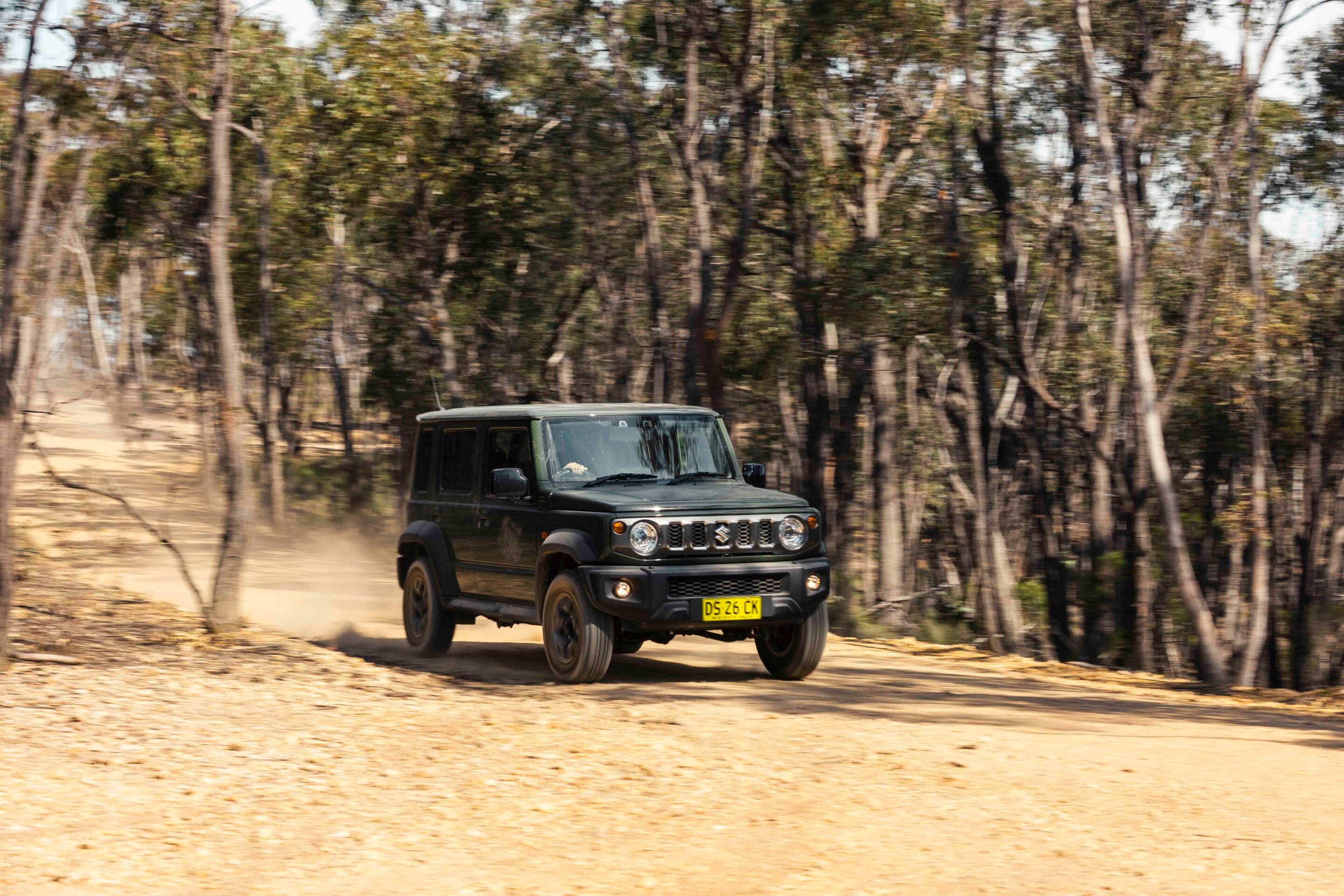
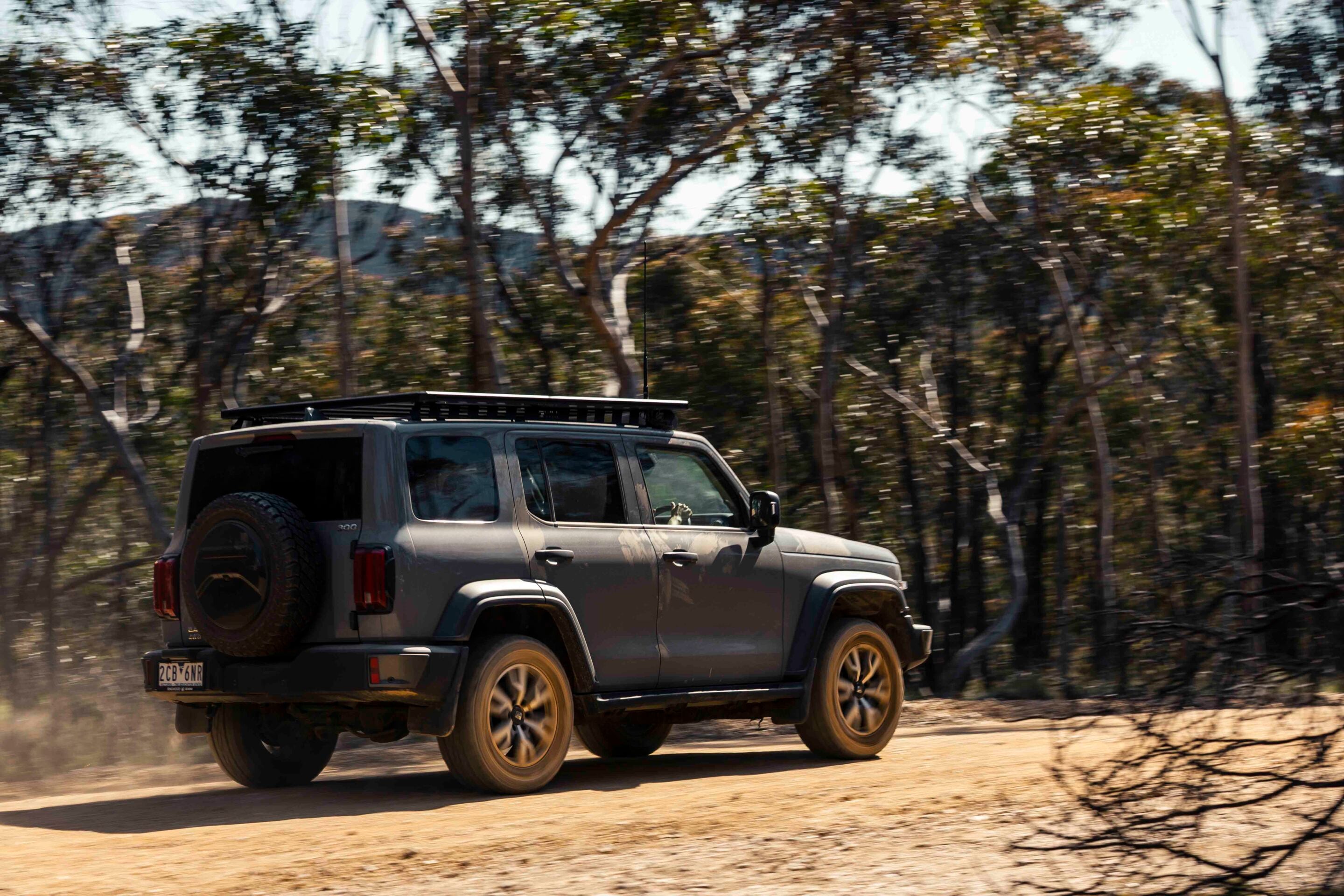
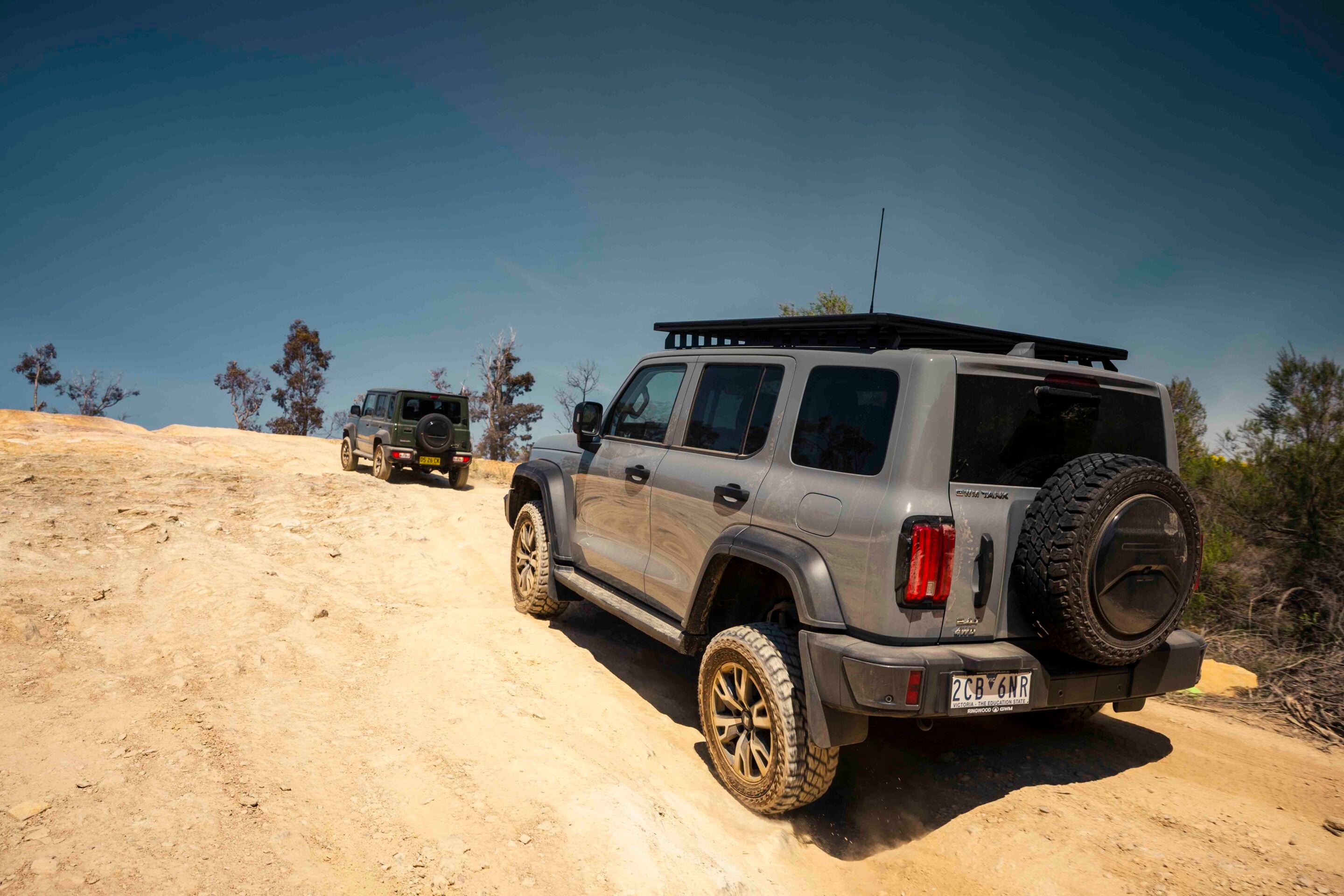
The Tank’s independent front suspension does a much better job of absorbing those impacts, while its longer wheelbase and greater mass contribute to a considerably more settled ride. You can carry substantially more speed across rough gravel without feeling like you’re constantly correcting the vehicle. It’s not perfect. Push harder and the damping can become a little unsettled, while its weight makes itself known through tighter corners. I’ve driven Prados and Everests with more sophisticated suspension control, but the Tank is still a very competent gravel-road wagon.
One important qualification: our Tank wore aftermarket Cooper tyres rather than its factory road-biased rubber. They would likely have helped on loose surfaces, so we weren’t comparing both vehicles on standard tyres.
Neither vehicle is a sports car, nor should we judge them as such. But even on winding roads, where you might expect the lightweight Jimny to be the more entertaining choice, I preferred the Tank. And after a long day behind the wheel, there wasn’t much doubt which keys I’d reach for again.
Safety compared
Here’s another fairly compelling reason to buy the Tank.
It earned a five-star ANCAP safety rating, while the Jimny XL hasn’t been independently rated. The three-door Jimny managed just three stars back in 2018, although that result shouldn’t automatically be treated as a rating for the longer, five-door XL. The Tank’s seven airbags, including a centre airbag, and more comprehensive active safety equipment make a convincing case.
The Jimny isn’t devoid of safety technology. It has six airbags, autonomous emergency braking and, in automatic form, adaptive cruise control. But its safety credentials are considerably less convincing. And this matters beyond the star ratings. If you’re carrying passengers, regularly travelling at highway speeds or buying your only family car, safety deserves serious consideration.
Off-road performance
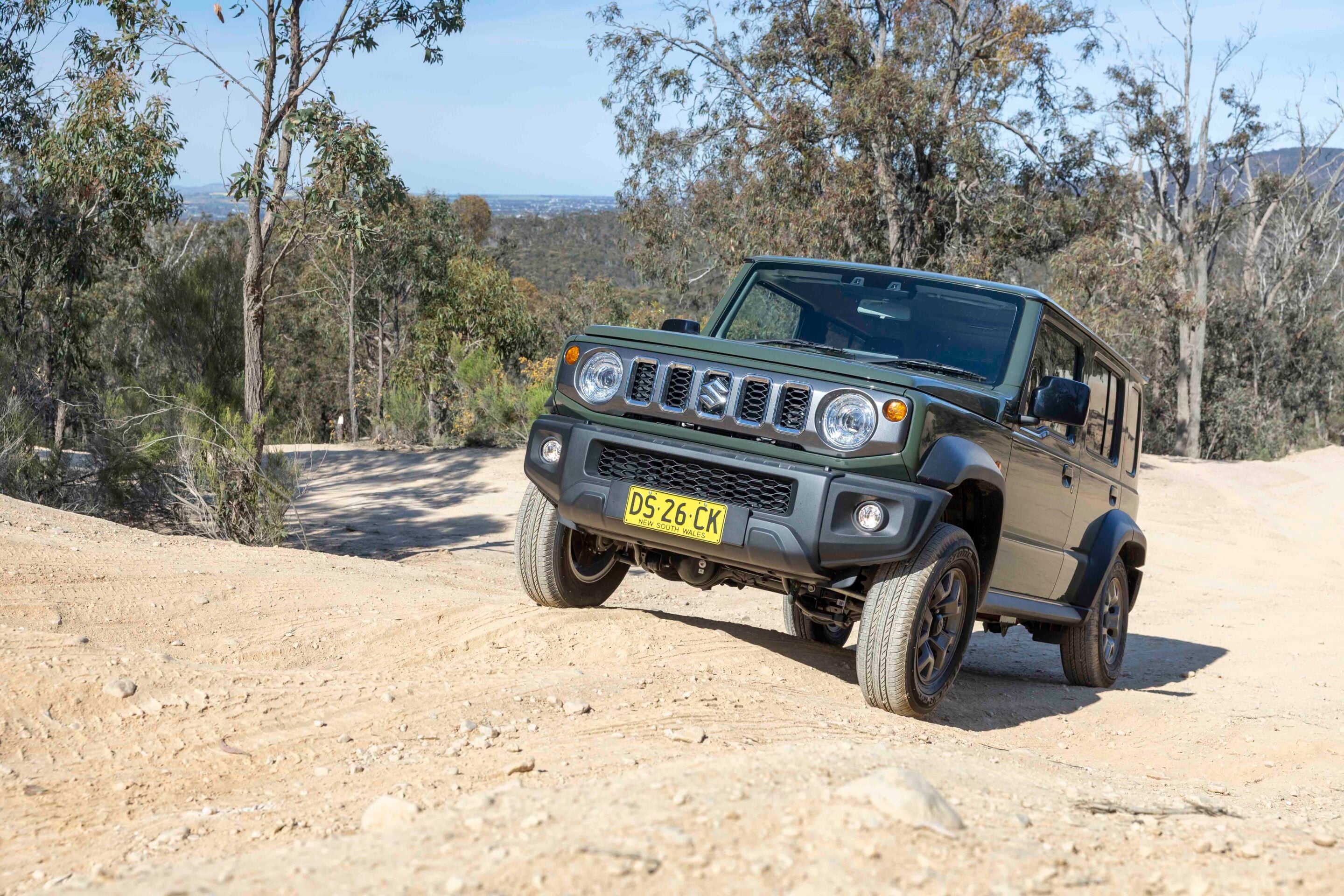
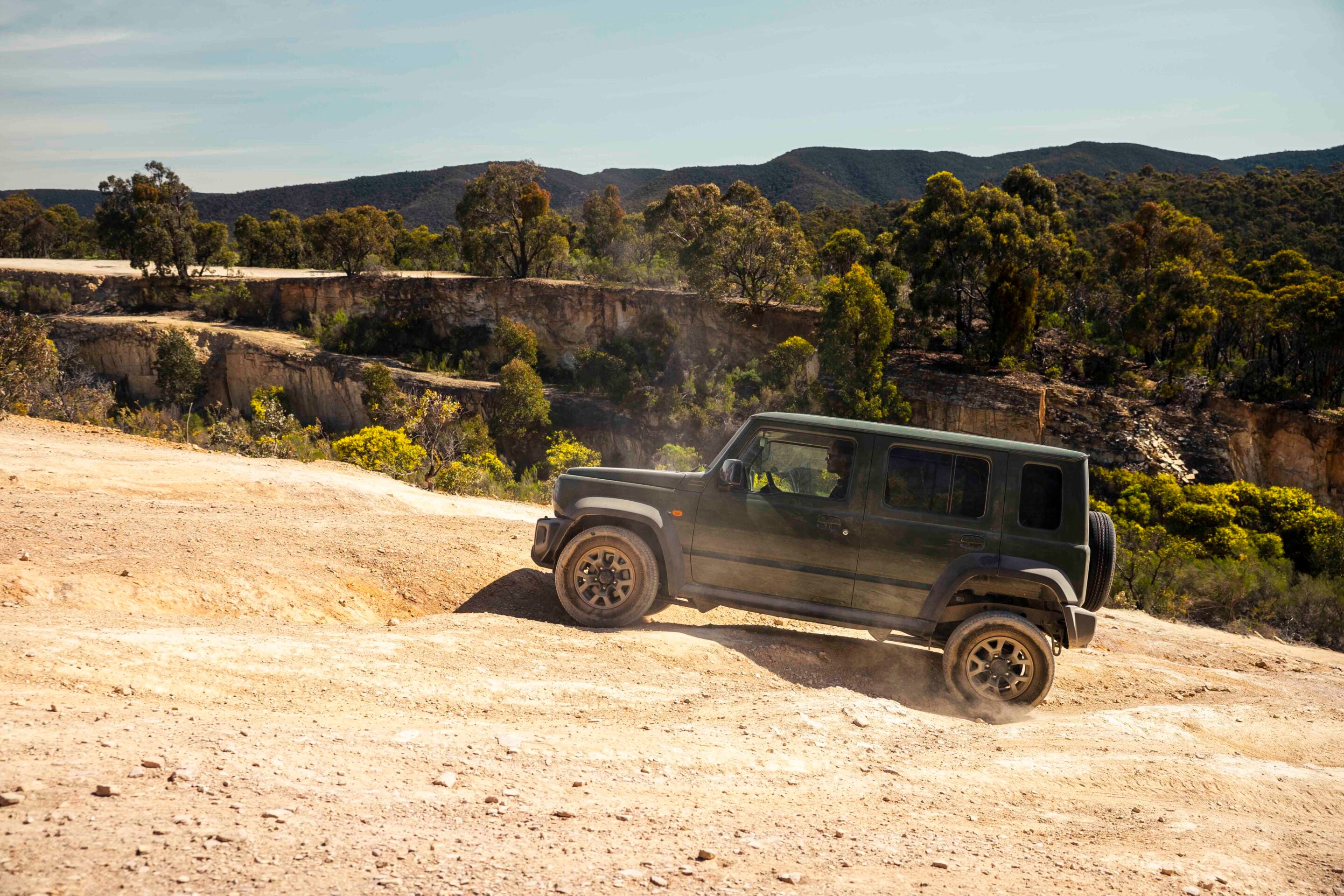
There’s a lot to be said for a small, lightweight four-wheel drive, particularly when the tracks get tight. And around Lerderderg State Forest, the Jimny reminded us why Suzuki’s little off-roader has such a loyal following.
On loose, rocky climbs, it was terrific. Its narrow track made picking a line easy, the excellent visibility helped place the wheels precisely, and with all four tyres finding purchase, it climbed like a crab. At barely more than half the Tank’s weight, it doesn’t need enormous reserves of torque to keep moving.
The live axles also have their advantages. Unlike the Tank’s independent front suspension, the Jimny’s front axle maintains a consistent relationship between its wheels as the suspension moves. But that doesn’t automatically mean better articulation, and without mechanical diff locks, the Suzuki relies on brake-based traction control when wheels lose contact with the ground.
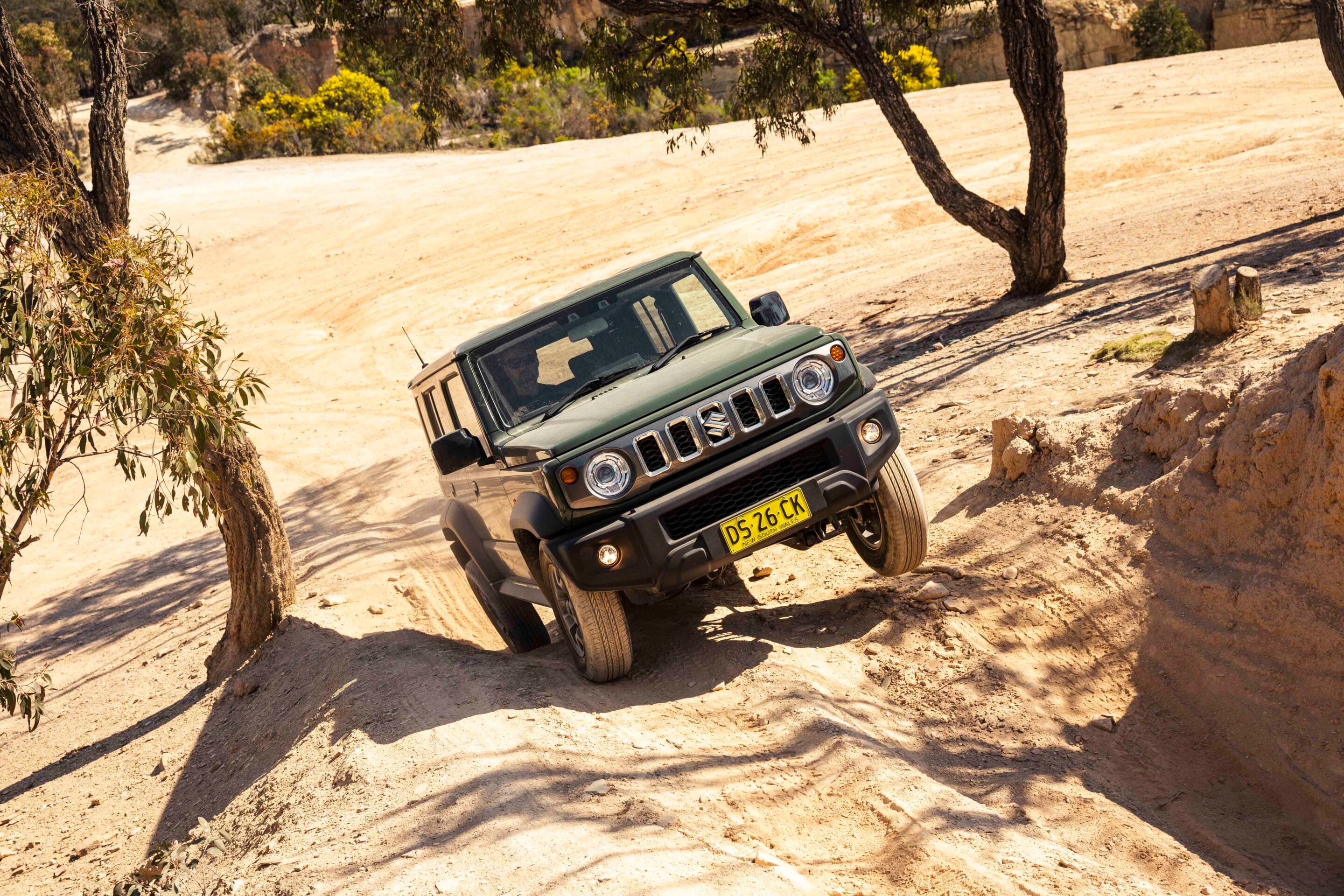
Our infamous wombat holes exposed that limitation, along with something rather more fundamental: geometry. The short wheelbase and narrow track that make the Jimny so manoeuvrable can work against it when deep, alternating holes demand stability and carefully controlled wheel placement.
After several failed attempts, I returned for one last crack, carrying considerably more momentum than I was comfortable with. The Jimny eventually scrambled through, pirouetting on a rear wheel and feeling perilously close to tipping over. The camera crew thought it might, too. Frankly, I wouldn’t recommend repeating it.
The Tank made far easier work of the same obstacle. With both differential locks engaged, it could maintain drive even when articulation ran out. Its wider track and longer wheelbase also gave it a more stable platform across the holes, allowing me to concentrate on placing the wheels rather than worrying quite so much about where the vehicle might end up.
There are qualifications. Our Tank wore aftermarket Cooper tyres, which likely helped traction, and it still needed some momentum. Its suspension articulation and electronic traction control aren’t class-leading, particularly compared with the likes of a Prado. Nevertheless, the difference was convincing.
The Jimny remains an exceptionally capable little rig when the terrain suits its dimensions. But our testing demonstrated that light weight and a short wheelbase aren’t universal advantages. Sometimes the bigger, heavier vehicle, particularly one with proper differential locks, simply has the better tools for the job.
What $9500 buys
After feeling the Jimny struggle through those wombat holes, I couldn’t help wondering what I’d do with the $9500 saved by buying one instead of the Tank.
First stop would be Ironman 4×4 for its 2000kg GVM upgrade. At around $4000 fitted, it addresses one of the Jimny’s biggest weaknesses: payload. Subtract the standard 1200kg kerb weight from that upgraded GVM and you get a theoretical 800kg, but that’s not the finished vehicle’s actual payload. The upgrade hardware itself adds weight, as will the accessories we’re about to bolt on. We’d need to weigh the completed Jimny before claiming a usable payload figure.
Next would be around $2500 for five decent all-terrain tyres and appropriately rated wheels. Another $2500 buys lightweight frontal protection, leaving around $500 for a UHF, lighting or a contribution towards a roof rack. And suddenly, we’ve spent our $9500.
Would it make the Jimny a better four-wheel drive? Absolutely. Better tyres would improve traction, while the upgraded suspension should help its composure on rough tracks. The additional payload would also make it a considerably more practical proposition for touring, particularly once passengers and camping equipment are aboard.
But would it have made those wombat holes any less intimidating? I’m not convinced. We’ve potentially raised the centre of gravity, and although the suspension has changed, we haven’t fundamentally altered the Jimny’s short wheelbase or narrow track. Nor does a lift automatically deliver greater articulation. The same awkward wheel placement and rollover concerns could still be there.
What we’d have, though, is a more useful, better-equipped little touring rig that looks pretty cool doing it. And that’s where the Jimny starts making a different kind of sense.
Ownership and community
There’s something about the Jimny that goes well beyond what it’s capable of doing.
Suzuki has been building little four-wheel drives for more than half a century, and from the early LJ and SJ models through to today’s Jimny, they’ve developed a following that few manufacturers could hope to replicate. I get the appeal. Having grown up building rigs to tackle New Zealand’s pine forests, I appreciate a simple, boxy four-wheel drive that looks ready for an adventure even when it’s parked outside the supermarket.
But I reckon the real attraction is what happens after you buy one. Jimny owners make these little rigs their own. Some build serious off-road machines, others concentrate on touring or simply getting the look right. And there’s nothing wrong with that. Our cars are often reflections of who we are, and the Jimny wears its owner’s personality particularly well. There’s a community that comes with it, too. Clubs, organised trips, online groups and even those little waves between owners passing on the road. You’re buying into something bigger than the vehicle itself.
But Suzuki doesn’t have this territory entirely to itself. I’m seeing that same enthusiasm building around the Tank. Owners are modifying them, heading bush together and developing their own community. The aftermarket is growing, and these aren’t simply vehicles being bought for their impressive equipment lists.
Suzuki has spent generations building its following. GWM is only getting started, but the Tank is already becoming more than an affordable way into four-wheel driving.
Final verdict
There’s no point pretending this was a close contest. The Tank 300 is the better four-wheel drive, and by a considerable margin.
It’s quieter, more comfortable, substantially more powerful and better equipped. It carries more, tows more than twice as much and, when we pointed both rigs at some genuinely challenging terrain, made considerably easier work of it. Throw in its five-star ANCAP rating and that additional $9500 looks like money very well spent.
But would I criticise someone for buying the Jimny? Not for a second. It’s light, simple and wonderfully charming, with a personality few modern four-wheel drives can match. There’s an enormous aftermarket, a passionate community and something deeply satisfying about making one your own. Those things matter, even if they don’t make it the more capable vehicle.
The Tank wins on paper, on the road and in the dirt. But buying a four-wheel drive has never been entirely about the numbers. Sometimes it’s about the rig that makes you smile every time you walk up to it.
Specs
| Specification | Suzuki Jimny XL Auto | GWM Tank 300 Ultra Diesel |
|---|---|---|
| Price (drive-away) | $40,490 | $49,990 |
| Engine | Inline 4-cylinder naturally-aspirated petrol | Inline 4-cylinder turbo-diesel |
| Capacity | 1462cc | 2370cc |
| Max power | 75kW at 6000rpm | 135kW at 3500rpm |
| Max torque | 130Nm at 4000rpm | 480Nm from 1500-2500rpm |
| Transmission | 4-speed automatic | 9-speed automatic |
| 4×4 system | Part-time 4×4, low range, brake-based TC | Part-time 4×4, low range, front and rear diff locks |
| Crawl ratio | 31.64:1 | 54.5:1 |
| Construction | 5-door wagon body on separate chassis | 5-door wagon body on separate chassis |
| Front suspension | Live axle, coil springs | Independent, double wishbones, coli springs |
| Rear suspension | Live axle, coil springs | Live axle, coil springs |
| Tyres | 195/80 R15 | 265/60 R18 |
| Kerb weight | 1200kg | 2280kg |
| GVM | 1545kg | 2880kg |
| Payload | 345kg | 600kg |
| Towing capacity | 1300kg | 3000kg |
| GCM | N/a | 5580kg |
| Seating capacity | 4 | 5 |
| Fuel capacity | 40L | 75L |
| Length | 3965mm | 4760mm |
| Width | 1645mm | 1930mm |
| Height | 1725mm | 1903mm |
| Wheelbase | 2590mm | 2750mm |
| Ground clearance | 210mm | 224mm |
| ADR combined fuel consumption | 6.9L/100km | 7.8L/100km |
| ANCAP | unrated | 5 stars (2022) |
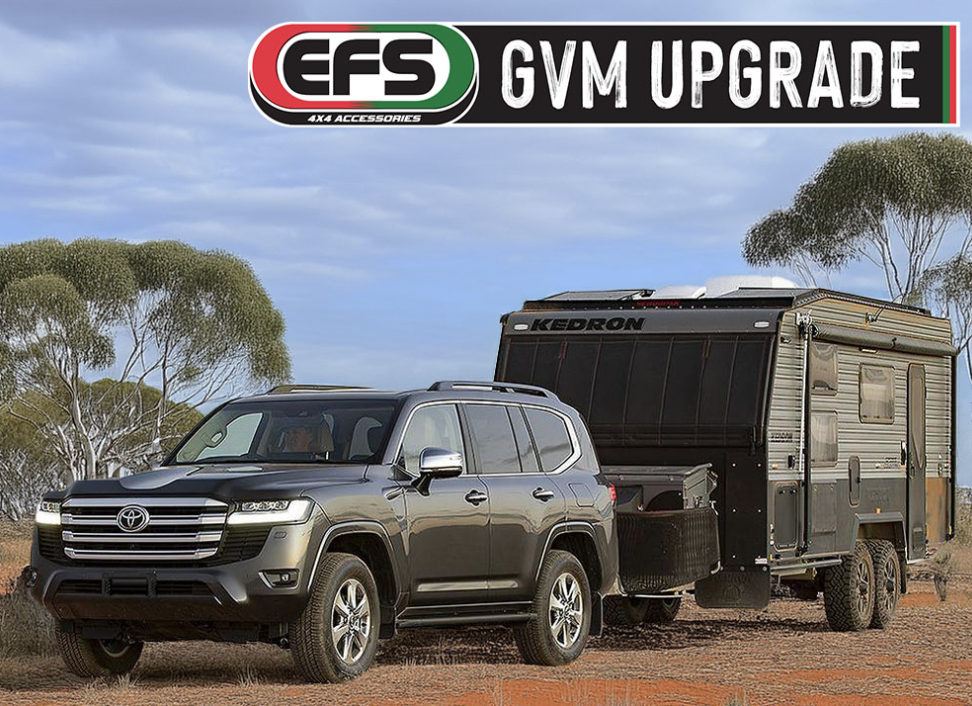
An 855kg increase in GVM is a significant change for a touring wagon, particularly one that’s likely to be carrying a bullbar, winch, drawers, fridge, second battery and a family’s worth of camping gear.
EFS 4WD’s upgrade (↗) lifts the permitted GVM of eligible Toyota LandCruiser 300 Series models from 3280kg to 4135kg. But that doesn’t mean owners can simply throw another 855kg of gear aboard. Axle limits, towing weights and roof-load ratings still apply, so it’s important to understand what the upgrade actually changes before building out your LC300.
LandCruiser 300 payload: How much weight can you carry?
The standard GVM quoted for the LC300 covered by EFS’s upgrade is 3280kg.
Gross vehicle mass is the maximum permitted weight of the vehicle when loaded, including occupants, fuel, accessories, luggage and trailer towball download. It isn’t just the weight of the gear carried in the back.
A touring fit-out can use up that allowance quickly. A steel bullbar and winch add weight to the front, while drawers, a fridge and other gear load up the rear. Roof racks and awnings add more weight up high, before you account for passengers, food, water and luggage.
It’s also possible to remain under the overall GVM while exceeding an individual axle limit. That’s why it’s important to weigh the front and rear axles separately, particularly once the major accessories are fitted. The actual figures will tell you how much capacity remains for the rest of your touring gear.
EFS 4135kg GVM upgrade for the LandCruiser 300
EFS offers a 4135kg GVM upgrade for eligible Toyota LandCruiser 300 Series vehicles (↗), up from the published 3280kg standard figure.
That’s an 855kg increase in permitted vehicle mass when the approved upgrade and relevant certification are correctly completed. Listed as kit K-TLC-300-GVM under approval VTA-064200, the package includes upgraded front and rear coil springs and shock absorbers, rear coil-seat reinforcement brackets and associated compliance components. Installation must be carried out by an EFS-approved authorised installer.
The 855kg figure is the difference between the published GVM ratings, not a guarantee that every owner can carry that much extra gear. Actual capacity depends on the LC300’s existing weight and remaining limits, including front and rear axle capacities.
The best way to work out what the upgrade gives you is to weigh the vehicle once its major accessories are fitted, then calculate what’s left for passengers, food, water and luggage. That remaining capacity is more useful than the payload figure in a brochure.
Does a LandCruiser 300 GVM upgrade increase towing capacity?
It can help with the vehicle-side weight limits when towing a caravan, but a GVM upgrade doesn’t automatically increase the LC300’s braked towing capacity or gross combination mass (GCM).
Towball download is carried by the LandCruiser and counts towards its GVM and axle loads. A heavily equipped LC300 can reach its weight limits even when the caravan itself is within its permitted towing capacity.
If the combined vehicle-and-trailer limit is already the constraint, increasing the LC300’s GVM won’t solve the problem on its own. The loaded vehicle and trailer must still remain within the manufacturer’s GCM, while the LandCruiser must comply with its individual axle limits. Get the whole rig weighed in travelling trim to see where the limits sit.
What should you check before upgrading a LandCruiser 300?
A higher GVM doesn’t override the roof rack’s rating or the vehicle’s roof-load limits. Nor does it make poor load placement a good idea. Heavy gear carried high up can affect handling, while concentrating weight at one end can push an axle over its limit.
Keep dense items low and secured, spread weight sensibly and check both static and dynamic limits where applicable. These basics matter on corrugated tracks just as much as they do on the highway.
If you’re buying a new LC300 and planning a major touring fit-out, ask about the upgrade early. EFS’s federally approved Second Stage of Manufacture process may be relevant before first registration. An already-registered vehicle may require a different state or territory engineering and certification pathway, so check the applicable requirements with an authorised installer and certifier.
For eligible vehicles, EFS’s 4135kg LandCruiser 300 GVM upgrade (↗) is worth investigating if your touring build is pushing the standard weight limits. Confirm your exact vehicle variant and intended use with an approved installer before proceeding.
Quickfire FAQs
What is the standard GVM of a Toyota LandCruiser 300?
The standard GVM quoted for the LC300 covered by EFS’s upgrade is 3280kg.
What does EFS’s LandCruiser 300 GVM upgrade increase it to?
The upgrade raises GVM to 4135kg, an increase of 855kg over the published standard figure.
Does the 855kg increase mean I can carry 855kg more gear?
Not necessarily. Actual carrying capacity depends on the vehicle’s existing weight and remaining axle and other applicable limits.
Does a GVM upgrade increase the LC300’s towing capacity?
No. It doesn’t automatically increase braked towing capacity or GCM.
Does towball download count towards GVM?
Yes. Towball download adds to the weight carried by the LandCruiser and counts towards its GVM and axle loads.
Can I get a GVM upgrade before registering my LandCruiser 300?
EFS’s federally approved Second Stage of Manufacture process may be relevant before first registration. Already-registered vehicles may require a different state or territory approval pathway.
Ineos Automotive, the proudly British brand that originally promised to manufacture in the United Kingdom before shifting production to France, has announced plans to move manufacturing to the USA.
Ineos scrapped plans to build a new greenfield manufacturing plant in Wales following Brexit and snapped up the former Mercedes-Benz plant in Hambach, France, which was still producing Smart cars at the time.
The latest planned move aims to counter the impact of tariffs imposed on imported vehicles by the Trump administration. From the outset, Ineos identified the United States as a key market for its Grenadier 4×4, but the tariffs have raised prices and slowed sales there. The US currently accounts for 70 per cent of Ineos’ global 4×4 sales.
“This is arguably the biggest moment in the history of Ineos Automotive,” said Lynn Calder, CEO of Ineos Automotive. “Setting up production there makes so much sense. It will empower us to invest, expand, and reach even more customers around the world.”
Ineos is reportedly considering several US manufacturing sites, while Chinese manufacturer BYD has been reported as the prospective buyer of the Hambach plant as it seeks to strengthen its position in Europe.
If all goes to plan, Ineos expects US production to begin in 2028.
FAQs
Where is the Ineos Grenadier currently built?
The Ineos Grenadier is currently built at the company’s Hambach factory in France.
Why is Ineos moving Grenadier production to the US?
Ineos plans to offset the impact of US tariffs on imported vehicles, which have increased prices and slowed sales.
When will US production of the Ineos Grenadier begin?
Ineos is targeting a 2028 start for US production.
How important is the US market to Ineos?
The US accounts for around 70 per cent of Ineos’ global 4×4 sales.
Who could buy the Ineos Hambach factory?
Chinese carmaker BYD has reportedly been linked to a potential purchase of the Hambach plant.
Mahindra has launched new genuine towbar, nudge bar and bullbar packs for its Scorpio, with all three accessories available through Australian dealers.
Designed specifically for the Scorpio, the accessories include a towbar pack rated to the SUV’s 2500kg braked towing capacity, a nudge bar and a bullbar designed for touring and off-road use. The Towbar Pack includes a heavy-duty towbar, tongue and wiring harness, while the Bullbar Pack features a 50mm steel tube design with provision for a 10,000lb winch.
The bullbar also includes an ADAS sensor, front-facing parking camera, bash plate, LED driving lights and indicators, spotlight mounts, two recovery points and two antenna mounts. Its powder-coated finish is salt spray and UV tested. All three packs are covered by Mahindra’s 12-month/20,000km genuine accessories warranty.
“The new Towbar, Nudge Bar and Bullbar packs further elevate the Scorpio’s capability and versatility, through robust engineering, design and durability tests, backed by Mahindra’s warranty,” said Arunangshu Roy, National Manager at Mahindra Australia. “Developed in partnership with Australian supplier EFS, these accessories are purpose engineered and rigorously tested to meet Australia’s diverse climate and demanding conditions.”
The accessory launch comes as Mahindra offers savings of up to $4000 on 2025-built Scorpio stock. The Scorpio Z8+ is now available for $39,990 driveaway, a $4000 reduction on its normal driveaway price, while the higher-specification Z8L+ is priced at $45,990 driveaway, saving buyers $3000. The offers run until December 31, 2026, with full terms and conditions available from Mahindra Australia (↗).
All Scorpio variants are powered by a 2.2-litre mHawk turbo-diesel four-cylinder engine producing 128.6kW and 400Nm. It’s paired with a six-speed Aisin automatic transmission, while off-road equipment includes Mahindra’s 4XPLOR terrain management system, a low-range transfer case and a mechanical locking differential. The body-on-frame Scorpio is backed by a seven-year/150,000km vehicle warranty.
Genuine accessory pack pricing:
- Towbar Pack: From $1750 fitted
- Nudge Bar Pack: From $1650 fitted
- Bullbar Pack: From $4150 fitted
FAQs
What genuine accessories are available for the Mahindra Scorpio?
Mahindra offers genuine Towbar, Nudge Bar and Bullbar packs, designed specifically for the Scorpio 4×4.
Can the genuine Scorpio bullbar fit a winch?
Yes. The genuine steel tube bullbar accommodates a 10,000lb winch and includes two recovery points.
What is the Mahindra Scorpio’s towing capacity?
The Scorpio has a 2500kg braked towing capacity.
What warranty covers Mahindra Scorpio accessories?
Mahindra Genuine Accessories are covered by a 12-month/20,000km warranty.
PROJECTA (↗) has been helping keep vehicles and their accessories powered since 1989, starting out with battery chargers and maintenance gear before expanding into a much wider range of automotive power solutions.
Acquired by Australian-owned Brown & Watson International in 2002, the brand has continued to grow alongside the changing needs of 4×4 and touring owners.
Today, its range spans dual-battery systems, DC-DC chargers, lithium batteries, solar, inverters, jump starters and integrated power management systems. Its customers include everyone from everyday motorists and automotive workshops to 4×4 enthusiasts, caravan owners and off-grid travellers.
“PROJECTA specialises in automotive power management and battery maintenance technology, providing solutions that keep everyday motorists, automotive workshops, 4×4 enthusiasts and off-grid adventurers powered and on the move,” said Jake Smith, Global Brand Manager at PROJECTA.
Once primarily focused on Australasia, the brand is now building its international presence and taking its product range to a wider global market.
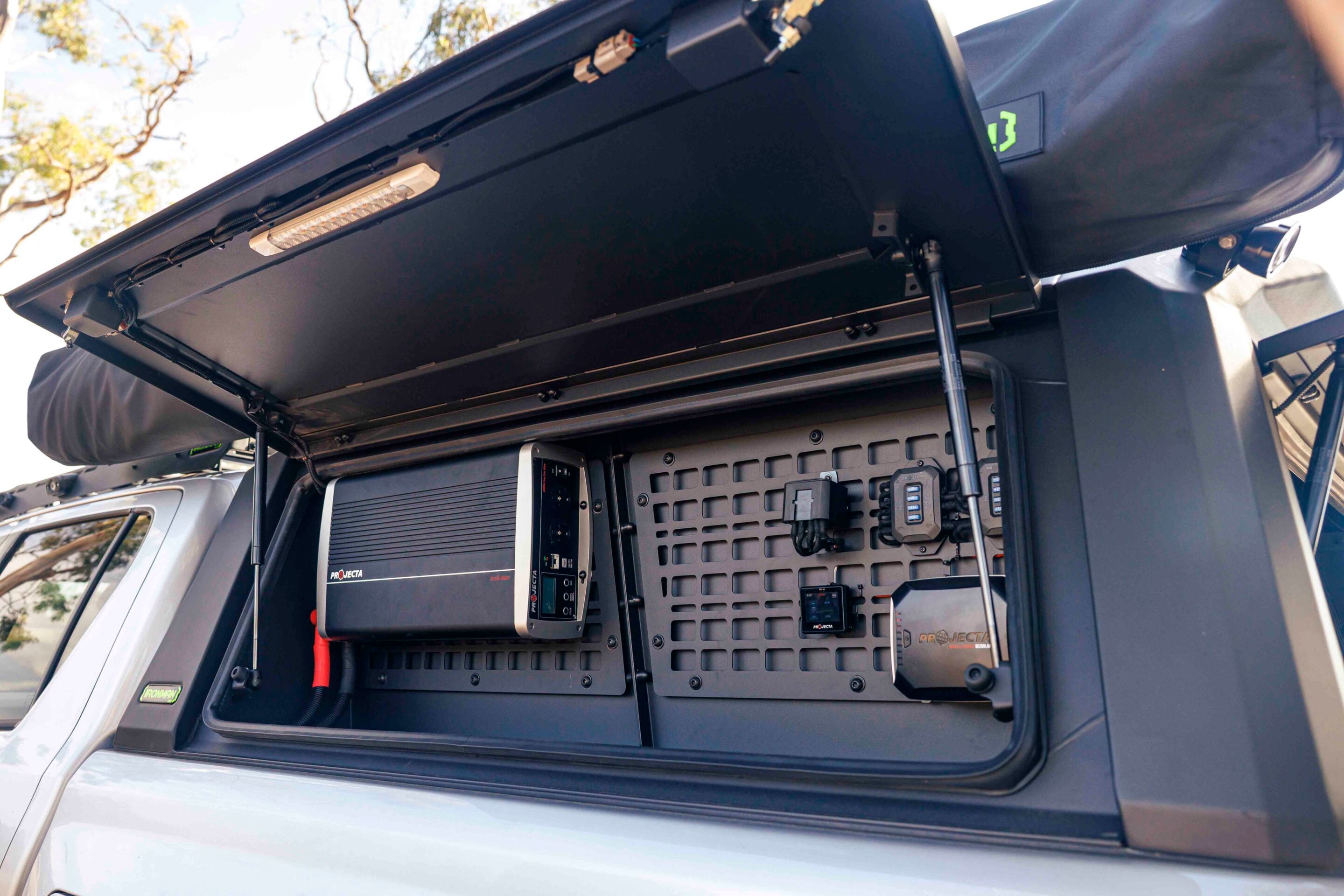
More power for life off-grid
As 4x4s and caravans carry more electrical accessories, demand for reliable auxiliary power has grown.
Fridges, lighting and other appliances all need power, particularly for travellers spending extended periods away from the grid. PROJECTA (↗) says customers are increasingly looking beyond individual components to complete systems that combine charging, monitoring and control.
“Our key categories include battery chargers, DC-DC and dual battery systems, lithium batteries, inverters and jump starters. Increasingly, customers want complete auxiliary power solutions to run fridges, lighting and appliances off-grid, with integrated charging, monitoring and control,” Smith says.
PROJECTA also works with vehicle manufacturers, auto electricians and installers, each with different requirements depending on how the systems will be used.
“Today’s travellers want more power to run appliances and enjoy longer off-grid stays, but they also want technology that’s easy to use, removes complexity and delivers reliable performance, whether in the workshop or in the middle of nowhere,” Smith says.
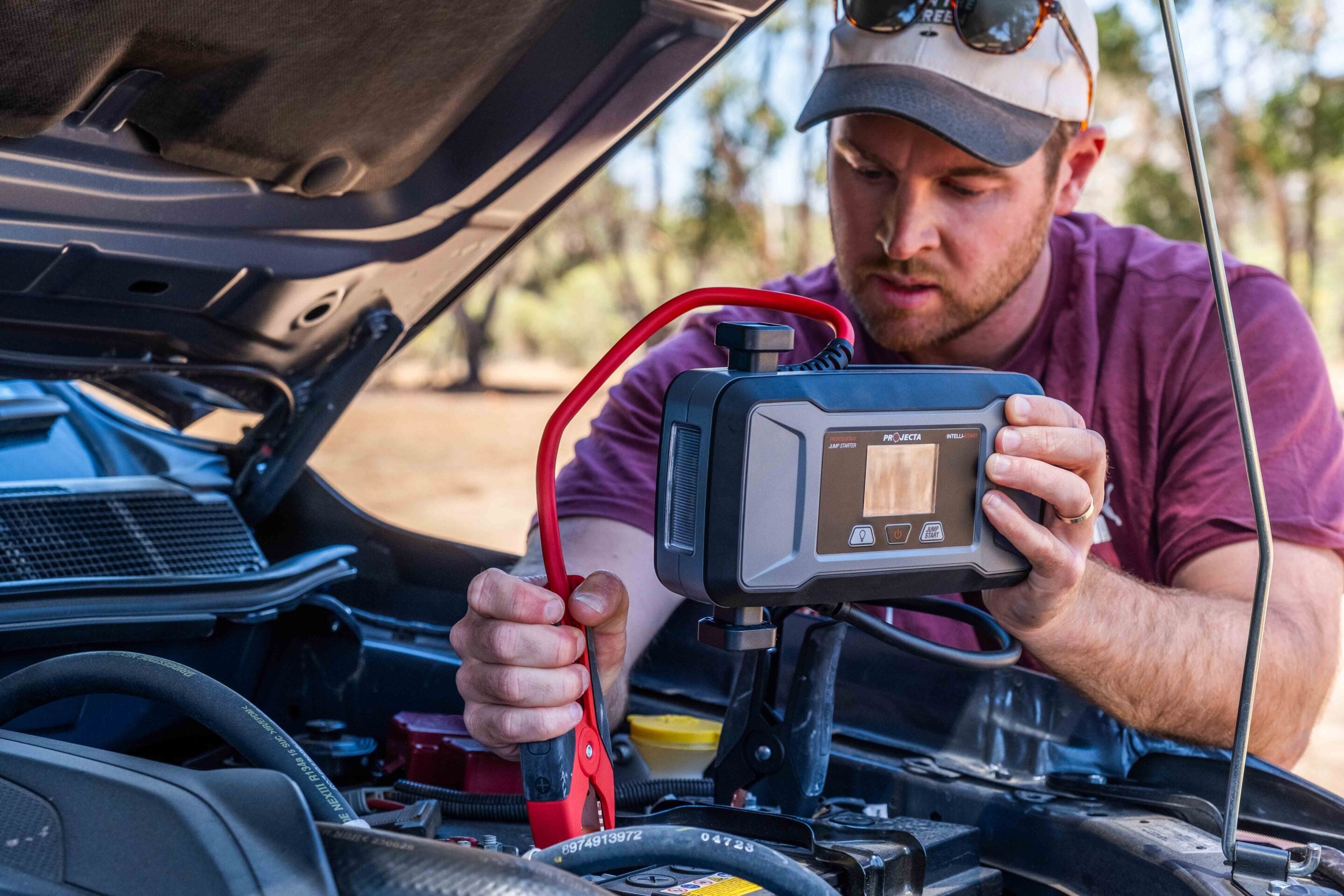
Award-winning technology
Several PROJECTA products have picked up industry recognition.
Its jump starters have received the Red Dot Award and feature patented Rapid Recharge Technology (RRT). The INTELLI-IQ Smart Relays collected two awards in 2026, winning an Australian Good Design Award and the Australian Auto Aftermarket Expo’s Most Innovative New Aftermarket Product award. The INTELLI-GRID GEN III 12V Power Management System (↗) also received a 2026 Australian Good Design Award.
“Building on this innovation, our next-generation INTELLI-GRID 48V system delivers a 4000W inverter/charger and integrated power management, helping caravan and RV owners power more, travel further and recharge faster,” Smith says.
A national network and what’s next
PROJECTA (↗) is part of Australian-owned Brown & Watson International, within the broader AMOTIV Group, and is headquartered in Knoxfield, Melbourne.
“Our experienced team spans engineering, product development, sales, distribution and technical support, servicing customers nationwide through an established automotive, 4×4 and caravan retail network,” Smith says.
Like others in the automotive electrical industry, PROJECTA faces growing power demands and changing vehicle technology, as well as the challenge of making more sophisticated systems straightforward to install and operate.
“Increasing power demands, evolving vehicle charging technology and installation complexity are major challenges. We’re focused on developing smarter, more reliable integrated solutions that deliver greater capability without unnecessary complexity or cost,” Smith says.
PROJECTA continues to invest in power management and battery charging technology, with the INTELLI-GRID platform, including its next-generation 48V system, a key part of its plans.
“Ultimately, our goal is to make managing power easier and more accessible, giving people greater confidence and freedom to travel further, stay longer and enjoy more of their adventures off-grid,” Smith says.
When setting up a four-wheel drive for touring, most owners spend plenty of time choosing the right UHF radio and antenna. But where you mount that antenna is just as important as the equipment itself.
Whether it’s fitted to the bull bar, bonnet or roof rack, its position can have a big impact on how well your radio transmits and receives signals. That’s worth considering if you regularly travel in convoy, tackle remote tracks or head off into areas where mobile reception is patchy or non-existent.
Height, clearance and mounting position
UHF radio signals generally travel in straight lines, so line of sight plays an important part in communication range.
Mounting an antenna higher on the vehicle can help keep the signal clear of surrounding metalwork, but simply putting it on the roof doesn’t guarantee better performance. Roof racks, light bars, vehicle pillars and other accessories can all affect the signal, potentially creating weaker spots around the vehicle.
RFI (↗) recommends mounting the antenna as high as practical, with the whip clear of surrounding metalwork. There’s no single mounting position that suits every fourby, though, and the best option often comes down to how your vehicle is set up.
A centrally mounted roof antenna generally provides more even coverage around the vehicle, provided it’s correctly matched to the installation. However, roof mounting isn’t always practical on touring rigs fitted with rooftop tents, roof racks and other accessories. Bull bar mounting is popular because it’s easy to access, relatively straightforward and keeps the antenna away from much of the gear on the roof. The trade-off is that the vehicle’s body can affect the signal pattern, particularly when the antenna sits below the roofline. Bonnet and guard mounts offer another option, although nearby panels and pillars can also influence performance.
If mounting flexibility is important, ground-independent antennas, including options within RFI’s range, can reduce reliance on a metal ground plane. They won’t eliminate the effects of surrounding obstructions, but they offer more flexibility when choosing where to fit an antenna.
Modern touring vehicles can be crowded with accessories, so it’s worth thinking about antenna placement before the build is finished rather than squeezing it into whatever space is left. Driving lights, aerials, roof racks and storage systems all compete for room. RFI’s CDX-TREME UHF CB (↗) installation instructions recommend keeping other antennas at least 600mm away where practical, while ensuring the whip has enough clearance from nearby metalwork. A secure mounting bracket is just as important, as corrugations can shake fittings loose and branches can put extra strain on the antenna base.
Antenna gain and installation
Antenna gain is another consideration, particularly if you regularly travel through different types of terrain.
Higher-gain antennas concentrate more of their signal towards the horizon, making them useful across open, relatively flat country. Lower-gain antennas generally have a broader vertical radiation pattern, which can be more useful in steep or undulating terrain where the signal needs to cope with changes in elevation.
RFI’s CDX-TREME range (↗) includes compact and high-gain UHF CB options, allowing owners to choose an antenna to suit their vehicle and typical touring conditions. There’s little point chasing a high-gain antenna if it’s going to be mounted behind substantial metalwork, where its performance could be compromised. The antenna, gain and mounting position all need to work together.
The cable and connections deserve attention, too. Even a well-positioned antenna can suffer from poor performance if the coaxial cable is damaged, connectors are loose or the cable has been installed incorrectly. Keep cable runs protected from abrasion, avoid sharp bends and unnecessary extensions, and secure the cable away from moving components.
For spring-mounted antennas such as the RFI CDX-TREME (↗), leave enough slack near the base to allow the antenna to flex over rough tracks without pulling on the connection. RFI recommends a 50mm cable loop at the base of its CDX-TREME UHF CB antennas (↗) to prevent unnecessary strain when the spring moves.
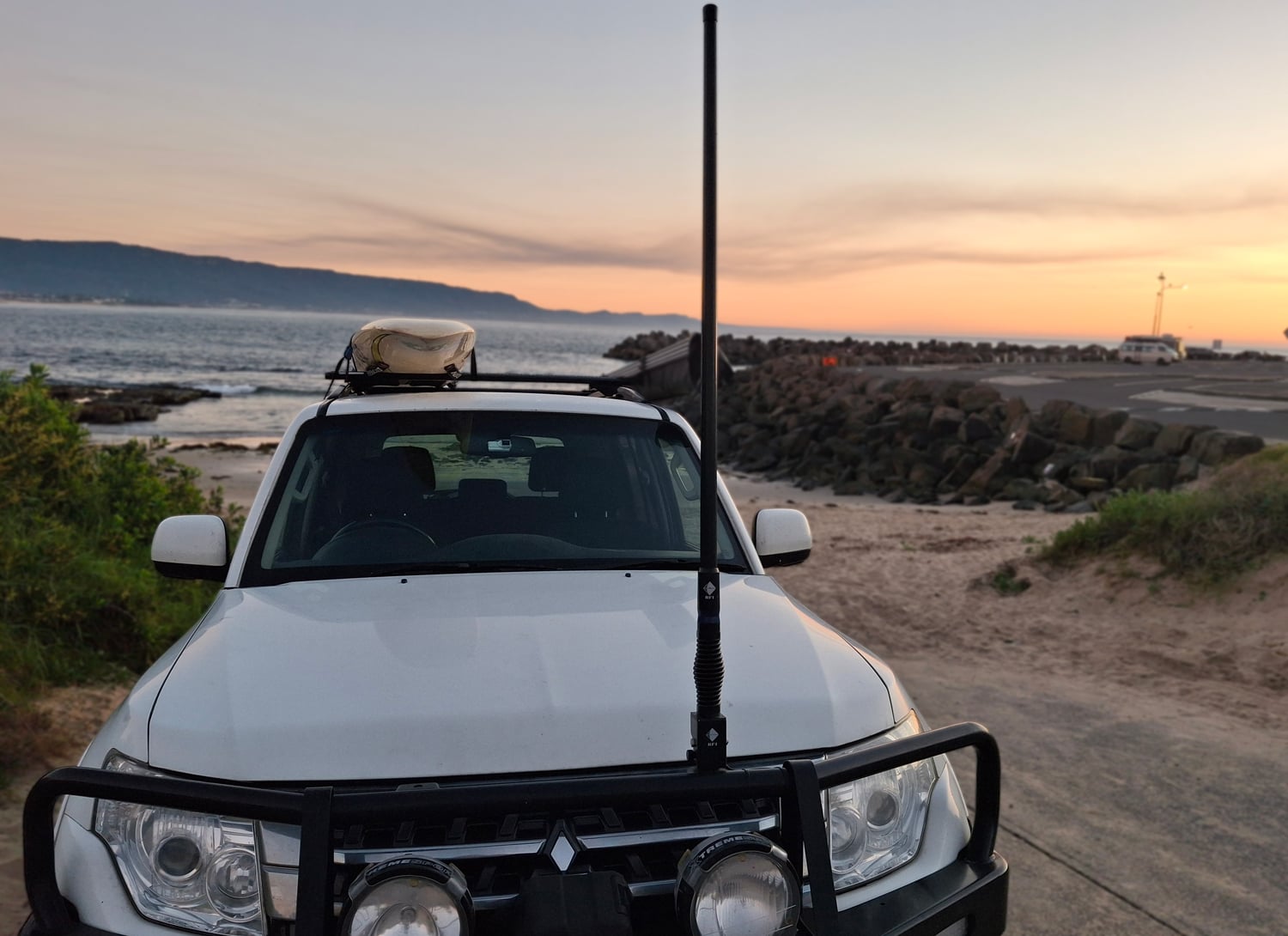
Getting the setup right
A reliable touring communications setup comes down to choosing a compatible UHF radio and antenna, then making sure everything is installed properly.
Mount the antenna as high as practical, keep it clear of surrounding accessories, use a suitable bracket and protect the cable from damage. Before heading off on a big trip, check the mounting hardware and connections, then test the radio with another vehicle. If reception or transmission is inconsistent, an experienced installer can check the antenna system and its matching.
The RFI CDX-TREME range (↗) offers ruggedised options for different touring setups, but even a quality antenna needs to be mounted properly to get the best out of it. After all, when you’re travelling kilometres apart on a dusty outback track, the last thing you want is a UHF that struggles to reach the rest of the convoy.
FAQs
Where is the best place to mount a UHF antenna on a 4WD?
As high as practical, with the antenna whip clear of surrounding metalwork. Roof mounting can provide more even coverage, but bull bar, bonnet and guard mounts can also work depending on the vehicle setup.
Does a higher UHF antenna improve reception?
Generally, yes. Mounting an antenna higher can improve line of sight and reduce obstructions, although surrounding accessories and metalwork can still affect performance.
Is a higher-gain UHF antenna always better?
No. Higher-gain antennas generally suit flat, open country, while lower-gain options can work better in hilly or mountainous terrain.
How far apart should UHF antennas be mounted?
RFI recommends keeping other antennas at least 600mm away where practical to minimise interference.
How much cable slack should I leave on a spring-mounted antenna?
RFI recommends a 50mm cable loop at the base of its CDX-TREME UHF CB antennas to allow the spring to flex without putting strain on the cable connection.