4x4 Comparisons


Gallery 1
They’ve been Australia’s best-selling new vehicles for years and, by a long margin, they lead the 4×4 sales charts. So it’s big news when one of the top two delivers a new model.
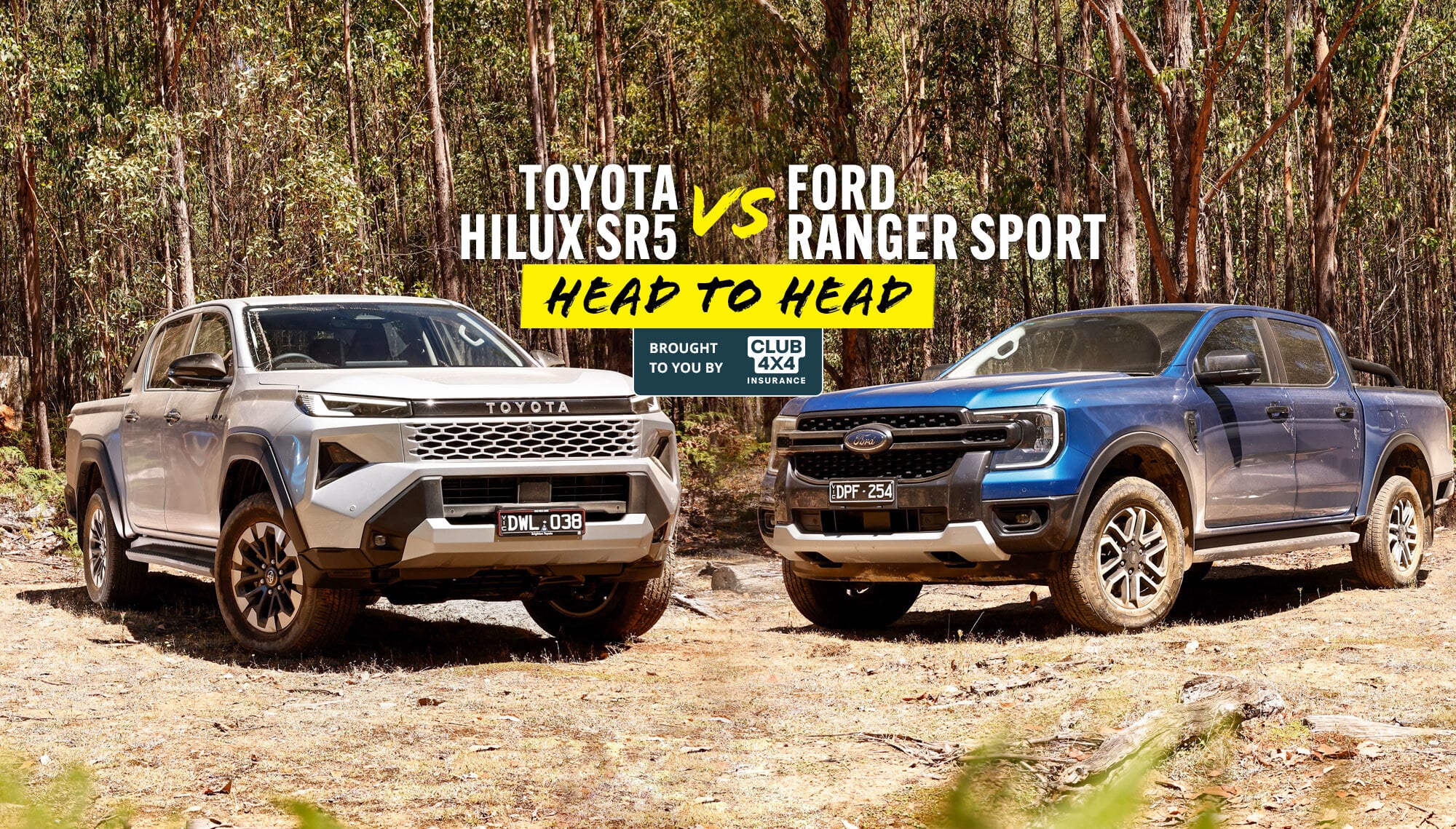
That’s exactly what happened at the end of 2025 when Toyota dropped the ninth-generation HiLux. It’s a major overhaul of the enduring Toyota ute, even if it’s not an all-new model. The big question is whether Toyota has done enough with the updated HiLux to wrest the number-one seller position back from the Ford Ranger, which has owned the title in recent years.
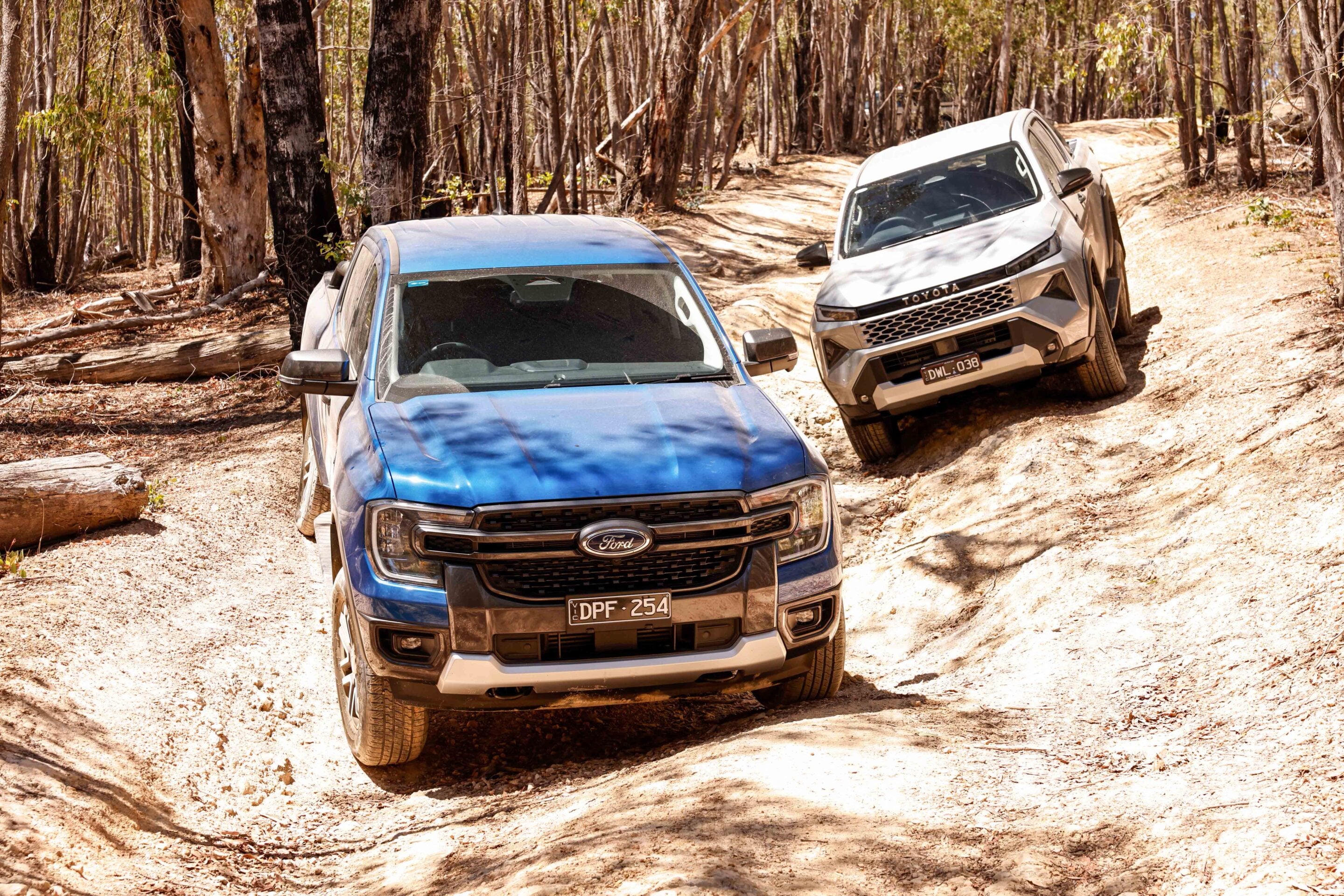
To put the two midsize utes head-to-head, we compared two of the more popular variants. The mid-range SR5 has long been a go-to in the HiLux range for both workers and enthusiasts, and the same could be said for the Ranger XLT. We have the HiLux SR5, but Ford was unable to supply an XLT Ranger for this test, so instead we have the Ranger Sport, which sits one step higher in the line-up. Coincidentally, the Ranger Sport V6 topped the charts in our 2025 Ute of the Year battle.
Part of the reason Ford couldn’t supply an XLT is that the company is preparing to roll out its MY26.5 Ranger update. Among the changes, it will mark the end of the 2.0-litre bi-turbo diesel, while availability of the V6 diesel will expand across the line-up, alongside a single-turbo 2.0-litre for lower grades.
At the time of writing, a Toyota HiLux SR5 automatic double-cab ute had an RRP of $65,990 plus on-road costs, while a V6 Ranger XLT was $69,090+ORC and the V6 Sport tested here was $71,340+ORC.
Add the $2500 Premium Pack to the HiLux SR5 and you score leather-accented upholstery, an eight-way powered driver’s seat with lumbar support, and a nine-speaker JBL premium sound system, bringing it closer to the Ranger Sport in both price and specification.
With that out of the way, let’s take a look at the two utes 👇
JUMP AHEAD
1
Toyota HiLux SR5
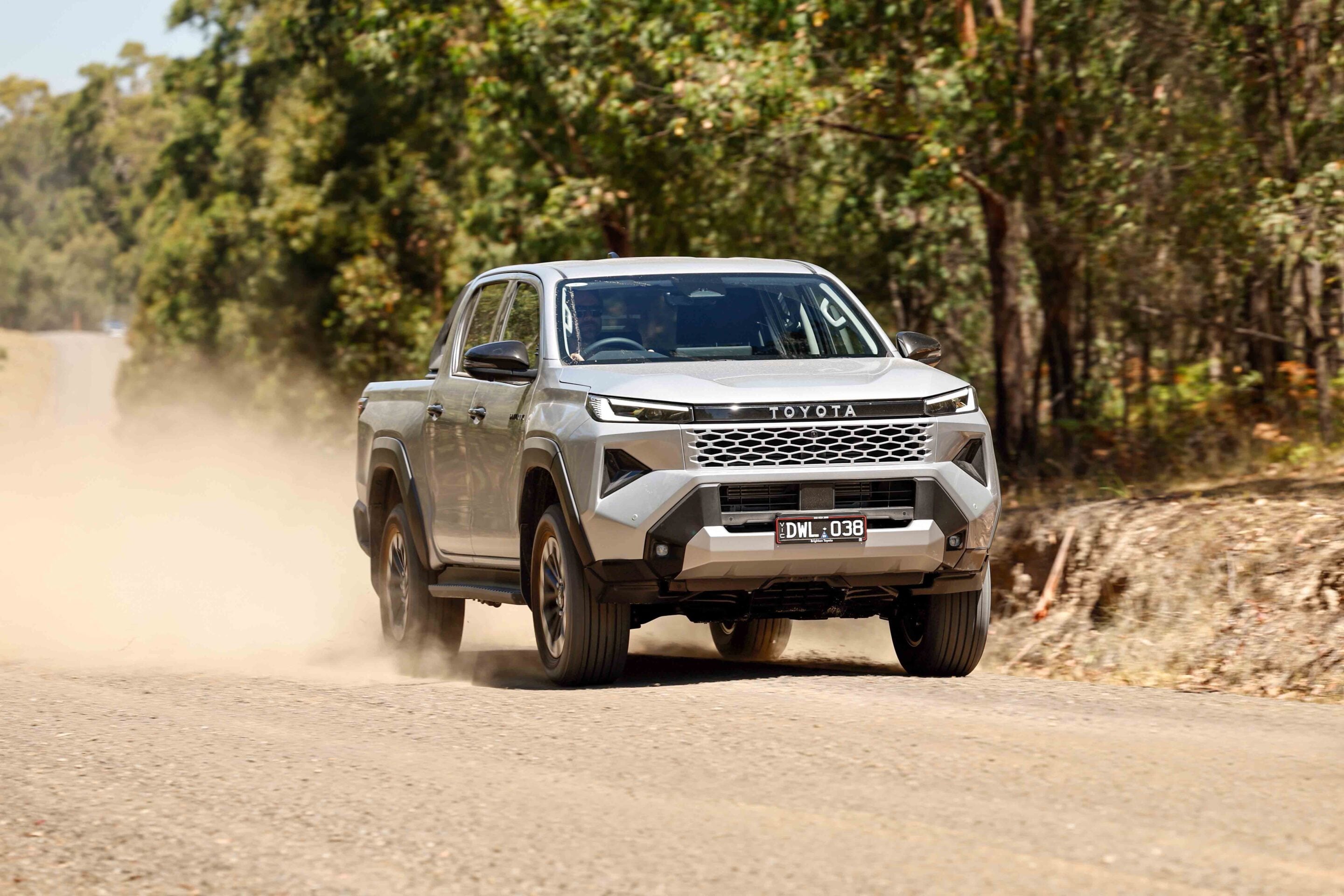
Toyota calls this the ninth-generation HiLux, but it’s better described as a major update of the previous model.
The chassis architecture carries over in revised form, the cabin structure (including the glass) is also carried over, and the powertrain remains Toyota’s 1GD-FTV 2.8-litre diesel, now paired with a 48-volt system and backed by a six-speed automatic transmission and part-time dual-range 4×4 transfer case. It’s a classic case of ‘if you’re on a good thing, stick to it’ – Toyota hasn’t messed with what is a well-proven and capable drivetrain.
The engine produces 150kW and 500Nm with the automatic transmission. Toyota’s 48-volt V-Active system uses an 8.5kW/65Nm motor-generator, lithium-ion battery and DC/DC converter to smooth the stop-start function, provide a small boost to acceleration, and deliver a claimed improvement in fuel economy. The other key mechanical change is the move to electric power steering (EPAS) across all models, replacing the previous hydraulic system. This enables improved ADAS functionality and, in some grades – including the SR5 – the option of Normal or Sport steering feel.
1
Styling changes front and rear are extensive, but the biggest update is inside – something drivers and passengers will appreciate. Up front, the HiLux wears slimline LED headlights and a painted grille that follows the current trend. Toyota says the muscular front bumper design mimics the stance of a sumo wrestler.
Around the back, the cargo tub is new, along with the tail-lights, tailgate, sports bar and a rear step to make accessing the load easier. In SR5 trim the tub is fairly bare bones, with four internal tie-down points and no bedliner, cover or power outlet. Those items are available as accessories or are fitted as standard on higher grades.
Interior
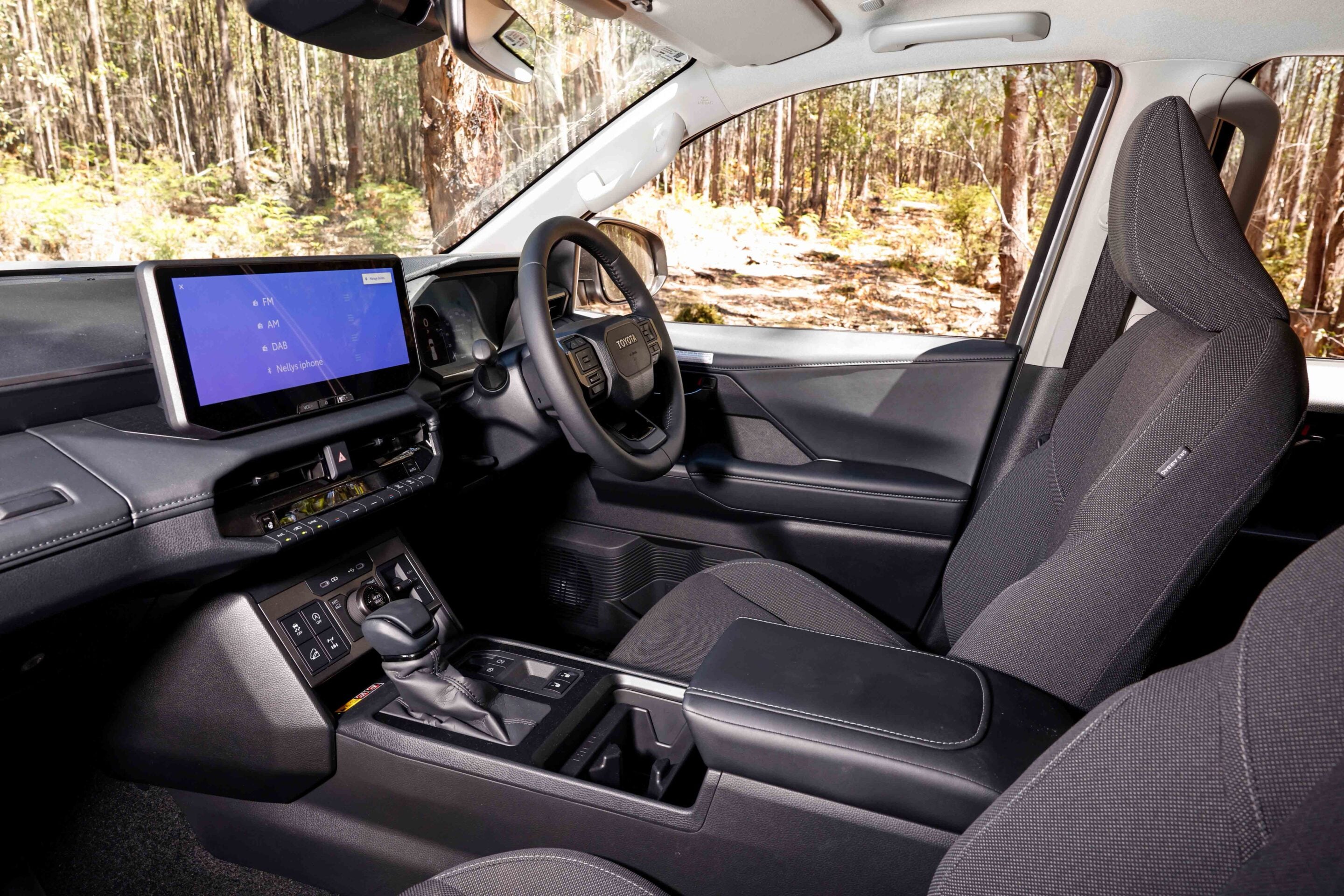
Inside, occupants are greeted by a 12.3-inch multimedia screen, matched by a 12.3-inch digital instrument cluster for the driver. The multimedia system supports wireless Apple CarPlay and Android Auto, and includes Toyota mapping along with app connectivity. There’s a single wireless phone charger in the centre console.
The dash is new, as are the seats, which in SR5 trim are cloth-covered with manual adjustment. As mentioned, you can option the Premium Pack, which adds leather-accented upholstery, power adjustment for the driver, and a premium sound system.
1
Safety
The updated interior and move to electric power steering (EPAS) have allowed Toyota to upgrade the HiLux’s ADAS suite. It now includes autonomous emergency braking (AEB) with a pre-collision safety system, adaptive cruise control, rear cross-traffic alert, lane departure alert, lane trace assist, road sign assist and blind-spot monitoring. The usual safety systems – including ABS, ETC and ESC – are also carried over.
On-road performance
Anyone who has driven a HiLux in recent years will know how the new model feels on road.
The 2.8-litre engine is punchy, the six-speed auto is precise and the chassis delivers what you would expect for a working-grade 4×4 ute. Some question why the HiLux didn’t get the eight-speed transmission that’s in the 250 Series Prado, but after a few days in the HiLux I’d say it’s unwarranted. The HiLux SR5 gets the softer suspension tune of the higher grades to improve ride quality, and this is particularly appreciated when you are on road and unladen. It takes the jitteriness out of the ride, while the Sport EPAS setting gives improved steering feel and feedback to the driver.
The biggest disappointment of the new HiLux is that the transfer case doesn’t offer any form of full-time or on-demand all-wheel drive, and when driving on wet Melbourne roads the torquey engine can quickly snap the rear tyres into wheelspin when taking off.
Off-road performance
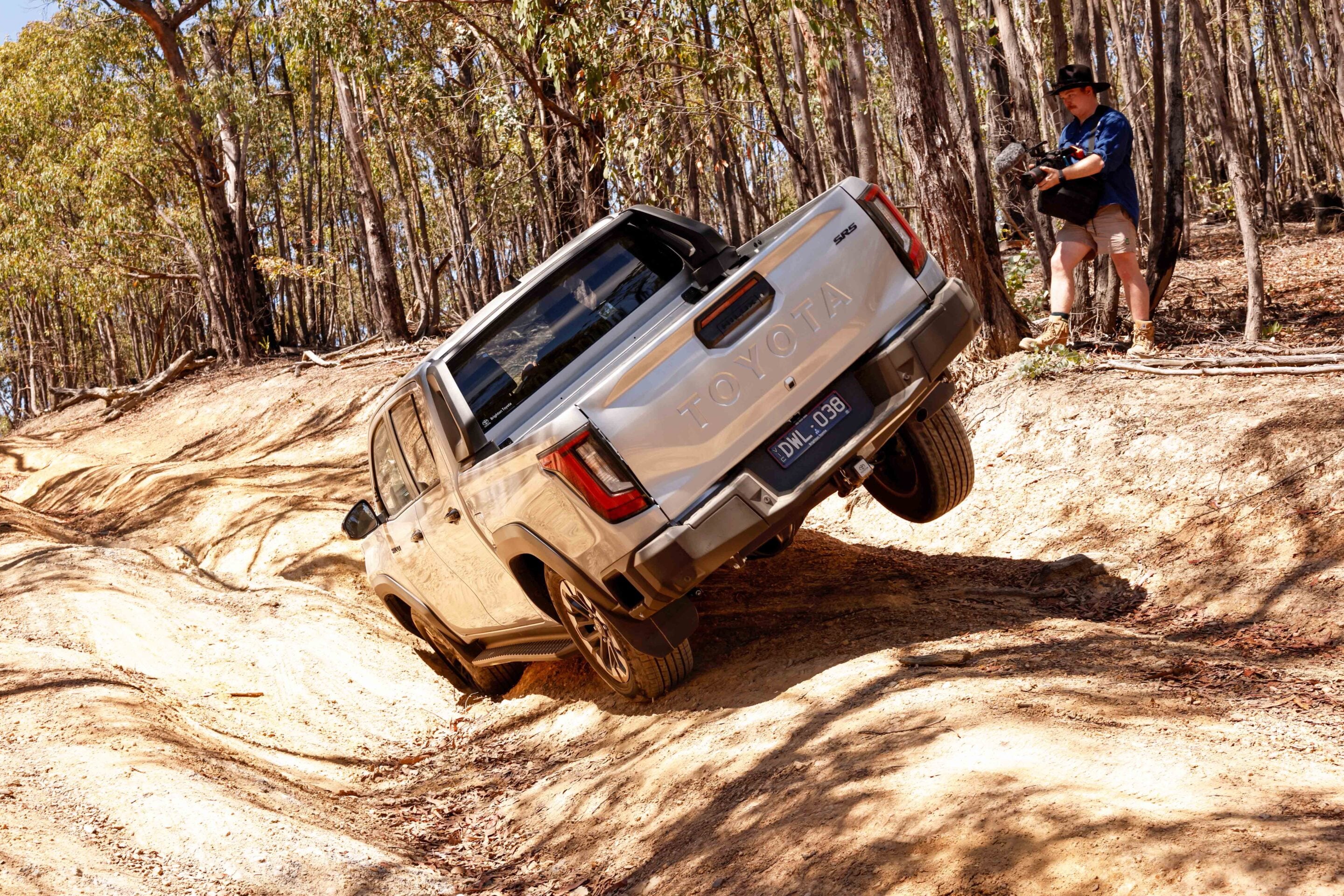
The new HiLux still does off-road extremely well.
The rear axle has good articulation to keep the wheels on the ground and, if that runs out, there’s a rear diff lock to push through. The electronic traction control is sharp and serves the HiLux well in most situations. The new HiLux gets the Multi Terrain Selector we see in the 250 Series Prado, but it’s a shame it doesn’t get the Crawl Control system as well.
A bonus of keeping the chassis and suspension similar to before is that the aftermarket won’t need to do much to adapt suspension systems, trays and service bodies to the new model. We’re already seeing bullbars and protection gear for the new HiLux from some of the bigger 4×4 aftermarket brands, and we look forward to seeing some built-up examples.
While the new HiLux feels more like a mid-life update than a new-generation vehicle, we’re glad Toyota hasn’t messed with the formula too much and the HiLux sticks to its guns.
| Hilux SR5 off-road specs | |
|---|---|
| Approach angle | 29 |
| Ramp-over angle | N/A |
| Departure angle | 26 |
| Wading depth | N/A |
| Ground clearance | 224mm |
1
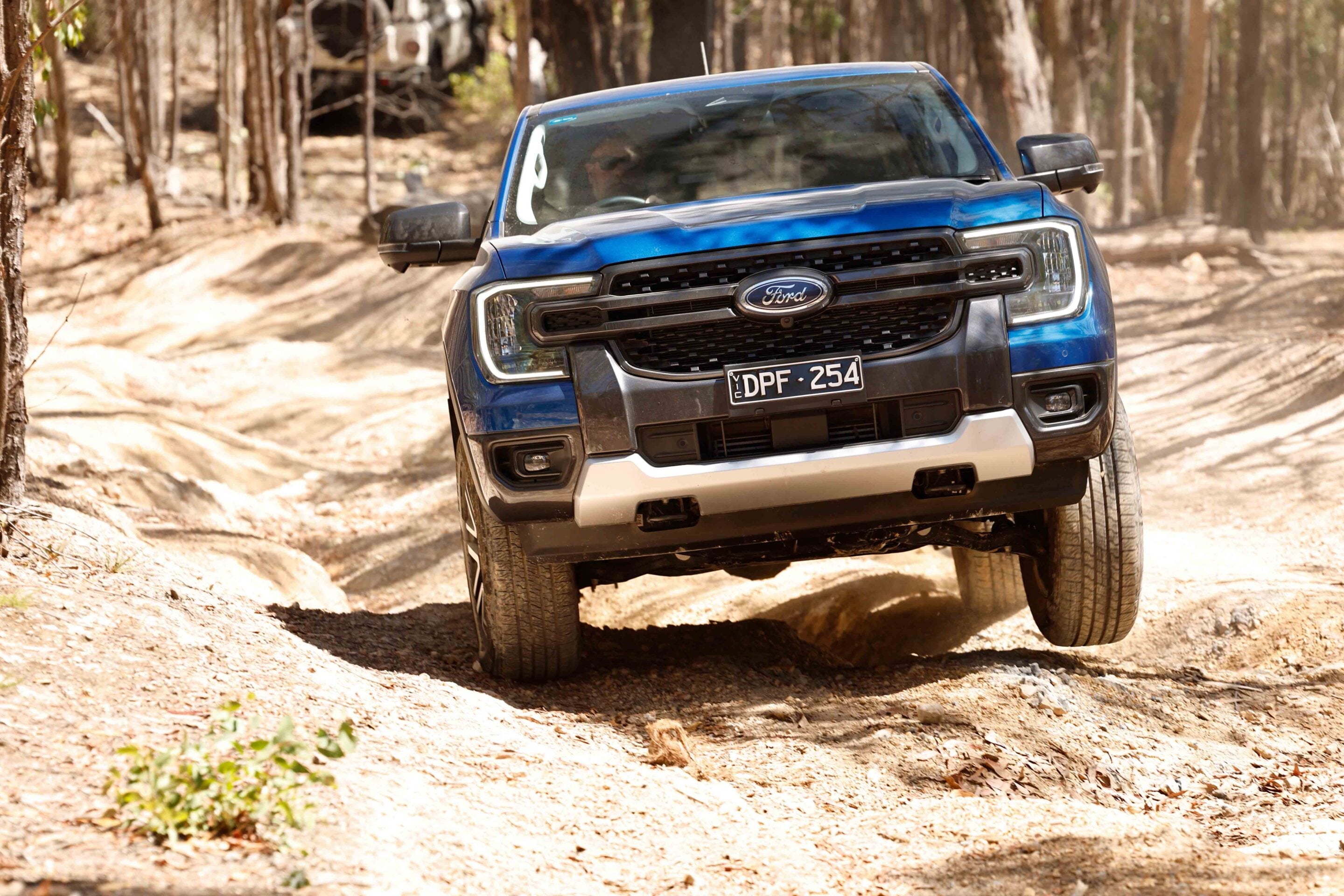
Ford Ranger Sport V6
It’s hard to believe it’s been four years since Ford dropped its P703 Ranger on the world and totally shifted the midsize 4×4 ute market.
The so-called ‘Next-Gen Ranger’ brought a vehicle that was bigger, bolder and better appointed than anything else in the segment at the time. Add in the option of a V6 diesel engine and the Raptor model and the Ranger changed the way many of us look at utes. Significantly, it was enough to topple the long-time sales-leading HiLux off the top of the 4×4 sales charts.
Ford Australia continues to break boundaries with the model, with the recently launched Ranger Super Duty giving a midsize ute capability we’d never dreamed of and creating yet another segment. Back to the original P703 Ranger though and, aside from trim changes, special editions and the introduction of a PHEV variant, not a lot has changed on the popular workhorse. The forthcoming deletion of the bi-turbo engine will be the biggest change to date on the original model.
1
The changes will see V6 availability expanded across the line-up, while the Sport model we have here will be deleted and replaced with a Wolftrack specification between the XLT and Tremor models. The 2026.5 XLT V6 will be priced from $67,990+ORC while the Wolftrack from $70,990+ORC. While the full details of those 2026.5 Rangers will be revealed closer to launch, the mechanical specs will remain the same as the 2026 Sport we have here.
The Ranger, and the Amarok that VW spun off it, are the only utes in this class to offer a V6 diesel engine. This puts them in a unique position in the segment in terms of torque and refinement over the 4-cylinder competition, but that does come at a cost at the diesel pump as the V6 can enjoy a drink, particularly when loaded heavily or riding on taller-than-stock tyres.
On-road performance
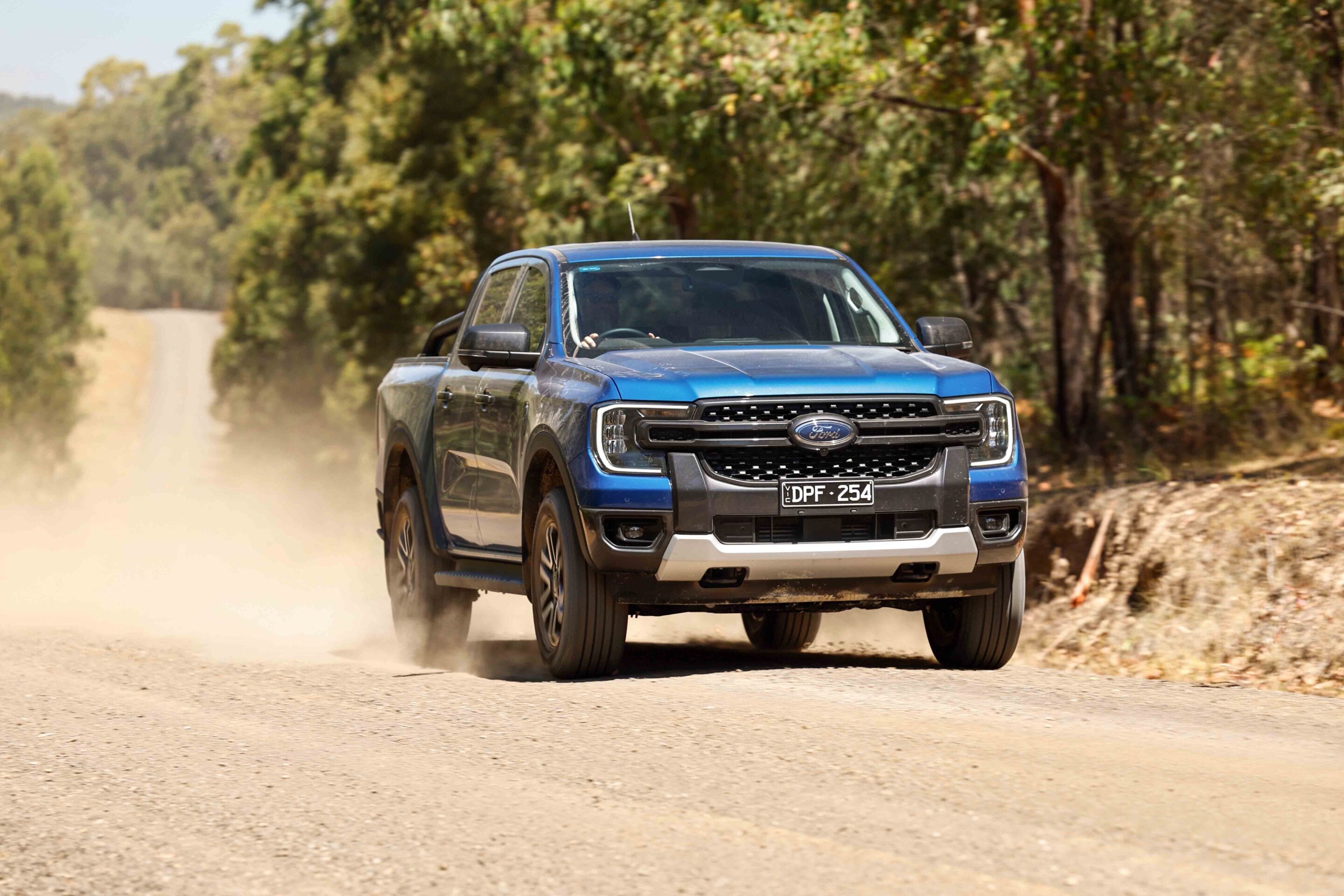
Forget about fuel consumption and Ranger V6 drivers and passengers will appreciate the wide cabin, generous rear-seat space and the effortless performance of the 184kW/600Nm V6 and 10-speed transmission combo.
It doesn’t feel a whole lot faster than the 2.8-litre HiLux, if at all, but it delivers its pace with a more relaxed, easy-going gait – something that’s especially appreciated on long drives. Also welcome is the inclusion of an on-demand 4×4 setting in the transfer case, which allows all-wheel drive traction on any road surface, sealed or not. This improved drivability is particularly beneficial in wet weather and when towing a heavy trailer.
Another strong point is the Ranger’s smooth, comfortable ride. Thanks to its relatively long wheelbase and compliant suspension, the Ford shows very little of the harshness or jitter that can be present in most other utes in this category, particularly when you’re driving them unladen.
1
Interior
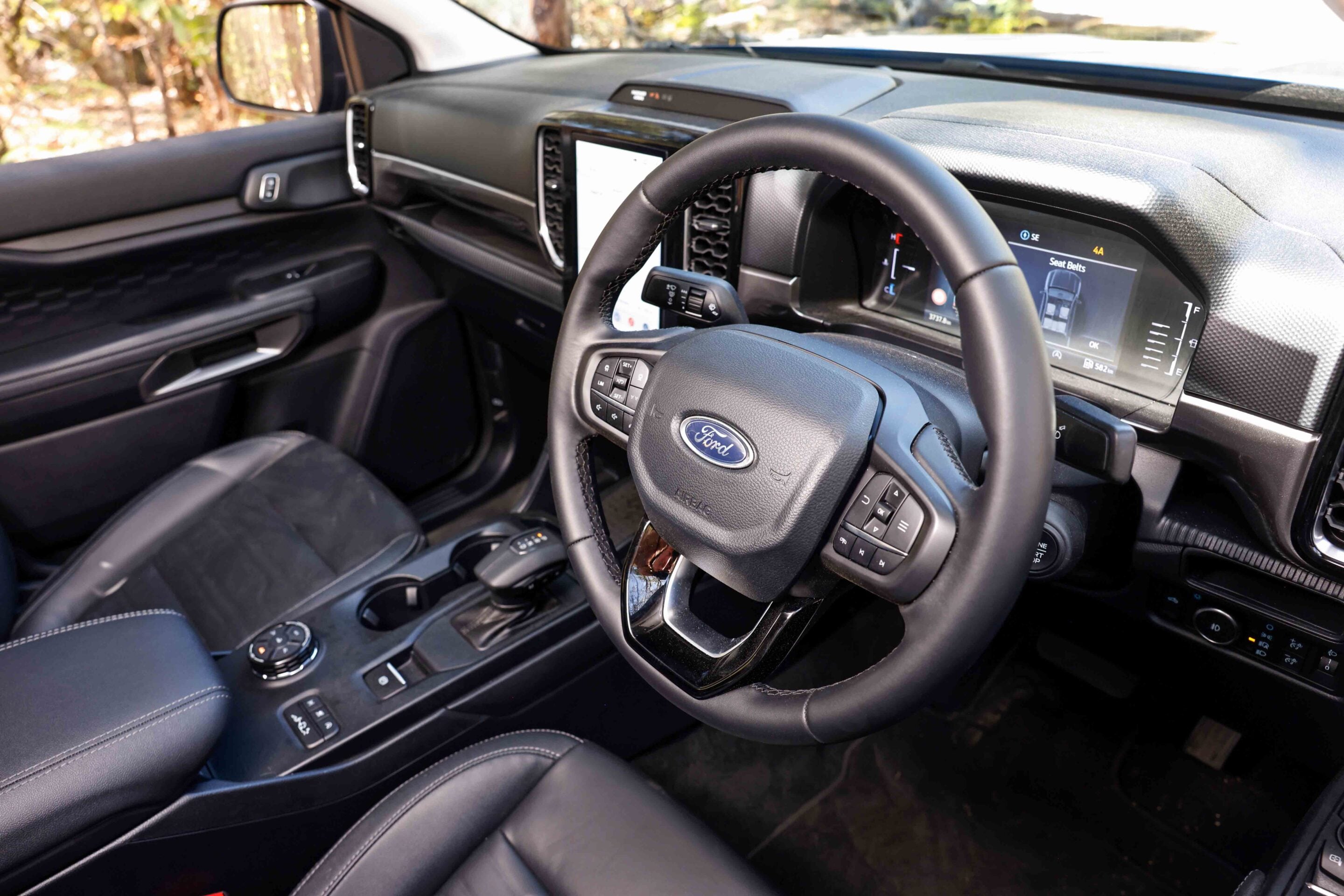
As mentioned, the Ranger Sport is a grade above the SR5 and this is reflected in the cabin, where it comes with leather-trimmed seats and power adjustment. That gap can be closed by optioning the Premium Pack in the HiLux.
The Ranger has a 12-inch multimedia screen positioned vertically and low in the centre stack, rather than high-mounted like the HiLux. The screen has all the key functions, including built-in sat-nav and SYNC apps, an off-road screen, wireless Apple CarPlay and Android Auto, and there’s a single wireless phone charger.
A plus for the Ford is its towing app, which provides a checklist when hitching up, along with a trailer light check. Add in the integrated trailer brake controller in the dash and it’s clear Ford has thought about towing customers when configuring this ute. Both the Ranger and HiLux have a 3500kg towing capacity and while the Ranger has around 100kg more GCM, it’s also heavier overall, so the real-world difference isn’t huge.
48
Off-road performance
With its torquey engine, long wheelbase, rear diff lock and compliant suspension, the Ranger V6 has always been a competent off-road ute.
Its electronic traction control is a bit slow to react to wheel slip compared to some other marques, particularly the HiLux. The off-road drive modes help, but it generally calls on its rear locker sooner than you might expect. Thankfully, the Ranger also keeps its traction control active across the front axle when the rear diff lock is engaged, for better off-road traction.
Ford’s partnership with ARB means owners can kit their Ranger out via the dealer with all the ARB gear they want, but all the major 4×4 accessory brands also have plenty of equipment for the popular Ford.
The Ranger might be getting old in new-car terms, but constant local development by Ford Australia, regular variant updates, and unique models like the Raptor and Super Duty – which have created their own segments – mean the ute continues to evolve and stay current, supporting its popularity and longevity.
| Ranger Sport V6 off-road specs | |
|---|---|
| Approach angle | 30 |
| Ramp-over angle | 21 |
| Departure angle | 23 |
| Wading depth | 800mm |
| Ground clearance | 234mm |
Verdict
These two utes are the top-sellers in the class and, with so many similarities between them, it’s the points of difference you pick up in back-to-back testing that ultimately separate them.
The HiLux is solid and dependable, and this ninth-generation update is a clear step forward. But the Ranger’s powertrain – with its smooth, torquey V6 and a transfer case that offers on-road 4×4 – edges it ahead for performance and drivability. Those strengths keep the Ford in front in this close test. That said, you can’t really go wrong with either ute.
Specs
| Specification | 2026 Toyota Hilux SR5 | Ford Ranger Sport V6 |
|---|---|---|
| Price | $65,990+ORC | $71,340+ORC |
| Engine | Inline 4-cylinder turbo-diesel | V6 turbo-diesel |
| Capacity | 2755cc | 2993cc |
| Max power | 150kW@3000-3400rpm | 184kW@3250rpm |
| Max torque | 500Nm@1600-2800rpm | 600Nm@1750-2250rpm |
| Transmission | 6-speed automatic | 10-speed automatic |
| 4×4 system | Part-time dual-range 4×4 | Full-time 4×4 (2WD, 4×4 Auto, 4×4 High, 4×4 Low) |
| Construction | 4-door ute with tub on ladder chassis | 4-door ute with tub on ladder chassis |
| Front suspension | Independent double wishbone with coils | Independent wishbones with coils |
| Rear suspension | Live axle on leaf springs | Live axle on leaf springs |
| Tyres | 265/60R18 alloy wheels | 255/65R18 alloy wheels |
| Kerb weight | 2215kg | 2264kg |
| GVM | 3090kg | 3280kg |
| Payload | 900kg | 934kg |
| Towing capacity | 3500kg | 3500kg |
| GCM | 6300kg | 6400kg |
| Seating capacity | 5 | 5 |
| Fuel tank | 80L | 80L |
| ADR fuel use | 8.0L/100km(combined) | 8.4L/100km(combined) |
Follow 4X4 Australia on Google
Get more 4x4 news, reviews and gear stories from 4X4 Australia in your Google feeds.

We recommend
-
 4x4 Comparisons
Toyota Prado GX vs Ford Everest Trend: Base model off-road comparison
Two popular entry-level 4x4 wagons, tested for real-world off-road touring. Brought to you by Club 4x4 Insurance.
-
 Advice
Stranded in the Outback? Why your roadside assistance could make or break your trip
A breakdown in the bush can escalate quickly – having the right roadside cover could be your ticket home