Reviews


Gallery 1
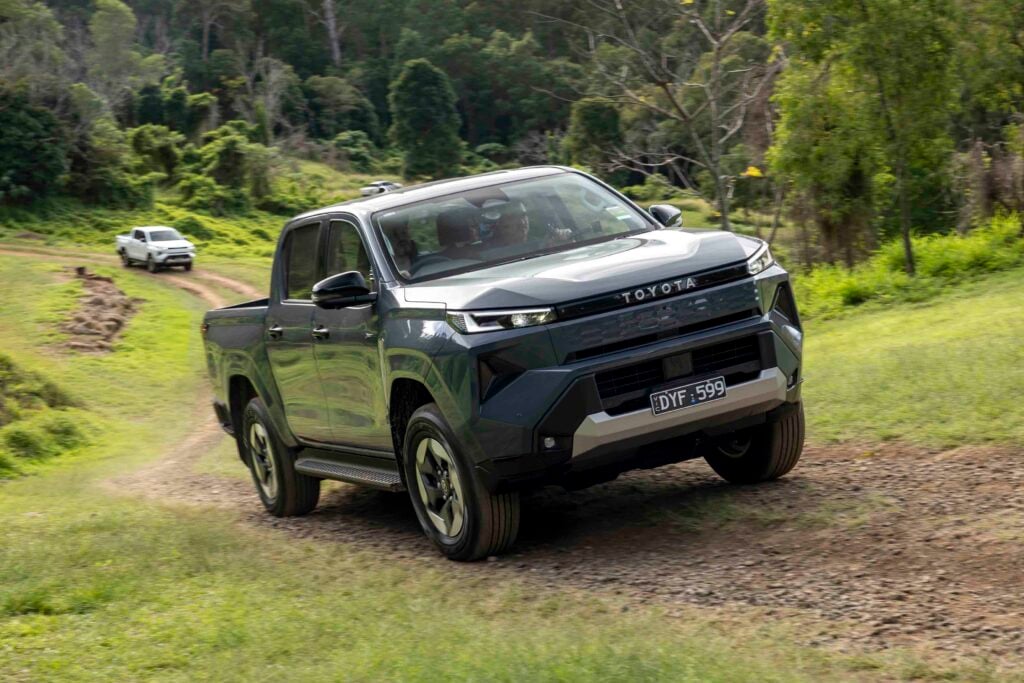
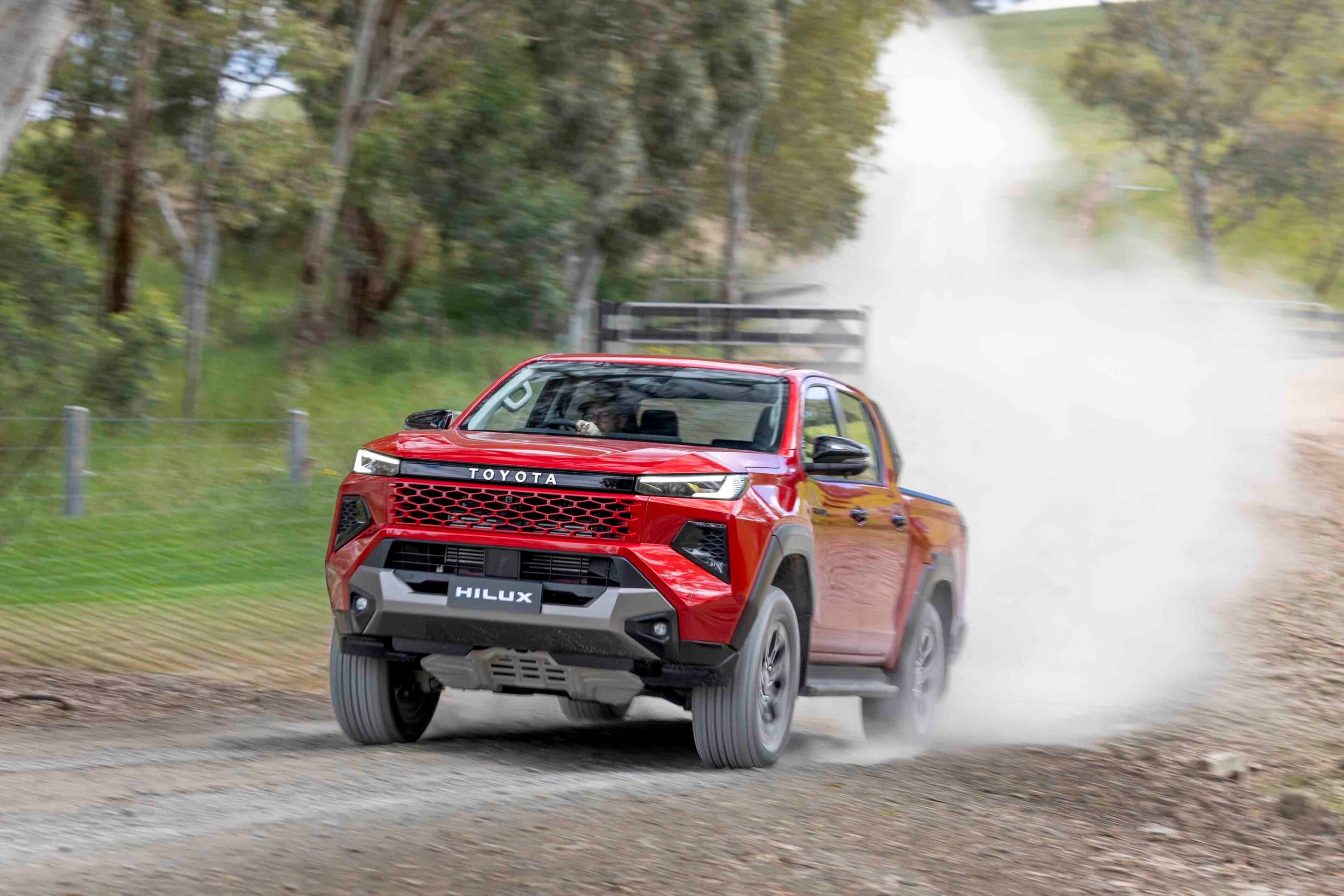
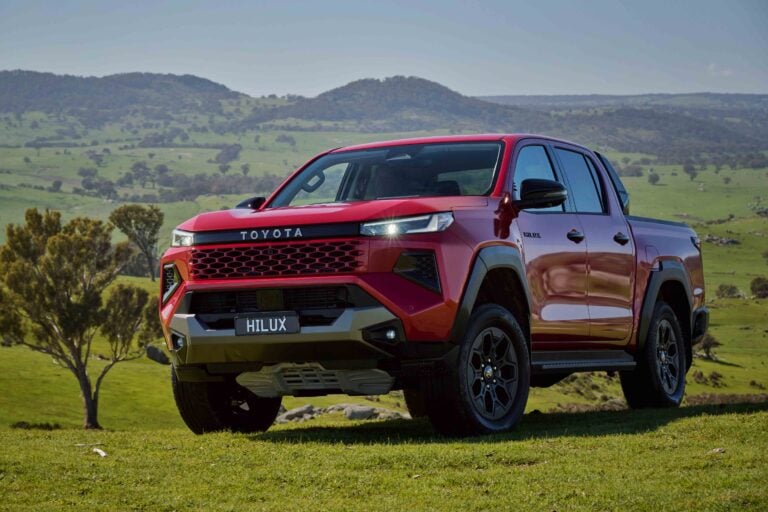
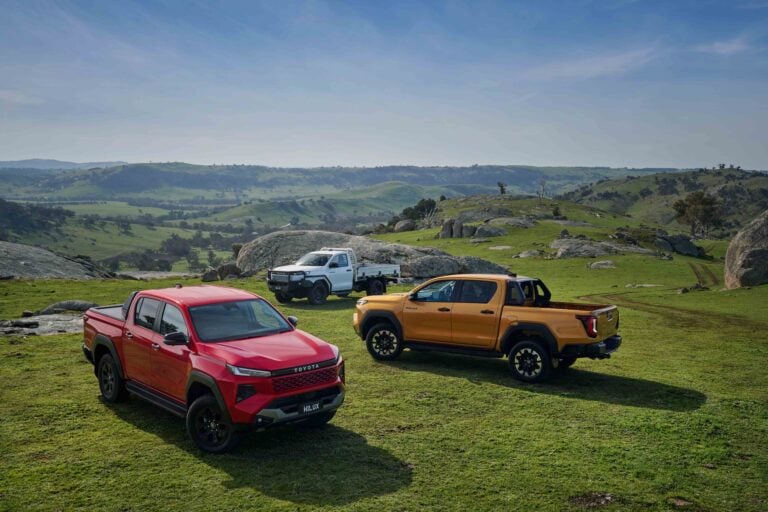
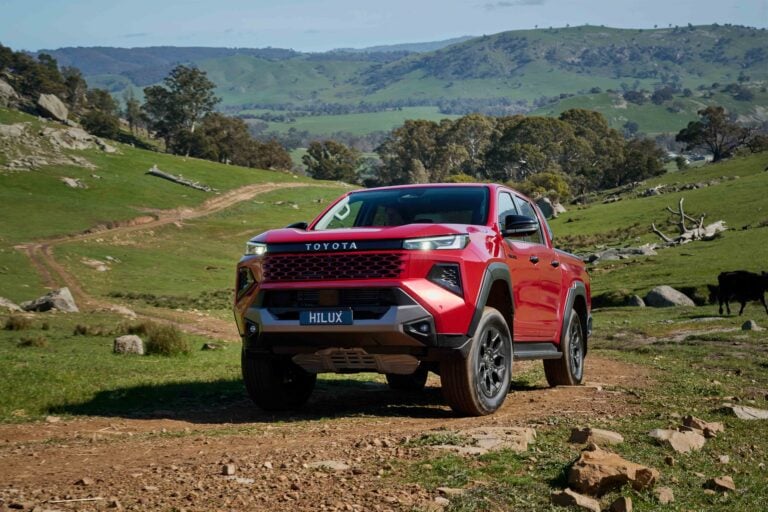
The launch drive of the new HiLux was conducted on forest trails and roads between Canberra and the NSW South Coast, providing a great mix of on- and off-road conditions, from challenging pinch climbs to cruisey gravel and bitumen sections.
Toyota also supplied a broad spread of HiLux variants, from the base WorkMate through SR and SR5 grades, in both manual and automatic, right up to the HiLux Rogue. They did have a Rugged X on display, but it was a pre-production vehicle, and we didn’t get the chance to drive it – not that it matters too much, as the mechanical package is the same as the Rogue anyway.
- Manual transmission and powertrain
- Suspension and on-road refinement
- Interior comfort and features
- Verdict
Manual transmission and powertrain
It was great to start off in a manual HiLux – we don’t get many opportunities to operate a clutch and gear lever when testing new cars these days – and the HiLux’s stick-shifter is a ripper. The six-speed box offers a smooth and direct shift pattern, while the clutch is light and progressive.
Shifts are aided by Toyota’s Intelligent Manual Transmission (IMT) feature, which matches engine revs to the shift for smoother, easier gear changes. There’s no need for heel-and-toe throttle blipping to tidy up downshifts; the HiLux’s IMT does the work for you.
1
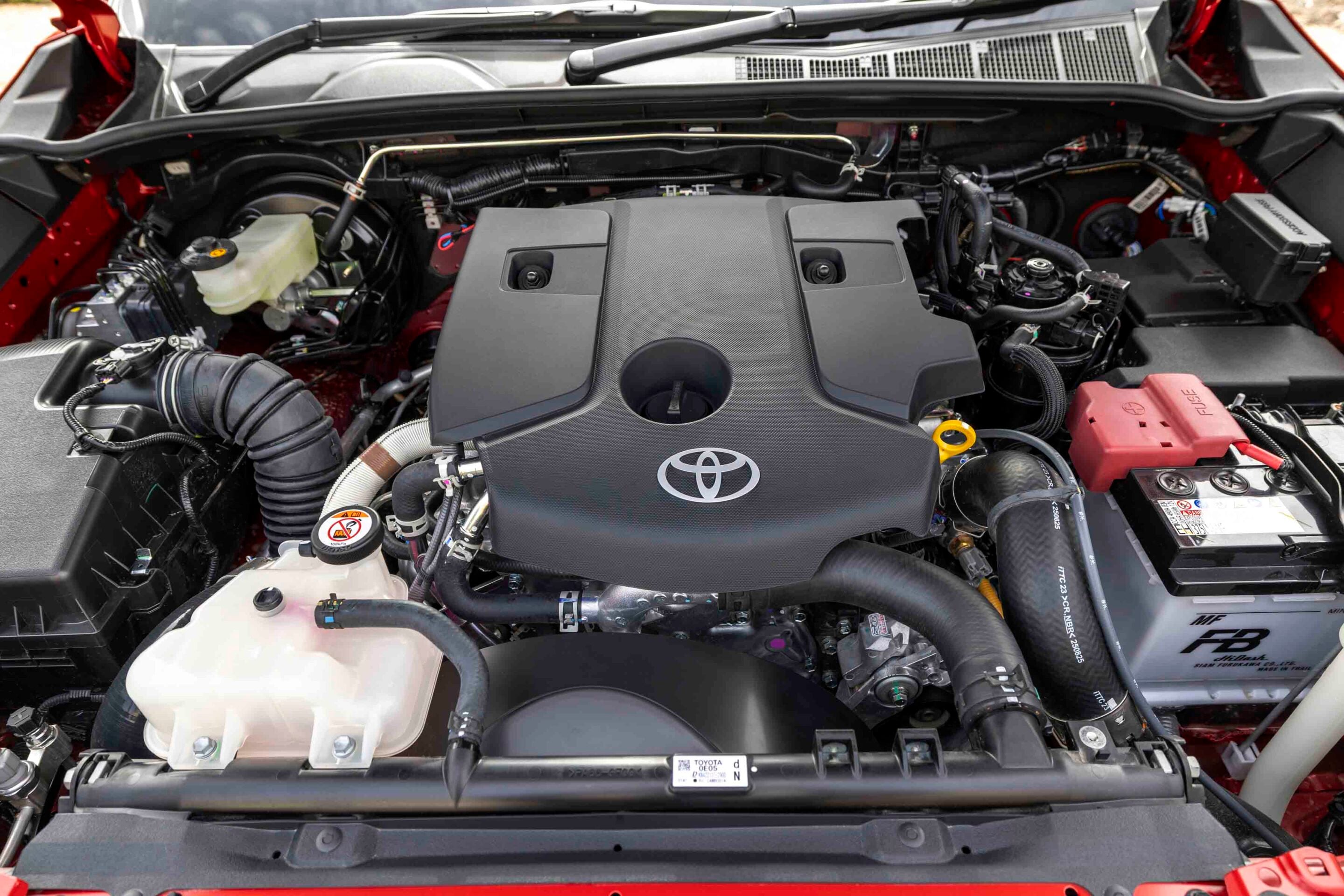
The 2.8 engine is de-rated from 500Nm to 420Nm with the manual gearbox behind it, but you wouldn’t know it. The direct connection you get when using a clutch and gearbox feels more positive, without the losses incurred through the torque converter and automatic transmission. Sure, autos have come a long way and are far more efficient these days, but there’s still something just right about shifting your own cogs in a working-class ute.
The 420Nm tune in the 1GD engine leaves nothing to complain about, easily propelling the unladen HiLux over hills and through dales, both on- and off-road, where again that light, precise clutch action was appreciated. Like any four-cylinder diesel, the Toyota unit gets a bit raucous when pushed hard into the higher revs, but that’s an inherent trait of the configuration; it’s the same for any inline four-cylinder internal combustion engine. We’ll be keen to sample the performance of a HiLux with a load on.
Suspension and on-road refinement
The lower grades of the HiLux retain the standard suspension calibration, so they do feel firm and a bit harsh on rough roads when driven without a load in the back.
It’s nothing worse than you’d expect of any working-class ute, and still better than many in the class. Stepping up to the SR5 with the Premium Pack and automatic transmission brings a whole new feeling to the HiLux. The leather-covered seats, larger instrument-cluster screen and centre stack with MTS controls and other functions not available in the SR give the HiLux a more premium and well-equipped appearance and feel.
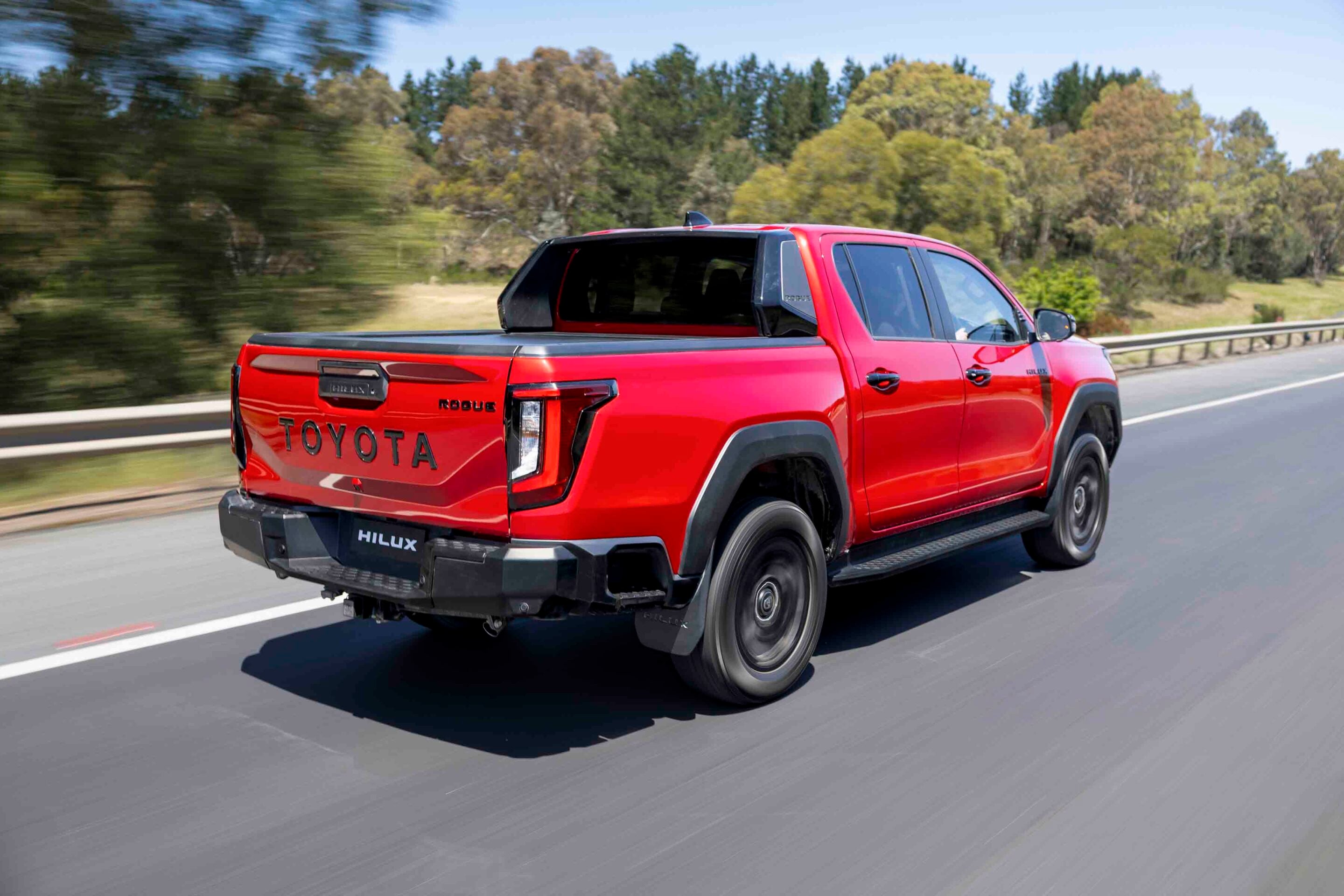
This is backed up on the road, where you immediately appreciate the more compliant suspension calibration that comes in SR5 and above, delivering a softer ride without feeling wallowy. This is the grade of HiLux you’ll want if it’s your daily driver with no load on board.
1
The drive modes in the SR5 also offer the driver a Sport setting, which provides more feedback through the electric power steering (EPS). Sport mode doesn’t just firm the steering; it improves overall feel and driver confidence compared with the standard mode, which is noticeably lighter.
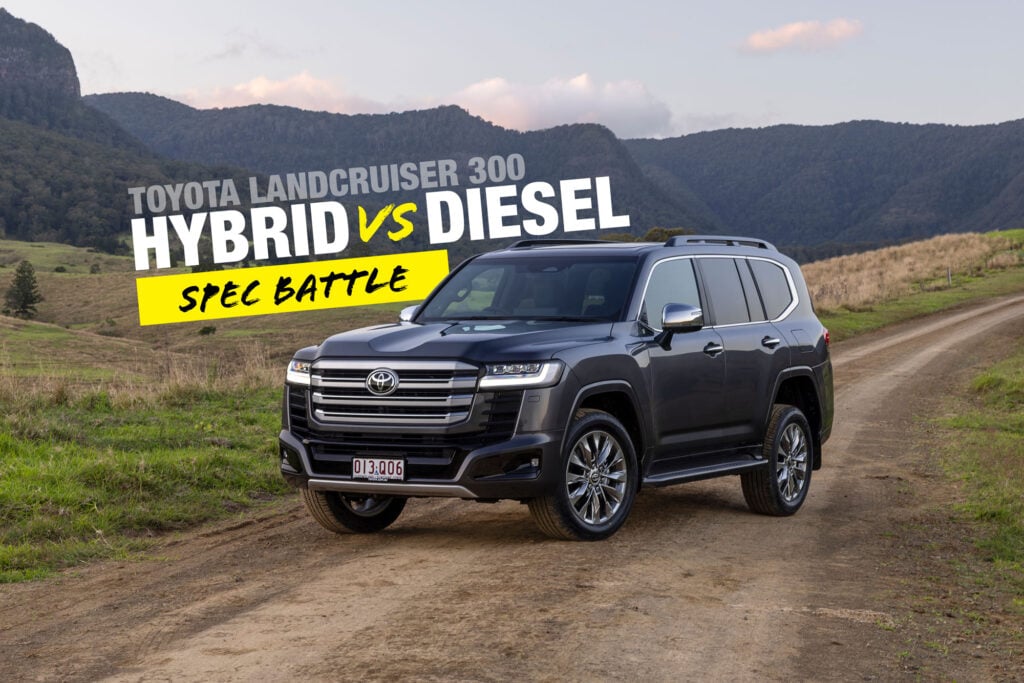
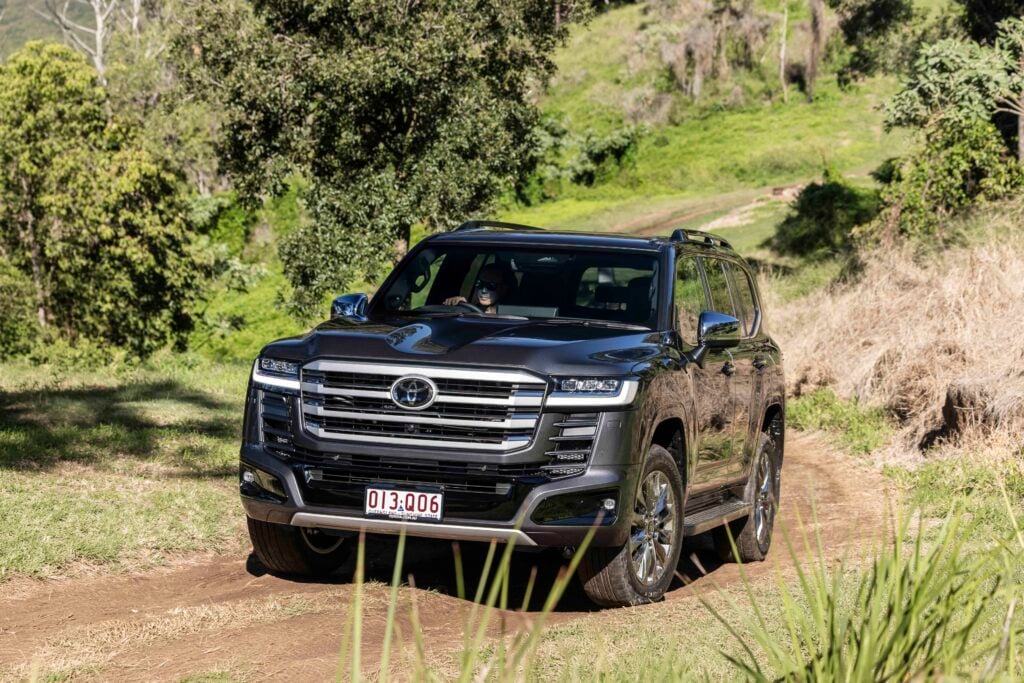
Lane-keeping intervention was noticeable on the highway, but I didn’t find it as intrusive as the system in the LandCruiser 300. The HiLux gains new ADAS features thanks to the implementation of EPS, which enables autonomous steering inputs. The systems in the HiLux felt relatively less annoying, although we didn’t do much city driving on this launch program.
The launch program took us over plenty of forest tracks, some mogulled powerline sections and a few rocky climbs, and as it has always done, the HiLux’s rear axle articulated beautifully to keep tyres on the ground while the excellent ETC smoothly regulated drive to the wheels with the most grip.
None of these tracks really challenged the vehicle systems, but our earlier pre-production drive on a steep, rutted and wet hill clearly demonstrated the advantage of having ETC remain active on the front wheels when the rear differential lock is engaged. This is new to HiLux, and it only provides ETC up to 6km/h when the RDL is locked.
Interior comfort and features
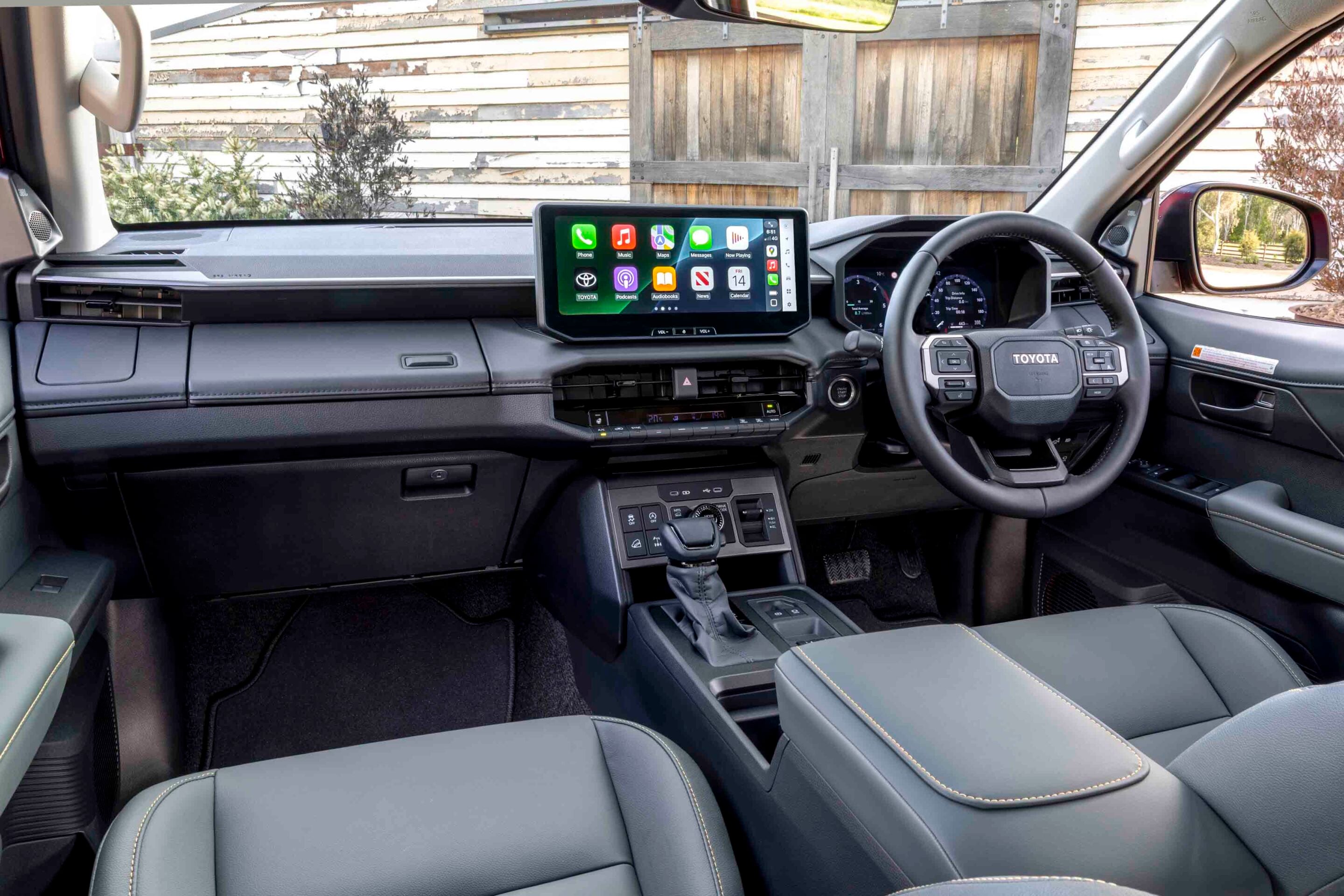
The new Australian-designed interior gives the HiLux a more modern look and feel than the ageing outgoing model.
There’s a strong resemblance to the 250 Series Prado, particularly around the centre stack where several components and controls will be familiar from the wagon. The layout changes at SR5 and above, where you get the MTS and drive-mode dial alongside the HVAC and audio controls.
The 12.3-inch multimedia screen is positioned high on the dash, with the main controls just inches from the driver’s left hand, making on-the-go adjustments to navigation and music quick and easy. My only complaint is that the start button has moved to the wrong side of the steering column, where it’s partially hidden behind the wheel. Aside from that, it’s an interior that offers drivers and passengers good comfort, quality inclusions and clear vision out of the vehicle.
29
Verdict
The best thing about the new HiLux is that Toyota hasn’t messed with it too much, sticking with what is already a winning formula.
The engine and transmissions are among the best in class; its on- and off-road performance is likewise impressive, and the updates made don’t detract from the established package. Most of all, Toyota hasn’t tried to make the HiLux anything it isn’t, or anything it shouldn’t be.
It remains a 4×4 work ute, with the option of added creature comforts and features in the higher-grade models for those who want them. And for that, we are grateful.
Follow 4X4 Australia on Google
Get more 4x4 news, reviews and gear stories from 4X4 Australia in your Google feeds.

We recommend
-
 News
News2026 Toyota HiLux unpacked: Everything you need to know
Revised models, streamlined powertrains and a look at upcoming alternative-fuel options
-
 News
News2026 Toyota HiLux pricing and model line-up revealed
Toyota has detailed pricing and the full model line-up for the new HiLux
-
 Opinion
Has Toyota done enough with the new HiLux?
The new HiLux sticks with an ageing platform, but will Toyota’s conservative approach come back to bite them?