News
Gallery 1
Australia’s ute market is heading into a busy period, with a steady influx of new 4×4 models joining the segment across both established brands and new entrants.
Much of the focus is shifting toward plug-in hybrid and electric variants, alongside updated diesel offerings that continue to serve traditional work and touring buyers. From familiar nameplates moving into electrification to all-new global utes entering the local market, the next few years will broaden choice across capability, efficiency and technology without moving away from core 4×4 functionality.
JUMP AHEAD
- JAC Hunter PHEV
- Chery Stockman
- Nissan Frontier Pro PHEV
- VW Amarok W600
- LDV eTerron9
- Chevrolet Silverado EV
- Rivian R1T
- Riddara RD6
- Isuzu D-MAX EV
- JAC T9 EV
- Ford F-150 Lightning EREV
- BYD Shark 2.0
- Ford Ranger Super Duty Pick-Up and XLT
- KGM Musso
- Mahindra Pik-Up
- Ford Ranger PHEV update
- Ram TRX
- GWM Cannon Alpha (3.0L diesel)
- GWM Cannon Hi4-T PHEV
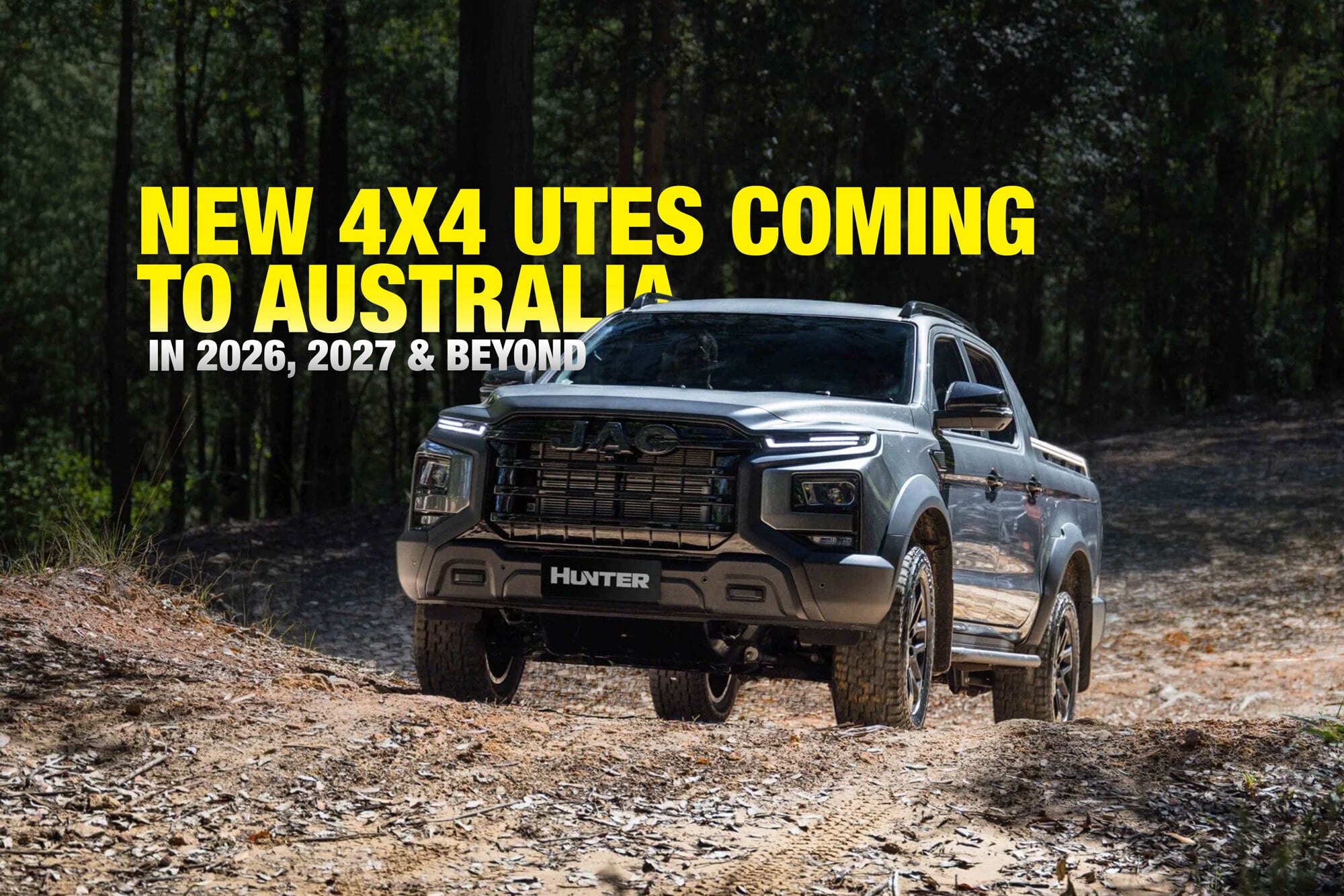
JAC Hunter PHEV: August 2026
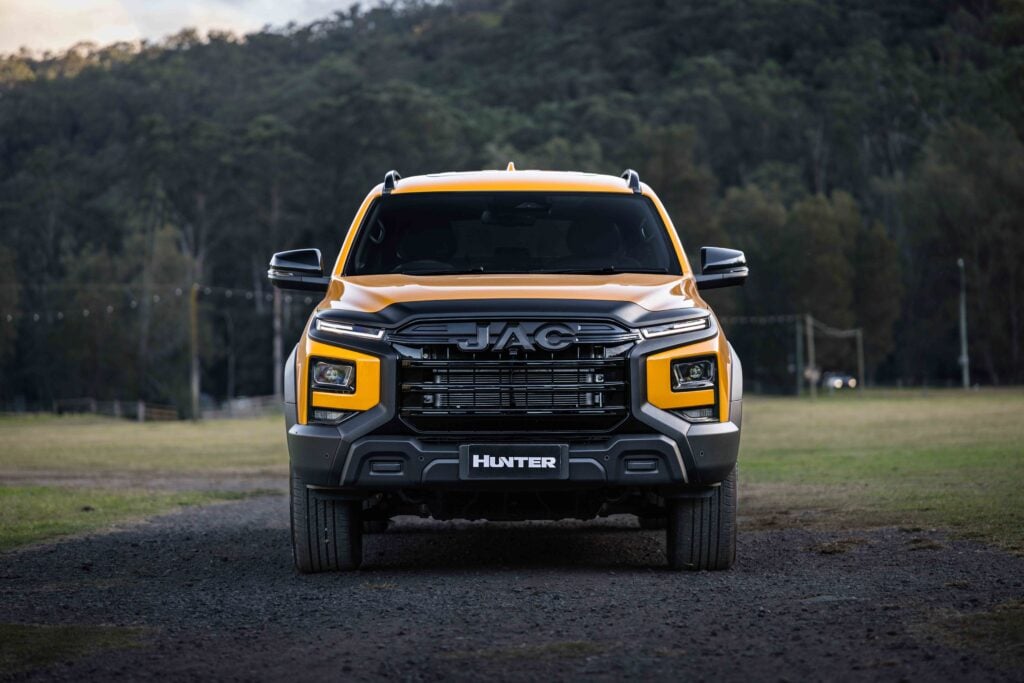
The JAC Hunter PHEV is shaping up as a high-output entrant in Australia’s hybrid ute segment, built around a plug-in hybrid system that prioritises outright performance.
Early specifications point to a turbocharged petrol engine paired with dual electric motors, delivering combined outputs of around 385kW and up to 1000Nm. This setup suggests a dual-motor AWD configuration rather than a purely mechanical 4×4 system.
Energy is supplied by a high-capacity lithium-ion battery (31.2kWh), supporting an electric-only driving range of roughly 100km under mixed real-world conditions. Multiple drive modes are expected including EV-only operation for urban use, hybrid for efficiency and full-performance modes that deploy maximum combined output. Regenerative braking and an integrated power control unit manage energy flow to balance efficiency with sustained performance.
Despite the focus on power, the Hunter is being engineered with typical ute duties in mind. A braked towing capacity target of 3500kg aligns it with segment benchmarks, while the chassis is expected to retain a ladder-frame construction for durability. Off-road capability will likely rely more on electronic traction systems and motor-driven torque distribution than traditional low-range gearing.
Chery Stockman: Late 2026
The Chery Stockman takes a genuinely unique direction as the world’s first ute to pair a diesel engine with a plug-in hybrid system.
At its core is a 2.5-litre turbocharged diesel combined with electric assistance in a parallel hybrid layout, allowing the electric motor to supplement torque delivery under load while also enabling engine-off driving in low-demand situations. The result is a system designed to maximise diesel’s strengths – strong low-end pulling power and efficiency at sustained loads – while addressing its traditional weaknesses in refinement and responsiveness.
Chery claims a standout 47-per-cent thermal efficiency for the diesel engine, along with around 10-per-cent better fuel economy compared with a conventional diesel setup. The electric motor provides instantaneous torque fill, improving drivability and reducing lag, while also contributing to a claimed 30-per-cent reduction in vibration levels.
A lithium-ion battery (expected 20 to 30kWh) supports an electric-only driving range likely in the 80 to 100km range, with multiple operating modes including EV, hybrid assist, and engine-priority for highway or towing conditions. It’s expected to ride on a ladder-frame chassis with full 4×4 hardware, while offering a 1000kg payload and a 3500kg braked towing capacity.
Nissan Frontier Pro PHEV: Early 2027
Nissan Frontier has long been known for tough, no-nonsense 4×4 capability, and a plug-in hybrid version is increasingly likely as part of Nissan’s electrification push.
The Frontier Pro PHEV is expected to pair a 1.5-litre four-cylinder petrol engine with a transmission-mounted electric motor, producing around 320kW and 800Nm. A 33kWh battery is claimed to deliver up to 135km of electric-only range (CLTC), with fuel use rated at 6.9L/100km.
Utility remains a focus, with a 3500kg braked towing capacity keeping it competitive with diesel rivals. Timing is still unconfirmed, though an early 2027 window is widely anticipated.
VW Amarok W600: Q3, 2026
Volkswagen has unveiled its 2026 Amarok range, led by the new W600 special edition, developed in collaboration with the Walkinshaw Automotive Group.
The W600 will bring Australian-engineered performance, enhancing Amarok’s dynamic capability for local conditions. Positioned at the top of the MY26 range, this halo model will deliver enhanced off- and on-road performance tailored to Australian enthusiasts. Full details on the W600 will be released later this year.
Joining the W600 at the top of the line-up is the limited-run Amarok Dark Label V6, capped at 200 units nationally. The Dark Label pairs V6 performance with an exclusive black-accented styling package. Highlights include 20-inch matte black ‘Bendigo’ wheels, black IQ.Light LED Matrix headlights, darkened taillights, black sports bar, side steps, mirrors, door handles, rear bumper, black front skid plate, matte black roof rails and B-pillar foil, a spray-in tub liner, black tonneau cover, and a bespoke Dark Label sticker pack. Pricing and arrival timing will be announced closer to launch.
LDV eTerron9: TBC
The LDV eTerron 9 is set to arrive in Australia in 2026 or 2027 as the brand’s flagship battery-electric ute.
It will offer both single‑motor rear‑wheel drive and dual‑motor all‑wheel drive, with the AWD system producing 325 kW combined and the RWD version delivering 200kW. A 102kWh LFP battery is expected to provide up to 430 km of range, while braked towing capacity reaches 3.5 tonnes, matching the diesel Terron9.
The eTerron 9 shares the same dimensions as its diesel counterpart: 5500mm long, 1997mm wide, 1,860 mm high, with a 3,300 mm wheelbase and a ground clearance of 230mm. Pricing for Australia has not been confirmed, but details will be released closer to its 2026 launch.
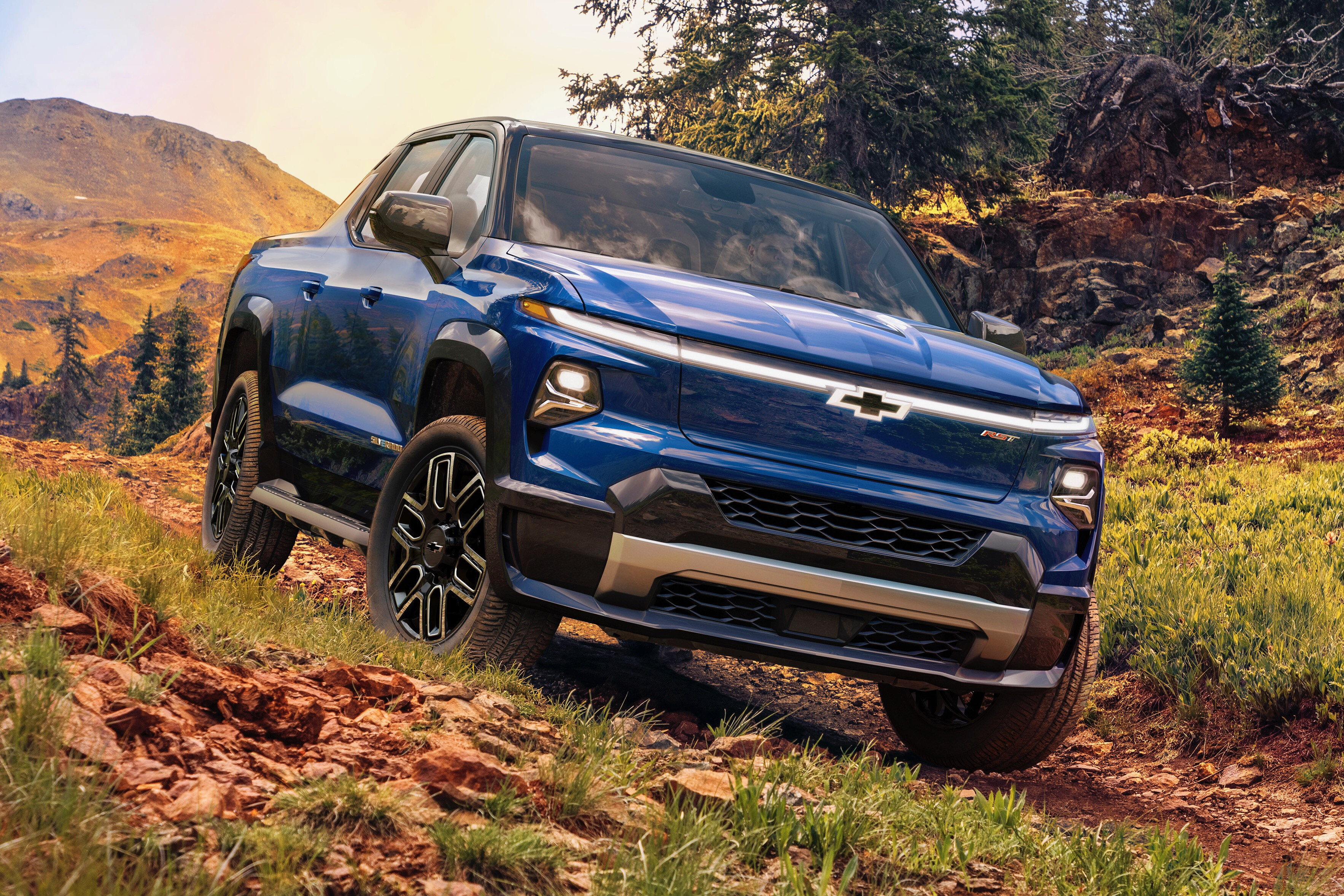
Chevrolet Silverado EV: TBC
The Chevrolet Silverado EV is a full-size all-electric ute built on GM’s Ultium platform, offering dual-motor all-wheel drive with up to 541kW and 1051Nm in performance trims.
Depending on the battery and variant, it can deliver up to around 780km of range and supports heavy-duty towing of roughly 4500 kg, making it suitable for work or lifestyle use. Global trims include the fleet-focused Work Truck, the retail-oriented RST/Max Range, and the off-road Trail Boss, with features such as 350kW DC fast charging, adaptive air suspension, four-wheel steering, configurable tailgate and Midgate, and exportable onboard power.
The Silverado EV is not officially sold through Australian dealers, but right-hand-drive conversions by specialist importers like Autogroup International make it accessible for local buyers seeking a full-size American electric ute experience.
1
Rivian R1T: TBC
The Rivian R1T is an all-electric mid‑size ute available overseas in dual‑motor and quad‑motor all-wheel-drive configurations.
The quad-motor setup provides advanced torque vectoring, while adjustable air suspension raises clearance to 381 mm. Acceleration is brisk, with 0-97 km/h in the low-three-second range depending on battery and motor choice. Battery options span 105kWh, 135kWh and 149kWh, delivering 370-645 km of range under WLTP/EPA testing. The cabin features a 12.3‑inch digital cluster, 15.6‑inch touchscreen, multiple drive modes, and utility options such as the Gear Tunnel.
In Australia, the R1T is not officially sold and no RHD consumer version exists. A small number of left-hand-drive units have been imported for mining and industrial use by WA-based MEVCO, and a test mule was spotted on Melbourne roads in late 2025. These vehicles are typically limited to private sites and aren’t road-legal for general public use.
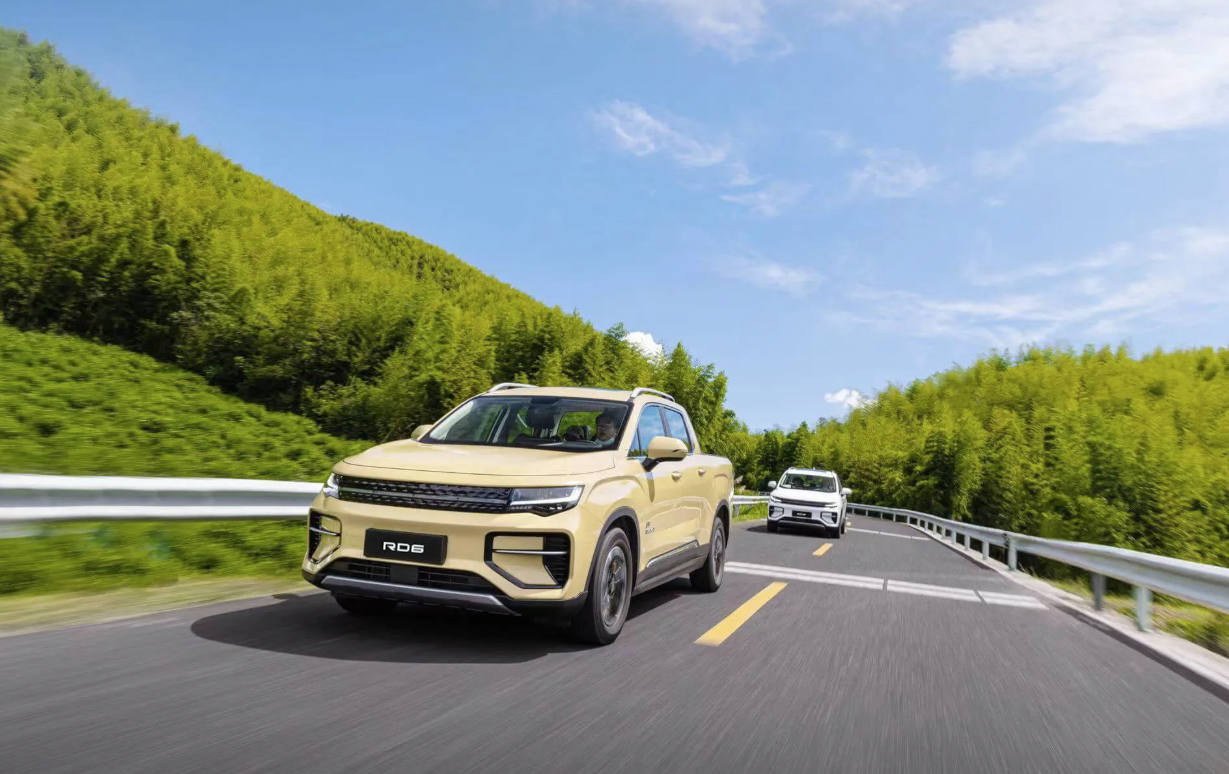
Riddara RD6: TBC
The Riddara RD6, an all-electric dual-cab ute from Geely’s Radar brand, is poised to enter the Australian market.
It offers RWD and AWD variants, with power ranging from 200kW/384Nm (RWD) to 315kW/594Nm (AWD), and 0 to 100 km/h times of around 7.3 and 4.5 seconds respectively. Battery options deliver 385-500 km of range (CLTC), and AWD models can tow up to 3000 kg braked.
Inside, the RD6 features a 14.6‑inch touchscreen, digital instrument cluster, dual‑zone climate, and utility-oriented comfort for work or off‑road use. Right‑hand-drive production has been confirmed, and the RD6 has launched in Thailand, making an Australian release possible in 2026, though pricing and full specifications are yet to be announced.
1
Isuzu D-MAX EV: TBC
The Isuzu D‑MAX EV is a fully electric version of the popular midsize ute, with right-hand-drive units expected in Australia in 2026.
While Isuzu Ute Australia has not confirmed local availability or pricing, the EV features a dual-motor full-time 4×4 system producing 140kW and 325Nm, paired with a 66.9kWh battery delivering about 263km WLTP range. Payload is listed at 1010kg and braked towing capacity 3500kg, matching the diesel D‑MAX.
In 2025, Isuzu UK announced pricing will start from £59,995. That works out to around $117,000 AUD before on-road costs. First deliveries in the UK are expected in March 2026, following an official launch in February. However, there’s been no confirmation yet for an Australian release.
JAC T9 EV: TBC
The JAC T9 EV is a fully electric dual‑cab 4×4 ute showcased in Australia, though local sales and pricing have not yet been confirmed.
JAC has also begun mining-industry trials in Western Australia to test performance and battery durability under harsh conditions. It pairs an 88 kWh LFP battery with a dual-motor AWD system producing 220 kW and 516 Nm, offering an estimated 330 km WLTP range. Practicality is retained with a 900 kg payload, a tub sized for a standard Australian pallet, and vehicle-to-load functionality for powering tools or campsite gear.
While timing for a full Australian rollout is unclear, the T9 EV remains one of the more realistic near-term electric 4×4 ute options for tradies, fleets, and off-road enthusiasts.
Ford F-150 Lightning EREV: 2027
The next-generation Ford F-150 Lightning Extended Range Electric Vehicle (EREV) is expected to arrive in Australia in 2027, as a right-hand-drive conversion model sourced from the US in left-hand drive and converted locally before being released to market, rather than being officially sold by Ford Australia.
The EREV moves away from a pure battery-electric setup, using electric motors to drive the wheels alongside a smaller battery and a petrol engine that acts only as a generator. The engine does not provide direct drive, instead extending range by replenishing the battery on the move. While full specifications are still to be confirmed, US figures suggest a combined driving range of more than 1125km, significantly up on the current Lightning’s 386km to 515km depending on variant.
Key capabilities are expected to continue, including dual-motor all-wheel drive, strong towing capacity, DC fast charging, and vehicle-to-load functionality that allows the ute to power tools and equipment.
BYD Shark 2.0: Late 2026
The BYD Shark 6 is set to gain a more powerful 2.0-litre plug-in hybrid variant, forming an upgraded “Shark 2.0” line-up for Australia.
The revised model builds on the existing Shark 6 formula, retaining the dual-motor PHEV system but replacing the 1.5-litre turbo petrol engine with a larger 2.0-litre unit for improved load and towing performance. Combined outputs are expected to rise to around 345kW and 700Nm, alongside a significant boost in braked towing capacity to 3,500kg, addressing one of the current model’s key limitations.
The upgrade also focuses on maintaining performance under heavy load, with revised motor tuning and a stronger hybrid system designed to improve real-world towing and long-distance capability when the battery is depleted. While pricing and final Australian timing are yet to be locked in, the Shark 2.0 is expected to join the existing range as a more capable flagship variant, further strengthening BYD’s growing presence in the dual-cab ute segment.
Ford Ranger Super Duty Pick-Up and XLT: Mid-2026
Ford is set to expand its heavy-duty ute offering with the arrival of the Ranger Super Duty XLT and Pick-Up variants in mid-2026.
Built around a reinforced chassis and upgraded running gear, the Super Duty is powered by a 3.0-litre turbo-diesel V6 producing 154kW and 600Nm, paired with full-time 4WD and engineered for extreme towing and payload demands.
The headline change is the introduction of the factory Pick-Up body style alongside cab-chassis options, giving buyers a ready-to-go tray setup straight from the factory. The XLT grade adds a more touring-focused specification, including 18-inch alloy wheels, leather-accented heated and ventilated front seats, carpet flooring and all-weather mats, positioning it as a more comfortable long-distance and recreational option without sacrificing core capability.
Across the range, the Ranger Super Duty is engineered for serious workloads, with 4500kg braked towing capacity, 4500kg GVM and 8000kg GCM, supported by heavy-duty axles, brakes and reinforced underbody protection. The Pick-Up variant is expected to broaden its appeal beyond fleet and trade users into the touring and towing market when it lands locally.
2026 KGM Musso: Mid 2026
The 2026 KGM Musso range is set to arrive in Australia as a refreshed version of the brand’s long-running dual-cab ute. The line-up is expected to include multiple grades, with updated styling, improved interior tech and a more refined equipment spread across entry, mid and flagship variants.
Power continues to come from a 2.2-litre turbo-diesel engine producing around 133kW and up to 441Nm, paired with a six-speed automatic transmission and part-time 4×4 system with low-range gearing. Capability remains a key focus, with a 3500kg braked towing capacity, solid payload figures and a ladder-frame chassis designed for trade and touring use.
Equipment upgrades include a larger digital display setup, improved infotainment with smartphone integration, and expanded driver assistance features, while higher grades add more comfort-focused features to lift long-distance usability.
Mahindra Pik-Up: Late 2026
The next-generation Mahindra Pik-Up is expected to arrive in Australia around 2026, marking a full redesign of the brand’s long-running dual-cab ute.
Codenamed Z121, the new model shifts to an all-new ladder-frame platform with a stronger focus on safety compliance, refinement and broader appeal, addressing the shortcomings that saw the previous generation phased out locally.
Under the bonnet, the Pik-Up is expected to continue with a 2.2-litre turbo-diesel engine, tuned for improved performance and torque delivery, with reports also pointing to a hybrid variant joining the range later in the cycle. Capability remains central to the formula, with a traditional part-time 4×4 system, low-range gearing and a payload and towing focus aimed at both trade and recreational users, while a major upgrade in safety tech is expected to bring it in line with modern Australian standards.
Ford Ranger PHEV update: Q3, 2026
Ford’s 2026 Ranger PHEV will arrive in Australia later this year with a three-grade lineup comprising XL, Sport and Wildtrak variants. Priced from $59,000 driveaway, the entry-level XL undercuts key rivals including the BYD Shark 6 once on-road costs are factored in.
All Ranger PHEV models are powered by a 2.3-litre EcoBoost petrol engine paired with a 10-speed modular hybrid transmission, 75kW electric motor and 11.8kWh battery. The system produces a combined 207kW and 697Nm, while a 3500kg braked towing capacity is standard across the range.
The XL comes equipped with features including alloy wheels, a digital instrument cluster, 12-inch infotainment screen, dual-zone climate control, adaptive cruise control, steel underbody protection and a bedliner. The Sport adds upgraded styling, leather-accented trim, wireless charging, a 360-degree camera and Pro Trailer Backup Assist, while the Wildtrak gains premium features including Matrix LED headlights, powered roller shutter, heated seats, ambient lighting and a Bang & Olufsen audio system.
Australian deliveries are scheduled for the third quarter of 2026, with full specifications to be confirmed closer to launch.
Ram TRX: TBC
Ram Trucks Australia is exploring the possibility of bringing the high-performance Ram 1500 TRX back to local showrooms following its relaunch in the USA.
While a local return has not yet been confirmed, the Australian distributor says it is working through the details, including the engineering and remanufacturing requirements required for local conversion.
The latest TRX returns with a supercharged Hemi V8 producing 777hp (579kW), along with upgraded off-road hardware including Bilstein dampers and oversized wheels and tyres. However, pricing is expected to remain high, with the model previously selling in Australia for around double its US$100,000 home-market price.
GWM Cannon Alpha 3.0-litre diesel: September, 2026
The GWM Cannon Alpha is set to gain a new 3.0-litre turbo-diesel engine from September, bringing more torque for buyers focused on towing and touring.
Replacing the current 2.4-litre turbo-diesel four-cylinder, the new engine produces 170kW and 620Nm, up 35kW and 140Nm, and is paired with GWM’s nine-speed automatic transmission. The Cannon Alpha retains its 3500kg braked towing capacity, while claimed fuel consumption is rated at 7.3L/100km.
GWM says the new diesel has undergone more than six months of local engineering and validation, with testing focused on durability, drivability, towing performance and powertrain calibration across Australian conditions. Joining GWM’s existing petrol, hybrid and plug-in hybrid powertrains, the 3.0-litre diesel is aimed at buyers wanting stronger low-end torque for towing and long-distance touring.
Pricing and final specifications will be announced closer to its September launch, with expressions of interest now open.
GWM Cannon Hi4-T PHEV: Late 2026
The GWM Cannon Hi4-T PHEV is set to arrive in Australia in 2026, bringing another plug-in hybrid option to the growing dual-cab ute market.
The Hi4-T system pairs a 2.0-litre turbo-petrol engine with electric motors, with expected outputs of around 300kW and 750Nm. It will also offer four-wheel drive and a 3500kg braked towing capacity, making it a potential option for caravans, boats and touring setups.
Sitting below the larger Cannon Alpha PHEV, the Cannon Hi4-T will compete with models including the BYD Shark and Ford Ranger PHEV. GWM is yet to confirm local details including battery size, electric driving range, payload and pricing.
Follow 4X4 Australia on Google
Get more 4x4 news, reviews and gear stories from 4X4 Australia in your Google feeds.

We recommend
-
 News
NewsAustralia’s electric utes: Current models and future launches
What's out, what's coming and what's likely, in what is currently a very shallow segment
-
 News
NewsAustralia’s PHEV 4x4 line-up: What’s available now and what’s coming soon
Australia’s PHEV 4x4 market is set to expand, with plug-in utes and SUVs on sale now and more models on the way