Reviews


Gallery 1
Things we like
- Quiet, responsive electric powertrain
- Dual-motor AWD with terrain modes
- Fast DC charging capability
Not so much
- Limited range for touring
- Lower towing capacity
- Rear suspension limits off-road ability
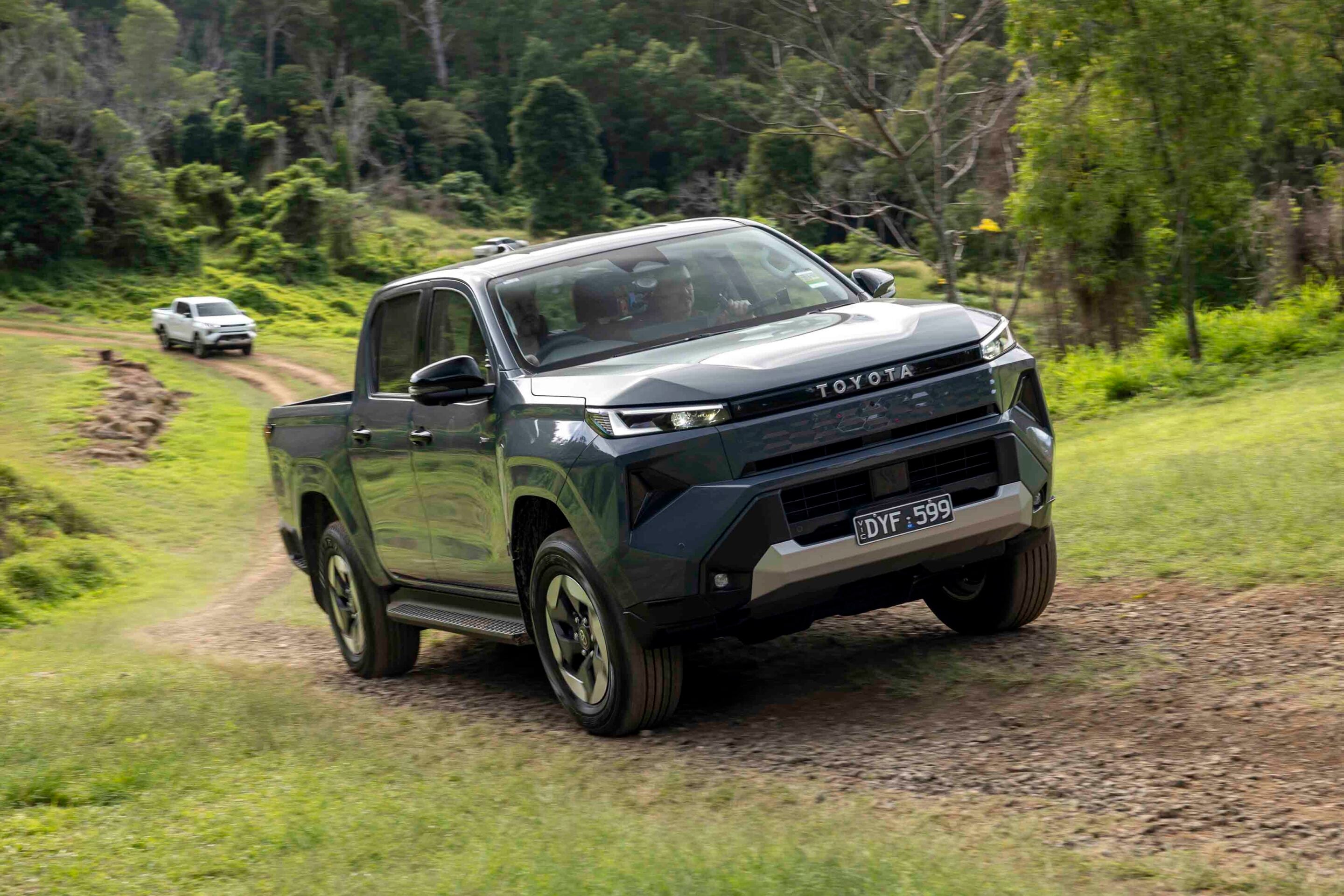
Toyota Australia has launched its first HiLux EV but, unlike the conventional internal-combustion-engined HiLux, the BEV version won’t be for everyone and certainly not for touring four-wheel drivers.
The HiLux Battery Electric Vehicle (BEV) costs more, carries less, tows less and has a lot less touring range than its ICE sibling. It will be available in three double-cab all-wheel drive models, with pricing as follows:
- SR double cab-chassis: $74,990
- SR double-cab pick-up: $76,490
- SR5 double-cab pick-up: $82,990
Premium paint is still a $675 option, but the colour palette is limited to two shades of white and one shade of grey. By comparison, a 4×4 SR double cab-chassis with the diesel engine, 48V mild-hybrid system and automatic transmission starts at $57,990, while the SR5 double-cab ute starts at $64,990.
JUMP AHEAD
What features does it come with?
Driving range for pick-up versions of the HiLux BEV is 315km on the combined NEDC cycle, while the SR cab-chassis is rated at 245km. A tankful of diesel in an ICE-powered HiLux will get you close to 1000km of range in the right driving conditions.
Towing capacity of the HiLux BEV is limited to 2000kg, compared to 3500kg for a diesel HiLux, and towing anything close to capacity in the BEV will dramatically reduce driving range as well.
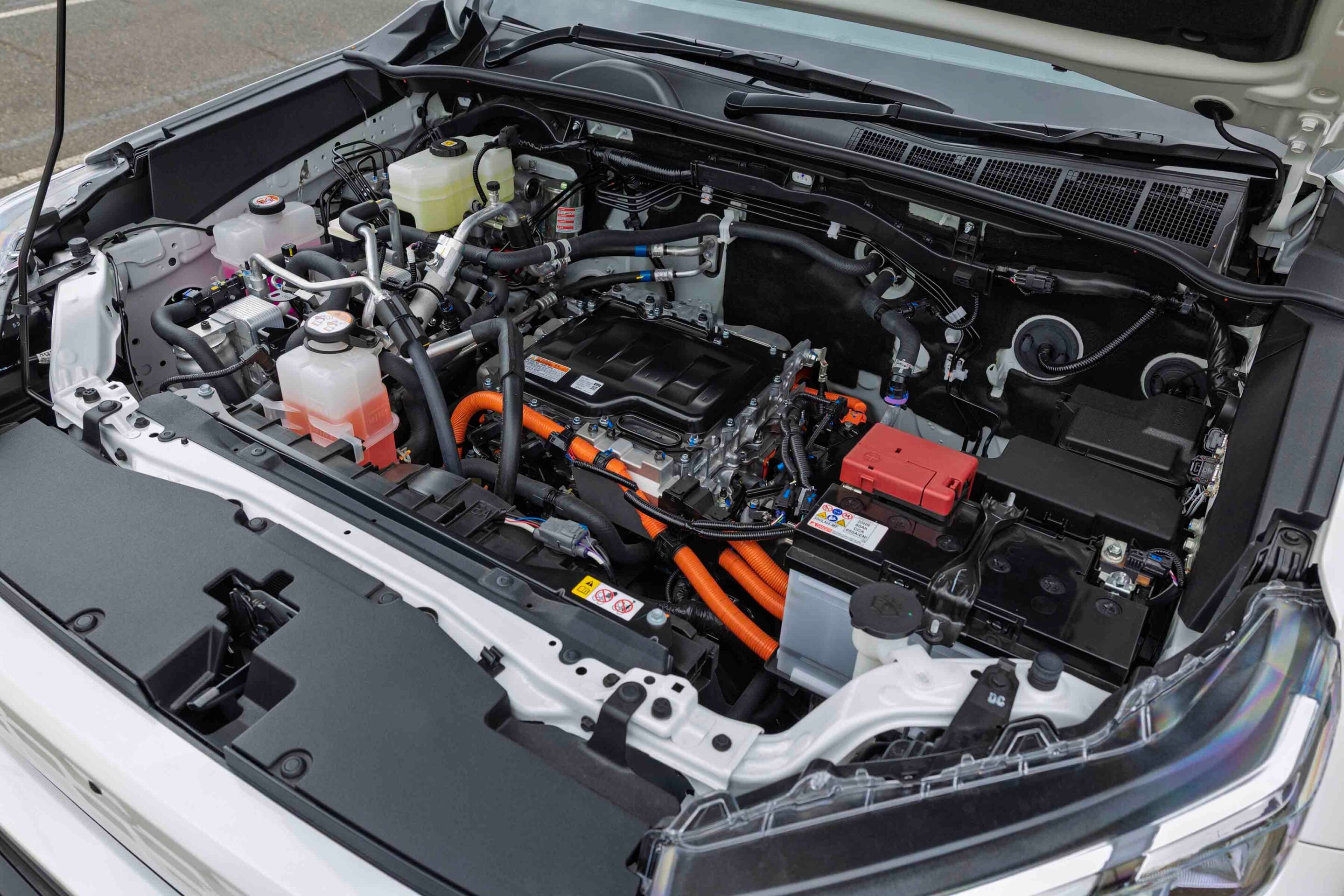
Officially, it should take 30 minutes to charge the 59.2kWh lithium-ion battery using a 150kW DC charger, or 6.5 hours on an AC charger. The battery powers a pair of electric motors, one for each axle, to give all-wheel drive. We won’t call it 4×4, as the axles are not connected by a driveshaft, so all four wheels are not driving the vehicle together as they would in an ICE-powered 4×4 HiLux.
1
The BEV ’Lux uses brake-activated electronic traction control (ETC) to manage wheel slip off-road. The front motor makes a maximum of 82.2kW and 205.5Nm, while the rear motor offers 129.3kW and 268Nm. Maximum combined power output is 144kW.
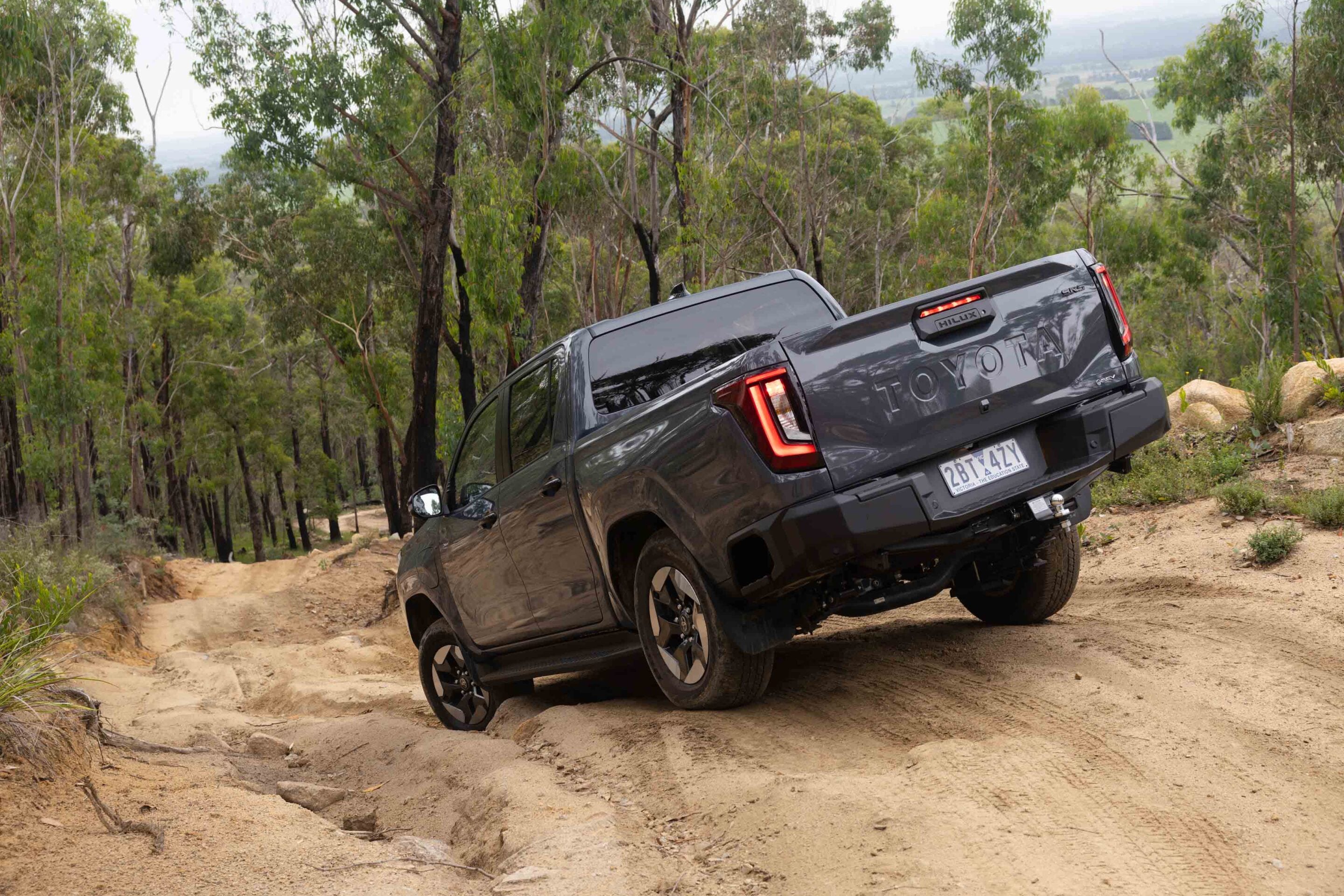
The front end of the HiLux BEV features a similar suspension set-up to its diesel stablemate, but with the electric motor placed between the driveshafts, and heavier springs, shocks and stabiliser bars to cope with the added weight. The rear end is very different, with a De Dion-type transaxle mounted to the chassis and driveshafts extending out to the hubs, which are suspended on a heavy-duty De Dion crossmember and locating links.
Like the front axle, the rear drive relies on ETC to manage wheel slip when needed. A multi-terrain selector (MTS) offers Auto, Dirt, Sand, Mud, Mogul and Snow modes to tweak the ETC and other settings to best suit the road conditions and aid progress.
1
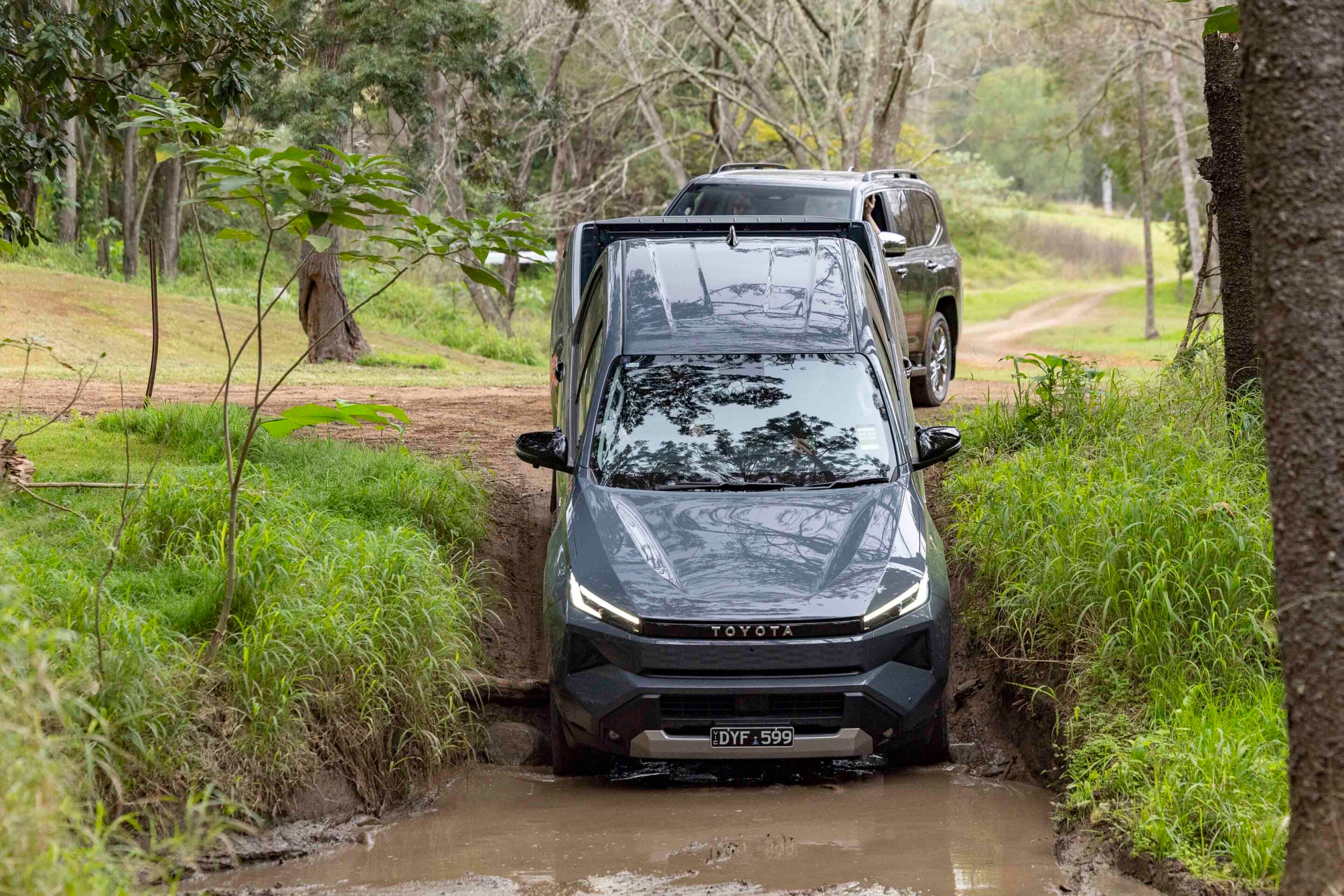
Inside, the HiLux BEV is much like any other current HiLux, with the addition of a bespoke 12.3-inch digital instrument cluster with relevant gauges to monitor the driveline and battery, a new electronic shift lever for drive fore and aft, and, in the back of the console, a three-pin AC outlet to power small appliances via a 220V/1500W inverter.
We also noticed different internal grab handles compared with our own 2026 SR5; these sit snug against the roof, where they are less likely to bump your head when entering and exiting. No-one at the launch could tell us if these are unique to the BEV or a running change to HiLux after complaints of owners bumping their heads.
On-road and off-road performance
First impressions after driving the HiLux BEV are that it is quiet, as expected, and has plenty of poke from its electric powertrain.
It drives and steers like any other HiLux, although the rear suspension feels stiffer and was annoying on some rougher surfaces. When off-road, the suspension tended to toss the passengers around more than in an ICE-powered ’Lux; it would be interesting to see how it feels with 500kg in the tray.
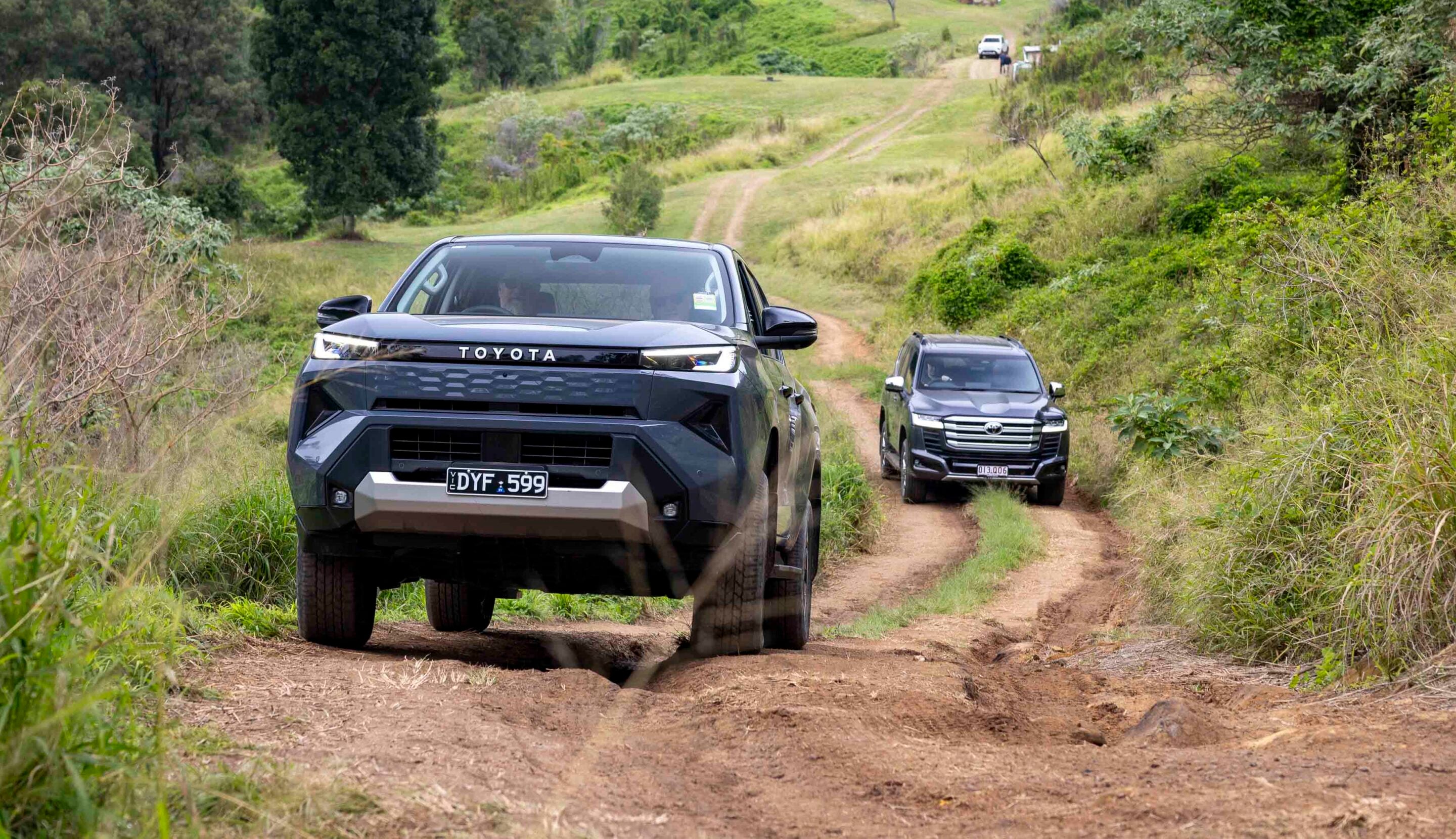
The HiLux BEV performed well on a moderate off-road track, where that passenger tossing in the cabin was noticeable. The drive revealed the front tyres losing grip momentarily when climbing some steps, before the ETC could kick in and address the slip. You wouldn’t get this in a proper 4×4 system like that in the ICE-powered HiLux, where the axles are locked front to rear. It was more like driving a full-time 4×4 vehicle in unlocked mode.
The De Dion rear crossbeam sits low where your rear diff usually sits and was the first thing to scrape when dropping into a rocky creek bed.
1
Who should buy it?
Toyota Australia has had HiLux BEV prototypes running with big mining fleets in Western Australia for more than two years, and it’s big fleets like these that the vehicle is aimed at: companies with hundreds of vehicles on fleet, where replacing diesel-fuelled vehicles with EVs looks good for business.
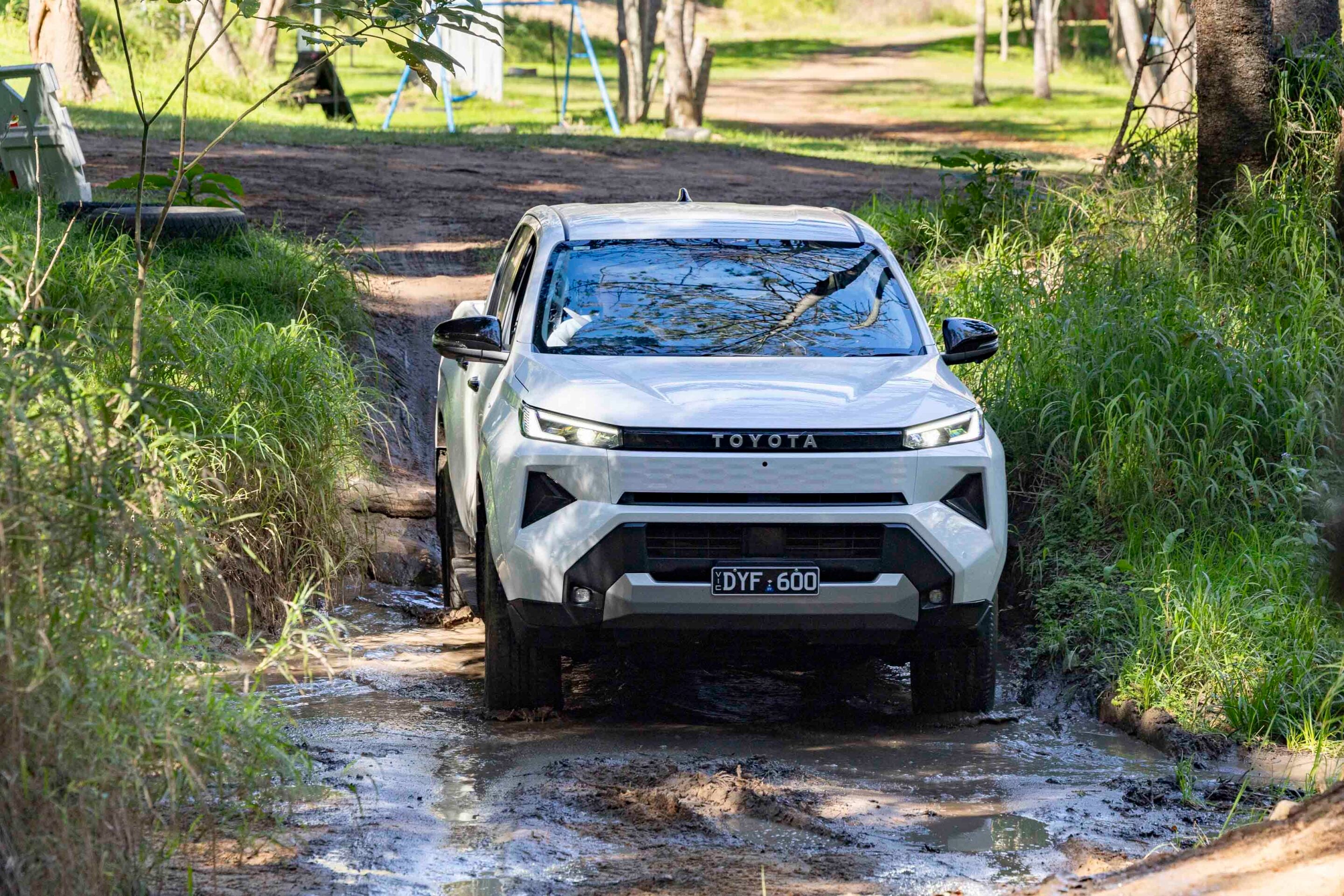
If you already have EVs and the required charging facilities at hand, a HiLux BEV could work for you around town, on job sites or doing deliveries, provided the limited range isn’t an issue. After all, 250 to 300km is more than many drivers will cover around town in a day.
It’s a different story for touring four-wheel drivers, many of whom own and drive a HiLux, where you can cover that distance before sun-up and then twice as many kilometres again before setting up camp. A touring vehicle will also be loaded with gear and possibly towing, so that range will be greatly reduced. Finding charging facilities in the places a touring four-wheel driver travels will also be a lot more challenging.
1
Verdict
We think Toyota has just dipped its toes in the water with the HiLux BEV, and there’s a lot more to come in the future as technology changes and the systems improve.
Toyota makes a big deal about its multiple-energy offerings across its range of vehicles, which include petrol and diesel engines, PHEV, BEV and hydrogen powertrains, saying there is not a single answer to every application. It will be interesting to see how the technology progresses and what it holds for the four-wheel driver.
20
Specs
| Specification | Toyota HiLux BEV |
|---|---|
| Powertrain | Battery electric vehicle (BEV) |
| Battery | 59.2kWh lithium-ion battery |
| Electric motors | Dual electric motors (one front, one rear) |
| Maximum power | 144kW |
| Front motor output | 82.2kW / 205.5Nm |
| Rear motor output | 129.3kW / 268Nm |
| Driving range (pick-up) | 315km (combined NEDC cycle) |
| Driving range (cab-chassis) | 245km (combined NEDC cycle) |
| DC charging | 30 minutes using a 150kW DC charger |
| AC charging | 6.5 hours |
| Towing capacity | 2000kg |
| Power outlet | Three-pin AC outlet with 220V/1500W inverter |
Things we like
- Quiet, responsive electric powertrain
- Dual-motor AWD with terrain modes
- Fast DC charging capability
Not so much
- Limited range for touring
- Lower towing capacity
- Rear suspension limits off-road ability
Follow 4X4 Australia on Google
Get more 4x4 news, reviews and gear stories from 4X4 Australia in your Google feeds.

We recommend
-
 News
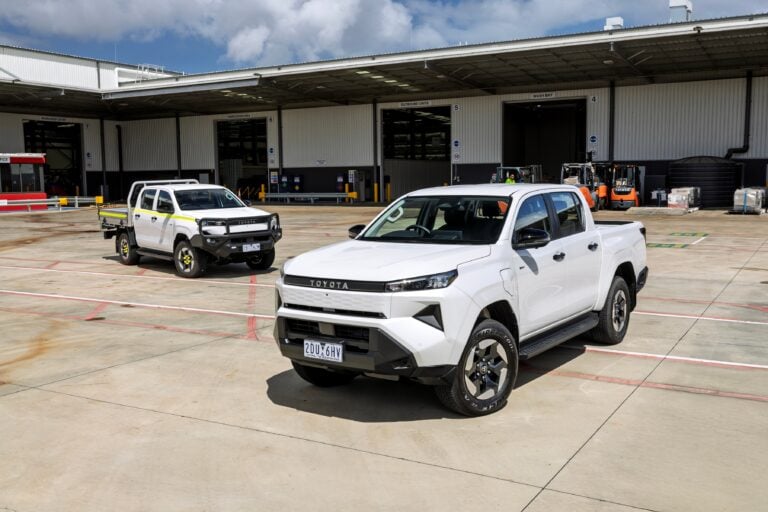
NewsToyota HiLux BEV on sale in May, priced from $74,990
Toyota’s first electric HiLux arrives just as diesel prices bite, offering a zero-emissions alternative
-
 News
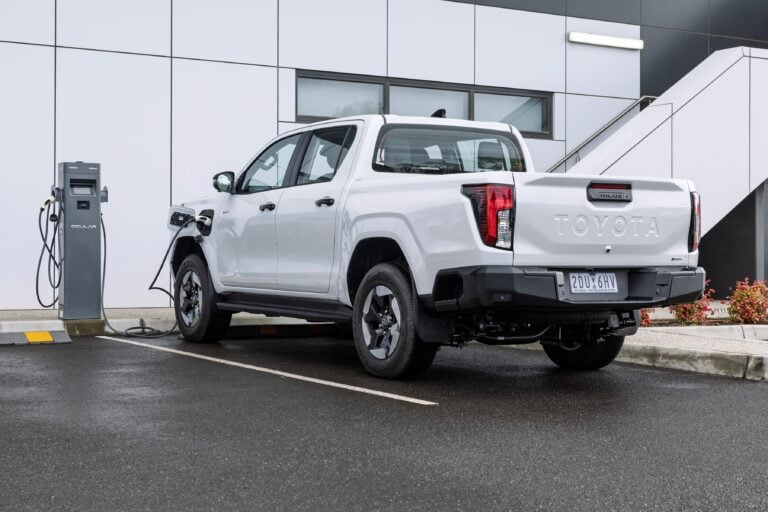
NewsToyota HiLux BEV gets five-star ANCAP safety rating
Battery-electric HiLux has earned a five-star ANCAP safety rating after additional crash testing confirmed parity with diesel variants
-
 News
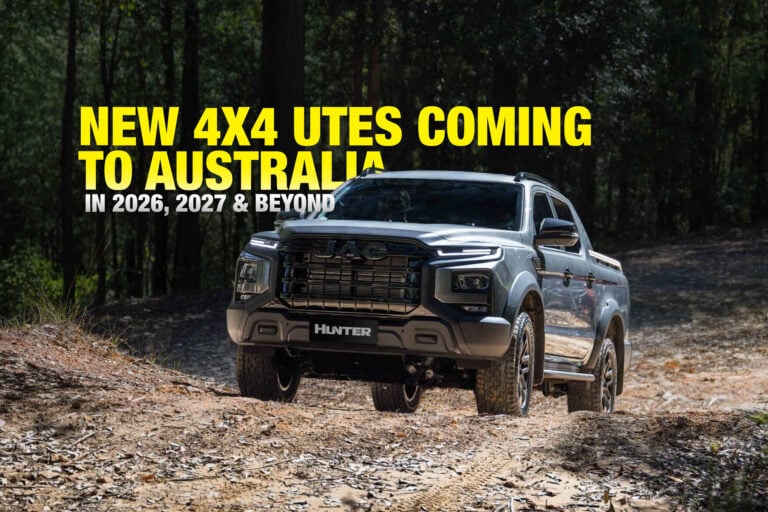
NewsEvery new 4x4 ute coming to Australia in 2026 and beyond
A look at new and updated 4x4 utes coming to Australia from 2026 onwards