Reviews

Gallery 1
Update 1: 750Nm on tap! That’s not a typo
The first number that jumps out in the Tank’s specs is the torque figure. 750Nm! It sounds like a typo, but it isn’t.
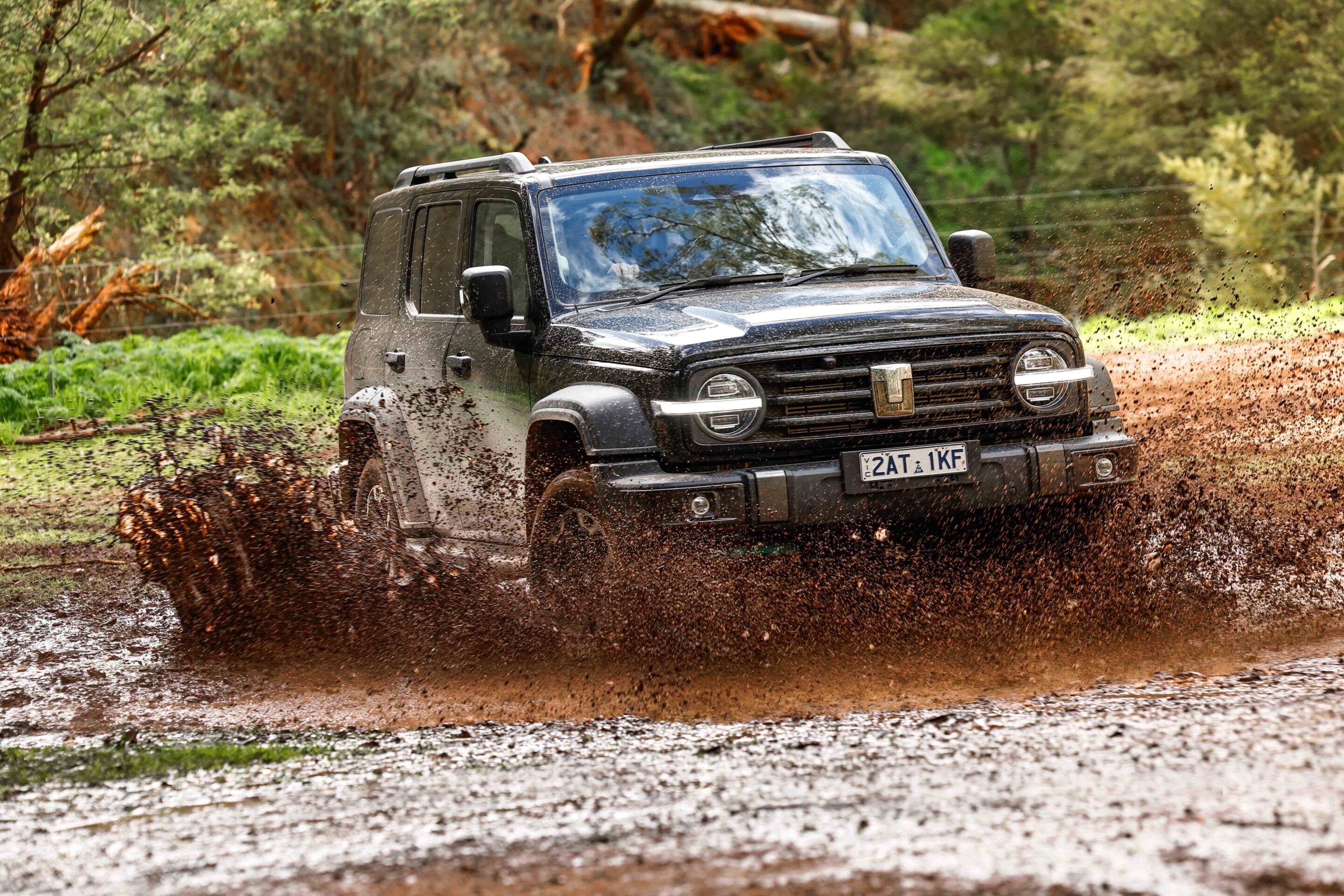
GWM has given us the Tank 300 Ultra PHEV to test. It combines a 2.0-litre turbo-petrol four-cylinder engine with an electric motor to produce a claimed 300kW and 750Nm. For comparison, that’s the same torque figure as a Defender OCTA with its 4.4-litre twin-turbo V8. The difference is the OCTA costs somewhere around $300,000, while the Tank 300 PHEV is priced at $61,990.
GWM has also done quite a bit of Australian development work on the 300. Leading that work is Rob Trubiani, GWM Australia and New Zealand’s lead engineer and a former Holden vehicle dynamics engineer. Rob has years of experience tuning cars for local conditions, and he is very good at his job. As soon as I hopped in the Tank, I could tell it had benefited from his input.
1
The local work is extensive, with steering calibration, suspension tuning and a dedicated Tow Mode among the changes made to better suit Australian conditions.
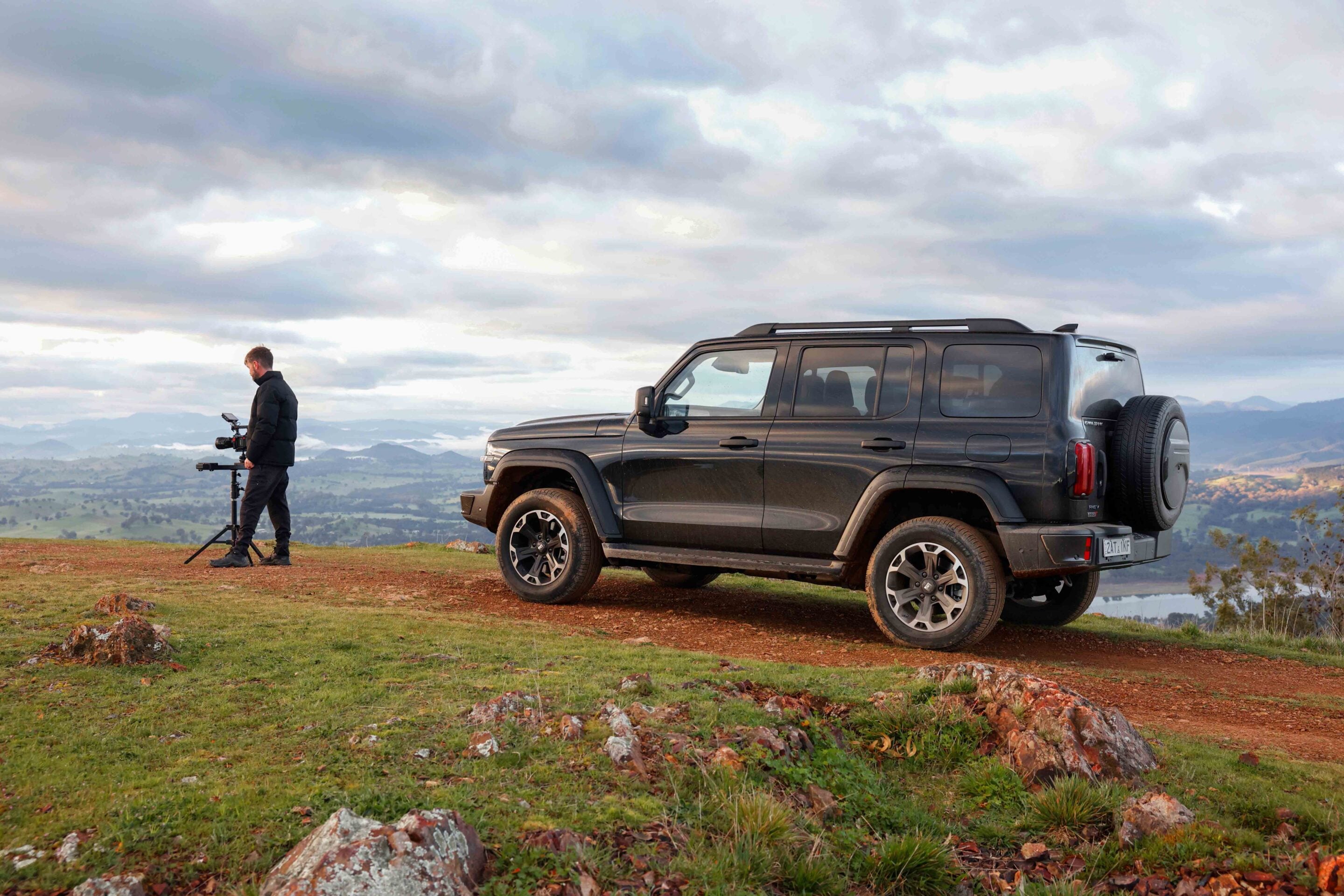
I picked up the Tank and headed straight for the Jamieson-Mansfield High Country. We had a RAM off-road shoot on, so the Tank’s first trip was going to be a working one. I loaded it with camera gear and headed north.
The highway run gave me a chance to start working out how the hybrid system operates. There are three main drive settings, allowing you to run in full EV, hybrid or Smart mode, with the latter managing the petrol and electric systems and charging the battery as you drive.
This was my first proper stint in a plug-in hybrid, and there is a fair bit to get your head around. Which mode is best for fuel economy? Which gives you the most power? When should you save battery and when should you use it? I was still working all of that out on the way up.
1
There were a few other things to discover as well. At one point I managed to hit a button and the driver’s seat started giving me a massage. Not a bad accidental find. The heated steering wheel and seats were also welcome heading into the High Country, and at 6ft 2in I had no trouble getting comfortable in the driver’s seat. Visibility out of the Tank is good, helped by a fairly upright windscreen, much like that of a Wrangler or Grenadier.
One thing I’m not completely sold on is the styling. From some angles the Tank looks a little awkward. I think a bigger set of off-road-specific tyres mounted on smaller rims with a more aggressive offset would improve the look considerably and also add to its off-road ability. A lift kit wouldn’t hurt either.
Once I left the highway, it was time to put the four-wheel-drive system to use for the first time. I turned the rotary dial to 4H and hit the dirt. On rougher tracks, the Tank’s ride remained comfortable and well controlled. It has decent suspension travel, which helps soak up the bumps and keeps the vehicle composed when the track starts to get uneven. Another handy feature is the 240-volt outlet in the load area. With a full day of shooting ahead, I was able to charge my camera batteries while we were on the move.
10
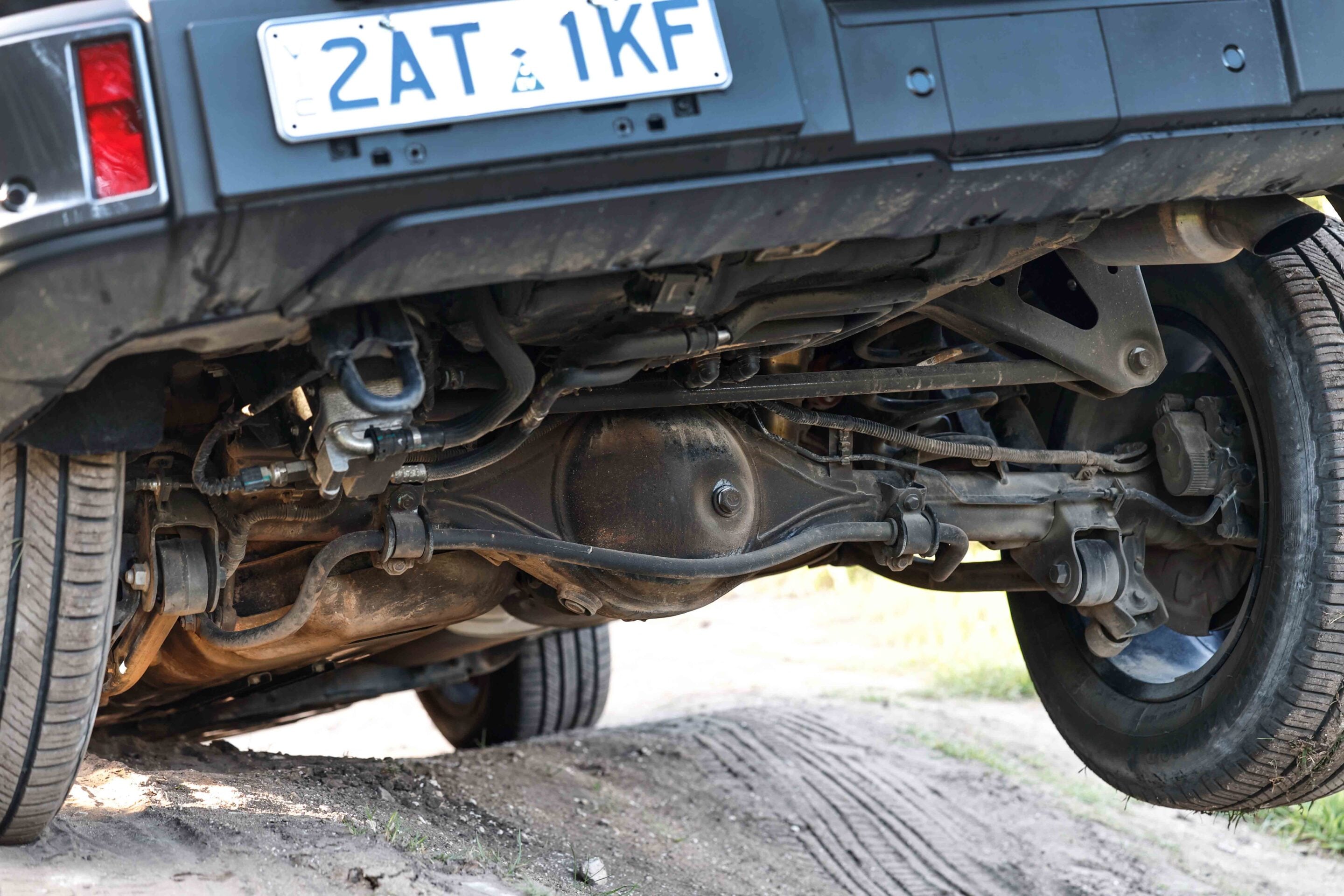
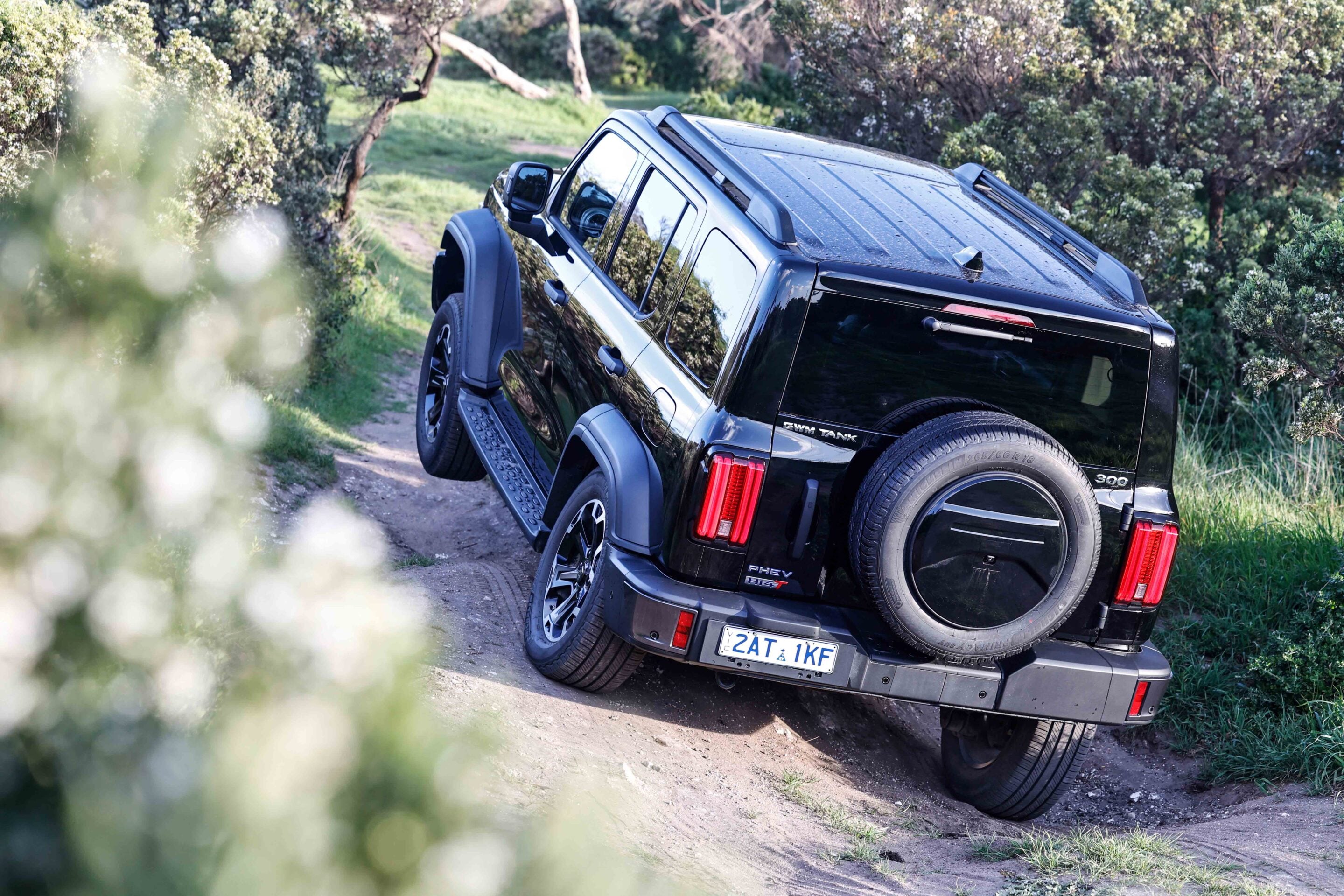
I was also surprised by how much articulation the suspension has, particularly at the rear. Back at one of my favourite local off-road spots, I tried the front and rear diff locks on a short, steep section. With both engaged, the Tank crawled up without any trouble. It does tend to lift a front wheel off the ground, but with the diff locks engaged, it just keeps moving forward.
What surprised me most was that it managed this on highway tyres. Imagine what it could do with a good set of all-terrains. There are still plenty of features I haven’t properly tested, including the intriguingly named Tank Turn button.
I’m looking forward to testing the Tank further next month. I might have to find some more challenging tracks, as it’s already proving more capable than I first thought. And I probably need to press that button.
- Kilometres this month: 3240km
- Average fuel use: 8.1L/100km
- Price: $61,990 drive away
- Price as tested: $62,585
Specs
| Specification | GWM Tank 300 PHEV |
|---|---|
| Engine | Turbocharged petrol engine with electric motor |
| Max Power | 120kW (electric motor); 180kW @ 5500-6000rpm (petrol); 300kW combined |
| Max Torque | 400Nm (electric motor); 380Nm @ 1700-4000rpm (petrol); 750Nm combined |
| Transmission | 9-speed automatic |
| 4×4 System | Part-time dual-range 4×4 |
| Construction | 5-door wagon on ladder-frame chassis |
| Front Suspension | Independent front suspension with wishbones and coil springs |
| Rear Suspension | Live axle with links and coil springs |
| Tyres | 265/65R18 alloy wheels |
| Kerb Weight | 2615kg |
| GVM | 3225kg |
| Payload | 610kg |
| Towing Capacity | 3000kg (braked) |
| GCM | 6261kg |
| Seating | 5 |
| Fuel Tank | 70L |
| ADR Fuel Consumption | 0.9L/100km (combined); 8.3L/100km (battery low charge) |
Follow 4X4 Australia on Google
Get more 4x4 news, reviews and gear stories from 4X4 Australia in your Google feeds.

We recommend
-
 Reviews
GWM Tank 300 PHEV review: Is this Australia's best-value off-road hybrid?
Top-of-the-range Tank 300 PHEV delivers a competent package and a compelling argument for GWM’s hybrid product
-
 News
GWM Tank 300 and 500 Hi4-T PHEVs conquer Beer O’Clock Hill
GWM’s electrified Tank 300 and Tank 500 Hi4-T PHEVs have successfully climbed Beer O’Clock Hill in full production spec