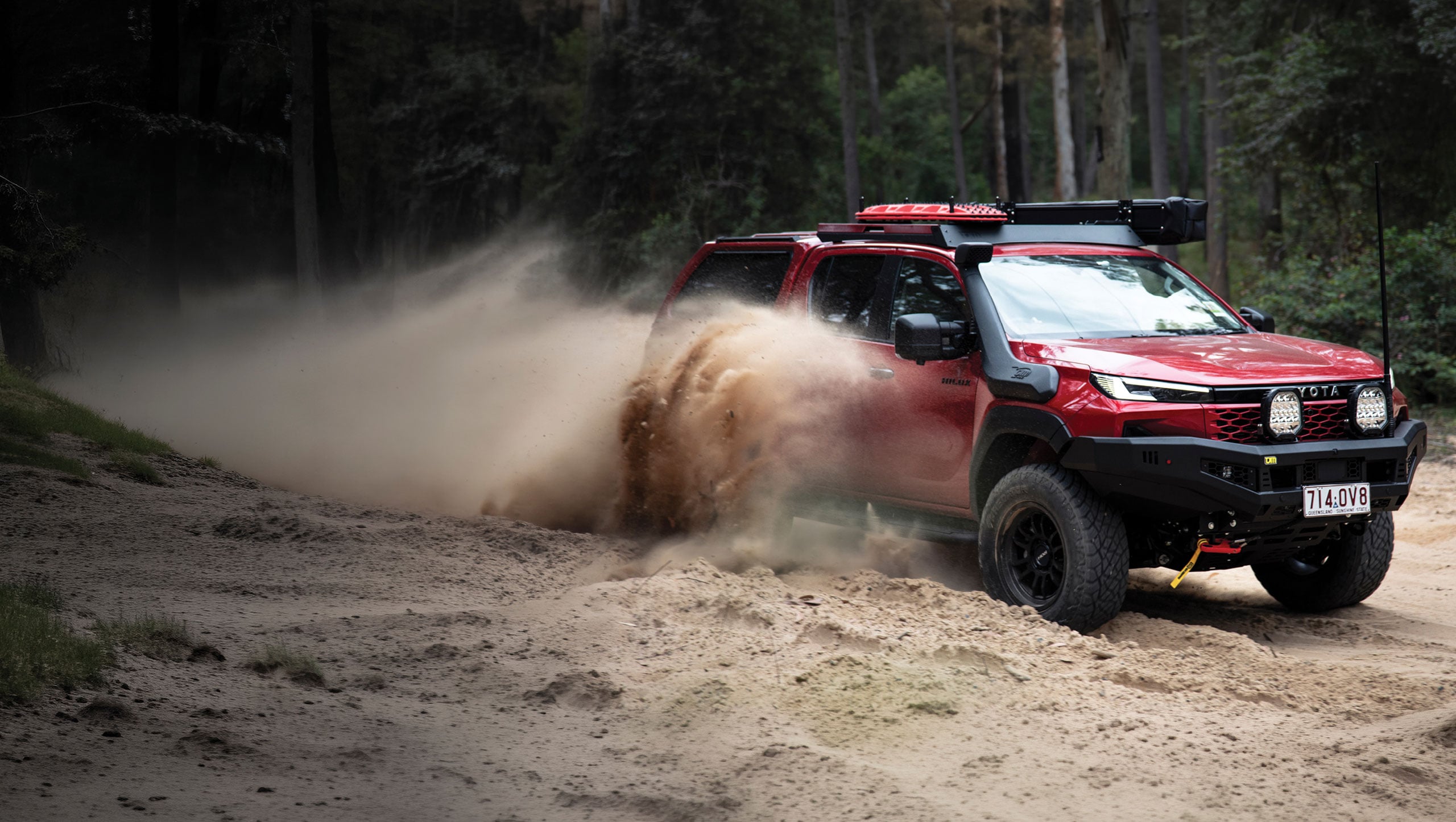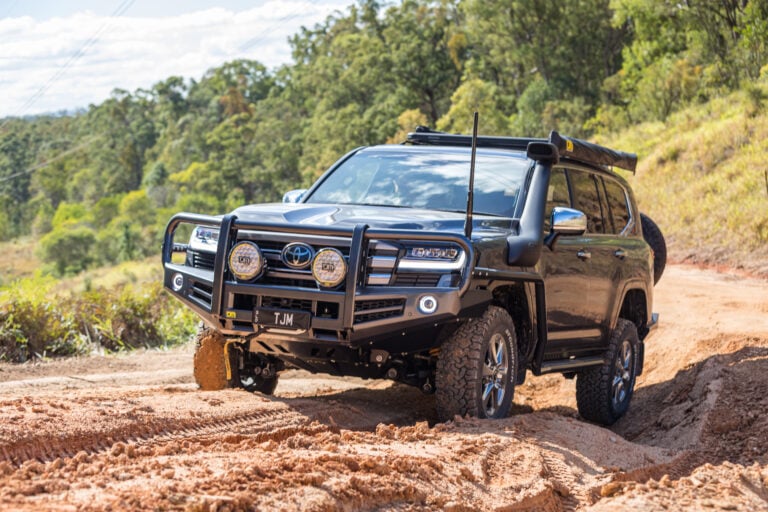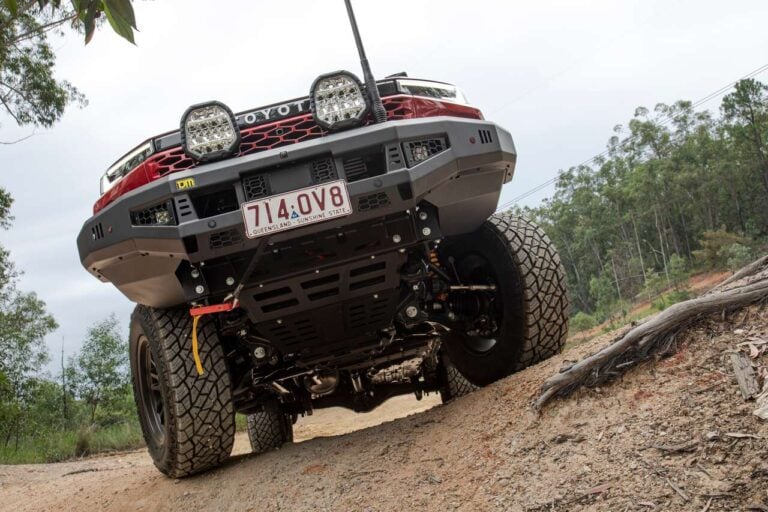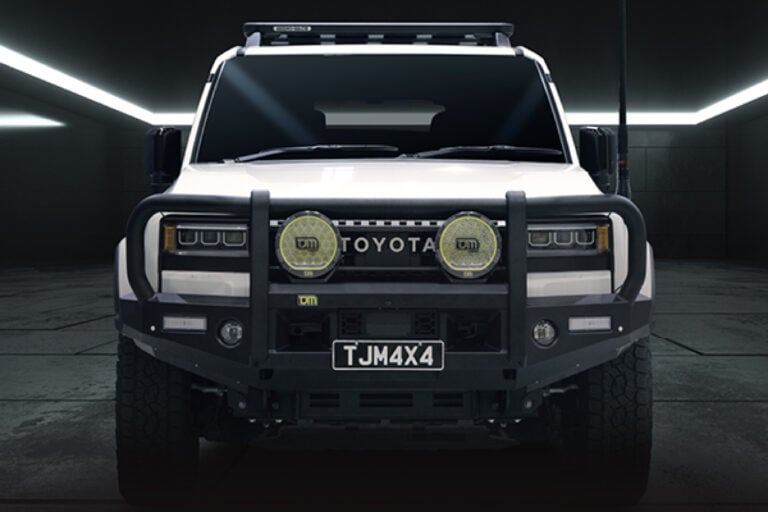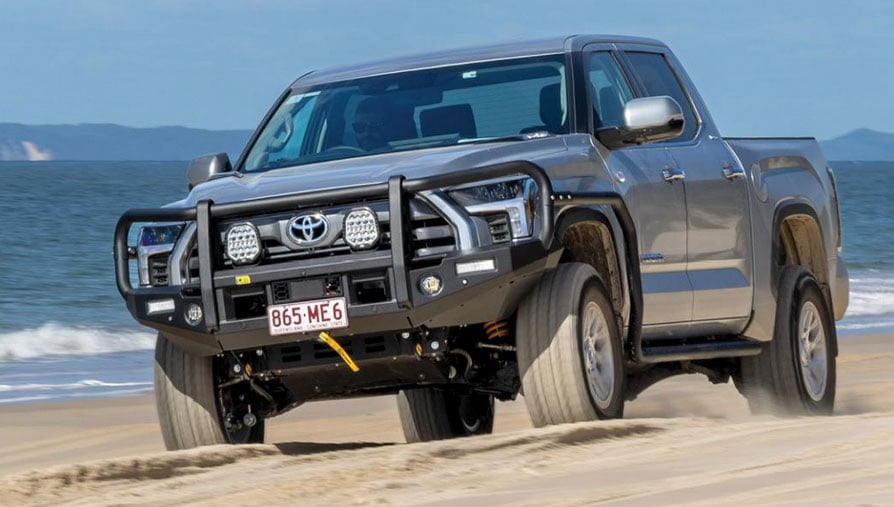
When Liam folded out his hard-earned cash on this 2024 LandCruiser 79, he had a clear idea of where he wanted to go with his new purchase. He was going up, up in every way, and in the ensuing months the Cruiser grew into the monster truck you see here.
The Cruiser was one of the last 1VD V8-powered examples to arrive before Toyota phased that engine out of production, and Liam knew he was going to need all of that V8 grit and more to propel the rig he had planned. But there was plenty of work to be done before he was able to drive and enjoy it.
Legal build planning (SSM setup)
With his high-riding plans, Liam wanted this build to be stunning but also legal, and to do that the key engineering work had to be completed before the vehicle was first registered.
This is known as the SSM (Second Stage Manufacturer) scheme, and it allows vehicles to be modified with pre-approved equipment or kits so that the end result is legal in all states of Australia, with the vehicle plated as such to avoid any hassles with the authorities.

Suspension and driveline transformation
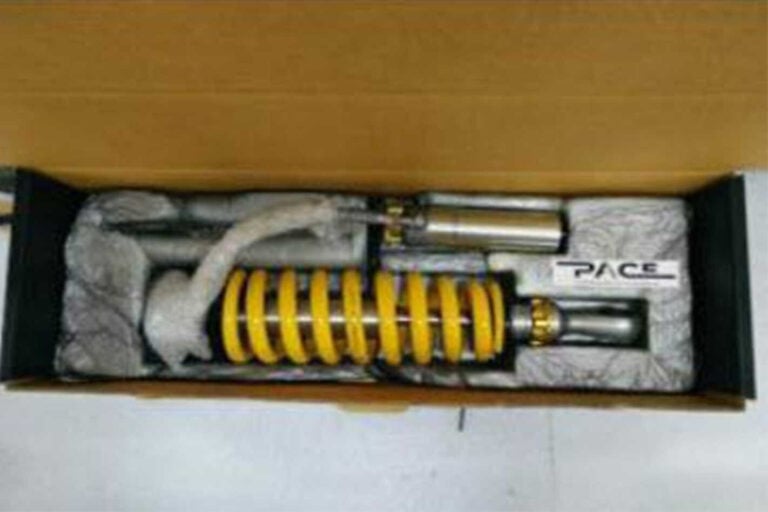
To get the Cruiser up in the clouds and stay on the right side of the law, Liam turned to the Superior Engineering catalogue, specifically Superior’s SSM-approved coil rear conversion, 4-inch lift and remote reservoir suspension setup.
The Superior rear end starts with a fabricated diamond diff housing with mounts for the trailing arms. The housing is also wider than the factory unit to resolve the difference between the front and rear wheel tracks, and comes with chromoly axles to suit. The factory Toyota rear diff lock is retained in the new housing.
The coil conversion kit includes forward mounts on the chassis for the arms, as well as locations for the coil springs. This is made possible with a bolt-in section added to the chassis, with it and the arms all part of the Superior Engineering kit.
For Liam’s Cruiser, the team fitted Superior’s 2.0 remote reservoir shocks at the rear. Another set of 2.0s went in up front, along with a pair of Superior’s Hyper-Flex radius arms and 4-inch lifted coil springs. The fit-out on Liam’s Cruiser was all done by the team at The 4WD Shed in the Melbourne suburb of Bayswater.

Wheels, armour and touring setup
Contributing to the raised ride height is a set of 37-inch Yokohama muddies mounted on 17-inch KMC Grenade alloys that certainly look the part.
The front bumper shows more of the great work from Superior Engineering, and it houses a Runva 11XP winch for recovery duties. At the other end of the Cruiser is a tray and canopy from Reds Fabrications. Liam was still working on the inside of the canopy when we photographed it, but it will eventually house all of his camping and touring kit. A CSS roof-topper sits atop the canopy.
A TAG towbar with recovery points is at the rear and, in between it and the tray, Liam has made a mount for his MAXTRAX where they are easy to access when needed and out of the way at other times.

Power, tuning and final touches
To help move the weight and turn the big tyres, the team at BSC Performance carried out a dyno run and flash tune on the 4.5-litre V8 engine, so it now makes around 660Nm and 200kW at the treads.
Helping it breathe is a five-inch snorkel from Meredith Metal Works and a four-inch stainless steel exhaust system. To harness the grunt through to the factory five-speed manual ’box, an Xtreme Outback 1600Nm heavy-duty clutch was fitted, as we all know those OE Toyota clutches don’t like the extra torque, especially when you’re trying to turn massive 37-inch tyres.
Liam says he’ll be looking for more grunt from the engine as he continues to sort out the build and gets a feel for it out on the tracks. You can follow his exploits on Instagram at Aussies Most Lifted 79 Build (↗).
Liam thanks all of those who have helped with the build, including The 4WD Shed, Superior Engineering, HD Automotive, Black Ops Off-Road and Groundswell Wash for exterior and interior detailing products.

Aftermarket products and upgrades
- Superior Engineering SSM-approved coil rear conversion kit
- Superior Engineering 4-inch lift suspension setup
- Superior Engineering fabricated diamond rear diff housing
- Superior Engineering chromoly rear axles
- Retained Toyota rear diff lock (integrated into upgraded housing)
- Superior Engineering chassis-mounted coil conversion hardware (forward arm mounts + coil mounts)
- Superior Engineering 2.0 remote reservoir rear shocks
- Superior Engineering 2.0 remote reservoir front shocks
- Superior Engineering Hyper-Flex radius arms
- Four-inch lifted coil springs
- The 4WD Shed full fitment and build installation
- 37-inch Yokohama mud terrain tyres
- 17-inch KMC Grenade alloy wheels
- Superior Engineering front bumper
- Runva 11XP winch
- Reds Fabrications tray and canopy
- CSS roof-top canopy/topper
- TAG towbar with recovery points
- MAXTRAX recovery board mount system
- BSC Performance dyno tune and ECU flash tune (4.5L V8)
- Meredith Metal Works five-inch snorkel
- Four-inch stainless steel exhaust system
- Xtreme Outback 1600Nm heavy-duty clutch
Our 79 Series project ute has covered serious ground since we fitted a handful of 70 Series Store accessories back in December 2025. Here’s what survived, what impressed, and what still needs work.
It’s been a varied six months. The ute has done highway kays, outback corrugations, dirt and beach sand, running from Melbourne north through the back-country pub route to Tilpa, along the Darling River to Louth, then across country and up to Fraser Island before heading home down the coast.
The 70 Series Store gear we fitted was fairly straightforward: a gear stick extension, billet gear knob, Cup Holder Armrests Pro with integrated cupholders, a dash mat, and weather shields. None of it is dramatic. No lift kit, no locker, no snorkel. Just the quality-of-life gear that makes a 70 Series easier to live with on a long trip. Because anyone who has toured seriously in one knows the factory rig is agricultural as hell.
Installation
Most of the kit went on without drama, and nothing required a workshop or specialised tools.
The gear stick extension (↗) was one of the simplest installs of the lot. It threads in cleanly and lines up without fuss, and the improvement to driving position is immediate the moment you sit back in the seat. It effectively brings the shifter up into a more natural arm position, which is something the factory layout never quite gets right in the 70 Series cabin. The dash mat (↗) was even easier again, essentially a drop-in piece that takes under a minute to lay into position and settle.

The Cup Holder Armrests Pro (↗) sit in the middle of the effort scale. The fitment itself is straightforward, but getting both sides aligned evenly against the door cards takes patience. Once installed properly, though, they look and feel like they belong there from the factory. The magnet-based mounting system is secure, and the clear protective stickers over the contact points are a thoughtful detail that helps keep everything clean during install.
The weather shields (↗) take the most time. The adhesive is strong and confidence-inspiring, but getting both sides to match perfectly along the window line requires repeated checking and minor adjustments. Once on, they sit tight and integrate cleanly with the window frames.
The gear knob (↗) threaded on cleanly and was relatively easy to install. It tightens down without needing any special tools or modification, and it slots straight into the factory shifter setup with no drama.

The Centre Console Armrest Lite (↗) is an easy fitment that slots straight into place without modification. It’s a quick way to improve day-to-day comfort in the cabin, immediately adding a proper armrest for longer highway runs and slower off-road driving.
It’s especially effective if you’ve fitted a gear stick extension, with the driving position feeling more natural and truck-like once both are in place. The added storage is a practical bonus, helping tidy up the interior without complicating the setup.

On the road
The gear stick extension ended up being the most noticeable upgrade from behind the wheel.
The factory 70 Series shifter position forces your hand low and slightly awkward for long periods, especially on highway stretches where you’re constantly moving between gears and resting your arm at odd angles. Lifting the shifter changes that immediately. It puts the gear lever closer to a natural elbow position, which reduces fatigue and makes long stints on corrugated roads noticeably less tiring.
On the run between Tilpa and Louth, where the road surface is rough and unbroken for long stretches, that ergonomic change becomes obvious quickly. It also helps in sand driving at places like Fraser Island, where quicker, more deliberate shifts are needed.

The Cup Holder Armrests Pro fill a long-standing gap in the 70 Series interior. The factory door cards offer nothing usable for arm support, which becomes obvious within the first couple of hours on the road. Once fitted, the armrests give a proper resting point that holds up over long days without discomfort. The padding remains supportive on extended drives, and they don’t interfere with shifting or movement in the seat. The integrated cupholders also perform well on rough roads, holding bottles securely on corrugations and beach tracks where standard holders often fail.
The weather shields allow the windows to be cracked slightly in heat or rain while still reducing wind noise and spray. This makes a difference on long highway days and in hot outback conditions where airflow is important when parked or moving slowly through towns.
The dash mat reduces glare off the factory dash on long exposed stretches of road, particularly when the sun is low. It also adds a layer of protection against UV exposure, helping to keep the dash surface from long-term heat damage.
The gear knob integrates cleanly into the cabin and maintains a consistent feel through both highway cruising and off-road use. It matches the rest of the setup visually and functions as a straightforward, reliable interface with the gearbox.

Durability after six months
This trip cycle covered a wide range of conditions including salt air, river dust, corrugations, sand, and extended highway running, giving a solid spread of real-world exposure.
The Cup Holder Armrests Pro have held their shape and mounting integrity through all of it. Even after Fraser Island’s sand and salt exposure, there’s no sagging, no loosening at the mounts, and no visible wear in the stitching or padding. They remain firm and comfortable in regular use.
The weather shields have stayed firmly attached through heat, rain, dust, and repeated high-speed highway runs. No lifting at the edges, no cracking, and no movement once the adhesive fully settled. The dash mat continues to sit flat and stable with no curling or shifting, even after extended exposure to heat and sunlight.
The gear knob has maintained a consistent fit and finish across the entire trip, holding its position on the shifter and integrating cleanly with regular use across all terrain types.
Verdict
The gear stick extension and Cup Holder Armrests Pro stand out as the most meaningful upgrades in terms of day-to-day driving impact. They change how the cabin feels in a way that becomes obvious very quickly, and they earn their place permanently in a touring setup.
The weather shields and dash mat are quiet, functional additions that do exactly what they’re intended to do without drawing attention. The gear knob fits neatly into that same category of simple, functional upgrades that integrate cleanly into the cabin and complete the setup without complication.
Taken as a whole, the package has held up well across outback NSW, the Darling River corridor, Fraser Island and thousands of kilometres of mixed driving. It’s a set of upgrades that makes the 70 Series easier to live with over long distances, and on that front, it delivers.
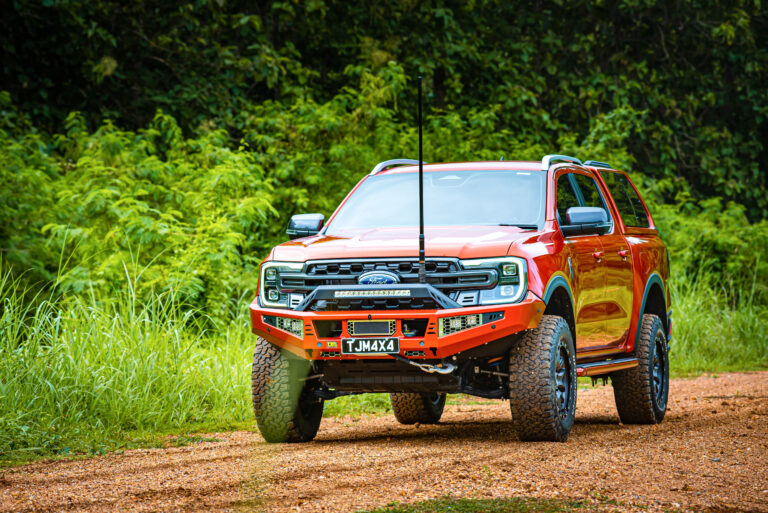
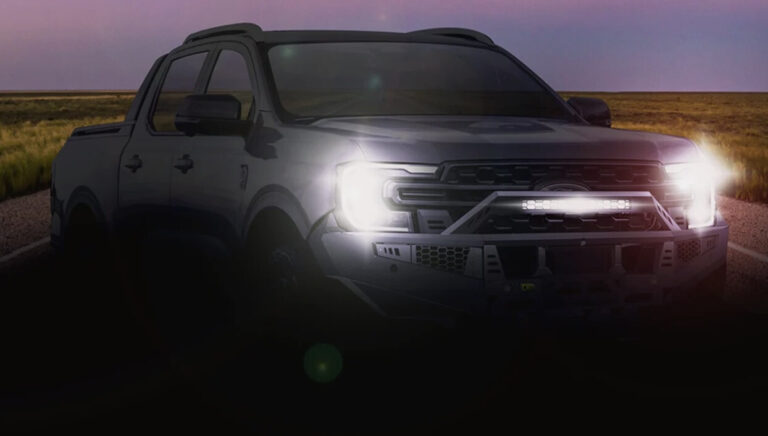
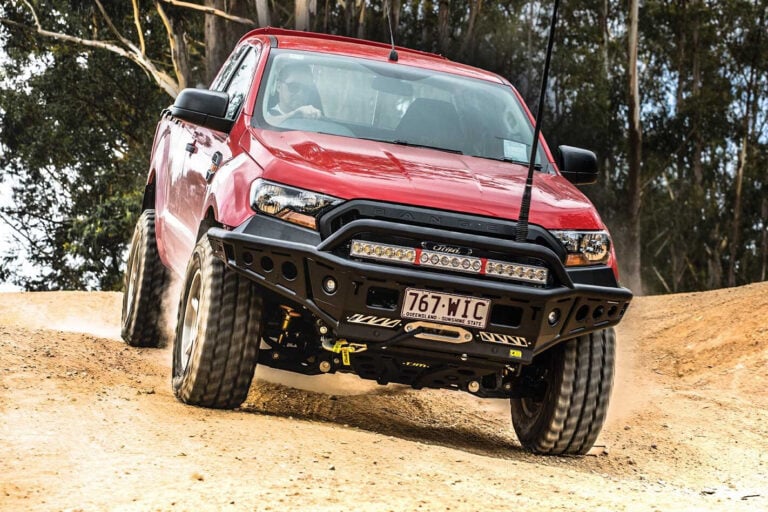
The Ford Ranger has been Australia’s best-selling 4×4 ute since this generation launched, and that popularity has driven one of the country’s most active and diverse modification scenes.
Backed by strong factory capability, modern drivetrains and a huge aftermarket, it has become a go-to platform for builds that need to work as hard in remote conditions as they do on daily commutes. What’s emerged is a clear split in approach.
Touring-focused builds prioritise range, storage and self-sufficiency, often featuring canopy systems, suspension upgrades, auxiliary fuel and integrated recovery setups designed for long-distance travel across remote deserts, coastlines and high country routes. At the other end are more extreme off-road rigs, built around increased articulation, ground clearance and durability, with upgraded suspension systems, heavy-duty protection and drivetrain enhancements aimed at technical terrain and demanding off-road use.
Despite the different directions, the common thread is intent. These Rangers are not built for display, but for use, whether that means crossing the Simpson Desert, tackling alpine tracks or crawling through slow, technical terrain. The result is a snapshot of how far the platform can be pushed when builds are shaped by real-world demands rather than specification sheets.
SUBMIT YOUR RANGER BUILD
Want to see your Ranger build here? Jump on over to the 4X4 Australia Facebook page and show us your rig!
2013 Ford Ranger XLS
Submitted by Kim Housego
Kim Housego bought this XLS with 50,000 kilometres on it and no accessories fitted, then built it into a capable tourer entirely from scratch.
The build started with a 50mm suspension lift, then Kim fitted a bull bar and winch, snorkel, and a canopy housing a full drawer system, fridge, water tank with pump, and a second battery. Roof racks were fabricated by Kim personally. The Ranger has also been used to tow a 2.5-tonne caravan and car trailers loaded with Patrols, and has remained mechanically untouched beyond one intercooler hose replacement.
Cape York in 2017 was a milestone early in the build’s life, and the Ranger has since worked through a number of Tasmanian tracks including Climies, waterfall crossing included.

2019 Ford Ranger Raptor
Submitted by Tyson Warner
Tyson Warner’s Raptor has been built around a serious touring brief, with the 2.0-litre bi-turbo and 10-speed auto backed by a spec list that covers comfort, power and storage.
Underneath, the ride height has been lifted all around using heavy-duty King Springs with Boss airbags added in the rear for towing support. The Trig Point service body carries a 70-litre water tank and pump underneath, while an 85-litre Bushman upright fridge runs off 200Ah of lithium. Camp comfort comes from a The Bush Company 180 XT Max awning and a Motop MT-120 Plus rooftop tent.
Multiple runs to Bendleby Ranges and a Red Centre trip for the Finke Desert Race have been the standout adventures so far.

2015 Ford Ranger SuperCab
Submitted by Chris Anderson
Chris Anderson’s SuperCab has been tuned, lifted and fitted out for serious distance work, and it’s currently mid-way through proving it.
The drivetrain has had an exhaust and tune, plus a twin transmission cooler added. Underneath, a two-inch Outback Armour suspension lift is paired with a snorkel, and the Ranger rolls on -44 16-inch rims wrapped in 305/70R16 tyres behind a Rockarmor bull bar. At the time of submission, the Ranger was five weeks into a towing run from Queensland to Victoria, across to South Australia, through New South Wales, and back up to Queensland, pulling a 19-foot van the entire way.

2018 Ford Ranger Raptor
Submitted by Kane Chapple
Kane Chapple’s 2018 Raptor has covered the full breadth of Australia across two years of hard touring, and the build underpinning it reflects that ambition.
Up front, a Hamer bull bar carries a Bushranger 9,500lb winch and a light bar, with a four-inch stainless snorkel feeding clean air to the engine. A two-inch front lift from Mike’s Shock Shop uses re-valved Fox shocks to suit the new ride height. Out back, a factory canopy houses a 140Ah lithium dual-battery system powering a 60L Engel fridge/freezer, with airbags fitted to support the load when towing the van.
The Raptor has tackled the Strzelecki and Oodnadatta Tracks, the Mereenie Loop in the Red Centre, Steep Point, the Gibb River Road, Mitchell Falls, and the complete Savannah Way from Broome to Cairns across 2023 and 2024.

2023 Ford Ranger Wildtrak V6
Submitted by Jordan Vines
Jordan Vines has stacked the next-gen Wildtrak V6 with serious hardware from the outset, and Fraser Island has already been the first test.
Running Old Man Emu BP-51s all around for suspension, it’s fitted with an ARB Summit bull bar carrying a Warn Evo winch, ARB underbody protection, and a Safari snorkel. Fraser Island was the first significant destination, with many more on the list.

Ford Ranger Raptor
Submitted by Zaia Babana
Zaia Babana built this Raptor for attacking tracks, and a growing collection of bush stripes from the Pinnacle Track confirms it’s being used as intended.
The Raptor runs 34-inch tyres on 17-inch rims with a two-inch rear lift and three-inch front lift. Up front, a Fury off-road winch cradle carries a 12,000lb winch, and a Provent catch can and fuel filter have been added to the drivetrain. ARB features throughout the tub: drawers, compressor and more. Twin-locking uses a front ARB air locker, a Torqit exhaust handles the breathing, a 100Ah 12V setup with solar panel from iTechworld handles the power, and a Safari Armax snorkel handles the air. A 2.5m ARB awning rounds out the camp setup, with Legendex rock sliders protecting the body.
NSW travel has been the focus so far, covering Stockton Beach, Wheeny Creek, Menai, Lithgow and Sofala, with the Pinnacle Track the standout.

2013 Ford Ranger
Submitted by Benny Muller
Benny Muller’s Ranger has three Finke Desert Races on its record and a mod list built to match that kind of punishment.
Underneath, a Tough Dog lift kit is paired with BFG KO2 33s and a Jonny Tig front-mount intercooler feeds the diesel. A TJM front bar and Ironman rear bar handle protection, with an XFforce three-inch exhaust and a towing and touring tune sorting the engine. Lighting is handled by Stedi Type-X Pros, and a 60Ah lithium setup runs a 40L myCOOLMAN fridge in the tub. A GME XRS radio handles comms.
The Ranger has covered the Victorian High Country, the Oodnadatta and Birdsville Tracks, and three Finke Desert Races, but Fraser Island (K’gari) is the place that stands out above the rest.

2023 Ford Ranger Sport
Submitted by Declan Wood
Declan Wood bought this 4X4 Australia demo Ranger at auction, flew to Melbourne to pick it up, and drove it straight back to Sydney to start the next chapter.
Declan came to the Ranger via a 2015 MQ Triton that he built over four years before a catastrophic engine failure on a two-week NSW trip, covering Lightning Ridge, the Murray-Darling, and Kosciuszko, ended that chapter. A rock through the air filter destroyed the turbo and went through the engine. The Triton was sold, a couple of years passed, and then a lunchtime Facebook scroll changed things: the final day of an auction on a 4X4 Australia Ford Ranger demo car. One last bid at 9.30pm, and it was his.
The Ranger has since been lightly modified to suit Declan’s touring brief, with the focus firmly on adventure over rock-hopping. A week-and-a-half on the Great Ocean Road and through to Adelaide over Christmas and New Year was the first proper run, and Cape York is next on the list.

Suzuki Australia has rolled out a tongue-in-cheek campaign, releasing staged images of a Suzuki Jimny caught “in the wild”, prompting speculation about a potential Jimny Rhino edition.
The images show a deliberately conspicuous scene designed to resemble spy photography, with the Jimny fitted with a retro-style graphics package along the doors and “Rhino” branding on the front doors.
Little is known about the model at this stage, and it is not yet clear whether the Jimny will be offered as a limited-edition variant or as a full production model when it proceeds to production.

Speaking on the campaign and reaction, Michael Pachota said: “The Jimny community in Australia is thriving so yes, news of any new Jimny is hugely exciting. But these are very capable, off-road vehicles. They navigate effortlessly in these outback conditions. The chances of someone getting close enough to take better images is low.”
“We’d obviously love to announce a completely new Jimny, particularly one that, if the reports are accurate, seems to be the perfect manifestation of the shared spirit of two magnificent beasts: Jimnys and rhinos. But we can’t confirm anything at this stage,” he said.
The current Jimny uses a 1.5-litre naturally aspirated four-cylinder petrol engine producing 75kW and 130Nm, paired with either a five-speed manual or four-speed automatic transmission.
Suzuki sold 579 Jimny variants in Australia in April 2026, taking year-to-date deliveries to 2537 units, down 12.8 per cent on the same period in 2025 (2910 units).
Updated Jimny prototypes were spotted testing overseas earlier this month, with camouflaged three-door models photographed in snowy European conditions. Images shared via the SuzukGarage Instagram page show disguised vehicles with covered front fascias and temporary LED light strips replacing standard headlights during testing. Reports suggest the prototypes could preview an electric version, although the vehicles appear to retain conventional 4×4 hardware.
Suzuki has not confirmed any new variant beyond the current Jimny line-up, and the “Rhino” name remains unverified.
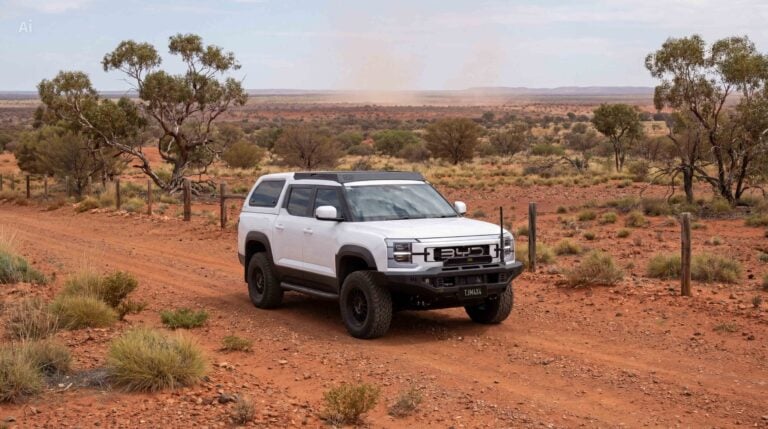
BYD Australia is investigating further variants for the Shark line-up, with strong local demand making Australia an integral part of product planning for the plug-in hybrid dual-cab.
The numbers back the push. BYD shifted 1371 Shark units in April 2026, lifting year-to-date sales to 4851. The brand ranked as Australia’s second best-selling marque for the month on an 8.3 per cent market share, a result that would have been unthinkable from a Chinese manufacturer three years ago.
The broader category context is just as striking. Chinese-built vehicles accounted for 28,041 Australian sales in April 2026, against 14,917 in the same month of 2025. That near-doubling in 12 months tells its own story about where the market is heading.
The current Shark is available in three variants: The entry-level Cab-Chassis, the mid-spec Premium dual-cab, and the flagship Performance. BYD Australia told Wheels by WhichCar that potential additions could include fleet-focused variants, tougher off-road derivatives, and additional body styles beyond the existing cab-chassis.
Alongside the expansion talk, BYD is rolling out a Crawl Mode function. The system manages torque distribution for traction on loose and uneven ground, refines hill-descent behaviour on slippery surfaces, and tightens low-speed control in the kind of conditions that expose a PHEV’s weight penalty. It lands first on the Performance variant and the updated MY26 Premium, with existing Premium owners to receive it via an over-the-air update at no cost. The Dynamic Cab-Chassis misses out for now.
BYD Australia says the local market has become a genuine development hub for the Shark 6, with engineering input, on-ground testing and aftermarket partnerships feeding directly into future product decisions. Australia is currently the brand’s strongest global market for the model.
BYD Shark 6 pricing (before on-road costs)
- Dynamic Cab-Chassis: $55,900
- Premium: $57,900
- Performance: $62,900
Walk into a ute showroom in the last fortnight of June and you can feel the maths happening in real time.
The salesperson wants the deal signed before the books shut. The buyer wants a number their accountant will nod at. Between them sits a Ranger, a HiLux or a D-MAX wearing a drive-away price a fair bit sharper than it looked back in March.
In 2026 there is more reason than usual to be in that room. Diesel is at record prices, a clutch of big nameplates are mid model-change, and the newer brands are knocking five figures off stickers to buy their way onto driveways. Kia has just cut up to $13,000 off the Tasman. Ford has taken almost $15,000 off parts of the Ranger Hybrid range. The deals are the real thing. So are the traps, and the biggest one is the tax story almost everybody gets wrong.
- Last updated May 2026. Prices are drive-away or before on-road costs as noted, current at time of writing, and they move. Confirm everything with the dealer before you sign.
JUMP AHEAD
- Before you sign
- Ford Ranger
- Toyota HiLux
- Toyota Tundra
- Isuzu D-MAX
- Mitsubishi Triton
- Mazda BT-50
- GWM Cannon
- BYD Shark
- Kia Tasman
- Nissan Navara
- Ineos Grenadier
- Ram 1500
- Volkswagen Amarok
- Wildcards worth a quote
- How to land a deal before June 30
- FAQs
Before you sign: the EOFY ute tax reality in 60 seconds
Sort this out before you fall for a discount, because the most repeated EOFY tip is simply wrong.
- The $20,000 instant asset write-off does not cover a new ute. It is a federal measure, not a state one, and it only applies to assets that cost under $20,000. Every new ute costs more, so it is depreciated through the small business pool (15 per cent the first year, 30 per cent each year after), not written off in one hit. The toolbox and the UHF qualify. The ute does not.
- The car limit for 2025-26 is $69,674. If your ute is classed as a “car”, that is the most you can use to calculate depreciation no matter what you paid, and the most GST you can claim back is $6,334.
- The one-tonne rule decides everything. A ute built to carry one tonne or more, and not designed mainly to carry passengers, escapes the car limit (you depreciate the full cost) and can sit outside fringe benefits tax for genuine work use. Under one tonne and it is a “car”, capped. Most diesel single- and dual-cabs clear the line. The plug-in utes, BYD Shark included, often do not. Check the build-plate payload, not the brochure.
- Delivery date is the real deadline. To claim in the 2025-26 financial year, the ute must be delivered, registered and ready for use by 30 June 2026, not merely ordered or paid for.
- This is general information, not tax advice. Your structure, turnover and business-use percentage all change the answer. A ten-minute call to your accountant before you shop is worth more than any showroom pitch.

Ford Ranger
Ford is leaning on fuel cards and big cuts to the Hybrid range rather than touching the core diesel sticker. The Ranger is still the best-selling vehicle in the country, though its 4×4 sales slipped 7.4 per cent over the first four months of 2026 as rivals piled in. Ford’s EOFY headline is a $5000 fuel card on selected models, a direct answer to record diesel prices and arguably worth more to a high-kilometre tradie than a token discount.
On top of that, Ford has taken up to almost $15,000 off the new Ranger Hybrid range, with the XLT Hybrid now from around $62,000 drive-away and the Ranger Sport Hybrid (PHEV) from around $66,000 drive-away. The Wildtrak Hybrid sold out as fuel prices climbed and returns for the MY26.5 update at about $70,000 drive-away in the September quarter. There is run-out value on existing diesel stock, too.
For a high-kilometre operator, the fuel card or the Hybrid is the smart choice right now. For the cheapest Ranger, hunt the run-out diesel sitting in the yard.
Finance offer (↗)
Ford is offering competitive EOFY finance across selected Ranger (and Everest) models. Ranger Platinum and Ranger Raptor buyers can access a 6.99% p.a. finance offer for approved ABN holders, while selected Everest and Mustang variants are available with a 5.92% p.a. interest rate and 6.99% p.a. comparison rate.
- Available on: Ford Ranger Platinum and Raptor (also Everest Sport V6, Tremor and Platinum)
- Offer period: 20 May 2026 to 30 June 2026
Fuel card offer (↗)
Ford is throwing in prepaid fuel cards worth up to $5000 across selected Ranger and Everest variants. MY26 and earlier models score up to $5000, while selected MY26.5 variants receive up to $4000.
- Available on: Selected MY26 and MY26.5 Ranger and Everest models
- Offer period: 1 April 2026 to 30 June 2026
MY26.5 Ranger driveaway offer (↗)
Ford’s updated MY26.5 Ranger range is available with driveaway deals including the Ranger Wolftrak V6 4×4 Double Cab from $73,000 driveaway.
- Available on: MY26.5 Ford Ranger range
- Offer period: 1 May 2026 to 30 June 2026
Toyota HiLux
Toyota almost never blinks on HiLux pricing, so your leverage is at dealer level on stock that is already run-out. The HiLux is the one nameplate where you should temper your expectations. Demand has always been strong enough that Toyota seldom runs aggressive factory drive-away campaigns, and that has not changed.
The diesel 4×4 range opens around $57,990 before on-road costs for the SR and tops out near $71,990 for the Rogue and Rugged X, now with a 48-volt mild-hybrid in the mix. The new electric HiLux BEV lands from $74,990 before on-roads and is squarely aimed at fleets and mine sites.
The wrinkle worth knowing: an all-new HiLux on a fresh platform is due late 2026 or early 2027, which makes current stock effectively run-out. An in-stock HiLux gives you something to negotiate on, but do not sit on your hands waiting for Toyota to gut the price. It is not that kind of brand.
There are currently no specific EOFY deals running for the new HiLux
Toyota Tundra
Toyota is backing the Tundra with a simple EOFY package aimed at new and demonstrator stock, combining on-road cost relief with a cash bonus on eligible vehicles.
Buyers can access free on-road costs plus a $10,000 EOFY bonus on new and demonstrator Tundra models built up to July 2025. The offer is designed to move existing inventory rather than change list pricing, with value applied at the point of purchase on qualifying stock.
The campaign runs from 1 May 2026 through to 30 June 2026, giving a short, targeted window to secure the bonus on available Tundra vehicles before EOFY wraps up.
Tundra EOFY offer (↗)
Toyota is offering free on-road costs plus a $10,000 EOFY bonus on new and demonstrator Tundra models built up to July 2025.
- Available on: Toyota Tundra
- Offer period: 1 May 2026 to 30 June 2026
Isuzu D-MAX
The benchmark work ute, where the six-year warranty and flat-price servicing are as much the deal as the drive-away number. The D-MAX is the tradie and fleet favourite for good reason, and the ownership package is hard to argue with: a six-year, 150,000km warranty, five years of flat-price servicing and seven years roadside assistance.
Drive-away pricing has been running across the range, from the SX 4×2 single-cab chassis (2.2-litre) at $36,990, to the X-RIDER 4×4 crew at $56,990, up to the TOUR MATE LS-U at $72,990 and LS-U+ at $75,990.
The new 2.2-litre is the volume engine. The 3.0-litre starts attracting penalties under the New Vehicle Efficiency Standard from 2026, which may nudge pricing on those variants, so watch that space. The SX single-cab carries up to 1,350kg of payload, which clears the one-tonne line that matters for the commercial-vehicle tax treatment. Worth confirming whether the current drive-away campaign, scheduled to run to 31 May, has rolled into June.
Test drive gift card offer (↗)
Test drive a new 2.2-litre D-MAX (or MU-X) and receive a $50 digital gift card after completing a short survey.
- Available on: 2.2L D-MAX and MU-X
- Offer period: 1 November 2025 to 30 June 2026
Mitsubishi Triton
The most improved ute in the class is also among the sharpest on price, and the new Raider is the standout. The current-generation Triton is selling strongly, with 4×4 sales up 10.4 per cent year-on-year in 2026 while bigger rivals went backwards.
The headline for EOFY is the new Raider flagship at $74,990 drive-away, with suspension and steering tuned by local engineering firm Premcar and a chosen wheel-and-all-terrain-tyre package. That price undercuts the Ford Ranger Tremor and the Toyota HiLux Rugged X once on-road costs are added to the rivals. Mitsubishi has historically sweetened EOFY with bonus cash cards on Triton, so ask what is current, and its conditional warranty runs up to 10 years or 200,000km when the ute is serviced on schedule within the Mitsubishi network.
For a tough-spec dual-cab without stepping up to V6 money, the Triton is the rig that makes the others justify their premium.
MY25 Triton runout sale (↗)
Mitsubishi’s MY25 Triton runout campaign includes promotional driveaway pricing across the range, plus a $2,000 fuel card on selected variants.
- Available on: MY25 Mitsubishi Triton range
- Offer period: 1 May 2026 to 30 June 2026
Triton EOFY event (↗)
The latest Mitsubishi Triton lineup is also available with EOFY driveaway pricing, with selected GLX-R and GLS variants including three years of free servicing.
- Available on: Mitsubishi Triton range
- Offer period: 1 May 2026 to 31 May 2026
Mazda BT-50
The same hardware as the D-MAX in a sharper suit, often with a slightly keener deal, so cross-shop the two. Mechanically the BT-50 is a D-MAX, which means proven underpinnings and the same 3.5-tonne braked towing. Mazda’s EOFY sale runs to 30 June, with dual-cab drive-away pricing from around $53,990, plus Mazda Assured finance options sitting near a 2.99 per cent rate with balloon structures aimed at business buyers. New Thunder and Boss variants have arrived for 2026.
If you are looking at a D-MAX, get a BT-50 quote on the same spec before you decide. The Mazda often comes in a touch sharper, and the cabin finish is a step up for the family-and-work crossover buyer.
BT-50 finance offer (↗)
Business buyers can access a 2.99% APR finance offer on eligible Mazda BT-50 XS Dual Cab models over a 36-month term.
- Available on: Mazda BT-50 XS Dual Cab
- Offer period: 1 May 2026 to 30 June 2026
GWM Cannon and Cannon Alpha
The value pick, where a seven-year warranty and a cash-or-finance choice do the heavy lifting. GWM has gone after the segment with a seven-year, unlimited-kilometre warranty and aggressive drive-away pricing. The Cannon Alpha Ultra has been listed from $56,990 including $2000 off, with Cannon Alpha PHEV variants carrying up to $6000 off. National offers have included a choice of an extra $2000 cashback or a 1.99 per cent comparison-rate finance deal over three years with no deposit and no balloon.
As with several brands, the campaign deadline was 31 May with finance settling by mid-June, so confirm the June position before you bank on it. The Cannon Alpha PHEV is the cheapest established way into a plug-in ute, and for a buyer who leads with the budget and can live with a newer brand, the numbers do a lot of the talking.
Trade-in and loyalty offers (↗)
Existing GWM owners and their families can access a $3,000 trade-in bonus on selected models including the Cannon Alpha PHEV and Tank 500 PHEV. Current GWM owners can also claim a $1,000 garage loyalty bonus.
- Available on: Existing GWM and HAVAL owners
- Offer period: 15 April 2026 to 30 June 2026
BYD Shark 6
Australia’s best-selling plug-in ute now has a cheaper entry point, a tougher flagship, and finance that undercuts the diesel establishment.
The Shark 6 has muscled into the top five best-selling utes on the strength of its plug-in hybrid drivetrain. For 2026 the range has grown to three. The new Dynamic cab-chassis opens from $55,900, the Premium pickup holds at $57,900 (about $63,838 drive-away in Sydney), and a Performance flagship tops it at $62,900, all before on-road costs. EOFY brings $3000 cashback on the Premium and a 1.88 per cent comparison-rate finance offer over three years with no deposit or balloon, running to 29 June with settlement by 30 June. Warranty is six years or 150,000km on the vehicle and eight years or 160,000km on the battery, with vehicle-to-load to run tools straight off the tray.
Two caveats for work buyers. The Premium tows 2500kg where the diesel establishment and the new Performance hit 3500kg, and payload sits under one tonne (roughly 760 to 825kg), which means the Shark 6 is most likely taxed as a “car” rather than a commercial vehicle. Brilliant around town and on fuel, but read the towing and payload before you assume it replaces a diesel one-for-one.
Cashback offer (↗)
Receive $3000 cashback on selected new BYD plug-in hybrid models.
- Available on: BYD Shark 6 Premium
- Offer period: 13 May 2026 to 30 June 2026
Finance offer (↗)
BYD is also offering a sharp 1.88% p.a. comparison rate finance deal across selected plug-in hybrid models on a 3-year loan term, with no minimum deposit and no balloon payment.
- Available on: BYD Shark 6 Premium
- Offer period:1 April 2026 to 29 June 2026
Kia Tasman
Slow sales have triggered the biggest discounts in the segment, and the flagship is now genuinely sharp. The Tasman’s styling splits opinion and its sales started slowly, with about 1,658 registrations to the end of April 2026 against a 20,000 annual target. Kia’s answer is heavy drive-away cuts of up to $13,000, valid to 30 June 2026.
The flagship X-Pro 4×4 dual-cab is now $64,990 drive-away, down $13,000 from its $74,990 before-on-roads launch price. The X-Line sits at $59,990, the SX+ at $54,990 and the SX at $51,990, with the S 4×4 holding at $49,990 and a $1,000 deposit contribution on Kia Finance across the range. At $64,990 the X-Pro undercuts the Isuzu D-MAX X-Terrain 3.0 and the Toyota HiLux SR5.
The 2.2-litre diesel is among the most fuel-efficient in the class, the cabin is best in class, and Kia’s seven-year warranty applies. A redesign has already been flagged. Ignore the styling debate and look at the value: for $65,000 drive-away the X-Pro is one of the most equipped utes you can buy, and on these numbers it is a serious EOFY play.
Deposit contribution offer (↗)
Kia is offering a $1000 deposit contribution through Kia Finance across all in-stock new and demonstrator vehicles.
- Available on: New and demonstrator Kia vehicles
- Offer period: 1 May 2026 to 30 June 2026
Tasman driveaway offers (↗)
Kia dealers are advertising EOFY driveaway pricing across the Tasman ute range, with the Tasman X-Line listed from $59,990 driveaway and the flagship X-Pro from $64,990 driveaway.
- Available on: Kia Tasman range
- Offer period: Until 30 June 2026
Nissan Navara
The deepest run-out discounting of the established players. The past-gen Navara is at the end of its life, with an all-new, Triton-based model landing earlier this year. Nissan has reworked the work-focused variants and offered existing-owner finance near 1 per cent. Expect the sharpest clearance numbers of the mainstream pack here, because the brand is moving on old stock.
As a price-led work hack the Navara can stack up, but you are buying yesterday’s ute and resale will reflect that. Go in with eyes open and let the discount do the talking.
Navara finance and driveaway offers (↗)
Nissan is running EOFY deals across the MY26 Navara lineup, including low-rate finance offers for ABN holders, driveaway pricing on selected Navara SL variants, and deferred repayments for up to six months on eligible finance contracts.
- Available on: MY26 Nissan Navara range
- Offer period: Purchase by 31 May 2026 and delivery by 30 June 2026
Ineos Grenadier
INEOS is leaning into EOFY with a straightforward finance deal across the Grenadier range, targeting ABN holders looking to lock in a low-rate commercial purchase before 30 June.
Approved business buyers can access 1.99 per cent finance over 36 months on selected MY25 and MY26 stock, covering the Grenadier Station Wagon, Quartermaster, Cab Chassis and Black Edition. It is a clean, no-frills structure aimed at buyers prioritising cash flow over upfront discounting, particularly in the commercial and small business space.
The offer runs from 1 April 2026 through to 30 June 2026, giving a limited window to secure the rate across the core Grenadier line-up before EOFY conditions reset.
Grenadier finance offer (↗)
EOFY finance deals are available across the INEOS Grenadier range, with approved ABN holders eligible for 1.99% finance over 36 months on selected MY25 and MY26 vehicles.
- Available on: INEOS Grenadier Quartermaster and Cab Chassis (and Station Wagon and Black Edition)
- Offer period: 1 April 2026 to 30 June 2026
Ram 1500
RAM is keeping its EOFY push focused on finance, offering a straightforward low-rate deal on its flagship full-size ute for eligible buyers.
The RAM 1500 Rebel is available with a 4.99 per cent finance offer and no deposit required for a limited time, aimed at approved buyers looking to spread the cost without an upfront payment. The structure is designed to support business and lifestyle buyers who want predictable repayments rather than headline cash discounts.
The offer runs from 1 April 2026 through to 30 June 2026, giving a defined EOFY window to secure the finance rate on the Rebel before the campaign period closes.
Mates Rate finance offer (↗)
The RAM 1500 Rebel is available with a 4.99% finance offer and no deposit required for a limited time.
- Available on: RAM 1500 Rebel
- Offer period: 1 April 2026 to 30 June 2026
VW Amarok
Volkswagen is continuing its driveaway pricing strategy across the Amarok range, with a broad MY25 campaign covering the full lineup from work-focused variants through to flagship models.
The Amarok range is available with driveaway pricing from $55,990, spanning Core, Life, Style, PanAmericana and Aventura variants. The offer effectively sets a floor price across the range, with final driveaway cost varying by grade, spec and dealer stock rather than separate short-term bonuses.
The program runs through to 30 June 2026, giving an extended window for buyers to access consistent pricing across the MY25 Amarok line-up leading into EOFY.
Amarok driveaway offers (↗)
Volkswagen’s MY25 Amarok range is available with driveaway pricing from $55,990, spanning Core, Life, Style, PanAmericana and Aventura variants.
- Available on: Volkswagen Amarok range
- Offer period: 1 December 2024 to 30 June 2026
The wildcards worth a quote
Three more utes that will deal hard if your decision is led by the bottom line, not the badge. The JAC T9 is following Ford’s lead with a $4,000 fuel card. The KGM Musso (formerly SsangYong) offers diesel value, with a Musso EV from around $60,000 drive-away. The LDV T60 remains the budget benchmark. None of them carry the dealer network or the resale of the majors, but on price alone they force the conversation, and at EOFY that is leverage you can use elsewhere.
JAC T9 EOFY offer (↗)
Every JAC T9 ute purchased during EOFY comes with a $4,000 fuel card, with the deal available across the full T9 range.
- Available on: JAC T9 range
- Offer period: 1 May 2026 to 30 June 2026
LDV T60 MAX driveaway offer (↗)
Selected LDV T60 MAX variants are available with driveaway pricing from $36,990 and include a free tow bar, with savings of up to $2,500 off RRP.
- Available on: T60 MAX Pro and MAX Plus
- Offer period: 1 November 2025 to 30 June 2026
MGU9 savings offer (↗)
MG’s EOFY campaign includes savings and cashback offers ranging from $500 to $3,000 across a broad selection of models.
- Available on: Selected MG models including U9
- Offer period: 1 April 2026 to 30 June 2026
MGU9 free servicing offer (↗)
Selected MG models are also available with five years of free scheduled servicing on new and demonstrator vehicles.
- Available on: U9
- Offer period: 1 April 2026 to 30 June 2026
How to actually land the deal before 30 June
The buyers who win at EOFY are the ones who sort the tax and the delivery before they ever talk price.
- Sort the tax first. The deduction depends on your business structure, your turnover and your genuine business-use percentage, not on the salesperson’s pitch. Confirm it with your accountant before you shop.
- Buy stock that is in the yard. If you want the deduction this financial year, the ute has to be delivered and ready for use by 30 June. A factory order that lands in July does nothing for your 2025-26 return.
- Check the build-plate payload. If the commercial-vehicle tax treatment matters to you, confirm the one-tonne figure before you add a heavy bar, a canopy or a long-range tank that could push you under it.
- Match the offer to how you use the ute. A fuel card beats a small discount when diesel is dear and you cover serious kilometres. A low finance rate matters more than a token cashback if you are borrowing. Work out which lever moves your numbers most.
- Read the expiry date. Plenty of campaigns badged “EOFY” actually expire on 31 May and reset for June, while others genuinely run to 30 June, and some finance offers must settle by mid-July. Ask exactly when the deal ends and what counts as meeting it.
- Negotiate the whole deal. The advertised drive-away number is the start of the conversation. Trade-in value, accessories thrown in and an in-stock ute the dealer wants gone before stocktake are all live. Keep your records straight afterwards: logbook, tax invoice and finance paperwork.
EOFY ute deals 2026: quick answers
The questions every tradie and business buyer asks at this time of year, answered straight.
Q: Can I claim the $20,000 instant asset write-off on a new ute?
A: In almost all cases, no. New utes cost more than $20,000, so they do not qualify for the instant write-off. They are depreciated through the small business pool instead, at 15 per cent in the first year and 30 per cent each year after.
Q: What is the car depreciation limit for 2025-26?
A: $69,674. If your ute is classed as a “car”, that is the most you can use to calculate depreciation, and the most GST you can claim back is $6,334.
Q: Do dual-cab utes avoid the car limit?
A: Only if they are built to carry one tonne or more and are not designed mainly to carry passengers. Many diesel utes qualify, but some, including most plug-in hybrid utes, sit under the line once accessorised. Check the payload on the build plate.
Q: Do I have to take delivery before 30 June?
A: Yes, to claim the deduction in 2025-26. The ute must be delivered, registered and ready for use by 30 June 2026, not merely ordered.
Q: Is EOFY actually the best time to buy a ute?
A: Often, for stock already in the yard, because dealers are chasing volume targets. The genuine bargains tend to be on run-out models, and the best total deal is not always the one with the biggest sticker discount.
The end of June rewards the buyer who did the homework in May. Sort the tax, find the stock, then talk price. A deal is only a deal once it survives contact with your accountant.
This article covers general information, not tax advice. Speak to a registered tax agent or accountant about your own circumstances before purchasing.
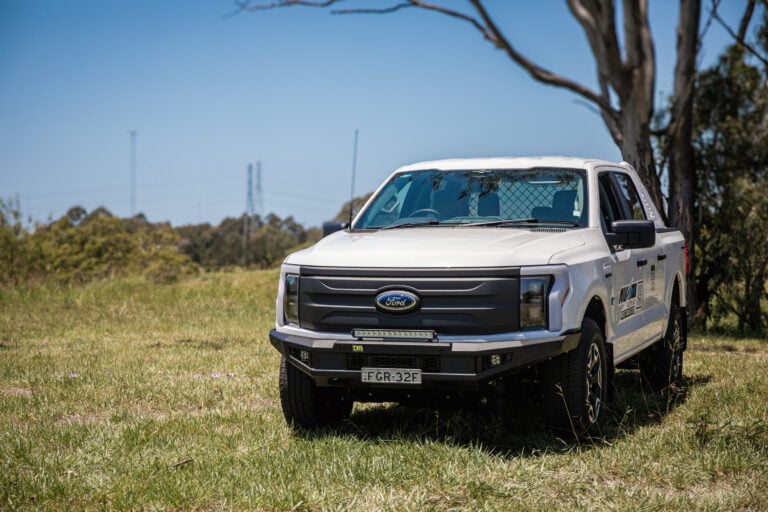
Ford Australia has revamped its locally re-engineered F-150 line-up for 2026.
The changes are largely cosmetic, but the headline addition is a new Platinum variant at the top of the range. That expands the locally re-engineered F-150 range to three variants, with the Lariat and XLT sitting below the new flagship.
For this drive we’ve got the mid-spec Lariat, in short-wheelbase (SWB) form, priced at $143,950 plus on-road costs. All three variants are available in either long-wheelbase (LWB) or SWB configurations, and for MY26 there’s no price difference between the two.
JUMP AHEAD
Engine and drivetrain
All F-150 models are powered by the same 3.5-litre twin-turbo petrol V6, delivering a claimed 298kW and 678Nm, backed by a 10-speed automatic transmission.
The ‘EcoBoost’ engine shares its lineage with the Ranger Raptor’s 3.0-litre V6, but with greater capacity comes more power and torque. It also outguns the V8 engines previously offered in the Hemi-powered RAM and Chevrolet Silverado 1500. While it lacks the traditional V8 rumble, Ford has added a synthesised engine note that mimics that familiar soundtrack under acceleration.
The 10-speed automatic is smooth and unobtrusive, while the transfer case offers full-time 4×4 for everyday driving, along with high- and low-range locked modes for off-road use. The base XLT is the only variant to run a part-time 4×4 system with 2WD for on-road driving.
Drive modes include Sport, Eco, Tow, Slippery and Off-road, and all models are equipped with a locking rear differential. The Lariat also features Ford’s Pro Trailer Backup Assist system, which is designed to make reversing a trailer easier for less experienced drivers. A dedicated towing setup and checklist screen is also integrated into the multimedia system.

What’s new for 2026?
The MY26 F-150 range gets a mild visual refresh, with updates limited to new finishes and revised LED headlight and tail-light designs.
The biggest exterior change is the Pro Access tailgate, fitted to Lariat and Platinum models. It can be used as a conventional drop-down tailgate or opened via a side-hinged swing-out function to the offside of the vehicle. This is intended to improve access to items in the tray, although it does come at the expense of the integrated step found in the standard tailgate. You’d need to be carrying some very specific loads to fully justify the swing-out design.

Inside, both the multimedia screen and driver’s display have been upgraded to 12-inch units, giving the cabin a more modern feel. A 14-speaker B&O sound system is also fitted, and it delivers impressive audio quality.
The front seats are wide and comfortable, with power adjustment, heating and ventilation in the Lariat. Both the steering column and pedals have electric adjustment to provide the optimal position, and the range of the column’s reach adjustment allows it to come back far enough to give me a near perfect driving position; something I find very few vehicles can achieve.
The rear seat is similarly spacious and accommodating, but the large panoramic glass roof lowers the headlining slightly. At 185cm, I found headroom to be just adequate, and taller occupants may find it a tight fit.
On- and off-road performance
We had the Lariat for a couple of weeks, using it for day-to-day duties on road, along with a day in the hills to get a feel for its off-road chops.
Once you’re accustomed to its size, the Effie is a pleasure to drive around town and on the highway. It’s spacious and comfortable, with plenty of performance on tap, which is exactly what you want for long stints behind the wheel.
For a vehicle that’s rated to tow 4500kg, the Lariat is softly suspended, making the ride comfortable and forgiving, while the handling is what you’d expect of a full-size American pick-up. The suspension remains comfortable on gravel roads, and a simple switch to the ‘Slippery’ drive mode helped with traction in the wet mud. This also worked well for a steep hill climb, but we switched to low range for better control on the descent.
Being long and low, these trucks aren’t great off-road vehicles in standard form, but the sky’s the limit once you jump into the range of aftermarket gear to address any off-track deficiencies.
| Off-road specs: 2026 Ford F-150 Lariat SWB | |
|---|---|
| Approach angle | 24.5 |
| Rampover angle | 20.0 |
| Departure angle | 25.3 |
| Ground clearance | 239mm |

Towing capability
As mentioned, the F-150 is rated to haul a 4500kg trailer, with a GCM of 7365kg and a GVM of 3315kg.
While the big American truck can pull a heavier trailer than midsize utes legally can, they don’t do so well with payload, as the GVM restricts the Lariat SWB to just 769kg – that’s less than what most midsizers are rated to carry. Of course, there are GVM upgrades available from the aftermarket if you want to up the ante in that respect.

Verdict
Rest assured, the F-150 Lariat is an awesome touring vehicle and one that would easily handle interstate travel with the family on board.
Add a big boat, horse float or race car trailer on the back, and it’d do a better job than any midsize diesel ute ever could. That’s what these trucks do so well, and the F-150 has been a much underrated option in this segment since returning to the market here. It’s one certainly worthy of your attention.

Specs
| 2026 Ford F-150 Lariat SWB | |
|---|---|
| Price | $143,950 + ORC |
| Engine | Turbocharged petrol V6 |
| Capacity | 3496cc |
| Max power | 298kW @ 6000 rpm |
| Max torque | 678Nm @ 3100 rpm |
| Transmission | 10-speed automatic |
| 4×4 system | Full-time, dual-range 4×4 |
| Construction | Aluminium double cab and tub on steel ladder frame chassis |
| Front suspension | Independent front suspension with coil springs |
| Rear suspension | Live axle with leaf springs |
| Tyres | 275/60R20 |
| Kerb weight | 2451kg |
| GVM | 3360kg |
| Payload | 794kg |
| Towing capacity | 4500kg |
| GCM | 7410kg |
| Seating | 5 |
| Fuel tank | 136L |
| ADR fuel consumption | 13.4L/100 km |
Those in the Australian 4×4 industry would no doubt be well aware of Allan Gray.
Through his decades of Toyota LandCruiser expertise, his engineering work with Terrain Tamer, or the hugely popular “Ask Allan” series alongside John Rooth, Gray has long been regarded as one of the country’s most respected figures in the off-road world.
Now, the veteran engineer has officially been recognised with induction into the Hall of Fame at the 2026 Australian Auto Aftermarket Awards, celebrating a career that has shaped Australia’s 4WD aftermarket industry for almost 80 years.

Gray began his apprenticeship in 1948 at just 14 years old, later going on to work on one of the first Toyota LandCruisers imported into Australia for the Snowy Mountains Hydro Electric Scheme. His career would evolve alongside the rapid growth of the nation’s off-road and touring culture.
In 1977, Gray established Allan Gray Toyota Service, one of only three specialist Toyota 4WD workshops operating in Australia at the time specialising in Toyota 4WDs. His reputation for diagnosing difficult driveline and mechanical issues quickly earned recognition, particularly among LandCruiser owners and remote area operators.
Following the sale of the workshop in the early 1990s, Gray joined Terrain Tamer (↗) as head engineer, where he played a key role in advancing product durability, preventative maintenance practices and technical standards across the 4WD aftermarket sector.
Among his many engineering contributions were developments in crown wheel and pinion setup procedures, suspension and shock absorber installation techniques, and the promotion of parabolic spring technology for leaf sprung four wheel drives.
Outside the workshop, Gray became a familiar face to Australian off-roaders through the long running “Ask Allan” educational series with John Rooth. Remarkably, Gray still works three days a week with Terrain Tamer at 92 years old, contributing to research and development, troubleshooting and technical mentoring.
The Hall of Fame honour also recognised Gray’s charitable contributions beyond the automotive industry. In 2021, he was awarded the Medal of the Order of Australia for service to both the automotive sector and the community, including decades of volunteer work with the St Vincent de Paul Society soup van program.

“The Awards events are always one of the most rewarding parts of the Expo because they shine a spotlight on the incredible talent, innovation and commitment across our industry,” said Stuart Charity, CEO of the Australian Automotive Aftermarket Association.
“From groundbreaking new products and outstanding business initiatives, through to recognising individuals making a real impact, these awards reflect the strength and professionalism of the Australian automotive aftermarket industry.”
Gray was inducted alongside fellow industry veterans Steve Broad and Shayne Quaile.
The 2026 GWM Tank 500 Hi4-T PHEV has received a series of updates for Australian and New Zealand buyers, headlined by revised suspension and steering tuning developed for local conditions.
Called the “AT-1” package, the changes include updated damper tuning and revised steering calibration aimed at improving ride quality, steering feel and overall composure on local roads and tracks.
GWM says the Tank 500 Hi4-T PHEV is now the second vehicle in its line-up to receive ANZ-specific ride and handling tuning integrated at the factory, following the recently updated Haval H6.

Underpinning the update is a body-on-frame ladder chassis paired with a mechanical 4×4 system, a nine-speed hybrid automatic and a torque-on-demand transfer case with low-range gearing, rather than an AWD-style layout.
Off-road hardware includes triple locking differentials, 11 selectable drive modes, 213mm of ground clearance, approach and departure angles of 30 and 24 degrees respectively, and 800mm of wading depth, positioning it as a full-size touring and off-road SUV despite its plug-in hybrid drivetrain.
The updated SUV also gains a 220V outlet in the rear cargo area as part of the update, expanding its V2L functionality for powering camping gear, tools and other accessories.

Pricing for the updated 2026 Tank 500 Hi4-T PHEV sits at $77,990 drive-away as part of GWM’s May offers, with a standard drive-away price of $79,990.
The revised specification applies to MY2026 vehicles built from March 2026 onwards. Buyers should check with their dealer for local stock and arrival timing.
You’ve just bought a new ute with a 3500kg towing capacity. That means you can hook up a three-and-a-half-tonne van and head for the Gibb River Road, right? Not quite.
Towing capacity is only one number in a chain of figures that all have to stack up before you’re legal and safe. Get any one of them wrong and you’re either over a limit you didn’t know existed, underinsured in a claim you thought was covered, or worst case, pushing the physics of a two-tonne outfit down a corrugated descent with more weight on the back than the chassis was designed to handle.
The problem is that these numbers interact. Your towing capacity is capped by the towbar rating. Your payload is eaten into by every accessory you’ve bolted on since the vehicle left the factory. Your GCM ceiling means that the heavier you load the tow vehicle, the less you can legally put on the trailer. Each figure constrains the others, and the one you haven’t checked is usually the one that catches you out.
None of it is complicated once you know what each term actually means and how they relate to each other. Here’s what each of them means 👇
JUMP AHEAD
- Vehicle weights
- Payload
- Trailer weights
- Towing capacity
- Towball loading
- How GCM and towing capacity interact
- GVM upgrades: more payload, done legally
- NHVR and state rules: where the thresholds change
- FAQs
Vehicle weights
Tare weight is the vehicle empty, all fluids present, but only 10 litres of fuel in the tank. Manufacturers use this figure for compliance plates.
Kerb weight is heavier: the vehicle with a full tank of fuel and no occupants, luggage or accessories. The moment you bolt on a bull bar, fill a water tank or put a passenger in the seat, you are above kerb weight.
That distinction matters more than most buyers realise. Tare is measured with only 10 litres of fuel; kerb weight assumes a full tank. On a ute with an 80-litre tank, that difference alone is around 58kg. The compliance plate payload figure is calculated from tare, which makes it look more generous than it really is. By the time you fill the tank to drive off the dealer’s lot, you have already used 58kg of your payload budget. Factor that in from the start rather than discovering it at a weigh station on the way to the Simpson.
Gross vehicle mass (GVM) is the maximum the vehicle can legally weigh in total: Kerb weight plus every kilogram of payload including passengers, gear, accessories and towball down weight. Every ute, wagon and 4×4 has a GVM stamped on its compliance plate. Do not exceed it.
Gross combination mass (GCM) is the maximum combined weight of the tow vehicle at its GVM plus the trailer at its ATM. This is the ceiling for the whole outfit and it is often the constraint that catches people out, even when the tow vehicle and trailer both look fine in isolation.

Payload: The number that actually runs your trip
Payload is simply your vehicle’s GVM minus its kerb weight, and it represents every kilogram you are allowed to add to the vehicle before it becomes illegal.
Passengers, fuel beyond a standard tank, recovery gear, a fridge, a rooftop tent, a bullbar, a winch, water, food, and towball down weight all come out of that payload budget.
On a modern dual-cab ute with a GVM of 3200kg and a kerb weight of 2300kg, the payload is 900kg. That sounds reasonable until you start adding it up. Two adults alone account for around 160kg. A quality steel bull bar with a winch is another 120kg. You are at 280kg before the camping kit, the dual battery system, the water tank or the towball load. Payload is the constraint that bites hardest on a fully kitted touring rig, and it pays to know your number before you leave the driveway.
Trailer weights
Trailers, caravans and horse floats are assessed by two different total weight figures, and mixing them up is where people get into trouble.
Aggregate trailer mass (ATM) is the tare weight of the trailer plus its maximum payload, measured when it is uncoupled from a vehicle. This is the number most manufacturers quote as “gross trailer weight.”
Gross trailer mass (GTM) is the weight carried on the trailer’s own axle when it is hitched and loaded. GTM is always lower than ATM because it excludes the portion of weight transferred onto the tow vehicle via the towball.
The gap between ATM and GTM is not a rounding error. Take a caravan with an ATM of 3000kg. The GTM, which is the weight on the van’s own axle when hitched, might be 2700kg. The remaining 300kg is the towball down weight, transferred onto the tow vehicle. That 300kg now sits inside the tow vehicle’s GVM budget, not the trailer’s. So while the van weighs 3000kg in total, the tow vehicle is carrying 300kg of it. This is why two setups with identical trailer weights can produce very different loads on the tow vehicle, depending on how the trailer is balanced.
Towing capacity
The towing capacity figure quoted by manufacturers is the maximum trailer ATM the vehicle is rated to pull.
Braked towing capacity is the commonly quoted figure: The maximum ATM of a trailer fitted with its own brakes. Most serious rigs pulling anything over 750kg will need a braked trailer. Unbraked towing capacity is capped at 750kg for all passenger and light commercial vehicles in Australia, regardless of what the tow vehicle is capable of.
The tow vehicle’s rating and the towbar’s rating are not always the same figure, and the lower number always wins. A vehicle rated at 3500kg towing with a towbar rated at 3000kg is a 3000kg outfit. Check the towbar compliance plate, not just the vehicle spec sheet.

Towball loading
Also called towball down weight, this is the vertical load the trailer exerts on the tow ball when hitched. It is often overlooked, and leaving it out of your weight calculations is a reliable way to end up over GVM without realising it.
The rule of thumb is 10 per cent of trailer ATM. A properly loaded 3000kg caravan puts around 300kg of downward force on the towbar. That 300kg counts against your vehicle’s GVM, not just the trailer’s weight budget. A front-heavy van shifts more weight onto the towball. A rear-heavy van reduces towball load but creates instability at speed. Neither extreme is the go. Aim for towball down weight in the range of 10 per cent of ATM and check it with a towball scale before a long run, not after.
A trailer that is front-heavy or sitting at a different angle to the tow vehicle can exceed towball loading limits even if the trailer itself is inside the rated towing capacity. Get the balance right.

How GCM and towing capacity interact
This is where the arithmetic matters. Say your vehicle has a maximum GCM of 6000kg and a braked towing capacity of 3500kg. In theory, that leaves only 2500kg of GCM headroom for the tow vehicle. Fine on paper.
Now add real-world equipment: ARB bullbar with winch (around 120kg), Ironman 4×4 lift kit and accessories (50kg), MAXTRAX and recovery gear (20kg), dual battery system (30kg), full touring load including water, food and camping kit (250kg), two adults (160kg). You are at or past 2500kg before the towball down weight is added. Every kilogram over that GVM limit cuts directly into your legal towing capacity.
A buffer of 10 to 20 per cent below the rated towing capacity is not conservative. It is the difference between a legal setup and a fine, a voided insurance claim, or an unsafe rig on a corrugated outback track.
GVM upgrades: More payload, done legally
A GVM upgrade is the most direct way to legally carry more weight in a laden touring rig.
Approved by engineers and complied through an authorised modifier, a GVM upgrade raises the maximum the vehicle can weigh in total, which increases usable payload without changing what you put in the vehicle. Common upgrades on dual-cab utes push GVM from the factory figure by 200 to 400kg, depending on the platform and the modifier. Brands such as Ironman 4×4, Dobinsons and ARB offer complied GVM upgrade packages for most popular platforms.
The upgrade typically involves uprated suspension components and an engineering certificate, and it must be declared to your insurer. It does not increase towing capacity, and it does not change the GCM ceiling. What it does is give a heavily kitted rig the legal headroom it needs to carry a real touring load without sitting outside the compliance plate figure every time it leaves home.

NHVR and state rules: where the thresholds change
Once your gross combination mass exceeds 4500kg, a different regulatory framework applies.
Below that threshold, your outfit is governed by standard Australian road rules applicable to light vehicles. Above it, the National Heavy Vehicle Regulator takes over, and the requirements around mass management, load restraint and driver obligations become more demanding. For a touring rig towing a large caravan, crossing the 4500kg GCM mark is easier than it sounds: a 2800kg tow vehicle plus a 2000kg ATM van gets you there. It is worth calculating your GCM before you buy the van, not after.
Individual state and territory rules can also apply for things like towing with a learner or P-plate licence, trailer lighting requirements, and load restraint standards. The National Heavy Vehicle Regulator website and your state’s transport authority are the right places to verify current requirements, since these details change and vary by jurisdiction.
FAQs
Q: Can I tow my maximum rated capacity and fully load the vehicle at the same time?
A: Rarely. GCM limits mean that adding weight to the tow vehicle reduces available towing capacity. The two figures work against each other.
Q: Does towball weight reduce towing capacity?
A: Not directly, but it counts against GVM, which reduces the margin available for payload and therefore affects how much you can legally tow in a real-world setup.
Q: What happens if I exceed GVM or GCM?
A: Fines, potential insurance issues, and a vehicle that handles poorly. On snotty tracks or in an emergency stop situation, an overloaded outfit is genuinely dangerous.
Q: What buffer should I aim for?
Ten to twenty per cent below all maximum ratings. It keeps you legal, keeps the insurer onside, and leaves room for the gear you always forget to account for.