Electronics & Gadgets

Gallery 1
For more than 40 years, I’ve been pumping up tyres the slow way.
Back in the day – as a teenager – I relied on my old man’s trusty foot pump. Thirty to forty minutes of leg work just to bring pressures back up after a weekend of low-psi fun. Hard yakka, but it did the job.
Then came the game changer: my first single-head 12V compressor. At the time, I felt like king of the track, kicking back while it did the hard work for me. Since then, I’ve owned a few different models – all single-cylinder – and never really felt the urge to upgrade.
1
Sure, I’ve tested plenty of twin-head units over the years, ranging from bargain-bin specials to top-shelf monsters. But none ever tempted me enough to make the switch.
Hoses and attachments
Then came the era of inflation kits – head units, multi-hose systems and all sorts of fancy gizmos claiming to make tyre inflation quicker and easier.
Sure, some did streamline the job, but having a compressor, a control unit and four separate hoses to unwind, store and inevitably untangle just didn’t make sense to me. Add in all the extra gear you need to carry, and suddenly a basic job turns into a storage hog – all for marginal time savings.
Light bulb moment
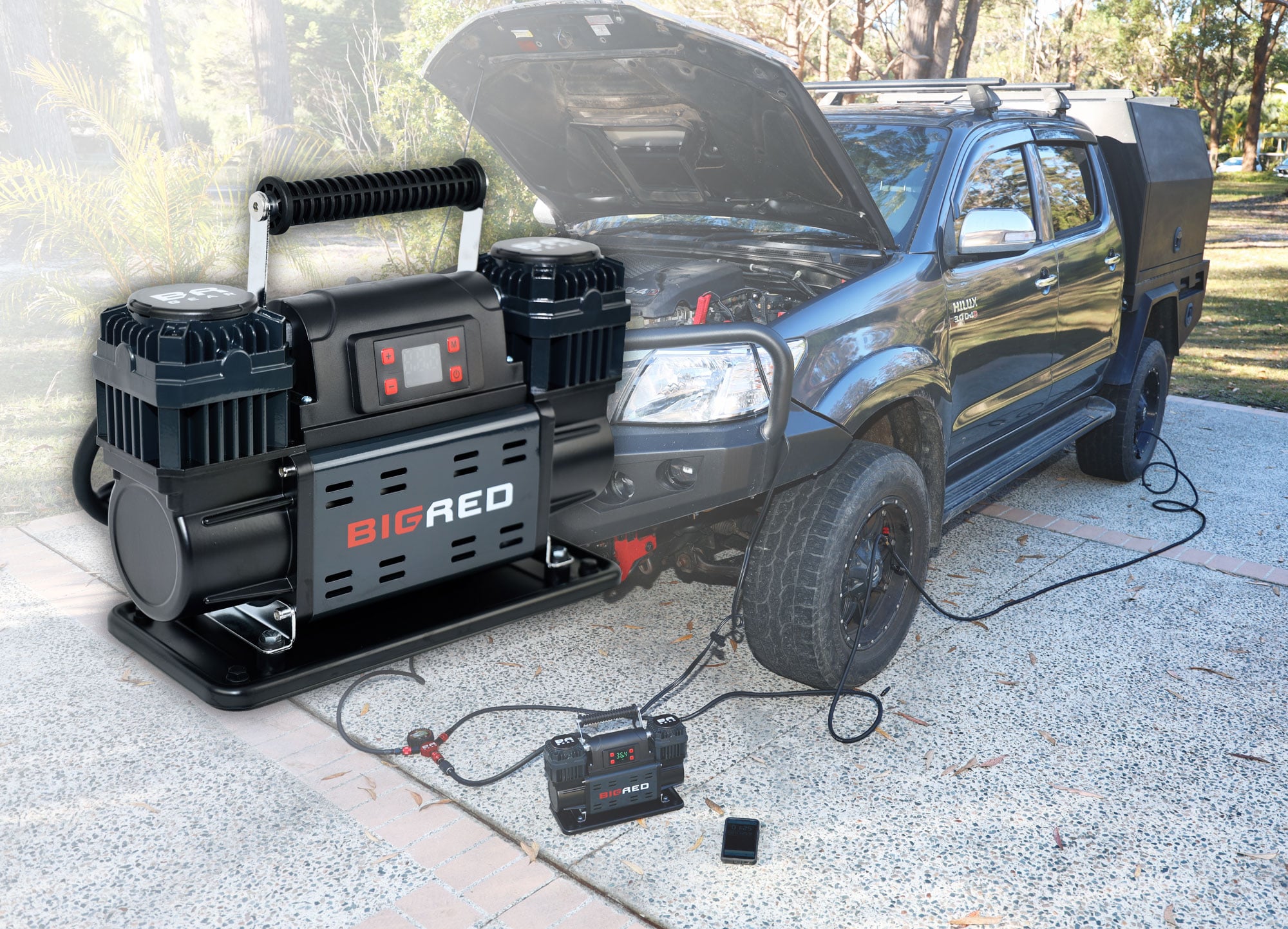
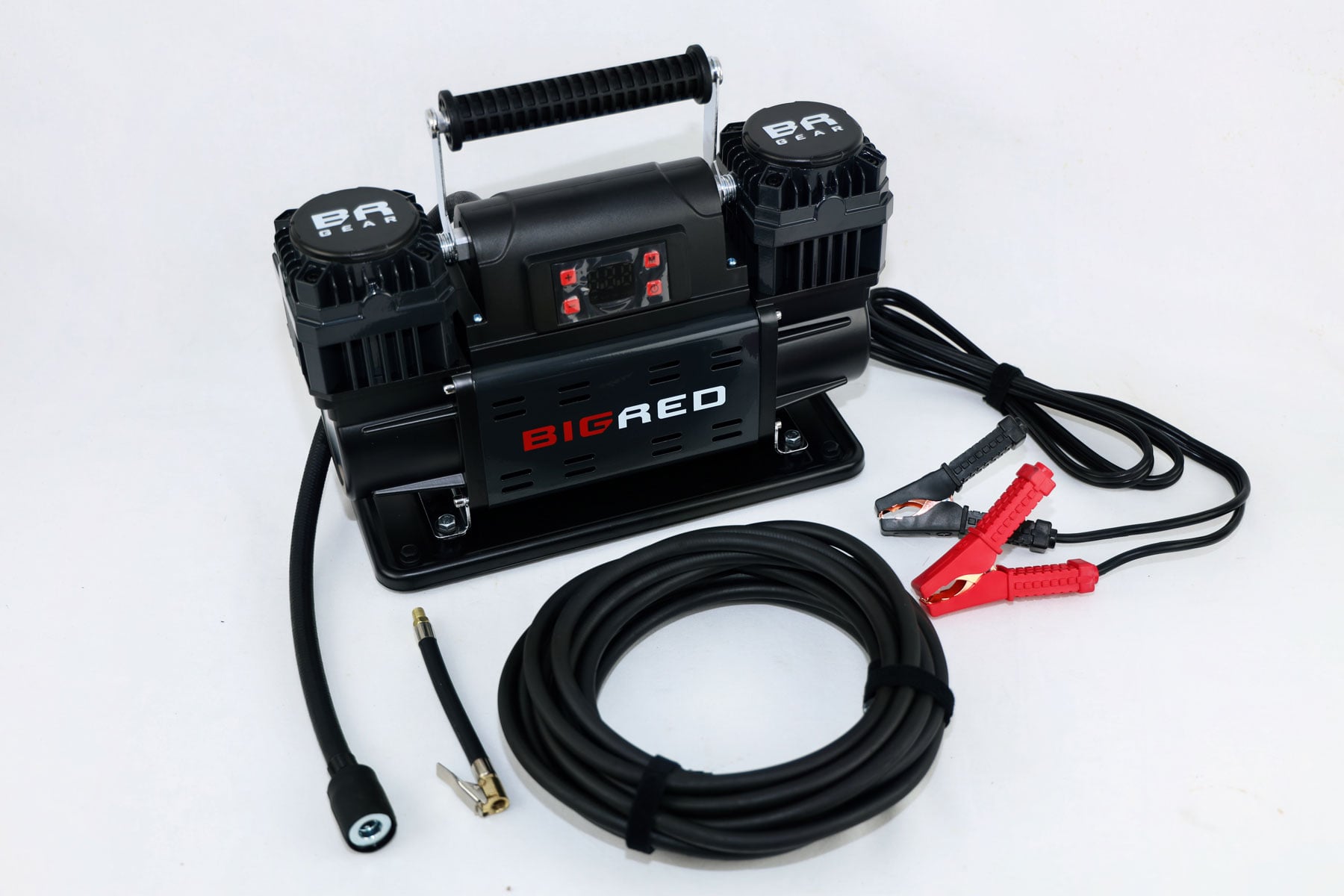
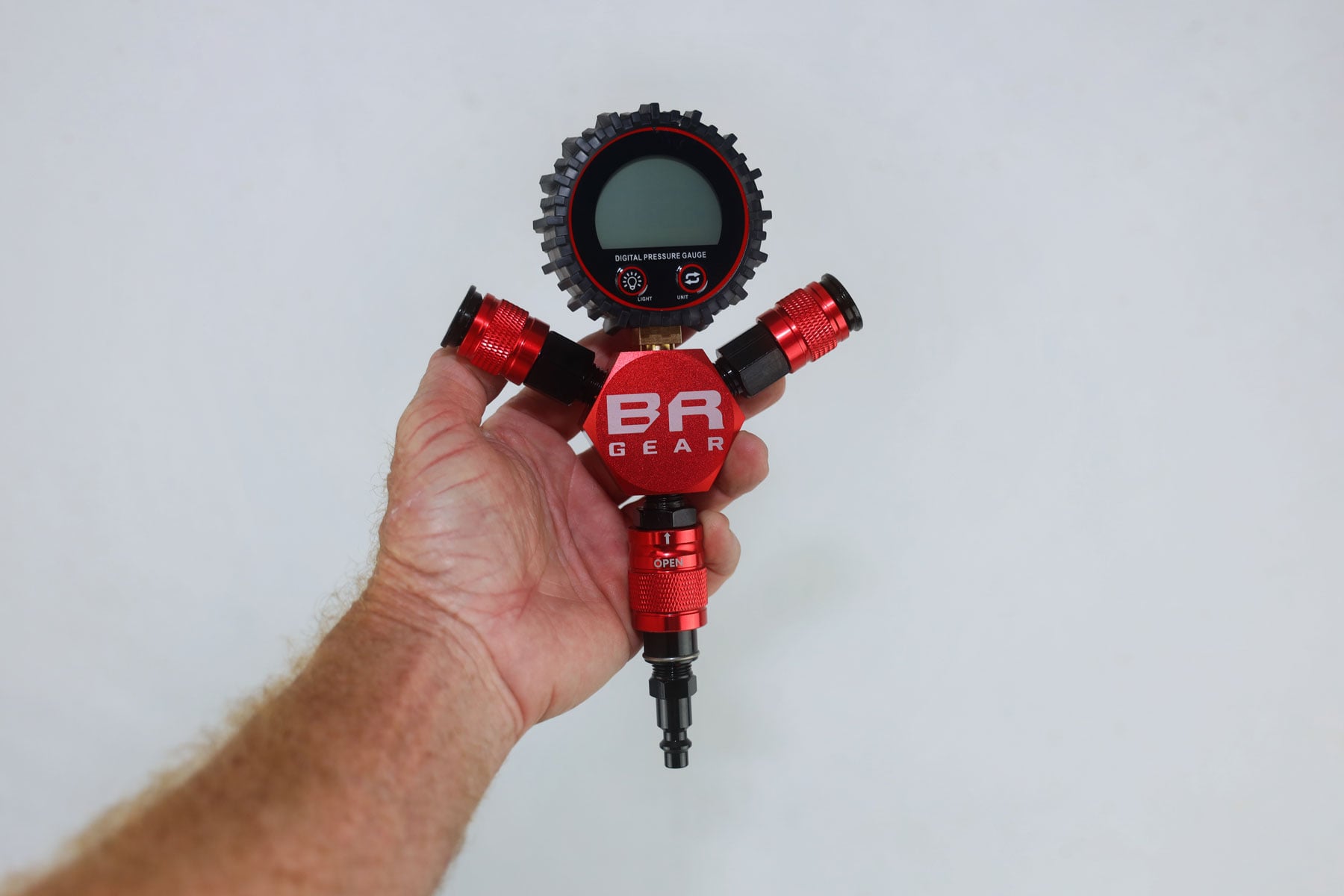
While trawling through the usual sea of aftermarket accessories, the Big Red Gear twin-head air compressor caught my eye. For the price, it looked impressive – especially with features like auto cut-off when a preset digital pressure is reached. Add the optional Quad-Flate kit, and you get rapid deflation capability too – a big plus in my books.
1
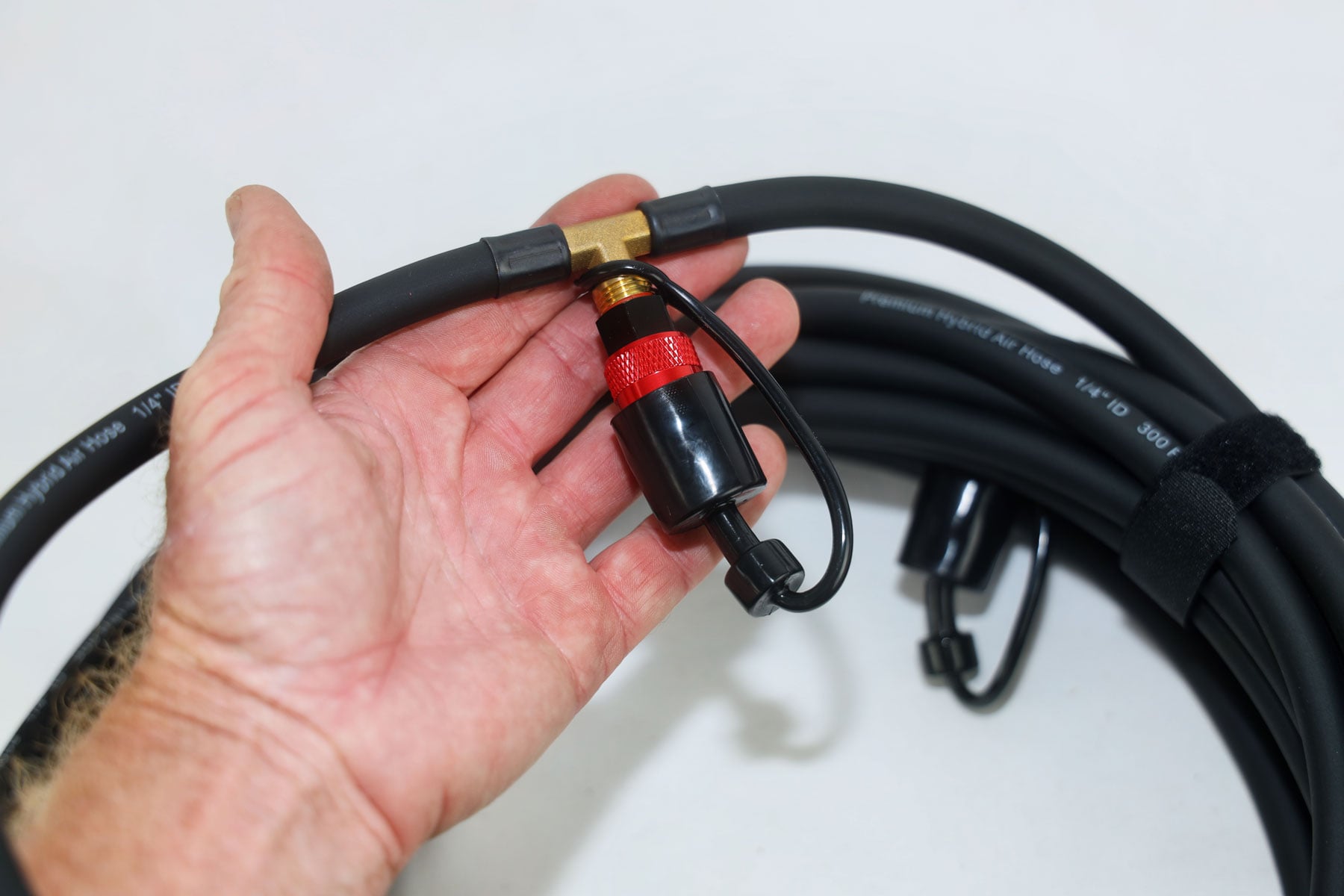
The real clincher? Unlike most four-tyre inflation setups that use four separate hoses, this one runs all four tyres with just two. Now that’s a system I actually wanted to try.
The trick lies in the hose design. Each of the two main lines has a T-junction part way along, allowing for a direct connection to the third and fourth tyres, which accept or release air as needed.
That setup impressed me – fewer hoses to untangle, less gear to stash. So I pulled the trigger and now run both the Big Red Gear 12V Twin Head compressor and the optional Quad-Flate kit.
All in the name of long-term testing. I’ll start by timing inflation and deflation across a few scenarios – one tyre, two tyres, and all four – to see how the system handles real-world use.
1
After that, the kit’s going into the 4×4-converted HiAce for an eight-week run to North Queensland, finishing with a celebratory photo at the tip of Cape York. Safe to say it’ll get a solid workout – and I’ll report back with the verdict, good, bad or otherwise.
Slower or not?
Here’s the theory I was told: pumping up two tyres at once with a single compressor doesn’t take twice as long as inflating one – and doing all four won’t take four times longer. In fact, it’s not even double the time of two tyres.
You see, the biggest bottleneck in any inflation setup is the tyre valve itself. Flow rates vary depending on the pressure in the tyre, so it’s tricky to pin down exact figures – but the restriction is always there. The fastest way to pump up a tyre is with the valve core removed, feeding air directly into the stem. But let’s be honest – that’s not something most people want to mess with. I know I don’t.
1
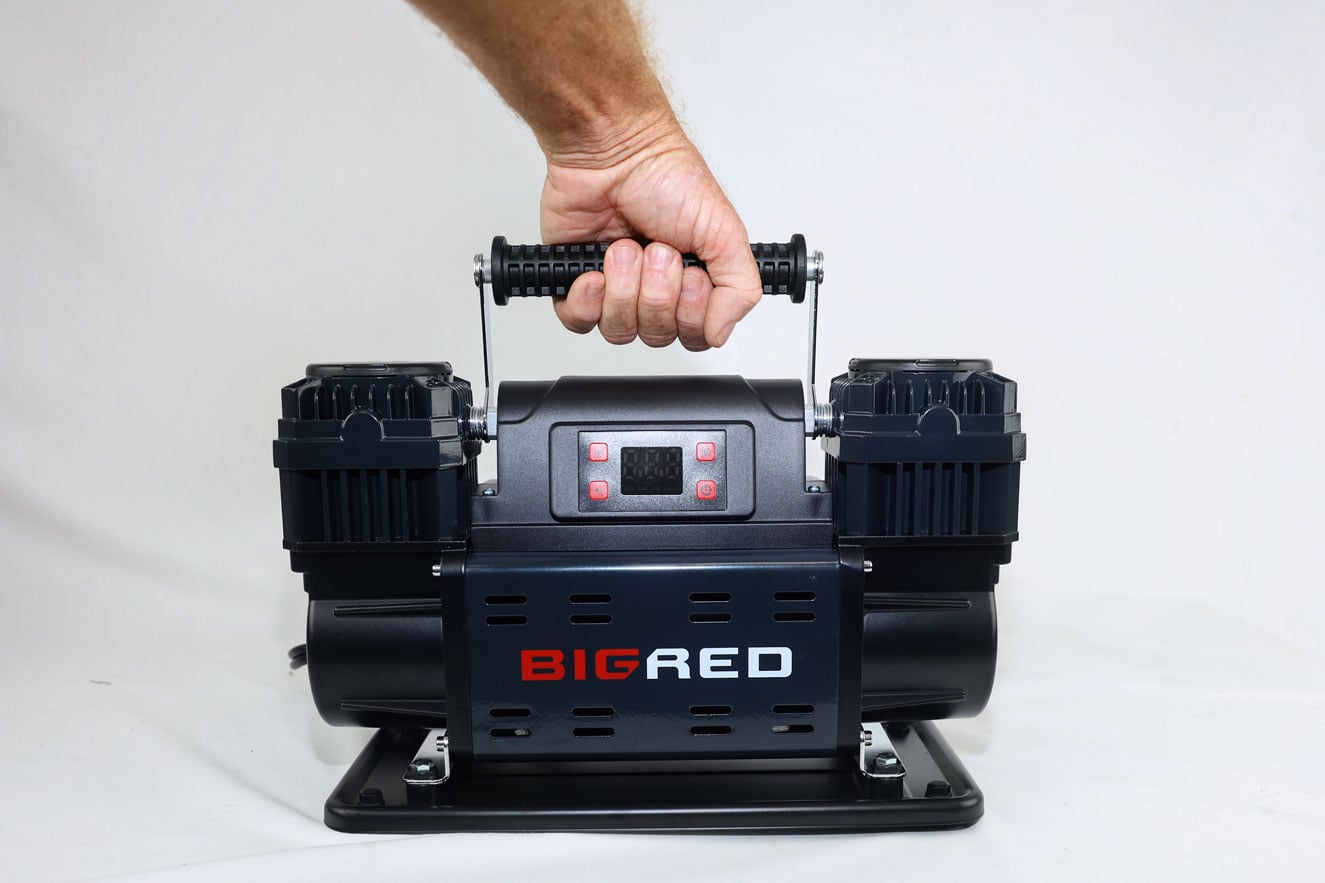
The Big Red Gear compressor is rated to a maximum flow of 300L/min and 150psi. In reality, though, the actual flow rate depends on the pressure in the tyres – just like the airflow restriction at the valve, it’ll vary as you go.
Since the compressor pushes out more air than the tyre valve can take in, there’s naturally a bottleneck – and that restriction slows airflow through the system. One side effect of that is heat. The compressor, hoses and head unit all warm up under pressure, and the more resistance in the system, the hotter it gets. And excess heat? That’s never a good thing for long-term reliability.
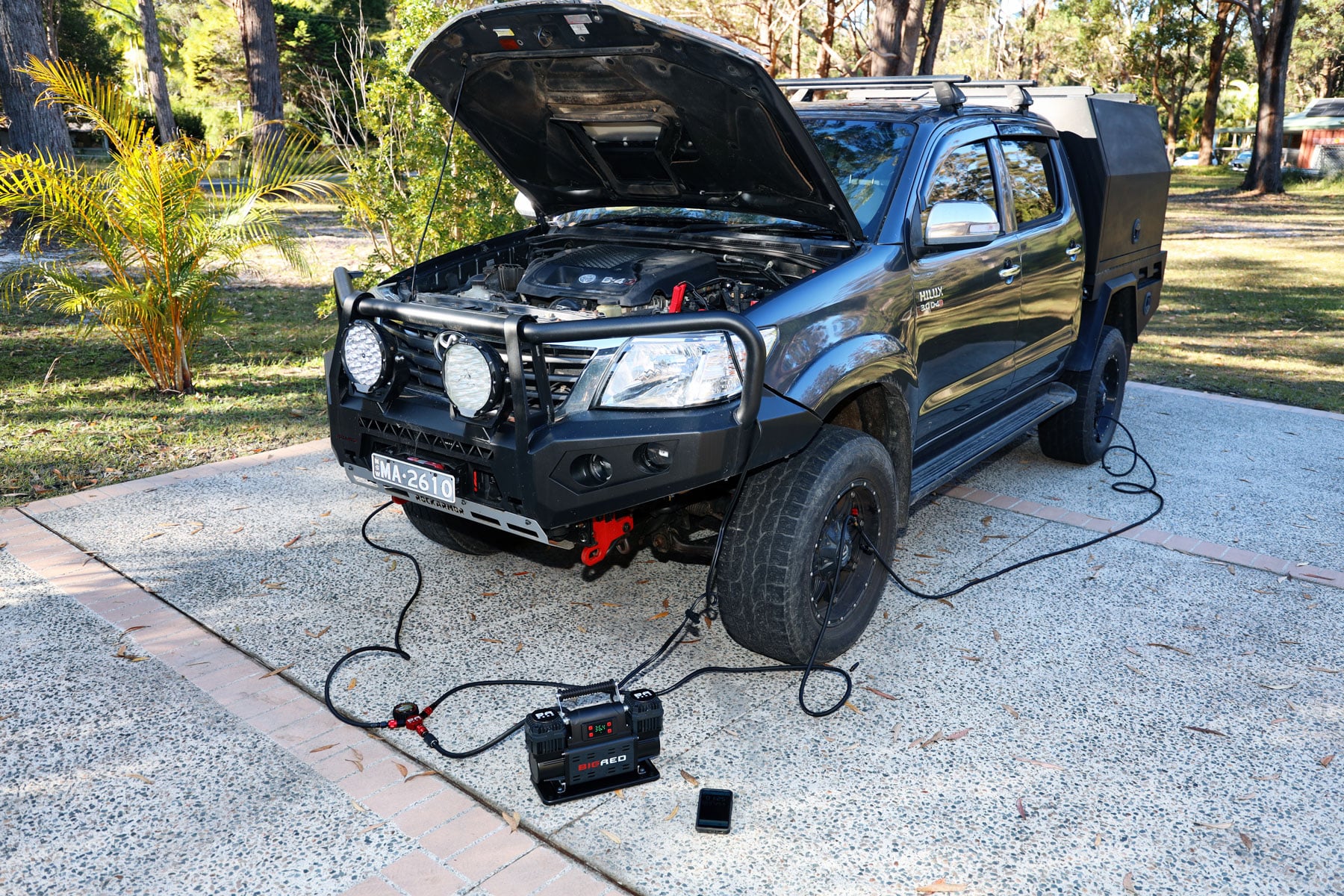
Now split that airflow in two and inflate two tyres at once. Same air output, but with less restriction, less wasted pressure, and less heat – sounds like a better system already, right?
1
Double it again and run all four tyres at once. With more outlets for the air to escape, you’re getting closer to the compressor’s maximum flow rate. That means lower system resistance, reduced heat buildup and, in theory, faster inflation times across the board.
Testing time – Inflation
That’s all the theory – now for the real-world results. Check out the table for the actual figures, inflating from a typical beach pressure of 20psi back up to a bitumen-ready 40psi.
I had grand plans to measure compressor temps, along with the chuck and Quad-Flate head unit before and after inflation… but like many good intentions, that testing went straight out the window.
Why didn’t I bother with precise temperature readings? Simple – it was easy enough to measure the starting temps before use, but once the compressor, chuck and Quad-Flate head unit warmed up, they stayed hot for long enough to throw off any consistent comparisons.
1
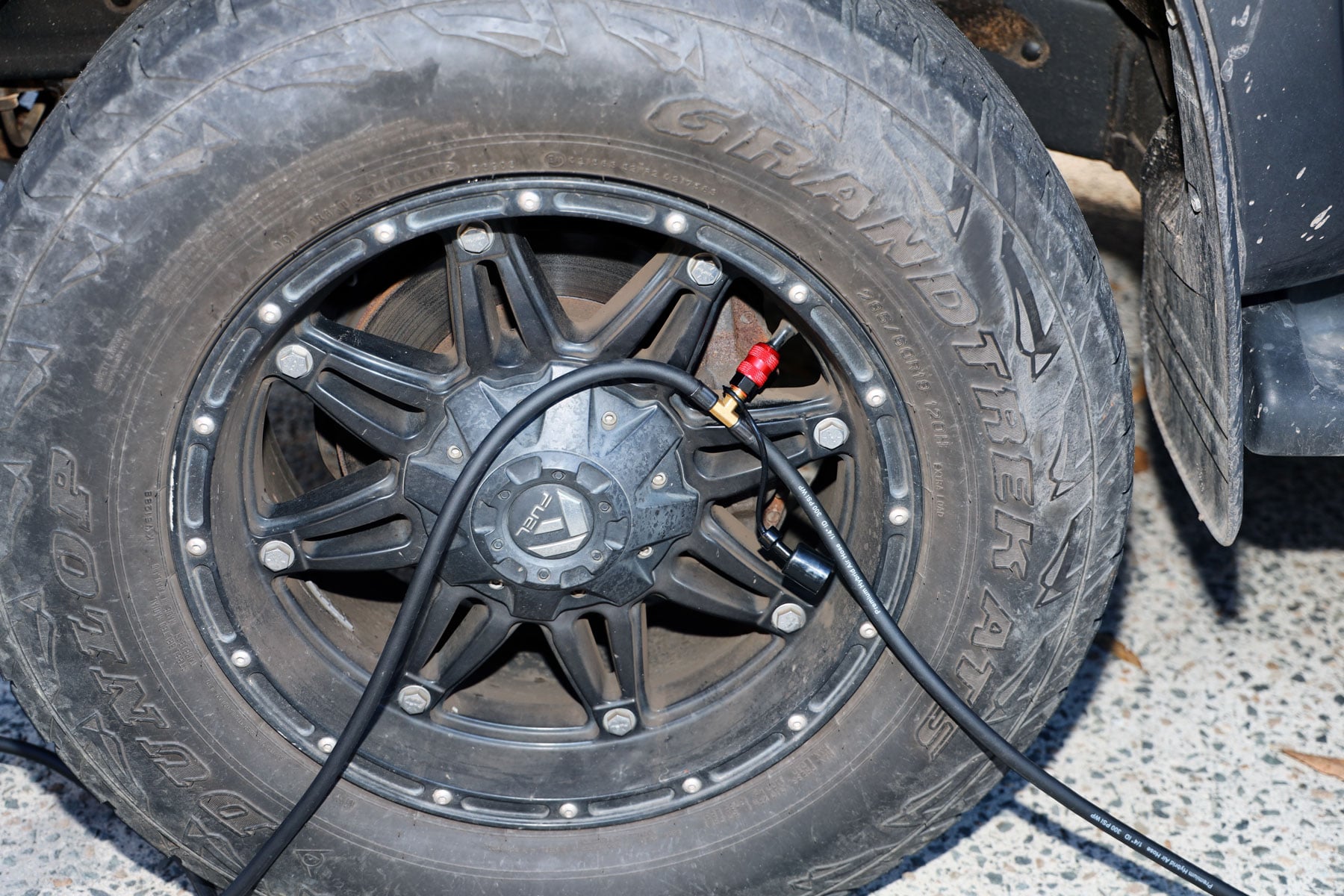
That said, during testing, the compressor got warm after repeated use but never scalding – it stayed comfortable to handle. The only component that got too hot to touch was the four-way head unit, and that was after multiple back-to-back runs. In real-world use, you’re only inflating a set of tyres once – not running repeated test cycles.
The included carry pouch doubled as a heat shield and made hose disconnection easy even when things were warm. At no point did the thermal cut-out or over-current protection kick in. Given the compressor’s speed and short run times, I’d be confident inflating multiple vehicles without any trackside delays.
As the table shows, doubling the number of tyres didn’t double the time – enough proof for me that this setup saves valuable minutes trackside.
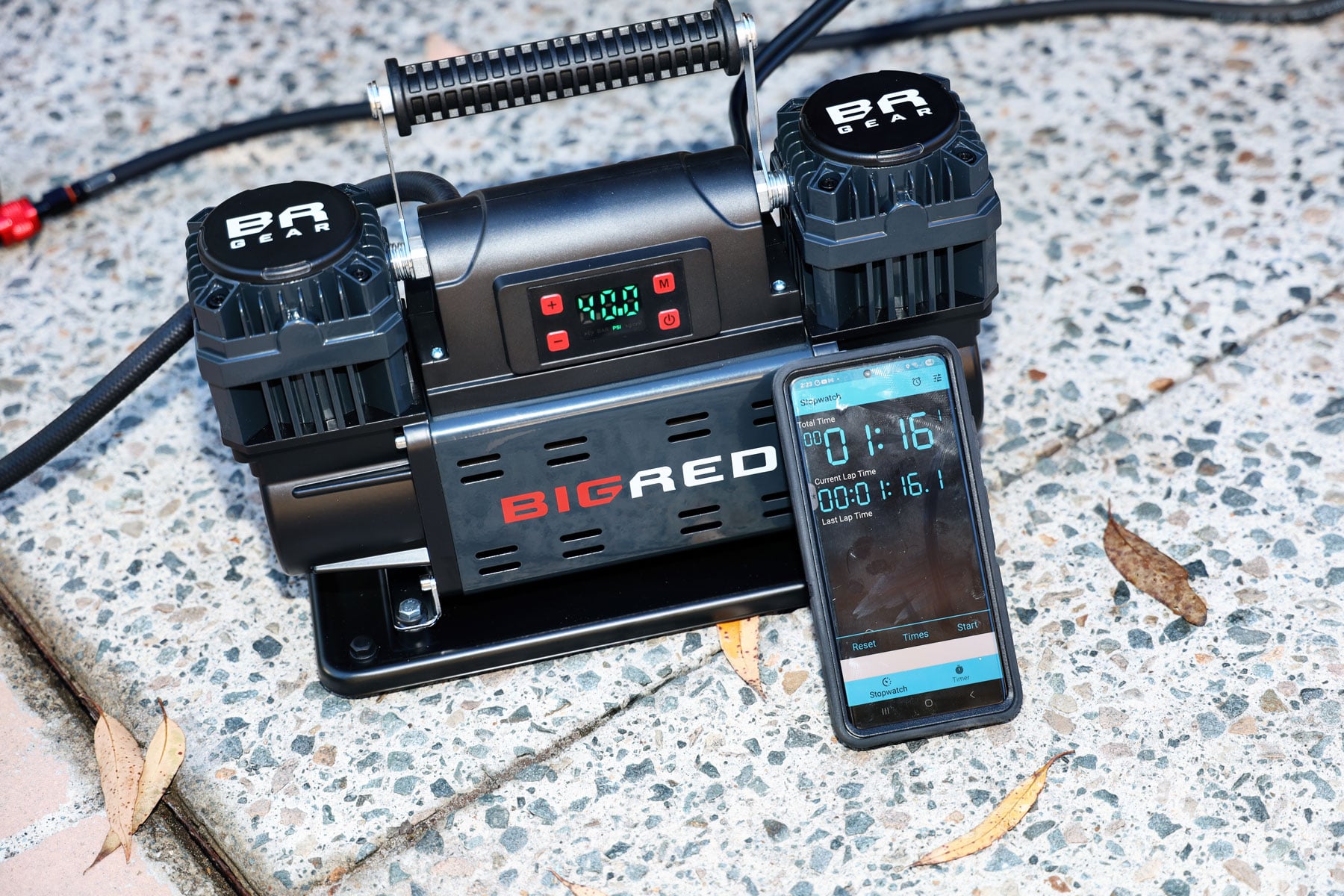
1
To put it plainly: inflating one tyre from 20 to 40psi took 1 minute and 16 seconds. Multiply that by four and you’d expect a total of 5 minutes and 4 seconds. But with the Quad-Flate system, all four tyres were done in just 4 minutes and 3 seconds – saving nearly a full minute.
Not bad, eh?
The Big Red Gear compressor is quick on its own, but pair it with the twin-hose Quad-Flate system and it’s even quicker.
Inflation Times: 20psi to 40psi
| Number of Tyres | Time Taken |
|---|---|
| One tyre | 1m 16s |
| Two tyres | 2m 14s |
| Four tyres | 4m 03s |
Tested on 285/60R18 tyres (approx. 31.5-inch overall diameter).
Testing time – Deflation
Using the Quad-Flate hose kit, I repeated the same test in reverse – dropping pressures from 40psi down to 15psi with one, two and four tyres deflating at once.
One handy feature of the Quad-Flate system is its ability to handle uneven tyre pressures. I often run different front and rear pressures due to load balance – typically heavier at the rear. For example, on sand I might go down to 20psi at the rear and 15psi up front. The system can manage that easily, letting you monitor and isolate pressures as needed.
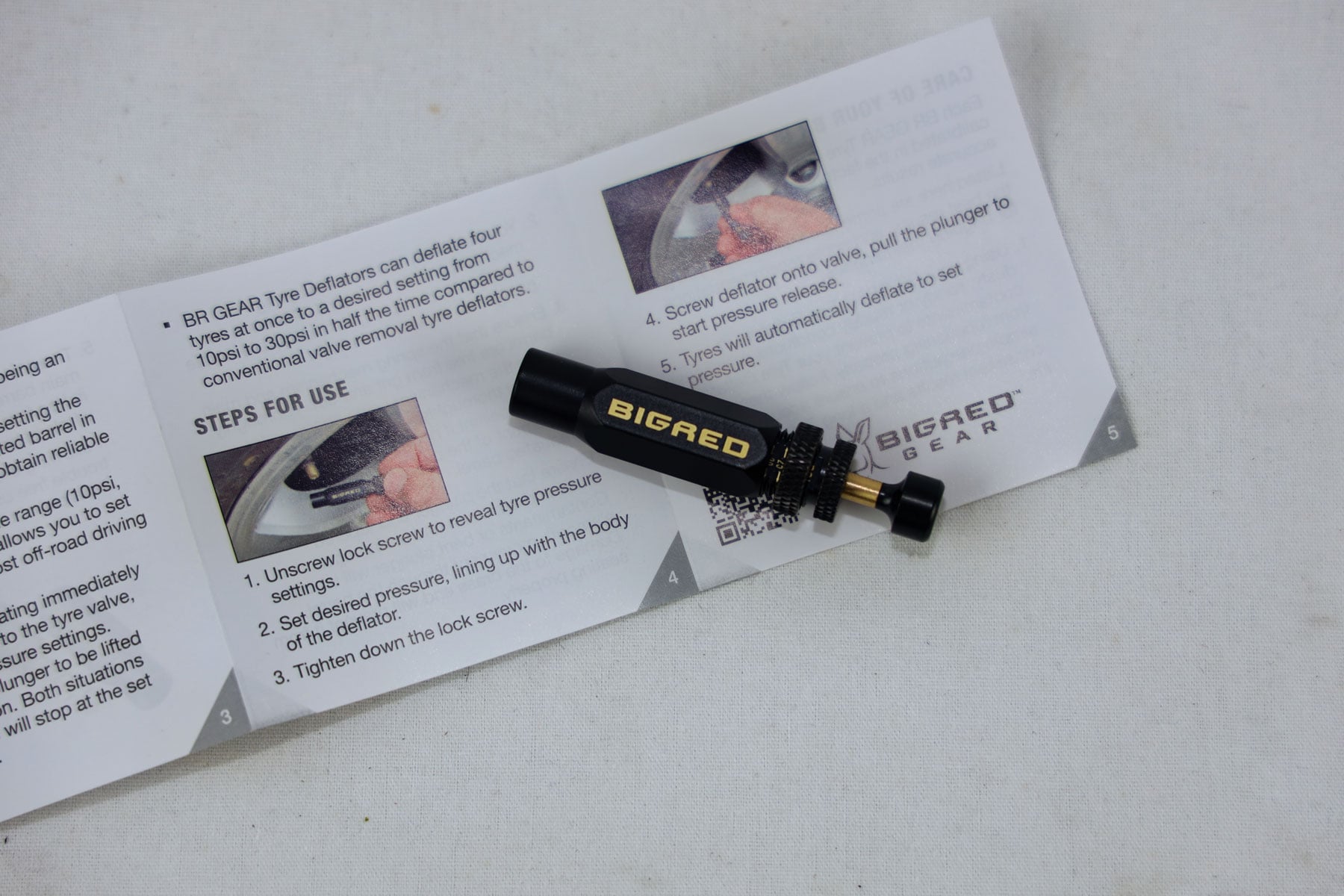
1
The trick with this setup is to start by lowering all four tyres – with all four lines connected – to the higher of your target pressures. In the earlier example, that’s 20psi. The system will deflate until all four tyres hit 20psi, then stop.
From there, just disconnect the two rear lines, leaving the fronts hooked up, and drop them to 15psi. Job done.
It works the same way in reverse when inflating. Set your lower target pressure first – say 35psi for the front – and let the system run all four. When it cuts out, remove the front lines, bump the gauge to 40psi, and inflate the rears. Simple and efficient.
Another way
If you’re not keen on using the Quad-Flate kit for deflation, there’s always the tried-and-true method – screw-on automatic deflators. For comparison, I also included a set of Big Red Gear’s four-piece deflators in the test.
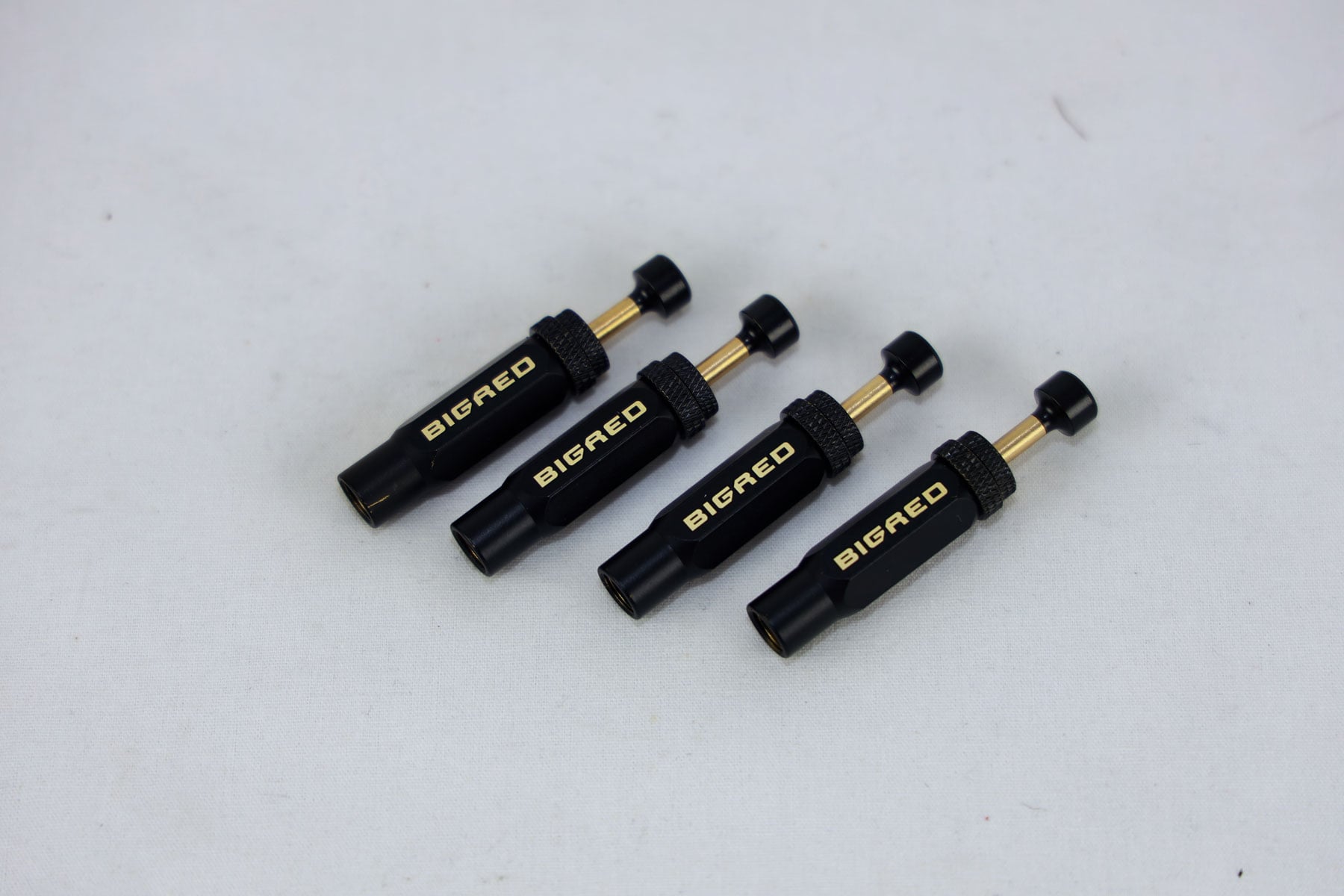
1
The table shows deflation times from 40psi down to 20psi. Of course, your own start and finish pressures may vary, and factors like tyre size and vehicle weight will also affect results. But the differences between deflating one, two or four tyres at once clearly highlight just how much time you can save – and which method is most efficient.
Check out the table for the results – just note that I haven’t factored in the time it takes to walk around and screw on each of the four auto deflators. I timed a single tyre deflation and used that figure for the two- and four-tyre results with the autos, just for consistency.
With the Quad-Flate, I tested one, two, and four tyres as the system is designed to do. And here’s the kicker – it’s much faster than the auto deflators.
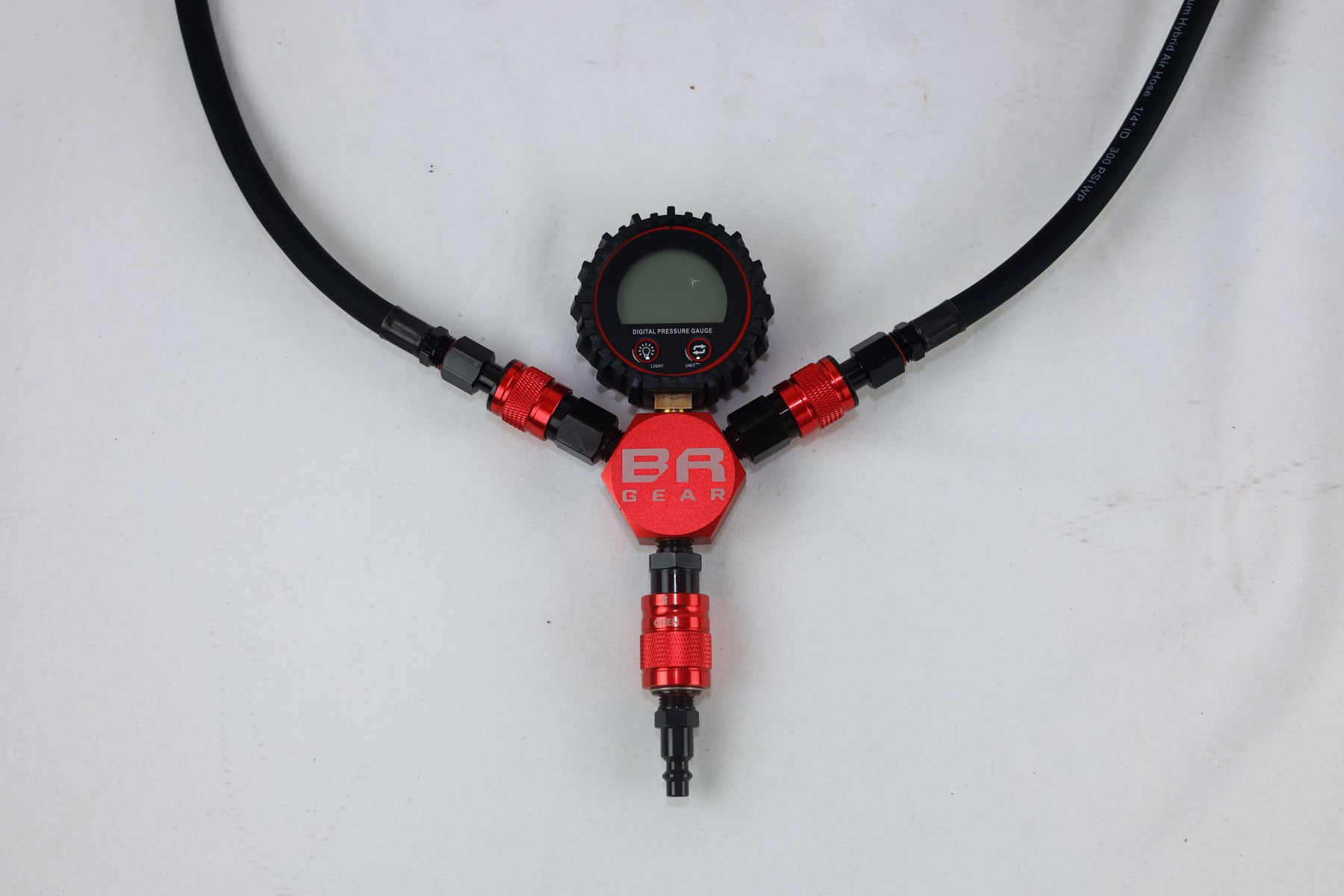
1
One idea for Big Red Gear: a short 10cm hose would make the head unit easier to use as a stand-alone deflator on single tyres. A small tweak, but it’d be a handy one. Let’s see if the mob at Big Red Gear are listening.
Deflation Times: 40psi to 20psi
| Number of Tyres | Quad-Flate Kit | Auto Deflators |
|---|---|---|
| One tyre | 1m 29s | 3m 10s |
| Two tyres | 1m 37s | 3m 10s* |
| Four tyres | 1m 54s | 3m 10s* |
| *Auto deflator time based on a single-tyre measurement and applied to all tyre counts for comparison. | ||
Tested on 285/60R18 tyres (approx. 31.5-inch overall diameter).
While this testing backs up the theory on faster inflation and deflation times, it’s no long-term durability test. Our trip to the Tip and back will clock up around 10,000km – with at least a quarter of that off-road.
I’ve got no idea how many times I’ll be adjusting tyre pressures along the way, or which method I’ll end up favouring. But rest assured, we’ll be putting the Big Red Gear inflation system through its paces – and I’ll report back not just from this big lap north, but from plenty of shorter local jaunts too.
Let’s see how it holds up in the long run.
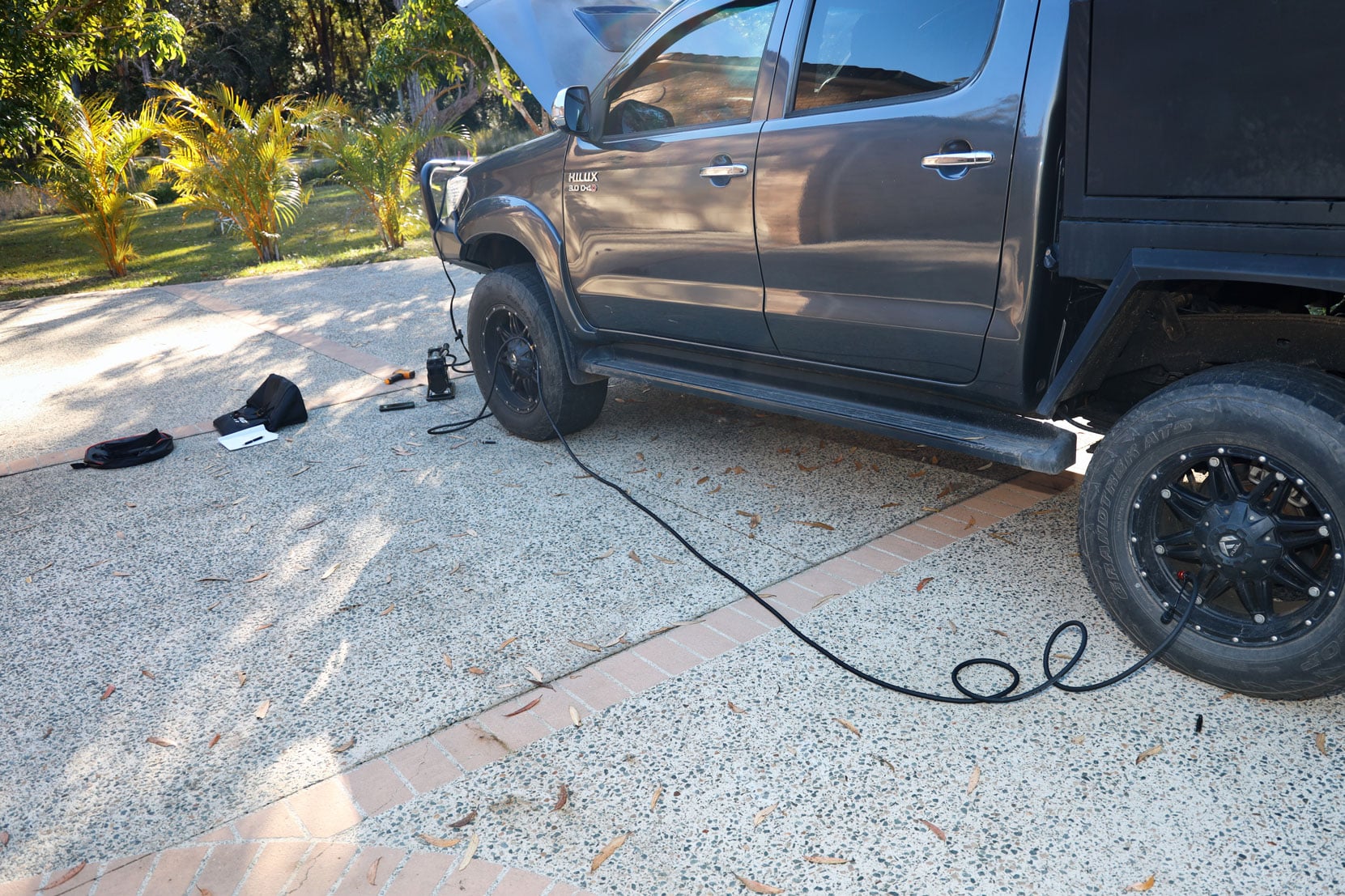
All up, both the compressor and deflation kit performed flawlessly. I was especially impressed by the quality of the hoses – they roll and unroll easily without kinking, don’t get overly hot, and have more than enough length to reach all four wheels.
1
The compressor itself is a solid bit of gear – it looks and feels well built, ran quieter than many units I’ve tested, and outperformed my expectations for both speed and ease of use.
While the unit features an automatic pressure cut-off, it can also be run in manual mode. There’s a built-in bleeder valve too, which makes it easy to fine-tune pressures or drop a few psi at a time. It also helps depressurise the system, so disconnecting the hoses is quick and fuss-free.
Overall, I rate the Big Red Gear setup as one of the best compressors I’ve used. The performance, build quality and thoughtful features set it apart. There’s no onboard air tank – but with inflation this quick, it simply doesn’t need one.
- RRP: $279 (twin-head portable air compressor); $399 (twin-head portable air compressor with Quad-flat kit); $49 (4-piece automatic tyre deflator kit)
- WEBSITE: https://bigredgear.com.au/
- WE SAY: A fast, well-built and cleverly designed tyre inflation and deflation kit that is one of the best we’ve tested.
Twin Head Air Compressor – Specifications
- Power: 1080W
- Input voltage: 12.0-13.5V DC
- Max current: 90A
- Max pressure: 150psi (preset) and 125psi (manual) – auto cut-off
- Max air flow: 300L/m; 10.6cfm
- Overcurrent protection: Yes (over 120A)
- Over temperature protection: Yes (over 120°C)
- Pressure unit switch: Yes
- Cylinder size: 2mm x 60mm
- Air delivery hose length: 7.75m
- 12V power lead length: 1.8m
- Digital pressure gauge: Real-time in-tyre pressure ±2psi
Quad-Flate Digital Hose Kit – Specifications
- Hose quantity: 2 x hoses (4 tyres)
- Length: 2 x 7m
- Hose colour: Black
- Hose material: Premium Anti-kink Hybrid Polymer
- Suits vehicle wheelbase: 4500mm
- Tyre fitment chucks: 4
- Chuck colour: Red
- Tyre gauge (deflator/inflator): Digital
- Units of measure: psi, bar, kPa, kg/cm2
- Max pressure rating: 200psi
- Batteries: 2 x AAA (not included)
Follow 4X4 Australia on Google
Get more 4x4 news, reviews and gear stories from 4X4 Australia in your Google feeds.

We recommend
-
 4x4OTY
2025 4x4 of the Year: Winners revealed
Six contenders clash for the coveted 4X4OTY gong!
-
 4x4 Ute of the Year
2025 4x4 Ute of the Year, powered by REDARC
We round up a dirty dozen midsize 4x4 utes to find the best in class!
-
 4x4 Ute of the Year
Ford Ranger V6 Sport wins 2025 4x4 Ute of the Year title
The Ranger Sport V6 takes top honours in our 2025 Ute of the Year test