Explore

Gallery 1
My entire body tenses as I walk towards the cool water. I feel bolts of lightning shoot up my spine as I wade knee-deep into the crystal-clear water and sense something is very wrong.
Lush green ferns drape over the water, providing plenty of shade from the scorching midday sun, while enormous lily pads on the surface complete the somehow familiar scene. Despite never having set foot here in my life, I have an overwhelming sense of déjà vu. My entire being is telling me I need to get out of Dodge, and I need to go now.
This isolated riverbank in the far north is eerily similar to the scene in Crocodile Dundee where Linda Kozlowski attempts to fill her water bottle before having a very up-close-and-personal meeting with a monster saltwater crocodile.
As I climb into the canoe and push off from shore, I am assured there’s nothing to worry about. To be perfectly clear, there are plenty of crocs in the water, but they’re just little freshies and nothing to worry about. They don’t really attack people. Well, except the one at the waterfall we’re going to, but other than that, she’ll be right.
We’re aiming to travel a few thousand miles right across the top of the continent from northern Queensland, across the top of the Northern Territory and into Western Australia and, as I’m quickly learning, this kind of indifference to crocs is perfectly normal.

1
Natural hot springs
After the scorching heat and humidity of Cape York, we thoroughly enjoy the fresh air provided by the elevation of the tablelands directly inland from Cairns. Night-time temperatures are genuinely cold, and hiking through the low mountains is a great way to warm up and enjoy the brisk morning air.
After a tip from a local, we set out in search of the elusive tree kangaroo – which, to my surprise, is actually real and not just a hoax like drop bears or so many other exaggerated Aussie critters. Somehow, I’ve lost track of which made-up-sounding animals are actually real. Exactly as the name implies, they look like small kangaroos but prefer to live high in the treetops. Native to Papua New Guinea, Indonesia and this tiny region of northern Queensland, the highly endangered tree kangaroo is extremely difficult to spot.
Soon we’re standing around with a few other people craning our necks, and I can’t believe it when we actually spot a small family of three high in the towering trees. Obviously aware of our presence, they watch us carefully and clearly have no intention of coming down for a closer meeting. It’s always fun to spot odd Australian wildlife, and I never imagined seeing a kangaroo that lives in a tree.
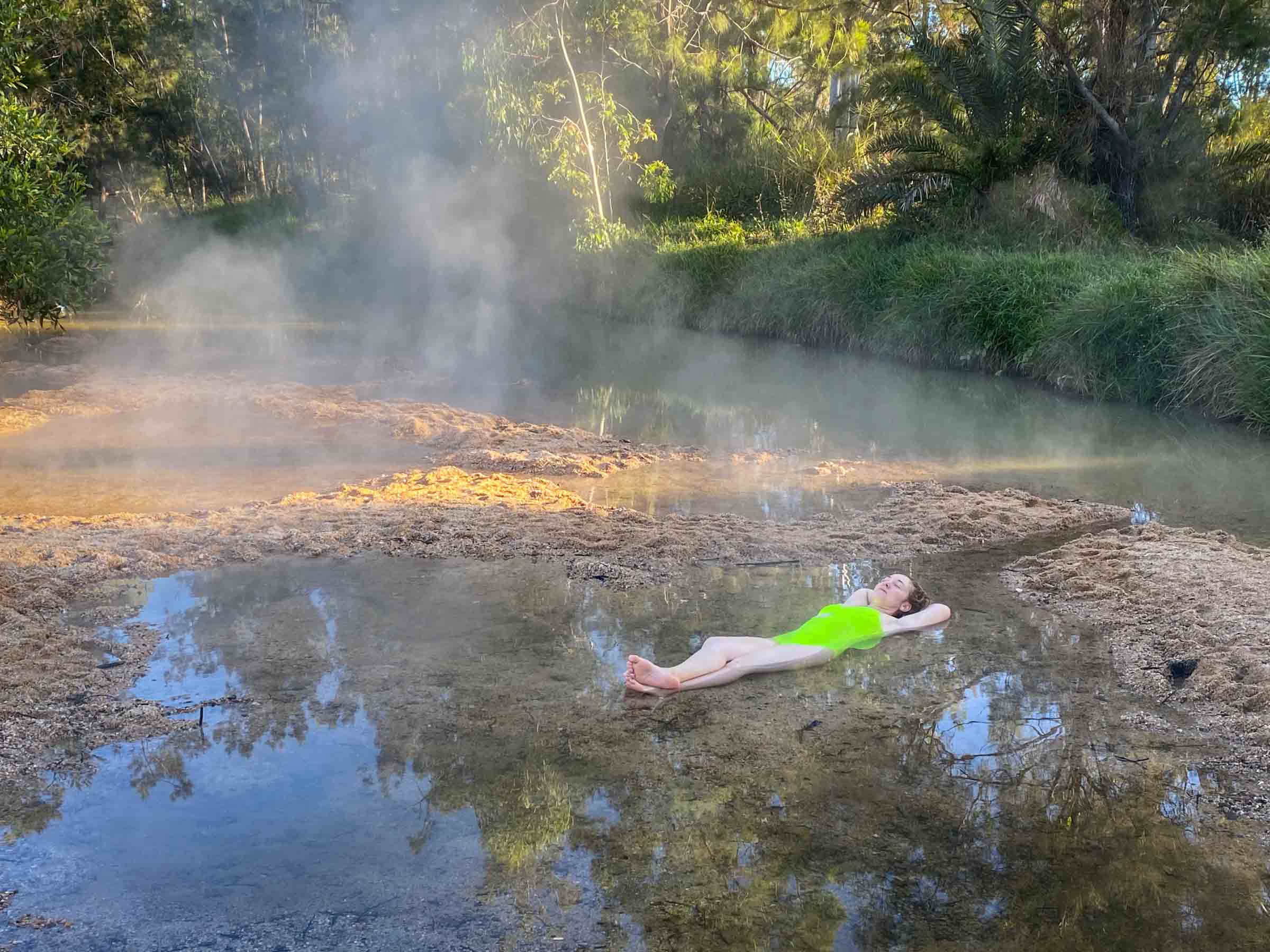
Later in the afternoon we roll into Innot Hot Springs, another honest-to-goodness natural hot spring. Plenty of scorching-hot water bubbles to the surface in a small sandy river, which I much prefer to the modern concrete swimming pools nearby. Camping on site means we can enjoy a soak and stargaze long into the night and again at sunrise. Once again, I’m shocked to learn Australia really does have plenty of natural hot water bubbling to the surface – you just have to go looking.
1
Lawn Hill National Park’s croc country
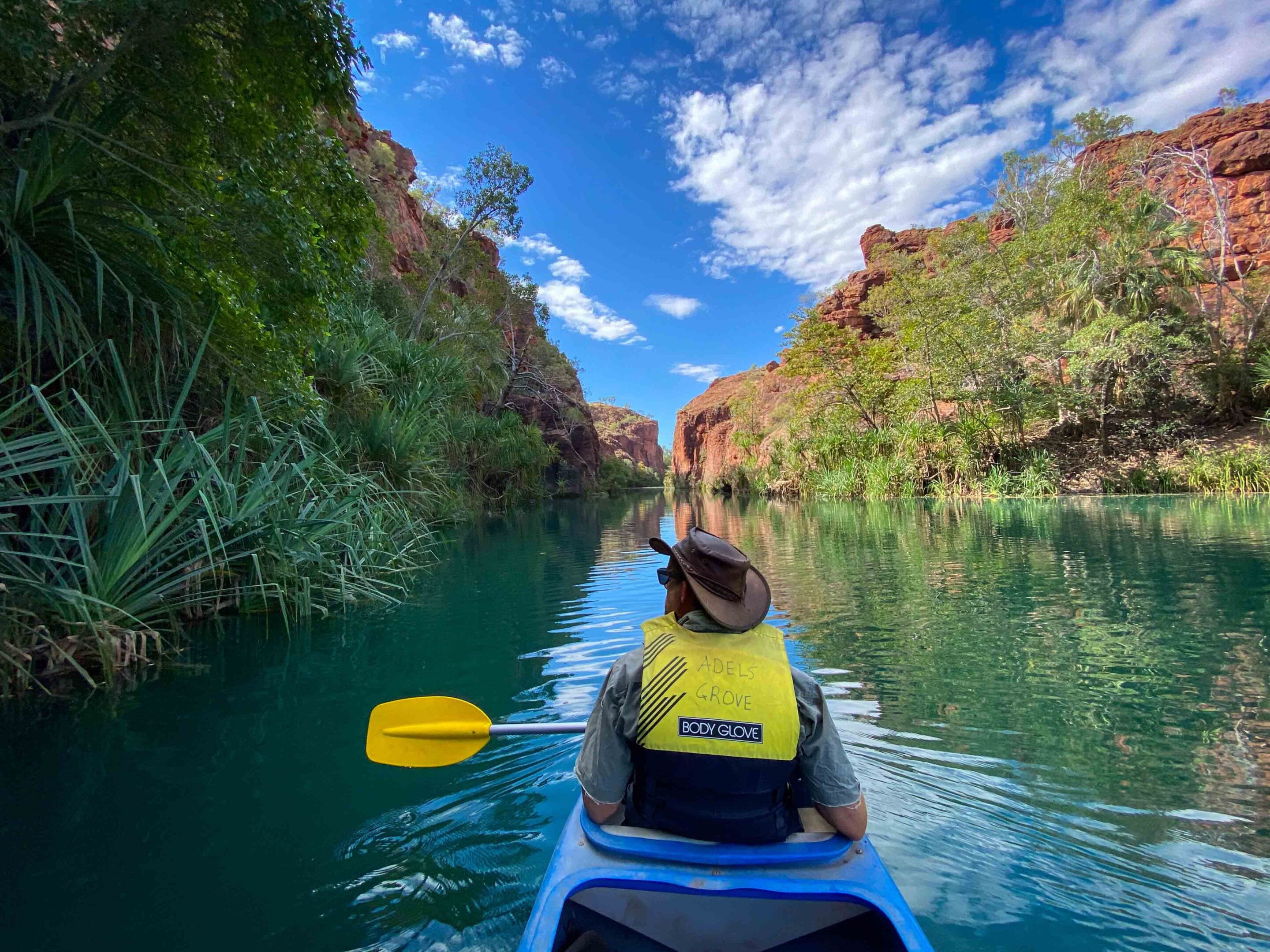
Surrounded by thousands of miles of red dirt and dust, the paradise of Lawn Hill National Park is a spectacular red-rock gorge complete with striking blue water and lush vegetation.
The best way to experience the gorge is in a canoe, so after overcoming my fear of winding up in the next Crocodile Dundee, we push off from shore for a few hours on the water. After a short and stunning paddle upstream, we arrive at Indarri Waterfall, almost the perfect place for a quick swim. The water and view are top notch, but sadly the locals are a little unfriendly.
We’ve been warned the large freshie that lives here is extremely territorial, and recently a few people have been bitten. Given he is only a freshie, it’s not like they lost limbs or anything, though it still feels very strange to swim in water with a crocodile that is known to have bitten people. The scorching heat is too much, and I jump in despite the risk. Truth be told, I was in the water for less than a second before making a hasty exit.
After dragging the canoe up and over the falls, we continue further upstream where the canyon becomes overgrown, wild and clearly not often visited. Eventually, the canyon narrows until we find ourselves in a small, fast-flowing creek and we can go no further.
Not surprisingly, Lawn Hill is a very popular spot, and upon discovering the campground is full we decide to push on before making camp on the side of a random dusty track. With enormous distances to cover, the auxiliary tank in the Jeep is essential, and transferring 70L with the push of a button sure is a nice way to go.
1
Boabs, red dirt and remote tracks
After thousands of miles of rough tracks, fine red dust eventually works its way inside the canvas cover on the Gladiator bed, and a fine layer coats everything from our clothes and bedding to our plates and bowls. Washing off with a quick shower from the world’s simplest shower bag at sunset is always worthwhile, and many nights I fall deeply asleep the second my head hits the pillow.
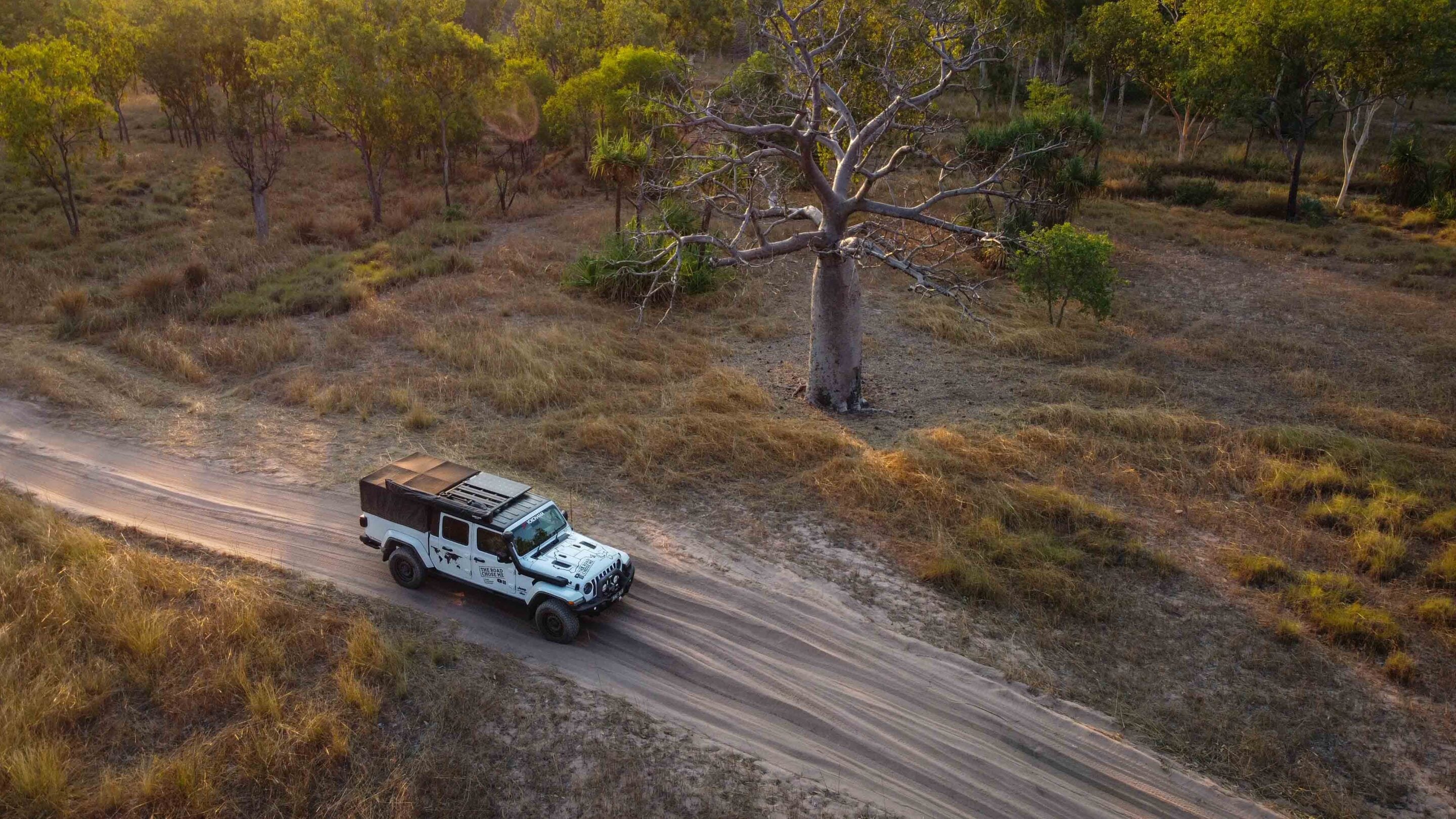
I’m not usually one to get caught up naming birds or plants, though I have to say the mighty baobabs of Africa are etched strongly in my mind. They have an enormous presence and majesty, and some of my favourite wild camps were surrounded by these giants. While a few different types of baobabs are native across Africa, a small pocket of the Kimberley and eastern NT is home to the boab tree, which looks virtually identical.
With an enormous swollen trunk and stunted branches, the silhouette of these giants is unmistakable. With soft, pulpy flesh, they are actually a type of succulent that can live for thousands of years by storing water in their enormous trunks. Boabs of all shapes and sizes are a regular feature of the Kimberley landscape and, with the endless red dirt and scorching sun, I have to constantly remind myself I am not back in Africa.
1
Exploring Limmen National Park’s lost cities
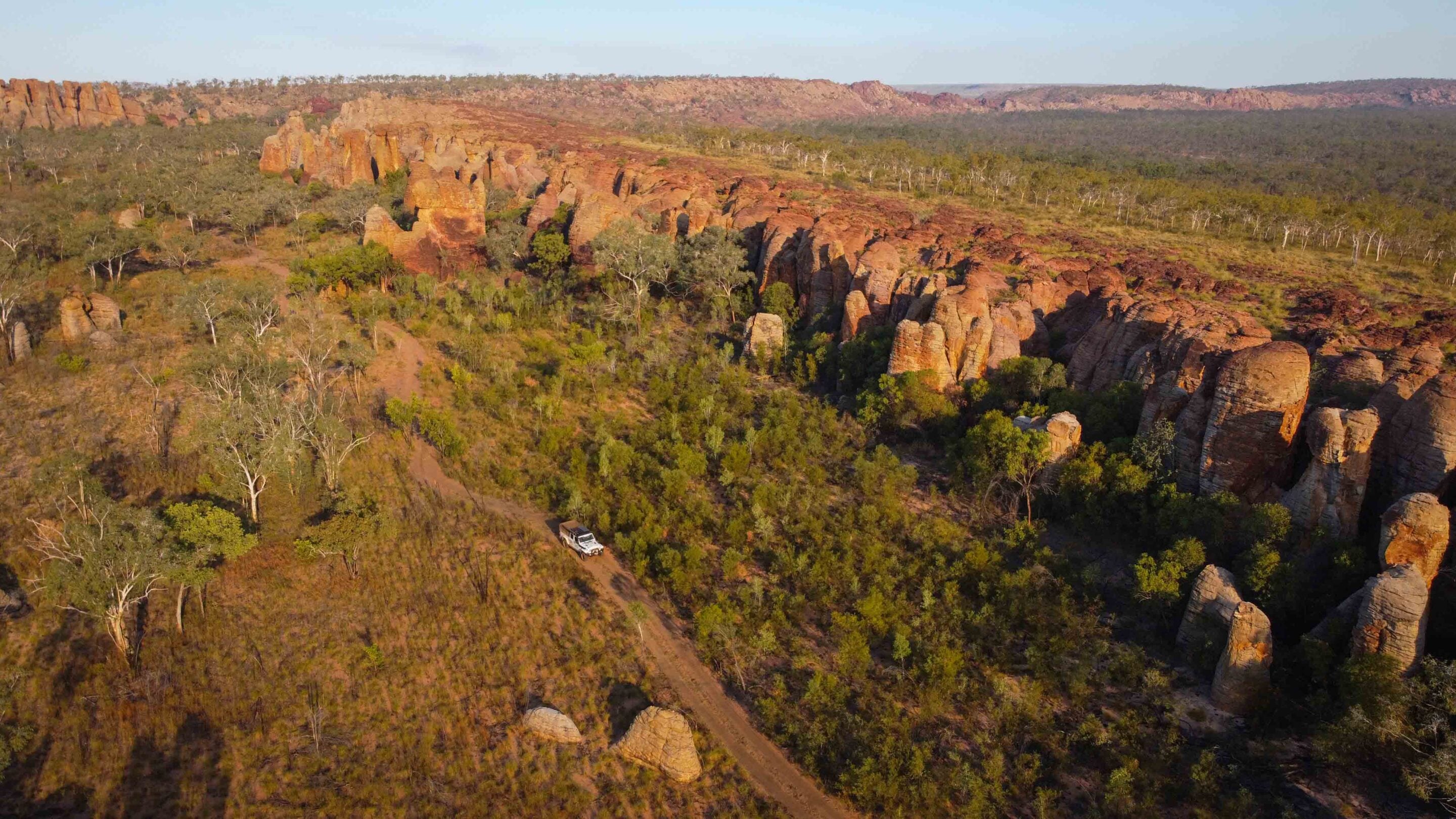
After a quick visit to a ranger station, we get the code to a combination lock that grants access to the Western Lost Cities, an enormous rock formation well off the beaten path in remote Limmen National Park.
The access track is slow going, with sandy sections, dry riverbeds and plenty of corrugations to rattle our teeth. I air down to 22psi all around, not so much for added traction but to dampen the vibrations and make travel easier on man and machine.
Formed roughly 1500 million years ago, these giant sandstone pillars were part of an ancient seabed that cracked and split as it was exposed. Millions of years of erosion from wind and water have carved the incredible pillars, which defy belief. Each pillar is a stunning display of various colours caused by mineral deposits in the sandstone and millions of years of sun exposure. We spend hours wandering around the entire site, discovering hidden Aboriginal rock art, caves and beautiful trees and roots climbing all over the rock.
Putting the drone in the air, I simply can’t believe my eyes – we had only been able to see a tiny fraction of the formation, which is many kays in length and width. Leaving the stunning formation at sunset, we see a herd of wild water buffalo on the track, another terrible Australian tale of an introduced species turned feral that now wreaks havoc on the native plants and animals.
1
Ivanhoe Crossing and hidden waterfalls
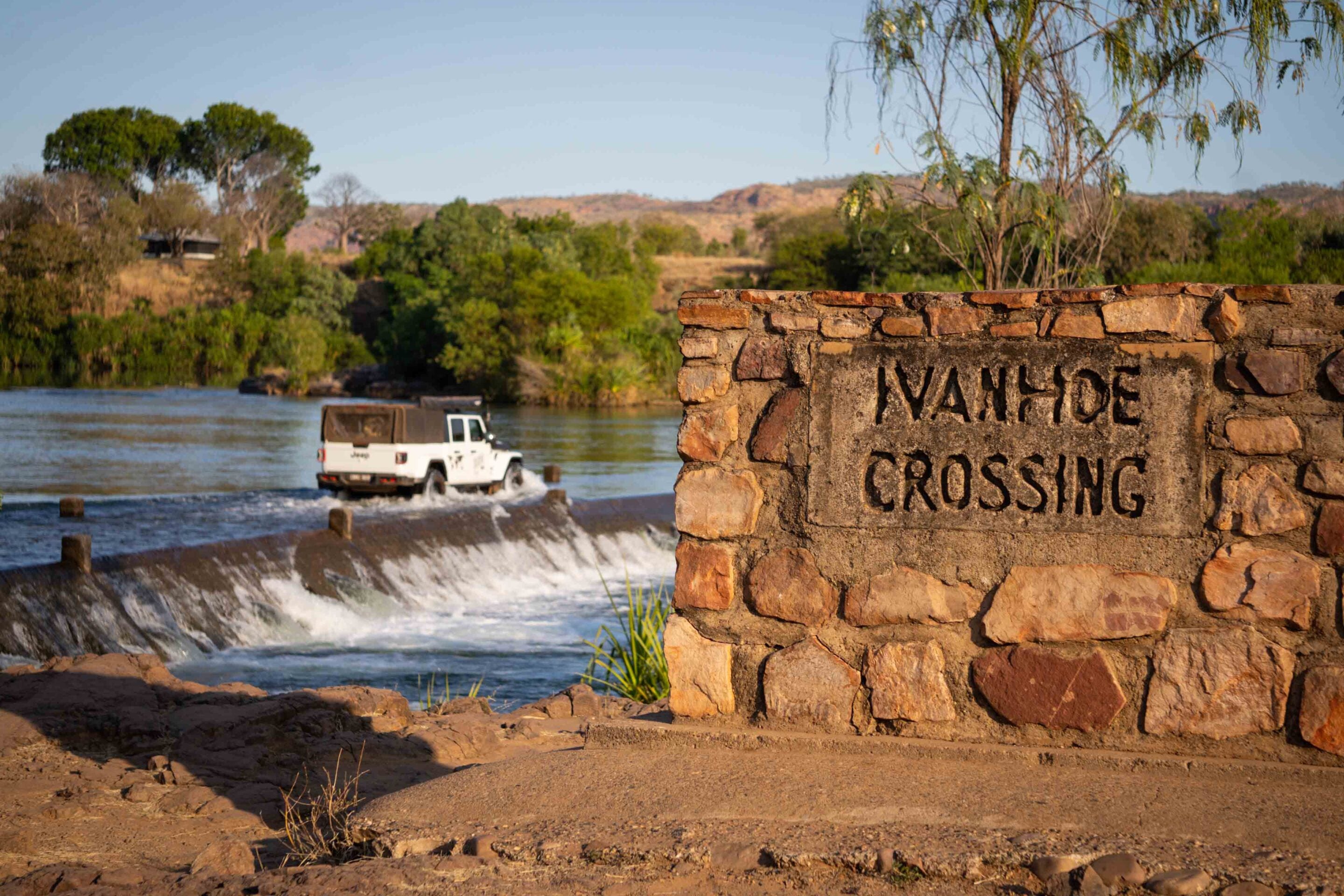
After a quick resupply in Kununurra, we set out early in the morning to check out one of Australia’s most infamous river crossings.
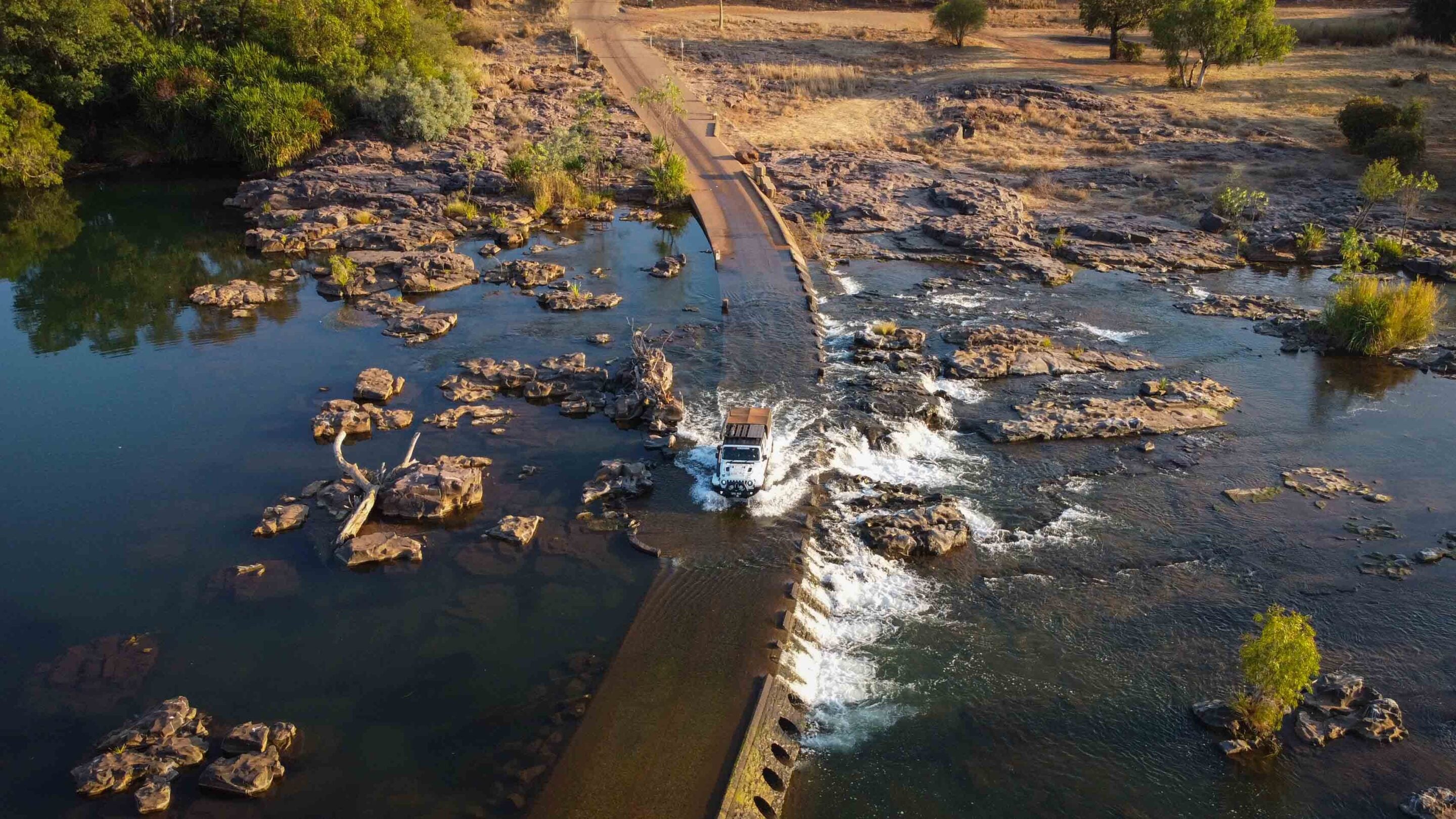
At Ivanhoe, the Ord River cascades over a curved concrete dam wall, and concrete blocks mark the edges of the driving surface. At this time of year the water is no deeper than a foot, although it is flowing fast enough that I concentrate carefully. Putting a tyre wrong would result in a very bad day, especially given the river is teeming with salties waiting below for any wayward fish or four-wheel driver.
With low mountains in the background and boabs on the water’s edge, the scene is spectacular and inviting, and I have to constantly remind myself this is not the place for a swim. I’m also not sure about the group of locals standing on the bank fishing. The crocs are a constant concern, they say, but the fishing makes up for it. I think it helps to be nuts.
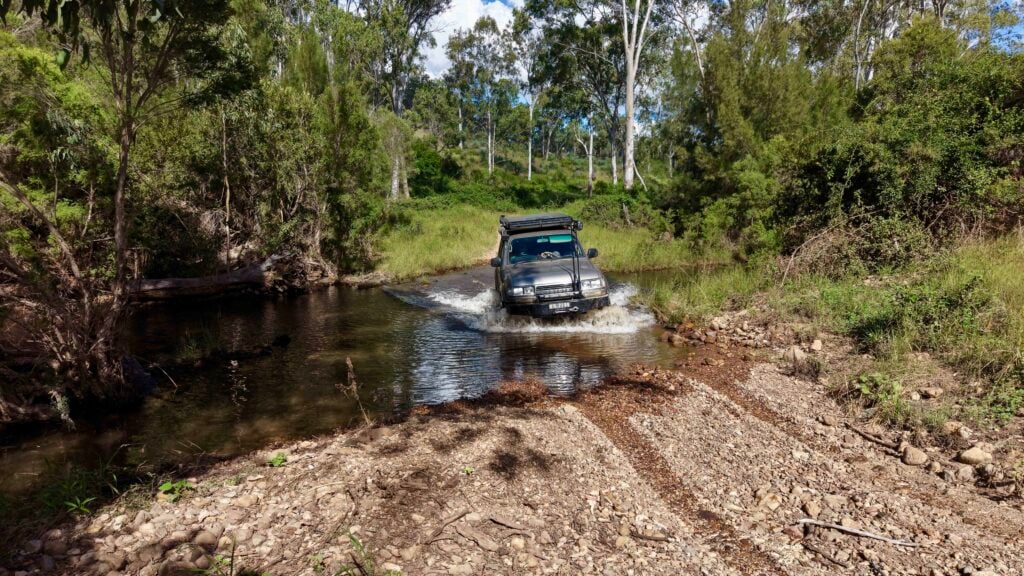
After promising we won’t give up the location, a local tells us about a nearly ‘secret canyon’ full of waterfalls and swimming holes, so we immediately set out to explore. The access track has a few river crossings that lap at the bonnet, and a couple of steep, loose rock scrambles that require low-range 4×4.
The canyon and surrounds are everything promised, and we spend the entire day swimming and climbing all over the waterfalls in the hot sun. The elevation change and rocky waterfalls mean there should be no crocs to worry about, and I’m very happy not to see one for the entire day.
16
The mighty north of Australia
We spend a week resupplying and doing odd maintenance jobs in and around steamy Darwin, which feels more like South-East Asia than Australia.
Growing up in Victoria, it feels strange to be only a stone’s throw from a dozen other countries. Reflecting on our time across the top of Australia, we have explored well over 5000km on remote, dusty and corrugated roads to see stunning natural wonders, plenty of beautiful wildlife and more crocs than I care to count – both freshies and salties.
Though we are months from the peak of summer, the heat and humidity have been intense, and the red earth has taken on a special hue that makes sunsets brighter than ever before. All of this, combined with tropical fruit, natural hot springs, waterfalls and monster lizards, makes me feel like we’ve been exploring some exotic land far from where I grew up in Vic. While the distances are huge, the rewards are equally big across the top of this enormous continent.
Frequently Asked Questions
Q: What kind of vehicle do you need to travel across the top of Australia?
A: The remote tracks across northern Australia require a capable 4×4 that can handle long distances, corrugations, sand, river crossings and rough terrain. In this journey, a Jeep Gladiator was used, with an auxiliary fuel tank proving essential for covering the enormous distances between resupply points.
Q: How remote are the tracks across northern Australia?
A: The distances across the top of Australia are enormous, with this journey covering more than 5000km on remote, dusty and corrugated roads. Travellers need to be prepared for long stretches without services and plan fuel, supplies and vehicle requirements accordingly.
Q: Do you need extra fuel capacity for travelling across northern Australia?
A: Extra fuel capacity can be essential when travelling remote routes. During this trip, the auxiliary tank in the Jeep was crucial, allowing an additional 70L of fuel to be carried and transferred with the push of a button.
Q: What tyre pressures are suitable for remote outback tracks?
A: Lowering tyre pressures can help improve comfort and reduce the impact of corrugations. On the track to the Western Lost Cities, the vehicle was aired down to 22psi all around, not only for traction but also to reduce vibrations and make the journey easier on the vehicle and passengers.
Q: Are there crocodiles in northern Australia’s waterways?
A: Yes. Northern Australia is home to both freshwater and saltwater crocodiles. The journey encountered plenty of freshwater crocodiles, while areas such as Ivanhoe Crossing are known for saltwater crocodiles. Even freshwater crocodiles can be territorial, so caution is required around waterways.
Q: What are the roads like when travelling through remote northern Australia?
A: Remote tracks can vary significantly, with this journey encountering sandy sections, dry riverbeds, corrugations and rocky sections requiring low-range 4×4. Conditions can change quickly, so vehicle preparation and sensible driving are essential.
Q: What are some highlights of a 4×4 trip across northern Australia?
A: The top of Australia offers some of the country’s most spectacular remote landscapes, including Lawn Hill National Park’s red-rock gorges, natural hot springs, the boab-filled Kimberley landscape, Limmen National Park’s Western Lost Cities and remote waterfalls hidden off the beaten track.
Q: When is the best time to explore northern Australia by 4×4?
A: The journey described took place outside the peak of summer, but conditions were still extremely hot and humid. Travellers should be prepared for intense heat, long distances and challenging conditions when exploring northern Australia.
Follow 4X4 Australia on Google
Get more 4x4 news, reviews and gear stories from 4X4 Australia in your Google feeds.


We recommend
-
 Explore QLD
Cape York’s Old Telegraph Track: The ultimate 4x4 challenge
A ragtag team of adventurers tackle the legendary Old Tele Track
-
 Explore
A week on the Madigan Line
An epic seven-day 4x4 adventure across Australia’s Simpson Desert, following the legendary Madigan Line
-
 Explore
Top End adventure: Touring North Queensland, the NT and Western Australia
Exploring the wide open spaces of Australia’s northern reaches