Explore

Gallery 1
I wake with a splitting headache, my body aching and my thoughts scattered. It takes twenty minutes to muster the energy to crawl out of the swag, and Katie feels no better. Even with nets over our heads to keep the blowflies at bay, breakfast only makes us feel worse.
Severe headaches, joint pain, sore throats, dripping noses and a strange sense of disconnection – the symptoms are all too familiar. A rapid antigen test from the first-aid kit confirms it. We’re in one of the most remote places on the planet, and we have COVID-19. After months of planning and preparation for the toughest desert crossing of my life, the unexpected has struck. Our Madigan Line adventure has just taken a serious turn.
What is the Madigan Line?
In the winter of 1939, Cecil Madigan, along with nine men and a camel train, set out to cross the heart of the Simpson Desert – a feat never before attempted by Europeans.
Nobody knew what Madigan would find, or if a crossing was even survivable. The successful expedition cemented his name in history as one of the great explorers of outback Australia, and the route he pioneered through endless sand became known simply as the Madigan Line.
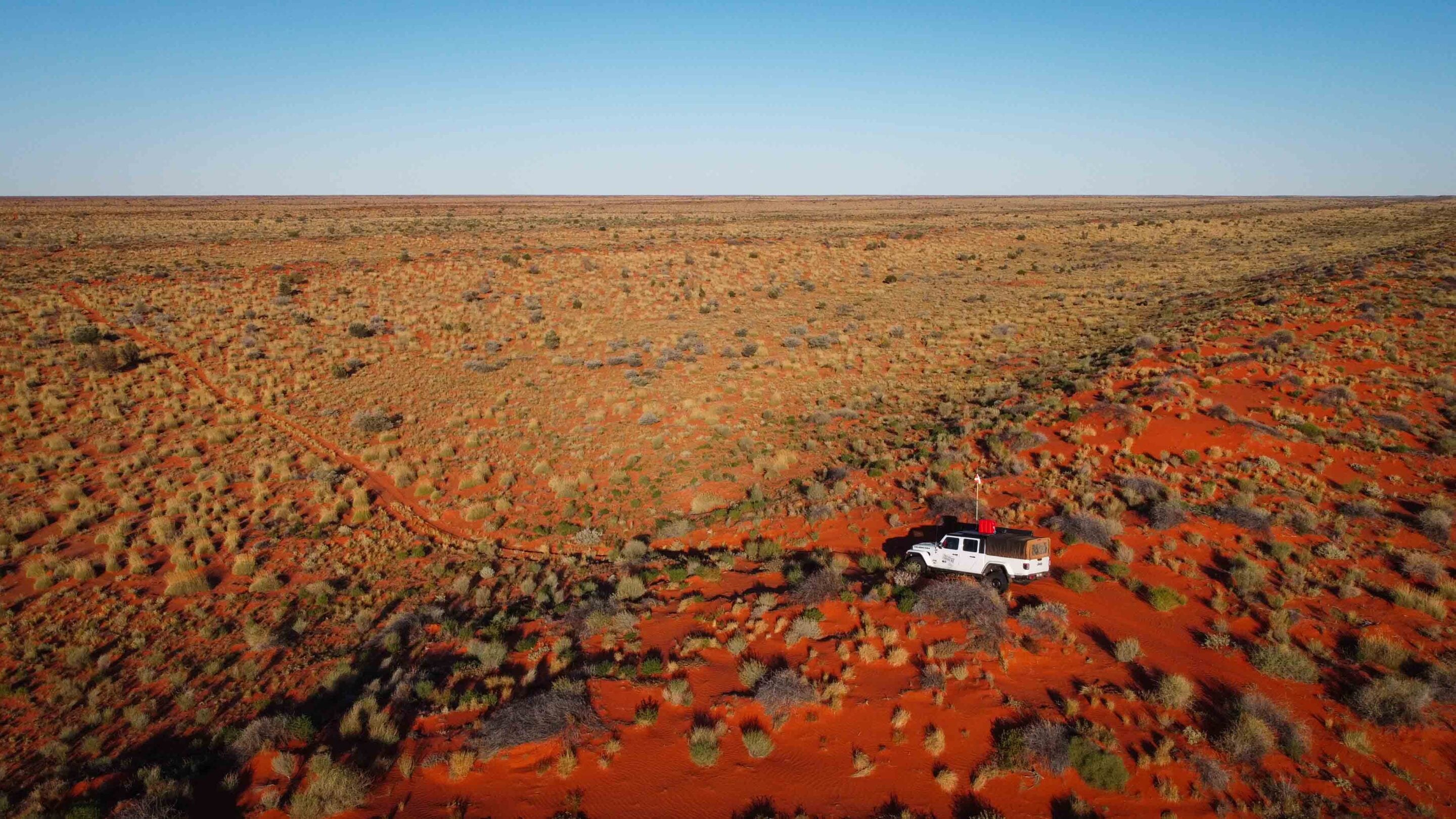
Eighty years later, Madigan’s route is little more than a string of GPS waypoints and has become the pinnacle of remote desert crossings in Australia – even the world. The track demands more than thirteen hundred dune crossings and passes no towns or development of any kind. There are no wells for drinking water, and certainly no fuel stations. Crossing the Simpson on the Madigan is no joke.
1
Preparing for the desert crossing
The Madigan is not the most popular route across the Simpson, and because vehicles must travel west to east, it’s unlikely we’ll encounter anyone over the 7-10 days it takes to make the crossing. We must be entirely self-sufficient.
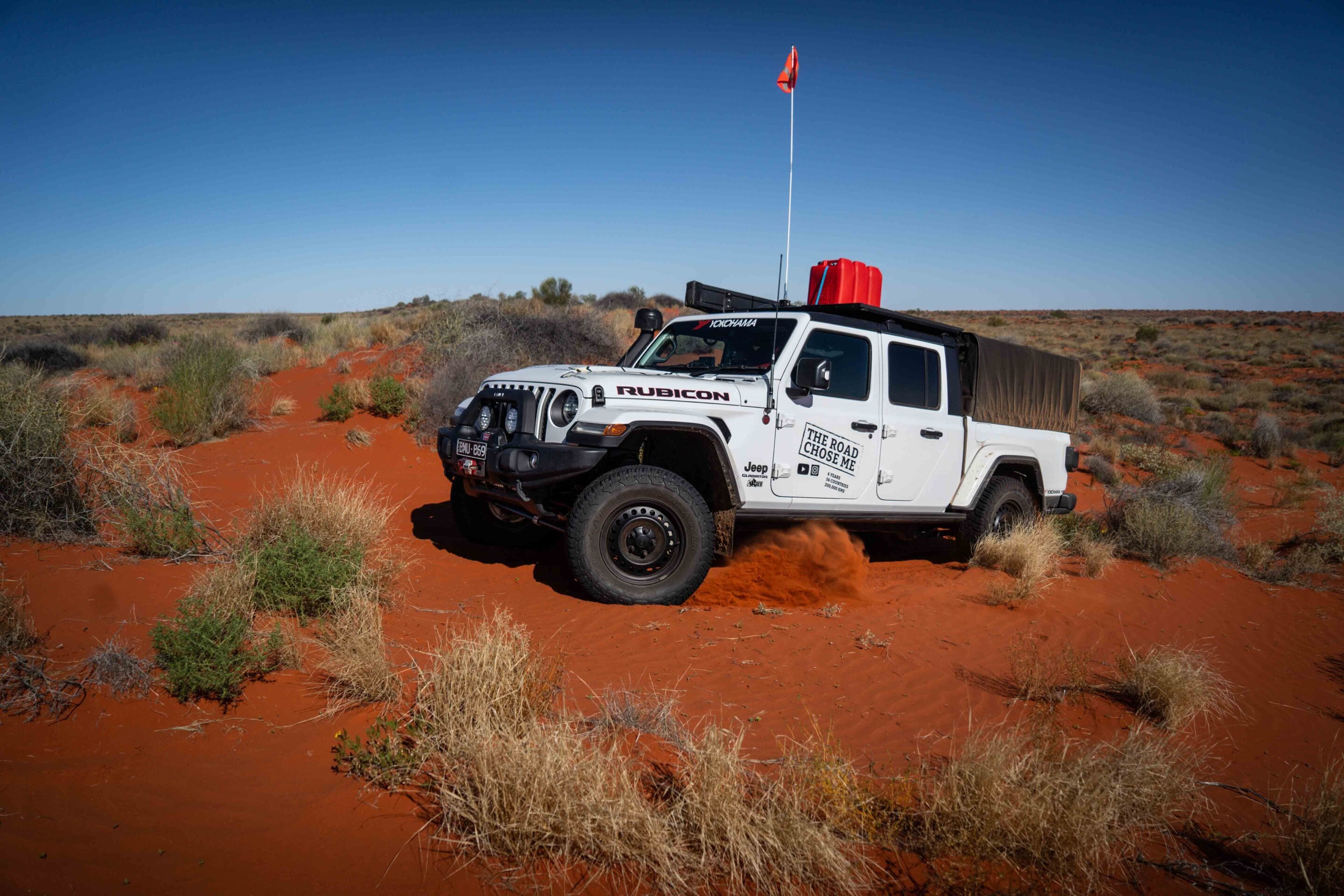
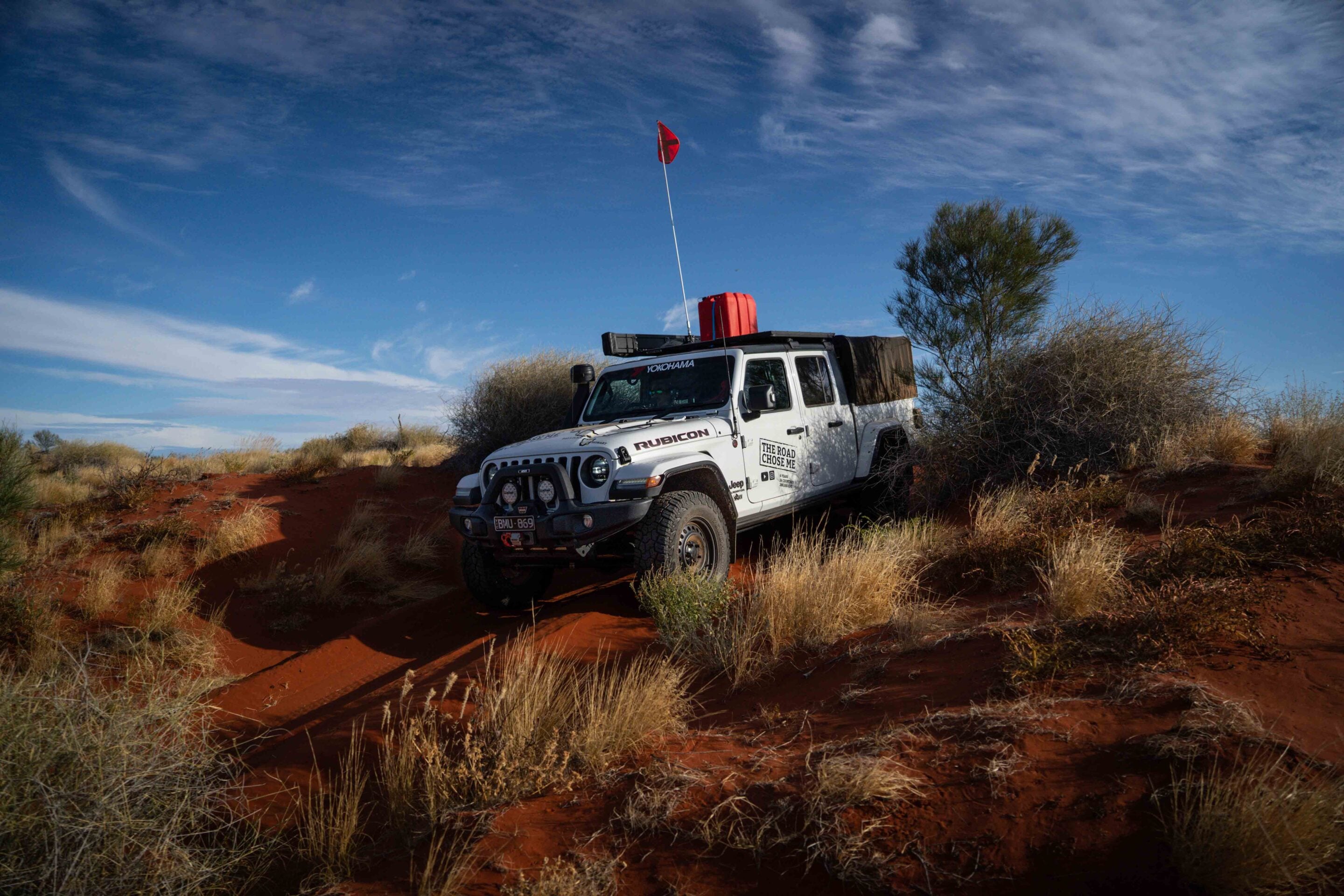
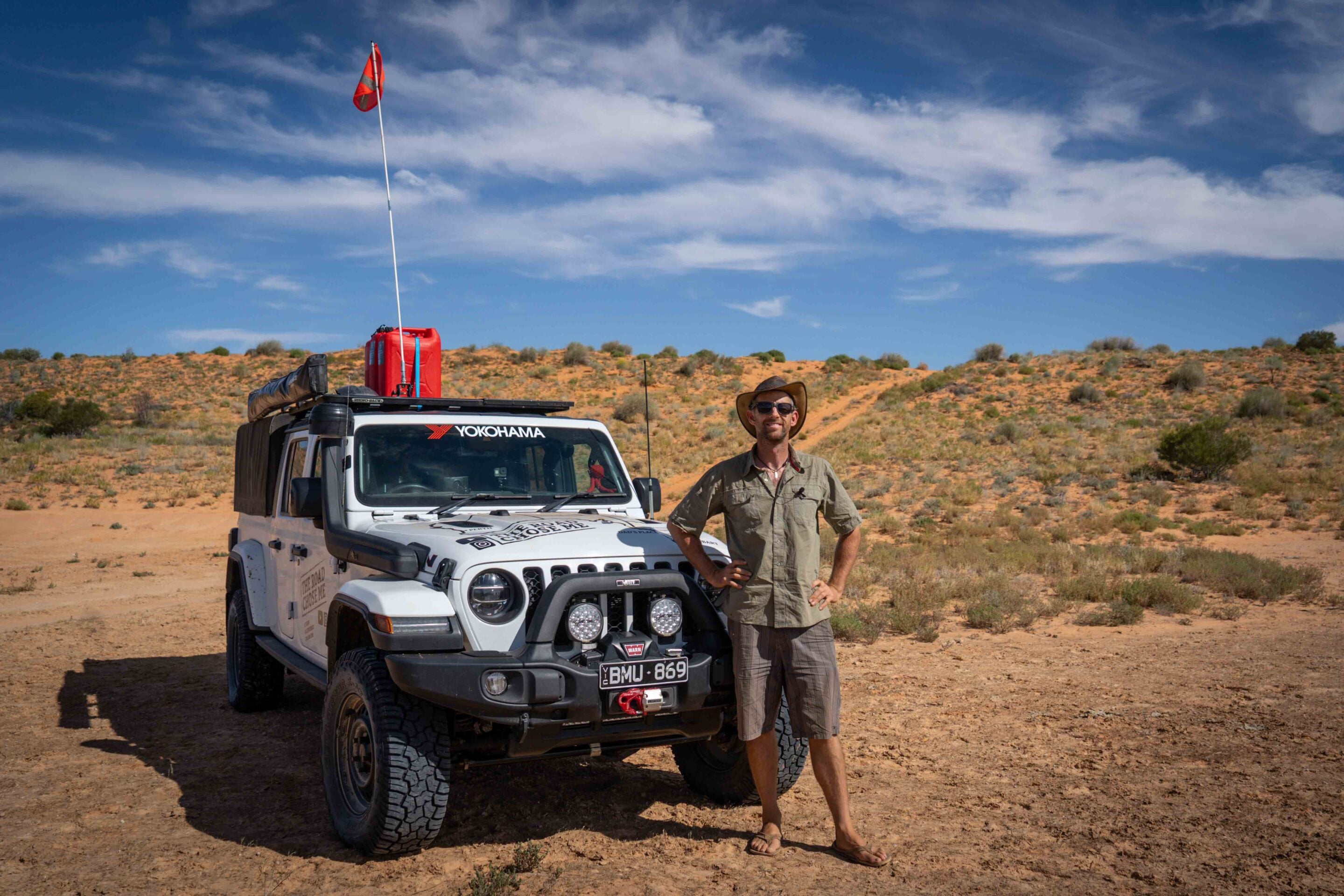
I designed and built the Gladiator specifically for the Australian outback, and the modifications and systems have performed flawlessly to date. In preparation for the Simpson, Katie and I have practised recoveries in soft beach sand and crossed hundreds of dunes on Goog’s Track in South Australia. The Jeep has never given me a moment of doubt, and we’ve come to trust our lives to this vehicle.
I’ve been running calculations for fuel, drinking water and food for weeks, aiming to strike a delicate balance. While I’m confident we can carry enough petrol, we simply don’t have the capacity to haul water or food for more than 10 or 12 days at a stretch. While we want to enjoy our time in the desert, I’m well aware we need to keep moving.
1
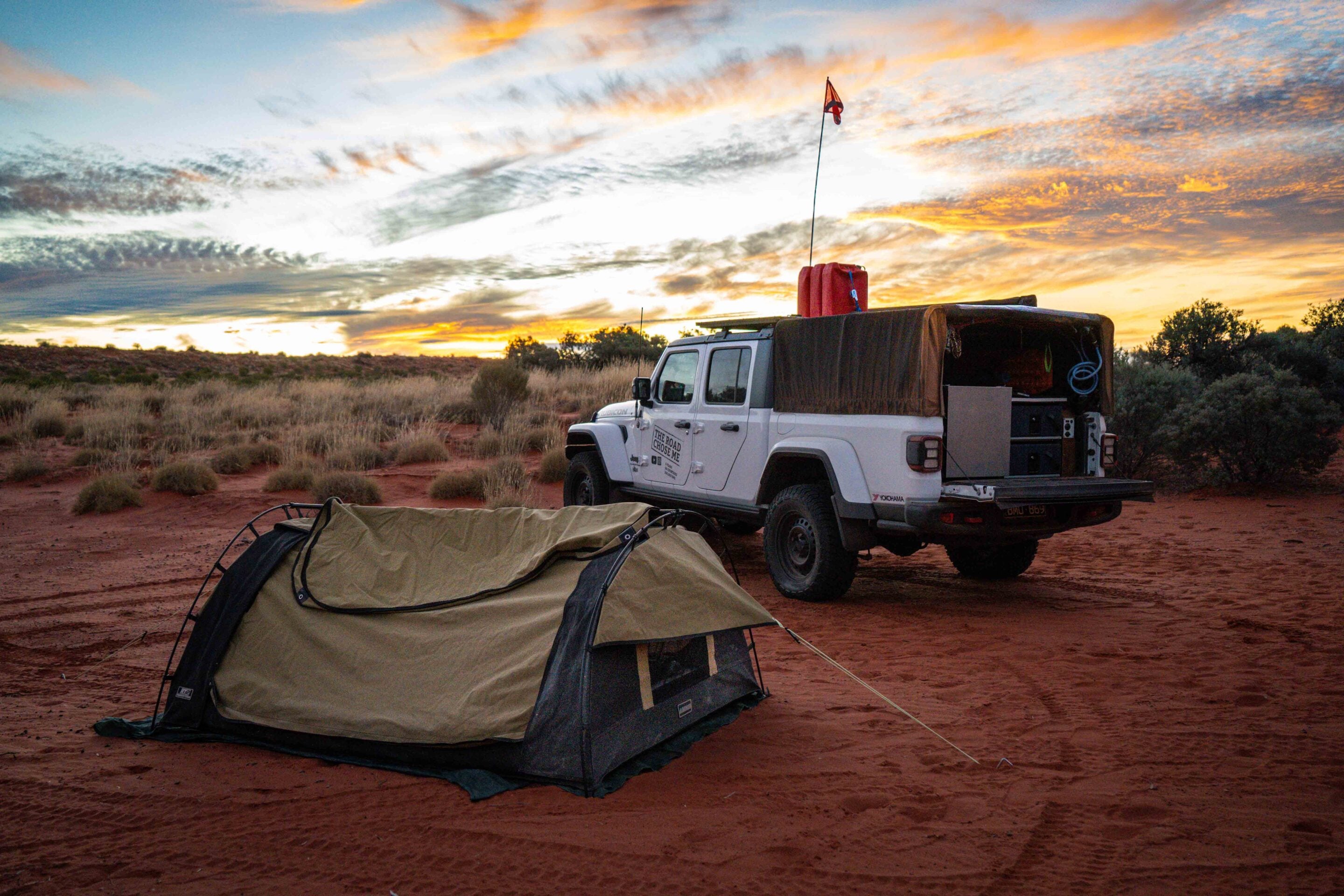
In addition to the 60L drinking-water tank and 10L shower supply, we add 20L of emergency water stored in the passenger compartment in two rugged containers – insurance in case of a puncture or pump failure in the main tank. We resupply in Alice Springs, stuffing the fridge and drawers with as much food as we can carry.
I’ve seen the Gladiator’s fuel use climb as high as 33L/100km in soft sand, which multiplies out to a serious amount of petrol for nearly 800km across the desert. As an added complication, we can’t buy or carry regular unleaded in Central Australia. For decades, petrol sniffing was a major health crisis in remote communities, so chemical experts replaced the aromatics in unleaded with compounds that can’t be inhaled. This “low-aromatic unleaded petrol” has transformed previously decimated communities, and for obvious reasons regular unleaded is now illegal. Real-world reports of running the low-aromatic fuel in modern, fuel-injected engines vary widely, although chemical experts confirm consumption is generally worse.
With the main and auxiliary tanks full, the Gladiator carries 155L of petrol. With three jerries on the roof and another two in the tub, we’re hauling a total of 255L – an expensive fill at $2.70 a litre.
1
Entering the Simpson Desert
South of Alice, the corrugations on the Finke Road get progressively worse until, hours later, we’re bumping along in first and second gear, very mindful of the extra weight on the roof.
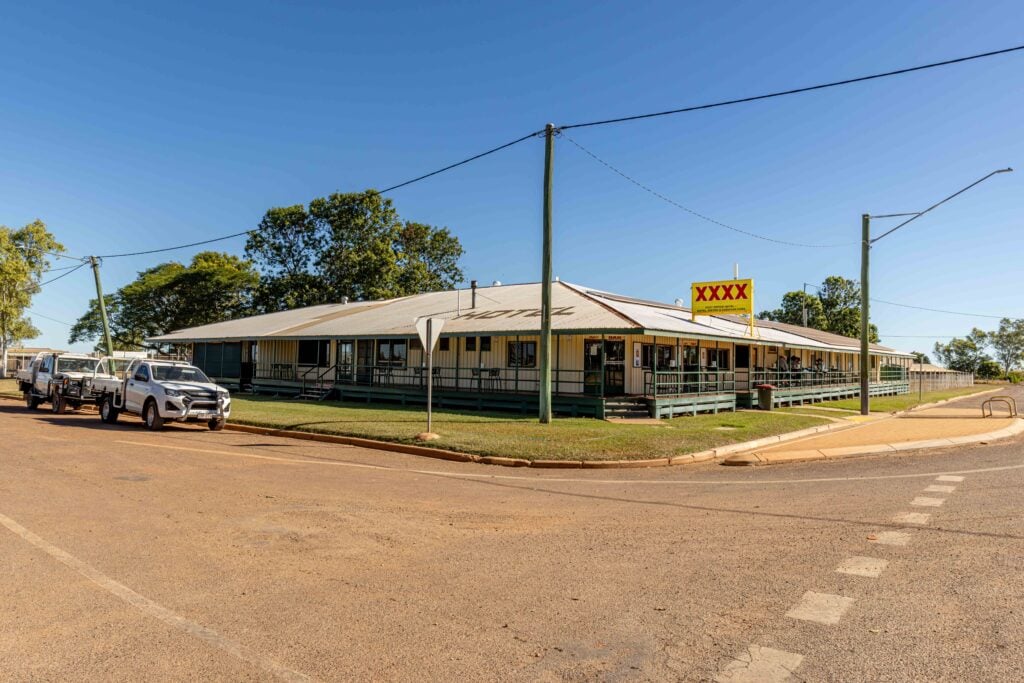
We camp at the Mount Dare Hotel, one of the most remote and iconic outback pubs on the continent. For those entering the Simpson, this is the last outpost of civilisation and a final chance to grab supplies and fuel.
In the morning I top off the main tank with the most expensive fuel of the trip and drop tyre pressures to 20psi all round, expecting rough roads early on and knowing I can go much lower if and when the sand turns seriously soft. There’s no doubt lower pressures would provide more grip, though they’d also mean higher fuel consumption. As always, I’m hyper-aware of the need to balance our precious resources.
1
Tackling the Simpson Desert’s dunes
We travel on good gravel roads for a couple of hours before arriving at the abandoned cattle station of Old Andado.
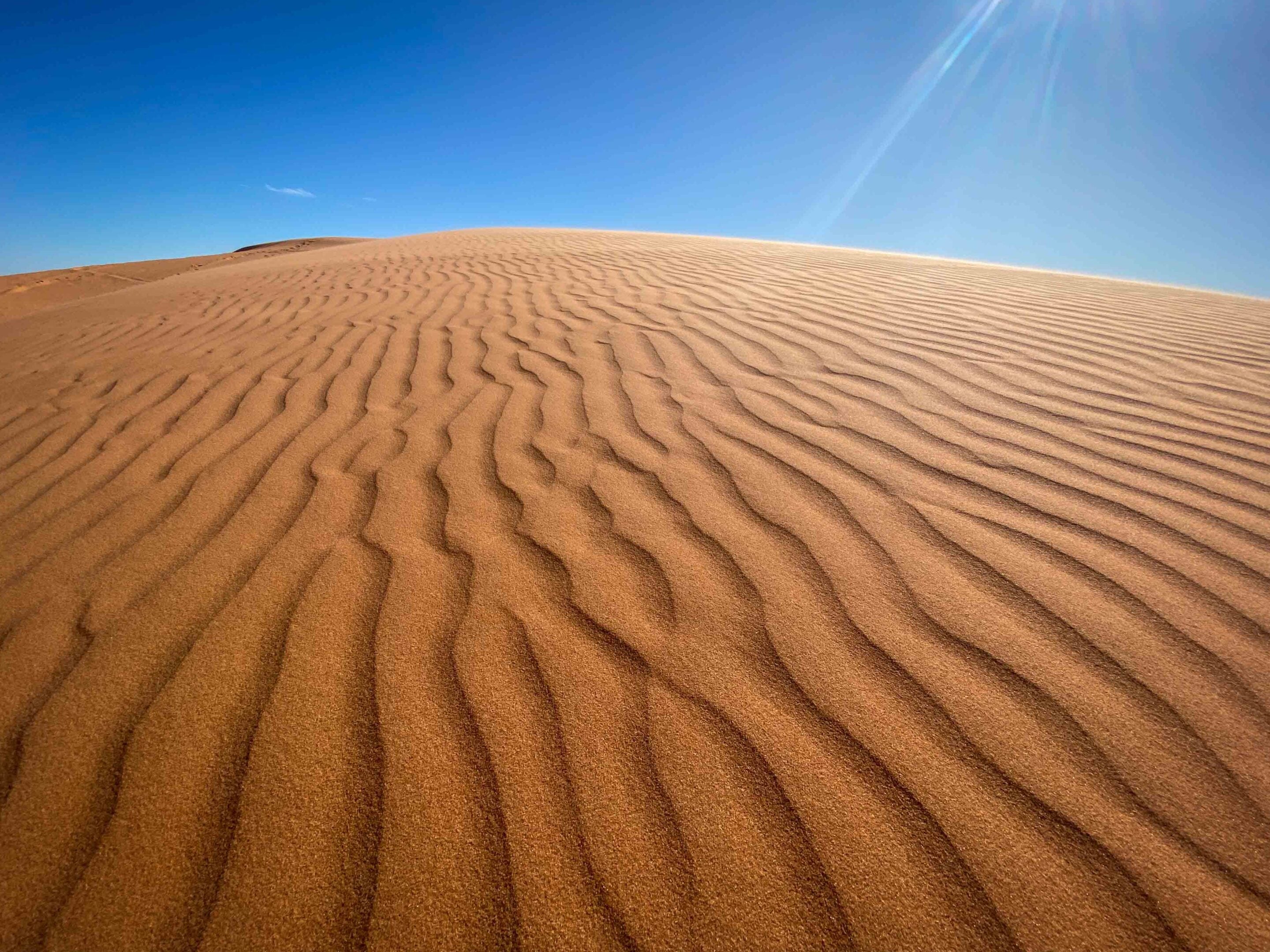
Wandering through the ruins, it’s hard to imagine living this far from the rest of the world, literally on the edge of survivability. Nearby, a bright red dune stands tall, clearly marking the beginning of the desert. Both excited and a little anxious, I can’t help but count “one” out loud as we climb up and over the first big dune. Created over millions of years and continually shaped by the wind, the dunes of the Simpson are the longest in the world, stretching in a near-perfect straight line for nearly 200km north to south. Like much of inland Australia, their vivid colour comes from rusting iron ore within the sand.
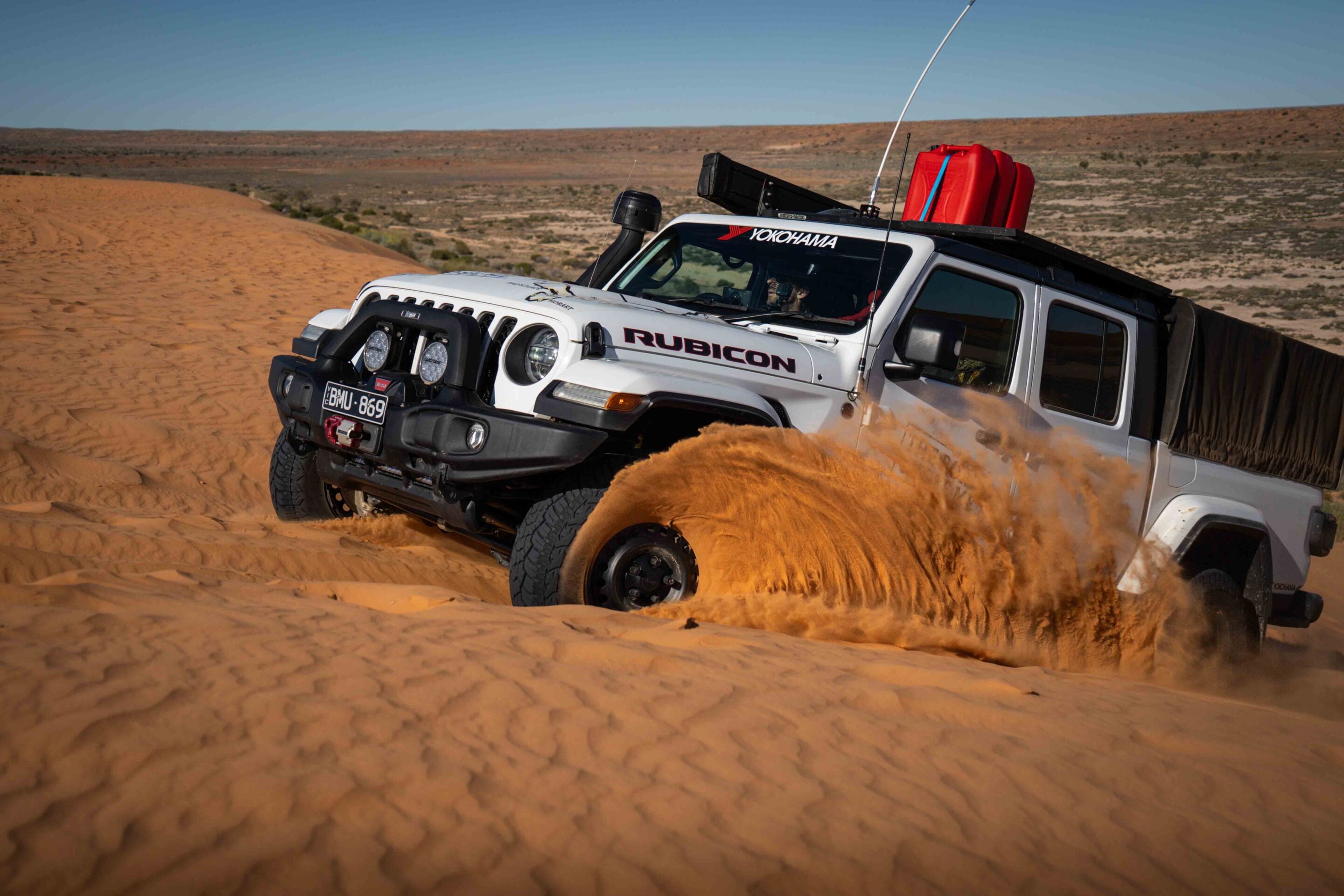
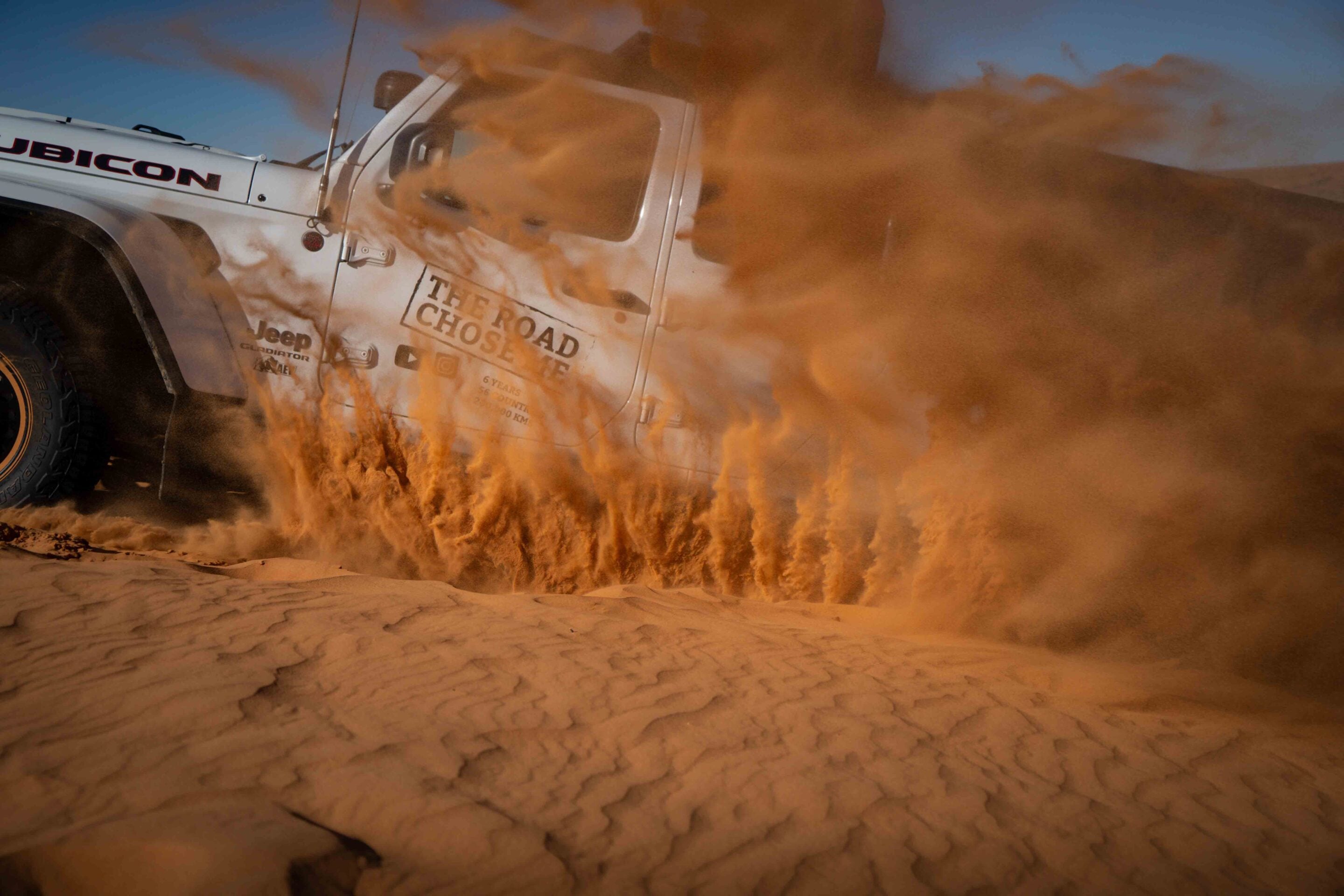
Because all the dunes run from north to south, we must climb directly up and over every single one as we push east. The dunes vary in height from 20 to 40m, and are spaced consistently across the desert floor, with a few hundred metres of flat sand between each crest. Once the initial excitement wears off, we settle into the routine that will define the next week of our lives. For 10 or 15 seconds we crawl slowly up the soft face of a dune, carrying just enough speed to crest without breaking traction and tearing up the sand. Most dune faces are so steep we see nothing but blue sky, trusting the track will continue down the other side. At the top we pause briefly to take in the view before coasting down to the desert floor and beginning again.
1
I find myself constantly inching higher in my seat, trying to peer over the tip of the bonnet to glimpse the track as early as possible. On many dune crests I scramble to make a sharp turn revealed only once the nose of the Jeep tips down.
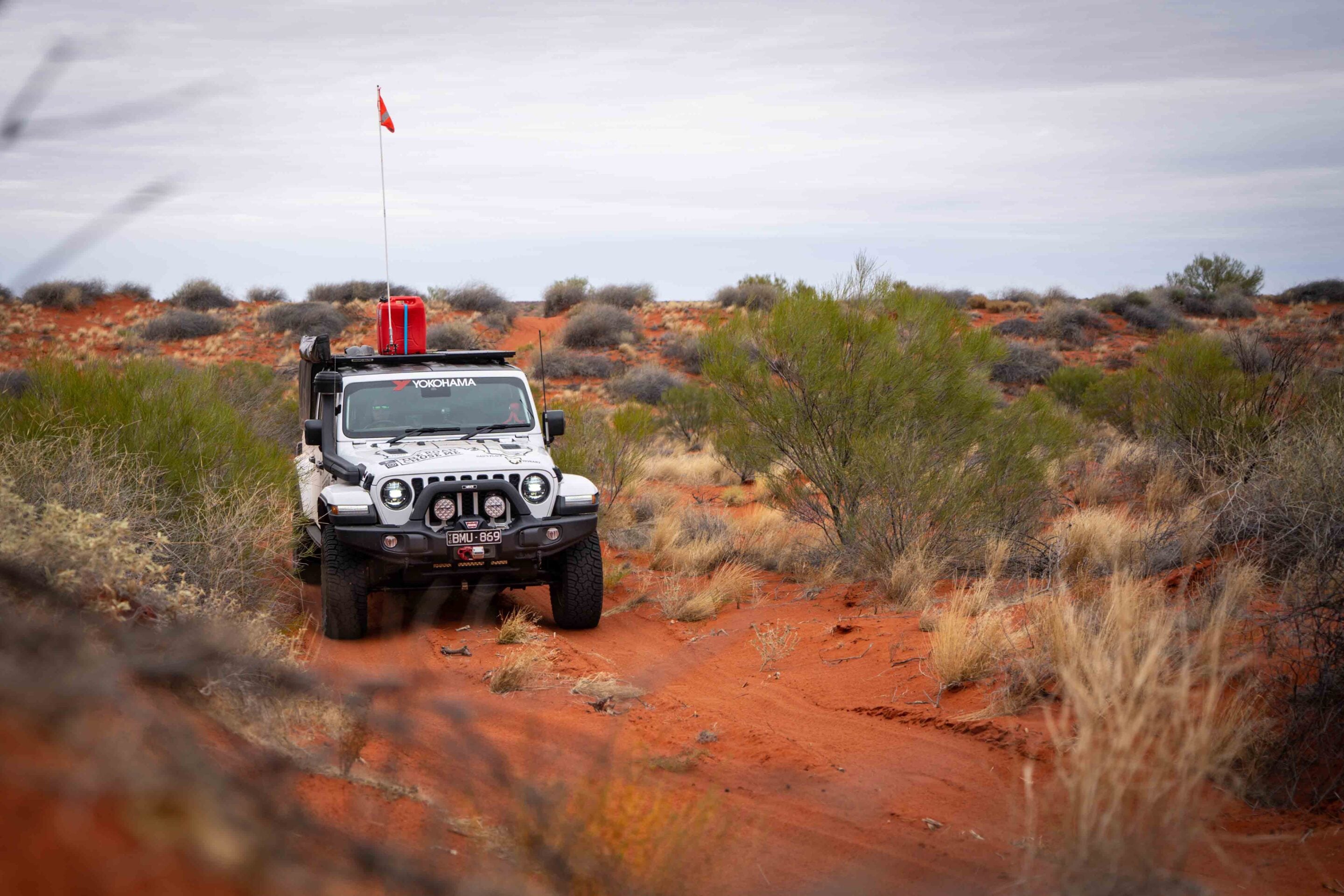
After just 30 minutes I lose count of the dunes we’ve crossed, focusing on the task at hand while absorbing the immense nothing that surrounds us. There are no buildings, no side tracks and only the occasional stand of scraggly mulga on the flats. The track is windblown and faint, dotted with animal prints big and small. With drifting sand constantly reshaping the surface, it could easily be a week since another vehicle passed. Thanks to the wide contact patch from our low tyre pressures, the Jeep maintains steady momentum as we inch across the ocean of sand.
For our first night we stop beside a huge dune at Camp 1A – the first of Madigan’s original campsites – each marked with a small post and placard, a constant reminder we’re literally following in the tracks of a bona fide legend. Blowflies are a constant battle in the Australian outback and can be bad enough to drive a person mad. In their desperate search for moisture, they swarm into the corners of our eyes and mouths. While they don’t bite, their unceasing companionship quickly frays the nerves and makes eating an unpleasant affair.
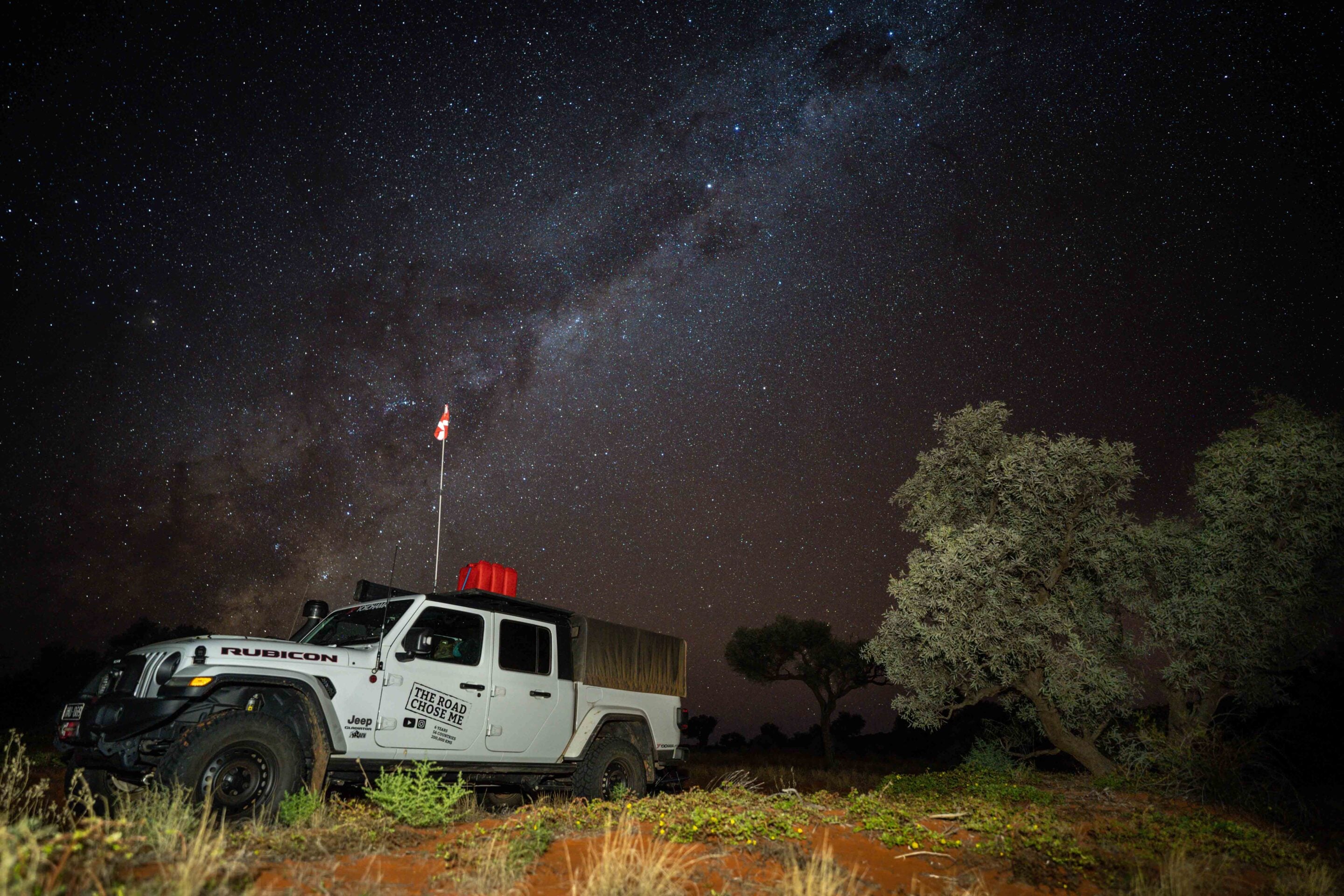
Mercifully, the flies vanish after dark and we can fully appreciate a stunning display of stars – easily the best I’ve seen anywhere on the planet. Thanks to the tilt of the earth, the southern hemisphere faces the galactic core, resulting in breathtaking night-time entertainment. I sit for hours trying to take it all in while Katie puts herself to bed early with a headache and sore joints.
1
Unexpected challenges in the desert
I’ve done my best to plan for known unknowns like tyre failure, a radiator puncture or personal injury, and now it’s the unknown unknown of COVID-19 that has blindsided me.
Of all the places I imagined we might catch the virus, one of the least populated regions on earth was never on the list. We must have picked it up in Alice Springs, and only now are the symptoms kicking in. Over the next hour we talk through our predicament, trying to make a decision – no easy task given the extreme lethargy and increasing brain fog.
With a positive test there’s no longer a legal requirement to self-isolate, but the health advice strongly recommends staying away from others for seven days. Out here that means we should either make camp somewhere remote and wait it out, or press on and minimise contact with anyone we might possibly encounter. If we chose to sit still, we’d burn seven days doing nothing but battling the heat and flies, then still need to drive two days back to Alice Springs to resupply before returning to this point. Our other option is simply to keep going.
We’ll be alone for the next seven to 10 days anyway, so in a strange twist of fate the desert is actually the most practical place to isolate ourselves. With our aching bodies neither of us loves the thought of continuing along the extremely rough, sandy track, but we downright loathe the idea of sitting still for seven days while the flies host endless parties on our faces. Forward it is.
1
Life among the sand dunes
The brain fog and out-of-body vagueness we’re feeling, combined with the isolation and repetitive desert scenery, is disorienting, and the hours blur into one giant sand dune.
I feel like a cork adrift in an ocean of huge swell rolling across the desert floor. Negotiating the enormous red folds in the desert becomes our entire world, and I wonder if we’re moving across the waves at all, or if we’re stuck in place while the swell slides by underneath us.
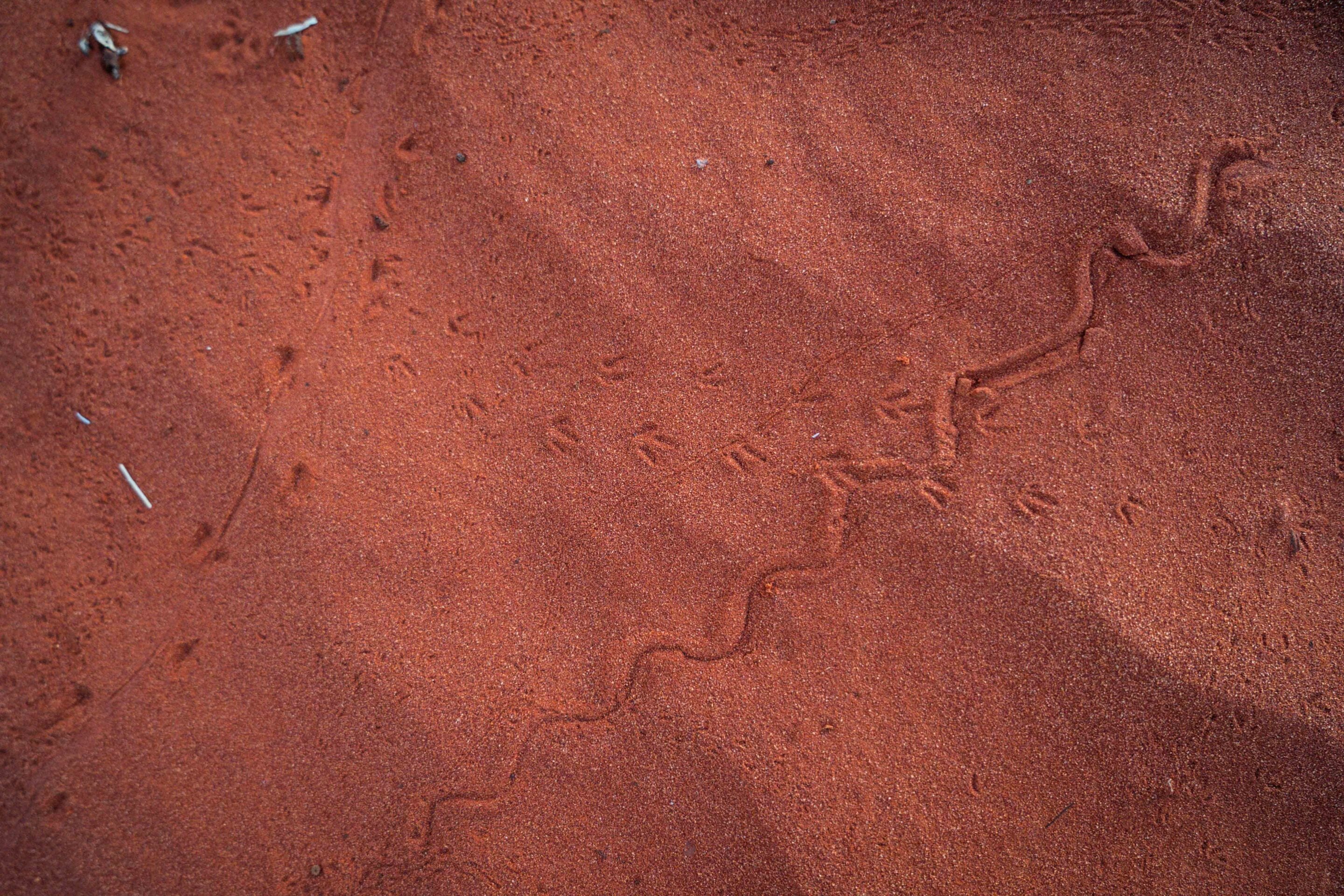
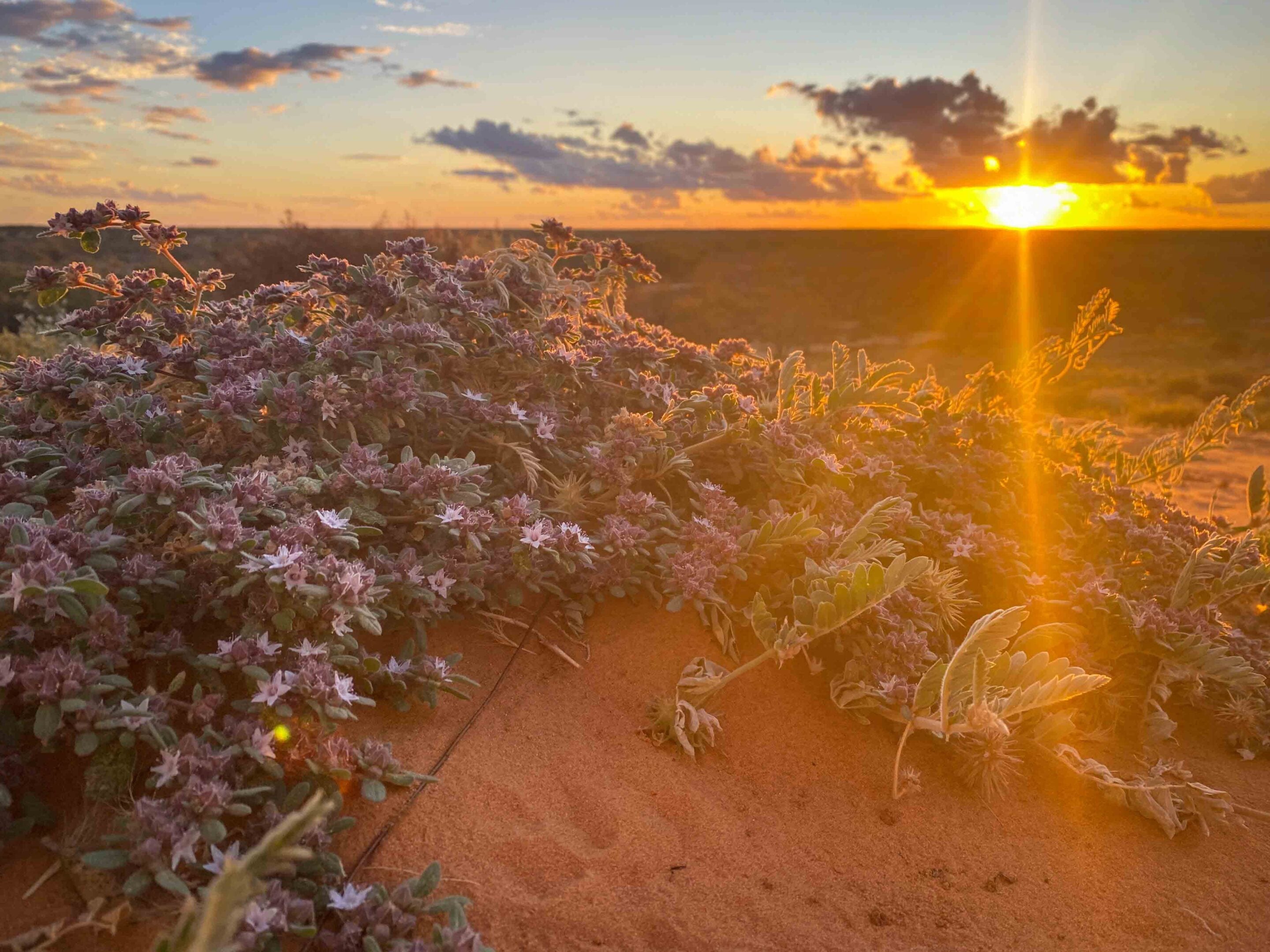
Much of Australia has experienced higher-than-average rainfall and severe flooding in recent years, and as a result even the sparse vegetation found in the Simpson is lush and green by desert standards. Greenery clings to the dunes, including wildflowers in an array of colours. Grasshoppers and lizards of various sizes dart off the track as we approach, and each morning our own tyre marks in the sand are criss-crossed with tracks – some of which are clearly snakes. Seemingly only active at night, we spot only one large tiger snake early in the crossing. Katie is not impressed when I casually mention the venom can be lethal, and almost certainly so without quick access to a hospital.
1
From the crest of a larger dune we spot a caravan of wild camels, walking single file along the next dune in our path. There are about 10 animals of various sizes, and they don’t appear to be in any hurry. Originally brought to Australia from the Middle East to explore the vast interior deserts, camels were a vital part of Australia’s development. Camel caravans led by Afghan traders were used until the early 20th century, and many railways and remote mining towns were built using camels as the primary mode of transport.
Once their usefulness came to an end, however, the camels were released onto the land and are now an invasive pest, with more than a million animals destroying habitat and competing for food and water with native wildlife on an immense scale. Superbly adapted to harsh desert conditions, camels thrive throughout central Australia, and despite enormous culling operations conducted by helicopter, their numbers and destruction only grow with each passing year.
We’re roughly 500m from the camels, so I shut off the engine and watch silently as they wander along the dune, slowly but surely moving closer. Always looking for an excuse to stretch our legs, we jump out and begin walking along the sandy track. Soon the massive dune obscures our direct line of sight, and we’re able to get within 100m of the smelly animals. With some crafty sneaking between scrubby bushes we creep another 50m closer, and for the first time I’m able to really appreciate their size.
1
The group is made up of two huge males escorting what I assume are six females and a couple of teenagers. When one of the big males spots us, he doesn’t react as I’d expected. Instead of running away, he turns and walks directly towards us.
Over the next five minutes he closes to within 20m before it occurs to me this may not be such a good idea. We’re now a long way from the safety of the Jeep, and I have no idea how these enormous wild animals might react if startled. We slowly make our retreat without turning our backs, and for a few hundred metres we reluctantly play follow-the-leader. First the big male, then the others continue to walk towards us, bobbing their heads and looking at each other quizzically, sizing us up. They seem more curious than aggressive, and I’m relieved when they lose interest and we make our retreat without incident.
Overnight I’m woken by the loud howls of a pack of dingoes, causing my skin to tingle and the hair on my arms to stand on end. They sound very close to camp, and I make out at least half a dozen separate animals, including one extremely small pup attempting to join the chorus. The nearly full moon has risen high overhead, casting bright light across the barren landscape, though I’m unable to catch a glimpse of our visitors as I lie silently.
In the morning I follow a maze of fresh tracks around the perimeter of our campsite, and I’m happy to see they didn’t come within 30m of our sleeping swag. While dingo attacks on adults are extremely rare, with only a few documented cases in Australia’s history, this far from other people I do feel particularly vulnerable.
1
Remote desert isolation
Days into the desert we still haven’t seen another vehicle, nor heard so much as a crackle in reply to our call-outs on the CB radio. On day five I smile as I use my turn signal to turn onto the Hay River Track, where we travel south for an hour before again turning east onto the Madigan.
Old barbed-wire fences, sheets of corrugated iron and the occasional pile of cattle bones signal our gradual return to civilisation and Adria Downs cattle station on the eastern edge of the desert. Camp is at a dry waterhole, and at dusk we see kangaroos, a lone emu on patrol and a flock of huge pelicans pass low overhead. All sure signs of water. I feel myself instinctively slow down, not yet ready for our time in the desert to end.
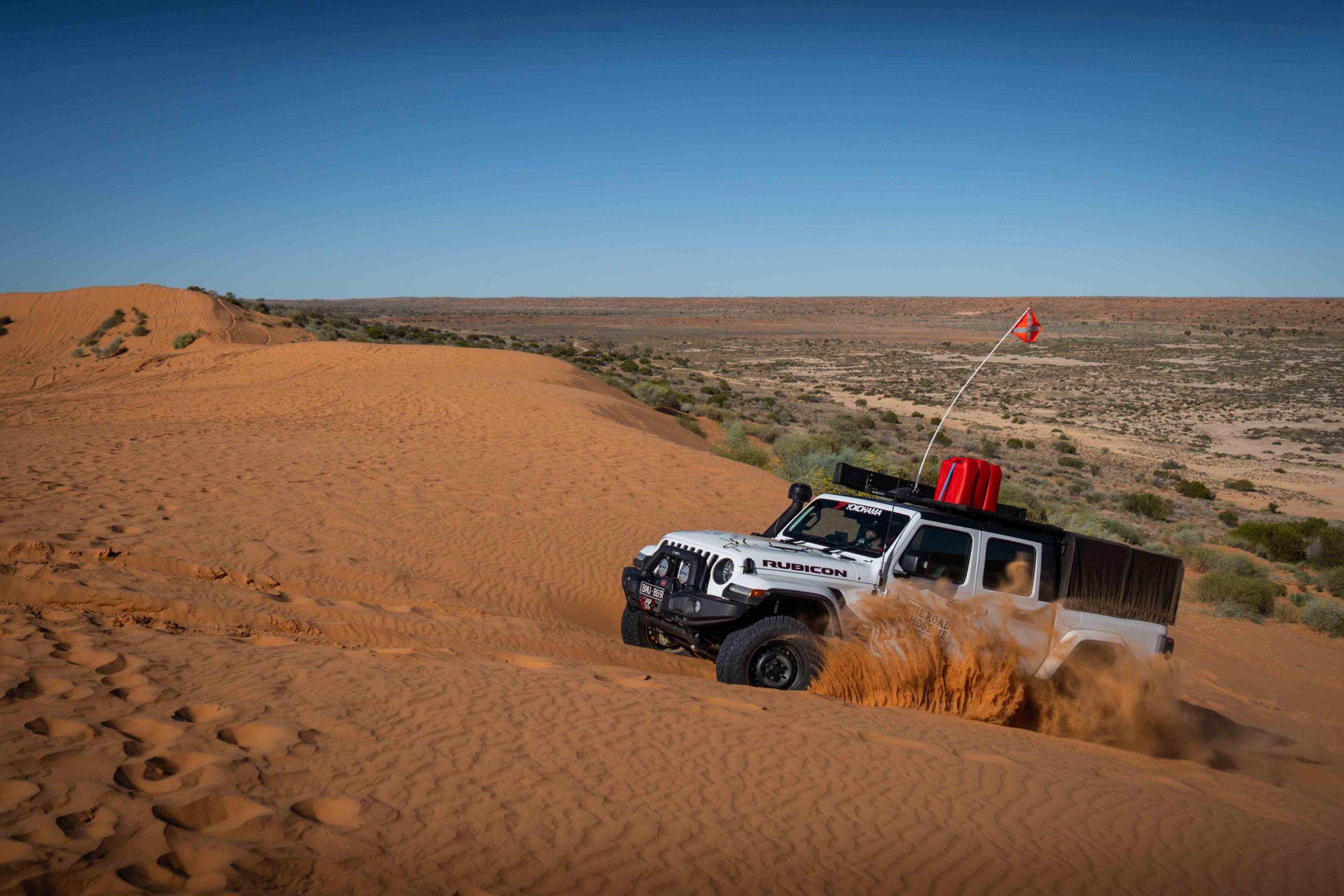
Early on the last morning we arrive at Big Red – the most famous, and possibly biggest, dune in the Simpson. Multiple tracks run up its impressive face, each varying in difficulty, and I fancy the Jeep to take on the steepest of them all. To increase grip I further lower tyre pressures to 12psi, and with the automatic transmission in manual mode I bump down gears as the dune steepens and the Gladiator powers to the top with momentum to spare. While low-end torque and fuel economy are the hallmark traits of diesel engines, there’s no doubt the higher horsepower of petrol engines is far superior for big dune climbs.
We enjoy the stunning view and stay atop Big Red for almost an hour, soaking in the silence and our final moments alone in the desert. Twenty minutes later, at the edge of Birdsville, I can’t help but wave at the first vehicle we see, and with our seven-day isolation now complete, we’re free to dive in.
1
Lessons from the Madigan Line
It took Madigan 25 days to cross the Simpson, verifying his earlier conclusion that the area was a wasteland. Although his report was conclusive, within 20 years the region was being criss-crossed by petroleum exploration – which turned up precisely nothing.
Madigan’s meticulous planning and experience meant his camel-train crossing went off without a hitch, and it’s regarded as the last of the great Australian exploration adventures. While bouncing along the track I often thought of Madigan and wondered what must have been going through his mind all those years ago. When he emerged in Birdsville he was hailed a hero, and went on to a life of research and academia, becoming a leading authority on central Australian geology and geography.
45
Planning is all good and well, but it’s the unknowns that jump out to bite us and throw the best-laid plans out the window. Catching COVID in one of the most remote regions on the planet was not something I ever considered, and we were forced to adapt to the situation as it unfolded.
We covered 765km over seven days and crawled up and over more than 1000 sand dunes. The solitude and enormity of the desert left a lasting impression on both of us, and it’s unlikely we’ll ever forget our time in the Simpson. Isolating for seven days in one of the biggest deserts on the continent did make for a good story over cold beers at the Birdsville pub that night, and after a few pats on the back I felt just a little closer to Madigan.
As is often the case, the desert had a final trick to play. Less than 12 hours later, under police escort, we were the last vehicle to leave Birdsville through rapidly rising floodwater before the town was cut off.
Follow 4X4 Australia on Google
Get more 4x4 news, reviews and gear stories from 4X4 Australia in your Google feeds.


We recommend
-
 Explore
Travelling the Madigan Line within the Simpson Desert
The Simpson Desert can be a busy place in peak season, but a run across the northern Madigan Line can provide the isolation many seek in a Red Centre crossing
-
 Explore NT
Madigan Line with Denis Bartell, NT
In 1979, Denis Bartell followed Cecil Madigan’s route across the Simpson Desert. We took Denis back to retrace his steps.