
If you own a Toyota HiLux N80, you already know that these vehicles are the backbone of the Australian off-road community.
From the red dust of the Kimberley to the humid tracks of Cape York, they are built to endure. However, there is one silent killer that even the most robust 1GD-FTV or 2GD-FTV engines struggle to fight indefinitely: Dust.
Standard panel filters are fine for the suburbs, but they weren’t designed for the “talcum powder” consistency of outback bull dust. This is why the release of the Donaldson PowerCore 4×4 Air Cleaner Housing and Filter Kit for HiLux is the news we’ve been waiting for. It isn’t just a replacement part; it’s a total industrial-grade upgrade for your intake system.
The Problem with the status quo
Most factory airboxes use a traditional flat panel filter which have reduced media surface area.
In high-dust environments, these filters clog rapidly, leading to increased restriction. When your engine has to work harder just to breathe, performance drops, fuel consumption spikes, and – worst of all – the risk of dusting your engine increases. Even a tiny amount of sub-micron silica passing through a seal can cause substantial damage to your cylinders and turbocharger.
Enter PowerCore Media Technology
Donaldson isn’t a newcomer to the filtration game.
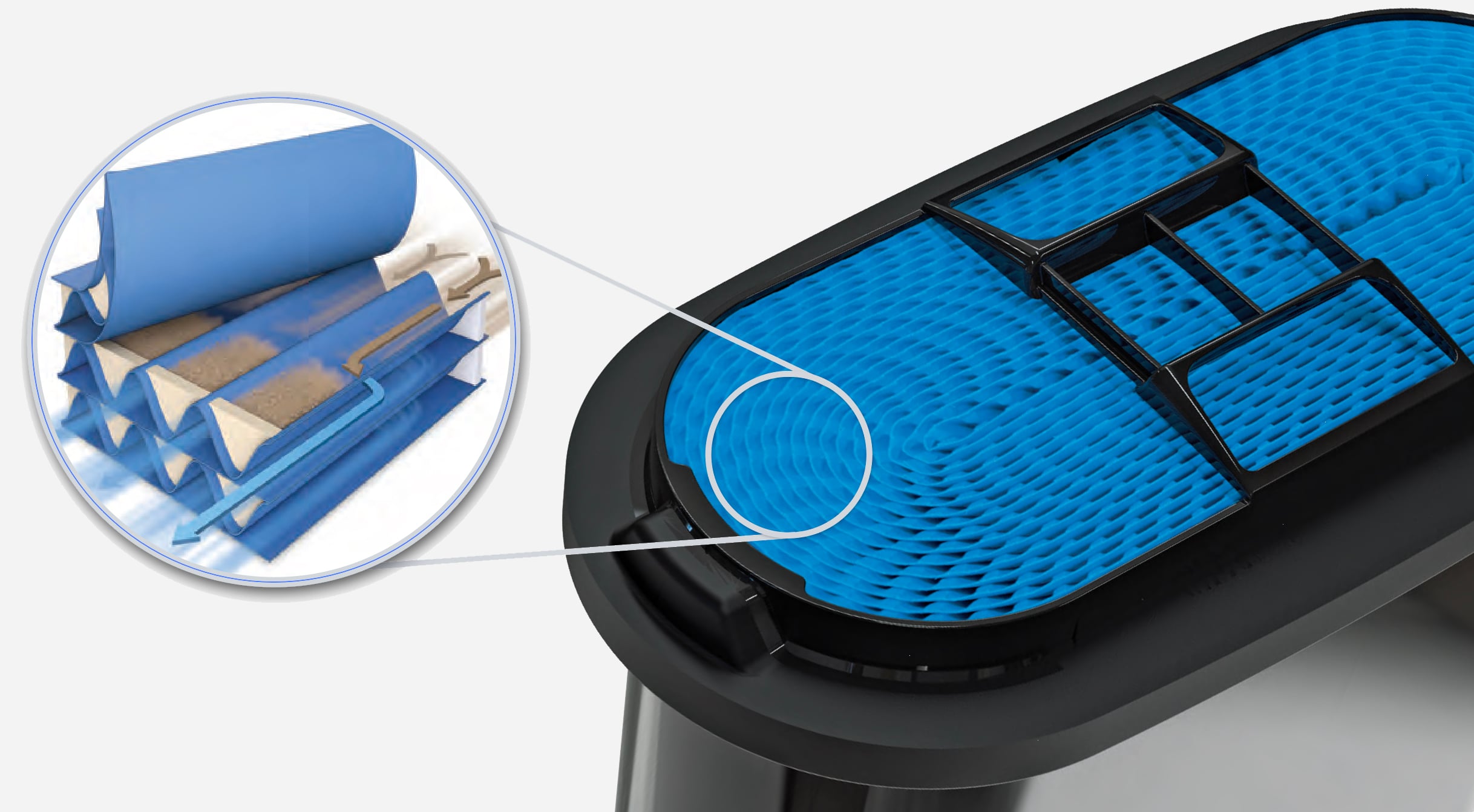
They invented the first heavy-duty engine air filter back in 1915 and have been the first-fit choice for heavy mining and construction machinery for decades. The new PowerCore kit brings that same trusted technology to the HiLux. The difference is the PowerCore® filtration media. Unlike flat filters, PowerCore® uses a unique honeycombed, corrugated design. This allows for straight-through airflow. Dust is captured in the flutes on the dirty side, while clean air is forced through the media into the clean side flutes.
The result? PowerCore is engineered with a superior dust-holding capacity compared to standard air cleaners, allowing for significantly longer intervals between maintenance. This means you can spend more time on the tracks and less time in the workshop.
By the numbers: Efficiency and flow
For the tech-heads, the specs on the XHLX80K are staggering.
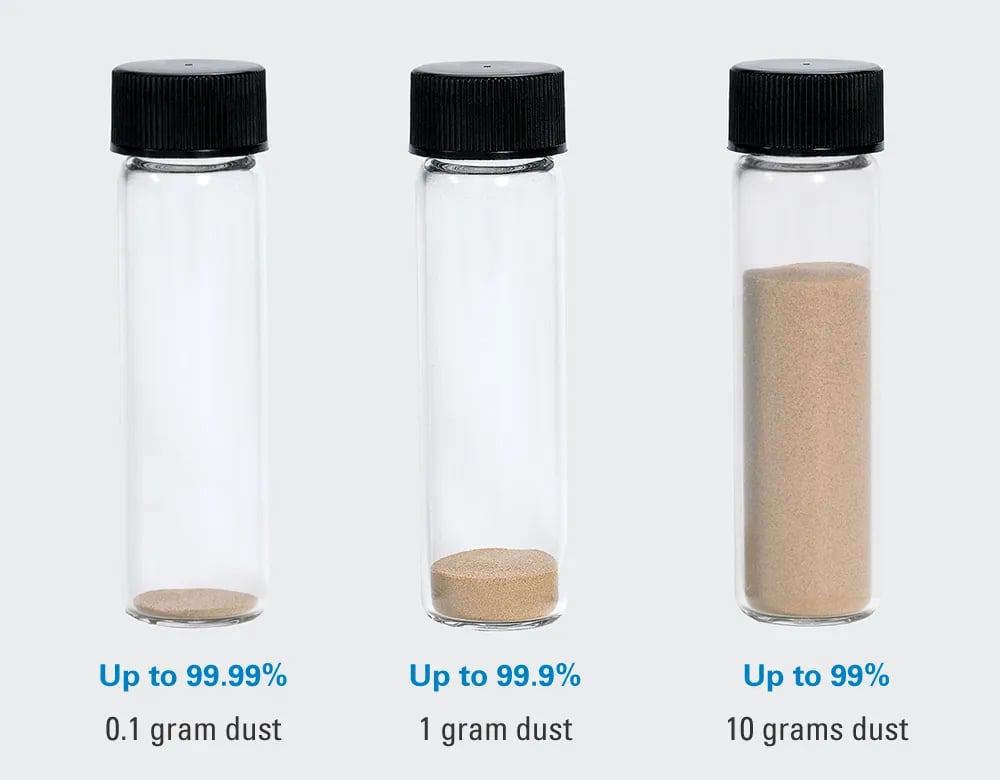
While a standard OEM panel filter typically offers around 99.78% efficiency (which sounds high until you realise what that remaining 0.22% represents over 20,000km), the Donaldson PowerCore hits 99.99% efficiency per ISO5011 standards.
When you’re talking about engine longevity, that extra 0.21% is the difference between a healthy engine and a premature rebuild. The PowerCore delivers significantly lower initial restriction. In real-world terms, users of the PowerCore LandCruiser 200 Series Kit have reported fuel savings of up to 1L per 100km because the engine doesn’t have to fight for every lungful of air.
Built for the bush
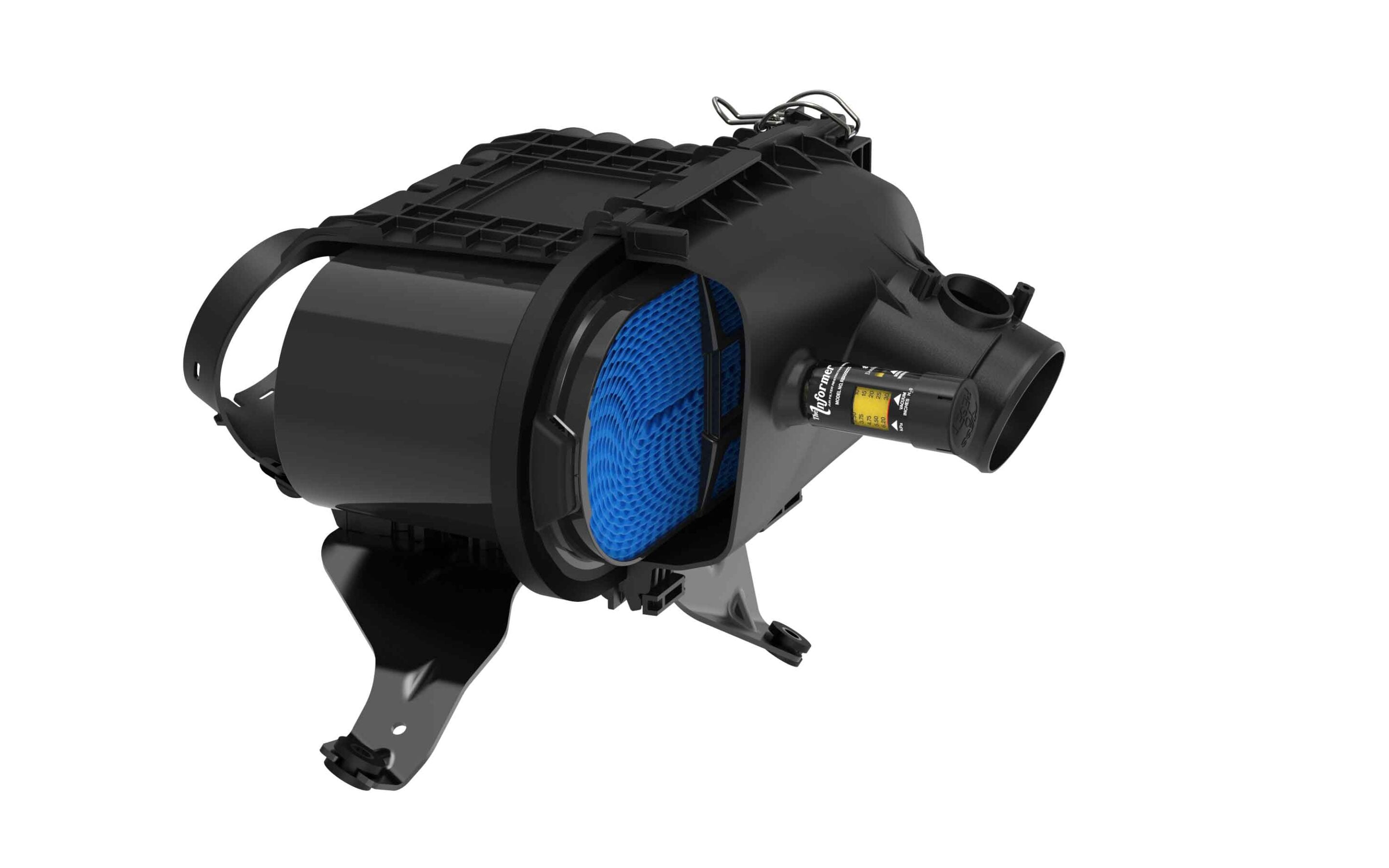
One look at the PowerCore housing and you can tell it was built for the Australian environment. The unit is constructed from high-density, heat-resistant polymer designed to withstand the vibrating, high-temperature environment of a modern turbo-diesel engine bay. Key features for the 4×4 enthusiast include:
- The Ultra-Web® Advantage: The filter media uses sub-micron nanofibers that capture even the smallest contaminants before they reach your engine.
- Unique Seal Design: One of the biggest failure points in aftermarket airboxes is the seal. Donaldson uses a proprietary sealing technology that creates a leak-resistant, vibration-proof interface.
- Service Indicator: The kit includes a heavy-duty restriction indicator. You no longer have to guess when your filter is dirty; the indicator tells you exactly when it’s time for a swap, ensuring you get the maximum life out of every element.
A true “Drop-In” solution
One of the biggest hurdles with high-performance airboxes is the installation.
Many require cutting, drilling, or relocating batteries. The PowerCore 4×4 is designed as a direct bolt-in replacement. It utilises the existing factory mounting locations and is fully compatible with the Hilux’s Mass Air Flow (MAF) sensor and harness.
Is it worth the investment?
We won’t sugarcoat it: the PowerCore kit costs more than a $40 paper filter from the local auto parts store. However, 4WD enthusiasts need to view this as an insurance policy.
Considering a diesel engine rebuild can run up to $25,000, the PowerCore kit is a smart investment. By providing uncompromising engine protection, reducing service intervals, and saving on fuel, the PowerCore is an investment that easily pays for itself. For the touring family heading across the Simpson, the tradie working on dusty construction sites, or the performance enthusiast looking to maximise their Hilux’s efficiency, the Donaldson PowerCore 4×4 is the gold standard.
Final thoughts
The Toyota Hilux N80 has always been “Unbreakable,” but even the toughest machines need clean air. With the PowerCore, Donaldson has finally brought industrial-strength protection to the 4×4 market. It’s rugged, it’s efficient, and it’s engineered by the people who protect the world’s most expensive mining equipment.
If you’re serious about your 4×4, it’s time to ditch the paper panel and give your engine the air it deserves. The outback is calling – make sure your Hilux is ready to breathe it in.
Electric utes are starting to arrive in Australia, but choices remain limited. Interest is growing as buyers look for 4×4 EV alternatives, though range, towing capacity and off-road ability remain key concerns.
A handful of models are confirmed or expected for the Australian market, offering competitive towing, payload and off-road performance tailored to local conditions. This guide covers electric utes currently available in Australia and those set to arrive soon, giving buyers a clear picture of what’s on offer and what’s coming 👇
- KGM Musso EV
- Ford F-150 Lightning
- LDV eTerron 9
- Chevrolet Silverado EV
- GMC Hummer EV
- Rivian R1T
- Tesla Cybertruck
- Tembo Tusker
- Riddara RD6
- Isuzu D-MAX EV
- JAC T9 EV
- Toyota HiLux BEV
KGM Musso EV
The KGM Musso EV has officially launched in Australia, with deliveries underway through select dealerships from late 2025.
Built on a unibody platform, it’s offered in single‑motor front-wheel drive and dual‑motor all-wheel drive. The AWD system produces 266 kW and 630 Nm, paired with an 80.6 kWh LFP battery delivering a WLTP range of 380 km. AC charging (11 kW) takes around 10 hours, while DC fast charging (300 kW) reaches 80 per cent in 36 minutes. Braked towing is 1,800 kg, payload is 805 kg, and the 1‑speed automatic drives the wheels. Pricing starts at $64,000 drive‑away for the AWD.
Inside, the Musso EV blends comfort, technology, and convenience with dual-zone climate control, ventilated and heated seats, heated leather steering wheel, power-adjustable seats, and a walk-up welcome system. It features a 12.3‑inch touchscreen, 12.3‑inch digital cluster, ambient lighting, Apple CarPlay and Android Auto, rear-seat sleep mode, electric park brake, and regenerative braking paddles. Exterior highlights include LED headlights and DRLs, front fog lights, black roof rails, and 17‑inch alloys.
Safety is comprehensive, with 8 airbags, adaptive cruise control, autonomous emergency braking, lane-keeping and lane-change assist, cross-traffic warnings, driver attention monitoring, stability and rollover protection, hill start and descent control, trailer sway control, and multi-collision braking. With its combination of range, capability, and advanced features, the Musso EV offers a versatile and competitively priced fully electric ute for Australia.
Ford F-150 Lightning
For now, the Ford F-150 Lightning is still available in Australia as a fully electric alternative to traditional 4×4 utes. Converted to right-hand drive by Advanced Manufacturing Queensland (AMQ) and sold through specialist importer AusEV, it blends rugged utility with zero-emission performance.
However, Ford is discontinuing the current battery-electric Lightning in favour of a new extended‑range electric (EREV) model. Pairing electric motors with an onboard petrol generator, the EREV promises more than 1125 km of total range, signalling a major shift in Ford’s EV strategy. For Australia, this means existing EV Lightnings will remain available through AusEV while supplies last, with the next‑generation EREV expected in right‑hand drive around 2027. In January 2026, AusEV slashed prices of its Pro variant to $109,990+ on‑roads to clear remaining stock.
Equipped with a 131kWh battery, the EV Lightning delivers up to 515km of range and offers a 4.5-tonne towing capacity, alongside a 1-tonne payload. It is also the only vehicle-to-grid/home-approved EV in Australia, allowing owners to power their homes during outages.
LDV eTerron9
The LDV eTerron 9 is set to arrive in Australia in 2026 as the brand’s flagship battery-electric ute.
It will offer both single‑motor rear‑wheel drive and dual‑motor all‑wheel drive, with the AWD system producing 325 kW combined and the RWD version delivering 200 kW. A 102 kWh LFP battery is expected to provide up to 430 km of range, while braked towing capacity reaches 3.5 tonnes, matching the diesel Terron9.
The eTerron 9 shares the same dimensions as its diesel counterpart: 5500mm long, 1997mm wide, 1,860 mm high, with a 3,300 mm wheelbase and a ground clearance of 230 mm. Pricing for Australia has not been confirmed, but details will be released closer to its 2026 launch.
Chevrolet Silverado EV
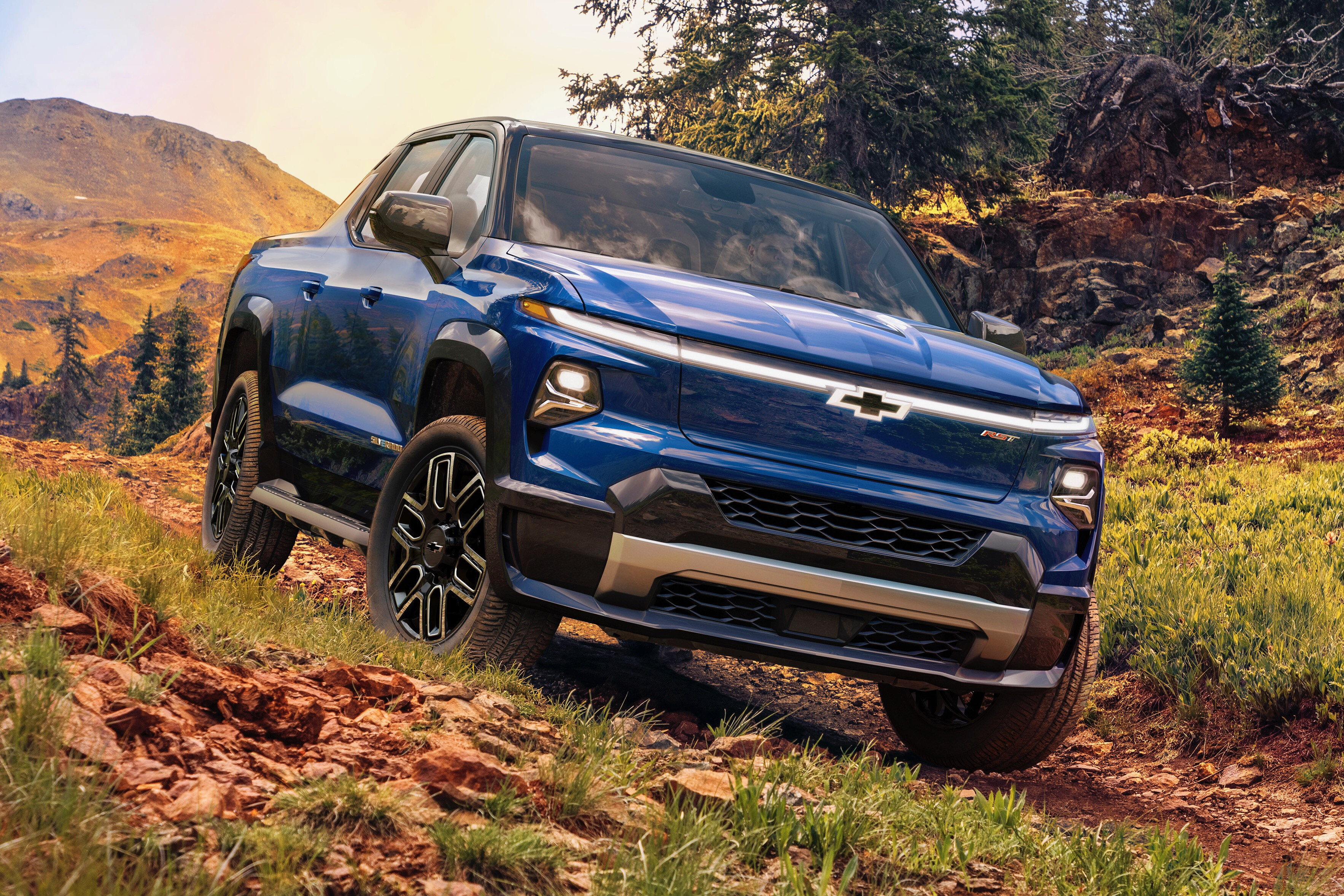
The Chevrolet Silverado EV is a full-size all-electric ute built on GM’s Ultium platform, offering dual-motor all-wheel drive with up to 541kW and 1051Nm in performance trims.
Depending on the battery and variant, it can deliver up to around 780km of range and supports heavy-duty towing of roughly 4500 kg, making it suitable for work or lifestyle use. Global trims include the fleet-focused Work Truck, the retail-oriented RST/Max Range, and the off-road Trail Boss, with features such as 350kW DC fast charging, adaptive air suspension, four-wheel steering, configurable tailgate and Midgate, and exportable onboard power.
The Silverado EV is not officially sold through Australian dealers, but right-hand-drive conversions by specialist importers like Autogroup International make it accessible for local buyers seeking a full-size American electric ute experience.
GMC Hummer EV
The GMC Hummer EV is a full-size all-electric 4×4 now available in Australia via right-hand-drive conversions by Autogroup International, fully engineered to meet Australian Design Rules.
These remanufactures use OEM components and ISO‑certified processes, ensuring the vehicle drives and performs as intended. Both SUV and pickup (SUT) body styles are offered. The SUV includes a dual-motor 2X with 570hp and around 480 km range, and a tri-motor 3X producing 830 hp, 0-100 km/h in 3.5 seconds, and roughly 515 km range. Signature off-road features – CrabWalk, Extract Mode, adaptive air suspension, four-wheel steering – carry over to the right-hand-drive models, alongside a premium interior with large infotainment screens.
While there’s no official GMC dealer network in Australia, these conversions provide immediate access to a fully compliant, extreme off-road electric 4×4, backed by local support and warranty.
Rivian R1T
The Rivian R1T is an all-electric mid‑size ute available overseas in dual‑motor and quad‑motor all-wheel-drive configurations.
The quad-motor setup provides advanced torque vectoring, while adjustable air suspension raises clearance to 381 mm. Acceleration is brisk, with 0-97 km/h in the low-three-second range depending on battery and motor choice. Battery options span 105kWh, 135kWh and 149kWh, delivering 370-645 km of range under WLTP/EPA testing. The cabin features a 12.3‑inch digital cluster, 15.6‑inch touchscreen, multiple drive modes, and utility options such as the Gear Tunnel.
In Australia, the R1T is not officially sold and no RHD consumer version exists. A small number of left-hand-drive units have been imported for mining and industrial use by WA-based MEVCO, and a test mule was spotted on Melbourne roads in late 2025. These vehicles are typically limited to private sites and aren’t road-legal for general public use.
Tesla Cybertruck
The Tesla Cybertruck has appeared at a few events in Australia, but it is not officially for sale locally and no right‑hand‑drive ordering or pricing has been confirmed.
Prototype units shown at showcases give Australians a close look at the polarising design, signalling Tesla’s broader intent to expand into right‑hand‑drive markets – potentially once RHD production and compliance are finalised. Globally, the Cybertruck is offered in dual‑motor and tri‑motor AWD configurations with robust towing capacity (around 4990kg) and an estimated range around 515km on USA testing cycles. Features include adaptive suspension, four‑wheel steering and large digital displays.
In early 2026 Tesla moved to cut prices in the US, introducing a more affordable Dual‑Motor AWD model starting around US$59,990 (roughly A$85,000) and trimming the top‑end Cyberbeast variant to about US$99,990 (roughly A$142,000) as part of a range‑wide reset to stimulate demand after slower than expected sales. Despite these pricing adjustments overseas, the Cybertruck remains unavailable to Australian buyers in regular production form.
Tembo Tusker
The Tembo Tusker is a fully electric ute launched in Australia in 2024 by Tembo, a global specialist in EV conversions.
It is available in single‑cab (Tusker‑S) and dual‑cab (Tusker‑D) body styles, with 65kWh and 77kWh battery options delivering around 330km to 400km of range on a single charge. Designed for practical work use, the Tusker offers a 1000 kg payload and an unbraked towing capacity of 750kg, while still being fully approved for public roads. Tembo’s expertise in electrifying utility vehicles – including its e‑LV conversion kits trialled locally since 2018 on Toyota LandCruisers and HiLux utes – underpins the Tusker’s design and reliability for Australian conditions.
The Tusker is currently on sale in Australia, primarily aimed at commercial buyers but also available for private purchase. Retail pricing starts from approximately $74 000 plus GST and on‑road costs, with Tembo managing full on-road registration and delivery.
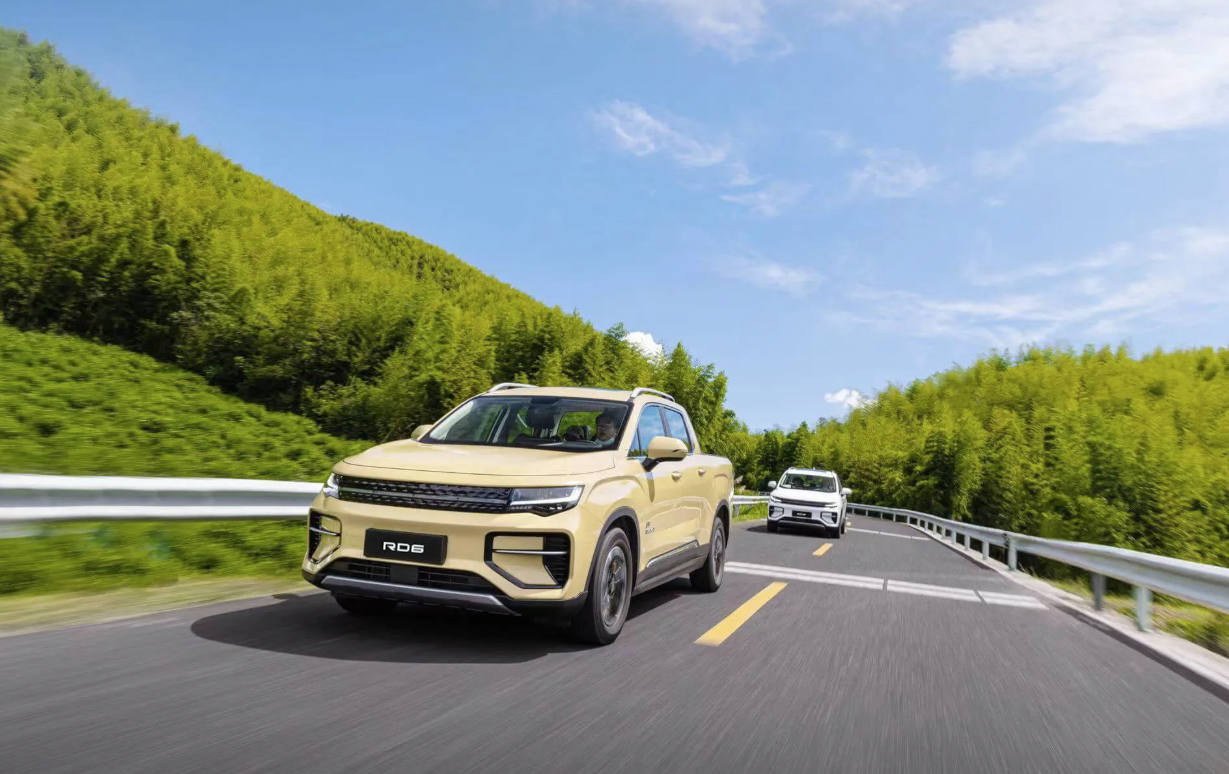
Riddara RD6
The Riddara RD6, an all-electric dual-cab ute from Geely’s Radar brand, is poised to enter the Australian market.
It offers RWD and AWD variants, with power ranging from 200kW/384Nm (RWD) to 315kW/594Nm (AWD), and 0 to 100 km/h times of around 7.3 and 4.5 seconds respectively. Battery options deliver 385-500 km of range (CLTC), and AWD models can tow up to 3000 kg braked.
Inside, the RD6 features a 14.6‑inch touchscreen, digital instrument cluster, dual‑zone climate, and utility-oriented comfort for work or off‑road use. Right‑hand-drive production has been confirmed, and the RD6 has launched in Thailand, making an Australian release possible in 2026, though pricing and full specifications are yet to be announced.
Isuzu D-MAX EV
The Isuzu D‑MAX EV is a fully electric version of the popular midsize ute, with right-hand-drive units expected in Australia in 2026.
While Isuzu Ute Australia has not confirmed local availability or pricing, the EV features a dual-motor full-time 4×4 system producing 140kW and 325Nm, paired with a 66.9kWh battery delivering about 263km WLTP range. Payload is listed at 1010kg and braked towing capacity 3500kg, matching the diesel D‑MAX.
In 2025, Isuzu UK announced pricing will start from £59,995. That works out to around $117,000 AUD before on-road costs. First deliveries in the UK are expected in March 2026, following an official launch in February. However, there’s been no confirmation yet for an Australian release.
JAC T9 EV
The JAC T9 EV is a fully electric dual‑cab 4×4 ute showcased in Australia, though local sales and pricing have not yet been confirmed.
JAC has also begun mining-industry trials in Western Australia to test performance and battery durability under harsh conditions. It pairs an 88 kWh LFP battery with a dual-motor AWD system producing 220 kW and 516 Nm, offering an estimated 330 km WLTP range. Practicality is retained with a 900 kg payload, a tub sized for a standard Australian pallet, and vehicle-to-load functionality for powering tools or campsite gear.
While timing for a full Australian rollout is unclear, the T9 EV remains one of the more realistic near-term electric 4×4 ute options for tradies, fleets, and off-road enthusiasts.
Toyota HiLux BEV
The Toyota HiLux BEV is set for release in the first half of 2026, though pricing has not yet been announced.
Toyota’s first alternate-fuel HiLux is a full battery-electric vehicle, powered by dual electric motors and a 59.2kWh lithium-ion battery, with the SR5 double-cab expected to deliver an NEDC range of around 315km. Fast charging from 10 to 80 per cent is expected to take about 30 minutes via a 150kW DC charger, or a full 10 to 100 per cent AC charge in about 6.5 hours.
Available as a double-cab ute or cab-chassis in SR and SR5 grades, it retains the ladder-frame chassis with the battery protected underneath. Motors send 205Nm to the front and 268Nm to the rear through full-time AWD, paired with a five-mode Multi-Terrain System (Rock, Sand, Mud, Dirt, Moguls). Off-road capability mirrors diesel models: 700 mm wading, 29° approach, 25° departure, 218mm ground clearance. Payload is 715kg, with 2000kg braked towing.
Primarily aimed at commercial users in industries like mining and farming, the HiLux BEV has been tested for over a year with BHP, while Toyota is also developing a hydrogen fuel-cell (FCEV) version slated for 2028.
The perennial bush favourite – Toyota’s LandCruiser 79 Series – has a new competitor in the Quartermaster pick-up from British brand Ineos. While the LandCruiser brings 40 years of bush-bred heritage and proven durability, the loss of its V8 diesel in favour of a four-cylinder has many traditional Toyota owners looking elsewhere.
The Quartermaster is the cab-chassis variant of the Ineos Grenadier wagon and, like the wagon, it comes in three grades with petrol or diesel six-cylinder engines, live axles, diff locks and genuine heavy-duty underpinnings. But is the hardware enough to entice hard-core 79 owners to consider a relatively new European contender?
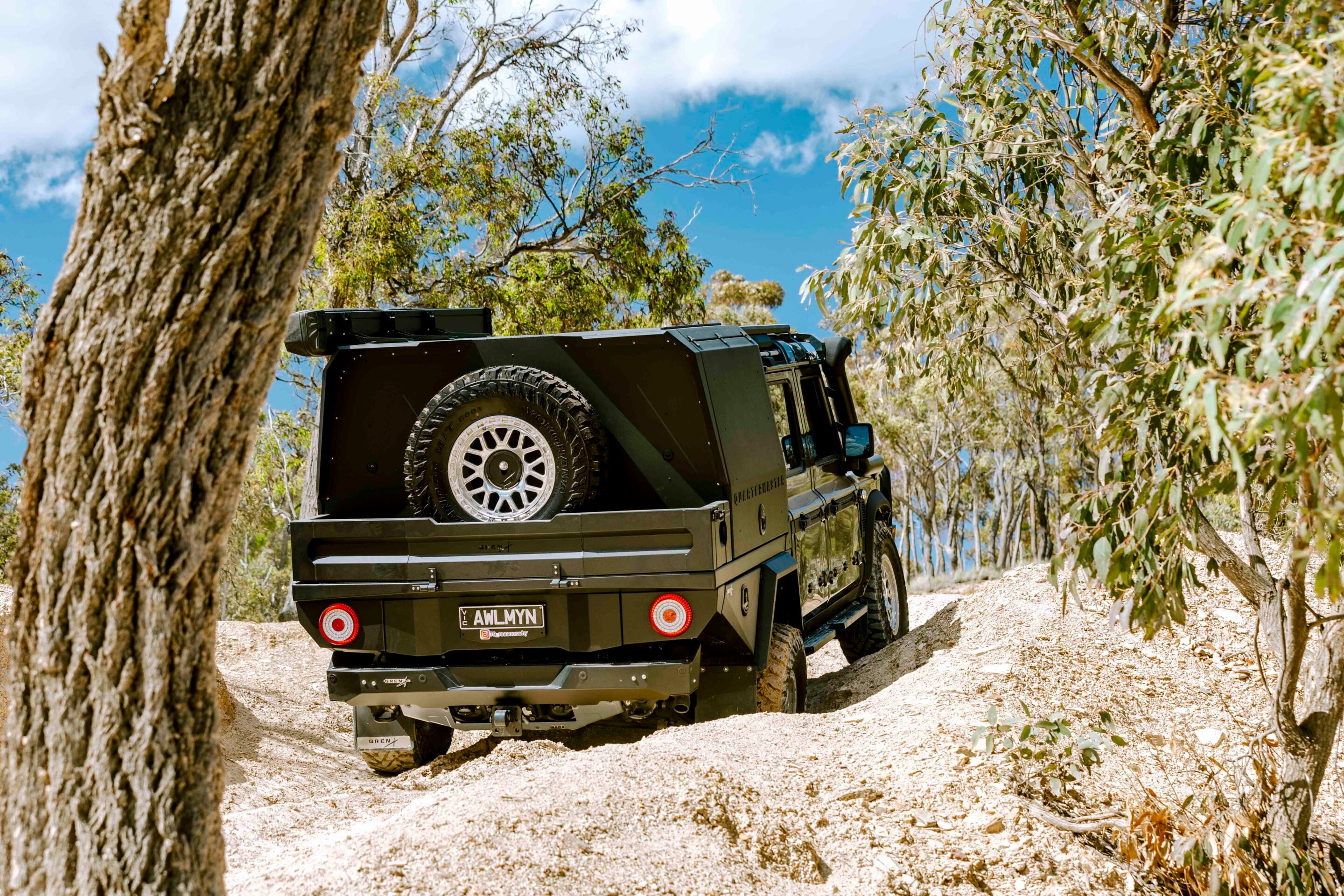
The LC79 is many things to many customers, and part of its appeal has always been the extensive aftermarket support that allows owners to tailor the vehicle to their needs. We’ve showcased plenty of LC79 builds on these pages over the years. Only now are we starting to see Ineos vehicles built up as heavy-duty 4×4 tourers, and this build from Jason Bell is the first Quartermaster we’ve had the chance to inspect.
Jason’s rig is a 2024 Quartermaster Trialmaster, and when it came to transforming it into his ultimate off-road tourer, he handed it over to Ineos specialists GrenX. GrenX is the company behind the Grenadier that graced our cover 12 months ago, and the man behind the brand, Rohan, told us that Jason was the perfect customer to work with in developing the Quartermaster.
“Jason is an exceptional customer,” Rohan said. “He gave me full creative freedom to build my interpretation of the ultimate GrenX Quartermaster, with no limitations.”
Back when we featured Rohan’s Grenadier, he spoke about the big plans he had for future Ineos builds, and judging by Jason’s Quartermaster, this project has allowed him to realise them. While the look and stance of the finished rig are impressive, some of the most significant upgrades are concealed underneath. Like most factory 4x4s, the Ineos models could do with a boost in load capacity, so GrenX has developed Second Stage Manufacturer (SSM)-approved GVM upgrade kits for both the wagon and cab-chassis models.
Jason’s truck now has a GVM of 4499kg, up from the factory 3550kg. To achieve this extra capacity, GrenX fits Dobinsons remote-reservoir shock absorbers and springs, along with additional bracing on key sections of the chassis and diff housings. A Bilstein steering dampener – specifically developed to improve the Ineos’ steering feel – is also part of the package.
All GrenX modifications and the uprated GVM are carried out under SSM approval to ensure compliance, and this also covers an increase in tyre size up to 37-inches. Of course, all of this is done to allow the vehicle to carry a truckload of touring accessories, recovery gear and protection equipment while still remaining within its load limitations.
Loaded with accessories
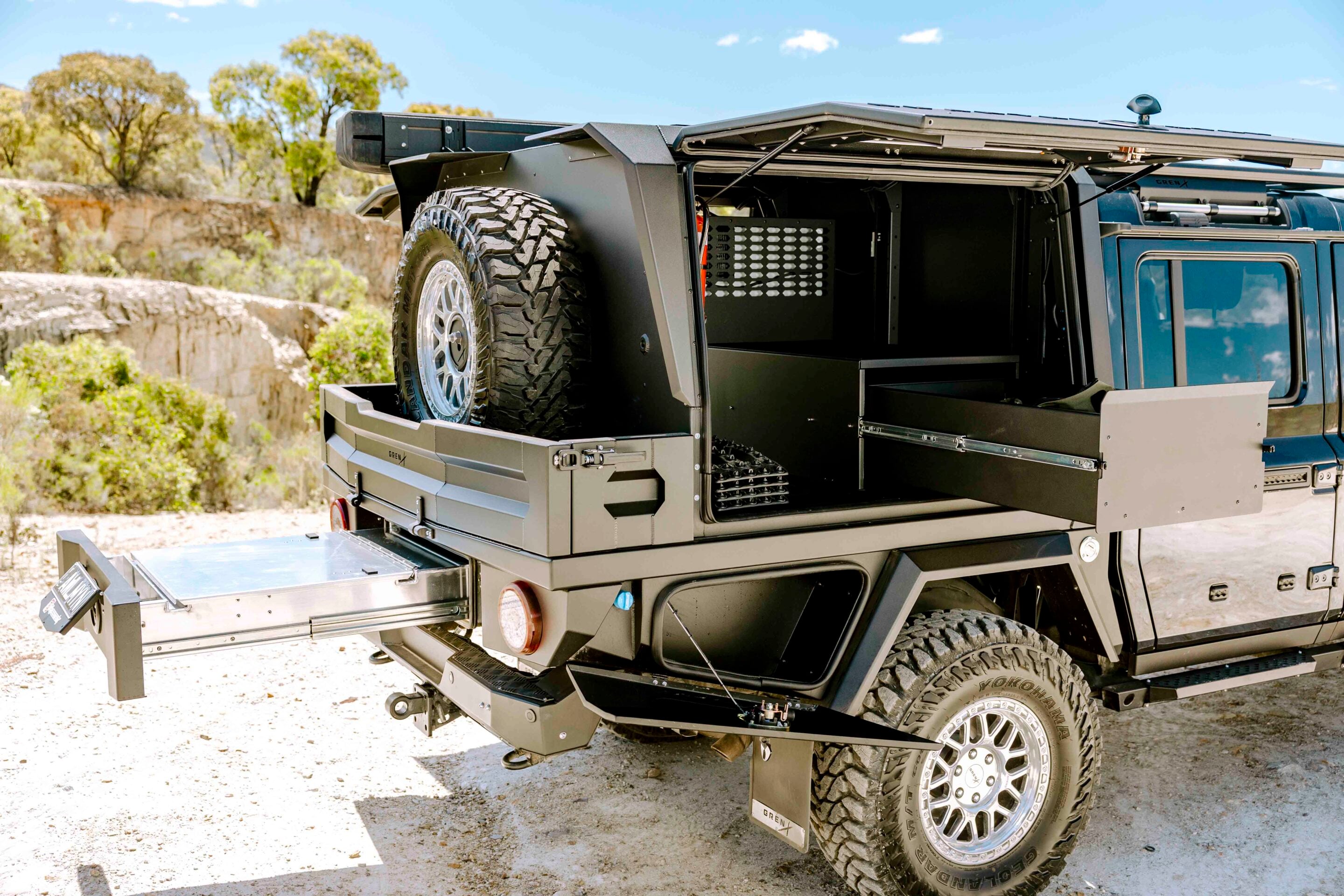
To carry the kit, the truck is fitted with a tray and canopy developed by GrenX, which in turn supports a Clevershade awning up top, tapered toolboxes underneath, a rear trundle tray, a 70-litre water tank, internal storage drawers and a Bushman 130-litre fridge.
A Bushman drawer fridge will also be installed by the time you’re reading this. Protection gear includes a GrenX rear bar and rock sliders, along with an Offroad Animal bullbar. A Warn 12.5 Evo winch is tucked neatly into the bar, ready for recoveries.
Ineos offers buyers a choice of petrol or diesel six-cylinder BMW engines, and Jason chose the latter for his Quartermaster. In standard form the engine makes a claimed 185kW and 550Nm, but a GrenX ECU tune bumps that up to a far more useful 700Nm. The GrenX 4.5-inch intake snorkel and airbox ensure plenty of fresh, clean air is fed to the engine.
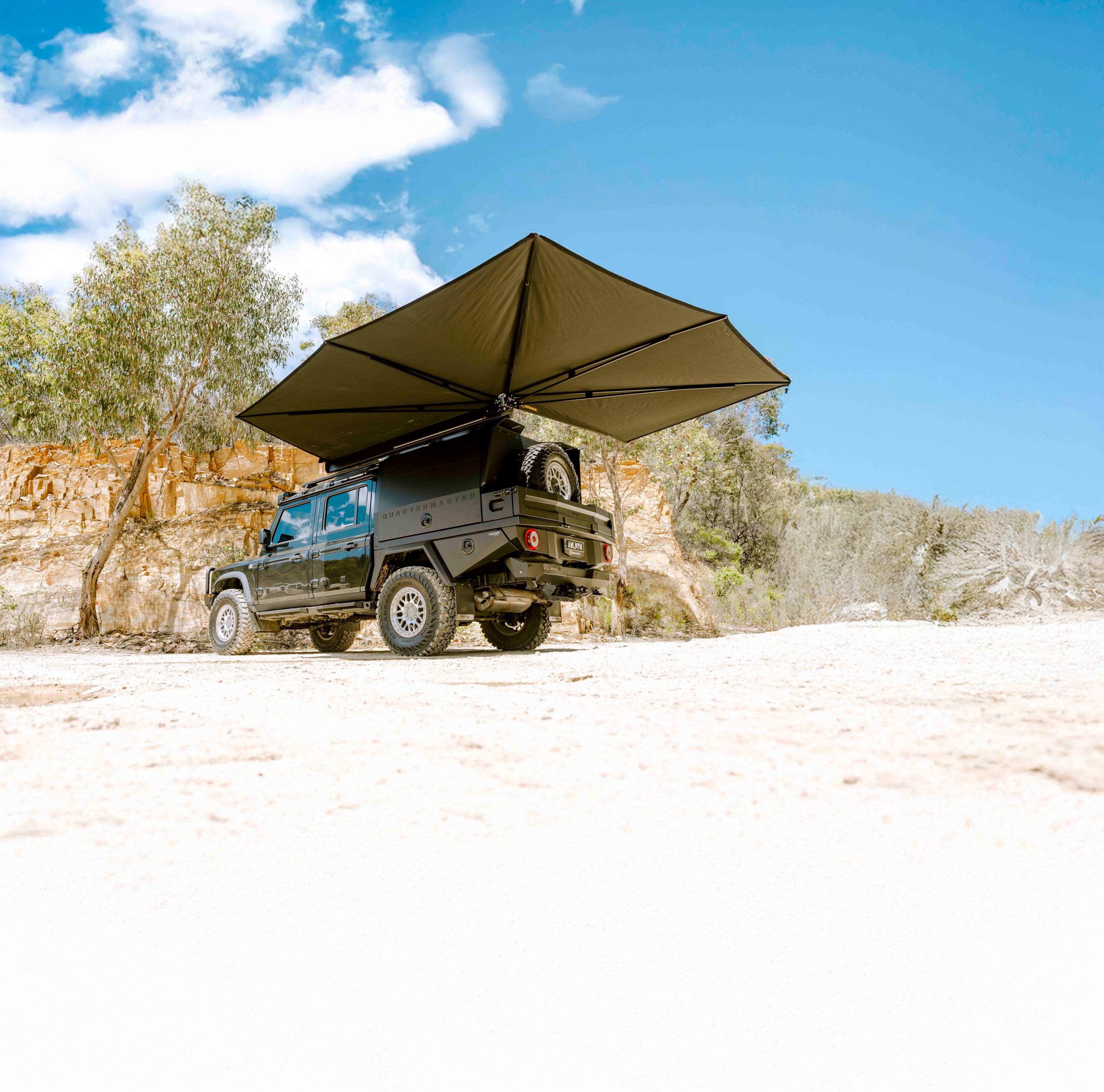
Putting that new-found torque to work are 35-inch Yokohama muddies mounted on forged alloy wheels, and they’re just the ticket for off-road use – in any conditions. That’s exactly what Rohan set out to achieve with GrenX – turn-key builds that improve the performance and capability of Ineos 4x4s, tailored to each owner’s needs and desires.
Will it be enough to emulate – or even topple – the success of the LandCruiser 70 Series? Time will tell. But the product already looks and performs well above what the manufacturer intended, and that’s exactly what a bespoke-built 4×4 should do.
I slipped the Cruiser into four-wheel drive and eased onto the sand track that dropped down to the beach.
It was the final leg of my journey retracing Charles Sturt’s 1829-30 expedition down the Murrumbidgee and Murray rivers to the sea. Just a few days earlier, Facebook warnings suggested the beach was soft, but whatever had worried people must have changed. Once I’d dropped tyre pressures, I never had a worry.
JUMP AHEAD
- From Camden to Canyonleigh
- Through Goulburn and beyond
- Along the Murrumbidgee
- Camping and the Murrumbidgee Valley Regional Park
- Crossing the Hay Plains and Sturt’s Tree
- Through Maude, Balranald, and the Murray
- Into South Australia
From Camden to Canyonleigh
The first couple of days had started easily enough – bloody filthy weather aside – as we left Camden on the southern edge of Sydney’s greater metropolitan area.
Back in November 1829, at the outset of his second major expedition, Sturt stayed with a friend at the newly established Brownlow Hill station, the region having only been settled a few years earlier. Remarkably, that property just west of central Camden has survived the pressure of urbanisation and remains one of Australia’s most significant colonial estates — a rare, near-intact early farm now protected by heritage listing. Brownlow Loop Road cuts through the estate and offers great views of the historic property; it’s a public road, even if the signage at either end may suggest otherwise.
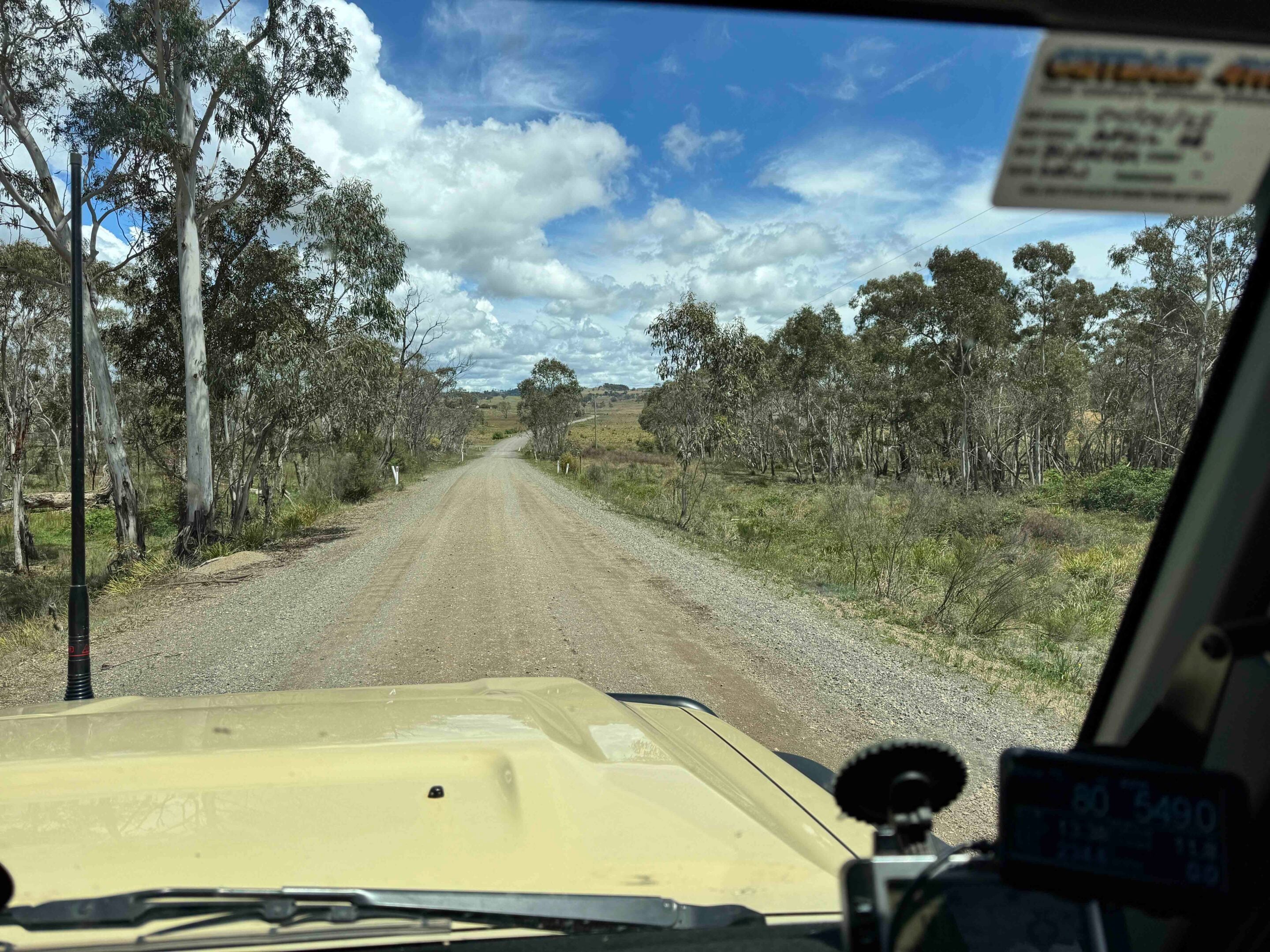
As you’d expect, in the nearly 200 years since Sturt headed south, plenty has changed – and finding even a dirt road that lined up with his route proved a genuine test of my map-reading skills (or lack thereof). Still, south of Picton we picked up a long run of gravel through Canyonleigh, following the general line of Sturt’s path to a shallow ford on the Wollondilly River near the tiny hamlet of Towrang. It must be said the ford isn’t always shallow, nor is the Wollondilly always gently flowing, as the flood debris piled on both banks makes clear. Be prepared to turn back if the river is running too fast or too deep.
Through Goulburn and beyond
Sturt had camped on the Wollondilly nearby, at the base of the Cookbundoon Range in mid-November 1829, but try as I might to do the same, I was continually stymied by private property and ‘No Entry’ signs.
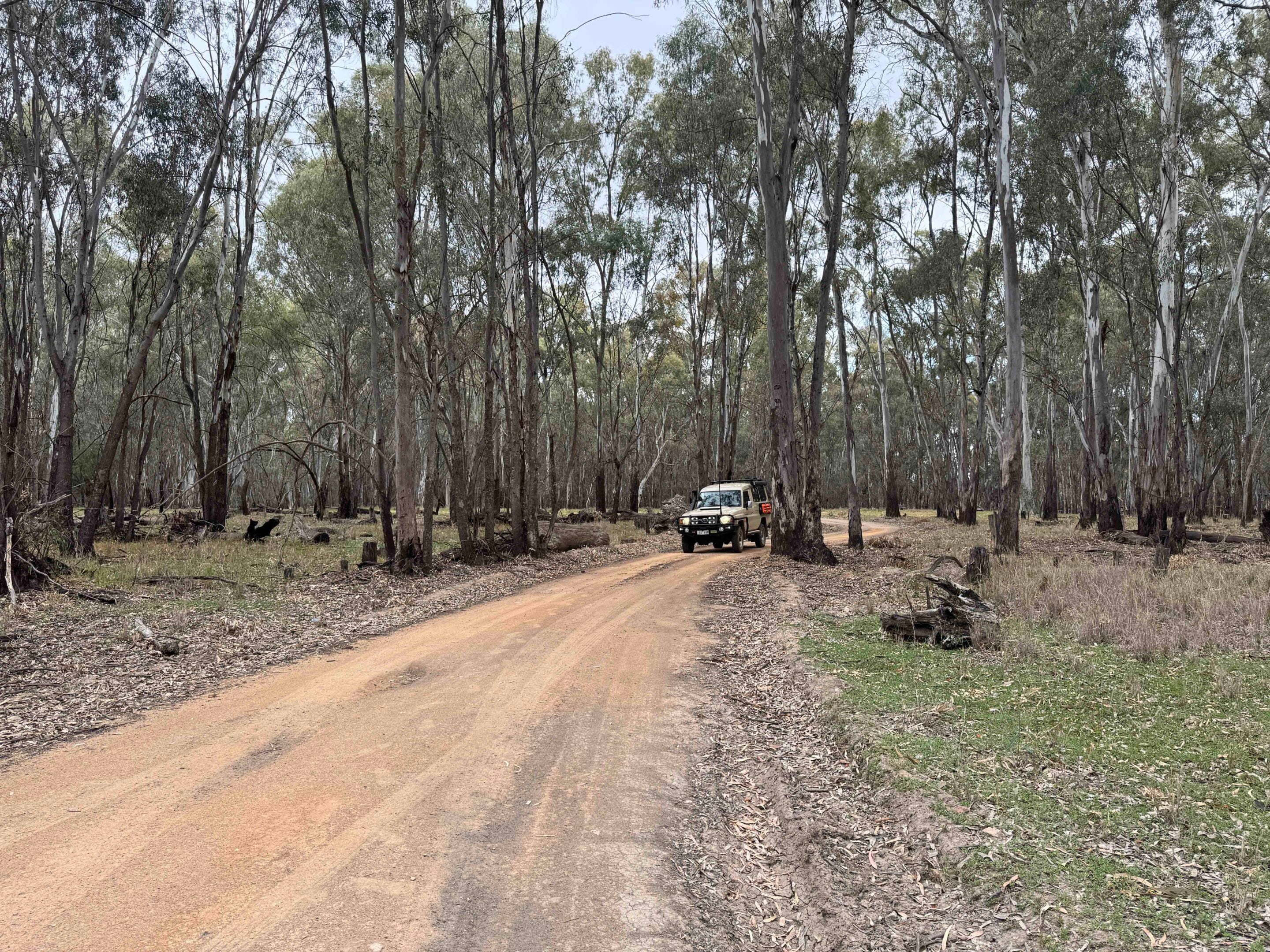
I pushed on to Goulburn and followed dirt roads across the Breadalbane Plains, then up and over the low Cullerin Range to Gunning, keeping reasonably close to Sturt’s original track – and what would later become the route of the original Hume Highway. The Lachlan River rises in the hills north of here, forming one of the major west-flowing water arteries that we’d meet again later in the trip.
At Jugiong, Sturt had his first sighting of the Murrumbidgee – and like him, so did we – before we pushed on to Gundagai, where Sturt and his men crossed to the river’s southern bank. A monument marking the crossing stands in the local caravan park near the modern road bridge. Back in Sturt’s day, the Gundagai area represented the very edge of European settlement, so from this point on he and his party were heading into essentially unknown country.
Along the Murrumbidgee
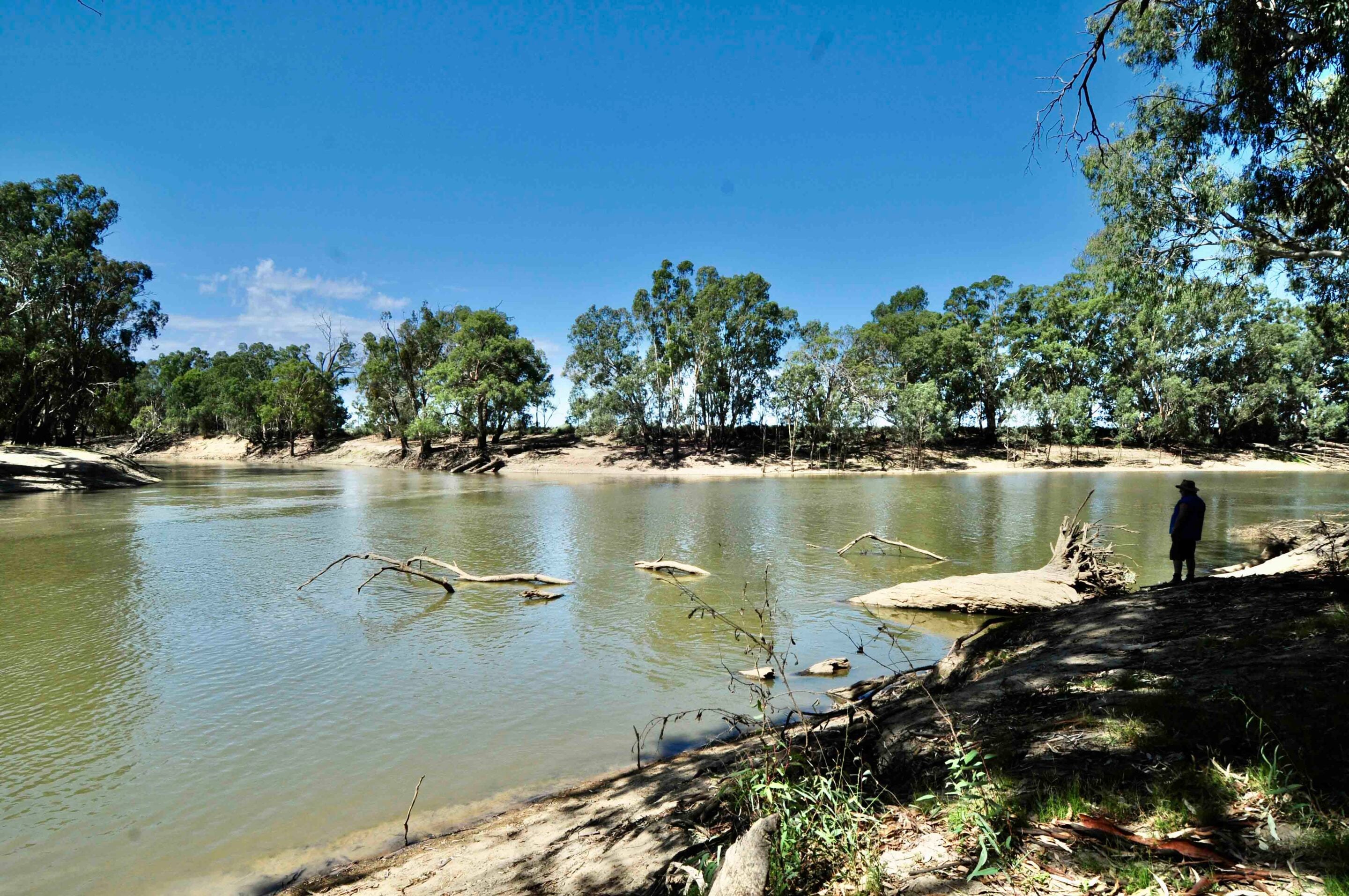
We pushed on, keeping close to the Murrumbidgee as we headed towards Wantabadgery, stopping just short of the small town at the very pleasant Sandy Beach.
We’d camped there before, and I knew it would be just the start – a great introduction to the many fine camping spots dotted along the Murrumbidgee that we’d enjoy in the days ahead. In Wantabadgery we pulled up to check out the small monument to The hero of Wantabadgery – Senior Constable Edward Mostyn Webb-Bowen – who was fatally wounded in 1879 while trying to capture the infamous bushranger Captain Moonlight (sometimes spelt ‘Moonlite’). Moonlight was later caught and hanged for his crimes, and both the policeman and the bushranger are buried in Gundagai.
Following the Murrumbidgee westward, about 18km east of Wagga Wagga we swung into the Oura Beach Reserve for a look, but with it being early in the day – and the place already dotted with vans and campers – we pushed on. West of the city we were back on the gravel, River Road starting out in good condition before gradually degenerating into a 4×4 track as we passed the last of the farmhouses along the river.
Passing through a gate into what’s known as Jones Reserve, we found ourselves right on the banks of the stream – a cracking spot to pull up for a night or two. The track continues on, heading away from the water and winding through open forest and across a few grassy dunes before meeting Old Narrandera Road. As the signs on the exit gate later revealed, somewhere since leaving the river we’d passed into Saw Pit Reserve which, as a designated Travelling Stock Route, doesn’t allow camping. I’m never quite sure why that rule applies to these open bush areas of Crown Land – or whether it applies to those actually driving stock.
Camping and the Murrumbidgee Valley Regional Park
East of Narrandera we had a look at the camping options at Berembed Weir and at the Rocky Waterholes. My pick is Berembed Weir; it was far quieter than the Rocky Waterholes site.
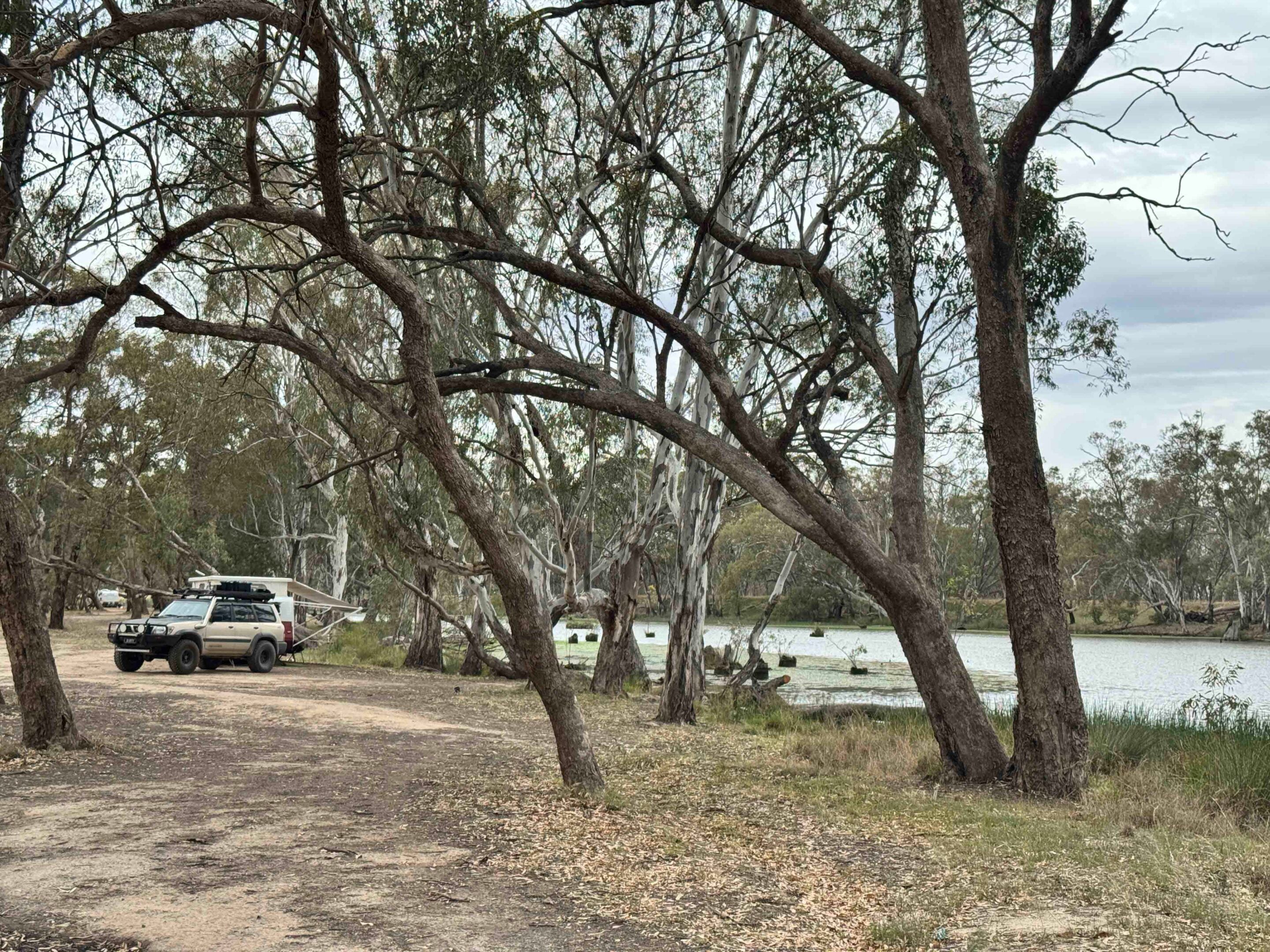
West of Narrandera, on the north side of the river, a series of disjointed forest and bushland parcels make up the Murrumbidgee Valley Regional Park (MVRP – pronounced Mer-um-bid-gee if you’re not a local). Along here the riverbanks and their big river red gums look much as they would have in Sturt’s day. The park offers plenty of campsites dotted along the river, some with sandy beaches ideal for swimming or paddling.
To stay close to the river, take River Road west of Yanco, where you’ll find access tracks leading through the red gum forest to the water’s edge. When we were here a few years back the tracks were strewn with fallen timber; this time around it wasn’t an issue – but be warned. Most of the tracks are easy going when dry, but when wet these mostly black-soil plains can turn even a simple trail into something slippery and boggy. In the Willbriggie section of the regional park, west of the small town of Darlington Point, you’ll find a half dozen campsites along the river with Swaggies Beach being our favourite.
Crossing the Hay Plains and Sturt’s Tree
As you head west, the road crosses the Hay Plains well away from the river and seems to stretch to eternity across a flat, dun-coloured landscape of saltbush, bluebush and drying lignum.
The only relief from the monotony comes from the lines of trees marking an ephemeral watercourse or an occasional stand of hardy acacias such as mulga and myall. Even Sturt recorded similar thoughts on the monotonous landscape stating, “Our route during the day was over as melancholy a tract as ever was travelled… It is impossible for me to describe the kind of country we were now traversing, or the dreariness of the view it presented.” He’d be amazed at the transformation that irrigation has brought to much of the region.
About 4km east of Hay, a small carpark on the south side of the highway – close to the river – marks the site of Sturt’s Tree. A plaque erected in 1979 identifies the location, the blaze on the tree now sitting at its base after being found almost buried under flood debris and mud built up over the intervening years. Hay itself has the popular Sandy Point Reserve along the edge of the Murrumbidgee – Sturt camped close by – but just west of town is the small Wooloondool section of the MVRP, which offers about half a dozen camping areas along the river. The western-most camp, Mad Dog Bend, is the best and largest in my view; like most sites in the MVRP, there are no facilities.
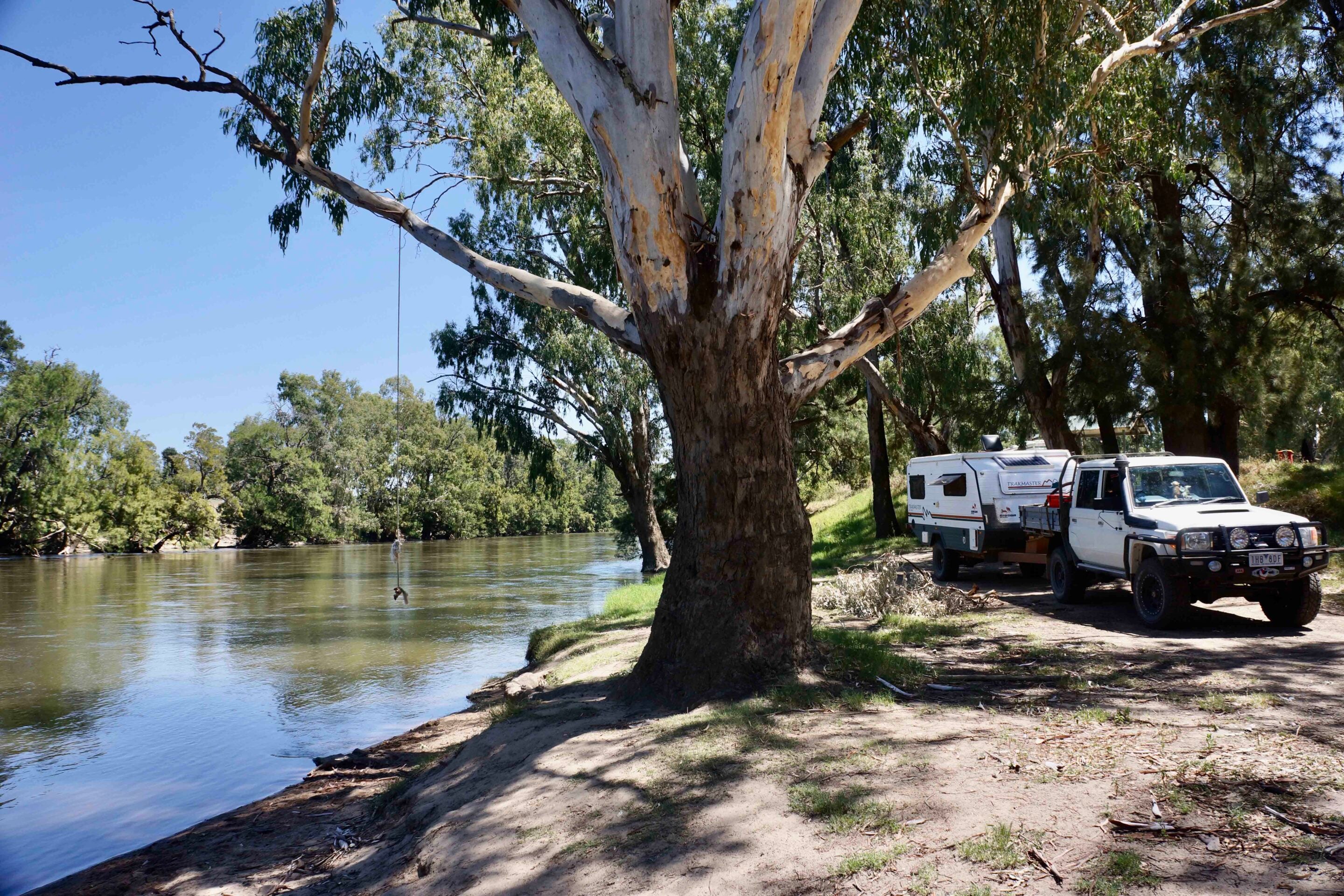
Through Maude, Balranald, and the Murray
At the tiny hamlet of Maude we turned onto Nap Nap Road – there’s a camp right on the river’s edge just after the turn – and headed south-west, the route skirting the fringe of the vast Great Cumbungi Swamp.
The swamp sprawls across a huge expanse around the junction of the Lachlan and Murrumbidgee rivers. It stopped explorer John Oxley in 1817 and forced Sturt to take to his boat – which he’d dragged all the way overland from Sydney – only a short distance downstream of Maude. Today, much of the swamp has been drained, but you’ll still see remnants of lignum and cumbungi close to the road.
At Balranald we explored Yanga National Park, which protects more than 170km of Murrumbidgee River frontage – much of it looking much as it did when Sturt and his men rowed past. Centred around the historic Yanga Homestead, the property was once the largest in NSW, running in excess of 100,000 sheep in its heyday. In 1922 the 40-stand shearing shed shore 93,386 sheep and produced more than 2000 bales of wool.
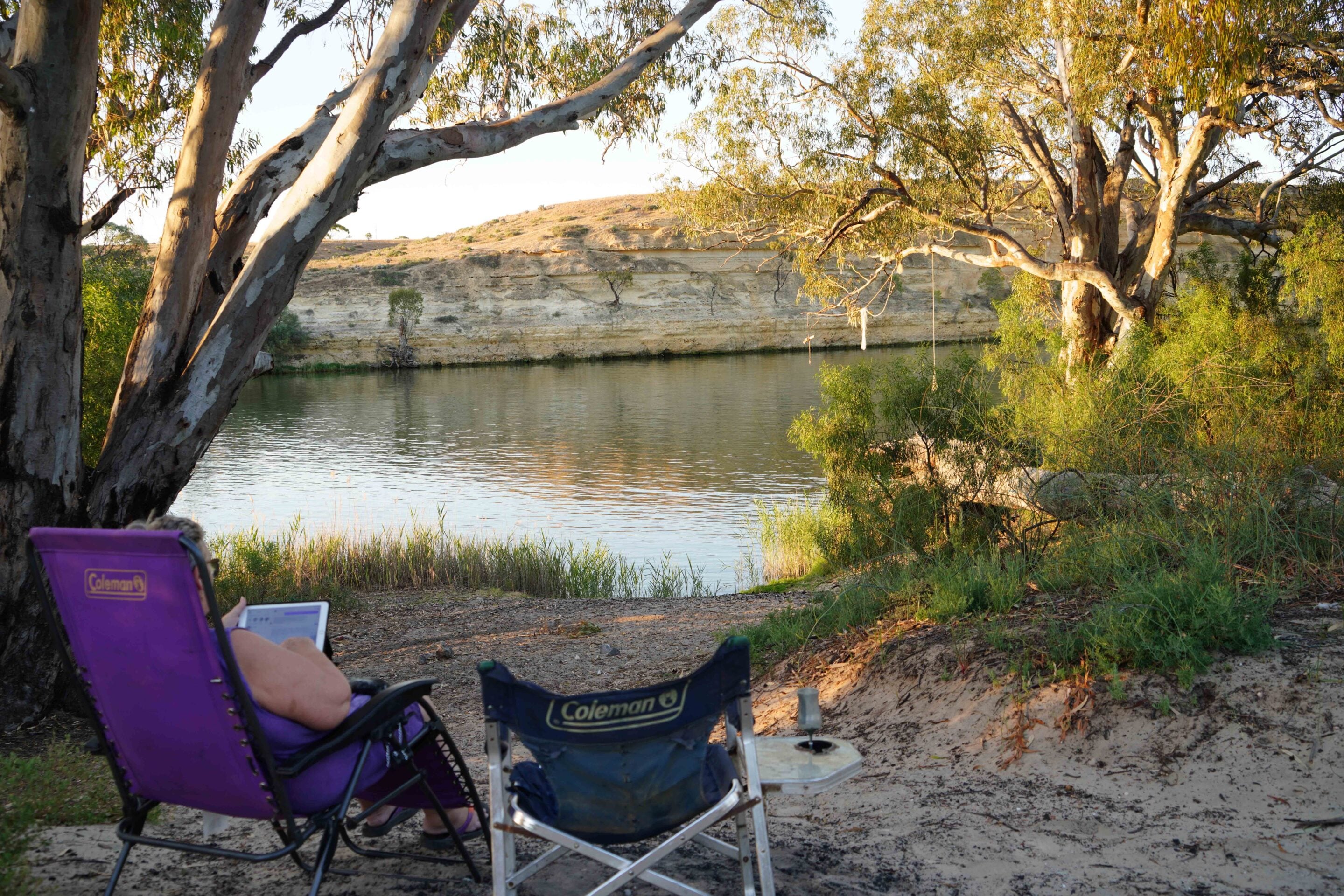
Back in the 1980s we used to chase feral pigs through the lignum here – great fun, and we were doing the environment a favour. Today there are a couple of camping spots in the park, both on the river: one close to Balranald and the other at the very northern tip of the park, which is by far the more remote and quieter of the two.
The Murrumbidgee ends where it joins the Murray, the point where Sturt and his party were swept out onto “a broad and noble river”. That junction of the two great streams isn’t easy to reach from the NSW side, so we crossed into Victoria and made our way to Junction Camp, east of the small township of Boundary Bend, in a section of state forest slated to become part of the proposed Murray River Park. Much of the track network here has become overgrown, and the camping spot at the actual junction leaves a lot to be desired. Passage Camp, just a few kilometres away, is a far better place to pull up with a camper or throw down the swag.
We followed the river westward and stopped at Junction Park in Wentworth, where we viewed the junction of the Darling and Murray rivers. It was here that Sturt had a tense confrontation with a large group of Aboriginal people – but throughout this expedition, and in his journeys before and after, his leadership meant no blood was shed on either side.
Back on the road we headed along a good dirt run to the Rufus River – named by Sturt after his friend’s red hair, believe it or not – and found a small camp beside the stream, just south of the large, shallow Lake Victoria.
Into South Australia
Next day we crossed into South Australia – the state whose very foundation, just a few years later, was shaped in part by Sturt’s journey down the river.
Here, amongst the vineyards and orchards of Australia’s food bowl, there are a number of parks and reserves that remain much as they were when Sturt sailed past. These include the Murray River NP and, further west, Morgan CP, to name just two. We like camping in the latter, on a bend of the river opposite the great cliffs Sturt wrote about, saying:
“It (the river) increased considerably in breadth and stretched away before us in magnificent reaches of from three to six miles in length. The cliffs under which we passed towered above us like maritime cliffs, and the water clashed against their base like the waves of the sea.”
Two days later we were standing on a low headland overlooking Lake Alexandrina, just on the outskirts of the pleasant Aboriginal community of Raukkan. You reach it via a short ferry ride across the narrow Albert Passage, which links Lake Alexandrina with the much smaller Lake Albert. Overlooking the passage is the small but distinctive Point Malcolm Lighthouse – the only lighthouse in inland Australia.
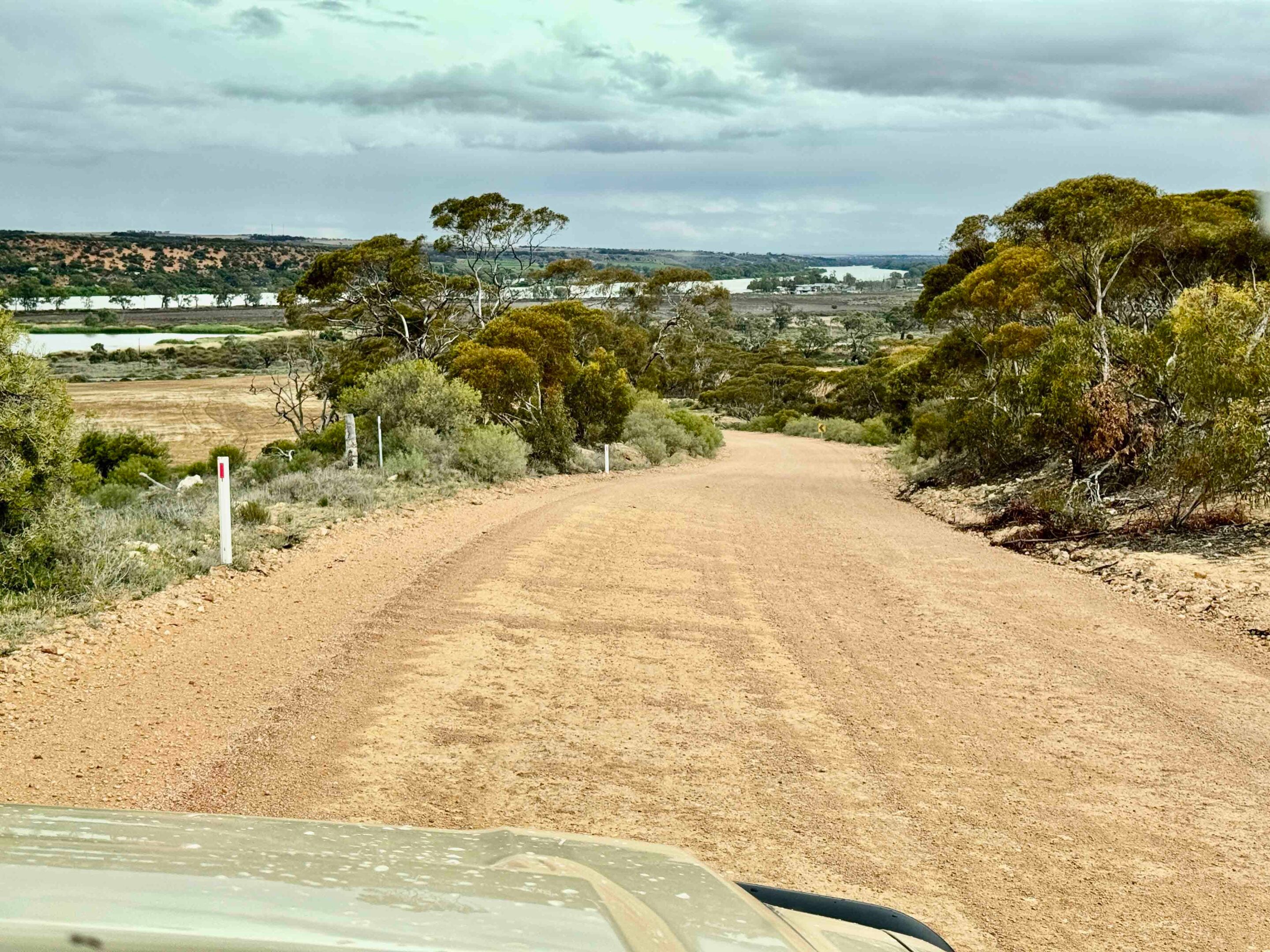
On the outskirts of Raukkan stands a monument to Sturt, erected by the local community in 1930. It must be the only monument erected by Aboriginal people to a European explorer in all of Australia – I’ve certainly never heard of another.
On the western side of the lake is Point Sturt – visible from the monument at Raukkan on a clear day – from which Sturt sailed on the final leg of his journey. The headland is reached via a gravel road that cuts across flat farmland before giving way to a more natural landscape as you reach the low promontory overlooking the expanse of water. It’s not a bad spot to camp, especially if the wind has eased.
Sturt then pushed on down what we know today as the Goolwa Channel and camped near where the present-day barrage crosses the stream to keep saltwater out of the lake and surrounding country. From here, he and his men walked across the intervening dunes and along the beach to the Murray Mouth. Not being that energetic, I headed to the local Surf Life Saving Club and took to the beach for the final run in Sturt’s footsteps.
It had been an enjoyable and enlightening trip in the wake of one of Australia’s great explorers.
Why the Ranger Was the Clear Choice
For Stuart, owning a ute has always been about more than practicality. It’s about safety for his family, capability for his work, and the freedom to get outdoors whenever the opportunity comes up. After doing his homework, comparing models, and thinking long-term, he landed on a vehicle that ticks every box: the Ford Ranger XLT 3.2-litre diesel dual-cab.
Life With the Ranger XLT
Three years in, Stuart’s confidence hasn’t wavered. His Ranger is covered by a five-year warranty, including parts, and he keeps it serviced at the Ford centre in Brookvale. He’s not the only one either, with the Ranger topping Australia’s sales for a third straight year in 2025, outpacing Toyota’s HiLux to remain the nation’s best-selling 4×4.
Most of his driving is close to home on the Northern Beaches. Living in Allambie Heights means short, frequent trips — school drop-offs, commuting to work, and errands within five kilometres of home. But that everyday ease is exactly what he loves. The Ranger feels steady, predictable and comfortable, whether he’s carrying gear, the family, or both.
When the Ranger Needs to Work Hard — It Does
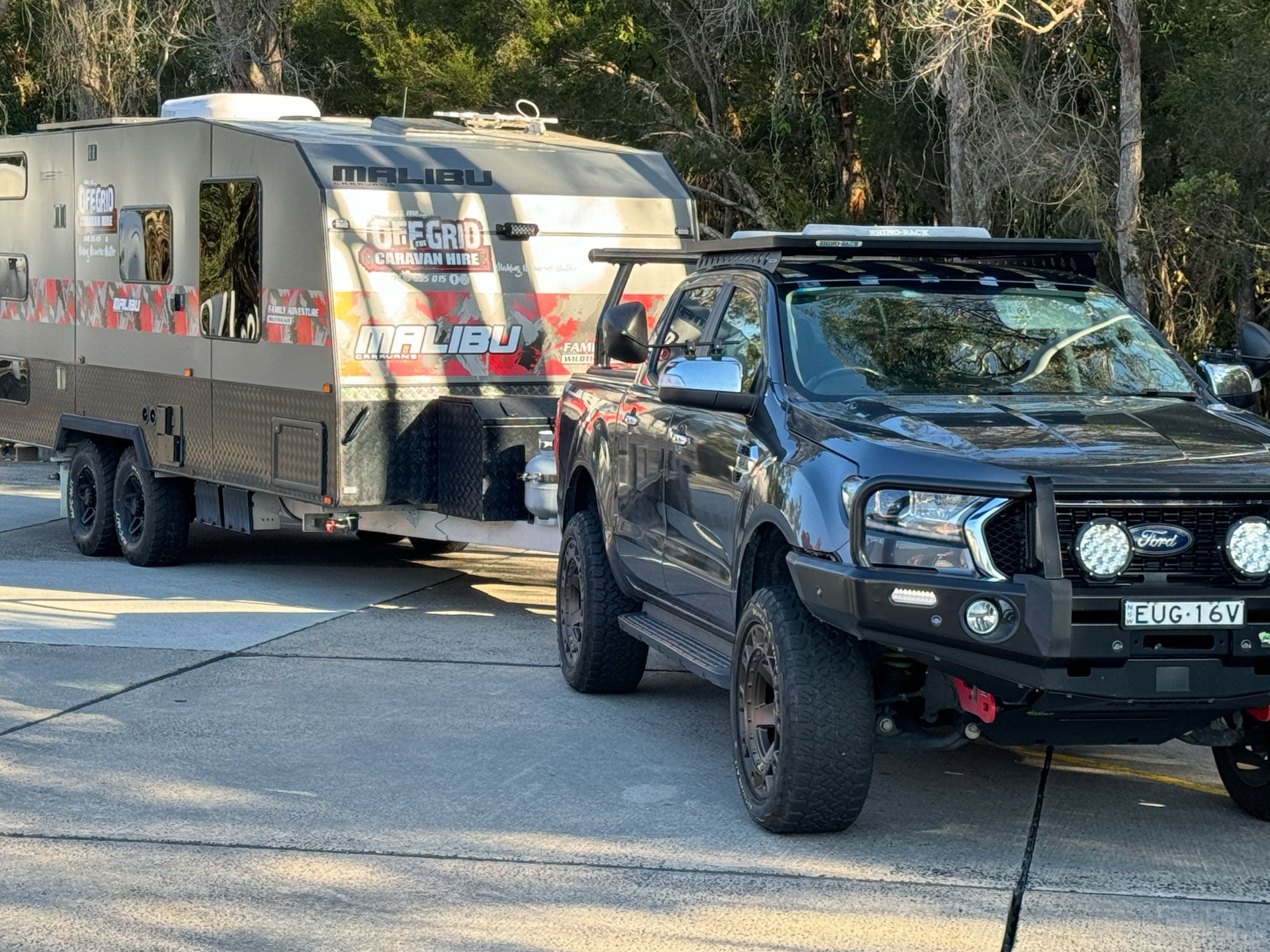
Stuart has put the Ranger to the test with towing, too. One of his standout moments was hiring a 15-foot caravan in Western Sydney and heading up to the Central Coast with his wife and son.
It wasn’t just the towing ability that impressed him — it was the confidence. The 3.2-litre diesel had all the power he needed for overtaking on the highway, and he never felt unsettled or underpowered.
Taking the Ranger Off-Road — Including the Stockton Beach Sand Dunes
Stuart loves getting the Ranger off the bitumen, and he’s taken it through challenging terrain. A favourite is a track outside Goulburn, featuring steep climbs, river crossings and wombat holes. The Ranger XLT handles it all — stable, capable and fun.
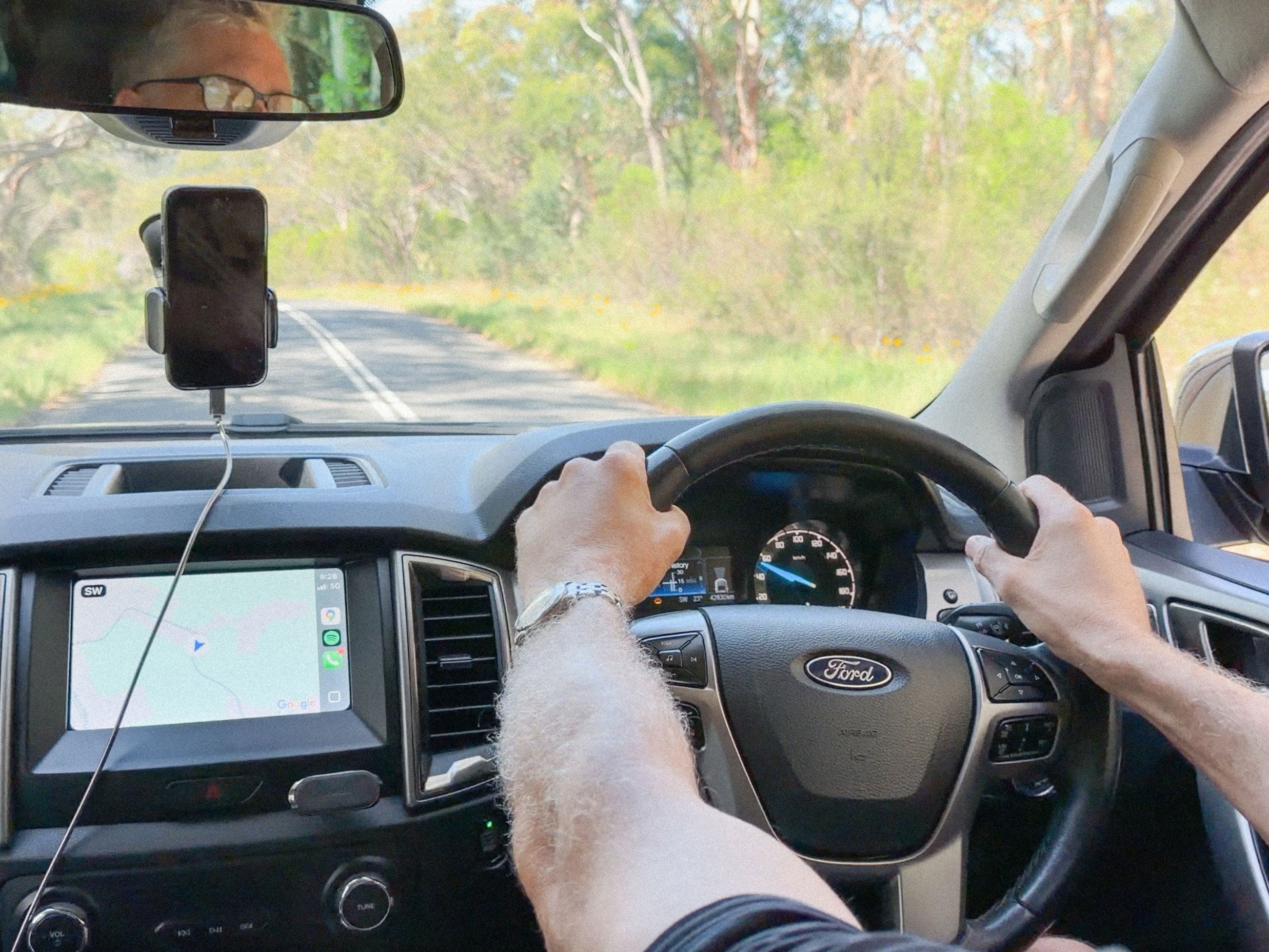
A Ute That Fits Every Part of Stuart’s Life
For Stuart, the Ranger XLT isn’t just a vehicle. It’s a safe family car, a reliable workhorse, and an adventure-ready 4WD that opens the door to experiences — from local errands to off-road weekends to unexpected dune-driving detours. It’s the capability, comfort and confidence that keep him loving it every day.
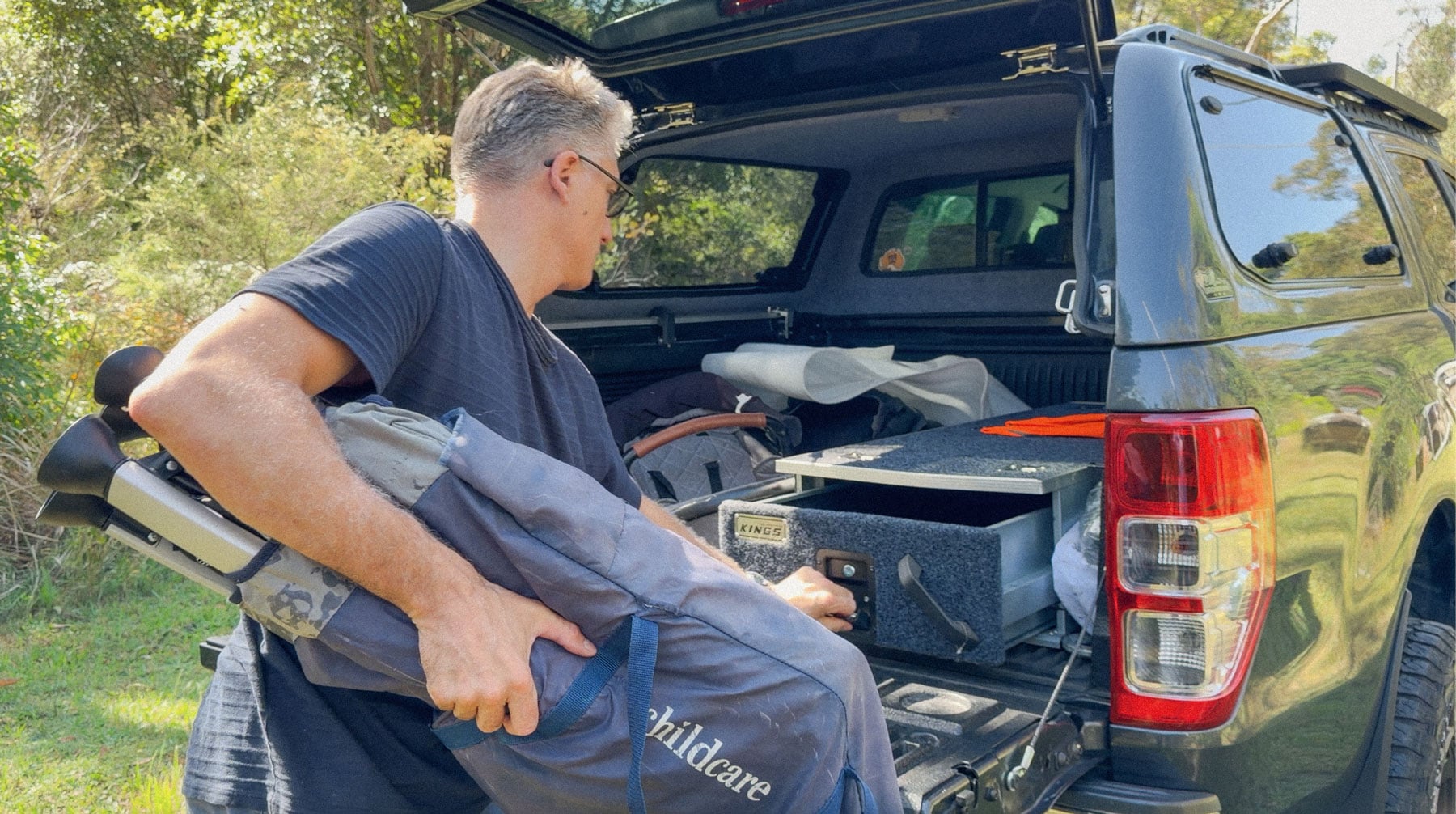
Why Connor Chose the Ranger
For Connor McNally, an event manager for Cricket Australia, life is constantly moving — early mornings, shifting venues, and quick escapes whenever time allows. When he bought his 2016 Ford Ranger toward the end of the COVID-era market chaos, he needed a ute that was powerful, affordable and ready for anything. The Ranger – Australia’s top-selling 4×4 for the third year running – stood out for its real-world capability: strong towing performance, rear diff lock as standard, and the reliability he could trust day in, day out.
How the Ranger Fits His Work and Travel
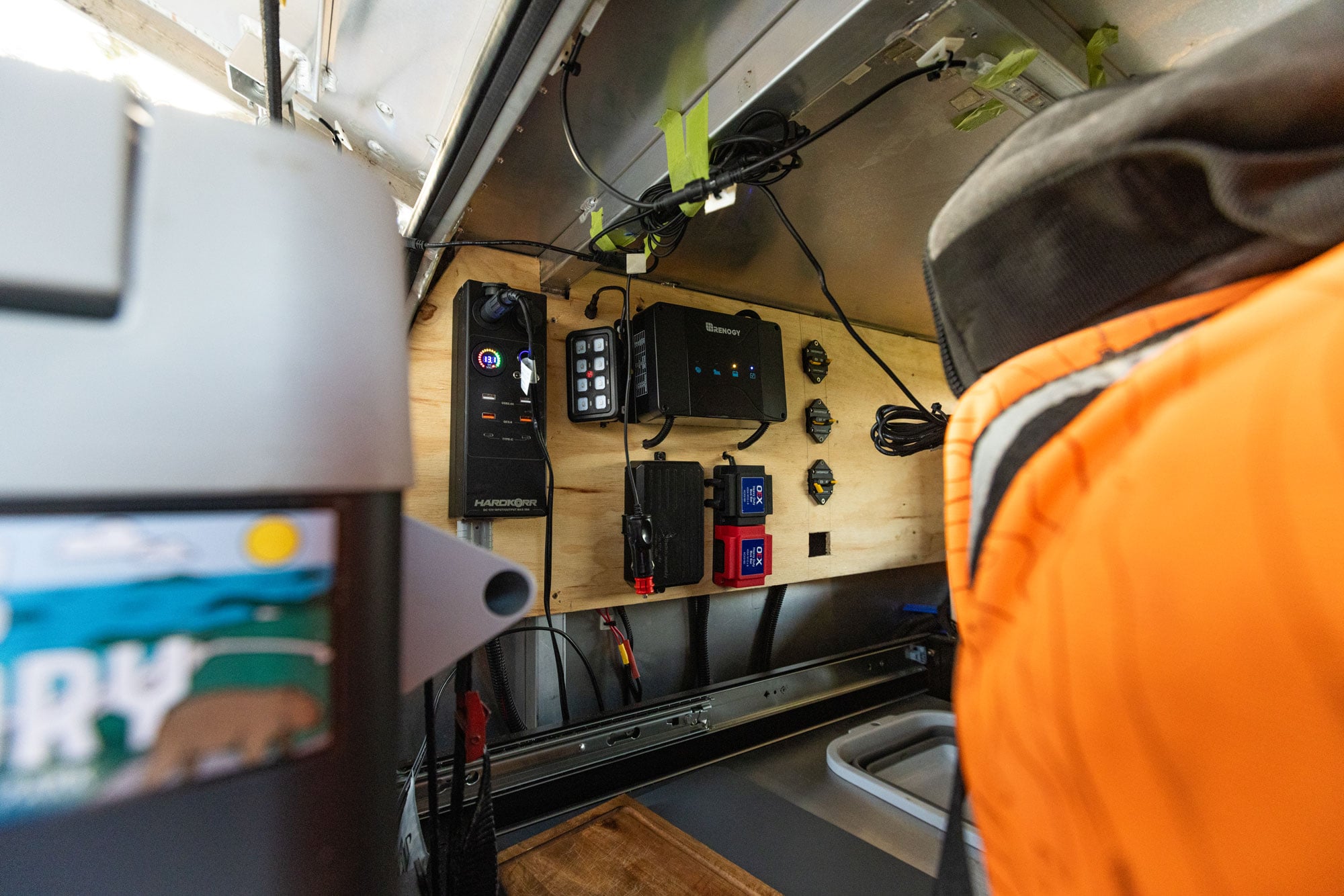
Across Melbourne and beyond, Connor uses the Ranger as a mobile workspace. The metal canopy and custom rear setup let him haul equipment between offices and event sites without fuss. But once the work week wraps, the Ford Ranger transforms into his getaway vehicle. With a dual-battery system and fridge running full-time, he can throw a swag in the back, hook up a trailer or take off for a spontaneous winter trip with almost zero prep.
Towing, Trips and Real-World Capability
What Connor values most is how consistently the Ranger delivers. From towing his 1,600kg boat to running long highway stretches, it feels surefooted and strong — a big step up from other vehicles he’s towed with, including an MU-X. Even in Tasmania’s freezing August weather or South Australia’s 38-degree heat, the Ranger never faltered. And with a lift and plenty of clearance, it’s taken him deep into the kind of tracks he lives for.
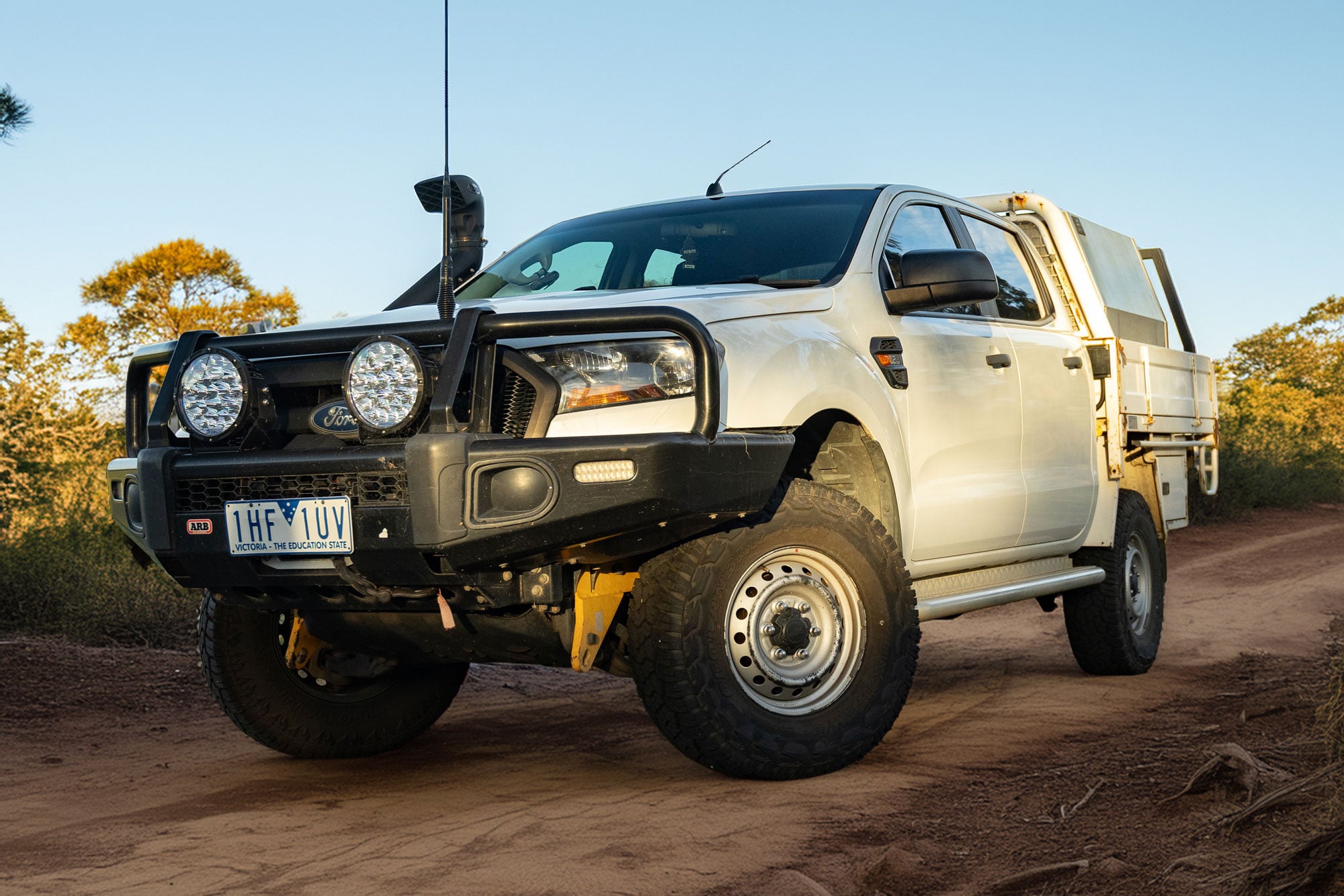
Taking the Ranger Further — From Tasmania to the Gibb River Road
Connor’s Ranger has carried him across some of the most memorable corners of the country: the wild west coast of Tasmania, the sweeping beaches of Rapid Bay, and iconic outback favourites like Cash Island, the Gibb River Road and the Dampier Peninsula. Whether he’s travelling solo or with his partner, the Ranger has even doubled as home for month-long stretches — something few vehicles can genuinely handle.

A Dependable Companion for Every Chapter of His Life
At close to 240,000km, with dents and scratches inherited from previous owners, Connor’s Ranger wears its history proudly. To him, that’s the beauty of it. It’s dependable, capable and always ready for what’s next. Whether towing, camping or simply squeezing more adventure into his weekends, the Ranger is the vehicle that keeps pace with every part of his life.
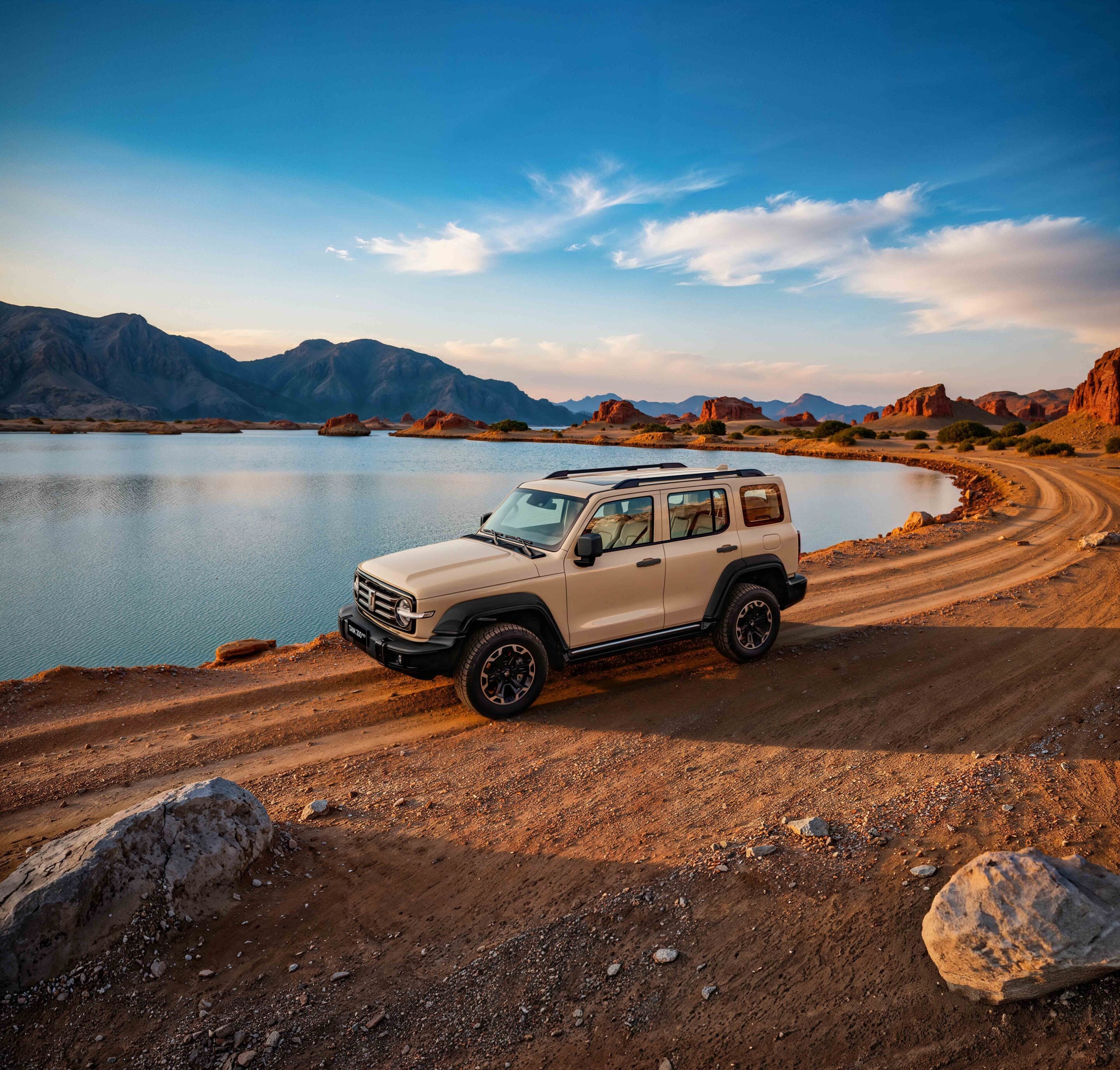
GWM has finalised specifications and confirmed drive-away pricing for the all-new Tank 300 Hi4-T PHEV, with vehicles arriving at dealerships from early April 2026.
The plug-in hybrid combines a 2.0 L turbo engine with a 120 kW electric motor, producing 300 kW and 750 Nm, delivering strong on-road performance and genuine off-road capability.
The range offers two variants: Lux and Ultra, both built on a ladder-frame chassis with a part-time 4×4 system and low-range transfer case. Advanced traction and safety technologies – including differential locks, crawl control, adaptive cruise, and collision mitigation systems – ensure the Tank 300 performs off-road while remaining practical for everyday driving.
Inside, dual-zone climate control, a 12.3-inch touchscreen with Apple CarPlay and Android Auto, wireless charging, and multiple power outlets combine with a spacious interior to enhance comfort and convenience. A 37.1kWh battery delivers an NEDC-rated 955km combined range and 115km EV-only range, with fast-charging and V2L capability making the PHEV suitable for both adventure and daily use.
Drive-Away Pricing
- Lux: $55,990
- Ultra: $59,990
What do you get: Lux
Mechanical / drive
- 2.0L turbo plug-in hybrid
- Combined output: 300kW / 750Nm
- Part-time 4×4 (2H, 4H & 4L)
- Rear differential lock (electric)
- 9-speed hybrid automatic transmission with low-range transfer case
- All-terrain mode selection, tow drive mode, tank turn assist & crawl control
- 0-100 km/h: 6.3 seconds
Battery
- Combined NEDC range: 955km
- EV-only range: 115km
- 37.11kWh Nickel Manganese Cobalt battery
- 50kW DC charging: 30-80% in 24 minutes
- AC charging: 15-100% in 6.5 hours
- V2L output: up to 6kW
Weights and capacities
- Towing: 3000 kg (with trailer brakes), 750kg (without)
- Kerb weight: 2615kg
- GVM: 3225kg
- Payload: 610kg
- Fuel tank: 70L
- Luggage capacity: 360-1520L
Exterior
- 18-inch two-tone chrome alloy wheels
- Side steps and roof rails
- Electric sunroof
- Auto LED headlights with DRL + electric levelling
- LED taillights with sequential indicators
- Front grille in machine grey
- Chassis guard: 2-piece
- Power fold exterior mirrors, shark fin antenna, rear privacy glass
Interior and comfort
- Leather-accented seats
- Driver: 6-way power adjustable
- Front passenger: 4-way power adjustable
- 60:40 rear seats with centre armrest
- Dual-zone climate control (first & second rows)
- Ambient lighting (7 colours)
- Wireless phone charger
- Front 12V accessory power
- Luggage cabin 12V & 240V outlets
Infotainment
- 12.3-inch touchscreen with wireless Apple CarPlay & Android Auto
- 9-speaker premium audio with DAB+
- Bluetooth connectivity, USB-A & USB-C outlets
Driver assistance and safety
- 7 airbags: front, side, curtain, centre
- Reversing camera and rear parking sensors
- Tyre Pressure Monitoring System (TPMS)
- Hill ascent/descent control, blind spot monitoring, collision mitigation systems
- Front collision warning (pedestrian & cyclist), rear cross-traffic alert, rear collision warning
- Traffic sign recognition, traffic jam assist, intelligent turning, smart dodge
- Driver fatigue monitoring system, emergency signal system
What do you get: Ultra (incremental to Lux)
Mechanical / drive
- Front differential lock (electric)
Exterior
- Chassis guard: 3-piece underbody protection
Interior
- Heated steering wheel
- Nappa leather-accented seats
- Heated & cooling front seats
- Driver massage
- Driver memory
- Driver: 8-way power adjustable
- Front passenger: 4-way power seat with lumbar support adjustment
Driver
- Auto-dimming rear-view mirror
- Ambient lighting (64 colours)
- External mirror memory
They’ve been Australia’s best-selling new vehicles for years and, by a long margin, they lead the 4×4 sales charts. So it’s big news when one of the top two delivers a new model.
That’s exactly what happened at the end of 2025 when Toyota dropped the ninth-generation HiLux. It’s a major overhaul of the enduring Toyota ute, even if it’s not an all-new model. The big question is whether Toyota has done enough with the updated HiLux to wrest the number-one seller position back from the Ford Ranger, which has owned the title in recent years.
To put the two midsize utes head-to-head, we compared two of the more popular variants. The mid-range SR5 has long been a go-to in the HiLux range for both workers and enthusiasts, and the same could be said for the Ranger XLT. We have the HiLux SR5, but Ford was unable to supply an XLT Ranger for this test, so instead we have the Ranger Sport, which sits one step higher in the line-up. Coincidentally, the Ranger Sport V6 topped the charts in our 2025 Ute of the Year battle.
Part of the reason Ford couldn’t supply an XLT is that the company is preparing to roll out its MY26.5 Ranger update. Among the changes, it will mark the end of the 2.0-litre bi-turbo diesel, while availability of the V6 diesel will expand across the line-up, alongside a single-turbo 2.0-litre for lower grades.
At the time of writing, a Toyota HiLux SR5 automatic double-cab ute had an RRP of $65,990 plus on-road costs, while a V6 Ranger XLT was $69,090+ORC and the V6 Sport tested here was $71,340+ORC.
Add the $2500 Premium Pack to the HiLux SR5 and you score leather-accented upholstery, an eight-way powered driver’s seat with lumbar support, and a nine-speaker JBL premium sound system, bringing it closer to the Ranger Sport in both price and specification.
With that out of the way, let’s take a look at the two utes 👇
JUMP AHEAD
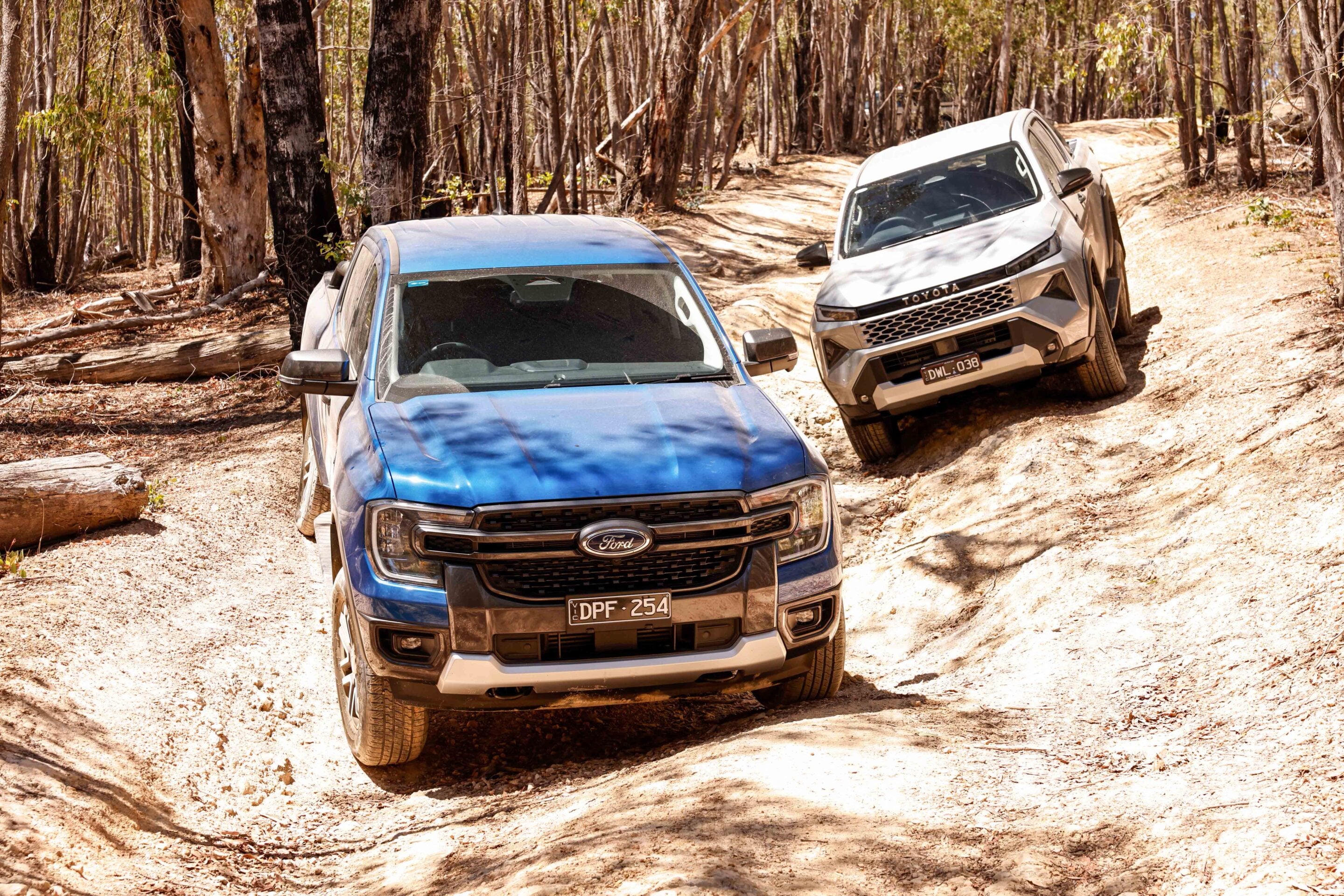
Toyota HiLux SR5
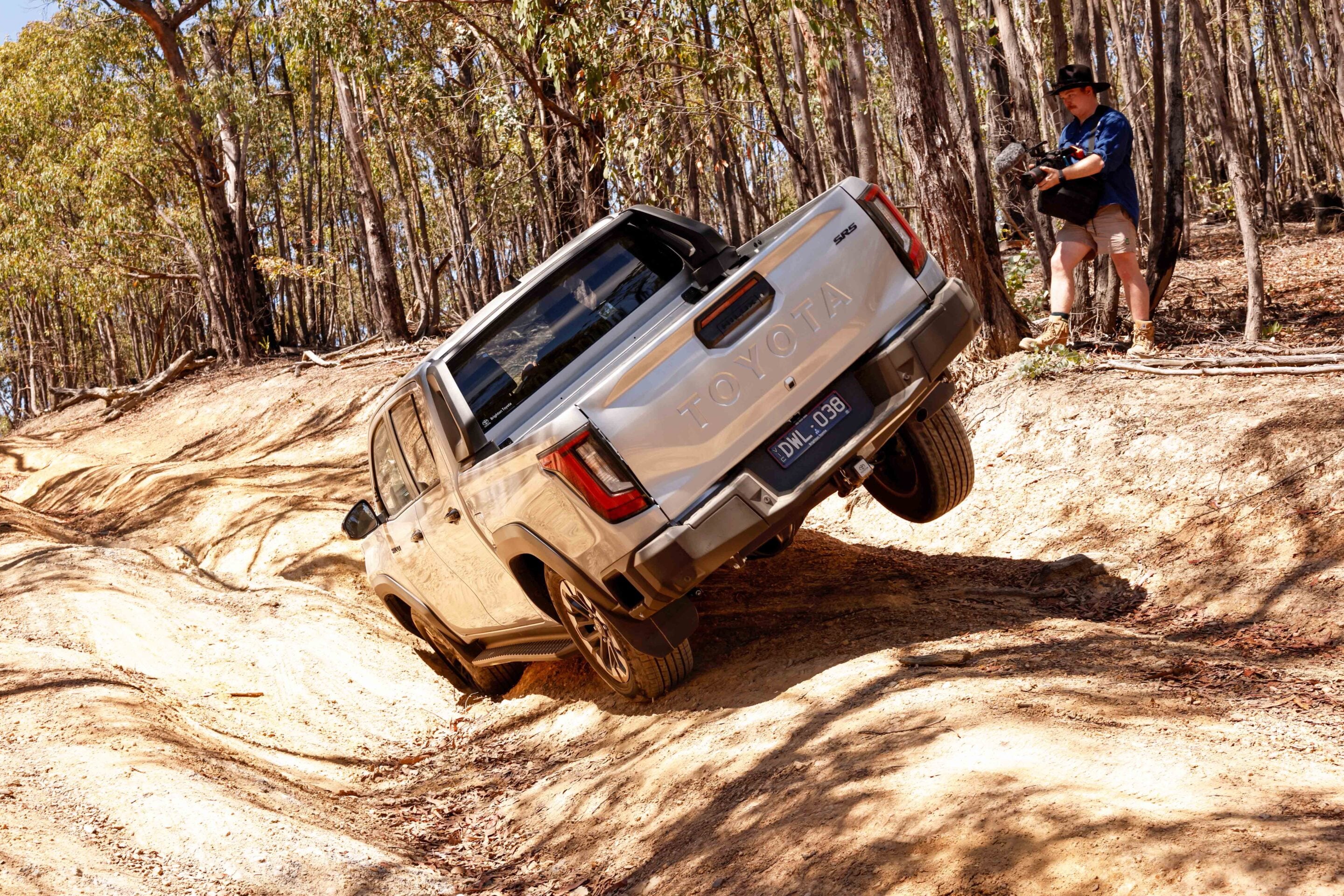
Toyota calls this the ninth-generation HiLux, but it’s better described as a major update of the previous model.
The chassis architecture carries over in revised form, the cabin structure (including the glass) is also carried over, and the powertrain remains Toyota’s 1GD-FTV 2.8-litre diesel, now paired with a 48-volt system and backed by a six-speed automatic transmission and part-time dual-range 4×4 transfer case. It’s a classic case of ‘if you’re on a good thing, stick to it’ – Toyota hasn’t messed with what is a well-proven and capable drivetrain.
The engine produces 150kW and 500Nm with the automatic transmission. Toyota’s 48-volt V-Active system uses an 8.5kW/65Nm motor-generator, lithium-ion battery and DC/DC converter to smooth the stop-start function, provide a small boost to acceleration, and deliver a claimed improvement in fuel economy. The other key mechanical change is the move to electric power steering (EPAS) across all models, replacing the previous hydraulic system. This enables improved ADAS functionality and, in some grades – including the SR5 – the option of Normal or Sport steering feel.
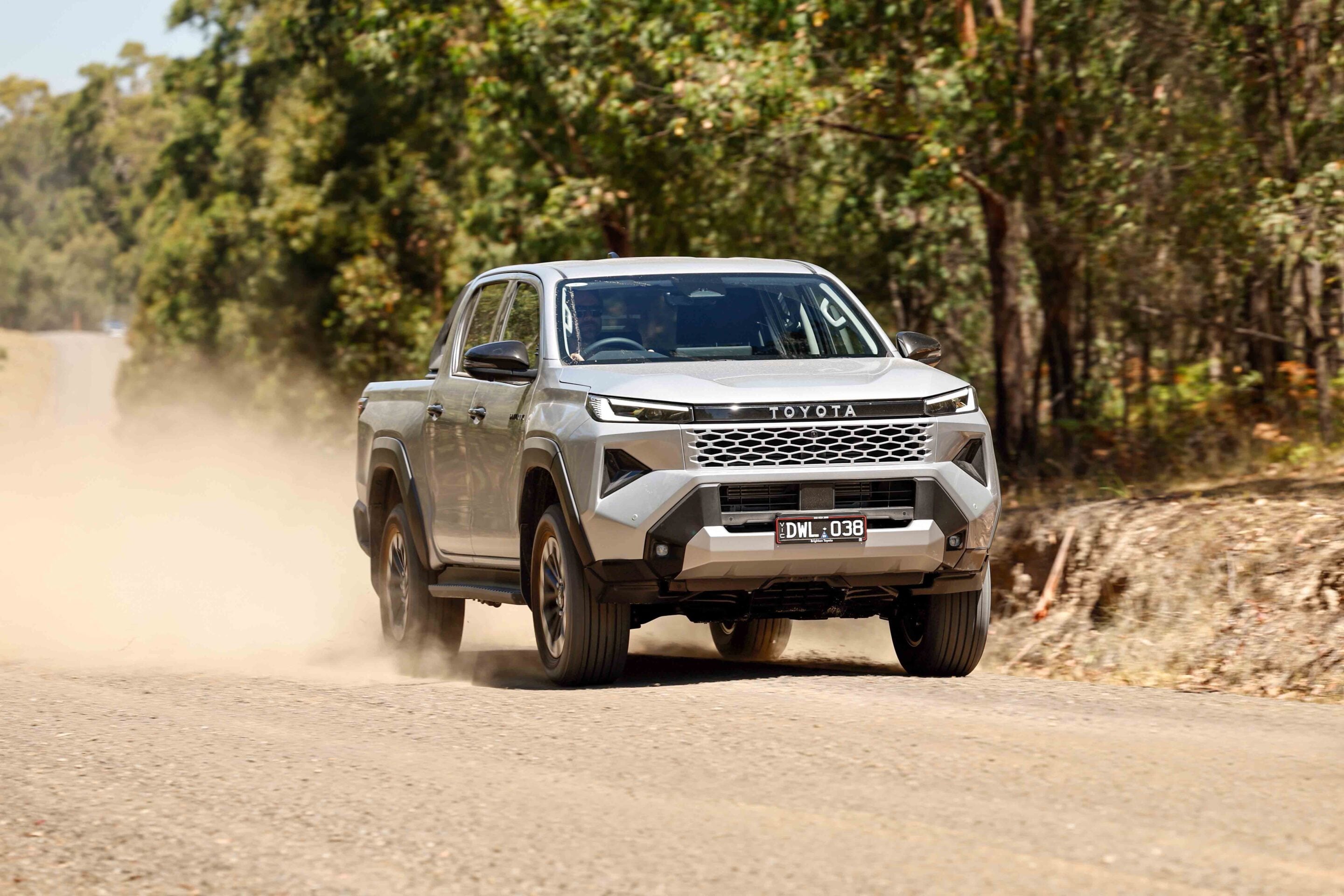
Styling changes front and rear are extensive, but the biggest update is inside – something drivers and passengers will appreciate. Up front, the HiLux wears slimline LED headlights and a painted grille that follows the current trend. Toyota says the muscular front bumper design mimics the stance of a sumo wrestler.
Around the back, the cargo tub is new, along with the tail-lights, tailgate, sports bar and a rear step to make accessing the load easier. In SR5 trim the tub is fairly bare bones, with four internal tie-down points and no bedliner, cover or power outlet. Those items are available as accessories or are fitted as standard on higher grades.
Interior
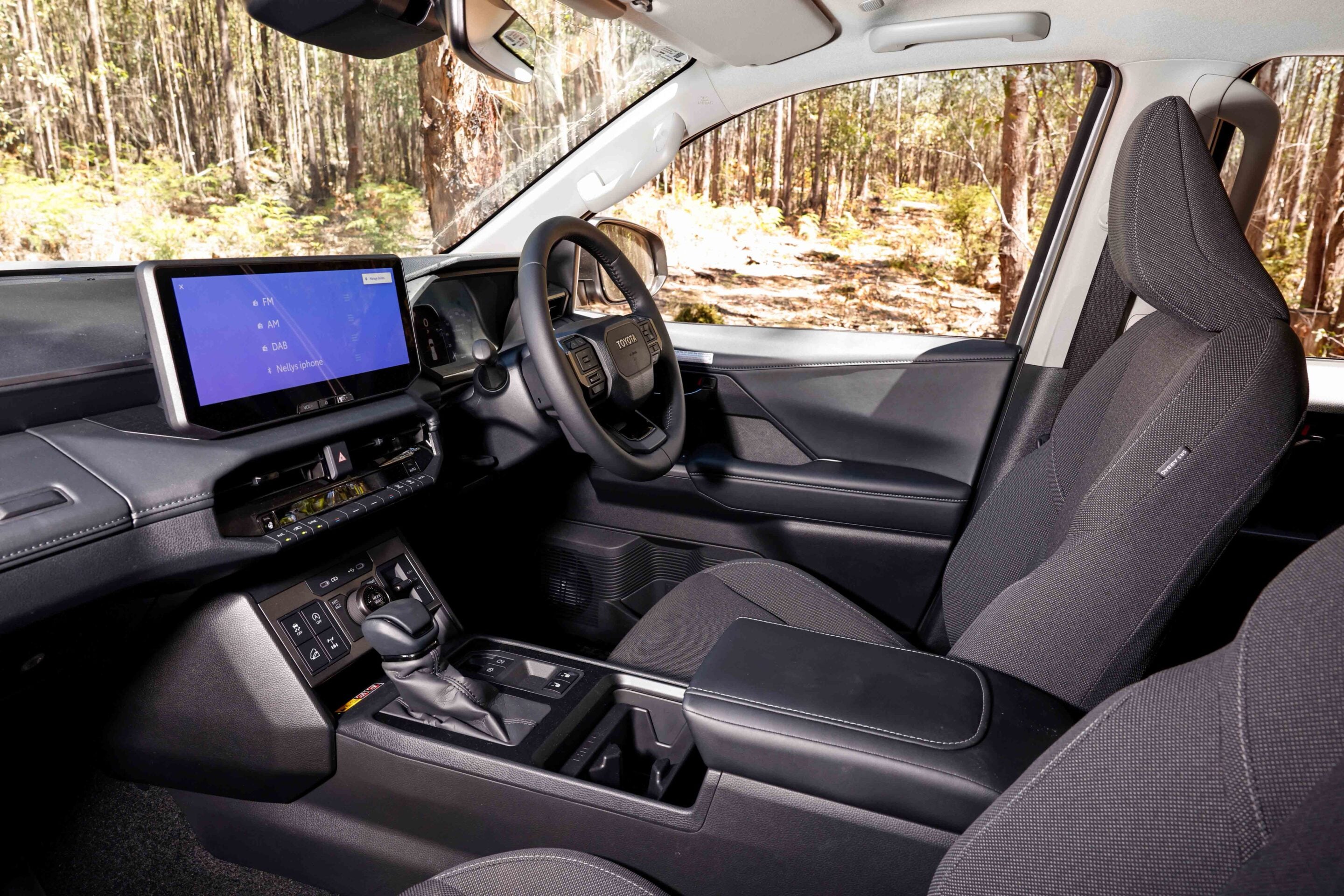
Inside, occupants are greeted by a 12.3-inch multimedia screen, matched by a 12.3-inch digital instrument cluster for the driver. The multimedia system supports wireless Apple CarPlay and Android Auto, and includes Toyota mapping along with app connectivity. There’s a single wireless phone charger in the centre console.
The dash is new, as are the seats, which in SR5 trim are cloth-covered with manual adjustment. As mentioned, you can option the Premium Pack, which adds leather-accented upholstery, power adjustment for the driver, and a premium sound system.
Safety
The updated interior and move to electric power steering (EPAS) have allowed Toyota to upgrade the HiLux’s ADAS suite. It now includes autonomous emergency braking (AEB) with a pre-collision safety system, adaptive cruise control, rear cross-traffic alert, lane departure alert, lane trace assist, road sign assist and blind-spot monitoring. The usual safety systems – including ABS, ETC and ESC – are also carried over.
On-road performance
Anyone who has driven a HiLux in recent years will know how the new model feels on road.
The 2.8-litre engine is punchy, the six-speed auto is precise and the chassis delivers what you would expect for a working-grade 4×4 ute. Some question why the HiLux didn’t get the eight-speed transmission that’s in the 250 Series Prado, but after a few days in the HiLux I’d say it’s unwarranted. The HiLux SR5 gets the softer suspension tune of the higher grades to improve ride quality, and this is particularly appreciated when you are on road and unladen. It takes the jitteriness out of the ride, while the Sport EPAS setting gives improved steering feel and feedback to the driver.
The biggest disappointment of the new HiLux is that the transfer case doesn’t offer any form of full-time or on-demand all-wheel drive, and when driving on wet Melbourne roads the torquey engine can quickly snap the rear tyres into wheelspin when taking off.
Off-road performance
The new HiLux still does off-road extremely well.
The rear axle has good articulation to keep the wheels on the ground and, if that runs out, there’s a rear diff lock to push through. The electronic traction control is sharp and serves the HiLux well in most situations. The new HiLux gets the Multi Terrain Selector we see in the 250 Series Prado, but it’s a shame it doesn’t get the Crawl Control system as well.
A bonus of keeping the chassis and suspension similar to before is that the aftermarket won’t need to do much to adapt suspension systems, trays and service bodies to the new model. We’re already seeing bullbars and protection gear for the new HiLux from some of the bigger 4×4 aftermarket brands, and we look forward to seeing some built-up examples.
While the new HiLux feels more like a mid-life update than a new-generation vehicle, we’re glad Toyota hasn’t messed with the formula too much and the HiLux sticks to its guns.
| Hilux SR5 off-road specs | |
|---|---|
| Approach angle | 29 |
| Ramp-over angle | N/A |
| Departure angle | 26 |
| Wading depth | N/A |
| Ground clearance | 224mm |
Ford Ranger Sport V6
It’s hard to believe it’s been four years since Ford dropped its P703 Ranger on the world and totally shifted the midsize 4×4 ute market.
The so-called ‘Next-Gen Ranger’ brought a vehicle that was bigger, bolder and better appointed than anything else in the segment at the time. Add in the option of a V6 diesel engine and the Raptor model and the Ranger changed the way many of us look at utes. Significantly, it was enough to topple the long-time sales-leading HiLux off the top of the 4×4 sales charts.
Ford Australia continues to break boundaries with the model, with the recently launched Ranger Super Duty giving a midsize ute capability we’d never dreamed of and creating yet another segment. Back to the original P703 Ranger though and, aside from trim changes, special editions and the introduction of a PHEV variant, not a lot has changed on the popular workhorse. The forthcoming deletion of the bi-turbo engine will be the biggest change to date on the original model.
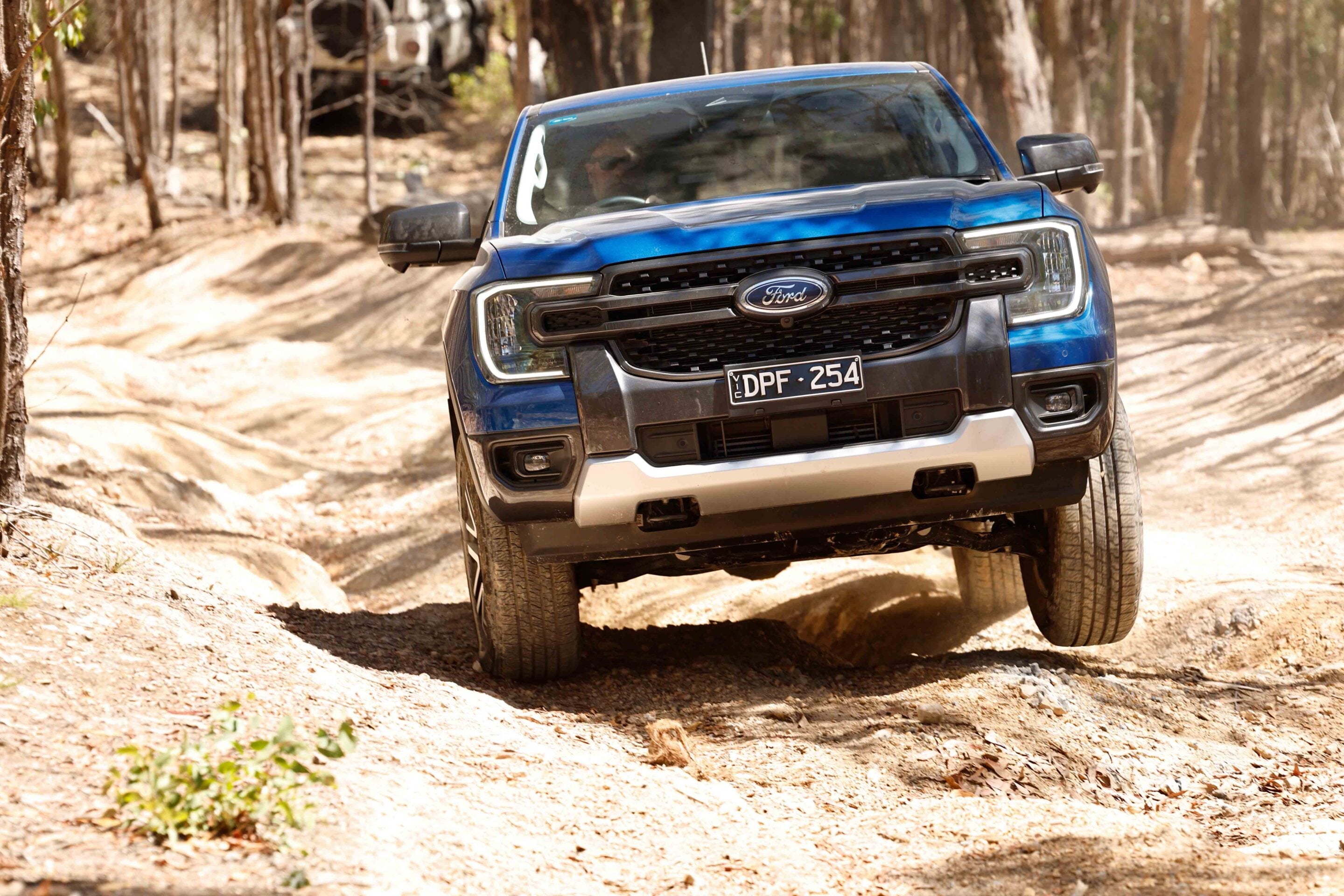
The changes will see V6 availability expanded across the line-up, while the Sport model we have here will be deleted and replaced with a Wolftrack specification between the XLT and Tremor models. The 2026.5 XLT V6 will be priced from $67,990+ORC while the Wolftrack from $70,990+ORC. While the full details of those 2026.5 Rangers will be revealed closer to launch, the mechanical specs will remain the same as the 2026 Sport we have here.
The Ranger, and the Amarok that VW spun off it, are the only utes in this class to offer a V6 diesel engine. This puts them in a unique position in the segment in terms of torque and refinement over the 4-cylinder competition, but that does come at a cost at the diesel pump as the V6 can enjoy a drink, particularly when loaded heavily or riding on taller-than-stock tyres.
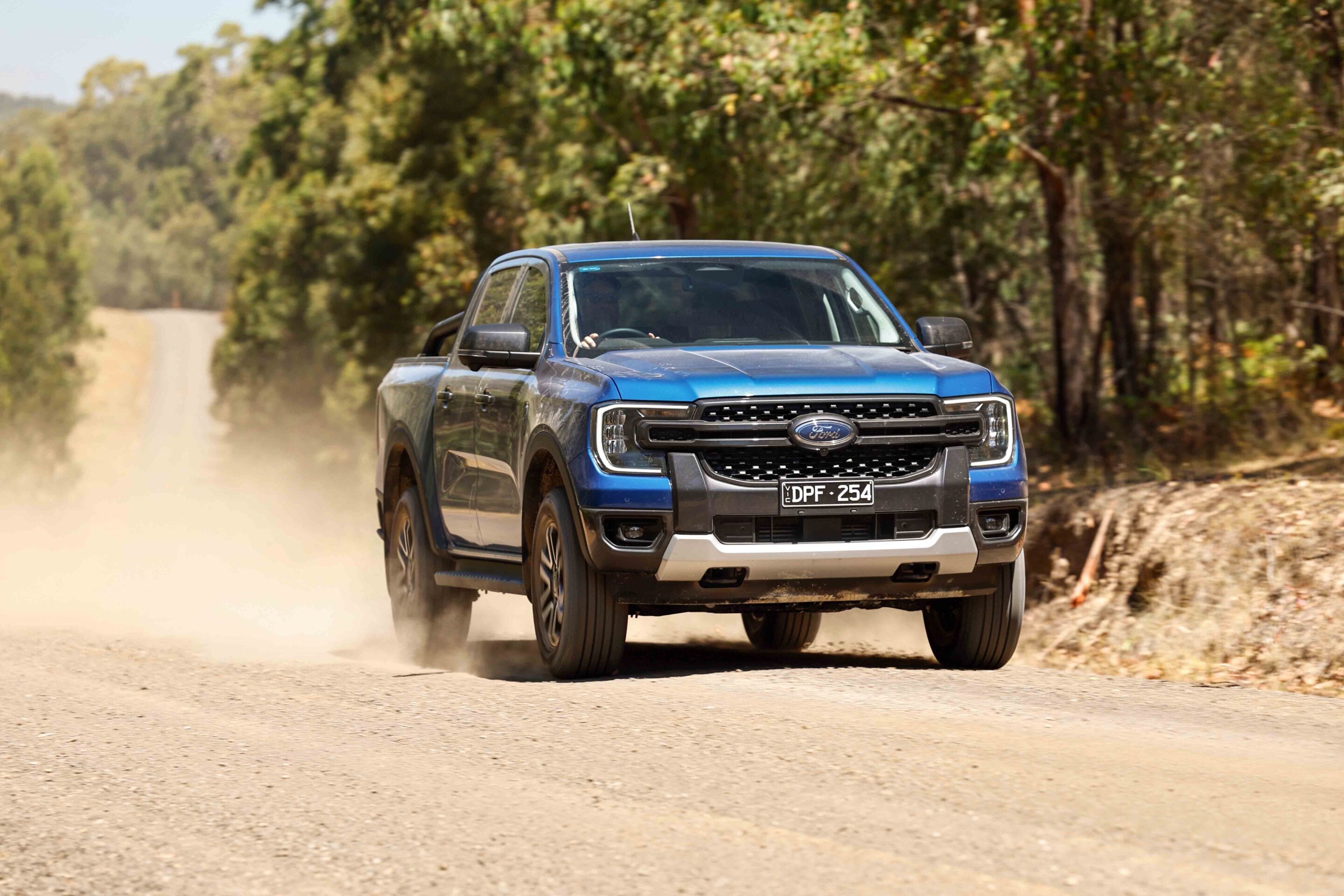
On-road performance
Forget about fuel consumption and Ranger V6 drivers and passengers will appreciate the wide cabin, generous rear-seat space and the effortless performance of the 184kW/600Nm V6 and 10-speed transmission combo.
It doesn’t feel a whole lot faster than the 2.8-litre HiLux, if at all, but it delivers its pace with a more relaxed, easy-going gait – something that’s especially appreciated on long drives. Also welcome is the inclusion of an on-demand 4×4 setting in the transfer case, which allows all-wheel drive traction on any road surface, sealed or not. This improved drivability is particularly beneficial in wet weather and when towing a heavy trailer.
Another strong point is the Ranger’s smooth, comfortable ride. Thanks to its relatively long wheelbase and compliant suspension, the Ford shows very little of the harshness or jitter that can be present in most other utes in this category, particularly when you’re driving them unladen.
Interior
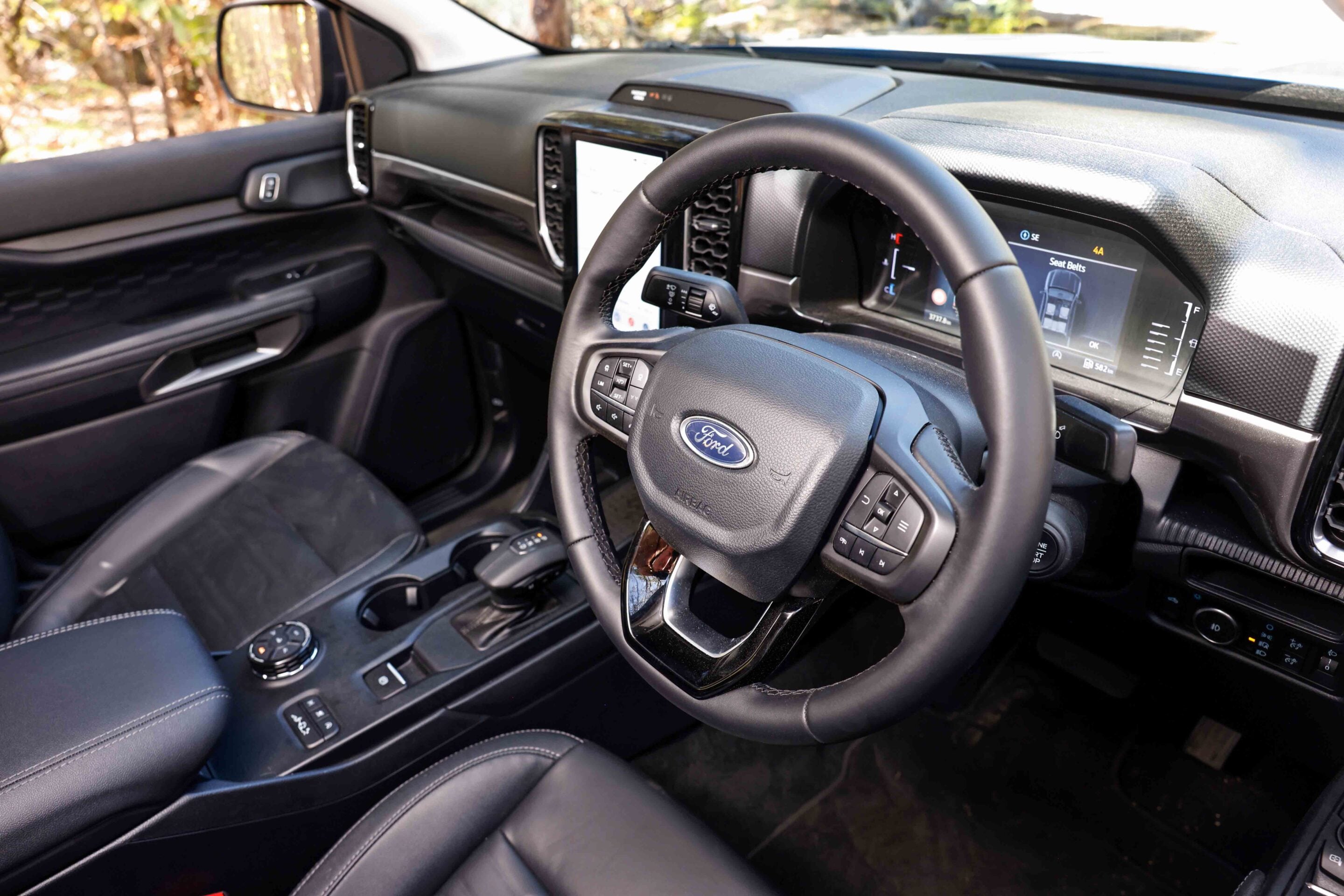
As mentioned, the Ranger Sport is a grade above the SR5 and this is reflected in the cabin, where it comes with leather-trimmed seats and power adjustment. That gap can be closed by optioning the Premium Pack in the HiLux.
The Ranger has a 12-inch multimedia screen positioned vertically and low in the centre stack, rather than high-mounted like the HiLux. The screen has all the key functions, including built-in sat-nav and SYNC apps, an off-road screen, wireless Apple CarPlay and Android Auto, and there’s a single wireless phone charger.
A plus for the Ford is its towing app, which provides a checklist when hitching up, along with a trailer light check. Add in the integrated trailer brake controller in the dash and it’s clear Ford has thought about towing customers when configuring this ute. Both the Ranger and HiLux have a 3500kg towing capacity and while the Ranger has around 100kg more GCM, it’s also heavier overall, so the real-world difference isn’t huge.
Off-road performance
With its torquey engine, long wheelbase, rear diff lock and compliant suspension, the Ranger V6 has always been a competent off-road ute.
Its electronic traction control is a bit slow to react to wheel slip compared to some other marques, particularly the HiLux. The off-road drive modes help, but it generally calls on its rear locker sooner than you might expect. Thankfully, the Ranger also keeps its traction control active across the front axle when the rear diff lock is engaged, for better off-road traction.
Ford’s partnership with ARB means owners can kit their Ranger out via the dealer with all the ARB gear they want, but all the major 4×4 accessory brands also have plenty of equipment for the popular Ford.
The Ranger might be getting old in new-car terms, but constant local development by Ford Australia, regular variant updates, and unique models like the Raptor and Super Duty – which have created their own segments – mean the ute continues to evolve and stay current, supporting its popularity and longevity.
| Ranger Sport V6 off-road specs | |
|---|---|
| Approach angle | 30 |
| Ramp-over angle | 21 |
| Departure angle | 23 |
| Wading depth | 800mm |
| Ground clearance | 234mm |
Verdict
These two utes are the top-sellers in the class and, with so many similarities between them, it’s the points of difference you pick up in back-to-back testing that ultimately separate them.
The HiLux is solid and dependable, and this ninth-generation update is a clear step forward. But the Ranger’s powertrain – with its smooth, torquey V6 and a transfer case that offers on-road 4×4 – edges it ahead for performance and drivability. Those strengths keep the Ford in front in this close test. That said, you can’t really go wrong with either ute.
Specs
| Specification | 2026 Toyota Hilux SR5 | Ford Ranger Sport V6 |
|---|---|---|
| Price | $65,990+ORC | $71,340+ORC |
| Engine | Inline 4-cylinder turbo-diesel | V6 turbo-diesel |
| Capacity | 2755cc | 2993cc |
| Max power | 150kW@3000-3400rpm | 184kW@3250rpm |
| Max torque | 500Nm@1600-2800rpm | 600Nm@1750-2250rpm |
| Transmission | 6-speed automatic | 10-speed automatic |
| 4×4 system | Part-time dual-range 4×4 | Full-time 4×4 (2WD, 4×4 Auto, 4×4 High, 4×4 Low) |
| Construction | 4-door ute with tub on ladder chassis | 4-door ute with tub on ladder chassis |
| Front suspension | Independent double wishbone with coils | Independent wishbones with coils |
| Rear suspension | Live axle on leaf springs | Live axle on leaf springs |
| Tyres | 265/60R18 alloy wheels | 255/65R18 alloy wheels |
| Kerb weight | 2215kg | 2264kg |
| GVM | 3090kg | 3280kg |
| Payload | 900kg | 934kg |
| Towing capacity | 3500kg | 3500kg |
| GCM | 6300kg | 6400kg |
| Seating capacity | 5 | 5 |
| Fuel tank | 80L | 80L |
| ADR fuel use | 8.0L/100km(combined) | 8.4L/100km(combined) |
Our vehicles’ paintwork takes a lot of bashing and wear and tear during the year, with numerous trips to the Victorian High Country, along the Anne Beadell Highway, and on many other overgrown tracks and roads throughout Oz.
To help protect the paintwork from bush pinstriping and stone chips, we decided to fit BushWrapz paint protection film kits. While my Troopy has only had the film installed for a few months, my son’s 200 Series Cruiser and HiLux have had it fitted for more than two years.
Once you decide to go the BushWrapz way, you need to make a decision about which film you’d like. To me, the amount of coverage offered by the ‘Cape’ version is a bit light on, while the ‘Pro’ version, which requires a qualified and recognised installer, is a bit over the top in terms of cost. That leaves the ‘Advance’ film, a DIY fitment like the ‘Cape’ but with a longer life and better protection – or so says the manufacturer’s description between the two; we took that as stated.
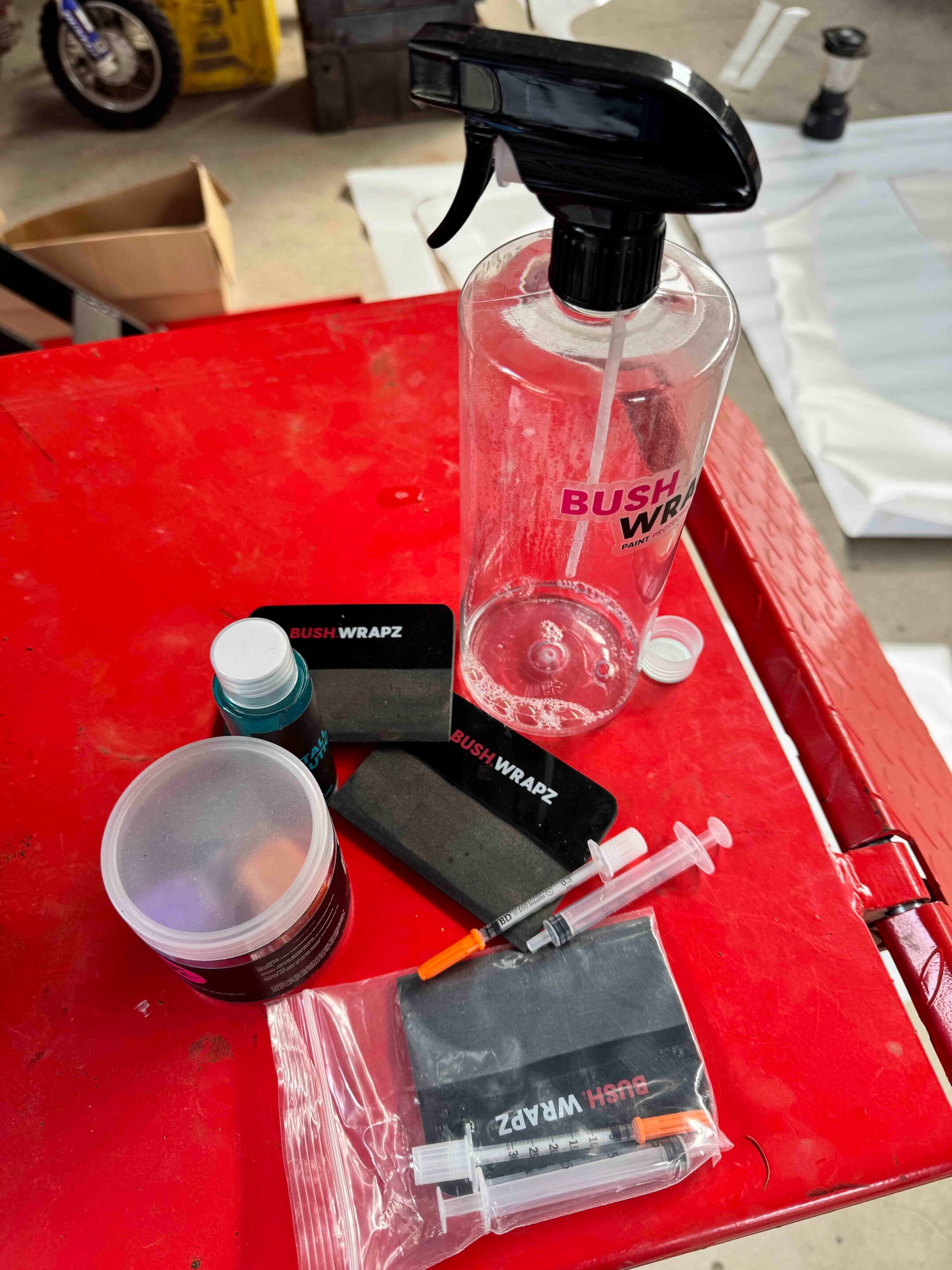
With that decision made, you then need to order the kit for your vehicle, making sure you include information such as whether it has a snorkel or not, manufacturer badges, and so on. It’s important to note that the company does not accept returns.
BushWrapz has a very comprehensive website with information on most of the 4x4s on the Aussie market. It also features an extensive array of videos showing the correct way to fit the film to your vehicle, along with tips on overcoming common issues such as air bubbles under the film. The videos are essential viewing – and probably more than once.
We also ordered one of the company’s installation kits, which includes nearly everything you need to make the install as trouble-free as possible while ensuring a seamless, bubble-free finish. In addition to the kit, you’ll need a heat gun or hair dryer, a sharp knife or scalpel, some clean lint-free cloths and a fair amount of patience. It’s not a difficult job, but it is time-consuming and, in parts, a bit fiddly.
Finally, BushWrapz also supplies templates, depending on the vehicle and model, allowing you to cut out the appropriate areas so that badges and indicator lights – in the Troopy’s case – can be accommodated. We also had to modify some of the pre-cut film after fitting a MaxTrax table to the side of the vehicle, which infringed on the film panel. A hint here: if you’re going to fit accessories such as wheel flares (or MaxTrax tables), leave it until after you’ve fitted the film – it’s a lot easier that way.
After watching the appropriate video and mixing the soap solution, you need to wash down the vehicle panel you intend to cover first. Then rub the panel with the clay block supplied in the installation kit, before applying the soap solution to both the film and the vehicle panel – you can’t use enough soap solution.
It’s best to have the vehicle in a breeze-free environment, or outside on a wind-free day. With the film in place, you can easily move it around – if it’s not slipping easily, apply more soap solution to both the film and the body panel. Once in position, squeegee off the excess water, making sure there are no air bubbles – or only a few tiny ones – under the film. The syringes supplied with the kit are used to draw out any trapped air if needed, but it’s best to have none at all.
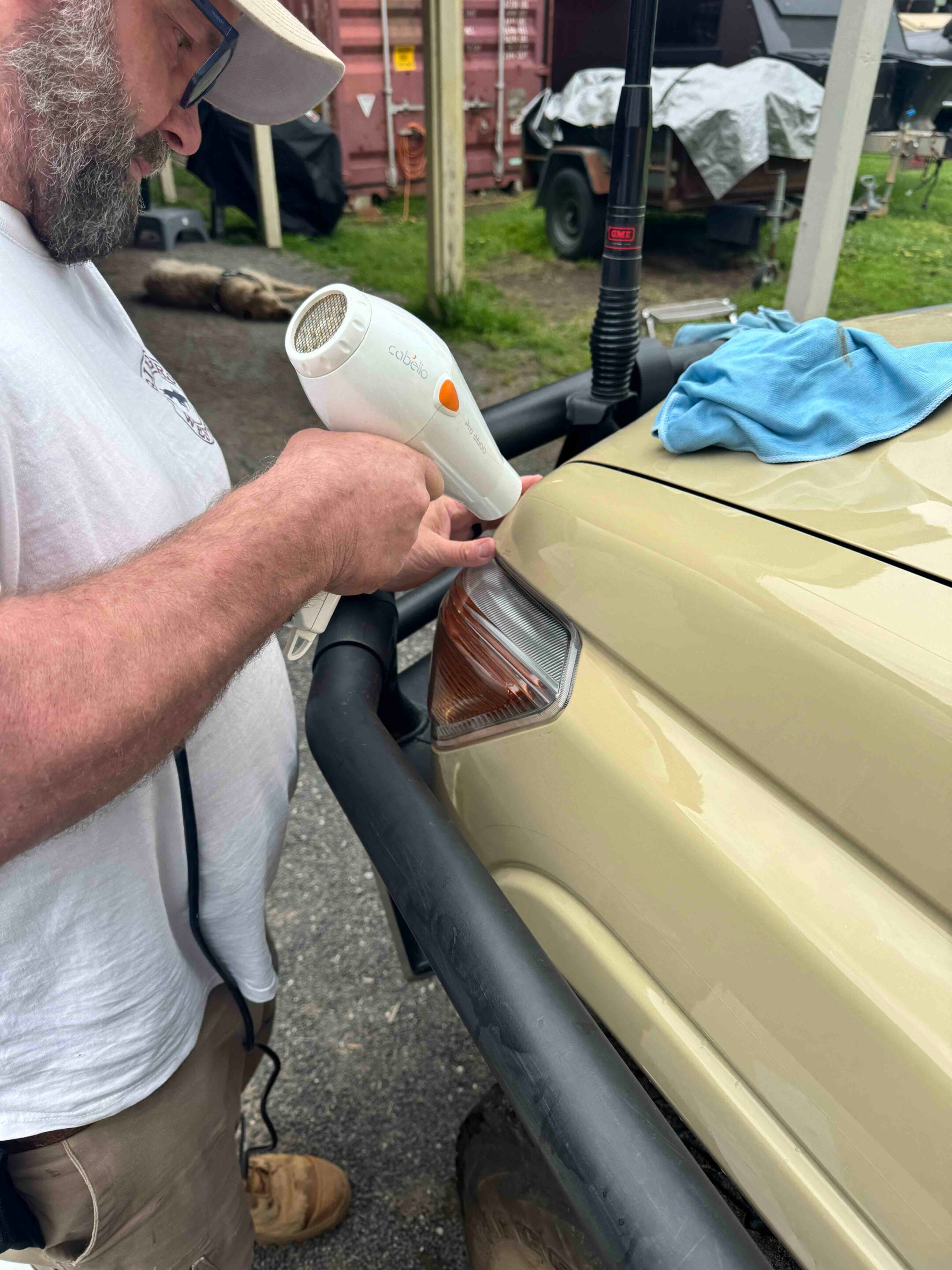
Once you’re happy with the result, rub the film dry and apply heat to fully seal it to the panel. Repeat the process on all the vehicle panels you want to cover.
This, as we’ve already indicated, is a time-consuming job and, for the Troopy, took about 10–12 hours over two days to complete. The 200 Series Cruiser took less time, as did the HiLux. Once the job is complete, you’ll notice that any minor paint scratches are made almost invisible by the film.
The film, as Trent and his Moon Tours vehicles have attested over the past few years, has stood up very well to the bombardment of trees, branches and stones thrown at them. That’s proof enough for us. There’s a warranty, too – one year for the ‘Cape’, five years for the ‘Advance’ and 10 years for the ‘Pro’.
Pricing
- Troopie ‘Advance’ kit: $1375
- Dual-cab ute ‘Cape’ kit: From $510
- Dual-cab ute ‘Advance’ kit: $935
For serious 4×4 fans and Isuzu enthusiasts, a rare opportunity has just appeared: The 2017 Isuzu D-MAX LS-Terrain “Concept X” show car is officially up for sale.
Far from a run-of-the-mill dual-cab ute, this one-off build was conceived as a factory-backed exploration of what the D-MAX platform could achieve when pushed to the extreme. Developed in Australia by Team Isuzu as part of their precision driving and engineering program, the Concept X was never intended for private ownership.
Vehicles like this were primarily built for displays, promotional events and public appearances, making it an exceptionally rare chance to acquire a genuine manufacturer-backed concept. It’s important to note that this vehicle is sold unregistered and is not able to pass roadworthy in its current form. Any prospective buyer would need to undertake modifications or rectifications to meet state road legislation.
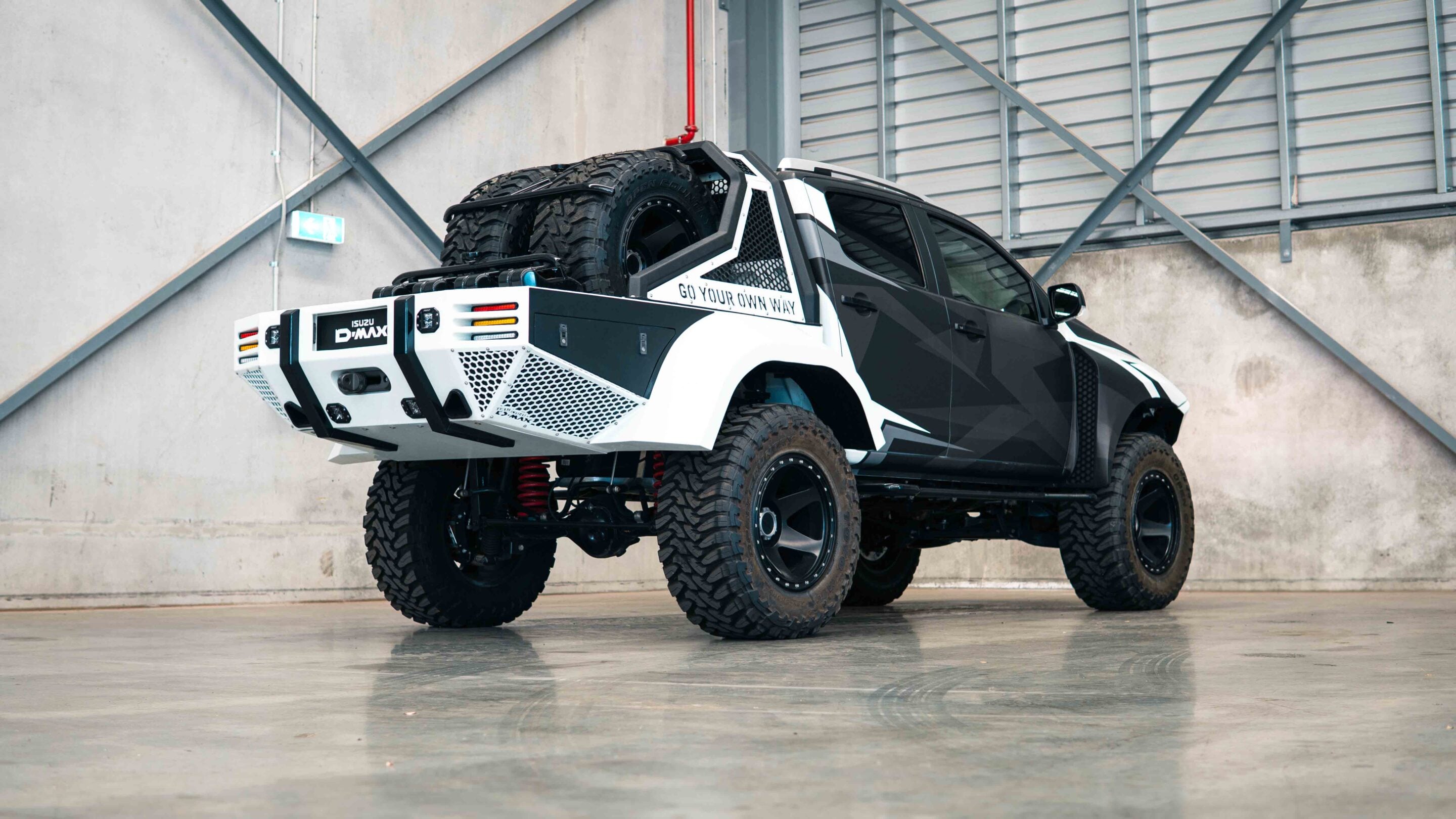
Built from the ground up
It’s based on the flagship D-MAX LS-T, but almost every visible and mechanical component of the Concept X has been custom engineered. Guards, bonnet, bullbar, suspension, and even structural elements were hand-fabricated.
Sitting proudly on massive 38-inch Toyo Open Country M/T tyres – said to be the largest ever fitted to an Isuzu passenger vehicle – the Concept X features a seven-inch lift and a fully redesigned suspension with remote-reservoir shocks. Its extreme approach and departure angles (around 50° and 38°) place it firmly in the territory of purpose-built off-road machines.
Underneath, the rear leaf springs have been swapped for a custom MU-X-style five-link coil-spring setup, dramatically improving articulation for technical terrain. It also features a motorsport-grade braking system with oversized floating discs and multi-piston calipers. Plus, it’s loaded with functional off-road features including integrated front and rear winches, a fully custom alloy tray, and dedicated storage for spare wheels and fuel containers.
At its heart, the Concept X retains the proven 3.0-litre turbo-diesel engine paired with a six-speed automatic transmission. Aside from minor tuning, the drivetrain is untouched. Inside, the LS-T interior offers comfort and convenience, contrasting sharply with the radical exterior.
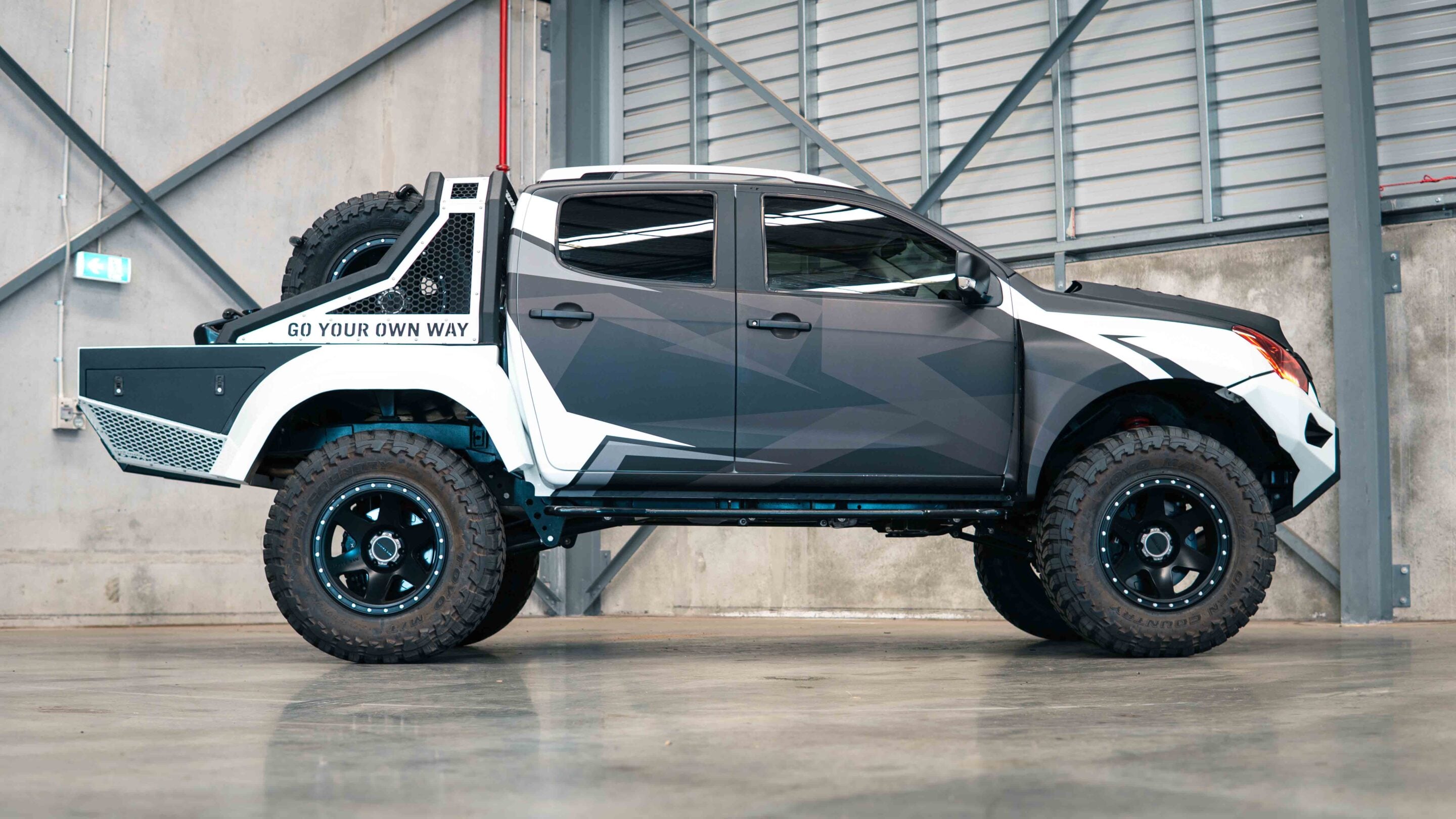
Rare opportunity
With just 808km on the odometer, this Concept X is a piece of automotive history. For collectors, enthusiasts or anyone seeking the most talked-about D-MAX ever built, this is a chance to own the original Concept X. Key specs and features:
- 3.0L turbo-diesel, 6-speed auto
- 38-inch Toyo Open Country M/T tyres
- Massive seven-inch lift
- Custom guards, bonnet, bull bar, tray, suspension and structural modifications
- Integrated front and rear winches
- Jerry can and spare wheel storage
- Premium LS-T interior (relatively unchanged)
- Sold unregistered, and requires modifications for road use