
GWM has lowered the launch price of its Cannon Alpha PHEV, ahead of the vehicle’s imminent arrival in local showrooms.
Initially listed at $63,990 (driveaway) for the base-spec Lux and $68.990 (driveaway) for the top-spec Ultra, those prices have dipped to $59,990 and $66,990 (MLP). As a result, driveaway pricing now ranges from between $61,490 and $64,590 for the Lux, and $67,990 and $71,090 for the Ultra. As an added incentive, GWM is offering customers a free 7kW home charger valued at $599.
“Direct face-to-face negotiations between GWM ANZ senior management and their Head Office counterparts at the recent Shanghai Motor Show yielded lower Manufacturer List Prices (MLPs) across the Cannon Alpha PHEV range,” GWM stated.
“As a result, driveaway pricing has been sharpened by up to $2500 across most Australian states compared to the previously announced launch pricing.”
The revised launch pricing applies to all Alpha PHEV contracts signed before June 30, 2025.
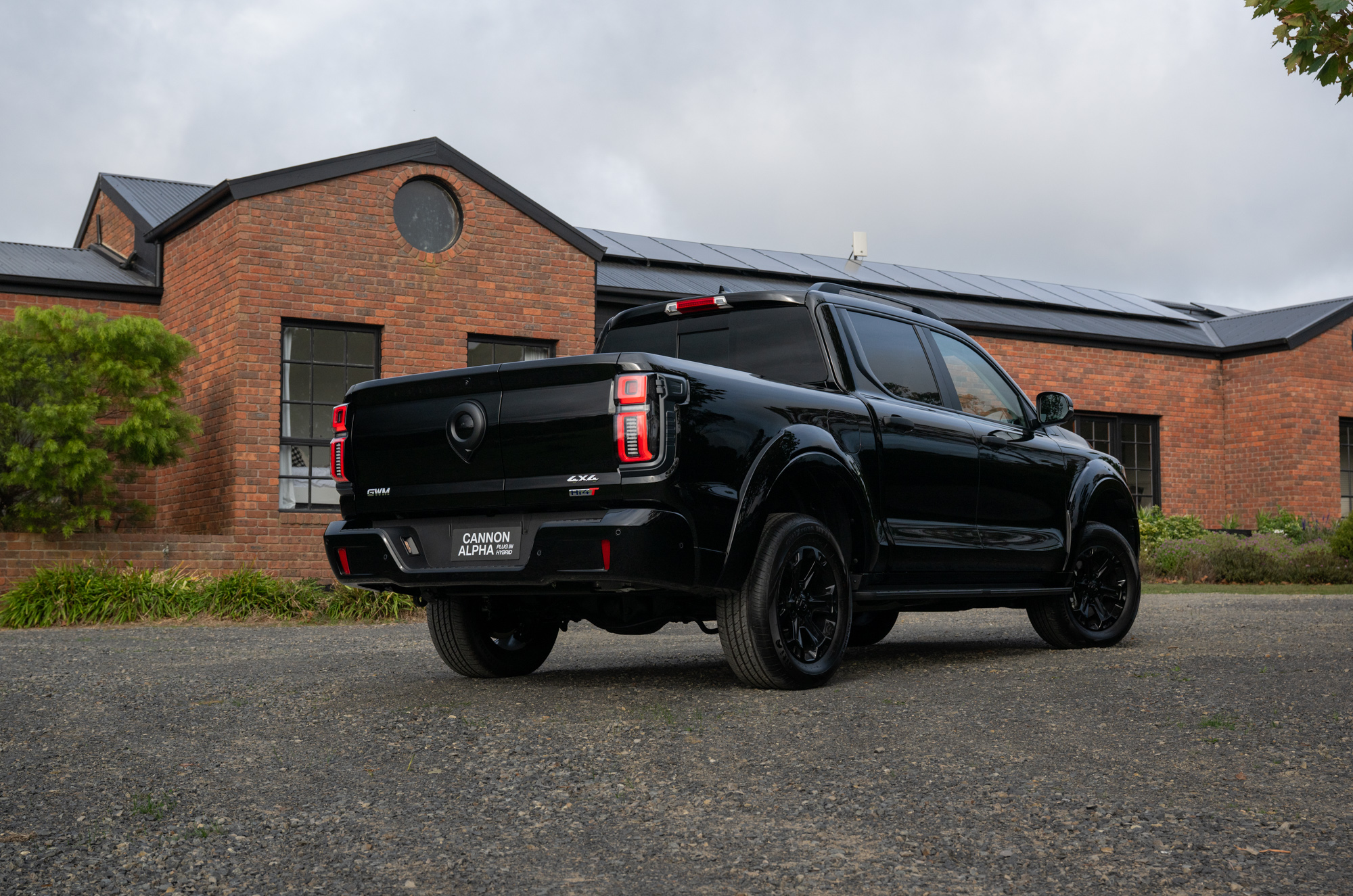
GWM has announced an increased EV-only range for its Cannon Alpha PHEV. Previously listed at 110km, the vehicle is now expected to travel up to 115km on battery power alone. Its combined driving range has also increased from 880km (as previously stated) to 1060km.
While still not quite as budget-friendly as its biggest competitor, the BYD Shark 6 ($57,990 before on-road costs), the Cannon Alpha PHEV has greater overall range (100km and 840km respectively for the Shark), a towing capacity of 3500kg (2500kg for the Shark); and a 37.1kWh lithium battery (29.58kWh for the BYD’s Blade).
The Alpha PHEV is powered by a 2.0-litre turbo-petrol engine producing 180kW and 380Nm, which is mated to a nine-speed transmission. Combined with the 37.1kWh ternary lithium battery, the Alpha’s total output is 300kW and 750Nm. Plus, its Hi4T PHEV EV tech allows EV-only mode to remain active in 4×4 high range.
The first Australian deliveries of the Cannon Alpha PHEV are expected to arrive soon, with test drives expected to begin from mid-May.
| Pricing | |
|---|---|
| GWM Cannon Alpha PHEV Lux | $59,990 (MLP) |
| GWM Cannon Alpha PHEV Ultra | $66,990 (MLP) |
| Specs | ||
|---|---|---|
| Length | 5445mm | |
| Width | 1991mm | |
| Height | 1924mm | |
| Wheelbase | 3350mm | |
| Wading depth | 800mm | |
| Approach angle | 28.5 degrees | |
| Departure angle | 23 degrees | |
| Turning circle (kerb to kerb) | 13.9m | |
| GCM | 6745kg | |
| GVM | 3495kg | |
| Tare weight | 2761kg | |
| Kerb weight | 2810kg | |
| Payload | 685kg | |
| Braked towing capacity | 3500kg | |
| Unbraked towing capacity | 750kg | |
| Downball weight | 350kg | |
The GAC PICKUP 01 has debuted at the 2025 Auto Shanghai motor show, with the futuristic, sci-fi-inspired concept vehicle reminiscent of the Tesla Cybertruck.
Signifying GAC’s entry into the ute segment, the innovative PICKUP 01 utilises a GAIA (GAC Adaptive Intelligent Architecture) platform, which is said to dynamically adjust suspension and powertrain systems to accommodate urban, off-road and payload scenarios.
It will also feature a GAC-developed X-SouL Safety Shield – consisting of advanced driver assistance systems and lux cabin configurations – that is said to transform the cabin into a “mobile living space”.
GAC Motor is one of China’s largest automotive brands, with the company strongly focused on expanding its electric and hybrid presence globally. Perhaps more widely known is GAC’s sub-brand, Aion, with both the Aion V and Aion UT expected to launch in Australia later this year.
The GAC PICKUP 01 is the first vehicle that will sit beneath the GAC Commercial Vehicle arm, a division specialising in research and development, sales and after-sales service for commercial vehicles.
“GAC is accelerating global deployment, initially targeting key markets including Australia, Saudi Arabia and Chile. Ultimately, the model will empower Chinese brands in global competition while ushering in a new mobility era,” the press statement reads. “With planned heavy/light trucks, vans, and pickups across four product lines, we are building a new energy product matrix for full-range logistics scenarios.”
At this stage, the vehicle is just a concept. We’ll bring you localised information when it is released.
Nissan has debuted its first ever electrified pick-up ute, with its 800Nm Frontier Pro on display at the 2025 Auto Shanghai motor show.
Slated to launch in China by the end of 2025, the Frontier Pro has also been confirmed for future export – but an Australian release is yet to be determined.
Co-developed with Zhengzhou Nissan (ZNA), the Frontier Pro set for the Chinese domestic market is powered by a 1.5-litre turbocharged four-cylinder engine paired with a transmission-mounted, high output electric motor. This combination delivers power in excess of 300kW and up to 800Nm of torque, with the vehicle expected to have an EV-only range of 135km.
For comparison’s sake, the BYD Shark 6 delivers 321kW and 650Nm, with an EV-only range of up to 100km; while the Ford Ranger PHEV delivers 207kW and 697Nm, with an EV-only range of 48km.
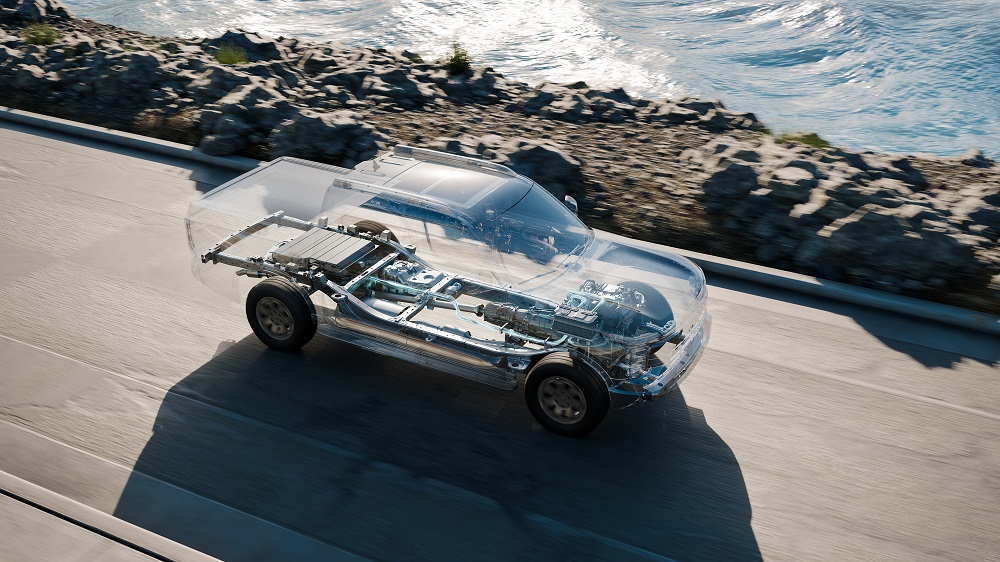
The Frontier Pro will ride on a 5-link rear suspension, and it will utilise Nissan’s Intelligent All-Wheel Drive to control torque distribution. An electro-mechanical ear diff lock will be standard, as will four drive modes: Hybrid, Pure electric, Performance, and Snow.
Interior equipment includes a 10-inch LCD instrument panel; a 14.6-inch infotainment screen; and a panoramic roof as standard. Other useful features include roof rails; an electronic retractable cover for the tub; and a vehicle-to-load (V2L) port, which allows the plug-in hybrid battery to supply up to 6kW to power campsite or worksite accessories. The PHEV ute sits on 18-inch alloys inside 265/65R18 tyres.
Pricing has not been released, but, as a guide, the BYD Shark 6 costs $57,900 plus on-road costs in Australia. The Ford Ranger PHEV is significantly dearer, with a starting price of $71,990 for the XLT.
One of the first and most essential modifications to my D-MAX was protecting the front end, panels and sills. While the MY24 D-MAX X-Terrain had steel side steps, they couldn’t be used with scrub rails, so they had to go.
When you take your 4×4 off-road, you want the confidence that your rig can handle whatever the tracks throw at it. Protection is essential whether it’s crawling rocky high country trails, pushing through thick scrub or tackling remote outback tracks. That’s where the Jungle 4×4 Full Loop Deluxe Bar, Side Rails and Side Steps come into play.
I was recently on a Red Centre adventure when one of the crew hit a cow at 100km/h. His vehicle was protected by Jungle 4×4 gear and sustained minimal front-end damage, which impressed me greatly. You see, I’d struck a cow a couple of years earlier while travelling at 40km/h along the Great Northern Highway in WA and incurred significant damage to my Prado, requiring plenty of front-end gear to be replaced.
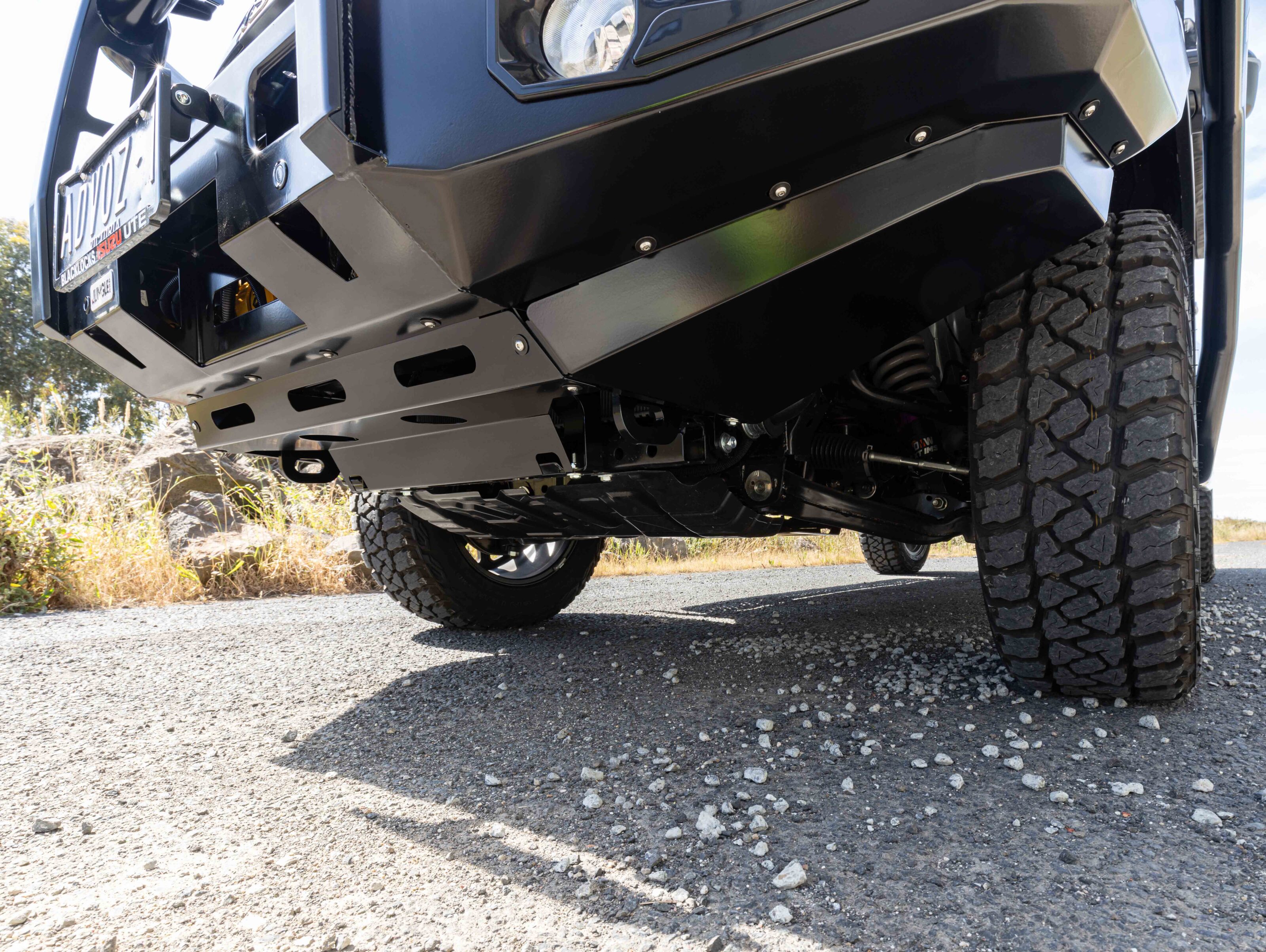
The first thing I noticed about the Jungle 4×4 Deluxe bullbar is that it’s a complete bumper replacement. No cutting or dodgy panel trimming is required. It slots in seamlessly and transforms the front end of the D-MAX into something that looks ready to tackle the outback head-on. The front grille and internal wheel guards needed some trimming but you wouldn’t know it by looking at it.
Jungle 4×4 bull bars are ADR approved and airbag compatible. Safety comes first, and Jungle 4×4 has ensured that this winch bar meets all Australian standards. The construction is heavy-duty, with 63.5mm reinforced steel tubing that is powder-coated for durability and resistance to scratches and corrosion.
The bull bar is winch-ready and designed to accommodate a 12,000lb winch, perfect for my Sherpa winch, which is more than enough to pull the D-MAX out of a jam. Integrated recovery points, reinforced jacking points and dual antenna mounts are also standard fitment.
Pre-drilled holes allowed me to install a couple of Narva Ultima MK3 215 LED driving lights, which cast a powerful light on the road ahead when night driving. If you prefer, there are also pre-drilled holes for a light bar. Optimised approach angles have improved the front-end clearance of the D-MAX, so I can hit steep entries without grounding.
Jungle 4×4 bull bars come with integrated fog lamps and indicators, and they are compatible with the D-MAX’s safety radar and parking system. The Deluxe Bar looks aggressive, functional and tough, and having seen it do its job I am confident in the protection it provides.
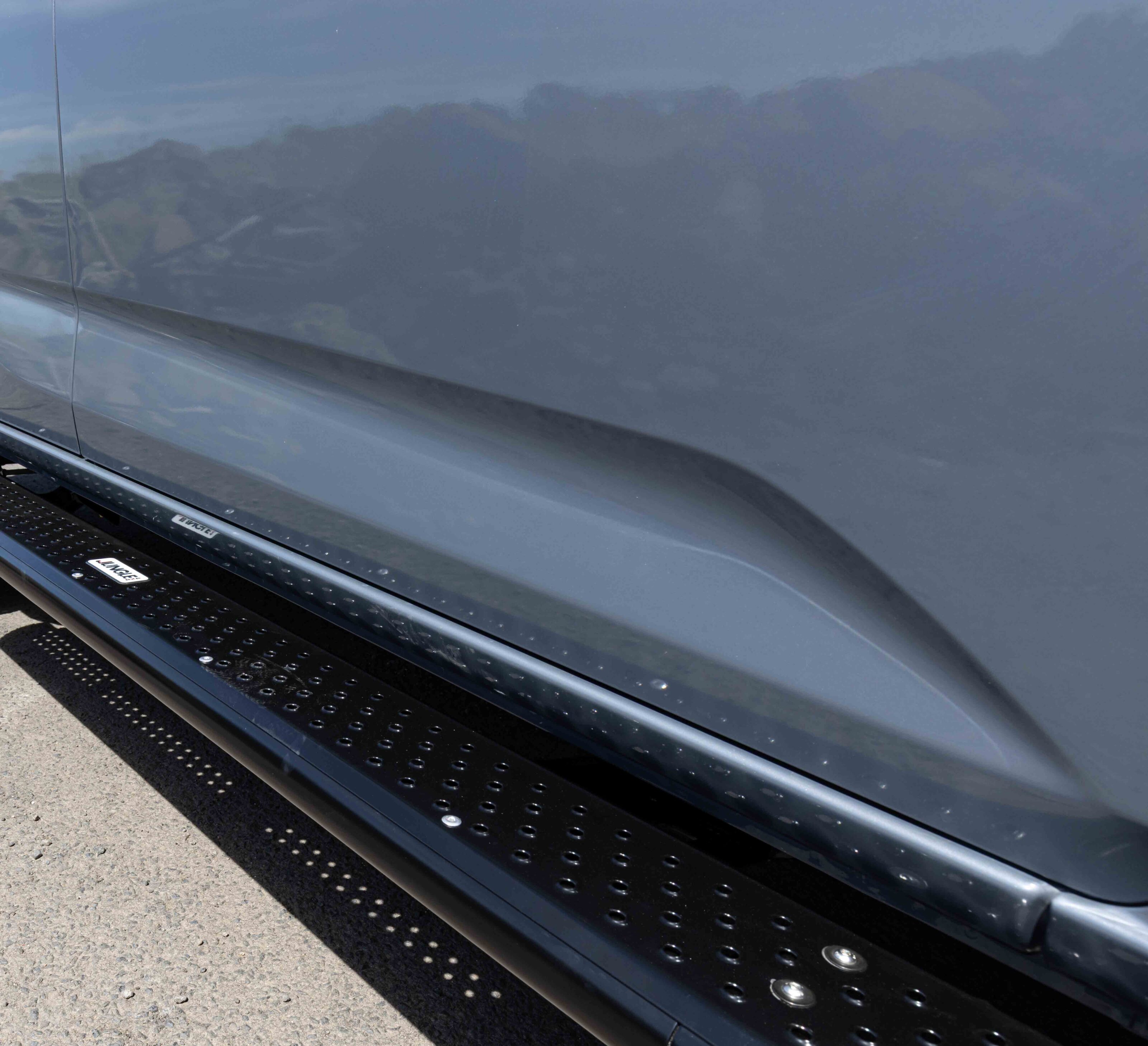
The Side Rails and Side Steps provide extra armour where it matters, especially when driving on technical trails and overgrown tracks whenever the last thing I want is a rock or fallen branch ripping into the doors or sills. They are manufactured from heavy-duty 63.5mm tubing that matches the Jungle 4×4 Deluxe Bar for seamless integration and maximum strength.
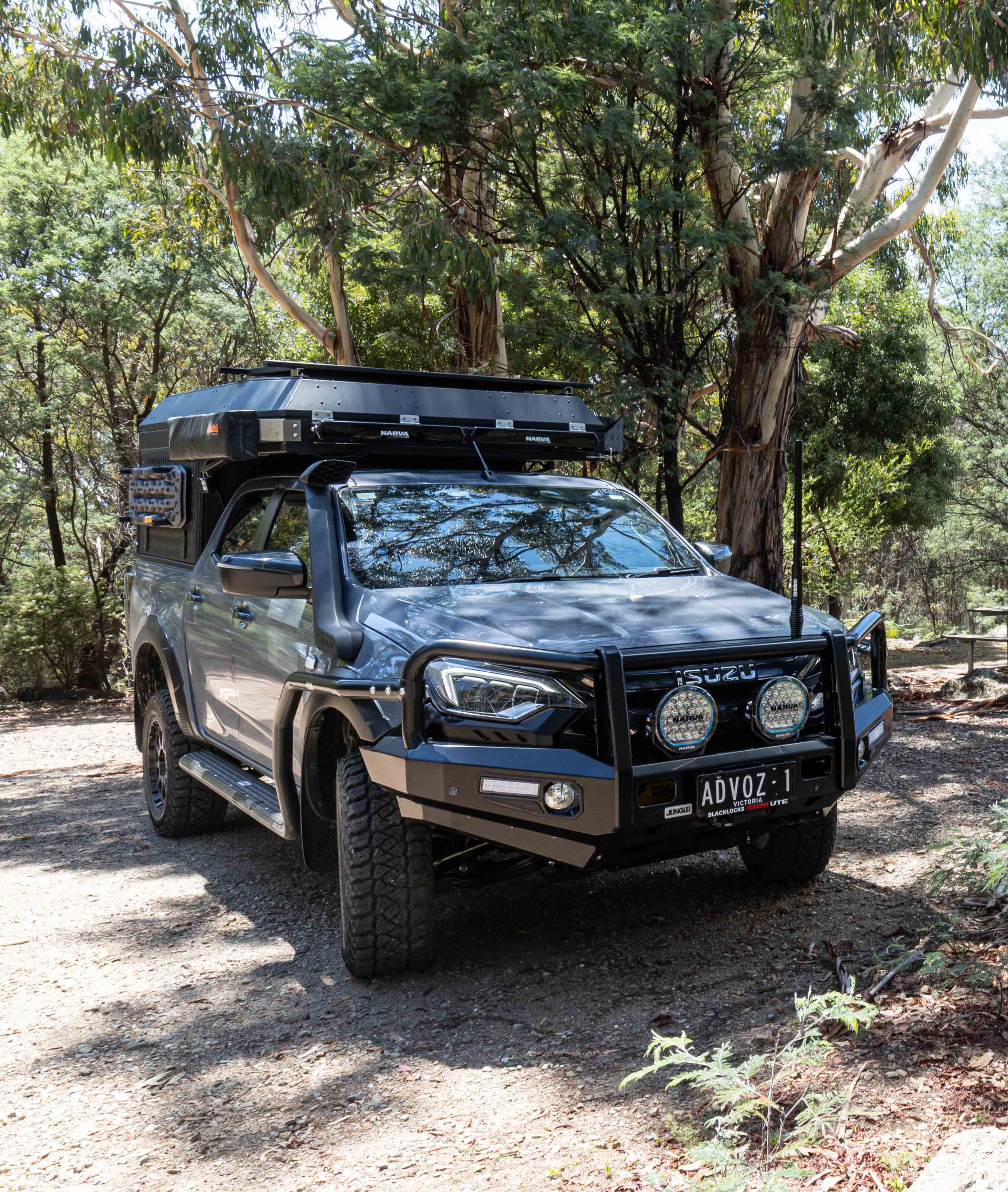
The side steps are bolted directly to the chassis so they can take a hit without bending or breaking, while the integrated side rails’ three-bolt mounting connects them directly to the bull bar, providing full-length protection for the doors and sills. With a powder-coated finish, the side rails and side steps are tough, weather-resistant, and grippy, even when covered in mud.
I’ve regretted not fitting side rails in the past, especially on tight or overgrown tracks, where bush pinstriping can often occur and there is always a risk of panel damage. The Jungle 4×4 Deluxe Bar, Side Rails and Side Steps add an extra layer of defence, and for people like me who enjoy taking their 4x4s to challenging places, it’s a no-brainer upgrade.
Is it worth spending the money? You probably don’t need this setup if you’re cruising the bitumen and the odd gravel road but if, like me, you love hitting the tracks, the Jungle 4×4 bar work is a wise investment.
Pros
- Tough construction – Heavy-duty steel that’s made for real-world four-wheel driving
- Comprehensive protection – Front-end, side panels and sills are protected
- Recovery ready – Built-in mounts for a 12,000lb winch, jacking points and antenna brackets
- Seamless design – Side rails bolt straight into the bull bar, creating a fully connected defence system
Considerations
- Weight – Adding this much steel means extra weight, so consider upgrading your suspension, especially if you’re going to fit a winch
- Installation – While DIY is possible, we recommend professional fitting to ensure everything is properly aligned and bolted down
RRP: $2100 (Deluxe Bar); $990 (Side Steps); $690 (Side Rails)
“Wait, why aren’t you guys comparing the Patrol to the LC300?”
Look, it’s a fair enough question, but when the “off-road” LC300 model (the GR Sport) is $40,000 more expensive than the Patrol, the comparison seems a bit skewed. $40,000 buys a hell of a lot of petrol, or conversely, it buys a hell of a lot newer vehicle. That’s legit the above comparison in a nutshell. Pick your preference, they’re both great 4x4s.
However, the Prado Altitude is actually a lot closer in pretty much every aspect to the Patrol. The Patrol is a little wider and longer, the Prado is a little taller. The Patrol weighs a couple hundred kilos more (2884kg vs 2520kg), but also has more than 150kg more payload (736kg vs 580kg). The prices are negligible too, with the Patrol coming in at $105,523 and the Prado at $101,000. They’re both a pleasure to drive and are more than capable of long-distance family touring straight out of the box.
However, there are a lot of fundamental and fairly obvious differences, too. The Prado is nearly a decade-and-a-half newer and comes with a mild-hybrid turbo-diesel four-banger with an eight-speed auto, whereas the Patrol has been on the scene since the 2010s and comes with a 5.6L V8 petrol engine with a seven-speed auto. The Prado is chock-full of tech-wizardry, while the Patrol is somewhat rudimentary in comparison (not necessarily a bad thing). The Prado is right at the start of its model run while the Patrol is right at the end, with a new Y63 expected late next year.
Overall, these vehicles are same-same but different. Like two prime rib-eye steaks, but one is made of grain-fed wagyu beef and the other is vegan and made from tofu, sawdust and sadness. Which is which? Well, that’s up to you to decide.
JUMP AHEAD
On-road performance
Patrol Warrior
Ever wondered what would happen if a high-powered sports car and a tractor ran really fast at each other?
The resulting mash-up would be something like the Patrol Warrior. It’s tall, wide, heavy and, from appearances alone, looks slow. But once you’re behind the wheel and have your head around its swarthy dimensions, this thing goes, stops and handles like a world rally car. It has 298kW and 560Nm of torque available from the skinny pedal – and the Bi-Modal exhaust, which redirects the gasses out of a side-pipe under full acceleration or when the transmission is in manual mode, sounds like a chorus of angels. If the angels were really angry at something.
The handling is insanely good for how big it is, too. The 50mm ride height increase from the longer springs, Premcar-tuned Hydraulic Body Motion Control and 34-inch Yokohama Geolander AT tyres do give it a little more body roll than the non-Warrior Y62, but it’s hardly a big issue. Same goes for the braking. They’re unenviably tasked with pulling up 2800+kg rolling on big rubber, but they handle it predictably and safely.
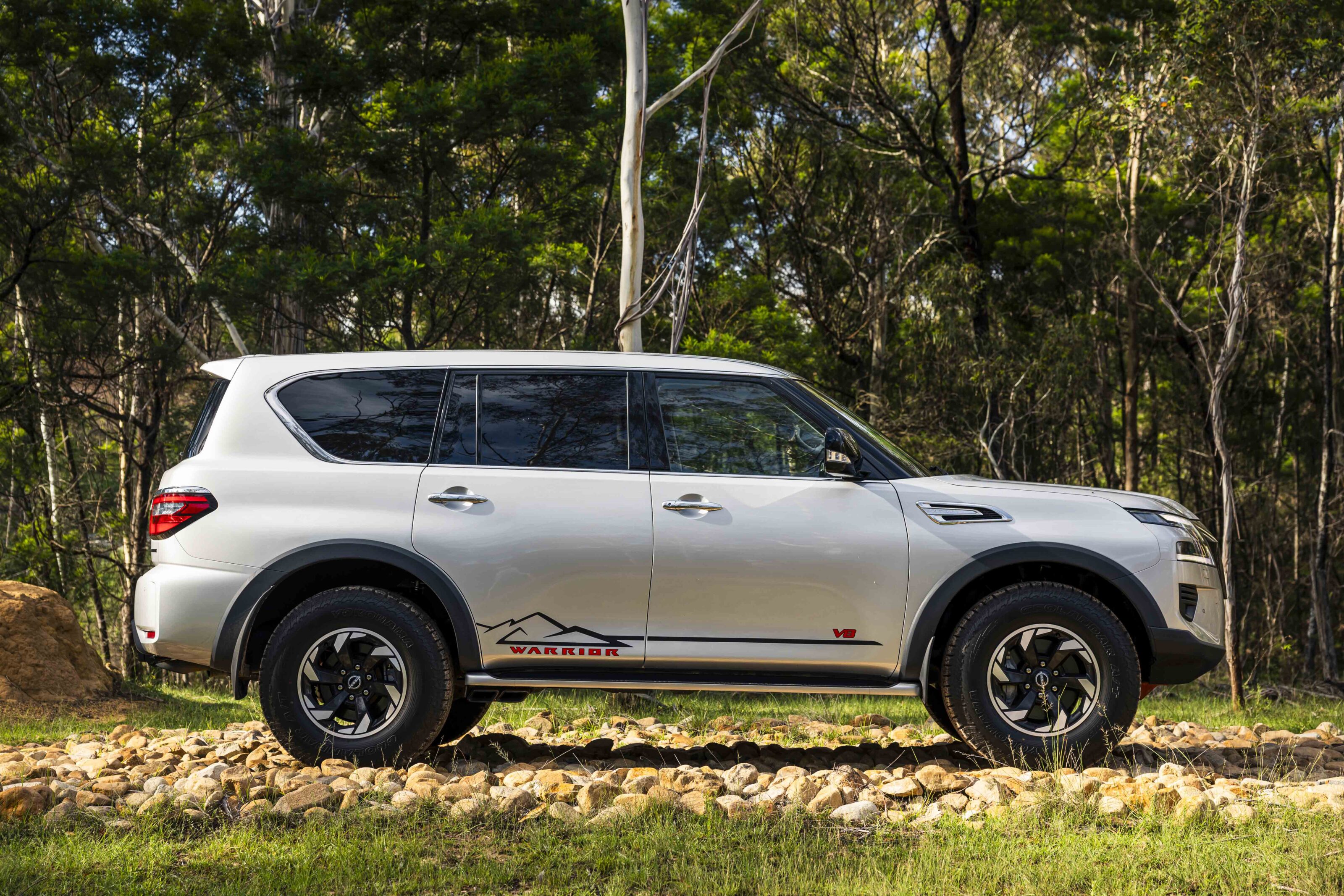
The interior, while not what you’d ever call uncomfortable, is a decade behind the times, but still a great place to spend a few hours putting some distance between you and civilisation. As long as you don’t mind a few quirks like the foot-operated parking brake or the plastics that looked new when Metallica were still good. Even so, there are enough safety features and driver aids included to keep anyone who enjoys that sort of masochism happy.
When you boil it right down, though, this is a driver’s vehicle. There’s plenty of space for the family and enough camping gear for a few weeks, and the industry standard 3500kg braked towing capacity will pull a big caravan, boat or camper. And the comfort levels are right up there, as you’d expect at this price point.
At its most basic, this is a vehicle for people who love and appreciate the finer points of taking the perfect line through a corner or using the engine’s torque curve to maximise road-holding or feeling the independent suspension handle an off-camber bend like you’re on rails. That’s the real enjoyment to be found from the Warrior, and it’s something you’ll enjoy more the longer you drive it.
LandCruiser Prado
On the other end of the technology spectrum is the Altitude. It’s just as good on-road as the Patrol, but for quite different reasons.
It’s not so much a pure driver’s car as it is something that requires a minimum of driver input to work exceptionally well no matter what the conditions may be. To be fair, Prados have always been good at this. They’re not exceptionally fancy or invoke the kind of passion the Patrol does, they simply get on with the job and quietly get it done better than most.
This new Prado is not without its (well-established) negatives. The 48V battery seriously chews into the third-row seating space to the point where it should be considered a five-seater with the capacity to be a seven-seater for short trips. It should not be viewed as a seven-seater tourer, because there’s four-fifths of bugger-all luggage space with the third-row in use. For the record, our Altitude is only available as a five-seater and never felt undersized or cramped, just so you know.
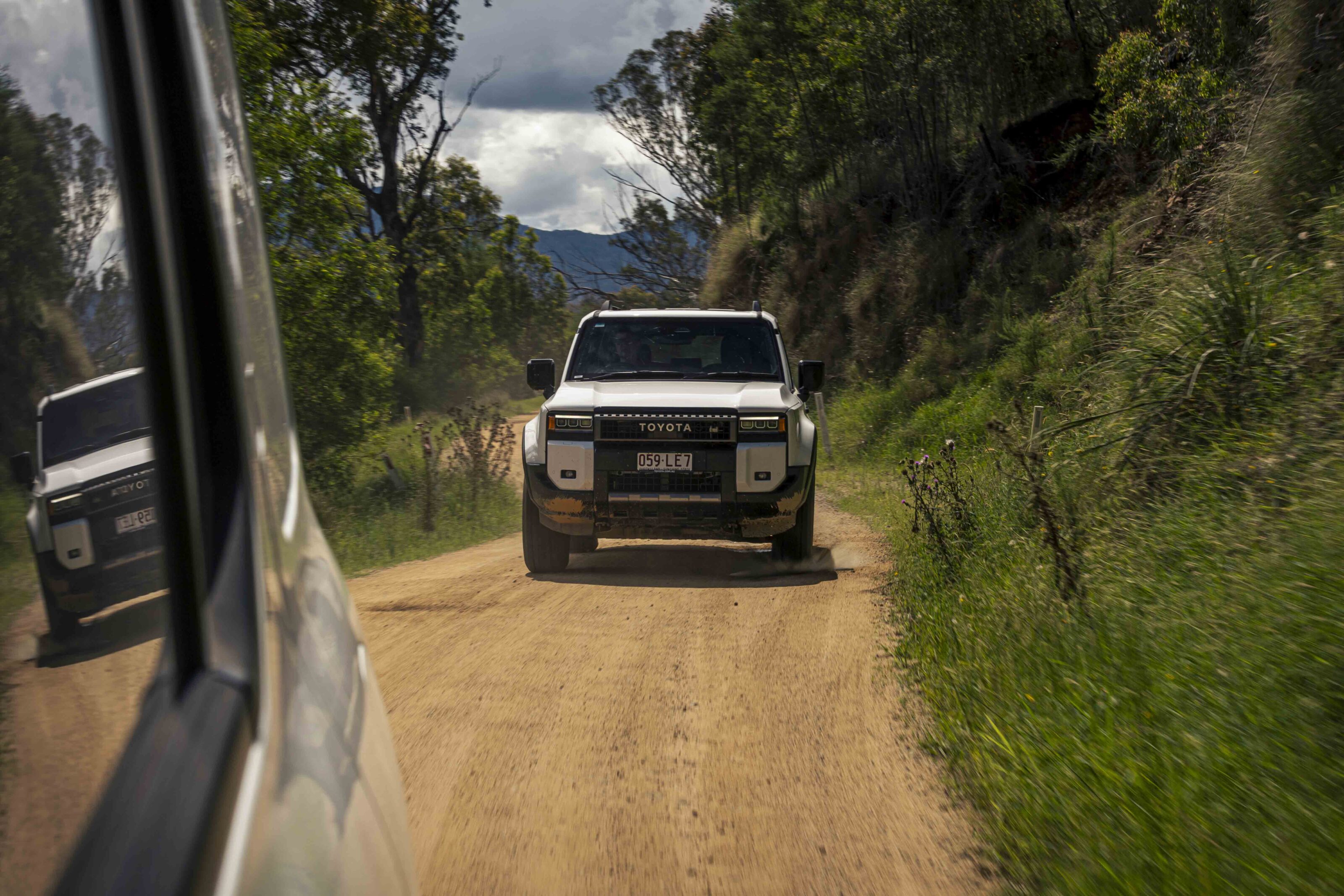
The other big negative is the lack of a second fuel tank, which has been a Prado staple since the first 90 Series were sold in this country. Again, the hybrid system and underslung spare eats into the underbody real estate, relegating the fuel capacity to 110L, which is still nothing to sneeze at.
Where the Patrol is balls-out power, the Prado is more refined propulsion. A Brahms symphony as opposed to a death metal concert. The eight-speed auto is excellent (and a long-overdue upgrade over the Aisin six-speed Toyota has used for the past 400 years) and the 150kW and 500Nm 2.8L turbo-deezy, while hardly what you’d call powerful, is a willing performer that’ll hold the NT speed limit without apparent effort.
In fact, one of the true strengths of the Prado is its ability to chew up miles upon miles of blacktop without imparting much in the way of fatigue. Four hours in the saddle had us feeling fresh as a daisy, and when followed by another four hours we still weren’t sore or tired. For blokes our age and physical condition that’s pretty remarkable.
Safety inclusions number in the tens of thousands, or it seems like it anyway, so you’re getting all of the value on that score, and the braked towing capacity is right on par with vehicles of this size and price, at 3500kg. If you had to describe the Prado driving experience in one word, it’d be solid. There’s nothing it does badly, it simply handles whatever you need it to. Something that, in our opinion at least, is worth a lot, particularly when you’re in the middle of nowhere.
Off-road performance
Patrol Warrior
Straight off the bat, you can’t look at the Patrol, with its fully independent suspension, through a hardcore lens. It’s not a rock crawler and you wouldn’t enter it in a winch challenge, simple as that.
With that out of the way, it does incredibly well at every other type of wheeling, including touring. It has a truly impressive amount of suspension travel and, even when you inevitably do lift a wheel, the (ageing) traction control and rear diff locker will get you through.
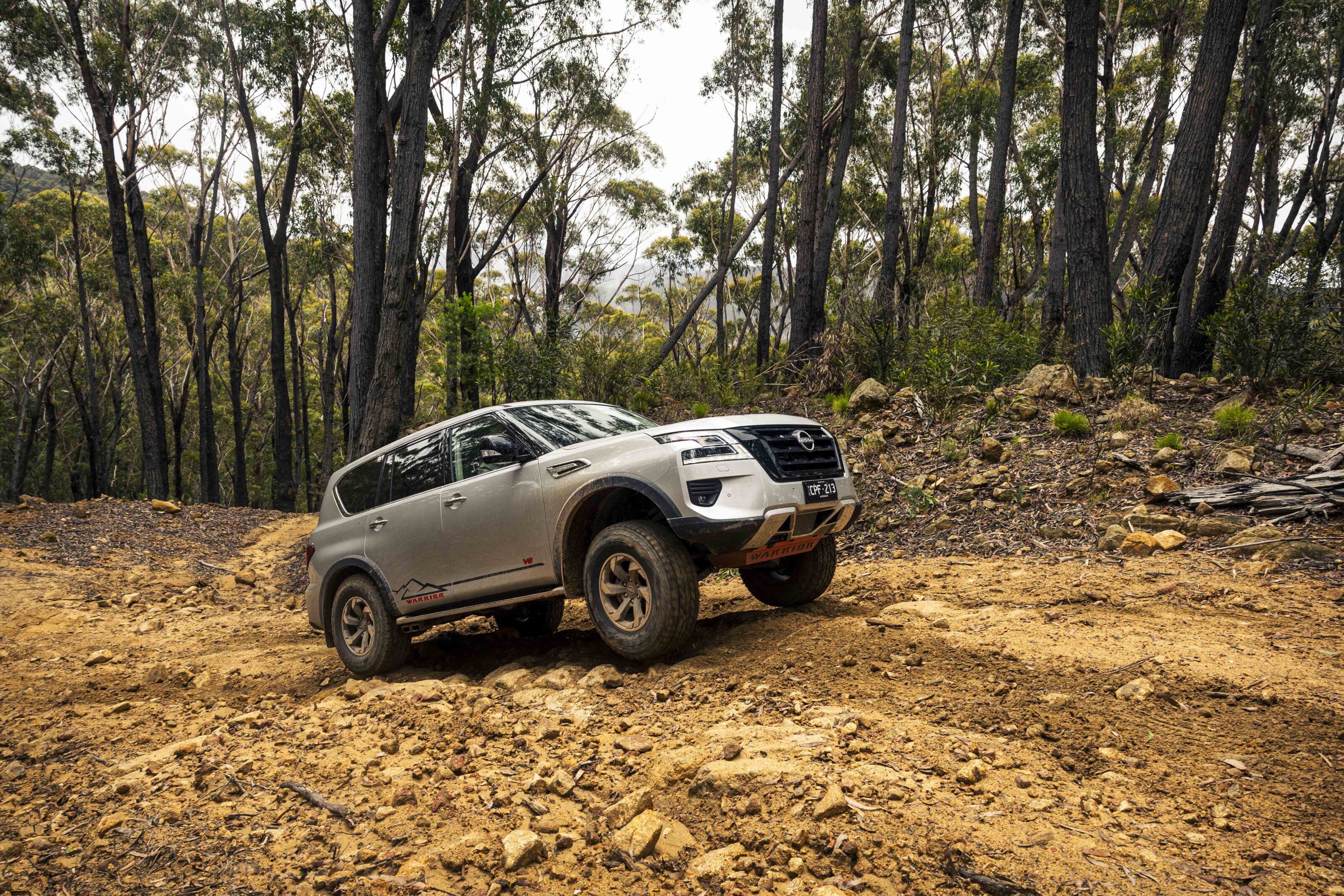
As for dirt roads, Outback and desert touring, it’s difficult to think of a better factory car for the role. Steep, scrabbly climbs, tall soft dunes and corrugated roads are simply a joy to punt the Warrior over. The Premcar suspension really just eats it up and the V8 is such a willing performer you can see why the Saudis love them for tackling their fifteen-storey-high monster dunes. Assuming you’re running the right tyre pressure, it’s almost impossible to imagine this thing being stopped by any sand-based obstacle.
Dirt roads are a similar story. Corrugations aren’t nearly the worry they are in a solid-axled rig, and even larger washouts are readily absorbed by the springs and shocks. As for towing, you’d need to have a caravan or very large hybrid trailer to even notice it’s there.
Fuel consumption from the 140-litre tank is a claimed 14.4 litres combined; however you can expect lower than that on the highway, but a little higher dawdling around the ’burbs and higher again off-road. Still, the trade-off is the superfluous power available. Touring with this would not be cheap at the bowser, but it still has just shy of 1000km touring range and, again, that power would make it so much fun it’d definitely be worth it. Maybe try to avoid filling up at places like K’gari though, eh?
LandCruiser Prado
The Altitude is the pick of the Prado models for the simple reason that it’s equipped with an electric-solenoid-activated rear locker.
Coupled with the (very good) traction control it makes it nigh-on unstoppable no matter what the conditions. Sure, you could get caught out on really gnarly tracks, but if you’re willing to take a $100K vehicle over that kind of terrain, can I borrow some cash?
The electric power steering is light yet has a nice amount of feedback, and the 112-inch wheelbase (same as an LC80) is just about perfect for a range of obstacles. The engine is best described as adequate, which is not meant as a negative, more just that it’s not going to get the excitement-meter redlining. Even so, it has enough to get up the same scrabbly climbs as the Patrol, just with a little less flair and a lot less of an exhaust note that could cure diabetes (probably). The eight-speed is also about as bang-on as modern autos get. On our test it always seemed to be in the right gear at the right time across a large variety of obstacles, so full points there.
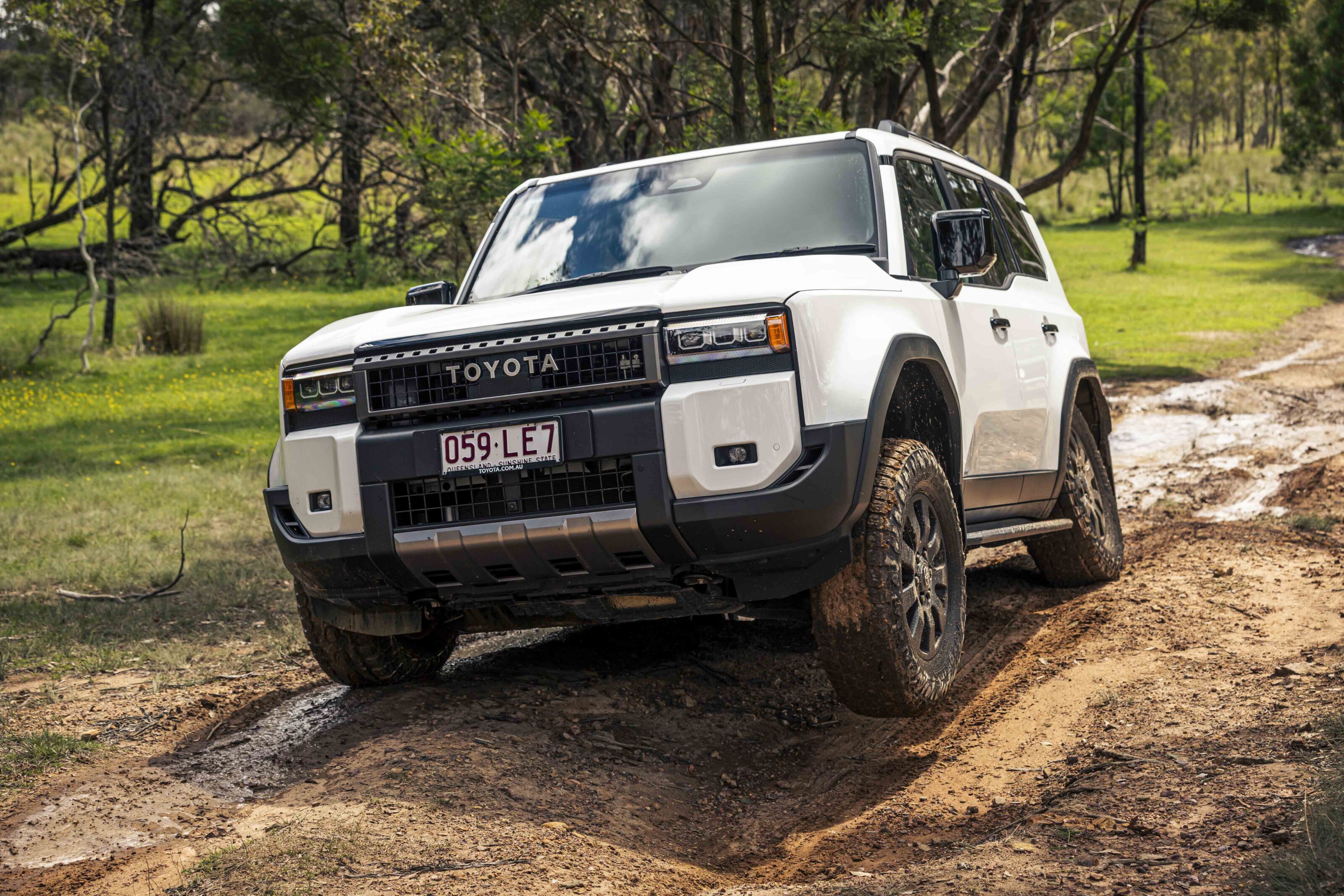
The 360-degree camera function, which is displayed in high-definition on the 12.3-inch centre touchscreen (the driver display is the same size) is a nifty inclusion that James Bond would approve of, and the 265/70R18 Toyo Open Country ATs are one of the better tyres on the market and offer excellent amounts of traction. The stabiliser disconnect offers marginally more wheel travel over the other Prado models, but it’s not really essential with the locker and TC doing their thing.
One aspect of the on-board tech we really enjoyed was the crawl control, which essentially allows you to set the desired ascent or descent speed and let the computer do the rest. It turned obstacles that would otherwise require careful wheel placement and judicious application of the brake or throttle into a simple point-and-shoot affair.
Realistically, the five-seat Altitude is about as good as it gets off-road for stock vehicles. Sure, you could argue the Ineos Grenadier may offer more with its solid axles and twin diff locks, but that’s a very different vehicle to the Prado. Compared to the Patrol, splitting the difference is not easy. Best bet is to drive them both to see what you reckon. You’ll know pretty quickly if you’re more of a “all the traction aids and quiet diesel chug” or “34-inch rubber and a V8, what’s the problem again?” kind of person.
Verdict
Calling a winner in terms of capability is simply too subjective. You could like one or the other or both of them and you wouldn’t be wrong.
Off-road, the Prado has much more in the way of technological advancement and maybe a touch more low-range capability, where the Patrol has way more torque and power and a little more ground clearance thanks to the larger boots it wears.
A lot of folks get hung up on the fact the Patrol is petrol-only and a fairly thirsty one at that, but run the sums before making your decision. Over five years of servicing, the diesel Prado will cost you $3900, where the Patrol is basically half that at $1999. You can get quite a few tanks of fuel out of $2000. Conversely, the Patrol’s 140L tank provides around 900km of range, while the Prado’s 110L gives over 1300km – but that’s offset by the additional complication and expense of Adblue. Again, really too close to call a definitive winner.
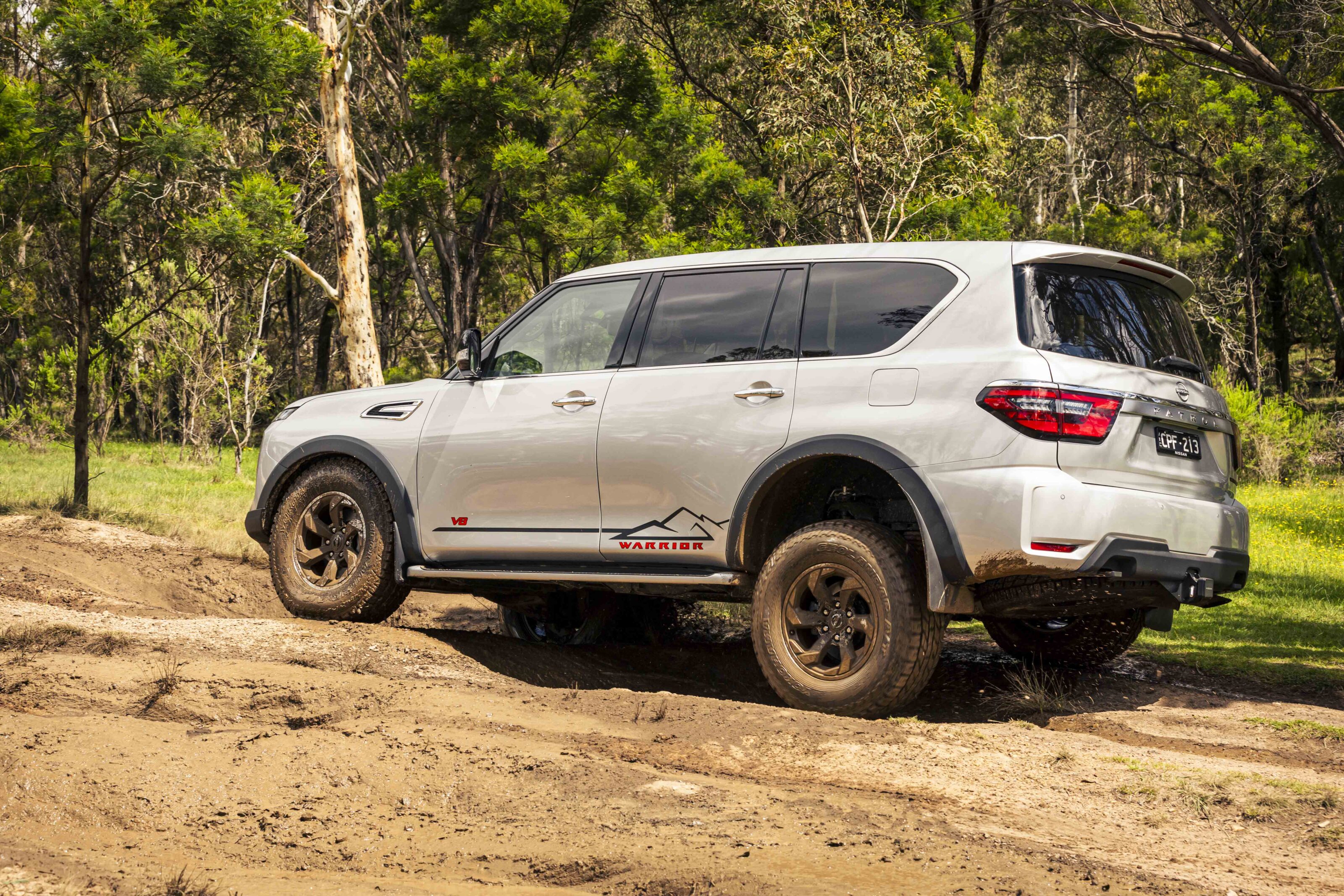
Interior accolades belong to the Prado, no question. It’s a dozen years newer and the inclusions list is a fair bit lengthier. However, the Patrol has a lot more room, is a true seven-seater and is not at all uncomfortable. Even so, the Prado gets over the line first, but not by that much.
Mechanicals we’re going to give to the Patrol, only because we’re suckers for a brand new V8 petrol engine (they’re getting rare) and the engine and transmission combo in the Patrol is a pleasure to drive. Yeah, the Prado has better fuel economy, but at the expense of more spendy servicing. We’re more taking points from Toyota for using their long-overdue-for-an-update 2.8L which was used as an auxiliary engine for the Titanic. Why they didn’t use a de-tuned, single-turbo version of the V6 diesel in the LC300 we’ll never know. That would have changed this comparison a lot, but whatever.
Realistically, no matter what you’re chasing from your 4×4 – daily driving and occasional tow-rig; long-distance touring with the family; a play rig for weekends away with mates; or all of the above – either one of these rigs will scratch the itch.
We don’t say that as a cop out (if pushed I’d take the Patrol, mainly because of the engine and higher payload) but more as a testament to the broad viability of both of these vehicles. If you’re chasing a new vehicle for $100K or thereabouts, both need to be on your shortlist.
Prado Altitude: 8/10
What we like
- Crawl control
- Long-distance comfort
- All-rounder capability
Not so much
- The engine is way too old
- 48V hybrid is intrusive and offers minimal advantage
- Where’s the second tank, Toyota?!
Patrol Warrior: 8/10
What we like
- That engine (duh)
- Interior room
- Last (aka best) of the model run
Not so much
- Interior is positively retro, and not in a good way
- Fuel use may be a concern for some
- No ANCAP safety rating (it’s weird, Nissan)
First the Ford F-150 went V6. Then the RAM 1500 lost its V8 for a straight-six of just three litres (plus a pair of turbos, of course). Even before that, the Toyota LandCruiser wagon switched from a 4.5-litre V8 to a 3.3-litre V6. And everywhere else you looked, it appeared as though the V8 was on the edge of extinction.
But GWM clearly didn’t get that memo, because it recently dropped a proper bombshell, announcing that a V8 engine would be coming, probably to a Tank 500 (or Tank 700) near you. It may also find its way into GWM’s luxury car models under various brand names.
Also, because the Tank 500 and 700 use the same chassis architecture as the Cannon Alpha Plug-in hybrid dual-cab ute, it’s probably not too much of a stretch to suggest the V8 driveline might end up in that vehicle as an option, too. Why do we think the Tank models will be first with the V8? Mainly because the V8 engine was displayed on the Tank section of GWM’s Shanghai Motor Show stand. Makes sense, right?
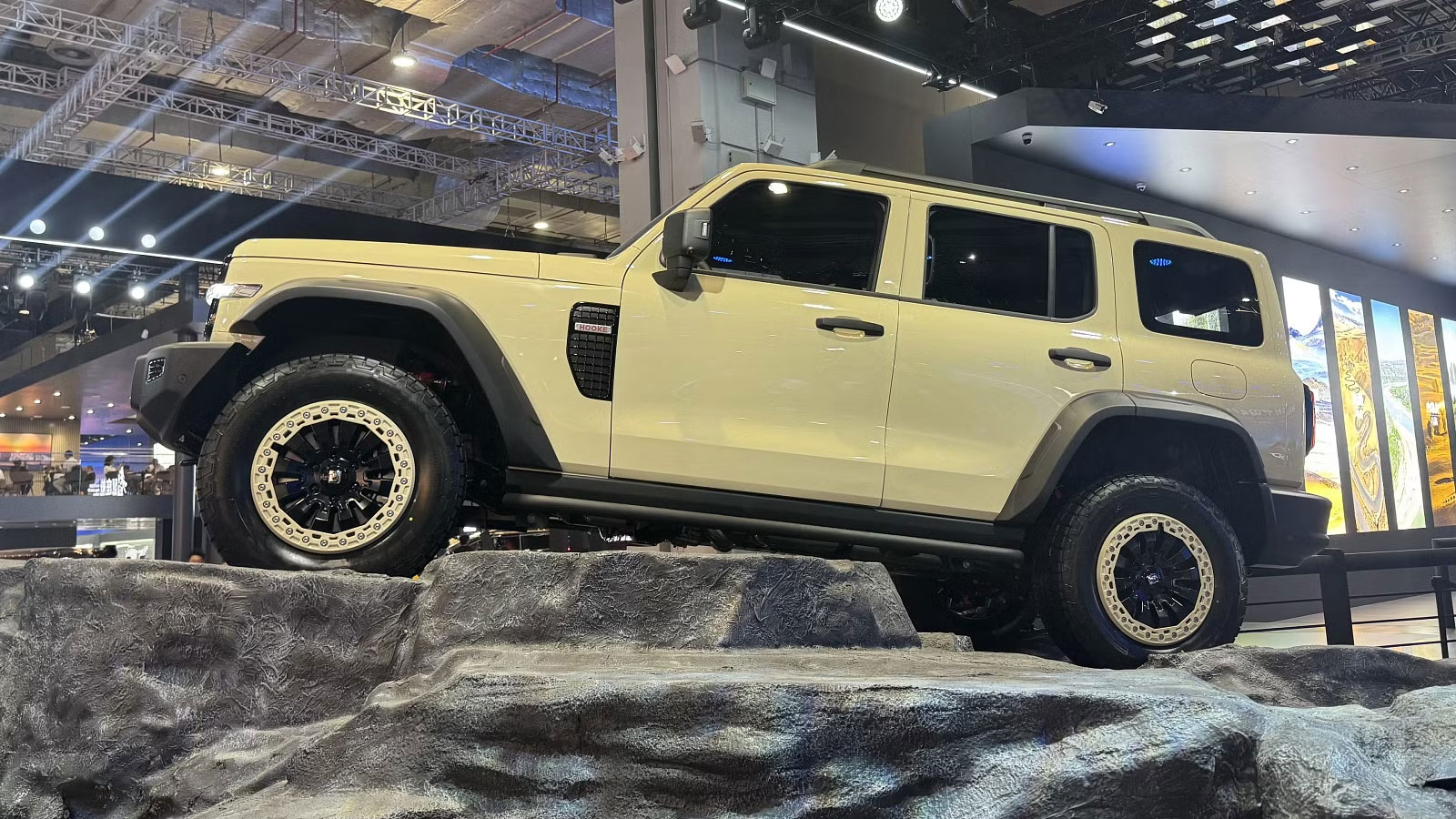
Technical details are still a bit sketchy as the engine was only unveiled this week, but it has also been hinted that the V8 might also be fitted to the Tank 300 Hooke model – a hard-core off-road variant of the 300.
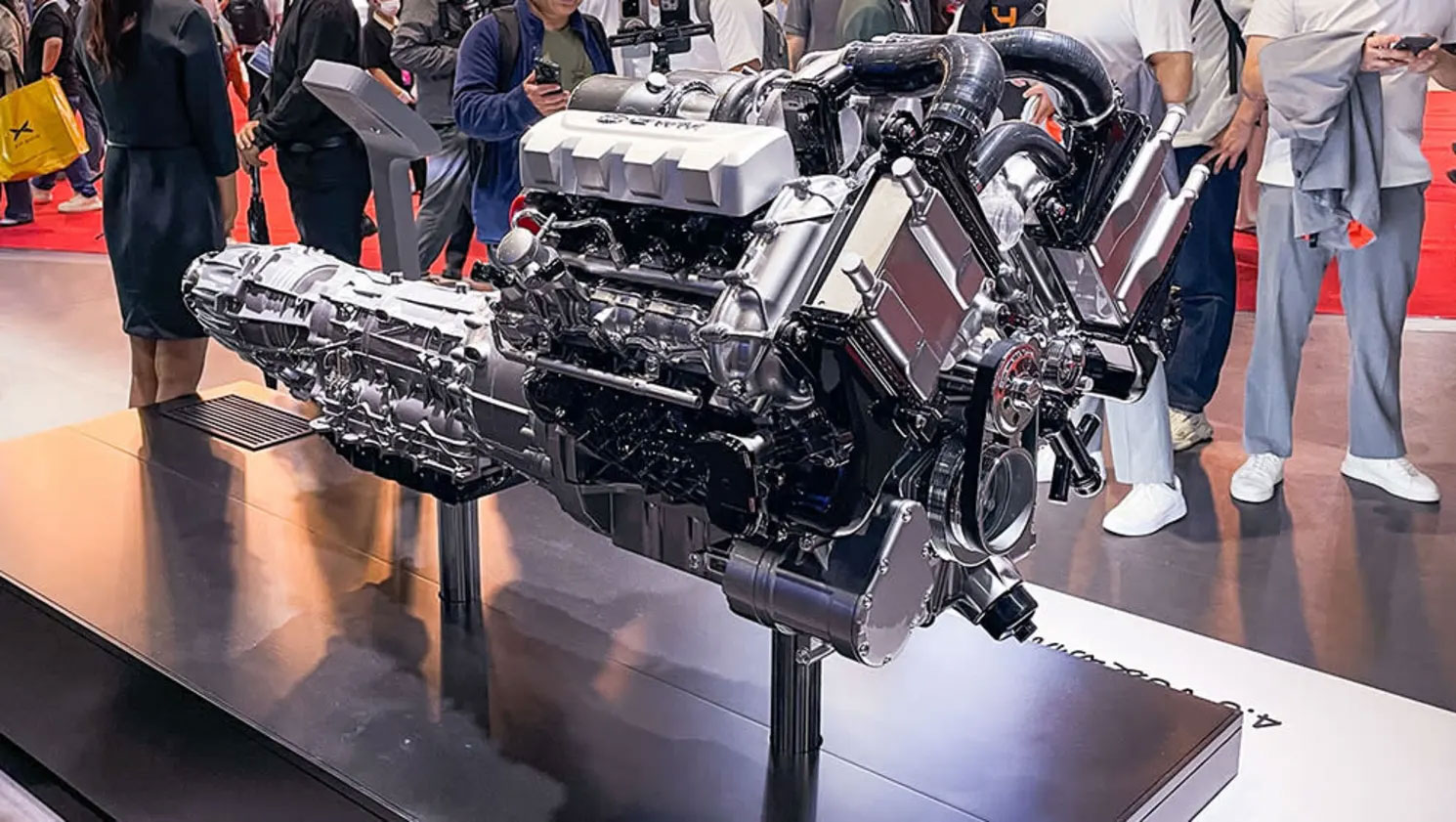
What we do know is that the new engine runs on petrol and measures four-litres of capacity. Outputs haven’t been discussed yet, but since GWM already has a turbocharged V6 hybrid driveline good for 380kW and 800Nm, it makes sense that the V8 would outpunch that.
Based on the photographs coming out of Shanghai, the V8 is a DOHC design with coil-on-plug ignition and a pair of turbochargers mounted in the hot side of the Vee (much like the LandCruiser 300’s V6 and a slew of current Euro V8 road cars). There’s also an intercooler for each turbocharger and, on the photos we’ve seen, the electric motor appears to be sandwiched between the engine and the transmission. That would suggest the electric motor also acts as the V8’s starter motor.
So what’s the catch? Mainly that you won’t be able to buy a GWM off-road wagon with a howling, turbocharged V8 engine and start giving Y62 Patrol owners a hard time. Nope, the V8 will only be fitted to vehicles where it’s paired with a hybrid system, including plug-in hybrids.
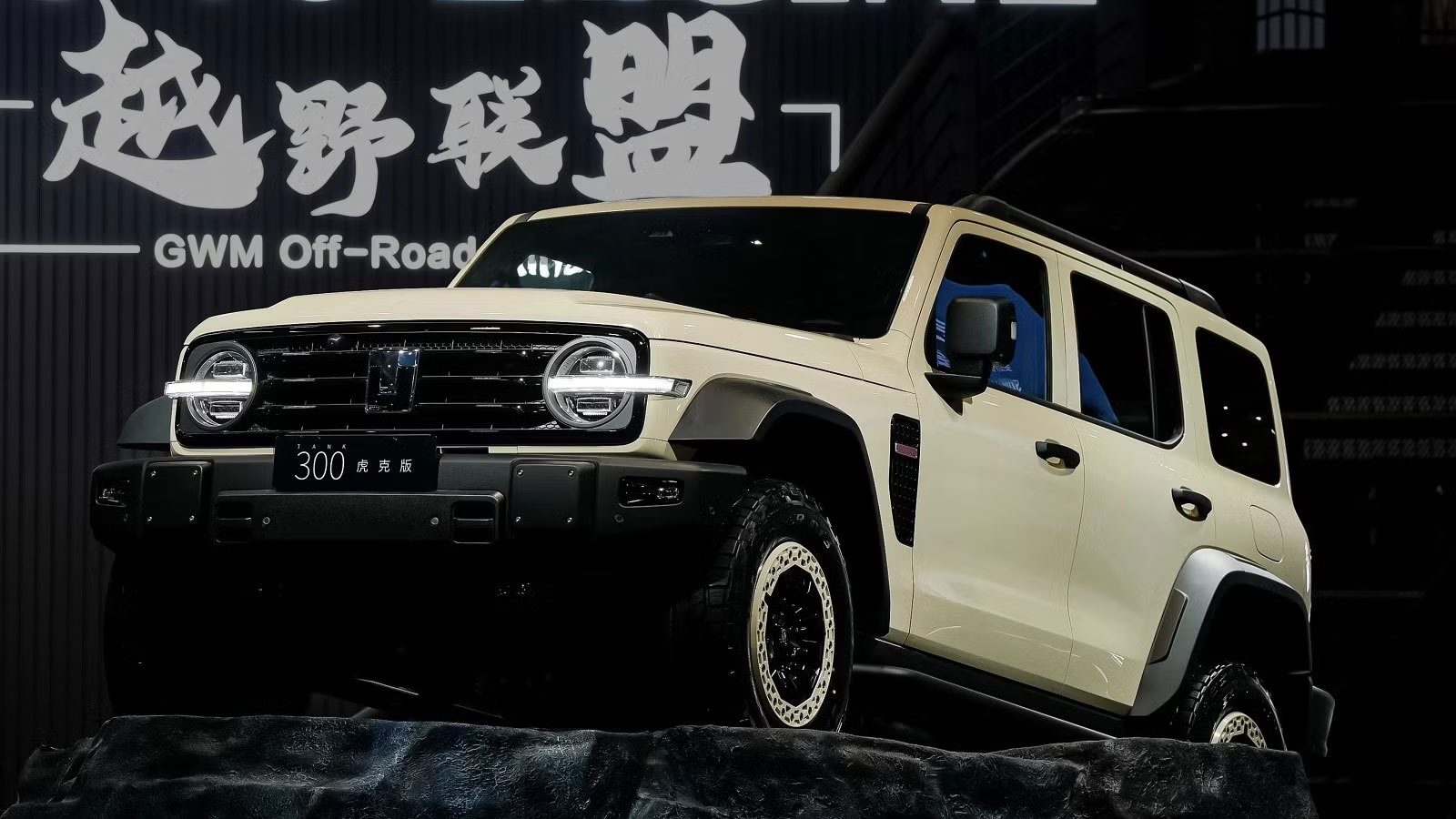
Of course, that shouldn’t be too much of a surprise as GWM is heavily invested in hybrid tech. But it also suggests that the vehicle would rely heavily on electric propulsion with the V8 making its presence felt when towing or chugging up cliff-faces in the scrub. But the emergence of the V8 also proves that GWM continues to have faith (and investment) in the internal combustion world.
The fact that the V8 would only be teamed with a hybrid driveline comes straight from the top, too. GWM’s boss of global right-hand-drive markets (which includes us, of course), James Yang, has gone on record as saying the new V8 won’t be offered as a stand-alone powerplant. Intriguingly, James recently spent some time in Australia, too.
The hybrid-only thing makes sense in the context of ever-tougher fleet emission targets, and GWM has previously said that its hybrids are slanted towards running on pure electricity with the petrol engine predominately used to maintain performance in hard-use, high-speed situations. In the context of a Tank 500 or 700, that would surely mean while towing or when properly off-road and, say, smashing sand dunes all day.
Which, again, makes lots of sense, as the EV’s inherent short-suit is its ability to maintain output when it gets used hard and starts to generate more heat than it can get rid of.
The other intriguing piece of speculation is that the projected huge peak power and torque outputs could make the V8-hybrid version of a Tank 700 some kind of towing monster. Nobody at GWM is saying anything, but a towing capacity of four tonnes or even more is on the cards, we reckon. You read it here first.
For some reason, Ford’s mid-size wagon gets overshadowed by its dual-cab brother.
I have an unpopular opinion on mid-sized dual-cabs (not just the Ranger, but all of them) which is that dual-cabs are the ultimate compromised vehicle. They can do a lot, but they can’t do it well.
They can’t carry the load of a single-cab (or even an extra-cab), they have five seats but the rear three are essentially unusable for anyone over five-feet tall, and the kicker is that the positioning of the cab and tub invariably seems to place the majority of mass of whatever is being carried behind the rear axle, which does nothing for handling or off-road ability and is quite literally the worst place to position significant weight other than maybe on the roof.
So, until they release a dual-cab with the rear axle positioned in the middle or to the rear of the tray and with an engine that’s got at least six-hundo Newtons (props to Ford for ticking that box at least), then I’m still going to choose a wagon over the dual-cab nine times out of ten. Which brings me to the Ford Everest, which is really the rig a lot of “Ranger with a tub-topper canopy” owners should have bought.
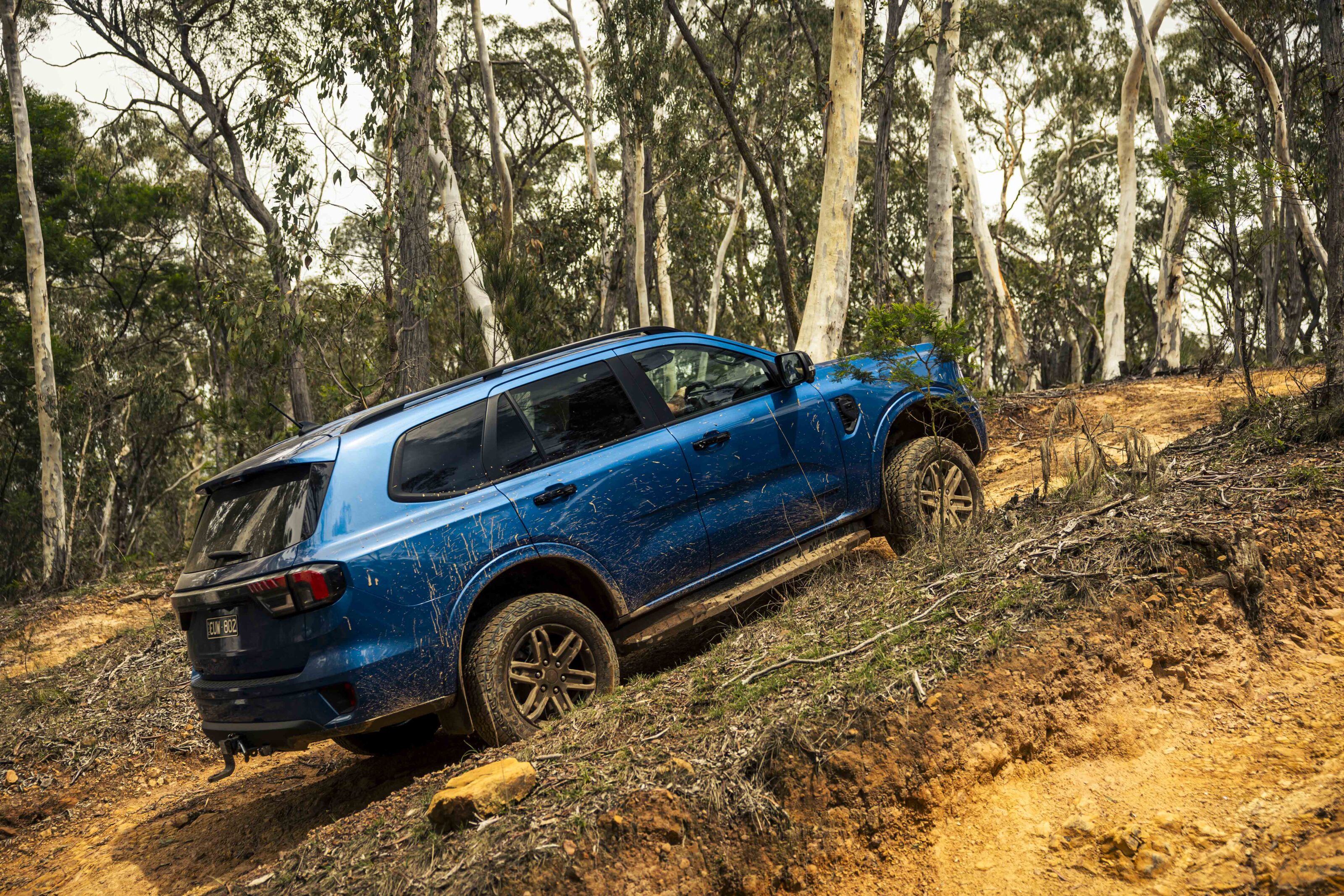
The base 4×4 model is the Sport, which rings in at $74,640, but I’d head up the ladder by a rung and grab a Tremor model, which is $1940 more, but comes with Bilstein dampers and General Grabber AT3 rubber, so coupled with the rear diff lock you’re ready for some medium-core touring straight out of the box. It should be highlighted that I haven’t found the Everest to be excellent off-road. It’s certainly not bad, but if driving rutted-out tracks and steep, scrabbly climbs is high on your to-do list, I’d be looking seriously at investing in a front locker.
Driving that stuff is right up there on my list, so a visit to ARB to have a front Air Locker installed ($1800 or thereabouts) would be number one to tick off. After that it’s about protection, so a front bar with some LED spotties and a winch, as well as some sliders and alloy bash plates to help out with lack of ground clearance. There are a bunch of all these on the market, but I’d be budgeting around $7000 to have it buttoned up.
The V6 engine is unfortunately unable to be tuned at this point in time thanks to the rolling code in the ECU, but Steinbauer modules are up to the task and, along with a three-inch turbo-back exhaust, will sting me around $5500. However, the payoff is more than 220kW and well in excess of 700Nm, so money well spent.
I’d then invest in the cheapest roof bars I could find to mount a Darche Eclipse freestanding 270 awning off ($1500), then throw the swag in the back along with the fridge and enough food and beer to see me through the next couple of weeks and head off to … well, anywhere I want to.
LDV Automotive Australia is facing legal action from the Australian Competition and Consumer Commission (ACCC), following allegations that it misled consumers about the durability and corrosion resistance of its T60 dual-cab ute — one of the fastest-growing contenders in Australia’s 4×4 space.
The Federal Court proceedings, announced on April 23, stem from claims made by LDV in marketing campaigns between 2017 and 2021. The ACCC alleges that these campaigns gave car buyers the impression that the LDV T60 was built for tough Australian conditions and offered strong resistance to rust and corrosion — assertions the regulator now says may have misrepresented the vehicle’s true capabilities.
“We allege LDV made claims in its marketing that the T60 ute was ‘a strong and reliable workhorse’ and designed for ‘tough Australian conditions’, including environments with high moisture or salt,” said ACCC Deputy Chair Catriona Lowe. “However, we allege that LDV failed to take adequate steps to ensure its vehicles were in fact sufficiently protected from rust in those conditions.”
A Ute On the Rise — Now Under Scrutiny
The LDV T60 has steadily climbed the sales charts in Australia as a value-focused alternative to market leaders like the Toyota HiLux and Ford Ranger. Backed by a competitive price tag and a growing dealer network, the T60 has appealed to tradies, regional buyers, and budget-conscious 4×4 enthusiasts alike.
However, the ACCC alleges that LDV’s advertising overstated the vehicle’s durability — a key selling point for ute buyers who regularly drive in off-road, coastal, or high-moisture environments where rust is a known long-term issue.
“We’re concerned that consumers who purchased the T60 may have done so believing it was more durable and suitable for harsh conditions than it actually is,” Lowe said. “Durability is not just a tagline — it’s a serious consideration for 4×4 buyers investing in vehicles for work or off-road use.”
The ACCC claims that some LDV T60 utes developed rust in areas such as the underbody, engine bay, and door frames — in some cases, within the first few years of ownership. While LDV has not issued a recall or service campaign, the allegations raise questions about the level of corrosion protection applied during manufacturing and the company’s response to customer complaints.
What LDV T60 Owners Should Know
For current owners of the LDV T60, the ACCC’s action does not immediately affect warranty coverage or resale — but it does raise some practical considerations:
- Conduct a visual inspection of your vehicle’s underbody, engine bay, and door sills for signs of rust or corrosion.
- Contact your LDV dealership if rust is found, and request an assessment under warranty.
- Retain documentation of any rust-related claims or correspondence for future reference.
- Stay informed as the legal proceedings progress, particularly if remedies or compensation are eventually offered.
Buyers considering the LDV T60 are advised to carefully review the vehicle’s corrosion warranty and compare it against other 4×4 models in the segment. The ACCC’s allegations, if proven, may also influence long-term resale values and ownership costs.
LDV Response and Next Steps
LDV Automotive Australia has not yet publicly responded to the ACCC’s court action. The proceedings seek penalties, declarations, and orders to prevent LDV from making similar advertising claims in the future.
“This case is part of the ACCC’s ongoing focus on holding businesses accountable for the claims they make about the performance and suitability of vehicles sold in Australia,” Lowe added.
The outcome of the case may have broader implications for how durability claims are marketed in the competitive 4×4 ute market, particularly as more budget-conscious options enter the scene.
4×4 Australia will continue monitoring the story and provide updates as more details come to light.
I’m a big fan of the Isuzu 4x4s. They’re well-priced, the 3.0-litre is one of the most over-engineered engines on the planet, and they’re comfy and capable enough to handle everything from daily duties to the odd spot of touring.
The MU-X is a fantastic mid-sized wagon and would be near the top of my list if I were chasing a family hauler slash occasional camping rig. Sure, they’re not as polished as some of the more high-end wagons on the market, but neither am I, so that suits me just fine.
However, I do think Isuzu have dropped the ball by only offering the 3.0L turbo-diesel (as a 4×4) at its cheapest in the second-from-top LS-T model at $69,400. At that price I’d be looking seriously at the $53,400 LS-M, saving sixteen grand, selling the 1.9L and swapping in a 4JJ3 in the shed. But that’s me and I digress.
The LS-T is a nice vehicle, to be fair. It has all the bells and whistles like leather and heated seats, more electronic gadgetry than the ISS, and, more importantly for me, a rear locker. I’m not sure I’d want to take this thing down too many hardcore tracks, but I still reckon I could turn it into a hell of a tow rig for the camper with some coin spent in the right places.
Just a quick side-note: While there’s nothing stopping me from building my MU-X into a track-eating monster, I reckon that there are better vehicles for the same or less initial outlay that’ll do that job arguably better. The MU-X LS-T, to me at least, represents an excellent daily, a capable light to medium-duty tourer and a fantastic family car and it will fulfil those roles and more admirably – but it’s not going to be a hardcore tourer without a lot of mods and spending more money than I reckon it’s worth. That 3.0L coupled with the interior comfort, as a tow-rig for a small caravan or hybrid camper trailer, though? Tough to beat.
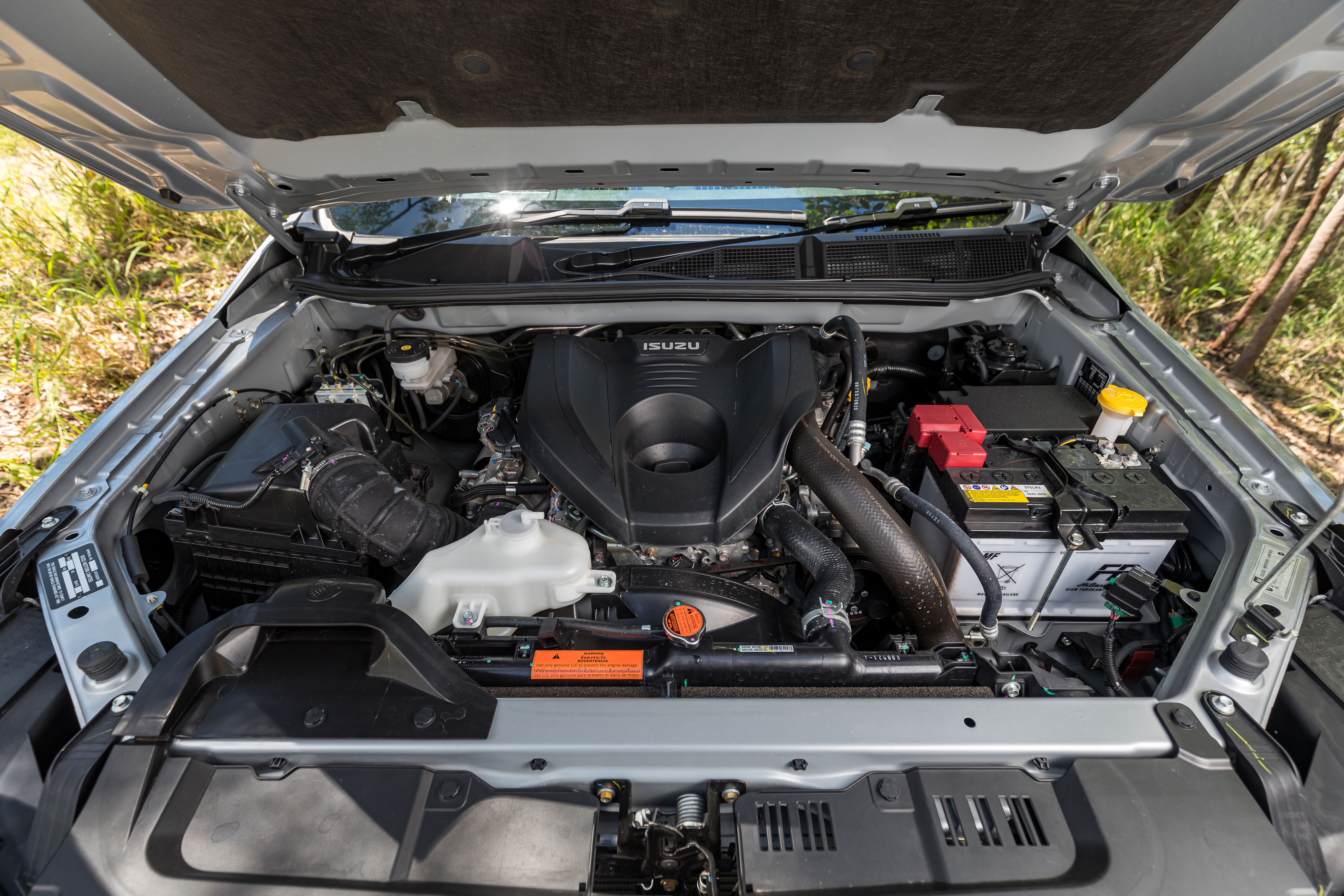
The engine would be given a kick in the pants with around $8000, which is a tough pill to swallow, but would net me a new G-Turbo, a front mount PWR intercooler, a custom dyno tune and a few ancillaries like a Process West catch can (make sure you use a good catch can, fam, cheap ones belong in the bin). It would result in a reliable 280hp at the treads and 650-ish Newtons of torque, which is really what they should be putting out from stock, but whatever.
After that it would be some sort of alloy frontal protection and a set of driving lights, call it $3K all up, then a set of helper Poly-Air airbags out back to deal with the trailer and a Redarc TowPro Elite for the brakes, both of which would sting me around $2000 fitted.
Finally, a set of slightly larger 275/60R20 AT Plus Toyo Open Country tyres for around two grand, which would open up a lot of tracks and destinations to my MU-X and camper combo.
When it comes to the Toyota stable, I try to look at engines. While pretty much every other Toyota steed has gone with the underwhelming 2.8L four-banger, thank the Pagan gods that the 300 has the 3.3L twin-turbo V6 diesel (which is an outrage and a shame, but there it is).
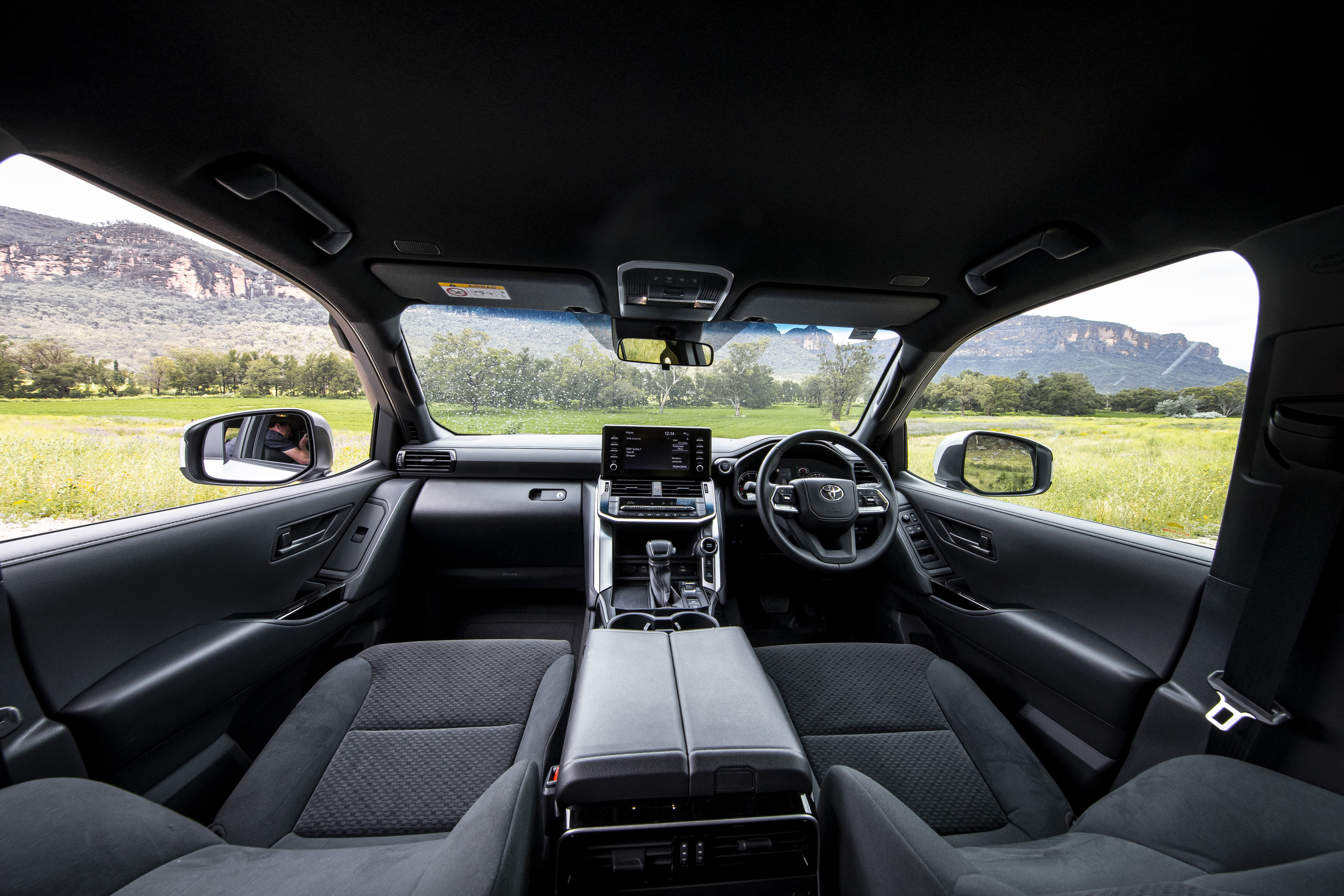
It’s not the only reason to think about an LC300, but it’s a damn good one. Plus, the three-hundo is a beautiful rig, inside and out and a pleasure to drive. Yes, justifying the six-figure price tag for an interior that reminds me of a 2016 RAV4 is not easy. That and the fact that it’s a “wedding car.” You know how if a baker or photographer hears you’re buying their product for a wedding the price automatically goes up? Apparently, the aftermarket applies the same logic to the big Cruiser.
However, those things are offset by a couple of huge ticks in the double-yew column. First, it’s a Cruiser, so you already know the off-road ability is right up there. And I’m not just saying that as a guy with a LandCruiser tattoo on his arm. I’ve taken an LC300 through a bunch of different terrains over the past few years and it handled all of them effortlessly. It has power, it has torque and it has enough suspension to tackle most obstacles from stock. Second, this is a vehicle that can do anything you want it to, no matter what your needs. The only limiting factor is your budget.
Want to tow your 4T boat over the Pilbara to tackle some fishing off Exmouth? You’ll need a pre-rego GCM upgrade and a few other mods, but it’ll do it no probs. Want to lug your 18-foot van along the Limestone coast, up the beach and visit a few camping spots? You can make your Cruiser do that too. Want a hardcore tourer that can conquer A-grade tracks on the weekend then blow through the worst tracks the Cape has to offer on your annual trip and get you home again in comfort and style? Guess what, that’s not a drama, Captain.
For me, I’d want my three-hunjy to be a sweet-as daily driver (no mods needed there), a weekend wheeler so I can keep up with mates on the tracks (some mods needed), and a long-distance hardcore tourer (many, many more mods). Here’s how I’d get it done.
I’d start with the lowest cost (relative term, none are cheap) GX. The only other model I’d consider is the off-road oriented GR Sport, which has twin-lockers, but it’s like $45,000 more expensive, and I don’t really need leather adjustable seats, bi-LED lights and surround view cameras. You may, which is cool, but I don’t and would rather spend that money saved on additions I do want. The GX is also the only model to come with a snorkel, which is not a snorkel, more a raised air intake, but it can become a snorkel with a Saturday arvo spent with a tube of silicone.
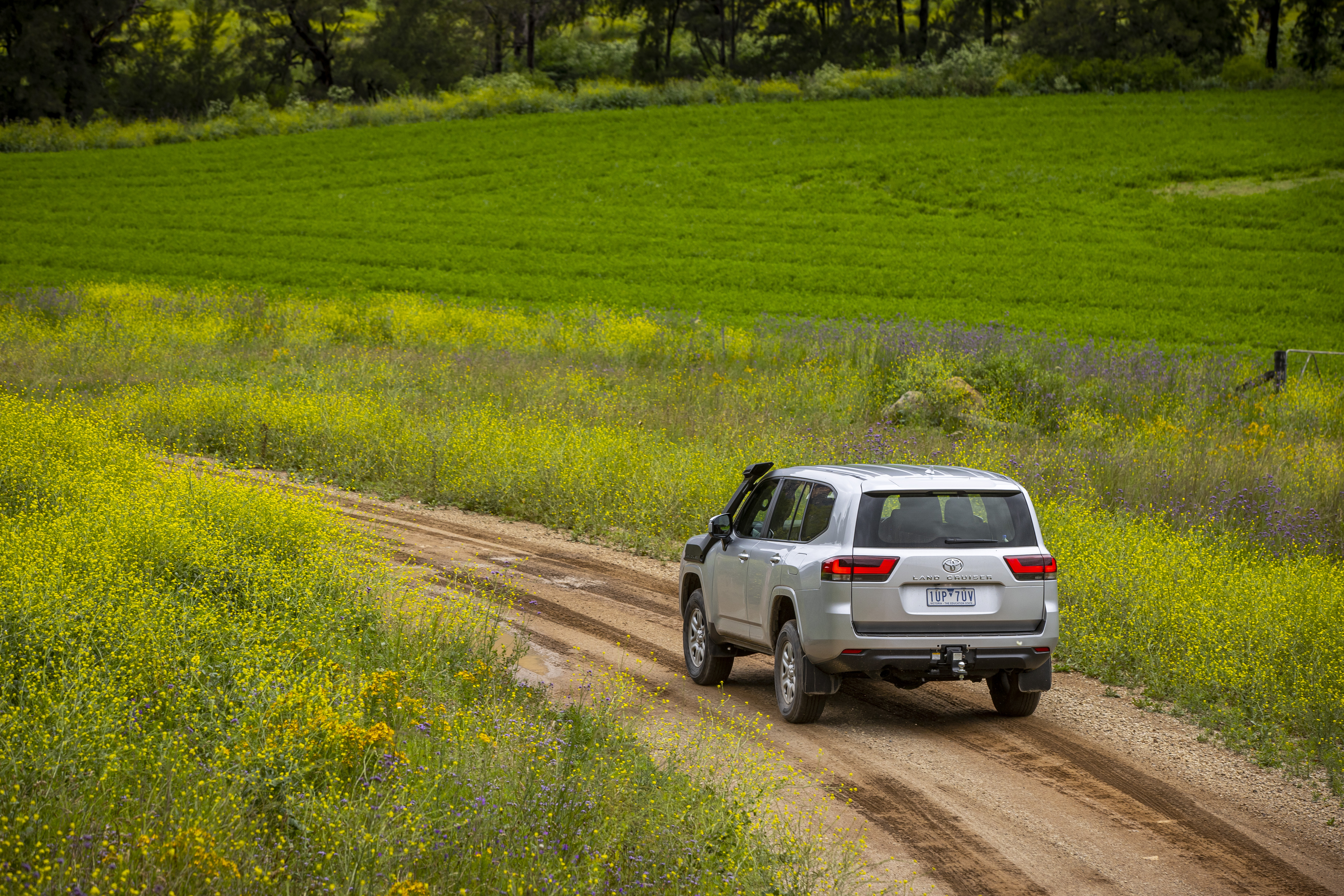
Bull bar, winch and sliders are the first big ticket items to get knocked over. A Raid bar from Ironman 4×4 for $2800 would be bolted up along with a set of rock sliders from Legendex for $1500. While the bar is going on a Warn VR Evo 12K electric winder would get the nod for a touch over $1500. Oh, and some Baja Designs LP9 LEDs would get bolted up front for a bit of extra after-dark visibility. That’s body protection, lights and recovery sussed, let’s move on.
I want to do the occasional hardcore run, so a Superior Engineering Remote Reservoir 2.0 four-inch lift kit that includes everything from rear control arms, shocks, springs, front struts, front diff drop, UCAs, literally everything, so it’s $7600 well spent. This would enable rub-free fitment of some 35×12.5×17 Yokohama Geolander X-AT tyres for around $2700. From there it’s on to ARB where a pair of Air Lockers would be thrown into the front and rear diff housings for around $5000, which would take care of any capability question marks.
After that, a 240Ah lithium battery system using a combo of Redarc and Victron BMS parts would be installed for around $5000, which is enough to run my fridge, induction cooker and camp lighting for days (with help from my Redarc 240W solar blanket).
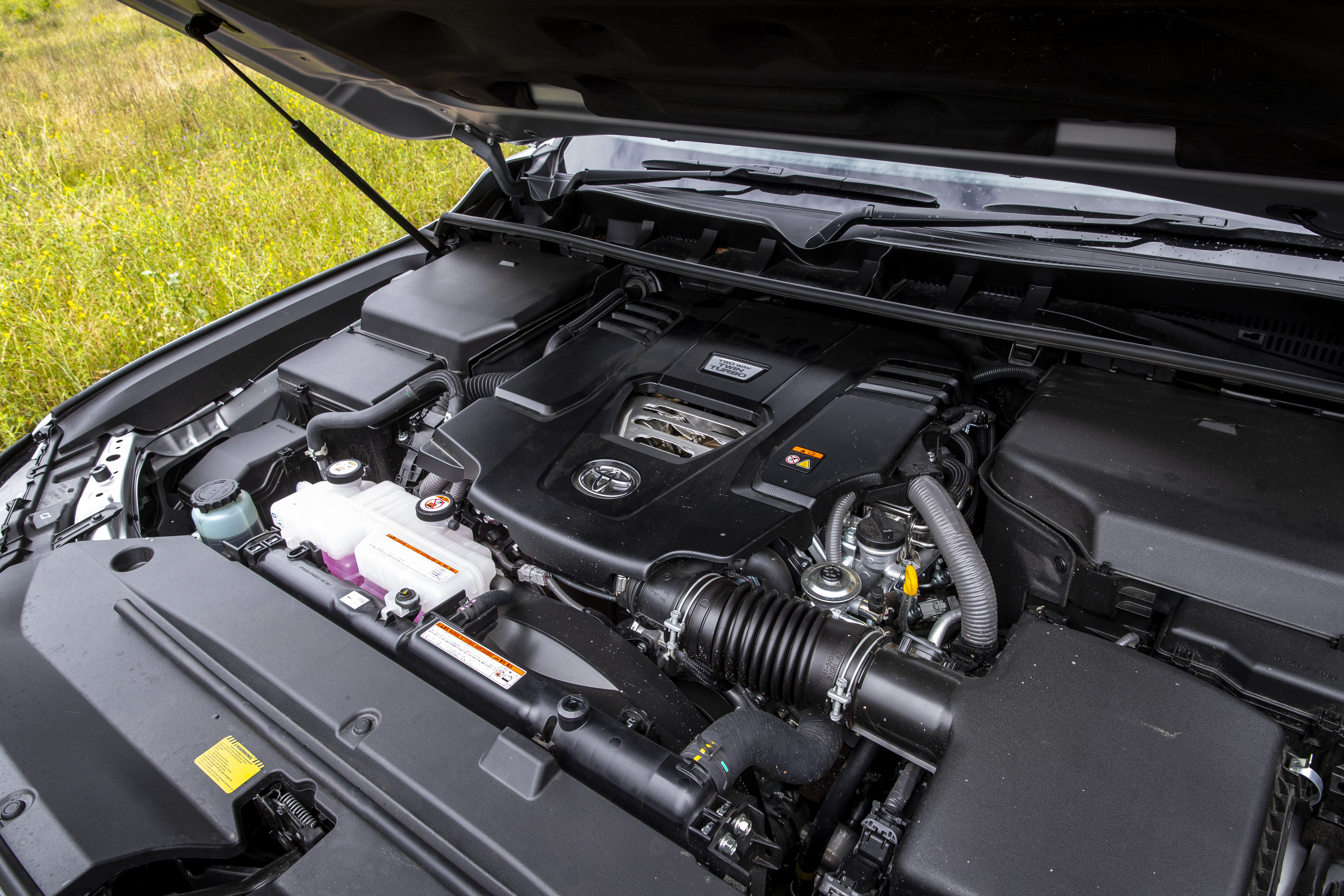
An exhaust and tune would be next, which would net around 290hp at the treads and enough torque to change the rotational axis of the Earth. Well worth it for around $5K I think. To keep my gear organised, a set of RV Storage drawers with integrated upright Bushmans 85L fridge ($1485) partition, lightening the old credit card by $3500 or so. Finally, an alloy Yakima flat rack ($1450) would go on so I could mount up an Outback Tourer Z Rooftop Tent ($4490) and Outback Tourer 270º awning with D-zipper ($1390) to enable access to the tent.