LDV has announced full pricing and specs for its Terron 9 ute, with drive-away deals starting from $49,990 for ABN holders.
That price applies to the base Origin variant, while the more upmarket Evolve is listed at $54,990 during launch. These figures reflect a limited-time offer, with regular pricing sitting $1000 higher for both trims. Non-ABN buyers can expect to pay roughly $3,500 to $4,000 more, depending on spec.
| Model | Standard Price (Drive-away) | Launch Offer (Drive-away, Limited Time) |
|---|---|---|
| Terron 9 Origin | $50,990 (ABN) / $53,674 (Retail) | $49,990 (ABN only) |
| Terron 9 Evolve | $55,990 (ABN) / $58,937 (Retail) | $54,990 (ABN only) |
The Terron 9 is powered by a 2.5-litre four-cylinder turbo-diesel making 163kW and 520Nm. An eight-speed automatic transmission and full-time four-wheel drive are standard, and braked towing is rated at 3500kg. Claimed fuel use sits just under 8L/100km.
“We want to make sure when a ute buyer walks into an LDV showroom, we have a vehicle that offers value across a range of price points,” said the General Manager of LDV Australia, Dinesh Chinnappa.
“We are not going to leave our traditional ute buyers behind. Rather, the LDV Terron ute series will broaden our offering across the ute segment. We have seen the ute market evolve in recent years, including in the tradie and workhorse space.
“These customers work hard and are often on the road all day, and they appreciate space and comfort as much as family buyers do. So the new-generation LDV Terron 9 has been developed to reflect the changing demands on these vehicles.
“Workhorse no longer means compromise. With the new-generation LDV Terron 9 we are bringing new levels of space and comfort to the ute segment,” Chinnappa said.
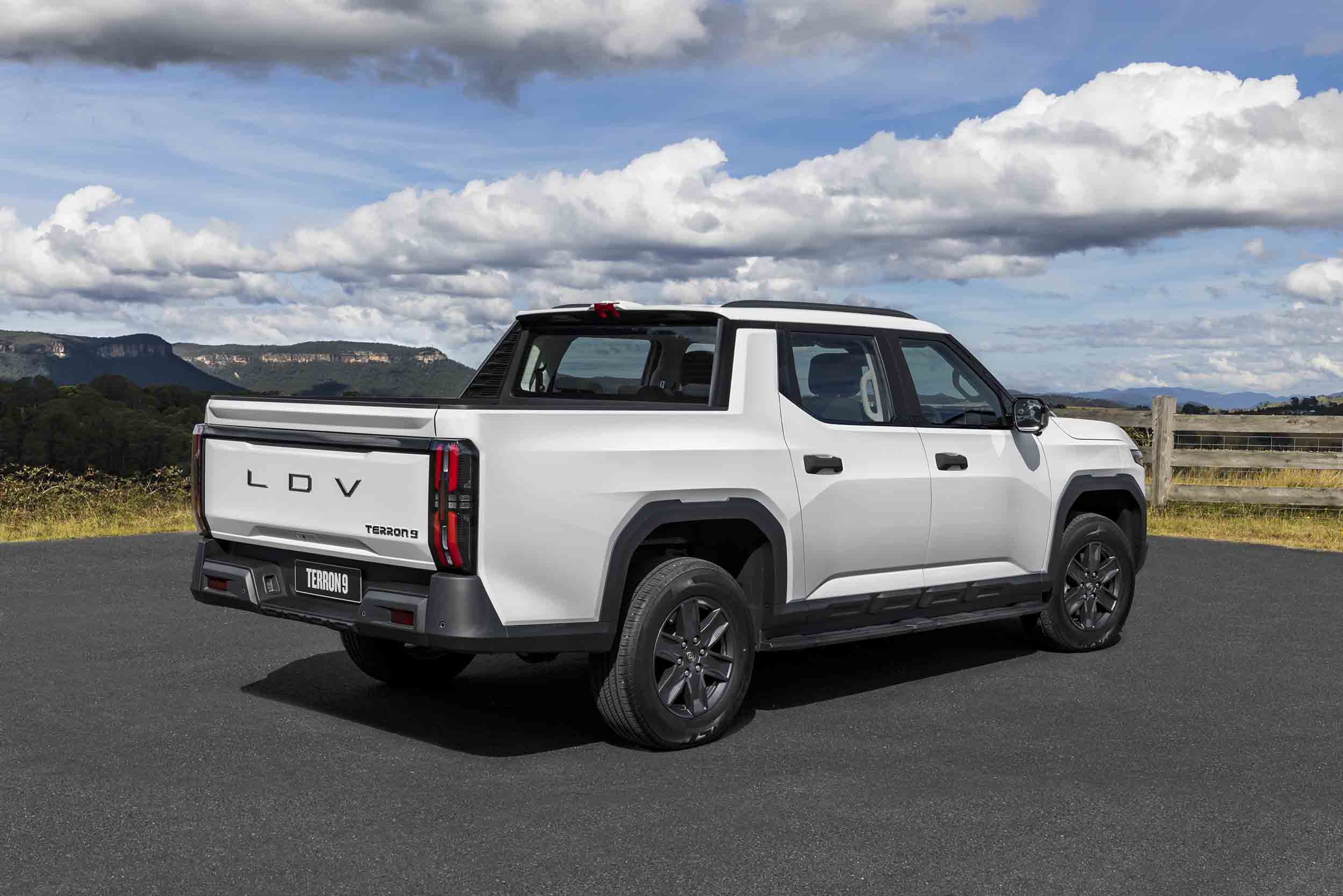
The new platform sees the Terron 9 stretch over 5.5 metres in length and nearly two metres wide, placing it just above mainstream dual-cab competitors like the Ford Ranger and Toyota HiLux.
| Model | Length (mm) | Width (mm) | Height (mm) | Wheelbase (mm) |
|---|---|---|---|---|
| LDV T60 Plus | 5395 | 1900 | 1819 | 3175 |
| LDV T60 Mega Tub Plus | 5710 | 1900 | 1819 | 3490 |
| LDV Terron 9 | 5500 | 1997 | 1874 | 3300 |
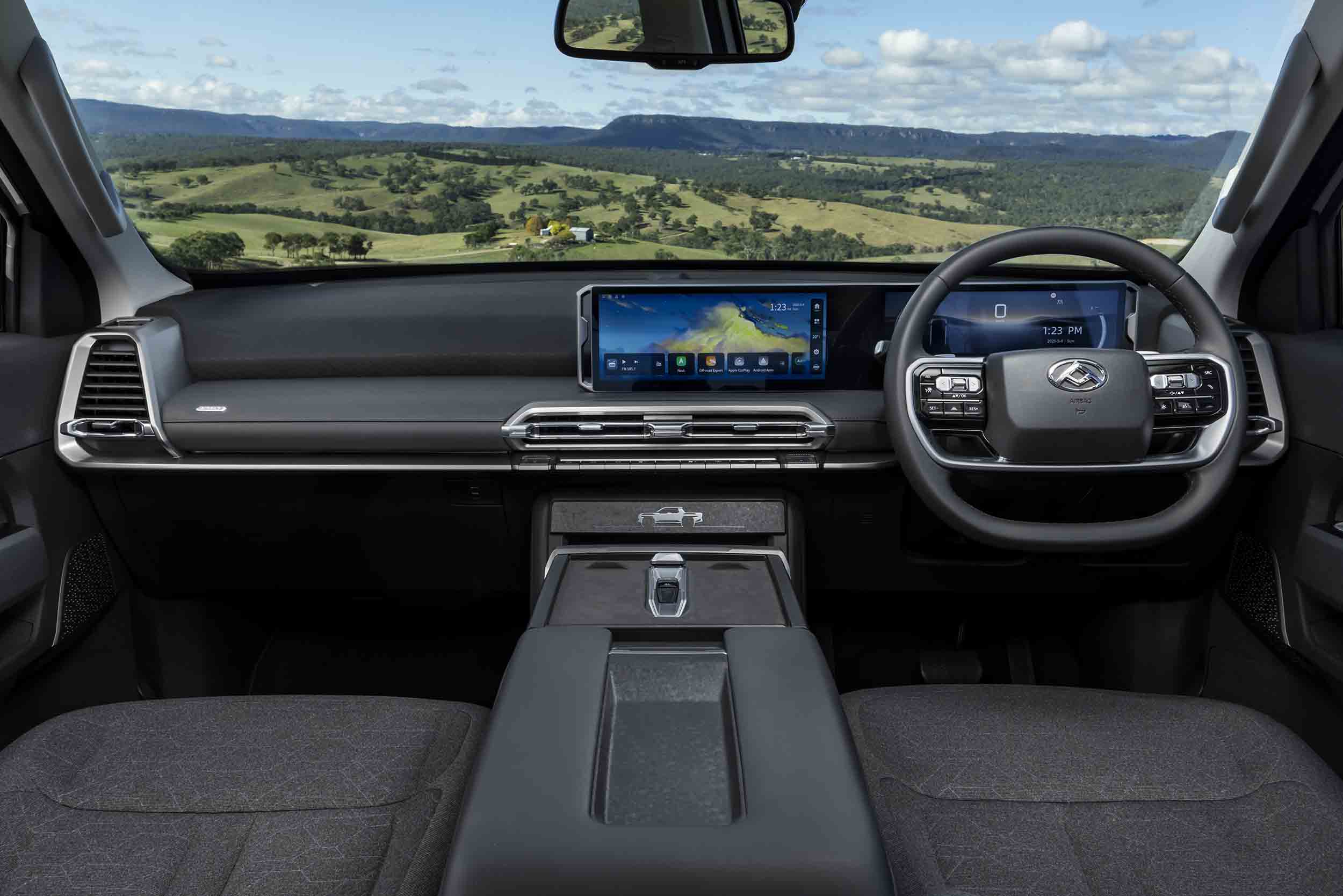
Inside, the ute offers features that lean more toward comfort than the bare-bones workhorse some may associate with LDV. The seats are trimmed in leather, with the driver’s chair offering ventilation, massage and power adjustment. Both front seats can also recline fully to form a makeshift sleeping platform – a handy touch for touring and overnighters.
Later in 2025, LDV will roll out an electric version of the ute, dubbed the eTerron 9. This model will be available in rear-wheel-drive and dual-motor AWD variants, offering up to 325kW of output. A 102kWh battery is expected to deliver over 400km of driving range, and like the diesel version, it’ll support 3.5-tonne towing. Pricing hasn’t been confirmed.
All Terron 9 models are backed by a seven-year, 200,000km warranty. The first scheduled service is due at 10,000km, with subsequent intervals every 15,000km.
The Terron 9 will start to arrive in showrooms from next month.
LDV Terron 9 Origin standard equipment
- Dual 12.3-inch widescreen digital displays (instrument cluster and infotainment screens)
- Wired and wireless Apple CarPlay and Android Auto
- AM/FM and DAB radio
- Four-speaker audio
- 2 x USB-A charging ports
- 2 x USB-C charging ports
- 1 x 12V power socket
- Cloth seats
- Six-way electric front seat adjustment
- Bi-LED headlights
- 18-inch alloy wheels
- 265/65/18 highway terrain tyres
- Full size spare tyre on matching alloy wheel
- Towbar and wiring harness
- Rear differential lock
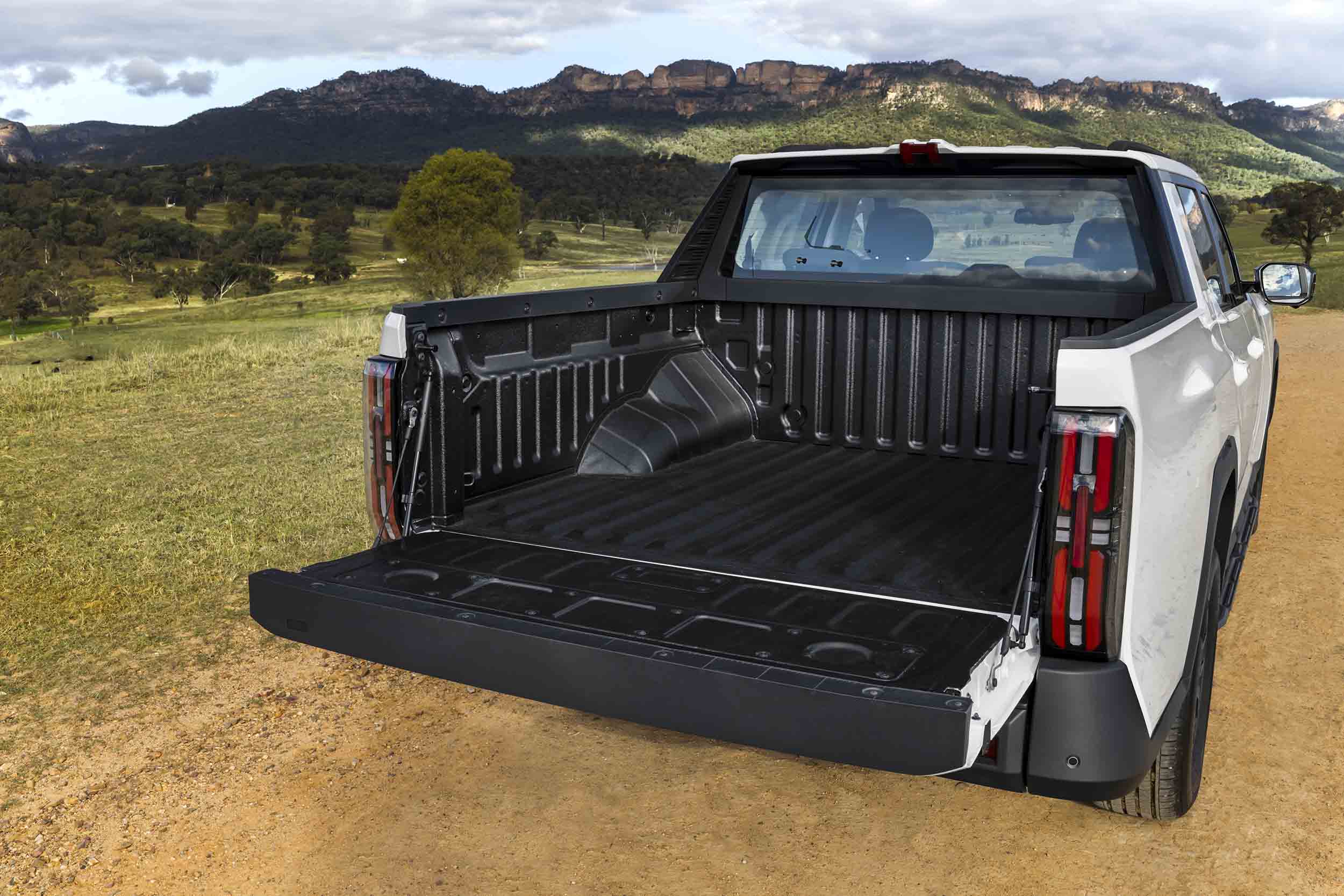
- Spray-in bed liner
- Side steps
- Roof rails (black)
- Tailgate lock
- Tailgate with spring lift assistance
LDV Terron 9 Evolve adds or replaces
- 8-speaker JBL audio
- Eight-way electric front seat adjustment
- Heated and ventilated front seats with massage function
- Heated rear seats
- 20-inch alloy wheels
- 275/55/20 highway terrain tyres
- Front and rear differential locks
- Trailer back-up assistance
- Auto folding mirrors
- Ambient interior lighting
- Cargo bed lighting
- Cargo rails
| Specification | Details |
|---|---|
| Engine | Turbocharged 2.5L four-cylinder diesel |
| Power | 163 kW @ 3800 rpm |
| Torque | 520 Nm @ 1500-2500 rpm |
| Fuel type | Diesel |
| Fuel tank capacity | 80 litres |
| Fuel consumption (combined) | 7.9 L/100km (label figure) |
| Emissions standard | Euro 5 |
| Transmission | 8-speed torque converter automatic |
| Driven wheels | Four-wheel drive |
| Brakes | Four-wheel discs |
| Rear suspension | Leaf spring |
| Length | 5500 mm |
| Width (body) | 1997 mm |
| Width (mirrors folded) | 2045 mm |
| Width (mirrors extended) | 2265 mm |
| Height (including roof rails) | 1874 mm |
| Wheelbase | 3300 mm |
| Ground clearance | 215-220 mm (laden vs. unladen) |
| Turning circle | 13.3 metres |
| Approach angle (unladen) | 29 |
| Departure angle (unladen) | 25 |
| Ramp over angle (unladen) | 20 |
| Wading depth | 550 mm |
| Tub box width | 1600 mm |
| Tub box length | 1600 mm |
| Width between wheel arches | 1230 mm |
| Kerb weight | 2400-2495 kg |
| Gross Combination Mass (GCM) | 6500 kg |
| Gross Vehicle Mass (GVM) | 3500 kg |
| Payload | 1005-1100 kg (depending on grade) |
| Towing capacity (braked) | 3500 kg |
| Towing capacity (unbraked) | 750 kg |
| Max towball down weight | 350 kg |
Nearly 400 years ago, Dutch explorer Pieter Nuyts skirted what he saw as a “barren wasteland” aboard the Gulden Zeepaardt. But it wasn’t until 1826 that the British officially claimed this remote coast, arriving aboard the Amity and founding a convict outpost that would become Albany.
Originally called Frederick’s Town, it was renamed Albany in 1832. For a time, it flourished as a key deepwater port—until Perth stole the spotlight further north.
Explorers like John Eyre and even poet Henry Lawson passed through Albany, both captivated by its isolated charm. It later served as a whaling hub and a departure point for thousands of ANZAC troops heading to WWI.
Today, Albany is a thriving regional city of around 40,000 people. With a Mediterranean climate and a strong economy built on tourism, agriculture, and timber, it’s more than just a historic outpost – it’s a springboard into some of Australia’s wildest and most rewarding landscapes.
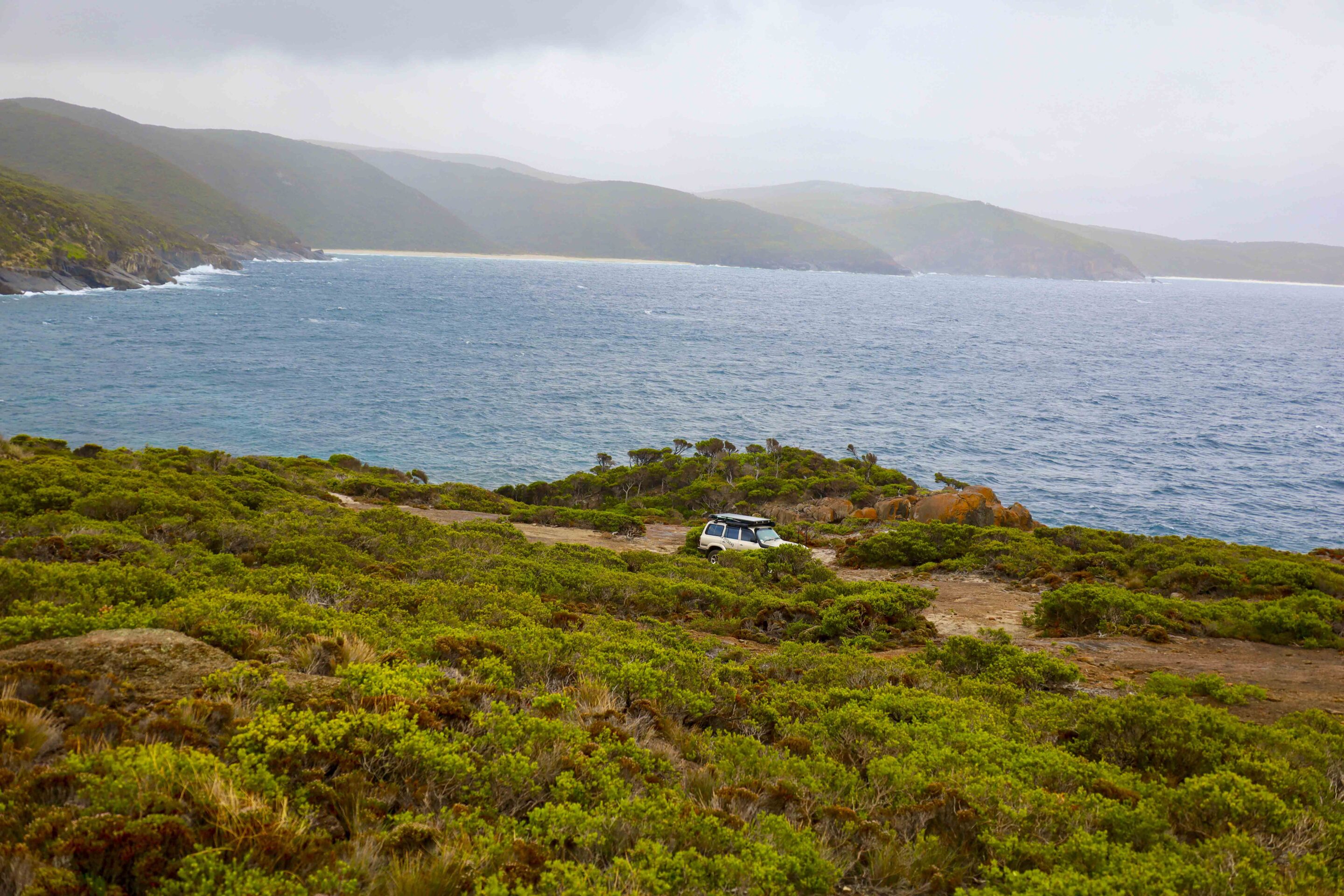
Plenty to see
With nearly two centuries of European history, there’s no shortage of places to explore.
Begin your journey in the town centre, where the heritage-listed main street leads toward the waterfront. Grab a heritage walk map to discover five self-guided trails featuring more than 30 sites, from churches and museums to the Old Gaol and a full-scale replica of the Amity.
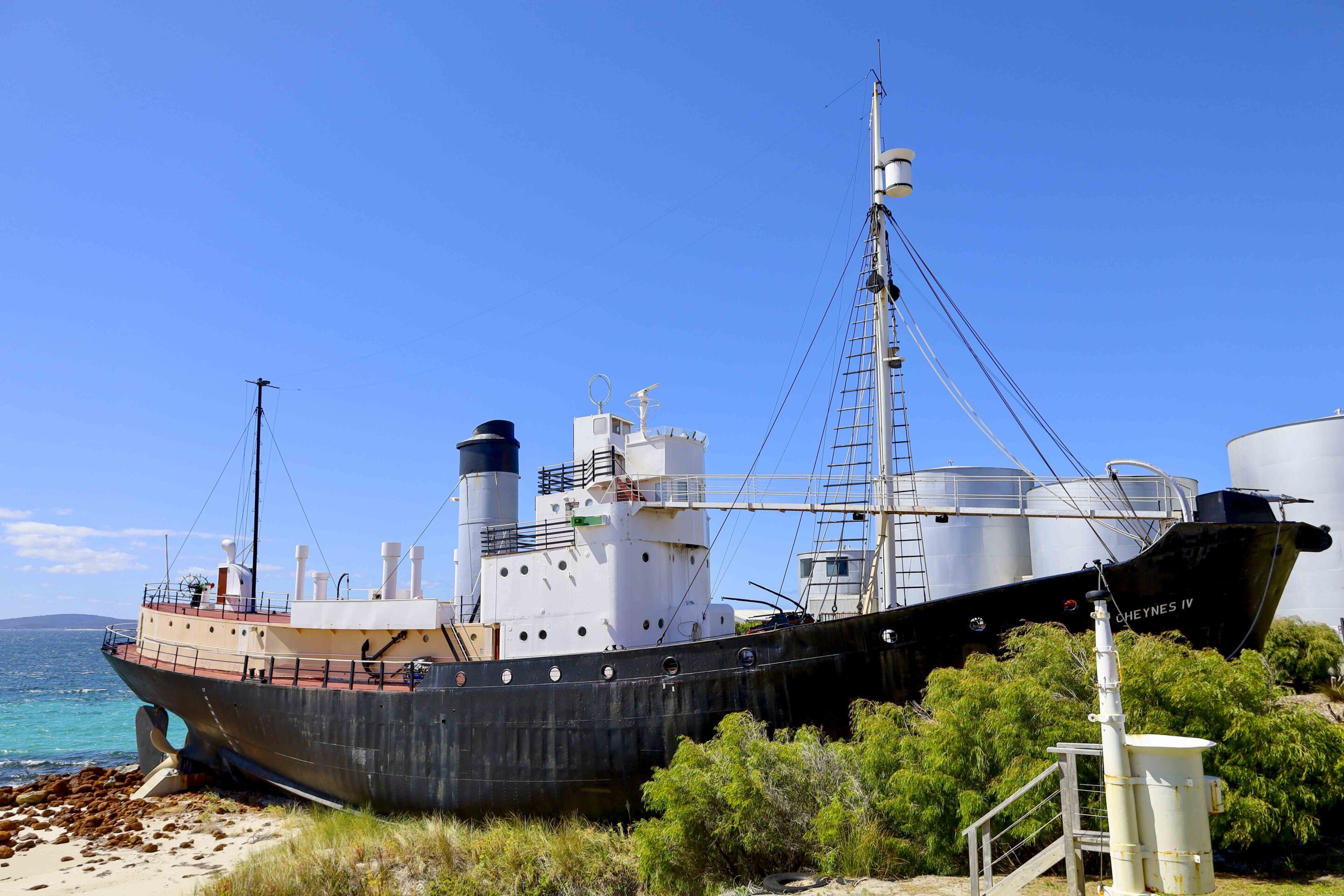
Just 22km from town, Albany’s Historic Whaling Station offers a deep dive into a controversial past. Once a functioning processing facility, it’s now a museum where visitors can explore old machinery, board the Cheynes IV whaleboat, and view the world’s first 3D animated whale film.
In town, the National Anzac Centre honours the 43,000 soldiers who departed from Albany in 1914. Set within the Princess Royal Fortress precinct, the centre offers moving stories, interpretive exhibits, and panoramic views across King George Sound. The site also includes restored bunkers and artillery once used to defend the coastline.
From January to March, Bremer Canyon becomes a hotspot for orca sightings. This 3.5km-deep marine trench teems with killer whales, sperm whales, sharks, and dolphins – all accessible on offshore eco-tours.
Natural Wonders
Nature lovers are spoilt for choice. South of town, Torndirrup National Park offers raw, elemental beauty. Stand on The Gap, a dramatic cantilevered platform over 40m-high cliffs, or visit the nearby Natural Bridge, where waves have sculpted granite into a stunning coastal arch.
If you’re looking to escape the sea spray, head north to Albany’s wine region, where cellar doors serve up top-notch vintages and gourmet fare among rolling hills.
For a challenge, venture inland to Porongurup National Park, where the 5km Granite Skywalk Trail climbs through ancient Karri and Marri forests. The summit of Castle Rock offers sweeping views across the plains – with a 6m vertical ladder climb for the adventurous.
Prefer a longer trek? Tackle the legendary Bibbulmun Track, a 1000km hiking route to Perth, or ride the Munda Biddi Trail, the world’s longest off-road cycling path.
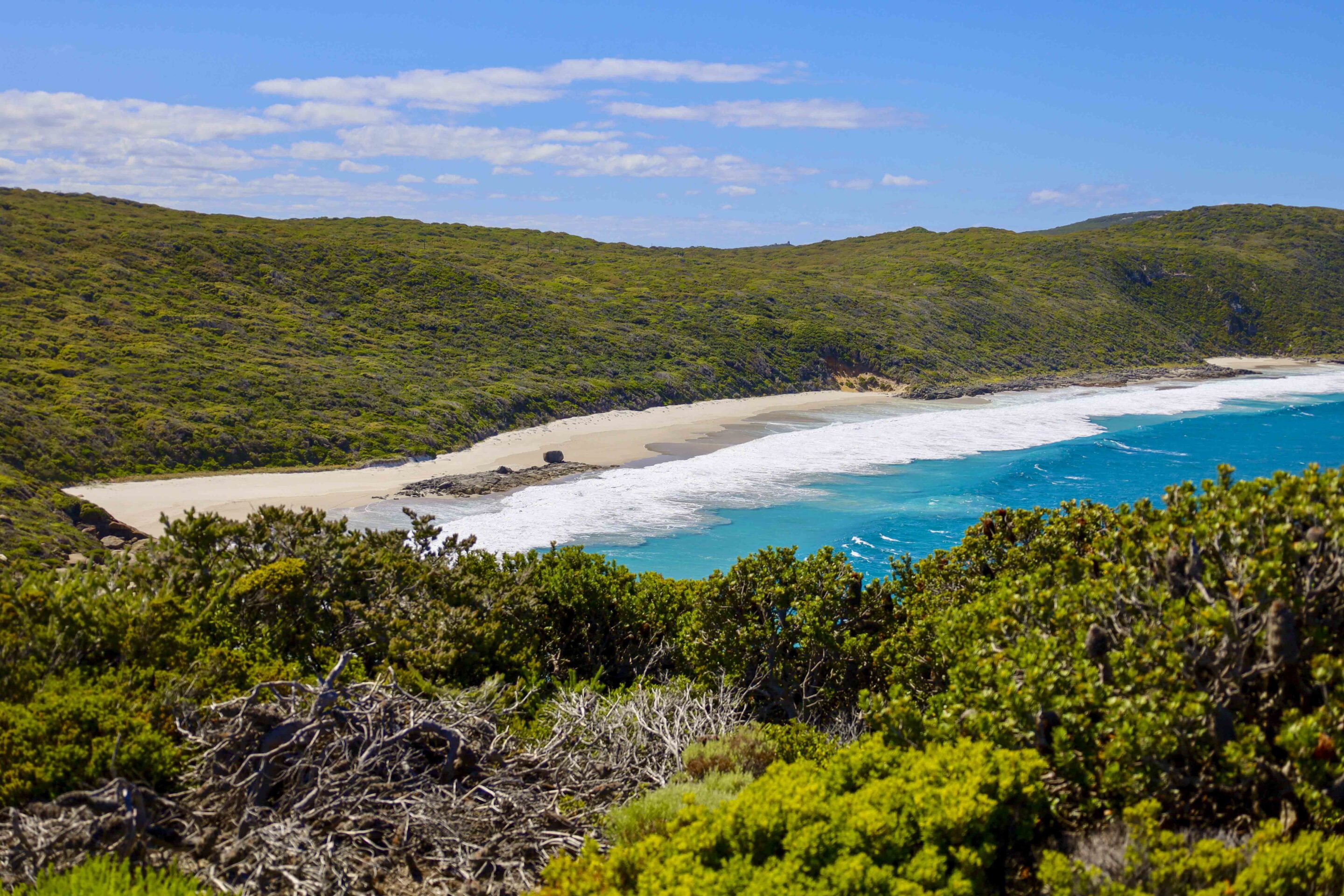
Exploring Albany
- Where: Albany is located 420km southeast of Perth, set against the wild Southern Ocean. It’s WA’s oldest European settlement, with a population of around 40,000.
- Best time to visit: Year-round – though summers are warm and dry, and winters can be wet and cool.
- Recommended stay: At least 4 days to experience the highlights, longer if you plan to hike, bike or take a whale-watching tour.
- Note: A National Parks Pass is required for park entry.
What to see and do
✅ Wander the heritage-lined main street and waterfront
✅ Visit the National Anzac Centre & Princess Royal Fortress
✅ Explore the Historic Whaling Station
✅ Brave The Gap and Natural Bridge at Torndirrup NP
✅ Taste your way through local wineries
✅ Hike the Bibbulmun Track or Granite Skywalk
✅ Join a Bremer Canyon orca tour (Jan–Mar)
More Info
Albany Visitor Centre
📞 (08) 6820 3700
🌐 www.amazingalbany.com.au
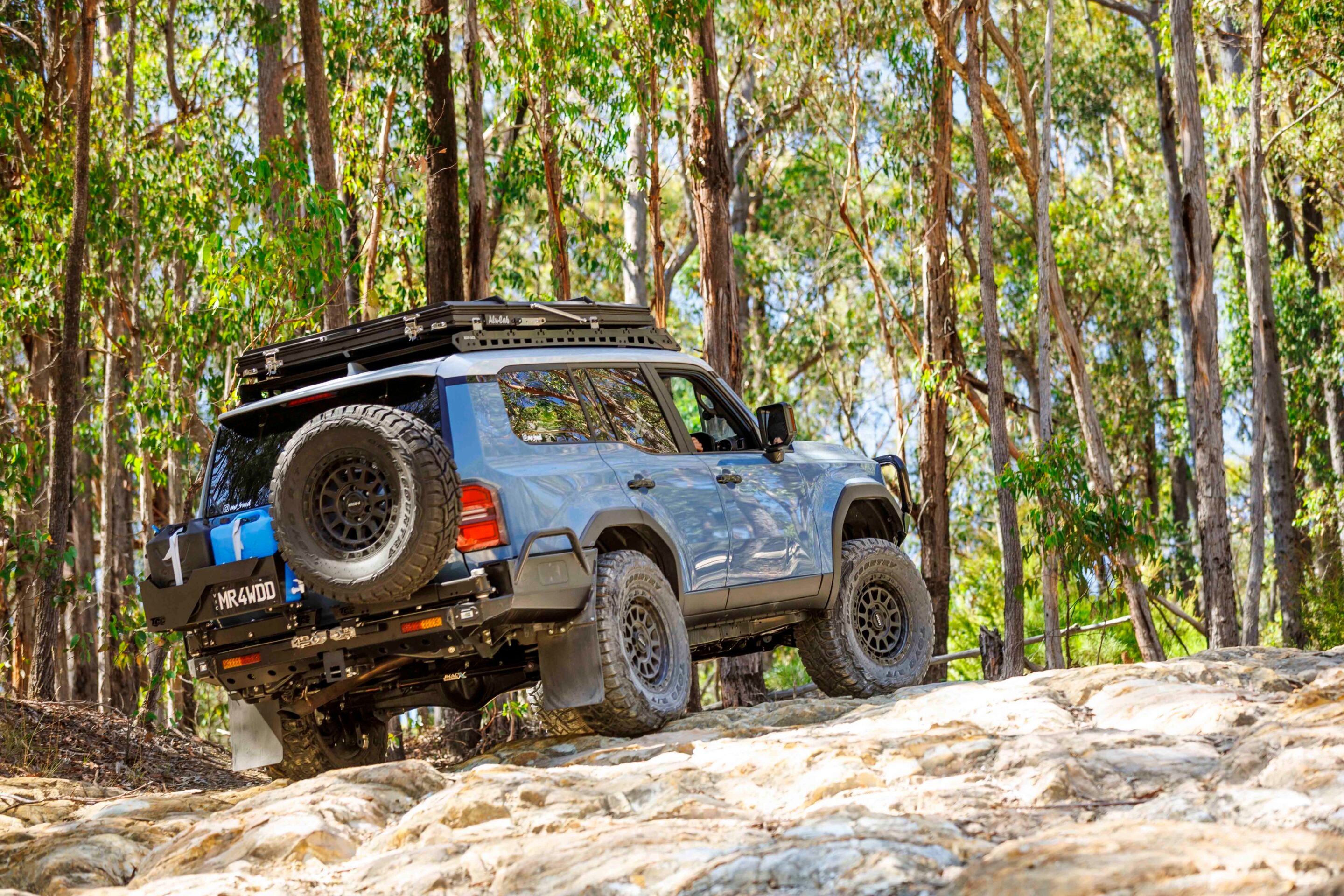
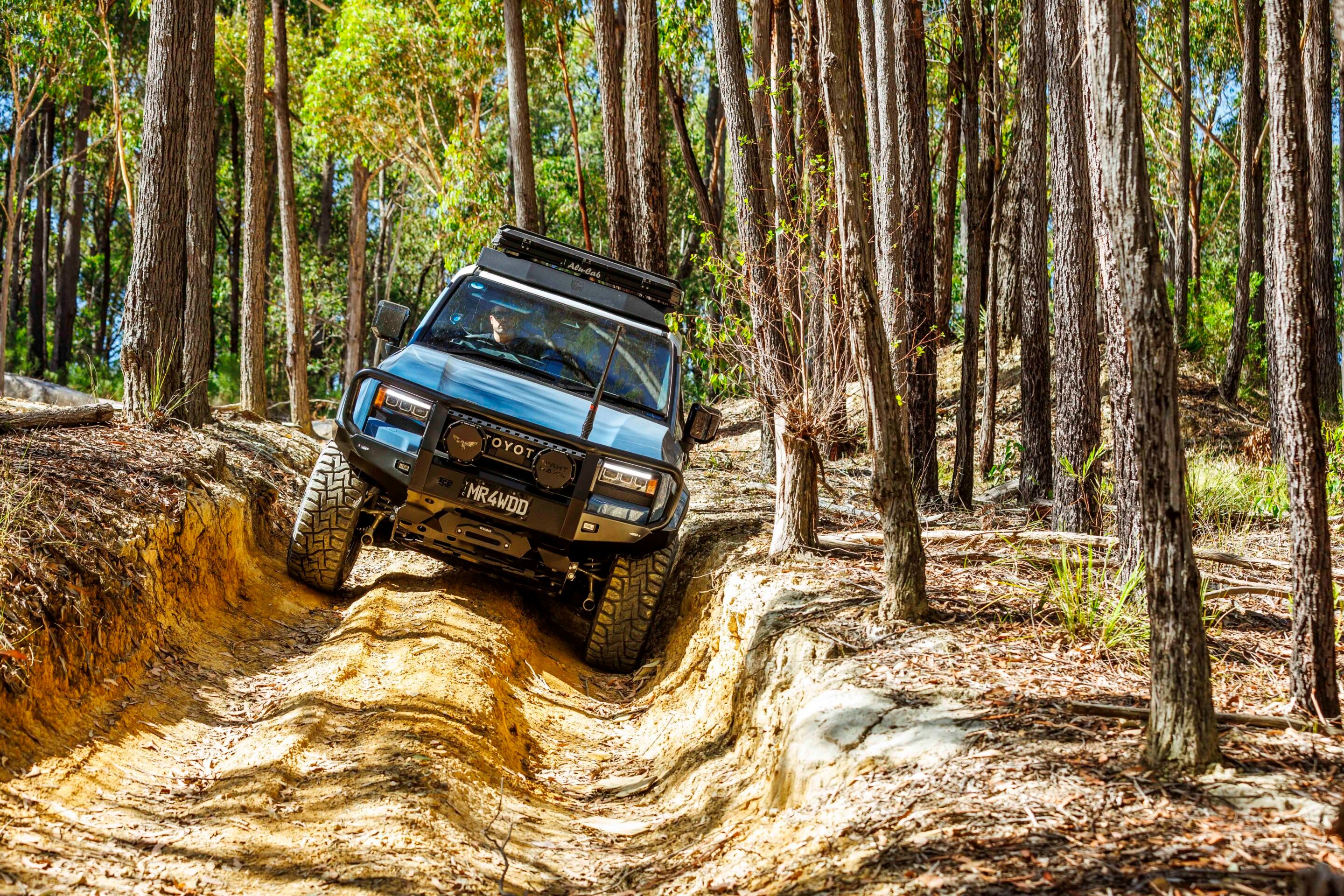
When you’ve owned more than 50 four-wheel drives in a relatively short life, you’re kind of justified in carrying the Mr 4WD tag on your number plates.
While Nick Walford’s 250 Series Toyota Prado wears an extra ‘D’ on the end of the title, you can rest assured that the MR4WD plates are bolted to one of his other rides. Nick’s current fleet includes a pair of new TroopCarriers, a couple of super-neat 80 Series Cruisers, a Patrol and, of course, this new Prado… and that’s just the 4x4s!
Choosing the 250 Series platform
“It was a new platform to test and build,” Nick told us when we asked why the 250 Series. “I have had two Prados previously and they are the best all-round car.”
The 250 Series takes the Prado model to new heights in terms of space, comfort and ability, and has prompted some to say that it has finally earned the LandCruiser badge it wears. Of course, the 250 Series is sold as the new LandCruiser in the United States and some other countries where the Prado name has no meaning.
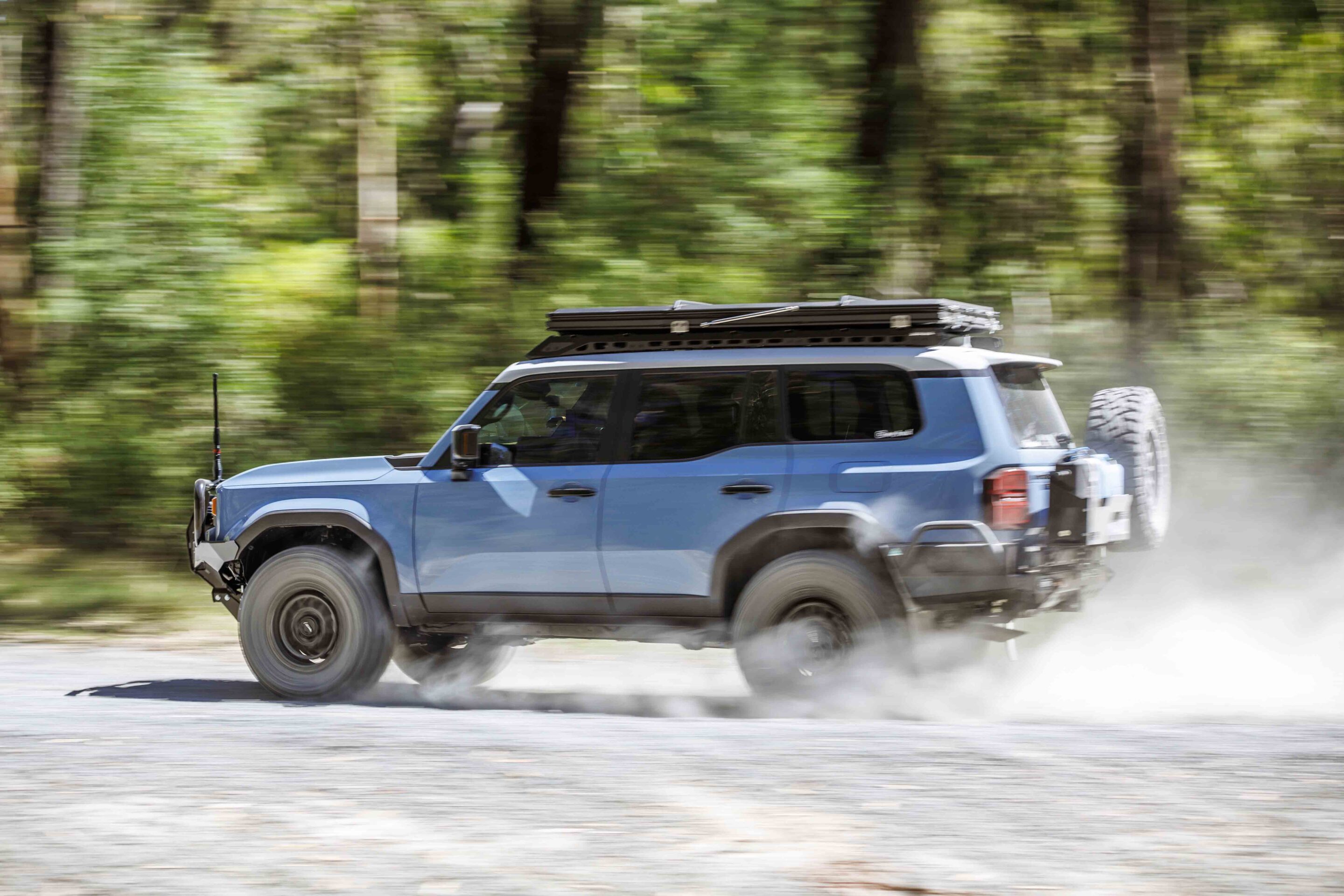
Nick chose the Altitude as it represents the most off-road focused model in the range thanks to its Multi-Terrain modes, rear locking diff and disconnecting front sway bar. It also comes in this super-cool blue-and-white livery. Previously called Retro Blue, and still going by that name on US-market LandCruisers, Toyota Australia now calls it Ningaloo Blue. Whatever you want to call it, we reckon it’s a winner!
Modifications
Nick’s Ningaloo Blue Prado wasn’t going to stay stock for long.
We first spotted it late in 2024 when it was already wearing a replacement rear bar with wheel carrier from The Cruiser Company (TCC) in Melbourne. Not only was it one of the first new Prados that we saw on the road but it was already on the way to becoming modified, which certainly piqued our interest in it.
The bull bar you see on the vehicle in these photos is also from TCC, and by the time you’re reading this TCC rock sliders should be fitted as well. TCC is committed to getting quality protection gear out and available for new models as early as possible and the company’s product range is rapidly growing… and not just for Toyotas.
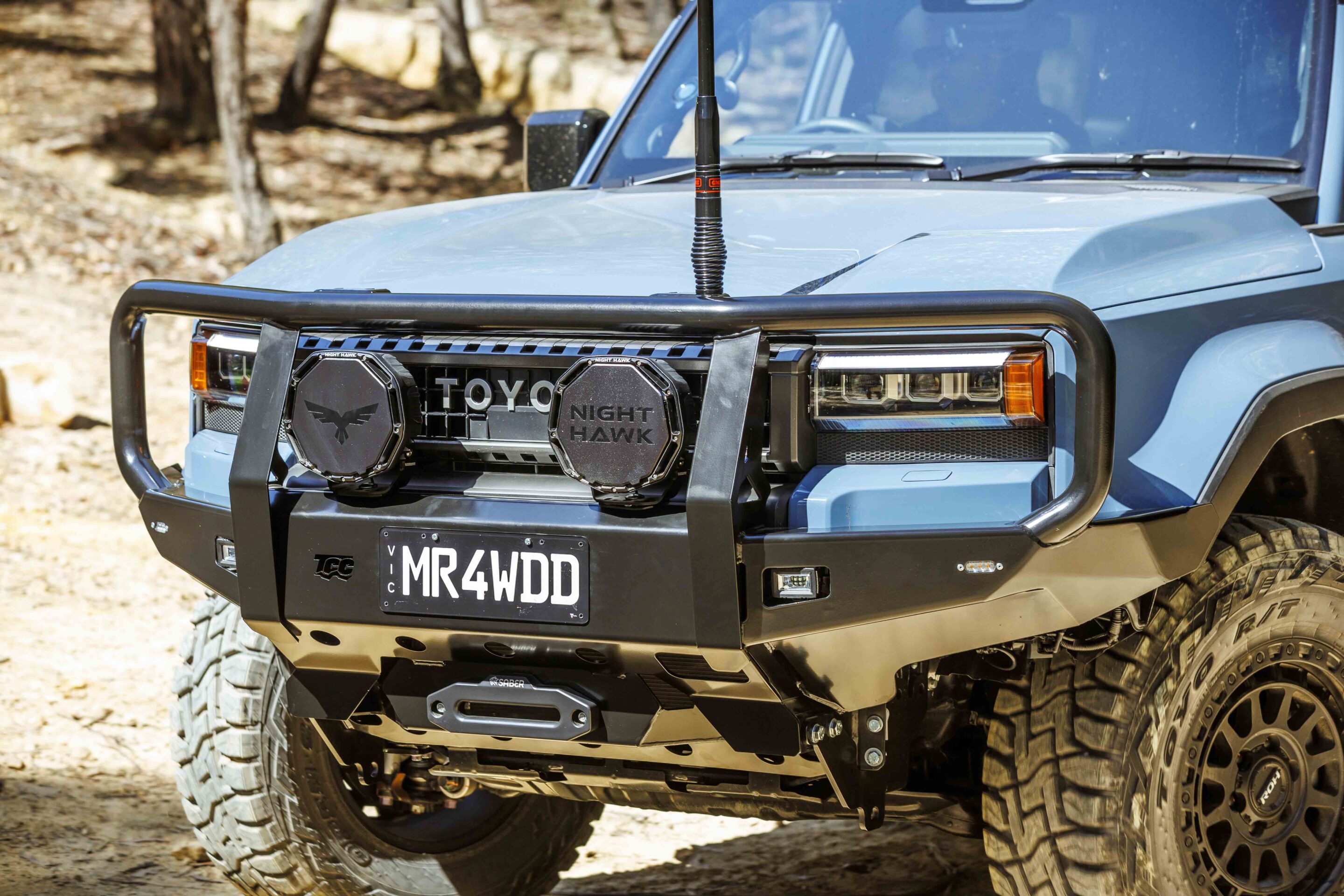
All of TCC’s bar work is made inhouse in its Melbourne facility, and this front bar is made using a 5mm plate with provisions for a winch, lights and antenna mounting, while being airbag compatible. Nick has fitted a set of Bushranger VCT driving lights to the Prado’s bar and there’s a Bushranger winch on the way soon.
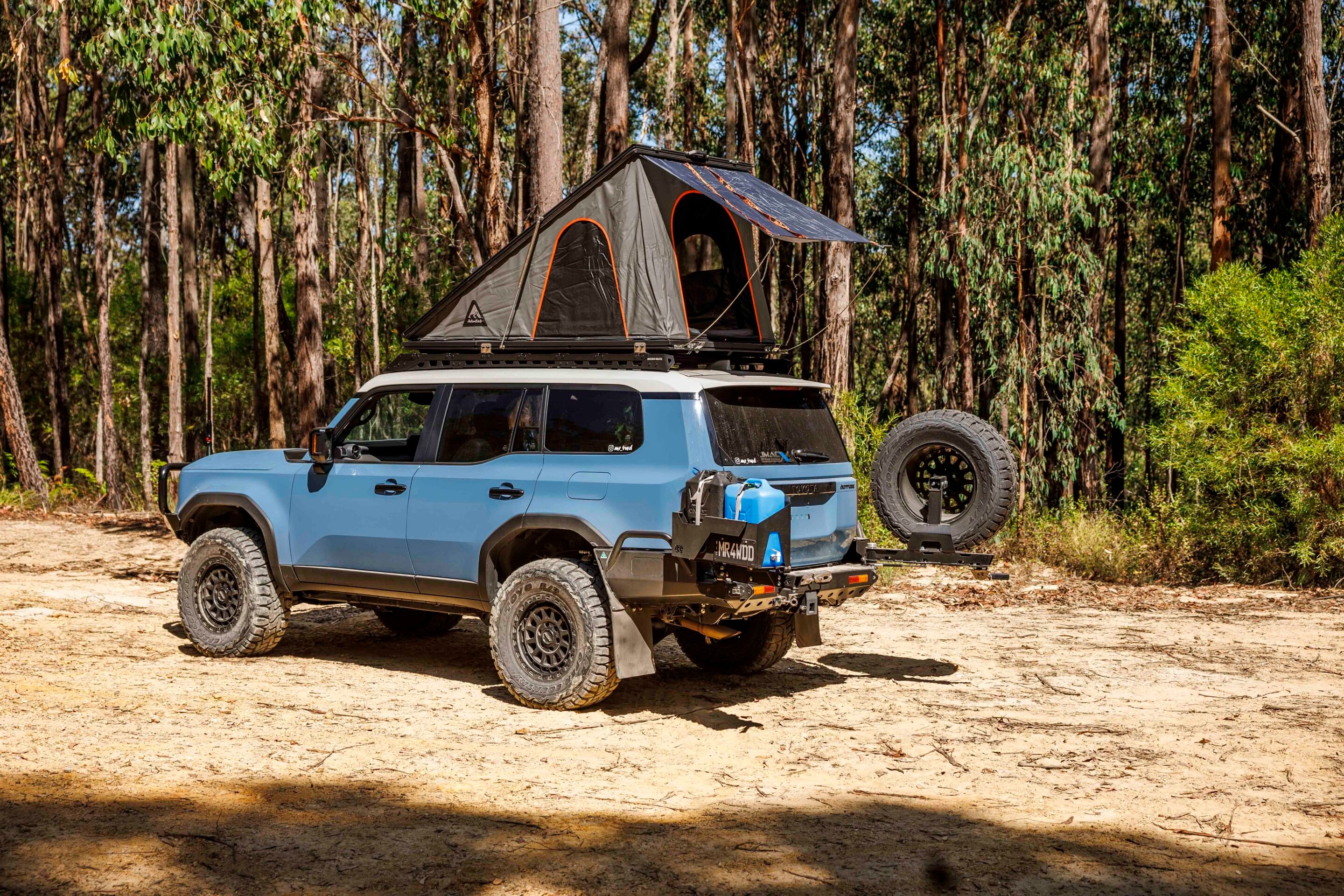
The TCC rear bar is likewise made inhouse using 5mm steel and it adds plenty of protection to the back of the Prado along with the flexibility of twin swing-out carriers. Nick has the Altitude set up with a full-size 35-inch spare on the offside and a jerry-can holder on the nearside swing-out.
Suspension upgrade
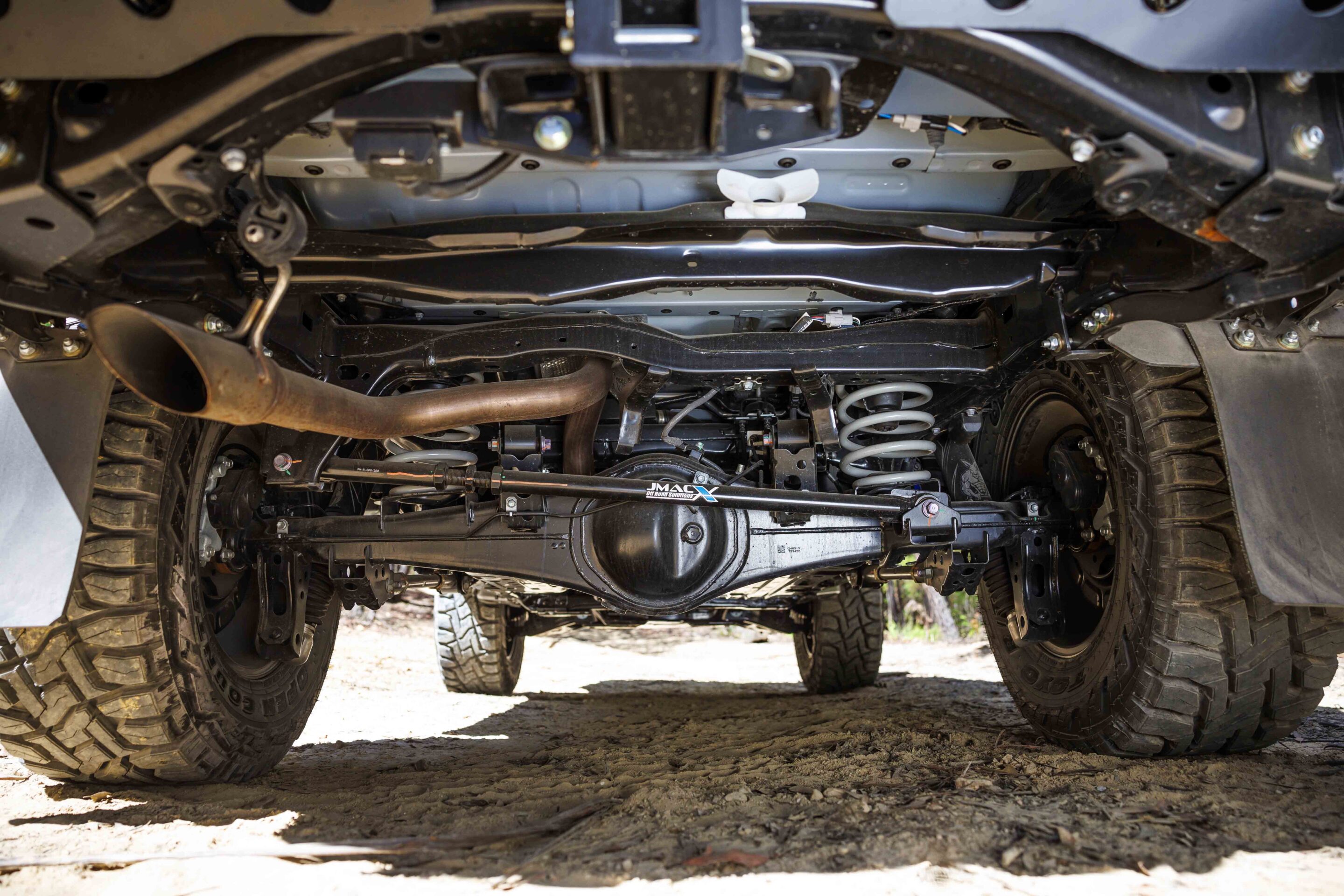
Another great Australian company turning out high quality 4×4 products is JMACX, and Nick’s Prado is fitted with a set of the latest Alpha suspension system from the Queensland business.
The suspension kit includes JMACX’s 2.5-inch bore remote reservoir adjustable shock absorbers, coils to suit the Prado’s weight, Blackhawk replacement upper control arms, an adjustable Panhard bar, and extended rear sway bar links. The raised suspension provides enough clearance to allow the fitment of 35×12.5R18 Toyo R/T donuts under the sheet metal. They are fitted to ROH Assault alloys and really look the part while giving the Prado extra off-road ability.
Roof-top camping set-up
The roof rack is from another Australian brand Rhino-Rack; it’s the new Recon Rack developed specifically for the 250 Series Prado.
Mounted to the rack is an Alu-Cab rooftop tent. It’s the LT-50 RTT which is a relatively compact two-person tent that still has plenty of features including large openings providing three-way access from the back or sides. It’s a lightweight tent, weighing in at less than 50kg, which is most important when you are considering the weight going up on your roof and the effects that weight can have on vehicle dynamics.
Real-world testing on the beaches of K’gari
While Nick has a collection of 4x4s they are not just for show; he tells us that his favourite place to get off road is K’gari and the Prado already did a trip up to the SEQ islands before it was kitted out.
The day after our photo shoot in Victoria, he was driving it back up to Queensland for the Brisbane 4×4 show, and then it was back across to the islands for some more time in the big sandpit. Nick commended on the performance of the Alpha suspension when driving on the beaches by saying, “It feels like you are driving a Trophy Truck! It’s fully adjustable so I can dial it in for comfort but it’s right at home on the beaches.”
More to come
There’s more to come for Nick’s Altitude. When he stops for a minute there’s the aforementioned winch and awning to be fitted, and he hasn’t even started on the inside yet, where a set of storage drawers and a fridge will soon find a home.
The price for Kia’s new Tasman S 4×4 dual-cab chassis has appeared on RedBook, ahead of its Australian roll-out this August.
The S 4×4 dual-cab chassis will start at $48,240 plus on-roads, making it $1750 cheaper than the dual-cab 4×4 pickup version. It also undercuts its immediate competition: $3490 less than the Ford Ranger XL 4×4 bi-turbo dual-cab chassis; and $495 less than the Toyota HiLux Workmate 4×4 dual-cab chassis.
Earlier this year, Kia Australia confirmed a dual-cab chassis variant will be released approximately one month after the dual-cab launch in July, with a single-cab chassis expected to arrive later in the year. Kia confirmed the single-cab chassis will be available in S 4×2, S 4×4, and SX 4×4 trims, while the dual-cab chassis will be offered in S 4×4 and SX 4×4 grades.
Pricing has not yet appeared for the rest of the dual-cab chassis range, as well as the single-cab chassis versions. However, if the SX dual-cab chassis was to follow the dual-cab pricing logic, then expect it to land at around $52,740.
The S grade is equipped with LED daytime running lights, synthetic leather-look trim on the wheel and gear lever, a wide-screen dash display, and ample storage beneath the rear seats. Every Tasman will run a 154kW/441Nm 2.2-litre turbo-diesel four-cylinder engine, paired with an eight-speed automatic.
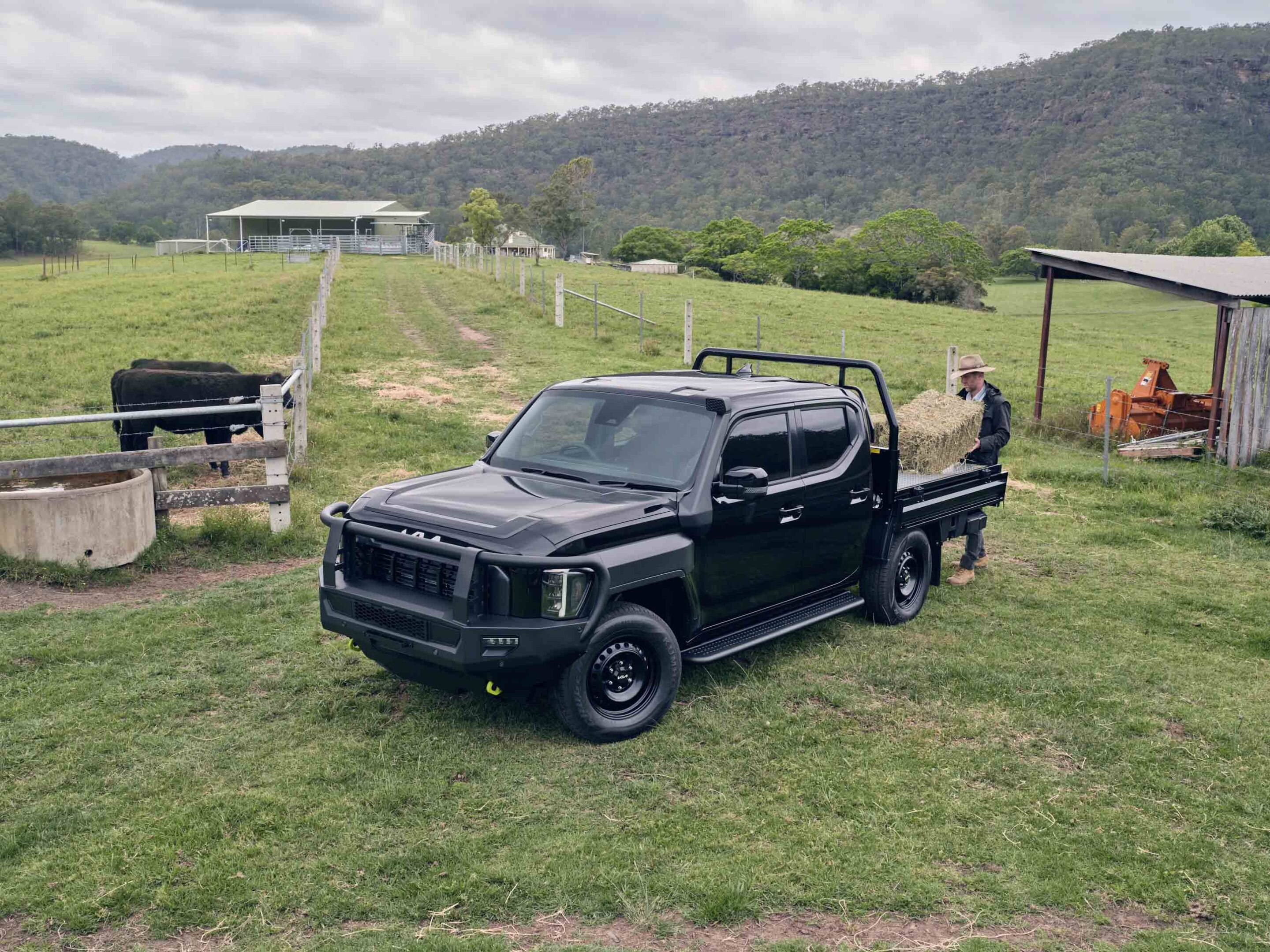
In a recent off-road test of a pre-production model, the X-Pro showed solid promise. With 252mm of ground clearance, a locking rear diff and responsive traction control, we noted that it handled rough tracks with confidence.
While there’s still some fine-tuning happening on the transmission, early signs point to a well-built, capable ute ready to hold its own in Australia’s toughest environments.
With all the changes happening so quickly in the automotive world, it has me asking: How did we get to this point? And are we really any better off?
Looking back 50 years, we had quality, Australian-made passenger cars that could take families to most parts of the country – at a time when there were far fewer sealed roads than there are today. Today’s passenger cars wouldn’t stand a chance at such a task, and even the so-called adventure SUVs would be shedding parts on the first rough track.
If your adventures led you beyond what a two-wheel-drive sedan could handle, you had simple Land Rovers, LandCruisers, Patrols, or even a Jeep 4×4 to get you where very few others ventured at the time.
Fast forward to today, and far more people are exploring the wide brown land – mostly along well-trodden, sealed tracks – in all sorts of modern 4×4 vehicles. The trouble is, many of these new vehicles on the market just aren’t built for that kind of work. Maybe the manufacturers of these vehicles should be thankful that outback roads are getting better.
Even the most basic new 4x4s are overloaded with electronics. They’re heavy and unnecessarily complicated.
The number of features and novelties on new dashboards is ridiculous. Some steering wheels have more buttons than the control stick of the space shuttle. Trying to figure out something simple like cruise control for the first time often means stopping the vehicle to find the right buttons. Sure, you get used to it after a while – but do they really need to be there?
And that’s just for the functions that still have physical buttons or dials. Many new vehicles hide everything in a touchscreen, forcing the driver to take their eyes off the road and dig through menus just to adjust something as basic as cabin temperature. A simple knob, connected to the heater tap with a cable, always did that job perfectly well.
And this is before we even get into multiple drive modes and vehicle electrification. EVs bring nothing useful to off-road 4x4s – only more complexity and more weight. Both are enemies of any serious bush tourer. It feels like something being forced on us by politicians and others who have no idea what we actually need.
All you really need is a reliable drivetrain with triple locking diffs, compliant and flexible suspension, and a good set of tyres. It’s no wonder the prices of simple old 4x4s are skyrocketing – they’re gaining popularity for good reason.
BYD is hosting a hands-on driving and tech experience at Sydney Motorsport Park from July 9 to 11, giving punters the chance to get behind the wheel of its latest electric and hybrid vehicles.
The event, called the BYD Tech Hub, will showcase the brand’s newest models through a mix of interactive drive sessions and displays. This is the first time the event has been held in Australia, and it’s completely free to attend. Drivers can test vehicles across different terrains, including an off-road course, a dynamic road surface area and a full track drive.
The big draw for many will be the Shark 6, but the Sealion 6 and Sealion 7 will also be available for test drives. BYD is also bringing out several models never seen before in Australia from its global brands including Denza, FangChengBao and Yangwang. Full list of vehicles:
- BYD Shark 6
- BYD Sealion 6
- BYD Sealion 7
- Denza Z9GT
- Denza D9
- FangChengBao B5 and B8
- Yangwang U9
For those not driving, there’s still plenty to check out: a virtual reality zone, live music, food trucks, free coffee, and a kids’ clinic run by the Sydney Roosters development team.
Spots are limited each day, and registration is required – especially if you’re planning to drive. After Sydney, the BYD Tech Hub will be heading to Brisbane, Melbourne, and New Zealand later this year.
More spy shots of the 2026 Toyota HiLux have surfaced on social media, following an earlier batch that emerged earlier this year.
UPDATE, 26/06/2025 10:10am: A second set of spy shots has surfaced of the upcoming 2026 Toyota HiLux. We’ve updated this article with the newly released images.
The latest images were shared on the Instagram page kurdistan_automotive_blog_, accompanied by the following translated caption: “Spy photo of the 2026 Toyota HiLux revealed. A new spy photo of the 2026 Toyota HiLux model during testing in Thailand has been revealed.”
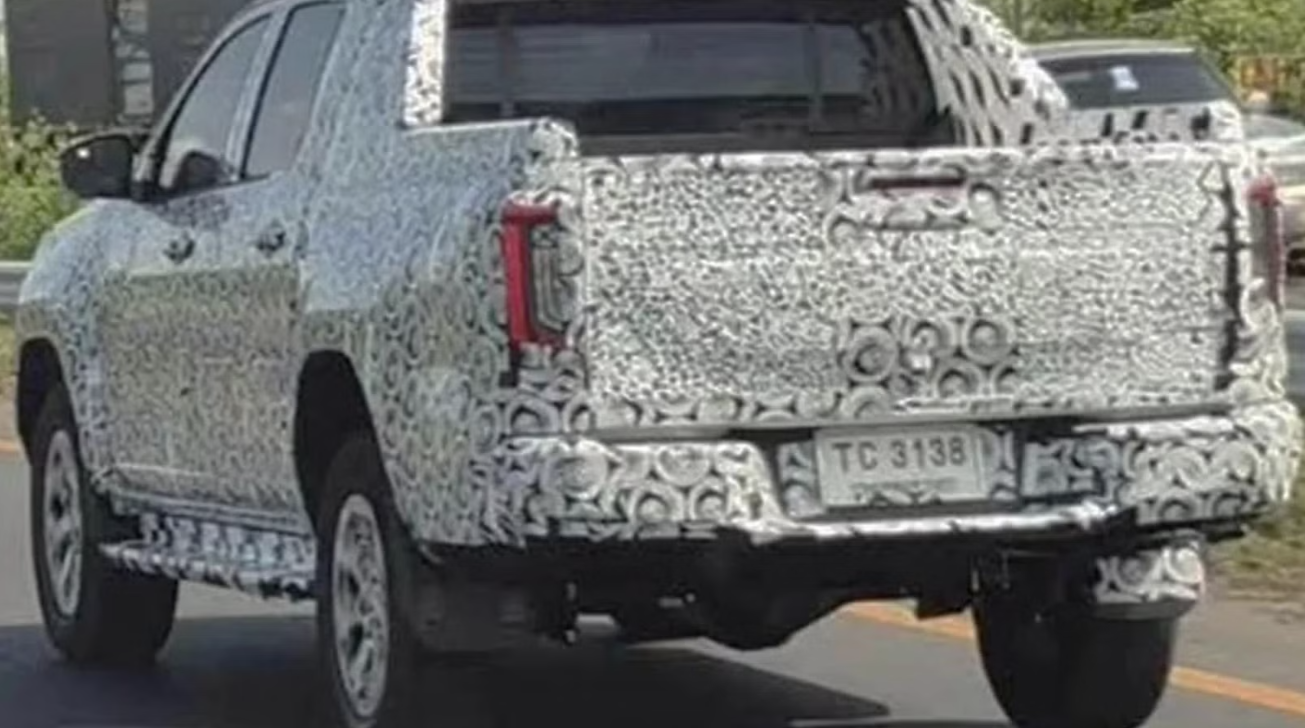
Once again, the photos suggest the next HiLux won’t be a completely new model, but rather an updated version of the current generation. Notably, this latest set gives us our first clear look at the camouflaged rear end, which reveals a refreshed tail-light design.
The official unveiling of the 2026 Toyota HiLux is expected later this year, with an Australian launch anticipated in 2026.
*The original version of this article continues below
The all-new 2026 Toyota HiLux has broken cover for the first time, with a Thai publication sharing spy shots of the highly anticipated ute.
Earlier reports published in 2024 indicated that the next-gen HiLux would not be an all-new vehicle as expected, but rather it would carry over its existing and ageing IMV platform. The report by Brazilian publication, Autoesporte, suggested the new HiLux will instead receive “substantial updates to the chassis and bodywork”.
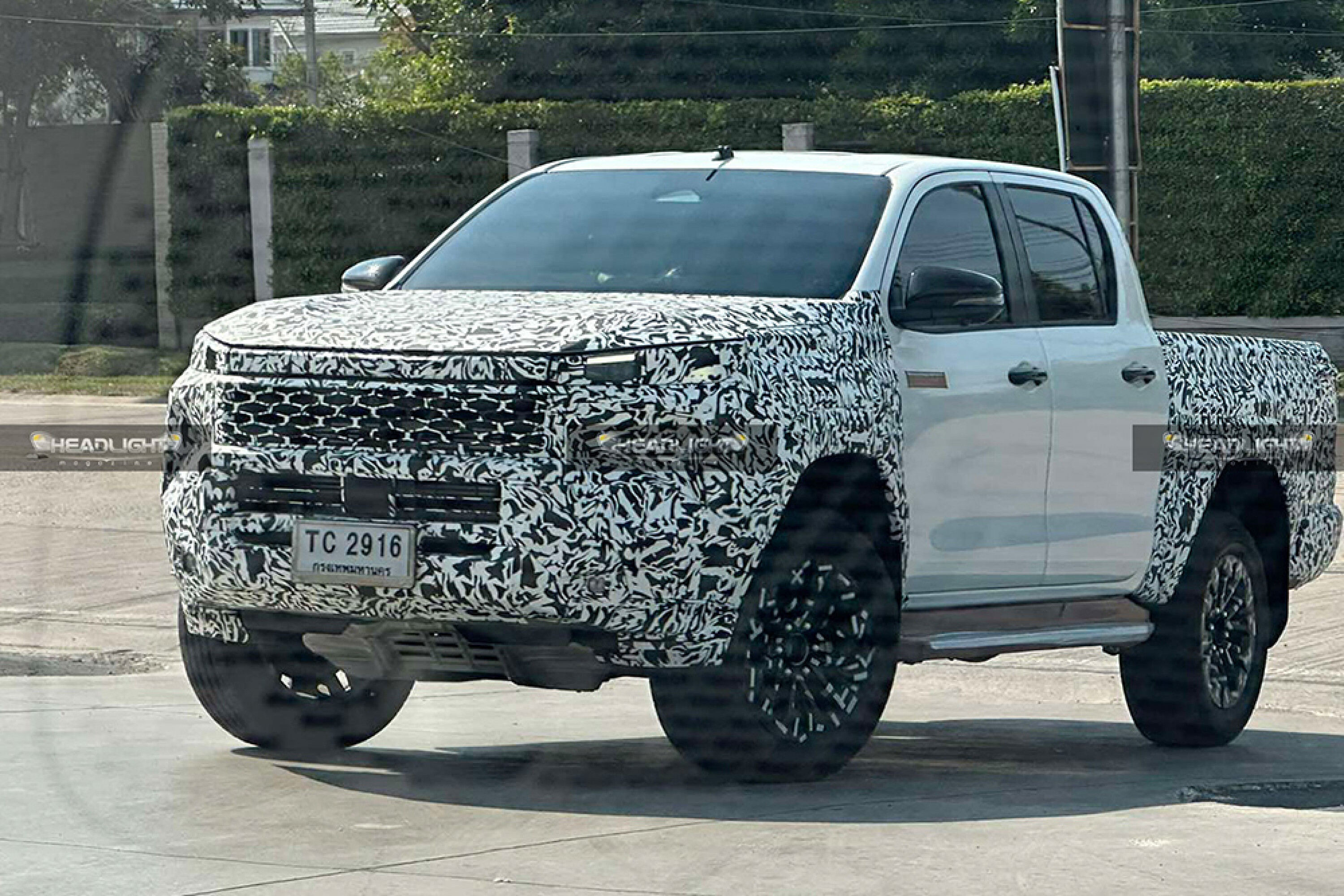
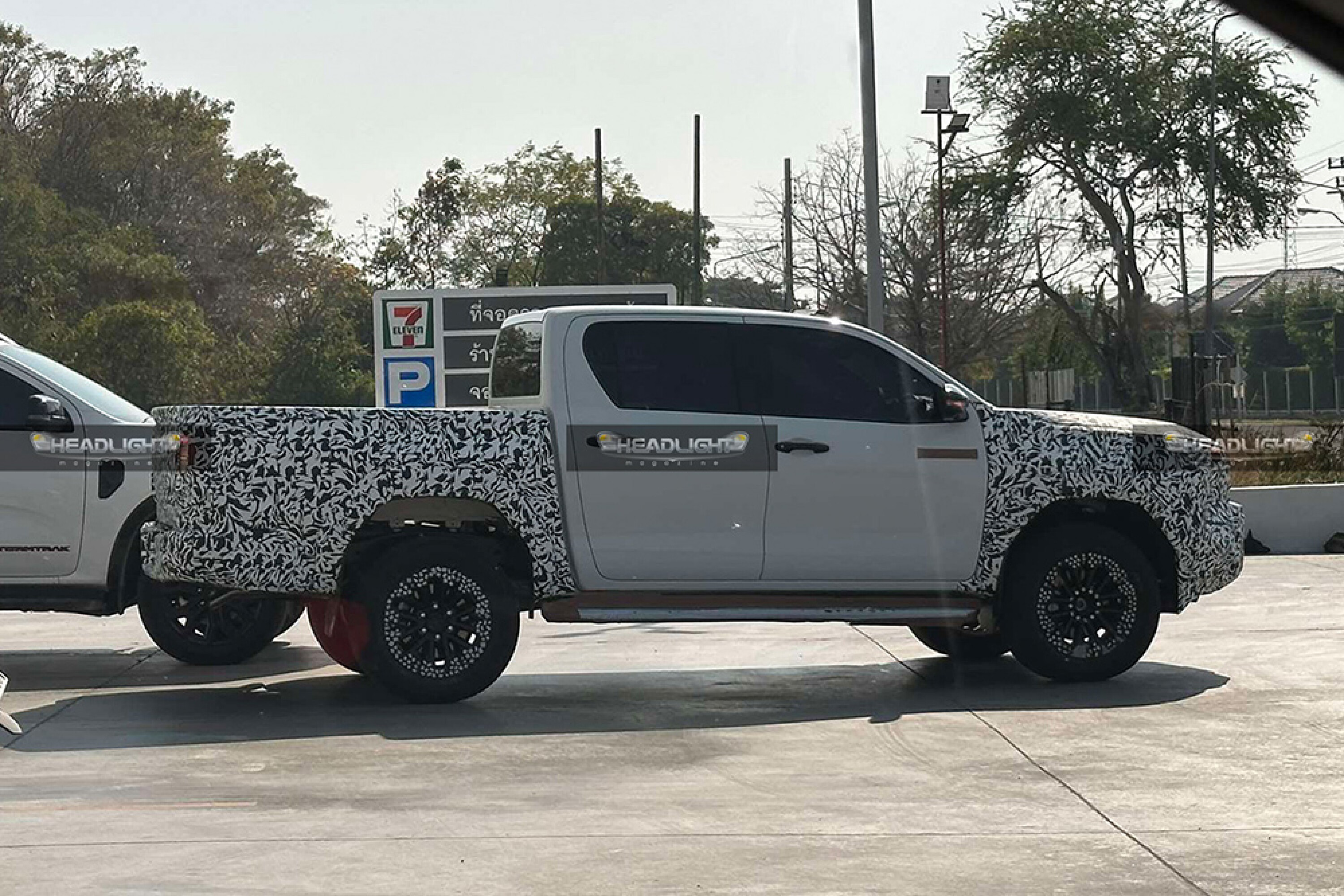
These spy shots snapped by Thailand publication, HeadlightMag, appear to verify those claims, with the heavily camouflaged vehicle showing signs of a heavy facelift but not an all-new design. Both the front (hood, bumper, grille and headlight assembly) and rear ends will be completely overhauled in the shake-up, but the mid-section (doors and cabin structure) appear to remain as before.
The new Tundra, Prado and 300 Series all utilise Toyota’s TNGA-F ladder-frame architecture, and it was expected that the HiLux would follow suit.
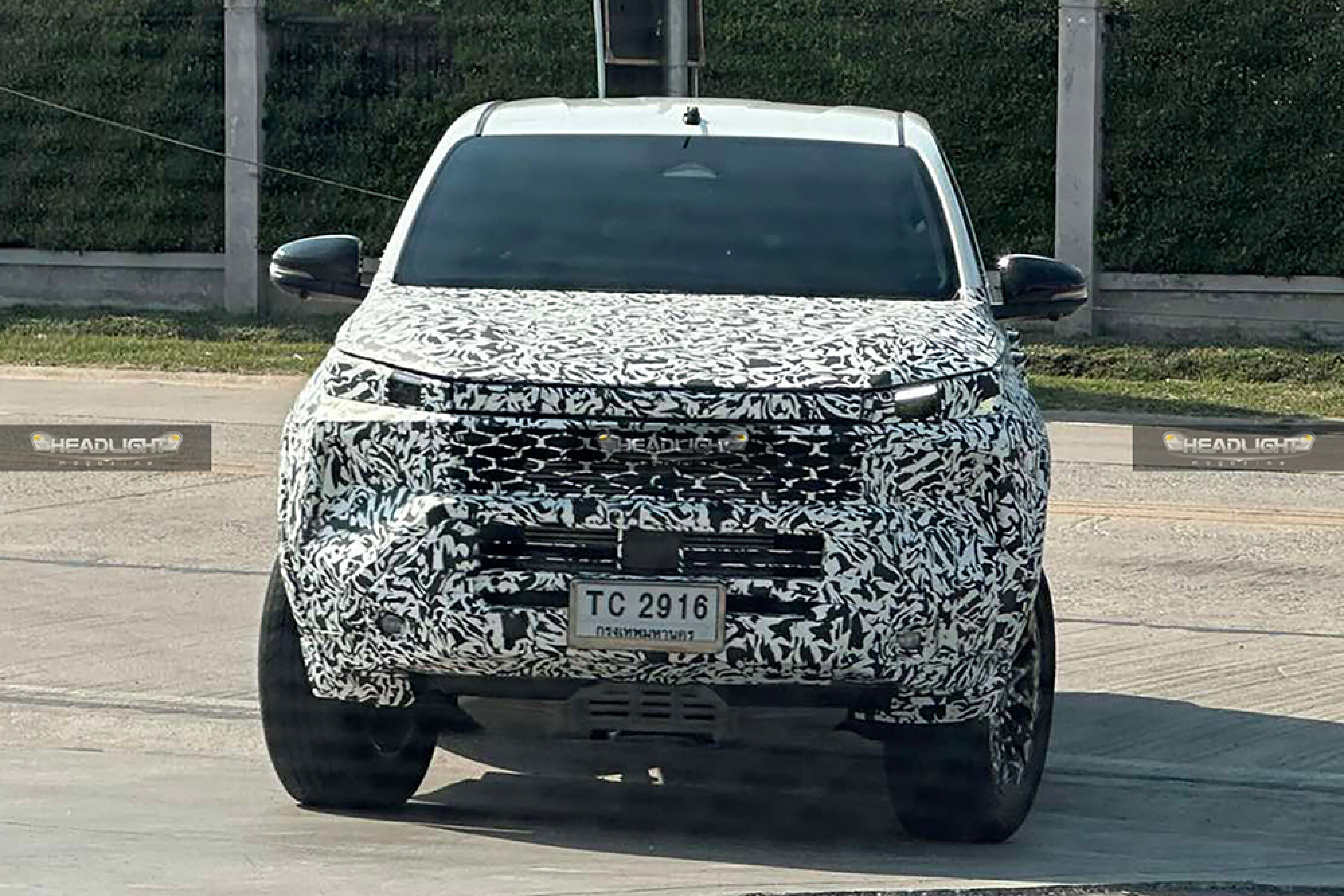
Reports indicate the HiLux will maintain its 1GD 2.8-litre and 2GD 2.4-litre four-cylinder engines but speculation is rife that engineering changes will be implemented to improve emissions. However, we’ll have to wait and see, as information no doubt drip-feeds over the coming months.
The vehicle is due in 2026, which opposes earlier expectations that the HiLux was slated for a 2025 release. A world premiere is expected to take place in Thailand in the second half of 2025.
Image credit: Headlightmag
The most powerful Patrol ever produced has been revealed, with the 2025 Nissan Patrol NISMO making its global debut overnight – but this example is built for the streets not the bush.
This high-performance SUV has been designed exclusively for the Middle East, and it will hit showrooms across the UAE, Saudi Arabia and other markets in the region from July.
Under the bonnet is a 3.5-litre twin-turbocharged V6 producing 368kW (495hp) at 5600rpm and 700Nm at 3600rpm – the highest ever for this engine, and 52kW (70hp) more than the standard Patrol. Power is sent through a nine-speed automatic gearbox, with the engine hand-built at Nissan’s Iwaki plant in Japan.
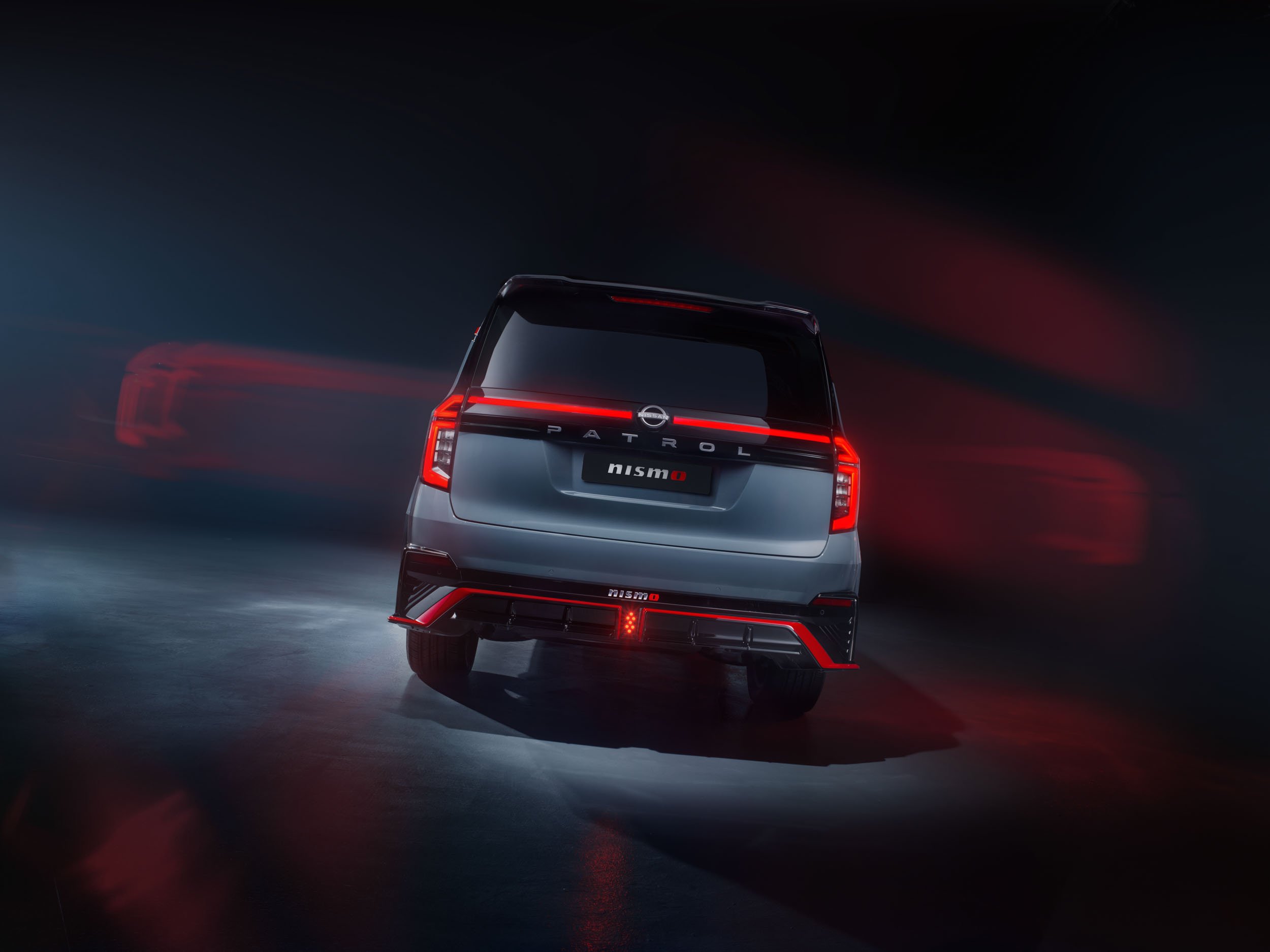
The NISMO rides on 22-inch forged alloy wheels (275/50R22), which are 23 per cent lighter than the standard wheels. These are paired with high-performance tyres, to maximise the Patrol NISMO’s composure when cornering at high speeds.
Suspension gets a complete overhaul with NISMO-tuned adaptive dampers that adjust on the move for better control. Steering is electronically assisted and tuned to feel sharper and more responsive than the regular model. A retuned exhaust and Active Sound Enhancement give the V6 a deeper tone both inside and out. Plus, a new front bumper helps improve airflow to the brakes, reducing disc temperature by six per cent under heavy load.
The Patrol NISMO is larger than the standard model. It measures 5295mm long (+90mm) and 2070mm wide (+40mm), while height remains the same at 1945mm. The wheelbase is 3075mm, identical to the regular Patrol. Overhangs are more pronounced – 1020mm front and 1200mm rear, both increased over the base version to accommodate the new aero kit.
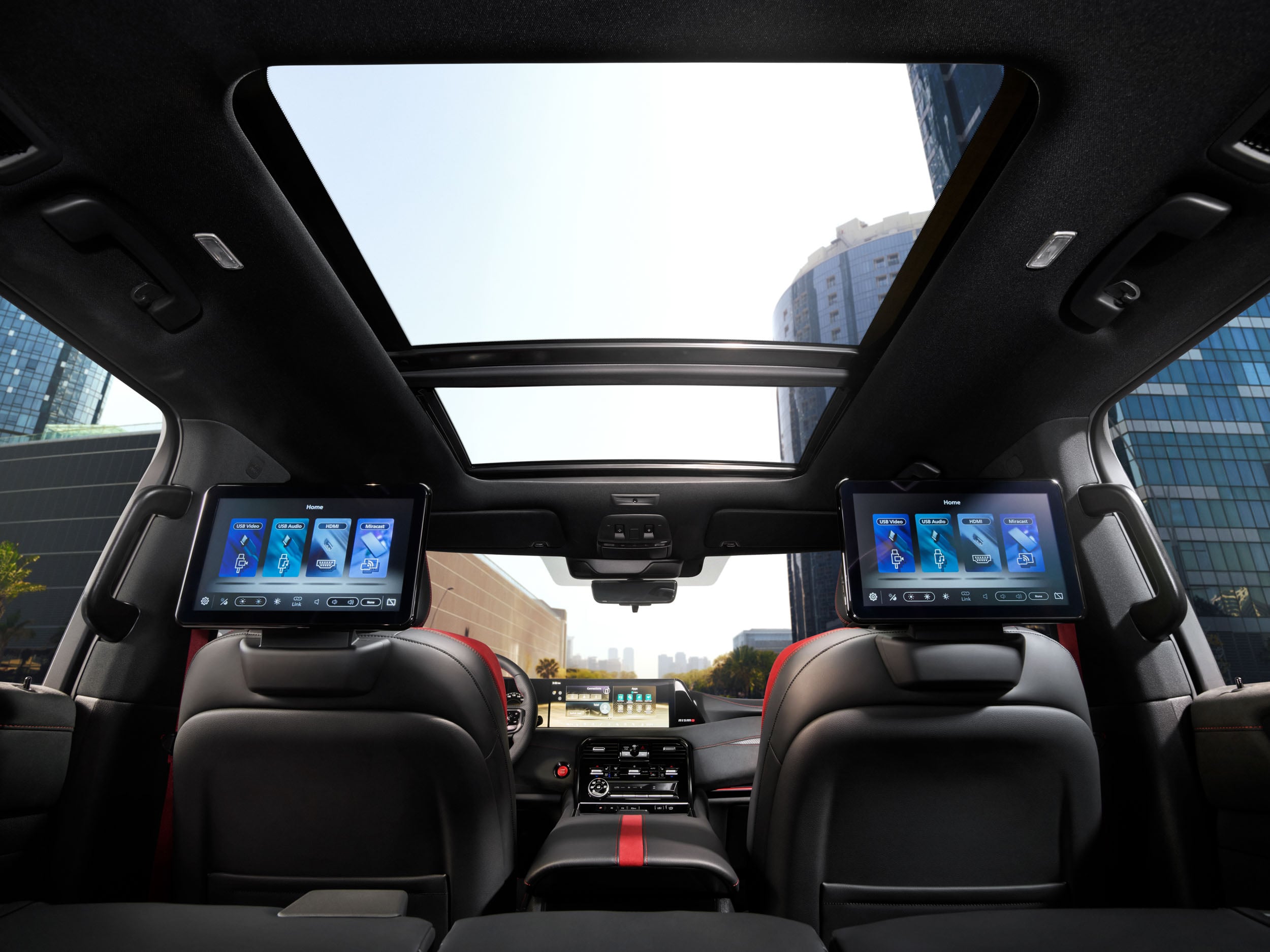
But with more aggressive styling comes a trade-off in off-road geometry. The NISMO version has approach/ramp/departure angles of 23, 26 and 25.5 degrees, compared to the Patrol’s 27.5, 27 and 27. Ground clearance also drops to 195mm (from 244mm). This isn’t the Patrol to take off the beaten path.
The exterior includes a reworked V-Motion grille with 3D honeycomb mesh, flanked by air curtains that reduce lift and improve stability. At the rear, you’ll find a longer spoiler, layered diffusers, and a Formula E-inspired fog lamp. NISMO red accents appear throughout the body, signalling its track-tuned focus.
The cabin gets a black-and-red theme, sports seats with embroidered NISMO logos, and a mix of leather, suede-touch materials, and carbon-effect trim. Red seatbelts, a red start button, and aluminium pedals add to the motorsport-inspired vibe. It still seats eight passengers, just like the standard Patrol.
The Patrol NISMO will be available for purchase across the Middle East from July.
| Patrol NISMO | Patrol | |
|---|---|---|
| Length (mm) | 5,295 (+90) | 5,205 |
| Width (mm) | 2,070 (+40) | 2,030 |
| Height (mm) | 1,945 | 1,945 |
| Wheelbase (mm) | 3,075 | 3,075 |
| FR O/H (mm) | 1,020 (+30) | 990 |
| RR O/H (mm) | 1,200 (+60) | 1,140 |
| Tread FR (mm) | 1,730 | 1,730 |
| Tread RR (mm) | 1,730 | 1,730 |
| Approach/Ramp/Departure Angl | 23/26/25.5 | 27.5/27/27 |
| Min Ground Clearance (mm) | 195 | 244 |
| Tyre/Wheel size | 275/50R22 | 275/50R22 |
| Curb Weight (kg) | 2,817 | 2,813 |
| Capacity | 8 | 8 |
| Displacement (cc) | 3,492 (Twin Turbo) | 3,492 (Twin Turbo) |
| Max Power (HP @rpm) | 495 @5600 | 425 @5600 |
| Max Torque (Nm @rpm) | 700 @3600 | 700 @3600 |
A new Prado 250 is about to launch in the UK, with Toyota announcing a two-seat variant dubbed the LandCruiser Commercial – but it’s not coming to Australia.
The LandCruiser Commercial will be on sale from August 1 in the UK, with customer deliveries to start rolling out from September. The line-up will consist of just one model: a five-door long-wheelbase van that has had the rear seats ripped out and replaced with an edge-to-edge floor tray that is said to provide up to 2000 litres of cargo space.
The cavernous load space measures 1090mm high, 1685mm long and 1286mm wide. The vehicle is rated to tow up to 3500kg.
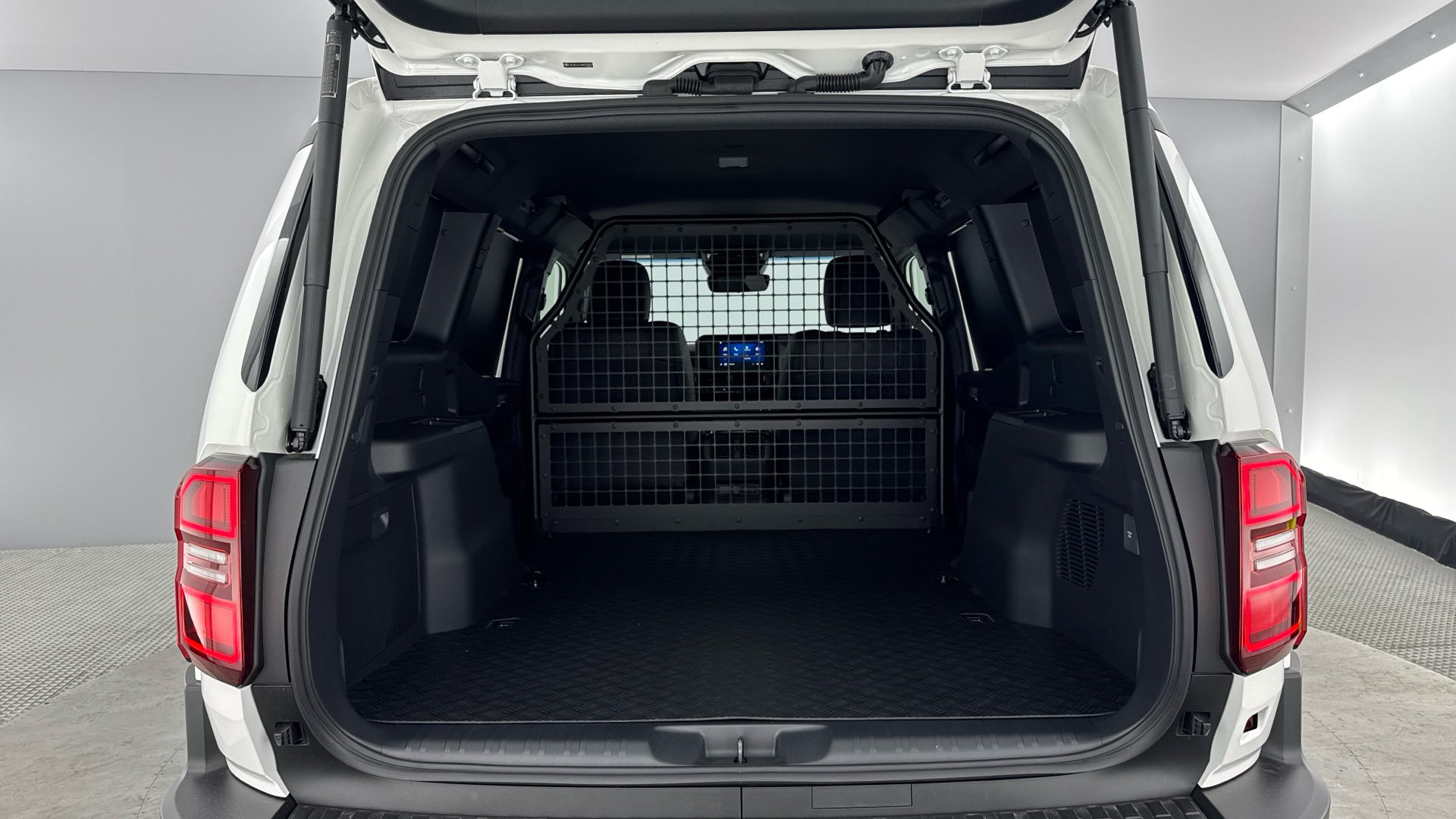
“Positioned at the top of the Toyota Professional range, it provides an attractive option to customers who do not require the load-carrying capabilities or additional seats of the HiLux pick-up, but want the benefits of serious off-road performance, on-road poise and a wealth of comfort, safety and convenience features as standard,” said Toyota UK in a press release.
The vehicles aren’t shipped as a complete vehicle from Japan. Instead, that conversion – removing the rear seats; adding the flat load floor; installing a full-height metal bulkhead behind the front seats; and replacing the side windows with steel panels – is undertaken in Derbyshire at Toyota Manufacturing UK’s Burnaston production facility. It won’t display the Prado badge either, simply wearing the LandCruiser nomenclature.
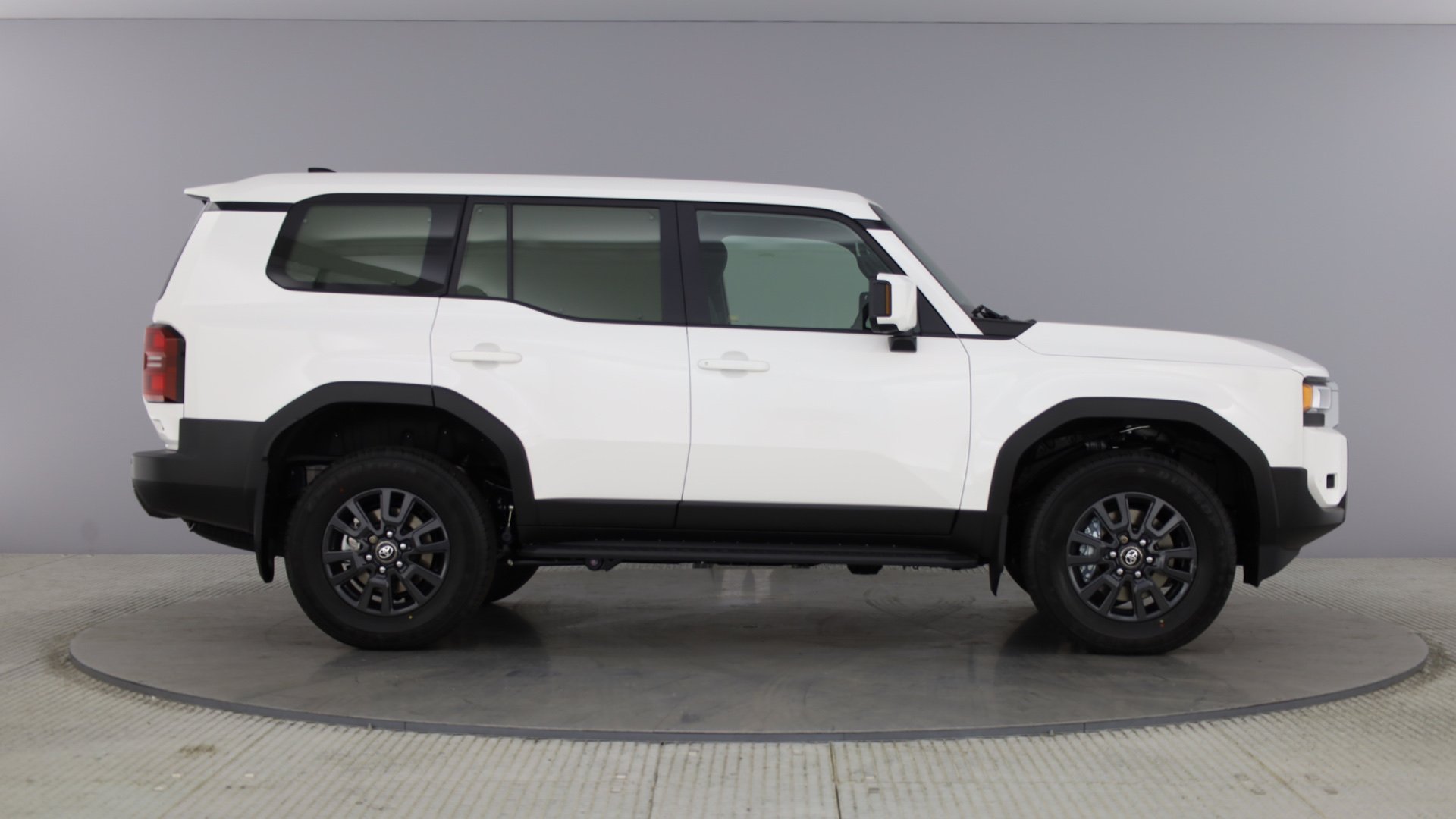
The Commercial is powered by the LandCruiser’s 150kW/500Nm 2.8-litre engine, which is paired to an eight-speed automatic transmission. Toyota UK has stated the range will be upgraded to include the upcoming Hybrid 48V mild hybrid system at a later date.
Key features
- 18-inch alloy wheels
- Power-adjustable driver’s seat
- Heated front seats and heated steering wheel
- Power back door with opening window hatch
- Auto-dimming rear-view mirror
- Electronic parking brake
- Automatic dual-zone air conditioning
- Nine-inch touchscreen multimedia system
- Wireless Apple CarPlay and Android Auto integration
The LandCruiser Commercial is priced at £52,729.17 on road, which is roughly $110,000 AUD.
G’day legends – Jack here, the new bloke at 4X4 Australia.
After clocking up thousands of kays around Australia in my 2005 Mitsubishi Pajero with a full touring setup, I reckon I’ve seen a fair bit of what this country has to offer. Two places keep popping up in the “where should I go next?” conversation: K’gari (Fraser Island) and Moreton Island (Mulgumpin). Both are epic in their own right, but which one’s right for you? Let’s break it down 👇
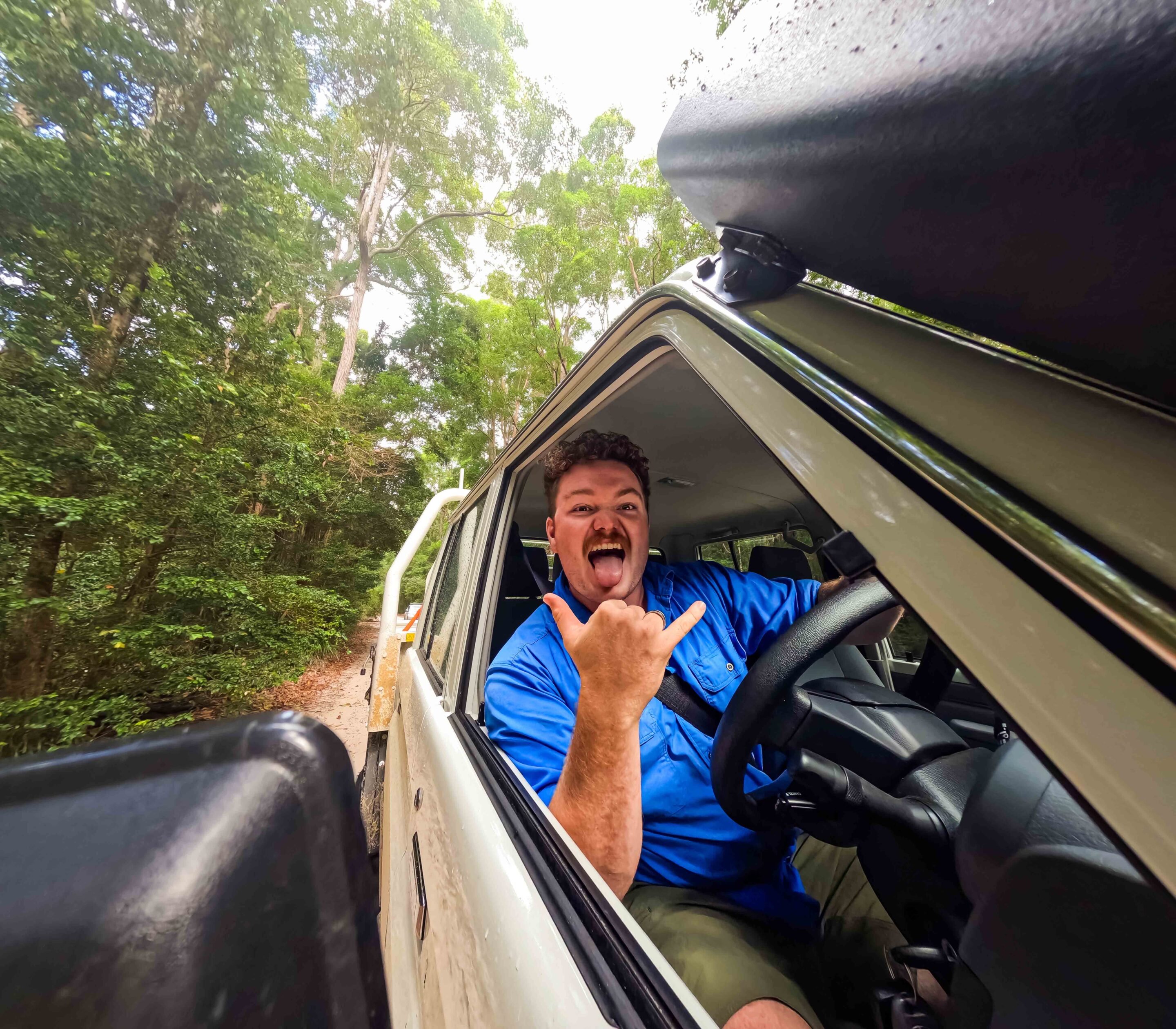
K’gari (Fraser Island) – The Big Kahuna
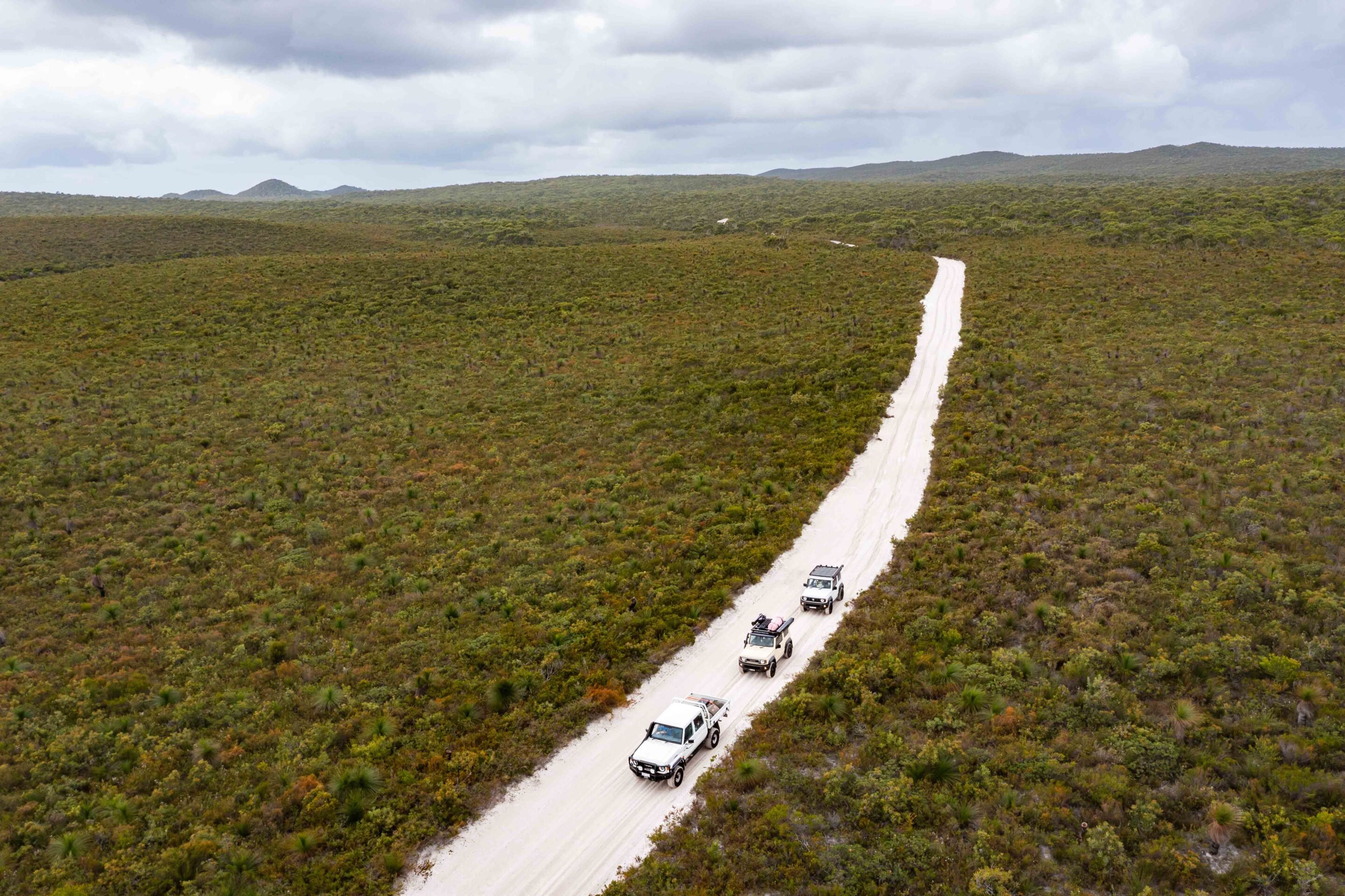
K’gari isn’t just a sand island – it’s the sand island. The world’s biggest, in fact. Spanning more than 120km of pure off-road paradise, Fraser is a place that’ll test your skills, reward your effort, and leave your jaw on the floor.
Places of interest include iconic freshwater lakes like Lake McKenzie and Lake Wabby, creeks like Eli Creek that you can float down with a beer in hand, and shipwrecks like the Maheno that’ll blow your mind.
Fraser’s more than just pretty, though – it’s a full-on adventure. If you want to send it through Ngkala Rocks, make it to the Sandy Cape Lighthouse, or thread your way through the rainforest tracks inland, you better be prepared and bring a capable 4×4.
It’s wild, it’s remote, and it’s unforgettable.
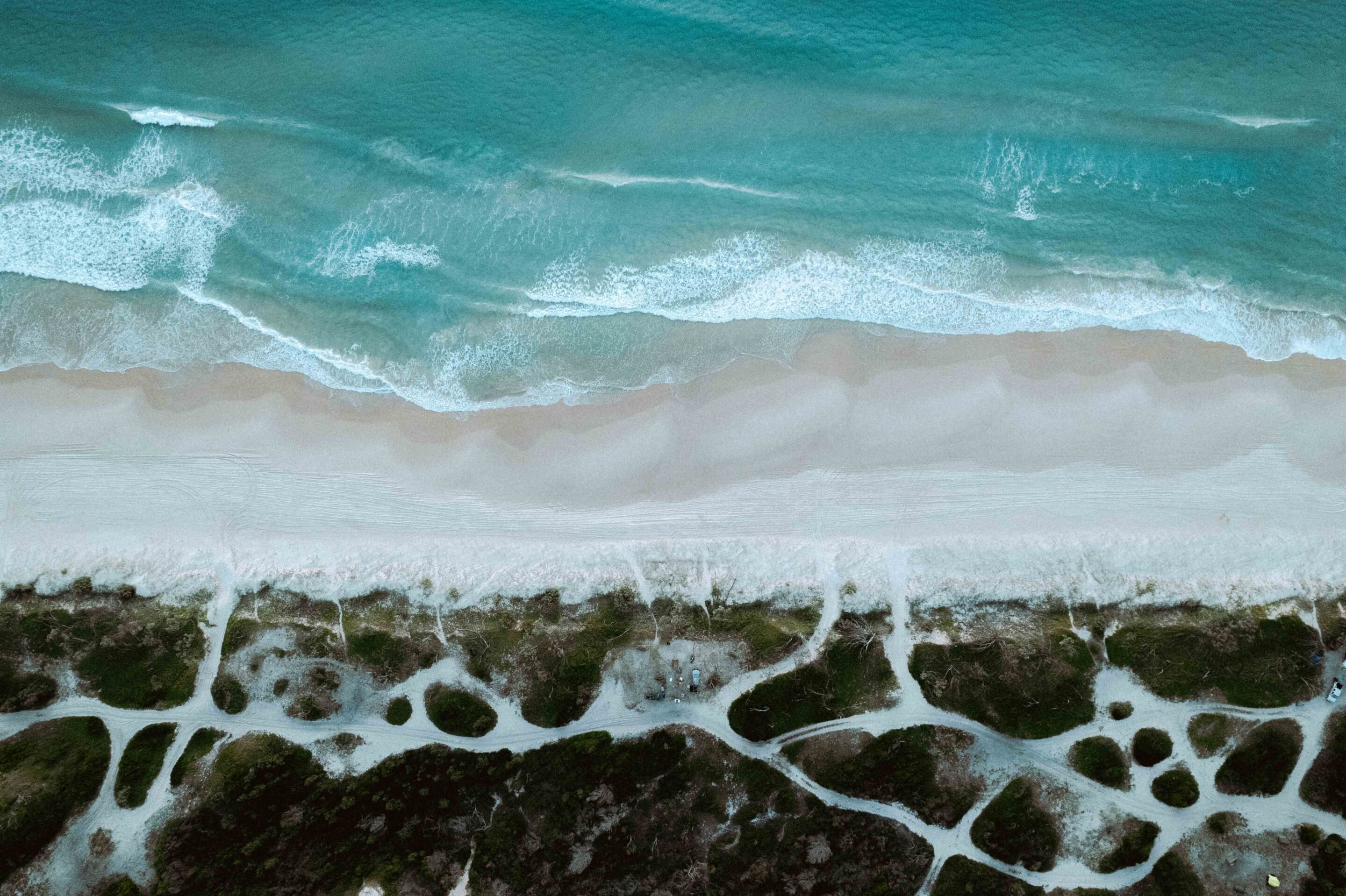
Moreton Island – The Chill Cousin
If Fraser is the big, rugged uncle, Moreton is the chill cousin who always brings good vibes. It’s smaller, easier to access (especially from Brisbane), and feels like the perfect blend of resort comforts and classic beach camping.
Tangalooma Resort is the crown jewel for families or couples wanting the option of a bed, bar, and dolphin-feeding – but don’t think that means it’s soft. There’s still plenty of sand driving, epic views from the Cape Moreton lighthouse, inland tracks, and campgrounds you can roll right onto from the beach.
Moreton’s the kind of island where you can punch out a few days and feel refreshed, rather than rinsed.
| K’gari | Moreton Island | |
|---|---|---|
| Size | Massive (120+ km) | Compact (37km) |
| 4WDing | Advanced, soft sand, tidal challenges | Beginner to intermediate |
| Camping | Remote, rugged, beachfront | Easy-access, relaxed |
| Wildlife | Dingoes, whales, birds | Dolphins, turtles, fish |
| Facilities | Minimal outside tourist hubs | Tangalooma Resort + public camps |
| Vibe | Bucket list wilderness | Holiday escape |
| Best For | Adventure seekers, seasoned 4WDers | Families, couples, newcomers |
Jacko’s Take
If you’ve never tackled a sand island before, start with Moreton. It’s got everything you need without pushing you out of your comfort zone too hard. But if you want to tick something off the bucket list, test your rig (and your patience), and come home with some serious storiesm, it’s K’gari all day.
Better yet? Do both. Life’s too short to pick one when you can plan for both.