
ONCE again the annual SEMA Show blew us away with its size and number of exhibitors and visitors attending the Las Vegas Convention Centre.
The show itself actually runs for four days, but it’s a week-long rollercoaster ride of seminars, product launches, demonstrations, unveilings and walking between halls. Then there are the after-hour happenings which, being in Vegas, can be just as gruelling but a lot more fun.
Of the thousands of new products on display and hundreds of incredible custom vehicles, we’ve selected our Top 10 custom trucks (in no particular order).
AEV OUTPOST II CAMPER
THE guys from American Expedition Vehicles (AEV) never fail to disappoint at SEMA, and 2017 was no exception. Joining the AEV-kitted RAM 1500 and 2500 pick-ups on the stand was this cool camper-converted JK Wrangler. Loaded with all the usual AEV kit such as the Dual-Sport suspension, AEV wheels and bonnet, the Wrangler has been converted to a single cab to allow the placement of a mammoth pop-top camper on the back. It wasn’t quite finished at the show, but we’ll be taking a closer look at it once it’s completed.
JCR OFFROAD COMANCHE
LAST year JCR displayed a wild snow-melting XJ running caterpillar tracks, but this year it delivered something better suited to the rocky trails with this 1989 Comanche. Fitted with a supercharged 4.0-litre inline six engine, further boosted by a shot of nitrous oxide, the bright orange pick-up was a stunner. It also features a custom-fabricated 4-link suspension front and rear, 37-inch Nittos and a Warn Zeon winch in a Vanguard bumper. However, it’s the stance that really makes us want to take it out in the desert and beat on it.
PROFFITT’S LAND CRUISER 79
PROFFITT’S Resurrection Land Cruisers is one of the most well-respected LC shops in the USA. Jerimiah Proffitt’s latest rig is this 79, which isn’t what it seems at first glance. The US doesn’t get LC70s directly, but the shop scored a few sets of complete LC70 panels from vehicles converted to armoured off-roaders with bespoke bodies. The LC79 panels were adapted to a reconditioned 80 Series chassis to deliver an all-coil pick-up. With the body sets it has in stock, Proffitt’s can create a limited number of these turn-key rigs for US customers. It uses the 2.8-litre Cummins diesel crate that is becoming popular in the US, and Jerimiah tells us it’s more than happy in the ute. It makes 120kW (3600rpm) and 362Nm (1500-3000rpm), which is more than a stock 12H-T made in a 60 Series or any standard 1HZ.
PROFFITT’S FJ 40 RETRO CRAWLER
PROFFITT’S had another cool Cruiser over on the Bilstein Suspension stand. The Retro Crawler is a 1972 FJ40 riding on a chassis that has been lengthened 350mm and fitted with ARB air-locked 60 Series axles mounted on 3-link front and 4-link rear suspension with Bilstein coil-overs and hydraulic bump stops. Power comes courtesy of a 3F-E EFI petrol engine mated to an A440 auto. While the rig was immaculately presented, we wouldn’t mind getting it dirty with some Moab red dust. It looks like a lot of fun.
BOLLINGER B1
WE’VE been keenly following the development of the Bollinger B1 all-electric off-roader, and it was great to see it in the metal and meet the people involved in getting it this far. Set to go into production in 2019, the B1 is a pure off-road workhorse, be it for use on your farm or off-road tracks. Sure, with only around 300km of electric charge range, this isn’t a vehicle you will drive across the Simpson Desert, but the technology is developing quickly and we’re certain that the range will grow in the future.
The B1 uses two electric motors – one for each axle – and power is sent through a custom gearbox to custom-made independent, height-adjustable suspension with portal gear reduction hubs and BFG off-road tyres. With torque from the electric motor coming on the instant you touch the throttle, this rig would be a rock-crawling weapon. We also love its functionality as a work hauler and the fact it can be configured as a wagon or pick-up, with a four-door to come in 2018.
DESERT LABS BRONCO PRE-RUNNER
PRE-RUNNERS are vehicles race teams use to reconnoitre off-road tracks in the days before the race. They usually feature full-race suspension and drivelines, plus a roll cage, but are often four-door pick-ups with semi-factory interior fitouts. They’re usually modern Raptor or Colorado utes, but there are also a few older-style vehicles being built in this style.
This 1995 Ford Bronco is one such rig and, if you can look past its hideous grille, you’ll find a 900hp supercharged Coyote V8 backed by a race-prepped auto and off-road racing-style suspension. Concealed in the full roll cage is a leather-trimmed interior with a custom dash and Bentley carpets.
It was built by California’s Desert Labs for a customer in the Middle East, where it was being shipped to the week after SEMA. Significantly, the truck made the Top 12 in the Battle of The Builders competition against some of America’s top and most talented hot-rodders and custom car-builders.
SYNERGY JEEPSTER
ANOTHER Battle of The Builders contender, Synergy Manufacturing’s JK Commando, blends old and new by fitting a Jeepster Commando body to a JK Wrangler Unlimited frame, then loading it with hardware from some of the best-known brands in the off-road business. Power comes from a 6.0-litre LS V8 backed by a 4L80 auto and Atlas transfer case. Axles are Rubicon-spec Dana 44s with Synergy housing trusses and RCV axles for extra strength. The suspension is a mix of Synergy gear and Fox bypass shocks, while the red rocket rolls on 35-inch Nittos.
We loved the retro feel of this thing so much we asked snapper Alastair Ritchie to stay on in the US and shoot it for a feature for us, so keep an eye out for that in a coming issue.
AEV CHEVROLET COLORADO ZR2 CONCEPT
AMERICAN Expedition Vehicles (AEV) is best known for its top-shelf treatments of Jeep Wrangler and RAM truck vehicles, but it jumped ship for the SEMA Show with this Chevrolet Colorado concept. The Colorado ZR2 is Chevy’s Raptor battler and has been getting huge praise in the US. AEV takes it up a few notches with its own accessories including barwork, wheels and tyres, suspension, cargo bed fitout, air system, ARB fridge and MaxTrax. Interestingly, the ZR2’s Multimatic DSSV shock absorbers have been retained in the AEV concept. The production ZR2 is the first off-road application for these, as they are normally found in high performance Chevrolets, Aston Martins and AMG vehicles.
THE FJ COMPANY FJ43
QUALITY FJ40 Land Cruisers are in high demand in the USA – $100,000 restorations aren’t uncommon, and the ones done by Florida-based The FJ Company are some of the best. The FJ Company doesn’t just do original style restorations, but also resto-mods them to improve usability. Sharing the stand with a ‘Classic FJ40’ was the company’s latest offering: its ‘Signature FJ43’ featuring a 1GR-FE 4.0-litre V6 engine backed by a six-speed manual gearbox. Other features include ARB Old Man Emu leaf springs and Fox shocks, a fully rebuilt and detailed chassis, custom leather-trimmed interior and good looks. All this could be yours for US$210,000, but the Signature edition vehicles start at US$200,000. The 2F-powered Classic from The FJ Company start at US$85K.
DAYSTAR POWERWAGON
YES, Daystar’s 1941 Dodge Powerwagon it calls ‘Bootlegger’ was at SEMA last year, but it was back again in 2017 and is still one of the best builds you’ll find. Online videos of the classic truck off-roading throughout the past 12 months only enforce how awesome this truck is. Powered by a supercharged LS V8 claimed to make more than 700hp, it has more than enough grunt to turn those monster Swampers that are bead-locked to our favourite Hutchison wheels. We also think the gleaming copper details and old patina ooze coolness.
Camping gear, bike carriers, digital assistant, and even some inspiring reading material are the latest gear for your summer holidays.
ARB LINX
ARB brings hi-tech to off-road accessories, with the release of its new LINX touchscreen interface. The LINX consists of a Bluetooth-enabled touchscreen, main control unit and magnetic gimbal mount that allows the unit to be mounted near the driver for easy access to the controls. The main control unit is fitted out of sight. The LINX enables full control of Air Locker diff-locks (front and rear) and how they are activated, as well as your ARB air compressor and monitoring of your tyre pressures via input of a target pressure (selected by the user).
In total, the unit offers control of six pre-installed and self-explanatory modules: Front & Rear Traction, Compressor & Pressure Control, Battery Monitor, Speedometer, Air Suspension and Accessories. The Accessories module allows control of up to six additional accessories such as high/low beam, reverse lamps, etc. Battery Monitor does just that – it monitors your battery and you can set a low-voltage alarm if needed. Website: www.arb.com.au
BURKE & WILLS
Renowned journalist Peter Fitzsimons has released this hefty tome based on the famous – and fatal – Victorian Exploring Expedition, led by Robert O’Hara Burke, who was accompanied by a team of 18 including surveyor William Wills. The team’s goal was to cross Australia from south to north, which would mean crossing some of the world’s harshest terrain, including the Australian desert country and the Gulf’s mangrove swamps and big rivers and, on top of that, cope with the wild weather.
The story is well-known, but Fitzsimons brings new life to the tale, adding his personable writing style (and extensive research) to this tragedy. From the lack of food, to the team’s spurning of assistance offered by the local indigenous people they encountered, to the fatal decision of Burke, Wills, Gray and King to make that rush to the Gulf and back, Fitzsimons covers it all in detail. A cracking read!
HELINOX TABLE ONE LARGE
For off-road tourers with less cargo space, this new fold-up table from Helinox is ideal. Weighing a paltry 1.59kg and packing down to 60cm (L) x 17cm (W), the Table One Large folds out to a generous 76cm x 57cm and has a weight capacity of 50kg. It sits 50cm above the ground when erect, and its tough alloy frame ensures it will last for years. The alloy poles are linked with elastic shock-cord (similar to how tent poles are linked) so assembly is easy and fast. The hard-top table surface comprises lightweight rigid panels sewn into a folding top cover.
The Table One Large comes with a five-year warranty. This compact camp table is perfect for just leaving in the vehicle thanks to its small packed size and light weight. Helinox also has a range of chairs and smaller tables, all featuring similar construction methods. Website: www.helinox.com.au RRP: $196
OZTENT RS-1
OzTent has brought its many years of experience building what are some of Australia’s toughest touring tents to the swag market, with the release of its new RS-1 swag. This king single swag offers the same 30-second set-up time of its larger OzTent brethren thanks to its internal frame, thus doing away with that sometimes painful process of threading swag poles through eyelets. The RS-1 includes an integral awning fly for additional weather protection, answering that concern of all swag owners of how to stay dry when exiting their swag when it’s raining. The awning can also be flipped over the swag to act as a fly if need be.
The mattress is a 50mm jobbie, ensuring plenty of comfort, while the new ModCan material used is rated CPAI-84 flame retardant. The 350g PVC tub floor keeps you dry, while the No-See-Um fly mesh keeps biters out. The swag measures 215cm (L), 105cm (W), 100cm (H) and packs down to 154cm (L), 14cm (W) and 39cm (H). The weight is 14kg and it comes with a two-year warranty, four guy ropes, 12 pegs, two awning guy ropes and two telescopic poles (for the awning). It packs in easily to its own zippered carry bag. Website: www.oztent.com.au RRP: $599.95
IRONMAN 4X4 ROOFTOP CARGO STORAGE BAGS
This new rooftop storage bag range from Ironman 4×4 comprises five different sizes – 200L, 250L, 350L, 500L and 600L – and are built tough for touring. The weatherproof bags are made from robust 500D PVC with tear-resistant fibres and will mount to most roof racks, luggage baskets or roof trays. The heavy-duty tie-down buckles and straps are designed for quick mounting, while the water-resistant zips combine with the in-built Velcro overlap to keep the elements at bay where the zips meet. The different capacities ensure there is a storage bag for any off-road vehicle and any requirements, whether it is a weekend jaunt or that big outback adventure.
The 200L model measures 1400mm x 500mm x 300mm; the 250L is 1100mm x 800mm x 300mm; the 350L is 1500mm x 960mm x 300mm; the 500L is 1500mm x 1100mm x 300mm; and the big-bopper 600L is 1800mm x 1100mm x 300mm. Website: www.ironman4x4.com
YAKIMA HIGHROAD
Yakima’s latest rooftop-based high-end bike carrier is the company’s most versatile and easy to fit yet. The HighRoad will fit bikes (up to a 1219mm wheelbase) with tyres ranging from 26- through to 29-inch (plus) and weighing up to 20kg. It requires no adjustment to do so, it’s just a matter of loading the particular bike up on the rack and it does the rest. The HighRoad is a front wheel-on carrier, so you don’t need to remove the front wheel at all; the two hoops at the front end simply ratchet down to the exact pressure required to hold the front wheel in place. You cannot overtighten the HighRoad’s hoops either, as the integrated TorqueRight knob ‘clicks’ when the correct torque has been reached.
The carrier is a tool-free install, so the straps will wrap and lock around any shape of roof bar. You can also opt to fit a T-slot kit to enable attachment to bars, if you so desire. The HighRoad weighs 11kg and can be fitted – and removed – in about five minutes. Website: www.yakima.com.au RRP: $349
OPPOSITE LOCK PREMIUM BULLBARS: PAJERO SPORT
Oppy Lock has just released two Premium steel bullbars for Mitsubishi’s popular Pajero Sport. The bars have been designed to support the advanced tech of the different Sport models; the Exceed-specific bar allows for front camera and radar operation, provision for that model’s headlight washer assembly, and it includes a unique parking sensor mount.
The bars are made from top-end steel and allow for fitment of driving lights, three aerial mounts and a light bar. Underneath there’s a three-piece protection plate and a central-split air dam that ensures optimum airflow, as well as recessed LED indicator lenses to reduce the risk of damage. The bars are all engineered for airbag compliance and for low-mount fitment, and they’re phosphate-cleaned and finished in matte black powdercoat – or colour coding. Website: www.oppositelock.com.au
RHINO-RACK SUNSEEKER AWNING
Not content to rest on its laurels, Rhino-Rack has revamped and improved its popular Sunseeker awning. The Sunseeker is available in two sizes – 2m and 2.5m – and is made using tough 150D rip-stop poly/cotton that offers a water-resistant rating of 2000mm.
The Rhino-Rack engineers added protective patches on the corners of the awning for improved durability when it’s being rolled/unrolled and stored, and all the awning hardware is well protected by plastic caps, ensuring no ripping or snagging during extension or retraction. The extrusions are anodised and black powdercoated, while the 540gsm black PVC outer bag protects the awning when not in use, with the zips easy to operate. The Sunseeker is also rust-proofed, has easy-to-adjust tension tabs and can be fitted to not only Rhino-Rack roof racks but some other brands as well. Website: www.rhinorack.com.au RRP: $309 (2m); $349 (2.5m)
FRONT RUNNER QUICK-RELEASE TENT MOUNT KIT
Rooftop tents are hugely popular with off-road tourers, with one of their only bugbears being the fact they are often quite time-consuming to remove. Front Runner Outfitters has solved that problem with the release of its new quick-release mount kit, specifically for rooftop tents. The kit comprises four mounting brackets and base bushes. Once these are installed on your roof rack, the tent base simply slides into these brackets. Removing the tent is just as fast: once you release the locking tabs, the tent just slides out.
The brackets are small but strong and tough thanks to their powdercoated stainless steel construction, and they can be left on the roof rack when your tent isn’t there. This improves your garage access dimensions and helps fuel consumption when the tent isn’t up top increasing wind-drag. The mounts work not only with Front Runner rooftop tents, but also other popular brands’ rooftop accommodation. Website: www.frontrunneroutfitters.com.au
HEMA MAPS AUSTRALIA ROAD & 4WD ATLAS
Mapping legends Hema Maps has released the 12th edition of its Road & 4WD Atlas, with a complete update combining with new cartography and even more detailed mapping than before. Hema Maps reckons the new cartographic style is easier to read and the Atlas is available in five different formats: the spiral-bound Easy Read version is 293mm x 396mm; there is a spiral-bound 252mm x 345mm version as well as a perfect bound version of the same size; the Touring Atlas version is 215mm x 297mm; while the Handy Atlas is 184mm x 248mm (both the Touring and Handy are spiral-bound). In short, there’s a version of this comprehensive atlas for everyone.
The latest mapping for all of Australia’s best off-road destinations – Cape York, the Top End, Vic High Country and more – is included, as are other detailed 4×4 tracks, fuel locations, points of interest, national parks, a distance grid, info centre list, rest areas, and a complete index. A copy should be in the 4X4 Australia office soon; this writer bags first dibs. Website: www.hemamaps.com.au
EVAKOOL DC40-DRW DRAWER FRIDGE/FREEZER
The masterminds at Evakool have created a fridge/freezer that makes the most of that spare space in your caravan, camper trailer or 4×4. With its unique front-opening drawer, this 40-litre unit does away with the need for fitment of a fridge slide. The drawer fridge/freezer features a relatively low profile; at 325mm tall it doesn’t eat too much into your cargo space or tunnel box of a caravan/camper trailer. The unit operates via either 12V, 24V or 240 mains (via an adaptor). Temperature range is -16°C to 10°C and is easy to check via the LED display.
The tough metal cabinet is fully insulated and features two different speed settings, including a turbo mode for fast cooling. The compressor is Evakool’s well-proven and quiet CK25, which can operate at angles of up to 30 degrees. Plus, it includes auto-reverse polarity protection. The DC40-DRW comes with Evakool’s two-year warranty. Website: www.evakool.com.au RRP: $799
ROH VAPOUR
Legendary Aussie wheel maker, ROH, has released the schmick ROH Vapour in three popular sizes: 16 x 8-inch, 17 x 9-inch, and 18 x 9-inch. The Vapour is part of the ROH Dakar Proven Wheels range and is available in a matte black undercut machined finish, complete with anodised aluminium bolts (not the cheap chrome plastic bolts you see on some other wheels). These ano bolts and stainless steel centre cap screws combine with the twin six-spoke design to stand out, thanks to the undercut machining on the wheel’s outer lip. The wheel includes ROH’s Easycleans Matt Black Baked Enamel finish for excellent durability in all weather and terrain conditions.
The Vapour will fit a number of the popular off-roaders, including Hilux, Colorado, Ranger and BT-50. It’s also load-rated for the 200 Series Cruiser in 17×9 at 1500kg per wheel and 18×9 at 1250kg per wheel, making them the ideal wheel choice for those looking to fit a GVM upgrade. Website: www.roh.com.au
Having once experienced the joy and excitement of 4X4 adventure travel and the great outdoors, I reckon there’d be few individuals immune to the bug, who’d not start dreaming about their ultimate tourer or planning their next great escape, even before they return to civilisation.
This article was originally published in 4×4 Australia’s January 2011 issue.
I had the opportunity to meet a bloke who’s the epitome of what I’m talking about. Craig Perry is no stranger to the 4X4 scene and well respected by the local WA fraternity; in fact he’s the current chairman of the WA 4WD Association.
Craig’s interest started from an early age, instilled by his dad’s passion for off-road adventure. Truth be known, Craig’s probably already owned and enjoyed more 4X4s than most of us will know in a lifetime. Spend a few hours with him and it’s very evident that he has a real affinity with the Aussie bush, the environment and the many wonderful places WA has to offer, where only a 4X4 can take you.
Craig’s wife must be a patient person. If he’s not slaving away as a senior project manager or working for the WA 4WD Association, he’ll be doing something with the Alltracks 4WD Club or the Mitsubishi Owners Club; either cleaning up rubbish from the bush or organising busy bee environmental programs supporting local authorities. Or else you’ll find him under his truck with a spanner or tape measure in hand.
Yet, despite his heavy schedule, Craig was delighted to spare time to talk about his special truck; a 1998 100 Series LandCruiser modified well beyond OEM standards. It’s a very capable off-road tourer tailored to the types of conditions and driving he enjoys most.
My first impression of Craig’s rig conjured up thoughts of conquering white water rivers and climbing near-vertical rock faces. But how incredibly pristine is the presentation? You could be fooled into thinking this fourbie never saw real dirt; it’s so flash it’s won trophies for most accessorised 4X4 and best in show.
Look closer though, and you’ll see genuine battle scars, stone chips, scrapes and dings. Craig regularly visits great WA spots like Mundaring Powerlines, Pinjar Pine Forest, Moore River, and Wedge Island through to the Pinnacles, Wilbinga, Harvey, Brunswick Junction, Collie and the Blackwood River. This bruiser has already completed trips to Rudall River, Karijini, the southern coast and Murchison station country.
Craig’s favourite experience with the 100 Series was a trip out to Rudall River in 2004, due to the surprising sense of isolation, magnificent scenery and lack of people. Craig’s now thinking of future possibilities, with plans to explore the Canning Stock Route, east of Esperance, Cape York and far-north Queensland.
No stranger to long-distance touring; Craig’s at his happiest behind the wheel. Now, I love driving, but he sure beats me. How does around Australia, covering 18,000km in sixteen days sound? Good thing we’re on an island, otherwise heaven knows where he’d end up!
So why a 100 Series? “Dad had Toyotas since 1978 and I still fondly remember that FJ55,” Craig said. It obviously sparked his appreciation for LandCruisers and their near indestructible build quality. “I tried a Patrol but they lack the shoulder room I need. The standard 100 Series met most of my specific requirements. Interior space and a comfortable driving position are paramount for the long trips. Live axles are essential for their ability to articulate and then there’s all the cool aftermarket gear available for the 100 Series,” Craig said.
Craig’s had the Cruiser for six years and it’s not hard to see the enthusiasm and passion he has for continuing to perfect his dream machine. It started as a stock HZJ105 with the trusty 1HZ diesel bolted up to a five-speed stick shift with manual free-wheeling hubs.
Originally happy with the standard vehicle, Craig thought a couple of accessories might help protect his investment and improve occupant safety. Looking at Craig’s vehicle today I can’t help but think, “A couple of accessories? Now that’s what I call an understatement.”
Now, with any creative flair there first has to be inspiration and Craig got plenty of that from his mate Tony Mingo. They’d sit for hours discussing modifying their fourbies and what sort of capability their rigs could possibly have.
Initially Craig fitted some better 235/85/16 rubber, a two-inch suspension lift, some Rancho shocks and a steering damper to smooth things out. Then with the improvements in ride and handling Craig thought it wise to have some frontal protection, so added a bullbar and the Cruiser also scored a towbar, single rear wheel carrier and cargo barrier.
Sadly, the limitation of the Tojo’s standard rear LSD quickly made itself known and provided little argument against installing an ARB Air Locker. Craig recalls the sudden change in off-road ability was nothing short of astonishing. But then things started to get serious.
In no time the Cruiser was sporting GXL steel rims wrapped in 315/75/16 (35 inch) Goodyear MT/R mud tyres. With the front guards growling under cornering and the MT/Rs making their presence known across bumps and tight turns some more clearance was provided by a four-inch Tough Dog lift kit complete with big bore adjustable shocks.
With this much lift the driveline alignment began to suffer so to reset the diffs adjustable Panhard rods were fitted along with castor bushes and some stronger Snake Racing rear lower control arms. Keen to take advantage of the new ground clearance and try out some more difficult tracks, a Lokka front diff lock was installed to harness the better traction of the MT/Rs. Understandably, the more difficult the track the greater the propensity is for damage or needing recovery. So some ARB heavy-duty slider steps were also fitted to protect the sills under the doors and the ARB trade roof rack provided the perfect mounting for a hi-lift jack and shovel.
This story is beginning to sound like the man who kept trimming a chair leg to make them level – fit one thing and you just have to improve the next! Can you imagine the conversations Craig had with his wife?
Never one to shy away from a challenge Craig continued to push the boundaries in an effort to achieve the best dedicated off-road touring rig, now sporting Tough Dog coils, the Tough Dog shocks were replaced with Fox Racing Emulsion Shocks. Craig’s trusty spanner had a rest for this job as the existing shock mounts had to be removed and new mounts fabricated – a task capably managed by Perth 4X4 in Balcatta.
At this stage, Craig replaced the original bullbar with an ARB deluxe winch bar and fitted a Terrain Tamer 12,000lb winch. You have to understand, there was nothing wrong with his first choice – these were just better and you gotta have the best now don’t you?
Some Snake Racing front control arms and 3rds Production steering arms and rear upper control arms made sure everything stayed put when things got bumpy. And what better way to ensure you can take advantage of all that extra clearance off-road than by bolting on some 36-inch Simex Centipedes on 16 x 10 Pro Comp alloys. Although all this is making the diesel donk work that bit harder.
Speaking of performance, Craig was keen to improve the lung capacity of the asthmatic 1HZ’s output figures. So the Cruiser was sent to United Fuel Injection in Perth to install a DTS Turbo and intercooler system with new injectors. Running 12psi, the rollers claimed a healthy 135kW and 420Nm of torque.
With the new found power of the turbo 1HZ now delivering any of the Cruiser’s requirements for extra push or shove, towing the camper trailer was a breeze. But, interestingly, as most people transition from a tent to a camper trailer, Craig now did the opposite, as he found the camper trailer a hindrance when enjoying the big 100’s off-road climbing and exploring capability. He’s now opted for a very comfortable OzTent for its amazingly quick set up, providing a comfortable night’s sleep without impeding the Cruiser’s ability to find the next secluded and remote camp site.
The very latest upgrade was some newly developed Super Flex front control arms. After talking with the engineer that designed them, Craig ordered a set for the LandCruiser; this increased the front wheel travel to allow full extension of the 10-inch Fox Shox.
Even the Lokka installed in the front diff got the flick for an ARB Air Locker so Craig could disengage it quickly when needing full steering control in the tight stuff on those steep climbs.
Future plans are to replace the side steps with rock sliders and fit reduction gears in the transfer case. Craig’s also got himself a set of 37 x 12.5 x 16 Maxxis Trepador comp-spec tyres for when he wants to enjoy a little personal time driving some truly extreme terrain – such is the capability of this awesome vehicle.
Off-road this thing is amazing. Tough Dog coils allow huge wheel articulation, letting the Cruiser walk over obstacles with minimal fuss and retain a relatively flat stance. This thing’s got enough flex to make a yoga instructor black out!
Craig started with a two-inch, then went to a four-inch, but found the final set-up providing a 4.5-inch lift provided the best combination of ground clearance and flexibility in the extreme stuff. The Fox Racing Emulsion Shocks help control the recoil and smooth out the ride. Craig’s noticed a marked improvement over the other combinations he’s tried for both on- and off-road stability and handling.
Okay, so no one expects a 4.5-inch lifted 100 sporting massive 36-inch Simex Trekker Centipedes to handle like a race car, but have you ever seen a Group A touring car climb a wall? (Well, on purpose that is!) For our play in the bush, Craig had his wet weather set-up using the 37-inch Maxxis Trepadors and they applied tentacle-like suction to the rock faces, pulling the Cruiser forward with the relentless determination of a climber conquering Mt Everest.
Thanks to the front and rear ARB Air Lockers, the Cruiser never broke from a relaxed stride whether negotiating water crossings, mud, rock or shale. Extended diff breathers kept the good oil good when moving through the deeper water.
Yep, other vehicles would have scrambled for traction with spinning wheels and growling engines, but this Cruiser is so well set up it literally came to life like some prehistoric animal, pausing momentarily to survey its surroundings, then irresistibly moving forward without fuss or complaint.
Driving difficult off-road terrain is one thing, but how about doing it in the dark? Not a problem here, with the flick of a switch you have lighting power just short of a nuclear flash… I did ask Craig if he had a small plasma ion drive generator under the hood to supply the electricity for the three 220 Britax HID spot and spread lights for the bullbar that instantly ignite the bark on trees and blow the retinas out of kangaroo eyeballs at 1000 metres. He assured me the dual battery system installed using a Redarc solenoid works a treat. Seriously, the white light generated by the HIDs was superb – minimising eyestrain and reducing driver fatigue on long trips.
The four Britax 160 HID spot and spread lights for the roof rack do a great job of filling in all the blank spots to the side of the front HID laser beams. Now with the HID reverse lights, HID headlight conversion and the three dichroic halogen rock lights under the chassis for night time rock crawling, you’ve got pretty much every lighting eventuality covered.
When it’s time to have a chat, Craig’s well and truly got the comms covered with Telstra Iridium 9555 satphone for those really out of the way places, a GME UHF radio for the convoy work, and two Uniden UHF hand-held units for helping out on the foot-printing duties when the going gets really rough.
As for getting lost, it isn’t likely to happen much in this rig. The beast is kitted with a dash-mounted Magellan eXplorist GPS and there’s even a dash-mounted video camera to catch all the action. There’s plenty of capacity for keeping the fish fresh and the drinks cold, too, with 40L Engel and Waeco fridge/freezers.
Craig’s Cruiser is not for the faint hearted, this is a real working truck. It’s regularly seen strutting its stuff at 4X4 show displays, covers all the family touring and camping holidays, can play hardcore with the big boys, doubles as a catwalk model for Britax Xray Vision Lighting systems; it even lends a hand in the hard yakka of recovering competition vehicles on 4X4 comp days – this thing should be wearing a cape!
A vehicle like Craig’s Cruiser takes years of hard work, time and effort to achieve this capability, not to mention a hell of a lot of the hard-earned. It’s been a real labour of love. Sadly Craig lost his brother recently, but has the treasured memories and laughs he and his brother shared on their many trips together in the big Cruiser through the Murchison area.
So, next time you’re travelling through the WA bush and you see something very large slowly moving across an impossible landscape, take a second look – it’s probably Craig taking this mighty Cruiser for its regular playtime.
GIVE your 4×4 more grunt by installing a PWR high-performance intercooler kit.
PWR’s high-performance intercooler kits, available for the Ford Ranger, Mazda BT-50, Holden Colorado, Toyota Hilux, Nissan Navara, Volkswagen Amarok and Mitsubishi Triton, will lift power and torque outputs, but use less fuel.
“Cooler charge air from a high-performance intercooler produces more efficient power, meaning less fuel consumption as the turbo and engine are not having to work as hard,” PWR’s marketing and key accounts manager, David Mawson, said. “With more efficiency also comes more power and driveability, giving better throttle response and more low-down torque, which is ideal for towing.”
The kit comes complete with a pipe and hose set to suit and includes ribbed billet outlets, hard aluminium piping, high-quality silicone hoses, and constant-tension Murray clamps.
The numbers stack up, too: 40 per cent less charge-air-pressure drop; 78 per cent increased core thickness for better cooling; and 13 per cent reduction in charge-air-outlet temp.
RRP for the kits start from $1595 (polished), but powdercoated options are available at an additional cost.
To get kitted-up, or for more information, call PWR on (07) 5547 1600 or visit www.pwr.com.au
IT’S THE HSV with bush genes. In reality, though, the HSV SportsCat is more Holden Colorado than any go-fast special cooked up in the Clayton skunkworks best known for its big-power V8s.
The diesel engine is unchanged, dishing out the same 147kW and 500Nm (or 440Nm for the manual). Grunty by dual-cab standards, but un-HSV. There’s even the Colorado name plastered across its modified tailgate, an indication of the closer ties with Holden, which can no longer lean on local manufacturing.
The SportsCat is indicative of a new HSV, one that must survive without the lure of Commodores infused with V8 Supercar thinking. Territory where HSV has never been, then, or, more correctly, territory it has never conquered.
The Avalanche of 2003 transplanted that big power, Commodore-based thinking to the light-duty off-roader that was the Holden Adventra. Earlier, in 1993, HSV stamped its logo and some styling tweaks on a Holden Jackaroo, ladder frame chassis and all. The SportsCat is closer in concept to that Jackaroo, albeit with more effort in tuning the chassis for improvements. And this time the SportsCat is the main game, not a sideshow; post-GTSR and W1 – the supercharged send-offs to the Aussie Commodore – it’s the only model in the once thriving HSV showroom.
That’s significant, because HSV is investing heavily in tipping its engineering hat to the off-road market, keen to show it can inject measurable improvements. There’s even a subtly revised HSV logo.
Key to its appeal is the chunkier design and higher ride height, something that boosts clearance from 215mm to 251mm. The approach and departure angles are also up 2 degrees each, to 32 and 24 degrees respectively. It comes courtesy of a 25mm lift of the front springs (the rear leafs are unchanged) and Cooper Zeon LTZ Pro tyres, the latter adding 20mm all ’round.
Specifically engineered for the new HSV, the Coopers are a light-truck, all-terrain construction aimed at beefing up look and ability. Combined with a 30mm wider track they also require the fitment of wheel-arch extensions to prevent them spraying water or mud. Despite their chunky tread pattern, our brief smooth-road experience suggested noise isn’t a major issue. Dial on some lock, though, and there’s a gradual yelp like a Labrador that’s being dragged by its tail. Drive it more like a dual-cab and the Colorado SportsCat plays ball nicely and is surprisingly well-behaved.
There are two models within the SportsCat line-up: the regular SportsCat and the SportsCat+, the latter adding a more aggressive front bumper, a stylised plastic sail plane to the blackened sports bar, a non-functional bonnet bulge, as well as four-piston AP Racing front brakes and a rear stabiliser bar. It’s that stabiliser bar that makes for a more planted ride. Combined with stiffer front springs and more aggressive damping, it more competently counters body roll. Sure, the outside of the car will lean slightly, but even with decent pace in a bend it’s surprisingly well tamed and deals well with brisk changes of direction.
With a larger master cylinder and the four-piston AP fronts, the brake pedal is firmer and better modulated; yet with drums on the rear and almost 2.3 tonnes to arrest (the SportsCat is about 100kg heavier than the Colorado) it’s no sports car in the stopping department. However, for a car that’s seen a decent improvement to off-road ability, it’s a welcome change.
The SportsCat+ also gets external canisters for its shock absorbers, something that promises to make corrugations less likely to cause failure. The extra breadth and deep tread pattern of those Coopers claws into loose terrain well, while bringing a tougher construction for better puncture resistance. Plus, the additional clearance means you’re less likely to scrape the underbelly. Impressively for the SportsCat+ the rear stabiliser bar disconnects once you select low range, so articulation is not adversely affected.
Inside, the leather- and suede-trimmed dash and red-stitched steering wheel adds a sense of occasion to the otherwise plastic Colorado dash. The leather seats, too, add more lumbar, albeit without the body-hugging cushions HSVs have been known for. There are Colorado hangovers, though: no reach adjust to the steering and no smart key access or push buttons, so you have to put the key in the ignition. And, despite two flashy red tow hooks up front, there’s not a single recovery point at the rear. Don’t get stuck nosing it in…
Plus, despite the imminent arrival of auto braking systems – it’ll be standard on the Mercedes-Benz X-Class and a likely addition to the updated Ford Ranger later in 2018 – there’s only a warning system in the Colorado. So, like the Colorado, the SportsCat is not perfect. It’s also no traditional HSV, lacking the performance upgrades and track-hungry chassis set-ups the brand is known for. But the SportsCat does up the Colorado game with some worthy improvements, both on- and off-road. It’s no game-changer, but the SportsCat brings flashes of aftermarket mods with the backup of a factory warranty and proper validation engineering.
That’s nothing to be sneered at in the bush.
TAKEN CARE OF
ANY number of aftermarket suppliers can create a truck as tough as the HSV Colorado SportsCat – tougher, even. But we’re not aware of any that will hack the car’s electronics to recalibrate stability and traction controls, something HSV engineers did to the SportsCat.
The system not only accounts for the different suspension components but also the grip levels of the tyres; different traction control tunes, for example, have been created for low and high range. Plus, for the SportsCat+, there are brake upgrades, which have resulted in recalibrated ABS tunes.
That it all that arrives with full ADR (Australian Design Rule) approval and factory warranty backup makes for peace of mind that it’s been thoroughly tested and validated for the vehicle.
YOU can almost smell the outback’s red dust that’s calling this Christmas break.
This is advertiser content
For most of us, there’s only a couple of weeks left in the working year before it’s time to load up the fourbie and leave the city lights behind us.
But have you put off the modifications and upgrades you’d hoped would be done by years’ end?
The experts at Piranha Off Road are available for any last-minute accessory fittings, with a bunch of products available that can be fitted by highly skilled technicians before the big fella climbs down your chimney.
So give Piranha Off Road a call before Christmas arrives to get your rig sorted and ready for the end-of-year adventure.
Here’s what you can get:
Portable battery kits that you can attach a solar panel to: from $250 (just add battery).
Redarc Tow Pro Elite trailer brakes: $595 (supplied and fully installed).
Driving Lights: from $365 (including expert installation, with a switch to dash).
UHF Radios: from $545 (fully installed including antenna).
Rear Work Lights: from $140 (fully installed).
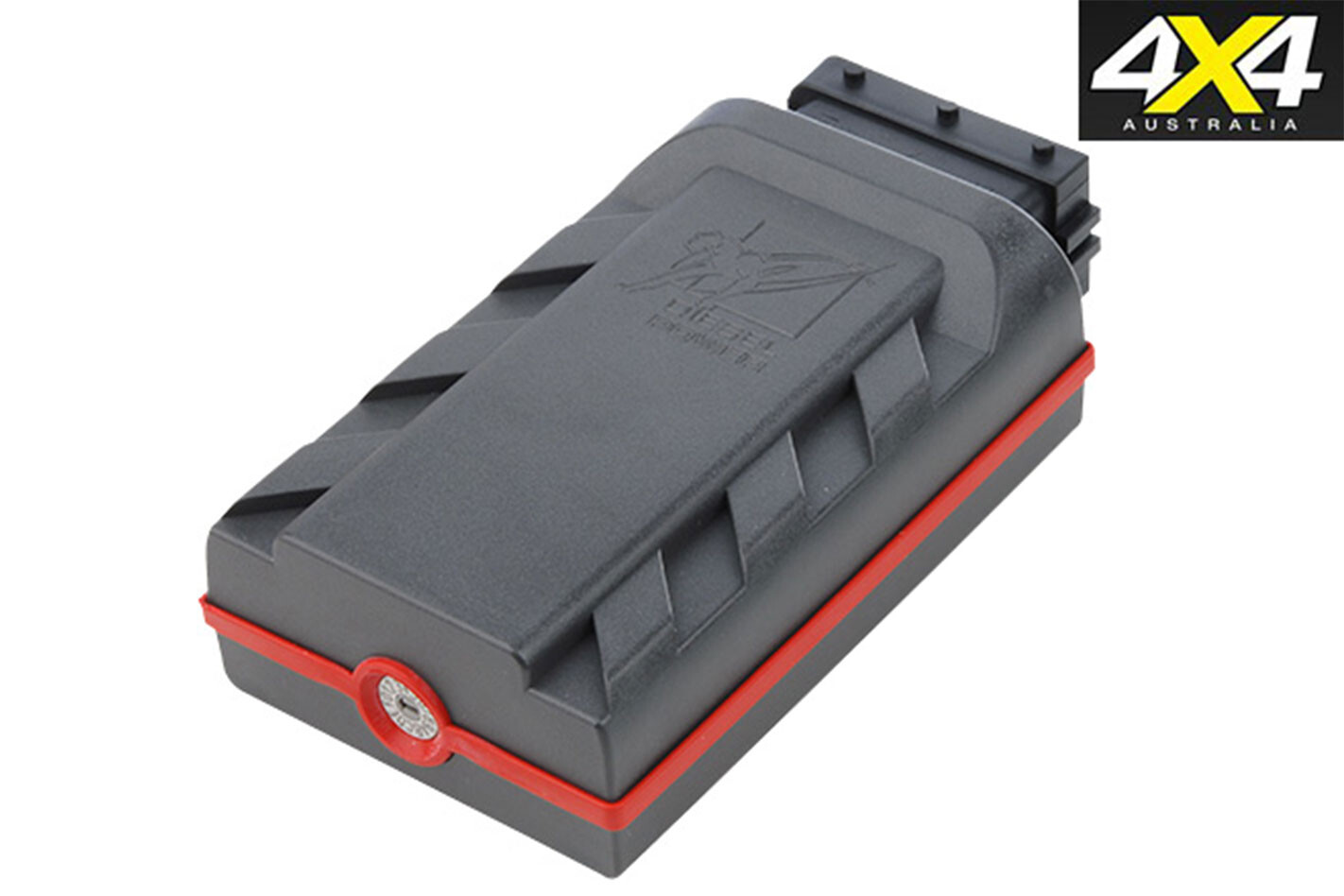
DP Chip: from $1495 (fully installed while you wait).
Manhandling a heavy camper-trailer is not something Luke Sutton particularly likes doing at the end of a hard day’s driving.
This article was originally published in 4×4 Australia’s November 2012 issue.
Nope, he’d much rather have a basic campsite set up in a jiffy, than to battle footy-field-sized canvas Taj Mahals. Mammoth sheets of canvas are too awkward for one man and his missus to erect, more so when the weather isn’t favourable.
He also doesn’t fancy complicated camping equipment or camp-related tasks. If it’s not practical and quick to set up, then it doesn’t belong in Luke’s kit. Casting your eye over this neat, mildly-customised Toyota FJ Cruiser and custom-made camper-trailer gives an indication of the type of person Luke is. His touring rig ethos is reflected in his own business – Luke is the hands-on owner and brains behind Drifta camp kitchens which, like his vehicle and trailer, are very clever in their design, and are simple and practical to use.
THE PRIME MOVER
Not needing to cart a tribe of kids around, and wanting a little more comfort than his 76 Series Cruiser and dual-cab work trucks afford him, Luke was keen to try out the bush capabilities of the FJ Cruiser as a long-distance tourer for three people; himself, his wife and one rapidly-growing son, plus one of their son’s mates thrown in from time to time.
In Luke’s words, the FJ “is the coolest-looking truck on the market”. Plus, being based on capable Prado running gear and suspension means it provides a damn good start in the long-range touring stakes. Add to that the aftermarket gear he has chosen and we can’t see any reason why it couldn’t be taken anywhere in this wide brown (and sometimes flooded) land.
Since there’s no other choice than the 4.0-litre petrol engine in the FJ, Luke saw fit to protect it as best he could with a Safari snorkel fitment. He figured the factory rear diff lock was good to go as is. To boost clearance the FJ has been given a 50mm lift with a set of ARB’s Old Man Emu dampers and coil springs.
While the factory alloy rims were retained, Luke flicked the standard rubber in favour of Mickey Thompson Baja 265/70 R17 MTZs, which are a far better bet for bush work. An ARB steel roof-rack is mounted atop the FJ to handle extra loads but can also do double-duty to carry the rooftop tent that usually resides on the trailer.
An ARB steel winch bar graces the front of the FJ. It carries a set of IPF Extreme driving lights and a low-mount T-Max 9000lb electric winch with synthetic rope and alloy hawse fairlead instead of a steel cable and roller fairlead. So, now he can see what he’s getting himself into, Luke can also get himself out of it should that rear locker not provide enough oomph.
A Supercharge Amp-Tech deep-cycle battery has been shoehorned into the engine bay, and is charged via an ARB dual-battery kit. This arrangement also trickles power to the rear-mounted Waeco fridge as well as a third, trailer-mounted deep-cycle battery. This battery runs camp lights, accessories and the rooftop tent.
In the rear of the FJ is one of Luke’s company’s latest achievements – fitting a drawer and kitchen set-up into the FJ’s smallish cargo area. The Waeco fridge rolls out smoothly on the fridge slide, while underneath is a pair of slide-out drawers. What’s not so apparent is the camping table that is cleverly enveloped between the top deck of the drawer system and the lower right-hand-side drawer. It allows easy access to an often-needed work surface on which to prepare roadside meals.
Inside, the FJ is largely stock except for the dash-mounted Garmin Nüvi navigator (mounted next to the factory ‘fall-over’ meters) and GME TX 3540 UHF radio affixed to the centre console.
THE TRAILER
Now, this is where Luke has attempted to address the weight issue and lengthy set-up times of many camper-trailers on the market. In collaboration with Trackabout Off-road Camper Trailers, Luke designed his 6×4-foot trailer based on Trackabout’s Deluxe Tourer design but without the normal canvas camping top. Instead, he opted for a high-mounted Hannibal rooftop tent which rests on a framework that raises it 400mm from its standard travelling position.
Why? Well, Luke wanted to maintain space under the tent bed-base to carry canoes, push bikes and other toys, while being able to easily reach the tent to set it up without the need for ladders or clambering up the sides of the trailer. This also keeps the centre of gravity reasonably low for driving off-road. Once set up, however, the whole thing lifts via four 12-volt linear actuators which source their power from the trailer’s toolbox-mounted 100-amp-hour deep-cycle battery.
While no-one is watching, Luke can flick a switch and stare in amazement with everyone else as the tent mysteriously rises above head height. It’s this extra height that then allows the tent’s awning and the rear-mounted Hannibal (legless) awning to achieve head-clearance – even for the tall and lanky. In case you’re wondering what these lifters are rated at, each one is able to lift 50kg and hold up to 250kg.
An OzHitch off-road hitch is used to mate the trailer to the FJ, while electric drum brakes help slow the show. All corners of the trailer are jam-packed with LPG bottles, jerry cans, 12-volt water pumps, and tool and camping-related boxes. Cleverly, the front drawbar-mounted box has two weatherproof power outlets, one of which has been modified to allow the power lead to hook up to the tent’s lifting actuators – simple, dust- and waterproof, and cheap.
The trailer runs on reliable leaf springs with seven leaves, no dampers, just a rebound leaf to help control the bounce.
As you would expect from the fella that owns Drifta, there is one of his slide-out camp kitchens with a sliding drawer to fully utilise the trailer’s internal space. Some of you may think we’re a little bonkers after drooling over the photos and knowing full well that Drifta only manufactures timber kitchen units. You may be tempted to email us right now saying “They look like stainless-steel, you twits” but, hold your horses, these units are a set of Luke’s latest timber units complete with a stainless-look veneer finish. They maintain all the easy-to-work-with attributes of timber but with the classy look of stainless – a win-win situation.
Collapsible buckets/tubs serve as a kitchen sink and hand basin, a manually-operated hand pump draws water from the underslung tank (or a jerry placed under the sink) and a US-sourced two-burner cooker knocks up most of the culinary delights while out on the road.
A front-mounted mesh stone deflector and underslung mudflaps reduce stone strikes to the trailer’s silver-painted finish. We do say reduce, not prevent, as no matter how much you try to block those damn gibbers from damaging your pride and joy some will always find a way through the barriers.
As you might have noticed there isn’t a lot of undercover area protected from the elements, however, Luke does have extra sidewalls that clip on to the rear Hannibal awning to provide a little more protection. It’s probably still no match for the all-encompassing canvas units that some folk haul around, but that’s part of the appeal for Luke and his wife – quick, easy and lightweight.
If there is need for extra sleeping space should their son’s mate come along for the ride, then a ground-based Oztent handles the duties of cubby house for the kids.
All up, his camper offers a small footprint, can be set up almost anywhere – even on muddy or wet ground – and signs off on all Luke’s wants. In his mind, it’s the perfect touring set-up and if you happen to think so too, he’s now manufacturing them for the public.
We can see it now: a whole new breed of inspired campers calling themselves nomads, roaming the backblocks of Australia. Here one minute, gone the next, not a care in the world. Doesn’t sound like such a bad idea.
EFS 4×4 Accessories has designed and manufactured the kit to toughen up your Ford PX Ranger MkII.
This is advertiser content
The brand’s all-new Adventure Series range of products was recently released to market and, for the Ranger, includes a bullbar, rear bar, winch and lift kit.
The premium steel rear bar is built tough, with 63mm side protection tubes and recessed LED lights. It comes with a tow hitch, a checker-plate rear step, a trailer-light plug cut-out and twin tow points – it retails for $1095*.
The durable Series 2 bullbar, made using a 63mm tube and steel infill trims – is winch-ready and features recessed ports. The bullbar retails for $1480*.
Attach EFS’s 13,000lb Recon R13 winch to the bar so you can escape any slimy predicament. The Recon R13 winch includes a waterproof 6.0hp electric motor, a full load automatic brake and a 265:1 gear ratio. The 25m, 10mm-diameter rope is abrasion resistant and includes anti-bind technology. The R13 retails for $1099*.
In addition to the bar, rear bar and winch EFS also offers a Ranger lift kit, which starts at $1745*.
All products are designed and developed in Australia. To get started on your Ranger build, head to: www.1300efs4wd.com.au.
*Prices exclude fitment.
JEEP’S factory accessories brand MOPAR has shown it’s getting serious about supplying kit for the new JL Wrangler.
Once the realm of aftermarket companies, MOPAR now wants a slice of the huge spend enthusiasts make on their Jeeps after they’ve left the showroom, and it displayed a couple of vehicles showcasing the products at the Los Angeles Auto Show.
“The Jeep Wrangler is one of the most versatile and customised vehicles in the industry,” said Pietro Gorlier, Head of Parts and Service (Mopar), FCA. “A total of 98 per cent of Jeep Wrangler vehicles are typically outfitted with at least one of our products.
“We worked with the Jeep brand, engineers and designers to create an exclusive line of parts and accessories that perfectly match the new Jeep Wrangler, delivering unique functionality, style and factory-backed quality.
“The two customised vehicles at LA showcase our new product portfolio and empower owners to personalise the new Jeep Wrangler for extreme off-roading or for all-purpose lifestyle adventures.”
Just how many of these factory-backed accessories will pass the nanny laws in Australia is yet to be revealed, but you can bet Australian enthusiasts will be looking to kit up their JLs as soon as they land here late in 2018.
Worrying are the reports that Australia will not be getting any manual gearbox-equipped Wrangler or the V8 turbo-diesel engine that is being offered in the USA.
The deep thrum of a helicopter from somewhere above the treeline is the first sign that Matt Wright, Nat Geo TV’s Outback Wrangler is about to arrive to say g’day.
Like meeting any ‘personality’ these days, there’s always a question in the mind whether they are ‘just like they are on TV’ or totally different. It only takes a hello and a handshake to confirm Matt is a regular knockabout bloke. Of course, this particular bloke is living an awesome dream: producing his own TV show, capturing (and relocating) rogue crocs, and running a successful Top End tourism operation about an hour or so west of Darwin.
The weekend I catch up with Matt is, as always for him, particularly frantic; there’s a tour group to entertain via one of his other business ventures (Outback Floatplane Adventures), a pesky 4X4 Australia journo (yep, that’d be me) to host for a day or so, and some last-minute filming to be done by Nat Geo TV for Season 3 of the hugely popular Outback Wrangler.
No sooner have we exchanged pleasantries than I have thrown my gear into his 79 Series Cruiser ute for a later pick-up and jumped aboard one of Matt’s airboats following a swamp channel to the Outback Floatplane Adventures pontoon on Sweets Lagoon. Here, guests are waiting to meet one of Australia’s most unique – and unassuming – television personalities.
In the beginning
When viewers watch Season 3 of Outback Wrangler they will see an experienced main presenter, but what they won’t see is the many years of hard graft and lessons learned along the way to this point, and it all started back in 2006 with Matt’s idea of showcasing the life he leads and the country – and people – that he lives in.
“My friends and family had no idea what sort of stuff we did,” Matt says, referring to his pre-TV career of mustering, breaking-in brumbies, catching crocs and collecting croc eggs. “So I thought we’ll just do a little local show – just try something – and base it a bit on what Troy Dann had done [the ’90s-era Troy Dann’s Outback Adventures]. “I used to like his show; it showcased the landscape… I wanted to showcase the country and the people that were in it, and that’s where it started.
But Jesus, it has taken a lot of years…” The journey to TV stardom wasn’t a fast or easy path, however, with Matt initially filming a couple of sizzle reels (highlight footage) out on location for distribution to potential broadcasters, something he looks back on ruefully. “I cringe now when I watch those, but you’ve gotta start somewhere,” he laughs. “Speaking on camera and all that was tough initially, but I am glad I did it when I did – it was good practice – but then I left; I gave up the idea…” Matt left Australia to spend some time in Canada, again flying, helping researchers and parks staff locate and tag native wildlife, except this time it was bear, caribou and wolf.
Meanwhile, back in Australia, his TV idea was about to take an interesting turn. It was while chasing Canadian wildlife that Matt was contacted by Nick Fordham, now his agent. Fordham had seen Matt’s sizzle reel and loved it; he wanted to work with Matt to make his idea a commercial reality. “He said he loved it and wanted to push it and make it work,” Matt says. “I said ‘well, I am not back in Australia for another few months’.
Over that time, though, I lined up another cameraman and Nick came up and we went across to the Arafura Swamp, where we were collecting croc eggs, and shot some good stuff.” It still took another couple of years before the big break, courtesy of Channel 7’s Sunday Night in 2011, when Matt encountered what is judged one of the largest crocs ever captured in Australia, and one that had been causing the local landowner plenty of grief due to stock losses. Funnily enough, Matt reckons, it was nearly a case of mistaken identity. “I didn’t know how big this croc was – it was just a croc. I nearly swung the gate closed on him as I didn’t think he was big enough or the right one.
Then I thought I had better keep him there and not let the landowner down. We had a look at him and f—k, he nearly launched out of the water at us and came up on top of the rails,” he laughs. “It wasn’t a nice feeling.” The exposure was immediate and included plenty from overseas, which led to Matt signing on with National Geographic. The first season of Outback Wrangler soon followed, with four 30-minute episodes.
It still wasn’t all smooth-sailing: the Global Financial Crisis hit in 2008 and this led to reduced funding for television, which ultimately led to Matt and Nick deciding to “do it ourselves”. The result has been the last three years spent filming seasons two and three of Outback Wrangler. For Matt it has been a long slog. “It’s been like building a business, really, or building a brand, and I have in that time also developed so much other stuff.
When I started the show, I was flat-out owning the Toyota, but I have built my business up well and I’ve got quite a collection of toys now that we can utilise for the show as well.” Top End wonderland Our airboat ride is fast; it’s not more than five minutes after dropping my gear in Matt’s ute that I am jumping off his airboat onto the floating pontoon that contains his 11-metre custom luxury cruise vessel that doubles as the restaurant for punters who join Matt on one of his company’s half-day (or longer; there are many options) tours.
Introductions out of the way, we are soon all bundled into the two airboats for an exploratory tour through the myriad waterways branching off Sweets Lagoon. And it is brilliant; I will confess to being a huge fan of the NT in general and am always keen to see more of it. A stand-out is meeting “Bonecruncher”, a four-metre saltie that has had a large portion of his lower jaw bitten off by another male during a territorial dispute.
It’s nearly like this croc knows when the show is on – it only takes a couple of shouts from Matt aboard his airboat for Bonecruncher to swim over and impress/overawe the punters. Matt’s familiarity with crocs – and his admiration of them – shines through as he gets hands-on with Bonecruncher, describing the various features that make up a saltie while his hand is on top of the croc’s upper jaw. Matt and fellow airboat pilot Ben soon move the two boats farther into the narrow side channels, where the crafts’ powerplants (an LS1 V8 on the smaller of the two, with a PCM [Pleasure Craft Motor] on the bigger one) work hard to push the airboats over sunken logs and branches, as well as shallow sections of the waterways.
It’s a brilliant way to spend a few hours, topped off with fresh-caught and barbecued barra for lunch back at the pontoon. As well as the tours, Matt has started an overnight accommodation venture. Safari-style tents (with showers) are dotted around a beautiful part of his 600-acre property, not far from “The Shed” his work HQ and, as the name suggests, a corrugated iron homestead that houses Matt and his crew. I meet Ben and Cody during my time here, with both of them (like their boss) flat-out tackling numerous tasks around the property. It’s bloody impressive that Matt and his team fit it all into their workday, but it’s definitely got a lot to do with the adage of ‘can’t sit still’ in terms of Matt’s strong work ethic.
It is this, along with his passion for wild animals, that’s been part of his life since he was a youngster, with his versions of ‘pets’ being decidedly different from most children. “Mum was pretty scared when I was doing it all at the start,” he says. “But even when I was a kid I was catching brown snakes, taipans, tiger snakes – anything deadly I could get my hands on. So she’s got some faith in me now that I can handle myself.”
Balancing act
With the new season of Outback Wrangler about to hit TV screens globally, you’d think Matt would be ready for a short break. But, with his wedding in a few weeks, plus the ongoing expansion plans for his business and pre-production for the next few seasons of the show, this hard-working self-starter won’t see any downtime for a while. It’s a necessity to some degree; the tours and accommodation help fund ideas he has for the TV show, while the show itself repays that with additional exposure for his business – and it is still the ‘big one’ among his various enterprises, he affirms.
“Yeah, for sure, I mean we’ve spent so much time and effort doing it now,” Matt says. “It would be good to see it get reasonably big overseas and it’s good for Australia. That’s sort of what I am pushing now – more for the Territory… and for tourism in Australia.” There’s a quiet confidence that this next season of the show will be the best yet, which should see these hopes fulfilled. “We stepped it up; we’ve done eight half-hours (shows) which pretty much could have been made into eight one-hours, we had so much content,” Matt says.
“We had more places to go to, bigger crocs, and we put a bit more effort in and pushed a bit harder and away we went.”
An old stager
When viewers see Matt and his crew wrangling crocs out of swamps and rivers the perception for the ignorant could be it’s a cruel thing to do, or that he has little respect for the animal, but the truth is as far removed from that as possible. Matt’s admiration for these huge reptiles is very high and his first thought is always of the animal’s welfare. His ‘soft spot’ is never more pronounced than when he introduces me to the resident of one of the enclosures near The Shed – the crocodilian equivalent of a stately gentleman: Tripod.
As the name suggests this 5.5-metre, 770kg, roughly 80-year-old big bopper has only three legs – his front right leg was bitten off by another male at a croc farm years ago. Matt took him on around 12 months ago after he was copping some rough treatment from younger males at the farm. I take a slightly deeper breath than normal when Matt opens the gate – Tripod is laying half-in/half-out of the water right near it – but the old fella seems content to just sit there in the sun.
Even Matt’s waving of a pig’s leg in front of him barely causes any movement – nor does Matt’s good-natured comments of “you lazy bugger” elicit much response. And then it happens; just when I thought Tripod wasn’t going to budge, in a split-second he lifts up and lunges, jaws agape, at the bait. I am both amazed and impressed; Tripod is getting on in croc years, yet is still lightning fast and only slightly slowed down by his lack of front foot for that extra leverage.
A few more lunges and ‘clump’ of jaws banging together and he gets his dietary reward. I ask Matt if he thinks there are still older, bigger ones out there. “Oh, there’d have to be. Problem is, with the general public, they see one big croc and you get one redneck and they shoot them,” Matt says with a tone of disgust. “If it had been there for a long time that’s just silly, you know.”
Never slow down
While we’re having a few beers at sunset Matt gets another call: Nat Geo TV is keen to film promo footage tomorrow; the crew is at the nearby Sandpalms Roadhouse ready to go. Oh, and they will need a huge NG border made out of timber for some of the filming. Next minute – and for many minutes after that – me, Matt, Ben and Cody are at the roadhouse, chatting with owners Tommy and Julie, and tucking into some Top End nosh while Matt and the NG TV crew discuss the details for tomorrow’s shoot. Incredibly, it all gets done; by the time I wake up the next morning, Matt has already gone to set up for the filming.
Meanwhile, Cody is dropping me into Darwin for my flight back to Sydney, with a detour to pick up that timber NG border (painted yellow, of course) from a local supplier who was up until 4am finishing it. Just when I thought that, maybe, Matt might actually get that short break, I remember one of the last things he said to me before I left: “I was just talking to Mick on the way out; we’re just about to start collecting crocodile eggs for croc farms as well, and that goes for another five months.”
It is dangerous and exciting work. In fact, you’d reckon there’d be the potential for a hard-working Aussie to make a globally successful TV show out of it…
THE WORKHORSE
Matt Wright has been a Toyota fan since he started driving, owning and using a variety of the brand’s Land Cruiser utes and wagons over his many years working in remote areas.
His latest rig is a moderately tweaked LC79. “I love it, I really do,” Matt says. “It’s a good rig; it’s tough, and it does what I want.” In terms of mods, Matt has kept them to essential things he needed done for the Cruiser to benefit his business.
“I haven’t done anything to it, bar fitting airbags to the rear, a radio and a bullbar and a couple of spotlights,” he says. “That’s all you need really… I just need shit to be practical and work. “Having the airbags is good for loading up fuel, so it carries a lot of weight.
Plus it carries the airboats around – the big one would be 1.5 to 2 tonnes. “The only other thing I have done is remapped the chip for a bit more grunt.”
WRANGLING THE BIG SCREEN
Outback Wrangler Season 3 had its world premiere on National Geographic on Wednesday, December 6 at 8.30pm AEDT. This season contains eight 30-minute episodes. In this season the crocs are bigger than ever and the team face a number of hairy moments, including having their tinny nearly overturned by a particularly cranky croc.
National Geographic is available on Foxtel, Foxtel Now, Fetch and the National Geographic App: www.nationalgeographic.com.au/tv/outback-wrangler