2025 4×4 Ute of the Year
A stacked field hit this year’s 4X4 Ute of the Year test, with everything from value picks to heavy-duty touring rigs lining up. Here’s every contender that made the cut for 2025.:

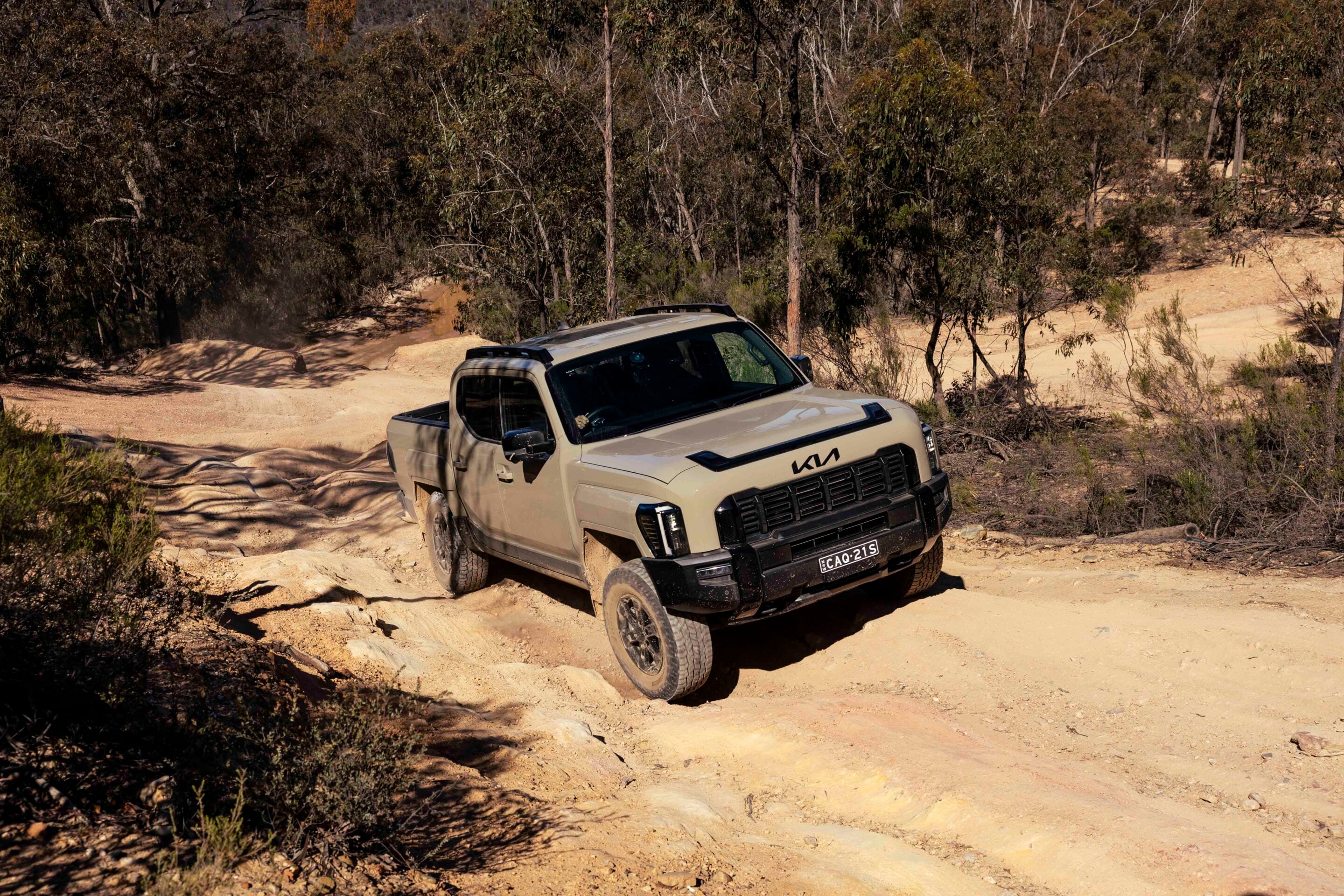
This is Kia’s first attempt at building a midsize 4×4 ute in the style so popular in Australia, and for a first effort, the Tasman is an impressive result. While the styling has proven controversial (that’s putting it politely), it’s what’s under the skin that makes the Tasman stand out.
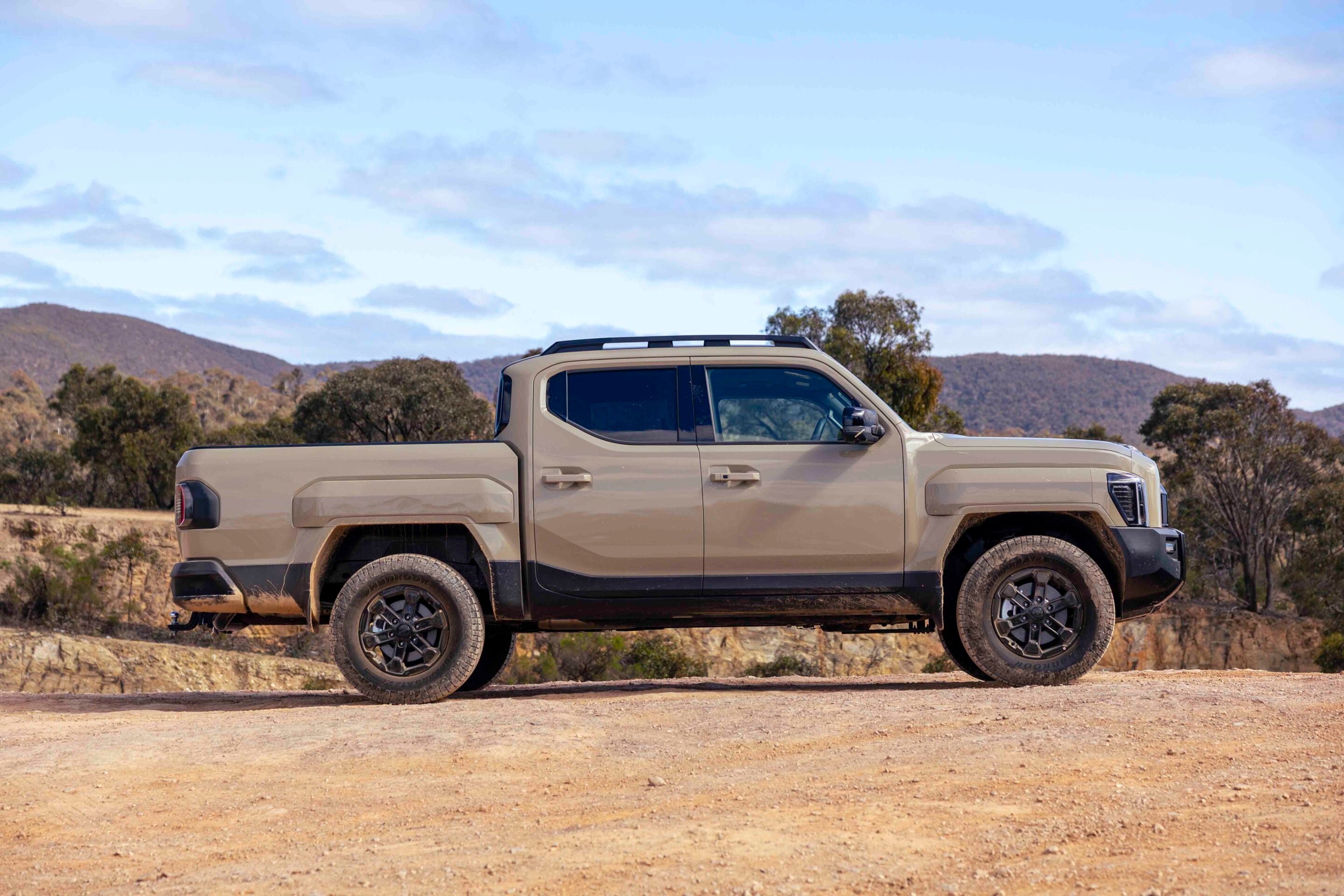
Available in four model grades with either a ute bed or a cab-chassis, Kia is covering all bases with its new offering. For our Ute of the Year test, we selected the top-spec X-Pro, as it’s the model with more of an off-road focus in its equipment and specification. At around $75K, the X-Pro sits at the higher end of the spectrum, making it one of the most expensive utes in this year’s line-up.
This is paired with a 2.2-litre single-turbo diesel engine producing 154kW and 440Nm. An eight-speed automatic transmission feeds a part-time, dual-range transfer case that also offers on-demand 4×4 for full-time all-wheel drive when needed.
It’s a powertrain that’s smooth and strong, even if it doesn’t quite match the peak numbers of some rivals. It delivers exactly what’s needed 99 per cent of the time when you’re behind the wheel. Only in that last one per cent – when you’re flat-footed or towing heavy loads – does the Tasman feel like it could use a bit more grunt.
Off-road, the Tasman’s traction control and selectable rear diff lock work well with the suspension to deliver competent performance in rough terrain. The absence of side steps on the X-Pro gives it more ground clearance than utes fitted with steps, meaning it didn’t scrape over steep humps where others did.
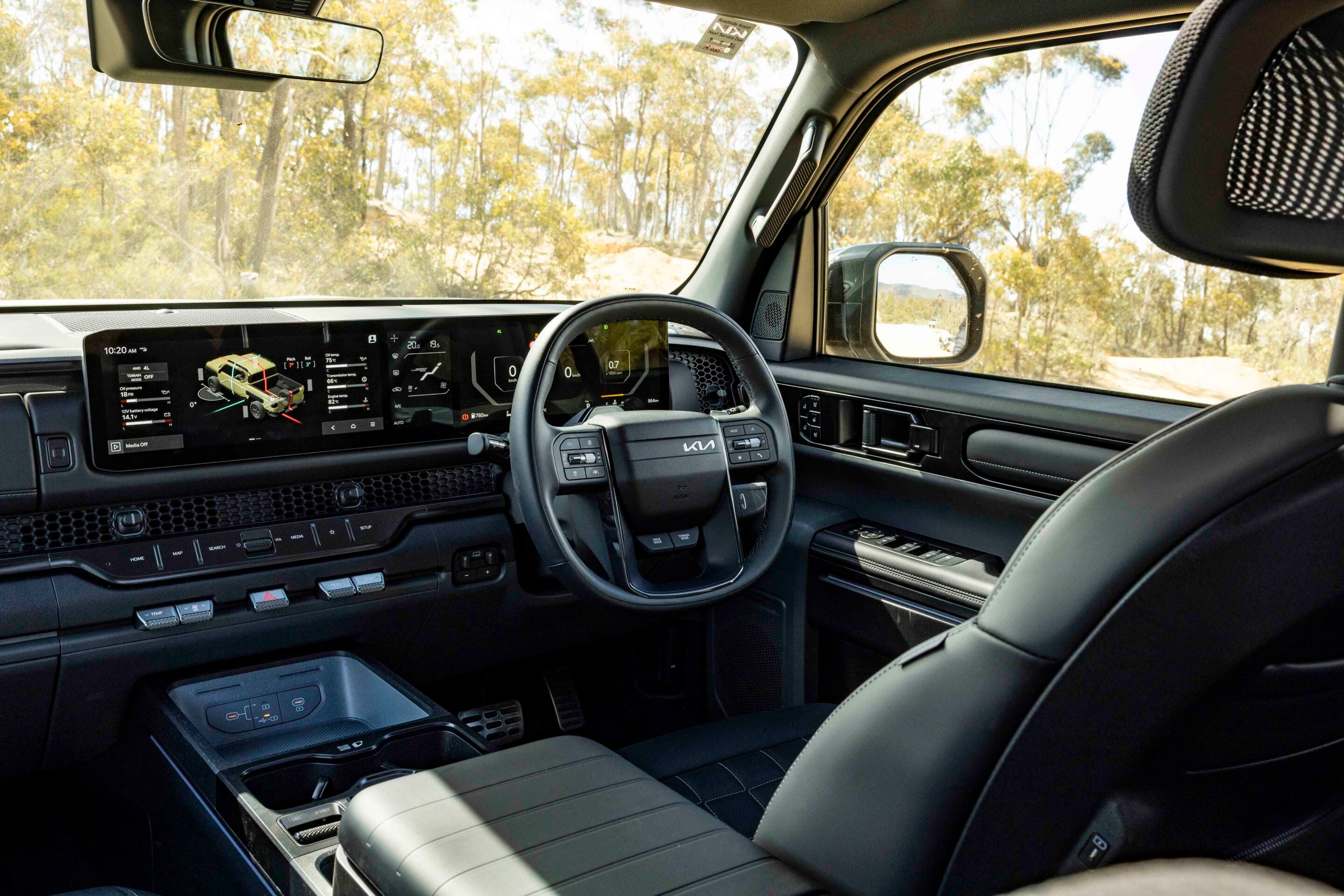
Seats are supportive and upholstered in durable leather-look material, with heated front seats and adjustable driver settings for long-distance comfort. The cabin also includes a multifunction steering wheel, touchscreen infotainment, Apple CarPlay/Android Auto, and plenty of storage cubbies for gadgets, paperwork and touring gear.
Controls are intuitive, the cabin is practical for long days on the road, and the overall layout is well thought-out for both touring and work. Visibility is good, with large mirrors and a clear sightline to the bonnet and corners, and the rear cabin offers ample legroom for passengers or gear.
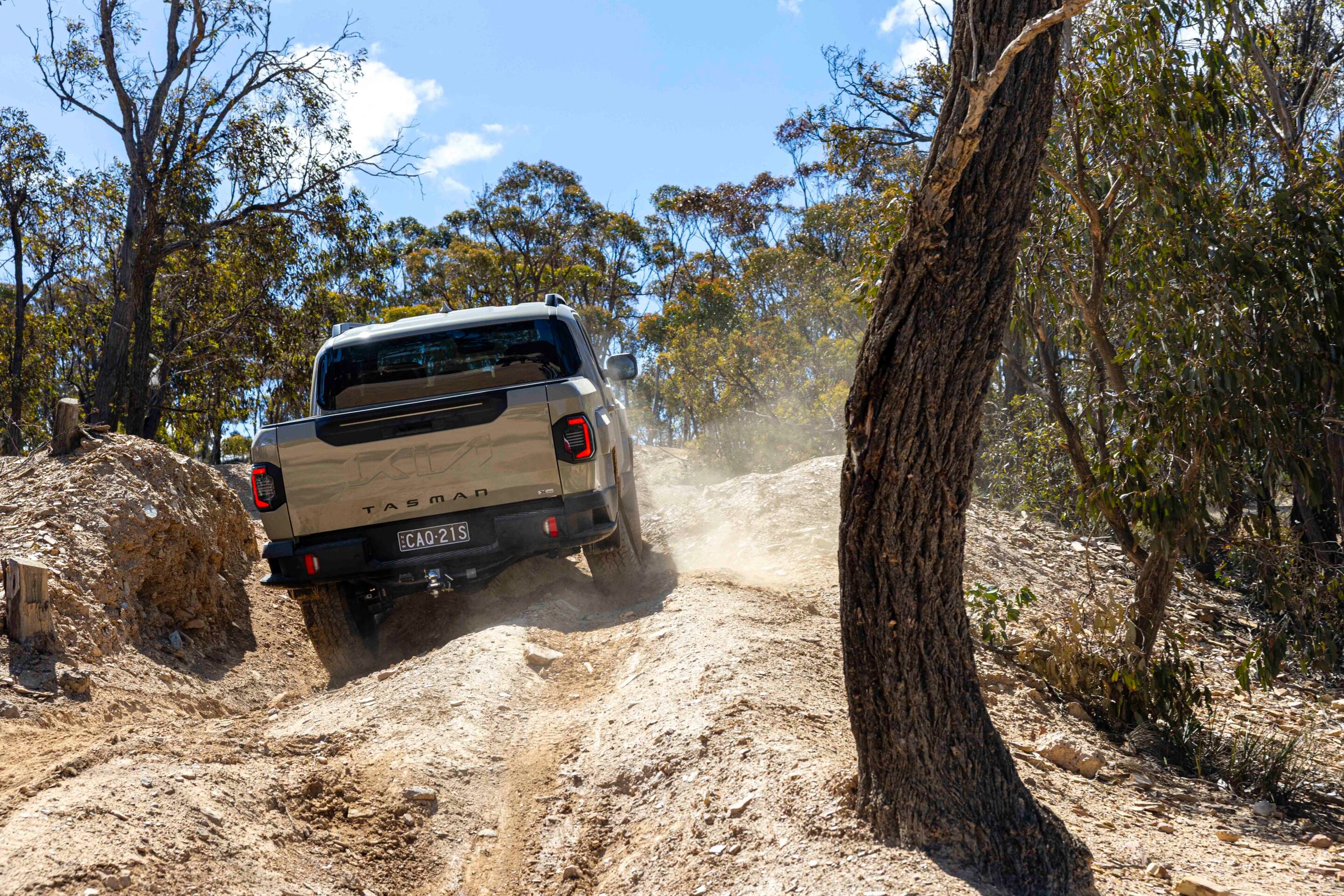
“With only 140kW the Tasman is underdone, if saved a little by the best-in-class eight-speed gearbox. The suspension, which is lauded for its compliant ride around town and off road, is just too soft for loads,” said Tim. “The Offline Camper’s 150kg ball weight didn’t fully compress the Tasman’s rear leaf suspension but it put a big dent in it.
“It’s not all bad though – the Tasman has some good tow-tech like an integrated brake controller, tow mode and basic pre-departure checklists. It has a strong GCM limit of 6300kg, which combined with a reasonable 2300kg kerb weight means it can actually (on paper) tow at its limit while carrying more than a driver alone. For those reasons it scraped into the top three for me.”
| Kia Tasman X-PRO specs | |
|---|---|
| Price | $74,990 + ORC |
| Engine | Inline 4-cylinder turbo-diesel |
| Capacity | 2151cc |
| Max Power | 154kW @ 3800rpm |
| Max Torque | 440Nm from 1750 to 2750rpm |
| Transmission | 8-speed automatic |
| 4×4 System | Part-time dual-range 4×4 with on-demand mode |
| Construction | 4-door ute and tub on ladder chassis |
| Front Suspension | Independent double wishbone with coils |
| Rear Suspension | Live axle on leaf springs |
| Tyres | 265/70R17 on alloy wheels |
| Kerb Weight | 2237kg |
| GVM | 3250kg |
| Payload | 1013kg |
| Towing Capacity | 3500kg |
| GCM | 6200kg |
| Seating Capacity | 5 |
| Fuel Tank Capacity | 80L |
| ADR Fuel Consumption | 8.1L/100km |
| Departure Angle | 26.2 |
| Rollover Angle | 25.8 |
| Approach Angle | 32.2 |
| Wading Depth | 800mm |
| Ground Clearance | 252mm |
The Tasman X-Pro earns a top-three placing in our Ute of the Year testing due to three core reasons:
Yes, it lacks the outright power and rear suspension firmness of some competitors, but judged on overall capability, comfort and off-road practicality, the Tasman X-Pro more than earns its place among the top utes of 2025.
| How it scored | |
|---|---|
| Value for money | 7/10 |
| Breaking new ground | 7/10 |
| Built tough | 8/10 |
| Doing the job | 9/10 |
| Bushability | 7/10 |
| TOTAL | 38/50 |
A stacked field hit this year’s 4X4 Ute of the Year test, with everything from value picks to heavy-duty touring rigs lining up. Here’s every contender that made the cut for 2025.:
What made it shine? Simply put, it drives like a Ranger, and that’s a very good thing in our books. Unlike some EV‑derived pickups, the Ranger PHEV isn’t a bespoke design. It’s built on the existing T6 platform that underpins the current Ranger range. This proven foundation, combined with Australian-developed and tuned suspension, ensures the PHEV feels familiar yet capable, both on- and off-road.
Paired with a 75kW electric motor and an 11.8kWh battery, the combined power output is 207kW at 4600rpm with 697Nm from just 2500rpm, exceeding even the diesel V6 in torque. The hybrid system feeds a 10-speed automatic transmission and a dual-range 4×4 transfer case, giving the PHEV the same on‑ and off-road capability as the ICE-only Ranger models.
On tarmac, the Ranger PHEV feels remarkably like a conventional Ranger: Smooth, composed and confident. Torque arrives early and consistently, making highway cruising, overtaking and load-carrying effortless. The petrol engine is quieter and more refined than the diesel V6, while the electric motor fills in any gaps in acceleration, giving the PHEV a linear and responsive feel. Steering and suspension are well-tuned, so long-distance drives remain comfortable, with minimal fatigue behind the wheel.
Off-road, the Ranger PHEV benefits from the same Australian-tuned suspension and dual-range 4×4 system as other Rangers. It tackles uneven tracks, mud and steep climbs with confidence. Traction is excellent, and the hybrid torque delivery helps smooth low-speed crawling.
The additional battery weight at the rear adds stability on slopes and rough terrain, although ground clearance is slightly lower than a standard Ranger due to the battery placement.
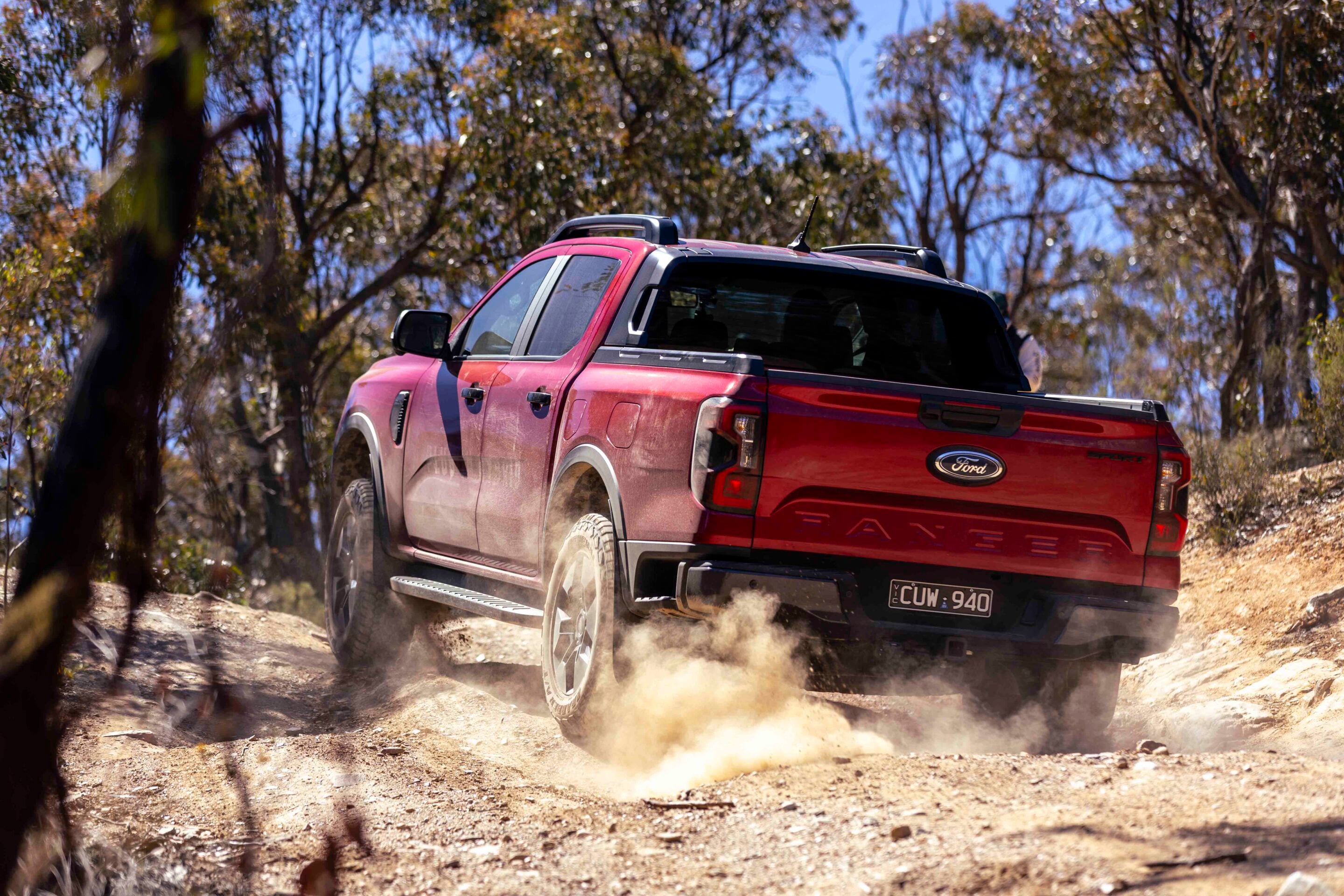
“It felt planted, it felt safe. The tow-tech built in is still the best around, but there is one catch: When you are underway the hybrid does little to offset fuel use as you are not harvesting energy unless braking,” said towing judge, Tim van Duyl. “The net result is fuel use in the mid‑ to high‑teens when testing; not ideal when the fuel tank is only 70 litres, yet it was by far and away the best of the PHEVs for towing.”
With a 3500kg towing capacity and a strong payload, the Ranger PHEV remains a practical workhorse. The hybrid battery can also power tools and appliances directly from the vehicle, adding extra utility for off-grid or worksite use.
Some compromises include the fixed cargo tub (no cab-chassis or service-body option) and a smaller 70-litre fuel tank due to the battery placement. EV-only range is very limited, so pure electric driving isn’t its strong suit.
| Ford Ranger PHEV specs | |
|---|---|
| Price | $75,990 + ORC |
| Engine | Turbo-petrol four with 75kW electric motor |
| Capacity | 2.3L + 11.8kWh battery |
| Max Power | 207kW (combined) |
| Max Torque | 697Nm (combined) |
| Transmission | 10-speed automatic |
| 4×4 System | Selectable full-time 4×4, dual-range |
| Construction | 4-door ute on ladder-frame chassis |
| Front Suspension | Independent double wishbones, coil springs |
| Rear Suspension | Live axle on leaf springs |
| Tyres | 255/65R18 on alloy wheels |
| Kerb Weight | 2566kg |
| GVM | 3500kg |
| GCM | 6580kg |
| Towing Capacity | 3500kg (braked) |
| Payload | 934kg |
| Seating Capacity | 5 |
| Fuel Tank Capacity | 70L |
| ADR Fuel Consumption | 2.9L/100km |
| Approach Angle | 30.1 |
| Rollover Angle | 20.6 |
| Departure Angle | 24.7 |
| Wading Depth | 800mm |
| Ground Clearance | 228mm |
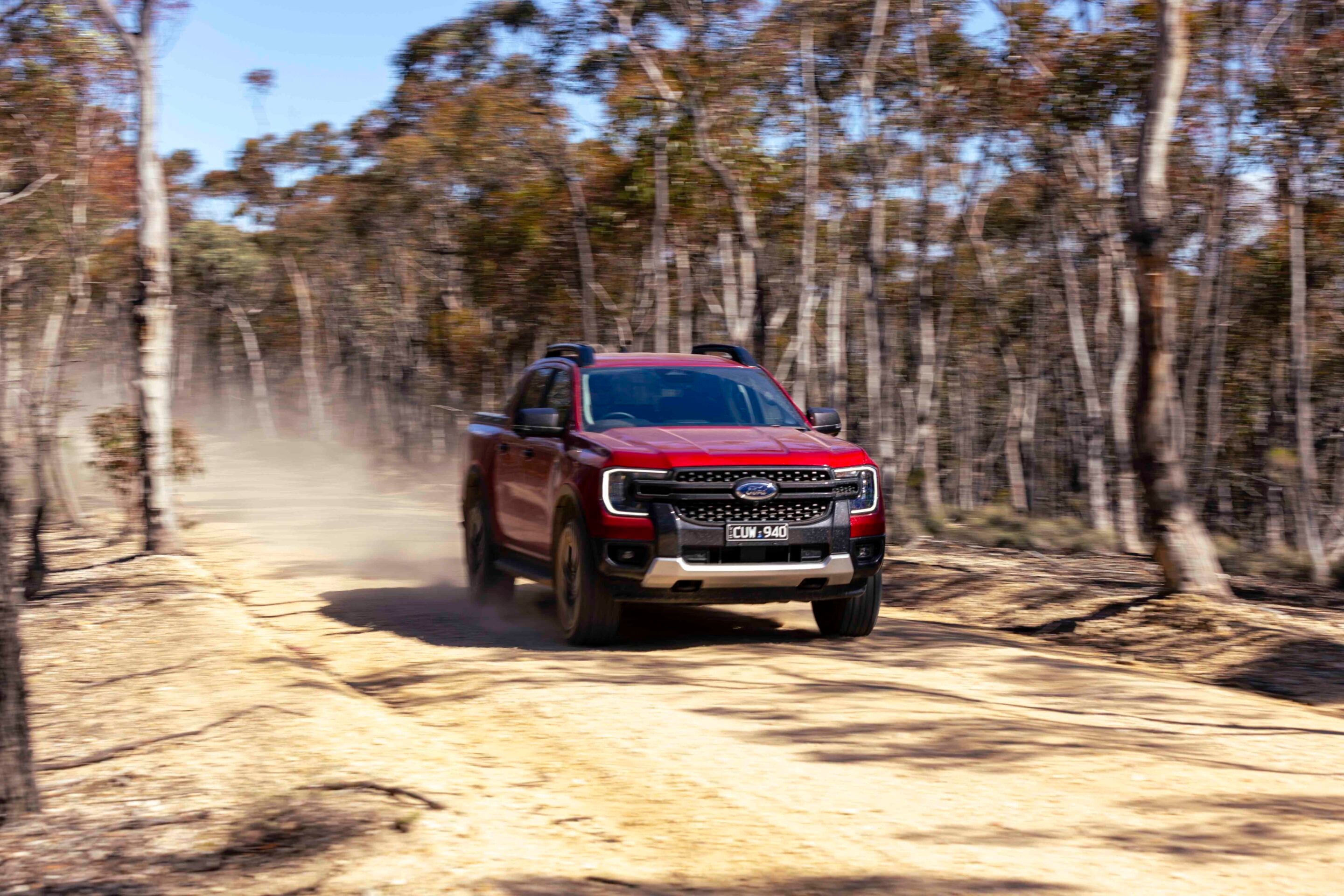
Seating, controls and ergonomics are intuitive, with dual-zone climate control, modern infotainment supporting Apple CarPlay and Android Auto, and plenty of storage for gear and personal items.
While it isn’t radically different from other Sport models, the PHEV benefits from the usual Ranger refinement and build quality, making it easy to live with on workdays, touring trips or off-road adventures.
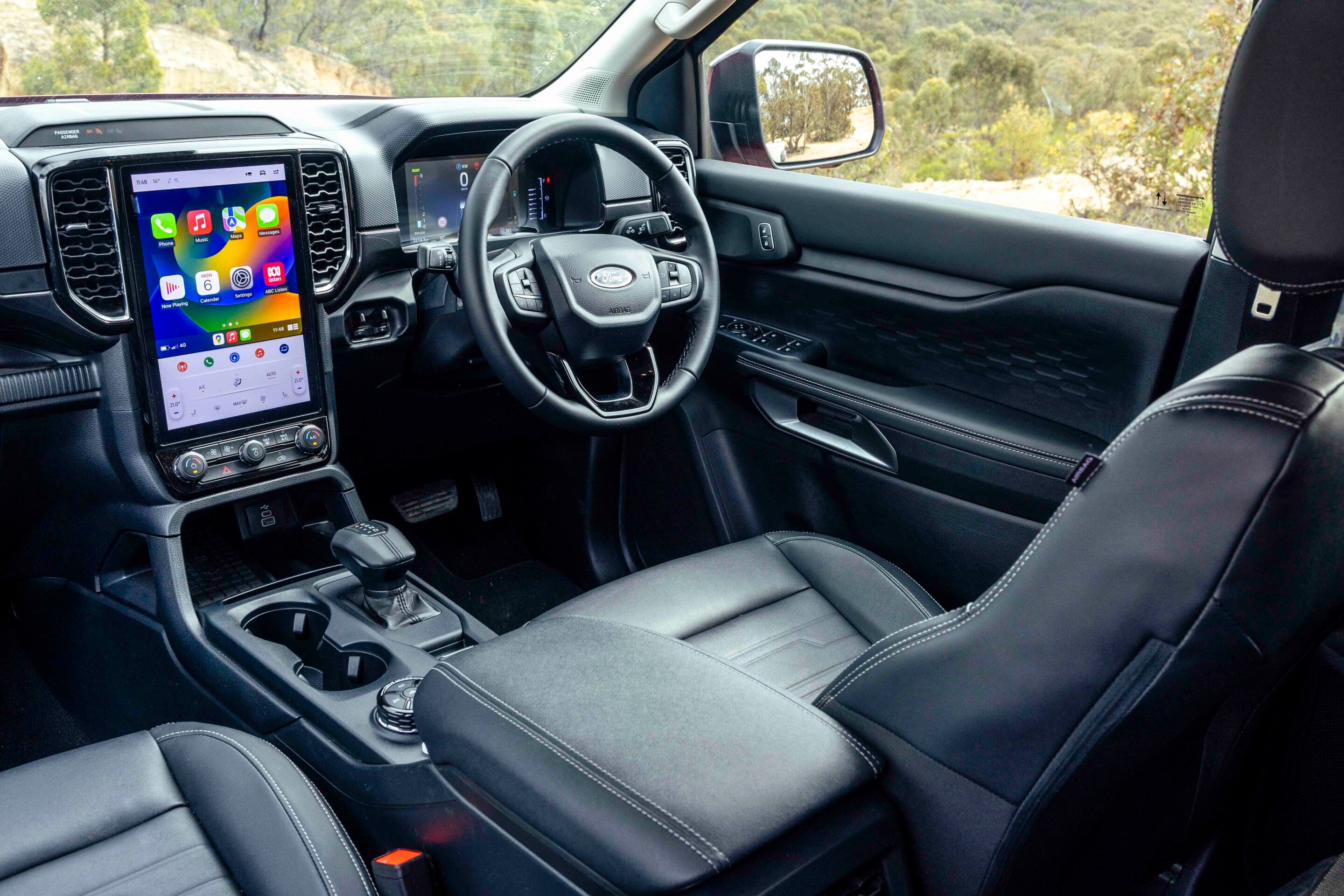
The Ranger Sport PHEV takes out our Best PHEV Ute award because it delivers a true Ranger experience with the advantages of hybrid technology:
Yes, it comes with some compromises – limited EV range, fixed cargo tub, and a smaller fuel tank –but judged purely on its driving experience, towing ability and overall practicality, it’s the standout PHEV in a growing market segment.
| How it scored | |
|---|---|
| Value for money | 6/10 |
| Breaking new ground | 8/10 |
| Built tough | 9/10 |
| Doing the job | 7/10 |
| Bushability | 6/10 |
| TOTAL | 36/50 |
A stacked field hit this year’s 4X4 Ute of the Year test, with everything from value picks to heavy-duty touring rigs lining up. Here’s every contender that made the cut for 2025.:
Previous testing of the now ageing and soon‑to‑be‑superseded D23 Navara has shown it to be an excellent all‑rounder, one you can confidently take straight from the showroom to the trails. By teaming up with Melbourne‑based engineering specialists Premcar, Nissan has transformed what might otherwise have been a mid‑pack performer into a ute that all our judges genuinely enjoyed driving.
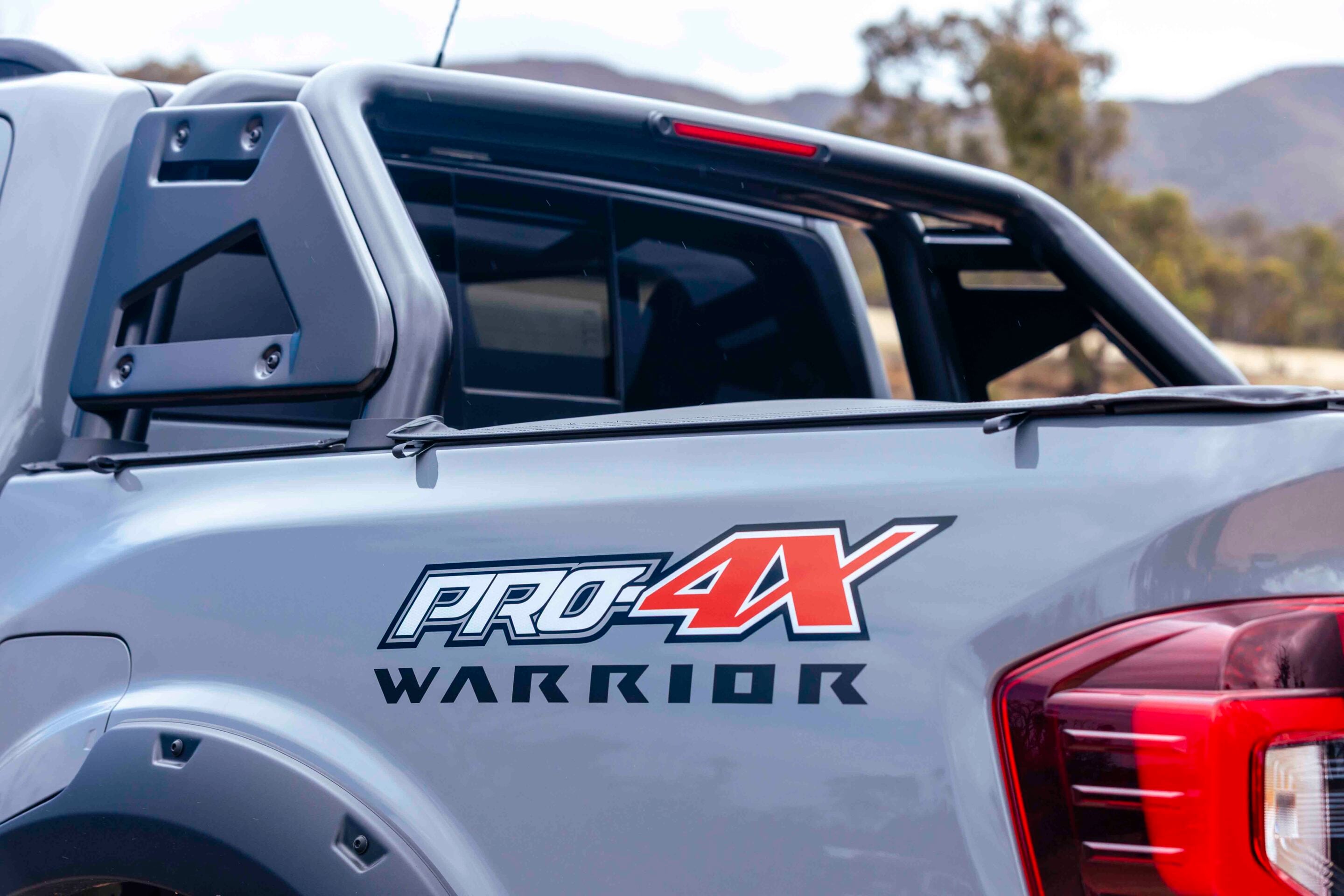
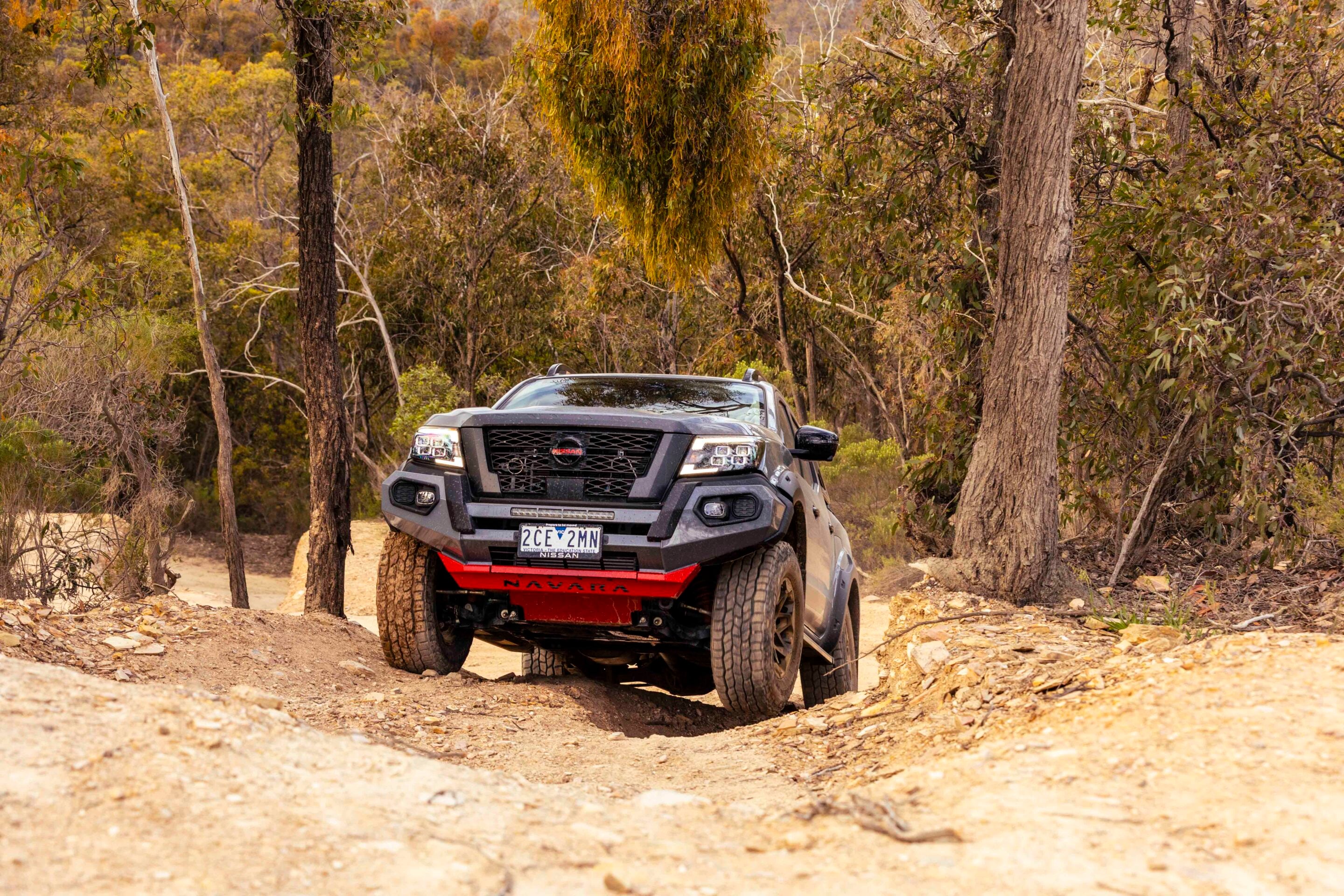
What sets the Warrior apart is how seamlessly Nissan and Premcar have combined proven D23 reliability with targeted off-road upgrades. The bespoke suspension raises ride height and improves articulation, underbody protection shields vulnerable components, and all-terrain tyres on custom wheels ensure the ute is ready for rough tracks straight from the showroom.
Suspension components were specifically developed for the Warrior, transforming the chassis while adding extra ground clearance. Additional underbody protection helps prevent damage when that clearance eventually runs out. A steel front bumper adds further protection, while the fitment of Cooper all‑terrain tyres on bespoke Warrior wheels ensures it rolls straight out of the showroom with bush‑ready rubber.
“Premcar has done all the mods I’d normally do to a 4×4 for outback touring; and they’ve done a better job than I would have,” said Dave Morley. “The Warrior is ready to do a lap of the country straight out of the box.”
Modest by class standards, the twin‑turbo setup gives a broad torque band, helping the ute move confidently across highways, dirt tracks, and rugged terrain. Its seven‑speed automatic transmission pairs perfectly with the engine, offering smooth shifts whether cruising or crawling.
Off‑road, the Warrior feels planted and confident. The Premcar suspension absorbs bumps and ruts, while the increased ride height and underbody protection allow it to tackle uneven trails with minimal fuss. For a D23 chassis, it punches well above its weight compared with newer, larger competitors.
“One of my favourite rigs off-road also does well when hooked up – just don’t expect to tow a massive load as its kerb weight (2298kg in auto) and low GCM (5910kg) means when you hook up its max tow capacity, you are left with only 112kg before you cap out on your GCM,” said Tim van Duyl of its towing prowess.
“That being said, the suspension is magic. Premcar’s use of progressive-rate springs that stiffen as load is added has fixed the towing issues found in the regular Navara for a trailer like we had, with around 150kg of ball weight and 2000kg total weight.”
| Nissan Navara PRO-4X Warrior specs | |
|---|---|
| Price | $71,634 + ORC |
| Engine | Inline 4-cylinder bi-turbo diesel |
| Capacity | 2298cc |
| Max Power | 140kW @ 3750rpm |
| Max Torque | 450Nm from 1500 to 2500rpm |
| Transmission | 7-speed automatic |
| 4×4 System | Part-time 4×4 with high and low range |
| Construction | 4-door ute on ladder chassis |
| Front Suspension | Double-wishbone independent with coil springs |
| Rear Suspension | Live axle with five-link coil-spring setup |
| Tyres | 255/60R18 on alloy wheels |
| Kerb Weight | 2289kg |
| GVM | 3150kg |
| Payload | 961kg |
| Towing Capacity | 3500kg |
| GCM | 5910kg |
| Seating Capacity | 5 |
| Fuel Tank Capacity | 80L |
| ADR Fuel Consumption | 7.5L/100km |
| Approach Angle | 36.0 |
| Rollover Angle | 26.2 |
| Departure Angle | 19.0 |
| Wading Depth | 600mm |
| Ground Clearance | 260mm |
Being an older model, the D23 Navara is a little smaller than newer utes like the Ranger, Tasman and Terron 9, but front occupants still enjoy good space and comfort. The rear seat, however, is best suited to smaller passengers or shorter trips.
The dashboard shows the Navara’s age, with its smaller screen, dated design, and limited feature set, yet the cabin remains functional for touring or work. While it may lack the bells and whistles of newer competitors, the interior is durable, practical and easy to live with, reflecting the Navara’s utilitarian roots.
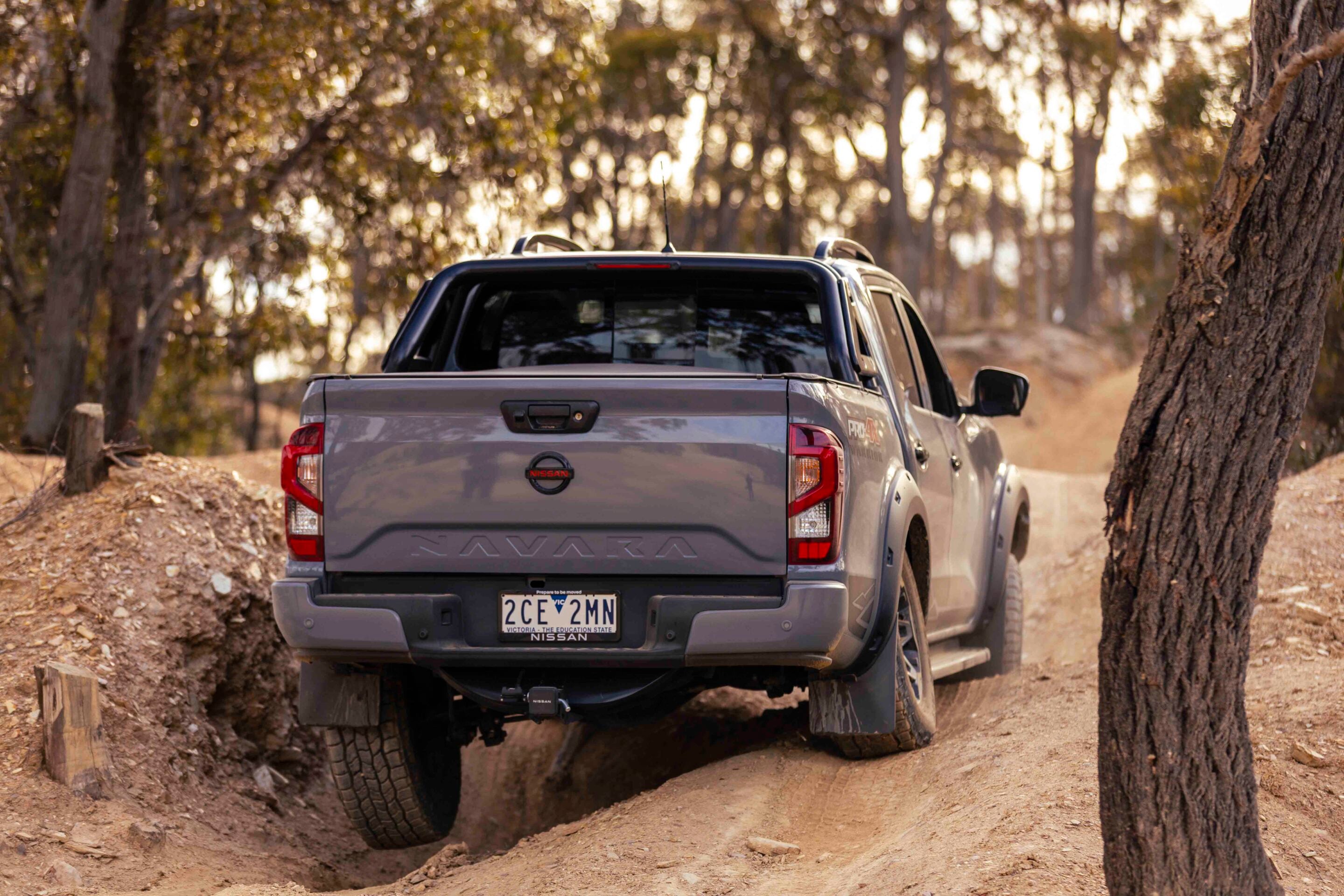
The fact that the Warrior performed so well against newer and larger competitors is a testament to the success of the Nissan‑Premcar collaboration:
Yes, it’s older and smaller than some rivals, and the interior is dated, but for buyers seeking a ready‑to‑go off‑road ute with proven reliability, the Warrior offers more capability and enjoyment than its age would suggest.
| How it scored | |
|---|---|
| Value for money | 8/10 |
| Breaking new ground | 5/10 |
| Built tough | 8/10 |
| Doing the job | 6/10 |
| Bushability | 9/10 |
| TOTAL | 36/50 |
A stacked field hit this year’s 4X4 Ute of the Year test, with everything from value picks to heavy-duty touring rigs lining up. Here’s every contender that made the cut for 2025.:
In fact, it was a tight call between the two hybrids – and it ultimately came down to the Ranger’s simplicity and solid build to split them. The Cannon Alpha is the big brother in the Cannon line-up, and in Ultra trim it comes fully loaded.
From the outset, it impresses with its cavernous cabin, advanced tech and standard off-road features. For a hybrid ute, it’s a rare combination of sheer power and practical capability, offering front and rear locking differentials, a dual-range 4×4 system, and plenty of torque to get through tough tracks without breaking a sweat.
What makes the Cannon Alpha particularly notable is that it feels like a purpose-built 4×4 rather than just a hybrid variant. While other PHEVs may prioritise efficiency or city driving, the Cannon delivers a genuine off-road experience, making it a strong contender for anyone looking for a tech-rich yet capable hybrid ute straight out of the showroom.
Together, they deliver 300kW and 750Nm, sent through a dual-range, on-demand 4×4 system. It’s a potent combination that launches the hefty Cannon with surprising authority, shrugging off its weight and giving the PHEV a “cannonball off the mark” feel.
On tarmac, the Cannon Ultra PHEV feels impressively composed, with the hybrid torque smoothing acceleration. It’s an easy ute to drive on highways and suburban roads, though its size and weight are noticeable when manoeuvring at low speeds.
Off-road, the Cannon’s front and rear locking differentials make it unrivalled on rough tracks. However, some functions feel complex, and the ETC calibration is slightly jerky, so the ute relies on its lockers to negotiate offset wombat holes and tricky terrain. Its weight works against it at times, but in the hands of an experienced driver, the Cannon’s capability is undeniable.
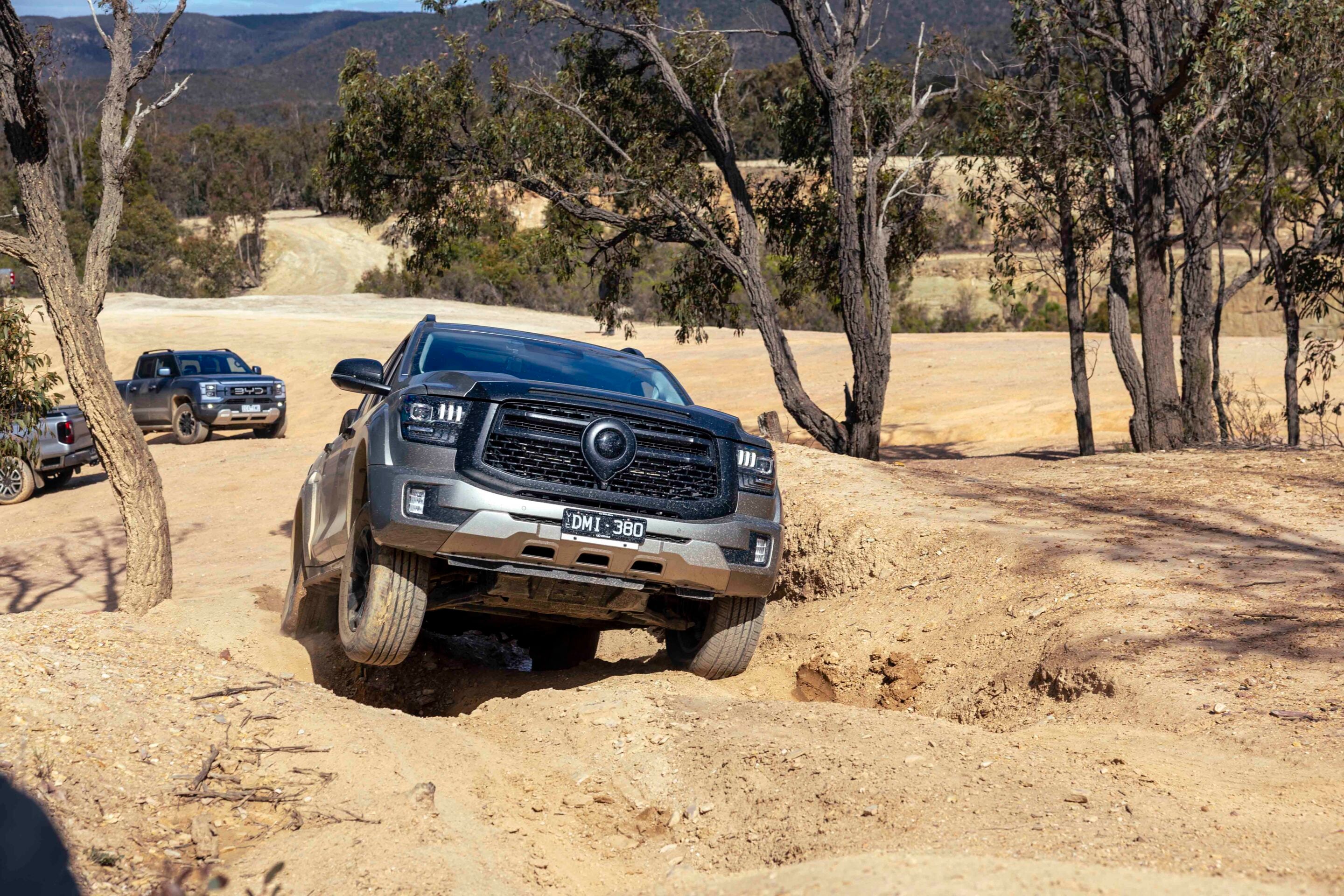
“I loved the seats in the Alpha, and more points to the frankly obscene 300kW and 750Nm of power and torque, which make pulling away from the lights, trailer in-tow, like a drag race,” said towing judge, Tim van Duyl. “But the Cannon fell to the mid-pack as a towing proposition as it’s thirsty. I saw high teens, bordering on 20s per 100km travelled when towing.”
The cargo tub is spacious, although the PHEV battery and spare tyre placement reduce some capacity. The barn-door/fold-down tailgate is a quirky, if not strictly necessary, addition.
| GWM Cannon Alpha PHEV specs | |
|---|---|
| Price | $67,990 + ORC |
| Engine | 4-cylinder petrol with electric motor |
| Capacity | 2.0L |
| Max Power | 300kW (combined) |
| Max Torque | 750Nm (combined) |
| Transmission | 9-speed automatic |
| 4×4 System | On demand/dual range |
| Construction | 4-door ute on ladder frame chassis |
| Front Suspension | IFS, double wishbones, coil springs |
| Rear Suspension | Live axle on leaf springs |
| Tyres | 265/60R18 on alloy wheels |
| Kerb Weight | 2810kg |
| GVM | 3495kg |
| GCM | 6745kg |
| Towing Capacity | 3500kg (braked) |
| Payload | 685kg |
| Seating Capacity | 5 |
| Fuel Tank Capacity | 75L |
| ADR Fuel Consumption | 1.7L/100km (combined hybrid) |
| Approach Angle | 28.5 |
| Rollover Angle | 19 |
| Departure Angle | 23 |
| Wading Depth | 800mm |
| Ground Clearance | 210mm |
Inside, the Cannon Ultra PHEV impresses with Nappa leather seats front and rear, ventilated and heated, with a massage function on the front pews. Rear passengers enjoy electric slide and recline functionality, easing the typically upright dual-cab seating position.
A 14.6-inch infotainment screen dominates the dash, integrating Apple CarPlay and Android Auto, system settings, and controls in a large, clear display. Storage, ergonomics and overall cabin comfort place it closer to the top end of the dual-cab segment.
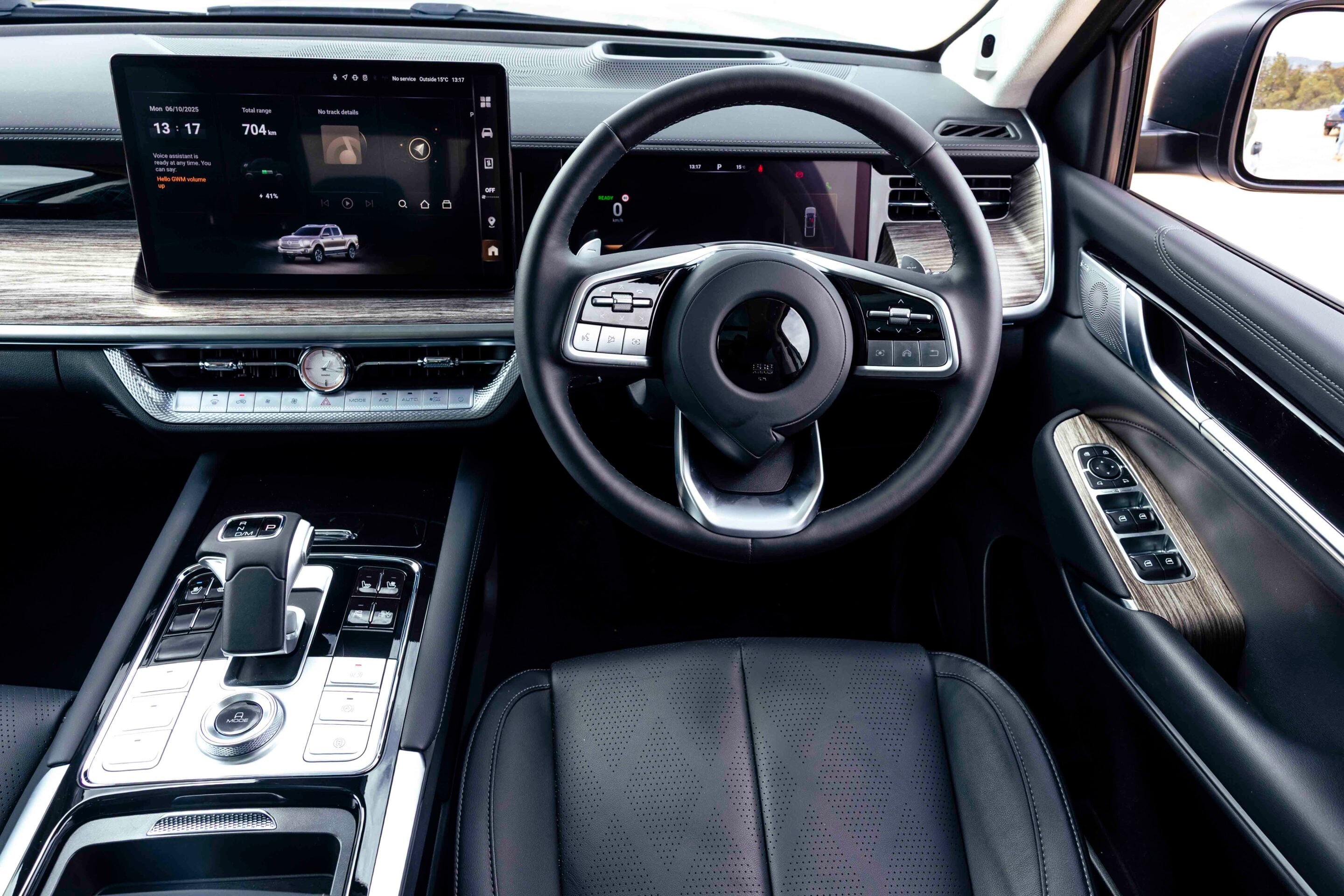
While some off-road functions are complex, the Cannon Ultra PHEV demonstrates that hybrid utes can be serious 4×4 performers. It’s not quite as simple or intuitive as the Ranger PHEV, but its sheer capability, tech and comfort make it a formidable contender in the hybrid 4×4 market.
| How it scored | |
|---|---|
| Value for money | 6 |
| Breaking new ground | 8 |
| Built tough | 6 |
| Doing the job | 7 |
| Bushability | 5 |
| TOTAL | 32 |
A stacked field hit this year’s 4X4 Ute of the Year test, with everything from value picks to heavy-duty touring rigs lining up. Here’s every contender that made the cut for 2025.:
The 2024 Triton introduced fresh styling, a larger cargo tub and cabin, and a fully revamped interior, marking a significant step up from its predecessor. It remains a ute that delivers reliable performance, solid build quality, and proven off-road capability, making it a favourite among both recreational users and work-focused buyers.
Its combination of towing ability, payload capacity and well-sorted suspension ensures it handles both everyday work tasks and extended touring with confidence.
The 2.4‑litre bi-turbo diesel is lively and responsive, providing strong low-end torque that makes overtaking and merging effortless. Even when carrying a load, the cab feels stable and planted, with minimal body roll and predictable handling. Long highway stints or daily work commutes are handled with ease, making the Triton as comfortable on the bitumen as it is ready for adventure.
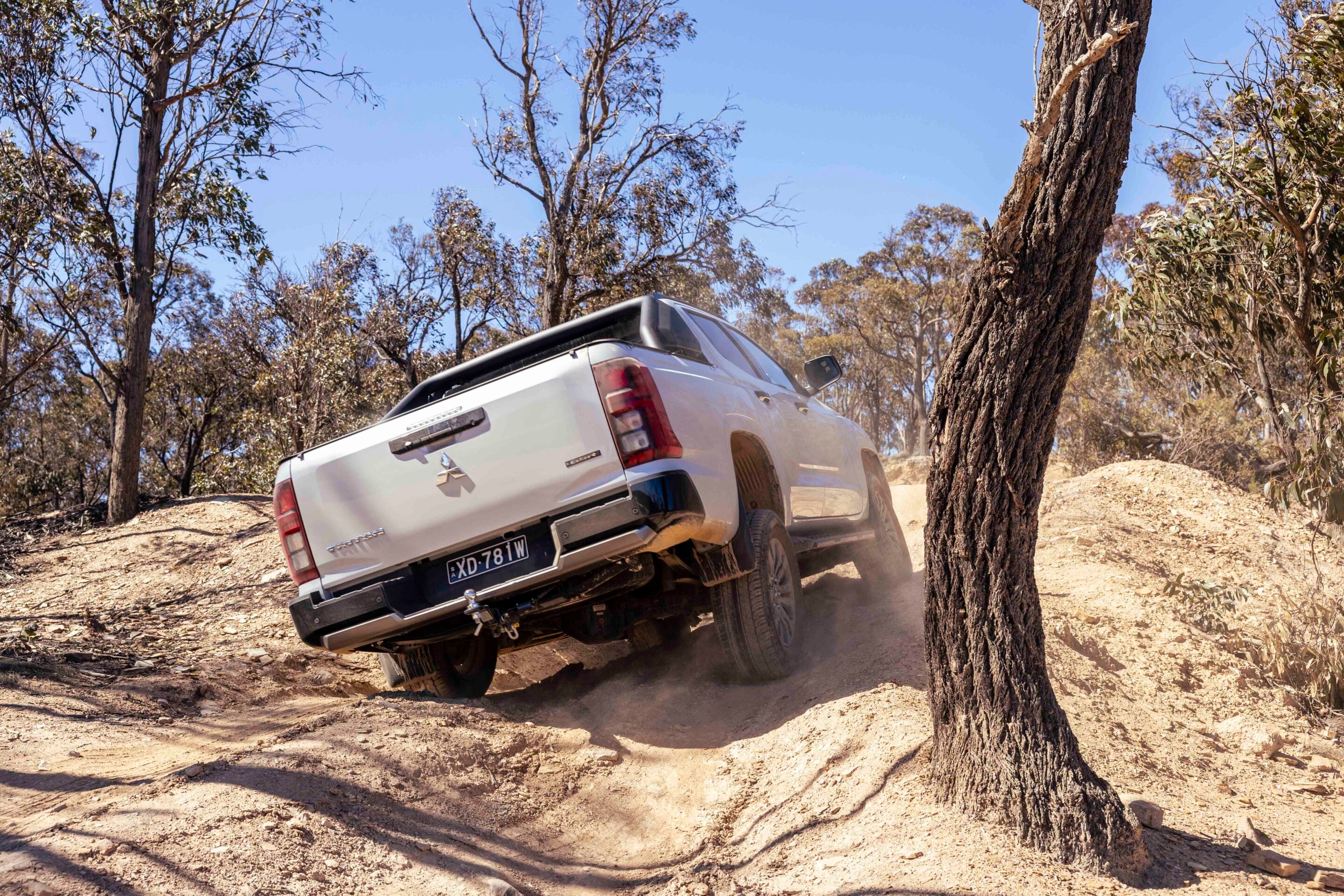
When the terrain gets rough, the Triton’s Super Select 4×4 system proves its worth, offering excellent grip and traction across varied surfaces; from loose gravel to wet mud and uneven dirt tracks. The suspension remains composed under pressure, giving drivers confidence and control, while maintaining enough compliance to keep passengers comfortable.
While it didn’t top the Breaking Ground category, the Triton is capable and predictable, allowing you to attack moderate trails with confidence. Mitsubishi’s Dakar-inspired chassis engineering shines through, particularly when navigating rutted tracks or loose surfaces, demonstrating that the Triton can handle serious off-road conditions without compromising everyday usability.
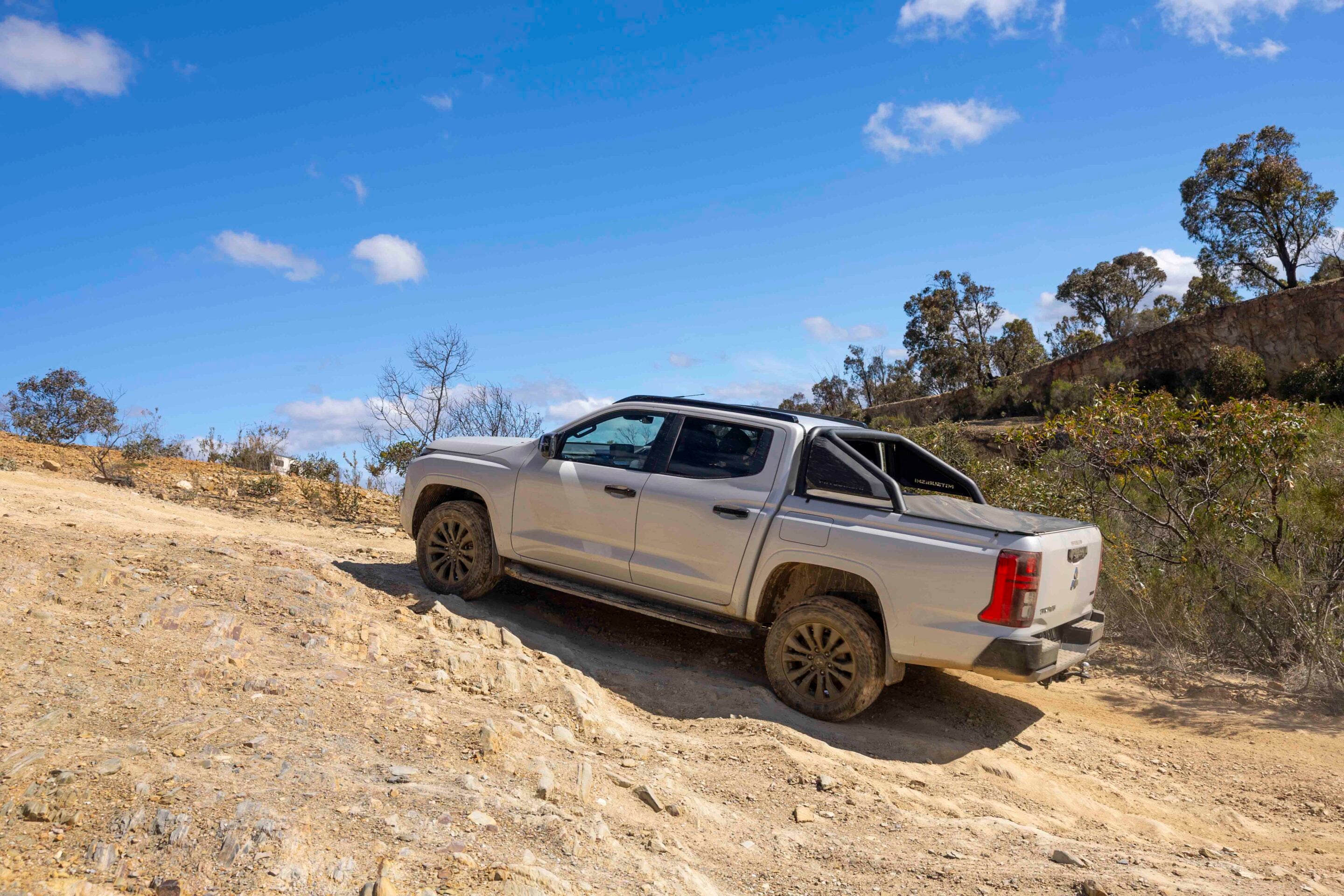
The sequential turbo setup provides strong low-end torque with the smaller compressor spooled early and the secondary turbo kicking in under higher load, giving the Triton smooth, responsive acceleration whether lightly loaded or towing heavy gear.
“Tip your hat to the engineers of the Mitsubishi Triton GSR for not limiting it too much in its GCM and for keeping its kerb weight down,” said towing judge, Tim van Duyl. “With a max-tow-limit trailer (3500kg) behind it, the GSR still has more than 600kg of headway before it hits its 6250kg GCM. Without a trailer, she’ll haul nearly 1100kg between the tub and cabin too – the GSR is a mighty prospect for towing.
“The rear leaf springs are well balanced for low loads and stiffen nicely with 150kg on the tow ball. It felt neutral and pleasant to ride along in, and its 2.4L diesel did well. The sequential nature of the bi-turbo set up means when towing, the smaller compressor is always fully spooled and the larger secondary turbo comes on at higher rpm and loads.”
| Mitsubishi Triton GSR specs | |
|---|---|
| Price | $64,590 + ORC |
| Engine | Inline 4-cylinder twin-turbo diesel |
| Capacity | 2442cc |
| Max Power | 150kW @ 3500rpm |
| Max Torque | 470Nm from 1500 to 2750rpm |
| Transmission | 6-speed automatic |
| 4×4 System | Part-time dual-range 4×4 with full-time 4×4 mode |
| Construction | 4-door double cab ute |
| Front Suspension | Independent with wishbones and coils |
| Rear Suspension | Live axle on leaf springs |
| Tyres | 265/65R17 on alloy wheels |
| Kerb Weight | 2105kg |
| GVM | 3200kg |
| Payload | 1095kg |
| Towing Capacity | 3500kg |
| GCM | 6250kg |
| Seating Capacity | 5 |
| Fuel Tank Capacity | 75L (+17L AdBlue) |
| ADR Fuel Consumption | 7.5L/100km |
| Approach Angle | 30.4 |
| Rollover Angle | 23.4 |
| Departure Angle | 22.8 |
| Ground Clearance | 228mm |
While the screen is smaller than newer 12.3‑inch units in some rivals, the cabin is practical, spacious and intuitive, with improved ergonomics and comfort over previous generations.
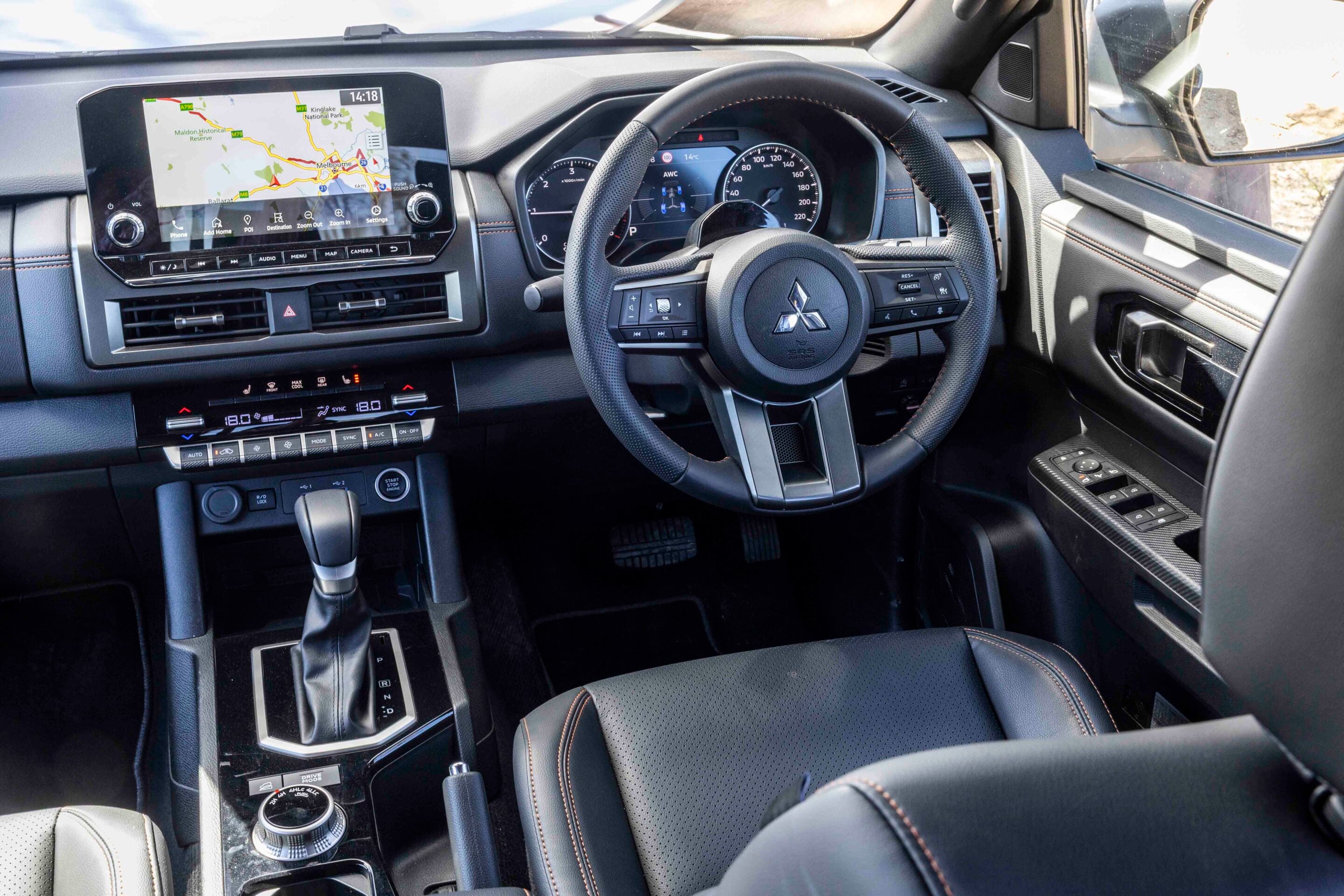
Despite being edged out in the Breaking Ground category, the Triton GSR scored high marks for Doing the Job, Built Tough and driver enjoyment, making it a solid all-rounder in the midsize 4×4 segment.
| How it scored | |
|---|---|
| Value for money | 7/10 |
| Breaking new ground | 4/10 |
| Built tough | 8/10 |
| Doing the job | 8/10 |
| Bushability | 8/10 |
| TOTAL | 35/50 |
A stacked field hit this year’s 4X4 Ute of the Year test, with everything from value picks to heavy-duty touring rigs lining up. Here’s every contender that made the cut for 2025.:
For years, the Musso has flown under the radar, consistently delivering value, capability and comfort that rivals often struggle to match – particularly in the under-$60K segment. While many mainstream utes have crept up in price as manufacturers chase ever-higher specifications, the Musso has held its ground.
It may not be the flashiest ute on the market, but it offers a balanced package of space, equipment and towing ability that appeals to buyers who need a practical workhorse during the week and a comfortable, tech-equipped family vehicle on the weekend.
That combination of affordability, capability and thoughtful equipment is exactly why the Musso claims our Best 4×4 Ute Under $60K award for 2025 – proving that even an older platform can still deliver serious value in today’s competitive 4×4 ute market.
One of the Musso’s enduring strengths is how much physical ute you get for the money. Its footprint is generous, and so is its spec sheet. The cabin is genuinely roomy and surprisingly upmarket for the price. Most competitors don’t offer this level of kit until well beyond the $60K mark.
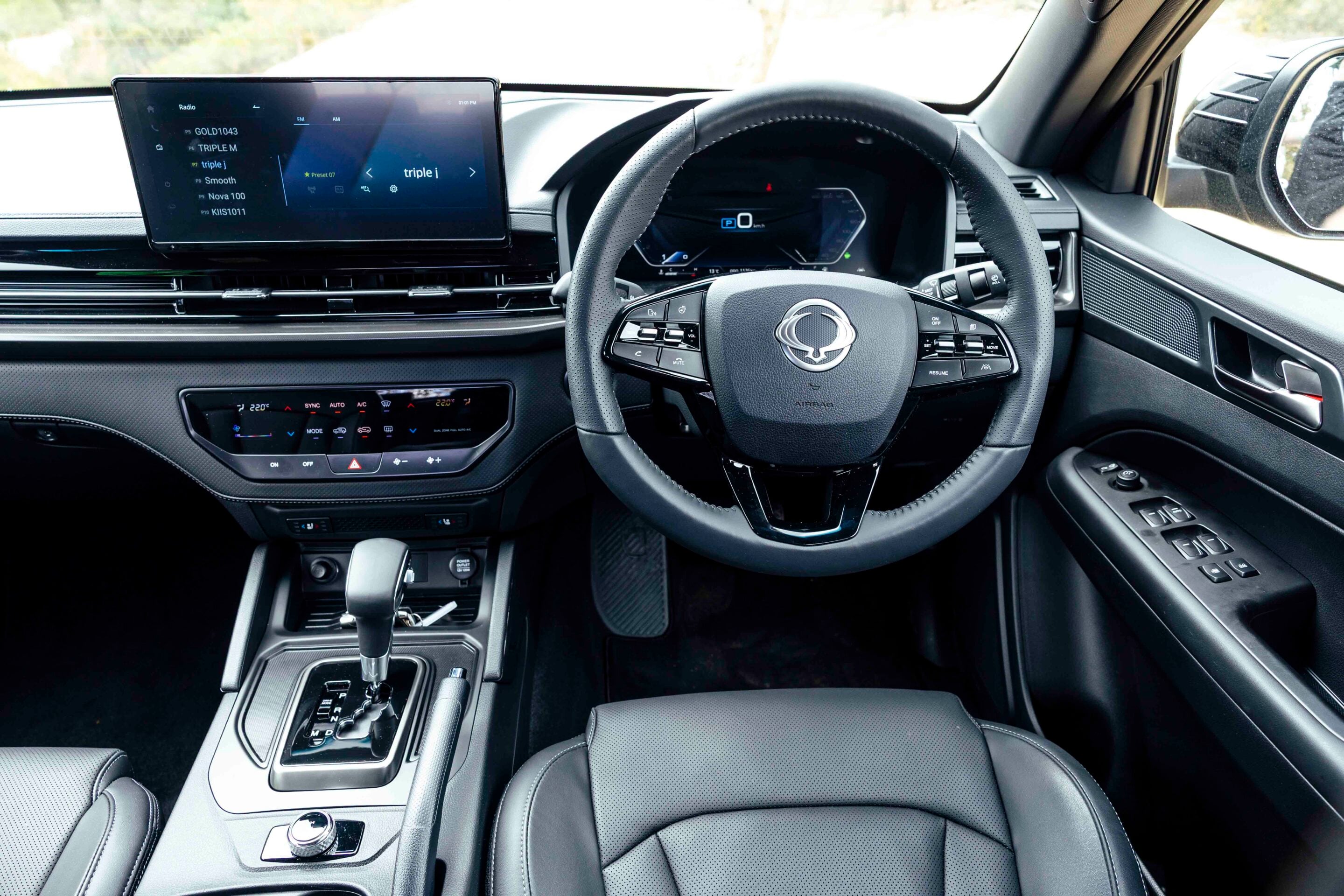
The 2.2‑litre turbo-diesel isn’t explosive, but paired with the Aisin automatic it provides smooth, usable power for overtaking, towing and everyday driving. Suspension is firm but controlled, giving the ute a planted feel at speed, while the generous interior, comfortable seats and minimal wind and tyre noise make long trips far less taxing than many other budget-based dual-cabs.
On the dirt and off-road tracks of the test loop, the Musso Ultimate remained honest within its limitations. Its part-time 4×4 system with low-range gearing, solid ground clearance and generous torque allowed it to tackle rutted tracks and steep inclines with confidence. The chassis and suspension feel robust, though it’s not a sophisticated off-road suspension set-up like more expensive rivals – so ride harshness is noticeable over corrugations.
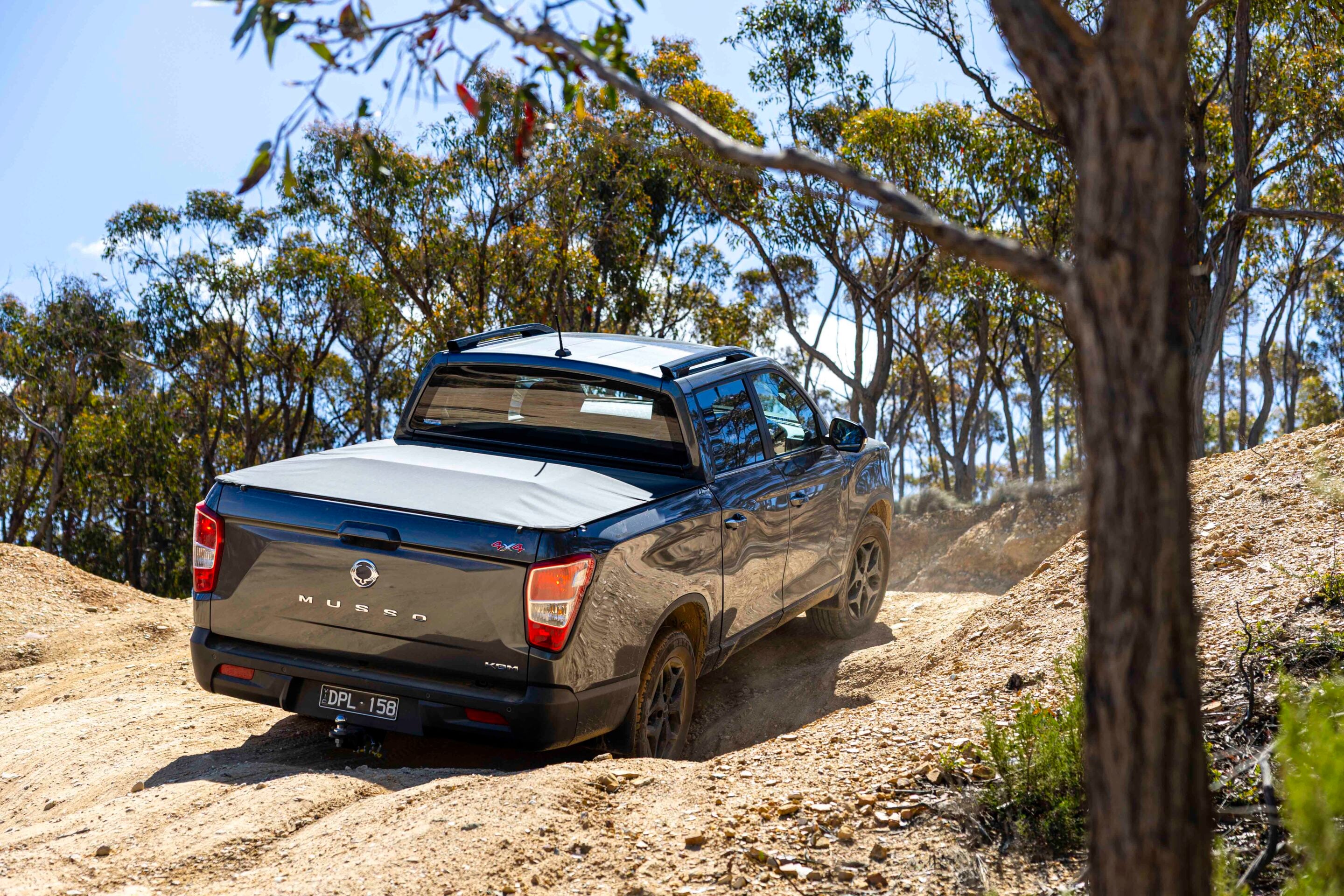
Where the Musso surprises is its load-hauling ability with a caravan hooked up behind it. With a GCM of 6480kg and a kerb weight of around 2200kg, it can tow its full 3500kg capacity while still retaining roughly 750kg of remaining GCM headroom – something many rivals simply can’t match. However, as Tim explains, the Musso’s 2.2L diesel had to work extremely hard.
“The 2000kg trailer put a lot of strain on the 133kW 2.2L diesel – so much so, I could smell it was getting a bit hot, so I took it easy. Maybe it was taking it easy that did it, but the Musso was one of the most efficient for fuel use when towing. I saw around 12L/100km on our loop,” – Tim Van Duyl
| KGM Musso Ultimate specs | |
|---|---|
| Price | $51,550 driveaway |
| Engine | I4 turbo-diesel |
| Capacity | 2157cc |
| Max Power | 133kW @ 4000rpm |
| Max Torque | 400Nm @ 1400-2800rpm |
| Gearbox | 6-speed automatic |
| 4×4 System | Part-time 4×4 with high and low range |
| Construction | 4-door ute on ladder chassis |
| Front Suspension | Double-wishbone IFS with coil springs |
| Rear Suspension | Live axle, 5-link with coil springs |
| Tyre Spec | 255/60R18 on alloy wheels |
| Kerb Weight | 2090kg |
| GVM | 2880kg |
| Payload | 1010kg |
| Towing Capacity | 3500kg |
| GCM | 6380kg |
| Seating Capacity | 5 |
| Fuel Tank Capacity | 75L |
| ADR Fuel Consumption | 8.6L/100km |
| Approach Angle | 22.8 |
| Rampover Angle | 23 |
| Departure Angle | 23.4 |
| Wading Depth | 570mm |
| Ground Clearance | 215mm |
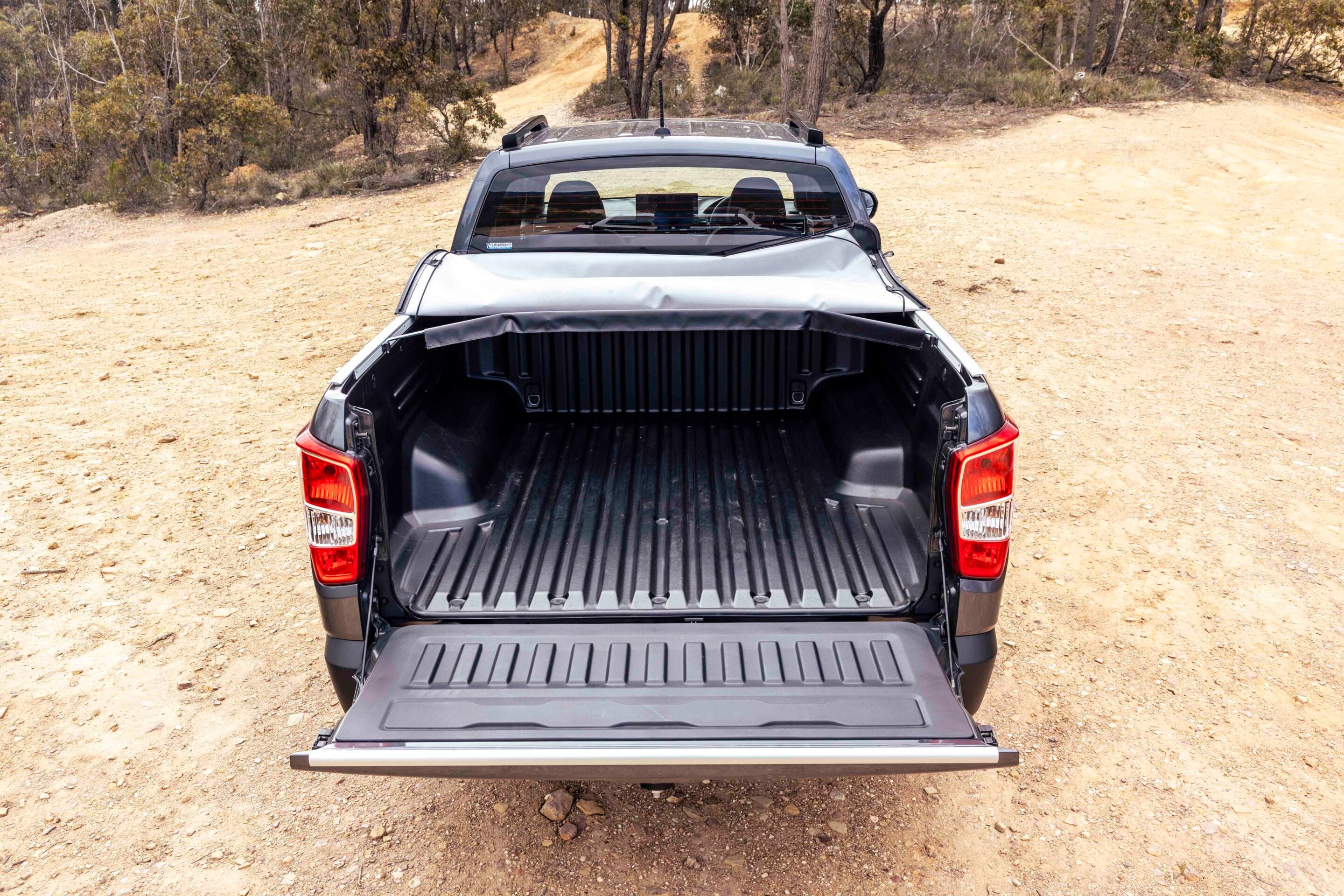
Yes, it’s built on an older platform and the dealer network isn’t as extensive as mainstream brands. But judged purely on what you get for the price, the Musso provides more equipment, comfort, practicality and capability than anything else in this bracket – and that’s why it wins.
| How it scored | |
|---|---|
| Value for money | 8/10 |
| Breaking new ground | 4/10 |
| Built tough | 6/10 |
| Doing the job | 7/10 |
| Bushability | 5/10 |
| TOTAL | 30/50 |
A stacked field hit this year’s 4X4 Ute of the Year test, with everything from value picks to heavy-duty touring rigs lining up. Here’s every contender that made the cut for 2025.:
It entered aggressively with sharp drive-away pricing, a high level of specification, and the claim of being the first 4×4 PHEV ute on sale in Australia. The tactics worked, with strong sales putting the Shark among the best-selling utes in its class and boosting the BYD brand toward its top-five target.
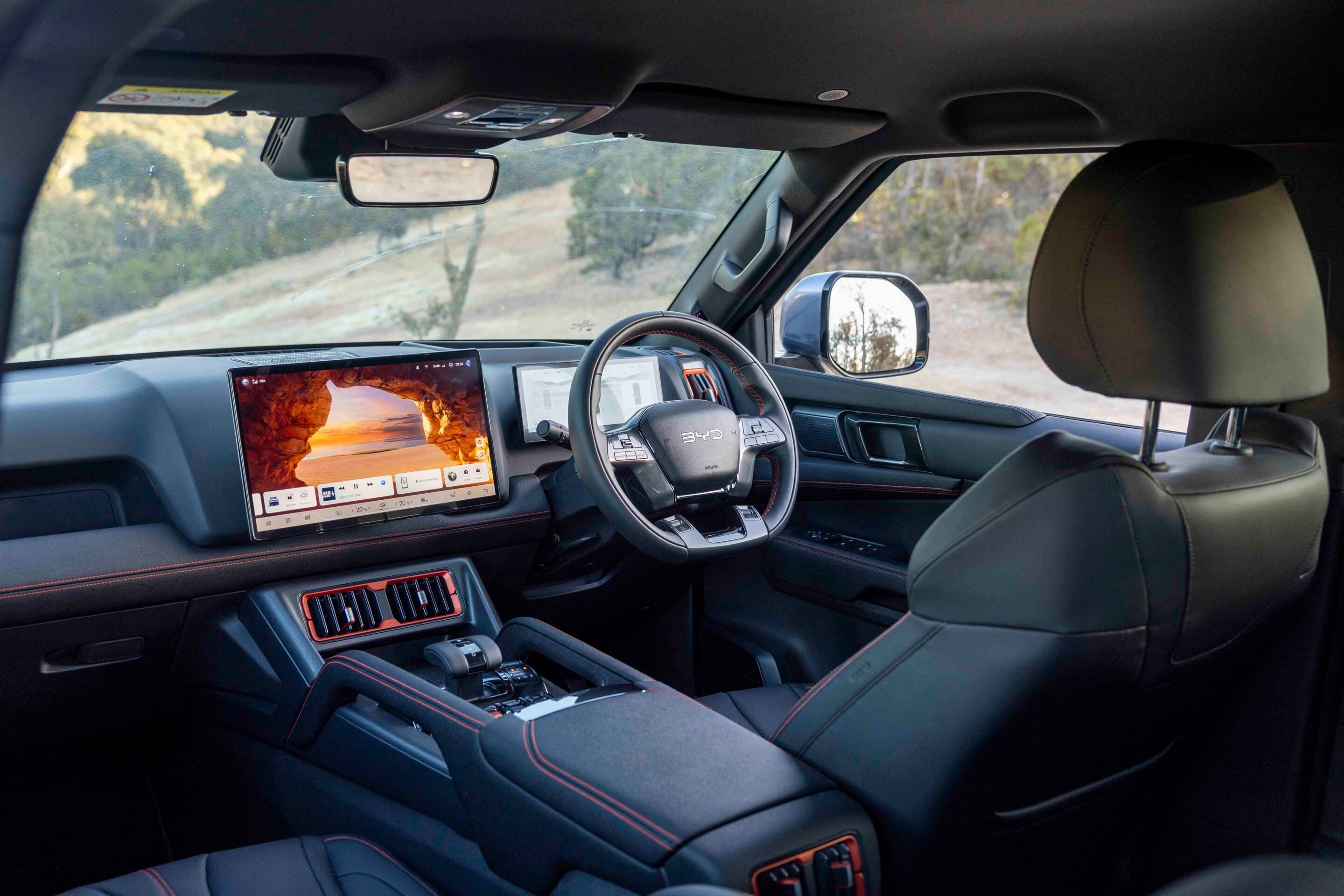
The Shark is a large midsize ute with a spacious, well-appointed cabin in the single grade currently offered. Its interior sets a high benchmark for other utes to follow, with generous space, a clean design, and features that will impress buyers on a test drive – especially when paired with its competitive price.
Up front sits a 135kW/260Nm turbocharged 1.5-litre four-cylinder petrol engine paired with a 130kW/330Nm electric motor. The rear axle is powered by a 150kW/340Nm electric motor, completely isolated from the front. Combined, this gives the Shark 321kW and 650Nm, but the way that output reaches the wheels limits its effectiveness off-road.
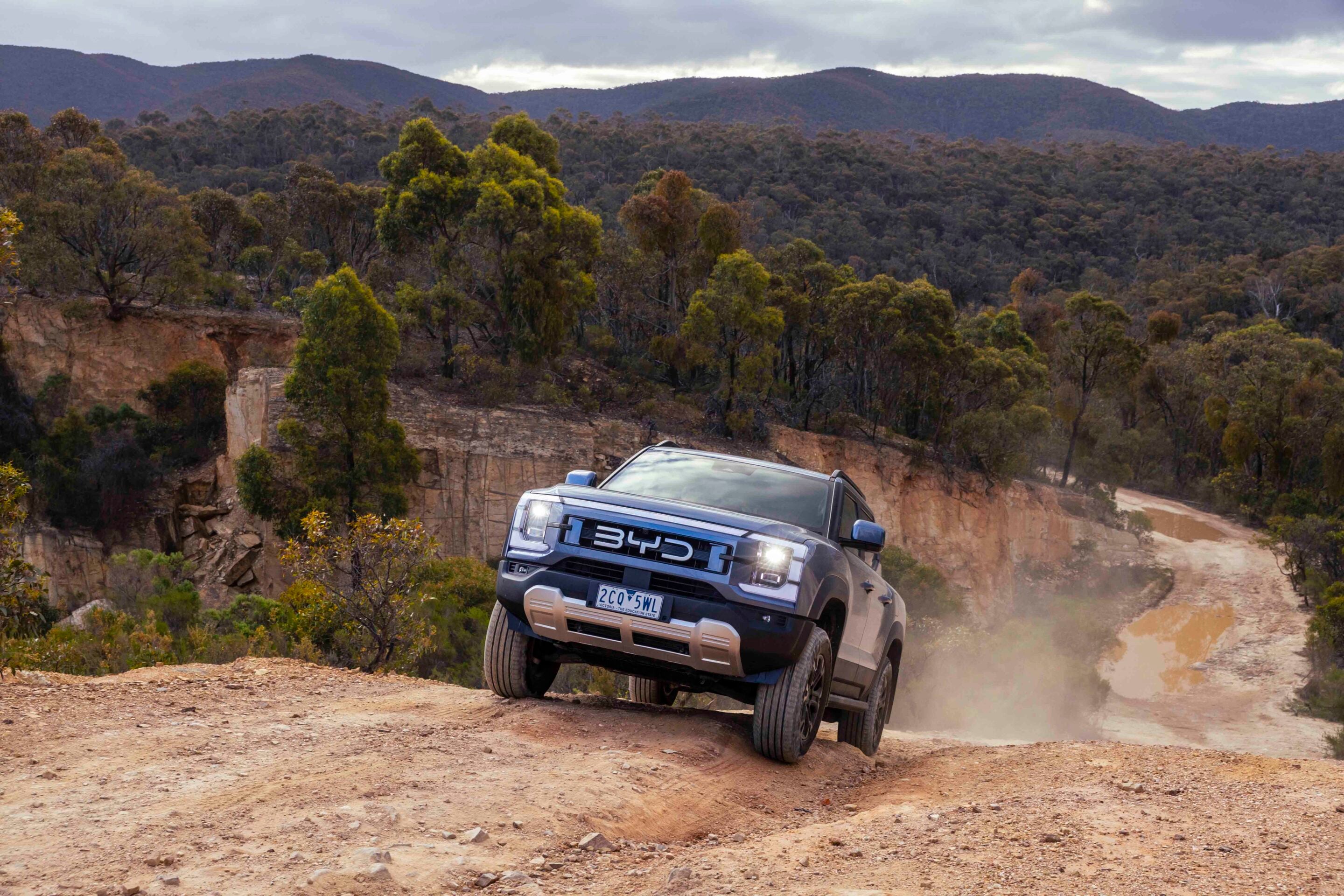
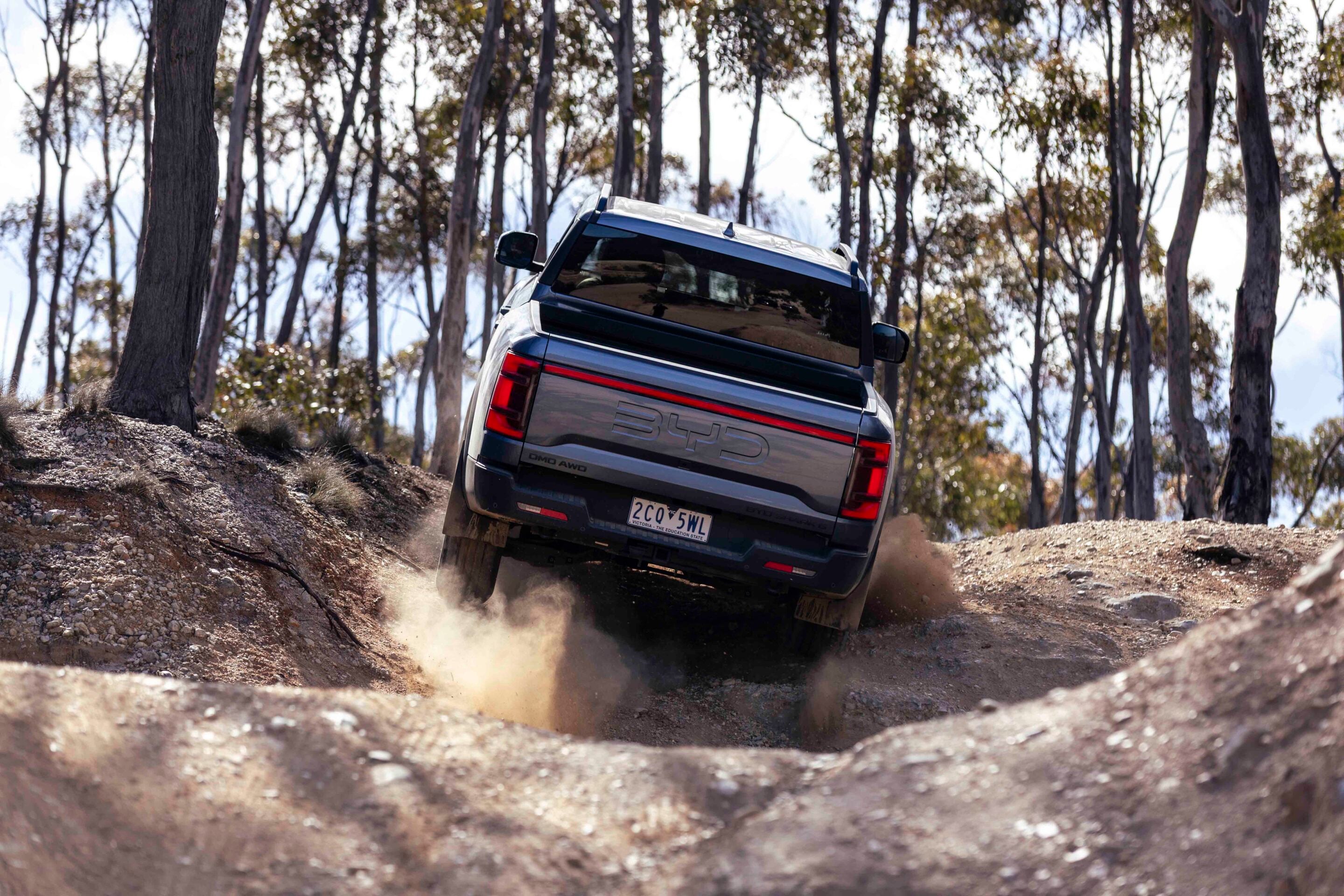
Unlike conventional dual-range 4×4 systems, the Shark’s rear electric motor only engages when the throttle is floored or when wheel slip triggers all-wheel-drive intervention. That delay, combined with fully independent suspension using very short control arms, limits wheel travel and causes the wheels to lift easily over rough terrain. Terrain modes improve responsiveness slightly, but fundamental mechanical and drivetrain design limitations hold it back.
While the Shark delivers quick, comfortable, and gadget-packed driving around town, it falls short in typical 4×4 situations. On gravel, loose surfaces, and moderate trails, the isolated rear motor and short-travel suspension make the Shark feel unsettled. It is competent for light dirt roads but lacks the confidence, traction, and mechanical robustness required for serious off-road work.
“It is nice to see a Tow Mode in the Shark, but if the battery is running at less than 50 per cent, the petrol engine will rev so hard that will drive you nuts on a long haul,” he said.
“Once charged beyond 50 per cent it will settle down unless you are pushing it, and with 2000kg you are almost at its tow-limit of 2500kg, which for me rules it out of contention instantly. The Shark doesn’t have the payload or tow capacity to compete as a viable towing ute.”
| BYD Shark 6 specs | |
|---|---|
| Price | $57,000 + ORC |
| Engine | PHEV; turbocharged petrol engine with dual electric motors |
| Capacity | 1497cc |
| Max Power | (ICE) 135kW / (EV) 130kW front, 150kW rear |
| Max Torque | (ICE) 260Nm / (EV) 310Nm front, 340Nm rear |
| 4×4 System | Individual electric drive front and rear (no mechanical linkage) |
| Construction | 4-door ute on ladder chassis |
| Front Suspension | Double wishbone independent with coils |
| Rear Suspension | Double wishbone independent with coils |
| Tyres | 265/65R18 |
| Kerb Weight | 2710kg |
| GVM | 3500kg |
| GCM | 5750kg |
| Towing Capacity | 2500kg |
| Payload | 790kg |
| Seating Capacity | 5 |
| Fuel Tank Capacity | 60L |
| ADR Fuel Consumption | 2.0L/100km |
| Approach Angle | 31 |
| Rampover Angle | 17 |
| Departure Angle | 19.3 |
| Wading Depth | 700mm |
| Ground Clearance | 230mm |
The cabin layout is clean and modern, anchored by BYD’s signature rotating 12.8-inch touchscreen, which can switch between landscape and portrait modes. It houses most vehicle controls – climate, drive modes, camera systems and EV settings – giving the interior a sleek, minimalist feel.
The digital instrument cluster is crisp and easy to read, while the steering wheel and switchgear feel more passenger-car than commercial ute. Seat comfort is excellent up front, with electrically adjustable, heated and ventilated front seats, a rarity at this price point. Rear passengers also score generous legroom thanks to the Shark’s longer wheelbase, and the bench has a more relaxed backrest angle than many traditional dual-cabs.
Cabin storage is plentiful, with a deep centre bin, large door pockets, twin wireless charging pads and several USB-A/USB-C outlets spread throughout. Fit and finish is strong too, with soft-touch trims, ambient lighting and a level of refinement that pushes the benchmark for the segment.
Practicality in the tub is slightly compromised by the hybrid layout, but the Shark still offers decent space for weekend gear.
The BYD Shark is a bold, innovative entry and shows what PHEV technology can do in a midsize ute – especially around town or for light duties. It wins on tech, interior space, and driveability for urban users, but it falls short on the traditional 4×4 criteria due to:
| How it scored | |
|---|---|
| Value for money | 7/10 |
| Breaking new ground | 8/10 |
| Built tough | 5/10 |
| Doing the job | 5/10 |
| Bushability | 4/10 |
| TOTAL | 29/50 |
A stacked field hit this year’s 4X4 Ute of the Year test, with everything from value picks to heavy-duty touring rigs lining up. Here’s every contender that made the cut for 2025.:
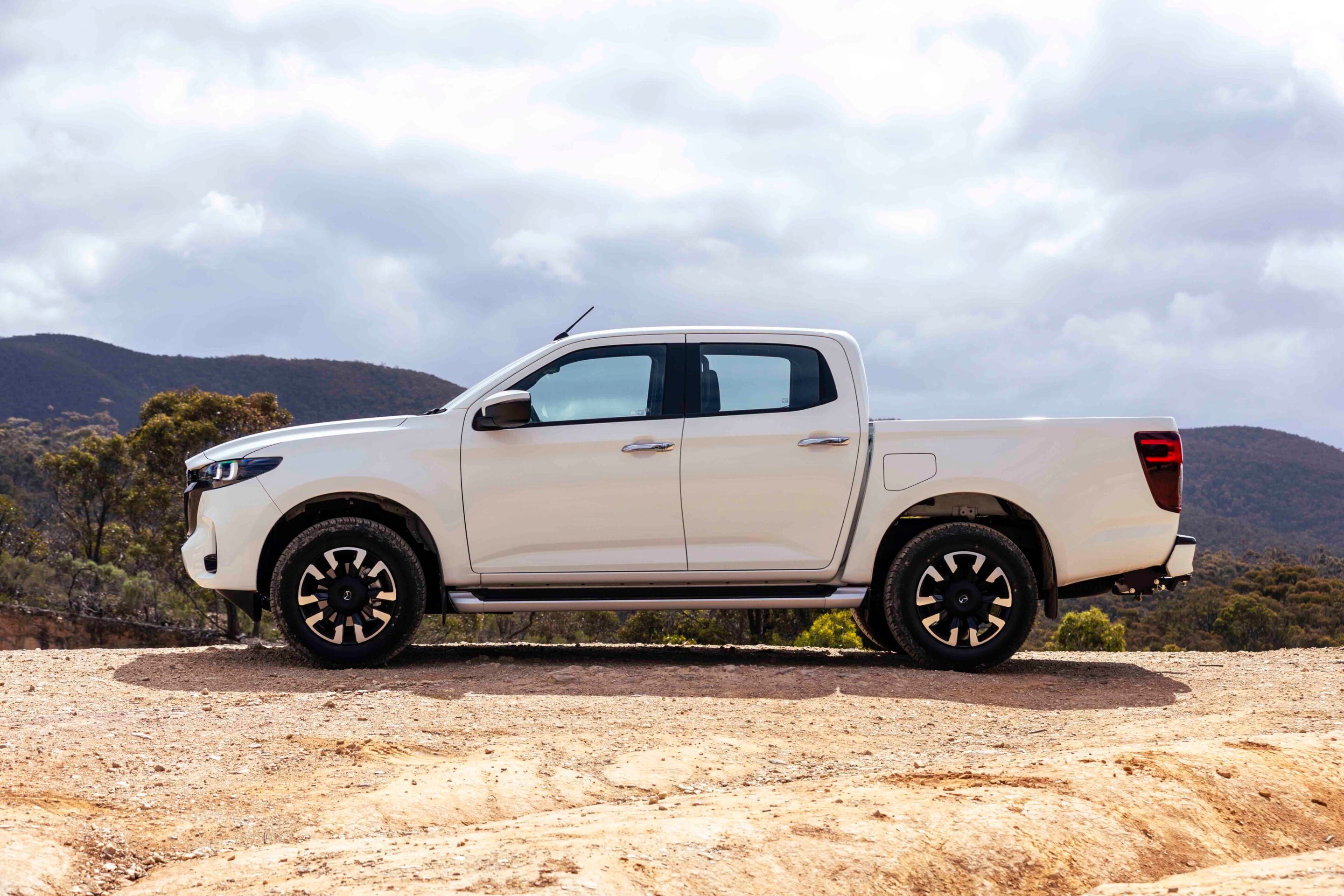
The two share the same 3.0‑litre diesel engine, driveline, chassis and systems, but the Mazda brings different exterior and interior styling, plus a slightly sportier suspension tune. If you’re going to partner with another manufacturer to add a ute to your showroom, teaming up with Isuzu is hardly a bad choice.
By choosing the GT – the second-highest model in the BT‑50 range – you get Isuzu’s proven mechanics with Mazda’s more refined interior and exterior touches. It even carries over the Rough Terrain button for off-road use, along with the six-speed automatic transmission and familiar chassis setup.
On-road, the BT‑50 GT feels composed and stable, with suspension tuning that keeps the cab planted over bumps and undulations. It responds confidently to steering inputs, giving a connected feel without being harsh or overly stiff. Acceleration is steady and predictable, and the six-speed automatic shifts smoothly under most conditions, making it easy to drive on highways or winding roads alike.
Off-road, the BT‑50 inherits the rugged D-MAX architecture, including the Rough Terrain button and part-time 4×4 system. The slightly stiffer rear springs provide added support when loaded, helping maintain control on rougher tracks or when carrying gear in the tub. While it’s not as soft and compliant as some competitors, the BT‑50 feels balanced and capable, offering predictable handling and confidence in a variety of terrain.
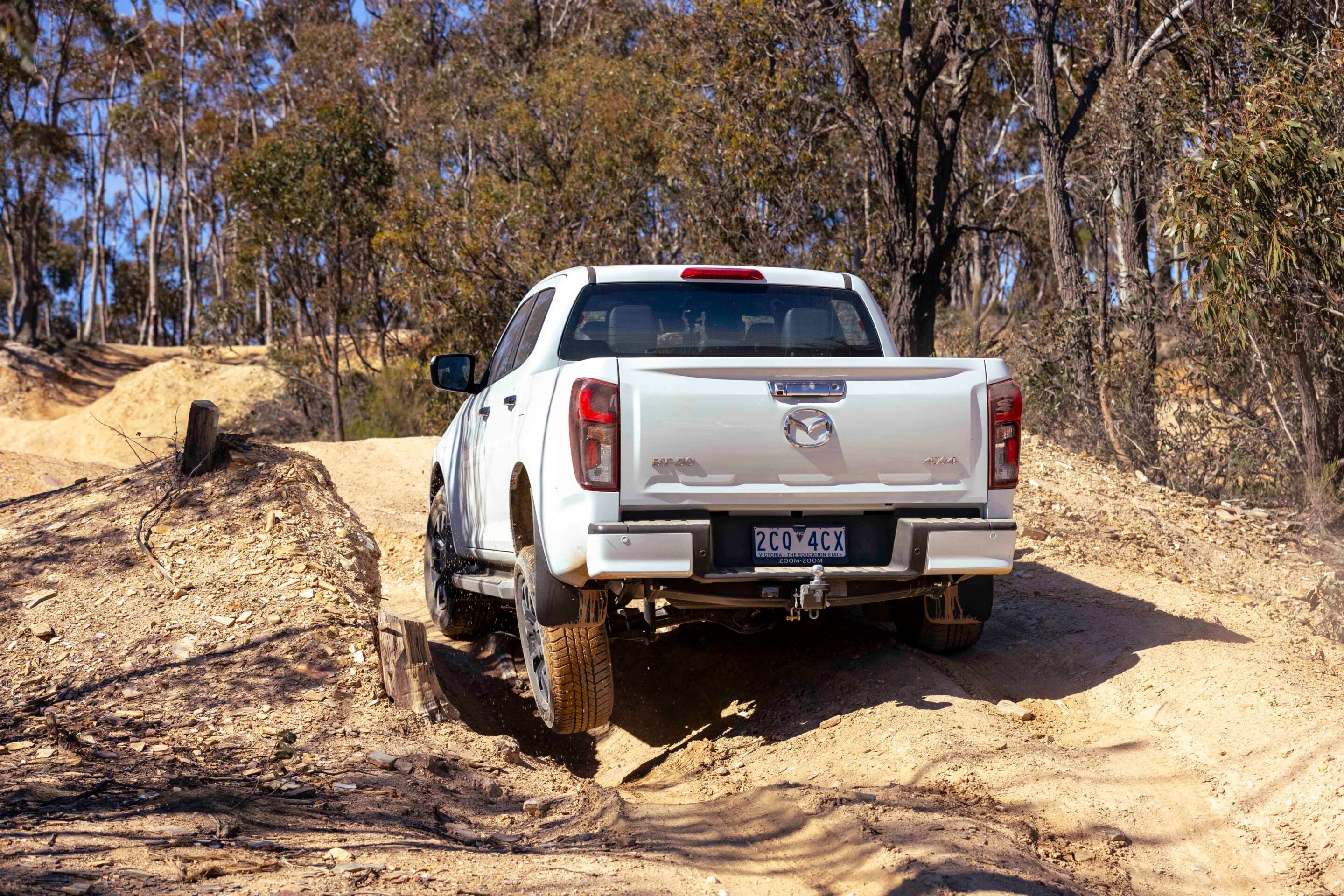
“I made sure to tow with the GT back-to-back with the D-MAX X-Terrain, because although they share their chassis, gearbox and engine, the GT runs stiffer, more load-oriented rear springs.
“The GT has a payload of up to 998kg, bettering the X-Terrain by about 70kg, but I’ll be honest – I think you need to use some of that capability and run some weight in the tub of the GT, as it felt a lot stiffer and less settled than the Isuzu. If you’re expecting to run a few hundred kilos of canopy and gear, the GT might be the one to go for; just keep an eye on your GVM (3100kg) and GCM (6000kg).”
| Mazda BT-50 GT specs | |
|---|---|
| Price | $62,660 + ORC |
| Engine | I4 turbo-diesel |
| Capacity | 2999cc |
| Max Power | 140kW |
| Max Torque | 450Nm |
| Transmission | 6-speed automatic |
| 4×4 System | Part-time, dual range 4×4 |
| Construction | 4-door ute on ladder chassis |
| Front Suspension | IFS with upper and lower arms and coil springs |
| Rear Suspension | Live axle on leaf springs |
| Tyres | 265/60R18 |
| Kerb Weight | 2102kg |
| GVM | 3100kg |
| GCM | 6000kg |
| Towing Capacity | 3500kg |
| Payload | 998kg |
| Seating Capacity | 5 |
| Fuel Tank Capacity | 76L |
| ADR Fuel Consumption | 7.1L/100km |
| Approach Angle | 30.4 |
| Rampover Angle | 23.8 |
| Departure Angle | 17.9 |
| Wading Depth | 800mm |
| Ground Clearance | 240mm |
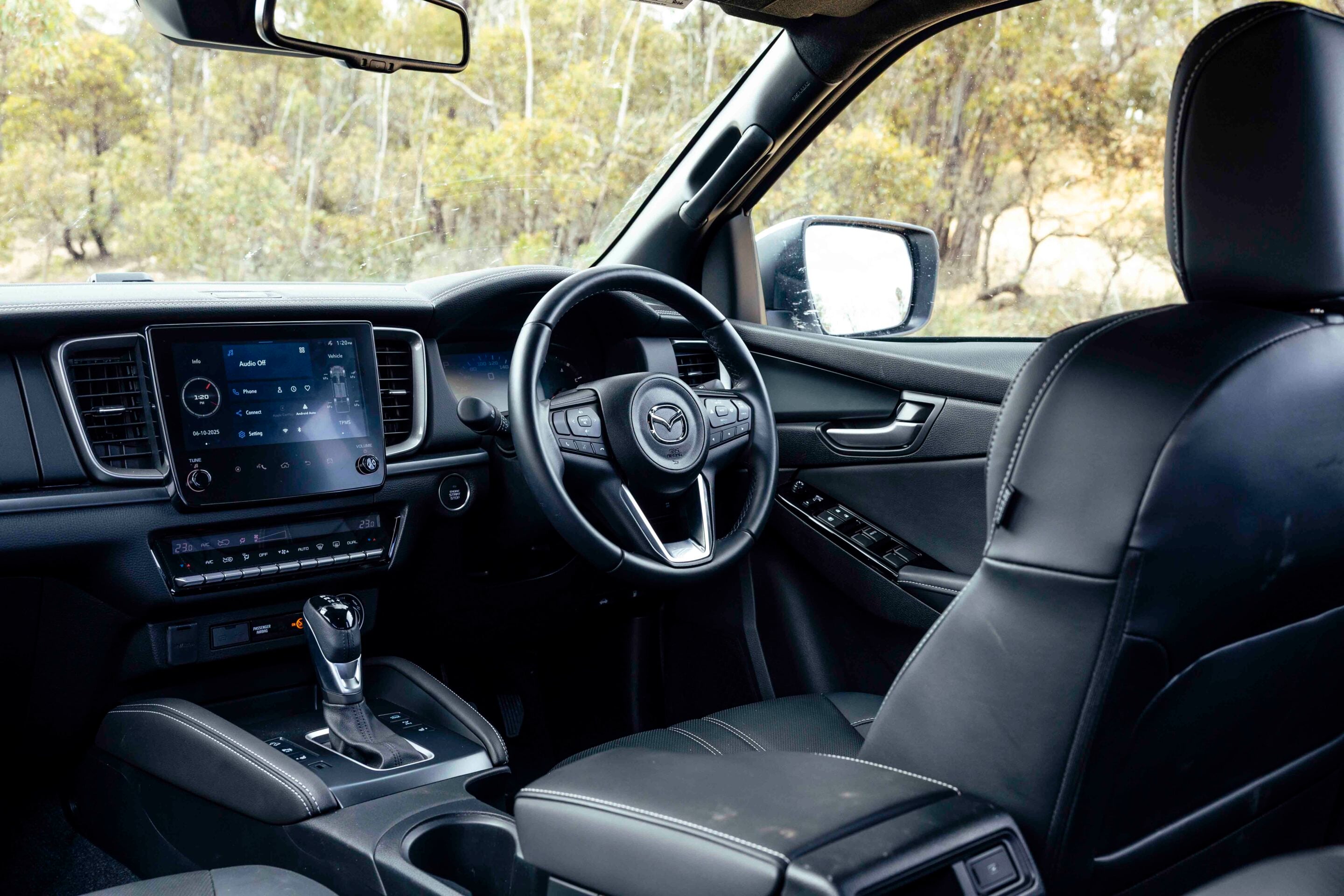
Front occupants enjoy supportive seats with leather-look trim, adjustable lumbar support, and heated functions, while the rear bench is spacious enough for adults on shorter trips, though best suited for lighter loads on long journeys.
The dashboard layout is clean and intuitive, featuring a touchscreen infotainment system with Apple CarPlay and Android Auto, plus physical controls for climate and media that remain easy to operate on the move. Storage is plentiful, with deep door bins, a centre console, and under-seat compartments for tools or touring gear.
Practicality extends to the cargo area, where the GT can carry up to 998 kg payload, aided by slightly stiffer rear springs that keep the tub stable under load. Overall, the BT‑50 strikes a balance between refinement and usability, giving drivers a cabin that’s comfortable for long drives without compromising the rugged functionality needed for work or bush touring.
The BT‑50 GT is a capable and practical ute, but it falls short compared with the newer, more refined competitors in this year’s test. Its strengths in styling and payload can’t fully offset a few limitations in overall performance and comfort. Key reasons include:
| How it scored | |
|---|---|
| Value for money | 6/10 |
| Breaking new ground | 5/10 |
| Built tough | 6/10 |
| Doing the job | 7/10 |
| Bushability | 7/10 |
| TOTAL | 31/50 |
A stacked field hit this year’s 4X4 Ute of the Year test, with everything from value picks to heavy-duty touring rigs lining up. Here’s every contender that made the cut for 2025.:
Its Terron9 4×4 ute launched only weeks before our testing, and after initially being impressed by its performance on a controlled test track, we were keen to see how it handled the familiar bush tracks on the 4×4 Ute of the Year loop.
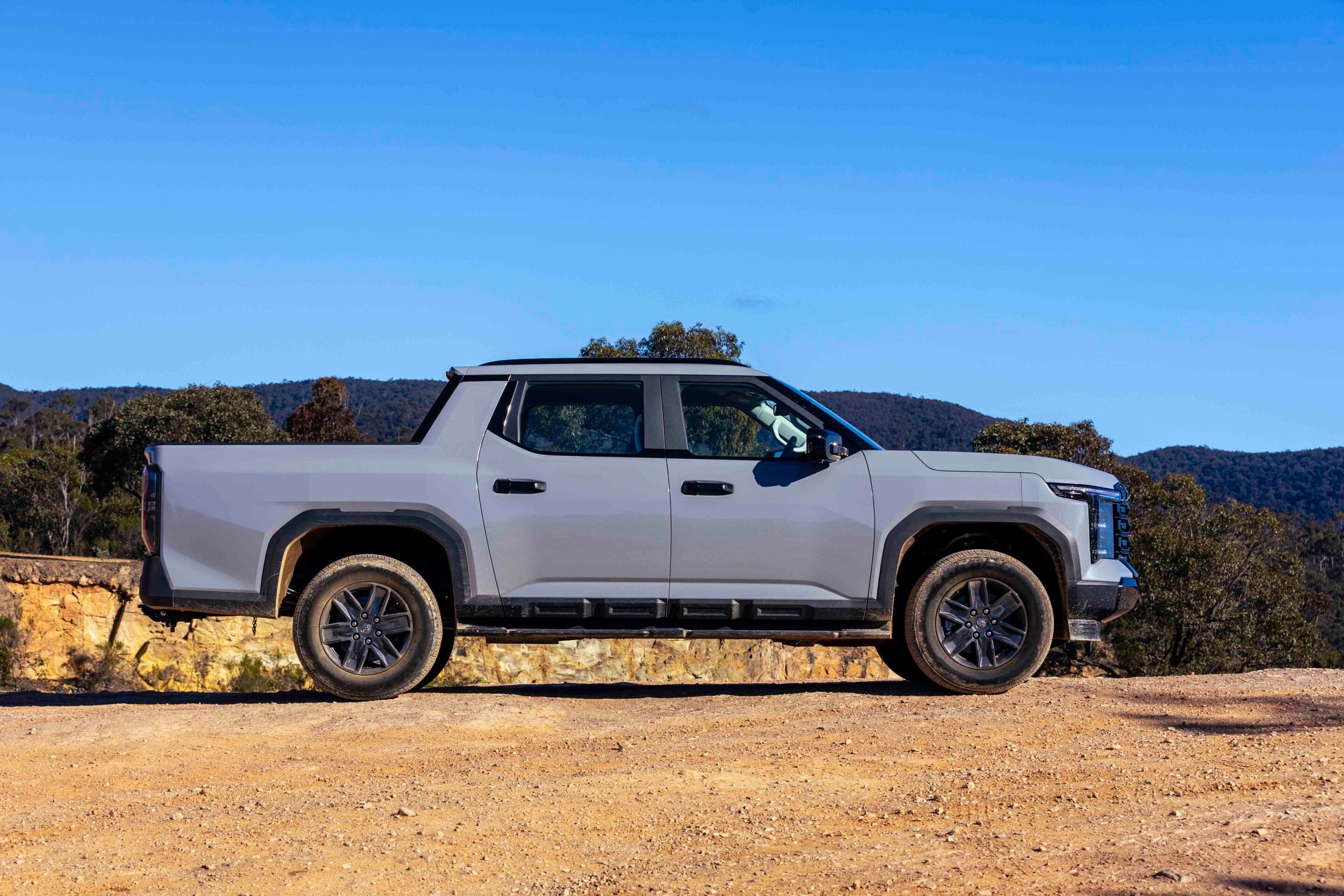
At $53K, the Terron9 Origin is one of the cheapest utes in this year’s line-up. The Evolve model, priced at $58,937, adds a front locker and higher-spec features, but none were available for testing at the time. The Terron9 sits at the larger end of the midsize ute segment, offering generous interior and cargo space that will appeal to buyers after a roomy dual-cab 4×4.
Under the bonnet is a 2.0-litre single-turbo diesel producing 163kW and a claimed 520Nm – the highest torque of any four-cylinder ute in the class. It’s lively and responsive, with minimal turbo lag, paired with a part-time, dual-range 4×4 system. On-road, the suspension is nicely balanced, not too harsh when unladen, and the driveline feels planted.
The Terron9 drives with surprising poise for its price. The 2.0‑litre turbo provides punch, the cab feels stable at highway speeds, and the suspension absorbs bumps without harshness. It’s a straightforward, capable cruiser that won’t overly tax the driver or passengers.
Off-road, the Terron9 has some traction limitations. While the low-range 4×4 and diff-lock buttons are clear, the high-range selection is buried in the touchscreen, slowing response in tricky terrain. Once engaged, the Terron9 can tackle moderate tracks, but its electronic traction control reacts slower than rivals, making it less immediate on steep, rocky climbs. For those who take it easy and plan their lines, it remains a competent off-roader.
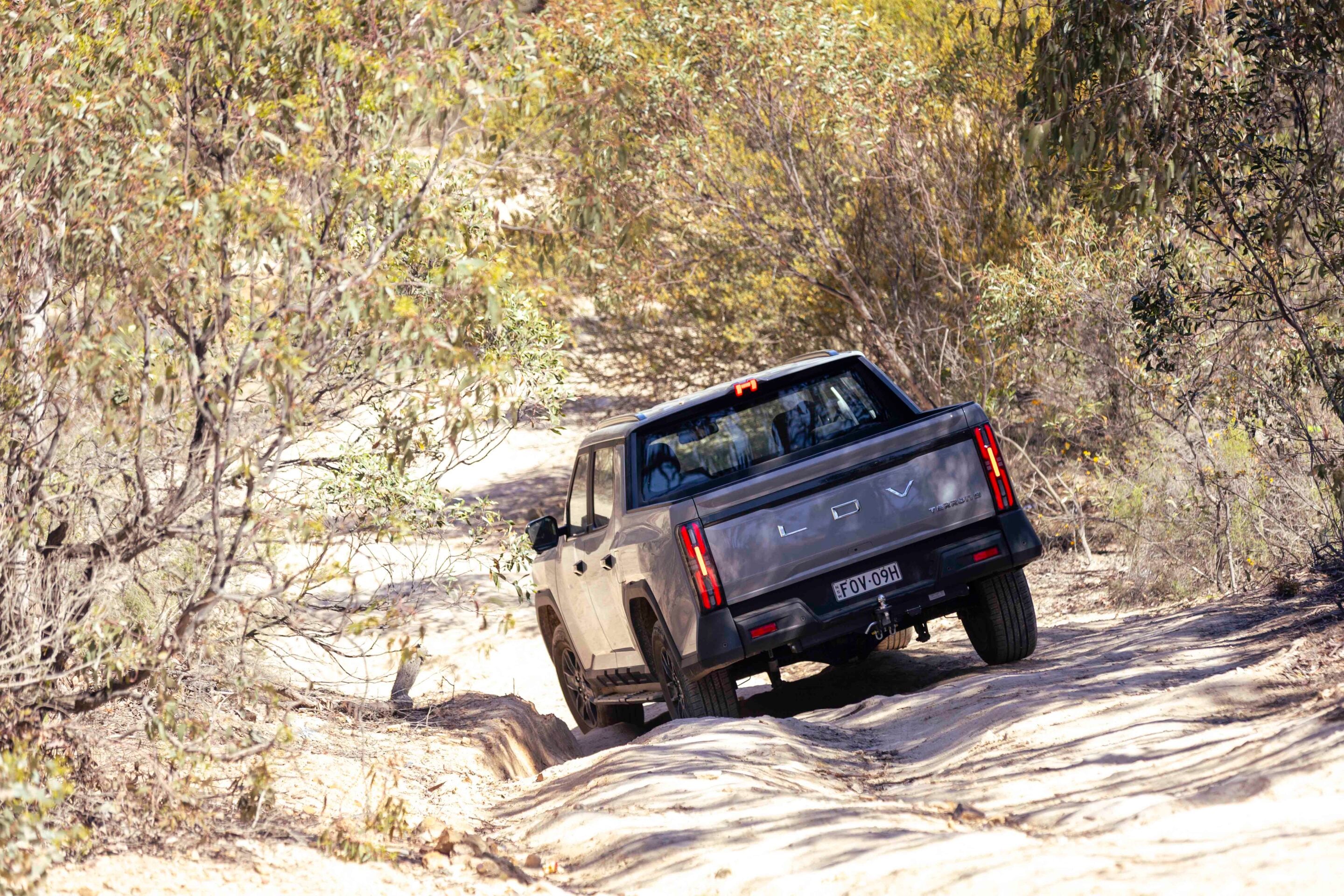
“The Terron9 was probably the surprise package when it came to towing. On test it was the most fuel efficient, with high 11s to low 12L/100km seen on our loop, and although traction-limited when unhitched, it felt stable and secure when loaded with 150kg of ball weight.
“It kills it on paper with a high GCM of 6500kg which, after you take off its hefty 2400kg kerb weight, means you still have headway for carting gear when towing at the full 3500kg. The 163kW comes on hard and high in the rev range, making the driveline feel like it is working harder than larger-displacement engines.
“It’s a compelling package though; dirt cheap, powerful, and with good numbers on paper. It scored mid-pack for towing, just shy of the top five.”
| LDV Terron9 Origin specs | |
|---|---|
| Price | $53,990 |
| Engine | I4 turbo-diesel |
| Capacity | 2499cc |
| Max Power | 163kW @ 3800rpm |
| Max Torque | 520Nm from 1500 to 2500rpm |
| Transmission | 8-speed automatic |
| 4×4 System | Part-time, dual range 4×4 |
| Construction | 4-door cabin on ladder chassis |
| Front Suspension | IFS with coils |
| Rear Suspension | Live axle on monoleaf springs |
| Tyres | 265/65R18 on alloy wheels |
| Kerb Weight | 2495kg |
| GVM | 3500kg |
| GCM | 6500kg |
| Towing Capacity | 3500kg |
| Payload | 1005kg |
| Seating Capacity | 5 |
| Fuel Tank Capacity | 80L |
| ADR Fuel Consumption | 7.9L/100km |
| Approach Angle | 29 |
| Rampover Angle | 20 |
| Departure Angle | 25 |
| Ground Clearance | 220mm |
| Wading Depth | 550mm |
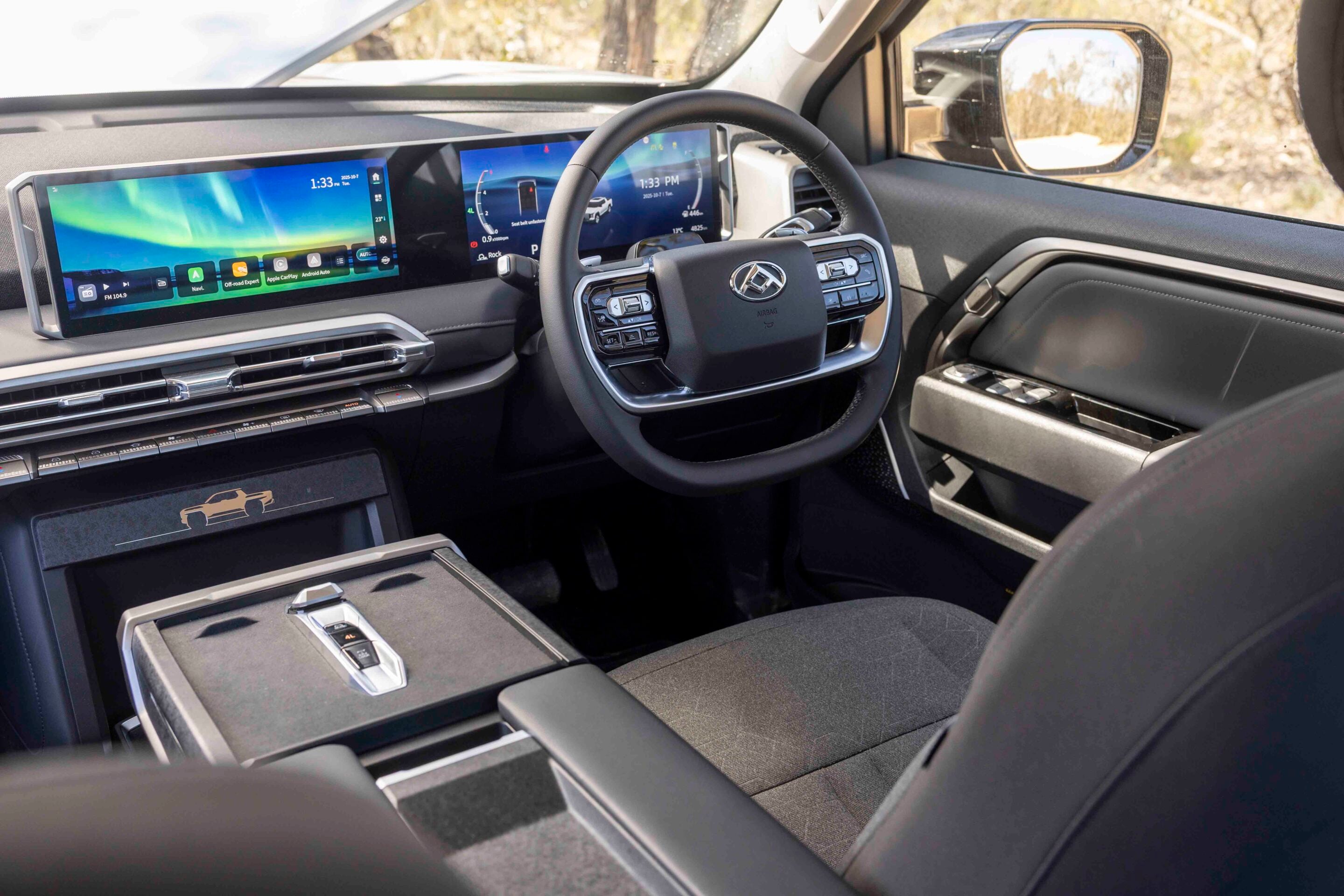
Tech-wise, the Terron9 comes with a 10.25‑inch touchscreen infotainment system with Apple CarPlay and Android Auto, along with Bluetooth connectivity, sat‑nav, and basic vehicle settings. There’s a digital driver display for key information, and the layout is functional if not particularly luxurious.
However, the controls inside can be frustrating. Basic functions – including high-range 4×4 and some lighting controls – are buried in the multimedia screen menus rather than grouped with the physical switches. It makes some tasks unnecessarily fiddly, especially when you need them on the move.
The cabin still delivers comfort for long drives, with supportive seats and plenty of legroom. Materials are functional rather than premium, but the Terron9 delivers value in spades.
| How it scored | |
|---|---|
| Value for money | 4/10 |
| Breaking new ground | 3/10 |
| Built tough | 2/10 |
| Doing the job | 2/10 |
| Bushability | 1/10 |
| TOTAL | 12/50 |
A stacked field hit this year’s 4X4 Ute of the Year test, with everything from value picks to heavy-duty touring rigs lining up. Here’s every contender that made the cut for 2025.:
We are proud to have this great Australian brand along on our 4X4 Ute Of The Year test to help with proceedings and to show us its new REDWorks platform.
The benchmark for genuine capability testing, 4X4 Ute Of The Year is one of the toughest and most authentic proving grounds in the industry. That mindset mirrors how REDARC has engineered its products for more than four decades: gear built to handle the extreme, tested in state-of-the-art in-house facilities.
This shared belief – creating equipment that stands up to real use, in real conditions, for people who expect the best – made the REDARC naming-rights partnership a natural fit. As part of this partnership, REDARC is supporting the industry’s most trusted voice both on the ground and behind the wheel, contributing technical insight to adjudication discussions.
“Nobody designs, engineers, builds, tests or uses gear like we do,” said Taylor Boyley, REDARC Marketing Manager ANZ. “REDARC has long prided itself on our customer-first philosophy, so helping Australians choose the most capable, dependable and practical off-road Utes for their adventures was a natural fit.”
These power panels streamline vehicle power by taking the hassle out of choosing components and building a system from scratch. Pre-wired, pre-fused and ready to install, REDARC’s new REDWorks panels do the designing, wiring and testing for you in one compact, integrated and ready-to-install panel.
Designed to charge, control and distribute power through your vehicle, with a REDWorks panel on board you can power fridges, lights, compressors, tools and more through pre-wired genuine Anderson outputs.
REDWorks manages the power between your start and secondary batteries. While driving, REDWorks charges your secondary battery from your alternator, but when the sun is out, the inbuilt MPPT solar regulator means you can take advantage of free power from the sun. Thanks to Green Power Priority, REDWorks will automatically prioritise solar first to reduce strain on your alternator.
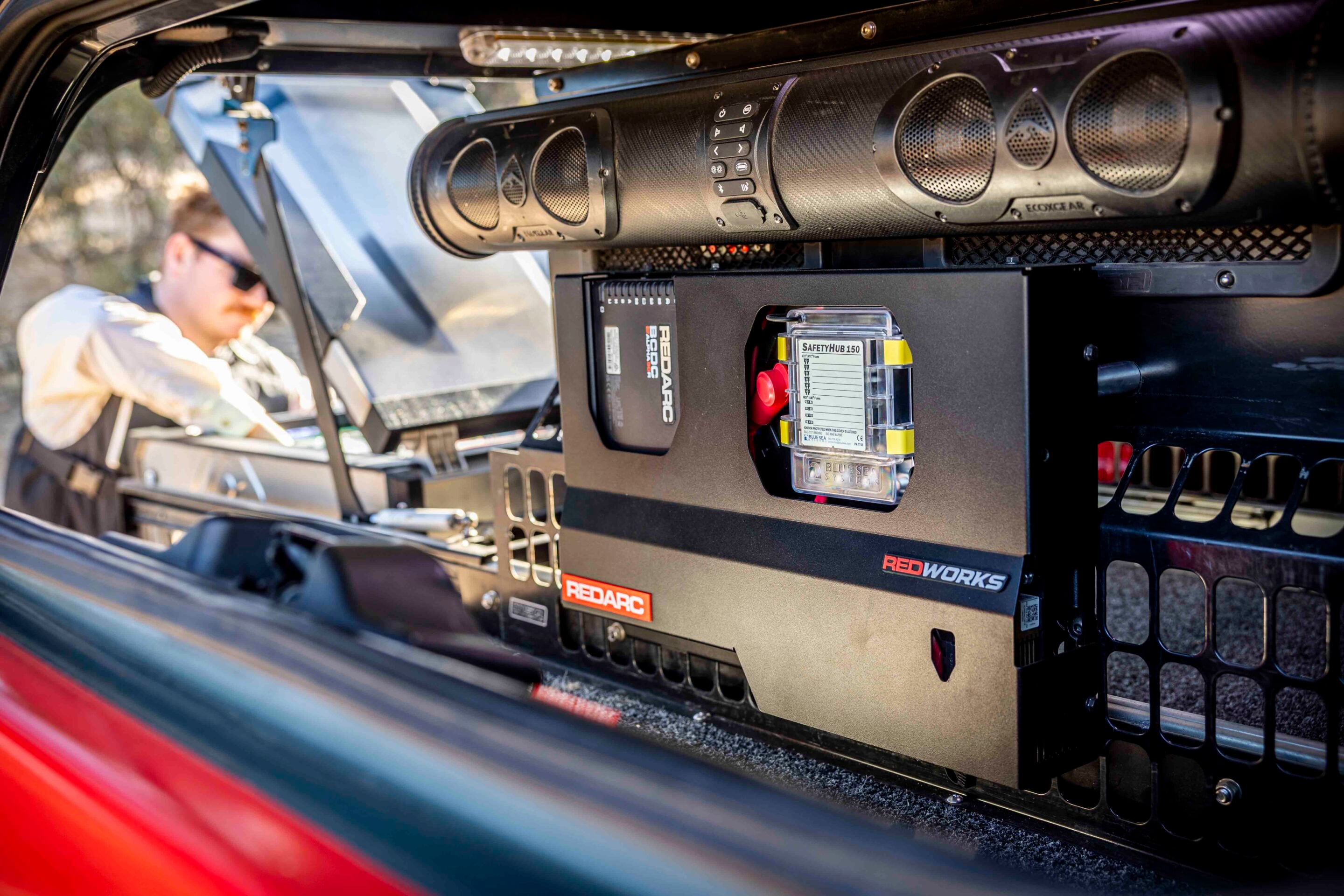
Compatible with AGM, lead-acid and lithium (LiFePO₄) batteries, including heated lithium, REDWorks will isolate your start battery once you get to camp to protect it from discharge while your auxiliary battery powers your accessories.
Available in three models – Scout, Nomad and Pioneer – there’s a REDWorks power panel for every adventure. Perfect for powering a fridge, lights and charging your phone and camera, the Scout is the choice for minimalist touring setups or those diving into 12V for the first time. At the size of an A4 sheet, it fits neatly under a seat, behind drawers or tucked into a canopy.
If you want to charge more gear and power more accessories, Nomad takes things to the next level. With an integrated fuse block, Nomad grows with your rig, allowing you to easily expand your off-grid set-up without any drastic re-wiring. Available in both 25A and 50A variants, Nomad is ready to handle bigger loads all while keeping things plug-and-play.
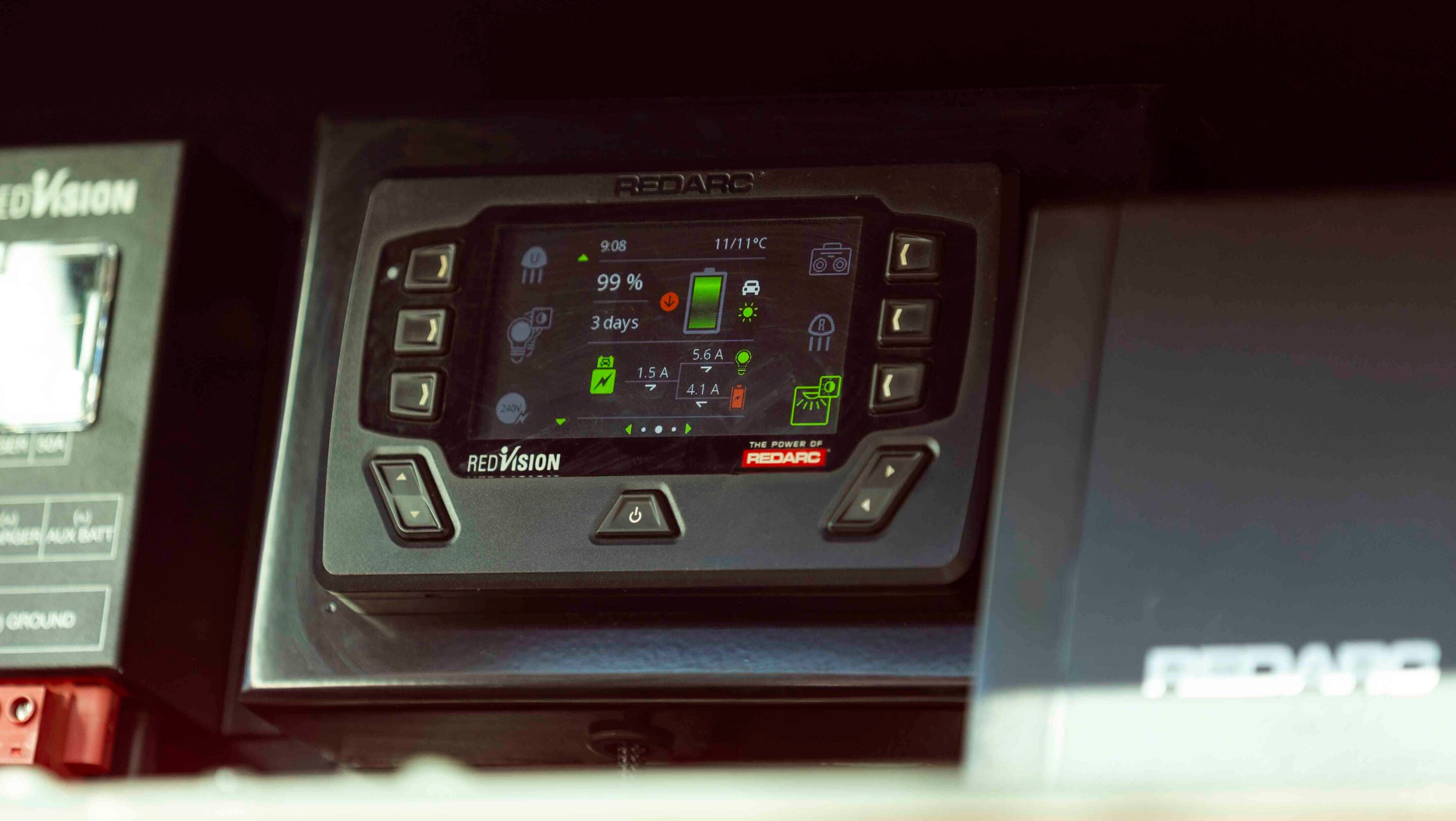
If it’s a powerhouse on wheels that you’re after, the flagship Pioneer is your answer. Featuring a 50A DC to DC charger, Pioneer combines high-output charging and RedVision monitoring to deliver a system that puts you in charge. Monitor battery health, water tanks and system performance, all while controlling your devices like lights, fridges and pumps through the RedVision App or Display. It delivers expedition-grade convenience in a standard 4×4 setup, without the complexity or cost.
All REDWorks 50A varieties are even EV and hybrid-ready thanks to configurable input current limits. These panels also look after your start battery thanks to their Start Battery Charging and Start Battery Recovery features – so no more jumper leads.
A stacked field hit this year’s 4X4 Ute of the Year test, with everything from value picks to heavy-duty touring rigs lining up. Here’s every contender that made the cut for 2025.: