
Following years of speculation – it has been 14 years since the 200 Series debuted – the curtains officially dropped on the all-new LandCruiser 300 Series this week.
Headlined by a twin-turbo V6 in lieu of a V8 powerplant, the reveal sent social media into meltdown with punters and purists divided over the specs and features of the new off-road wagon.
One of the biggest talking points from the reveal has been the front-end of the GR Sport model, and whether that would sit nicely affixed to the front end of the other variants in the LandCruiser shed – SX, ZX, VX-R models.
The off-road-focused GR Sport, with its blacked-out bumpers and wheel arches, looks to ride higher than other models in the line-up as well. However, official Australian model specs won’t be revealed until closer to the release date in Q4 this year.
Currently, the GR Sport is the only variant wearing the old-school T-O-Y-O-T-A nomenclature in front of a black mesh grille. As opposed to the chrome-swept, blocky front-end of the SX, ZX, VX-R models.
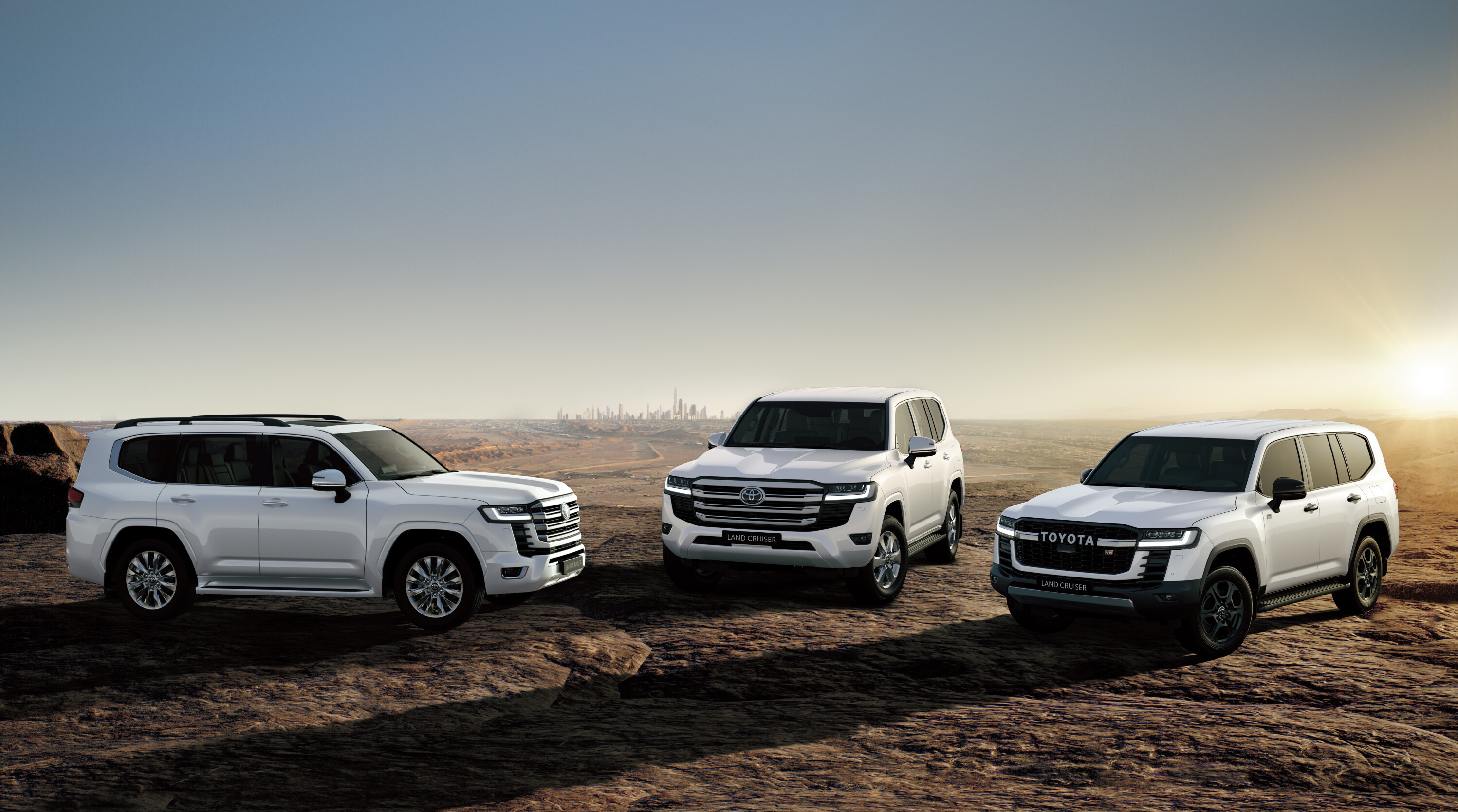
Earlier today, we asked followers of our Facebook page – as well as on our website – to share their thoughts on the GR Sport front-end, and whether they’d love to see it on the other LC300 variants. Here’s what you said:
One reader preferred the look of the SX, ZX, VX-R variants. “[It] looks 100 per cent better. It’s an SUV, not a sports car,” he said.
“Not the sort of car I need, but this does look really, really good. Well done Toyota,” a WhichCar reader added. “Love the old-school T-O-Y-O-T-A through the grille on the GR Sports model too. That’d go well on the Hilux!”
WhichCar’s own Mike Stevens reiterated that point, saying; “I love it. It looks a little too tall and narrow from some angles, but mostly I reckon it carries a great balance of muscular proportions and premium details. The front is definitely full-on, but I love the classic T-O-Y-O-T-A badging. The upswept rear quarter window also looks great, and the interior looks a perfect marriage between premium and austere. It’s a yes from me!”
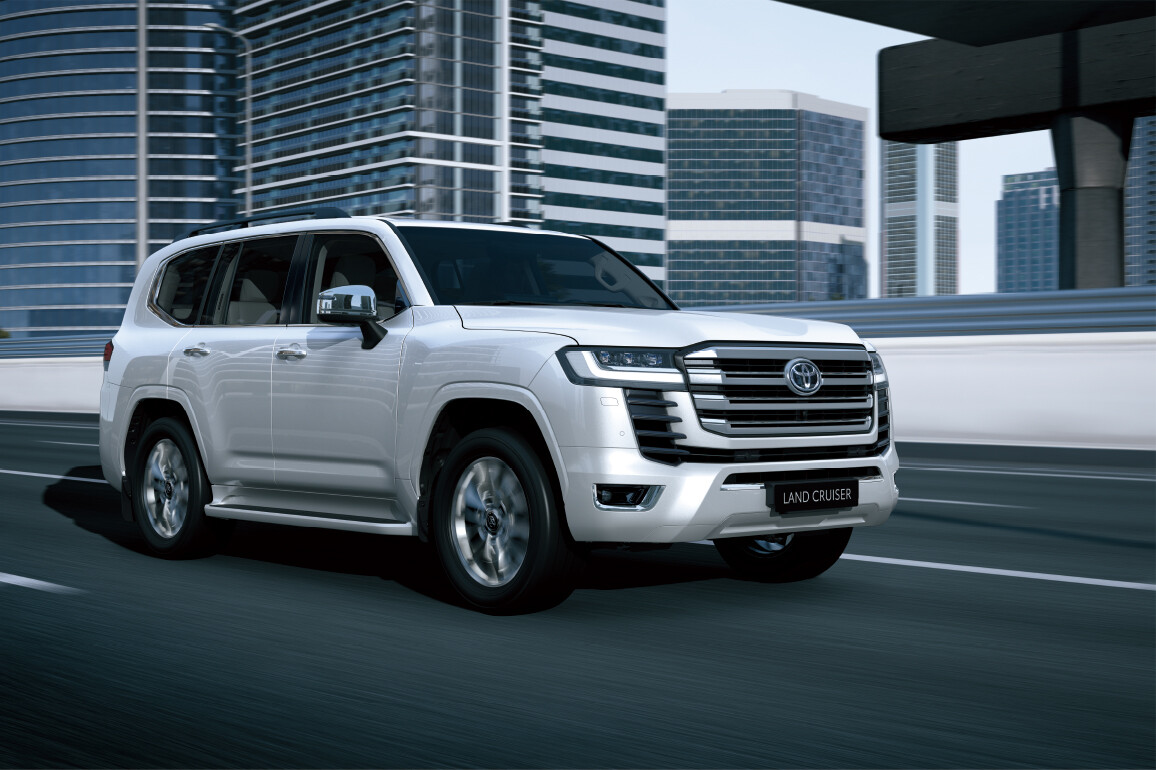
In typical Facebook form, however, some shared a more negative perspective of both vehicles: “I was sad when Nissan shifted over to the new look with the Patrols and I guess Toyota is doing the same,” one reader said. “Personally I still prefer the simplistic looks of the older generation 4x4s.”
“Both of them look like clown cars to me, will prefer the looks of the 200 over this any day,”; “Both way too fussy for a tough 4×4. 200 Series looks so [much] better from the front,” “The design was inspired by a cardboard box. Awful.”; “About as aerodynamic as a barn”; “Don’t think they have enough clearance to get into shopping centre car park”; and “Need a bullbar to hide that ugly front”, said others.
At least there is still some positivity left on social media: “I’d love to see either front end parked in my driveway,” said one positive reader.
A sentiment we agree with. Let us know your thoughts on the GR Sport’s front-end below. Who’d love to see it on the other LC300 variants?
For those lucky enough to make it to Alice Springs for the annual Tatts Finke Desert Race, the festivities will start to kick off Thursday night, June 10, with the street party in the centre of town at Todd Mall.
The 2020 Finke Race was cancelled due to COVID, and this year hundreds of Victorian racers, spectators and race volunteers were unable to make the pilgrimage due to the latest lockdowns in their state.
The 2021 race welcomes new sponsors to the event, resulting in record prize money on offer.
Method Race Wheels has come on board as the naming rights sponsor for the Prologue Day on Saturday. Method’s sponsorship will run for 2021, 2022 and 2023 and will offer $7500 in prize money for Prologue winners, plus a set of Method Wheels for their vehicles.
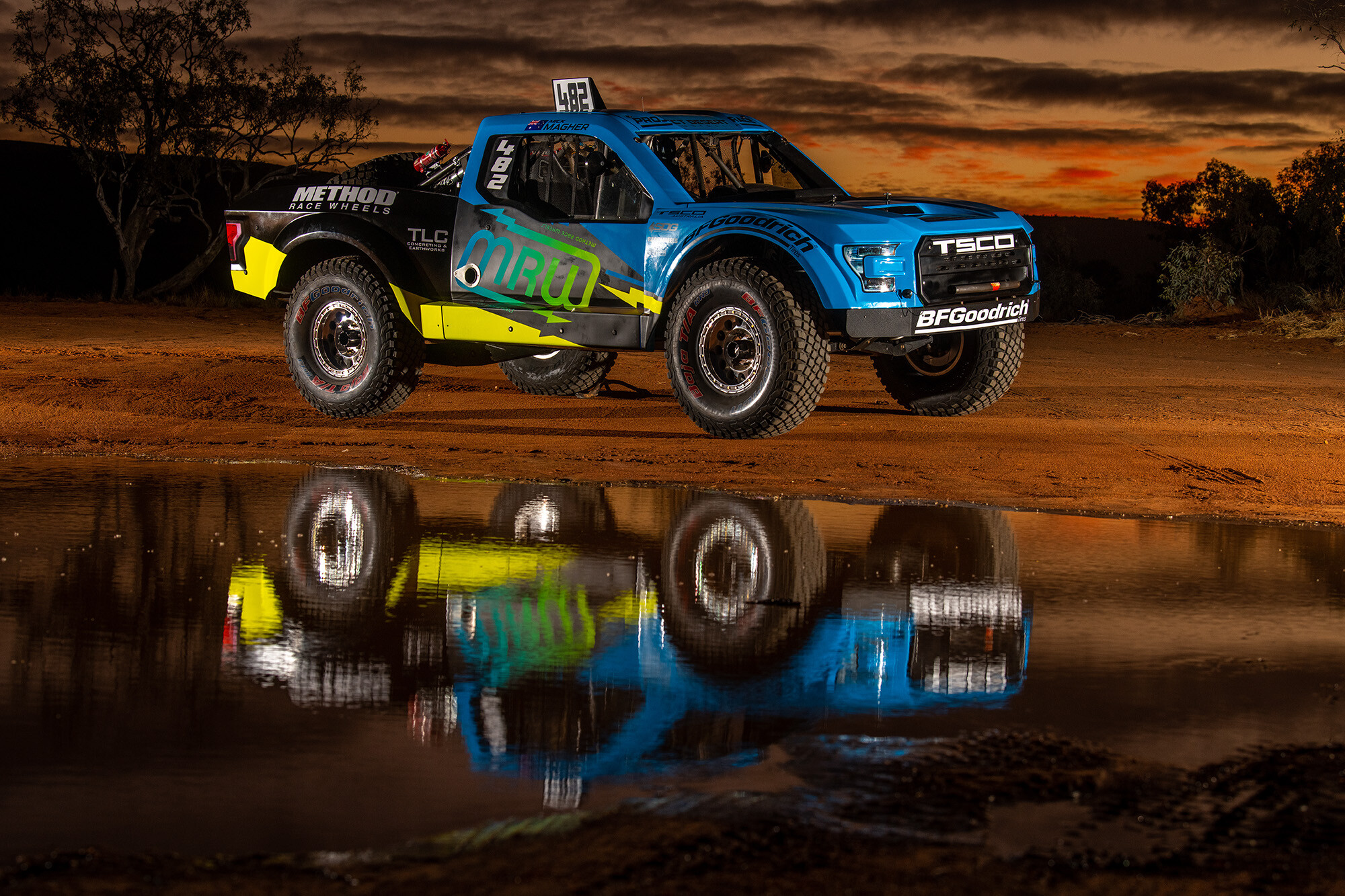
In addition, the Method Race Wheels Prologue will be live-streamed including interviews with drivers and riders.
Brian Godfrey, Chief Marketing Officer at Custom Wheel House (Method Race Wheels) is delighted to come on board as the first naming partner of Prologue Day in over a decade.
“The soul of Method Race Wheels is in off-road desert racing. It is our intentions to support off-road desert racers everywhere they race,” Godfrey said. “We are proud to be working with the Finke organisers and its racers, along with our exclusive Australian Distributor, Race Wheels Australia, for this year’s and future Finke Desert Races.”
Other new sponsors include Sportsnet Holidays, who will partner with Finke Desert Race for the next three events, creating and offering competitors, their support crew and spectators packages to enjoy the unique event.
“More than 700 riders and drivers head south for the first 248km leg to Finke, only to turn around and come back again on the holiday Monday”
Red Bull continues its strong sponsorship with support for tonight’s street party and, of course, backing two-time Dakar champion Toby Price’s race entry in his new Mitsubishi Triton Trophy Truck.
“Without these valued partners, our event wouldn’t be possible,” said Finke Desert Race Committee President, Antony Yoffa. “The committee thanks Tatts for once again being our loyal naming rights partner and we welcome Method Wheels, Sportsnet and Red Bull on board as partners of this iconic event.”
While the serious teams and riders have been pre-running the track over the past week, the racing action kicks off on Saturday with the Method Race Wheel Prologue.
Then on Sunday, more than 700 riders and drivers head south for the first 248km leg to Finke, only to turn around and come back again on the holiday Monday.
BRENDAN Rogers is not new to four-wheel drive touring. The height-safety worker from Victoria grew up with 4x4s in his blood, having completed his first full lap of Australia in his old man’s Pajero when he was just two years old.
Brendan’s dad, who passed away when Brendan was just 11 years old, had moved on from that Pajero to a Hilux Surf, and that vehicle would eventually become Brendan’s own pride and joy.
“My dad bought a Hilux Surf he had imported from Japan, and then I ended up buying that off mum,” Brendan explains. “I drove that Surf for a few years and I ended up doing it up a fair bit; I put it on 33s and did lots of other stuff to it. I really grew up with four-wheel driving and camping always in my life; it’s in the blood.”
Brendan’s 4x4s since the Surf included a couple of GU Patrols, a TB48 and TD42, both of which Brendan labelled with names. “I name all my cars,” Brendan says. “I had the GU before, which was Nancy, and I had another GU before that, which was Patsy.”
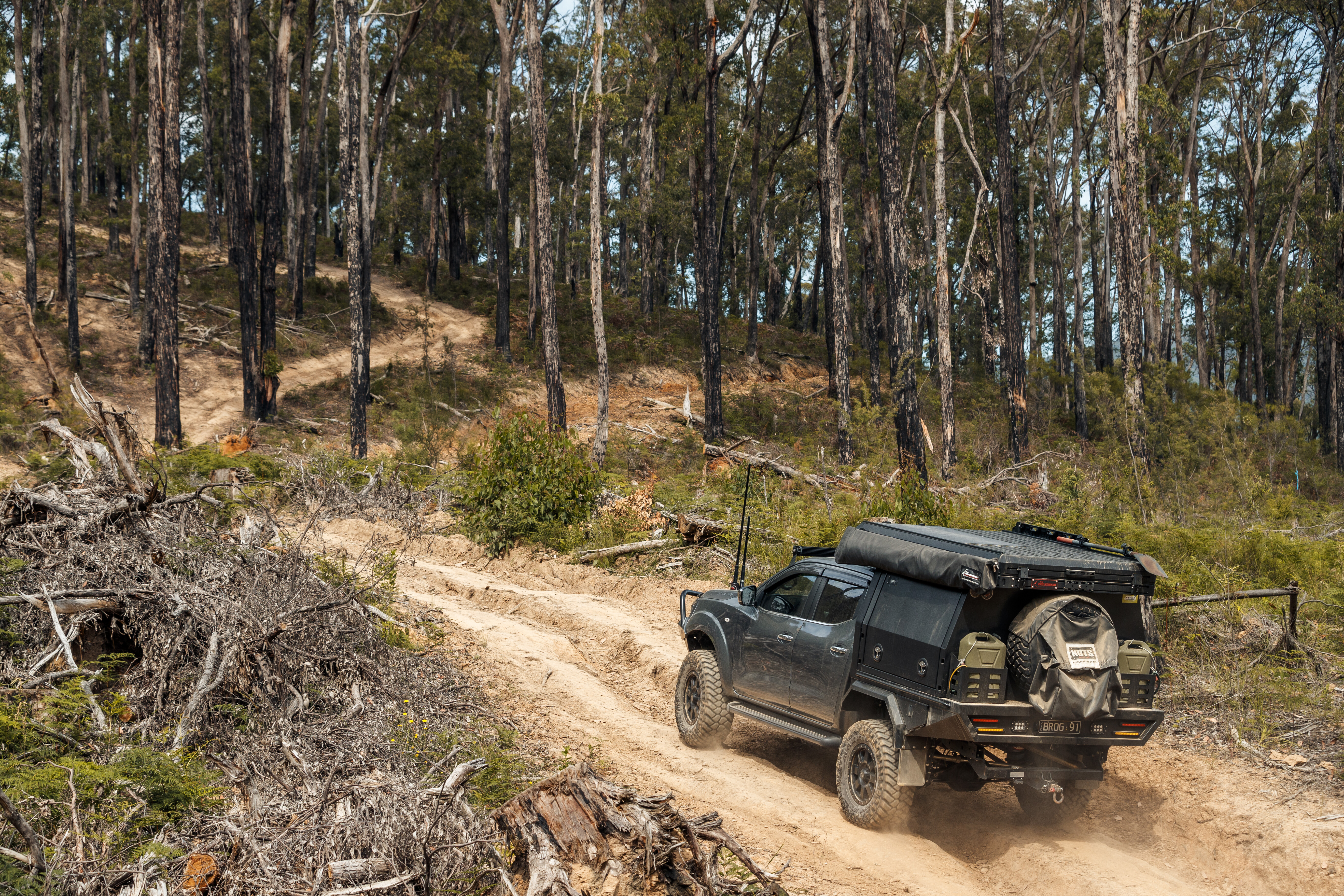
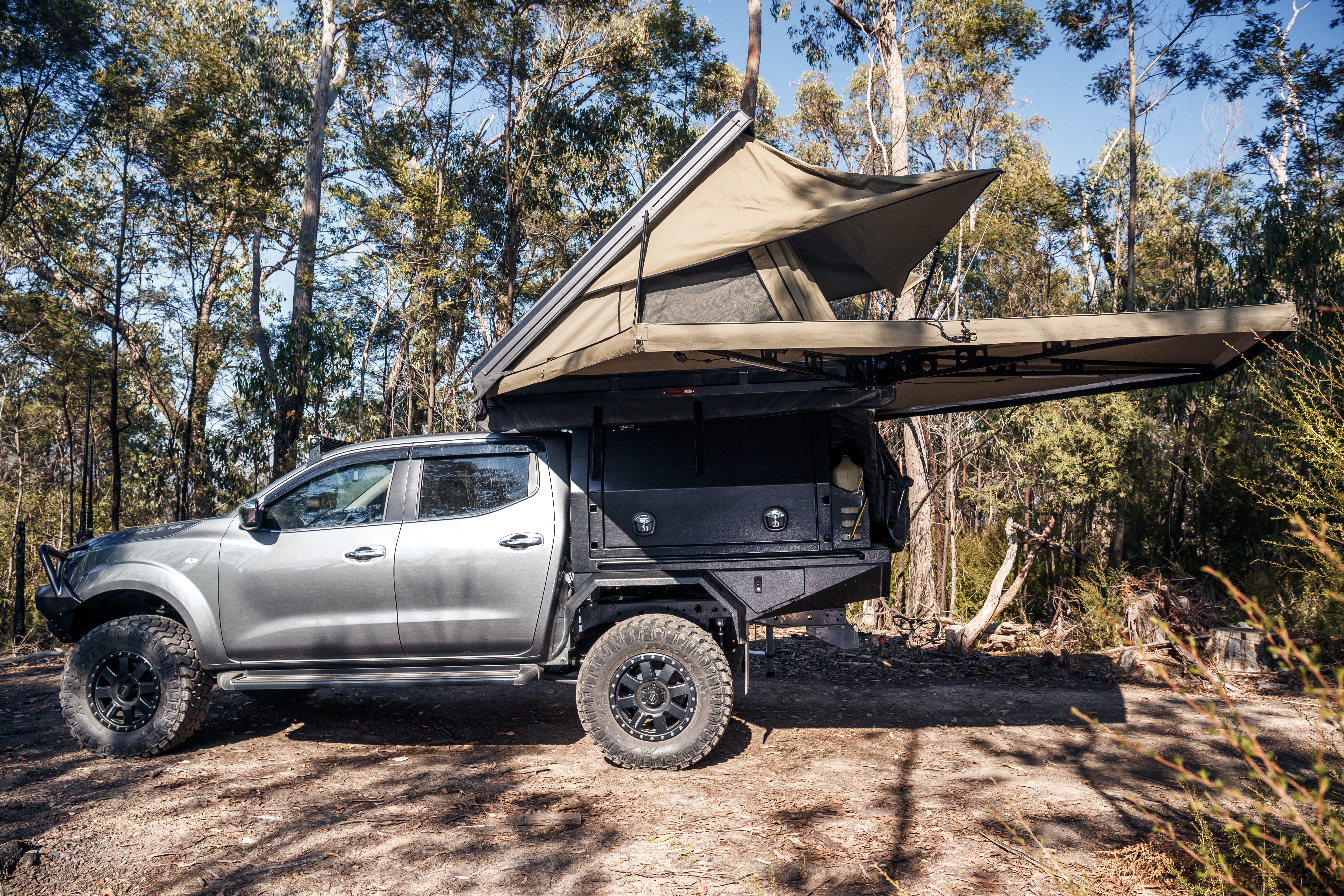
So, what is the name of the D23 Navara you see here? “She’s called Nellie, which was my Nana’s middle name. She was 100 years old when she passed away, so I named the Navara after her,” Brendan laughs.
WHY NELLIE THE NAVARA?
BRENDAN bought his brand-new Navara in June last year, smack-bang in the middle of the COVID-19 pandemic, although he didn’t plan it like that.
“At the end of 2019, my partner and I did a Central Australia trip in the last GU we had, and we sort of got sick of living out of a wagon, so that’s when we started looking at vehicles with a tray and canopy set-up,” he said.
“I was thinking about chopping the GU but where I was at the stage, chopping and engineering everything was going to cost too much, so I thought I might as well just buy something brand-new and start from scratch again.
“We’re looking at getting a house deposit together as well, so I had to sell the GU for funds.
“I looked at the Ranger, Hilux and Colorado but pricewise, I just couldn’t go past the Navara”
“I sold the Patrol just when COVID and everything hit, like January-February last year, so then I didn’t have a four-wheel drive when lockdown hit; it was just bad timing. That’s when I started looking at getting the Navara. By the time I bought it, it was June, in the middle of lockdown. It was just the way it all turned out.”
And why did Brendan buy a Navara instead of a Ranger or a HiLux, or the myriad other 4×4 utes on the market?
“I looked at the Ranger, Hilux and Colorado but pricewise, I just couldn’t go past the Navara. And I got it pretty cheap through work; work has contacts at Nissan and we’ve got a fleet of company cars, so they helped me out with a good price.
“The other reason I went for the Navara is I wanted coils. I thought the coil rear-end would be a benefit for the tracks and stuff I’d be taking it on; I wanted to it to flex up pretty well.”
WAITING GAME
ONCE Brendan had his new Navara parked safely in the driveway, he started ordering parts. After all, what else is there for a four-wheel drive enthusiast to do during lockdown?
“I started ordering parts pretty much straight away, but it was about a five- to six-month wait for everything to start rocking up so, at the end of last year, in November and December, I was starting to get parts in and it all started coming together, and it turned out to be pretty quick build in the end,” Brendan says.
Despite the delays, Brendan had a definite order in which he wanted to perform the mods on his Navara.
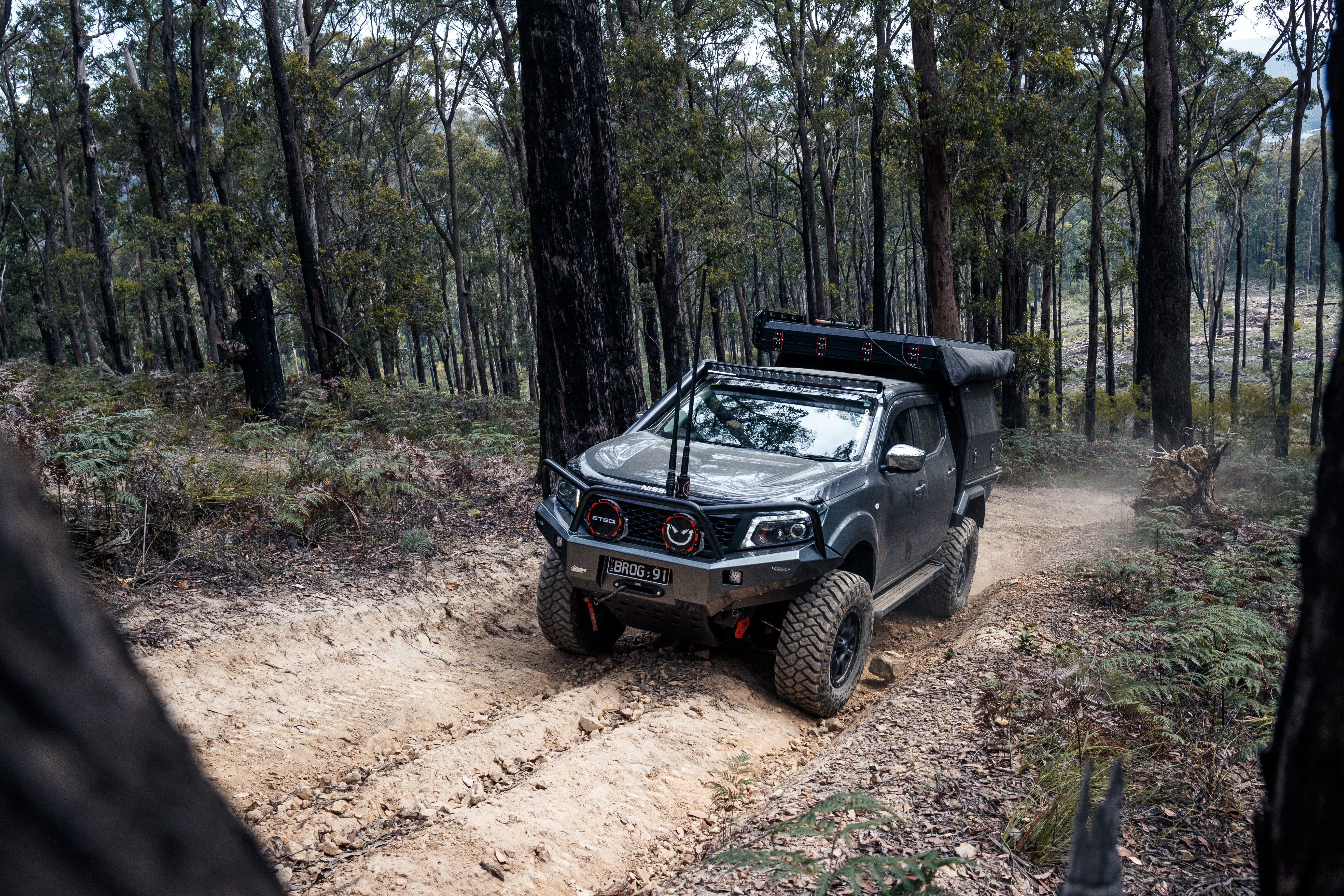
“I wanted to do the heavy stuff first (like the tray and canopy, and the bar work) and then the suspension, so I wouldn’t have to play around with it. The first thing I had manufactured was the tray, which looked a bit weird fitted up on a completely stock 4×4.”
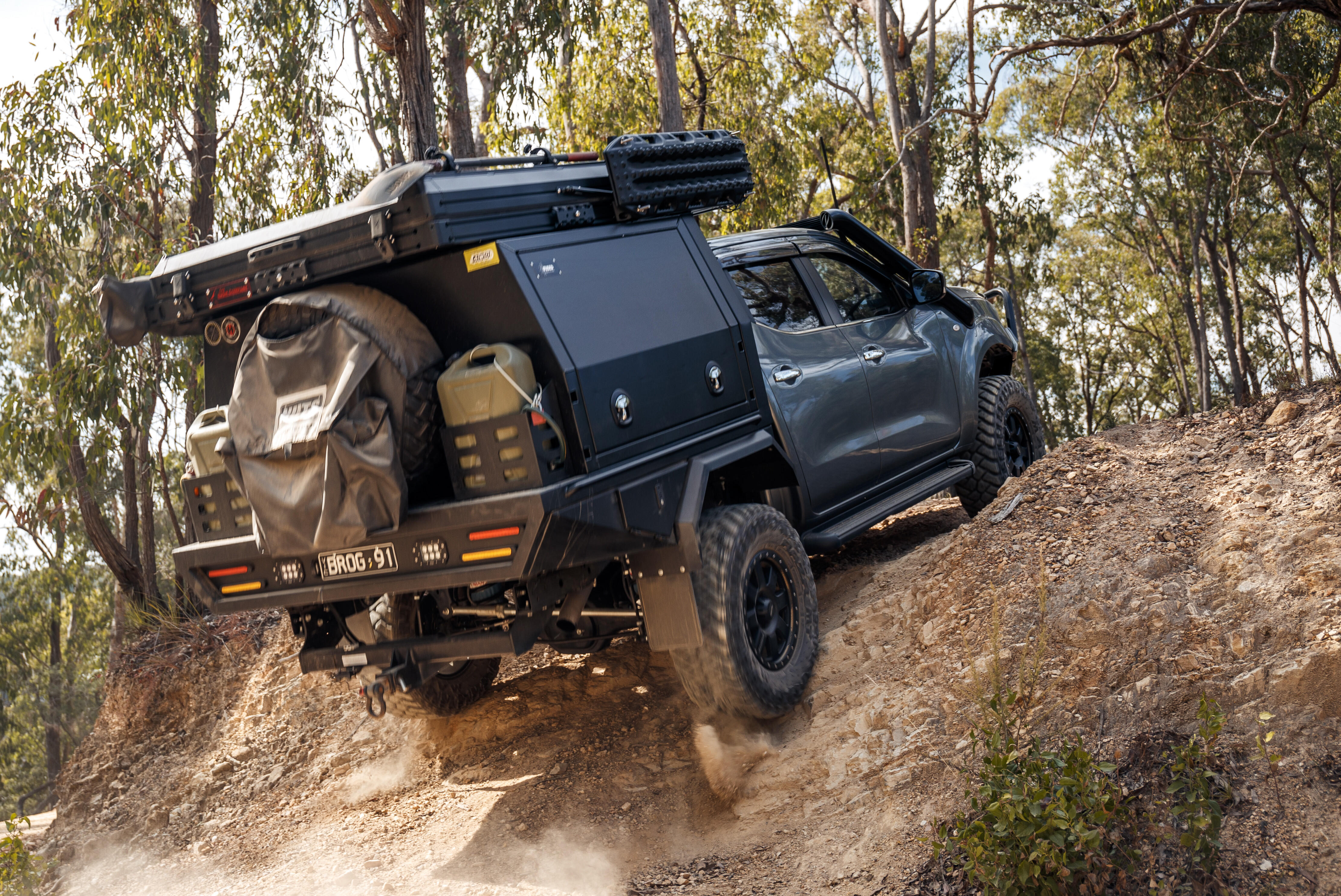
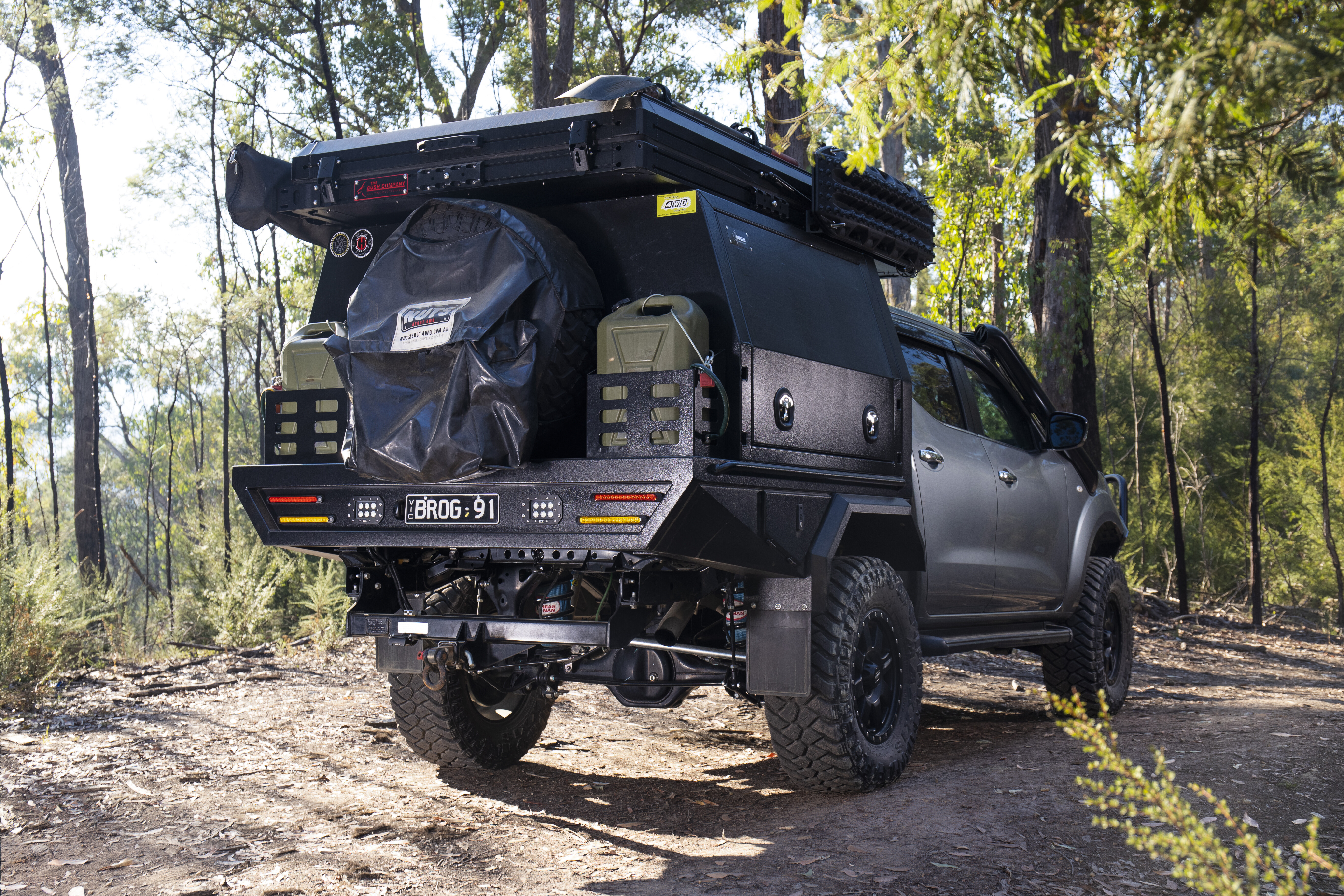
That awesome-looking tray was built by Leigh Mackin of Lethal Customs 4×4 in Bendigo, Victoria. Called a Premium Tray, it measures 1700mm long and 1800mm wide and features built-in toolboxes behind custom fabricated wheel-arch flares, LED rear lights, as well as a custom-made headboard to suit the canopy. Yep, it pays to put a bit of forethought in to a build if you want a fully integrated and cohesive look.
And cohesive is what Brendan has achieved with the tray/canopy set-up; just look at how neat the result is. The canopy itself is an aluminium item from Fused Fabrications in Craigieburn. At 1300mm long, it leaves plenty of space for the spare on the back as well as a couple of jerry cans. And importantly, the conservative length of the set-up means there’s not too much weight hanging out behind the rear axle.
QUITE A LIFT
THE bar work was meant to be next but there was a delay before it showed up, so Brendan sent the Navara off to Bay Road 4WD Centre in Cheltenham where work on the suspension began.
Up front the Navara scores a big lift thanks to a Performance Suspension Racing (PSR) set-up with height-adjustable Bilstein front struts and All Terrain Industries upper control arms.
Down the blunt end PSR also gave the Navara a four-inch lift, fitting long-travel rear coil springs mated to Bilstein shocks. Poke your head under the back and you’ll also spot Roadsafe upper trailing arms to ensure all the angles are right and a Tough Dog adjustable Panhard rod to make sure everything is centred.
With the rooftop tent mounted to the canopy and the Navara loaded up, Brendan says he still wasn’t totally satisfied with the ride, so he added a pair of Airbag Man air bags to complete the rear suspension set-up.
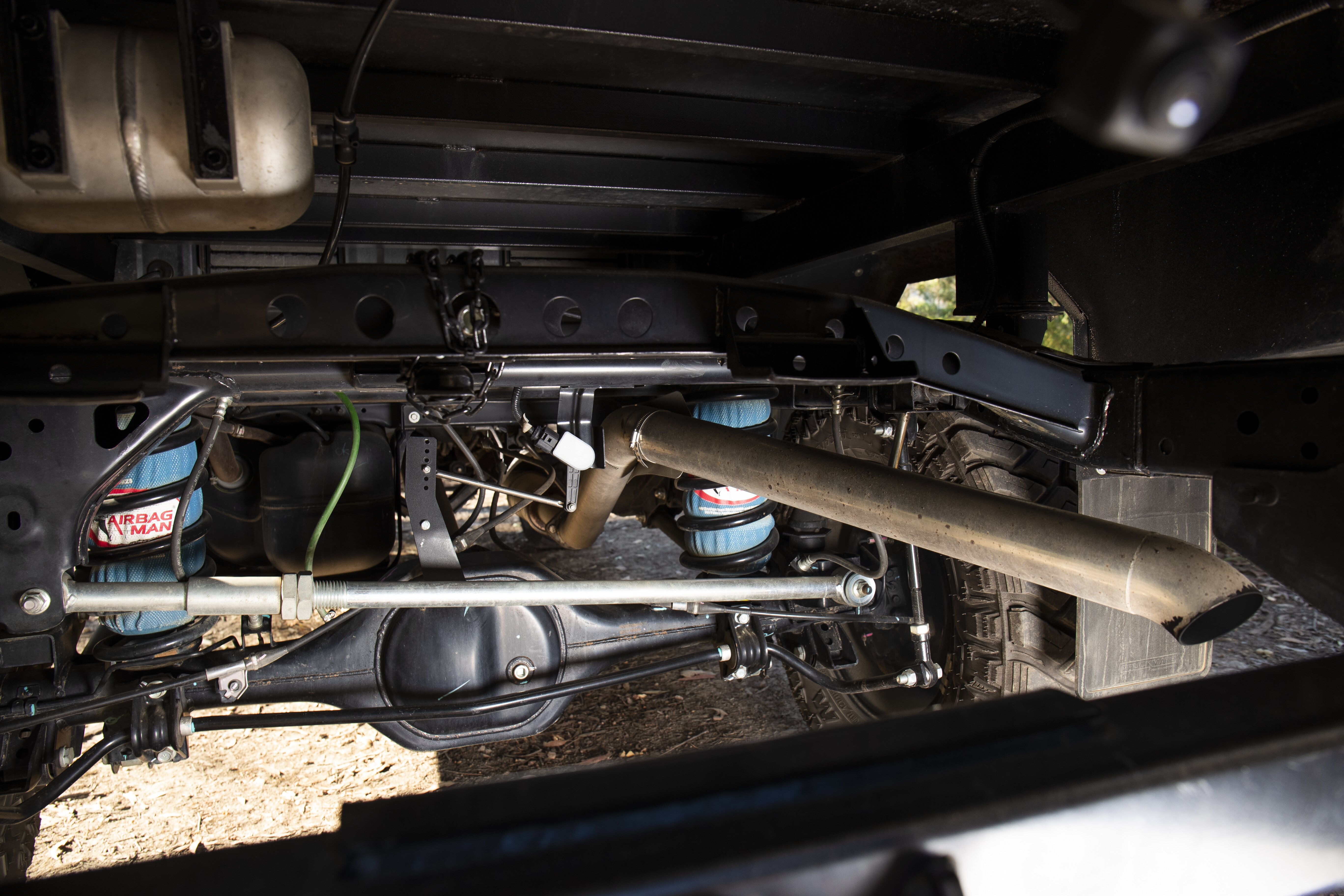
“The rear was a bit bouncy when it was fully loaded, so that’s when I decided to put in the airbags. They help a lot, especially when it’s loaded up,” Brendan says. “When I had passengers sitting in the back, they were telling me it was very bouncy back there, but now I can pump up the airbags to about 60psi and that really helps. It’s really comfy now, a good ride.”
Adding another inch or so to ride height are the 295/70R17 Maxxis Razr muddies, which are mounted to Pro Comp Series 74 Trilogy Satin Black alloy wheels. Yep, this Navara has plenty of ground clearance.
Overall, what does Brendan think of the Navara set-up? “The way I’ve built it I would say it is at least as capable as the GU,” he says. “Off road it just crawls through everything. It might pop a front wheel here and there, but I’m just very surprised the way it’s turned out and how capable it is, maybe even more capable than the GU, I reckon. With the rear locker in it, it’s just a walk in the park.”
PROTECTION
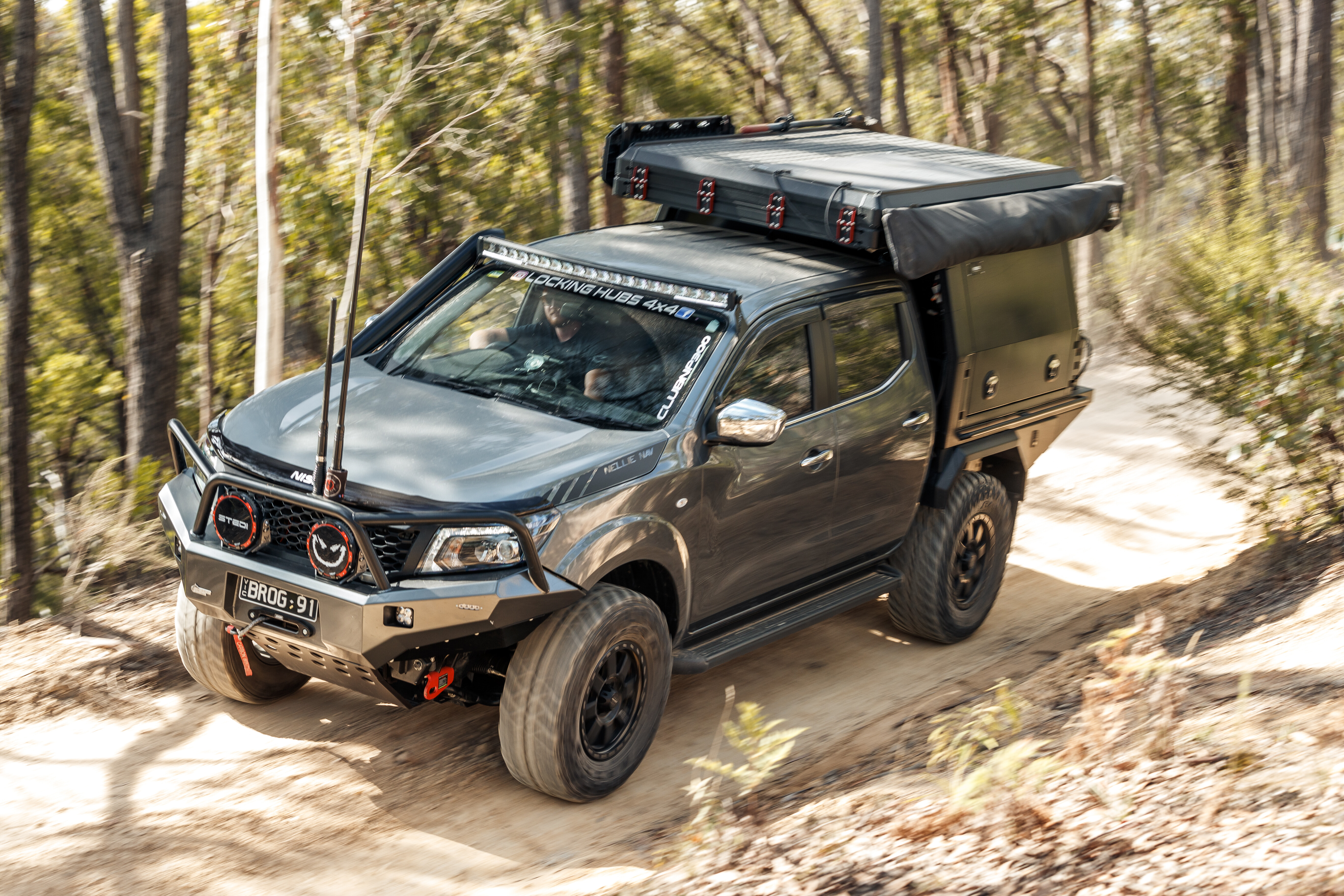
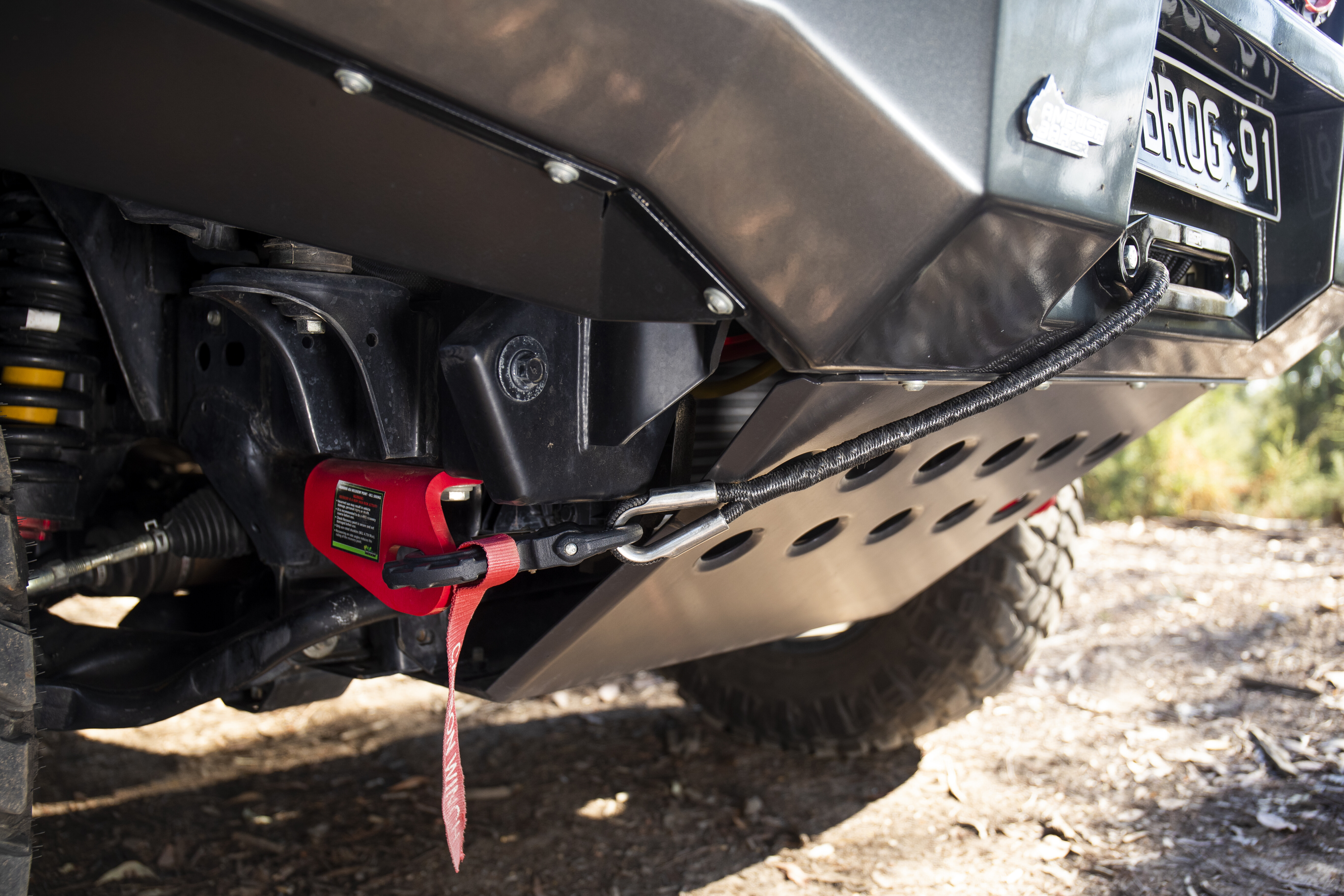

WHEN the PSR Ambush Triple Hoop bullbar showed up at Bay Road 4WD Centre, a Carbon Offroad 12,000lb winch was fitted before the combination was bolted-up to the front of the Navara.
The PSR bar is designed and manufactured here in Australia and it comes standard with built-in LED driving lights and a PSR fairlead. It’s also available with a splash guard as fitted to Brendan’s Nav.
The bar is home to a pair of Stedi Type-X Pro nine-inch LED driving lights, which feature 37 Oslon High-Flux LEDs and produce a claimed 1 Lux at 1155m, while Uniden antennas look after the comms transmissions. Extra lighting is provided by a full-width Bullseye 50-inch curved LED light bar.
A tow bar protects the rear of the Navara when exiting gullies and dropping off rock shelves and the like, although that Lethal Customs 4×4 tray provides plenty of ground clearance out the back for an impressive departure angle.
A pair of Ironman 4×4 recovery points add a flash of red up front, and Brendan says he has a set of rock sliders on his shopping list but for now, the factory Navara ST side-steps at least keep some mud off the sills and lower doors.
MECHANICAL MODS
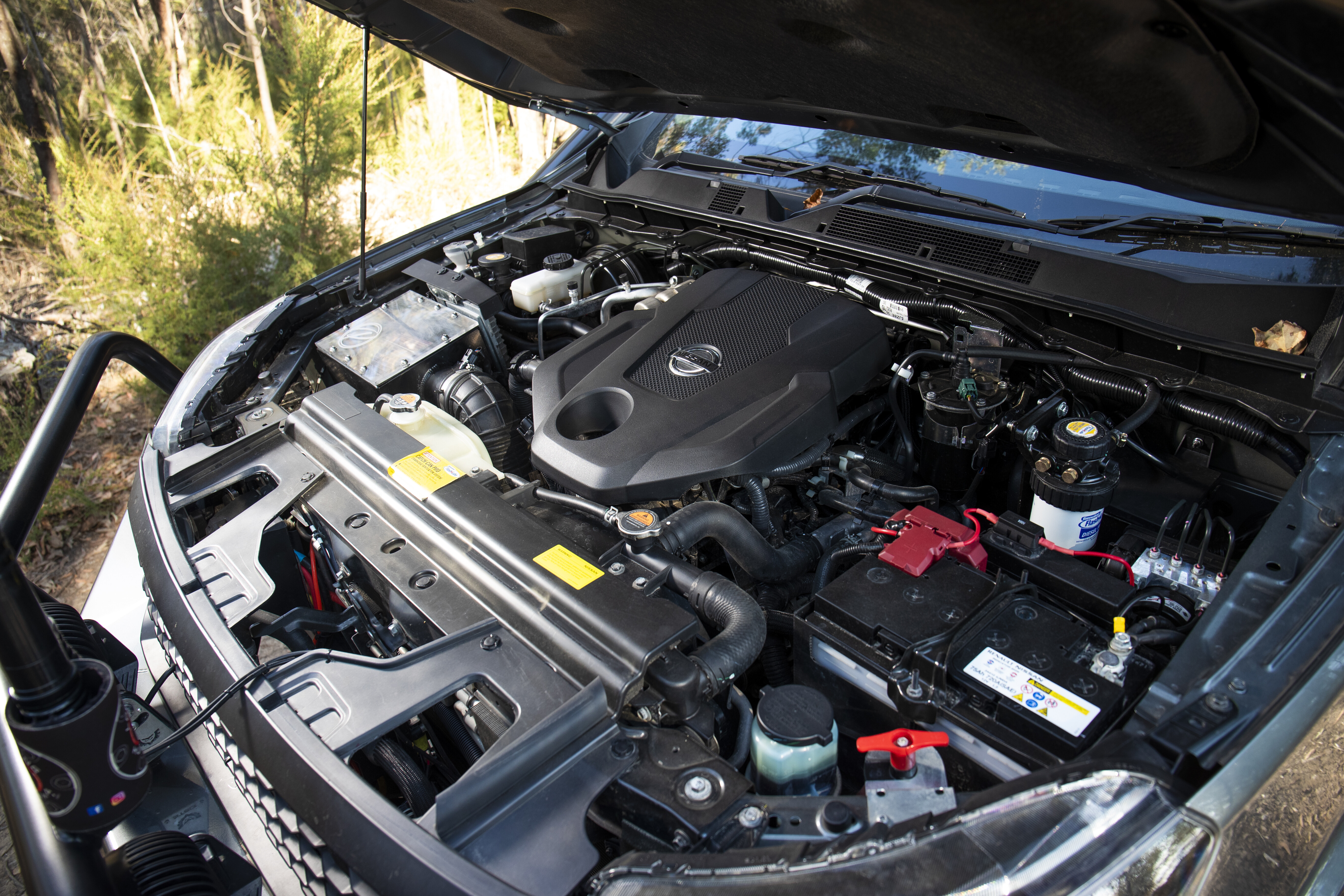
AT this stage the Navara’s 2.3L twin-turbo diesel is relatively stock, as is the six-speed manual gearbox, the clutch set-up and the transfer case. To help the engine breathe cleanly, there is a stainless-steel snorkel on the intake side from Platinum Mechanical & Suspension, which feeds into one of Platinum’s airboxes in which there’s a K&N air filter.A Flash Lube catch can is fitted to keep the inlet clean, while a Flash Lube fuel filter makes sure no dirty diesel or water makes its way into the engine. A three-inch exhaust system with a resonator runs back from the turbo to expel gases.
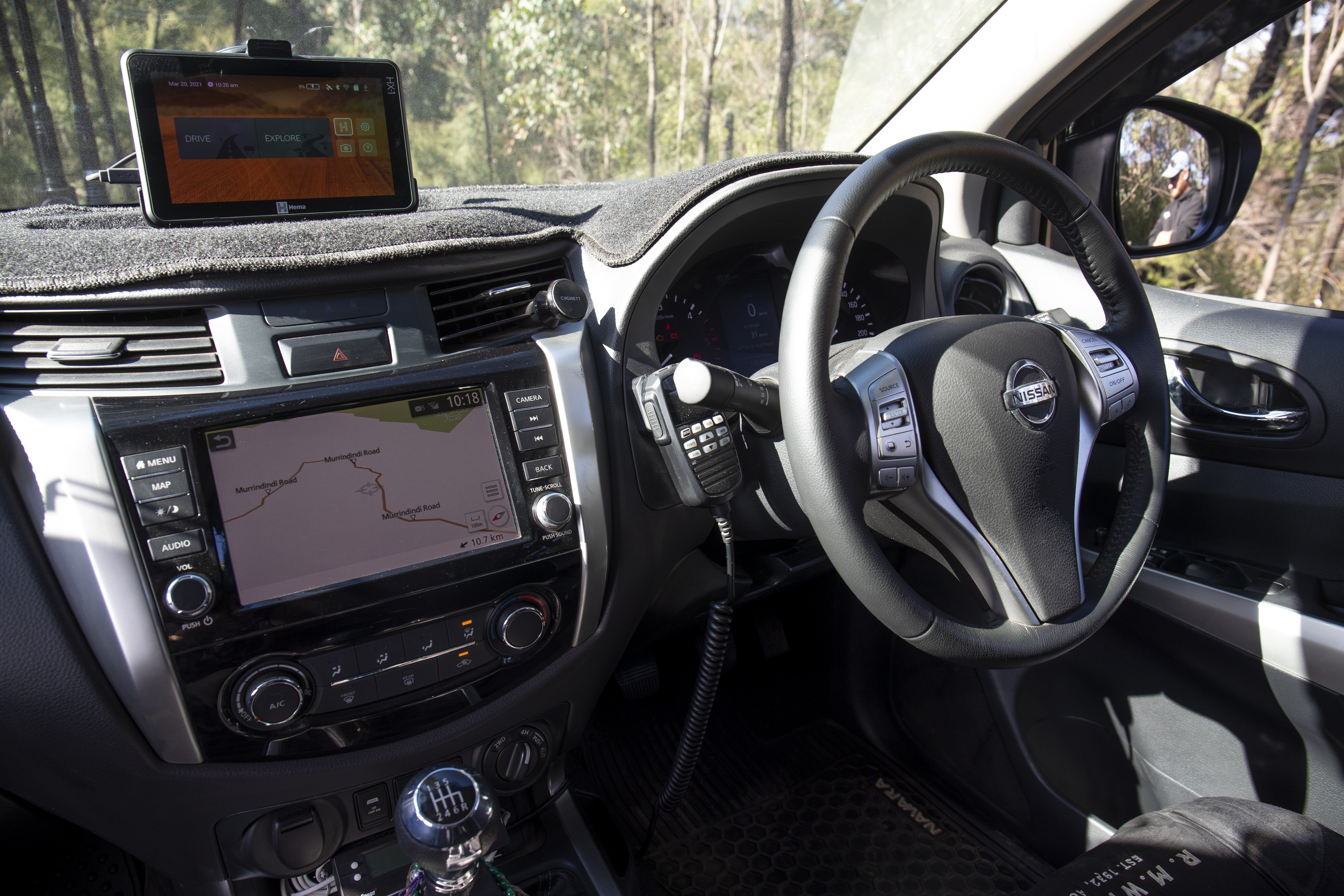
Speeding up throttle response is a Windbooster throttle controller, while a ScanGauge-II is fitted to diagnose and clear any trouble codes when out on the road (or off it).
Brendan has also fitted Ironman 4×4 breathers for the diffs, gearbox and transfer case to help make sure any water crossings are successful.
CAMPING SET-UP
AS he had planned from the start, this Navara build was all about making touring and camping easier for Brendan and his better half. With that in mind Brendan mounted an Alpha Clamshell rooftop tent from The Bush Company to the top of the Navara’s canopy, along with The Bush Company’s 270-degree XT awning.
Designed and manufactured in South Africa, the Alpha rooftop tent has a fully seam-welded alloy frame with powder coated finish, and it can be set up in just 90 seconds. The tent itself is made from 300g polycotton rip-stop mould and mildew resistant canvas. A three-inch thick high-density foam mattress ensures a good night’s sleep and thermal marine carpet under the mattress keeps the cold on the outside.
The whole tent set-up weighs in at 96kg and it features cargo rails on top for mounting accessories. Brendan has a 120W solar panel mounted up there.
“I could have got something a bit cheaper, but I spent a little extra money to invest in something that’s going to last five to 10 years, until I sell it or whatever,” Brendan says of the Alpha rooftop tent. “I read up about The Bush Company, and where I want to take the Navara, I’m planning to do some snow trips, I just didn’t want anything that would leak and get wet inside. I just wanted to do it right from the start.”
One of the greatest benefits of the 270 XT awning is it’s a totally freestanding unit, so no poles are required to support it, meaning super-easy set up and super-quick pack up. This is because the awning frame is made from an extruded alloy composite, the arms are gusseted for strength and the main bracket is made from 316 marine-grade stainless steel. The awning canvas is made from 380g polycotton rip-stop canvas, while the awning bag is made from super tough and breathable 460g polycotton rip-stop canvas with YKK Zippers.
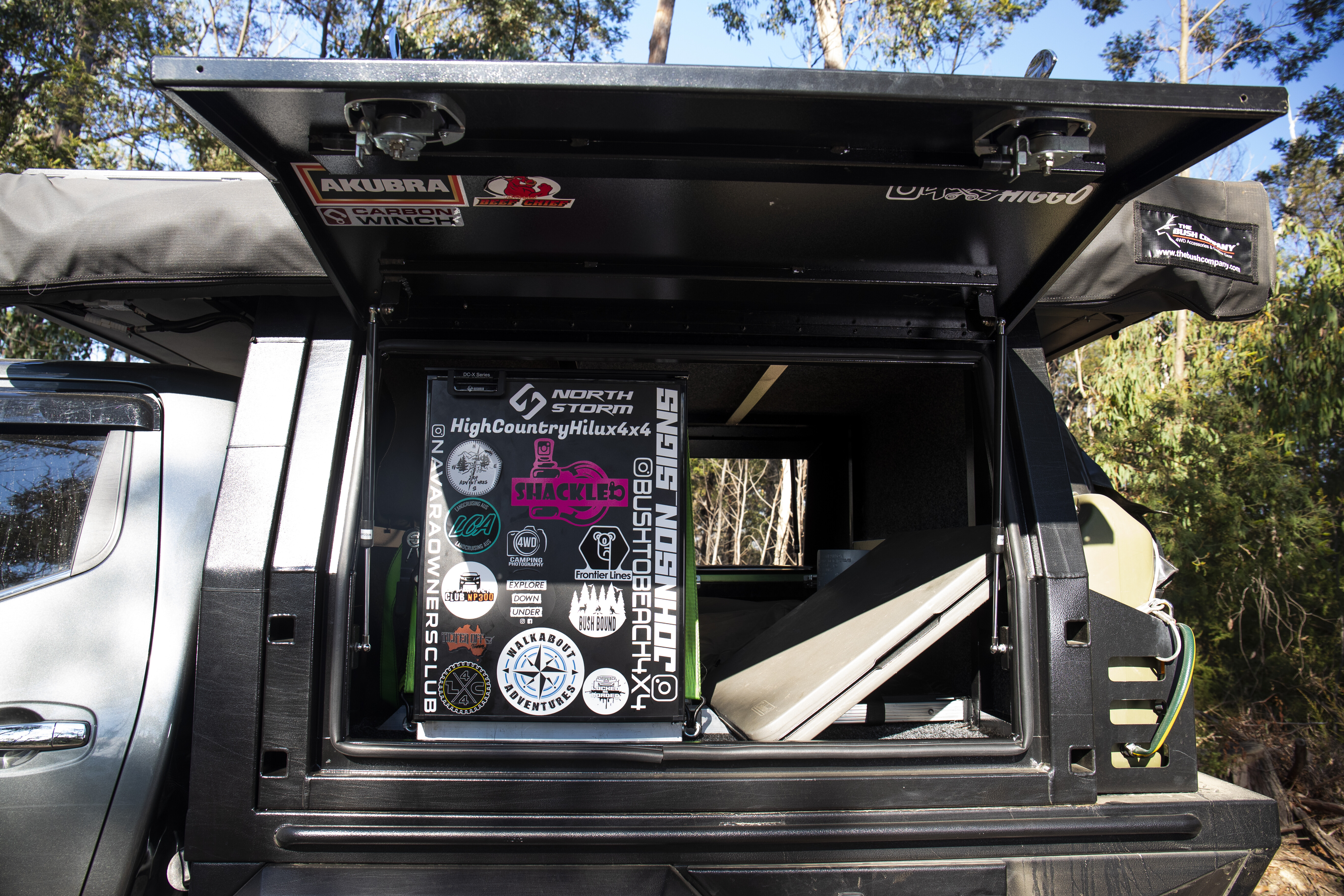
At the moment, the canopy is home to an 85L Bushman fridge, while a 120amp/h Kickass auxiliary battery, a Redarc DC-DC charger and a Victron battery monitor make sure there’s always plenty of power on hand.
Once Brendan had the camping set-up sorted, it was time for a shakedown run before he set off on a three-week trip around Tassie.
“There was a big rush to get everything all sorted for the Tassie trip; that was the main goal. Before that I did a High Country weekend, that was its first trip away, and that was a good test for it all,” Brendan says.
Despite all the hard work and striving to get Nellie the Navara finished off before the Spirit of Tasmania headed south, that three-week Tassie trip very nearly didn’t happen at all, thanks again to the dreaded COVID.
“We were lucky to get over there,” Brendan says. “In the end, we got the last boat over before they locked Tasmania down again for five days. We didn’t know if we would be able to get on the boat or not … then we got a text message at about 4pm when the boat was supposed to be leaving at 6.30pm, that we could get on the boat and not have to quarantine.”
So, what, if anything, would Brendan change or add to his Navara now he’s lived out of it for a few weeks at a time?
“The only thing I would like to add are some drawers and stuff inside the canopy,” he says. “Other than that, I wouldn’t change anything at the moment; I like the way it is, I think I’ve done it pretty well.”
We think you’ve done pretty well too, Brendan …
Oh, and if you’d like to see what Brendan gets up to in the future with Nellie the Navara, you can check out his Instagram page or have a gander at the Locking Hubs 4×4 Facebook page he runs, and maybe even join him on an upcoming 4×4 tour out of Melbourne.
This Navara platform has been around for seven years now, receiving various updates along the way. Suspension was one area that required a few goes to get right, however I can say the wait seems to be worth it.
We now have a dual-cab 4×4 from Nissan that rides well on- and off-road, has a solid traction control system and a more modern appearance. But is that enough? Well, we took off for the week, living and camping out of this new Navara, to see if it was up to task.
Though it’s a familiar package, with the same seven-speed automatic gearbox and 2.3L twin-turbo motor, exterior and interior revisions have certainly done favours to the vehicle overall. There’s nothing much to gripe about that couldn’t be fixed with a visit to your local 4×4 shop. There are also some really handy additions, such as a sharp looking steering wheel that means you now don’t accidentally press the horn when turning like the previous version. That was always an unwelcome surprise.

There’s also an increase in payload carrying ability, thanks to a massively stout new rear axle housing. This thing is huge but thanks to the flat (or shaved if you’re in the biz) lower differential housing, we didn’t have any issues getting hung up on rocks. This is a nod to the heritage of Nissan building bulletproof 4×4 drivetrains in the GQ and GU Patrol; it’s nice to see a beefed-up Navara.

What you would have noticed is the off-road friendly accessories fitted to this Navara. It’s not a specific model of Navara on test, like their off-road-oriented N-Trek Warrior. This is a vehicle Nissan has built to showcase the range of accessories available straight from the dealer. What we have here includes a loopless steel bumper with Warn winch and a neatly recessed LED light bar. There’s a raised air intake, smoked weather shields, aggressive flares and practical additions such as a tonneau cover and tray liner. Underbody bash plates get the nod too, as does a towbar rated to 3500kg.
These accessories do come at a premium, adding more than $10,000 to the final purchase price, but it must be said it’s not hard to spend $10,000 at a 4×4 accessory shop either. These factory Nissan accessories are of high quality also, something I must commend them for.
POWERTRAIN & PERFORMANCE

With 450Nm of torque available from the 2.3L twin-turbo motor, the Navara feels somewhat lacking in the grunt department these days. I’d love to see a new motor, or tweak to the factory tune for more grunt. When on boost and moving, there are no issues at all. It just feels laboured taking off the line with a load on board. There is a refreshing turbo whistle from that factory raised air intake though, which the boy racer in me loved.
Gearbox performance is stellar, with the seven-speed automatic doing everything right. Rumour has it, this auto shares the same part number as the gearbox used in the Y62 Patrol. So, if it can handle that V8 grunt, it’s more than adequate for this four-cylinder engine.
Fuel economy was tested to be a total of 9.9L/100km, the onboard trip computer accurately matching what showed at the bowser when refilling. We certainly weren’t aiming for economy, with a combined cycle of urban, highway and off-road driving.
ON-ROAD RIDE AND HANDLING
I’ve said this before and sadly I have to say it again. The steering feel in this Navara is heavy and somewhat doughy in my opinion. I jumped straight out of an Isuzu D-Max into the Navara, and immediately noticed this. Again, it is something you will get used to, so is certainly not a dealbreaker but worth mentioning.
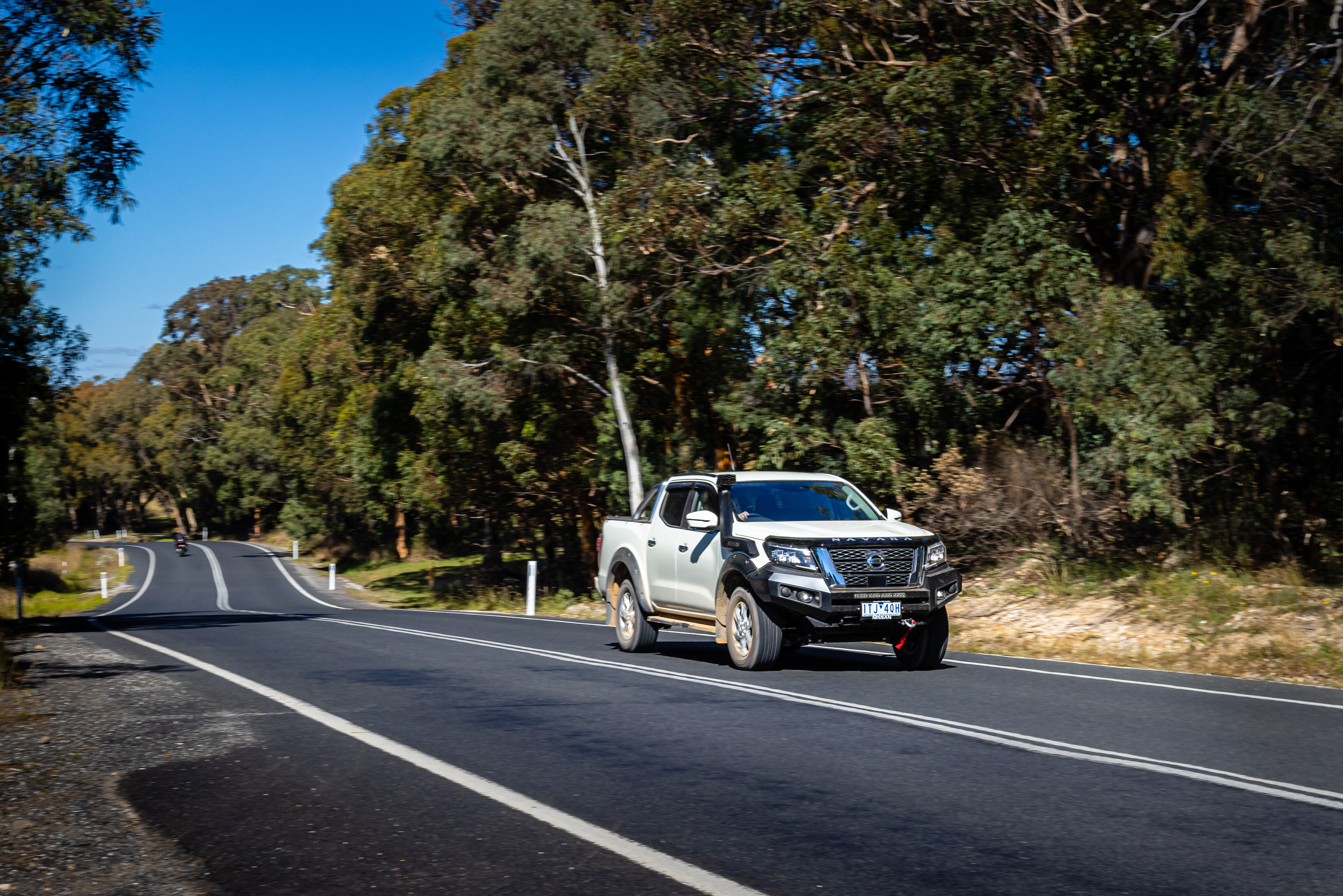
That’s pretty much where the negative points end and I’m happy to report the Navara is a solid performer on-road. Ride quality is compliant, without being too soft. I didn’t experience any nasty bodyroll on fast country roads, nor was there an intrusive amount of cabin noise at highway speeds.
They have really got the package right and while not an exciting vehicle to pilot, I can’t name any regular dual-cab that is (Raptor and Gladiator excluded). The Navara is best described as a jack of all trades and when it comes to the versatility of a ute being its strongest selling point, in no way is that a bad thing.
OFF-ROAD

Ride quality on rough terrain is never going to be a dual-cab ute’s strong point. Well, I can disagree now, as the Navara rides great off-road thanks to its redesigned coil-sprung suspension on all four corners. It’s supple and flexible, however, I still feel the HiLux has more wheel travel overall. This should be an easy fix though, as there are plenty of high-end suspension kits and upgrades available for the Navara to get them flexing. Longer shocks, extended sway bar links, things like that.
The Navara is fitted with a factory rear differential lock, and it’s a good one too as it doesn’t disengage traction control on the front axle when selected. This really assists the Navara off-road, making it a very capable 4×4 out of the box as it’s able to get as much traction as possible down to the ground.
Low-range gearing is nothing short of sensational. The seven-speed automatic gearbox crawled at a snail’s pace down steep descents when locked in low range, and allowed for gentle progress on challenging obstacles. I don’t see many people having a need to use the hill-descent control feature in the Navara. It is also a win for those wanting to fit larger tyres as there will still be enough reduction available in low range to move said rubber without running away.
The only issue I had off-road was that the low-hanging heavy-duty front bash plate (another optional accessory) made contact in steep ruts, though that’s why it’s there. Some bigger tyres and a bit of lift, this isn’t an issue anymore.
Overall, the Navara is a very capable off-road performer that rides well over rough ground and can more than keep up with others in this segment thanks to the rear locker and traction control system.
CABIN AND ACCOMMODATION
Let’s get this out of the way, yes the Navara has a sliding rear window and it’s brilliant. If you have a dog, they’ll love it. If you like eating kebabs on the road, your passengers will love it. Our photographer loved it too, being able to sit on the back seat and shoot out of the small window. Why don’t all dual-cabs have this feature?

As mentioned, the new steering wheel fitted to the Navara is a wonderful addition. Stylish, and with all the controls you’d need at your fingertips. Adjustment is only via tilt, with no reach adjustment available.
Seating is a very subjective topic; however, I personally was a big fan of the cloth seats found inside this ST Navara. Supportive, comfortable and well-suited to my lanky frame. As a side note, my wife jumped in and immediately said how comfortable the seats are. As she has as little interest in 4x4s as I do in skincare products, I listen to these rare pearls of wisdom.
The dash layout is a bit of a weird one as there is a mass of wasted space on the passenger side. There’s not much storage available either, so it would have been good to see an additional glovebox. There’s also limited real estate when it comes to blank switches, so wiring in an array of aftermarket goodies will take some additional consideration. All in all, this ST Navara is a comfortable ute I’d be happy to daily drive or do a lap of the country in.
PRACTICALITIES
First observation of the new Navara is how nicely weighted the tailgate is now thanks to a torsion-bar arrangement. While not as forgiving as a hydraulic strut, it’s certainly not difficult to raise or lower this tailgate. Once inside the tray, however, it’s a very simple affair.
There were no adjustable tie-down points fitted to this test vehicle, just four very basic tie-down hooks located at each corner of the tray. It will do the job but if you can spring for the adjustable points, I’d recommend it.
As mentioned, the Navara has received an increase to its payload capacity thanks to a redesigned rear axle housing. It can now legally carry 1088kg of load, which is a handy and very usable figure.
It is nice to see a tray liner fitted, which we put to the test loading up with firewood and camping gear. However, something of an annoyance was the tonneau cover that is really tight and hard to put back on. Considering you need to unclip the back of the cover to open the tailgate, this wasn’t ideal. We tried this in warm weather to see if it helped, and it did marginally. This is a factory optional accessory, so check this with the dealer before driving off to make sure yours isn’t the same.
SUMMARY
It’s strange this platform has been around for a fairly long time in automotive standards, yet it finally feels like it’s just come alive. I dare say, if we received this Navara when it was first released, it would be a much more popular vehicle sales-wise. It rides well, is capable off-road and there is so much potential when it comes to further modifications. The factory-fitted accessories found on this particular Navara are all of high quality and work well too.
Considering how hard it is to find parts and workshop space in this current climate, having the dealership fit everything makes plenty of sense. All covered by a factory warranty, all on one finance plan.
This new Navara is a good thing if you want a capable and comfortable dual-cab ute, with the option of throwing factory-fitted accessories at it. Add some bigger tyres and a suspension lift and it would go anywhere I’d want to take it. And look good while doing it.
OFF-ROAD SPECS
DEPARTURE ANGLE: 26⁰ RAMP OVER ANGLE: 22.9⁰ APPROACH ANGLE: 32⁰ WADING DEPTH: 600mm GROUND CLEARANCE: 220mm
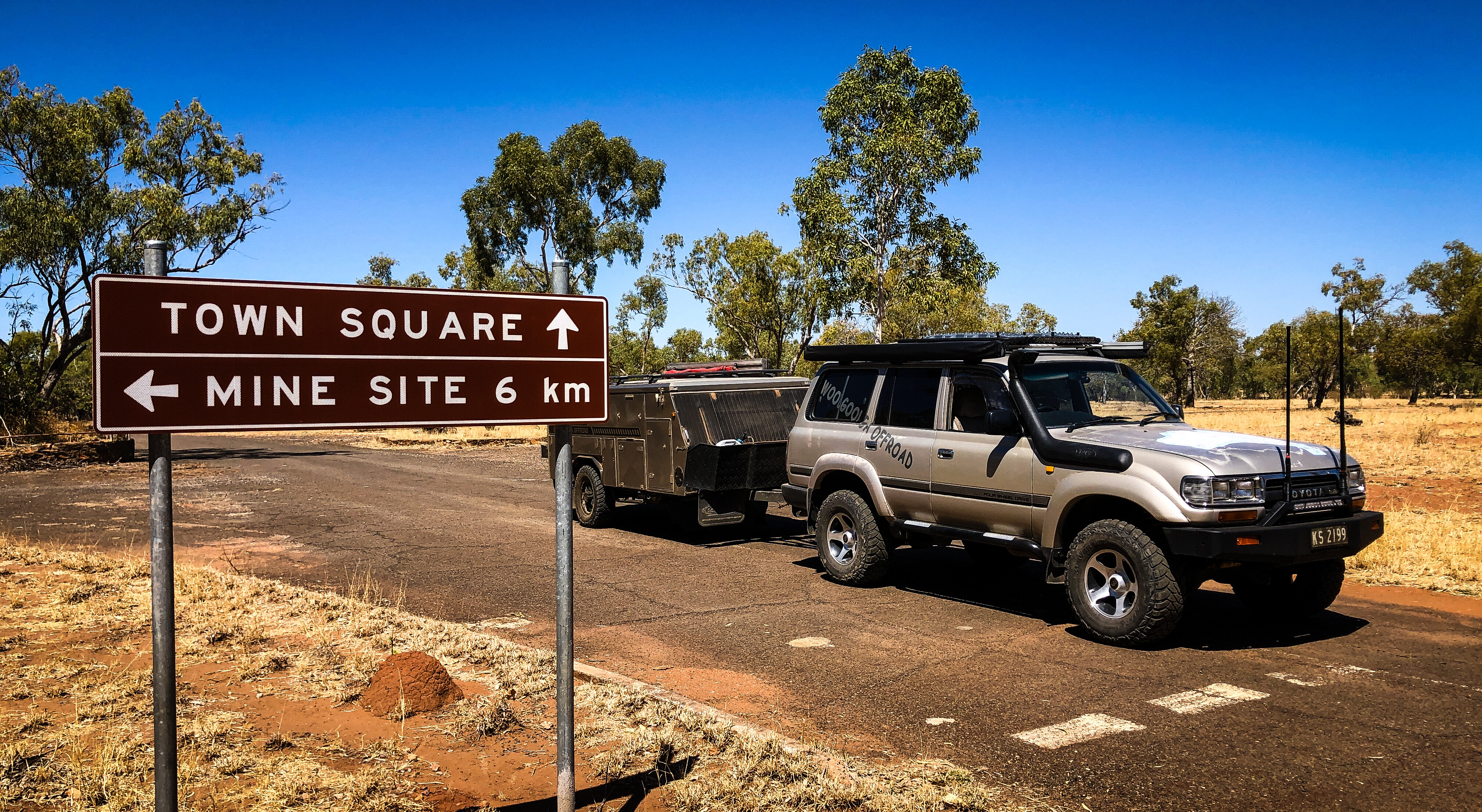
Mount Isa in outback Queensland is widely regarded as a big, boring mining town, where travellers get supplies and pass through. Well, that’s what we were expecting as we headed towards this outback centre on our travels towards the Gulf.
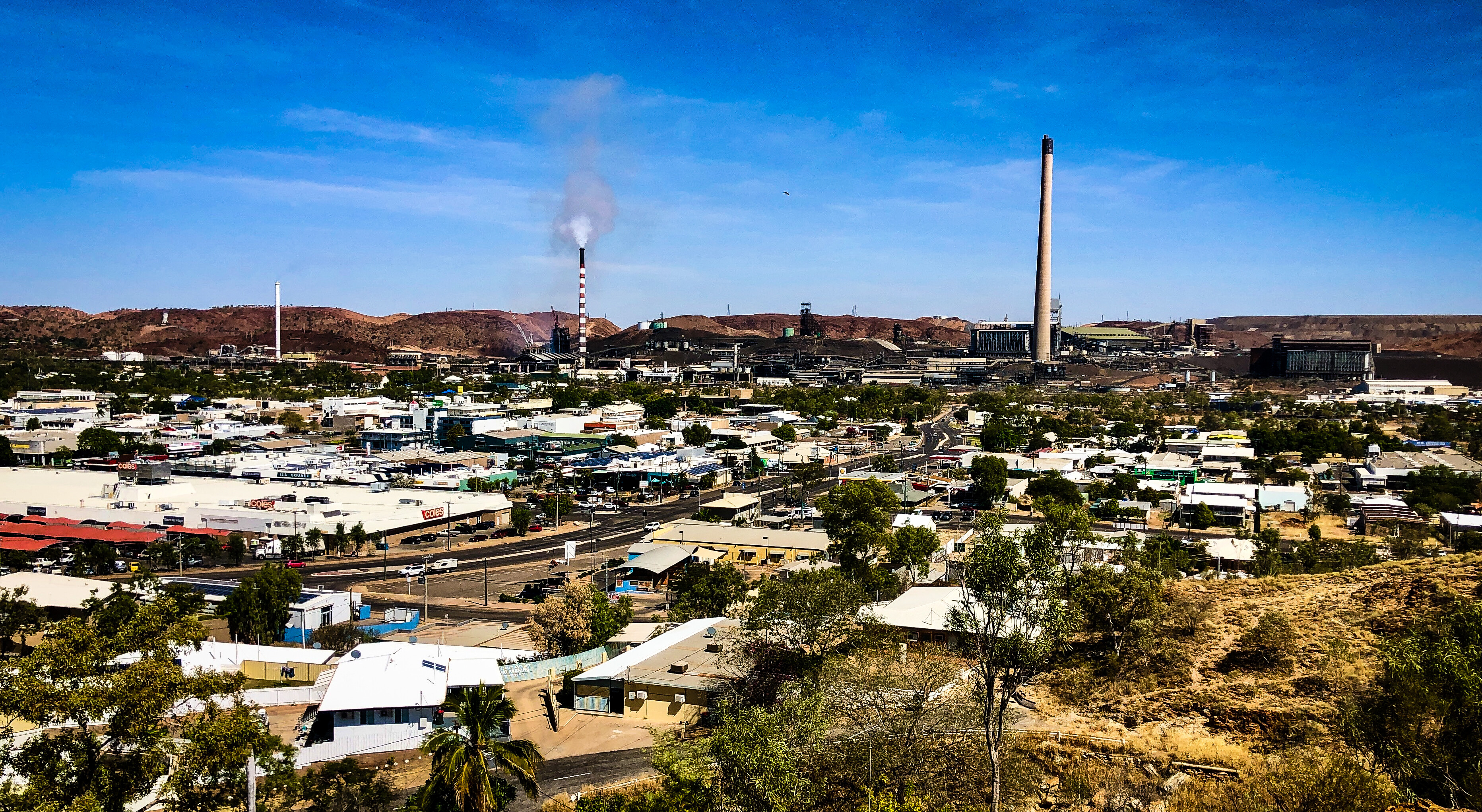
Now, don’t get me wrong, Mount Isa is a huge mining-orientated city and the main mine has been in operation right in the heart of town since the early 1920s, extracting copper, lead, zinc and silver for the world’s markets. It’s regarded as one of the most cost-efficient mines in the world.
Mount Isa even lays claim to being the largest city in the world, as it covers a whopping 43,200 square kilometres; however, there’s no population in most of this area. In fact, just over 40 per cent of the town’s population works within the mining industry.
In town at the Isa Experience centre, there’s a mine tour, the Riversleigh Fossil Centre, and the standard coffee and gift shops. Just up the road in Camooweal Street you can visit the Underground Hospital and Museum, where back in 1942 this area was built just in case there was a threat from the Japanese.
To the north of town, the Leichhardt River was dammed in 1958 to provide a guaranteed water source for the town, forming Lake Moondarra where you can picnic, do a bit of birdwatching, slip a boat into the water, or simply rest under the shady trees around the shoreline. The lake has been stocked with barra and is a go-to place for locals trying to hook a big one. Finish the day with at the sunset lookout area, which provides views across the city.
Gathering info from locals in town, we headed east for 65km towards Cloncurry along the Barkly Highway. Look for a dodgy roadside sign, where there’s beautiful free camping beside Corella Dam, which was built in 1959 for a nearby Uranium mine that’s now been decommissioned. Camping around the dam offers stunning waterfront views within the harsh outback environment which this area is known for. The road is in pretty good shape and leads to the dam’s boat ramp – where most campers seem to congregate – but we found with a little exploring there are even better spots if you follow the trails around the dam.
During the cooler months the dam gets packed with southerners escaping the cold winter to chase the redclaw crayfish that breed here. Redclaws are basically freshwater yabbies on steroids – they’re huge. However, you’ll need to read up on the regulations as there are bag and size limits on these mini-lobsters. We tried for days to catch some using meat, before learning they’re vegetarians and love over-ripe fruit and veggies.
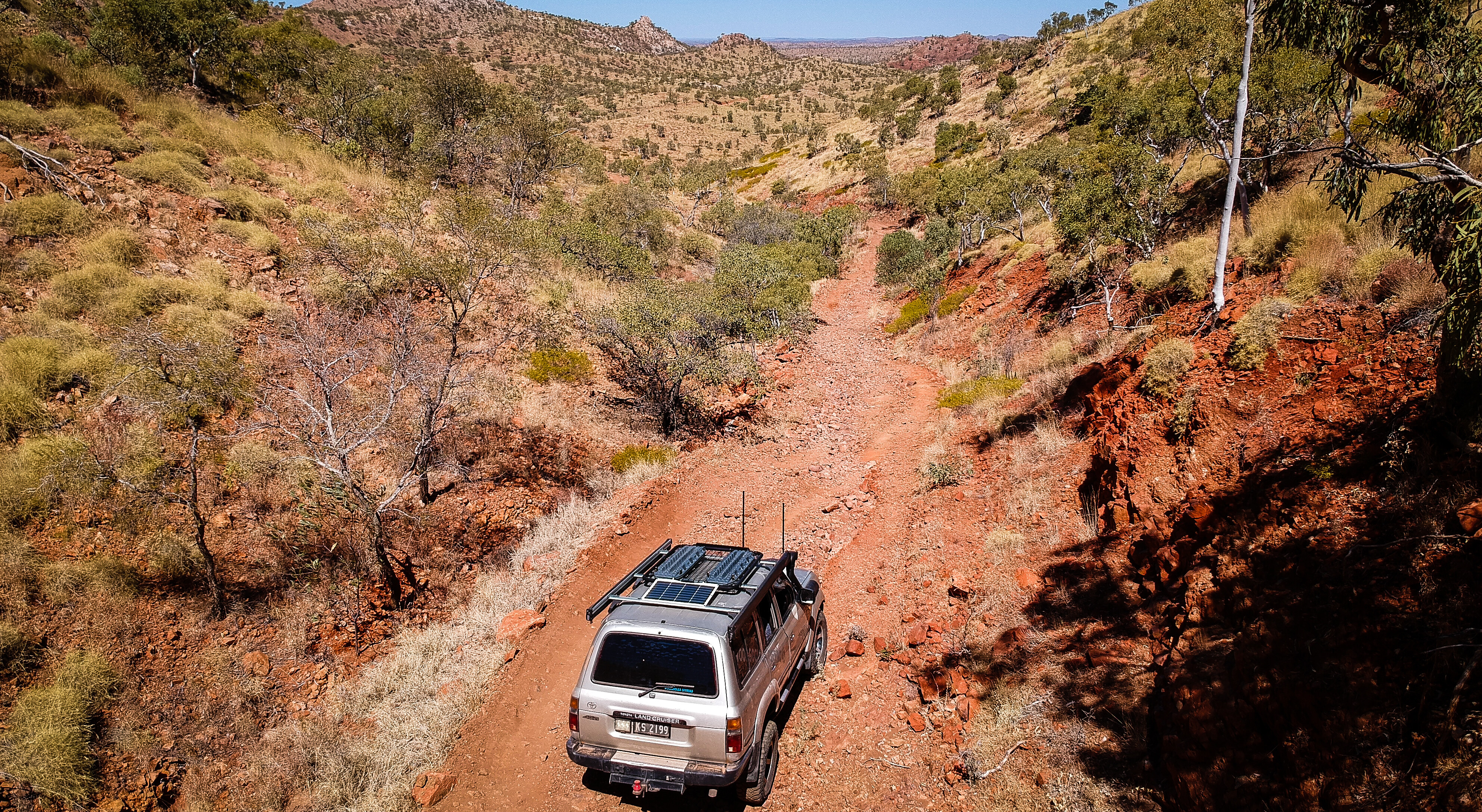
“The road is marked as ‘extreme 4WD’ due to the narrow cuttings, rough terrain and sheer drops along the way, but if you’re game it’s totally worth the effort”
The dam isn’t used for commercial water storage anymore, so life around and in the dam is pretty good for the local birdlife and freshwater crocs. Apparently it’s a go-to place for many bird-lovers that roam the country looking for different species. We found the crocs prefer to stay away from the masses, and they’re best spotted at dawn or dusk in the more remote parts of the dam. It makes it easier if you have a tinny to explore, but there are plenty of 4WD tracks around the dam you can follow.
Surrounded by the stunning and rugged Selwyn Ranges, it’s hard to imagine this dam was once the lifeblood of a bustling town in the middle of nowhere. Just six kilometres away, the now abandoned township and mine area of Mary Kathleen has to be seen to be believed. Back in 1954, uranium was discovered by accident and, over the coming years, massive amounts of materials were excavated from the area and sent overseas. Reports say a staggering 9,000,000 tonnes of ore was processed through the plant.
After years of trying to stay afloat – and a few dodgy trade deals – the mine closed down in 1982. Despite rehab work, corners were cut and dangerous materials leached out of claimed safe areas. Today, it has all been fixed properly, and exploring the open-cut mine and processing areas is amazing. The buildings are gone but the infrastructure areas can still be seen, where huge concrete pads that once supported massive buildings and tanks remain. It’s the open-cut mine that takes your breath away, though, as staggering amounts of rock have been removed and the old roads that once circled the mine are still in place.
Over the years the mine has filled with water and the rich, mineral-based ground has turned it a stunning-yet-eerie iridescent crystal blue. The water is alive with small fish darting around trees that look like they have coralised in the water, where you can see down some 20 to 40 feet. Despite its beauty, you’d be a fool to jump in – just in case the impurities make you grow another arm or lose your hair.
A town was established nearby to support the mine, where more than 1000 people made a new life, and it wasn’t long before a school, post office, hospital, halls, shops and a movie cinema were built, giving life to Mary Kathleen. Life was good until the mine closed and the town subsequently died; despite efforts to reopen the mine in the early 1980s.
When the mine rehab work was in place the town also had to go; but instead of bulldozing the whole area into a big pit, the town’s buildings were auctioned off and taken away. Today, the only remnants are the concrete slabs, streets with curbs and gutters, and several monuments giving homage to those who once lived here. The good news is that it’s another area where free camping is allowed.
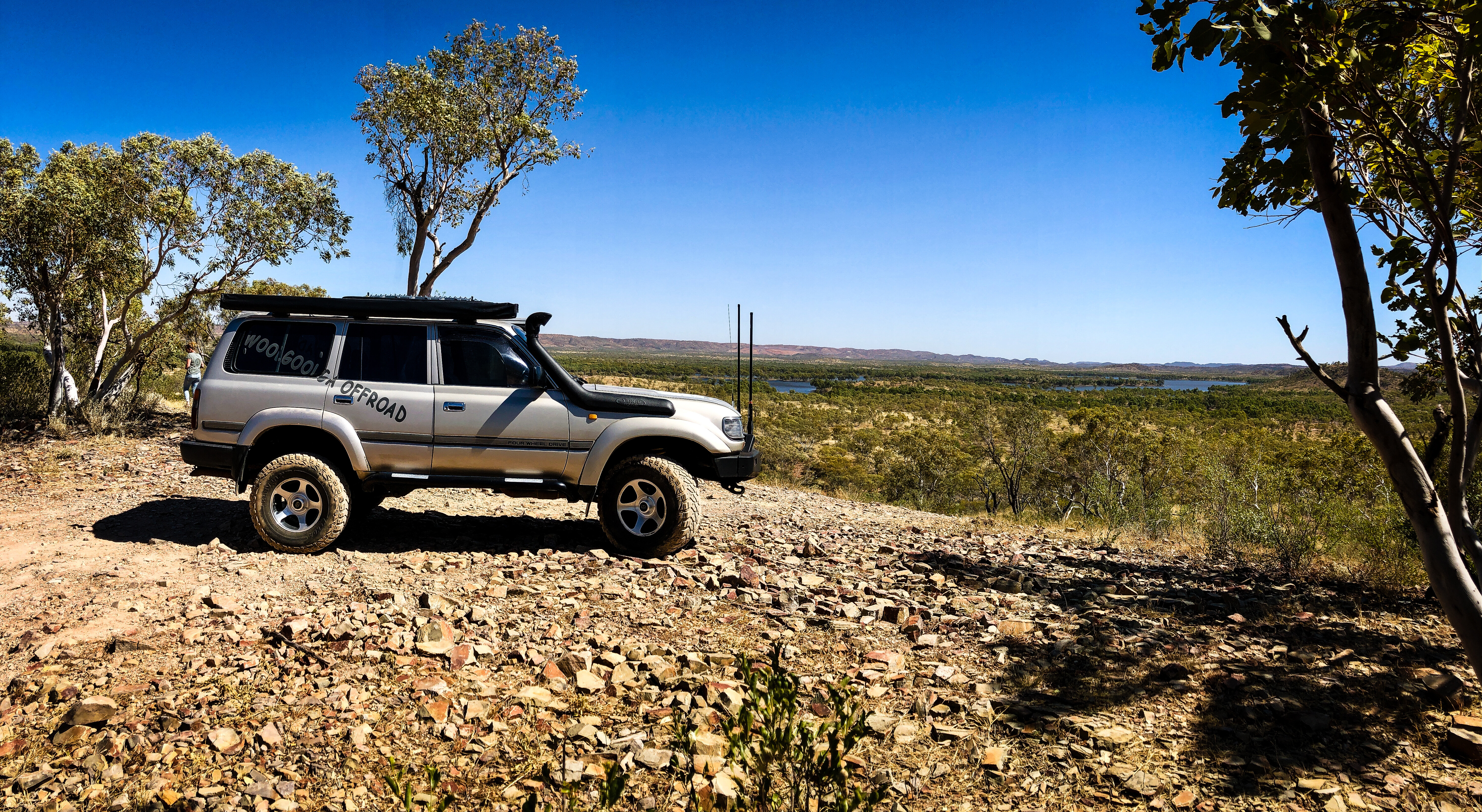
Digging a little deeper we soon discovered other mining interests pre-dated Mary Kathleen – in fact, there’s a mining trail nearby called the Ballara Heritage Trail. Starting midway back to Corella Dam and signposted right from the start, it’s a pretty cool trail to explore. The road in is pretty easy and stunning, with the Argylla Ranges towering over you as you wind your way along. Keep an eye out for the information boards on the way, where they’ll reveal POIs. After 20km you’ll arrive at where the old town of Ballara once stood. A walking trail through the ‘town’ leads down to a rail platform, where a narrow gauge line ran from Ballara to the mines almost 40km away.
Ore was found in the area in 1904 and another rush was on to stake a claim and hopefully become rich. With this came miners, families and infrastructure. At the peak of the boom, nearly 1500 miners battled the elements here and endured hot summers, the lack of water and cool winters.
Leaving the old town of Ballara, the road swings west as it follows the old tramway line. The going gets a little rough heading this way, but it’s well worth the effort as the road turns to 4WD country. On this drive keep an eye out for hand-stacked stone bridges, the old ore transfer stage, twisted pieces of steel and rough concrete pylons.
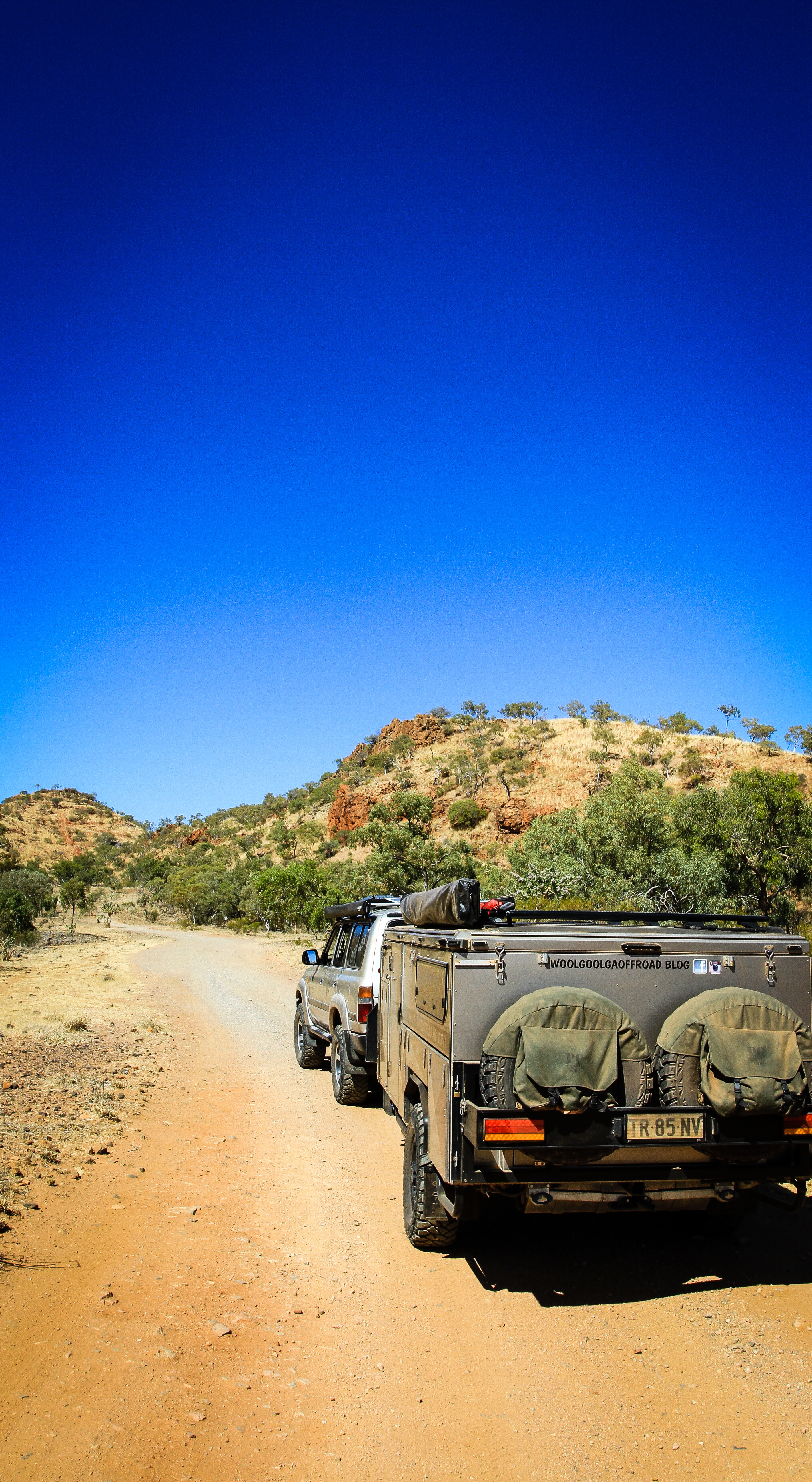
A lone grave on the side of the track pays respect to a miner who worked in the area; and made us reflect on how tough life would have been here. Not far down the track we came across the old settlement of Hightville. Again, there’s not much left, but a POI sign shows a picture of where there were houses, the local school, a hotel and several mines. Also highlighted on the information sign is a 100-metre-long hand-cut tunnel in the hills. The road is marked as ‘extreme 4WD’ due to the narrow cuttings, rough terrain and sheer drops along the way, but if you’re game it’s totally worth the effort to find the tunnel.
The tunnel was built by a gang of nine men, hired on a flat contract rate (plus dynamite costs). A small rockfall at the entrance doesn’t allow 4WDs to drive through anymore, but it’s pretty cool to walk through and gaze at this amazing piece of engineering. Inside you’ll find pick marks, blasting holes, communication wire and a few resident sheath-tailed bats. Thankfully, there is a heritage listing on the tunnel to preserve its history.
Out the other side is the huge Wee MacGregor Mine, where it looks like half the hill was moved to extract copper. The road down to the mine is classed as ‘extreme 4WD’, especially after storms pass through. Rehab works took place in 1975, but there’s still plenty to marvel at and ponder how they got the gear into this severe terrain. Several of the deep (nearly 100 metres) mines have had safety grates welded over the top, and looking down into them almost gave us vertigo.

It was a tough few years in the area: the tramway line took most of 1914 to complete; mine work was suspended in 1916 due to lack of water; and in 1917 the area was hit with extremely heavy rainfall, causing flooding and damaging the line. Sadly, in late-1917, the mine was closed due to diminishing mineral finds. The gear was sold off and the men paid out. Over the next few years the line was pulled up and the Wee MacGregor loco ended up on a cane farm.
Between Mount Isa and Cloncurry, across the stunning and often harsh ranges, there are a host of mines and related history dating back before the Mount Isa deposit was found. Random and isolated lone graves, open mine pits and tunnels, and relics from days gone by; it’s all part of our pioneering history that thankfully is being protected for years to come.
Almost a year after the first shipment of MY2021 Land Rover Defenders lobbed on Australian shores the 2022 models have arrived, and with them the introduction of the six-cylinder diesel ‘Ingenium’ engines.
There was a very small batch of four-cylinder diesels among those 2021 Defenders, but they were all pre-sold and most of the 2021 vehicles were powered by the petrol P400 six-cylinder drivetrain.
Australia is primarily a diesel market when it comes to large 4×4 vehicles, so many potential Defender buyers were keenly awaiting the arrival of the new engine which has landed in two states of tune: D250 and D300 variants.
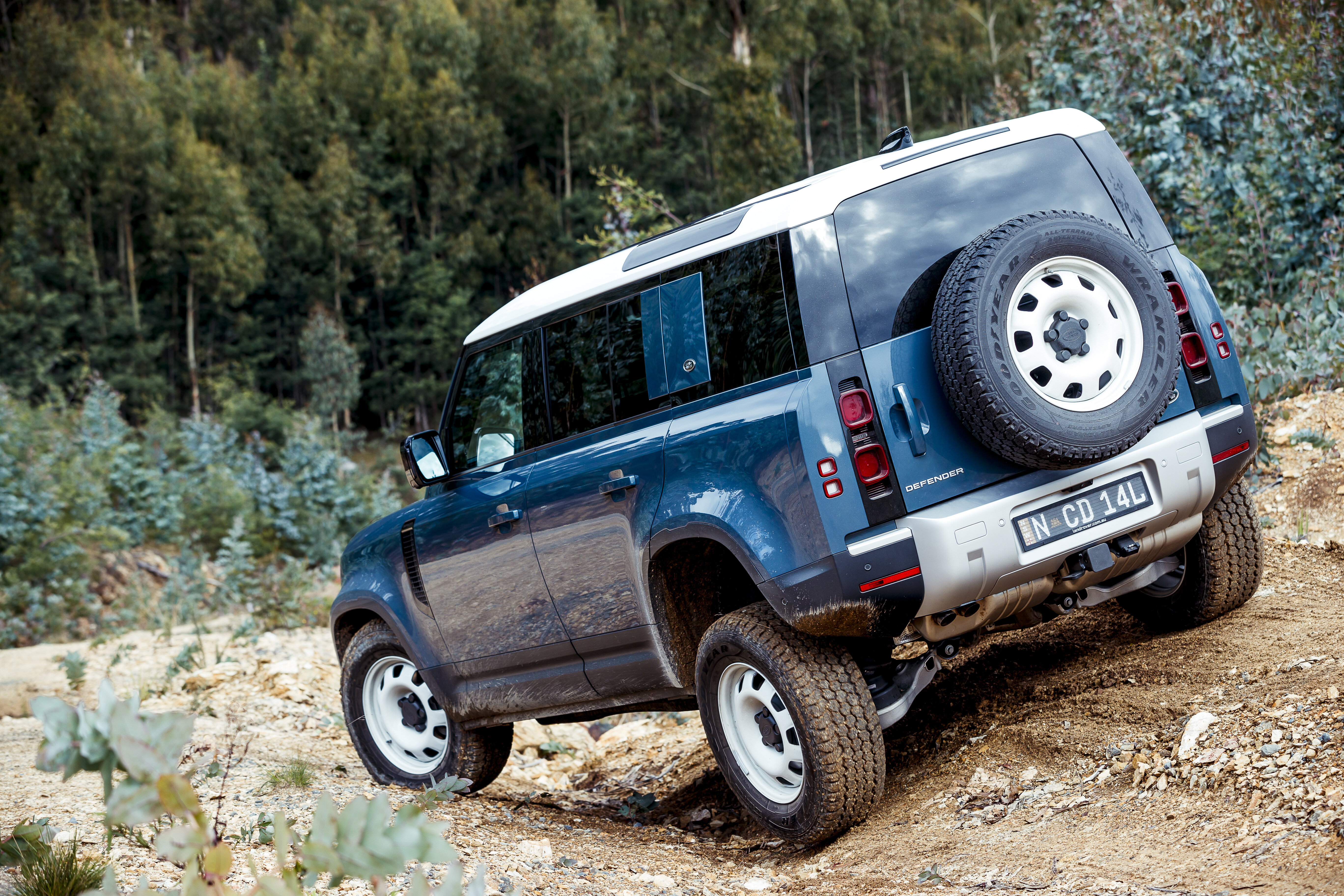
Our first taste comes with the D250, fitted here to a Defender 110 S along with a few options that are also new to the 2022 specification.
The base price for the car is $91,000, but start adding things like the height-adjustable air suspension ($1309); Off Road Capability pack ($2210); rear diff lock ($806); heated front seats ($806); white painted roof ($2171); and metallic blue paint ($2060) among others, and the price of this particular car climbs to $111,860 plus ORC.
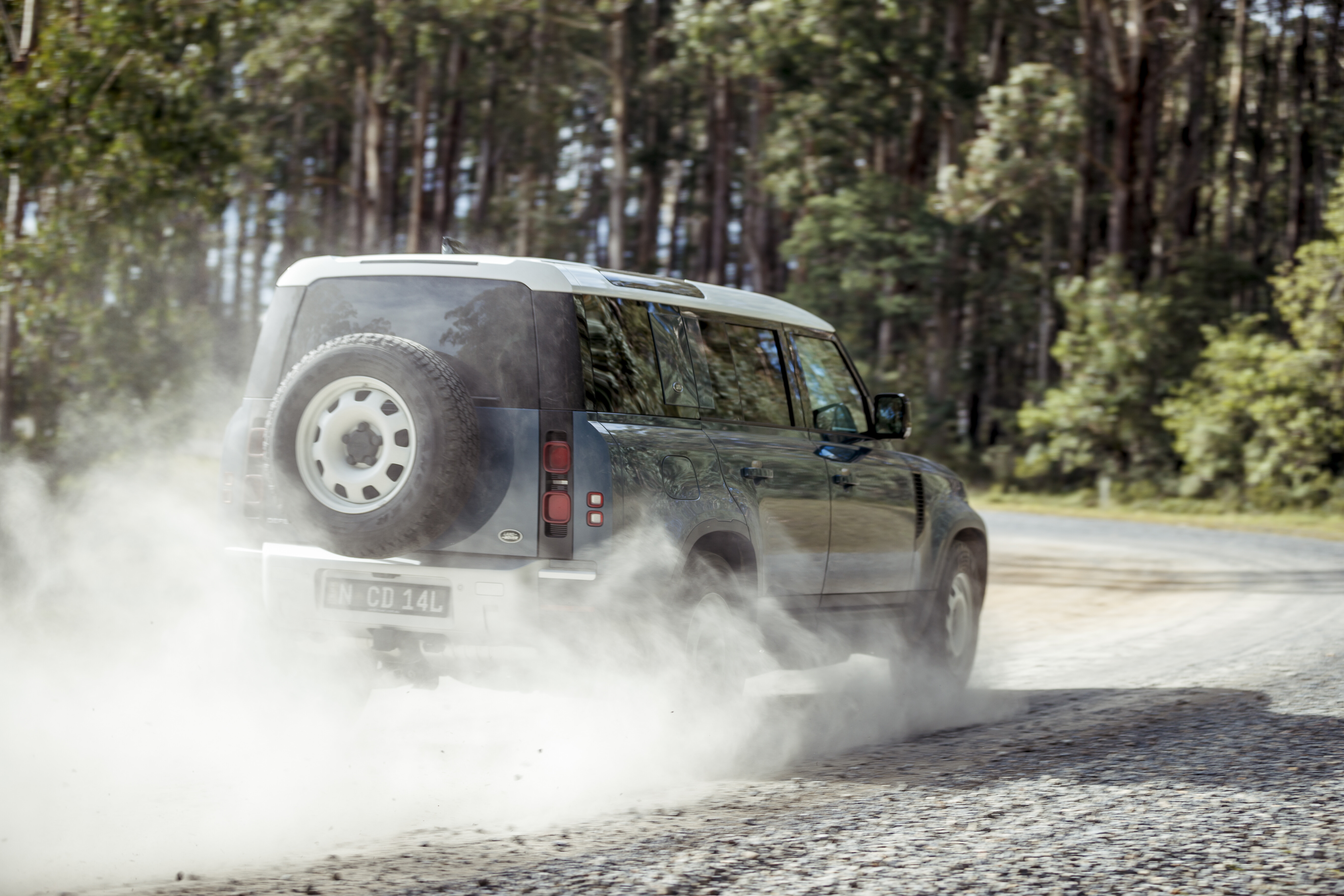
“Put your foot down on the throttle and hold the gears in the eight-speed auto and the six-pot puts out a sweet-sounding growl”
POWERTRAIN & PERFORMANCE
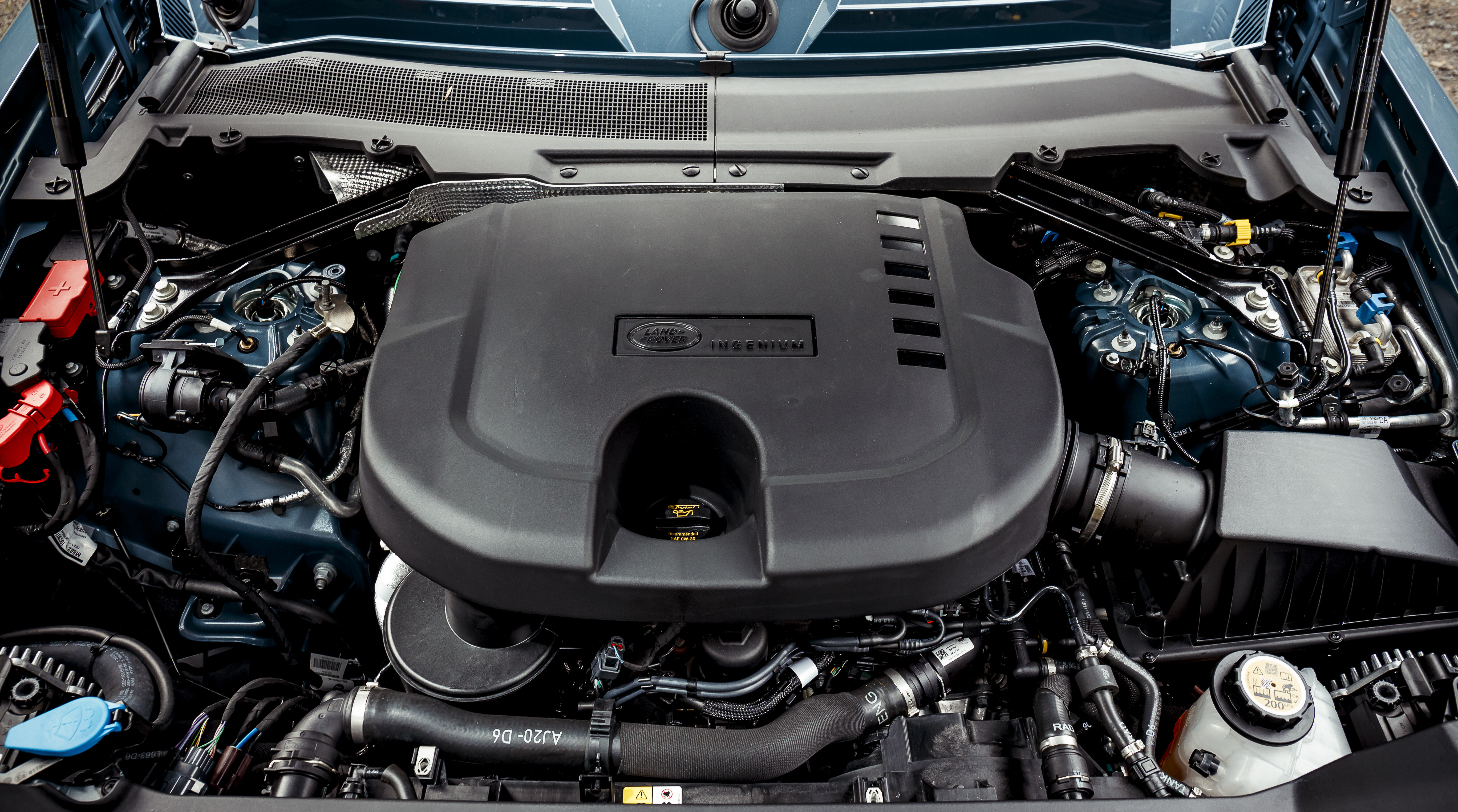
The new Ingenium diesel is a 3.0-litre in-line six with twin turbochargers set up in a sequential system. In this D250 trim it makes a healthy 183kW and 570Nm. Step up to the D300 engine, which is only available in SE spec and above, and you’re getting 220kW and 650Nm from the same hardware.
The Ingenium family of engines is modular so, put simply, the six-cylinder is the same as the four-pot, with another pair of 250cc chambers tacked on to the end. Like the other Ingenium engines, the six-pot diesel runs a 48V system in what Land Rover calls a mild-hybrid system; although, there is no electric-driven drive delivered back to the powertrain here.
The low tune of the D250 never leaves you wanting more in the 110. It’s a smooth and refined engine, providing a linear power delivery through its rev range. It’s also very quiet inside the cabin and, when compared to the P400 petrol engine, you’d be hard-pressed to pick that this is the diesel during normal driving.
Put your foot down on the throttle and hold the gears in the eight-speed auto and the six-pot puts out a sweet-sounding growl, again comparable to a performance petrol six.
During our week with the D250 it returned 11.37L/100km of fuel consumption, compared to high 16s previously recorded during similar drives in the P400 petrol Defender. If the P400 is the performance engine in the range and the D250 is the economical one, we can’t wait to find the middle ground in the D300!
ON ROAD RIDE & HANDLING
Everything we’ve said about driving the P400 Defender in the past applies equally to the D250. There’s no discernible difference in the weight over the front axle that you might find in many diesel-driven vehicles over their petrol stablemates, while the power is sufficient if not up to that of the P400.
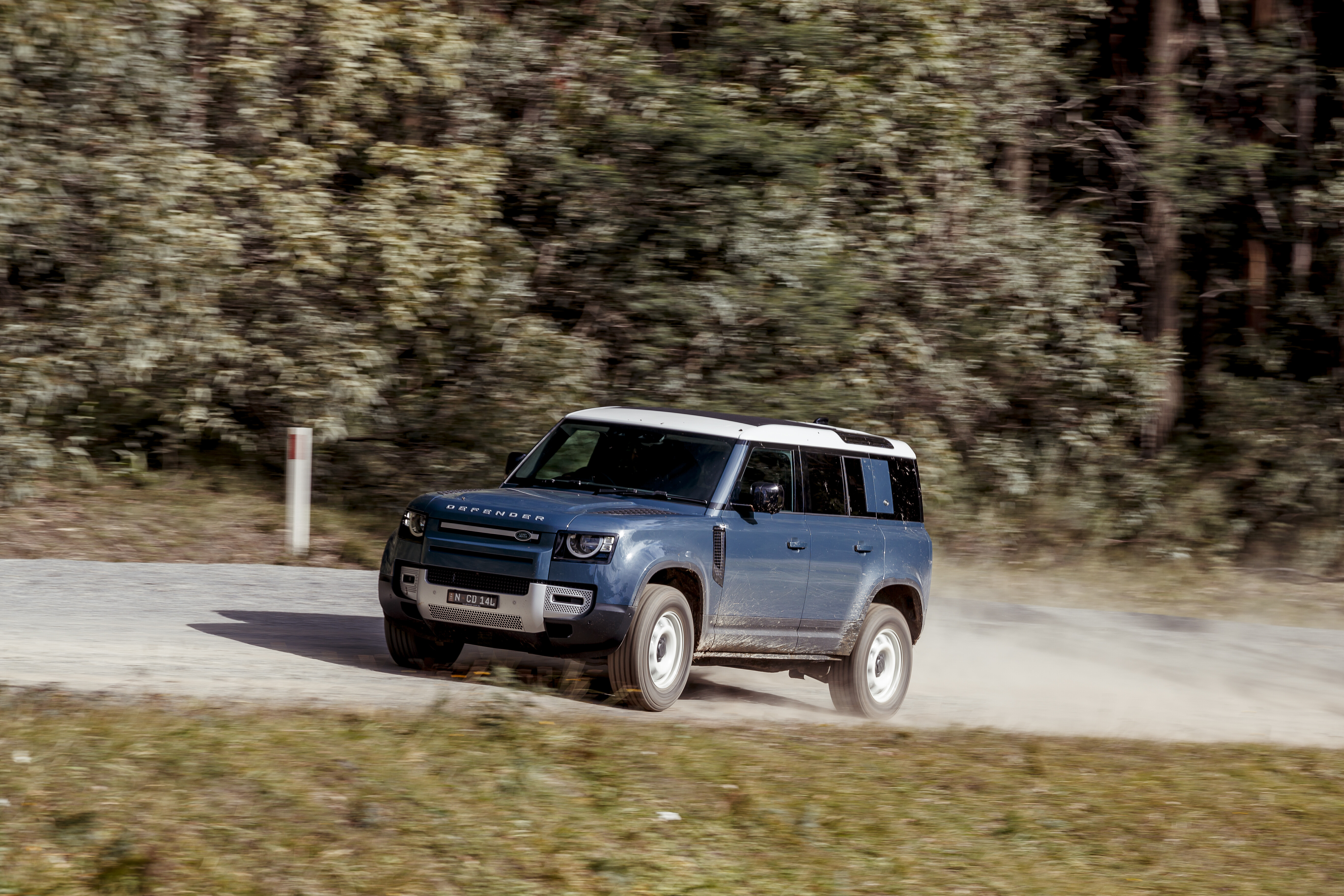
The height-adjustable air suspension does a fine job of isolating the body from rough roads and irregularities in the surface, and controls the vehicle over harsh corrugations better than anything with a live axle ever could. If there’s any more lean in the taller tyres fitted to the 18-inch wheels on this car, we didn’t notice it.
OFF-ROAD
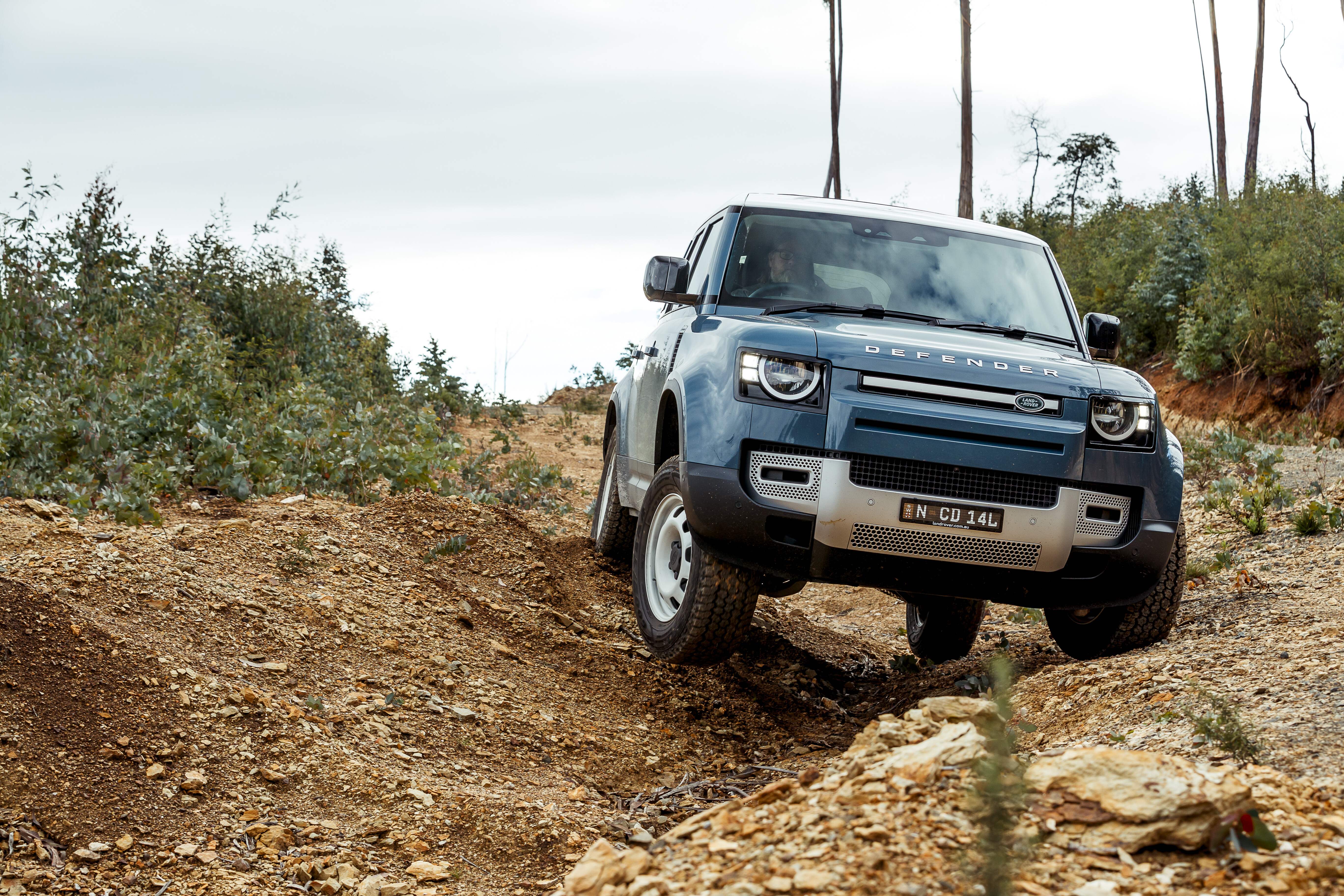
We’re yet to drive a new Defender on coil-spring suspension, and even this S-spec car is equipped with air suspension which is optional in this grade. Thus equipped, the Defender is one of the most capable off-road vehicles you can get from the showroom. Ground clearance, tractive ability, outward vision, wheel travel and technology are all class-leading. Fitted with a set of aggressive off-road tyres, the new Defender could be unstoppable.
Yes, you do need to keep the suspension up high to get the best of that clearance, and the ride quality suffers a bit at that level, but that’s something you can work around. The Terrain Response system isn’t as simple as it used to be, but the new ‘Auto’ setting means you can forget about it over all but the most specialised terrain such as sand or rugged rocks, when you can manually select the specific setting to suit.
There really is nothing else on the market that can combine this level of off-road ability with the on-road poise and dynamics of the new Defender.
One gripe for off-road driving is where the front towing point is mounted behind a plastic panel, which you need to remove before you head off-road if you think you might be needing quick access to said point.
CABIN & ACCOMMODATION
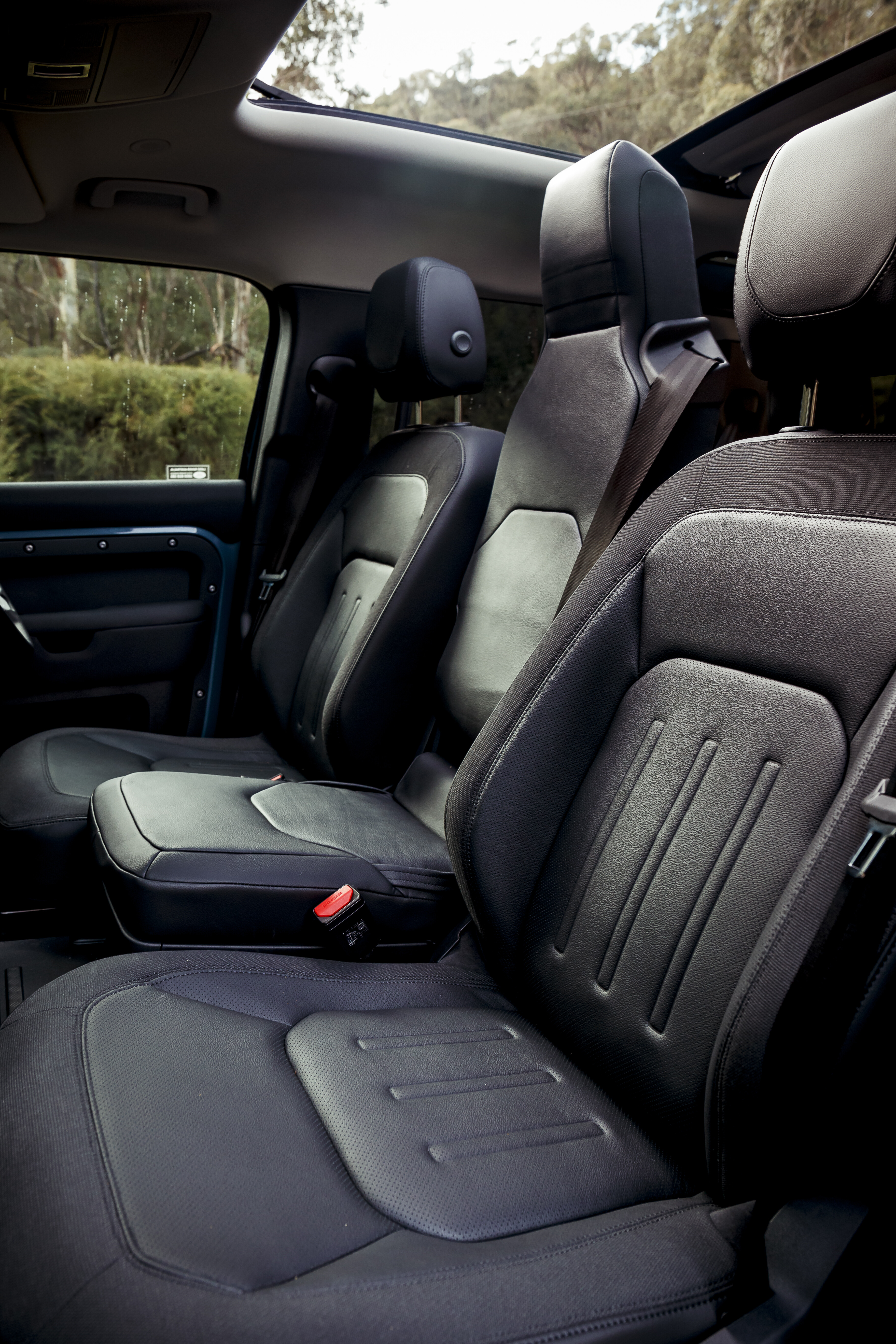
IT might only be the S model in the range but this low-grade Defender doesn’t leave you wanting anything inside. The seats are a mix of leather and textile materials and offer comfortable seating for six passengers over two rows.
Yes, that’s right, this car is fitted with the optional ‘jump seat’ up front which allows three across the front row. This is an $1853 option and choosing it precludes the possibility of equipping the car with a third row of seats. So no, you can’t have an eight-seat Defender because of the payload and GVM.
The centre front backrest folds forward when not in use to provide an armrest with cupholders for the outboard passengers. With the backrest upright, its headrest blocks any vision out the back of the car via the rear view mirror. This car is fitted with the ‘Clearsight’ rear-view mirror which projects an image of behind the vehicle from a camera mounted on the roof, but it’s a weird perspective I personally can’t get used to.
You’d have to really need the jump seat to order it, but I could see it being more useful in the Hardtop Defender models with just front-row seats.
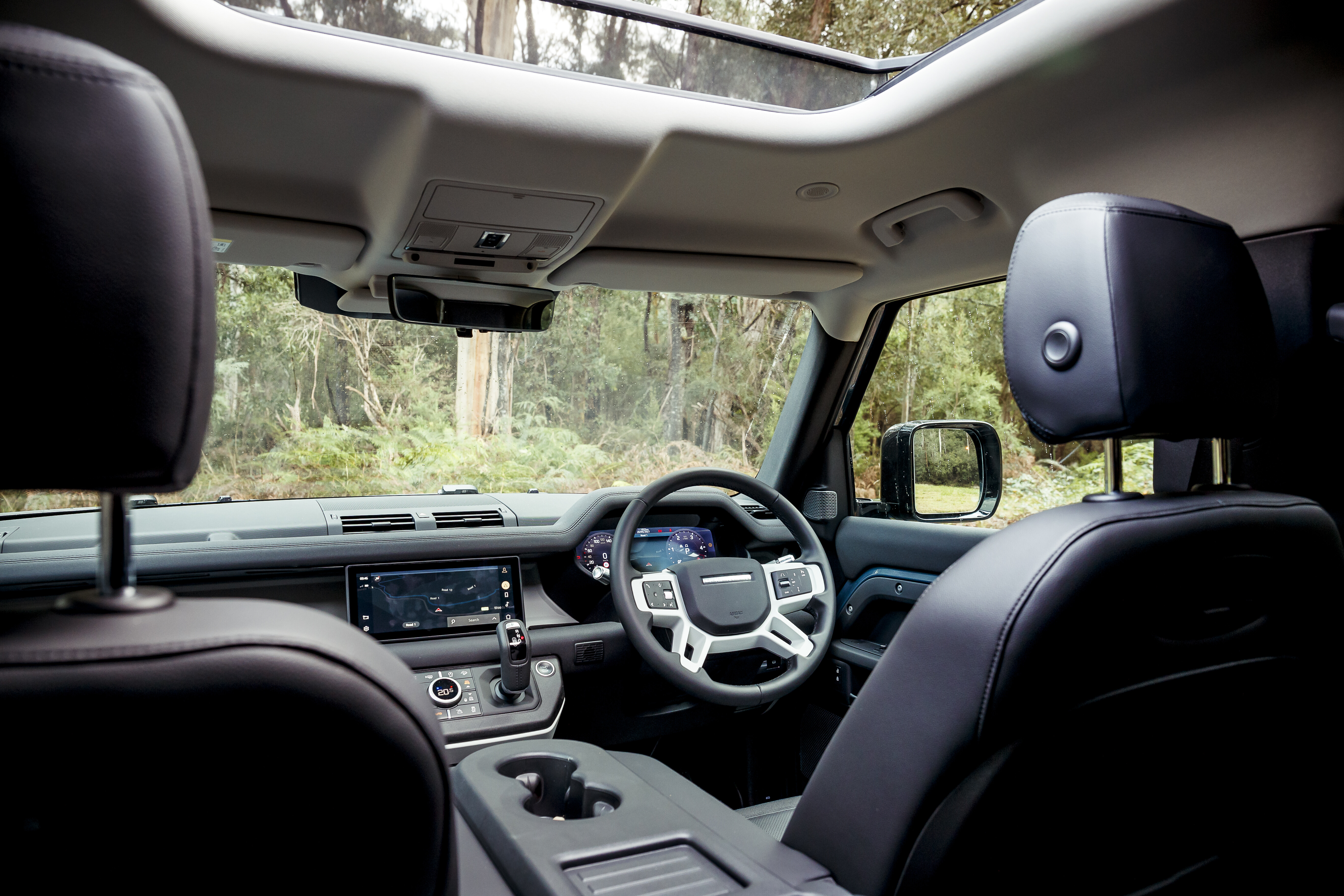
Another option on this car is the $4810 power-fold canvas opening roof. Sunroofs are something you either love or hate. Personally I like the fresh air and extra light you can get in the cab through an open roof, or just the clear glass roof of a conventional sunroof.
This canvas roof only offers open or closed options without the in-between of letting the light through a closed glass roof, but it should be lighter than having the weight off a glass panel up there. A sliding panoramic glass sunroof is a $4490 option.
As mentioned, this car has heated front seats, another option that I like. Unfortunately, operating the seat heating has fallen into the abyss that so many functions have in that you need to access the controls through a menu in the dash screen which takes longer than simply hitting a button.
It’s a little annoyance in an interior that is otherwise a functional and pleasant place to ride.
PRACTICALITIES
The Defender is nothing if not practical in every regard. Its ease of use for general day-to-day driving makes it easy to live with, despite a few interior niggles mentioned. While it’s no longer a commercial vehicle, the Defender remains the most practical model in the Land Rover range – as you would expect it to be.
The addition of the diesel engines amplifies its usability. Like other Defender models the D250 offers a full 3500kg towing capacity and in this trim gives a 785kg payload. With the suspension in its off-road setting, the wading depth is a massive 900mm and the ground clearance is ahead of any other new vehicle. The cargo area is massive and the seats fold flat to make it even bigger. There are tie-down points and a 12V outlet in the back for storing and powering your gear.
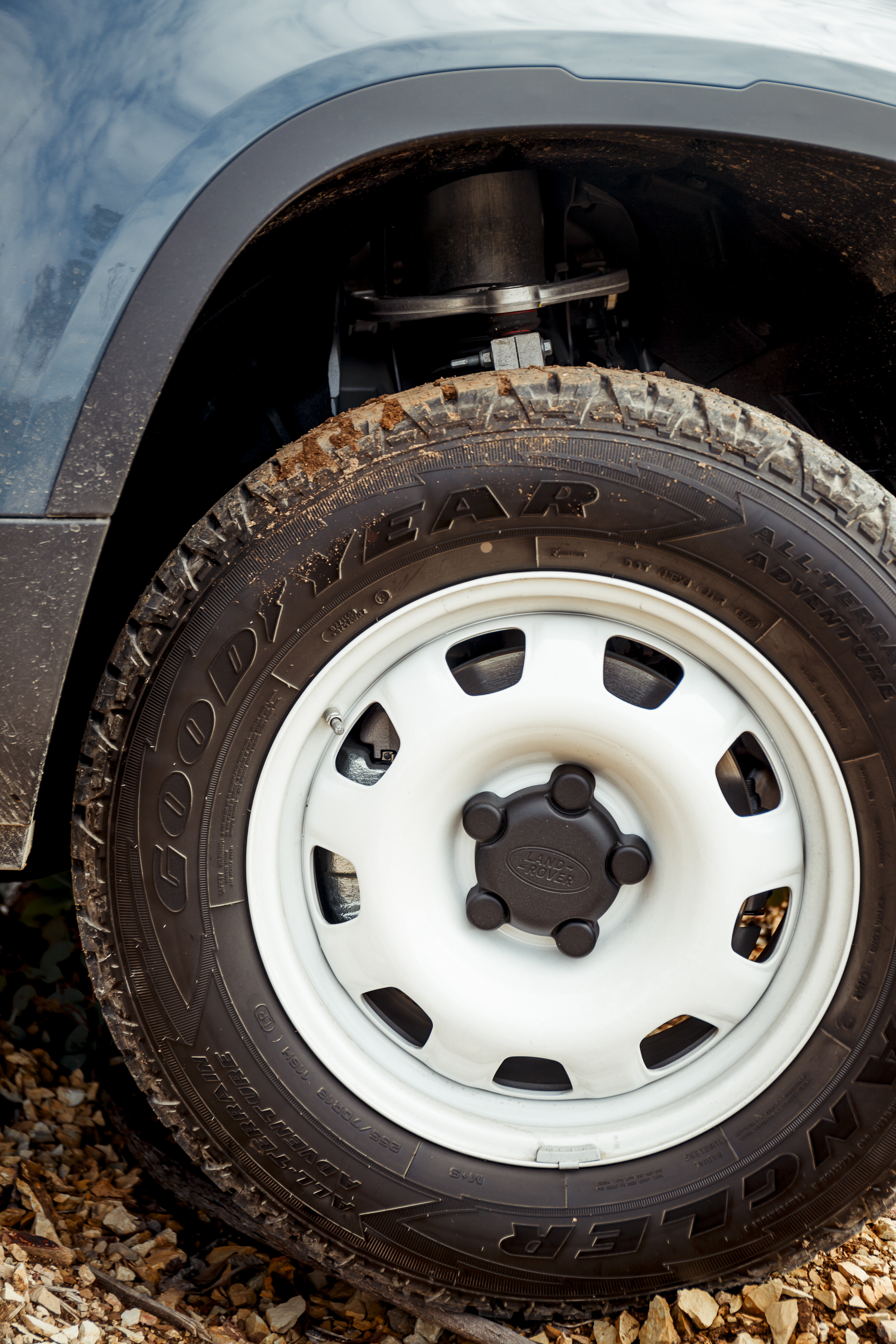
The steel wheels are a no-cost option and should theoretically be stronger than alloy wheels if you are concerned about durability. The 18-inch wheels can only be fitted to diesel-fuelled Defenders as they run a smaller brake size than the petrol models. The 255/70R18 tyre size isn’t massively common but you should be able to fit the more common 265/65R18s as a replacement if needed.
THE VERDICT
While options like a fabric roof, centre jump seat and steel wheels might be a cool, nostalgic trip back to the Land Rovers of old, they don’t necessarily make much sense on this all-new Land Rover. For me, a glass roof offers more functionality than the fabric one; the centre front seat is only something you would only use on occasions and costs you storage space; and a $100K-plus modern SUV deserves a set of nice alloy wheels in place of steelies.
These options are what you might call nostalgic, but they don’t take away from the fact the Defender is one of the best all-round 4×4 wagons you can buy. No other vehicle can match its breadth of ability; from its semi-luxury feel to its best-in-class off-road ability, it stands up to any competitor.
The introduction of the diesel engines to the range just adds further to the appeal, giving buyers more options, improved drivability and a longer touring range.
SPECS
Snapshot
- Seven dual-cab utes compete head-to-head
- Deluxe ‘Lux with the lot
- New kit for the 4X4 Australia D-MAX
IT’S new magazine day here at 4X4 HQ, with the June 2021 issue officially on shelves and in letterboxes.
If you’re in the market for a dual-cab ute – and recent VFACTS results suggest a lot of people are – then this issue is essential reading, as we have included a comprehensive examination of Australia’s most popular vehicle segment.
We tested seven of the most popular dual-cab utes in Australia to crown an overall champion, with each vehicle put through a series of exhaustive tests: straight-line performance evaluation, wet and dry braking, on- and off-road driving dynamics, payload and tow testing, level of interior and safety equipment, and overall running costs.
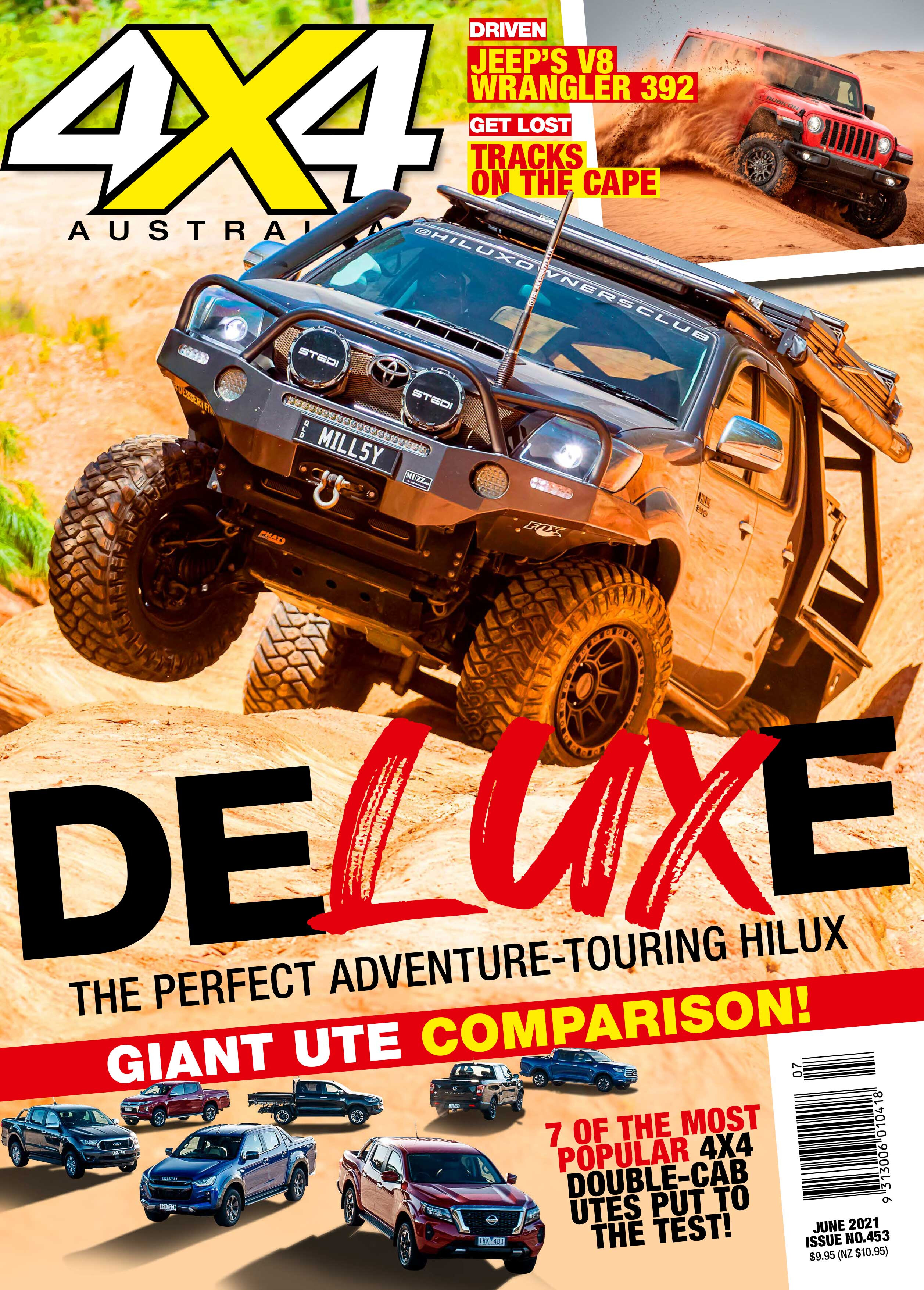
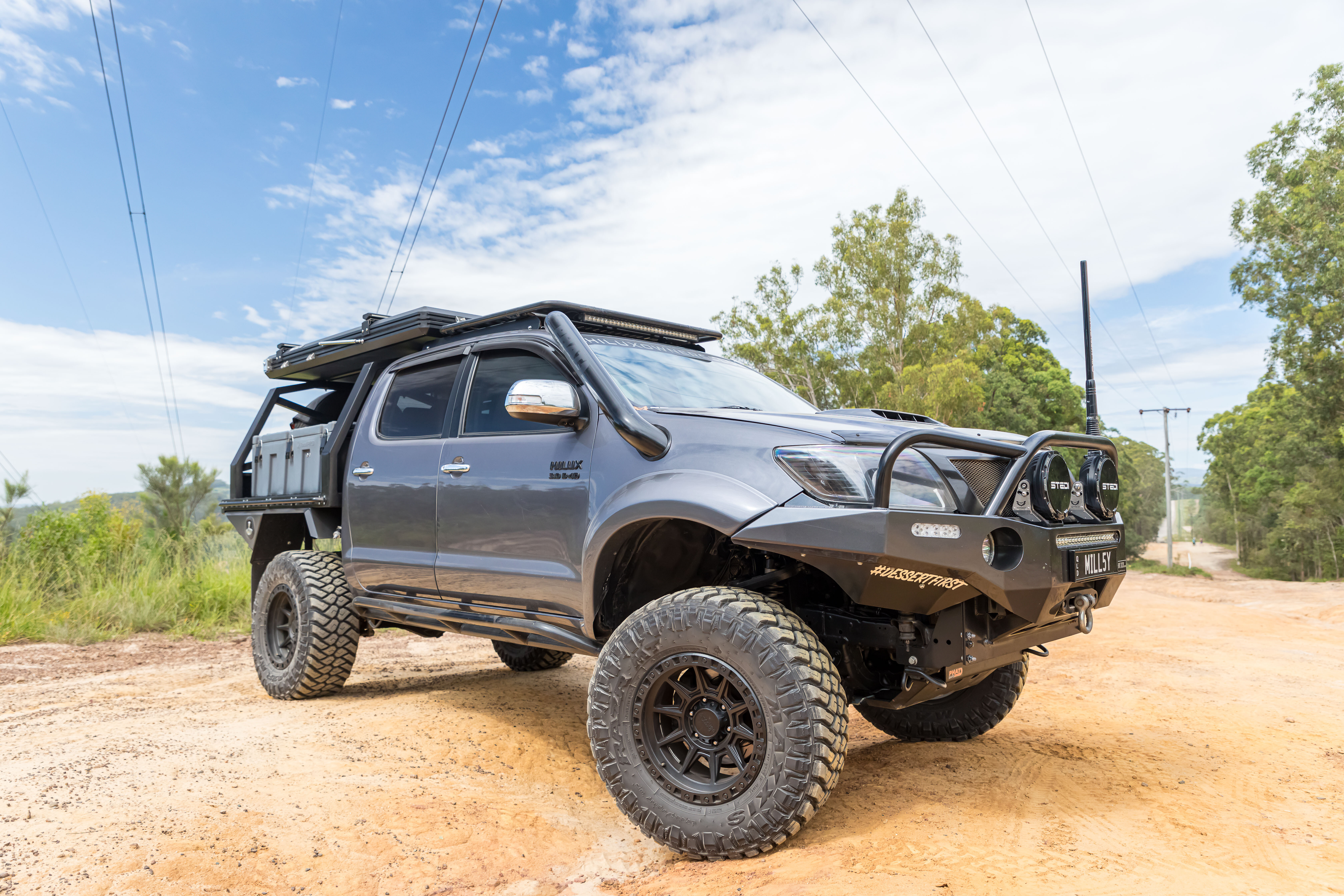
The June 2021 issue also comprises two custom 4×4 builds: a 2014 N70 Hilux (the Deluxe Lux plastered on the cover of this issue) and a D23 Navara ST. Both vehicles exemplify that when you mix know-how and quality equipment, the results can be extraordinary.
Our main man in the USA, Chris Collard, convinced Jeep to lend him the keys to a Wrangler Rubicon 392 – a vehicle we’ll never get here, unfortunately. Still, Chris blitzed Moab dust in the 350kW/637Nm 6.4-litre HEMI-powered Wrangler, and we have complete coverage of the adrenaline-inducing off-road experience.
We also lined up two family favourites – Toyota Fortuner and Mitsubishi Pajero Sport – to find out which seven-seat wagon is the better off-roader, and which is better for hauling kids.
Keen to find out how the 4X4 Australia 2020 D-MAX is tracking? Well, Evan has been busy fiddling with spanners and adding plenty of aftermarket kit to it, and you’ll have to pick up a copy to read all about the latest trick accessories we have installed.
WHAT ELSE IS THERE?
- EvaKool 40L fridge/drawer test
- 1988 Nissan Patrol GQ in the shed
- New product releases
- Travelling Tapin Tops
- Exploring North Queensland Tracks
- Monthly columns and shed updates
Snapshot
- Ranger leads Hilux by just 15 sales on the YTD 4×4 charts
- LC200 sales climb in May
- D-MAX sales surge, with stock shortages easing
Despite its age, the Ford Ranger was again the top-selling 4×4 vehicle in Australia in the month of May, edging out the Toyota Hilux by 420 units.
This was enough for the Ford ute to jump the Toyota in the sales race to date in 2021 by a mere 15 vehicles. The Hilux remains the best-selling vehicle in Australia when you combine its 4×4 and 4×2 sales.
May was a strong month overall for new vehicle sales with 100,809 sales making it the best month of 2021. May and June are traditionally strong months for business vehicles, like the popular 4×4 utes, as trades get in for the end of financial year purchases.
It will be interesting to see how June pans out with Victorian lockdowns set to have an affect on sales.
“While we cannot be certain about the future economic impacts of the COVID-19 situation, businesses and households are showing their confidence by purchasing new vehicles,” said Tony Weber, the Federal Chamber of Automotive Industries chief executive.“I expect this situation will continue to improve in the second half of this calendar year as confidence continues to grow, coupled with incentives such as the extension of the depreciation allowance for business which was announced in the Federal Budget during the month.”
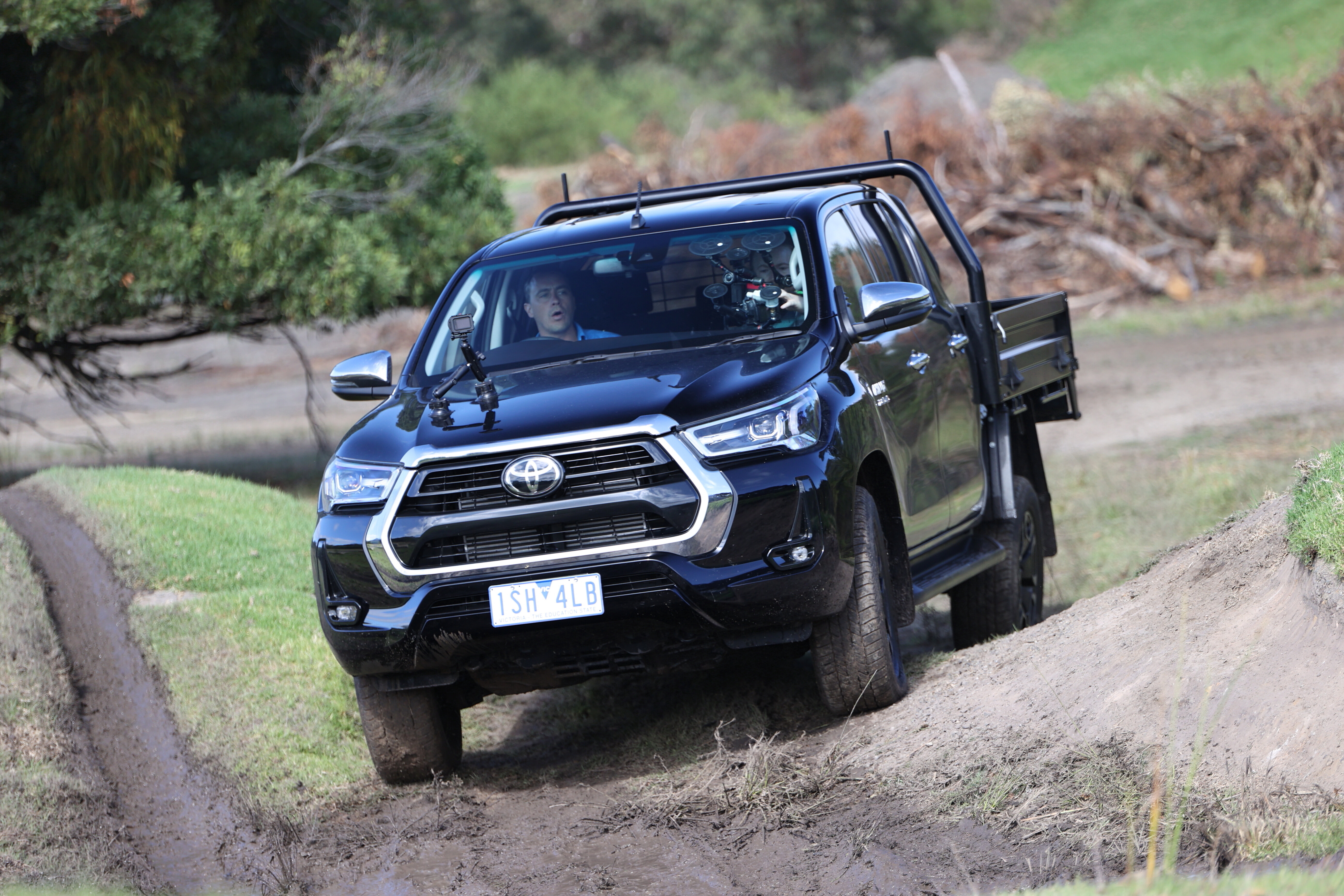
The 4×4 utes may be the sales leaders, but Toyota’s 4×4 wagons continue to buck the trend. With the unveiling of the all-new LandCruiser just weeks away, sales of the LC200 were up in May and the big wagon leap-frogged Mitsubishi’s Triton in the monthly figures. In fact the Prado and LandCruiser both outsold the Triton, as did the Isuzu D-MAX ute.
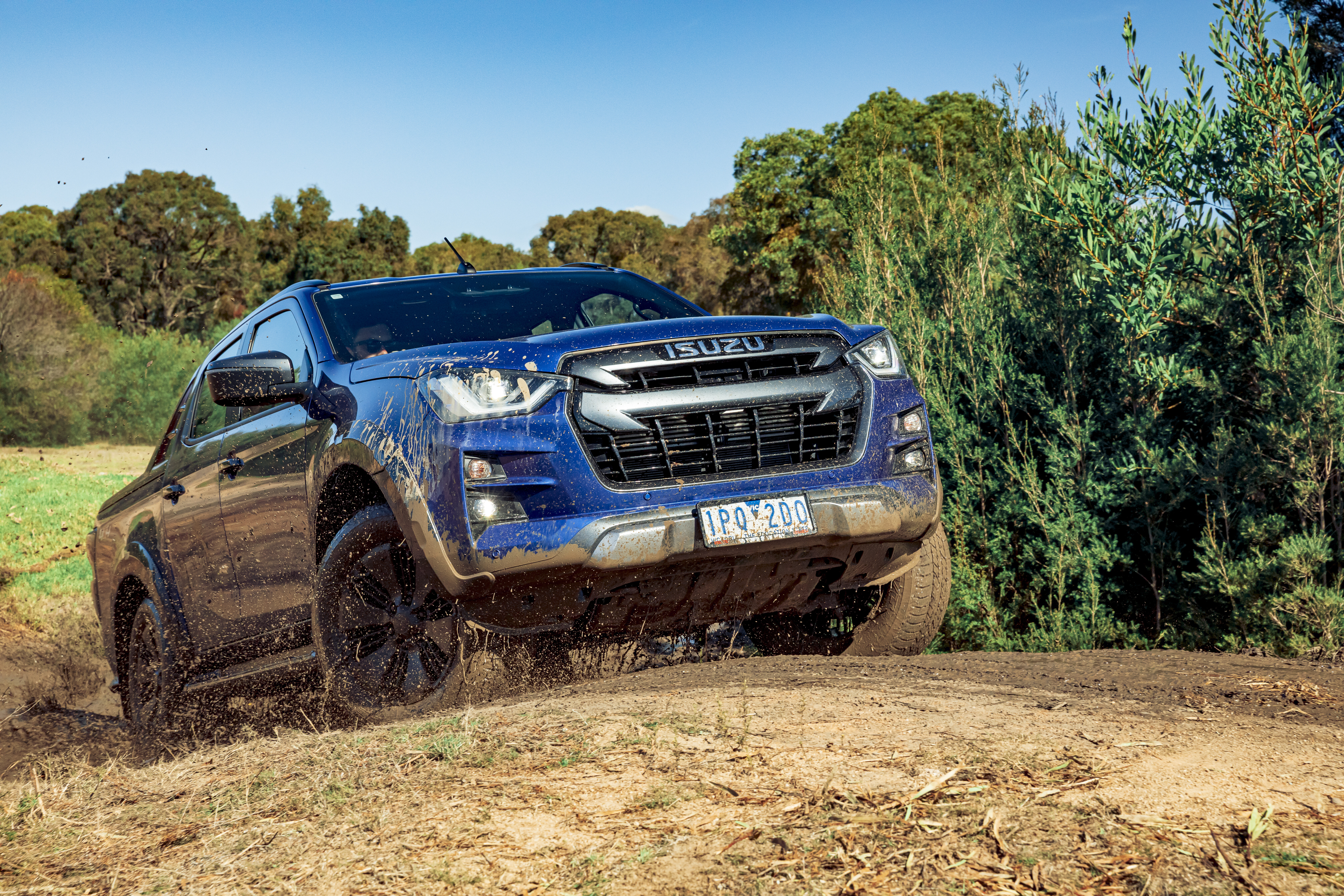
The D-MAX is a big mover on the sales charts as stock shortages ease off and more of the popular pickups get out to buyers. The D-MAX’s sibling, Mazda’s BT-50, couldn’t quite muster half the sales of the Isuzu vehicle it is based on. Nissan’s facelifted Navara also outsold the Mazda ute in May.
Supply issues continue to hamper sales on the LandCruiser 79 Series as it slips down the rankings, allowing the Great Wall Cannon to creep into tenth place for the month.
4X4 SALES: MAY 2021
- Ford Ranger: 3911
- Toyota Hilux: 3491
- Toyota LC200: 2795
- Isuzu D-MAX: 2533
- Toyota Prado: 2214
- Mitsubishi Triton: 2074
- Nissan Navara: 1332
- Mazda BT-50: 1225
- Isuzu MU-X: 888
- GWM Cannon: 747
4X4 SALES: YEAR TO DATE
- Ford Ranger: 17,697
- Toyota Hilux:17,682
- Toyota LC200: 10,439
- Mitsubishi Triton: 9836
- Isuzu D-MAX: 8143
- Toyota Prado: 7561
- Mazda BT-50: 5522
- Nissan Navara: 4739
- Toyota LC79:4418
- Isuzu MU-X: 4203
THE ARB Eldee Easter Festival is an essential family-friendly four-wheel drive event held annually near the rural outback town of Silverton, approximately 55km north-west of Broken Hill in NSW.
Each year, owners of the Eldee Homestead property, Naomi and Stephen Schmidt, open their gates to let families participate in a weekend full of fun activities and (often-intense) off-road events. And despite COVID-19 quashing the event in 2020, the Eldee Easter Festival was back in 2021 for its 10th anniversary, to help raise funds for the Childhood Cancer Association based in SA.
Taking place from April 2 to April 6, families gathered in front of the homestead restaurant for registration and scrutineering on the Friday afternoon.
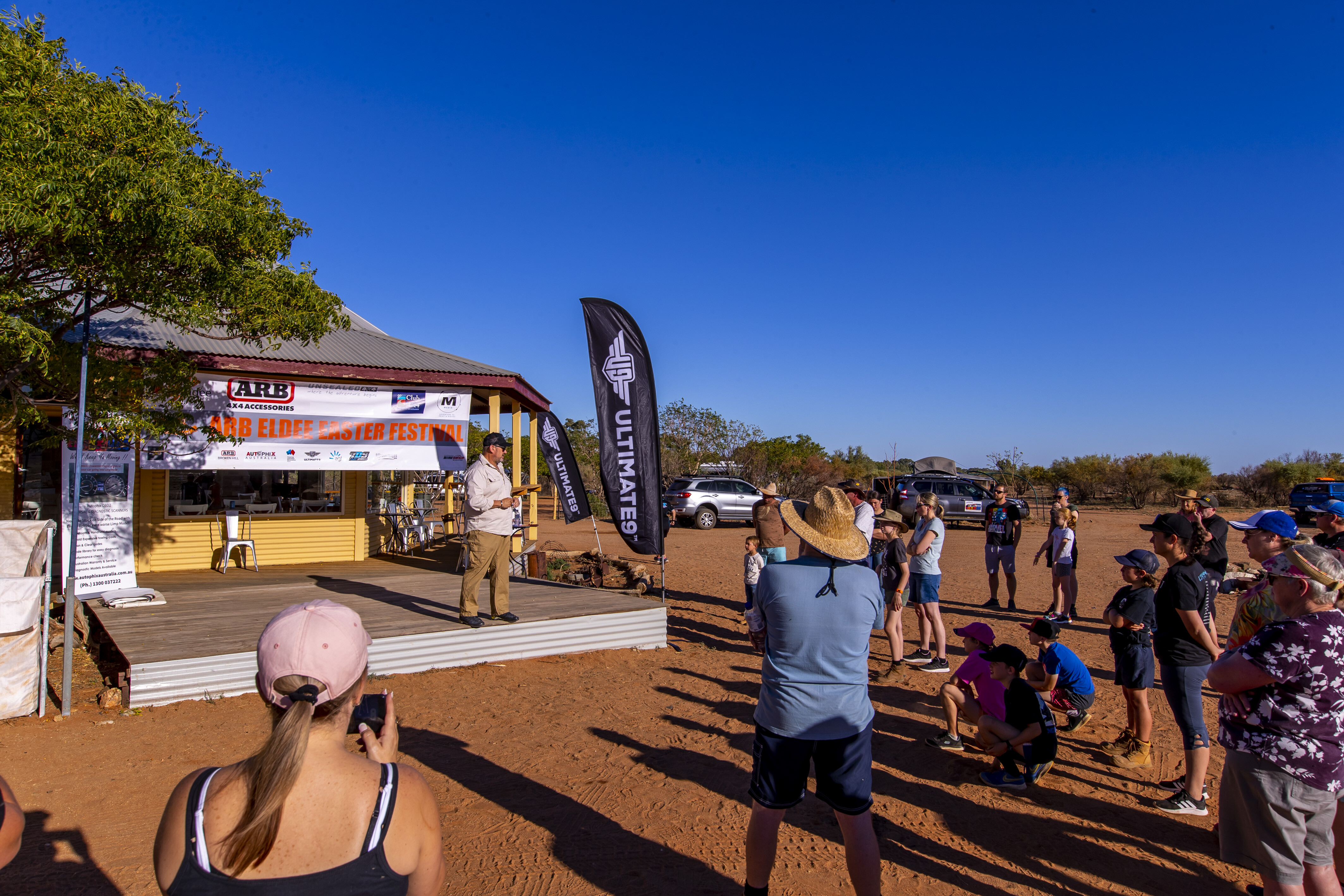
The competitive 4WD activities then took place over Easter Saturday and Easter Sunday.
“We Originally had 40 [competitors], but with rescheduling and COVID – and with the week before with the final COVID scare – we had 15 teams start, with 10 dropping out just days before the weekend started, unfortunately,” Naomi Schmidt said.
Activities this year included the ARB Mini Dakar, AGL Back and Forth, Silverton Bakery Paddy Melon Challenge Autophix Blind Man’s Run, 4×4 MotorKhana, Mad Max Museum Stump Up, ARB Broken Hill Swag Roll and Set up, John Dynon Water Carter, 7 Days Spares Toolbox Challenge, Eldee Station Easter Egg Hunt, Sheepyard Shenanigans, Ultimate9 All Terrain Challenge, and the R.A.B. Hobbies and Offroad Images Remote Control Car Mini Rally.
“The event went really well and the weather was really warm for an Easter Weekend,” Naomi said. “Both Saturday and Sundays events ran very smoothly and the participants were very impressed with the variety of challenges that the whole family got to try.
“All of the families also were generously rewarded with sponsors products worth many thousands of dollars at the presentation on Sunday afternoon.”
The event is proudly sponsored by aftermarket powerhouse ARB. A full list of event sponsors can be found here.
ARB’s Matt Frost told 4X4 Australia that despite a lower attendance than usual due to COVID-19, it was still a great event, especially the entertainment, in particular the band, fireworks and drag queen show.
The traditional presentation took place late on Sunday afternoon – where Kirk and Dior (and kids) were crowned winners – which was followed by the fantastic fireworks display and entertainment.
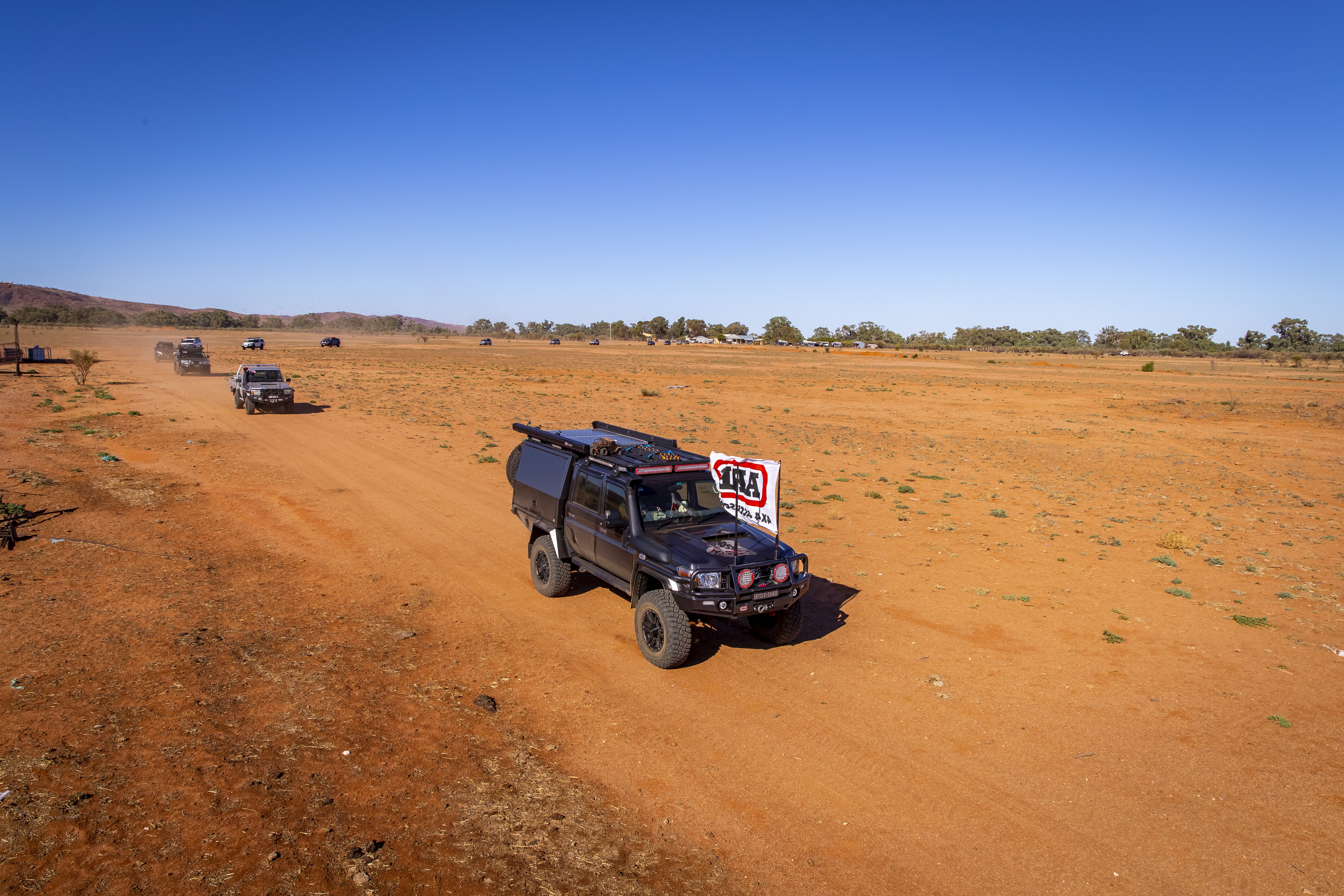
“The Charity Auction held for the Childhood Cancer Association for SA on Sunday night raised $5000”
Extra activities for the kids included an RC track, a colouring-in competition and an Easter egg hunt on Sunday morning. Adults were treated to a complimentary sunset tag-along tour on the Saturday night, a massive campfire and access to 4×4 tracks on the Southern Barrier Ranges and on the Mundi Mundi Plains on the Monday following the event.
“The Charity Auction held for the Childhood Cancer Association for SA on Sunday night raised $5000,” Naomi told 4X4 Australia. “We are really happy with this achievement and proud of everyone who attended and contributed to this amazing amount being donated to a group that supports so many regional families.”
For those not wishing to compete, spectator passes were also available over the weekend, with passes allowing spectators to view the challenges and activities scattered throughout the property.
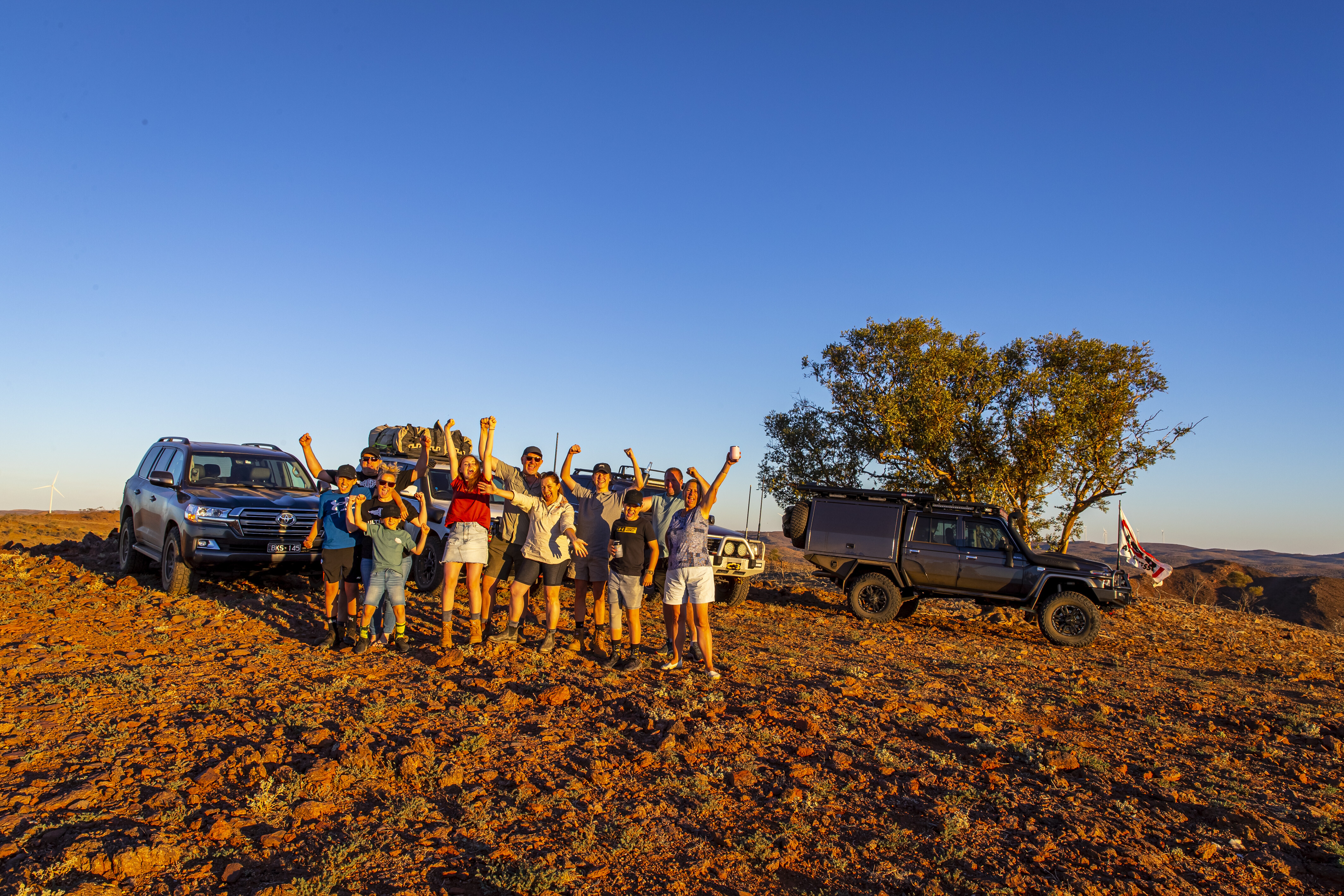
Eldee Homestead itself in an essential off-road destination, with 4×4 tracks (and guided 4×4 tours), mountain-bike trails, walking tracks and plenty more all within cooee.
Rooms are available, starting at $160 per night. Plus, there are a small number of caravan and campsites.
Eldee Station is located in Silverton, Outback NSW. From Broken Hill, follow the signposts to Silverton, which you’ll reach after 25km. Cut through Silverton for about 16km until you reach Umberumberka, and from here you then need to travel on gravel for 19.6km until you reach Eldee Homestead.
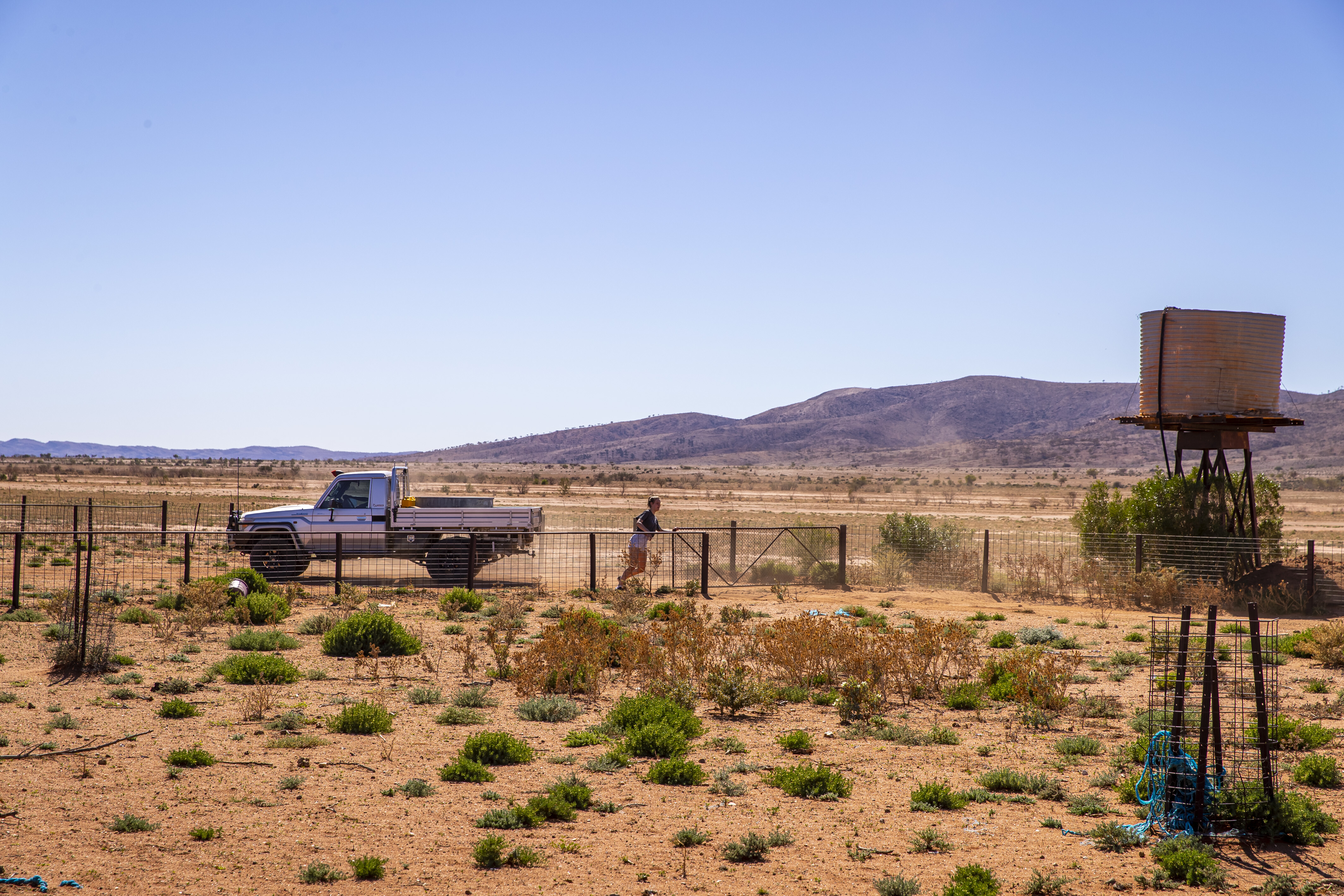
To ensure you remain on the right track, keep the Barrier Ranges to your right as you follow the road, before turning right to the homestead once you pass the unmissable large gum tree. Use this map as a reference.
The 2022 ARB Eldee Easter Festival is scheduled to take place from April 15 to April 18.
The last couple of years you’d be forgiven for thinking the only way to head off-road is with a ute. Tub, tray or canopy, it makes no difference; it’s the correct way to go camping, right?
Modern dual-cabs make a lot of sense, as they’re comfortable, reliable, powerful and practical. But not everyone needs a tub or wants the somewhat jarring ride of a set of springs designed to carry a full tonne in the back – or quite frankly, wants a ute as a family car.
That’s why manufacturers build wagons based off the same platform. The same basic rig, just a little more steered towards comfort and family duties, and a little less towards dirt bikes in the back and Monster Energy stickers.
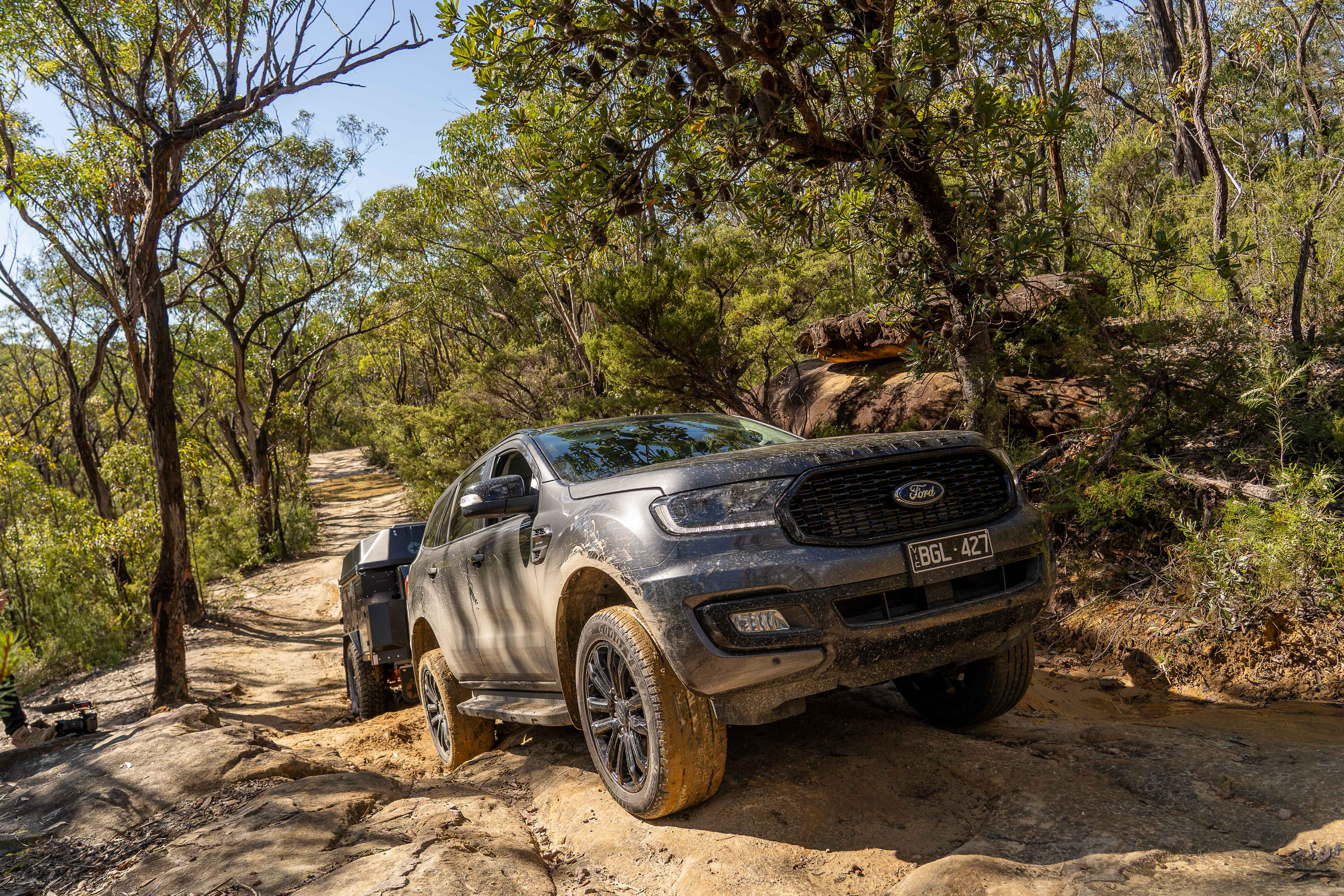
However, are they good a platform for not only everyday duties but towing serious loads, driving serious tracks and doing anything you could with the ute variant? There’s only one way to find out.
This month we’ve added an Everest Sport to the 4X4 Australia long-term fleet, a seven-seat 10-speed auto with a 2.0-litre bi-turbo punching out more killerwasps and torque than it has any right to, and we’re going to put it through the ringer.
First impressions of the Everest kinda make a lot of sense: it feels a lot like a Ranger, only nicer. It’s quieter, smoother to drive, has a more car-like interior, and its cargo space is protected from the elements so it’s far easier to go grocery shopping without worrying your eggs will end up scrambled by the time you get home.
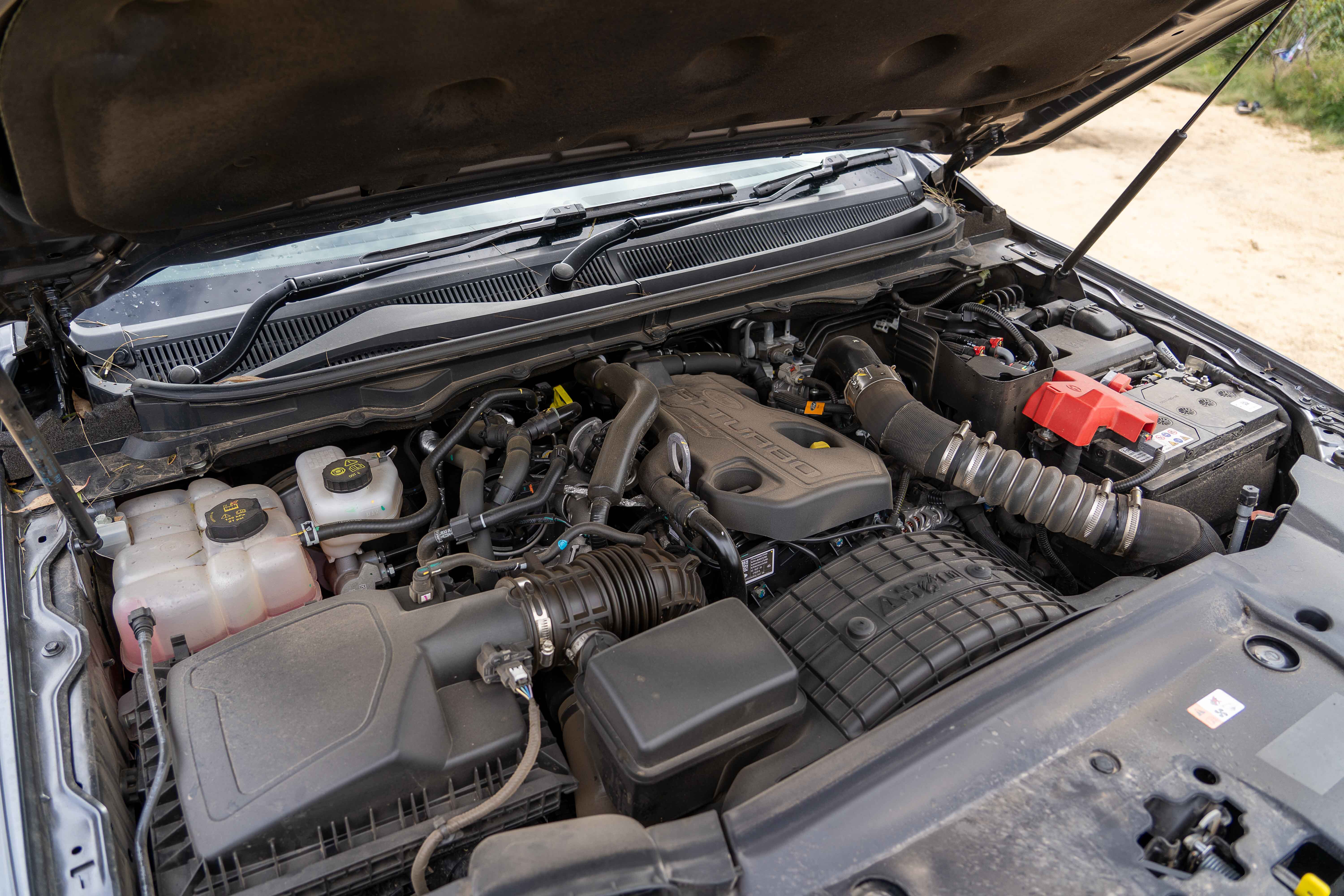
The 2.0-litre donk is surprisingly energetic for its size. It’s far more free-revving than the more work-orientated 3.2-litre, so it feels quicker off the mark and more effortless to drive around town. It feels more like you’re driving a truck and less like you’re driving something the size of an 80 Series LandCruiser.
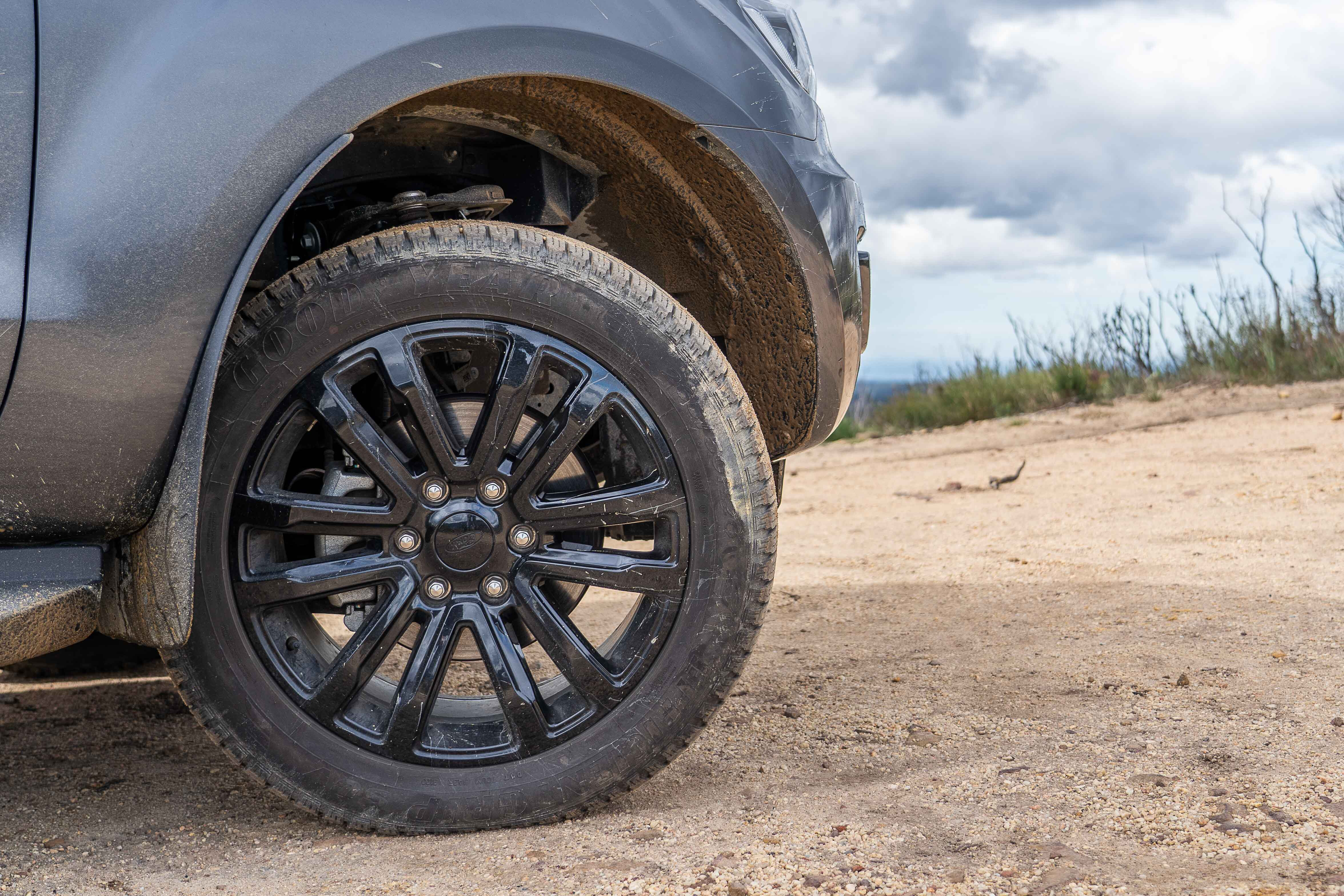
We had the opportunity to put it through its paces off-road, too, in a recent back-to-back with the current generation Prado. Much to the photographer’s horror, the Everest was easily able to drive through deep wombat holes despite considerable wheel lift.
The combination of the factory rear locker and effective traction control up front meant that, even with a wheel in the air, the Everest was able to claw its way forward. With a set of more aggressive tyres, the only thing that would stop you driving a track would be mechanical sympathy rather than a lack of capability.
We’ve also slung a half-dozen different trailers on the back, from dirt bikes to caravans. The biggest stand-out was the lack of sag in the otherwise supple rear suspension – coil-sprung wagons typically feel the effects of a heavy ball weight far more than a leaf spring vehicle. It definitely lost its punch off the line when loaded up, but it was still more than capable.
After a few thousand kays it feels like we’re only just starting to get to know the Everest, so we’re looking forward to putting it through its paces some more over the coming months. Perhaps Ford will let us install a set of Raptor guards and 33-inch mud tyres? Probably not, but a boy can dream right?