
When it came time to build a shop truck to highlight just what BAW Automotive is capable of, it was an easy choice to sign on the dotted line for a 79 Series dual cab.
Owners of BAW Automotive, Brent and Amy Westbrook, have owned and built several four-wheel drives over the years, including a few Holden Colorados, a Hilux or two, and even a dual-cab converted 200 Series. After thinking long and hard about their next and most ambitious custom four-wheel drive to date, the 79 Series got the nod for a very simple reason.
“The 70 Series platform is by far the most common vehicle we see coming through our workshop,” Brent and Amy tell us. “By deciding to build one different to the rest, painting it in this unique Nori Green colour and taking our customers along on the ride, it has created huge reach and buzz in the industry.”
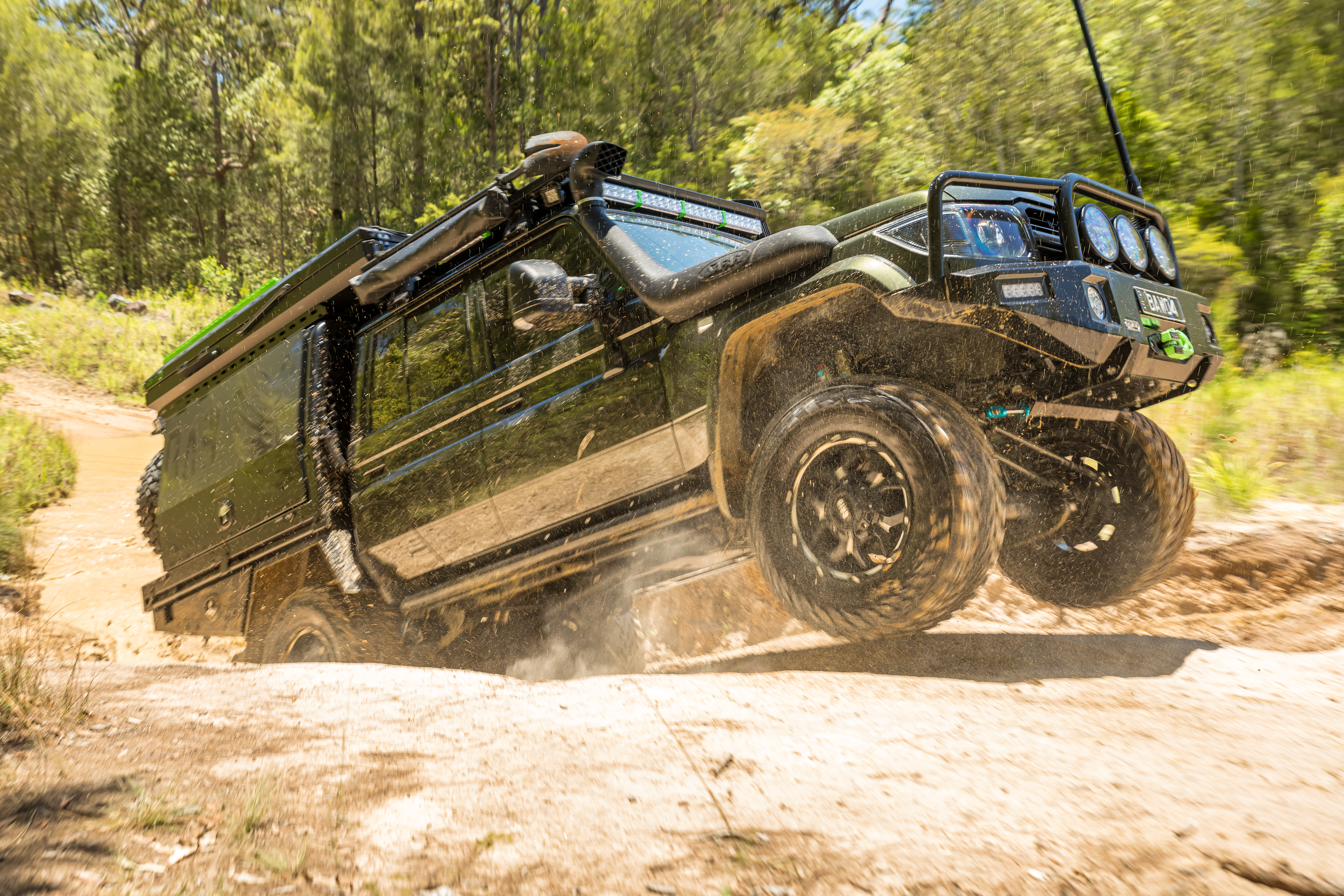
The reason for building this particular 79 Series was to showcase the workmanship the BAW Automotive team churn out every day of the week.
The 70 Series platform is essentially limitless to what you can do to them, so a plan was hatched and a new Cruiser dropped off as a blank canvas.
“We wanted to create a rolling demo board to highlight the multitude of aftermarket accessories available to be installed by our talented team at our workshop,” mentions Brent and Amy. “Let’s be honest, it’s just another 79 Series, but we reckon the quality of what we have achieved speaks for itself.”
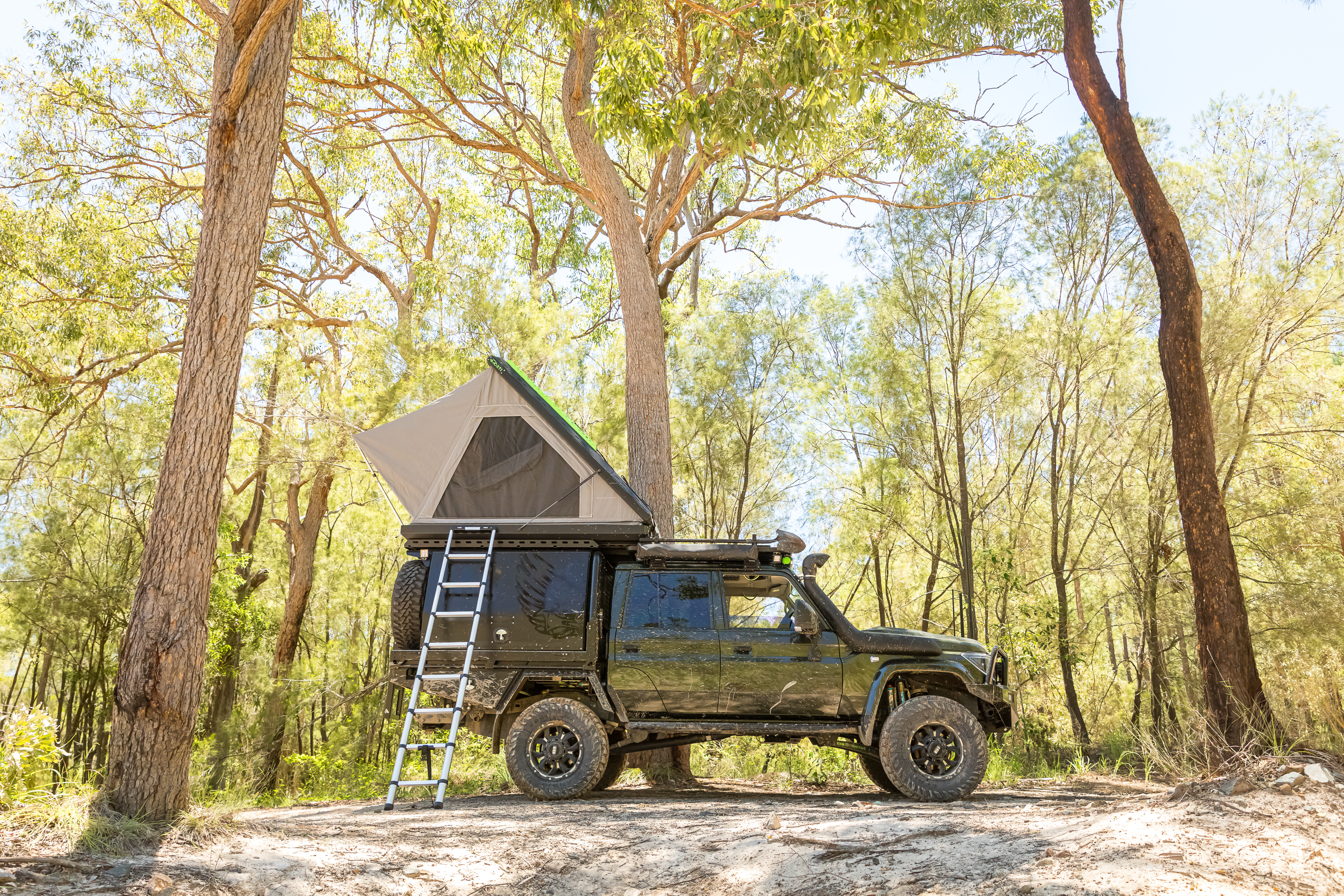
We have to agree, this really is a stunning build that looks as good as it performs. Considering the entire process took roughly two-and-a-half years to complete, at an estimated cost of $300,000, it would have to be one of the neatest 79s in the country.
While building custom four-wheel drives is BAW Automotive’s business (and business is good), there were certainly a few struggles along the way for this project.
“We bit off more than we could chew,” admits Brent. “The idea that a new family business could build a vehicle of this calibre was a task equally thrilling as it was daunting. We pushed our limits financially and time wise, but thankfully the gamble has paid off.”
It probably doesn’t help that the BAW Automotive crew decided to build a new workshop at the same time as this Cruiser, a mammoth task on its own. As they say, in for a penny, in for a pound.
Front end
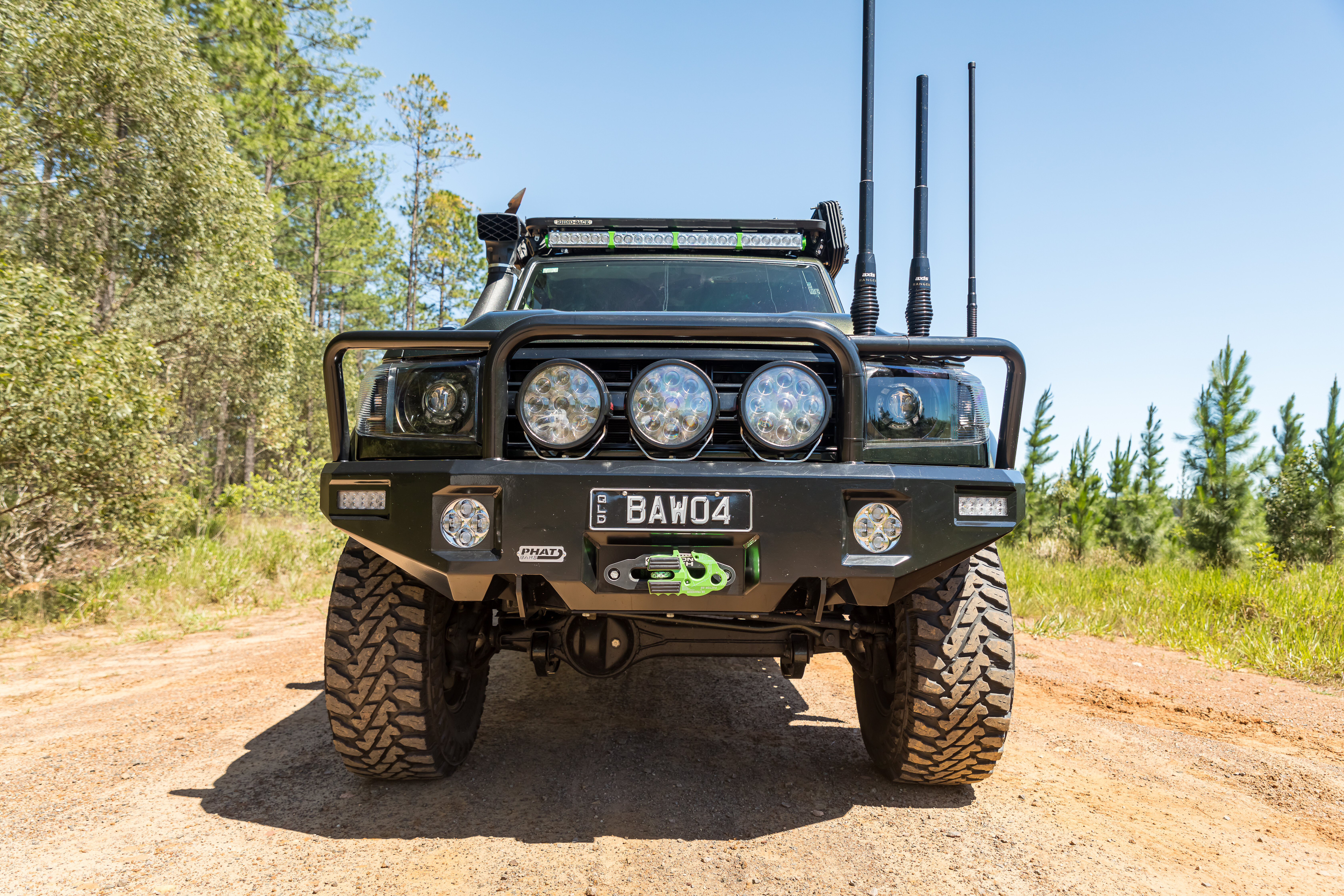
Phat Bars got the nod for frontal protection, and we think it looks mint! Not only does this bar work protect the front end of the 79 Series, it also houses a Carbon winch and an array of LED lighting from Xray Vision.
Engine boost
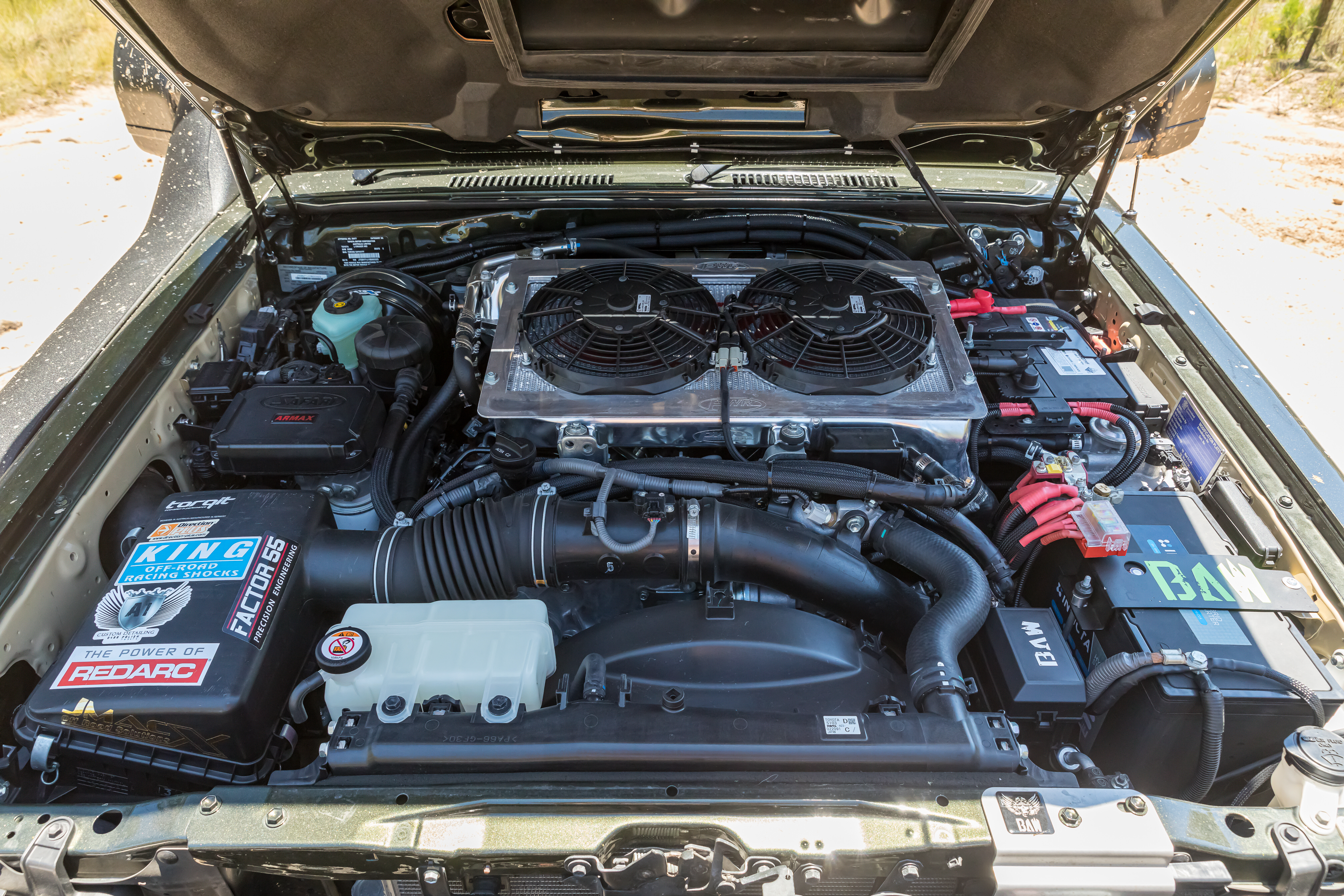
It would be rude to leave the engine stock for long, so the BAW Automotive 79 Series has been tickled for more performance. What you can see is a larger PWR top-mount intercooler to keep intake temps down. What you can’t see as clearly is a Safari Armax performance ECU and turbo upgrade to help push those 35s on- and off-road.
Tyres
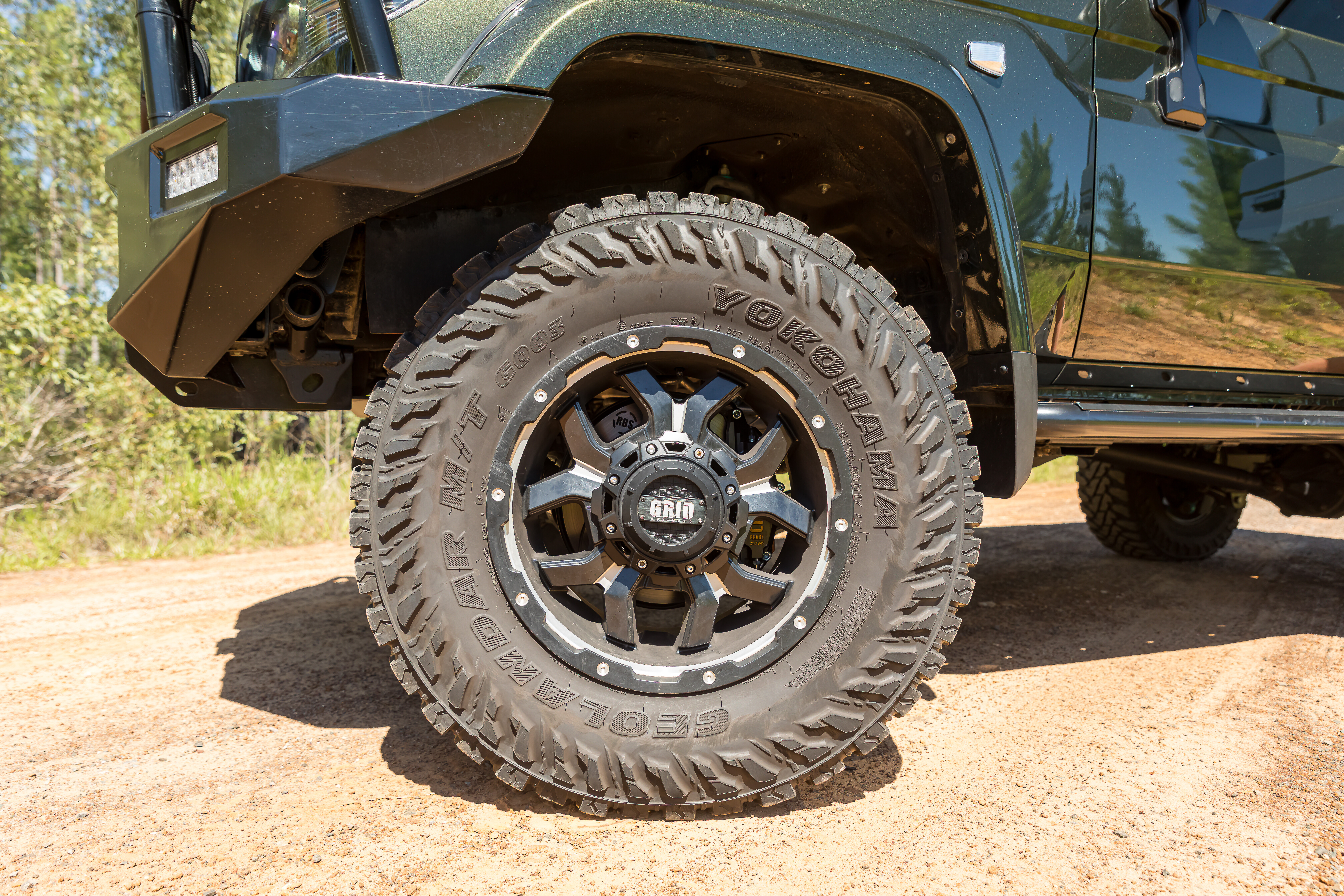
The 35-inch Yokohama mud-terrain tyres fill the guards nicely, and look trick mounted on the 17×9 Grid Off-Road GD7 wheels. Look closely and you can see the upgraded braking system from Rugged Brake Systems.
Canopy
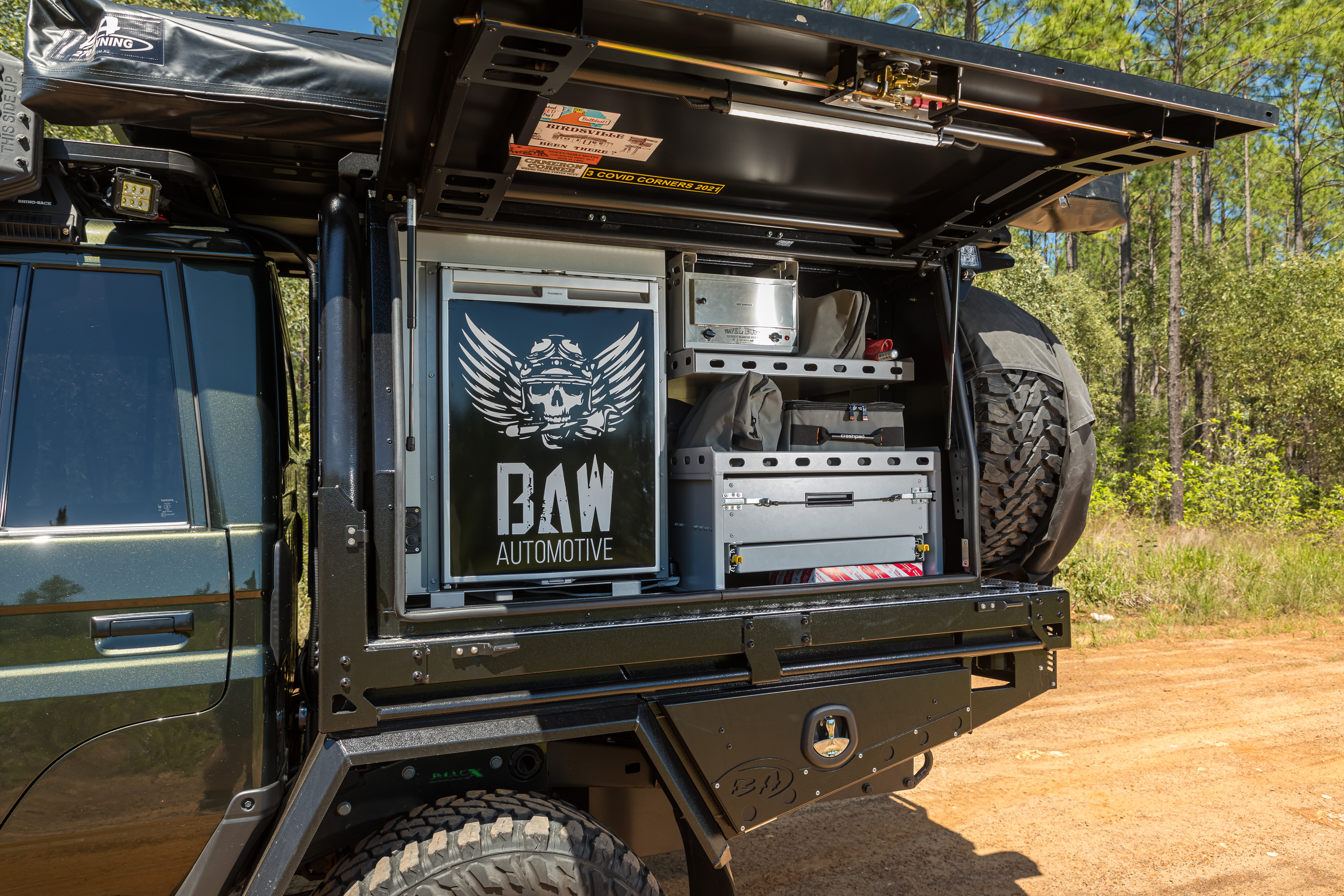
Both the ¾-canopy and tray are from Boss Aluminium, providing a light yet robust platform to deck out for work or play. Inside, you’ll find a full Redarc electrical system, as well as an Enerdrive 200amp lithium battery to power the upright Dometic fridge and all-important Travel Buddy pie oven.
Suspension
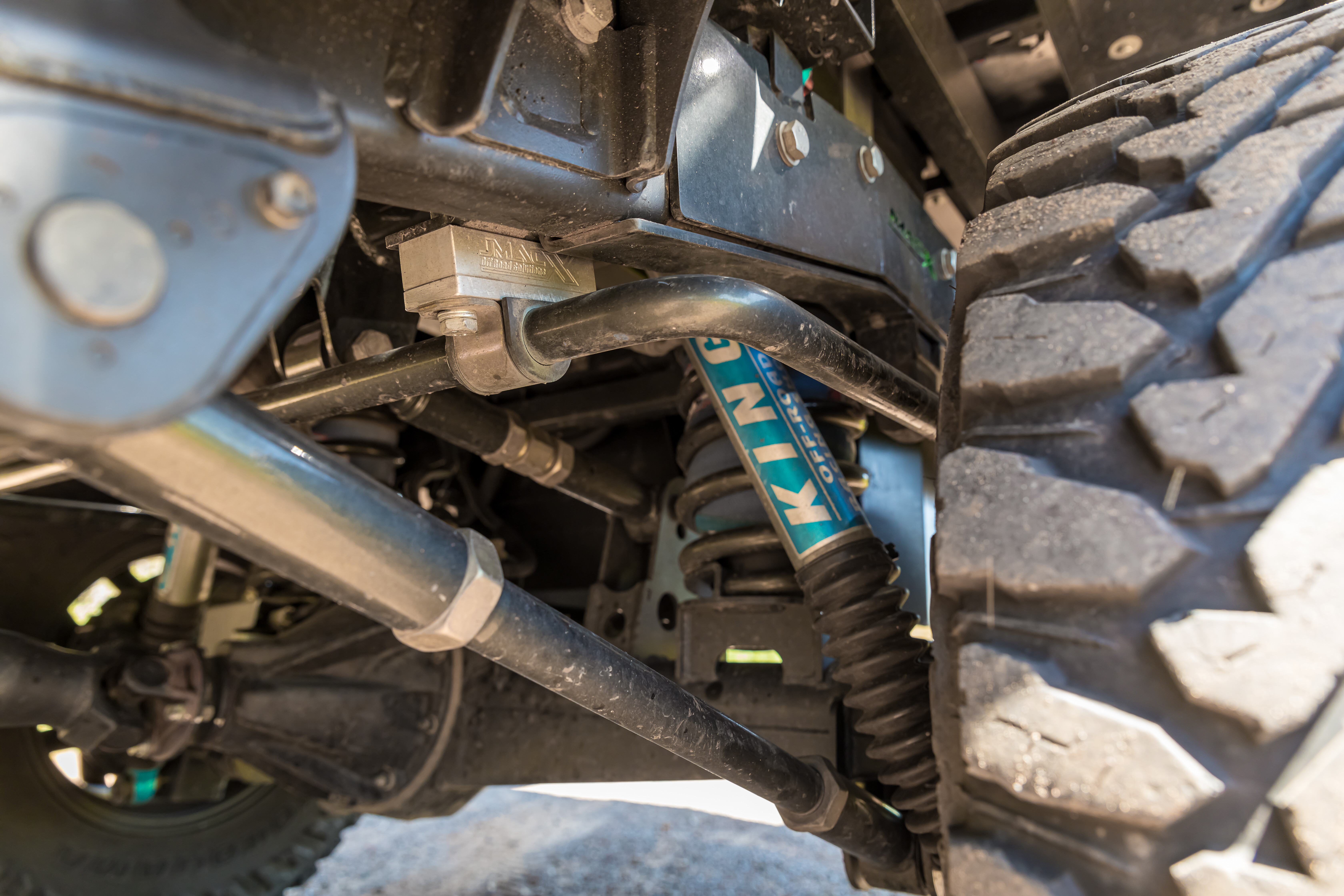
The four-inch raised and coil-converted suspension kit from JMACX also features 2.5 King remote-reservoir shocks to control the ride. This looks more like a trophy truck than a tourer, and we like that about the BAW Automotive Cruiser.
GVM upgrade
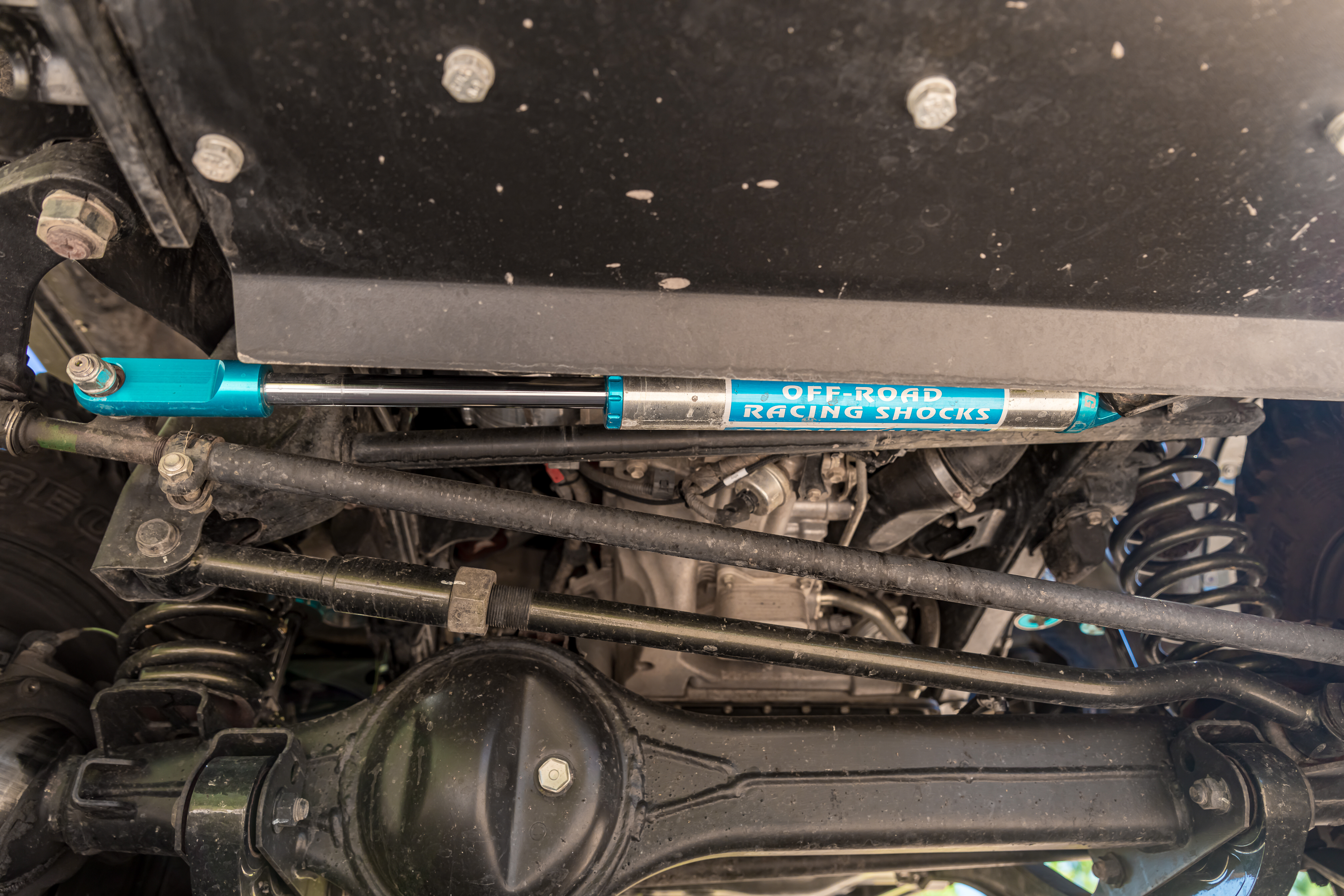
Thanks to the JMACX coil conversion and rear axle housing, the Cruiser has an upgraded GVM of 4200kg – although Brent mentions if he were to do it again, he’d go for a 300mm chassis extension and the 4495kg GVM upgrade.
Interior
Interior mods are out of this world, with an estimated build cost of $26K. A full Alpine entertainment system including 10-inch sub takes care of tunes, while a full-leather interior upgrade by Proseat Automotive handles comfort with a touch of class.
Slimline tent
That Boss Aluminium rooftop tent looks perfect mounted on to the Boss Aluminium alloy canopy. Brent and Amy tell us they love the product, because it’s top-quality and super easy to set up and pack down.
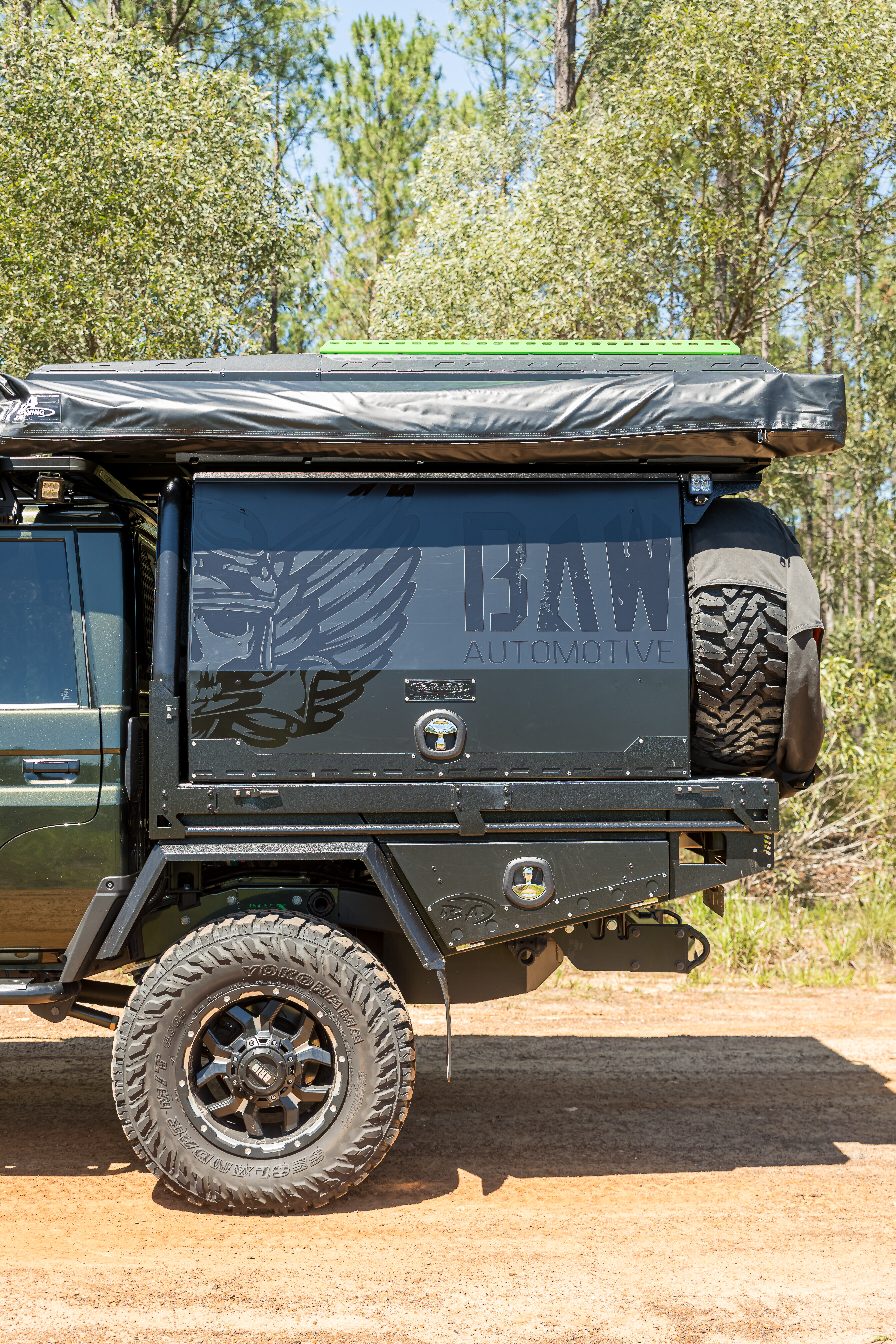
Custom paint job
Not wanting to follow the crowd, Brent and Amy decided on a custom paint job. After much deliberation, they settled on a unique PPG Nori Green pearl, as well as a satin black finish on anything that used to be chrome.
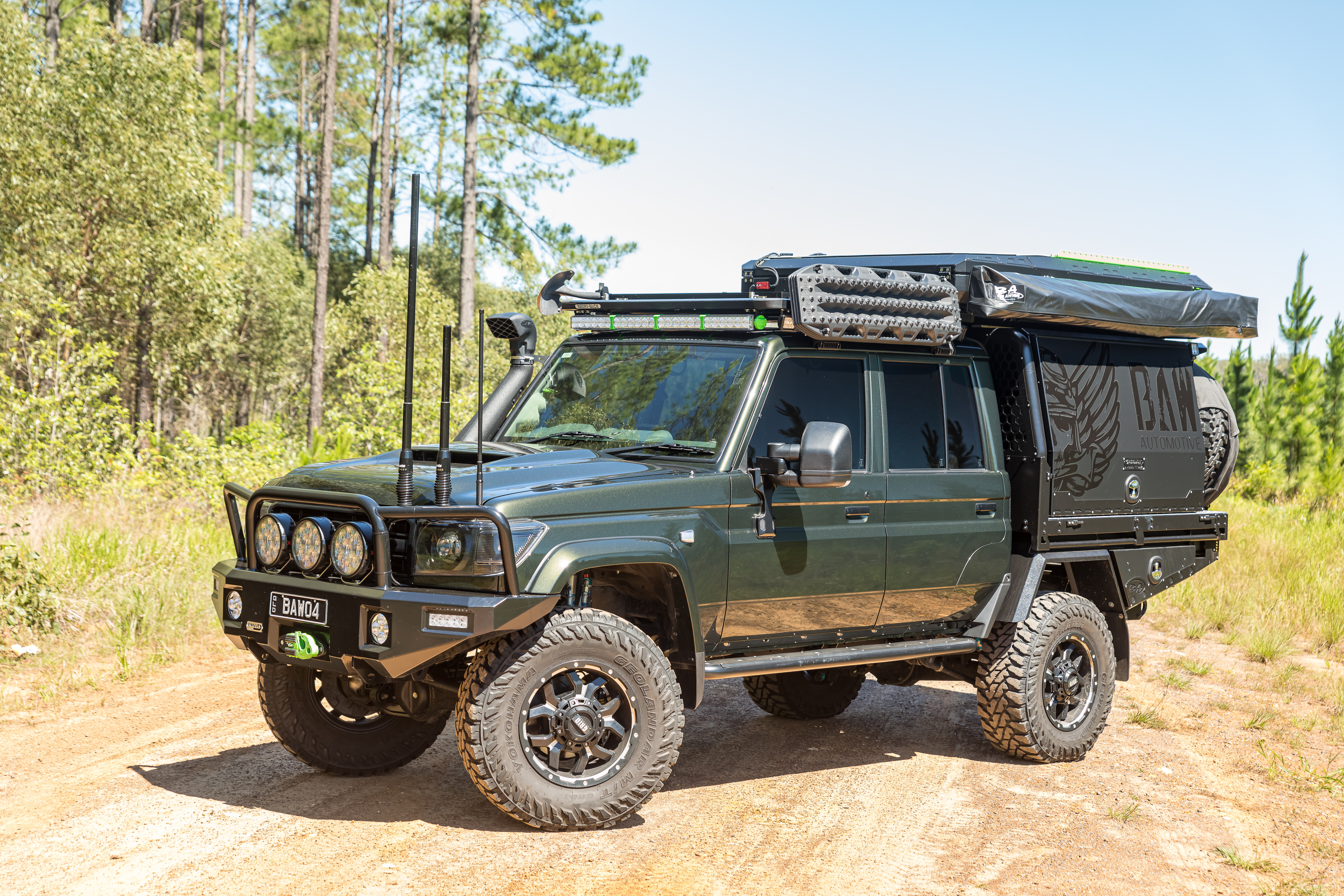
BAW Automotive’s LC79 details
ENGINE: PWR Intercooler, Safari Armax ECU, Safari Armax performance turbo EXHAUST: Custom stainless steel made by Hi-Frequency Fabrication DIFFS: JMACX rear track-width corrected rear housing with factory diff locks BRAKES: Upgraded kit from Rugged Brakes SUSPENSION: 4-inch lift, JMACX rear coil-conversion with 4200kg GVM upgrade, King 2.5 remote-res shocks WHEELS/TYRES: Grid Off-Road GD7 17×9 wheels, Yokohama MTG003 35/12.5R17 ELECTRICAL: Full Alpine entertainment system, 110L Dometic upright fridge, Enerdrive 200amp lithium battery, Redarc 2000W inverter, Redarc BCDC1240D, Hard Korr LED lighting, Narva 10-way fuse box CANOPY/PANEL WORK: Boss Aluminium M Spec M4 tray, with Boss Aluminium ¾-canopy and Boss Aluminium rooftop tent SPECIAL THANKS: All of the BAW Automotive team, JMACX, Boss Aluminium, The Bump Shop, A1 Custom Detailing, Clearview Accessories, Direction Plus, Safari 4×4 Engineering, Phat Bars, Xray Vision, Baxters, Hi-Frequency Fabrication, and Department Of The Interior
To find out more about BAW Automotive’s other projects and builds, head to: www.bawauto.com.au
Snapshot
- Mitsubishi Pajero Sport receives the tough AT35 treatment
- Modifications include 35-inch tyres, Old Man Emu suspension, and 17-inch wheels
- Currently limited to the snow-ridden Russian market
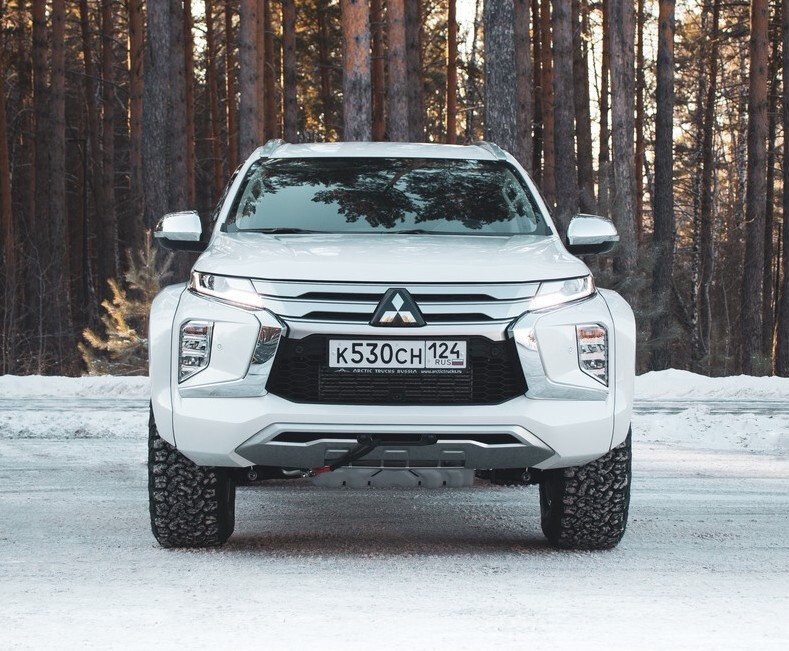
Arctic Trucks – the Icelandic company behind the wild Mercedes-Benz Sprinter AT44 and Isuzu D-Max AT35 off-roaders – has announced the Mitsubishi Pajero Sport will join the squad in Russia.
As its name suggests, the modified Pajero Sport wears 35-inch off-road rubber, with wheel arch flares required to accommodate for the added width. The standard 265/60 R18 tyres are swapped out for a 315/70 R17 set, bringing greater grip across a range of terrains as well as a welcome increase in ground clearance.
In addition, the modifications include replacing the stock shocks and springs with heavy-duty Australian-owned Old Man Emu (OME) suspension at both ends, which also raises the height up to 1900mm (+65mm).
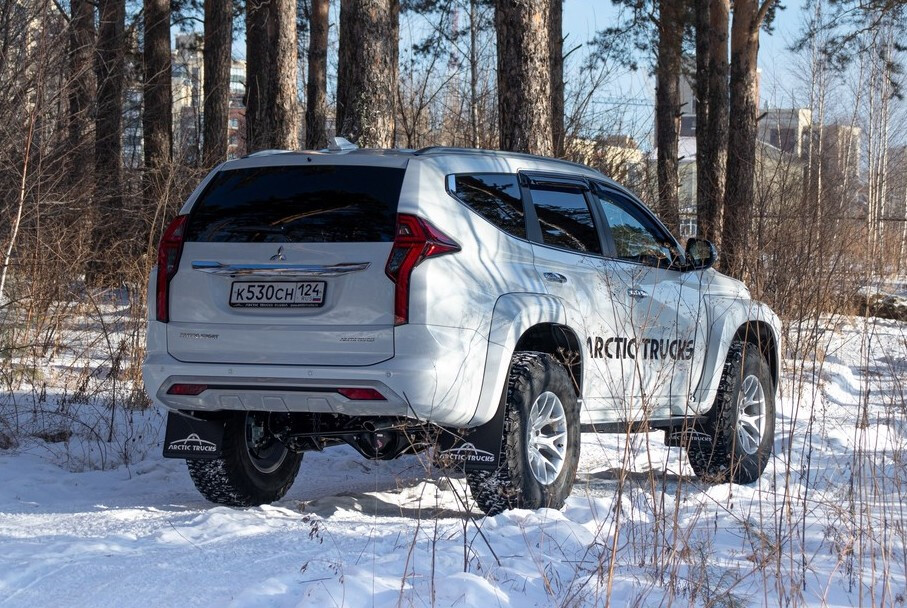
Arctic Trucks will also install new front and rear mudguards, along with its badging and a large decal across the side of the Pajero Sport.
The increased diameter of the rubber and heavy-duty suspension has raised ground clearance to an impressive 270mm (+52mm), allowing for a 34.5-degree approach angle (up from 30 degrees) and a 28.8-degree departure angle (up from 24.2 degrees).
One aspect left unchanged is the powertrain, meaning the Pajero Sport AT35 continues to feature a 2.4-litre turbo-diesel engine producing 133kW of power and 430Nm of torque.
A naturally-aspirated 162kW/276Nm 3.0-litre petrol V6 is optional on the Russian-market Pajero Sport, and thus also available to be modified by Arctic Trucks.
Last week, the firm unveiled its take on the Toyota LandCruiser 300 Series, which also sports the AT35 nomenclature and the host of modifications associated with it.
In the United Kingdom, the Isuzu D-Max is available with Arctic Trucks’ AT35 treatment from the comfort of an Isuzu dealership, which includes 35-inch off-road tyres, a strengthened chassis and Bilstein suspension.
Unfortunately, for locals keen to spruce up their own Pajero Sport, Arctic Trucks has no presence in Australia.
It has operations in Iceland, the United Kingdom, Norway, Finland, Poland, Russia, and the United Arab Emirates, with a focus on the challenging environments found in these markets.
Remember the first time you tackled a steep hill climb off-road? I do … and I was petrified.I was in my mate Beddo’s short-wheelbase Series II Land Rover and the climb in front of us seemed impossibly steep. He showed me how to engage low-range four-wheel drive by pulling back on the red lever, and then told me to select second gear.As I eased out the clutch, the little Landy leapt forward, surprising me with its low gearing, and it climbed that steep hill like a mountain goat, with me giggling nervously behind the steering wheel the whole way up.The key to safely and successfully tackling any steep incline is to have a mechanical understanding of your 4×4 and how to best operate it, as well as to understand the characteristics of the hill climb itself.That mechanical understanding can be as basic as whether the vehicle has a manual or automatic transmission, or a single- or dual-range transfer case, or whether it is a part-time four-wheel drive with manual or auto free-wheeling hubs, or a full-time four-wheel drive with a locking centre diff.
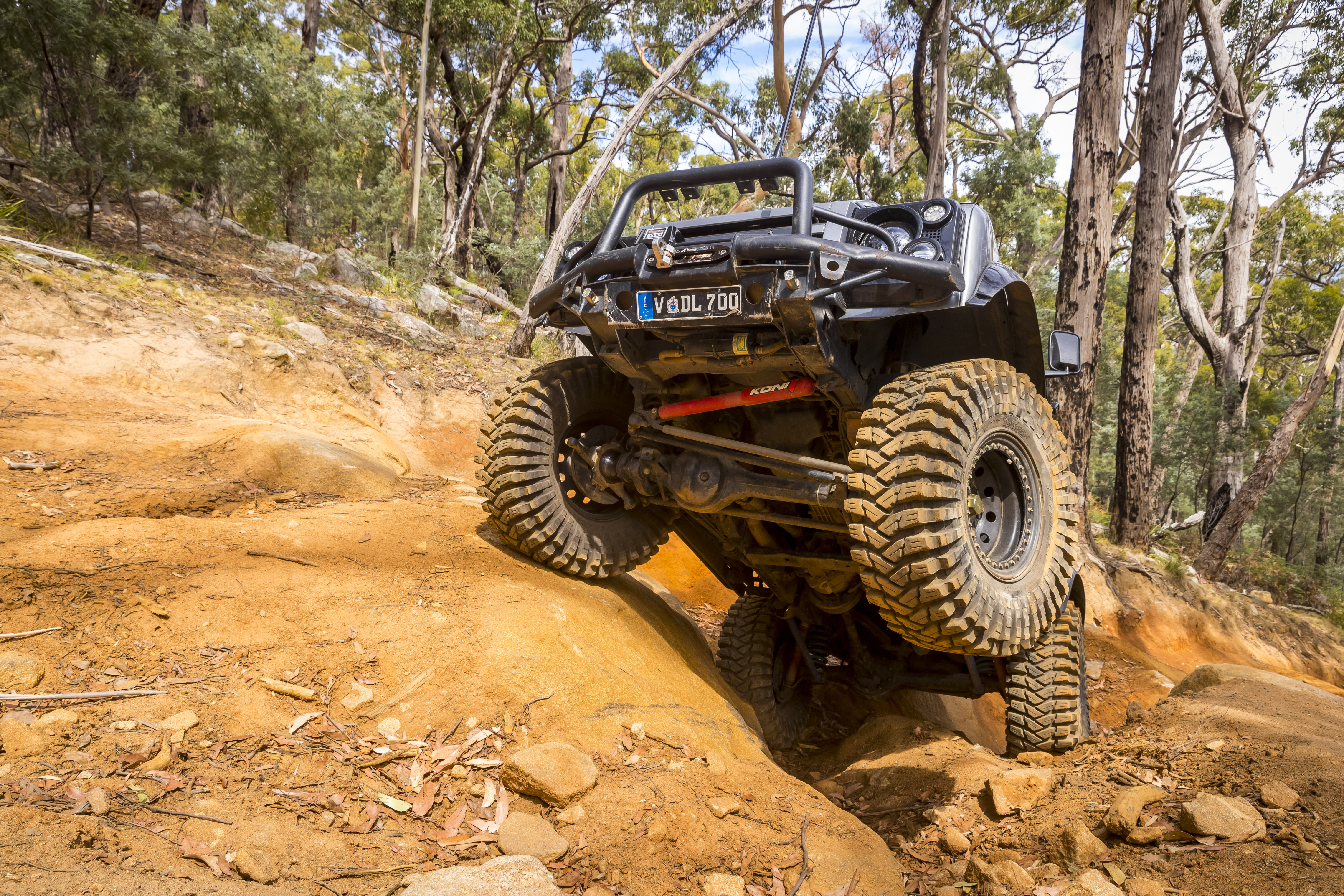
It’s also important to know what kind of mechanical and/or electronic traction aids it’s armed with, and you should be aware of the available ground clearance, and understand how approach, departure and ramp-over angles will affect the vehicle’s capability, as well as what type of suspension it has and what tyres it’s fitted with.When it comes to understanding the terrain, you need to know much more than how steep the hill climb is, including what the surface consists of, how much (or how little) traction is available, whether there are deep ruts or other obstacles, whether there are other hazards about, and whether there is somewhere safe to stop or turn around if you need to. You should also be aware of suitable anchor points, such as big trees in case your initial attempt at the hill climb is unsuccessful and you need to use a winch.The best way to gauge what’s ahead of you on the track is to get out of your vehicle and walk it. Of course, you’re not going to do this for every steep hill climb you come across; but in the case of extreme climbs, it’s always best to err on the side of caution and have a look first.While you’re looking, keep an eye out for obstacles and hazards, and cast your eyes beyond the track itself; if, for example, you’re on the saddle of a mountain range, be wary of off-camber sections of the track and long drop-offs on either side.
Tyre pressures
As with just about all off-road driving scenarios, setting the correct tyre pressures is critical for success when climbing steep hills.
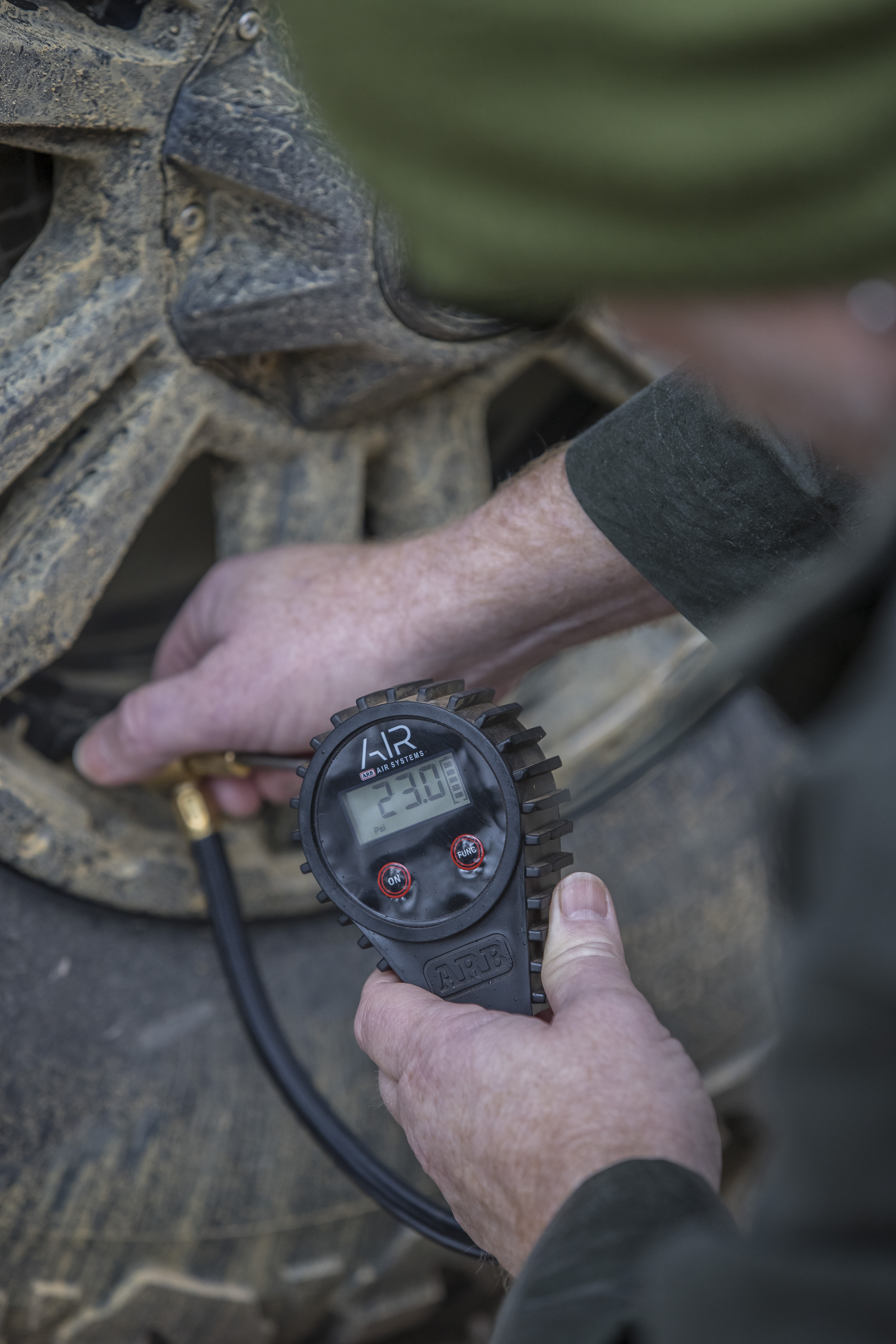
The right pressure will depend on the vehicle, the tyres being run and the terrain type being tackled, but as a general rule, if you’re running light truck (LT) construction tyres and you drop pressures to around 22psi for steep rocky climbs or muddy hills, you will have a lot more traction available to you than if you run road pressures of 35psi or more.For more details on setting the correct tyre pressures for different off-road terrain types, read the 4X4 Australia ‘How to select correct tyre pressures’ guide.
Get the set-up right
Choosing the right vehicle settings for any steep climb is vitally important to success. If you drive an old-school part-time 4×4 with manually locking hubs, before you tackle a steep hill climb, you’ll need to lock the hubs, engage low range and (depending on the overall gearing of the vehicle) select second gear.Why not first gear low-range? If overall gearing is too low, you can end up with unwanted wheelspin and a loss of traction, so you’re better off selecting second gear low-range, which will hopefully provide low enough gearing that you can safely and smoothly tackle the incline without the engine stalling. If the hill is exceptionally steep, however, you may have to select first gear low-range to make it up, in which case you should go easy enough on the throttle that you don’t end up spinning the wheels.If you drive an auto 4×4, you can simply select low-range and Drive for steep hill climbs and rely on the transmission to choose the best gear for you. Keep in mind, however, that if the transmission suddenly drops down to first gear at an inopportune time, you could still end up with unwanted wheelspin.
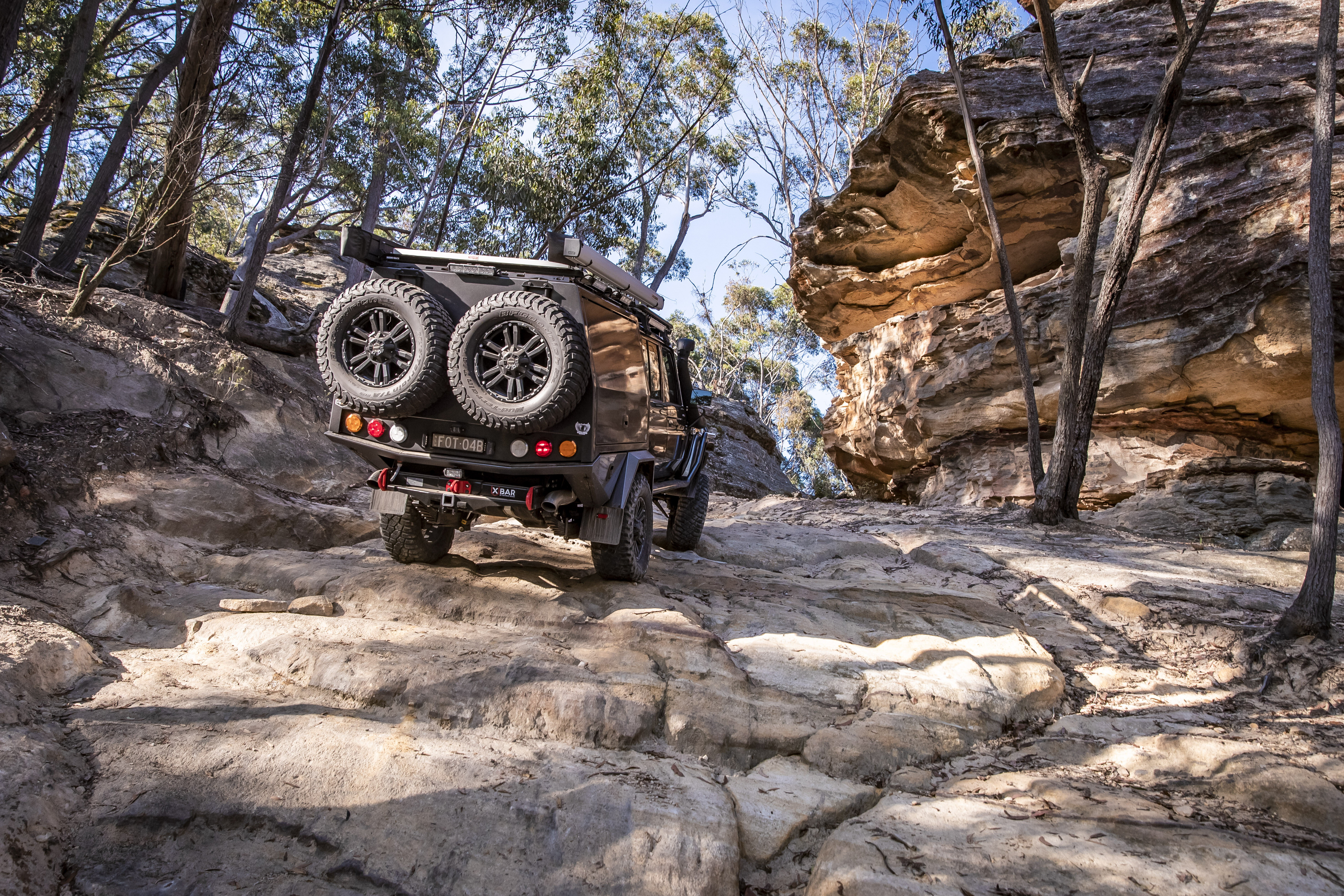
Some modern automatic transmissions have a second gear-start function that locks out first gear, enabling the vehicle to accelerate gradually on slippery surfaces such as ice without unwanted wheelspin; this first-gear lock-out also works well on steep inclines. Another option with some autos is to use the manual-shift function to select second gear which, depending on the transmission, should prevent it dropping down to first gear.Many modern computer-controlled automatic transmissions work in harmony with other vehicle systems like electronic traction control, and with Drive selected they will select the most appropriate gear for the hill climb and minimise the risk of unwanted wheel spin.For those with a full-time 4×4 vehicle, ensure the centre diff is locked before you set off; this will ensure equal drive is apportioned between front and rear axles. Likewise, if you have across-axle diff locks, engaging these for steep climbs with deep ruts will prevent unwanted wheelspin if you lift a wheel in the air, but bear in mind that locking the front diff will make it more difficult to steer the vehicle, so if there are tight turns on the hill climb get ready to disengage the front locker if needed.
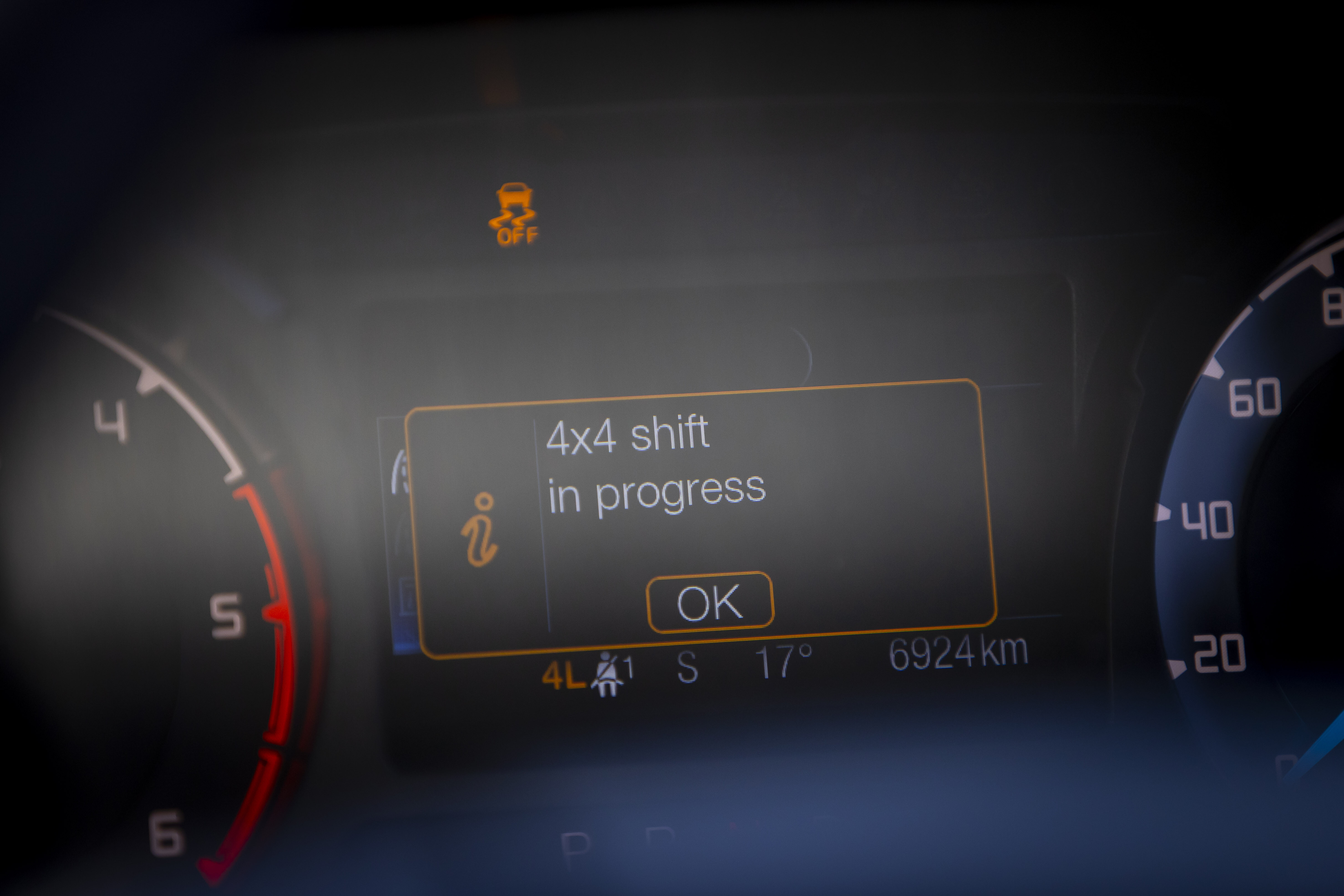
For those with modern 4x4s equipped with driver-selectable off-road modes, make sure you select the appropriate mode for the conditions ahead of you. If the steep climb is muddy and full of ruts, select the ‘Mud & Ruts’ mode, or whatever the equivalent mode is in your specific vehicle model, or if it’s a rocky climb select ‘Rock’ mode or equivalent.The different off-road mode settings tailor the way in which the vehicle behaves to suit different terrain types and, depending on the vehicle, these modes alter throttle response, power delivery, transmission response, traction-control sensitivity and various other parameters, so it really pays to set the mode to match the terrain.
Tackling the climb
With the track ahead surveyed and the vehicle set up to tackle the hill climb, you’re ready to go. In a convoy, wait for the preceding vehicle to clear the track before setting off in case it becomes stuck or has to reverse down the hill for another attempt. And watch the vehicle ahead as it makes the climb; if successful, you could follow in its tracks, but if it becomes stuck, you’ll know what part of the track to avoid.
As you begin the climb, build up enough speed to maintain momentum as you climb over track irregularities and, in the case of manual vehicles, not stall the engine, but don’t go so fast or you could damage the vehicle. If you think you’re going too fast for the selected gear, make a quick upshift, but try to do so where the track is not at its steepest, and be ready to downshift if the engine starts to labour.
As you tackle the climb, you’ll need to adjust the steering angle and speed to suit changing track conditions. If not too deep, follow existing wheel ruts; if they’re deep and you think you might run out of ground clearance, straddle the ruts, but be careful if the ground is slippery as you could slide in to the ruts anyway.
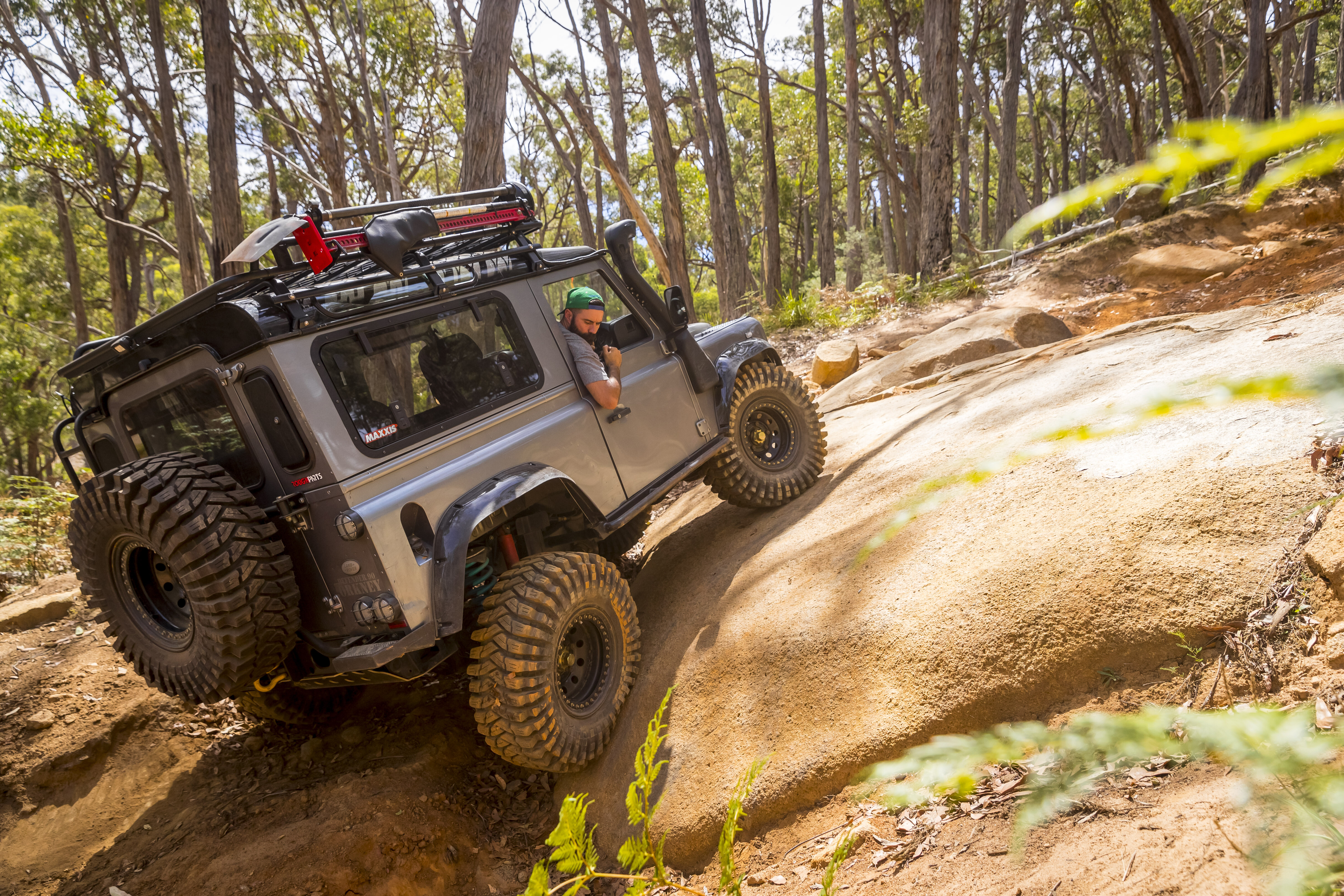
Sometimes you won’t be able to see what’s ahead, such as when climbing obstacles or cresting drainage mounds, so take it easy in case there’s a steep drop on the other side. On a positive note, drainage mounds on long steep climbs, such as those in alpine regions, can offer a chance for a rest stop … but be sure not to block the track if driving in a convoy with vehicles coming up behind, and, if you do stop, alert other vehicles via the UHF, letting them know where you’ve stopped and on what side of the track.
On steep sections or climbing obstacles, always try to keep the vehicle pointed straight up the track; and if traversing sideways across an incline, you could get in strife or even a rollover. What goes up must come down, and on most steep climbs there’s always a chance of facing oncoming traffic. Mostly, the vehicle climbing should give way to those descending, because going down a steep, slippery track you won’t often be able to pull up safely. Always look well-ahead for oncoming vehicles and for wider parts of track where it will be safe to pass.
If you don’t make it
Occasionally you might tackle a difficult hill climb that you won’t safely ascend on the first attempt, in which case you’ll come to a stop. If you’re in a convoy, alert following vehicles to your predicament, and advise that they await further instruction/information (tell them to ‘standby’) while you assess the situation.If you stall a manual transmission 4×4 on a steep climb, and you need to back up; with the engine off select reverse (low range), let out the clutch, take your foot off the brake (the vehicle will not roll as it’s in gear) and, when you’re ready, turn on the ignition; the engine will fire up and the vehicle will then commence a controlled descent in reverse gear.Regardless of the vehicle you are driving (manual or auto), if you need to reverse down a steep hill, use the vehicle’s engine braking to keep speed in check rather than relying solely on the brakes. Most of the vehicle’s weight will be on the rear wheels as you reverse down the hill and if you stomp on the brake pedal you could lock up the front wheels and lose the ability to steer. If your vehicle is equipped with Hill Descent Control, activate it before reversing down the hill.If you need to continue reversing, try to find a safe place to turn around. It is much easier (and safer) to drive forwards down a hill than reverse down it. But don’t attempt to turn around on a steep or unstable section of track that could put your vehicle at risk of rolling over.
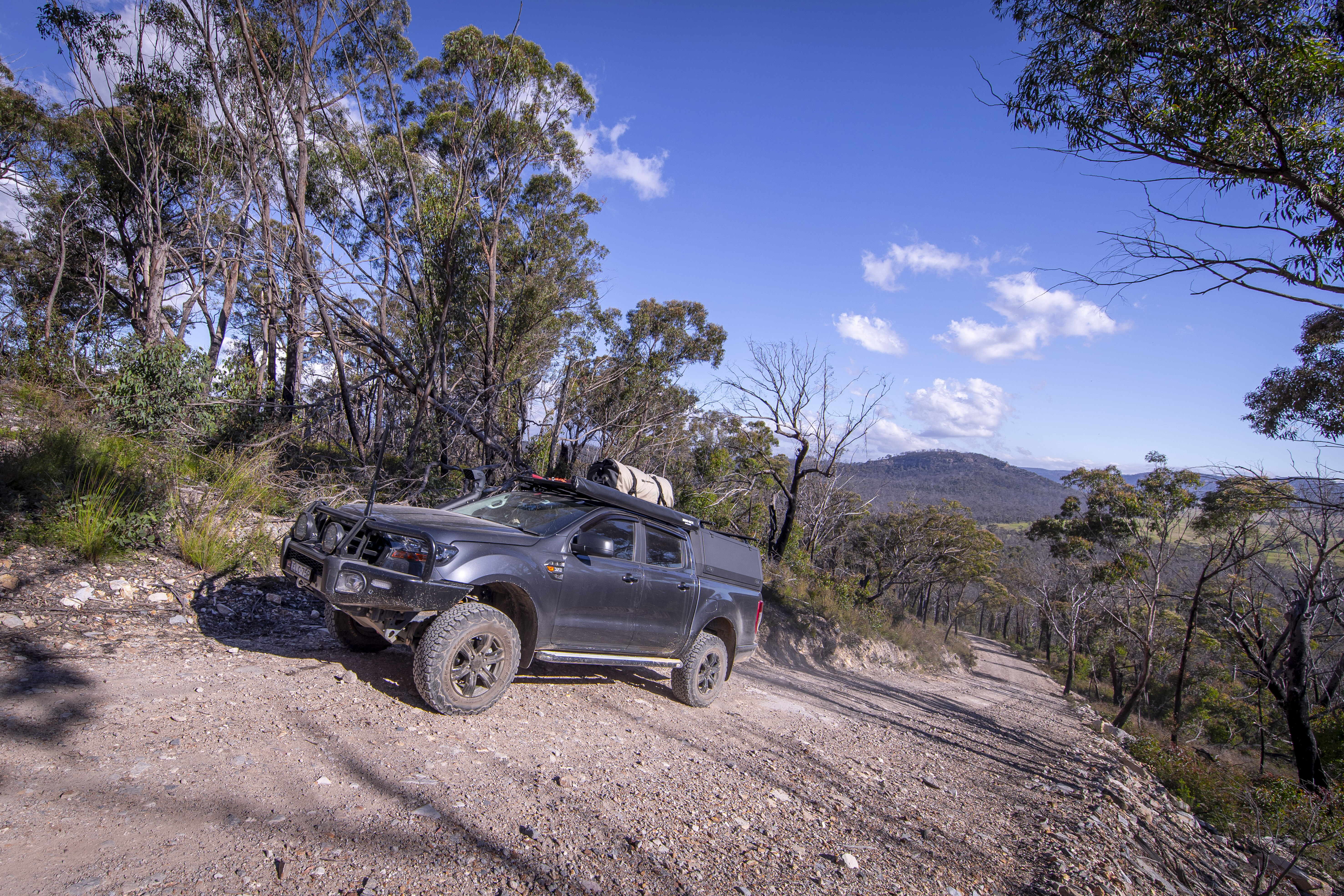
If your ascent was interrupted because you ran out of traction or ground clearance, and if it is safe to do so, sometimes the best way to make it over a difficult section of track is to back up a bit and have another go at it. If this is not an option, or you don’t feel safe doing so, it could be time to drag out the recovery equipment.If a vehicle in front can safely back down to where you are, a snatch recovery might get you over the immediate obstacle, or if you have a winch and there is a handy anchor point, winching might be the best course of action. Sometimes you might just need to do a bit of track building by placing some rocks under the wheels or use a set of recovery boards to get out of your predicament. Whatever you do, take your time, and make a considered decision rather than rushing in to it.Don’t forget to let the rest of the convoy know when you’re on the move again, and advise following vehicles what obstacle is ahead of them and the best way to manage it, so they will have a better chance of getting through without becoming stuck.Once you’ve made it to the top of a steep hill climb, alert other vehicles in the convoy that it’s safe for them to proceed, and make sure you leave them enough space to safely stop once they have completed the ascent.Once at the summit, grab your camera and start taking photos of the spectacular vista before you. And keep an eye out for our guide to safely descending steep hills in an upcoming issue.
Gear you’ll need
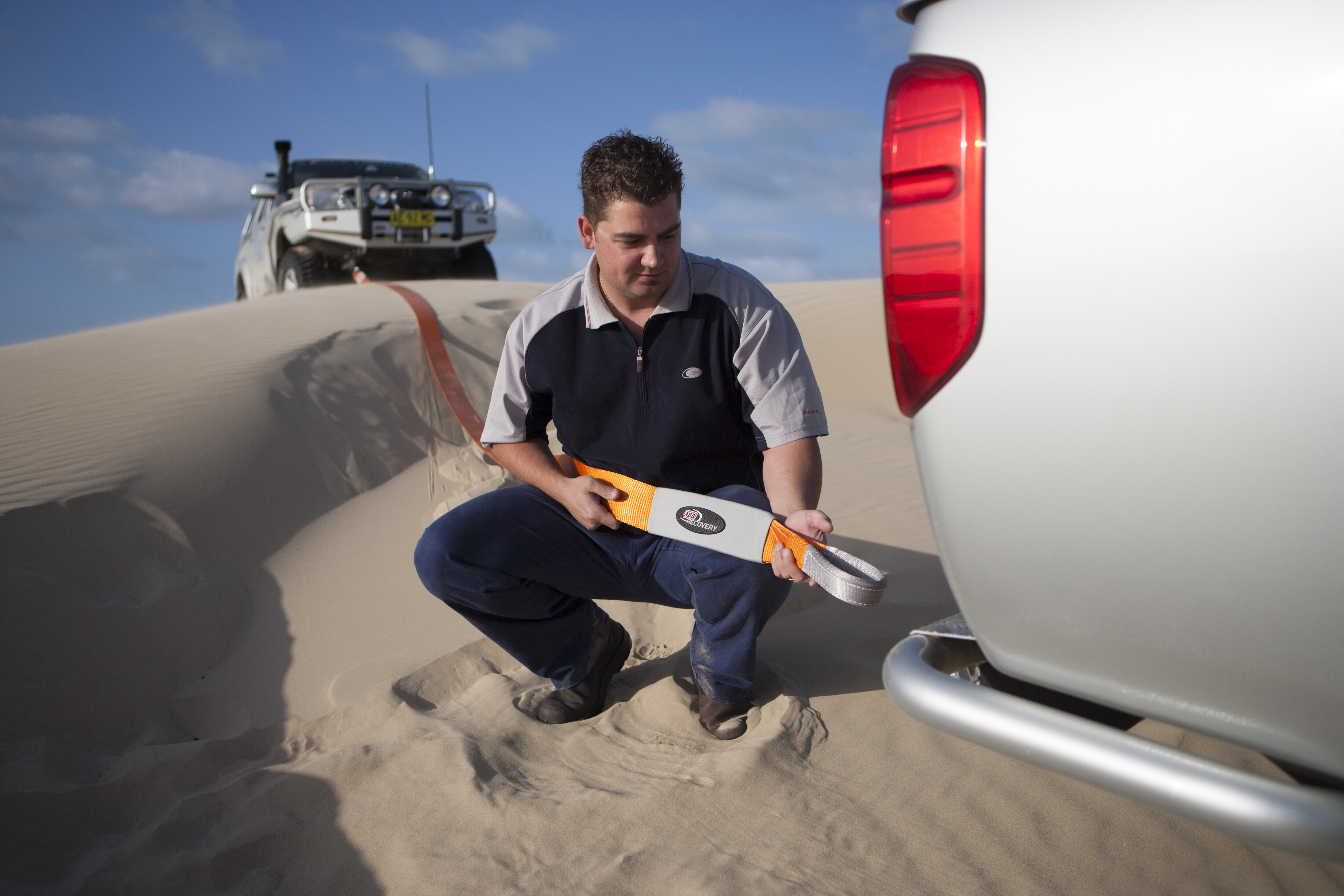
Whenever you drive your vehicle off-road, you should always carry appropriate recovery gear. For steep hill climbs a winch is always handy, and it should be complemented with a winch extension strap, tree trunk protector, snatch blocks and shackles. Other handy recovery gear includes a snatch strap, long-handle shovel and recovery boards … and always wear gloves when using recovery equipment.Your vehicle will need to be fitted with suitable recovery points front and rear. If you are tackling difficult terrain, Light Truck (LT) tyres with either an all-terrain or mud-terrain tread pattern will improve capability, as will a suspension lift. Under-vehicle protection is also a sound investment.
Spotter
On any difficult section of track, it pays to have a ‘spotter’ on the outside of the vehicle who can direct the driver and help out if any track building is required.Clear and concise communication is key to a good driver/spotter relationship, whether that be via UHF radio, hand signals or a combination of both. When it comes to hand signals, ensure both the driver and spotter are on the same page and keep signals as simple as possible, such as using hands to indicate steering angle, whether to stop or whether to inch forwards.Before placing rocks under wheels, or setting up any recovery equipment, make sure the driver knows what is going on and that the vehicle is stationary with the brakes on.
DOs
- Know your vehicle and how to best to use it.
- Understand the terrain ahead of you.
- Use momentum to your advantage.
- Lower tyre pressures to suit the terrain.
- Carry recovery equipment and comms gear.
DONTs
- Traverse sideways across steep tracks.
- Drive until preceding vehicles have cleared the track.
- Stop without alerting other vehicles.
- Floor it in low-range first and spin wheels.
- Rush decisions if you get stuck.
Snapshot
- Ford Ranger still on top
- Triton places ahead of Hilux
- LC79 and Everest tie for ninth
The 2022 new 4×4 vehicle market has picked up where it left off last year, with mid-size utes dominating sales, filling the top three places and taking seven of the top 10 positions.Numbers were down, however, on those seen at the end of 2021, with supply issues still having a major effect on what the manufacturers can get in to Australian showrooms.“The microprocessor shortage and the pandemic’s impact on supply chains continues in to 2022. This is an issue impacting markets all over the globe. Despite this, consumer interest, inquiry, and the fundamental demand for new cars in Australia remains strong,” said FCAI chief executive Tony Weber.
While we’re used to seeing the Ford Ranger and Toyota Hilux battling it out at the top of the chart, the perennial favourite Toyota ute had to make way for the rebounding Mitsubishi Triton in January as it claimed second place in sales.Triton suffered heavily in the latter part of 2021 with supply shortages seeing it tumble down the sales charts, but it looks like its clawing its way back and you can bet Mitsubishi will be keen to see it regularly back among the top three 4×4 sales.The commercial LandCruiser 79 Series tied with the Ford Everest wagon for ninth spot in January, and it’s nice to see the Ford wagon back among the best sellers. An all-new Everest landing in the second half of the year should see renewed interest in this popular model.
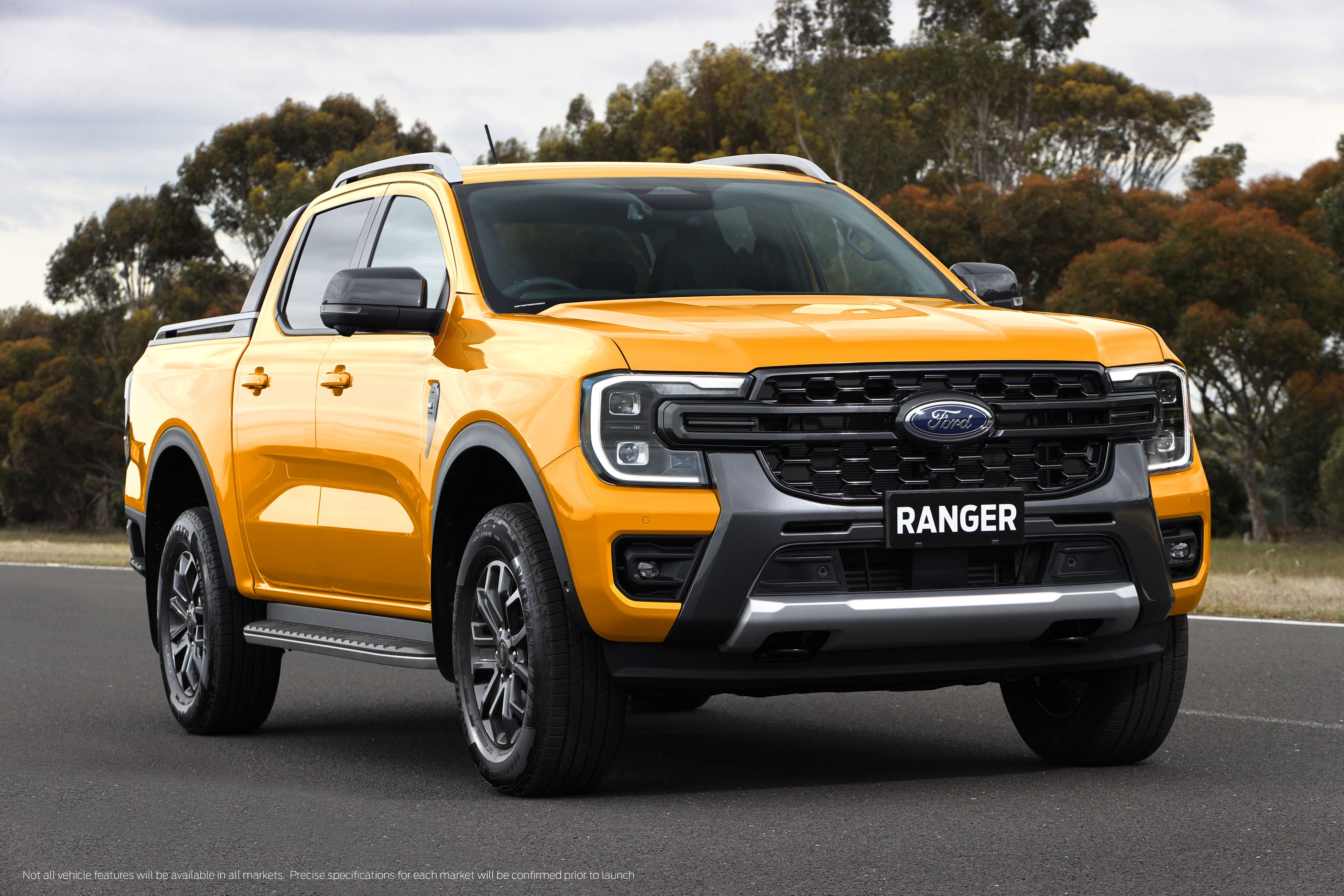
Of course, this will come after we see the new Ford Ranger hit showrooms some time around June/July and, while the current model is still the best-selling 4×4 in Australia, the new model with its V6 diesel engine option and extra equipment is sure to cause a stir. The Ranger will be hard to beat again this year, providing Ford can meet demand.Aside from Toyota which consistently has four models among the Top 10-selling 4x4s, Isuzu is the only other manufacturer to have more than one in there. That’s pretty impressive when you consider Isuzu Ute Australia only offers two models in it range and both the MU-X wagon and D-MAX ute continue to be popular.
January 2022 sales
- Ford Ranger: 2986
- Mitsubishi Triton: 2601
- Toyota Hilux: 2569
- Toyota Prado: 2566
- Isuzu D-MAX: 1454
- Mazda BT-50: 1047
- Nissan Navara: 1019
- Isuzu MU-X: 820
- Toyota LandCruiser: 730
- Ford Everest: 730
- Toyota LC79: 713
It’s new magazine day at 4X4 Australia HQ, with our action-packed February 2022 issue out now.Another month, another epic issue, with the Feb mag headlined by a couple of killer custom builds in the form of a 2018 Ford Everest Trend muscled up for bush tracks, and an ex-army Perentie that is as tidy as it is wild!
We caught up with off-road racing hero Toby Price prior to the start of his 2022 Dakar campaign. We chat all things four wheels, two wheels and how he navigated his way to the big stage. Read the full interview with the two-time Dakar winner in this issue.

Evan Spence battled torrential rain and took a 300 Series GX to some seriously mud-infested bush tracks – and got stuck – in an attempt to discover if the GX is the pick of the 300 Series range despite its base-spec status. We also test a 2021 Nissan Navara ST-X and a 2022 Land Rover Discovery S P360.We take an in-depth look at the transformed 4X4 Australia D-MAX, draped in top-quality aftermarket gear – it is now a seriously capable dirt-road touring weapon.In this month’s edition of ‘How to drive off road’, Deano explains how to safely and properly drive up steep inclines – there’s plenty of technical nous involved.
Plus, we explore some quintessential 4×4 locales around Australia: Flinders Ranges and Oodnadatta in South Australia; Pine Creek in the NT; and Ningaloo Coast in WA.
What else is there?
– Fishing tips for the tropical north – MaxTrax recovery kit tested – Stihl electric chainsaws tested – CrashPad tool roll tested – New products, monthly columns and more!
The February 2022 issue of 4X4 Australia is available now.
For hundreds of thousands of years, mankind has been pushing itself. We’re pushed to run faster, hike farther, climb higher. All in the pursuit of being the best. To do more. To be more.It should come as no surprise then that when the manufacturer famous for taking on Ferrari and winning decided to take on the big dogs in the world of 4x4s, they’d come from nowhere and jumping right to the pointy end of the pack, the Everest has earned its name.It should come as even less of a surprise that one Aussie decided he could climb a little higher. He could take what is inarguably already a fantastic 4×4 on and off the road, and make it more.
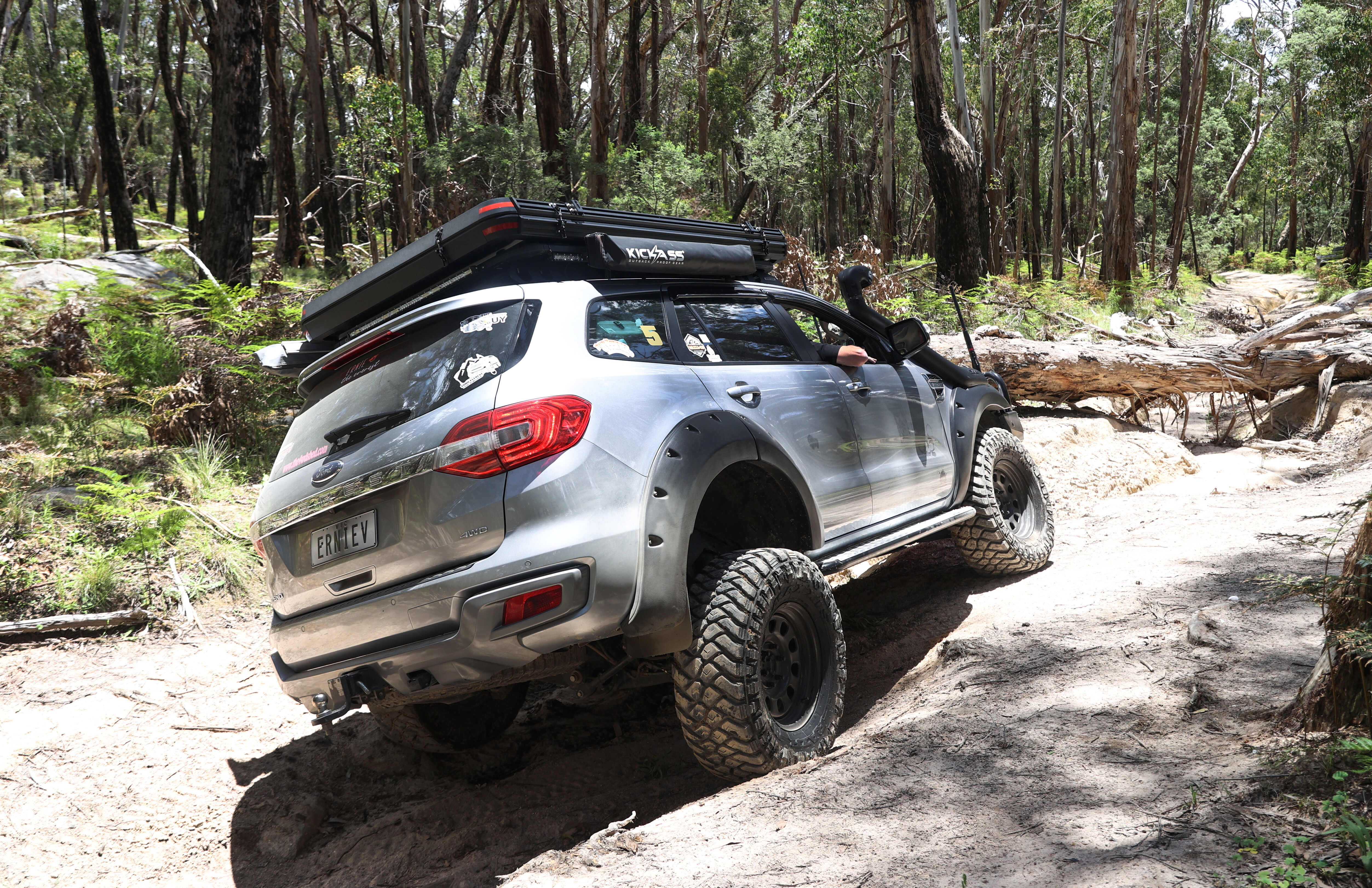
When Victorian native, Henk Piper, set about building up his 2018 Everest he wasted no time getting the altitude to match the attitude he had in mind.The Everest Trend now rides 4.5 inches higher to the clouds, thanks to a combination of trick aftermarket gear. Up front, three-inch lifted struts are the order of the day, with Dobinson’s MRR units getting the tick of approval. The remote reservoir helps the Everest hold its own against corrugations, while the adjustable valving lets Henk dial in the ride for the load. Up the back, a matching set of MRR shocks are fitted up with three-inch lifted coils to suit.Tucked inside are helper airbags, allowing the Everest to hone in its ride height no matter what gets thrown in the back for longer trips. The remaining lift comes from the upsized tyres. Rolling three-inch taller than the stock offering, Henk’s fitted up a set of aggressive 305/70R17 Maxxis RAZR muddies wrapped around steel wheels that can cope with all the punishment he throws its way. They’re kept reined in under the body with a huge set of Kut Snake flares, not something you see frequently on an Everest.
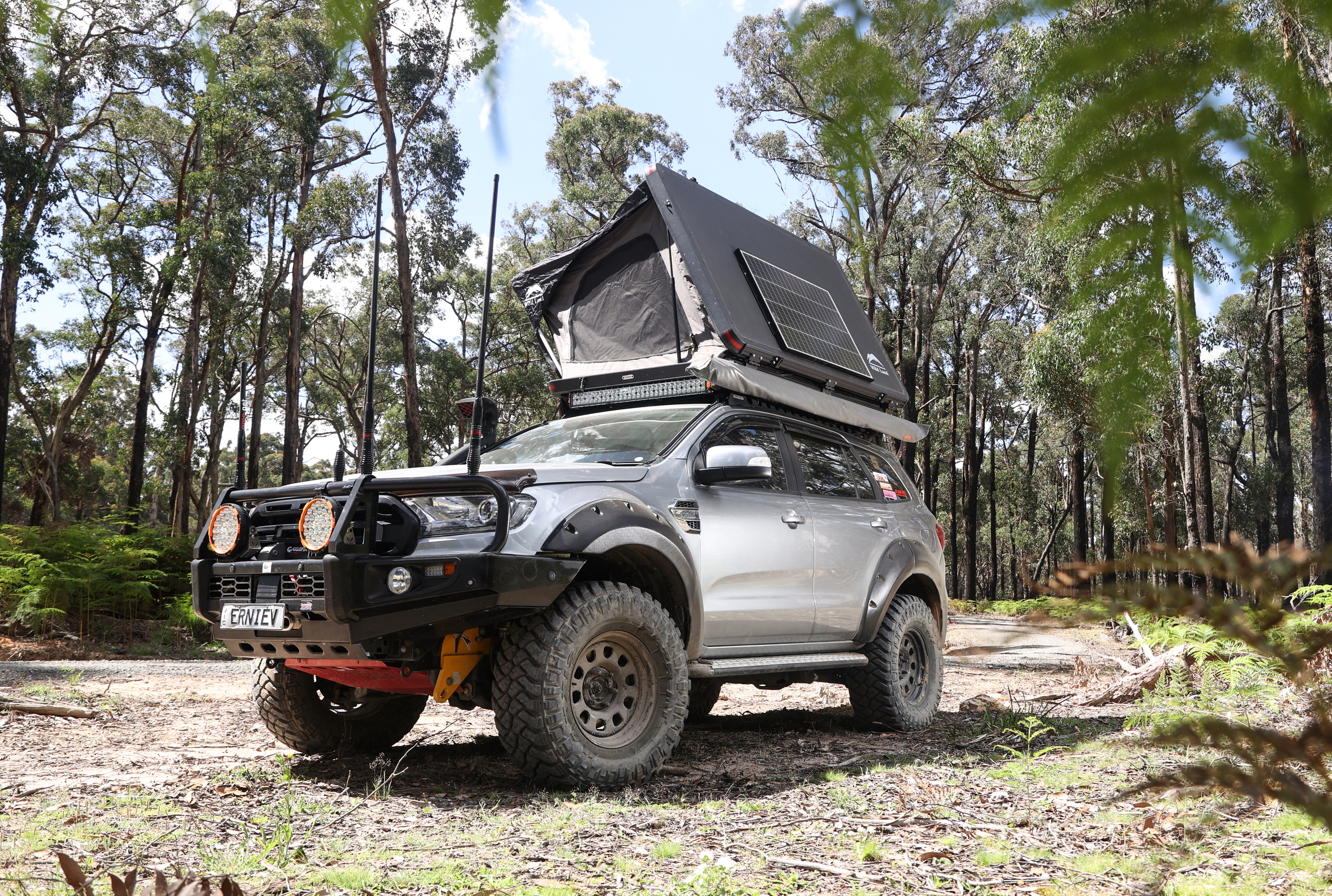
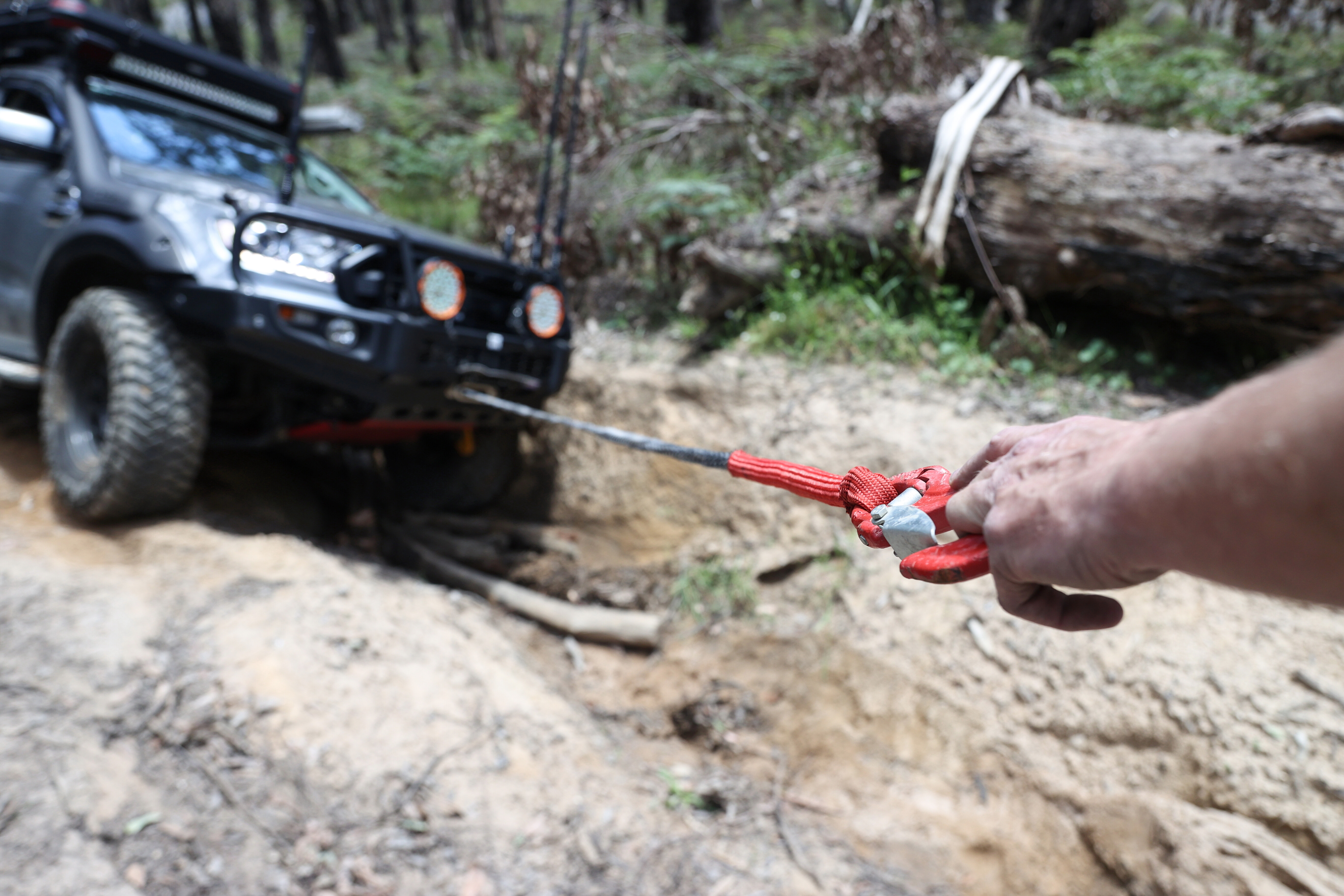
The rest of the Everest’s exterior has received a similar overhaul to match the look of the staunch new guards. Up front, Henk’s fitted up a Dobinson Classic Black Deluxe bullbar to armour up the front end. It houses a bunch of trick kit like the Stedi Type-X Pro LED driving lights, but those with a keen eye will spot something a whole lot more interesting tucked behind and half cut into the Raptor grille. Based on the Warn 8274 High Mount winch, Gigglepin’s GP25 is inarguably one of the best winches money can buy and something that’s dominated the off-road racing scene for years.Right out of the box, the Gigglepin GP25 is improved on the traditional high-mount in every way. More powerful 6.8hp motor, hand-built lightweight alloy housing, upgraded gears, fully braced and fully submersible – you’d be hard-pressed to find a winch that could hold its own against it.
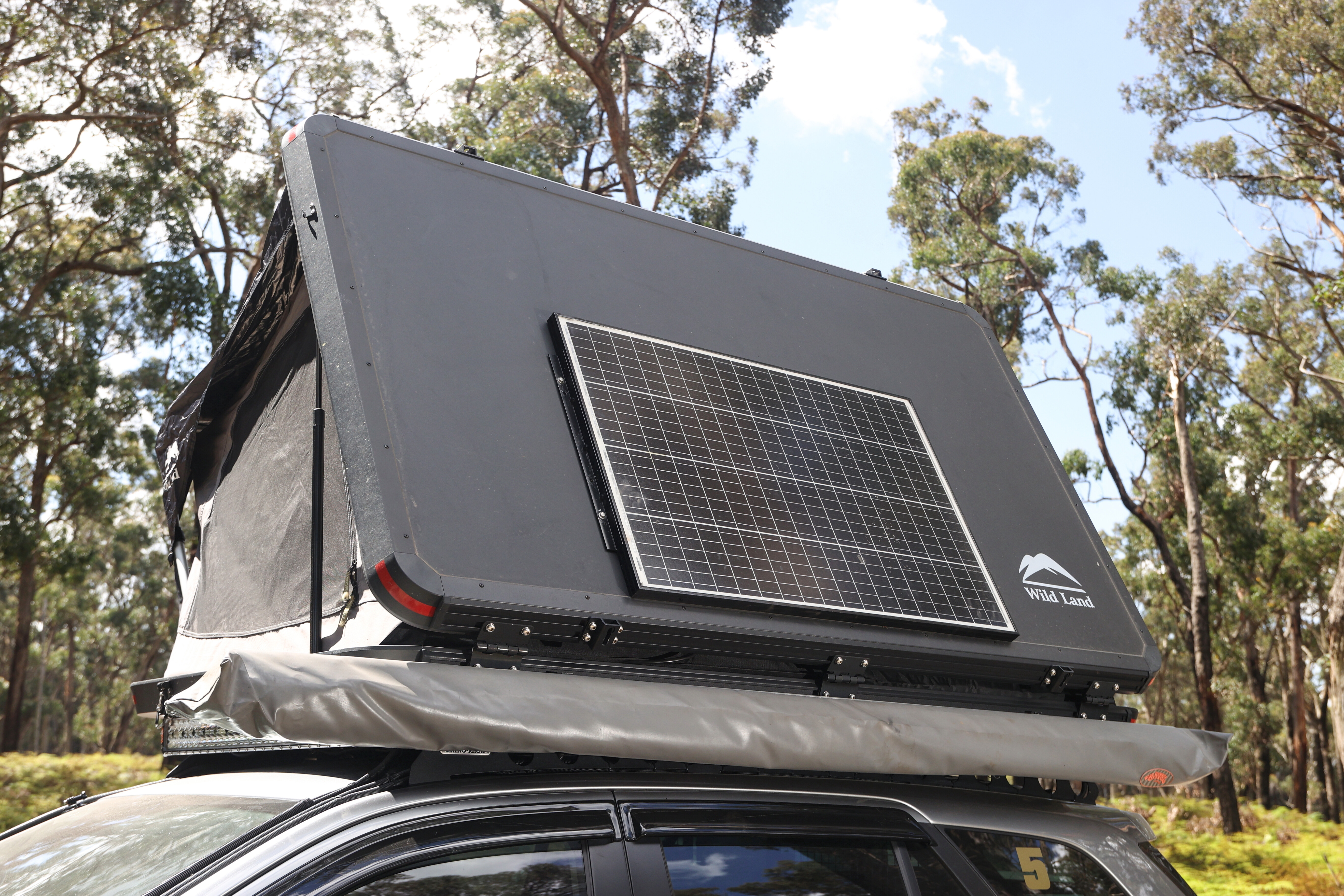
Of course, it’s not all just about the winch either. Moving back and Henk’s protected the Everest’s crunchy bits with a set of steel sliders along the flanks and bright red PS4X4 bash plates underneath. Up top, a Rhino platform rack sports a Stedi light bar up front, with perimeter lighting all ’round. They’re tucked in underneath the Road Runner Offroad awning and Kick Ass shower tent. To ensure he’s got shelter from those cold Victorian High Country nights, a lightweight hard-shell rooftop tent takes pride of place right up top.Sourced from Wild Land, the Desert Cruiser tent sets up quick and easy, and houses a 300W solar set-up on its lid to keep the good times at camp rolling late into the night.
Moving to the inside and Henk’s taken that same more-is-more approach, with every possible surface tweaked, accessorised or modified. Starting from up front, he’s optioned up two GME UHFs with a combination of antennas for different terrain.By running dual units, he’s able to have constant communication with his convoy, while keeping an ear out for oncoming traffic or outback truckers. Up on the A-pillar, dual Redarc gauges give him up-to-date readouts on boost levels, exhaust gas temperatures, battery levels and even the fridge temperature, so he knows the frosty ones are living up to their end of the bargain.
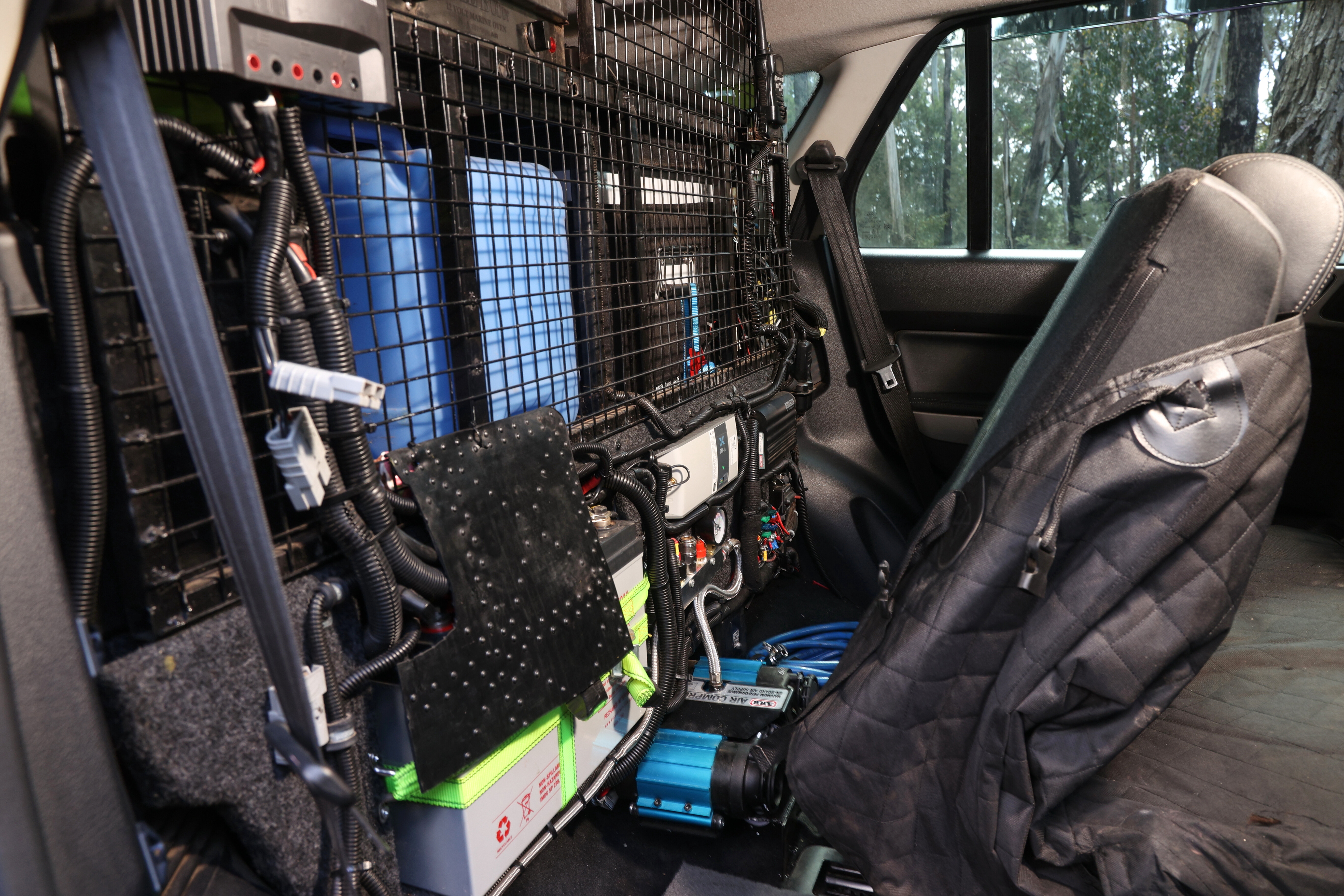
Making our way to the back and Henk’s fitted a custom cargo barrier to separate the crew compartment from the camping kit. Back here is where you’ll find everything needed to spend weeks on the road. The brains of the operation is the Redarc DCDC charger keeping twin 170amp/h batteries charged. There’s an MPPT solar regulator as well helping regulate the 300W coming in from the roof; while a 12V Travel Buddy oven does its best to knock down battery levels and offer up steaming hot pies in return. Finally, a Cel-Fi GO signal booster gives Henk a lifeline for proper remote touring.Tucked in behind the wall of technology is a custom drawer set-up from Full Boar Fourbie Drawers. It houses the dual-zone fridge, a slide-out table, bulk storage, a 20L water tank and even a 9L on-board air set-up fed by an ARB Dual Piston air compressor.
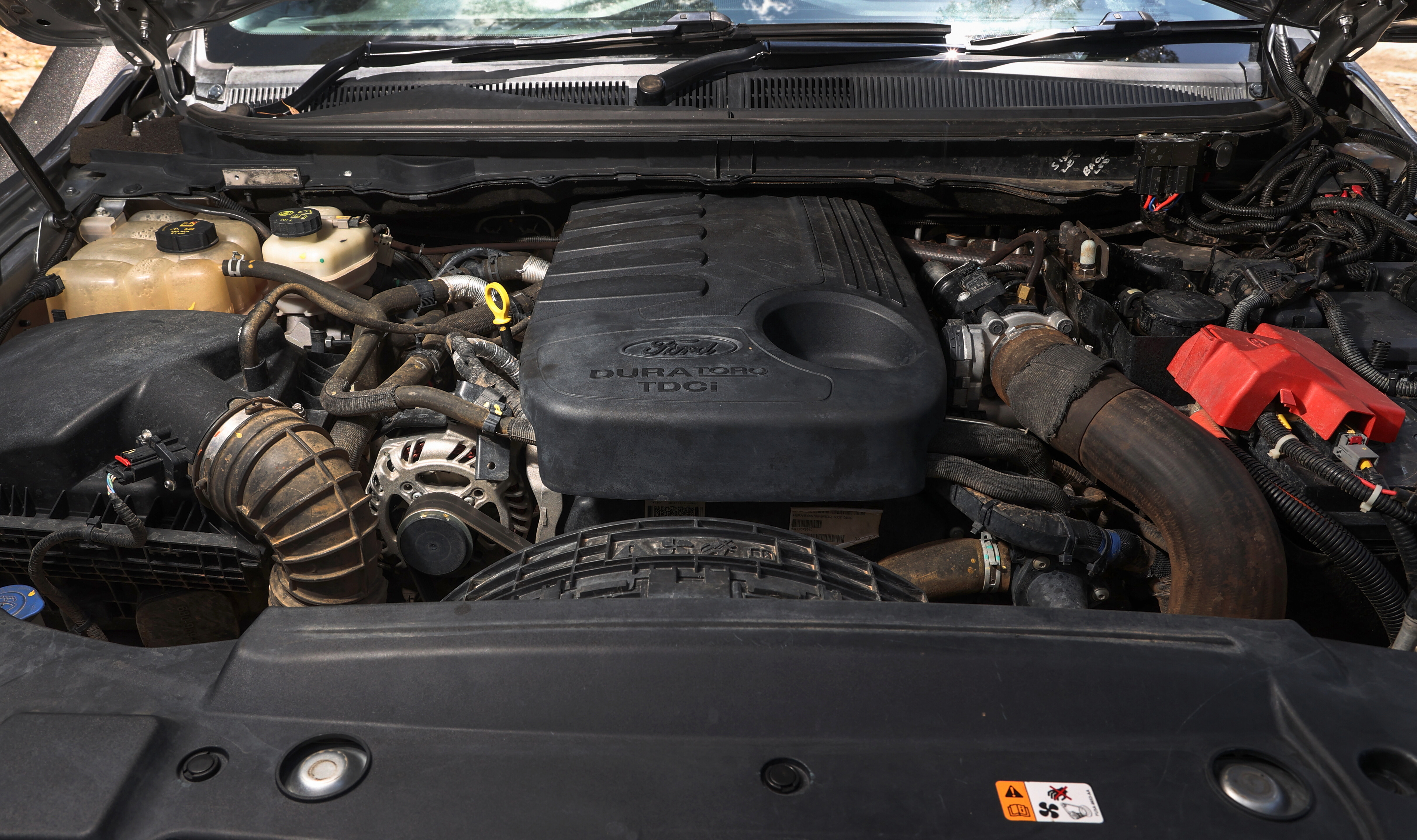
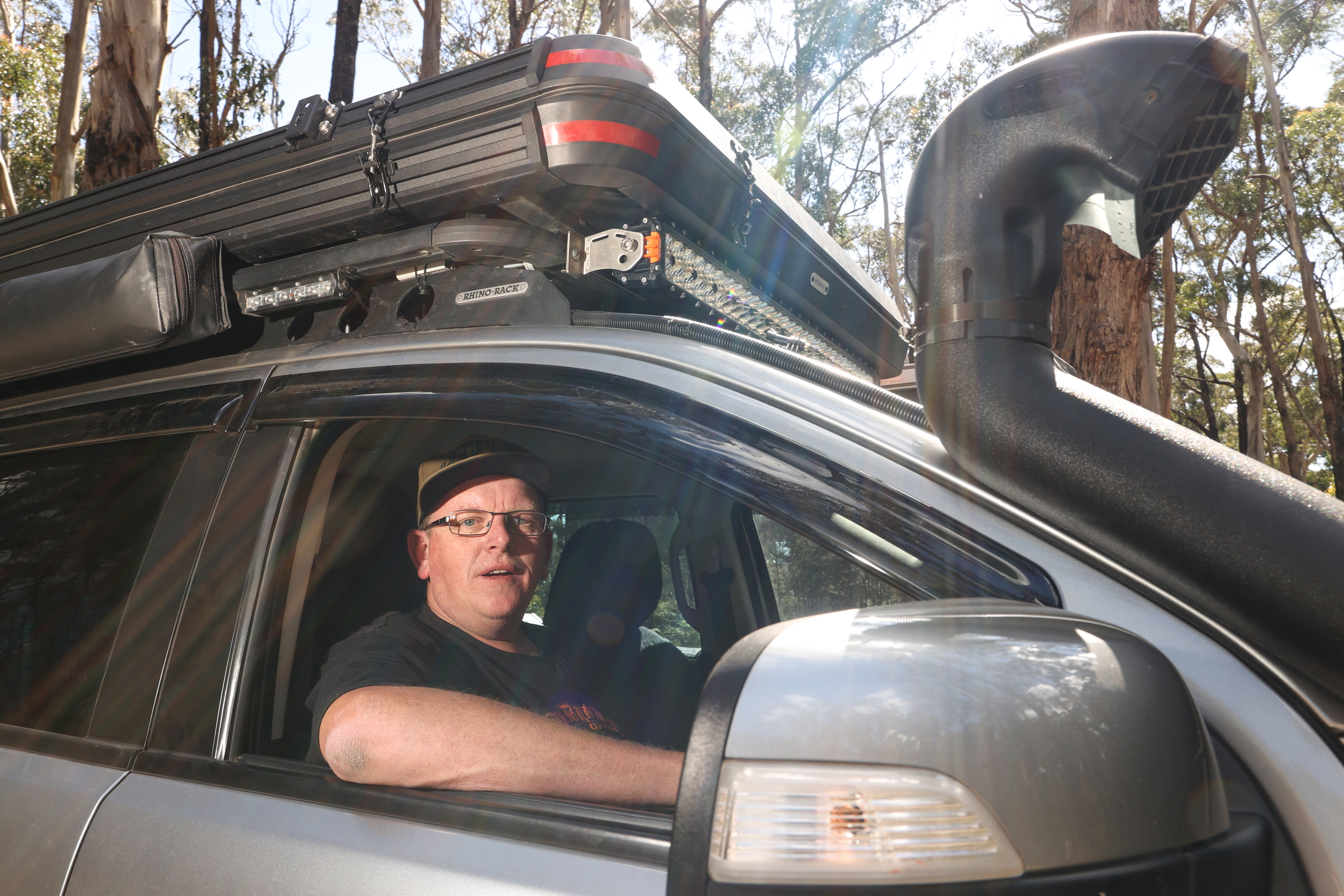
Back outside and beneath the bonnet, Henk’s gone to town here as well. A Safari snorkel sucks clean air through a pre-filter before the 3.2L five-cylinder takes over. It’s been hot-rodded with a tune from BPT Motorsports and the whole affair is controlled by a windscreen-mounted controller, giving Henk all the data he could ever dream of. That unit also tidies up the six-speed auto’s shifts.While the spanner roll was out, a handful of handy mods also got the nod. Under-bonnet LED lighting makes roadside oil checks easier, while a catch-can and diesel pre-filter ensure the Duratorq engine is fed a healthy diet. Under the bonnet and Henk’s also managed to cram in an air-horn set-up, upgraded diff breathers, and even a GPS tracker so he’ll always know where his pride and joy is.Right out of the gate, the Everest is one of the most capable 4x4s in its class. Plenty of articulation from the solid rear end combines with smart tech, giving bulk traction. But Henk’s managed to build on that foundation and take things to a new level. There might be other Everests out on the tracks, but very few will hold a candle to this do-it-all rig.
Ford Duratorq engine
WITH more than 300,000 units on Aussie roads, Ford’s Duratorq engine has been a massive success. The combination of the naturally smooth nature of a five-cylinder compared to a four-cylinder, as well as the added displacement as one of the biggest engines in its class have the 3.2 Duratorq as a bit of an oddity in a world dominated by sub 3.0L four-cylinders. But that’s not the only weird thing. While mostly known for powering Rangers, Everests and even the occasional Transit van, they also power trains.Linked together to push out up to 800 combined horsepower, the 3.2 Duratorq is used in the UK to power diesel-electric 230 Class trains at a hefty 20 to 30 tonnes apiece. TD42 Nissan owners might like to claim their diesels were designed for motoring mammoth forklifts around freight yards, but it’s hard to argue that lugging trains around the countryside isn’t more impressive.
Sometimes, the best 4×4 accessories are the ones you don’t notice – the ones that fit like a glove, don’t cause any issues and just work as they should.This is how I feel about the most recent addition to the 4X4 Australia D-MAX: the MSA 4×4 towing mirrors I bolted on before our most recent trip to Outback NSW.We wanted to fit a set of towing mirrors to the vehicle, because our D-MAX needs to do a bit of everything and do it well. Towing camper trailers or vehicles on a car trailer is all in a day’s work, so I wanted to be prepared.
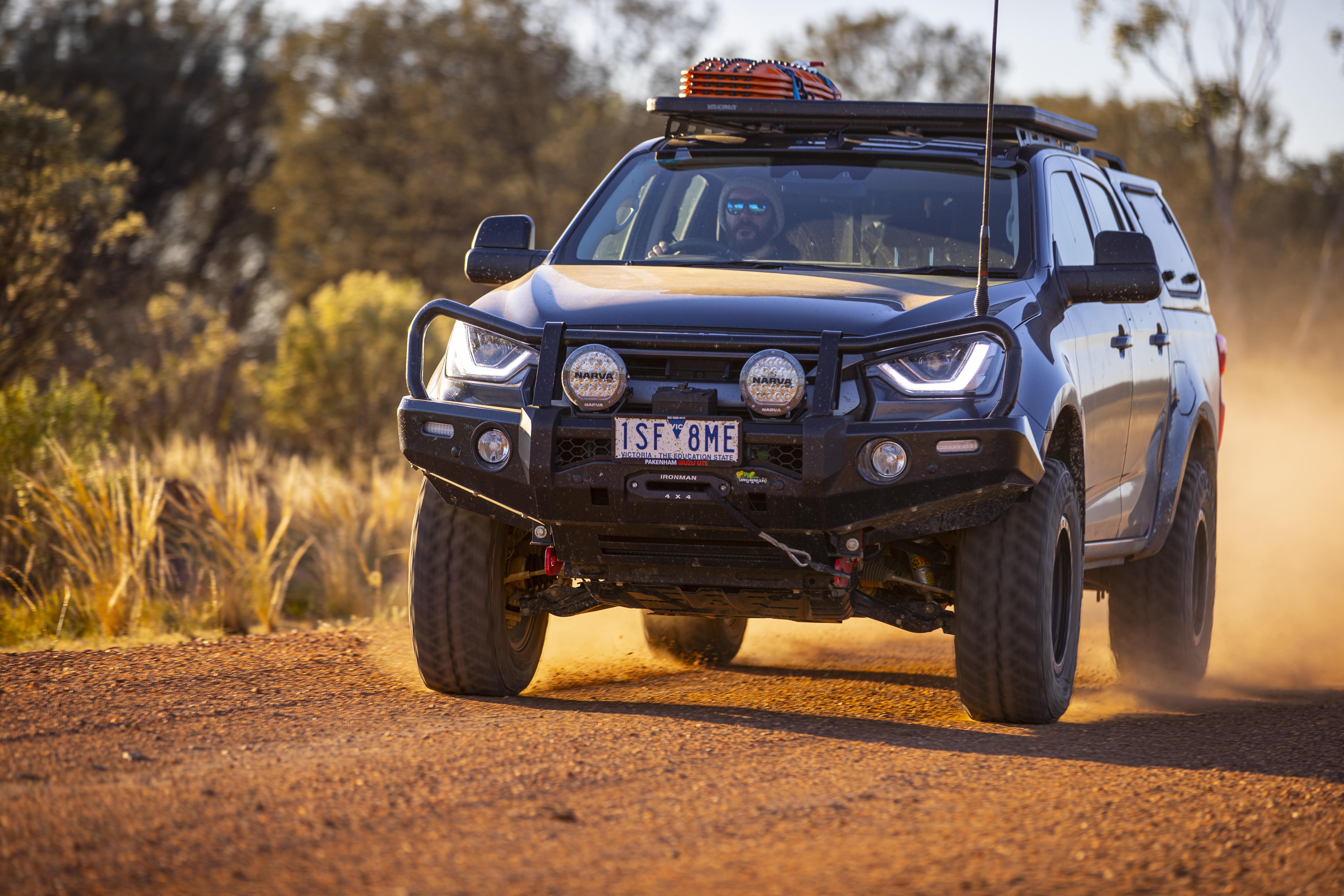
Installation was fairly straightforward, despite being slowed down by hidden screws on the factory door cards – a quick Google search helped us here. Once you work that out, it’s as simple as removing the door card, unbolting the factory mirrors and wiring, and bolting on the new MSA 4×4 mirrors. Then just connect the factory wiring to the MSA mirrors and put the door card back on. All in all, it took me about 45 minutes from start to finish. What I like about these mirrors – as they look like a factory fitted item – is that they don’t stick out or look out of place. They also work with all the Isuzu sensors, so all factory features stay in place.
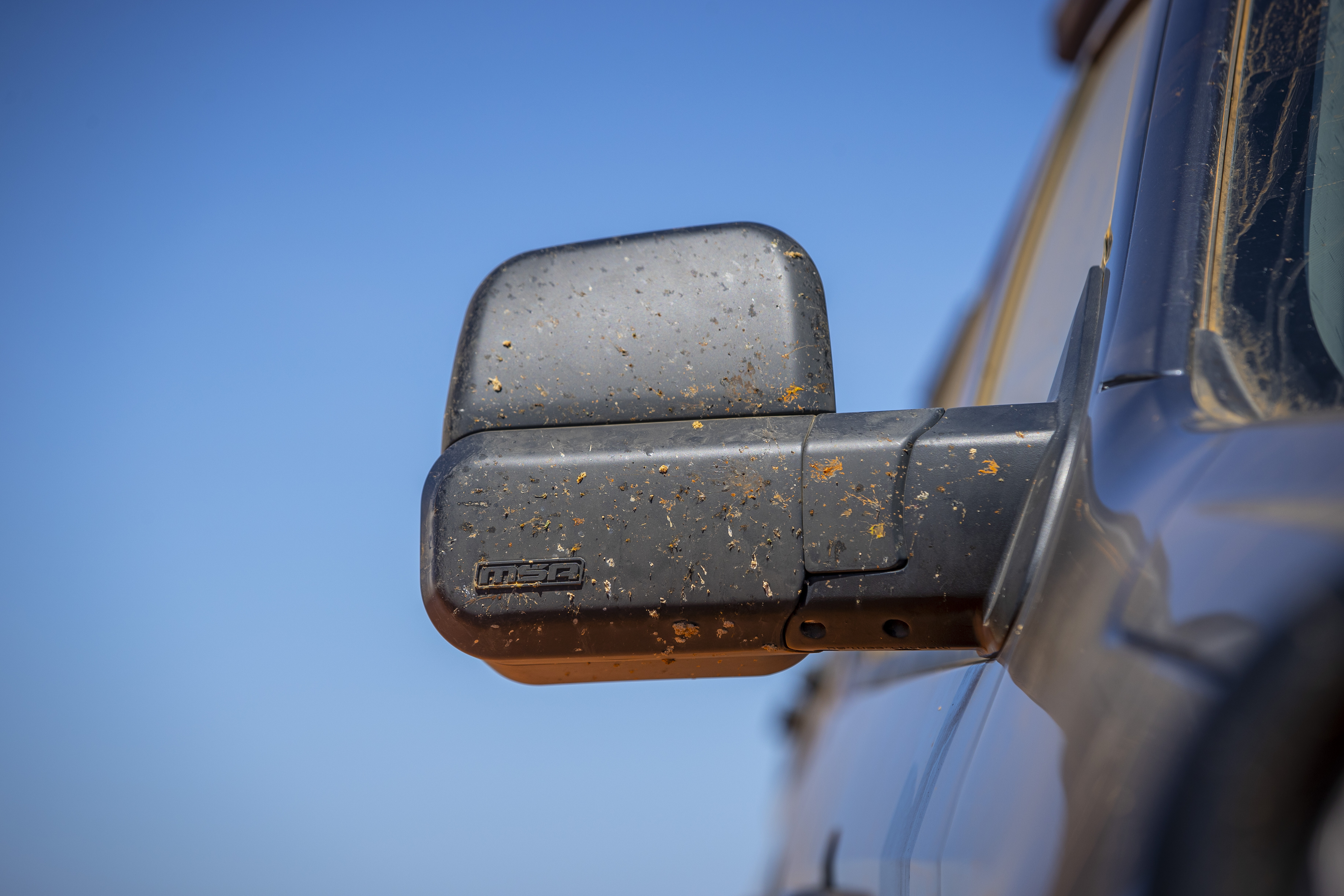
To operate them for towing duties, simply flip them, slide them out and you’re away. When you are done towing for the day, push them back in and flip them back to where they were, and job done.These MSA towing mirrors to suit the current model Isuzu D-MAX set us back $887 not including freight (which will vary). If you can’t find your elusive socket set, budget between $100 and $150 to have them fitted.
AVAILABLE FROM: msa4x4.com.au RRP: $887, for our LS-M 2020 D-MAX (plus freight and fitting). WHAT WE SAY: Looks like a factory item; are simple to use and install.
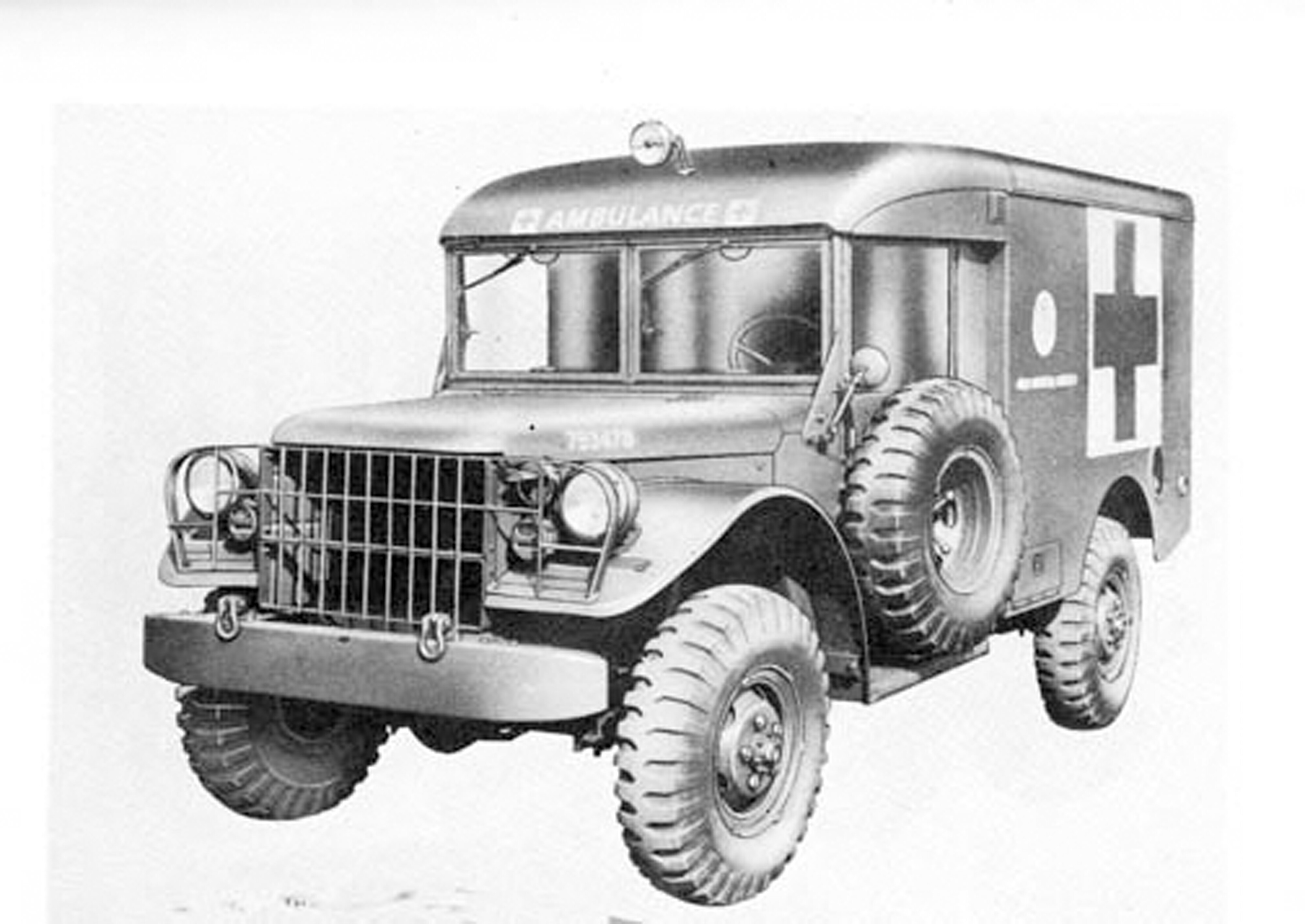
When you come head-to-head with a behemoth M43 on a one-lane suspension bridge in the middle of nowhere, one must reflect on the proverb ‘might is right’.This was the case when we ran into Lucky Hilmanofski and this ultra-cool, Korean War era overland ambulance in the Northern Sierra Nevada. He hit the gas and we hit reverse. Fortunately, I’ve known Lucky for years (yes, that’s really his name) and he was just messing with us, as a dedicated jarhead will do.Introduced in 1951, the M43 was the ambulance variant of the M37 Power Wagon, which in turn was a redesign of the battle-proven World War II era Dodge WC Series.
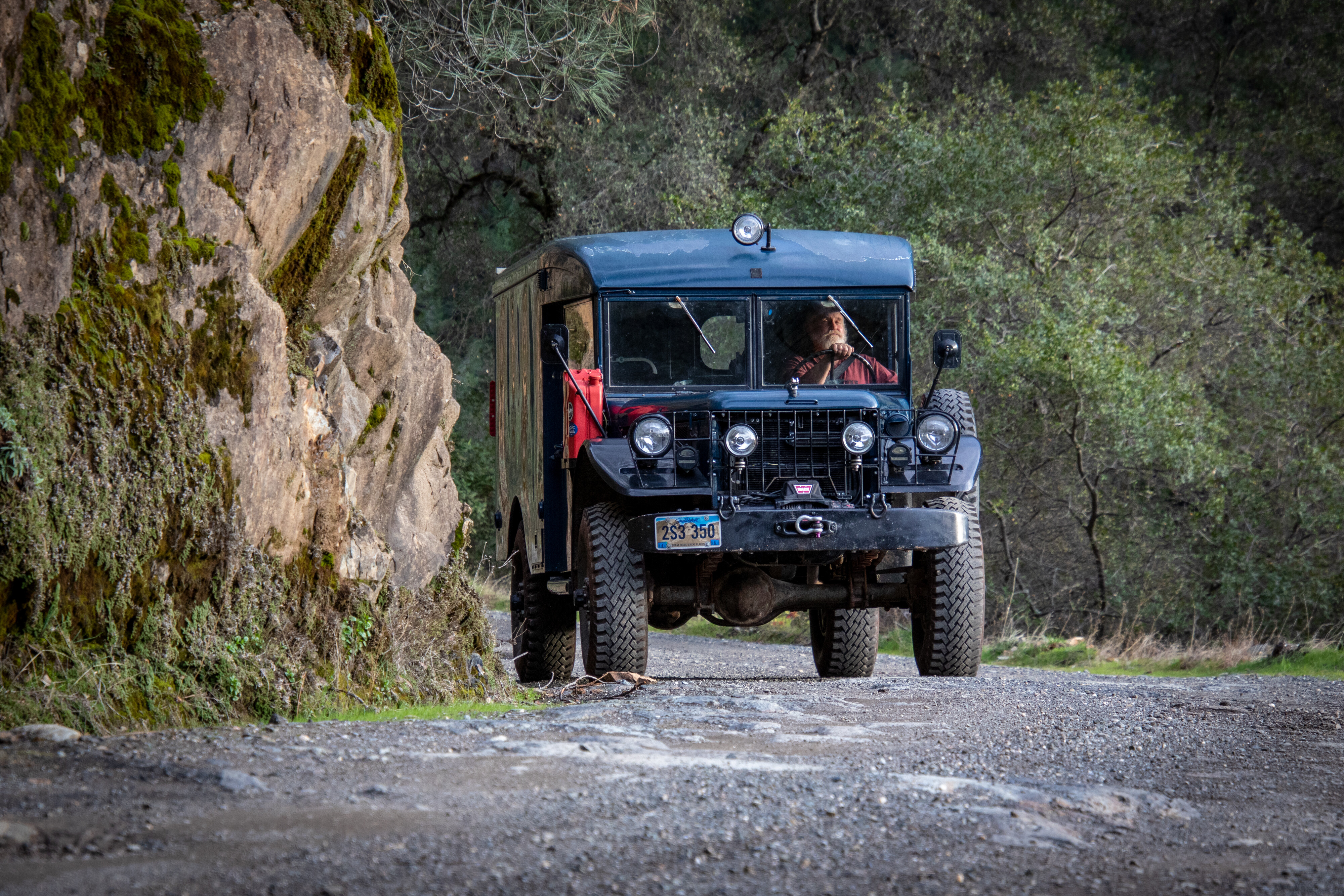
Gearing up to take on communists on the Korean Peninsula, six prototypes were produced in mid-1950 for testing and the first of these snub-nosed workhorses rolled off the assembly line in December. With live front and rear axles, a 230ci in-line six-cylinder engine, New Process four-speed transmission, and a PTO winch, they were tough as a pitbull and mean as a hungry hyena.In short, the M43 Power Wagon was a purpose-built war machine. This fine specimen is one of 11,000 that went into service in 1951.
Back story
When Lucky, a former US Marine paratrooper and motor-pool mechanic, and his wife Cindy decided to retire, sell the farm and move to Baja, Mexico, they knew they would need a rugged and reliable vehicle to explore the region’s backcountry.Having purchased his first Dodge at age 21, a 1975 W100 four-wheel drive, Lucky became a lifelong Ram guy and knew their ‘overlander’ would need to be a Power Wagon of some type. When he came across this bone-stock ’51 ambulance, save the Air Force Blue paint job, it was a match made in the trenches.While ‘bone stock’ and its ultra-clean condition were selling points, this also meant there was a 78hp six-banger under the hood, which wouldn’t do. And then there were the 70-year-old axles, well-worn transmission, and a cargo box configured to transport injured soldiers rather than a place to call home. Being handy with a wrench and welder, and with a hankering to tear motors and gearboxes down, the aforementioned issues were non-issues.
The plan of attack was to source his preferred mill, an early ’70s Dodge 318 V8, and give it a thorough rebuild from the oil pan up. This included tossing the carb in lieu of Holly Sniper fuel injection, converting the original 24V electrical system to 12V, and adding a 120amp alternator.Keeping the system cool is a Champion aluminium radiator assisted by a trio of Derale electric fans, and twin Optima Yellow Top deep-cycle batteries energise the entourage to life. Drivetrain selection would be a New Venture 4500 five-speed manual transmission with a granny-low first gear (5.4:1) backed by a New Process 200 transfer case.The original Chrysler 9.625-inch axles were suited for the Power Wagon’s substantial mass (3243kg kerb weight), but were rebuilt with 5.83:1 ring and pinion gears, new bearings, and Branik Motorsports chromoly rear shafts. Old-school 14-inch drum brakes cap each corner, while American Specialty Superlug tyres and 16×6.5 OE steel wheels keep it rolling down the trail.
Walk-around
If old military rigs exude character, the M43 hits the mark in spades. Up top is the original driver-controlled spotlight, the spare tyre is mounted on the driver’s door, and black-out lights complement a pair of hefty OE head lamps on the bumper. The original red flashing light had been removed from the top of the cab … but who wants that kind of attention in a combat zone?What you won’t find is an abundance of plastic trim, chrome accents, Silly Putty-soft body panels, or aerodynamic sculpting. A close look at the grille guard reveals handcrafted workmanship replete with splatter beads from the welder – remember, they were cranking these things out for war rather than a beauty pageant.
In short, the M43 Power Wagon was built to fight back. Pound on one of its rugged steel fenders and you’ll draw back a bruised hand. Did I say, no chrome? I digress. Ram’s mascot, a chrome-plated bighorn, is perched proudly on the hood ready to lead the next charge.Glancing down the side, we find storage bins tucked in behind solid steel doors, and out back are standard-issue MaxTrax, a Hi-Lift jack and shovel. Complementing the stock steel bumpers are auxiliary back-up lights, D-ring recovery points, and the original drop-down rear step. Up front is a set of KC Daylighters and a Warn VR 12-S recovery winch wrapped in synthetic rope. Extra supplies, water and fuel can be stored up top on the roof rack, which doubles as an elevated party deck for afternoon margaritas.
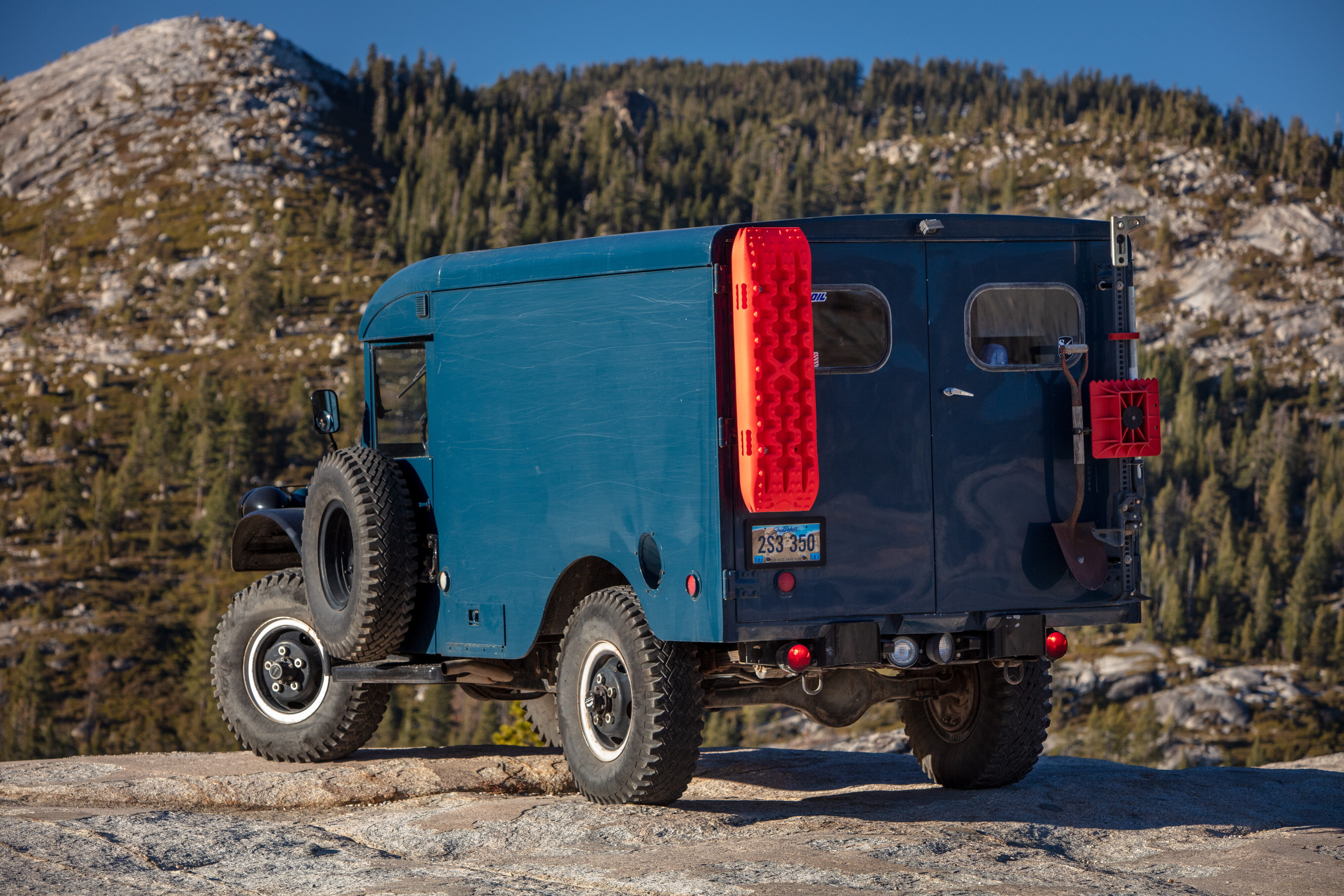
Swinging open the heavy steel door and sliding behind the wheel, some might consider the amenities rather austere, but closer inspection reveals a great deal of forethought in its design. A piano hinge at the roofline allows the split-pane windshield to swing open for a blast of fresh air on hot Baja days.
Augmenting this is an aftermarket AC system from Vintage Air and dual 12V fans. Clunky but functional OE toggles control interior and exterior lights, and a full array of Stewart Warner gauges keep the driver apprised of system vitals.On the dash, a host of original metal plaques provide data on vehicle specs and payload, and how to operate the four-wheel drive systems. The factory through-floor pedals were upgraded with swing-style hydraulic versions, and an assortment of shifters manage four-wheel drive. As for the windows … no power actuators to fail here, just manual fix ’em anywhere crank jobs.
Interior
Lucky is the kind of guy who can sleep in a fox hole and wake up with a smile on his face, but Cindy prefers a few more creature comforts. We are not talking about a wine bar, granite counters and a full-size shower, but it would need to be a functional abode with all the basics.The ambulance bunks were traded for a queen-size Murphy bed, allowing for walk-through convenience or hauling one of their Rokon motorcycles. Above and to starboard is a large storage locker for sundries, a mess kit, utility area and Coleman dual-fuel stove. Beneath the bed we find tools, recovery equipment and personal effects.
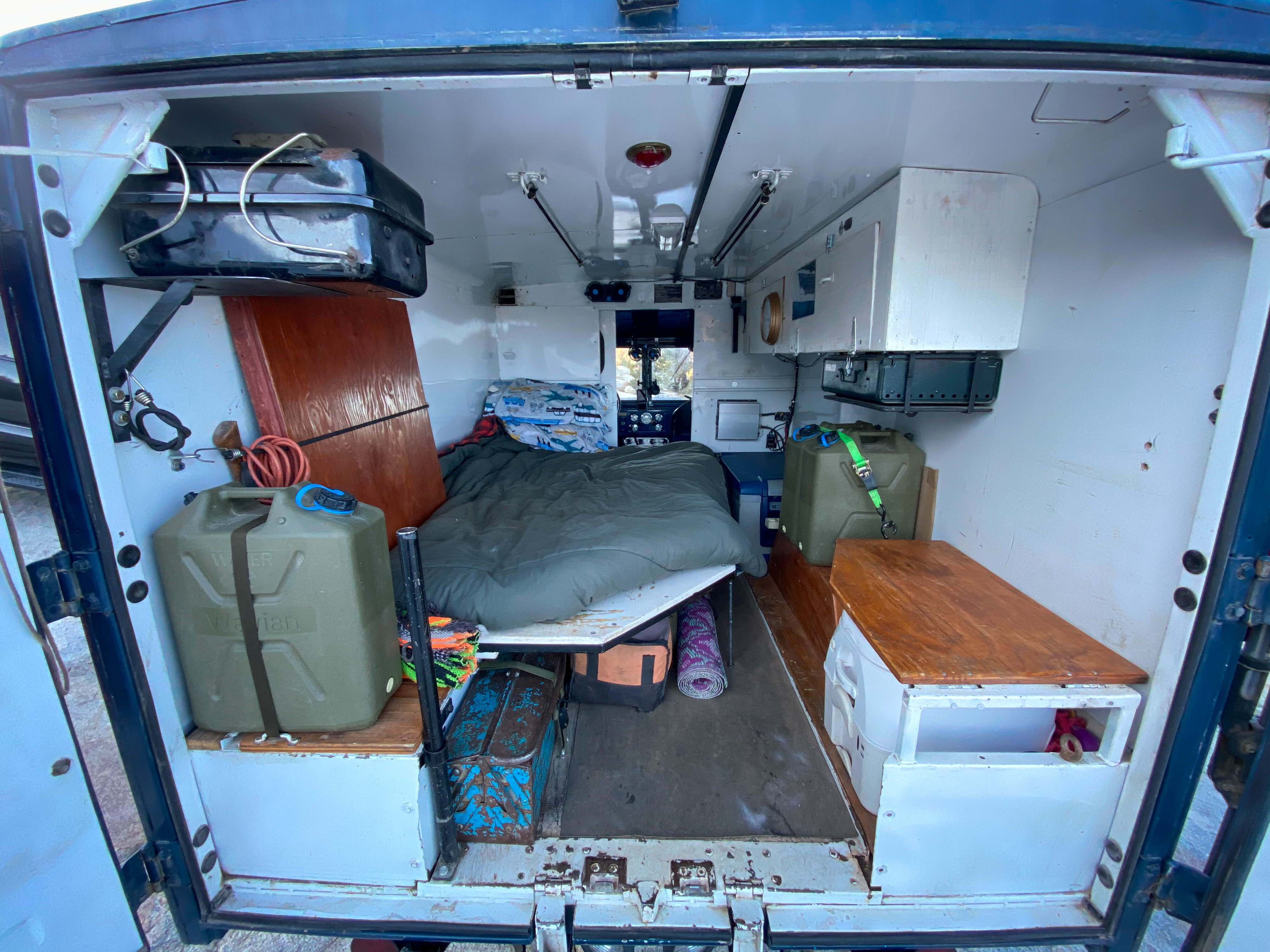
The rear ‘sofa’ (a plywood bench) doubles as a cover for the latrine, a canister-style porta-potty. There is also a Weber barbecue, portable table for outside dining, and 56.8L of reserve water. As a former ambulance, the back was prewired for medical equipment, which allowed for easy installation of a 2000W inverter, ARB fridge-freezer, power strips and other accessories.At the end of the day, this voluminous living space beats the heck out of setting up a ground tent or digging a fox hole. What else could a pair of hearty campers need?
Wrap-up
We caught up with the travelling duo as they were wrapping up a three-month recce exploring the ghost towns and silver mines of Northern Nevada.When asked the why he chose an M43? Lucky said: “I just like ’em! It looks cool and is different … a really patriotic vehicle. It is surprisingly comfortable to ride in, you can sleep in it, and even live in it. This has been our home for several months at a time.”He continued: “The Power Wagon will go just about anywhere except really deep sand, and I can fix almost anything that goes wrong with basic hand tools I carry with me.”
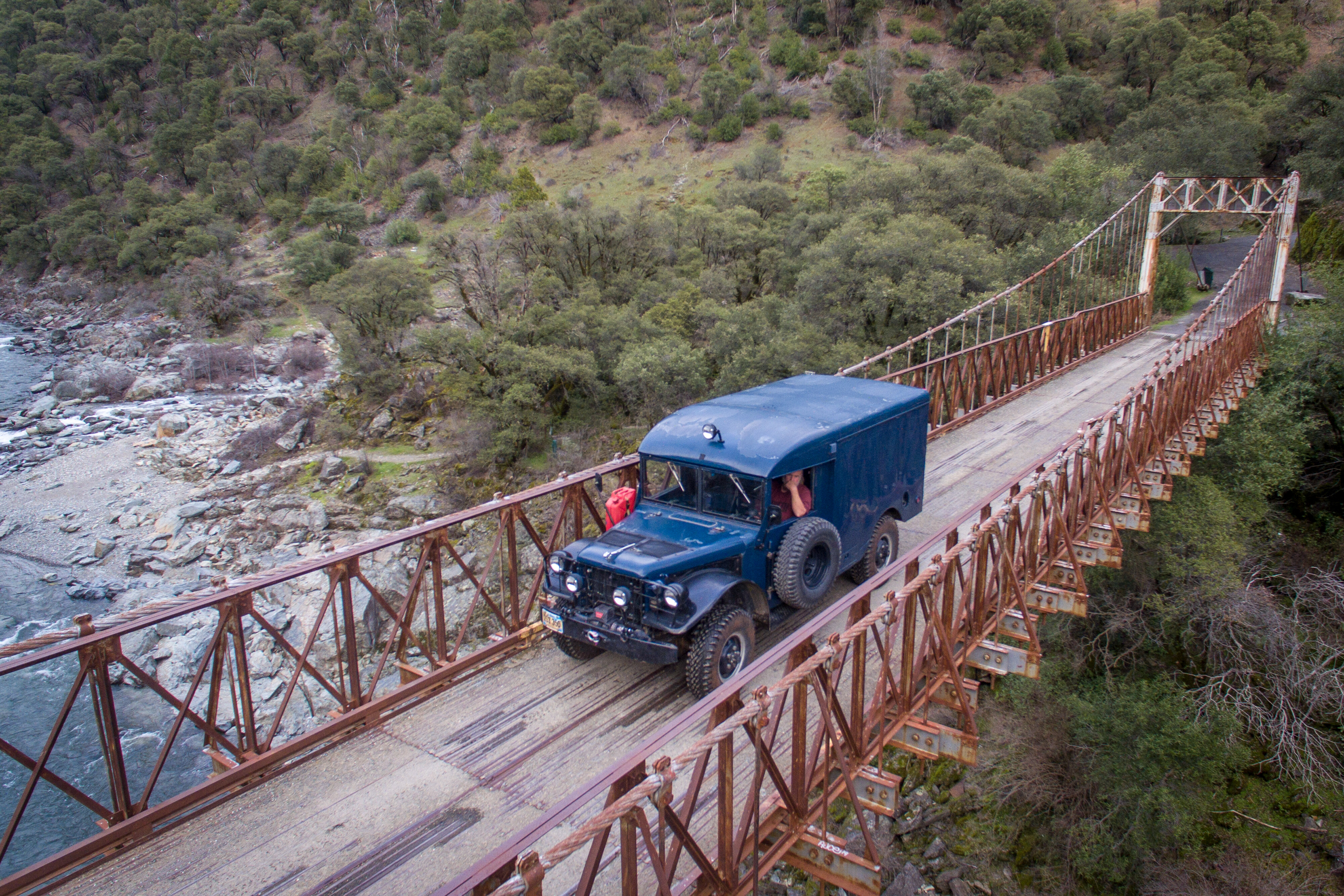
When asked if Lucky was his real name he said: “I was born 7 pounds 11 ounces, and 21 inches long. Those are lucky numbers for blackjack and craps players, so my dad named me Lucky.”So, what is next on the horizon for a 70-year-old ambulance and a couple of ex-pat retirees? The M43 will be getting an ARB awning, solar panels up top, and a full-width rear rack. As we said our goodbyes, Lucky and Cindy were pointing the wheels south down the spine of the Sierras, back to Baja to search for an all-dirt route along the southern peninsula to their home on the East Cape.
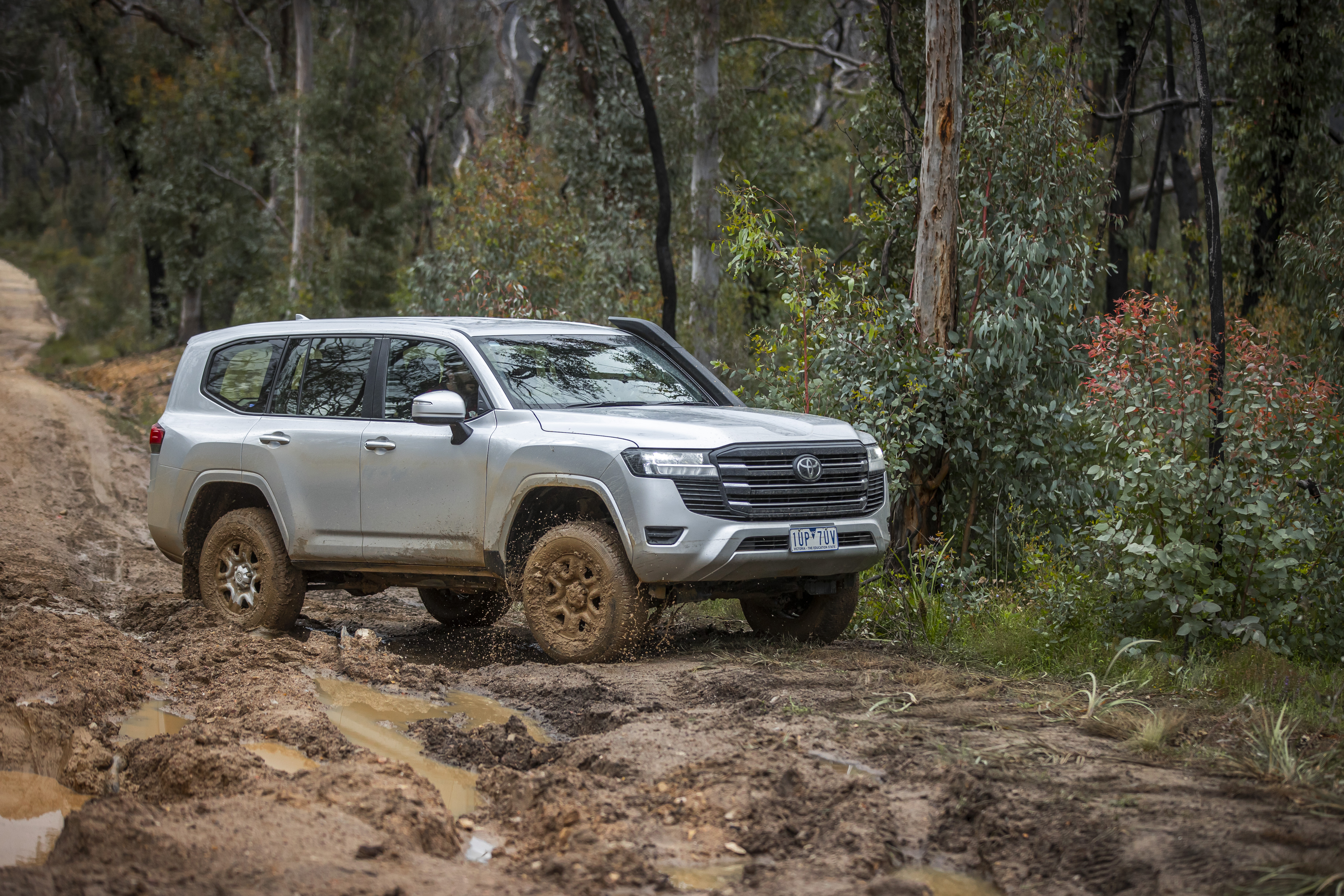
The 300 Series LandCruiser certainly has been getting plenty of attention in recent months, and for good reason.
It’s the first new LandCruiser in 14 years, and that’s a big deal. It’s also not a 200 Series LandCruiser anymore, which seems to have upset some people who think the V8 engine used in the 200 was the best thing since free cold beer on a hot day. I liked the 200 Series, I really did, but the 300 is better – it certainly hasn’t revolutionised the off-road game, but it’s a more refined vehicle overall.
UPDATE: 2022 4X4 of the Year
March 31, 2022: Hey, before you go on, you also should know which 4X4s are our top picks for 2022. Read our 2022 4X4 of the Year stories at the link below!
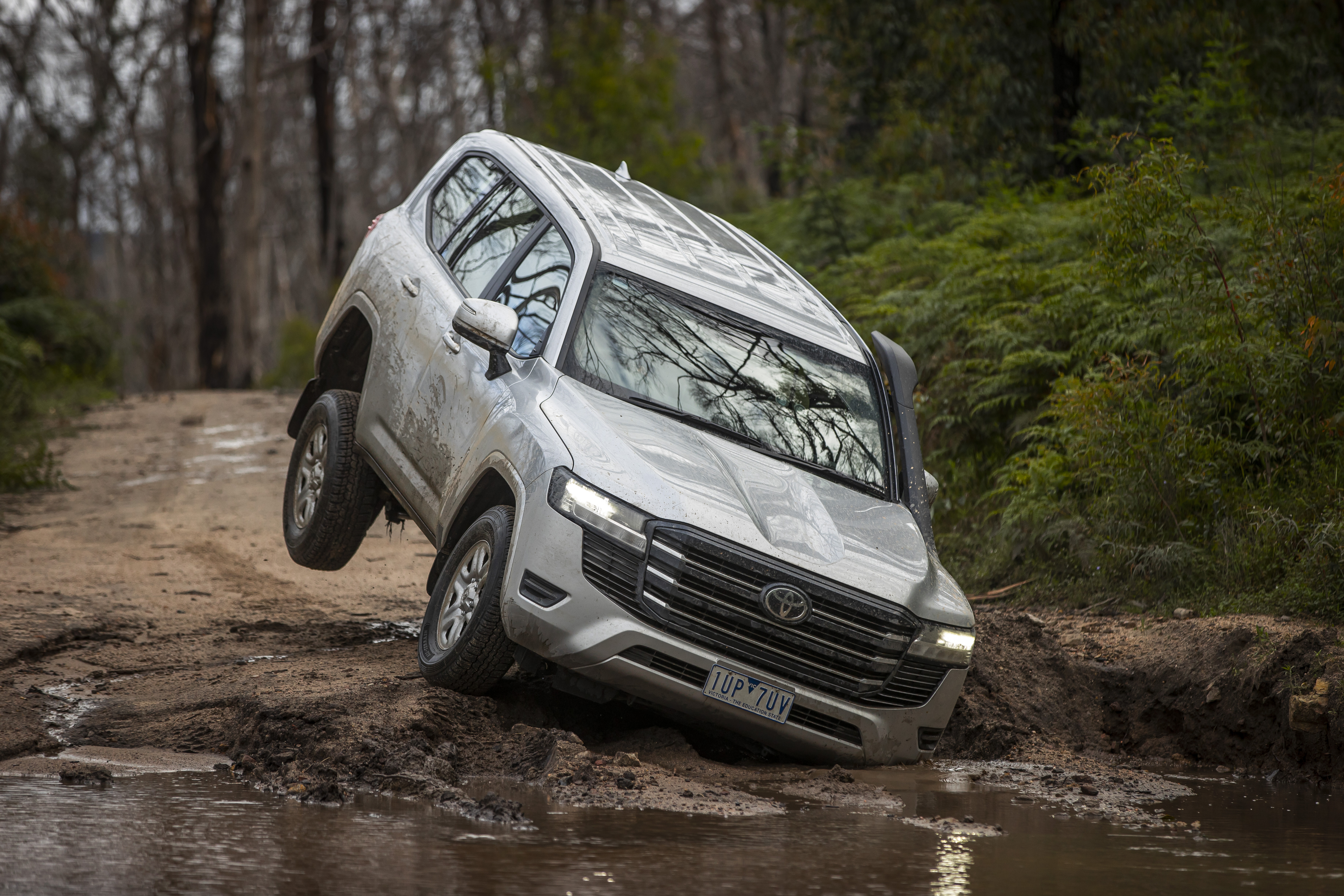
Speaking of refinement, today’s objective is to look at the lowest spec LC300, which is certainly not what anyone would call refined. The purpose of this exercise isn’t to debate whether the 200 Series is better than the 300, we’re just here to see if the lowest-spec (GX) 4×4 in the 300 Series line-up is worthy of your hard-earned dollars.
Is it too basic to live with daily? Should you spend an extra (nearly) $12,000 jumping up to the GXL variant? On the flip side, would it be a wise call to pocket that $12,000 and use it for aftermarket (or genuine) accessories and buy the GX instead? Enough with the questions, it’s time to get some answers on the GX.
Powertrain & performance
Toyota ditching the old V8 in favour of a twin-turbo V6 is big news. It shouldn’t be though, as the V6 is a stout performer. It pulls well through the rev range and feels particularly peppy in the mid-range. Low-down torque is tractor-like when crawling off-road, and it even sounds good when being pushed.
The motor in question is a 3.3-litre V6 twin-turbo diesel engine producing 227kW at 4000rpm and 700Nm from 1600 to 2600rpm, an increase of 27kW-50Nm over the V8 found in the 200 Series. It doesn’t matter which LC300 variant you are interested in, as you get the same engine and gearbox across the entire range.
The V6 is mated to a 10-speed automatic gearbox, which shifts smoothly and without complaint. It also helps reduce fuel consumption, with this GX returning an average of 11.5L/100km when tested over a variety of terrain (highway, urban and off-road) during the space of a week.
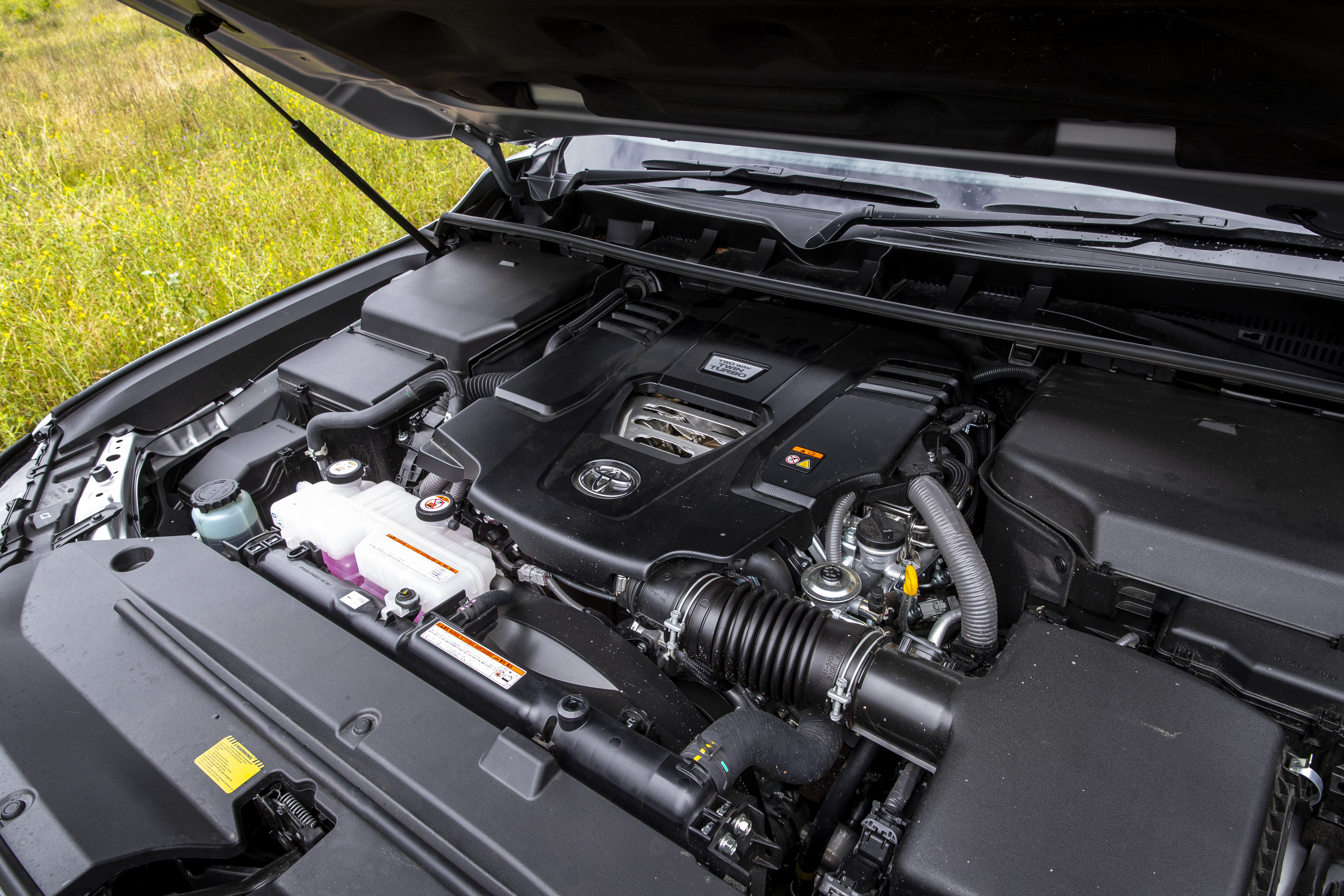
My main complaint with this package is from a visual point of view – it looks complicated to work on. When you lift that engine cover, the engine bay is messy and I’d imagine it would be a nightmare for mechanics. It will certainly be an interesting few years getting to know this engine package, finding where its strengths and weaknesses lie.
One such weakness is the location of the alternator. You can see it through an opening in the driver’s side wheel arch. While it’s a massive 200amp unit, which is impressive, it sits so low there’s no way it won’t cause issues down the line if you enjoy driving in mud.
There’s now also the more complicated water-to-air intercooler system, which adds additional components that could fail compared to the fairly bulletproof air-to-air top-mounted intercooler found in the 200 Series. Time will tell if that was a good call from Toyota.
On-road ride & handling
I had the opportunity to drive the GX during a week of extremely heavy rain and fog – utterly miserable conditions, basically. Despite this, I was impressed with how well-planted the vehicle is, and at no stage was it a handful to pilot in these lousy conditions. It gripped to the road with utter tenacity, and handled confidently no matter where I was driving, even at highway speeds on winding Blue Mountains roads.
One night coming home from an event in the city, on a particularly misty evening, the headlights really struggled to do their job – I actually got out of the vehicle to see if they were on. This is a major disappointment in an otherwise solid package. Aftermarket spotlights would be damn near mandatory if you needed to cover any rural kilometres in the GX once the sun went down.
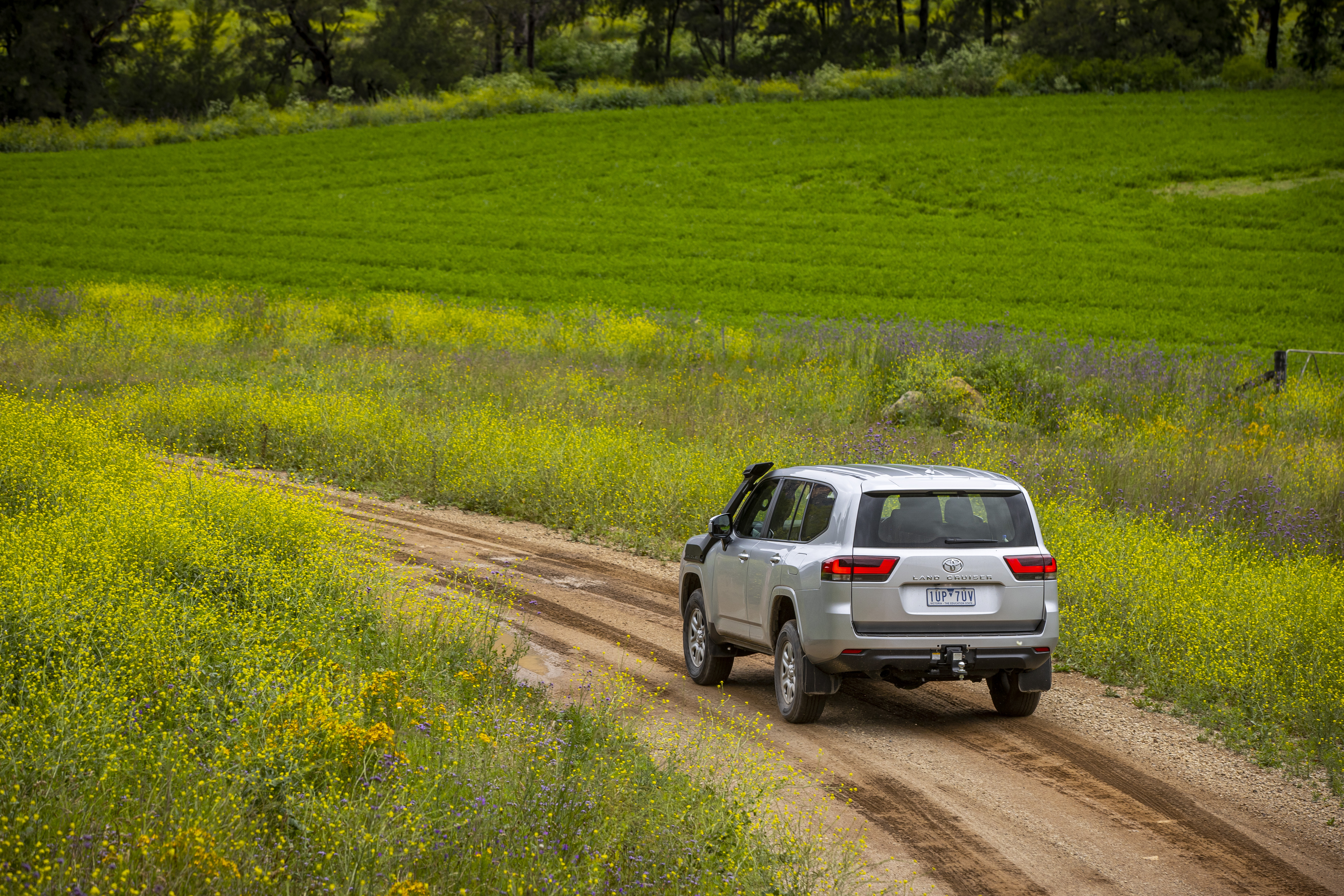
On a more positive note, the coil-sprung suspension performs brilliantly, with a firm yet progressive feel. Steering is also nicely weighted and direct for such a large wagon – full points there.
I’d happily drive the GX on a lap of the country in a heartbeat, and I don’t think I’d be longing for leather seats or a more luxurious interior at all in that time. Sure, it’s basic but in no way does the GX feel cheap.
Off-road
Don’t be fooled by the piece of plastic hanging from the passenger’s side guard. It’s not a snorkel, despite Toyota calling it so in their spec sheet. The GX comes standard with this raised air intake, and from our investigations it is really poorly sealed.
I’d definitely look at installing a proper aftermarket snorkel if you plan on taking a GX off-road, or at very least spend $20 on a tube of sensor-safe silicon and really ‘slaz’ (that’s a real word, I promise) it up properly.
With that small rant out of the way, the GX LC300 performed admirably on test through the Capertee area of NSW. Suspension travel, especially from the live rear axle, is impressive, and the traction control system is super responsive and I really enjoyed using the Crawl function on steep descents.
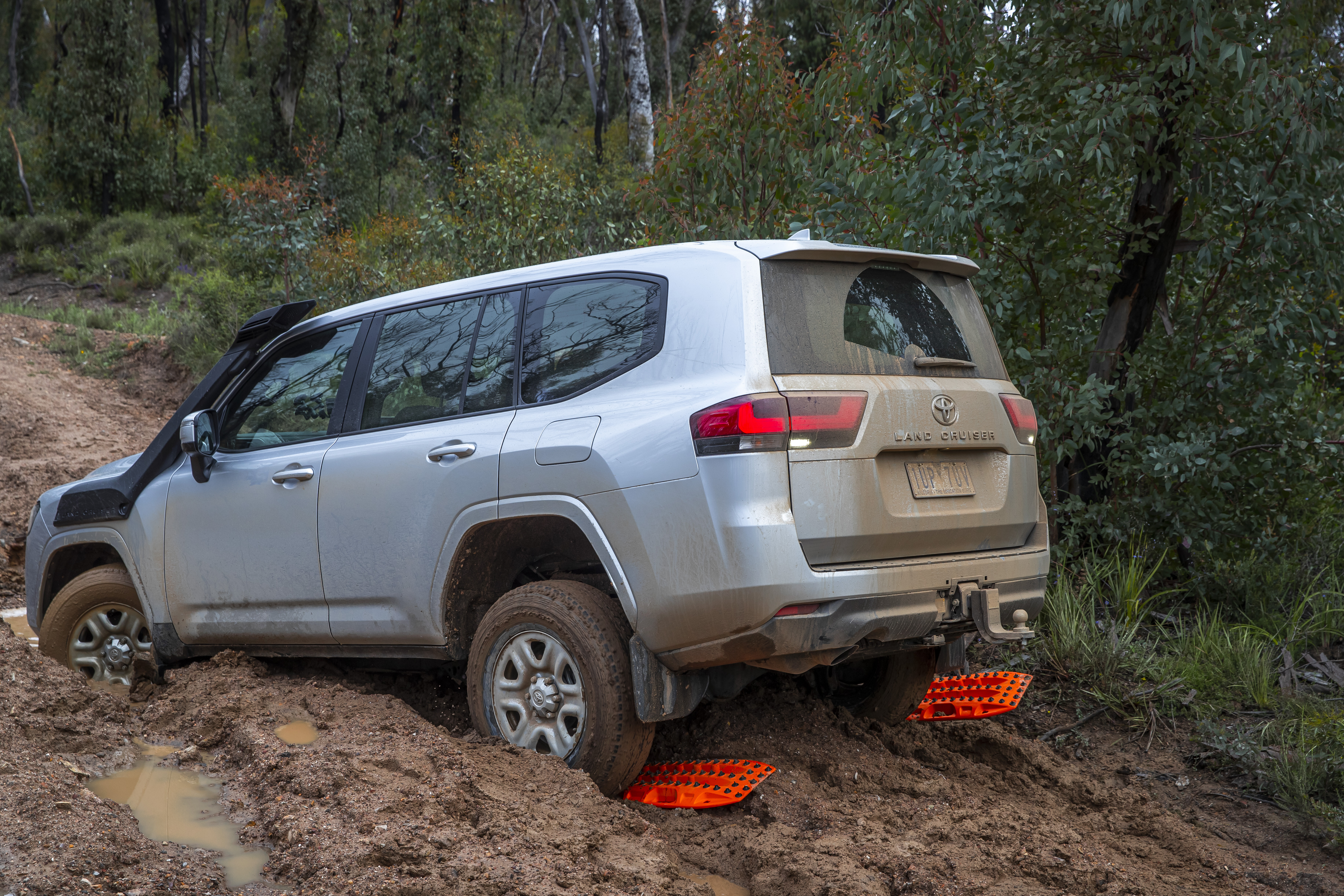
It was jerky and unpleasant to use when it first came out, but Toyota has dialled it in with the 300 Series. It’s a useful tool for those new to 4WDing, as well as experienced operators, allowing you to control the speed of the vehicle in increments by simply turning a dial.
It is also great to see off-road-friendly 17-inch wheels on the GX; they are a good quality steel wheel too. However, the 245/75R17 Dunlop tyres fitted were the biggest let down, as they struggled on the wet, muddy tracks we were exploring – they are road-biased tyres, at the end of the day.
A set of quality off-road light truck construction all-terrain rubber will transform the off-road ability of any LC300. It would be the first thing I’d upgrade.
Cabin & accommodation
Inside you are greeted with vinyl flooring and five (no seven-seat option in the GX) cloth seats, both inclusions I’m a fan of in a four-wheel drive. The dash layout is similar across the LC300 range, but you do notice more hard plastics and less features in the stripped-back GX model.
There is a distinct lack of USB points in the GX, which is a minor gripe but an important one, with only one USB and one USB-C in the front. There are no USB points in the rear, but there is a 12V cigarette plug – I would recommend buying a simple adaptor to convert that to USB.
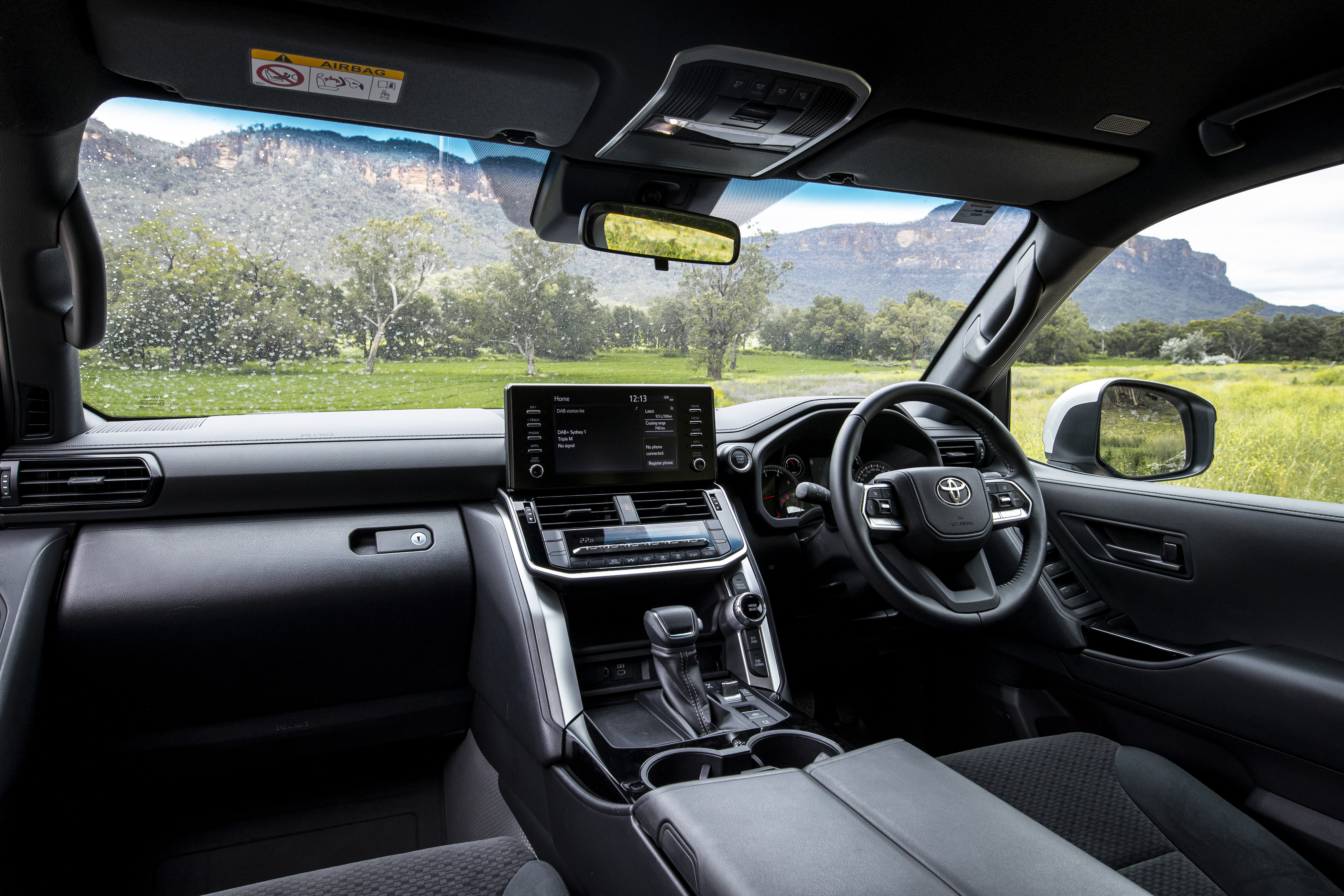
There are six cupholders, 10 airbags, dual-zone automatic climate control and an electric park brake (boo). The infotainment unit is basic and small in size, as you’d expect in a base model – but it has a few tricks up its sleeve such as six speakers (which sound pretty good), Bluetooth compatibility, voice recognition, and Apple CarPlay and Android Auto compatibility.
At the back of the GX you’ll notice a one-piece lift-up rear tailgate, which isn’t a great idea. By design, it sits very low when opened. I complained about this with the new Isuzu MU-X, but the 300 Series is worse – you will hit your head on it if you aren’t careful. I definitely miss the split tailgate found on previous Cruisers, a practical place to make a sandwich, or to sit on and watch the world pass by.
Practicalities
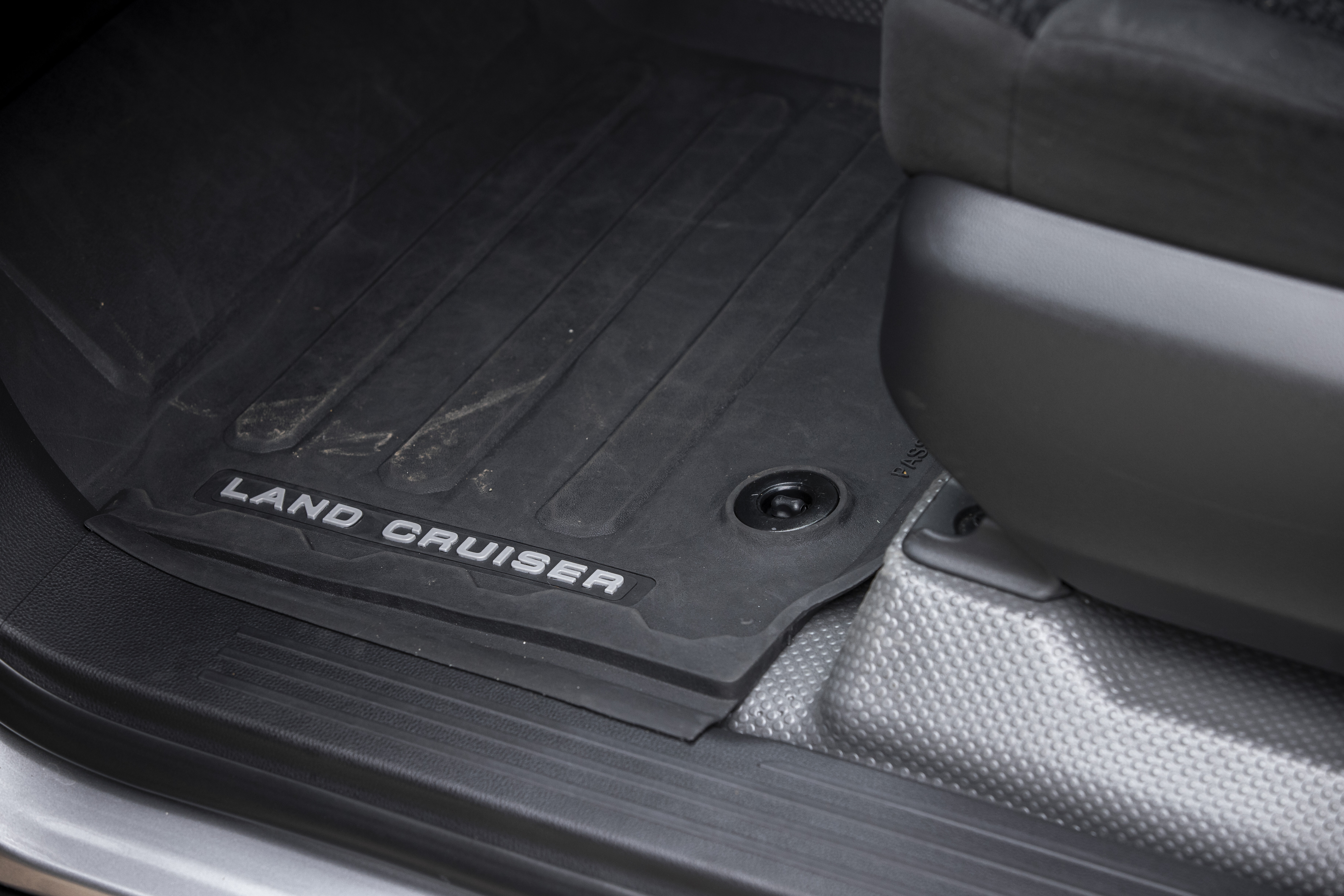
It doesn’t really get more practical than a large four-wheel drive wagon with vinyl flooring and rubber floor mats, and there’s ample space for all occupants and their cargo. Thanks to the lower weight of the GX, payload capacity is the highest in the LC300 range, with 785kg to play with.
The seats are basic but comfortable enough for long stints behind the wheel, and there’s plenty of headroom for taller drivers.
Maximum towing capacity is 3500kg, as you’d expect, and it’s safe to say many people will buy the 300 Series to tow. This is a task the Cruiser is well-designed to handle, from my limited experience hitching up a massive Kedron caravan at the initial LC300 launch a few months back. In fact, a towing wiring harness is fitted as standard equipment, making it one step easier to set up as a hauler.
Fuel capacity is down compared to the 200 Series LandCruiser, with 110L of capacity split between a main and sub fuel tanks (80L main; 30L sub). Toyota says this is due to the more efficient V6 used in the LC300, and it’s also a quick and easy way to shave overall weight off the vehicle. By our calculations, you’d be getting just shy of 1000km before both tanks were bone dry, which is respectable.
Verdict
The GX LC300 is far from a pov-pack model and is a solid leap forward in this lower spec compared to the 200 Series. For a $90,000 vehicle though, it would be criminal to call it luxurious. It’s a workhorse of a wagon, but a modern workhorse.
You can use it as a tool and not be afraid to get a bit of mud inside. Then you can take your partner to dinner and a show in town, while enjoying the same engine and gearbox package as top-spec LC300s. You’re also lugging around less weight, and pocketing some cash in the process. There’s plenty going for it.
You do miss out on a few key items, mainly seven seats (if you need them), some safety tech, MTS (Multi Terrain Select) for off-road trickery and a few plusher interior inclusions. That’s up to you to decide if those extras are worth an extra $12,000 to step up to the GXL.
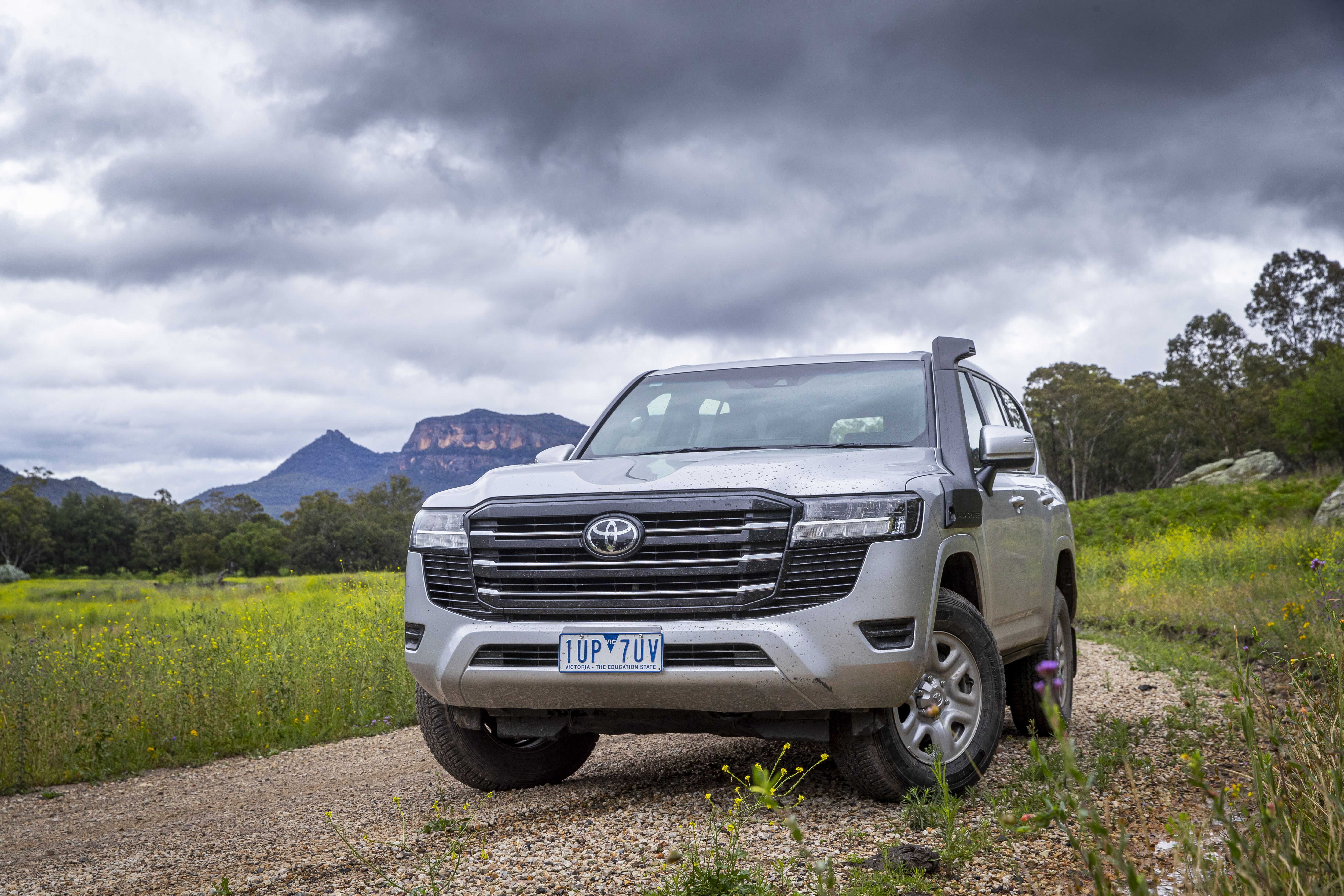
I’d be buying a GX and spending the extra money on accessories. I don’t need seven seats; I’m messy, so the vinyl flooring gets a tick; and I enjoyed the relative yet endearing simplicity of the GX. I’d be adding accessories like all-terrain tyres, a bullbar and a proper snorkel, which will see the GX LC300 getting most places you’d want to go.
I’m struggling to think of a better off-road touring-friendly wagon available off the showroom floor today, but I haven’t driven an INEOS Grenadier yet. Now, that will be an interesting comparison …
2022 Toyota LandCruiser 300 GX specifications
| ENGINE | V6 twin-turbo diesel |
|---|---|
| CAPACITY | 3346cc |
| MAX POWER | 227kW at 4000rpmu00a0 |
| MAX TORQUE | 700Nm at 1600 to 2600rpm |
| GEARBOX | 10-speed automatic |
| CRAWL RATIO | 42.62:1 |
| 4X4 SYSTEM | Full-time 4×4 w/ high/low range and centre diff locku00a0 |
| CONSTRUCTION | 5-door wagon body on ladder chassisu00a0 |
| FRONT SUSPENSION | Double wishbone independent suspension w/ coil springsu00a0u00a0u00a0u00a0u00a0u00a0 |
| REAR SUSPENSION | Live axle located 4-link rear w/ lateral control arm and coil springsu00a0u00a0u00a0u00a0u00a0u00a0 |
| TYRE/WHEEL | 245/75R17 / 17-inch steel |
| KERB WEIGHT | 2495kg |
| GVM | 3280kg |
| PAYLOAD | 785kgu00a0 |
| TOWING CAPACITY | 3500kg |
| GCM | 6750kg |
| SEATING | 5 |
| FUEL TANK | 110L |
| ADR FUEL CLAIM | 8.9L/100km |
| ON-TEST FUEL USE | 11.5L/100km |
| DEPARTURE ANGLE | 25u00b0 |
| APPROACH ANGLEu00a0 | 32u00b0 |
| RAMPOVER ANGLE | 21u00b0 |
| WADING DEPTH | 700mm |
| GROUND CLEARANCEu00a0 | 235mm |
That intro is not a mistake, the 60-litre single-zone Companion fridge/freezer we have in the back of the 4X4 Australia D-MAX will work when not plugged in to power thanks to a built-in lithium battery.
I’m rather blown away by how many features the Companion fridge has, starting with the previously mentioned lithium battery pack that is built in to the fridge. Simply charge the fridge via the supplied 240V adaptor or via 12V while travelling and you’re away.
Companion says this battery pack (which has two USB points built in, and can be removed for use as a portable power pack) will run the 60L fridge for approximately 16 hours – impressive, but in ideal conditions, I’ve had it run for as long as 40 hours when used at home as my office beer fridge.
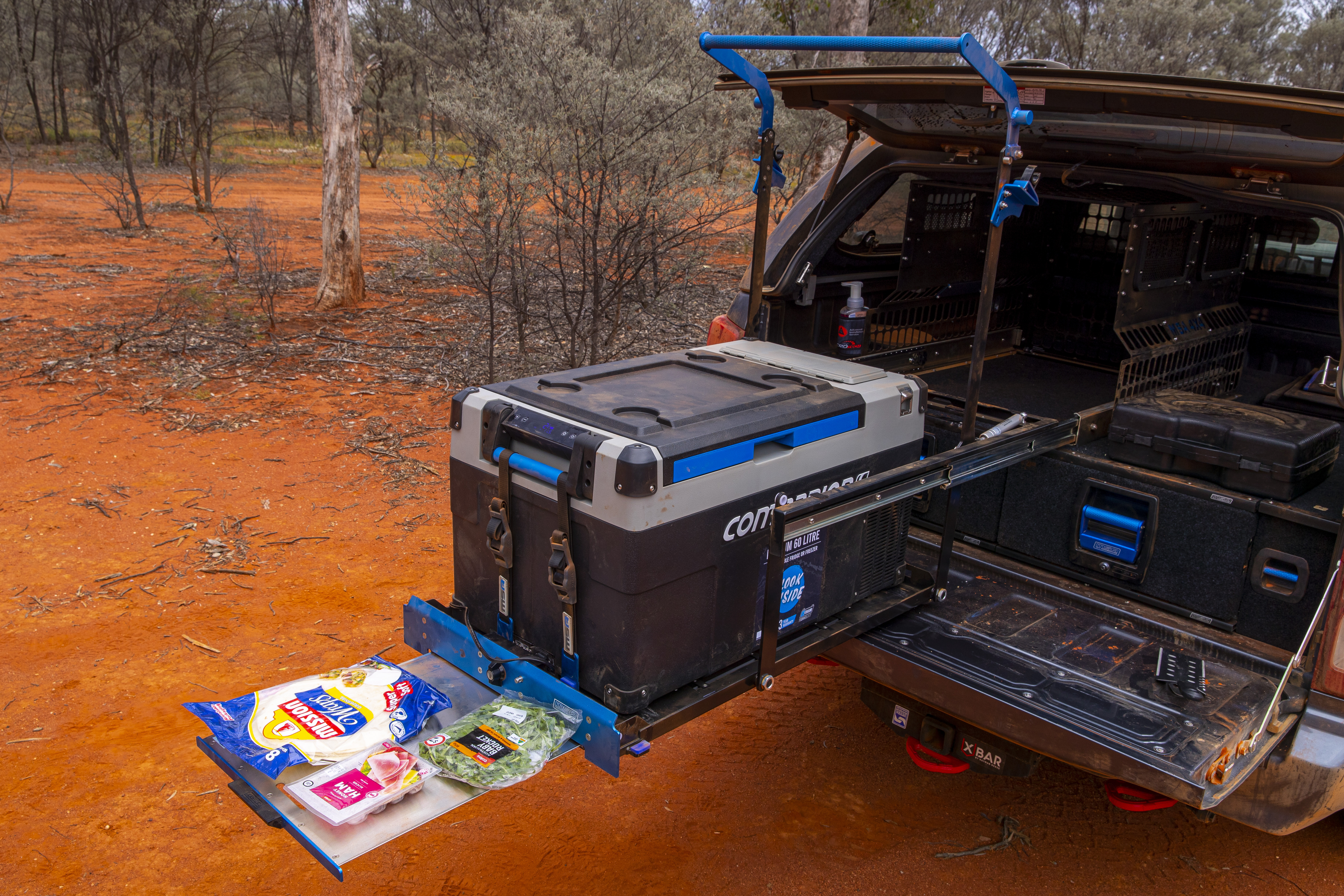
You can also connect a solar panel or blanket directly to the fridge, to charge this lithium battery for a true off-grid experience. We’ve not had to do this yet, as our fridge is powered full-time via our 100amp Invicta lithium battery, with Piranha battery tray and DCDC charger behind the back seat of the D-MAX.
With that much lithium power shared between the battery in the fridge and the D-MAX’s auxiliary battery, there’s no chance of warm food or drinks on our watch. However, if you don’t have a full-time dual-battery system, solar could be a solid option.
Other notable features include in-built bottle openers and extra USB points built in to the fridge, so you can charge devices while chilling at camp. The fridge/freezer arrived with a variety of cables too, so you don’t need to see a sparky to wire in an Anderson plug; it comes with that option already.
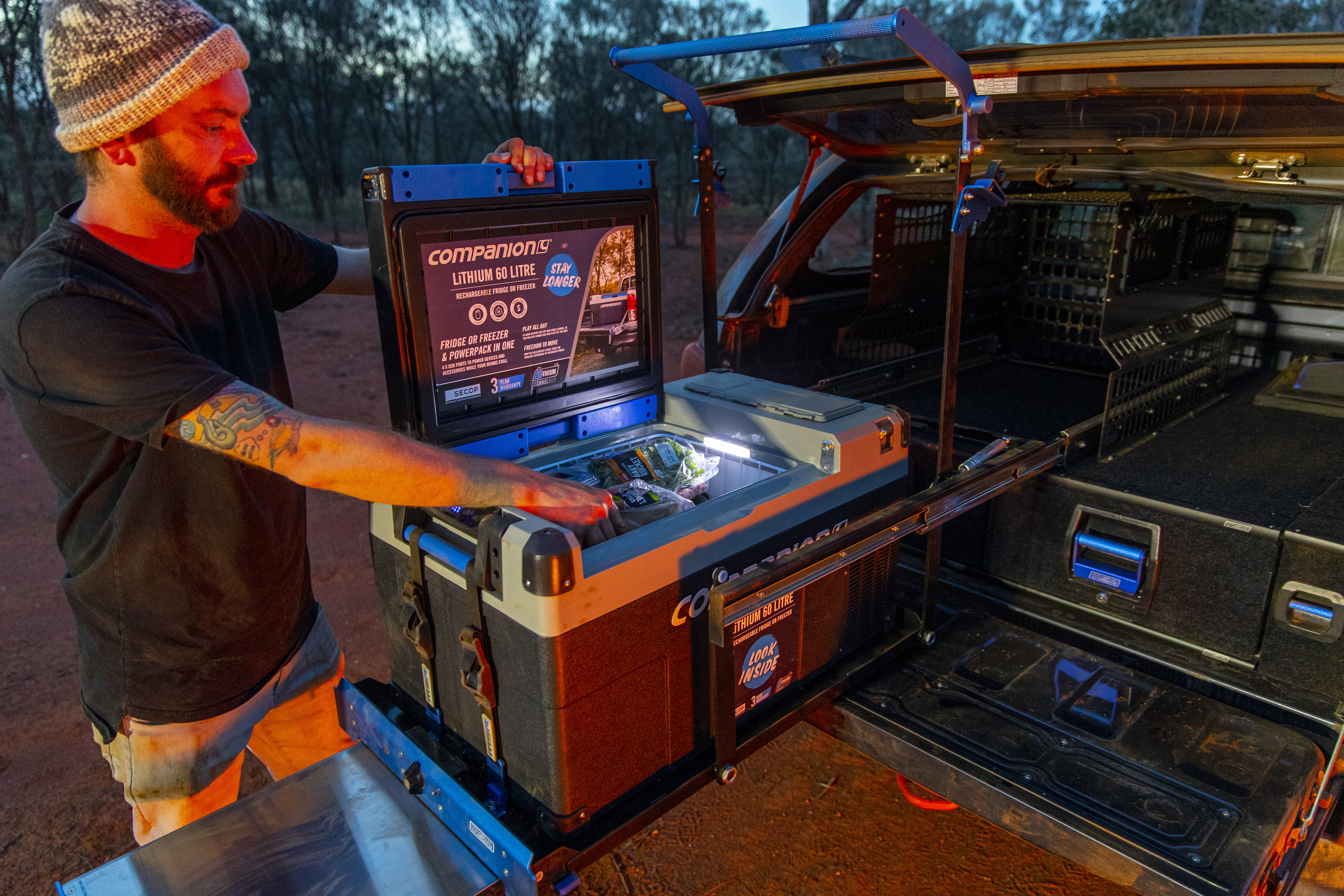
I also really like the digital touchscreen, which – once you understand how to operate it (read the instruction manual, folks) – has plenty of features and is easy to use. If power is an issue or it’s cold outside, for example, you can select an Eco mode which draws less power, and you can set the fridge to the exact temp you want.
Something I really appreciate about the design of the unit is how versatile it is. The lid can be opened from either side, making for a simpler installation. There are two sturdy carry handles, which also act as tie-down points, so it’s easy to move or secure the unit. You can also power it from the front or the back of the fridge, which is a great addition, making cable runs cleaner with less chance of damage to the cable. Smart thinking!
The SECOP compressor is nice and quiet in operation, and it has proven to be extremely quick and efficient at cooling warm drinks. Built-in internal LED lighting is another neat touch when looking for that last chocolate bar at the bottom of the fridge before the photographers find it.
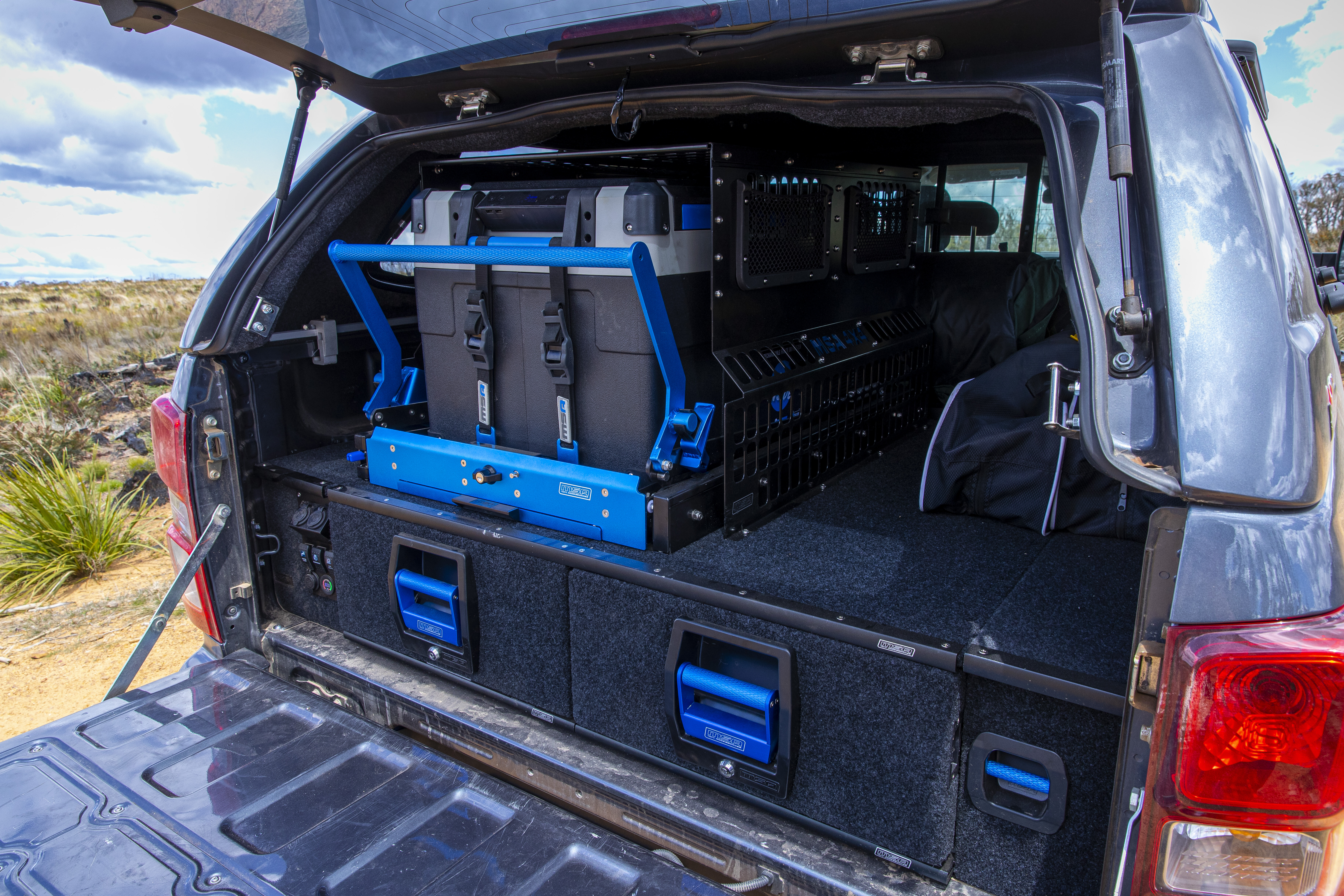
I also love the internal basket, which allows you to pack for big trips simply and easily, or to remove everything when lifting the fridge out of the vehicle without busting your back. The 60L fridge/freezer weighs in at 26kg empty for those playing along at home.
We’ve mounted the fridge to a set of brilliant MSA 4×4 drawers and on an MSA 4×4 Drop Slide, to ease access and provide a super-sturdy mounting system. So far, everything fits like a glove and looks perfect, especially covered in red dust from our recent run out to Cobar.
AVAILABLE FROM: companionoutdoor.com RRP: $1569.99