
UPDATE, May 19: Here’s the new ?
Here it is, Toyota’s new-gen Tacoma. Get all the details at the link below.
May 1: The 2024 Tacoma has been leaked ahead of big unveiling.
Spotted by user 3QTRIG of 4thgenTacoma.com [↗], Toyota uploaded an image of the new Tacoma pick-up to a sectioned-off area of its website ahead of the ute’s official debut.
The picture has since been removed from Toyota’s website, but the above screenshot proves that the fourth-gen Tacoma will look an awful lot like the patent images seen earlier this year, with a short-but-wide hexagonal front grille and broad stance courtesy of pumped arches.
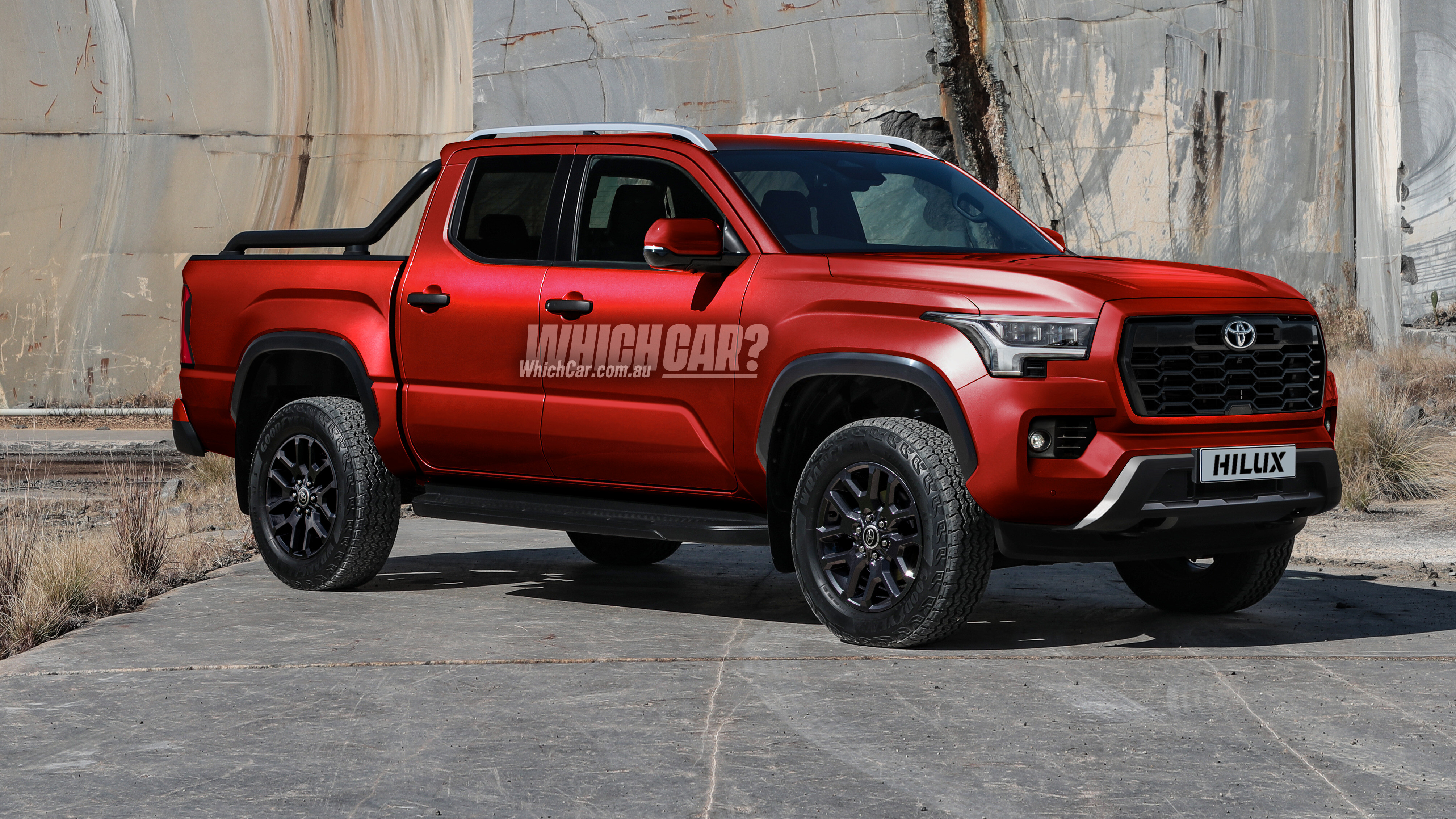
As with last month’s teaser, the pictured car is the flagship TRD Pro variant – a rival for Ford’s V6-powered Ranger Raptor super-ute.
Toyota’s new mid-size Tacoma is reportedly in development alongside the next-gen HiLux ute. The Tacoma promises a V6 hybrid powertrain paired with TNGA-F underpinnings.
April 5: Toyota Tacoma hybrid teased ahead of release
Toyota USA has released a teaser image showing the tailgate of the 2024 Toyota Tacoma, which is reportedly twinned in its development and TNGA-F underpinnings with the next-gen HiLux ute.
The image confirms that the Tacoma will be available with a hybrid powertrain in the US, with the i-Force Max badging the same seen on the full-size Tundra pick-up.
In the Tundra, the twin-turbo V6 petrol hybrid produces a staggering 326kW/790Nm, enough to give a hotted-up TRD Pro variant (pictured) enough grunt to rival the Ford Ranger Raptor.
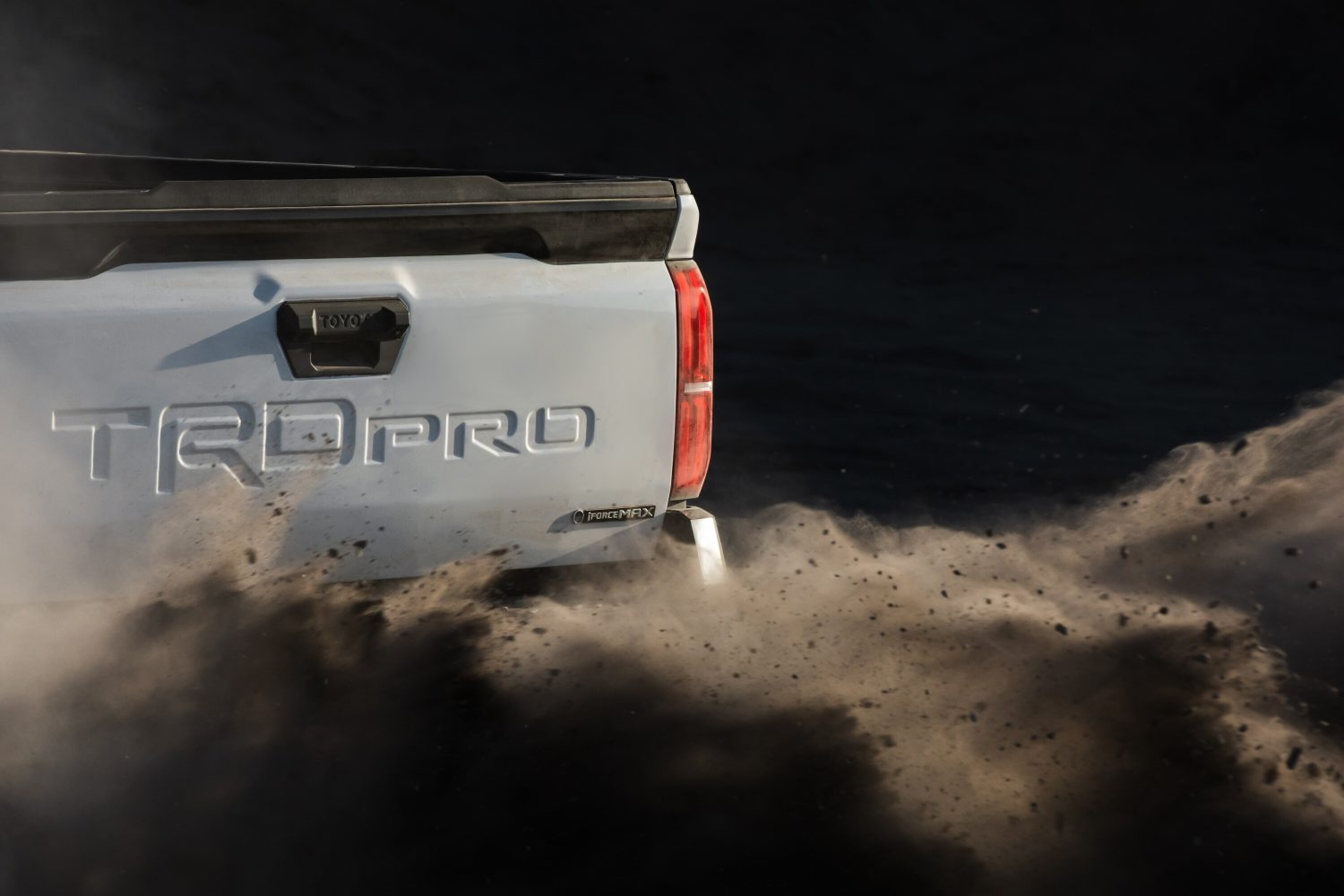
It’s more likely that the Tacoma’s i-Force Max badge relates to a downsized powertrain, perhaps a version of the RX500h’s 270kW 2.4-litre turbo-petrol hybrid.
The Tacoma is also expected to hit dealers in the US with the 2.4-litre turbo-petrol four-cylinder found in Australia’s NX350 F Sport.
In the United States, the media embargo for this teaser lifted at 5:10am, which could hint at a full reveal on the 10th of May, stay tuned for more and read on for renders and patent images of the new Tacoma/HiLux.
The plan was easy enough; follow the Darling River up from its junction with the Murray. That didn’t happen and somehow we found our way to Cooper Creek by a little known route which was a new one for us.
We changed plans again as the ranger told us the park was closed and the track was cut with floodwaters just a short distance farther ahead. Our plan to stay in the newly proclaimed national park that takes in the Caryapundy Swamp and the original Narriearra station in the far north-west of NSW was thwarted.
While much of the surrounding country was damp from recent rain the real issue here was slow moving waters coming down from Queensland had sent the Bulloo River Overflow in to flood mood and the swamp that the park takes its name from was damn near full. That’s great news for the bird and animal life; not so good news for us!
We turned around and stopped at the old Whittabrinnah hotel site – which Parks NSW is calling an ‘historic precinct’ and putting up an info sign, but there’s not much left here, just a scattering of chips of glass and rusty nails.
The pub that once stood here burnt down in the 1890s having been built in the early 1870s just 10 years after Burke and Wills had passed through on their disastrous journey to the Gulf and back.
We headed to Tibooburra but with roads closed all over and a number of travellers and freight carriers stuck in town, we opted to head down the blacktop to nearby Milparinka and prop there till some roads opened.
Milparinka gold
Charles Sturt had come this way in 1844, camping at nearby Depot Glen where he and his men (my GG Grandfather amongst them) were trapped for nine months because of a major drought. When gold was discovered near here in 1882, Milparinka was established, but the gold didn’t last long although the pub managed to survive.
With the main Silver City Highway bypassing what remained of the town, the pub closed down in the late 1990s and I thought that would be the end of the place, but happily I was wrong. The pub is back and with a good mob of volunteers, the history of the town and its beautiful old stone buildings have been restored to their former glory.
As well, a small well-set-up camping area has been established along with a museum detailing the history of the area, making a visit even more worthwhile and informative.
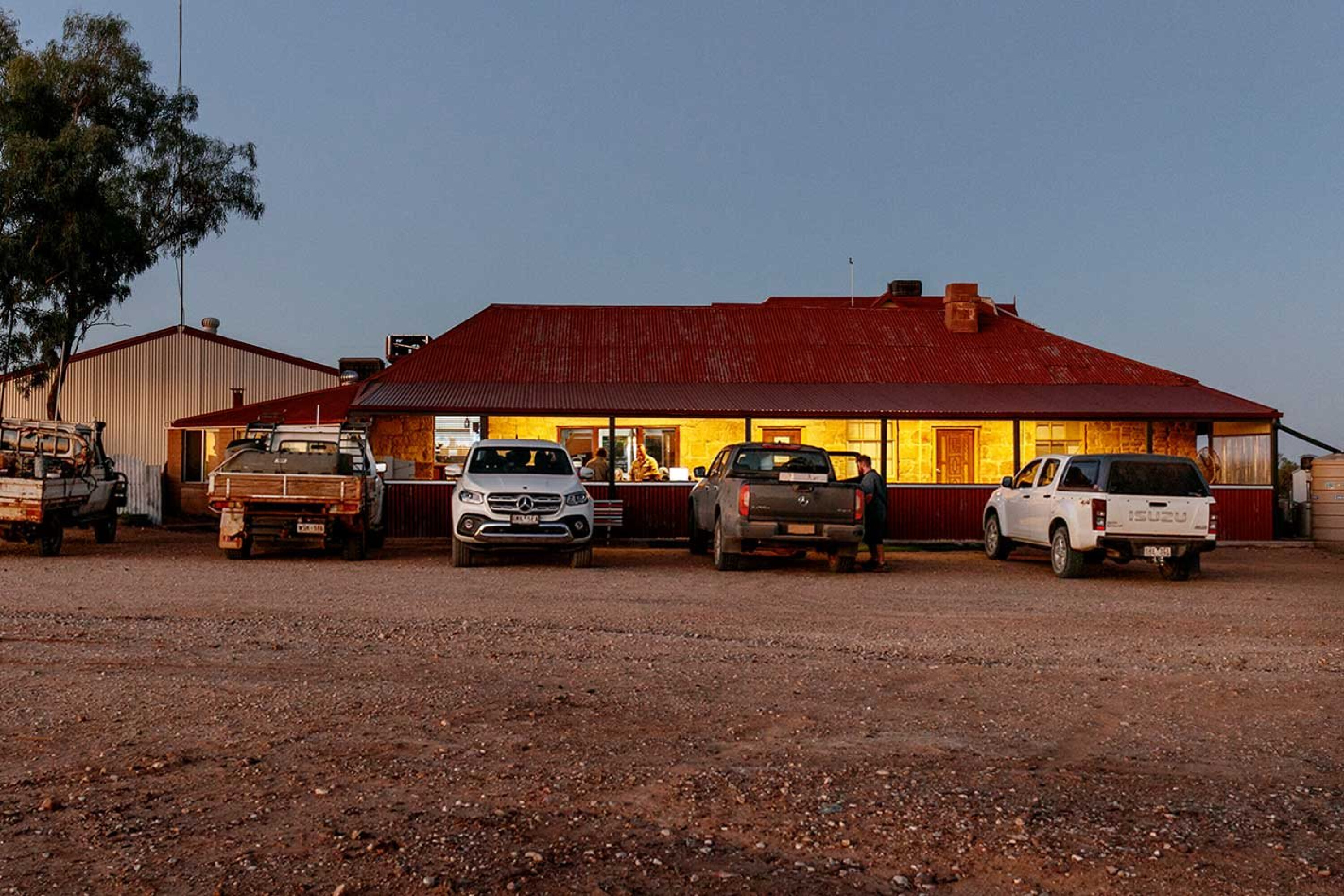
Two days later we were behind the wheel heading north on rarely used roads that at one stage took us between the sheds and garages and right beside the back door of the homestead of the local sheep station. We stopped and yarned to the owner, while his friendly working dogs vied for our attention.
The country was looking good, the recent rain just the latest addition to the above-average yearly falls and while the tracks were dry, little dust was being raised by the wheels and the occasional creek was still flowing muddy water.
We took a detour and went in to check on the old Waratah goldmine site where an old stamper and processing plant dates back to the heady days of the late 1880s and the gold rush. That era saw hardy pioneer gold seekers enter this dry region looking for the yellow metal; not all survived!
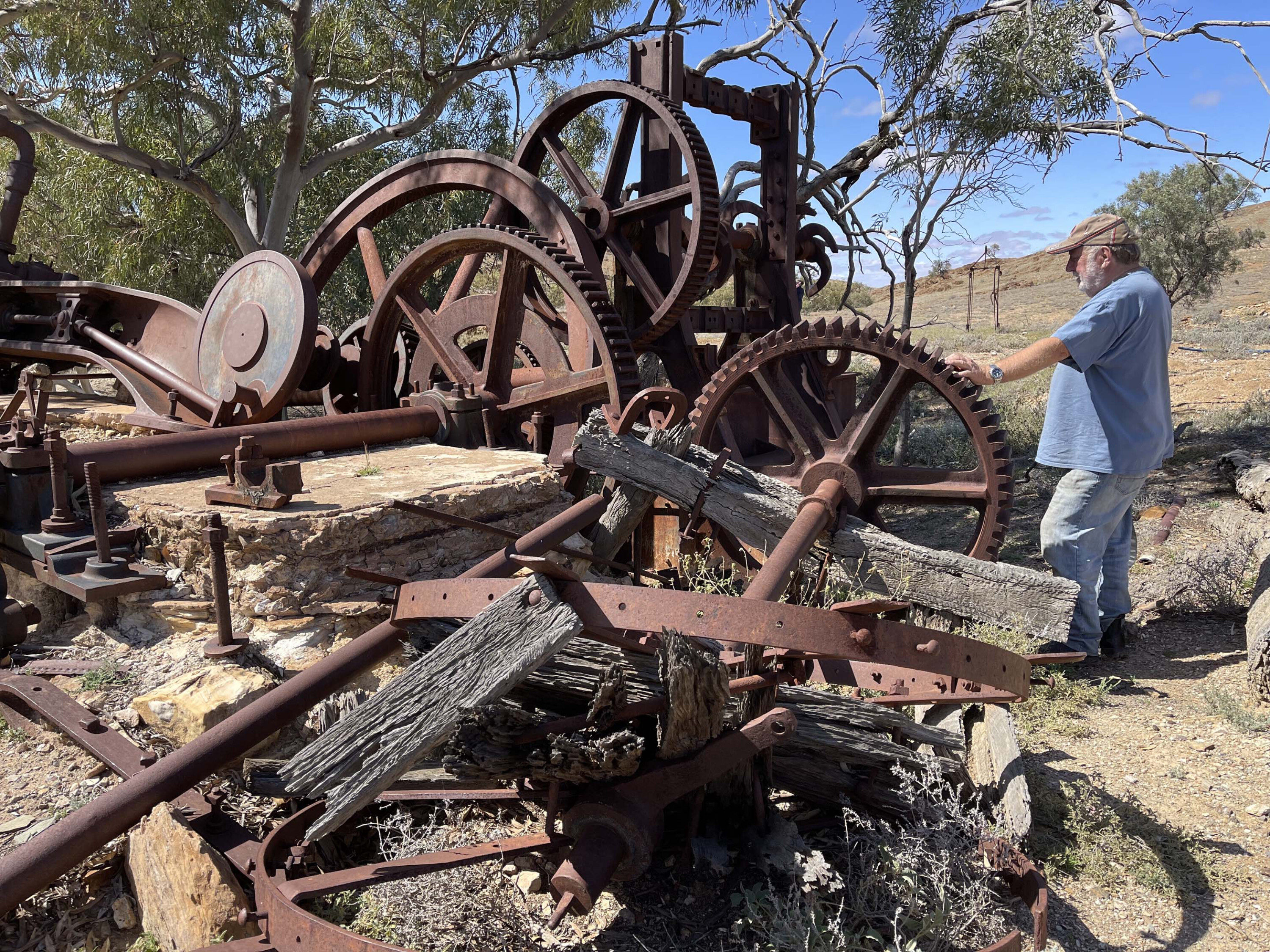
Next day saw us in Tibooburra taking on fuel before heading north on the main road before striking westward into the Sturt NP. Earlier, on our way from our aborted trip to the Narriearra Caryapundy Swamp NP, we had stopped and checked out the Mt Wood shearing shed complex on the eastern edge of the park and the nearby historic displays of old equipment and whims used for pumping water in this arid region.
Now we were heading into the far north-west section of the park, camping along the way near the old Olive Downs homestead, which I was sad to see was in a state of disrepair, with no sign of any historic display there.
On our own
The lack of traffic and other travellers was surprising and we guessed that word had got out that many roads had been closed in the area and we saw no one once we had entered the park and for the next two days. The other surprising feature of our drive was the lack of kangaroos, the park more often than not being near overrun by them.
The long drought, which the recent rains had broken, was probably the main cause and knowing how quickly ’roos can breed when the good seasons return, the population is sure to rebound.
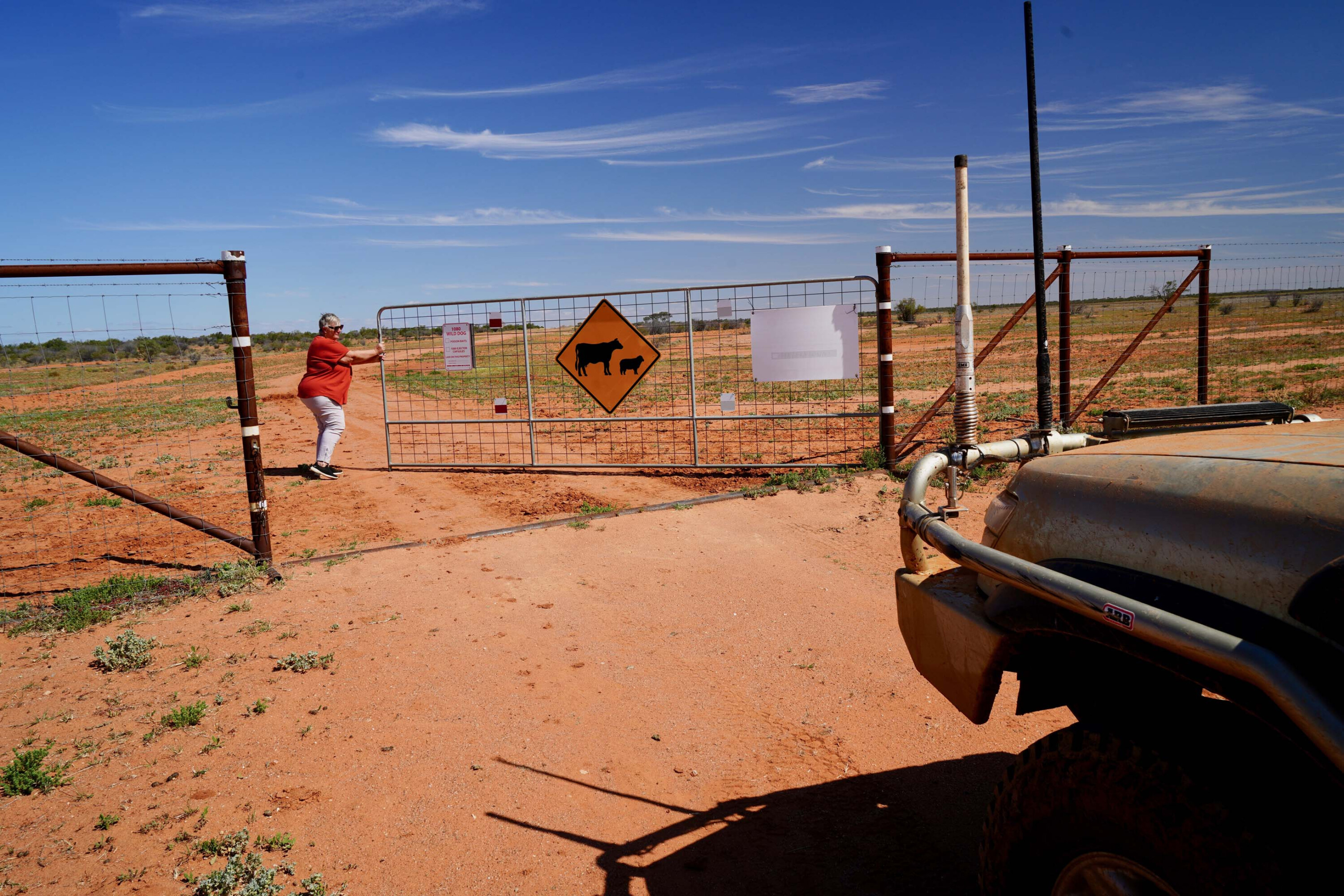
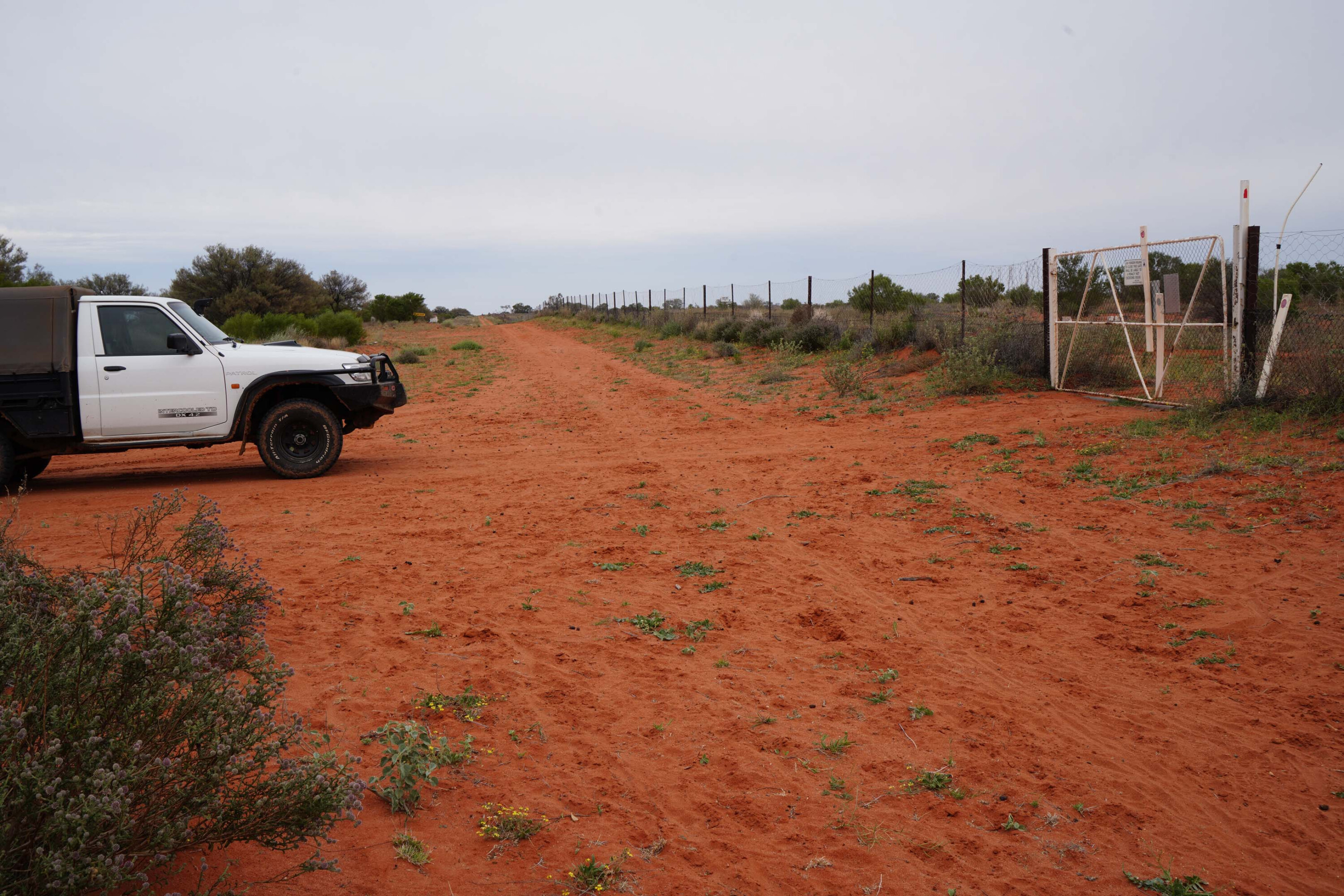
Stopping at Toona Gatehouse on the northern edge of the park where the famous Dog Fence marks the border between New South Wales and Queensland, we had a quick wander before opening the tall gate and entering the Sunshine State. And, it was sunny, which was a bit of a change from the last few days, but it still wasn’t particularly warm.
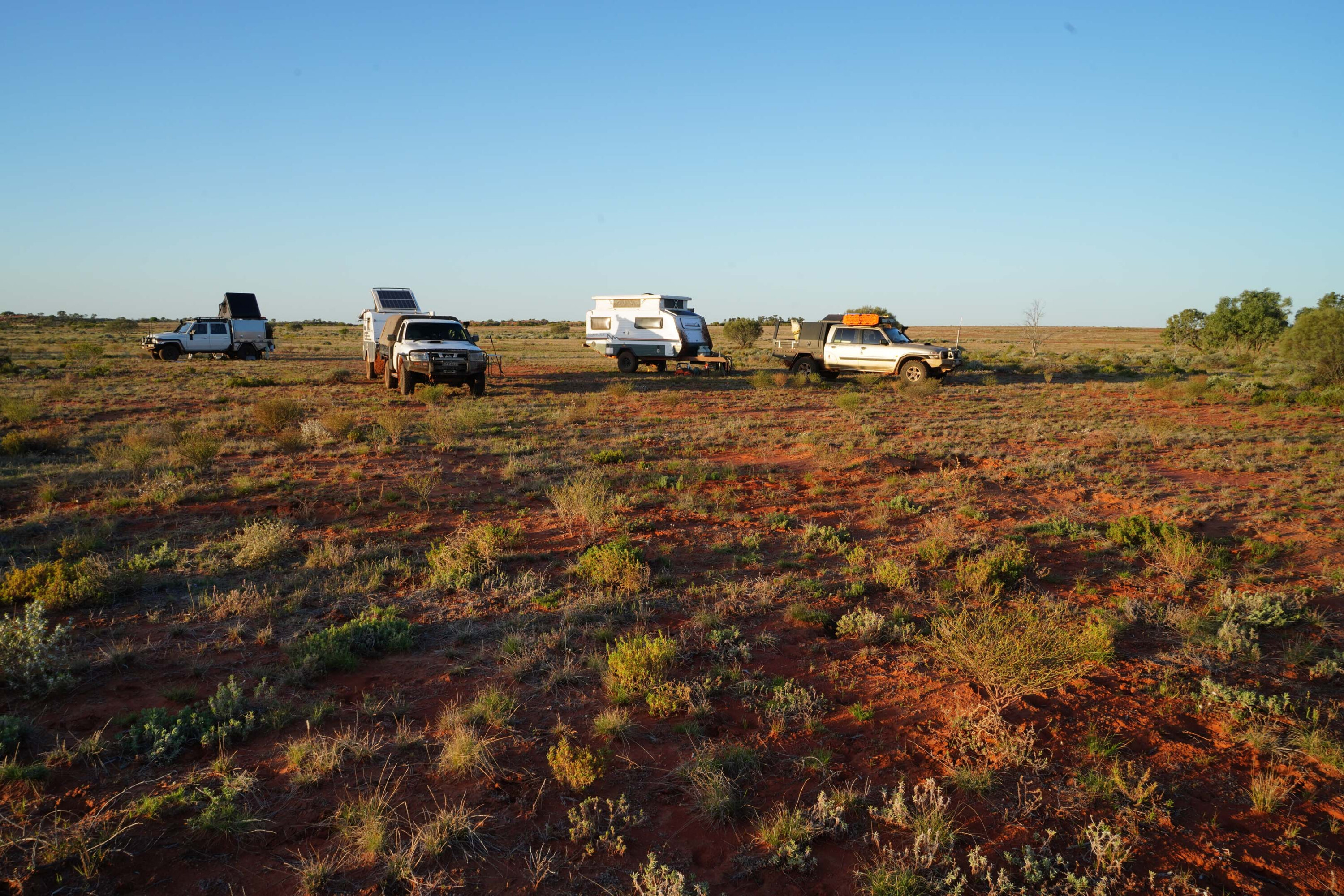
We flicked a coin and decided to continue north, bypassing the Cameron Corner Store road and the more used access route to Innamincka and the Cooper Creek.
As we headed towards Omicron and Epsilon stations, we passed the heavy machinery of a road gang working on this remote section of outback road but there was still nobody in sight. While the sandy road improved for a short while as we passed Omicron homestead it became more of a two-track station route as it wound over low sand dunes and dodged around ephemeral dry lakes and crossed low sandy creeks, some of which had recently been flowing.
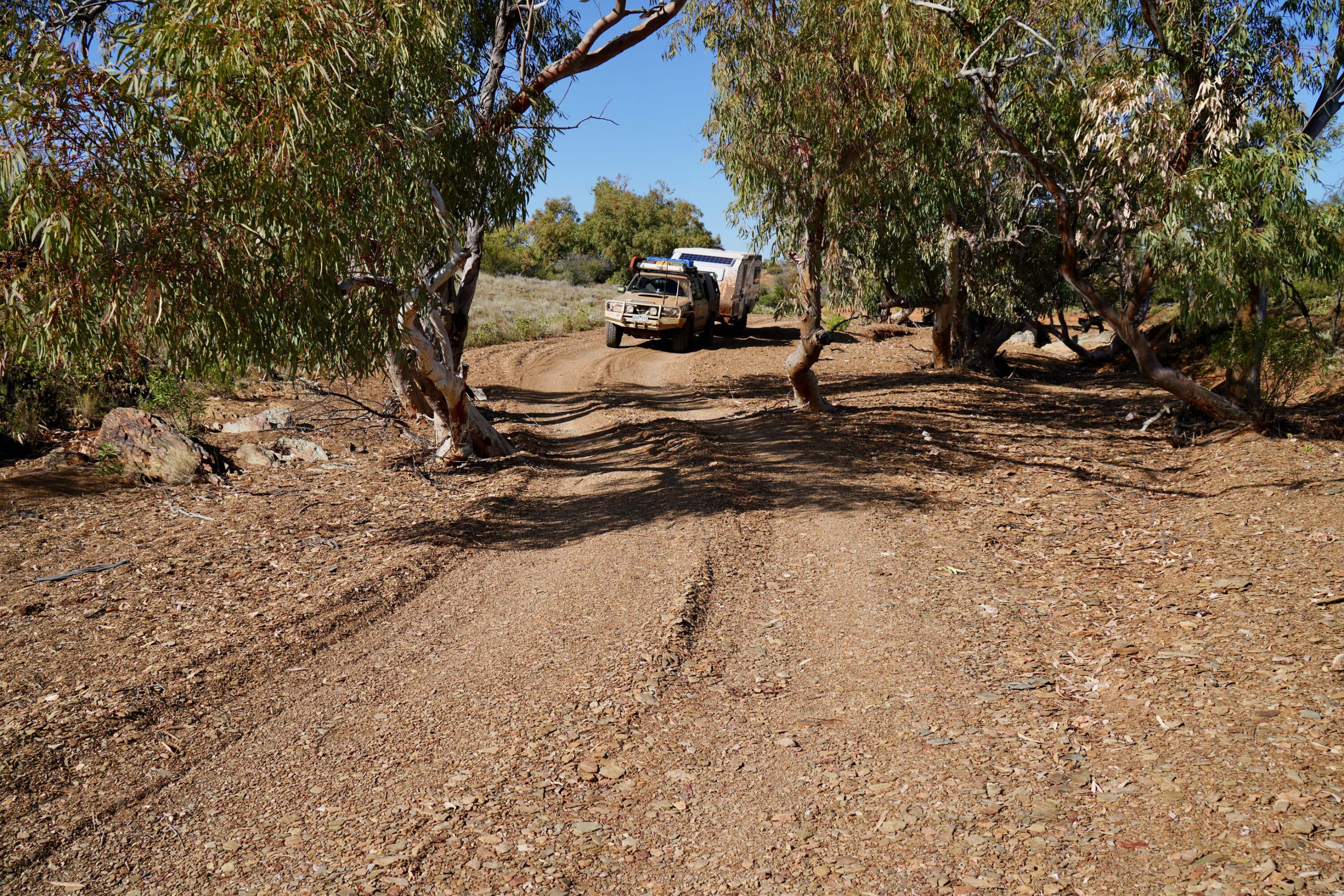
Stopping at one creek crossing a wedge-tailed eagle took to the sky from a tall dead tree nearby that was also graced with a large nest. Checking it with the binos we always carry, we spied the white fluffy head of a young eagle chick, but as I walked closer to get a pic he, or she, slowly lowered itself down, the movement hardly discernible but still effective in getting the young bird out of sight.
We struck a more major dirt passageway, its name, Moomba Road, giving away its destination and its sense of importance. We were now entering the eastern edge of the Cooper Basin oil and gas fields and tracks branching off this way and that became ever more common as we proceeded on.
The basin covers some 35,000km² of north-east SA and south-west Queensland and there’s been more than 1970 wells drilled in the region, all with a road or track to them.

Old Tickalara Road
Just north of Epsilon homestead and the nearby gas workings (we still hadn’t seen anyone), and being sick of the major dirt road, we turned on to a lesser track, signposted ‘Old Tickalara Rd’. We dawdled our way over low red dunes revelling in the isolation and the little used two-track.
Taking an even lesser used route south, we ended up at a gas well, but the only sign of life, or use around it, were a few groups of cattle that watched us from the sparse shade of a few spindly trees.
Backtracking to the Old Tickalara Road, we headed west over more small dunes before the track turned sharply north to run between the low sandy crests and parallel to the SA-Queensland border which was, by the Hema navigator on the dash, just two or three kilometres to our west.
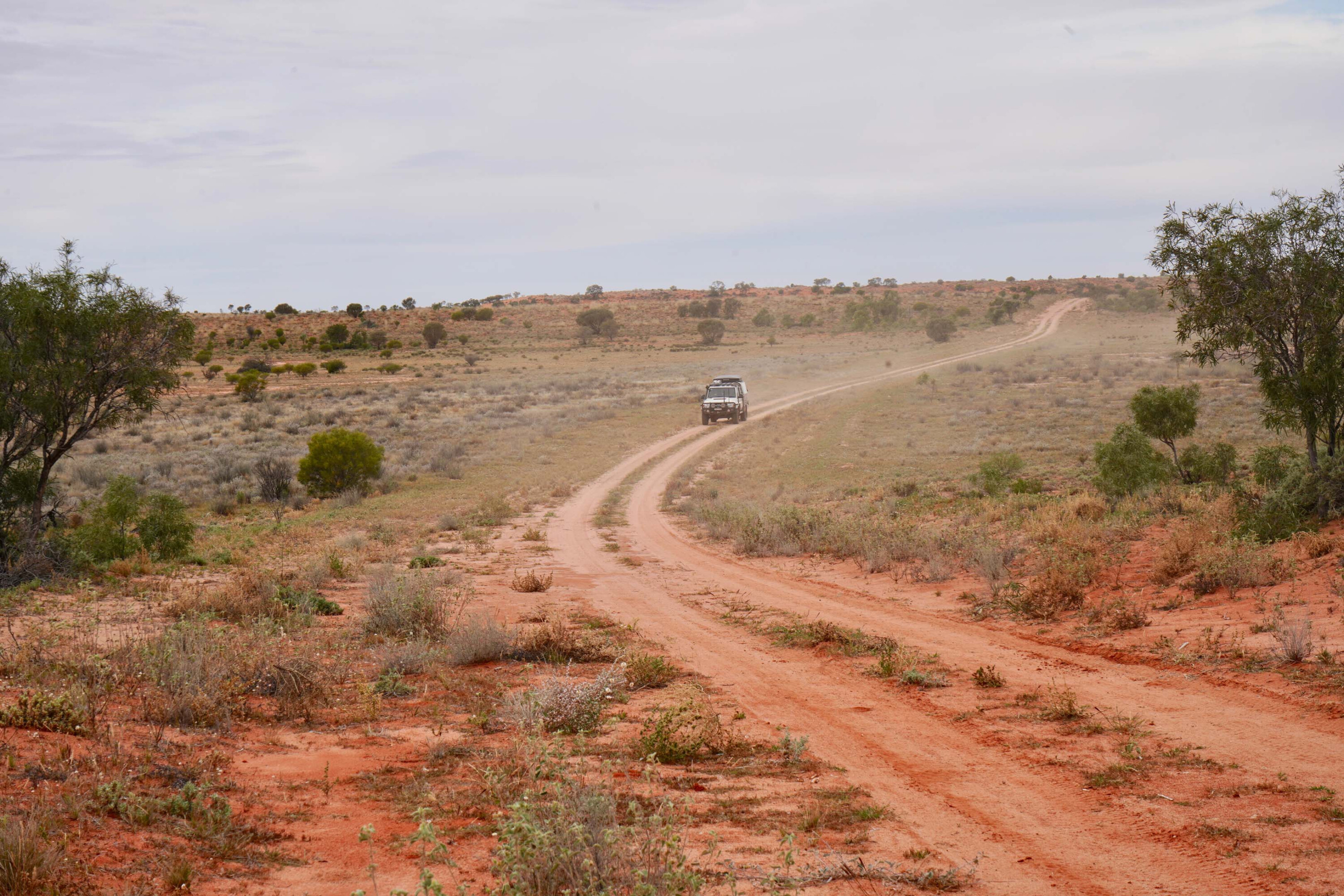
We crossed a major gas road along with lesser tracks all signposted to wells with names such as Kerna North, Moon 1 and Sarah 1. Near a dam and solar powered bore, just off the track north, was a huge piece of seemingly abandoned machinery that would have taken an even bigger piece of gear to haul it to this lonely spot.
None of us had any idea what it was actually used for, apart from the fact that it was something to do with drilling for gas or oil.
Striking the Moomba Road once more we turned west towards the Dullingari Oil & Gas Fields and then, just over the border in SA, turned north on to the Bore Road, gas- and oil-well tracks off to the left and right becoming even more common and confusing.
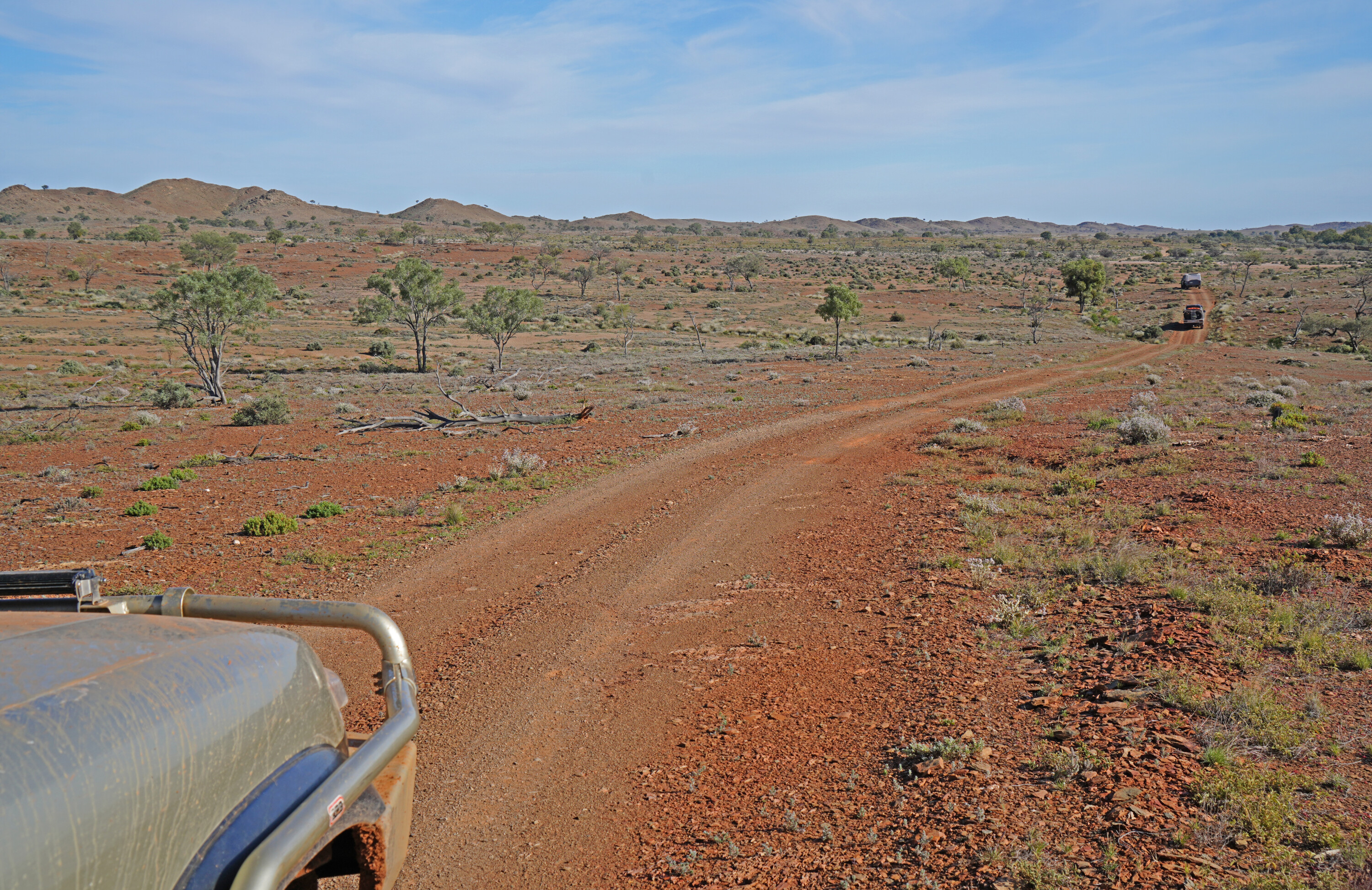
As we crested a low stony rise, the country suddenly changed from sandy country interspersed with low scrub covered dunes to gibber plains without a tree or bush in sight. We backtracked and pulled off the road to find an overnight camp tucked in amongst some scrub close to a sandy transient creek.
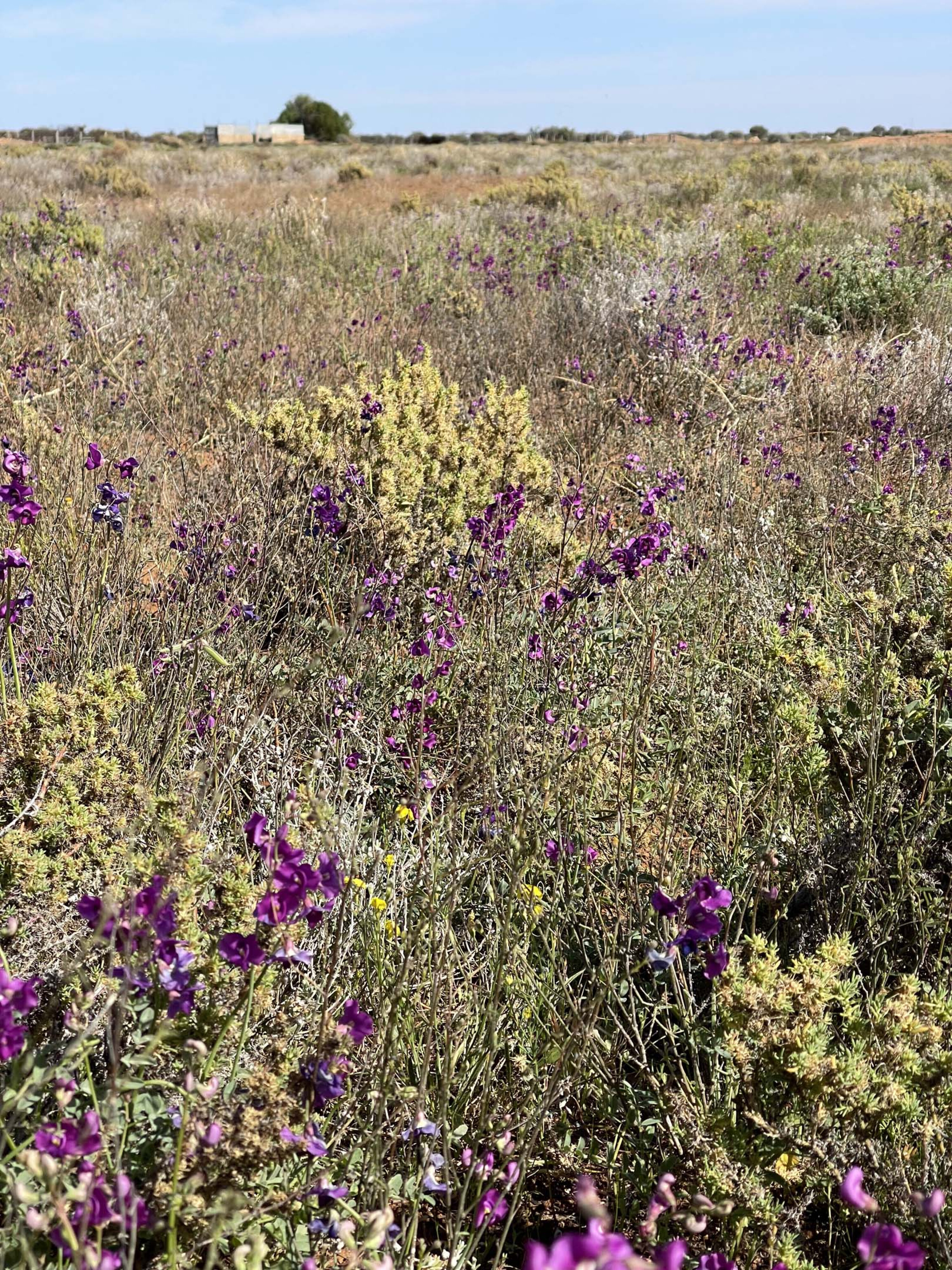
The surrounding country was as green as a metropolitan park, the recent rain bringing a rich verdancy to the whole country – it was magic. That evening a murder of crows circled above our camp, none of us sure why they were taking so much interest in us and all of us hoping it wasn’t a bad omen!
Cooper Creek
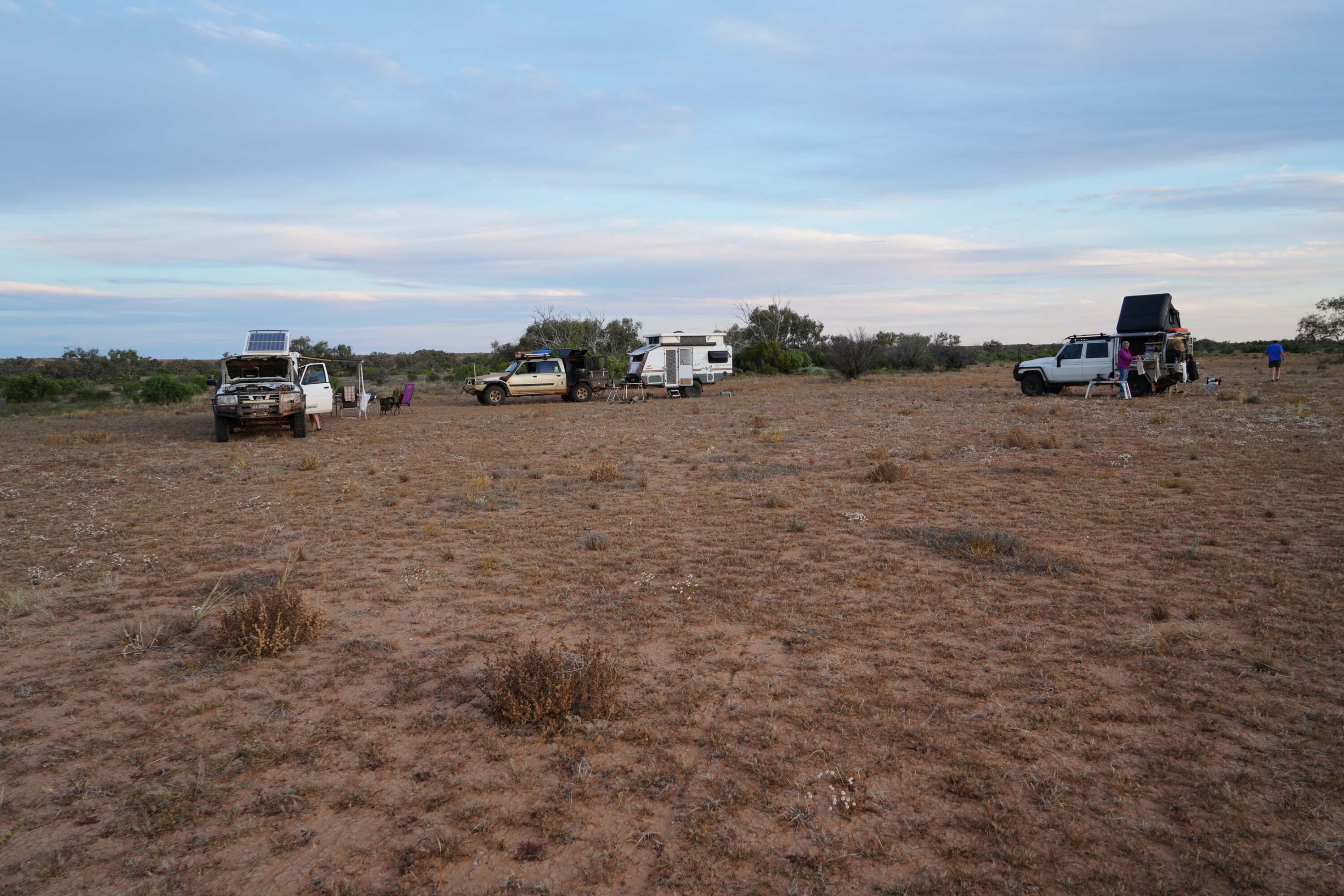
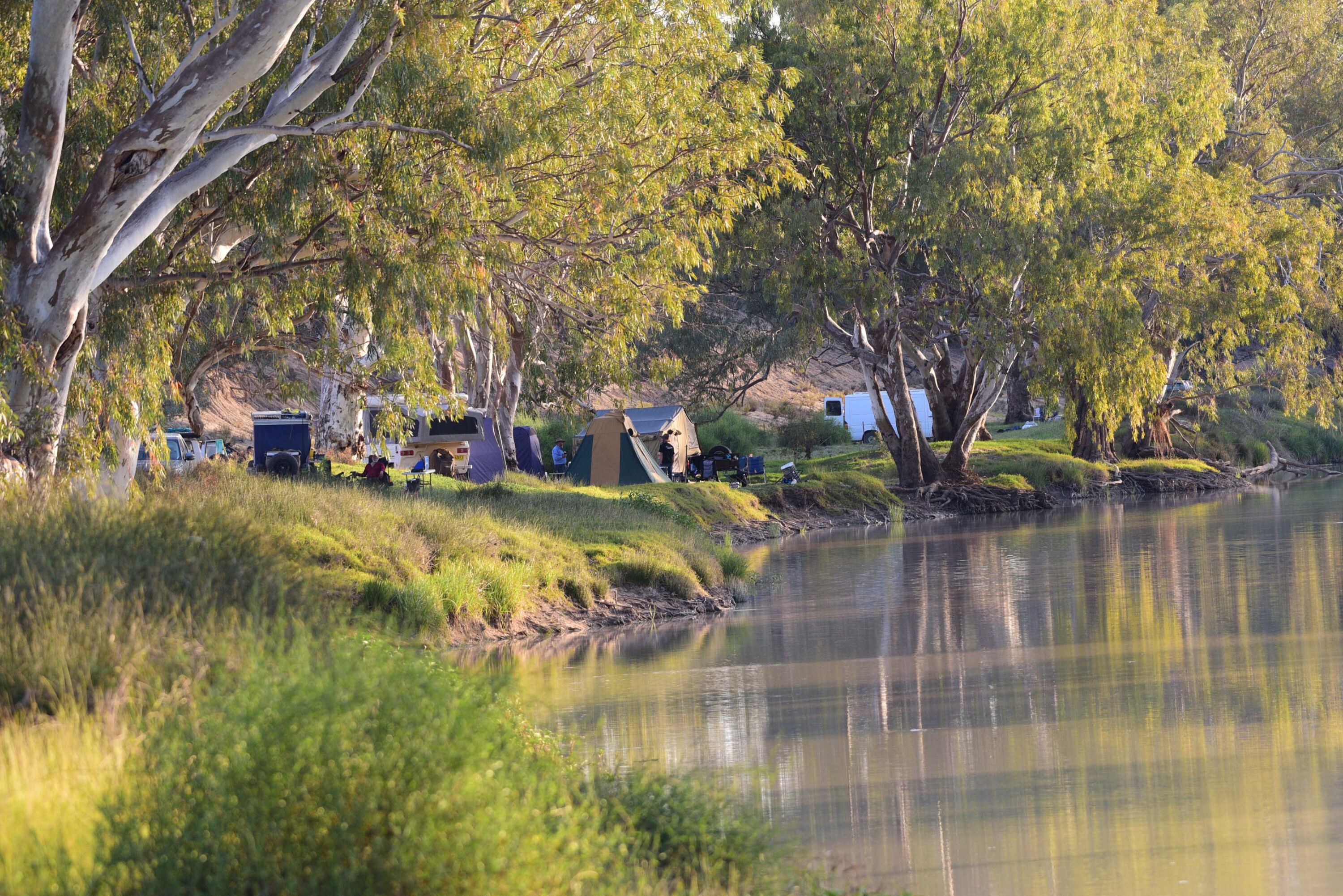
As we rolled into Innamincka next morning, we were surprised to find a relative lack of visitors and we wandered down to the gum-lined banks of the Cooper Creek, within the Town Common area, and set up camp. You don’t need a SA Desert Parks Pass to camp along here but you need to pay the small fee up at the pub; it was a good excuse to grab a counter meal at the same time.
Again, most of the tracks to points of interest around here were closed because of rain and flooding along the creek so we stayed an extra night, revelling in the solitude and peacefulness that the creek and its tall red gums have to offer.
Sturt had crossed the creek, naming it in 1844, on his way to a supposed inland sea and while he pushed on along the edge of the Simpson Desert, he didn’t find any great expanse of water. Burke and Wills and their grandiose but ill-fated expedition were next on the scene in 1860, dying along the bank of the stream on their return from the Gulf of Carpentaria in late June, 1861.
Eleven years later, a police post was established on the banks of the Cooper and a store, hotel and the Elizabeth Symon Nursing Home quickly followed. However, by the 1950s, the people had moved on and the place fell in to disrepair.
The pub and store we see and rely on today to deliver a cold beer, fuel and succour to all of us passing travellers was established in the early 1970s, led by outback legend and tour operator, Mike Steel. His book, Red Rover, tells of those early days.
Old Strzelecki Track
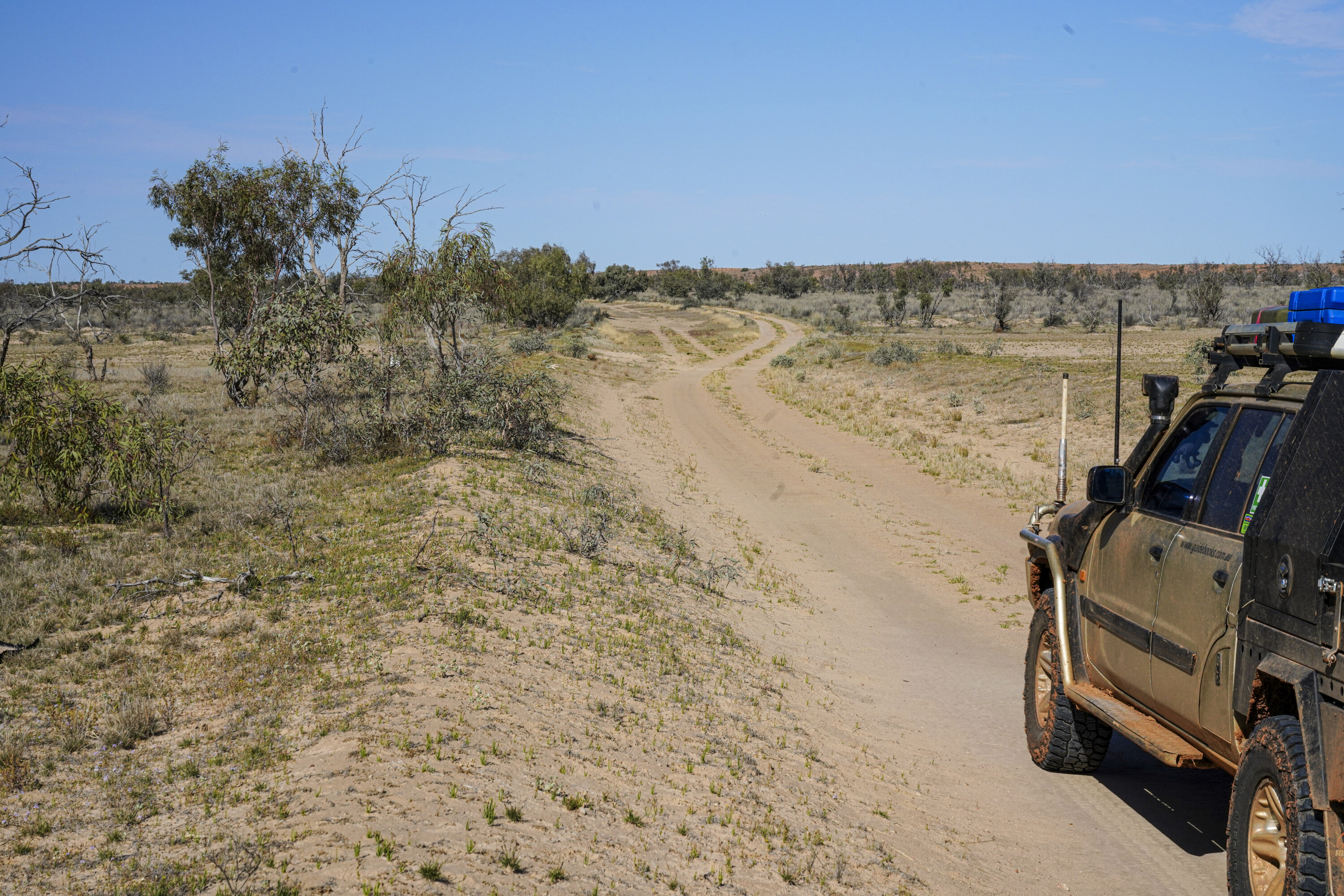
It was a leisurely start next day as we grabbed a few supplies from the Trading Post and then headed off, this time choosing the Old Strzelecki Track to take us south, instead of the more major road and commonly used access route most people used. This track follows the almost imperceptible Strzelecki Creek which rarely flows between the low dunes (the last time was in 2010 after a 20-year hiatus).
In places, its braided channels spread out taking in two or three interdunal valleys on each side of the main channel.You can easily see the effect of these life-giving waters as they give rise to the scattered spindly coolabah trees dotted across the areas where the occasional floodwaters reach.
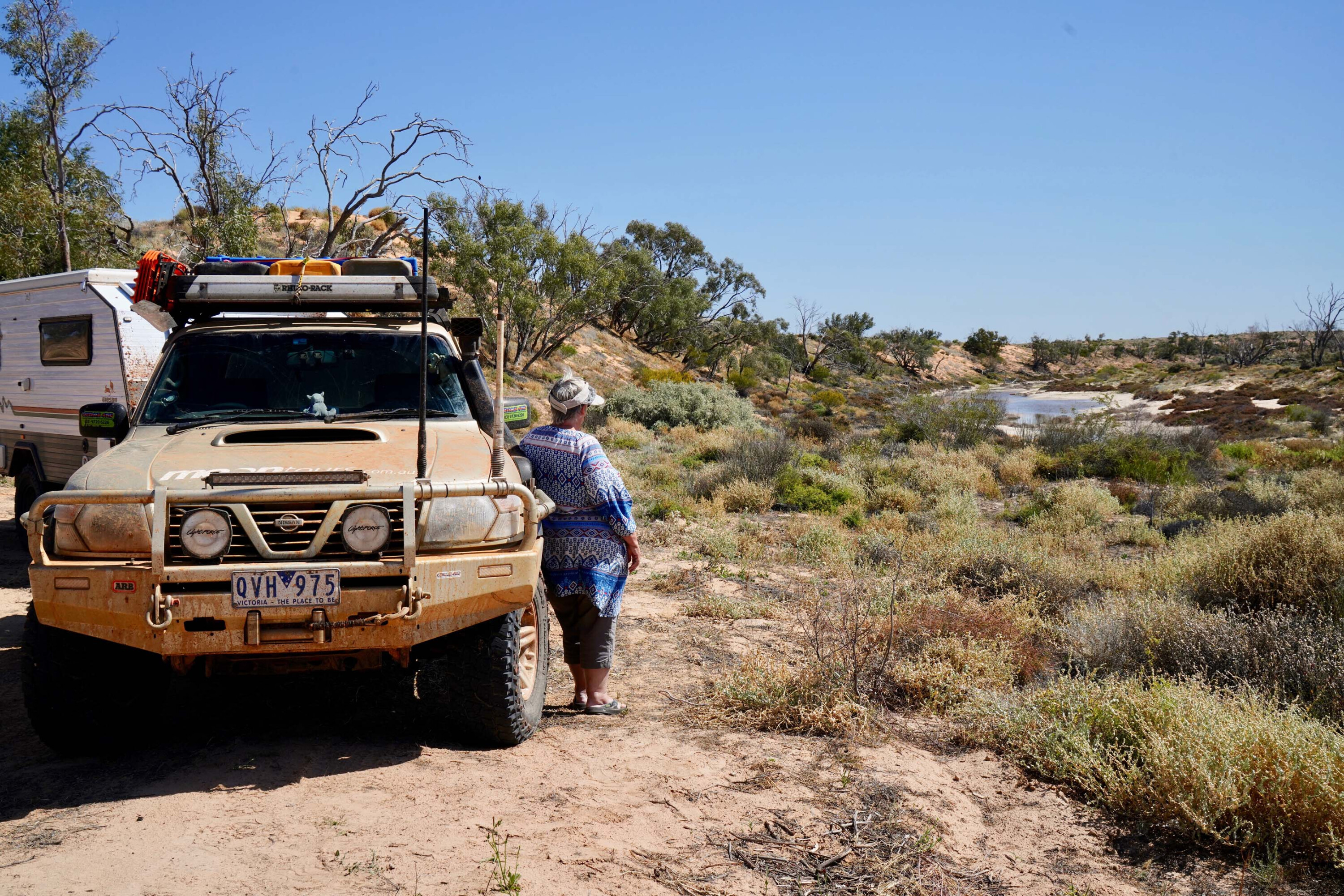
We stopped in the shade of some taller, healthier coolabahs at the Strzelecki Crossing where the main channel of the creek is distinct and the trees taller and shadier. Nearby and reached by a sandy track that climbs over a steepish dune is Yaningurie Waterhole, but this time it was just a shallow, dying pool surrounded by scrub covered dunes, most of the scrub being prickly and spiny and unpleasant to walk through.
Pushing south, that evening we camped on a flat plain beside Yerila Creek, the peaks of the northern Finders Ranges our beacon and our destination …. but that’s a story for another time!
Five POIs not to miss:
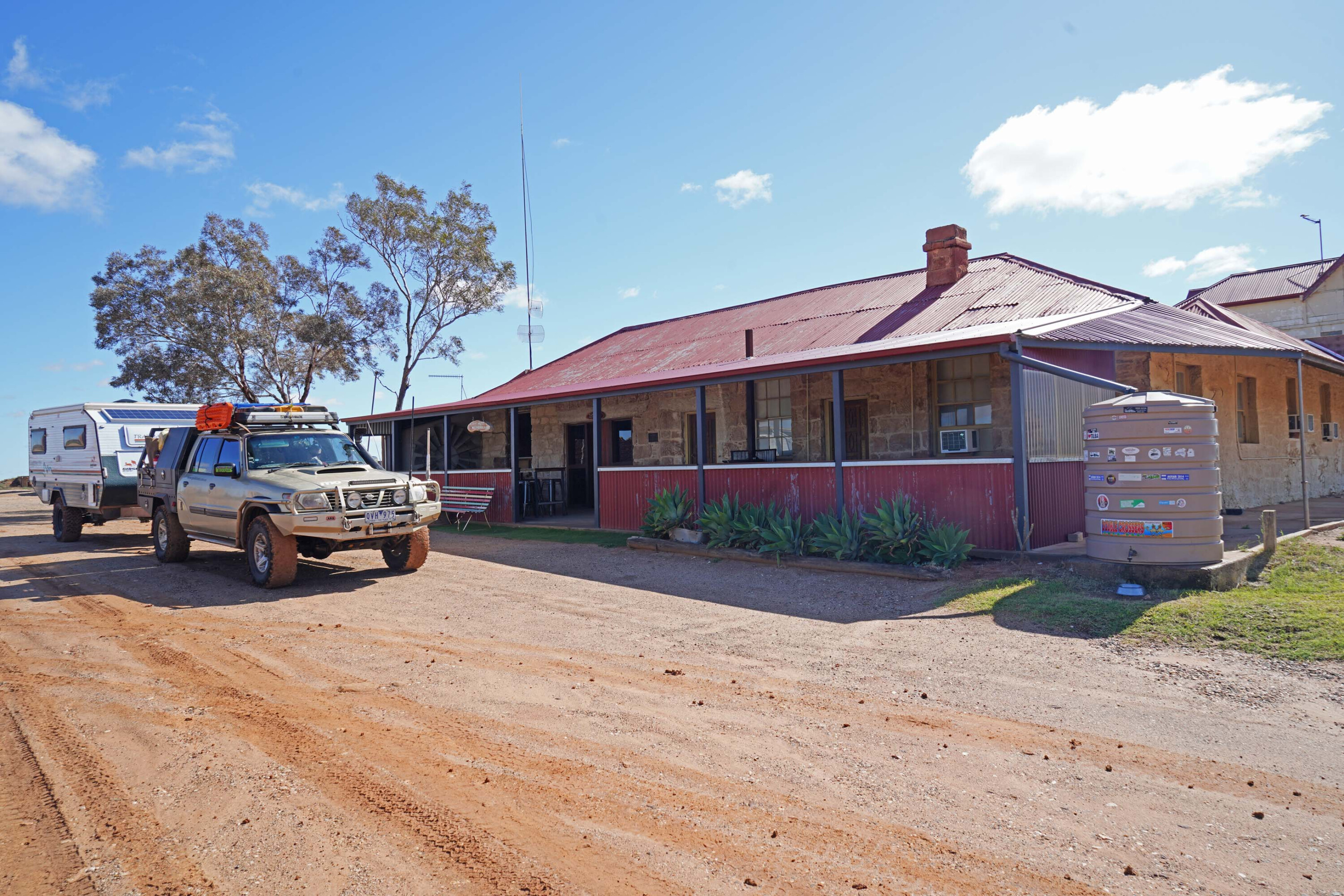
Milparinka Heritage Precinct
A $5 Precinct pass is required for visitors to access the heritage trail sites starting with the restored 1896 Milparinka Courthouse which includes a visitor centre and history of the local Malyangapa people and European settlement.
Moving along, visit the Barracks’ Museum, the Sturt-Kidman Centre, the Old Post/Telegraph Office, Milparinka Community Art sculpture, Harry Blore Park, Albert Goldfields Mining Heritage Centre, Station Sheds, Milparinka Heritage Mural, the Heritage Walking Trail, and of course, the historic Milparinka Hotel.
Depot Glen
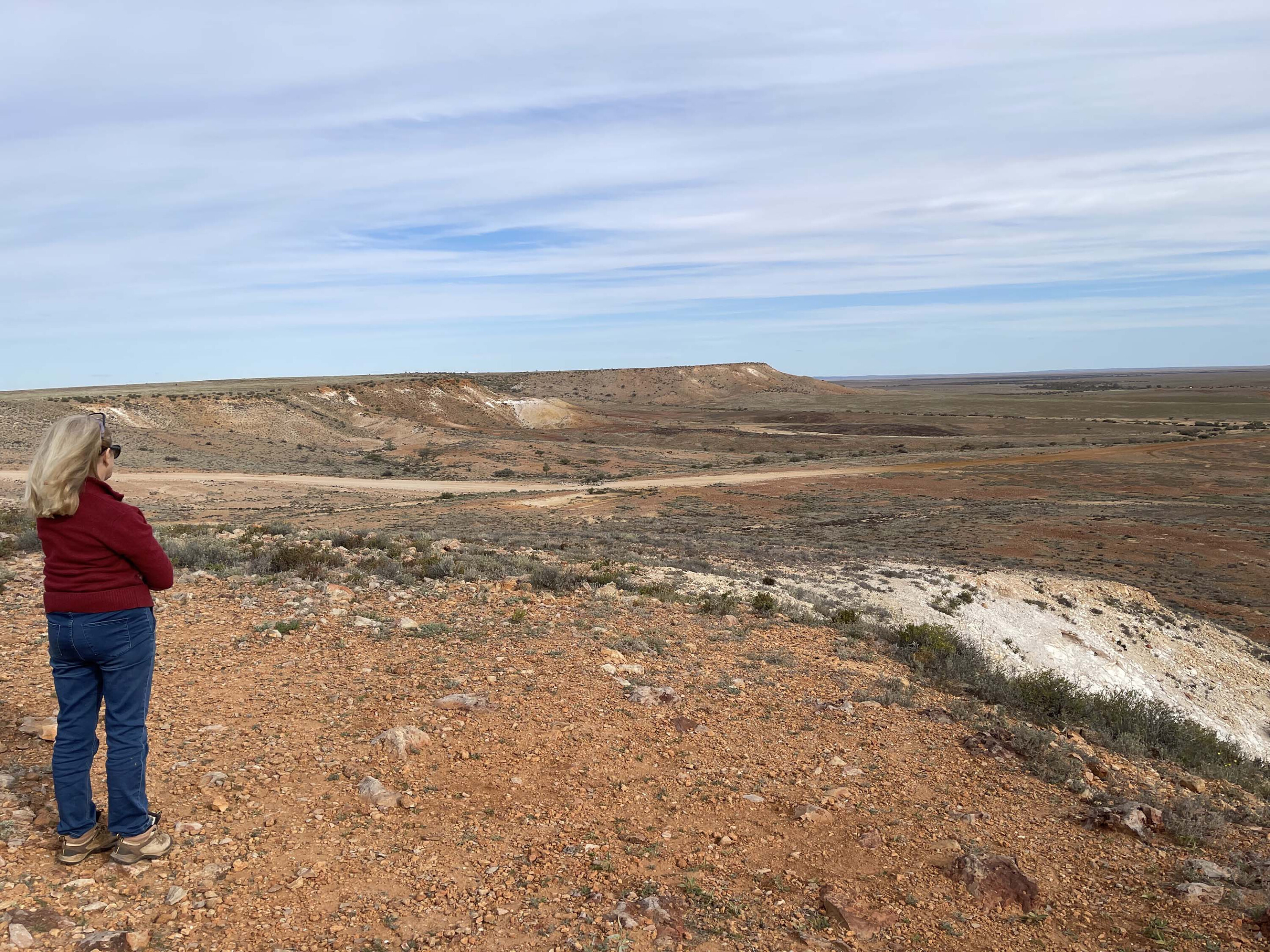
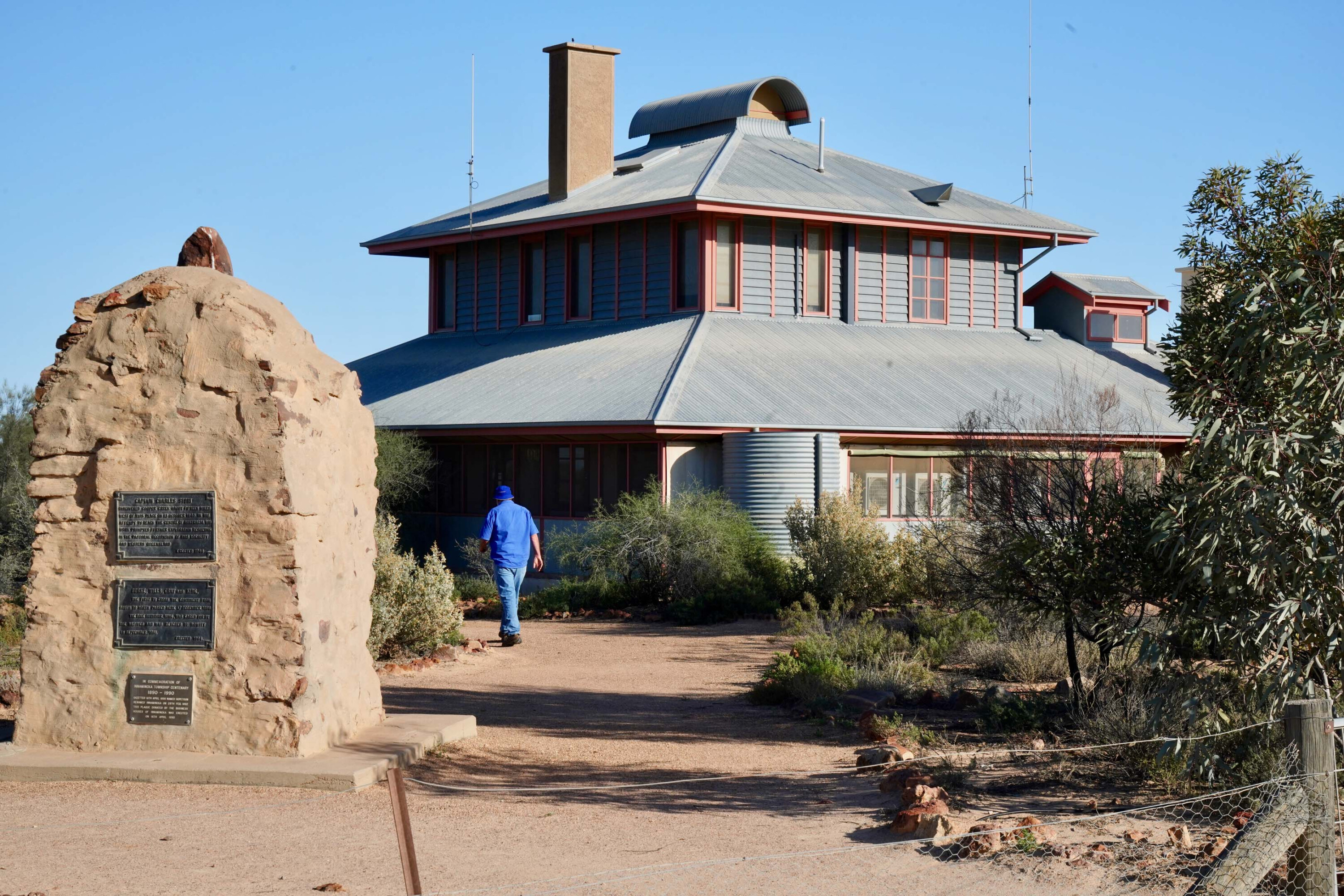
Following explorer Charles Sturt’s 1844 ‘inland sea’ expedition route, to the north-west of Milparinka is Preservation Creek upon which he set-up Depot Glen where he and his team were forced to camp out the summer. There’s a walking track to nearby Mount Poole were Sturt had a cairn erected as a survey point and later as monument to his second-in-command James Poole who passed away from scurvy.
The expedition would go on to name Strzelecki Creek and Desert (including his Fort Grey Depot at Lake Pinaroo), Cooper Creek, Sturt Stony Desert before the sandhills of the Simpson Desert blocked their path. The expedition covered more than 3000km over 17 months.
Mount Wood
Within NSW’s Sturt National Park in Corner Country and east of Tibooburra is Mount Wood Homestead offering self-catered accommodation and as a time capsule of outback life. This historic 1890 stone homestead, its Shearers Quarters and outdoor
Pastoral Museum exhibit bygone days exhibit the hardships of attempting to tame this desert region. Mount Wood a great base from which to explore Sturt NP with its red dunes, sandstone escarpments and desert wildlife.
Backroads to Cooper Creek
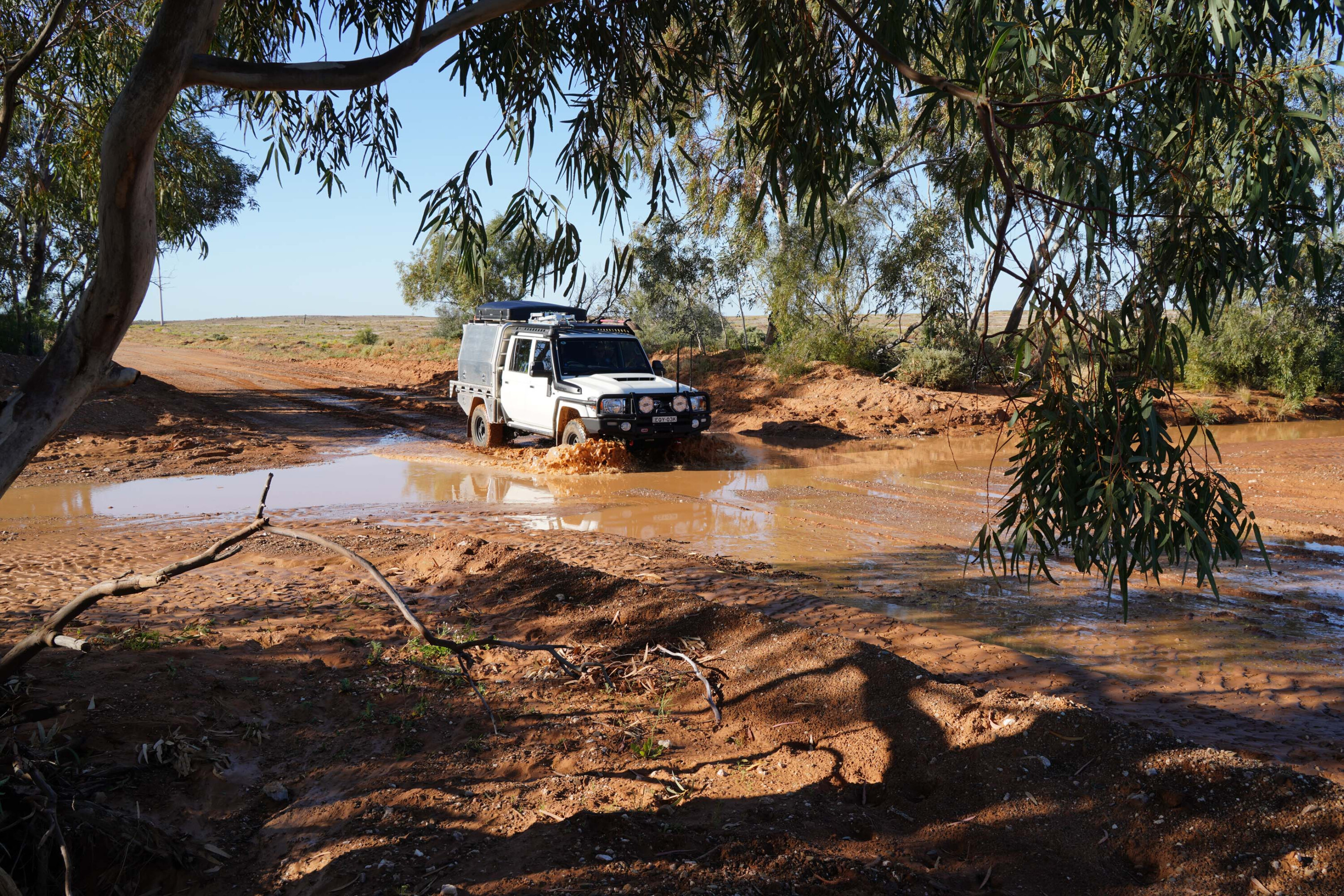
With floodwaters and recent wet weather impacting Corner Country with road closures, it was an opportune time to try out some of the lesser used backroads in our quest to reach Innamincka and Cooper Creek.
The detours took us to Milparinka, through sheep stations, gas and oil fields, with detours along way. Backroads of note include Moomba Rd, Old Tickalara Rd, and the Old Strzelecki Track on the return leg.
Innamincka’s historic sites
Innamincka township sits on Cooper Creek and is the gateway to the Innamincka Regional Reserve and adjacent Coongie Lakes National Park.
Along the Cooper are Aboriginal stone engravings, middens, tool-making sites, quarries and more, while European heritage includes markers to the ill-fated 1860 Burke and Wills expedition to the Gulf denote were Wills died, Burke’s body was discovered and where King was found. The famous Dig Tree is some 72km east of the town at the expedition’s base camp.
More info:
- Milparinka & Tibooburra [↗]
- Narriearra Caryapundy Swamp [↗]
- Sturt National Park [↗]
- Birdsville & Strzelecki Tracks [↗]
With a killer 532kW HEMI-powered supercharged V8, massive brakes and a class-leading damping system, the TRX has been built to hunt twisty trails and high-speed off-road tracks.
RAM’s flagship offering, the TRX is imported by the Ateco Group and converted to right-hand drive by the mob at Walkinshaw Performance.
At $210,000 a pop, only a select number of cashed-up tourers will opt to secure one of these burly pick-ups – fewer than 300 units have been sold in Australia to date, but demand is supposedly high.
UPDATE, May 2023: Ram 1500 TRX v Ranger Raptor
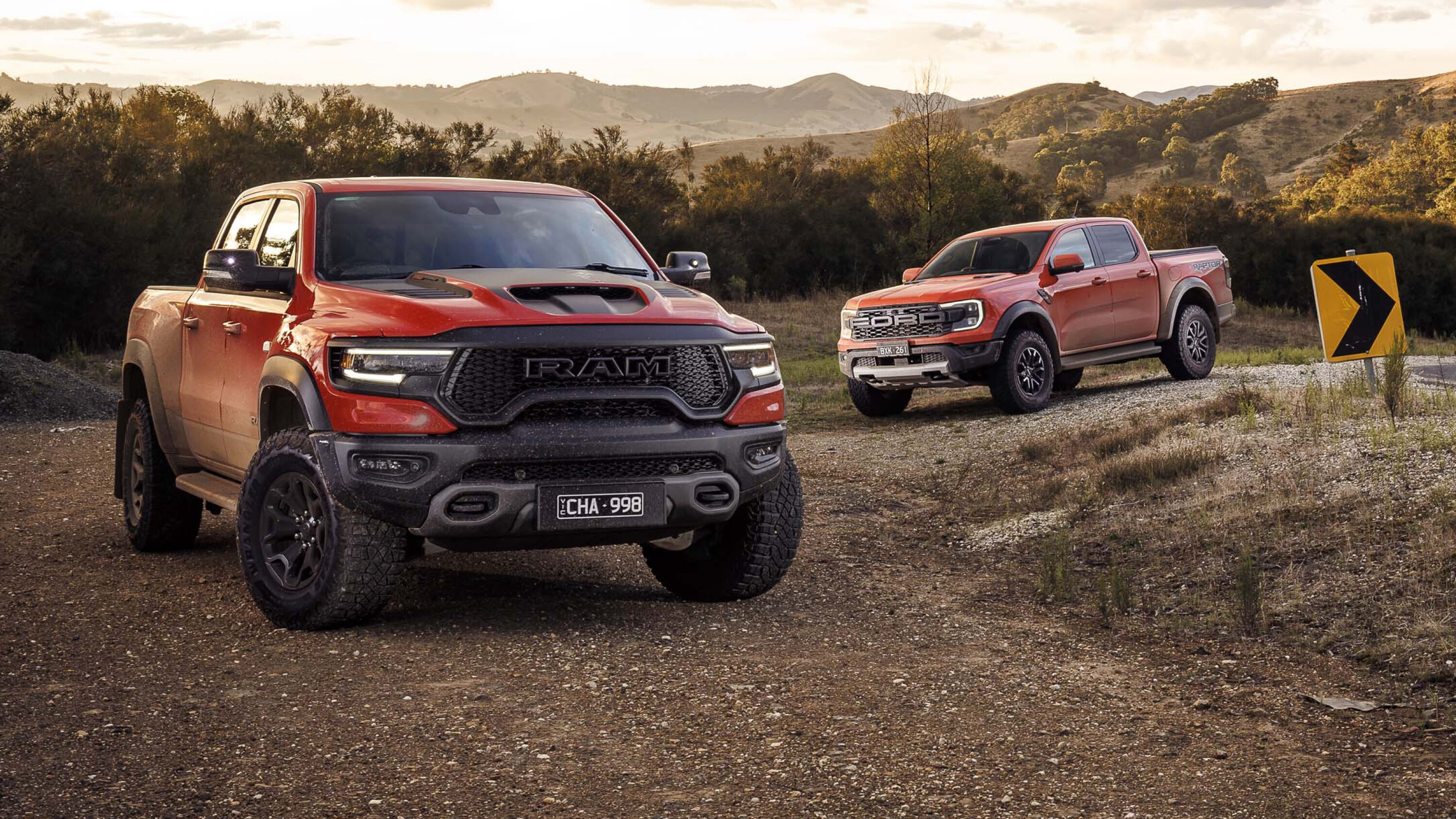
Australia’s most outrageous utes face off in a rock-spraying, fuel gargling celebration of excess. Strap in, it’s about to get noisy!
STORY CONTINUES: 1500 TRX review
Of all the vehicles I’ve driven, this is the most magnetic – it drew people to it, no matter where we went
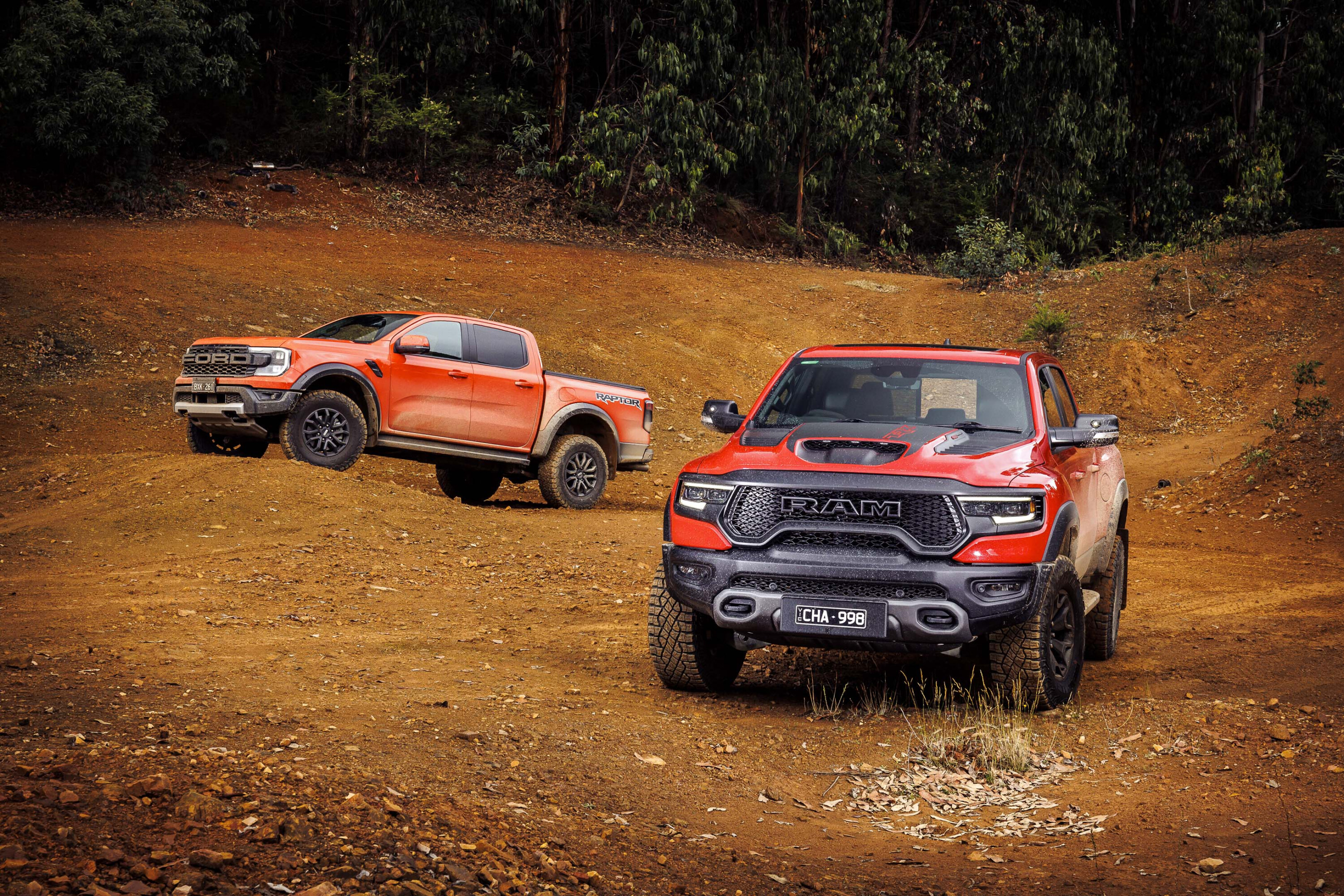
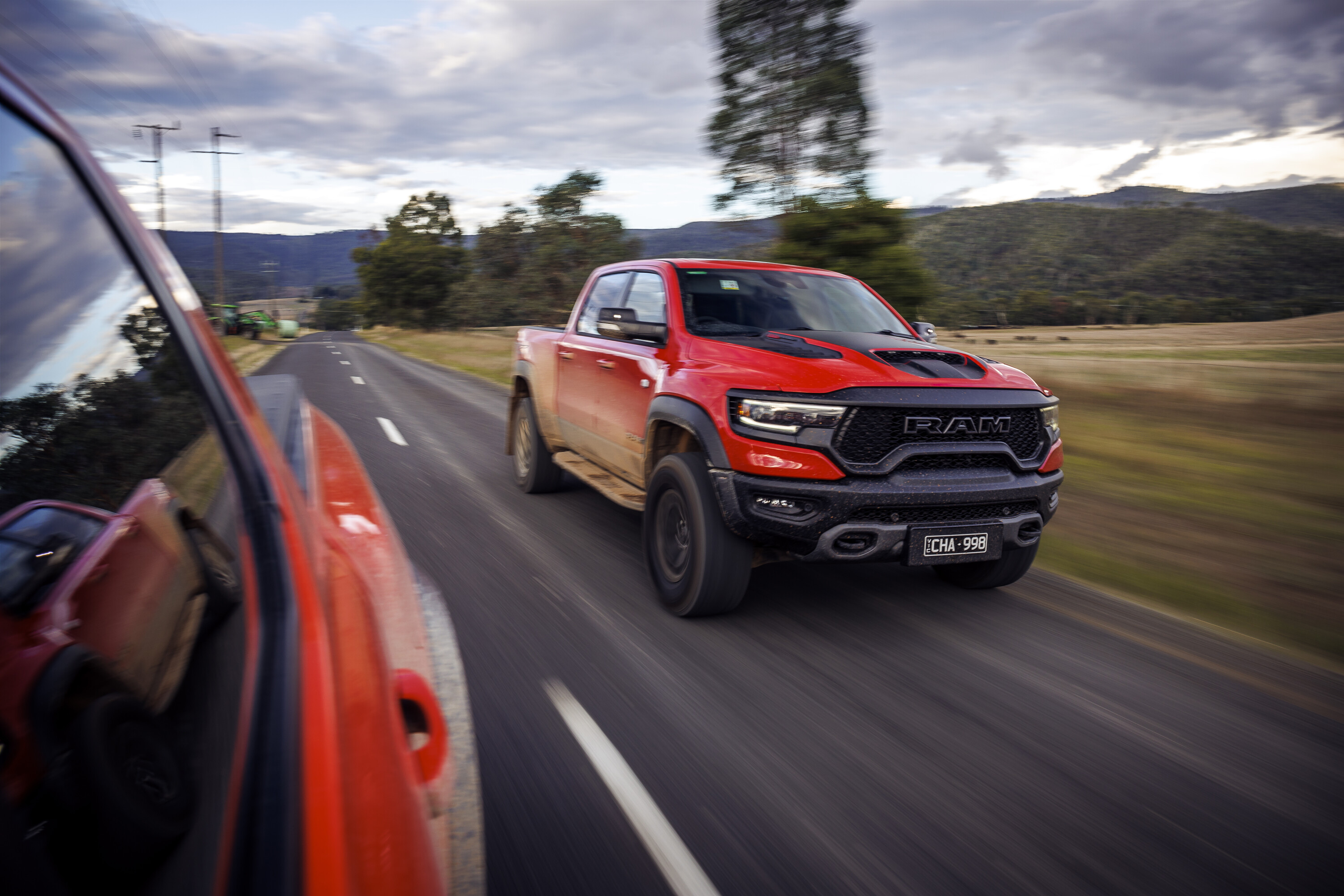
Still, you’ll probably spot every one of those registered vehicles, as the TRX’s road presence is second-to-none. Gigantic 325/65/R18 35-inch tyres; a bonnet seemingly wider than a 747’s front-end; an equally massive hood scoop; pumped-up guards; and measurements of 5929mm long, 2480mm wide, 2055mm tall with a wheelbase of 3686mm, combine to make the TRX most definitely a conversation-starter.
Of all the vehicles I’ve driven, this one stacks up as the most magnetic – it drew people to it, no matter where we went. Case in point: My six-year-old nephew had never shown any interest in any cars I have tested before, until the “big red monster truck”, as he called it, showed up one day. Now it’s all he talks about.
JUMP AHEAD
- Powertrain
- On-road performance
- Off-road performance
- Practicalities
- Interior
- Warranty and safety
- VERDICT
- Specs
Powertrain
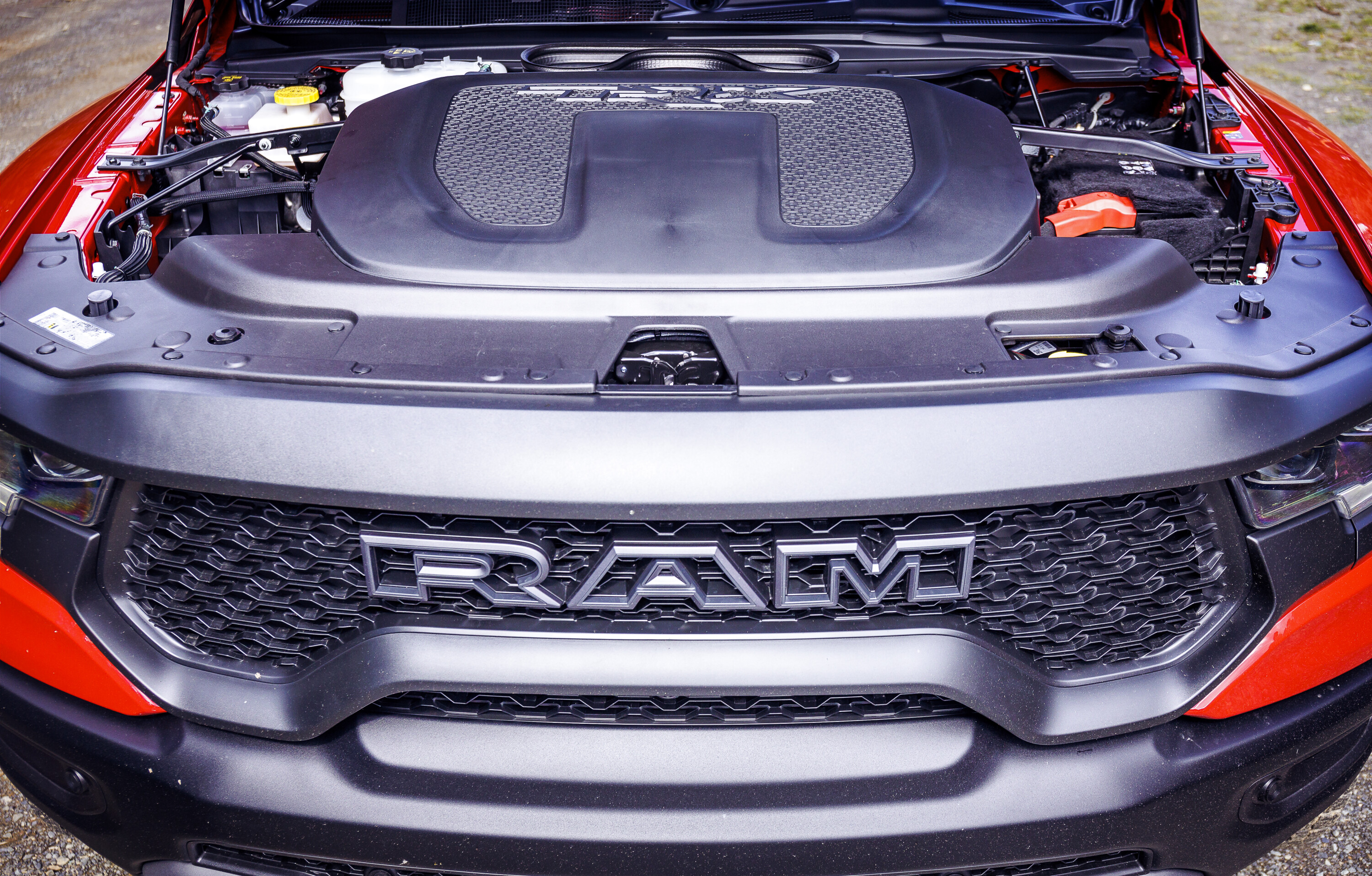
Beneath the scooped hood of this massive vehicle is where its best and most potent weapon resides: that spine-tingling supercharged HEMI V8.
With a claimed 532kW and 882Nm, the RAM TRX is officially the most powerful factory pick-up in the world. Said engine was adapted from the Dodge Challenger Hellcat and retuned by RAM Truck’s boffins to give it more appetite for off-road performance.
Push the start button and the V8 snaps into life, waking you up as though you’ve just knocked back two double-shots in quick succession.
The burble at idle provides a nice little preview about what’s about to come, but bury the right pedal into the footwell and that V8 bellow quickly reaches a crescendo and becomes both intoxicating and addictive, courtesy of the performance-tuned dual-exhaust system that features enormous five-inch matte-black exhaust tips. It’s a beautiful howl.
The V8 snaps into life, waking you up as though you’ve just knocked back two double-shots
The Hemi V8 is matched with a heavy duty Torqueflite 8HP95 eight-speed automatic transmission, which hunts its way through the gears ferociously at high speed – paddle shifters are available to change gears as the driver sees fit, though. The TRX utilises a BorgWarner 48-13 full-time active transfer case to send power to the front and rear axles.
On-road performance
Flex your right foot and the entire 532kW/882Nm of force slams you back into the bolstered, leather-trimmed front pews as you cling on to the tiller.
Its claimed 0-100km/h time of 4.5 seconds is even more commendable when you realise this behemoth weighs more than three tonnes. Its straight-line speed is bonkers – there’s even a launch-control function – and it’s made even more exhilarating thanks to that V8 bark.
The result of this is that the TRX ingests 98RON like there’s no tomorrow. After our full day of testing the TRX returned an almost-comical fuel consumption figure nearing 30L/100km. Clearly, more mundane day-to-day driving would see this figure drop, but even so RAM lists official fuel consumption at 19.6L/100km. Thankfully, the TRX has a decent 125L fuel tank capacity.
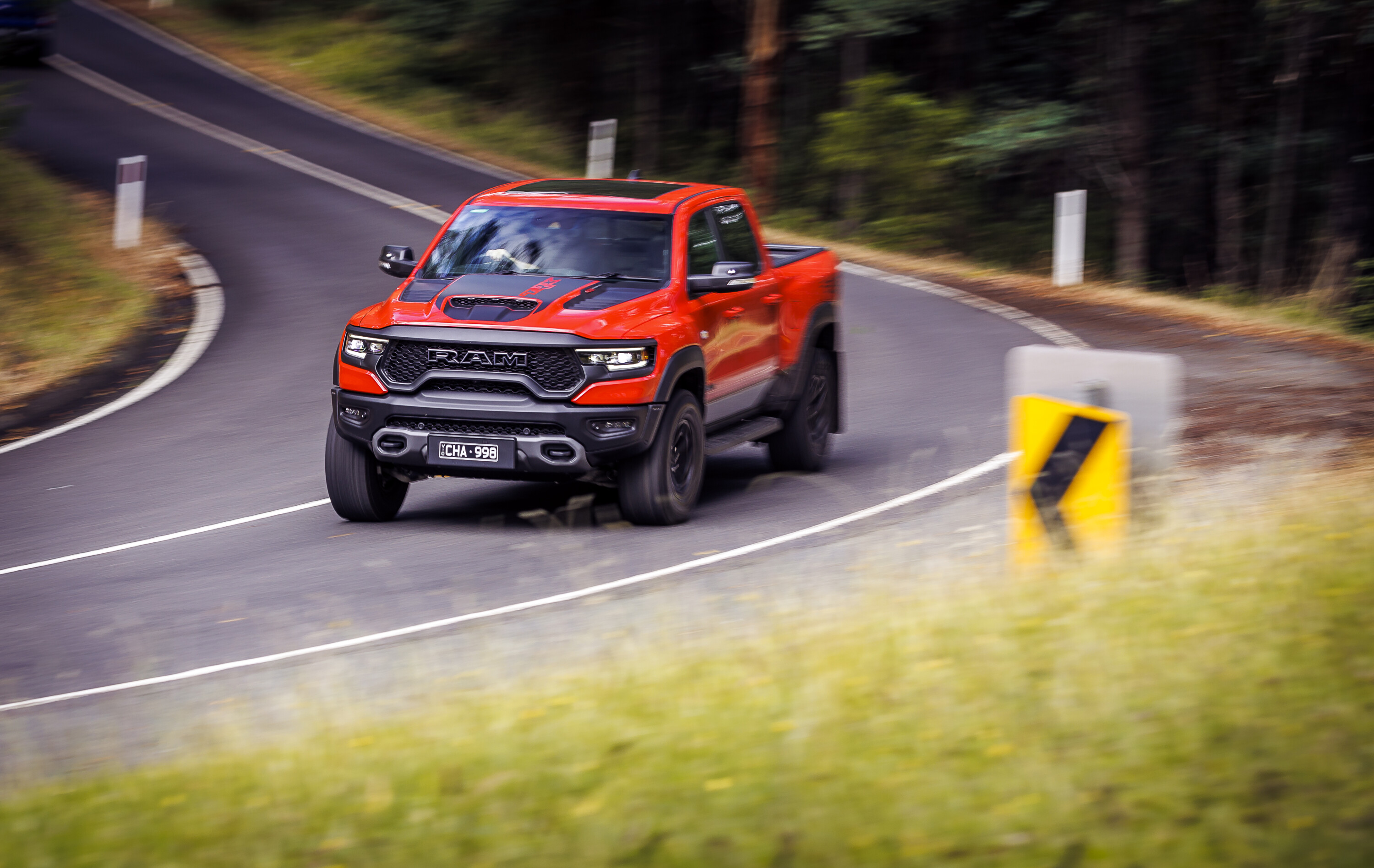
The TRX’s size and 3033kg kerb weight (3057kg with the optional sunroof) paints a slightly different picture when you arrive at twists and turns on the bitumen.
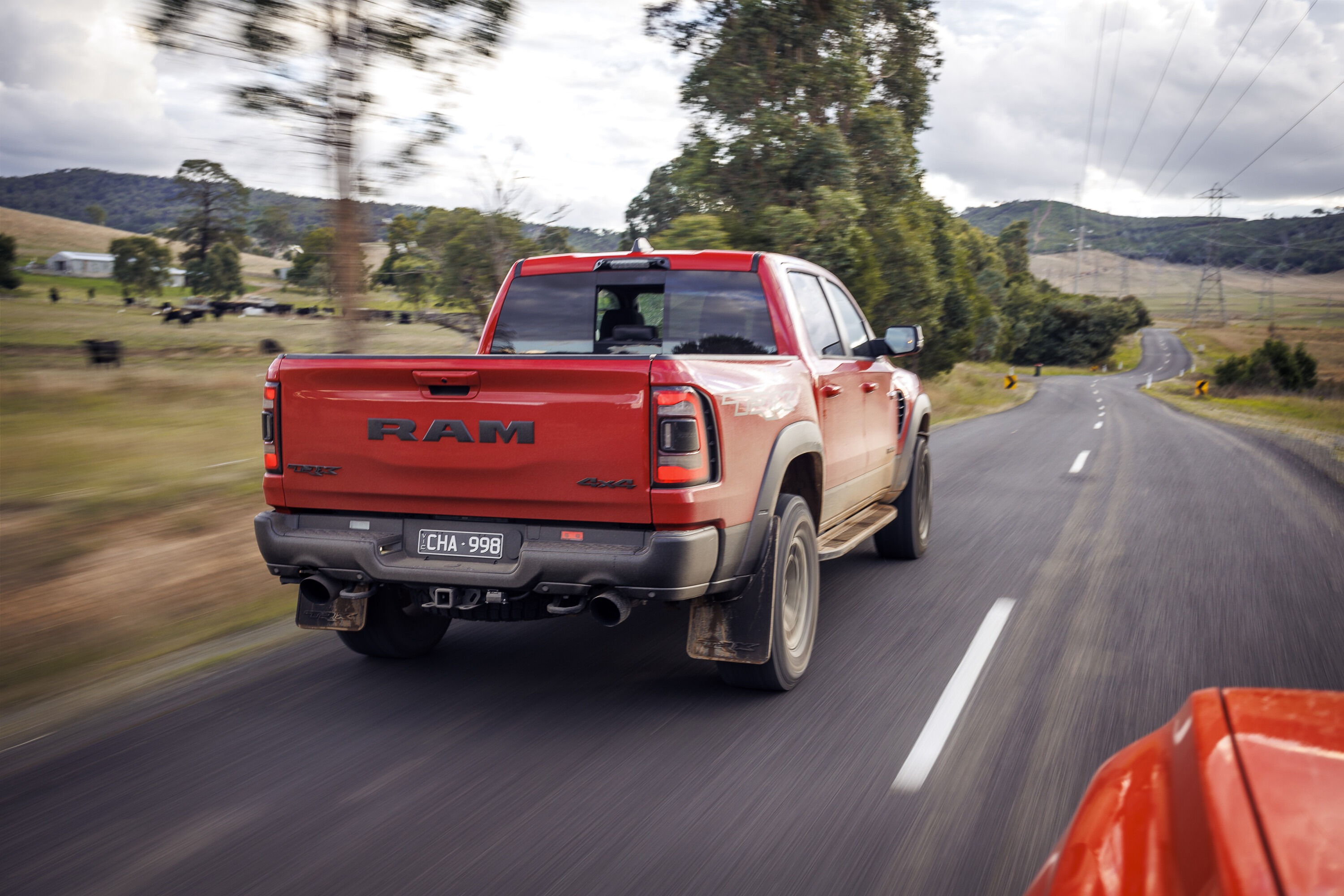
Where something like a Ranger Raptor remains composed and surefooted on winding roads – the very best in the dual-cab segment, mind you – the TRX becomes a bit floaty and disconnected with terra-firma at higher speeds. It doesn’t instil the driver with confidence to punt it to its limit, unlike the Ranger Raptor.
The TRX features a total of eight drive modes, each pre-configured to modulate the vehicle’s four-wheel drive system, throttle response, transmission and suspension set-up for a variety of terrain types. On-road modes include Auto, Sport, Tow, Snow and Custom (personalised with a variety of combinations); Off-road modes include Mud/Sand, Rock, and Baja.
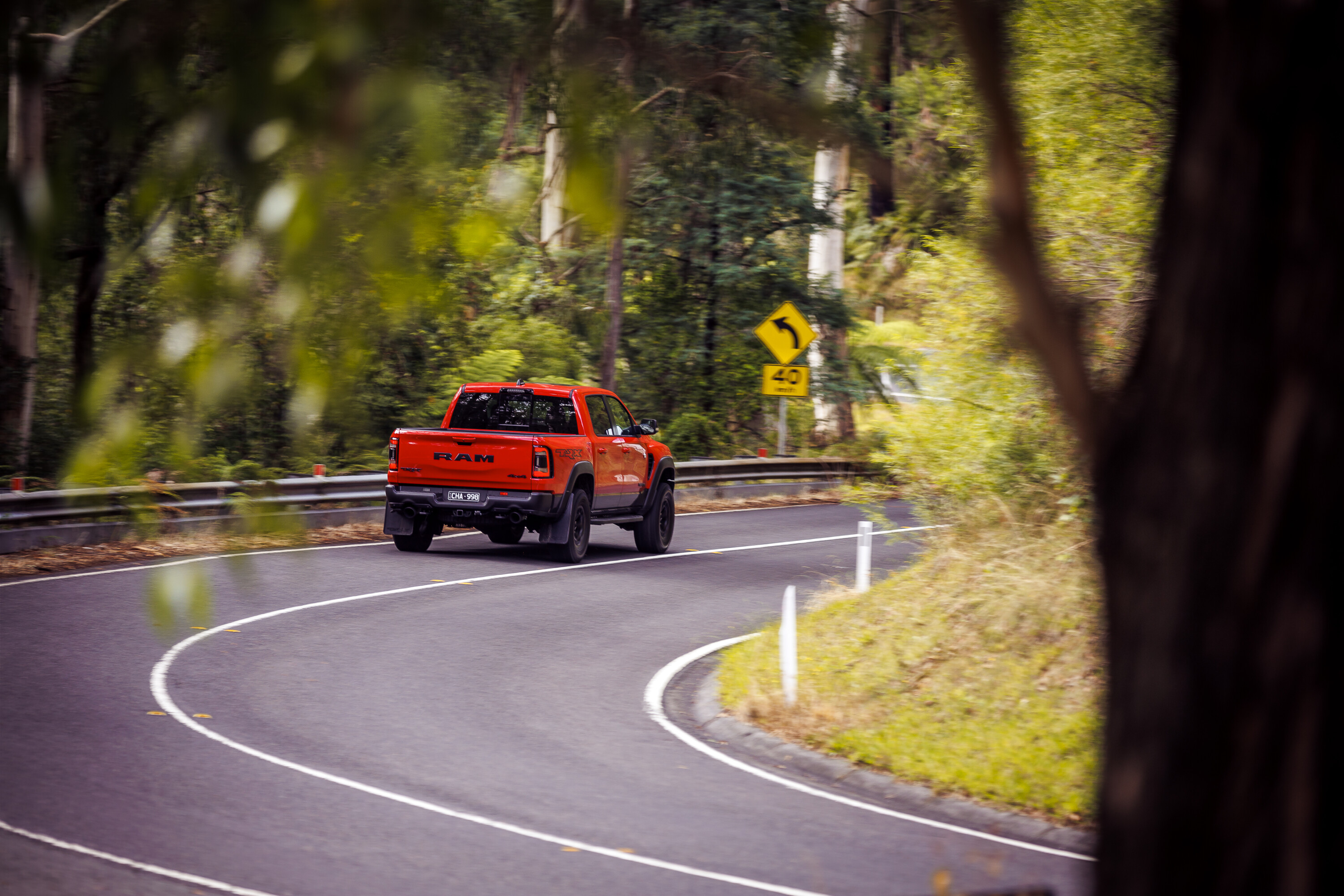
So it’s a big tick for straight lines and high-speed dirt, and a slightly smaller tick for twisty trails, but what’s it like to live with day to day? Not great, is the short answer.
The longer answer is that it becomes truck-like and cumbersome to live with. It guzzles fuel, its turning circle nears 15 metres, and parking can become a nuisance due to its sheer size – most suburban Aussie car parks aren’t designed for vehicles that measure in at nearly six metres in length. Parking sensors can be turned off, but why would you?
Off-road performance
As this vehicle is purpose-built for high-speed, corrugated dirt tracks, this test didn’t include any technical 4×4 terrain.
That means there’s no rock-crawling or mud-bashing – or the need to engage low range, unfortunately.
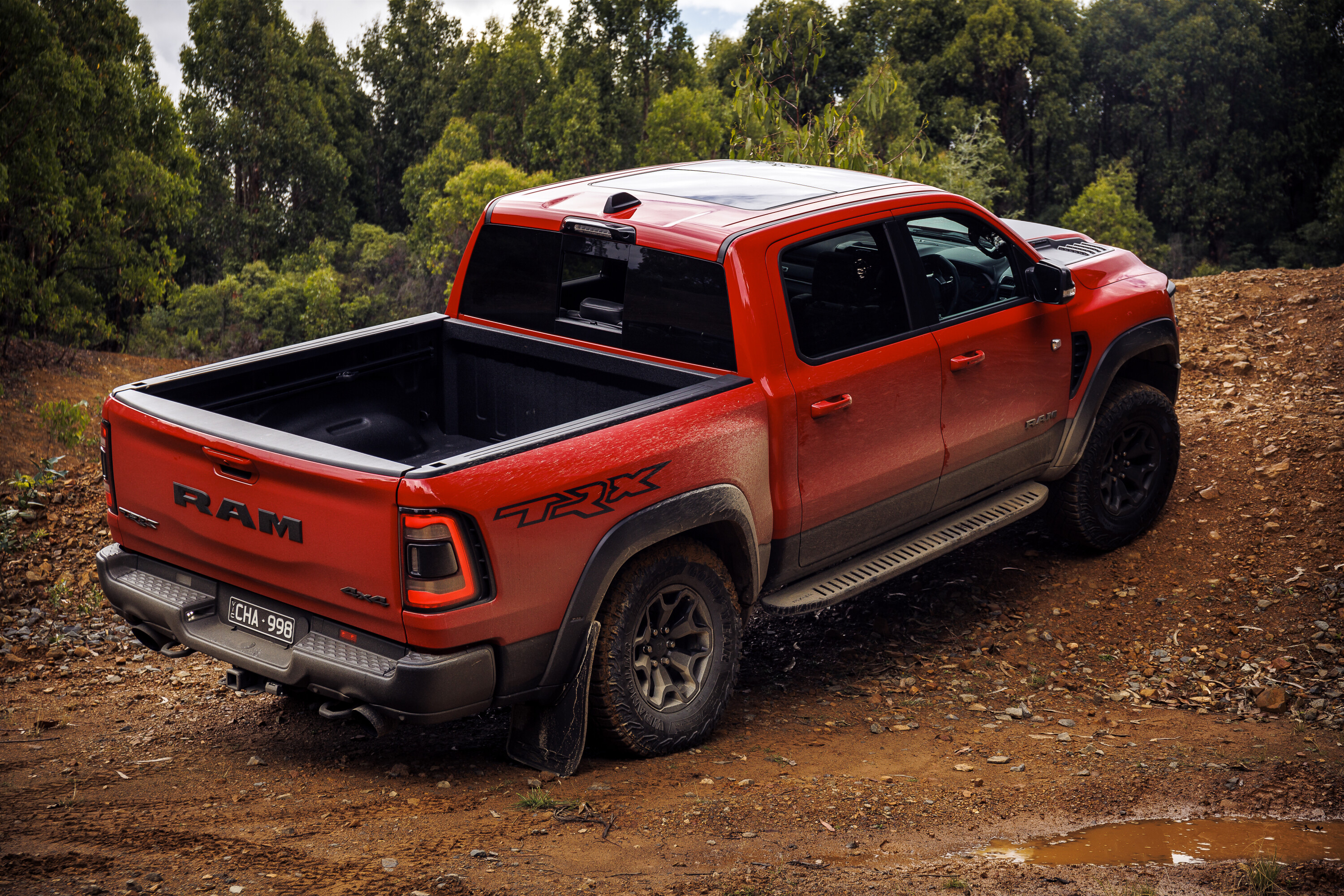
We did punish the TRX on potholed back-country roads, though, with the vehicle’s state-of-the-art damping system – dubbed BlackHawk e2 – proving its worth.
These performance-tuned shocks, developed by RAM engineers with help from Bilstein’s racing division, allows the TRX to simply dance over potholes and corrugations at speed, aided by an exclusive five-link coil system in the rear. Your vertebrae will be thanking you on your next cross-country expedition.
| 2023 Ram 1500 TRX off-road specs | |
|---|---|
| Departure angle | 23.5 degrees |
| Rampover angle | 21.9 degrees |
| Approach angle | 30.2 degrees |
| Wading depth | 813mm |
| Ground clearance | 295mm |
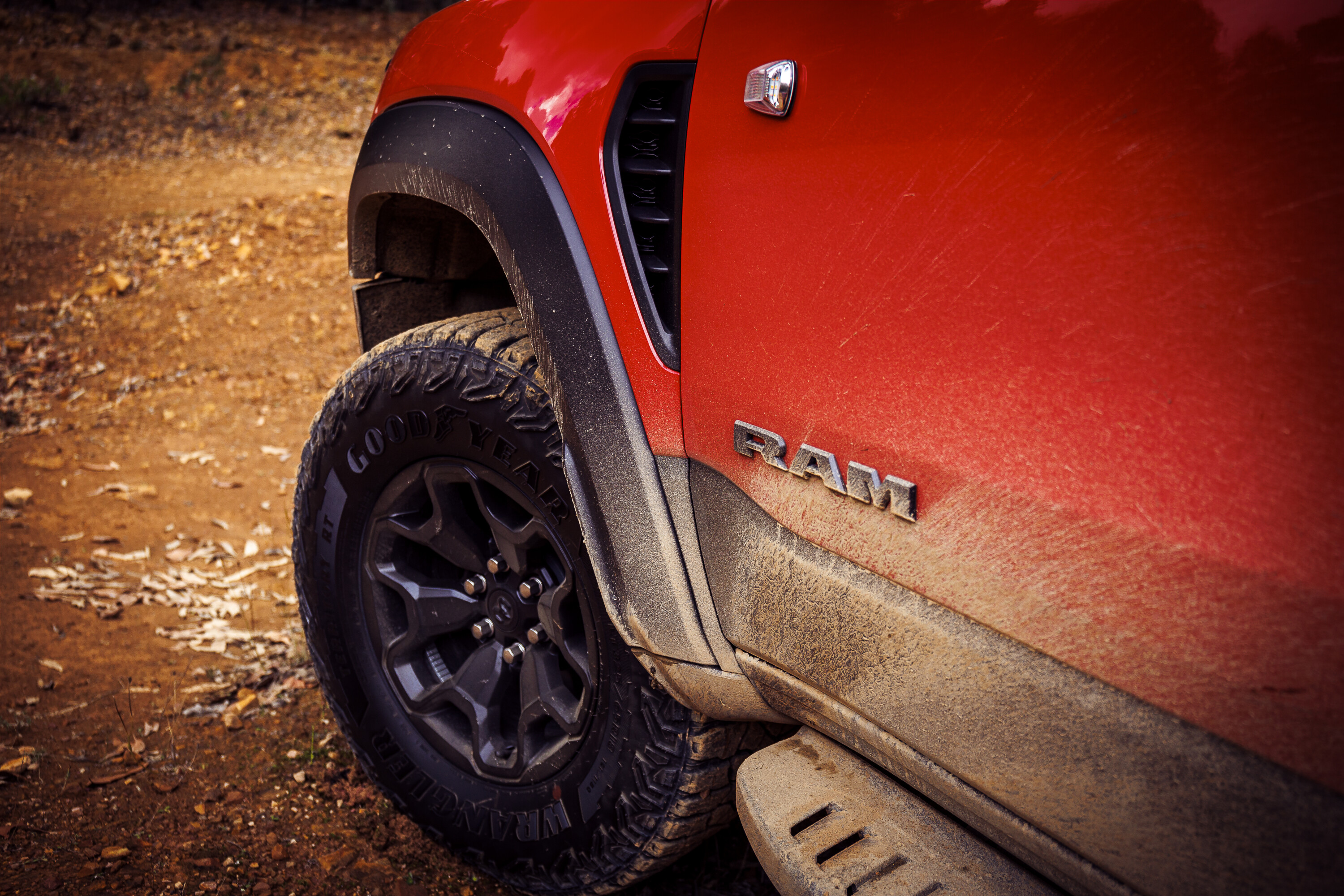
This uprated suspension set-up provides more than 330mm of travel at all four corners, with the TRX also boasting 295mm of ground clearance, an 813mm wading depth, and approach, breakover, and departure angles of 30.2°, 21.9°, and 23.5° respectively.
A stronger frame composed of high-strength steel and five (yes, five) skid plates are employed to protect vital underbody components.
Practicalities
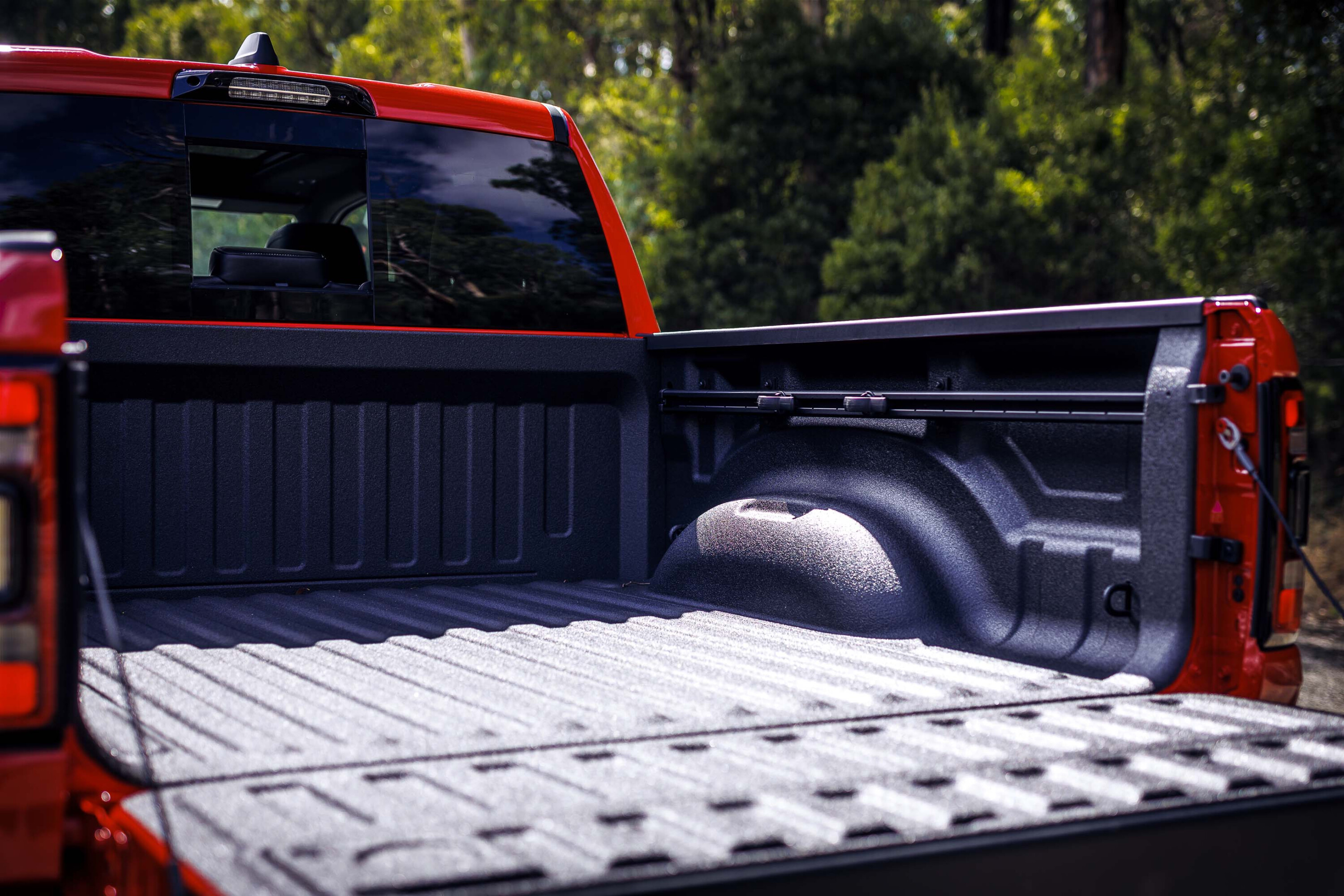
Thanks to its width, the TRX’s tray size is the best in the business, easily capable of swallowing loads up to 1687mm, with 1295mm between the wheelarches.
The tray’s length of 1711mm (with the tailgate closed) is class-leading and includes four tie-down points and a track system to easily tie down loads.
Like other performance utes of this ilk, the TRX is hindered by a payload capacity of just 767kg (or 743kg with the optional sunroof fitted).
We didn’t get a chance to attach anything behind this vehicle, but the TRX is quoted to have a 3500kg towing capacity.
It’d be a proficient vehicle for a caravanning lap of the map, but you’d want to ensure you properly plan out fuel stops along the way. A Redarc brake controller is fitted as standard.
The TRX rides on 18-inch black-painted alloys inside 325/65R18 35-inch Goodyear Wrangler A/T tyres. It comes with a full-sized spare. Plus, it features a sliding rear-window port for increased airflow.
Interior
Unlike the brash exterior of the TRX, the interior is a rather cushy place to spend your time.
The front bucket seats – with heated and ventilated premium Natura Plus leather and suede accents – are copious and comfortable, and there’s plenty of space in the rear bench for three large adults. Entry and exit is simple, but the extra height of the vehicle means it can be quite a big step for smaller folk and kids.
The vehicle’s large dimensions have allowed RAM designers to be more liberal with the size and number of storage bins, pockets and drink holders, with the layout user-friendly and well thought-out. The massive bin in the centre console is big enough to house a six-pack, or possibly even a small Esky.
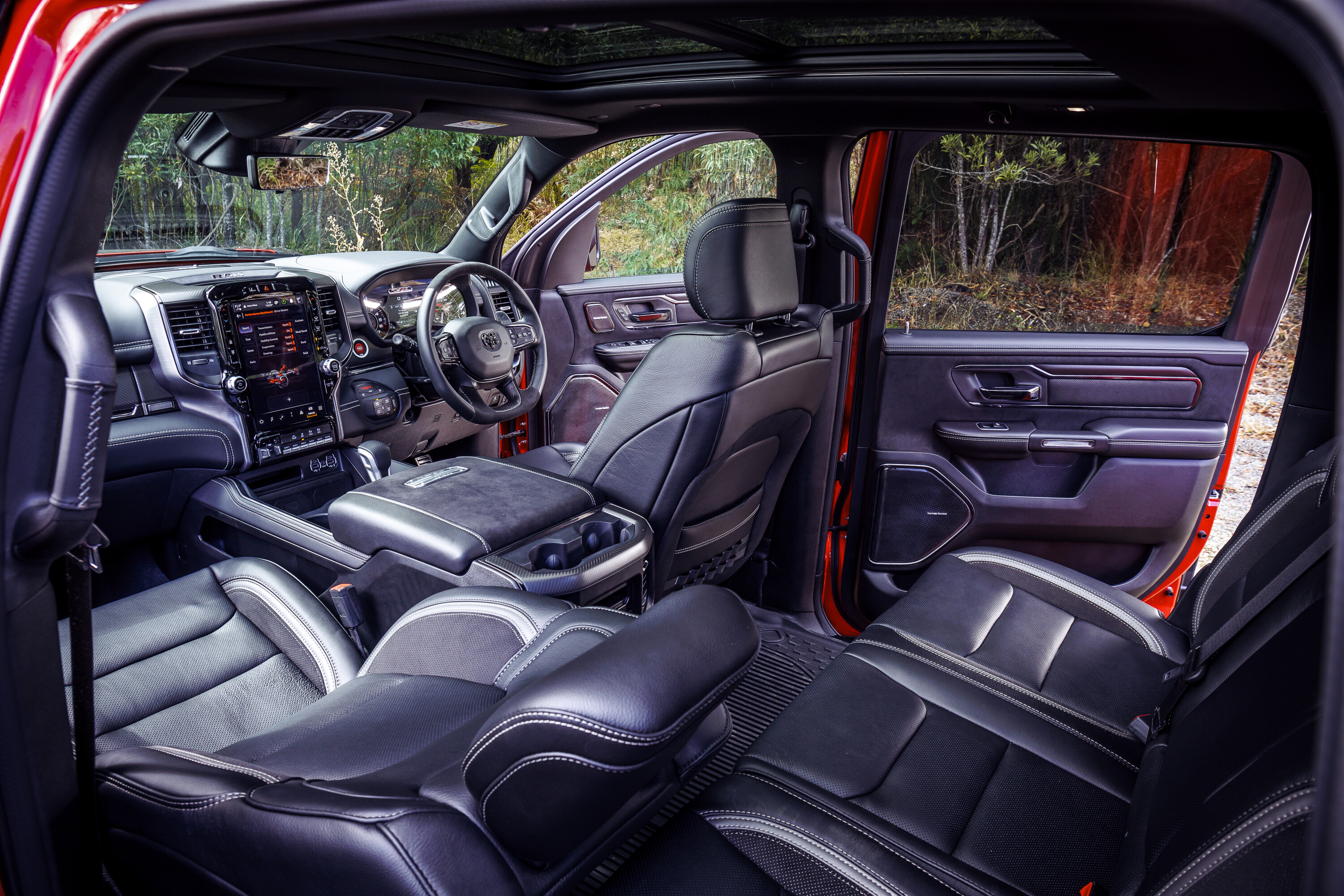
Connectivity is in abundance with a USB output above the centre storage console, two more in the central dash, as well as an AUX and two USB-Cs, with even more in the rear pews for a total of five USB and four USB-C ports. Six auxiliary slots for aftermarket accessories sit at the bottom of the central dash, with a 12-volt DC outlet residing on the top.
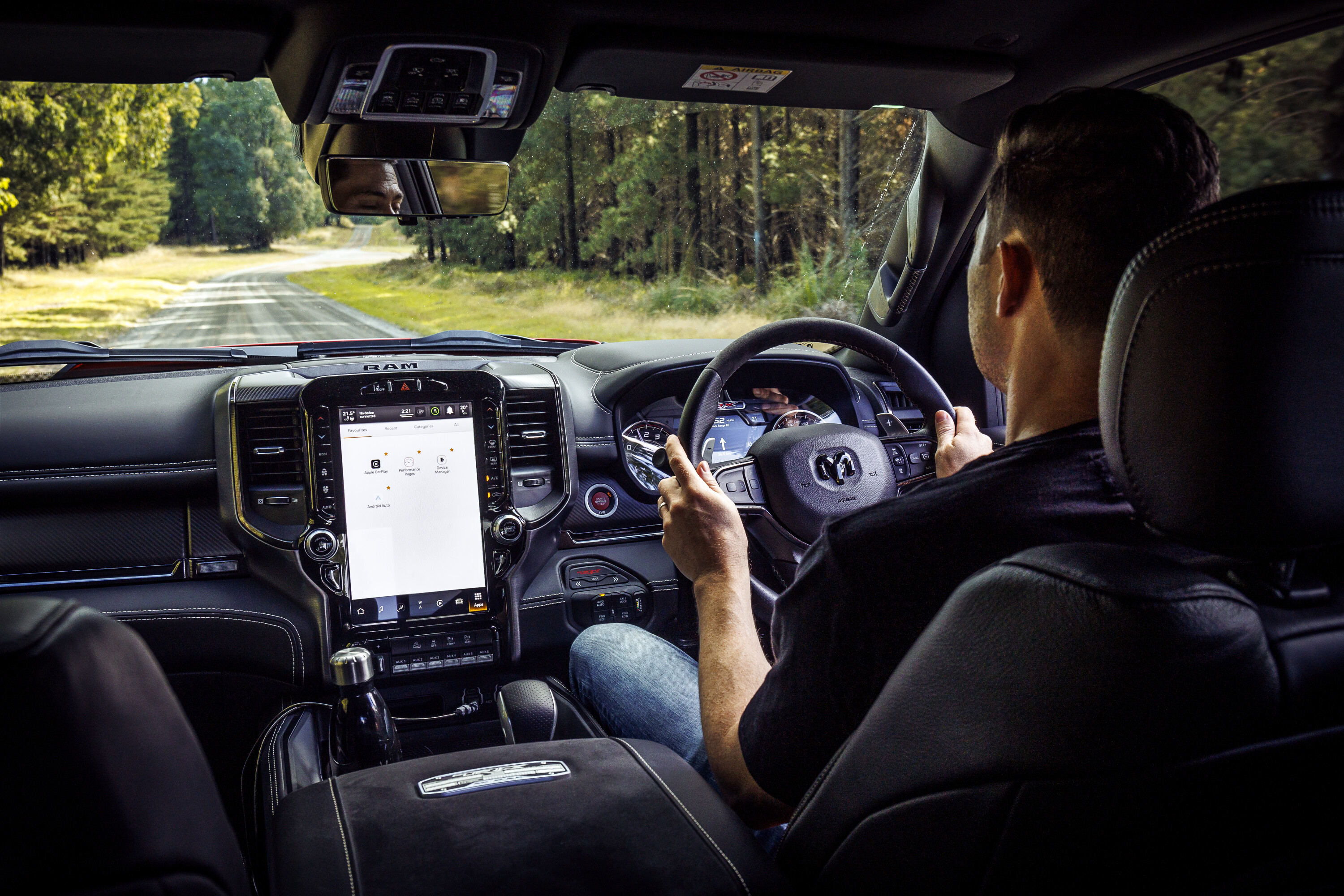
The TRX’s muscular exterior flows into the vehicle’s cabin, with plenty of aggressive design lines enhanced by carbon-fibre accents and suede trim. It seems RAM designers went into overdrive to ensure buttons, dials and information would cover every square inch of space on the dash and driver’s console, and while it may look somewhat cluttered and busy as a result, everything kinda works and is positioned within reach. Dials are chunky and easy to use and buttons are positioned where you’d expect them to be.
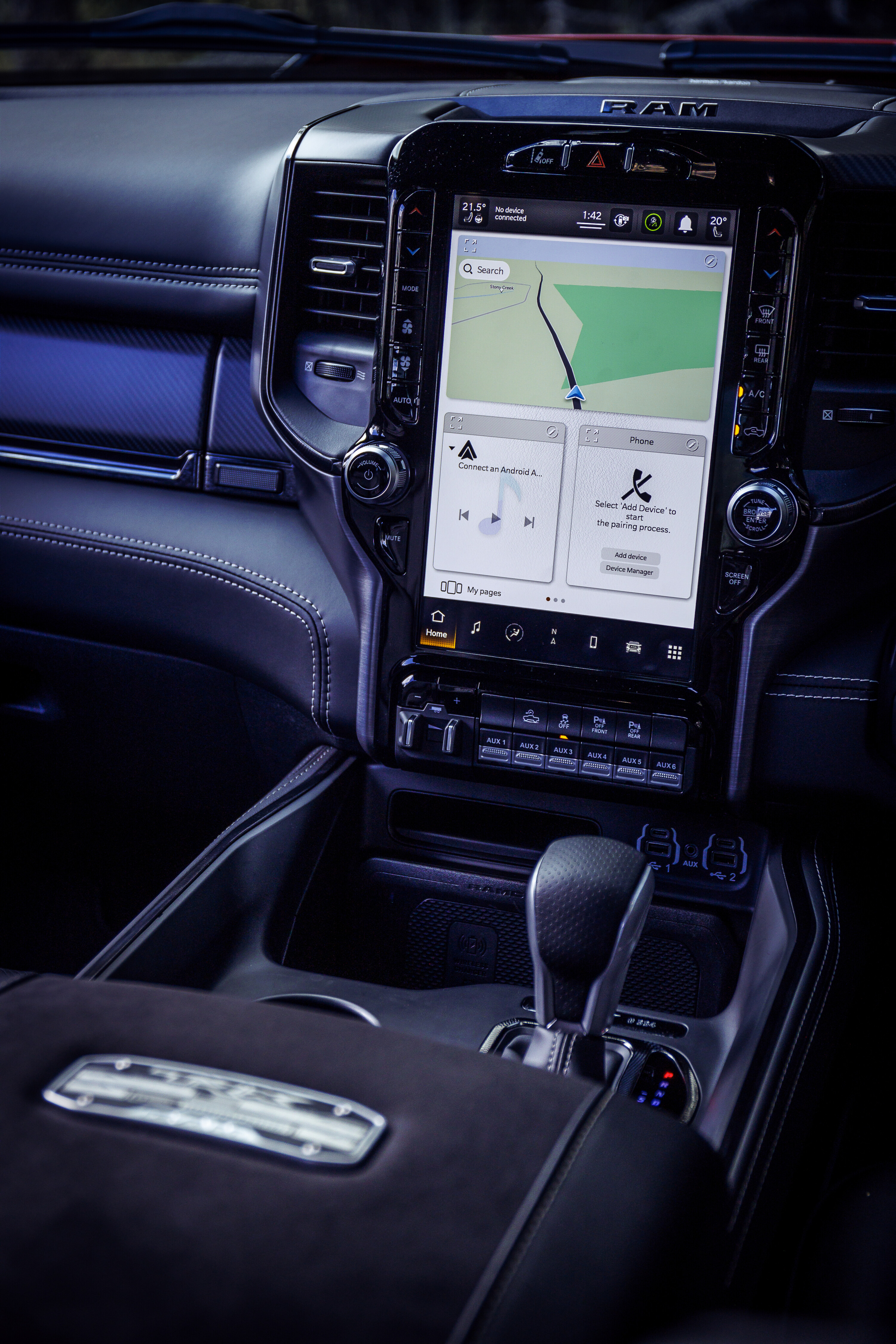
The SRT-signature steering wheel feels meaty in your hands, which is exactly what you want in a vehicle of this calibre
A 12-inch portrait touchscreen takes pride of place in the centre console, with the homepage placing a frustrating emphasis on widgets. Hook up Android Auto or Apple CarPlay for instance, and the widget will prevent apps from utilising the entire screen. It seems like a terrible waste of space. The 19-speaker Harman Kardon sound system, on the other hand, is epic and perfectly suits a vehicle of this ilk.
The SRT-signature flat-bottomed, leather-wrapped steering wheel feels meaty in your hands, which is exactly what you want in a vehicle of this calibre. The inclusion of rubber mats makes it easier to wash it should it get dirty… and it should. And this vehicle was equipped with an optional $10,000 sunroof (not a typo).
Warranty and safety
The TRX doesn’t qualify for ANCAP assessment, and as such it has not been assessed for a safety rating.
Another factor to consider is that the TRX only comes with a disappointing three-year/100,000km warranty.
VERDICT
Adding up the sum of its parts, the RAM TRX is an exceptional vehicle that excels at what it has been designed to do: traverse uneven terrain with ease, courtesy of its state-of-the-art suspension.
But once the initial adoration of its thunderous V8 subsides and straight roads start to get a bit twisty, the TRX doesn’t quite maintain that extremely high standard.
That it costs more than $200K – you could get two Ranger Raptors for that coin – and only comes with a three-year warranty, are both things to seriously consider.
Snapshot
- Expected around 2026-28
- Set to incorporate swoopier styling and wider cabin
- Up-to-date safety technology expected
With the arrival of the third generation of the Mahindra Scorpio in Australia in April, it begs the question of when a new PikUp will follow.
The PikUp is Mahindra’s 4×4 ute vehicle and, unlike most of its competitors that rework their body-on-frame ute platforms to accommodate a wagon body (think Ford Everest, Isuzu MU-X, Toyota Fortuner, Mitsubishi Pajero Sport), Mahindra goes the other way and starts with a wagon followed by the PikUp.
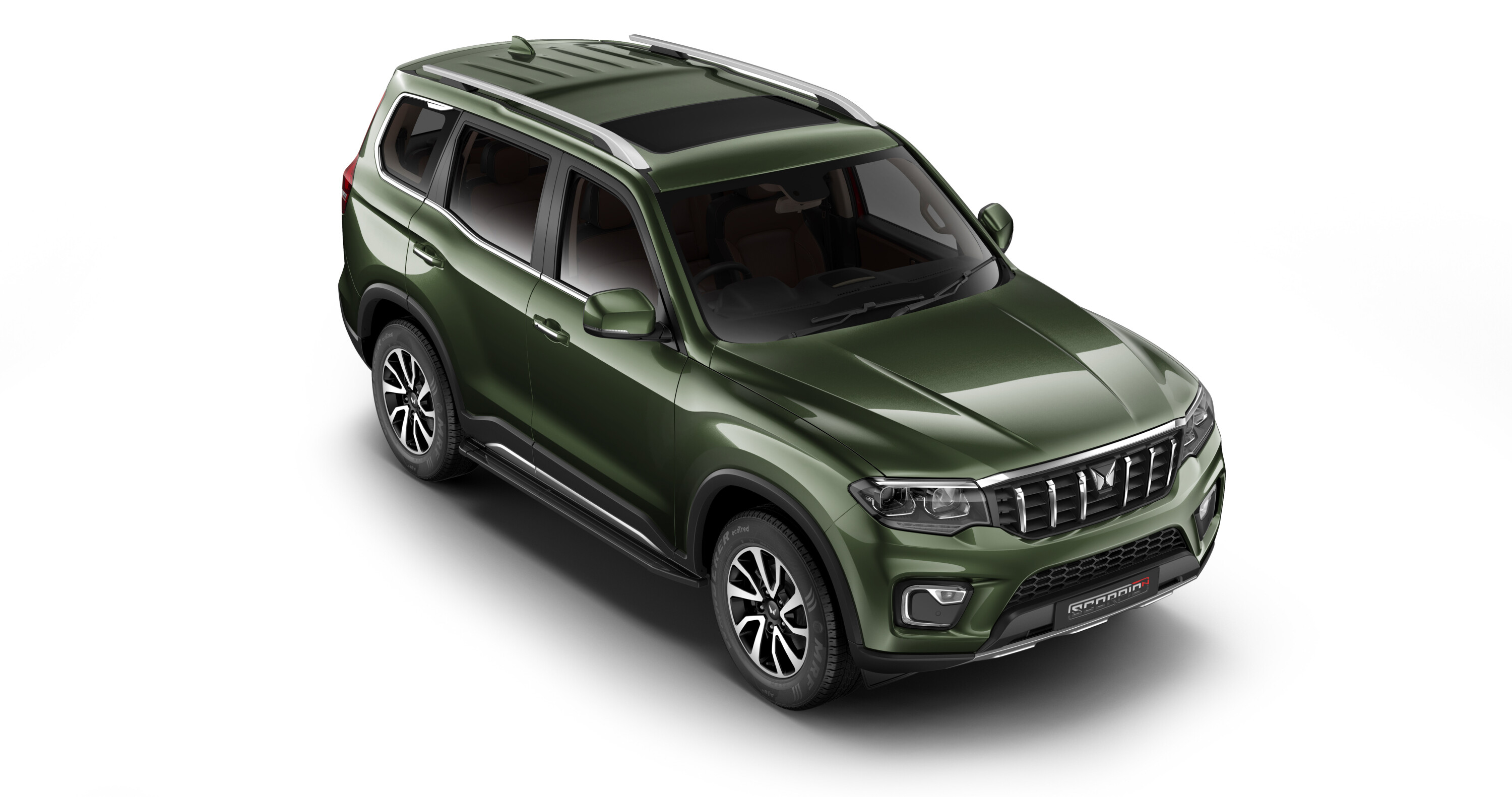
The PikUp has been available in Australia for many years, but it is derived from the old second-generation Scorpio platform. You can see the PikUp’s wagon roots at the rear of the double-cab’s body where the rear doors are scalloped to go around the wheel arches of the shorter wagon wheelbase.
It looks like many of the large 4×4 utes (primarily LandCruisers) in Australia started as wagons but have been cut-down and lengthened by aftermarket companies, to create full-size double-cab utes.
While most Mahindra staff on the Australian launch of the new Scorpio remained tight-lipped about the prospect of a new PikUp, others suggested it would be inevitable.
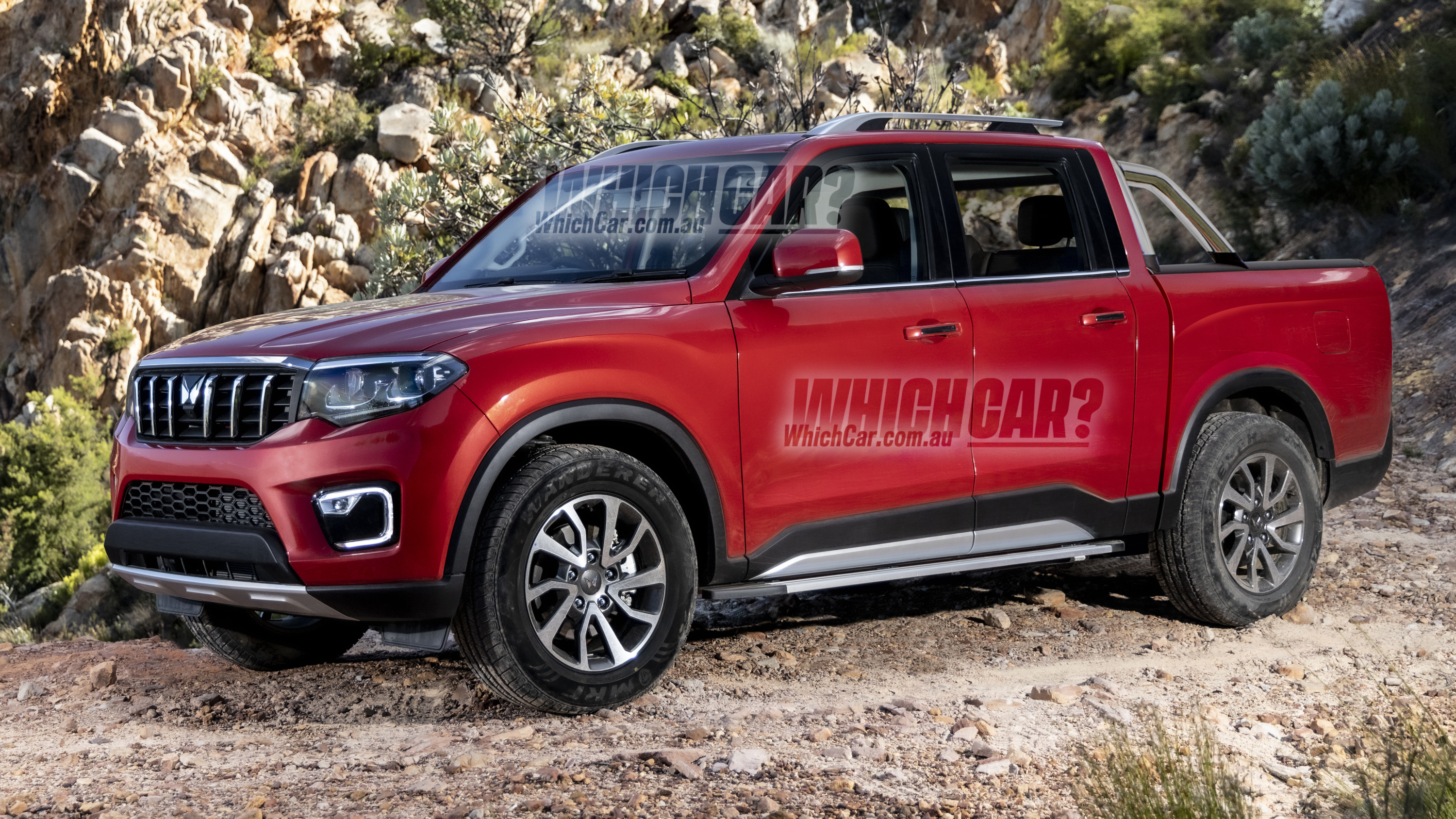
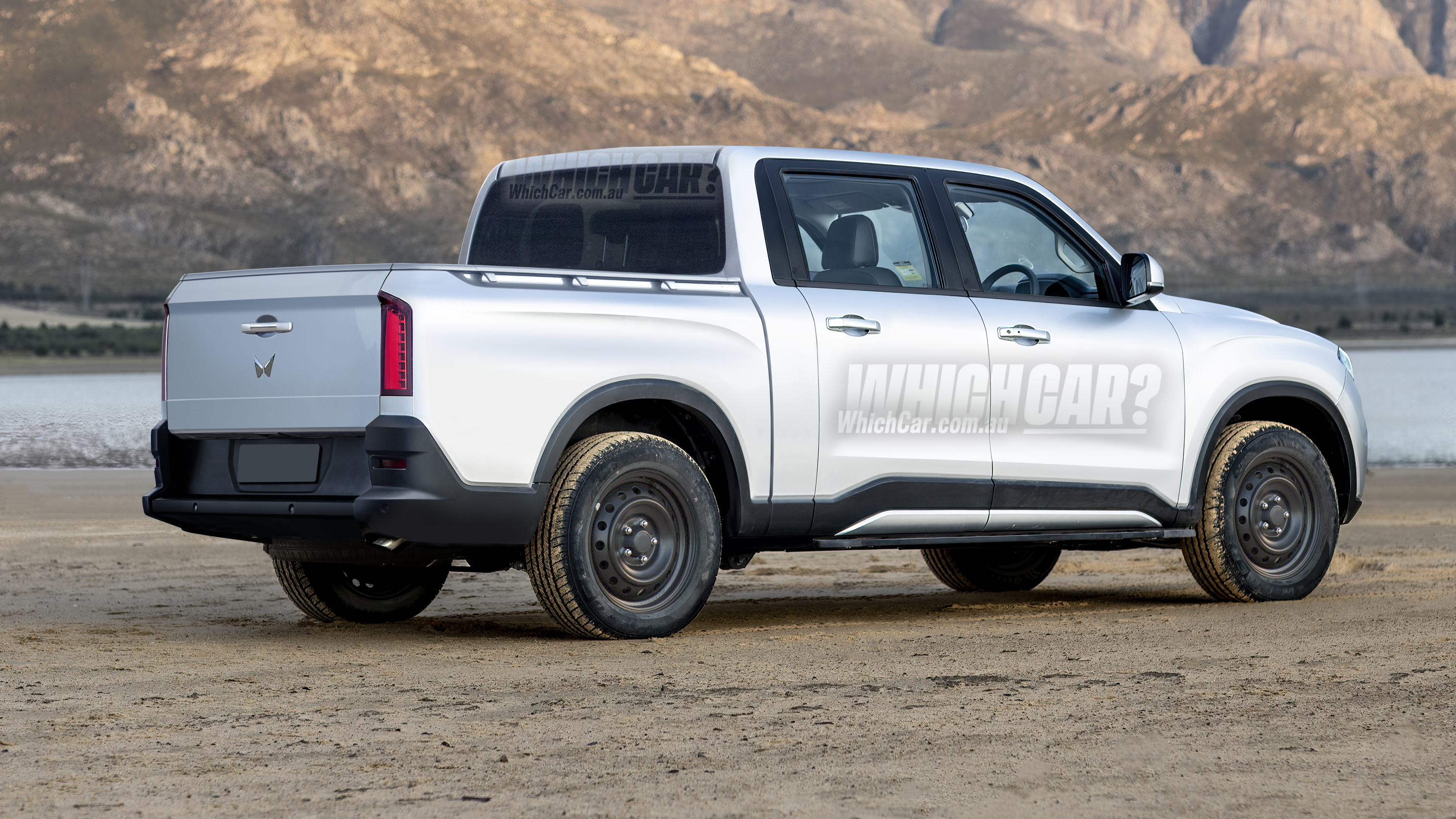
India is the biggest market in the world for right-hand drive vehicles and Mahindra sees other RHD markets like Australia and South Africa as major customers. With the popularity of utes in the southern hemisphere markets, a new generation of PikUp will be important, especially one that promises a more refined drive, as the new Scorpio does.
The current PikUp has a narrow and very tall, upright cabin which generates considerable wind noise around the A-pillars, not to mention being shaped like a brick. So the swoopier design of the third-generation Scorpio with its laid-back windscreen and wider body will be a welcome addition to a new ute derivative.
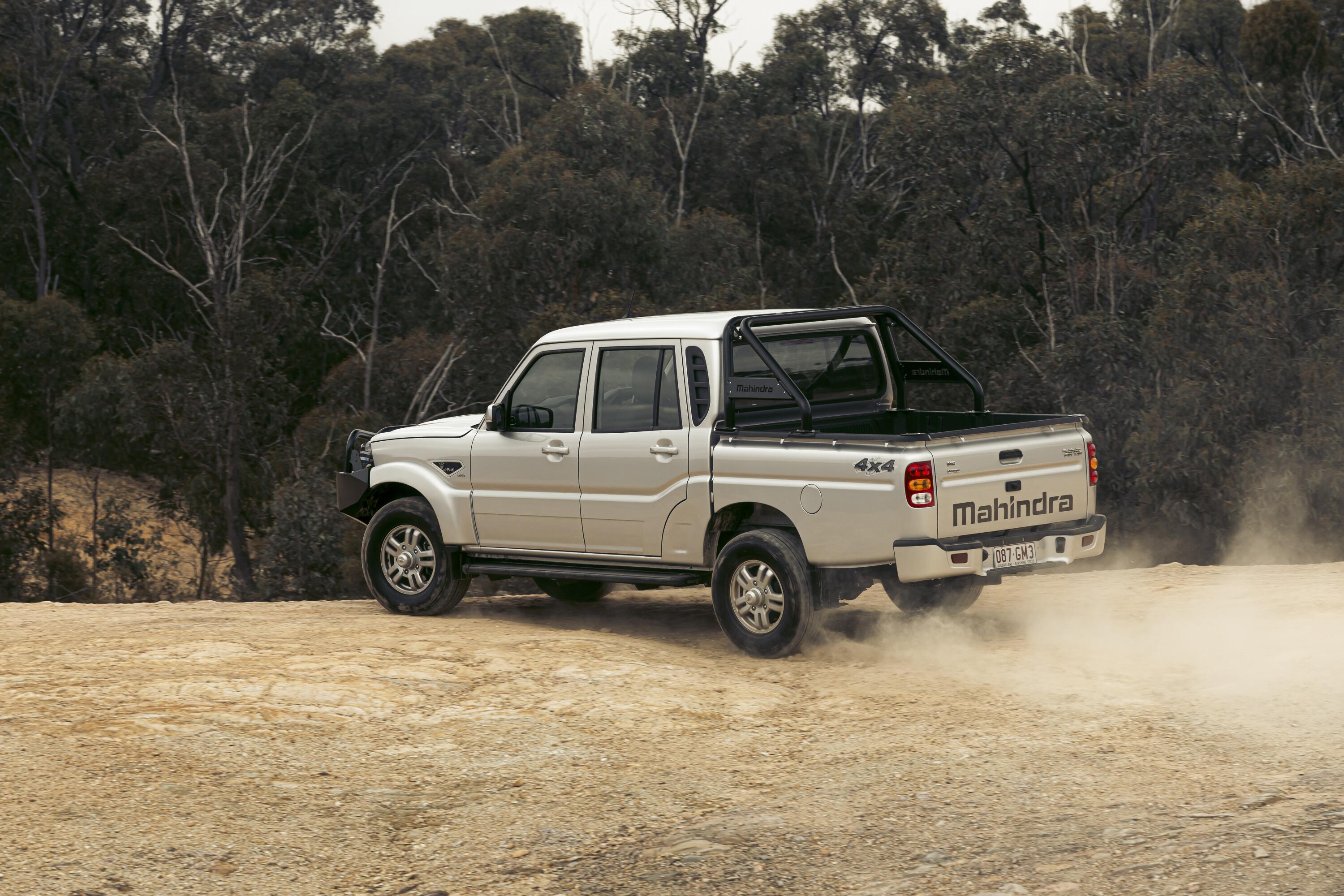
While the current Mahindra PikUp also uses the mHawk 2.2-litre diesel engine and Aisin six-speed automatic transmission, a new model would benefit from the latest version of that engine as found in the new Scorpio.
Like the new Scorpio, the next generation of Pik-Up will need to include the latest safety features such as AEB, lane-keeping technology, road speed sign recognition and radar cruise control, if it is to compete with the established leaders in the category.
Those features are missing from the Scorpio at its launch in Australia, but hopefully they will be integrated in to the platform by the time it spawns a new PikUp.
When that will be is open to speculation with nothing official confirmed as yet, but we expect to see a new Mahindra PikUp in the next three to five years incorporating all these latest features.
Mahindra’s Thar has been kept from Australia through a legal contest – you can probably guess why – but this new five-door model, with an updated look, could be a chance.
Snapshot
- First five-door of Mahindrau2019s Jeep Wrangler copy
- Styling changes expected for further differentiation
- Chassis and driveline carried over from Scorpio
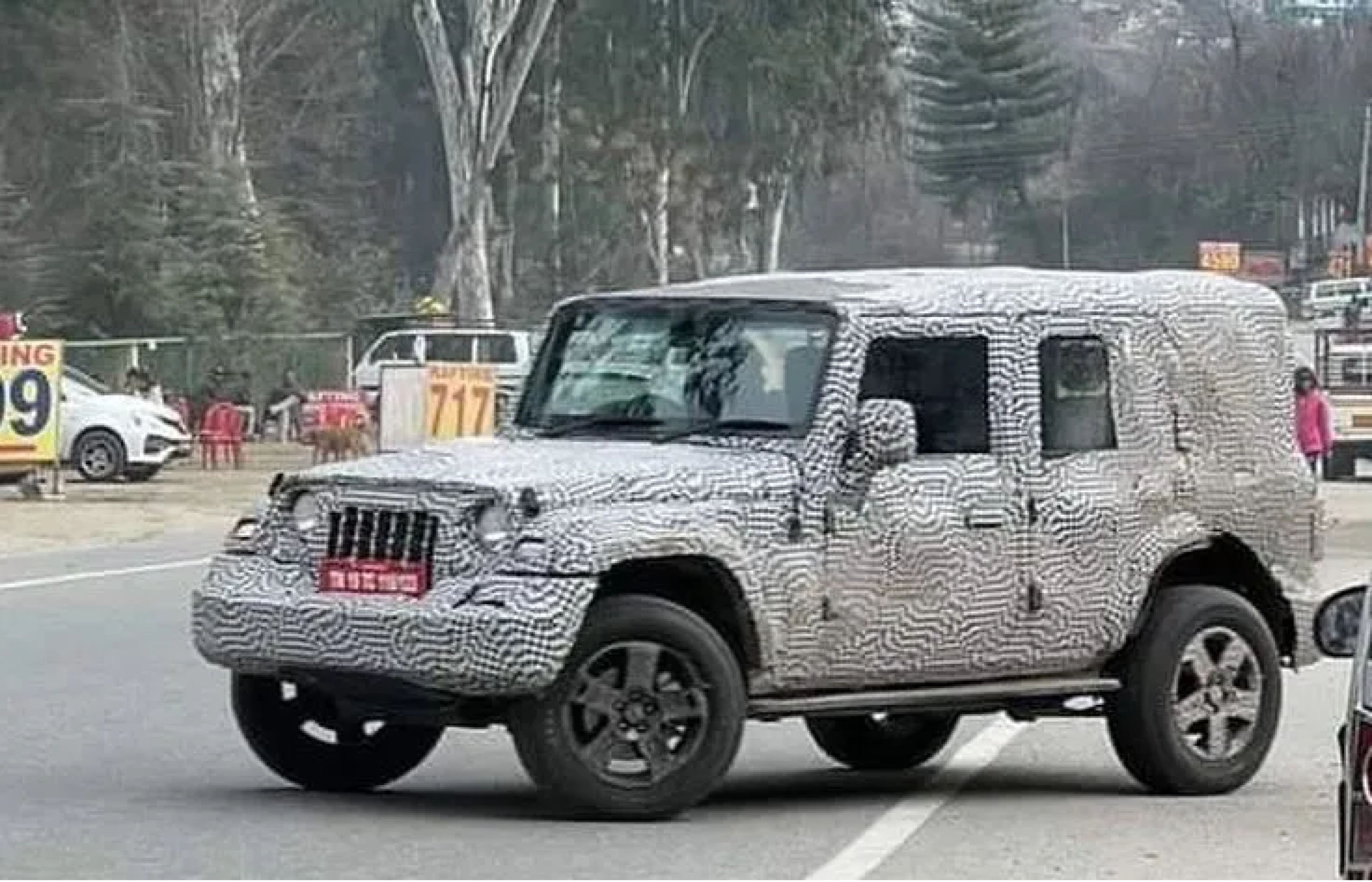
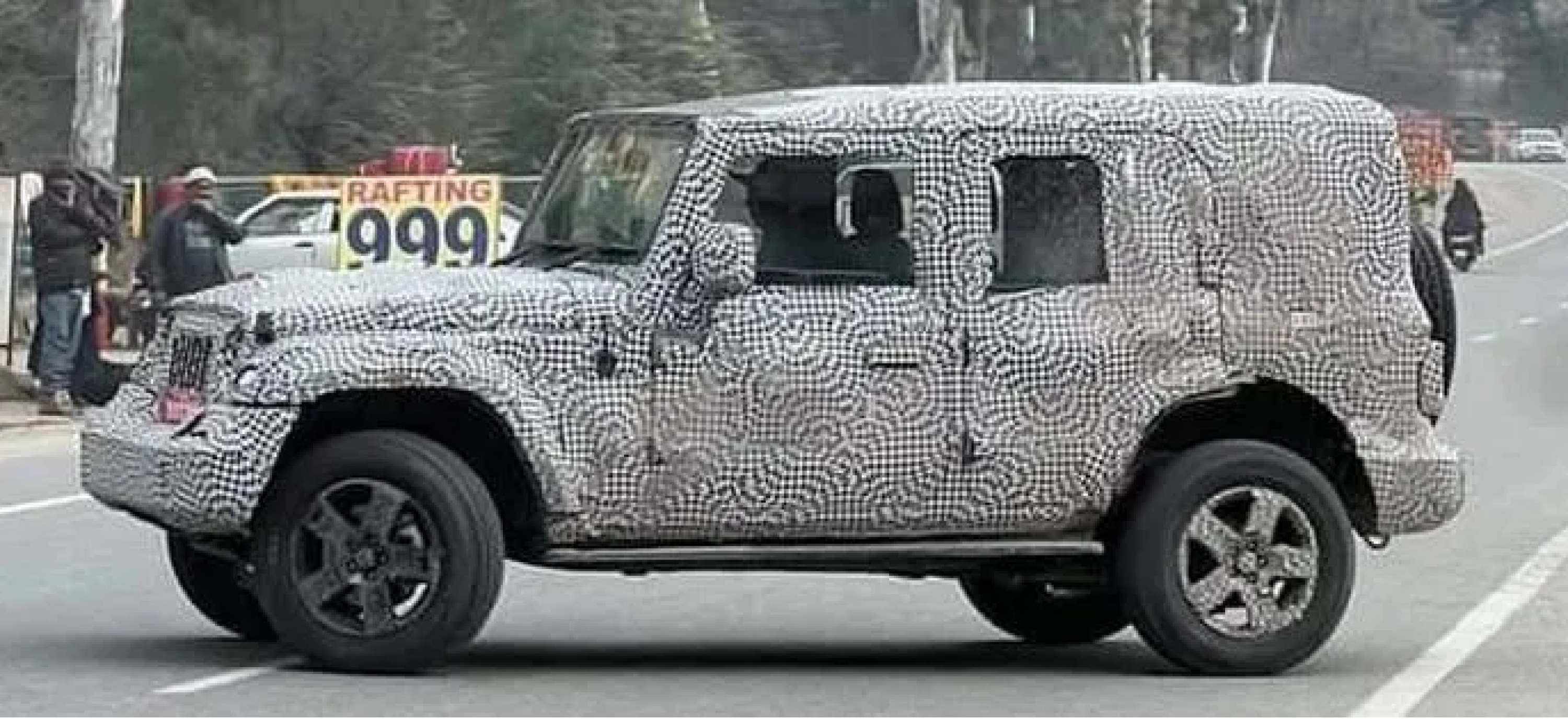
Prototypes of a five-door Mahindra Thar 4×4 wagon have been spotted in testing in the company’s homeland of India, and our sources at Mahindra Australia remain optimistic about the possibility of the Jeep Wrangler look-a-like coming to Australia sometime in the future.
This is despite Jeep Australia winning a case in the Australian courts back in 2021 preventing the three-door Thar being imported here, due to the Indian wagon’s similarities to the American off-roader.
JUMP AHEAD: 5-Door Thar imagined!
Mahindra started making automotive vehicles shortly after WWII off the back of assembling war-surplus Jeeps from knockdown kits supplied and licensed by Willys-Overland, the original owners of the Jeep trademark. In the years since, Mahindra has always had a Jeep-like vehicle in production, the latest iteration of which is the Thar.
The relationship has soured in recent times and, as the Jeep brand has passed through different owners, current owners Stellantis aren’t so keen on copies of its most iconic model. Nor is its Australian arm.
Our sources say the new Thar has undergone a significant styling refresh to further differentiate it from the Jeep, and Mahindra hopes to have the car join its growing line-up here as soon as possible.
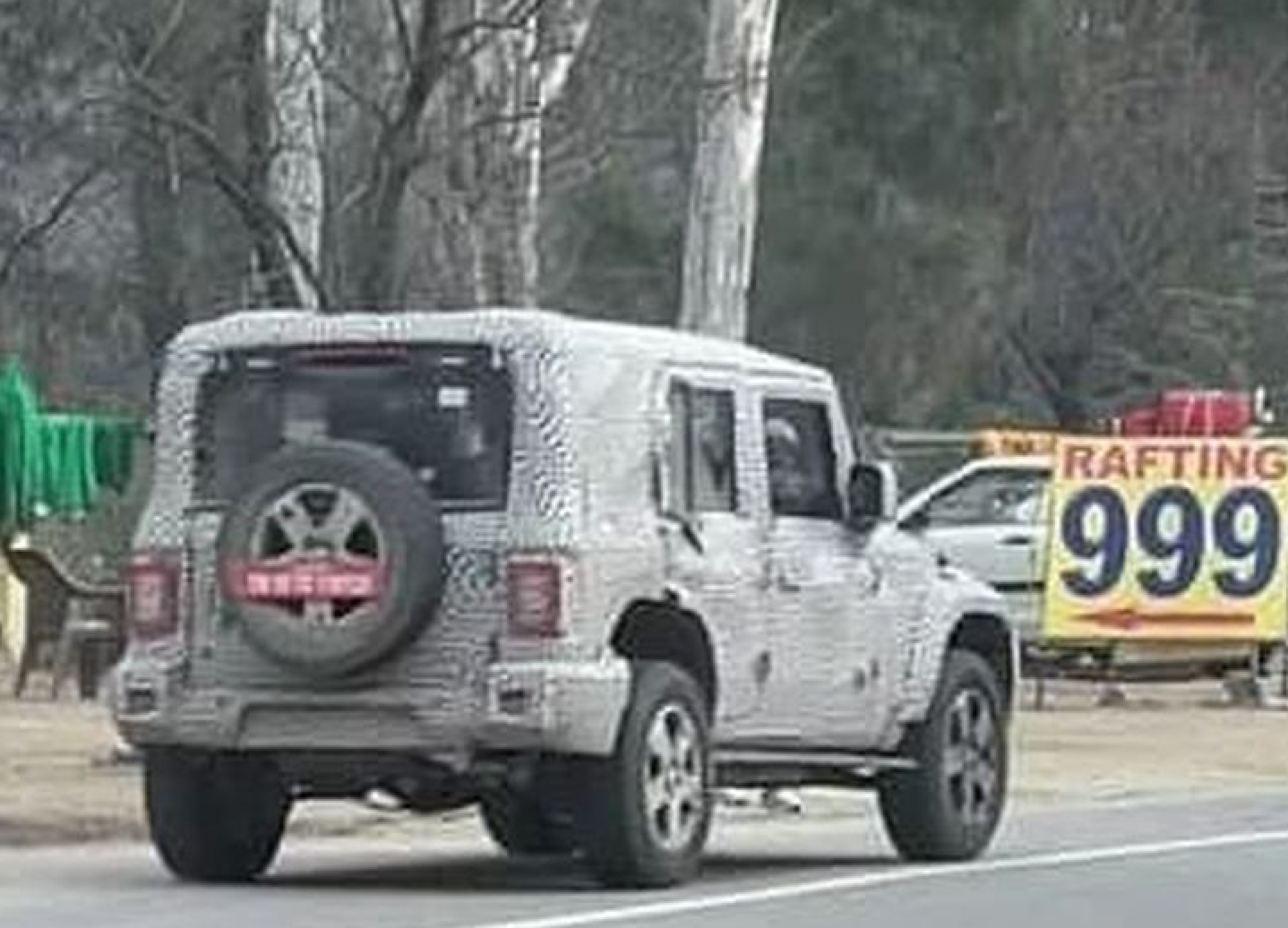
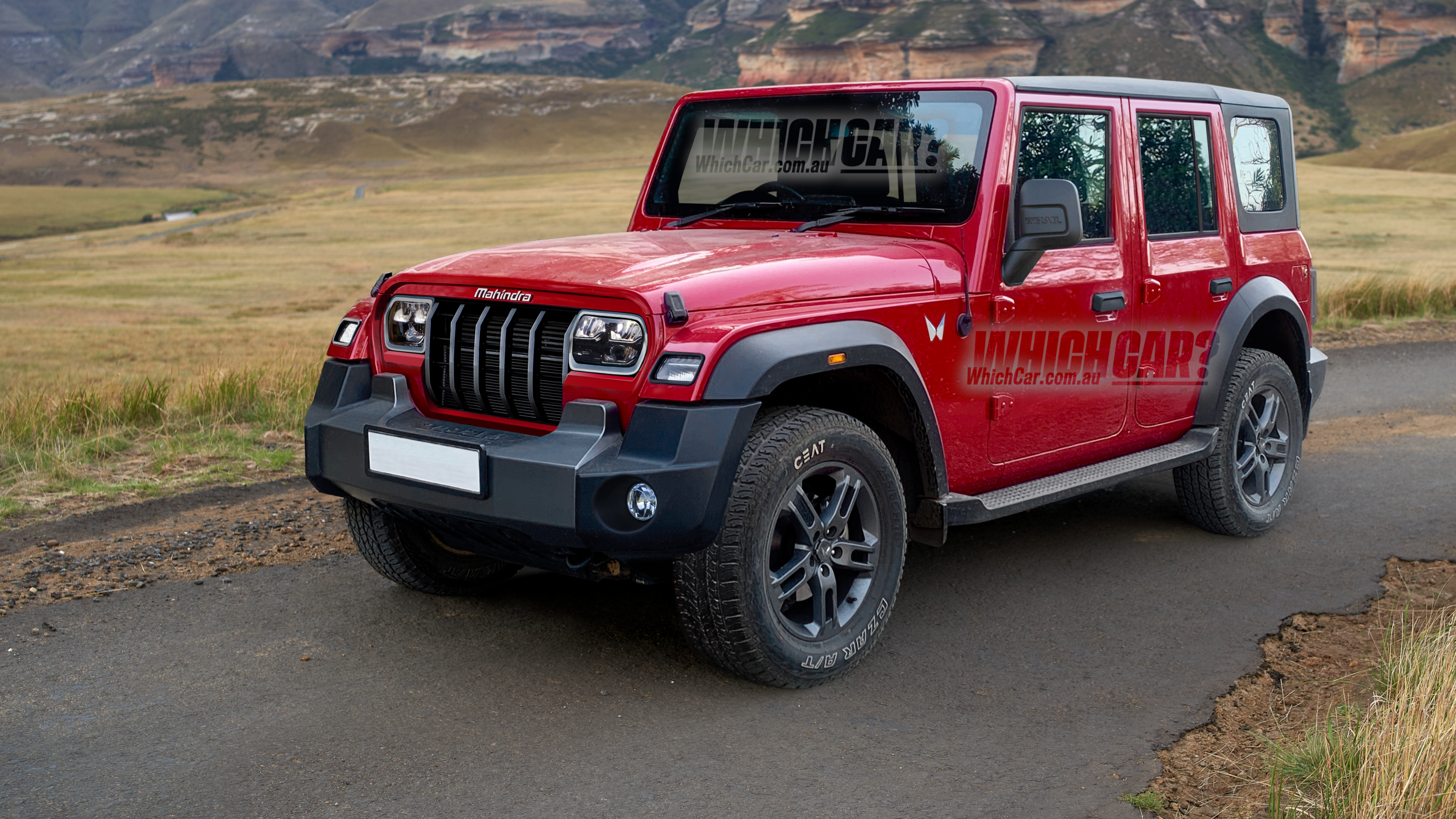
The prototypes spotted in testing show the five-door Thar still retains the boxy military-like styling of the JL Wrangler, including round headlights (a Jeep hallmark) – but these may yet be altered to further differentiate the Thar from any Jeep vehicle.
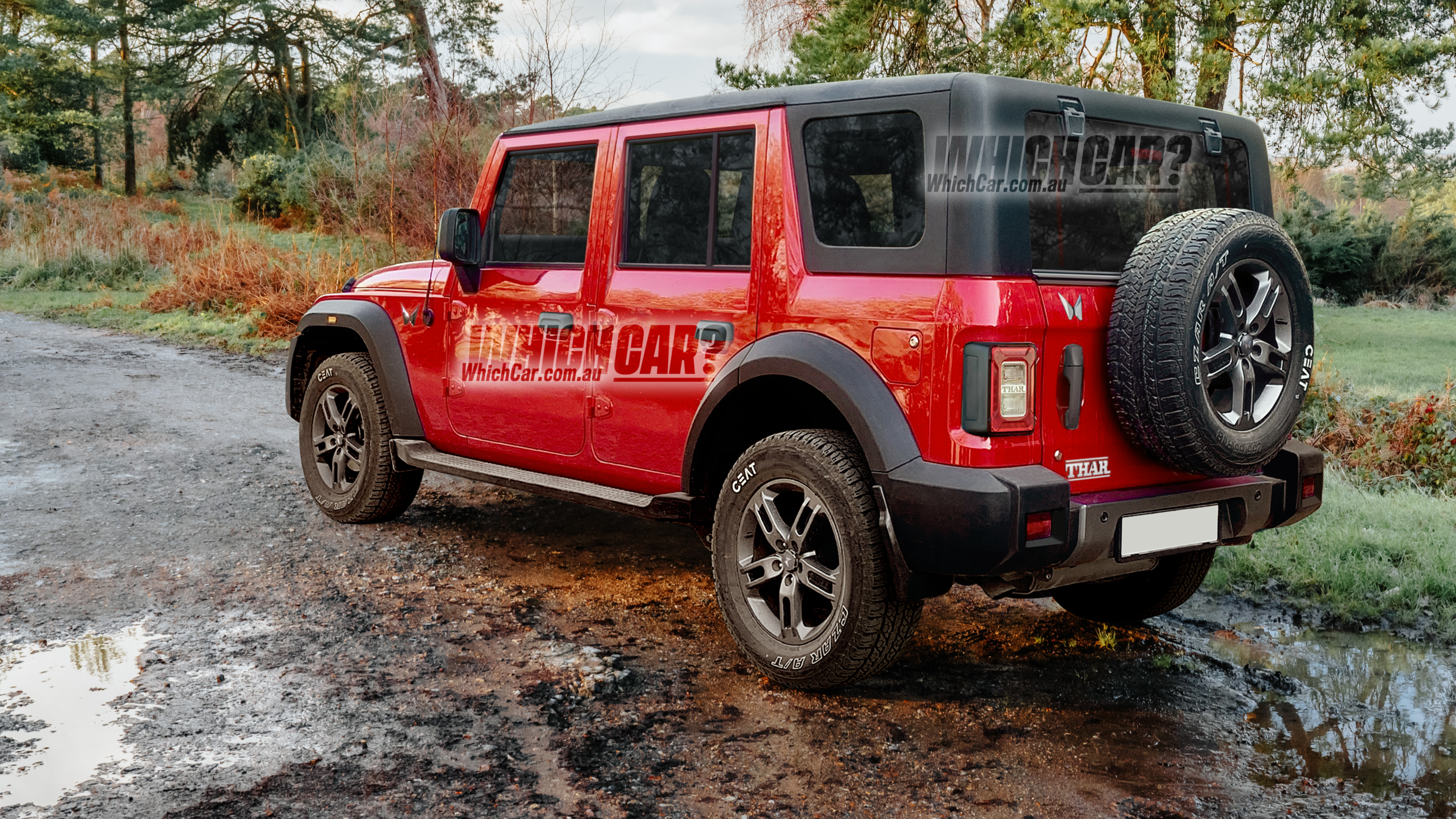
Our renders offer one idea of how that change might be styled.
Reports from the sub-continent also suggest the five-door Thar will ride on the new chassis that underpins the Scorpio 4×4 wagon that was just launched in Australia, and we expect the driveline to be carried over as well. That means the 2.2-litre mHawk diesel engine and Aisin six-speed transmission with part-time four-wheel drive system.
Mahindra sources would also not rule out electric powertrains for the Thar as it moves to implement EVs in to its existing and future products.
Mahindra is working toward introducing five new EVs to its global range, but whether they make it to Australia is yet to be confirmed and will depend on the take-up of EVs and the associated infrastructure to make them popular here.
The five-door Thar is expected to be released in India in the very near future and the Australian side of the business has indicated it would like to add the Thar to its growing fleet. Just don’t expect the Thar to be the off-road vehicle the Wrangler is; though with its IFS and lower centre of gravity, it should be a better on-road drive.
On the back of the just-launched Scorpio 4×4 wagon and the impending release of the XUV700 medium SUV, Mahindra is expanding its portfolio to entice more Australian buyers in a market hungry for SUVs and 4×4 utes.
Five-door Thar imagined
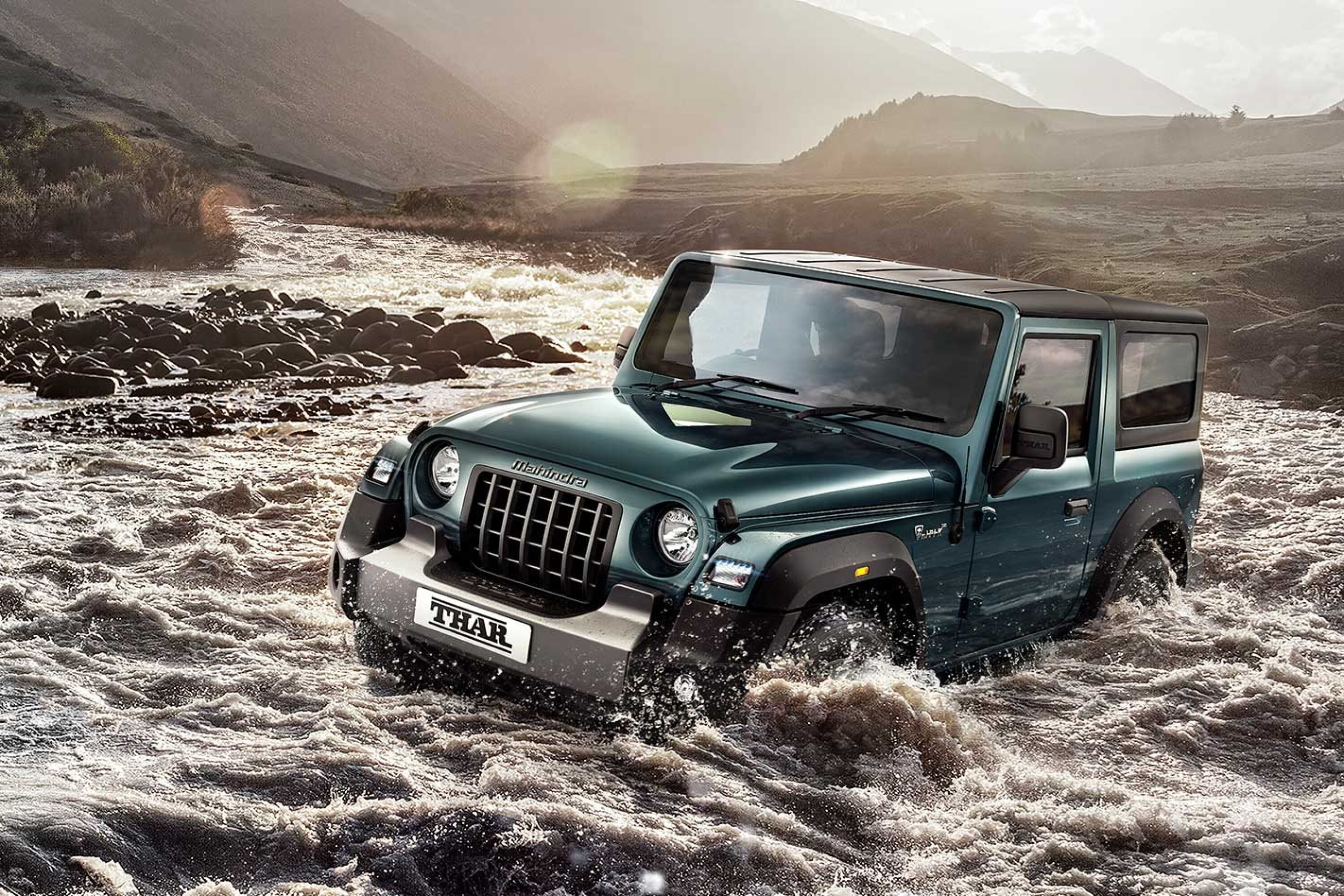
Below: the current Thar in its existing 3-door form
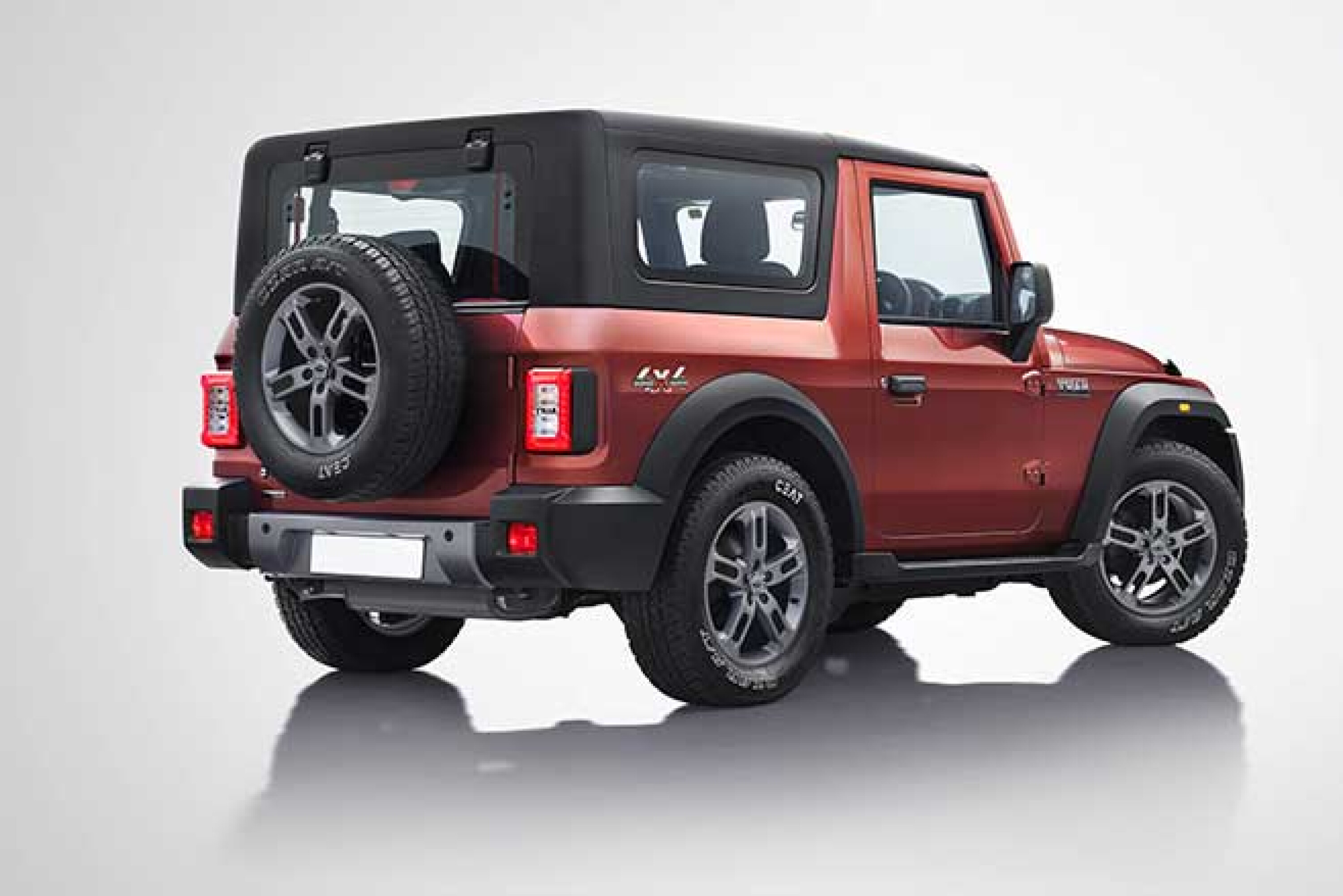
Our massive May 2023 issue of 4X4 Australia is officially on sale.
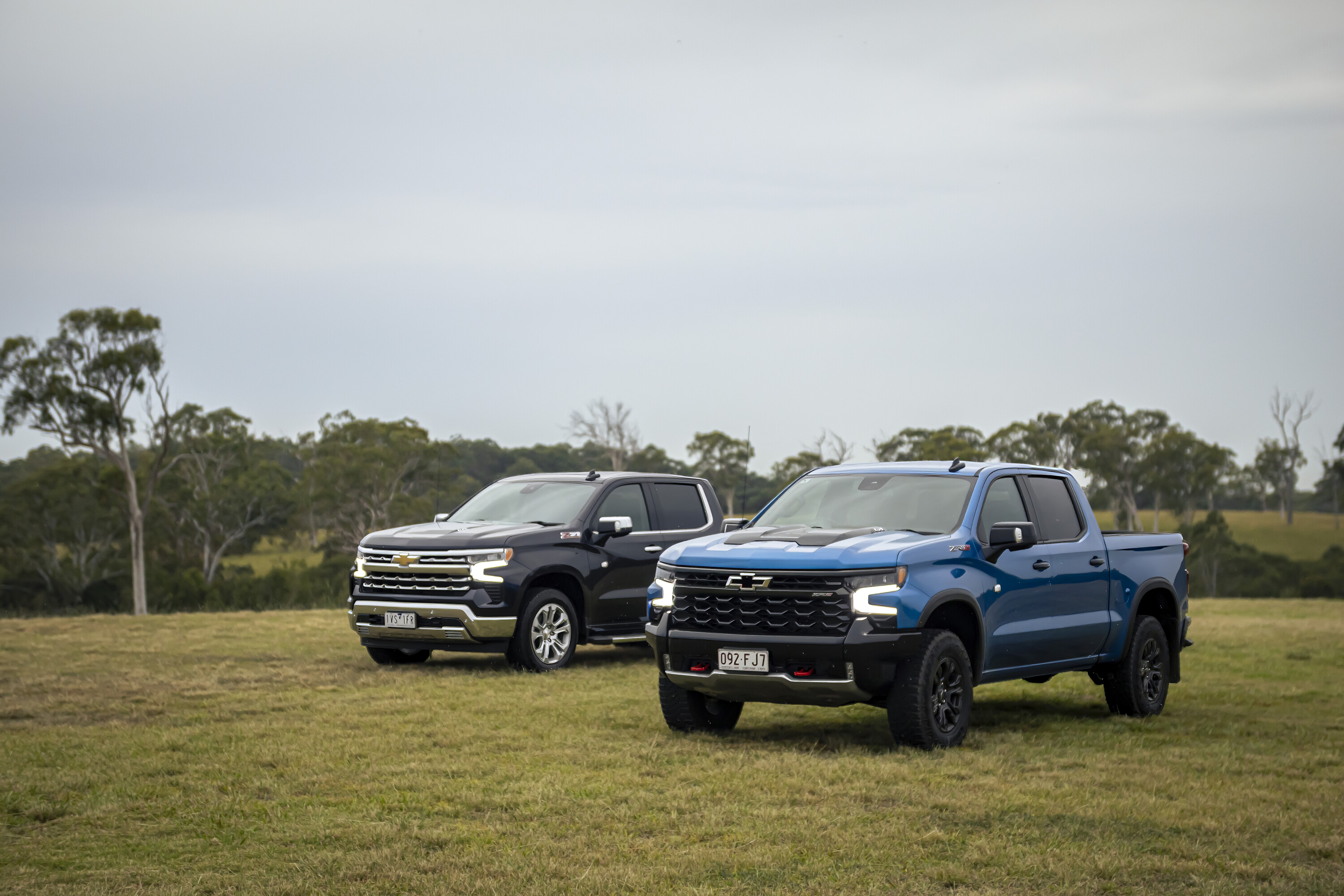
We were at Chevrolet’s local launch of its revamped Silverado, with the brand’s two-model line-up now consisting of the LTZ Premium and ZR2 range-topper. Both are essentially carryover vehicles – albeit, the interior has been overhauled with modern tech – but there’s no doubting it’s a superb touring ute for families.
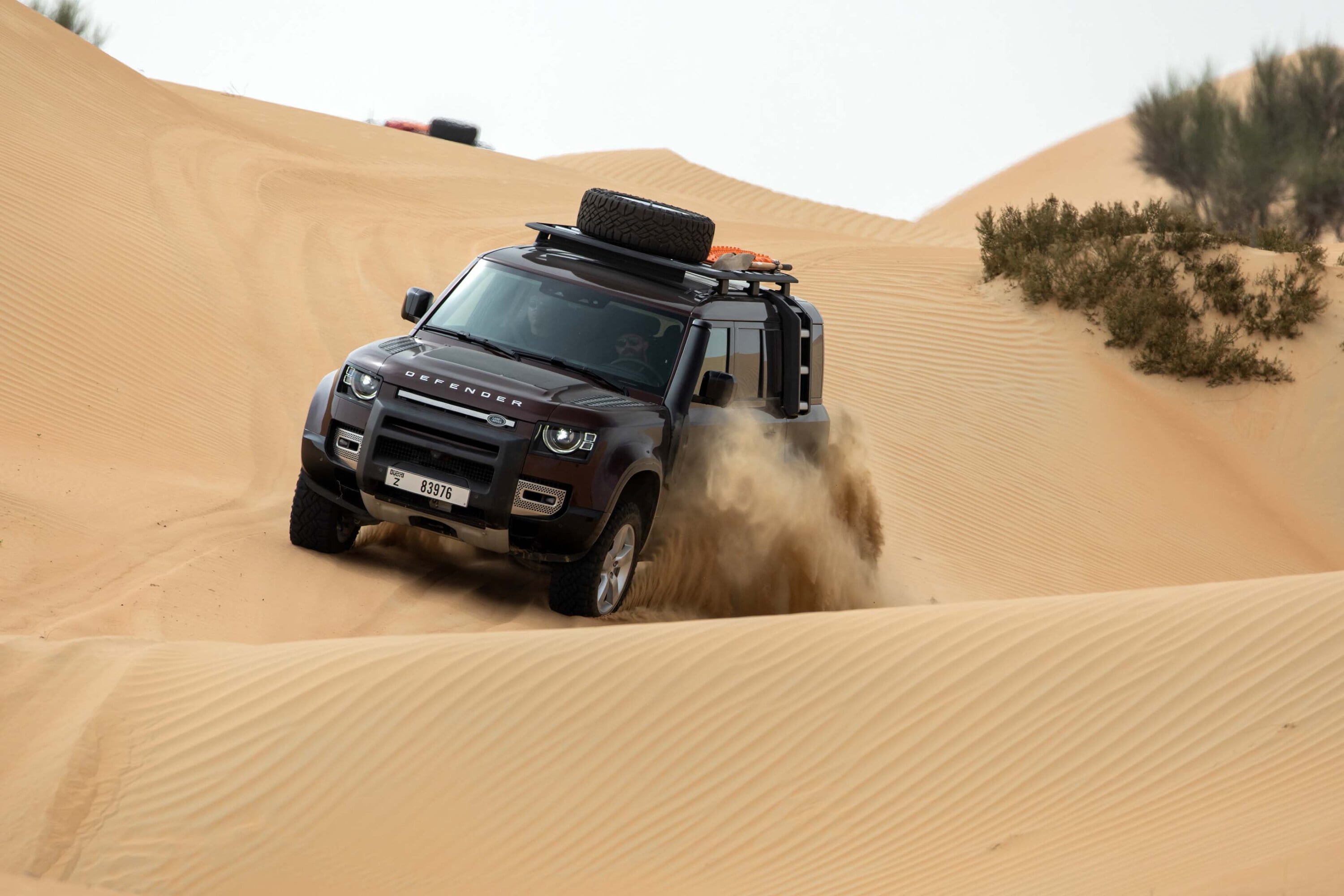
Wheels’ editor, Andy Enright, jet-setted to the Middle East to point Land Rover’s all-new Defender 130 SE P400 eight-seater toward endless sand dunes. It begs the questions, does the vehicle’s extra length affect its off-road ability?
We also shine a spotlight on a Queensland couple who managed to salvage two junkyard GU Patrols – a 2002 space-cab and a 1998 wagon – and convert them both into something truly remarkable. A great trash-to-treasure yarn.
Upgrade your 4×4!
-
Bullbars
-
Underbody Protection
-
4X4 Tyres
-
Canopies
-
Roof Racks
-
Storage
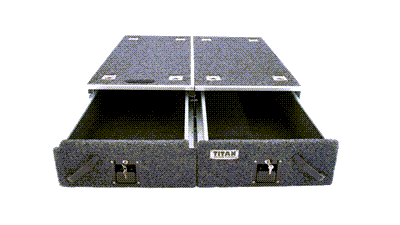
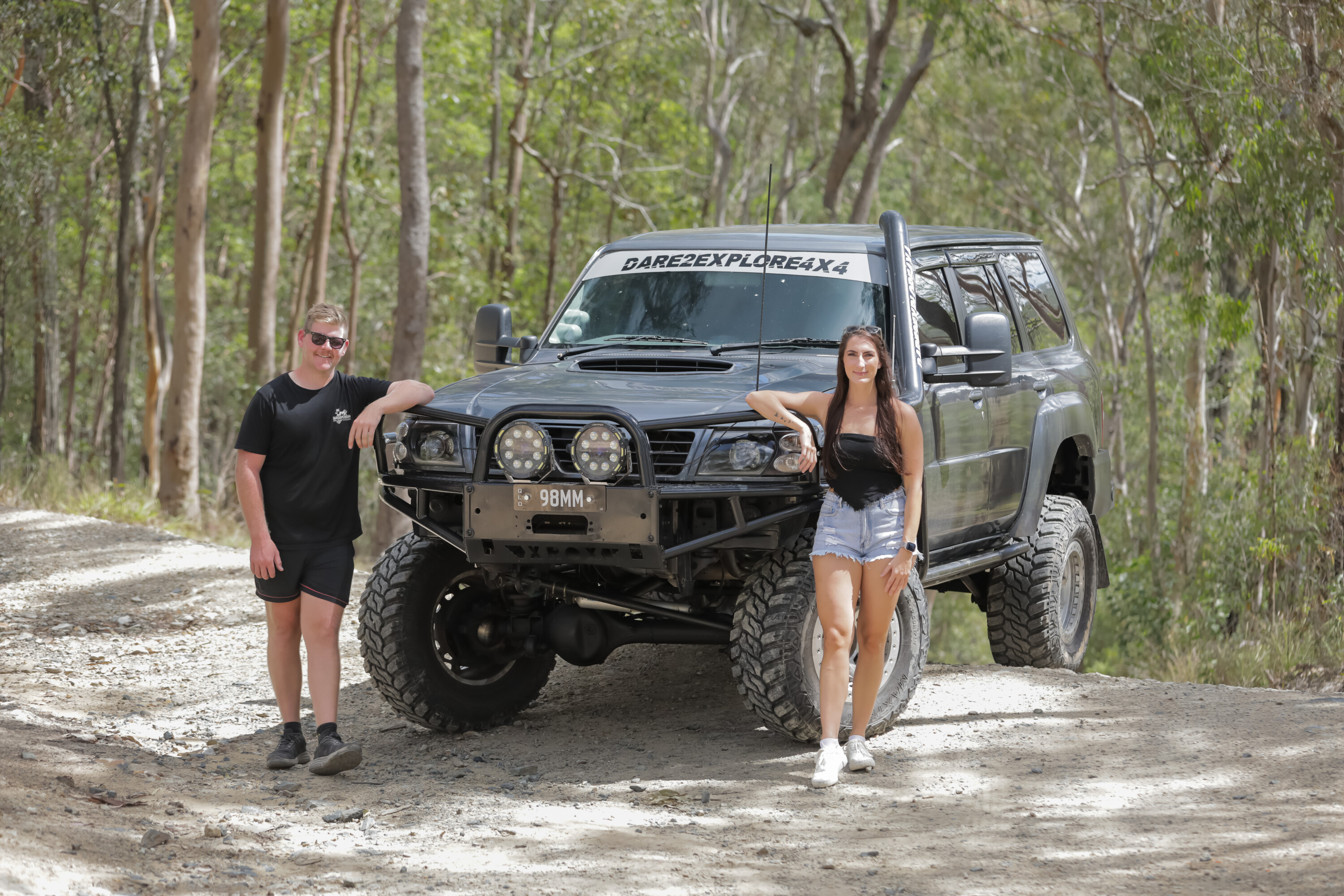
Speaking of remarkable, this Dubai-spec 105 Series LandCruiser with more than 1000hp of 1FZ power has been built with the best kit to tame the harshest terrain. Loaded with a long list of the finest quality gear, this 105 Series is built to go anywhere!
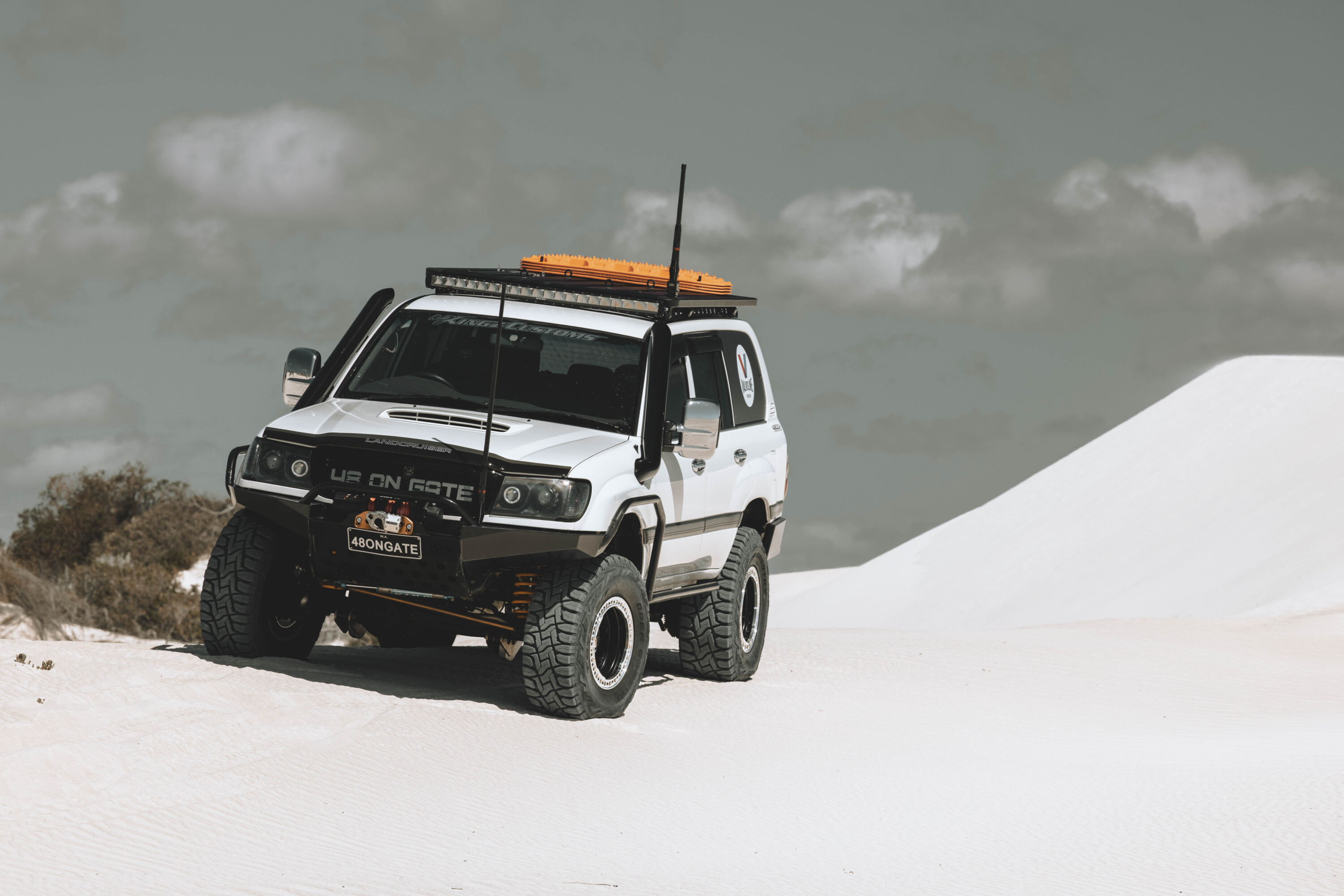
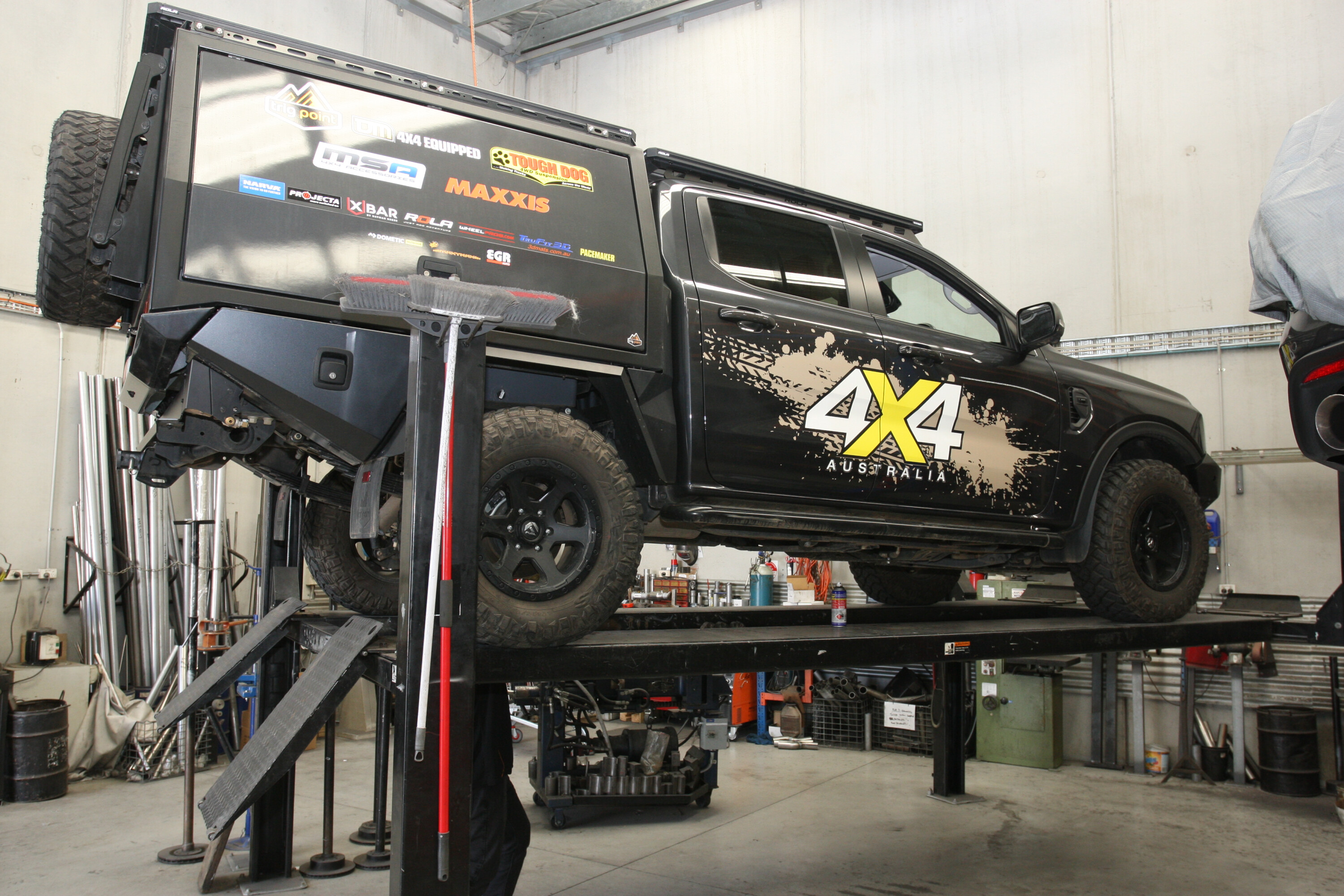
Our 2023 Ford Ranger build went into overdrive this month, with the Blue Oval ute venturing to all corners of Melbourne to get kitted up. The latest gear fitted includes a Projecta 12-volt power system, Rola MKIII Titan trays, Tru-Fit 3D floor mats and a Pacemaker King Brown exhaust system.
4X4 Australia's project builds
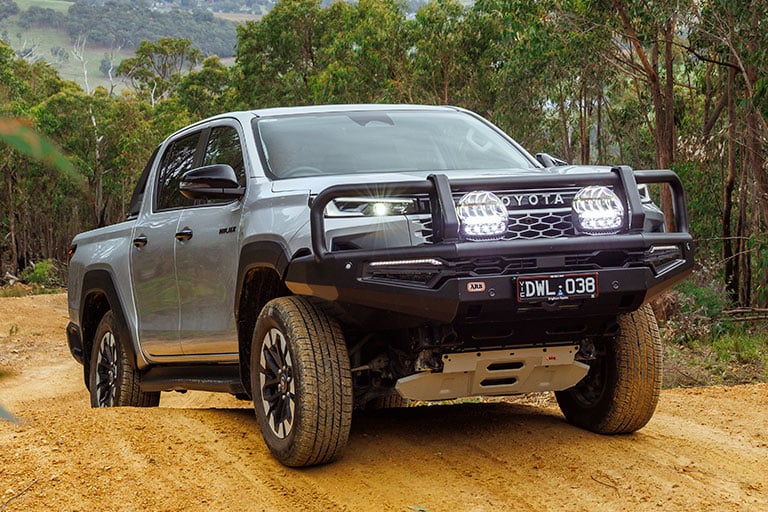
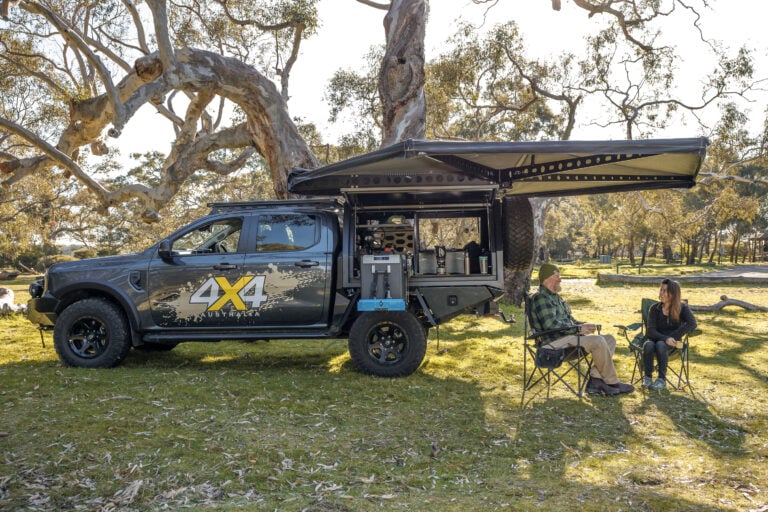
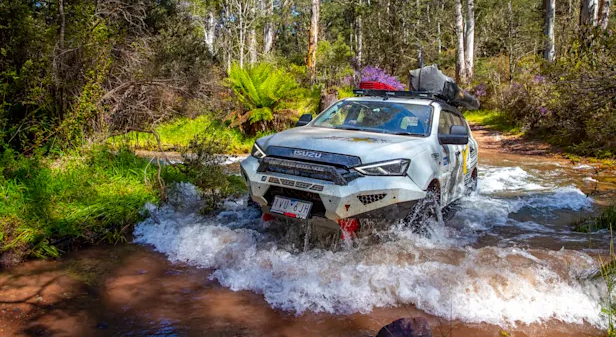
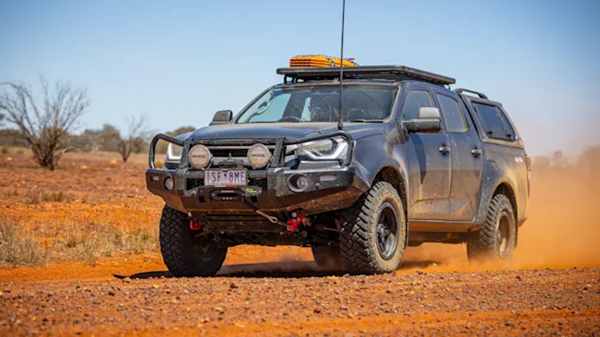
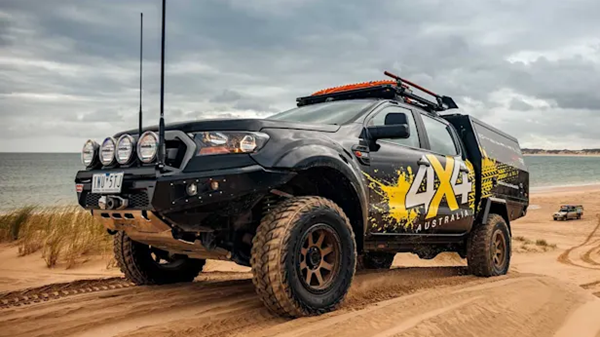
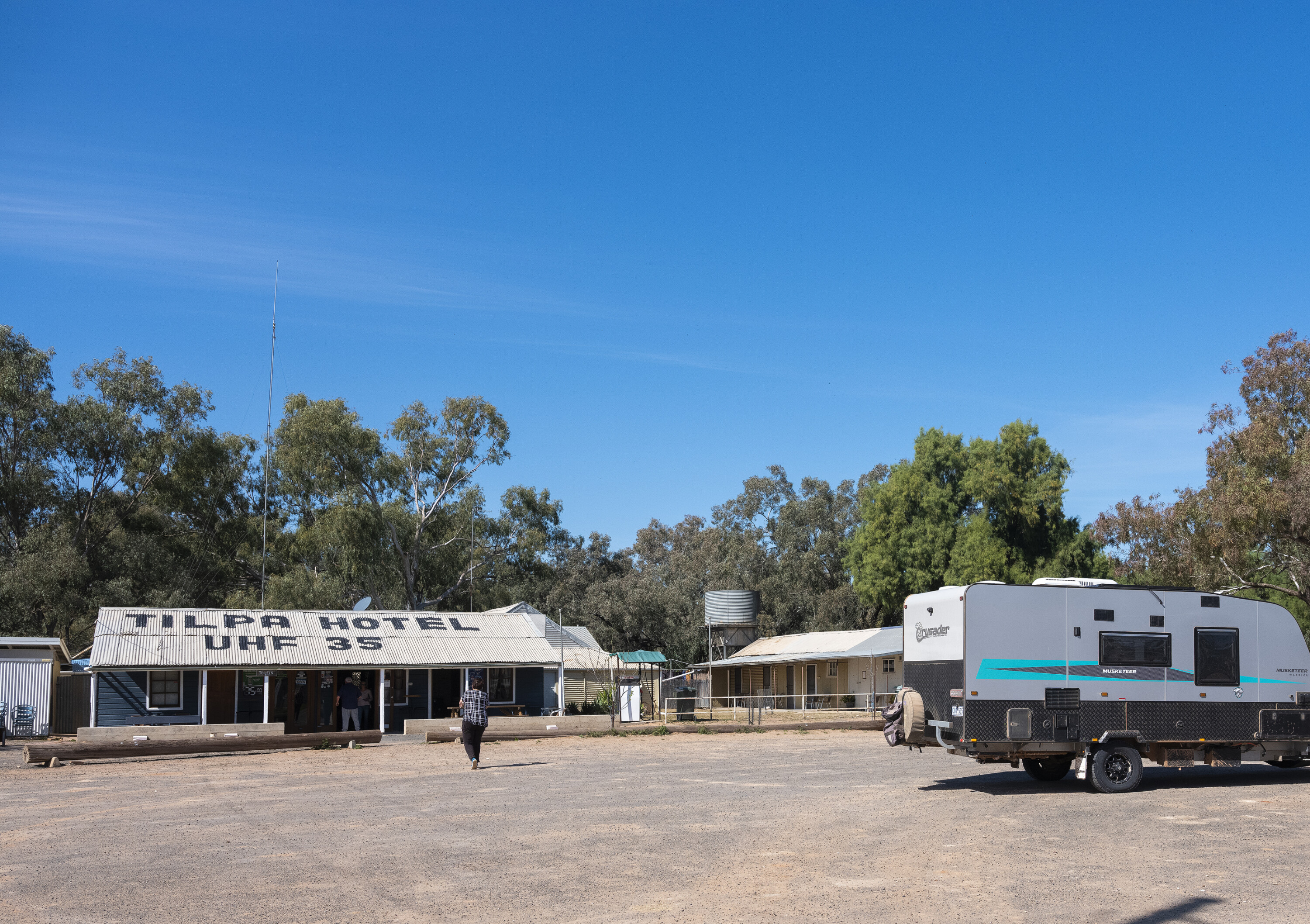
As always, we pointed our tyres toward some picturesque 4×4 destinations. This month we took an historic 4×4 trip along the Darling River in NSW, explored the majestic Flinders Ranges in SA, and tackled a few lesser-known detours in Cape York.
Plus, we tested a set of Mickey Thompson Baja Boss A/T tyres, as well as Ironman 4×4’s Air Champ Pro compressor.
What else is there?
- News from around the world
- New 4×4 products
- Travel advice
- 4×4 prices and more
The May 2023 issue of 4X4 Australia is out now.
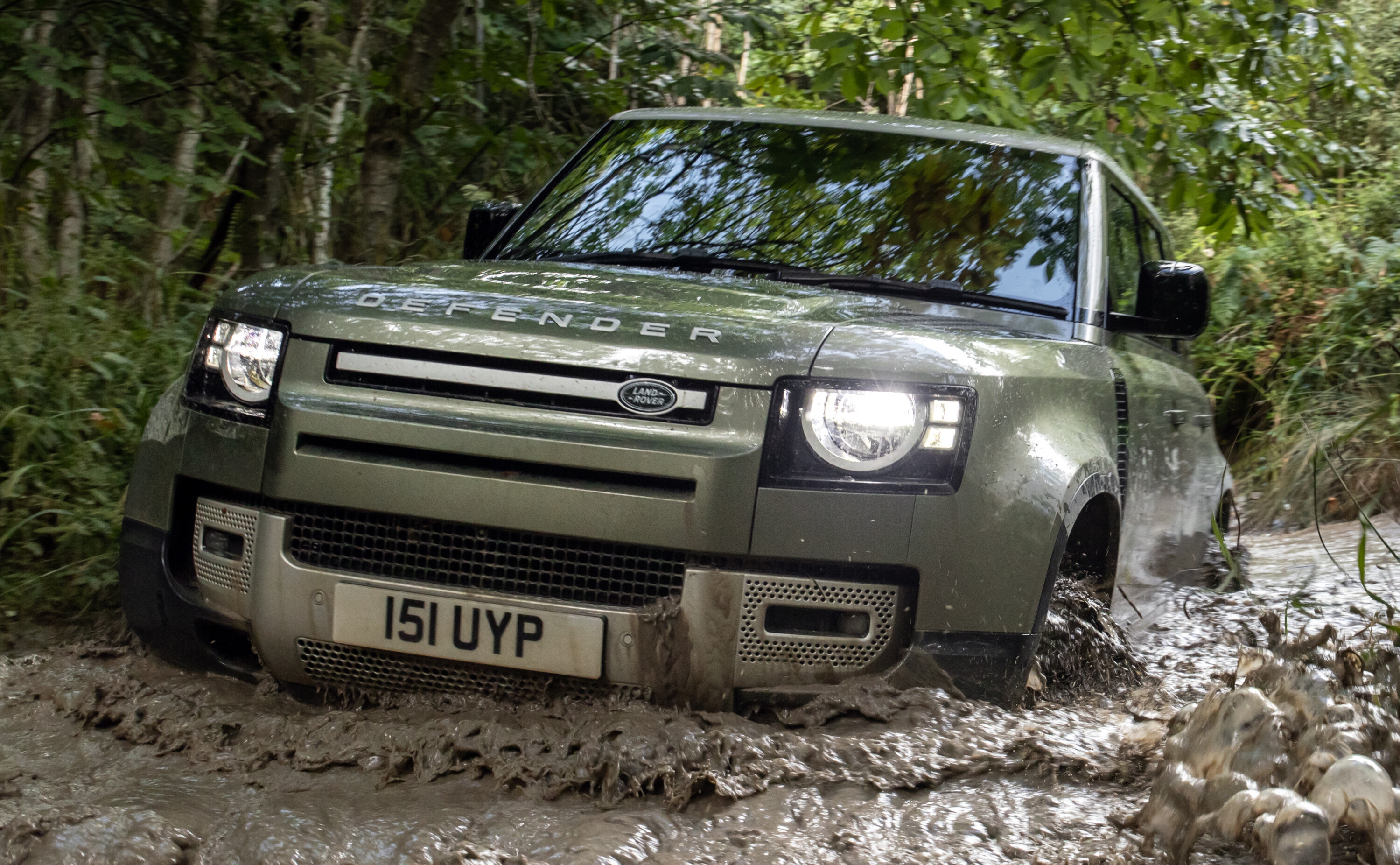
The updated 2024 Land Rover Defender has an expanded line-up.
Snapshot
- Land Rover Defender base model axed, entry price up $10k
- Long-wheelbase Defender 130 gains two new variants
- Three-seat Defender 110 Hard Top commercial van added
It is headlined by an expansion to the extended-length Defender 130 range, with new five-seat Outbound and flagship eight-seat V8 variants.
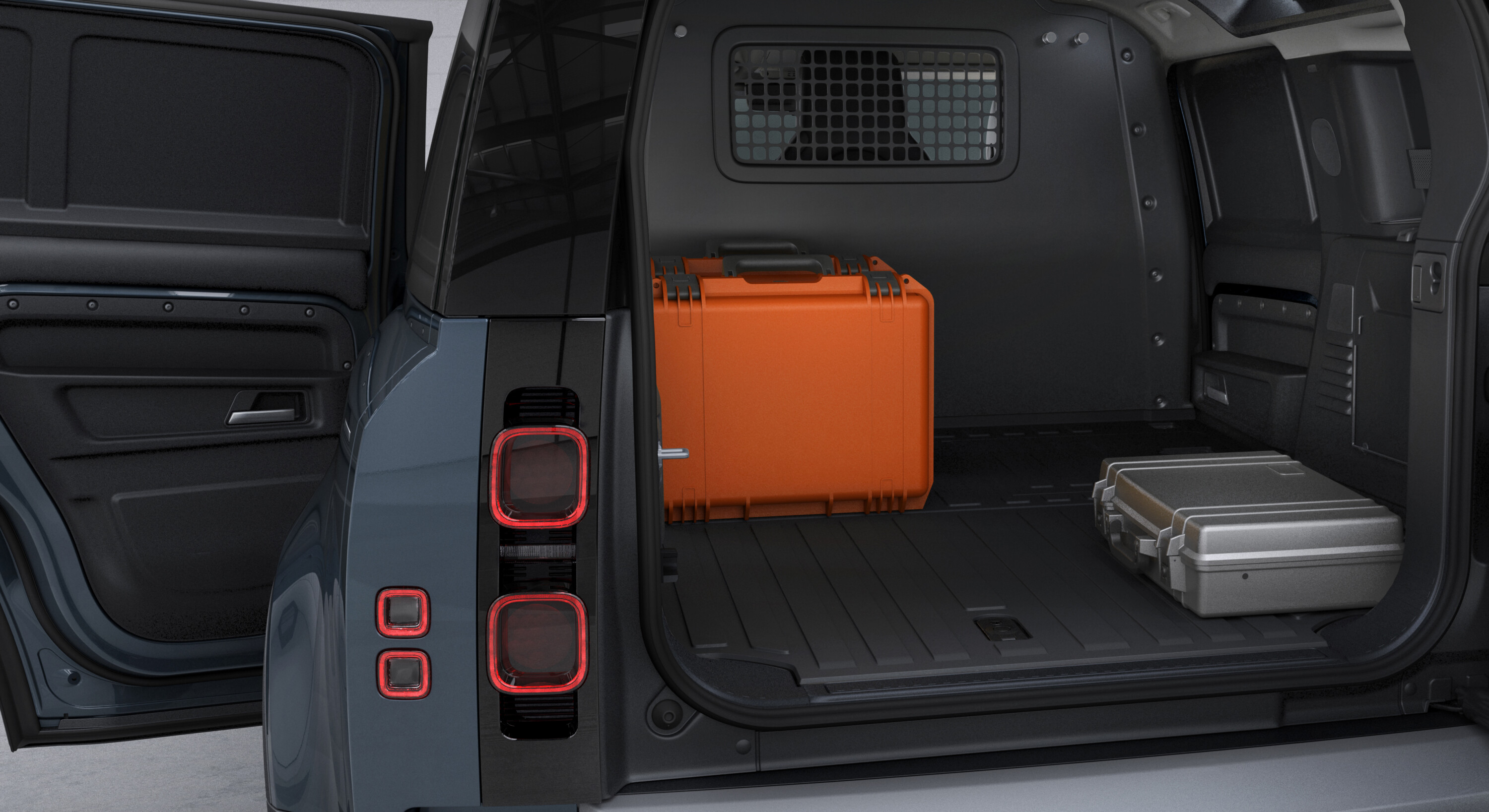
The load-carrying Outbound replaces the 130’s standard third-row with a flat load floor offering up to 2516 litres of storage and a van-like body-coloured rear window.

Keeping the load-lugging theme, Land Rover has added the commercial version of the Defender to the local range for the first time with the 110 Hard Top S.
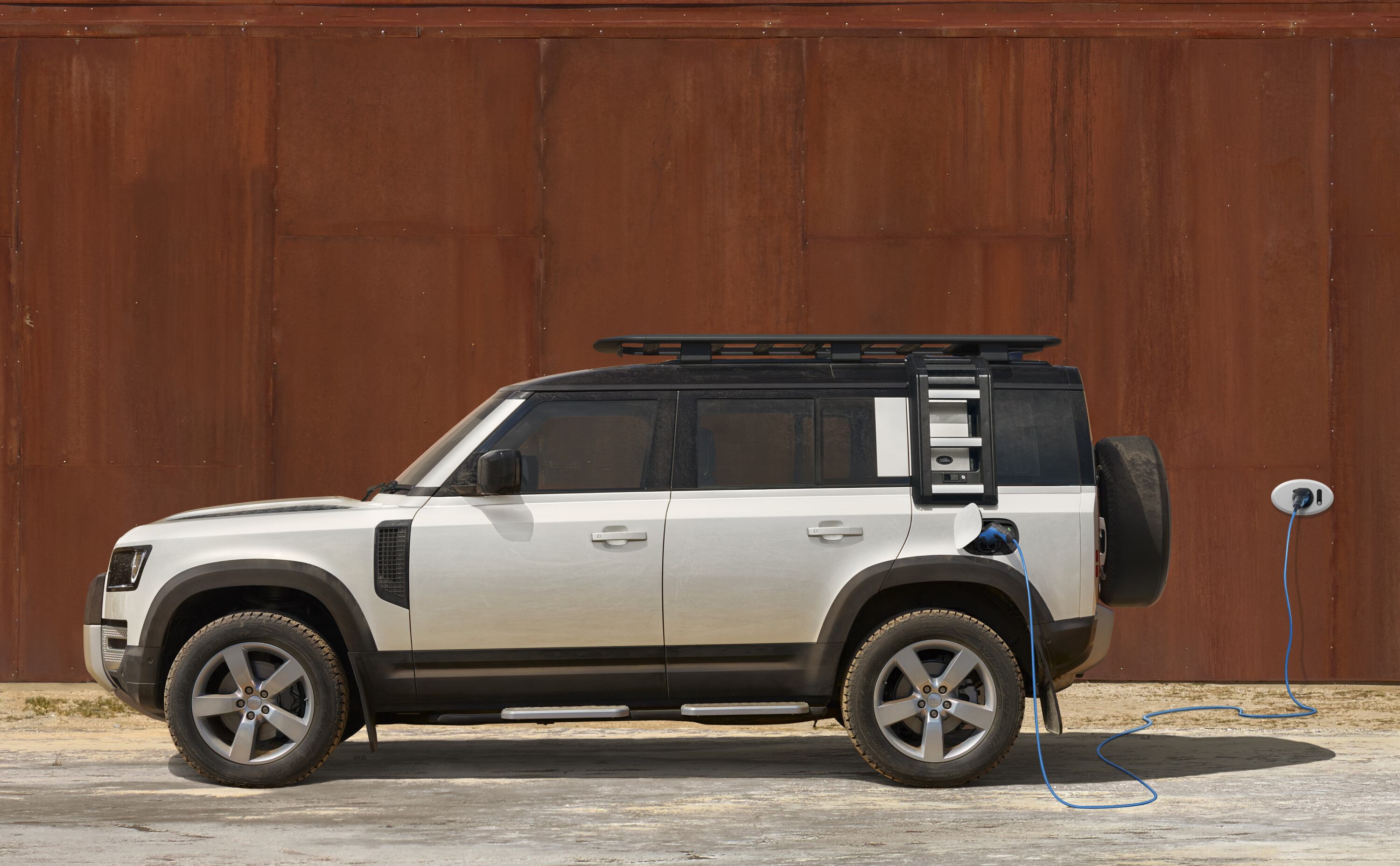
The previously announced Defender 110 P400e plug-in hybrid is now available to order, while the Defender 110 S can be optioned with a new heritage-inspired County Exterior Pack.
For model-year 2024, all Defender 90s receive a new parachute grab handle, a quick folding and sliding passenger seat, and 40:20:40 folding rear seats with a centre armrest.
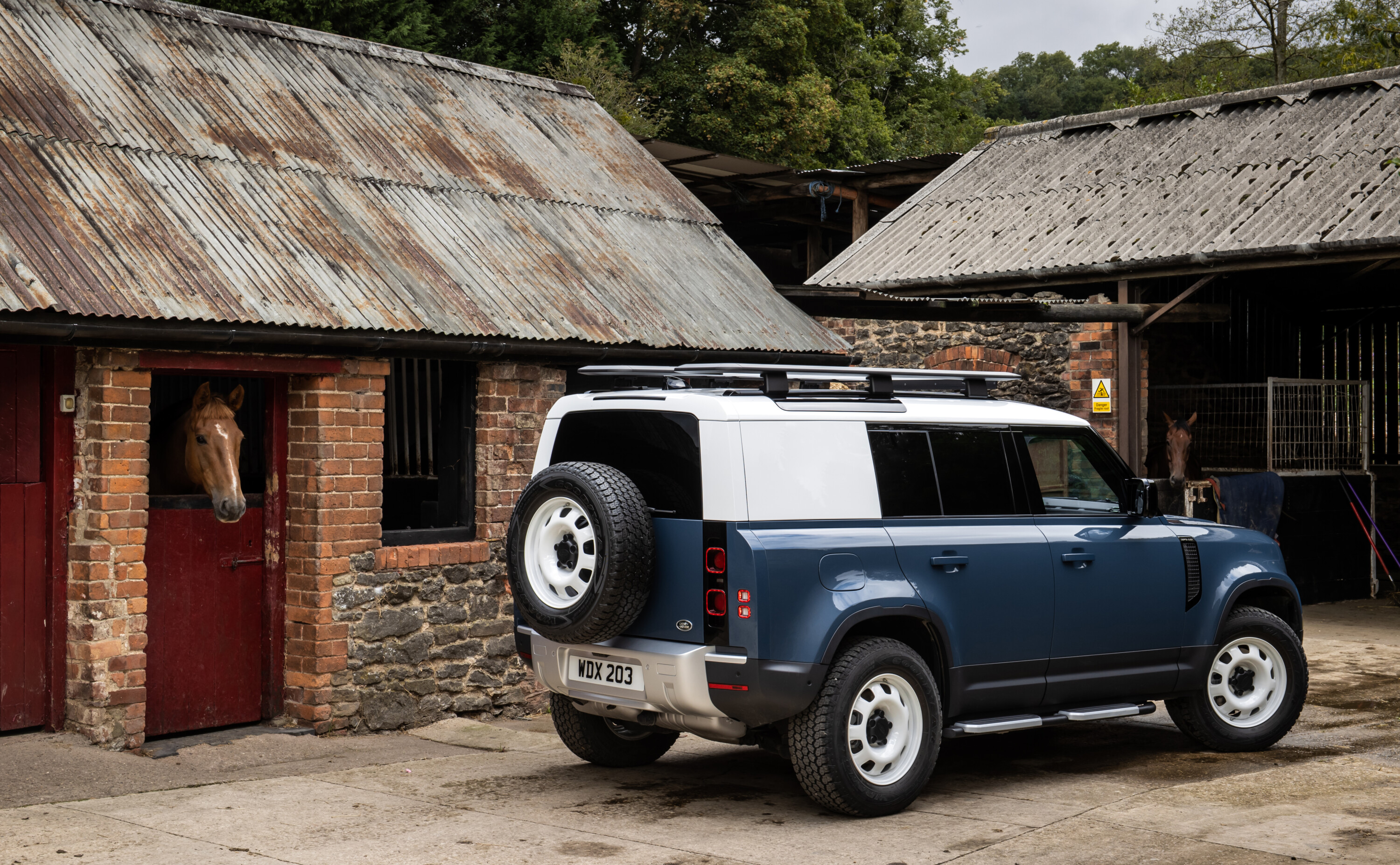
A new floor tray is standard for Defender 90 and 130 to provide a “near flat loadspace” with access to D-loops maintained.
Land Rover said the accessory would become available for existing Defender 90 and 130 owners.
However, the updated range sees the deletion of the eponymous base Defender 90, with the starting price rising to $90,400 before on-road costs for the S P300 variant.
For everything you need to know about the 2024 Land Rover Defender, continue below.
JUMP AHEAD
- 2024 Land Rover Defender pricing
- 2024 Land Rover Defender features
- Option packages
- Colours
- Engine, drivetrain, and fuel economy
- Safety
- Dimensions
- Warranty and servicing
- Availability
2024 Land Rover Defender pricing
Prices exclude on-road costs.
Defender 90
| Model | Pricing | Change |
|---|---|---|
| S P300 | $90,400 | up $250 |
| S D250 | $97,700 | up $250 |
| X-Dynamic SE P400 | $112,400 | up $4550 |
| X P400 | $148,450 | down $750 |
| V8 P525 | $221,550 | up $250 |
Defender 110
| S P300 | $92,800 | new |
|---|---|---|
| S P400 | $99,500 | u2013 |
| X-Dynamic SE D300 | $108,250 | up $4250 |
| Hard-Top S D250 | $110,000 | new |
| X-Dynamic SE P400 | $115,650 | up $4250 |
| X-Dynamic SE P400eu00a0 | $127,600 | new |
| X-Dynamic HSE D300 | $123,050 | u2013 |
| X-Dynamic HSE P400 | $129,900 | u2013 |
| X-Dynamic HSE P400e | $139,300 | new |
| X D300 | $149,950 | down $1050 |
| X P400 | $152,150 | down $950 |
| V8 P525 | $226,500 | u2013 |
Defender 130
| X-Dynamic SE D300 | $128,200 | up $4050 |
|---|---|---|
| X-Dynamic SE P400u00a0 | $135,700 | up $4050 |
| Outbound P400 | $138,400 | new |
| V8 P500 | $237,900 | new |
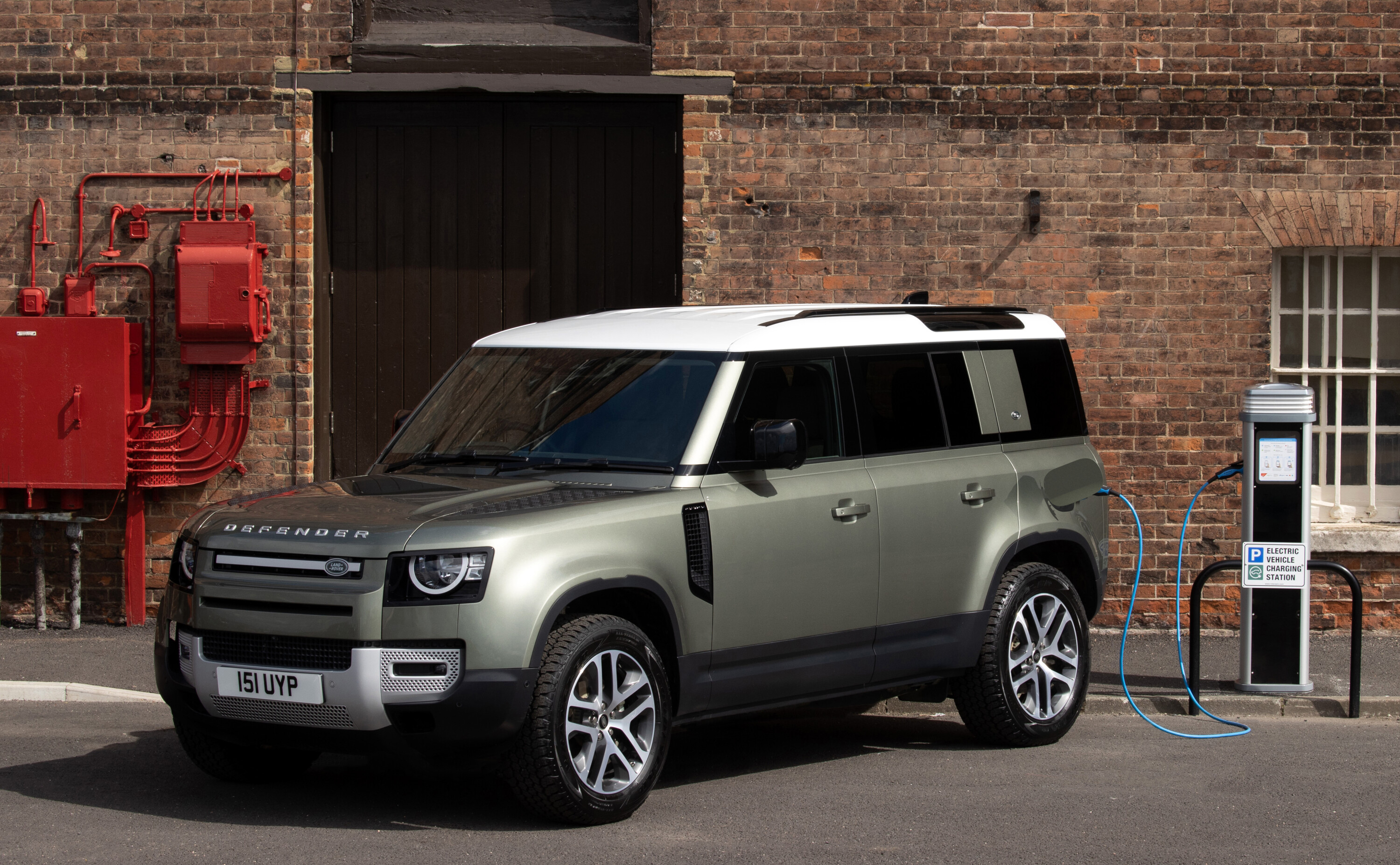
2024 Land Rover Defender features
2024 Land Rover Defender S features
| 19-inch alloy wheels | 12-way semi-powered front seats |
| 10-inch Pivi Pro infotainment system | Heated, power-folding side mirrors with auto-dimming driveru2019s side |
| Wireless Apple CarPlay and Android Auto | Rubber flooring |
| Satellite navigation | Dual-zone climate control |
| DAB+ digital radio | Auto-dimming rear-view mirror |
| Six-speaker, 180-watt audio system | 360-degree camera system |
| 12.3-inch digital instrument cluster | Tyre pressure monitoring |
| Wireless phone charger | LED headlights, tail-lights and daytime running lamps |
| Terrain Response | Perimetric alarm system. |
| Leather-accented upholstery |
2024 Land Rover Defender Hard Top S features
| In addition to S | |
|---|---|
| Three seats (down from five or six) | Rubber floor mats |
| Four-speaker, 140-watt audio system | Rear privacy glass. |
2024 Land Rover Defender X-Dynamic SE features
| In addition to S | |
|---|---|
| 20-inch alloy wheelsu00a0 | 12-way electric front seats with 2-way headrests and memory functionu00a0 |
| Panoramic sunroof | Automatic headlight levelling |
| Black-painted roof | Adaptive air suspension (130) |
| 11-speaker, 400-watt Meridian audio system | 11.4-inch Pivi Pro screen (130) |
| 10-colour ambient interior lighting | Air quality sensor (130) |
| Carpet floor mats | Three-zone climate control (130) |
| LED signature DRLu00a0 | Cabin air purification (130) |
2024 Land Rover Defender X-Dynamic HSE features
| In addition to X-Dynamic SE | |
|---|---|
| 20-inch alloy wheels (new design) | Electrically-adjustable steering wheel column |
| 11.4-inch Pivi Pro screen | Leather-wrapped steering wheel and gear shifter |
| 14-way front seats with 4-way headrests | LED fog lamps. |
| Heated and ventilated front seats | |
2024 Land Rover Defender P400e PHEV features
| In addition to X-Dynamic SE or X-Dynamic HSE | |
|---|---|
| Adaptive air suspension | Public charging cable |
| Acoustic vehicle alert system | AC/DC charge port |
| Electronic cabin pre-conditioning | Rear privacy glass. |
2024 Land Rover Defender Outbound features
| In addition to X-Dynamic SE | |
|---|---|
| 20-inch alloy wheels (black) | All-Terrain tyres |
| Black exterior trim | Heated steering wheel |
| Five seats (in place of eight) | LED fog lamps. |
| Rubber floor mats | |
2024 Land Rover Defender X features
| In addition to X-Dynamic HSE | |
|---|---|
| 20-inch alloy wheels (dark grey) | Premium leather-appointed steering wheel |
| Digital rear-view mirror | Electronic active differential with torque vectoring |
| Head-up display | Terrain Response 2 system with configuration.u00a0 |
| Domestic plug socket | All-Terrain Progress Control |
| Adaptive air suspension | Matrix LED headlights. |
2024 Land Rover Defender V8 features
| In addition to X | |
|---|---|
| 22-inch alloy wheels | Heated windscreen and washer jets |
| Air-conditioned centre console | Suede-appointed steering wheel |
| 15-speaker, 700-watt Meridian surround-sound audio system | Terrain Response 2 with dynamic program |
| Heated steering wheel | Cabin air purification (90 & 110) |
| Quad exhaust pipes | Three-zone climate control (90 & 110) |
| Rear privacy glass | Tow hitch receiver (90 & 110) |
| Advanced tow assist | Four-zone climate control (130). |
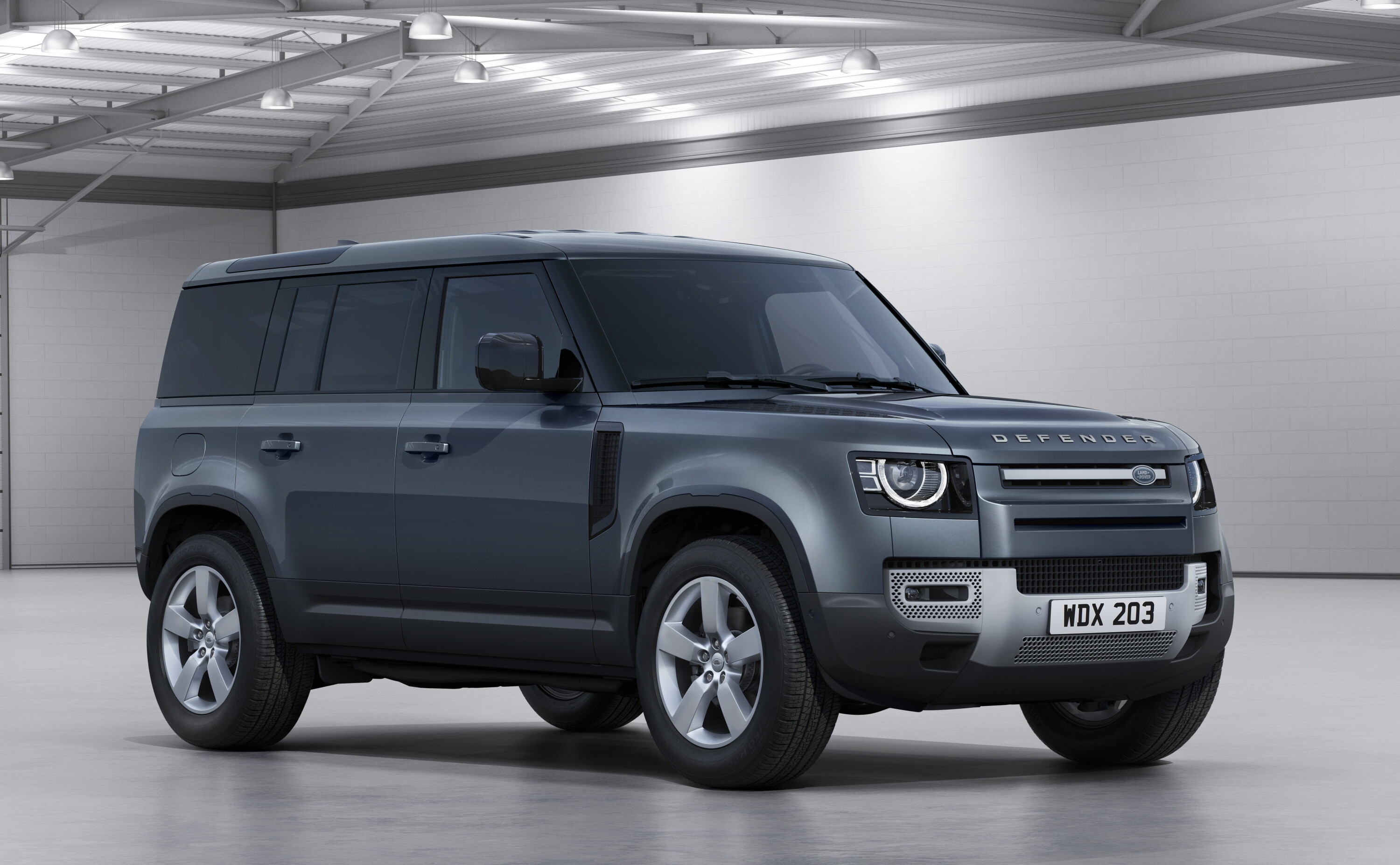
Option packages
As with other Land Rover vehicles, each Defender features an array of optional equipment.
For brevity, we’ve listed a few key option packages below.
County Exterior Pack (new)
Available for the Defender 110 S P300 and P400.
Off-Road Pack
Available for all Defender variants; standard-fit on X and V8.
Advanced Off-Road Pack
Available for all Defender 90 and 110 variants; standard-fit on V8.
Towing Pack
Available for all Defender 90 and 110 variants; standard-fit on V8.
Family Pack
Available for Defender 110 S, X-Dynamic SE P400 and D300, and X-Dynamic HSE P400 and D300.
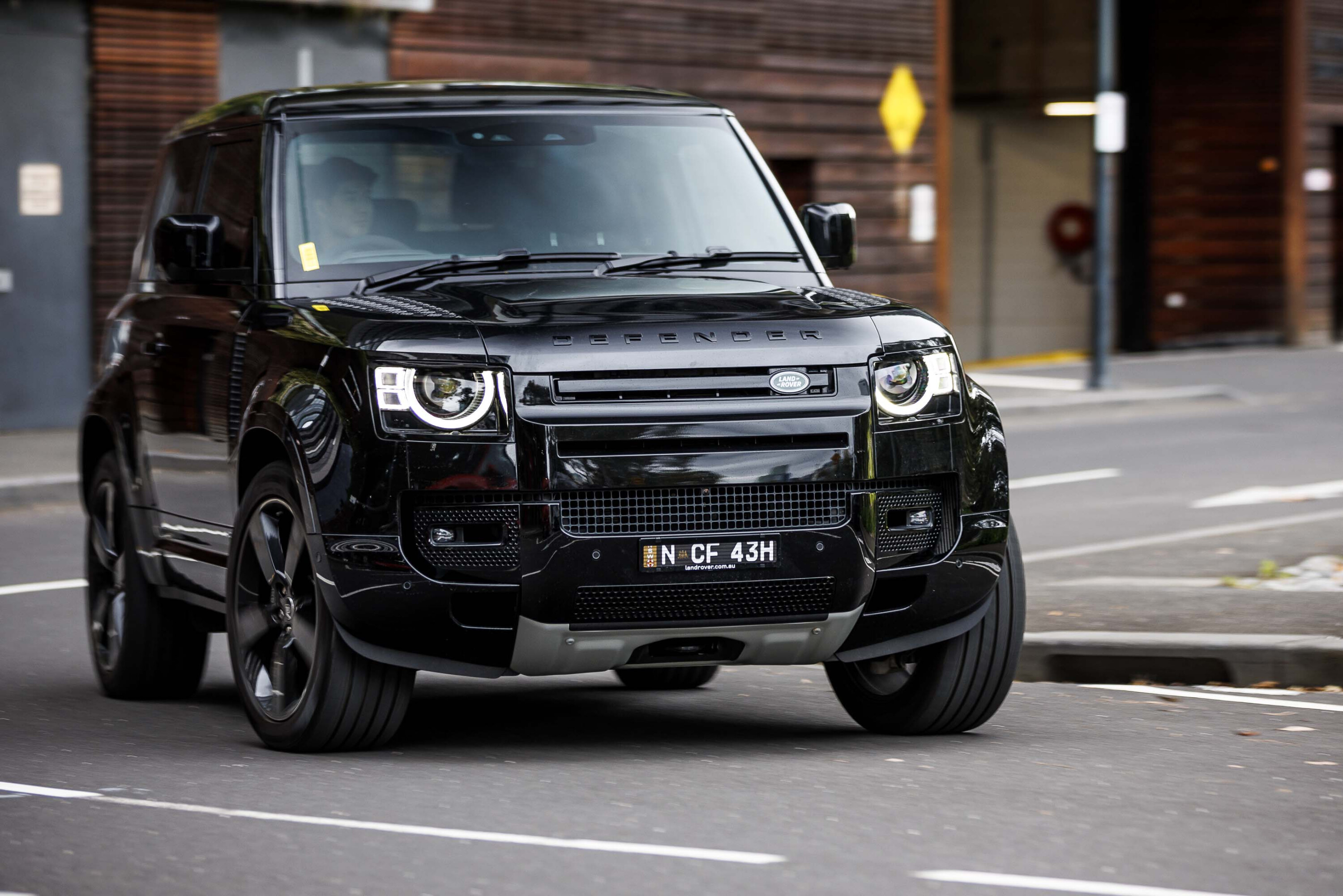
Colours
| Fuji white | Santorini black |
| Eiger grey | Pangea green |
| Gondwana stone | Tasman blue |
| Hakuba silver | Sedona red. |
| ud83dudd3d Premium metallic ($1040)u00a0 | |
| Carpathian grey | Silicon silver. |
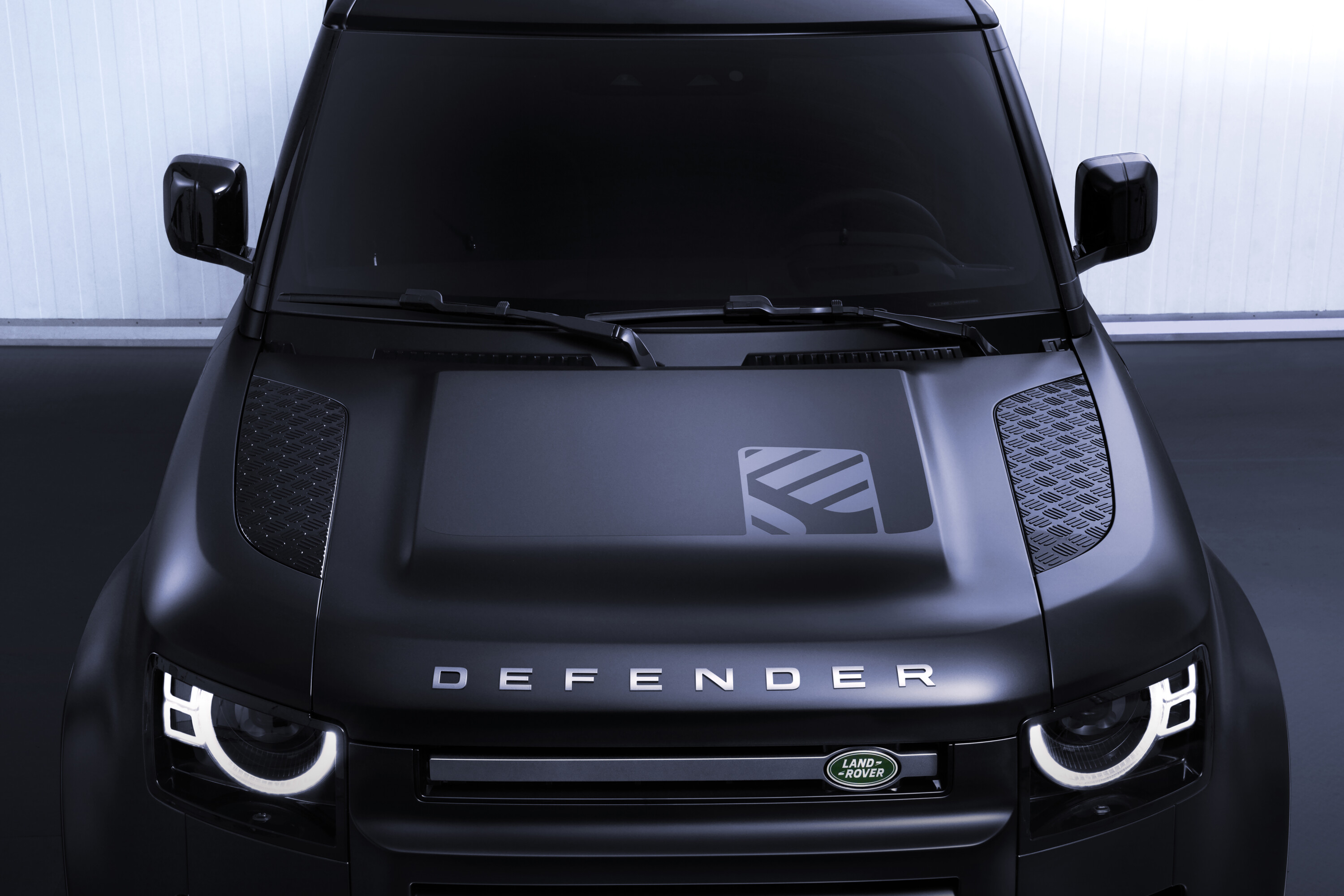
Engine, drivetrain, and fuel economy
Locally, the Land Rover Defender is available with a host of petrol and diesel powertrains – and a new-for-2024 plug-in hybrid setup.
At the entry level, the petrol P300 features a 2.0-litre turbocharged inline four-cylinder engine producing 221kW and 400Nm for Defender 90 and 110 models.
The diesel-powered D250 has a 3.0-litre, turbocharged inline six-cylinder diesel engine with 48-volt mild-hybrid assistance, generating 183kW and 570Nm.
Stepping up to the D300 and P400 – also available for the Defender 130 – sees outputs rise to 221kW/650Nm and 294kW/550Nm, respectively.
The plug-in hybrid P400e, available exclusively for the Defender 110, sees the 2.0-litre turbo-four petrol matched with a 105kW electric motor, for a 297kW and 640Nm total system output.
It has a 19.2kWh lithium-ion battery, with a WLTP-rated 52-kilometre all-electric driving range. Land Rover claims the Defender 110 P400e will complete the 0-100km/h sprint in 5.9 seconds.
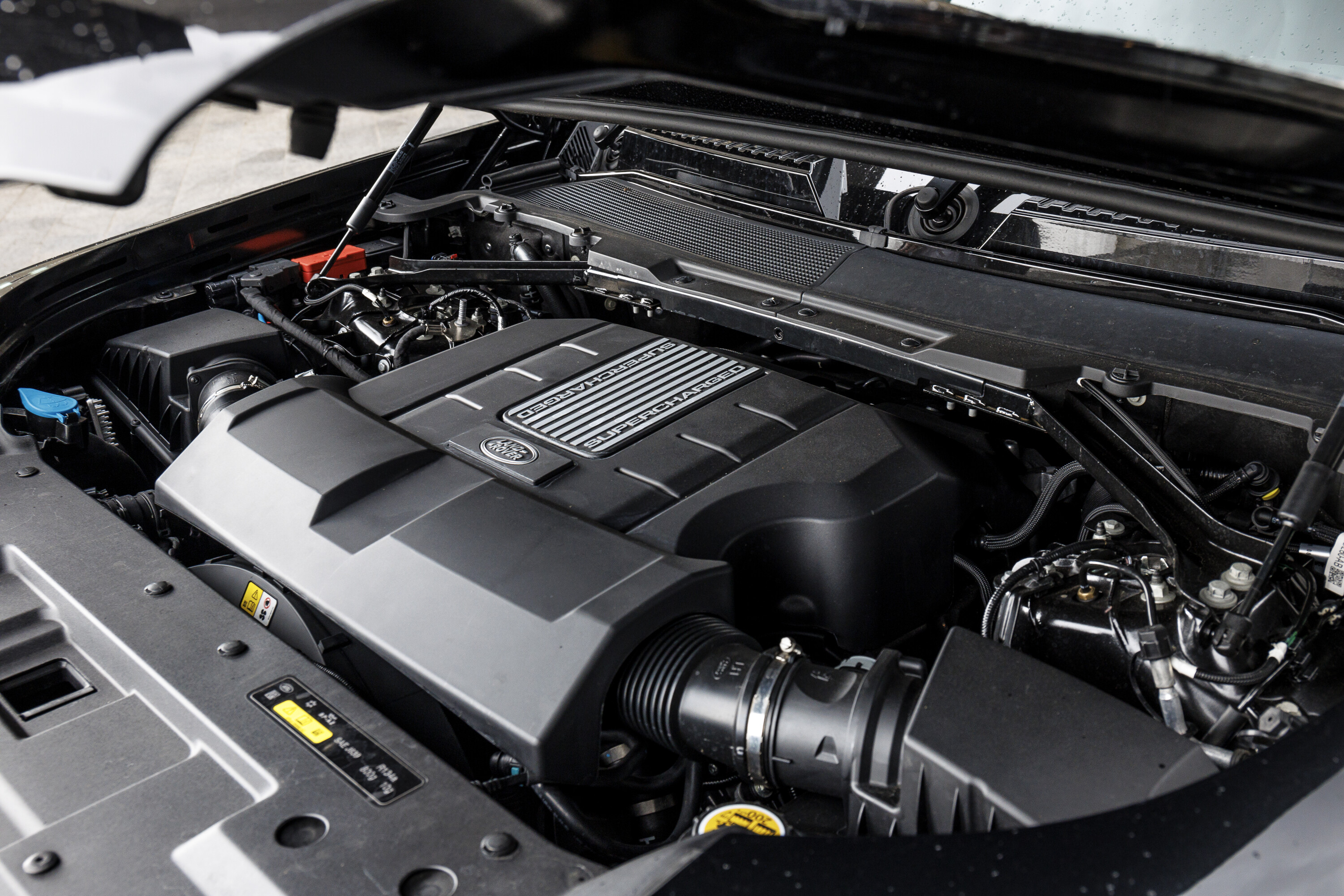
The P500 and P525 are 5.0-litre supercharged V8 engines with 368kW/610Nm for the Defender 130 and 386kW/625Nm for the Defender 90 and 110, respectively.
All powertrains are matched to a ZF-sourced eight-speed torque-converter automatic transmission, coupled to a twin-speed transfer box with high and low ranges.
The four-wheel-drive system also includes Land Rover’s Terrain Response technology, allowing the driver to change settings between presets.
V8 variants have bespoke spring and damper rates, and an updated electronic active rear differential with a yaw controller.
| 2024 Land Rover Defender fuel economy | ||
|---|---|---|
| 2.0-litre turbo-petrol (P300) | 10.1L/100km | 235g/km |
| 3.0-litre turbo-petrol (P400) | 9.9L/100km | 230g/km |
| 5.0-litre supercharged V8 (P500) | TBC | TBC |
| 5.0-litre supercharged V8 (P525) | 12.7L/100km | 295g/km |
| 3.0-litre turbo-diesel (D250) | 7.9L/100km | 207g/km |
| 3.0-litre turbo-diesel (D300) | 7.9L/100km | 207g/km |
| 2.0-litre turbo-petrol PHEV (P400e) | 3.4L/100km | TBC |
Safety
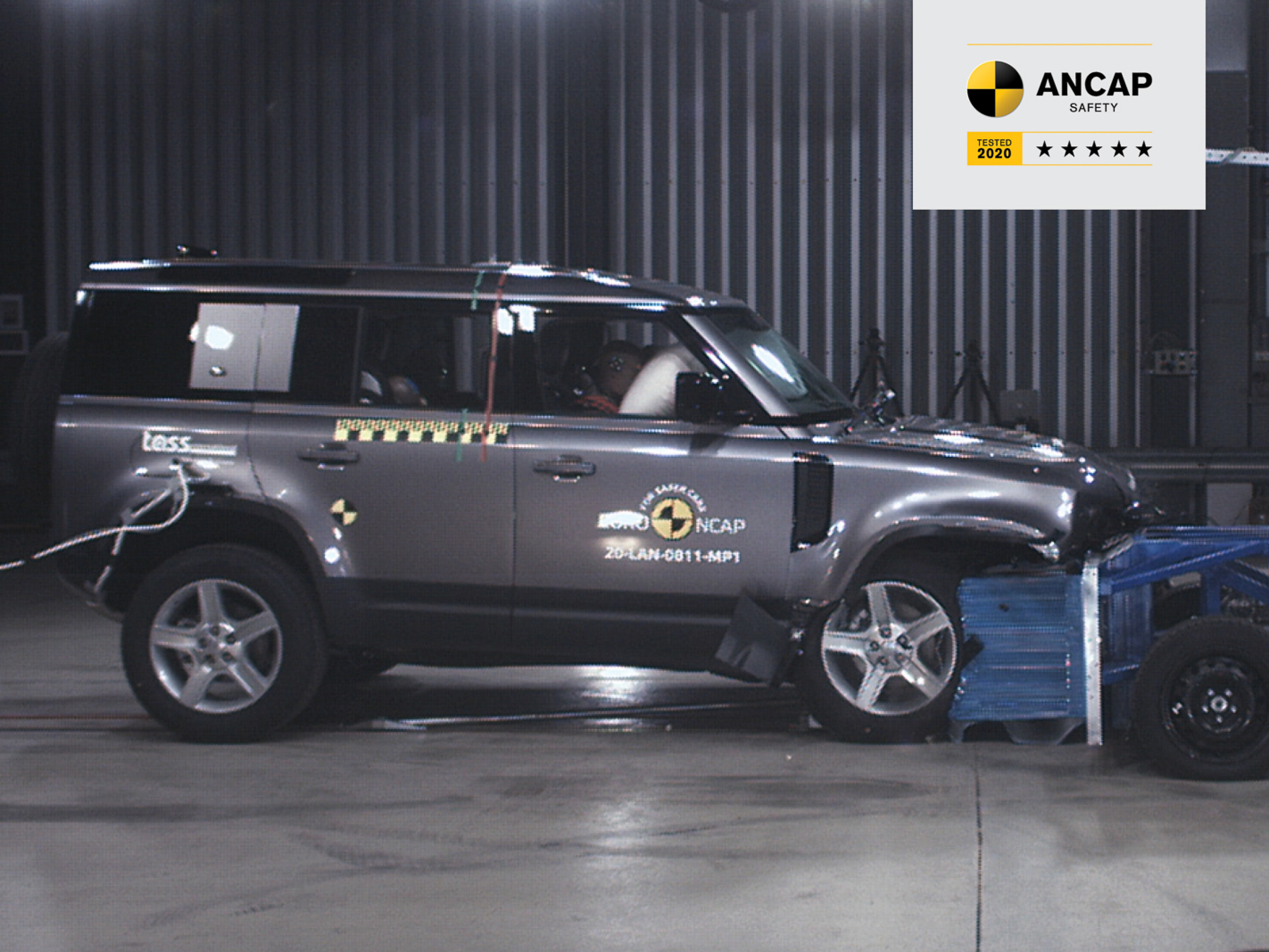
The Land Rover Defender is covered by a five-star ANCAP safety rating, based on testing conducted in 2020.
This rating applies to the Defender 110, excluding the 110 Hard Top.
It scored 85 per cent for adult occupant protection, 88 per cent for child occupant protection, 71 per cent for vulnerable road user protection, and 76 per cent for safety assistance.
For the full report, click here.
Six airbags (dual frontal, side chest and side head) feature across the range.
| 2024 Land Rover Defender active safety features | |
|---|---|
| Autonomous emergency braking (vehicle,u00a0 | Intelligent speed limit assist |
| Lane-keep assist | Wade sensing |
| Lane departure warning | Automatic high beam |
| Blind-spot alert | Driver condition monitoring |
| Rear cross-traffic alert | Side exit monitor |
| Traffic sign recognition | Adaptive cruise control. |
Dimensions
2024 Land Rover Defender dimensions
| Model | Length | Width | Height | Wheelbase |
|---|---|---|---|---|
| Defender 90 | 4583mm | 2008mm | 1969-1974mm | 2587mm |
| Defender 110 | 5018mm | 2008mm | 1967-1972mm | 3022mm |
| Defender 130 | 5358mm | 2008mm | 1970mm | 3022mm |
2024 Land Rover Defender boot space
| Model | All seats up | Second-row folded | Third-row folded | Second- and third-row folded |
|---|---|---|---|---|
| Defender 90 | 397L | 1563L | u2013 | u2013 |
| Defender 110 five-seat | 972L | 2277L | u2013 | u2013 |
| Defender 110 seven-seat | 231L | u2013 | 916L | 2233L |
| Defender 110 Hard Top | 1423L | u2013 | u2013 | u2013 |
| Defender 130 | 389L | u2013 | 1232L | 2291L |
| Defender 130 Outbound | 1232L | 2516L | u2013 | u2013 |
2024 Land Rover Defender off-road specifications
| Model | Approach | Departure | Break-overu00a0 | Ground clearance | Wading depth |
|---|---|---|---|---|---|
| Defender 90 | 31.0u00b0 | 37.9u00b0 | 25.0u00b0 | 225-216mm | 850-900mm |
| Defender 110 | 31.2u00b0 | 37.8u00b0 | 22.6u00b0 | 228-218mm | 850-900mm |
| Defender 130 | 30.1u00b0 | 24.5u00b0 | 22.0u00b0 | 218mm | 900mm |
Warranty and servicing
As with the wider Land Rover range, the Defender is covered by the brand’s five-year, unlimited-kilometre warranty.
A complimentary 12-month roadside assistance program is included, which can be extended with annual servicing at a Land Rover dealership for up to eight years.
A five-year service package can be pre-purchased.
| Engine | Pricing |
|---|---|
| D250 | $2650 |
| D300 | $2650 |
| P300 | $1950 |
| P400 | $2250 |
| P500 | TBC |
| P525 | $3750 |
| P400e | TBC |
Availability
The 2024 Land Rover Defender range – including the 110 P400e, 110 Hard Top S, 130 Overland and 130 V8 – is available to order now, with local deliveries expected in November 2023.
Installing a dash cam isn’t just so you can submit cool videos to Dash Cams Australia; a decent dash cam could replace your GoPro.
Uniden has released a flagship Dash View model that captures higher-quality images and more detailed video. With state-of-the-art voice control functionality that allows you to switch the WIFI on/off, take a snapshot or lock the current recording file, the Dash View 50R is designed and engineered for Australian roads.
The Dash View 50R can be positioned discreetly inside your 4WD without it cluttering your windscreen and the 4K resolution (3840 x 2160p) front camera pairs with a Full HD rear camera, that provides a 140-degree wide angle lens that captures more in-depth details, such as clear number plates, and includes an effective zoom capability. The rear camera could also double as a reversing camera.
Sony’s Starvis Image Sensor provides back-illuminated pixel technology used in CMOS image sensors for optimum video quality and with WDR, allows you to capture clearer vision in bright and low light environments. This premium technology ensures the Dash View 50R delivers high video quality in visible-light and near-infrared light regions, with 4K technology further improving its colour range and contrast.
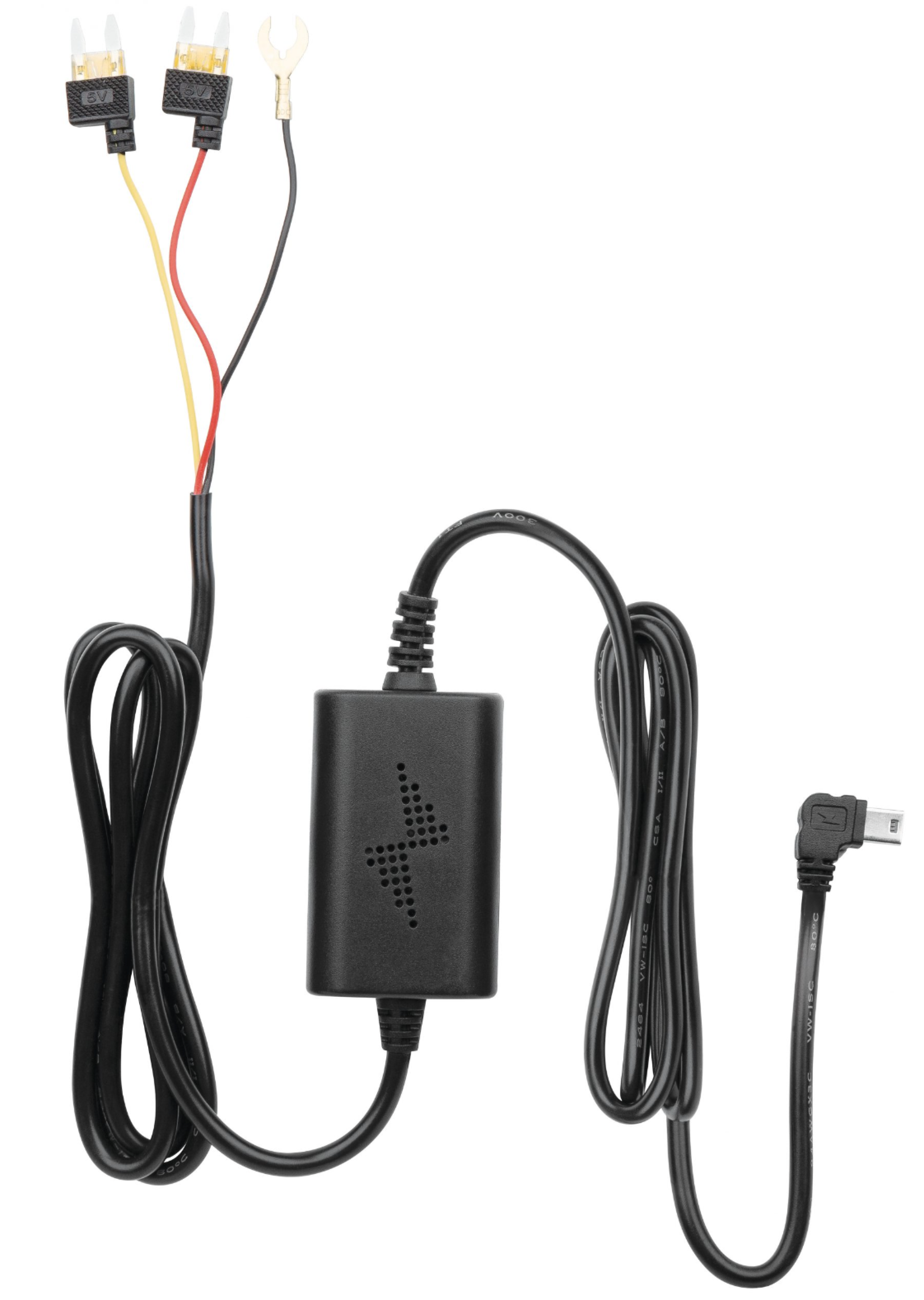
The Dash View 50R also has a parking mode feature that records when you’re away from the 4WD. Utilising the included hardware kit, incidents that may cause damage to vehicles while parked on the street, in car parks or at camp can be captured and replayed, even vision of the infamous Drop Bear in action.
Upgrade your 4×4
-
Bullbars
-
Underbody Protection
-
4X4 Tyres
-
Canopies
-
Roof Racks
-
Storage

The free Dash View App enables the playback of video as it happens for instant visual verification via any smartphone. Useful for sharing vision with insurance companies or authorities to support any claims.
The Dash View 50R also offers additional features such as speed/red light camera warnings, voice guidance control using the Smart One Touch function, inbuilt GPS and Wi-Fi providing you with Transfer functionality to smartphone devices using the DashView App. A 64GB MLC High Endurance Micro SD Card comes standard for ease of storage space, quick transfer and replay at the highest quality.
Pricing
The Uniden Dash View 50R retails for $499.95 and includes the front and rear cameras, 64GB Micro SD Card, Hard Wire Kit and wiring between the front and rear cameras.

The Uniden Dash View 50R smart dash cam boasts a 4K resolution front camera and includes a 64GB Micro SD Card to store and retrieve vision. For all the details on the products and where to find your closest reseller, head to the link below.
Is the Scorpio a great budget alternative for buyers looking for something different in a capable 4×4? We think so, but let’s delve a bit deeper.
JUMP AHEAD
Interior
At 4662mm in total length and 1970mm wide, the Scorpio isn’t as large as some in its competitor set, but you don’t notice it when you climb into the front or second row of seats. Both rows offer plenty of space for passengers, with more space in the second row than usual because it only accommodates two people on separate captain’s chairs.
Like most wagons in this size bracket, access to the third row for adults is awkward and the seating position is cramped, so it is best suited to children.
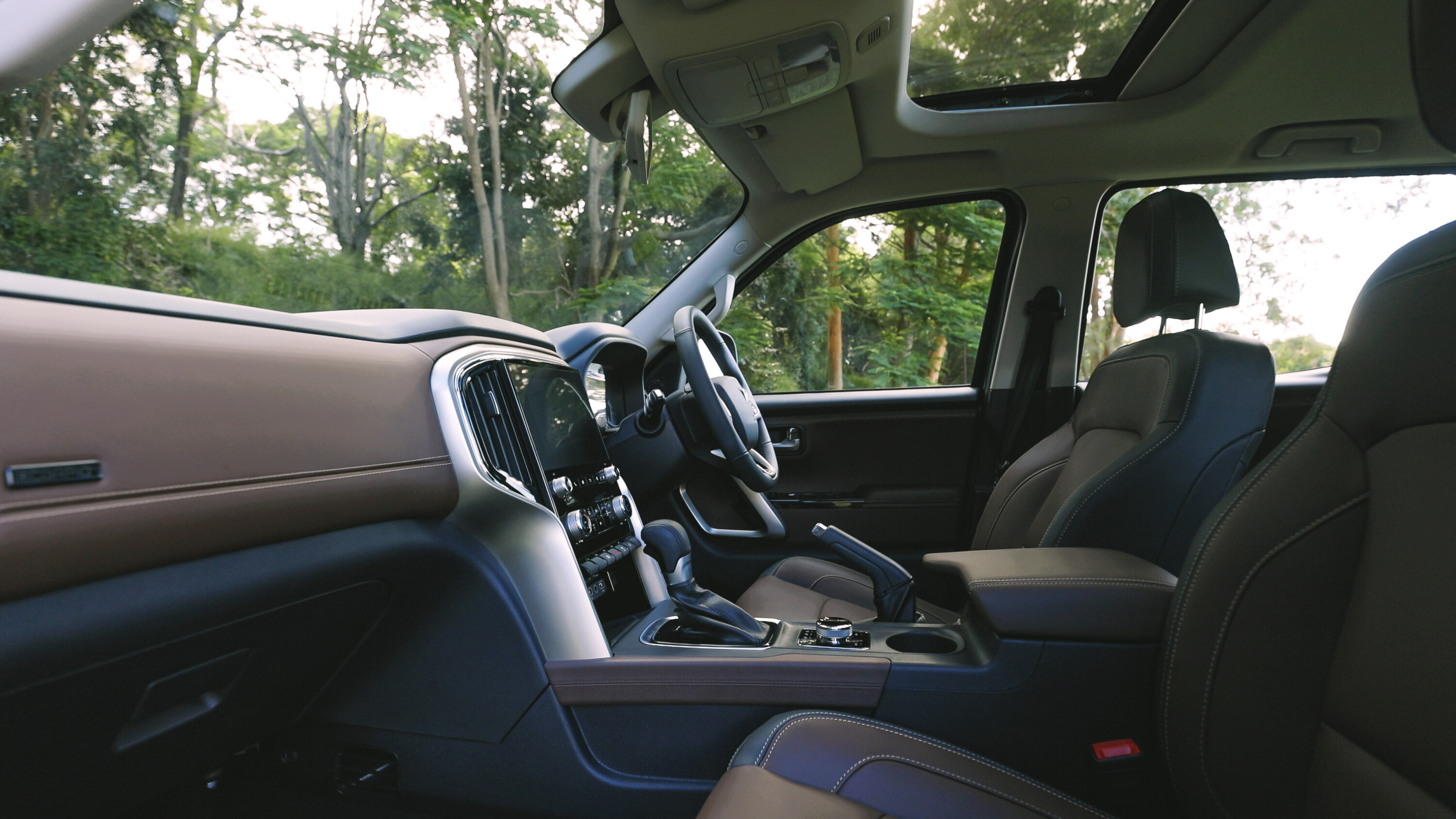
Back up front and only the driver’s seat has height-adjustment, and this is electric on the Z8L model but manual in the Z8. The steering column can’t be adjusted for reach, so finding the ideal position might not be possible for some, but I found it fine for driving. The seat is very close to the door and this limits the size of the door pockets; as such, they are map pockets with no bottle holders.
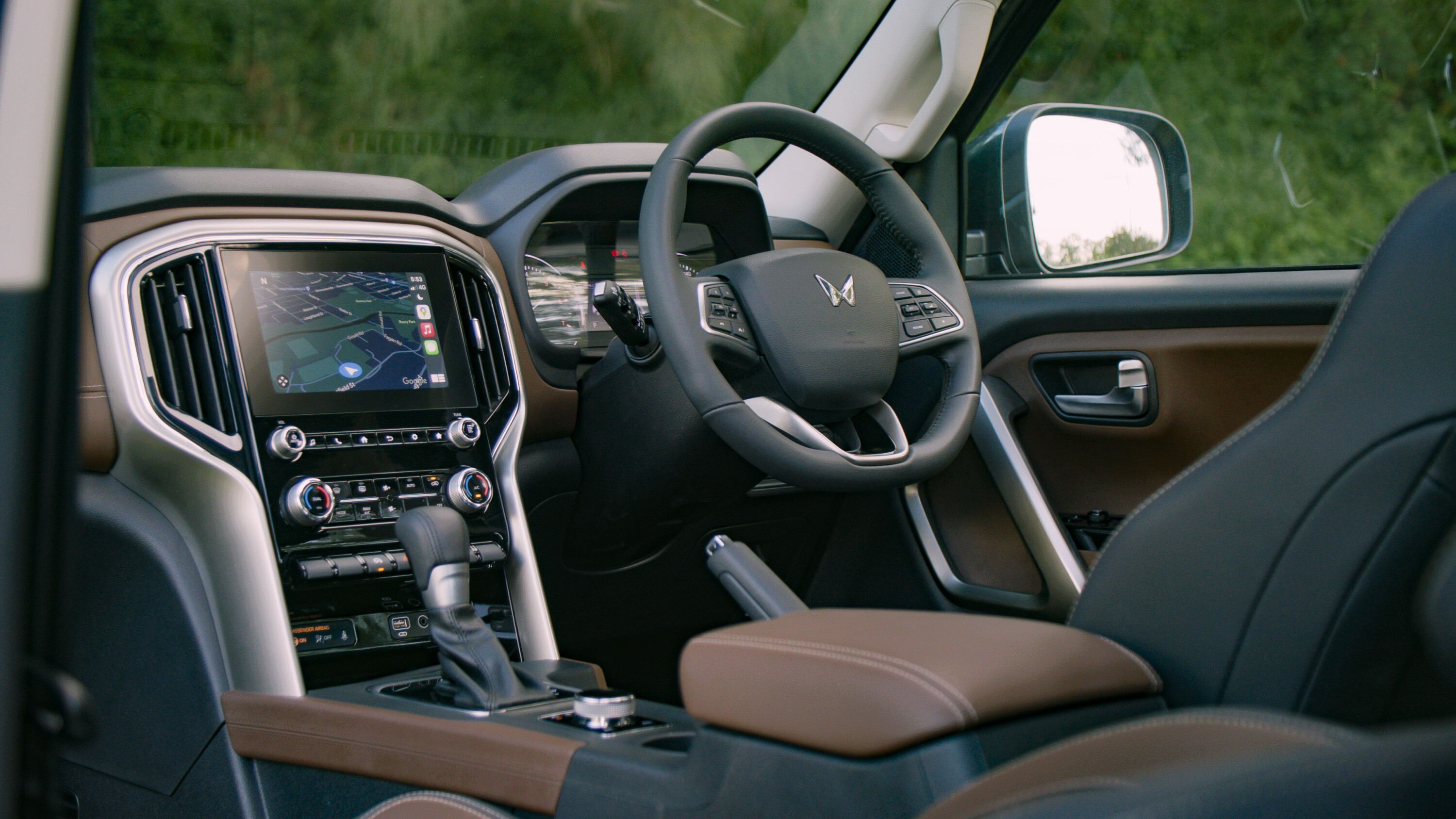
The faux leather seats are supportive and comfortable and the vision through the tall windscreen is excellent, even if it’s not as good as the more upright Pik-Up. Controls are easy to reach and the touchscreen is responsive when using CarPlay functions.
Standard features in both the Scorpio Z8 and Z8L include
| Scorpio-N standard features across range | |
|---|---|
| Seating for six on leatherette seats | TPMS, ABS, ESC and ETC |
| Three-zone climate control with vents to the second row but not the third | Front, side and curtain airbags, but they donu2019t reach back to the third-row |
| Apple CarPlay and Android Auto, which are cord-connected in the Z8 and wireless in the Z8L | LED headlights |
| An eight-inch A/V nav screen | 18-inch alloy wheels are standard fit on both variants |
On-road performance
Mahindra’s mHawk diesel engine is surprisingly quiet compared to others of its ilk. Sure, you can’t avoid that four-cylinder diesel harshness when you put your foot down, but under light load and normal driving applications this engine is quieter and more refined than many four-cylinder competitors.
Where it can’t match its competitors is output, with just 129kW and 400Nm on offer – but at 2100kg in Z8L trim, it is lighter than the others in its class.
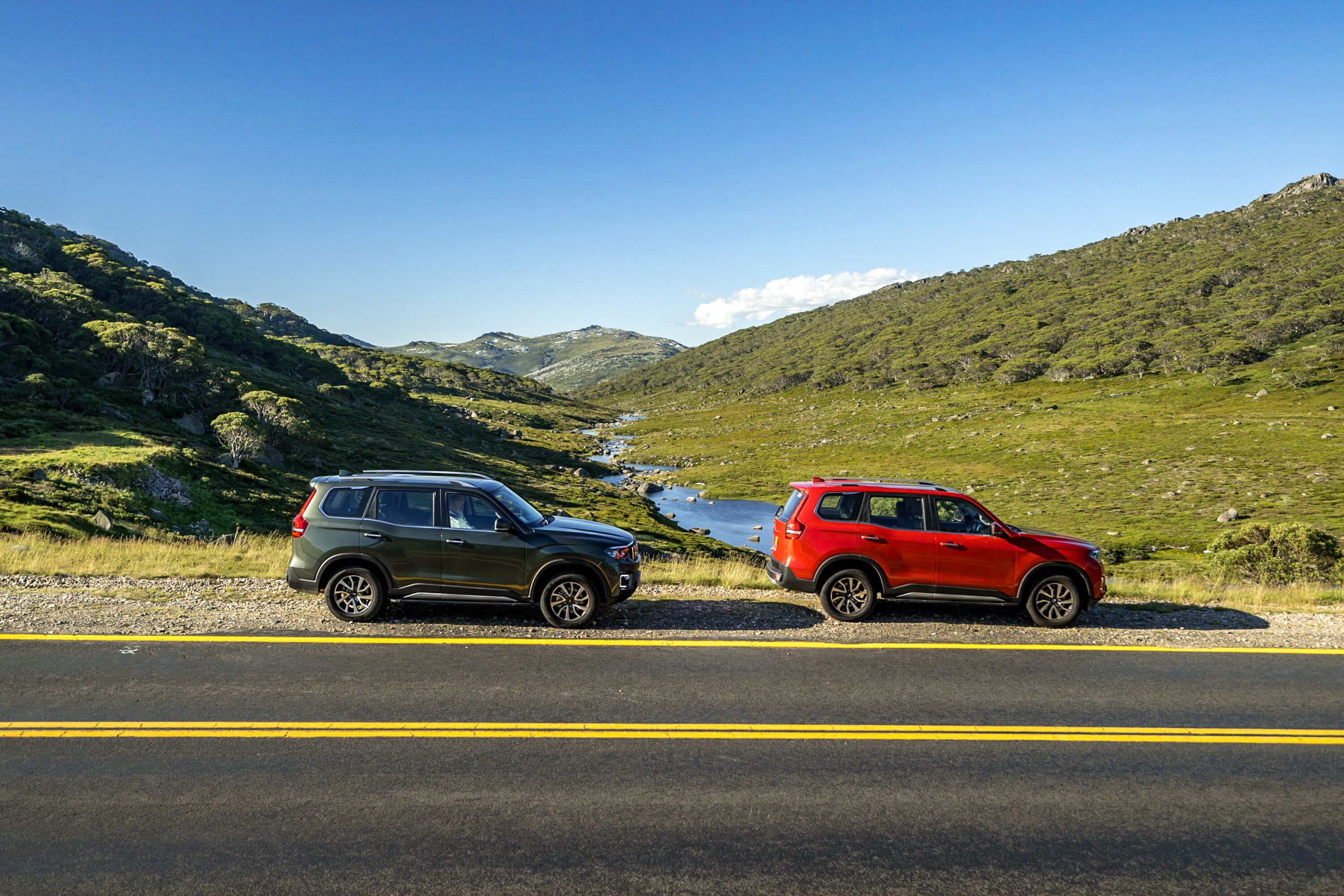
As a result the Scorpio gets along at a reasonable clip when you put your foot down and cruises nicely under constant throttle. The Aisin six-speed automatic transmission is flawless in the way it shifts through the gears and back again as you reduce speed or descend hills. The transmission shifter has a fore and aft manual mode accessed by tapping the shifter across to the left.
The only complaint we had with the drivetrain was a noticeable shunt or backlash when backing off and reapplying the accelerator in suburban traffic. While noticeable it wasn’t harsh, but it put a small stain on the overall refinement of the package.
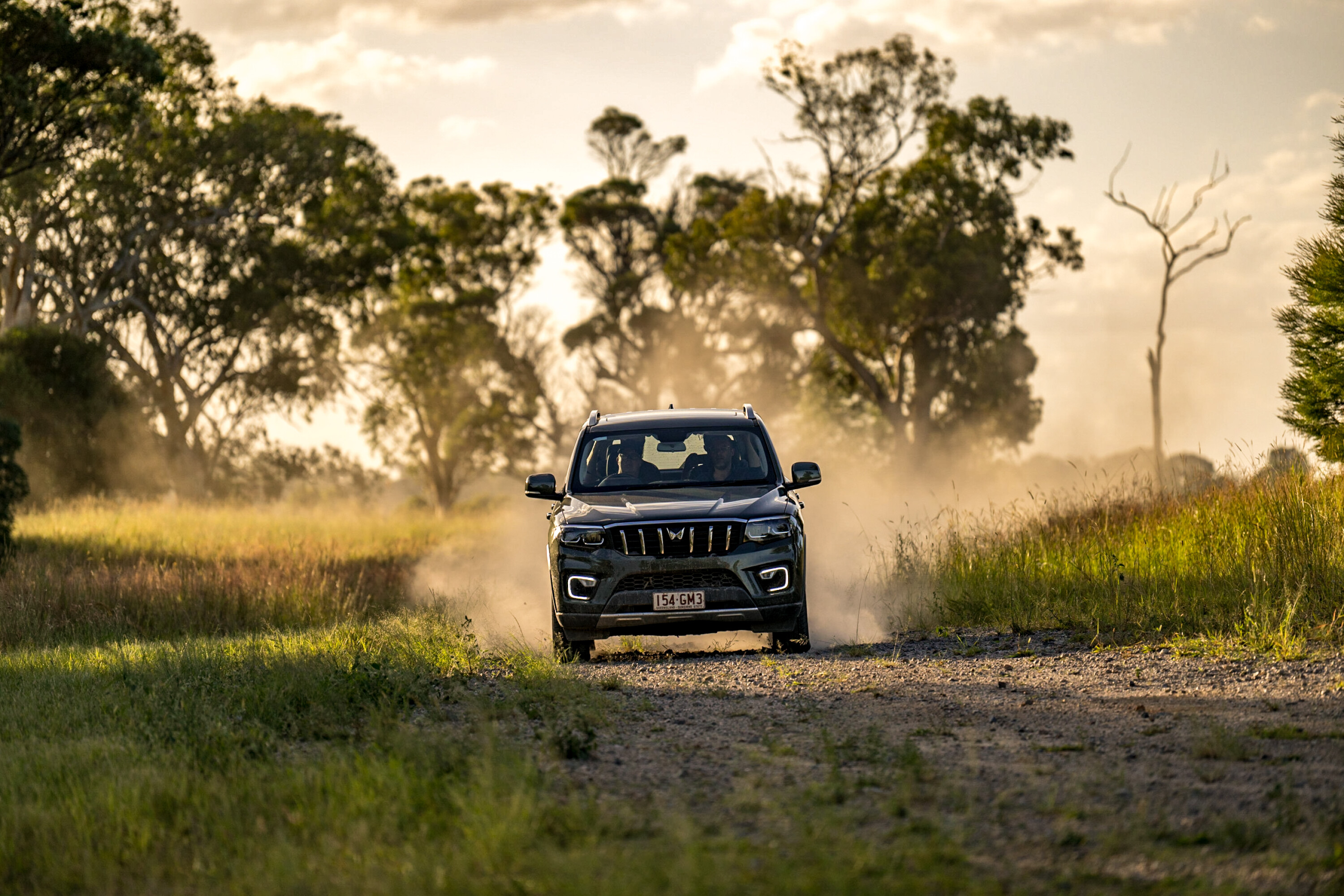
This mHawk engine is EU6 emissions compliant so it exceeds Australian requirements. To achieve this it uses AdBlue exhaust treatment with the fluid contained in a 20-litre tank. This is said to be able to last around 15,000km, which is in-line with the standard servicing interval. Of course, you can top up the tank yourself and the vehicle will give multiple warnings prior to running out of the fluid.
The electronic-assisted power steering did feel a bit vague on centre, but the Scorpio steers nicely over winding B-roads and the suspension manages the bumps well.
Off-road performance
Getting off the beaten track and you can switch the Scorpio’s transfer case from 2WD to 4WD high on the move, and it did so without hesitation. This enables driving across most terrain with relative ease. The electronic traction control is a bit slow to react compared to the systems in other vehicles, but once a difference in wheel speed is detected across the rear axle, that auto-locking diff lock activates and propels you forward.
The downhill speed control operates in high or low range and is adjustable for speed, but selecting low-range 4×4 gives much better and smoother descent control.
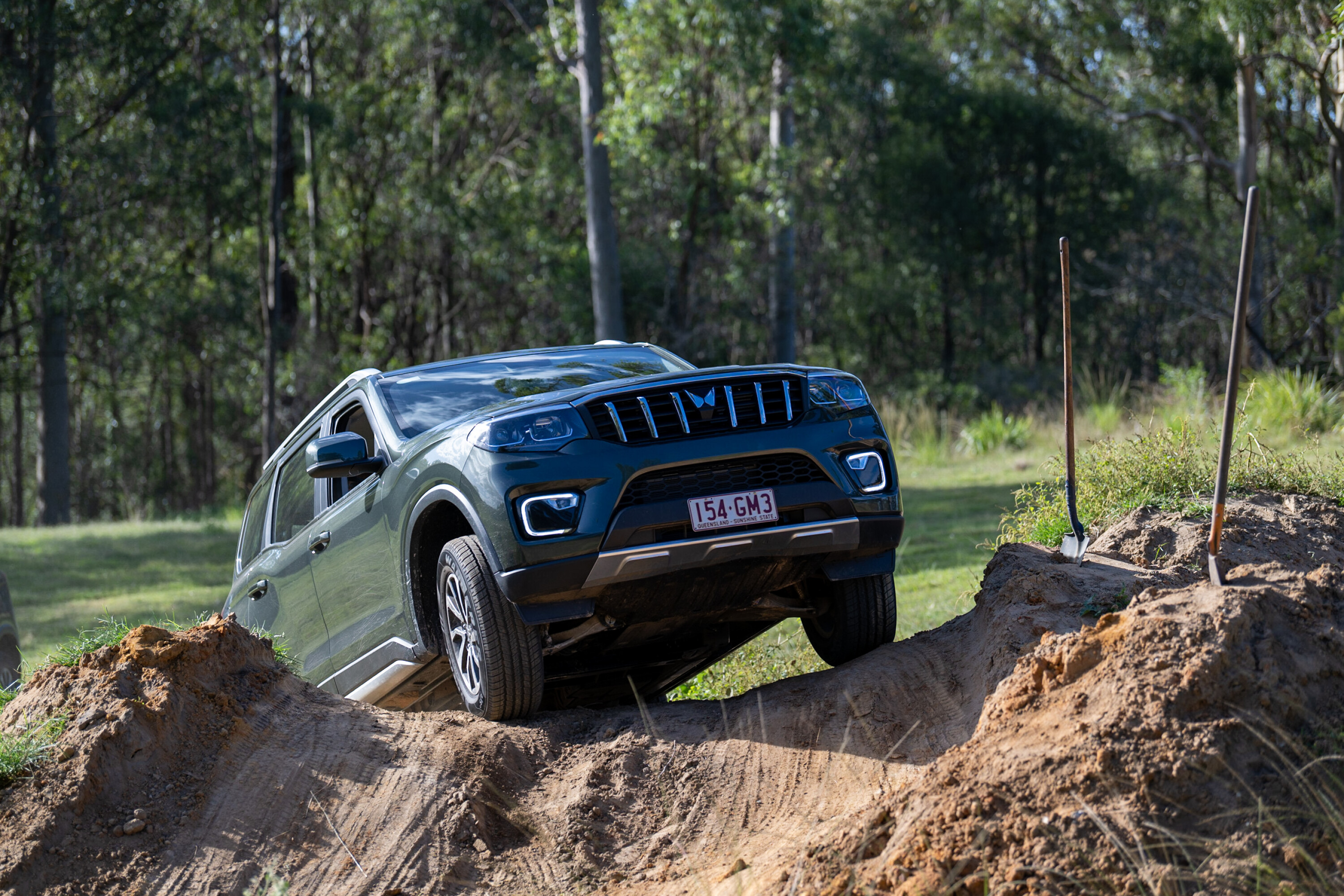
The terrain on the test track wasn’t challenging enough to really test the limits of wheel travel, but enough to produce enough traction loss to really feel the rear diff lock working.
One particular piece of track where the terrain immediately ahead of the vehicle wasn’t visible over the bonnet, gave us the chance to switch on the forward-facing camera to see where to point the wheels, which is exclusive to the Z8L Scorpio.
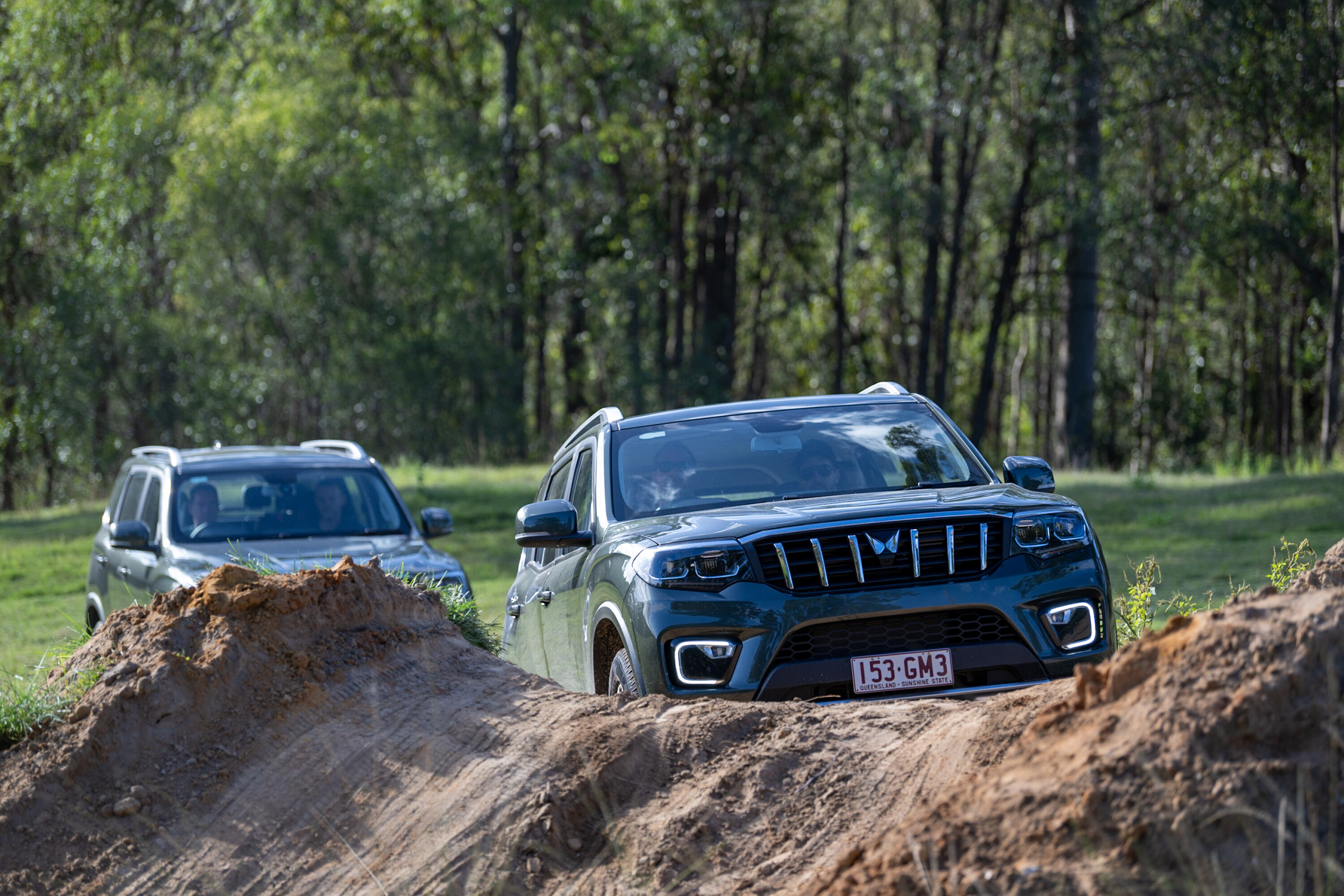
A ride-along in the Scorpio on a high-speed section of track with a racecar driver behind the wheel gave a great impression of how well the suspension copes in such conditions. Past experience has shown that one of the biggest compromises in lower-priced vehicles is in the suspension, but this isn’t the case in the Scorpio with its so-called Frequency Dependent Dampening (gas) shock absorbers and Watts link rear end doing an excellent job of taming the terrain.
Mahindra says it has done more than 150,000km of testing in the Australian alps and outback, and this really shows in the way the suspension performed on this quick test. Again, the Scorpio felt better here than some of its more established competitors.
Pricing
Verdict
The Scorpio isn’t just a good value-for-money package, it’s a good rig overall. Sure it’s missing some safety tech that’s essential for some, but we’re already hearing from folks who don’t want AEB or the interference of lane-keeping assistance on a 4×4 vehicle. Likewise, the fact it doesn’t have seven seats. Then there’s the paltry 57-litre fuel tank and 2500kg towing capacity limitation, but not everyone tows that much.
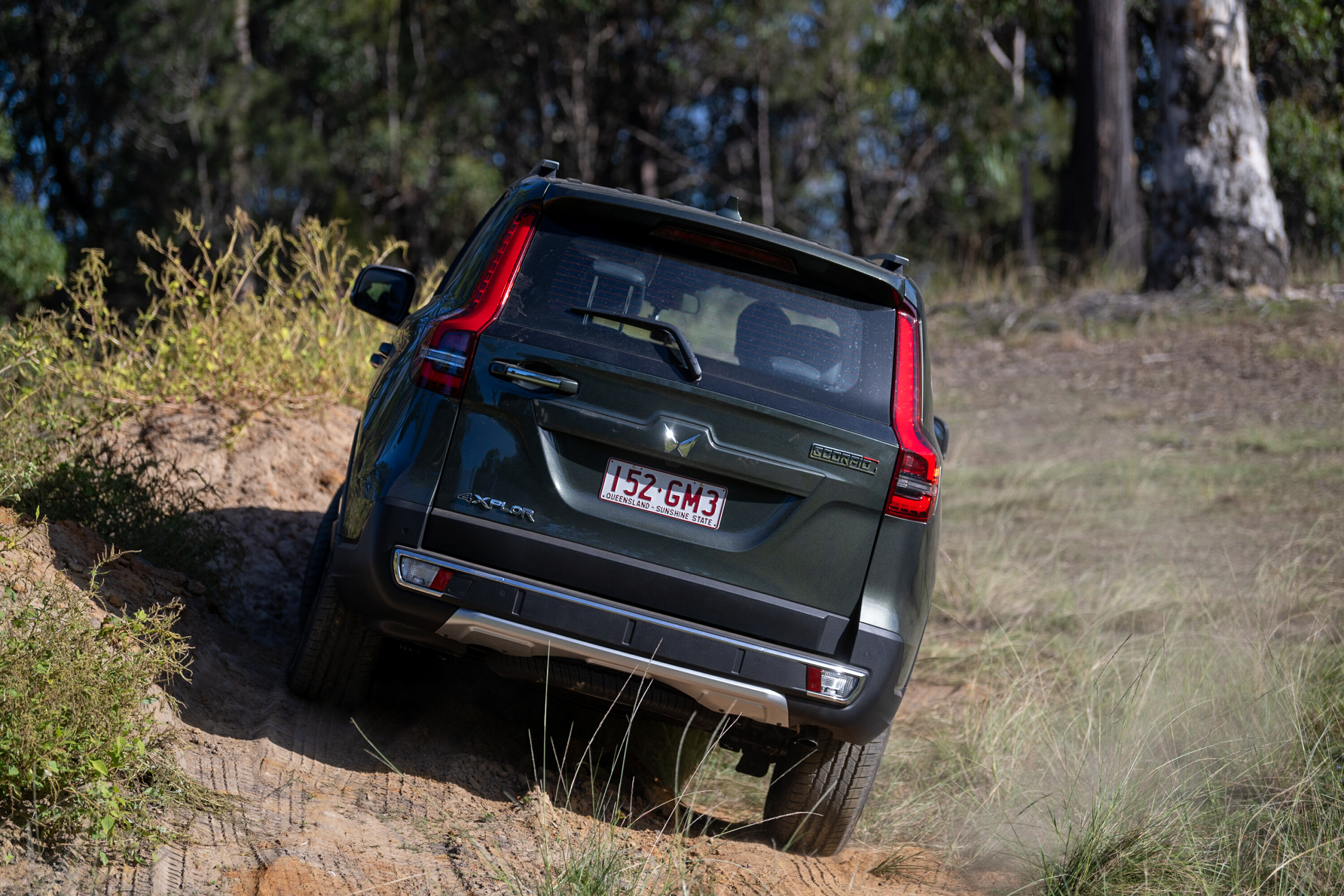
Mahindra Australia says it is working with local suppliers to develop a range of touring accessories for the Scorpio including nudge and bullbars, intake snorkels, side steps and a rear bar/tyre carrier that will take the spare wheel from under the car and allow space for an auxiliary fuel tank to increase range.
Another modification tourers might look at is removing the third-row seat (just four bolts) and fabricating a false floor to create a better cargo space. As it is, the third row takes up a lot of space even when folded forward – it doesn’t fold flat into the floor.
The Scorpio does provide a great budget alternative for buyers looking for something different in a capable 4×4 vehicle, and this proposition will only get better once that range of touring accessories become available.
Scorpio Z8 features
Scorpio Z8L features
| 12 speaker Sony Branded Audio with twin channel sub-woofer |
| Front Camera |
| Front Park Assist Sensors |
| 6 u2013 Way Drivers Power Seats |
| 7in Colour Drivers Display |
| Wireless Charging |
Specs: Mahindra Scorpio Z8L
| Price | 44,990 Drive away* |
|---|---|
| Engine | 4-cylinder diesel |
| Capacity | 2.2 litre |
| Max power | 129kW @3000rpm |
| Max torque | 400Nm @ 1750-2750rpm |
| Transmission | 6-speed automatic |
| 4×4 system | Part-time, dual-range |
| Crawl ratio | N/a |
| Construction | 5-door wagon of ladder chassis |
| Front suspension | IFS with double wishbone and coil springs |
| Rear suspension | Live axle with multi links, Watts link and coils |
| Tyres | 255/60-18 on alloy wheels |
| Weight | 2100kg kerb (Z8L) |
| GVM | 2610 |
| GCM | 5155 |
| Towing capacity | 2500 |
| Payload | 510 (Z8L) |
| Seats | 6 |
| Fuel tank | 57L |
| ADR fuel consumption | 7.2L/100km combined |
| On-test fuel consumption | N/a |
| Approach angle | 27.2u00b0 |
| Rampover angle | 23.3u00b0 |
| Departure angle | 21.3u00b0 |
| Ground clearance | 227mm |
| Wading depth | 500mm |
Off-road specs
| Approach angle | 27.2u00b0 |
|---|---|
| Rampover angle | 23.3u00b0 |
| Departure angle | 21.3u00b0 |
| Ground clearance | 227mm |
| Wading depth | 500mm |
It was the 1970s and people were free to do much of what they wanted, so when a local farmer decided to cut a track from his property at Lone Oak, 120km north to Mount Finke, through wild and untamed land, that’s what he did. With the help of his son Martin (Dinger), Goog Denton jumped on his bulldozer and headed north through the bush.
With the help of family and friends, it only took three years to complete the track that is now enjoyed by four-wheel drive adventurers 12 months a year.
Having fuelled up at Ceduna, it wasn’t long before we turned on to the access road, stopping at the information board to check for any tips on the track. There was a lot of great advice, not just on Googs Track but also for the Yumbarra and Yellabinna parks.
More travel destinations








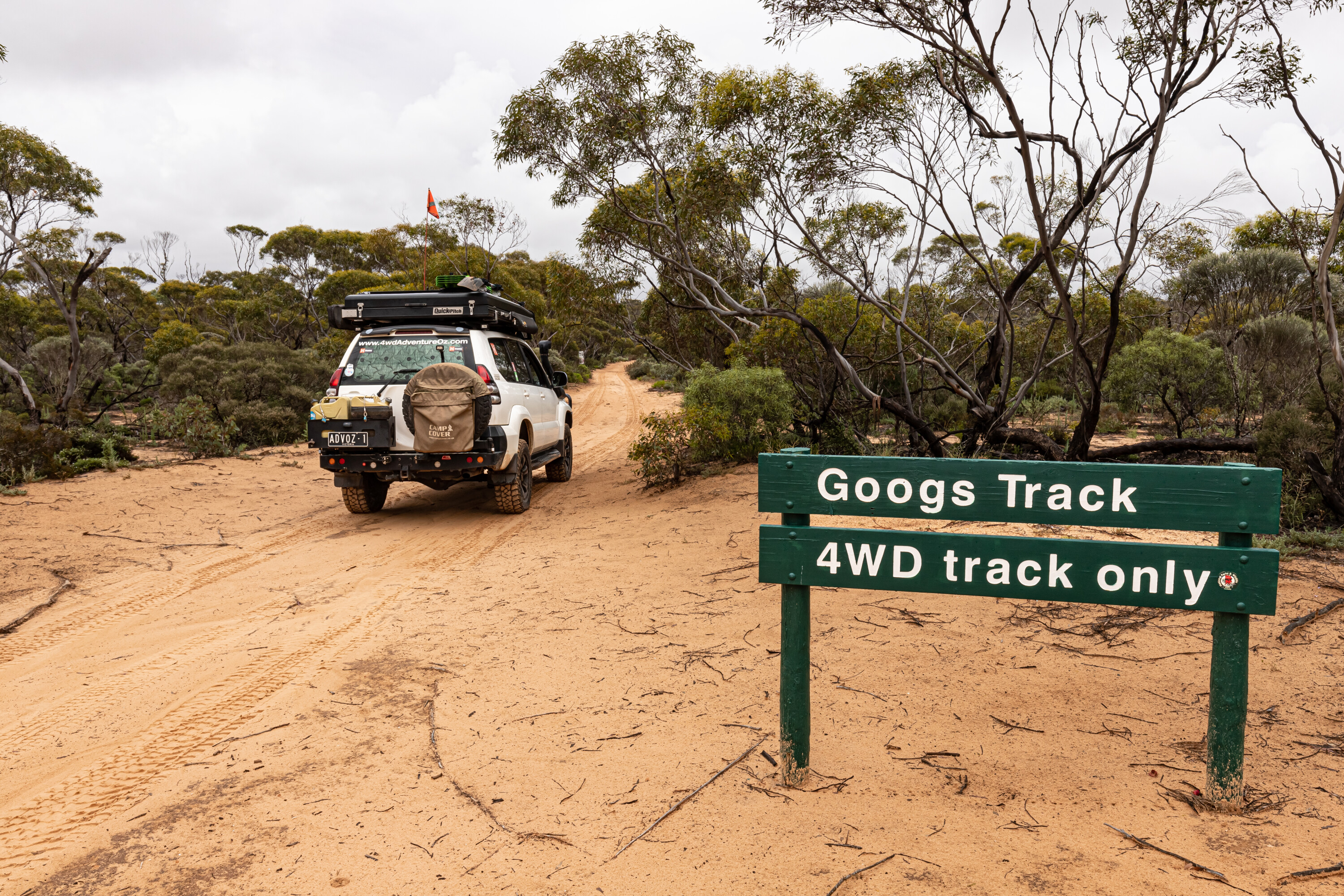
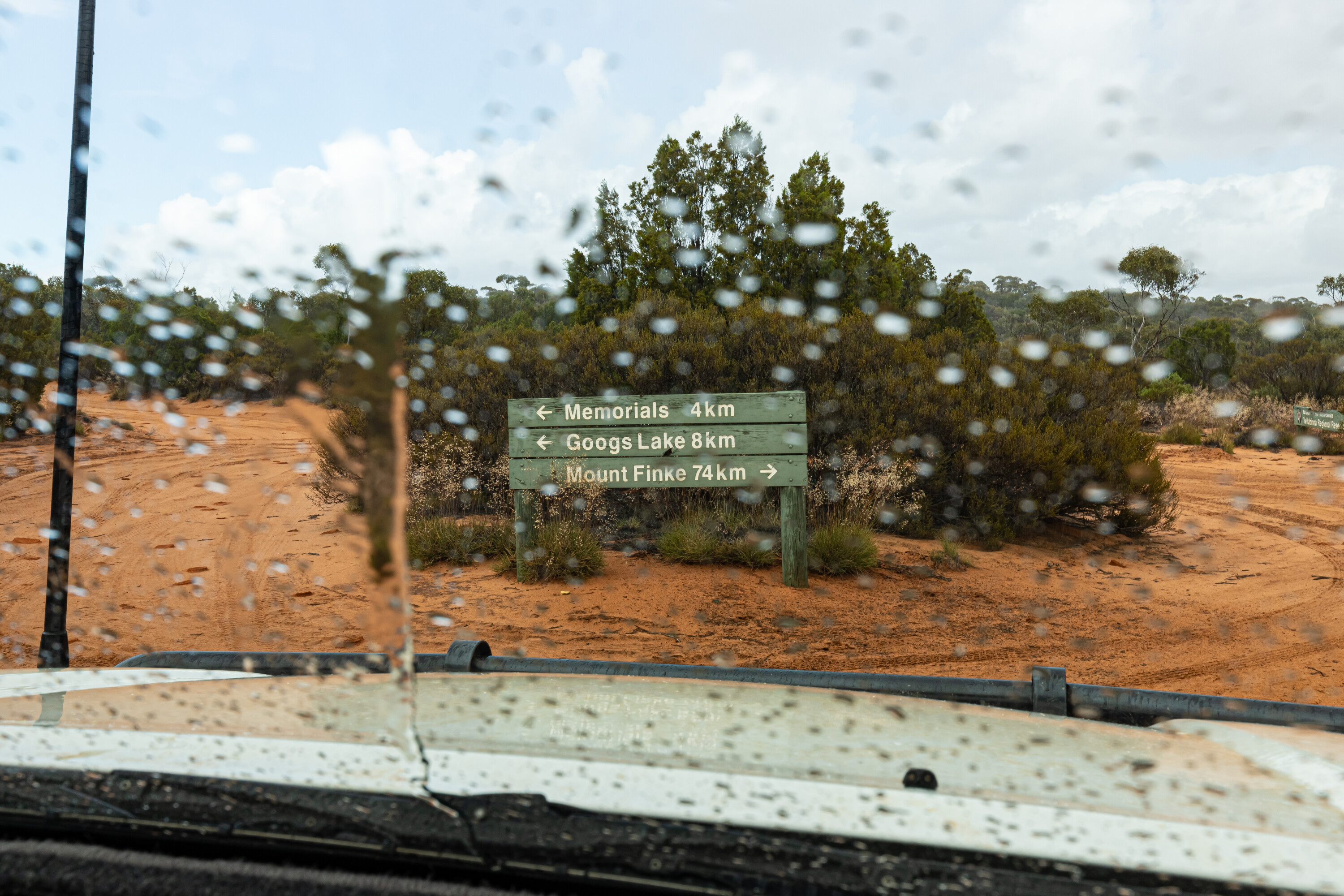
Once the bitumen runs out and the sand track begins, it’s recommended that you drop your tyre pressures to between 15 and 25psi, depending on the amount of weight being carried. Now is also a good time to fit your sand flag and change the UHF to channel 18 whilst on Googs Track.
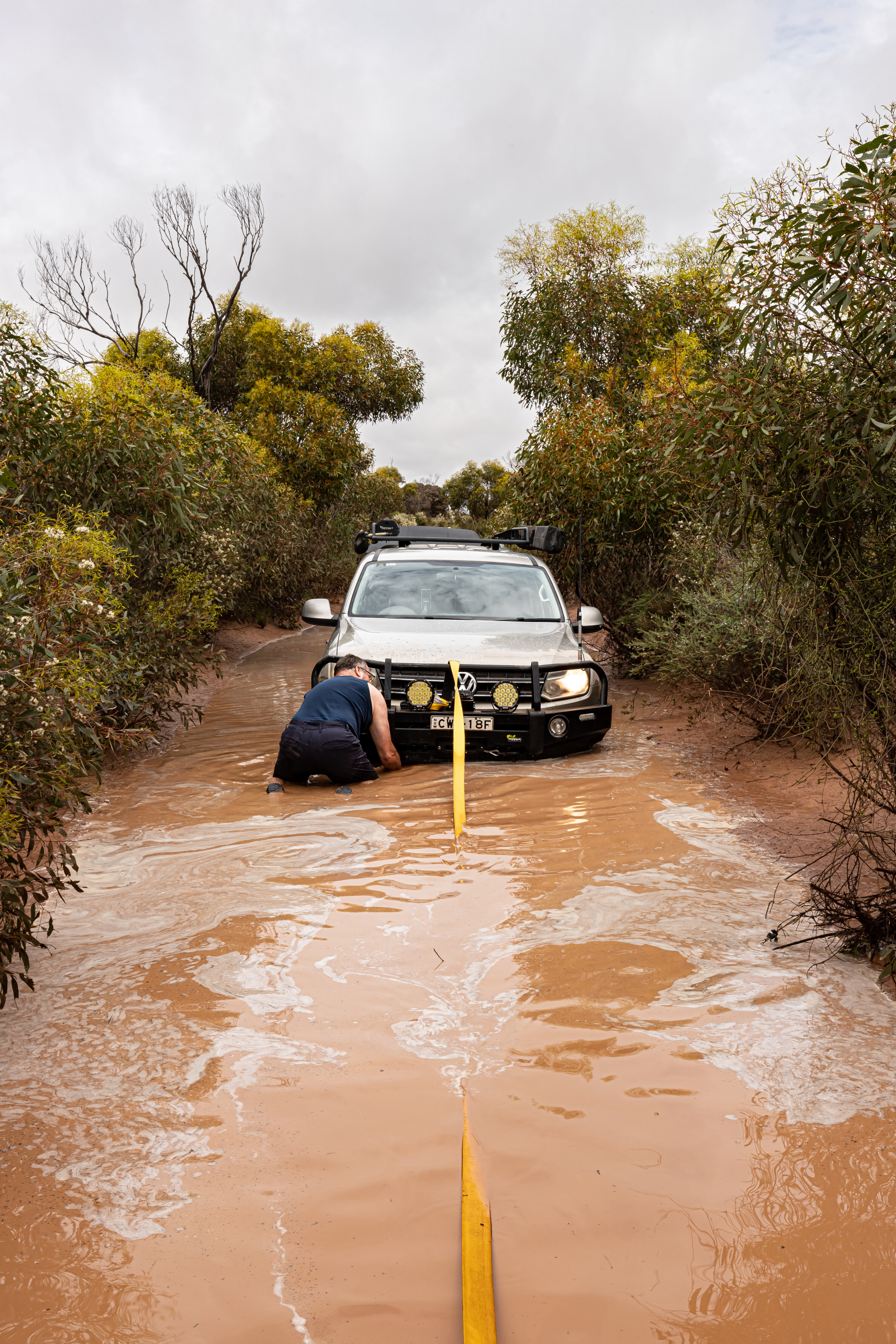
With so much recent rain, it was a surprise to find the track in good condition, although the corrugations were still as bad as they’ve always been. We’d driven through a couple of shallow sections of water over the track but when we reached the third, disaster struck.
Being first through, the depth caught me out and then a step up near the end was difficult to get up, however, I had just enough momentum to escape the hole. Mick wasn’t so lucky with the Amarok unable to get over the step up, getting stuck in the muddy water. He was unable to move into reverse gear, with the auto box getting stuck in neutral.
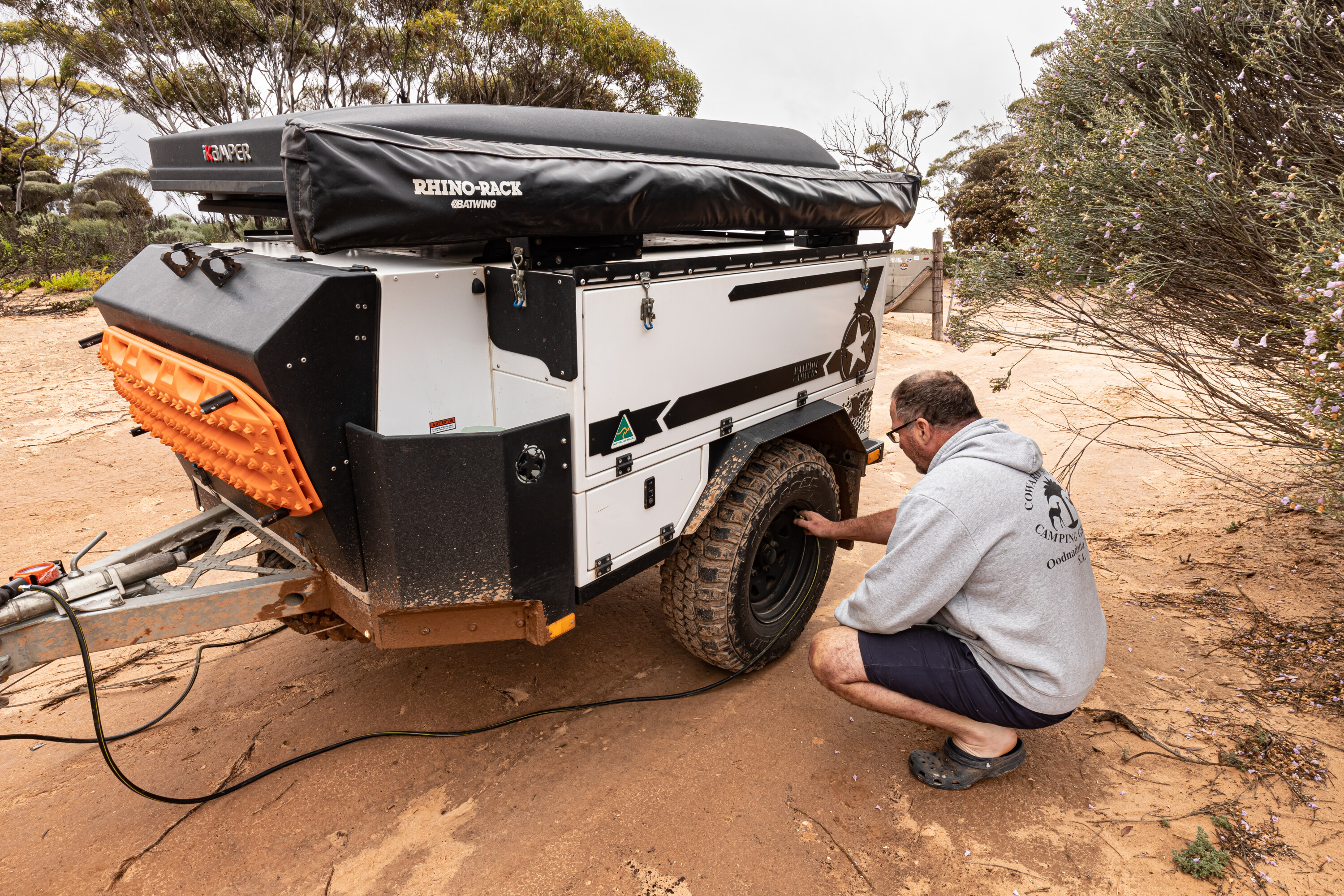
Water was entering the cabin through the door seals, so Mick was quick to exit his vehicle to access the recovery gear. A snatch strap was attached to his recently installed front recovery points using a soft shackle then attached to the MaxTrax recovery hitch.
A couple of snatches and the Amarok and Patriot camper were thankfully freed from the watery grave and Mick was able to get it back in gear. We later learned that many other vehicles got caught out by the puddle with one solo vehicle spending a couple of hours winching themselves out of the waterhole.
Solid dunes
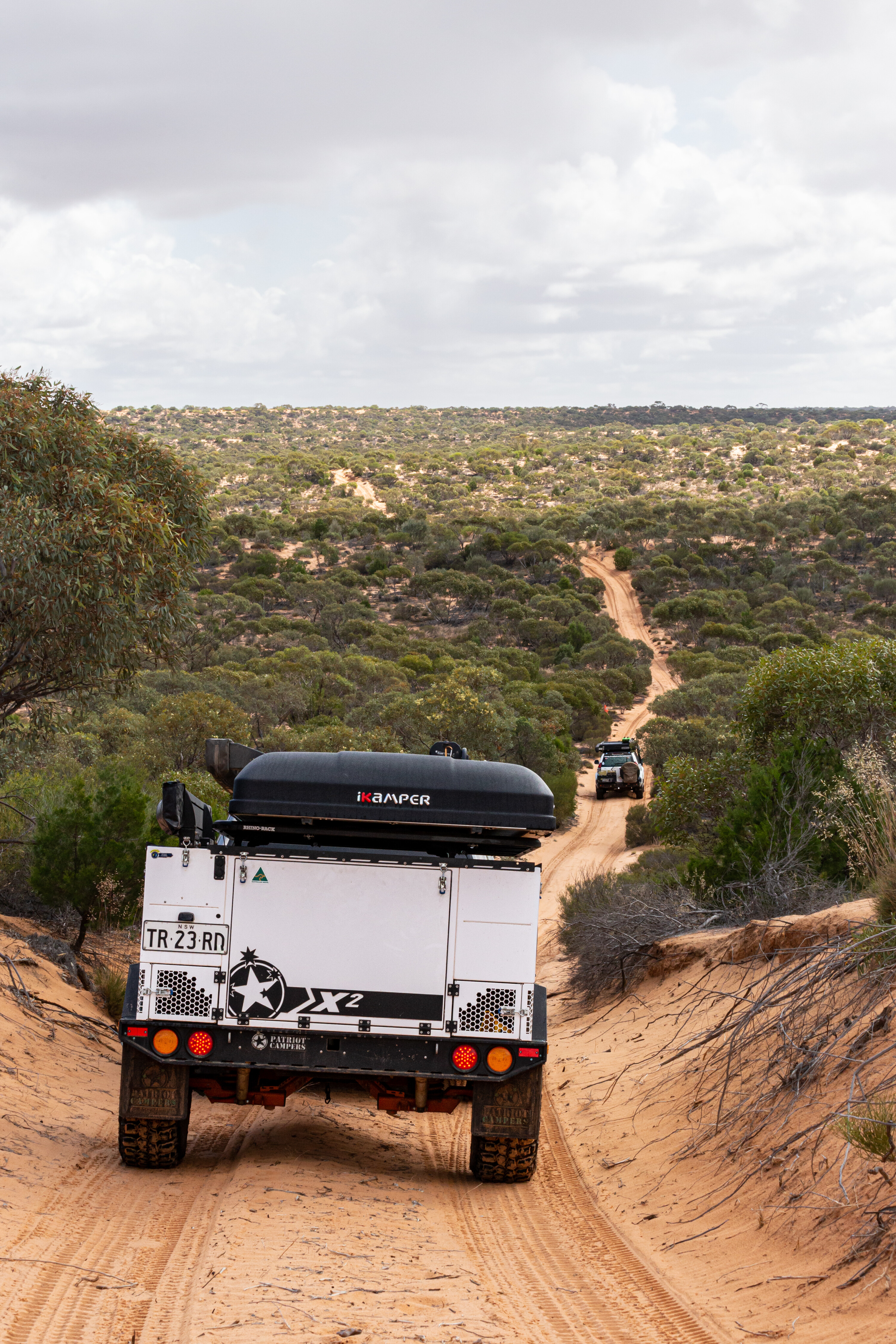
The dunes soon started, and they weren’t as challenging as the last time I’d driven them, the rain tamping down the sand so there was little chance of getting caught out and bogged. Chatting on the UHF, we picked up that a group of four vehicles was following us.
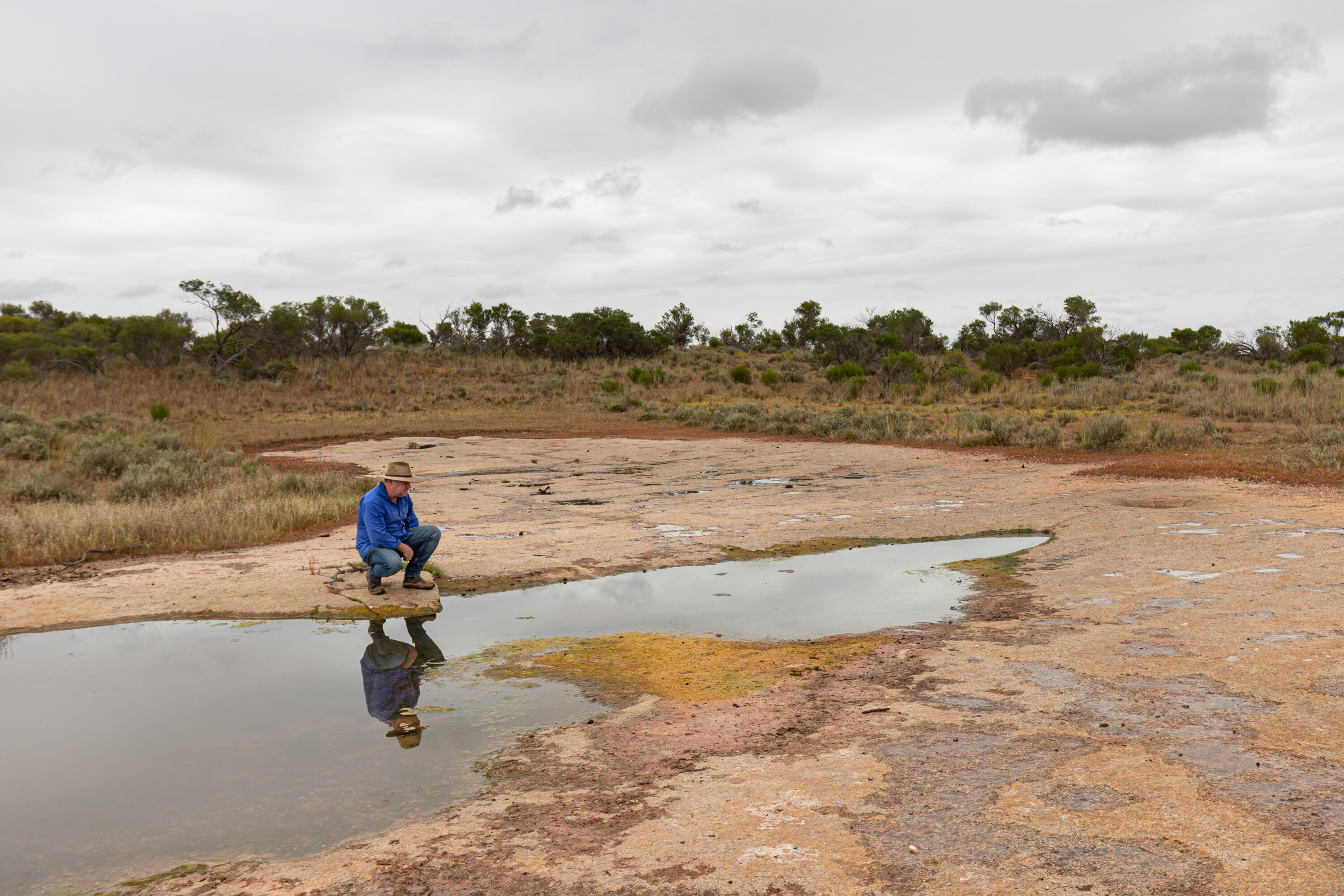
We stopped for lunch at a track junction then followed the side track out to a rock hole once used regularly by aboriginals when they passed by. This is a culturally sensitive place so take nothing and leave only footprints.
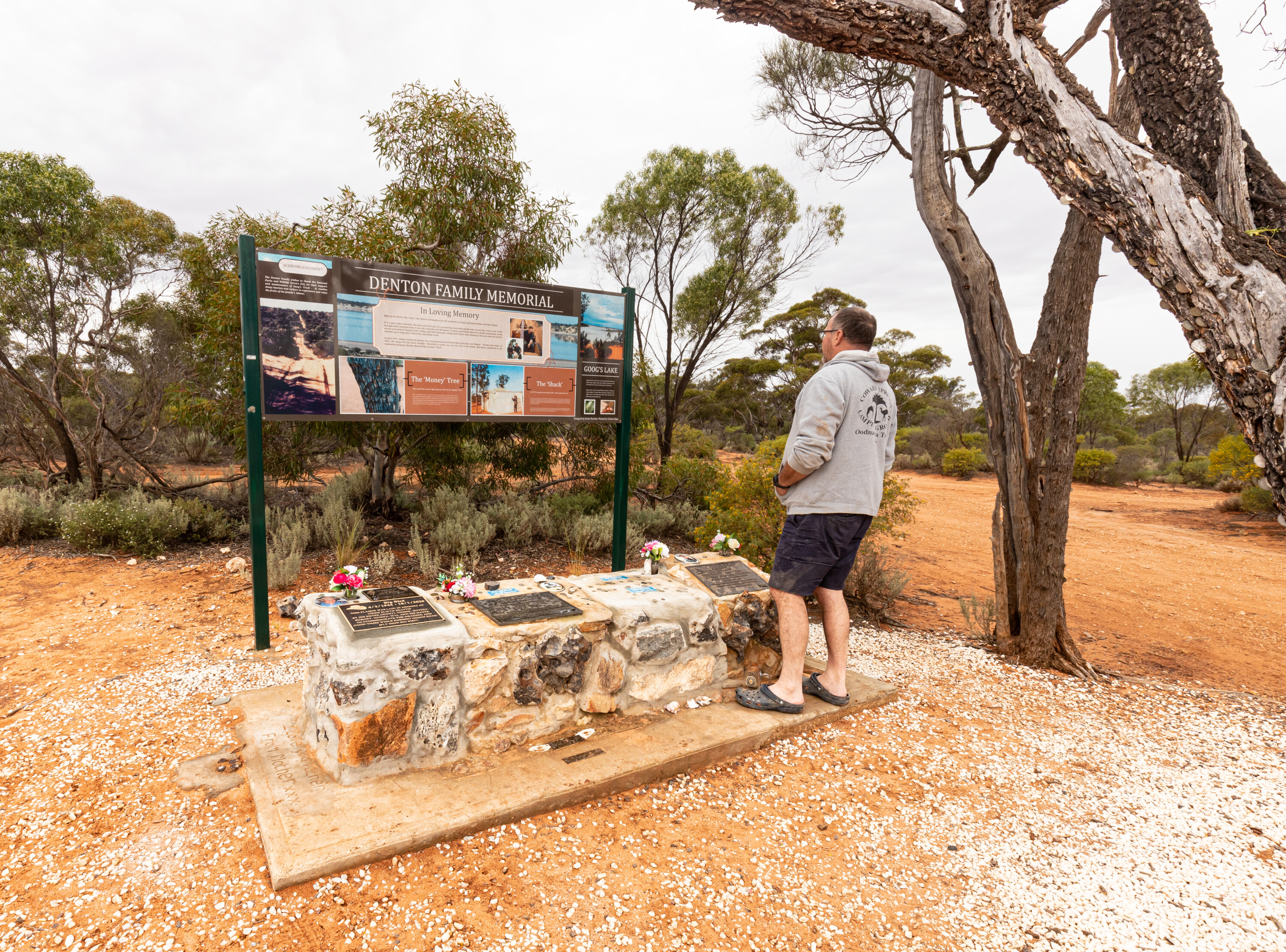
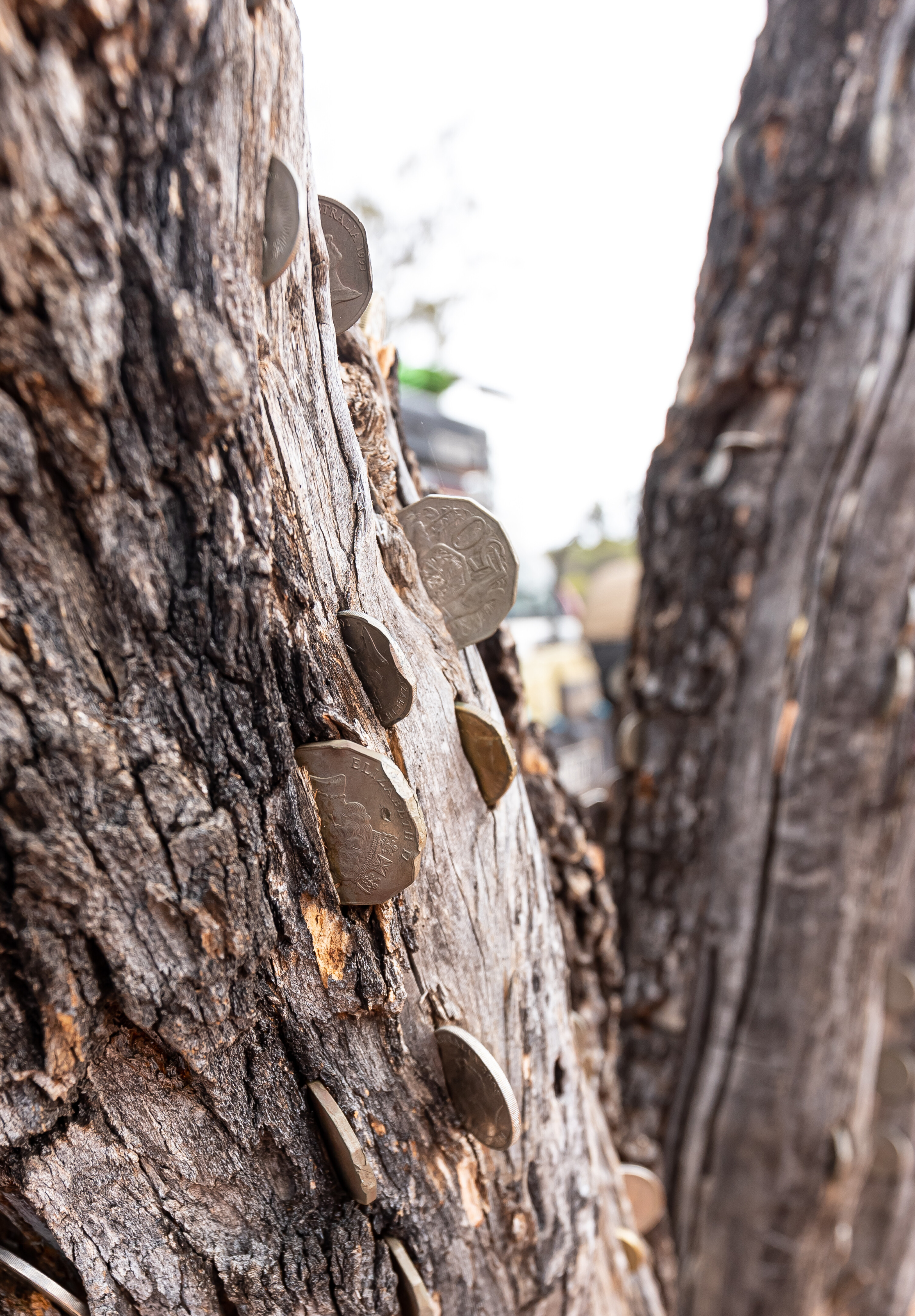
Back on the main track, it didn’t take long to reach the Denton Family Memorial to Goog, Dinger and Big Bird and the coin trees. From here it’s only 4km to Googs Lake and a plethora of dispersed campsites. For us, it was good to open up the rooftop tents to dry them out and for Mick to try and dry out his floor mats, grab bag and clothes as water continued to drip from the Amarok for the next few hours.
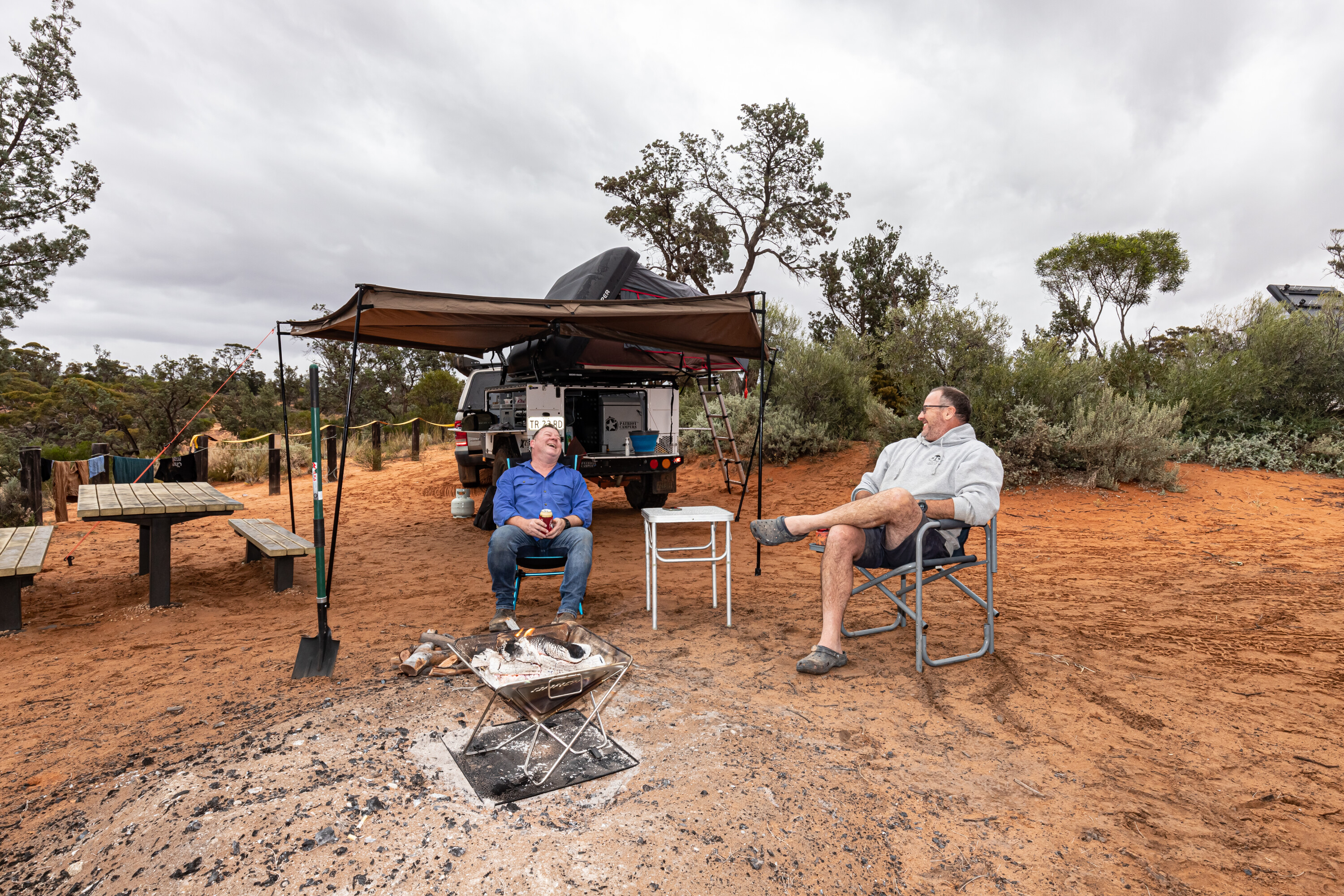
Settled by the fire for happy hour, the flies buzzed us now and then. We chatted out the recovery and rated its successes and failures but given getting stuck was unexpected, the time it took to recover the 4WD was acceptable, even if the water ingress wasn’t. Rain began to fall, ending the fire session and it didn’t stop until well after bedtime.
We awoke to brilliant sunshine and cloudless sky, a nice breeze helping to dry out the tents with the heat of our prized sun. Breakfast was our version of Bacon & Egg McMuffins and although biased, ours were much better with tasty cheese, double-smoked free-range bacon and runny egg yolk.
With everything packed up, we checked out a few of the other campsites around the north of the lake before heading back to Googs Track via Childers Rockhole Track.
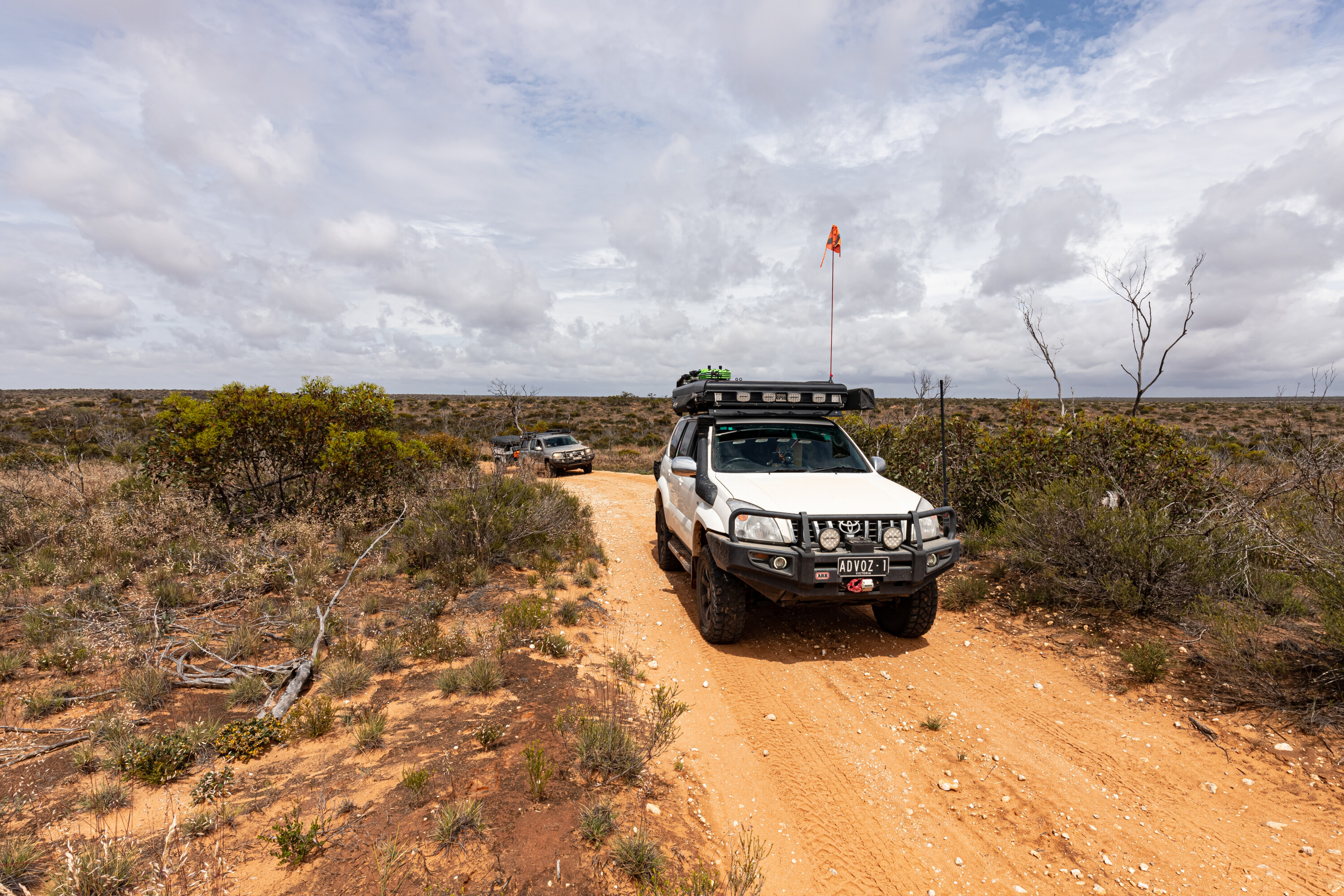
Some of the dunes began to throw some challenges at times, being taller, very scalloped and deep sand in places. The overnight rain made it easier, so Mick was happy, only struggling on a couple of long, steep climbs. Backing up and booting the right foot a little bit more gave him the momentum to get the Amarok and Patriot up and over.
I was impressed with his concern about tearing up the dunes, so we dropped a little more air from all his tyres, making driving simpler.
At one point, an abandoned malleefowl’s nest took up the middle of the track, a lack of vehicles during lockdowns making it the perfect place to lay some eggs. There were several ‘unnamed’ camps along the track, where people had either stopped for smoko or camped for the night, so finding an open spot to have some lunch wasn’t difficult.
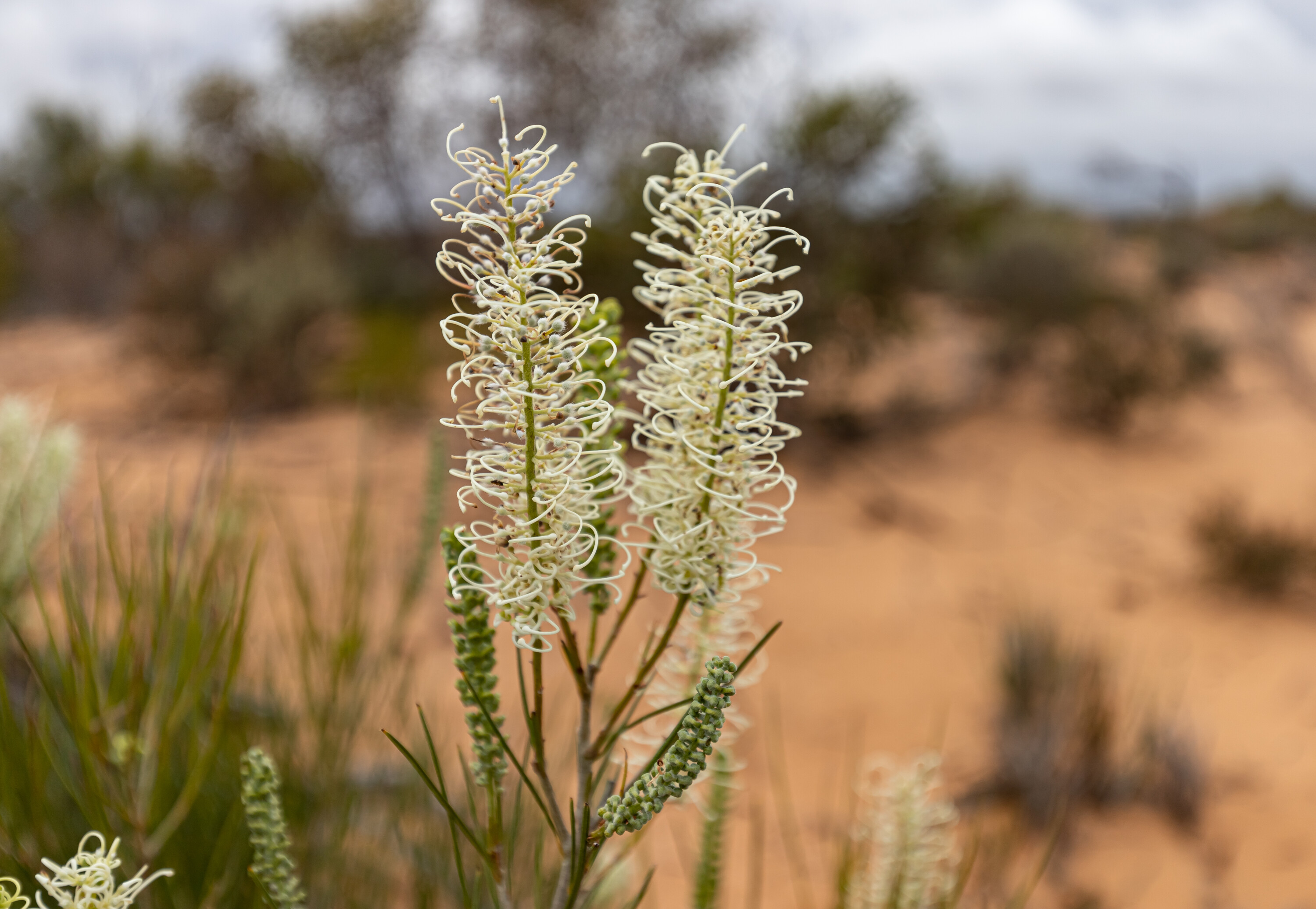
One thing I enjoy about Googs Track is the diversity of flora, however we hadn’t seen much in the way of fauna. I was keeping an eye out for my favourite desert lizard, the thorny devil, without much luck with only a couple of small lizards seen scurrying across the track.
Mount Finke
From the top of one large dune, Mount Finke appeared in the distance and as we closed in, the track changed to a harder base with rocks and stones taking over from the sand. The mallee scrub opens up more here too, a flock of galahs warmed themselves in a couple of gidgee trees between rain showers.
Reaching the turn-off, we soon made camp, lighting a fire to garner some coals for tonight’s camp oven lamb roast.
We were hit heavily by a brief rain shower that almost put the fire out, but Mick pulled out his trusty blower to give the fire some air that got it roaring very quickly. The resulting meal was resplendent with a tasty leg of lamb and roasted potatoes, pumpkin and carrots, and luscious gravy.
Showers came and went during the night, so it was nice to wake to beaming sunshine. I was a little nervous about how the salt lake that we’d have to cross would hold up after all the rain over the last week.
After a leisurely breakfast, we followed the track past Mount Finke and soon reached the edge of the lake. There were two options in front of us, a sodden track across the middle of the salt pan or a detour around its edge that looked a lot less treacherous.
We slowly picked our way around the lake trying to stick to what appeared to be the track most travelled, it was sometimes difficult with so many diversion tracks around the softest sections. There was plenty of evidence of recent carnage, it wouldn’t be a place I’d like to get stuck. We eventually reached the main track and turned to head north again.
After crossing several more dunes, we exited the Yellabinna Regional Reserve, taking the opportunity to collect some firewood. The corrugations that suddenly appear are like a smack in the face, unexpected and painful.
Channel 18 crackled to life as a group of four vehicles approached us heading south, even after I’d radioed our position, they were shocked when we finally met up so I’m not sure that they’d understood, even after replying to us.
Ghost town
It seemed to take ages to reach the Transcontinental rail line which is where we added some air to our tyres before jumping on the Trans Access Road and heading toward Kingoonya. Having only reopened to 4WD vehicles after heavy rain a couple of days earlier, the going was smooth and fast.
Passing the headframe of the abandoned Tarcoola Blocks Mine, we soon reached the ghost town of Tarcoola. The sign on the Wilgena Hotel suggested that the pub was going to reopen again in 2014, having closed years ago, but I think someone is taking the piss.
Taking a turn-off just past the old township lunch was enjoyed before cracking on our way. We met up with The Ghan at one of the rail crossings and then spotted a fired-up sleepy lizard who didn’t think itself to be photogenic, but I beg to differ. Rolling into Kingoonya, the fuel tanks were topped up before we checked in to the caravan park.
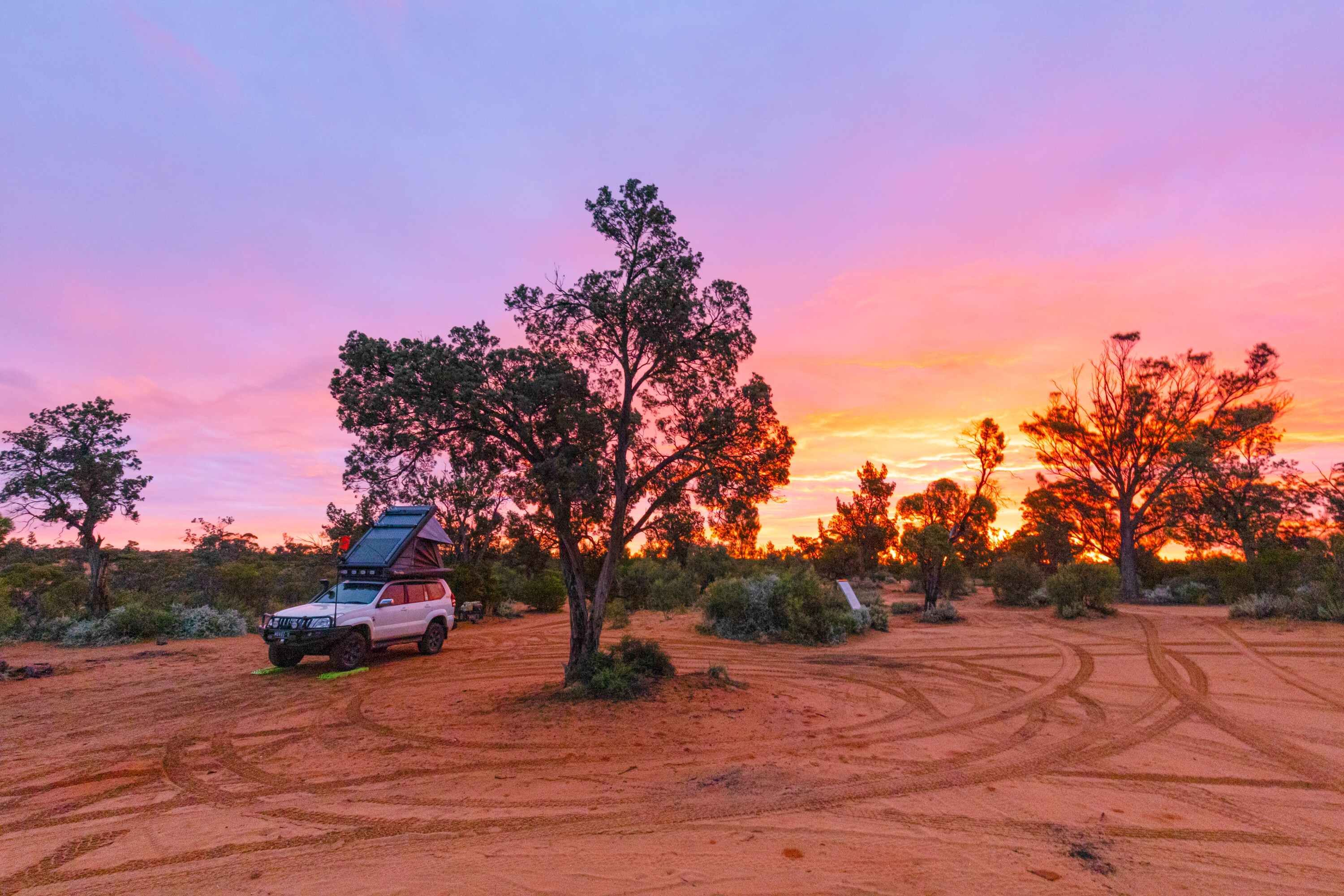
A hot shower was enjoyed before the pub started calling us. A few cold bevvies were enjoyed on the balcony before smashing a large chicken Parmi. The completion of the adventure was toasted with a few of the locals as the sun set and the clear starry night took over. We are so spoiled in this country of ours.
Travel planner
| Travel planner for Googs Track, SA | |
|---|---|
| Where | Ceduna to Kingoonya via Googs Track is some 268km and this is the longest distance between fuel stops. It is another 43km from Kingoonya to Glendambo on the Stuart Highway. |
| Camping | All campsites must be booked and paid for online before you go via www.parks.sa.gov.au/find-a-park There is dispersed camping at Googs Lake and Mount Finke. |
| Permits | No permits are required. |
| Fuel | Ceduna and Kingoonya provide unleaded/opal and diesel fuel. |
| Best time to visit | From June to September, as the weather is generally cooler. Fires are not permitted from November 1 to April 15. |
| More info | Paper maps, with the Hema Maps range providing excellent coverage and some form of electronic navigation/mapping hardware/software such as the Hema HX-2 is recommended also. |
Top 5 tips for Googs
| Top 5 tips for Googs Track, SA |
|---|
| Use UHF Channel 18. |
| Reduce tyre pressures to between 15 and 25psi. |
| Fit a sand flag. |
| BYO wood, collecting inside the reserve isnu2019t permitted. |
| Book your campsites before you go. |