
The Renegade X is an extreme mud-terrain tyre designed to combine off-road performance with a commanding visual presence.
Its deep mud-terrain tread with large voids promotes rapid self-cleaning in mud, while oversized tread blocks dig and claw for traction in soft terrain. The tyre’s massive shoulder lugs improve grip at the edge of the tread and support traction in ruts and off-camber conditions, while also adding visible width and a tougher stance. A bold sidewall design further enhances the tyre’s presence, and the tread layout prioritises traction and durability over on-road refinement, making the tyre’s purpose immediately clear.
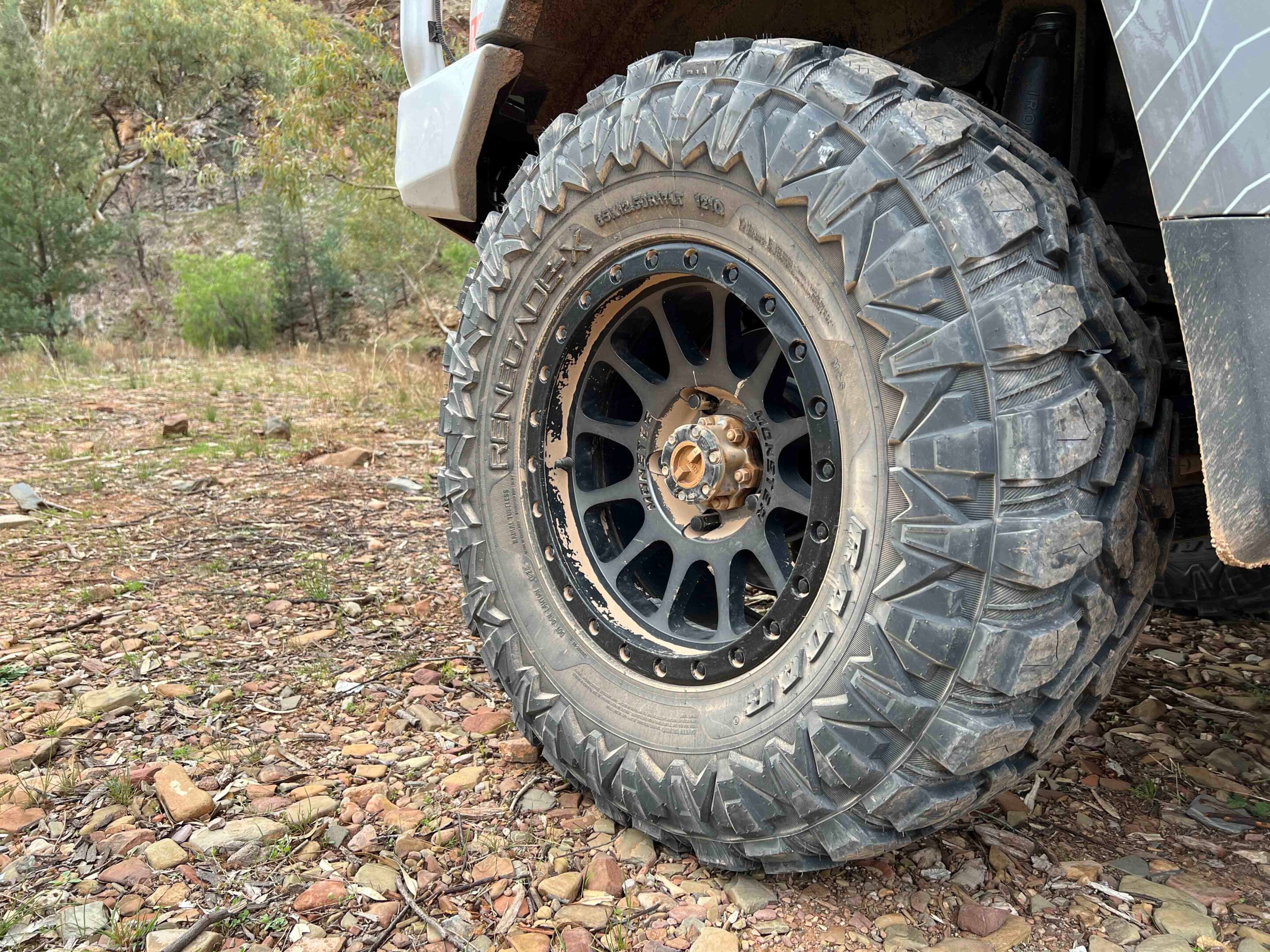
On soft and uneven surfaces, the Renegade X delivers consistent bite. Stone ejectors prevent clogging in mud, while the reinforced casing and sidewalls improve resistance to punctures, cuts, and general off-road abuse. The combination of aggressive tread design and durable construction allows it to tackle rocky tracks, gravel roads, and slippery, uneven terrain with confidence. These features make the tyre suitable not only for weekend off-road trips and demanding trails but also for vehicles carrying moderate loads in harsh conditions.
Unlike the Renegade R/T+, which balances off-road capability with quieter on-road performance, the Renegade X leans fully into extreme mud-terrain traction and bold styling, prioritising off-road grip and durability over highway refinement. On sealed roads, this means the tyre’s design comes with a few trade-offs. The Renegade X is firmer and noisier than all-terrain or highway tyres, and frequent on-road use will accelerate tread wear and increase fuel consumption. However, these trade-offs reflect the tyre’s prioritisation of off-road performance.
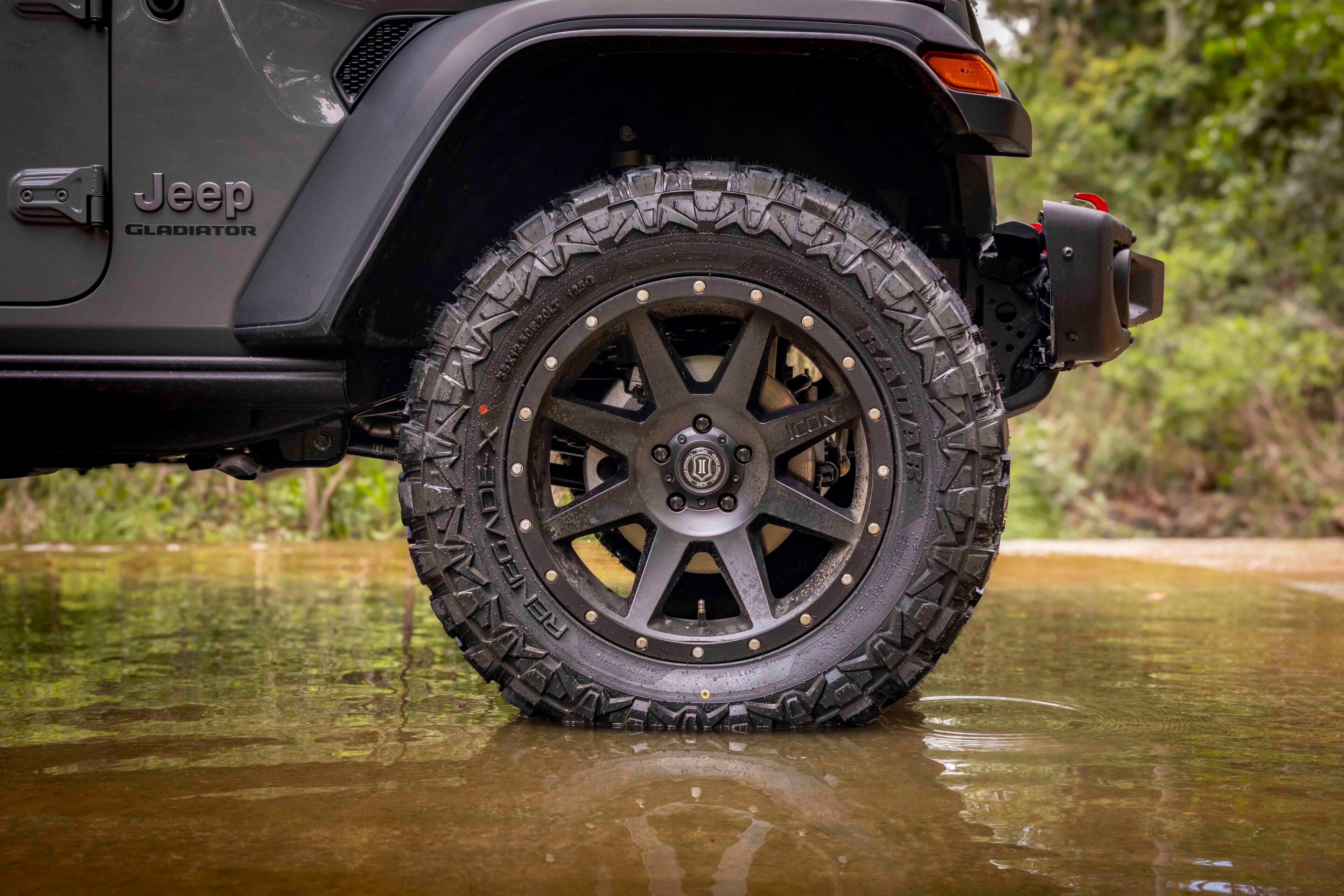
The Renegade X is best suited to 4WD owners who spend most of their time off-road and want a tyre that transforms the vehicle’s stance while delivering reliable mud-terrain performance. It appeals to drivers needing reinforced sidewalls, strong traction in soft or rough terrain, and a tyre that visibly signals its off-road intent.
Its aggressive styling makes it as much a visual statement as a functional tool, giving a vehicle a commanding look that matches its capabilities.
Pros
- Strong off-road traction on mud, dirt, rock, and gravel with oversized blocks and massive shoulder lugs for ruts and off-camber grip
- Durable construction with reinforced sidewalls, casing, and stone ejectors
- Bold, aggressive styling that enhances vehicle stance and off-road presence
- Good value compared with premium MT tyres, with surprisingly decent on-road comfort
- Proven for off-road use, weekend trips, and tough terrain
Cons
- Noticeable road noise and firmer ride, especially on sealed roads and lighter vehicles
- Faster tread wear and slightly higher fuel consumption
- Deep, sticky mud performance can trail top-tier MTs
- Lower brand recognition compared with legacy MT names
Denza is the luxury arm of China’s BYD brand, much like Lexus is to Toyota and Genesis is to Hyundai.
It’s no surprise Denza positions itself as a luxury brand, as it was originally conceived as a joint venture between parent company BYD and Mercedes-Benz. BYD eventually bought out its German partner, but not before learning a thing or two about building premium automobiles.
The Denza B5 starts at $74,990 for the base model, before stepping up to the B5 Leopard at $79,990. The bigger B8 wagon starts at $91,000 for the seven-seat version and rises to $97,990 for the six-seat variant.
The Denzas ride on the same body-on-frame DMO (Dual Motor Offroad) PHEV platform as the BYD Shark, with electric motors independently powering the front and rear axles. A small-capacity internal combustion engine (ICE) acts primarily as a generator but can also provide drive to the front axle when needed.
JUMP AHEAD
- What does the B5 come with?
- What does the B8 come with?
- On-road performance
- Off-road performance
- Verdict
- Specs
What does the B5 come with?
The B5 is powered by a dual-motor hybrid setup that produces up to a claimed 400kW and 760Nm in total.
The 31.8kWh battery provides up to 90km of electric-only driving (WLTP) and supports 100kW DC fast charging. The three-tonne B5 is claimed to do the 0-100km/h dash in 4.8 seconds. The B5’s ICE is a 135kW/260Nm 1.5-litre petrol unit that is also found in the current Shark ute.
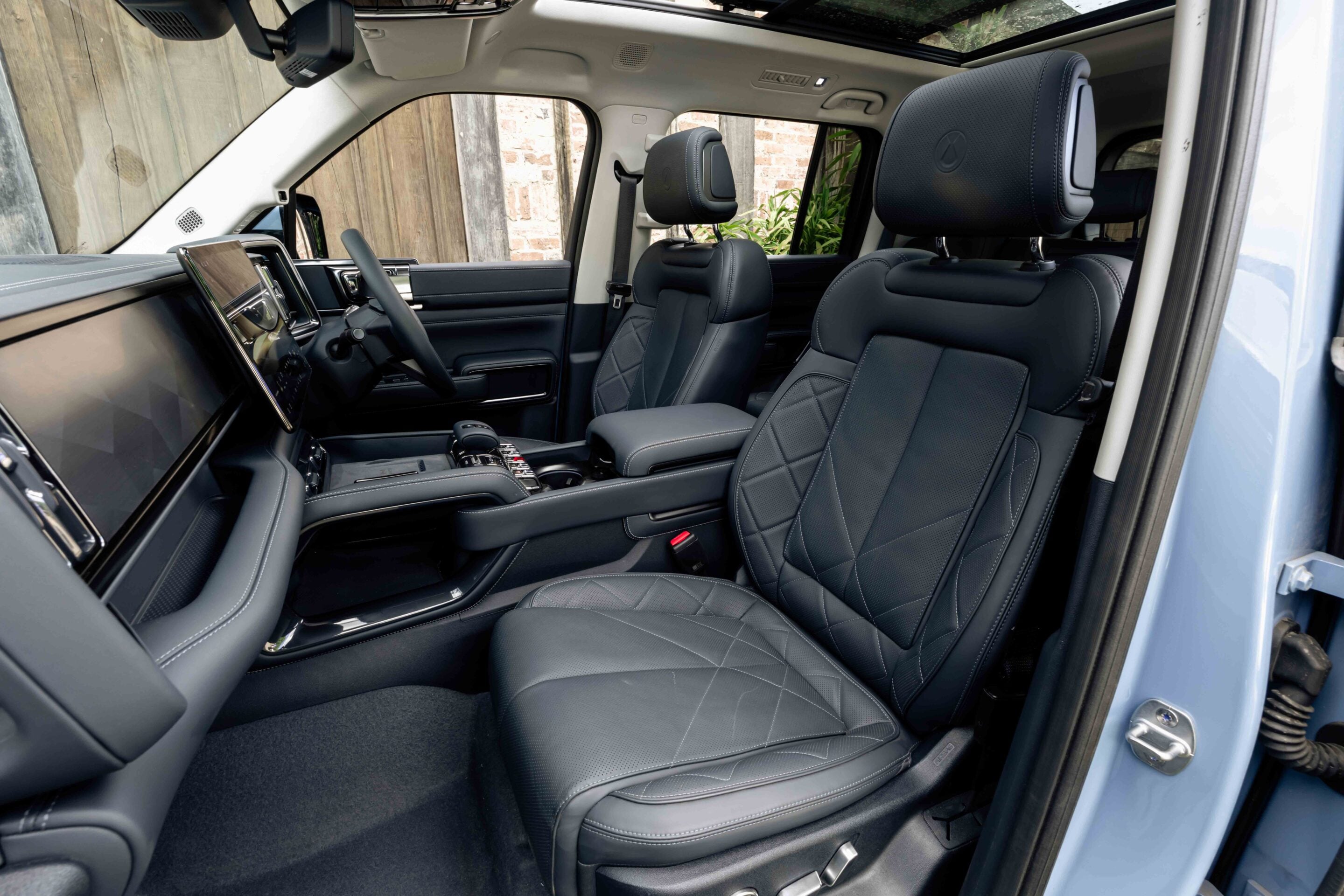
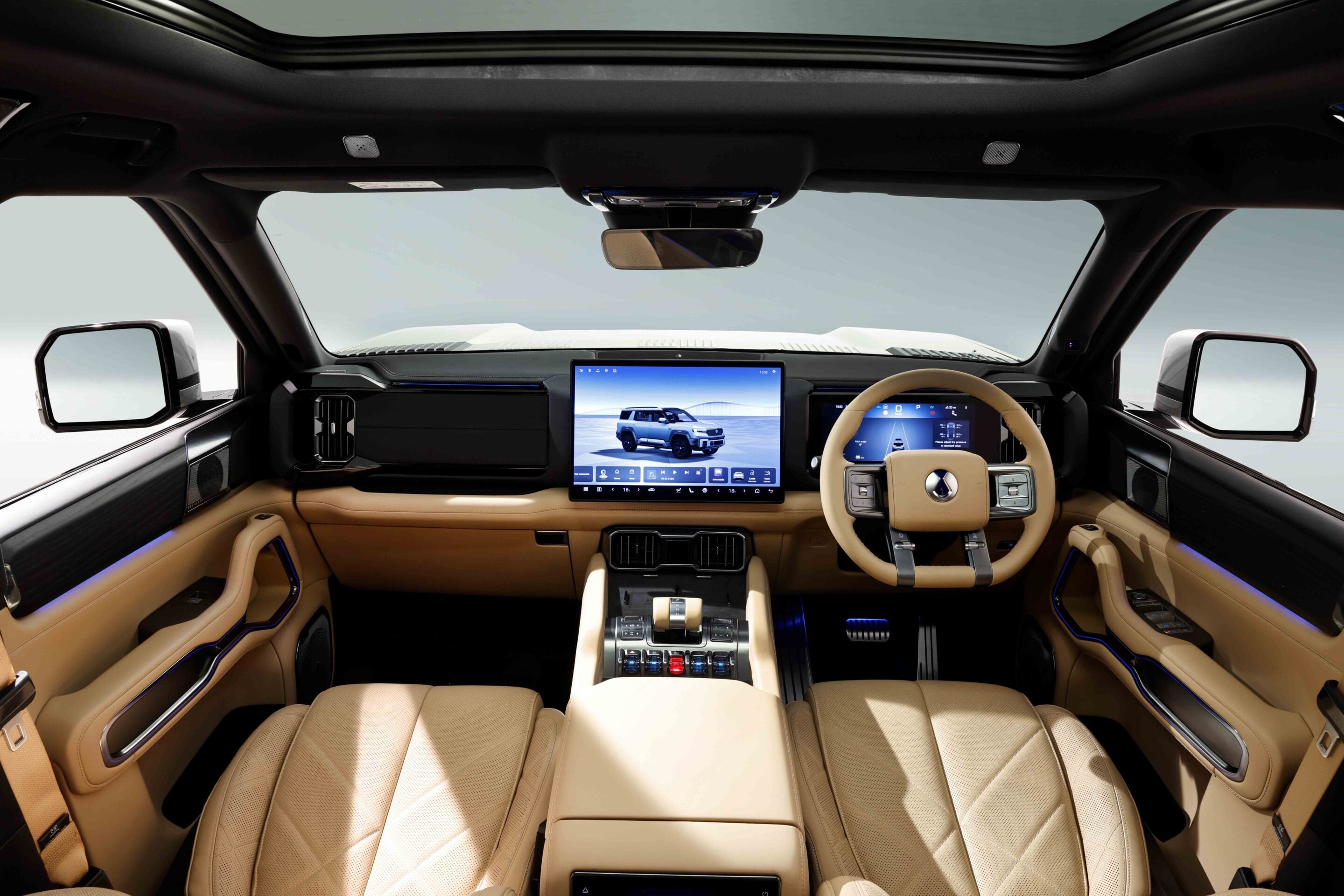
Inside, the Denza B5 is a two-row wagon offering five seats, with Nappa leather trim, a 15.6-inch touchscreen, a 12.3-inch digital driver display, 11 airbags, a 360-degree camera, and 1064 litres of boot space. It’s a decent-size wagon with plenty of luxury and features reflecting its premium ambitions.
The Leopard specification adds off-road features to the mix, including hydraulic adaptive suspension, front and rear electric diff locks, and a 3000kg towing capacity, and of all the models we drove on the launch, we feel it would be the most appealing to off-road 4×4 enthusiasts.
What about the B8?
The Denza B8 cranks the dial up to 11 in terms of size, features and performance.
It is available in six- and seven-seat, three-row layouts offering more space and higher levels of equipment, including heated, ventilated and massaging seats; individual captain’s chairs in the back of the six-seat variant; premium leather trim; a cooler/hotbox; and an 18-speaker audio system. Safety equipment includes 14 airbags, a 360-degree camera, and all the usual ADAS kit.
We are keen to try out the centre console fridge/hotbox more extensively. Not only does it keep your drinks cool, but it can also be dialled up to 50°C to keep your pies warm. It even has a rear access door so passengers in the back can use it as well.
The B8’s motors are boosted to produce a claimed 425kW and 760Nm and use the same 31.8kWh battery, with DC fast charging up to 120kW. The B8’s ICE powerplant is larger than that of the B5, being a 145kW/350Nm 2.0-litre petrol unit. It offers a combined range of 1040km on the NEDC cycle. The hydraulic suspension from the B5 Leopard is standard on the B8, along with electric diff locks (front and rear on the six-seat version). The B8 has a 3500kg towing rating, and the towbar, hitch and wiring are all fitted from the factory.
Peak mode madness comes via 16 drive modes, including Comfort, Eco and Sport for regular driving, and Snow, Sand, Mud, Mountain, Rock, Intelligent, Creep and Wading modes for off-road terrain. Beyond those, you can also access Sport+ mode, Custom mode, Burst mode, Climbing mode, Tug-of-War mode and Leopard Turn mode.
If you ever thought modern vehicles were making off-road driving too complex, you’ll either laugh or throw your hands up in amazement at the Denza’s extensive suite of drive modes.
On-road performance
Our first experience with the Denzas came behind the wheel of a B8 model and quickly revealed its most annoying feature as we were driving out of town.
Driver monitoring cameras have become common in modern vehicles as manufacturers strive to achieve the highest safety ratings, and many drivers find them annoying, but the Denza takes that annoyance to a whole new level. It was constantly telling me to keep my eyes on the road despite looking straight ahead through the windscreen.
I tried removing my prescription polarised glasses and it reduced the alerts slightly, but they were still constant. They were at their most annoying when driving into the sunlight and, personally, they would be a deal-breaker for me if I were considering any vehicle. You can turn the driver monitoring system off, but what’s the point of having safety features if they’re so annoying that you need to disable them while driving? Aside from this constant annoyance, the B8 was a pleasant place to while away the kilometres as we left Adelaide and headed for the Flinders Ranges. The cabin is large and luxurious, and the performance belies the Denza’s substantial mass.
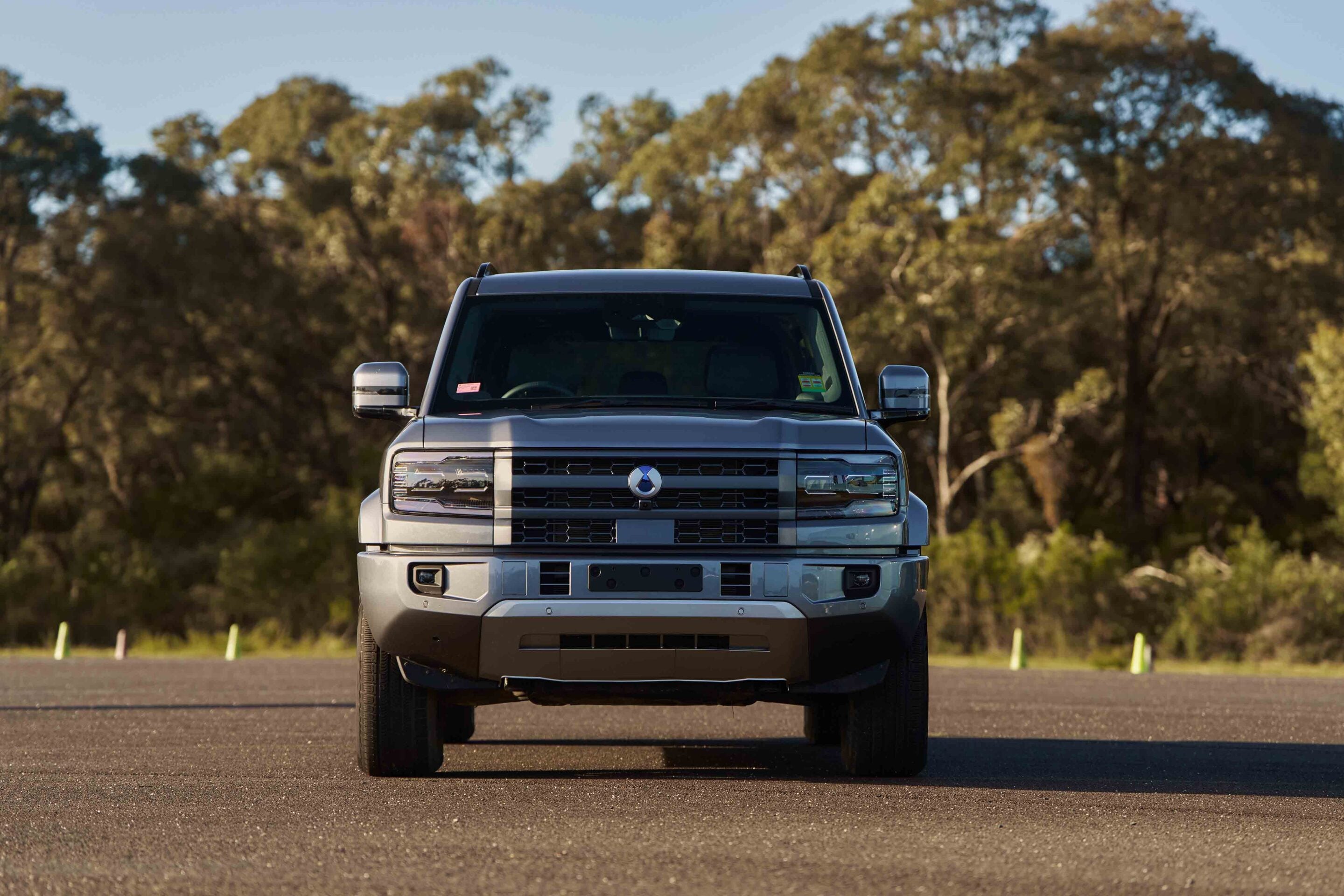
All those motors, batteries and luxury features come at a cost, and the B8 six-seater tips the scales at a hefty 3290kg. While the combined hybrid powertrain delivers thrilling acceleration and cruises nicely on the highway, you can’t hide that weight. This made the ride choppy on some road surfaces, particularly at lower speeds in the city and when travelling through regional towns. This was less evident at higher speeds on the highway, but it did get a bit unsettled on rough sections of curves. That said, Denza has done an amazing job managing the mass the way it has.
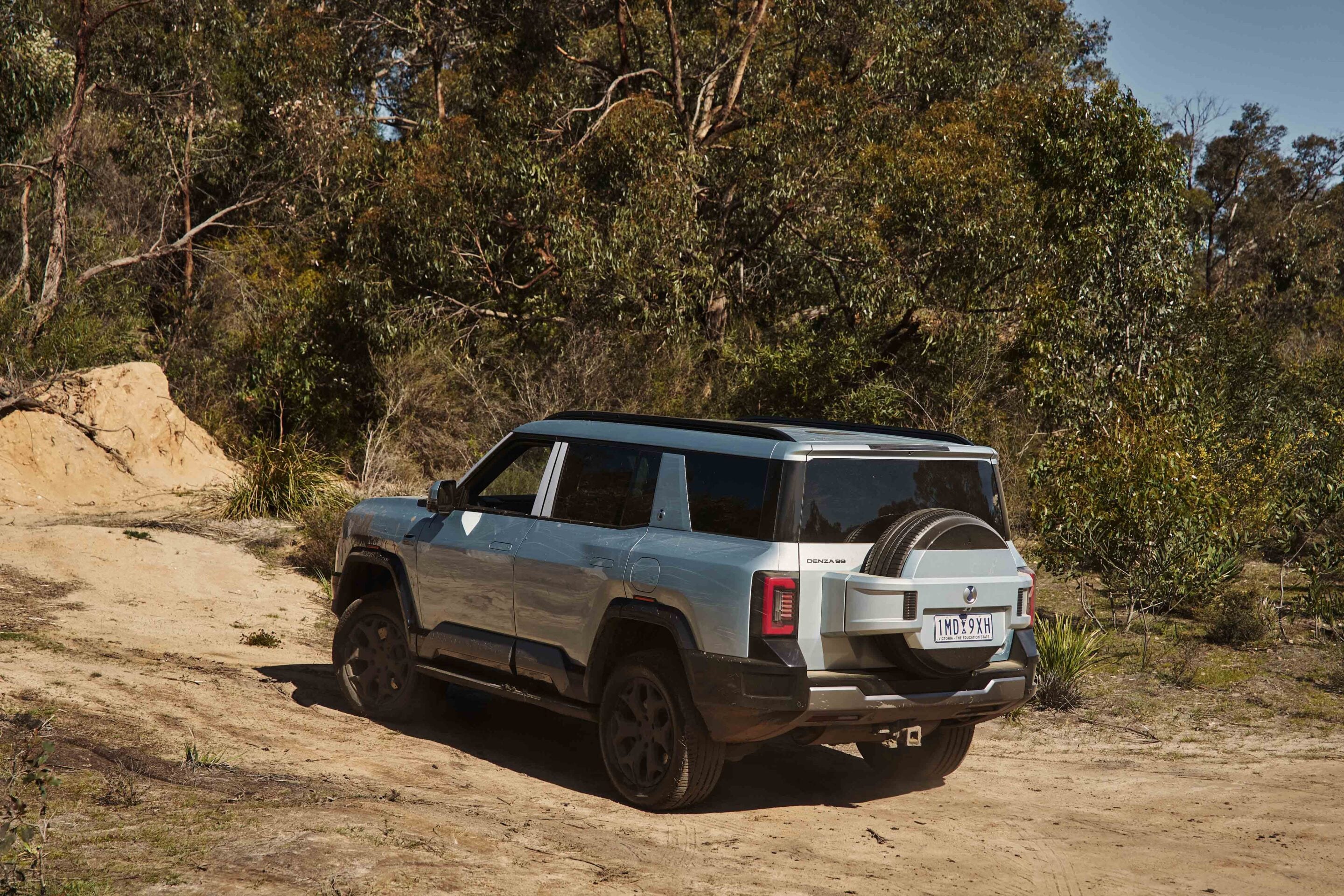
Pleasingly, this feeling wasn’t as evident when driving the B5 Leopard, which tips the scales at a still-hefty 3007kg (the standard B5 weighs 2897kg). The B5 was far more composed and smoother riding on the rough outback highways and gravel roads we drove it on. This improved ride quality comes despite the B5’s shorter 2800mm wheelbase compared to the 2920mm between the axles of the larger B8 models.
The B5 feels like a much better-sorted vehicle in all driving conditions, both on- and off-road. If you don’t need the seating capacity of three rows or the pinnacle of Denza luxury, then the B5 could be a better option for you.
Off-road performance
Like the BYD Shark ute, the Denza’s DMO platform has no mechanical connection between the front and rear axles, so there is no traditional transfer case as such.
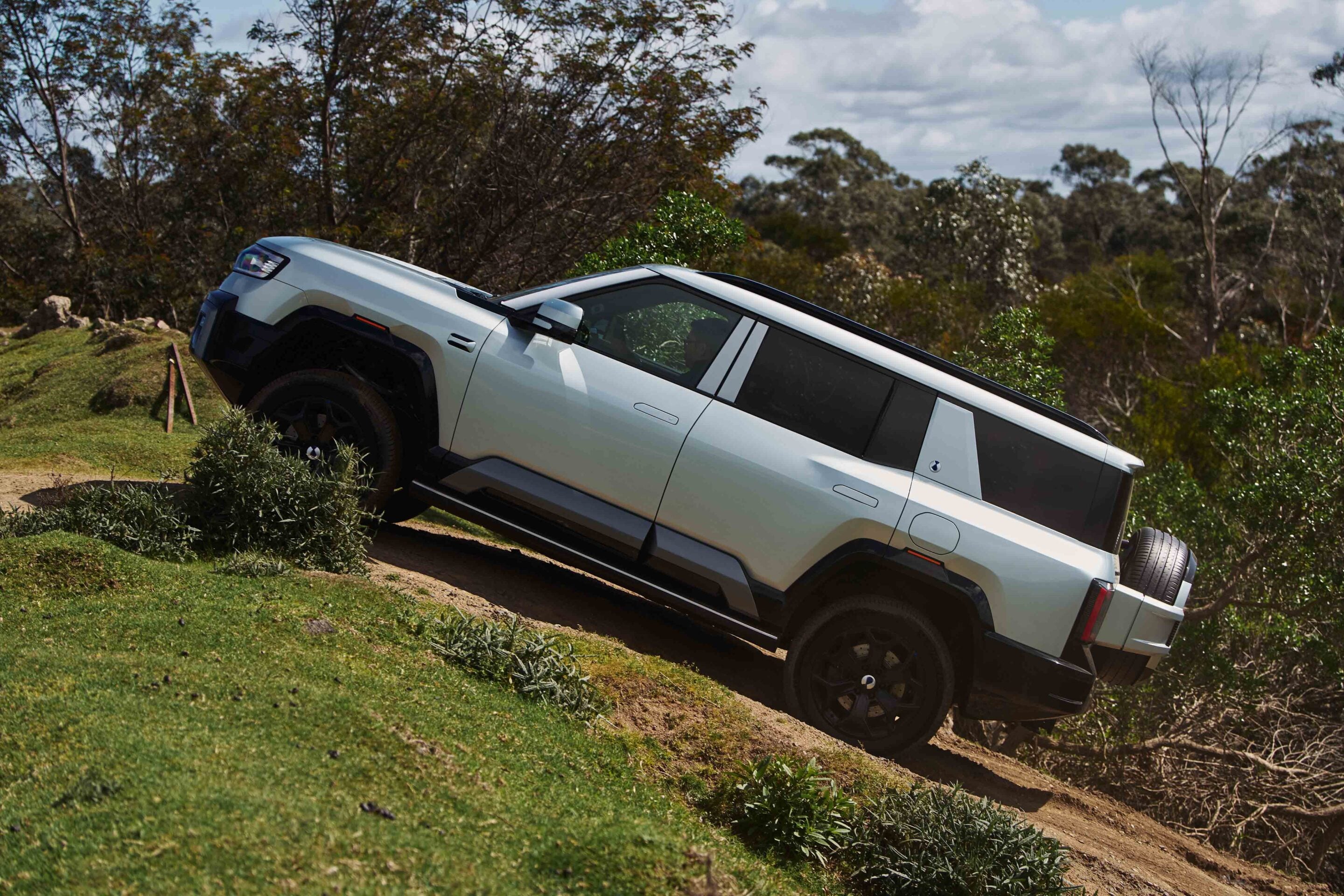
This means they can’t be mechanically locked together, so the system relies on computers to regulate drive between the individual wheels. With no transfer case, there is no traditional low-range gearing, and this was found to be a limitation in the Shark. Denza has addressed this deficiency by fitting a low-range gearset on the rear axle only. There is no low-range gearset for the front axle and, instead, the computers vary the electrical input to the front electric motor to match the drive of the rear.
In practice, you can hear the diff gears change when you select off-road modes such as Rock and Mountain, but it is only a modest change in ratio and provides little engine braking, simulated or otherwise, when descending steep hills.
To achieve the control you want when descending steep hills, the driver needs to select ‘Creep’ mode which, like Toyota’s Crawl Control and Ford’s Trail Control and other similar systems, works as a low-speed cruise control to maintain a set speed selected by the driver.
The Denzas need their cross-axle lockers to tackle rough terrain, as the fully independent suspension has relatively short control arms, meaning very little wheel travel, and they pick up wheels over even small undulations and gullies. The ETC can only do so much before you need the aid of the lockers.
Verdict
The Denza duo are a welcome addition to the premium 4×4 wagon segment and represent a lot of bang for your buck if you’re not a badge snob.
The folks at Denza hope to attract buyers from premium European SUV brands such as BMW, Mercedes-Benz, Audi and even Range Rover, so they have high ambitions. We reckon buyers considering a Prado Kakadu, Everest Titanium, LandCruiser 300 Hybrid or Y63 Patrol could also be swayed to take a punt on a new brand if they get behind the wheel and sample a Denza. It is a compelling option for buyers.
Our pick of the range is the B5 Leopard, as it feels a far better-sorted vehicle than the B8 in the way it carries its weight and performs both on- and off-road. It’s a good-size wagon for anyone not needing three rows of seating and offers a lot of vehicle for less than $100K.
Pricing
- Denza B5: $74,990 +ORC
- Denza B5 Leopard: $79,990 +ORC
- Denza B8 7S: $91,000 +ORC
- Denza B8 6S: $97,990 +ORC
Specs
| Specs | B5 Leopard | B8 6S (six seat) |
|---|---|---|
| Price | $79,990 +ORC | $97,990 +ORC |
| Engine | Petrol hybrid | Petrol hybrid |
| Capacity | 1.5L | 2.0L |
| Max power | 400kW combined | 425kW combined |
| Max torque | 760Nm combined | 760Nm combined |
| 4×4 system | Computer controlled front and rear axles | Computer controlled front and rear axles |
| Construction | Body-on-frame 5-door wagon | Body-on-frame 5-door wagon |
| Front suspension | IFS, height-adjustable hydraulic | IFS, height-adjustable hydraulic |
| Rear suspension | IRS, height-adjustable hydraulic | IRS, height-adjustable hydraulic |
| Tyres | 275/55R20 on alloy wheels | 275/55R20 on alloy wheels |
| Kerb weight | 3007kg | 3290k |
| GVM | 3497kg | 3992kg |
| GCM | 6232kg | 7174kg |
| Towing capacity | 3000kg | 3500kg |
| Seats | 5 | 6 |
| Fuel tank | 83L | 91L |
| Fuel consumption | 1.9L/100km (combined SOC 25%-100% NEDC); 3.9L/100km (combined SOC 25%-100% WLTC); 233Wh/km | 12.0L/100km (combined SOC 25%-100% NEDC); 3.9L/100km (combined SOC 25%-100% WLTC); 244Wh/km |
| Approach angle | 39 | 34 |
| Ramp-over angle | 27 | 26 |
| Departure angle | 35 | 35 |
| Ground clearance | 310mm | 310mm |
| Wading depth | 790mm | 890mm |
Superior Engineering has expanded its suspension range for the Toyota Hilux GR Sport.
The new line-up spans entry-level twin-tube gear through to fully adjustable remote-reservoir suspension and billet upper control arms, giving Hilux GR Sport owners clear options depending on budget and intended use. Here’s a more detailed look at each component.
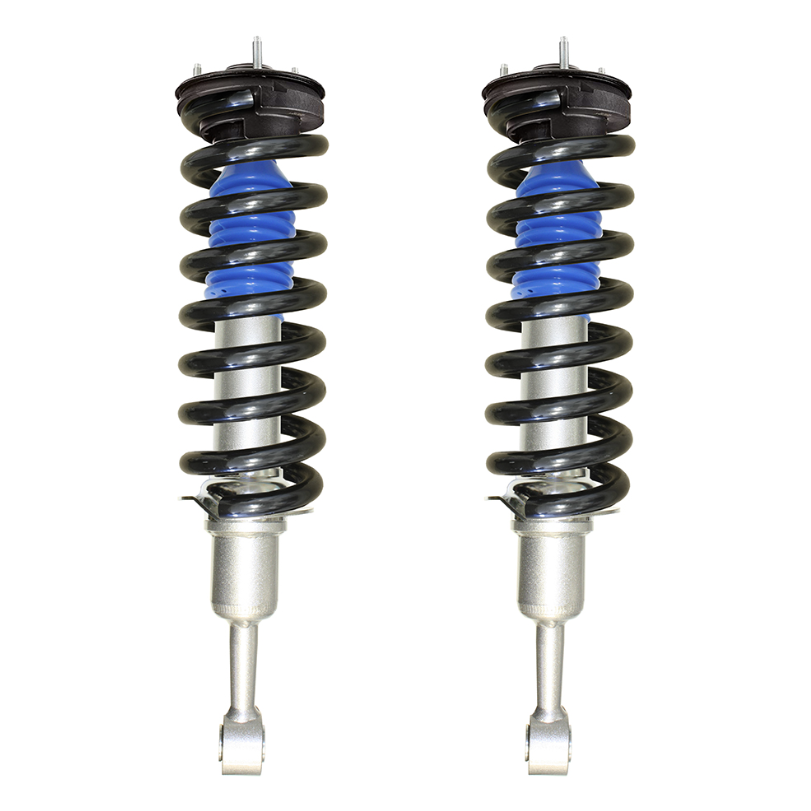
Superior Nitro Gas Twin Tube Pre-Assembled Front Struts: Two-inch (50mm) lift
Price: $991 per pair
These pre-assembled front struts are designed to bolt straight in, removing the need for spring compressors or additional setup. The twin-tube construction uses a 40mm piston and 20mm shaft to deliver controlled damping and a noticeably more compliant ride over stock. Low-pressure nitrogen gas reduces oil cavitation when the shocks heat up on corrugated or rough roads, helping maintain consistent performance.
A Teflon-coated piston lowers internal friction, while the polished chrome shaft and high-quality seals are aimed at long service life in dusty and dirty conditions. Velocity-sensing valving adjusts damping force to suit changing terrain | More info
Superior Nitro Gas Twin Tube Rear Shocks: Two-inch (50mm) lift
Price: $200 each
Designed to pair with the front twin-tube struts, these rear shocks use the same 40mm piston and 20mm shaft combination. The nitrogen-charged twin-tube design focuses on ride comfort and consistency, particularly on rough or uneven roads. Durable seals and a polished shaft help resist wear and oil leaks over time | More info
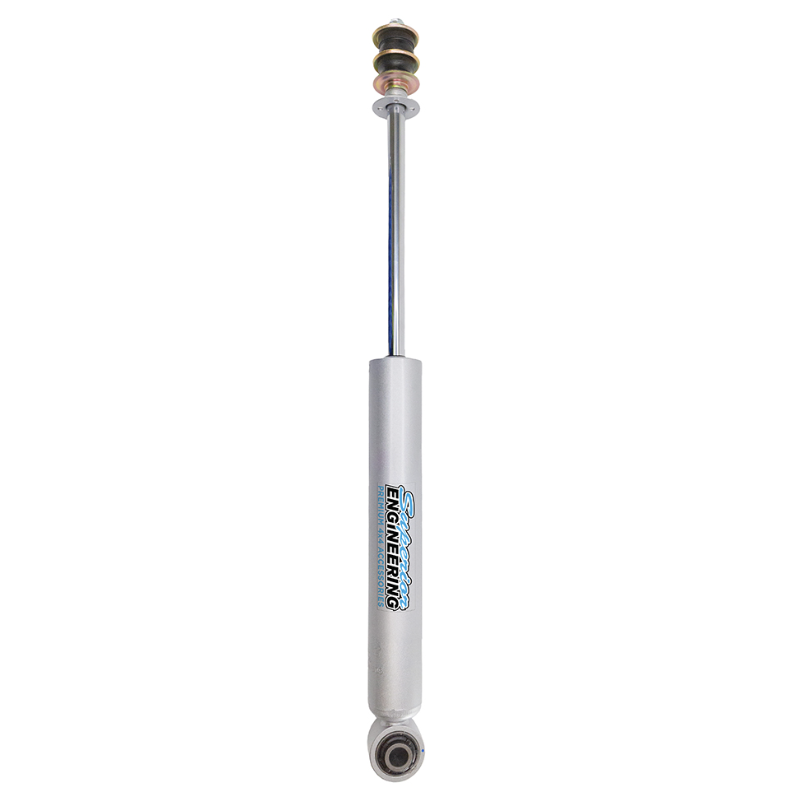
Superior Monotube IFP 2.0 Pre-Assembled Front Struts: Two-inch (50mm) lift
$1061 per pair
These monotube IFP struts are aimed at drivers wanting higher performance and durability. Heat-treated alloy steel pistons feature race-inspired porting and variable-rate shim stacks to deliver vehicle-specific damping. A composite Teflon wear band reduces internal resistance while maintaining strength under load.
Construction quality is a key focus, with CR3+ plated, bored and honed cylinder tubes, aircraft-grade billet aluminium components and 20mm hard-chromed shafts. The struts are fully rebuildable, serviceable and upgradeable, and backed by a 3-year unlimited-kilometre warranty | More info
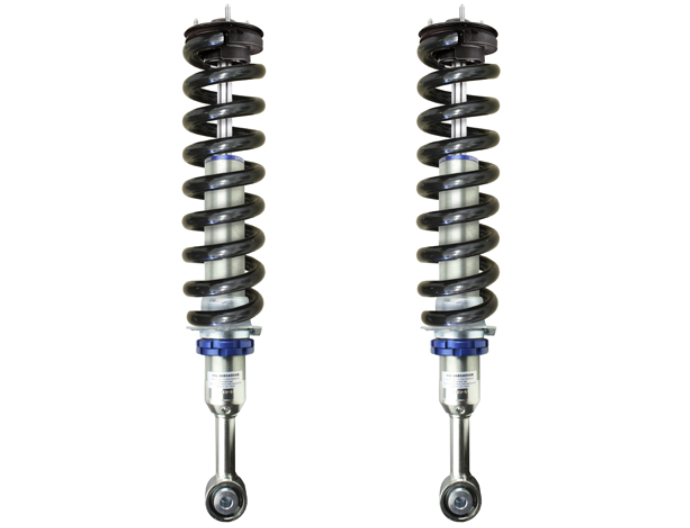
Superior Monotube IFP 2.0 Rear Shocks: Two-inch (50mm) lift
$260 each
Matched rear monotube IFP shocks designed to complement the front struts. They share the same piston design, materials and rebuildable construction, allowing the suspension to be serviced and tuned over its lifespan. Improved heat control and consistent damping make them suitable for lifted and performance-oriented setups | More info
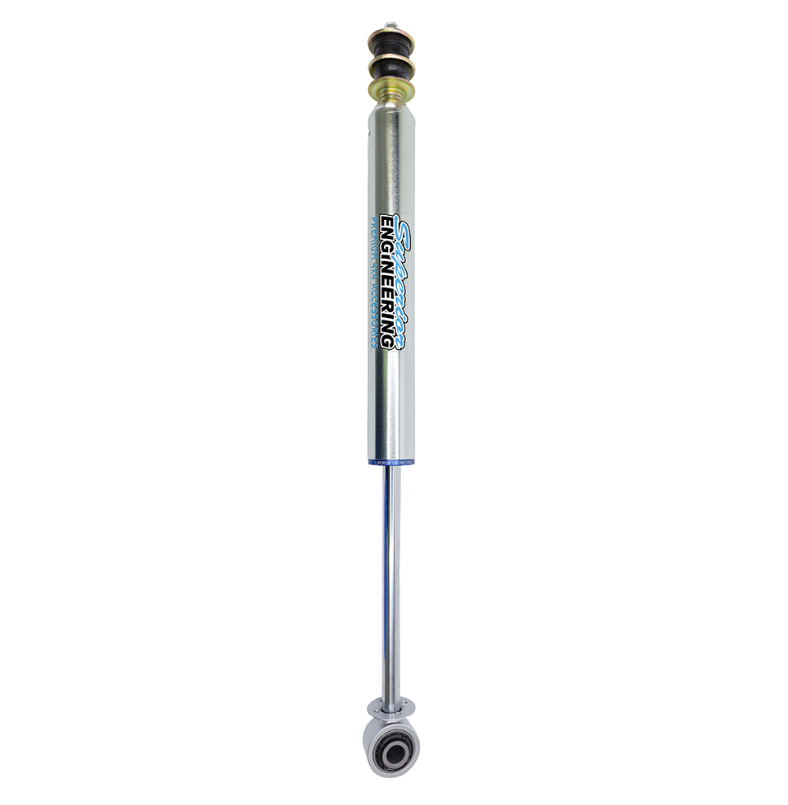
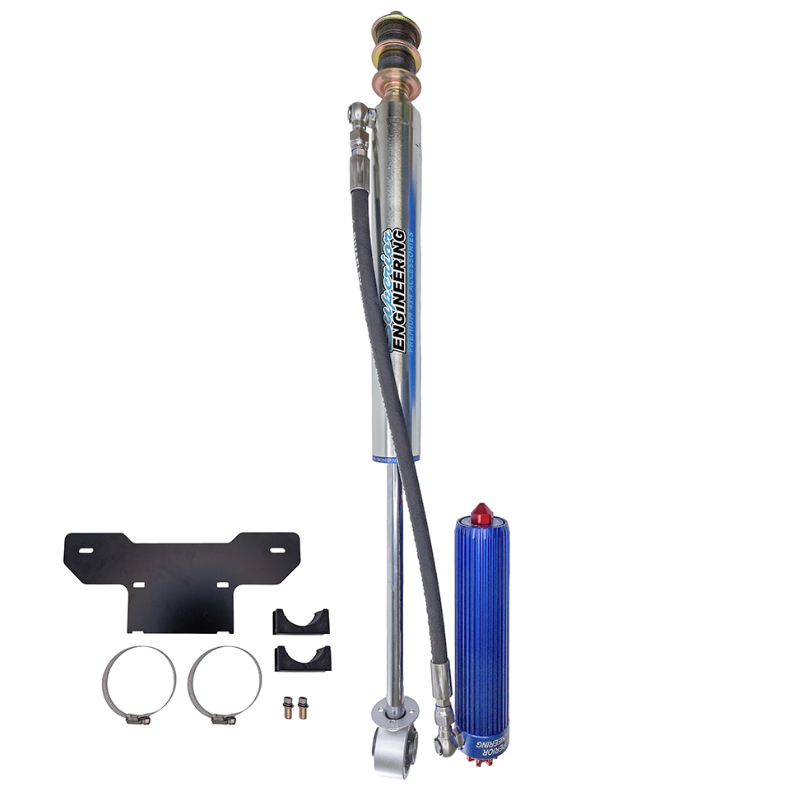
Superior Adjustable 2.0 Monotube Remote Reservoir Front Struts: Two-inch (50mm) lift
$399 each
These front struts add an external remote reservoir with an 8-stage compression adjuster, allowing quick changes from a softer ride to firmer control via a simple dial. The remote reservoir increases oil volume and cooling capacity, while the internal floating piston separates oil and nitrogen to prevent foaming and shock fade.
Built with heat-treated alloy steel pistons, billet aluminium components and 20mm hard-chromed shafts, the struts are fully rebuildable and covered by a 3-year unlimited-kilometre warranty | More info
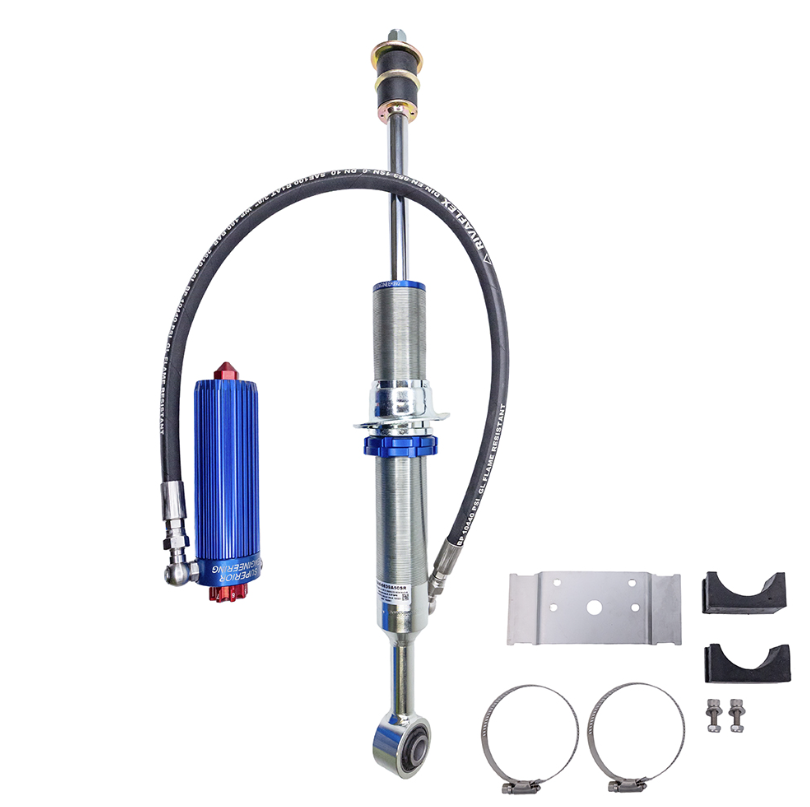
Superior Adjustable 2.0 Monotube Remote Reservoir Rear Shocks: Two-inch (50mm) lift
$389 each
Rear shocks that mirror the front adjustable units, featuring the same 8-stage compression adjuster and remote reservoir design. Increased oil capacity and improved cooling help maintain damping consistency on long, rough tracks, while rebuildable construction supports long-term ownership | More info
Superior Billet Series 6061-T6 Alloy Upper Control Arms
$1320 per pair
Specifically designed for Hilux Revo Rogue and GR Sport Wide Track models (2022-on), these upper control arms address alignment and strength issues common with lifted suspensions. Machined from 6061-T6 billet aluminium and anodised for corrosion resistance, they offer a lightweight yet highly durable alternative to OE arms.
Heavy-duty ball joints provide smooth articulation and long service life, helping maintain correct suspension geometry when running larger tyres or aftermarket suspension. The arms are a direct replacement using factory mounting points, keeping installation clean and straightforward | More info
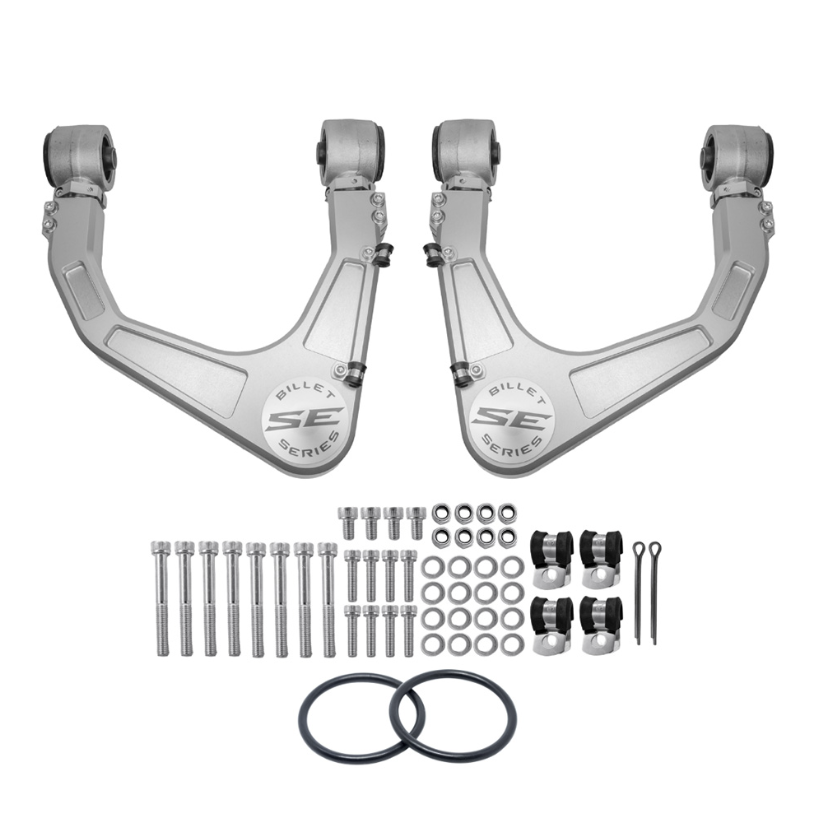
The updated Superior Engineering Hilux GR Sport range gives owners a clear progression – from simple twin-tube upgrades through to adjustable, rebuildable suspension and heavy-duty billet control arms – allowing builds to be tailored precisely to how the vehicle is used.
Chery has unveiled its KP31 ute concept, offering a preview of the production model due in Q4 2026.
The KP31 will be the world’s first ute with a plug-in hybrid diesel system. It pairs a 2.5‑litre turbocharged engine with electric assistance, delivering a claimed 47 per cent thermal efficiency and 10 per cent better fuel economy than a typical diesel powertrain. Payload is rated at 1000kg, with a towing capacity of 3.5 tonnes. Chery says vibration levels will be cut by 30 per cent compared with standard diesels.
“We’re incredibly excited to finally reveal the KP31 ute concept vehicle, and this marks the next step in bringing it to the Australian market,” said Lucas Harris, Chery Australia Chief Operating Officer. “It’s also riveting to be the first brand to offer a diesel PHEV in the dual-cab ute class, which will be our key point of difference compared to the competition.”
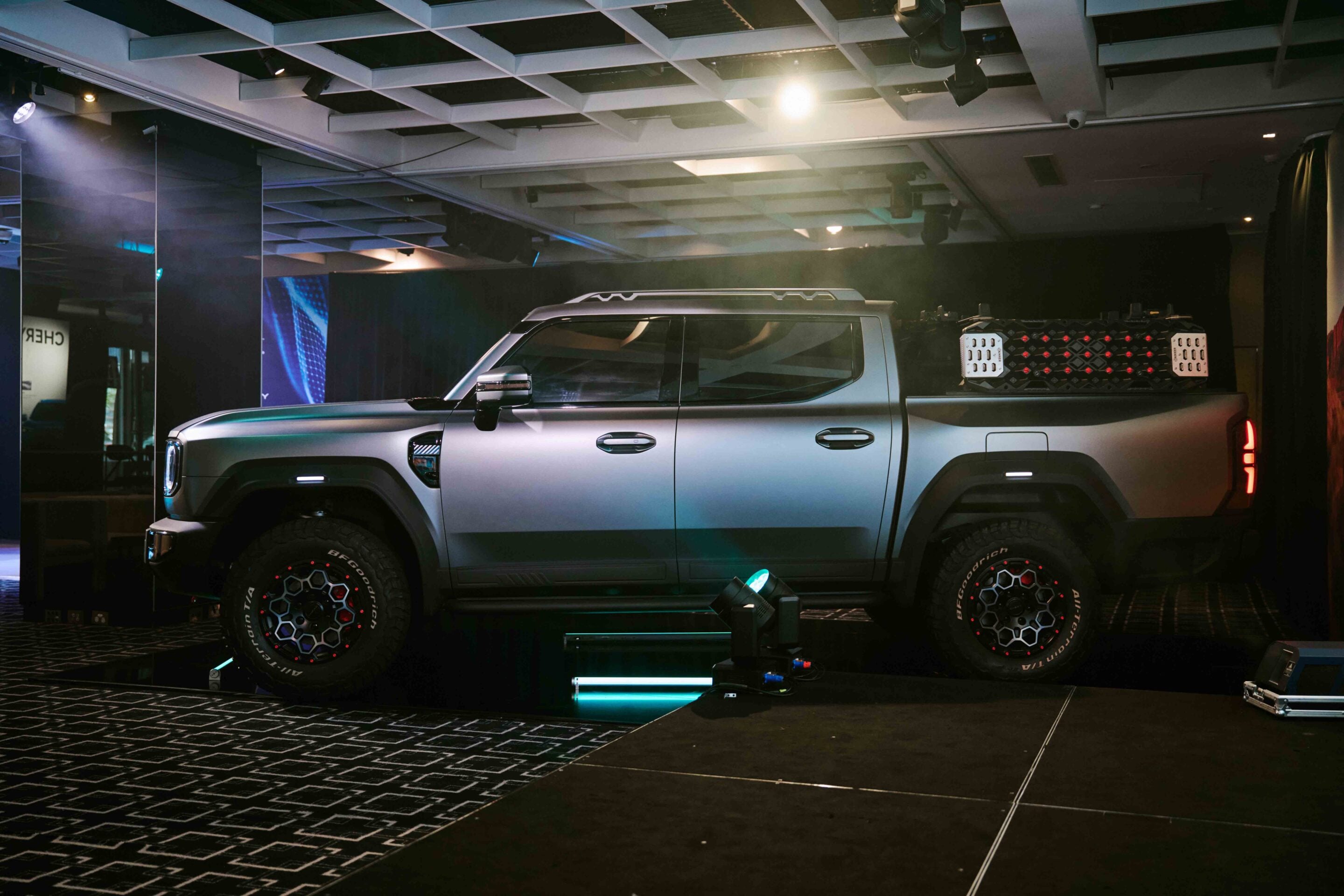
Last year’s renderings of Chery’s dual‑cab ute showed a squared‑off, chunky body with upright headlights and a practical rear bumper step, signalling a rugged, ladder‑frame pickup rather than a lifestyle crossover.
The concept’s design emphasises a commanding presence, with large front and rear branding, a snorkel, 285/70 R17 all-terrain tyres, a tub rack with recovery tracks, and matte grey paint. The concept measures 5610mm long, 1920mm wide and 1925mm tall; production will be slightly shorter at 5450mm.
Chery plans to add a petrol PHEV variant to the KP31 line-up in 2027.
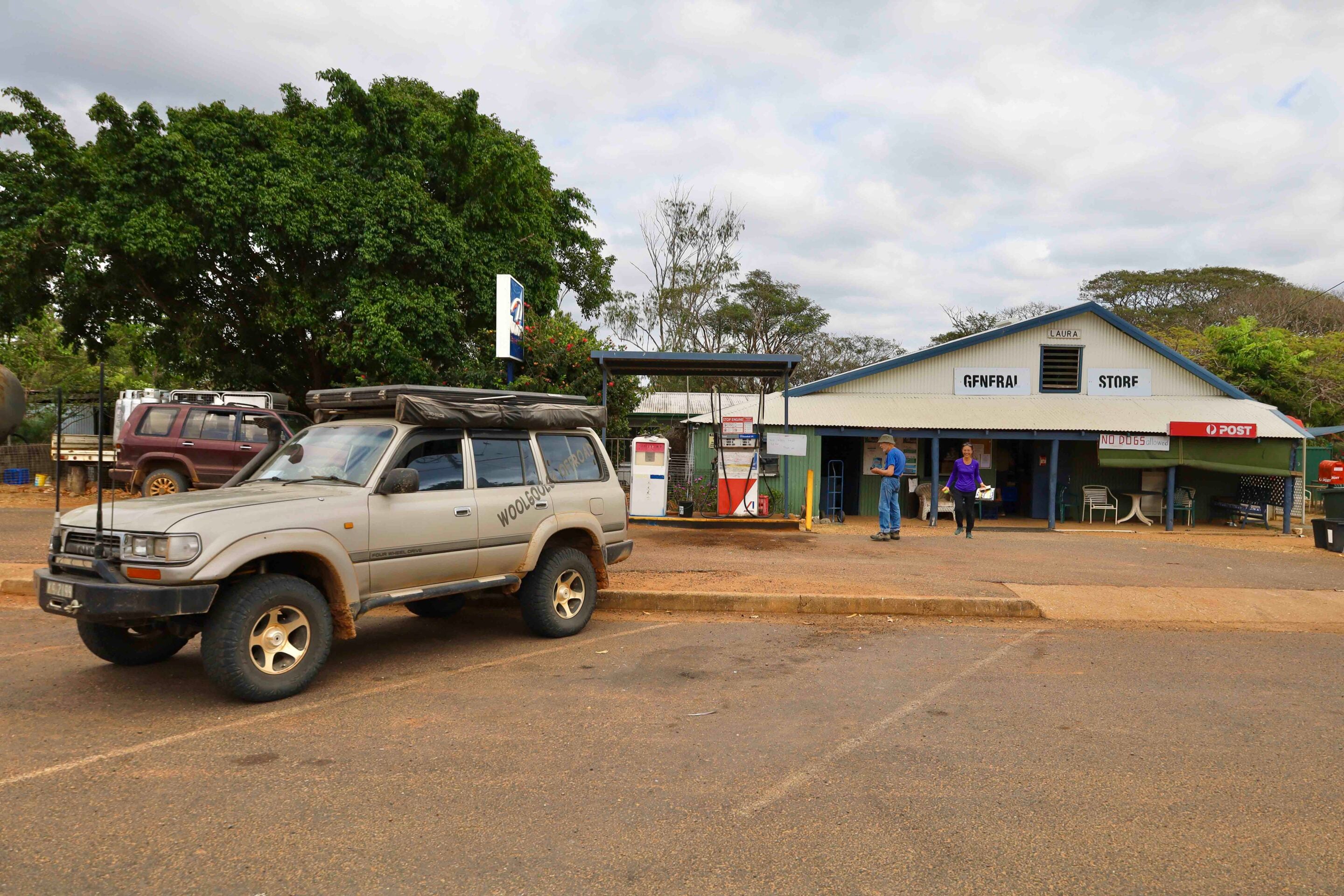
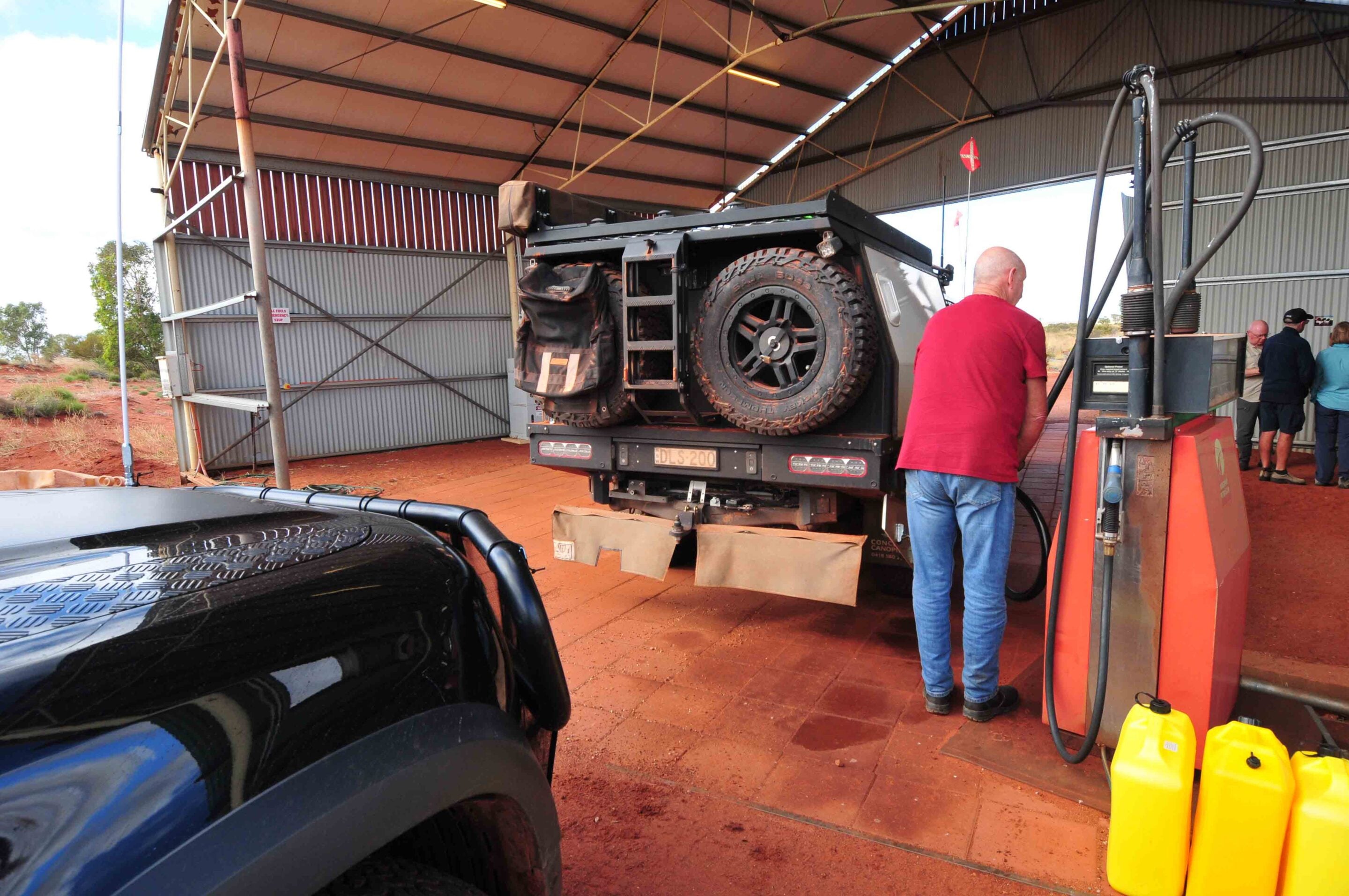
As four-wheel drive travellers, one of the most significant expenses we encounter when crossing this wide brown land is the cost of fuel.
It still surprises me how many people don’t realise that a fully loaded 4×4 cruising at 100km/h down an outback road will use considerably more fuel than a family hatchback doing the school run. There are a few things you can do to minimise fuel use and running costs, but it’s important to understand that you don’t get anything for nothing – the more you carry, the more it’s going to cost.
Once upon a time, fuel consumption was measured in miles per gallon (MPG) – a system still used in the US – while in Australia we use litres per 100km (L/100km). This simply refers to how many litres of fuel an engine burns to travel a distance of 100km. Now, a small hatchback travelling at 30km/h will use less fuel to cover 100km than a fully loaded 4×4 pushing into a headwind at 100km/h. That’s why the standard fuel-consumption figure shown on the yellow windscreen label of new vehicles is derived from laboratory testing.
The test is carried out on a dynamometer under controlled conditions so everything is as even as possible, producing a figure that allows buyers to compare fuel consumption between different vehicles. This testing is conducted in accordance with ADR 81/02 (Australian Design Rule). The figure on the label is not meant to reflect what you will achieve on the highway in the real world. Real-world fuel consumption is affected by many variables, including speed, load, altitude, how often you stop and start, and how you drive. The fuel efficiency label exists to help you compare the rated fuel consumption of vehicles you may be considering purchasing.
It still amazes me to read online posts from Joe Bloggs on FaceAche, claiming he’s incredibly disappointed – and out for blood – because the new XYZ Super 4×4 Black Edition he’s just bought and hooked up to a caravan for a run up the coast isn’t matching the fuel-consumption figure shown on the yellow sticker. Oh, and then he mentions he’s fitted a suspension lift, bigger all-terrain tyres, a bullbar and a roof rack – all installed by the dealer before taking delivery. But he still wants to know who’s going to compensate him for fuel consumption that’s higher than expected.
No one, buddy. You don’t get anything for nothing, and all those extras you’ve fitted to the vehicle will have a significant impact on how much fuel it uses wherever you drive it.
How accessories and load affect 4×4 efficiency
In this job, I regularly drive up the Hume from Melbourne to Sydney and back, and it’s a trip I genuinely enjoy. About 850km of just me, a machine and a playlist of old punk tracks – life doesn’t get much better than those nine or so hours behind the wheel.
When we had our V6 Ranger Sport, the Ford would return around 18-19L/100km on that run, travelling at the posted 110km/h speed limit. The ADR 81/02 combined-cycle rating for that vehicle is 8.4L/100km, but ours was fitted with larger, heavier 285/70 mud-terrain tyres, a bullbar that was less aerodynamic than the standard bumper, spotlights, raised suspension – again, less aerodynamic – roof racks, and a large rear canopy loaded with touring equipment. All of those additions to the standard Ford added weight, increased wind resistance and aerodynamic drag, and resulted in more fuel being required to complete the trip.
While we still had that Ranger, I had the opportunity to make the same journey in a bone-stock Ranger Platinum with the same drivetrain but no accessories fitted. It averaged 8.9L/100km for the drive, allowing me to travel considerably further on the same 80L diesel tank before needing to refuel. Take that same accessorised and modified Ranger, hitch a 2500kg trailer behind it, and you can expect fuel consumption to almost double again.
How to reduce fuel consumption on your 4×4
If you’re worried about the cost of fuel on a lap of the map, there are steps you can take to minimise fuel consumption and, in turn, reduce running costs.
- Buy the right vehicle for your use: Do you really need a V8-powered full-size 4×4 if it’s just one or two of you travelling and you’re not towing, or would a smaller-capacity ute be sufficient?
- Consider your accessories and modifications: As outlined above, anything that adds weight or increases aerodynamic drag will have a negative effect on fuel consumption. If you’re mostly driving around town with the occasional trip up the coast, do you really need a bullbar, winch and driving lights?
- Choose tyres carefully: Will lighter, less aggressive all-terrain tyres suit the tracks you’ll be driving, or do you really need fuel- and power-sapping oversized mud-terrain tyres?
- Think about suspension: Is the OEM-supplied standard suspension adequate for where you’re going? You might be surprised how far a lightly laden, bone-stock modern 4×4 will take you.
- Keep your vehicle serviced: A well-maintained vehicle is not only more reliable but generally more efficient. While there’s not much you can do yourself on modern vehicles while on the road, simple tasks such as monitoring tyre pressures and replacing the air filter regularly when travelling in dusty conditions can make a difference. When the vehicle is due for a service, get it done at the next available town and talk to the mechanic about the type of driving you’re doing so they can check for issues specific to your usage.
Lighten the load
Service-body style replacement canopies for cab-chassis utes have opened up far more space to carry gear and equipment on the back of a 4×4.
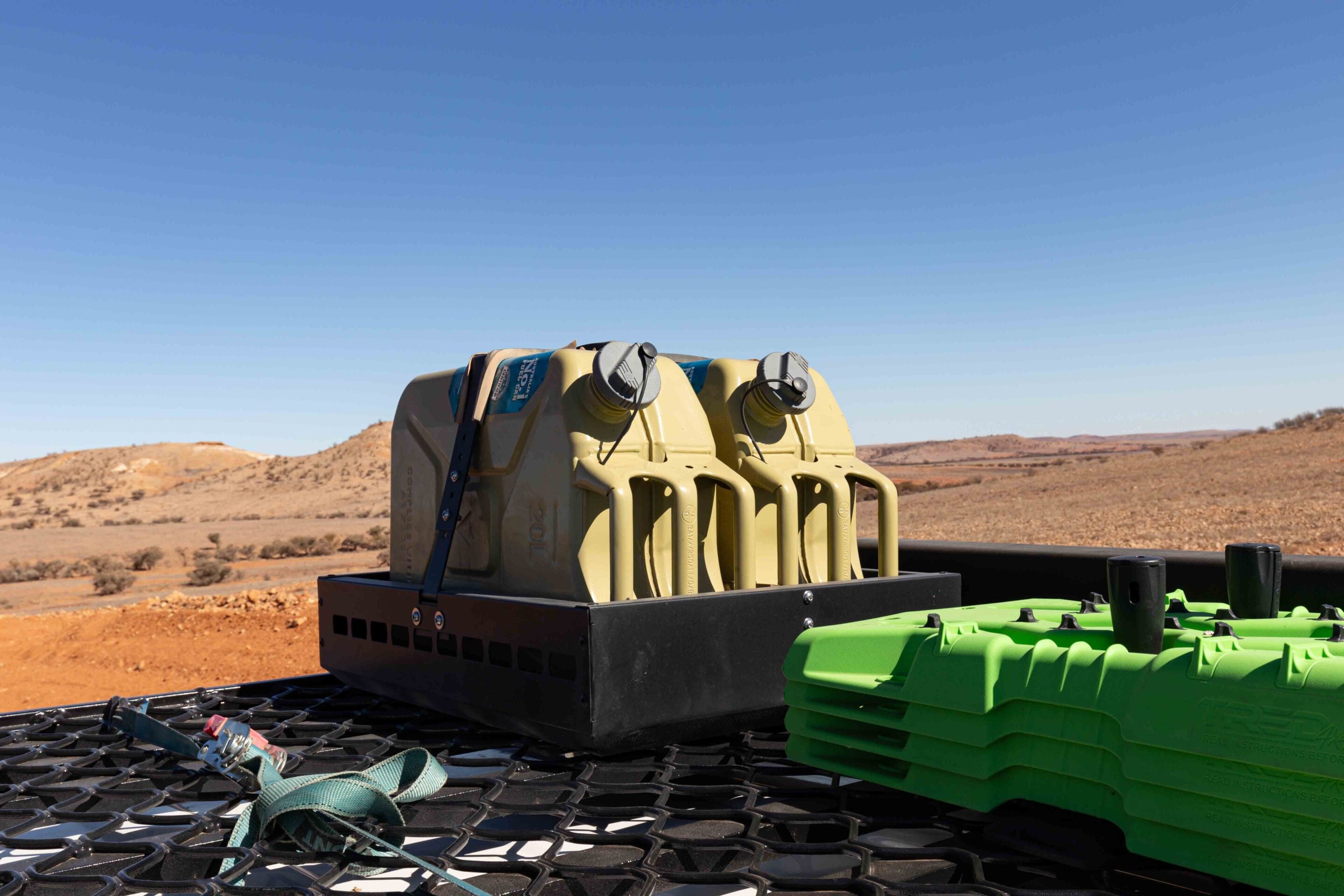
The amount of stuff people load into them can seem endless, but even though it’s enclosed within the canopy, it still adds weight and will increase fuel consumption. Likewise, anything mounted on the roof adds aerodynamic drag and will cost you more at the bowser.
For many, the idea of escaping town for a bush getaway means leaving everyday comforts behind and enjoying a simpler life without the microwave, coffee machine, television and a myriad of other items you can easily do without. Taking stock of what you’re carrying in and on your 4×4, then reducing it significantly to save weight and cut aerodynamic drag, can deliver meaningful savings – not just in fuel costs, but also in vehicle maintenance. A heavy or overloaded vehicle places excessive strain on suspension, tyres and other mechanical components, accelerating wear and shortening their service life.
The money saved on fuel and by avoiding premature wear of mechanical components could leave you with more to spend on what really matters – time enjoying life on the road.
JAC has completed initial local testing of its upcoming Hunter PHEV at the Lang Lang Proving Ground, ahead of the dual-cab’s local launch which is set to take place mid-2026.
More than 50,000km are expected to be logged on roads and tracks by the end of testing, as part of a broader program to develop the vehicle for Australian conditions, aimed at ensuring the PHEV can handle the demands of Australia’s brutal climates and terrain.
“This local development program is our most exhaustive and ambitious to date,” said Ahmed Mahmoud, Managing Director of JAC Motors Australia. “It will push JAC Hunter – and engineers from China and Australia – to the absolute limit. By the time JAC Hunter goes on sale, it will not just represent outstanding value, provide exceptional practicality, and come with JAC’s industry-leading warranty program. It will be match-fit and ready for Australia.”
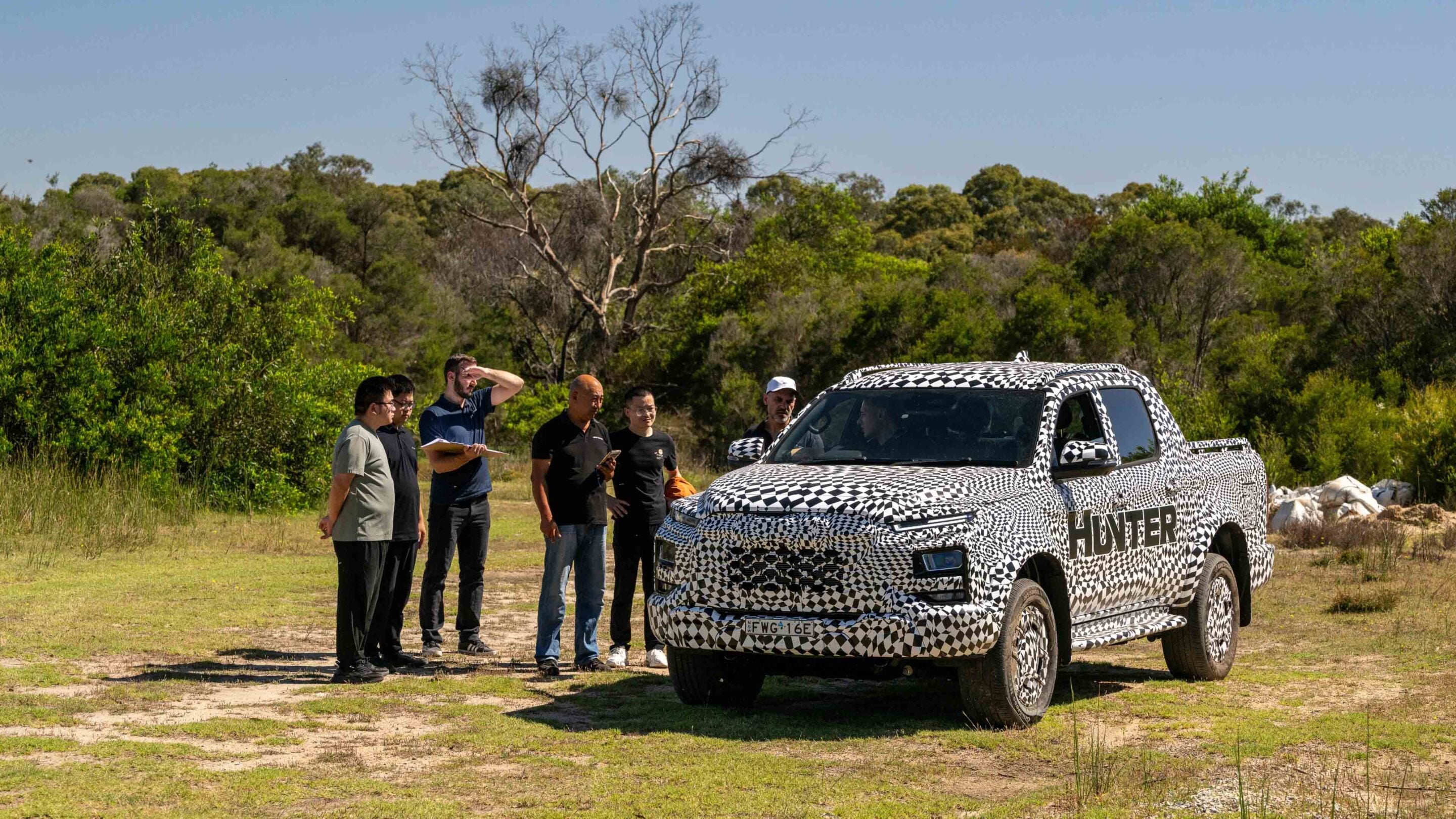
The Lang Lang stage was carried out in collaboration with independent engineering firm, Segula Technologies Australia, with JAC’s engineers working alongside Segula’s team to evaluate vehicle durability and dynamics, powertrain performance and calibration, towing and load-carrying capacity, on- and off-road behaviour, acceleration and braking, and driver assistance systems.
“Lang Lang has been globally recognised as an automotive centre of excellence for many decades. The extensive real-world testing we can replicate on its many arduous bitumen, dirt and off-road circuits all contributes to optimising JAC’s first plug-in hybrid ute for Australian conditions – and for Australian ute buyers,” said Hongjian Jiang, JAC Motors Australia Technical Director.
The Hunter’s powertrain pairs a turbocharged petrol engine with two electric motors, powered by a 31.2kWh lithium-iron phosphate battery. A 3.3kW vehicle-to-load function allows the ute to serve as a mobile power source for tools or emergency backup power.
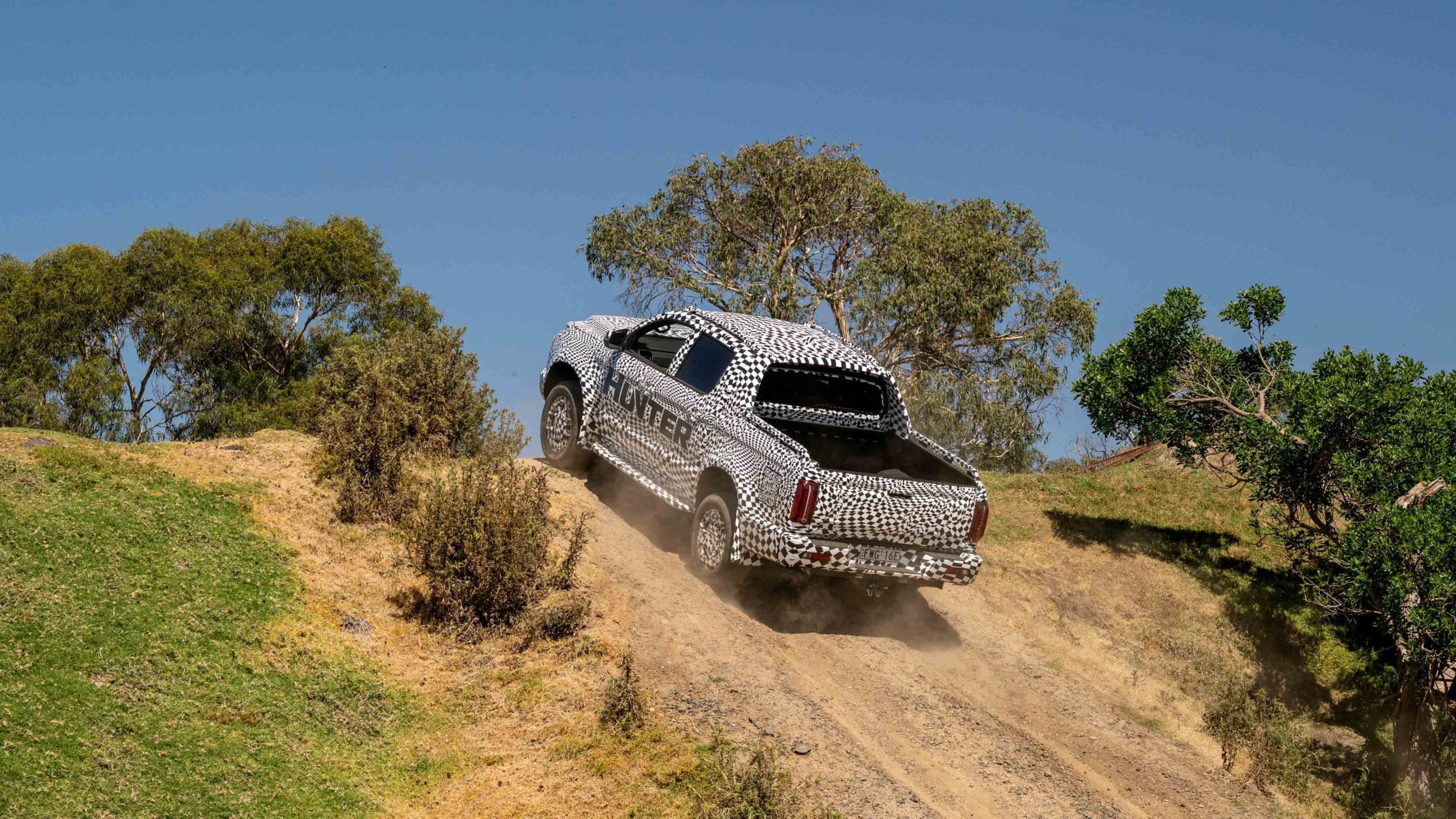
“Australia’s unique combination of challenging conditions, sophisticated buyers, and high usage demands makes it an ideal proving ground,” said Hongjian Jiang. “Improvements we identify through this program have potential to benefit Hunter customers worldwide.”
The ute made its world debut at the 2025 Melbourne Motor Show. It will complement JAC’s T9 turbodiesel dual-cab range. Hunter will carry JAC’s All Roads Assurance ownership package, including a seven-year unlimited-kilometre warranty covering commercial use, 24/7 roadside assistance, capped-price servicing, and a loan vehicle program.
Final pricing and specifications will be confirmed closer to launch.
ANCAP has given the electrified Denza B8 a five-star safety rating, applying to both six‑ and seven‑seat configurations.
Introduced to Australia in January 2026, the Denza B8’s rating is based primarily on crash testing of its partner model, the Denza B5, which was conducted in 2025. ANCAP reviewed detailed technical information and additional test data supplied by the manufacturer to confirm the B5’s results also apply to the B8.
Where the B8 differs in design – particularly at the front of the vehicle – ANCAP undertook additional testing. This resulted in a Vulnerable Road User Protection score of 75%, contributing to the overall five‑star outcome.
ANCAP score breakdown: Denza B8
- Adult Occupant Protection: 86%
- Child Occupant Protection: 95%
- Vulnerable Road User Protection: 75%
- Safety Assist: 78%
Standard safety equipment includes dual frontal airbags, side chest‑protecting airbags and side head‑protecting airbags, along with a centre airbag designed to reduce occupant‑to‑occupant injury in side‑impact crashes. Active safety systems fitted as standard include autonomous emergency braking; lane support suite with lane keep assist, lane departure warning and emergency lane keeping; and speed sign recognition.
“Consumers are expecting increasingly comprehensive safety performance from new vehicles in the market regardless of powertrain,” said Carla Hoorweg, Chief Executive Officer of ANCAP. “These five‑star results demonstrate solid occupant protection combined with advanced crash avoidance technology, providing confidence for families and fleet buyers alike.”
The B8 rating follows the Denza B5’s five‑star result late last year under the same 2023-2025 criteria, confirming consistent safety performance across the Denza range as it enters the Australasian market.
The Denza B8 features a dual-motor 4WD system which produces up to 450kW and 760Nm, drawing from a 31.8 kWh battery with DC fast charging up to 120kW. Fuel capacity is 91 litres, while off-road capability is supported by hydraulic suspension, electric diff locks (front and rear on the six-seat version), and a 3500 kg towing rating.
Inside, the B8 offers heated, ventilated and massaging seats, with individual captain’s chairs in the six-seat model; premium leather trim; a cooler/hotbox; a 15.6‑inch rotating touchscreen; 12.3‑inch driver display; and an 18‑speaker audio system.
In Australia, the Denza B8 is priced from $91,000 for the seven‑seat (7S) version and $97,990 for the six‑seat (6S) model excluding on‑road costs.
The Ford Ranger Super Duty has landed, and with promise of a 4500kg GVM and 8000kg GCM it sure has tongues wagging.
We all know that, despite one-tonne payloads and 3500kg towing capacities, regular midsize 4×4 utes can’t haul both, as their GVM will soon be exceeded once loaded to the hilt. The Ranger Super Duty is here to change all that with its heavy-duty ratings right off the showroom floor. No need for aftermarket GVM upgrades or replacement suspension components – the SD is made to do the job straight out of the box.
While those who like to tow big, heavy things are all in a tizz over the SD’s factory rating, we’re not fussed about towing. We’re all about off-road touring and adventures and would rather leave the boat on the mooring than on a trailer slowing down the 4×4. With a 4500kg GVM, the double-cab Ranger Super Duty promises a payload that nothing else on the market can match, so we wanted to load it up and point it at some rocky tracks to see how it handled the weight.
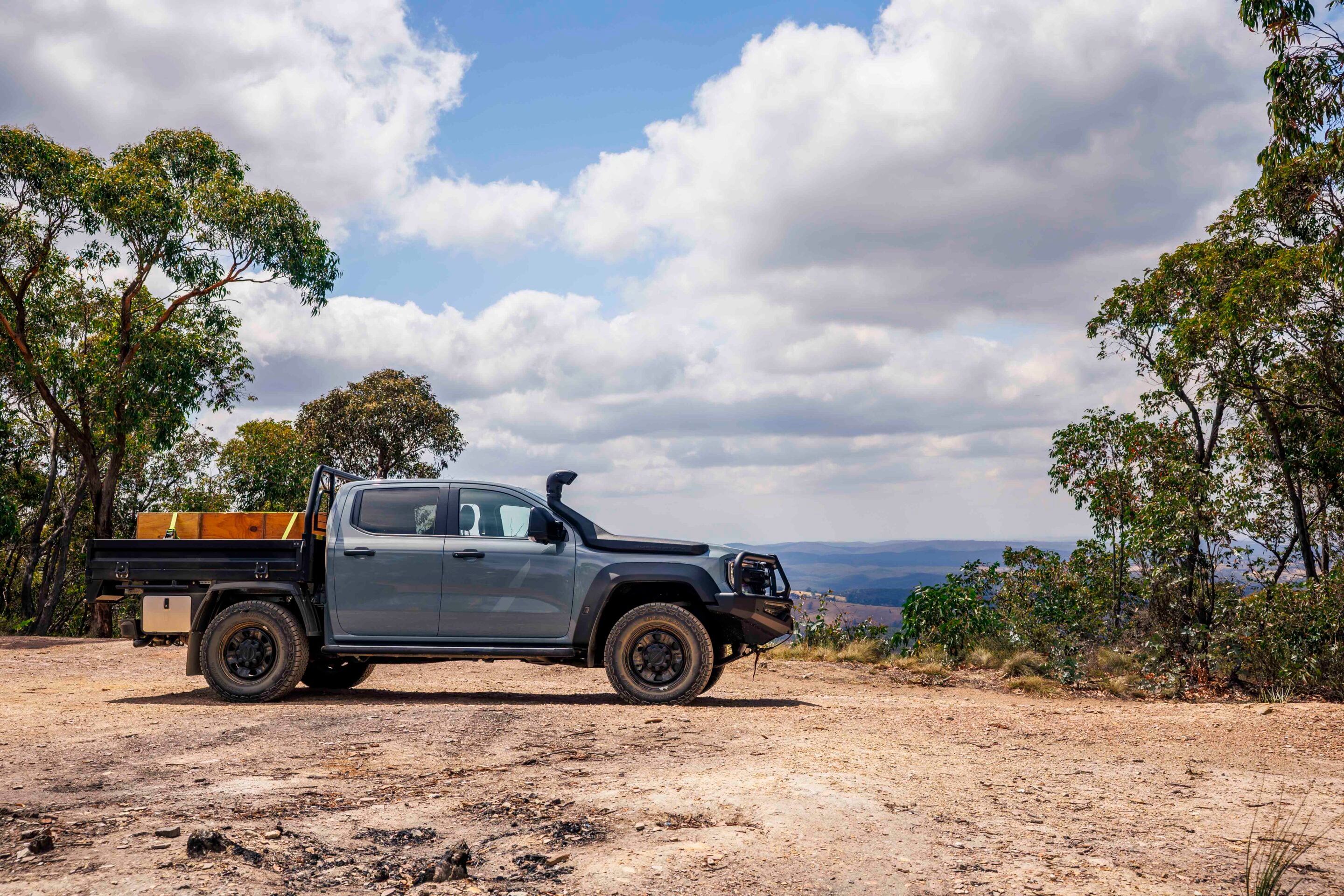
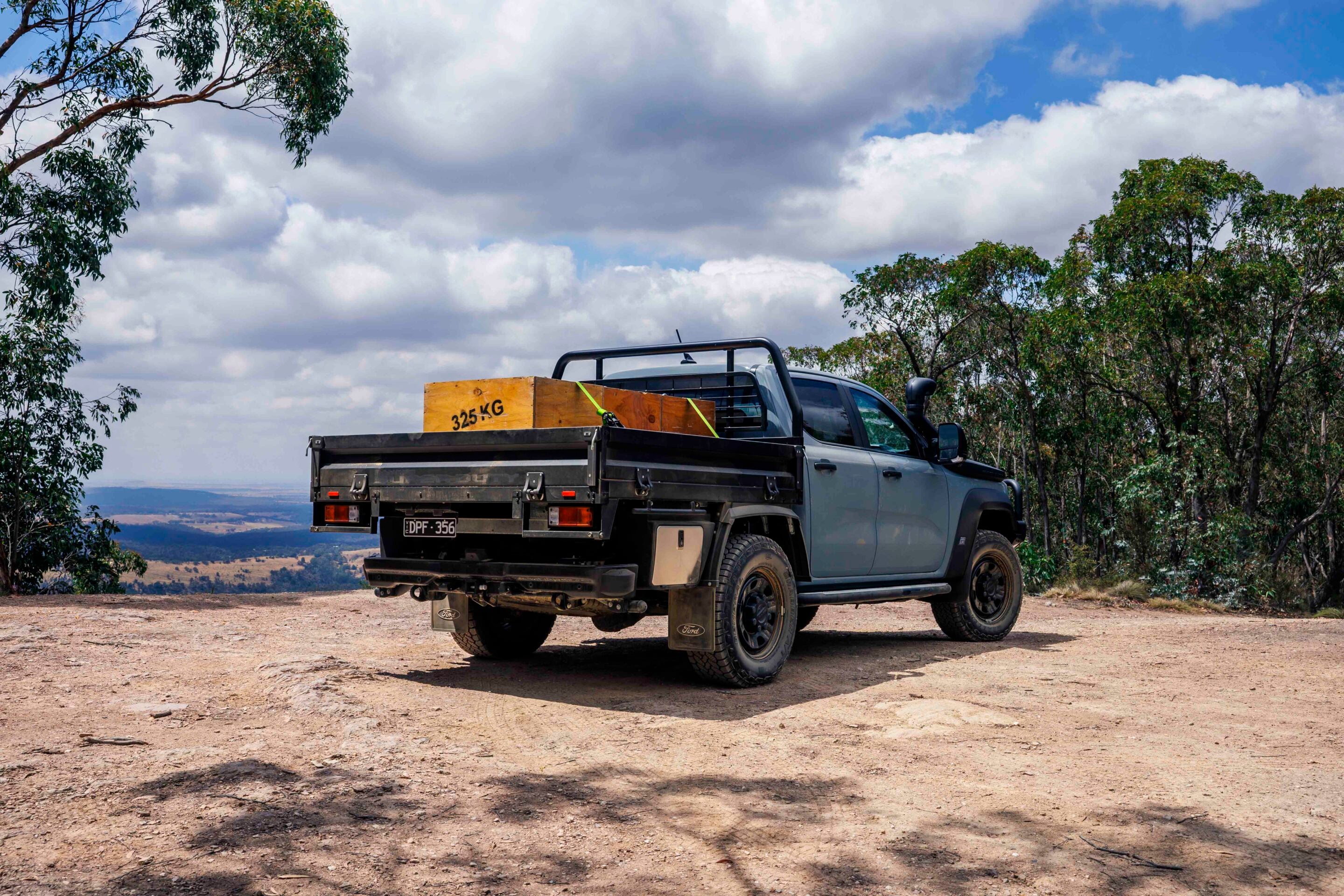
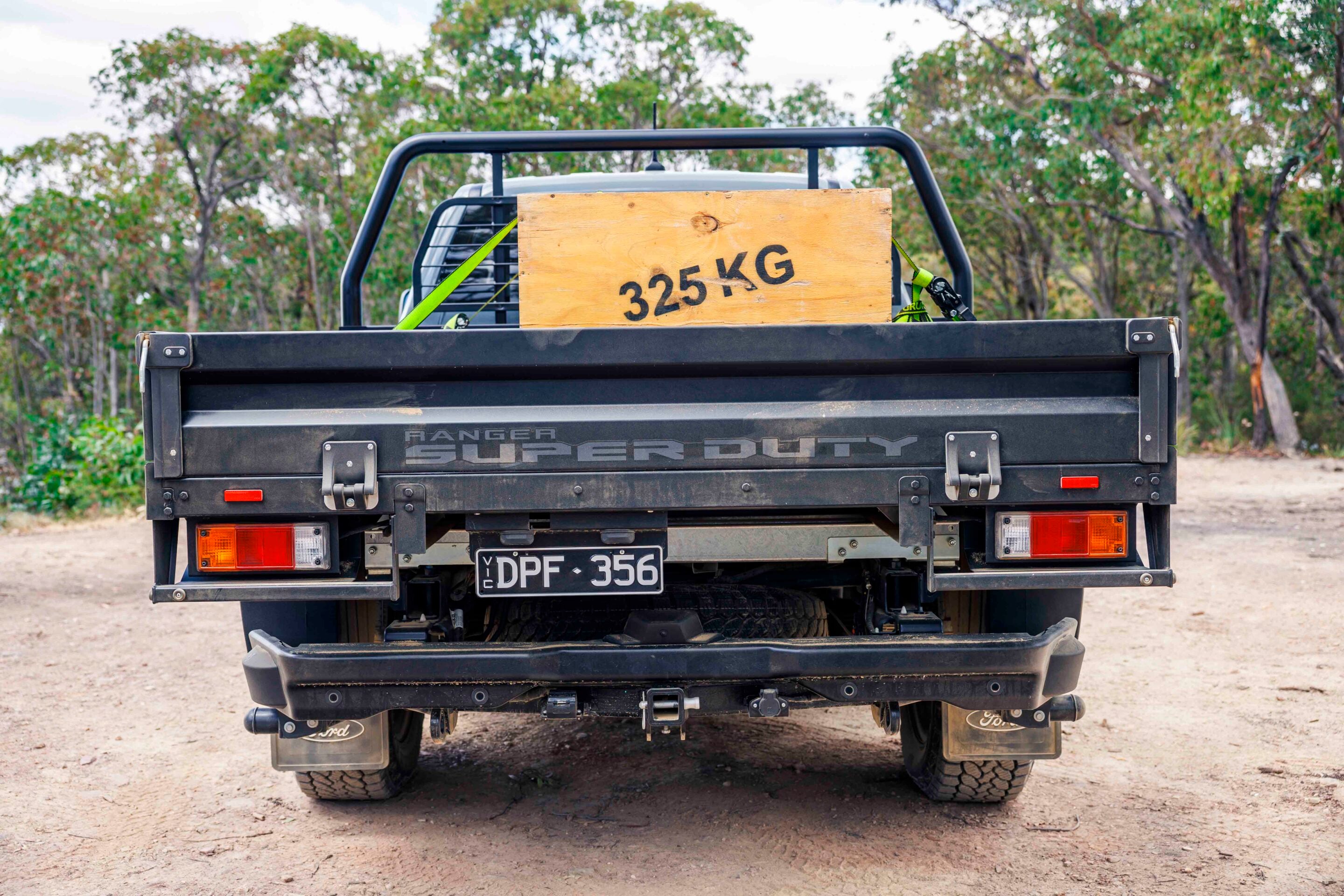
We strapped 975kg of concrete blocks to the factory Ford tray (those three boxes seen on the tray are each loaded with 325kg of concrete blocks) and aimed it towards the bush. Try this in almost any other midsize ute or 1500-class US pick-up and you’ll be on the wrong side of your GVM, or, at the very best, only able to carry a 50kg driver in the cabin. Add in the weight of the tray and we had more than a tonne on the back of the SD.
The weight was distributed along the centre of the tray, reaching almost to the tailgate, and when it was strapped down the factory leaf-spring suspension dropped around 75mm – barely noticeable and a lot less than a regular Ranger or other ute would drop with just 500kg on board.
Our experience when building our own V6 Ranger Sport a few years ago showed the standard Ranger suspension dropped to the bump stops when we removed the factory tub and fitted a canopy with accessories. The canopy and its contents added no more than 500kg to the rear of the Ranger and, although it did move the weight back a bit, we were astonished at how much it dropped the vehicle.
Ford builds the regular Ranger with soft and compliant suspension that is great for touring and comfort, but it obviously doesn’t cope with heavy loads over the back axle. The Ranger Super Duty fixes that. The springs, shocks, chassis and everything under the SD are all heavy-duty and made to handle the increased capacity ratings of the model. This was evidenced by the limited height drop with the concrete blocks on board. The overall stance of the vehicle remained relatively level when loaded.
JUMP AHEAD
On-road performance
As expected the Ranger SD did feel the weight as we headed out on the highway, but not as much as we thought it might.
The steering feel was only slightly lighter due to the weight on the back, and the performance of the drivetrain was unfazed. Ford’s V6 diesel engine is a relatively lazy and relaxed mill that just gets on with the job in all its applications. Sure, it took a little longer to reach 100km/h on the highway, and the 10-speed transmission dropped back a gear or two more when climbing hills and overtaking at that pace, but it didn’t suffer as much as we thought it might.
The SD carried the load with ease, to the point it felt capable of towing a loaded trailer at the same time – and, in theory, it could have. That’s a feat no other double-cab ute on the market can achieve legally.
When relieved of its load, the acceleration of the SD suffers from its extra weight over a regular V6 Ranger, and the taller, heavier tyres don’t help either. The tray is bigger and wider than most you’ll find on midsize utes, but it’s still easy to manage for daily supermarket visits and general duties. The front and rear cameras and large optional external mirrors become your friends when parking.
Off-road performance
The SD suspension remained unfazed on secondary and gravel roads where, admittedly, we were travelling a little more cautiously than we might usually do on the familiar tracks due to the overall weight.
Considering the tall LT tyres fitted to the Super Duty, the heavy-duty Ford handles and rides far better than we expected off-road, both when laden like this and unladen. The brakes did their job well enough when needed but, whenever I’m towing or carrying a heavy load, I like to use the gears to create a bit of engine braking to ease the load on the brakes. This is good practice whenever hauling heavy.
This leads me to the biggest complaint with all of the current-generation Rangers bar one model, and that’s the piddly little manual gearshift buttons on the side of the transmission shifter. They are too small and, with three buttons there, it is not always easy to hit the right one when you need it. The Ranger Raptor’s paddle shifters would be a most welcome addition on the Super Duty … and all 4×4 Rangers for that matter.
A difference between the SD and other Rangers is that the transfer case doesn’t offer two-wheel drive at all, with Ford saying that any vehicle hauling the loads the SD is rated to carry will do it more safely in all-wheel drive. The SD transfer case has 4WD Auto, locked high range and locked low range, which should be enough for any situation.
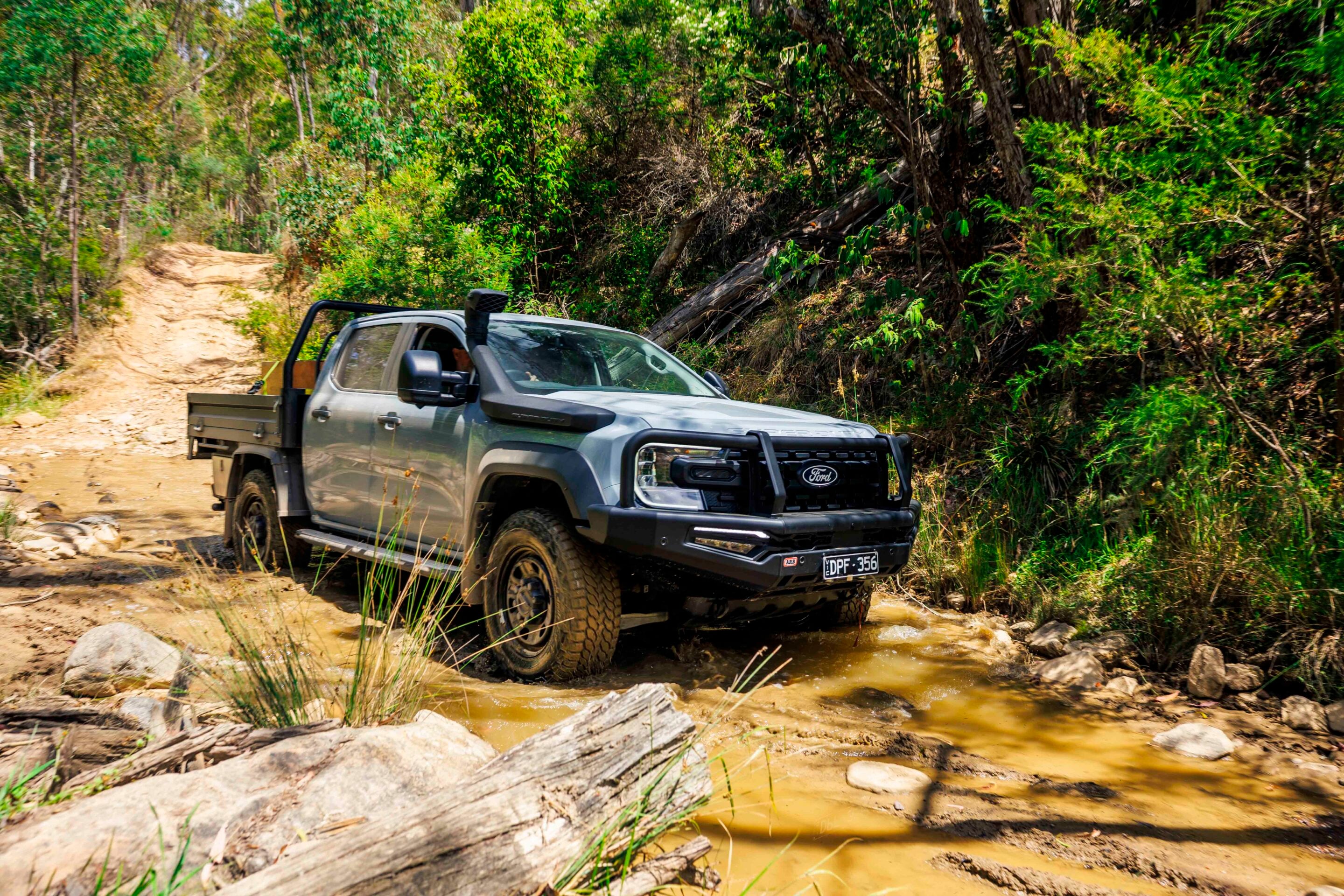
The 4WD Auto mode gave positive traction and predictable handling on the sealed roads and gravel tracks, but we switched to locked high-range 4×4 when the track deteriorated and became more uneven. Then, when the track began its steep drop into a deep valley, we went to low range for the gear reduction and a more controlled descent with minimal use of the brakes. This gave a controlled, safe and easy descent as the suspension articulated well to keep the wheels on the ground as we dropped over rocks and steps. Heading up the opposite side of the valley brought a steeper climb and more rock steps, creating an ideal track to test the vehicle’s tractive ability.
All Super Duty variants come with LT275/70R18 General Grabber all-terrains on 18-inch steel wheels and we left them at road pressures for this drive. They also come standard with locking differentials on both the rear and front axles, so we were hoping this would be enough to haul our load up the ridge.
Ford’s 3.0-litre V6 diesel engine runs a different tune in the Super Duty where it makes a few kilowatts less power but, more importantly, retains its 600Nm output. Backed by the 10-speed transmission, it’s a combination that we know will walk up this hill with ease in any unladen Ranger, but putting the best part of a tonne in its tray adds a lot of resistance.
In low range and with the rear diff lock engaged we pointed it up the first series of loose gravel and rock steps and it climbed them with relative ease. The following step was bigger and on a steeper section of the track, so the weight was well and truly on the back of the vehicle and the front tyres scrabbled for more grip than the electronic traction control was able to give them. No problem – engaging the front diff lock got it up and over.
The Super Duty also has the Trail Control system fitted. This works like low-speed cruise control for off-road work and will maintain vehicle speed at a rate set by the driver without him or her having to use the accelerator. More importantly than the speed control, Trail Control is able to apply minute throttle openings as required while measuring tyre slip and regulating the throttle accordingly.
The system works extremely well and makes driving tricky terrain easier no matter what your off-road driving experience. It worked superbly crawling the heavily laden Super Duty up the rocks and loose scree. After around 400m of this steep rocky climb the gradient eased off and the route got easier before we were back on sandy and dusty tracks.
| Off-road specs | |
|---|---|
| Approach angle | 36.1 |
| Ramp-over angle | 26.3 |
| Departure angle | 28.6 |
| Ground clearance | 295mm |
| Wading depth | 850mm |
What does it come with?
The full suite of Ranger safety equipment is included in the Super Duty.
In fact, the cabin is the same as regular Rangers with all the same features, trims, infotainment and safety systems, so there’s nothing really new here. The interior is working class – think XL grade with vinyl floors and cloth seats – although it does get the bigger 12-inch infotainment screen of the premium Ranger models. Externally, the Safari snorkel comes standard, as do LED headlights and HD front and rear recovery points.
This Super Duty was fitted with a few Ford Genuine accessories including the black steel tray ($8166) with underslung water tank and wash pump, Clearview towing mirrors, and the Super Duty–specific ARB bullbar ($5661) with a Warn winch. The SD has a different front bar to regular Rangers because the chassis is different, including where the bar mounts to it.
Verdict
The Ford Super Duty is a unique vehicle in the new 4×4 market as there’s nothing else like it.
It performed better than expected off-road with a load on, on the highway and living in the city. Its performance with 975kg on its tray off-road was particularly impressive – a feat that no other unmodified new 4×4 ute could achieve while staying within its factory load limits. I reckon this test would have broken any other new midsize ute!
Specs
| 2026 Ford Ranger Super Duty | |
|---|---|
| Price | $89,990 +ORC (excludes tray) |
| Engine | V6 turbo-diesel with DPF and Adblue |
| Capacity | 2993cc |
| Max power | 154kW @ 3250rpm |
| Max torque | 600Nm @ 1750rpm |
| Transmission | 10-speed automatic |
| 4×4 system | On-demand 4×4 with locked high and low range |
| Construction | 4-door cabin on ladder frame chassis |
| Front suspension | IFS with wishbones and coil springs |
| Rear suspension | Live axle and heavy-duty leaf springs |
| Tyres | LT275R18 all-terrains |
| Kerb weight | 2675kg (excludes tray and accessories) |
| GVM | 4500kg |
| GCM | 8000kg |
| Towing capacity | 4500kg |
| Payload | 1825kg (excludes tray & accessories |
| Seats | 5 |
| Fuel tank | 130L + 20L AdBlue |
| On-test fuel consumption | 16.8L/100km |
The Ridgecap by Zeus 4×4 is a premium aluminium canopy built for serious 4×4 use, be it for work or remote-area touring.
It is designed and tested in Australia, making it suited to the harsh conditions that Australian owners expect to tackle. The company is 100-per-cent Australian owned, with products developed locally by engineers and experienced 4WD enthusiasts, ensuring high standards of quality and reliability.
The canopy features a fully welded, high-grade aluminium build. This keeps weight down while providing greater strength and corrosion resistance compared with fibreglass or cheaper alloy canopies. Internal bracing and tub-strengthening integration reduce flex under load, giving superior rigidity over rough terrain.
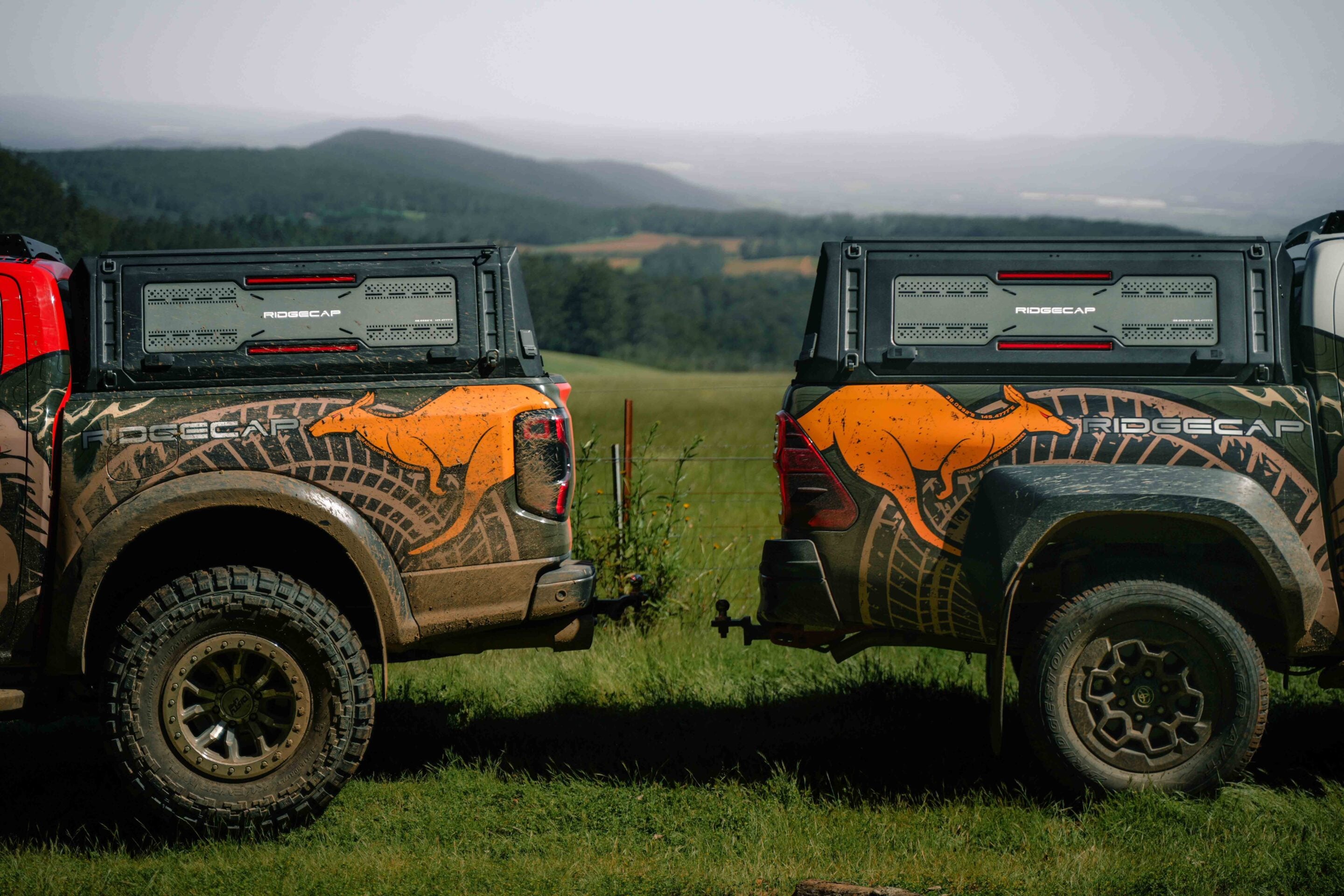
With a 200kg dynamic roof load rating, the canopy can safely carry rooftop tents, awnings, solar panels and recovery gear. Large lift-up doors on both sides provide ergonomic, quick access to gear, making loading and unloading faster and easier than traditional fixed-window designs. Premium automotive-grade seals protect contents from dust and water ingress in all conditions.
The interior is modular, accepting shelves, drawers, platform systems, fridge slides and power panels. This allows builds to be tailored for touring setups or tradespeople’s storage requirements. Modern, aggressive styling also matches contemporary 4×4 body lines, giving a functional yet purposeful appearance.
Whether heading into remote back-country, hauling gear for work, or setting up a weekend touring rig, the Ridgecap combines strength, accessibility and adaptability in a single robust package.
Off-road enthusiasts can now see how clean and efficient their next purchase could be, with the NSW Government’s Vehicle Emissions Star Rating (VESR) now integrated into RedBook.
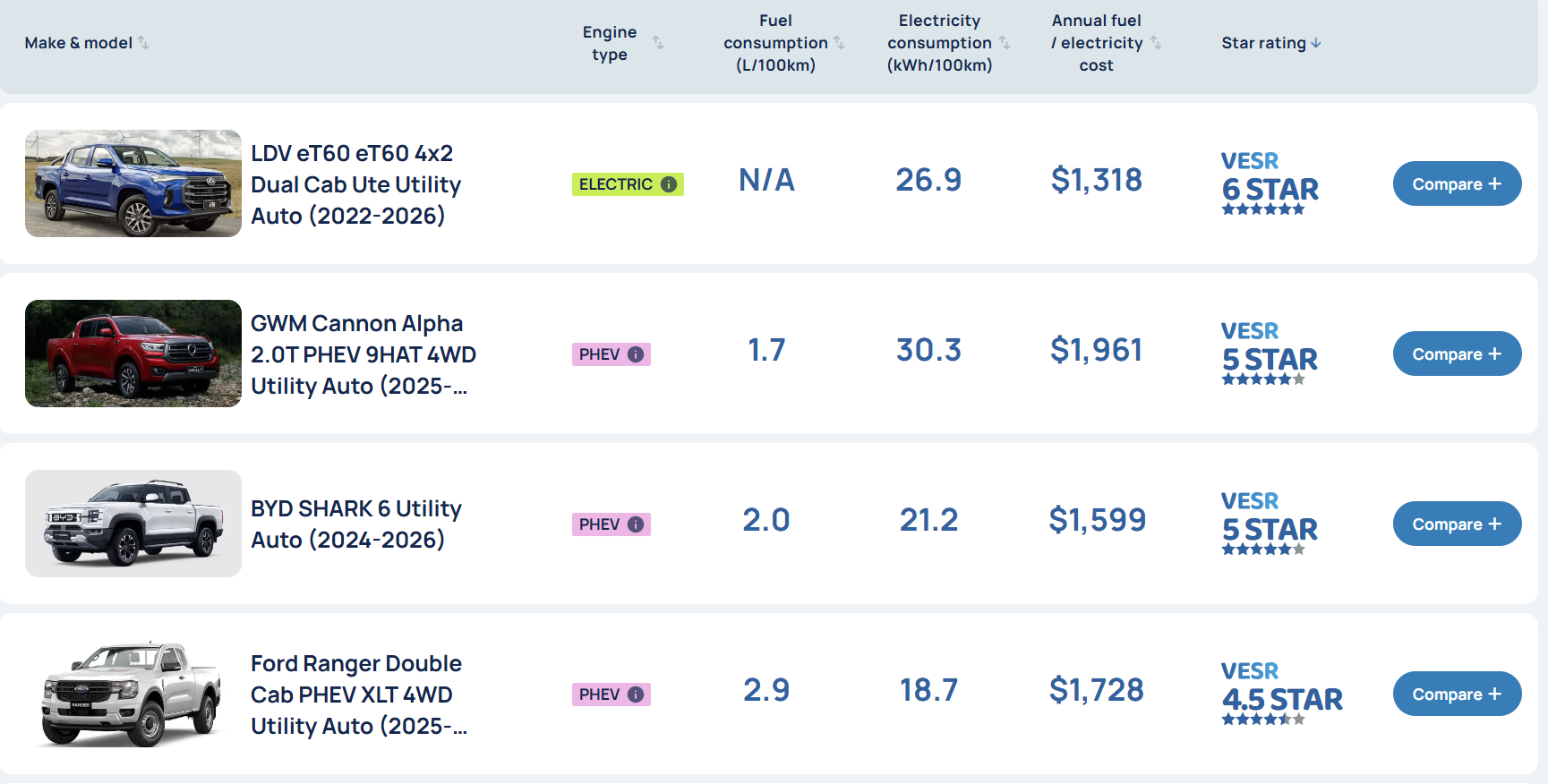
Developed by the NSW Department of Climate Change, Energy, the Environment and Water (DCCEEW), VESR gives eligible light vehicles (classified as less than 4.5 tonnes) sold in Australia since 2004 a six-star rating based on tailpipe CO₂ emissions – the more stars, the lower the emissions. For 4×4 buyers, this provides a simple way to compare not just environmental impact but potential running costs for that next trip around Australia.
RedBook users can filter search results by VESR, see star ratings alongside vehicle listings, and use the customisable calculator to estimate yearly fuel or energy savings based on their own driving patterns.
“This collaboration puts reliable emissions, fuel and energy cost information directly in front of people when they’re researching their next car, whether new or used,” said Terry Niemeier, NSW DCCEEW Director Transport Electrification and Safeguard. “It means NSW households can compare options quickly and confidently and understand the long-term benefits of choosing a lower-emissions vehicle.”
The NSW Net Zero Plan 2020-2030 sets the state’s roadmap to cut emissions and support cleaner, more efficient transport; while Australia as a whole aims for net zero emissions by 2050. Under the federal New Vehicle Efficiency Standard (NVES), which came into effect in January 2025, manufacturers of new light vehicles including SUVs, utes and 4WDs under 4.5 tonnes, must meet annual fleet-average CO₂ emissions targets.
While no engines or models are banned, manufacturers must balance higher-emitting vehicles with more fuel-efficient, hybrid or electric options to comply, earning or trading credits if they outperform or underperform the targets.
The NVES is designed to bring cleaner, more fuel-efficient vehicles into the market, supporting long-term cost savings and lower emissions, while tools like VESR make it easier for 4×4 buyers to compare environmental impact and running costs without compromising towing, touring or off-road capability.