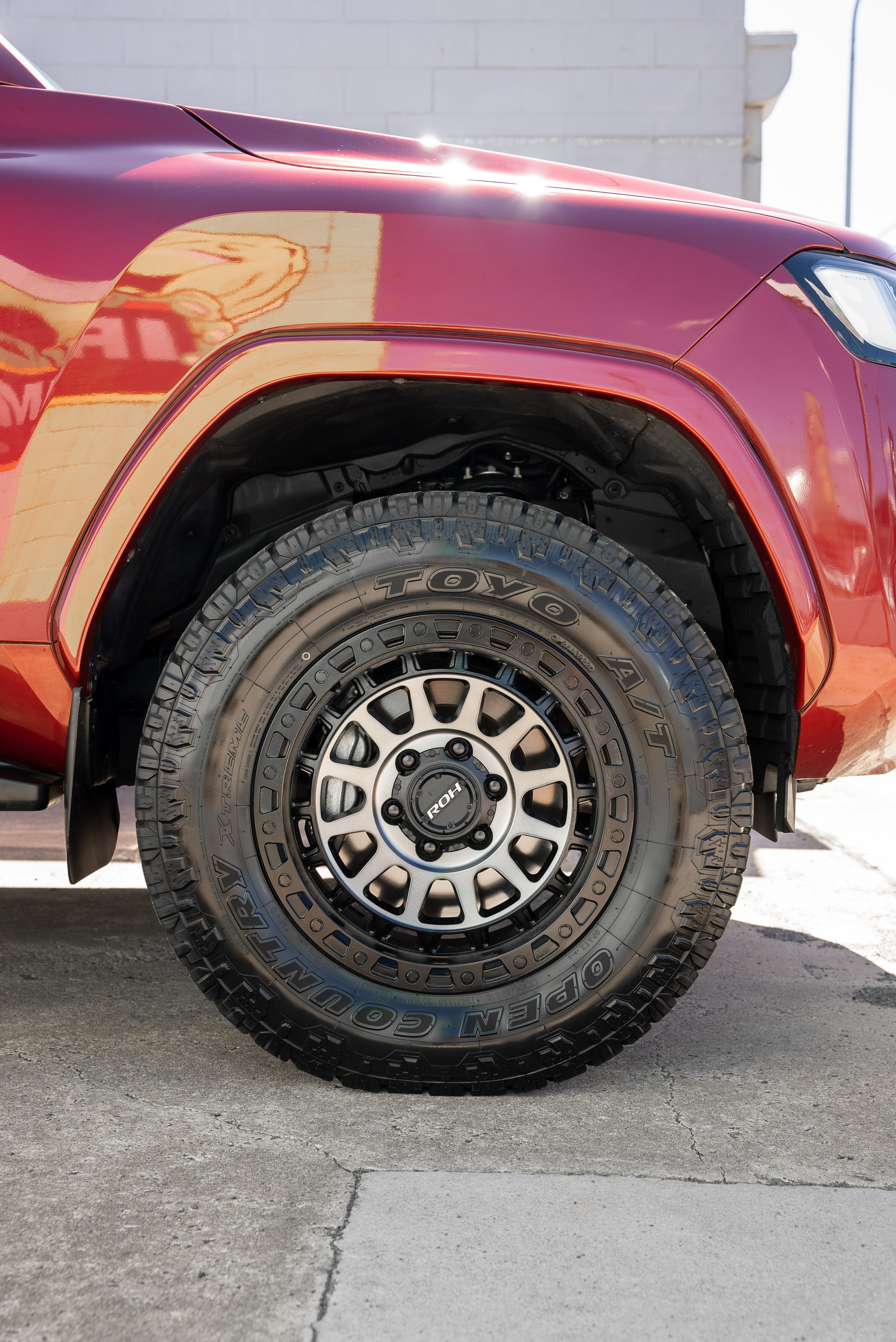
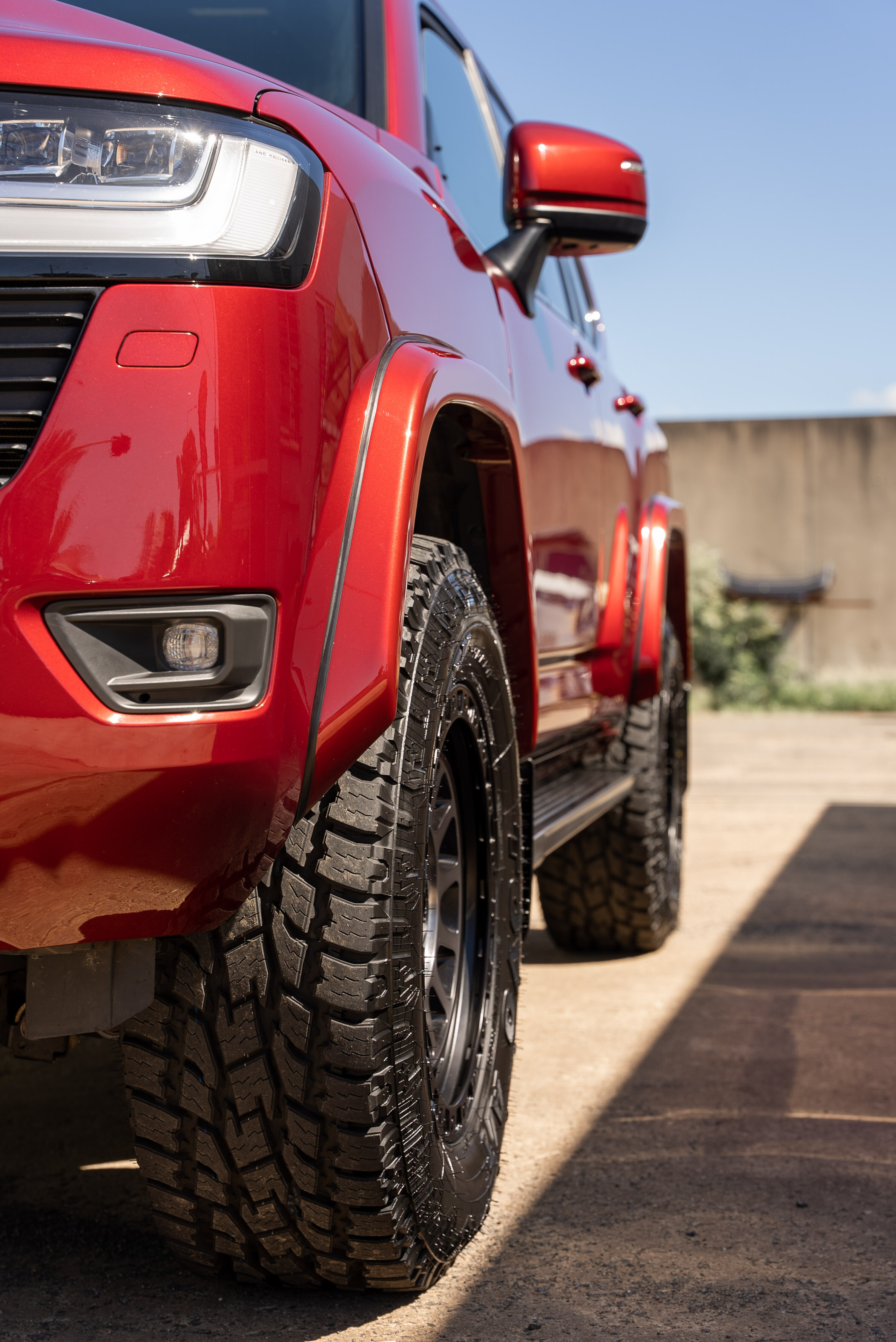
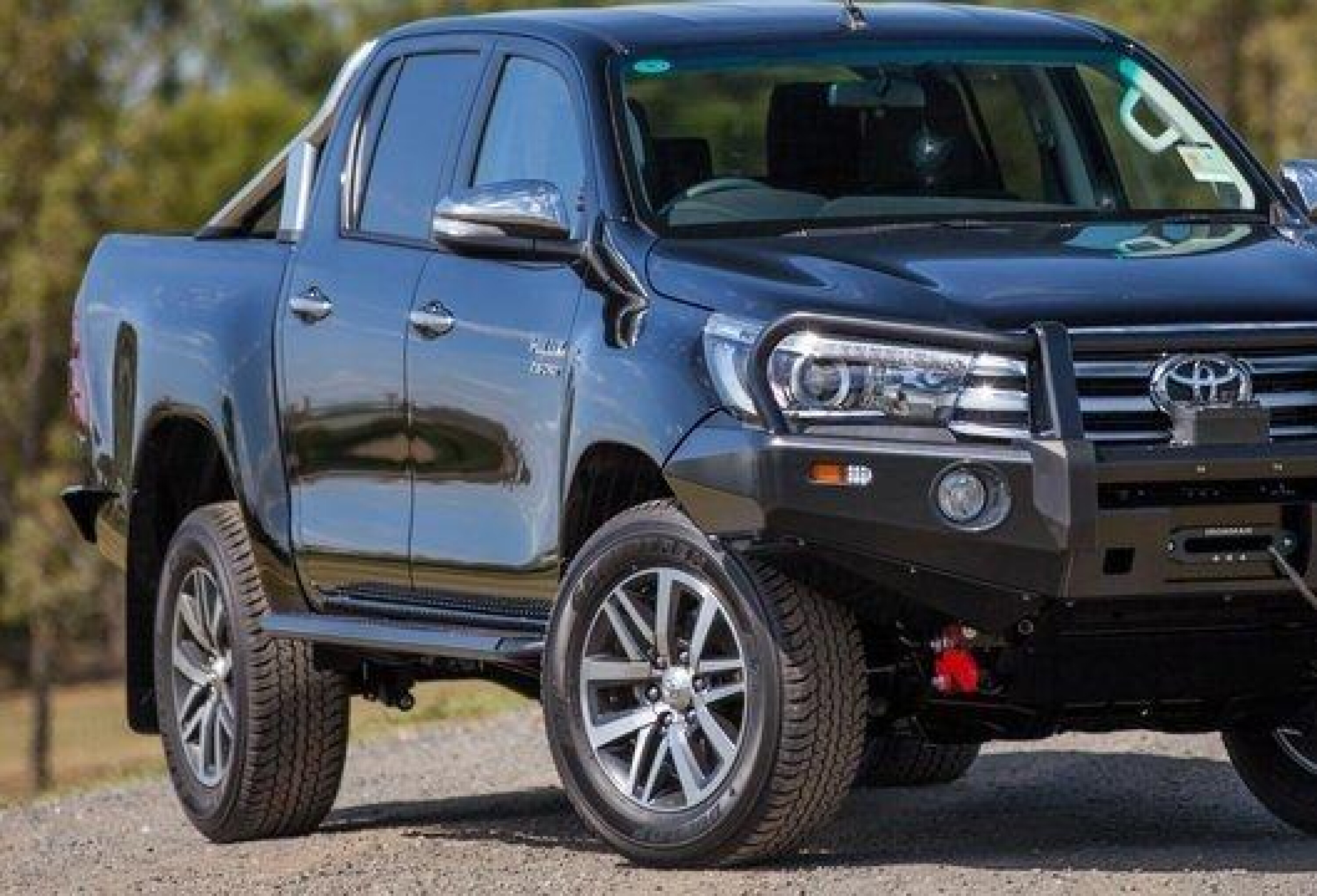
These flares and mudflaps by Mick Tighe 4×4 Outdoor are designed to provide a seamless 35mm offset to suit the new VX, GX, GXL, Sahara, and GR Sport Toyota LandCruiser 300 Series models.
Whether your vehicle is stock, chopped, or you’re looking to legally upsize your tyre size, the OTA “300” Flares & Mudflaps kit could be a solution to suit your needs.
Designed and manufactured in Australia, these flares and mudflaps provide an aftermarket solution that effortlessly enhances your car’s aesthetic, functionality and build capabilities.
Both the flares and mudflaps were designed in unison, providing further protection without sacrificing aesthetic appeal.
The flares are ABS plastic, a tough, durable, weather-resistant material that comes in a smooth black, easy-to-paint finish with a high-quality aesthetic. The mudflaps are made of UHMWPE for impact-, abrasion- and shock-resistance, non-corrosiveness, UV stability, and long-lasting durability.
It’s finished in a smooth black that blends with the 300 Series’ existing accents.
2024 four-cylinder models expected to run the same conversion
They might be hard to find in Toyota dealers right now, but the demand for LandCruiser 70 Series models continues unabated, just as the need to equip them for ultimate off-road adventures continues to burn.
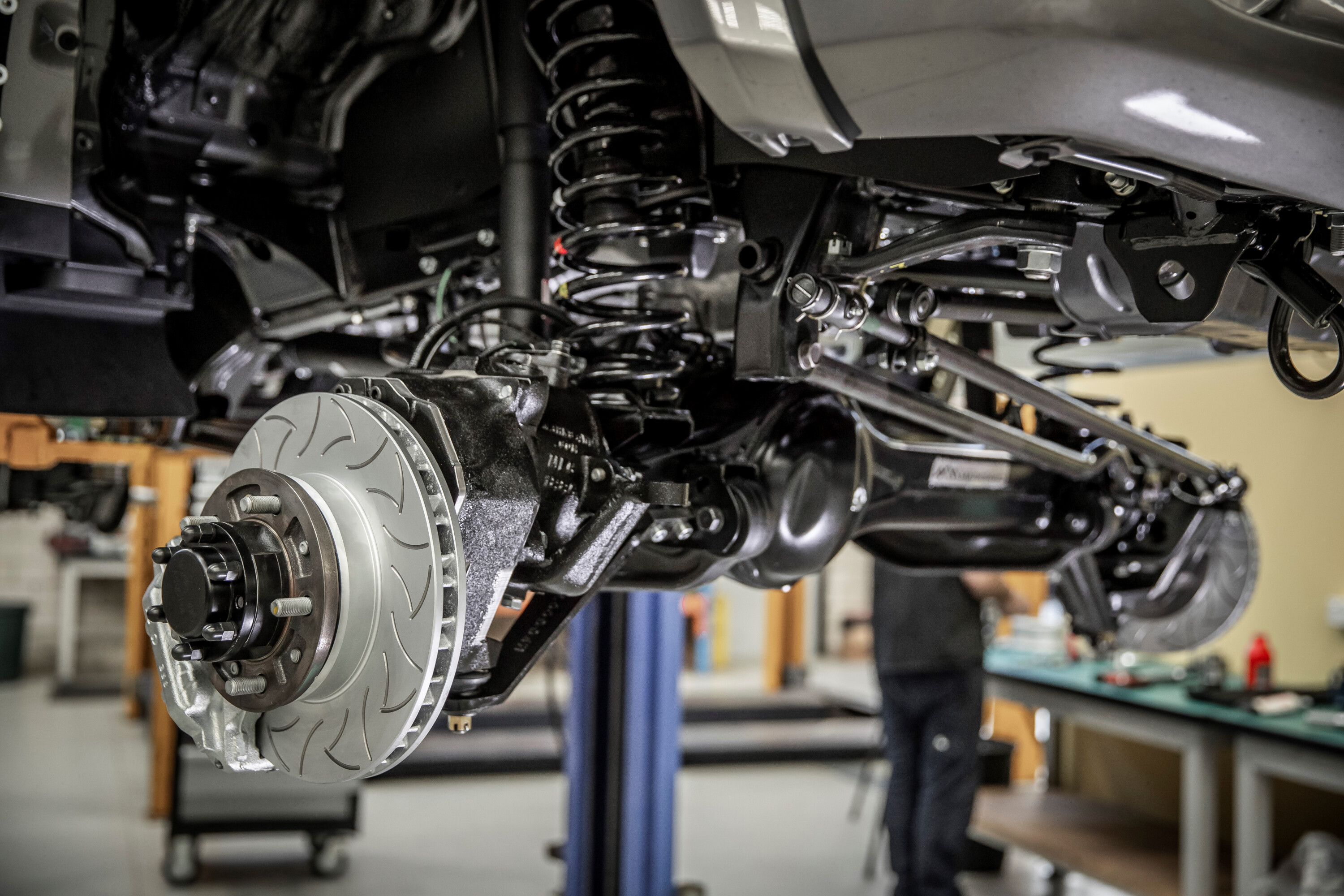
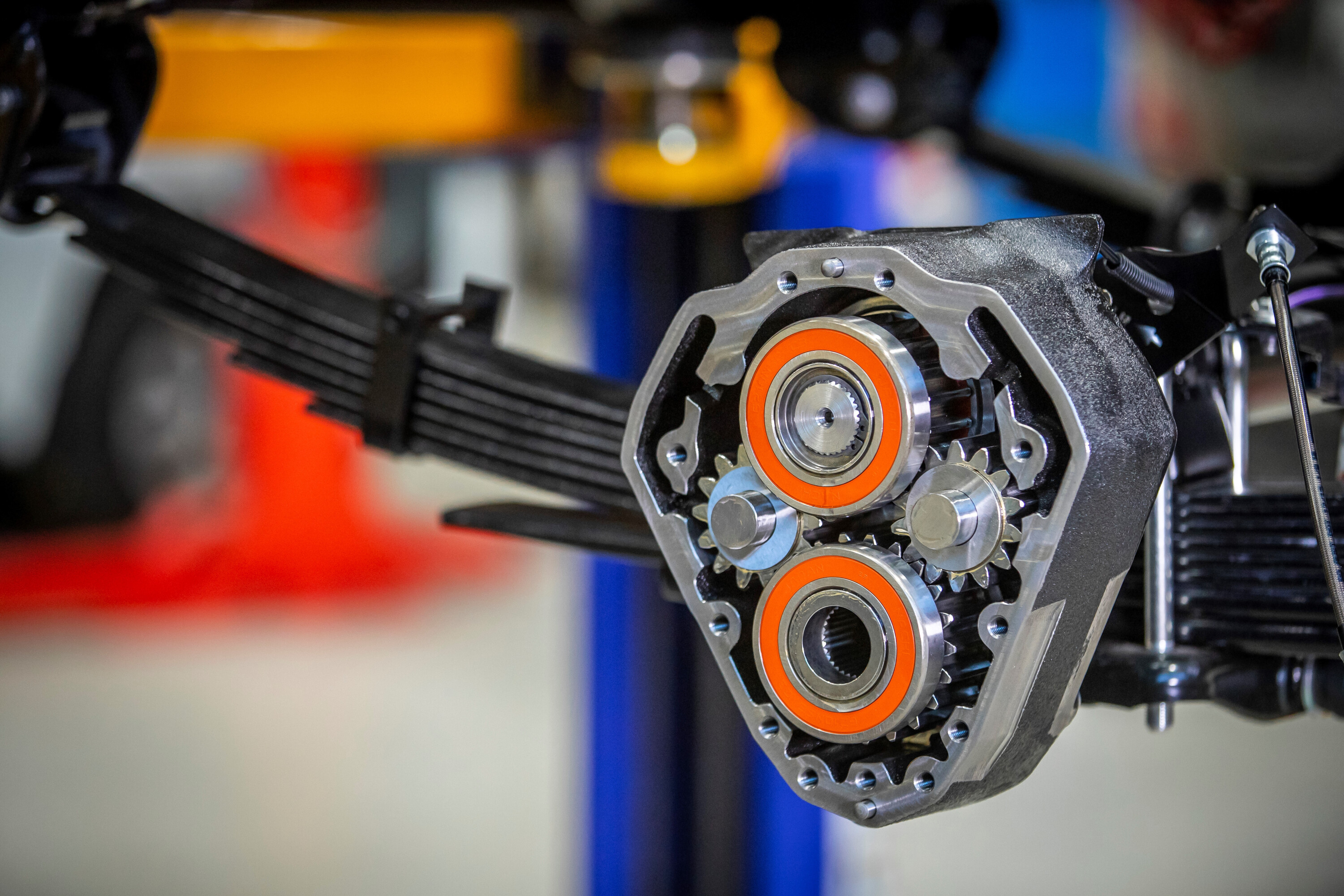
One of the best mods for any LandCruiser is the inclusion of portal axles, and these are now available for the latest updated models.
The 2023-model 70 Series Cruiser brought fresh safety equipment and a higher GMV capacity that came as a result of shifting the near-40 year-old design into a different vehicle category rather than just giving owners a higher payload.
1
From late-2022 builds the 70 was given a GVM of more than 3500kg, which moved it from the light to the medium goods vehicle category. This allows the Cruiser to avoid other safety features that became compulsory for light vehicles and would have been difficult to introduce into the 70 Series range.
New safety kit that was introduced at the same time included pre-collision system incorporating autonomous emergency braking (AEB) with pedestrian and cyclist detection.
The higher GVM and new technology meant the existing Second Stage Manufacturing (SSM) approval held by Marks 4WD for its portal axles was no longer applicable and a new SSM approval needed to be applied for.
1
To attain this SSM approval Marks 4WD had to purchase new 2023 vehicles, install its portal axles and handbrake kit to them, and put them through a series of tests under the ROVER Road Vehicle Regulator guidelines. The tests included loading the vehicle to more than 4000kg and performing brake tests, brake fade tests and noise tests, to ensure the vehicles still meet existing ADR standards.
The new Cruiser passed the tests and Marks now hold SSM approvals for fitting its portals to the LC76 wagon and LC79 in both single- and double-cab ute variants. Approval for the LC78 Troop Carrier will have to wait until they can get a new vehicle to be tested.
The team is also awaiting the arrival of the 2024 2.8-litre automatic transmission 70 Series models to ensure the portals kit fits without any changes, but they don’t foresee any problems there.
SSM approval means the fitting of the portal axles and ancillary accessories must be done to the vehicle prior to it being registered – and it is approved in all states of Australia. The kits cannot be approved post-rego, even with engineering certification.
The advantages of the portal axle conversion are many, but none more so than the additional 150mm of ground clearance under the differentials without any suspension modifications. This gives you the benefits of increased ground clearance without the negative effects of raised or modified suspension.
1
The conversion also widens the wheel track by 80mm while correcting the variance between front and rear axle track to give the 70 a wider stance and better stability both on- and off-road. The conversion is designed on and approved to run on 35-inch tyres, and this is the approved tyre size for the conversion.
Fitting Marks 4WD portal axles is a big step in creating the perfect 70 Series LandCruiser, and we all know there are countless other modifications that can be made to improve the Toyota workhorse. But fitting portals as a first step creates the foundation on which to build your ultimate LandCruiser.
Now if we could just get Toyota to ramp up 70 Series production again.
For more details on the Marks 4WD portal axles conversion and other great products for your four-wheel drive, take a look at the website at www.marks4wd.com
What I’m really hanging out for is exactly the same thing that everybody’s asking the question about, and that is a load-carrying, trailer-towing, remote area off-road capable HiLux 4×4 with zero tailpipe emissions. What a vehicle that would be – and it’s possible.”
That’s Sean Hanley, Toyota Australia VP sales, marketing and franchise operations, talking about his ideal electric vehicle at Toyota’s 2023 new-vehicle showcase headlined by the 250 Series Prado and an electric HiLux ute concept called the Revo BEV.
“As you’d expect, with a Hilux from Thailand, [the Revo] concept for you is a short-range, city-focused focused BEV. It’s two-wheel drive with a battery that’s probably similar in capacity to the BZ4x”, said Hanley.
Although Toyota hasn’t detailed the Revo’s range and power stats just yet, it’s safe to assume that it isn’t designed to tow a caravan across the Australian outback.
“Rest assured, Toyota is working on it”, says Hanley, “a breakthrough work on solid-state batteries may come to the fore. And maybe, just maybe there’s another solution. Perhaps this is where hydrogen fuel cells could come into their own.”
A hydrogen-powered Toyota HiLux is already in development in the UK, but advancements in solid-state batteries could prove even more useful than bulky hydrogen for a true electric HiLux.
With significantly greater energy density than liquid cathode lithium-ion batteries common today, solid-state batteries promise greater driving range but that’s just the beginning. They should also be less susceptible to damage, and provide faster charging – MG claims its solid state battery pack will get from 10-80 per cent in just 10 minutes.
“This is where it’s very interesting because right now, we don’t have that [technology] clearly, we don’t have it. But in Australia, you’ve gotta get there otherwise who’s going to buy these cars?” said Hanley.
“Honestly, who’s gonna buy a vehicle to go off-road with, tow with, and have 800km [driving range] if it’s going to be $100,000 and doesn’t do half?” he added rather passionately.
When prompted for a minimum acceptable range, Hanley didn’t name a number but said: “You certainly want it up there, I mean, people don’t want to compromise.
“Charging infrastructure won’t be an issue for Toyota because we’ll have it everywhere. And I think that that’s going to expand naturally anyway around the place…I don’t experience any range anxiety [in my Lexus RZ], because I ABC – Always Be Charging.
“What I am saying is, [that example is] a different scenario to if you’re going to be towing a big caravan and you want to go from Melbourne to North Queensland. And then you might decide to go from North Queensland across to Broome – that’s a totally different world for that customer”, Hanley pointed out.
For reference, in a Motor Trend [↗] tow test the gold standard electric ute, the Ford F-150 Lightning, dropped from its 500km range rating to just 161km when towing a 3278kg camper. And that’s from a huge 131kWh battery.
Toyota is getting serious about booting up an electric ute, although this one is of a unibody design.
August: HiLux Revo concept revealed
“It looks good enough to be a production car but it’s most definitely a concept”, said Sean Hanley, Sean Hanley, Toyota Australia VP sales, marketing and franchise operations of the HiLux Revo concept on display.
Snapshot
Electric HiLux concept foreshadows production model
Has technology Toyota is keeping under wraps for now
No concrete specs, but it’s rear-drive and Thai-market focused
First shown in December 2022, the electric HiLux Revo concept made its way to Melbourne (via a Fremantle Port) as an example of how Toyota plans to reach zero emissions by 2050.
“A masterpiece of technology and a clear demonstration of how advanced we are in relation to BEVs. What I can’t tell you, is when, or even if this car will make it to Australia as a production model”, said Hanley.
“What I can tell you is that we are optimistic, and we’ll definitely pursue the opportunity to bring such a vehicle to our market in the future, should it become available. So much so that our local evaluation engineers have already been putting this very vehicle through its paces – and they’re impressed.”
1
It didn’t take long for Hanley to admit the electric HiLux Revo’s shortcomings for Australia.
“As you’d expect, with a Hilux from Thailand, this concept for you is a short-range, city-focused focused BEV. It’s two-wheel drive with a battery that’s probably similar in capacity to the BZ4x.
“There’s a swag of Toyota-owned technology under the skin that we’re not ready to reveal today”, added Hanely.
“Given the enormous challenges we face in electrifying commercial vehicles, it seems to make sense that we start with an electric vehicle for the on-road market. In fact, I can imagine the day perhaps a few years from now, when such a vehicle could help transform the E-mobility landscape in many countries.”
1
With its short range and city focus, the eventual production version of the HiLux Revo concept is likely to be snapped up by mining and other fleets looking to lower their carbon footprints – the same outfits buying the $93K LDV eT60.
“Of course, what I’m really hanging out for is exactly the same thing that everybody’s asking the question about, and that is a load-carrying trailer-towing remote area off-road HiLux 4×4 with zero tailpipe emissions. What a vehicle that would be – and it’s possible,” said Hanley.
“Honestly, who’s gonna buy a vehicle to go off-road with, tow with, and have 800km [driving range] if it’s going to be $100,000 and doesn’t do half?” He added.
The Revo is definitely a vehicle for business and not the private lifestyle buyer. A future solid-state battery HiLux, or FCEV-powered ute, could be a long-term solution.
Concept to showcase the future of mining industry vehicles
Expected to pop up at various conferences and events in Oz
Another HiLux update is on the way next year with the addition of mild-hybrid boost, but with massive mining fleets needing to cut emissions rapidly, Toyota needs to catch up on the clean-up with a mass-production electric ute.
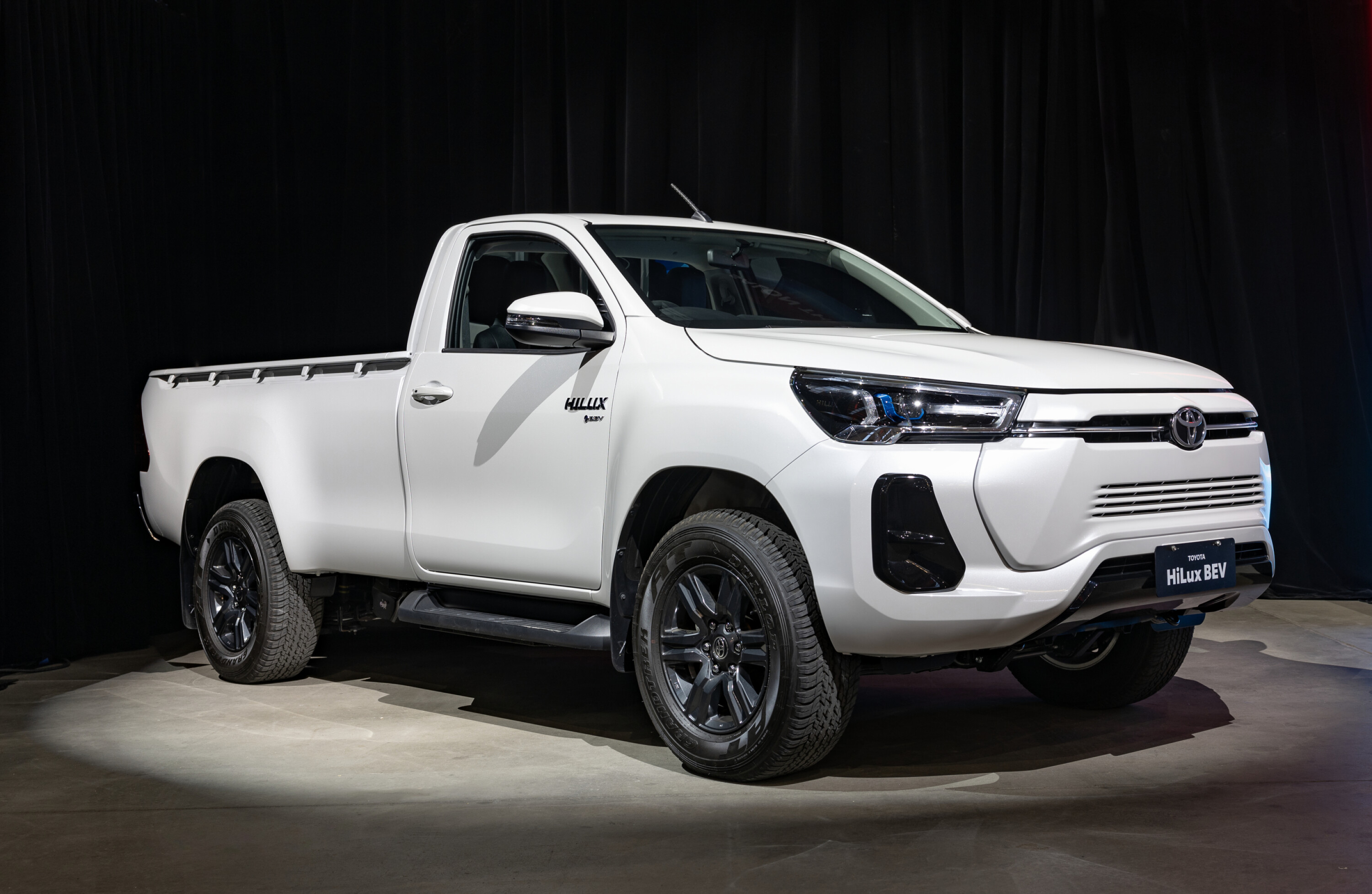
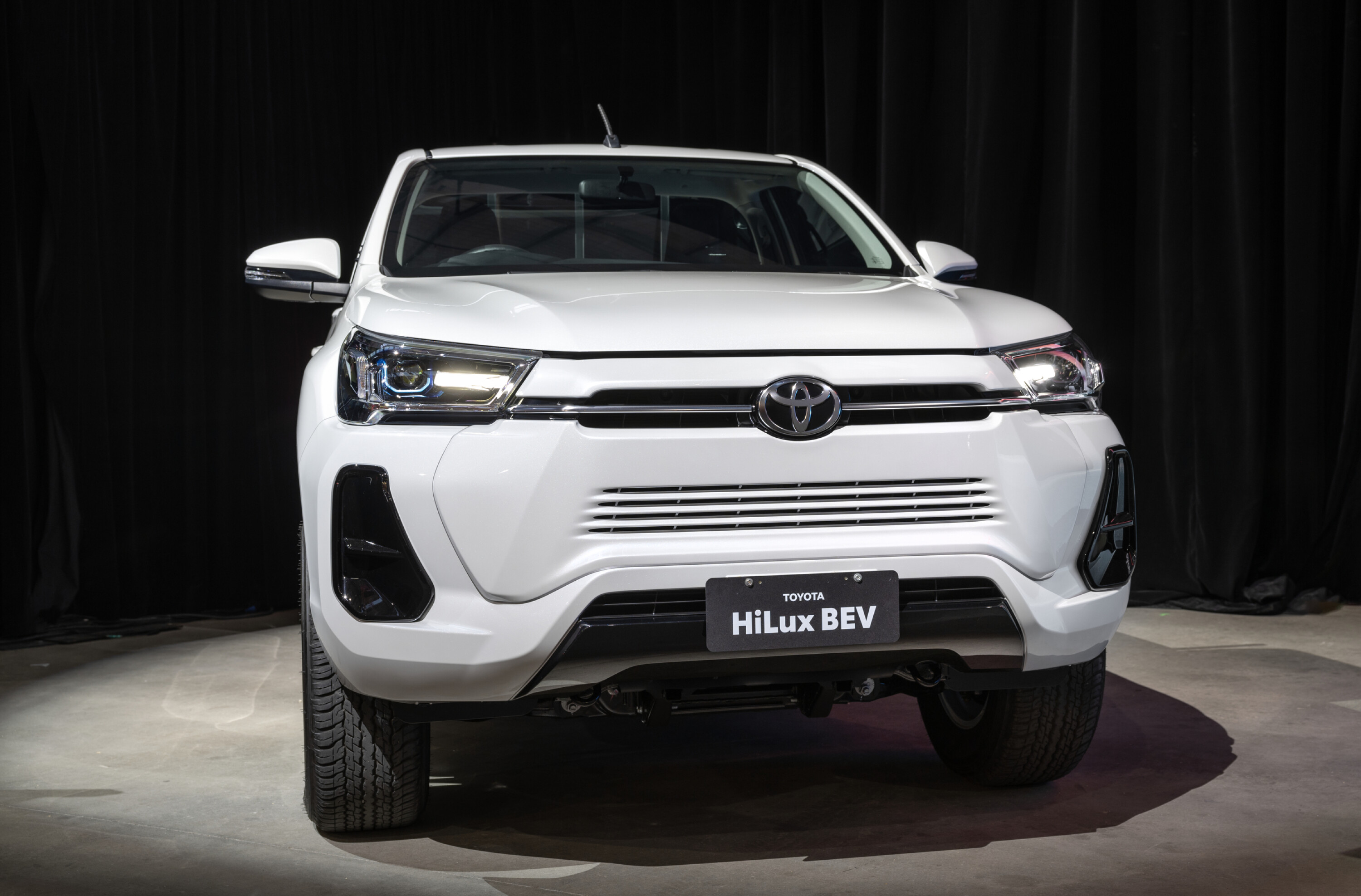
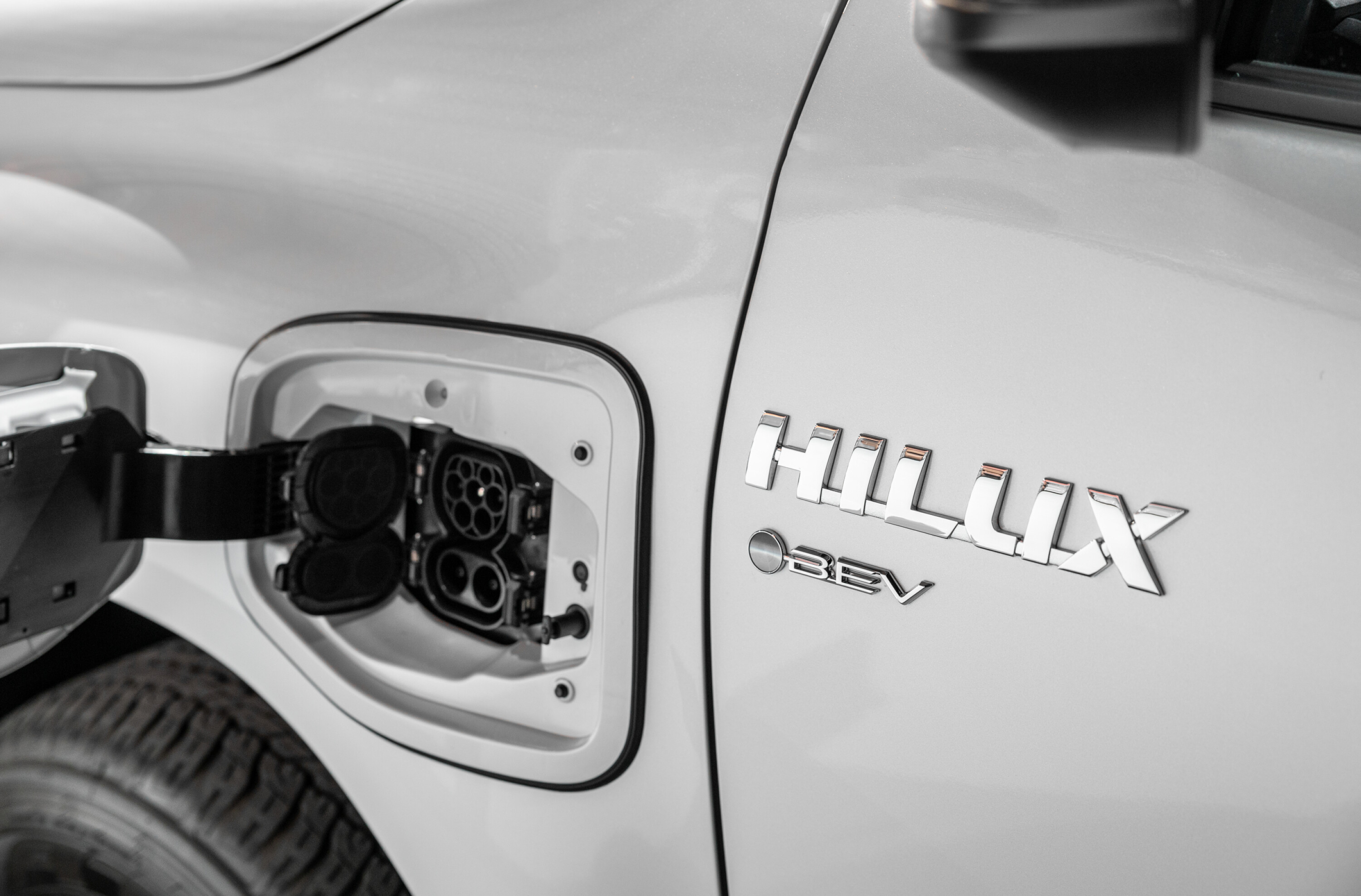
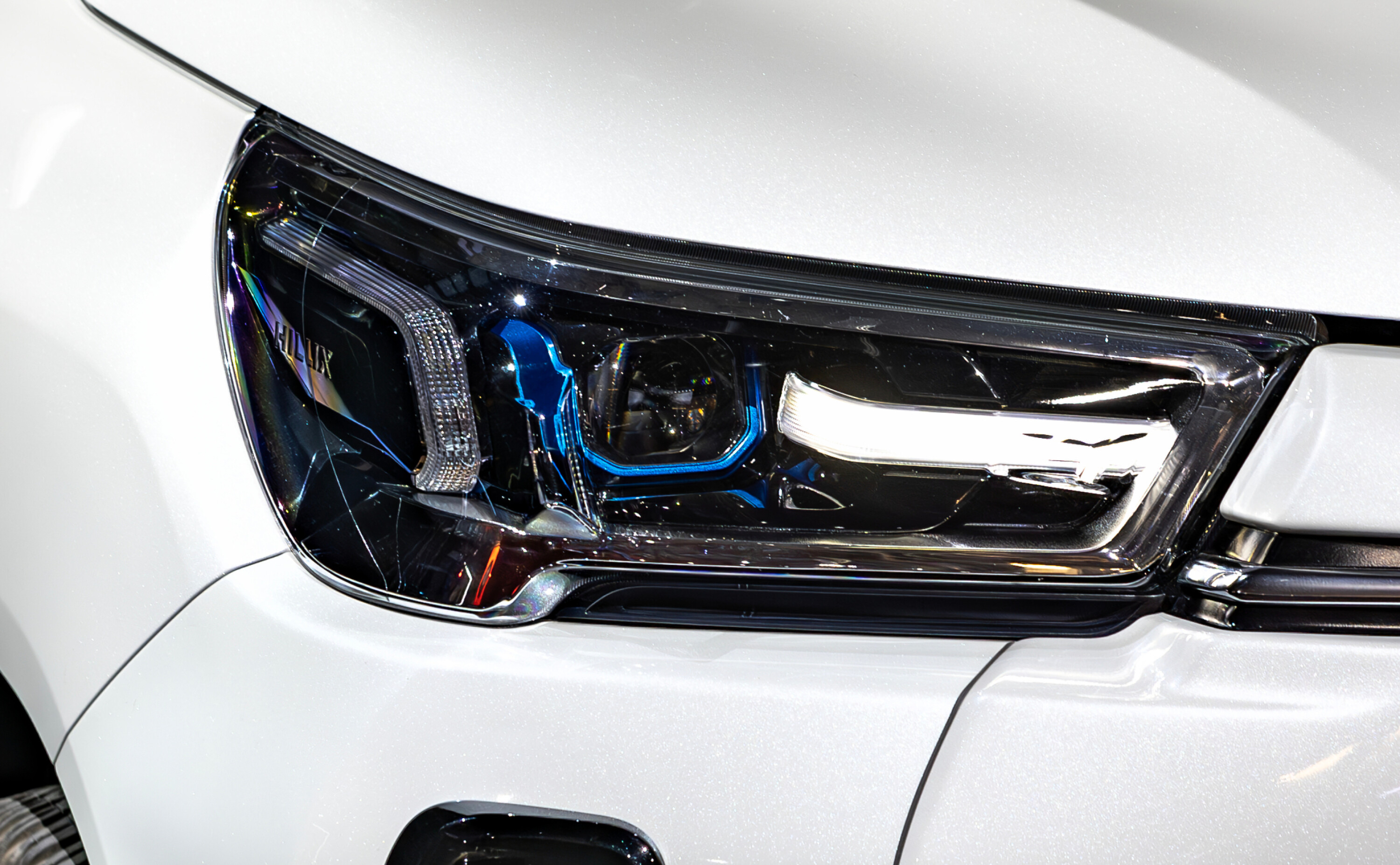
Spotted at a port in Fremantle, Western Australia, the HiLux pictured is a single cab ‘Revo’ concept. With its grille blanked out and a CCS2 charging port where the diesel filler would be, this is a battery-electric pick-up.
There’s no word on range, charging speed, or pricing on the new vehicle, but it’s certainly aimed more at the commercial buyer than the private.
4X4 Australia understands it’s here for internal review. Relevant mining-centric events, including the Advancing Net Zero Mining Conference held on August 29-30 in WA, may have given Toyota extra incentive to drum up interest from relevant buyers.
Currently, there is only one factory-made battery-electric ute available in Australia – the unbelievably expensive LDV eT60. The Chinese-made ute has a captive brand-new market, and Toyota will be looking to eat into this space with an electric HiLux.
1
Whether an electric HiLux will come about in a similar way to the LDV T60 in the ute’s current form to satisfy industry customers, or whether Toyota will wait for the next-gen HiLux in 2025 is yet to be confirmed.
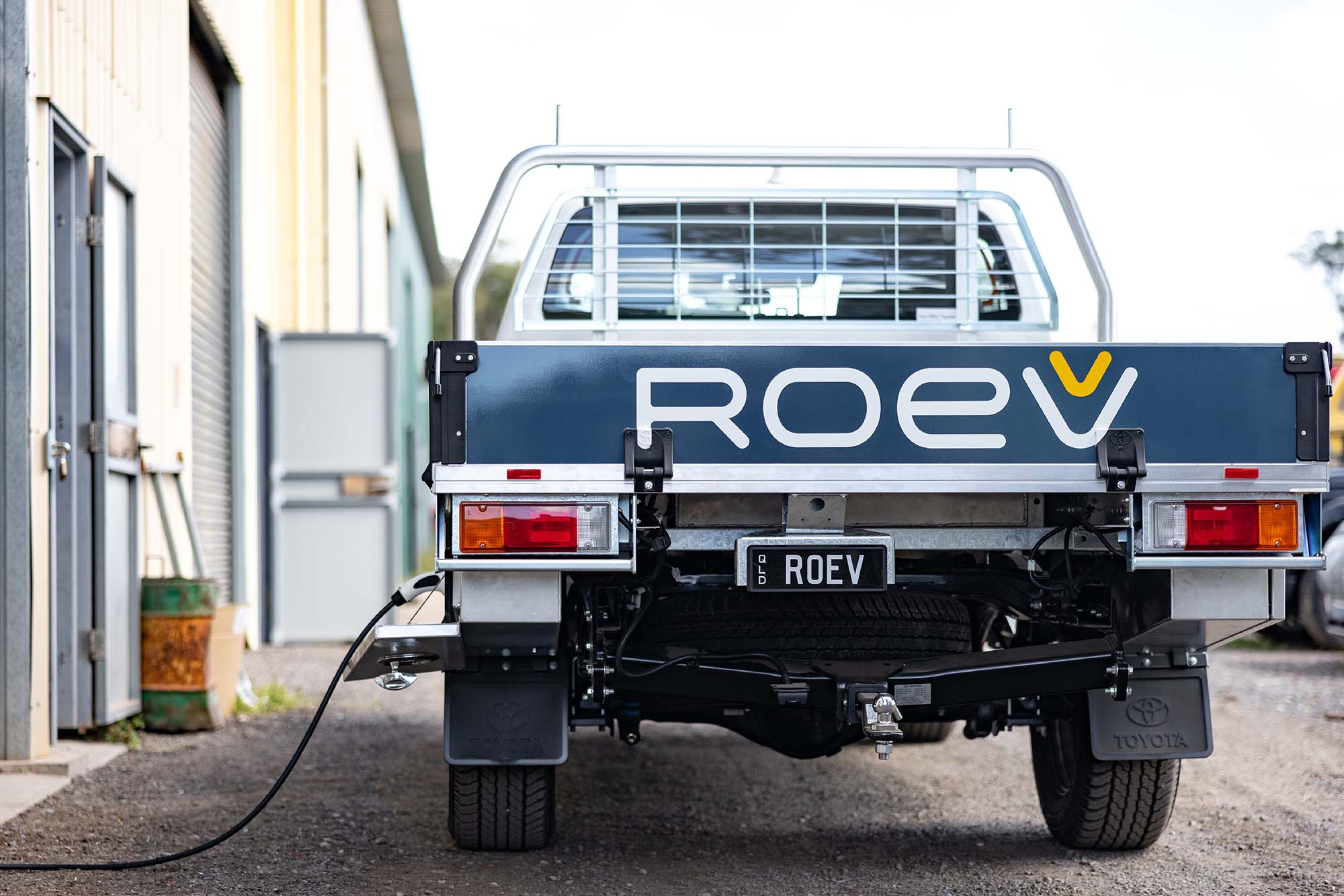
There are also outfits converting existing diesel-powered Toyota HiLux and Ford Ranger utes to electric vehicles, and they’re finding success with mining customers.
One such company is ROEV, and a conversion that brings about 360km driving range from a 96kWh battery pack costs $53,990 to $57,990 plus the base vehicle – so about $90K all in when using a new HiLux 4×2 Hi-Rider as a starting point.
Toyota has also been trialling in-house EV-converted 70 Series single-cab utes since around 2021 for mining applications. Expect more information on the electric HiLux Revo concept shortly as it continues on a tour around Australia.
At the 2023 new-vehicle showcase, Toyota’s executives extolled the virtues of its multi-avenue approach to carbon neutrality by 2050 – including a heavy focus on hydrogen for commercial vehicles.
Snapshot
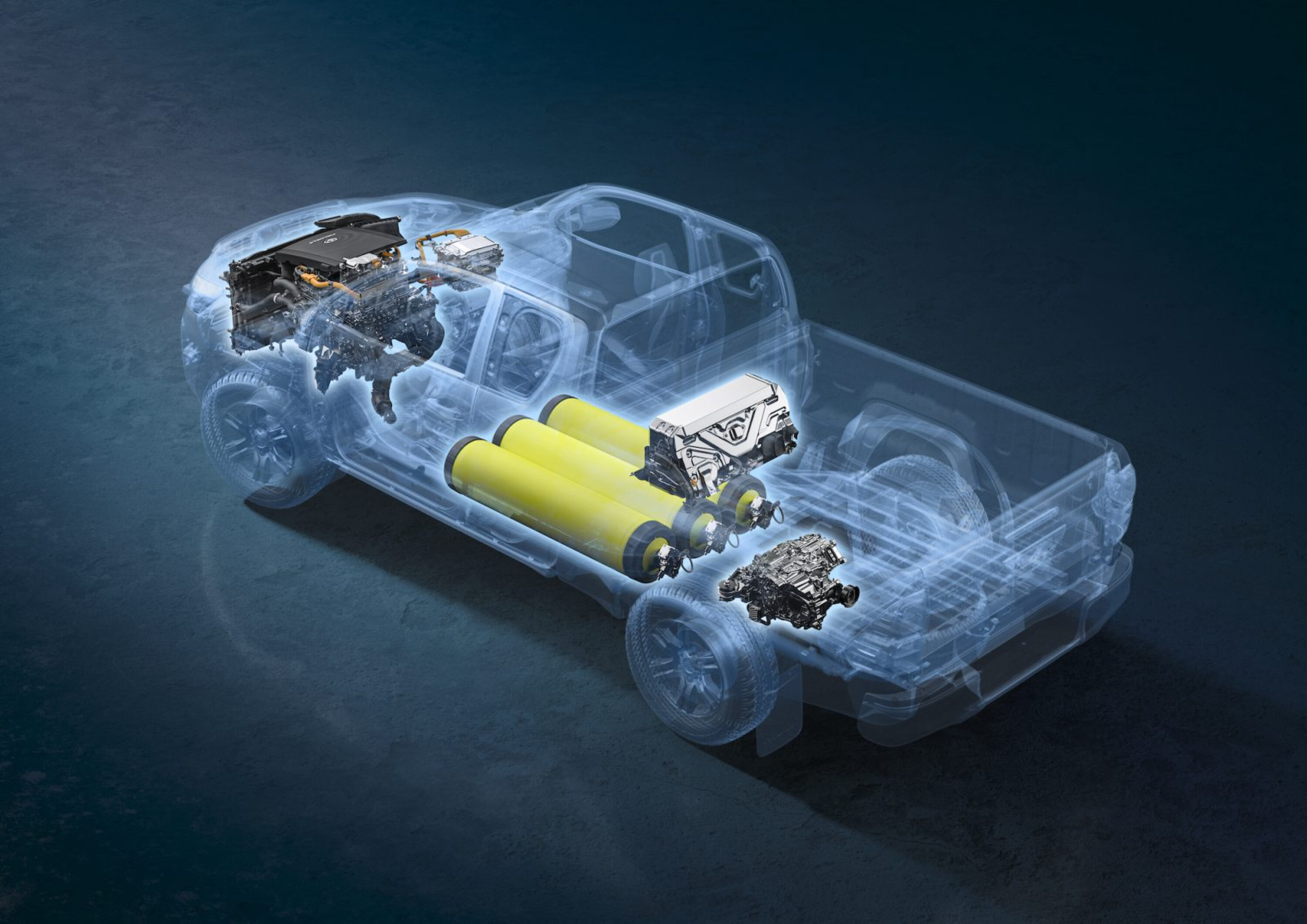
Hydrogen fuel cell HiLux in development ahead of series production
Could suit Australiau2019s long distance requirements
Infrastructure still a long way behind supporting mass FCEV adoption
“We are going to update you on a raft of significant new model developments with a focus on our multi-pathway approach to achieving carbon neutrality”, said Toyota Australia vice president for sales, marketing and franchise operations, Sean Hanley.
“Our plans remain focused on the long term, leaving no one behind on that journey to carbon neutrality. Perhaps that makes us an easy target for groups who manufacture nothing more than media releases.”
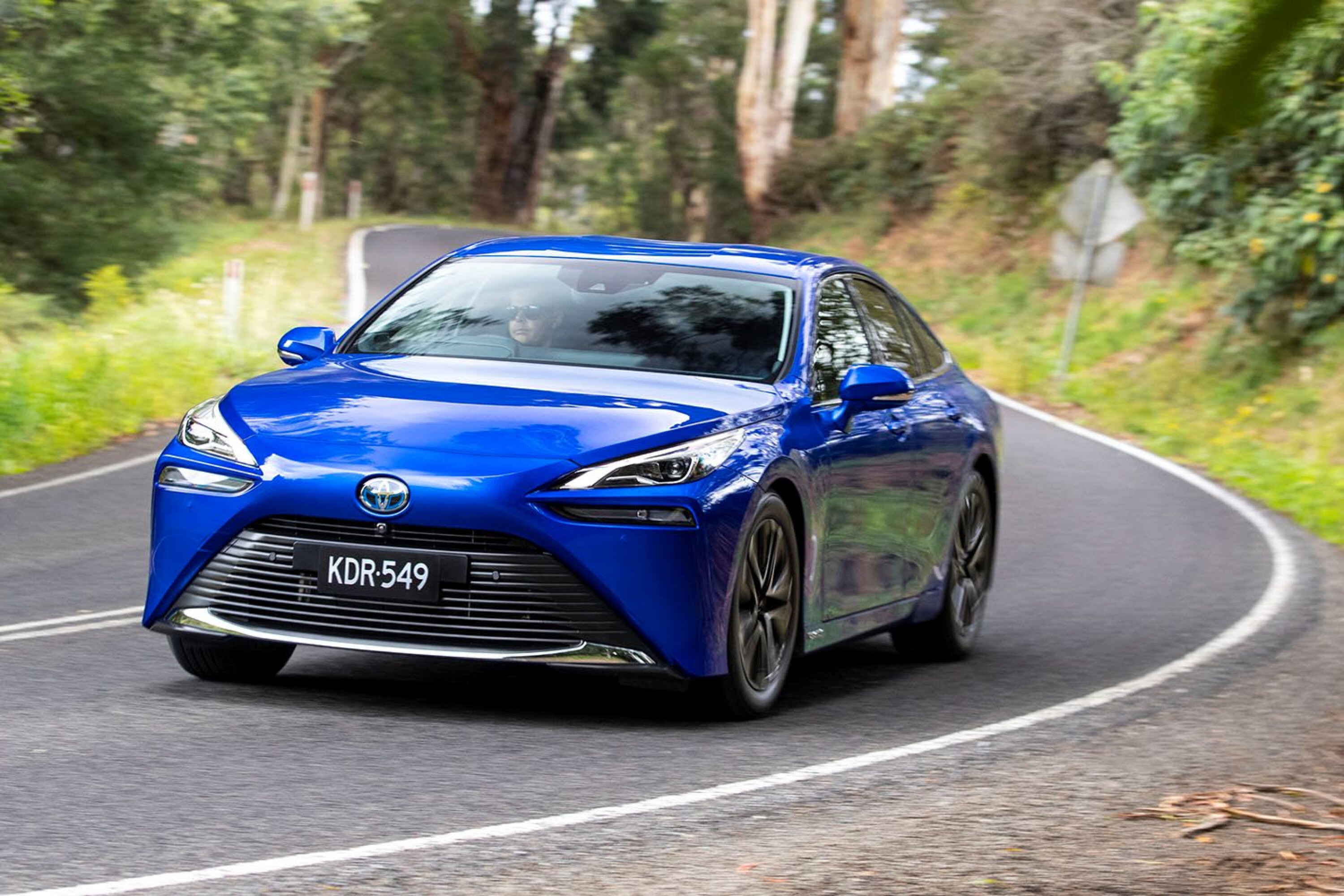
“Maybe, just maybe there’s another solution. Perhaps this is where hydrogen fuel cells could come into their own. Not surprisingly, Toyota has been working in that space, too, for years. We already have a highly developed technology as seen in the Mirai, which is now in its second generation.”
1
“In the UK, we’re in the process of developing a hydrogen-powered HiLux prototype using our latest second-generation fuel cell technology and it wouldn’t surprise me if it became a vehicle that bridges that gap between today’s realities and tomorrow’s technological requirements”, added Hanley.
The second-gen Mirai sedan can store up to 5kg of hydrogen at 10,000 psi which is good to take the sedan around 650km from a full tank, and it takes between three and five minutes to brim the hydrogen stores.
There are currently only two publicly available hydrogen refuelling stations in Australia, one at Toyota’s national headquarters in Altona and another in Canberra. There was $20 million allotted by the federal government to construct four more along the Hume Highway (between Melbourne and Sydney), though none have opened yet. This would leave hydrogen FCEV HiLux owners worse off than an EV model with fast charging capability.
2
Still, the technology remains in its infancy and Toyota sees potential, with prototypes set to hit the roads in the UK shortly. Hanley estimates it will be a better technology for vehicles that need to travel long distances and tow.
“The first prototype vehicles are being produced this year with a view to preparing a small series production”, said Hanely. “It’s made possible by the willingness of Toyota to invest in more than one technology. This, ladies and gentlemen, is exactly where our ‘diversified powertrains’ [philosophy] comes into its own.”
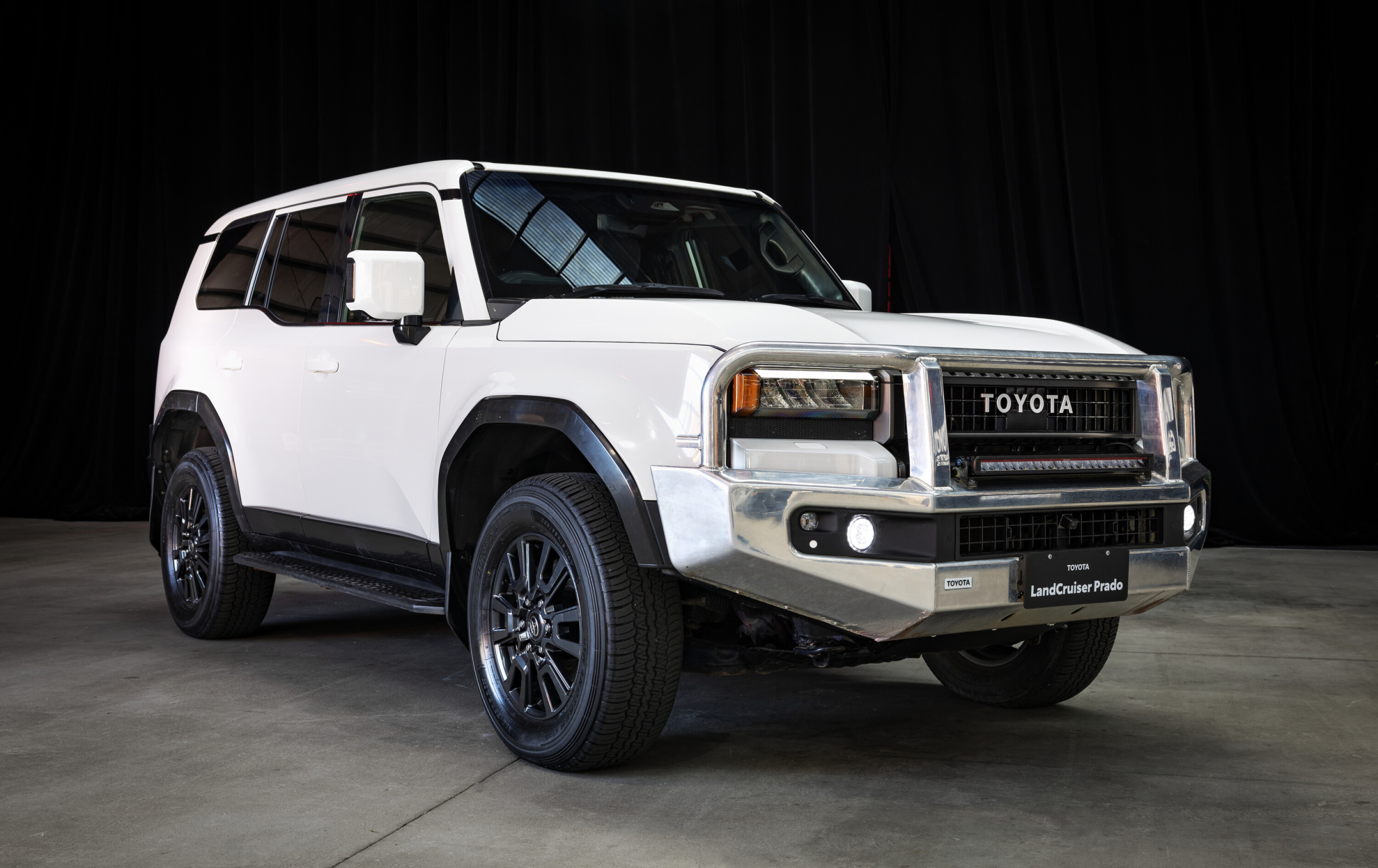
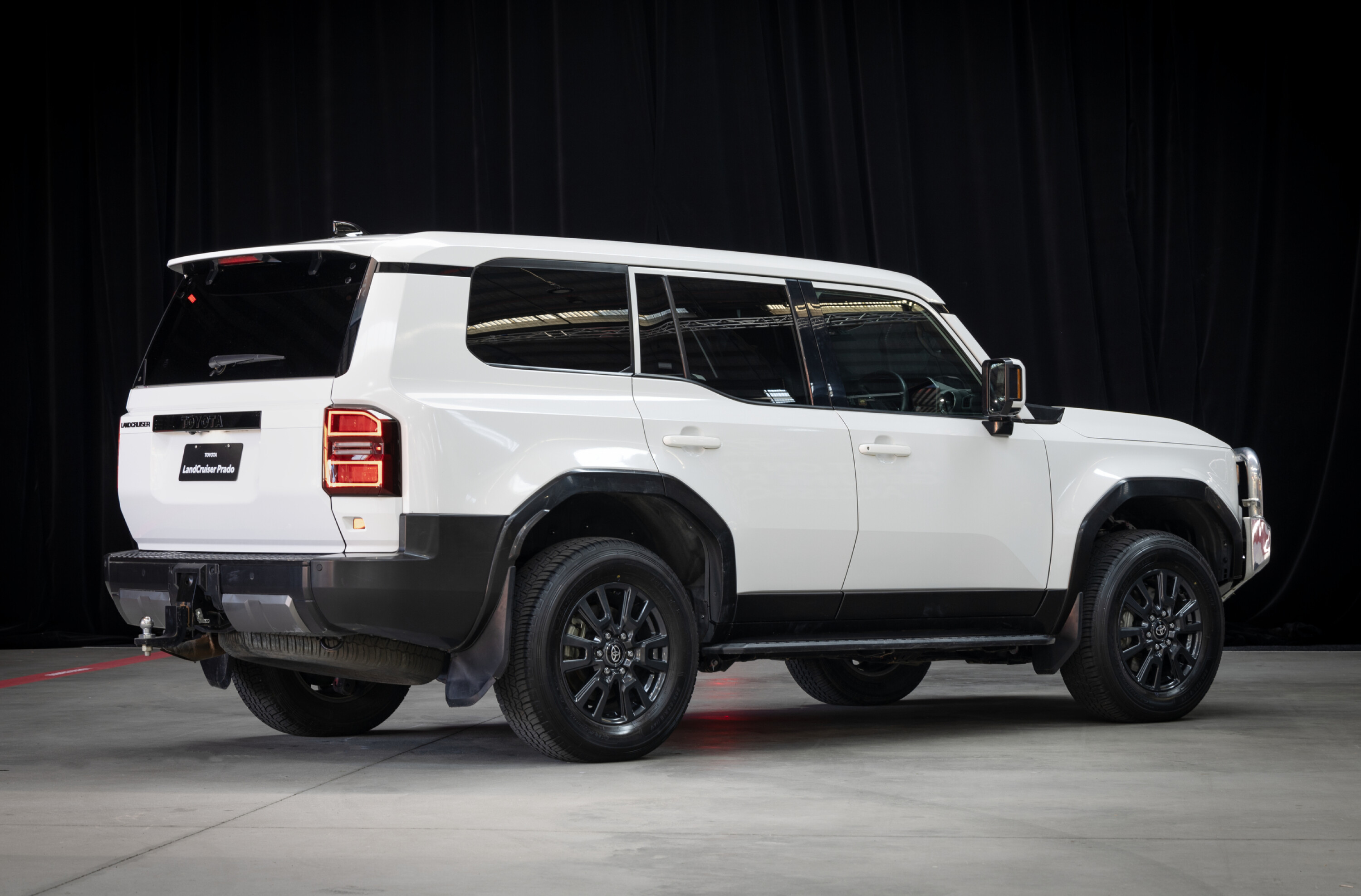
The all-new Toyota Prado petrol-electric hybrid could arrive in Australia if it meets local market conditions.
In Australia, the electrified 2024 Toyota Prado will be in the form of mild 48-volt assistance for the familiar 150kW/500Nm 2.8-litre four-cylinder diesel, also coming to select HiLux variants in 2024.
Toyota Australia said it will not market the battery-assist system in the new Prado as a ‘mild-hybrid’, instead referring to it as ‘48-Volt Technology’ because the electric motor is unable to “propel the vehicle either together or independently” – unlike Toyota’s series-parallel-hybrid vehicles.
Missing from the local line-up at launch is the full-hybrid 2.4-litre petrol-electric powertrain that will be standard-fit in North America and China.
Toyota Australia vice president for sales and marketing, Sean Hanley, said the LandCruiser hybrid hasn’t been ruled out for Australia, but it’d need to meet towing capacity and other requirements Australian consumers expect.
“We certainly haven’t ruled [LandCruiser Prado hybrid] out,” he said.
“Our global president certainly has indicated the acceleration of BEV technologies, I think we’re starting to see some of that become more public now.
2
“However, at the moment… it’s just not part of our product plan.”
“We’ve really got to look at the US car, make sure it can tow, make sure [it suits Australian conditions]. If in fact, it can do those things, then certainly it’s a car we’d be interested to bring into the Australian market.”
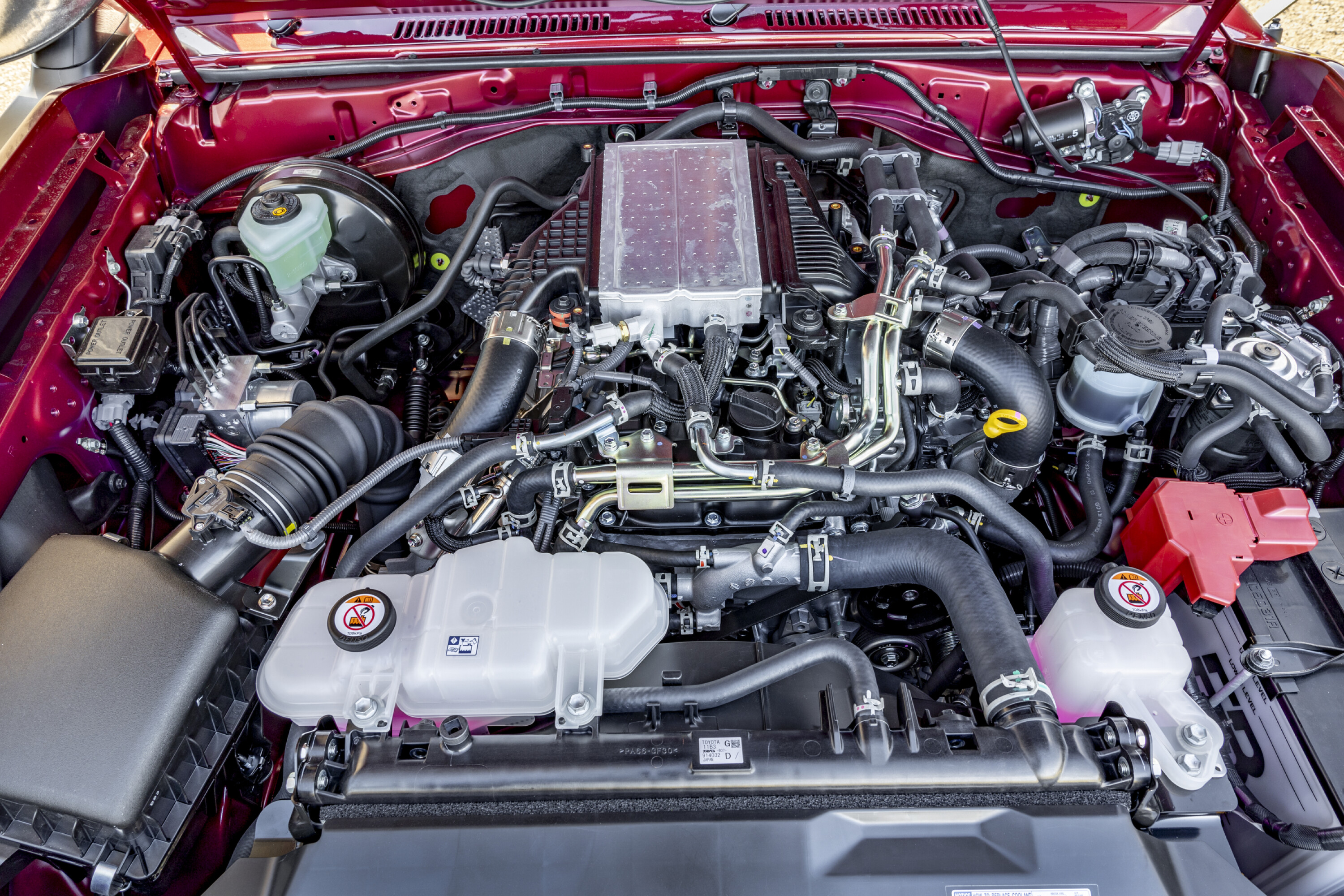
The addition of 48-volt technology to the diesel Prado is said to help improve fuel consumption in urban settings, while the transmission has shifted to an eight-speed torque-converter unit, up from six speeds.
Hanley said “three years of local development” was conducted on the 48-volt system to ensure it is “100 per cent suited to Australia’s harsh conditions and customer demands, dust, mud, water, heat, heavy towing, and the high power load drawn by accessories”.
1
Full-hybrid pushes outputs up to 243kW and 630Nm – beating a Ford Everest diesel V6 (184kW/600Nm).
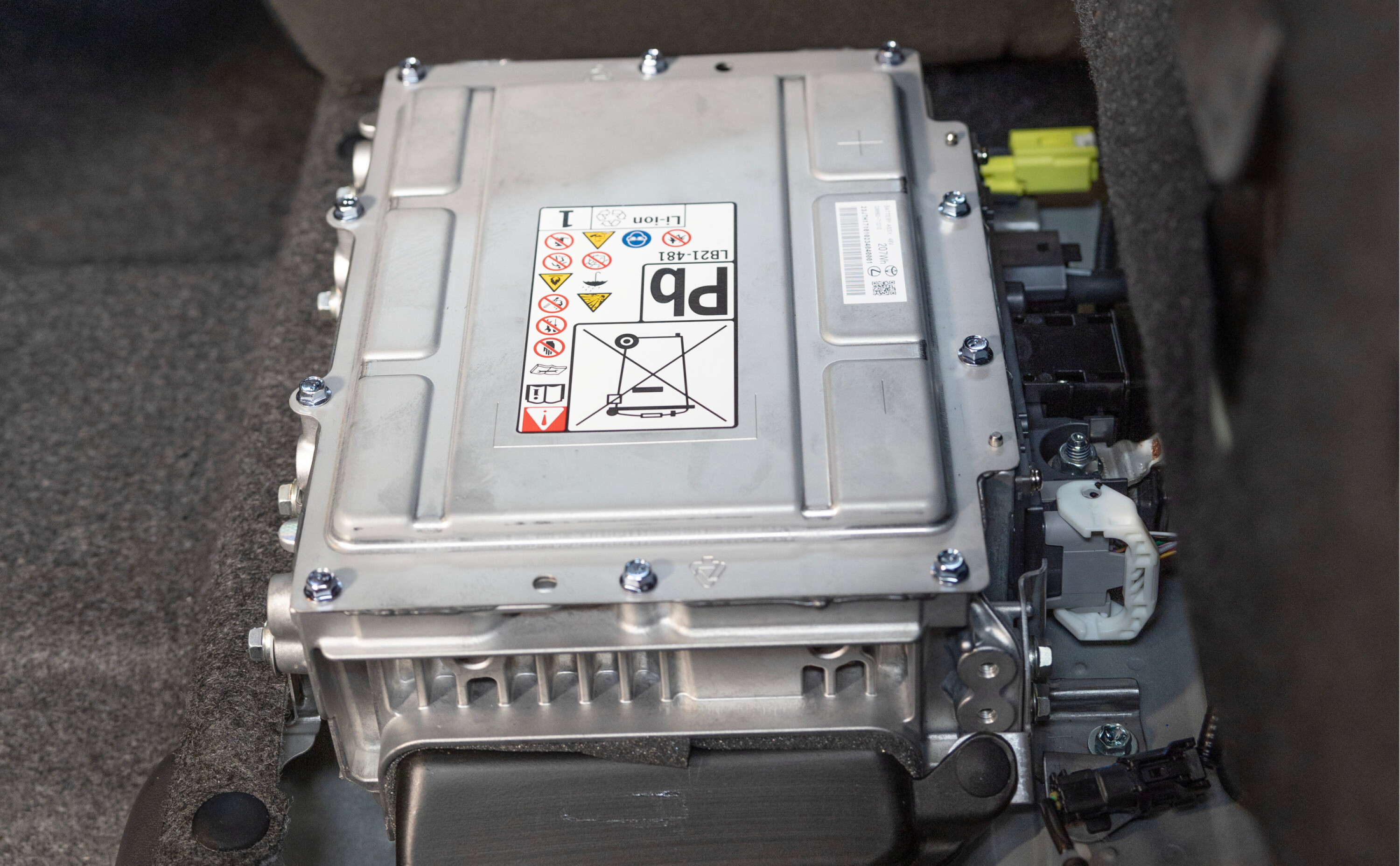
The electrified components are identical to the new Toyota Tacoma mid-size ute with a single electric motor and a 1.87kWh lithium-ion battery pack.
The hybrid system is more truck-like compared to Toyota’s passenger vehicles, with the electric motor sandwiched between the engine and transmission.
1
However, while diesel Prado variants have a 3.5-tonne braked towing capacity, the turbo-petrol hybrid is limited to 2.7 tonnes in the United States.
The new 2024 Toyota Prado diesel will arrive in local showrooms mid-year, with more details – including specific timing, pricing and features – to be announced closer to its Australian launch.
Get up to speed on the new Prado
The stories below will give you a guide to everything we learned about the new Prado when it was unveiled. All fresh stories published since then will be found on our Toyota Prado model page here.
Toyota recently announced its 2024 Toyota LandCruiser 70 Series range will be powered by a 1GD 2.8-litre four-cylinder diesel engine backed by an Aisin six-speed automatic transmission – a huge pivot from the venerable V8-powered manual.
Why the downsize? At a recent Toyota showcase, Sean Hanley, Toyota Australia vice president for sales, marketing and franchise operations, explained how the four-cylinder Toyota LandCruiser 70 Series came to be … and it all began with a WTF moment.
“Engineers of course have a unique sense of humour,” Hanley stated, talking about the genesis of the four-cylinder 70 Series. “So they’ve been referring to this project as WTF … not what you think, it’s why the four?
1
“Let me tell you why. Their involvement [Australian engineers] in this new vehicle goes back five years to when they hosted their engineering colleagues in Japan on what we call a Genchi Genbutsu tour.”
Genchi Genbutsu is a key principle of Toyota’s production system and translates to ‘real location, real thing’ or ‘go and see’ – to understand a situation, one should observe it where it is taking place.
“Genchi Genbutsu literally translated means go to the source; go and find out; go and experience yourself; go and see for yourself where and how this vehicle is used,” Hanley said, “so that you can truly and deeply understand why it’s so important to continue production of the 70 Series for our Australian market, and that they did.”
1
A contingent of engineers flew over from Japan to witness first-hand how real customers use the 70 Series in places like Central Australia, where terrain is extreme and locations remote.
“They saw that the 70 Series is not just the vehicle of choice for miners and farmers; it’s often a vehicle that’s relied on by park rangers working way off the beaten track, and for delivering essential services to remote communities including in emergencies,” Hanley explained.
“These customers also expressed strong demand for an automatic transmission because it makes the vehicle so much easier to handle for conditions such as towing trailers through sandy deserts.”
1
Once the business case was approved, local engineers began testing, modifying and evaluating prototypes of this car back in 2019.
“And don’t assume we’ve simply taken the GD out of the HiLux,” Hanley added. “We’ve made a raft of changes to ensure this powertrain lives up to the high expectations of 70 Series drivers, including modifications to the gearing and cooling.
“In short, the in-line four does everything the V8 does but it’s easier to drive and it’s more accessible.”
1
Order books for the four-cylinder 70 Series will open in October this year. The new vehicle will be sold alongside the 1VD V8 manual gearbox model, but an order pause remains in place for the V8 while Toyota works through a backlog of customer orders.
More details on the four-cylinder 70 Series will be available at the vehicle’s launch in November 2023.
“Most of you have called it a mild-hybrid. We don’t,” said Toyota Australia vice president for sales and marketing, Sean Hanley.
Toyota Australia will refer to the battery-assist system in the HiLux and Prado as ‘48-Volt Technology’, not ‘mild-hybrid’, because the small electric motor does not directly power the vehicle.
This is in contrast to Toyota’s series-parallel-hybrid vehicles, including the popular RAV4, where the electric motor and internal-combustion engine can “propel the vehicle either together or independently”.
Other brands, such as Mazda and Subaru, refer to similar electrified technology in 24- or 48-volt form as a ‘mild-hybrid’, although some systems can power a vehicle at low speeds.
Toyota has confirmed the mild-hybrid system will not impact the 3500-kilogram braked towing capacity for the HiLux and Prado.
1
The addition of 48-volt technology is said to help improve drivability and reduce the engine’s noise, vibration and harshness.
“Having said that, the system really does hit the sweet spot by assisting the diesel engine. It can power the car’s steering pumps and fans and it supports the fuel-saving stop/start operation, keeping the electrics firing and handling the load of the climate control,” added Hanley.
“The system recharges while you’re driving, recovering and storing kinetic energy from braking and it facilitates smoother and quicker startup and take off once the brake pedal is released.”
Hanley said “three years of local development” was conducted on the 48-volt system to ensure it is “100 per cent suited to Australia’s harsh conditions and customer demands, dust, mud, water, heat, heavy towing, and the high power load drawn by accessories”.
1
The updated 2024 Toyota HiLux is due in Australia in the first quarter of next year, while the all-new LandCruiser Prado will follow mid-year.
It will be standard for the HiLux SR5 and Rogue 4×4 dual-cab variants, optional for the SR 4×4 dual cab, and fitted across the new Prado line-up. Toyota has yet to confirm if the Fortuner off-road large SUV will receive its 48-volt system.
As previously announced, Toyota Australia plans to offer an electrified version of every model in its range by 2030 – including HiLux, LandCruiser and HiAce – but not GR performance cars.
“Well, there’s hybrid. You know, plug-in hybrid, there’s all sorts of variants. We’ve been looking at H2 (hydrogen) conversions, we’re looking at [battery-electric vehicles], we’re looking at everything. This is exactly what we’re saying, that Toyota won’t put all of its eggs in one basket,” he said.
A series-parallel hybrid is likely for the next-generation HiLux, due around 2025.
Get up to speed on the new Prado
The stories below will give you a guide to everything we learned about the new Prado when it was unveiled. All fresh stories published since then will be found on our Toyota Prado model page here.
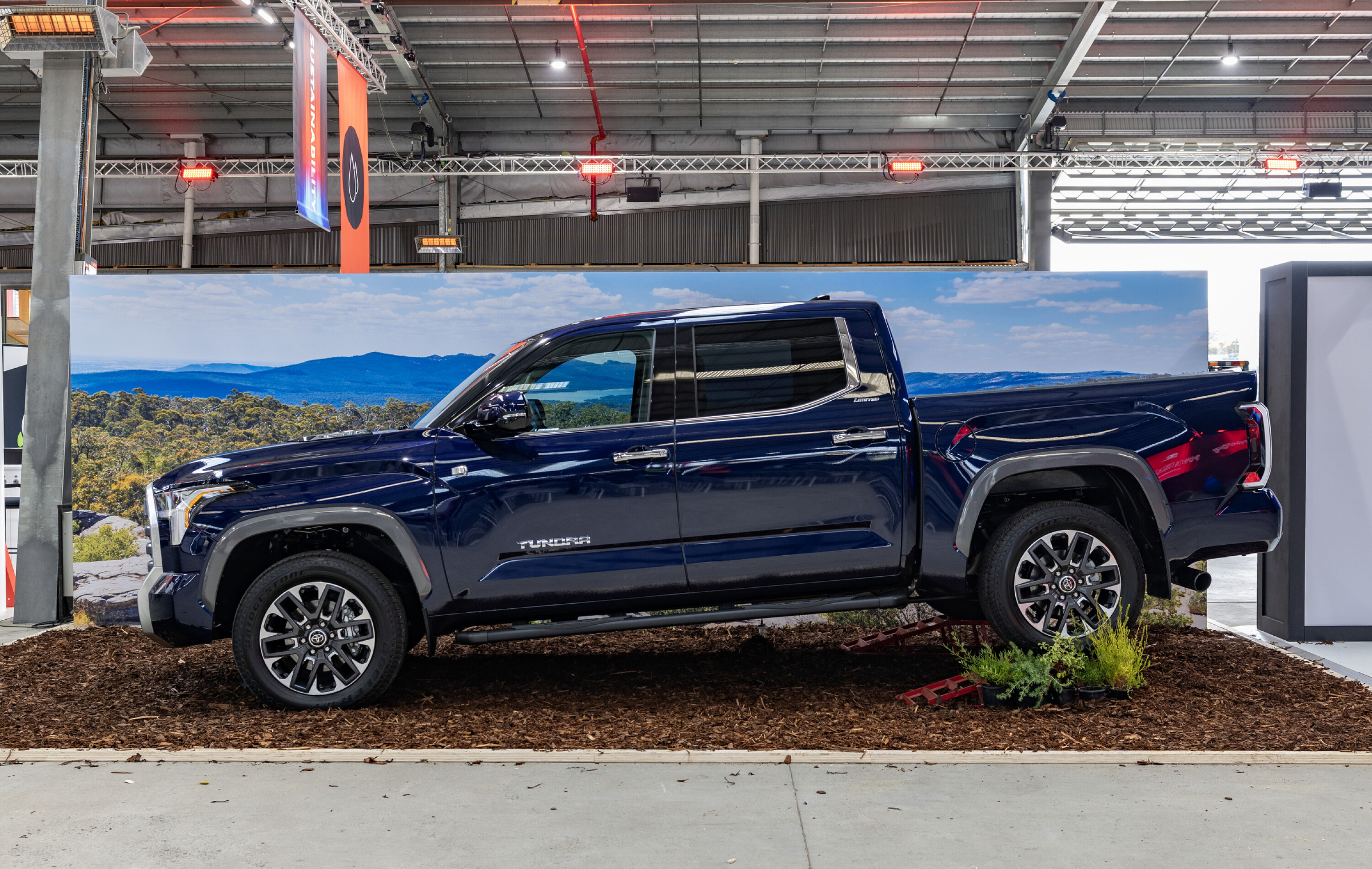
There will be a fleet of 300 Toyota Tundra utes in the hands of Toyota customers by April 2024. But, according to Toyota, this doesn’t confirm that the full-size ute will go on sale in Australia.
Snapshot
Three-hundred Toyota Tundras to be leased ahead of formal release
Spec and trim levels yet to be confirmed
For cherry-picked loyal Toyota customers only
The next stage of our right-hand drive re-engineering project is ready to go.
“Local [Tundra] production is underway with our partner Walkinshaw Automotive Group, and 300 prototype vehicles will be delivered progressively between December this year and April 2024”, said Toyota Australia vice president for sales, marketing and franchise operations, Sean Hanley.
The Tundra localisation program has already been in action for 12 months, with members of the Wheels Media team having spotted early evaluation vehicles being tested by Toyota engineers near twisty hill routes, suburbs, and with trailers hooked up.
“To help us choose the most appropriate drivers, our dealers will contact potential customers; they’ll provide us with a shortlist for final selection based on location, occupation, and planned usage”, said Hanley.
After careful selection, the first 50 customers will then be offered the car to effectively own. It’s similar to how hydrogen-powered Mirai ‘sales’ operate in Australia. A privilege or a burden for each buyer, it’s certainly a unique way to evaluate a vehicle.
1
Subsequently, another 250 customers will be able to get in on the program – provided the first guinea pigs enjoy their experiences.
“These customers will benefit from an attractive full-service lease also through Toyota Finance Australia that recognises our requirements for customers to provide feedback through the regular dealer check-ins”, Hanley added.
“I stress: this is a test and a trial. This vehicle has not been marked for launch in Australia at this point”, Hanley said with gravitas.
“I want to also stress that this is a real-world evaluation and validation program. And an essential stage before full-scale production can be approved. This is something very different – we’ve never done this before.”
1
Toyota Tundra availability and pricing
Toyota remains coy about the full release of Tundra, but as the old adage goes, where there’s smoke, there’s fire.
Full-size ute sales in Australia have exploded, increasing market share 56.8 per cent year-to-date as right-hand drive versions of the Chevrolet Silverado and RAM 1500 find more and more homes.
The Ford F-150 – the Tundra’s major rival in its US home market – is set for local release this year, and pricing has already been locked in, with a start of $106,950 and peak of $140K.
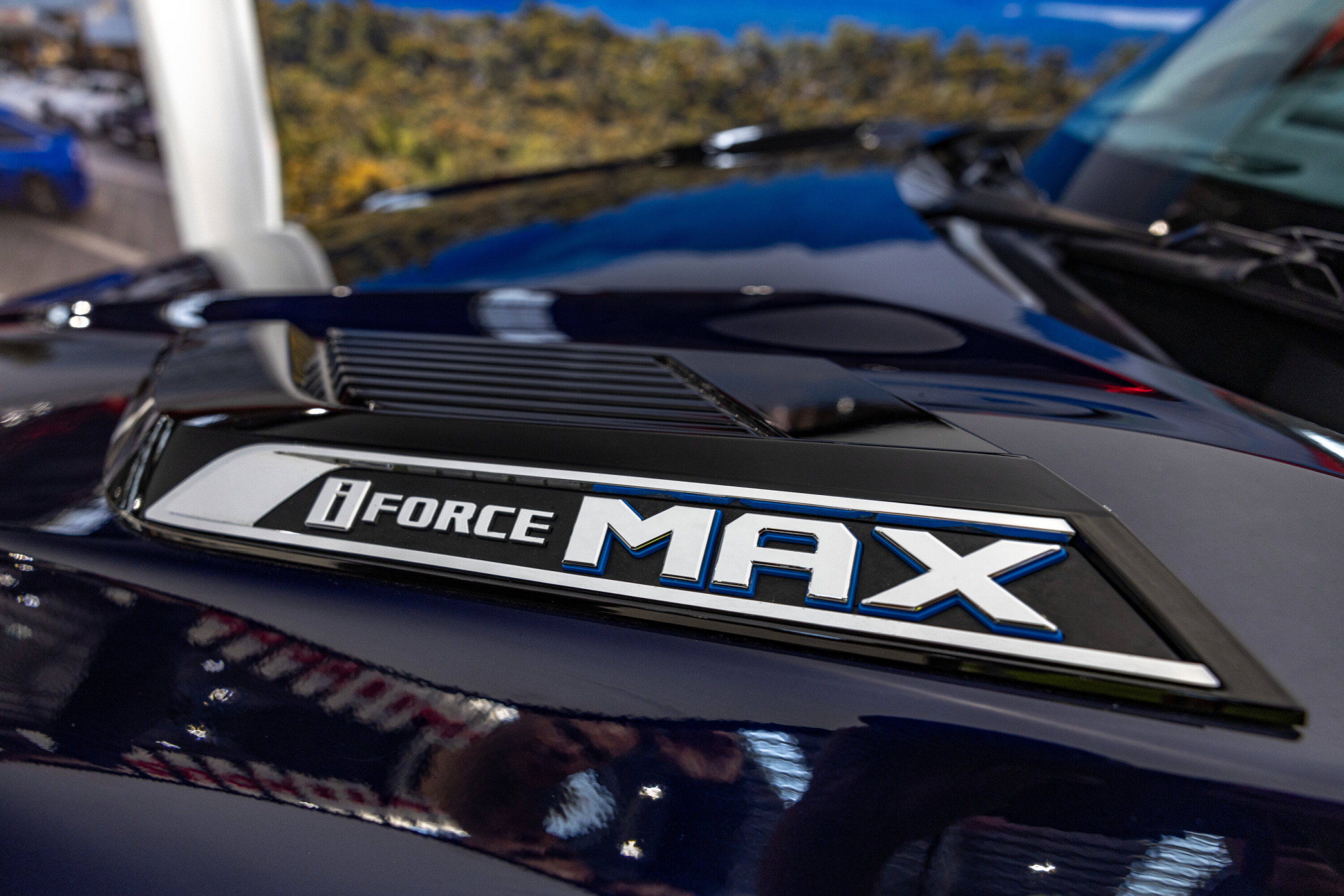
Expect the Tundra to arrive priced similarly if it does launch (sure seems likely). A 326kW and 790Nm i-Force Max petrol-electric hybrid is the picked engine for Oz, but we’ve also spied a 290kW/515Nm twin-turbo V6-powered example kicking around Melbourne.
“We know there is a growing demand in Australia for full-size pickups”, said Hanely. “We are keen to make Tundra available to all Australians, but we need to ensure it meets their needs and the demands of our diverse Australian environment.”
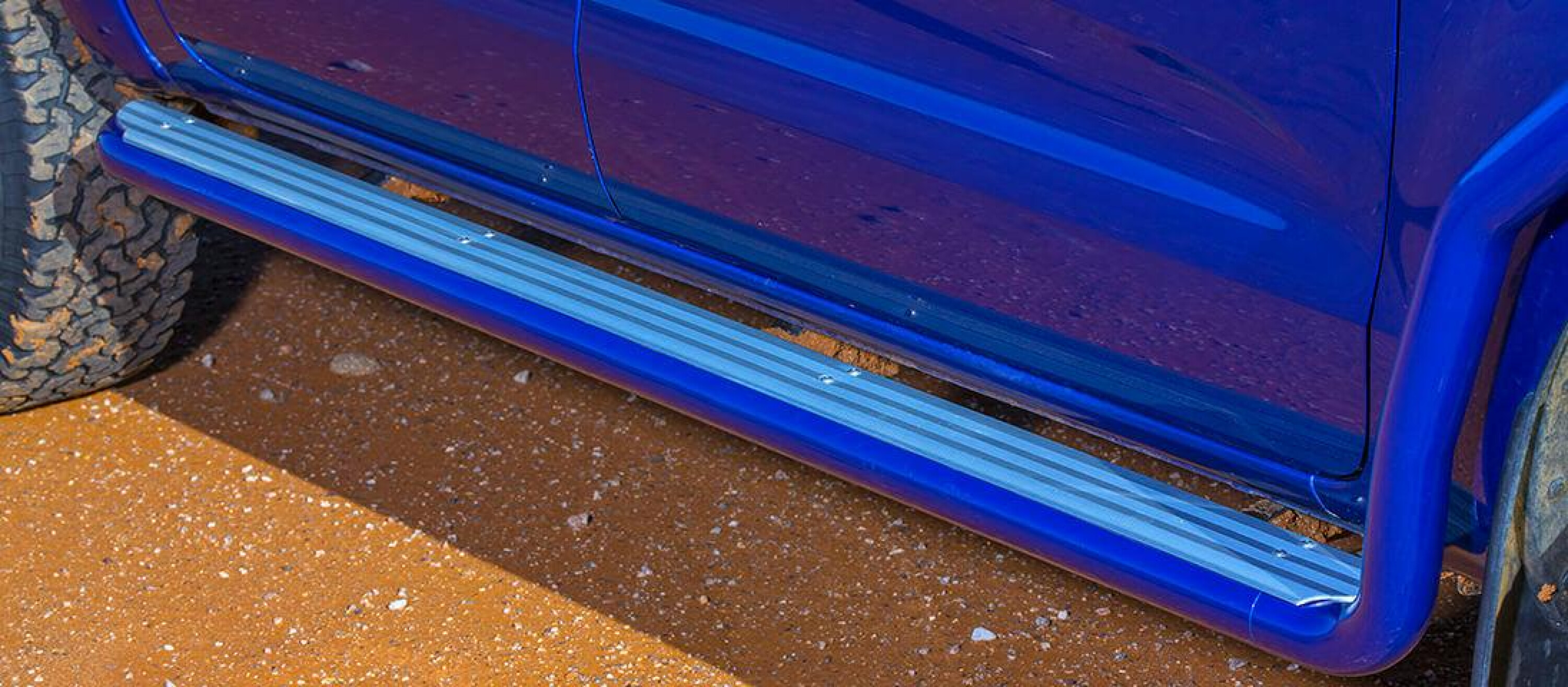
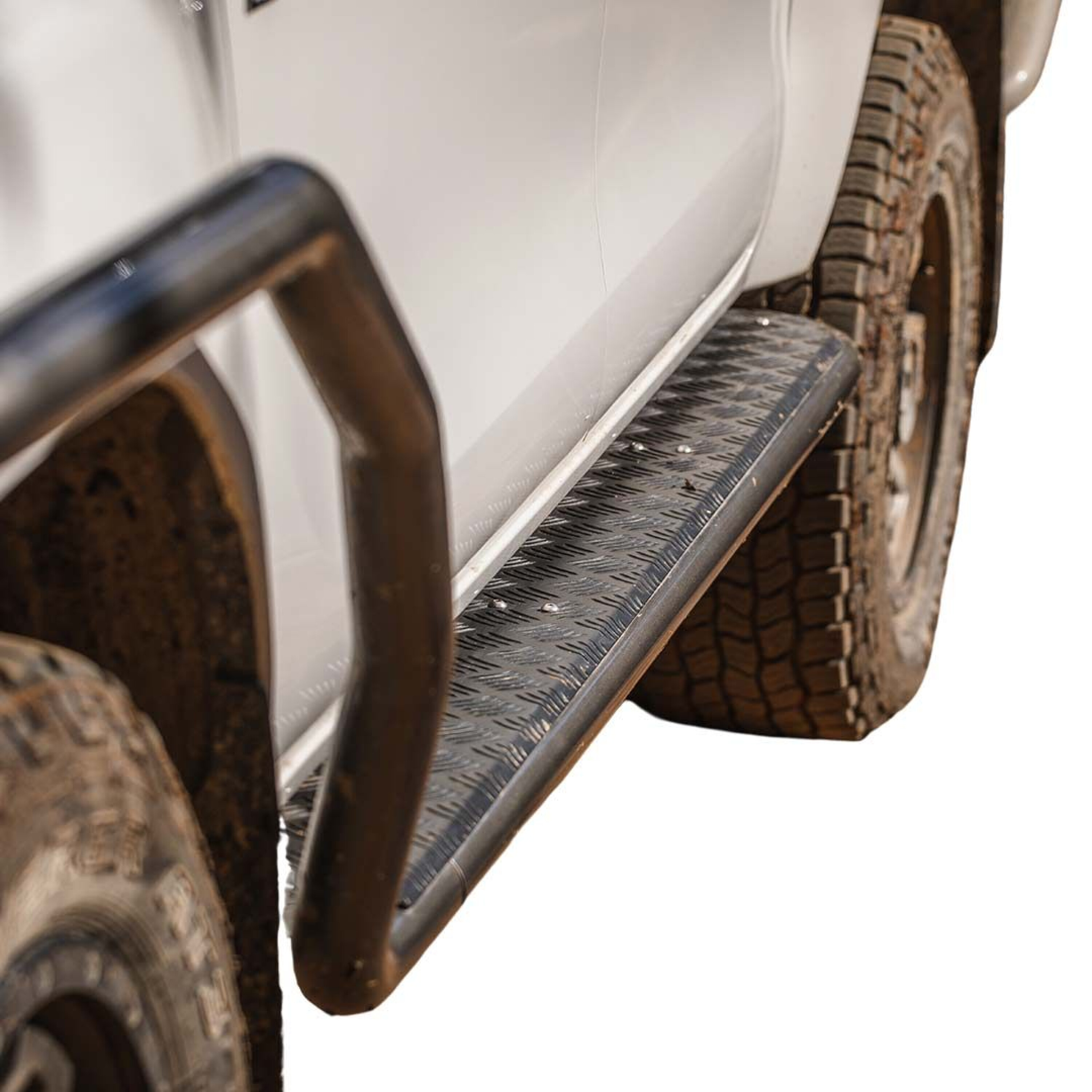
Your Toyota HiLux most likely comes with a set of thin, aluminium factory side steps bolted on to the body of the vehicle, which will bend and buckle at the sight of a rocky hill.
Aftermarket side steps and rock sliders can provide a wide range of advantages for HiLux owners over these factory options. The main difference is durability and with that comes added protection for vulnerable door sills and, in many cases, added ground clearance to reduce the risk of getting hung up on obstacles. Let’s be honest, they also look cool.
What it is: Metal bars that mount to the chassis and run along the sills of the car, which provide protection of the sills and prevent panel damage. Rock sliders are side steps on steroids that are designed to support the weight of the car and can double as jacking points.
Why you need it: Sooner or later, your HiLux will run out of rampover angle, and that will certainly damage those flimsy factory steps and could mean expensive panel damage. Drive tight ruts and you will find steps that extend out from the sills and doors will protect panels from protruding rocks and roots. Some rock sliders can make good jacking points, too.
Buying tips: Rock sliders can, by definition, take the weight of the vehicle, so don’t confuse them with simple side steps which aren’t load-bearing. Ensure the sliders are airbag-compatible, and high-lift jack points are a bonus.
Here are four products we recommend. Theyu2019re intended as a starting point, to give you an idea of whatu2019s available.
Note that some of the HiLux’s specific off-road versions (Rugged X and Rogue) will come from the factory with steel side steps, so upgrades to aftermarket may not be relevant.
ARB side protection equipment acts as a shield for your vehicle’s vulnerable side panels, protecting them from rocks and road debris frequently encountered during remote-area travel. Practicality is also increased, with access to both the cabin and roof-top cargo made easier.
TJM‘s modular range of side protection steps offer easy access and lower side protection for your HiLux. The modular design gives you the option to install side steps first, then add side bars later.
Specifications
Tube diameter: 63mm
Airbag-compliant: Yes
Compatible with scrub rails: Yes
1
Pros
Mounted off chassis
Grippy checkerplate aluminium tread plate
Nice integration with scrub bars allows installation of steps first then scrub bars later
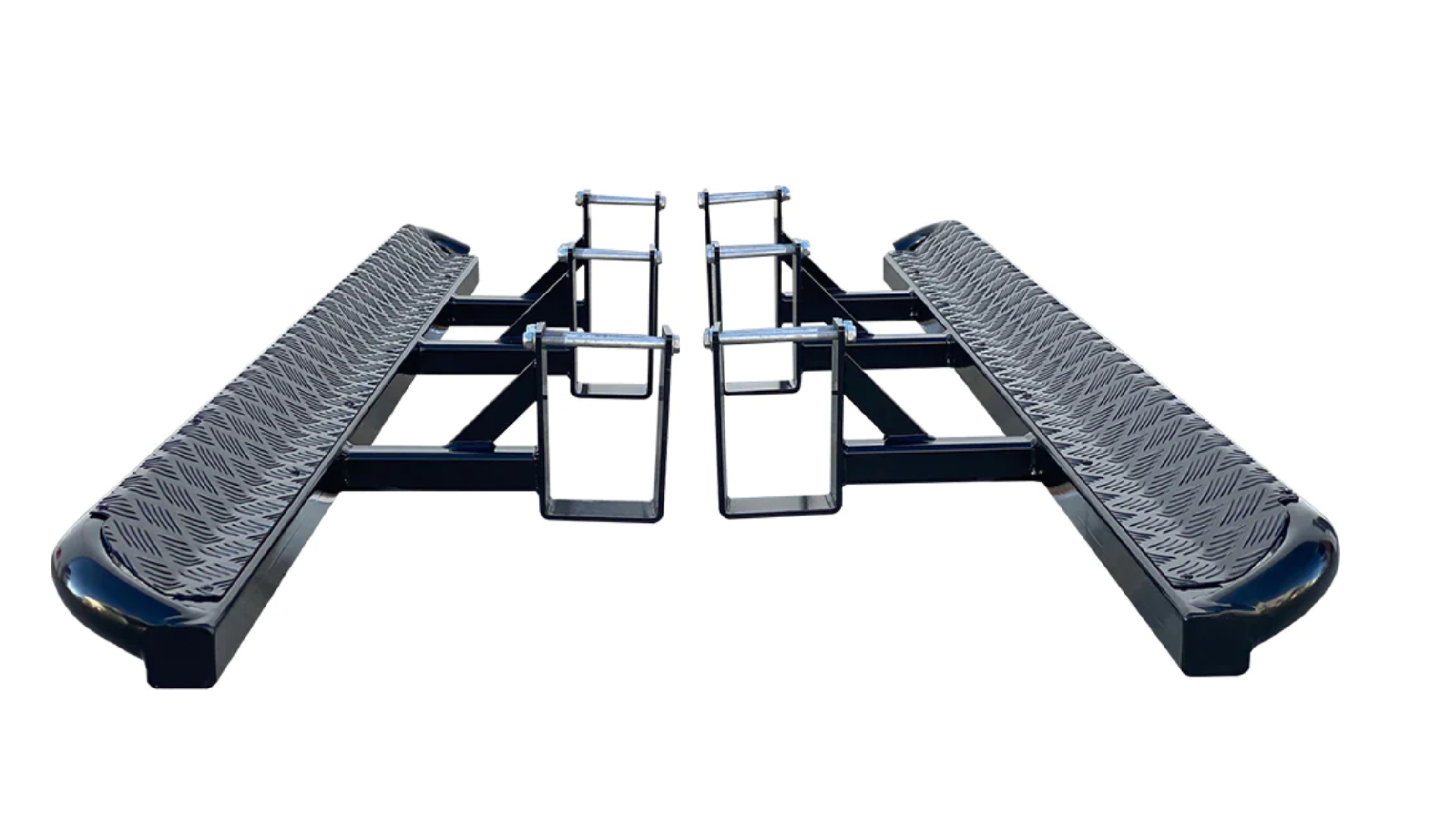
These rock sliders are tough! They are made from 50mm square tube (4mm thick) and 50mm round tube (3.2mm thick). Chassis mounts are made using 5mm laser-cut steel, with a CNC-folded plate wrapping the chassis.
Specifications
Tube diameter: 50mm
Airbag-compliant: Not specified
Compatible with scrub rails: Not specified
1
Pros
4mm-thick tube makes these one of the strongest steps/sliders on the market
A basic yet stylish option. The Ironman 4×4 side steps are made from high-quality steel and chassis mounted for strength. Powder-coating ensures they will remain bolted on to your HiLux for a long time, and the dimple style provides drainage on steps to avoid water build-up.
Specifications
Tube diameter: Not specified
Airbag-compliant: Yes
Compatible with scrub rails: Yes
1
Pros
Value option
Grippy checkerplate aluminium tread plate
Allows fitment of scrub bars later
Cons
Lack of available detail regarding tube diameter and steel thickness
4X4 Australia has been reviewing four-wheel drive vehicles and aftermarket products for more than 40 years.
When looking for the best accessories for your make and model of 4WD, there are some things essential to making sure you have the best off-roading experience.
When we compare products, here are some of the things we consider:
Warranty
Build quality
Value for money
Time and ease to set-up/install
Weight
Fit and finish
How well it gets the job done
What materials they’re made from
Corrosion/UV resistance
Coatings
Compatibility with other accessories
Compliance with ADRs and vehicle safety systems
Country of manufacture
Load ratings, to determine what’s the best product across each price point.
We also consider user reviews and our own experience with these products to make sure our recommendations are for the best on the market.
Disclosure: When you buy through our links, we may earn a commission. We also include products that we do not earn a commission from.