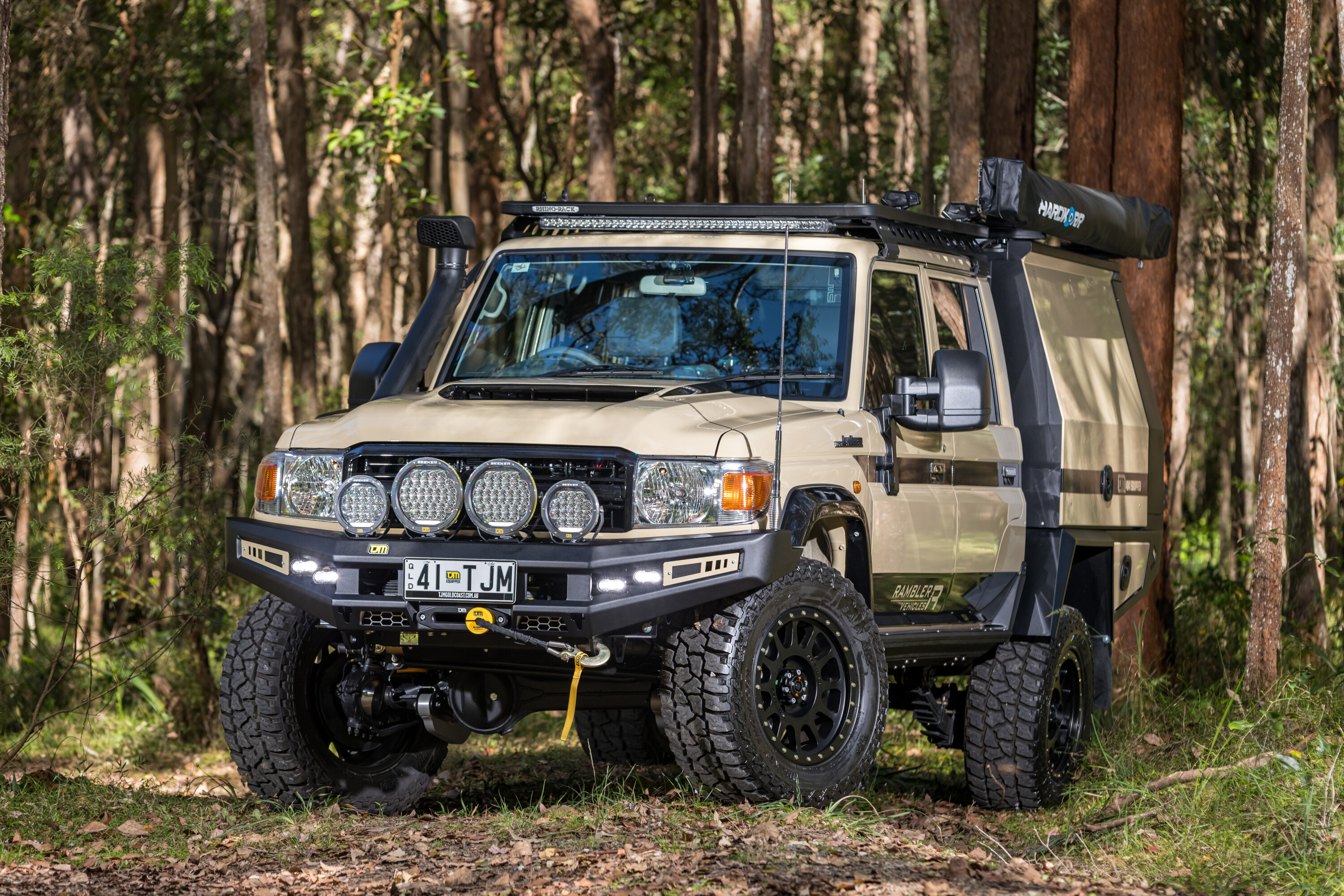
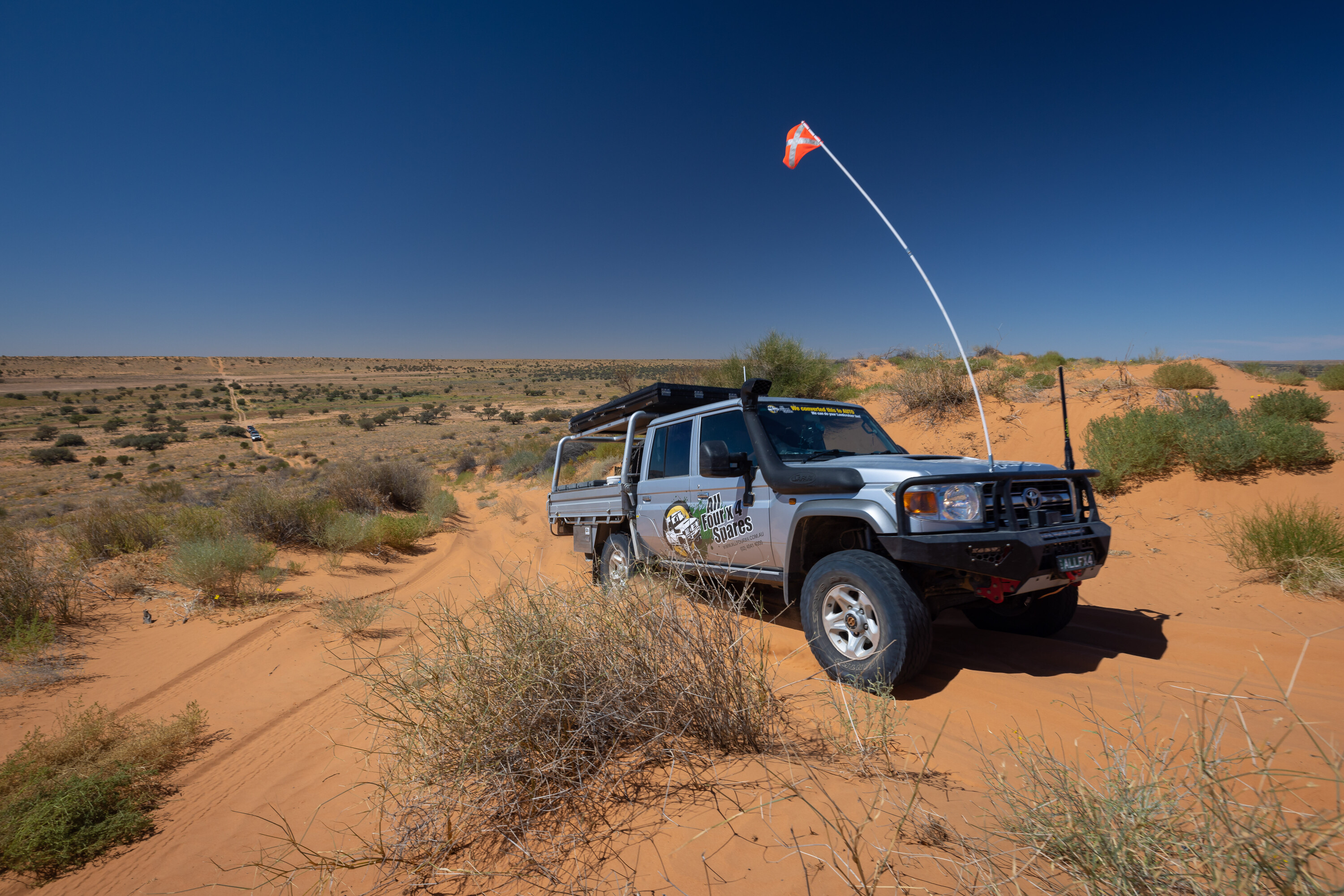
Aussies love the 70 Series, but these heavy duty workhorses lack a bit of finesse when it comes to the side mirrors and interior.
Thankfully, Clearview Accessories offers extensive options to personalise and upgrade the OE mirrors.
The Original Towing Mirror ‘manual black’ is one of Clearview’s all-time, best-selling mirrors and is a readily justifiable upgrade for $785 that replaces the basic metal frame mirrors that are renowned for being next to useless.
2
The manual adjustment black mirrors are now also available in the Next Gen and Compact Towing Mirror designs by Clearview Accessories, and retail for $785 for the Compact and $835 for the Next Gen.
This option provides a better-looking, more stable and robust mirror design while also offering the extra visibility that Clearview’s extendable towing mirrors deliver.
Clearview Accessories also offers additional upgrades for the 70 Series including electric mirror adjustment for $150, adding indicators to the mirrors for $100, as well as adding Power Fold functionality for +$670. Clearview does provide the wiring harness and switches with their mirrors to assist in reducing installation time.
1
GVM upgrades are popular modifications for 70 Series LandCruisers, and Clearview offers a ‘CAT 6 LED indicators’ option in the Compact and Next Gen Towing Mirrors. These indicators comply with ADR6/00 Category 6 as required for some GVM-upgraded vehicles. All relevant Clearview Compact and Next Gen towing mirrors can be ordered with the CAT 6 indicators if required, for $95 per set.
Upgrading your 70 Series mirrors will extend your field of vision when towing, changing lanes or reversing, which improves safety. The mirrors also fold inwards or outwards if struck while 4WDing or parked, reducing insurance claims.
Snapshot
2024 Isuzu D-Max facelift revealed in Thailand
Updated design and more tech, no powertrain changes
Expected in Australia soon
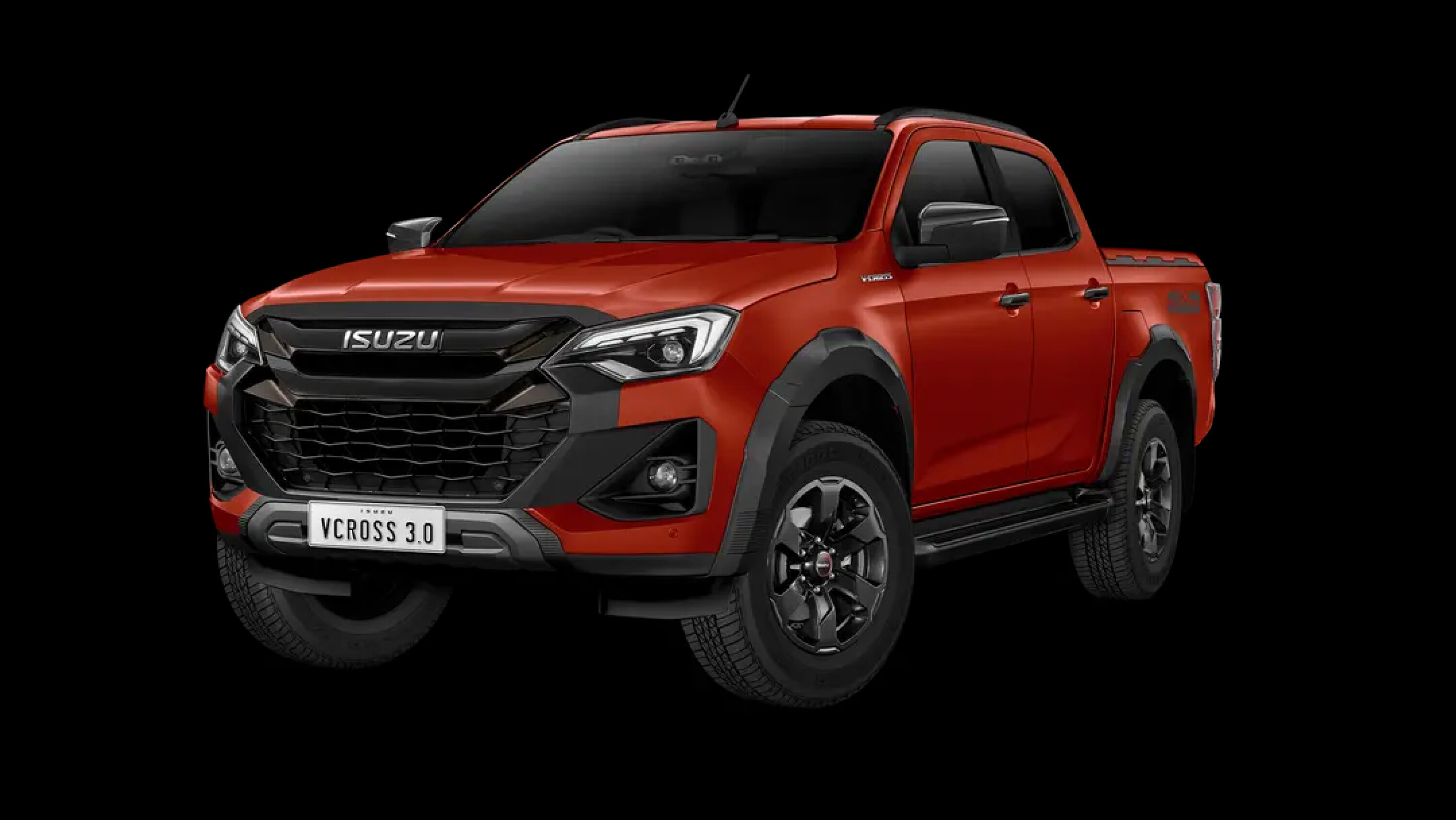
The facelifted 2024 Isuzu D-Max ute has debuted in Thailand, ahead of a likely local debut in the coming months.
It is headlined by a new-look front end, updated tail-lights, and minor interior revisions, with some features borrowed from its MU-X off-road SUV sibling.
“We are unable to comment on future model plans,” said an Isuzu Ute Australia spokesperson.
1
“However, Isuzu Ute Australia will continue to monitor the market to ensure that any local product updates meet the Australian market’s requirements, before committing to any changes locally.”
The mid-life facelift for the current-generation D-Max – introduced four years ago in October 2019 – brings redesigned headlights, a new grey or ‘black chrome’ grille, and a new lower bumper with an integrated air vent to improve aerodynamics.
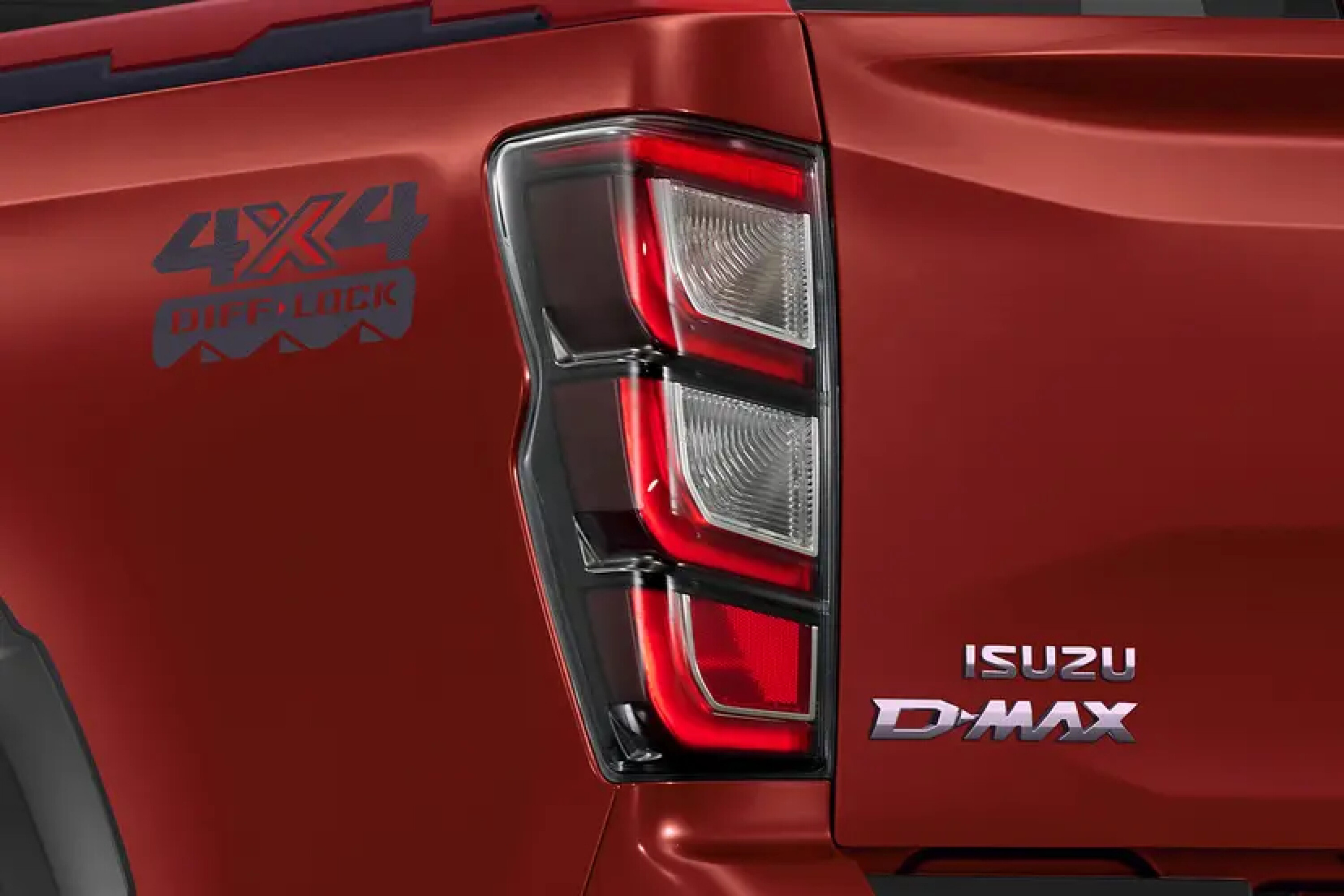
Other exterior changes include updated “triple-armour” LED tail-lights, new wheel designs, and more pronounced flared wheel arches for the flagship D-Max V-Cross, sold in Australia as the X-Terrain.
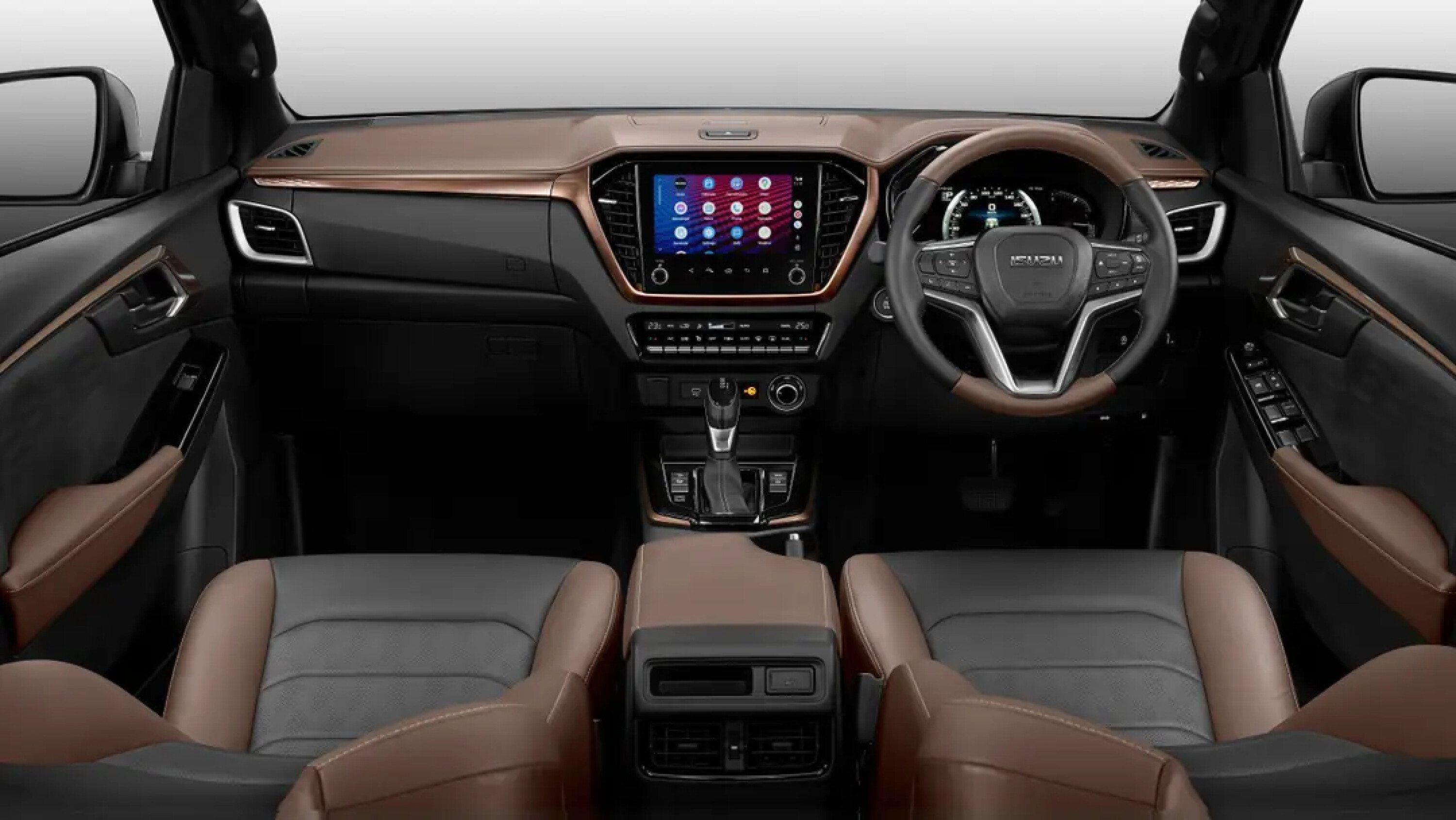
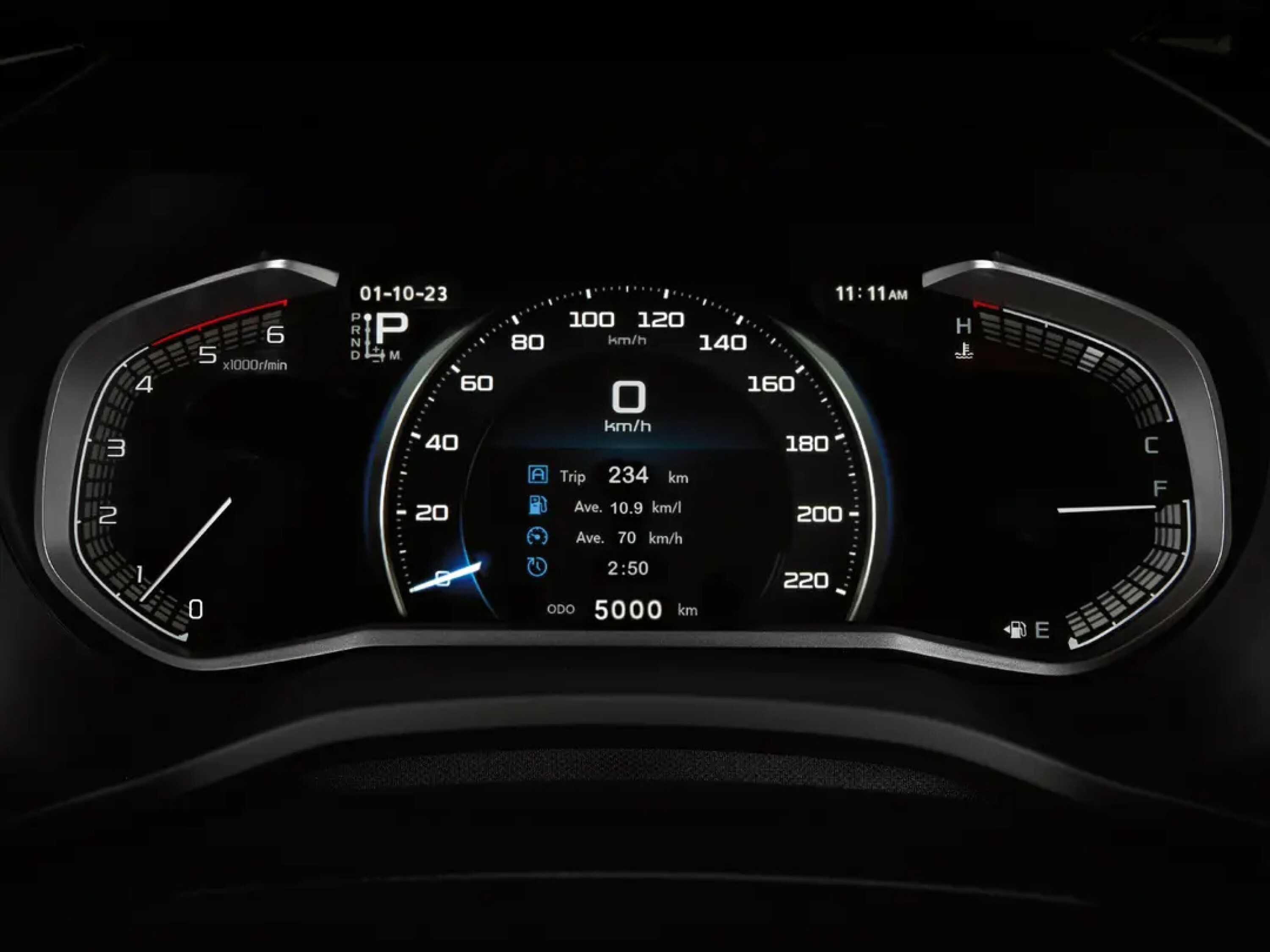
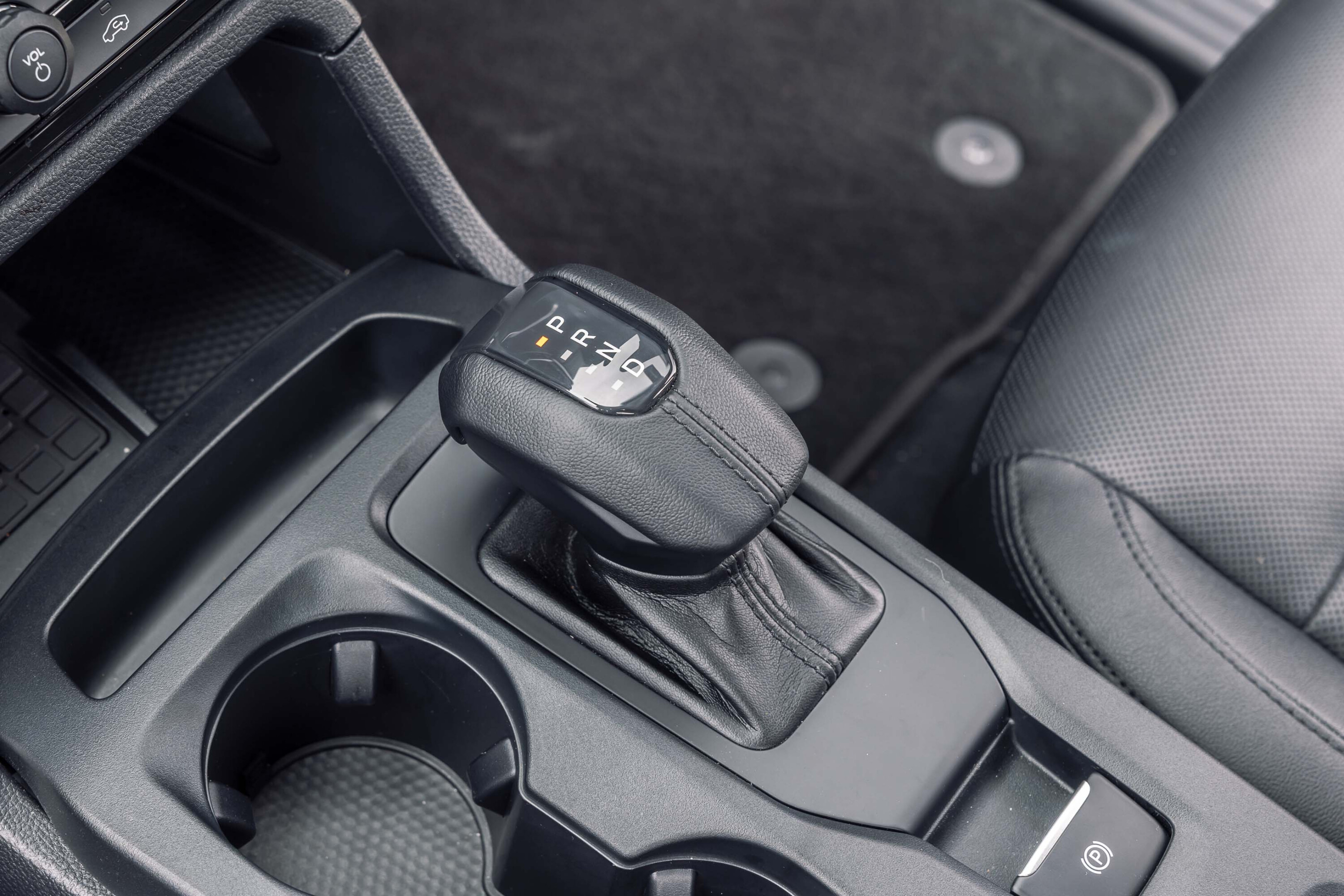
Inside, the updated D-Max receives steering wheel-mounted paddle shifters, ventilated front seats, a 7-inch semi-digital instrument cluster – up from 4.2-inch – and front and rear USB-C charge ports, replacing USB-A.
1
While the central 7- or 9-inch touchscreen remains unchanged, it runs updated infotainment software with wireless Android Auto connectivity, replacing wired-only support and joining wireless Apple CarPlay.
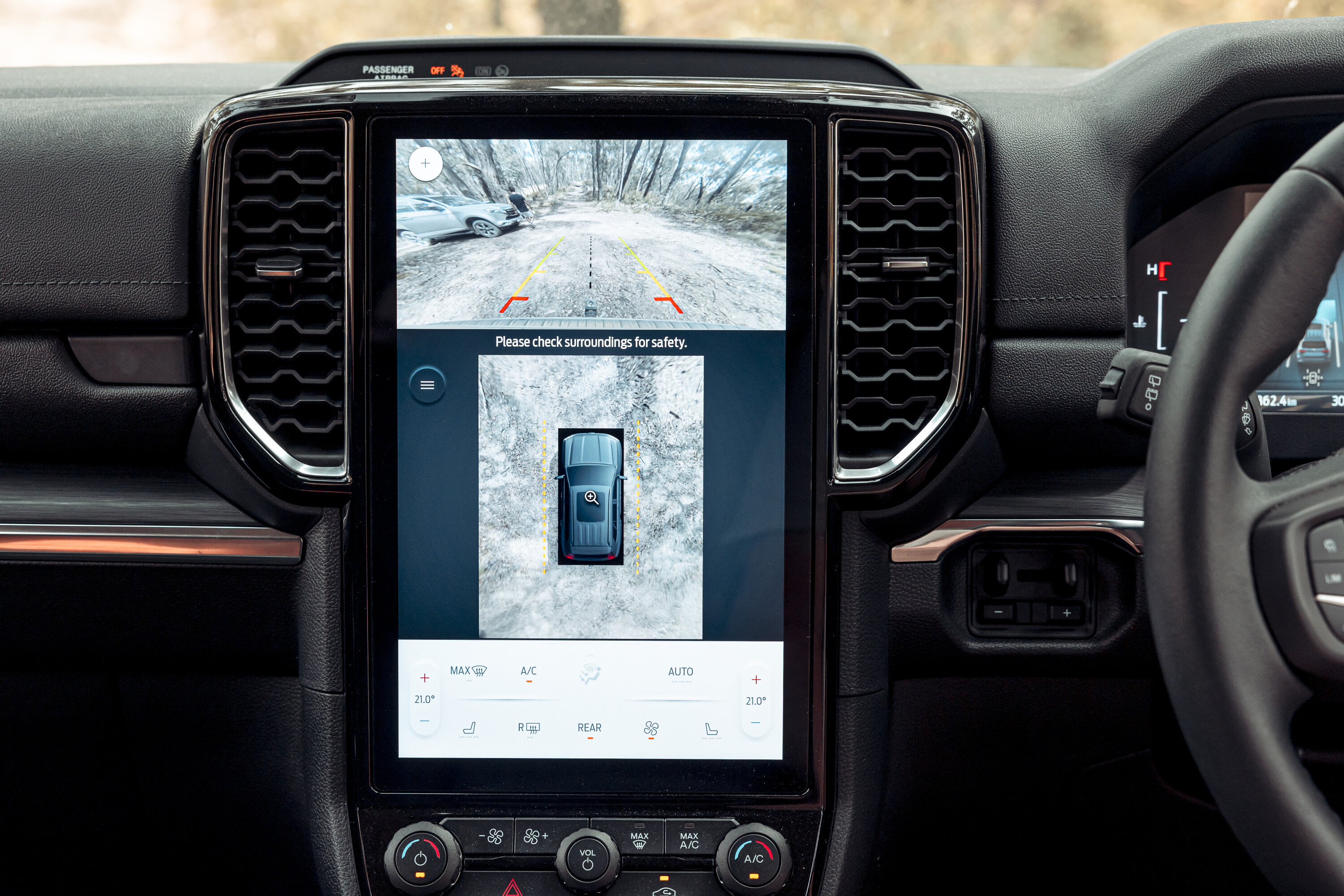
While the updated screen sizes match the new Mitsubishi Triton, the Ford Ranger and Volkswagen Amarok twins are available with a portrait 12-inch infotainment system and a full-digital 12.4-inch instrument cluster.
The Chinese-built D-Max features a digital instrument cluster, a widescreen infotainment system, rear disc brakes, coil spring suspension, and a wireless phone charger – but these changes have not been applied in Thailand, where the D-Max is sourced for Australia.
1
The updated D-Max also features simplified, touch-sensitive controls, volume and tuning dials replacing buttons, and a new brown/black upholstery finish in Thailand with bronze-coloured trim.
First seen in the MU-X, the D-Max receives a ‘rough terrain mode’, which is said to sharpen the brakes and transfer torque to the wheels with the most traction when rock-climbing. It can also automatically engage the rear differential lock.
While there appears to be no change to the active safety suite above that is currently available in Australia, Isuzu claims the front camera module has a “wider and more accurate” view.
1
There are no revisions to the D-Max powertrains, with 110kW/350Nm 1.9-litre four-cylinder turbo-diesel or 140kW/450Nm 3.0-litre options, a six-speed manual or automatic transmission, and two-wheel-drive or part-time four-wheel-drive.
The updated 2024 Isuzu D-Max will launch imminently in Thailand. It will likely arrive in Australia in the coming months, with official information due soon.
Similar updates for the related Mazda BT-50 ute and the Isuzu MU-X off-road SUV will likely appear later.
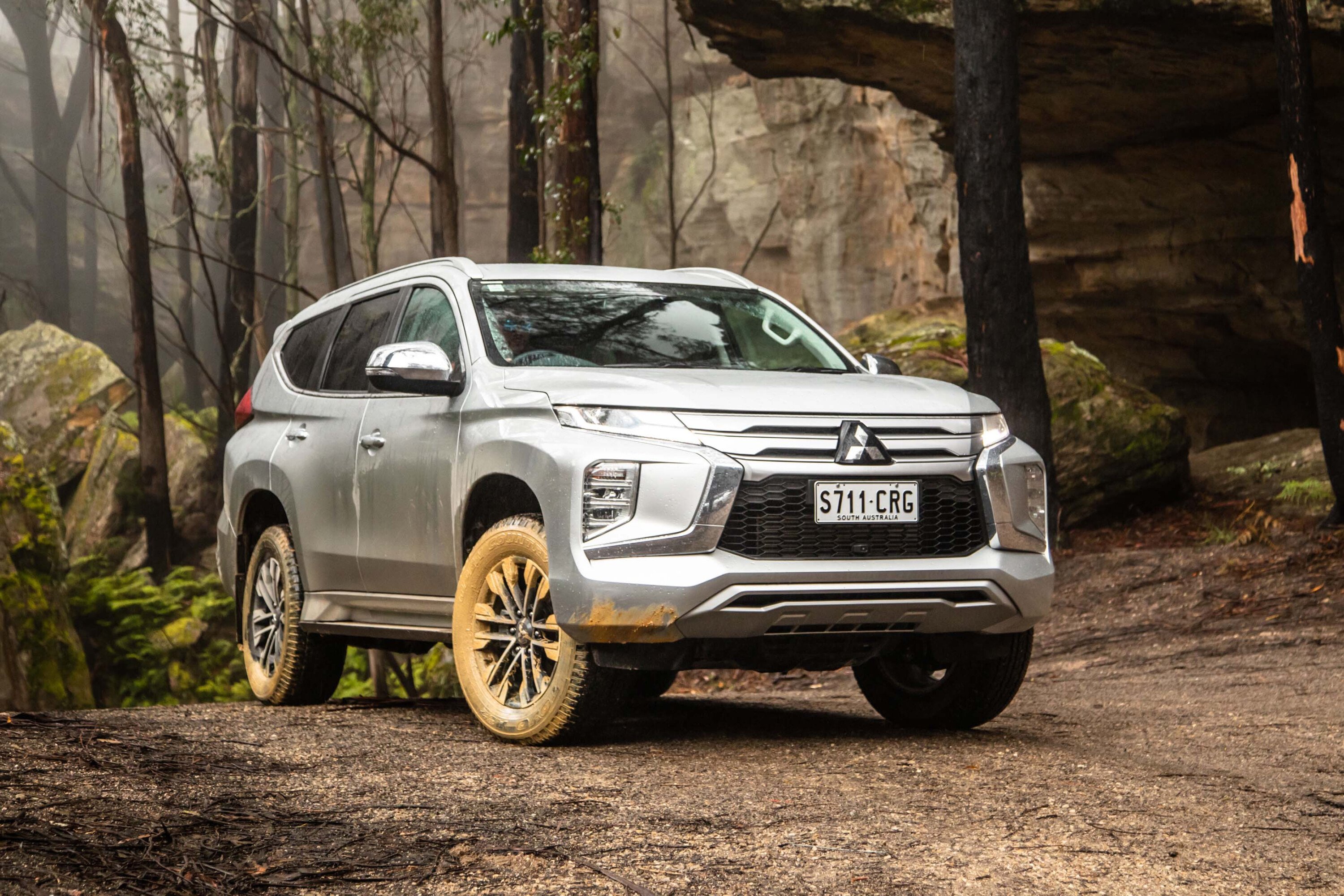
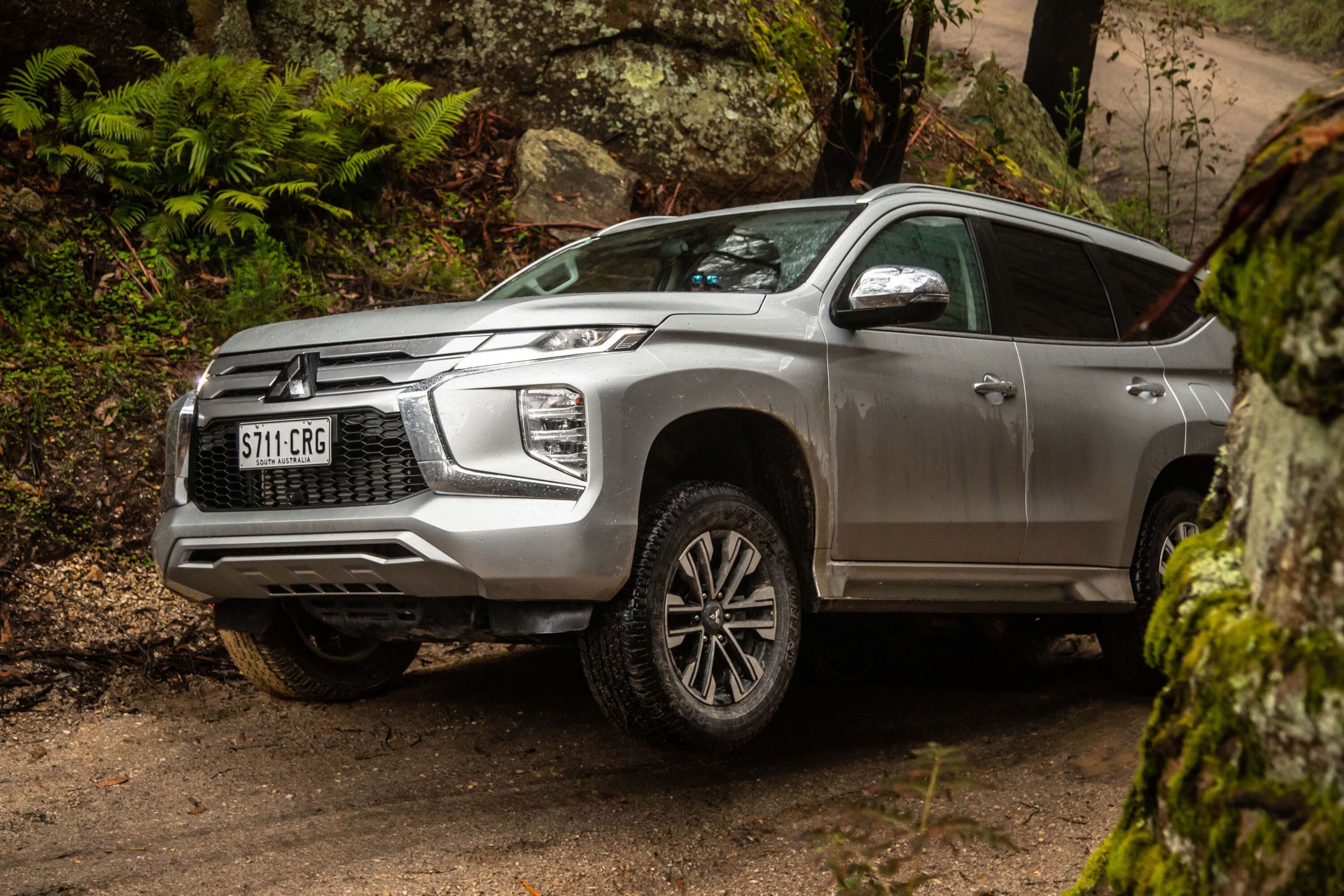
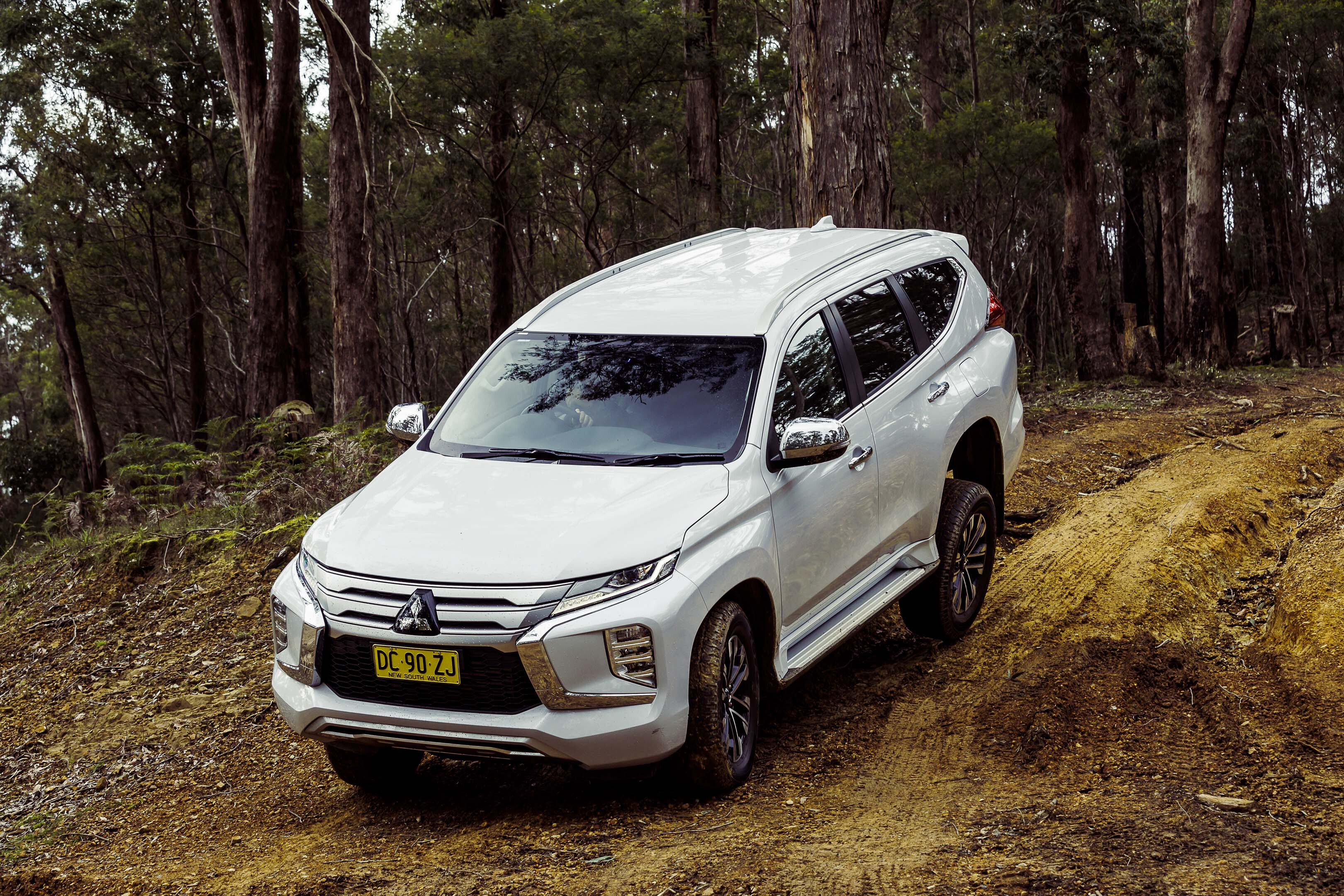
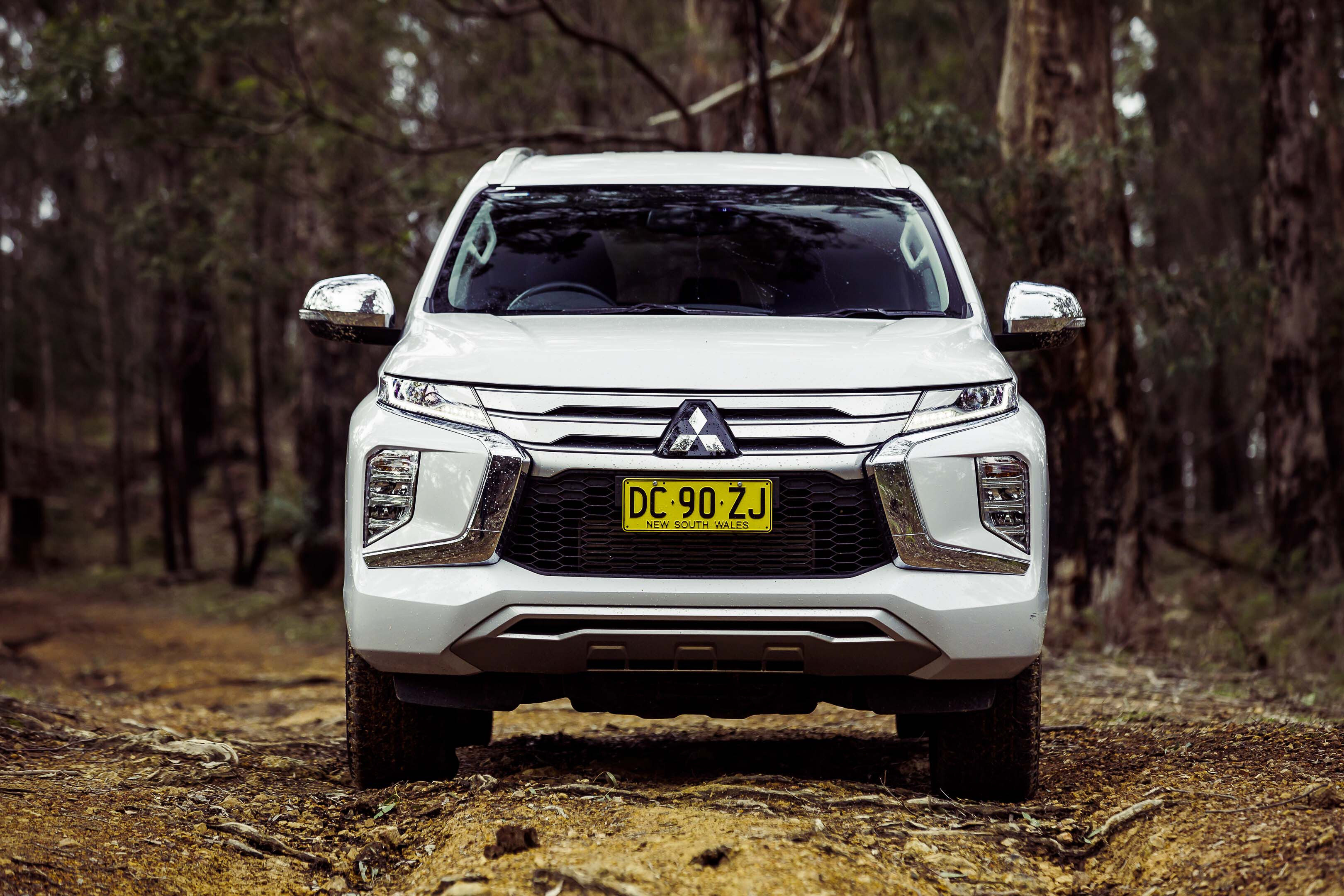
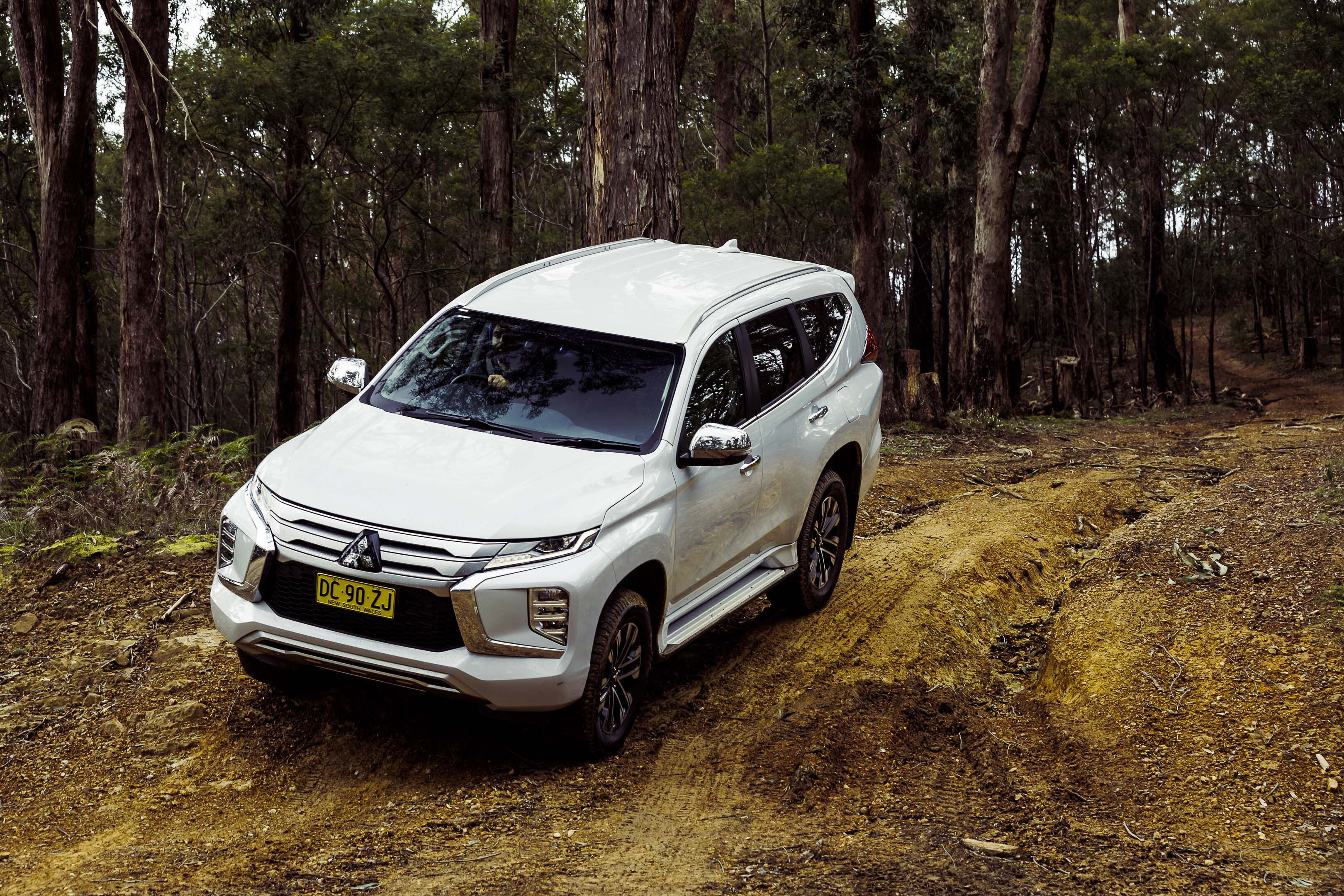
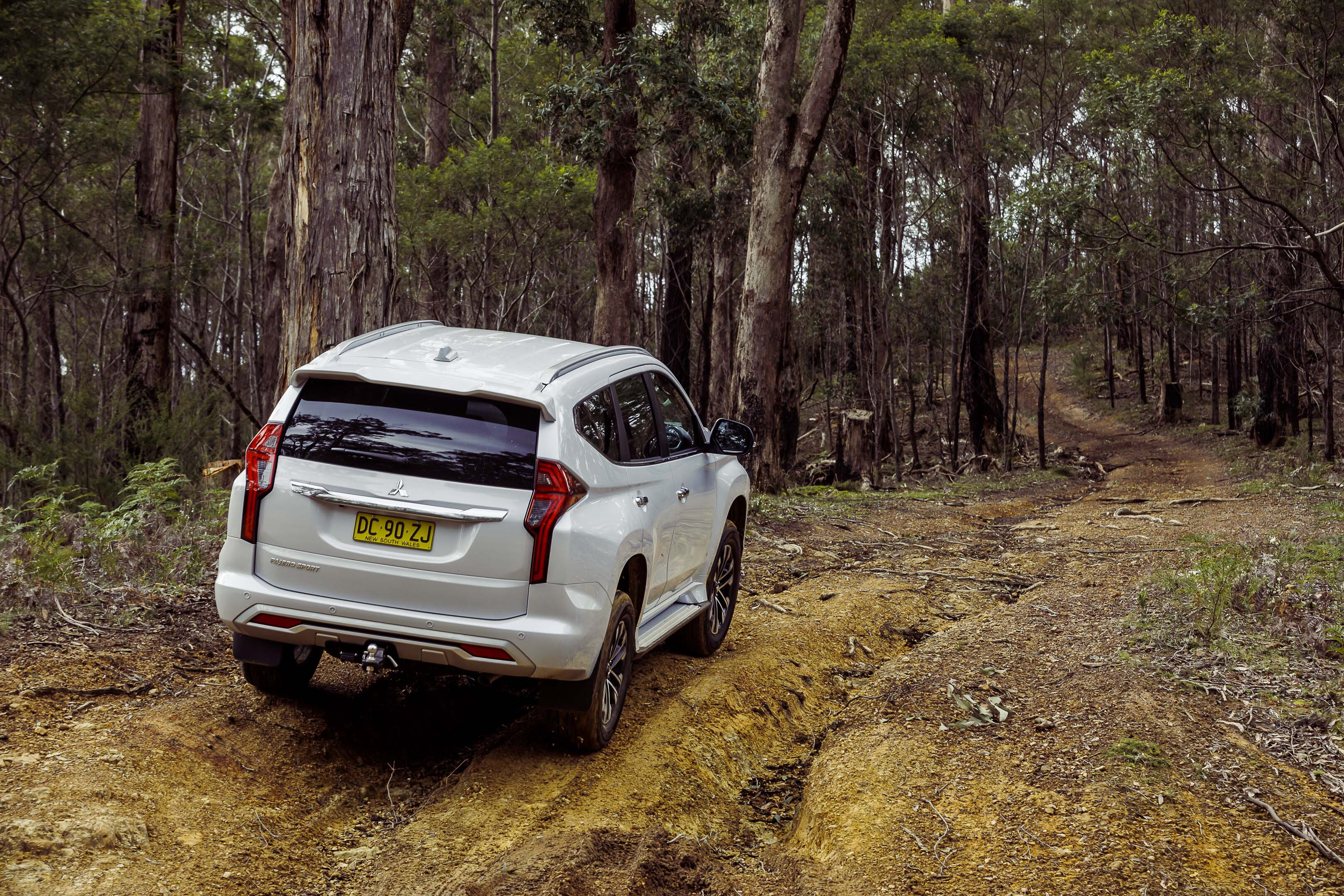
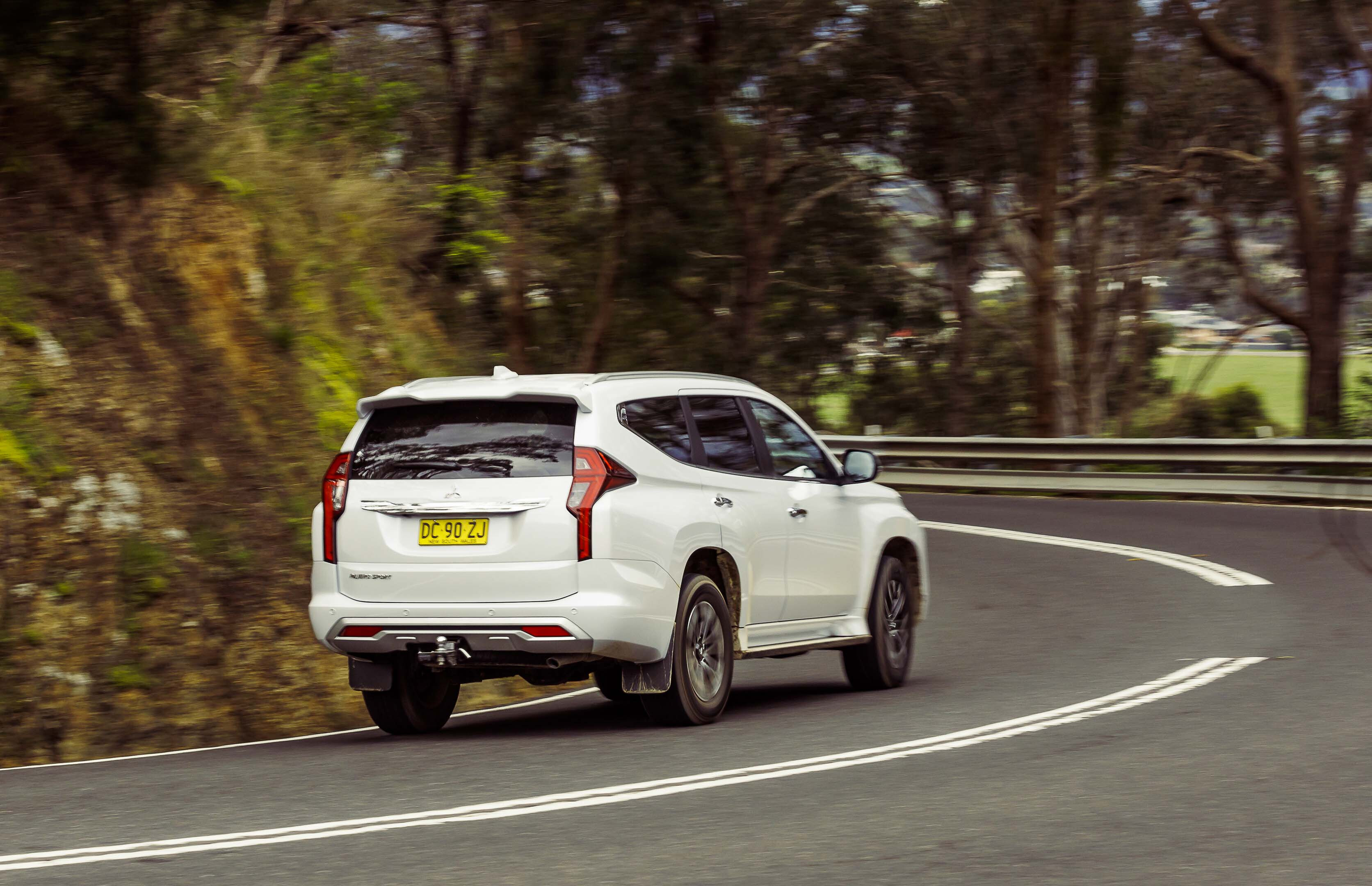
The ute-based Pajero Sport platform may seem a bit long in the tooth, and that’s because it is.
This current platform was released seven years ago in 2015, with a mid-life update in 2020 feeding the SUV wagon with a generous helping of cosmetic niceties including a new-look ‘Dynamic Shield’ front end.
The blacked-out GSR model you’re currently ogling is the most recent addition to the local line-up, released early in 2022 to take the helm as the most premium Paj Sport in Australia.
The GSR is the top Pajero Sport variant in an Australian line-up that comprises the GLX, GLS and Exceed. Five- and seven-seat models are available throughout the range, but the GSR is sold as a seven-seater only.
Essentially an Exceed with a smattering of blacked-out cosmetic features, is the GSR worth the extra coin? Let’s take a closer look.
The GSR is the top-of-the-line Pajero Sport variant on sale in Australia, available at a pinch over $60K at $62,440 following a $1000 price hike in December 2022.
It’s only available with Mitsubishi’s Super Select II 4WD system and with seven seats, so if you want a five-pew Pajero Sport with Mitsubishi’s Super Select II 4WD system, you’ll need to opt for the GLX five-seater.
1
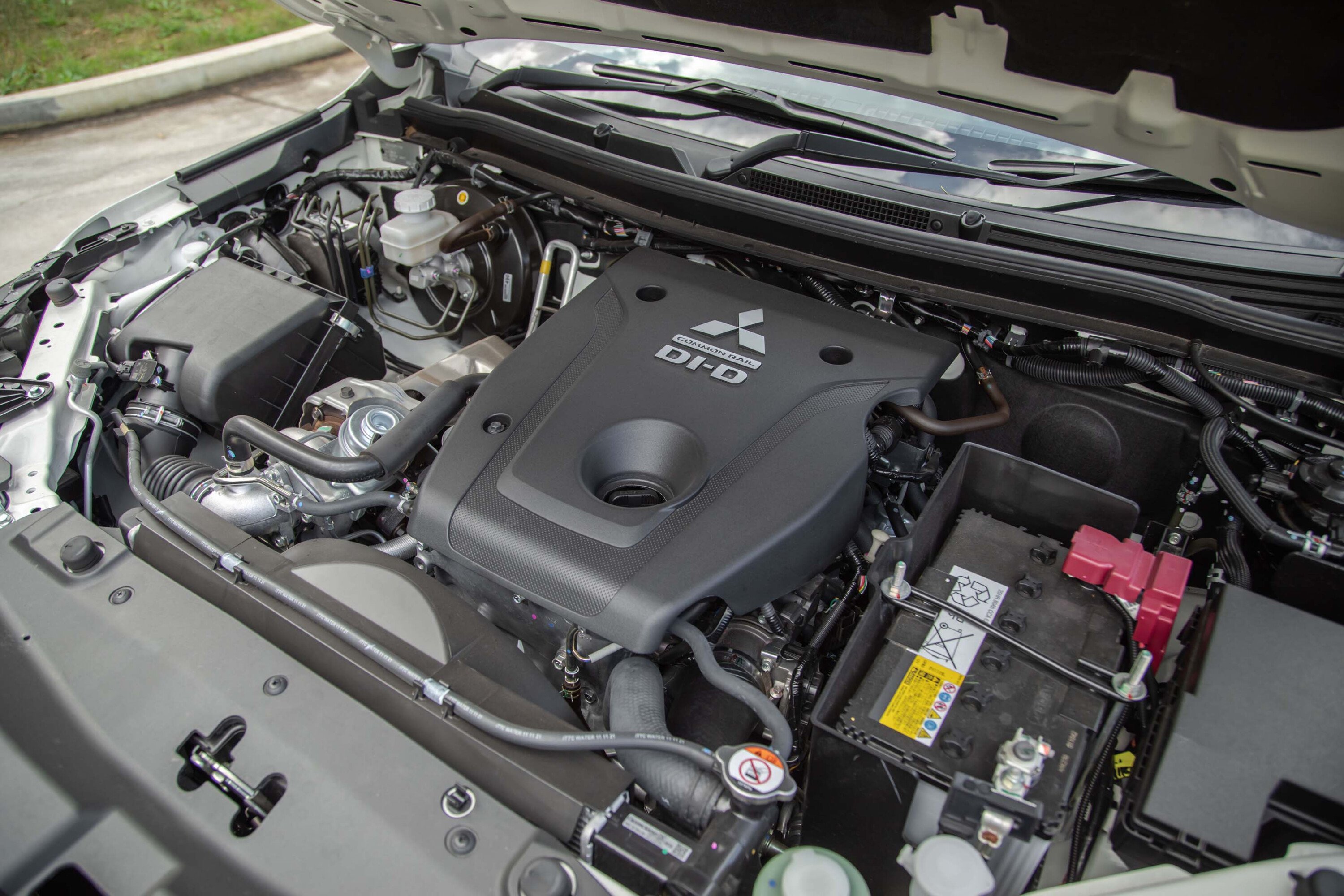
The entire ute-based Pajero Sport range utilises the same 2.4-litre turbo-diesel engine that powers the Triton. The four-cylinder makes 133kW and 430Nm, which are modest digits when compared to the all-new Everest (154kW-500Nm). It is mated to an eight-speed automatic transmission – no third pedal with the Paj Sport, unfortunately.
In addition to the Super Select II 4WD system, GSR models, as well as GLS and Exceed 4WD variants, all come with a rear diff lock as standard.
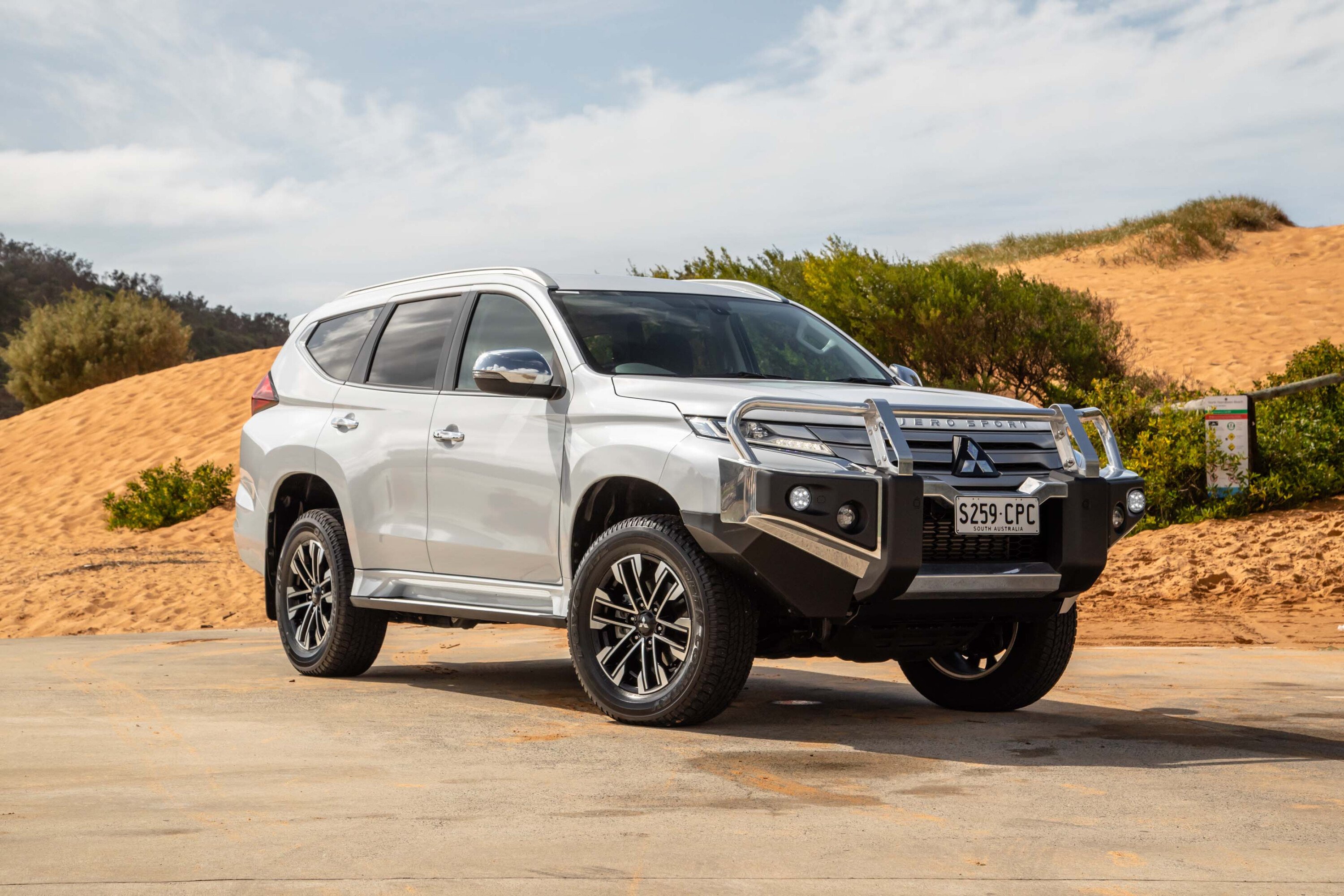
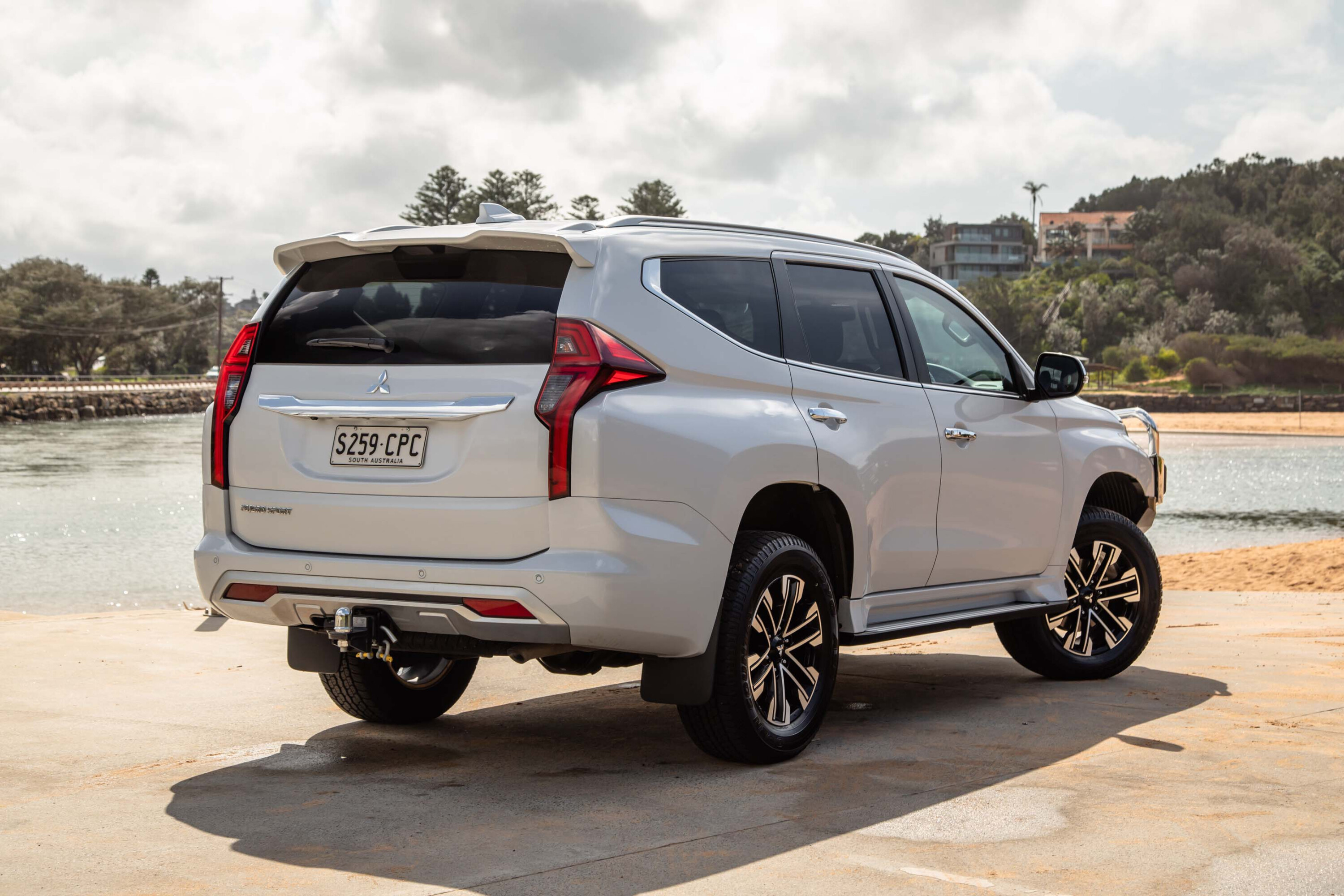
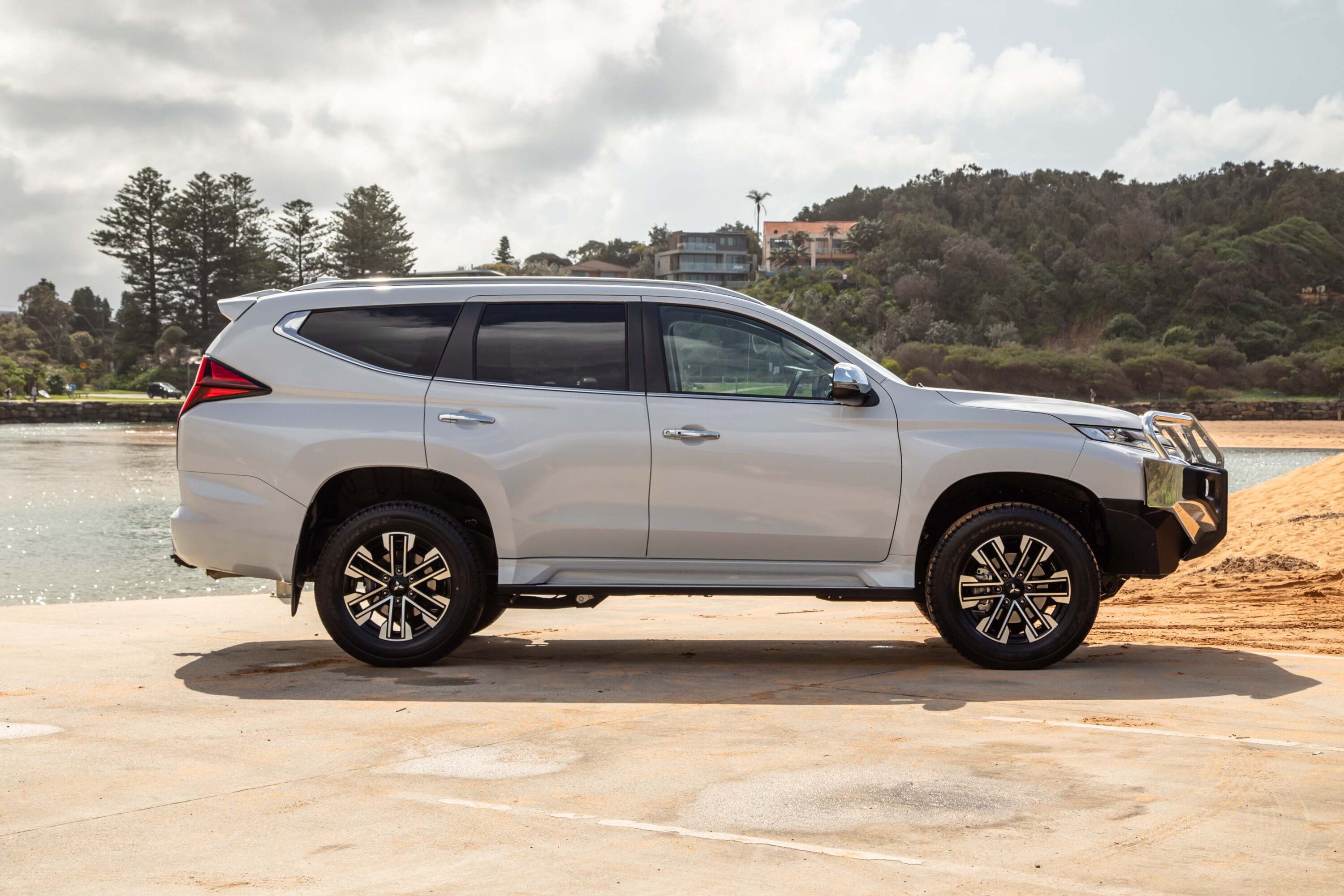
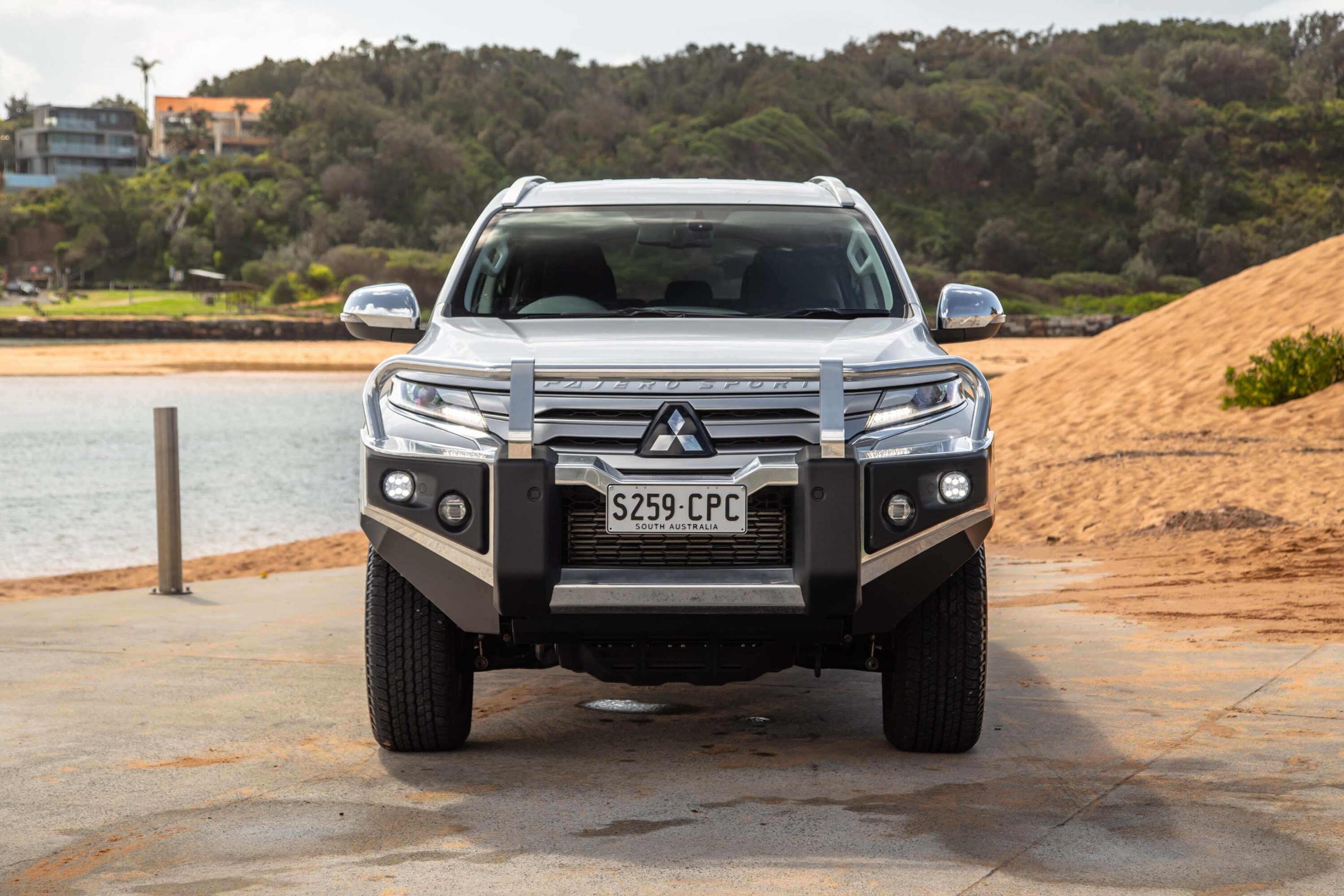
What differentiates the GSR from the rest of the Pajero Sport range is the addition of black treatment, and plenty of it. The GSR gets 18-inch black alloy wheels, a black rear spoiler, black front and rear bumper garnishes, black headlight garnish, a black grille, two-tone roof (black), and a black Pajero Sport bonnet emblem.
How do rivals compare on value?
At its $60,000 price point, the Pajero Sport GSR undercuts the all-new mid-spec Everest Trend but costs slightly more than the base-spec Ambiente. Comparing apples with apples, the top-spec GSR will yield a saving of more than $15K when pitted against the top-spec Everest Platinum.
Other competitors in the large SUV bracket include the Isuzu MU-X, which in top-spec LS-T guise costs a fraction under $66,000, and the ever-popular Toyota Prado which is a sales juggernaut and costs $60,830 in base-spec GX trim. Opt for the Prado Kakadu and you’re looking to spend around $90,000 … at least.
So for a top-spec off-road-ready vehicle that’s loaded with kit and features, the $62,440 asking price of the GSR starts to look appealing. Still, the lingering question of whether the GSR offers enough over and above its Exceed and GLS stablemates remains.
Interior comfort, space and storage
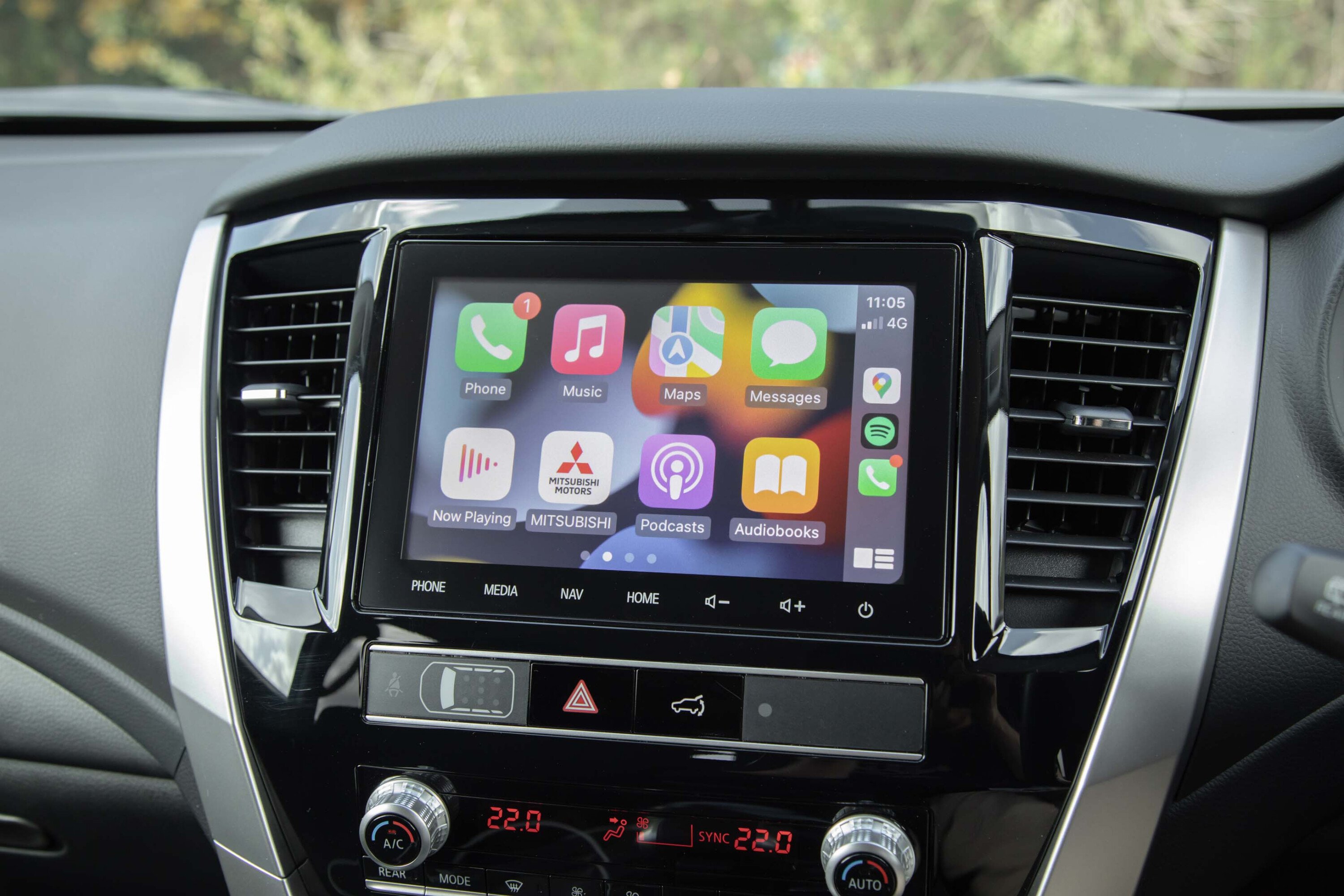
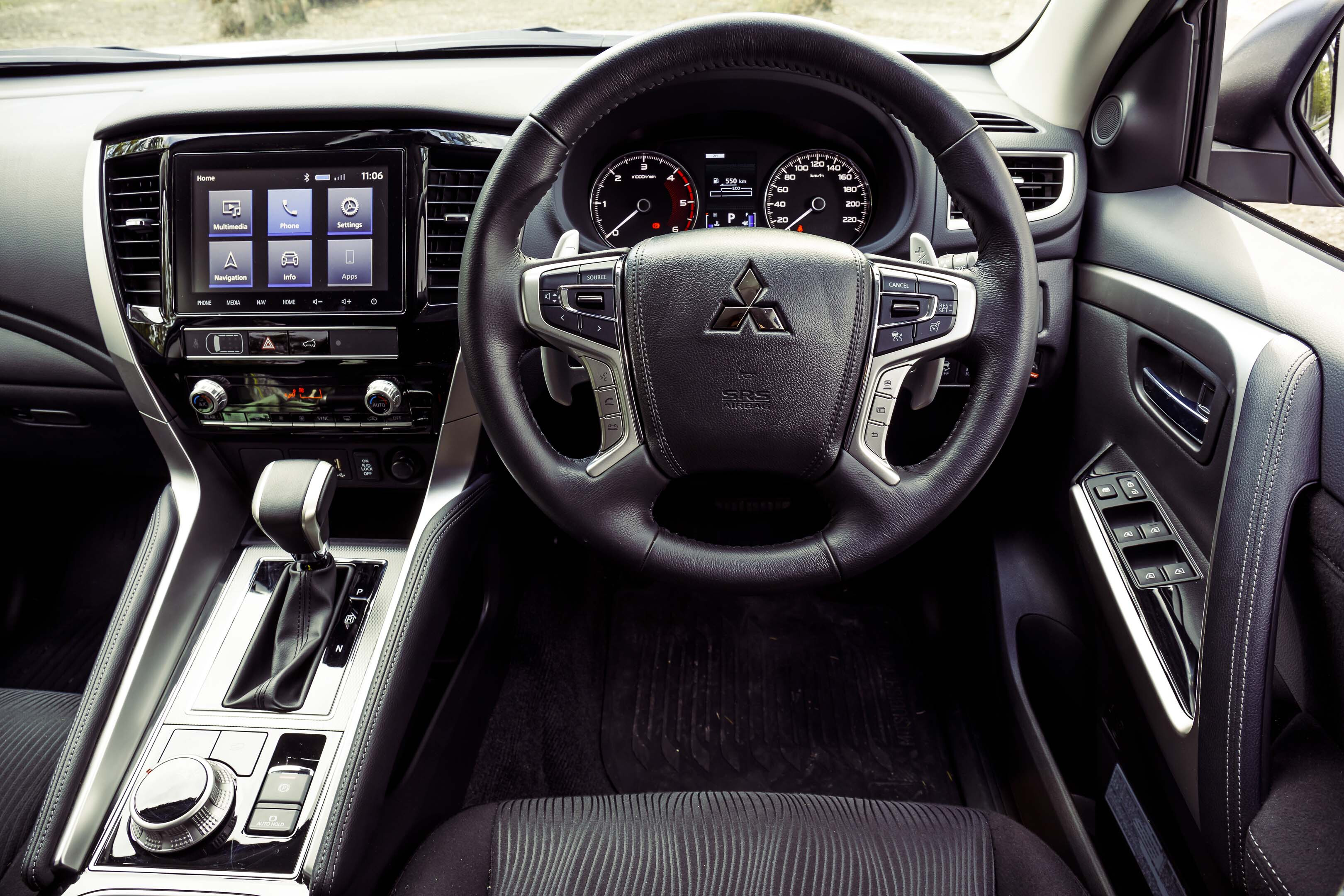
Where the Pajero Sport most clearly shows its age is inside the cabin, most notably with the eight-inch touchscreen which is small by modern standards and the UI feels generations old when in operation.
Embedded TomTom navigation is standard, but, if you’re anything like us, you’ll never turn it on thanks to the inclusion of Apple CarPlay and Android Auto. On a positive note, it’s easy to find and scroll through apps and functions due to its user-friendly interface, and the premium eight-speaker sound system provides dulcet tunes.
1
The use of touchscreen buttons makes it difficult to pinpoint input at times, and the use of ‘actual’ buttons and dials would make life a helluva lot easier.
USB power supplies are fitted for front- and second-row passengers, as well as 12V accessory sockets. A 220V power outlet is positioned in the third row.
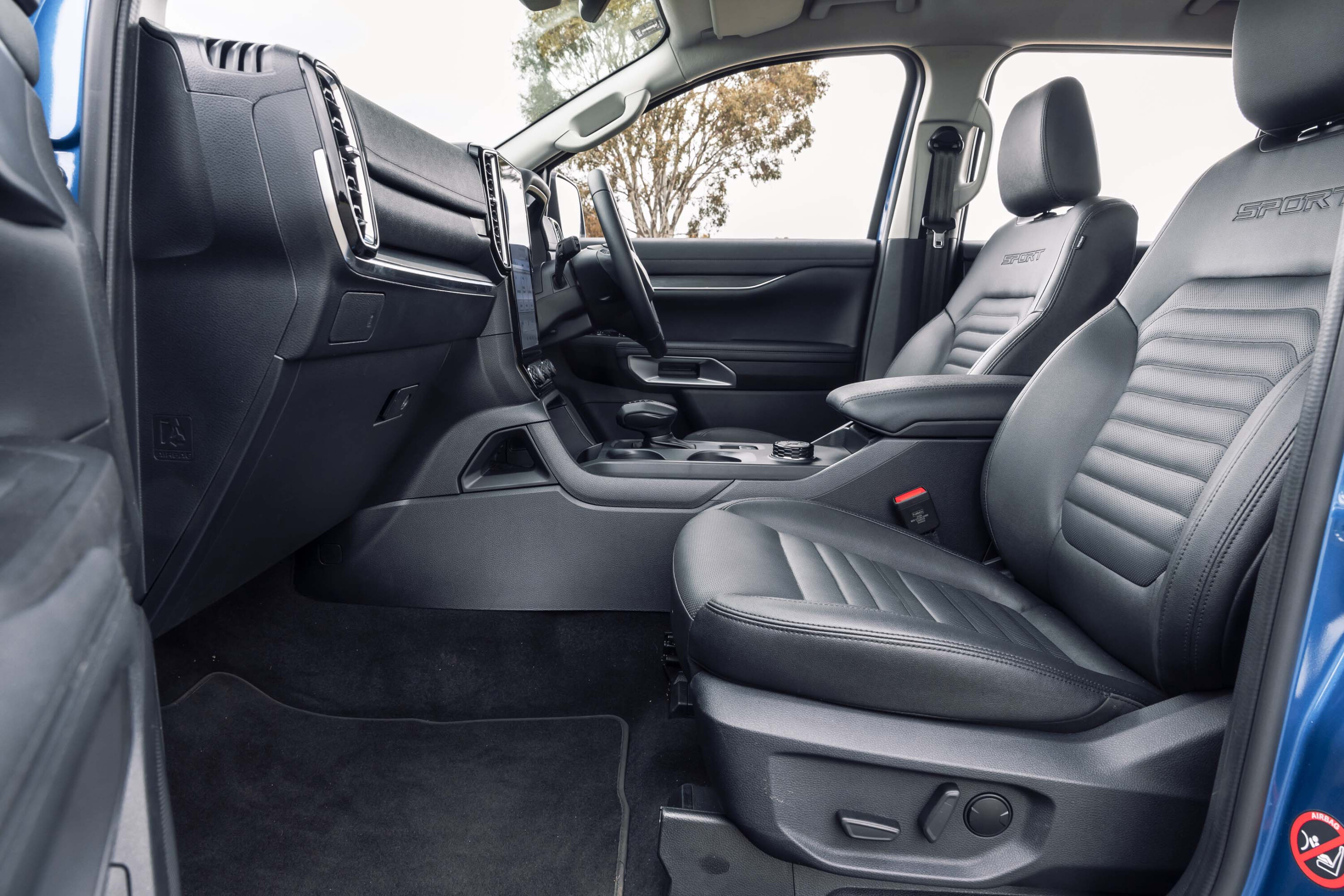
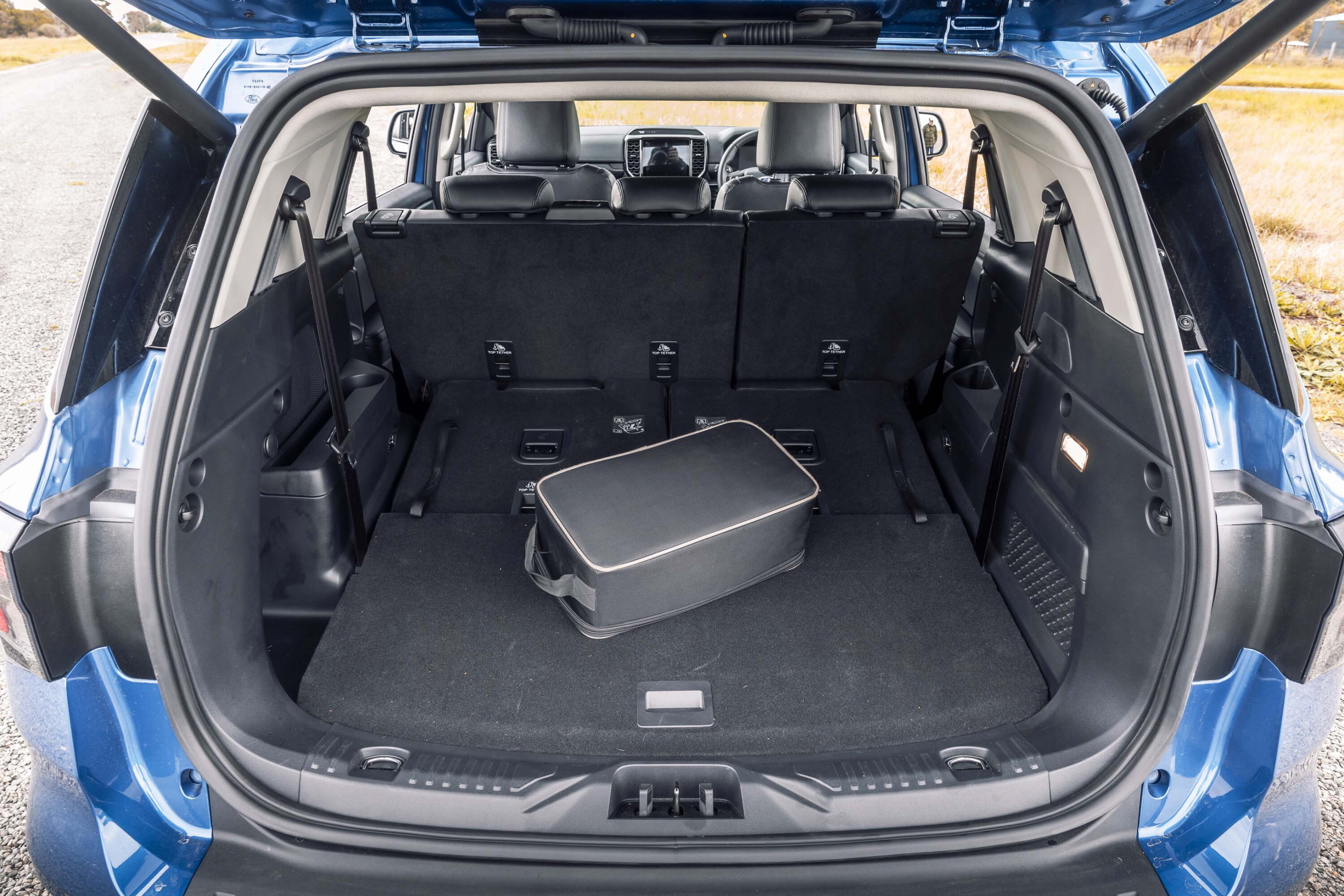
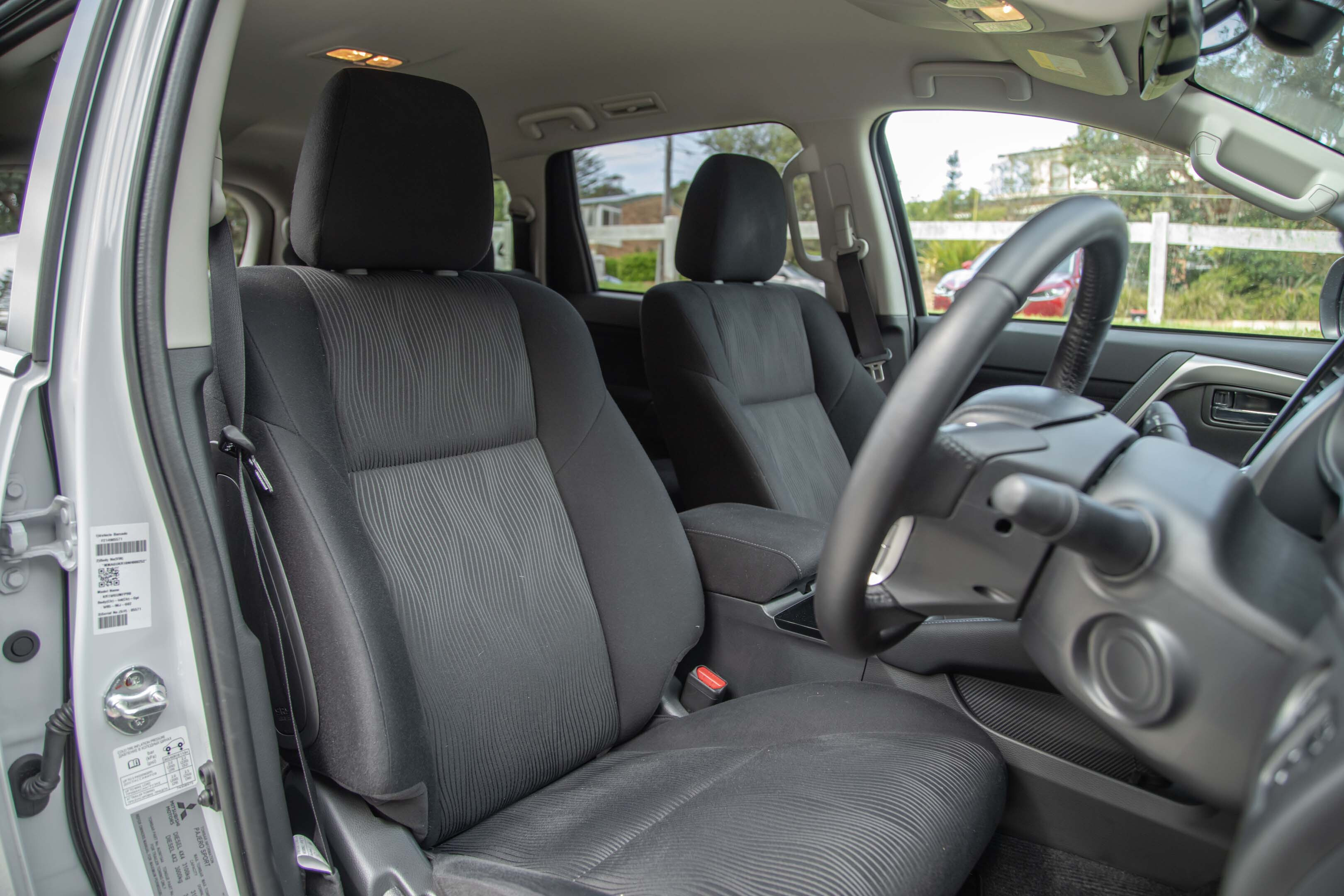
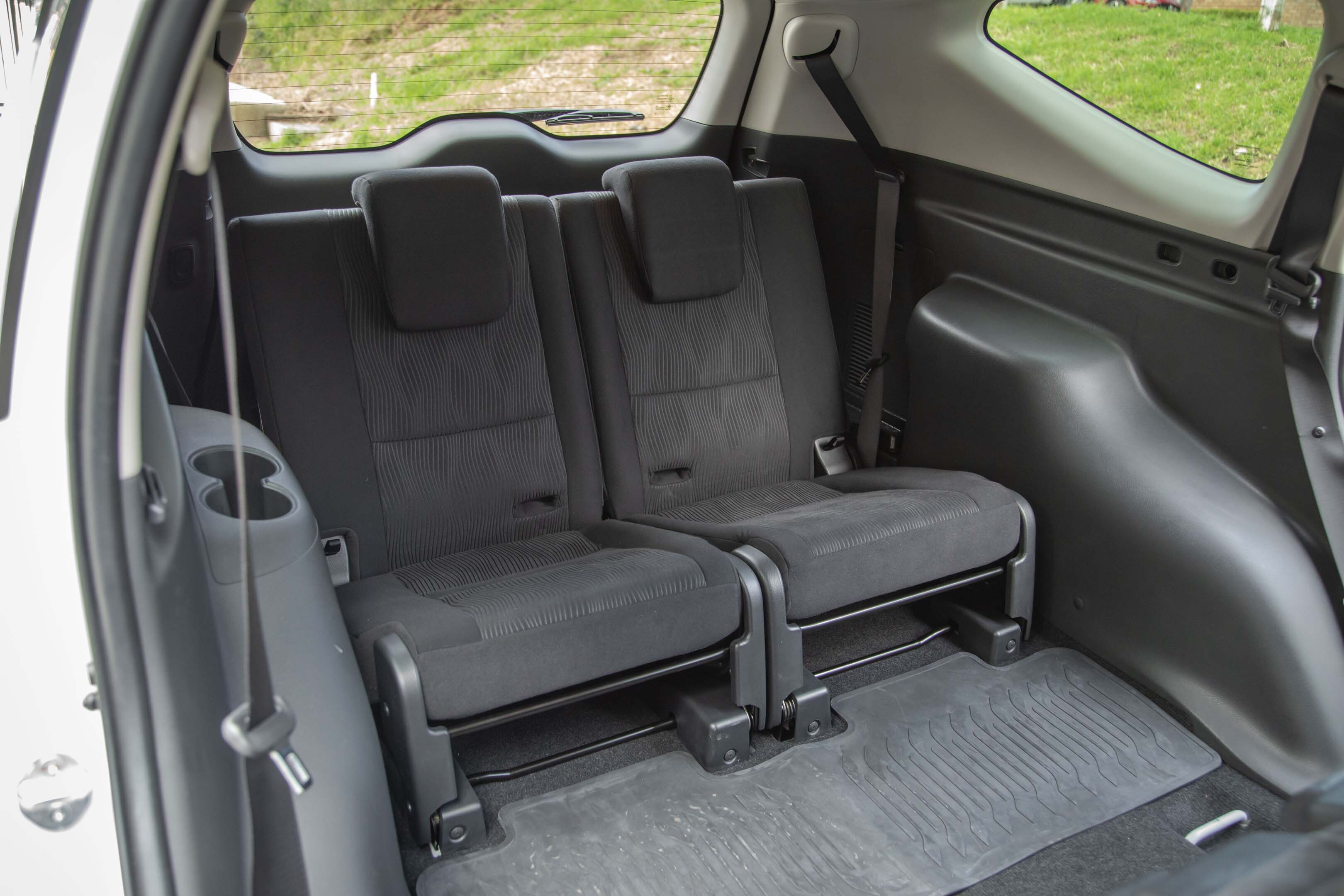
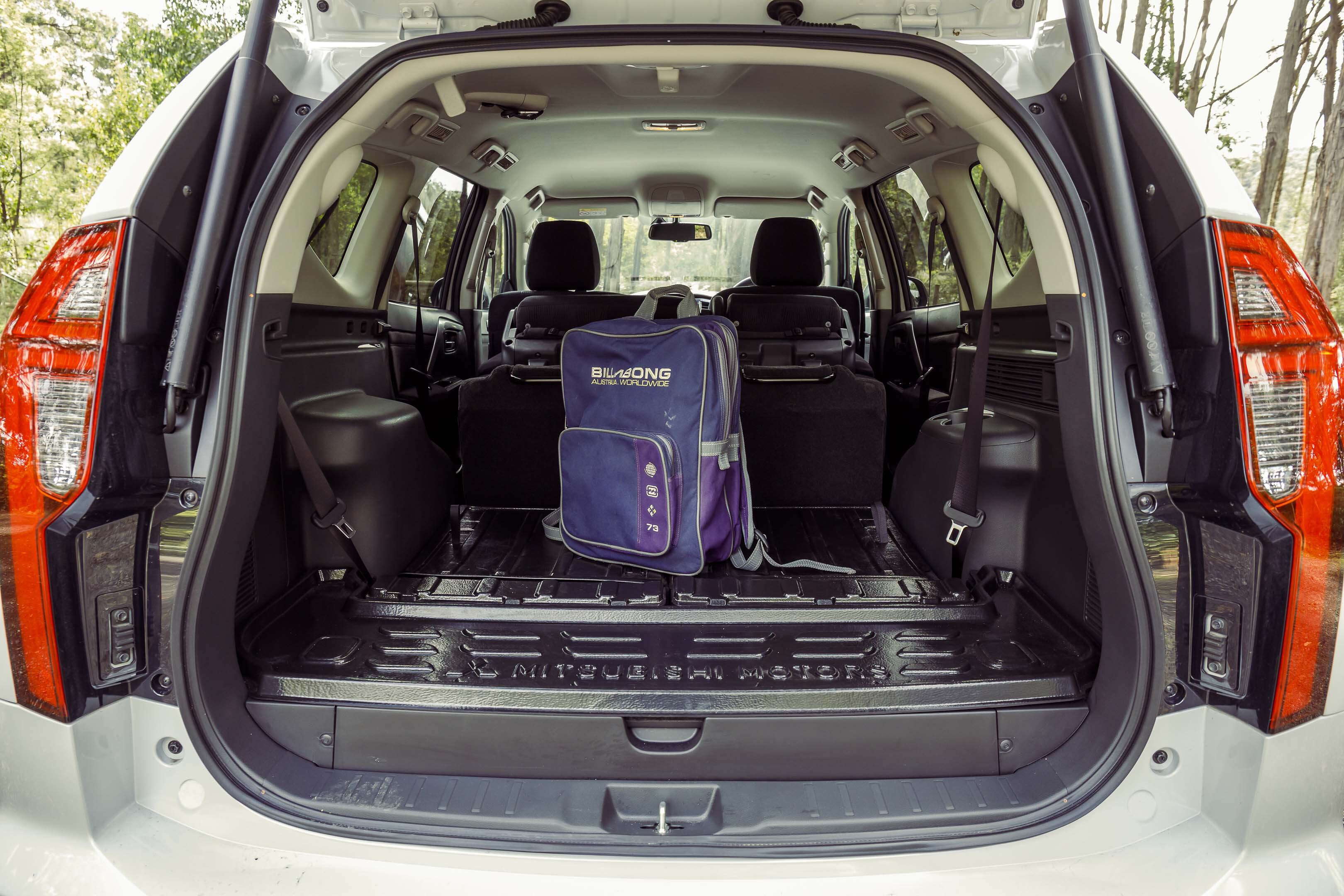
Despite looking narrow to the naked eye, the front leather-appointed pews of the GSR provide a comfortable and spacious abode for long stints behind the wheel – and not only because they’re heated. The third row does get a little cramped for taller passengers, and getting in and out is not an easy task. With the third row in place, the GSR has 131 litres of space in the rear; opting to fold down the third row lifts that to 502 litres; and popping all the rear seats down creates 1488 litres of space.
A payload capacity of just 650kg limits how much gear you can carry, though.
1
There are six cupholders, four bottle holders and plenty more storage bins including a clever use of otherwise wasted space beneath the centre console. A rear floor storage box will also prove extremely useful.
As a side note, we experienced a glitchy powered tailgate, an issue we encountered when reviewing the Pajero Sport GLS and also something that was noted in our long-term review of the GLS Deluxe. That it is a recurring issue suggests it mightn’t be user error.
What’s it like to drive?
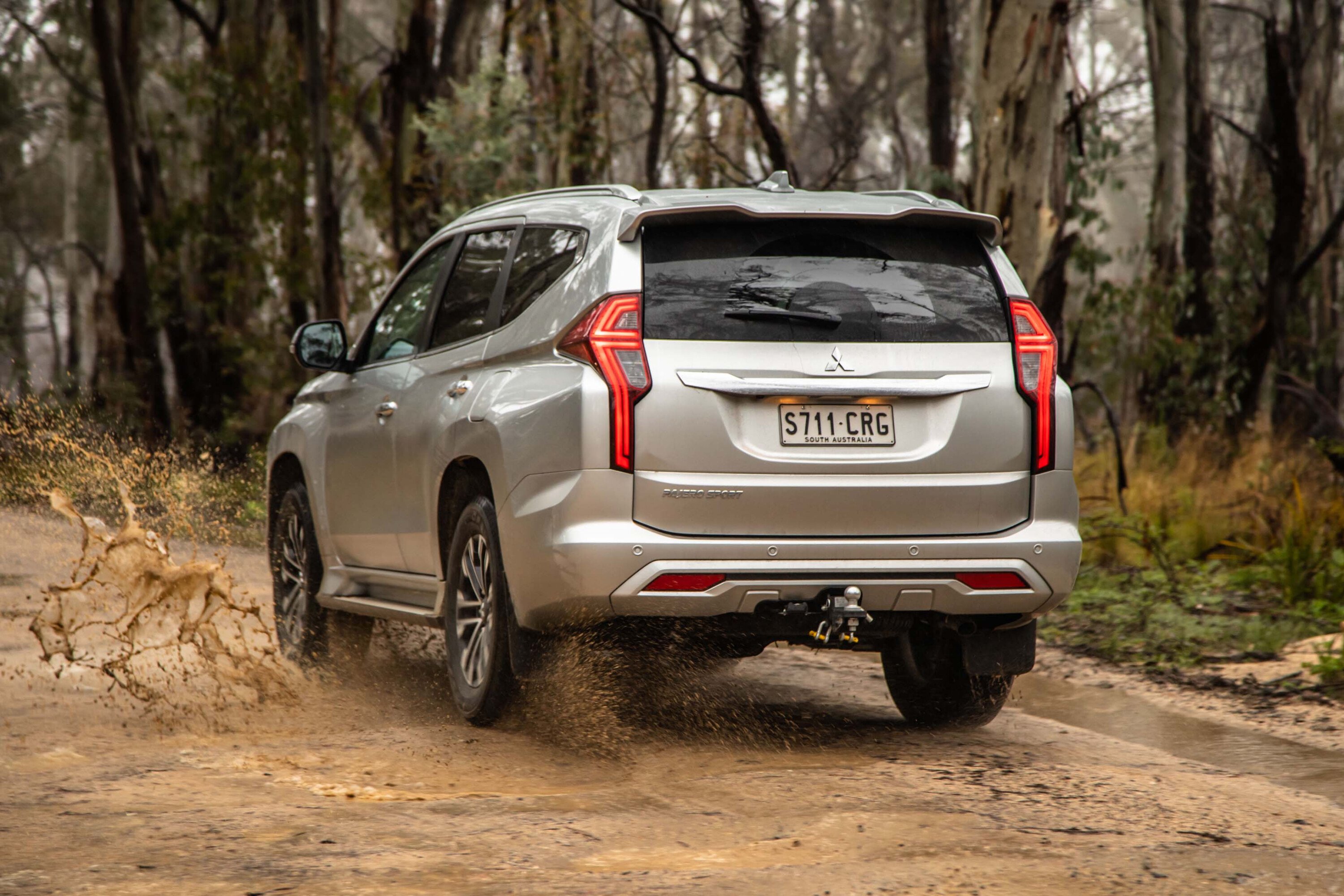
The Pajero Sport’s ability to adapt to both tarmac and dirt is one of its most endearing attributes. Its 2.4-litre MIVEC DID turbo-diesel engine may be slightly underpowered in its attempt to push the GSR’s hefty 2125kg kerb weight, and you can hear it working its backside off to do so, but it’s not a mitigating factor.
The GSR is also not the most refined nor quiet when travelling on long stretches of bitumen, but its ladder-frame chassis comprises coils front and rear, so it’s a much nicer on-road performer than the ute it’s based on. The eight-speed automatic transmission also feels well-calibrated and smooth by large SUV standards.
1
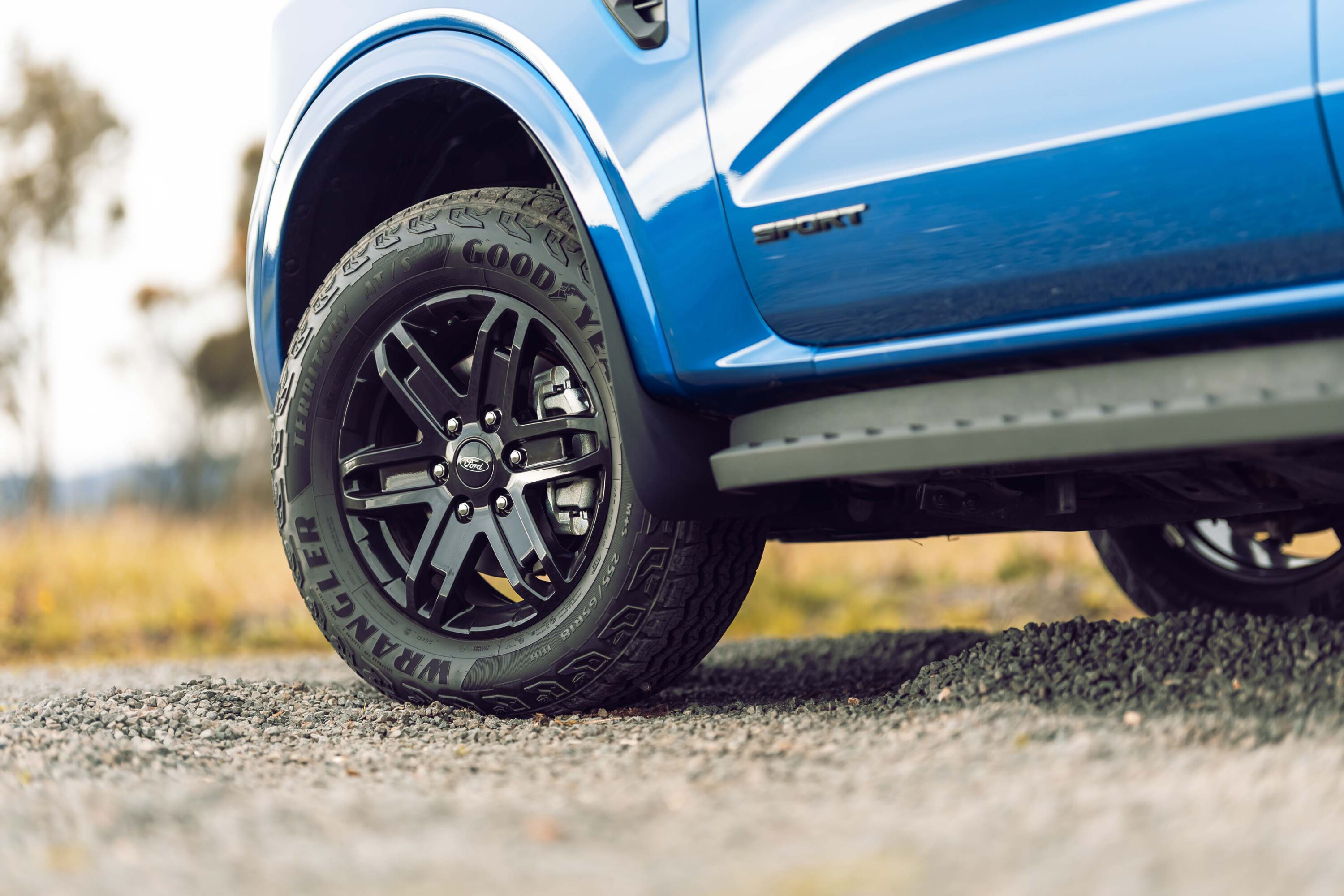
The GSR wears 18 x 7.5 black alloy wheels inside 265/60R18 110H Toyo Open Country A32s made specifically for the Pajero Sport.
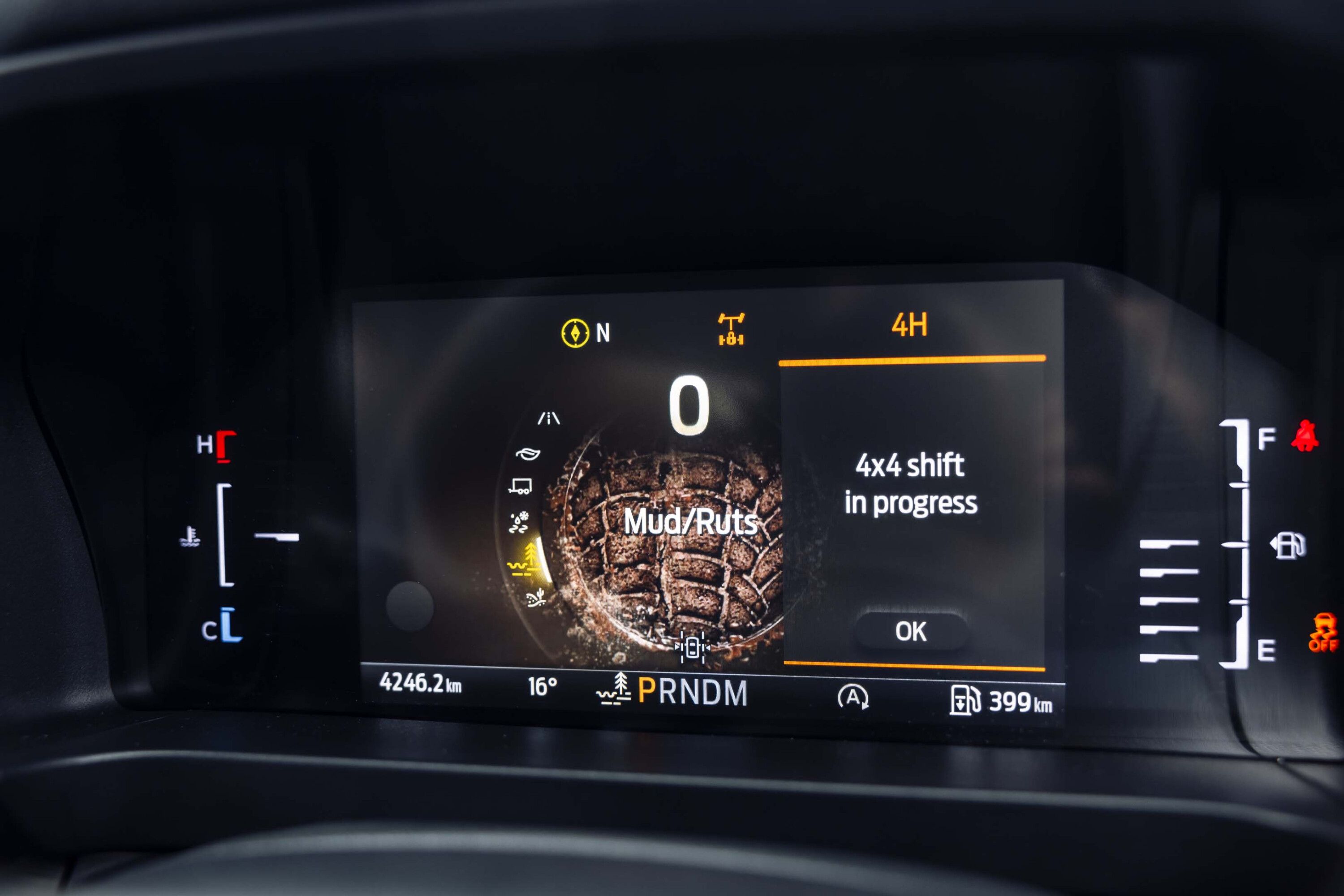
As mentioned, the Pajero Sport comes with Mitsubishi’s Super Select II 4WD system, which is simple to operate via an easy-to-access dial on the centre console, and it allows the user to tailor the vehicle’s dynamics to the conditions.
Mitsubishi also offers a Remote Smartphone App, which allows the owner to operate the tailgate and monitor vehicle information including fuel consumption. Plus, it has a car-finder function.
As of December 2022, Pajero Sport GLS, Exceed and GSR models now come with a Tyre Pressure Monitoring System (TPMS) as standard. This feature provides up-to-date tyre pressure information, which is invaluable and a feature all 4×4 models should be equipped with from the showroom.
How is it on fuel?
The Pajero Sport is equipped with a 68-litre fuel tank, and Mitsubishi lists the GSR as consuming 8.0 litres of diesel per 100km. On our test, we guzzled closer to 9.0L/100km, which is still quite frugal.
For comparison’s sake, on a recent comparison test between the Ford Everest Platinum and Toyota Prado Kakadu, the Everest drank 11.3L/100km and the Prado 10.6L/100km.
How safe is it?
The entire Pajero Sport range received a five-star ANCAP safety rating when released back in 2015 – albeit under more lenient guidelines than today’s standards.
In 2020, as part of its mid-life update, Mitsubishi added Lane Change Assist (LCA) and Rear Cross Traffic Alert (RCTA) as standard on Exceed models. Blind-spot warning, rear cross-traffic alert and lane-departure warning are now exclusive to Exceed and GSR variants.
The GSR is equipped with parking assistance in the form of a multi-around monitor, a rear-view camera, and front and rear parking sensors.
Safety kit includes
Forward Collision Mitigation system (FCM)
Emergency Stop Signal function (ESS)
Emergency Brake Assist system (EBA)
Hill Start Assist (HSA)
Hill Descent Control (HDC)
Active Stability Control (ASC)
Trailer Stability Assist (TSA)2
Active Traction Control (ATC)
Anti-lock Braking System (ABS)
Electronic Brakeforce Distribution (EBD)
Brake Override System (BOS)
Adaptive Cruise Control (ACC)
Lane Change Assist (LCA)
Rear Cross Traffic Alert (RCTA)
Lane Departure Warning
Blind-spot monitoring
Warranty and running costs
Mitsubishi is industry leading when it comes to after-sales support, with all Mitsubishi vehicles covered by a five-year/100,000km vehicle warranty.
That extends to a 10-year or 200,000km warranty if owners stay on top of their scheduled servicing within the Mitsubishi network.
Servicing intervals are every 12 months or 15,000km, whichever comes first. Mitsubishi will also cap servicing costs for the first ten years or 150,000km.
Verdict
The Pajero Sport is a compelling vehicle for its versatility as a family hauler slash weekend adventure machine. Its competency to take you from the 9 to 5 grind to a campsite on the edge of a map makes it hard to ignore.
1
Plus, getting all of this in a package that costs around $60K makes it money well spent. If the Pajero Sport is a vehicle that ticks your boxes, though, we’d pocket the $10K and opt for the seven-seat GLS 4×4 variant. Unless blacked-out trim is a high priority, of course.
The facelifted 2024 Isuzu D-Max ute has leaked online, ahead of an expected reveal this week.
Thai publication HeadlightMag [↗] reports the updated D-Max will debut later today, October 6.
An Isuzu Ute Australia spokesperson was unable to confirm this rumour.
1
“At this point in time, we are unable to comment on future model plans including those of the rumoured facelifted D-Max in Thailand,” the spokesperson said.
“However, Isuzu Ute Australia will continue to monitor the market to ensure that any local product updates meet the Australian market’s requirements, before committing to any changes locally.”
Images posted to Instagram by Kurdistan Automotive Blog [↗] reveal the facelifted D-Max will feature a revised front design and updated tail-lights, four years after the current model debuted in Thailand in October 2019.
However, the latest revision will include new headlights, another redesign for the grille, and a revised front bumper.
The model in the leak appears similar to our flagship X-Terrain, with darkened accents and what appears to be chunkier flared wheel arches.
It is unclear what changes are planned for the D-Max’s cabin. However, an updated, larger infotainment system is likely to better match the Ford Ranger and Volkswagen Amarok, potentially in line with the Chinese-spec D-Max, which features a digital instrument cluster and a unique dashboard with a widescreen infotainment system.
In China, the current D-Max also sports rear disc brakes, coil spring suspension from the MU-X, and an integrated wireless phone charger.
Similar updates for the related Mazda BT-50 ute and the Isuzu MU-X off-road SUV are likely to appear later.
The 2024 Isuzu D-Max is expected to debut in Thailand this week. It is currently unclear when the update will arrive in Australia, with more details likely to be confirmed once official information is released.
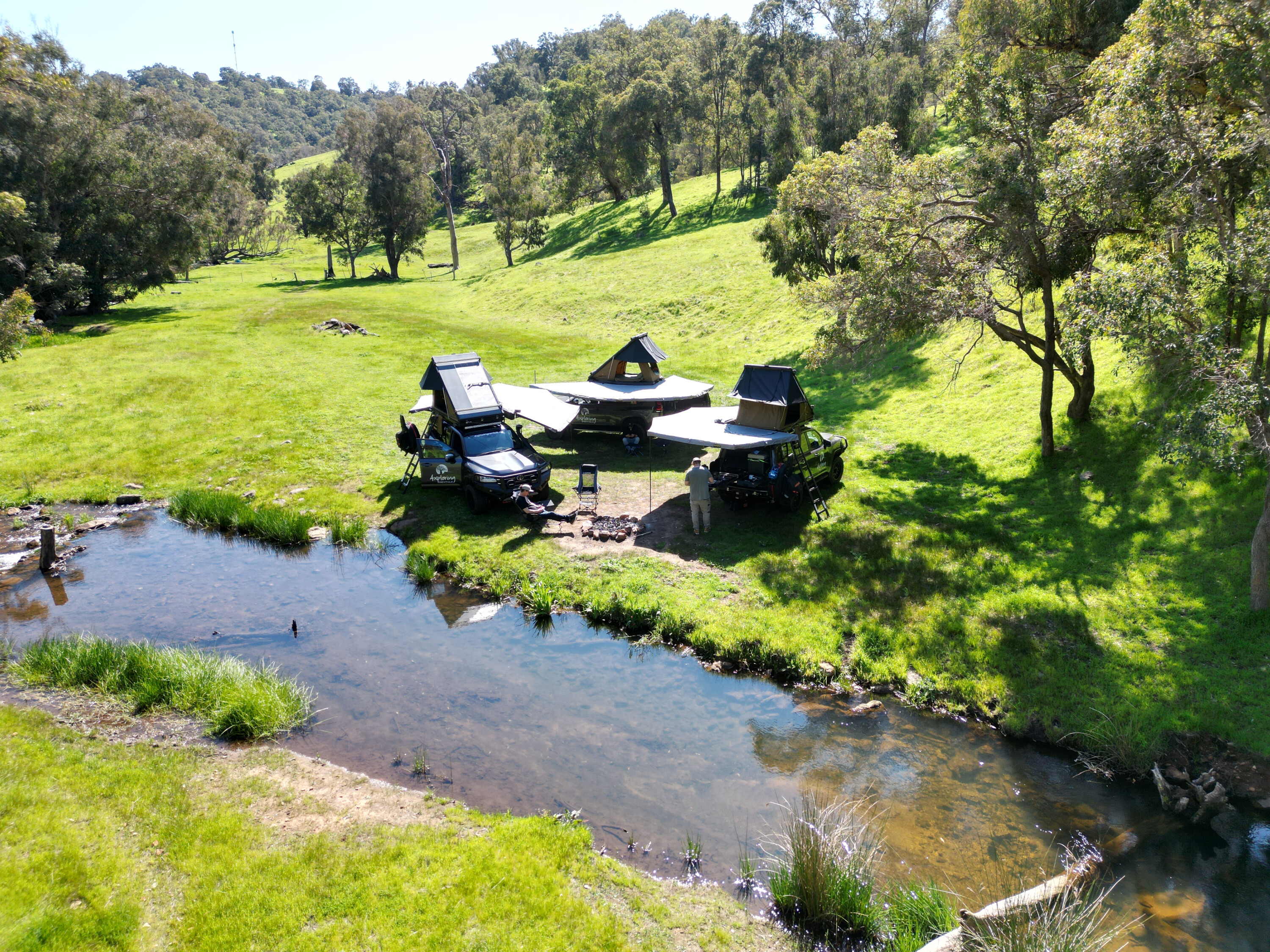
This is why you need to make sure that, when you’re planning an off-road escape with yourself and the family, you minimise the stress and worry that planning and undertaking these big adventures can cause.
So, what if we told you there’s a mob in WA that is, effectively, the only place you need to go – and we mean the only place – to make those touring good times come true?
Well, yeah, there are plenty of vehicle-hire companies across Oz that seem to offer that ‘dream trip come true’ scenario. However, the team at 4xploring Rentals goes beyond and delivers what is definitely the ‘complete package’ for anyone looking to simplify their trip planning and prep – to the point where you can just turn up, turn the key and head out on that long-wished-for adventure.
How all good things should begin: Around a campfire with a few beers
There’s no better place than sitting around a campfire, coming up with life’s solutions and dreaming big? And that’s exactly what happened with 4xploring Rentals Directors, Jerrad Jeffery and Glen Mackay, along with Business Operations Manager, Stefan Cole.
The Kiwi trio had years of off-road touring experience in WA, and the light-bulb moment came when Jerrad and Glen were up in Kununurra having just finished a trip along the Gibb River Road and, after years in the mining sector, thought there had to be a better way to enjoy this lifestyle.
1
1
Cue that few beers around the campfire with Stefan, and the idea of an operation that offered hire vehicles and also provided a complete bespoke service – or package – where travellers can book the fully equipped vehicles (a choice of HiLux, Prado or LC300) and essentially jump off the plane and straight into a vehicle, ready to roll, with food packed and the itinerary sorted, so you can just focus on the fun. It was that difference the team thought was lacking in the market, as Stefan explains.
“We asked ourselves, ‘what can be our point of difference?’” Stefan says. “And we’re like, ‘what if you just want to turn up, turn the key, hit the open road, not have to do a bit of mundane life admin when you land, but you have to go to an unknown city where you don’t know where the nearest Woolies or Dan Murphy’s is, or Kmart or whatever.’
“So, we’re trying to take that onerous exercise off the holiday maker. We want to sort of take the laborious exercise out of planning a holiday where it’s more of a one-stop shop,” Stefan explains.
1
1
To this end, 4xploring Rentals’ comprehensive and easy-to-navigate website has oodles of info for potential customers to assist in pre-planning their trip. Not only about the vehicles you can hire (hires can be a minimum of three days and up to six months or more), but also links to online shopping at nearby supermarkets and a route planner.
This is a huge asset for those coming from interstate or overseas; being able to pre-order all of your food and then have it delivered to 4xploring HQ to pack in the vehicles. The team can also assist with itineraries, or you can use the many handy links on the website to plan it out yourself.
Again, this may sound like just a small thing, but it is of huge assistance and a massive time-saver – again, so you can just land and know that once you’ve jumped behind the wheel of your hire vehicle, it’s time for some fun.
There and back again in the ultimate touring rigs
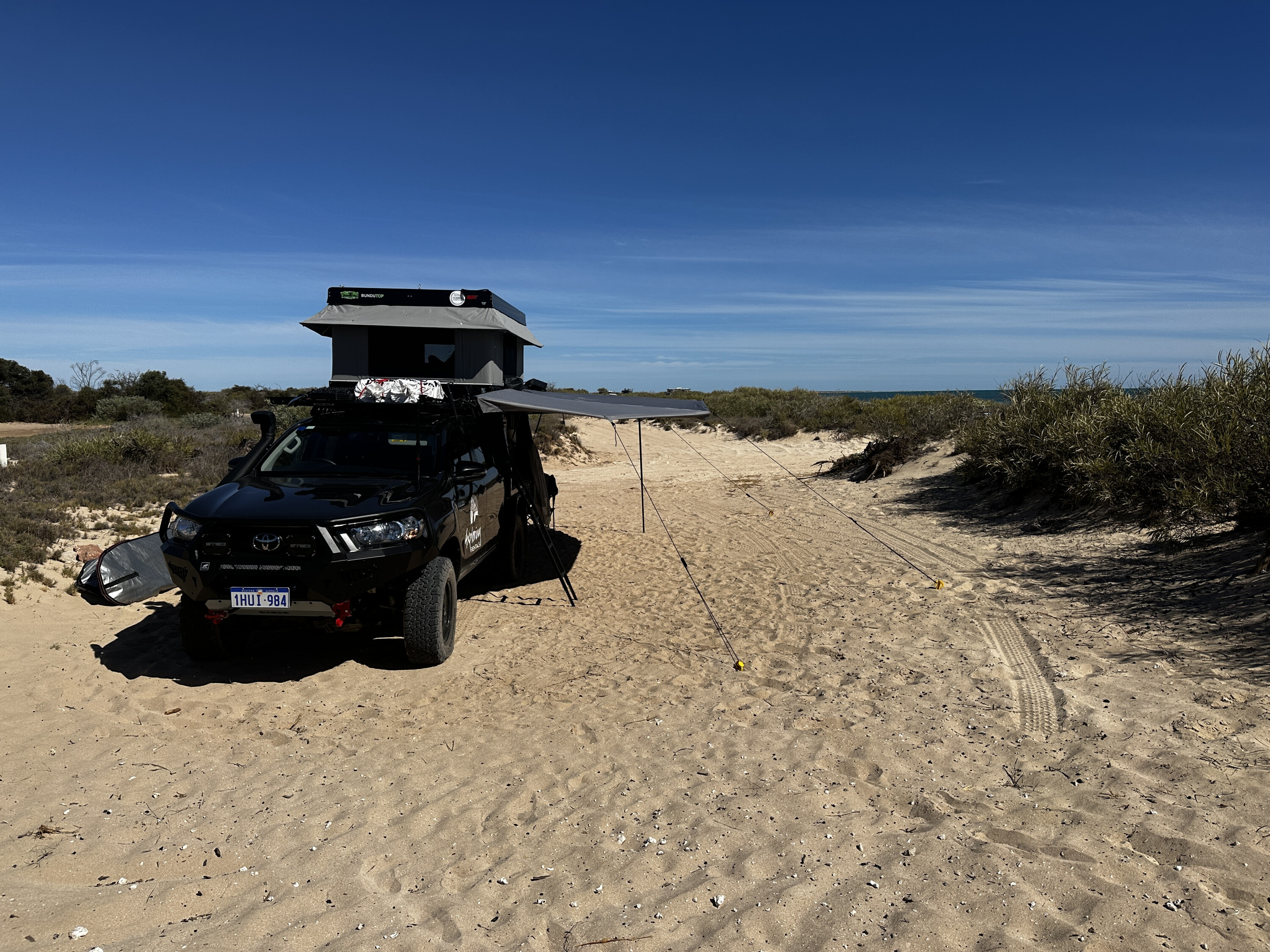
Go on the 4xploring Rentals website and click on ‘Vehicles’ and you’ll have the choice of a raft of vehicles including a fully kitted HiLux (set up for two people; a four-person option is scheduled to be available by Christmas), a 150 Series Prado, a LandCruiser 300 Series and a camper trailer.
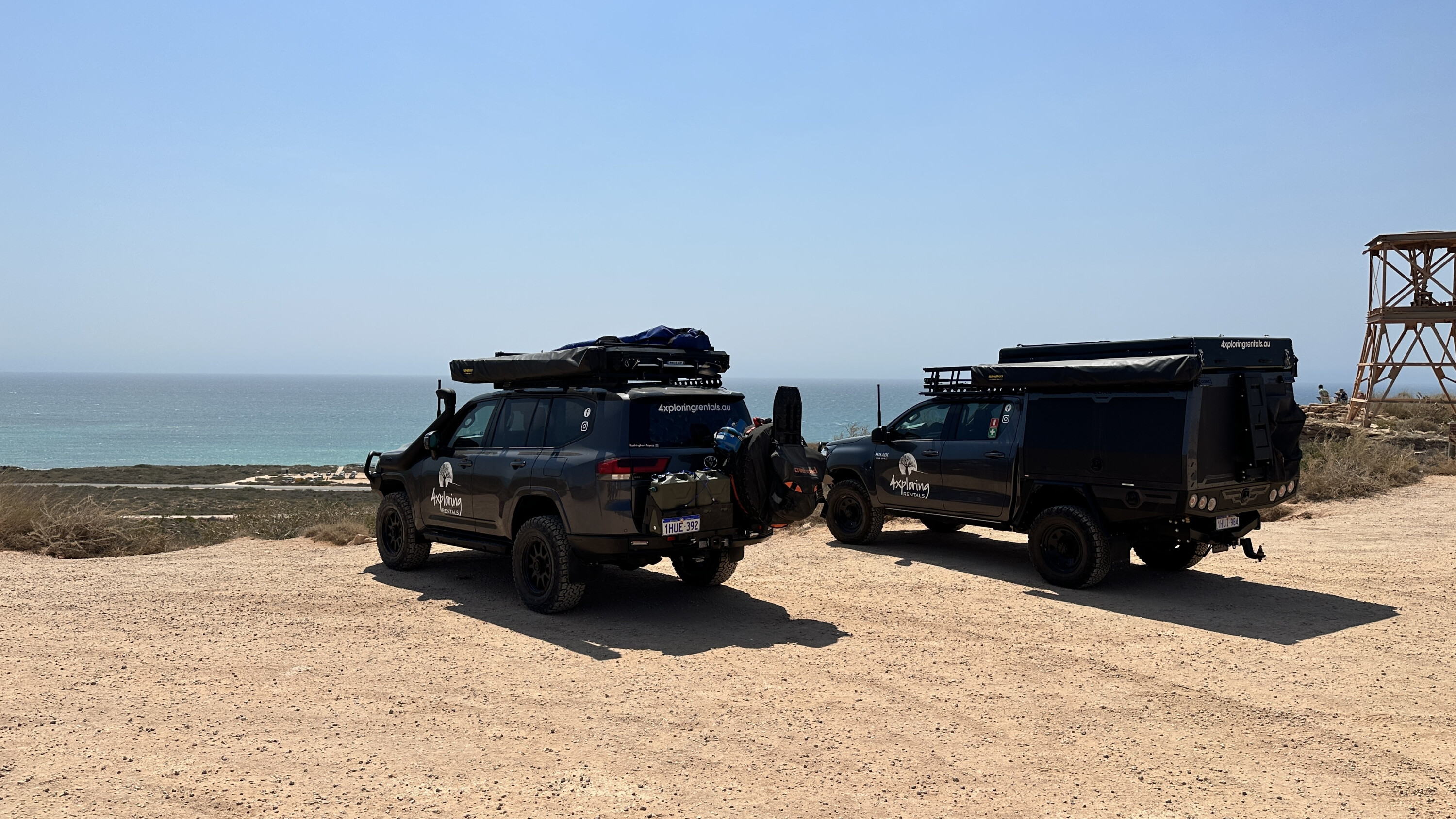
As you’d expect, none of these options miss out on anything, with the hugely impressive HiLux a full custom setup from Core Off-Road in Rockingham, WA (all the vehicles are prepped there).
“It’s a turn-key product from Core,” Stefan explains. “The vehicle comes from Toyota, is delivered pre-rego, then gets fitted with the canopy and a GVM upgrade.”
Ironically, like the rest of Australia, the team had to wait a while to get their HiLux order sorted due to the vehicle’s high demand. The wait has been well worth it, as the finished product – in 4xploring’s distinctive gunmetal grey livery – is impressive and represents a lot of the experienced touring feedback from Jerrad, Glen and Stefan, as well as the very high workmanship from the Core Offroad team.
1
1
The HiLux is packed with accessories, starting at the front with the Offroad Animal bar, Runva 11,000lb winch, Stedi lights, Safari snorkel for clean air, and plenty more. Up top is a Rhino Rack platform set-up, with the ubiquitous set of MaxTrax and a shovel holder. A UHF radio is for comms and there’s a GME PLB for safety.
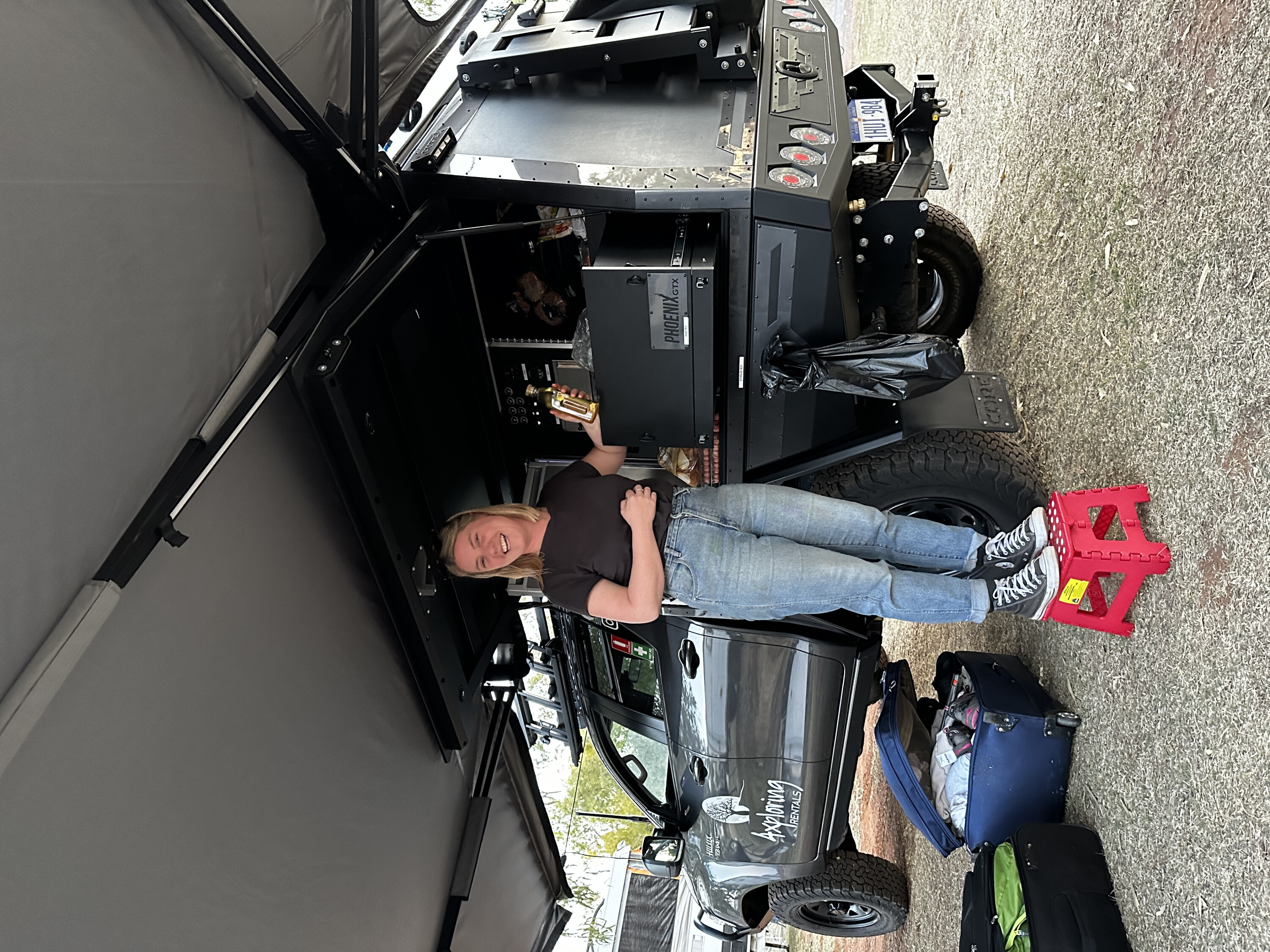
The canopy is a Core Offroad GTX model, with the driver’s side containing a rooftop basket for storage of camp gear that lifts up into the canopy roof and locks out of the way to optimise storage underneath. The battery and compressor are housed at the front.
The bottom rear has a gas bottle and bayonet (all certified). At the back is an access ladder, rubbish/storage bags, and a ladder to access the roof. There’s also a slide-out drawer with aluminium tabletop for cooking/food prep. The passenger side of the canopy has a 110-litre upright fridge/freezer and a Travel Buddy pie oven.
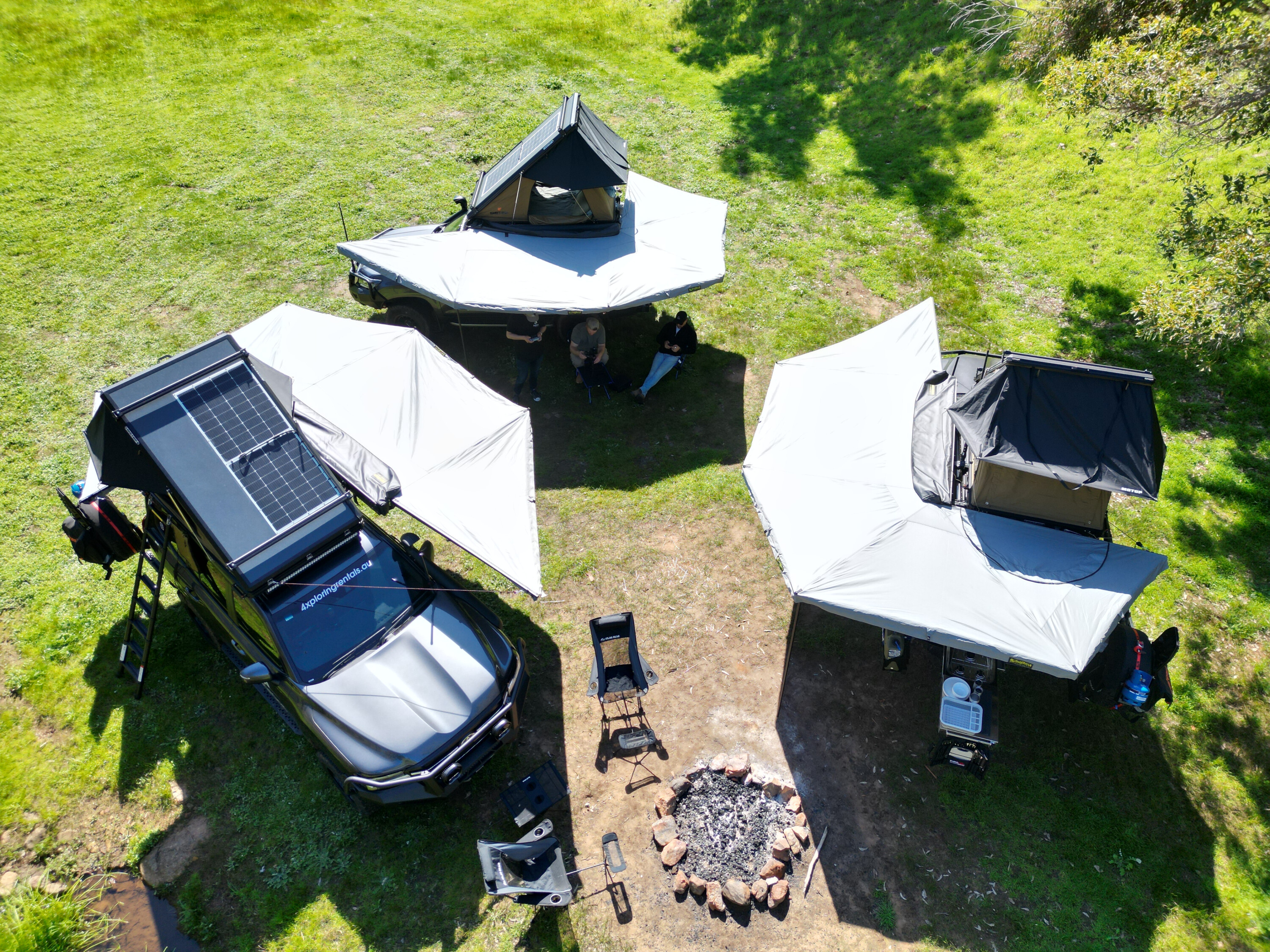
A four-drawer storage system sits beneath that, with storage space up top and tie-down points, and there’s an Enerdrive E-Pro battery management system and light switches. A Bushwakka 270-degree awning is mounted up top, alongside the all-electric Bundaking rooftop tent. Add in 430W of fixed solar panels, and yep, it’s all there for that big trip.
1
1
To take care of all this extra heft, the HiLux uses a ToughDog GVM kit to bring GVM to 3510kg. The team has plans to use a Pedders GVM upgrade for their next HiLux builds (they have six of the popular dual-cab utes on order), that will give them a 3600kg GVM.
Even though Stefan and the team expect the HiLux option to be the most popular they have by no means skimped on the rest of the 4xploring Rentals fleet, with the other vehicle (and camper trailer) options being of similar high specs.
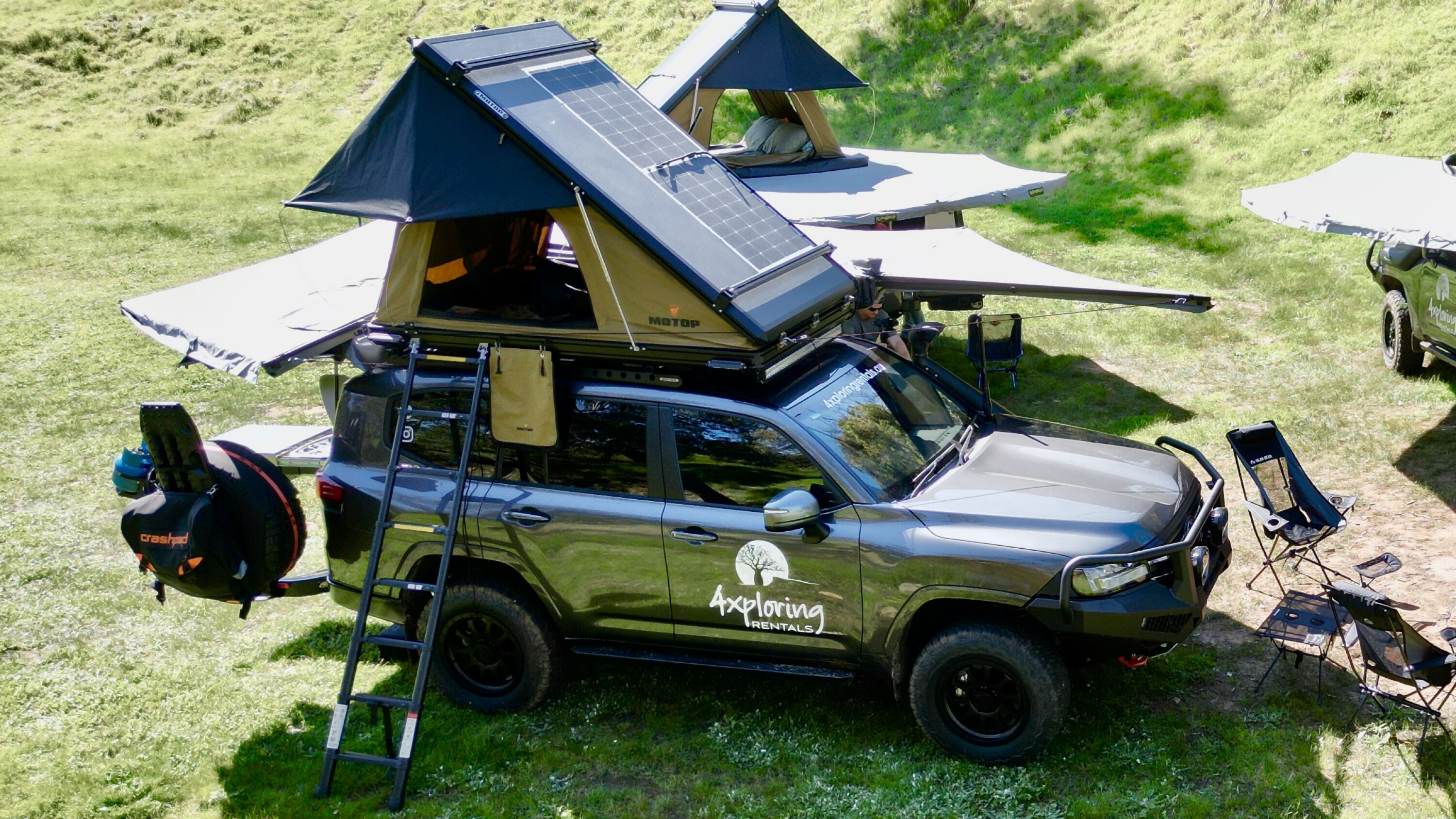
The Prado features a similar set of mods in terms of the frontal protection, suspension upgrades, safety (PLB), along with a Motop rooftop tent, rear drawer system, a 65L fridge-freezer, long-range fuel tank, awning, compressor, recovery setup, and more.
The LC300 replicates this but with a larger fridge/freezer, slide-out barbecue gas cooker/kitchen and 40L Ontap shower. The MDC six-person camper trailer is another great option for larger groups, and is, as you’d expect, fully equipped.
1
More time is your own
Most experienced off-road tourers will nod their heads in agreement when we talk about the importance of thorough trip planning and preparation and how time-consuming it is.
For those with limited annual leave and who want to optimise their time to experience the best of the outdoors, 4xploring Rentals’ ethos – and its intuitive, comprehensive website – resonates highly. It removes a lot of that hassle to the point where, as mentioned earlier, you just have to turn up, jump in the vehicle, turn the key and get out there.
The team itself, being avid campers and tourers, are also always keen to help out (the FAQ section of the website is a ripper) as they, too, know exactly what it’s like to optimise time for the fun things in life. And, really, that’s what it is all about.
Essential Information
Fly in and explore the wild wilderness of WA, without having to worry about bringing your vehicle from overseas or interstate.
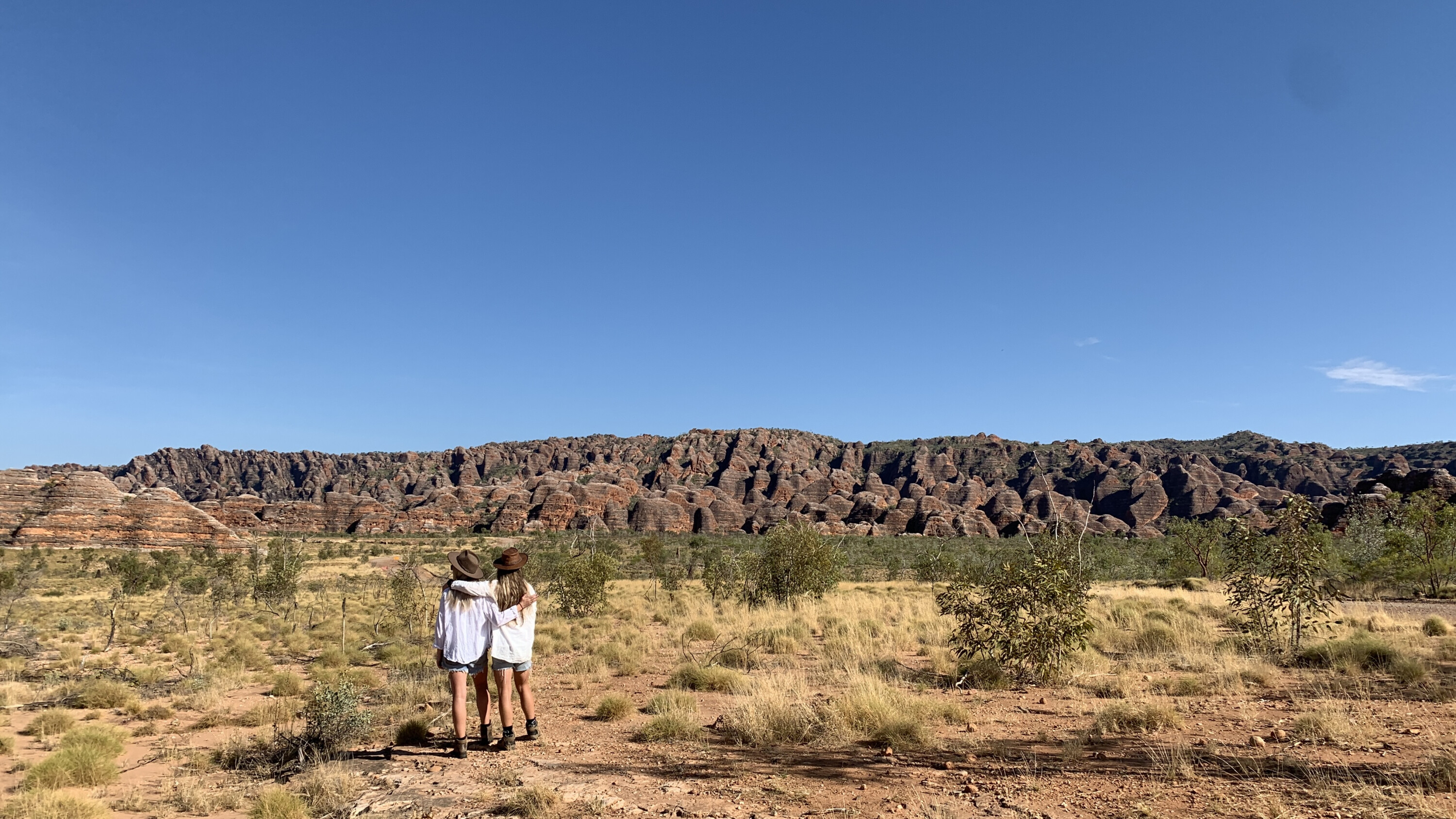
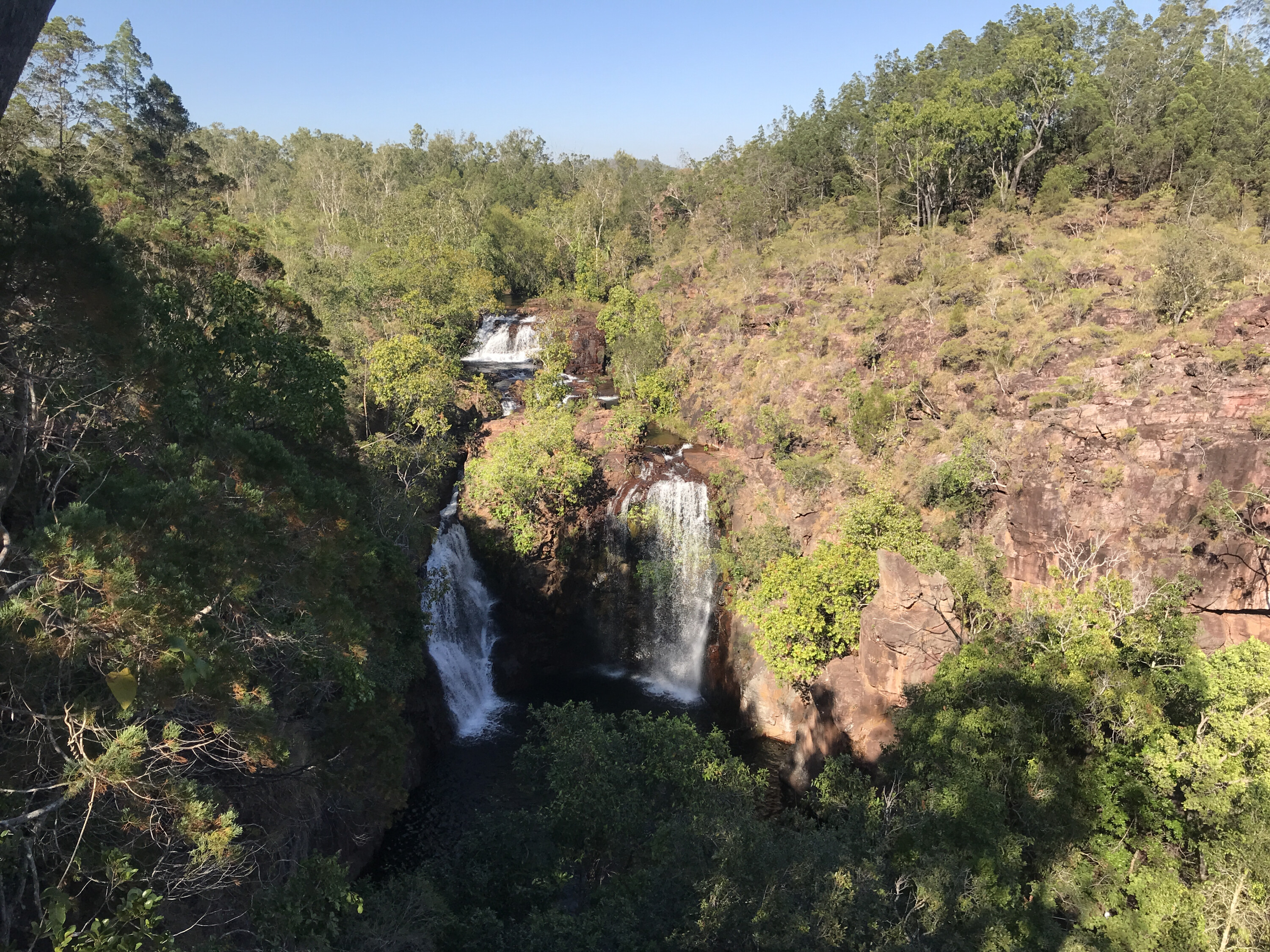
Western Australia is a paradise for adventurers, with a stunning coastline that spans 12,000km, majestic forests alive with unique flora and fauna, and vast outback desert tracks within the Golden Outback, which covers more than 2.5 million square kilometres and totals around one third of Australia’s total landmass.
4xploring Rentals takes the hassle out of off-roading in WA and has a range of rental vehicles available loaded with camping and equipment to take you further.
4xploring Rentals can also provide permission to travel on and to some quintessential tracks and locations including:
The station access road to Red Bluff on Quobba Station (WA)
The Holland Track (WA)
Bungle Bungles (WA)
Cape Leveque (WA)
Kalumburu Road (WA)
Tanami Track (NT, WA)
Gibb River Road (WA)
Gunbarrel Highway (WA, NT)
Vehicles available to rent include a two-person HiLux RTT camper, a two-person Prado RTT camper, and a two-person 300 Series RTT camper – with a four-person HiLux RTT camper coming soon. They also offer an MDC six-person camper trailer.
Booking is easy via the online form, with 4xploring Rentals listing places to visit, permit information and equipment packages. They’ll even take food and alcohol orders and deliver it to the depot pre-departure.
To get started on your stress-free drop-in, drop-out adventure, head to the 4xploring Rentals website listed below.
Great powertrain combinations, both V6 and 2.0 bi-turbo
Smooth ride
Extensive tech features
Not so much..
Lush ride not as polished when roads get rough
Manual mode rocker switch not ergonomic
Some interior materials could be better quality
Mitsubishi Pajero Sport
Things we like
Industry-leading warranty and servicing
Economical engine
Well-featured for a low price
Not so much..
Ride is a bit sharp
Low towing capacity
No longer has an ANCAP safety rating
There is plenty of choice for large, seven-seat off-road SUVs, but as new models arrive bristling with tech and safety, so too does an inevitable price rise, pushing ever closer to luxury SUV prices.
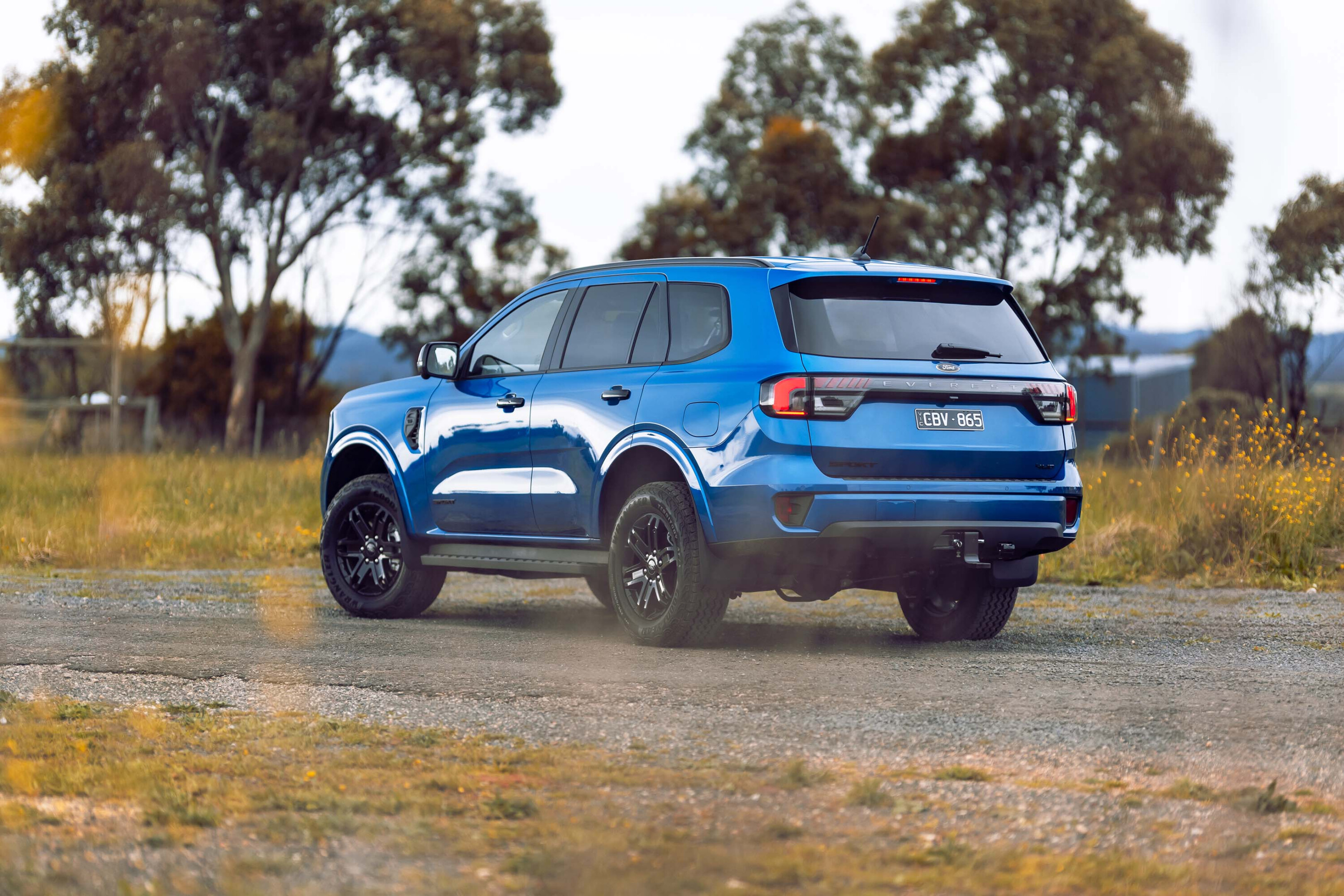
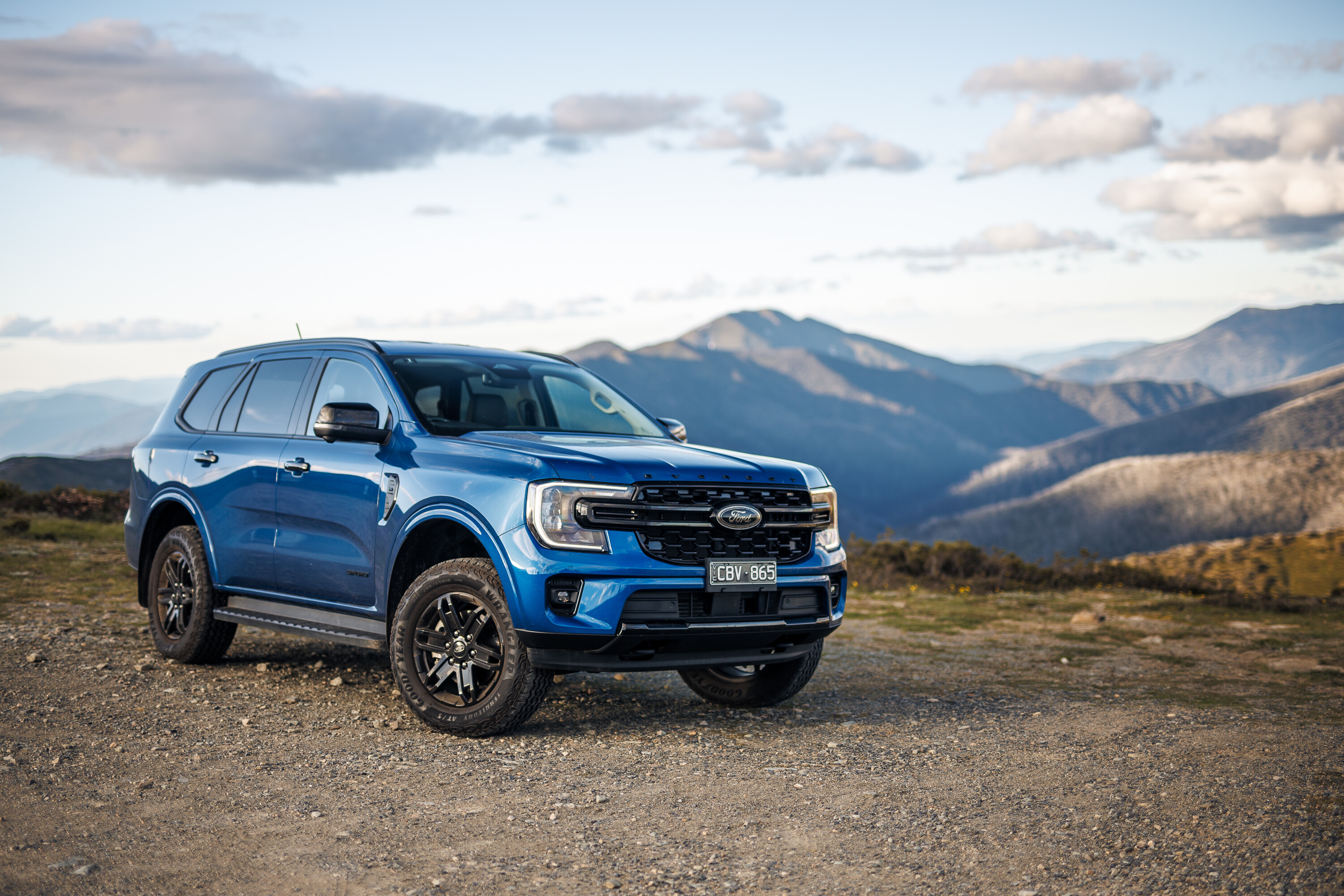
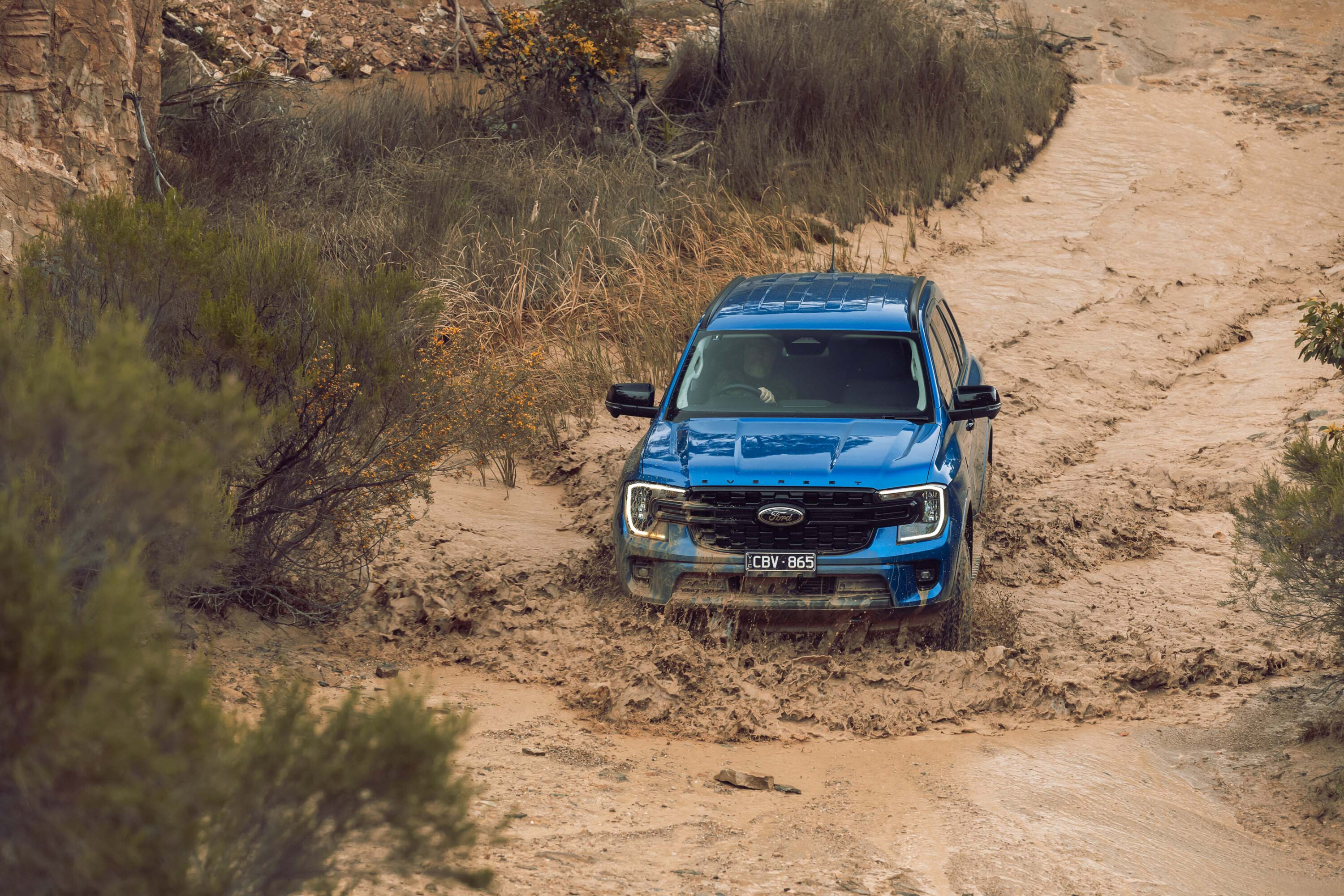
Both of these 4×4 wagons are from well-known brands with large dealer networks in Australia. Added to that is the Ford’s local development; while it’s not made here, much of the Everest’s engineering was done in Australia. The new Everest is a new benchmark for large ute-based wagons; certainly, our team of judges thought so when they awarded the Everest the prestigious Wheels Car Of The Year for 2023.
1
Not quite such a new toy in the sandbox is the Mitsubishi Pajero Sport, an off-road-oriented wagon that is getting towards the end of its production cycle.
A new-generation Pajero Sport is due in 2025. As it stands, the Pajero Sport on sale today was first released in 2015, even though it has been updated since – most recently in 2020.
Both these four-wheel drive wagons are based on a dual-cab utility chassis: The Ford is based on the Ranger and Pajero Sport the Triton.
1
This used to explain the relatively agricultural engines, rough ride and narrow cabins of such vehicles, but no more; like the utes they are based on, these wagons have become increasingly sophisticated.
Both provide the option of seven-seat versatility, 4×4 off-road ability (although cheaper, less popular 4×2 models are also available) and better towing capacity than most vehicles on the market.
We are just looking at the volume sellers here; that is, 4×4 models.
However, the Everest’s price impost could be considered worthwhile given it has much more up-to-date tech and safety, as well as better engine choices and towing capacity. Yet the Pajero Sport counters with a few (albeit minor) feature advantages over the Blue Oval offering.
Starting with the base 4×4 model, the Pajero Sport GLX 4WD, there’s a little more than $8000 saved over the Ford Everest Ambiente 4WD, the cheapest Everest with four-wheel drive. Both the Ford and the Mitsubishi are five-seaters in these base models, although the Everest Ambiente can be optioned with seven seats.
1
The Ford Everest has a 3500kg (braked) towing capacity (with 350kg tow ball download limit) for all models against the lower 3100kg/310kg (braked) towing limit for all Pajero Sports.
Speaking of towing, the Everest’s optional tow package is more sophisticated than that of the Pajero Sport, with an integrated brake controller as well as trailer calibration for the blind-spot monitoring system as well as a handy trailer light check feature.
The Everest also has a 10-speed automatic as standard against the Pajero Sport’s eight-speed auto. While the Mitsubishi has a slight advantage with its full-time/part-time Super Select II transfer case, the Ford has an effective full-time dual-range 4WD system.
1
Both allow you to drive from slippery wet roads onto dry roads in high range without needing to select 2WD, as you must with a part-time 4WD system to avoid driveline damage.
These two entry models, the Everest Ambiente and Pajero Sport GLX, share many standard inclusions such as adaptive cruise control, dusk-sensing bi-LED headlights (the Ford includes auto high beam), power-folding side mirrors, roof rails, rain-sensing wipers, keyless entry and push-button start, three 12-volt accessory ports, built-in sat-nav (with one year of connected services for free with the Ford), side steps, rear-view camera, rear parking sensors, lane-change assist, autonomous emergency braking and a rear differential lock.
1
The Mitsubishi spec advantage over the Ford at this entry-level point comes down to a power tailgate, a 220V AC socket and two second-row USB ports. The entry Everest Ambiente has 17-inch alloys while Mitsubishi provides 18-inch alloy wheels across the range.
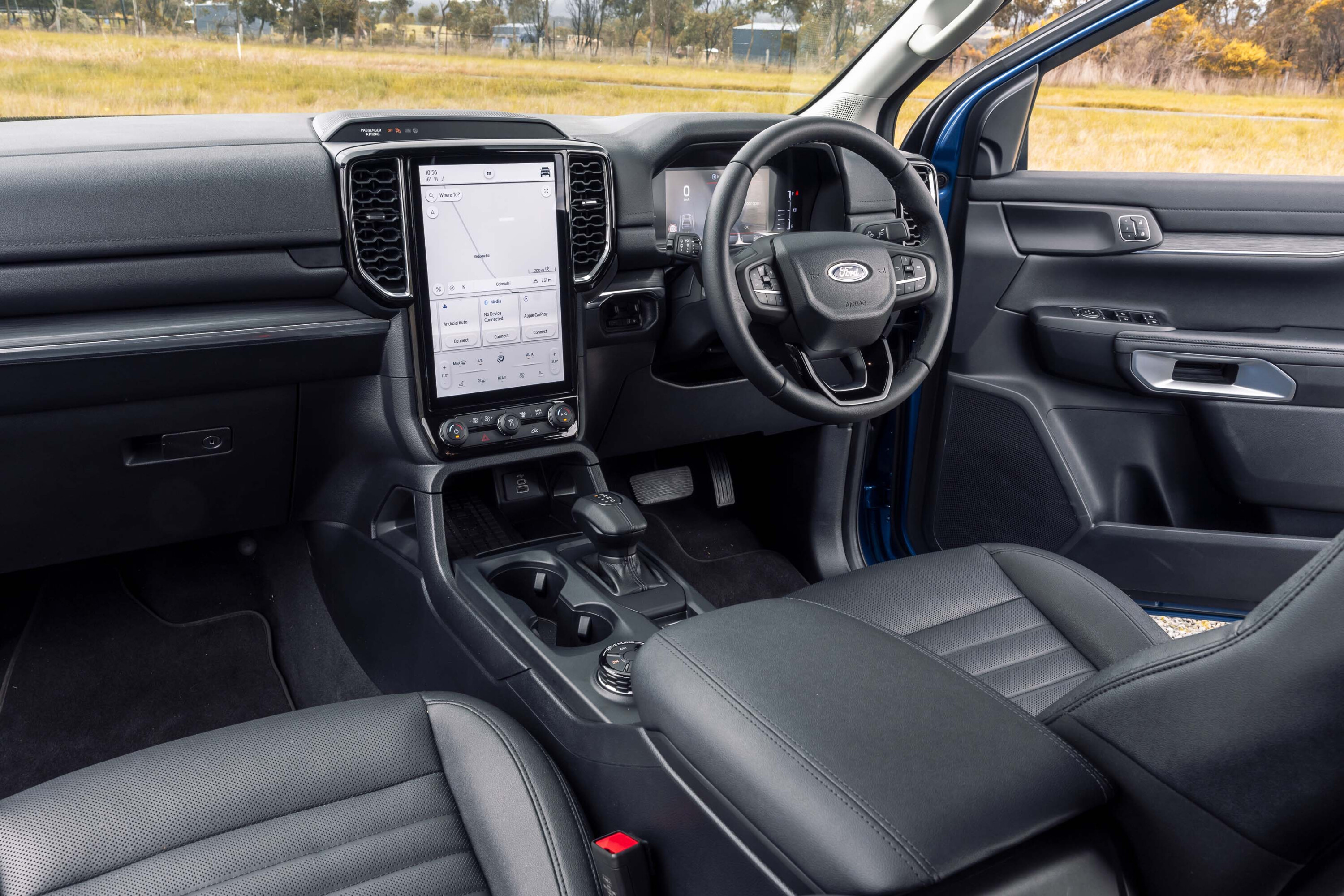
However, the base Everest Ambiente builds its case against Pajero Sport GLX with a standard equipment advantage that includes a 10.1-inch infotainment display (only 8.0-inch for all Pajero Sports), wireless phone charging, speed sign recognition, embedded modem, electro-chromatic rear vision mirror, front parking sensors, post-collision braking, blind-spot monitoring, rear cross-traffic alert and braking, lane departure prevention and lane-change assist.
All Everests have wireless phone mirroring, while it’s wired only on the Pajero Sport. Two front USB ports are fitted to the Pajero Sport; the Everest has three up front.
1
Moving up the model walk is the Everest Trend at $65,590, and the Pajero Sport GLS at $55,190 (prices exclude on-road costs).
Standard equipment for both includes seven seats, power tailgate, power-folding side mirrors and rear privacy glass, while the Ford also gets 18-inch alloy wheels to equal the Mitsubishi. The Everest finally matches the two second-row USB ports of all Pajero Sports, while the Mitsubishi is ahead at this trim level with tyre pressure monitoring that Ford doesn’t offer until the Platinum trim level.
While it is $10,400 more expensive, the Everest Trend has additional features over the Pajero Sport GLS such as leather seats (excluding third row), power driver’s seat adjustment and a 12.0-inch infotainment touchscreen.
1
Next up the model price walk are the Everest Sport and the Pajero Sport Exceed, with the Mitsubishi this time being $8900 cheaper than the Ford. While the Ford diverges to a sporty theme, the Mitsubishi is more focused on luxury. Both have leather seats, heated and power-adjustable at the front.
The Exceed, with the inclusion at this trim level of blind-spot monitoring, lane-change assist and rear cross-traffic alert, finally reaches some of the safety kit you get on a base Everest. Tech on the Exceed is also boosted with app control for the tailgate and other features. The Exceed beats the Sport with its 360-degree camera and a full digital dash.
1
An Everest Sport, however, counters with a powerful V6 turbo-diesel engine as standard, 20-inch alloy wheels, and power-adjustable heated and ventilated front seats.
The Pajero Sport model range extends past Exceed trim to GSR, a sporty variant at the top of the line-up. This is basically an Exceed with an appearance package including black painted wheels and trim. The rest of the features imitate the Exceed, and there are no powertrain or suspension changes.
Meanwhile, the Everest model range climbs further at the upper-spec levels, with a limited-edition $72,804 (before on-road costs) Wildtrak next up, limited to 800 units. It gets a dark grey grille and side mirrors, silver underbody plate, 20-inch alloy wheels, tyre pressure monitoring, black leather upholstery, orange trim stitching, power-adjustable front seats with memory function for the driver, a panoramic glass roof, 360-degree cameras, ambient lighting and external zone lighting.
1
The Pajero Sport range received a five-star ANCAP safety rating when released back in 2015
Top of the Ford tree is the Everest Platinum at $77,000 before on-road costs. The Platinum features over the Wildtrak include 21-inch alloy wheels, matrix LED headlights, plusher leather upholstery, powered third-row seat folding, a 12.4-inch digital dash, active park assist, B&O premium audio, a heated steering wheel and heated outboard second-row seats.
Mitsubishi’s Pajero Sport range received a five-star ANCAP safety rating when released back in 2015 – which was given under more lenient guidelines than now. Because the ANCAP ratings have advanced since, the 2023 Pajero Sport is now considered ‘unrated’. Meanwhile, the Ford Everest was ANCAP crash-tested in 2022, with a maximum five-star result.
All prices except the GWM, LDV, Mahindra and SsangYong exclude on-road costs. What might also be considered as competitors (although pricing is heading well north of the vehicles just mentioned) are the Jeep Grand Cherokee ($77,950-$129,950) and Toyota Prado ($62,830-$87,468), again before on-road costs.
Of the above vehicles, the Isuzu MU-X and Toyota Fortuner (both also based on ute models) are the closest competitors to Everest and Pajero Sport – although the Toyota LandCruiser Prado is also still a popular choice in this segment.
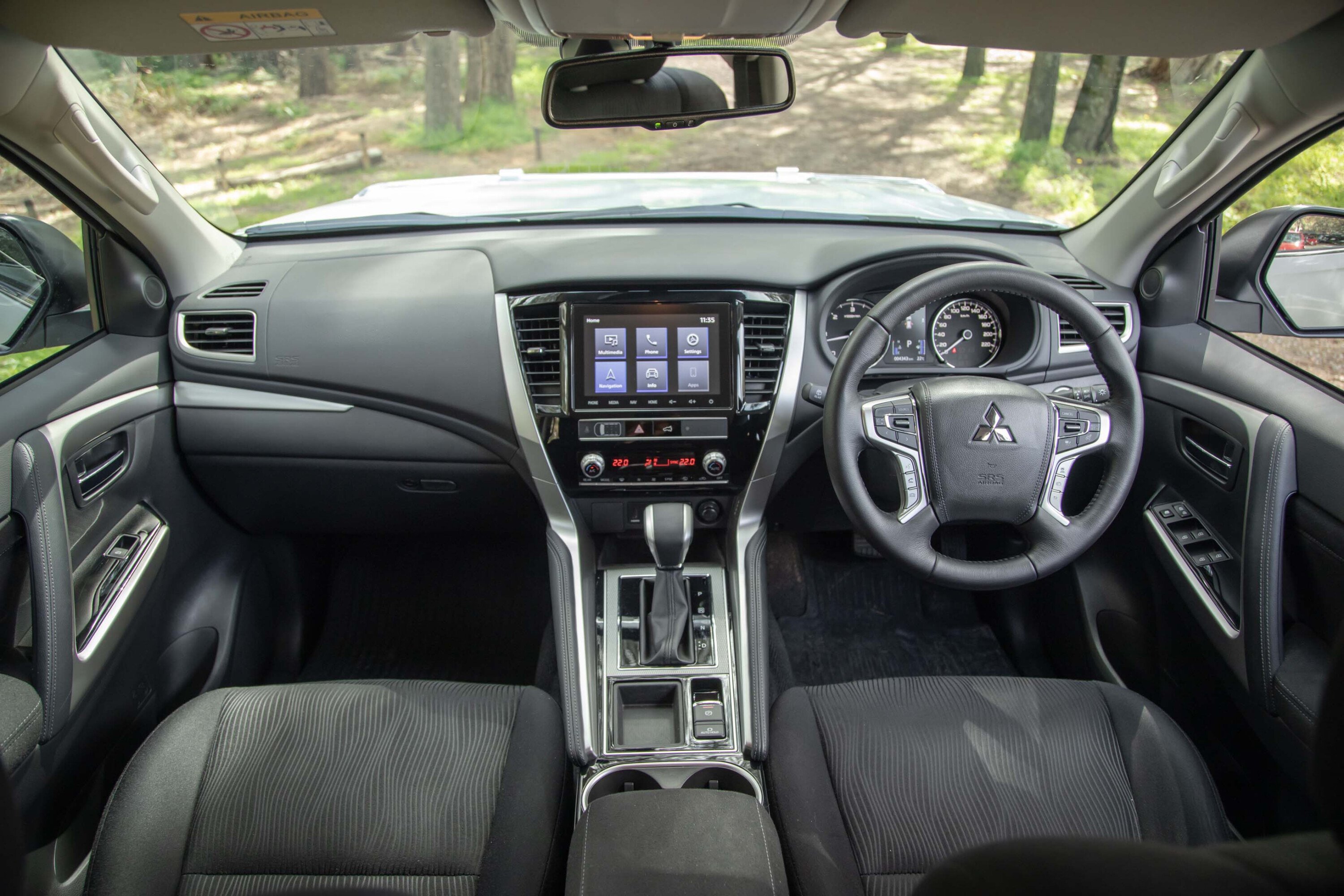
Even though it has been breathed over since its 2015 launch with a nice, modern design and neat tactile finishes here and there, the Pajero Sport feels more old-school to sit in than the more integrated and roomier Everest.
The Mitsubishi’s seats are relatively close to the floor but where the Pajero Sport most clearly shows its age inside the cabin is with the eight-inch touchscreen, which is small by modern standards and the operating system feels generations old in operation. Also, the second-row seat doesn’t slide forward for third-row access, which is surprising.
Meanwhile, the Everest is not exactly lush in material quality or finish at lower trim levels but it certainly is more modern and, while not exactly Range Rover plush, once you reach Platinum spec it is a more feature-laden vehicle than the Pajero Exceed or GSR.
1
There are several years of extra development advantage in the Everest, and they have been well spent. It has a cohesive, clever interior with acres of space, intuitive infotainment, decent materials quality and solid ergonomics.
However, points against the Ford here for the tiny and fiddly thumb buttons on the right-hand side of the gear selector, which you’re expected to use when manually selecting ratios in the transmission.
Storage space
Ford Everest *
Pajero Sport
Behind 3rd row
259L
131L
Behind 2nd row
898L
502L
Behind 1st row
1823L
1488L
* Litres measured to roof of cabin and not top of seats
The Pajero Sport‘s luggage capacity figures are only measured to the top of the seatback, while the Everest figures extend to the roof.
Although the Everest is slightly longer externally than the Pajero Sport (by about 100mm), it is considerably wider (200mm).
Meanwhile, the Everest is also longer, wider and taller in almost all interior measurements. The Everest may only offer a couple of millimetres more headroom than Pajero Sport, shoulder room and legroom are better by around 30-40mm. That said, front legroom in the Pajero Sport has a 10mm advantage.
The Pajero Sport’s ability to adapt to both tarmac and dirt is one of its most endearing attributes.
Its 2.4-litre turbo-diesel engine is slightly underpowered in its attempt to push the vehicle’s 2209kg weight (GSR) and although relatively quiet, you can hear it working hard to do so. But it’s not a mitigating factor.
While Mitsubishi is also not the most refined when travelling on long stretches of bitumen, its eight-speed automatic transmission feels well-calibrated and smooth by large SUV standards.
1
The Everest’s two powertrains both have more polish, and a lot more substance in terms of refinement, outputs and fuel consumption.
Of course, the six-pot engine is our pick, delivering a cultured note – for an oil burner – at the top end and 600Nm on tap to make towing up to 3500kg braked pretty effortless. It feels as if it could drag an errant tectonic plate back into line.
While the rear live axle doesn’t make the Everest ride like Citroen DS on a lumpy, corrugated dirt road, it feels pretty refined just about everywhere else – and when you jump into the Pajero Sport straight after the Ford, it highlights the Ford’s better ride and refinement. The Mitsubishi’s ride is more abrupt than the Ford everywhere, although in truth it’s still not bad for a ladder-frame 4×4.
Mitsubishi is industry-leading when it comes to aftersales support, with all vehicles covered by a five-year/100,000km vehicle warranty. That extends to 10 years or 200,000km of cover if owners keep scheduled servicing with Mitsubishi.
Servicing intervals are every 12 months or 15,000km, whichever comes first. Mitsubishi will also cap servicing costs for the first ten years or 150,000km and includes 10 years of roadside assistance provided, again, that you service yearly at Mitsubishi.
1
Meanwhile, the Ford comes standard with a five-year/unlimited-kilometre warranty and free roadside assistance for a year, continued when you have services done with Ford.
The capped-price maintenance scheme covers the first four scheduled services, either pre-paid or pay-as-you-go, due every 12 months or 15,000km. It’s worth noting that Ford gives you a free service loan car and also a price-matched tyre offering, neither of which are offered by Mitsubishi.
The Pajero Sport is undeniably one of a few older models in this segment but remains one the more attractive and better value offerings, with a great 4WD system and efficient engine.
Mitsubishi still gives you ample tech and comfort features, too. While it is not expensive, neither is it bargain basement for the category. The Pajero Sport also now lacks a safety rating and that 3500kg towing capacity some consider important.
It is pretty clear that the ute-based SUV market has moved on since the Pajero Sport first arrived in 2015, and none shows that more clearly than the Ford Everest.
1
While saying that Everest is based on a commercial ute is a talking point, it is fast becoming an irrelevant one. Put simply, this is one of the best 4×4 wagons on the market, period.
Even though rough-road ride quality could be a touch smoother, some of the lower cabin materials a little more polished and the the manual mode button easier to use, the Ford has plenty of positives.
The interior space, both powertrains’ refinement and performance, the ride and handling, and the long list of tech and safety features all conspire to serve the Everest the accolades it richly deserves.
As one of a handful of seven-seat SUVs with proper off-road credentials currently on the Australian market, the Pajero Sport remains popular with adventure-driven families.
And for good reason; it’s well-priced and comes with a generous warranty and class-leading after-sales support.
In its current guise though, the Paj Sport was first released back in 2015 and is somewhat long in the tooth – despite a mid-life refresh in 2020 that was largely cosmetic.
With an influx of more modern large SUVs arriving locally – think Everest – is the ageing Pajero Sport still a worthy consideration?
Four 4×4 models occupy the Australian line-up – GLX, GLS, Exceed and GSR – with the choice of either five or seven pews available. The mid-spec GLS we have here is the cheapest entry point in to a seven-seat 4×4 variant.
1
Interior
Despite feeling dated in certain areas, the Pajero Sport’s interior is a comfortable place for a family voyage beyond the black stump.
The undersized eight-inch touchscreen now feels a generation old, with the system itself slow to boot by modern standards.
TomTom navigation is embedded within the system, but, with the inclusion of Apple CarPlay and Android Auto, we’re hard-pressed to know if anyone will ever use it. Still, the most commonly used applications and functions are easy to find.
1
Broken record here, but the on-screen touch buttons instead of ‘actual’ buttons and dials is an ongoing gripe we have here at 4X4 Australia – especially for volume control. Not only is there a delay when pressing the buttons, but the screen doesn’t take long to get filthy with fingerprints.
An updated UI, a bigger screen, and buttons and dials would make a world of difference.
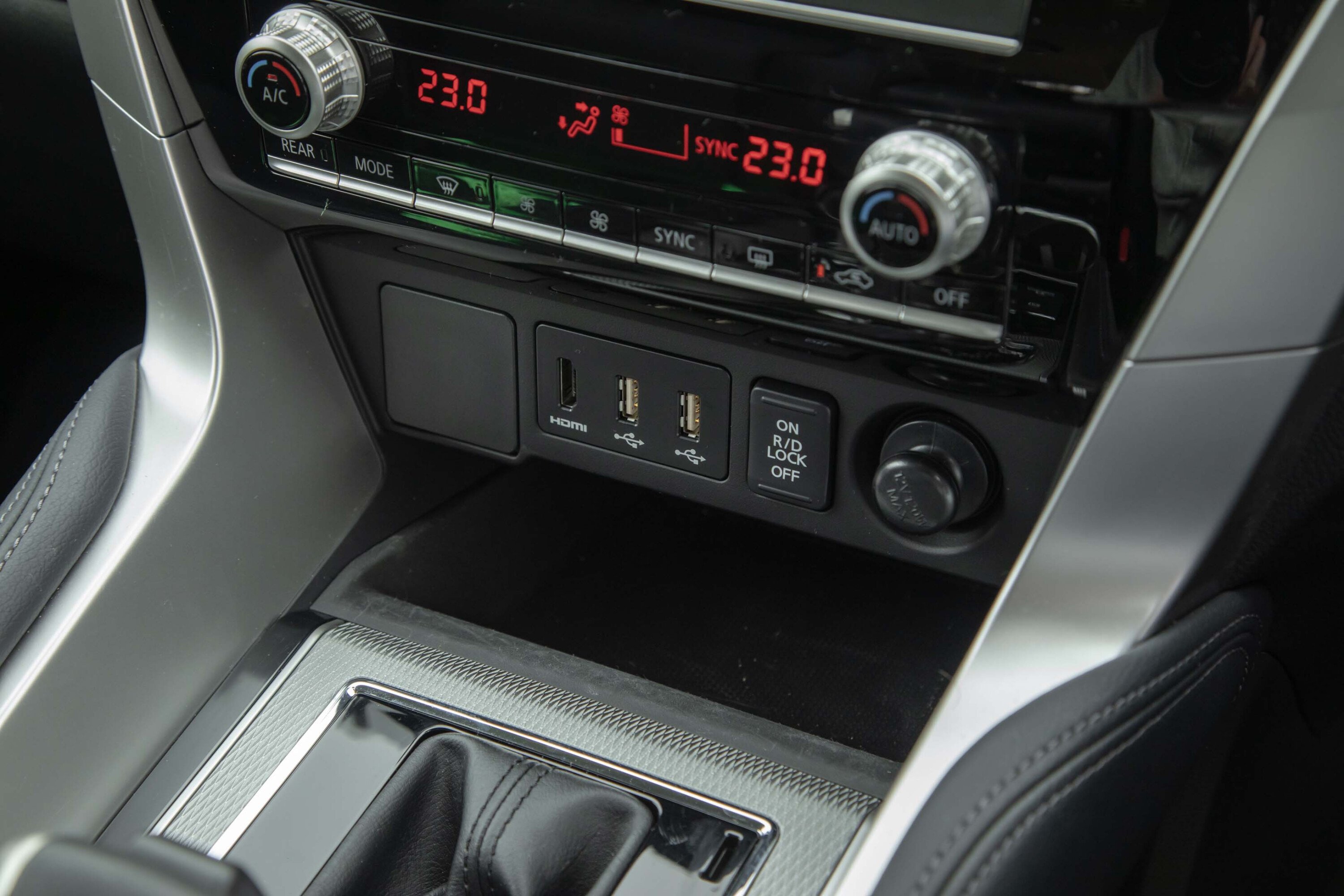
Front passengers are greeted with two USB points, one HDMI point and a 12-volt outlet; those in the rear seat get two USB points and a 150W outlet; while the third row has one 12-volt outlet.
Grab handles for the driver and front and rear passengers make entry and exit easy for weary travellers, and, unlike the base-spec GLX, the GLS comes with dual-zone climate control.
1
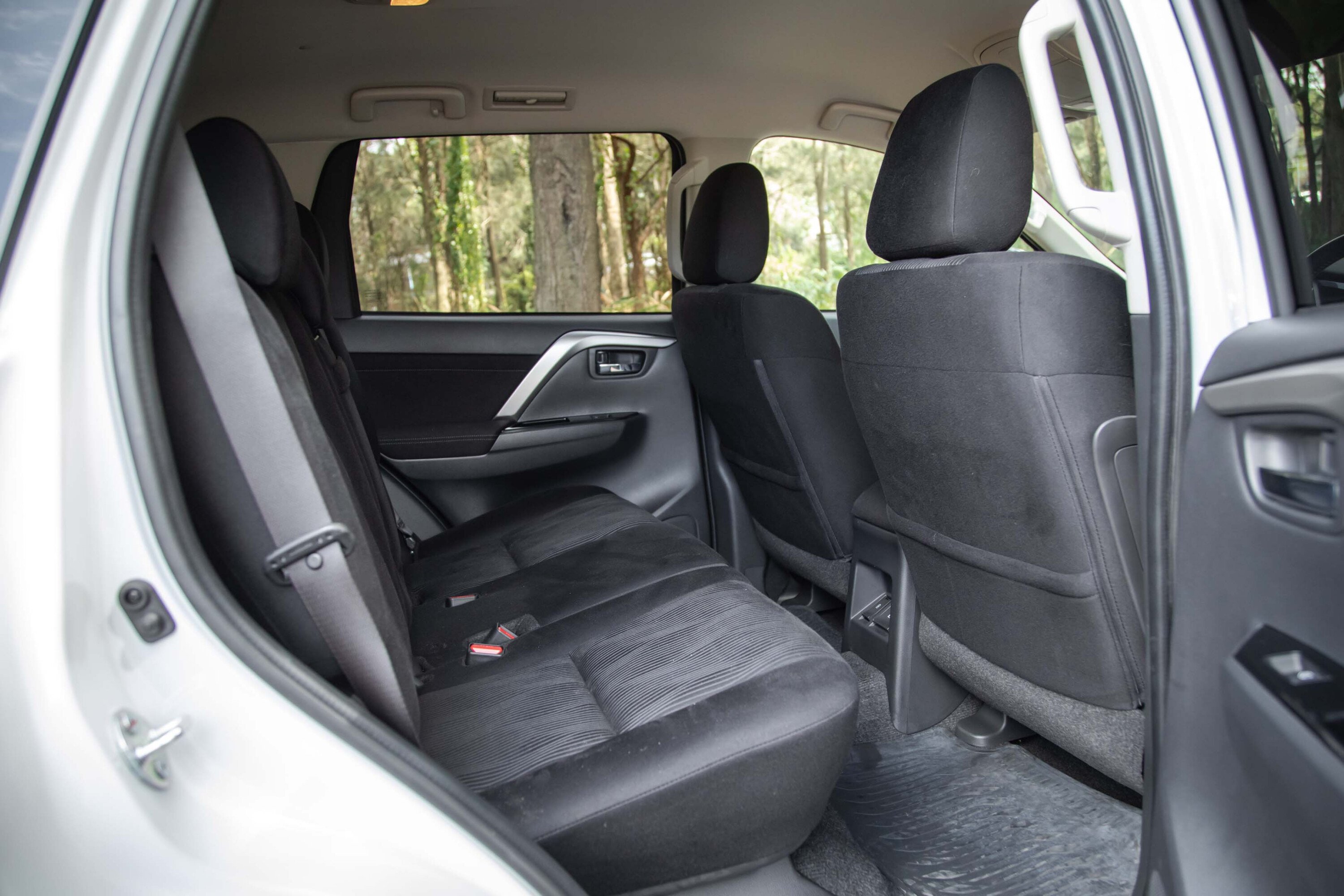
The cloth-trimmed seats are supportive and comfortable, and there’s plenty of head- and leg-room in the second row. Owners will have to manually adjust the front seating positions, though – ticking the ‘Deluxe’ option at purchase time will ensure you get leather-appointed powered seats, as well as Mitsubishi’s Multi-Around Monitor system.
The third row is a little bit cramped, but smaller kids will be comfortable on longer trips.
That third row can be easily stowed to allow for greater luggage capacity, and the boot can eat up to 502 litres of space when rear-most seats are folded down. Folding all of the seats opens up 1488 litres and ample space: 1575mm (L) x 1370mm (W) x 885mm (H).
The GLS comes with a payload capacity of just 715kg. A plastic cover protects the carpet when the seats are flat, but the bumpy plastic provides an uneven surface and items do slide around because of this.
There’s no shortage of storage bins and pockets, which are neatly positioned within the cabin, including the clever use of otherwise wasted space beneath the centre console.
Two drink holders sit between the driver and passenger, while big pockets in doors are a snug fit for larger items. The GLS model also features a handy rear floor storage compartment.
1
Exterior
The revamped front end of the Pajero Sport was implemented as part of the vehicle’s mid-life update in 2020. Much like the changes to the Triton the year previously, the Pajero Sport received the same ‘Dynamic Shield’ design concept for a wider, bolder front end.
The facelift was essential to bring the Pajero Sport in to the current century, but, much like the Triton, it could do with slightly less chrome. The design of the rear lights remains a point of conjecture, with the tear-drop style remaining a divisive talking point.
A powered tailgate was also added with the 2020 mid-life update, and we must’ve had a glitchy unit, as it was a temperamental piece of tech. Please comment below if you have had a similar experience?
1
On the road, and off
As one of the few seven-seat SUVs on the market with proper 4×4 credentials, an all-terrain set of boots would transform the Pajero Sport into an off-road-ready weapon.
With a modest 133kW and 430Nm on tap, there’s no disguising the fact Mitsubishi’s 2.4-litre MIVEC DID turbo-diesel engine seems to work hard to get the 2060kg Pajero Sport up to speed.
It’s also not the quietest nor smoothest in its operation, but once sitting at 100 clicks on the freeway, the burly SUV is a pleasant place to sit.
Like others in this category, the Pajero Sport utilises a ladder-frame chassis derived from its ute-based sibling, but it replaces the leaf springs found at the rear of the Triton with coils – the front-end shares the same coil design. This translates to a much smoother on-road composure than the Triton ute.
1
The eight-speed transmission is well-calibrated, with up- and down-changes fairly smooth by large SUV standards. The GLS 4×4 is equipped with paddle shifters, which is convenient for when bitumen turns to dirt.
Wearing 265/60 RE Open Country Toyo A32 road tyres and 18-inch two-tone alloys limited the amount of off-roading we could enjoy, but we did enjoy a spirited yet brief opportunity to flick the on-demand 4×4 system – Super Select II – in to 4WD Low.
The eight-speed transmission is well-calibrated, with up- and down-changes fairly smooth by large SUV standards.
1
As one of the few seven-seat SUVs on the market with proper 4×4 credentials, an all-terrain set of boots would transform the Pajero Sport into an off-road-ready weapon.
Once we started to slip and slide on those road tyres, though, we opted to return to the bitumen so that we could deliver the vehicle to Mitsubishi HQ with its side-steps intact. With that in mind, the driver-selectable rear diff lock which comes standard remained unused on this occasion.
At the end of 2022, the Pajero Sport GLS received a Tyre Pressure Monitoring System (TPMS) as standard, which provides the driver with upt-to-date tyre pressure information and is a feature that should be standard on all 4×4 vehicles.
For caravan owners, the GLS 4×4 comes with a REDARC trailer control system.
However, Mitsubishi has not rested on its laurels. As part of a 2020 upgrade, the Pajero Sport added Lane Change Assist (LCA) and Rear Cross Traffic Alert (RCTA) – but these are only available as standard on Exceed models.
The GLS does get Electronic Brake Force Distribution (EBD), Emergency Stop Signal system (ESS), and Hill Start Assist and Hill Descent Control.
Safety kit includes
Forward Collision Mitigation system (FCM)
Emergency Stop Signal function (ESS)
Emergency Brake Assist system (EBA)
Hill Start Assist (HSA)
Hill Descent Control (HDC)
Active Stability Control (ASC)
Trailer Stability Assist (TSA)2
Active Traction Control (ATC)
Anti-lock Braking System (ABS)
Electronic Brakeforce Distribution (EBD)
Brake Override System (BOS)
Adaptive Cruise Control (ACC).
VERDICT
It may have started to show its age, but the Pajero Sport GLS remains a compelling, off-road-ready seven-seat 4×4
The release of the all-new Ford Everest has widened the chasm between it and the rest of the large SUV market, bringing with it unrivalled on-road characteristics. But is there still an argument for the ageing Pajero Sport?
It may have started to show its age, but the Pajero Sport GLS is an off-road-ready seven-seat 4×4, with oodles of space, a decent drivetrain, a competitive price tag of $55,190 (the vehicle received a $1000 price rise in December, 2022), class-leading after-sales support, and a ten-year warranty.
Extensive Australian-driven modifications come to V8-powered 4×4
$100K-plus price tag before on-road costs looks good next to LC300
Based on Patrol Ti grade inside
Anticipated since the Australian outlet first announced the Warrior version of Nissan’s Navara ute in 2019, we’ve known of this project for a long time.
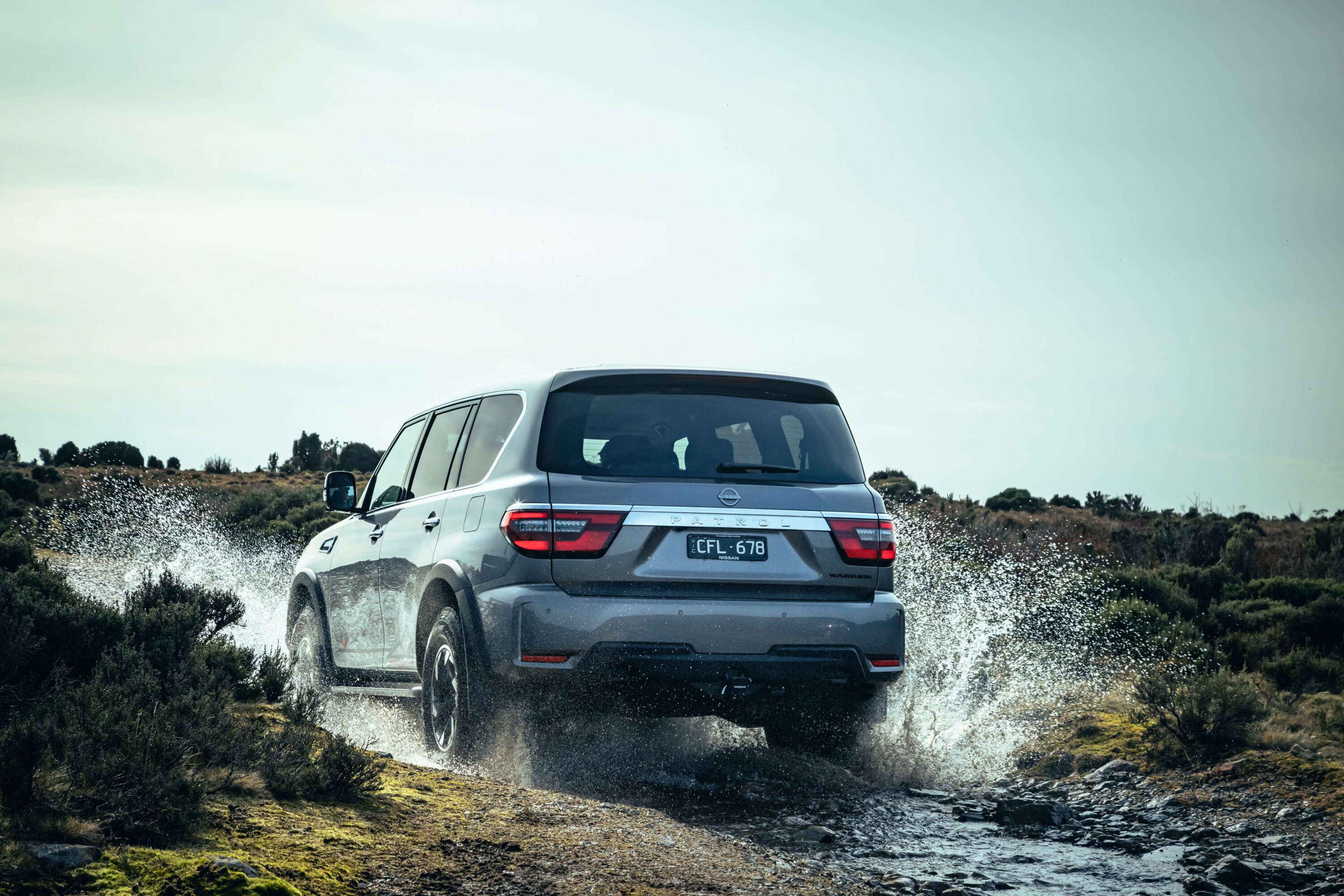
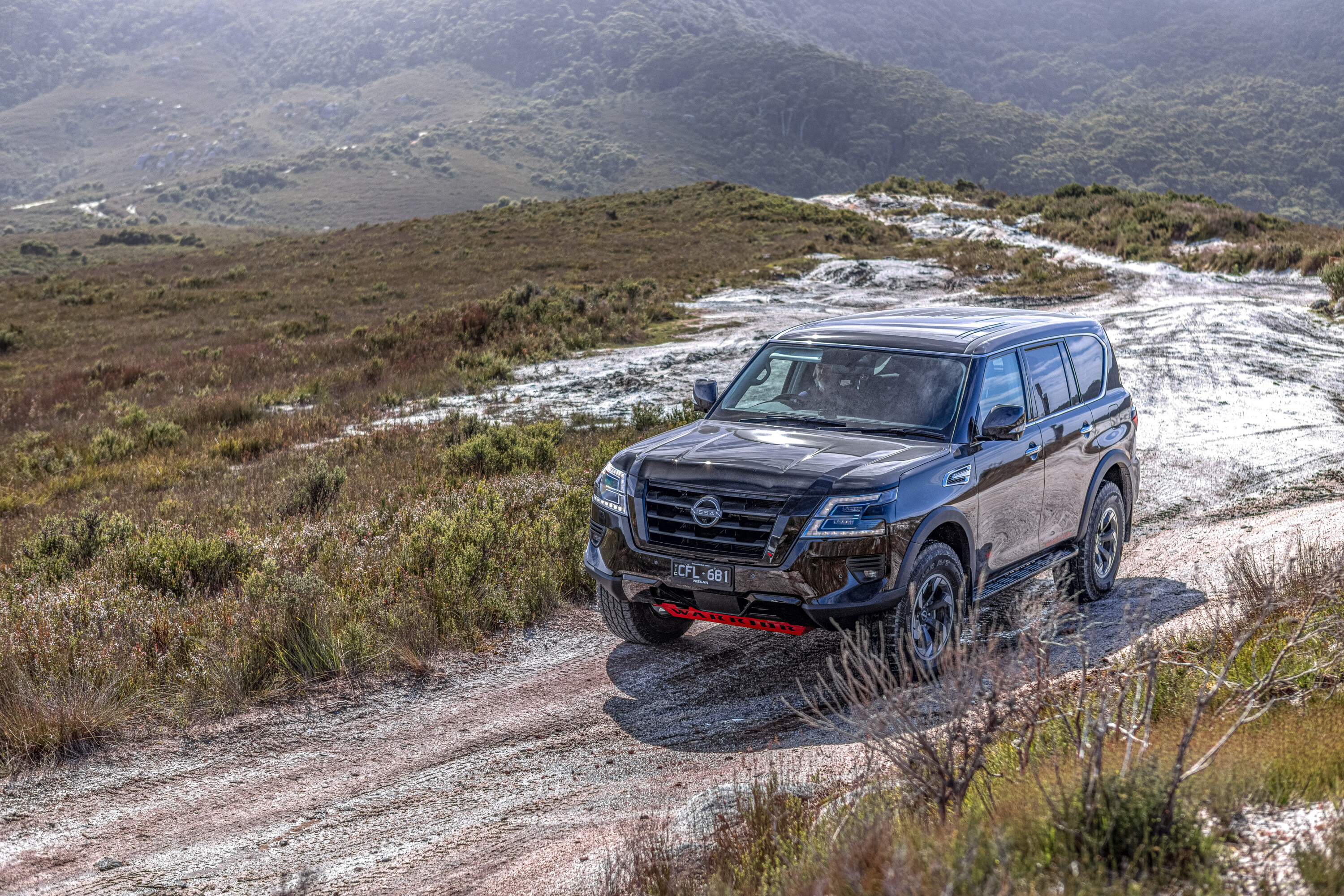
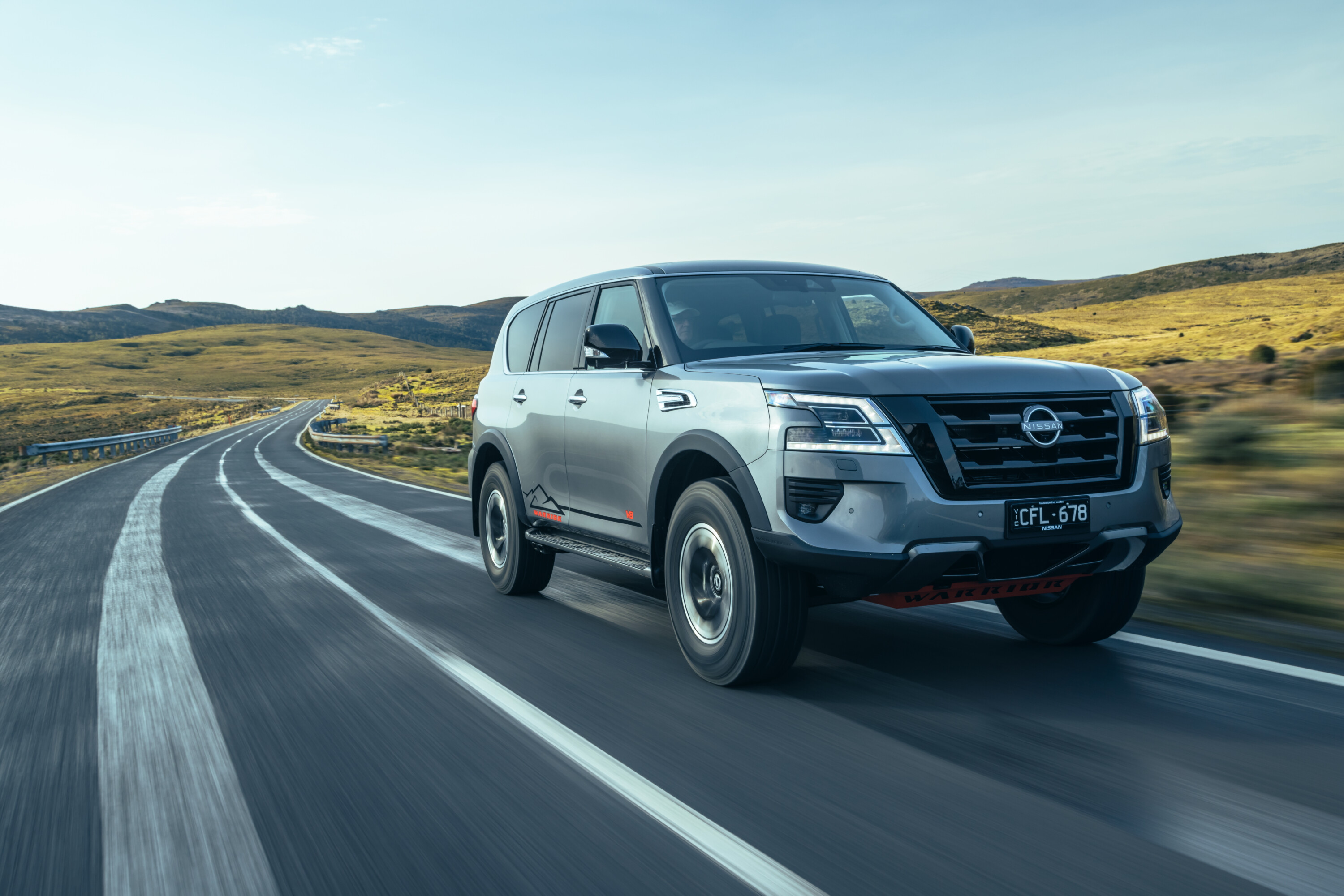
With a laundry list of changes from bigger alloy wheels, bush-ready protection, bi-modal exhaust, and 50mm lift kit, the Patrol Warrior is engineered for Australian conditions and remanufactured locally. It’ll cost you $101,160 before on-road costs – $16,260 more than the base car.
Psst, we’ve already had a spin in a prototype – read about it below
“The Patrol Warrior by Premcar has been developed specifically for Australian conditions and is the product of some of Australia’s leading car-making know-how.
“It’s been developed after thousands of hours of intensive research by our dedicated team of automotive industry engineering and manufacturing specialists, and we’re incredibly proud to launch the latest addition to the Warrior range”, said Premcar engineering director Bernie Quinn.
Who is Premcar?
Headed up by Bernie Quinn, Premcar has been modifying cars since the Tickford TS50 based on the AU Falcon.
Recently, the second-stage manufacturer has been working closely with Nissan to develop and create more capable versions of its utes and SUVs right here in Australia ??
1
What’s changed underneath?
Fans of the 298kW/560Nm 5.6-litre petrol V8 will be glad to know that it remains the centrepiece of the Patrol Warrior, with only a twin-mode side-exit exhaust system to help it breathe a little better.
Premcar worked on the Patrol Warrior with four key pillars: enhanced capability in every sense, road presence, the perfect soundtrack, and superb refinement. The below is the result of the extensive Warrior program.
Suspension and capability improvements
18-inch alloy wheels
Yokohamau00ae G015 295/70 All-Terrain tyres
50mm lift (+29mm suspension lift, +21mm wheel and tyre package)
New progressive rate rear bump-stop
40mm wider track vs. Ti
New multi-rate rear springs
40 degree approach angle
409 stainless steel side exit exhaust with bi-modal valve and actuator
23.3 degree departure angle (measured with towbar fited)
120 kg GVM upgrade
Re-engineered Hydraulic Body Motion Control (HBMC) system tuned by Premcar
48 kg increase in carrying capacity vs. Ti
Re-developed front springs
Maintains the Patrolu2019s 3.5-tonne braked towing capacity+
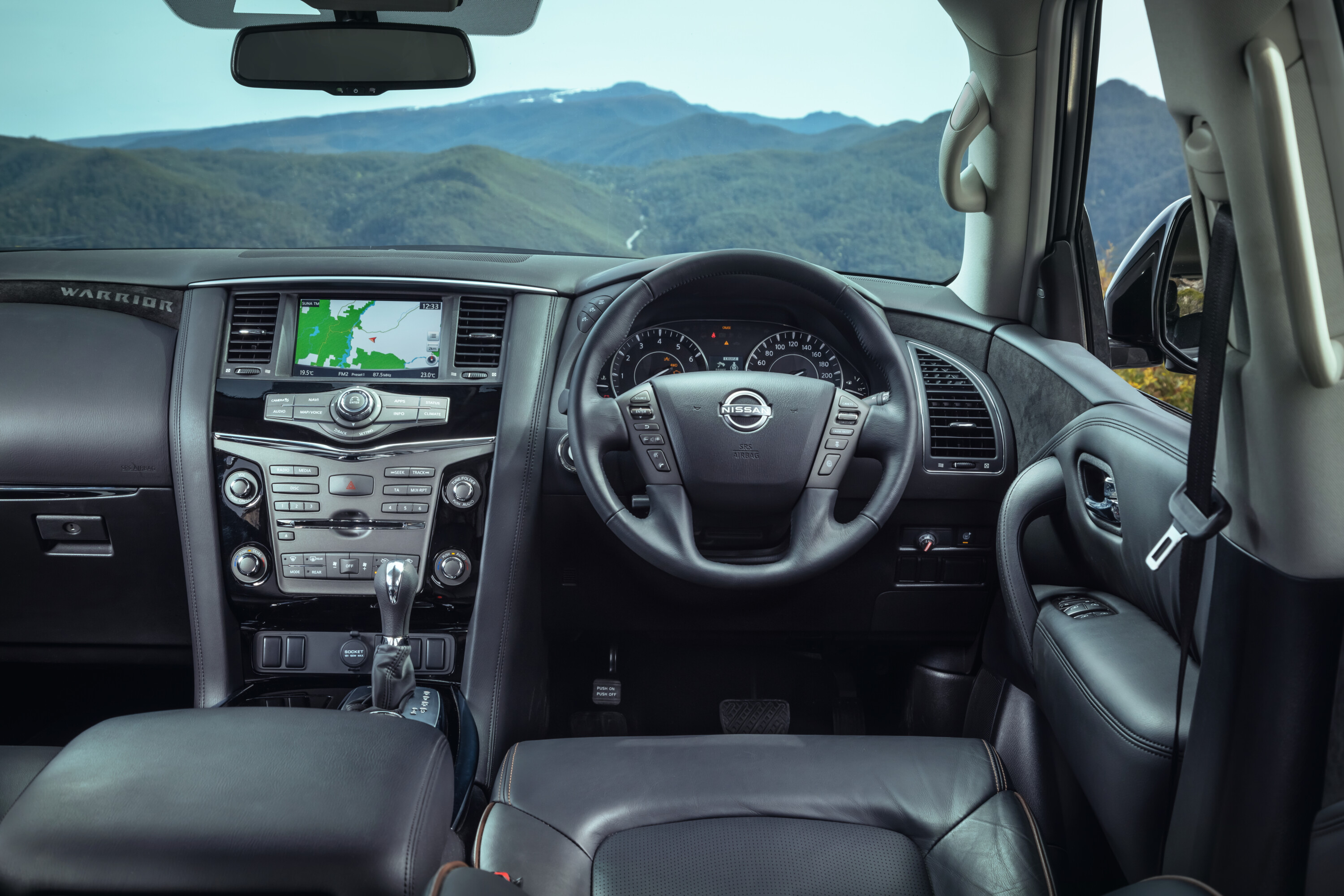
Being based on the Ti trim means the Warrior is equipped with a helical limited-slip rear differential, various off-road modes, full-time four-wheel drive, a seven-speed automatic, and creature comforts like power-adjustable seats.
In addition to the functional modifications, Premcar has added plenty of black exterior finishes for a more menacing appearance.
Exterior and interior modifications
Warrior-branded front bumper assembly
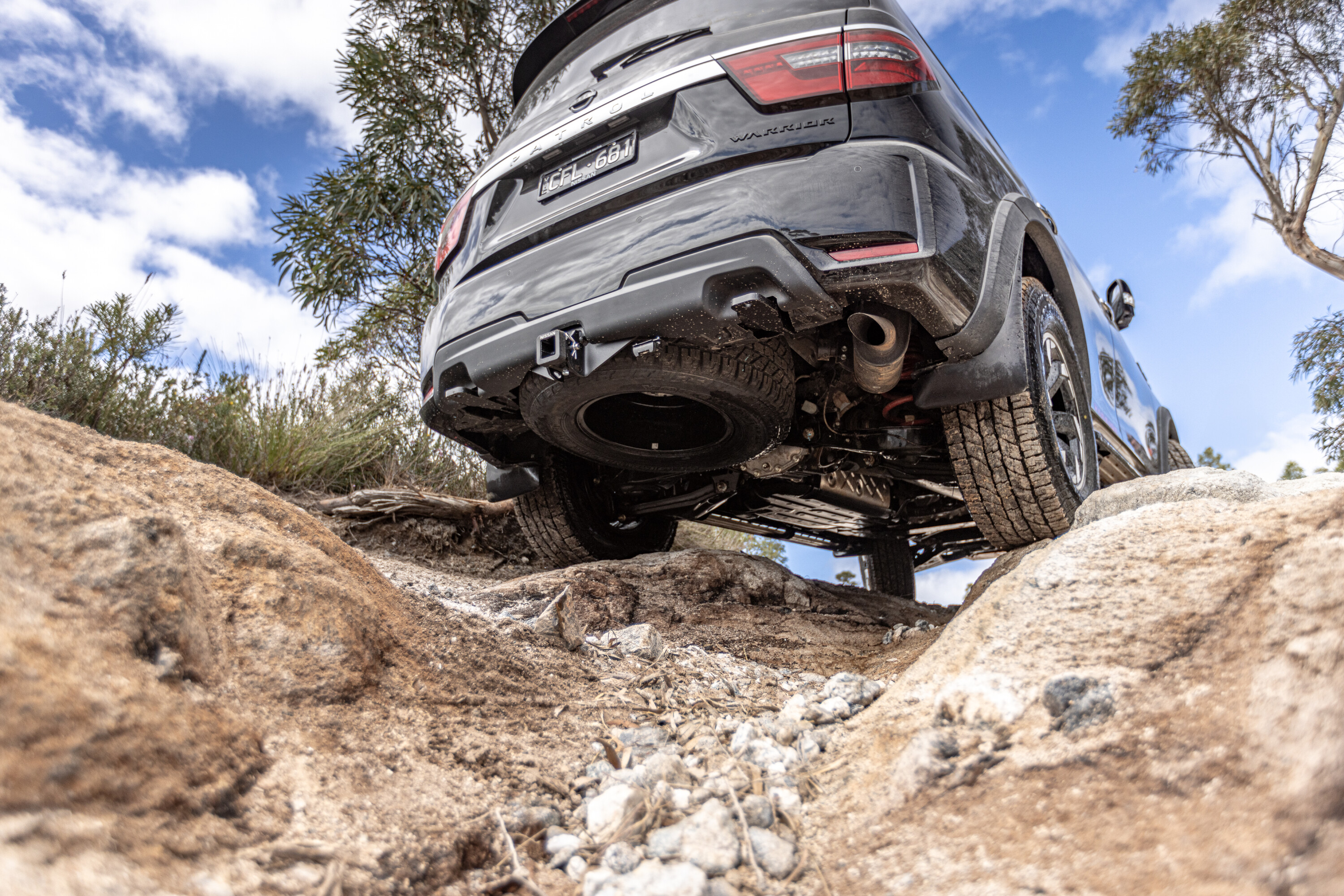
Bespoke towbar with two rear recovery points
Red Warrior branded bash plate
Bi-modal exhaust
Black fender flares
Rear bumper assembly with black valance panel
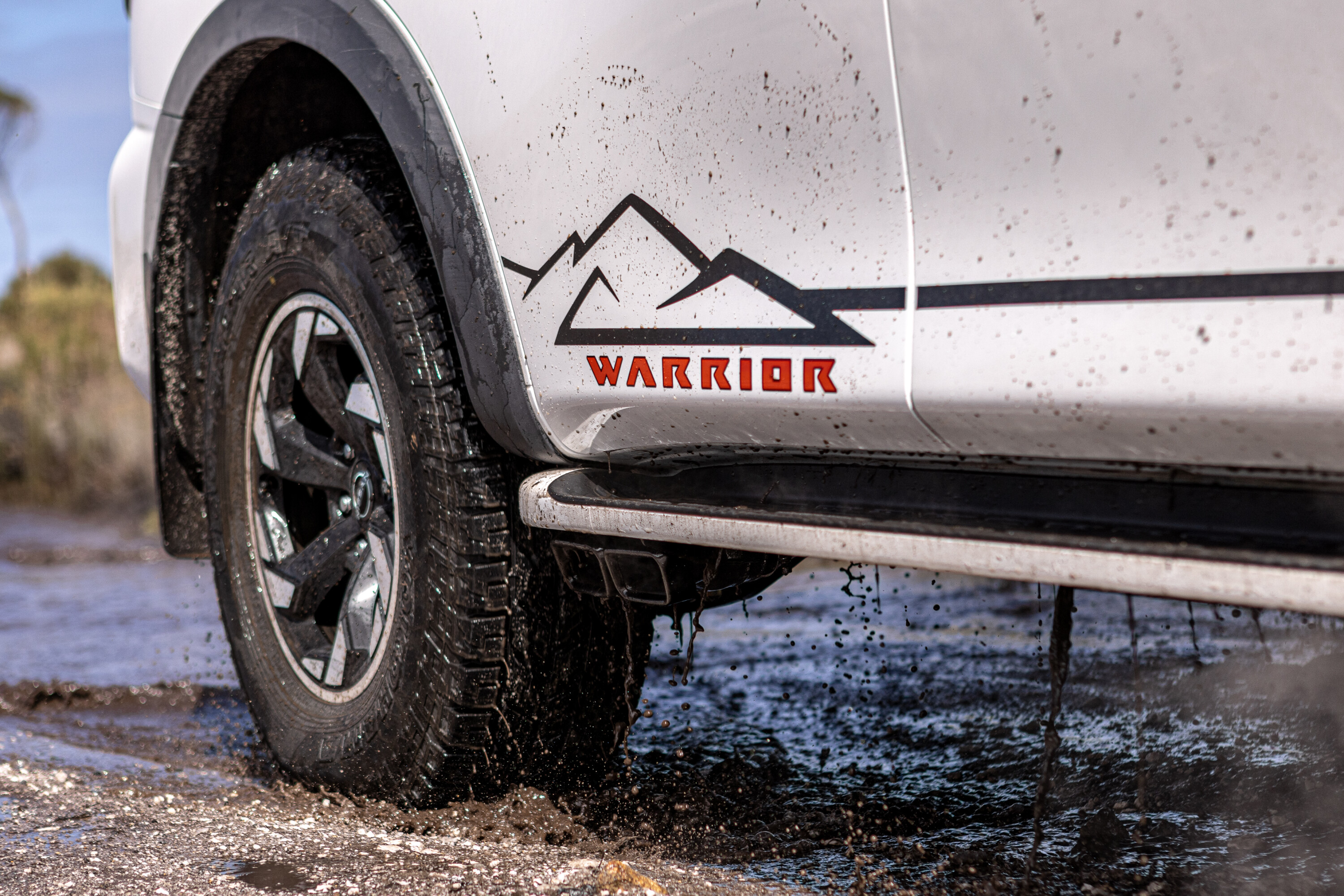
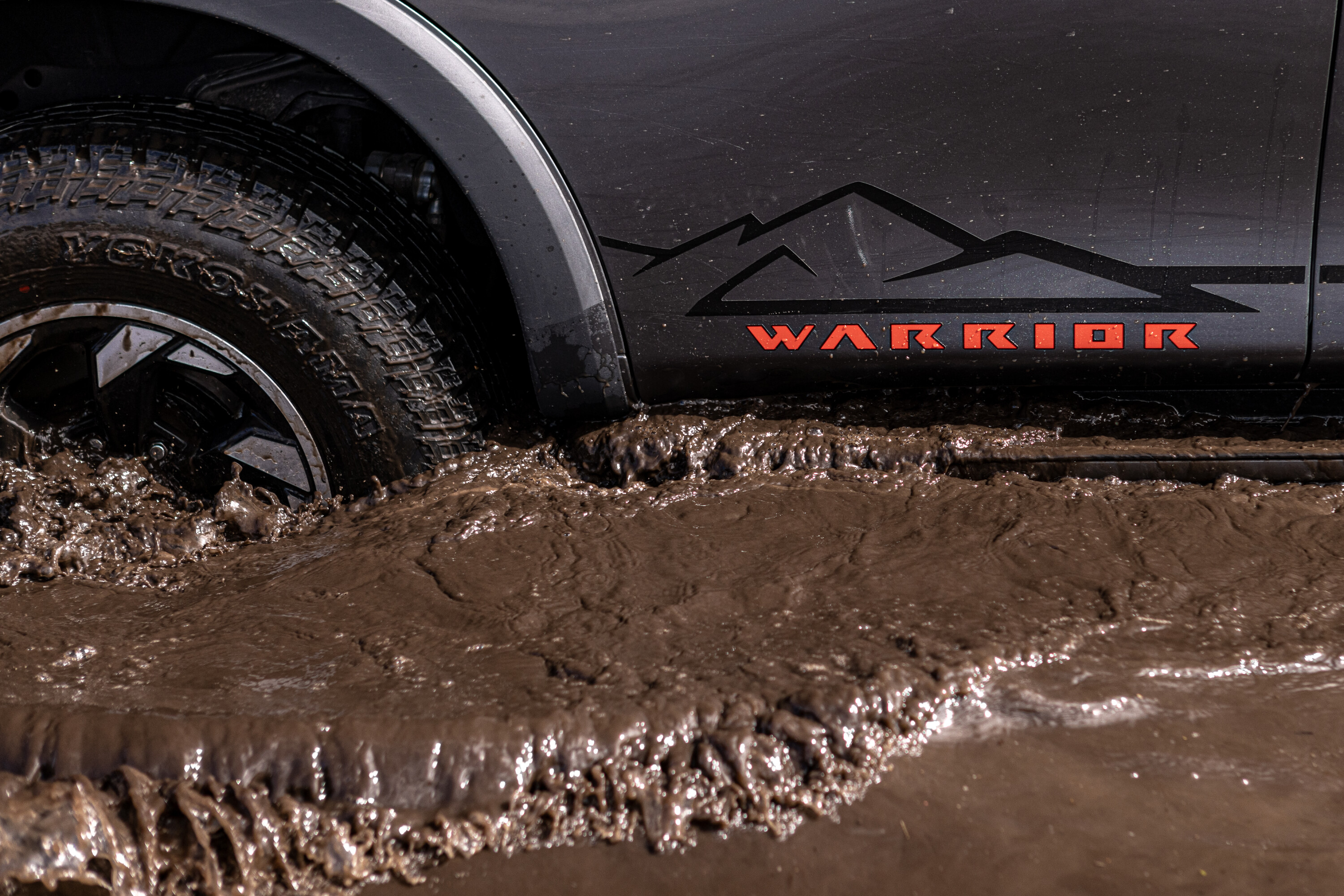
Warrior decals and badging
Black mirror caps & grille
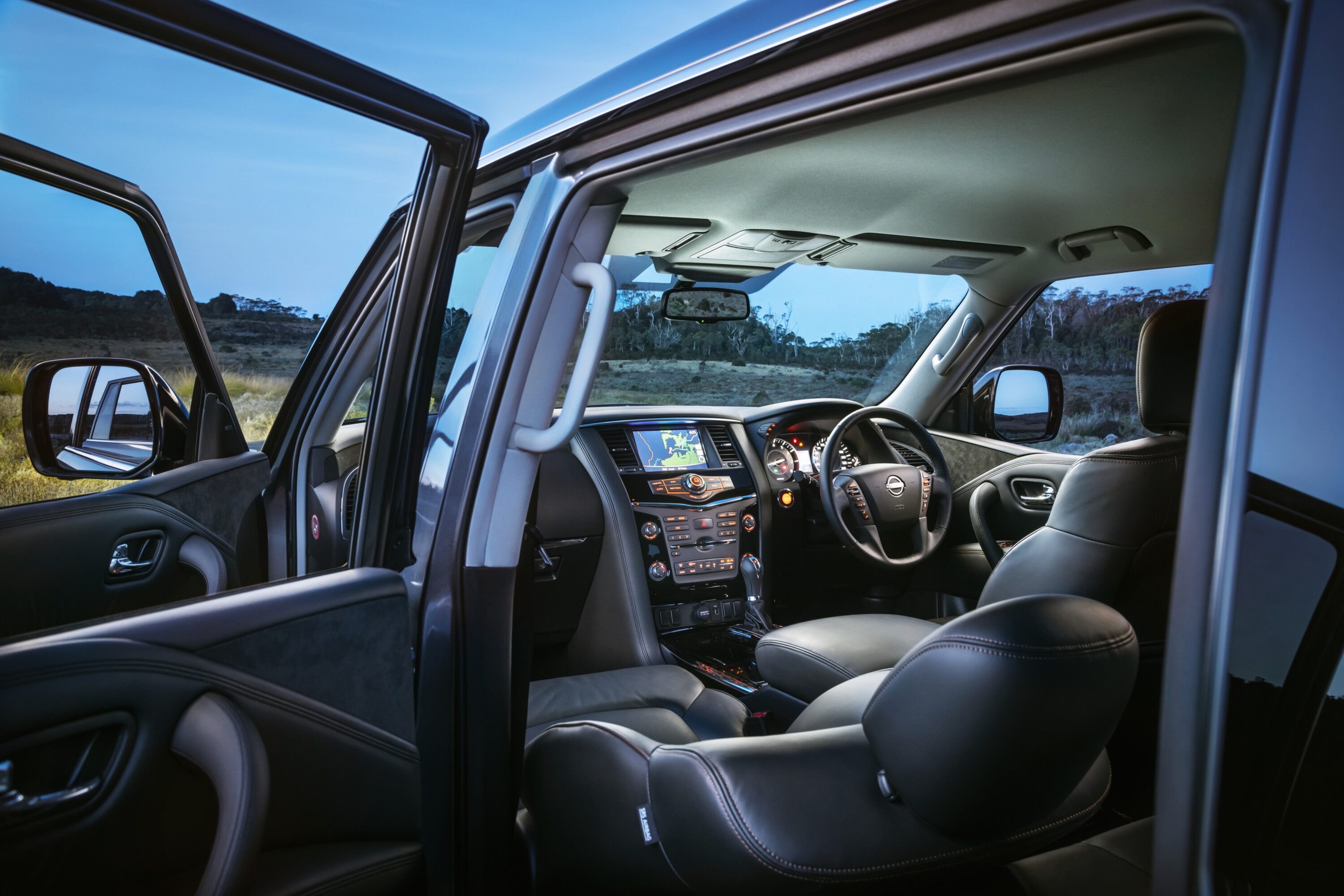
Alcantara door and dash inlay featuring Warrior branding
High-gloss black trim elements (centre console)
1
Pricing and availability
The Patrol Warrior is available to order now and is the most expensive of the breed despite missing out on the top-spec Ti-L’s ($97,600) 13-speaker Bose sound system, sunroof, front seat ventilation, and a few other goodies.
Nissan and Premcar have launched the third vehicle in their Warrior collaboration, and this time they have turned their talents to the venerable Y62 Patrol.
Following on from the Navara Pro-4X and Navara SL Warrior utes, the Patrol represents the partners’ first foray into a 4×4 wagon, and what a wagon it is!
The Y62 Patrol might be getting long in the tooth, and after almost 13 years on the market an all-new model is apparently just around the corner; so this Patrol Warrior could be seen as a last hurrah for the big, capable 4×4.
It comes at a time when the Patrol is selling in record numbers in Australia, with August 2023 representing the highest sales of the iconic model here.
2023 Nissan Patrol pricing
Nissan Patrol Ti
$84,900
Nissan Patrol Ti-L
$97,600
Nissan Patrol Warrior
$101,160
1
Nissan Australia has seen this growth year-on-year, as well as the things its customers are doing with their Patrols in terms of aftermarket enhancements. So they commissioned Premcar to come up with a Patrol Warrior that reflects the more common aftermarket modifications in a factory-backed package.
Items like all-terrain tyres, a suspension upgrade, and chrome and woodgrain delete were all seen as upgrades that owners were regularly fitting to their Patrols and have been included in the Warrior package.
Starting with a Patrol Ti – the lower of the two model grades available in the current Patrol range – the vehicles undergo the Warrior transformation at Premcar’s Melbourne manufacturing facility on a new production line set up alongside the Navara Warrior line. The entire conversion, from the suspension and exhaust upgrades to the decal fitment and road testing, is done in-house at Premcar.
1
Standard equipment
The Ti might be the lower grade in the Patrol range, but it is still well-equipped for a sub-$100,000 4×4 wagon.
2023 Nissan Patrol standard features
Eight seats
12V power outlets in the front, centre console, second row and rear luggage areas; USB in front console
10-way driver seat
Heated door mirrors with power adjustment/auto folding
8-way front passenger seat
In-built satellite navigation
60/40 split-fold second row seating with manual recline and fold function and centre armrest
8-inch touchscreen A/V
Leather-accented seats and steering wheel
Traffic Monitoring System
Tri-zone climate control air-conditioning with second row controls
Audio system with CD/DVD, AM/FM radio, MP3 and USB / iPod+ connectivity with Bluetooth audio streaming, but no Apple CarPlay or Android Auto
Cruise control
Bluetooth phone system
What the Warrior gets
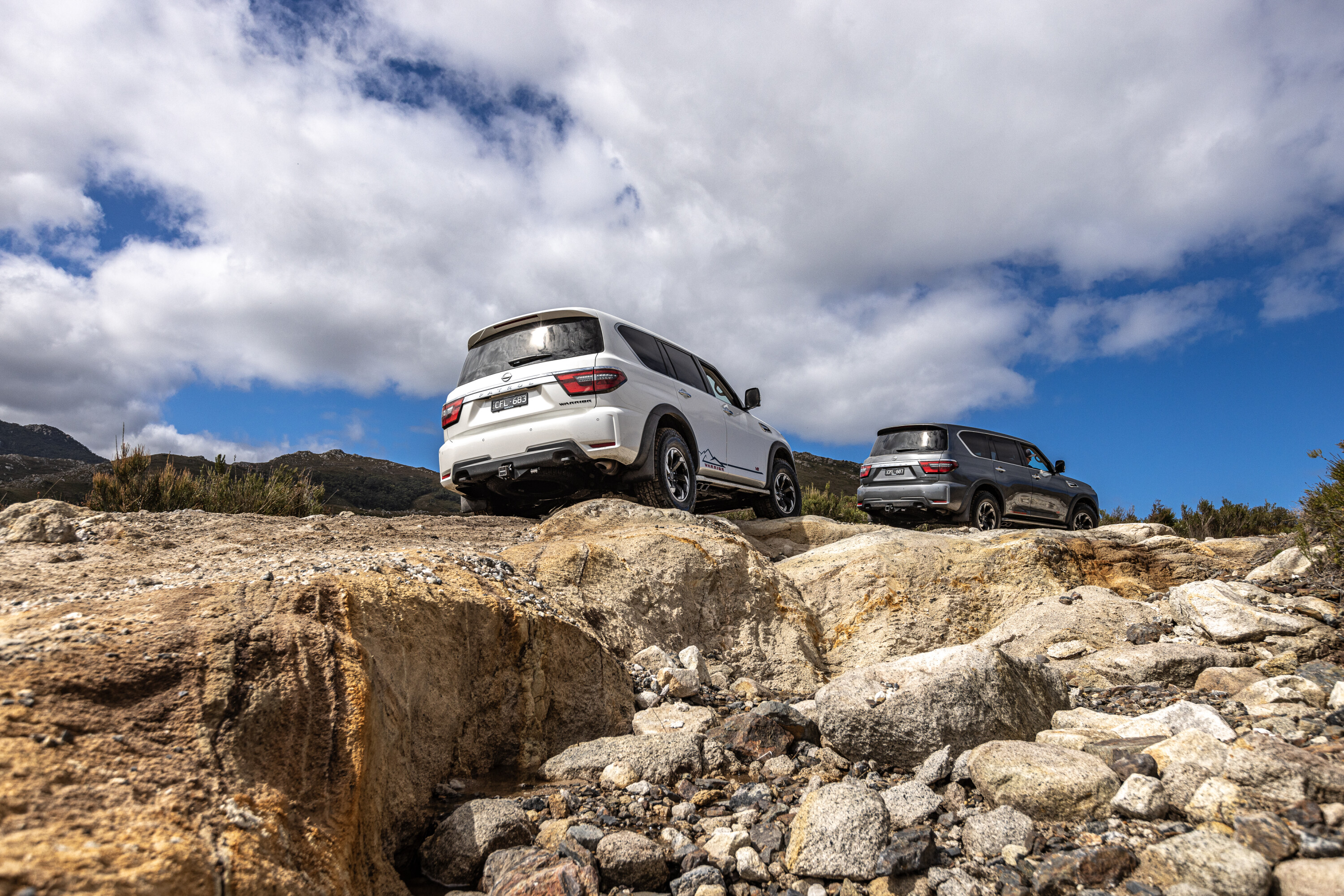
The Warrior enhancements start with the suspension upgrade, with new springs and dampers raising the vehicle 29mm over the standard height. A further 21mm in height comes from the bigger all-terrain tyres fitted, to make the Warrior ride 50mm higher than the original vehicle.
The Patrol Warrior retains the car’s original and excellent hydraulic body motion control (HBMC) system and, unlike most aftermarket suspension changes, Premcar was able to recalibrate the HBMC to suit the taller ride height and modified ride and handling characteristics. This was done by re-valving the HBMC’s control units.
1
Get behind the wheel of the Patrol Warrior and straight away you feel the taller ride height. You look down across the massive bonnet to the road ahead with a commanding view of your surroundings.
Hit the starter button and the naturally aspirated VK56 V8 engine barks into life. The Warrior gets a bespoke exhaust system, from the catalytic converters back to the tail pipes and unique side-exit exhaust tips. The exhaust system is bi-modal and opens up to the side exit under load, or when you flick the transmission shifter across to the manual mode to deliver a bellow that is raucous without being offensive or annoying.
Premcar’s engineers went to great lengths to get the exhaust sound right and not have it droning when under constant loads such as when you might be towing a heavy trailer, and they certainly hit the mark with this system.
1
Aside from the smile-inducing tone, the Warrior’s exhaust system doesn’t offer any performance improvements and the outputs of the 5.6-litre VK56 V8 remain the standard 298kW @ 5800rpm and 560Nm @ 4000rpm. Further down the driveline, the OEM seven-speed automatic transmission and dual-range 4×4 system remain unchanged from the donor car.
Nissan is quoting the same 14.4L/100km fuel consumption for the Patrol Warrior as it does for the standard Patrol Ti, but the bigger and heavier tyres, extra weight and added ride height would have to add to that figure in the real world.
We did ask if Premcar considered supercharging the Nissan V8 engine as it is another popular modification, and Premcar’s Bernie Quinn told us he did drive Harrop’s supercharged Patrol but surmised, “Does it really need it?”
1
Quinn added there would have been a lot more testing and development needed, and added expense, if they were to supercharge the VK56 and still be able to warrant the driveline, pointing to the company’s previous supercharged offering when they developed the supercharged ‘Miami’ V8 for Ford/FPV.
Premcar warrants all of its enhancements to the Nissan Warrior vehicles, while the car itself maintains its factory Nissan warranty. Should anything go wrong with any part of your Patrol Warrior, you can take it back to the Nissan dealer for any warranty work.
This is one of the key advantages of buying a vehicle that has been enhanced as part of a factory-backed collaboration. Another is the fact that Premcar gets access to all the Nissan IP for the vehicle, so that any and all modifications they do are fully integrated into the vehicle and its operating systems.
2023 Nissan Patrol Warrior extras by Premcar
Unique wheel, tyre and suspension package u2013 50mm total lift
Warrior 18-inch alloy wheels and Yokohama A/T tyres
Re-engineered HBMC system and new front and rear springs, and rear bump stops
2.5mm-thick steel front bash plate
Towbar u2013 redesigned to fit full-size Warrior spare
Black exterior chrome delete
Bespoke tow bar to allow matching spare tyre to fit
Black interior trim woodgrain delete
120kg GVM upgrade
Bi-modal exhaust
Safety features
2023 Nissan Patrol safety features
Front and rear parking sensors
Forward Collision Warning
360u00b0around-view monitor with moving object detection
Lane Departure Warning
Vehicle Dynamic Control including electronic traction control
Intelligent Lane Intervention
ABS with electronic brake force distribution
Blind Spot Warning
Driver and passenger front and side impact airbags
Intelligent Blind Spot Intervention
Curtain SRS airbags for all three rows
Rear Cross Traffic Alert
2nd and 3rd row child restraint anchorage points
Tyre Pressure Monitoring System
Emergency Brake Assist
On-road performance
Tasmania’s winding mountain roads delivered the perfect platform on which to appreciate the Patrol Warrior’s exemplary road-holding ability.
It does feel the extra ride height, making it a tad more ‘tippy’ than the standard Patrol, but the full independent suspension with HBMC delivers dynamic handling and roadholding that hide the big wagon’s 2884kg and tall stature. It’s an on-road performance that no other off-road-capable large 4×4 wagon can come near and rewards the enthusiastic driver like no other.
1
Incidentally, the Warrior transformation adds 72kg to the weight of the Ti Patrol but the suspension upgrades allow for a 120kg increase in GVM, so the payload is not compromised and is actually better than on the standard car.
Interestingly, Premcar didn’t develop and install a steel front bumper for the Patrol Warrior like it did for the Navara Warrior models. This was because the Y62 Patrol has never been tested and homologated for a heavy steel front bumper anywhere in the world, and this would be required to retain the factory warranty and standards of the vehicle. Doing such testing would have added considerable expense to the Warrior.
Off-road performance
To take the Warrior to the other end of its limitations, Nissan chose one of the toughest 4×4 tracks in Tasmania to demonstrate its abilities.
Due to time limitations we only drove a few hours into Climies Track and turned back out again, but the rutted condition of the terrain here is no place for production vehicles.
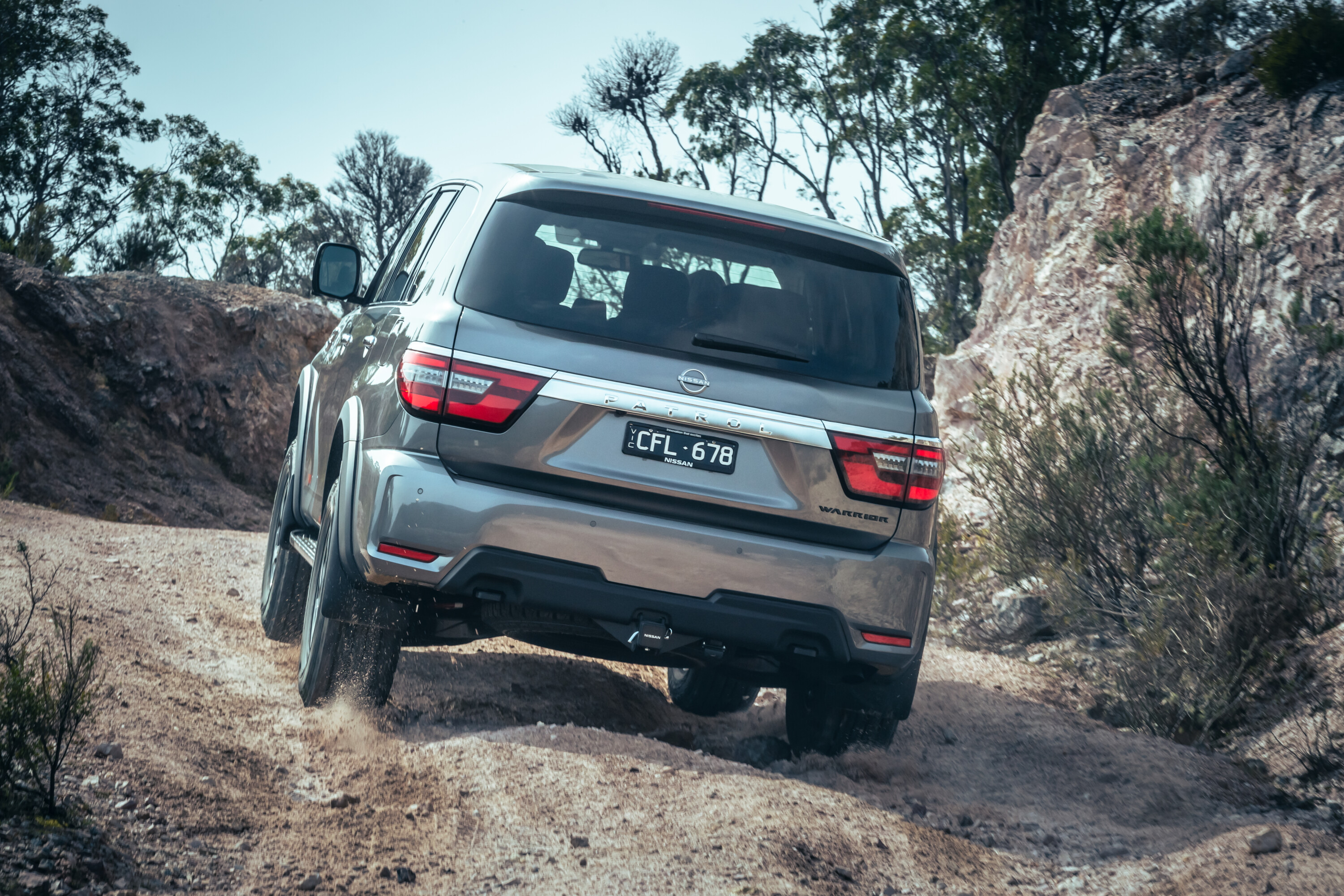
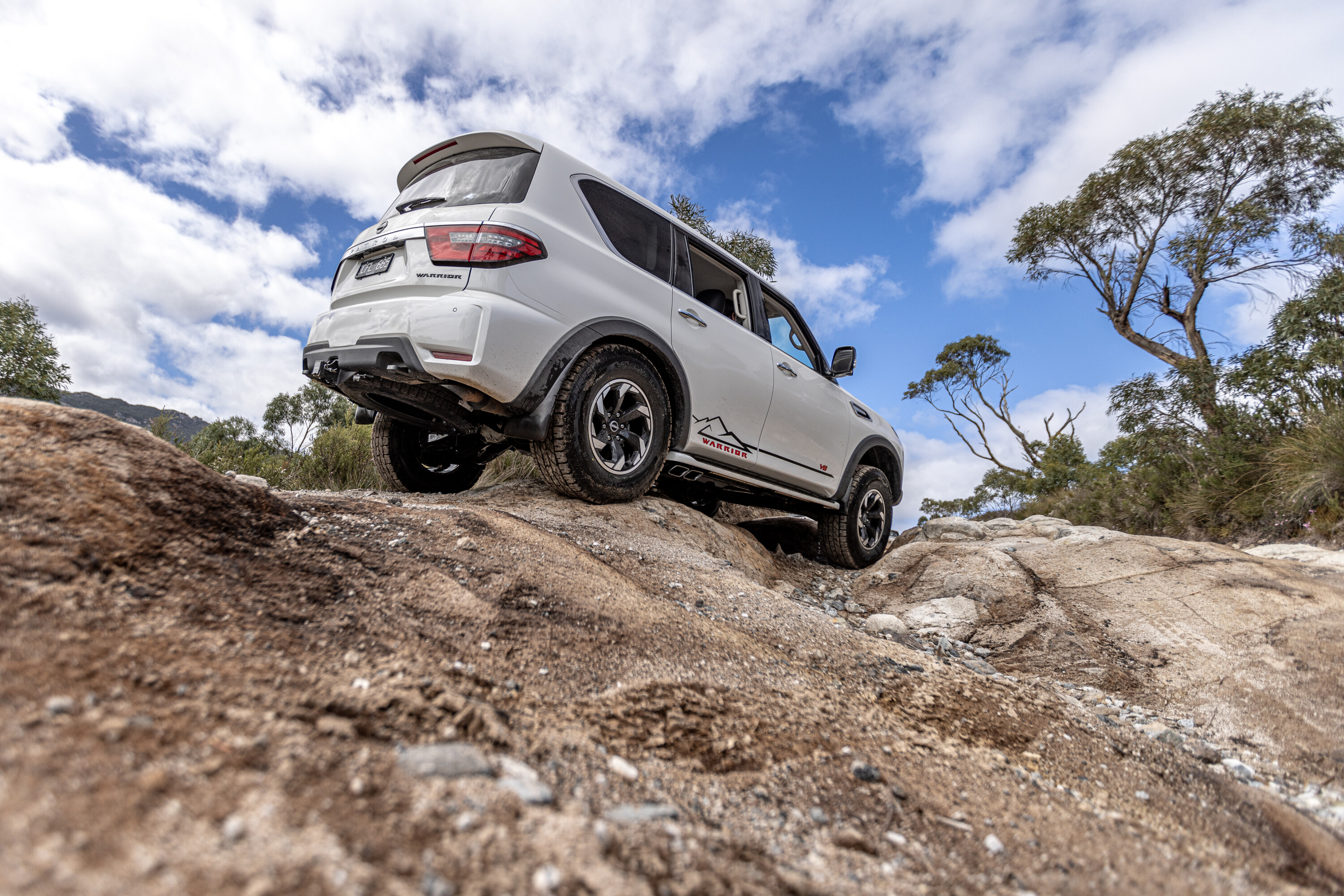
Straight away the extra 50mm of ride height and ground clearance was appreciated and saved the Warriors from certain body damage and loss of side steps, while the front bash plate did its thing to protect the undercarriage.
1
The fully independent suspension does have a surprising amount of wheel travel, but even that couldn’t keep the Yokies on the ground when climbing out of these ruts. The standard electronic traction control was a bit slow to react to spinning wheels, but employing the standard rear differential lock quickly took care of any deficiencies here.
The strong off-road performance of the Warrior was expected, but what makes it even more impressive – after reinflating the tyres – is its excellent dynamics on-road when hitting the twisty roads up towards Cradle Mountain. It’s the sort of breadth of on- and off-road abilities that Land Rover has always prided itself on.
Off-road specs
2023 Nissan Patrol off-road figures
Approach angle
40u00b0
Rampover angle
N/A
Departure angle
23.3u00b0
Ground clearance
323mm
Wading depth
N/A
VERDICT
As the Warrior takes the Patrol back over the $100,000 threshold, the Land Rover Defender would be firmly up against it in terms of competition. But, just like a LandCruiser 300 with similar spec, you’ll be paying considerably more than the entry price to Patrol Warrior ownership.
The Ineos Grenadier could also be considered in this field, but we expect it to be more agricultural and unable to match the Nissan in terms of dynamics and refinement.
Despite its age the Y62 Patrol is still an exceptional vehicle and one that is truly a joy to drive both on- and off-road . The Warrior package by Premcar only enhances its ability and allows the driver to do even more with it.
1
Sure you could fit bigger and maybe better gear to a Patrol from the aftermarket, but this is a transformation that is completed to OE standard and specifications, allowing the Warrior to retain all of Nissan’s factory warranty and service.
If Nissan were to fit an updated interior to the Patrol with a bigger and better A/V screen and system, there would be nothing else most buyers would ask for.
The rumoured and expected change to a turbocharged V6 engine in lieu of the naturally aspirated V8 for the next Patrol model might bring fuel savings that could attract even more buyers to the big Patrol, but on the other hand it would lose the brawny sound and feeling that only a V8 can deliver and has always been a hallmark of the Y62.
Time will tell what way Nissan goes with its next generation of Patrol, but for now, the Warrior by Premcar is the icing on the cake for the current model.
Isuzu Ute is a subsidiary of the Japanese company, Isuzu Motors Limited, specialising in utility vehicles and pick-up trucks.
Established in 2008, Isuzu Ute has quickly made a name for itself in markets around the world, particularly in Australia, where its D-MAX pick-up and MU-X SUV have gained significant popularity.
Renowned for their durability, reliability, and robust engineering, Isuzu Ute vehicles are are popular choice for those who require rugged vehicles for work, off-road adventures or towing.
The brand’s commitment to producing vehicles that can withstand tough conditions while offering modern comforts has solidified its reputation in the automotive industry.
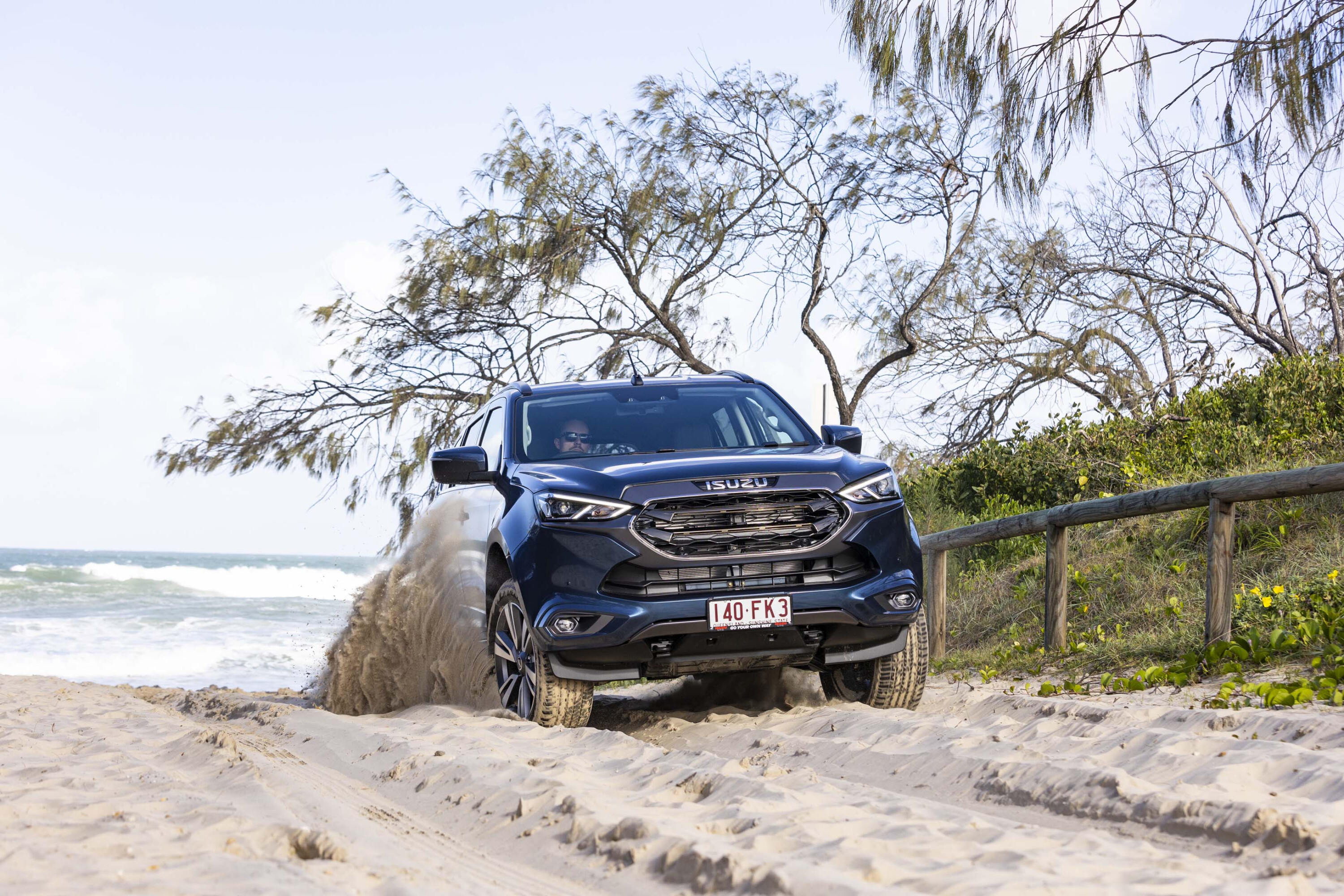
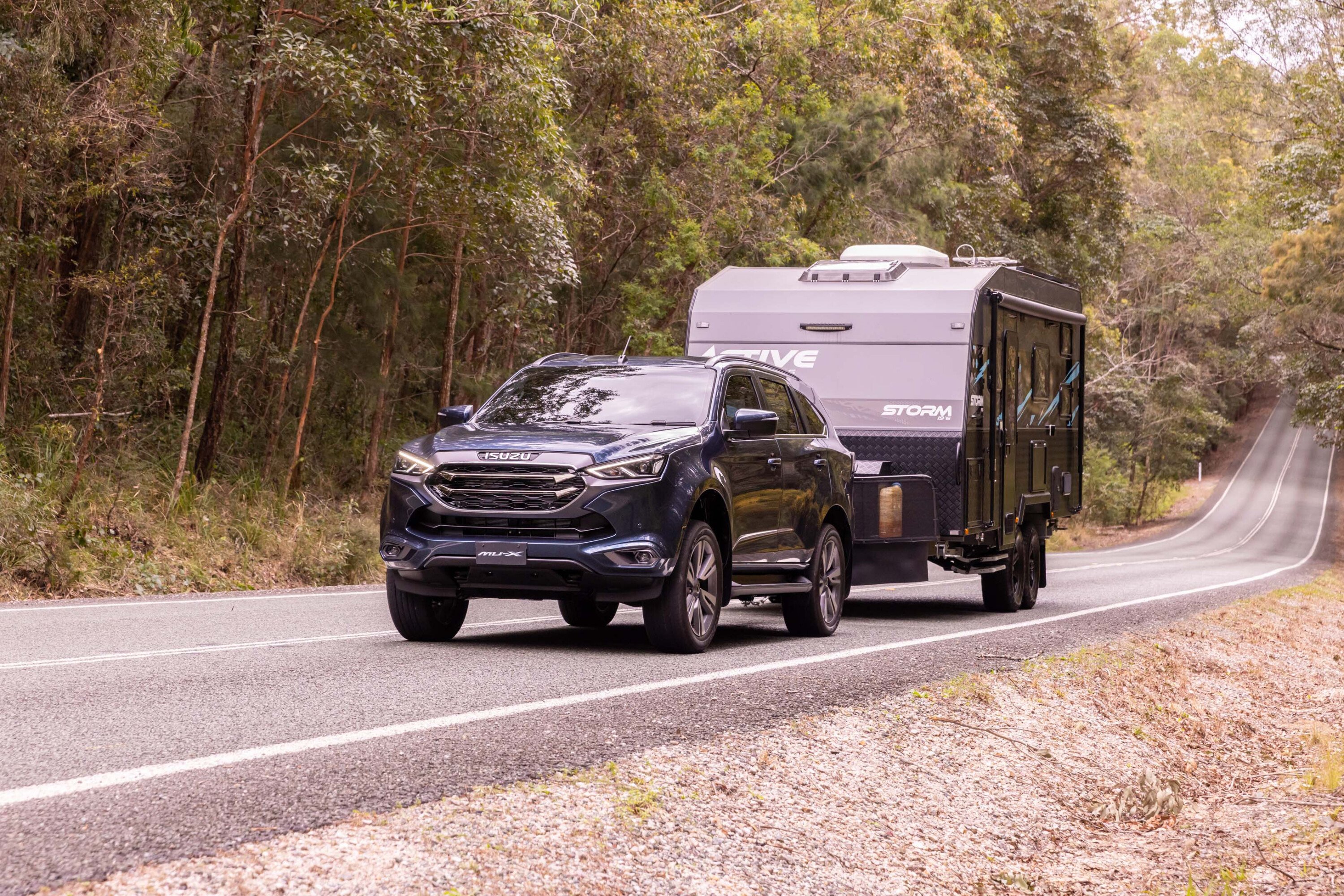
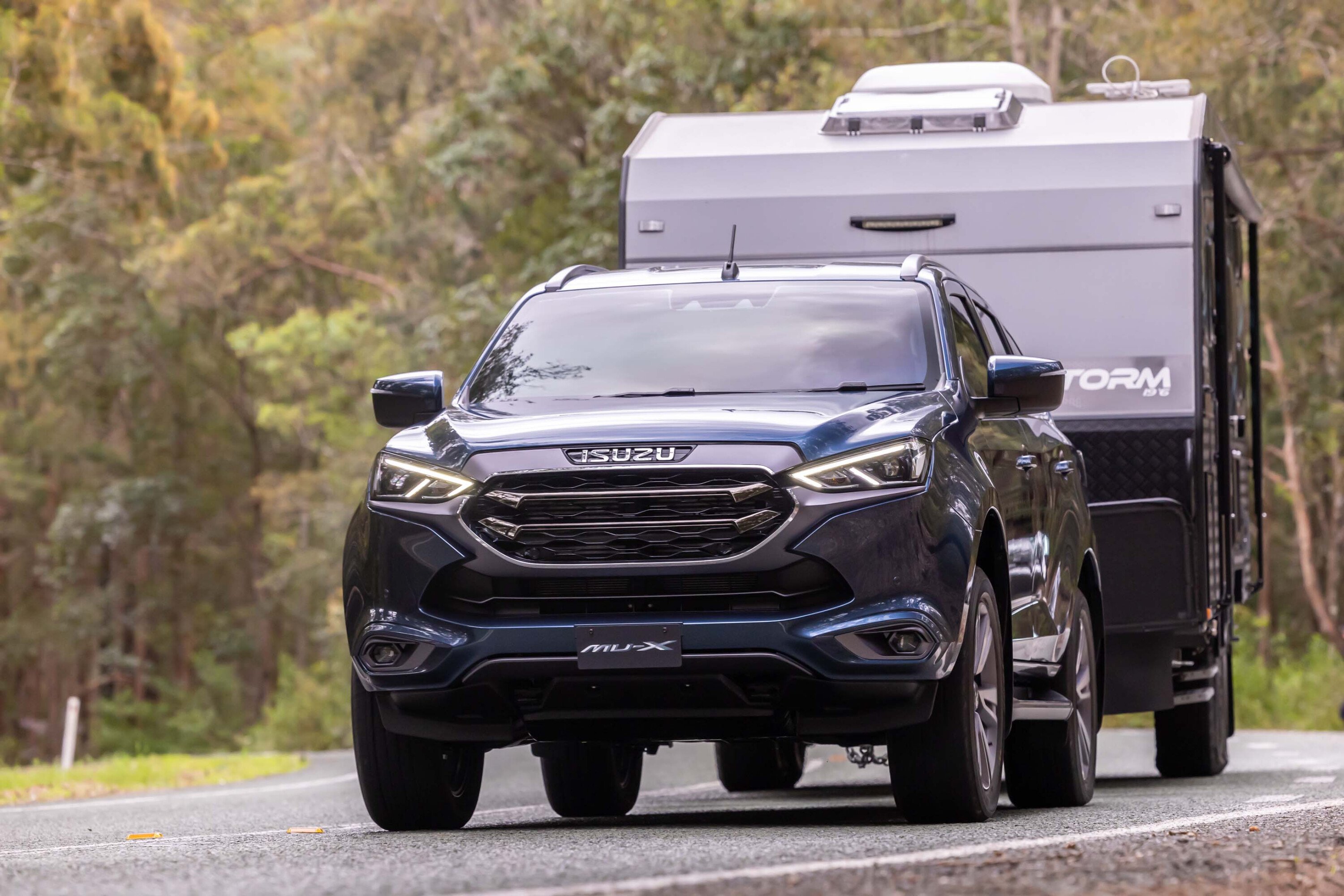
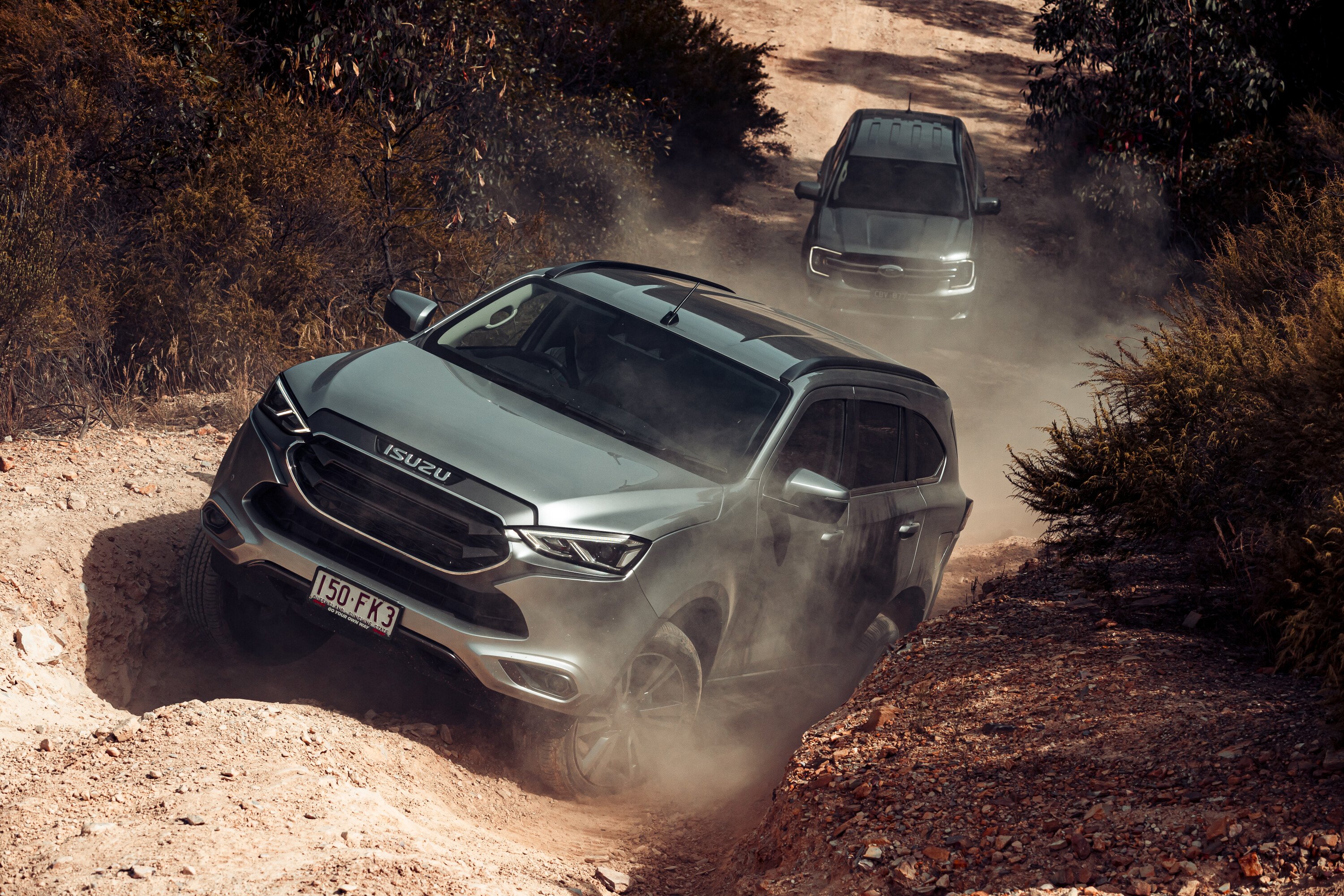
So when it comes to towing, the Isuzu MU-X is a naturally a consideration among adventurers and families alike.
1
2023 Isuzu MU-X features
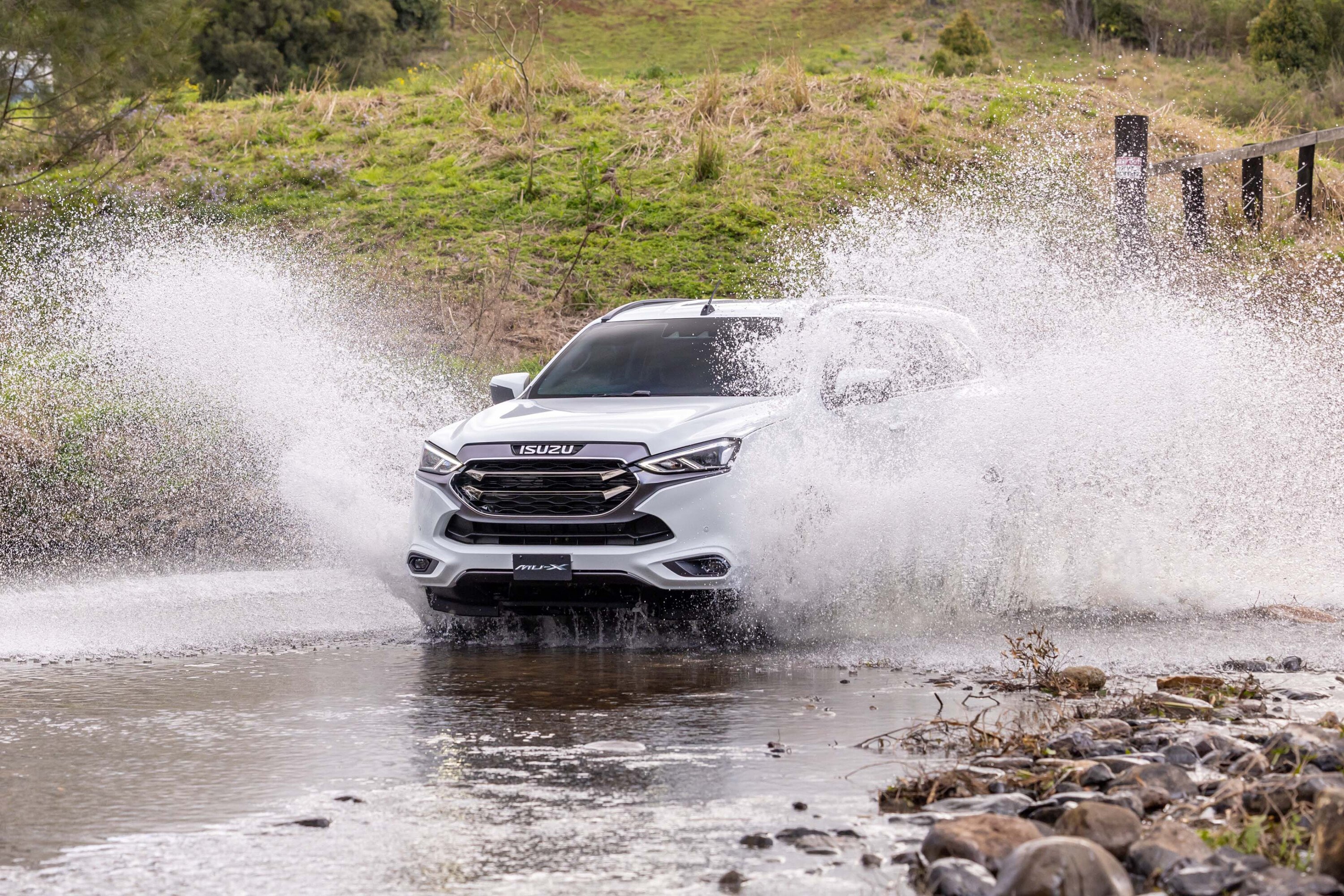
The Isuzu MU-X is a 7-seater large SUV available in three trim grades: LS-M, LS-U and the range-topping LS-T.
Isuzu’s well-respected 3.0-litre diesel engine is under the bonnet across the model, producing 140kW and 450Nm. All are paired with a six-speed automatic transmission and are available in a 4×2 or 4×4 configuration.
Standard specs on the entry-level LS-M include 17-inch alloy wheels, wireless Apple CarPlay/wired Android Auto, a 7.0-inch infotainment display, reversing camera, rear parking sensors and an electric park brake.
1
Moving up to the LS-U you’ll get 18-inch alloy wheels, a larger 9.0-inch screen, leather-accented steering wheel and gear selector, dual-zone climate control, front and rear parking sensors, keyless entry and start, auto wipers and a power tailgate.
The top of the range LS-T adds extra features including LED daytime running lights, 20-inch alloys, leather-accented seats, in-built satellite navigation and a premium eight-speaker sound system.
What is the Isuzu MU-X’s towing capacity?
The 2023 Isuzu MU-X has a maximum braked towing capacity of 3500kg. This means that when the trailer being towed has its own braking system, the MU-X can tow up to this weight.
For trailers without their own brakes, the MU-X has a maximum unbraked towing capacity of 750kg.
1
How does it compare to competitors?
In the large SUV segment, the Isuzu MU-X stands out for its leading towing capabilities. The recent addition of a V6 powertrain to the Everest line-up brought with it an increased capacity to match the MU-X.
Here’s how it stacks up against some of its main competitors:
This includes a comprehensive suite of safety features under IDAS (Isuzu Driver Assistance System) offering eight airbags, forward collision warning, lane-keep assist, lane departure warning, blind spot monitoring and rear cross-traffic alert.
To further enhance its off-roading capabilities it has electronic stability control, hill start assist, hill descent control and roll over mitigation which reduces the risk of a vehicle overturning.