The Toyota RAV4 topped sales last month for the first time since 2020 – but the new Ford Ranger was the best-selling ute again, with 5569 total sales for the month (5089 4X4, 480 4X2).
The Toyota HiLux followed with 4693 sales (4029 4X4, 664 4X2), placing it nearly 1000 units behind Ford’s ute for April.
The gap is much bigger from the year-to-date view: Ford has racked up 21,330 Ranger sales (19,329 going to 4X4), while the HiLux sits on 17,193 (14,949 4X4). The next-gen HiLux can’t come soon enough.
Following those two perennial top-steppers is that other market favourite, the Isuzu D-Max, with 2380 sales in April (1788 4X4) marking a small increase over its April 2023 result of 1802.
Year-to-date the D-Max looks healthier with 10,327 sales against 8372 for the same period in 2023 – and its recent facelift should help to grow that further.
Mitsubishi has confirmed some of those will be previous-gen bodies, and the brand intends to continue selling the older model in cab-chassis and club-cab form until those variants in the new range are ready to roll.
The D-Max’s platform twin, Mazda’s BT-50, rounded out the top five with 1137 sales for April – a moderate fall compared to its April 2023 result of 1336 sales. Year to date, the BT-50 is sitting on 5081 sales, compared to 5257 for the same period last year.
Total ute sales in April came to 19,376 (16,198 4X4) against 15,085 for the same period in 2023, revealing that the market for utes is showing no signs of slowing down.
Model
Sales for April 2024
Ford Ranger
5569
Toyota HiLux
4693
Isuzu D-Max
2380
Mitsubishi Triton
1287
Mazda BT-50
1137
Toyota LC70 ute
801 (4X4 only)
Volkswagen Amarok
729 (4X4 only)
GWM Ute
620
Nissan Navara
589
LDV T60 / Max
368
SsangYong Musso / XLV
322 (4X4 only)
Ram 1500
276
Chevrolet Silverado
191
Ford F-150
173
Chevrolet Silverado HD
151
Ram 2500
42
Toyota Tundra
28
Jeep Gladiator
14
Ram 3500
6
GWM is only just getting started with a product onslaught for Australian showrooms and the recent introductions of Tank 500, Tank 300, Ora and updated Cannon will be followed by more models and variants in the coming months and years.
While the exact list of vehicles that will join the growing family remains ‘under consideration’ at this stage, the company has offered a tantalising hint at those models most likely to make a local appearance.
We were given the chance for a quick spin in a selection of the vehicles being closely looked at by GWM Australia and New Zealand to see how they might fit into the existing line up and, most importantly, if they’ll resonate favourably with Australia’s discerning buyers.
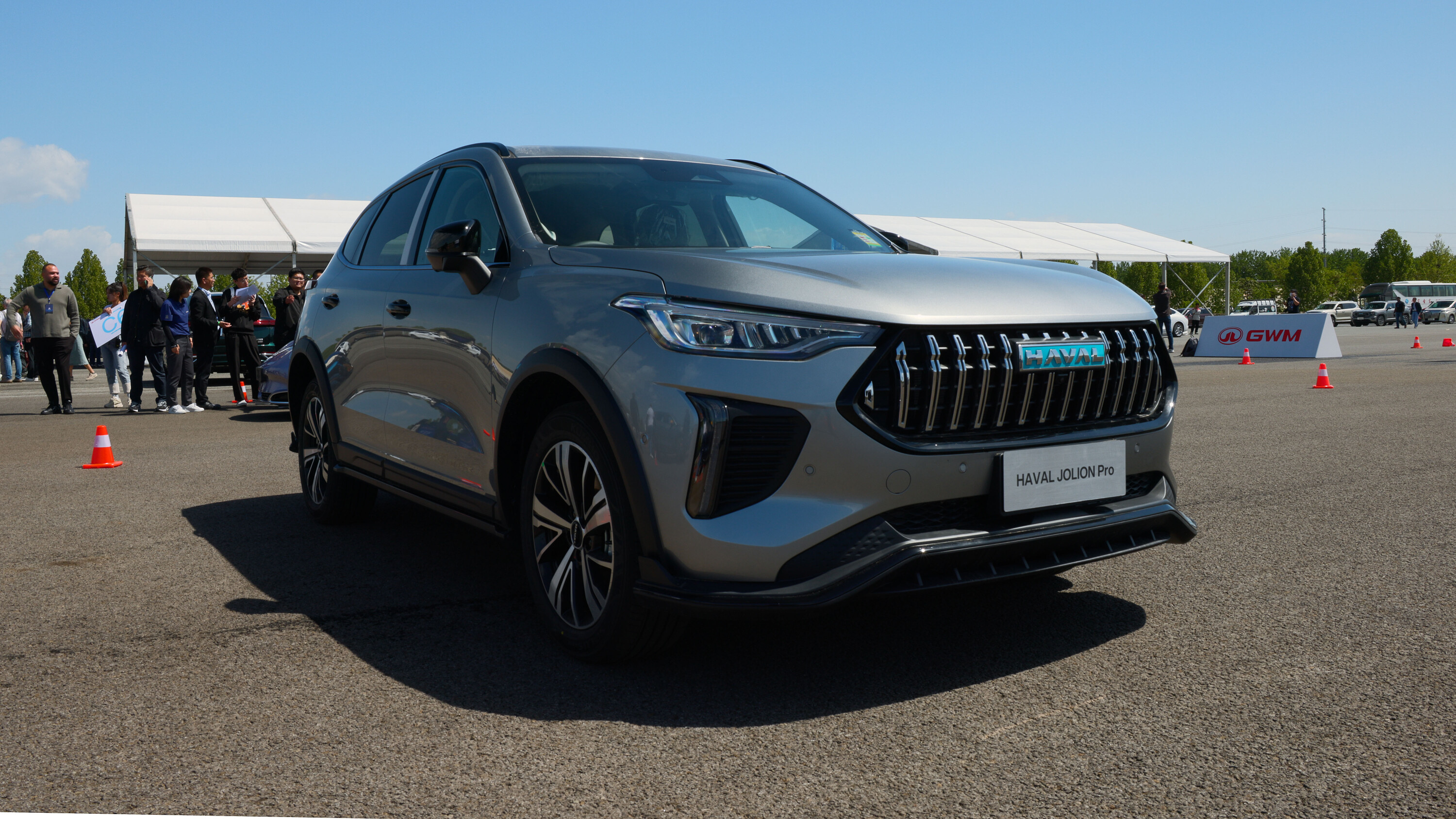
First to appear on Australian roads will be an evolution of the popular Haval Jolion. While not officially confirmed yet, it’s all but a done deal that the updated small-to-mid-sized SUV will arrive in the next few months wearing it’s own unique design.
The headlights and large DRL light/indicator features from the existing Jolion face have been bisected forming two separate light units for the new model. The treatment works well, especially combined with a sporty lower valence and simplified grille.
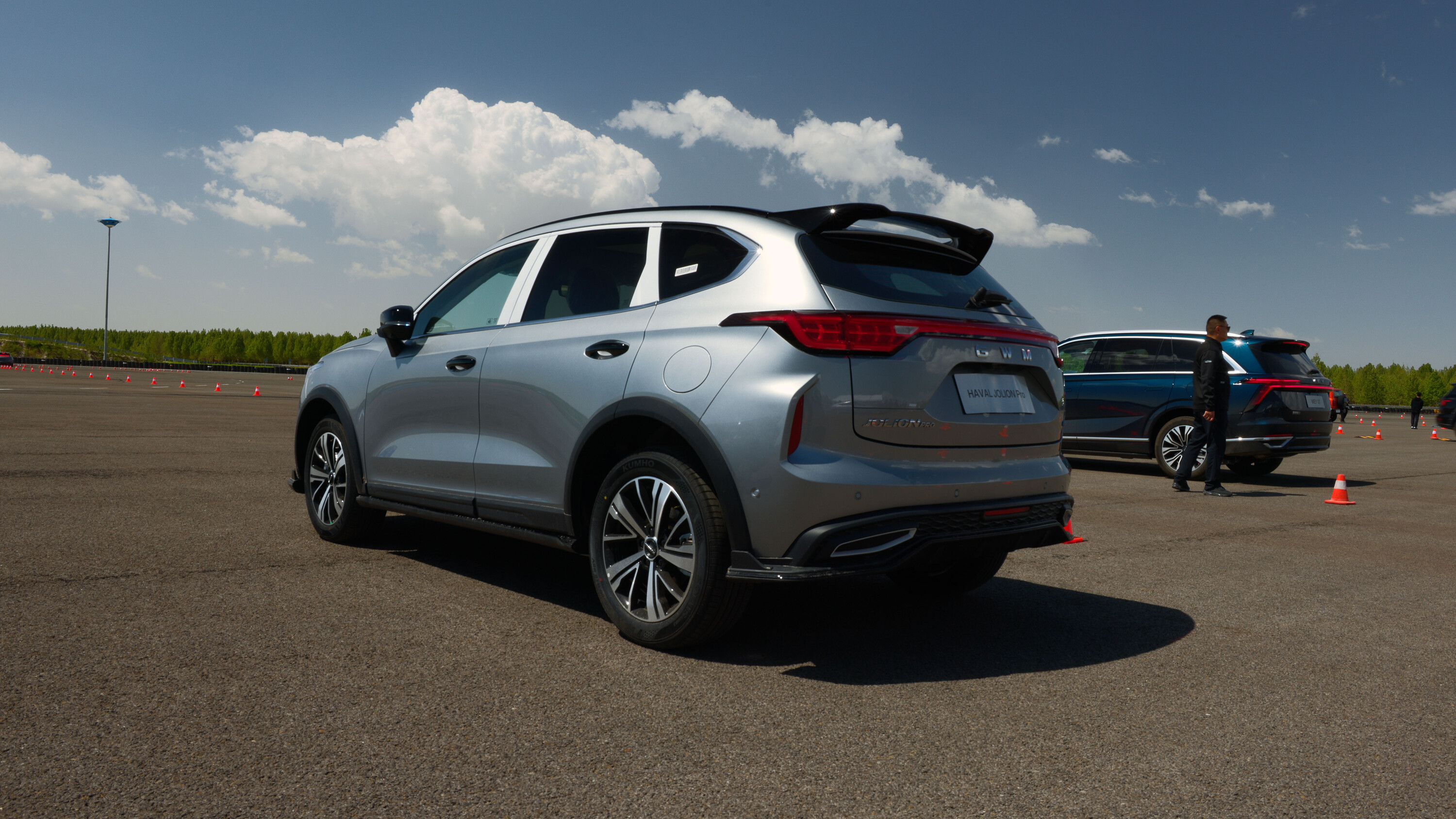
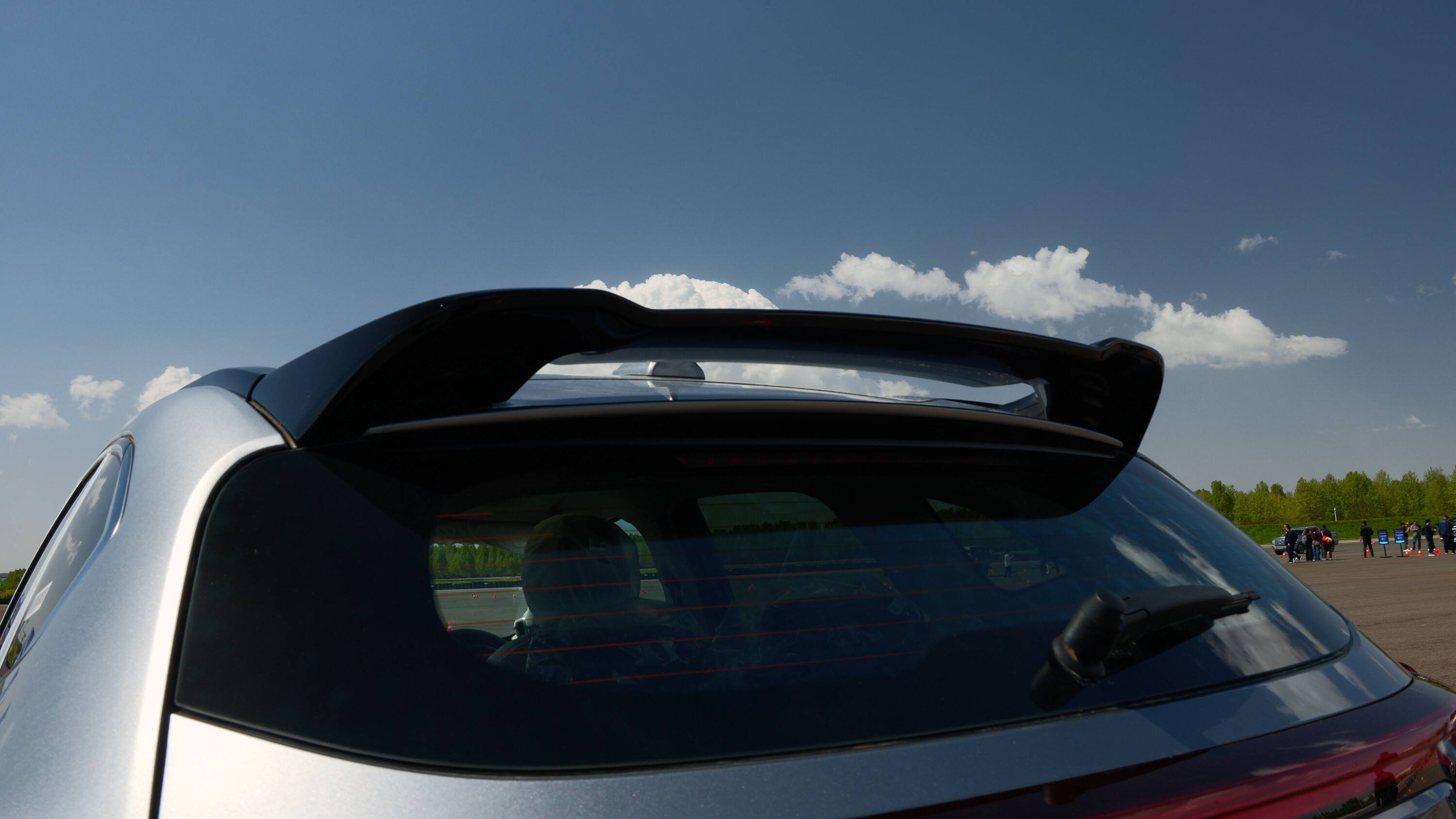
At the tail end, the design revision continues with a far neater look incorporating continuous full-width light bar that’s a visual hybrid of Range Rover and Honda Civic. Gone are the slightly awkward three-point clusters.
1
Overall, the Jolion Pro has changed just millimetres in length and height but its width is up a significant 84mm which adds a sporty and confident stance.
While the exterior is, subjectively, a step in the right direction and something quite new and handsome, mechanically a lot carries over when it comes to the stuff under the skin.
Like the current Jolion hybrid, it’s powered by a 1.5-litre petrol four-cylinder married to a hybrid electric motor. In practice, the union of petrol and electric develops good performance and acceleration along with a decent engine note from outside the car – if a little droning inside – thanks mostly to the hybrid-specific CVT.
There have been significant improvements to the steering with a more responsive and involving front end, while the chassis in general feels more lively and excitable.
1
During a short blast, the Jolion Pro as it’s known in China is more manageable and fun and feels lighter on its feet.
Like the current generation version, the cabin is spacious and challenges the ‘small’ segment definition with good legroom and headroom in both rows of seating.
Nothing has changed with regard to cabin equipment with the paring of digital dash and large central screen carrying over, although the information and entertainment system is updated. Exact Australian revisions will have to wait, with our test car programmed with a China market system.
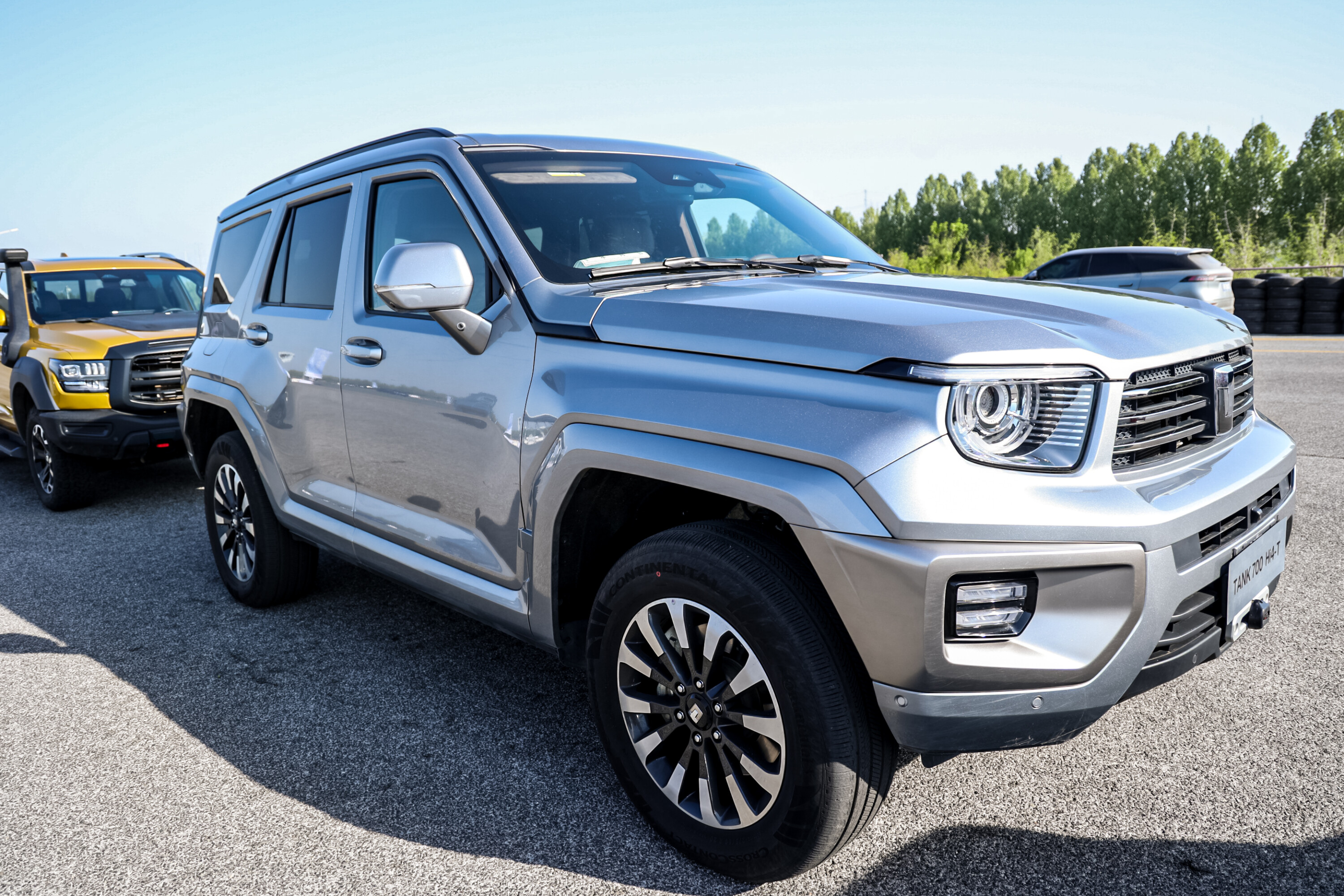
GWM is still weighing up if its growing family has the space for the Tank 700 but an initial taste of the large off-road machine would suggest there’s certainly potential for a new flagship over the newly arrived Tank 500.
There’s no denying that GWM’s design team were vying for a little Mercedes G-Class flavour in the exterior styling, including the satin metallic paint ours was dressed up in, and a blocky almost mil-spec theme.
We jumped behind the wheel of a top-spec Hi4-T which has a 3.0-litre twin-turbo V6 under the bonnet, paired with an electric motor on each axle for all-wheel drive and enormous performance.
1
While a little laggy from a standing start, once the full 386kW and 850Nm is wound up, the 700 squats dramatically on its air suspension and performs a similar dive into the first hard braking test.
The same soft chassis tuning is also responsible for a fair bit of roll in corners but there’s a surprising amount of traction and steering response. The largely good manners can be upset by rapid changes of direction during which the stability system gets a little flummoxed.
Given a longer test we’re certain the 700 would offer a comfortable ride, while the amount of off-road-specific technology and features including front and rear locking diffs, disconnecting anti-roll bar and various all-terrain modes suggest this big tank has some reasonable go-anywhere ability.
1
Its plush interior will also get you there in style and comfort. There’s a little of Haval’s satin silver switchgear to remind of the relationship but otherwise the 700’s cabin is an impressive space.
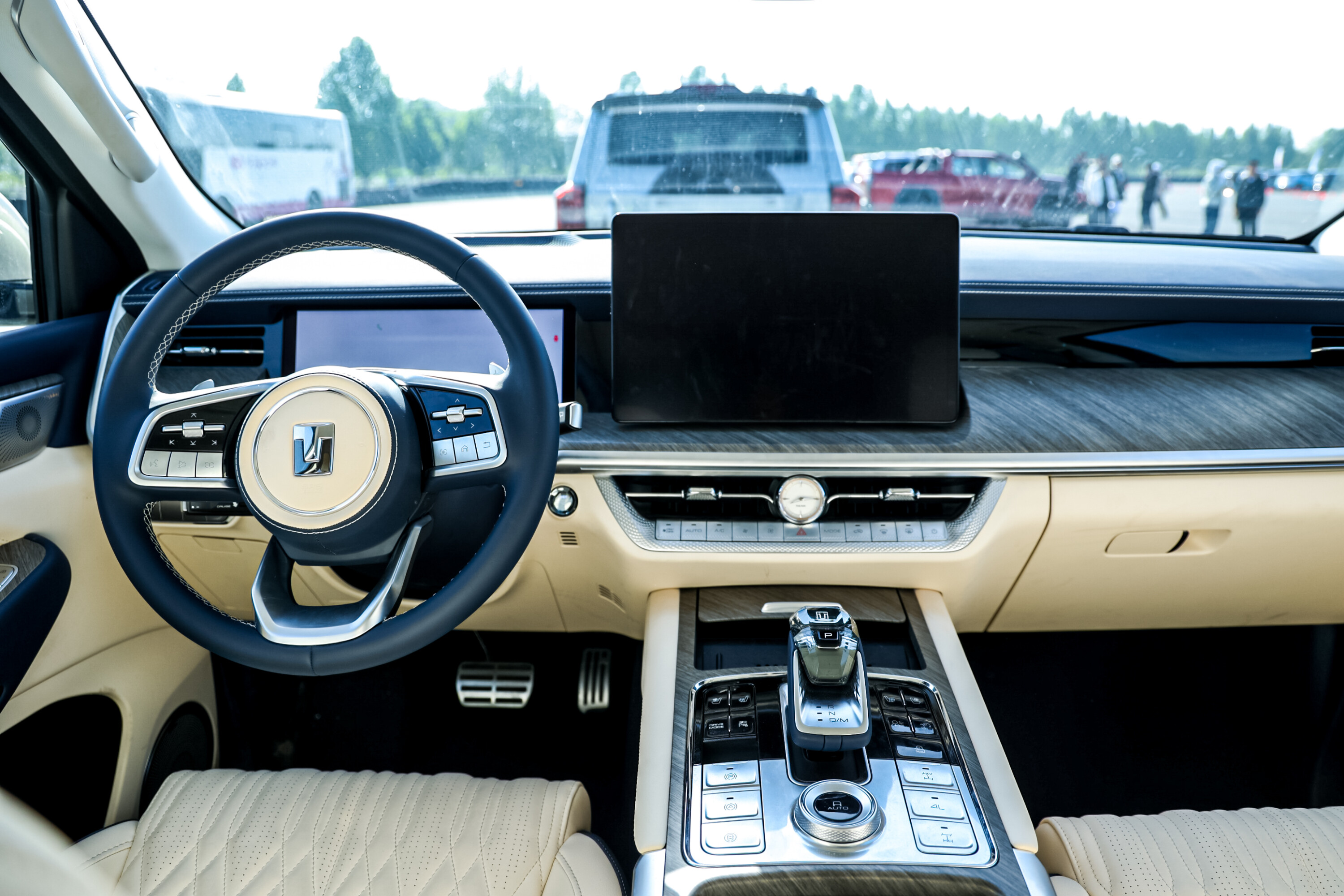
A cool wood grain material adorns the dash, door and centre console, the leather felt supple and we loved the digital clock which can be swapped for a more traditional style with a swipe of its face.
The central screen is a whopping 15.6-inch touchscreen dwarfing the not-exactly-small digital driver’s instrument cluster and is packed with heaps of technology such as 3D 360-degree camera, touchscreen adjustable air conditioning vents, native navigation and detailed driving modes.
2
There’s also an electrically folding tow bar to prevent the aggressive looks being spoilt when not in use.
Second row passengers are very well looked after with masses of knee room and our test car featured the more luxurious seating with large fold down centre arm rest which contains its own touchscreen. Rear occupants also get a climate control panel, folding blinds, double glazing and selection of power sockets.
The Tank 700 is a huge amount of car but that might also come at a relatively huge price. Up to $150,000 for the flagship version might seem a bit steep for something wearing a Tank badge but there’s nothing else in the current market to offer as much performance and kit for the same cash.
The best part though is that it’s a plug-in hybrid with a beefy 37kWh battery and up to 85km of electric only range, claims GWM.
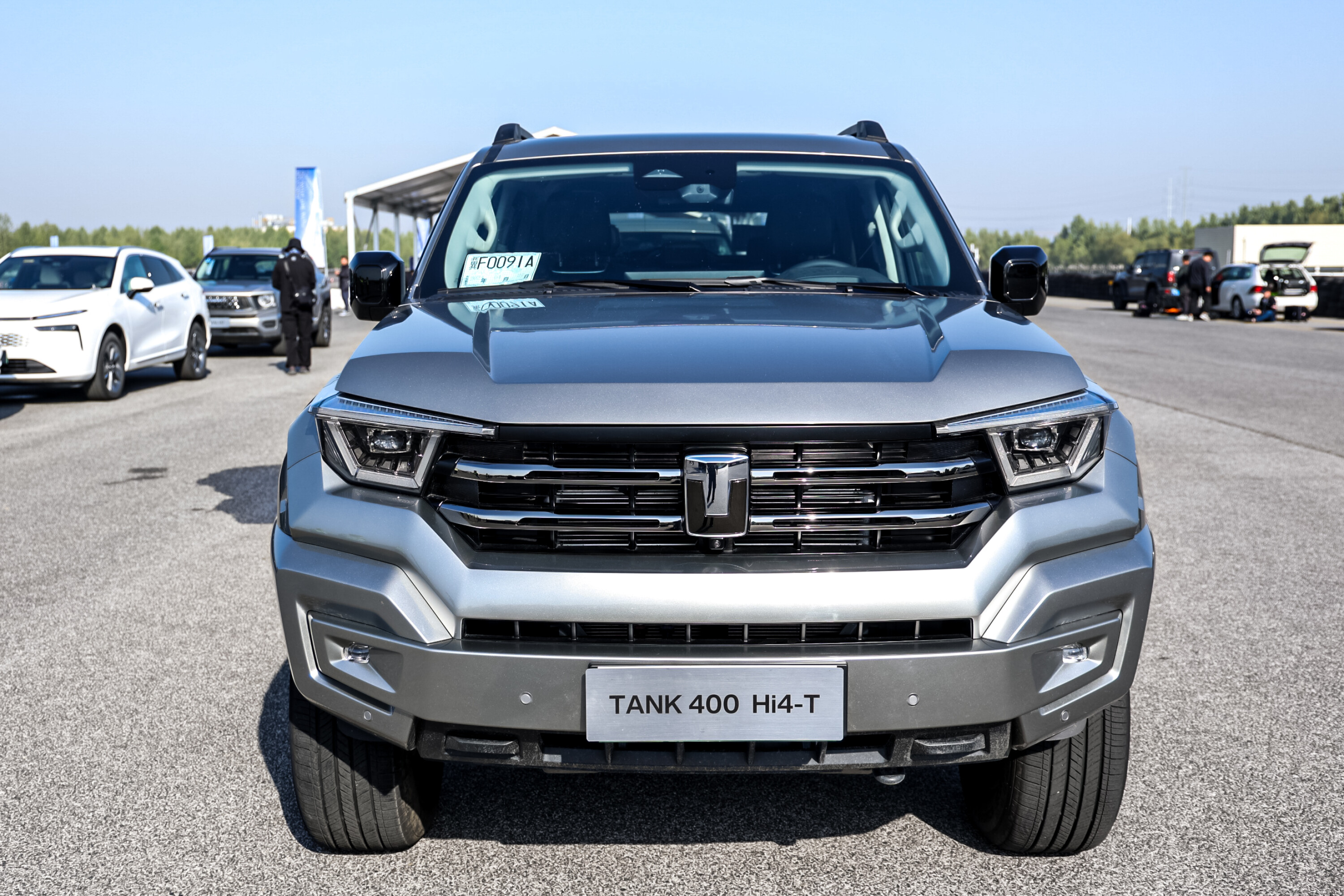
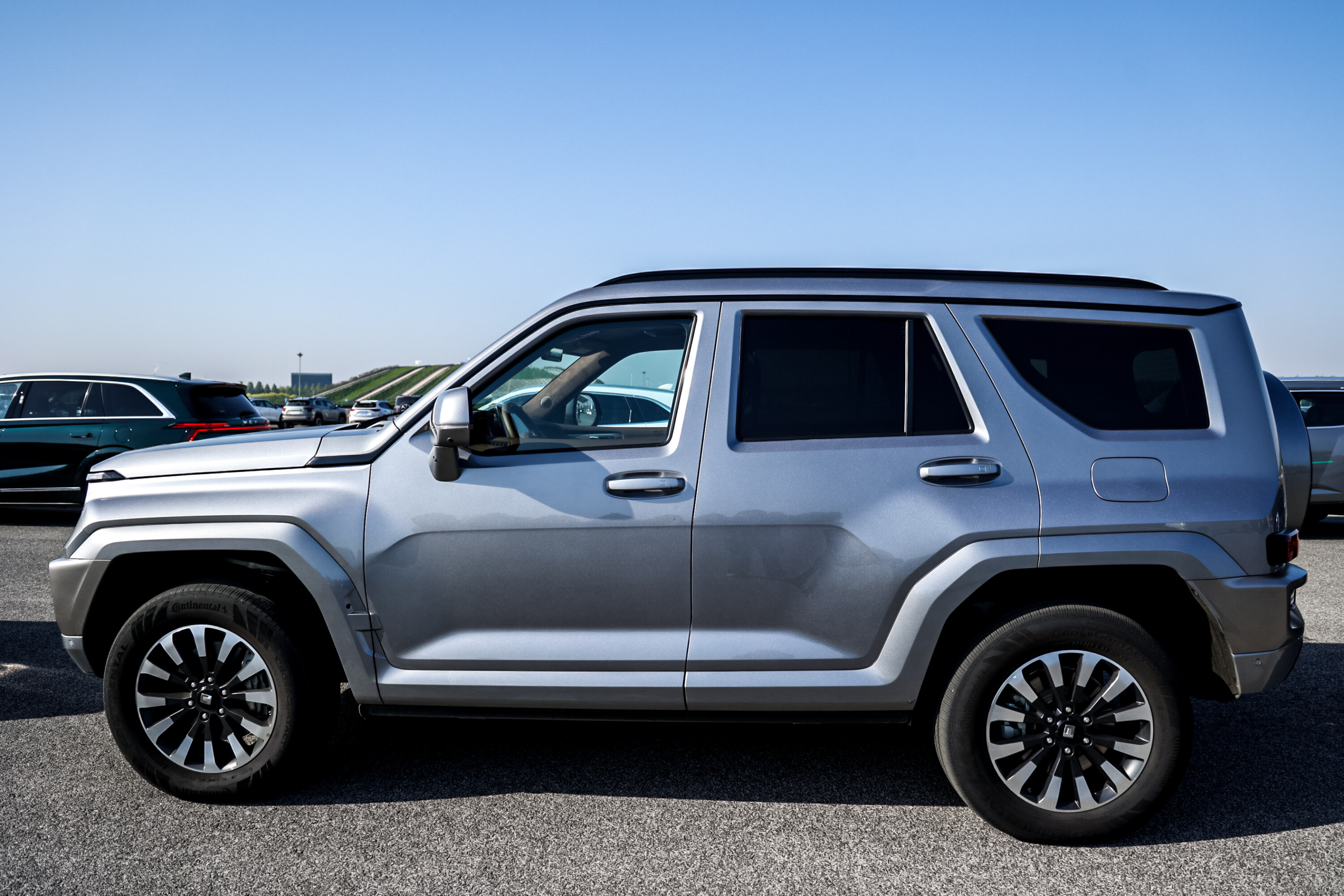
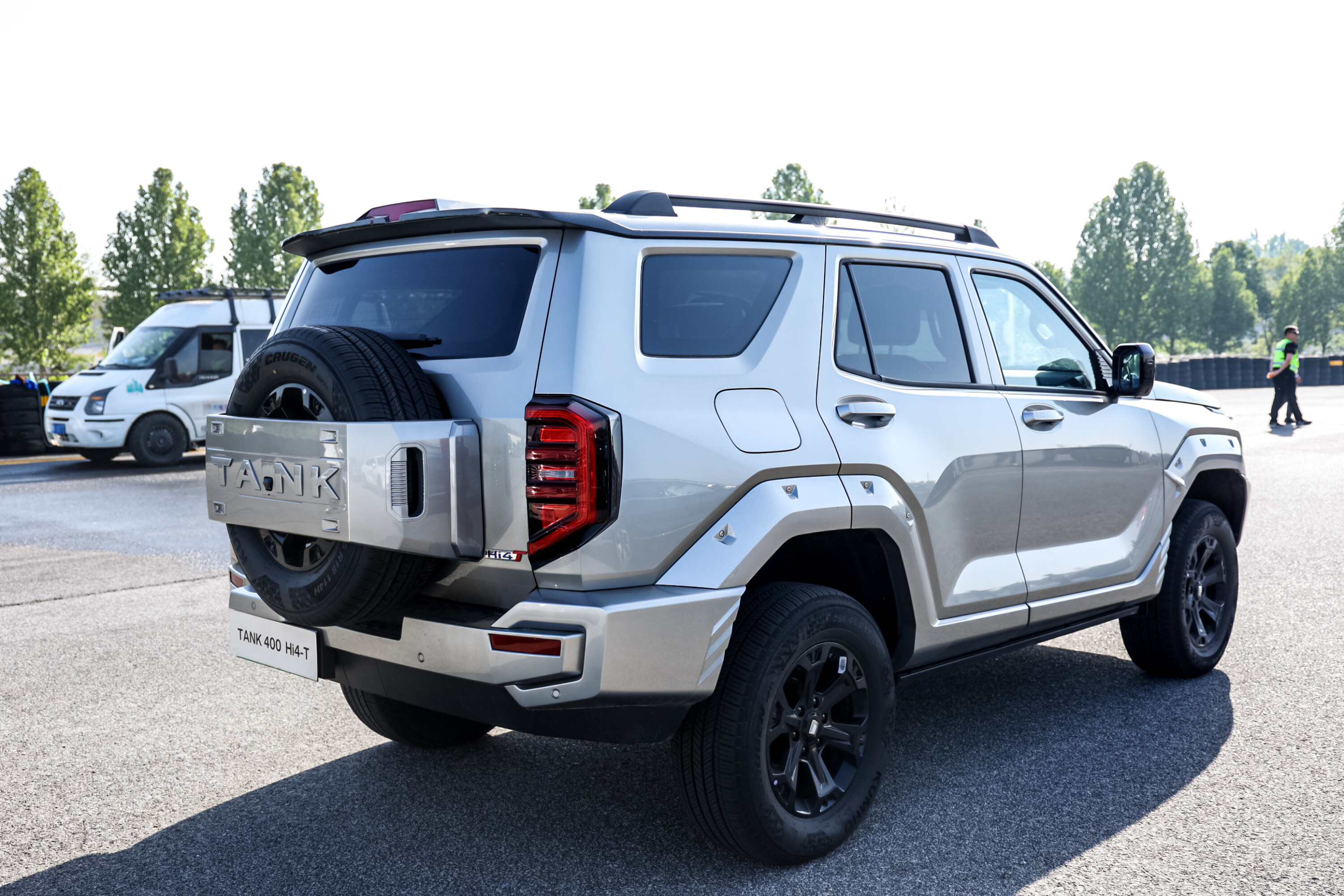
Finally, the GWM Tank 400 offers some of the big-daddy 700’s appeal in a smaller and more affordable package.
It still has air suspension and a similarly soft ride quality but, thanks to its smaller overall dimensions and mass, deals with an excited journalist at the wheel with more composure.
While it forfeits the monstrous flagship powertrain in favour of a four-cylinder turbo petrol hybrid bolted to the same nine-speed automatic, the combined effort of petrol and electric produces an impressive 304kW and 750Nm.
Acceleration off the mark feels as quick as the 700 but with less physics to deal with there’s more confidence to have a punt with a decent chassis and a nature that’s lighter on its feet. As to what happens when the road comes to an end however, is another question.
1
The Tank 400 is, says GWM, very much an off-road focused model and is treated to largely the same all-terrain oily bits as its bigger sibling including the Hi4-T four-wheel drive transmission and plug-in hybrid system.
While the 700 would probably ferry you to the paths less traveled in more comfort, we suspect it’s the 400 that will go further once you arrive.
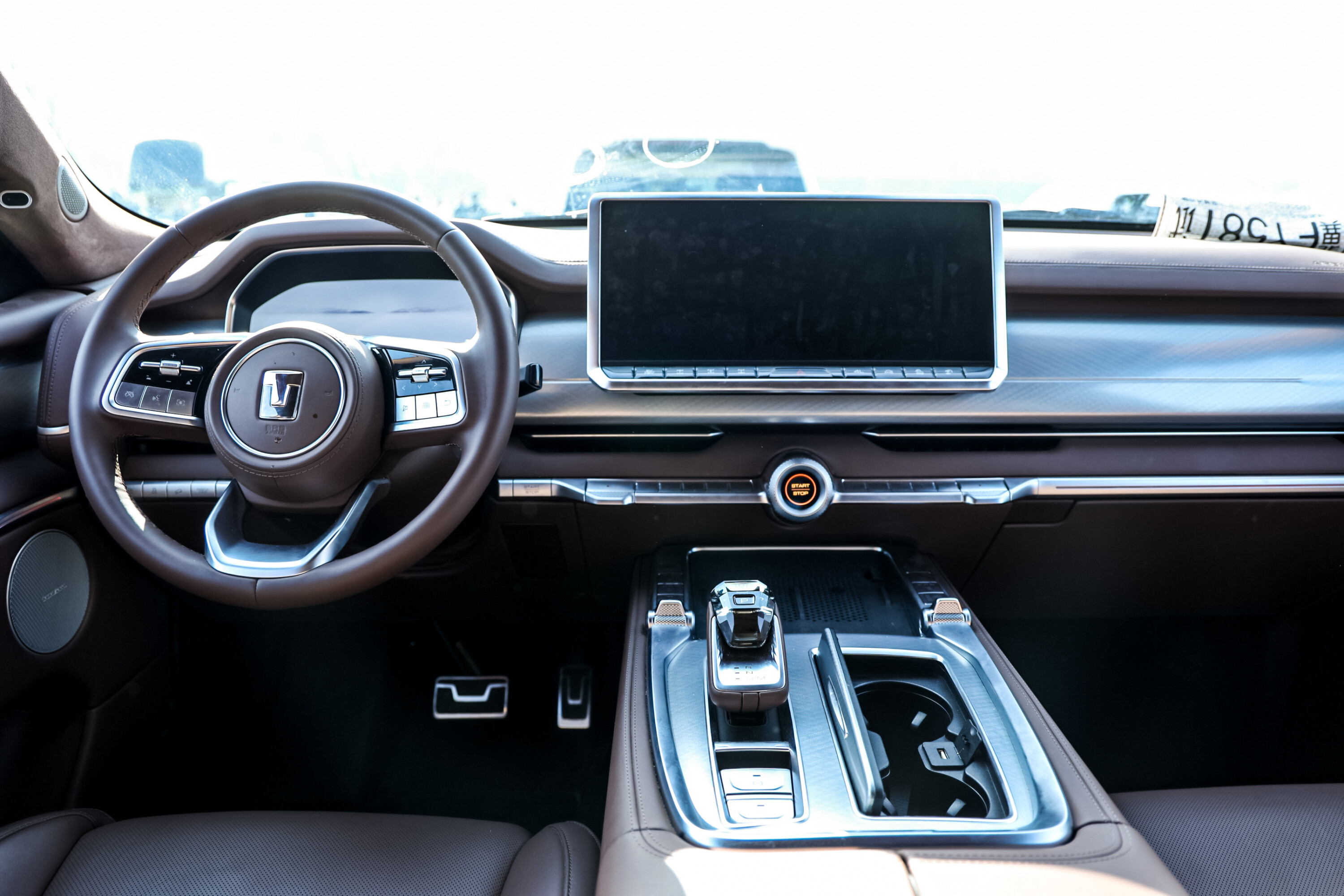
It doesn’t get quite the level of luxury as the 700 as you might expect but there’s still a lot to be liked including some lovely interior materials, cool ambient lighting, the same large central touchscreen and digital dash.
GWM hasn’t offered an idea of what pricing might look like if it were to be introduced to Australia but it could slot in with a higher price than the $46,990 driveaway Tank 300, but no more than the current flagship Tank 500, which starts at $66,490.
It took us two years from the time we ordered our V8 LandCruiser TroopCarrier to when we took delivery of it.
Within a month of driving out of the dealership there was a complete new 70 Series range released, which only happens about once in a decade, so all of a sudden our new vehicle was the old version. However, not much has changed with the latest version apart from the grill and bonnet, and the availability of a four-cylinder engine with an auto gearbox. Other than that the Troopy remains much like a metal box on wheels, and at least ours is a V8-powered metal box on wheels.
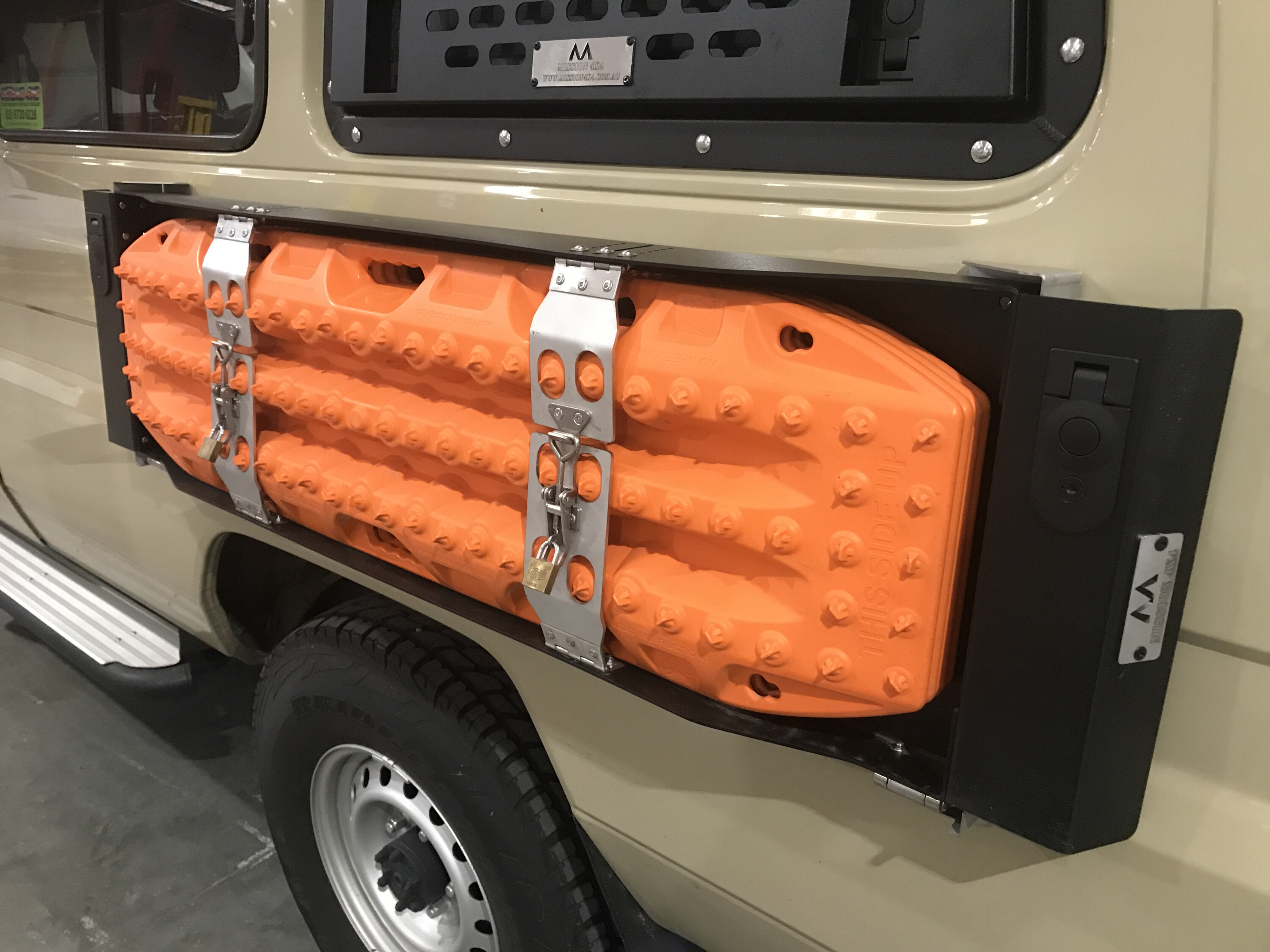
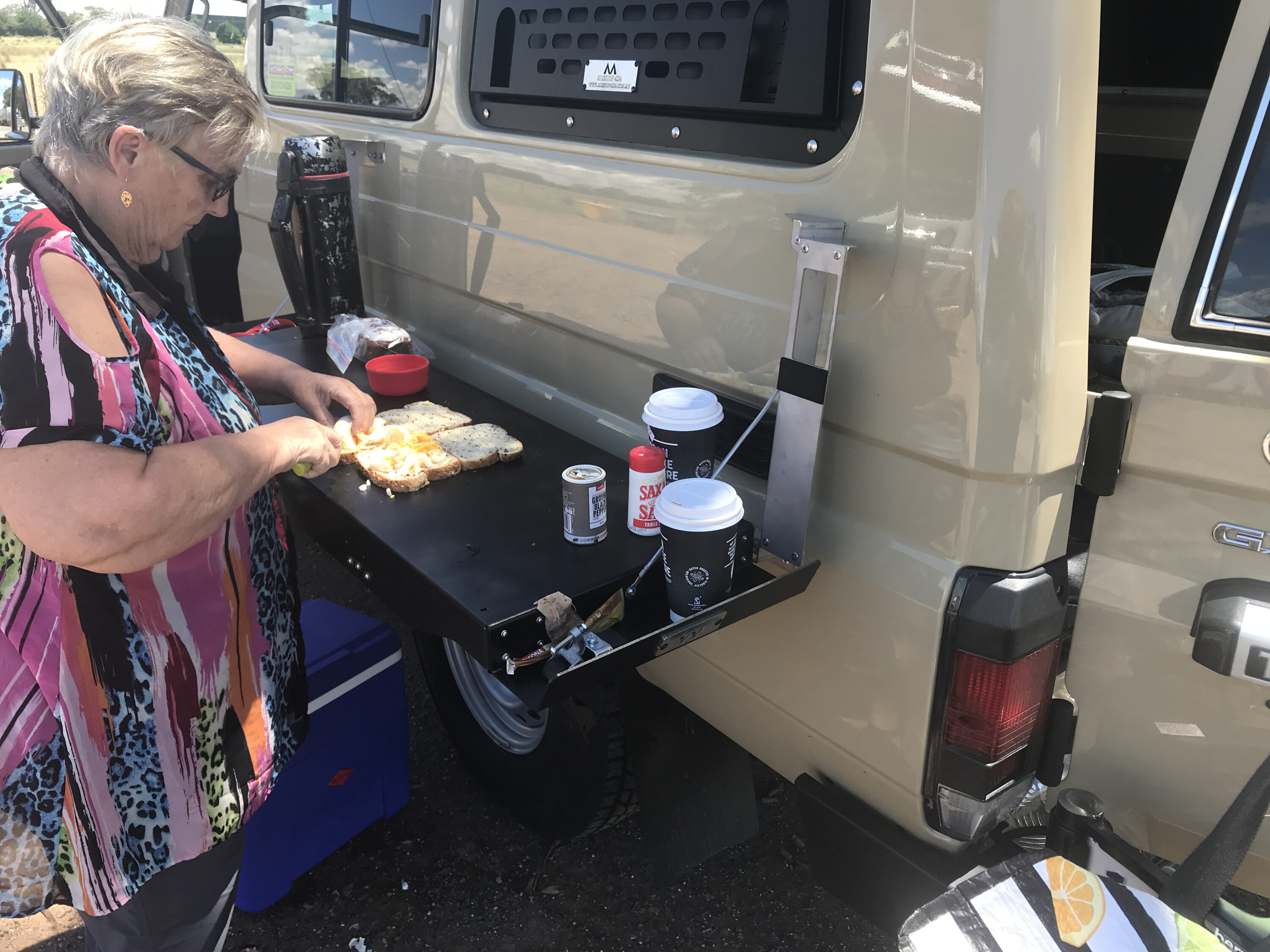
We have been working away on prepping the Troopy for outback adventures and, while waiting for a bull bar and rear-step bar to arrive, we fitted a Mission 4×4 MaxTrax table, as well as a pair of Mission 4×4 side gullwing windows for the rear. These don’t come cheap, but the first thing I noticed when they were delivered was the build quality of these two products. Manufactured from aluminium, both items feature first-class cutting, machining and welding, and they come well-packaged to ensure no damage occurs in transit.
If you’re handy with the tools, fitting the gullwing windows and MaxTrax table is a relatively easy DIY job. It takes about three to four hours to fit the gullwings, and the most time-consuming part is removing the old glue/sealant from the Troopy’s panel work. The easiest way to do that is to use a dob of the old sealant and pat the sealant you want to remove, a bit like getting blue tack off a wall – it’s slow but easy.
1
The MaxTrax table takes around three hours to fit, and you’ll need a few basic tools, a tape measure and a spirit level to do the job right. You have to drill into the side panel of the Troopy to fit the table, so make sure you follow the instructions outlined in the Mission 4×4 video… and measure twice, drill once!
I didn’t follow the instructions to a tee, as I replaced the supplied stainless-steel rivets with nuts, bolts and bigger washers to secure the Maxtrax table to the side of the Troopy. My thinking is that by doing this there will be less stress around the mounting holes when the table is carrying the four MaxTrax boards that it is designed to hold.
As mentioned, both the MaxTrax table and the side gullwing windows are top quality pieces of equipment, and both are manufactured by Mission 4×4 in Perth, WA. The company also makes several other products to suit 70 Series LandCruisers, and is well worth checking out.
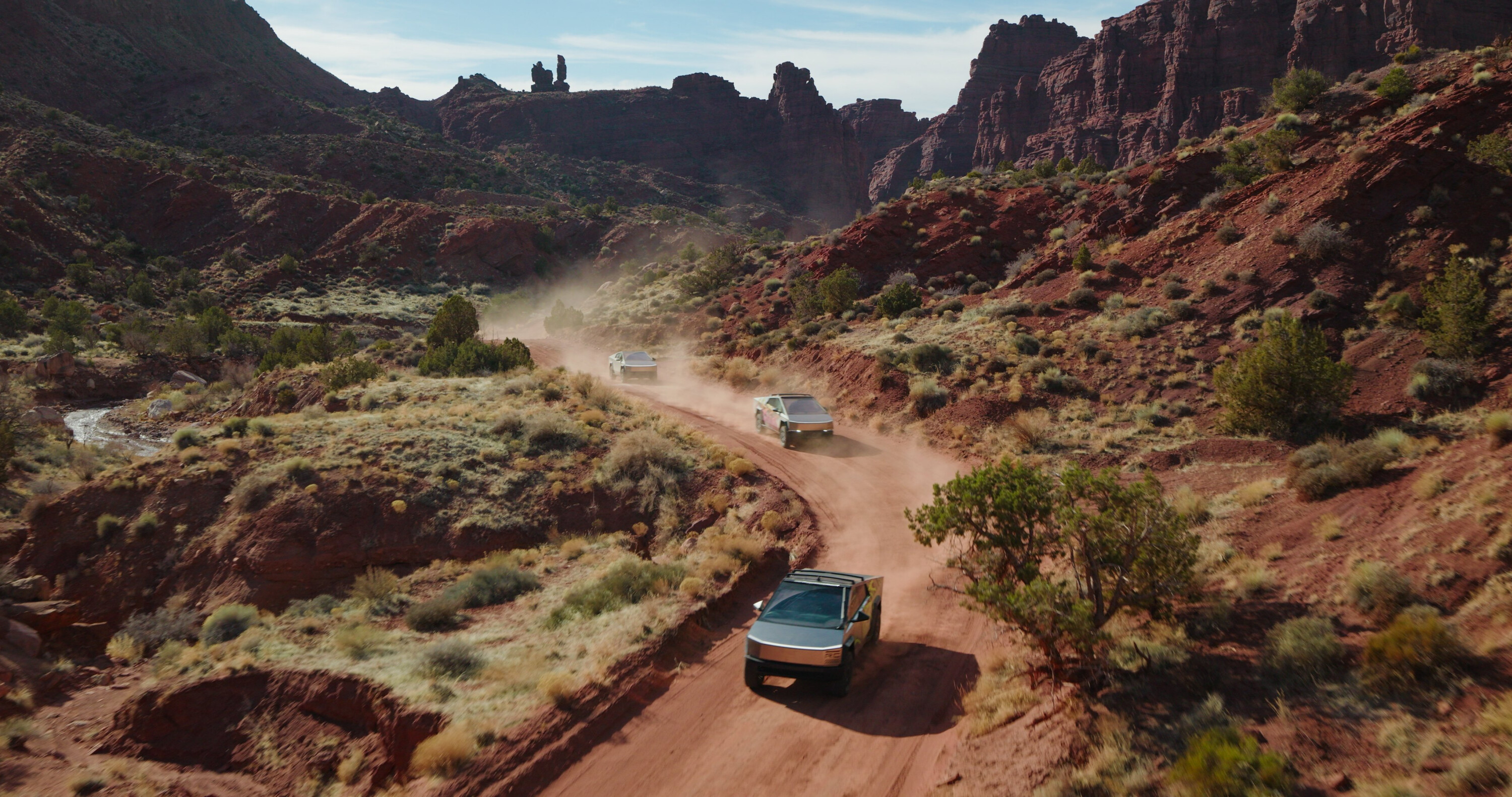
Tesla has revealed new off-road details for its all-electric 2024 Cybertruck.
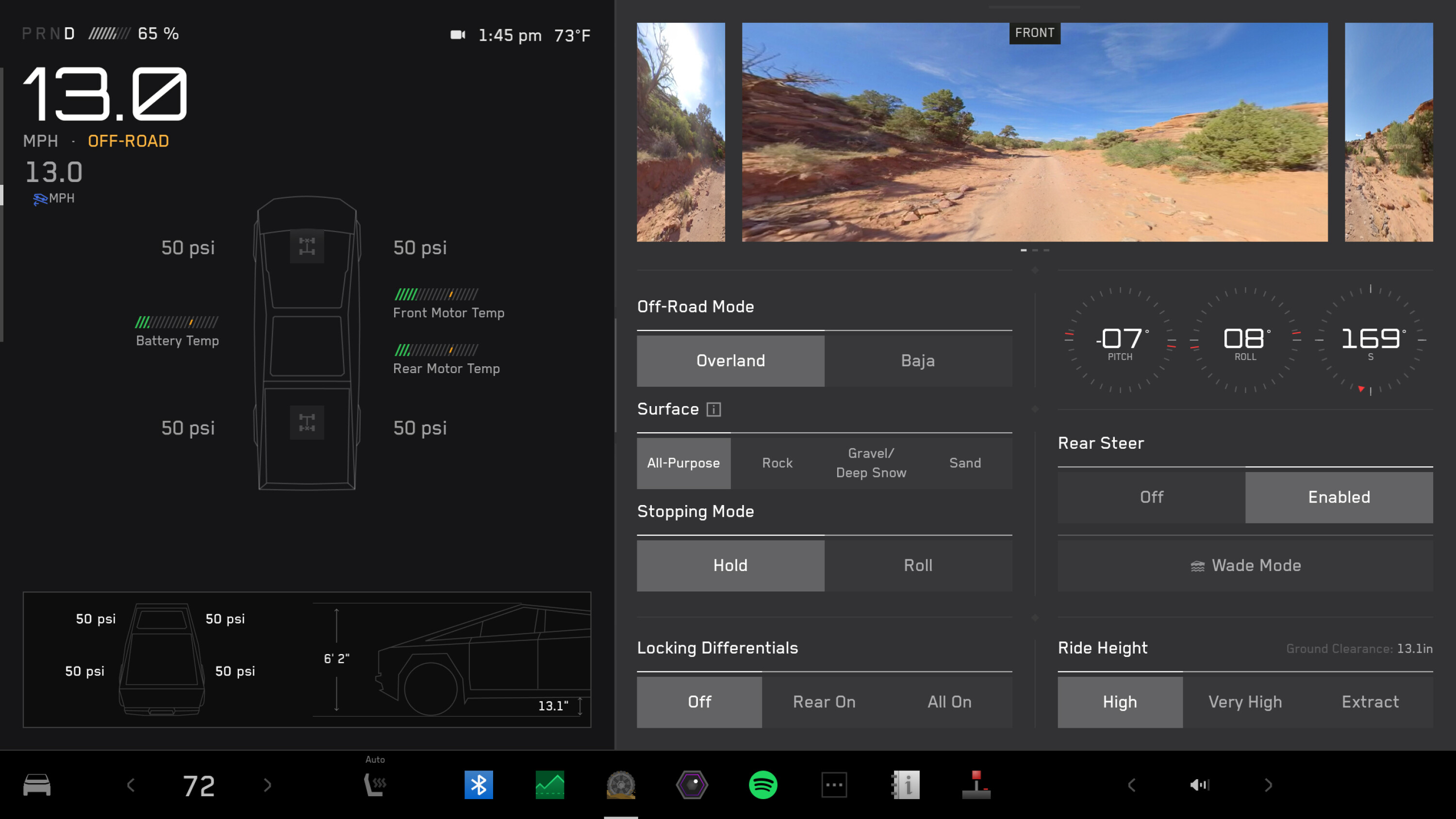
Information posted on the platform formerly known as Twitter shows the Cybertruck will be equipped with two off-road modes: Overland and Baja.
Overland mode is said to provide “more consistent handling and better overall traction while driving on rock, gravel, deep snow, or sand”. While Baja mode, as the name suggests, will provide more balance and grip on faster off-road trails – or as Tesla put it, “vehicle balance is improved and the vehicle handles more freely when Stability Assist is set to Minimal”.
2
A Trail Assist function will also be incorporated into the Cybertruck, which acts like cruise control but is tailored for off-roading, and it will assist with hill ascent and descent control by preventing the wheels from slipping. Plus, a Slippery Surface function will provide increased traction on slick, ice- and snow-covered roads.
The dual-motor Cybertruck’s front and rear diff locks can be toggled on and off via the vehicle’s in-cabin interface. The tri-motor CyberBeast steps things up a notch by having a virtual locked rear differential which is always working in Overland mode.
1
As can be seen in the above image, the ride height can be adjusted (high, very high and extract), and a Wade mode button can be spotted, presumably to assist with difficult water crossings.
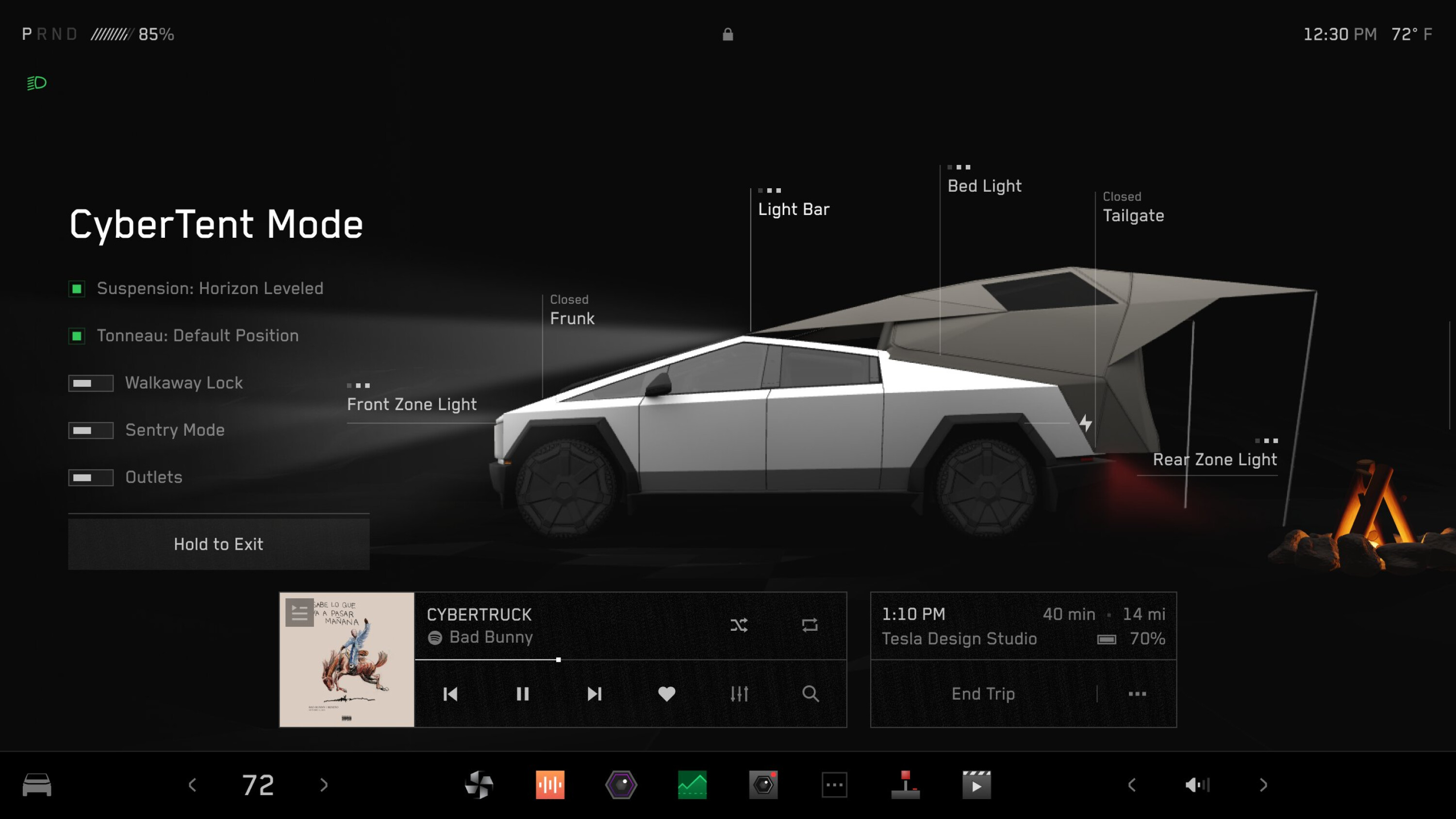
In addition, the Cybertruck will feature a CyberTent mode, which is said to level out the suspension to provide a flat surface to camp in comfort. Plus, all lighting and AC outlets can be controlled in-cabin.
1
Speculation was rife the Cybertruck could be sold in Australia when a unit was spotted in Sydney recently, but those whispers were muted when Tesla confirmed the left-hand drive vehicle is here to tour showrooms across Australia and New Zealand to help drive sales of its Model 3 and Model Y.
The chance of seeing a RHD Cybertruck on local off-road tracks remains unlikely.
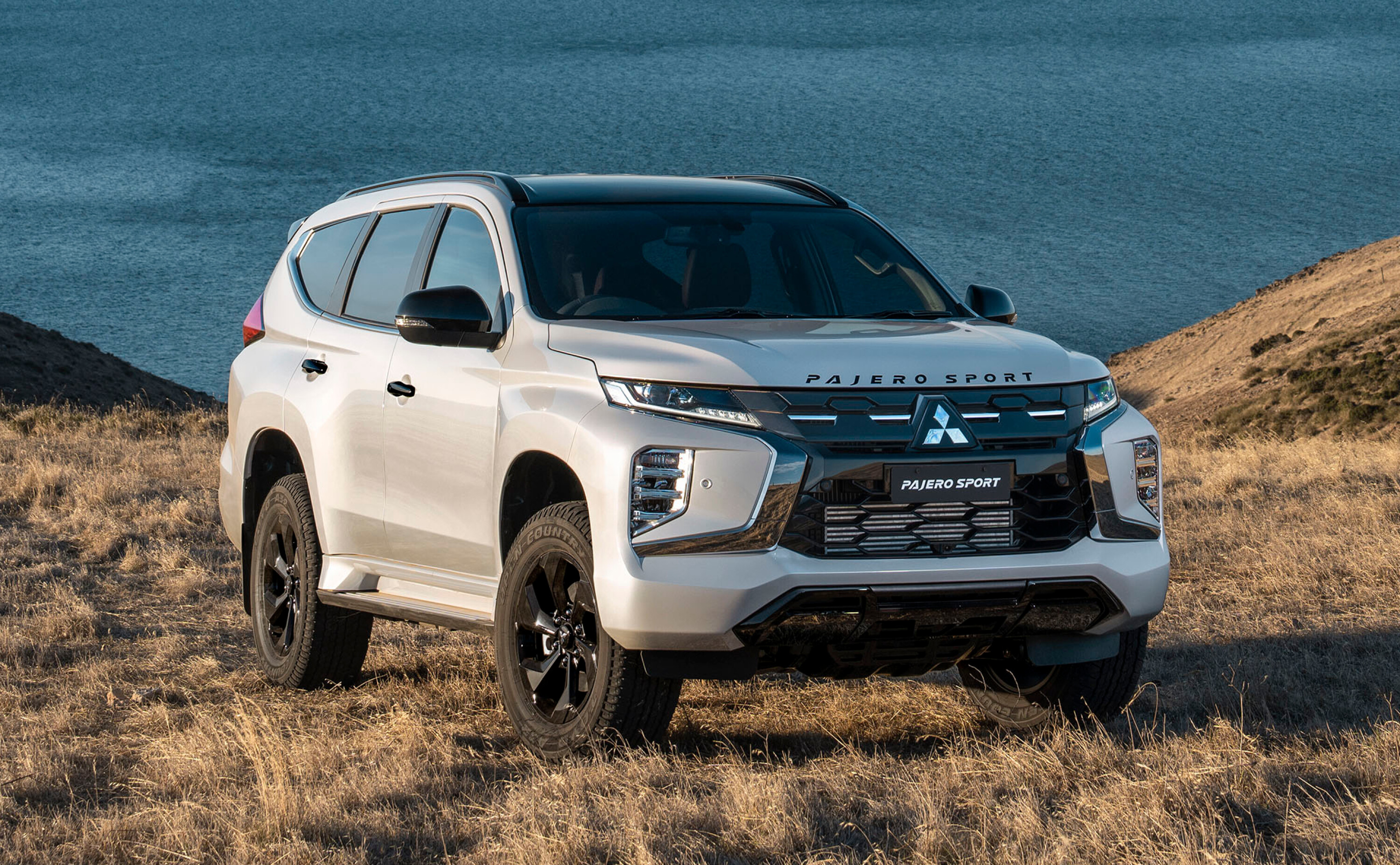
The facelifted 2024 Mitsubishi Pajero Sport has been introduced, with the new-look, more expensive model now available in dealerships nationwide.
The updated Pajero Sport remains powered by the 133kW/430Nm 2.4-litre turbo-diesel engine that runs through an eight-speed automatic transmission and 4WD system. Yep, Mitsubishi Australia has also slashed all 2WD models from its local line-up “due to a lack of demand,” according to the brand.
Despite the culling of 2WD variants, the 4WD line-up remains untouched, beginning with the GLX five-seater priced from $51,540 before on-road costs and topping out with the GSR seven-seater, which retails for $64,840.
2
As shown in the table at the bottom of this article, prices have increased between $1600 and $2400 across the Pajero Sport line-up.
All grades in the five-model line-up have been re-touched with updated upper and lower grilles more akin to the 2024 Triton ute, as well as front and rear bumper garnishes.
In addition, all models now wear – as standard – the black headlamp extensions previously only seen on the top-spec GSR model. The base-spec GLX now also gets automatic dusk-sensing headlamps and rain-sensing wipers.
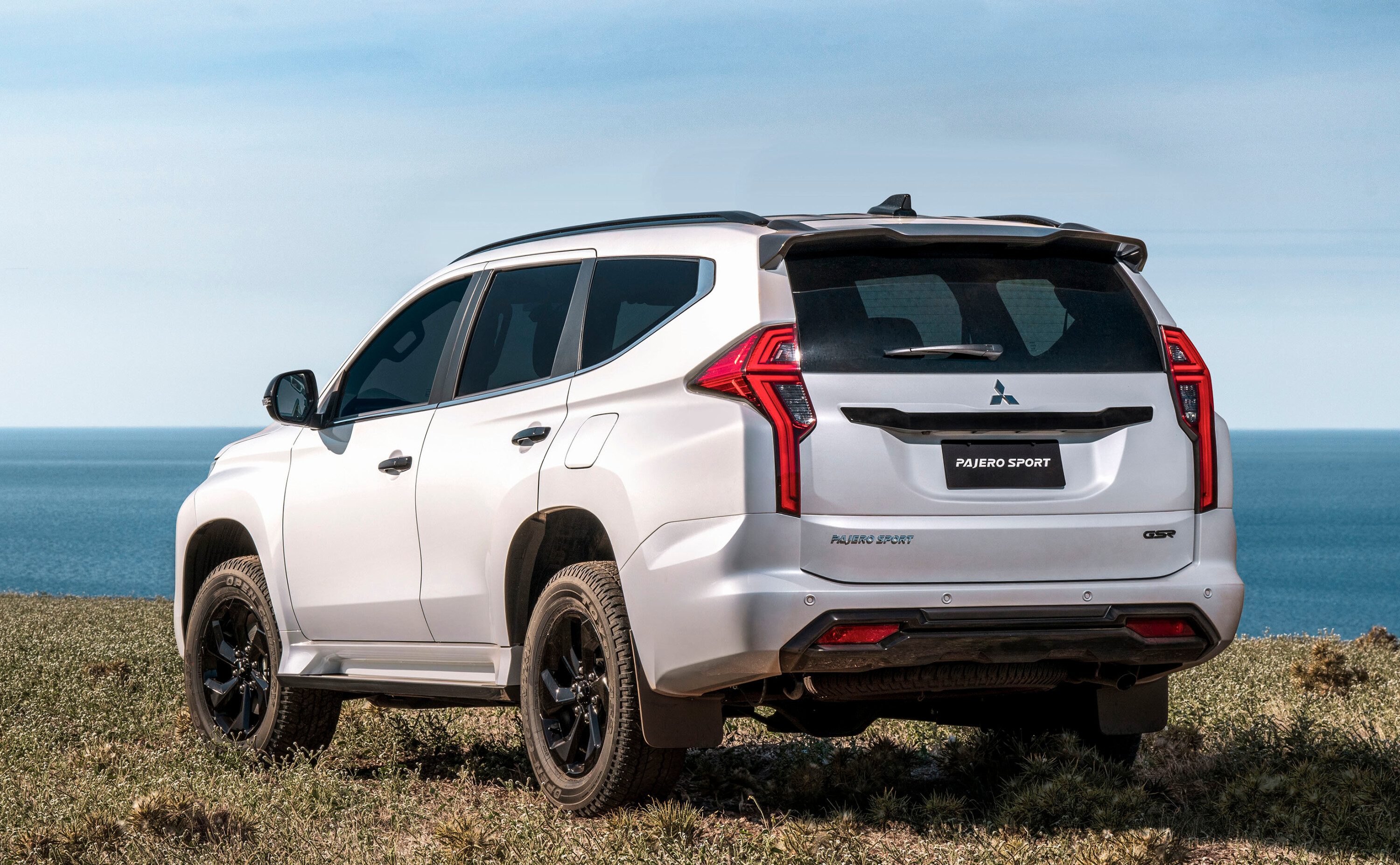
A revised 18-inch multi-spoke wheel design is also new for 2024, with the tone dependent on the model grade – singular tone for GLX; two-tone for GLS and Exceed; and a black finish for the GSR. As a further point of distinction, the range-topping GSR has also gained black door mirrors, black door handles and a black tailgate handle.
1
A new Blade Silver metallic paint option which debuted with the all-new Triton is now available for GLX, GLS and Exceed models. New for the GSR is a graphite grey colour option with the black roof treatment.
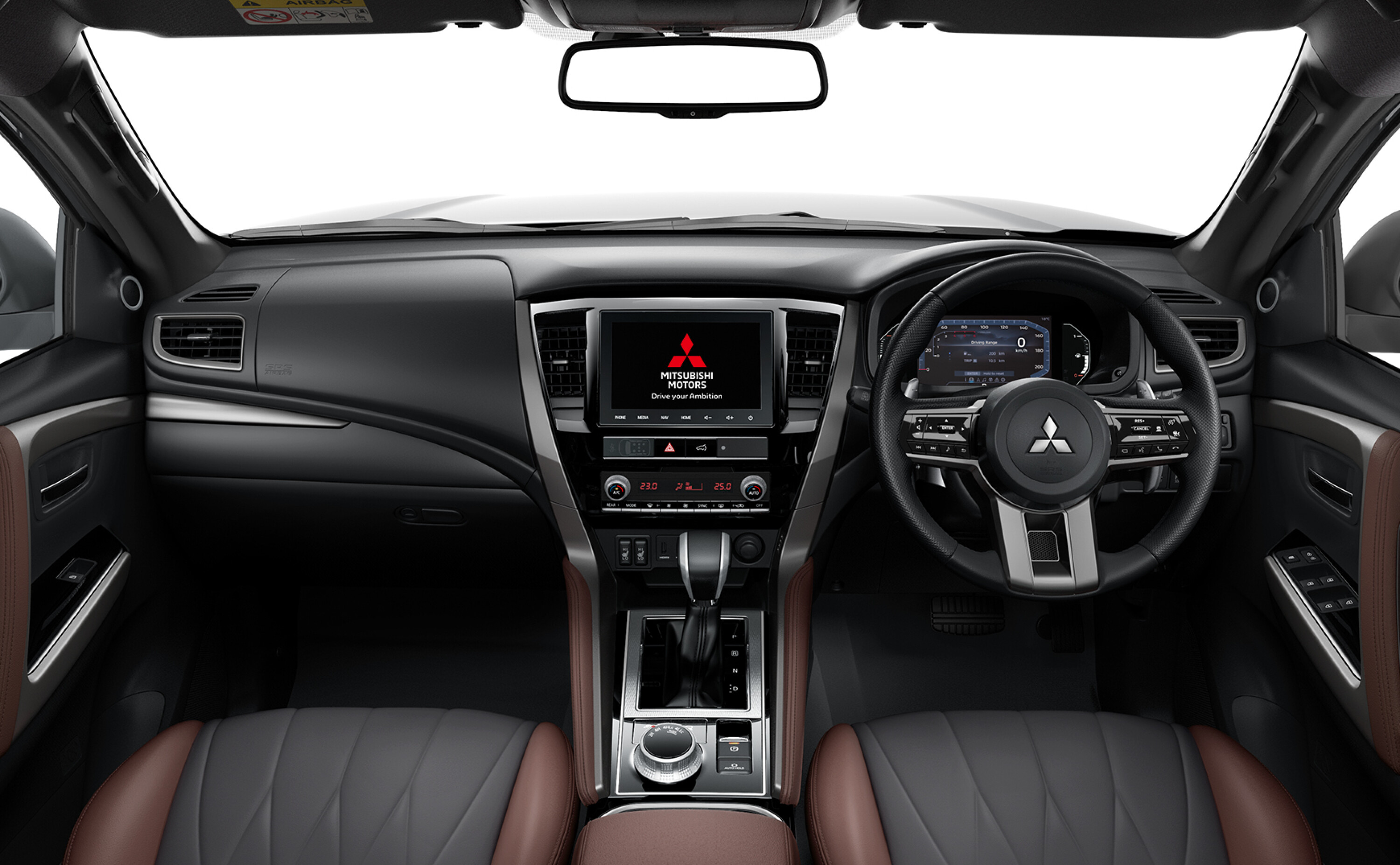
On the inside, all models have been upgraded with the same three-spoke, leather-trimmed steering wheel that debuted in the Triton earlier this year; a new diamond-pattern, two-tone premium synthetic leather upholstery (in burgundy and black colour combo) is unique to the GSR grade; and revised instrument display graphics have been implanted into the 8.0-inch digital driver displays of GSR and Exceed models.
“Pajero Sport continues to perform a pivotal role in our product portfolio. It is spacious, comfortable and capable, and the 2024 model year looks fantastic with its refreshed exterior, new wheels and upgraded interior,” said Mitsubishi Motors Australia CEO Shaun Westcott.
2
“The updated digital instrument display for Exceed and GSR, as well as improved standard specification for GLX, means there are tangible improvements across the range.”
Year-to-date, Mitsubishi has sold 2281 units of the Pajero Sport (excluding April sales figures), with the Japanese marque shifting 914 units in March.
All Pajero Sports are covered by Mitsubishi’s 10-year/200,000-kilometre manufacturer’s warranty, with 10 years of capped price servicing.
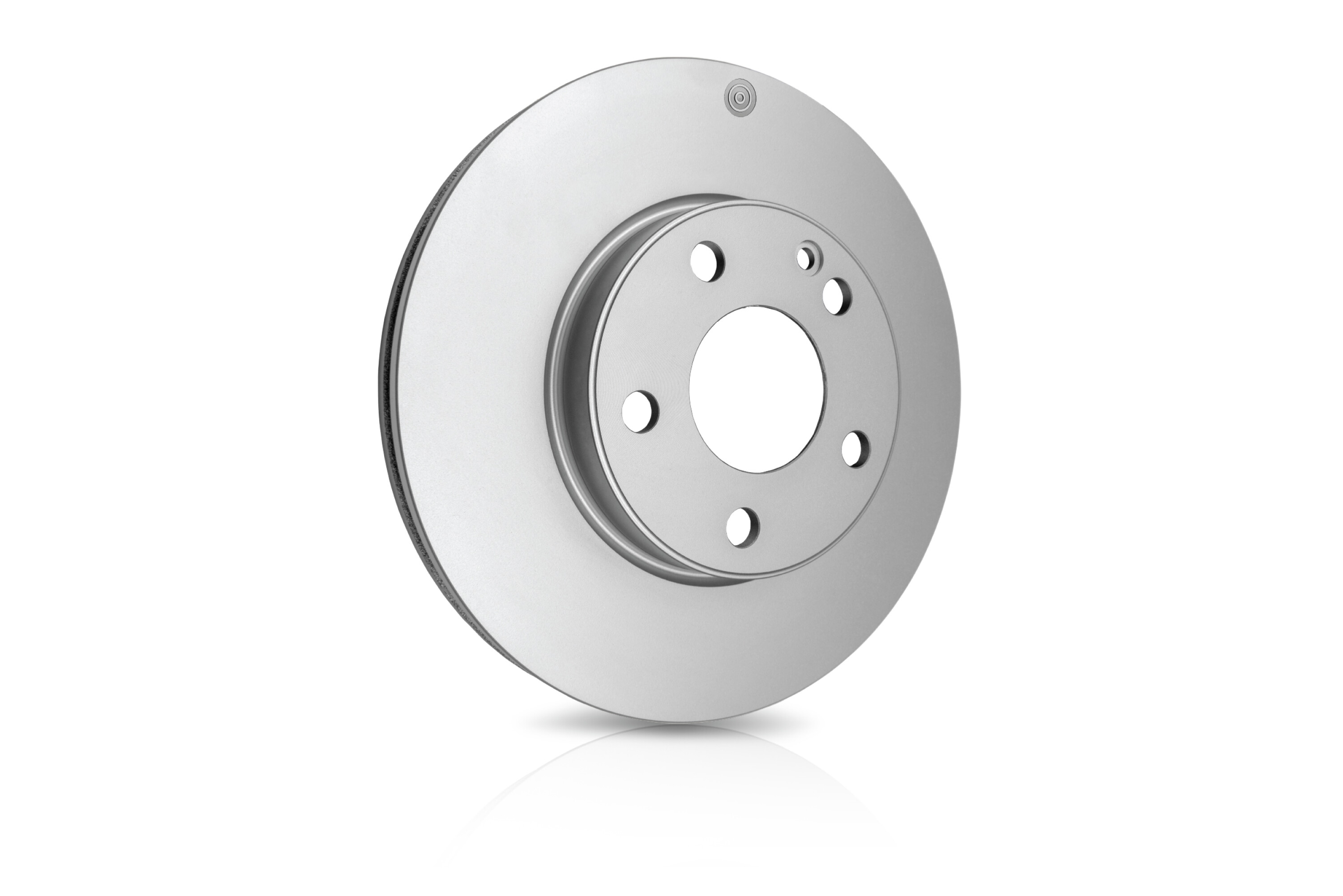
Bendix’s popular General CT range has expanded with the new Bendix General CT rotors, designed to provide reliable, durable and confidence-inspiring braking performance for vehicles.
The rotors also debut Bendix’s new SwiftCheck, an industry-first innovation that provides a convenient visual indicator of rotor wear so that mechanics can easily estimate the remaining rotor life without having to measure the rotor thickness. The feature also provides convenience and peace of mind as you can inspect the rotors and take action if required, which is handy if planning an adventure.
Bendix Product Manager, Ian Campbell, said the company prided itself on bringing innovative new products to market.
“Bendix is committed to pushing the boundaries and this is evident with our new General CT disc brake rotors, which provide the brand with another industry-first,” Ian said. “The SwiftCheck visual wear indicator has the potential to be a game-changer for the industry, increasing safety for drivers while also boosting efficiency for workshop technicians.”
SwiftCheck is a machined feature that creates circular grooves on the rotor surface that narrow and disappear gradually as the rotor wears. Once the wear indicator displays a single dot in the centre, this indicates it’s time for the rotor to be changed. Along with offering this time-saving feature, General CT disc brake rotors shine when it comes to braking performance. The range features high-quality metallurgy that’s designed for longevity and improved heat dissipation.
The range also delivers an ‘E+ Original Equipment Fit’ that is designed to be a direct replacement for OE rotors. They meet or exceed OE specifications and deliver confidence for both mechanics and vehicle owners. General CT disc brake rotors were developed to provide great results with all disc brake pad designs, but for optimum performance they’re best matched with the Bendix range of brake pads.
As with Bendix’s other disc brake rotor product lines, General CT rotors feature SwiftFit surface protection, which is a coating that allows the rotor to be fitted without needing to remove oils. SwiftFit also helps prevent corrosion of the rotor, resulting in an almost unlimited shelf life and a rust-free rotor.
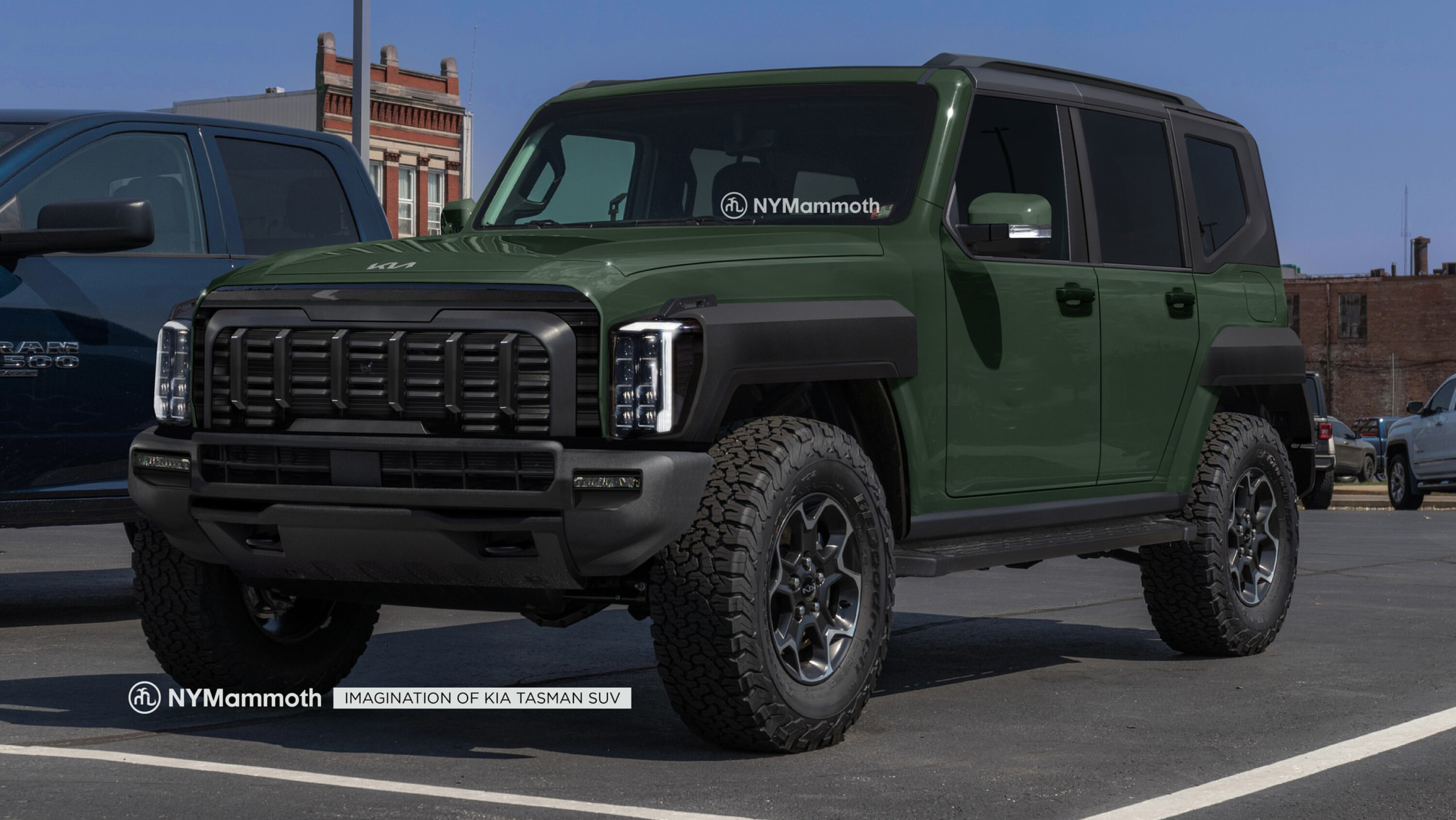
Despite its Australasia-inspired name, there’s more than a little American truck styling to the front end of the Tasman, with low-set but tall headlights flanking a huge grille.
1
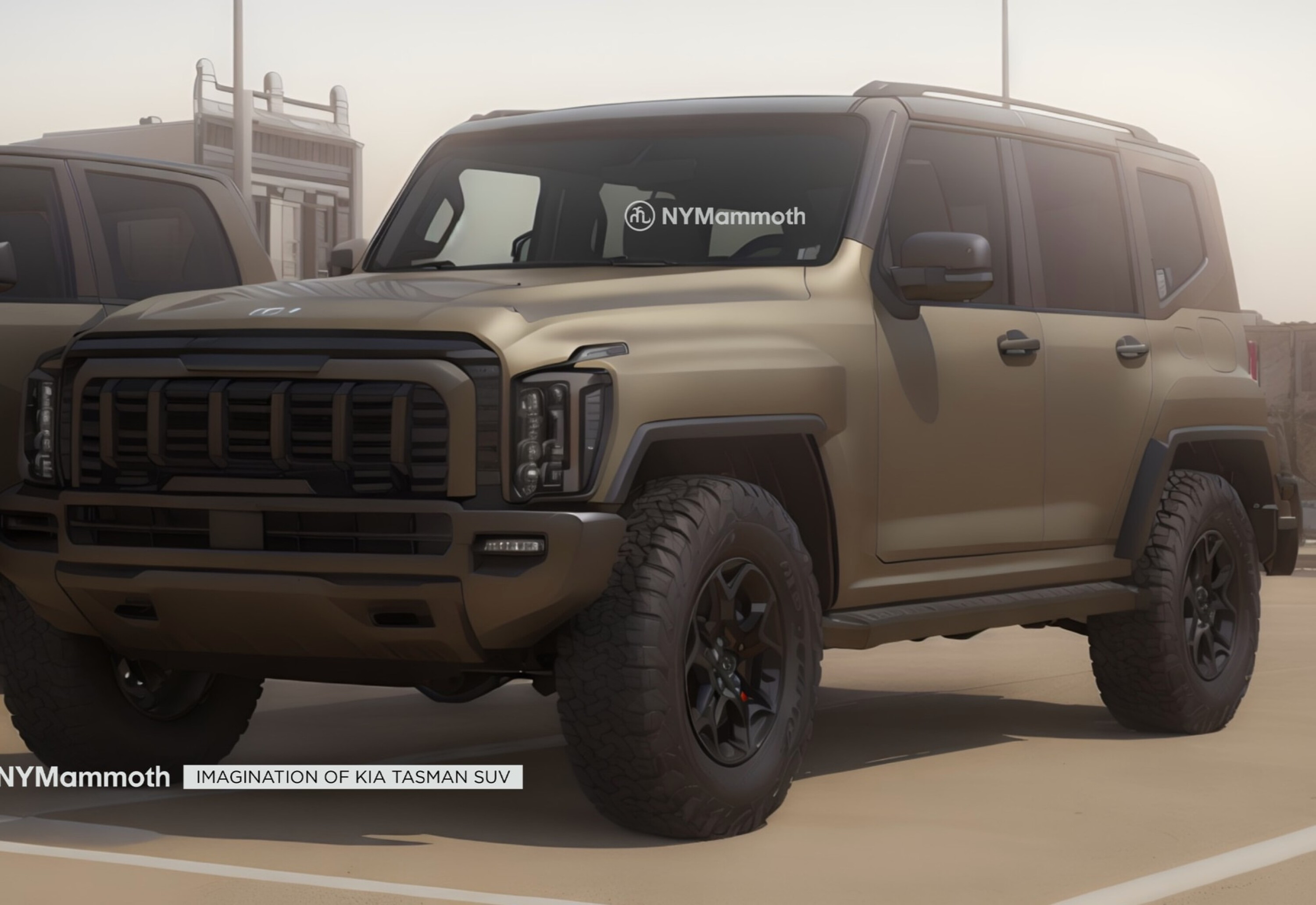
There’s also a hint of Jeep Gladiator in its profile, with a long cabin and a long rear overhang – similarities that seem to have inspired artist NYMammoth to imagine the Tasman as a wagon to wrestle the Wrangler.
The Tasman’s look lends itself nicely to the retro wagon themes of the Wrangler, not to mention the Bronco that Ford is still rudely keeping from our market.
And, as the GWM Tank 300 has shown – thanks in big part to its sharp pricing – Australians have a big appetite for that off-roading style.
If Kia were to introduce such a model, it could easily step in as a long-overdue new generation of the off-roading Mohave SUV sold in North America.
11
What do you think of NYMammoth’s speculative take on a Tasman wagon?
And what would you call it? Let us know in the comments below!
Catch up our comprehensive Tasman coverage at the links below.
When it comes to selecting the right 4WD tyres, the number of options can seem overwhelming.
With different sizes, brands, patterns and applications, it can be difficult to know where to begin. The experts at Cooper Tires are on-hand to provide some helpful tips on how to decide on the right tyre for your 4WD.
The main point people need to consider when buying 4WD tyres is value for money. Is the money you’re spending giving you a 4WD tyre that will provide both traction and durability? Here are some tips to help determine whether you are getting the best value for money.
1
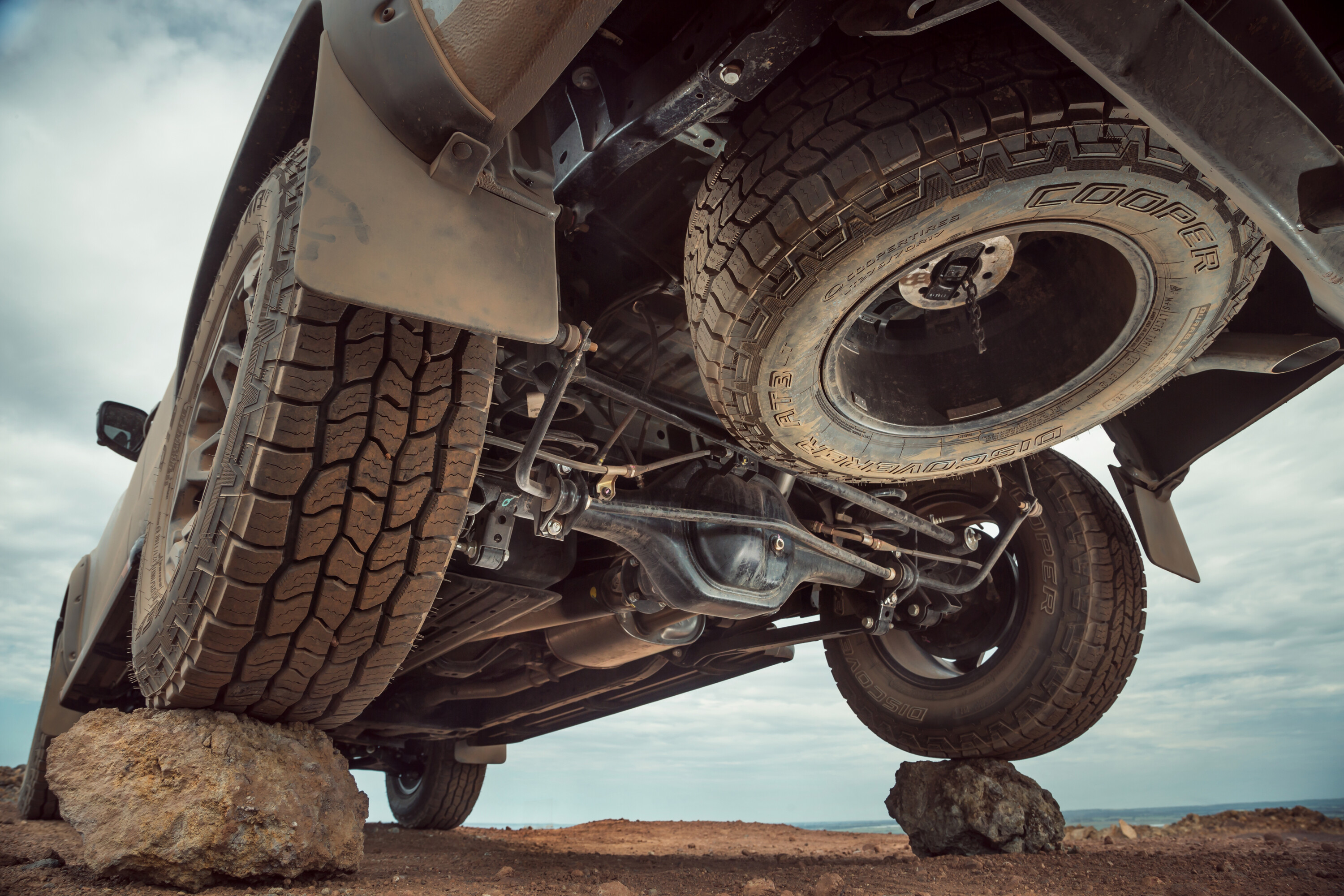
Just because tyres are the same size, it doesn’t mean they have the same tread width, tread depth and casing strength. As an example, Cooper has compared two premium 265/65R17 tyres throughout this article, to demonstrate what you should be looking for.
Ask the dealer about the tyre’s tread width. This is crucial as there can be significant variations between brands.
What is tread width?
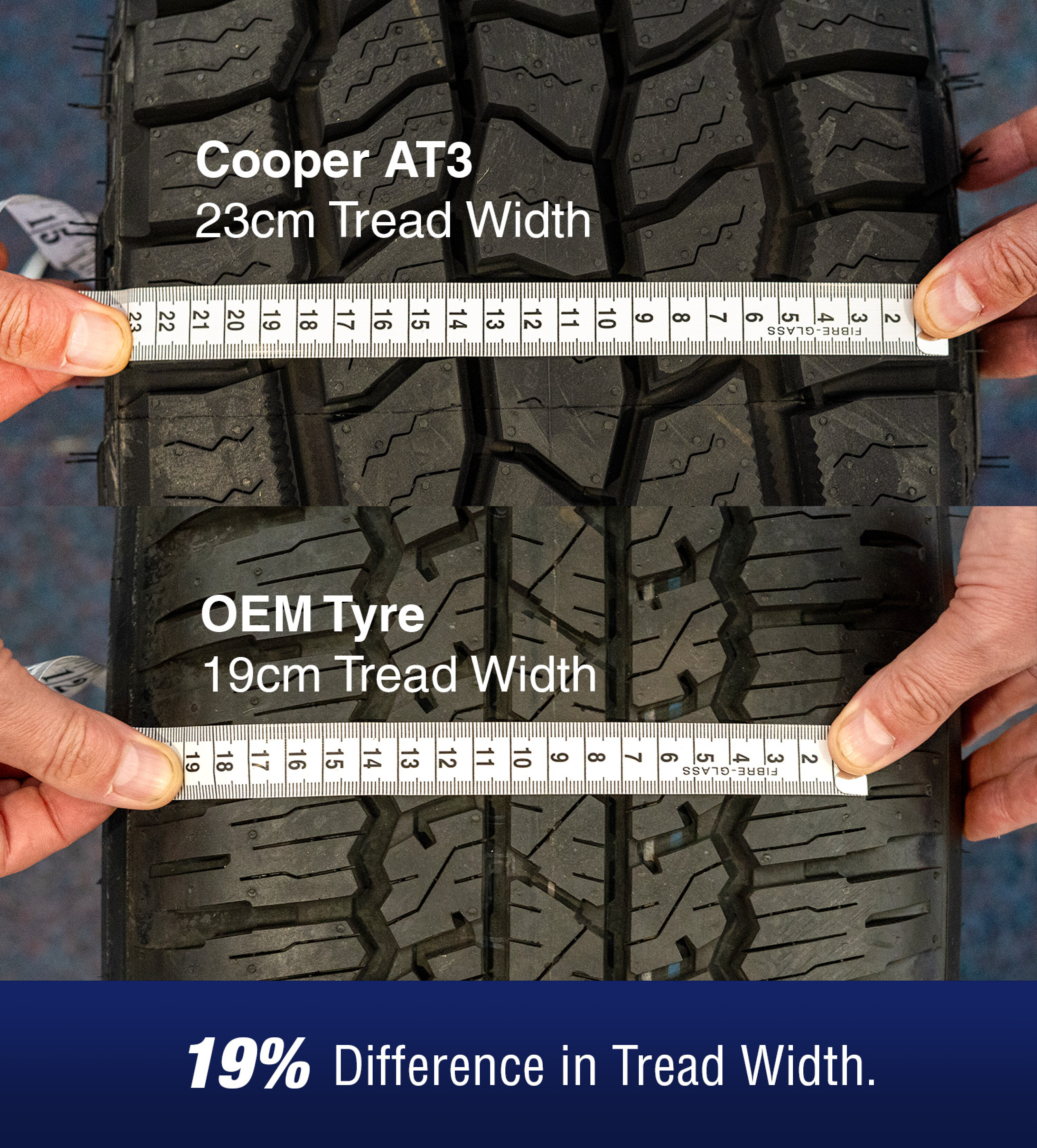
Tread width refers to the width of the tyre’s tread, which is the part of the tyre that makes contact with the road. It’s measured from one sidewall to the other across the tread section of the tyre and it’s important because it affects the tyre’s grip on the road.
In the photo below, the tread width of the two tyres is different, with the Cooper AT3 measuring 230mm and the unnamed OEM tyre measuring 190mm – that’s a 19 per cent difference. Wider tyres have a larger contact patch for better handling and a wider steel belt under the tread which means less shoulder wear, a common problem when driving on winding roads in Australia.
1
What is tread depth?
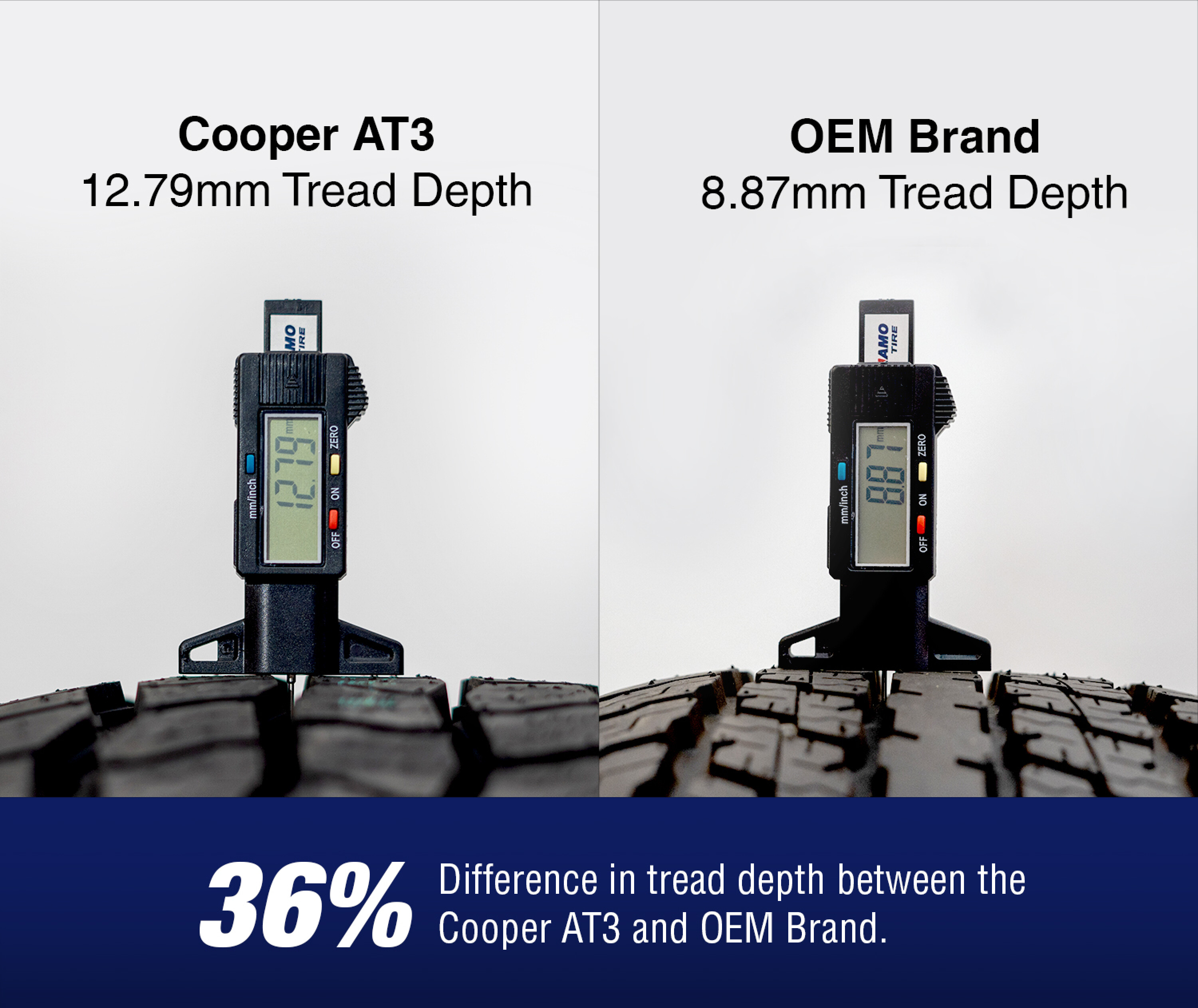
A tyre’s tread depth is essentially the distance between the top of the tread pattern to the bottom of the grooves in the tyre. It’s just as important as tread width, as greater tread depth means more grip, mileage and more resistance to damage. Tyres with greater depth usually have a better casing, which is important when it comes to handling.
In the example given below, the tread depth of the Cooper AT3 tyre is 12.79mm while the unnamed OEM is 8.87mm – that’s a 36 per cent difference.
1
What is the load rating?
A load rating is the maximum weight a tyre can safely support. It’s crucial for ensuring safety and performance by matching the tyre’s capacity with the vehicle’s requirements.
Not all tyres have the same strength casing, and the easiest way to tell is to check the load rating. The weaker tyre has a load rating of 112, which means it can carry 1120kg; while the stronger tyre has a load rating of 120kg, which means it can carry 1400kg. You can do a simple push test, to determine the casing strength of the tyre. A stronger tyre means less punctures and better handling when towing or carrying weight.
Three simple questions
When you plan on replacing your 4WD tyres, here are three simple questions to ask the dealer. This will help to compare the tyres you are looking to purchase, and which tyres offer the best value for money.
What is the tread width?
What is the tread depth?
What is the load rating?
It’s also important to buy tyres from a qualified dealer, as not all stores that sell tyres are knowledgeable about them. After all, tyres are what keep you and your family safe both on and off the road.
Thanks to Cooper Tires for providing these tyre tips.
Imagine a destination that covers more than 17,000,000ha and is made up of ancient landscapes, an idyllic coastline, heritage-listed sites, some of the oldest rock art on earth and, importantly, contains great four-wheel-driving opportunities.
The Pilbara region of Western Australia dates back 4.3 billion years and is twice the size of the UK. It is regarded as the oldest place on earth and has deep red rock formations so ancient that it predates fossil remains. It is thought Pilbara is the Aboriginal name for a mullet that’s found in a creek off the Yule River.
1
As the area is so vast, I wasn’t sure how to tackle it, and really wasn’t expecting to see as much as I did.
I spent a few days in the southern part of the Pilbara exploring Millstream Chichester NP and across to the mining area near Pannawonica, and then back to Onslow to explore the coast. Nicknamed ‘Cyclone City’, Onslow has been subjected to more than a dozen cyclones in which wind speeds have been measured as high as 232km/h.
Originally built for pearling, mining and pastoral use, Onslow is a sleepy town that attracts tourists year ’round. Officially, Europeans travelled through here in 1861 when an expedition was led through the Pilbara, but prior to that Abel Tasman visited the islands off Onslow in 1644.
Onslow is an interesting town with a heritage trail and free riverside camping at Five Mile Pool. As well as a visit to the old Onslow town ruins, make sure you check out the huge salt lakes that cover 90km², and from which 2.5 million tonnes of table salt is produced every year.
1
Exploring the coast
Head north and you’ll arrive at the fast-growing city of Karratha, which is not only the base for the Pilbara’s massive iron ore operations but also the gateway to the rich Dampier Archipelago.
Established in 1968, Karratha is a busy city that is home to 40 per cent of the region’s population. Built to provide accommodation and services for the massive mining operations, Dampier Salt and the NW gas and oil projects, Karratha has a lot to offer. The Yaburara Heritage Trail to the east follows steep hills, passes a number of Aboriginal sites and overlooks the town and out to the coast.
1
Another must-do is a visit to the North West Shelf Project Visitors Centre, where you can see models of the operation and view the giant domes that hold natural gas before it is shipped overseas.
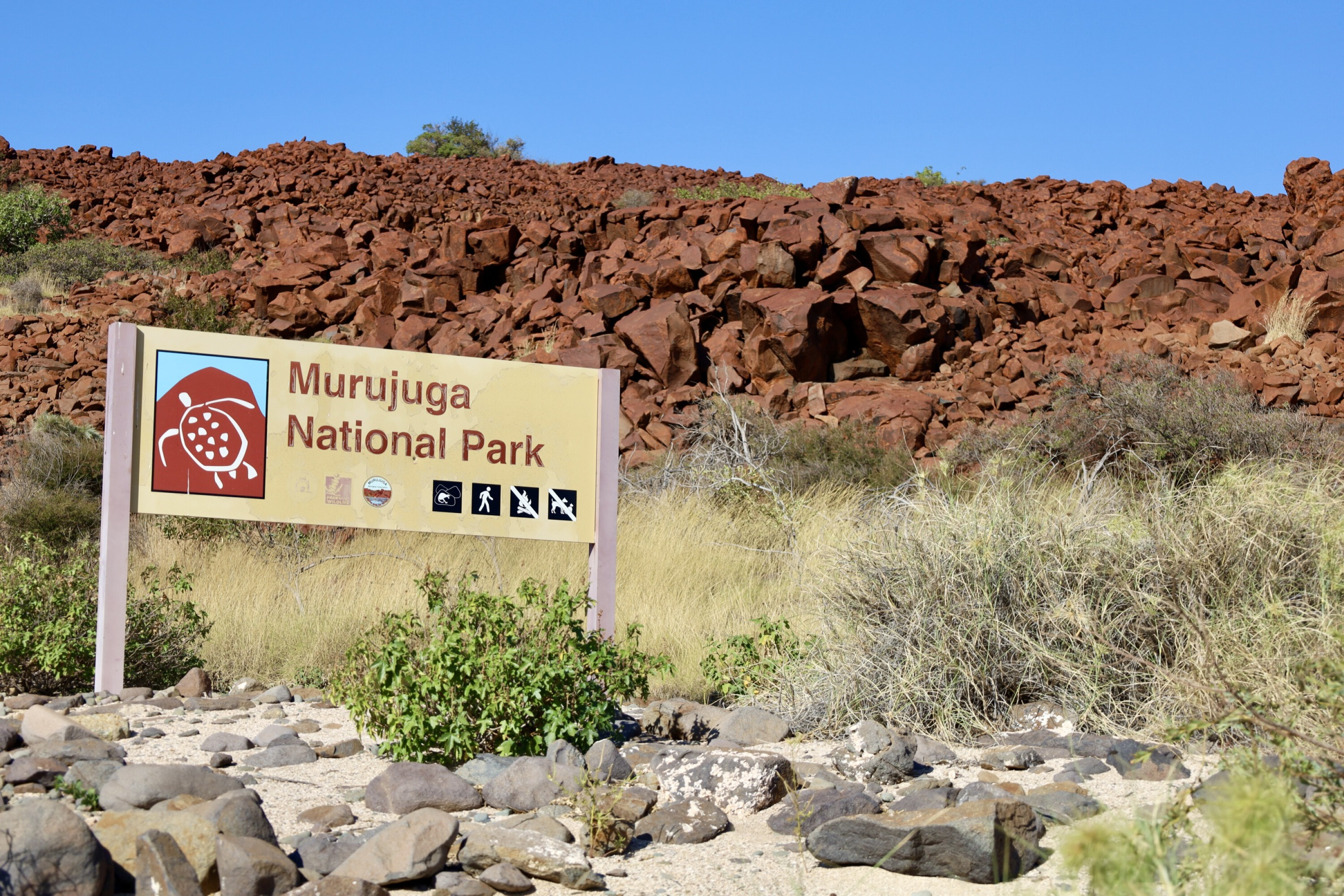
Not far down the road at Burrup Peninsula you’ll be able to study up to an estimated 10,000 indigenous rock engravings that are said to be 30,000 years old. These petroglyphs include animals and human shapes, as well as some extinct animals that once roamed the area. Notably, these are claimed to be the oldest and largest concentrated collection of petroglyphs on earth.
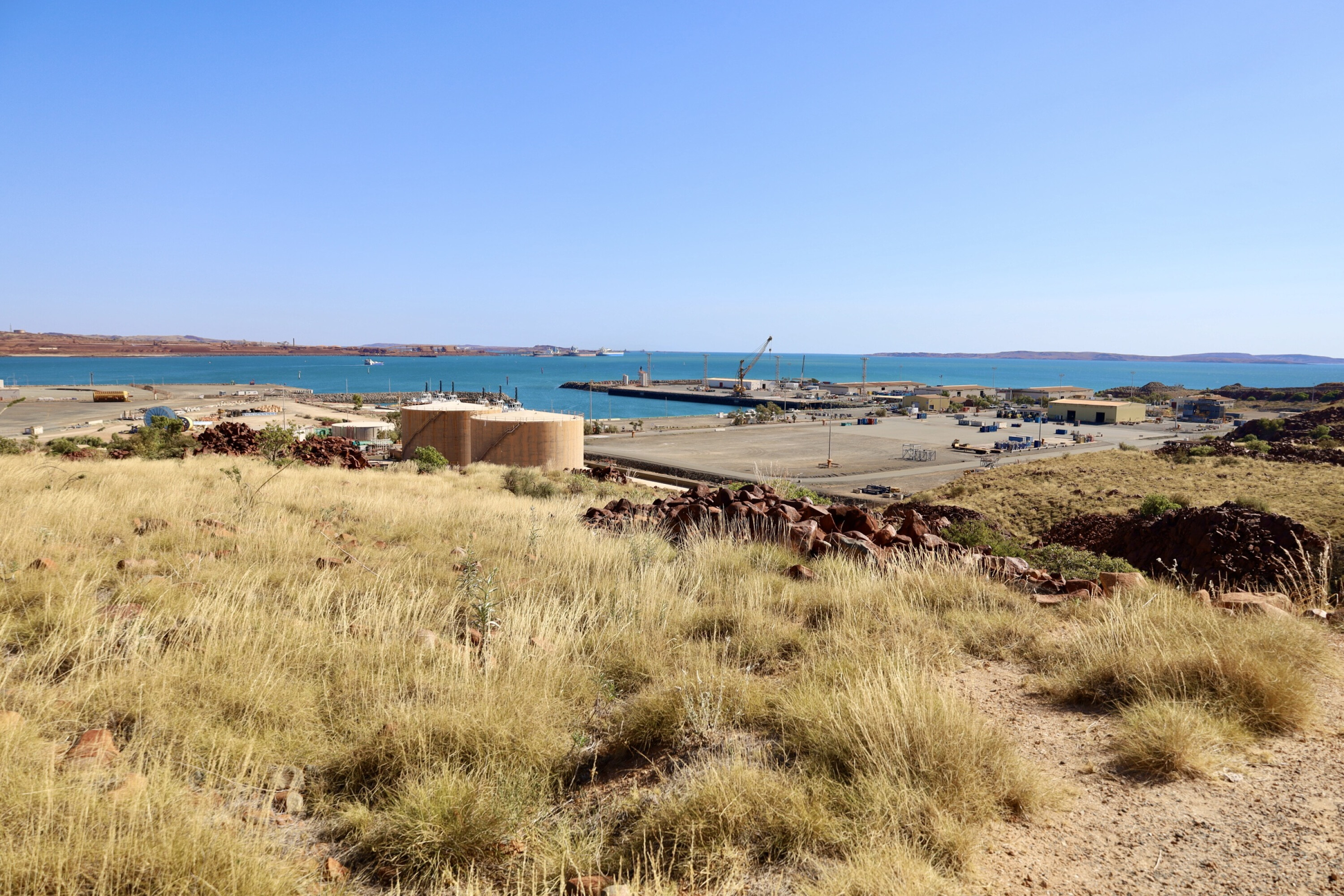
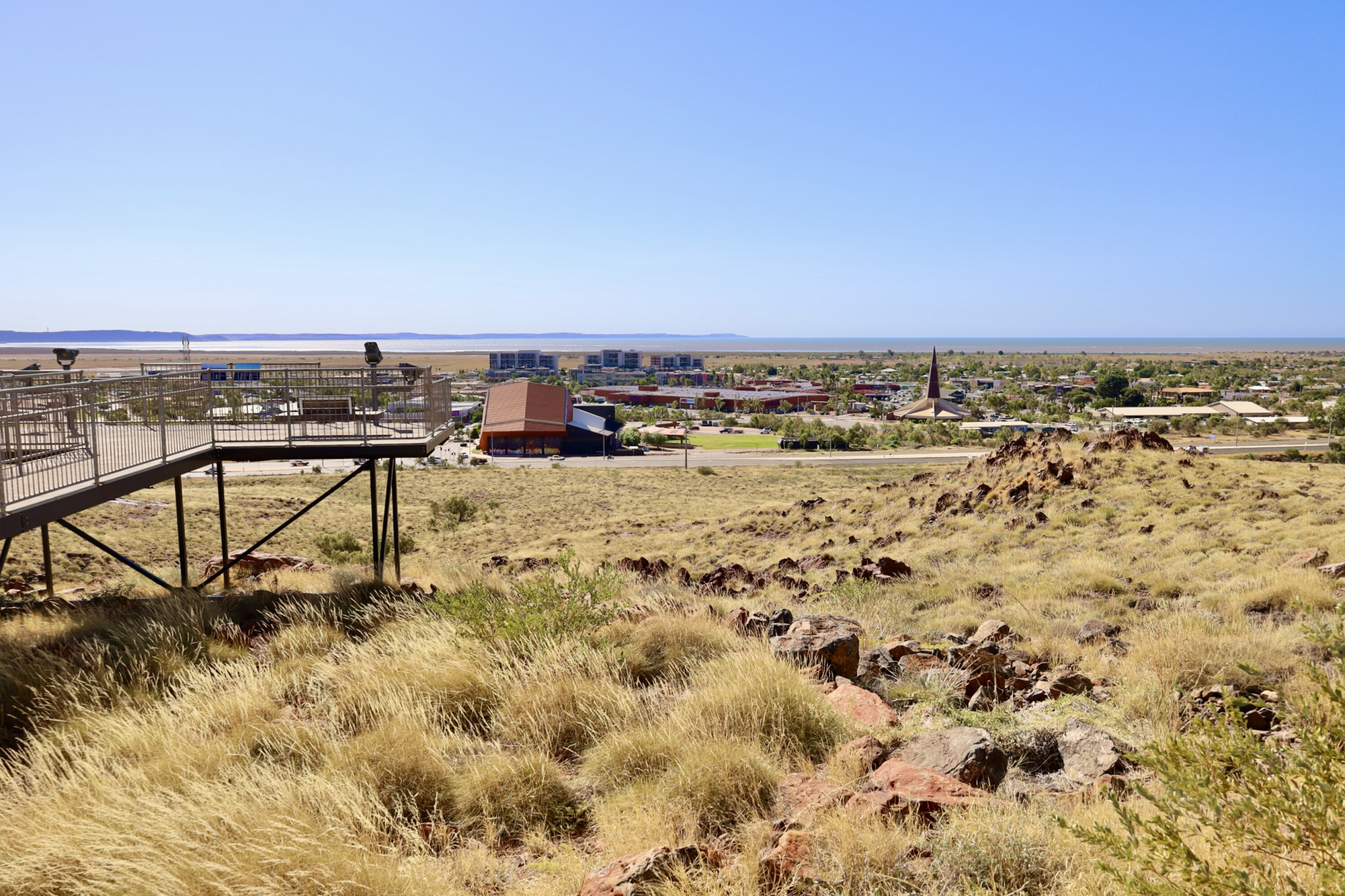
There’s also plenty to see and do nearby at Dampier, where you can not only overlook the huge port that has been constructed to cater to the mining activities in the area, but also head to a lookout that provides a spectacular view of the 3km-long trains that cart ore from the mines to the port.
1
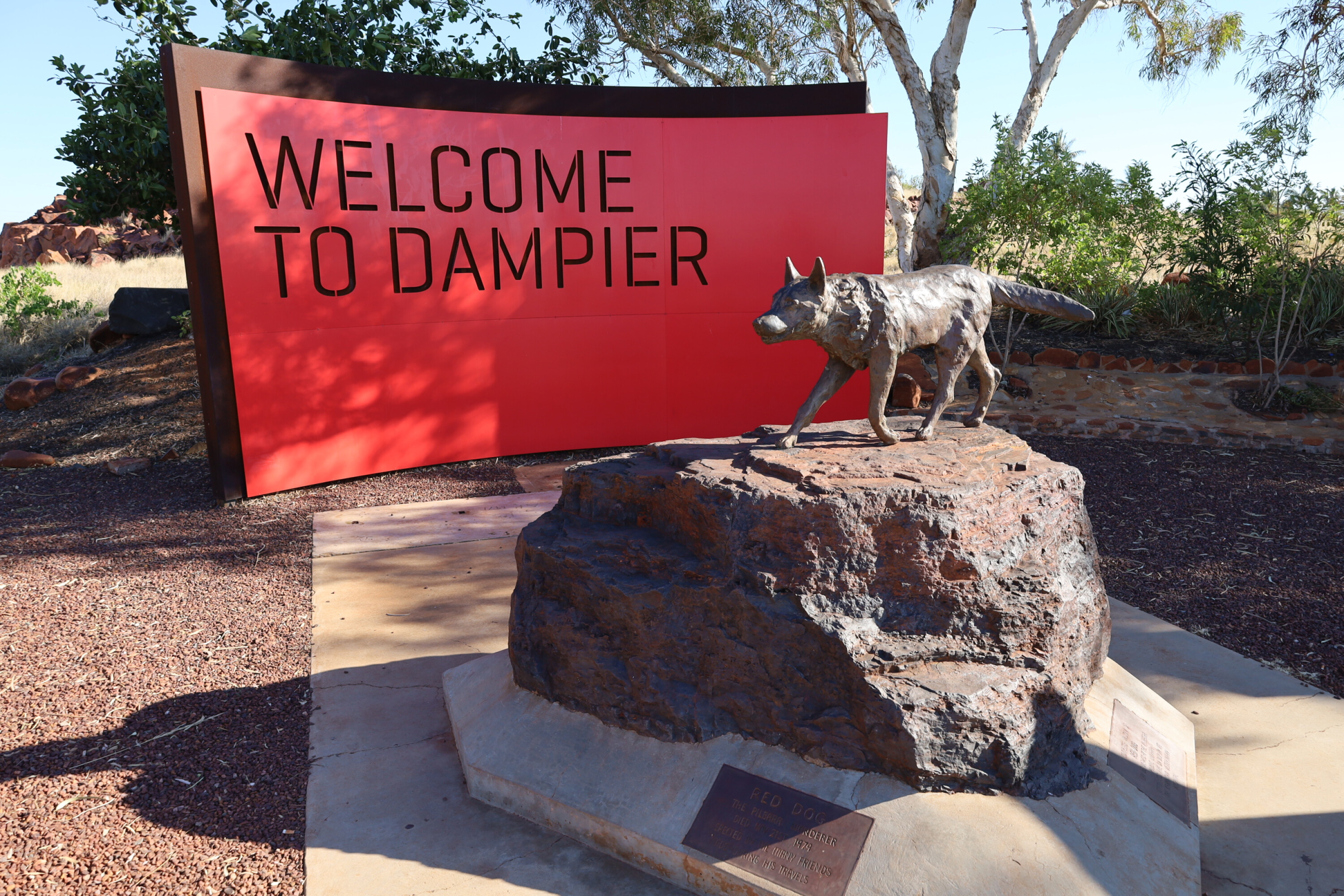
Make sure you visit the Red Dog statue, made famous by the movie of the same name that tells the story of a dog that roamed across the Pilbara region.
For those who like to cast a line, the offshore fishing here is next-level, and there are dozens of islands lined with stunning white beaches all throughout the Dampier Archipelago. Not far north of Dampier are the towns of Roebourne, Cossack and Point Samson. Cossack was once the original port for the pearl luggers before they moved north to Broome, and with this the town slowly died.
1
Today the beautiful old buildings are being restored for the growing tourism trade and the history buffs that visit the area.
Roebourne, the oldest settlement in WA’s north-west, has a fascinating heritage trail to explore and was once the most important town in the Pilbara … before a rail line was built to Port Headland. Head out to Point Samson for a wander along the stunning white beaches and spot the lighthouse that was built here in 1888.
1
Heading inland
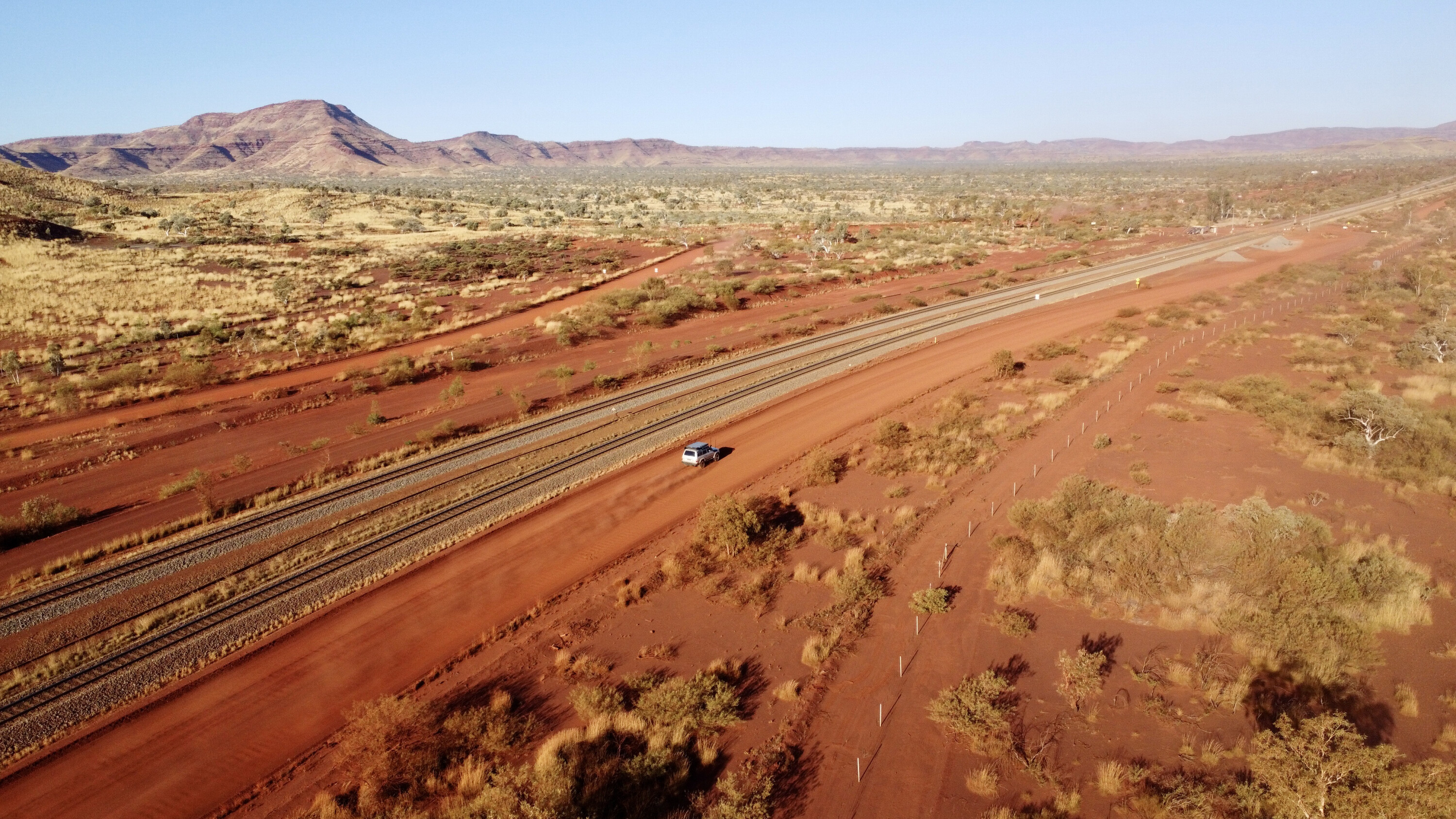
As soon as you head inland, the Pilbara’s red dust gets into your skin, your clothes and every nook and cranny of your 4×4.
A highlight of travelling through the Pilbara is driving along one of the many rail-access roads and seeing the enormous 3km-long iron ore trains that run 24/7 from the mines to the facility plants at either Port Headland or Dampier. You need a permit to drive these roads, but they are easily available online after watching an induction video and answering some safety questions.
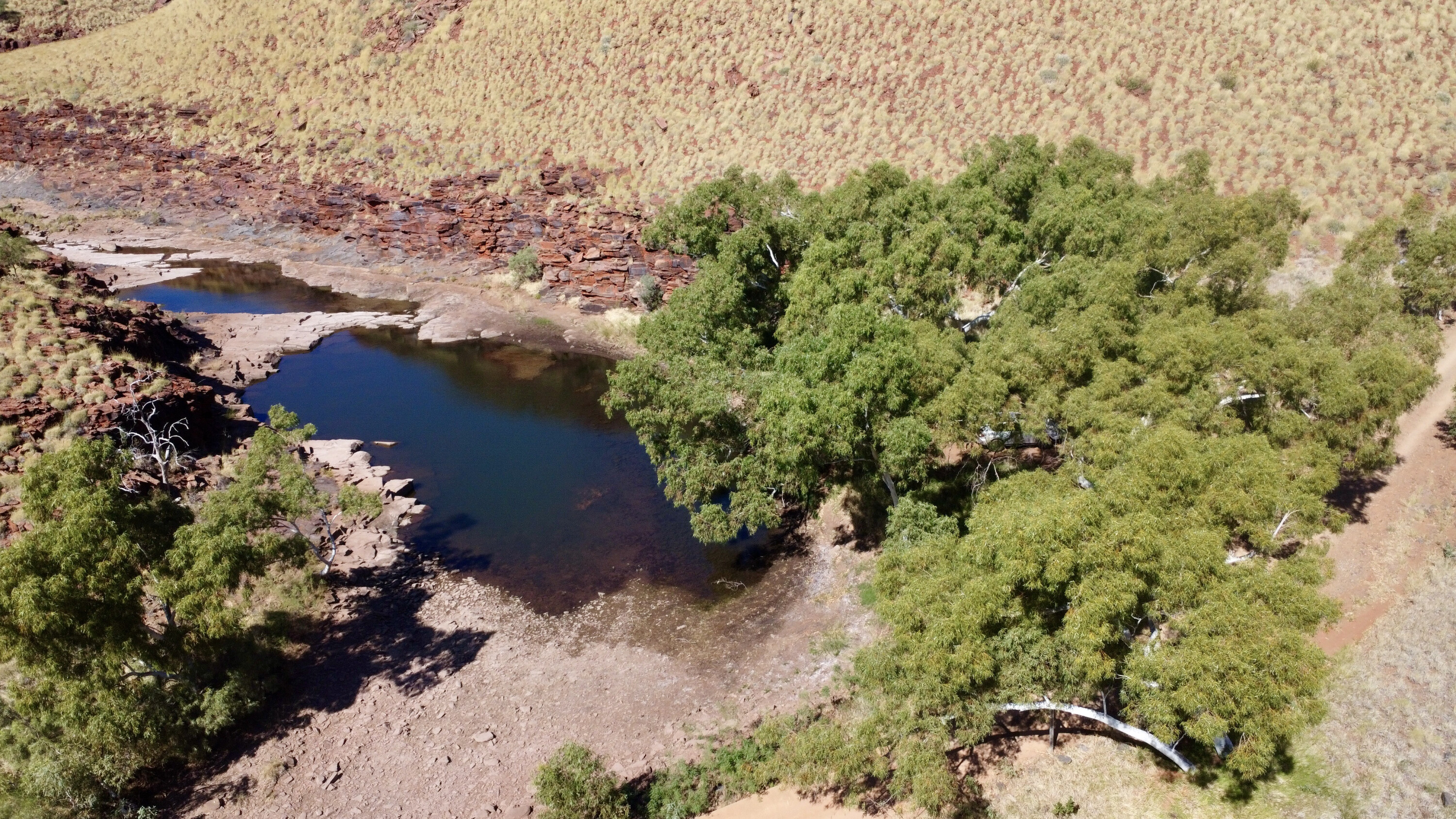
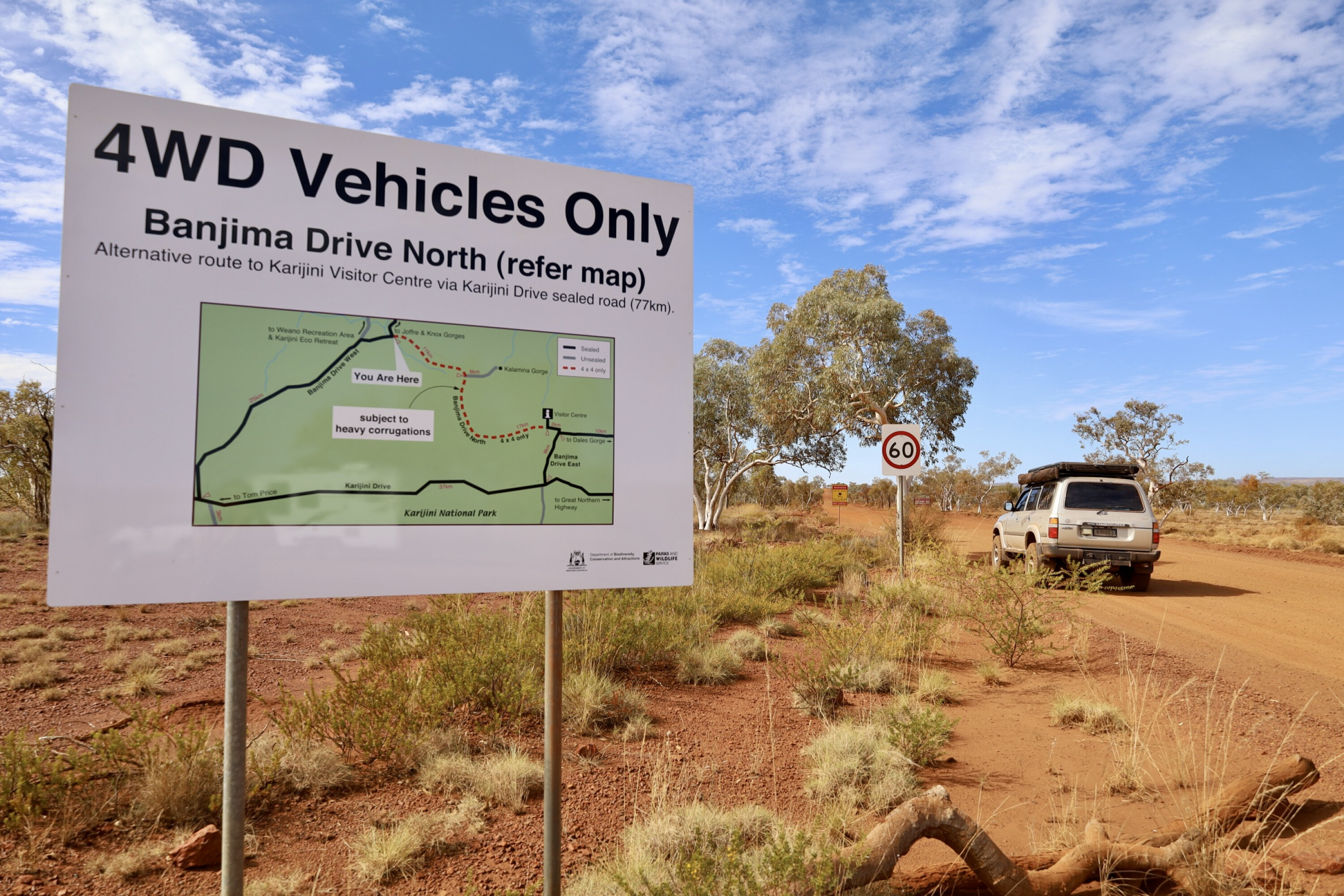
Two notable and popular national parks in the area are Millstream Chichester NP and Karijini NP. In the former you can relax beside tree-lined pools, swim in crystal clear rivers and camp in remote areas. In the heart of the park you’ll find a homestead that was built in 1920 and is open to visitors to discover the pastoral history of the region and learn about the Yindjibarndi people.
1
The latter, Karijini NP, is the second largest national park in WA and attracts visitors from around the world.
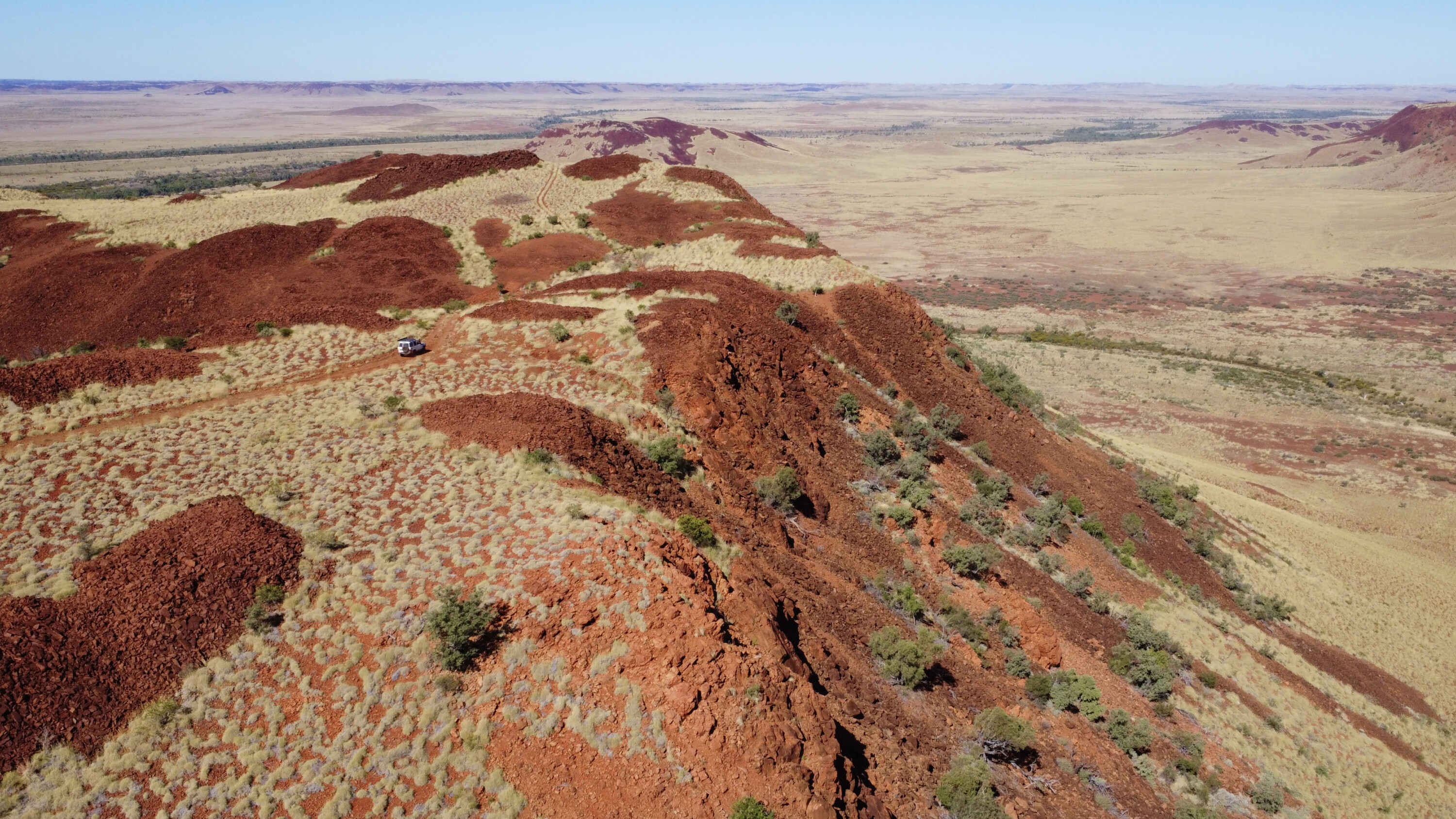
In it you will find amazing rock formations with pools of cold water that never see sunlight, dramatic waterfalls and amazing colours when the sun hits spectacular gorge walls. Nearby is Tom Price, WA’s highest altitude town, which is tucked in beside the Hamersley Range. The range itself is considered to be one of the earth’s oldest weathered surfaces, and this area dates back to the ice age. Activities in the area include mine tours and a drive up the 4×4 track to Mount Nameless, which is one of the highest mountains in WA.
1
From the top you’ll enjoy views overlooking the area’s mining operations, the town itself and the beautiful Pilbara landscape to the horizon in all directions.
Nearly 300km away to the east, and again on the fringe of the Hamersley Range, is the town of Newman, the largest inland town in the Pilbara. Predominantly a mining town, where BHP pulls thousands of tonnes of iron ore out of the ground every day, it’s still a good base from which to explore the surrounding area.
Mt Whaleback is the largest open-cut mine in the world – it’s so big that it can be seen from space – and there are daily tours into the heart of the operations.
1
Away from the mines, the 4×4 track to Eagle Rock Falls is a great drive as the narrow winding track heads into the hills of the Pilbara, passing Kalgan Pool where volcanic rock has been pushed out of the ground millions of years ago, resulting in an amazing backdrop to the pool.
Just over an hour away the tiny township of Nullagine sits idle, surrounded by red granite hills, gorges and waterholes. Gold was found here in the mid-1880s, but it’s also known for being the first place in Australia where diamonds were found. Heading west from Nullagine, the Skull Springs Road takes you to the remote yet stunning Running Waters waterhole where warm water seeps out of the ground year ’round.
1
Up the road, Carawine Gorge offers one of the best riverside camp areas I found in the Pilbara, where a massive water system is lined with sheer rock walls that are lit up by the morning sun.
My last stop was at Marble Bar, known as Australia’s hottest town, where back in 1924 the daytime temperatures never dropped below 38°C (100°F) for 161 days. Today it’s a quiet town compared to the gold rush of 1891, which was short-lived as richer fields were soon found at Kalgoorlie.
3
The Marble Bar Heritage Trail takes you around town, visiting 18 places of interest, heading up to lookouts and dropping by the Marble Bar Pool at Coongan River.
It was here that a rich-coloured rock was found that was thought to be marble, but disappointingly was jasper. When wet, the colours come alive in the Archaean rock, which has been classed as some of the oldest in the world. Big fines are issued if rocks are stolen.
I only spent four weeks exploring the Pilbara and I don’t think I even scratched the surface. This area feels like the soul of the earth and it holds many hidden treasures, and no matter where you roam you’ll be pleasantly surprised with what the Pilbara has to offer.
Essentials
Where
The Pilbara region is 1500km north of Perth in Western Australia. It covers a huge 17,000,000ha and the landforms date back 3.6 billion years. It is known for the biodiversity across its ancient landscape. It is extremely rich in mineral deposits. There are major airports at Karratha and Port Headland, with direct flights from across the country that make exploring this area easy.
What to see and do
The deep red landscape and iridescent skies make the Pilbara a photographer’s dream. There are National Parks to explore, stunning waterfalls and swimming holes to cool off in, beautiful coastal campsites to enjoy and plenty of history and ancient rock art to absorb.
Other information
Both Port Headland and Karratha are the main centres of the Pilbara, and both towns service the mining companies that operate in the area. There are major shopping centres and most services are available. Smaller towns such as Tom Price, Newman, Roebourne, Dampier and Onslow have basic services for travellers. Information centres in most towns can offer advice and steer you in the right direction for tours and attractions. Planning, permits and other information can be found online at exploreparks.dbca.wa.gov.au/ [↗️].
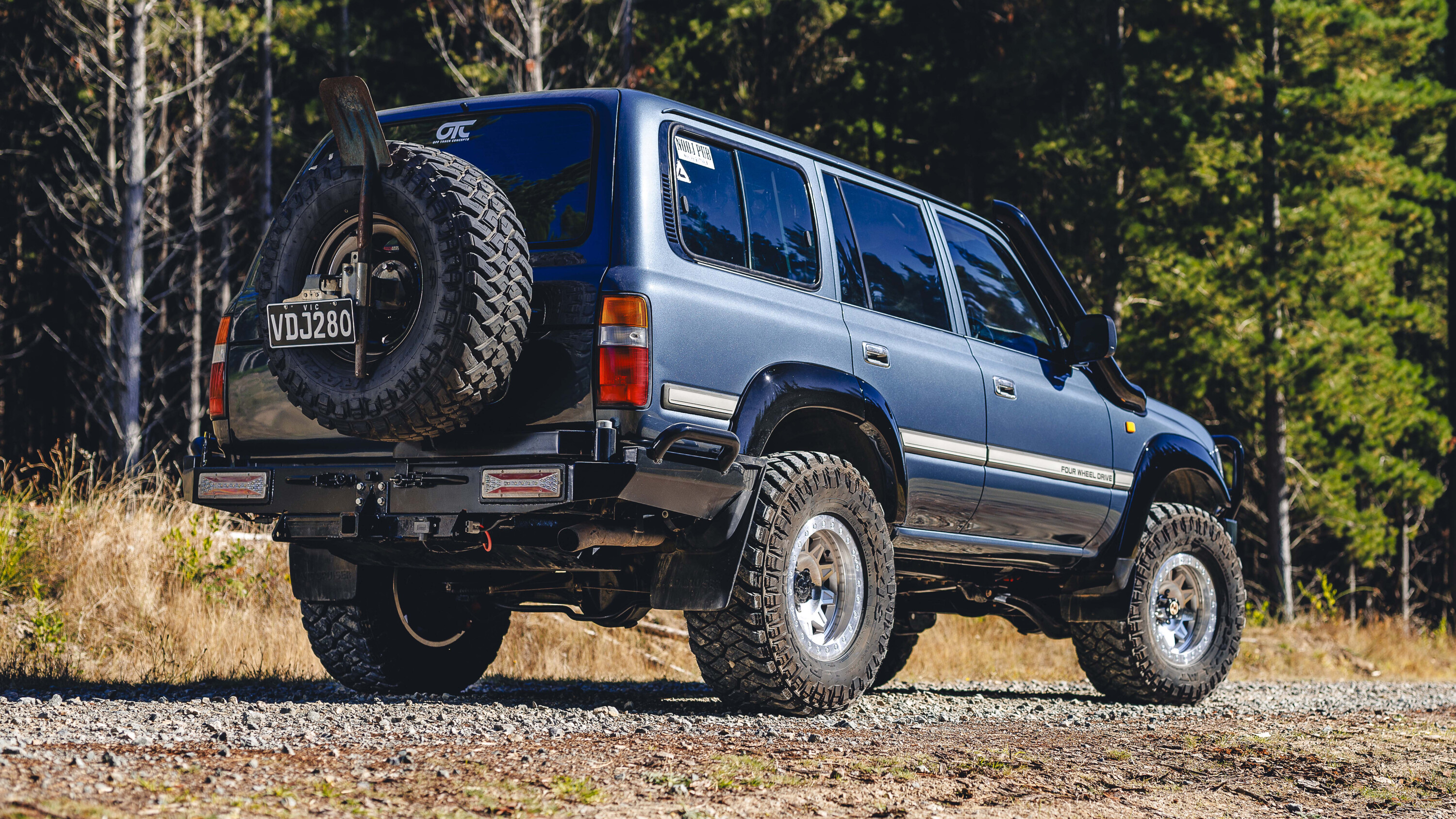
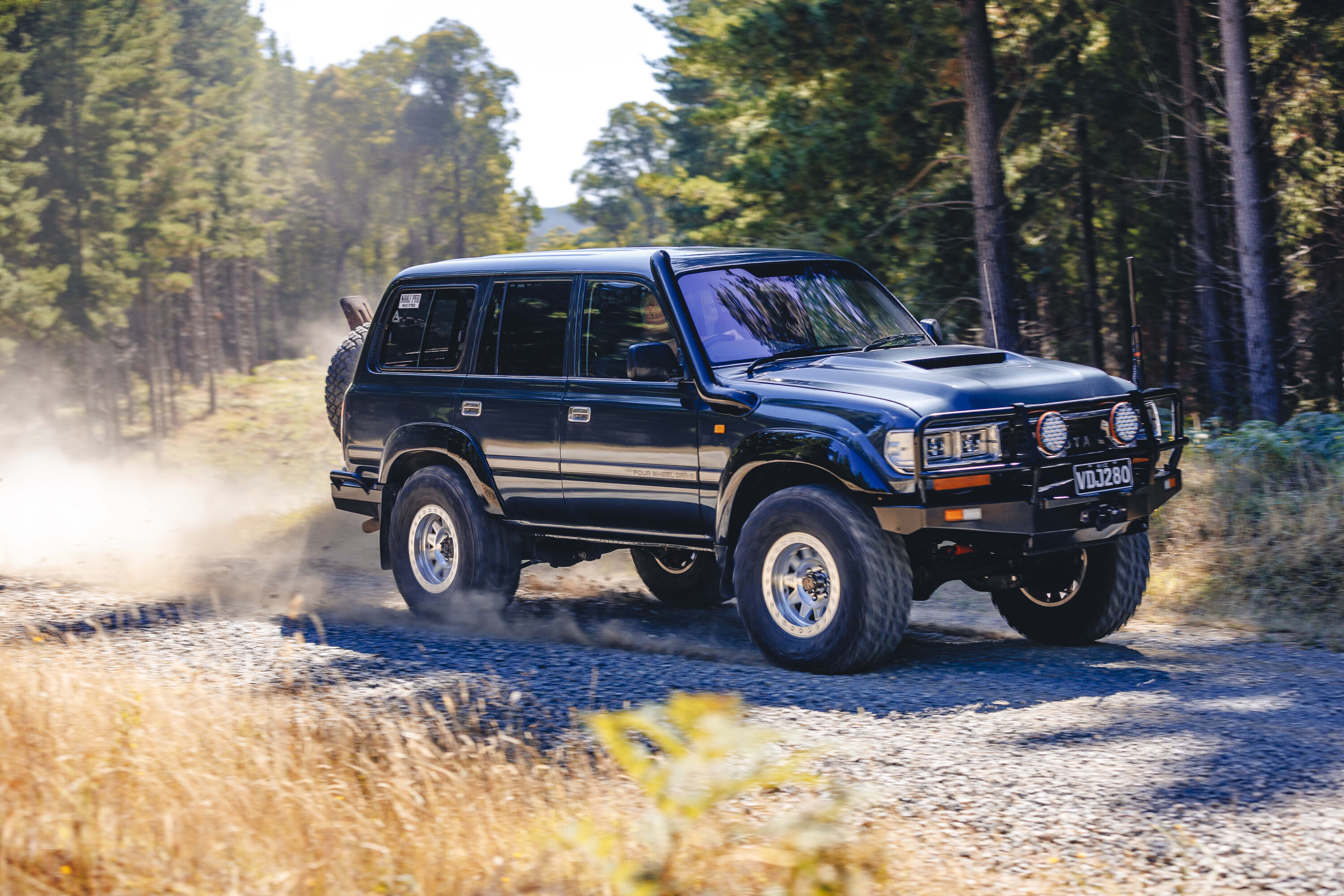
Jason Robson is what psychiatrists like to call a nut. A Toyota nut that is. To label him a fan of the brand would be underselling his passion for these vehicles.
In fact, at the time of writing, this tidy HDJ80 is his 16th Cruiser. He’s owned them all too, from an old V8-converted HJ47, to utes, to Troopies, to several 80s, to no fewer than six (!) 200s, to the 300 Sahara… get the picture?
Right around when COVID was locking us all up and the Great Toilet Paper Wars of the early 2020s were being waged, Jason decided he wanted a project to distract him from the Spicy Cough, so he went hunting for a factory turbo-diesel 80 (which for non-Cruiserheads is the pick of the model run).
1
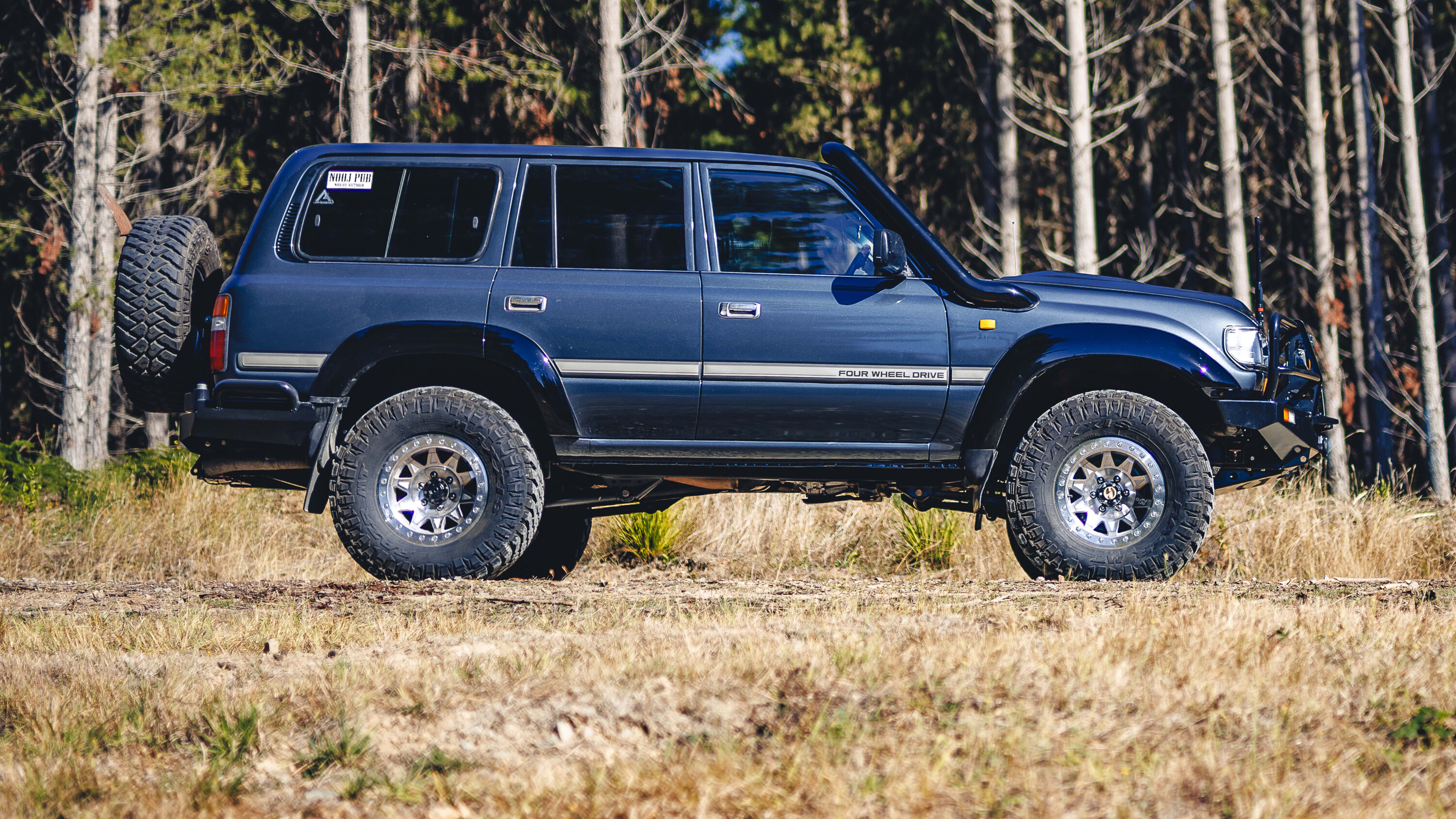
He found this beaut example with 350k on the clock and an upgraded Sahara-spec interior. The ideal blank canvas.
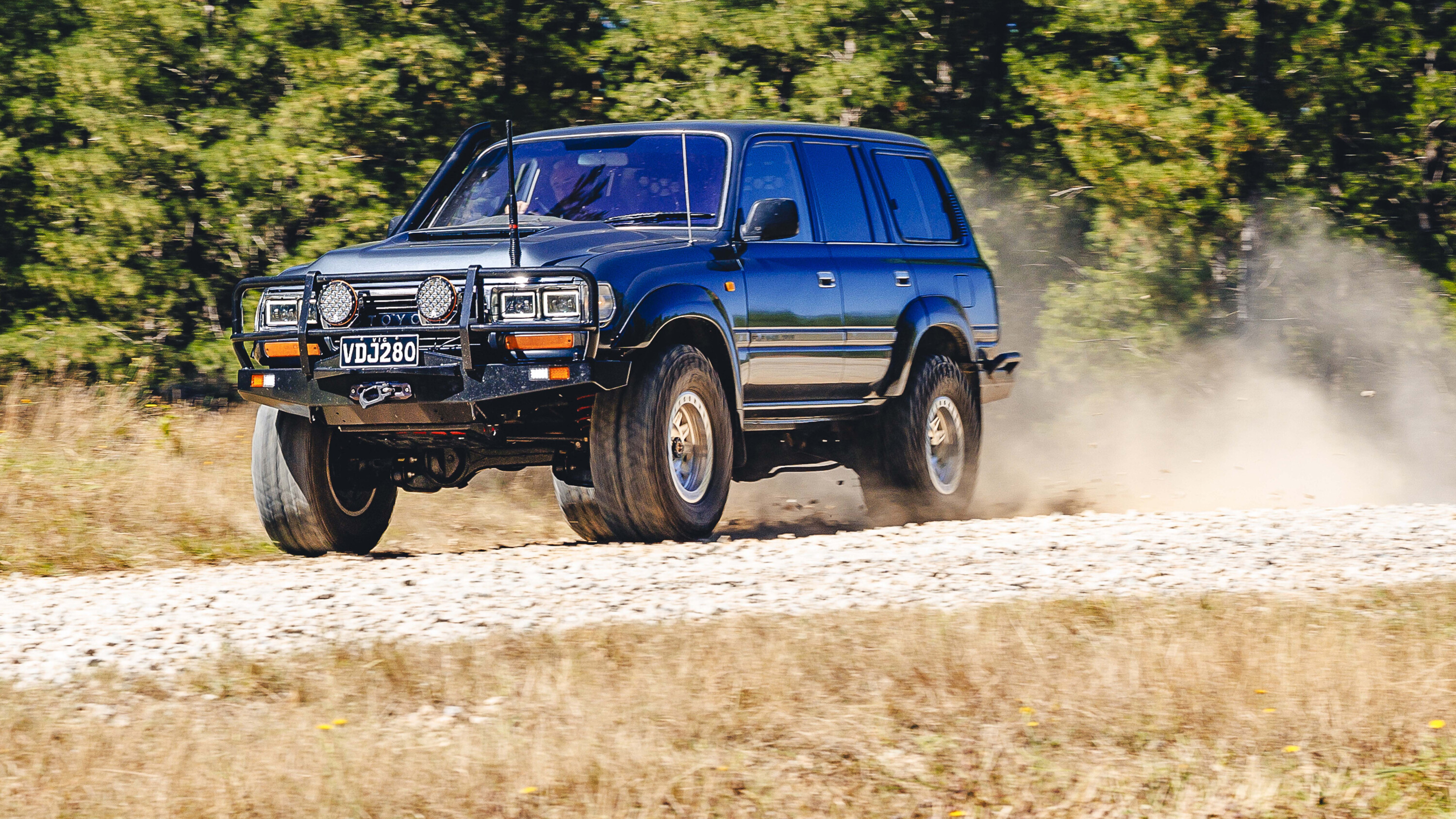
Looking to build a tourer and a bit of a fun toy for quick missions into the High Country and longer trips up to Queensland, Jason set about turning this wagon into the 80 Toyota really should have built from the get-go. The result? Pretty damn hard to fault, really. Heaps of power, plenty of comfort and the timeless sex appeal of 1990s body panels. Perfection. Here’s how he turned an old favourite into an unassuming monster…
1
That engine
The first stop was made at Off Track Concepts in Cobram, where the 1HD was surgically removed from the engine bay and the frame rails were prepped for its replacement.
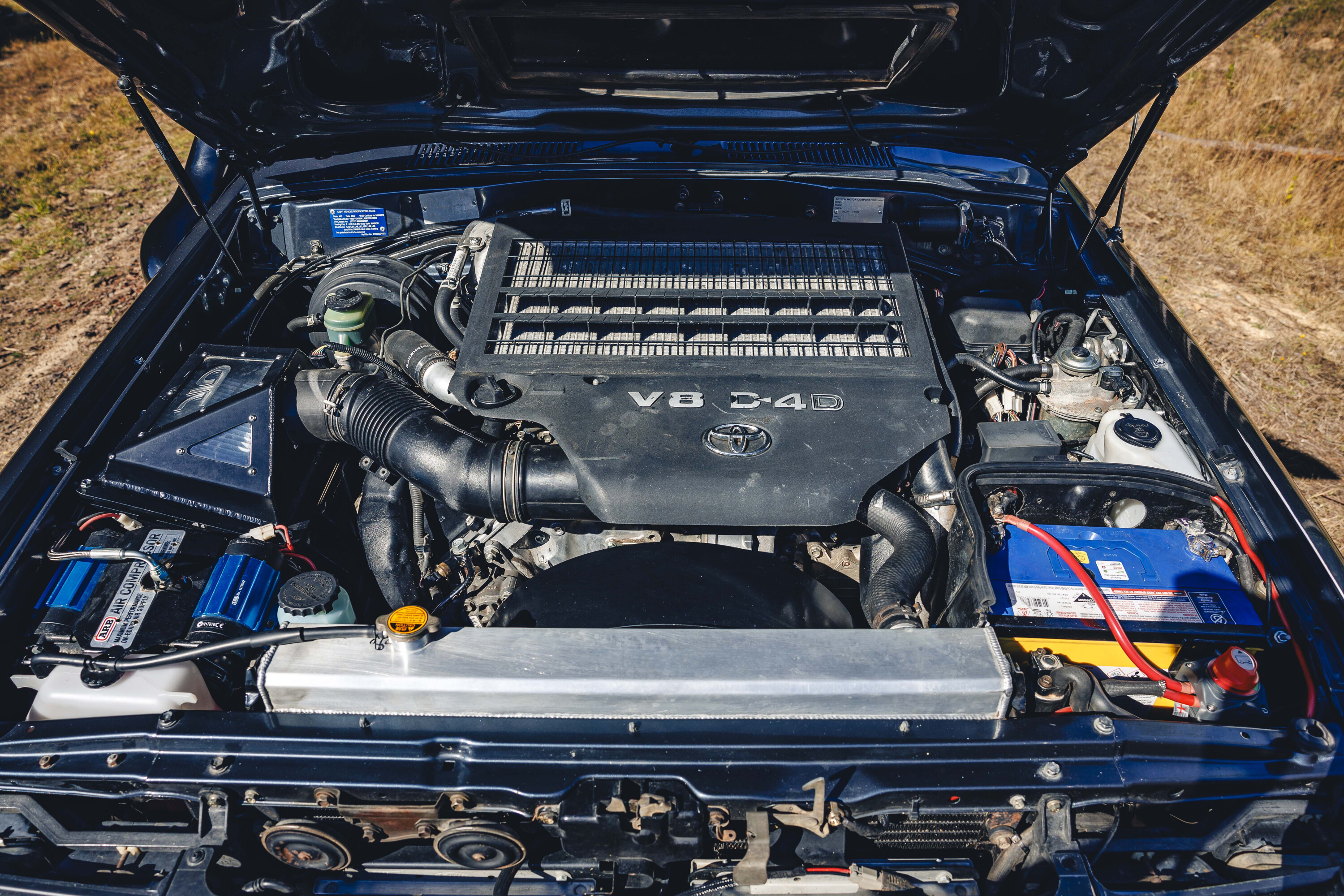
Now, you could be wondering why you’d rip out a perfectly good 1HD, and what you’d even replace it with, but after having owned half a dozen 200 Series Cruisers already Jason knew just how good the 1VD-FTV 4.5L quad-cam twin-turbo V8 diesel could be.
The team at Off Track got to work. Being the first 1VD into an 80 Series there was a lot to contend with. As with most conversions, getting the engine mounted (on custom mounts) is actually the easiest part.
1
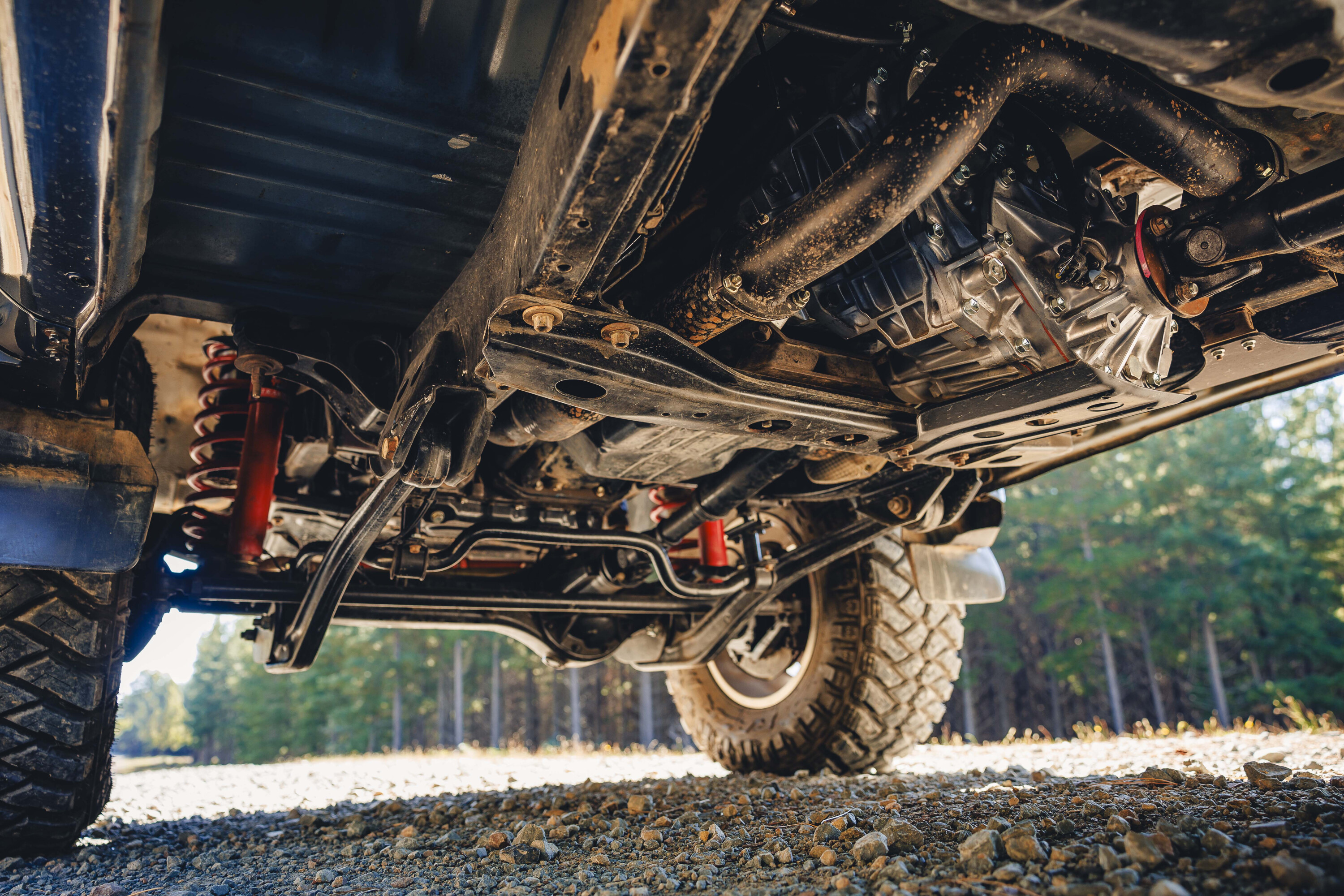
Wholesale Automatics provided the AB60 six-speed auto from the two-hundy to factory 80 transfer case adapter, and once that was sitting in the chassis, all that was left to do was everything.
A one-off airbox and fan shroud was built by On Track as were the numerous other little mounts for things like the turbo and injector drivers, the ECU and the custom intake piping. Race Radiators built a new cooling pack around a PWR core while custom AC lines and a vacuum pump from an LC79 were recruited to supply vacuum to the brake booster.
The fun was only just getting started. From there the sump was exchanged for an LC79 unit to clear the front diff, but that too required extensive custom work to miss the turbo and allow the turbo oil pickup and a drain tube to be grafted in. Oh, and then the dipstick hole was covered up, so that needed to be relocated as well.
1
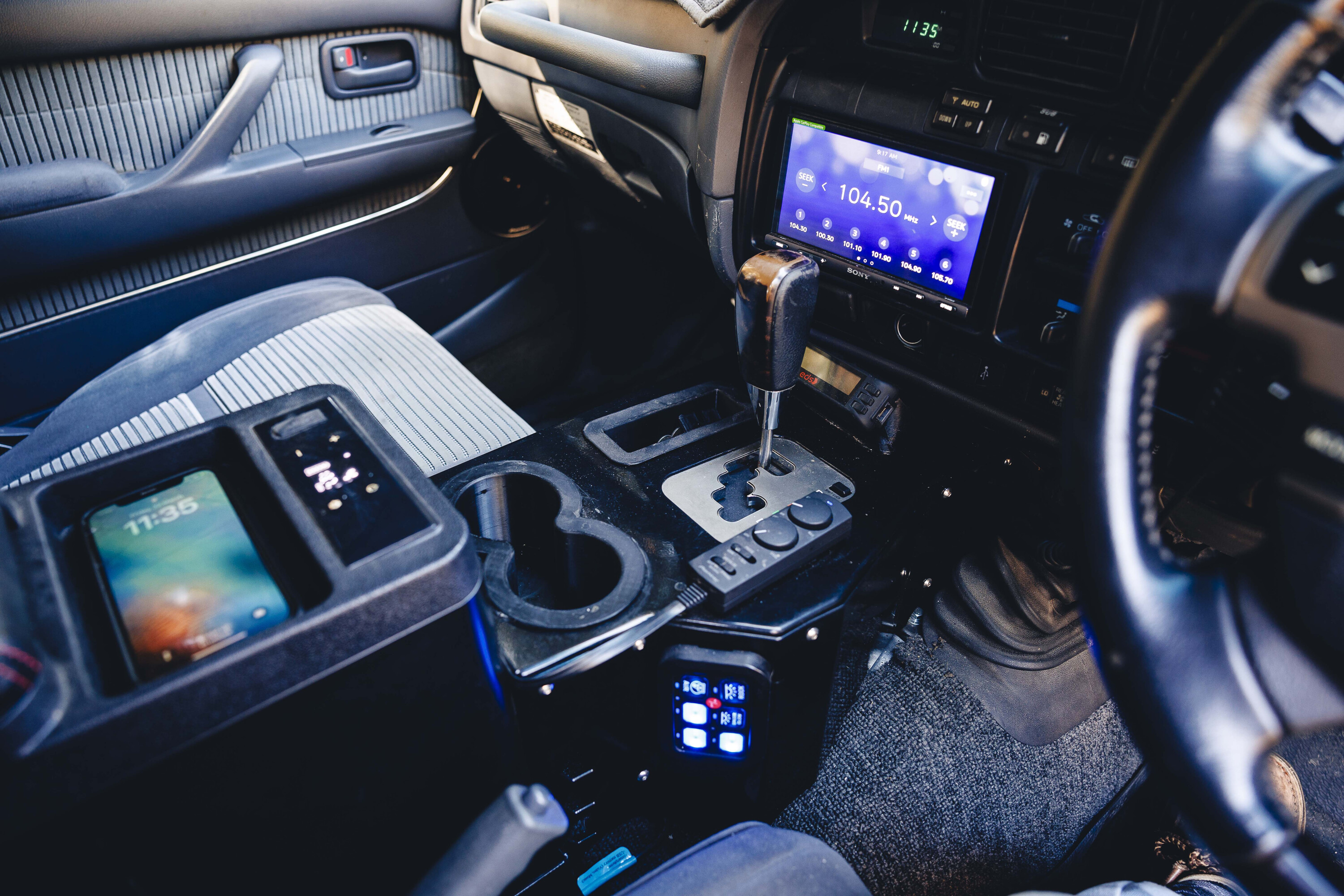
The auto transmission did not fit in the standard 80 Series tunnel, so that necessitated reshaping and plenty of modification for the shift lever and new transfer case location – which in turn led to the tailshafts needing shortening and lengthening respectively.
This was all before the wiring side of things; one of the biggest challenges was getting around the immobiliser and CANBUS system on the 200, which needed extensive ECU tuning to get Mickey Mouse. Then a custom loom had to be made in order to get all of the dash and factory features working harmoniously. But that’s the price you pay when you’re pushing the envelope.
1
After all of the countless hours, custom parts and freshly made-up swear words, the final package is nothing short of amazing.
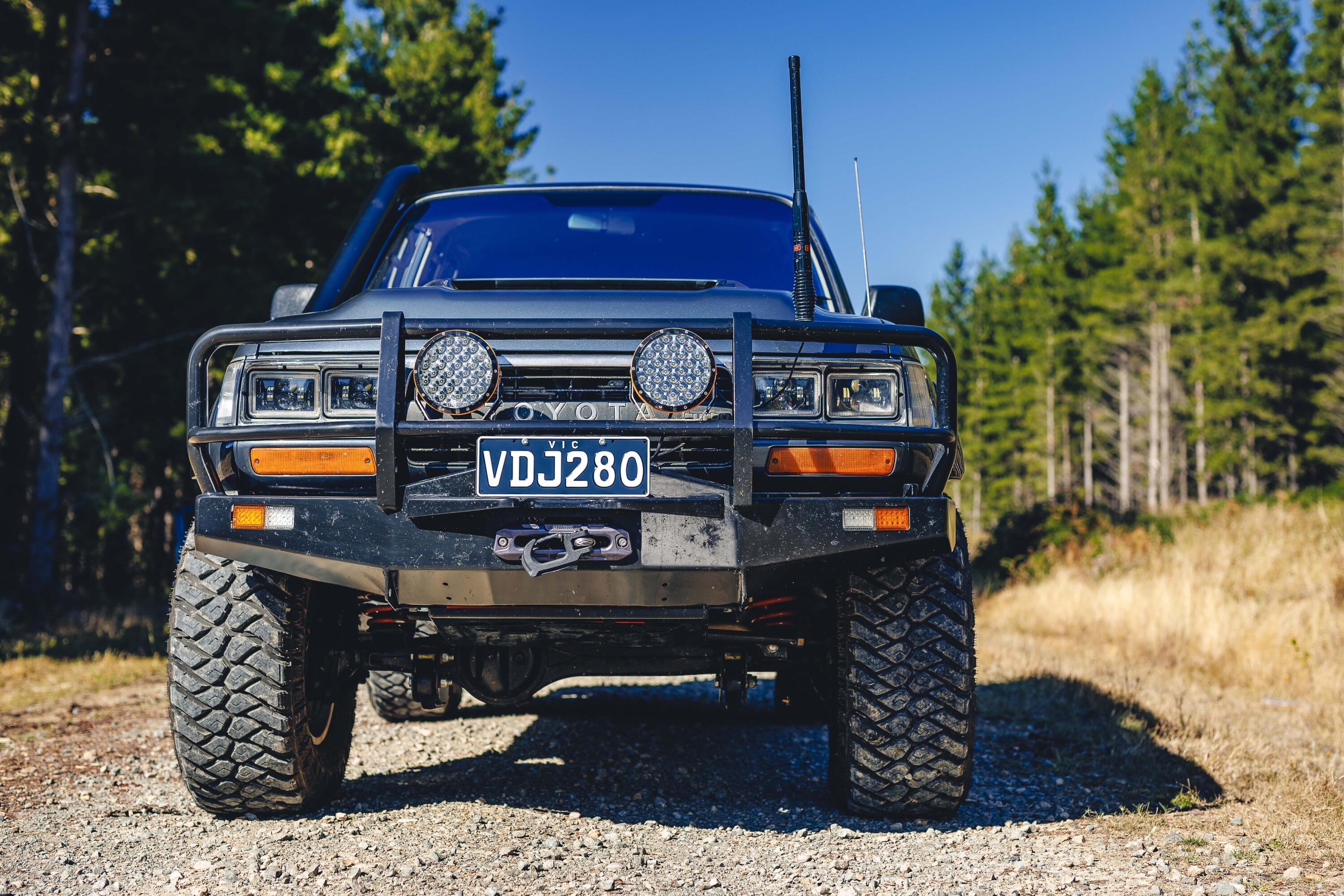
With a Just Autos tune (with multiple maps able to be dialled in) the VDJ280 is now punching out an impressive 340hp at 3100rpm and 875Nm on the dyno rollers. To top it all off, a VDJ79 Scoop was grafted into the 80’s bonnet, which is really the only giveaway (other than the cranky burble from the custom three-inch exhaust) that this thing is an absolute ball-tearer. It all looks factory too; such is the quality of Off Track’s work.
1
It’s what’s inside that counts
Jason’s 80 had copped a Sahara interior upgrade by the previous owner, which is the fancy-pants Cruiser model.
As such, he didn’t really need to do much to the cockpit to make it a nice place to spend a few hundred kays. The Sahara seats look after the lower back, the Sony head unit with Pioneer sub and speakers take care of the ears and the 340hp under the right boot takes care of the mental health.
1
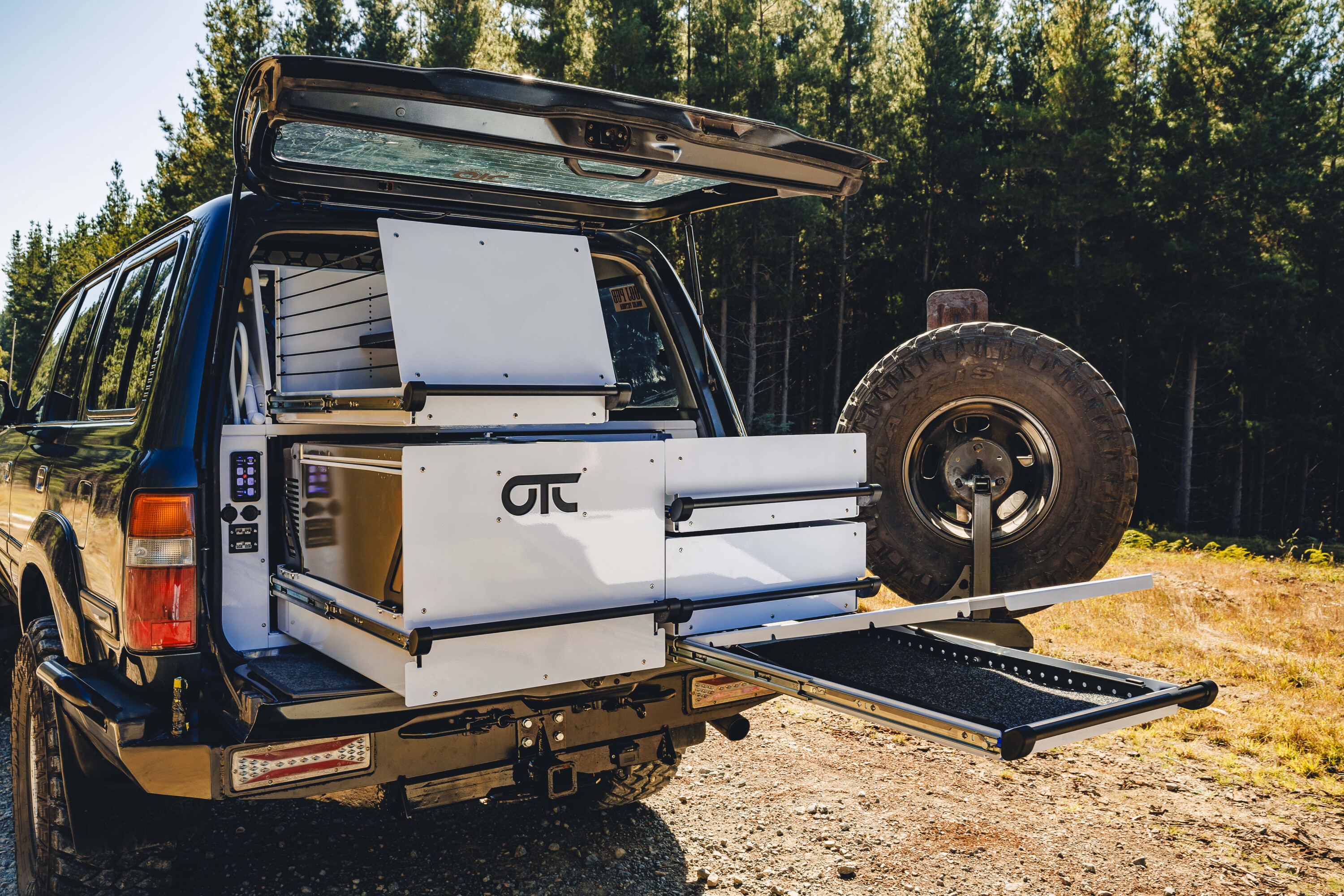
The cargo area was massively churched up with the addition of an Off Track Concepts aluminium twin-drawer system.
The 3D scanned, designed and CNC cut and folded setup features a pull-out table with cutlery storage, pull-out pantry, inbuilt cargo barrier, and a parcel shelf, and it’s powder coated in gloss white with black accents.
It even has space to incorporate the 55L poly water tank and the 200Ah of lithium battery goodness tucked down the side. The 12v trickery is overseen by a Renogy 50A DC-DC charger and Victron battery monitor, while a 2000W Renogy inverter supplies 240v should Jason feel like plugging in a microwave or charging up any stranded Teslas.
1
The bolt-ons
An ARB Deluxe bar leads the way, with after-dark illumination by a pair of Stedi LED driving lights.
Speaking of lights, the stock kerosene lamps were ditched and replaced with some JTX headlights, which score all of the cool points and put out a butt-load more light while they’re at it. There’s also a Carbon 15,000lb low-mount winch should Jason find himself door-handle deep in the High Country mud, something that doesn’t happen too often thanks to the Air Lockers slotted into the diffs at either end.
1
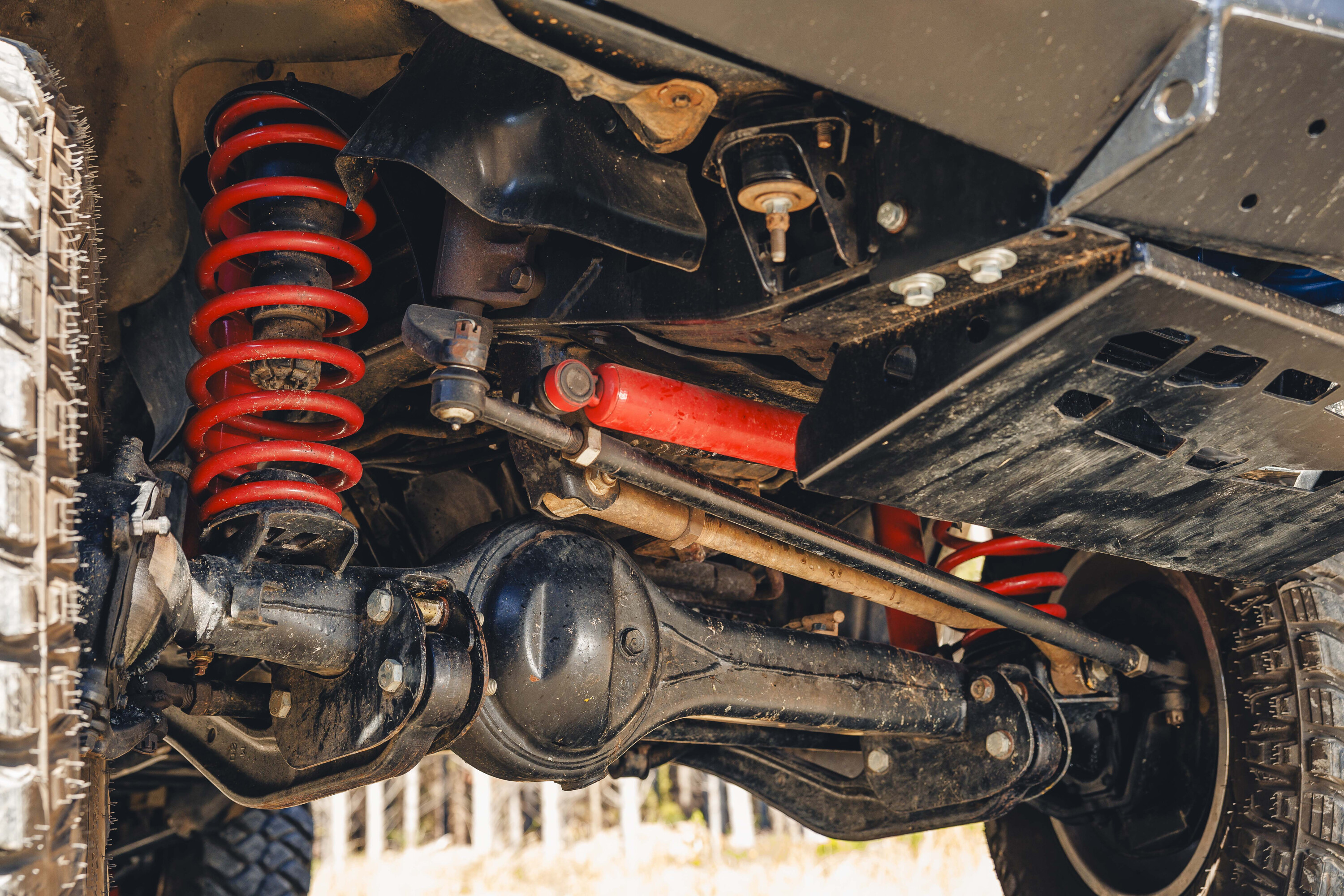
The suspension, given the rest of the vehicle’s modification level, is surprisingly stock.
Jason bolted in a set of 50mm coils and Pedders shockies, which was enough to clear the 315/75R17 Maxxis Razrs wrapped around the trick 17×9 Dirty Life Roadkill beadlocked alloys. Larger brakes from a late-model 80 were also bolted up in order to bring the whole show to a halt in a timely manner. Jason also made his own rear bar from an SDF Bars DIY kit… because it wouldn’t be right for a welder’s vehicle not to have some sort of custom barwork.
1
What’s next?
It’s been a long and extensive process to get the big 80 to where it is, so Jason wants to get out and enjoy the fruits of his labours, with a couple of trips up north in the works as well as his usual forays into the Victorian bush.
Jason wanted to thank the guys from Off Track Concepts, Race Radiators, Wholesale Automatics. Laurie Alan from PPG Australia, Just Autos, and Rheece Whitehead from Diffco in Frankston for their help along the way. And we’d like to thank Jason for setting the bar, if not for 80 builds, then at least for engine conversions for the next little while. Onya mate!