
Even now, nearly a decade since its 2015 debut, the current HiLux remains a permanent fixture atop the new-car sales charts.
The HiLux is compelling for its versatility, with an expansive model range that starts for as little as $24,225 before on-road costs for a single-cab cab-chassis 4×2 variant and tops out at $73,990 for the GR Sport. A 48V variant arrived in Australia early in 2024, boasting a 48-volt hybrid system dubbed V-Active technology.
It’s proficient on-road but excels when bitumen turns to dirt and 4×4 is engaged. Plus, it’s one of the most well-supported vehicles in the 4×4 aftermarket scene.
JUMP AHEAD
- Pricing
- Body styles
- Standard features
- Optional features
- Safety
- Comfort & practicality
- How big is the tray/tub?
- Driving experience
- Fuel economy
- Towing capacity
- Warranty & servicing
- Which version of the Toyota HiLux does 4X4 Australia recommend?
- What are the Toyota HiLux’s key rivals?
Pricing
| 2024 Toyota HiLux range | Price (before on-road costs) |
|---|---|
| WorkMate 2.7P 4×2 single-cab CC Manual | $24,225 |
| WorkMate 2.7P 4×2 single-cab CC Automatic | $26,225 |
| WorkMate Hi-Rider 2.4TD 4×2 single-cab CC Manual | $29,465 |
| SR Hi-Rider 2.8TD 4×2 extra-cab PU Manual | $46,095 |
| WorkMate 2.7P 4×2 double-cab PU Manual | $33,705 |
| WorkMate 2.7P 4×2 double-cab PU Automatic | $35,705 |
| WorkMate Hi-Rider 2.4TD 4×2 double-cab PU Automatic | $42,795 |
| SR Hi-Rider 2.8TD 4×2 double-cab PU Automatic | $47,115 |
| SR5 Hi-Rider 2.8TD 4×2 double-cab PU Automatic | $55,700 |
| WorkMate 2.7P 4×4 single-cab CC Manual | $40,155 |
| SR 2.8TD 4×4 single-cab CC Manual | $43,225 |
| SR 2.8TD 4×4 single-cab CC Automatic | $45,225 |
| WorkMate 2.4TD 4×4 extra-cab CC Automatic | $45,855 |
| SR 2.8TD 4×4 extra-cab CC Manual | $48,135 |
| SR 2.8TD 4×4 extra-cab CC Automatic | $50,135 |
| SR5 2.8TD 4×4 extra-cab PU Automatic | $59,160 |
| WorkMate 2.4TD 4×4 dual-cab CC Manual | $47,925 |
| SR 2.8TD 4×4 dual-cab CC Manual | $50,395 |
| SR 2.8TD 4×4 dual-cab CC Automatic | $52,545 |
| SR5 2.8TD 4×4 dual-cab CC Automatic | $59,180 |
| SR5+ 2.8TD 4×4 dual-cab CC Automatic | $61,680 |
| WorkMate 2.4TD 4×4 dual-cab PU Manual | $47,425 |
| WorkMate 2.4TD 4×4 dual-cab PU Automatic | $49,425 |
| SR 2.8TD 4×4 dual-cab PU Manual | $51,895 |
| SR 2.8TD 4×4 dual-cab PU Automatic | $54,045 |
| SR5 2.8TD 4×4 dual-cab PU Manual | $59,930 |
| SR5+ 2.8TD 4×4 dual-cab PU Manual | $62,430 |
| SR5 2.8TD 4×4 dual-cab PU Automatic | $61,930 |
| SR5+ 2.8TD 4×4 dual-cab PU Automatic | $64,430 |
| Rogue 2.8TD 4×4 dual-cab PU Automatic | $70,200 |
| GR Sport 2.8TD 4×4 dual-cab PU Automatic | $73,990 |
| 2024 Toyota HiLux V-Actice Pricing | |
|---|---|
| SR 4×4 dual-cab chassis | $54,130 |
| SR 4×4 dual-cab pick-up | $56,210 |
| SR5 4×4 dual-cab chassis | $60,580 |
| SR5 4×4 dual-cab pick-up | $63,260 |
| Rogue 4×4 dual-cab pick-up | $71,530 |
1
What body styles are available for the HiLux?
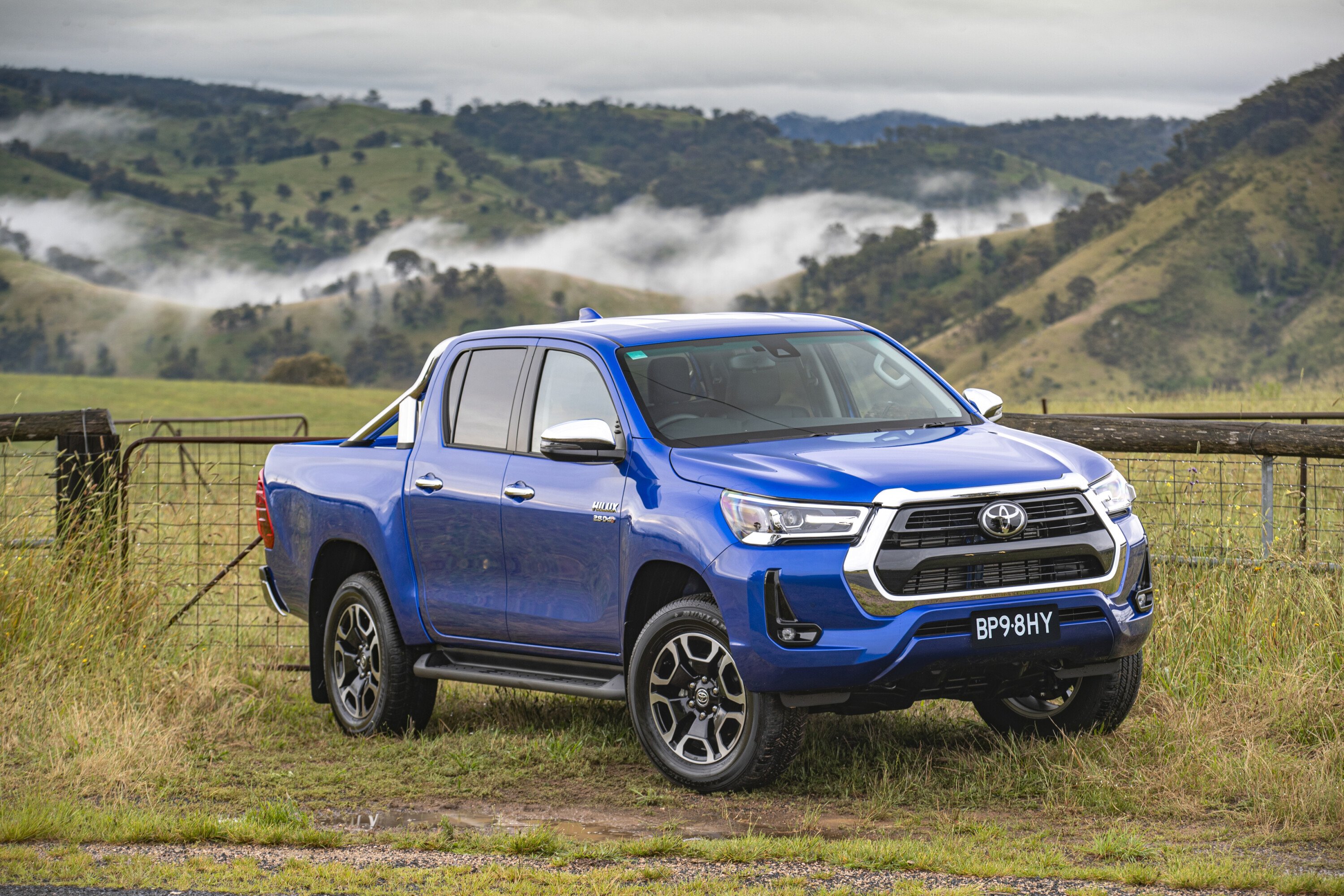
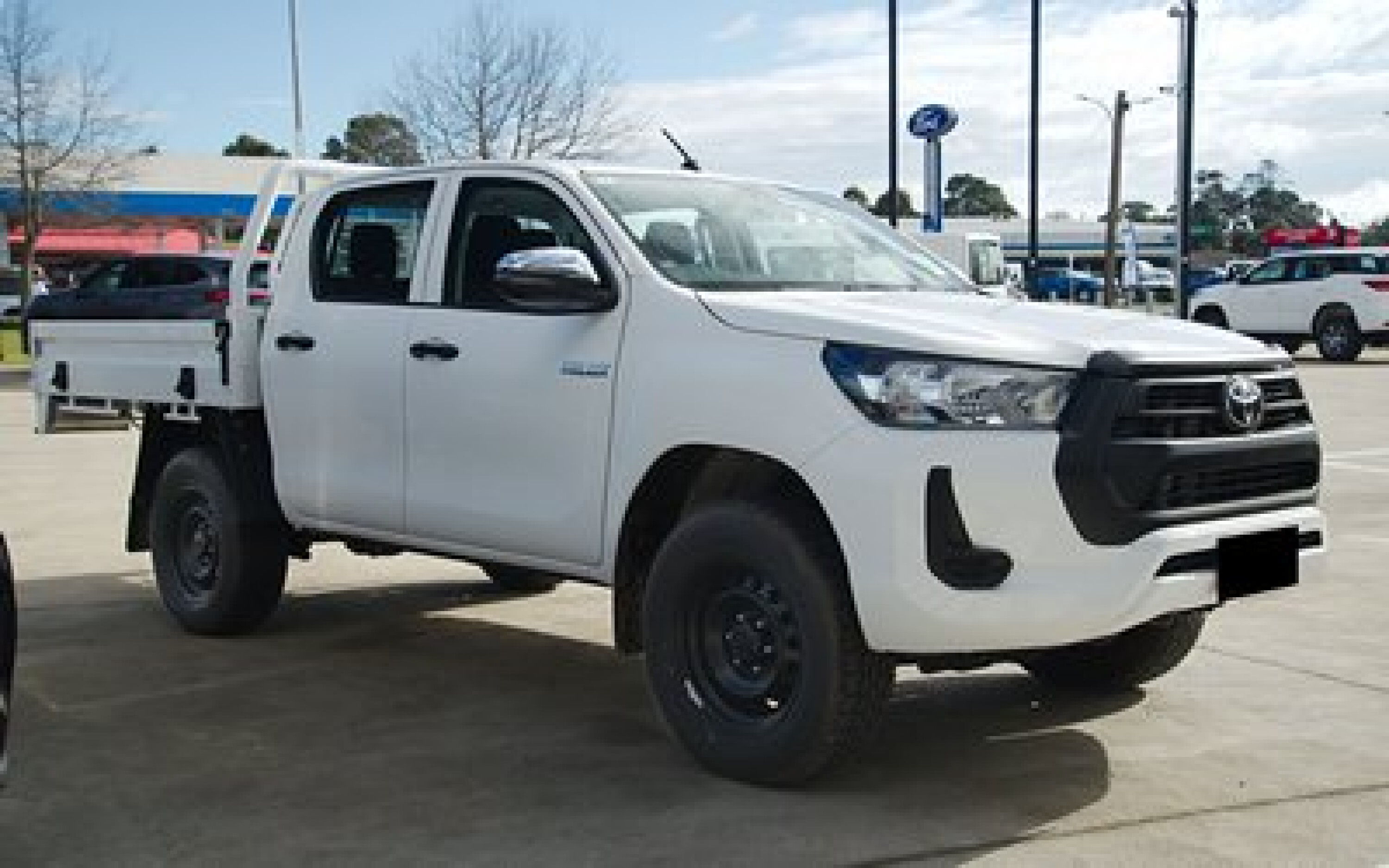
The HiLux is available in single-, extra- and double-cab body styles, with the choice of 4×2 or 4×4.
The range begins with the entry-level WorkMate and tops out with the GR Sport, with the SR and SR5 variants sitting in between. Single-cabs can seat two people, extra-cabs four people and double-cabs five people.
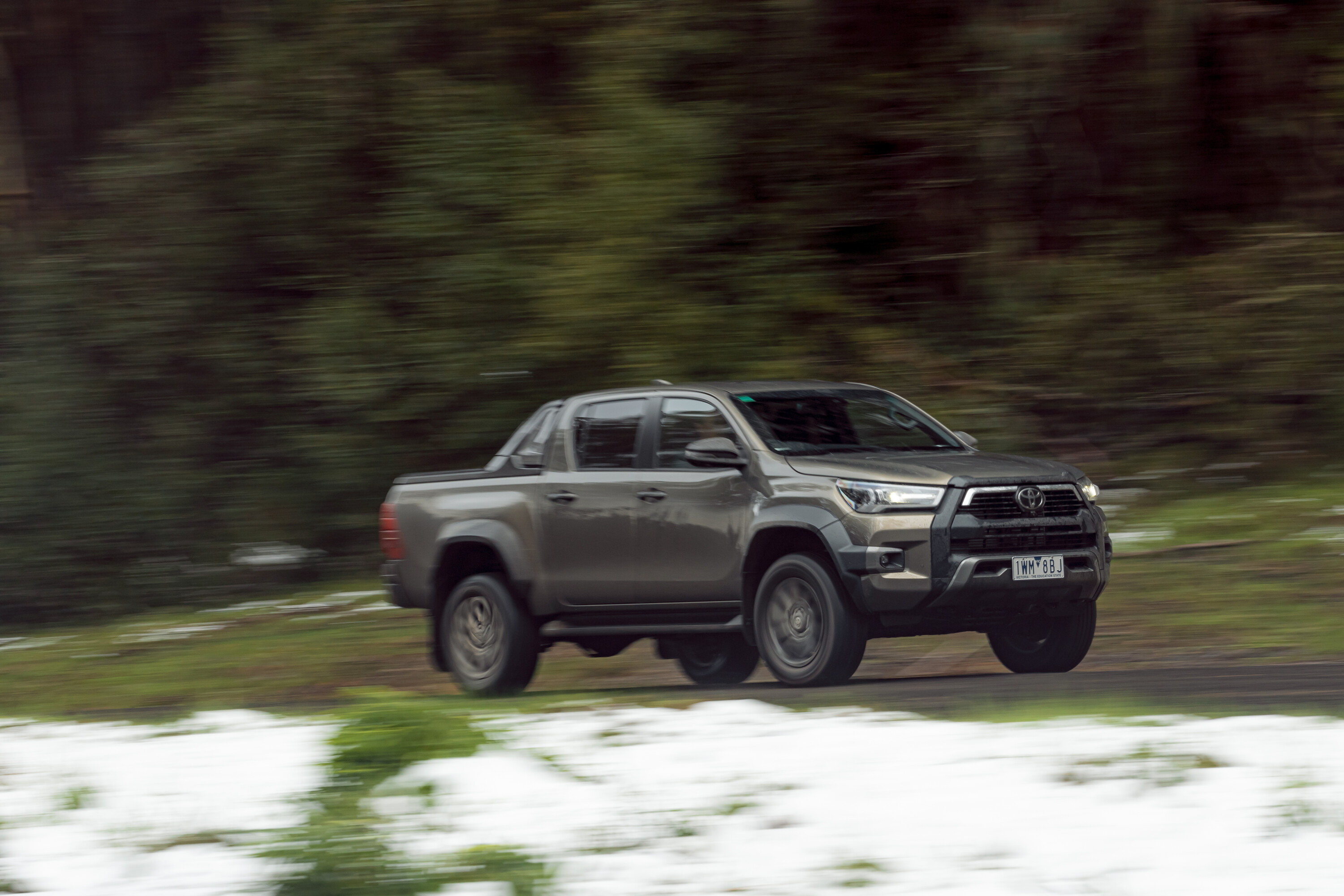
A trio of powertrains are available across the HiLux range, with entry-level 4×2 WorkMate models equipped with a 2.7-litre petrol engine capable of 122kW and 245Nm and mated to either a five-speed manual or six-speed automatic transmission.
1
WorkMate Hi-Rider 4×2 models and WorkMate 4×4 models have a 110kW/400Nm 2.4-litre turbo-diesel, while the most powerful engine in the line-up – a 2.8-litre turbo-diesel good for 150kW (manual variants are rated to 420Nm while automatics get the full 500Nm) – powers the rest of the range including all of the upper-spec models except the GR Sport.
The GR Sport gets the same 2.8-litre turbo-diesel engine, but the ECU has been retuned – and turbocharger characteristics and fuel injection controls have been tweaked – to deliver a 10 per cent increase in power and torque, now producing 165kW at 3000rpm and 550Nm from 1600-2800rpm.
Both turbo-diesel engines can be matched with either a six-speed manual or six-speed automatic transmission. However, the GR Sport’s six-speed auto has been recalibrated to match the increased engine performance.
What features are standard in the WorkMate?
The features listed below are standard in the entry-level model and will appear in higher-grade models, unless replaced by more premium equivalent features.
1
| 2024 Toyota HiLux standard features | |
|---|---|
| 16-inch wheels | Front bucket seats |
| 2-speaker sound system | Halogen headlights and DRLs |
| 4.2-inch colour multi-function display | Hill-start assist |
| 8.0-inch touchscreen | Lane departure warning |
| ABS and EBD | Manual air-conditioning |
| Adaptive cruise control | myToyota connect app |
| Android Auto and Apple CarPlay | Reversing camera (cab-chassis excluded) |
| Auto emergency braking with pedestrian and cyclist detection | Speed sign recognition |
| Cloth upholstery | Vinyl floors |
| Heavy-duty suspension and underbody (Hi-Rider and 4×4 only) | |
What key features do I get if I spend more?
The entry-level WorkMate models are rather stripped-back for work and trade duties, so you’ll need to step up to an SR for a more all-round vehicle.
At SR level, there’s more speakers, premium flooring, a drive mode selector and a rear diff lock on 4×4 versions.
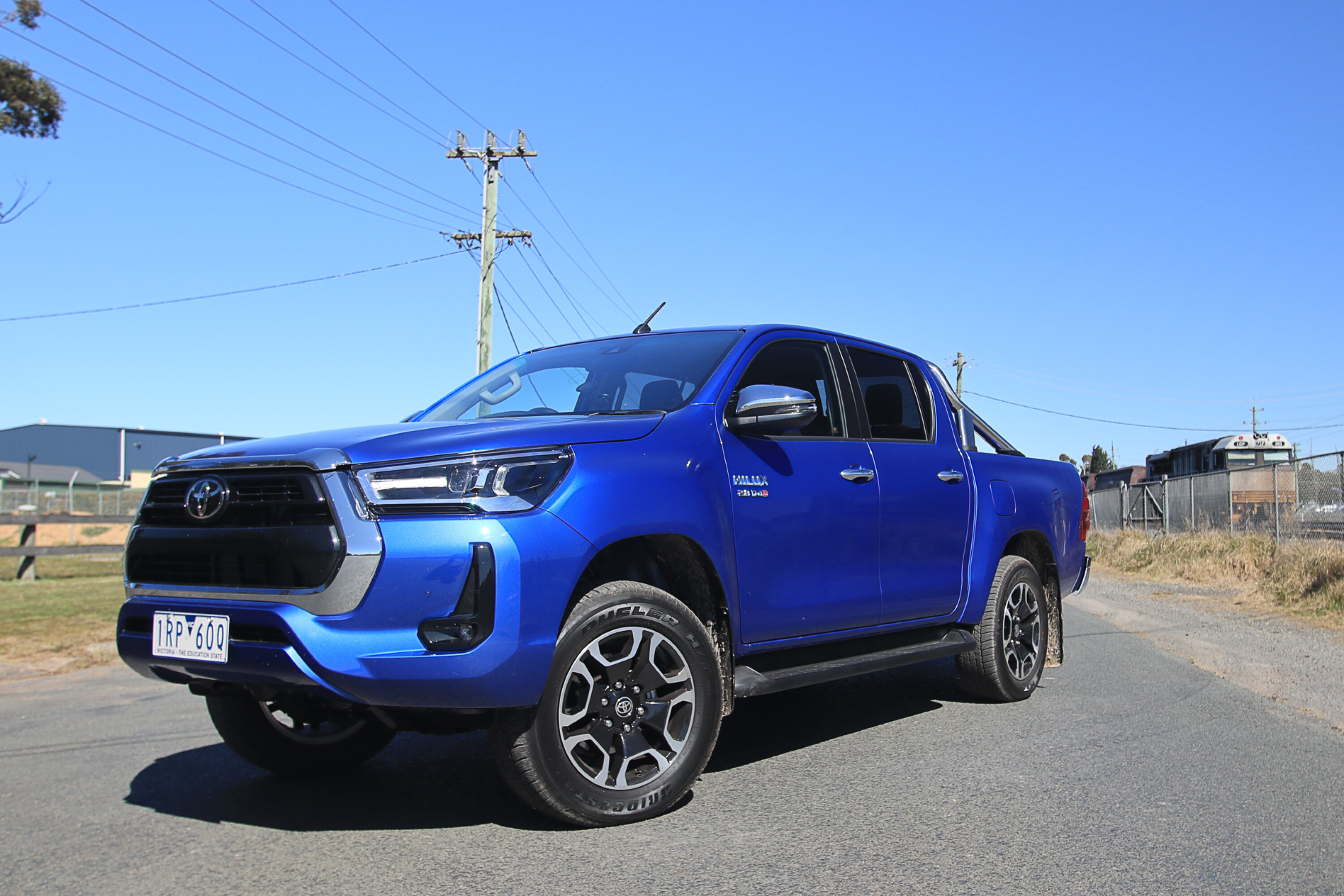
Swipe the credit card for a bit more, and the SR5 introduces a long list of extra kit as standard including LED headlights with auto-levelling and DRLs, extra safety functions such as blind-spot monitoring, and a more premium interior befitting the price rise.
1
| 2024 Toyota HiLux SR features | |
|---|---|
| 17-inch alloy wheels | Higher-grade front bucket seats |
| 4- or 6-speaker sound system | Premium seat upholstery fabric |
| Body-coloured front bumper and door handles | Rear differential lock |
| Drive mode selector | Side steps |
| Front air-conditioned cooler box | Variable intermittent windscreen wipers |
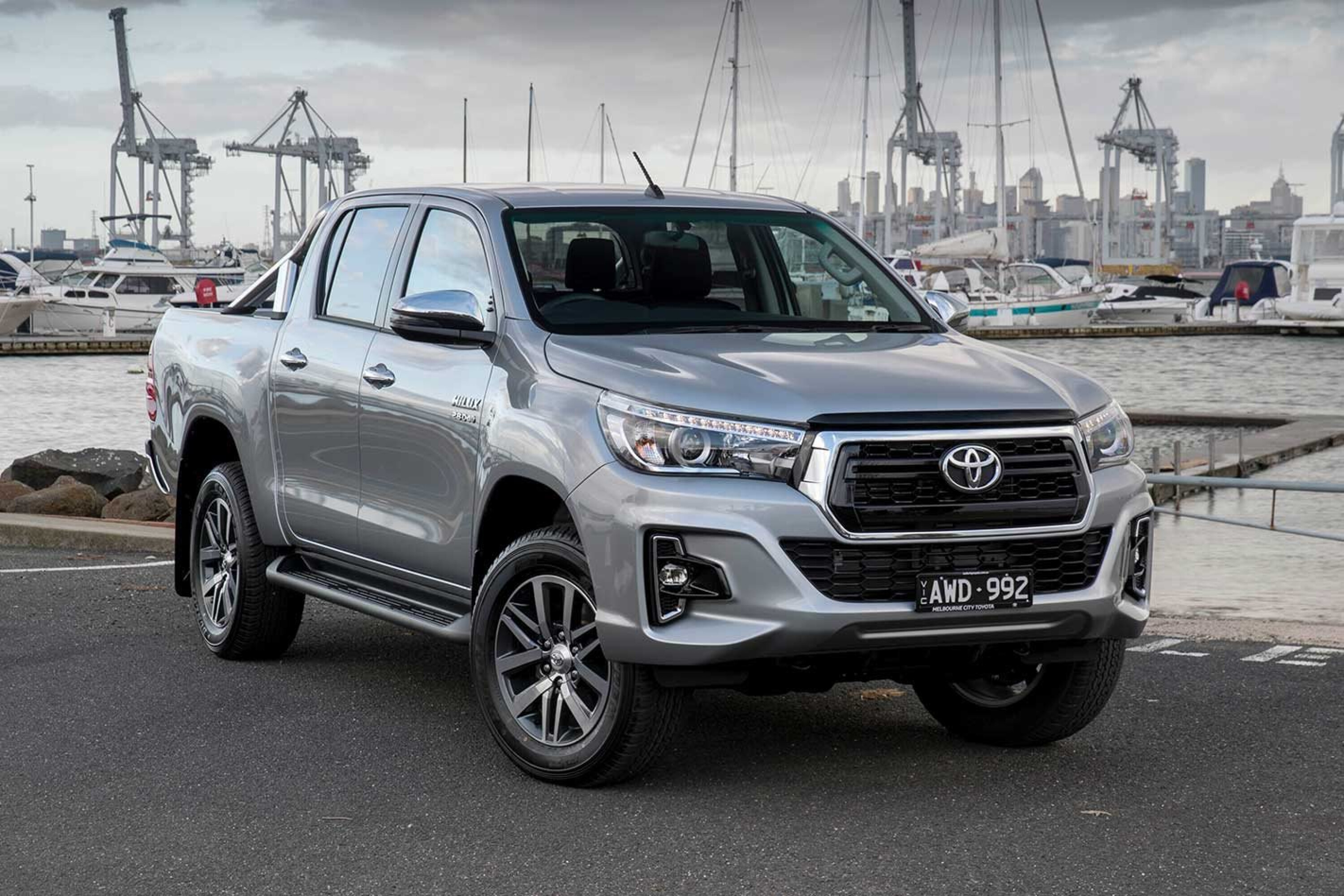
Paying more again for an SR5 gets you those features plus:
| 2024 Toyota HiLux SR5 features | |
|---|---|
| 18-inch alloys | LED headlights with auto-levelling and DRLs |
| Blind-spot monitoring | Panoramic view monitor |
| Carpet floors | Premium gear shifter and steering wheel |
| Chrome door handles | Privacy glass |
| Chrome step type rear bumper | Puddle lights |
| Dual-zone climate control | Rear cross-traffic alert |
| Front and rear parking sensors | Satellite navigation and DAB+ digital radio |
| Front LED fog lamps | Stainless steel sports bar |
| Keyless entry and start | Tow bar receiver |
1
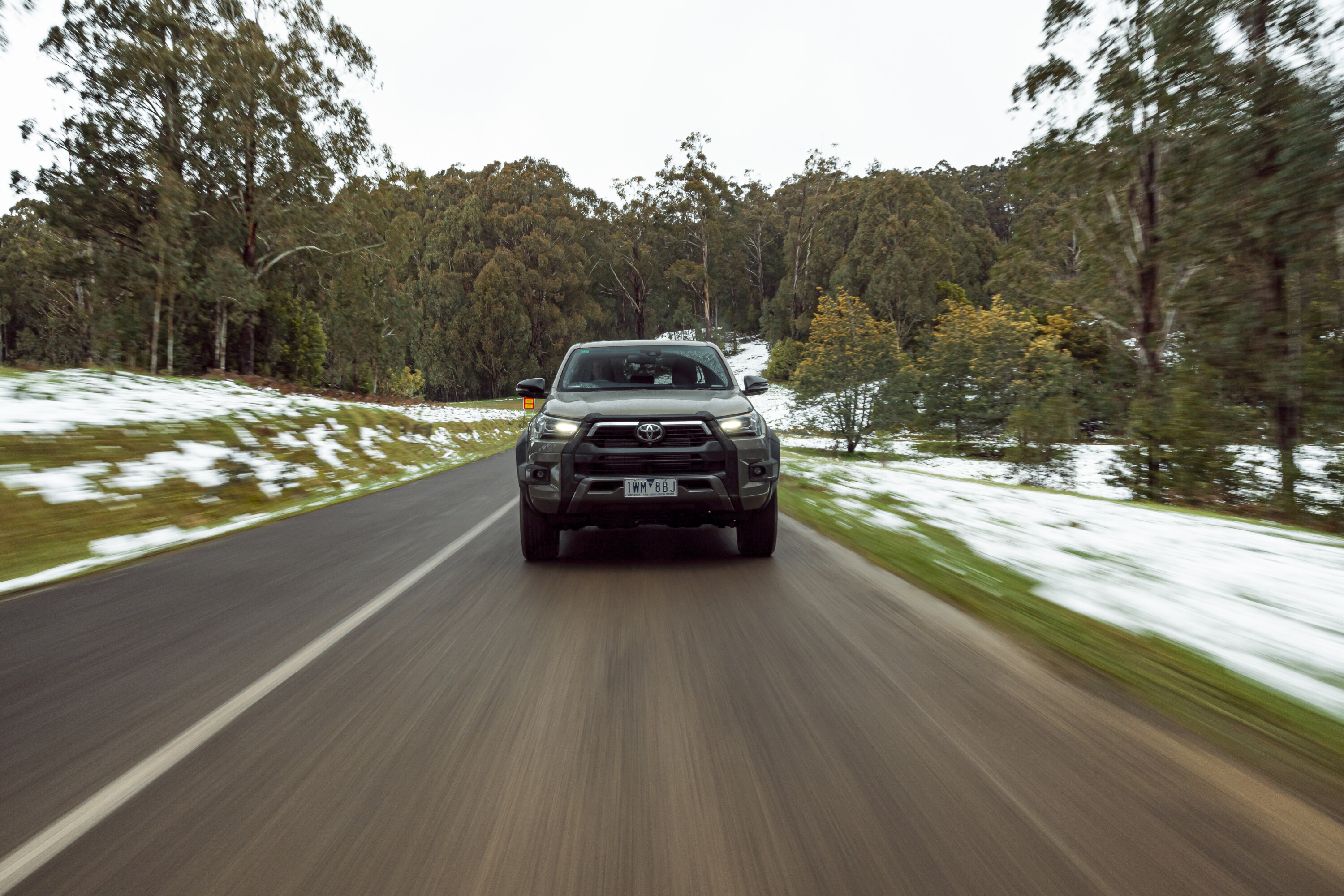
The SR5+ then adds:
| 2024 Toyota HiLux SR5+ features |
|---|
| Heated front seats |
| Leather-accented upholstery |
| Power driveru2019s seat adjustment |
1
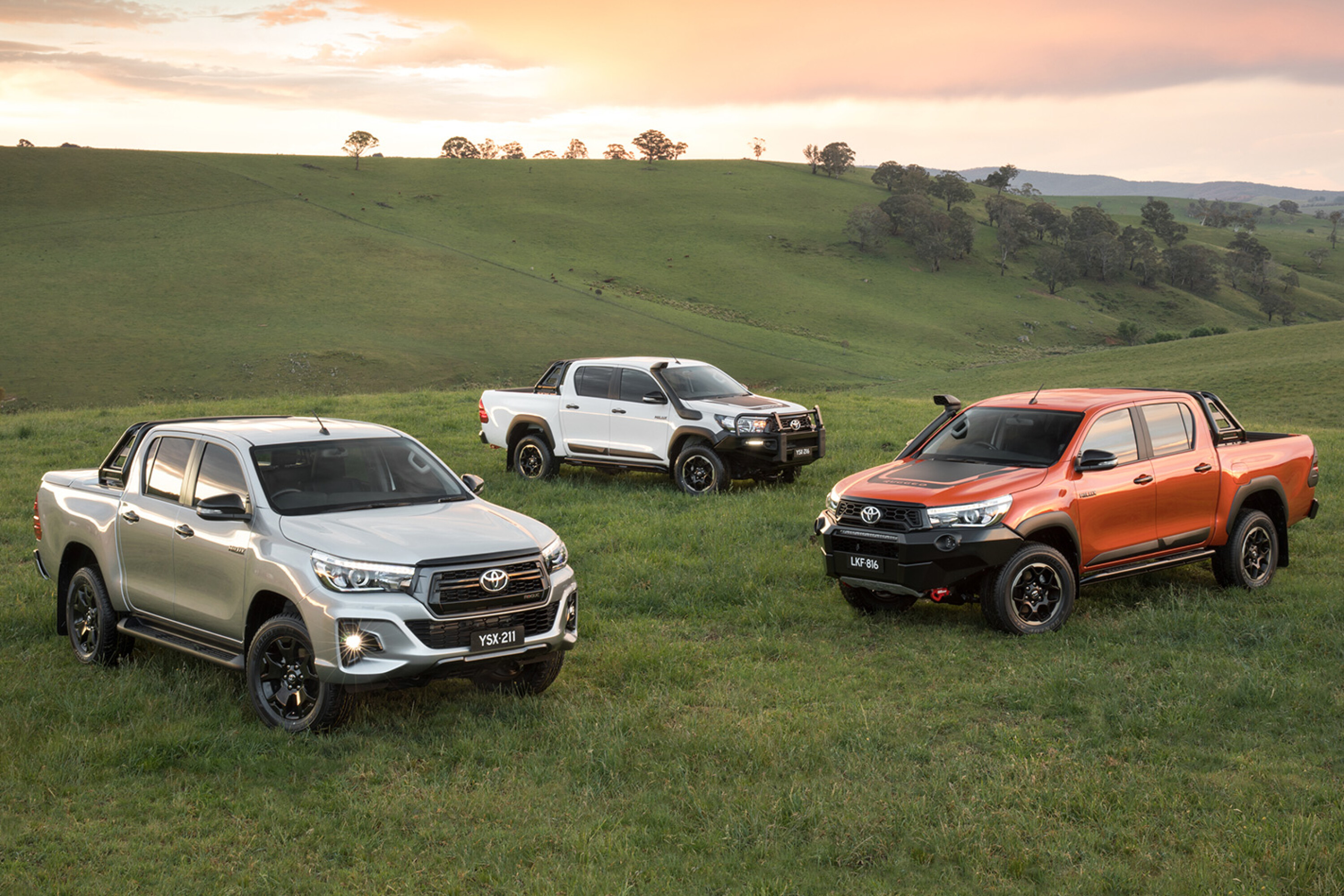
The Rogue gets:
| 2024 Toyota HiLux Rogue features |
|---|
| 9-speaker sound system |
| Motorised roller tonneau cover |
| Suspension and brake upgrades |
The GR Sport gets:
| 2024 Toyota HiLux GR Sport standard features | |
|---|---|
| GR Sport front bumper and fascia | Front underbody skid plate |
| GR sport mesh grille with TOYOTA badge | Red rear recovery points |
| Gloss black exterior treatment | Heavy-duty steel rock rails |
| 17-inch gloss black alloy wheels with 265/65R17 Bridgestone Dueler AT tyres | Five-piece moulded tub-liner with GR branded headboard and anti-slip floor |
How safe is the Toyota HiLux?
All Toyota HiLux models built from 2019 onward have been awarded a five-star ANCAP safety rating.
The entire range is equipped with the full suite of Toyota Safety Sense technologies as standard, which consists of auto emergency braking with pedestrian and cyclist detection, high-speed adaptive cruise control, and lane departure warning with steering assist. Seven SRS airbags are standard across the range.
Hill descent control features on all SR5 4×4 models and automatic SR 4×4 dual-cabs. Front and rear parking sensors are also fitted to SR5 double- and extra-cab pick-up models.
The SR5 also adds blind-spot monitoring, a panoramic view monitor and rear cross-traffic alert.
1
How comfortable and practical is the Toyota HiLux?
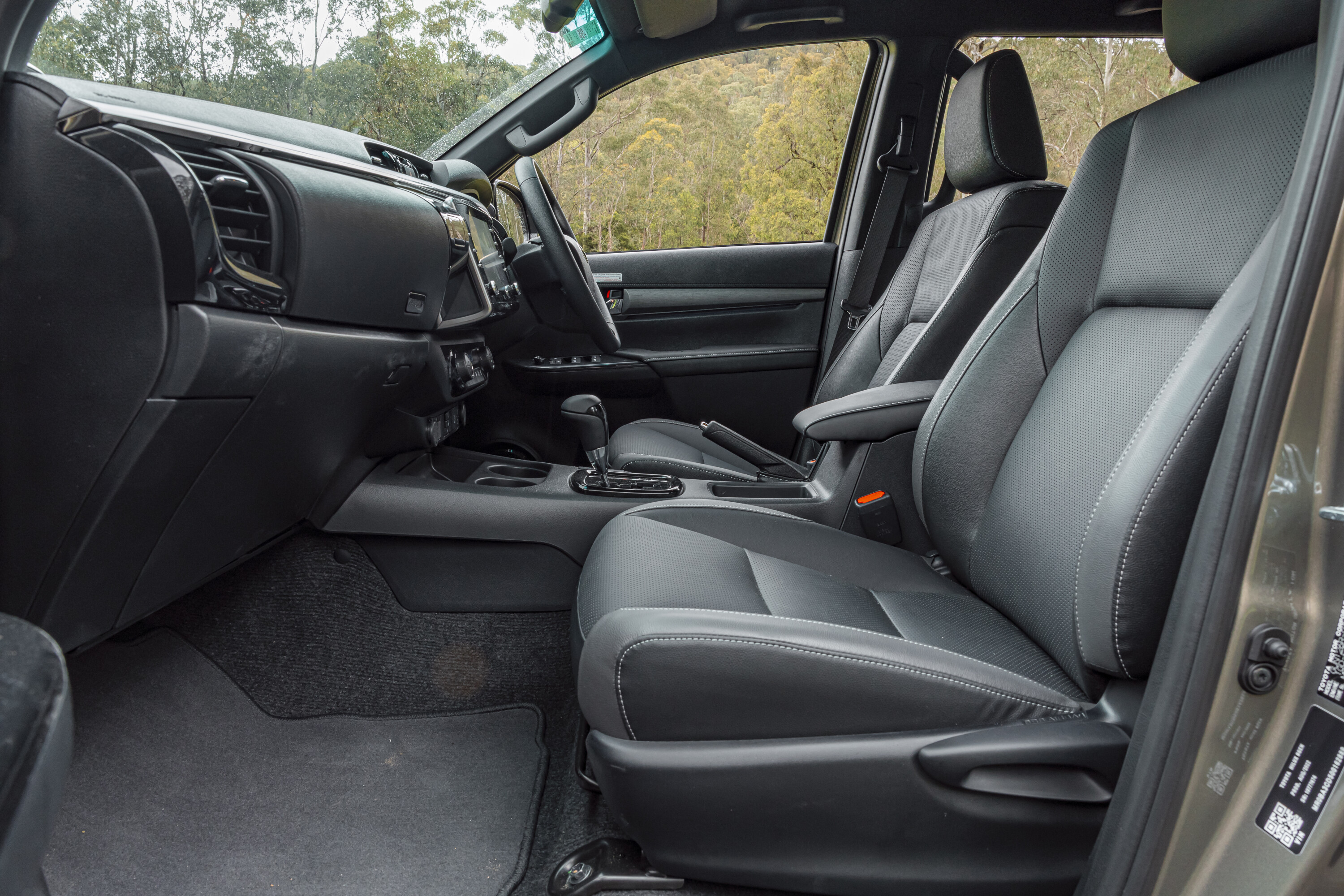
WorkMate variants are designed for work duties, so are more practical than comfortable, with vinyl flooring, standard fabric on the pews and basic bucket seats.
However, they still get modern tech in the form of Apple CarPlay and Android Auto.
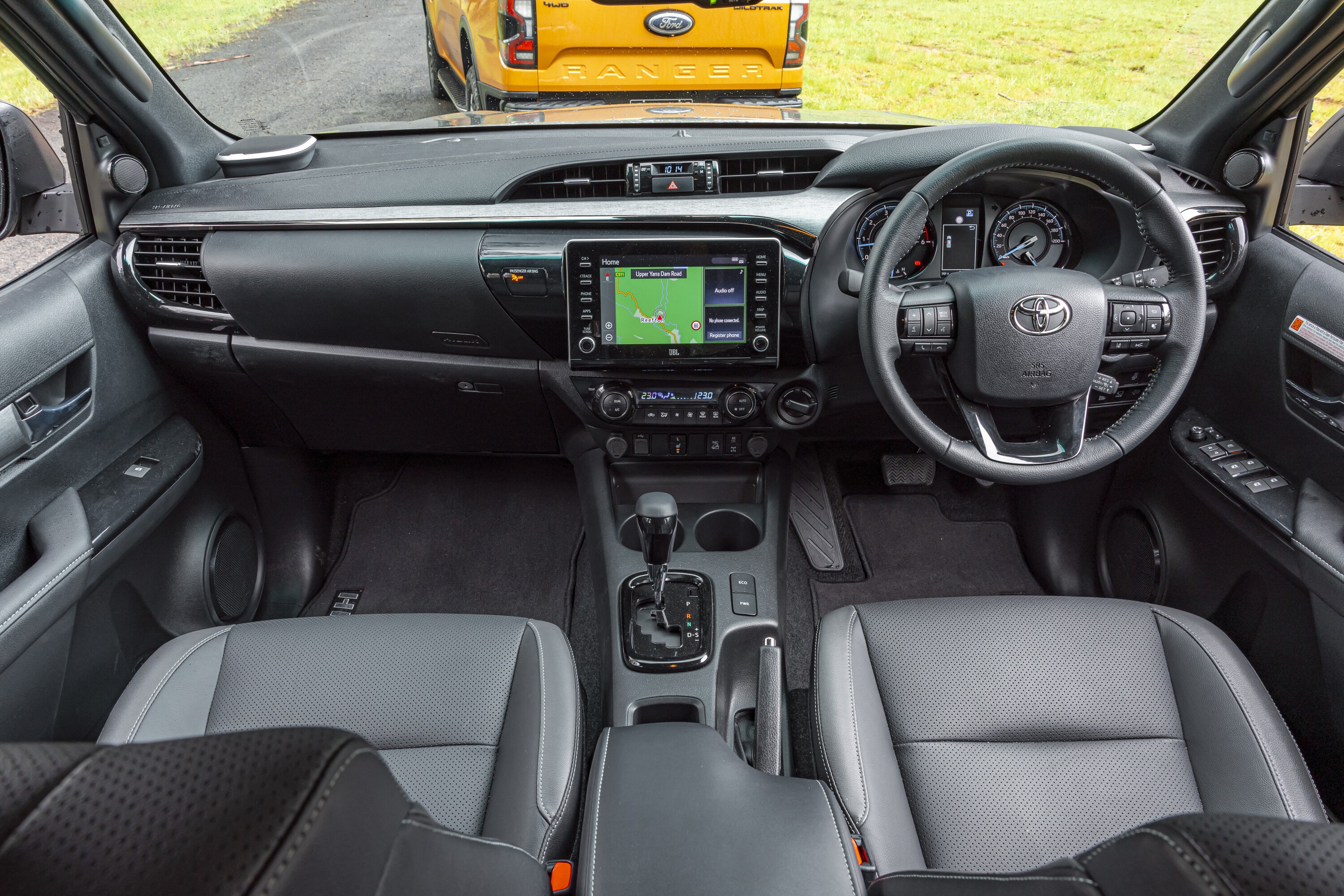
Step up to the SR and more comfort features are introduced including higher-grade front bucket seats with a more premium fabric upholstery. The SR5 then adds front and rear parking sensors, privacy glass, a premium shifter and steering wheel, and carpet flooring.
The Rogue’s heated leather seats and nine-speaker JBL sound system are both nice additions. The GR Sport mimics the interior of the Rogue in many ways but gets suede- and leather-accented sports seats (still heated, of course), which are embroidered with the GR logo. The GR Sport also gets aluminium sports pedals, red seatbelts, a unique trim on the dashboard and doors dubbed “technical mesh”, and all-weather floor mats.
1
The HiLux nails storage, with cavernous pockets and well-sized cup holders throughout the cabin.
The rear of double-cab models is also extremely kid-friendly. However, the rear seat in double-cabs is pretty standard fare for this size of ute, but it can be a bit tight back there.
With a 3500kg towing capacity, payload capacities nearing one tonne, and plenty of aftermarket support, 4×4 models are a versatile option for work, play and touring the country.
2
How big is the tray/tub?
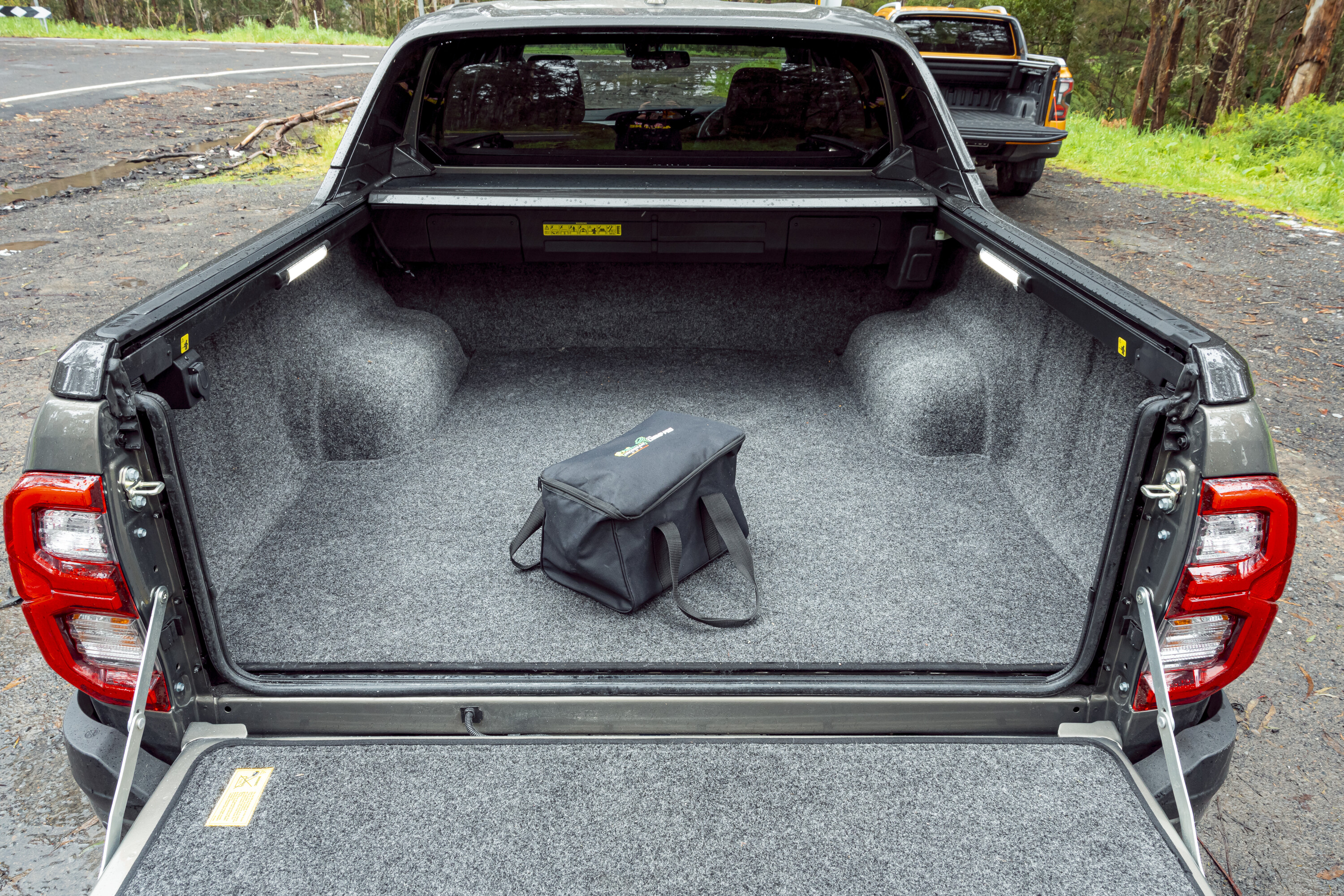
The best-selling HiLux SR5 has four tie-down points in the tub, 1110mm between the wheel arches and a decent payload capacity edging a tonne at 995kg.
Dimensions for the HiLux tub range from 1840mm long, 1540mm wide, 1110mm between the wheel arches, and 480mm deep (extra-cab), to 1570mm long, 1645mm wide, 1105mm between wheel arches, and 495mm deep (double-cab).
Load dimensions and payload of all cab-chassis variants (single, extra and double) entirely depend on the tray or service body you opt for.
As a point of difference to the rest of the range, the GR Sport gets a five-piece moulded tub liner with GR-branded headboard and anti-slip floor. However, it misses out on the motorised roller cover and 12-volt tub outlet as found in the Rogue.
1
I like driving, will I enjoy this car?
It depends on the tarmac. This generation of HiLux has been around since 2015 and its on-road performance feels somewhat outdated, compared to newer vehicles in the segment (cough, Ranger).
Despite regular updates, ride quality can be fairly stiff, and the steering column’s limited reach adjustment can cause discomfort.
Deserving of credit is the power and responsiveness of the HiLux’s 2.8-litre engine, even though it can be a bit noisy. It’s not that there’s anything inherently wrong with the way the HiLux rides and drives; it’s just that newer utility vehicles have raised the performance standards in this segment.
1
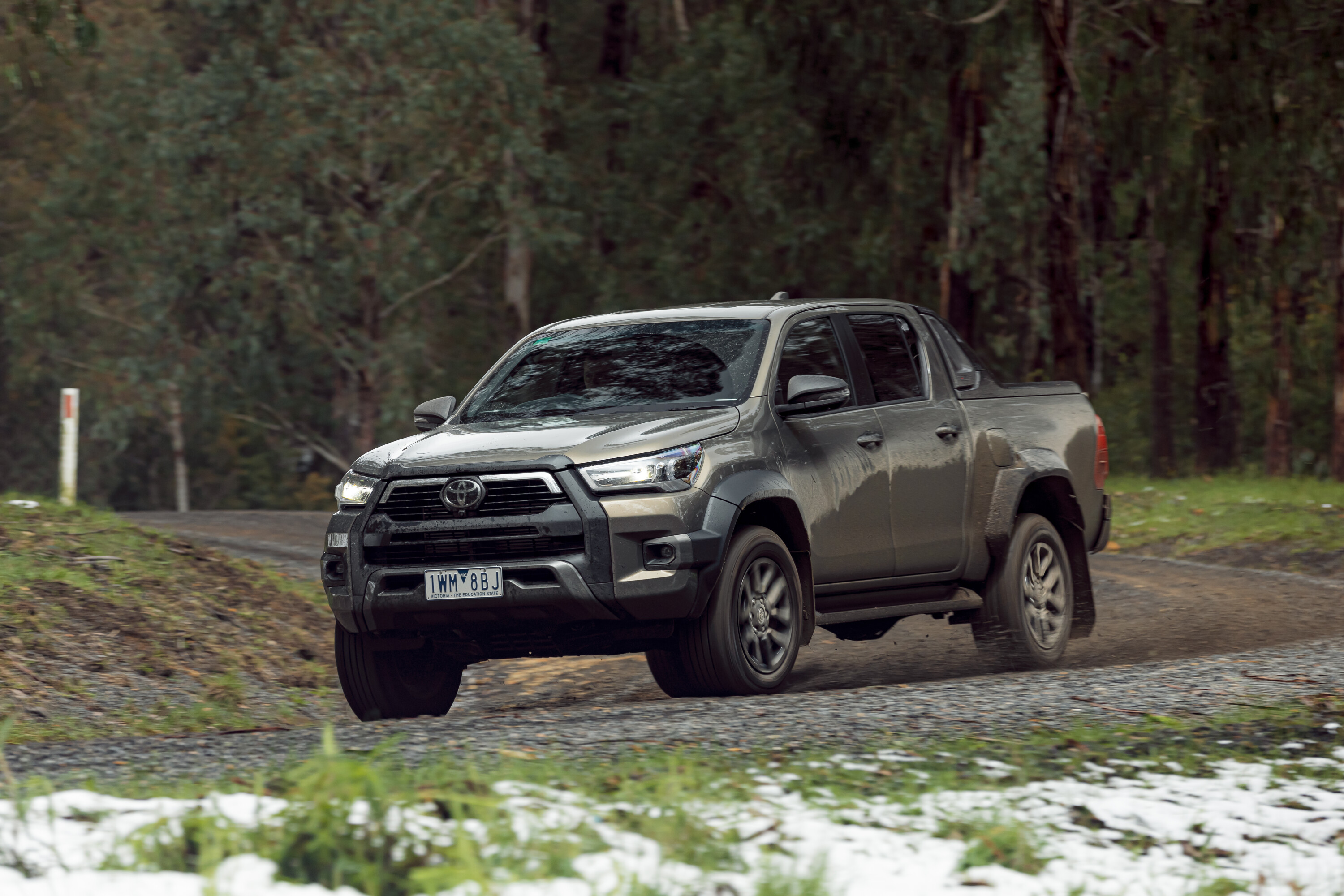
In off-road and gravel situations, the HiLux shines.
Equipped with class-leading rear axle articulation and precise electronic traction control (ETC), the vehicle is able to conquer most rough terrains by just relying on the ETC rather than engaging the rear differential lock.
The Rogue variant maintains its load and towing capacities while offering a slightly more comfortable ride due to increased track width, and improved shock and strut geometry. Its updated braking system is also particularly noteworthy, providing ample power and a precise pedal feel.
The extra grunt, albeit mild, is still noticeable on- and off-road when in the range-topping GR Sport. Combined with an exceptional electronic traction control system and tuned KYB monotube dampers, the GR Sport is worth considering as a lap-of-the-map option and is the best-performing HiLux in the line-up.
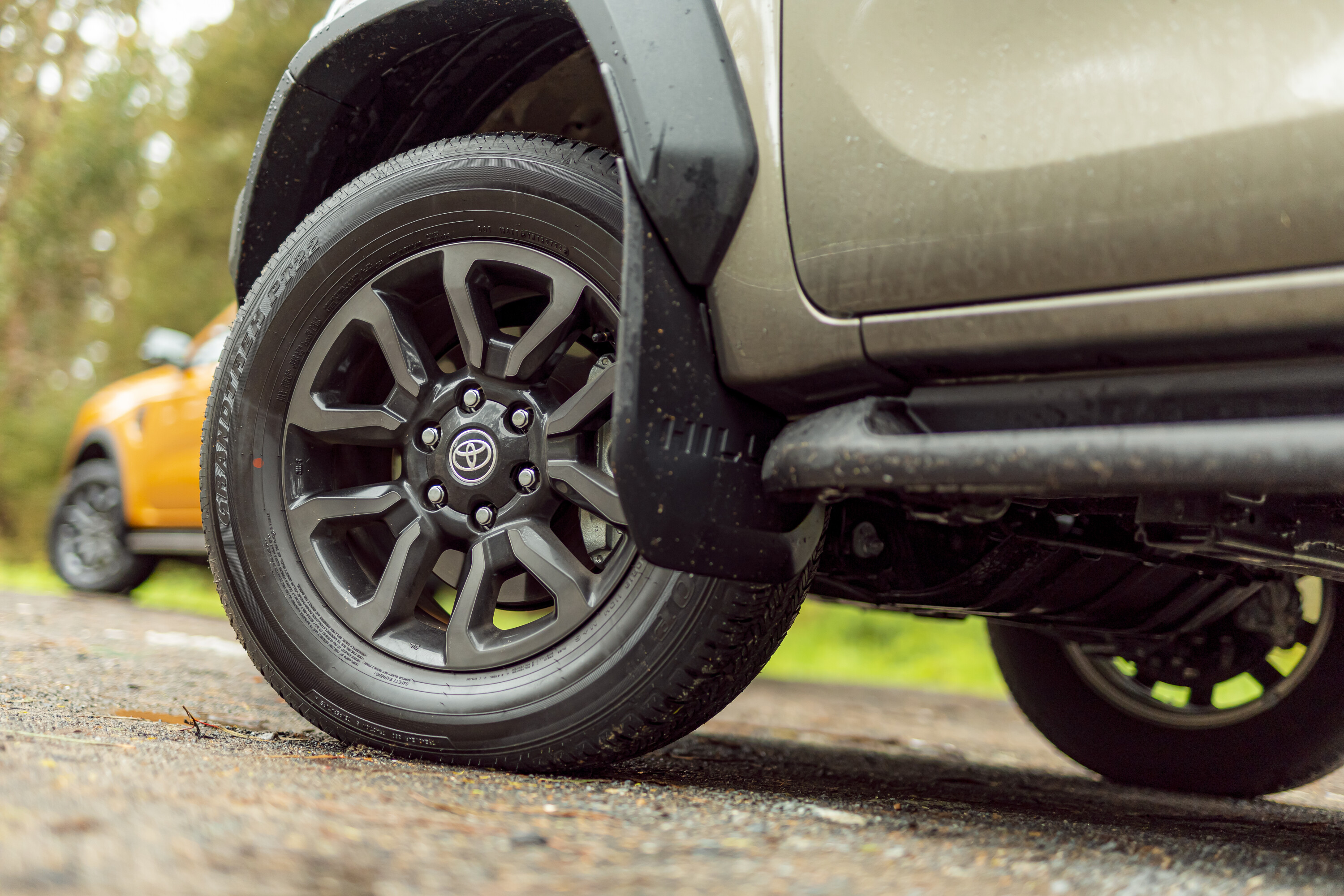
In standard form, the N80 HiLux remains an exceptional off-road vehicle and is highly supported by the aftermarket industry for those who want even more ability.
1
Which Toyota HiLux engine uses the least fuel?
The HiLux is available with multiple powertrain options: petrol, diesel and 48V hybrid.
The range opens with a 2.7-litre petrol engine capable of 122kW and 245Nm, mated to either a five-speed manual or six-speed automatic transmission.
Then there’s the 110kW/400Nm 2.4-litre turbo-diesel, and a 2.8-litre turbo-diesel good for 150kW (manual variants are rated to 420Nm while automatics get the full 500Nm). Both turbo-diesel engines can be matched with either a six-speed manual or six-speed automatic transmission.
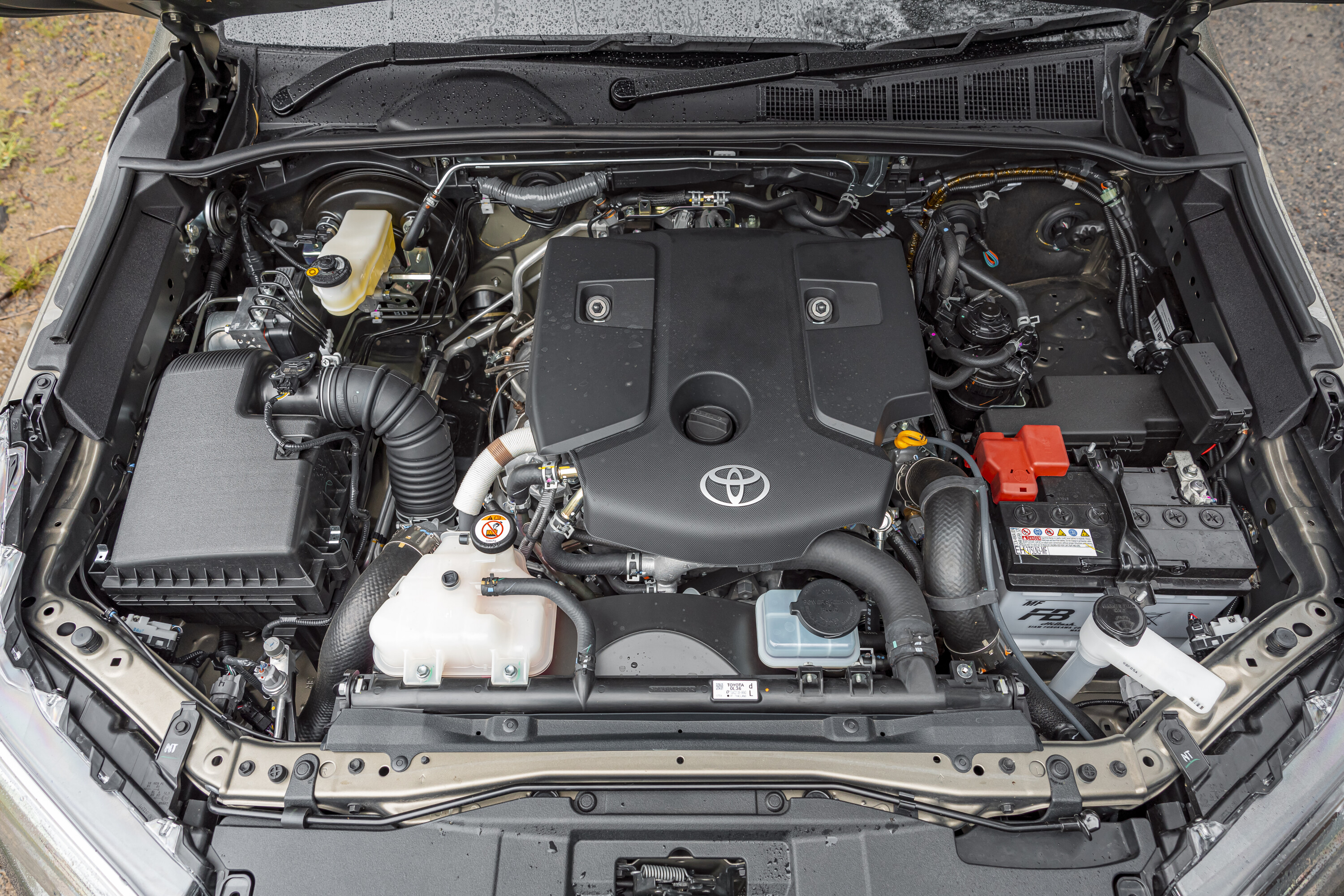
The 48V system effectively pairs Toyota’s existing 2.8-litre turbo-diesel four-cylinder engine with a 48-volt battery, lithium battery and motor generator which is attached to the engine by a dual-arm belt tensioner. The set-up improves fuel efficiency and limit emissions, while also providing smoother stop-start functionality.
According to claimed fuel figures supplied by Toyota, the most fuel-efficient 4×2 variant is the 2.4L manual WorkMate double-cab pick-up, with a claimed fuel use of 6.9L/100km.
The thriftiest 4×4 variant is also the 2.4L WorkMate double-cab pick-up, with the manual drinking a claimed 7.2L/100km. By comparison, the 2.8L-powered Rogue automatic uses a claimed 8.4L/100km.
The 48V variants are the most frugal, with Toyota on record as saying the tech provides a (roughly) 10 per cent benefit to fuel economy across the model range.
| u00a0 | 1GD (L/100km) | 1GD 48V (L/100km) |
|---|---|---|
| SR double cab-chassis 4×4 6AT | 8.4 | 7.6 |
| SR double-cab pick-up 4×4 6AT | 7.9 | 7.4 |
| SR5 double-cab chassis 4×4 6AT | 8.4 | 7.6 |
| SR5 double-cab pick-up 4×4 6AT | 7.9 | 7.2 |
| Rogue double-cab pick-up 4×4 6AT | 8.4 | 7.8 |
1
What is the Toyota HiLux’s towing capacity?
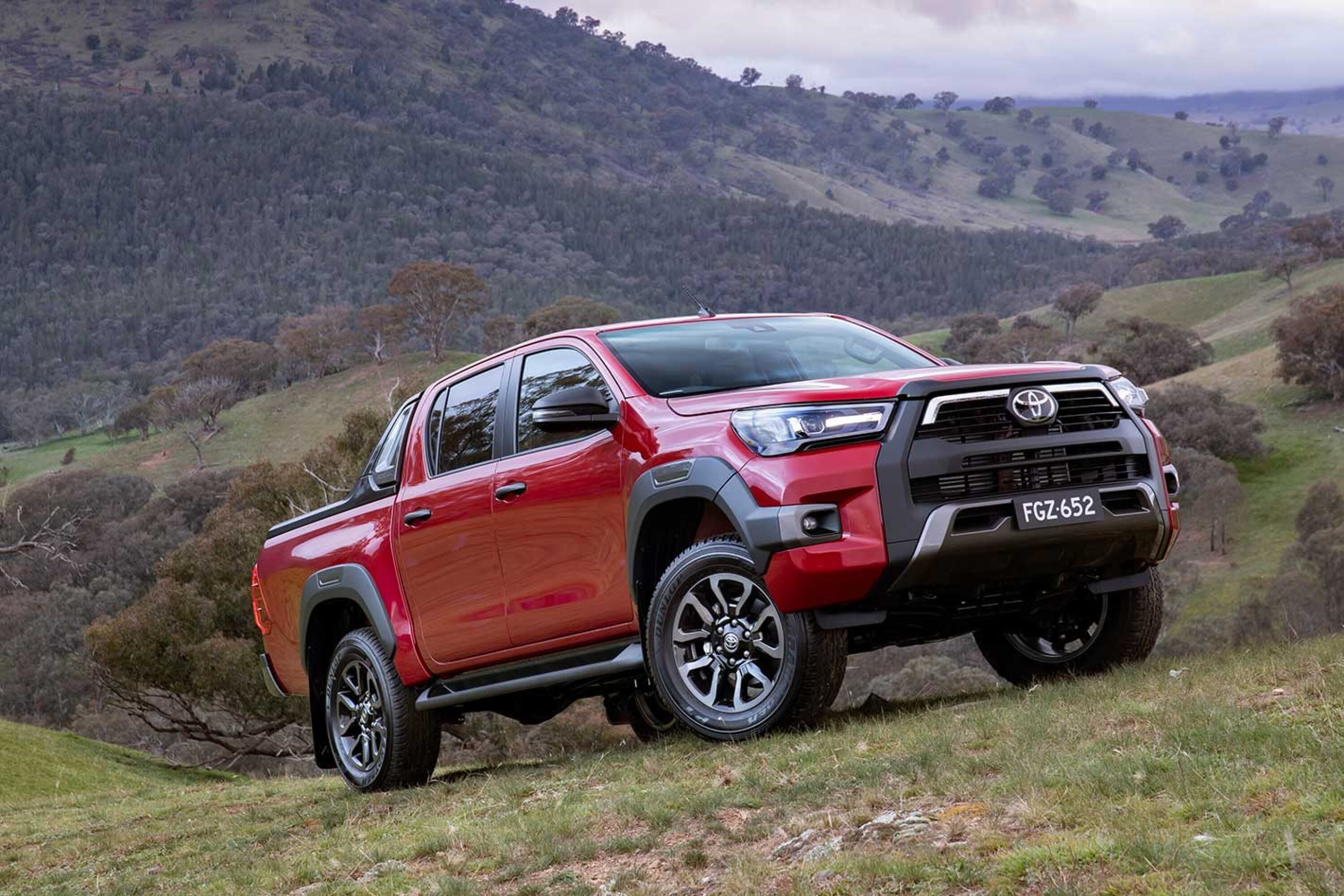
The braked towing capacity of the Toyota HiLux varies depending on the model.
WorkMate 4×2 variants have a 2500kg towing capacity, which increases to 2800kg for Hi-Rider models. All 4×4 models have a towing capacity of 3500kg, which is the industry standard.
1
How long is the warranty and what are the HiLux’s servicing costs?
The Toyota HiLux comes with a five-year / unlimited-kilometre warranty.
After a complimentary one-month initial inspection, Toyota offers short service intervals at 10,000km or every six months, with three years of capped-price servicing at $260 per interval.
Which version of the Toyota HiLux does 4X4 Australia recommend?
The GR Sport may be the best HiLux in the line-up on- and off-road, but it’s also hard to look past the mid-range SR5 which offers better value.
It has the best balance of cabin design and storage, and it gets the punchy 2.8-litre turbo-diesel with 150kW and 420Nm – plus you pocket more than $10K in opting for the SR5 instead of the GR Sport.
It’s also competent off-road, and there’s an endless list of aftermarket accessories available for it. There’s a reason the HiLux SR5 is a perennial best-seller in Australia, despite being around in its current guise since 2015.
What are the Toyota HiLux’s key rivals?
MORE
Everything Toyota
Mitsubishi has released a software update to fix the all-new Triton’s overbearing driver monitoring system (DMS).
The DMS in the all-new Triton was widely criticised for being too sensitive to a driver’s natural movements. An alert would chime when checking a blind spot, for example. To remedy this, Mitsubishi has increased the threshold of interference, by reducing operational sensitivity to natural movements. The minimum speed threshold has also been raised.
The software calibration will be applied to all new Tritons before they are delivered to customers. For existing owners, Mitsubishi Motors Australia Limited (MMAL) has initiated a DMS rollout to ensure the software in all vehicles is updated at their next service, free of charge. However, owners can request the update outside of service intervals.
“Since the Triton’s launch in February this year, MMAL has been actively seeking feedback across several key stakeholders,” said MMAL CEO, Shaun Westcott. “This includes dealers and media, but also – crucially – all-new Triton customers. The updated Driver Monitoring System software is evidence of our agility to respond quickly to stakeholder feedback.
“The calibration of DMS requires a fine balance, ensuring adherence to what are strict ANCAP safety protocols while not overly impacting the user experience. We’re confident the updated software further enhances the drive, while remaining five-star ANCAP safe,” Westcott added.
The Triton received a five-star safety rating in April 2024, becoming the first dual-cab ute to achieve a five-star ANCAP safety score under more stringent testing criteria.
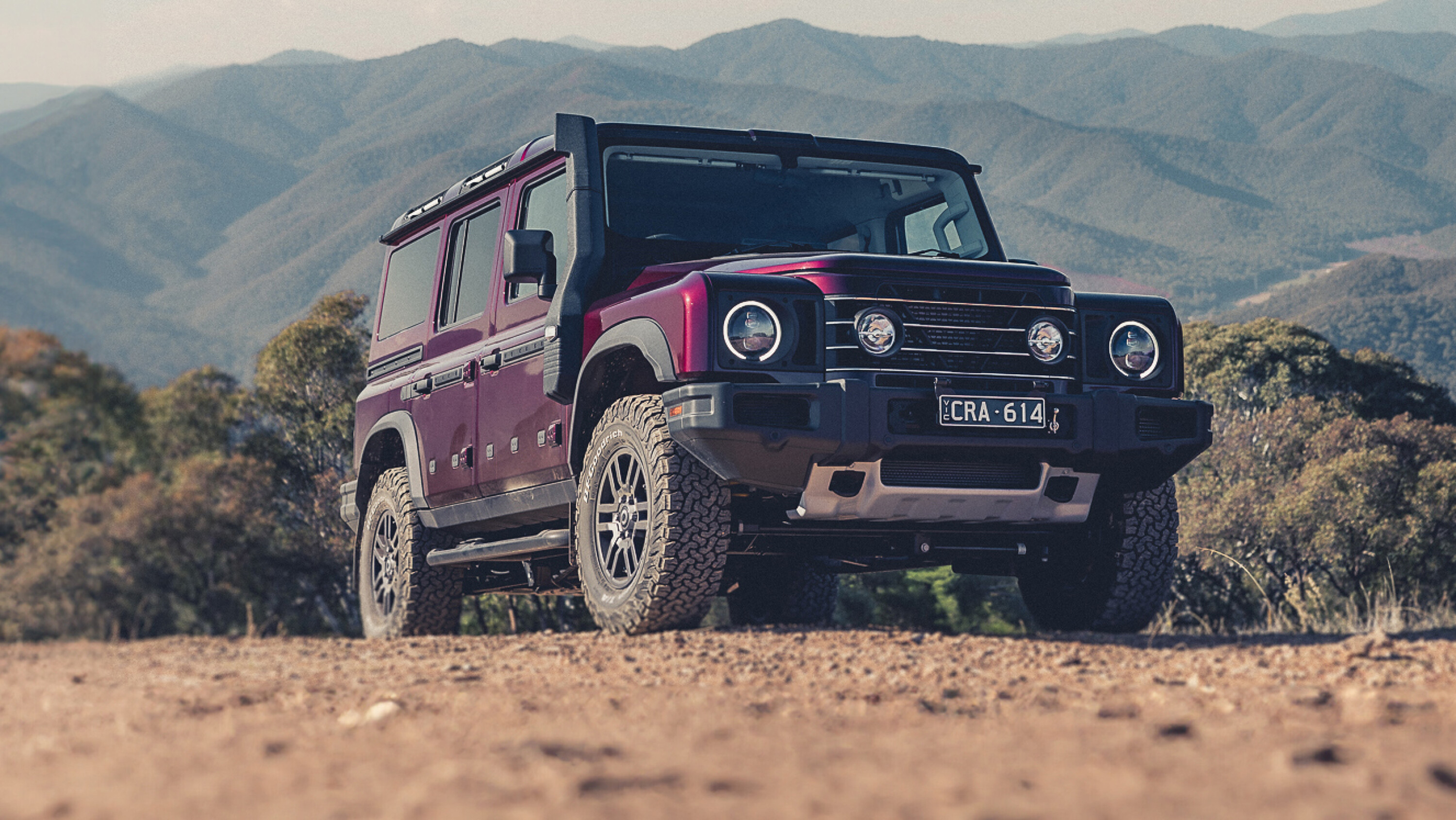
It’s been six months since INEOS Automotive launched in Australia with its Grenadier wagon, and judging by the number of them we see on Melbourne streets, the new off-roader has been a hit.
More accurately, INEOS tells us it is selling around 80 to 100 Grenadiers a month, with the total sold in Australia approaching 1500 as of the end of June 2024. The Quartermaster double-cab ute version of the Grenadier will arrive shortly as well, and this model will accelerate the sales growth for INEOS in Australia.
With the brand focusing on getting all of the available new Grenadiers out to owners, we haven’t been able to get back behind the wheel of one since the vehicle’s initial launch in 2023, so we were excited when we received a call and were advised we could finally grab a shiny new one to take away for a few days.
1
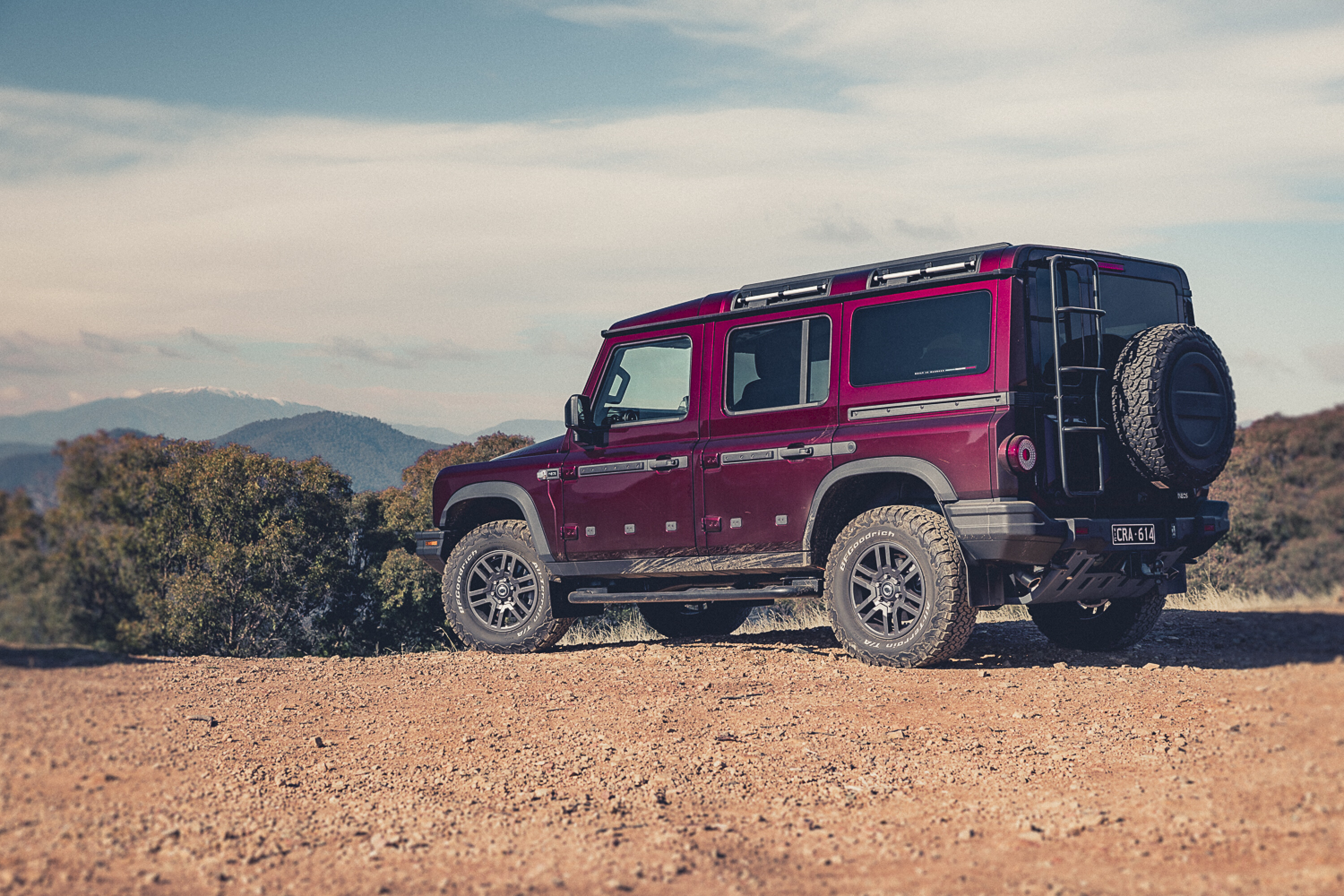
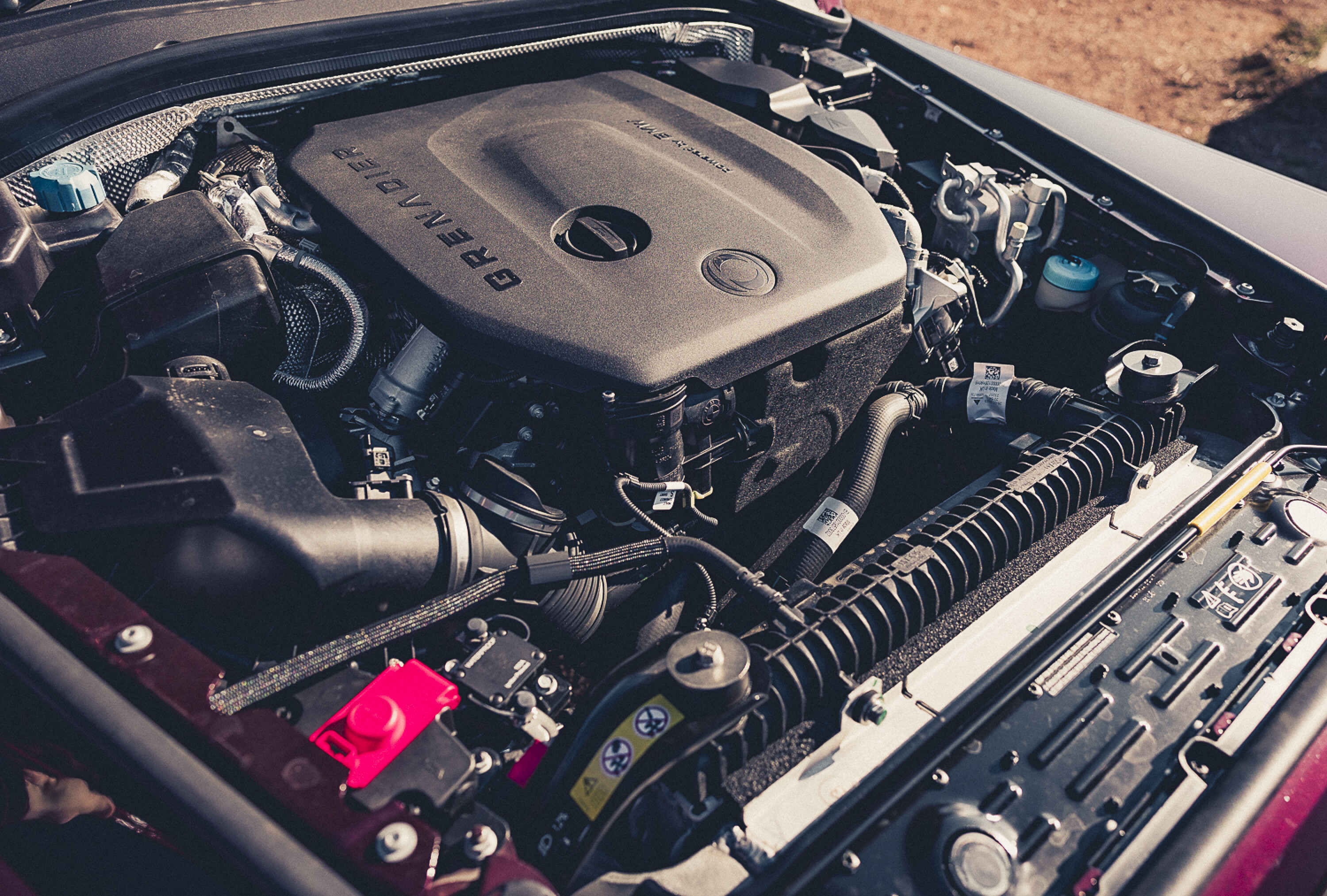
The test vehicle is a Grenadier Fieldmaster edition, which sits atop the three-model range. This example is powered by a BMW diesel engine, but there is also a BMW petrol engine available in all models.
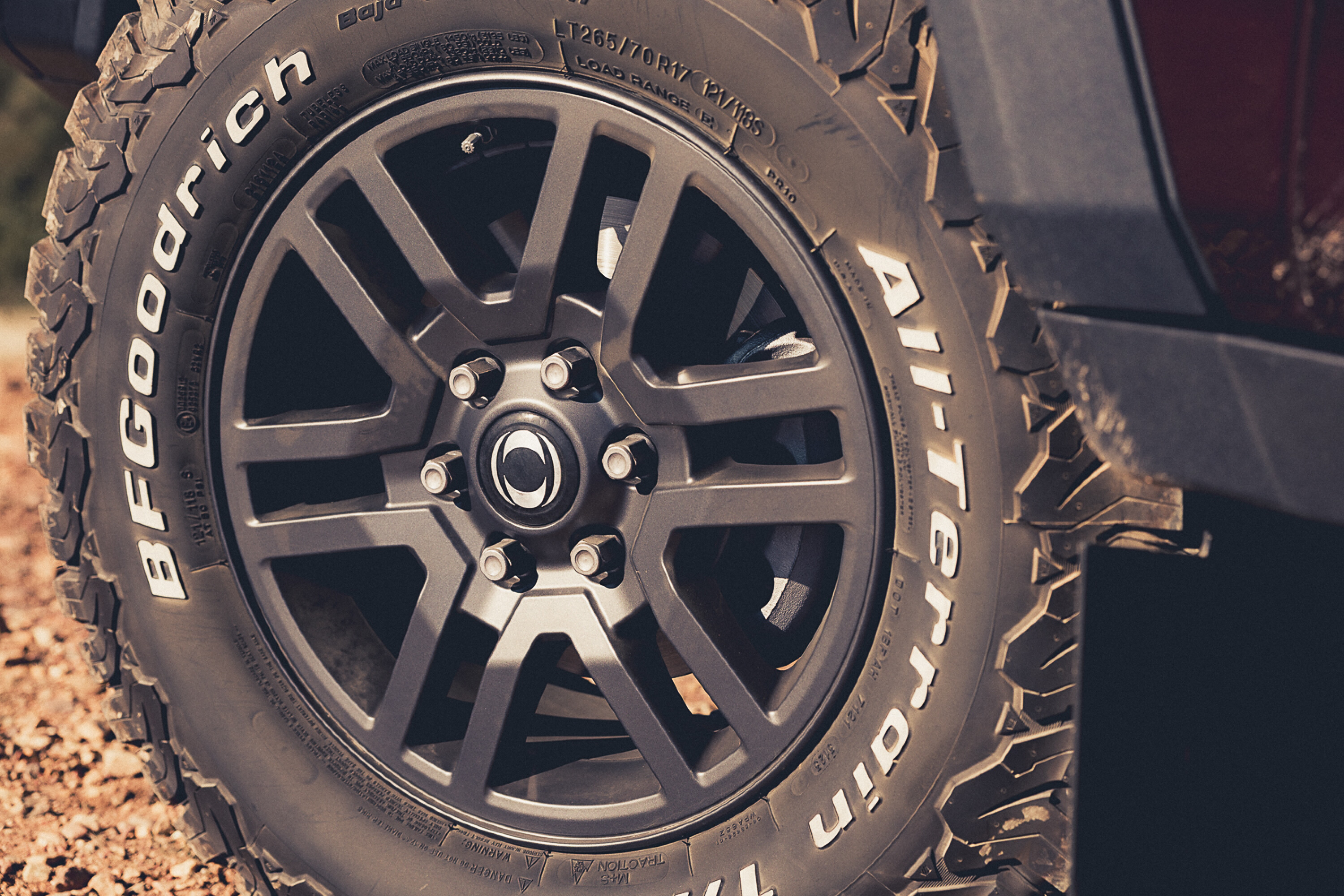
As well as its high-end appointments, this Fieldmaster comes loaded with a few extras to make it more appealing to the off-road adventurer. These include front and rear locking differentials, a raised air intake snorkel, rear ladder, dual-battery system, 18-inch alloys wearing BFGoodrich KO2 All-Terrains, and a factory option winch. This kit takes the price as tested to $140,315 plus ORC, up from the $123 base price.
1
JUMP AHEAD
Sizing up
Wanting to make the most of our time with the Grenadier, we planned an overnight trip. When we started loading our gear inside, the size of the vehicle became apparent.
The Grenadier is not as big overall as a Nissan Patrol or LandCruiser 300, and you notice that in the cabin. The driver’s space is cramped by comparison, and this is not helped by the limited space for your left foot that forces you to drive with your leg bent rather than extended. In fact, the driver’s space in most double-cab utes is bigger.
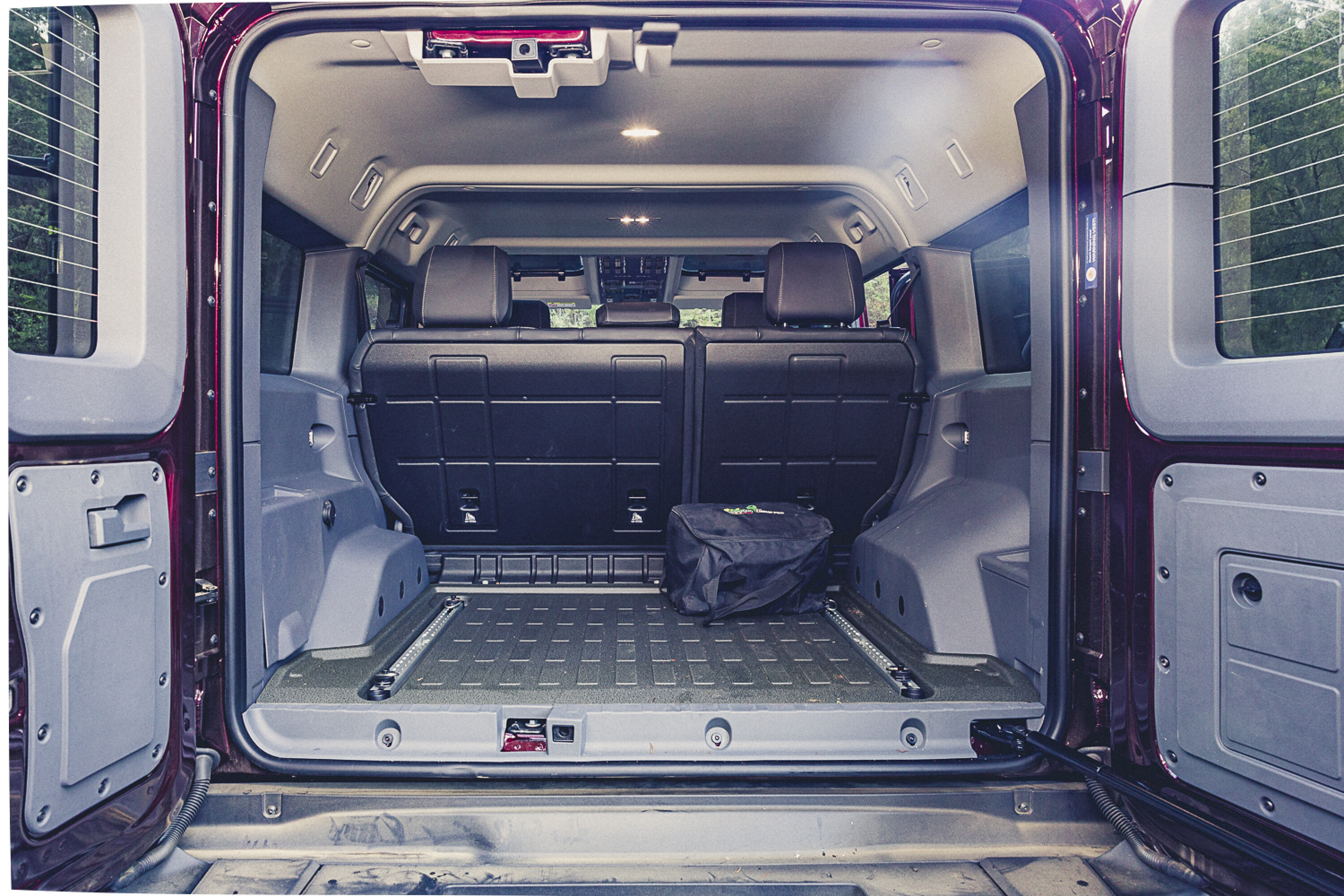
While the driver’s space isn’t a huge problem, and I quickly adapted to it, the small rear cargo space is. A pair of swags takes up the full floor space in the cargo area, and for this short trip we had to stack stuff on top of these. Thankfully the floor has adjustable tie-down points to secure the gear in the back.
1
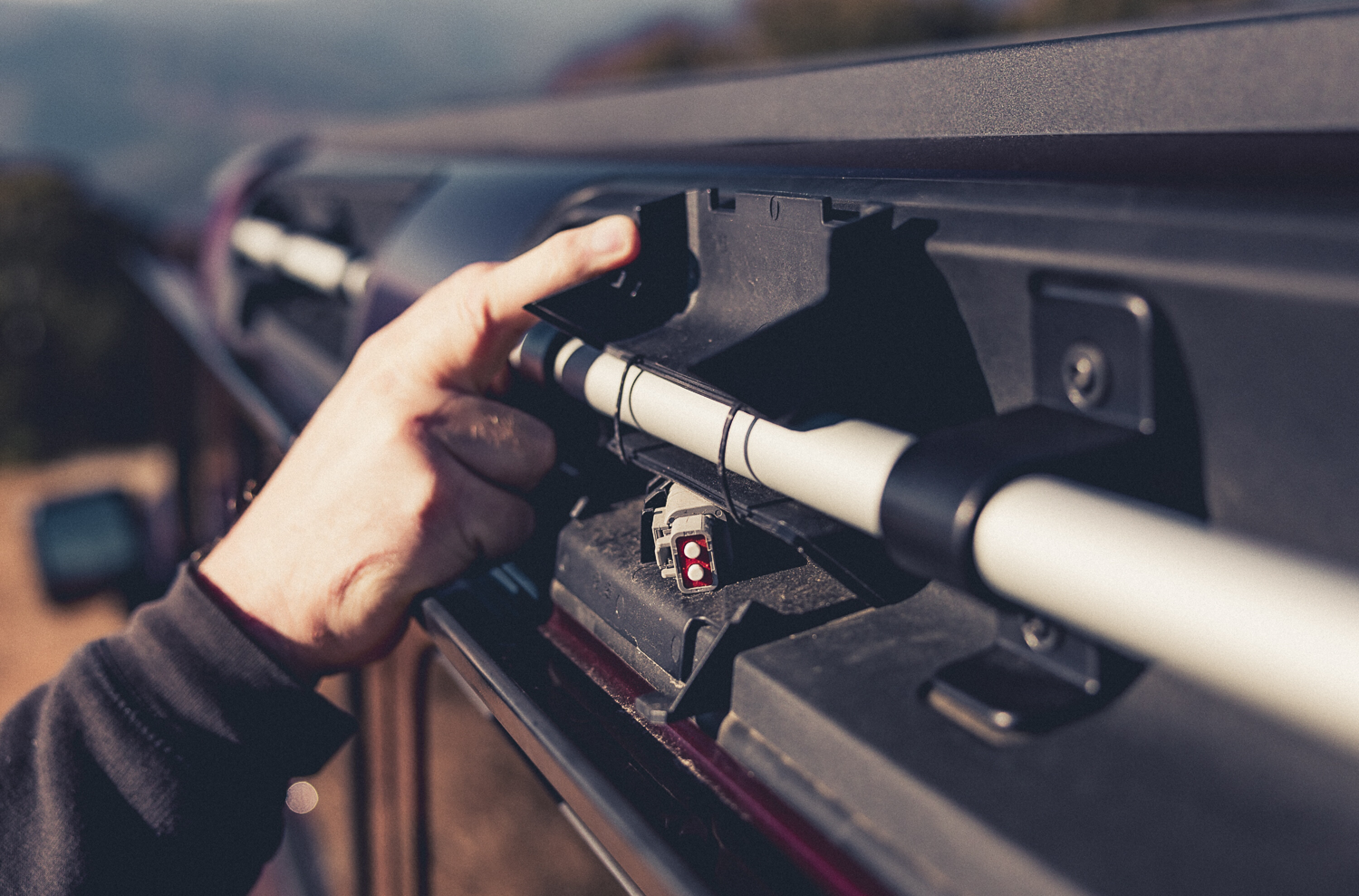
A roof rack would be handy on the Grenadier and INEOS offers an optional Rhino-Rack platform, but none were fitted to this test vehicle.
The rear seat is good for adults in the outboard positions, but the centre-seat passenger has to contend with the hump in the floor for the drivetrain. The Grenadier certainly wouldn’t be comfortable for a fifth occupant on a long drive.
Standard equipment on the Fieldmaster includes front safari removable skylights, heated front seats, leather trim, premium sound system, and carpet floor mats over the vinyl-covered floors. Interestingly for a vehicle at this spec and price, the front seats don’t have power adjustment, which might not be a problem for most drivers but could be for those who share their vehicle with another driver and regularly need to adjust the seat position.
1
The MY25 Fieldmaster will get a higher-spec sound system that includes a subwoofer under the rear seat. Unfortunately, this will sit where the factory option second battery is currently situated, ruling out that option for MY25 Fieldmasters.
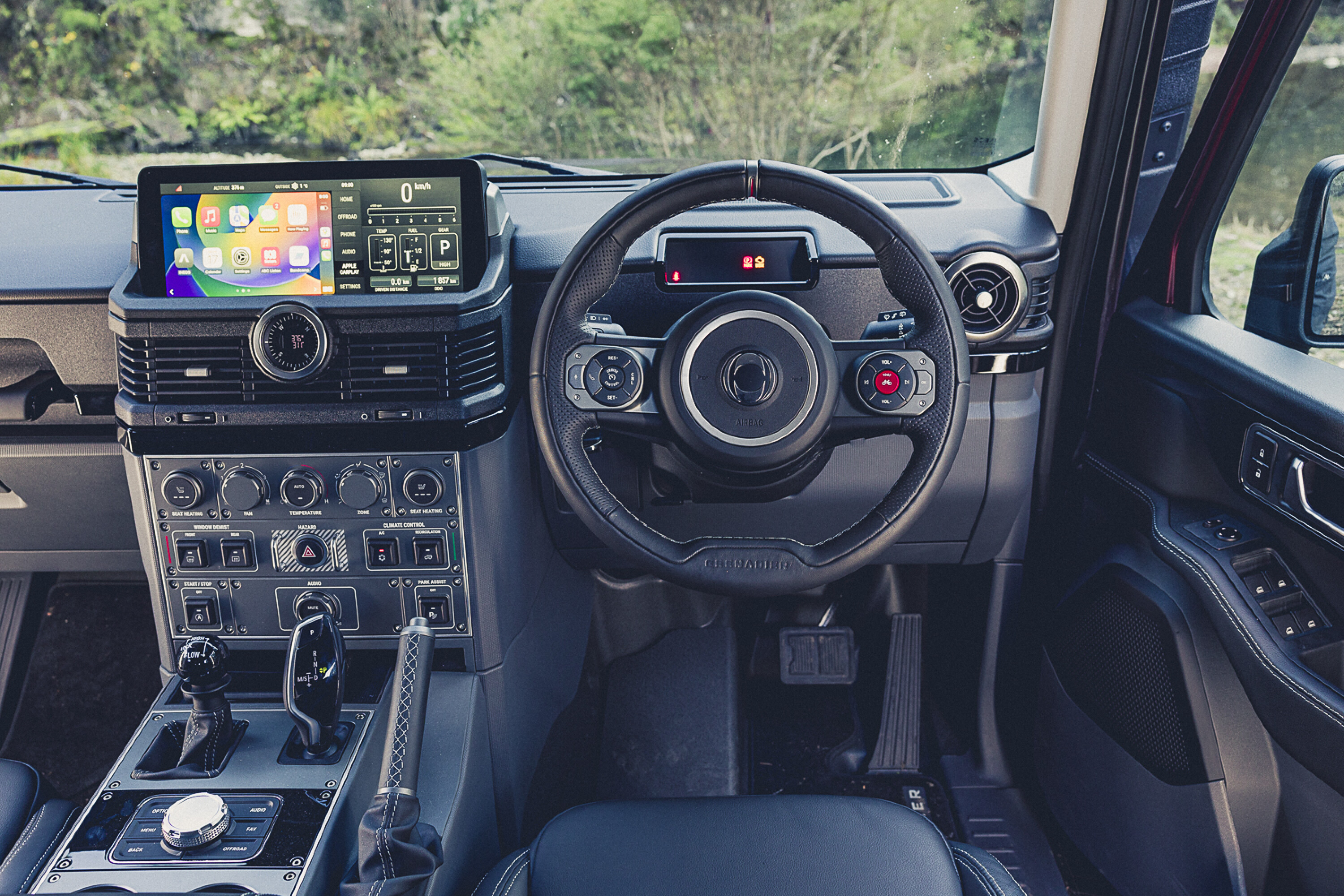
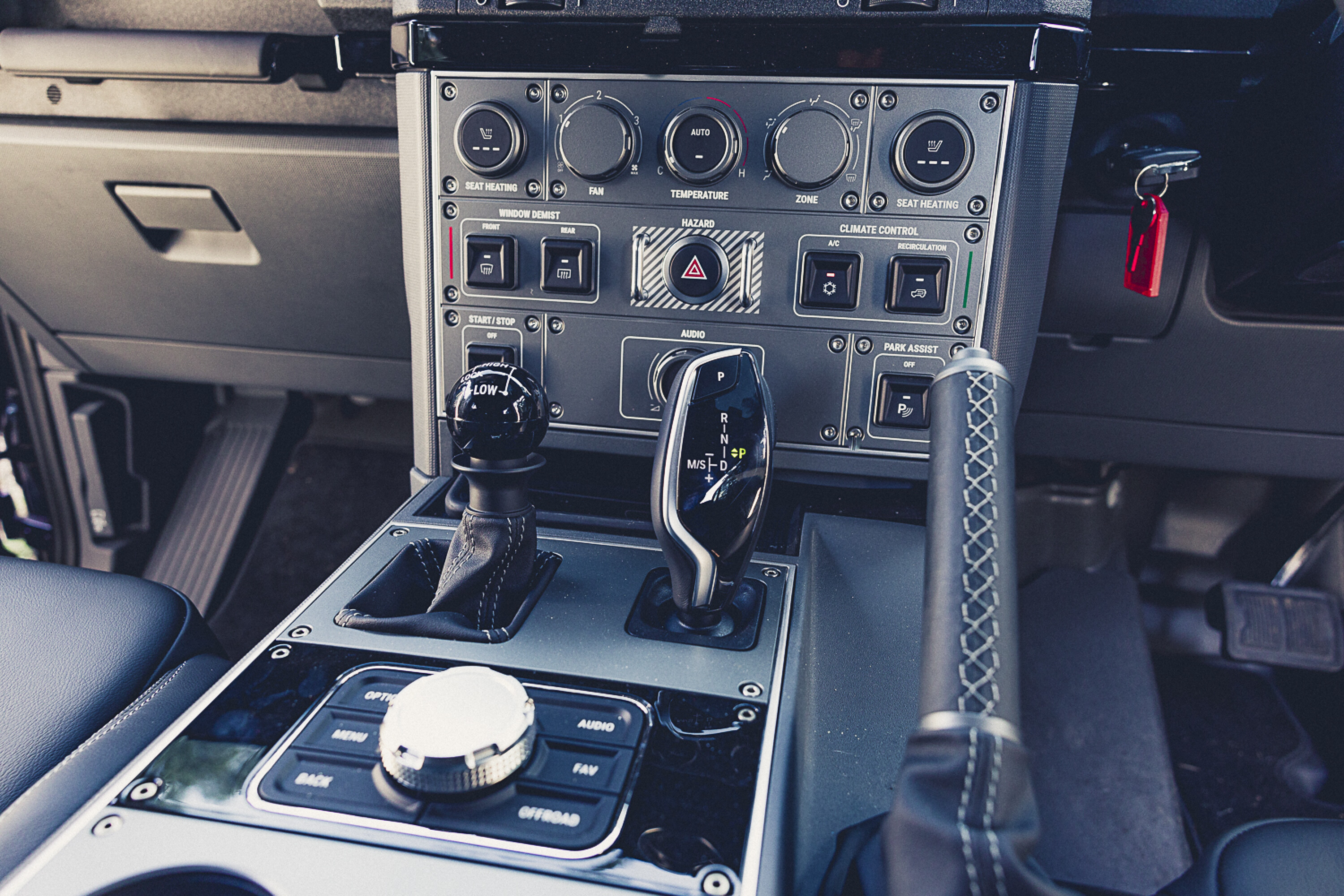
While the seating position is easy to get used to, the plethora of switches and dials takes a bit longer to get familiar with. I’m usually the first to complain when car makers get rid of buttons and knobs and put all the controls within the multimedia screen, where you have to go looking for them, but INEOS has gone to town with knobs and dials to such an extent that it takes some time to find the ones you are looking for.
1
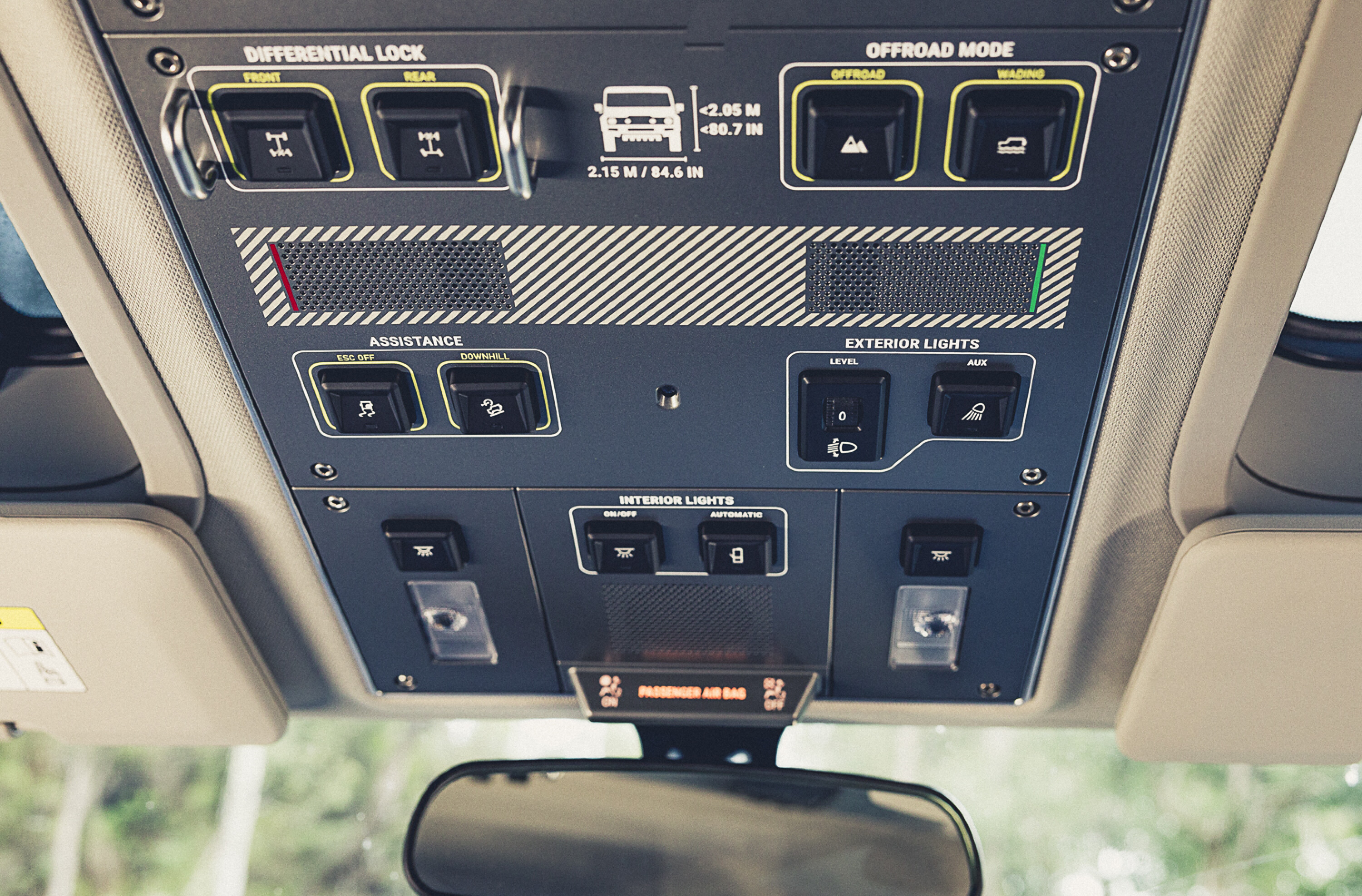
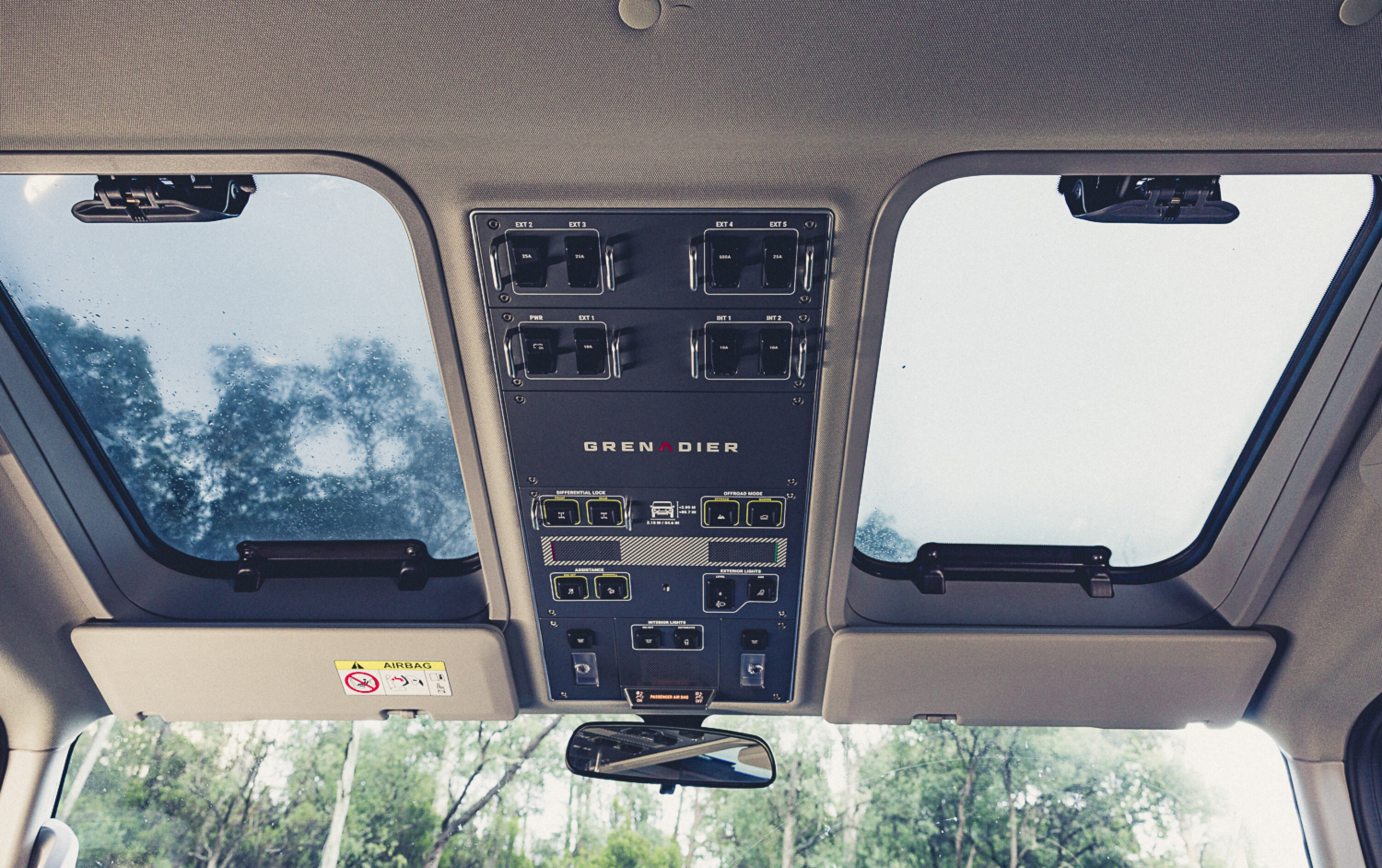
The centre stack of the dash contains all your regular HVAC and audio controls, while most of the controls for off-road functions are situated overhead.
Having said that, some of the controls in the centre are situated quite low where they are hard to see from the driver’s seat; these are easier to operate at night when they are illuminated, and I’m sure their locations would become second-nature with more time behind the wheel.
The Grenadier has a 12.3-inch touchscreen in the centre of the dash and it has wireless phone mirroring for Apple and Android users, but no inbuilt mapping. This is also home to the digital speedometer, TPMS screen and other gauge functions you would normally expect to find behind the steering wheel.
1
This is one thing I couldn’t get used to and personally would prefer them to be situated behind the tiller where they should be.
The screen is wide but narrow, and it can be difficult to read maps on the screen or to even clearly see the image from the reversing camera.
On our test vehicle the roof buttons included the controls for the winch, driving lights and diff locks. Some of the switches are rated to 50A for heavy load items such as the Red Winch, while others are 25A rated for lighter loads.
Conveniently, the roof is pre-wired for mounting lights up top, with four Deutsch plugs ready to go where the lashing rails are on both sides.
1
Drive time
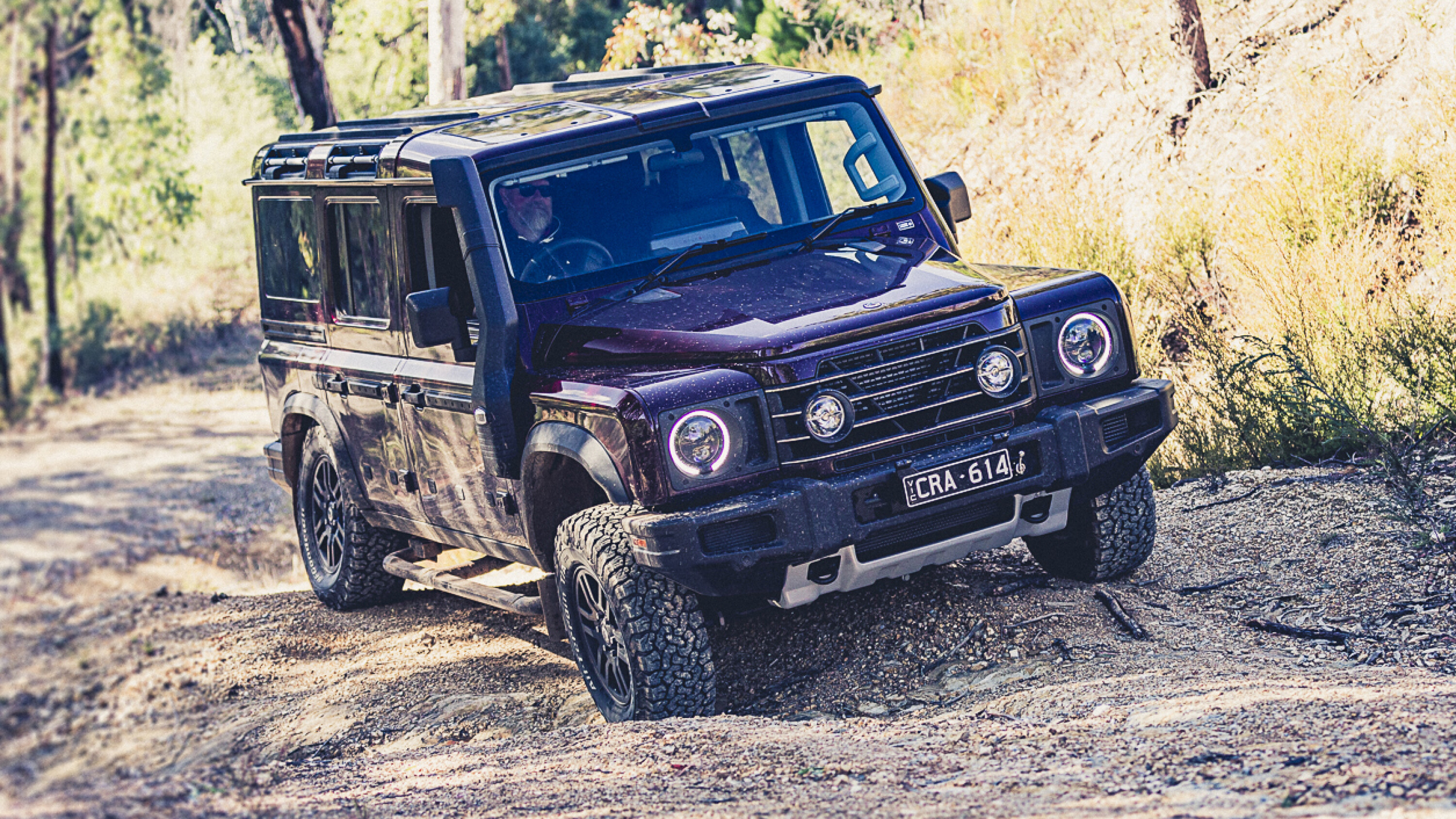
Once you find your preferred position in the driver’s seat, the Grenadier becomes a comfortable touring vehicle.
The Recaro-branded front seats are supportive; although, the bolstering on the seat squab does take a little lift to get over on ingress and egress, which can cause you to bump your head, but you soon get used to the technique required. The heating on the Fieldmaster’s front seats was certainly appreciated on our winter alpine drive.
The steering wheel feels small, but again you get used to it and the extra turns required to steer around corners. The turning circle is wide and is another thing to get used to if you’re not accustomed to driving a vehicle with a live axle up front and an old-school steering box rather than a modern rack.
1
The view through the tall, flat windscreen is good and the short bonnet is easy to see over.
Visibility out the back is not so good with the vertically split tailgate, and the relatively small dash screen doesn’t help much when reversing. The exterior rear view mirrors are your friends here, but they are likewise on the small side. A set of aftermarket towing mirrors would be a welcome addition.
I usually like a sunroof for the extra light it lets into the cabin, but I’m not a fan of the Fieldmaster’s safari windows, which, being ahead of the driver, often let the sun hit you directly in the face.
1
The Grenadier tours smoothly and easily on the highway, with a slight whine from the full-time 4×4 drivetrain and murmur from the BFG all terrains.
The eight-speed ZF transmission works its way smoothly through its ratios, allowing the BMW diesel engine to amble along efficiently, with just a squeeze of the long throttle pedal needed to get it to kick back a few cogs for overtaking. Manual gear selection is via a separate gate to the side on the shifter and is easy to use.
Despite its blocky, Lego-like appearance, the Grenadier was indicating fuel consumption in the low 7L/100km region at 110km/h on the highway. This no doubt helped us achieve our average 11.1L/100km of diesel use over the days ahead, climbing in the hills and using low range.
1
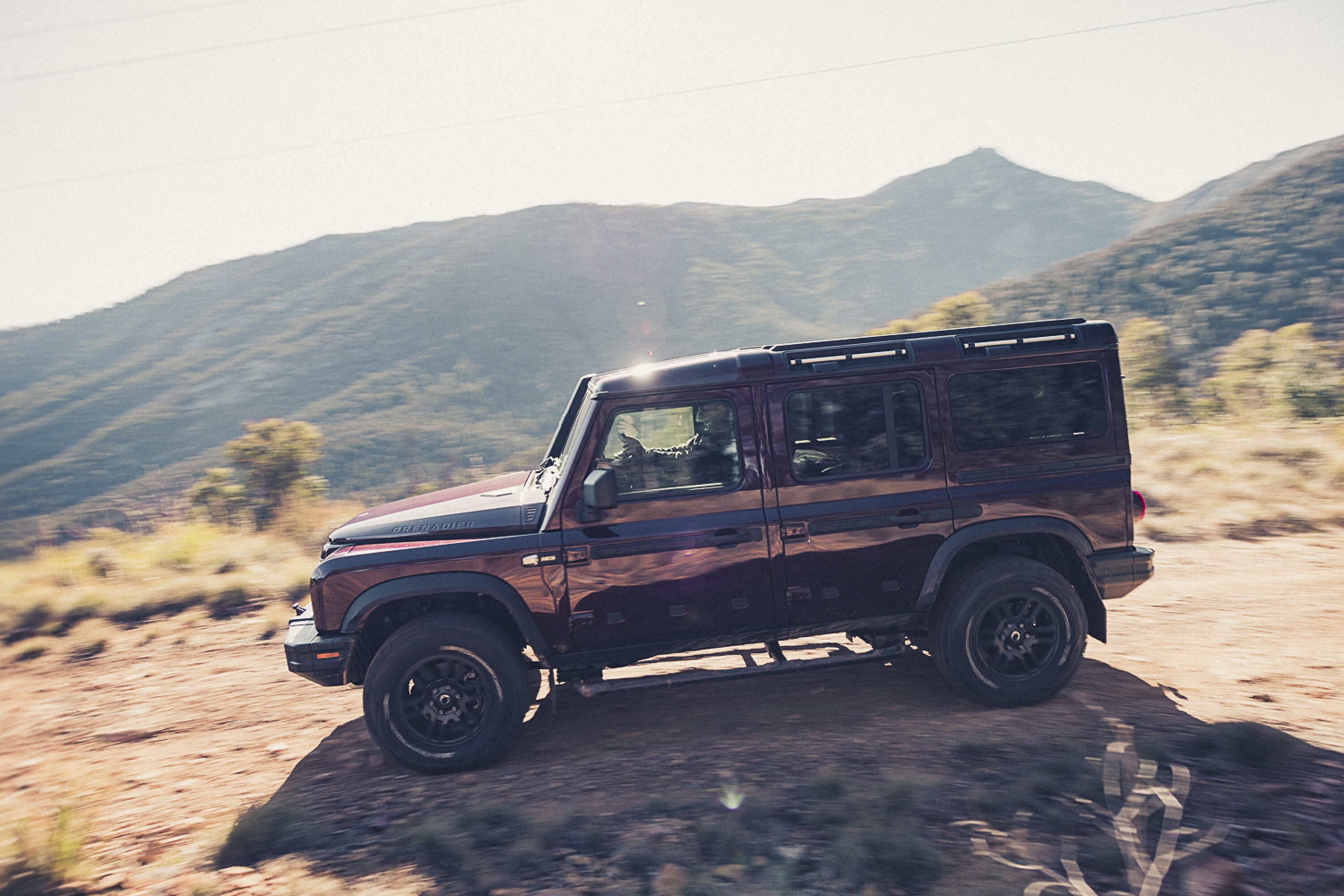
Once you leave the blacktop and hit the gravel you feel that the Grenadier is firmly sprung and well damped on its all-coil suspension; it’s firm but not uncomfortably so, and well controlled on twisty roads.
The ESP was a nuisance at times when accelerating out of corners with corrugations in the road surface, as it would totally cut the throttle input. I hoped the off-road mode button would kill or at least dampen this habit, but it didn’t, so you have to live with it. Instead, the off-road mode simply disables the parking sensors, auto-stop/start function and seat-belt reminders.
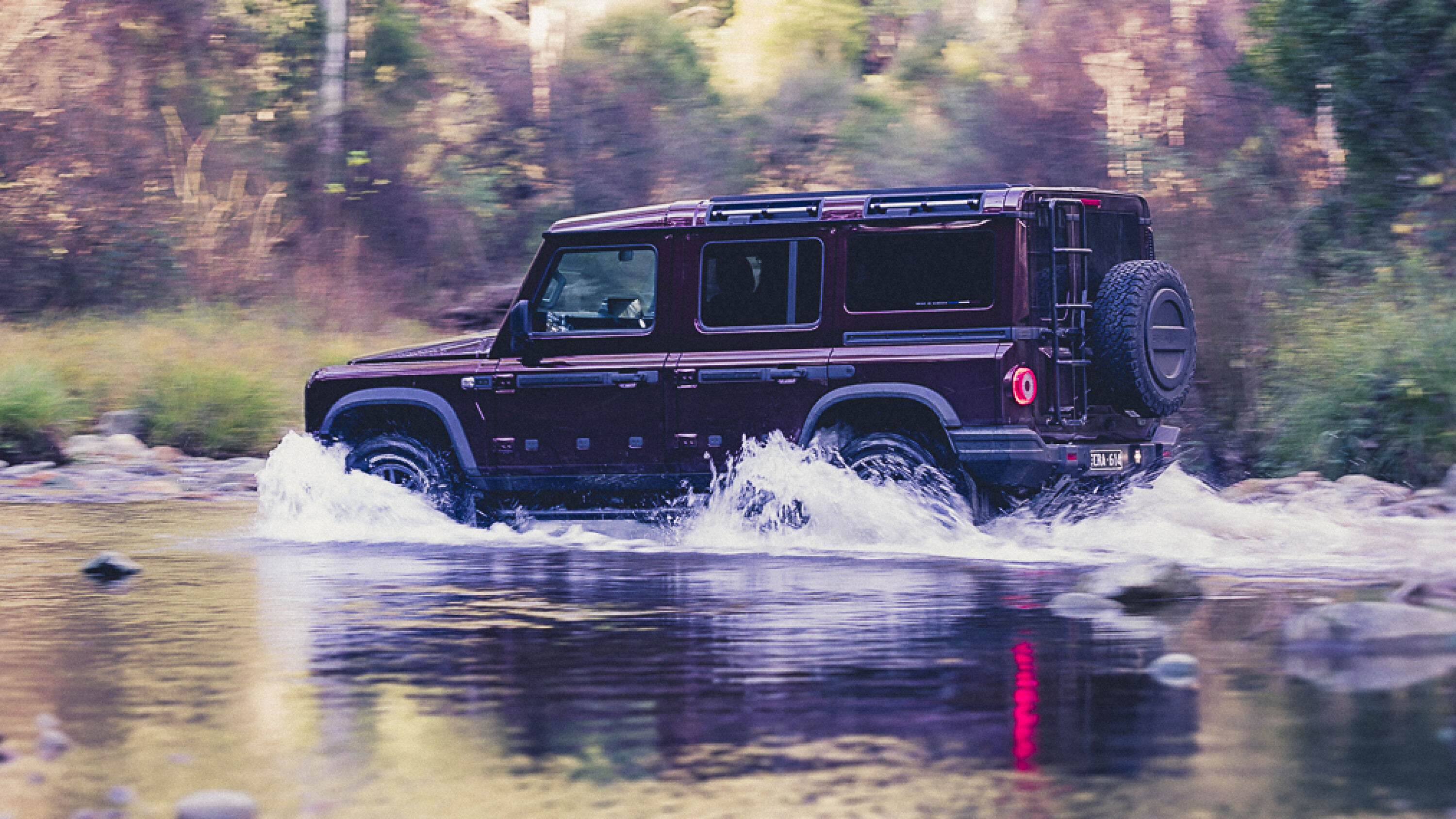
The wading mode has a clever function that switches off the electric cooling fan when engaged to protect the fan from damaging itself and the radiator when driving through water.
1
Of course, it will only turn off the fan if the engine temperature is at a safe level to allow it. Wading depth is quoted at 800mm.
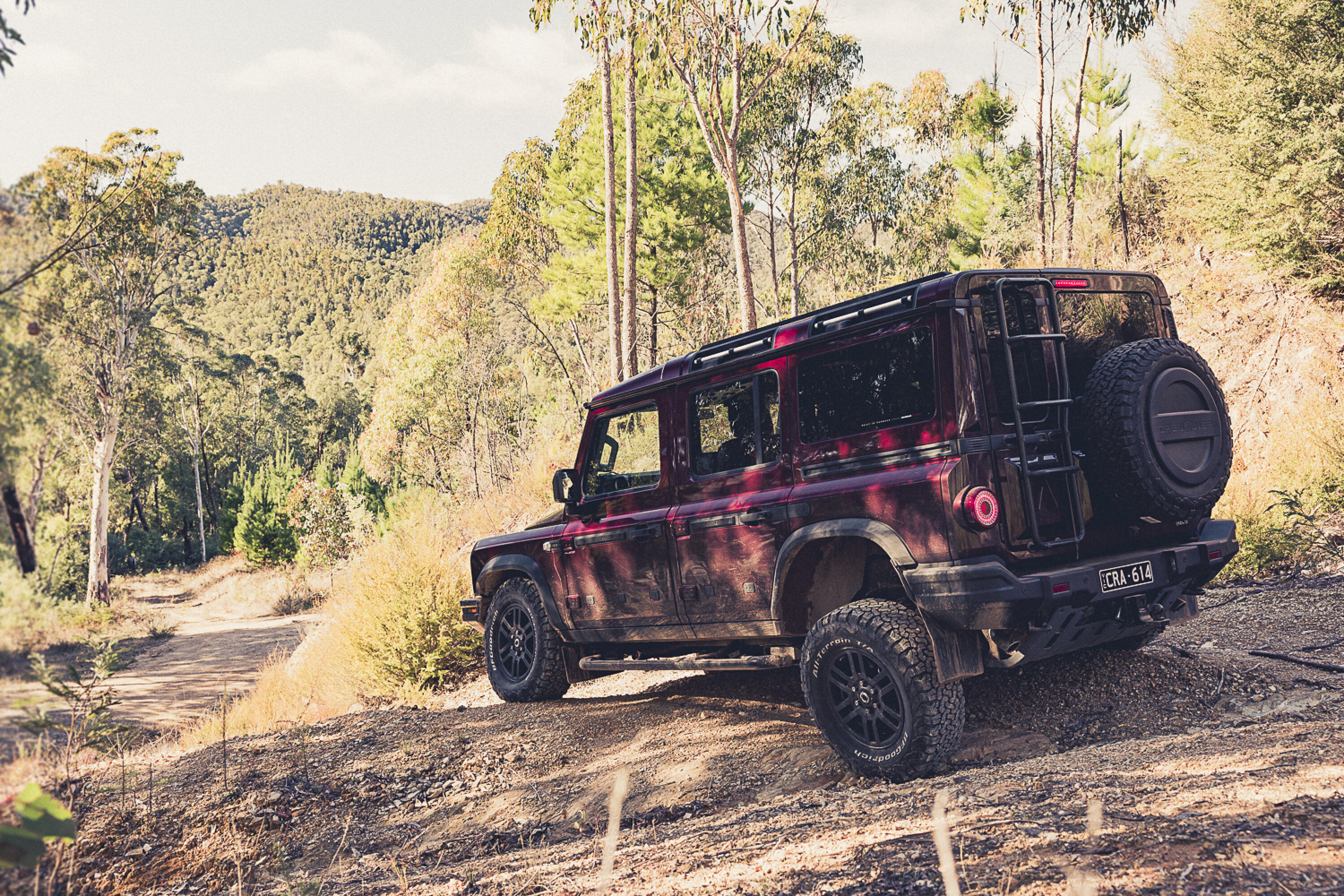
While the ride feels firm at higher speeds, it is compliant at low off-road speeds. The suspension, especially at the rear, walks over ruts and mounds with plenty of travel to keep the tyres on the ground where they can do their thing.
Like any capable, live-axle, triple-locked 4×4, the Grenadier doesn’t need a menu full of off-road or terrain modes. When the going gets rough you simply shift into low range, and when it gets rougher again you start to employ the centre, rear and front locking diffs.
1
With tyre pressures dropped, the Grenadier is a formidable off-road vehicle.
The diffs are locked using buttons on the roof console which illuminate to show you when they have engaged and are ready for action. The status of the diff locks is also displayed on the screen in front of the driver. The diff locks themselves engage and disengage quickly and efficiently.
Like Land Rovers of old, the Grenadier’s transfer case allows you to select low range without locking the centre differential, which is handy if you are reversing a trailer up a slope or wanting the extra grunt required to pull a large boat out of the water on a sealed ramp.
1
Safety
While it might not feature all of the safety equipment of many other new vehicles, the Grenadier does come with ABS, ETC, ESP and AEB; front, side and curtain airbags; lane-departure warning; TPMS; and trailer stability control.
That said, it was nice driving a vehicle on the freeway that doesn’t try to push you under the wheels of the B-double truck beside you just because you drifted too close to the white line when giving the truck some more space.
Likewise, standard cruise control over radar cruise is appreciated, but a rear cross traffic alert was missed when backing out of blind parking spaces in a country town.
1
Verdict
New vehicles with genuine off-road ability and plenty of character are few and far between, so the Grenadier is a breath of fresh air for the off-road enthusiasts.
It ticks all the boxes in terms of off-road ability with plenty of cool factor thrown in, but it’s not without its compromises.
The Grenadier is not as big as many would like; think of it as a midsize wagon like a Prado or Pajero rather than a large wagon like a LandCruiser or Patrol. If that’s a problem for you, then the Quartermaster ute could be a good option.
1
Vehicle idiosyncrasies might be cool but they can be frustrating too, and I found some of the ergonomic compromises on the Grenadier to be particularly so.
For example, I’m all for retaining an old-school key that you need to put in the ignition and turn to start the vehicle, but when the ignition is on the wrong side of the steering column and buried out of sight it’s a pain in the backside to use.
The Grenadier’s biggest problem is that it was created by a team that wanted to build a Land Rover Defender. You would think that by starting with a clean sheet they might have strayed further from the British icon but, even though they addressed many of the Defender’s foibles, there are still plenty of compromises in the Grenadier.
But hey, these are character building, right?
MORE
Everything Ineos
| 2024 Ineos Grenadier Fieldmaster specifications | |
|---|---|
| Price | $123,000+ORC |
| Engine | I6, bi-turbo diesel |
| Capacity | 2993cc |
| Max power | 183kW@3250-4200rpm |
| Max torque | 550Nm@1250-3000rpm |
| Transmission | 8-speed automatic |
| 4×4 system | Full-time/dual range |
| Crawl ratio | 56.37:1 |
| Construction | 5-door wagon body on ladder chassis |
| Front suspension | 5-link live axle on coil springs |
| Rear suspension | 5-link live axle on coil springs |
| Tyres | 255/70R18 AT |
| Kerb weight | 2718kg |
| GVM | 3550kg |
| GCM | 7000kg |
| Towing capacity | 3500kg |
| Payload | 833kg |
| Seats | 5 |
| Fuel tank | 90L (17L Adblue tank) |
| ADR fuel consumption | 10.5L/100km |
| On test fuel consumption | 11.1L/100km |
| Approach angle | 36.2u00b0 |
| Ramp over angle | 28.2u00b0 |
| Departure angle | 36.1u00b0 |
| Ground clearance | 264mm |
| Wading depth | 800mm |
I left Katherine with the fuel tanks, fridge and pantry full, and headed 50km south before turning onto Central Arnhem Road.
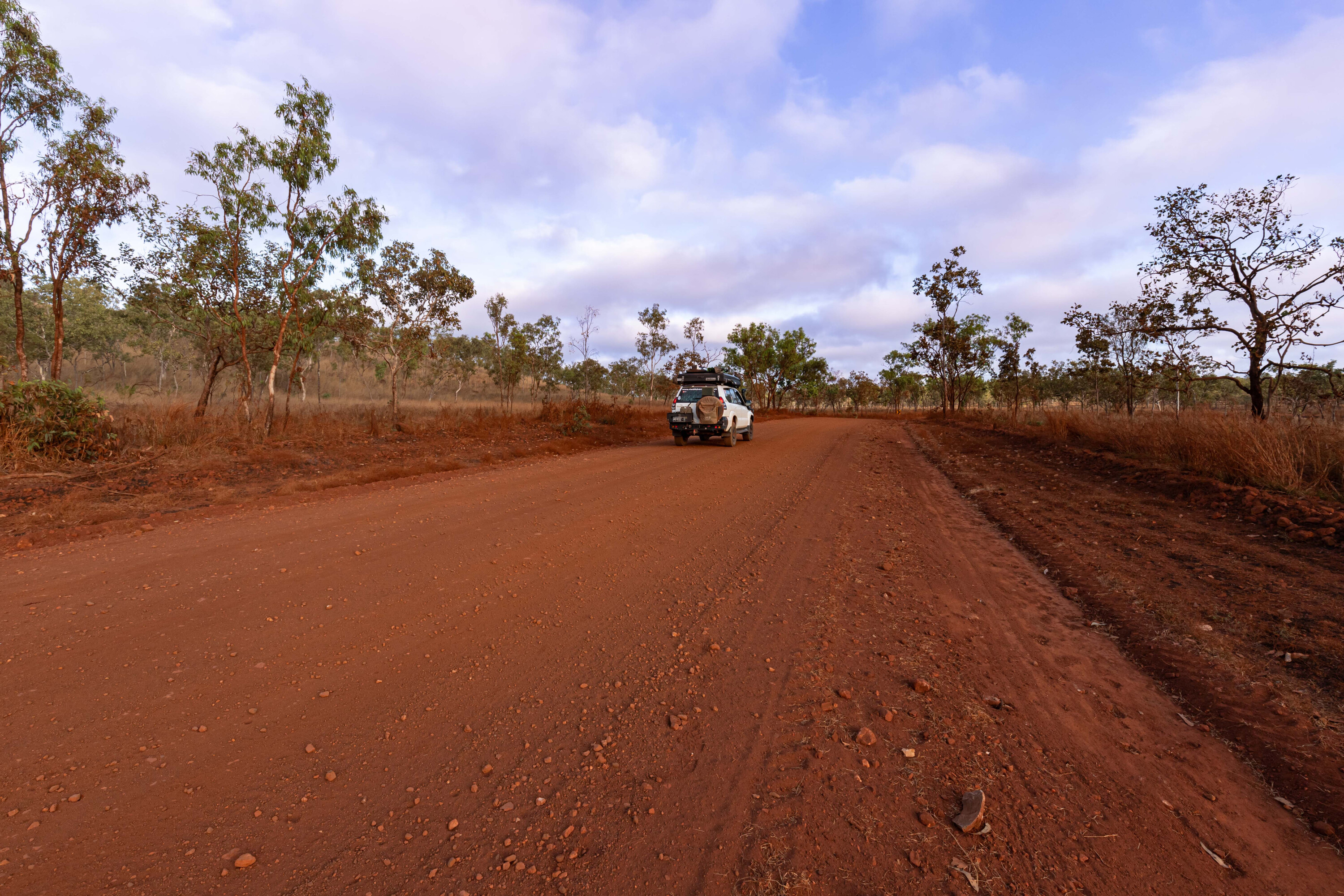
I was surprised that the bitumen continued past the Maranboy Police Station, the community at Barunga and then Beswick, a distance of 66km before becoming a red dirt road.
At Beswick, you will find Djilpin Arts where you can meet the local artists and learn about the traditional life and culture of the Bagala People of the Jawoyn Nation, and you can stay here in one of the award-winning elevated Pavilion rooms and experience seasonal cultural events, tours and immersions.
1
I stopped to air down my tyres just before the dirt road section started, reset the TPMS, and continued along Central Arnhem Road.
The scenery here is spectacular with tall bluffs rising above the plains, although the road was dusty and badly corrugated. Reducing the tyre pressure and speed is critical on this road, especially on the tight bends where the rear end of your vehicle wants to overtake you.
The slow-burn scrub fires that are managed in the Territory allow you to see the layout of the land that would otherwise be hidden by the tall grasses. I came across a sign that read ‘Grader Ahead’ and where the work had been completed the going was smooth… and for a good distance.
1
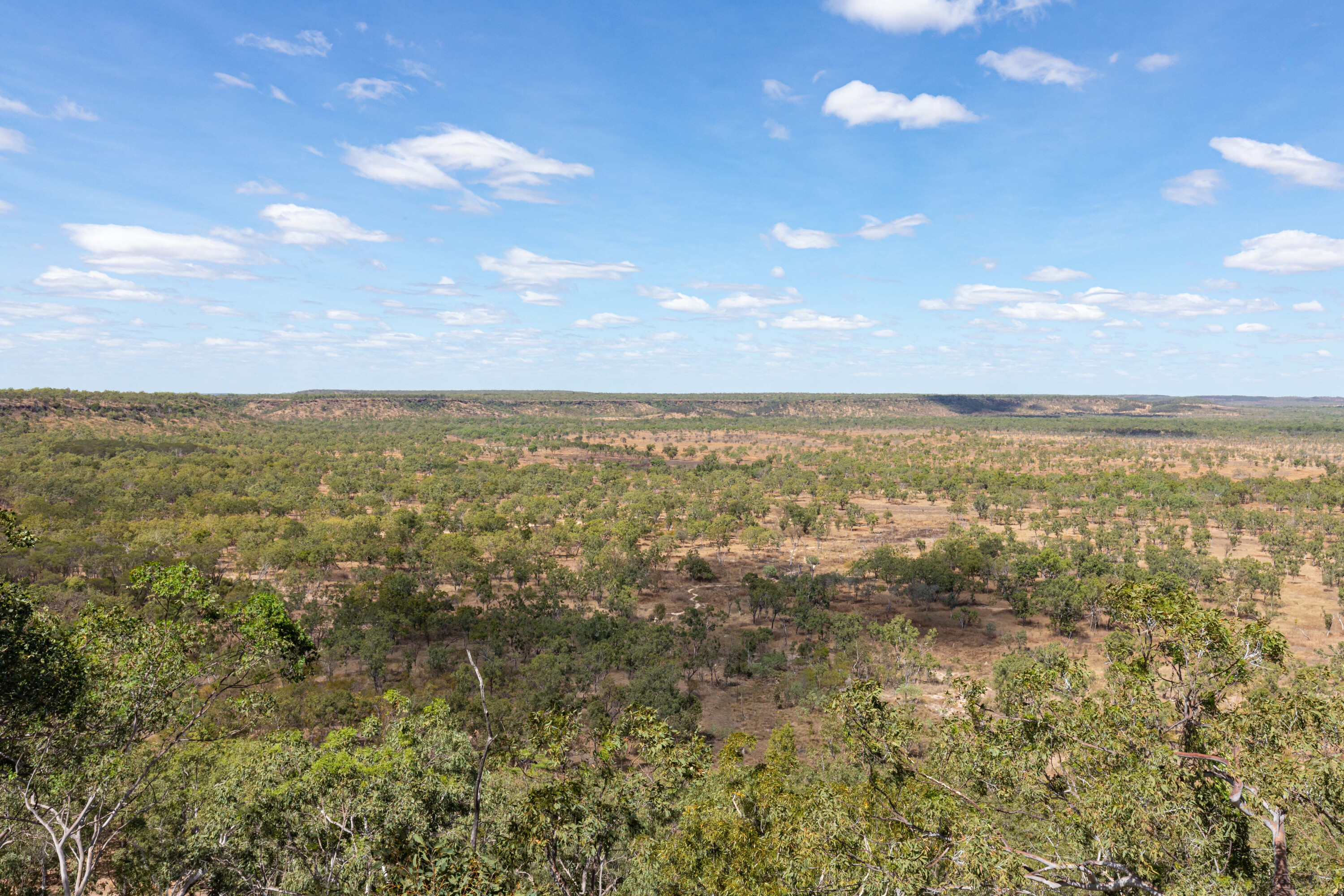
Around 52km along the dirt is the spectacular ‘Jurassic Park’ lookout. There is a carpark off the road and from the top of the escarpment the view across the valley has an uncanny resemblance to scenes from the Jurassic Park movie.
Watch out for the skittish donkeys in the scrub after the turnoff to Mainoru Station and keep an eye out for the yellow flowers of the kapok tree which are used as a calendar by the Aboriginal people to judge the laying and hatching of saltwater crocodile eggs.
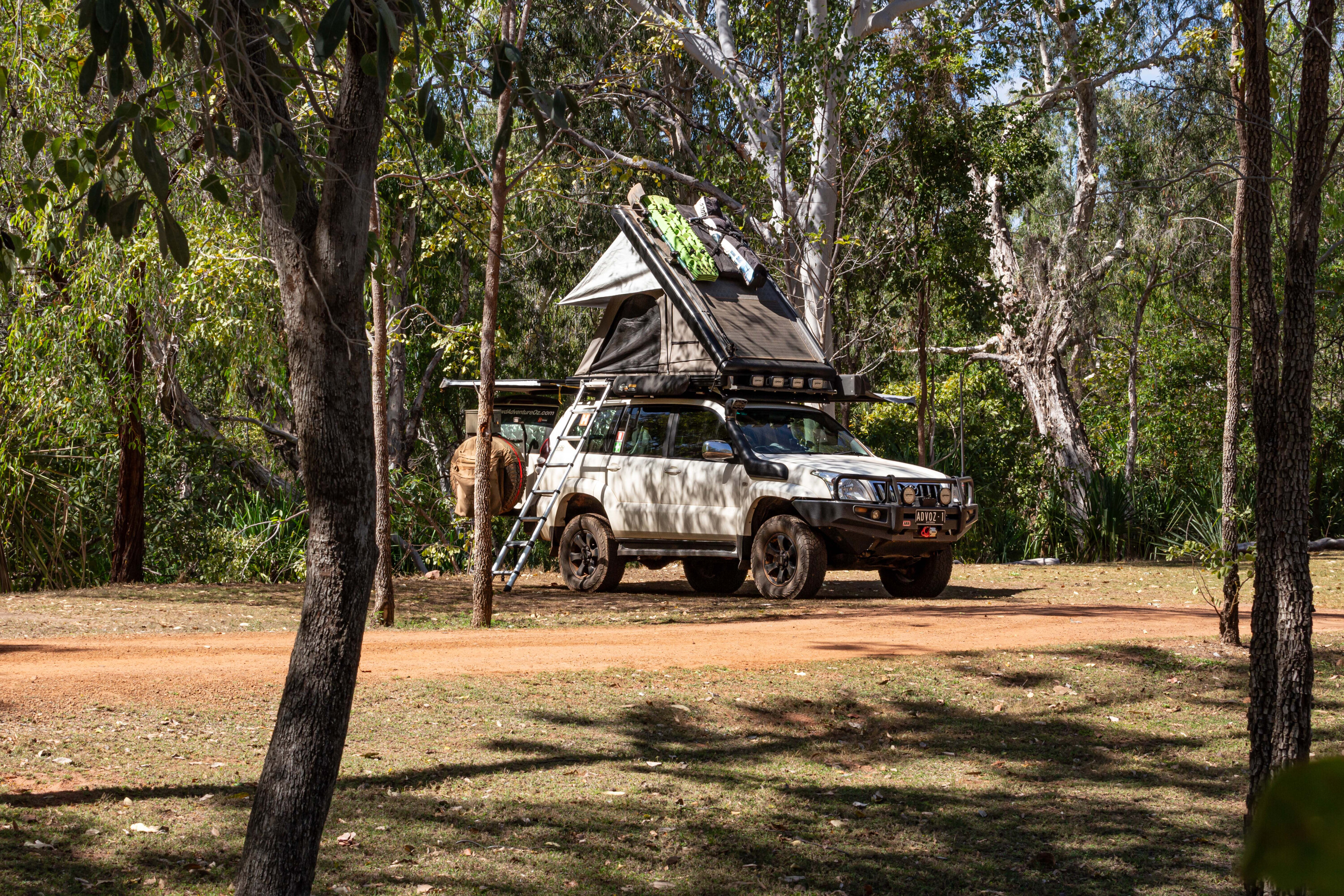
Mainoru Store is a common stopover for adventurers driving out to Gove Peninsula and back, as it is still a long drive to Katherine or any of the designated campsites on Central Arnhem Road. Anthony and Kate manage the Mainoru Store, where you can fuel up if necessary and enjoy beautiful grass campsites.
1
As well as a safe swimming hole, there are facilities here including toilets and hot showers. It’s advisable to call ahead a day prior to order evening meals, and I guarantee you won’t be disappointed.
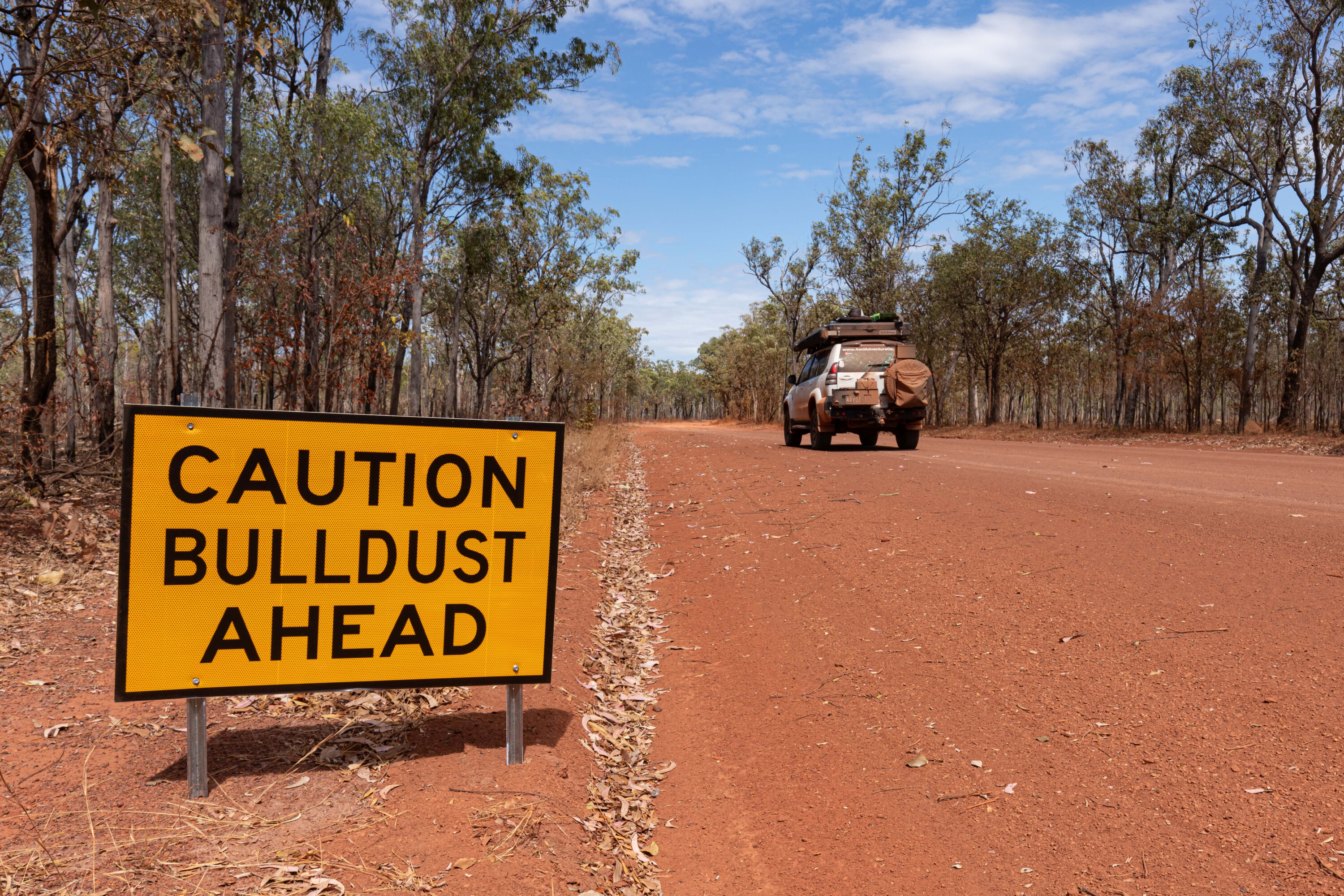
Day two was going to be a long drive, so I left Mainoru Store as the sun was rising. The road was in great condition but just east of Mount Stretton there were some long stretches of bulldust for about four or five kilometres, improving further east towards Nhulunbuy.
There was some wildlife about including cattle, buffalo, donkeys and even a dingo but the road was in good condition, especially compared to the Savannah Way up through Hells Gate, Borroloola and Limmen National Park that I had recently driven.
1
I wondered if this was because most people who drive this road understand that reducing tyre pressures reduces corrugations, and because fewer caravans are towed along this road.
The Giddy River turnoff is signposted Guwatjurumurru, and if you’re not looking for it, it is easy to miss. As with all camping areas on the Gove Peninsula, you need a prepaid Visitor Access Permit and a Camping Permit from the Dhimurru Aboriginal Corporation.
If you decide to stay here, I highly recommend Campsite 2 as there is a stunning waterfall a short walk away. Don’t be tempted to take a dip though as saltwater crocs haunt this area.
1
That night the sound of the waterfall lulled me to sleep, and I had no need to get up early as it is only 50km to Nhulunbuy, so I took my time in the morning and enjoyed breakfast while watching the water cascading over the rock face before packing down the rooftop tent and hitting the road.
At the T-junction and the end of the Central Arnhem Road I turned left onto Dhupuma Road. There is a bauxite mine to the right, so the road opens right up and is well-maintained with water trucks keeping the dust down, but as a result your vehicle will end up covered in a fine mist of burnt orange mud.
There are a lot of mining vehicles along this stretch, so take care; the trucks will often let you pass as their speed is restricted. The dirt ends just near the airport and then it is bitumen the rest of the way.
1
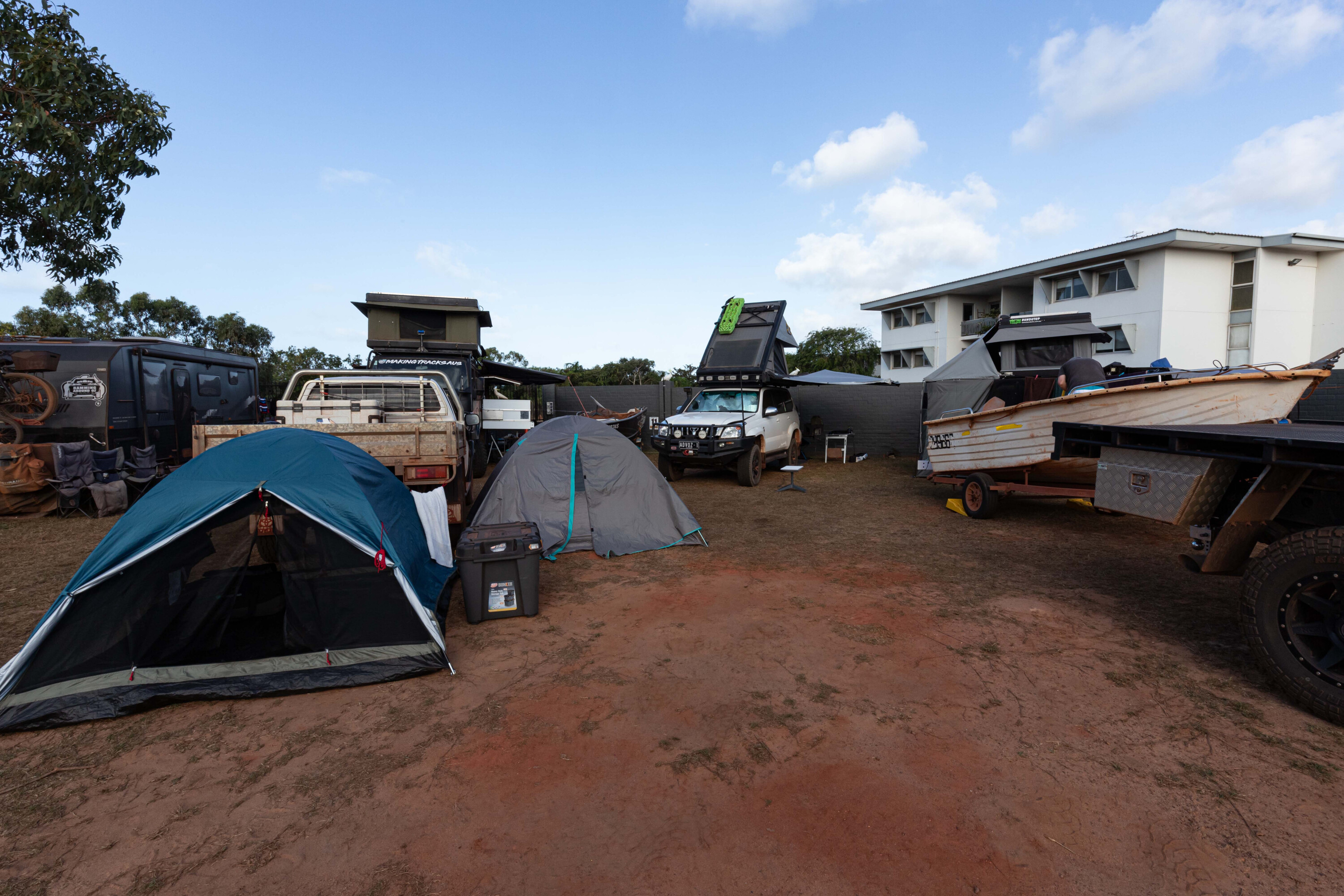
On arriving in Nhulunbuy, I checked into the Walkabout Lodge & Tavern where I’d booked a powered campsite 12 months prior.
The number of powered sites is limited and as it was, guests were packed in like sardines. Thankfully I had great neighbours, and we shared a few happy hours over the next five days.
So, how long is enough to experience Arnhem Land? I recommend that you stay as long as you can. With numerous camping options and sights to see, including a day trip out to Bremer Island (Dhambaliya).
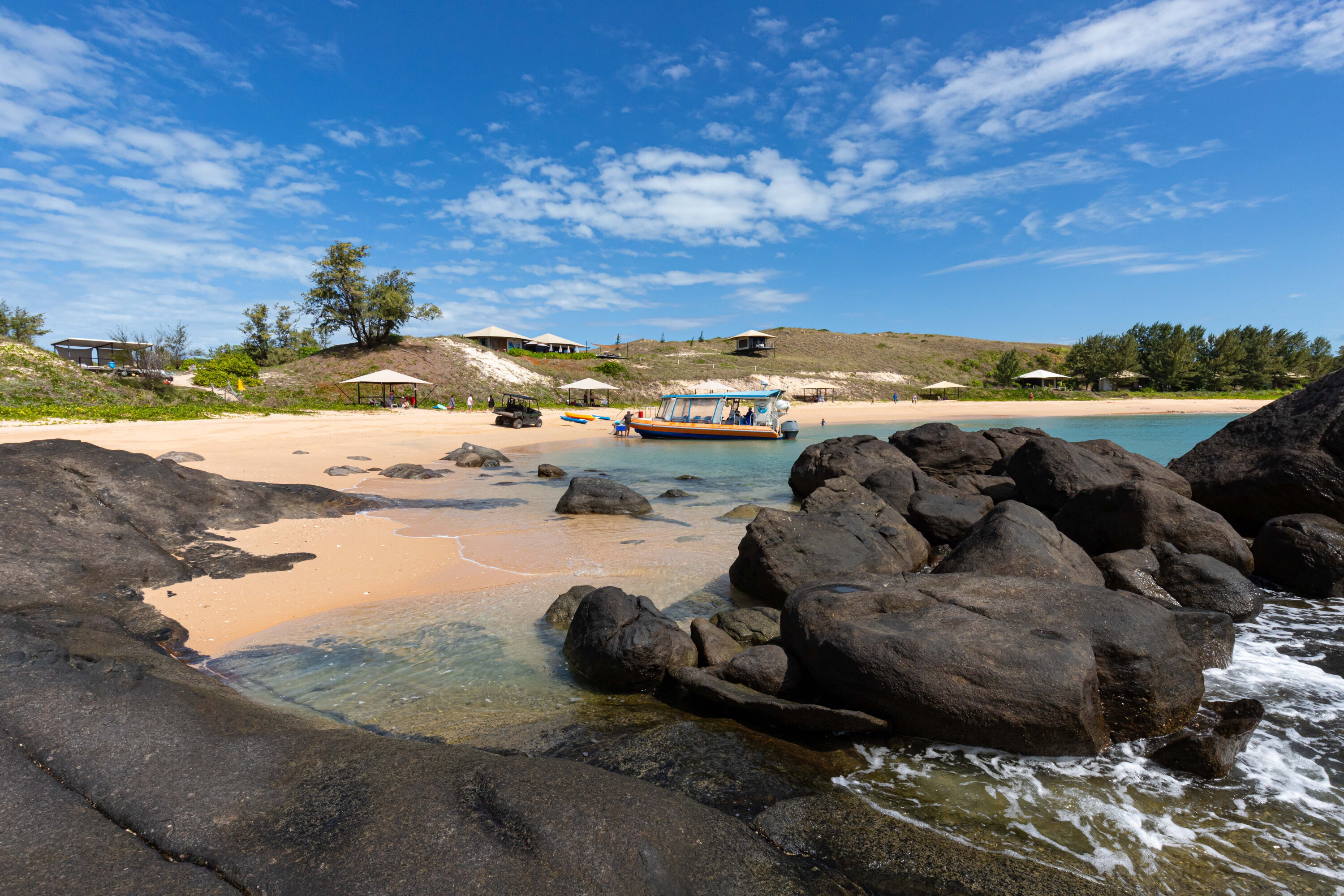
Bremer Island Cruises depart from Gove Boat Club and deliver you to the Banubanu Wilderness Retreat. On the way out the emerald green water is inviting but dangerous with sharks, crocs and stingers. You can spend the four-hour experience on the island relaxing by the plunge pool or lying under a shady gazebo on the beach.
1
The bar and restaurant are open for lunch and offer a fantastic menu. Bremer Island Cruises also operate Gove Harbour Fish & Chips sunset cruises, and Gove Harbour Historical Tours.
Activities on Bremer Island include snorkelling around the rocks, kayaking in the bay, and enjoying the 1.2km loop Point Walk or the 2.5km loop Boundary Walk; in fact, you’ll possibly have time to do both.
I settled for the Point Walk and the relaxed pace meant I could enjoy the spectacular views and colours around me. If you have a boat, you can make your way over to the retreat to enjoy the scenery and facilities, and you can also stay at the resort with eco huts overlooking the beach.
1
The following day I checked out the beach campsites on the eastern side of Gove Peninsula.
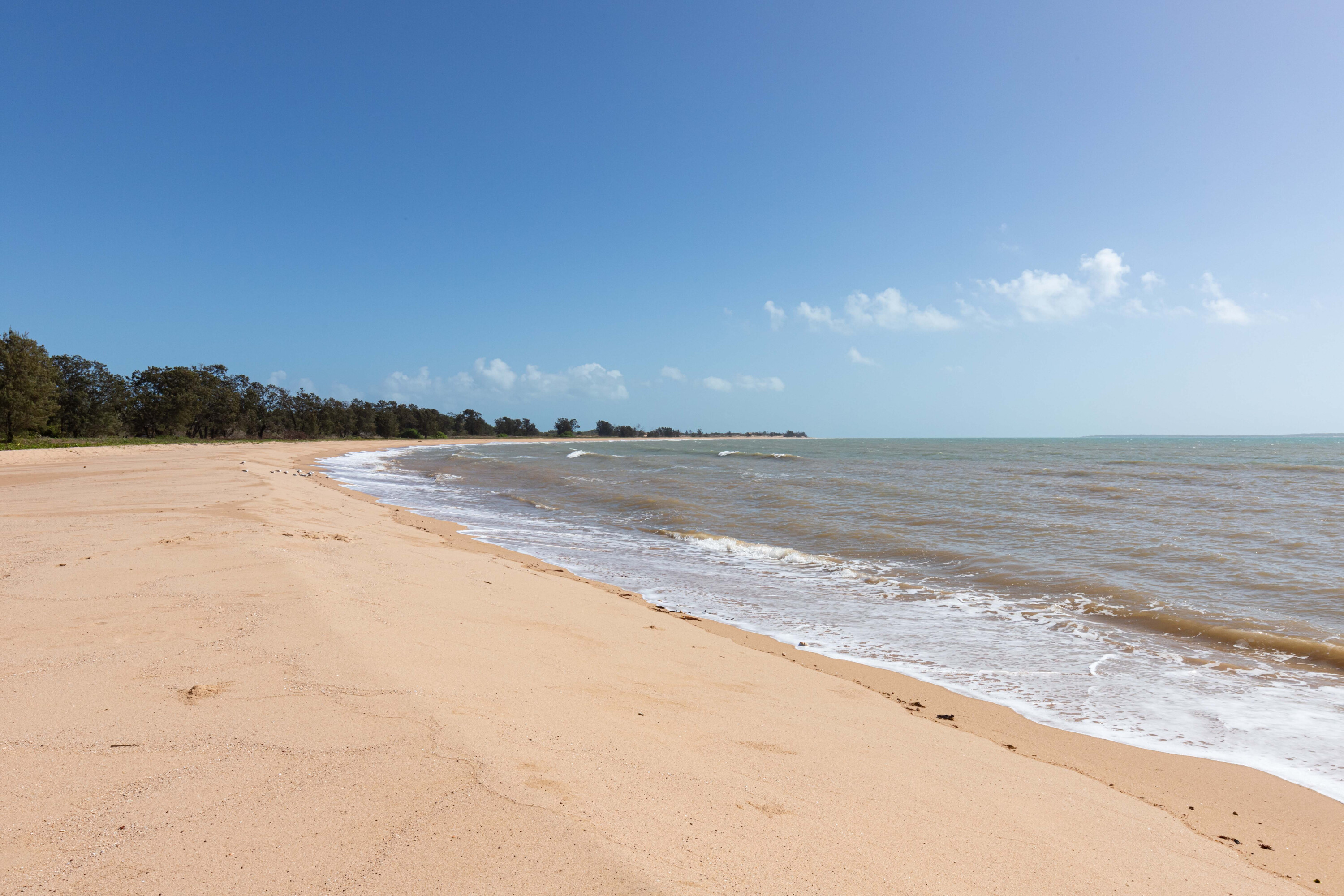
The southern camping areas at Cape Arnhem (Waṉuwuy) were closed due to turtles nesting, so only the eastern ones were accessible. The first stop was Daliwuy Bay (Binydjarrnga) which has a couple of campsites, one large and one small, and a drop toilet. There is a boat ramp that provides access to a large lagoon and Daliwuy Bay.
Macassan Beach (Wurrwurrwuy) is a sacred site for the Yolngu People; it was a trading place with the people from Makassar in the Celebes (now known as Sulawesi, Indonesia) who harvested sea cucumbers in the area between the mid-1700s and 1907. There is a 200m circuit walk with information boards explaining the stone arrangements dispersed along the track.
1
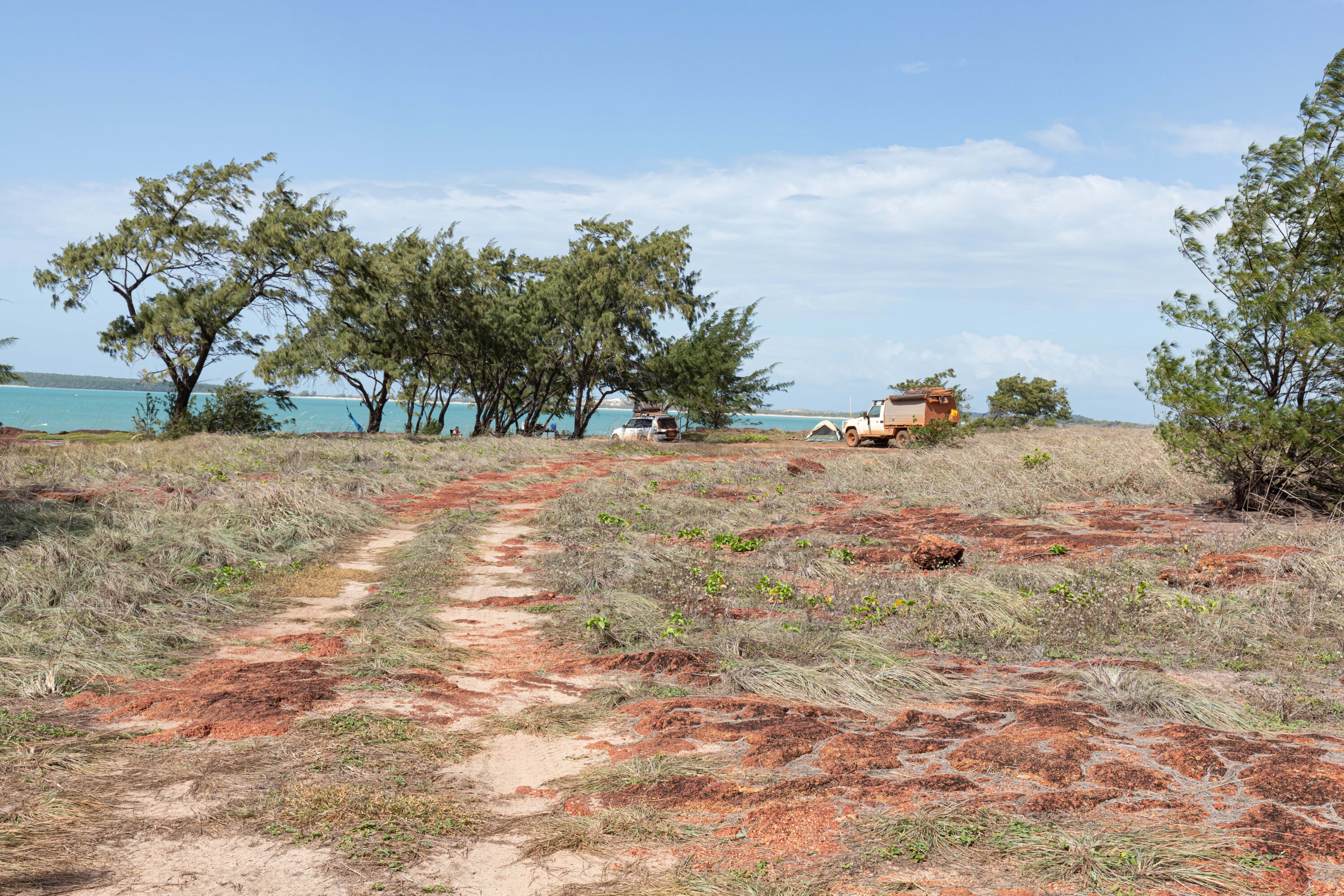
The camping area overlooks the beach but is open and unprotected from the wind. All the sites were taken at this popular spot, with the only facility being a solitary drop toilet.
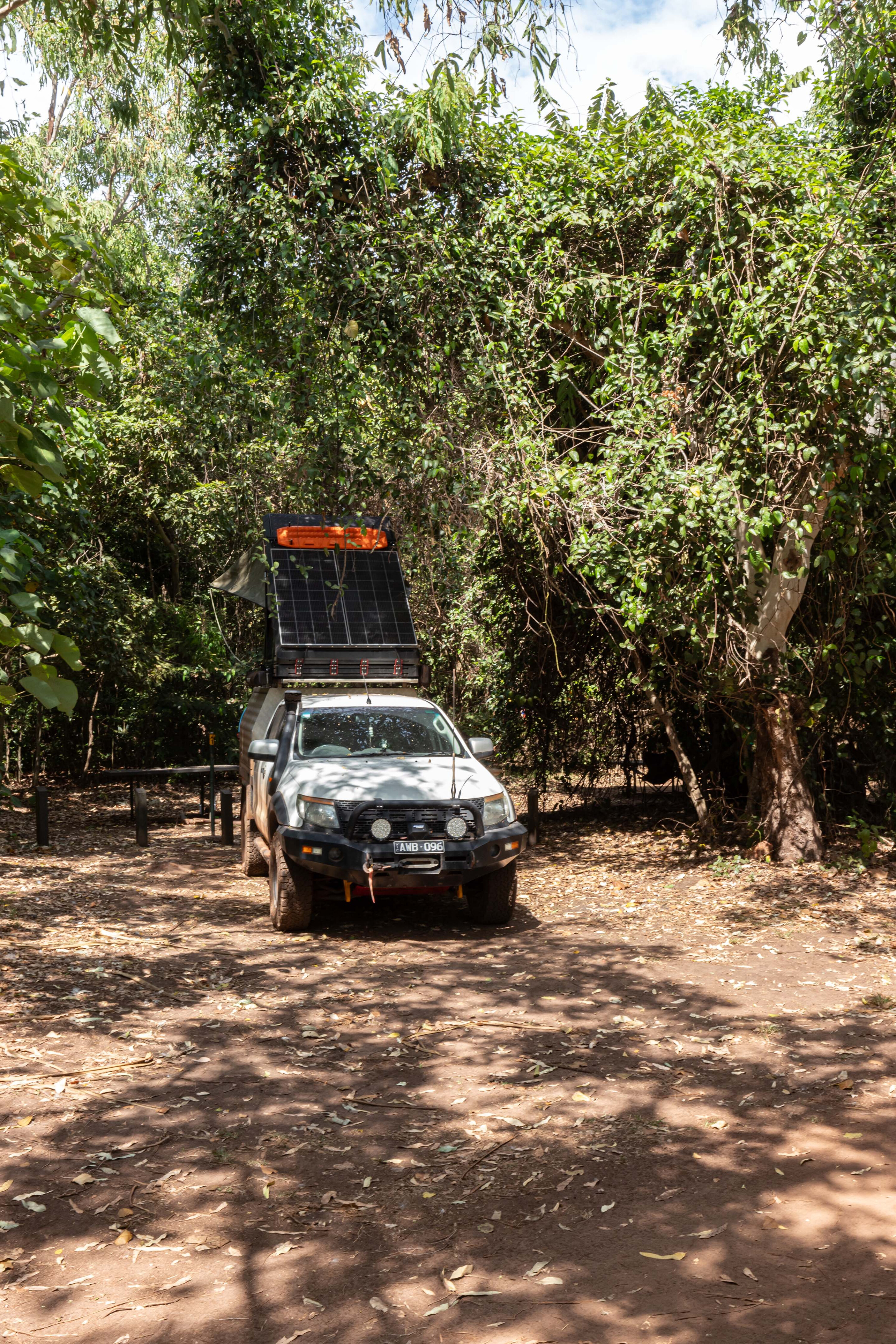
Turtle Beach (Ŋumuy) is the most protected of the camping areas and also the most picturesque, but again space is limited with the campsites tucked into the lush coastal monsoon vine forest. The white sand and blue water make this hidden cove a favourite with locals. There is a composting toilet and picnic tables, as well as plenty of shade. The beauty of Arnhem Land is incredible.
At the end of the track is Little Bondi Beach (Bariŋura) which is the best swimming beach by far and is a popular hang-out for locals, with plenty of families and young people enjoying the area, especially on weekends.
1
There is some deep sand on the track in, and beach driving is necessary, so reducing tyre pressures will aid progress, although it didn’t look like the locals bothered with that too much.
Closer to town there is camping near Rainbow Cliffs (Banambarrnga), accessed via a severely corrugated road, but the limited campsites are dispersed nicely. Rainbow Cliffs light up at sunrise but even in the middle of the day they are a spectacle.
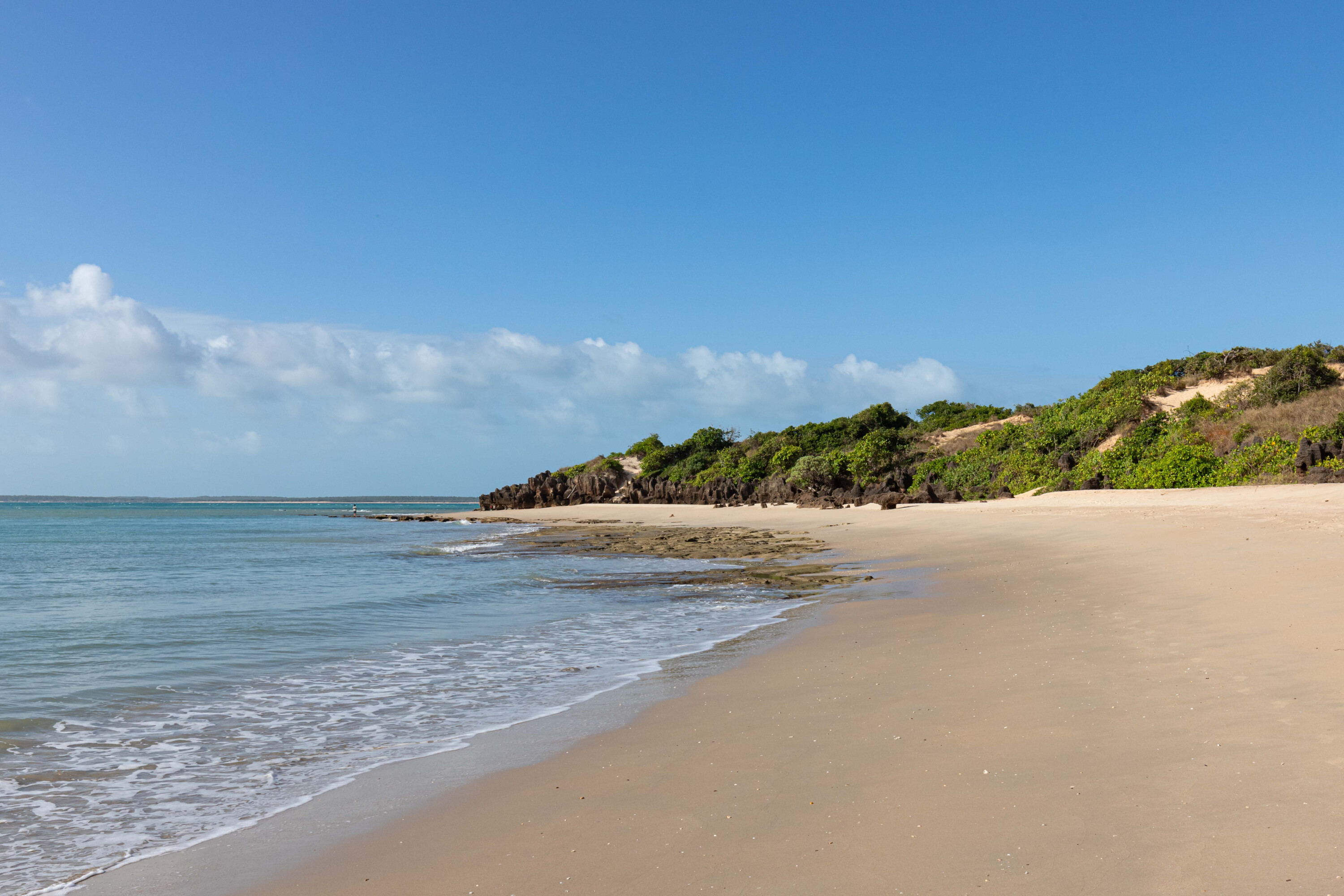
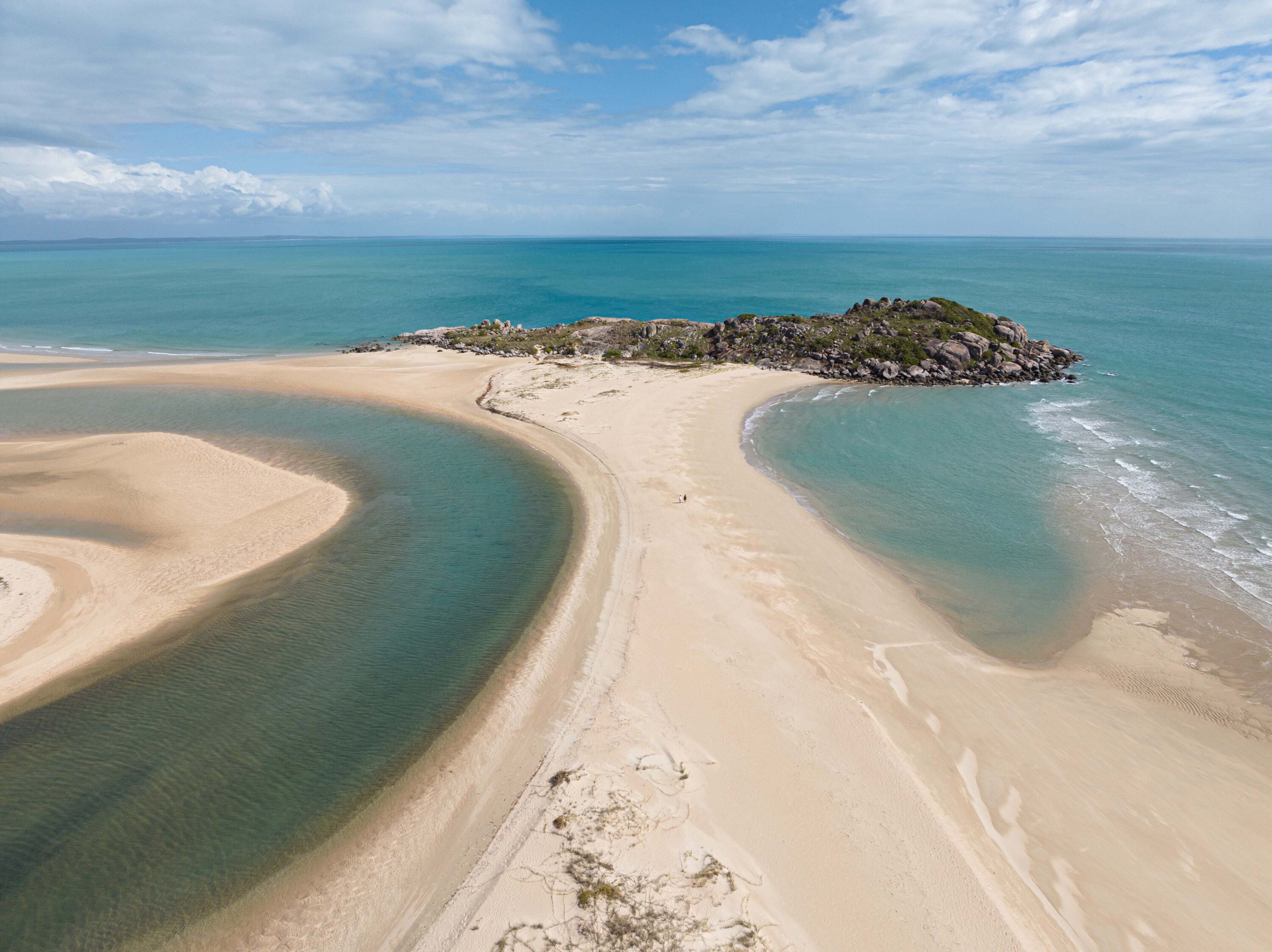
East Woody Beach is another beautiful spot to check out and at low tide you can walk across to the island at the tip. I checked out Crocodile Creek but didn’t spot any crocs lurking in the water.
1
My legs got smashed by midges here and I suffered for many weeks.
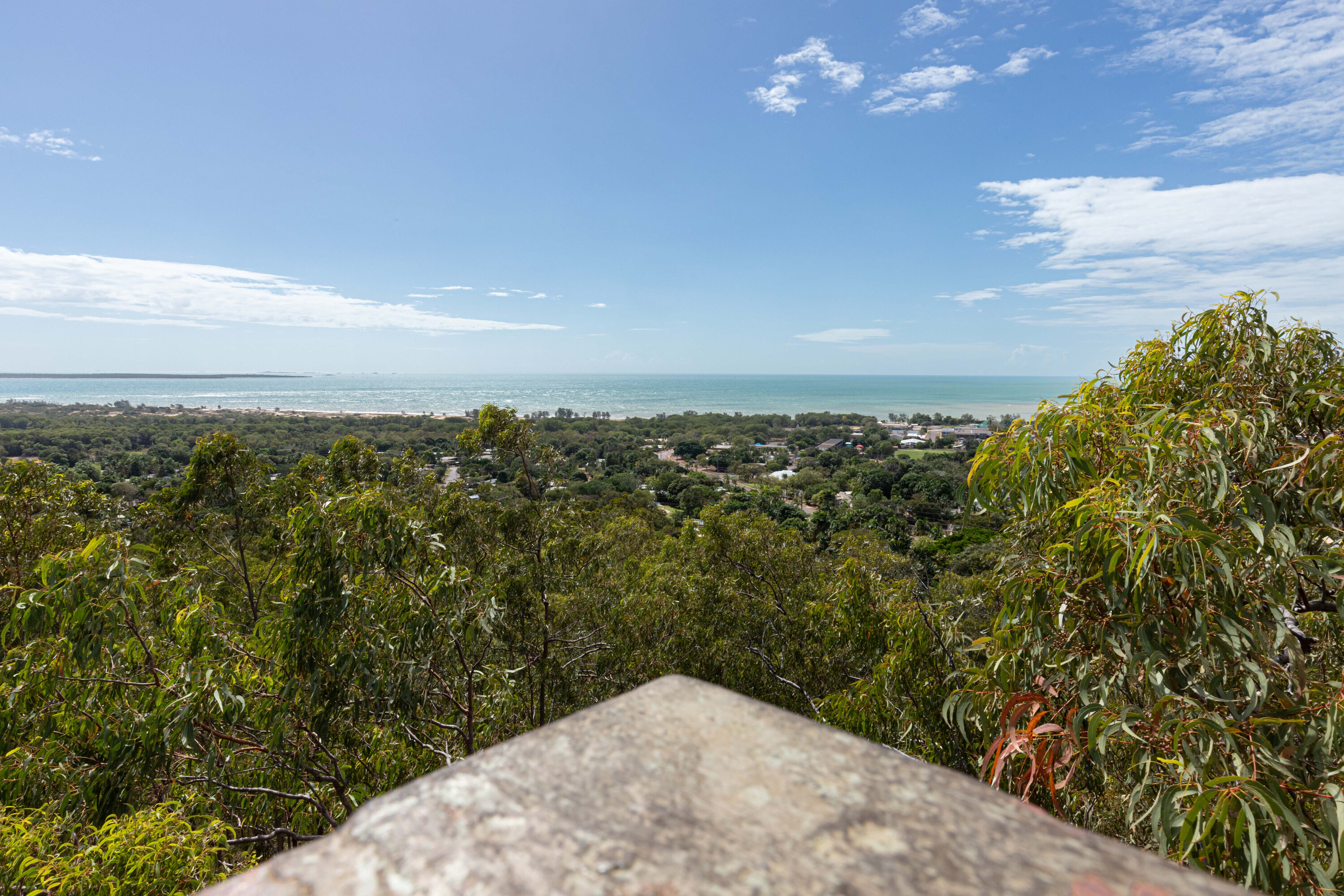
Nhulunbuy Lookout offers great views over the town and out toward Papua New Guinea, and there are several beaches to enjoy, such as Birritlimi, Wallaby and Town beaches, but I was never tempted to enter the water, even with it being so hot. My legs got smashed by midges here and I suffered for many weeks.
Just south of Nhulunbuy is Yirrkala and the excellent Buku-Larrnggay Mulka/Yirrkala Art Centre, and it’s well worth spending a couple of hours exploring the indigenous art. You’ll need a permit from the Dhimurru Aboriginal Corporation before you go, which can be applied for online (but not on weekends) so make sure you plan ahead.
My time in Nhulunbuy was over and with a long drive ahead of me I got up early, checked out and filled up the fuel tanks before departing this special place.
1
Outward bound, I forgot how rough and rocky the road was in places, and as well as all the corrugations there are also long stretches of bull dust.
I arrived at Mainoru Store by mid-afternoon and once I’d set up, I enjoyed a dip in the swimming hole with its crystal clear water and lily pads. My evening was spent enjoying a home-cooked meal and a few beers undercover at the rear of the store, chatting to fellow travellers.
The store is open for ‘Snack Box’ items from 8am so I picked up a toasted sanga for breaky before heading off towards Katherine. It was interesting to watch how the termite mounds changed colour along the route as the soil changed colour, and also their shapes; some are tall and thin north-south termite mounds while the others are big and chunky.
I was mesmerised by the beauty of what I saw on this adventure. If my next destination, Garig Gunak Barlu National Park in northern Arnhem Land, is as stunning as the Gove Peninsula, I am in for a treat.
Travel planner
Region
Eastern Arnhem Land
Nearest town
Nhulunbuy
When to go
The cooler months from April to September are the best times, but access may close after heavy rain.
Permits
Get them from Dhimurru Aboriginal Corporation for access to this section of Arnhem Land as a visitor and for camping. An additional permit is also required to visit the art centre at Yirrkala. These permits are available for purchase online before you arrive.
Contact
Top 5 camps in eastern Arnhem Land
- Littler Bondi Beach
- Giddy River
- Turtle Beach
- Macassan Beach
- Rainbow Cliffs
- Littler Bondi Beach
- Giddy River
- Turtle Beach
- Macassan Beach
- Rainbow Cliffs
Spending my days out photographing on the road has been a 25-year adventure exploring the back country and outback of Australia.
When my new companion Cleo the mini cavoodle arrived, my first thought was how I wanted her to join me on these awesome journeys. Ensuring her comfort and safety on long road trips, while also protecting the 4x4s we test and photograph, became my priority.
DOOG (Dog Owners Outdoor Gear) has been instrumental in achieving this goal. The company’s NeoSport Soft Harness is adjustable in two places to suit small to medium dogs. It has not only enhanced Cleo’s safety with its easy attachment to the car restraint, but has also blended seamlessly with our active lifestyle, as the leash or car restraint can clip to the front or back ring for easy walking and dog control.
1
Made flexible neoprene, it is easy to put on and it dries quickly after wet beach runs. One thing I did find was it tended to gather up at her neck when lying down; whilst this didn’t seem to bother Cleo much, it may on a longer drive where napping is a must. Ensure you measure your doggo’s neck and chest before purchase.
The DOOG Booster Seat is a game-changer, made from quilted 600d Oxford fabric with padded sides. It’s tough and durable, holding up against puppy chewing, scratching and digging. It clips onto the headrest and has a strap to go around the base of the seat, preventing it from sliding forward on steep descents or during sudden stops, which from experience does happen.
The booster seat has kept Cleo secure, comfy and snug on even the bumpiest tracks, alleviating motion sickness, and paired with the Car Restraint (sold separately) it has minimised any in-car antics. While the booster seat has a small restraint clip built into it, the Car Restraint surpasses that by clicking into the other end of the seatbelt.
The Car Restraint doesn’t always work in some newer car models in the centre seat belt clip, as nowadays they often have a different clip design from the left and right passenger seats, but the internal bed restraint alleviates this issue.
The Booster Seat has great padding that is easily removable for washing. Also, the section that attaches to the headrest rolls down and zips up, making the compact bed usable for sleeping and resting wherever you land.
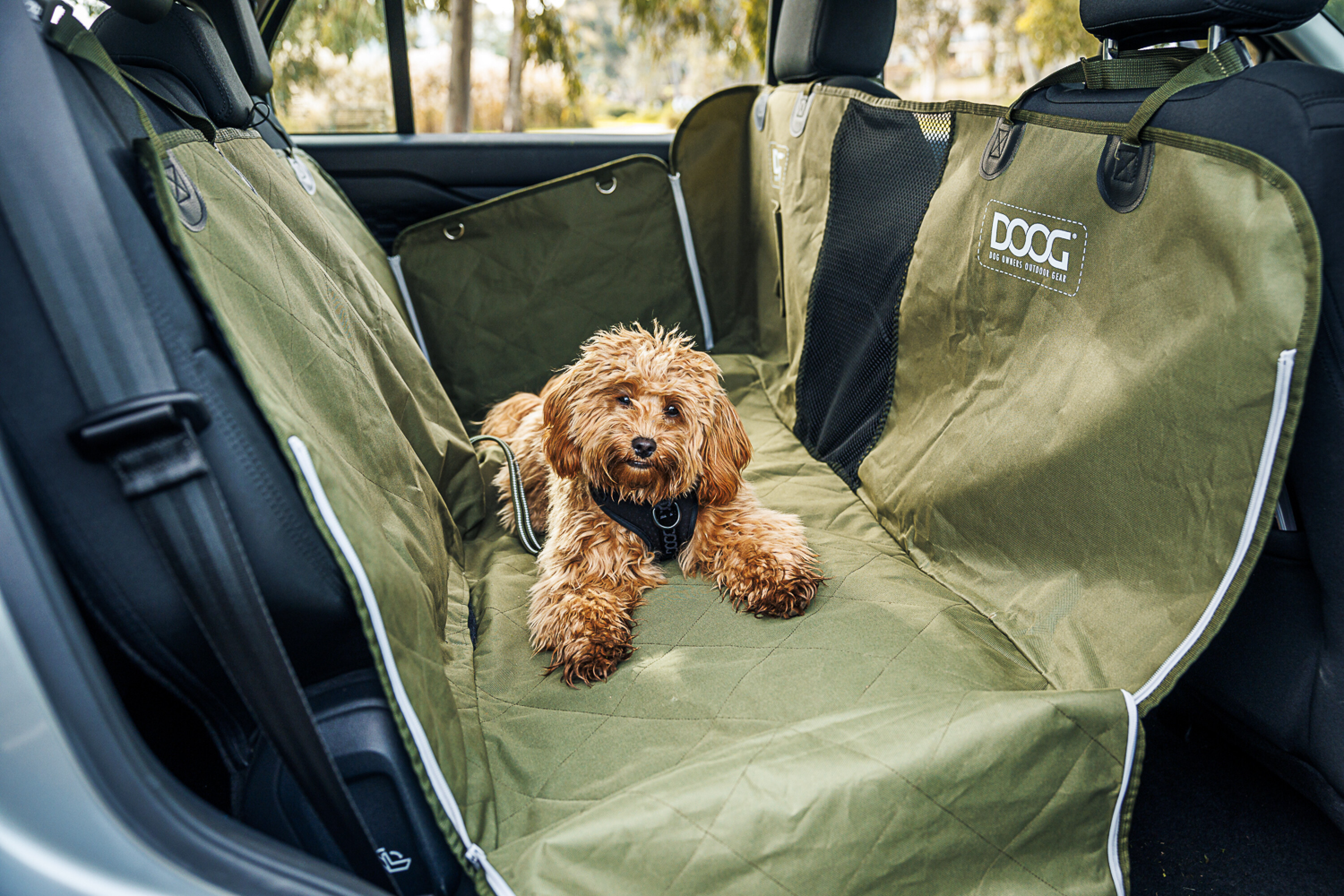
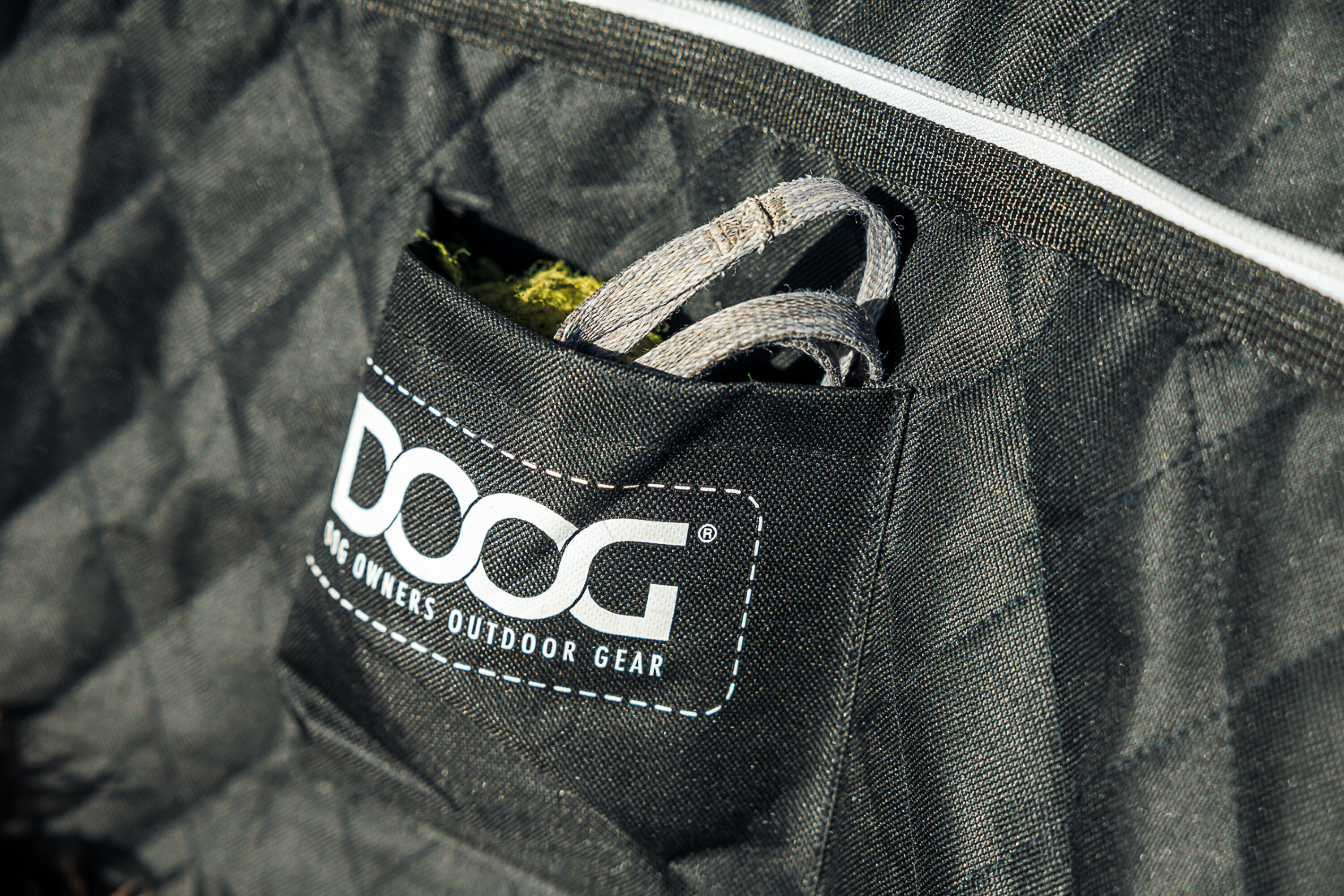
On our more adventurous days, the DOOG Car Seat Cover/Protector has been a lifesaver. It spans the back seat, shielding it from Cleo’s boundless energy. Waterproof, fur-resistant and equipped with a mesh viewing window, it has prevented even the wettest dog from wreaking havoc on upholstery. Adaptable for use on car seats or in the boot, it includes a convenient storage pocket for dog leads and toys. With features like seatbelt holes and a non-slip base, it’s effortless to maintain and it stores neatly when not in use.
1
The DOOG products are well made, and their quality and functionality have made our journeys together safer, more enjoyable, and worry-free. It should be noted that these products are not designed to protect your dog from injury in a major car accident, and as such we’d suggest a crash-tested travel cage for the ultimate in pet protection.
However, for any dog owner seeking gear that enhances both safety and adventure, DOOG stands out as a dependable choice.
Pricing (RRP)
- NeoSport soft harness: $32.99
- Car restraint (green): $19.99
- Car seat (black): $99.99
- Car seat cover/protector: $119.99
Prices for the Jeep Gladiator have been slashed, but only for a limited time.
Disappointing sales performance so far in 2024 has led Jeep’s owner, Stellantis Australia, to significantly drop the pricing for both its Gladiator Night Eagle and Gladiator Rubicon.
Stellantis, a multinational corporation and leading global automaker, confirmed the price drop will be temporary. The Jeep Gladiator Night Eagle is now available from $64,000 driveaway, representing a saving of $14,250 (typically in showrooms at $78,250). The top-spec Rubicon is listed from $70,000 driveaway, a massive difference of $17,250 (from $87,250).
It’s unclear how long these price cuts will be in effect for, but it’s clear Jeep is hoping this stirs some sales into action.
So far in 2024, Jeep has only sold a total of 169 Gladiators, with only 31 units delivered to customers in June 2024. This represents a significant decline in sales compared to 2023, with Jeep registering 467 year-to-date sales and 124 sales in June 2023. From a numbers perspective, that’s a drop-off of -75.0 per cent monthly and -63.8 per cent YTD.
The Jeep Gladiator is powered by a 209kW/347Nm 3.6-litre Pentastar V6 engine that runs through an eight-speed automatic transmission and 4×4 system.
Jeep Gladiator Night Eagle features
- Premium Black Cloth Trim Seats
- Black Exterior and Interior Accents
- Uconnect 8.4” Touch Screen Display
- Apple Carplay & Android Auto
- Satellite Navigation
- 7.0” Driver Information Display
- Black Three-Piece Freedom Hard Top
- LED Headlights/Taillights/Day-Time Running Lights/Fog Lights
- Forward Collision Warning Plus
- Adaptive Cruise Control with Stop
- Blind Spot Monitor with Rear Cross Path Detection
- 9 Speaker Alpine Premium Audio System
- Parkview Rear Backup Camera
- ParkSense Front/Rear Park Assist System
- Remote Proximity Keyless Entry & Push Button Start
- Selec-Trac® Active On-Demand 4×4
Jeep Gladiator Rubicon features (in addition, or replacing Night Eagle)
- Tru-Lok® Front & Rear Locking Differentials
- Electronic Front Sway-Bar Disconnect
- 77.2:1 Crawl Ratio
- Red Tenneco 2” diameter shocks [front/rear]
- Off-Road Plus Mode
- 32″ Off-Road Tyres [255/75R17]
- 17” Granite Crystal Alloy Wheels
- Steel Rear Bumper
- Rubicon Hood Decal
- McKinley leather-trimmed Seats
- Leather-Wrapped Shift Knob & Parking Brake Handle
- Heated Front Seats
- Heated Steering Wheel
- Rock-Trac® Active On-Demand 4×4
MORE
Everything Jeep
A couple years back, Quinn was on the lookout for a late-model work ute that he could use for the daily commute and trips into the bush after his 2013 Ranger met an untimely end at the hands of a deeper-than-expected water crossing.
He hit up his local mechanics for advice on what to buy and they mentioned that they didn’t get a lot of Isuzu utes in with any serious issues. So he went shopping.
At the time, the country was locked down thanks to the spicy cough and used vehicle prices were hovering somewhere between ‘tell him he’s dreamin’ and eating paint chips as a non-fatty snack.
1
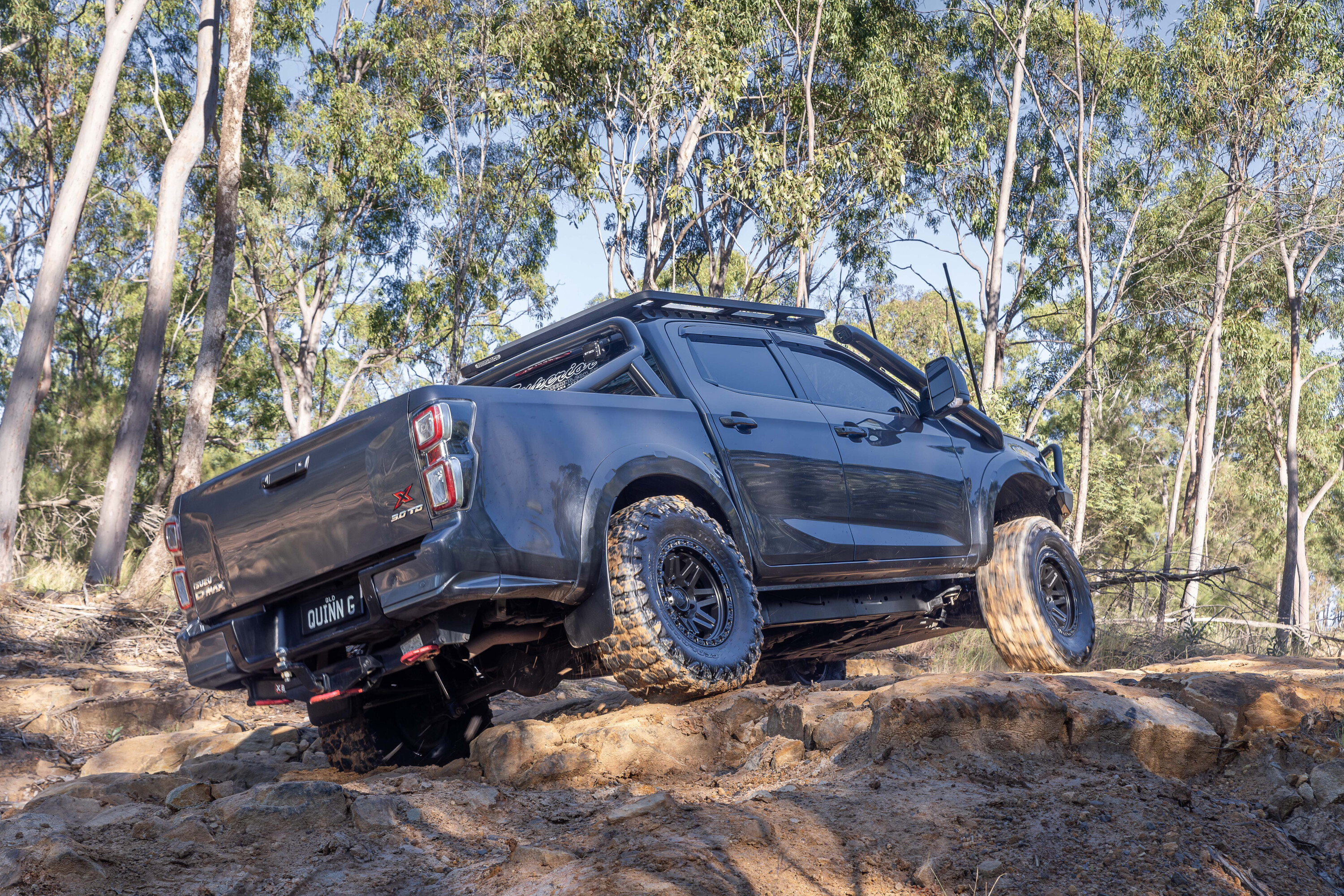
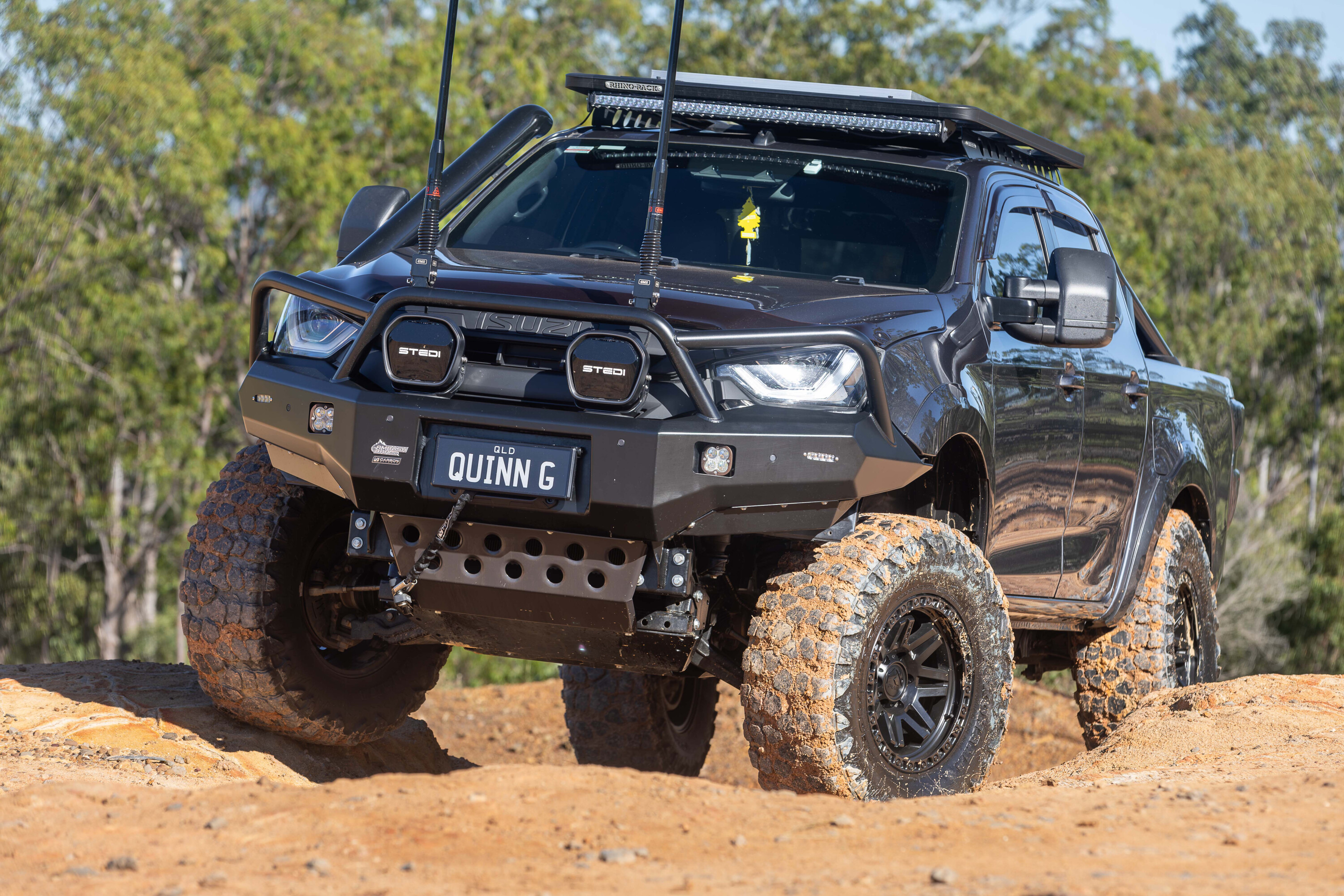
Quinn quickly realised that, absurdly, new vehicles were actually competitively priced against the bonkers used market so after a trip to his local D-MAX dealer he came away with a brand spanking 4J-powered weapon that was just begging for a few mods.
He initially threw in a set of strut spacers to get a bit of real estate under the sills, then spent the next few months hatching plans for what he wanted to achieve from his new beast.
While it’s not exactly finished (they never are), Quinn reckons it more than does everything he asks from it and is pretty happy with how it has all panned out. Then again, you’d have to be a pretty salty person to be mad at a late model ute on 35s.
1
The front end
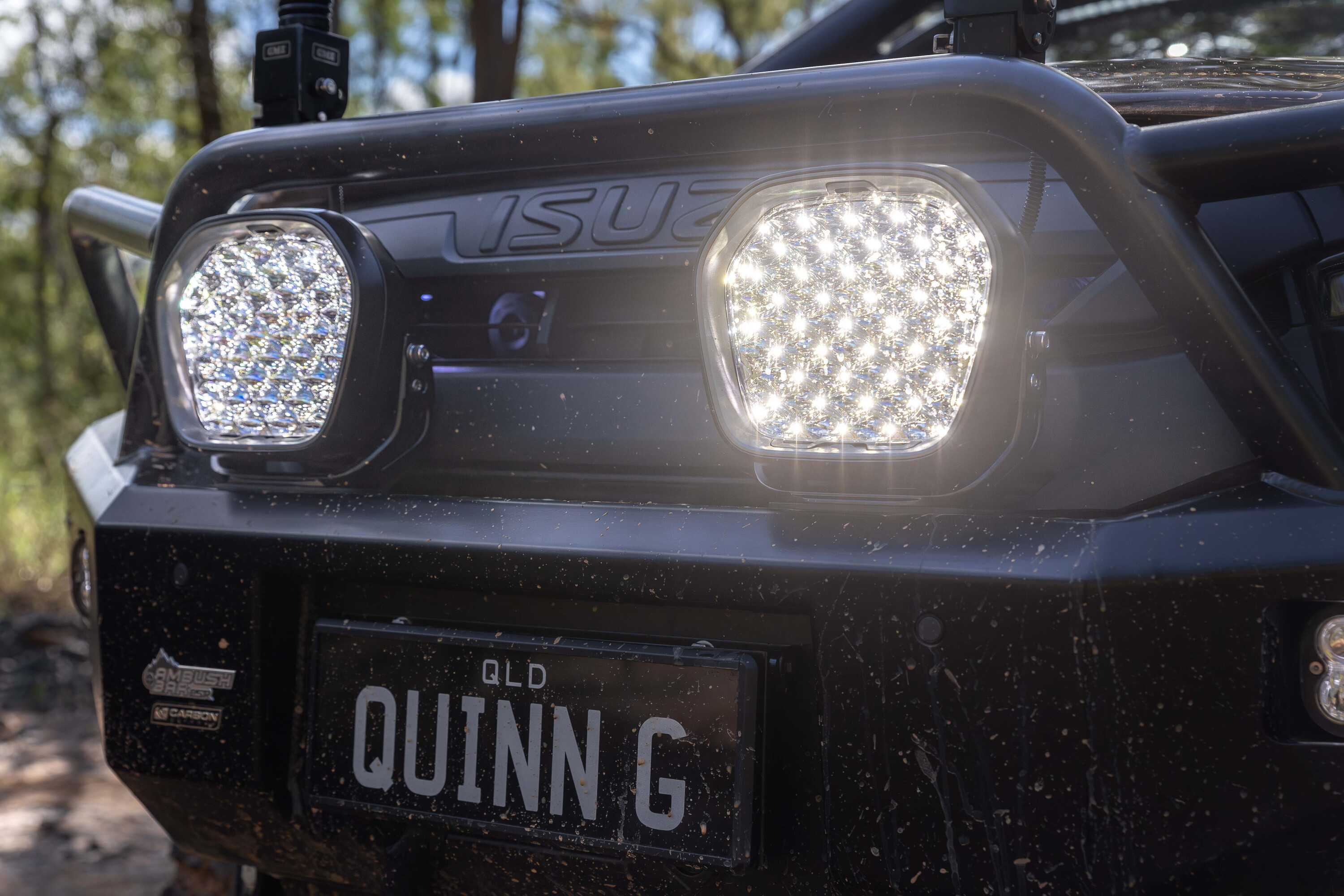
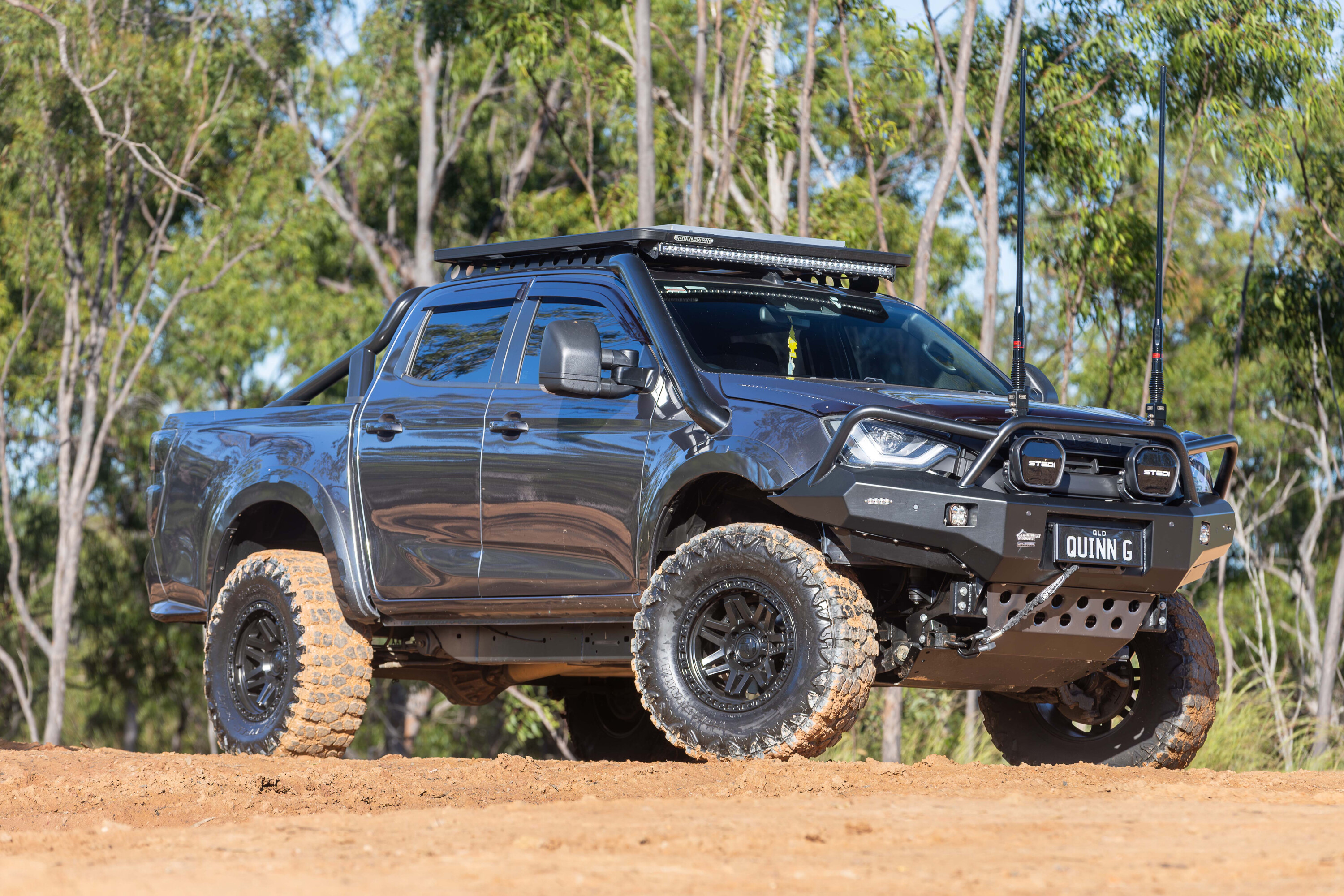
The nose of the D-MAX is protected by a trick-looking steel Ambush bar from PSR that’s been churched up with a Carbon winch should Quinn find himself without forward momentum halfway up a Kenilworth hillclimb.
Stedi Evo spotties are also mounted to the bar, helped out by the 40-inch Stedi light bar up on the leading edge of the roof rack. Twin UHF antennas (one for the radio, one for the Cel-Fi mobile signal booster) on fold-down brackets and LED fog lights round out the front end nicely.
It should also be noted that the engine, transmission and transfer case are all protected from errant rocks by PSR steel bash plates.
1
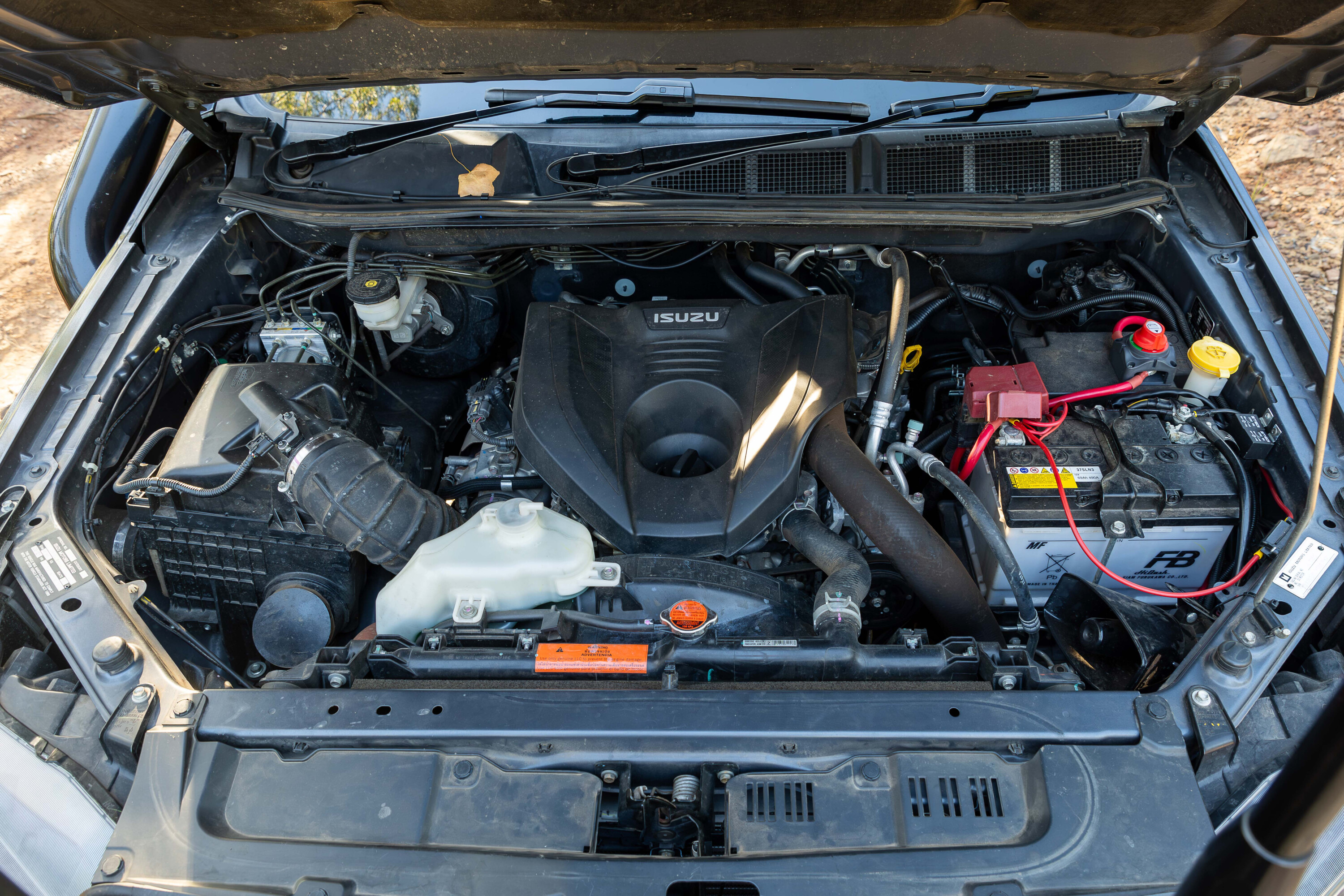
Speaking of the engine, it’s stock for now but once the new vehicle warranty is done Quinn has plans to go ’nanas with an uprated turbo and injectors along with an aggressive tune to get the most out of the venerable 4J.
Until then, a Phat Bars 4-inch snorkel feeds the engine fresh air and a 2.5-inch mild steel exhaust carries the fumes out the back. And to be fair, the 4J-series powerplants are pretty decent right out of the box.
When off-road, the dual-cab’s sills are kept smooth and wrinkle-free by Phat Bars sliders that have been raised two inches to line up with the lifted body. Meanwhile, Clearview Next-Gen mirrors let Quinn keep an eye on any trailers he may be towing up to Moreton or K’Gari.
1
The back side
There are plans afoot for a tray and canopy set-up to replace the styleside tub before long, but Quinn has still made the most of what he has.
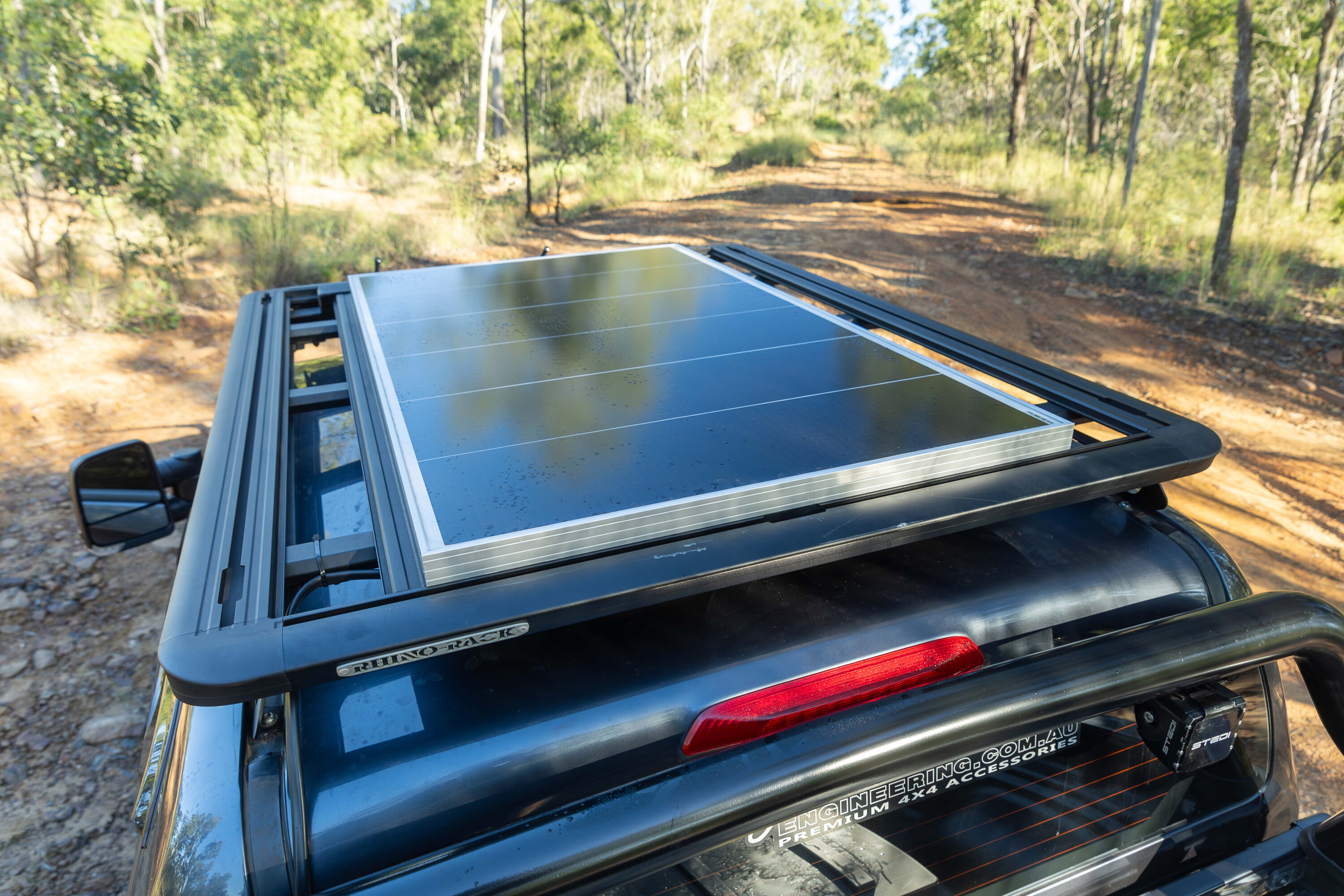
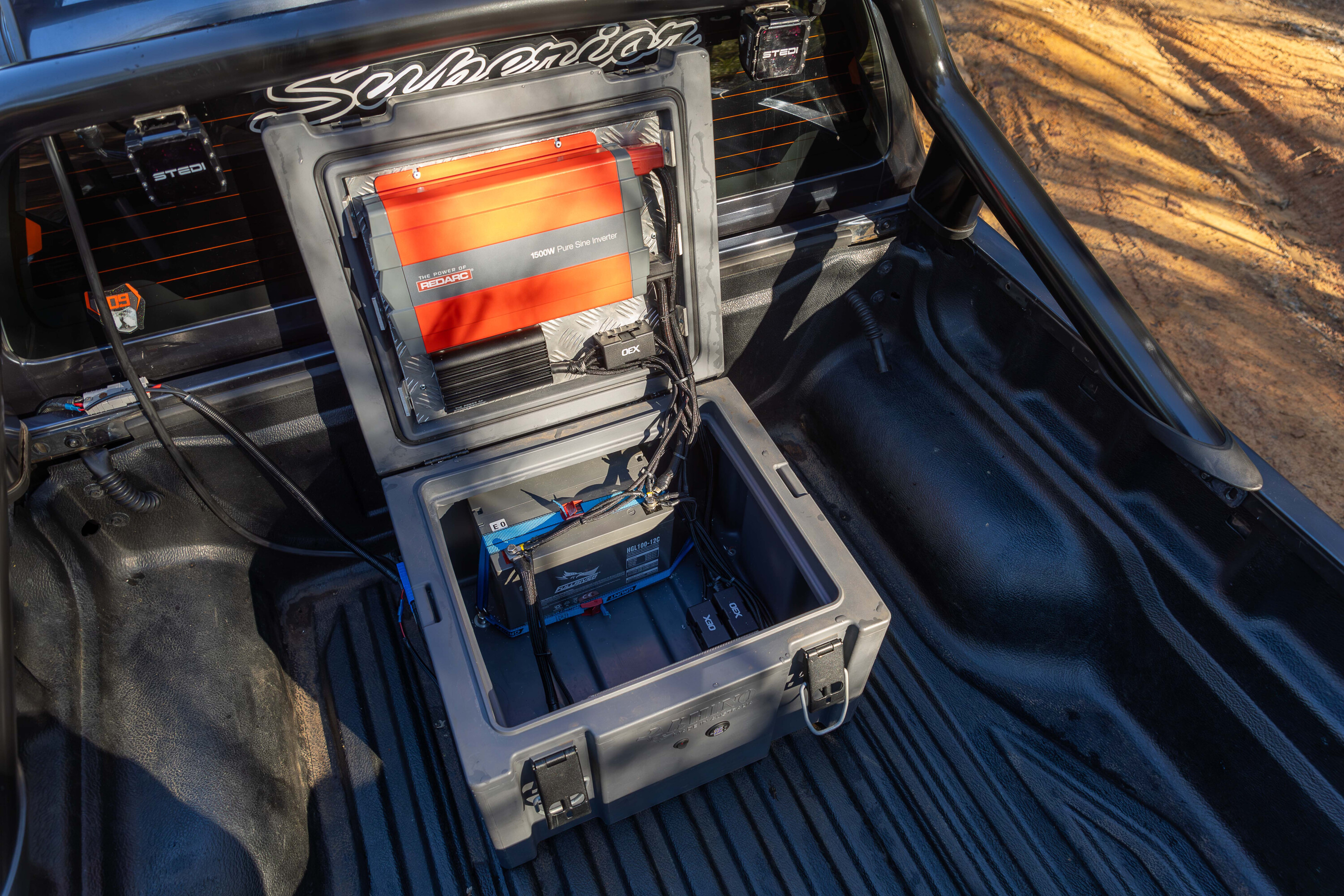
While not mounted for our photoshoot, there’s a custom tub rack for the Darche Intrepidor roof-topper that goes on before a trip. Twin Stedi work lights provide rearward illumination, and the tray also plays host to an unobtrusive-looking waterproof box that, upon first glance, doesn’t appear to be anything other than a bit of extra storage.
A closer look, however, reveals a few cables and Anderson plugs running to the box, and the roof-mounted solar panel is hooked up to it as well. Yep, Quinn has mounted his second battery, a 100Ah lithium unit, in there making it completely removable and transferable to another vehicle in a matter of seconds. Pretty clever, eh?
1
The system is overseen by a Redarc BC-DC 40A charger and a Redarc 1500W inverter throws out the 240V for the home comforts when camping.
The solar feeds it charge when stationary and the D-Max’s alternator keeps it juiced up while underway. A simple and effective way to get a second battery on board without having to hard mount anything.
Interestingly, a rollbar from an N80 HiLux was also bolted into the tub to provide a bit of damage resistance should the horizon do an inadvertent one-eighty.
1
Fitting big rubber
Getting 35s on a newer vehicle is always a bit trickier than on an older rig, but nothing that Quinn couldn’t handle.
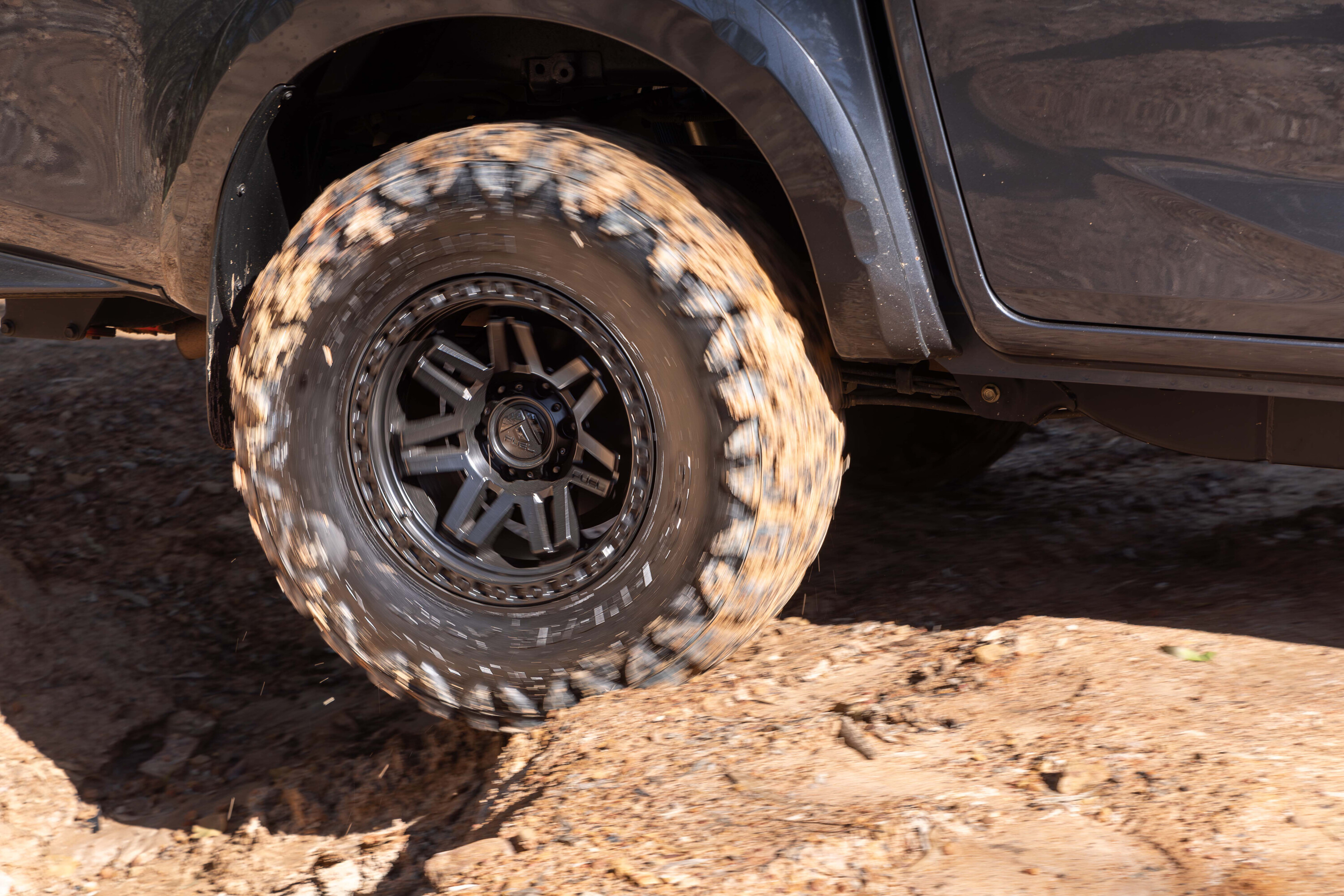
While he initially fitted a set of strut spacers for lifting the front end, he dived in and began researching the best way to get the 315/70R17 Yokohama Geolander muddies under the guards.
Getting the tread out from under the sheet metal was step one. A little judicious trimming and folding of the wheel arches was undertaken, and the fitment of the 17×9 Fuel Syndicate alloys, with a -12 offset, pushed the tyres out far enough to clear nicely.
They also gave a rather big nudge to the looks department too, but that was just a bonus, not the objective.
1
Even then, when hitting a decent bump the big Yokos would still scrub a little, so the body mounts spent some alone time with the grinder for added clearance.
With the width sorted, the height was next to be tackled, and two inches of altitude was gained via a Munji body lift, then an additional three inches was gained from Superior Engineering 2.5-inch diameter remote-res struts up front, and Superior extended shackles at the rear. The whole show works incredibly well and Quinn has no complaints.
With regular trips to the islands and beaches, as well as the odd trip with mates into the SEQ hinterland, the D-Max soaks it all up with minimal fuss. Just goes to show, nothing is impossible with a bit of time, thought, some good gear and the right attitude.
1
MORE
Everything Isuzu Ute
There’s a good reason you’ll find plenty of Rambler 4x4s at 4X4 Australia: They are comprehensive turnkey vehicles modified and equipped for off-road escapades anywhere around Australia.
In 2023, Rambler Vehicles merged with ASG 4×4 and Spinifex Manufacturing to become a one-stop shop for new turn-key custom touring four-wheel drives, known as the Recre8 Automotive Group.
The builds are typically high-end, go-anywhere tourers that can sustain off-grid living. The builds start with new vehicles that undergo bumper-to-bumper transformations to deliver a touring rig created to suit the customer’s plans and expectations. The customer then takes delivery of a new 4×4 that is completely ready to hit the road and go travelling around the country.
They even give a nationwide three-year/100,000km warranty on all accessories and modifications, regardless of the manufacturer’s warranty!
Here’s all our Rambler content to feast your eyes on! ?
JUMP AHEAD
- Shop truck: 200 Series LandCruiser
- Next level: Another 200 Series LandCruiser
- Work of art: 79 Series LandCruiser
- Top-tier: A trio of touring trucks
- Boss level: Chevrolet Silverado Trail Boss
- Monster: LandCruiser 79 by TJM
- Wild thing: 2021 D-MAX
- First look: 300 Series LandCruiser
- Merger: Recre8 Automotive Group
Shop truck: 200 Series LandCruiser
Next level: Another 200 Series LandCruiser
Work of art: 79 Series LandCruiser
Top-tier: A trio of touring trucks
Boss level: Chevrolet Silverado Trail Boss
Monster: LandCruiser 79 by TJM
Wild thing: 2021 D-MAX
First look: 300 Series LandCruiser
Merger: Recre8 Automotive Group
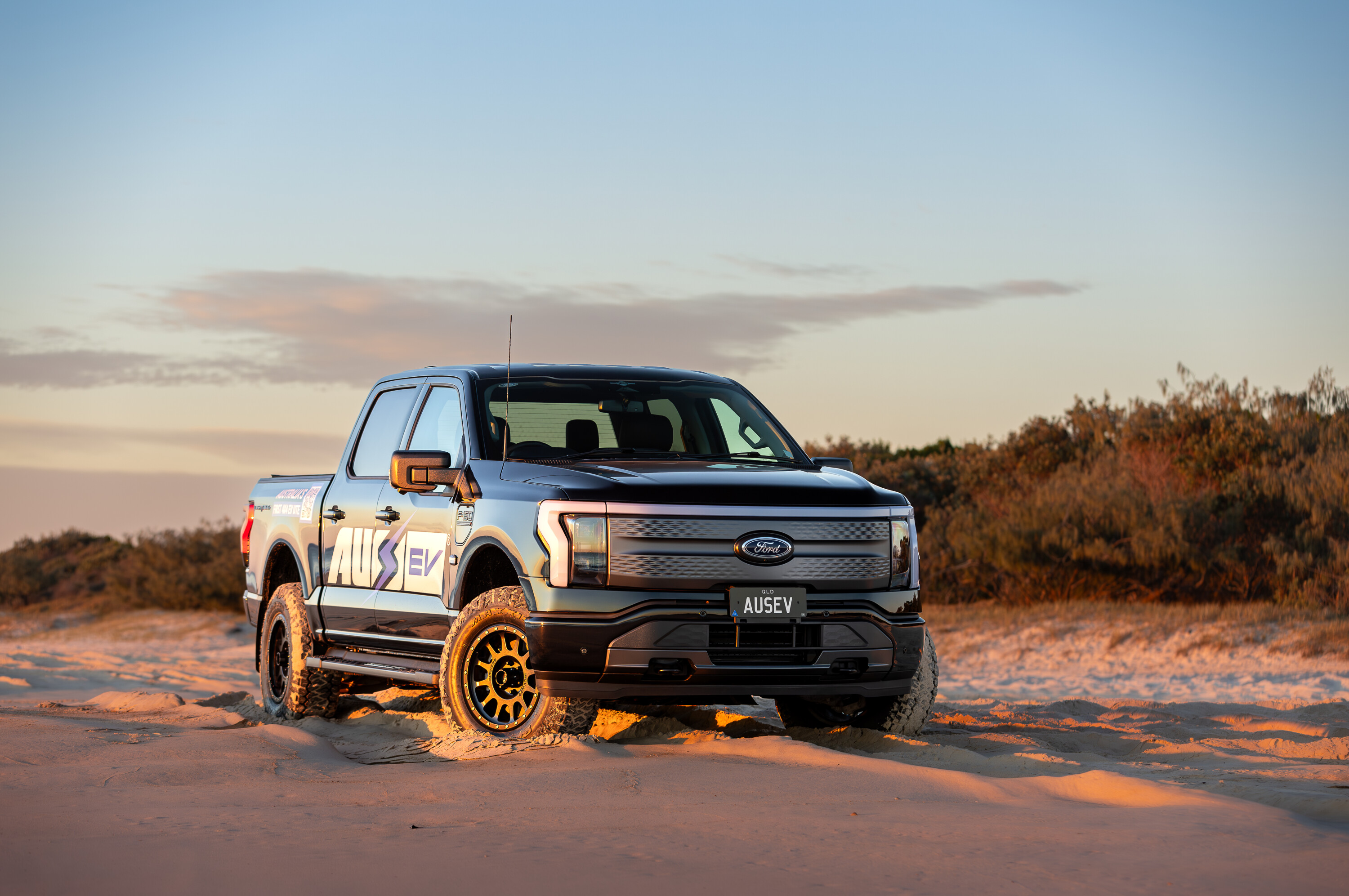
We’ve driven a Ford F-150 Lightning off-road on the sand of Bribie Island, and our review of the all-electric F-truck headlines another bumper issue of 4X4 Australia magazine.
Remanufactured to RHD by the team at Advanced Manufacturing Queensland (AMQ), the Lightning Extended Range had about 90 per cent charge (400km of range) when it was picked up from AUSEV’s conversion facility in Brisbane. Giving us a bit of juice to get to Bribie Island, have a play, and get back again! We also share our thoughts on how it performs compared to its combustion-powered stablemates.
1
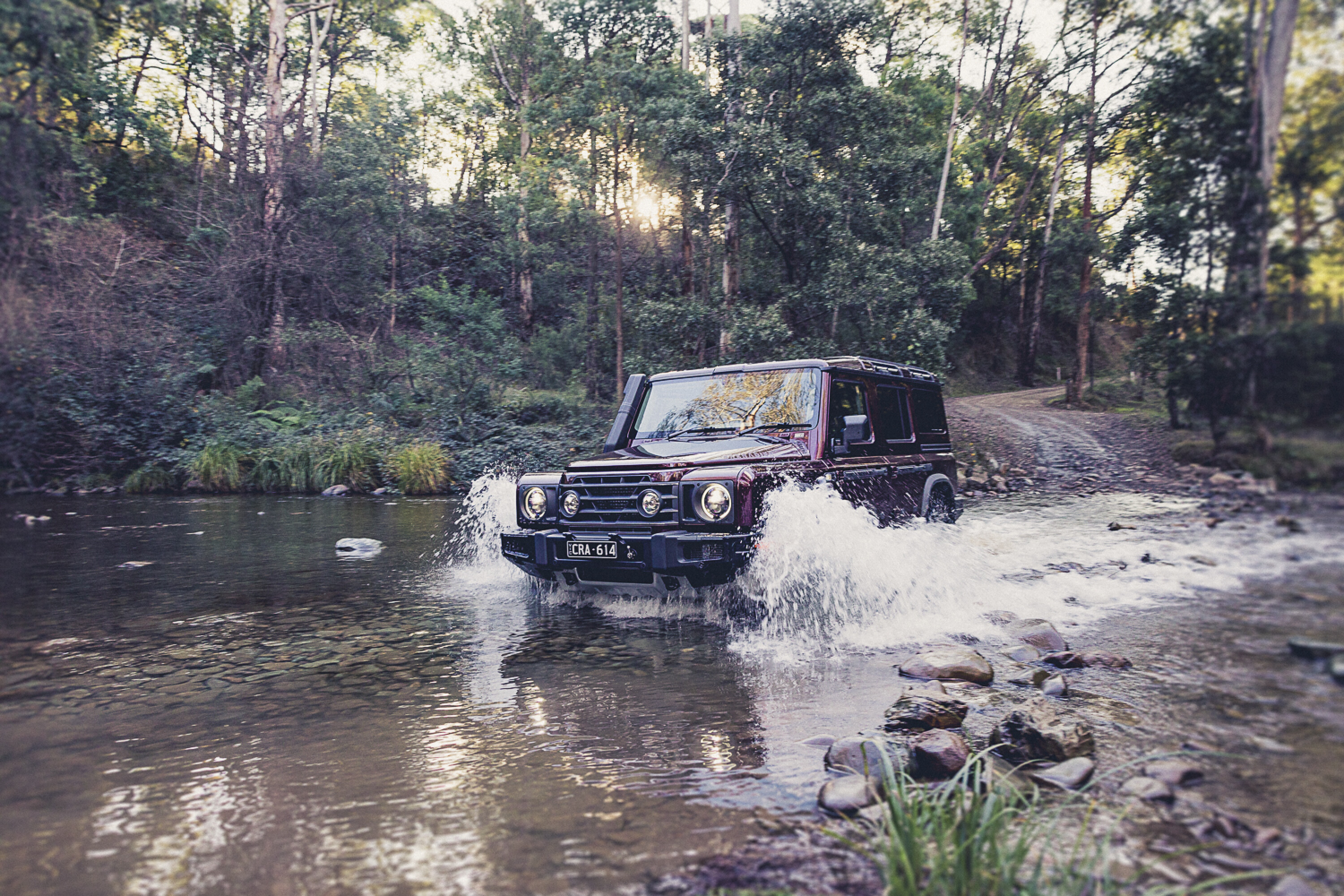
We were also flung the keys to an INEOS Grenadier Fieldmaster edition, which sits atop the three-model range. Powered by BMW’s 183kW/550Nm six-cylinder diesel engine, this variant was equipped with front and rear locking differentials; a raised air-intake snorkel; dual-battery system; 18-inch alloys wearing BF Goodrich KO2 A/T tyres; and a factory option winch. It’s a superb out-of-the-box 4×4 vehicle, and we can’t wait until the Quartermaster double-cab ute arrives later this year.
1
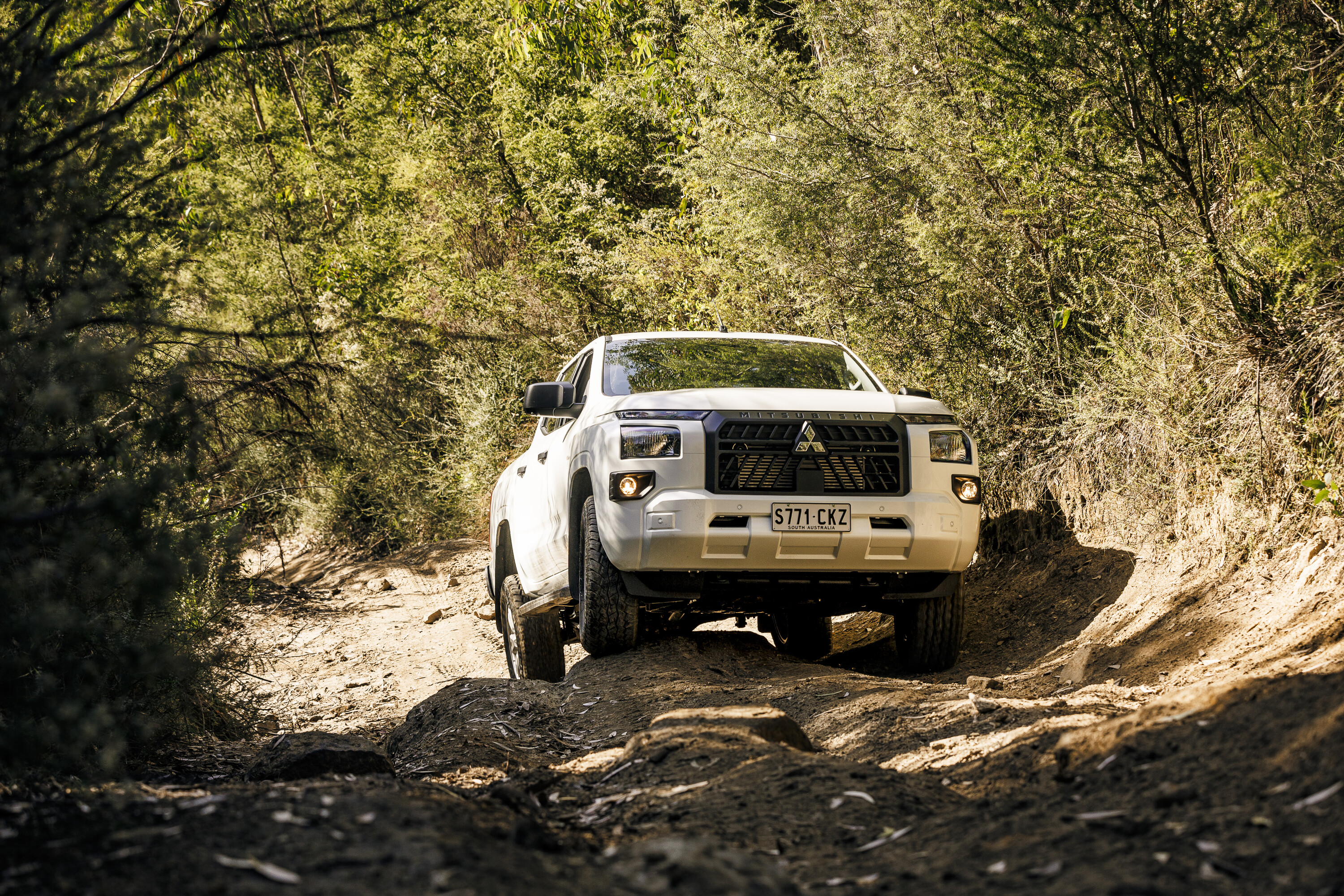
We also dirtied the wheels of a tradie-spec Triton GLX+, a variant that sits one rung from the bottom of the Triton’s Aussie line-up. The new Triton has already proven itself a versatile off-roader, and the GLX+ is a step up from the base-spec GLX by replacing the standard steel wheels with alloys, adding side steps, rear privacy glass, front fog lights and some silver stitching. It also adds a differential lock to the rear axle. Matt reckons this model hits a sweet spot in the local line-up.
1
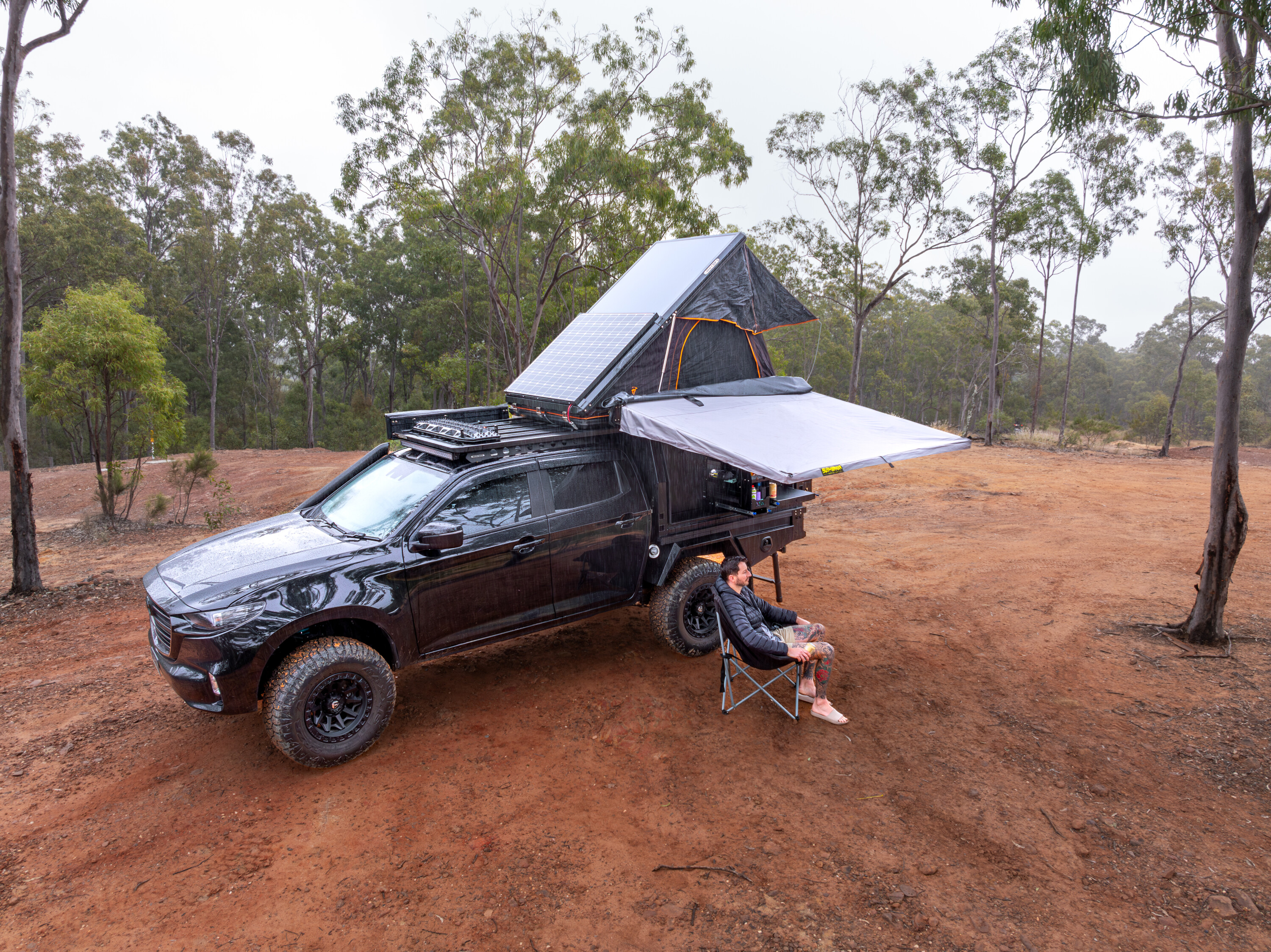
Dex runs his eye over a BT-50 build that proves you don’t need to spend silly money to transform a 4×4 into a capable tourer. Among a host of kit, this BT features PSR struts and Blackhawk upper control arms; Dobinsons 500kg-static rated leaf springs; and a set of 17 x 9-inch Fuel Covert rims inside Maxxis RAZR AT811 295/70R17 rubber. Add to that a MoTop rooftop tent, a Bushwakka awning, and KickAss power, and you have a seriously capable rig.
1
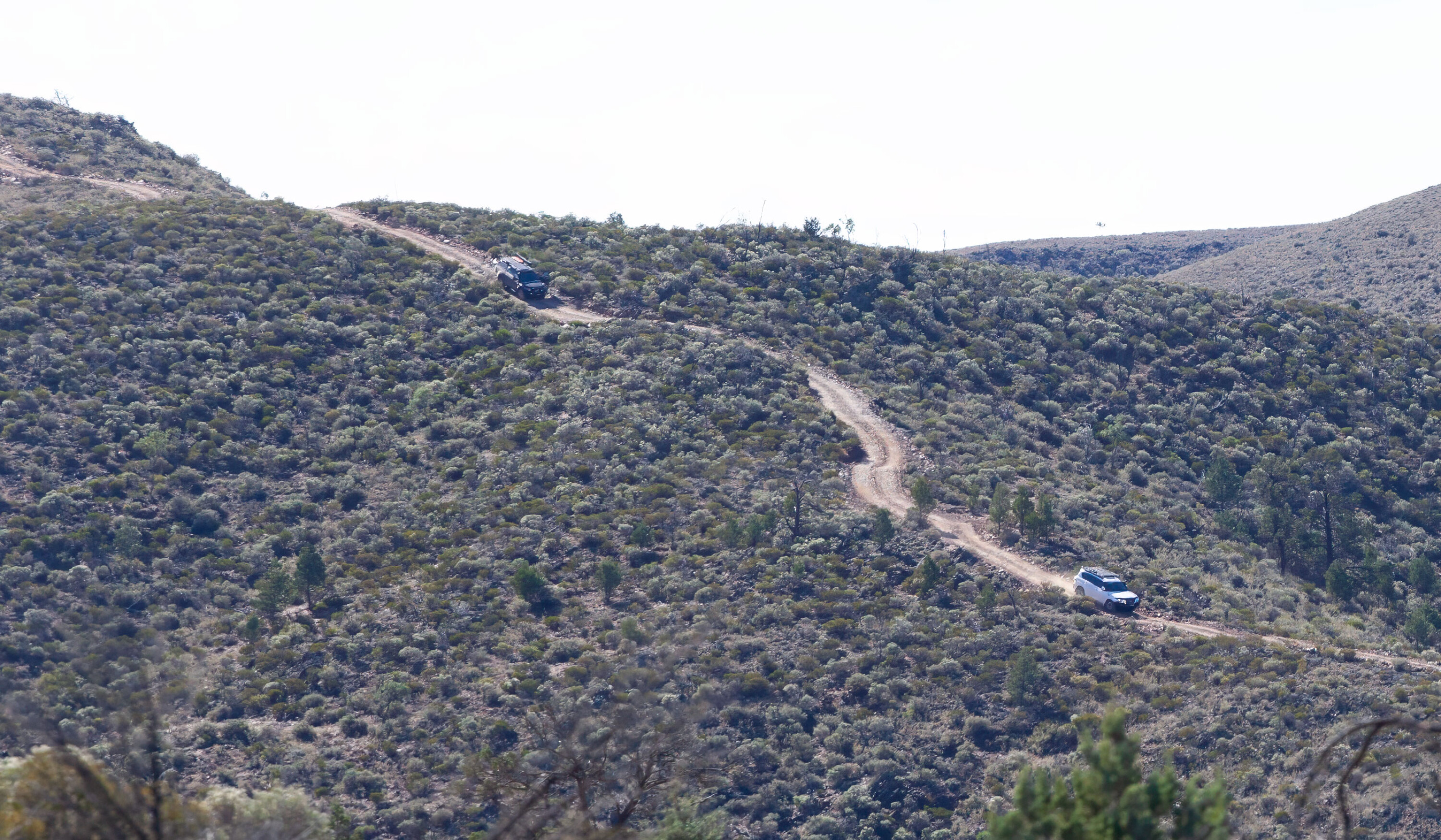
On the travel front we explore SA’s famous Bendleby Station and its surrounds, venture to the Golden Outback in WA – the remote and isolated part of the state’s mid-west – and then take a strong along the Great North Road north of Sydney, NSW.
1
What else is there?
- I-Venture Trip to the Flinders Ranges
- Tell-all guide on how to set up a 4×4 for towing
- Wheel load ratings explained
- DOOG Booster Seat tested
- New gear, readers’ rigs, news and more!
The August 2024 issue of 4X4 Australia is out now.
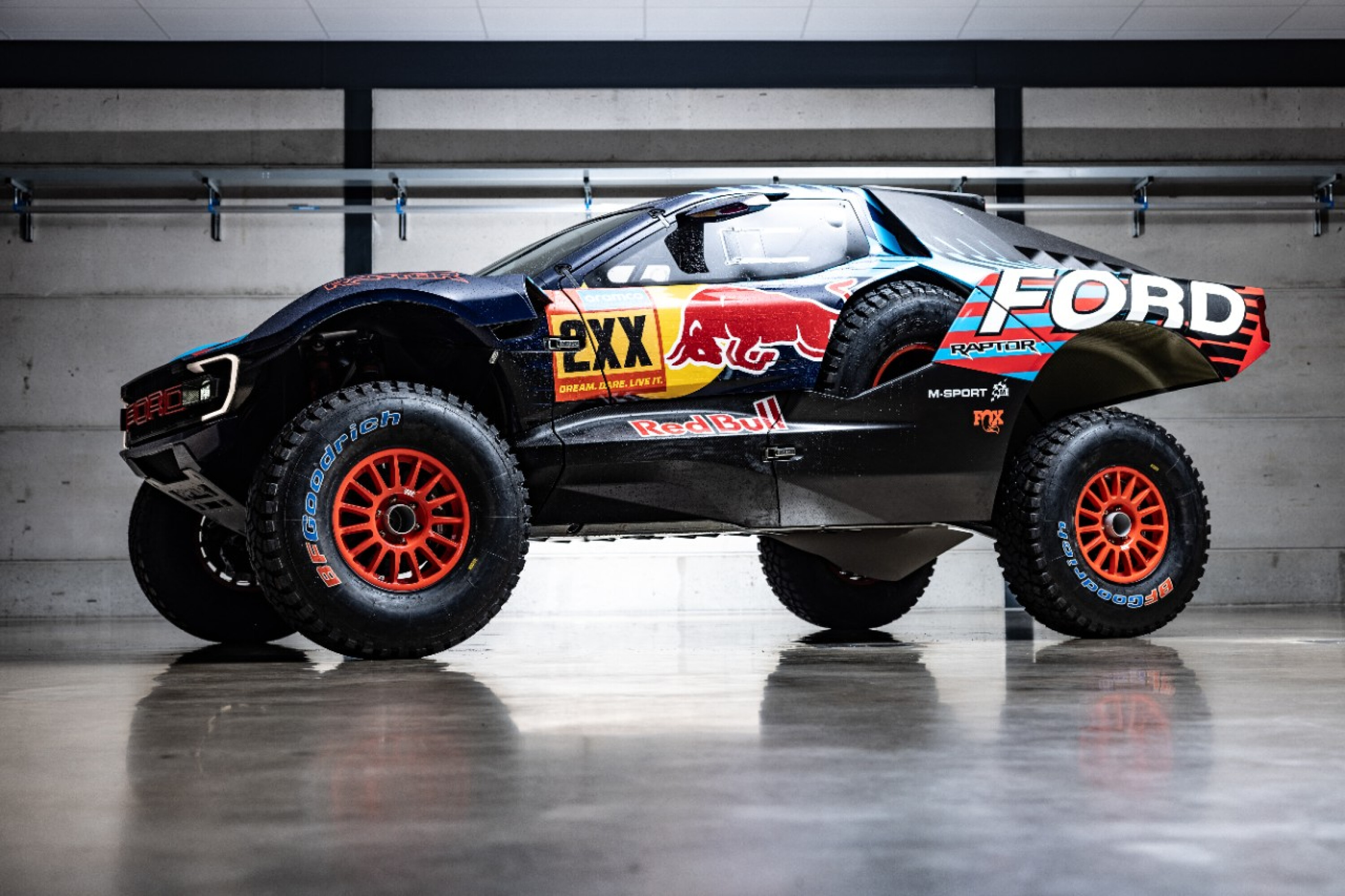
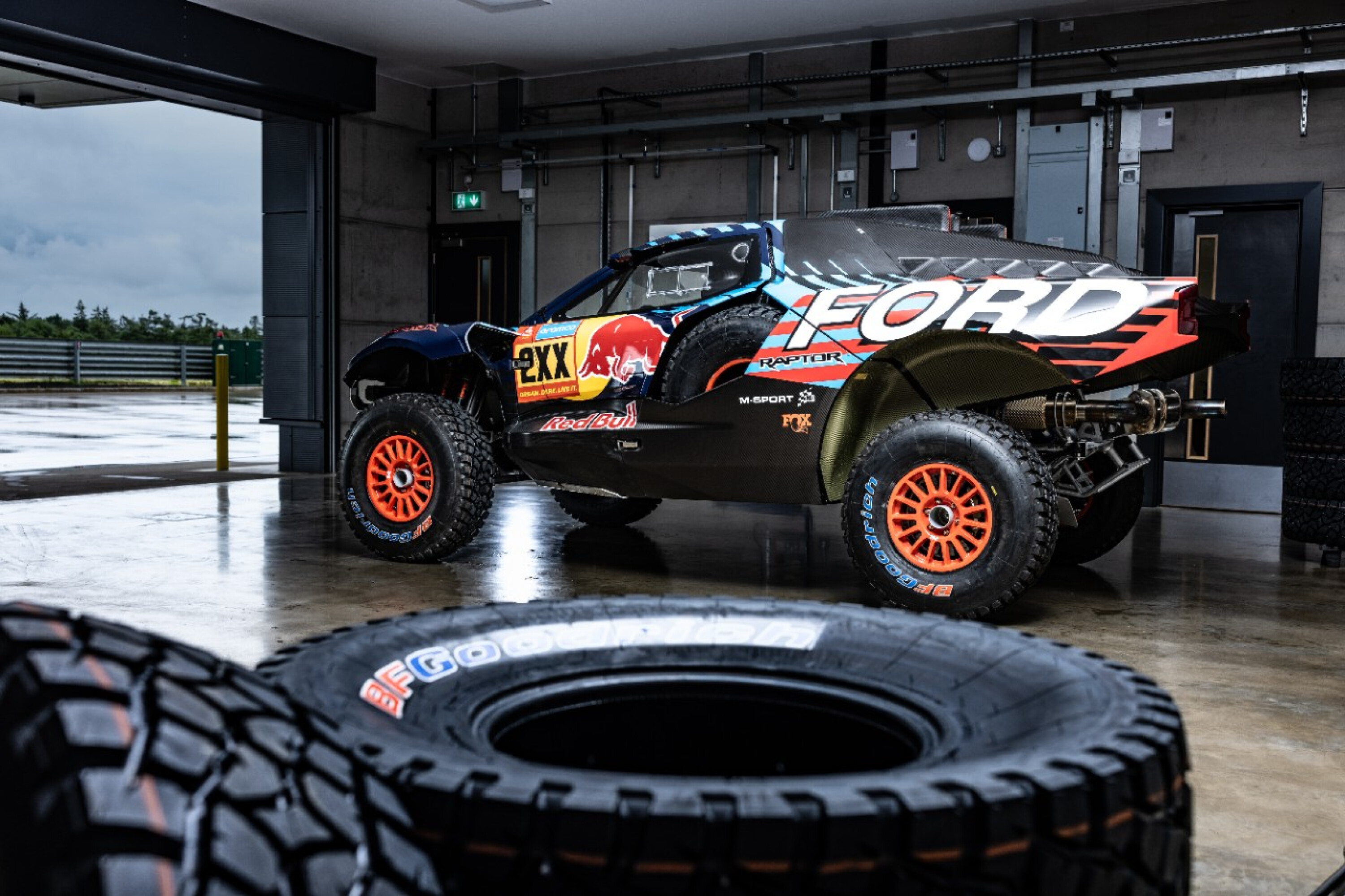
Ford Performance has debuted its Raptor T1+ at the 2024 Goodwood Festival of Speed, with the rally-bred 4×4 set to compete at the 2025 Dakar Rally.
The result of an engineering collaboration between Ford Performance and M-Sport, the Coyote V8-powered Raptor T1+ utilises an advanced suspension set-up consisting of front and rear independent double-wishbone suspension. Fox coilover three-way adjustable and four-way adjustable external bypass dampers, with remote reservoirs on each wheel, enable the T1+ to remain surefooted at ultra-high off-road speeds.
1
A unique dry-sump oil system has also been fitted, and a tuned exhaust allows the T1+ to excel at off-road events like Dakar.
Sitting on 8.5 x17-inch aluminium wheels inside 37-inch tyres, the fully bespoke vehicle has up to 350mm of wheel travel. The Raptor T1+ has a minimum weight of 2010kg, is 2300mm wide, and has a massive approach angle of more than 70 degrees. Front and rear 355mm Alcon ventilated discs and six-piston monoblock callipers provide sufficient stopping power.
Utilising a T45 steel space frame and carbon-fibre body panels, the purpose-built T1+ retains the Raptor’s 400mm ground clearance, wide stance and FORD lettering across the grille.
“The Ford Raptor T1+ is a stake in the ground for our global off-road vision – we want to take on the best and prove ourselves in the toughest places on earth,” said Mark Rushbrook, global director of Ford Performance Motorsports.
“The lessons we are learning from Raptor T1+, along with competing with stock trucks in Baja 1000 and Finke Desert Race, will help make Raptor vehicles even better for our customers.”
In preparation for the 2025 Dakar Rally, the teams – including rally drivers Carlos Sainz Sr. and Nani Roma – will compete at the 2024 Baja Hungary (August 8-10) and 2024 Rallye du Maroc (October 4-11).
1
“This is the kind of opportunity that comes once in a lifetime – to support Ford Performance as they head to Dakar with this new Ford Raptor T1+ is going to be an incredible adventure,” said Matt Wilson, M-Sport director and Dakar team manager. “We have already completed 10,000 kilometres of testing in some of the harshest conditions we could find, so we feel ready to take on this ultimate challenge starting at Baja Hungary next month.”