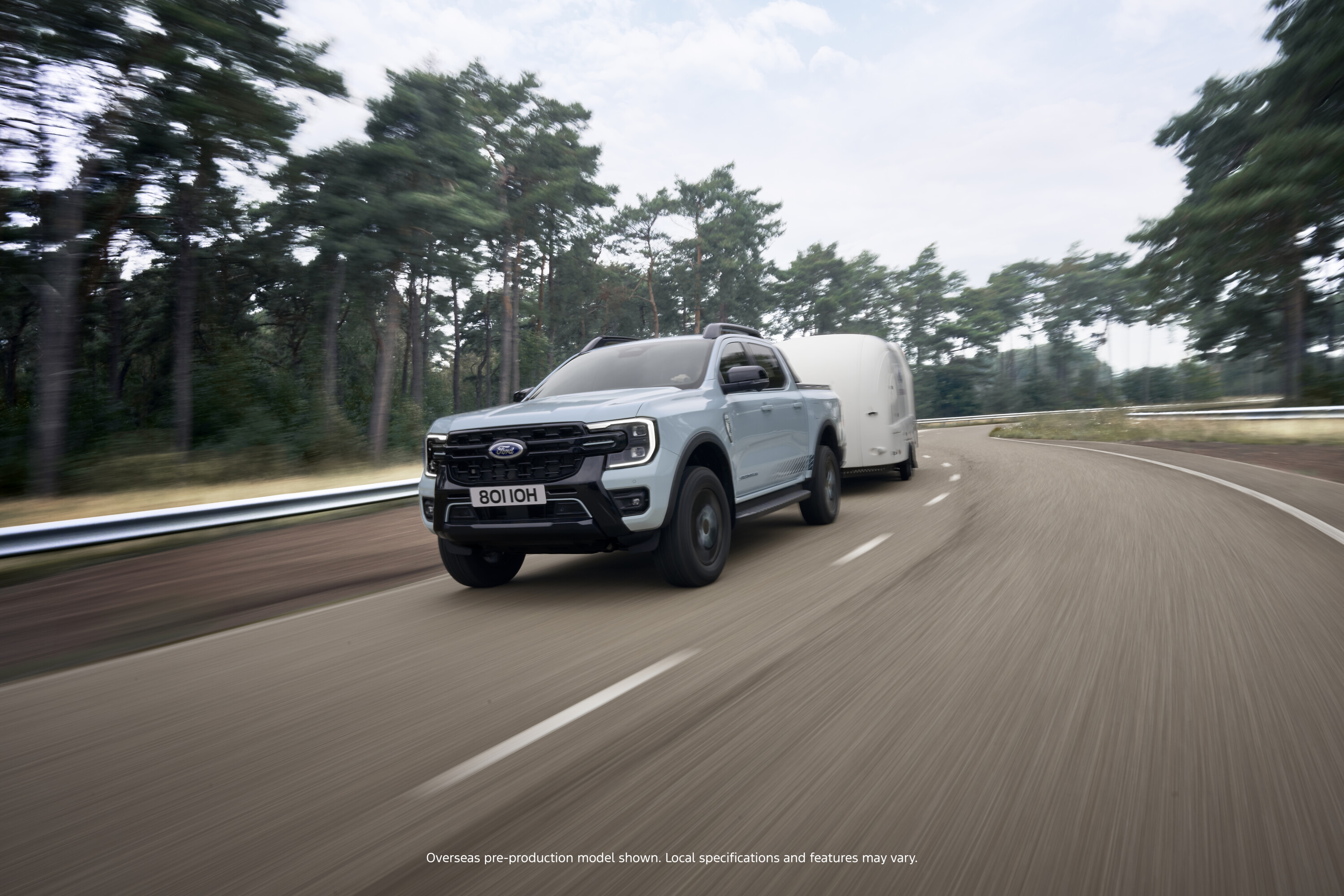
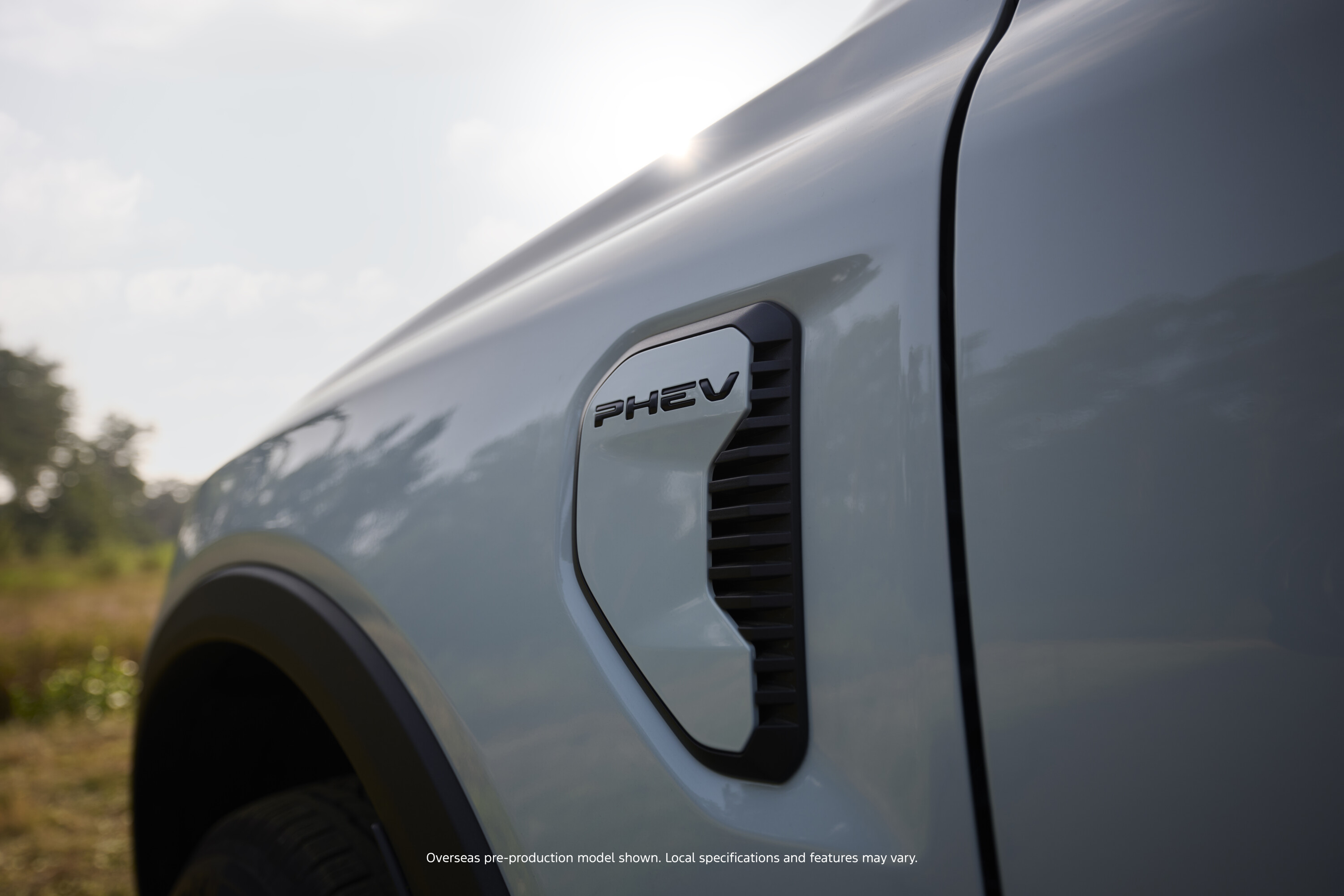
Ford has officially debuted its Ranger PHEV, with customer deliveries of the plug-in hybrid expected to roll out in 2025.
Revealed at the 2024 IAA Transportation Show in Hanover, Germany, the PHEV powertrain will be available for Wildtrak, Sport and XLT variants within the Ranger line-up – as well as an all-new exclusively-styled Stormtrak launch edition.
The Stormtrak is painted in a new Chill Grey hue and comes equipped with a Flexible Rack System, Matrix LED headlamps, Pro Trailer Backup Assist, and a 360-degree camera as standard. It also wears 18-inch alloy wheels, a honeycomb grille, fender vents, a decal kit, and has a luxurious cabin with a B&O sound system.
1
The PHEV powertrain pairs a 2.3-litre turbocharged four-cylinder EcoBoost petrol engine with a 75kW electric motor and 11.8kWh battery which can be charged externally, by the petrol engine in EV Charge mode, or via regenerative braking. Ford says the PHEV can be charged overnight to full using a standard household plug, and it has a range of more than 45km in electric-only mode.
A modular hybrid transmission (MHT) – consisting of the e-motor and separator clutch – has been integrated into the driveline between the engine and 10-speed transmission, and it’s this separator clutch that allows the two systems – EV and ICE – to either co-operate or decouple and work individually.
“The MHT is the key ingredient in ensuring Ranger PHEV delivers the capability we know our owners expect from a truck with a Ranger badge, along with enhanced versatility, impressive low-end torque and an overall faster responding powertrain which means improved performance compared to regular Ranger,” said Rob Sharples, chief engineer of the Ranger Plug-in Hybrid at Ford.
“In high-demand situations, like overtaking, the combined power and torque of the petrol engine and e-motor can be sent to all four wheels,” added Sharples.
The Ranger PHEV features four self-explanatory battery modes: Auto EV, EV Now (provides all-electric drive), EV Later (stores a portion of charge for later use), and EV Charge (recharges the battery while driving). When the battery is nearly depleted, the system automatically reverts to Auto EV mode to optimise fuel efficiency.
In tandem with these EV modes, the Ranger PHEV’s Terrain Management System utilises the following selectable drive modes: Normal, Eco, Sport, Slippery, Tow/Haul, Mud/Ruts and Sand. The PHEV also gets the Sport mode from the Ranger Raptor, which enhances throttle response and holds lower gears for longer.
In addition, Ford says its newest Ranger will not lose any of the combustion-powered Ranger’s towing and off-road ability, with its towing capacity remaining at 3500kg. The implementation of Ford’s Advanced 4WD system, a dual-range transfer case, rear differential lock, and selectable drive modes means it will remain proficient off-road.
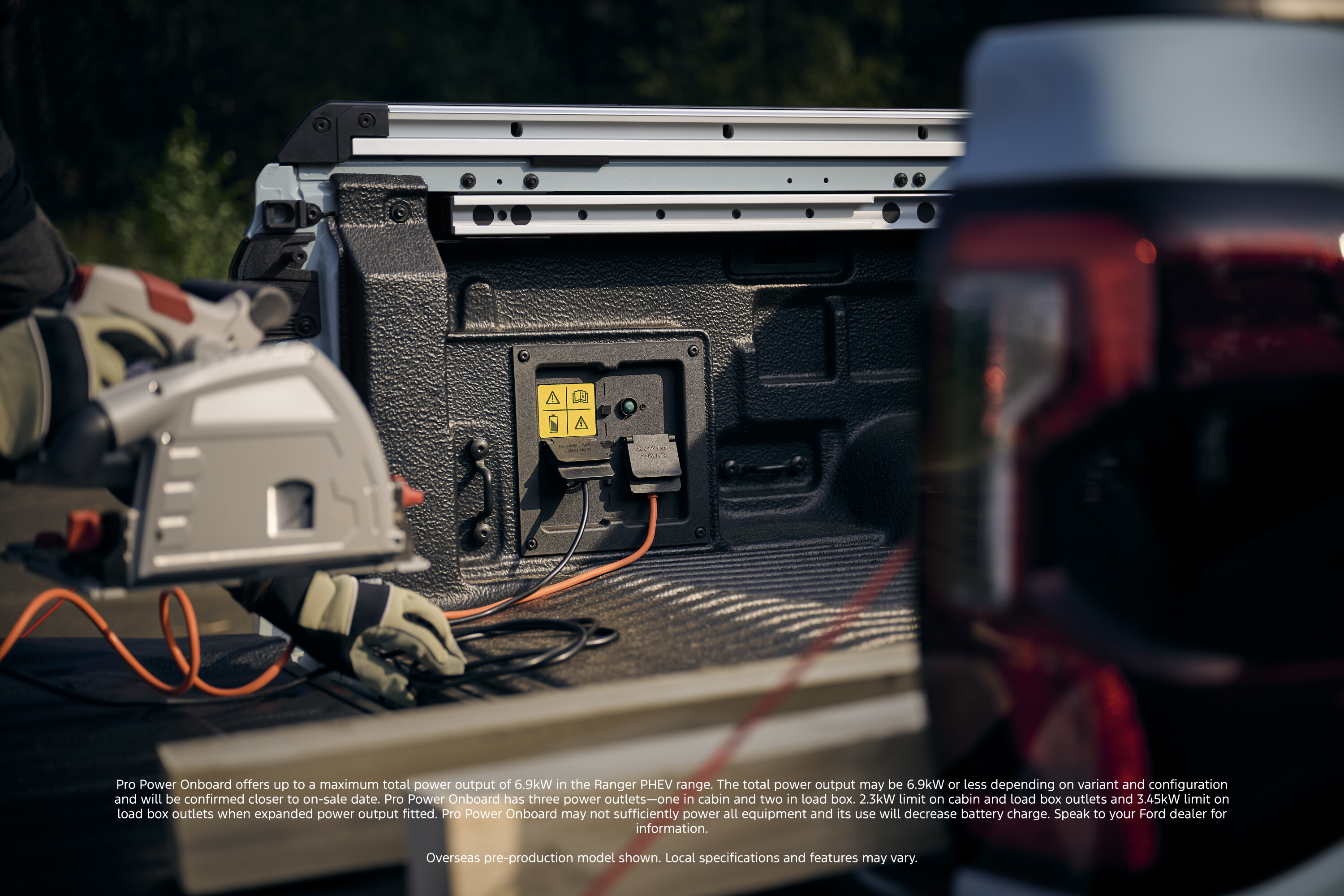
“The Ranger PHEV delivers all the versatility and capability people expect from a Ranger,” said Sharples. “It can tackle tough terrain, tow a trailer with ease, be driven in town as an EV or, thanks to Pro Power Onboard, be used as a mobile power plant when you’re off grid.”
Pro Power Onboard tech enables owners to power tools, run a fridge at a campsite and keep devices charged while camping. It offers a maximum of 6.9kW, with a total of three power outlets throughout the vehicle – one in the cabin and two in the ute bed.
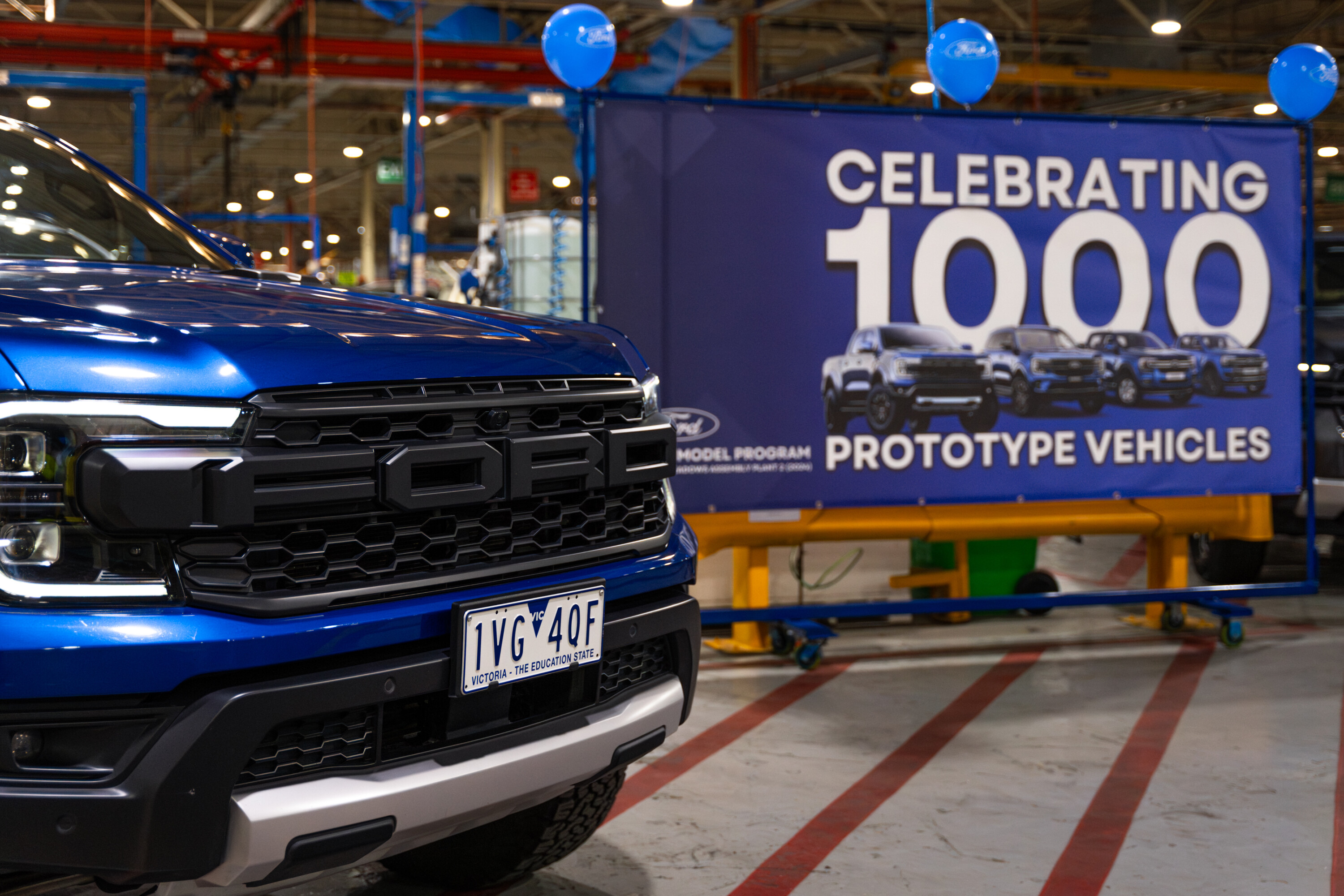
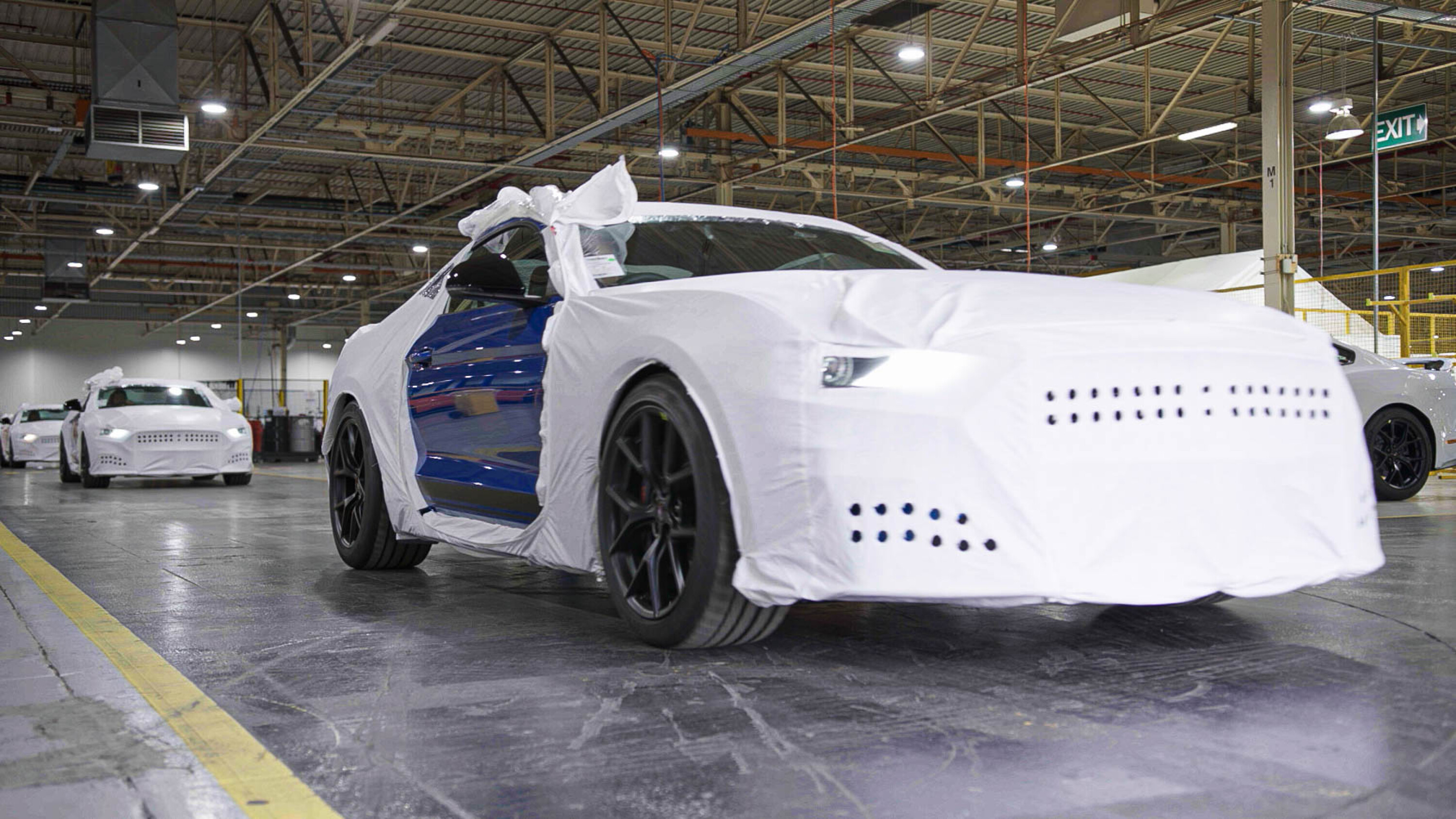
The 1000th prototype vehicle has departed Ford Australia’s local assembly facility in Campbellfield, Melbourne, marking a significant milestone for the Blue Oval brand. The announcement comes ahead of the global reveal of the Ranger PHEV in Europe later today.
The facility – known as New Model Programs (NMP) – is where its staff build engineering projects and test mules to support Ford’s global vehicle launches. In effect, the NMP continues Ford’s long history of utilising Australian labour since the brand slammed shut local manufacturing back in 2016.
1
In fact, the NMP team needed to be upskilled and gain EV certification, as the Ranger PHEV is the first electrified prototype to roll through its production line.
“It’s fitting that the Ranger PHEV is the 1000th prototype for NMP, and shows how Ford remains at the cutting edge of local vehicle development and is putting Australian skills and workers on a global stage,” said Vince Ciocca, NMP Plant Manager, Ford Australia.
Initial prototypes of the current Ranger and Everest also rolled through the NMP facility, as did a collaboration with Herrod Performance to produce 500 examples of the Ford Mustang R-Spec.
2
The Ranger PHEV is slated to join Ford’s Aussie line-up in 2025, with Ford confirming it will be built in South Africa from late 2024. The plug-in hybrid will be powered by a 2.3-litre turbo-petrol four-cylinder motor and a single electric motor. A driving range of 45km in full-electric mode is expected, and its 3500kg towing capacity will be retained.
More details of the Ranger PHEV will be announced at the IAA Transportation Show, held in Hanover, Germany, at 5:40pm AEST on September 16.
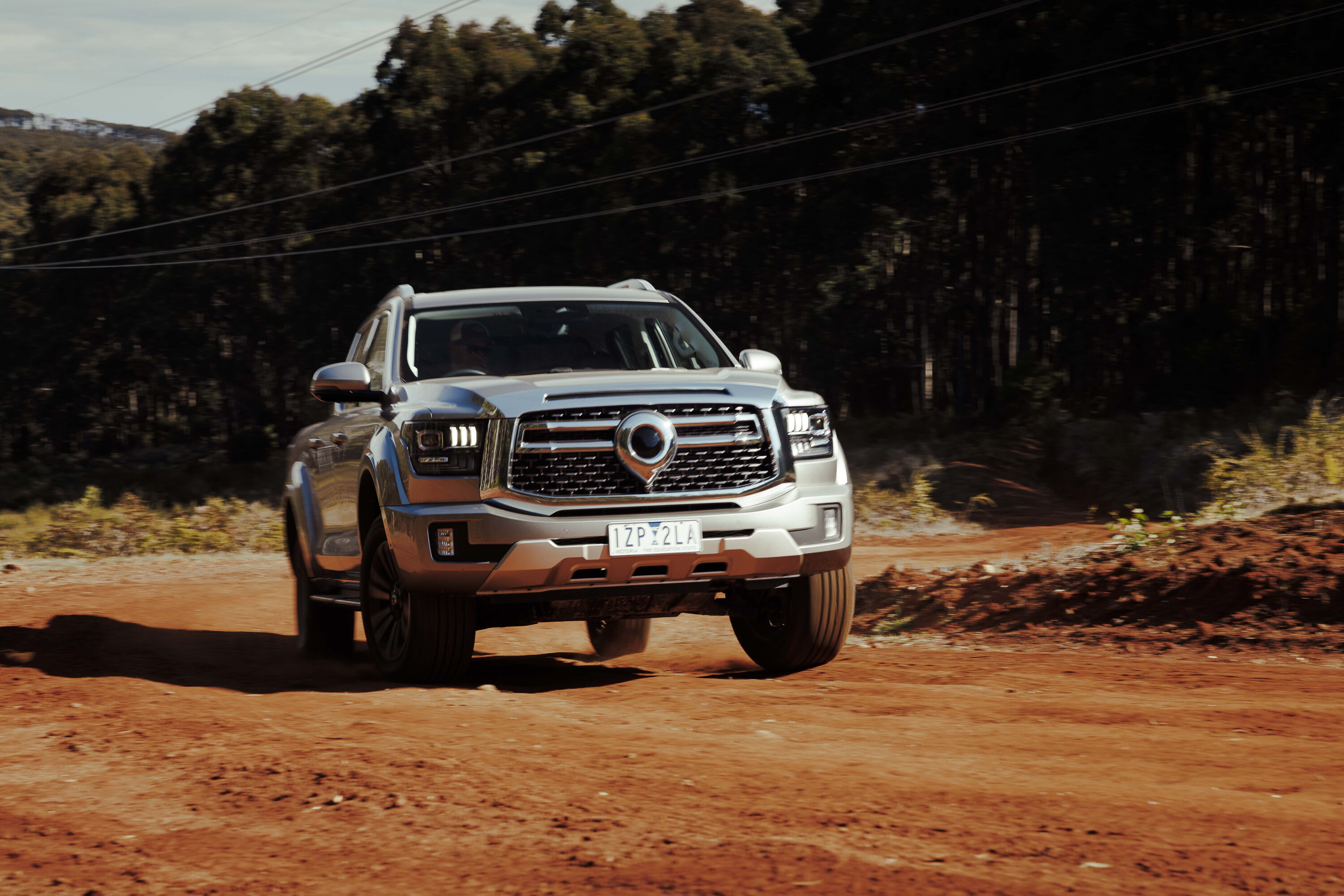
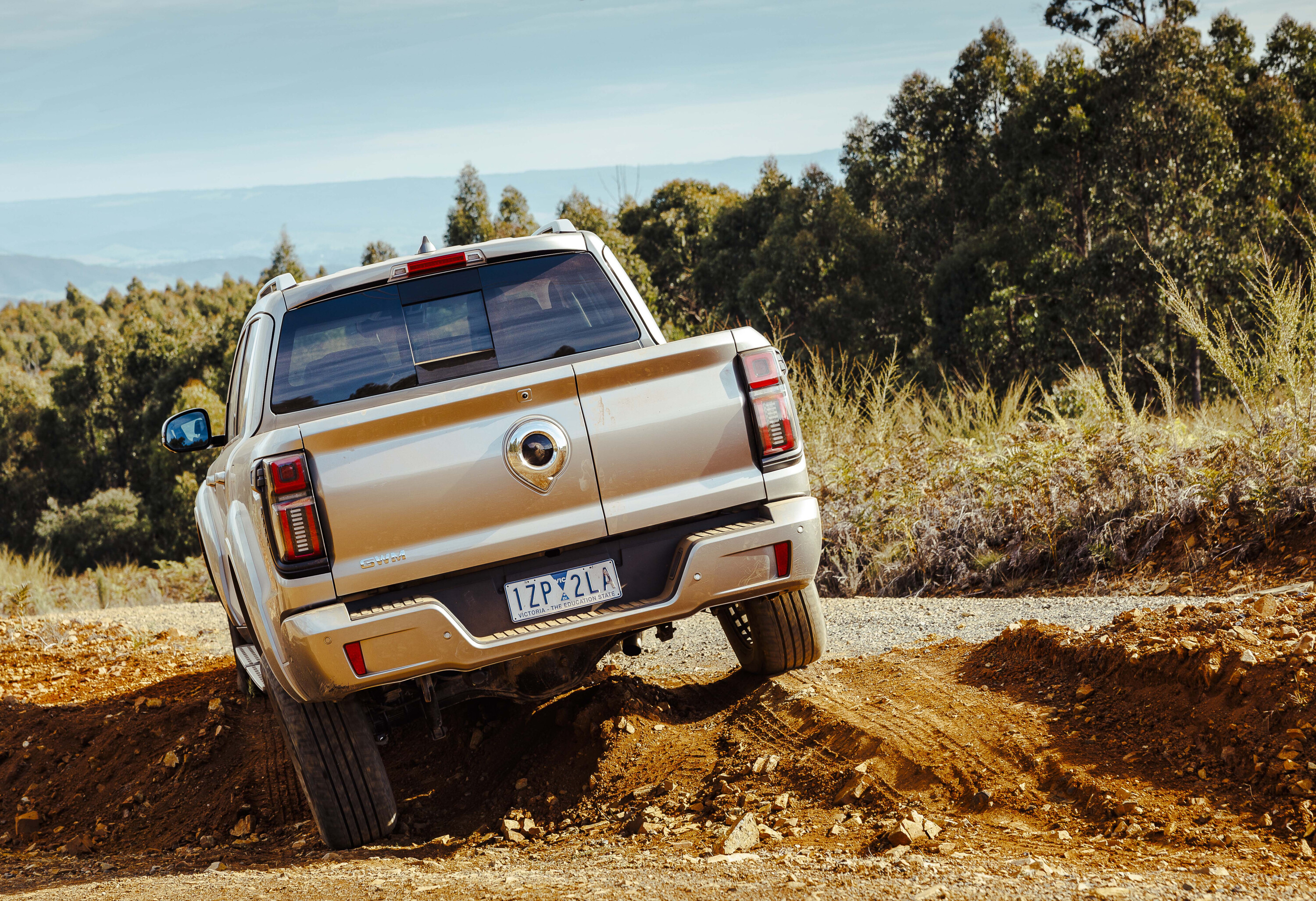
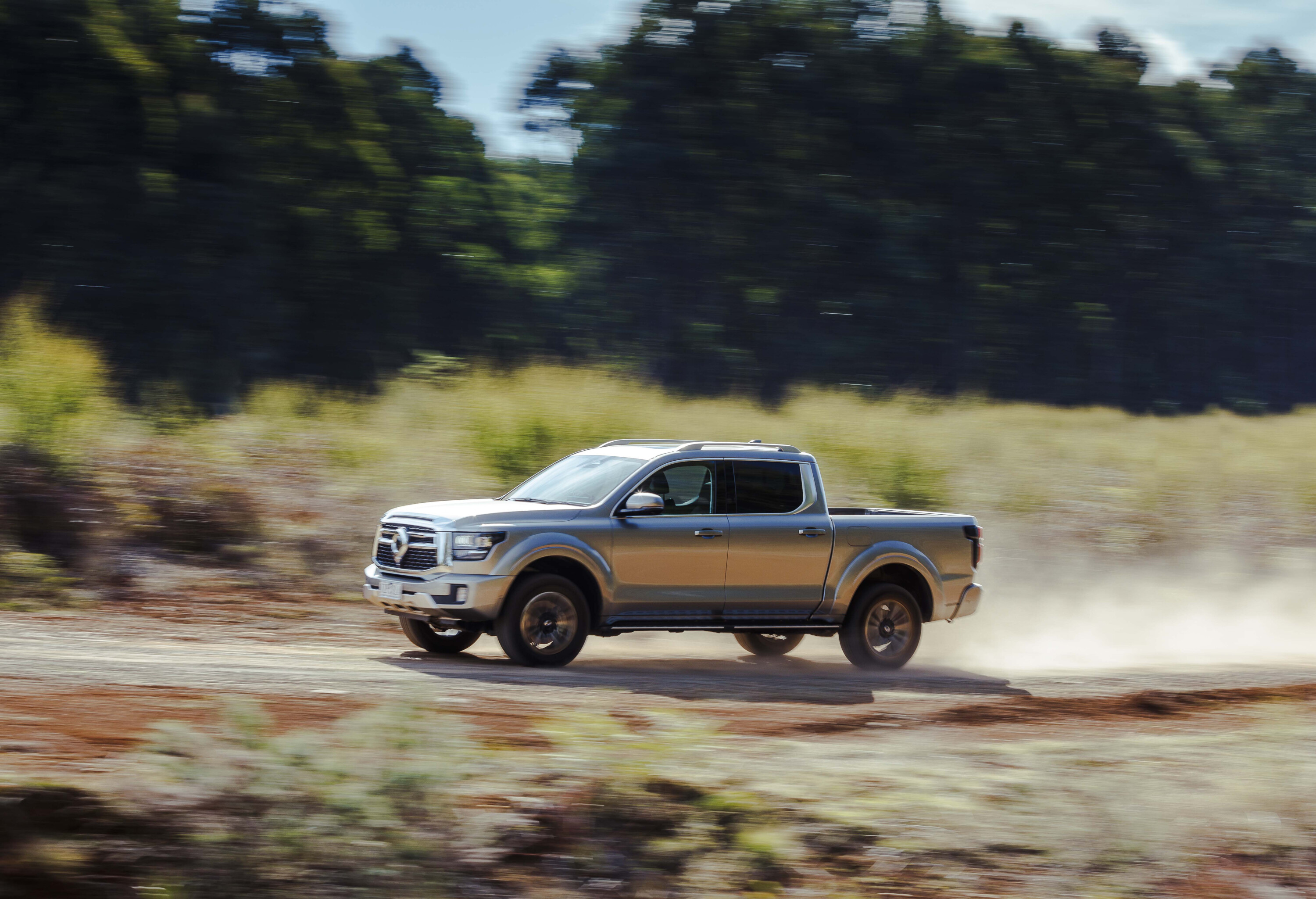
GWM’s Cannon Alpha Hybrid was the first proper hybrid 4×4 ute to hit the mainstream Australian market when it was launched earlier this year.
We were pretty impressed with the big ute when we had a short drive of it at the launch and were keen to get into it for a longer evaluation.
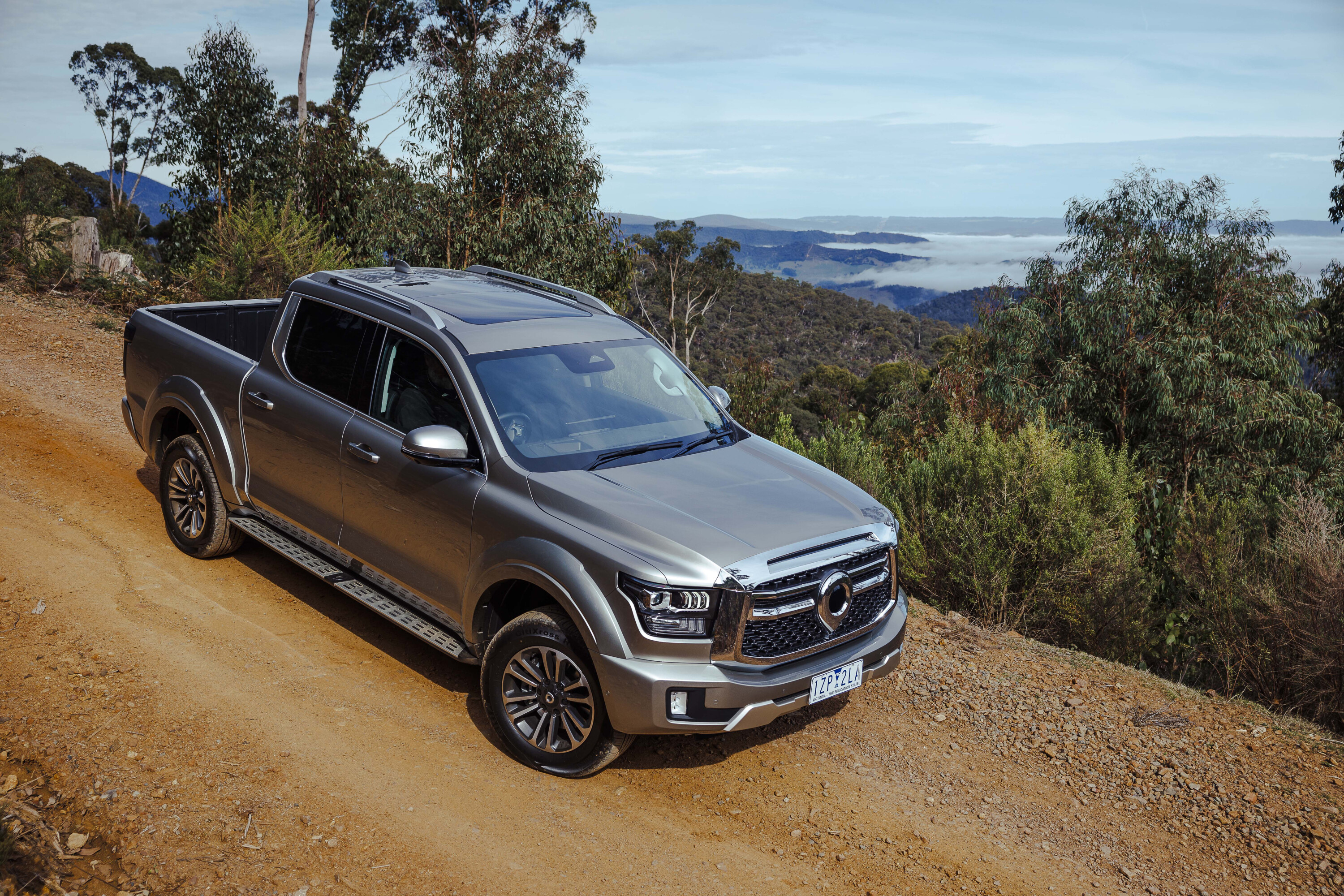
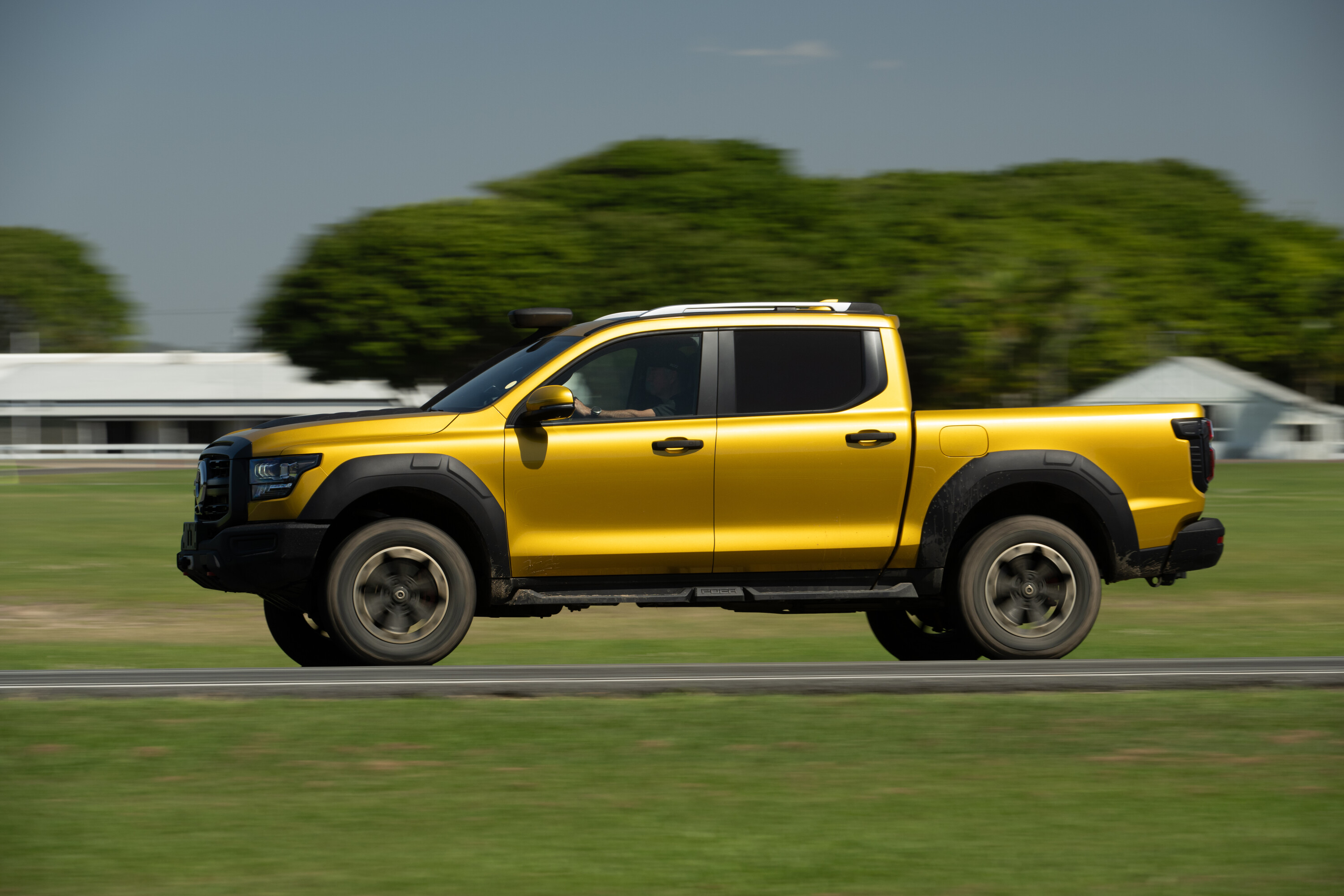
A bit of background on the newish model; the Alpha is the bigger version of the popular GWM Cannon midsize ute and the Ultra is the top specification model. The Alpha is still midsize… but at the big end of that segment. It’s akin to a Ford Ranger/VW Amarok as it’s not as big as a full-size F-150 or Ram 1500.
The Cannon Alpha measures 5445mm long (35mm longer than Cannon Ute), 1991mm wide (57mm wider than Cannon Ute) and is 1924mm high (38mm taller than Cannon Ute), while the 3350mm wheelbase is 120mm longer than that of a Cannon Ute.
The Alpha is more than just big and hybrid, it’s also exceptionally well appointed, probably more so than any other midsize 4×4 ute and more akin to the higher-spec US pick-ups.
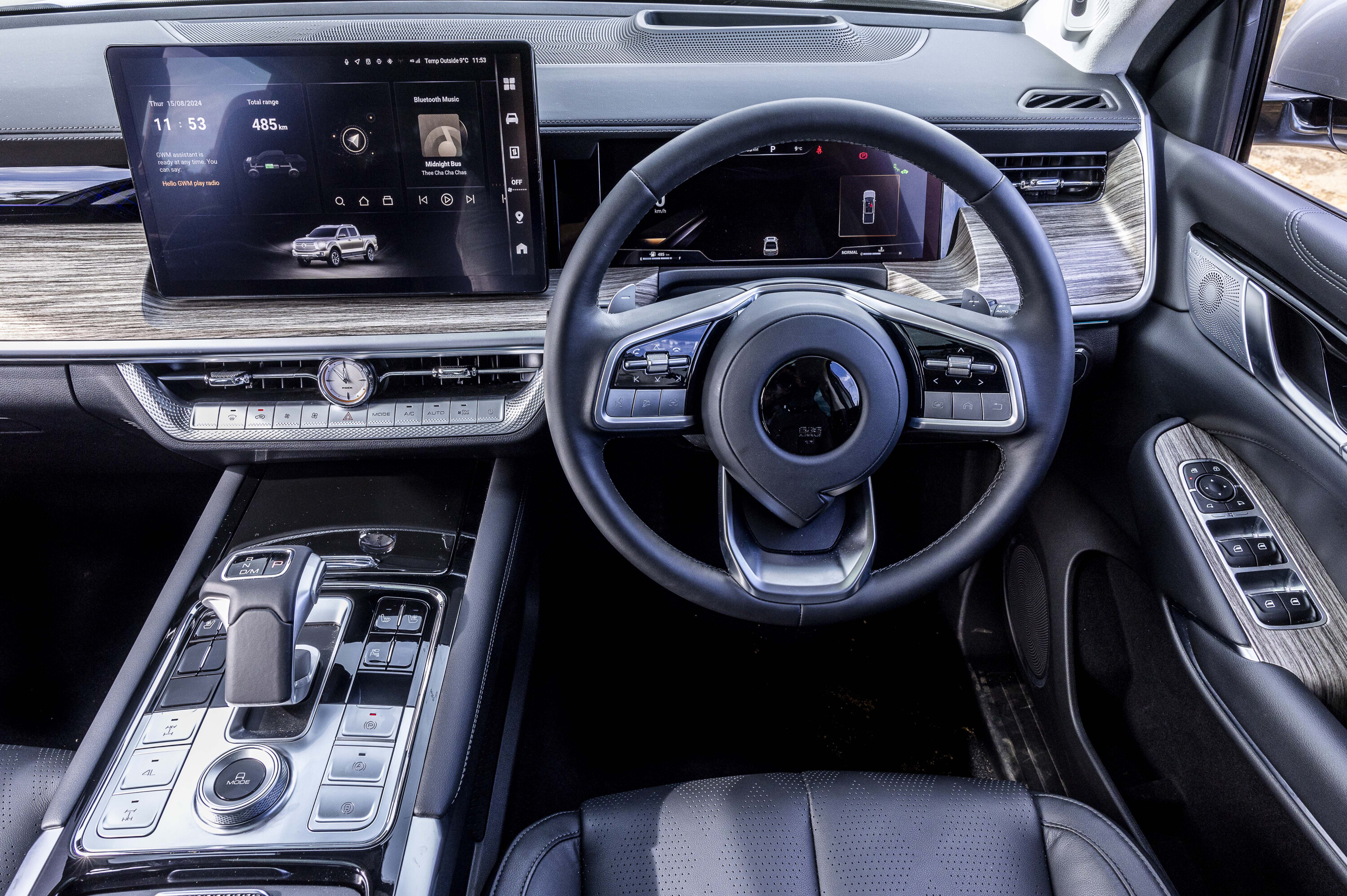
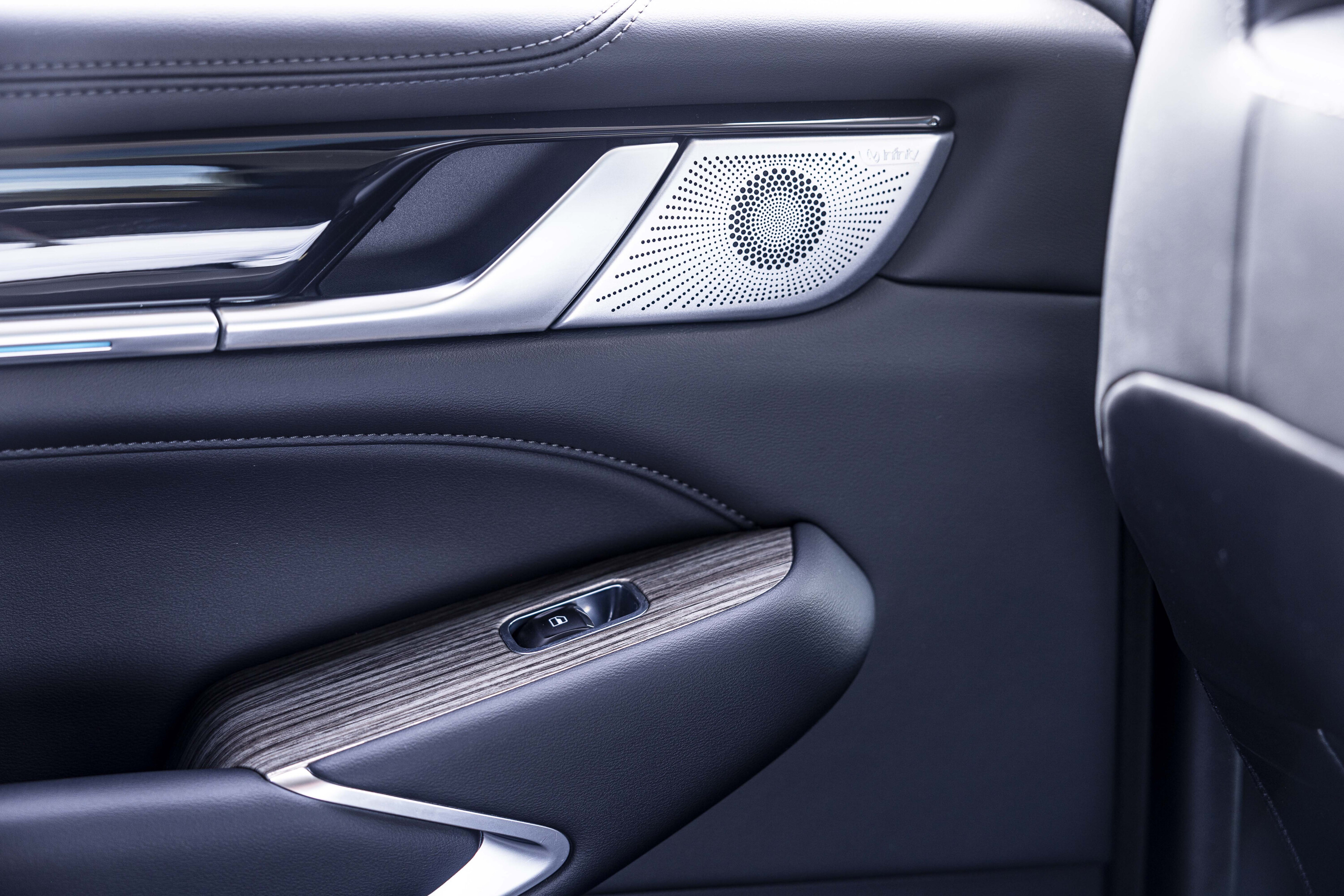
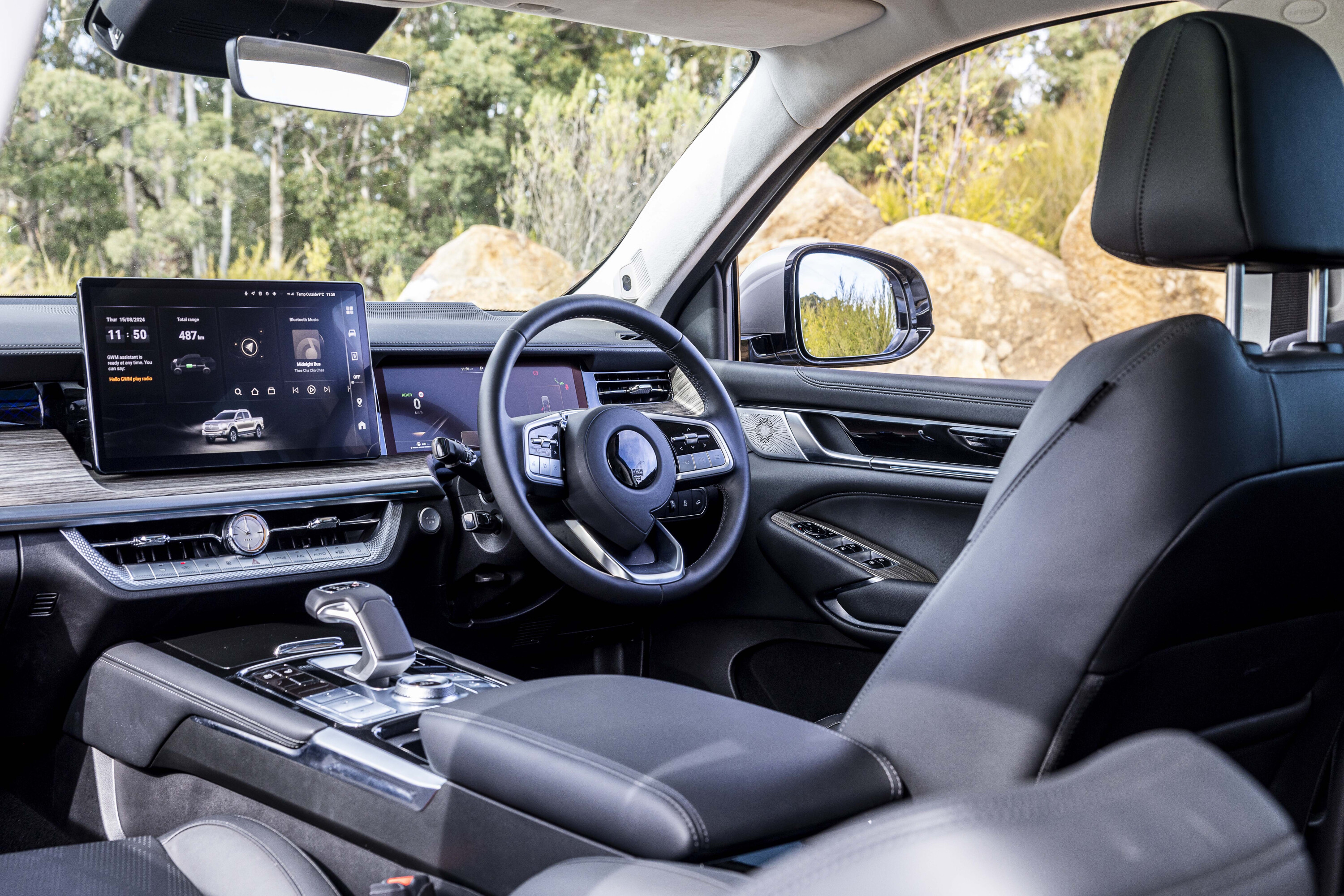
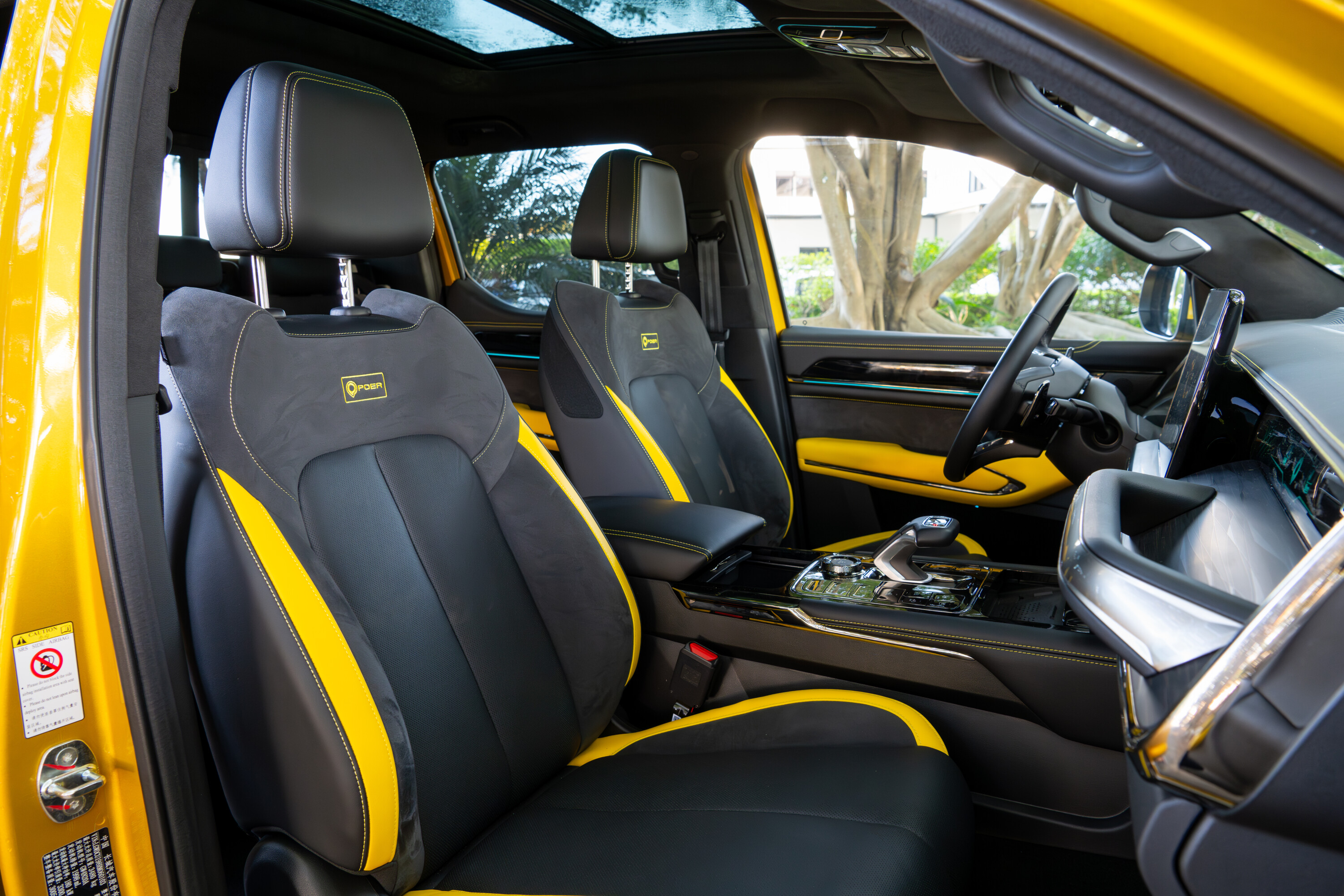
Slip inside via the large, wide-opening doors and you’re met with plush leather, big screens, a huge sunroof and a swag of features. The Napa-leather-covered seats are ventilated and heated front and rear, with massaging on the front pews.
The rear seats also have an electric slide and recline function that does away with the upright backrest that is customary in double-cab utes, improving comfort for passengers in the back, however this is restricted depending on how far back the front seat occupants have their seats.
1
If a tall driver has his/her seat all the way back it doesn’t leave a lot of space for the seat behind to slide forward and recline, however, in a normal, upright position, there’s plenty of leg and head room in the back.
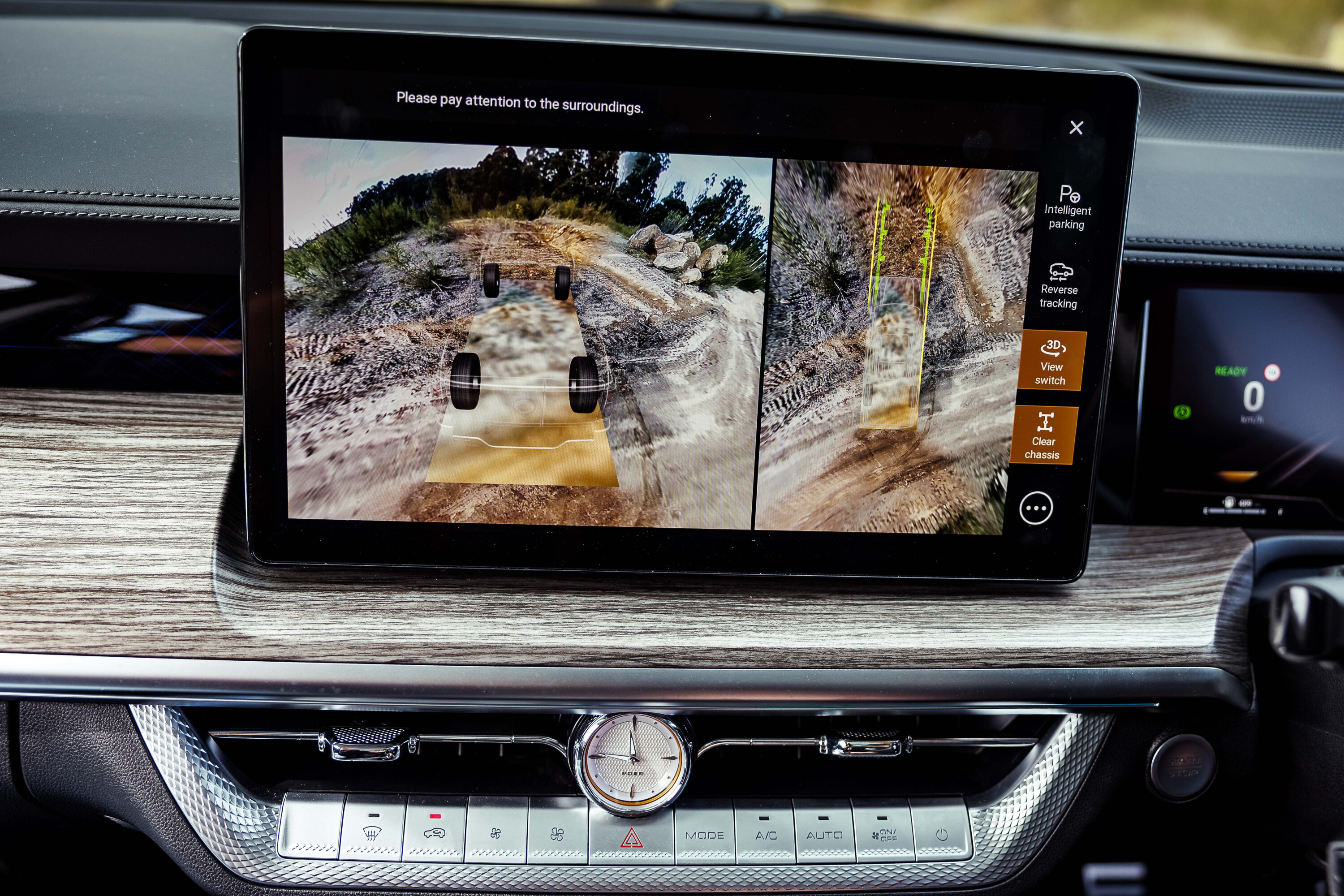
On the dash the 14.6-inch infotainment screen is both big and easy to see and use. It is home to all the usual system settings and controls, with Apple Carplay and Android Auto mirroring functions. Unfortunately the only volume adjustment is via a slow-acting toggle on the steering wheel and the cabin temperature adjustment is all within the screen as well.
This is annoying, and verging on dangerous; if you are like me and drive with CarPlay on most of the time, and you want to adjust the cabin temperature, you need to go into another menu to find the appropriate control and make the adjustment.
1
When doing this the driver monitoring system will tell you to pay attention to your driving and to drive carefully, which is bloody annoying.
This driver monitoring system would be a deal-breaker for me if I was considering a GWM equipped with it. Such systems will become essential if manufacturers want their vehicles to achieve a five-star safety rating using the latest standards, but personally I find the GWM system not just annoying, but an added distraction to driving.
Not only does it nag you when you glance away from the straight ahead, but it also tells you what’s coming up ahead, which you can see with your own eyes anyway! “Curve head, please drive carefully” and “Merging Lane ahead, please drive carefully” are totally unnecessary because they are only telling you what you can see anyway.
1
Not only unnecessary but annoying as each time they butt-in they quieten the 10-speaker sound system which I would prefer to be enjoying.
Yes, you can turn these systems off and adjust their sensitivity in the many menus available in the multimedia screen, but they default back to on again each time you restart the vehicle. Plus, these are potentially lifesaving systems that you shouldn’t want to turn off, but the incessant nagging will be too much for some, myself included. Mitsubishi has shown that a driver monitor doesn’t have to be so invasive with the system in its Triton ute.
1
Safety
Safety features in the Cannon Alpha Ultra Hybrid include AEB, front, side centre and curtain airbags, ETC, forward collision and lane departure warning, front and rear cross traffic alerts, and a TPMS.
Speaking of the TPMS, during our drive of the Cannon over gravel roads, the system came up with a low pressure warning in one of the rear tyres. I stopped to check it and sure enough the hissing of a slow leak could be heard and we had to swap it out for the spare.
Having the TPMS alert us to the tyre pressure dropping, and then stopping to investigate, meant we were able to replace the wheel and tyre before the pressure dropped to a dangerous level and/or the tyre overheated and destroyed itself.
1
We later had the tyre professionally inspected, patched and put back into service which was a lot cheaper than replacing it with a new tyre.
I was a bit disappointed to find that the spare tyre is mounted to a steel wheel but thankfully it is a full-size tyre so there was no speed restriction with its use.
Powertrain
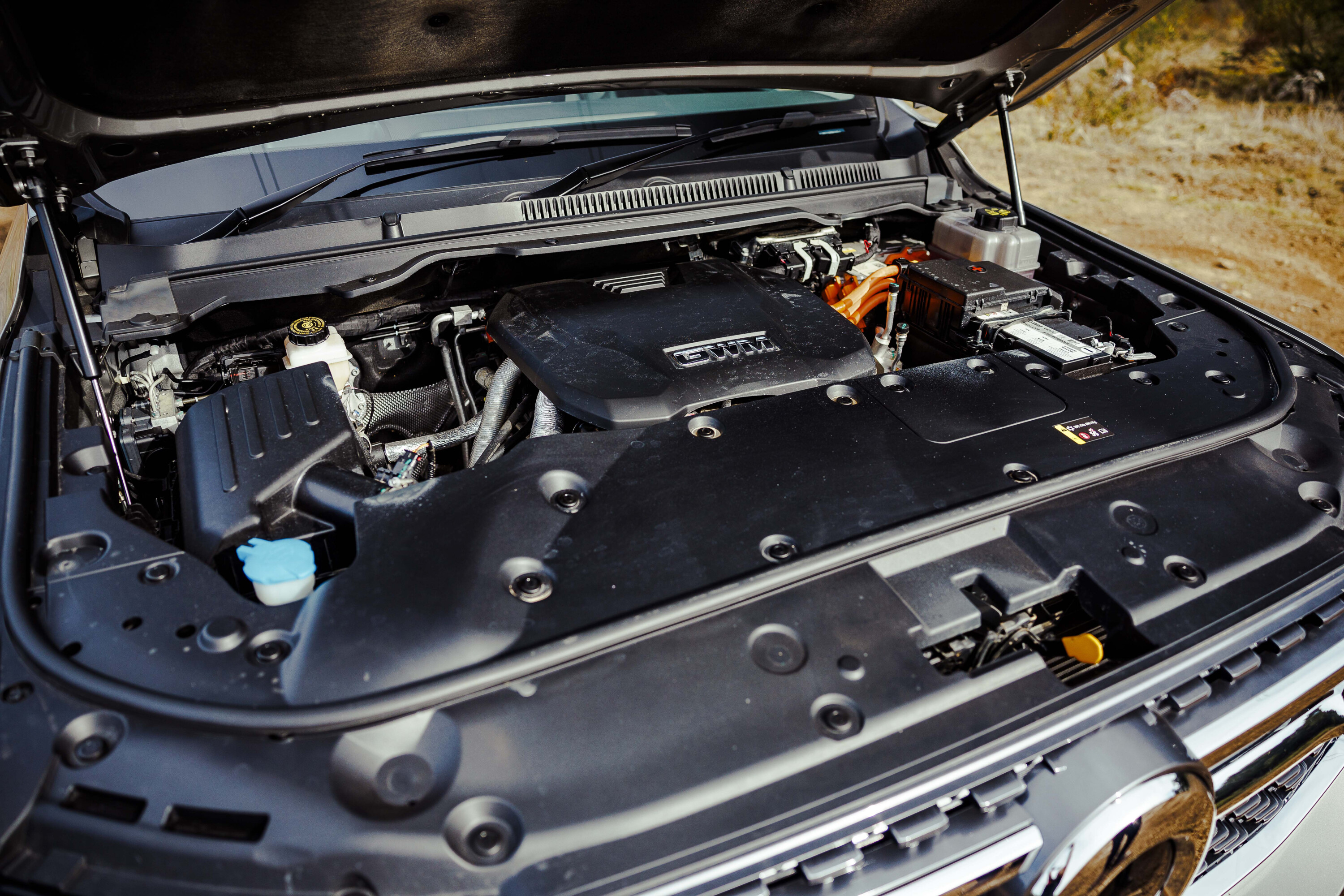
The big difference with the Cannon Alpha hybrid to the existing midsize 4×4 utes on the market is its hybrid powertrain. This comprises a turbocharged 2.0-litre petrol engine and an electric motor that is located within the transmission bell-housing along with the torque converter. Combined they deliver a claimed output of 255kW and 648Nm, and this is fed to a dual-range, on-demand 4×4 system via a nine-speed automatic transmission.
1
The popular diesel-fuelled 4×4 utes can only dream about those sort of torque figures from the factory and the Cannon Alpha’s petrol/electric powertrain is far more refined than an oiler.
On and off-road performance
Both of these characteristics are appreciated when driving; the abundance of torque gives you plenty of pick up under your right boot and it is delivered in a smooth and relatively quiet manner. Full electric drive is only available for light throttle driving such as parking and low speed manoeuvring with the combustion engine kicking in as soon as you apply the accelerator to any degree.
The quiet and torquey turbocharged petrol engine and auto transmission are smooth and seamless in their operation and when combined with the boost of the electric motor there is plenty of performance available.
1
As mentioned, the four-wheel drive system is an on-demand one, with high and low range, and off-road capability is boosted by locking differentials both front and rear. The only other ute in this class to offer front and rear lockers is the Ranger Raptor.
Also helping the cause when you get off sealed roads is the use of relatively sensible 18-inch wheels and 60 aspect tyres. We say reasonably sensible as it wouldn’t have surprised us to find 20-inch wheels and stupidly thin tyres on such a highly-specced vehicle, and the 18s are not so bad and offer better ride quality and a decent choice of replacements.
The suspension is your typical ute fare with coil-sprung IFS and a live-axle rear riding on leaf springs. The leaf pack used has just three leaves per side and these give a supple ride at low speeds while off road, but the quality is a bit harsh at higher speeds on rough roads, both sealed and unsealed.
1
Practicalities
The Alpha hybrid still retains the 3500kg towing capacity of the other utes in the range but the payload is a relatively low 735kg.
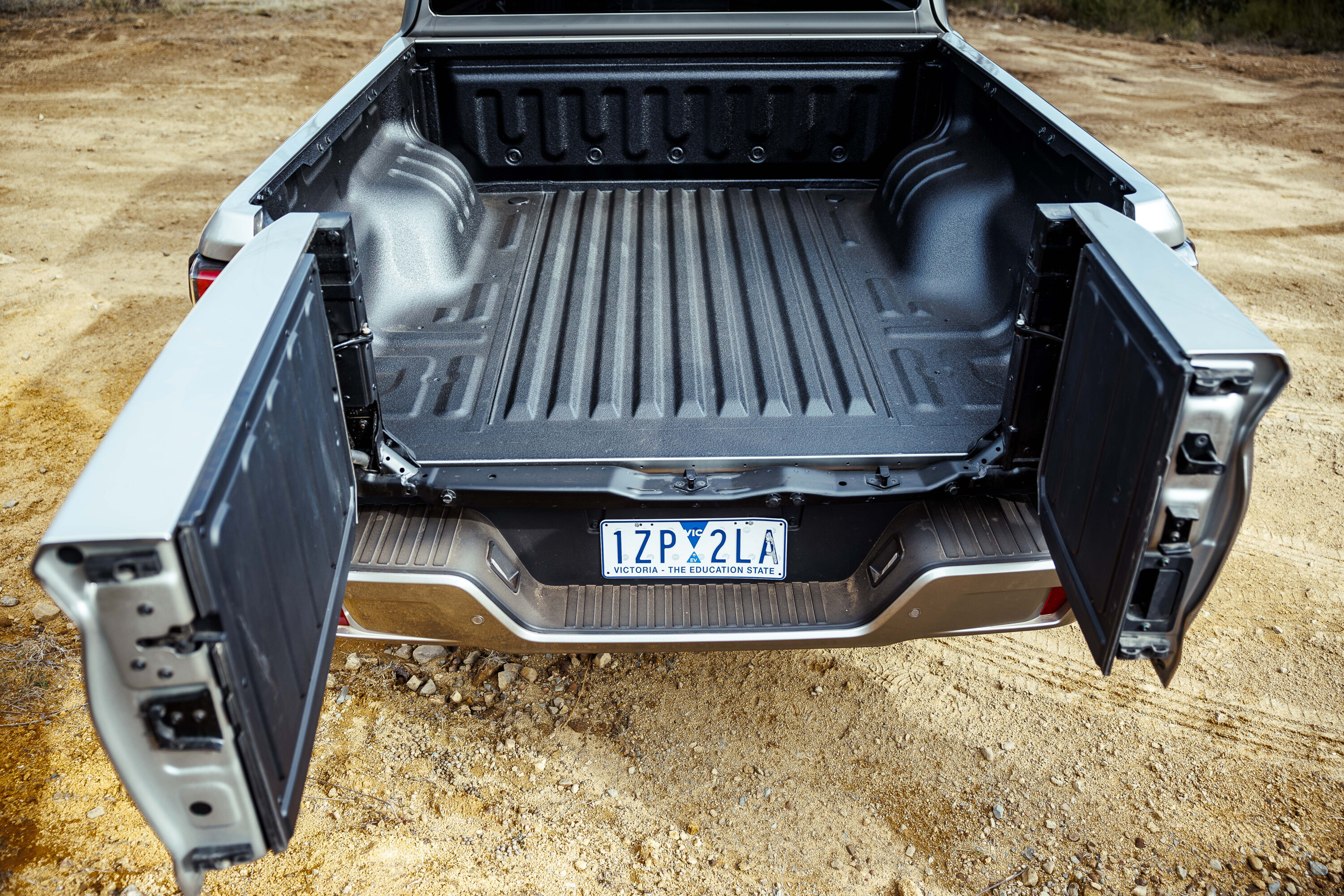
The cargo tub is big and spacious with lighting to it from the roof of the vehicle, four tie down points and a spay-in liner, but no power outlet for running accessories such as a fridge.
The tailgate is another unique feature of the Cannon Alpha in that it can be opened both barn-dooor style with a split one-third of the way across or in the traditional drop-down method common on ute tubs.
1
Verdict
The GWM Care 777 ownership package offers a 7-year unlimited kilometre warranty, 7-year roadside assist and 7-year capped price servicing, and this will be introduced on the Cannon Alpha Hybrid.
You could say that GWM is still finding its place in the Australian market but it’s already gaining popularity thanks no doubt to the price point and level of equipment on offer.
The up-spec features that you find in the Cannon Alpha are usually reserved for luxury cars, not utes, and along with the hybrid powertrain, this vehicle brings new features and interest to the ute segment that will ensure even more buyers take a look at GWM products… and we can only expect them to get better with further refinement.
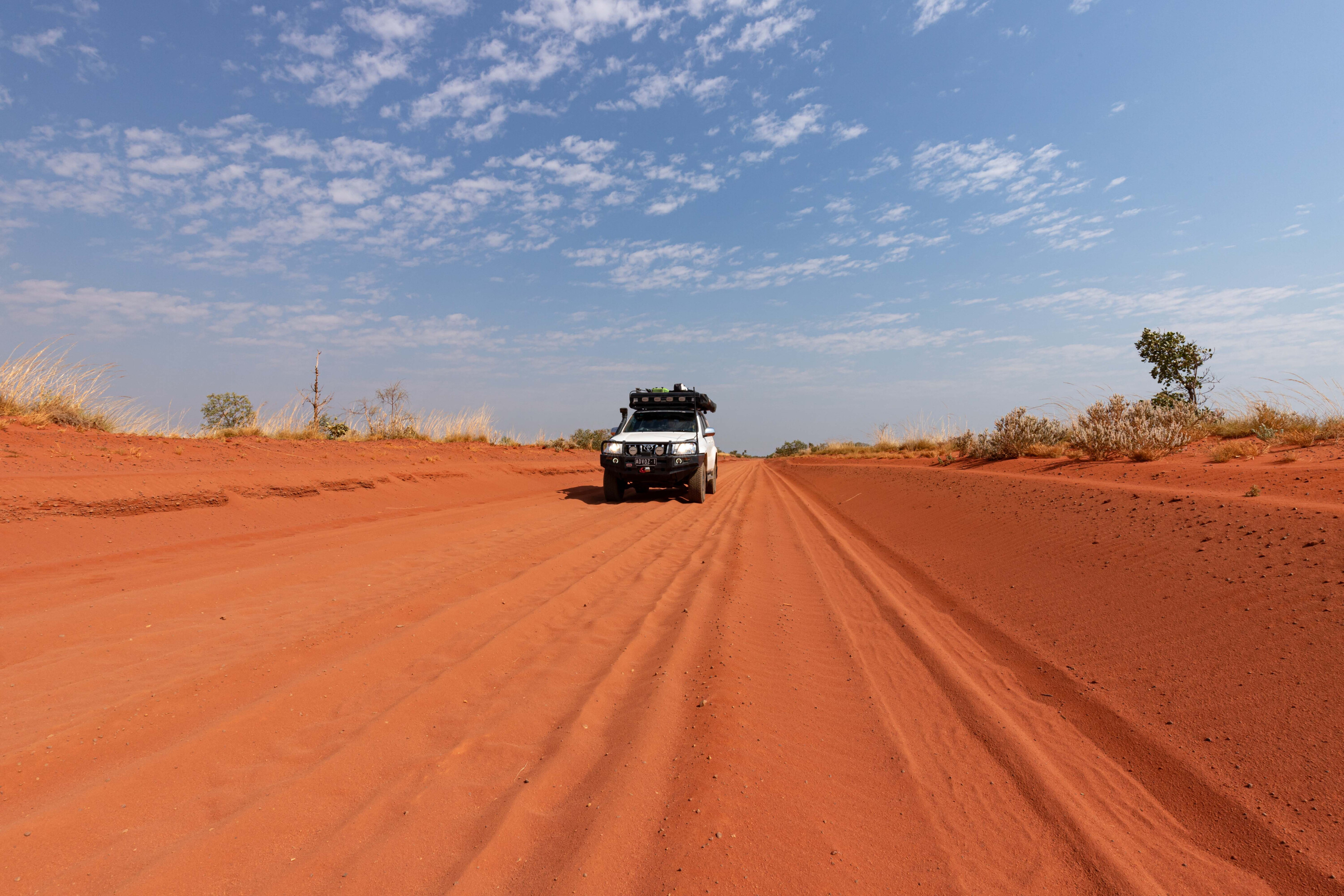
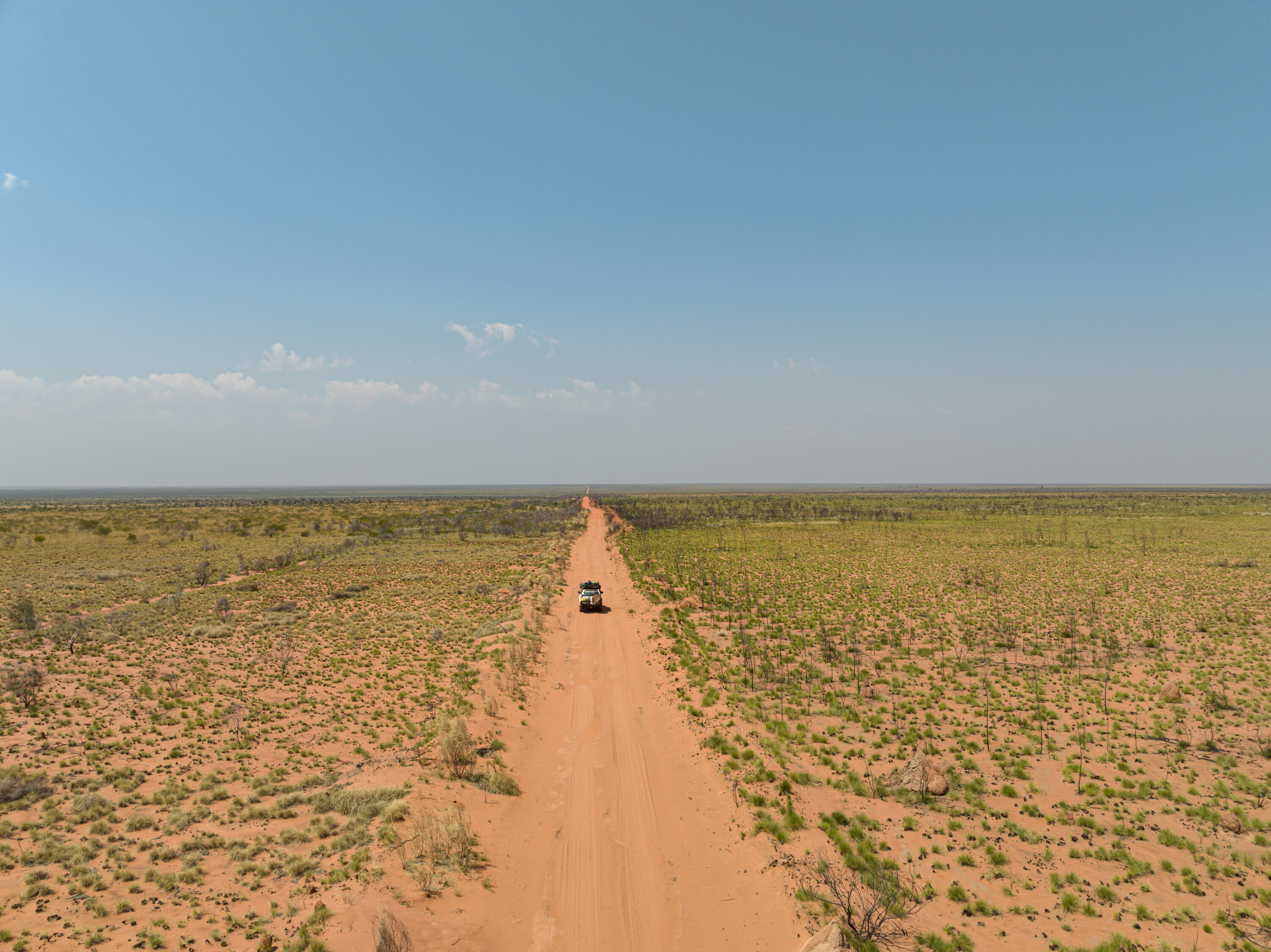
Cutting through the heart of Australia’s second-largest desert is an abandoned oil exploration track now known as the Nyangumarta Highway, formerly named the Kidson Track.
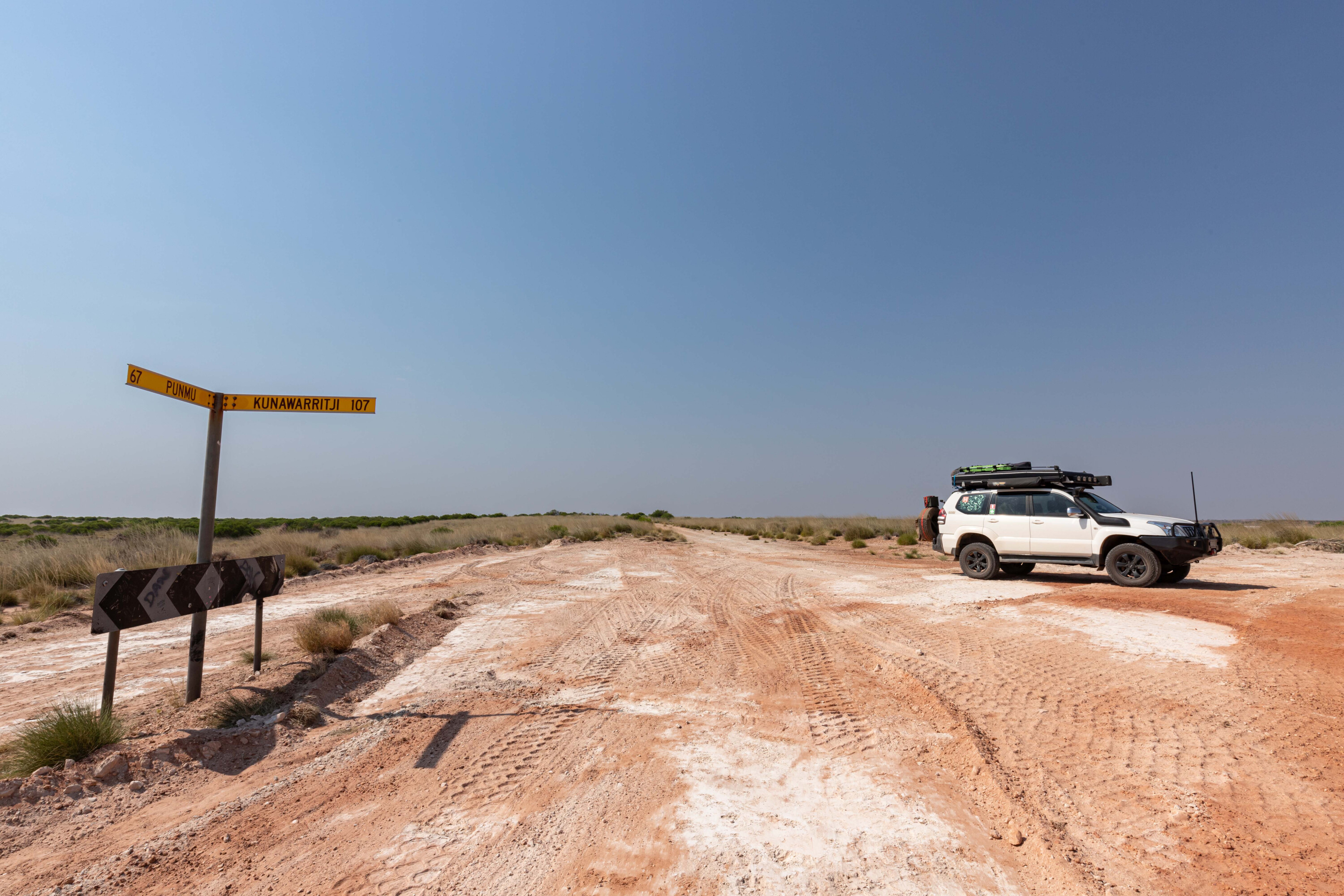
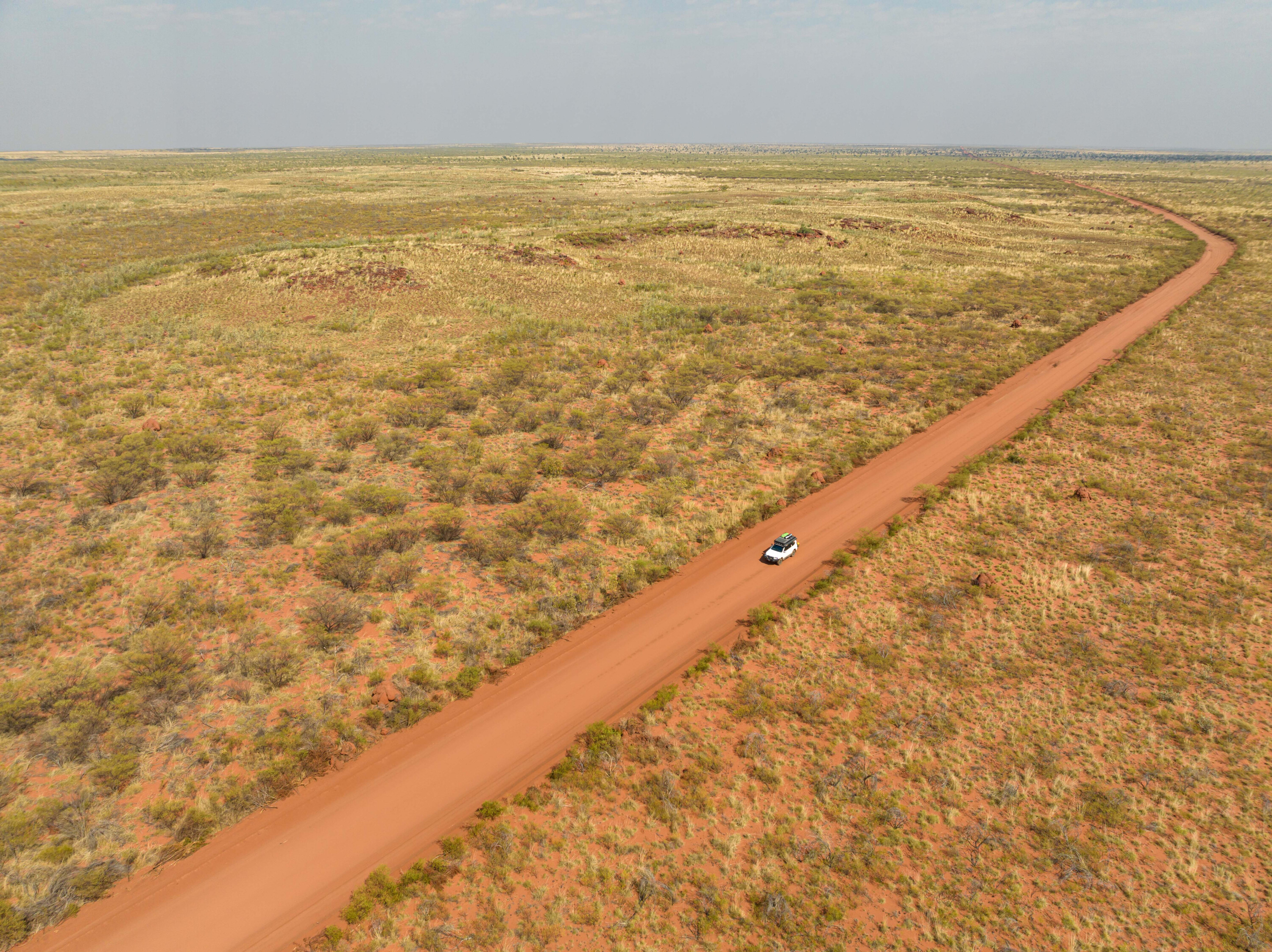
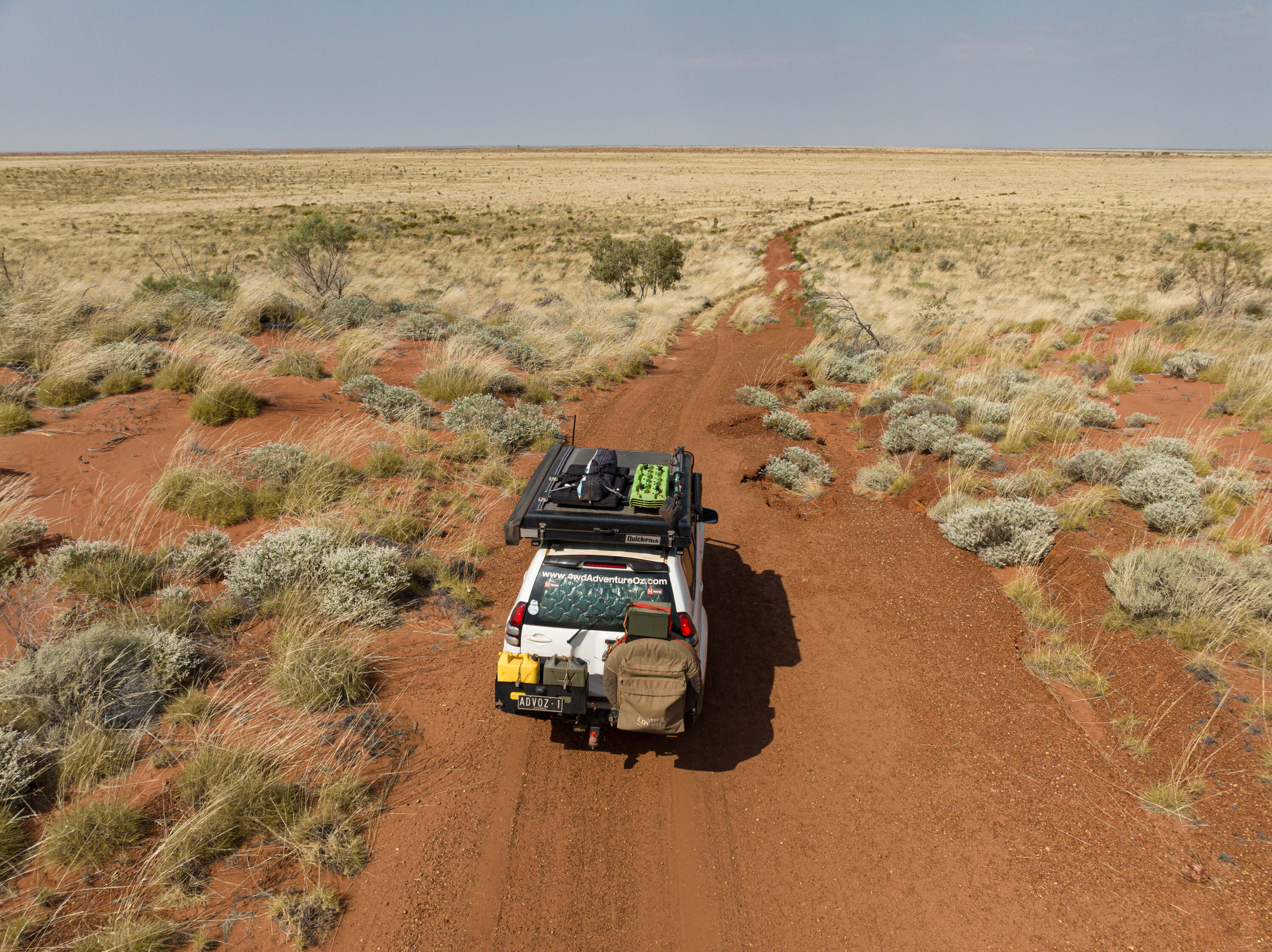
This remote track takes you from the white sands of Eighty Mile Beach to the remote Indigenous community Kunawarritji on the Canning Stock Route, and the country is spectacular. The track changes from washed-out gravel, overgrown in sections, to red sand stretches through colourful dunes and spinifex. Don’t expect to see anyone else out here – this epic track is rarely travelled.
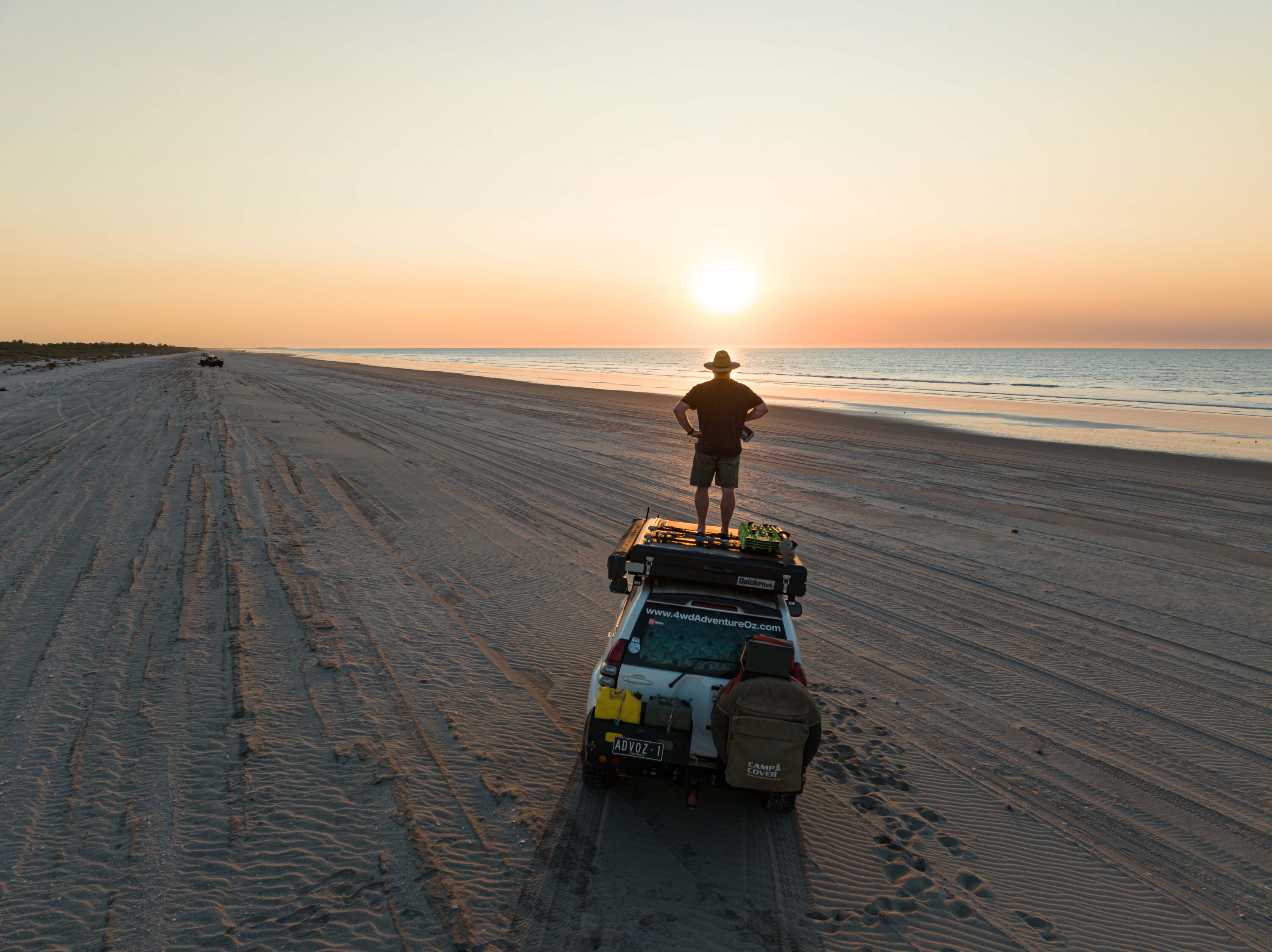
Eighty Mile Beach is an excellent place to spend a couple of days kicking back,and while the caravan park has great facilities, it’s the beach driving opportunities that raise the bar. The tidal movement is significant here so most days the beachfront is nice and wide with a mix of hard and soft sand, although the soft stuff isn’t likely to see you bogged.
1
It’s when the tide is high that you have the best chance to catch threadfin, blue nose salmon and mulloway from the beach. Access to the Nyangumarta Highway is only 1.4km north of the Eighty Mile Beach turnoff and is well signposted.
The first section of the Nyangumarta Highway is wide and smooth, which I found surprising until I spotted a “grader ahead” road sign. On UHF channel 40 (the channel for this track), the grader driver told me that once past the grid, I’d enter the permit zone, and the road would narrow a little bit before deteriorating severely further along, and that it would be a challenge to get through. That was music to my ears.
In some sections, the track narrows and the sand deepens, but a bit of momentum will get you through before the track opens up again and the road improves for a bit.
There are markers on the track every 10 km for UHF 40 so you can call ahead to alert oncoming traffic, and you should be able to hear oncoming traffic. The radio was silent this time as I was the only person travelling this route.
Previously known as the Kidson Track or Wapet Road, the track was created in the late-1960s by West Australian Petroleum Pty Ltd, a pioneer of oil and gas exploration on unallocated crown land. The name was changed to Nyangumarta Highway in 2014, as the road passes through native title lands including Nyangumarta, Kulyakartu and Ngurra.
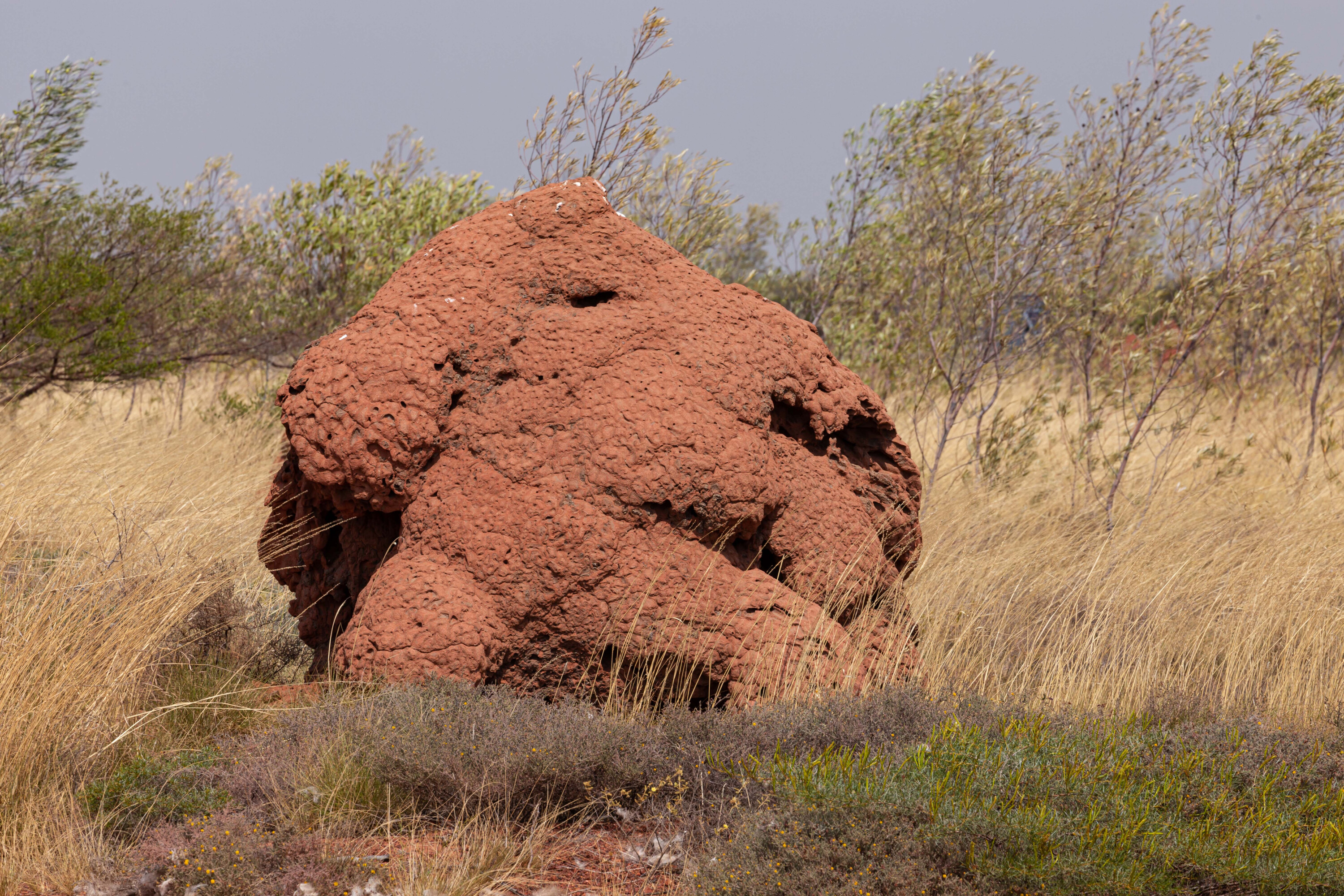
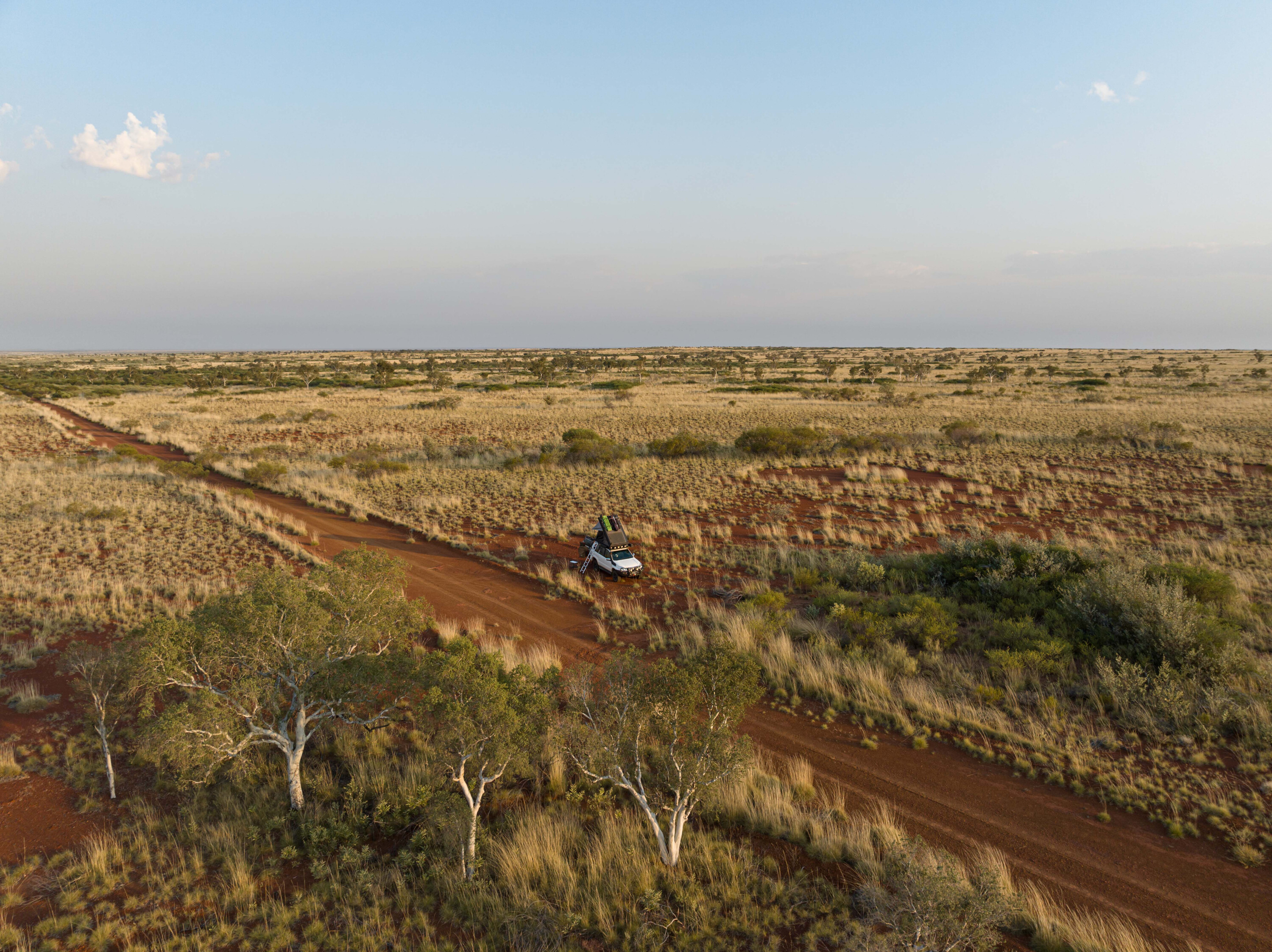
The colours of the desert out here are brilliant; burnt orange sand and termite mounds, golden spinifex and blue skies, it always feels like home to me when the landscape looks like this. You’ll pass by some rocky outcrops as the road cuts its way across the range.
1
The plains look like golden Mitchell grass, but it’s the spinifex’s seed heads that make it look like prime grazing land. In other places, you’ll find acacia and grevillea which are particularly beautiful when flowering.
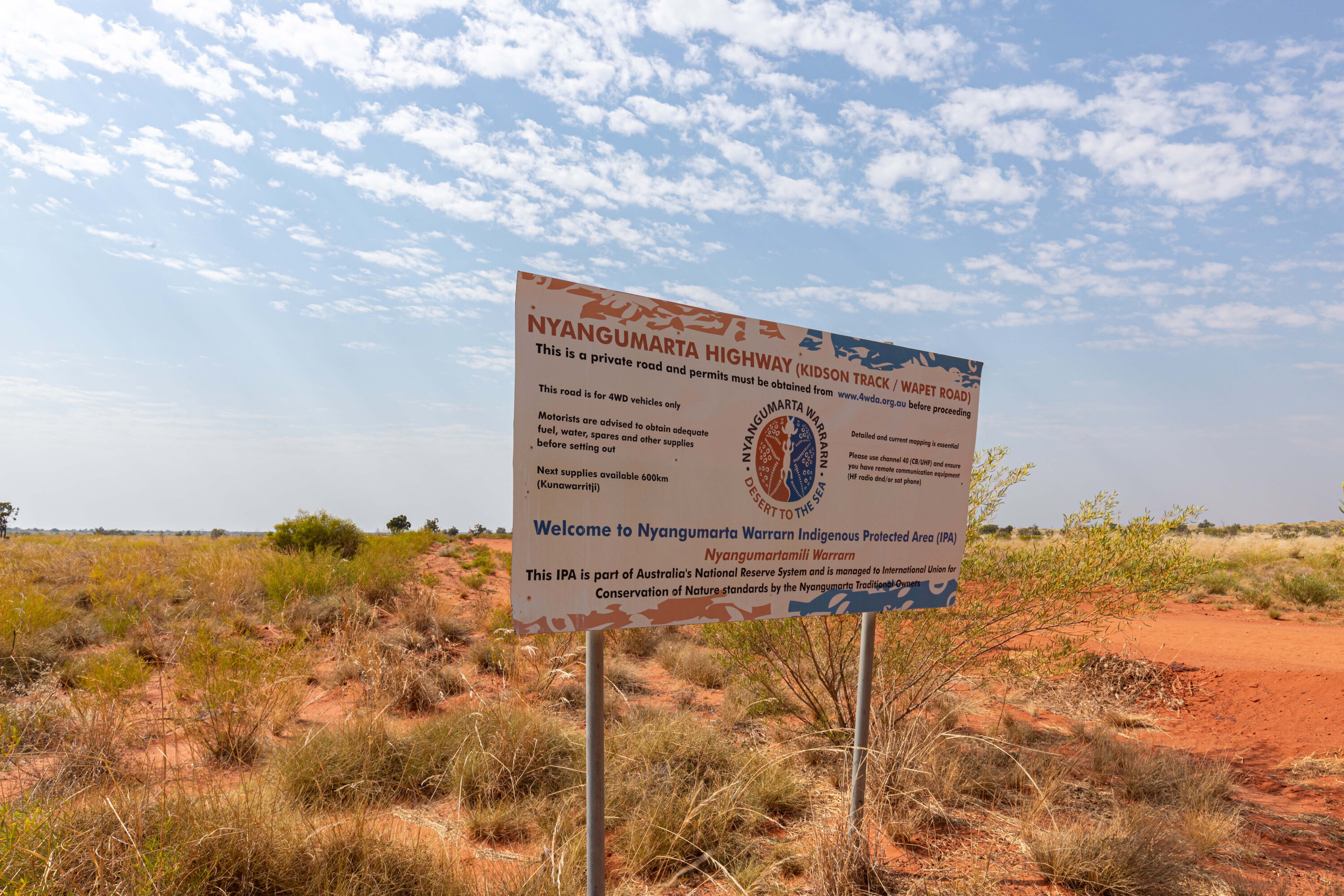
A permit is required to drive the Nyangumarta Highway and to make use of the designated camping areas on the track, and this can be purchased from the Four-Wheel Drive Australia website. The permit also allows access to Naburu Rose’s Track.
Once your permit has been paid for, a brochure is provided which contains plenty of information on the history of the track, its importance to the Indigenous people, and a map highlighting points of interest, camping areas and restricted areas.
1
The first campsite is 85km from the Great Northern Highway and is named Djimo Ngurra (Camp One). It is an open clearing that sits on top of a small rise, so there is no shade.
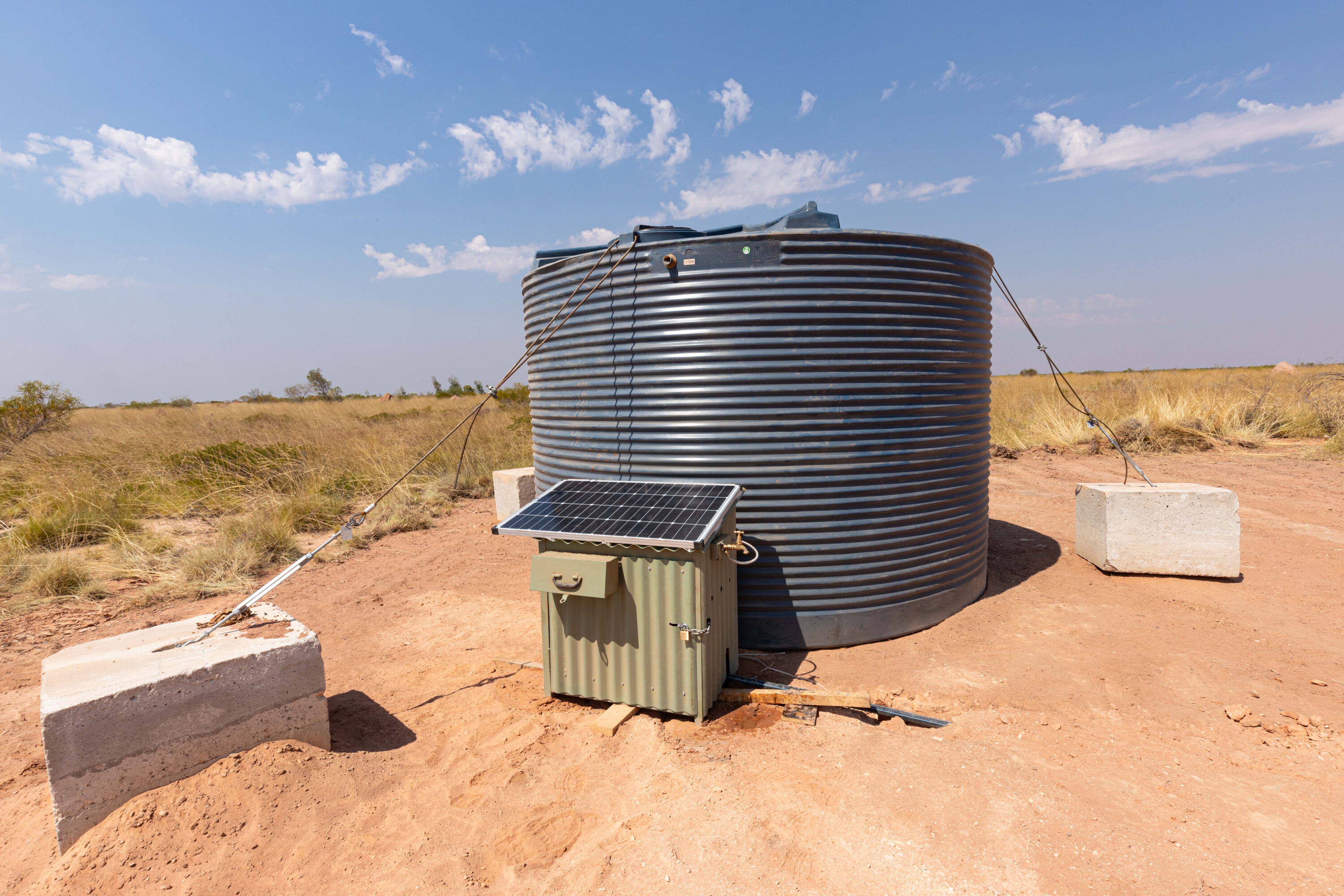
There are four drop toilets and fresh drinking water was available when I visited. A solar panel powers a 12v pump that pulls water from the tank, passing through two water filters. This unique setup is a great idea and could be used in other remote bush camps. It is a decent-size camping area that is suitable for a large group or for off-road trailers, however I would not want to tow along this track, knowing what is to come.
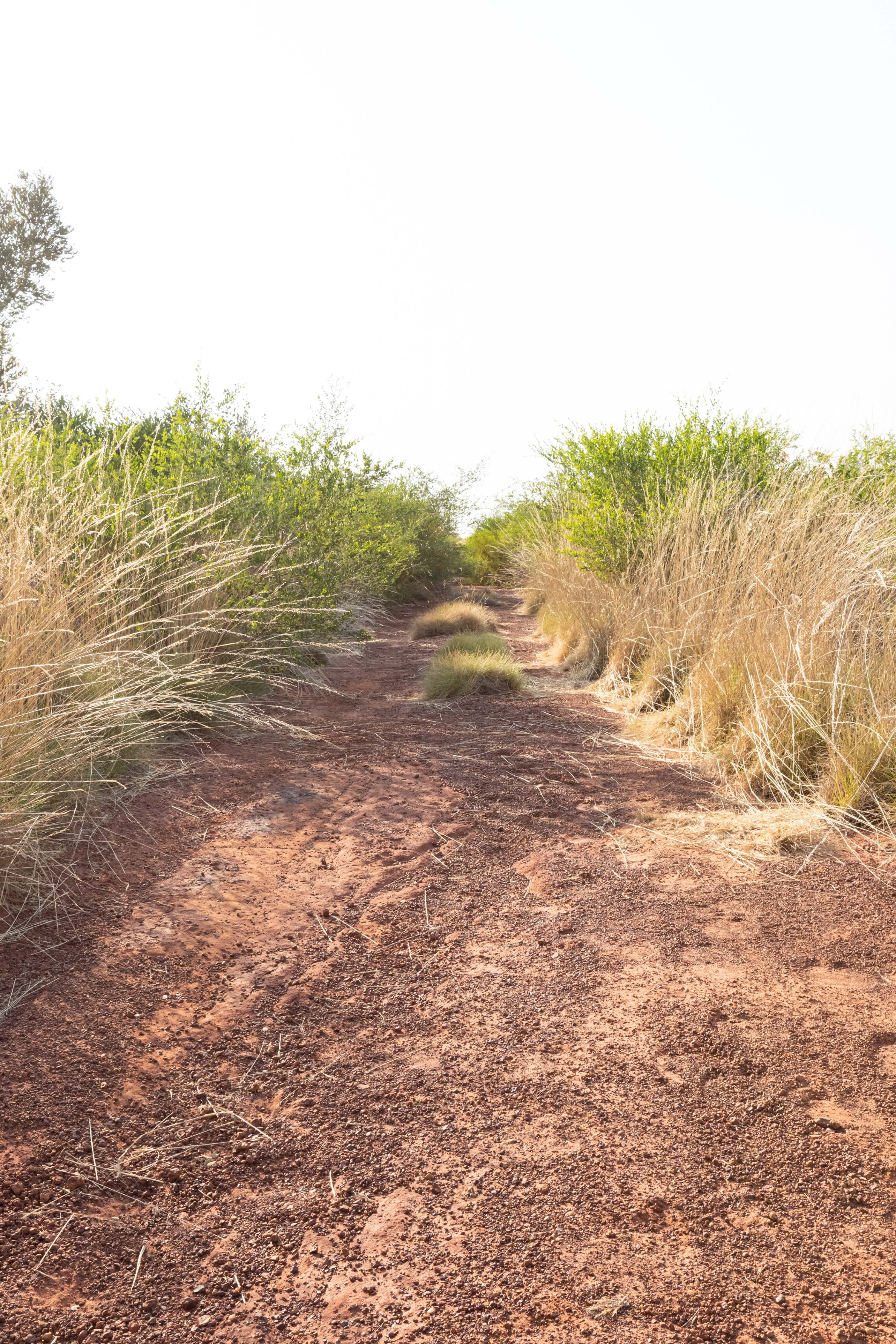
Continuing, you’ll soon pass a track on the right and from here the track narrows and the corrugations begin. This is what a remote desert highway is all about and from here track maintenance is rare to nil.
1
The worst corrugations are on the purple gravel sections whereas the sandy sections are good going with very few corrugations. It feels great to be back in the Great Sandy Desert.
A little further east is Djimakarra Soak, a day-use area not far off the track. This is a typical soak that has been utilised by the Nyangumarta people for generations. Older members of their group used to camp here as they passed between the desert and the pastoral stations on the coast.
Knowledge of soaks such as this one was passed on through song and ceremony, and by being shown country by knowledgeable elders. I had fun trying to locate the soak, eventually using a GPS coordinate from the old Hema Explorer app, and then discovering a very faint track that led to it.
1
Five kilometres east of the soak is the second designated campground called Djimakarra Ngurra (Camp Two), which sits atop an open cleared area with views across the plains.
It too has four drop toilets and drinking water was available at the time of my visit. This is a great concept that others could learn from, but all it would take is for someone to ruin it all by stealing the gear that makes this lifesaver work, or if there was no water available to fill the tanks. As it was only lunchtime, I decided to push on…
There are some restricted sections on the track that are significant to the Nyangumarta people, where you are not permitted to stop or take photos of the stunning outcrops. If you respect the conditions of the permit, this highway will stay open for years to come.
1
There are spots where underground water is close to the surface, where you can see stands of large ghost gums tapping in to stay alive. It’s quite amazing how much life there is in Australian deserts, both flora and fauna.
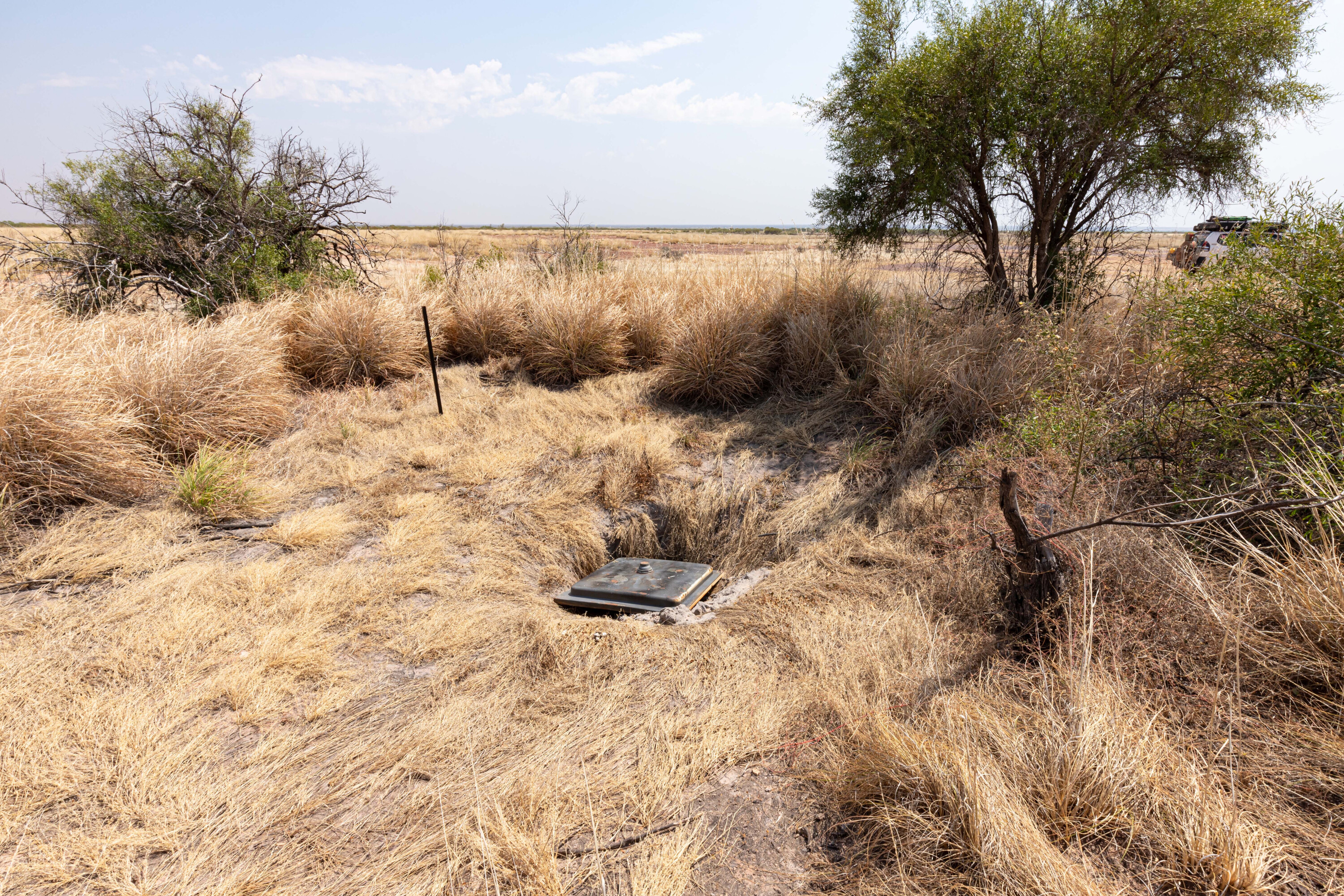
While I had yet to see any camels on this trip, I spotted plenty of footprints and camel poo, as well as scat from wallabies or kangaroos. Being 38°C outside, I wasn’t surprised that all creatures great and small were hiding.
The second restricted zone is another stunning outcrop which appeared vibrant in the afternoon sun. This is the roughest section of track so far and slow going but at least you get to enjoy the beauty of these cultural sites. The landscape along here is undulating so when you reach a rise, you are hit with great views into the distance, filled with spinifex, acacia and holly grevillea.
1
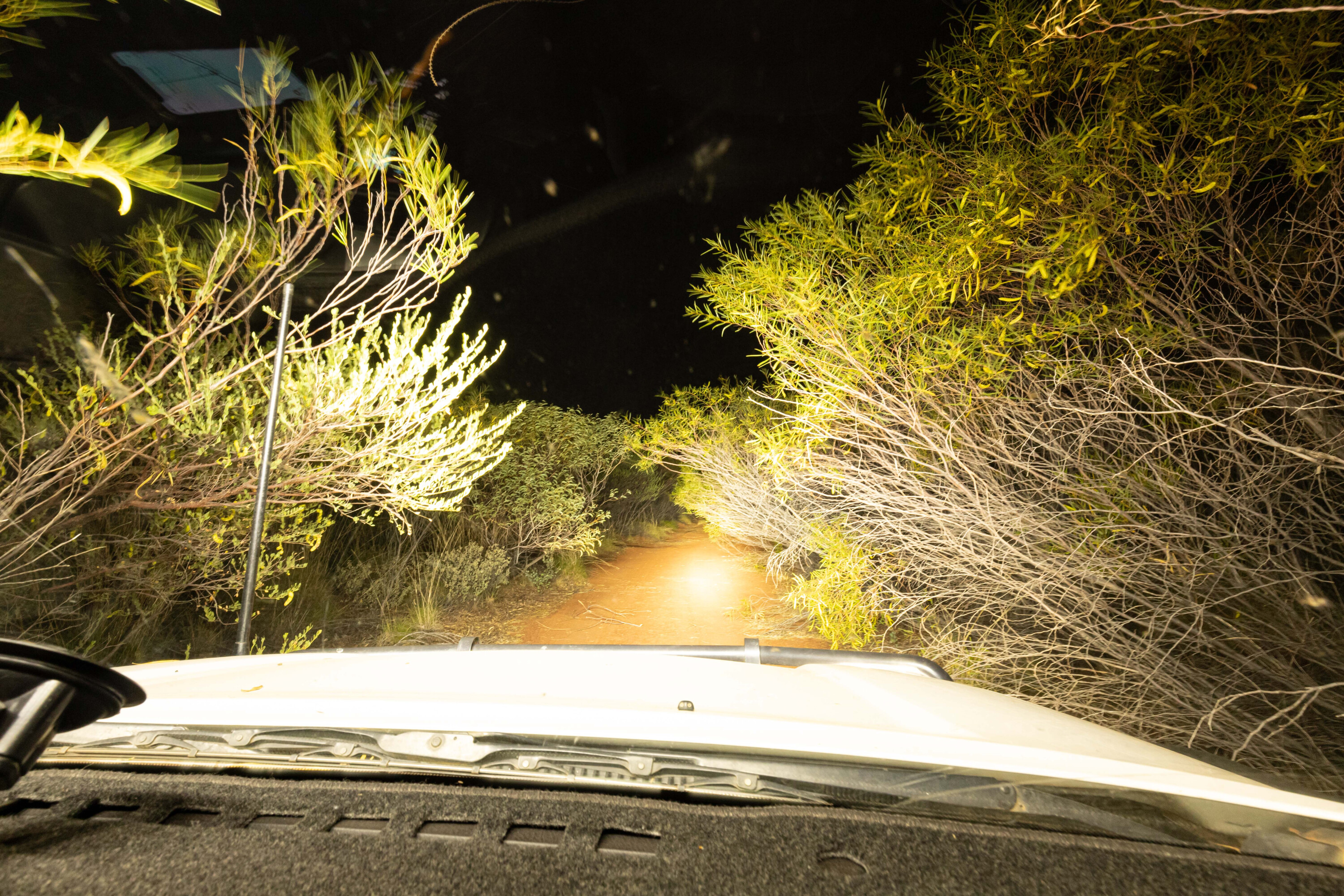
The track becomes overgrown with pindan wattle in sections, and you won’t be able to avoid some bush pinstriping.
Keep an eye on your UHF antenna too; it may be better to remove it. I discovered too late that mine started to rattle internally from hitting all the bushes having finally had enough of striking thick branches.
It’s really slow going as you approach Nabaru Rose’s Track with washouts and overgrown sections that continue for a little while after the turn-off as well. Nabaru Rose’s Track is the only permitted side trip off the Nargurmata Highway, and it heads through open spinifex country to an old airstrip. Overnight camping isn’t permitted on the airstrip, nor near NSE wells.
1
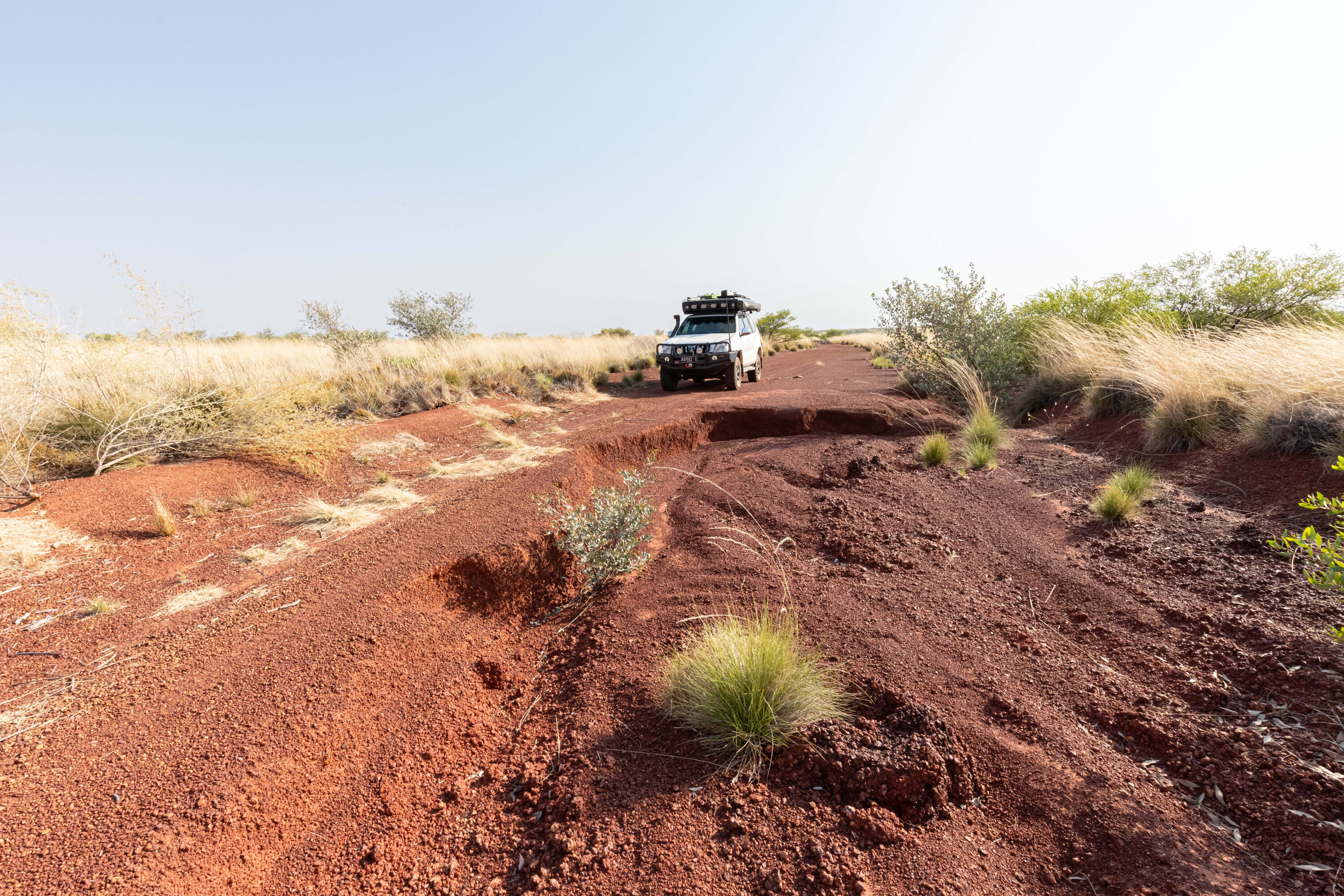
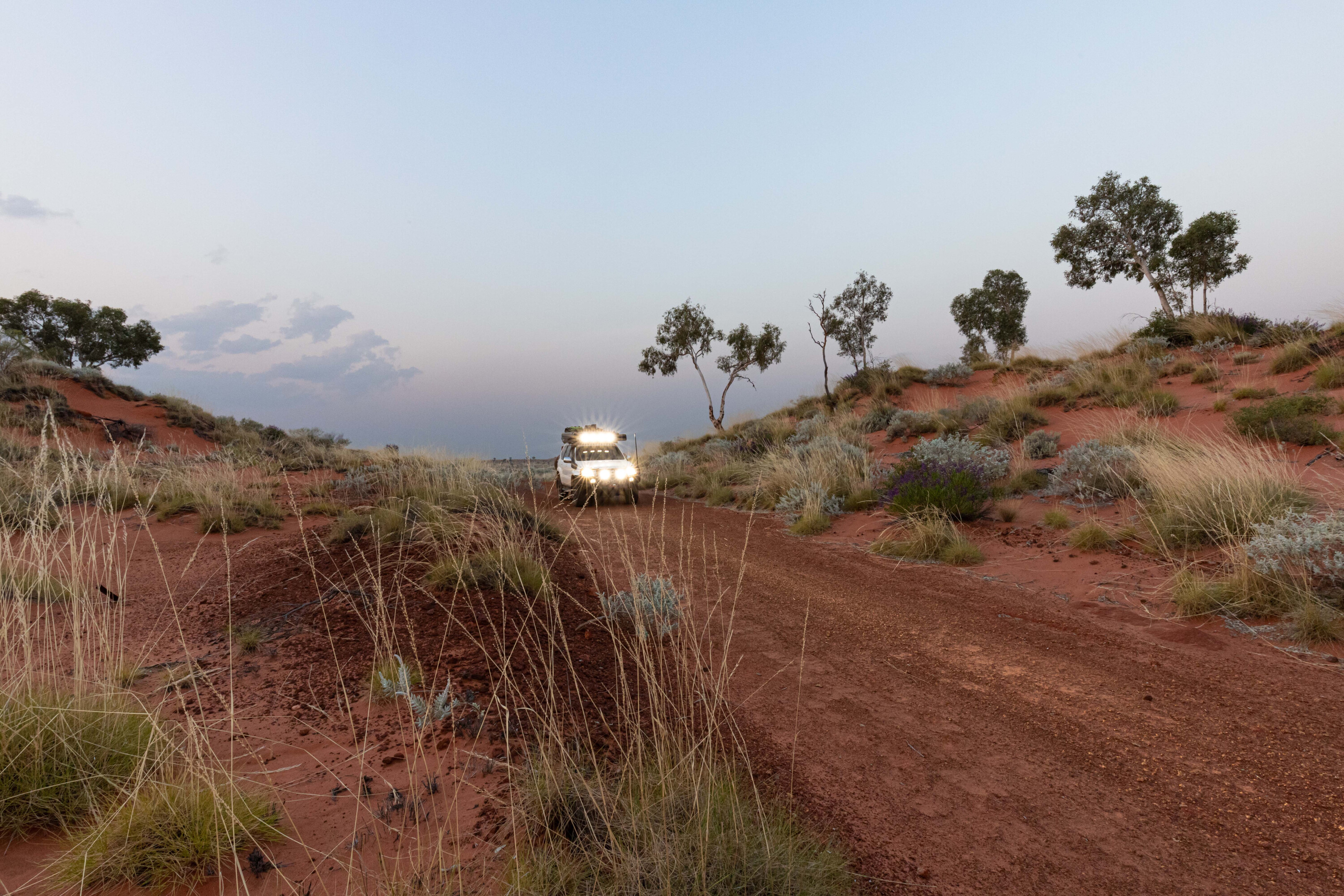
When entering dune country, take care even though the dunes are capped, as deep washouts have developed on either side that will cause damage if you hit one of them.
The track then eases east between the swales of the dunes before you’ll encounter more heavily overgrown sections; beware of washouts hidden by the shrubs. Just when you think it will never end, you round a corner and the track extends straight out in front of you as far as the eye can see, which gives a bit of respite from the dunes, washouts and overgrown track.
As the two designated campsites are on the western side of the permit zone, according to Hema Maps, the next bush camp is just outside the eastern edge of the Nyangumarta Warrarn Indigenous Protected Area.
1
As I’d decided to push on from Djimakarra Ngurra (Camp Two), and the sun was now getting very low in the sky, it meant that it would be dark before I would reach camp.
I don’t like driving at night as my glasses offer poor depth perception, making it difficult to judge washouts, termite mounds and anything else that is on the track in the distance, so I needed to be extra careful.
The next lot of dunes were badly washed out, as were some sections of the track, and on a couple of dunes, bypasses were needed to get past the worst sections. Doing that at night made it even more challenging, although modern LED lighting certainly helped to light the way once the sun had set.
1
The overgrown sections on this part of the track are an absolute nightmare, especially at night, and the bush pinstriping is extreme; I was sick of hearing the scratching of tree branches along the side of my Prado.
It sounded like fingernails down a blackboard. Crawling along in first gear proved the gentlest way to navigate the overgrown tracks, and this method also allows you to more easily spot the washouts and see where the track is going.
I eventually found a small patch on the side of the road in the dark and quickly set up camp before dining on some leftover pasta and some naan bread reheated in the Travel Buddy.
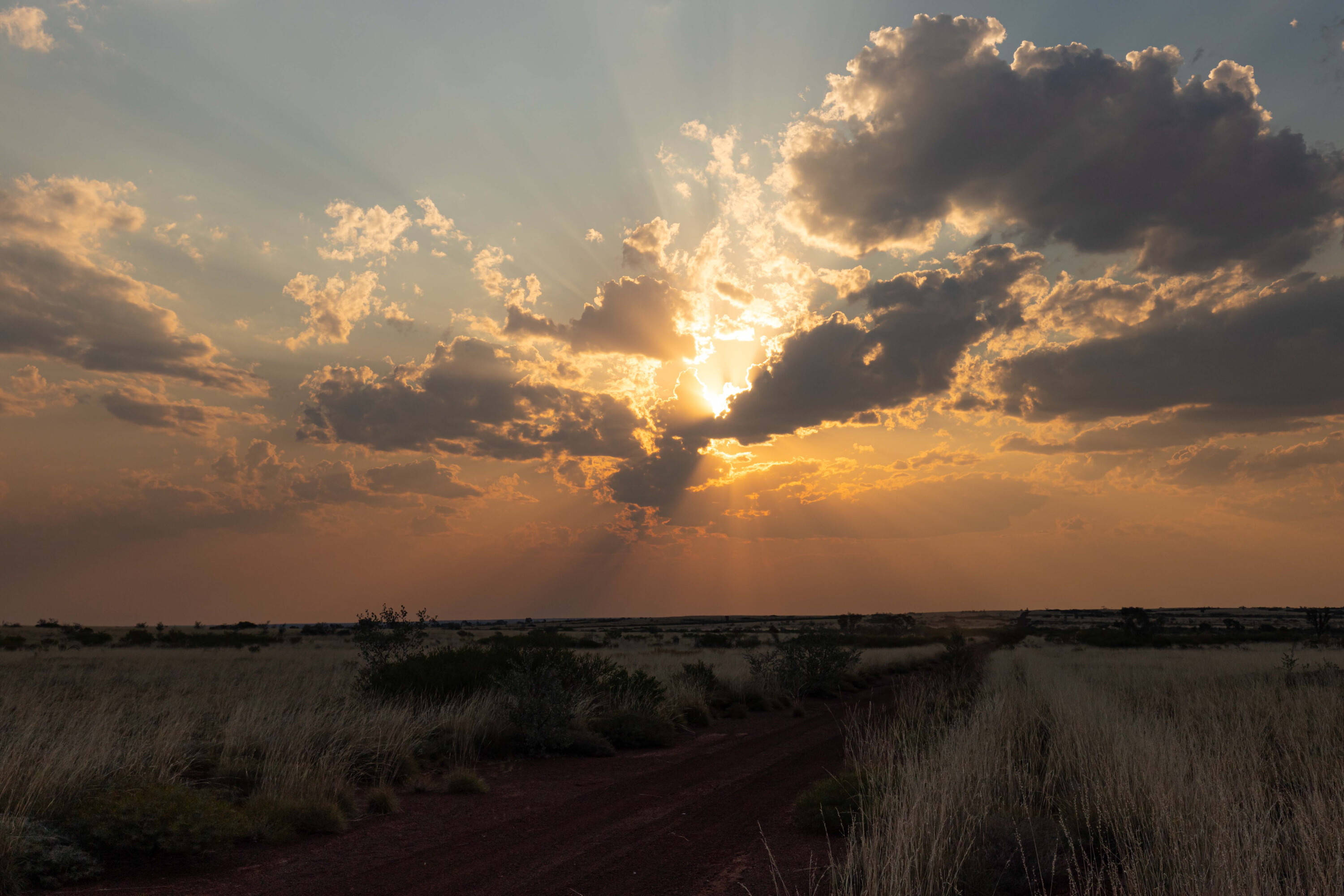
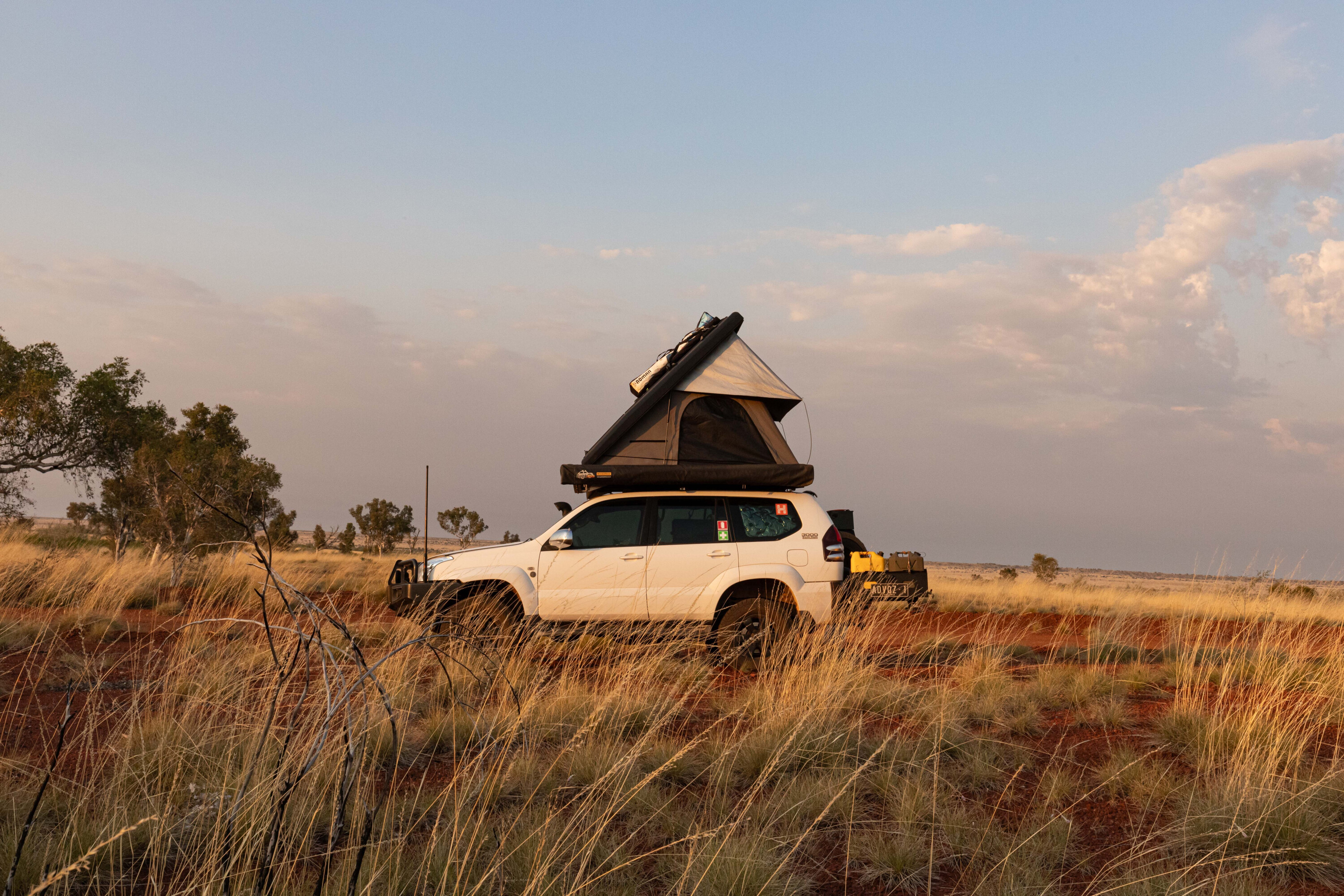
The next morning I awoke to a beautiful landscape as the sun rose above the horizon. My campsite looked nothing like I expected in the morning light; what I thought was a small open clearing turned out to be in the middle of some spinifex, but I awoke refreshed and ready for another day on the highway.
1
I was disappointed to have missed the old Paru site near Mellinjerie Well in the dark the previous night.
While access is not permitted by the Marlu people, whose native title it’s upon, it would have presented an opportunity to see the old tractor and outbuildings.
Paru was established as an outcamp when Pilbara Aboriginal pastoral workers went on strike from 1946 to 1949. It was later used up until the late 20th century as a ‘punishment camp’ for Aboriginal people who had issues with alcohol or caused trouble. They were taken out there on the back of the tractor, dropped off and left for weeks on end to fend for themselves, while living a semi-subsistence lifestyle.
1
About a kilometre from my camp I spotted an old bore that was flatter and had plenty of space, and would have been a better campsite. There was even some wood left from previous travellers. The benefit of hindsight…
The Nyangumarta Highway is one of those tracks that has a little bit of everything from deep soft sand to washouts, corrugations to rocky tracks, and overgrown sections to sand dunes and salt lakes. I reckon the landscape is similar to that along the Gary Highway or Talawana Track, but it is easier going on your vehicle compared to either of those.
While there’s a cost involved to drive this track, at $55 per vehicle it is a bargain, and I don’t mind paying a permit fee to get out and see a part of the country that very few others get to see.
1
You’ll find a replica Len Beadell plaque at Twin Gum Hill, at the junction of the old Callawa Track that ran from Well 35 on the Canning Stock Route across to the Old Telegraph Track east of Eighty Mile Beach.
The plaque was placed there by Connie Sue Beadell in 2004. Nearby is a memorial to Sergeant Tony Moriarty, who tragically died in a traffic accident near here on 15 April 1994. There is a visitor’s book here and when I looked the last person to sign it was the Nyangumarta Ranger one a month prior.
I spotted an abandoned windmill, which was certainly unexpected, sitting just off the track, and this proved a good place for a bush camp with a sheltered, flat and open area nearby. As you head further south, you’ll encounter some shocking sections of corrugations as you enter termite country, with big red termite nests scattered as far as the eye can see across the plain.
1
From here the track turns to limestone from an ancient seabed; this part of Australia was once underwater.
It then winds its way around some salt lakes where you need to be careful as there were several large holes on the track dug by camels. While I didn’t spot any of the feral animals, they definitely inhabit the area. This would be a treacherous section in the wet with black soil that would be difficult to traverse.
Upon reaching Kunawarritji Road, it’s 107km to the community and fuel stop, and then another 7km to Well 33 on the Canning Stock Route. A permit is required to access the CSR. Fuel at Kunawarritji is now available 24/7 and prices at the time were $3.10 for diesel and $2.80 for Opal. There is also a community store, flushing toilets and hot showers here (for a fee).
1
Well 33 is a great campsite with a working windmill and an overflow from the tank that provides water for the birds and the dingos, who may visit the camp for a drink at twilight.
A couple were howling close by during the night so make sure you put your rubbish away and don’t leave any food scraps out. Hide your thongs and shoes too, as dingoes are renowned for stealing them.
From here you can head north or south along the Canning Stock Route, west to Marble Bar or Karlamilyi National Park, and east to Alice Springs via Jenkins Road and Gary Junction Road.
Considering the Nyangumarta Highway was built in the 1960s, this would have to be one of the best desert tracks, conditions-wise, that I’ve driven.
Having encountered a few overgrown sections it’s obvious that this track doesn’t get a lot of traffic. The more people that drive the track, the more the overgrown sections will be cut back.
There are corrugations but they aren’t too bad, and the washouts are easy to detour around, or just take them slow. While a drive along this track isn’t fast going, that allows you to enjoy the journey, so give yourself at least three days to take it all in.
Travel planner
Where:
Nargumarta Highway stretches more than 600km from Eighty Mile Beach in northwest Pilbara to Kunawarritji on the Canning Stock Route, cutting through the Great Sandy Desert.
Best time of year:
Cooler months from May to September.
Permits:
A travel permit must be purchased online from the Four-Wheel Drive Australia website for $55 per vehicle, which is valid for 30 days. It also provides access to Nabaru Rose’s Track.
While a permit is not required to access Kunawarritji, you will need a permit if you travel the Canning Stock Route and camp at Well 33.
What to see and do:
The changing landscapes and remote desert driving make this a must-do adventure. Djimakarra Soak is a typical soak that has long been used as a water source by the Nyangumarta people.
What to take:
You must be self-sufficient and carry all the necessary water, food and fuel, a first aid kit, a tool kit, a spare tyre, vehicle parts, a shade awning, a camera, sunscreen, insect repellent, suitable clothing and footwear. A satellite phone or Starlink is recommended as there is no mobile coverage.
Other info:
Eighty Mile Beach and the Nyangumarta lands are in a region prone to cyclones. If travelling in cyclone season from 1 November to 30 April check for warnings via the Bureau of Meteorology at www.bom.gov.au
Fast facts
The longest distance without fuel is 651km from Sandfire Roadhouse to Kunawarritji
Formerly known as the Kidson Track this stretch of track was constructed in the late 1960s by West Australian Petroleum Pty Ltd (WAPET)
The Nyangumarta Highway is 504km long
Djimakarra Soak is located at 20° 20’ 41.16” S, 121° 54’ 4.48” E
The longest distance without fuel is 651km from Sandfire Roadhouse to Kunawarritji
Formerly known as the Kidson Track this stretch of track was constructed in the late 1960s by West Australian Petroleum Pty Ltd (WAPET)
The Nyangumarta Highway is 504km long
Djimakarra Soak is located at 20° 20’ 41.16” S, 121° 54’ 4.48” E
Once you’re done climbing the Harbour Bridge, there are a few destinations not far from Sydney worth exploring with a 4×4.
Depending on how many days of leave you’ve pencilled into your schedule, there are many options scattered across the state for those hunting decent off-road trails. Abercrombie River NP, for example, is a four-hour drive west of Sydney and has some of the steepest tracks in NSW.
Regardless of which of these top 4×4 destinations you choose to go, you won’t be disappointed. Have we missed any? Let us know in the comments section below.
Not content with just being the first manufacturer to bring a hybrid-powered 4×4 ute to the Australian market in the form of its Cannon Alpha Hybrid, GWM is now looking to double down on its offerings with the introduction of plug-in hybrid (PHEV) powertrains for some key models.
Called Hi4T, GWM’s PHEV powertrain is fitted to the Cannon Alpha 4×4 ute, the Tank 500 4×4 wagon and the Ora Sport performance sedan. The advantage of PHEV over the existing hybrid powertrain is that charging a bigger battery pack from a charging station allows for a greater full-electric driving range.
Our recent drives in both the Cannon Alpha and Tank 500 showed that they had plenty of power when driving with the petrol engine working in tandem with the electric motor, but driving under EV power alone was limited to short, low-speed manoeuvring and light-throttle applications.
1
The Hi4T PHEV system places a bigger 37.1kWh battery pack at the rear of the ladder chassis of the Tank 500 and Cannon Alpha, above the rear axle where it is positioned high and is well protected. This placement means that the Hi4T Tank 500 loses its two third-row seats and becomes a five-seat wagon, and fuel tank capacity is reduced by 10 litres to 70 litres.
Using a CCS2 charging outlet, the Hi4T is capable of DC charging at 50kWh, meaning it can be charged from 30 per cent to 80 per cent in around 24 minutes. Regular AC charging is at a rate of up to 6.6kWh, so the battery can be charged overnight from a household GPO, from two to 100 per cent in around 6.5 hours.
The greater capacity also allows for a more powerful electric motor to be used and the Hi4T vehicles have a combined output of 300kW and 750Nm; 45kW and 102Nm more than the existing conventional hybrid models. GWM says this is enough to propel the Tank 500 Hi4T from 0-100km/h in just 6.9 seconds.
1
On the track
To put this to the test GWM provided some left-hand drive evaluation units of the Hi4T models to test on a closed road circuit and off-road track in Queensland.
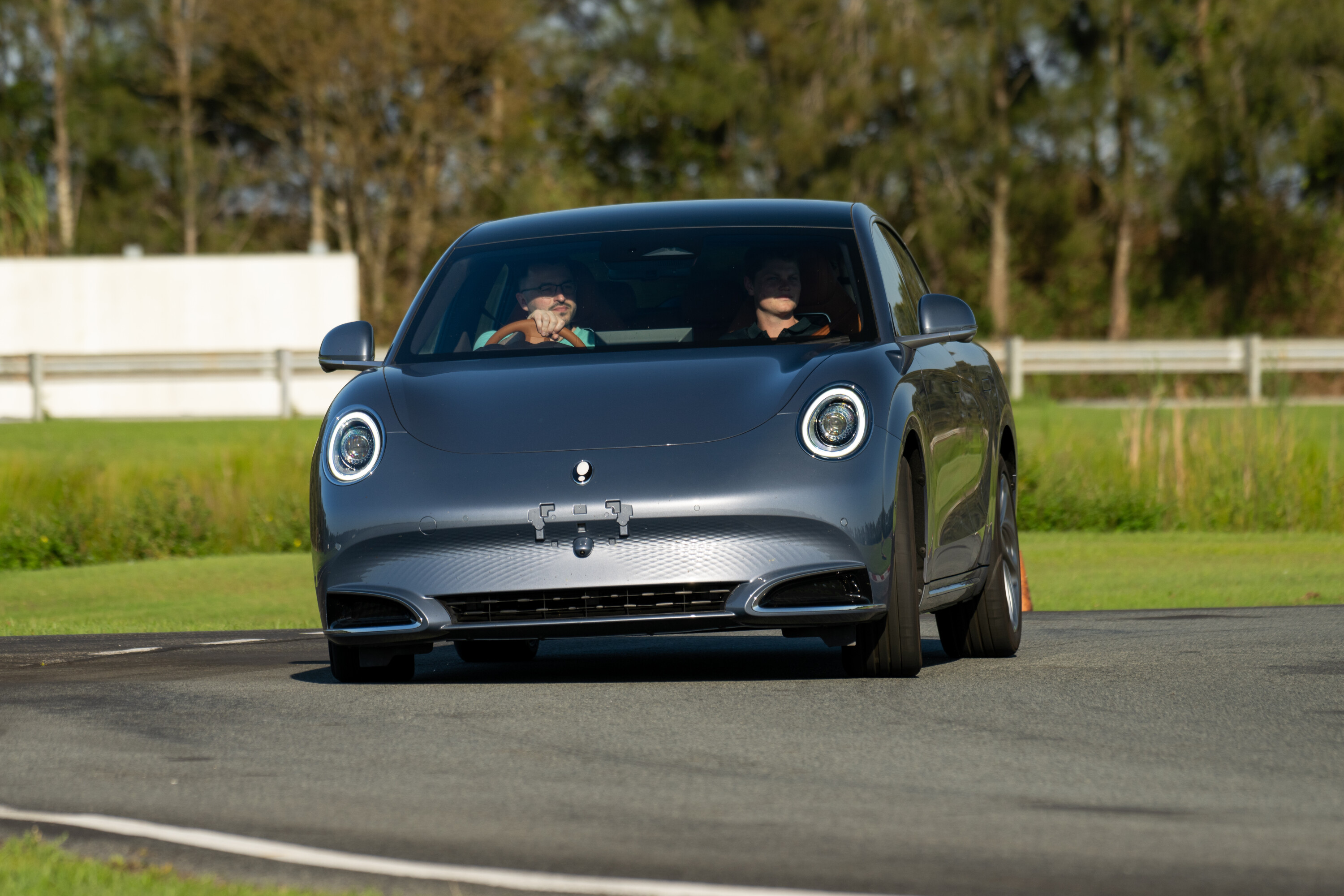
While the heavy Cannon Alpha and Tank 500 models are not ideally suited to a racetrack they certainly showed improved acceleration over the regular hybrid variants, and they didn’t feel too out of place through the twists and turns.
The little dual motor ORA sedan is a rocket off the line as its tyres scrabble for grip under full acceleration and you can feel the electronics doing their thing to best distribute the power to the wheels. It is a small sedan with polarising styling but is well equipped and is certainly spritely.
1
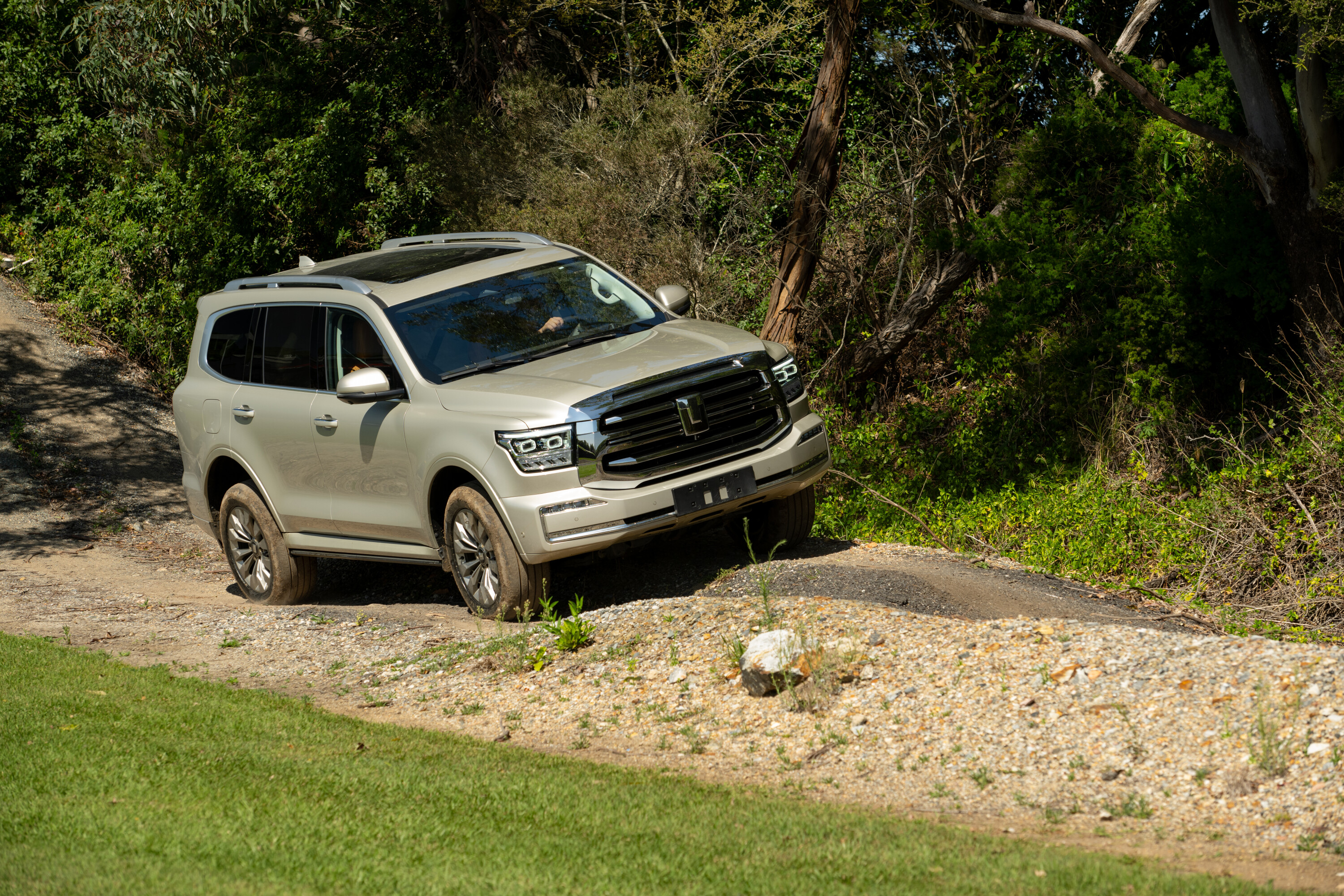
The Cannon and Tank 500 felt more at home on the off-road track where the added torque of the Hi4T driveline was evident on steep climbs, and there was plenty of regenerative braking assisting on descents. GWM says it has carried out extensive testing to ensure that all the vehicles’ off-road systems perform to the same level as in the standard models, and we tested the 800mm wading depth through a water course on the test track.
Unfortunately, full EV driving is switched off when you put the Hi4T Tank and Cannon into low range, so the petrol engine fires into action. To put it to the test we drove the Tank 500 around the course in 4×4 high range and it applied itself well using EV power for most of the lap, the petrol engine only cutting in when additional throttle was applied to get up a steep climb. The Hi4T vehicles retain their triple diff locks for off-road use but the electronic traction control did an excellent job in high range.
1
While these GWM PHEV variants are still under evaluation for the Australian market, you can be sure that we’ll see them find their way into the model line-up in the not-too-distant future.
Also under consideration is the Cannon Alpha XSR model. The XSR is mainly a styling package, the likes of which are so popular in the 4×4 ute segment, but also includes usable extras like a front-mounted winch, intake snorkel, roof rails and aggressive all terrain tyres. Again, this is a variant we imagine will find its way into the GWM range sometime soon.
A Premcar-fettled Nissan Y62 Patrol Warrior has claimed the Production 4WD Class title at the 2024 Sunraysia Safari Cross Country Rally, held recently in outback NSW.
Piloted by Lachlan Turley, the Patrol completed the 1200km off-road race ahead of fancied rivals including a Walkinshaw-tuned Amarok and two Mitsubishi Pajero Dakar special editions.
The Patrol Warrior was equipped with its standard suspension springs and bump stops, but added a Premcar Warrior-tuned Hydraulic Body Motion Control (HBMC) system. The Patrol Warrior‘s 5.6-litre V8 powertrain delivers 298kW and 560Nm, which bellows out through a bespoke active bi-modal exhaust system.
“The Turleys’ race victory speaks volumes about the successful Australian Nissan Patrol Warrior program. Lachlan was impressed by the performance of the Nissan Patrol Warrior by Premcar and quickly concluded it was exactly what he needed to go racing, which is why the Turleys approached us,” said Bernie Quinn, CEO of Premcar.
“Even though the Premcar-developed suspension system in the Nissan Patrol Warrior was never intended with motorsport in mind, its success in the punishing Sunraysia Safari highlights the capabilities of Premcar’s design and engineering, as well as the quality of its Australian-made components. It’s also a reminder of the Nissan Patrol Y62’s impressive quality.”
The Sunraysia Safari Cross Country Rally is a four-day event that was held from September 4-7 in Wentworth, a remote part of the world on the edge of the NSW outback. In addition to production 4WDs, the event is open to motorcycles, quads, cross-country and rally cars.
It’s that time of the year again when we line up the best custom 4x4s in Australia, so that you can vote for the 2024 Maxxis Custom 4×4 of the Year.
Throughout the year we’ve featured dozens of jaw-dropping custom builds online and in the mag, but we’ve shortlisted the 15 boldest and most capable to compete for this year’s title. More than 30 pages of the October 2024 issue have been dedicated to our annual Custom 4X4OTY coverage, and from October 5 you’ll be able to vote for a winner and be in the running to win a prize from Maxxis.
1
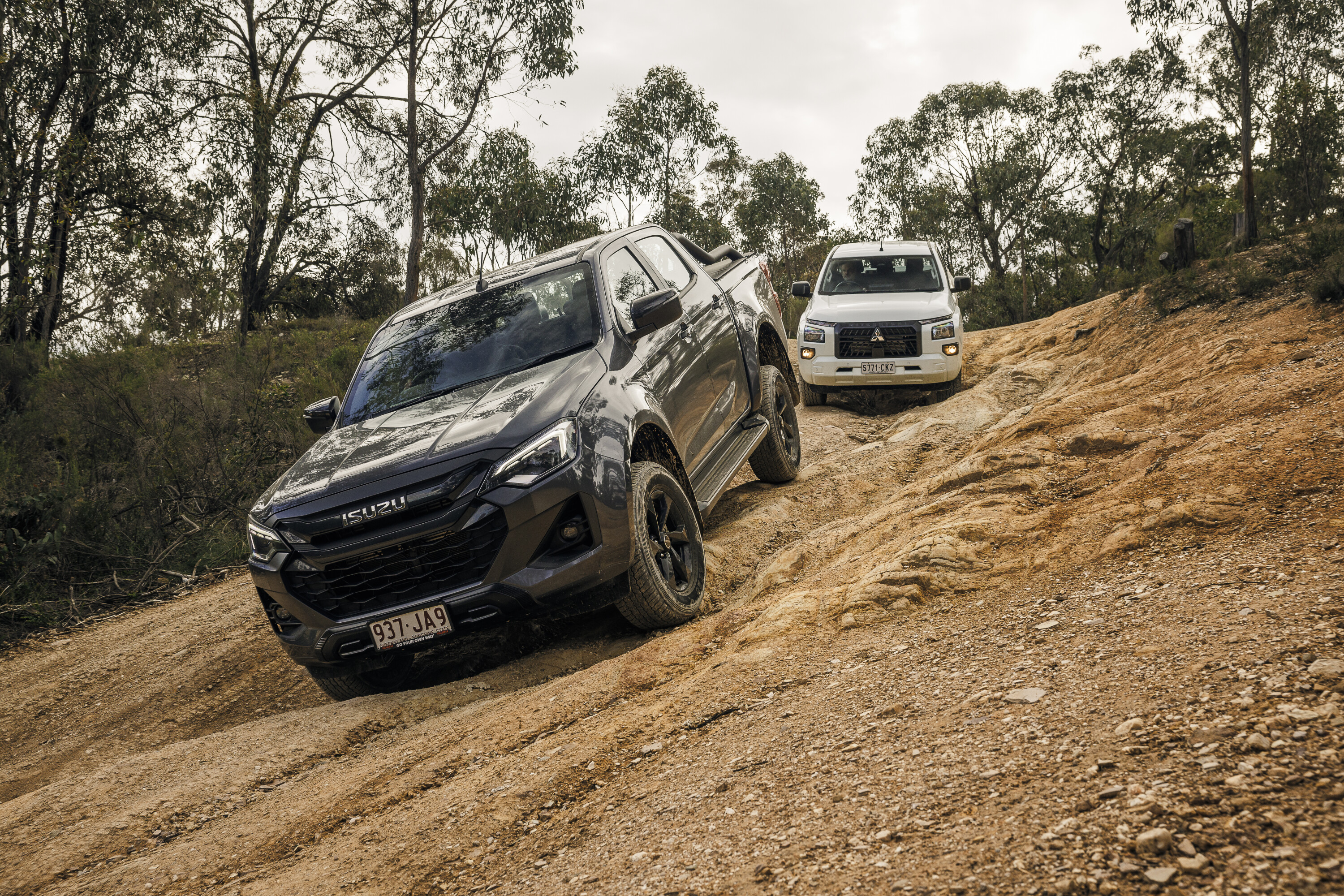
The Ford Ranger and Toyota HiLux remain locked in as the two best-selling 4×4 utes in Australia, but the third spot on the podium is a bit more attainable for Mitsubishi’s new-gen Triton. The D-MAX currently holds that spot, so we decided to line a D-MAX X-Rider up against a Triton GLS to see how they compare.
1
We also tested a limited-edition Ford Ranger Tremor and GWM’s Cannon Alpha Hybrid. The Ranger Tremor double-cab bi-turbo 4×4 adds a suite of equipment to a Ranger Sport including specifically developed off-road suspension; 17-inch black alloy wheels; and General Grabber AT3 all-terrain tyres. We’d already driven the Cannon Alpha at the vehicle’s launch earlier this year, but we’ve given it a more thorough work-out this time around.
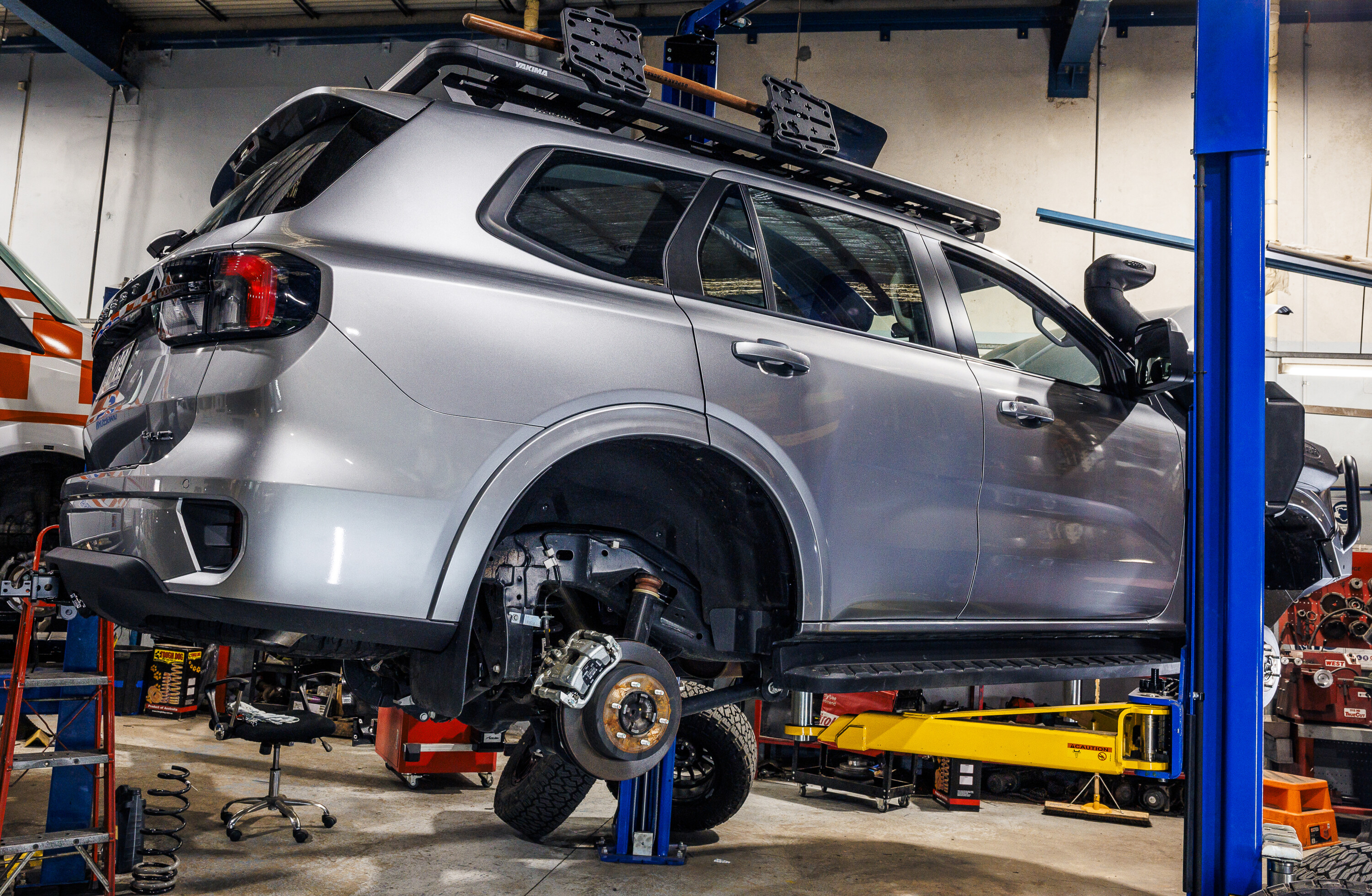
With our Ford Ranger V6 and Tradie Triton now with their respective new owners, our time with the Everest is also coming to an end. But before we pop the vehicle on Grays, the Tough Dog team has given it a full GVM and suspension upgrade!
1
Also this month, Glenn Marshall points his tyres down the Nyangumarta Highway as it cuts through the Great Sandy Desert in WA. The isolated and self-sufficient journey is for serious tourers only.
1
Plus, we road-tested a bunch of new 4×4 products to land on the market recently: a set of Bridgestone Dueler all-terrain tyres, a Ninja woodfire electric BBQ grill and smoker, and Paleblue lithium-ion replaceable batteries that’ll last for ages.
What else is there?
The latest 4×4 price changes
Readers’ Rigs and Parting Pic
New aftermarket products
Latest news and reviews
The October 2024 issue of 4X4 Australia is out now.
The most frustrating thing about buying a brand-new car is that you often need to wait a long time for it to arrive.
The new Prado is still a few months away from launch, and even longer for customer deliveries. So close, yet so far. If you can’t wait for the Prado, here are the best alternatives ?
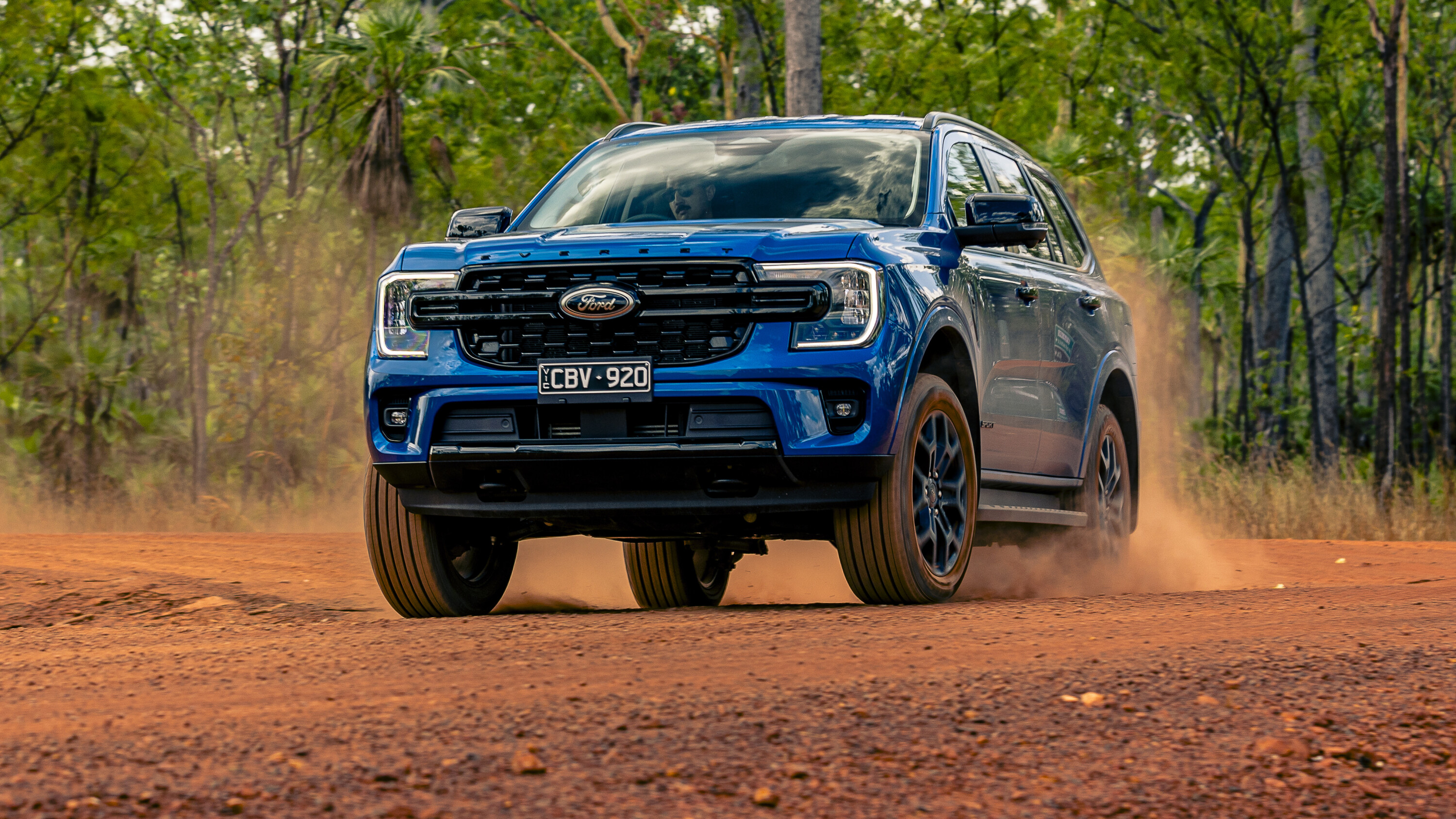
The Ford Everest was fresh on the market in late 2022 and, of the large five-door, three-row SUVs available, it is one of the best.
It offers a spacious and comfortable interior for up to seven, and the choice of two (2.0 4cyl or V6 diesels) smooth and refined powertrains. No wonder it won WheelsCar of the Year for 2023. Even though it shares much with the Ford Ranger ute, you’d almost never know – unlike the shared-platform models of other brands.
It is without a doubt the best ute-based SUV to drive, and you’re not sold short on safety (it has a five star ANCAP safety rating) or towing capability (3500kg braked capacity). Nothing really replaces Australian development for a vehicle, and here the Everest shines with much of its core engineering done here.
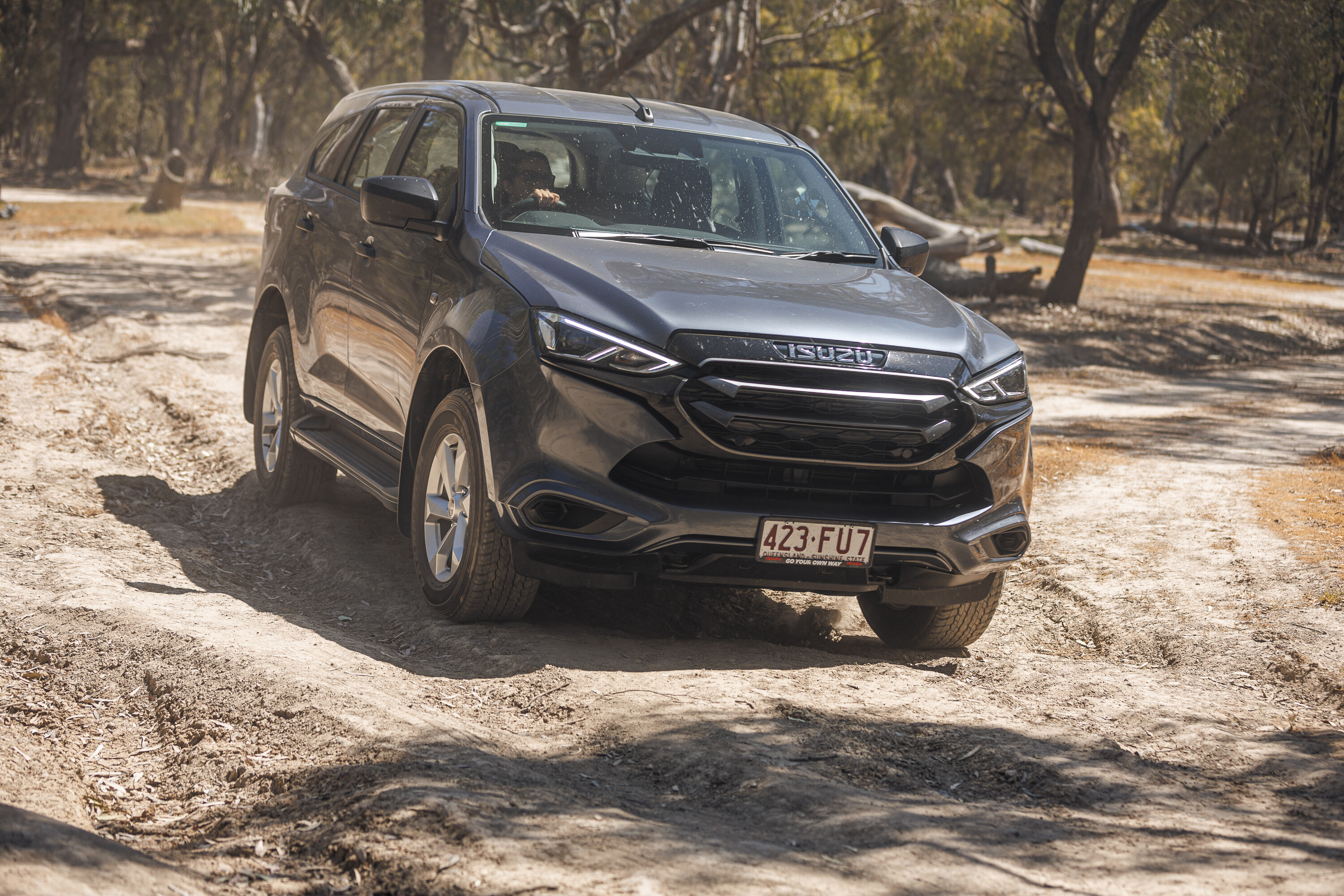
When the second-generation Isuzu MU-X arrived in 2021, it was a big step up in safety, refinement, performance and features.
Like Everest, the MU-X is based on a ute, but this is an SUV that you’ll grow to like for its driver engagement and high degree of active and passive safety features. The bonus here is that the MU-X makes for a solid towing platform, with 3500kg (braked) capacity.
The MU-X’s powertrain, a 140kW/450Nm 3.0 diesel and six-speed auto, in 4×2 or 4×4 versions, provides a good spread of torque and acceptable power with good fuel economy.
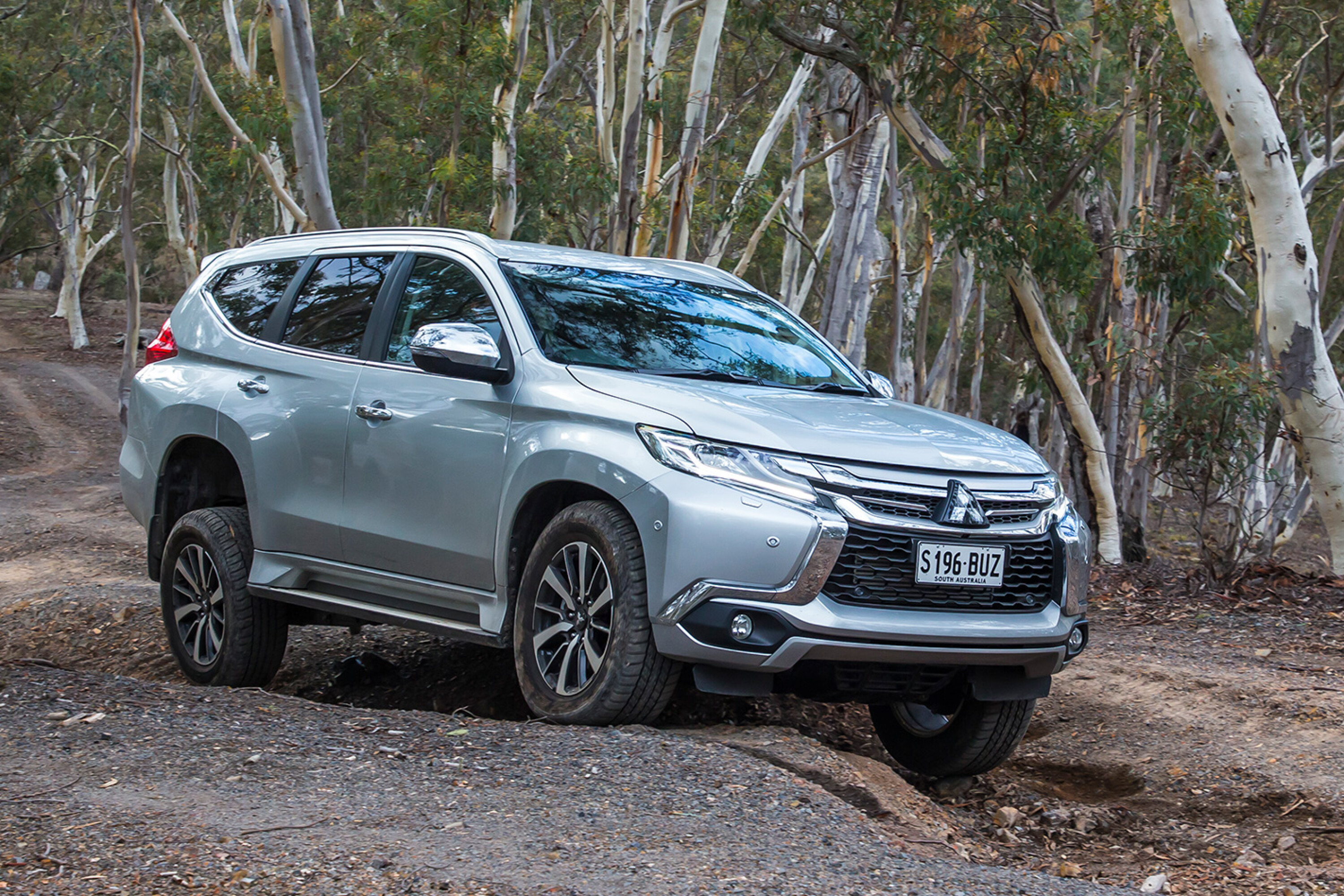
With the new Pajero Sport expected in 2025, you don’t have long to get in with this venerable current-gen Pajero Sport, which has been around in one form or another since 2015.
The Pajero Sport is big on value with its smooth 133kW/430Nm turbo-diesel running through an eight-speed auto and sophisticated 4WD system that gives you the benefit of a 4WD setting that can be used on dry, paved roads. If towing is important, note that Pajero Sport is one of few in this class that cannot tow 3500kg; its maximum capacity is 3100kg.
Despite its ANCAP safety rating expiring, the Pajero Sport is filled with most of the safety equipment you expect. While low on price compared to some, the Pajero Sport doesn’t feel cheap – particularly the upper-tier Exceed and GSR models with their digital dash and leather seating.
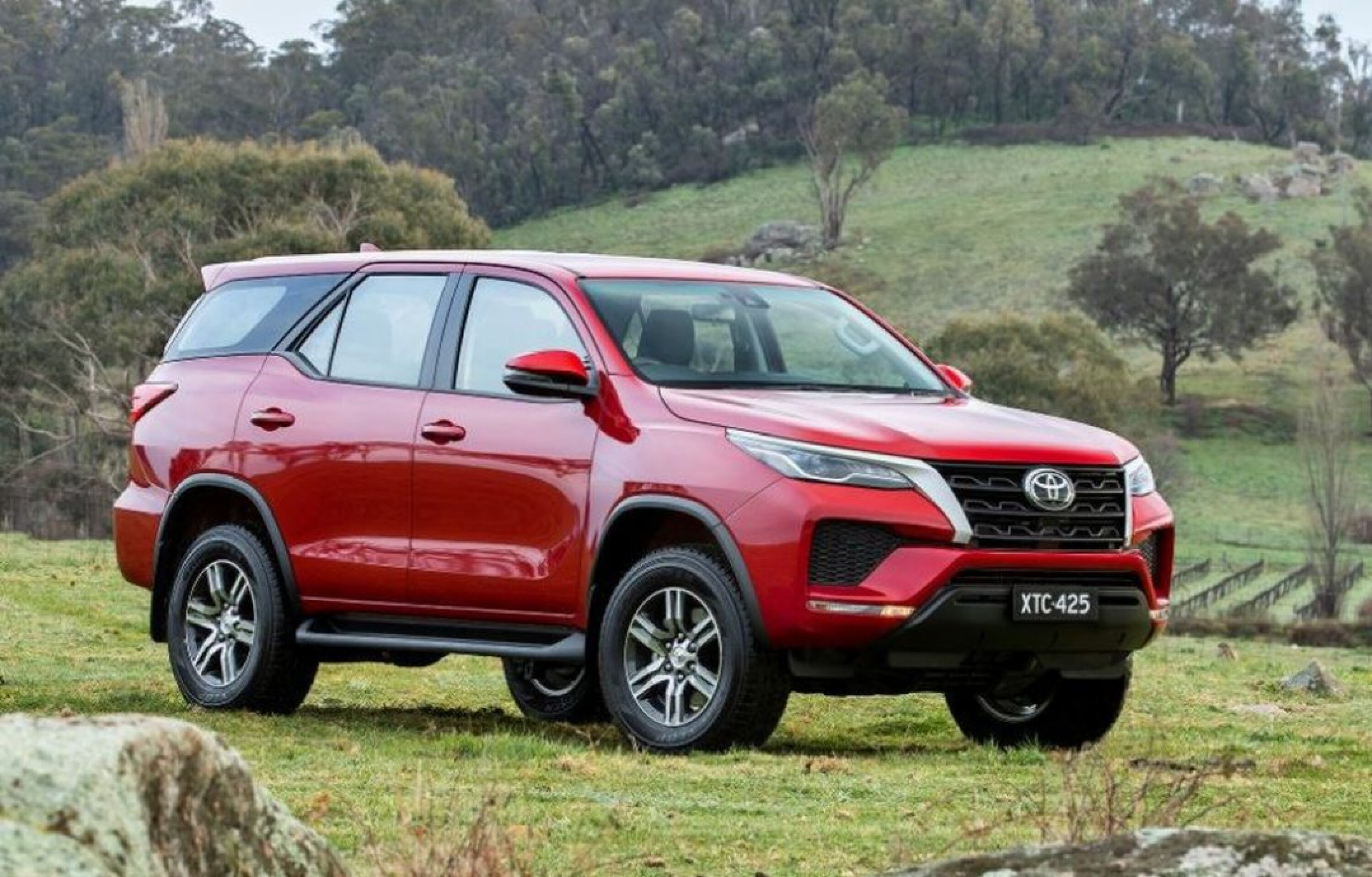
Like the Pajero Sport, the Toyota Fortuner is a bit of an older model, but it has been revised a few times since its 2015 arrival.
The Fortuner will continue on for a while longer, with an all-new model expected here in 2026. For now though, this is a seven-seater off-road SUV that’ll do the job with the ample Toyota network and resale values to underpin it. The cabin is roomy and comfortable, and the controls simple and easy to navigate.
The 3100kg/310kg (braked) towing limit is 400kg less than the best in class, but its 150kW/500Nm 2.8-litre diesel makes light work of most driving duties and this is a comfortable highway cruiser and capable off-roader.
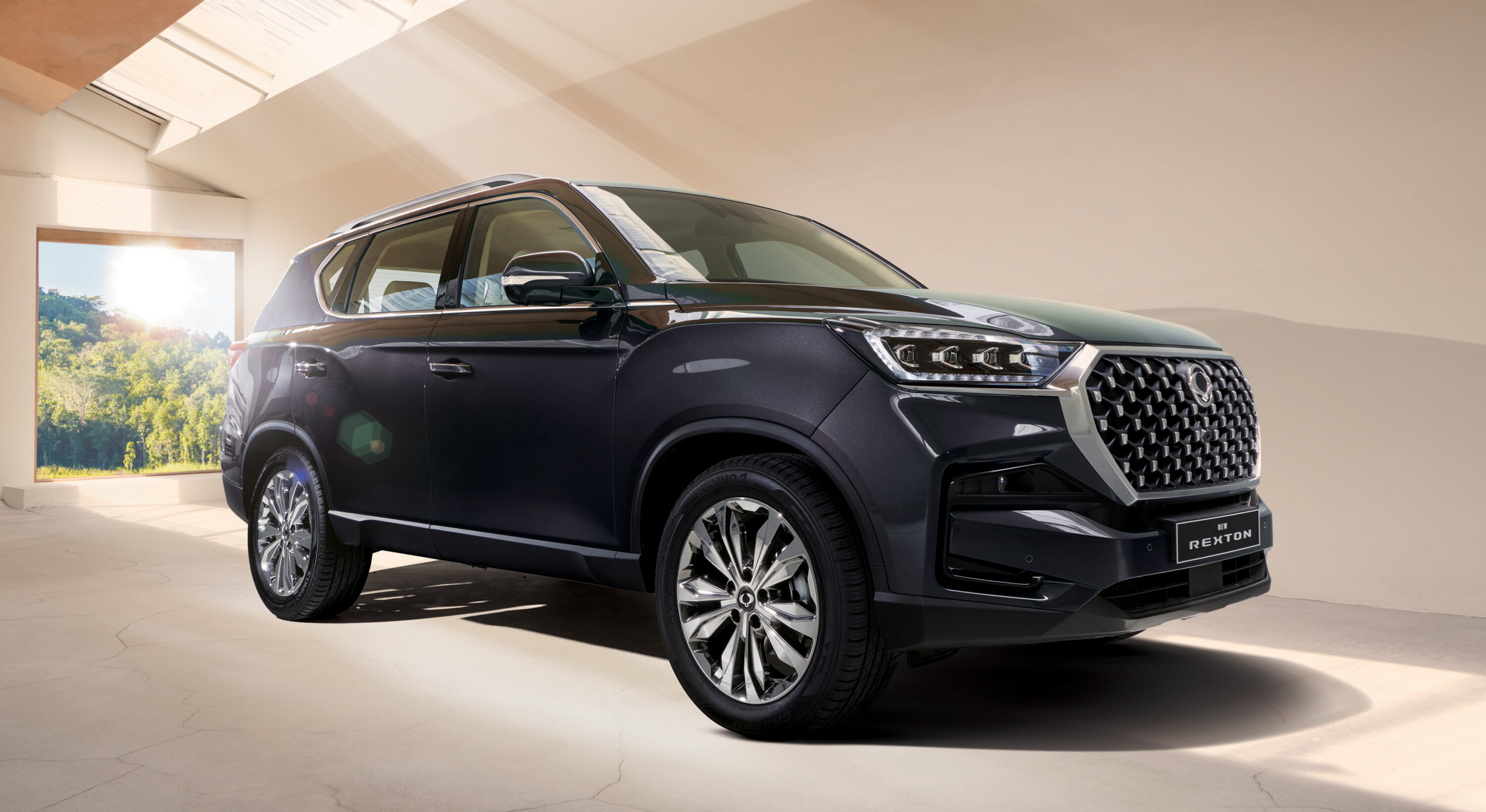
An SUV that for years has sat in the shadow of more popular models, the Rexton now looks like very good buying compared with those established seven-seater SUVs, with a price starting at about $47K drive-away.
The model received a light makeover for MY24, with a new high resolution, 12.3-inch touch screen with improved functionality and clarity, new exterior colours and a new Adventure model.
A well-presented, feature-filled interior and up-to-date tech are the good points, as is the 3500kg towing capacity and the reasonably healthy (if a touch laggy) 148kW/441Nm 2.2-litre diesel tied to an excellent eight-speed auto. However, the SsangYong is a little harsh-riding and doesn’t quite offer the rewarding handling of the best in the class.
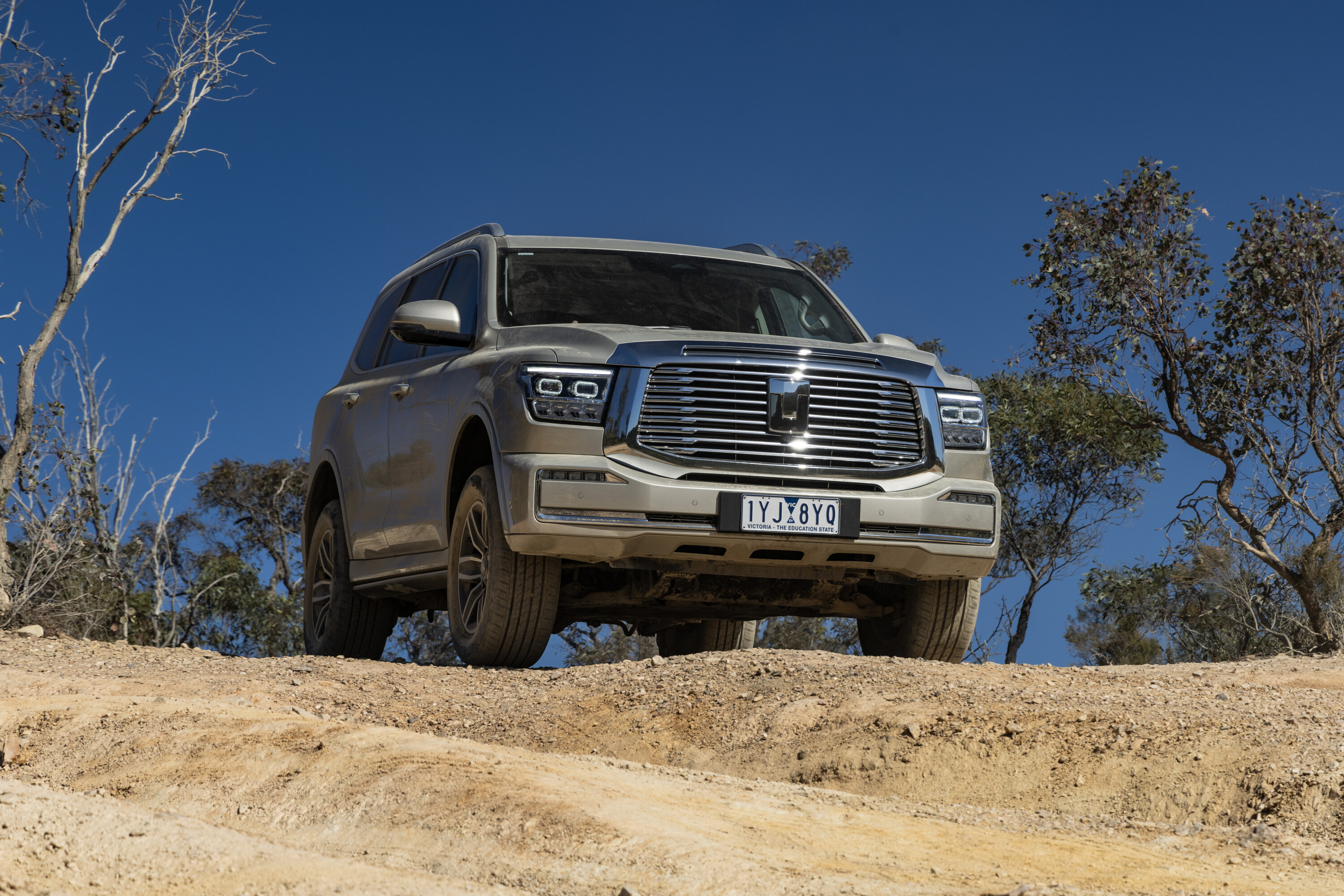
Competing with the LandCruiser 300 Series in terms of dimensions but at a significantly lower price, the GWM Tank 500 offers 100mm more length than the smaller Tank 300.
The three-row, seven-seater is powered by a 2.0-litre turbocharged petrol engine hybrid powertrain that produces a combined 255kW and 642Nm with a claimed combined fuel consumption of 8.5L/100km. The budget-friendly SUV is designed with a luxurious interior, boasting four sculpted bucket seats, leather upholstery, and stylish brushed-aluminium and woodgrain-look trims.
The Tank 500 is available in two grades: the Tank 500 Lux, which is $66,490 drive-away; and the Tank 500 Ultra, which is $73,990 drive-away.
At $44,990 drive-away, the Z8L six-seater gets a 12-speaker Sony sound system, a front camera, front parking sensors, a seven-inch driver’s display, a wireless phone charger, six-way power-adjustable driver’s seat, and wireless connectivity for both Apple CarPlay and Android Auto.
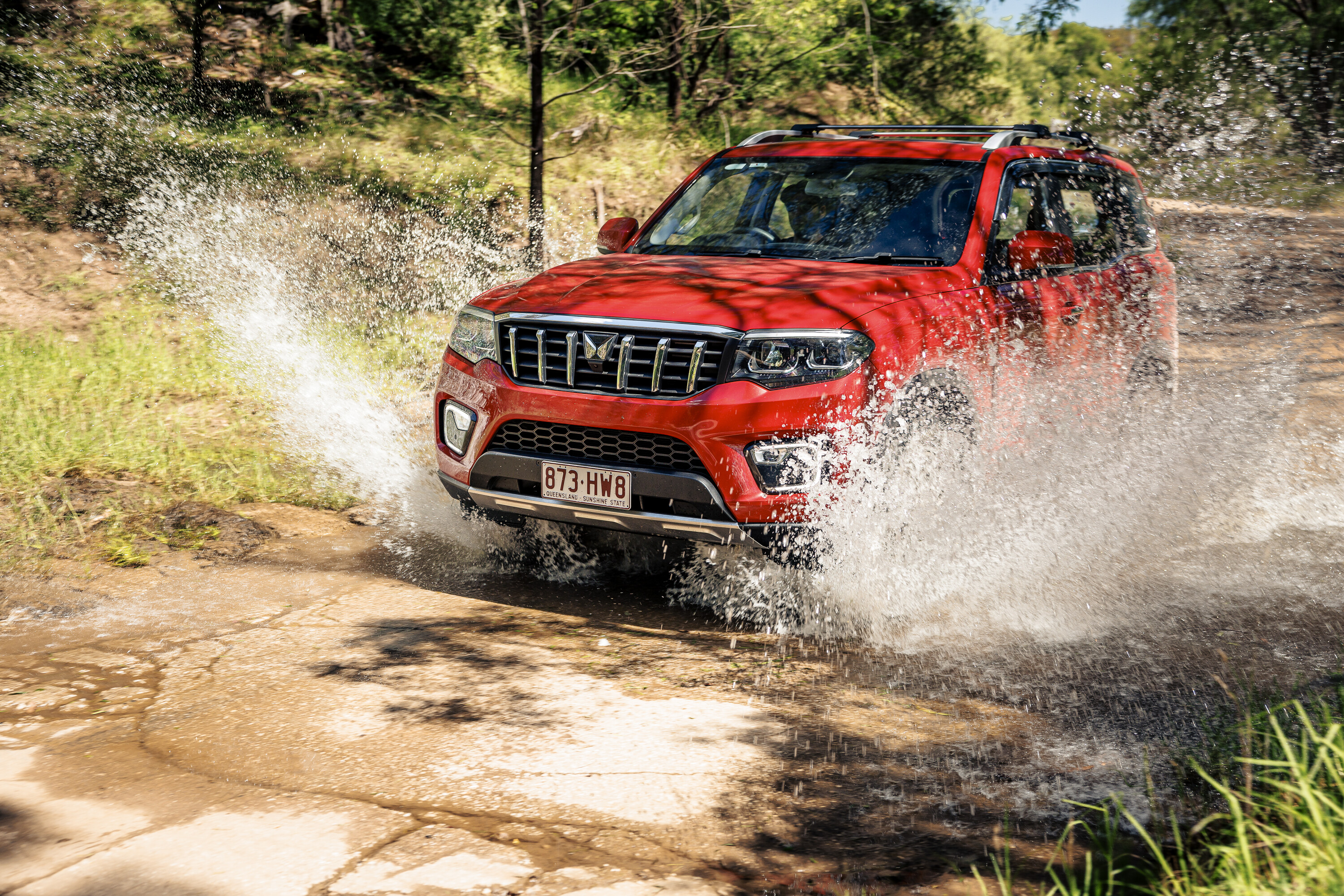
Its 2.2-litre diesel engine is paired with a six-speed automatic transmission, but with only 129kW and 400Nm it’s not particularly powerful. In terms of size and rugged construction, the Scorpio is smaller than the Isuzu MU-X and Ford and is more comparable to the Mitsubishi Pajero Sport.
However, it lacks essential safety features such as AEB, lane-keeping assist, and radar cruise control. It flunked its ANCAP safety test as a result, receiving zero stars.
The upscale Prado twin has already debuted in the Australia!
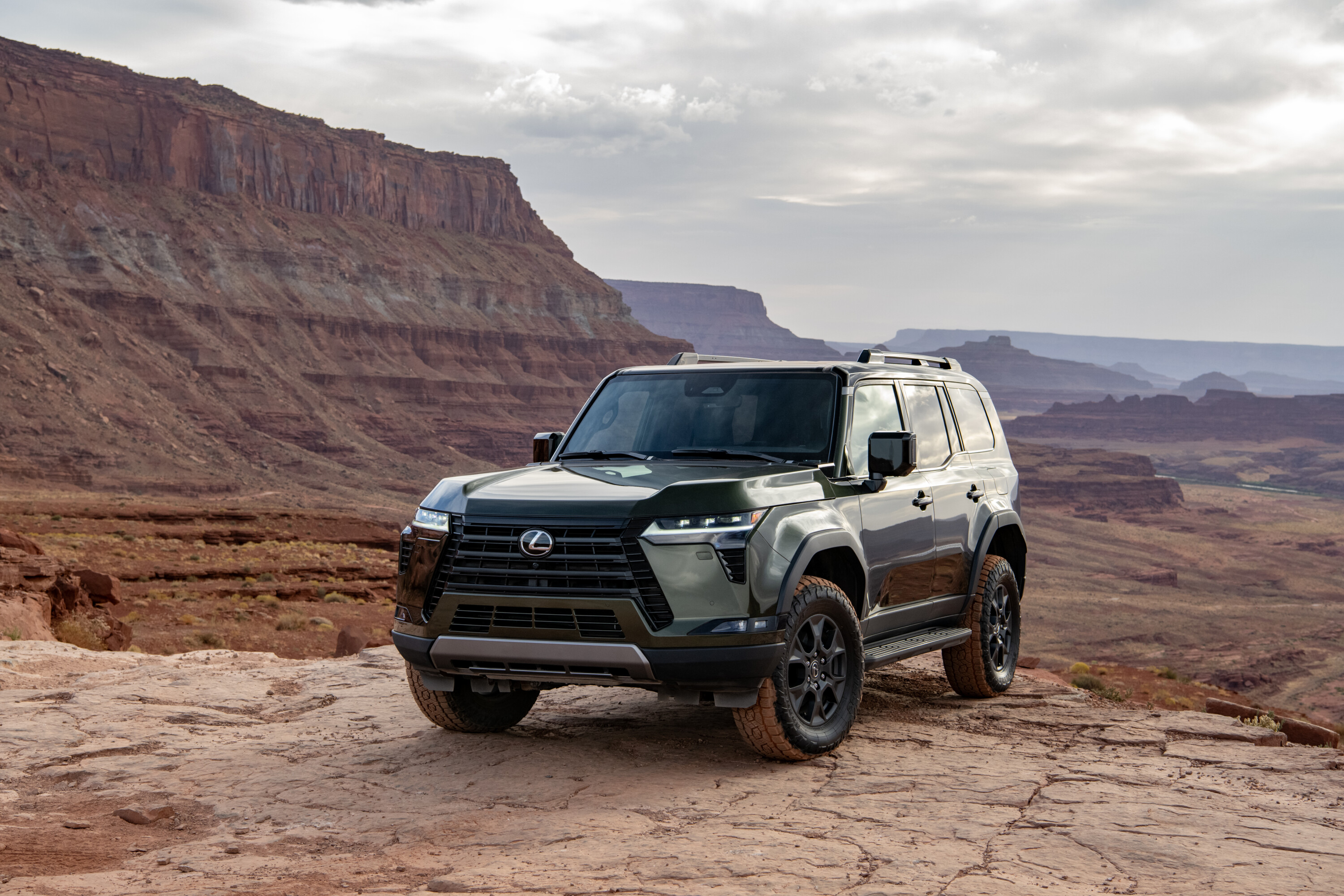
The GX550 comes equipped with a 260kW/650Nm 3.4-litre twin-turbocharged V6 petrol engine and a 10-speed automatic transmission. A 2.4-litre turbo-petrol hybrid option is slated to join the line-up at some stage in the future.
Like the Prado, the GX is built on Toyota’s latest TNGA-F body-on-frame platform. All GX variants feature full-time all-wheel drive, a low-range transfer case, and a locking Torsen limited-slip centre differential.
The GX550 starts at $116,000 for the Luxury (seven-seater); and then bumps up to $122,250 for the Overtrail (five-seater) and $128,200 for the Sports Luxury (seven-seater).
One of the perks of living in Brisbane is that there are picturesque island retreats within 50km of the city centre. As a bonus, the state capital is also surrounded by vast national parks.
If North Stradbroke and Moreton Island don’t appeal to you (somehow!), perhaps a jaunt south to the hills of Border Ranges National Park is more to your liking. Either way, a wide variety of destinations around Queensland’s capital city is available to suit your palette.
There’s some essential touring to be had close to Brisbane, but if we’ve missed any please remind us in the comments section below.