
South Australia has long been known for its multitude of outback station stays, all of which offer amazing experiences.
Property owners in this part of Australia twigged early to the financial benefits of opening up their lands to 4×4-borne tourists, and there are now many of these types of off-road adventures available.
Alpana Station is a great example of this kind of escape, with the massive (206km²) working sheep station just north of Wilpena Pound (around five hours’ drive from Adelaide) first offering 4×4 guided tours in 1998 and now offering both these and a number of self-drive adventures around the property’s amazing landscape.
Plus, the accommodation is pretty awesome; the four powered campsites (for caravans and camper trailers only) each have their own private en suite bathrooms, while the other amenities at this campground – covered barbecue, table, firepit and toilet – make it even more spectacular. As a bonus for dog owners, the station is pet-friendly.
Bush camping on the station is restricted to two sites (and is again pet-friendly), with the high-clearance-access Horseyards campground set off the nearby road and accessible only if you have a key from the station. There are four sites in here, with pit toilets and – if in season – a running creek right next to them.
The Bill’s Paddock campground is closer to the Alpana homestead, nestled on the bank of Butler’s Creek, and is accessible to ’vans and even 2WD vehicles. For those who want to mix a luxury digs experience with a night in the bush, you can even book an ensuite bathroom for your own use.
Of course, for that truly luxurious outback ‘camping’ experience, you can opt for one of the buildings on the property (including a huge shearers’ quarters building for large groups), with the 4×4-accessible Nungawurtina Hut (a traditional-style hut built from pine and stone), located in a secluded valley.
This hut offers sleeping room for six, a gas stove, table, chairs and solar-powered lighting, and it would be a cracking weekend away for a family (you can also set up additional tents around the hut if there are more in your group). There’s even a walking track that takes you into the nearby Angorichina Village.
The station has some great 4×4 tracks that range between easy to very challenging, all of which take you through some truly amazing outback South Australian terrain.
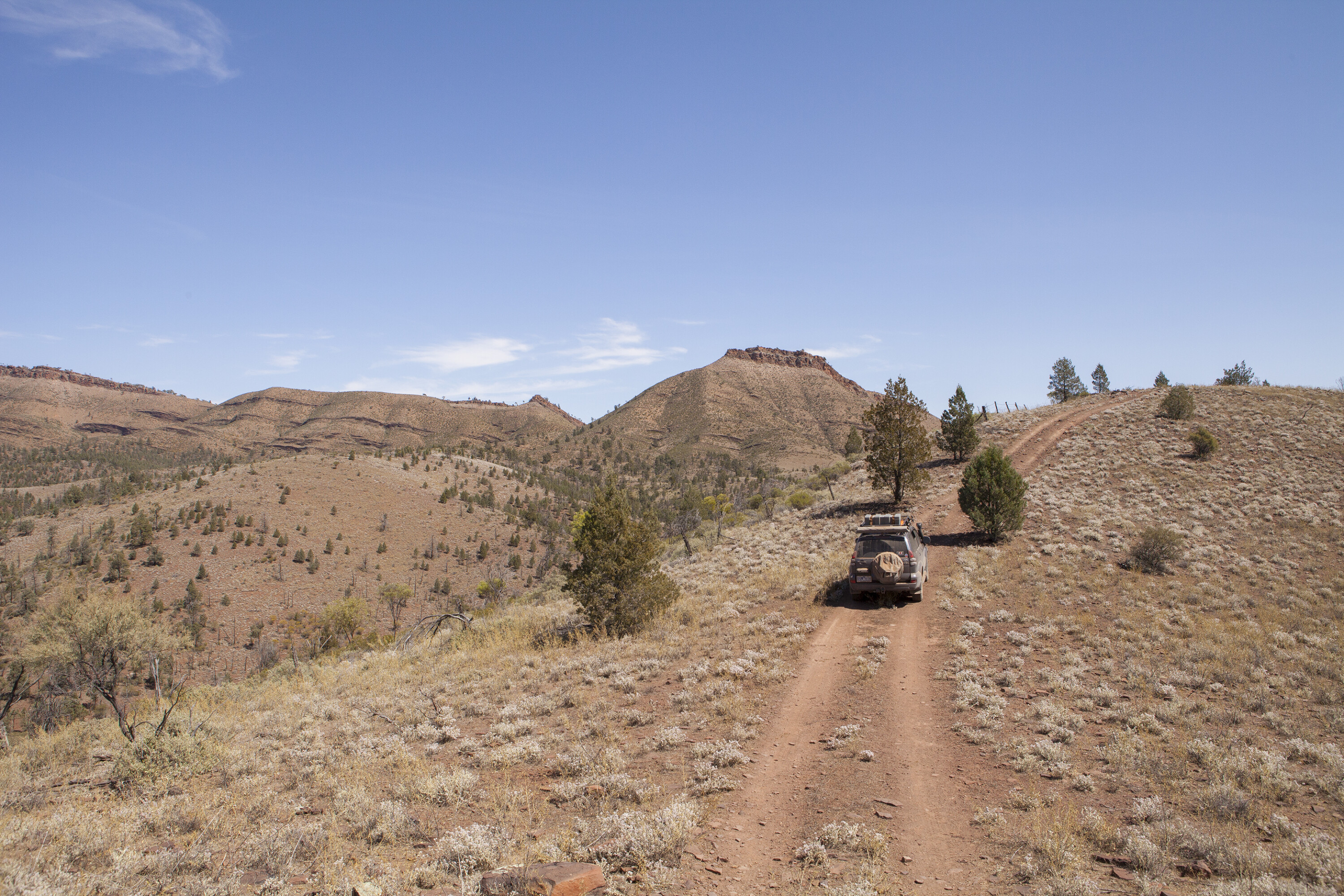
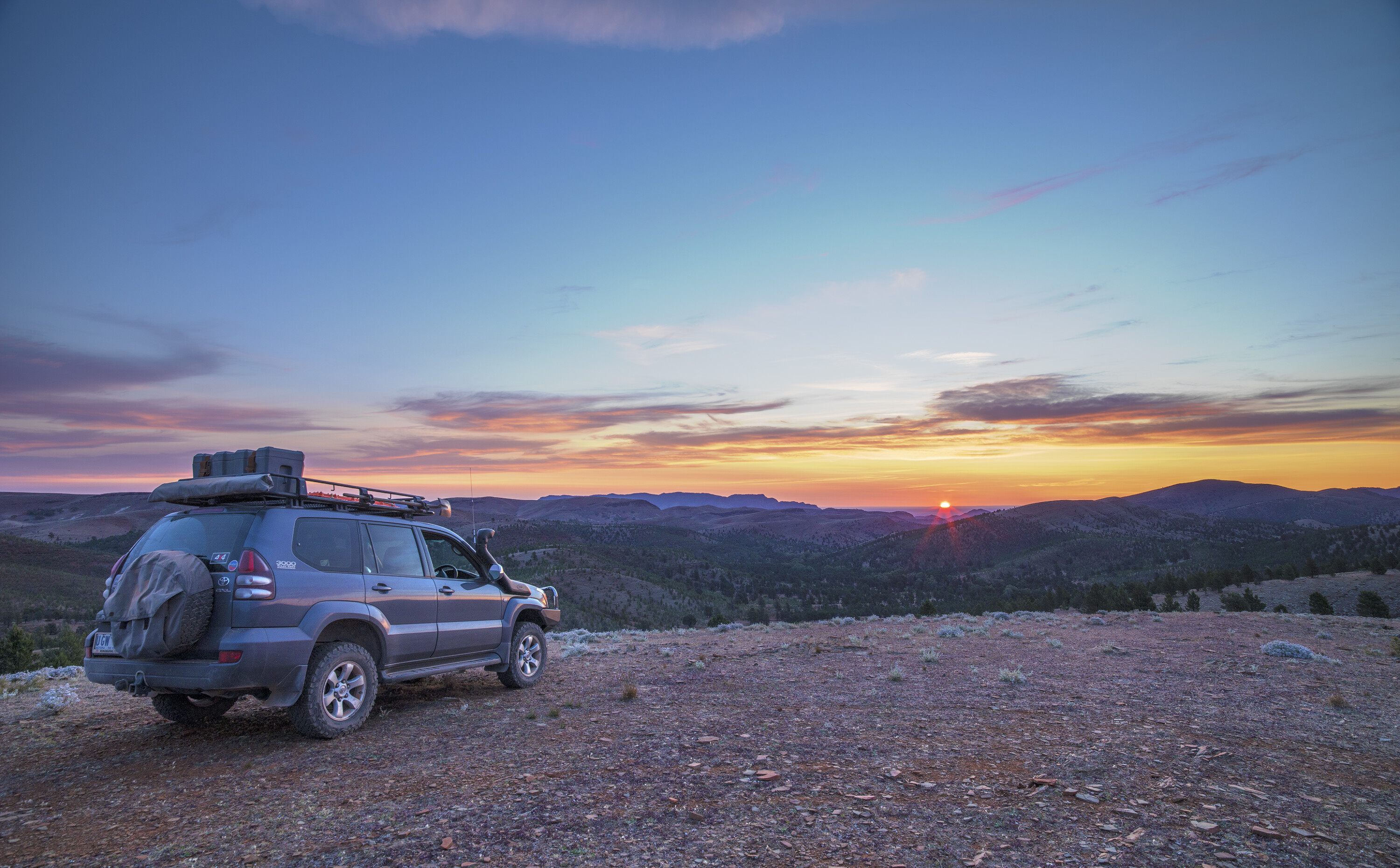
The two self-drive options are a mix of moderate grade and challenging. The two-hour Sunset Hill 665 self-drive track is the perfect option for those keen on witnessing an outback sunset/sunrise, with the top of Sunset Hill offering expansive views across the ABC and Heysen ranges. Views to the south take in Wilpena Pound and its red-rock cliffs, as well as the distant waters of Lake Torrens.
You can also tack on an additional 10km of driving to Nungarwurtina Hut (if there’s nobody camping there). The big bopper is the one-way, five-hour Mt Samuel Track, which is rated challenging. This drive will most definitely test your off-roading skills, but the reward is a journey through the full gamut of quintessential Flinders Ranges terrain.
This drive doesn’t mess around; after winding through open grazing country, you are soon into the serious stuff and confronted with a steep climb along a narrow creek bed that throws in rock ledges, a loose, shale-covered surface and plenty more.
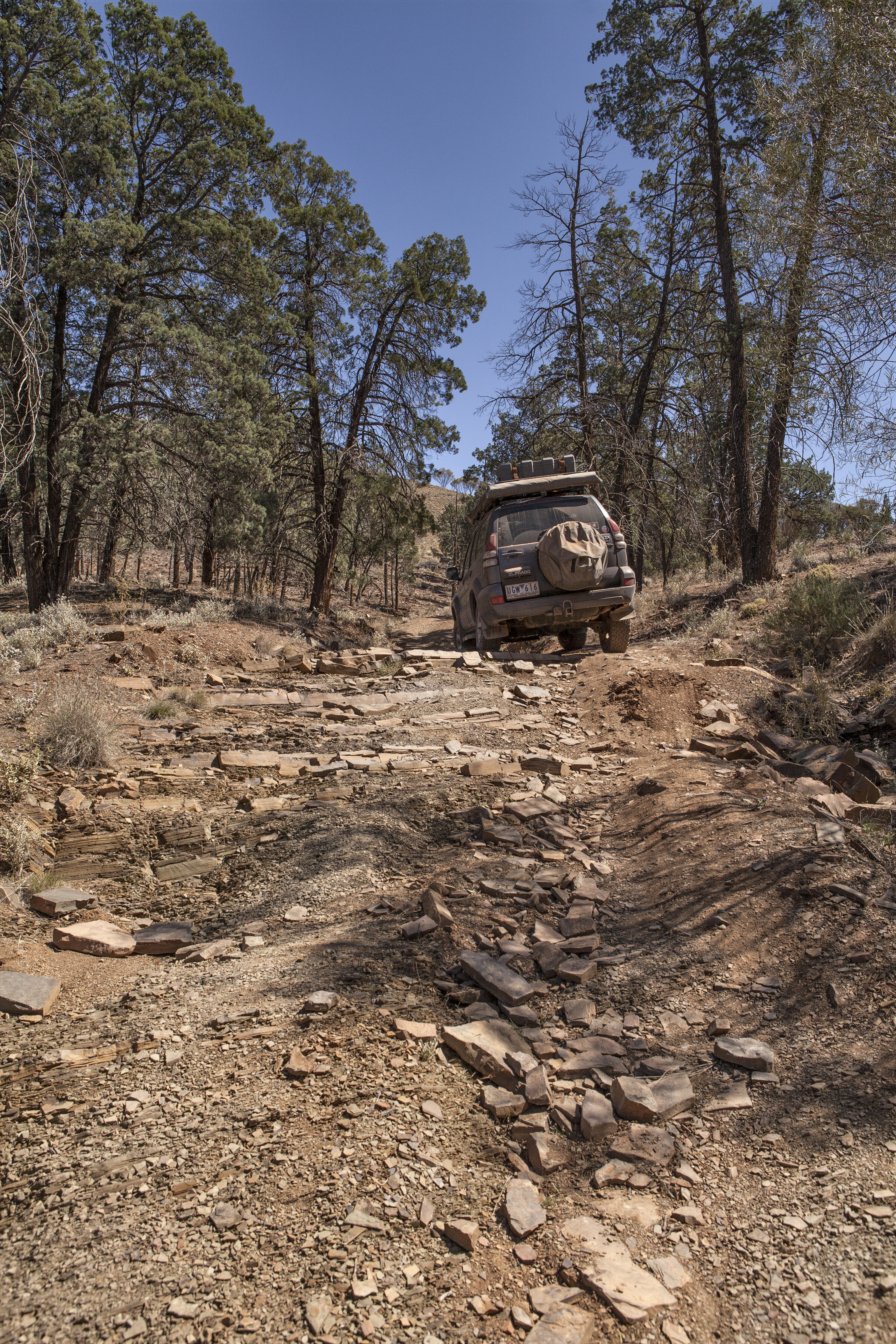
Throw in regular steep washouts that will test your 4×4’s approach and departure angles, as well as plenty of ruts (caused by flooding during heavy rain), and you can see how the ascent to near the summit (of what is actually two Mt Samuels) achieves such a tough rating.
Once you finish the long, steady ascent you’re about a 30-minute walk from the summits of Mt Samuels. It’s a steep walk but you’ll regret it if you don’t make the effort as, again, the views from the top are magnificent.
The next part of the self-drive is the descent into the aptly named Mt Buggery Gorge where, if you have the option, having someone walking out front of your vehicle will help to guide you down this steep section – it is definitely low-range, first gear for this.
Upon reaching the bottom (and letting out that held breath) you trundle along the still-challenging track that follows Mt Buggery Creek, with the high peaks of the surrounding mountains shadowing your progress. The terrain here is still a challenge with washouts, tree roots (and branches) and large rocks to ensure you pick your way slowly along.
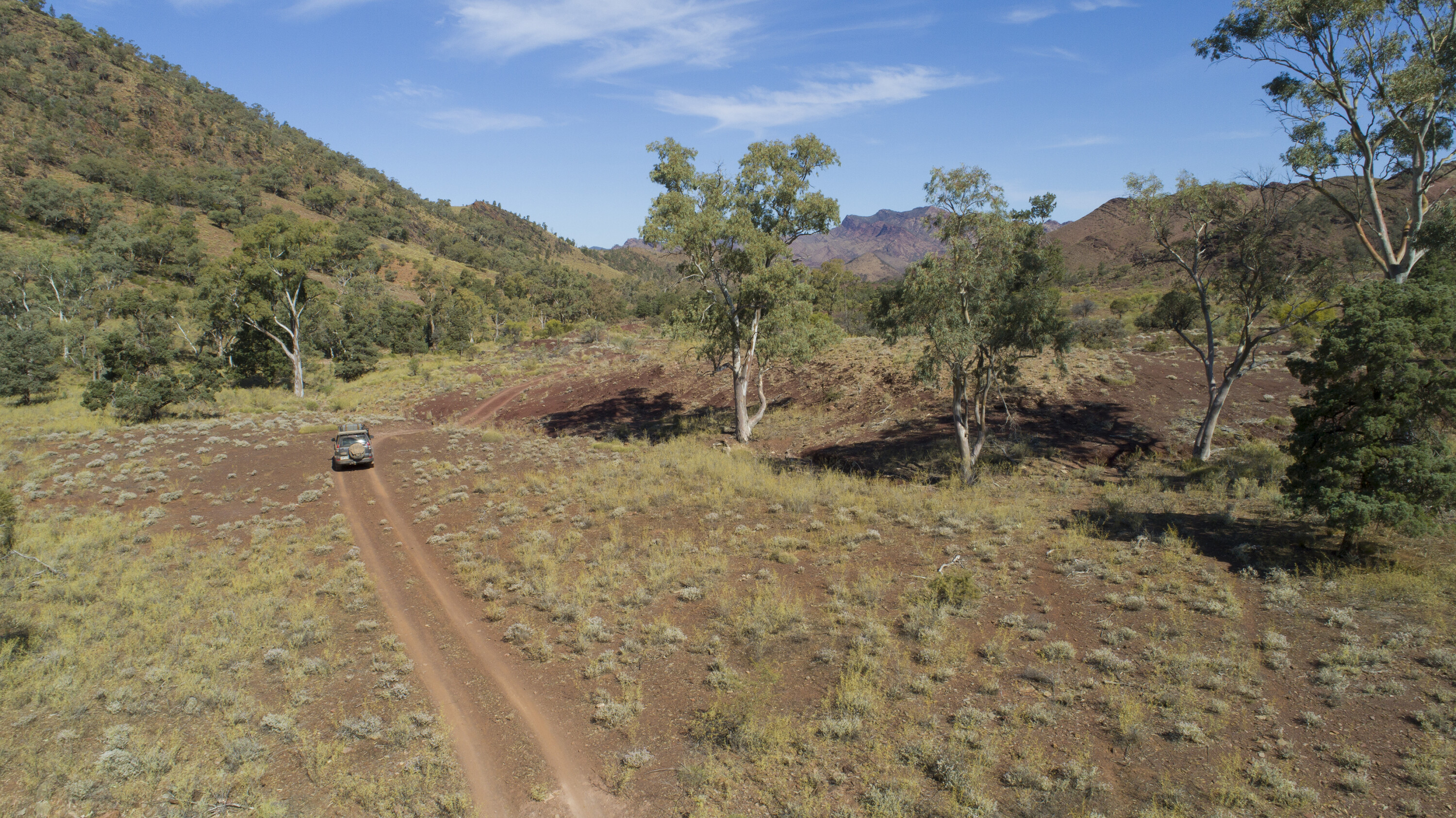
If there has been recent rain – and you are visiting in season – this area offers the chance to view some wildflowers. It’s a cracking experience and definitely one to challenge drivers.
For those less keen on the rough stuff, joining the guided Alpana Station Experience is a must. There are half- and full-day options and these drives are still great fun, with the added bonus of showcasing both the history of the station and just how much work goes into running these properties.
It’s a bit of a haul from Adelaide, but for those looking for the true ‘station stay experience’ Alpana Station does a great job of fulfilling that dream. And then, of course, you can always return and tackle a few of the other station stays in the area, a number of which fit the Adelaide weekend escape bill to a tee.








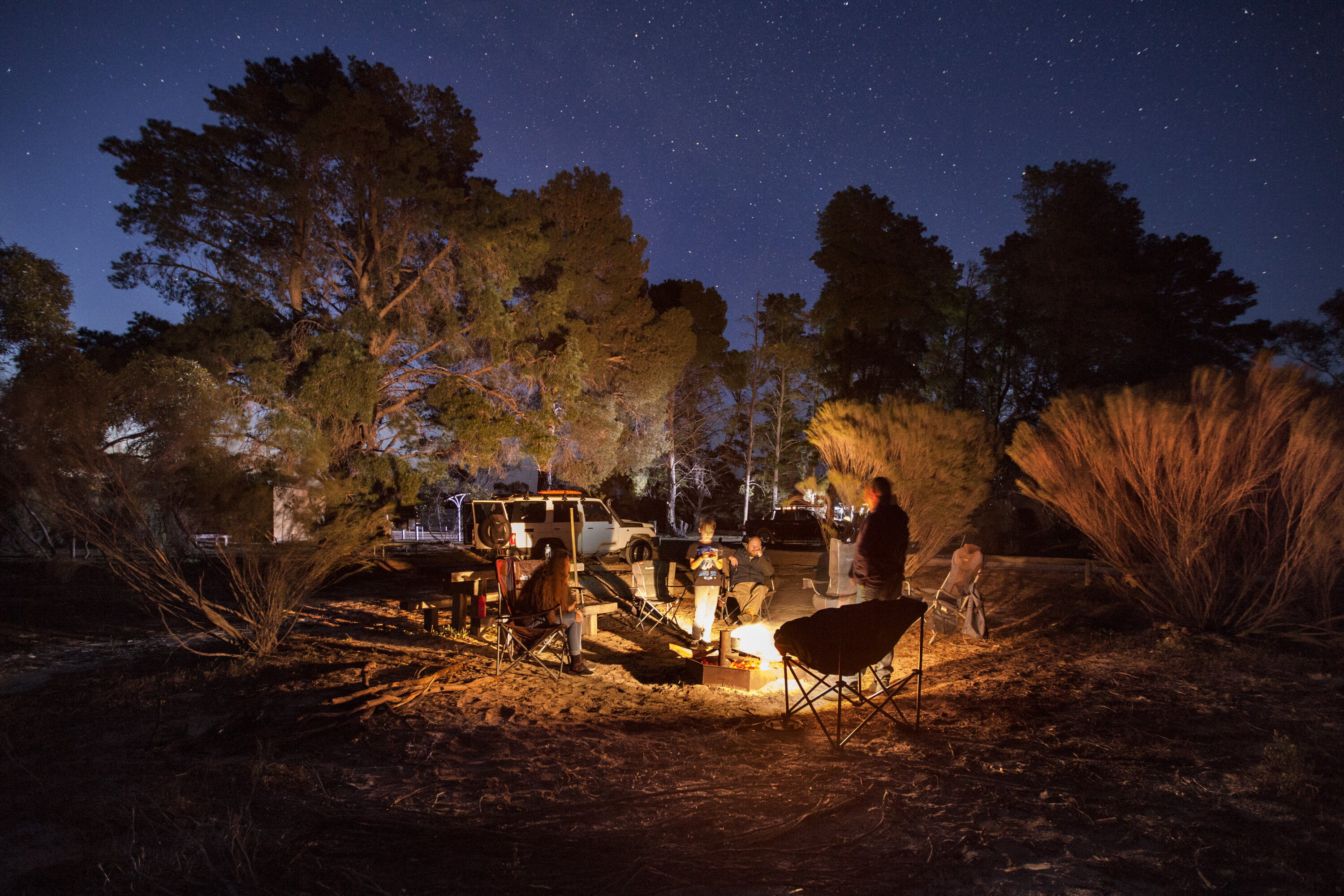
For a contrast to bright lights, busy traffic and a bustling city, Ngarkat Conservation Park’s vast outback landscape, a touch more than three hours’ drive west of Adelaide along the Mallee Highway, is the perfect choice.
The park’s sand dunes, mallee scrub and heathlands tick all the boxes when it comes to the quintessential outback elements. As you’d expect, the park’s location – and its weather – means this desert escape is a definite cool-months-only destination. We’d recommend any time from late April until September to experience Ngarkat at its best.
Ngarkat CP features 11 campgrounds, the majority of which are 4×4-access only. Pertendi, just off the sealed Ngarkat Highway, offers caravan sites, while Nanam Well and Pine Hut Soak – both in the northwest section – offer 2WD access, as does Comet Bore, off the Ngarkat Highway.
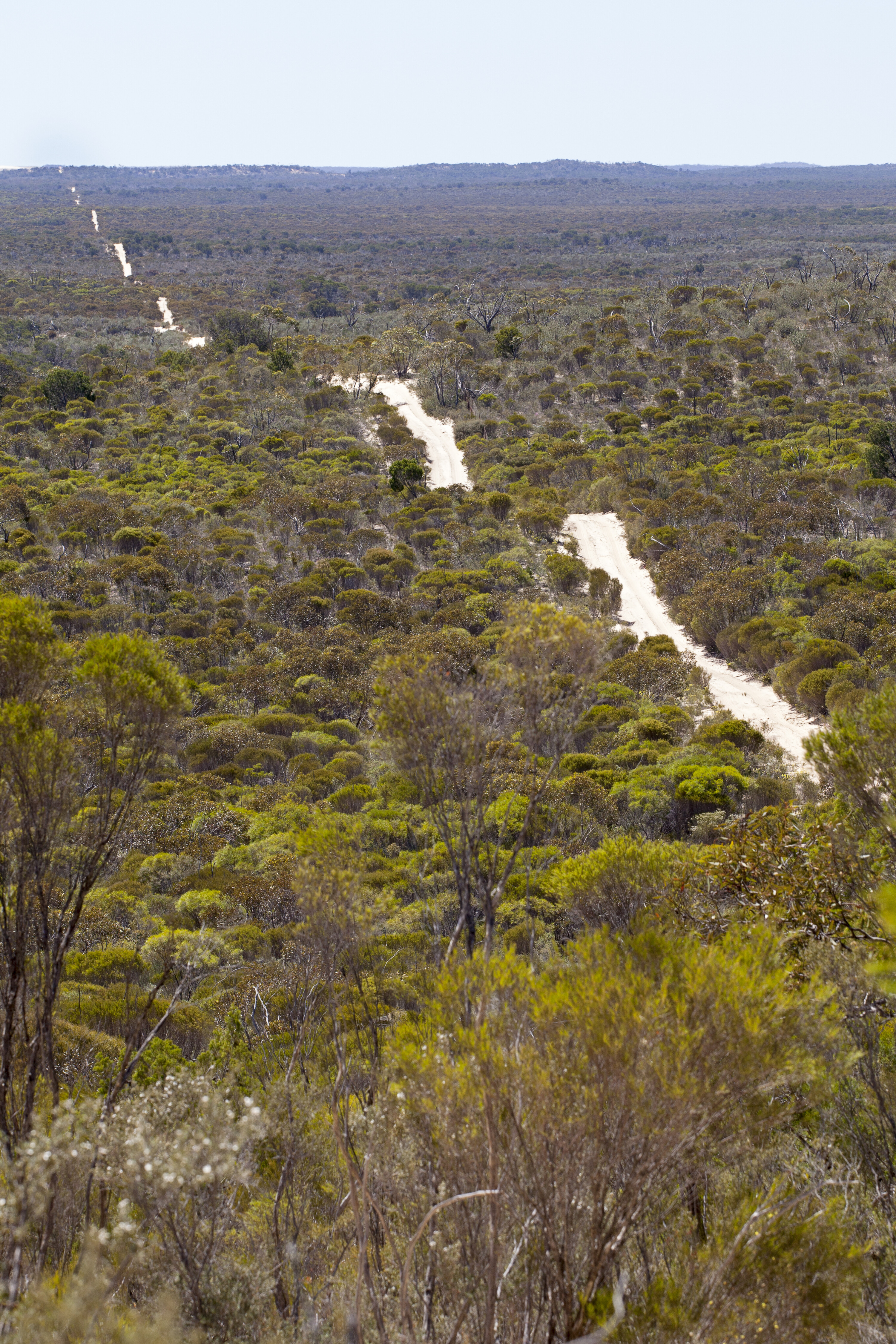
Most campgrounds in the park are quite small, and sites range from unallocated to one, through to six sites at Cox’s Windmill. Of course, think of Ngarkat CP and you can’t help but be reminded of its most famous attraction for off-road tourers: the Border Track.
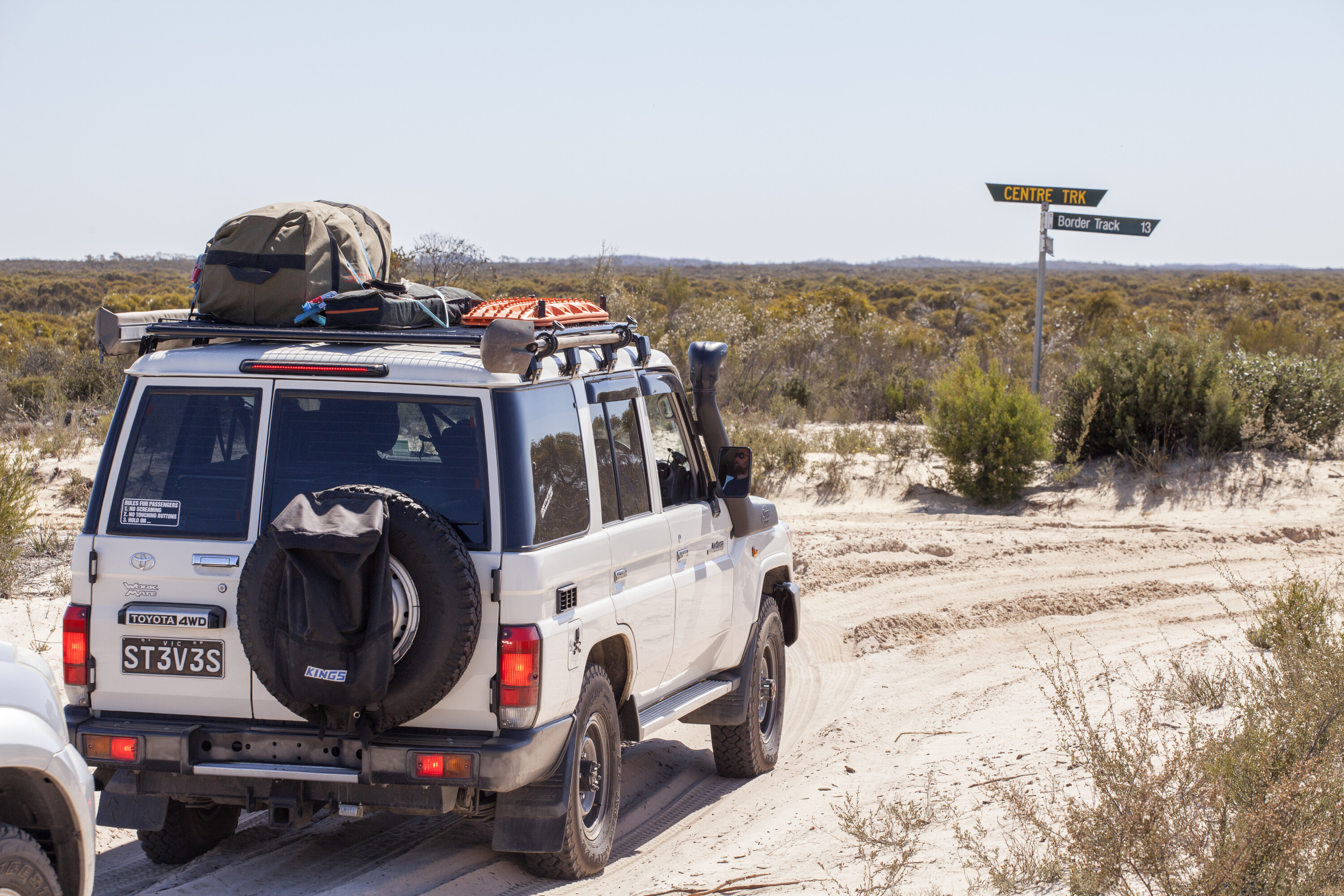
As the name so obviously implies, this north-south track follows the fence-line boundary that signifies the Victoria/South Australia border. The track is challenging and includes a southbound (from the park’s northern boundary) section that reverts to a two-way track once it joins the Centre Track (around 29km south of the track’s northern start-point). This is designed to ensure the fragile sand dunes and vegetation are as protected as possible.
The Border Track is a fantastic adventure, and for visitors who loop up and enter the park from its northern boundary just south of Pinnaroo, it’s a great way to kick off your Ngarkat experience with a true desert driving test.
The Border Track isn’t the only exciting touring option in the park; another option, for those heading north to south in the park’s western section, is to enter via Pinnaroo but turn toward Pine Hut Soak (rather than the Border Track start-point).
From the campground here you can drive south along the Centre Track, stopping along the way for the short (40 minutes return) Orchid Hike that, as the name suggests, leads bushwalkers through a pine forest that contains beautiful native orchids – a seeming oddity out here in mallee/desert country.
The Centre Track turns east to join the Border Track and, continuing south, you reach the turnoff to the rugged Mt Shaugh Track. This leads to the sealed Ngarkat Highway before you turn, again, onto dirt and follow the South Boundary Track west to Rabbit Island Soak campground (or Bucks Camp if you so wish). It’s a big day, but this campground makes it worthwhile.
For the energetic (and those with young’uns in tow), there are two short walks – the Gosse Hill Hike and Mount Rescue Hike – near here, both of which offer some cracking views across the low hills and open country of the park’s interior.
Following these short jaunts you have the option of leaving the track via Mount Rescue Track on the western edge, or you could head north along Jimmys Well Track to Box Flat for another night of camping.
A second drive option, again starting from Pine Hut Soak in the north but this time with a short hop across the border into Victoria’s adjoining Big Desert Wilderness, repeats the Centre Track-to-Border Track adventure south until you reach the junction of the Border and Red Bluff tracks. You can continue east from here to camp below this big outcrop, then return west via Mt Shaugh and South Boundary tracks to Rabbit Island Soak.
An alternative, for those who wish to return north, is to turn right before Rabbit Island Soak and head up along Baan Hill Track. This eventually leads out of the park. As well as off-roading Ngarkat CP has a load of great bushwalks, ranging from the short ones mentioned previously (Gosse Hill and Mount Rescue) through to more ‘serious’ treks that are more suited to experienced feet-borne adventurers.
Pine Hut Soak is the start-point for three big ones: the four-hour/11km return trek from Pine Hut Soak to Fishponds takes walkers through a sand dune landscape dotted with claypans; the shorter hike to Nanam Well takes you to a restored water well of the same name; while the longest – 17km/seven-hour return Pine Hut Soak to Scorpion Springs – allows well-prepared, experienced hikers to enjoy a journey through more mallee country, interspersed with clumps of native pine trees and stringybark mallee bush.
For the vertically inclined, there is the 1.5-hour slog up to the summit of Mount Shaugh. The views across to the ‘other side’ (aka Victoria) make this worth the effort. Keep an eye out for wildlife at any (small and often dry) waterholes, as this arid country hides a surprising amount of native animals and wildflowers when in season.
With a certified GVM upgrade, Ranger owners can increase their vehicle’s carrying capacity and tackle challenging loads with greater ease and safety.
GVM upgrades typically involve reworking the suspension by fitting stronger springs or shock absorbers, as well as updating the brakes to ensure the vehicle can safely handle the increased load capacity. Here are some products we recommend, and they’re intended as a starting point to give you an idea of what’s available ?
| Upgraded GVM | Increase | |
|---|---|---|
| ARB GVM upgrade | 3500kg | 150kg |
| TJM XGS GVM+ | 3500kg (approx.) | Varies |
ARB GVM upgrade
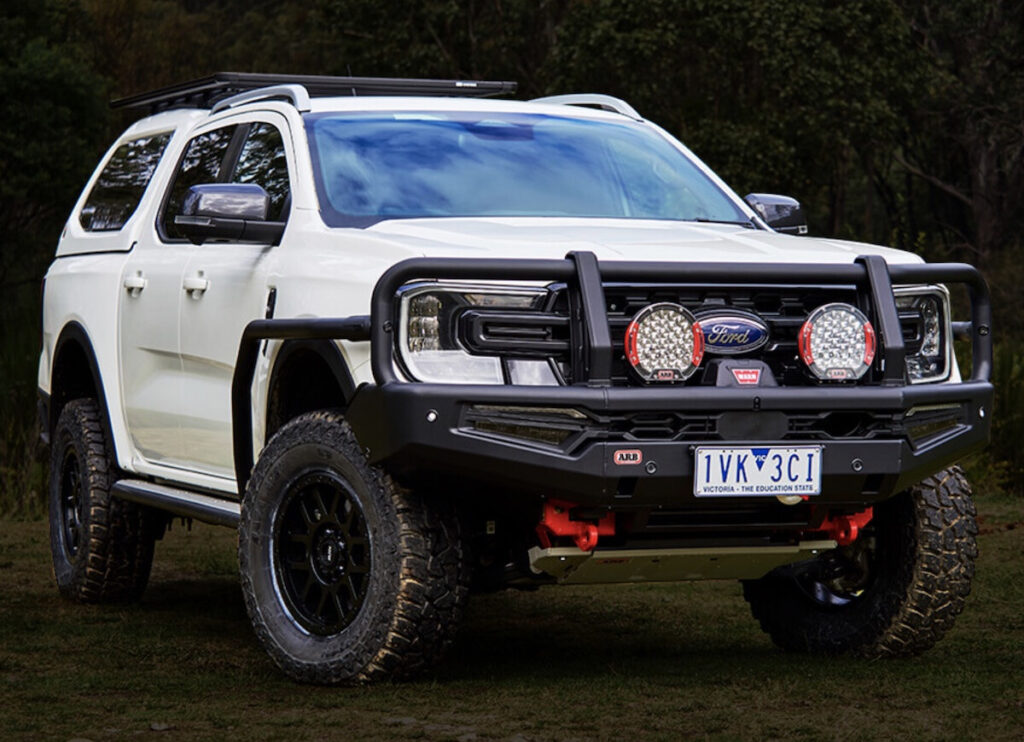
The ARB GVM upgrade for the next-gen Ford Ranger increases its Gross Vehicle Mass (GVM) to about 3500kg, enhancing payload capacity for heavy gear and towing.
This upgrade includes a complete suspension system with heavy-duty coil springs and shock absorbers, improving off-road performance and ride quality. It enhances comfort and traction over rough terrain while boosting safety through better braking and cornering.
Compliant with Australian Design Rules (ADR), the upgrade ensures roadworthiness. Though it requires a significant investment and professional installation, the ARB GVM upgrade offers substantial benefits for off-road and heavy-duty use.
Things we like
- Conservative upgrade over OEM spec
- Durable construction
- Compliance and peace of mind
Not so much
- Can be expensive
- Can change unladen ride quality
- Upgraded GVM: 3500kg
- Increase: 150kg
TJM XGS GVM+ upgrade kits
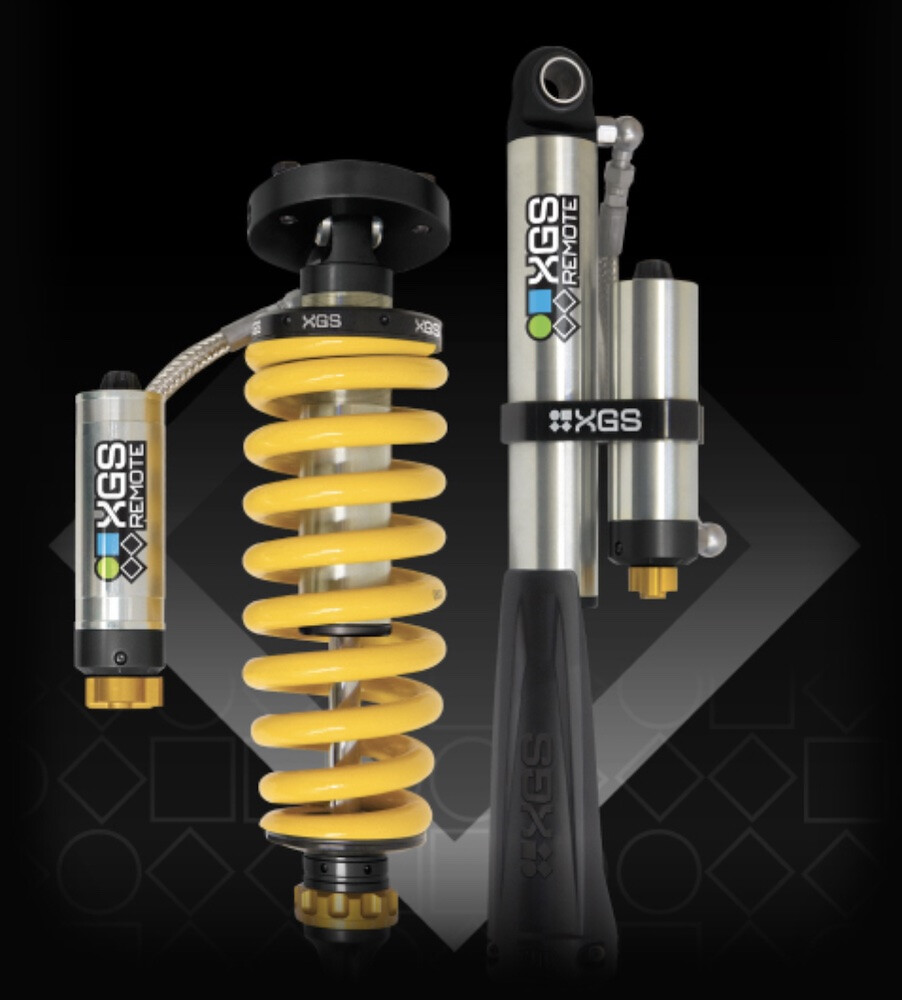
The XGS GVM+ kits provide a complete suspension upgrade.
The Medium/Lite option features lighter coil and leaf springs for a more compliant ride and reduced fringe benefits tax (FBT), while the Heavy/Complete system allows for a higher weight capacity. XGS also offers a wide range of shock options (Roamer, Rugged, and Remote) to customise your GVM upgrade.
These upgrades undergo rigorous testing to ensure safety and durability, with components subjected to both internal and accredited third-party assessments to meet Australian Design Rule (ADR) standards.
Designed for tough Australian conditions, the GVM+ upgrade enhances your 4×4’s comfort, braking response, and cornering stability, maximising performance and allowing you to kit out your vehicle with confidence.
Specifications:
- Upgraded GVM: 3500kg (approx.)
- Increase: Varies based on model
Things we like
- Multiple options
- Uses TJMu2019s XGS suspension kit
- Full suspension upgrade
Not so much
- Can be expensive
- Can change unladen ride quality
- Upgraded GVM: 3500kg (approx.)
- Increase: Varies based on model
How we review products
4X4 Australia has been reviewing four-wheel drive vehicles and aftermarket products for more than 40 years.
When looking for the best accessories for your make and model of 4WD, there are some things essential to making sure you have the best off-roading experience. When we compare products, here are some of the things we consider:
- Warranty
- Build quality
- Value for money
- Time and ease to set-up/install
- Weight
- Fit and finish
- How well it gets the job done
- What materials they’re made from
- Corrosion/UV resistance
- Coatings
- Compatibility with other accessories
- Compliance with ADRs and vehicle safety systems
- Country of manufacture
- Load ratings, to determine what’s the best product across each price point.
Back to top ⬆️
As we enter the last quarter of 2024 the Ford Ranger has built an unassailable lead on the 4×4 sales charts, ending September with a total of 44,559 year-to-date sales.
That’s 8058 more sales than Toyota has been able to muster for its – admittedly, much older – HiLux, which so far has delivered a total of 36,501 4×4 units to customers. Expect this gap to close when the next-gen HiLux arrives. The next best ute is the D-MAX, which has accumulated 18,349 sales so far this year. The monthly 4×4 sales chart for September reveals an identical order, with the Ranger (4187 sales) out-selling the HiLux (3545) and D-MAX (2108).
However, the Ford Ranger (4×4 and 4×2 combined) was pipped by the Toyota RAV4 on the overall sales charts, with the RAV4 selling 5182 units in September compared to 4485 Rangers. In fact, RAV4 numbers continue to surge, with sales up 85.2 per cent in September 2024 compared to September 2023 (and a whopping +93.1 per cent YTD).
It’s an opposite trend for both the Ranger and HiLux 4×4 variants, despite showing improvements on the year-to-date charts (+14.4 per cent and +4.7 per cent respectively). Both vehicles are down in sales compared to the same month last year – the Ranger -18.3 per cent and the HiLux -25.1 per cent.
Reflective of this is the decline in sales last month compared to September 2023 for both the large SUV and PU/CC 4×4 segments, down 16.7 per cent and 11.5 per cent respectively.
However, FCAI Chief Executive Tony Weber, said that SUVs and utes still account for a large chunk of the sales. “SUVs and utes remain the vehicle of choice for around 80 per cent of new car buyers. Nine of the top ten vehicles sold during September were in the Medium or Large SUV or Light Commercial segments. By contrast the passenger segment was less than 15 per cent of the market,” he said.
The Ford Everest remains the best-selling SUV in Australia (2902 sales in September, and 18,613 sales YTD), ahead of the MU-X (1317 sales in September and 14,228 sales YTD) and LandCruiser 300 Series (1093 sales in September and 12,274 sales YTD).
The GWM Ute was the best-selling budget option in September, with 696 sales registered, placing it ahead of both the LDV T60 (407) and SsangYong Musso (251). The opposite end of the market saw the Silverado (334 sales) outsell the RAM 1500 (241) and Ford F-150 (191).
Best-selling 4x4s in September 2024
| 1: Ford Rangeru00a0 | 4187 |
|---|---|
| 2: Toyota Hiluxu00a0 | 3545 |
| 3. Ford Everestu00a0 | 2902 |
| 4. Isuzu D-MAX | 2108 |
| 5: Isuzu MU-X | 1317 |
| 6: Mitsubishi Tritonu00a0 | 1190 |
| 7: Toyota LC300u00a0 | 1093 |
| 8. Toyota LC70u00a0 | 1071 |
| 9: Mazda BT-50 | 1009 |
| 10: Nissan Navara | 739 |
Best-selling 4x4s YTD
| 1: Ford Rangeru00a0 | 44,559 |
|---|---|
| 2: Toyota Hiluxu00a0 | 36,501 |
| 3. Ford Everestu00a0 | 18,613 |
| 4: Isuzu D-MAXu00a0 | 18,349 |
| 5: Isuzu MU-Xu00a0 | 14,228 |
| 6: Toyota LC300u00a0 | 12,274 |
| 7: Mitsubishi Tritonu00a0 | 10,847 |
| 8: Toyota LC70u00a0 | 9256 |
| 9: Mazda BT-50 | 9230 |
| 10. Nissan Navara | 7126 |
Our recent drive of the Lexus GX550 Overtrail revealed this new 4×4 wagon will be well-suited to off-road touring duties.
However, for many Australian adventurers, a petrol engine isn’t what they want. The preferred option is diesel fuel and the benefits it brings. While the Lexus GX is petrol-fuelled only, the upcoming 2025 Prado on which it is based will only be offered with a diesel engine.
Toyota Australia has confirmed the 250 Series Prado will be available in five specification grades when it lands late in 2024, including an Altitude that will get multi-terrain modes, a disconnecting sway bar, a rear locker, and the same Toyo Open Country tyres as fitted to the GX550 Overtrail. The top-spec Kakadu model will be fitted with a heap of luxury additions, but none to match the GX’s levels of trims, features and performance.
Pricing aside, it will be chalk and cheese in terms of the drivetrains, but something else that off-roaders would need to consider is that the Prado will be heavily supported by the aftermarket for accessories like bull bars, sliders, and everything else you could want to fit for off road touring. And not all of these products will transfer across to the Lexus, especially full-loop bull bars.
Ironman 4×4 has let on that it is working on a ‘Raid’ loopless bar with winch cradle for the GX due to the popularity of the model in the USA, and this will be available in Australia. Plus, a lot of general accessories such as roof racks and suspension upgrades should be able to fit both vehicles, but we’ll have to wait to see just what works for both.
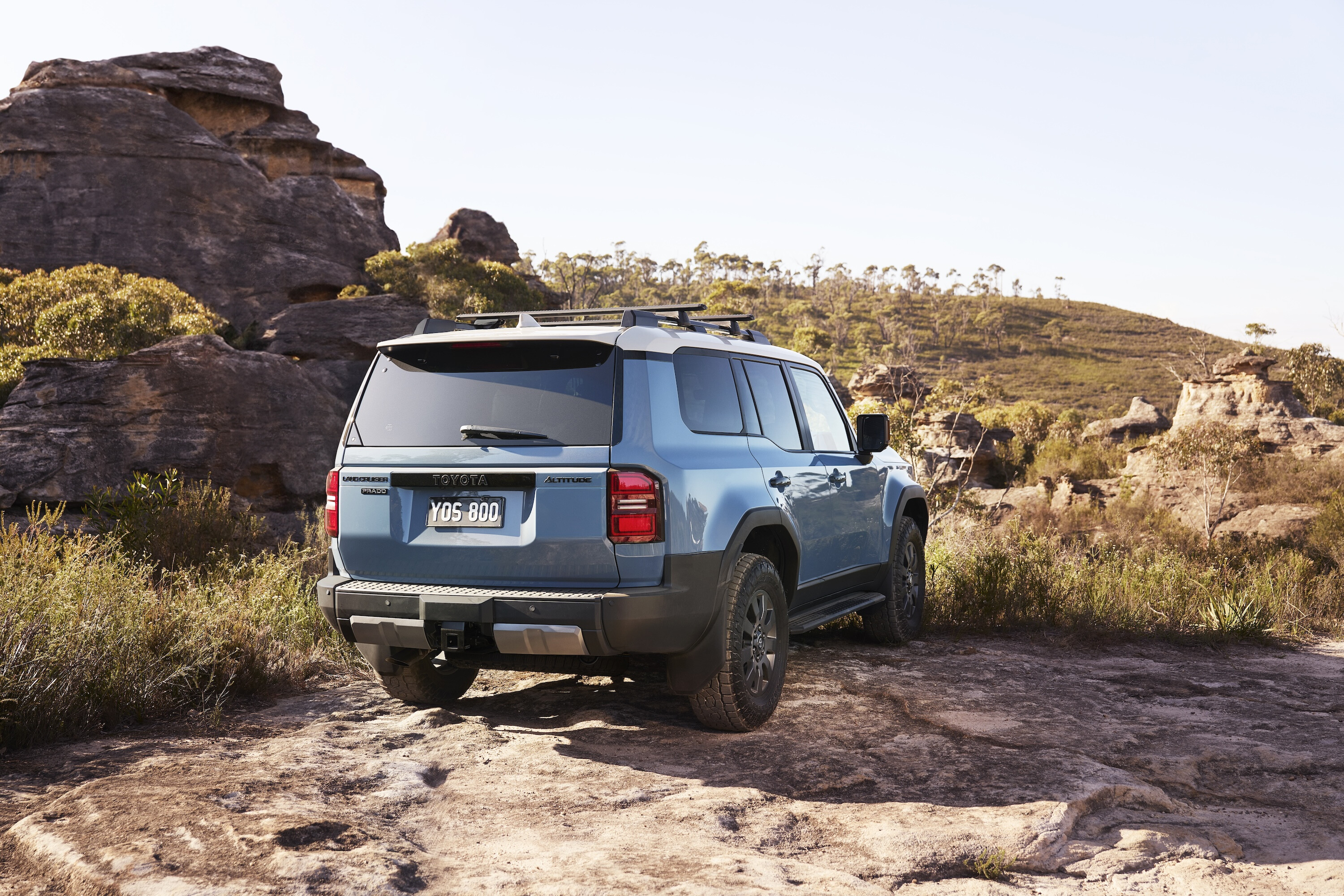
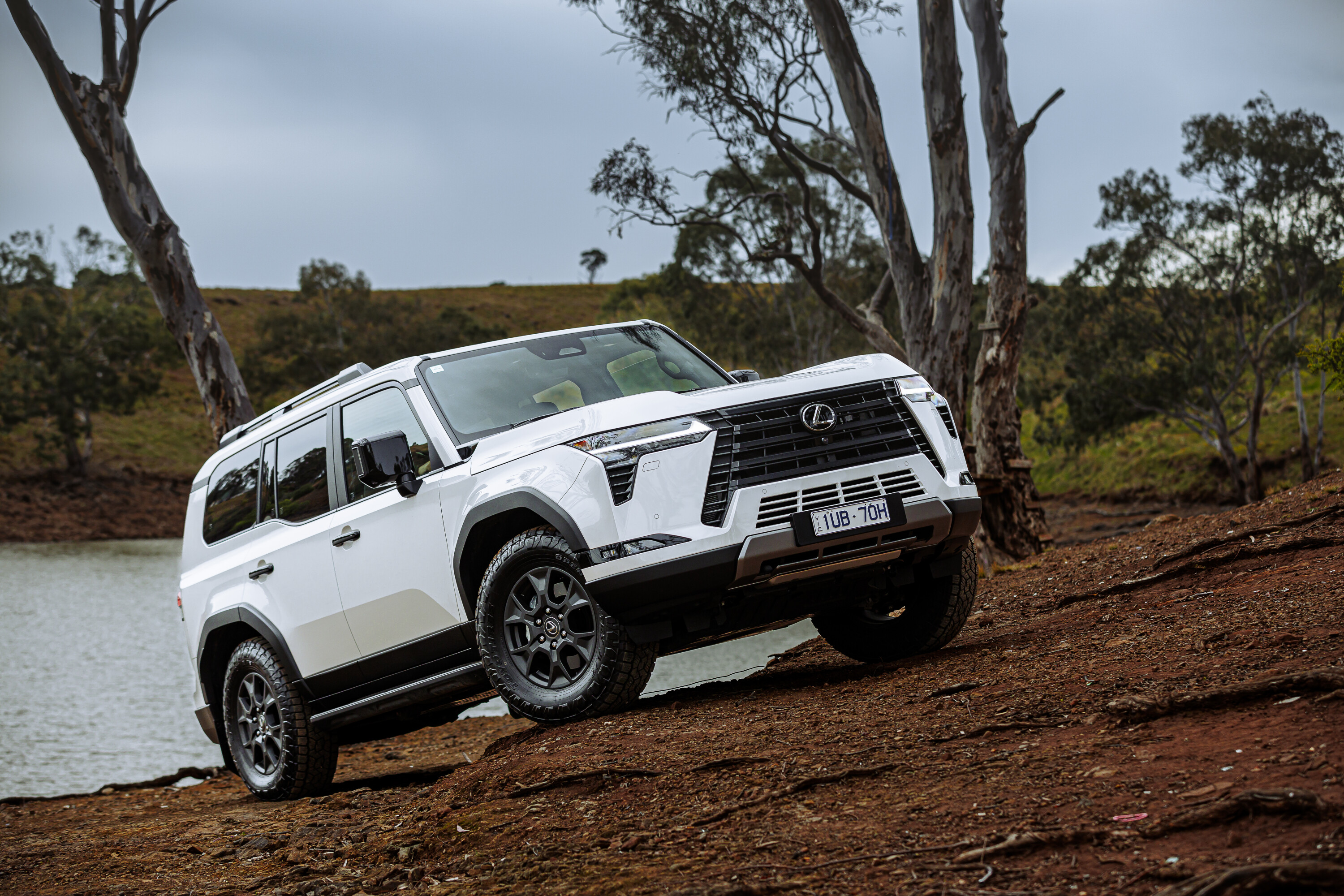
We look forward to seeing what the major 4×4 accessory brands and many smaller bespoke brands come up and with for the 250 Series-based models.
When it comes down to the crunch, though, we’re willing to wait for the Prado. Let us know what you’d prefer in the comments section below ?
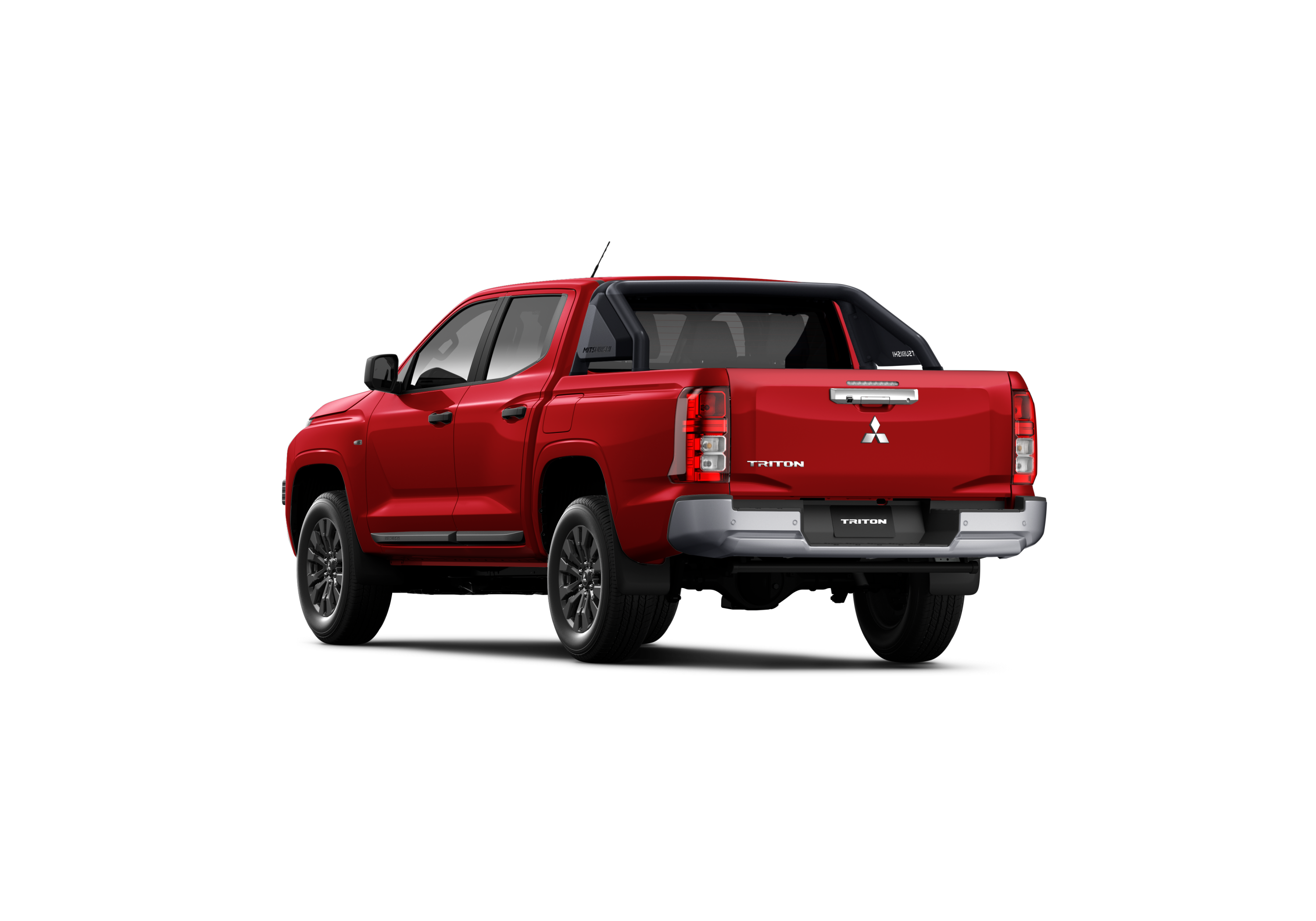
Mitsubishi has added a GLX-R variant to its local Triton line-up, as part of a 24.5 model year update across the range.
It’s not the first time we’ve seen the GLX-R variant, either, as Mitsi fans will remember the GLX-R variant was introduced to the past-gen Triton MQ in 2020. Slotting between the GLX+ and GLS in the Triton line-up, the 2024 GLX-R is stamped with an RRP of $56,740, making it $3450 more expensive than the GLX+ it’s based on. Full range pricing below ?
The mid-spec GLX-R dual-cab remains powered by the range-wide 150kW/470Nm twin-turbo four-cylinder diesel engine, which runs through a six–speed auto transmission. A rear diff lock is carried over from the GLX+, but unlike the GLX models the GLX-R is equipped with Mitsubishi’s Super Select II 4WD system with 2H, 4H, 4HLc and 4LLC only found in higher-spec models (GLS and above).
Also transferred from the higher-grade models is the ‘standard duty’ suspension which includes a high-mounted upper wishbone layout paired with 36mm shock absorber cylinders. The rear set-up features three high tensile steel leaves to stabilise on- and off-road control.
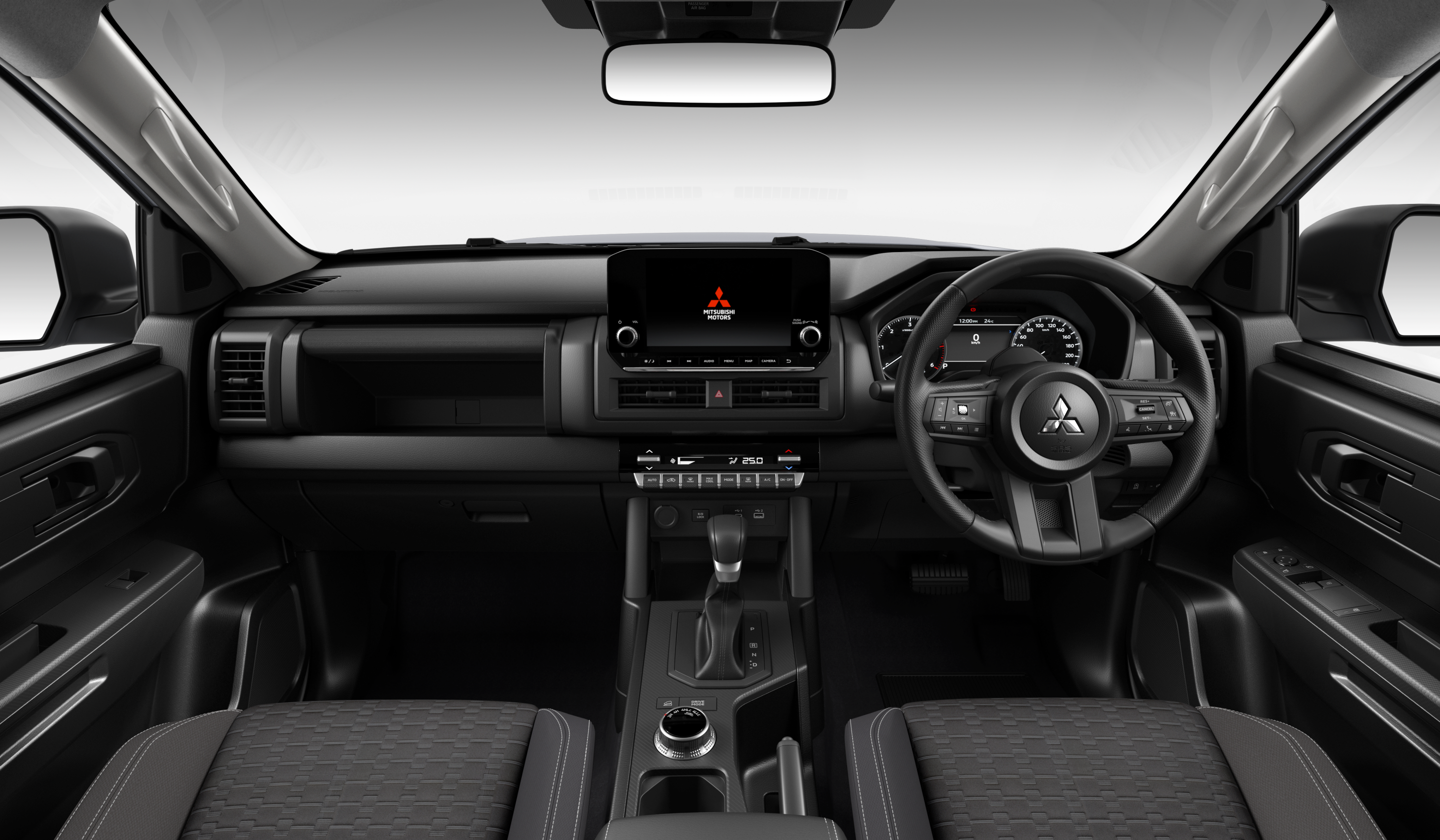
The remaining features applied to the GLX-R are cosmetic and include:
- Black 18-inch alloy wheels with ‘highway terrain’ tyres
- Black sports bar
- Leather steering wheel
- Fully carpeted floor
- Exterior door body mouldings
- Sidestep deletion
“We have taken on feedback from customers, media and most importantly the dealer network. The result is an enhanced model range and improved specification that we have been able to rapidly bring to market,” said MMAL CEO, Shaun Westcott.
“The GLX-R has always represented great value for money and this latest iteration has high visual appeal and true all-round capability,” he said.
The GLX-R will be in dealerships across the country from October 2024.
Pricing: 2024.5 Triton range
| Grade | RRP |
|---|---|
| GLX (4×2) | $43,690 |
| GLX+ | $50,340 |
| GLX | $50,940 |
| GLX+ | $53,290 |
| GLX-R | $56,740 |
| GLS | $59,090 |
| GSR | $63,840 |
Toyota’s 250 Series 4×4 wagon will take many badges around the globe.
In the USA it is already sold as the LandCruiser 250 Series and the Lexus GX550. When it hits our showrooms it will be the new Toyota Prado as well as the GX500, making this the first time we have received the Lexus GX model in Australia. The GX was built on the 120 and 150 Series models for the USA market in the past where it has become a popular vehicle for overlanders there.
The Lexus GX500 has arrived in Australia in three trim levels starting with the Luxury model at $116,000 (+ORC), then the Overtrail from $122,250 (+ORC) and capped off by the $128,200 (+ORC) Sports Luxury variant. As we’ve come to expect from Lexus vehicles, they carry over all the hardware and abilities of the Toyota model on which they are based but add a swag of luxury editions and, sometimes, added performance.
It’s the added performance that really makes the GX550 stand out from the Prado which will arrive later this year with the familiar 2.8-litre 1GD four-cylinder diesel engine. In the oiler’s place, the GX550 scores a 3.5-litre twin-turbo petrol engine that makes a claimed 260kW and 650Nm.
JUMP AHEAD
- Features and interior
- Safety
- Powertrain, chassis and suspension
- On-road performance
- Off-road performance
- Warranty and servicing
- Specs
Features and interior
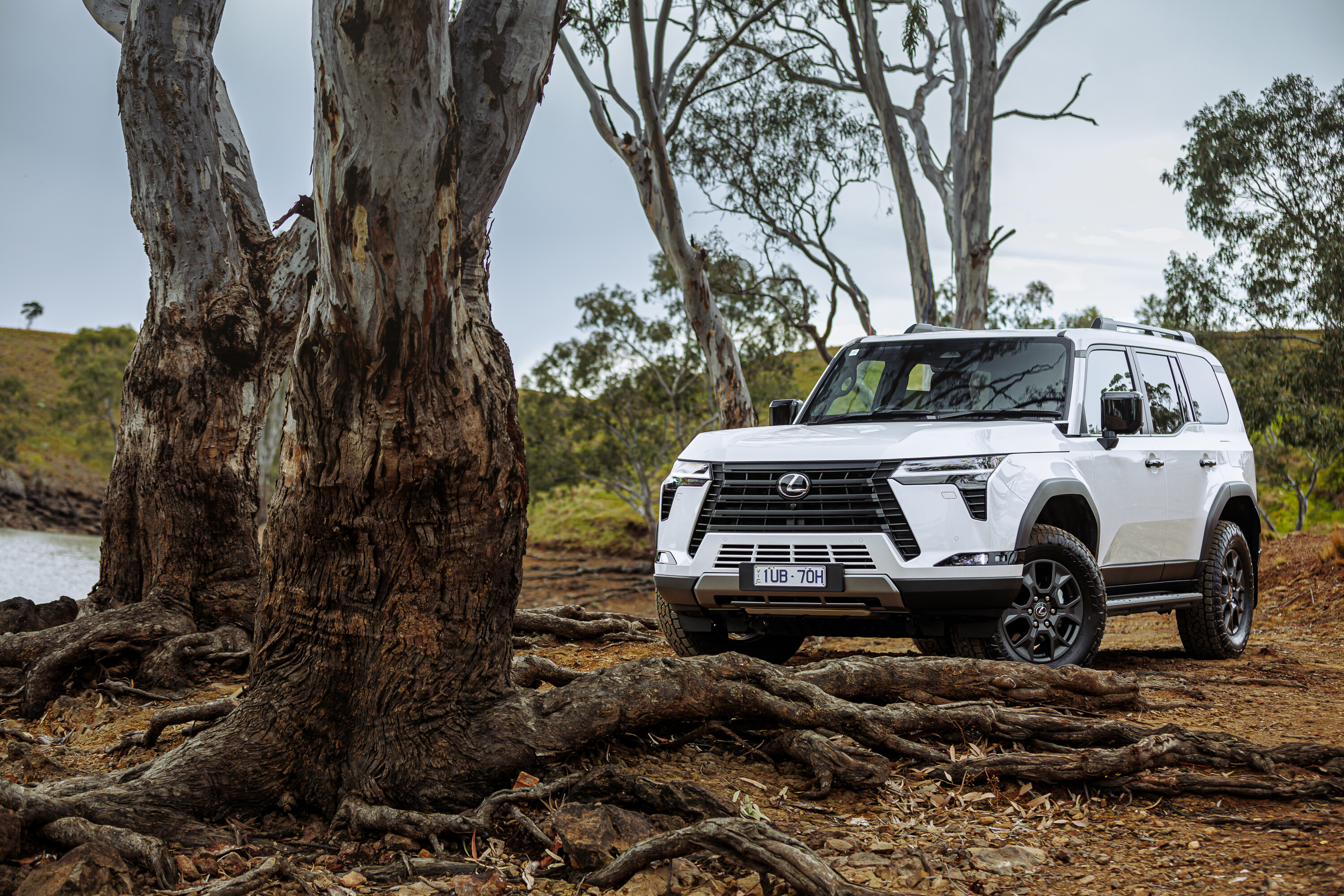
It’s no surprise then that it’s the GX550 Overtrail that we have on test here. Of the three GX550 models, it’s the Overtrail that will be of most interest to 4X4 Australia readers.
This is the model that is best equipped for touring and off-road use as it’s fitted with 18-inch wheels and all-terrain tyres in lieu of the 20- and 22-inch wheels and low profile tyres fitted to the Luxury grades.
It also gets a locking rear differential, Adaptive Variable Suspension, Kinetic Dynamic Suspension System (eKDSS) and Multi-Terrain Selector and monitor. The Overtrail also does away with the third-row seating giving adventurous owners more space for gear and increasing the available payload.
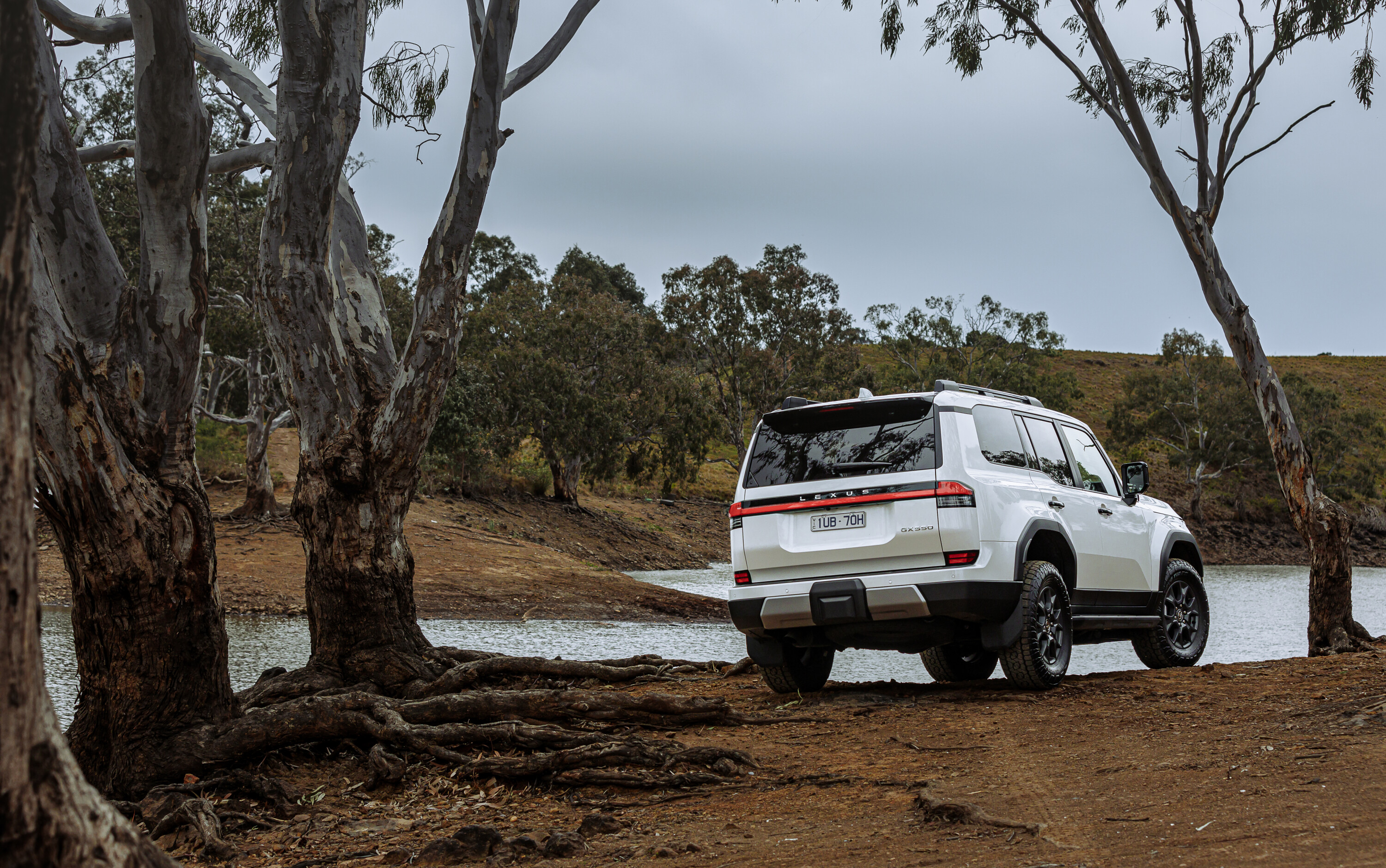
As expected of a Lexus vehicle, the GX550 is loaded with features and luxury trimmings. The Overtrail doesn’t hold back on these even if it’s not not quite as well equipped as the Sports Luxury model.
Inside you’ll find a 14-inch multimedia display with in-built satellite navigation, DAB+ digital radio with wireless Apple CarPlay and Wired Android Auto connection, a wireless phone charging pad, eight-way driver and front passenger seat power adjustment with two-way power lumbar adjustment, heating and ventilation for the driver and front passenger, a 12.3-inch multi-information display and heads-up display for the driver, a 10-speaker Pioneer audio system, chilled centre console, six USB-C ports (but no USB-A), and 12-volt outlets front and rear plus a 220V outlet in the cargo area.
The dash and interior are well laid out and easy to use – better than in the LC300. The multimedia screen offers dials for volume control and driver and passenger temperature control, and the screen itself is well positioned and large.
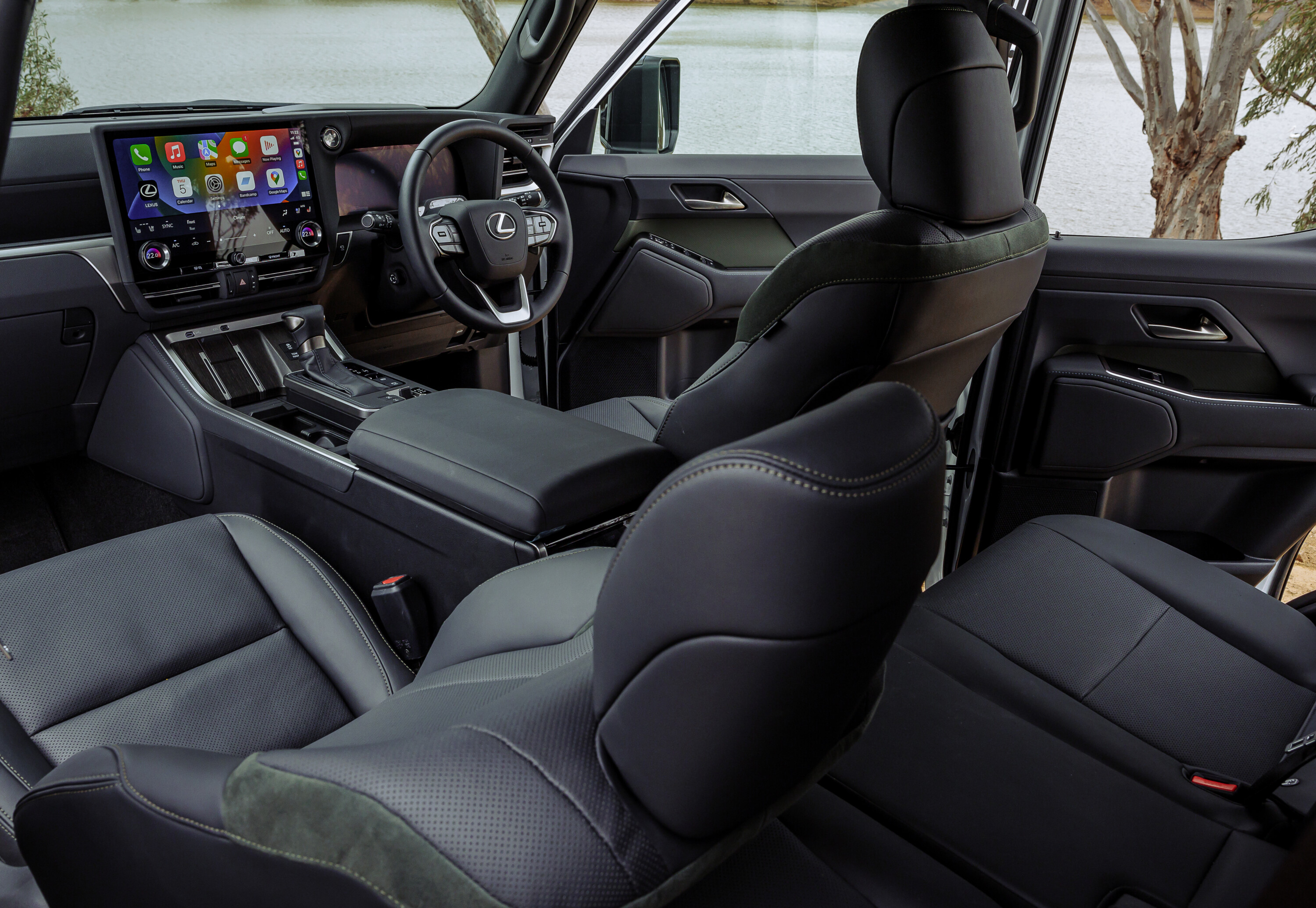
The leather-clad steering wheel feels small by 4×4 standards but you get used to it, and also appreciated are the gearshift paddles behind it which are particularly handy when driving off-road. The steering column is power-adjustable for both reach and height, combining with the multi-adjustable seat so you can achieve the best possible driving position.
The Overtrail gets model-specific interior trim including green suede accents on the seats and doors, and the seat cushions and bolsters are softer than in the other variants to better coddle the passengers over rough tracks. The tailgate is a powered lift-up design with a separate opening for the window, to allow quicker access to the rear compartment.
Back to top ⬆️
Safety
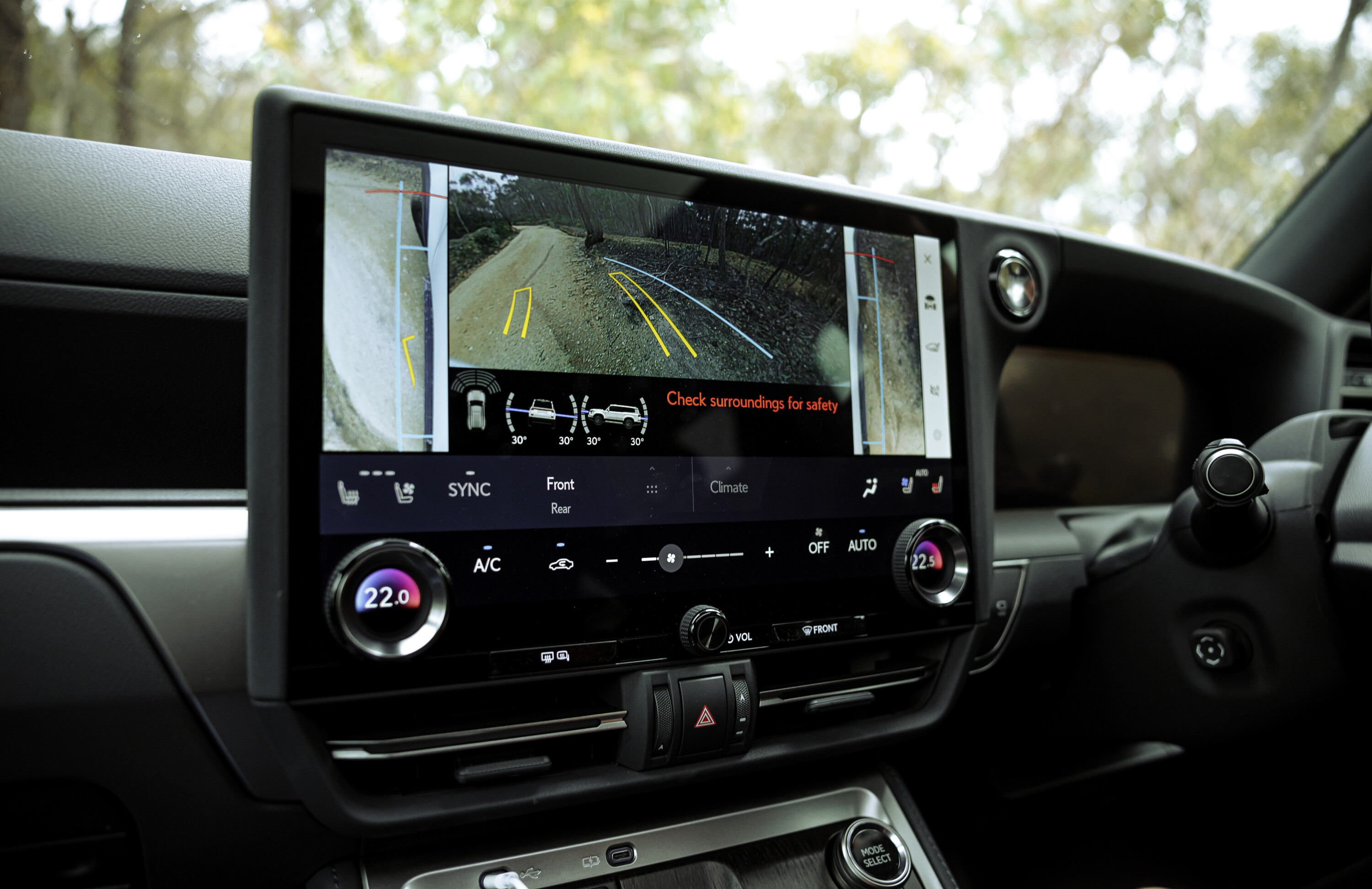
The GX550 is equipped with nine airbags, pre-collision system with AEB and emergency steering intervention, TPMS, road-sign recognition, blind spot monitor, lane assist with lane-departure warning, front and rear autonomous emergency braking, rear cross traffic alert, ETC and front and rear parking sensors with a 360° view monitor.
Powertrain, chassis and suspension
The GX550 is powered by a 3.5-litre V6 twin-turbocharged petrol engine that produces claimed peaks of 260kW and 650Nm.
The engine asks for premium fuel with a minimum 95 octane rating. It’s backed by a 10-speed automatic transmission similar to that found in a LandCruiser 300 Series and its Lexus stablemate. 4WD comes via a dual range, full-time transfer case with locking centre and rear differentials.
The GX550 runs on a version of Toyota’s GA-F ladder chassis which again you will find under the 300 Series and the new Toyota Tundra pick-up. Under the 250 Series it has a 2850mm wheelbase (the same as LC300) and the Overtrail has a 1685mm front and 1690mm rear wheel track; 20mm wider than the other GX550 variants due to its bespoke wheels and tyres. Interestingly the GX Overtrail’s wheel track is 2mm wider than an LC300’s.
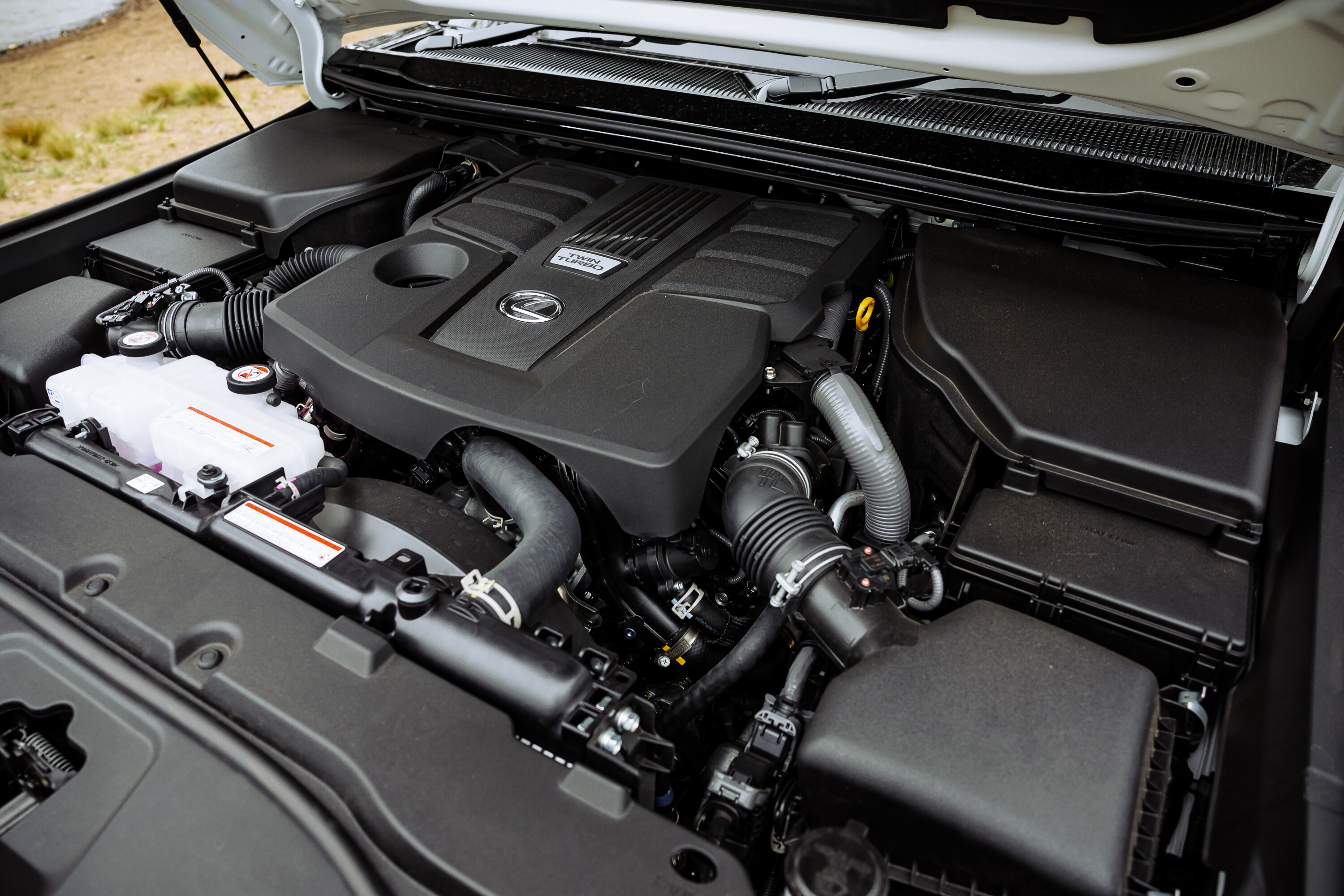
The GX550 has a double wishbone IFS set up under the front and a multi-link live axle under the rear, much like recent Prados and LandCruisers. The Overtrail has improved ride and off-road ability thanks to Adaptive Variable Suspension (AVS) that offers multiple settings for comfort and stiffness depending on the conditions.
The Overtrail also gets the e-KDSS system, which is capable of disconnecting the front sway bar when off-road to increase wheel travel and keep the tyres in contact with the ground. It’s a clever Australian-developed system that works very well to increase articulation and in turn off-road performance.
One other mechanical addition to the Overtrail over the other GX variants is an upgrade from a 200A to 240A alternator, with a view to fitment of power-hungry accessories that owners might want to fit to the GX550.
Back to top ⬆️
On-road performance
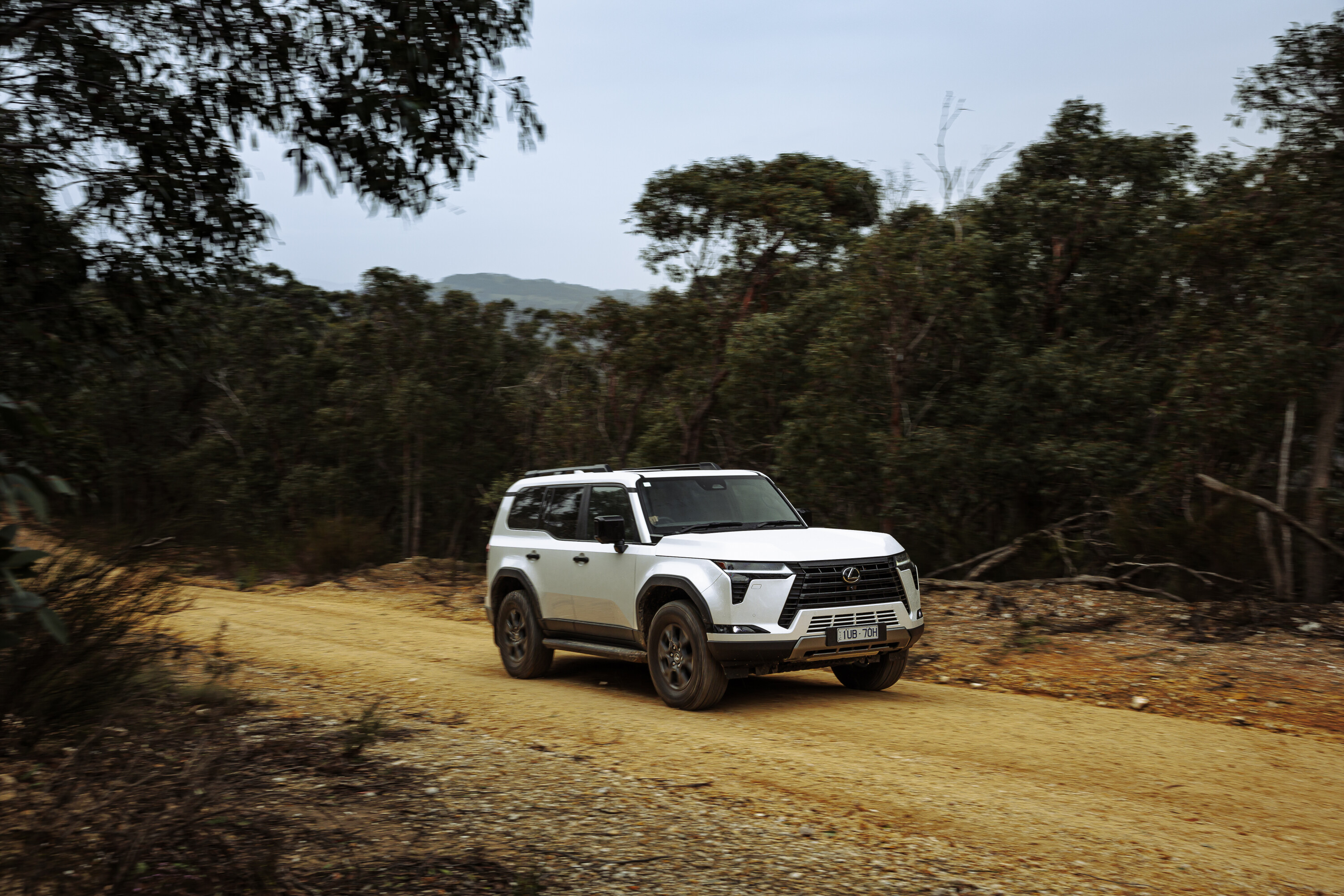
Don’t think for a second the GX550 is anything like any previous Prado to drive; it’s totally different and a whole lot better.
The suspension gives a firm ride that is well controlled in the twisties yet still delivers a comfortable ride quality. When the road surface gets a bit rough and the ride becomes choppy, adjusting the AVS from auto to the comfort setting smooths it out, but it does pitch and lean more when cornering. The Sport and Sport+ settings stiffen up the dampers for better on-road handling.
The performance of the engine and transmission is superb, providing plenty of power when you want it and smooth cruising when you don’t. It’s a quiet engine and, while there’s a bit of that V6 roar when you put your foot down, overall it’s a polished and refined ride.
Back to top ⬆️
Off-road performance
The powertrain and suspension are equally as impressive off-road as on it.
On gravel tracks you can select the softer settings in the AVS to soak up the bumps, then when the going gets rough select low range, lock the centre diff and point the Overtrail at whatever is in front of it. Multi Terrain settings include modes for rock, mud, snow and ruts to help the driver, and/or you can use the Crawl Control system which works extremely well at maintaining progress over rough terrain, up and downhill, automatically applying just enough throttle to keep you moving while avoiding wheel spin. It’s clever and it works, just like the e-KDSS that increases wheel travel at low speeds by disconnecting the sway bars allowing more articulation.
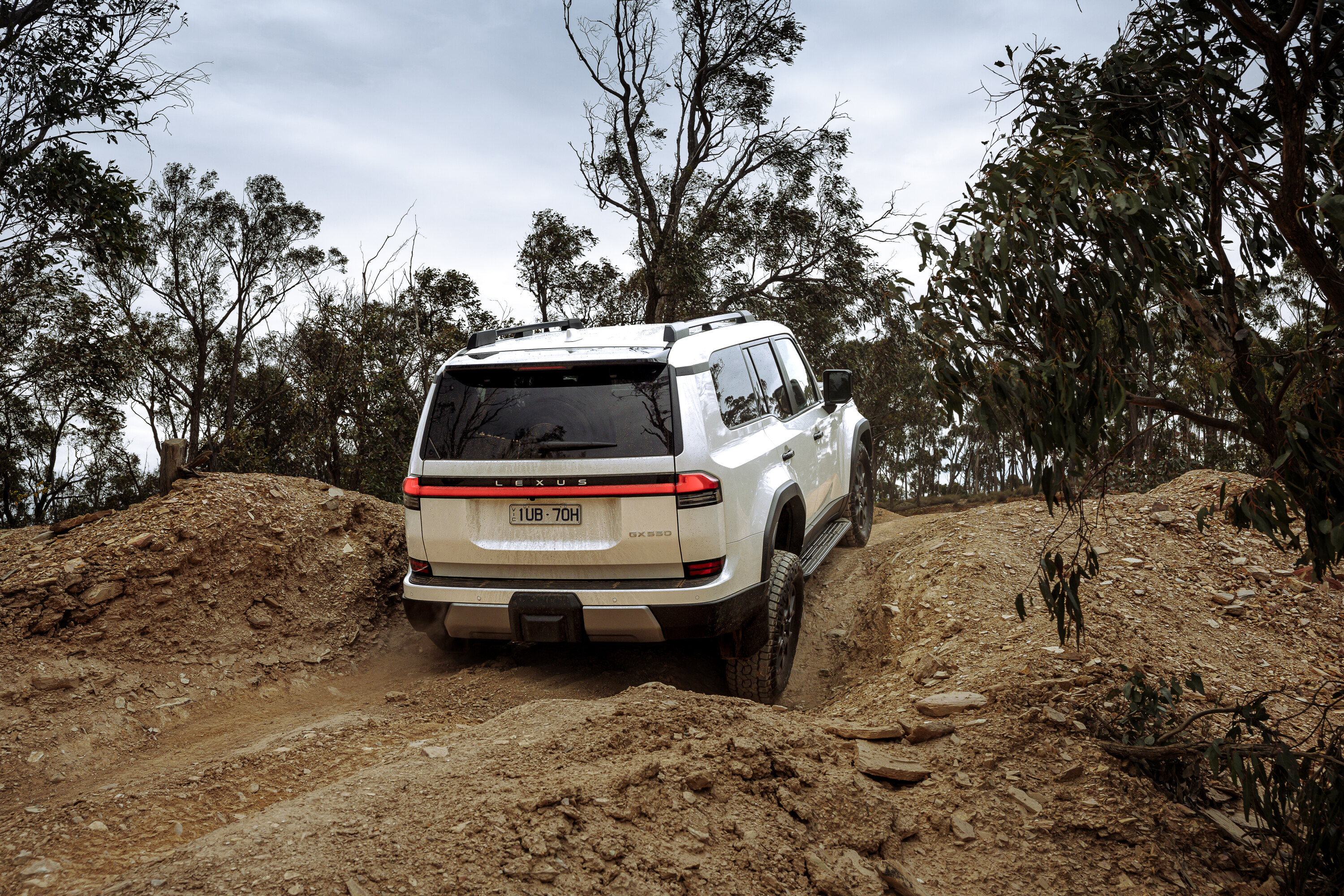
Passenger comfort is also improved by eKDSS as it leaves the stabiliser bars unlocked when driving straight on rougher roads in high range, softening shocks and bumps from the road reaching the cabin and passengers. When cornering, the stabilisers automatically lock to ensure a flat ride and handling stability.
While the Toyo Open Country A/T tyres are a nice addition to a production Lexus they are still a passenger car tyre, so not as durable as an LT construction tyre, but they will get you most places a Lexus owner is likely to take their GX550. We’re seeing American Overtrail owners fitting 33- and 35-inch off road tyres to their wagons for more off-road capability.
| Off-road specs | |
|---|---|
| Approach angle | 27u00b0 |
| Departure angle | 22u00b0 |
| Ground clearance | 225mm |
| Wading depth | 700mm |
Back to top ⬆️
Warranty and servicing
Lexus vehicles come with a five-year/unlimited kilometre warranty and service prices for the GX are capped at $595 per service for the first five years of ownership with service with intervals of six months/10,000km.
Lexus owners also benefit from the brand’s Encore programme that offers a range of events and features including a 5cpl fuel discount from Ampol service stations. 24-hour roadside assist is also a part of this program.
Specs
| Lexus GX550 Overtrail | |
|---|---|
| Price | $122,250 +ORC |
| Engine | V6 twin-turbo petrol |
| Capacity | 3445cc |
| Max power | 260kW @ 4800-5200rpm |
| Max torque | 650Nm @ 2000-3600rpm |
| Transmission | 10-speed automatic |
| 4×4 system | Full time, dual range |
| Construction | 5 door/5-seat wagon on separate chassis |
| Front suspension | Double wishbone IFS with eKDSS and VSC |
| Rear suspension | 4-link live axle with eKDSS and AVS |
| Tyres | 265/70R18 on alloy wheels |
| Kerb weight | 2155kg |
| GVM | 3110kg |
| GCM | 6610kg |
| Towing capacity | 3500kg |
| Payload | 595kg |
| Seats | 5 |
| Fuel tank | 80L |
| ADR fuel consumption | 12.3L/100km |
| On-test fuel consumption | 13.6L/100km |
Back to top ⬆️
GMSV has confirmed a release window for its GMC Yukon, with the premium SUV slated to go on sale in the second quarter of 2025.
However, we’ll have to wait until closer to the vehicle’s official launch for pricing to be revealed. Considering that it’s a premium product – and it will be remanufactured locally to right-hand drive by the experts at Walkinshaw – expect a lofty price tag in excess of $140,000.
Also unknown is the Yukon’s towing capacity, which will be revealed closer to its local launch, but GMSV claims it is “anticipated to offer best-in-class towing”. Estimates suggest a figure of 4500kg.
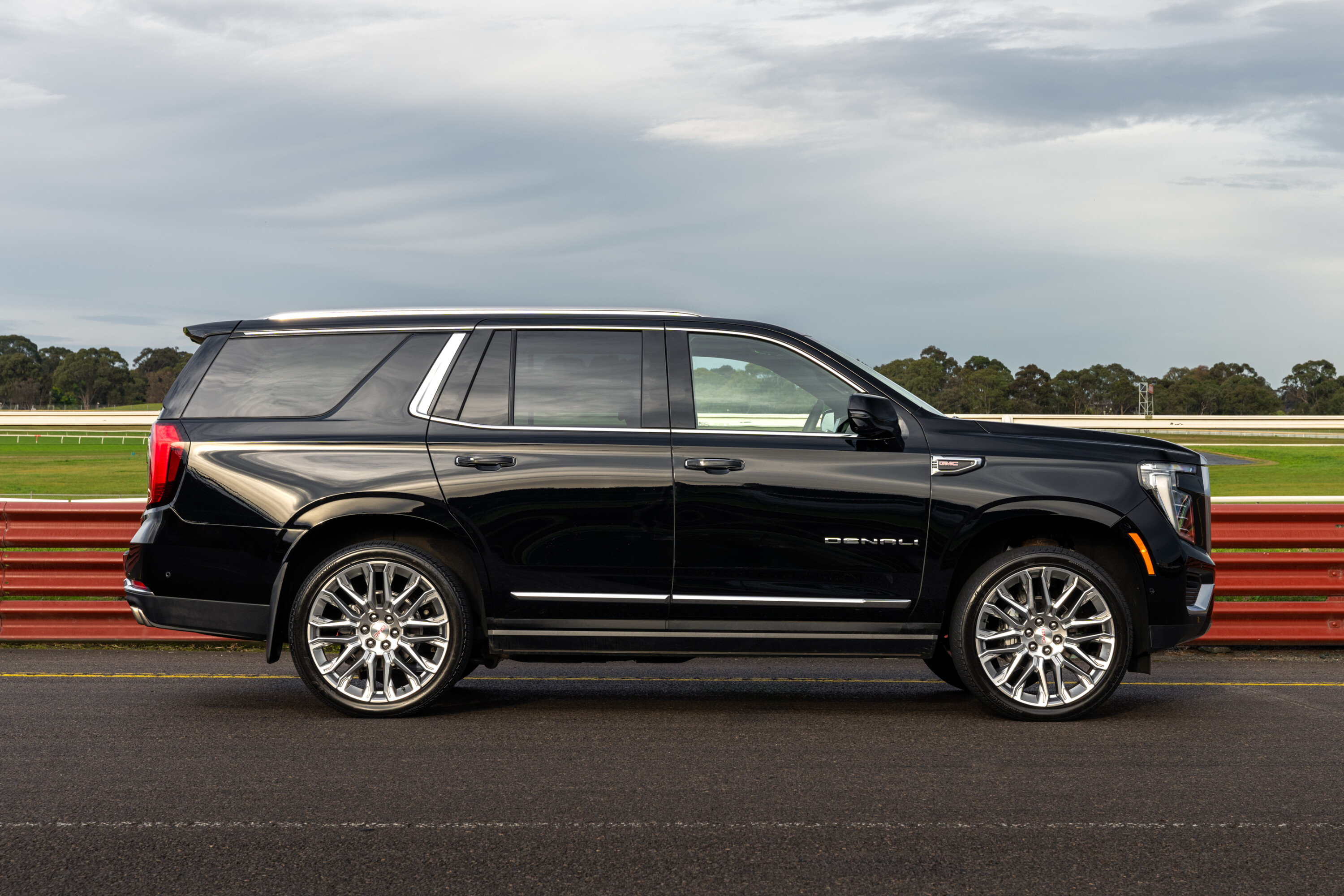
Here’s what we do know ?
Only one variant will be available to purchase in Australia – dubbed the Yukon Denali – and it’ll be equipped with a mountain of premium products, headilined of course by the same powertrain which drives the Silverado 1500: a 313kW/642Nm 6.2-litre V8 petrol engine, mated to a 10-speed automatic transmission.
A gigantic 16.8-inch diagonal tablet-style infotainment screen will dominate the centre console, and it will be fed by 13 camera views around the vehicle to help eliminate any blind spots. In addition to surround view, front and rear views, and top-down views, the camera set-up provides a hitch view with hitch guidance. Apple CarPlay and wireless Android Auto are also included.
The eight-seater is not short on cargo space, with the big SUV offering 3480 litres of cargo space with the second- and third-row seats lowered. And they fold flat, too. Plus, three ISOFIX points are fitted throughout the vehicle.
“There’s no denying it’s a statement vehicle – with the Denali package, the Yukon offers customers the ultimate in premium finishes and performance,” said Jess Bala, Managing Director, GM Australia & New Zealand.
“The GMC Yukon is the ultimate vehicle for families and groups who need to transport as many as eight people in comfort, safety, and style, combined with unheralded towing capability and luggage carrying ability.
“A powerful petrol V8 engine, luxurious interior, cavernous boot space are complemented with the latest in technology and safety systems to make the GMC Yukon Denali the latest ‘must have’ vehicle brought to you by GMSV.”
More specs and official pricing will be revealed closer to the Yukon’s local launch.
Hot on the heels of the launch of the D-MAX Tour Mate, Isuzu has applied similar treatment to its seven-seat SUV, with the Japanese marque confirming the release of an MU-X Tour Mate special edition.
Just like the D-MAX version, the special edition MU-X Tour Mate is loaded with more than $9200 worth of optional genuine accessories. Priced at $73,990 drive away, Isuzu claims the package represents significant savings.
The special edition variant uses the top-spec, leather-clad MU-X LS-T as a starting point, which means it is already equipped with a host of premium kit including 20-inch two-tone alloy wheels with 265/50R20 Bridgestone 684 II HT tyres; a Tyre Pressure Monitoring System; a 9.0-inch infotainment system with Android Auto and wireless Apple CarPlay connectivity; and power-adjustable front seats (heated, of course).
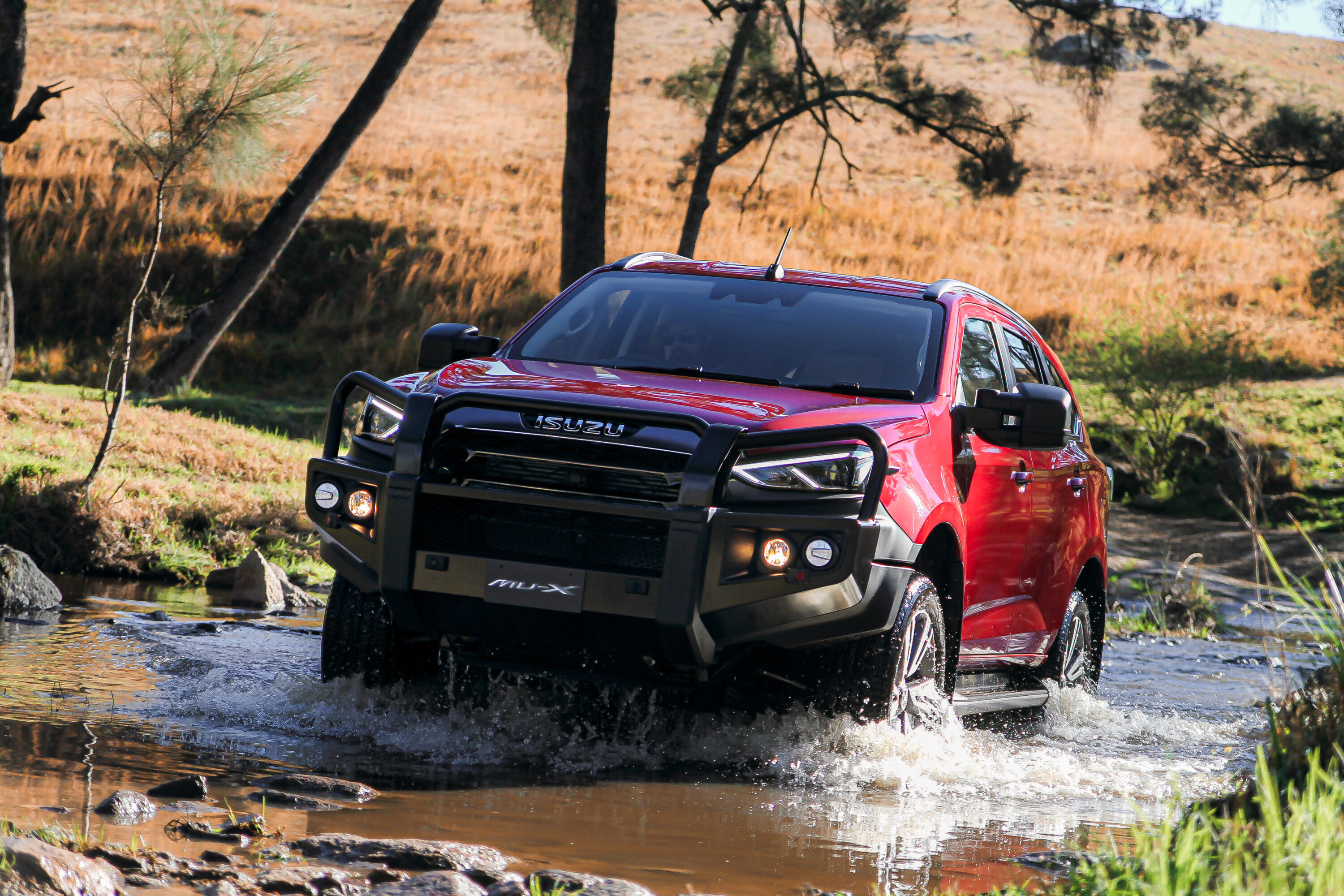
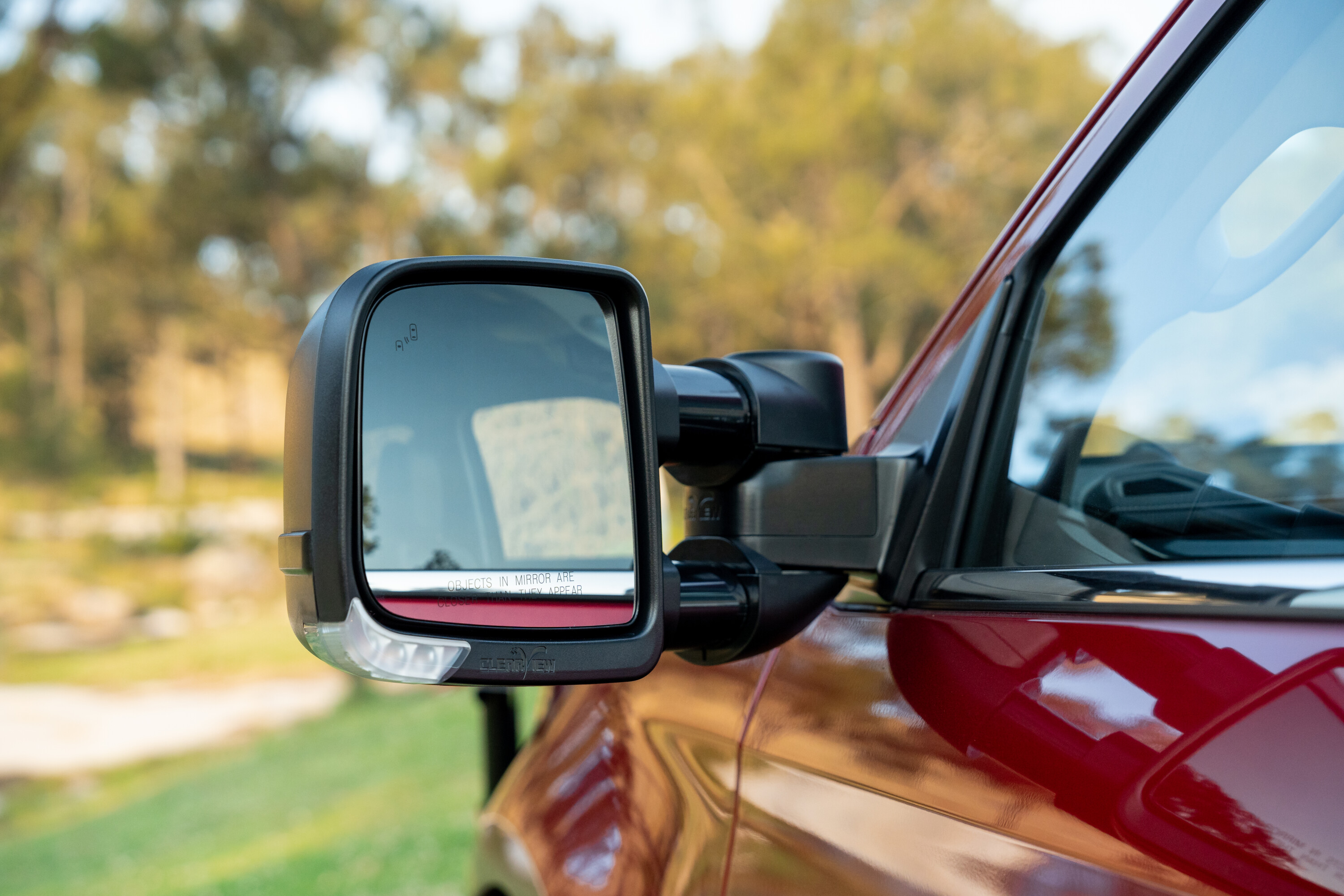
To give it the Tour Mate edge, Isuzu has equipped the vehicle with a number of bespoke accessories including a black steel bull bar with integrated parking sensors and fog lights; a tow bar kit with 50mm ball, 12-pin wiring harness and electric brake controller; and Clearview towing mirrors. More features below ?
The MU-X Tour Mate remains powered by Isuzu’s venerable 140kW/450Nm 3.0-litre four-cylinder turbo-diesel engine, mated to a six-speed automatic transmission and a dual-range transfer case. A rear diff lock is standard, as is a 3500kg braked towing capacity, an 800mm wading depth and 235mm of ground clearance. The MU-X is lauded for its ample interior space, boasting 311 litres with all seats up, 1119 litres with the third row folded, and 2138 litres with the second and third rows folded.
“With the D-MAX Tour Mate proving popular since its introduction in August 2024, it was only natural that we offer a Tour Mate special edition to our MU-X customers,” said Isuzu UTE Australia’s Deputy Managing Director, Mr Koichiro Yoshida.
“For years, the Tour Mate badge represented towing- and touring-ready capability, along with value for money. The 2024 Isuzu MU-X Tour Mate is no exception, a highly equipped vehicle that offers motorists adventures direct from the showroom,” he added.
Accessories include
- Satin black steel bull bar with integrated parking sensors and LED fog lights
- Tow bar kit with 50mm ball, 12-pin wiring harness and electric brake controller
- Clearview extendable heated and power-fold compact towing mirrors
- Unique TOUR MATE badging
- Intelligent Driver Assistance System (IDAS)
- Rear diff lock and Rough Terrain Mode
- Automatic electric park brake with auto hold function
- 20-inch two-tone alloy wheels with 265/50R20 Bridgestone 684 II HT tyres
- Tyre Pressure Monitoring System
- Body-coloured door handles
- Magnetite and chrome front grille
- Magnetite side steps, roof rails, and lower rear bar trim
- Premium leather steering wheel and gear selector
- LED ambient interior lighting
- Remote engine start – with unauthorised entry and anti theft measures
- Power tailgate, with remote and hands free operation
- Dual-zone air-conditioning
- Automatic Bi-LED headlights
- LED combination tail lights
- Reversing camera with dynamic guidelines
The special edition MU-X Tour Mate will be available at Isuzu dealerships across Australia from today, October 1.
BLADE LAUNCHED: Isuzu has a new flagship model sitting atop its D-MAX model line-up, with the Walkinshaw-fettled D-MAX Blade revealed and set to land in dealerships across the country from November 1.
The original story ?
A Walkinshaw-fettled D-MAX is in the works, with Isuzu confirming the halo ute will be officially revealed on November 1, 2024.
In a statement to officially confirm the date of the unveiling, Isuzu UTE Australia’s Deputy Managing Director, Mr Koichiro Yoshida, said the D-MAX Blade “was a project that was reengineered specifically for local Australian conditions in partnership with Walkinshaw Automotive Group in Melbourne.
“For as long as I can remember, customers and the media have asked about a higher-spec, off-road ready ute to rival the competition, something extremely capable, without compromise.” he added.
Isuzu says local deliveries will follow soon after the Blade is revealed.
An approval document published by the government-regulated ROVER (Road Vehicle Regulator) system has revealed Isuzu and Walkinshaw are combining forces to produce a tougher D-MAX ute, dubbed Blade.
The document reveals that “modifications are styling only”, which indicates the Blade will utilise Isuzu’s proven 140kW/450Nm 3.0-litre turbo-diesel powerplant. It does however reveal that a change to the wheels, tyres and springs will result in a height change of 26.5mm at the front and 29mm at the rear.
It will also add a sailplane and high-mounted stop lights, as well as tweaks to the wheel arches and sump guard. Axle ratings and the vehicle’s GVM remain unchanged. No photos are available yet.
While Isuzu has not revealed a launch or reveal date, it has confirmed the collaboration with Walkinshaw.
“Isuzu UTE Australia (IUA) and Walkinshaw Automotive Group (WAG) are collaborating on possible future product developments – however, we are not currently able to provide any further details,” said Mark Harman, Isuzu UTE Australia’s PR Manager.
The most recent ute to receive the Walkinshaw treatment was the 2023 Mitsubishi Triton Xtreme, which, among other things, received a style update, Walkinshaw-forged wheels and Supashock suspension.