
MITSUBISHI has added seven-seat options to its 2016 Pajero range.
The long-overdue update sees the mid-spec Pajero Sport GLS and top-spec Exceed gain extra seating as standard – the base-spec GLX remains a five-seat model.
This move sees Mitsubishi enter the competitive seven-seat SUV segment occupied by the Toyota Fortuner, Ford Everest and budget-priced Haval H9. And it follows recent news where Volkswagen hinted at the idea of a Amarok based seven-seat wagon.
In addition to the extra seating the 4×4 will gain the necessary safety enhancements, including curtain airbags that cover the length of the cabin. Seven airbags – driver and front passenger, side, side curtain and driver’s knee – are standard.
Mitsubishi claim the additional seats don’t impede on rear cargo space, as the third row seating can fold forward to create a large, flat area. While a cargo box fits neatly under the floor behind the last pew.
It’s also good news for us non-yoga folk, as the 60:40 second-row seating implements a fold-and-tumble function for easy access to the third row.
The Pajero Sport range has received no mechanical changes. The 2.4-litre turbo-diesel engine (133kW/430Nm) remains mated to the eight-speed auto transmission. Mitsubishi’s Super Select II four-wheel drive system is also carried over.
Despite the change, recommend retail pricing remains the same (Sport GLX, $45,000; Sport GLS, $48,500; Exceed, $52,750).
The seven-seat Pajero range is available to order now from Mitsubishi dealers Australia-wide.
OVER several days in March, Buckland and Beyond, a not-for-profit event sponsored by Four Wheel Drive Victoria and supported by affiliated 4×4 clubs, offered guided tag-along tours to a range of Victorian High Country destinations.
Operating from a base in the Buckland Valley near Bright in north-east Victoria, the occasion provided an enjoyable get-together of local 4×4 club members, and it also sought to introduce interstaters and local members of the public to the High Country’s tracks and scenic attractions.
Many attendees at this year’s inaugural outing belonged to 4×4 clubs, and while it might seem unusual that club members would be willing to pay for something they can otherwise do for free within their clubs, Buckland and Beyond offers its own special benefits. For instance, club trips don’t normally provide an elegant meal around a campfire that someone else has cut the wood for. Nor do they take you on tracks closed to the public, or bring along local historians to explain the legends and history of the places you visit.
The Victorian High Country is a place where local knowledge can be handy, as many tracks that start out looking harmless have a sting in their tail. And it’s wise to travel in the company of others – something Buckland and Beyond’s overnight trip into the beautiful Wonnangatta Valley demonstrated. All tracks in and out of the Wonnangatta are steep, so the last thing you want to hear halfway up a climb is a radio message from someone who’s in trouble. In this case, the trouble was a lack of drive accompanied by a sound like marbles in a washing machine emanating from the drivetrain.
Towing a dead 4×4 up a steep track to a point where it can be recovered is challenging enough, but in this instance the beast was a 4500kg Iveco ScrubMaster. Fortunately, two 4x4s joined together had enough grunt to do the job. The ScrubMaster had to be trucked away, and Buckland and Beyond’s experienced trip leaders quickly and safely secured the vehicle. Apart from the ScrubMaster’s demise, the drive from Buckland into Wonnangatta was a delight.
Following high ridgelines near Mt Selwyn through dense stands of tall mountain ash, the occasional clearing permitted panoramic views of forest-clad ranges. Our route then took us across Riley Creek to Wonnangatta Track and a somewhat rough and rocky 300-metre descent to the valley floor. After a very dry summer, the tracks were dusty and there was little water in the river crossings, but with the deciduous trees near the old station ruins just starting to assume their autumnal colours, the vista across this lush valley was spectacular.
Looking at the heavily grassed valley floor surrounded by almost impenetrable mountain ranges, it’s easy to see why Wonnangatta was such a successful cattle property in its day. Surprisingly, being the last day of a long weekend, the valley was all but deserted, ensuring the Buckland and Beyond group was spoilt for a choice of campsite. A secluded grassy bend in the all-but-dry Wonnangatta River near Wombat Gap provided an ideal place to overnight.
Buckland and Beyond also included a day trip to the Mount Wills Historical Area by way of Mt Battery Track from Dinner Plain. Parts of this track are privately owned, but special permission was obtained by the event’s organisers. This visit included a guided tour to a restored engine used to drive machinery at one of the old mines. Now the only remaining engine of its type in Australia, this nearly 100-year-old relic has been lovingly restored and is about to be started for the first time in 60 years.
However, the undeniable highlight of the day was a leisurely lunch in a swank dining room overlooking a lush and leafy garden at nearby Payne’s Hut. The meal was laid out by proprietors Greg and Tess Payne and wouldn’t have been out of place in a top city restaurant.
Lake Cobbler and Blue Rag were among other guided trip destinations. The latter is a must-do, with its 360-degree views and its amazing access track along a narrow ridgeline with precipitous drops off either side.
For four-wheel drive owners who don’t belong to a club and would like to spend a few days exploring High Country tracks they mightn’t be prepared to tackle on their own, Buckland and Beyond provides an opportunity to do so in the company and security of other like-minded people.
It also allows anyone planning a big off-road adventure to obtain a better understanding of the capabilities of their vehicle (and themselves), while seeing first-hand how other seasoned 4×4 owners set-up their vehicles for remote-area touring.
Buckland and Beyond 2016 was an exceptional experience, and the organisers are planning an even bigger and better program for 2017 – one every 4×4 owner should put in their diary.
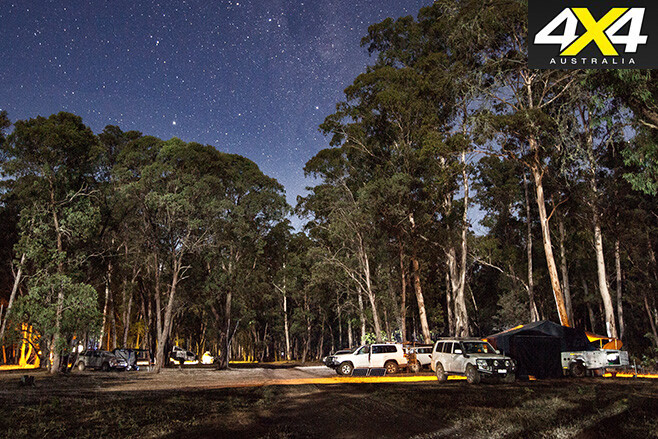
TRAVEL PLANNER
WHERE Buckland and Beyond was based at Beveridge Station campground in the Buckland Valley, 45km south of Bright; which in turn is 300km north of Melbourne and 650km south-west of Sydney.
WHEN This event is planned to be held each March.
SUPPLIES The registration fee of $60 per person ($5 for children under 15) included a barbecue dinner on the first day of the event. Lunch at Payne’s Hut was $50 per person. Participants needed to be self-sufficient in respect to their own food and water. Bright is the nearest town where food and fuel can be purchased.
STAYING THERE Participants are required to make their own camping arrangements. Tents, camper trailers and off-road vans are all welcome. Toilet facilities are provided. However, pets are not permitted.
ROAD CONDITIONS The organisers ensure all vehicles (and their drivers) on any given trip are capable of the conditions they will encounter. Any four-wheel drive in standard trim could undertake all the trips on the 2016 program, subject to them having a minimum of All-Terrain tyres with 50 per cent tread or better.
CONTACTS Buckland and Beyond Web: www.bucklandandbeyond.com Email: [email protected] Phone: 0457 641 282
Four Wheel Drive Victoria Web: www.fwdvictoria.org.au Phone: (03) 9857 5209
IT’S FUNNY how old is new again. Such is the case with the straight-six (inline) engine, designs of which are now back on the drawing boards after years of being in the wastepaper basket.
Historically, the straight-six engine was a mainstream design, offering both simplicity and low production costs. However, it fell from favour as it took up too much space when mounted along a chassis in a traditional north-south application.
For modern east-west applications, which is standard practice today in most cars and SUVs, a straight-six is even more difficult to package and has never been popular.
The straight-six was effectively killed off by the far more compact V6, which fits nicely sideways in an east-west chassis and also works well north-south, where a shorter engine bay makes for more passenger and luggage space on any given chassis length.
The V6 is everywhere now, both in petrol and diesel, and is the default engine configuration in medium/large cars and SUVs. The only manufacturer of note to stick with the inline-six and never venture down the V6 route has been BMW, but that’s about to change.
Land Rover, along with partner Jaguar, has announced the return of both petrol and diesel straight-sixes designed to power a range of models. The announcement comes on the back of Mercedes-Benz revealing it’s well on the way to developing a straight-six diesel.
The JLR and Benz sixes are 3.0-litre in capacity and both form part of respective modular designs that include 2.0-litre fours and 1.5-litre triples.
The driving force behind all this is cost. The engineer’s job is to make it all work, especially in terms of packaging a straight-six where a V6 has been the norm.
The cost benefit of a straight-six over a V6 comes from less complexity and lower manufacturing costs. For each straight-six engine there is only one cylinder head and either one or two camshafts to cast and machine. There’s also only one cam-drive system – which these days tends to be complex due to the widespread adoption of variable valve timing – to manufacture and assemble.
All that is doubled for a V6: two cylinder heads, two or four cams, and two cam-drive systems. A lot more cost.
From an engineering point of view, the straight-six is also lighter than a V6, which brings on further benefits with performance, fuel economy and handling – no matter how incremental.
Ever better news comes in the form of the perfect dynamic balance and therefore smooth running of a straight-six. In fact, the straight-six, along with the flat-six (Porsche and Subaru) and a V12 of any V-angle, are the only popular engine designs that are totally free from unbalanced forces, either linear or twisting, that cause some sort of vibration or other disturbance.
Even the popular V8 in its usual ‘cross-plane’ crank configuration isn’t as smooth on paper as a straight-six, as there is a slight unchecked twisting force or rocking couple that occurs at crankshaft speed. Flat-plane crank V8s, as used in racing, fare even worse in terms of balance, as they just replicate the balance problems of an inline-four (see breakout).
Even worse than a cross-plane V8 is the popular V6, even in its optimised 60-degree V-angle. The 60-degree V6 has two unchecked rocking couples, one at crankshaft speed and another at twice crankshaft. A 90-degree V6, a cheap way of making a V6 by lopping two cylinders off a 90-degree V8, is worse again in term of balance, and it generally needs a counter-rotating balance shaft to calm things down.
If the V6 goes the way of the dinosaur, I won’t be unhappy. With a couple of exceptions, I’ve never liked them.
Buzz-box four
INLINE-four engines are enormously popular, but they are also enormously flawed in terms of dynamic balance. In fact, of all the popular engine configurations, the inline-four is the most compromised in terms of dynamic balance thanks to unbalanced inertial forces that occur at twice crankshaft speed.
None of the other popular engine configurations – flat-four, inline-five, inline-six, flat-six, V6, V8, and V12 – have this problem, although the flat-four, inline-five, V6 and V8 do have various unbalanced inertial ‘moments’ or rocking couples that prevent them from being 100 per cent smooth.
The inherent vibration problem with an inline-four gets worse with bigger engine capacities and is typically addressed via the use of rotating counter-balance shaft(s), which unfortunately add complexity, weight, and engine size, and eat up power – so that’s not an ideal solution, either.
WE ALL love to chat on two-way radios, whether it’s with fellow travellers about how they’re travelling, strangers about hazardous road conditions, or station workers about accessing land.
However, one thing is for sure: It’s a damn pain when we can’t hear each other properly. It’s a situation usually caused by one of two things: the UHF is out of range, or it has poor sound quality and volume.
Often, no matter how high we turn up the volume, all we get is louder muffled noise, because the speaker is mounted within the dash or near the footwell. Some radios have an optional remote speaker, but many don’t. The alternative has been a handset with a built-in speaker, which is smaller and therefore easier to attach to the dash or console.
But this still raises the problem of sound quality; by holding the mic and speaker, you’re inadvertently blocking the sound or having to hold a mic that’s too large.
This is not so with the TX3350, which features the trademarked SoundPath speaker microphone. What the engineers at GME have managed to do is project the sound away from your hand to allow clear sound from the in-built speaker.
GME has also managed to produce an ergonomic, full-function LCD handpiece to control all features of the base unit – a top effort in miniaturisation. The head unit can be tucked away under the dash, within the console, under a seat or in any other hidden space. It comes with an extension lead from the head unit to the microphone. The handpiece is mounted on a traditional microphone clip, and extra external speakers aren’t necessary.
The TX3350 also features digital signal processing for pure sound, user-selectable/adjustable open and group scan, squelch, duplex channels and priority channel, plus 104 in-built DCS codes, 50 in-built CTCSS codes, five-digit selcall with quiet mode, and a five-year warranty. It’s Australian designed, engineered and manufactured.
Having used the GME TX3350 for just a few weeks, I reckon it’s the duck’s nuts of UHF radios. I didn’t need the extension lead as I’ve semi-hidden the head unit under the centre dash and hung the microphone where my gangly arm can easily reach it.
Something I’ve found over the years with some ‘loaded’ handheld microphones is the annoying ease of accidently pushing buttons while using the mic. Sometimes I’ve unintentionally changed channels while talking; other times I’ve inadvertently turned the volume way down, leaving me to wonder why no one wanted to talk to me!
Not so with the GME TX3350. The ergonomics of the handpiece negate accidental button-pushing.
I’ve opted for a GME AE4705 antenna that measures 1200mm long and has a 6.6dBi gain. It’s ground independent and came complete with a sturdy spring base. The fibreglass whip is easily removable should I wish to use shorter (for hilly country) or longer (for flat country) whips to suit different terrain.
Same goes for the super-rugged, heavy-duty stainless-steel spring mount; I had the same on my last vehicle and, while it soaks up the stresses of corrugations and pot holes, it doesn’t flop all over the show like a pansy in a gale.
All up, I’ve got a brilliant UHF set-up that’s been designed and manufactured in Australia for our conditions. The compactness of the head unit allayed my fears of squeezing it into my dash, and the handheld unit delivers quality easy-to-hear sound. It’s a beauty! Once I learn which button does what, all I’ll need is someone who’ll listen to me.
RATED Available from: www.gme.net.au RRP: TX3350 $449.00. AE4705 $249.95. We say: Compact; easy to use; full-featured.
THE Aussie-developed Ford Ranger is closing the gap on the market-leading Toyota Hilux. And updates to the 2017 Ranger range could see the gap tighten further.
The 2017 Ranger will see a host of fresh technology implemented as standard across the range.
XL pick-up models (excluding the XL Plus) will receive rear view cameras and rear parking sensors as standard, and an automatic transmission will be available for the 4×4 XL Super Cab Chassis 3.2L.
XLS pick-up models also get a rear view camera and rear sensors as standard.
XLT models get a rear view camera, front parking sensors, black fog lamps bezels and Ford’s all-new SYNC 3 technology – replacing the outgoing SYNC 2 tech.
The Wildtrak also gets SYNC 3 tech, but adds adaptive cruise control with forward collision alert, a driver impairment monitor, automatic high beam control, Lane Keep Assist and Lane Departure Warning.
All 2017 Rangers will receive a powertrain tweak to meet Euro 5 emissions standards.
Ford Australia’s CEO and President Graeme Whickman said: “These innovations, combined with Ranger’s unsurpassed towing and hauling capability, will help continue Ranger’s momentum as we continue closing the gap on Hilux.”
“In particular, Australians are being drawn especially to the XLT and Wildtrak variants, which now account for 62 per cent of all Rangers sold this year, up from 51 per cent in 2014.”
Ford has shifted only 310 fewer Rangers than Toyota’s Hilux so far this year (VFACTS, May 2016).
Pricing details are yet to be released.
ENTRIES for our Loaded Lux competition close on July 7, so you’ve got a week to get yours in and be in the running to drive home in this amazing adventure package.
Click here for your chance to win 4×4 Australia’s Custom Toyota Hilux.
However, before we give it away we took it to the snow for a bit of fun – along with a Ford Ranger from UNEEK 4×4.
We’re happy to say all the components and accessories we’ve added to the Hilux work well together and the vehicle drives remarkably well on-road. It also hits the off-road tracks with confidence and composure.
We’d like to take this last chance to thank all the companies that have partnered with us for the project – from Red Plum Automotive, who found the car for us in the first place, to those that added parts and accessories. These include Terrain Tamer and Flashlube, TJM 4×4, Mean Mother, Lightforce, TJM Airport West, Cooper Tires, EFS Suspension, Ironman 4×4, Ontrack Automotive, Marks 4WD, MSA 4×4 Accessories, HEMA Maps, DPChip, Piranha Offroad Products, Harrop Engineering, Opposite Lock and MAXTRAX. These companies all manufacture top-class products and they have all come together to improve this old Hilux 100-fold.
Finally a big thank you to Michael Hurren, who has spent days in cold workshops filming the products going on to the Lux and then many more hours editing the footage for the great build videos.
All the hard work paid off with this rewarding day out in the snow and mud, which showcased how well the build has come together.
So get your entries in now. You don’t want to miss your chance to WIN!
Want to know how we built the Project Toyota HiLux? Follow the link to find out.
I’M OUT of touch with what happens over the Easter holidays. Like a lot of people who can get away at times other than public or school holidays, we prefer to keep a low profile over the Easter break.
This year was no different, with one exception: We were away camping right up to Friday morning, and again from Monday onwards. Over the busy time we were ensconced at a friend’s place out of Mansfield, beside Victoria’s High Country.
As we were pulling out of our camp in the Buckland River Valley on the Friday morning, I literally had a vehicle on my front bumper taking over our campsite. When we got out into the King Valley, the pleasant camps along the river were jam-packed with tents, camper trailers, caravans and motorhomes. If I had been planning to camp there and found it like a crowded mini-suburbia, I would have gone home.
And, late on Easter Monday morning as we drove into the delightful Granny’s Flat Campground on the Jamieson River, there were dozens of camps set up. By all accounts half of them had already left by that time, and by evening the number of campers was down to three. Just the way we like it.
The Mansfield paper reported local businesses had their busiest period ever over this year’s Easter and, as we shifted camp over the mountains to Dargo, the local store owner told us Easter Saturday was their most hectic single day ever!
One of the reasons the High Country may have been so busy was that the reported blue-green algae outbreak on the Murray River just before Easter might have changed a lot of people’s minds about camping up that way.
Whatever the cause, Easter was a huge weekend for campers right through the High Country. I’ve since renewed my vow never to go camping over Easter (or other equally busy times) unless I have some private land to go to, or I can get to somewhere very remote.
The following weekend we were at Talbotville. There were still quite a few campers around (the school holidays were on), and something happened that we’d never experienced before while camping in Victoria: a park ranger came over and had a talk with us. I wasn’t doing anything wrong and I was gobsmacked!
Sure, I’ve had rangers pull me over when they thought I was camping in the wrong area, and a few years ago a ranger pulled me aside for taking photographs in a national park, stating I was a professional and professional activities were banned there.
However, there was a reason for the friendly exchange at Talbotville. A fire reduction burn was planned the next day using the Crooked River Track as a fire control line. The rangers – four of them in two vehicles – were out telling people what was going on and what they should do.
There should be more of this public interaction. Rangers, instead of being stuck in an office or cocooned in their vehicle, should be out and about talking to the very people who are using public land. A friendly ranger’s presence in the popular camping areas over the peak holiday periods would lead to fewer issues of unattended fires, dumping of rubbish and vandalism. It would also be a winner as far as public relations are concerned.
We hope it’ll happen again soon, but if it occurs only during the Easter holidays, Viv and I probably won’t see it!
WILD weather in Queensland’s outback has caused organisers to shift the Birdsville Big Red Bash to a different venue.
The outdoor music event, taking place on July 4-6, will now be held at the Birdsville Oval. That’s just across the road from the iconic Birdsville Hotel, so drop in for a coldie if you get the chance.
The original location and campsite at Big Red wasn’t affected by the heavy rain, but the roads and access roads from Birdsville to Big Red (and from Little Red to Big Red) aren’t in a safe enough state to cater for heavy traffic.
Camping options in the new location are available and punters will be able to roll out a swag or pop up a tent at the Birdsville Caravan Park, or at the free camping locations scattered throughout the town.
4x4ers who were keen to hit the tracks to Big Red while they were in the area may still get the opportunity, as the roads are likely to re-open when they dry out – and the weather forecast looks promising.
The Birdsville Big Red Bash is now in its fourth year and looks to be even bigger and better this year.
It will be headlined by Aussie royalty Paul Kelly and Jimmy Barnes, while The Angels, Christine Anu and Troy Cassar-Daly will also bellow out a tune.
Other than the change of venue, this awesome event is expected to carry on as planned. Haven’t got a ticket yet? Bad luck, the 2016 Big Red Bash is completely sold out.
THE MID-NORTH coast of NSW is fortunate to have so many captivating coastal national parks and campsites, and one of these areas is the Yuraygir National Park. This park is a coastal treasure boasting stunning beaches, clear creeks and rugged headlands, and is part of the largest stretch (65km in total) of protected coastline in New South Wales.
From Sydney, take the Pacific Highway for 540km and you’ll eventually arrive at Coffs Harbour. Here you can stock up on last-minute supplies before leaving for Yuraygir. Coffs was once home to a booming banana industry, as evidenced by its famous landmark and tourist attraction, the Big Banana, which is visible from the Pacific Highway.
As you head north out of Coffs Harbour en route to the Yuraygir National Park, the blacktop will disappear after an hour.
The real reason for visiting the Yuraygir National Park is to explore and experience the hidden camping treasure at Pebbly Beach. Unlike many popular campsites along the eastern coastline of NSW, the remote Pebbly Beach isn’t really advertised in any of the mainstream tourism publications. I’m not sure why this is the case, given it is probably one of the most beautiful campsites along the eastern seaboard – I can only guess that maybe it’s because you need a four-wheel drive to get there.
Low range is required to reach this idyllic stretch of coastline, as you will have to traverse off-road tracks, tackle a stretch of soft sandy beach, and then take on a creek crossing before arriving at this amazing camping location. I’m sure anyone who has been lucky enough to visit this piece of coastal paradise was pleased its location has been kept out of most tourist brochures, if only to keep the masses away.
To access Pebbly Beach you’ll need to take the Barcoongere Forest Way turn-off, about 43km north of Coffs Harbour on the Pacific Highway. The Barcoongere track can be rough in spots, but you’ll soon arrive at Station Creek, where you’ll see the 4WD-only sign pointing in the direction of the Pebbly Beach camping area. If you decide not to continue to Pebbly Beach, you can still enjoy the area by camping at the secluded Station Creek campsite. You can even launch a boat at the southern end of the campground if you’re interested in doing a bit of serious fishing.
To continue to Pebbly Beach, follow the signposted 4WD track and you’ll soon hit the beach after negotiating a tight and bumpy sand track. It’s a good idea to check your tyre pressures here as you may need to drop them depending on how soft the sand is. You will soon hear and see the Pacific Ocean and the entrance to the beach – a beach backed by old Pleistocene dunes and interesting black swamps that attract plenty of birdlife.
Pebbly Beach campsite is located at the end of a 2.5km beach drive, and beforeprogressing up the beach it’s advisable to check tidal times. The last hurdle before reaching your camping destination will be crossing a tidal creek, which should only be attempted at low tide.
After successfully negotiating the soft sand along the beach, there was just me, my Land Rover and a creek that separated me from getting to this campsite. It was late in the evening and the tide was in, so I had two choices: wait until the tide went out in the morning, or just go ahead and chance the crossing.
First things first, I waded the creek to see how deep the crossing was. As I approached the middle of the creek it was up to my waist, but I knew it was manageable. So with that, it was out with the radiator bra and back in the Landy. I knew if I stalled in the creek I was in a bit of bother as I had no recovery vehicle to help me out should something go wrong, so as I dipped the Landy into the water I gradually built a decent-sized bow wave and slowly made my way across. This crossing poses no issue when the tide is out, so it’s advisable to time your arrival at the creek to coincide with the tides.
On the far side of the creek the Land Rover climbed up the steep sand bank; as it levelled off I began to see what all the fuss was about, as the sheer beauty of this camping location unfolded. Despite the fact it was raining a little and it was a bit grey, arriving here was like finding myself in the midst of a Photoshopped postcard.
After having a good look around and assessing the beach fishing options, it was time to pick a camping location, as the light was fading. There’s plenty of room to pitch a tent at Pebbly Beach, and there are a number of fire pits available. With the Pacific Ocean directly in front of you and two spectacular headlands to your left and right, you’ll be well-protected by the natural and picturesque cove that creates a truly stunning view.
Camping fees are collected by park rangers who visit the campsite, and you can stay in the area for a maximum of 21 days should you have the time. It’s also worth noting that bookings cannot be made in advance and that vehicles are not permitted south of Station Beach.
I was very surprised to find myself setting up camp with just one other 4WD camped further up the coastline. For such an idyllic campsite it was very quiet, though I’m sure in the peak of summer it would be a different story.
The flat camping area is perched above the adjoining beach and the Pacific Ocean, and it has plenty of fire pits scattered throughout the cleared area. Most people who visit can enjoy an open fire to cook an epic bush feast, while enjoying a few cold beers as waves crash directly in front of you.
After setting up camp and getting the fire sorted, it was out with a cold beer and then a short trek up the vegetated sand dune that shelters the campsite from the west. The views from the top of the dune will give you an appreciation of the scale of this amazing campsite.
If you plan to do a bit of fishing you won’t be disappointed, with snapper, tailor, bream, mulloway, whiting and flathead easily caught off the beach, and after just 30 minutes I pulled in a decent-sized snapper for dinner.
Yuraygir National Park has pleasant temperatures all year ’round, with hot summer days filtered by cool sea breezes from the Pacific Ocean. Other things to do in the park include bush walking, particularly in the northern section, with the Angourie walking track being very popular.
Beach driving is allowed on the main beach between Red Cliff and Brooms Head and along Sandon beach, while fishing is popular throughout the park, particularly at Shelley Beach and Brooms Head – and based on the speed of my catch, Pebbly Beach can’t be ignored. If you are there between April and October you might also be lucky enough to see a whale as they migrate along the east coast.
The park’s isolated beaches, rugged cliffs, rainforests and wetlands also provide the perfect habitat for a variety of wildlife, including the endangered coastal emu, kangaroos, lizards, flying foxes, dingoes, goannas, snakes, and plenty of birdlife. With such an abundance of wildlife, it’s recommended not to feed the animals or leave food easily accessible.
This place is a paradise! Its stunning views, serene environment and amazing coastal camping can be enjoyed all year ’round, and on arriving here for the first time, you’ll feel that you have reached somewhere very special. I’m not sure how many people who visit Pebbly Beach for the first time return, but based on what I have experienced, I can only imagine that figure must be pretty high.
FACT FILE
- RESTRICTIONS AND PERMITS: Camping fees are collected by campground managers who will visit campsites. If you have time, you can stay for a maximum of 21 days. Day passes can be purchased from ‘pay and display’ stations. Bookings cannot be made in advance. Note: Vehicles are not permitted south of Station Beach.
- BUDGET ATTRACTIONS: The campsite is located right on the beach, so you can fish, surf and swim in some of the sheltered waterholes.
- MAPS: Hema Maps’ North East NSW (Edition 6) Hema Maps’ Mid North Coast & New England
TRAVEL PLANNER
- STAYING THERE: Pebbly Beach campground is located in the Yuraygir National Park, 20km from Corindi Beach and 57km from Grafton. The campsite at Pebbly Beach is located right on the edge of the beach, with access by 4WD only.
- ROAD CONDITIONS: Low range is required when driving on Station Beach, as the sand can be soft. There’s also a creek crossing at Pebbly Beach and you should only attempt the crossing at low tide. Overall, the area is accessible with a standard 4WD.
- FUEL & SUPPLIES: Grafton has plenty of service stations and shops, so pick up food and water here.
- CONTACTS AND INFORMATION: Contact Grafton NPWS: (02) 6641 1500. Email: [email protected] Visit: www.nationalparks.nsw.gov.au; www.fisheries.nsw.gov.au
- GETTING THERE: Yuraygir National Park can be found on the NSW North Coast. Station Creek is approximately 58km from Grafton.
- Introduction: Loaded Rig
- Update 1: Holiday Hustle
- Update 2: Urban Living
- Update 3: Bright Additions
- Update 4: The Big Tow
- Update 5: Conclusion
Introduction: Loaded Rig
It’s been a long spell since we last ran a long-term tester out of 4X4 Australia’s HQ, so we were pretty chuffed to add this ‘new’ Mazda BT-50 to the fleet over summer.
We say ‘new’ because it’s the face-lifted 2015 model, but it did have a few kays on it by the time it reached us here. Mazda used it on its launch program then shipped it to Coober Pedy, where Crafty flogged it around the desert for a few days.
Knowing this car was coming to us, Mazda used it to showcase the extensive range of factory accessories it now offers. It was fitted with an aluminium bullbar, an intake snorkel, a tub mat, floor mats, a dual battery kit, an Icom UHF radio, a towbar and wiring, an electric brake controller, and optional alloy wheels.
The options crank the price up to more than $63,000, so you could say it’s fully loaded. The $12,000 in extras proves vehicle manufacturers are keen to skim some action away from the aftermarket accessories companies.
About the only things Mazda doesn’t offer, and you might want to fit them for outback travel, are a suspension upgrade and heavy-duty tyres. We’re pretty happy with the BT-50’s factory suspension tune, and we quickly fitted a set of BF Goodrich KO2 All Terrains.
We’ve been keen to sample the new BFG ATs since they launched early this year, and now we finally have a ride to trial them on.
Really impressive are the Australian-developed-and-made products Mazda is offering as factory options. The controller for the dual battery system comes from Redarc, while the driving lights are Lightforce beauties. The factory sat-nav system even has HEMA mapping and OziExplorer loaded on to it, so all bush-track maps are available in the dash.
It’s not Australian, but the Icom radio that’s neatly mounted to the console is another well-respected product and, again, it’s great to see Mazda supplying these recognised brands.
So far it’s been all highway kays for the Mazda, but we’ll be hitting the dirt and beaches over summer. It has been up the Hume Highway and back and we love the lazy way the five-cylinder diesel engine lopes along the highway, with plenty of grunt to keep the six-speed automatic transmission happy in top gear all day. This, combined with the big-cab feel of the BT, makes it a sweet highway tourer.
Initial impressions of the BFGs are good, too. They are very quiet for an aggressive AT tyre, but they are still very new. They do show their limits when pushed hard on sealed roads – the deeper-tread blocks, with their square shoulders, protest at being asked to perform like sports car tyres.
We’re sure they will be more at home in the dust, gravel and rough stuff.
Accessories
| Tow bar (3.2 utility) | $596.19 |
| Tow ball | $26.83 |
| Trailer wiring harness | $288 |
| Carpet floor mats | $122.84 |
| Tub mat | $410.82 |
| Mobile phone holder | $99 |
| UHFu00a0 | $869.77u00a0 |
| Snorkelu00a0 | $677.57u00a0 |
| Dual battery kitu00a0 | $1199u00a0 |
| Alloy bullbaru00a0 | $2869u00a0 |
| Driving lightsu00a0 | $782.25u00a0 |
| Electronic brakesu00a0 | $515u00a0 |
| Soft tonneau coveru00a0 | $822u00a0 |
| Auto lock for tonneauu00a0 | $459.70u00a0 |
| Polished sports baru00a0 | $999u00a0 |
| 17-inch alloy wheelsu00a0 | $1208u00a0 |
| TOTAL | $11,944.97 |
4×4 Shed Log 1: 2016 Mazda BT-50 XTR Total mileage: 5476km Date Acquired: November 2015 Price: $63,645 Mileage this month: 1370km Average fuel consumption: 11.1L/100km
Update 1: Holiday Hustle
The holidays arrived and there was a kitted-out BT-50 sitting in the 4X4 Australia car park. How could we refuse a summer road trip?
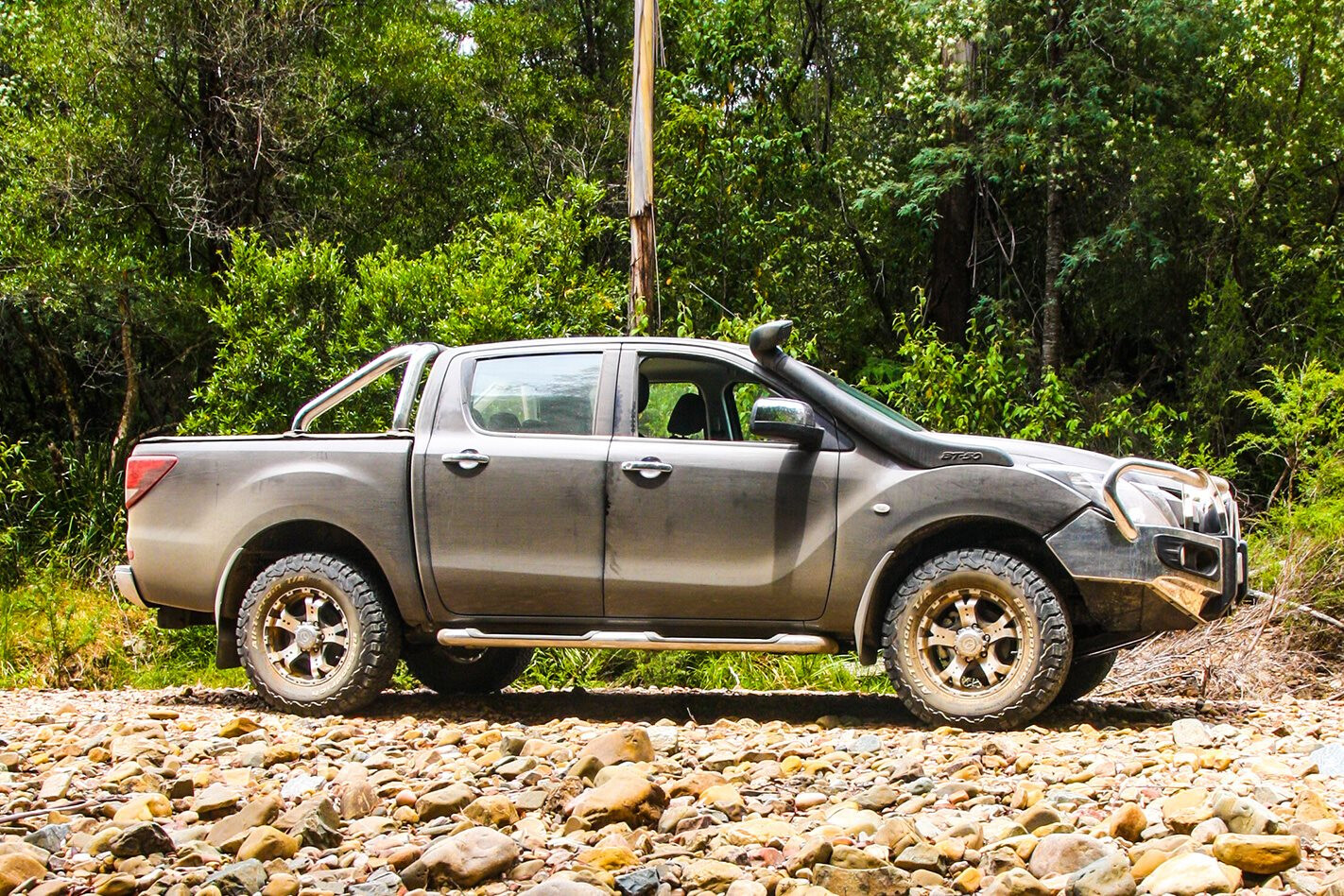
The end-of-year holiday period provided the perfect opportunity to put some kilometres on our BT-50, 4X4 Australia’s long-term press car.
As soon as we were dismissed from 4X4 headquarters, we made a beeline up the Newell Highway, headed for the Sunshine State. The loping nature of the relatively large 3.2-litre, five-cylinder diesel engine makes the BT a relaxed highway-mile eater. The gearing in the six-speed auto neatly matches the engine’s torque so that the transmission sits in top gear on the open road, without hunting between gears. This makes the Mazda a more comfortable consideration for long-distance drives, putting less stress on both man and machine.
Conversely, with the engine ticking along at 2000rpm at highway speeds, it sucks a bit more fuel than some of the newer utes, and the best we could get the average down to was 10.0L/100km on the blacktop. It’s worth mentioning at this point that the car is fitted with slightly taller-than-stock 265/70-17 all-terrain tyres and a bulbar, both of which affect fuel economy, compared to a standard car.
After a couple of thousand road miles, we left the blacktop for the dusty tracks of the New South Wales’ Snowies, and crossed the border back into Victoria, over the Alps. It’s always pleasing to drop the tyre pressures down for the steep off-road tracks of the High Country, and this adventure didn’t disappoint.
Steep rutted tracks posed no problem for the torquey BT, and when a bit of surety was needed for wet climbs, the rear locker was easily employed. The BF Goodrich KO2 A/Ts really came into their own in the High Country. Rocks, ruts, mud and dust were easily dispatched from the deep tread, and after clocking up close to 5000km, there were no signs of chipping or cuts in the tyres.
There were, however, a few little annoyances only noticeable after living with the BT for some time. First, there isn’t a lot of information available on the trip computer, and to scroll through the menu you need to reach through the steering wheel to push the button on the dash binnacle; a simple task like checking the outside temperature (when the menu is showing fuel consumption) means you have to reach through the wheel, instead of being able to simply push a button on the wheel.
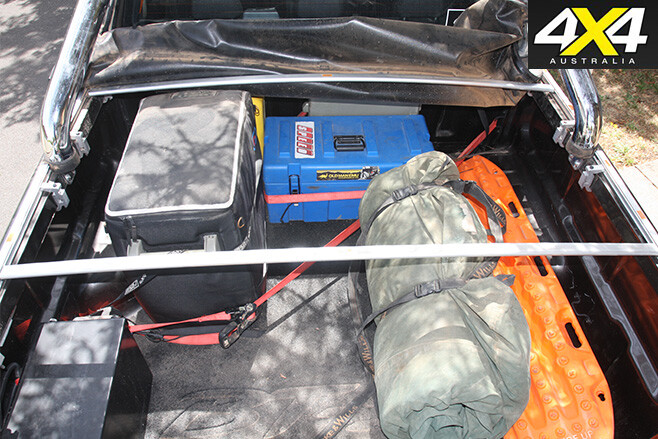
Also, there’s only one USB port in the front of the car and it’s in the glove box, meaning if you want to plug in your phone, you need to do it on that side of the car – you can’t do it from the driver’s seat.
A big annoyance – and this one gets me every time I drive the BT-50 – is that although Mazda did a bang-up job of redesigning the dash for the 2016 upgrade, introducing a nice, big AV screen in the middle of it, and a reversing camera (standard in the XTR-spec that we have), the two of them aren’t linked and the image from the camera appears on a tiny, glare-affected panel in the rear view mirror.
That means you need to use your hand to shield it from light whenever you are backing up. It’s stupid and annoying!
These are small blemishes on the BT-50’s otherwise polished performance, and they’re outweighed by the driveability, comfort and all-terrain ability of a great all-round package.
4×4 Shed Log 2: 2016 Mazda BT-50 XTR Total mileage: 10,575km Mileage this month: 5099km Average fuel consumption: 10.4L/100km
Update 2: Urban Living
Only after you’ve driven a car for some time do all the downsides become clear. But with the Mazda BT-50, the good still outweighs the bad
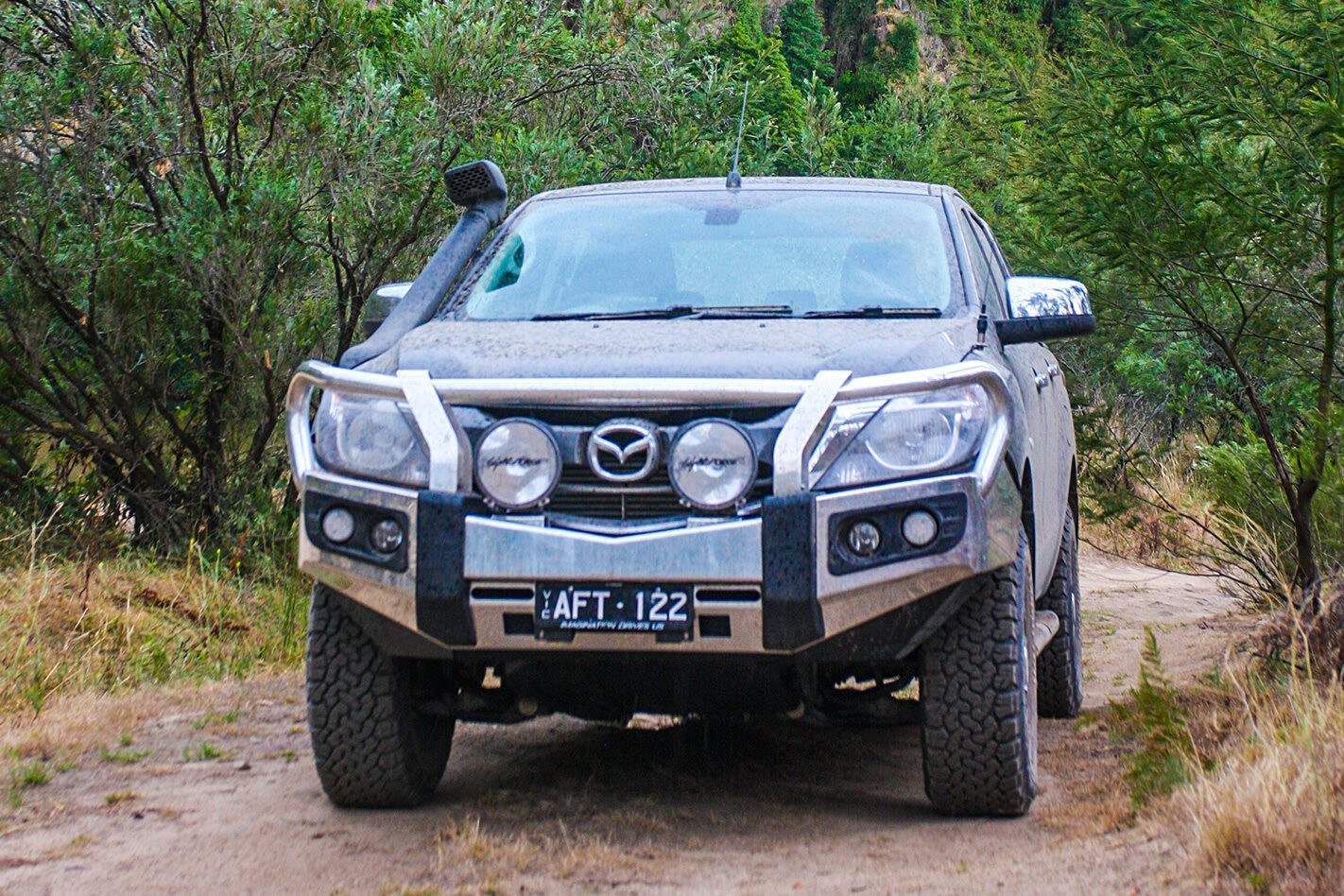
They say you’ll never know how many friends you have until you own a ute, a car trailer, or both.
We proved that theory when one of our associates at MOTOR magazine spotted our BT50 in the carpark at a time when he was moving house. The timing was right for us, as we had five wagons on test for this issue, and so the BT was available for furniture-shifting duties, a task it handled with ease.
We also used the time we had the wagons at hand to get a 10,000km service done on the BT50, a relatively basic, routine service.
We had one fault to ask the service department at Brighton Mazda to attend to – a niggling rattle from under the car that has been there since we took delivery of the vehicle. It is a tinny rattle that can be heard at idle from outside the car and sounds like it’s coming from an exhaust heat shield or something similar.
This seems likely after the trip the Mazda did in Central Australia before we got it. Despite the rattle being easily audible from outside the car, the technicians at Brighton were unable to find its cause.
Maybe times have changed, but when I worked in the workshop of a new car dealer, if a mechanic tried to send out a car with such a rattle, the foreman or road tester would have kicked his arse, whether the car owner had noted the problem or not.
Aside from these happenings, the BT has been serving commuter duty, which it has done without trouble or complaint. You just need to be wary of the big ute’s size when parking in suburbia, a task that isn’t helped by the fact the reversing camera image is in the rear-view mirror and not the in-dash screen.
While we’re mentioning the screen, it’s great for sat-nav on and off road but is almost impossible to see in daylight, requiring you to shield it by hand to get a handle on what’s on screen. I don’t know if it’s the material used for the screen or simply that the angle of it catches the sun, but it’s a crook design.
First world problems, I know. It’s lucky such problems are offset by the great size and performance of the BT.
4×4 Shed Log 3: 2016 Mazda BT-50 XTR Total mileage: 11,502km Mileage this month: 927km Average fuel consumption: 11.2L/100km
Update 3: Bright Additions
Our resident BT-50 scores some high-class driving lights from Lightforce.
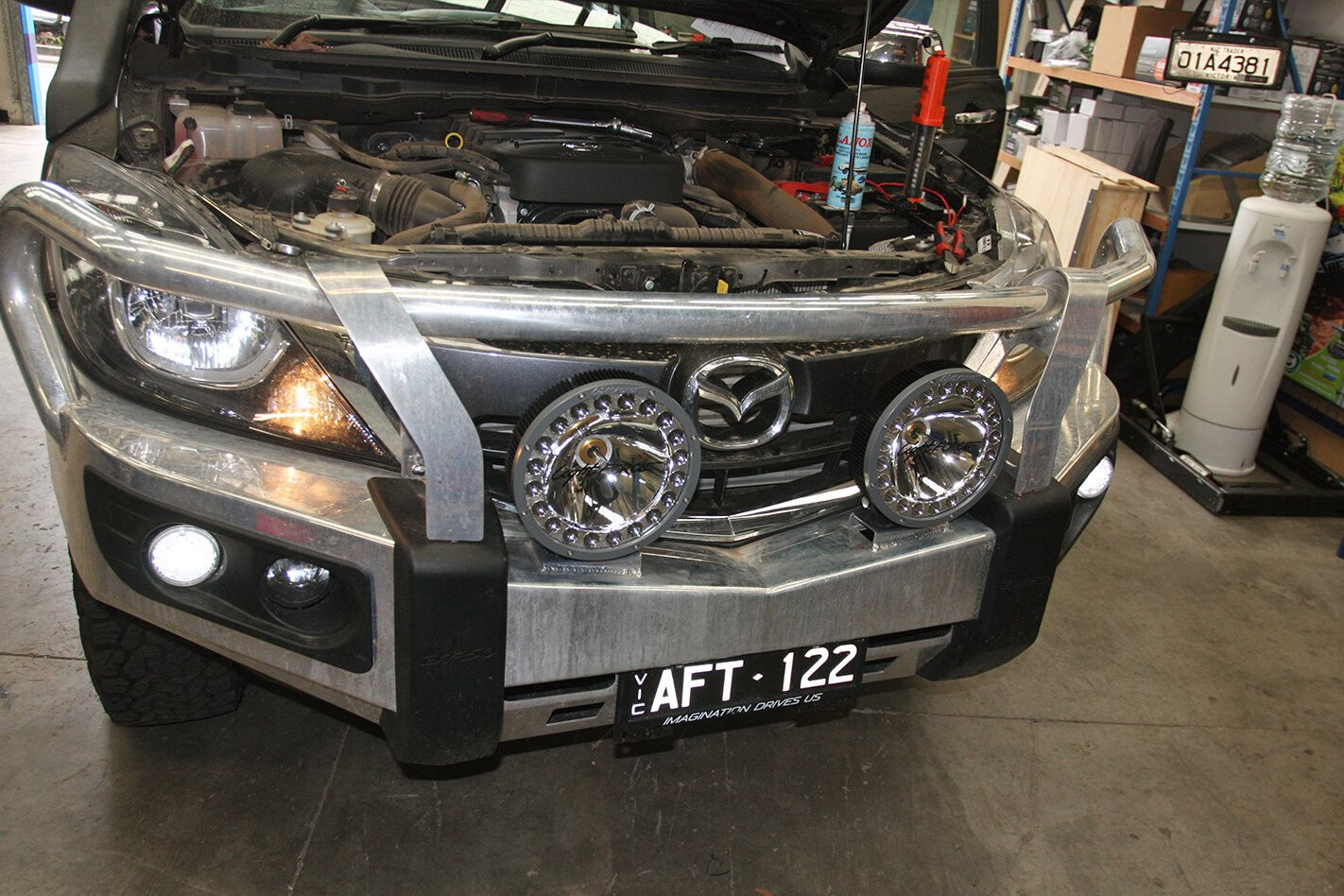
Our BT-50 has been out on loan again, this time with the crew from Trade-a-Boat magazine who had a fishing trip to some coastal location.
They only just got back, but they reported the Mazda towed the 2.5-tonne boat up through Gippsland with ease, in comfort and remained economical. If only the fishing was that good, hey guys? More on that next month.
Before the boaties took it away we couldn’t resist fitting a set of Lightforce’s new DL230HTX driving lights to the bullbar. The BT came with a set of Lightforce Genesis spotties, which are great lights.
Mazda should be commended for offering such top quality products as a genuine accessory. And it’s an Australian product, too! But these HTX lights are the next level up.
The HTX combines the broad beam lighting of an LED lightbar with the far-reaching beam of HID lights. The 20 LED chips are wrapped around the 70-watt HID light, so there’s no need to have both round lights plus a lightbar on the front of your car.
You can even run either the LEDs or the HIDs on their own, or switch them on together for the ultimate performance. Initial impressions are that the lights are amazing, but we’ll have a more extensive test of the Australian-made lights soon.
The lights were fitted by our good mate and local Lightforce distributor Phil Cochrane down at Ontrack Automotive in Ferntree Gully. Phil did the EFS suspension upgrade on our project HiLux give-away (March, 2016) and knows his stuff, so we had no qualms letting him loose on the Mazda BT-50. Fitting lights posed no challenge for him.
Around town the BT continues to be a great commuter. Ideal for chucking the BMX in the back to get away for rides, hitting the 4×4 tracks on quick weekend drives and just getting about the city. The versatility of a double-cab ute is unmatched and the Mazda, with its relatively big 3.2-litre diesel engine and six-speeed auto, provides a great balance of performance and economy.
4×4 Shed Log 4: 2016 Mazda BT-50 XTR Total mileage: 13,647km Mileage this month: 2145km Average fuel consumption: 10.9L/100km
Update 4: The Big Tow
The BT-50 has been pulling boats and lighting up the bush.
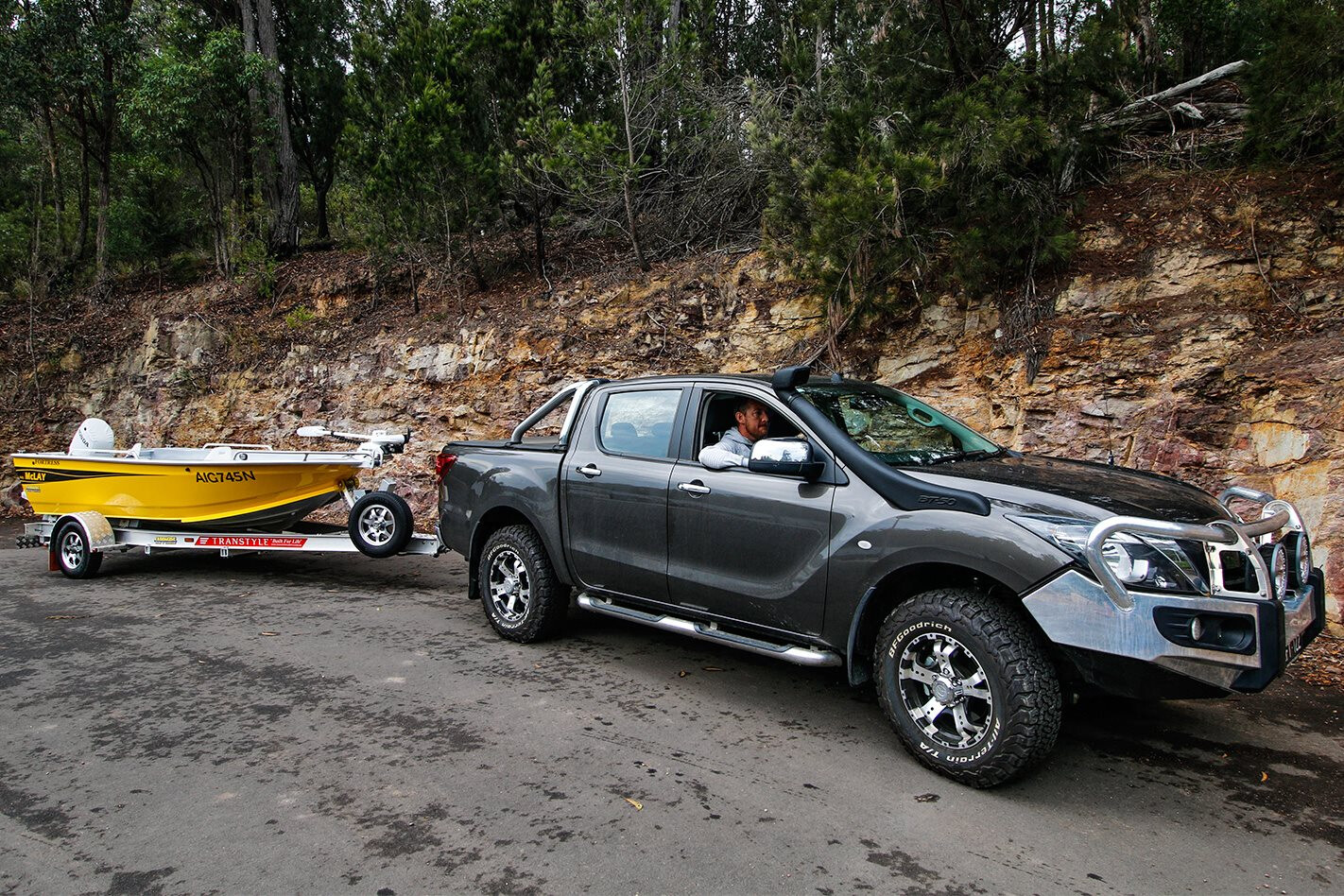
LAST month we mentioned the guys from Trade-a-Boat magazine borrowed our Mazda to pull some boats on a fishing trip, and they’ve since sent us some pics that show just what they were hauling.
No wonder they said it towed them with ease. The Mazda’s 3.2-litre five-cylinder diesel would have made light work of those little boats and probably could have pulled them both together without raising a sweat. All the same, it’s good to know that the boaties thought it a good thing for towing.
We also took the BT out for a night-run through Wombat and Lerderderg State Forests, with the crew from the Werribee District 4WD Club. We hit the tracks after a cracker meal at the Blackwood Hotel, and this gave us the chance to give the Lightforce HTX lights a burl.
The HTXs employ a HID spot beam and an LED broad beam, and we found the LEDs to be the real winners in these scrubby conditions. The light colour is easy on the eyes and provides nice definition to the areas around the front of the car.
On the highway, the HIDs punch out way ahead of the car and are better-suited to this sort of driving, but ours need to be adjusted to get better results. We didn’t have the right tools for the job at the time, so we’ll have to see to that later.
The Mazda again showed its ease of use on bush tracks, and we did most of them in high-range 4×4 to let the 3.2 just lope along at an easy pace. Low range and a bit more throttle were used a couple of times for the steeper stuff, but it was relatively easy going on this night. We passed on the more challenging tracks, as our stock-ride-height BT would have scraped to a stop in the axle-deep ruts, but otherwise it was never challenged for traction.
Our Mazda has HEMA maps installed to provide more details of the bush tracks in this area. This is an option on the BT-50 and one well worth the money if you like to get off the beaten track. As far as we know, Mazda is the only company that offers this great Australian mapping product.
Getting out with the Werribee District 4WD Club was a lot of fun and showed us another way that a vehicle like the BT-50 can be used to get out and enjoy the bush. It was as much a social night as anything, and the genuine-accessories Icom UHF fitted by Mazda was buzzing with chatter all night. Thanks to the Werribee District 4WD Club for the invite.
Following our comments last month about the rattle from under the BT, Mazda took the car away and replaced the muffler that had lose internals. Problem fixed. We don’t know why the dealer couldn’t have done that.
4×4 Shed Log 5: 2016 Mazda BT-50 XTR Total mileage: 14,984km Mileage this month: 1337km Average fuel consumption: 10.9L/100km
Update 5: Conclusion
Our six months with the BT-50 draws to a close, but are we sad to see it go?
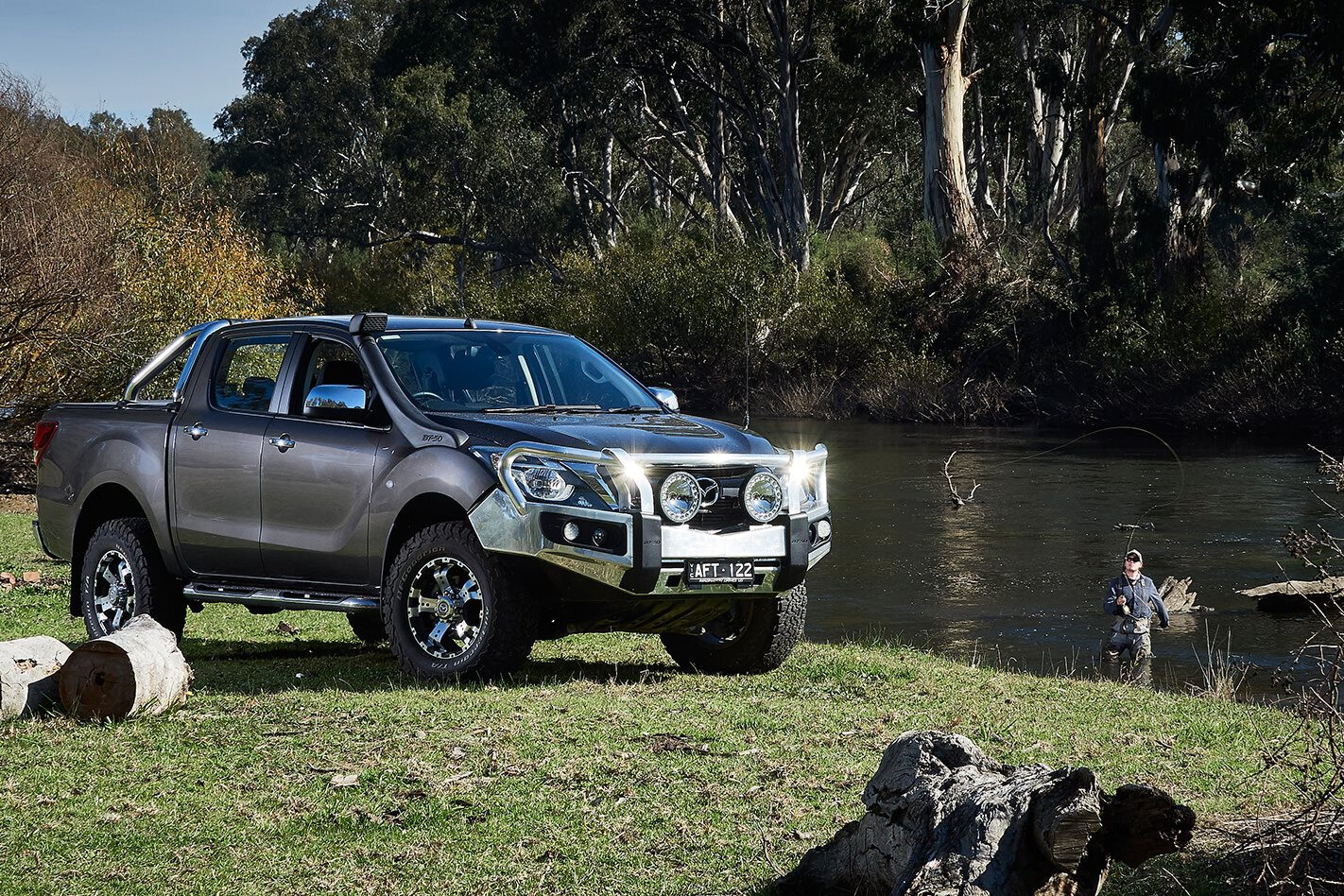
TIME flies when you’re having fun, and it’s been fun having the BT-50 here. Yep, its six months with us are up and it will be sad to see it go. The BT-50 has proven to be a versatile and practical vehicle for all sorts of motoring, and it has certainly lived up to its role as a dual-purpose 4×4.
The BT came to us fresh off the back of a trip to Coober Pedy and Oodnadatta, where former editor Marcus Craft put it through its paces on the rocky and dusty tracks out there. Mazda gave it a good tidy up before we picked it up in Melbourne, but when we dropped the spare tyre down to fit the BFGoodrich All Terrain KO2s, the gravel and red dust that dropped off with it revealed where the car had been.
The BFG KO2s were the only aftermarket item we needed to fit thanks to the crew at Mazda ticking off all the essentials from its factory accessories catalogue. This proved to be a real bonus, as the car came ready for action wherever we wanted to take it. The gear from Mazda was all top quality, including Lightforce Genesis driving lights, an Icom UHF radio, HEMA mapping on the sat-nav and the Redarc dual-battery system. All this gear proved invaluable out in the bush and, coming from reputable brands, we could be confident they wouldn’t let us down. Top marks to Mazda for offering such quality accessories.
With the BFGs on the BT, we took off from Melbourne for an interstate trip to Queensland using some out of the way backroads to break up the trip. The return was at a much more leisurely pace, as we beach-hopped down the coast as far as Newcastle and then cut for the Snowy Mountains to follow the Snowy River from its source to the coast.
We love the way the Mazda has a relaxed touring gait on the highway; the torquey 3.2-litre engine pokes along without raising a sweat and then hardens-up when on the steep slopes of the high country, which it handles with ease.
Since that trip the BT has done general day-to-day commuter duties, helped a mate move house, carried pushbikes to the tracks, day trips with 4×4 clubs, towed boats on fishing trips with our mates at Trade-a-Boat magazine and, most recently, snuck off for a day of fly-fishing with Mick and James from Mountain Fly, Victoria. The BT does all these things with ease, confidence and, most importantly, it has never let us down.
The only problem we had with the car was a rattle from the muffler, which was replaced by Mazda at service time and wasn’t a major issue.
As I said, I’ll be sad to see the BT go as it really showed the advantages of having a dual-cab 4×4 ute that’ll do just about anything you throw at it.
WHAT WE LOVED
- Big, spacious cabin with quality fit-and-finish
- Torquey engine that’s great on- and off-road.
- Quality aftermarket options from Mazda.
- Do-it-all ability.
- Rear-view camera image should come up in big dash screen.
- Dash menus not selectable from steering wheel.
- Missing voice command to utilise Bluetooth.
Sign-up here to get the best 4×4 stories of the week – FREE!
SECOND OPINION – WHEELS (By: Toby Hagon)
Introduction: Finke Finesse
Wheels’ BT-50 Finke race ute takes shape. But first it has a few domestic duties to take care of.
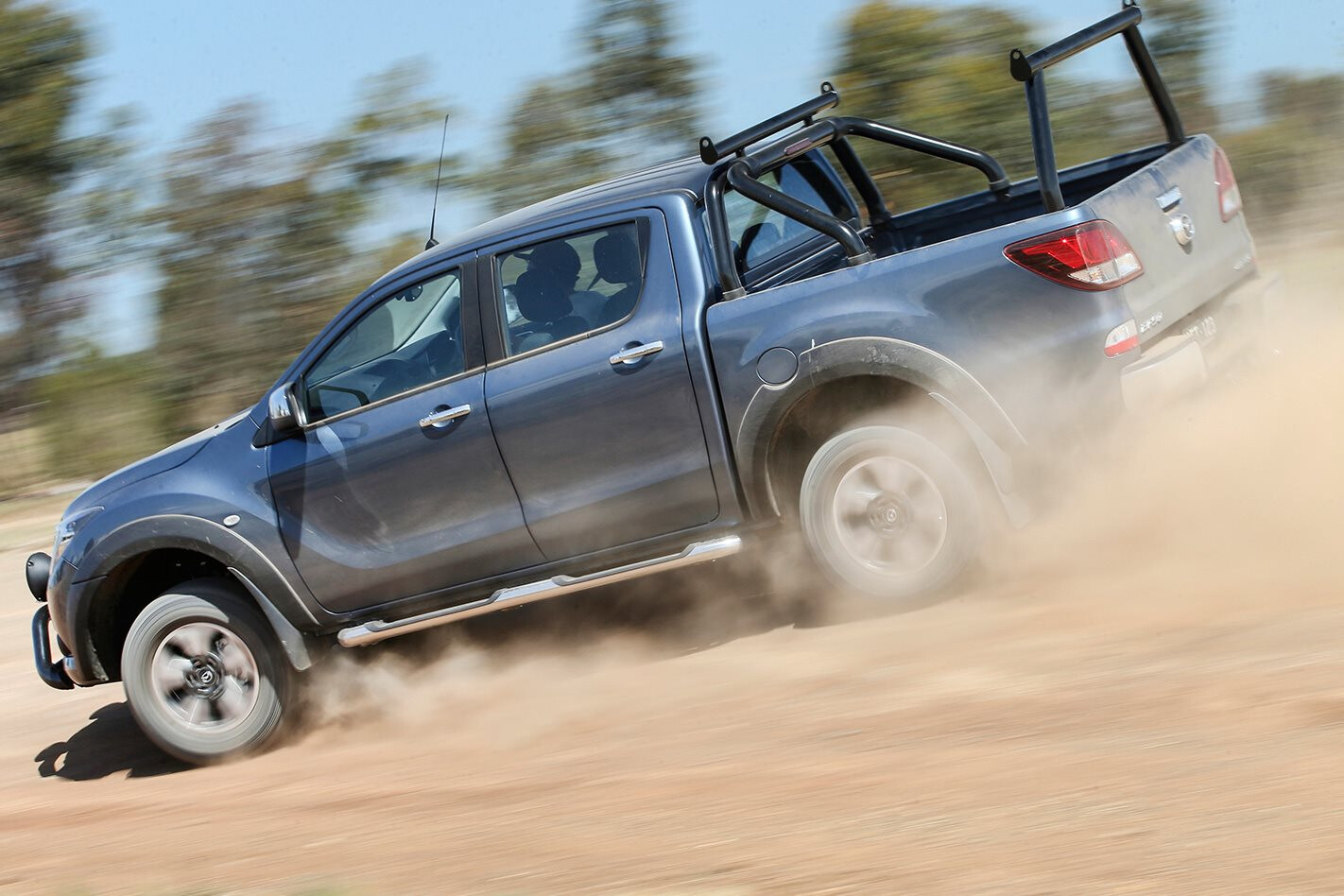
HERE’S something we’ve never done before at Wheels – lived with a dual-cab ute as a long-termer. Separate chassis, live rear axle and a workhorse diesel engine are the order of the day for our Mazda BT-50.
Truth is, though, it’s getting difficult to ignore the ute market. The vehicles once confined to farm paddocks or tradies’ driveways now account for almost one in six new-vehicle sales. That’s big business, and there’s been a big shift in the ute market’s landscape. A sizeable chunk of it is devoted to top-end utes where the price tag exceeds $60,000. And it’s the diesel dual-cab off-roaders leading the charge: 4×4 models outsell two-wheel drives by more than three to one.
Yet most people are using them as on-roaders, with only occasional off-road use.
And performance-focused utes are coming; AMG is set to tweak the upcoming Mercedes-Benz ute, Ford is planning a Ranger Raptor, Nissan is considering a Nismo Navara and Toyota is looking at a Hilux TRD. In the shorter term Volkswagen will bring V6 diesel performance back to the workhorse segment with an update to the Amarok arriving late in 2016.
Besides, the plan from the start of our few months with a BT-50 was to put it through more than any ute before it. As well as thousands of kilometres of suburban and country punishment – where we plan to push the BT-50 XTR to its limits – this is the car we’re taking in the punishing Finke Desert Race.
It’s claimed to be one of the most challenging off-road races in Australia. We’ll be entering the car in the Production 4WD class, where modifications are limited to suspension changes and engine tweaks. And, of course, safety systems and protection for mechanical components.
Our mods will be minimal. We’ll be getting some more serious shock absorbers to better deal with the jumps and corrugations so common on the Finke track, which is 230km long and heads south from Alice Springs to the Aboriginal community of Finke. The 3.2-litre five-cylinder turbo diesel engine will be unchanged and the only interior changes will be to meet the event regulations (that means we get to keep the factory air-conditioning – woohoo!).
But since January our racer-in-waiting has been put to work. It’s been all about making the best use of its design.
Our BT-50 arrived with some 7500km on the clock and was put straight to work on the school run. As with all utes, fitting a child seat takes some fancy finger work to attach the top tether point from the child seat to the anchor between the seat back and the rear of the cabin.
No complaints from the children once in place, though. Turns out they love utes, to the point where it took a while to convince my four-year-old that he could only play in the tray when it was parked.
Beach runs, too, are a snip, with boogie boards and sandy towels thrown straight in the tray. The occasional hose-out is all it needs to stay sparkling (well, as sparkling as I want it…).
And family bike rides are so much easier. All four bikes can fit in the back, with the ladder rack coming in handy for slinging the wheels of the bigger bikes over.
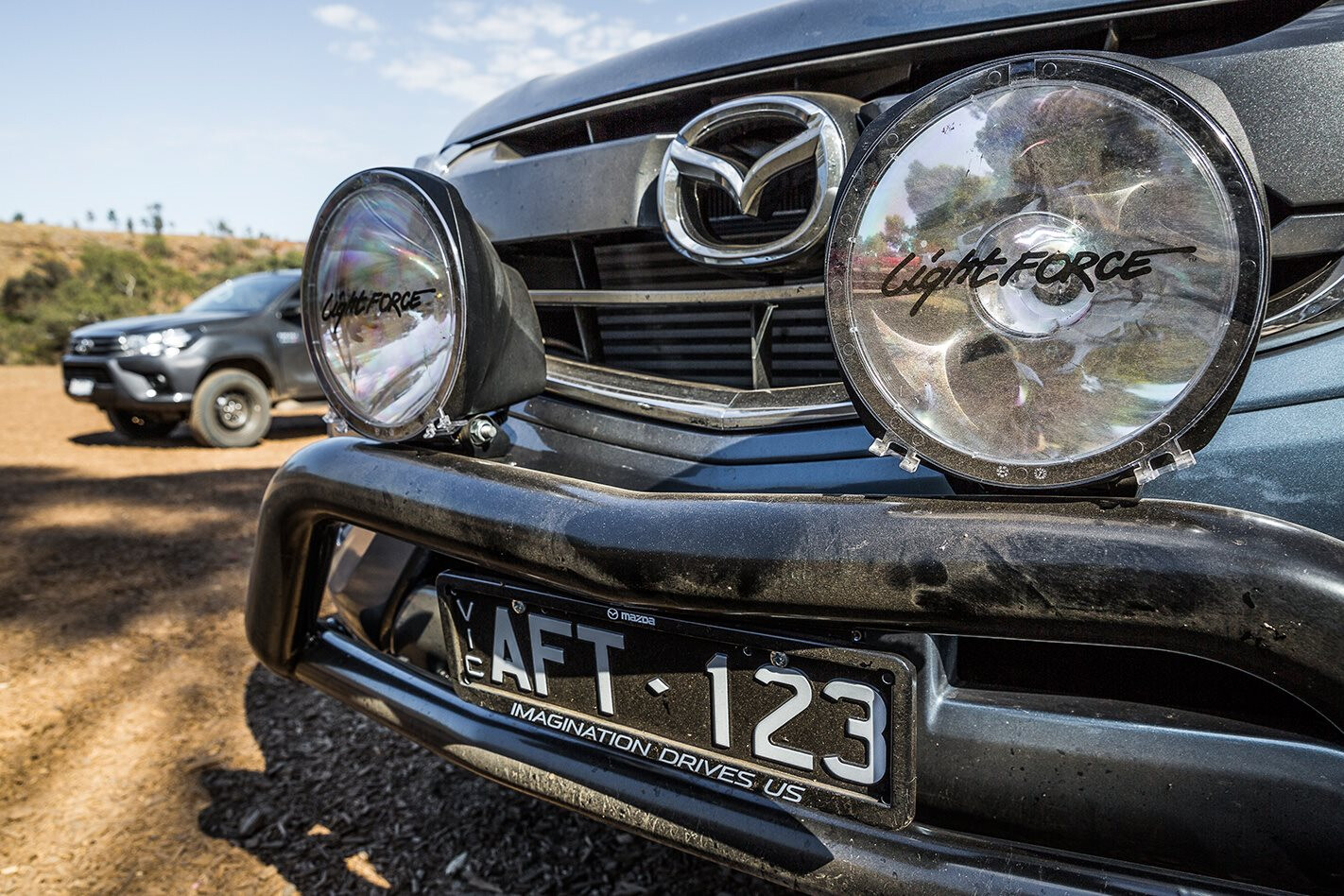
In its first couple of months, AFT 123 also headed on a country cruise. Again, it was gear in the back and a family of four on board for the 1100km round trip.
Fuel use early on is reasonable, at 9.6 litres per 100km – and most of the time it’s anything but babied. I figure if this thing is going to race we may as well get it used to the punishment. And with that sort of fuel use it means it’ll comfortably go the distance at Finke.
The extras
Our BT-50 has already had plenty of options thrown at it. The most obvious are the front nudge bar with driving lights (great for blaring idiots) and the ladder rack on the rear, which allows long items to be strung to the sports bar just behind the cabin; the lights and nudge bar will stay for our Finke adventure, but the ladder rack will be ditched. There are also dual 12-volt power sockets and a spongy tray liner to reduce damage when launching things in the back. And the near obligatory tow bar.
Mazda v Ford
The current shape BT-50 went on sale in 2011. It is produced in the same Thai factory as the Ford Ranger and shares many components with that car, including windows, the basic chassis and engine. However each has unique exterior bodywork, including the doors (often shared between models that otherwise share so much). An update in 2015 tried to straighten the toothy grin and make the tail less polarising, but it drives identically to that 2011 car (Mazda opted not to tweak the engine and dynamics, as Ford did with the Ranger).
Model range
Our XTR model sits in the middle of the BT-50 family and is one of the more popular models. There’s also a GT model above it that gets tinted windows, leather seats and an electrically operated driver’s seat. Sure, those extras would be great for on-road comfort, but they’re of little use on the Finke.
Mazda BT-50 XTR long-term details: Date acquired: February 2016 Price: $51,700 Mileage this month: 1380km @ 9.6L/100km Odometer: 8980km Overall: 1380km @ 9.6L/100km
Update 1: Conclusion
Toby Hagon continues his shakedown of the Team Wheels Finke Desert Race Mazda BT-50 XTR ute.
A couple of months in and I’m getting used to a ute. Being able to launch pretty much anything into the tray is a surprisingly big bonus. I’ve had everything from a pile of wood to mountain bikes and kids toys in the back of AFT 123, the Team Wheels car that will be taking part in the Finke Desert Race over the Queen’s birthday long weekend.
A hundred or so kilos in the back works surprisingly well, too. It helps settle the stiffness that can make for an otherwise jumpy ride on second-grade roads. That’s good news for our Finke challenge. The 230km course south of Alice Springs is known for its bumps and jumps, and because we’ll have extra gear on board – spare tyres, a basic tool kit and the weight of a roll cage – it’s comforting to know the suspension is up to some punishment.
I’ve also been keeping an eye on traction when accelerating. On a slippery surface – fair chance the Finke’s red dirt will be slippery – the inside rear can try to wheelspin, waking the traction control. So four-wheel drive will be the pick for the lumps and bumps of the Finke course.
Not that I’m getting too used to AFT 123. My car was also summoned back from me to get prepped for the Big Race. A roll cage, race seats and stickers are the main changes. Plus we also need a few weeks to truck it to Alice Springs, along with our fleet of support cars.
But there was another BT-50 in the wings: AFT 124. It misses out on some of the previous car’s extras – including the nudge bar – but picks up the rolling hard canopy. It’s a fancy way to cover the ute tray and looks the business, although it shortens the tray by about a foot.
That’s enough to make it more difficult to fit in a 29-inch mountain bike, something my previous BT had been subjected to plenty of times. Still, some careful negotiation of the front wheel and it slots in no probs.
Under the bonnet, the 3.2-litre five-cylinder turbo diesel is as grunty as ever, something that comes in handy for shifting what is a sizeable machine. Even better is that performance barely changes once you load it up with people and some gear.
Perfect for off-road racing! We also don’t have to worry about fuel use; the BT-50’s claimed average fuel use is 9.2 litres per 100km, and I’ve been getting close to that – albeit with a decent country cruise as part of the driving mix. Even when thrashing it, I reckon we’ll use something like 12 or 13L/100km, which bodes well for the Finke challenge (the 80-litre fuel tank will comfortably do the 226km distance each day).
As for the transmission, the six-speed auto is an honest unit. It’s ironic that Mazda’s least sporty model gets the best set up for selecting the Sports mode on the transmissions. Whereas the MX-5, Mazda 6 and others call on you to flick the sports button south of the gear selector, the BT-50 is a simple push of the gear lever towards the driver. Blame that on the Ford influence.
The BT-50 has lost me on one count, though; its USB plug is buried in the glovebox, making it difficult to access on the run. I’m also not sold on the reversing camera, which displays on a small screen within the rear vision mirror rather than the 7.8-inch screen in the dashboard.
The rest of the interior is simple but well done. The circular climate control knobs, for example, are easy to operate on the run, and there’s loads of storage, including a pod atop the dash and underseat storage in the rear.
Haven’t we met before?
There’s no hiding the Ford roots of the BT-50. In the corner of each window is a FoMoCo stamp, signifying it’s a product of the Ford Motor Company. The same stamp is on the rear leaf springs, too. And when you pop the bonnet, while it’s the stylised Mazda M logo that’s prominent in the centre of the engine cover, you don’t have to look too far to spot FoMoCo stamps on pipes and other components.
That’s because the BT-50 was developed in conjunction with the Ford Ranger and comes out of Ford’s Thai factory.
Yet despite the major component sharing – something increasingly common across brands and models these days – it’s been done cleverly enough to ensure each has its own identity. The interiors, for example, share some design themes, but are presented differently. And the exterior panels are unique to each model.
Mazda BT-50 XTR long-term details: Date acquired: February 2016 Price: $51,700 Mileage this month: 510km @ 9.8L/100km Odometer: 8980km (for AFT 123), 6385km (for AFT 124) Overall: 1890km @ 9.7L/100km
Follow the journey of Wheels’ BT-50 XTR at the 2016 Finke Desert Race – Prepping the BT-50 – All Finked out