IT’S GETTING close to the end of the financial year, so it’s time to take advantage of the Australian Tax Office’s generous small business $20,000 instant asset tax write-off to kit out your 4×4 ute.
For tradies and small business owners (those who earn up to $10 million) who have registered a vehicle through their business, this offer from the tax man means you can immediately deduct the cost of any ‘asset’ (up to $20K in value) fitted to your vehicle, for your 2017 tax return. This is achieved by deducting what is classified as the ‘business’ portion of your purchase (what percentage of the asset’s use is business-oriented).
The item in question can be new or second-hand and must be purchased before July 1, 2017. And, you can write off as many individual items (up to $20K value each) as you can afford. This means that ‘dream tourer’ may be closer to reality than you think – as long as your pockets are deep enough, of course, and you don’t tell porkies to your accountant or the ATO regarding how much ‘work use’ the equipment in question is subjected to.
Outback Accessories: Industry Insider
For us, we’d start at the front and work back, kicking off with comprehensive protective bar-work (bullbar, side protection, sidesteps and rails), an electric winch, a dual-battery kit (for those worksite power requirements, as well as touring duties), and a set of spotties mounted on the bar. The most obvious (and popular) asset for any 4×4 ute is a locking canopy and roof racks, plus a cargo drawer system.
For those who need an open tray for work purposes, a soft or hardtop tonneau cover is the go; a number of the hardtop variants have a provision for fitment of luggage pods, bike racks, etc., so you can still take advantage of all that rear space for the family off-road camping trips without compromising your rig’s work capacity.
Speaking of capacity, an upgraded suspension system is another must, as is a new towbar and a fresh set of tyres if your current rubber is looking worn. Even accessories such as seat covers are claimable as a business asset.
This all sounds awesome, but it’s important to remember you still do have to pay for your goods initially, so make sure you consult your accountant before stumping up a pile of cash on any accessory. After that, it’s best to adhere to the old adage that honesty is the best policy when it comes to tax time, and make sure you place an accurate percentage value on each of your shiny new assets in regards to how much time they are used in a ‘work capacity’ and how much is leisure. If you do it properly, there’s plenty of scope to make a decent saving – or at the least, a significant cut to your annual tax bill – while both ensuring your vehicle is not only fit for purpose in the work place, but is ready to roll when it comes time to escape the five-day grind of work.
AS YOU cruise up Tanami Road on the way to the Kimberley from Alice Springs, or vice versa, it’s easy to miss the non-descript road with its desultory signpost pointing westward.
On this latest trip, after two months in the Kimberley mapping and gathering information for the next edition of Hema Maps’ Kimberley guide, we were heading south along Tanami Road, which was just a little short of a smooth bitumen highway. We fuelled up at Yuendumu and grabbed some supplies in the relatively new and well-stocked shop run by Outback Stores, and then found the sign-posted road to the Nyirripi (on some maps it’s spelt Nirrippi) Aboriginal Community.
Just south along this road there’s a lengthy detour that takes you past the borefield that supplies Yuendumu with fresh water, before joining with the original route once more. Turning onto the road sign-posted ‘Papunya’ our route swung directly south, with the tall, distinctive peak of Central Mt Wedge acting like a magnetic beacon drawing us towards it.
Ngukurr and The Ruin City, Northern Territory
This route – as do all the roads and tracks nearby – passes through the Southern Tanami Indigenous Protected Area (IPA), which was declared in 2012 and covers more than 10 million hectares of desert country. The IPA stretches from about 300km north of Yuendumu to south of Nyirripi; then westward from east of Yuendumu to the NT/WA border. Monitored and managed by the Warlpiri Rangers, it is the largest protected area in Australia and is an important home to endangered native birds and animals, including the bilby.
The Newhaven Wildlife Sanctuary – our destination – sprawls across more than 260,000ha of arid but diverse landscapes and was, up until the year 2000, a working cattle property, albeit conservatively managed by the owners who had it under their stewardship for more than 40 years. Procured by Birdlife Australia, it is now jointly managed by them and the Australian Wildlife Conservancy (AWC).
How to plan food for a 4×4 trip
The property is currently the focus of the planet’s largest feral cat eradication project, where the first stage will see a 15,000ha fenced area established to create refuge for wild populations of some of our country’s most threatened species including the mala (rufous hare-wallaby), the golden bandicoot and at least eight other rare and endangered species. In all, the property has already recorded 171 bird species, 74 reptiles, 21 mammal species and six amphibians – and with the amount of water in recent times, you might expect to find a few more finny inhabitants.
For outback travellers the sanctuary offers pleasant camping, respite from the stresses of the modern world, fabulous birdwatching, diverse wildlife, magical walking trails and enjoyable 4WD tracks. Two short walks begin close to the camping area – one through mulga woodland and the other to the top of Lookout Hill. The peak provides great views over the surrounding country, and on a clear day you can see the Siddeley Ranges located some 37km away to the east, and Mt Liebig positioned 65km away to the south in the Amunurunga Range.
There are six self-drive routes on the property, and while we were there we enjoyed most of them. The Lakes Tour is a 50km round trip that takes in some of the many small lakes in the region and culminates in a short walk over an ephemeral creek to the top of a dune overlooking the vast expanse of the biggest lake in the area, Lake Bennett. There was so much water even the smaller lakes we passed had water in them – water was even flowing across the track at a couple of points. The Dunes Tour is a 40km return trip that takes you south from the camping area, through a patch of red dune country and a scattered forest of delightful desert oaks, before finishing on the eastern edge of Lake Bennett.
The country in the Home Range, known to Europeans as Potato Gorge, is also enjoyable. The drive takes you along the edge of the range and then deep into its rocky heart, where a short walking trail leads up into an ever-narrowing gorge. With water around there were a lot of birds when we visited, including zebra finches and spinifex pigeons.
How to keep safe when stranded in the outback
Longer drives take you along the Yaripilangu Range, the Siddeley Range, and west to Mount Gurner and Dingo Hill. Getting out of the vehicle and taking a walk at any or all of these places will enhance the experience, but remember to protect yourself from the sun and take water with you.
On our most recent trip we spent four days at Newhaven and could have easily stayed for longer. You’ll probably feel the same.
TRAVEL PLANNER
NEWHAVEN Sanctuary is 355km from Alice Springs, most of the way being on dirt roads which are sometimes very rough.
Unpowered campsites are available, with showers, toilet facilities and drinking water. Camping is only available between April and September, and costs are very reasonable. Bookings are essential: Phone (08) 8964 6000.
For more details: www.australianwildlife.org/sanctuaries/newhaven-sanctuary.aspx
EAGLE-EYED readers may have noticed my Toyota Landcruiser 60 has been absent from the mag over the last few months. There’s a good reason for that: I cut it in half.
But it’s not my fault. Over the last few months it’s had a few re-occurring mechanical gremlins anyone stupid enough to try and daily drive an old 4WD would be more than familiar with. It’d run perfectly for weeks on end then leave me stranded in the rain while I flailed spanners and pliers trying to work out why it wasn’t getting fuel.
It got to the point I figured I’d roll the dice and see if the banks were foolish enough to let me drive one of their new cars and pretend I owned it. I’ve got the financial sensibility of a drug addict in Colombia, so I rightfully expected a polite letter telling me to stop bothering them. A mate even asked what I’d do with the 60 if I got approved, and I jokingly told him I might as well cut it in half and go racing. It turns out the banks are as bad with money as I am, because they handed over the keys – and, sure enough, my mate came knocking, grinder in hand.
I’ve always accepted there’s at least a few screw loose inside my head, and the idea of racing for a week in the desert at something like The Outback Challenge, carrying all my spare parts and camping kit, sounded like the exact kind of adventure I’d been craving. I’ve also been eyeing off a few of the new go-fast rock crawling races like the Aust4 series. So, I’d need a versatile rig.
Now, the wagon body would probably resemble a dropped meat pie about half a lap in to the race, and it offered poor storage options for the gear I’d need to carry. So the decision was made to turn the 60 into a space cab and stretch the rear axle back a foot or so with a heap of tube work holding the fuel cell, spare tyre, space cases and shocks.
The lethargic 3F engine will soon be up on Gumtree, and there’s an LS1 sitting in my workshop about to go under the bonnet. To make sure the driveline will be up to the task, I’ve ticked the box for a huge 4L80E gearbox normally found in Chevy Suburbans. This’ll be backed up by a Chevy NP205 transfer case, a huge cast iron beast from a mid-80s Blazer.
Most of the work so far has been tracking down info, planning suspension geometry, and studying rule books for loopholes I probably shouldn’t publicly admit to. With the interior stripped and the back wall out, the next step is to start building the roll-cage, which will allow me to start mounting some of the expensive parts sitting under my desk.
Hopefully the neighbours will stop giving me dirty looks and the poor old Cruiser can start looking less like a pile of junk in my yard and more like a race-ready 4×4.
All that’s left is everything.
1: Is it fit for purpose? THE first thing any prospective buyer needs to do is nut out exactly what it is they want from their vehicle.
Is it going to be a weekend escape machine or a long-distance remote tourer? Will it be your family’s only mode of transport, or will you have a second vehicle for around-town duties?
If it’s going to be for weekends only, then a mid-sizer may suffice. If you’re aiming for more time away, then a larger wagon may be the obvious choice. If the vehicle is for both in-town and out-of-town duties, then other factors come into play. For example, older 4x4s (Patrol, 80 Series, Defender, Troopy) are more cumbersome in urban scenarios thanks to their live axle set-ups and tall bodies. It’s all about compromise, so compare how much time you’ll enjoy the off-road capabilities against its barge-like turning circles and too-tall rooflines. Of course, if the vehicle is your second, then you’d be hard-pressed to beat a kitted-out Troopy or Defender as a purpose-built tourer.
Other options to consider are fuel and transmission options, dealer support networks, and tyre/wheel combinations.
Once your preferences are finalised, you’ll have firm parameters in which to conduct your search for the perfect rig.
2: Is it within your budget? EVERY buying decision should boil down to whether you have enough money, so stick to a budget that covers everything from the initial purchase price through to rego/ownership transfer. Also allow for vehicle insurance, service costs including major/milestone services (some brands are notably more expensive to service), the vehicle’s age, and how soon you may need to replace end-of-life parts, plus any accessories you’re keen to fit to your new rig.
The next step is to start researching prices, and there are a number of second-hand car-sale websites to check the pricing variation of your choice. It’s also a good chance to suss out the kilometres on said vehicles. A vehicle with low mileage is but one factor in a vehicle’s sales appeal (service history, overall condition). Still, it provides a guideline in regards to what to offer/expect to pay.
How to change your Differentials oil
When it comes to the asking price, expect a discrepancy between dealer and private sellers. There are pros and cons to each. With private sales, you can quiz the seller on what they did in terms of accessories and servicing, and, if they’re proud owners, they’ll have service records and receipts for any accessories. However, you don’t get the assurance of any warranty – something used car dealers have, to an extent. In most states, if someone buys a second-hand vehicle from a dealer they receive a statutory warranty limited to three months or 5000km of driving, after purchase. In NSW, VIC and WA, these only apply to vehicles less than 10 years old and have below 160,000km on the odometer. Other states differ slightly in the limits they impose, and you must read the fine print to see what is and what isn’t covered in regards to vehicle component replacement.
One last tip: just because a vehicle has accessories fitted to it, doesn’t mean you should pay a premium. These accessories have been fitted because the owner has used them in the bush, which means the vehicle has – potentially – tackled some tough stuff off-road. We’d happily pay a bit more for a city-based near-stocker every time, as there’s usually less wear and tear on components. Plus, if you get it at the right price and have an accessories budget (we’d advise strongly you do), then you have a blank canvas on which to add specific accessories.
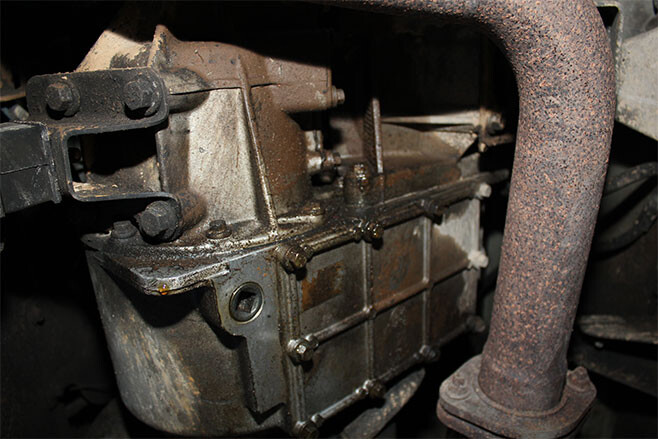
Rear axles can weaken and break at the splines.
3: Decide what fuel you want. DIESEL-powered 4x4s are popular choices for Aussie 4x4ers due to increased touring range and the fact diesel fuel is more readily available in remote communities. However, a petrol-powered 4×4 is nearly always cheaper (sometimes significantly, depending on brand and model) than its diesel equivalent, and its on-road performance will be far livelier.
If the intended purpose for the vehicle is for occasional weekend jaunts close to home, then a petrol-powered 4×4 is an excellent option. If there’s a $5K or more difference between a petrol vehicle and its diesel equivalent, that saving buys a lot of fuel in the long run. Alternatively, that difference in dosh can be used to pay for a few more essential accessories to fit to your rig.
Roothy explains how diesel engines work
For long-distance tourers, the case for diesel increases significantly. The additional touring range offered by the more economical diesel engine is the biggest factor. For example, sand driving will see a petrol engine’s consumption ramp up significantly in comparison to a diesel that utilises its abundant low-end torque. Plus, unless you are going somewhere extremely remote, you’re far less likely to need to carry extra fuel in a diesel.
Servicing costs between the two fuels are close to on par these days. Modern common-rail injected diesels require fewer services per year than the ‘old’ mechanical injected jobbies that (generally) need a service every 5000km. However, in the case of the common rail-injected donks, this increased efficiency is accompanied by higher complexity of engineering. As a result, if something goes bang (injectors, for example), you’ll be up for a slab of dosh to get it fixed. This doesn’t mean petrol engines are much cheaper, as any modern engine is expensive to repair.
4: Research each and every vehicle. AS MUCH as we may all like the ‘look’ of a certain vehicle, or the history or ethos of a particular brand, your choice has to be all about practicality and buying the most reliable, fit-for-purpose vehicle you can afford.
Research your vehicle by trawling through past issues of 4X4 Australia for drive tests, comparisons and long-term reviews. Also spend time researching accessories available for your vehicle. Popular models will all have a number of accessories available. If you plan to build a dedicated tourer, then the more accessory options (and their ease of availability) the better.
The myriad brand-based online owners’ forums are also handy. Most members are incredibly passionate about their vehicles, but, more importantly, have loads of experience in regards to the vehicle’s quirks, costs of repairs and optimal accessories.
Outback Accessories: Industry Insider
By far the best way to research a used 4×4 is to consult the mechanics who specialise in servicing, modifying and maintaining off-road vehicles – in particular, experts in specific brands. Putting your potential purchase up on a hoist for a thorough mechanical inspection is the smartest money you will spend. The cost of a full mechanical check is not high, and the assurances make it brilliant bang for your buck. If anything looks like needing replacement or repair, you can look elsewhere or negotiate with the seller on price.
A full service history should be high on your vehicle-history checklist. Knowing you’re spending money on a well-serviced vehicle is a much more pleasant experience than taking a punt on something. If possible, on top of a regular service history, it can be worth holding out for a vehicle that’s had only a couple of owners.
5: Kit it out with aftermarket equipment. ONCE the rig is in your driveway, the final step is the most enjoyable: kitting it out for off-road adventure. Have a separate budget for future mods/accessories, as off-road accessories are, in general, not cheap. We’re incredibly lucky here in Oz to have some of the world’s best aftermarket manufacturers and suppliers. It can often take as long to nut out what gear to fit to your rig as it did to research and buy the vehicle itself, but it is way more fun!
How to choose the right aftermarket wheels for your 4×4
THE TOORAK TRACTOR
WHEN Editor Matt asked me where to take a Discovery for as pre-purchase inspection, I immediately replied with The Toorak Tractor – an independent Land Rover Specialist – in Melbourne’s southeast suburb of Braeside.
The company’s founder, Adrian Gamble, is a mechanic of note who crewed for many years in race teams including Allan Grice in Europe.
One of Adrian’s former long-serving staff members, David Griffin, has returned to take over the reins. He took my new 2003 Land Rover Discovery TD5 for a test drive, checking all the systems and controls. He then took it into the workshop for a thorough check inside and out, before raising it on the hoist.
Land Rover Discovery History (1989-2014)
Overall, the Discovery was very clean for the age and kilometres covered. A few items were missing from the tool kit, and the brakes pads and rotors will be due for replacement in 10,000km. A replacement tip on the exhaust was noted and, upon further inspection, it was evident that the rear bumper had been impacted and the tail pipe had been repaired. The Discovery was given the tick of approval.
Thanks to David and Adrian for the inspection.
CONTACT The Toorak Tractor 30 Tarnard Dr, Braeside VIC 3195 (03) 9587 2866
THE 2017 ARB Eldee Easter Event has been run and won, with team Panasiuk taking top honours for the fourth year in a row. A seasoned campaigner, James Panasiuk just loves bringing his family along to Eldee Station each Easter.
“It’s a great family event,” he said. “Dad has fun, and the wife and kids have fun, too! This year’s event has a relaxed feel about it and it is very friendly… everyone makes you feel welcome.
“The event itself is awesome! I like it how they changed it a little bit [from previous years], and running some of the stages twice was great; you could almost recce on your first run and really go for it on the second,” enthused James, who was running a Mitsubishi NP Pajero.
There were 22 teams competing in 2017 and of those, 21 made it through to the end of the final stage with no serious mechanical issues. The one DNF was Team Popper, with driver Wayne damaging the bullbar on his dad’s Toyota Prado after completing just three driving stages. Father Ron Popper wasn’t too upset by the incident, commenting on how much fun he was having as a spectator. “Everyone’s having a ball,” he said. “The people, it’s just great. Everyone’s friendly and it’s great to be around like-minded people”.
EASTER SATURDAY
THERE was a variety of challenging driving stages in 2017, and on the morning of Day 1 the teams competed on several courses set up in the soft sands of Eldee’s dry creek bed, including the ARB Mini Dakar, the Spotters Blind Man’s Run, the Cooper Tires Motorkhana, the Redarc Back and Forth, and the RFI Paddy Melon Challenge.
The ARB Mini Dakar consisted of a short, bunted course that ran across, in and out of the creek bed. The pairing of Matt and Renee Burns and their kids Harry (9) and Chayse (4) posted the fastest time on the stage in their NOTNSN (get it?) Ford Maverick. Despite this being their first time competing in the Easter Challenge, this wasn’t their first visit to Eldee – the Horsham couple got married at Eldee several years ago.
4X4 Australia to participate in ARB’s off-road icons trip
Taking the honours in the Spotters Blind Man’s Run was the pairing of Craig and Sarah Pender, competing in a Land Rover Defender with their kids Ebony (11), Jorja (8) and Hunter (6). The stage required drivers to be blindfolded, while co-drivers were charged with navigating them through a tricky, bunted course.
Despite a relatively low score on the Spotters Blind Man’s Run, Kurt and Dior Johnston, competing in a 100 Series Land Cruiser, could hardly stop laughing after their drive through the Blind Man’s Run. “We’re usually hopeless at this one,” said Dior. “But this year we were pretty good. We didn’t even argue!” Their kids Tempe (6) and Seeley (4) didn’t look so convinced.
The Cooper Tires Motorkhana was a quick run through a sandy course, and again Matt and Renee Burns posted the fastest time. Ash and Maree Berry, with son Samuel (11), came home in second in their Toyota 100 Series Land Cruiser, followed by Matt and Rhianna Sheridan in their 76 Series Cruiser, with kids Bailey (10) and Darcy (7) in tow.
The Redarc Back and Forth tested teams’ abilities to reverse into a small box, and it was taken out by the father and son pairing of David and Chris Skinner, who had made the journey to Eldee from Aldinga Beach in South Australia in a Toyota 4Runner. Their mission for the weekend was to beat their mate Jamie [Panasiuk]. “At least try to beat Jamie,” laughed the pair.
ARB Off-Road Icons trip: Part 1
It was Jamie Panasiuk, however, who triumphed in the RFI Paddy Melon Challenge, his wife expertly placing the small fruits atop poles around the course, before retrieving them and throwing them into a bucket at the finish line from the passenger window of the family’s NP Pajero.
Proving that consistency is the key to success in any off-road event, James Panasiuk and family took out two of the three Saturday afternoon stages as well (the ARB Broken Hill Swag Roll and Setup, and the Hema Outback Navigation Challenge), while placing second in the other (the Mannell Motors Stump Up).
The ARB Broken Hill Swag Roll and Setup required two members from each team to set up an ARB swag, jump in, get out and roll it up again, all while being cheered on by their families, sledged by their competitors and shouted at by an extremely vocal crowd of onlookers.
The Hema Outback Navigation Challenge required teams to navigate to a series of checkpoints around Eldee Station and find clues to crack a secret code. Bonus points were awarded for grabbing a fun family selfie at the Eldee sign at the entrance to the property.
The Mannell Motors Stump Up was a test of driving skill that required drivers to place a front tyre atop a post and then stop the vehicle, before backing off and doing the same with the opposite front wheel.
ARB Off-Road Icons trip: Part 2
At the end of the day’s stages, Eldee’s Stephen Schmidt led competitors across the Mundi Mundi Plains and up a challenging rocky climb, high into the Barrier Ranges. Overlooking the station below them, competitors and their families mingled in a relaxed atmosphere, feasting on a tasty barbecue dinner while the sun dropped below the western horizon to put on a spectacular light show.
EASTER SUNDAY
EASTER Sunday kicked off with the Eldee Station Easter Egg Hunt, ensuring all the kids got their fill of chocolate first thing in the morning before they were back in their parents’ 4WDs, taking on more timed driving stages including the ARB Penrith Sheepyard Shenanigans and the Oricom All Terrain Challenge.
Two vehicles at a time tackled the ARB Penrith Sheepyard Challenge, racing through parallel courses within Eldee’s sheepyards, with a series of gates that had to be opened and closed by the navigators. This event not only tested the skills of the drivers, but also the stamina of the navigators, all while being shouted at by the kids from within their vehicles and fellow competitors lining the course. The Cobar pairing of Luke Taylor and Sandy Wildman, with kids Zoe (10) and Summah (6), took out the stage in their Nissan Y62 Patrol; this was their third appearance at the ARB Eldee Easter Event and they commented that it had an even friendlier and more relaxed feel to it than in previous years.
The Oricom All Terrain Challenge was the event’s final timed driving stage, and it involved competitors driving through Eldee’s creek, up a rocky track, turning around and returning to the start point. The Panasiuk team fittingly took out this final stage on their way to another well-deserved event victory.
Before the prize presentations on Sunday afternoon, there were still a couple of very important activities. The kids burnt off the morning’s chocolate calories in a jumping castle, before taking on the challenging Hobby HQ Remote Control Car Mini Rally. They then had a crack at the Shimano Sharp Shooter casting event, the prize for which was a brand new ARB 60L Fridge Freezer.
Photographer Michael Ellem from Offroad Images had earlier enlisted the services of several junior track builders to help him create a challenging RC course, over which competitors (ranging in age from just three years old to early teens) tackled obstacles such as Chook Rock, Bilby’s Tunnel, Wraith Pass, Rabbit’s Crossing and Air Locker Hill. To even out the playing field, at the end of the event a random time was drawn from a hat, and the kids whose times were closest to it took home the goodies, which included some fabulous remote control prizes supplied by The Hobby Headquarters.
Ford Ranger gets ARB treatment
The top three place-getters at the end of the of the ARB Eldee Easter Event 2017 were then announced, with Kurt and Dior Johnston in third, David and Chris Skinner in second and, of course, James Panasiuk and family in first. They were loaded up with some fantastic prizes from the event sponsors, which had a total value somewhere in the vicinity of $20,000.
After all of the prizes were awarded, Eldee Station’s Naomi Schmidt then took to the stage. “I’d like to thank you all for travelling here and making it a great weekend, and I’d like to thank all the sponsors who make things go very smoothly,” she said. “I hope you’ve all had a really good time, and I hope to see you all again next year.”
With the completion of another very successful Easter weekend at Eldee, hosts Naomi and Stephen Schmidt can now look forward to next year’s ARB Eldee Easter Event, with naming-rights sponsor ARB confirming its continued support into the future.
“Eldee can count on ARB’s support so long as the competitors have a great time,” said ARB Sales and Marketing Manager, Matthew Frost. “So I’d like to pledge ARB’s support as naming rights sponsor for next year’s event.”
Despite James Panasiuk’s attacking driving style, his almost-standard Mitsubishi NP Pajero came out unscathed. In fact, all of the competitors’ vehicles presented well on Monday morning, ready for their long drives home after another hugely successful and fun-packed ARB Eldee Easter Event.
ARB AT ELDEE
ARB’s Sales and Marketing Manager, Matt Frost – a keen four-wheel driver and family man – once again made the journey to Eldee Station for an Easter getaway with his family.
“This is ARB’s sixth year as a sponsor and my fifth year coming up here,” said Matt. “With any of these sorts of events, our primary motivation is the fact that this is what our customers like to come out here and do with their spare time, so effectively we see this as a means of supporting our customers, to get out and about and have a bit of fun in their four-wheel drives.
“This particular event has a very strong family emphasis, and that’s what makes it particularly appealing to us as well, to see so many young kids coming here and having an absolutely cracking time.
“The event itself I think is a really good balance between having a competitive spirit and a variety of challenges, but at the same time not being the sort of thing that in any way, shape or form is dangerous, and it’s not the sort of event where people are going to break their vehicles… providing they drive sensibly. So it’s just an all ’round great, family-orientated off-road event.
“At the end of the day, most of our customers are buying a 4WD because it gives them a much greater sense of freedom than a standard vehicle and it really does allow them to get out and explore remote parts of Australia, and in the case of a vehicle that’s been set up properly, it allows them to do that in complete confidence and safety.”
We take a look at the upcoming track closures, outback events and station stays.
TRACKS TO CLOSE (VIC) MANY tracks in the forest and parks of Victoria are set to close for the annual winter season. These generally close from just after the Queen’s Birthday weekend in June to the weekend before the Melbourne Cup in November. However, weather can alter these dates. For the latest updates, go to: www.parkweb.vic.gov.au
LASSETERS CAMEL CUP (NT)The Camel Cup in Alice Springs is an amazing, iconic and quirky race, with a reputation that extends beyond Northern Territory soil. The annual event will be held on July 15 at Blatherskite Park. This family and fundraising event is well-known for its unpredictable and entertaining camels, as well as for the brave and crazy riders.
Entertainment is assured, with nine unique races scheduled throughout the day, as well as belly dancers, rickshaw races, hobby camel races and rides. Food stalls and bars will add to the carnival atmosphere. For more info: www.camelcup.com.au
OUTBACK CAMPING (QLD)Located 50km east of Cunnamulla in Queensland’s outback, Charlotte Plains is a 29,000ha working sheep property that offers great camping, a range of accommodation, history tours, bird watching, wildlife viewing, yabby catching and plenty more. For more info: www.charlotteplains.com.au
DERBY CUP (WA)If you’re up in the Kimberley this July, the 2017 XXXX Gold Derby Cup will be a bit of fun on July 1. The race will be bigger than ever, with top quality racehorses from across WA battling it out for prize money and handsome trophies. It’ll be a great day with a variety of food available, live entertainment, and an on-course TAB and full bar.
THREE CREEKS STATION (SA) Three Creeks Station is a working sheep property in SA’s magnificent Flinders Ranges. The property offers private bush camping at a number of pleasant and isolated sites. There’s also a 4WD station track that is challenging in parts and will take at least three hours to complete. A couple of walking trails provide a closer look at the surrounding country. For more info: www.flindersrangesthreecreeksstation.com
LIGHTNING RIDGE OPAL FESTIVAL (NSW)The Lightning Ridge Opal Festival includes the Opal & Gem Expo, an opal jewellery design trade show, a host of entertainment, and the Opal Queen Ball.
Held this year from July 27-30, jewellers, buyers, wholesalers, miners, rock hounds, lapidary enthusiasts and tourists are invited to experience the best Lightning Ridge has to offer. The Opal & Gem Expo boasts more than 120 stalls, with a huge range of products including gemstones, tools, lapidary supplies and lifestyle products. For more info: www.lightningridgeopalfestival.com.au
GUIDE FALLS FARM (TAS)Nestled above the picturesque Guide Falls south-west of Burnie is the 64-acre Guide Falls Farm. You can camp or park near their facilities (kitchen and toilets) or really rough it down beside the stunning Guide River. The farm is home to more than 250 animals including emus, giant rainbow trout, pigs, goat, sheep, deer, rabbits, guinea pigs, and lots of chickens and birds. For more info: www.guidefallsfarm.com
THE keys to our resident 79 Series Land Cruiser were begrudgingly handed back to Toyota this month.
We say begrudgingly, because the Cruiser was a great off-road companion for our five months of ownership – it took us to the top of countless scraggy rock-climbs in the Victorian High Country, across more than one state border, and it was the perfect load hauler to assist with tip runs and home relocations.
All up, we made the most of our time with the ‘2017 4X4 of the Year winning’ LC79 and hope our next shed rig – whatever that may be – can match the high standards and expectations left by the V8-powered Toyota.
Speaking of high expectations, this month we took Merc’s wagon version of the G300 CDI Professional for a dance up at Toolangi in Victoria. However, with the good comes the bad, and we also got to drive it in peak-hour Melbourne traffic (lucky us!), where the lack of mod cons became increasingly evident. It was an entertaining experience explaining to a passenger the price tag after they learnt the big Merc lacked Bluetooth and electric windows.
The all-new Jeep Grand Cherokee Trailhawk is at the opposite end of the 4×4 spectrum, with a relaxed, passenger-car-like on-road demeanour and a nicely detailed cabin, but is the rig as capable off-road as it is on bitumen?
The same can be said for updated Isuzu MU-X’s interior, which now has pleasing soft-touch materials on the inside and reduced NVH levels in the cabin. Read all about the re-styled, well-priced Isuzu wagon, as well as the Merc G300, Trailhawk and our last days with the LC79 in the July 2017 issue of 4X4 Australia, which is out now!
WHEN it comes to camp and interior lighting, getting the balance right is far more difficult than it is for driving lights.
Too much light and you’ll find yourself with a camp scene reminiscent of the Vegas strip, too little and even mundane tasks like digging out a pocket knife from the glovebox can turn into an ordeal – heaven forbid if something falls under a seat. Both have their pros and cons, but the good thing about too much light is it can always be turned off.
With that in mind, I was keen to put Lightforce’s new range of interior light upgrades to the test, replacing the Ranger’s pitiful offering with something more befitting of an Aussie Tourer in the process. When the package turned up in my hands there were two things that immediately stood out. Firstly, there was just a light, no instructions, clips, brackets or anything else indicating it would be a difficult job. Secondly, the light was bright yellow.
After a little digging, I discovered Lightforce’s interior light upgrades are known as COB (Chip On Board), a new type of LED light that can get more diodes per chip and more chips per square centimetre, with the end result being a brighter light in the same size package.
Installing the replacement light is one of the easiest and quickest modifications I’ve done to a 4×4. A small, flat-bladed screwdriver between the lens and outer ring of the factory light saw the lens quickly pried free. The stock incandescent bulb wriggled from its home (after burning my fingers, of course) then the Lightforce unit simply lined up and pushed home. From start to finish the entire process took less than 30 seconds.
There’s an adjustment on the back of the light for controlling how bright the unit is, which is fantastic because at 100 per cent it can easily be too much light for some situations. I found the maximum light output perfect in suburban or urban environments to overpower shadows from outside light sources, but in the bush it does light up the interior like an airport runway – so the easy adjustment is handy.
The unit we’ve tested is a direct bolt-in replacement for 2011+ Ford Rangers and Mazda BT-50s, although universal options are available to suit most makes and models. Considering it’s an Australian-made unit, it’s quick and easy to upgrade, has substantially more light output and costs less than a counter lunch, I’ll chalk this one up as a no-brainer.
AVAILABLE FROM: www.lightforce.co RRP: $38.10 (CBCOB1)
THERE’S no question the Easter Jeep Safari has become one of the world’s largest gatherings of seven-slot grille aficionados.
It is a who’s who for the off-road world and should be on the bucket list of anyone that dreams of Southern Utah’s ochre sandstone and traversing the region’s slick-rock trails. It began more than five decades ago as a small trail ride for the Red Rock 4-Wheelers, but today more than 20,000 people flood into the quiet town of Moab during the Easter week to meet new friends, rub elbows with manufacturers, have a coldie at the Moab Brewery, and show off their rigs.
Not to be left out of the action, the Jeep boys from Toledo, Ohio, where all Jeep Wranglers are born, spend the winter months creating what has become known as the Jeep Concepts. While the term ‘concept’ might indicate a prototype for a future production model (there have been many we would buy in a heartbeat), the reality is that they are one-off play toys for the twisted engineering minds back in Detroit. Just the same, we love them and were on-hand to give each a good romp through the back country.
Enter the 2017 seven-slot grille obsession.
TRAILPASS
In the growing market of compact SUVs, the new 2017 Compass is inflicting some pain on the competition. The Trailpass shakes a little salt in the wound with a 1.5-inch suspension lift, JPP’s new Granite Crystal 18-inch wheels, and Continental Terrain Contact all-terrain tyres. Protecting soft parts from trail damage is a pair of JPP rock rails and the Trailhawk skid plates.
Inside we found the Katzkin leather seats superbly comfortable, and considering the Compass’ diminutive size, the interior quite spacious. All-weather mats keep dirt and general muck off the carpet, a cargo tray protects the rear deck, and the JPP roof basket has plenty of room for gear. Despite what the naysayers claim, the Trailhawk is a fairly capable vehicle.
Its 2.4-litre Multiair four-cylinder engine offers reasonable power while, combined with a nine-speed automatic, providing excellent fuel economy (up to 7.8L/100km). We liked this pint-sized brethren to the Grand Cherokee; it was just fun to drive.
GRAND ONE
The Jeep boys must have been reminiscing about the good old days when they pencilled out this year’s concepts. The Grand One brings us back to the glory days we dream of, when mum’s grocery getter had solid axles for and aft. This year marked the 25th anniversary of Grand Cherokee production, and what better way to celebrate than with a bottle of Jack Daniels and shot glasses hidden in the tail-lights? Yes, open the rear deck, slide out the lamp assemblies, and you have an instant tailgate party.
Now, on to the serious stuff. Mark Allen, Chief Designer for the brand, shared with me that the Grand One (ZJ) was purchased the same way you and I might source a vehicle, on the internet. They then slipped a 5.2-litre V8 under the bonnet, which is tied to a four-speed automatic. To make sure mum gets the kids to soccer during the wet, front and rear lockers were added to a pair of Dana 44 axles, along with a two-inch lift and 33-inch BFGoodrich Mud Terrain KM2s.
Jeep also stretched the wheelbase three inches, and repainting added a subtle wood-grain treatment to the body. Regarding the bar in the back, it is the perfect combination for a Jeep with a flannel plaid headliner, cassette player and clumsy circa-1990s car phone. Party on dude!
LUMINATOR
When the sun goes down and the Boogie Man hides in the recesses of your mind, the Luminator will surely send him running for cover. Working with the Magneti Marelli lighting division, the team at Mopar endeavoured to create the ultimate ‘night’ driving machine.
Starting with a full array of LEDs on the A-pillars and front bumper, they moved inside with a unique, windscreen-mounted multi-coloured light bar. This is a new idea and, given it doesn’t let any light spill into the cabin, might be a great application. On the bonnet rests a multi-directional LED array that, we are told, uses sonar to track and illuminate potential threats in your path (such as a wayward Skippy). Lastly is the rear stinger ‘antenna’ light for dune running at night, which changes colour depending on your speed.
Luminator is based on a JK Wrangler, and features Dana 60 axles, four-inch JPP lift and Fox remote reservoir shocks, and 37-inch Goodyear MTRs on 17-inch Mickey Thompson Deegan rims. Underneath are a full complement of skid plates and a set of JPP rock rails. At the end of the day, standing in the beam of the Luminator is akin to looking directly at the sun… the reality is that you might need some Coppertone and a good pair of sunnies.
QUICKSAND
Chasing, or should we say, leading the retro craze is the Quicksand JK. With intake jugs rising from the hood, a chop top and a wide stance, Quicksand could have easily landed a roll in American Graffiti (the off-road sequel). It hails from an era before smog laws and government-mandated airbags, and its sleek lines are reminiscent of a 1930s roadster – but with 1960s muscle. The fire-beating heart of this hot rod is a 392-cubic-inch crate Hemi-fitted with Borla injection and custom valve covers.
A six-speed manual gearbox sends power to the front Dana 44 and rear Dana 60 axle, which are fitted with 4.56:1 and 5.13:1 gears and accommodate a two-inch diameter difference in the BFGoodrich KM2s (32 and 37 inches, respectively). To manage the load and keep the wheels on terra firma, they added a set of King dual-rate coilovers.
The wheelbase was stretched six inches overall, while the wheel wells moved for and aft in sand buggy fashion. The winch is concealed within an aluminium ‘fuel’ tank on the bumper, and recovery gear resides in the parachute pouch out back. Other goodies include custom chrome headers, rollcage, a blood-red leather interior, aluminium door panels, and racing fuel cell with dual fill ports. With more than 500 horses at the rear, Quicksand was a foot-full of fun and one of our favourites.
SAFARI
Wildlife on the African savanna doesn’t distinguish a vehicle from its occupants, and that is a good thing if you decide to drive the Safari JK across the Serengeti during the Great Migration. From the driver’s seat, the Safari provides a nearly unobstructed view of, well, everything. The doors and rear windows are crafted from clear plastic, and the top is translucent. The Safari’s exterior is trimmed canary yellow and subtle grey, which flows to the interior along the dash, steering wheel and custom leather seats.
Interestingly, they raked the windscreen back three degrees and slanted the rear window forward. The floor was treated to a spray-on bedliner and left alone, which makes for an easy wash-down at the end of a long game drive. A walk-around reveals 35-inch BFGoodrich Mud Terrain KM2s fitted to custom 18-inch alloy wheels, aluminium accents throughout, and 10th anniversary Rubicon bumpers; the front sports a Warn 9.5ti winch and a set of JPP’s new fog lights.
Supporting the Safari is a two-inch suspension, Fox shocks, Dana 44 axles and JPP’s rear disk brake kit. Other than the addition of a Mopar cold air intake, the engine, a 3.6-litre Pentastar V6, and drivetrain was left in standard factory form. Up top is a CNC-milled billet aluminium rack integrated into the roof. And yes, that is a drone landing zone out back. For even better viewing of the surroundings, the rollcage takes the place of the B-pillar, which was removed. If the African Savanna calls, we are giving Jeep a ring to see if we can borrow the Safari.
SWITCHBACK
Looking for the perfect platform to display almost their full line of Wrangler accessories, the guys at Jeep Performance Parts began with a stock JK. However, they didn’t stop there, as the four-door provided a blank canvas to showcase products you can find in their catalogue of OE parts.
After stripping it down, they added 10th anniversary Rubicon bumpers, Recon rock rails, and a JPP winch mounting kit, fairlead and guard. Down below are Dana 44 axles fitted with heavy-duty diff guards, a four-inch lift, and remote reservoir Fox shocks. Choosing to leave the mechanicals mostly alone, modifications to the drivetrain (3.6-litre V6 and five-speed auto) was limited to a cold air intake and cat-back exhaust. A quick glance reveals High Top fender flares, custom ‘1941’ graphics, a host of LED lights, and swing gate tyre carrier with new reinforced hinge system.
Lest we overlook its 17-inch satin black alloy wheels and 37-inch BFGoodrich KM2s. The interior is stylish, yet holds a utilitarian feel. The Katzkin leather seats are luxurious, while the easy-to-clean coat of black bedliner in the tub reminded us we were in a Jeep. A few items we’d like to see come to fruition are the Power Dome vented hood, the free-flowing half doors, and concept Safari two-tier hard top and matching rack.
CJ66
One can’t help but love the retro-modern CJ66. It hails from another era, when vintage iron was the norm and petrol was less than a dollar a litre. With their sights on building a vehicle with upgraded running gear and old-school appeal, the Jeep crew melded a 1966 CJ-6 Tuxedo Park body with a TJ chassis.
Desiring more moxie than the original six-cylinder could muster, a crate 5.7-litre Hemi was slipped in backed by a late-model six-speed manual transmission. Underneath, a pair of Mopar Dana 44 axles from Jeep Performance Parts (JPP) transfer power to 17-inch JPP beadlocks, while a set of 35-inch BFGoodrich KM2 Mud Terrains apply power to the tractive surface.
A two-inch JPP suspension and Fox shocks manage articulation, and recovery, if needed, is via a Warn 9.5ti winch. Simpson harnesses securely hold driver and navigator in the race-inspired seats, while modern gauges keep track of system vitals. A few other cool accessories are the quick-access spare tyre, air compressor and custom rock rails. In short, this rig is awesome.
SALUTE
FINALLY, the Jeep that has been on our bucket list since the day it rolled off the assembly line. Inspired by the WWII-era Willys MB, the Salute was built last year to celebrate the brand’s 75th anniversary; they actually shut down the assembly process to produce this one vehicle.
The olive drab Salute doesn’t sport a 500-horsepower mill or monster tyres, but what it lacks in bling it makes up for in pure cool factor. It is said that the Second World War would not have been won without the Willys, and everything from the five-point star on the bonnet and airlift D-rings on the bumpers, to MIL-SPEC non-directional tyres and 16-inch steel wheels, the Salute imbues a sense of patriotism.
It was quite evident that this modern artefact of Jeep history was the pride of the executives who were present. It was an honour to turn the key and tool around Moab’s back country in it.
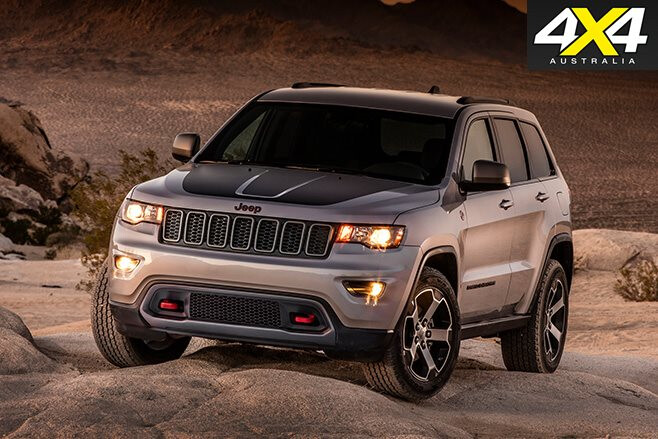
THE introduction of the new Jeep Grand Cherokee Trailhawk headlines the changes to the 2017 Grand Cherokee range, but all models have mechanical revisions and fresh front-end styling, and many have new equipment.
As before, the range starts with a 3.6-litre petrol V6, which gains a new variable valve-lift and valve-timing system that tweaks power from 210kW to 213kW and lowers fuel use by four per cent.
There’s a more efficient eight-speed auto for the diesel engine (and 4×2 petrol V6) and electric power steering across the range. The 3.0-litre turbo-diesel V6 remains the default engine across the range, which still includes the ‘hot-rod’ SRT with its potent 344kW 6.4-litre petrol V8.
Interior upgrades include a new touchscreen and a new gear shifter, while an ‘acoustic’ windscreen and side glass brings lower cabin noise levels. New safety equipment includes lane-departure warning, while new convenience features include park assist.
2017 GRAND CHEROKEE PRICES*
Laredo 3.6L V6 petrol: $52,500
Limited 3.6L V6 petrol: $62,500
Laredo 3.0L V6 TD: $59,000
Limited 3.0L V6 TD: $69,000
Trailhawk 3.0L V6 TD: $74,000
Overland 3.0L V6 TD: $80,000
SRT 6.4L V8 petrol: $91,000
*4×4 models only. Prices do not include on-road costs.
Diesel warfare: Jeep Grand Cherokee vs Land Rover Discovery vs Toyota Prado