
THE second vehicle in the G-Professional range has arrived, and the wagon proves to be a better recreational vehicle than the truck.
In an era when real 4x4s are becoming rarer and most vehicles are getting softer, a new live axle, diff-locked wagon is a welcome addition to the new car showroom.
We say new, but Mercedes Benz’s G-Class is closing in on four decades of service and is set to be updated in 2018 with the first new body panels in more than 35 years. Yet the G300 CDI Professional wagon is new to the Australian market for 2017.
The Gelanderwagen has been offered for sale in Australia on a few occasions over the past 38 years, and it was most recently reintroduced back in 2011 in G350, G500 and AMG models.
But those ‘luxury’ versions of the G-Wagen are based on the civilian W463 chassis, while the Professional models, like the G300 CDI we are testing here, come on the heavy duty 461 platform that is shared with military vehicles used by the Australian Defence Force and military units around the globe.
We first saw the G-Professional badge with the cab-chassis version in 2016. This is the five-door wagon riding on the same heavy duty chassis with a shorter wheelbase than the ute.
It remains a body-on-frame design, with live axles front and rear, coil springs all around and electronically switched diff locks front, rear and centre. The four-wheel-drive system is full-time with low range, so the equipment list ticks all of the right boxes.
That equipment translates well out on the tracks, too. The chassis is stiff, but the coil suspension is much more supple than it is on the 4490kg GVM-rated, cab-chassis model. This allows the G-Wagen to comfortably cross rugged and rocky tracks, ably helped by its standard-fit all-terrain tyres and triple diff locks.
The axles don’t articulate like a Jeep Wrangler or even a 70 Series Land Cruiser, but it’s better than anything with IFS – and the lockers get the job done if and when wheels lift.
Mercedes-Benz X-Class caught testing
A bit disappointing is the use of the Goodyear Wrangler All-Terrain tyres on the wagon, as opposed to the BFGoodrich A/Ts fitted to the cab-chassis. They are slightly lower, too, being 265/70-16s as opposed to the ute’s 265/75s. They are fitted to the same 16-inch alloys, so there’s plenty of choice for practical rubber.
The powertrain is the same as the G-Professional models, comprising the 3.0-litre V6 diesel engine and five-speed auto transmission.
This is a de-tuned version of Benz’s V6 engine used in many of its passenger cars where it needs more performance. In the G-Pro, it makes a modest 135kW and 400Nm, but it’s designed to run on poor fuels and in harsh conditions anywhere in the world.
2018 Mercedes-Benz G-Wagen to go IFS
On the open roads, this driveline gets along nicely, but it needs a solid prod on the long-travel accelerator pedal to keep it motivated. It’s not slow, but it’s certainly no AMG racer. The five-speed auto is a bit old-school as well, and you feel the ratio changes more so than you might in a ’box with more speeds.
The G-Pro feels more like a German-made Land Rover Defender than anything else, and there are plenty of bigger and more refined SUVs wearing Benz’s three-pointed star if that’s what you want.
Like the G-Pro cab-chassis, the wagon version has a stripped-out, barebones interior. The floors are paned with no carpets, there are rubber mats for the footwells, the windows are wind-up, and the central locking requires you to put the key in the door.
The vehicle we drove here was fitted with a PUR option pack that adds leather to the seats, with heating on the front pews, power adjustable door mirrors and a timber finish to the floor in the cargo area.
Mercedes-Benz G300 vs Toyota Land Cruiser 79 comparison review
The timber slats are separated by C-channels that can take eye bolts for latching things down, and there are three sturdy tie-downs on each of the rear wheel wells. In case you hadn’t noticed in the pictures, there are only four seats, with no five- or seven-seat option in the G-Professional.
That PUR option pack is yet to be confirmed for Australian issue, but it does add some good kit to the G. The roof rack is a work of art and one of the best we’ve seen, certainly the best factory offering from a vehicle manufacturer.
It’s fully welded with no pop rivets or screws to loosen, it has a mesh floor in the centre, and it’s heavy duty with C-channels running down the sides for anchor points. It might create a bit of wind noise at highway speeds, but I’d be prepared to put up with that on such a quality expedition product.
Mercedes-Maybach G650 Landaulet: details revealed
Another part of the PUR pack is the flip-up front number plate, which is handy if you want to fit a winch in the bumper. After numerous creek crossings, I thought we’d lost yet another plate, but it hinged up to reveal a solid recovery point.
The G-Professional sacrifices luxury, refinement and performance for practicality, off-road ability and functionality. You can throw a hefty dose of exclusivity in to the mix as well, because for a vehicle without floor coverings, Bluetooth phone connectivity or power windows, the G-Pro is not cheap.
2017 4X4OTY #5: Mercedes-Benz G-Professional G300 Cab Chassis
The sale price was yet to be confirmed at the time of our drive, but expect it to be in the $110K to $120K bracket, depending on how Mercedes-Benz Australia decides to specify it.
That’s a lot of money for any vehicle, but the G-Professional is far from any vehicle. It gets admiring looks on the streets, particularly when covered in mud, and it gets the job done on the tracks.
I WAS up in Kosciusko earlier this year when I noticed the old Currango Homestead – one of the few remaining buildings from the pioneer grazier’s era – had been badly damaged by a storm.
It’s nothing new – in fact, storm damage to our historic huts is an ongoing problem for land managers and those who try and maintain them.
Then there are bushfires which have ravaged much of the High Country and destroyed a significant number of huts, especially in Victoria. It’s a daunting job for all involved!
There are 186 historic huts to look after in the Victorian High Country, which the local Victorian High Country Huts Association (VHCHA) details as stretching from Healesville and Woori Yallock in the west, east to the NSW border, and then north of the Princess Highway to Myrtleford, Tallangatta and Corryong. Most are in the Alpine NP or on DELWP land, some are on Alpine Resort Land, and very few are on private land.
In NSW, the Kosciuszko Huts Association looks after more than 200 historic structures. 178 are in Kosciuszko, while the remainder are in the Namadgi and Brindabella regions of the NSW and ACT High Country. In Tasmania, the Mountain Huts Preservation Society lists 43 huts of interest.
Around the time the Currango Homestead was damaged, the VHCHA, in conjunction with Idlers 4WD Club and Parks Victoria, restored the Stones Outstation Historic Hut in Lake Eildon NP to its former glory.
The outstation hut, constructed of timber palings and a corrugated iron roof, has always been a fine example of bush carpentry. The week-long exercise resulted in the old hut being rejuvenated to last another 50-100 years, barring storms and bushfires.
John Dynon, Q&A with the colourful drunk
For the VHCHA, this hut is just the tip of the proverbial iceberg when it comes to the work they have been involved in.
Since their formation after the devastating fires in 2003, the association has restored or rebuilt more than 30 of the huts including such iconic buildings as Wallace Hut (the oldest building in the Vic High Country) and Davies Plain Hut.
On a recent visit to Wallace Hut I was amazed at how lucky we are to still have this quintessential and historically important hut still standing. Like many huts built by the mountain cattlemen, this one sits amongst gnarled snow gums and is protected a little from the treacherous weather that can hit the Bogong High Plains. Sheer luck had seen it saved from the fires which blazed almost up to its back door.
All of these huts are more than just historic structures, they are, as the Tasmanian Hut’s website states, ‘memorials to those pioneers who helped open up the country and are part of our Australian cultural heritage’.
They are also, importantly, a safety refuge for when the weather turns foul, and many people owe their lives to these rough, bush-made structures dotted throughout our mountain country.
Victorian High Country secrets: Victoria
As four wheelers who enjoy the High Country, it is beholden on us to look after these historic buildings, whether camping beside them or sheltering from a snow storm inside them.
If you get the chance, help out with the restoration of one or more of the buildings – each state’s hut organisation is always looking for volunteers and helpers. For the 4WD clubs already helping to keep our High Country huts alive and well, you have this writer’s admiration and gratitude.
Victorian High Country Huts Association: www.hutsvictoria.org.au Kosciuszko Huts Association: https://khuts.org Mountain Huts Preservation Society: www.mountainhuts.com.au
NOW and again I like take a break from four-wheelin’ for some two-wheelin’ fun, and often the best tracks for the kind of cycling I prefer aren’t within cooee of the local bike path.
So I find myself frequently loading up the fourbie with a couple of bikes for a weekend away to some treacherous, broken-arm-inducing trail.
And it’s the time-consuming bike-loading aspect of any adventure that’s often the worst part. Enter the easy-to-set-up Yakima LiteRider aluminium hitch rack.
Available as a two- or a three-bike carrier, the LiteRider simply attaches to a 32mm or 50mm tow hitch and locks in place with a pin. Turning the tool-free SpeedKnob tightens the rack into the hitch, and then it’s just a matter of connecting the bike mount section and fitting the bikes.
Nikon KeyMission 170 camera: Product test
Fitting a bike is a quick and easy process. You can either directly mount the frame of the bike, or you can use a tube top to avoid contact with the frame, which is beneficial if you have an expensive (read: carbon) bike.
Fitting, utilising Yakima’s ZipStrips, takes between five and 20 minutes, depending on how many bikes you have. The LiteRider is also great for bikes with massive tyres (Fat bikes), as the tyres just hang and don’t need special mounts.
On the road, the unit is quiet and doesn’t vibrate, due in part to the anti-sway cradle design that limits bike-to-bike contact.
6 essentials for travelling with kids
However, the bike closest to the rack has a tendency to tap its crank against the rack’s upright – it’s best to strap the bottom of the bike (as the bikes are only secured at the top) to avoid this. My only other gripes are that the LiteRider obscures the tail-lights and number plate.
You can feel secure in the knowledge that the bikes will still be there when you get to the top of a mountain, because the rack locks onto the hitch using a built-in lock-on knob. Plus, an integrated SKS LockDown pull-out cable adds a layer of security.
Yakima stickers are reflective, making the unit safe for night-time transit. Plus, it folds down to provide easy access to the hatch area or tailgate.
Clearview Mirror: Product test
The lightweight, easy-to-use LiteRider removes the hassle of loading up a 4×4 for a weekend away, and it’s safe, secure and convenient. Plus it comes with a built-in bottle opener. What’s not to like?
AVAILABLE FROM: www.yakima.com RRP: From $359
FOR SOME people, building a 4×4 is half the fun. Spending months on end agonising over which shock they should use with what spring. What size tyres they should run and how much offset in the wheels. What style bar work and if it’ll colour-match the flares or the body.
For more pics check out the gallery below
Before they realise it they’ve owned their new 4×4 for 12 months or more with barely more than a few adventures down fire trails to show for it. Then there are the others; the sane people who want a built 4×4 because built 4x4s are a key component to getting out and hitting tracks. They’re a special breed of 4×4 owners who spend more time beach camping and low-range crawling with their mates than tightening bolts in the garage. And while I sadly don’t belong to that group, Sam Hill and his tough-as-nails PX extra-cab Ford Ranger sure do.
Growing up on the NSW mid-north coast hinterland, Sam’s no stranger to 4x4s or getting lost in the backwoods. He has had both extremes, with a live-axle GQ Patrol and an IFS D22 Navara both finding their place in his stable over the last few years. But when some nimble-handed low-life decided the appeal of a turbocharged TD42 Patrol was too good not to grab out the lock-picking tools, Sam was left on the hunt for a new rig that’d get him out exploring.
“I had to get a new truck and really wanted a ute,” he told us. “I was looking at solid-axle ones like ’Cruisers and Patrols, but a few mates have smaller D-MAXs and are happy with theirs. I liked the look of the Rangers and this one popped up, so it was just good timing.”
Sam’s new ride came equipped with all the bells and whistles when he took the keys, and the foundation was perfect to build a capable 4×4 from the get go. The extra-cab design means there’s less sheetmetal to damage, and it retains plenty of lockable storage room with easy access from the suicide rear doors.
The tip of the spear in any 4×4 build is always the front bar. It instantly tells you how the vehicle is modified and for what purpose it’s designed. With that in mind, and knowing Sam’s uses, it’s no surprise to find the front of the Ranger adorned with a competition-style tube bar from Xrox that forgoes the sometimes over-the-top protection of a posted bullbar in exchange for less weight on the front suspension and a dramatically improved departure angle. Of course, it’s not all alone up front. Snugged inside is a now-defunct Tigerz11 Grande Mk1 12V winch wrapped in synthetic rope.
There’s a 22in budget LED light bar above, with twin 7in Illuminator spotlights throwing their weight around for a bit of distance. Multiple LED spotlights light up the track on either side as well as underneath, for key wheel placement when a night rock-crawling session is in order.
Down the flanks there’s a huge set of 5in-wider bolt-on flares from Kut Snake 4×4, helping contain the massive 15x10in -44 offset wheels. With the stock rims being seven inches wide and +55 offset, the new units are sitting close to 14cm further outside the body than the factory offerings. Making the most of the huge offset are a set of Hankook Dynapro MTs, punching in at 35×12.5R15 in the old language, or around 315/80R15 if you prefer your tyre sizes to be in riddles.
Of course, you’ve got Buckley’s chance of getting a tyre and wheel package like that on a standard Ranger, so it shouldn’t come as a shock to find Sam’s Ranger has a serious altitude adjustment to get things where they need to be.
The front is now sitting three inches higher with a set of struts from Dobinsons. They’re fully adjustable, allowing the ride height to be dialled in to suit the weight of accessories but also run an external reservoir for extra fluid capacity to help resist shock fade in corrugations or rough terrain. The rear has a matching 3in altitude adjustment with un-named springs and a set of budget shocks – hey, buying a previously modified 4×4 isn’t always a walk in the park.
Down back and the versatility of a flat tray becomes quickly apparent. Replacing the vulnerable sheetmetal is a heavy duty steel tray, with rock rails keeping stray objects away from the more sensitive parts and providing a mounting point for the “it’s all legal officer” rubber mudflaps. To keep weight down, the tray’s flooring is aluminium checkerplate, as are the two huge tool boxes down each flank. The passenger side box has a set of pull-out drawers and stores all of Sam’s camping kit, while the driver’s box houses spare parts, tools and the brains of the electrical system.
Tucked inside a third smaller tool box between the two large boxes is an Exide heavy-duty battery kept charged up by a basic Redarc system. From here it feeds into a distribution panel in the driver’s box that runs the Thumper air compressor, 12v shower, 300W invertor and camp lights on either side. Up top there’s a no-name roof-top tent, with a 52in curved LED light bar in front.
From the captain’s chair Sam rows through all six factory gears with the 3.2L five-cylinder diesel in stock form for now, but has plenty of 12V gadgetry to keep him entertained. Next to the gear shifter is a 5W UHF058 unit from the guys at Oricom, which is fed by the bullbar-mounted aerial up front; the second aerial feeds into a Bury cradle to significantly boost mobile phone signal.
There’s a pair of digital gauges from Max Speed Racing (from Japan) for Exhaust Gas Temperatures and boost levels, with an Xgody GPS unit and a second TFT screen hooked up to the reverse camera in the back.
While there’s inherent danger in buying any previously modified 4×4, Sam’s got a hell of a head start and a solid plan for the Ranger while he’s its custodian.
“All my future plans at the moment are just to get out there and use the thing,” he told us. “I’ll find things that worked for the previous owner that won’t work for me, and only time will uncover those. Things might change when I get used to it, but for now I just need to get out there with it.”
BUYING SECOND HAND?
IT CAN be incredibly tempting buying a second-hand vehicle with all the fruit and, as Sam found out, the benefits aren’t always financial, with him saving himself countless hours working on a stock one just to get it up to speed. But there are a few things to keep in mind.
Like any second-hand vehicle, the history and condition are far more important than the amount of kays or the accessories fitted. A $5000 suspension kit won’t look so appealing if the engine has never been serviced. Where possible, log-book services are always a good indicator the vehicle has been looked after, but aren’t an excuse to not look at the general condition of the vehicle.
Has rust been allowed to develop underneath, are there scrapes and dents, perished rubber components underneath, or maintenance issues that should have been rectified? They’re often an indicator not just of the current condition of the vehicle, but how the owner has treated it throughout its life.
Likewise, if the components fitted are of high quality rather than eBay specials, things have been kept legal (or at least engineered), and there’s a thorough service history, it’s a good indicator the vehicle has not only been looked after but built with a goal in mind with every component working towards it – not just a bunch of gear found cheap online.
THE sleepy little town of Silverton in outback NSW really comes alive when the sun nears the horizon, either in the morning or afternoon.
What almost looks like a deserted ghost town in the harsh light of day suddenly transforms into an exciting landscape full of iridescent colours which release a new lease of life into the town’s old stone buildings.
It’s these typical yet brilliant outback colours that Silverton-based artist John Dynon grew up with… and it’s also these outback colours that are so perfectly captured when John puts paint on canvas.
John Dynon’s gallery is just a stone’s throw from the Silverton Hotel. It’s the corrugated shed with the brightly coloured Volkswagen Beetle out the front. You’ll find John there, seven days a week, behind the counter, either working on a new piece or knocking back a coldie. After all, he happily describes himself thus: “I’m the unofficial mayor, sheriff and town drunk. But I’m really the town drunk,” he laughs.
Don’t let John’s jovial and relaxed demeanor put you off too much; he really is one of Australia’s most accomplished artists, with his works in collections throughout Australia and the world. His famous ‘emu’ art has even appeared on 780,000 XXXX cans, which was commissioned to celebrate the 50th anniversary of the St Patricks Race Day in Broken Hill, NSW, in 2015.
In fact, it was in Broken Hill that John was born in 1954, and from the day he could hold a pencil he was obsessed with drawing on things.
“I just loved drawing,” says John. “I always drew. Everything I did when I was a kid, I’d draw on everything. I got in a lot of trouble for drawing on things I wasn’t supposed to draw on.
“When I was at school, I picked up paints and splattered them all over the wall in my first year at school, and that’s when I was nearly expelled, because I wanted to brighten up the classrooms.
“Then, when I went to high school, I wouldn’t do any classes apart from art. I’d buggerise around in every class, I’d upset the whole class, I’d get kicked out, I’d get caned every day, but the art class was the only one [in which] I’d sit down and do things.”
John’s disruptive behaviour was not appreciated by his headmaster and he soon found himself facing expulsion… until his art teacher leapt to his defence.
“My art teacher said ‘Leave him in my art class, because he’s perfect with me, he loves his art, and I’ll look after him’,” explains John. “Then we went back down to the classroom… he grabbed me by the bloody shirt and said ‘You smartarse little bastard, if you don’t become an artist you’re going to be useless…’ And he came back here 30 years later, saw what I was doing, shook my hand, gave me a big cuddle and said ‘I knew you were going to be an artist’.”
Before becoming a full-time artist, however, John did his time in the Broken Hill mines. “At 19 I started on the mines, working underground,” he says. It was around the same time that John’s wife Debbie bought him a set of oil paints and told him ‘if you can sketch, you can paint’. And paint he did! John worked underground for 15 years and at the end of each shift he would spend eight or so hours painting.
If you’ve spent some time in and around Silverton, you’ll no doubt sense a familiarity when examining many of John’s paintings, especially those that depict scenes in the nearby Mundi Mundi Plains and Barrier Ranges. It’s in these landscapes that John so accurately captures the outback colours, of earth and sky, no matter the time of day.
“The colours? I reckon they’re all just natural colours, because out here they all just seem to be bluer blues and redder reds… ” says John. “Sometimes I don’t even look out there; it all comes out of my head. But it is out there if you want to look. I’ve been looking at it all my life, so 62 years of looking at it, I’ve got to know something.”
John also spends a fair bit of time around Menindee Lakes (shallow, ephemeral freshwater lakes), and there are always plenty of fascinating water scenes hanging on the walls of his gallery. And then there are his paintings of native flowers. “All the flowers are from around here. I’m a keen gardener, I love gardening,” he says.
Look closely and you’ll see various repeated yet strangely unintentional themes in many of John’s paintings, such as seven birds and two rabbits in nearly all of the landscapes. Where do these come from? “I don’t know,” admits John. “I never even knew I was putting them in until someone actually noticed that every painting in the gallery had two rabbits and seven birds, and I thought, shit, there they are…”
As for his comical emus, John certainly isn’t the only artist in outback NSW, or even Silverton, who has a penchant for painting the famous flightless bird. “I used to sell me mates emus up the hill, Peter Brown,” says John. “I wanted to get souvenirs and things of his emus, and he wouldn’t do it. And he said why don’t you paint your own emu… well that’s where it all started, and when I did it, I never looked back.”
Another favourite subject of John’s is corrugated iron, which makes a prominent appearance in a number of his paintings, no matter what the main subject is. “I just love it,” he says. “I love rust and I love tin.”
John paints with acrylics on canvas boards, the latter specially made for him in Sydney. “The boards have been treated for acids and all that sort of stuff, and they’ve really been made for me to put under glass. I like things under glass because they’re in a safe box forever,” he says.
There are even a few abstract pieces with John’s distinctive signature in the bottom right-hand corner. “If I do abstract… I just splatter paint and, mate, they sell like hotcakes,” enthuses John. “They’re pallet paintings, they’re done with the wasted paint. Every night I’ve got paint left, I put it on a board, because I don’t like wasting anything…”
There are paintings to suit just about every budget in John Dynon’s Silverton gallery, and he also sells prints, cards and souvenirs. And for those after something specific, John is happy to paint by request. If you can’t make it out to the tiny town of Silverton, John also sells his art online. “I exhibit a bit in cities, but not much… I’m sort of semi-retired,” he says. “We’ve got a shop online and all that… but most of the stuff we sell through this gallery; we get about 100,000 people a year through here.”
The next time you’re in Silverton make sure you drop in on John Dynon, even if you’re not in the market for an artwork. He’s always up for a chat… and maybe even a beer. After all, he is the unofficial mayor, sheriff and town drunk.
THE Lightforce Genesis is an Australian designed and manufactured 140W LED driving light that’s claimed to provide a light output of 1053m at 1 lux.
It features 37 Lumileds LEDs that are housed in (214mm wide x 232 mm tall x 73 mm deep) cast aluminium with a UV-stable, powder-coat finish. An IP69K rating protects against high-pressure water and dust ingress.
Features include three-stage operation, so you can switch from full intensity to day or night-time positioning. The light also has thermal overload protection, is CISPR25 compliant (reducing radio frequency interference) and is supplied with a replaceable impact resistant polycarbonate filter.
MOUNTING
THE Genesis is easy to mount to a vehicle’s bullbar and features a sturdy mounting bracket. The 2.4kg light is secured with an M10 35mm stainless-steel hex bolt and a nyloc nut. An anti-theft security lock set is an optional extra. With a depth of just 73mm, the Genesis will fit on many vehicles that might not otherwise accept such a large diameter light. Having said that, I had to fashion a spacer to fit between the light mount and the bar on my D22 Navara so the harness adaptor would clear the vehicle’s grille (the wiring comes out quite low on the back of the Genesis).
The optional driving light harness made wiring up the lights a simple task. I used the H4 harness adaptor (so I could plug straight into the back of the Navara’s headlights), mounted the relay and fuse in the engine bay, and found a good spot low on the dash to secure the two switches (one for full intensity and the other for the positioning lights).
How to get the most out of your 2017 tax write off
The switches have small red LEDs so you know when they’re on. Wiring up the daytime positioning light feature is optional and requires you to connect the second switch to a suitable ignition signal wire.
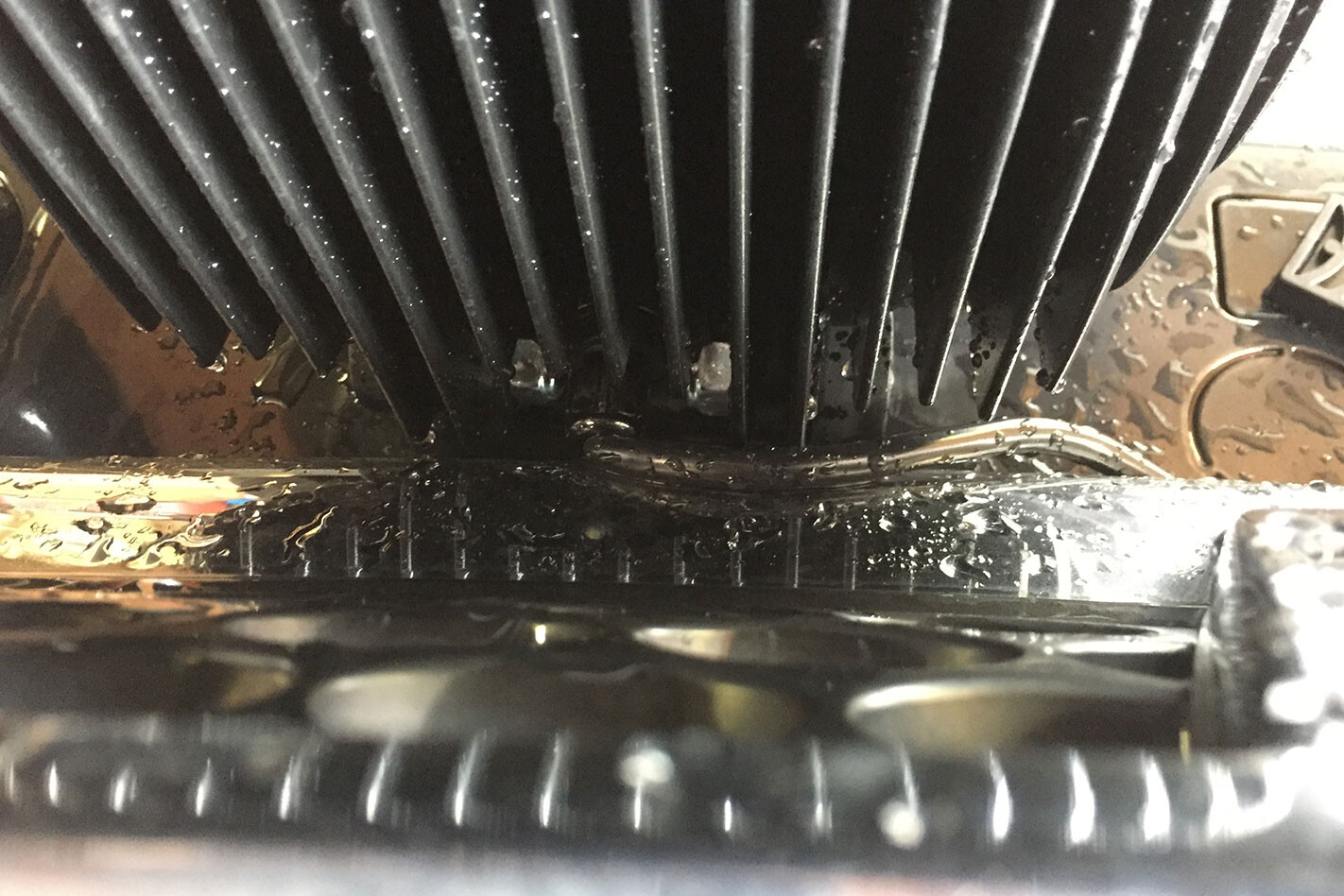
Once everything is in place and the lights are operating, adjustment is achieved via the easily accessible side bolts fitted to the light. Once adjusted and tightened, the lights secure well and don’t vibrate. For extreme conditions, Lightforce offers an optional top stay bracket (not tested).
LIGHT PERFORMANCE
WOW! These things are bloody bright! Not only does the Genesis provide a fantastic throw of light down the centre of the road, it offers a reasonable spread, even with the standard polycarbonate filter fitted. With the optional combination filter (not tested) Lightforce claims a beam width of 120 metres.
Colour temperature is 5000K, which is a comfortable white without getting too far into the blue zone, and when you flick on the high beam the Genesis lights up without delay.I have been running the Genesis with the daytime positioning lights on, and it’s comforting to know my vehicle is now more visible when driving in traffic even without the headlights on.
As promised on the box, the Genesis doesn’t interfere with radio reception (either AM or FM) even when the signal is weak in remote areas.
SUMMARY
THE Lightforce Genesis is a high quality LED driving light that’s packaged in a sturdy housing and provides a brilliant light output. I like the fact it’s designed, manufactured and tested (at an independent NATA laboratory) in Australia.
The Genesis is covered by a three-year warranty and Lightforce offers a wide range of replaceable filters and other optional extras.
RATED AVAILABLE FROM: www.lightforce.com RRP: $669 (each); $115 (harness); $33.20-$37 (filters); $49 (anti-theft lock set); $19.50 (top stay bracket)
YES, I know, this column should be following on with more of the Milo 2 build, but things came to a standstill last month because it was time to go seriously outback again.
With a four-wheel-driving mate getting married up in Darwin, and a whole lot of pent-up demand for more Milo DVDs, I figured we could combine the two and make a cross-country trip through the bush. That meant a big filming trip, so I was looking around for a camera car. I’d put the word out, but the first reply I got was a bit of a surprise.
“You want me to take a brand new Jeep Grand Cherokee?”
Phew, Luke Hawkin’s call sort of took my breath away. Camera cars are usually rough, old stodgers; GU Patrols or 100 Series Cruisers, with whatever motor makes the least amount of power so there’s less chance of them self-destructing. The best bet has usually been to buy them cheap, equip them up with gear, and expect them to last a few trips at best.
Camera crews can be hard on machinery. Their first priority is always ‘the shot’, which means they’re likely to barge through mud or climb trees to get into position. Most of the blokes – and ladies – I’ve worked with over the years are good bush drivers because they’ve had to be, but looking after the vehicle is usually way down a long list that has clean lenses and charged batteries up top.
Video: WWII Jeep – The Greatest 4X4 of all
However, Jeep has had an image problem in recent years – too many people whingeing on social media, mostly. For a while, Jeeps were selling like crazy thanks to a combination of great advertising, great pricing and a bloody good product, but somewhere up the line a few years ago things got a bit too self-confident and suddenly customers and warranty issues weren’t always coming first. Sometimes success breeds complacency.
There’d been some major changes at distributor level to correct the complacency issues including a new ‘there and back’ guarantee aimed directly at the knockers, but things also needed a shake-up on the sales floor.
Luke Hawkin’s Westpoint network of dealerships, which includes a Jeep franchise, decided to do some ‘proving’ of their own. They’d let Roothy loose with a Cherokee. Maybe it’d come back…
So what do you do when you give a brand new vehicle worth nearly $70K over to a camera crew who are filming in rough and remote outback country? You dress it up with some good aftermarket gear, of course. But we only had a week to do it, and the new Cherokee hasn’t been around long enough for there to be a whole world of choice in aftermarket clobber. Fortunately, part of the Westpoint network is Westside Opposite Lock run by my mate Aaron Marshall. I’d get expert advice and fitting right from the start.
Video: Custom 2014 Jeep Grand Cherokee
What to go for, though? A suspension lift would have been great, but the 2017 Cherokee had enough subtle differences for nothing to be engineered yet. I’d driven the Jeep in stock form and was pretty impressed by the standard suspension; super soft and about as long travel as you’d expect from a stocker, which is pretty much what you expect from Jeep. Decent tyres are essential for any vehicle intending to take on outback tracks, and the large alloy rim size narrowed our choices, but Aaron found the Achilles Desert Hawks and they certainly looked the part.
The last thing you want is a camera team blowing out a tyre while chasing the convoy. With the rubber sorted it was time to look for some frontal protection with winch potential, too. Because camera crews often lag behind as they pack their gear, they need to be fully capable of a self-recovery, too. In my mind, that means two things are essential: a good winch and a set of MaxTrax.
Aaron sourced a steel front panel from Uneek 4×4 and then, after asking me what sort of winch I’d prefer, got his team to fit a VRS 9500lb job with rope. A bit of bash-plate-style protection up front on modern vehicles is almost mandatory if you’re serious about going bush. When anything from a kangaroo to a rock can see a vehicle sitting on the side of the road on a cloud of steam, I’d rate frontal protection as not only mandatory but cheap insurance.
With the battery packs and camera gear taking up most of the Jeep’s internal room, a roof rack was mandatory. It had to be strong enough to take a cameraman or two for those lovely ‘high set’ shots, while still not looking out of place on the stylish Cherokee. The best racks in the business are Front Runner – they’re light, strong and, with flat slats, can be easily walked on. They also come with virtually any accessory mounts you can think of, including MaxTrax mounts. I’ve had plenty of trips where the MaxTrax never left the roof, but when they have they’ve recovered the vehicle and often saved it. MaxTrax are the cheapest insurance any off-roader can have.
Front Runner is a South African-based company, but it’s telling that it makes a bracket for its racks specifically for MaxTrax because the orange boards are a favourite over there, too. I guess you don’t want to be mucking around with cheap, cracking plastic when there’s a pride of lions waking up under those trees. Because the lads wouldn’t have time for mucking around, I got Aaron to fit an awning, too. You need reliability and strength when an awning’s being used for work, not play.
Finally, we got the swags and bunks strapped to the roof and the back seats folded down to take all those Pelican cases full of gear, and it was time to hit the back tracks to Darwin. At this stage I’d put exactly zero kilometres behind the wheel of the new Jeep, but I was hankering to see how she’d go off-road. I had a whole bunch of people wondering if it’d make it home, too.
There hadn’t been a lot of time for preparation and, with about 10,000km ahead of that cute, little nose, the big questions were still on the table. I guess that means next month we’ll be looking at how the Jeep faired. You might be surprised.
Meanwhile, I’m home again, so I’d better go see if I can source some engine mounts for Milo 2. Talk about one end of the technology spectrum to the other.
ONE thing is certain about the new-vehicle market: nothing ever stands still for too long. This is especially so in the ultra-competitive ute market, where Nissan and Isuzu have both brought new product.
The Nissan Navara upgrade is entirely voluntary, while the Isuzu D-MAX comes off the back of new government-mandated exhaust emission standards. For the D-MAX, this means significant engine changes and – for good measure – Isuzu has also thrown in a six-speed automatic gearbox to replace the previous five-speed, new cabin features, and revised exterior styling.
Over at Nissan, the changes to what is a relatively newly designed Navara (2015) bring an additional work-grade model with the more powerful of the two diesel engines, extra kit on some models and a retuning of the suspension.
Spec level for spec level, these two utes are price comparable – at least in the most popular ST and LS-U spec levels – so we decided to line them up side by side to see how they compare.
NISSAN NAVARA ST SERIES II
JUST two years after it arrived, Nissan’s new-generation NP300 Navara has undergone a makeover to become the Series II.
When the Navara NP300 arrived it 2015, it was a rule breaker. On all but the base RX model, coil springs replaced leaf springs – the ute staple rear end – in what was potentially a game-changing move. In another significant departure from standard class practice, on most models the Navara adopted a relatively small diesel engine with two turbos rather than one. Before the Navara arrived, only the Amarok had this feature in a ute. Also distinguishing the Navara from the pack was its seven-speed automatic gearbox.
Sales-wise, the NP300 Navara hasn’t really worked for Nissan, failing to emulate the success of the D40 Navara, which, in its heyday, was second only to the all-conquering Toyota Hilux. In 2016, the NP300 was, in fact, outsold by the Hilux and the Ford Ranger by more than two to one, and it also fell behind both the Mitsubishi Triton and the Holden Colorado in overall sales.
Here at 4X4 Australia we weren’t great fans of the NP300 as a general purpose on- and off-road ute, and we were particularly unimpressed by the way it performed in our seven-ute, maxxed-out load and tow test comparison conducted last year.
Fast forward to 2017 and Nissan has headed back to the drawing board with a suspension revamp, spec and equipment changes, and the addition of a new work-spec model (the SL) that has the bi-turbo engine, rear coils, and sits above the leaf-sprung, single-turbo RX. Nissan also has also dropped NP300 moniker, so the new model is simply called the Navara Series II.
Powertrain and performance
THE Renault-sourced 2.3-litre four-cylinder diesel has, as mentioned, two turbos rather than one. This is reasonably common with European-design diesel engines and involves a smaller turbo that works off idle and under small loads coupled with a larger turbo that takes over as the engine speeds and loads increase. This arrangement offers quick low-rpm response combined with good power at higher engine speeds – two ideals that are hard to achieve with a single turbo.
The result on paper – 140kW and 450Nm – is what you’d expect of a larger capacity diesel, and the Navara delivers on-road thanks to this and other attributes including the relatively close ratios of its seven-speed automatic. Throw in the Navara being one of the lightest utes of the current crop – and one that runs lower overall gearing than most (top gear gives around 55km/h/100km) – and there’s plenty of performance on offer. In fact, when we last ran the current crop of utes against the clock, the Navara was the quickest in the 80-120km/h sprint; although, the Holden Colorado, which has since been revised, may now do better.
Fuel-use labels are riddled with problems
The Navara’s engine is generally quiet, except at wide throttle openings where it becomes noticeably noisier. For its part, the seven-speed auto adds to the general driveline refinement with smooth and quick shifts; although, it tends to grab a taller gear more often than you may want in give-and-take conditions, perhaps because the shift protocols are tuned more towards economy rather than performance. And, speaking of economy, the Navara has an excellent ADR figure of just 7.0L/100km, but it’s less distinguished on the road with a figure of 11.5L/100km for this test.
On-road ride and handling
SUSPENSION changes have resulted in much better on-road steering and handling. Gone is the too-heavy steering, while the front-to-rear suspension match is also much improved. You may think coil springs would provide a more supple ride than the leaf springs fitted to competitor utes, but this isn’t the case. If anything, the Navara rides more firmly than before – and certainly no better than competitor utes – but getting the front-to-rear balance right has made the change to a firmer and crisper ride one for the better.
A positive of the Navara’s rear suspension, when compared to its leaf-spring competitors, is less axle tramp when accelerating through and out of bumpy and corrugated corners.
Off-road
THE two top-spec Navaras come standard with a rear locker and, like the lockers on the Ford Ranger and Volkswagen Amarok automatic, engaging the locker doesn’t cancel electronic traction control (ETC) across the front axle. This is a notable positive and helps improve the Navara’s performance in gnarly conditions; whereas lockers that cancel ETC across both axles often don’t bring an improvement.
That said, the Navara is still no off-road hero compared to the likes of the class leaders – Ranger, Hilux and Amarok – due in part to the fact it doesn’t have comparable wheel travel and it rides a little lower than most in its class. The Navara’s over-bonnet vision does no favours off-road, either, and shorter drivers in particular will find themselves wishing to sit a little higher.
On a more positive note, the shift protocols of the seven-speed work well off-road, and there’s a notably low crawl ratio.
Cabin, accommodation and safety
WITH no less than seven airbags, Navara dual cab utes offer five-star ANCAP safety in a modern car-like cabin that’s generally comfortable up front but smaller than most across the rear seat. Of the current mainstream utes, only the Mitsubishi Triton has a smaller rear seat. No reach adjustment for the steering wheel, either; although, this is unfortunately the case more often than not with this class of vehicle.
Two things worth noting is that the top-spec ST-X offers a sunroof as an option (previously standard), a unique feature in this class of vehicle. The centre panel of the Navara’s rear window can also be opened and, while this may seem like a why-bother feature, it improves cabin ventilation without adding the wind buffeting you typically get when opening a rear side window.
Practicalities
THE Navara’s 3500kg tow rating matches the best in class on paper, but when we tow-tested it – before the suspension upgrade – it did a poor job of hauling 3500kg. Likewise, while the Navara has reasonable payload figures, it doesn’t carry a maximum payload well. We won’t know whether the recent upgrade has improved these two aspects until we get a chance to carry out a full load and tow test.
Performax International’s Nissan Titan XD debuts
The four fixed tie-downs in the Nissan Navara ST’s tub (ST-X gets adjustable tie-downs) aren’t ideally located either, as they are mounted high on the tub’s sides and not down on the floor where they should be. However, the ST gets a 12-volt outlet in its tub.
The ST runs 16-inch wheels, which is a bonus in terms of tyre choice and practicality, but, as is usual ute practice, there are no recovery points at the rear and just one at the front. Before you drive off into a creek you should also note the engine’s air intake is behind the bonnet lip, and the claimed wading depth is a very low 450mm – something that would have to be addressed to turn the Navara into a serious 4×4.
The Navara comes with a 20,000km service interval, which is longer than most.
What you get: Navara
ALL Navara dual cab 4x4s have ESC, ETC, seven airbags, a six-speaker audio with a CD slot and USB and iPod inputs, Bluetooth, cruise control, and a 12-volt outlet in the rear tub.
Moving up from the RX to the new SL model (replaces DX) nets you the 140kW bi-turbo engine (instead of 120kW single-turbo engine), a rear view camera and LED headlights with DRLs. From there the ST gains 16-inch alloys, seven-inch touchscreen with sat-nav, fogs, side steps, chrome ‘sports bar’ and a rear locker.
The top-spec ST-X model gains leather seats (heated up front) and electric adjustment for driver’s seat. It also has heated and power-folding door mirrors, rear parking sensors and an optional sunroof, which was previously standard on the ST-X.
Nissan Navara II prices*
RX: $47,565 SL: $53,235 ST: $48,865 ST-X: $55,415 *4×4 dual cab pick-up manuals. Automatic adds $2580.
Nissan Navara II ST (dual cab 4×4 auto)
Engine: 2.3-litre 4-cyl bi-turbo-diesel Max power: 140kW @ 3750rpm Max torque: 450Nm @ 1500-2500rpm Gearbox: seven-speed automatic 4×4 System: dual-range part-time Crawl ratio: 44.6:1 Construction: separate chassis Front suspension: independent/coil springs Rear suspension: live axle/coil springs Kerb weight: 1925kg GVM: 2910kg Payload: 985kg Towing capacity: 3500kg Towball download (max): 300kg GCM: 5910kg Fuel tank capacity: 80 litres ADR fuel claim: 7.0L/100km Test fuel use: 11.5L/100km Touring range*: 645km *Based on test fuel use, claimed fuel capacity and a 50km ‘safety’ margin.
MY17 ISUZU D-MAX
ISUZU has used new and tougher mandatory exhaust emission standards as a springboard for a raft of upgrades to its faithful D-MAX.
November 2016 saw the introduction of Euro 5 diesel exhaust standards in Australia, replacing the previous Euro 4 standard. What that means is that cars built after November 2016 need to comply with the new standard or they can’t be sold. That’s the law – simple as that.
Euro 5 primarily targets particulate matter in the exhaust gas, so it’s no surprise the D-MAX – previously only certified to Euro 4 – gains a diesel particulate filter (DPF); although, this is by no means the only change. In fact, just about everything bar the bottom-end of Isuzu’s long-serving (from 2005) 3.0-litre diesel engine has been updated, with a new-generation higher-pressure common-rail injection, a new variable-geometry low-inertia turbo, a larger EGR cooler and new pistons the key changes.
2014 Isuzu D-Max vs Isuzu MU-X LS-T
There’s also a new Aisin six-speed automatic replacing the Aisin five-speed. And, as with the outgoing five-speed, the new six-speed is also used by Toyota in the Hilux and Prado and shares ratios including the two – notably tall – overdrives. The rear differential has also been strengthened, but it carries the same final-drive ratio.
Outside of these mechanical changes there’s a new interior with bigger touchscreens – seven or eight-inch (with sat-nav), depending on the model – two extra speakers (now eight) across the dual cab range, and more cabin soundproofing. Exterior changes include lights, bonnet and grille, which contribute to fractionally less aerodynamic drag – according to Isuzu.
Powertrain and performance
DESPITE the raft of engine changes, maximum power remains at a modest 130kW. So, pedal-to-the-metal, the new D-MAX goes about as hard as the old D-MAX, given the new six-speed only adds an extra overdrive for more relaxed highway cruising.
Away from this extreme, the D-MAX’s engine remake provides more driveability with increased torque (430Nm, up from 380Nm), providing more power at low and middle rpm. The ‘fatter’ torque curve means the previous maximum of 380Nm is produced 100rpm lower (now 1700rpm) and extends 700rpm higher (to 3500rpm).
Effectively, what you get is a more responsive engine and a gearbox that does everything better, though it doesn’t give tighter ratios. The shifts are quicker and slicker than before, and new shift protocols mean a more active and sporty approach to gear selection compared to the generally sleepy five-speed. The auto downshifts on descent – with and without brake intervention – are particularly well-timed. The D-MAX carries the two very tall top gears surprisingly well and doesn’t overly shuffle back and forth between them on undulating country roads.
Newhaven Wildlife Sanctuary, Northern Territory
The new common-rail injection system makes the engine quieter than before; although, the D-MAX’s general engine-running refinement isn’t anything special. The fact it’s a ‘big’ four-cylinder by class standards, and it still runs a relatively high 17.3:1 compression ratio, both work against it. By comparison, the 2.8-litre diesel now in the Hilux is smaller in capacity and runs a much ‘softer’ 15.6:1 compression ratio.
The changes have brought a small improvement in the official ADR fuel figure, down from 8.1L/100km to 7.9L/100km for the two respective automatics. On this test, the D-MAX used 12.0L/100km, which was slightly higher than expected given the D-MAX has generally been one of the more economical utes.
On-road ride and handling
AS before, the D-MAX’s suspension provides a decent ride that can be surprisingly comfortable, even when the vehicle is unladen. The front-to-rear suspension match that’s often a problem with utes is also well-sorted. It’s worth noting the LS-T, as tested here – along with the LS-U and SX models – have ‘standard’ rear springs, while the LS-M has ‘heavy duty’ rear springs. Not that it matters much, with only a 25kg difference in payload.
Along with its good front-to-rear suspension match, the D-MAX has a nice, positive steering feel, without having the excellent response and feel of something like the Amarok or Ranger, the class leaders in this regard.
Off-road
THE D-MAX is a little unusual among today’s utes, as it doesn’t come with a rear diff lock. Nor does the chassis provide anything special in the way of wheel travel, so it’s not among the front runners when it comes to more arduous off-road work, especially gnarly hill climbs.
That said, clearance is up there with the best in class, and it has a particularly good driving position in terms of forward visibility. Plus it’s up to most recreational off-road driving, even on the standard tyres.
Cabin, accommodation and safety
ALL D-MAX dual cabs come with five-star ANCAP safety, thanks to six airbags and mandatory features like electronic stability control.
In terms of size, the D-MAX’s cabin is bigger than the Hilux, Triton and Navara and matches the Colorado, but it’s not as big as the Ford Ranger, Mazda BT-50 or Volkswagen Amarok. It doesn’t matter for the driver or the front seat passenger, but those in the back will feel the difference, especially when trying to accommodate three adults.
The new cabin also presents better than before – less commercial and more passenger-car like – but still doesn’t offer tilt-and-reach steering wheel adjustment.
Practicalities
THE D-MAX offers a class-leading 3500kg tow rating and class-competitive payloads, even if its GVM is below the best in class. When subjected to our maxxed-out load and tow test (before this recent upgrade) the chassis coped well but the engine was off the pace; although, no doubt the extra power at low and middle rpm, thanks to the extra torque, will help here.
In the tub there are four tie-down hooks – the two at the rear are mounted on the floor where they should be, but the front pair are high-mounted, which is hardly useful unless you’re carrying something tall.
The engine draws its air from the inner mudguard, which is great for fording water. As a bonus, there are two recovery hooks up front and a solid engine protection plate. Under the bonnet there’s also room for a second battery. D-MAX’s also come with fully interchangeable 16-, 17- and 18-inch wheels, so there are plenty of options for replacement tyres.
What you get: D-MAX
ALL D-MAX dual cab 4x4s have ESC, ETC, six airbags, an eight-speaker audio with a CD slot and USB and iPod inputs, Bluetooth and cruise control. Move up to the LS-M from the SX and you get 16-inch alloys (instead of 16-inch steels), projector headlights with DRLs, foglights, two extra USB ports and a reversing camera. From there the LS-U gets 17-inch alloys, an eight-inch (rather than a seven-inch) touchscreen, sat-nav and side steps. The top-spec LS-T, which is auto-only, gains leather, electric adjustment for the driver’s seat, proximity-key entry, push-button start and 18-inch alloys.
Isuzu D-MAX prices*
SX: $43,900 LS-M: $46,400 LS-U: $48,300 LS-T (auto): $54,200 *4×4 dual cab pick-up manuals, unless noted. Automatic adds $2100
Isuzu D-MAX LS-T (crew cab 4×4)
Engine: 3.0-litre 4-cyl turbo-diesel Max Power: 130kW @ 3600rpm Max Torque: 430Nm @ 2000-2200rpm Gearbox: six-speed automatic 4×4 System: dual-range part-time Crawl ratio: 33.3:1 Construction: separate chassis Front suspension: independent/coil springs Rear suspension: live axle/leaf springs Kerb Weight: 2026kg GVM: 2950kg Payload: 924kg Towing capacity: 3500kg Towball download (max): 350kg GCM: 5950kg Fuel tank capacity: 76 litres ADR fuel claim: 7.9L/100km Test fuel use: 12.0L/100km Touring range**: 534km **Based on test fuel use, claimed fuel capacity and a 50km ‘safety’ margin.
THE VERDICT
THE Navara and the D-MAX have similar price tags (just north of $50K as an auto, plus on-roads) in the popular one-down-from-the-top model, in this case the ST and LS-U respectively. They also sell in similar numbers on the 4×4 ute market, the Navara in fifth and the D-MAX in sixth place – behind the Hilux, Ranger, Triton and Colorado, but ahead of the BT-50 and Amarok.
Despite these similarities, drive the two back-to-back and there’s a world of difference. The Navara feels more refined, nippier, smaller and sportier – and more car-like and less ute-like. The D-MAX counters with a bigger, roomier cabin, a better ride on rough roads, and what should be a better load and towing ability, unless the Navara’s suspension changes make a big difference in that role – something that still needs to be tested.
Off-road these two are closer and, while the Navara’s rear diff-lock is a bonus on something like a rutted and rocky climb, the D-MAX’s extra clearance, better driving position and deeper fording ability make it the better 4×4 proposition.
WE ALL enjoy using 4x4s to explore, camp, fish and have fun in some beautiful and remote parts of this country of ours.
However, some of us go even further. Kevin Braunton of the Victorian Big Cats Research Group uses his modified Jeep TJ Wrangler to access remote parts of southern Victoria’s Otway region in search of the ‘big cats’ – panthers and cougars that have been the subject of reported sightings in the area for more than 100 years.
Drive 4 Life, VIC High Country
Kevin and fellow big cat researcher, Sarah Alsop (who has, like Kevin, also spotted an oversized feline in the wild), are behind the Victorian Big Cats Research Group on Facebook and YouTube. The duo spend countless hours and days in Kevin’s Wrangler following old logging tracks and fire roads in the Otways, searching for evidence and setting camera traps that will hopefully prove the existence of these large predators.
Kevin’s route to become a big cat researcher started in 2001, when he glimpsed what he asserts was a black cat roughly the size of a large German shepherd. Kevin said: “The animal was in the middle of the road, but in one seemingly effortless bound it was up an embankment and vanished into the bush when it noticed my car approaching. From that day, my interest in the subject has progressively grown to the point of becoming an obsession.”
It’s not hard to believe in the potential existence of these animals in Australia. Anecdotal historical accounts dating back more than 100 years are further supported by theories based around the animals being the descendants of escaped zoo animals or – after the 1940s – released mascots from when US military units were based in Oz.
Kevin also mentioned that two safari parks on the outskirts of Melbourne used to breed big cats, until licensing introduced in the late 1970s upped the expense of keeping exotic pets. Kevin theorised that this may have led to breeding pairs being released into the wild.
Footloose: Cat culling in Australia. Conversation or cold-blooded?
The majority of sightings are of black/dark-furred cats, but tan-colouring is also reported. The number of sightings, according to Kevin, has increased in the past few years, and he cited a few reasons for this being the case including that these large predators are territorial so, as the population grows, some animals are being forced closer to urban environments.
He also balances this with an answer to the inevitable question of why we don’t see more, or even dead, specimens. If the animals are out there, the population would still be very small, according to Kevin, with resultant inbreeding due to the limited gene pool causing a shortness of life expectancy, as well as deformities.
2017 Jeep Grand Cherokee updates and pricing
Trying to prove something exists where it never has in the past is a daunting task and isn’t going to happen overnight, but the duo is passionate about what they wish to achieve.
“Our aim at Victorian Big Cats Research Group is to prove without a doubt that big cats do in fact reside in our national parks,” Kevin said. “We believe it’s important that the general public is made aware of a large predatory animal’s presence, so precautions can be taken when enjoying outdoor activities. The last thing we would want to see is harm coming to any of these animals. Besides, eradicating them would not be an easy task.
“Our objective is to get clear photographic proof of these elusive creatures and to do so we set up motion-activated camera traps.”
This is the easy part for the team; luring the animals to within range of the cameras is proving tougher. Kevin and Sarah are currently trialling various scent lures and using a predator-calling device. The solar-powered predator caller they have constructed is activated via mobile phone and broadcasts the distress calls of prey animals, such as rabbits. Future plans include a network of four cameras in each of Victoria’s big cat hotspots. These will be monitored on a monthly basis.
With their limited spare time (both Kevin and Sarah have young families) it is tough for the team to cover such a large area thoroughly. This provides an opportunity for 4×4 tourers in the Otways (and other remote Victorian regions, such as the Grampians) to get involved. Let’s face it, it’s pretty damn cool, and the young’uns in your family/touring crew will love it.
Even if you never spot one, the idea of a big cat being out in the bush as you are driving along a fire road or camping in a national park is enticing. So, if you are out and about, keep an eye out. What you initially think may be a dingo at the corner of your eye, may well be one of these formidable apex predators. The same goes for any carrion you see; it might be the result of a feral dog/dingo attack, but it could well be something else.
It’s also worth keeping an eye on the Victorian Big Cats Research Group’s Facebook page and YouTube channel. If you do spot something odd, Kevin and Sarah can be contacted at [email protected].
And if you’re touring the region and see a modified, mustard-coloured Jeep Wrangler, pull over and say hi – you’ll meet two people with a cracking tale to tell.
THE medium-to-large 4WD wagon segment has seen a raft of primarily ute-based newcomers join the party in the past five years, and with it a boost in towing capacity.
Not so long ago, 2500kg was the maximum towing limit for wagons like the Toyota Prado (and still is), but with these newcomers arrived a boosted towing capacity – around 3000kg is the new norm.
Relatively new kids on the block, Ford Everest, Holden Trailblazer, Mitsubishi Pajero Sport and Toyota Fortuner, joined a just-updated Isuzu MU-X and recently renovated Toyota Prado to round-out our half-dozen wagons.
While a solid tow vehicle, the Mitsubishi Pajero misses out mostly because it’s been around essentially unchanged for nine years. In fact, it hasn’t been a fresh-sheet design since before Sydney hosted the Olympics.
Toyota Land Cruiser Prado Altitude special edition announced
The Prado has the lowest towing capacity here, at 2500kg, followed by the Fortuner at 2800kg and rest of the group at 3000kg (except Pajero Sport, with its pub-bragging rights of ‘best’ capacity at 3100kg, just 100kg more than the others). One figure often missing in towing specs is the towball download maximum – in the case of all of the wagons here, it’s the industry standard 10 per cent of towing capacity.
TEST PROCEDURE
WE took each of the vehicles, towing the tandem-axle ’van, on a test loop covering slightly more than 100km, taking in the lower Blue Mountains and the north-western Sydney Basin. We had a wide variety of road conditions to give the wagons a towing workout, from a freeway to secondary tarmac and even a bit of dirt thrown in for good measure. Speed was capped at 100km/h (instead of the statutory freeway limit of 110km/h) as we felt this was as high a speed as you’d want to go when towing.
In an ideal world we would have tested these vehicles with a caravan right on the limit of their towing capacities. To be consistent, we had to tow the same ’van that would be legal across all the six vehicles, and that meant it had to be legal behind the Toyota Prado, with its 2500kg capacity – and also use a ’van that had a legal theoretical payload. Using a 2499kg unladen caravan isn’t realistic when the typical tandem-axle ’van has a payload of 400kg. We used a full-height tandem ’van weighing slightly less than 2100kg and with 180kg on the towball. That’s plenty enough to sort things out.
You don’t go towing to win drag races, but a standing-start acceleration test is a good way of comparing the vehicles’ relative flat-out performance. We used sister magazine Wheels’ Driftbox to accurately record the standing start to 60km/h and 80km/h figures. Unfortunately, it poured for the test week, so the acceleration tests were marred by loss of traction off the line due to a soaked surface. However, given that these are not high-performance cars where every tenth can make a difference, our figures are still representative of their comparative all-out performance.
2017 Ford F-150 Raptor: First Drive
While all-out acceleration figures give you part of the towing performance puzzle, how the wagons slug it out climbing hills is another big chunk of the picture. The hillclimb test on a freeway hill started as a shallow climb then gradually became steep, approximately 1:5 gradient. Speed was settled at exactly 80km/h on the Driftbox at the beginning of the rise, then full throttle was applied at a set marker point. The results were very interesting, showing how in some cases gearing can, to some degree, make up for a lack of torque.
Tank-to-tank fills gave us accurate fuel consumption figures. Rounding out the considerations was wheelbase and rear axle-to-towball point measurements, front and rear body height measurement changes with/without a ’van – plus the all-important kerb weight, payload and Gross Combined Mass figures.
It’s typical to tow a trailer right on a vehicle’s maximum limit and load it up with every kilogram available of the vehicle’s payload, but it’s worth noting how much payload or towing capacity you lose with the maximum GCM of some of these vehicles (GCM is the maximum total weight – including occupants, gear, fuel, water, everything – allowed for vehicle and trailer together).
We didn’t need to use a Weight Distribution Hitch (WDH) – these wagons had a relatively light 180kg on the towball, and all had front body lift measurements within an acceptable range. We also wanted to be able to feel if towing changed the wagons’ ride and stability, which is next to impossible to achieve when using a WDH.
4×4 buyers’ guide: Custom canopies
We fitted a Hayman Reese break-away brakes remote battery monitor to each wagon to keep things legal (it’s a unique NSW towing requirement for towing trailers with break-away brakes fitted). The break-away battery monitor plugs into a 12v accessory port (or USB port) on the dash and wirelessly monitors the break-away battery on board the caravan.
Towing mirrors (other than the fixed Clearview type) are either door-mounted or clipped onto the side mirrors. We used Ora’s Rossa units with the optional magnetic door-mounted bracing.
The 2183kg Jayco at tare weight (that is, with water tanks and gas bottle empty and no other payload on board) weighed 180kg on the towball.
THE RESULTS
The Everest is a great tow vehicle, with plenty of torque allowing it to cruise easily. It also offers ample overtaking and hill climbing power. While fuel consumption is relatively high and the payload takes a hit when towing at its 3000kg limit, it has a very good touring range, excellent engine braking, and a comfortable and stable chassis. On test, it was the most well-rounded towing wagon.
The Holden Trailblazer’s impressive, class-leading torque should have seen it blitz the field but, as we found in performance testing, it didn’t always lead the pack. Yet there’s no denying this vehicle gets on with the business of towing very easily and, while it didn’t feel quite as planted on the road as some of the others, it had impressive engine braking and a reasonable Gross Combined Mass limit.
The MU-X was the surprise performer of this group. The extra 50Nm of torque and new transmission for MY16.5 gives the Isuzu a new lease on life, and its towing performance was very competitive while staying economical – always an MU-X strength. While the MU-X’s towing ride could be better contained, and it’d be nice to have a better touring range, it was the most rock-solid of the group for towing stability and one of the few that you can use every kilogram of payload while towing at its limit.
The Pajero Sport might have the best towing capacity, but it loses a fair bit of payload when you’ve hitched up a trailer at the limit. No matter, the little 2.4-litre four teams up really well with the eight-speed auto to extract a surprising amount of get-up-and-go with 2100kg lumbering behind. You do pay for it at the bowser, though, and the firm-riding Mitsubishi becomes even more so when there’s weight on the towball.
The Prado is in some ways an outstanding tow vehicle. It was one of the most rock-solid vehicles here when cruising with a caravan hitched up. It’s no surprise really with its near-2500kg kerb weight, which in part explains the not-so-stellar towing performance and fuel economy. It might be a bit thirsty when towing, but then the Prado can travel double the distance of the others here before it’ll need fuel again – a great asset when you’re out bush. While some might argue the Prado’s 2500kg towing limit is realistic, it does knock out plenty of trailers and caravans that weigh just that bit more when loaded up.
2014 Toyota Prado GXL vs 2014 Land Rover Discovery TDV6
The Fortuner gets the same engine as the Prado but carries much less weight and, with its part-time 4WD system, has less drag on components when in 2WD mode. Yet it lacks the Prado’s excellent range and its ride quality goes south with 180kg pushing down on the towball. Perhaps loading it up more would sort out its ride. And there’s no issue doing that because the Fortuner’s GCM allows payload and towing capacities to reach their full limit.
Keep an eye out on our website for in-depth videos on each individual tow rig at the 2017 Tow Test!
GET IT WEIGHED
KNOWING weight limits is important when you’re towing, and if you haven’t had your rig weighed at a weighbridge then you’re really flying blind. You don’t have to weigh your vehicle and trailer every time you tow, but if it’s a new set-up then you have to know exactly what it weighs.
Two identical caravan chassis can be 100kg different over the weighbridge, simply because of the amount of galvanised paint left in the chassis rails.
With thanks to Jayco Sydney, 63-67 Glossop Street, St Marys, NSW, for the loan of the caravan for this story. Contact: Ph (02) 9623 1971.