
WHAT causes a ute chassis to bend? Ron Moon slips under the bodywork to discover the cause of chassis failure…
We were standing out the front of the Birdsville Roadhouse talking to Peter Barnes, the long-time proprietor of the service and repair centre that most Simpson Desert travellers at least stop and grab some fuel at, before or after their desert adventure.
*Original article published April 7, 2015.
Barnesy, as most people know him, is probably the single-most-experienced person when it comes to the Simpson. Having run the auto centre, and its repair and recovery service, for more than 20-odd years (given a break here and there), there is little he hasn’t seen or experienced first-hand when it comes to desert travel.
“See that ute there?” Barnesy said, as we watched a dual cab towing a trailer hit the small dip going into the caravan park across the road. “He’ll be over here soon.
“I see it all the time – it’s our most common repair,” he continued. “They hit that bump, and you can see the gap between the cab and the canopy open up and close. I hope he’s finishing his trip and not just starting it – we’ll just patch him up and send him on his way home – can’t do much else really.”
On the other side of the desert at Oodnadatta, I spoke to Dave at Mt Dare and his story was much the same. In Alice Springs, at the ARB store, branch manager Matt Wyatt has been having similar experiences. So what’s to blame?
Do some internet research and you’ll see heaps of examples and a plethora of reasons and lame excuses – with overloading the vehicle and the use of airbags to help carry the load cited as the major reasons for chassis failures.
Over the years, we’ve had a fair amount of experience with cracked chassis; it’s not a new problem. What is new, however, is the number of dual cab utes running around and tackling desert tracks, the number of people towing trailers, and the now widespread use of airbags as an aid to vehicle suspension when carrying heavy loads.
Back in 2001 we ran a trip across the desert along a number of the Beadell Roads. One of the participants had an extremely overloaded dual cab, mainly with the amount of fuel he was carrying (he didn’t have a trailer or airbags to aid suspension). When we suggested it wasn’t required as we were passing fuel outlets, he replied that he wasn’t going to pay those “rip-off bastards” when he had enough fuel to do the trip. He ended up paying in other ways! We welded up his chassis west of Well 33 on Wapet Road, and again when we had better gear at Eighty Mile Beach.
In 2004, before we stretched my Patrol, we were nearing the end of a seven-month trip that had taken in some cross-country travel south of the Cooper Creek, some remote sections of the Gulf Country and two complete laps of the Kimberley off the beaten track. Just as we were coming back from Steep Point and Dirk Hartog Island we noticed we had cracked the chassis of the hard-working Patrol. At the time, we were towing a trailer and we had the heaviest duty coil springs we could find under the rear of the Patrol, but there were no airbags.
Dave at Mt Dare and Barnesy agreed that they had seen all makes and models break, including the new Land Cruiser dual cab. Matt at ARB in Alice commented: “Despite many of the vehicles used out here being Toyotas, we seem to see a low proportion of those compared to, say, Mitsubishi or Nissan. It’s worth noting that within Nissan, the D40 doesn’t seem to fare as well as the D22.”
All agreed that weight played an important role, with Dave saying: “For the most part, all the vehicles were grossly overloaded.” Matt went one step further in stating: “The vehicles were overloaded in the majority of cases and it’s frightening how many people don’t know how much their vehicles weigh and don’t understand the potentially catastrophic failures that can be caused by overloading.”
All three men agreed that trailers were a contributing factor to the problem. “Trailers make the problem worse and more common… and not just in the Simpson – any dirt road that has a dip or gully can result in a bent chassis,” Dave said. “A heavy ball weight has a significant effect on the chassis, as the 4WD pitches forward and back it accelerates the trailer ball mass up and down with a jerking motion.
“It’s the acceleration of this mass that will contribute significantly to bending and cracking of the chassis,” he continued. “A longer hitch or towbar, as fitted to some utes with a long tray (itself an issue), compounds this problem of shock loading to the chassis.”
Towball weight has an effect on the Gross Vehicle Mass (GVM) of the vehicle; your vehicle’s user manual should make mention of that. For example, with a Land Rover Discovery, the maximum towball weight varies from a maximum of 250kg when the vehicle is empty, to just 150kg when the vehicle is at, or close to GVM.
More recently, airbags feature in an uncommon number of chassis failures. “They’re one of the major factors in bending chassis. They point load the chassis and the chassis on these leaf-sprung vehicles hasn’t been designed for that,” Barnesy said. Dave was more circumspect: “There are a number of factors involved and airbags are certainly a contributing factor, but I don’t reckon they are the biggest issue.”
Matt, from Alice, had a stronger opinion when asked if airbags were the major issue (maybe because he manages an ARB store with OME suspension available): “God yes. I can’t count the number of people who have been told ‘Just bung a set of airbags in it and she’ll be right’, not realising that it’s a Band-Aid solution that doesn’t fix the real problem but just hides it. Their suspension isn’t doing the job it should be doing, and until they upgrade to some well-sorted aftermarket springs and shocks, they’ll continue to have issues.”
He continued: “Bent chassis are easy to find around Alice during tourist season, most of them on vehicles with airbags and leaf springs. The point loading that the airbags create (rather than being spread over the length of the chassis occupied by a leaf spring) means that any weight aft of the bags, or towed weight, is likely to cause issues. Throw in the horrendous pounding these vehicles cop on our corrugated roads and you have a recipe for an unscheduled extension in Alice.”
For another expert opinion on airbag suspension, we spoke to Beau Smith, the sales manager of Polyair Springs; arguably the oldest and biggest airbag suspension supplier in Australia. He, like me, knows of an awful lot of vehicles without airbags that have cracked their chassis. “100 per cent of photos and stories I have heard regarding this issue is to do with vehicles that are carrying huge amounts of load and/or towing. Most people that have this issue are not aware of the weight they are carrying and many are over their GVM without realising it,” he said.
Importantly he added: “Airbags are in no way designed to increase the vehicles GVM, we clearly state this on our marketing hand-outs, product packaging and instructions.
“From an engineering stand point, the airbags create a third point of contact (usually at the bump stop strike plate which is designed to handle severe impact) to ‘assist’ in the load carrying of the vehicle,” he continued. “In cases where we know the vehicle will constantly be on its upper limit of capacity, we recommend that the leaf pack and even shock absorbers be upgraded from factory spec for a more even load share along the chassis rail.” Sounds like good advice to me.
Speed also came into the equation, but as both Matt and Barnesy stated: nobody owns up to that or their own foolishness. Dave was quick to point out that speed is always a factor as dips and gullies are what cause the problem; the bottoming out of the suspension bends the chassis.
There’s another factor hinted at: as soon as you drive off the blacktop, everything changes – corrugations, rocks and whoopty-doos play a significant role in how your vehicle behaves. “It’s mainly dirt roads that will bend a chassis, you’ll rarely do it on the tar,” Dave said. And it’s only the rare car company that makes any allowances for dirt roads; most prominently, Land Rover changes their maximum tow weights from 3500kg to just 1000kg when off-road.
It seems there are a variety of reasons as to why people are cracking chassis and breaking utes, but a heavy load is a major common denominator. A poorly set-up vehicle with a heavy load means it’s sitting on its bump stops and is a prime candidate for a broken chassis – all it has to do is hit one more whoopty-doo or gutter. Throw in a good dose of speed and you’ve got a chassis just waiting to break.
It’s hardly surprising that people who use common-sense and a steady hand, when off-road, encounter fewer problems. It doesn’t take the “know-it-all” cowboys long to bust their equipment and their rides. Then they blame the equipment, the aftermarket accessories, or the truck… never themselves! As a couple of informants said: “You can’t ban stupidity!”
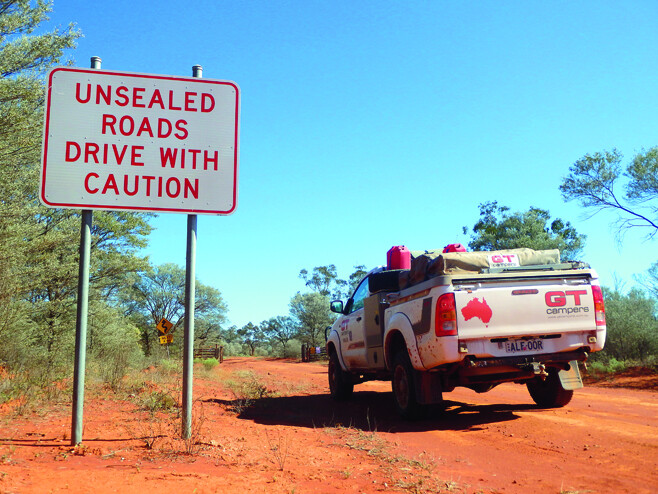
First up, know what your vehicle weighs – especially when it’s fully loaded. Most people will be shocked when they run their rig over a weighbridge. Remember, the GVM of a vehicle includes everything you’ve packed, the accessories fitted, the fuel and the occupants.
Set up your vehicle’s suspension properly by talking to a suspension expert and fitting a good-quality aftermarket suspension. If you’re going to use airbags, of any sort, make sure you fit the appropriate ones. For example, Polyair have three different sized bellows to suit leaf sprung vehicles; but be careful not to run them over-inflated.
Keep an eye on the car’s weight when packing for a trip and load heavy items including jerry cans, tools or water as far forward as possible. Keeping weight to a minimum – in both your vehicle and trailer – is always a good thing.
If towing a trailer; note the overall weight of the trailer, the ball weight and how you load it.
Finally, slow down when on a dirt road or track. Hitting any whoopty-doo, creek, gully or gutter at speed is bound to cause issues. The damage mightn’t be noticeable immediately, but it certainly will be further down the track.
Get the latest info on all things 4X4 Australia by signing up to our newsletter.
FROM the very first time someone locked in the hubs, four-wheel driving has been something to be shared with friends and family.
Whether it’s helping cook a campfire roast or running a winch line while you’re axle-deep in mud, having someone you can rely on along for the ride is just part of the experience. It should come as no surprise then that four-wheel driving has become a passion that brothers-in-law, Michael and Jackson, have developed together.
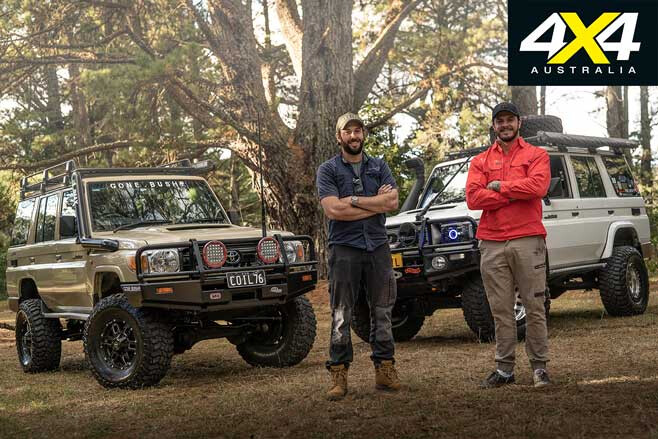
It wasn’t that long ago the two Sydneysiders were spending their weekends cruising local tracks in a pair of killer Hiluxes, but, like most off-roaders, through peer pressure or practicality the pair started wanting more.
They were faced with the dilemma we’ve all come head to head with: do they double down and throw money into their current rigs to do something they were never designed to do, or do they start from scratch with a stronger foundation and a clear direction for their off-road nirvana?
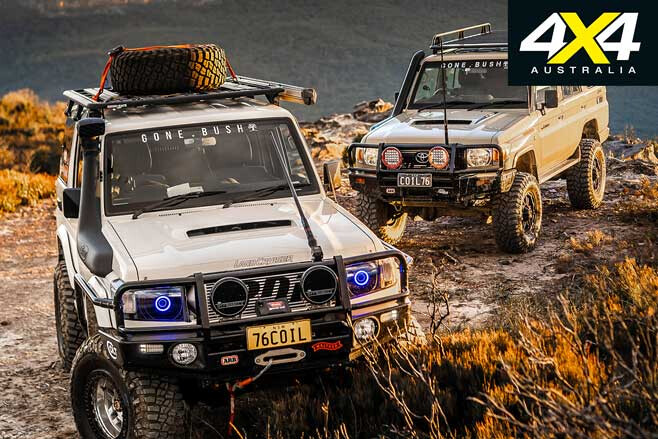
Michael jumped ship first, with live axles (front and rear) and 4.5 litres of V8 grunt hiding beneath the classic lines of Toyota’s 76 Series Land Cruiser just too good to pass up. Of course, Jackson’s ’Lux was soon gone, and in its place was a snow-white VDJ76 just waiting to snowball.
Toyota’s current-gen 70 Series might be the most customisable vehicle on Australian shores; whether it be single- or dual-cab ute, troopy or four-door wagon, the aftermarket has exploded with upgrades and conversions all prime for turning a showroom-fresh rig into an off-road weapon. It’s that customisation that first brought the pair of 76s onto 4X4 Australia’s radar.
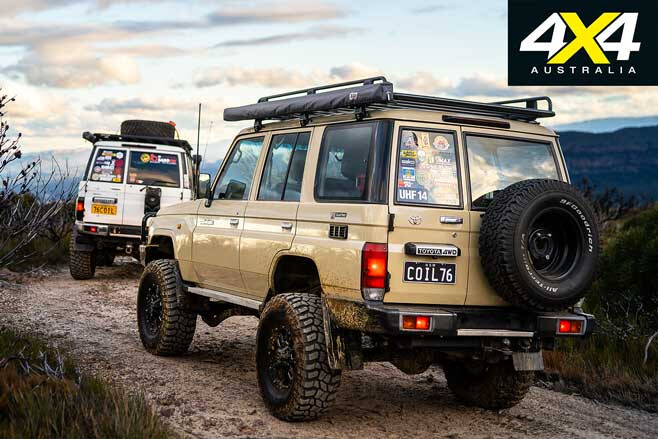
Where most Land Cruisers have one million leaf springs holding the rear end with nonexistent flex, the pair before you have some of the most supple suspension we’ve seen either side of the black stump.
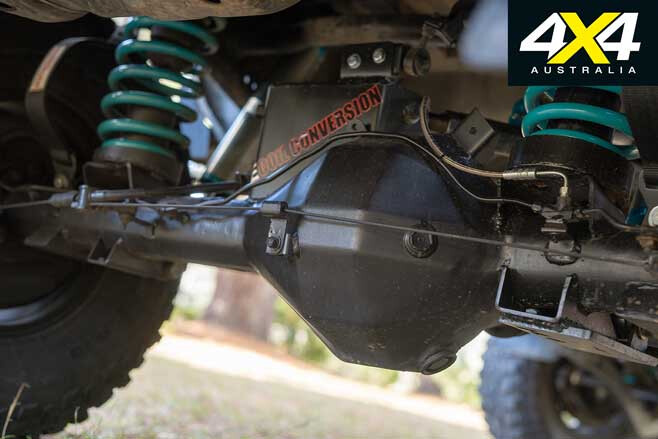
To give their chariots a ride more suitable for long-distance touring and hardcore weekends, the pair let the team at Automotive Etcellence slice and dice the sub-par rear suspension arrangement out. In its place (in both rides) now resides a hand-built long-arm coil conversion.
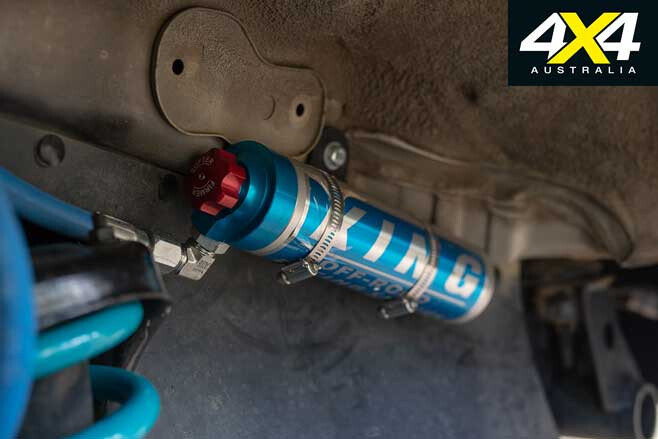
The set-up rides upon an aftermarket Dwiz housing that not only provides a significant strength upgrade but also corrects the notorious LC70 track width issue. A set of Dobinsons springs positioned above the new rear axle provides the pair with their new ride height, while heavy-duty arms hold the whole affair in place. Huge external reservoir King shocks keep the rear end in check through undulating terrain, with a pair of limiting straps ensuring the shocks are always working in their comfort zone.
Both rides have also pushed far beyond the factory capabilities of their Cruisers up the front, with the duo binning the stock restrictive radius arms and replacing them with a set of oh-so-flexy replacements from Comp Rods.
Rather than run flex-limiting caster correction bushes, the solid steel replacement arms have accounted for the lifted geometry in the arm itself to allow maximum articulation. Both fellas have teamed the new arms up with replacement adjustable and heavy-duty Panhard rods, tie rods and drag links. Swaybar extension brackets help keep bodyroll in check without placing undue stress on the factory links.
Like the rear ends, both front set-ups ride on a set of lifted Dobinsons coil springs. They’re teamed up with a second pair of King 2.5-inch body shock absorbers, with the remote reservoir also having the optional compression adjuster to allow the ride quality to be dialled in – this effectively changes how quickly the shock’s piston allows fluid to pass back and forth.
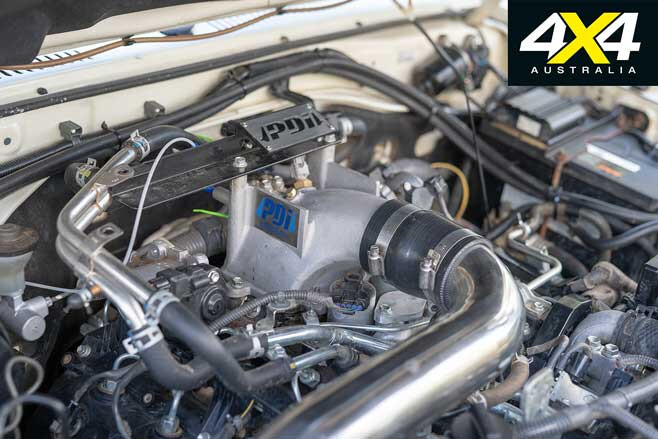
When it came time to get the bite to match the V8 bark of the 1VD-FTV engine, the pair found success in very similar ways. Both rigs run snorkels, with Michael’s a stainless steel option and Jackson running a Safari unit. From here intake air is compressed to 22psi in Jackson’s and 20psi in Michael’s, before PDI front-mount intercoolers rein in intake temps and help keep that charge dense.
Michael’s running a trick set of custom pipework into the factory twin throttle bodies, while Jackson optioned up a single throttle body unit from PDI to simplify things. Michael’s brother at Barnett Racing Products fabricated stainless steel turbo-back exhaust systems for both rigs, with dyno tunes netting 225hp and just shy of 800Nm in Jackson’s beast, and 200hp and 713Nm in Michael’s. Both Cruisers needed to upgrade to 1300Nm-rated clutches from NPC Performance Clutches in Queensland, with matching catch cans to keep oil-soaked blow-by out of the system.
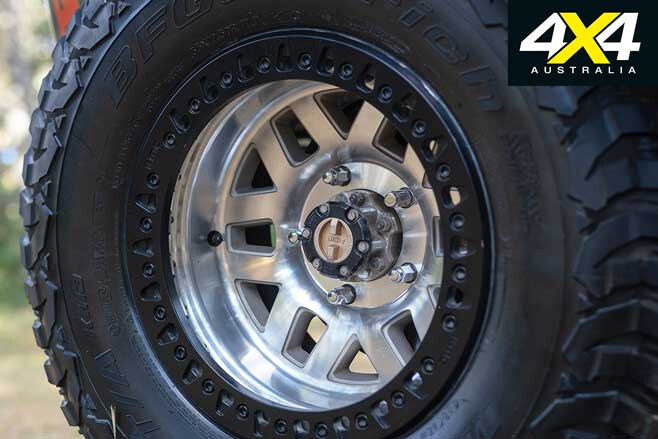
With the two Cruisers riding on similar foundations, Jackson and Michael both started taking different directions when things became more visible. Michael opted for a set of ROH’s ‘Patriot’ wheels punching in at 16×8-inch, with a 0 offset for those following at home. They’re wrapped in a do-it-all tyre with 315/75R16 Cooper STT Pros on all corners. Jackson stepped things up with a slightly more aggressive combination for both wheels and tyres.
Protruding from each end of the Cruiser are huge KMC XD229 Machetes. The bona fide beadlock wheels punch in at 17×9-inch, with a massive -38mm offset giving the white Cruiser its aggressive stance. The mechanical beadlocks clinch down on 35×12.5R17 BFGoodrich KM3s, allowing Jackson to run single-digit pressures for insane levels of traction. He’s also paired the meaty tyres with a pair of factory lockers, so in the unlikely event he lifts a wheel the big rig will keep pushing forward.
On the outside the pair has kept the same-but-different approach throughout. Starting with Michael’s rig, the front end is adorned with the iconic ARB Commercial bar housing a pair of red-ringed ARB Intensity LED driving lights and the GME aerial whip. Moving rearwards and things are kept subtle to hide the modifications underneath, with a simple ARB Trade Rack up on the roof making a home for the ARB Touring roll-out awning.
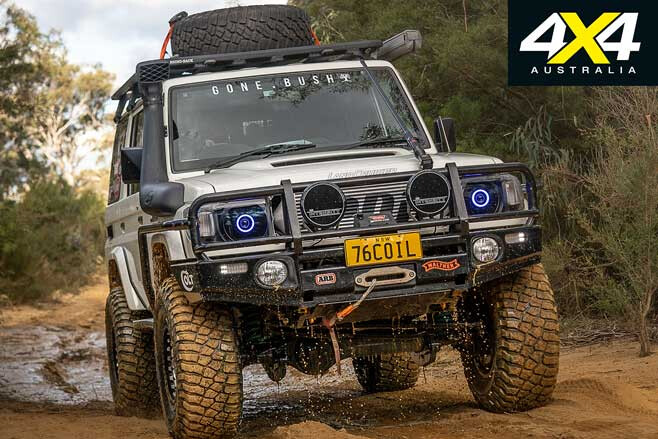
Jackson’s kicked off like a punch in the face, with Bluetooth-operated replacement headlights from Power Vision Sound. With the tap of a screen the projector headlights change colour, which serves as a bold contrast to the blacked-out Intensity lights nestled between them.
Jackson also optioned to place his front-mount intercooler out in the open so the world can revel in its glory, with the whole lot protected by an ARB Deluxe bar and Warn winch. ARB scrub rails team up with a pair of rock sliders, to protect the flanks from wayward Prius drivers. Up top he’s also gone for the ARB Touring awning; although, this time mounted to a Rhino-Rack flat roof rack.
Moving inside and it’s a blast from the past, with Michael’s Cruiser adorned with OEM Toyota brown carpet and vinyl. Up front he has up-specced the interior with a host of parts from Cruiser Consoles. The full-length centre console adds a usable centre console as well as two cupholders, 12V outlets and much needed storage pockets. There’s also a roof console up front that houses the GME TX3500 UHF.
Moving rearwards, the ARB storage drawer unit fills the rear end of the battle wagon and gives Michael plenty of room to store his work gear and hold the all-important Waeco full of Friday arvo beers.
Jumping behind the tiller of Jackson’s beast the first thing you come face-to-face with is the, well, tiller. The stock offering wasn’t going to cut the mustard for Jackson, so he reached out to Power Vision Sound again for one of the steering wheel conversions; meaning the 1980s spec 76 Cruiser now sports steering wheel controls in a far more modern hoop.
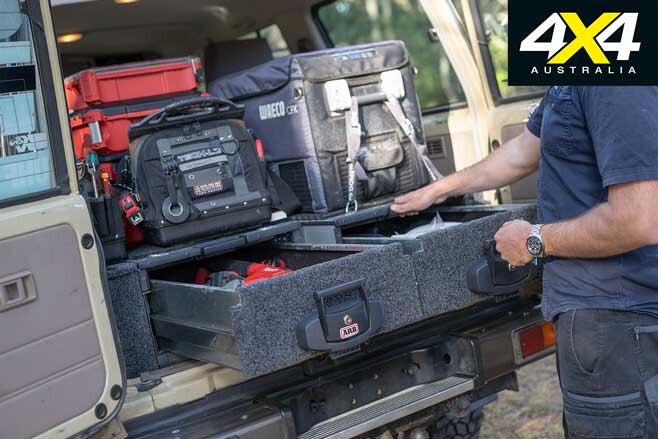
They’re wired up to the replacement head unit that not only provides satellite navigation but also feeds into the upgraded Alpine speakers. Jackson went the Cruiser Consoles route again to make the most of the interior space, while in the rear he’s gone for a storage drawer system from Drifta that incorporates a prep table and camp-light controls.
While two very similar blokes with two very similar rides have walked two very similar paths, the differences still shine through. It’s proof that modifying 4x4s is as much an extension of who we are, as a search for more practicality or capability. And while Michael and Jackson might have some of the most well-equipped Cruisers on the tracks, something tells us it won’t take long until the snowball kicks off again.
What does 1VD-FTV mean?
CODES are everywhere we look. Nestled between the steel chassis rails of any late-model 70 Series is 4.5 litres of diesel-drinking fury known as the 1VD-FTV. And while that may not seem to give many clues, it tells us a fair amount about what’s going on under there.
Toyota’s engine codes are reasonably simple. The first number is the generation of engines, so a 1 means it’s the first of its kind, a 2 is the second and so on. The next letter or two designates the family of engine – so with VD the D typically means diesel, but don’t bet your house on it.
After the dash is where the useful information comes in. F means an economy focused overhead cam. T means turbo. V means common-rail diesel injection. For some reason Toyota doesn’t strictly adhere to these rules, but if you see an engine code with TT in the second half you know you’re in for a fun time.
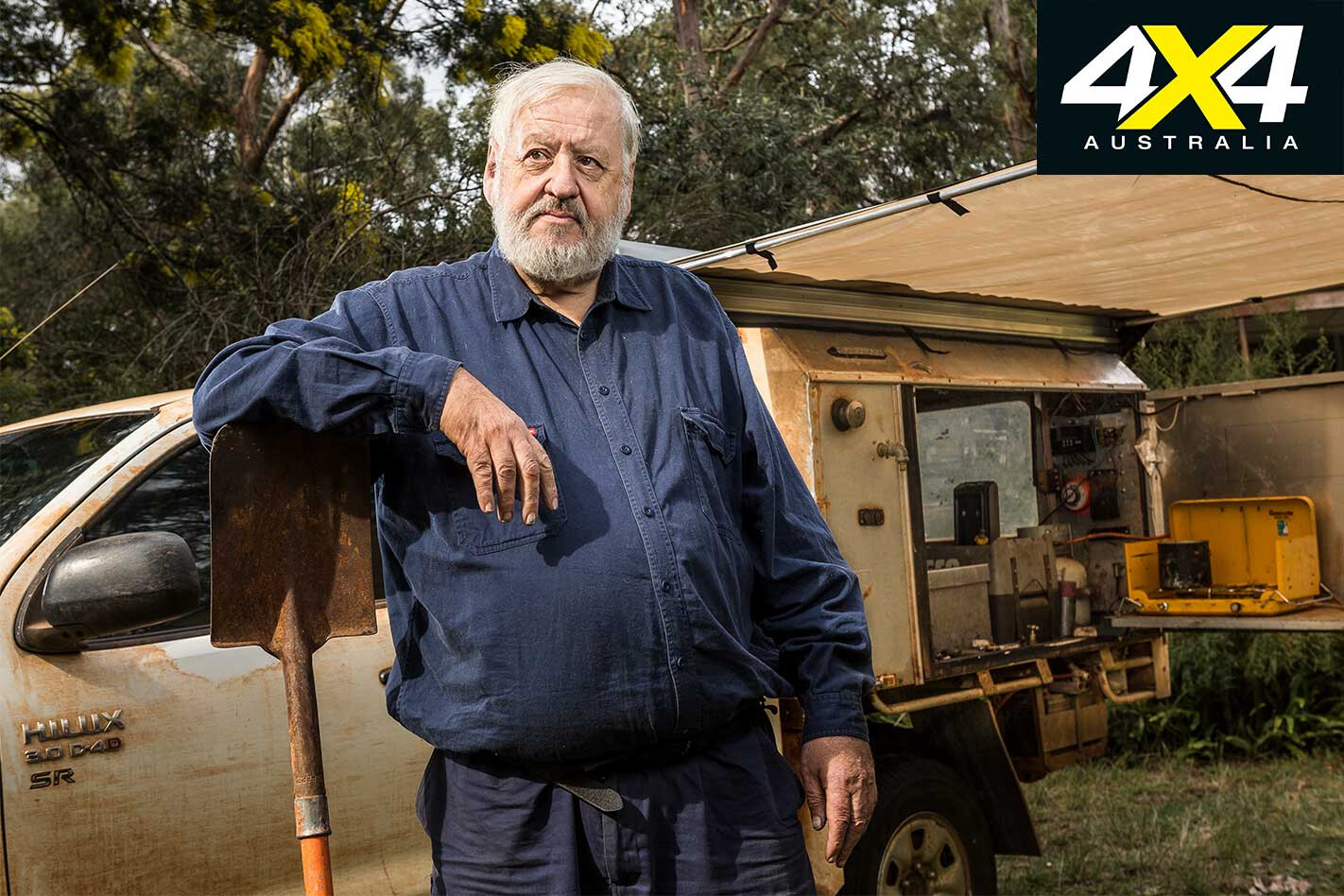
Jim McNabb, the man behind the ‘how to poo in the bush’ video, has done his share of four-wheel driving. If you can find a track in an Aussie 4×4 travel book, chances are, the 66-year-old radio club president has done it.
*Original article published October 23, 2015
His most recent adventure saw him travel 14,500km, with a whopping 10,000km driven on dirt. He loves it. But on this lengthy trip he discovered something he doesn’t love: excrement (or, more precisely, the growing number of campers who leave it behind). To vent his anger, Jim took to YouTube to create a ‘How to crap in Outback Australia’ video, which showed campers exactly how to use a shovel.
The video was a hit, receiving more than 22,000 views in its first two weeks, and inspired Jim to broaden his campaign efforts for cleaner campsites. He has since released a ‘How to crap in the Outback when driving in a convoy’ video. We enjoy his bluntness, but we wondered if there were more to grumpy Jim than a shovel, and an axe to grind. So we had a chat…
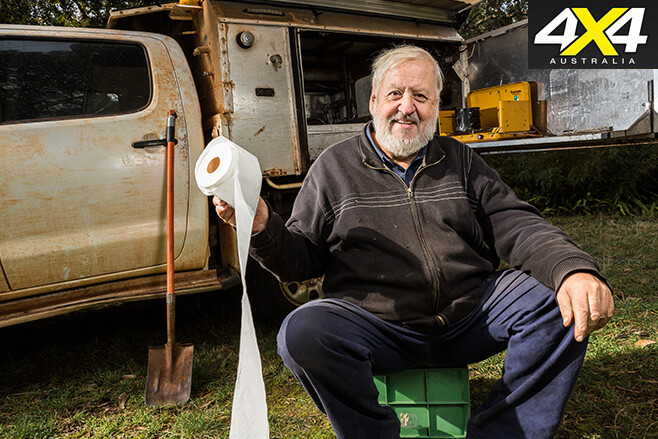
Describe the worst poo vandalism you’ve seen. How do you describe the scene? Okay, I’ll try. The first thing is the number of flies. On the 737 (radio) network I said: ‘I have 3,500,000,000 flies and their families with us.’ To see poo paper hanging in all the bushes is sickening; behind every bush, on the ground. If I went to their house and did the same, I’d end up in the lock up.
Besides people learning how to use a shovel, what do you reckon the solution to this type of vandalism is? I believe that toilet training should be part of all 4×4 driver-training courses, along with why we should do the right thing in the bush.How have you seen the treatment of the bush change during your lifetime? In the days when I started driving around the bush you could be 20-30km away from town and you would not see anyone for weeks. This year on the Canning Stock Route (CSR) we had around eight to 10 4x4s go by a day. Each one had two people. That makes up about 20 pit stops for each day of travel. That’s a lot of poo paper in the trees.You’re a bit of veteran when it comes to 4WDing. What got you into off-roading and how long have you been hitting the tracks? I started on a motorbike in ’67. Then I raced a dune buggy. But because of idiots doing the wrong thing, the government stopped us, and I moved to 4x4s in about ’71.
Where’s your favourite spot and why? The Five Rivers Lookout at Wyndham. You must see at least one sunrise and one sunset. I love the CSR and would love to do it again; next time from north to south.
What’s the hardest driving you’ve done? 4x4ing down the old Zeka Creek Track, ‘now closed’ in winter. It took us three days to get down to Wonnangatta River. It was snowing all the way and we had to winch with the PTO winch all the way down. We came back up the old Zeka Track and it took two days and nights to get back up on the Howitt Plains. By the time we got back on good roads, we were very low on food and fuel. This is when I learned that you should always take at least an extra weeks’ worth of food and fuel.
Ever been in any hairy situations on the road? About 15 years ago, I got bogged with the wife when it rained on the Tanami Track. (It was a track then. Not now. It’s been upgraded). There was nowhere to put the winch cable on, so I put my chain along the ground with about 50-plus tent pegs going through the links and into the road! It worked and I got out.
You’re a Victorian. Where do you drive there? I have a love for the High Country. Ron Moon wrote a book some years ago, and I did every track in it. The best was the Old Omeo Coach Road. Most of it was made by convicts.What’s your rig at the moment? How’s it go? My new toy that I went on this [recent] trip is a Hilux 2008 TD. I have Tough Dog suspension, front and back, a spare 200L tank of fuel, a 54L water tank, two 150W and one 100W solar panels. I have two spare batteries under the tray with a 150W panel for both. I have made the 100W panel with a two-way switch so I can put the 100W and 150W power into either battery.
I use one battery for the Waco fridge and one for all the radios. I run HF for the 737 network, an 80-channel CB, and Ham Radio HF/VHF/UHF radio gear. A homemade canopy. Camping car awning – 2.5M x 3M with remounted led lights. I also have a pumping system with water filters so I can pump from wells, rivers, etc.
What other 4x4s have you owned? 1980 HJ45 Troop Carrier and a 1986 2H trayback. There are some more but I only had them for a small amount of time.What’s to love about off-roading? I love the bush, with the independence you can get – to be able to go away from everyone, sit by the campfire and see the sunset, the stars at night, along with the sunrise; each one is new. I have a great love of the wildlife.
Besides poo, what else grinds your gears? How long is a bit of string? Rubbish left in the fireplace. People who make a new fireplace instead of using the one that’s already there. Cutting down trees with hollows. No respect for the country! Aboriginals have a great saying, “We don’t own the country, we belong to the country; we are just custodians.” If we don’t start looking after the country, we will get locked out of more areas. We are very lucky that the Traditional Owners let us into their part of the country.
What’s the best advice you’ve been given? If it rains, stop where you are for a day or two till it dries out.
AN AUSTRALIAN 4×4 enthusiast has put together a “how to crap in the outback” YouTube video in a bid to toilet-train careless campers who leave behind their mess and don’t know how to poo in the bush.
*Original article published July 15, 2015
In the three-minute video, Sherbrooke Community Radio Club President Jim McNabb explains in detail how to correctly go number two in the bush.
Obviously frustrated, Jim details exactly what a shovel is, the different parts of it and how to use them, a criticism of a new generation of 4x4ers who don’t respect the environment or other travellers.
“I have noticed the deterioration in the type of people who are travelling outback,” Jim says. “Unfortunately, there seems to be a generation that has some simple problems with their mentality.”
The 66-year-old 4×4 veteran recently returned from a trip through all the mainland states of Australia and says he is sick and tired of 4x4ers who don’t know how to use a shovel. He says incorrect toilet practice is not only unseemly and bad for the environment, but will also cause more places to be closed off to travellers who do the right thing.
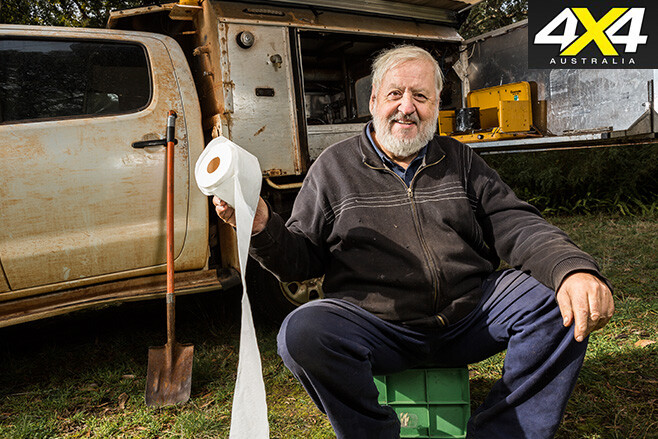
Among Jim’s top tips on toilet etiquette is advice on what is a suitable place to do your business – namely, don’t do it near a water course.
“Doesn’t matter what you do, the shit runs into the water and causes all sorts of problems,” Jim says.
He says the spread of diseases such as diphtheria is just one of the dangers that come with careless toilet practice.
“60 years ago I was shown that you only take memories with pictures home and only leave foot prints to be seen by the next users.”
Thankfully, the video doesn’t actually show Jim using the hole he digs.
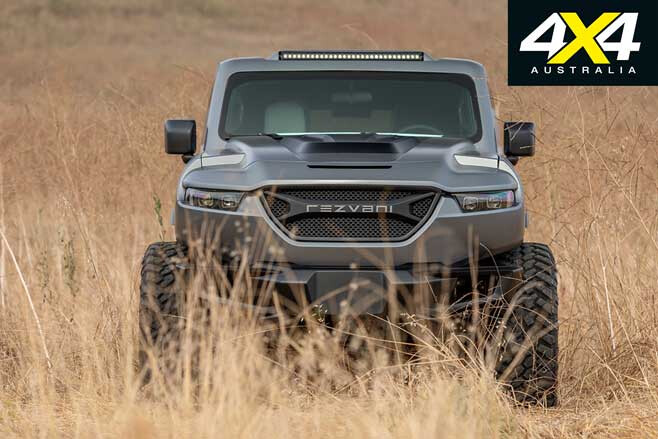
THE zombie-slaying Rezvani TANK has been updated and it’s oozing with plenty of military gadgetry and a tuned Demon engine capable of more than 745kW (1000hp).
Street-legal (in the US of A), the body-on-frame 2020 Rezvani TANK is now underpinned by the all-new JL Wrangler – the last-gen sat on the JK platform – and has received massive power gains courtesy of an engine swap.
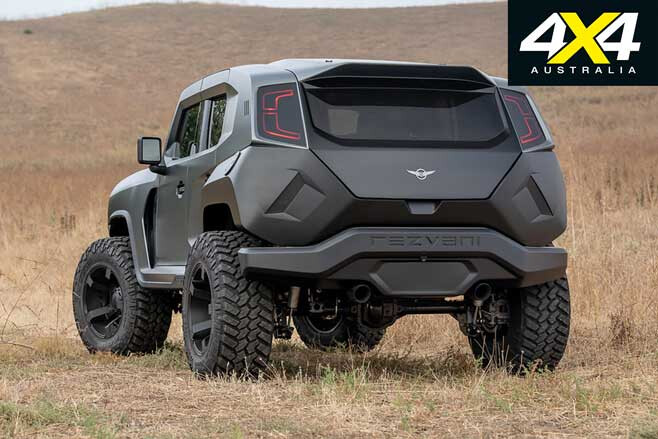
Rezvani opted to drop the previously used 375kW 6.4-litre HEMI V8 and instead shoehorn in a 6.2-litre supercharged V8 engine; the one found beneath the hood of the Dodge Demon. An engine tune by the boffins at Rezvani further cranked up the Demon’s maximum power output to more than 745kW (insane!).
Proving it has the ‘go’ to match the ‘show’, the TANK’s running gear includes Fox racing suspension; a Dynatrac axle set with air lockers and an air compressor; Dynatrac ProGrip front and rear brakes; 1350 (front) and 1410 (rear) driveshafts; and off-road-capable 37-inch tyres. Fox Racing 3.0 Internal Bypass Shocks with DSC can be ticked as an option.
“The focus of this generation’s Tank was to be athletic in design and stance, have a refined sports-car ride and suspension, have a luxurious interior, and surpass 1000hp, all in a car that’s easily a daily driver,” said CEO of Rezvani Motors, Ferris Rezvani.
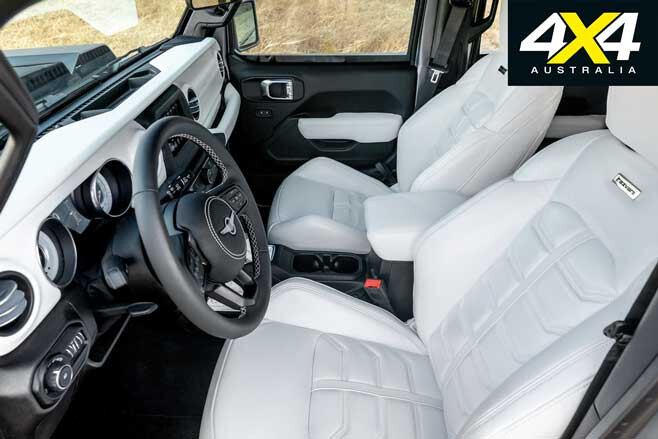
That luxurious interior extends to hand-stitched leather, a suede headliner and a 7.9-inch infotainment screen with Apple CarPlay and Android Auto.
Some of the military-based goodies and options available include a FLIR Thermal Night Vision system; ballistic armour (Kevlar, bulletproof glass and military-grade run-flat tyres); underside explosive protection; a self-sealing fuel tank; an armoured radiator; reinforced suspension; ram bumpers; electrified door handles (yep!); sirens and strobe lights; a smoke screen; continuous video surveillance uploaded to the cloud in real-time; blinding front and rear lights; magnetic dead bolts; an intercom system; gas masks; and a hypothermia and first-aid kit.
Electro-Magnetic Pulse Protection is, amazingly, also a realistic option. Rezvani Motors says of the tech: “Tested at a Department of Defense (DOD) approved testing facility, the EMP protection device is the world’s first electromagnetic pulse (EMP) protection technology for a vehicle’s entire electrical system.
“Proven to exceed military standards, the EMP shield is also one of the world’s fastest surge protection devices.The EMP shield utilises three incredible technologies and a patent-pending advanced design to operate at incredible speeds while also being capable of protecting from over 40 EMP strikes with zero degradation.”
The 2020 Rezvani TANK is available in four trim levels: TANK, TANK X, TANK Military Edition and TANK X Military Edition. The base-model TANK starts at US$155,000 (AU$230,000 approx.).
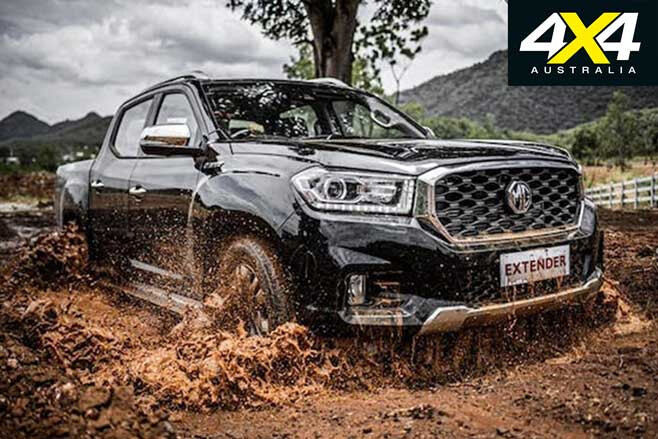
CHINESE carmaker MG has unveiled the 2020 MG Extender ute in Thailand, but it won’t be coming to Australia.
The once-British brand’s first ute will be sold in Thailand in single-cab, dual-cab and grand-cab guise and will be powered by a 2.0-litre turbo-diesel engine capable of 120kW and 375Nm. Both six-speed manual and six-speed automatic transmissions will be available.
Eager eyes will note the MG Extender looks a helluva lot like the LDV T60 ute that’s already sold in Australia, and that’s because MG and LDV are both owned by automotive powerhouse, SAIC; with the T60 and Extender (read: rebadged T60) sharing the same production line.
Bringing the Extender here isn’t a ridiculous idea, based on recent Australian sales data of LDV’s budget-priced ute. A total of 335 T60 units were shifted from showrooms in July, a whopping 24.1 per cent increase compared to the same month in 2018 – proving there is an appetite for bargain-priced Chinese utes.
However, MG Australia has quickly shut down that speculation.
“We are aware that the MG Extender Ute has been launched in Thailand this past week, however this product is not on our agenda now or in the foreseeable future,” MG Motor Australia said in a statement to whichcar.com.au.
Just like MG slapping its badges on an existing product, a number of manufacturers over the years have applied their badges to existing products. The Renault Alaskan and Mercedes-Benz X-Class, for example, are both based on the Nissan Navara platform yet utilise different suspension set-ups, tweaked fascias and an assortment of various tech.
Then you’ve got the Fiat Fullback which was on sale in Europe until recently, known as the Mitsubishi Triton here. Other than new-look headlights and a refreshed grille, the Fullback was largely spec-for-spec with the Triton; although, the Mitsubishi ute offered more body variants as part of its model line-up.
The BT-50 and Ranger also shared basic underpinnings, before the brands parted ways and Mazda teamed up with Isuzu to collaborate on the next-gen ute.
In Thailand, the MG Extender dual-cab is expected to retail from approximately AU$36,000 (after price conversions).
IMAGINE you have all the new 4×4 dealerships you could wish for, all closely grouped together in some remote and rugged location. All you have to do is walk into one and pick a new off-road capable 4×4 to drive back home … home being hundreds of kilometres away via the roughest tracks imaginable. In some parts there may not be tracks at all.
You can’t modify your chosen vehicle as there are no engineering workshops among all the new dealerships, but factory options are available. And there’s a well-stocked tyre shop, so you can swap to more off-road-friendly tyres provided you stay legal (we know state regulations vary, so for argument’s sake let’s say NSW). So what new 4×4 would you pick if price wasn’t an issue?
It may be a fanciful scenario, but it’s the thinking behind compiling this list of the most off-road-capable showroom-stock 4x4s, listed one to seven on their ability to cover any type of off-road terrain you can imagine: soft sand, slick mud, ruts, holes, rocks, steep climbs and descents, or any combination of the same.
The seven are: Jeep Wrangler Rubicon, Toyota Land Cruiser 70 Series, Mercedes-Benz G-Class Professional, Ford Ranger Raptor, Toyota Land Cruiser 200 Series, Land Rover Discovery and Suzuki Jimny.
Jeep JL Wrangler Rubicon – Original and still the best
All Jeep Wranglers are capable 4x4s, but the Rubicon is the best of the lot.
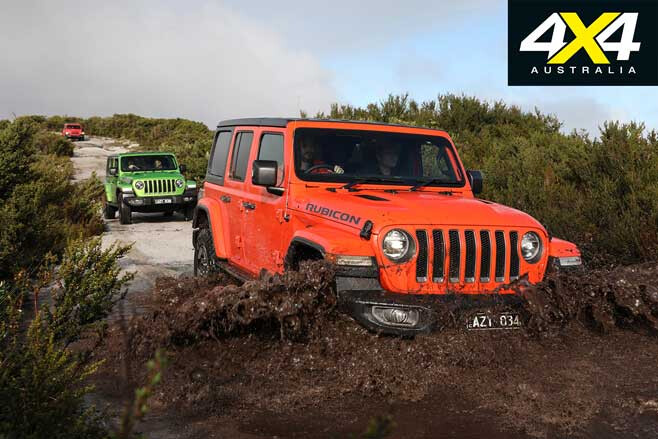
IS THERE currently a more iconic 4×4 available than the Jeep Wrangler Rubicon? Not only is the Rubicon the most off-road-capable vehicle in the Wrangler range, but it’s also the latest hero vehicle in a long line of 4x4s born of the original World War Jeep, the most iconic 4×4 of all time.
Big call? Then here’s a quick history lesson: If it wasn’t for the original WWII Jeep there would be no Land Rover, Toyota Land Cruiser or Nissan Patrol as we know them today. End of story.
Fast forward to 2019 and the latest iteration of this iconic 4×4 has just arrived in Australia. The new Wrangler JL replaces the Wrangler JK that dates back more than a decade now. The JL brings new powertrains and changes in engine availability, most notably in the Rubicon which is now available with a diesel engine.
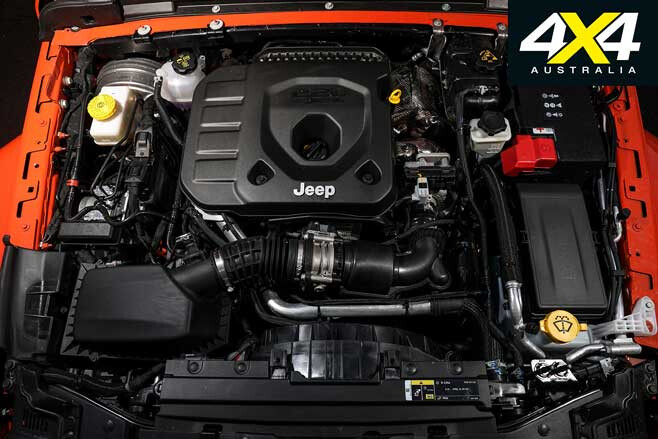
In fact, it’s the only model in the new range that has a diesel. The diesel in question comes from Fiat Powertrain Technologies and has been used previously in the KL Cherokee and a couple of Alfa Romeo models, the Giulia RWD sedan and the Stelvio SUV. It’s a Euro 6-compliant (and therefore ahead of the game here) 2.2-litre four-cylinder (single) turbo-diesel that makes a punchy 147kW and 450Nm despite its relatively small capacity.
The JL Rubicon is still offered with a petrol engine: a 3.6-litre Pentastar V6 that claims 209kW and 347Nm and is carried over from the JK Rubicon. The petrol engine is a good, relatively modern design (without being cutting edge) that’s $5000 cheaper than the diesel, and it’s simpler and cheaper to service so it makes a strong buy-me argument even if the diesel is more economical and the better drive.
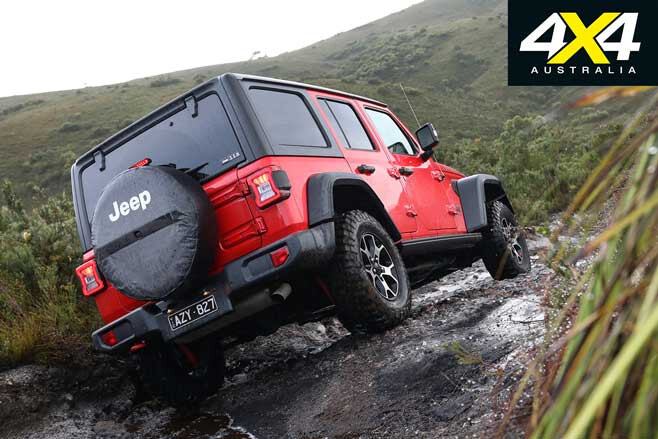
In another significant JL Series change, a manual gearbox is a thing of the past as all new Wranglers are automatic-only. That may be bad news to some, but the good news is the gearbox in question is the ZF eight-speed (made under licence by Chrysler, in this case), arguably the best automatic on the planet.
More changes come in the form of the JL’s transfer case. While both the old Rubicon and the new Rubicon get what Jeep calls the Rock-Trac transfer case, the new Rubicon’s Rock-Trac is based on Jeep’s Selec-Trac transfer case (with its full-time 4×4 mode) while the old Rubicon’s Rock-Trac was based on the Jeep’s part-time 4×4 Command-Trac transfer case. What makes both Rock-Trac systems the same is the 4.0:1 low-range reduction ratio in place of the 2.72:1 low-range reduction ratio in the non-Rubicon models.
All Wrangler models also get newly calibrated, off-road-specific electronic traction control.
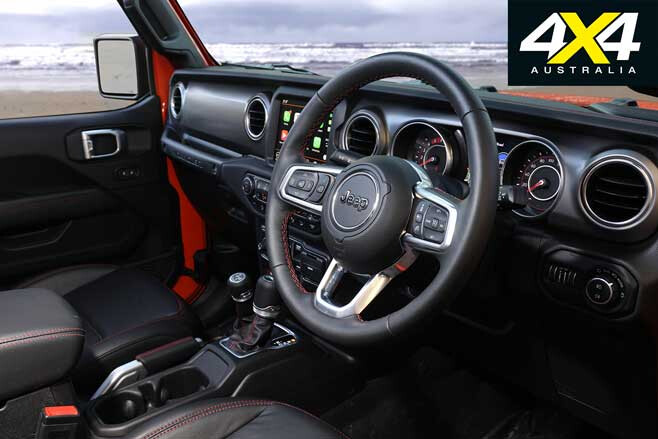
These changes aside, the new Rubicon carries over the defining elements of the old Rubicon, namely front and rear driver-switched differential locks and a front swaybar release which, when activated, adds to the already impressive front wheel travel.
The Rubicon also gets lower axle ratios compared to non-Rubicon models and impressive 77.2:1 (with the petrol Rubicon) and 70.3:1 (with the diesel) crawl ratios. Last, but certainly not least, are the BFGoodrich 32-inch KM3 mud-terrain tyres.
Like the Ranger Raptor, the Rubicon is a genuine factory custom pitched at off-road use and is arguably the best out-of-the-box 4×4 you can buy if getting seriously dirty is your idea of fun. Just the fact it’s a separate-chassis design with live axles at both ends puts it in a good place before you start.
Only one thing could be better and that’s a short wheelbase two-door Rubicon thanks to its notably better ramp-over angle. As it is, the ‘shortie’ Wrangler is only available as a Sport or Overland model.
Jeep JL Wrangler Off-Road Accessories
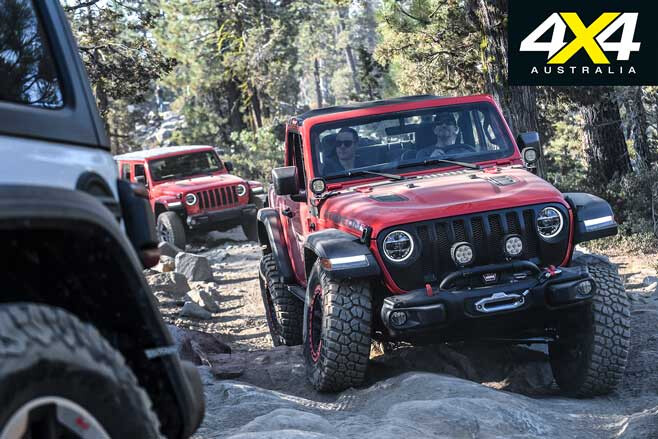
If you’re not satisfied with what a stock Rubicon has to offer, there’s no shortage of off-road specific 4×4 aftermarket kit available to make it even more capable. Obvious mods start with suspension lift and bigger wheel/tyre packages but extend well beyond that, snorkels included.
However, it’s worth noting that Australian-spec Rubicons, with their Selec-Trac-based transfer case, use lighter-duty axles than their US counterparts, which means an axle upgrade if you want to run bigger tyres without compromising reliability.
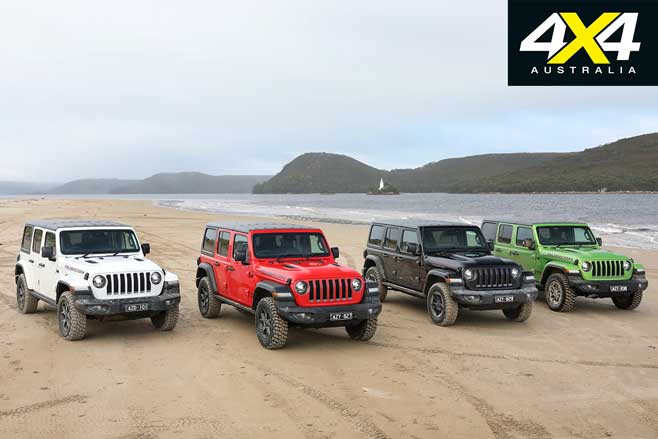
JEEP JL WRANGLER RUBICON SPECS: Engine: 2.2-litre 4-cyl turbo diesel Max Power: 147kW @ 3500rpm Max Torque: 450kW @ 2000rpm Gearbox: Eight-speed automatic 4×4 System: Dual-range/full-time (+2wd) Crawl Ratio: 70.3:1 Construction: Separate-chassis Front Suspension: Live-axle/coil springs Rear Suspension: Live-axle/coil springs Kerb Weight: 2221kg GVM: 2630kg Departure Angle: 31.9° Ramp-over Angle: 21.2° Approach Angle: 41.7° Wading Depth: 760mm Ground Clearance: 252mm Fuel Tank Capacity: 81 litres ADR Fuel Claim: 7.5L/100km
Toyota Land Cruiser 70 Series – Global Force
No Toyota 4×4 is tougher than the 70 Series.
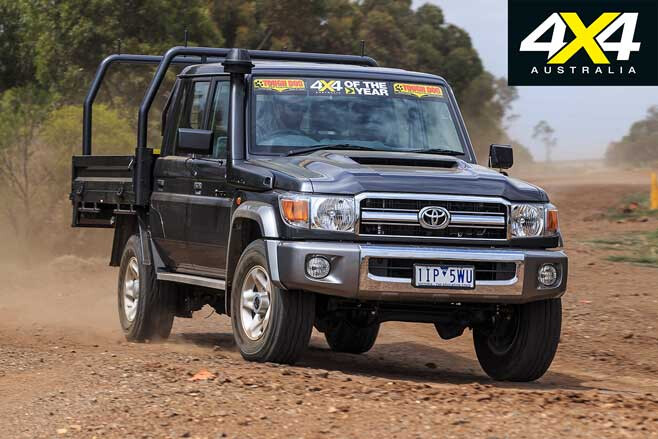
THE 70 SERIES, currently sold as a 76 Series wagon, 78 Series TroopCarrier and 79 Series single- and double-cab utes, is the latest in a long line of Toyota 4x4s that trace back to the very first Land Cruiser; although, it wasn’t called that at the time.
It was the ‘BJ’, where B stood for Toyota’s B Series diesel engine and J for Jeep, a name used then in the generic sense but subsequently changed to Land Cruiser when Willys-Overland, owners of the Jeep name, pressed for trademark violation, for which Toyota apologised. Lost in the translation, perhaps?
The BJ became the 20 Series, which led to the 40 Series (the Land Cruiser that cemented Toyota’s 4×4 credentials not just here in Australia but globally) and then the 70 Series that arrived here in 1985.
This line from BJ, 20, 40 and 70 is the commercial – working vehicle – heart of the Land Cruiser family tree, while the two other Land Cruiser family branches – 60/80/100/200 and 90/120/150 – are offshoots for the passenger 4×4 market.
This is an important distinction and the reason why the 70 has live axles at both ends (the only current Toyota 4×4 to do so) and leaf springs at the rear (the only current Land Cruiser to do so). The 70 is also the only one of the seven vehicles on this list to have leaf springs at the rear.
Just about any current 70 – 76 wagon, a 78 TroopCarrier or one of the 79 utes – could fill this spot, but we have gone for the 79 double-cab due to the functionality that a ute always brings in the bush over a wagon.
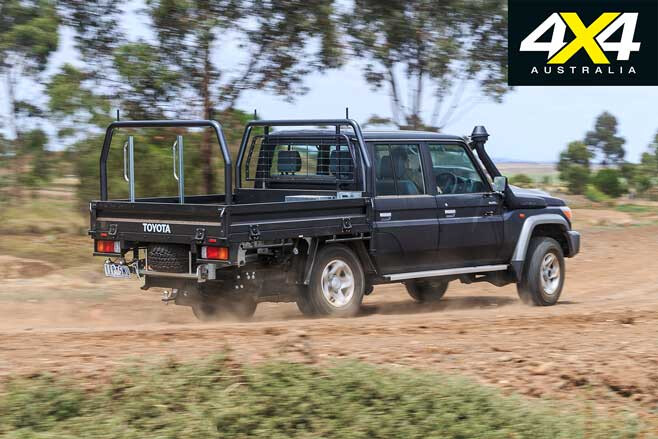
Feel free if you like to make an argument for a 76 thanks to its notably shorter wheelbase (450mm shorter than a 79), or for the TroopCarrier for its extra 50 litres of fuel capacity over the 130-litre capacity of all non-78 Series models.
Models not applicable include lower spec (WorkMate) 76s, 78s and single-cab 79s, as these variants don’t come with the driver-switched front and rear lockers, even as options. And the factory lockers are a significant part of the 70’s off-road armoury.
All 70s have the same dual-range, part-time 4×4 system with a more-than-handy 44:1 crawl ratio, and it’s the only vehicle here that doesn’t come with an automatic gearbox, another telltale of its commercial, working-vehicle persona.
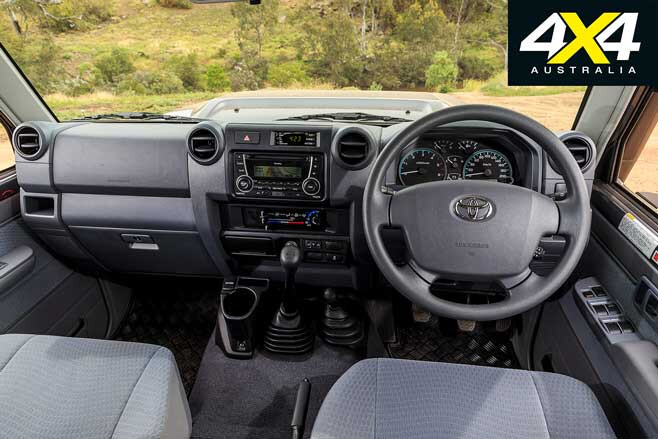
The 70’s tough underpinnings, generous ground clearance and good vision from its upright, truck-like cabin underpin its formidable off-road prowess. The live axles also provide decent wheel travel, although not as good as some here. That’s where the factory lockers come to the fore.
Mind you, the ‘Active Traction Control’ (A-TRC), specifically tuned for off-road rather than on-road use, works very well. Toyota, along with Jeep and Land Rover have led the way with the evolution of electronic traction control away from just an on-road safety benefit to a serious off-road enhancement.
All 70 Series also get a snorkel as standard, which is just another reason why the 70 is an exceptional go-anywhere 4×4. In fact, the snorkel makes the claimed wading depth of 700mm seem conservative.
While no 70 Series comes with aggressive off-road rubber as standard, the factory 16s (in alloy or one-piece steel) allow plenty of flexibility in replacement rubber in the standard sizes (265/70 or 225/95), or bigger.
Toyota LC79 Off-Road Accessories
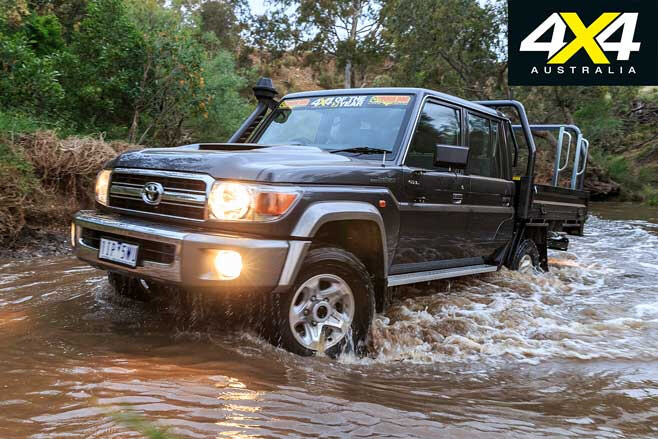
Want to make your 70 better than it is, beyond a change of wheels and/or tyres and bar work? Well, you have no shortage of options, all available via the local 4×4 aftermarket. Feel free to benefit from a number of suspension upgrades, lifts included, or more exotic things like portal axles.
Or you can unleash the largely untapped potential from the 4.5-litre V8 diesel, best let loose on the world by replacing the annoyingly short-geared five-speed manual with a heavy-duty (US-sourced) automatic gearbox. In terms of making an extra-special 70, the sky is the limit.
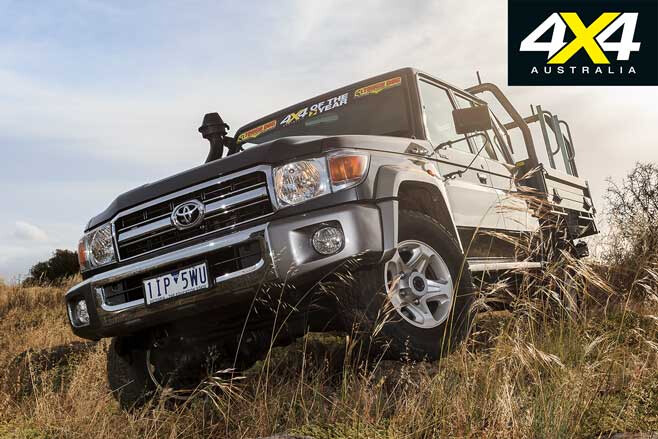
TOYOTA LC79 SERIES DC SPECS: Engine: 2.2-litre 4-cyl turbo diesel Max Power: 147kW @ 3500rpm Max Torque: 450Nm @ 2000rpm Gearbox: Five-speed manual 4×4 System: Dual-range part-time Crawl Ratio: 44.1:1 Construction: Separate-chassis Front Suspension: Live-axle/coil springs Rear Suspension: Live-axle/coil springs Kerb Weight: 2190kg GVM: 3300kg Departure Angle: 29° Ramp-over Angle: N/A Approach Angle: 35° Wading Depth: 700mm Ground Clearance: 235mm Fuel Tank Capacity: 130 litres ADR Fuel Claim: 10.7L/100km
Mercedes-Benz G-Class Professional – Tough as teak
The G-Wagen might carry a fancy Euro nameplate mainly associated with luxury and performance, but it’s military-grade tough.
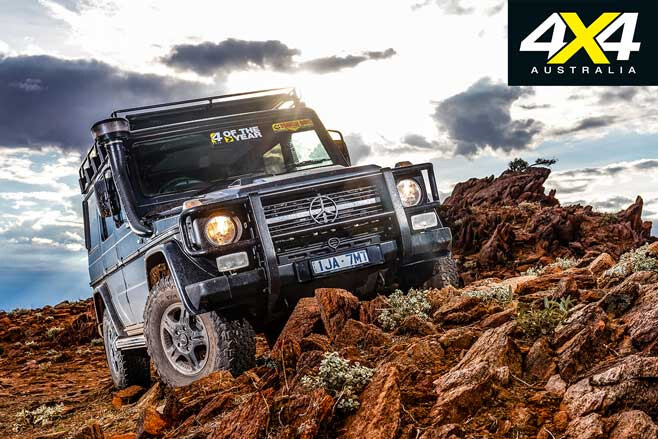
MERCEDES-BENZ’S Gelandewagen, or G-Class, has been in production in one form or another since the hand-built ones were first assembled in 1975, which is a notable achievement in anyone’s books.
More surprising is that until the recent arrival of the new-generation model with the independent front suspension (IFS), the G-Wagen hasn’t changed all that much outside of the inevitable evolution in powertrains.
This is particularly true of the G-Wagen Professional, which sells alongside the new-generation, IFS-equipped G-Wagen, which is only available in a high-performance AMG variant with a twin-turbo petrol V8 that has more power and torque than you can jump over, and a price tag to match.
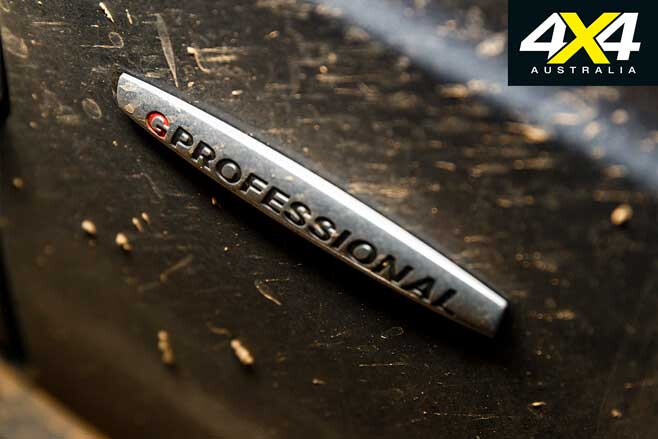
The G-Wagen Professional is at the other end of the scale power-wise, with its detuned 3.0-litre V6 diesel mustering just 135kW but with the ability to run on the lowest-grade diesel you’ll find anywhere in the world. And it’s less than half the price of the hot-rod AMG version.
Just who needs 430kW and 850Nm in something like a G-Wagen is anyone’s guess, but it does sell better than the far more sensible, functional and cheaper Professional model.
Don’t be fooled by the Professional tag, as this isn’t a G-Wagen pitched at ‘professionals’ as we may know them – well-heeled lawyers, doctors, etc. – but a civilian version of the G-Wagens being supplied to the Australian Defence Force, so that means a very back-to-basics vehicle.
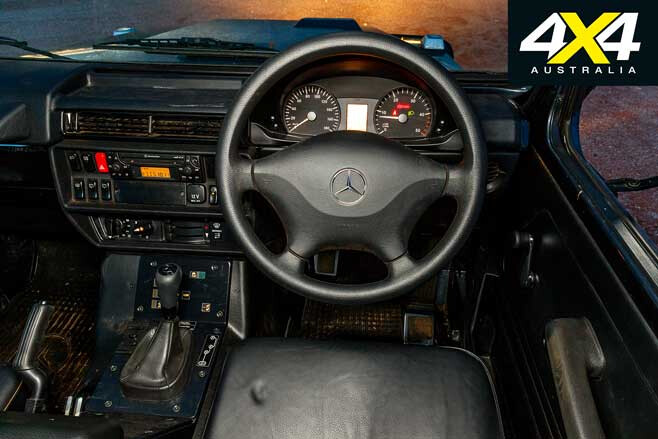
The G-Wagen was originally conceived for military use as an all-purpose light transport anyway, while the civilian G-Wagen was first offered here in 1983 but withdrawn from sale five years later.
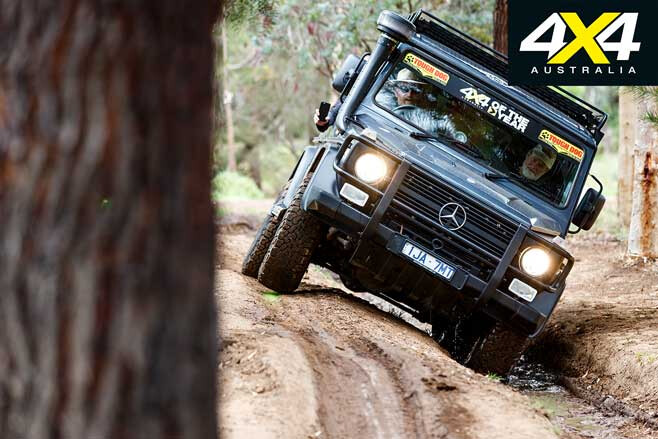
The G-Wagen has a dual-range full-time 4×4 system with a mechanical centre diff. All three diffs are lockable via driver-operated switches. Add in the G-Wagen’s lofty clearance and robust light-truck all-terrain tyres (265/70s on 16s) and it’s a genuine off-road vehicle capable of making its own way without the help of a trail. It also comes with a snorkel and bullbar as standard, the only vehicle in the seven thus equipped. It’s got a super solid front bash plate, too.
While the G-Wagen has live axles at both ends there’s still not a great deal of wheel travel, so the front and rear lockers come in handy on severe terrain as the G-Wagen will cock up a wheel or two in conditions where you wouldn’t think it should.
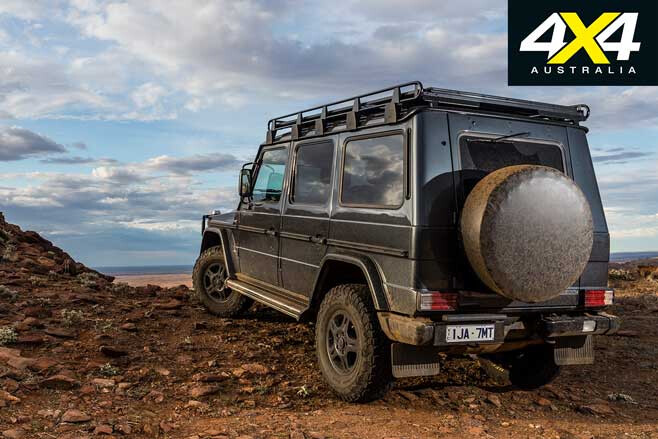
And while it does have electronic traction control, once you lock the centre diff, which is the first thing you do off-road, it cancels the traction control. Then it’s a matter of locking the rear diff, and then the front diff if things get really gnarly.
If anything, the G-Wagen’s weakness is soft sand due to its pretty ordinary power-to-weight ratio, the poorest of the seven vehicles on this list. Still, that’s unlikely to stop you, but it would be the first on this list to use low range for sand driving.
Despite that, the G-Wagen is a true ‘compass-bearing’ overland tourer straight out of the box … arguably the best of our seven in that role.
Mercedes-Benz G-Class Off-Road Accessories
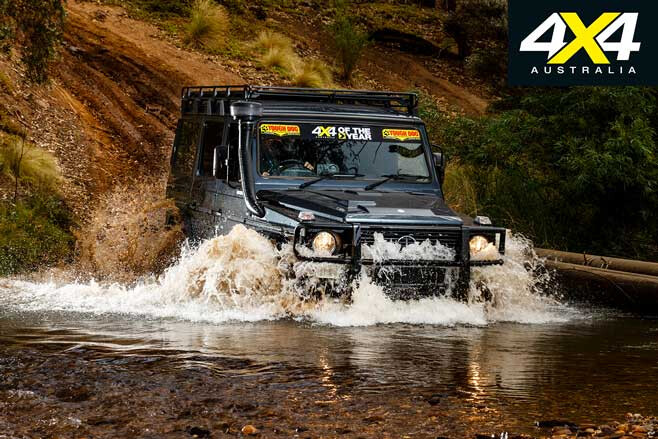
You really don’t have to toughen up the G-Wagen as it’s already built like a reinforced brick dunny. And there’s not much it needs, given it comes with a snorkel, standard bullbar and robust off-road tyres.
If you do want more you can add a winch, a cyclone air-filter atop the snorkel, a second spare wheel carrier and a walk-on bonnet straight from the factory options list. More specialist kit is available overseas, but it’s a bare cupboard from the local 4×4 aftermarket industry given the low sales volume of this model.
MERCEDES-BENZ G-CLASS SPECS: Engine: 3.0-litre V6 turbo diesel Max Power: 135kW @ 3800rpm Max Torque: 400Nm @ 1600-2600rpm Gearbox: Five-speed automatic 4×4 System: Dual-range full-time Crawl Ratio: 35.6:1 Construction: Separate-chassis Front Suspension: Live-axle/coil springs Rear Suspension: Live-axle/coil springs Kerb Weight: 2350kg GVM: 3560kg Departure Angle: 35° Ramp-over Angle: 22° Approach Angle: 38° Wading Depth: 650mm Ground Clearance: 245mm Fuel Tank Capacity: 97 litres ADR Fuel Claim: N/A
Ford Ranger Raptor – Strike Weapon
The Raptor isn’t just a dressed-up Ranger … it’s a seriously re-engineered factory custom.
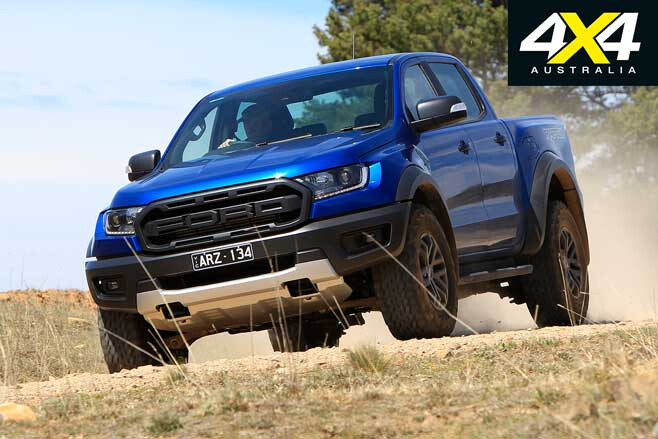
YOU CAN thank the tremendous – Hilux-challenging – sales success of the bread-and-butter Ford Ranger for the creation of the Ranger Raptor.
With the cash registers ringing, Ford could splurge on the Raptor in terms of development investment without worrying too much if it would make a profit in its own right. And, profit or not, it was always going make a statement not only as the hero model in Ford showrooms but something the likes of Toyota (with its Hilux) or Holden (with its Colorado) had no answer for.
The Raptor was created by Ford Australia with help from Ford Performance, Ford’s global high-performance division. But it’s not engine performance that Ford chased with the Raptor, it was chassis performance.
To that end the Raptor’s underpinnings have been significantly altered from a standard Ranger and start with 150mm-wider front and rear tracks via different front A-arms and a different rear axle housing.
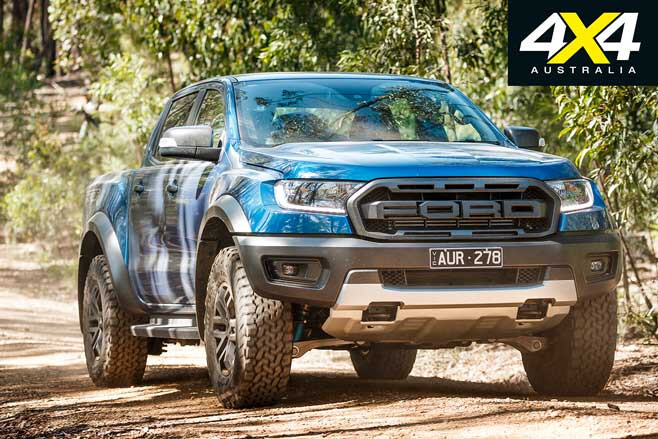
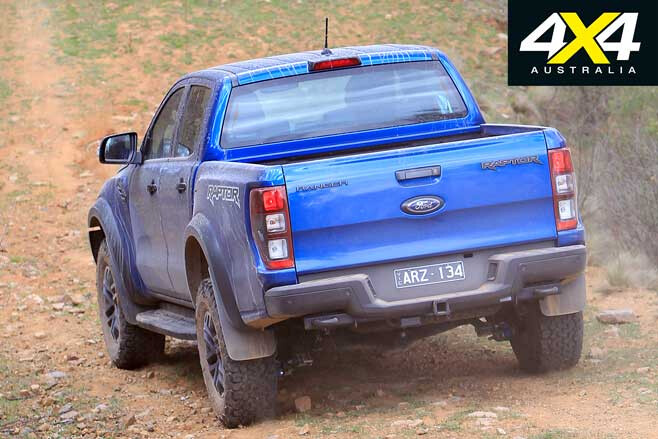
The rear axle gets coil springs rather than leaf springs and a Watt’s link for lateral location, a far superior arrangement in terms of chassis control compared to the commonly used – cheap and simple – Panhard rod. Longitudinal rear axle location is via upper and lower trailing arms.
Bespoke Fox-brand racing-technology bypass dampers (the rears have ‘piggy-back’ reservoirs) are used all around, with the new suspension bringing 30 per cent more travel at both ends and 46mm more ground clearance. Four-wheel disc brakes and 285/70 R17 BFGoodrich KO2 light-truck all terrains complete the chassis package.
For a ‘hero’ ute, it may come as a surprise that the Raptor uses a standard Ranger powertrain, lower final-drive gearing aside. That means the same 2.0-litre four-cylinder bi-turbo-diesel and 10-speed automatic you’ll find in Ranger XLT and WildTrak models, rather than the long-serving 3.2-litre five-cylinder and six-speed that’s available across the range.
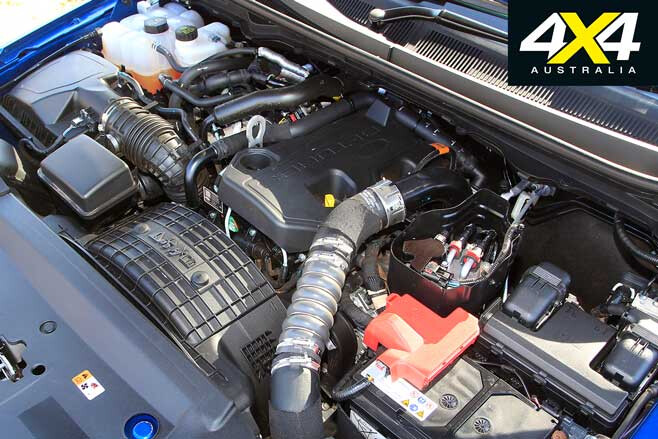
The change to the 11-per-cent-lower final drive gearing may sound like a performance gain in terms of snappier acceleration, but it’s there more to compensate for the Raptor’s taller wheel and tyre package that would otherwise leave it over-geared if not for the lower final drive.
The Raptor retains the Ranger’s part-time 4×4 system, complete with a driver-switched rear locker. When the rear locker is engaged the electronic traction control (ETC) stays active on the front axle, which is an important weapon in the Raptor’s off-road armoury.
With many of the current crop of 4×4 utes with a driver-switched rear locker, engaging the locker cancels the ETC on both axles; which is a win-lose situation, not a win-win as it is with the Raptor.
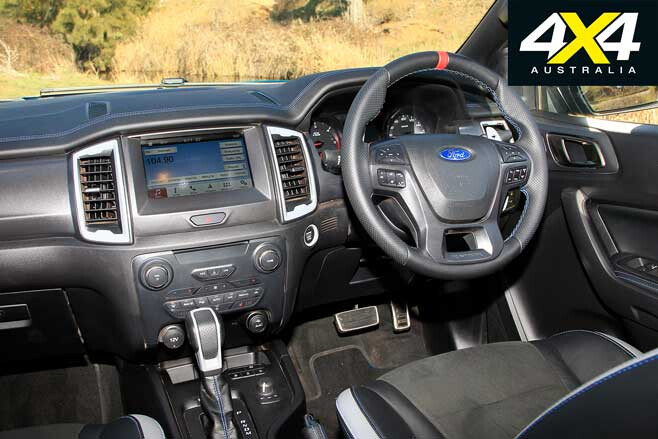
The Raptor’s drivetrain differs from a standard Ranger with paddle shifters for ‘manual’ gear selection and via its ‘Terrain Management’ system, which has Normal, Sport, Grass/Gravel/Snow, Mud/Sand, Baja, and Rock modes.
All modes bar Rock are available in high range, while all modes bar Sport and Grass/Gravel/Snow are available in low range, which is the way it should be. These different modes vary the engine throttle-mapping, gearbox shift protocols and the traction and stability control calibration.
With its extra ground clearance, long wheel travel, effective 4×4 system and decent off-road tyres (straight out of the box), the Raptor is highly effective in any 4×4 system, even if its long wheelbase can be an issue in some situations.
And while the Raptor is more than capable in difficult going, you could probably argue it would do its best work on higher speed desert tracks and the like. It’s hard to see any of the others matching it in that regard.
Ford Ranger Raptor Off-Road Accessories
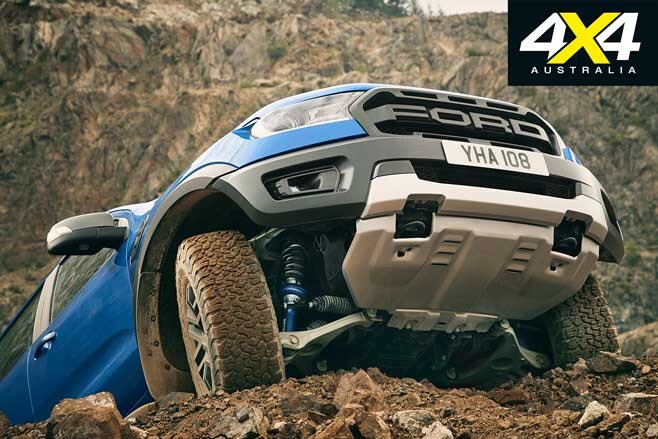
There’s not much to do a Raptor given the factory has already done all the chassis work for you. If you’re going to change it, you will need to know what you’re doing. Heavy-duty front recovery points and heavy-duty rear recovery points integrated into the standard towbar are there already, while the rear of the chassis has also been modified to carry a 285/70R17 spare, which is a nice touch.
Despite the impressive wading depth, he engine’s air intake is under the bonnet lip, so a snorkel would be a good investment, as would a bullbar; although, that goes without saying. The more vexed question is: What to do with the engine? More grunt would certainly be more than welcome, but, given the engine is already in a high state of tune, there’s not a great deal of potential left in extracting more power.
Sure, it’s possible, but at what cost to engine reliability?
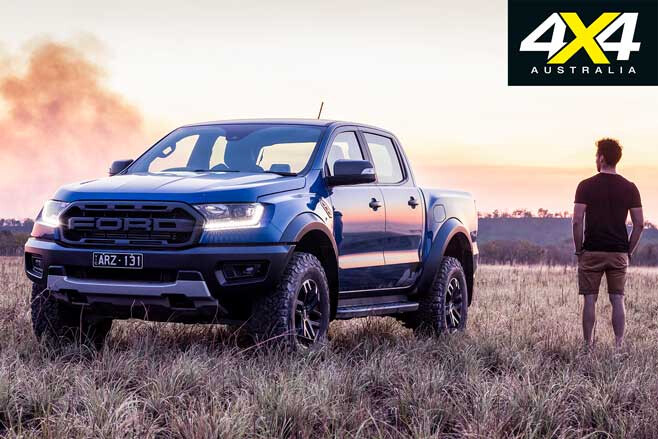
FORD RANGER RAPTOR SPECS: Engine: 2.0-litre 4-cyl bi-turbo diesel Max Power: 157kW @ 3750rpm Max Torque: 500Nm @ 1750-2000rpm Gearbox: 10-speed automatic 4×4 System: Dual-range part-time Crawl Ratio: 47.6:1 Construction: Separate-chassis Front Suspension: Independent/coil springs Rear Suspension: Live-axle/coil springs Kerb Weight: 2332kg GVM: 3090kg Departure Angle: 24° Ramp-over Angle: 24° Approach Angle: 32.5° Wading Depth: 850mm Ground Clearance: 283mm Fuel Tank Capacity: 80 litres ADR Fuel Claim: 8.2L/100km
Toyota Land Cruiser 200 Series – Off-road Limousine
If it is comfort and off-road ability you desire, then it’s near impossible to go past a 200 Series Land Cruiser.
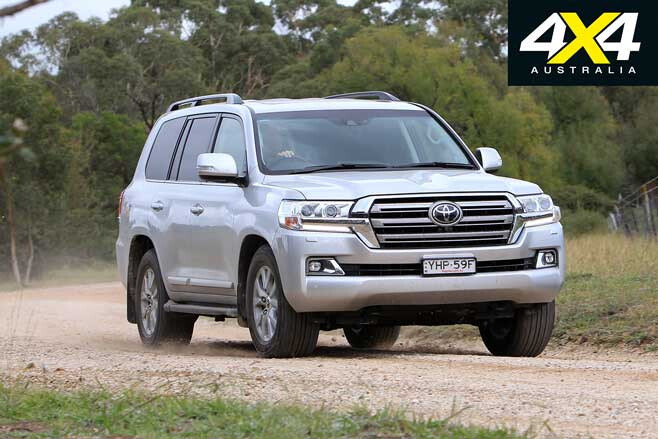
THE 200 Series is coming up for replacement, so if you want one you might need to be quick. In fact, it’s somewhat of a surprise that the 200 hasn’t already been superseded. Not that there’s anything wrong with the 200 to warrant replacement, but 12 years is a longer-than-usual product lifecycle even in this slow-turnover sector of the new-car industry.
When the 200’s replacement will arrive is still up in the air, but it may not be far off. The exact timing (at least for Australia) probably depends on the still undecided implementation dates for Euro 6 emission regulations, which will affect how much re-engineering is needed with the existing powertrains, or the possible need for new powertrains down the track. Perhaps if Nissan offered a diesel engine for its otherwise impressive Y62 Patrol (itself nine years old), then the extra competition across all global markets may have pressured Toyota to move with more haste.
Speculation about the 200’s replacement aside, the 200 is a formidable off-road weapon with nothing more than a tyre swap. Even on the showroom 17s (GX and GXL) it’s still more than handy, but you can do much better with replacement rubber in terms of off-road grip, durability and size.
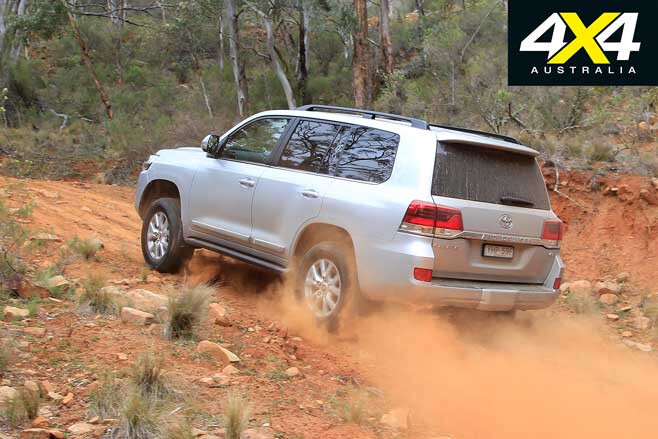
The 200 is better served by its 4.5-litre diesel V8 rather than by its 4.6-litre petrol V8 on fuel consumption and range, especially in more difficult off-road driving. For highway cruising the petrol V8 doesn’t give much away to the diesel in regards to fuel use, but work them both hard in low range or in soft sand and the disparity in consumption and therefore range becomes quite significant. The petrol engine is still the winner in terms of power, refinement and service simplicity.
If you’ve settled on the diesel then the next choice with the 200 is more vexing. At first glance the base-model GX is the pick of the range off-road given it has a snorkel as standard, is not hindered by side-steps and is the lightest variant (no third-row seats for starters), which is an advantage (no matter how small) on soft sand and the like. A problem with the GX is that it’s not available with the Kinetic Dynamic Suspension System (KDSS), even as an option. To get KDSS you have to move up to a GXL (arguably the pick of the range for that reason).
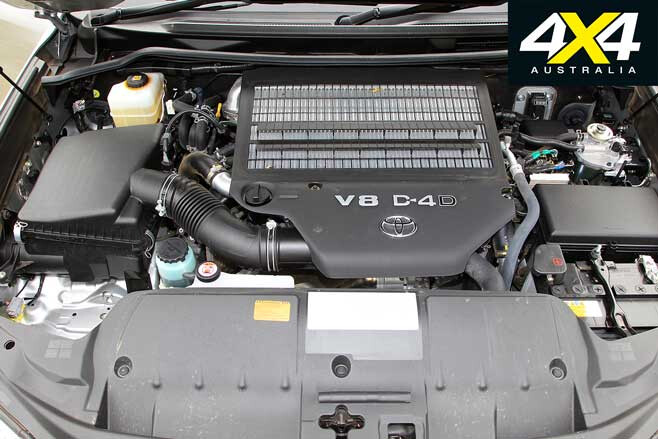
KDSS might sound like marketing hype, but the reality is that it gives considerably more wheel travel off-road by automatically relaxing the swaybars, while keeping the swaybar tensioned for on-road driving.
KDSS is highly effective and brilliantly simple – it’s essentially a hydro-mechanical system, so it’s also robust. Higher spec VX and Sahara models also have KDSS but add more weight, and while the top-spec models also bring Multi-Terrain select, the advantage here is marginal at best. The higher spec 200s also come in 18s, so another off-road negative in terms of showroom-stock presentation.
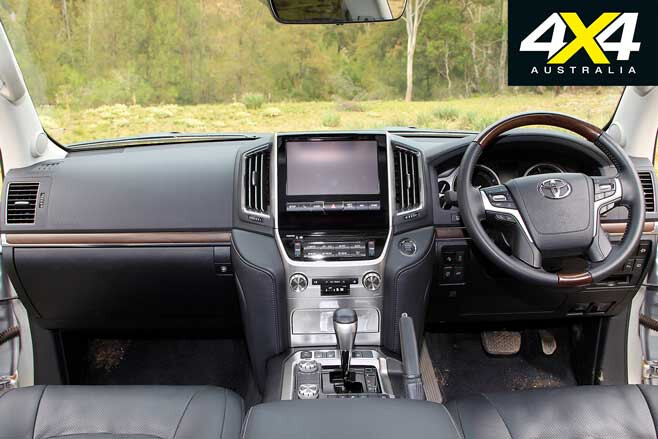
KDSS further enhances what is the 200’s trump card, namely its supple, long-travel suspension, independent front and all. There’s no front or rear lockers, but the Crawl Control (a special programme for the electronic traction control) works a treat to get you out of any sticky situation.
The Crawl Control even modulates the throttle and all traction protocols, so all you need to do is steer. Otherwise, the 200 is reasonably standard fare with dual-range full-time 4×4 via a mechanical limited-slip (Torsen) centre diff that is lockable via a driver-operated switch.
If anything lets the 200 down off-road it is ground clearance and ramp-over, which could be better in both cases.
Toyota Land Cruiser 200 Series Off-Road Accessories
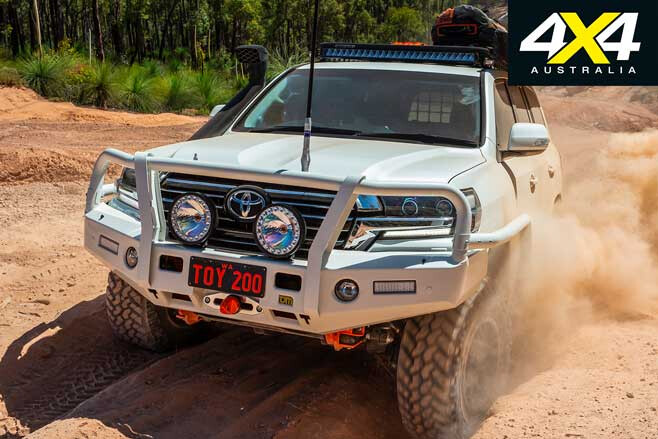
If you want more than a showroom 200 can offer – even on decent off-road rubber – then you’re in for a treat as there’s no shortage of upgrades, all of which are available from the Australian 4×4 aftermarket.
Wheels, tyres and suspension upgrades and lifts are the obvious places to start. After that you can move onto lockers, a snorkel, bar work, long-range tanks and underbody protection.
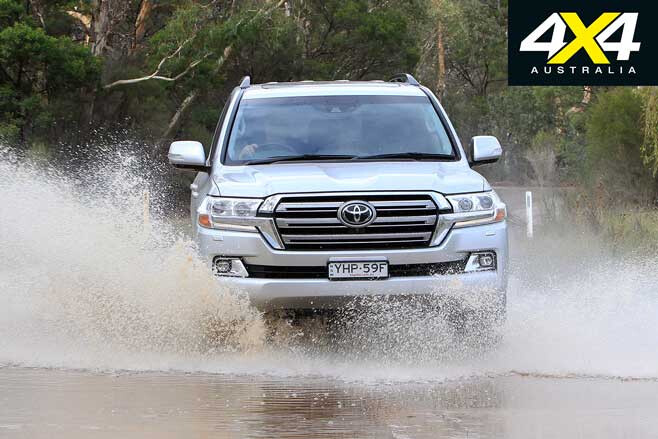
TOYOTA LAND CRUISER 200 SPECS: Engine: 4.5-litre V8 twin-turbo diesel Max Power: 200kW @ 3600rpm Max Torque: 650Nm @ 1600-2600rpm Gearbox: Six-speed automatic 4×4 System: Dual-range full-time Crawl Ratio: 34.1:1 Construction: Separate-chassis Front Suspension: Independent/coil springs Rear Suspension: Live-axle/coil springs Kerb Weight: 2740kg (nominal) GVM: 3350kg Departure Angle: 24° Ramp-over Angle: 21° Approach Angle: 32° Wading Depth: 700mm Ground Clearance: 230mm Fuel Tank Capacity: 138 litres ADR Fuel Claim: 9.5L/100km
Land Rover Discovery – Techno wizardry
Proving that old-school isn’t the only school when it comes to getting serious.
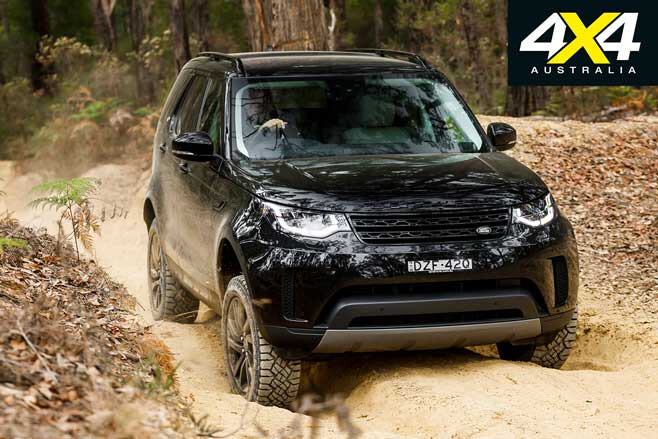
IF LAND Rover had stayed with its numbering system this Discovery would be a Discovery 5, the fifth model in a line that dates back to 1989.
Ironically, the first Discovery and the subsequent Discovery II would be at home in this group, as both are built on a separate chassis, a feature common to all of the seven vehicles here bar the current Discovery. Those first two Discovery models also had live axles back and front, a suspension arrangement that is also the most common among the vehicles here.
To say that the Discovery stands out in this group would be a huge understatement. Significantly, it’s the only 4×4 here not to have a separate chassis. Its monocoque body isn’t even fabricated from steel but largely from aluminium alloy.
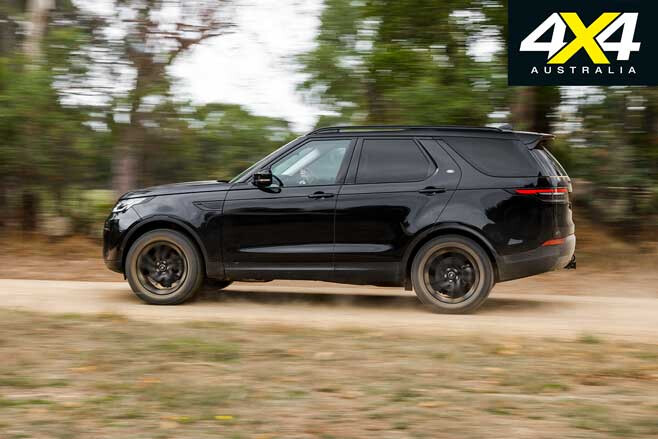
On top of that the Discovery is the only one of our seven vehicles with fully independent suspension. Setting it further apart are air-springs, which provide adjustable ride height and serious ground clearance if need be.
Serving the Discovery well is the fact it’s built on Land Rover’s premium platform used with the current Range Rover and Range Rover Sport models and introduced off the back of a huge investment in 2014. Land Rover has then strengthened that platform by swapping from aluminium alloy to steel for the suspension sub-frames and adding more ride-height adjustment to the air suspension.
The Discovery also stands out in this company for having high-speed road tyres that are the least suited to off-road use, so a stop at the tyre shop before you head anywhere is mandatory. The good news is that this generation Discovery carries a taller tyre for any given wheel size than the previous generation (Discovery 4), which gives you more to play with when selecting off-road-friendly rubber.
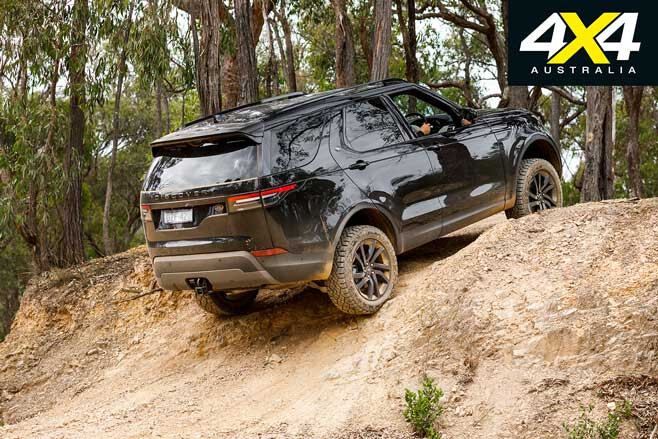
With tyres sorted you can start to appreciate what the Discovery has to offer off-road, which is considerable. For a vehicle with fully independent suspension it has plenty of wheel travel, better even than the Mercedes G-Wagen, which has live axles at both ends.
Crank the air suspension right up and the Discovery also has as good, if not better, ground clearance than any vehicle here, which is reflected in the fact that its wading depth claim (900mm) is the best of these, too.
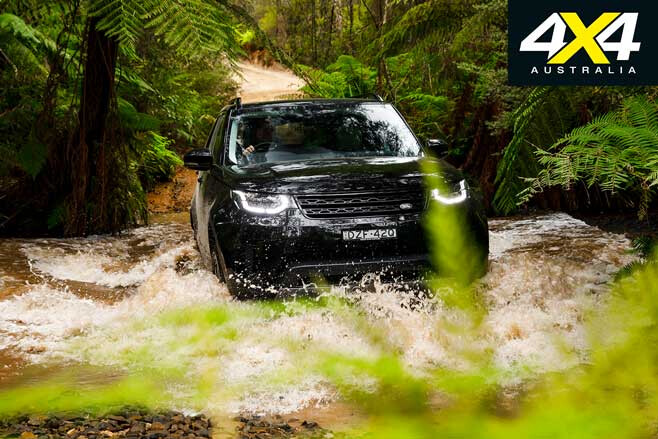
The Disco may not be comfortable to drive on rough ground for any length of time on the highest suspension setting, but at least it’s there to get you over a gnarly bit that could otherwise stop other vehicles here.
The Discovery has the ‘smartest’ 4×4 system that requires the least intervention from the driver thanks largely to its self-locking centre differential that can also proportion the drive front-to-rear as needs be.
All of the other vehicles here with centre diffs require them to be locked by the driver, or they don’t have a centre diff as they are part-time 4×4 so you have to engage 4WD. Either way, there’s no front-to-rear drive proportioning as with the Discovery. The Discovery’s rear locker (an inexpensive $1110 factory option) also locks automatically, where the rear lockers on other vehicles (where fitted) require driver intervention.
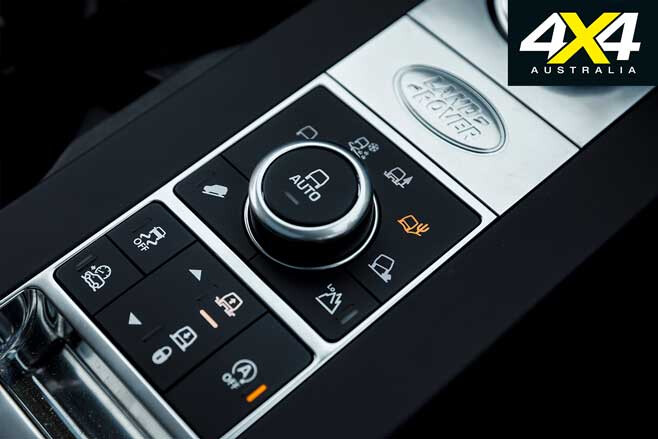
The other trick up the Discovery’s sleeve is that it’s the lightest of the seven vehicles bar the Jimny, which helps on any soft surface and when climbing a slippery slope.
In fact, the Discovery is more than 600kg lighter than the Land Cruiser 200, the nearest comparable vehicle here. This is the benefit of its aluminium-alloy monocoque body. Of all the vehicles here the Discovery has the best power to weight, which is handy in soft sand and the like.
Land Rover Discovery Off-Road Accessories
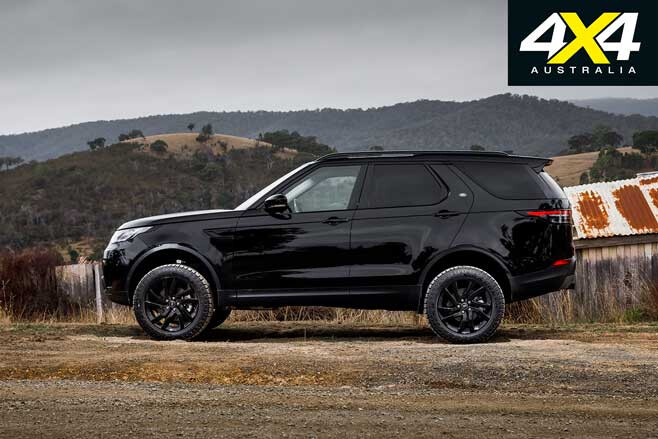
The key problem with the Discovery’s stock tyres is their high-speed rating (270km/h) and the associated thin and fragile – just waiting to be punctured – sidewalls.
Adding off-road tyres to the factory 19s is theoretically the best bet, but the scarcity of suitable 19-inch rubber means you’re better off with 20-inch wheels (standard on HSE) as there is a wider choice in off-road rubber, especially if you go up one size to a 275/55R20. The aftermarket 18-inch wheels available for the Discovery 4 should also work on this Discovery (same brake sizes), which gives even wider tyre choice.
Otherwise, the cupboard is pretty bare for Discovery off-road accessories, so you’ll need to hunt around amongst the Land Rover specialists here and overseas.
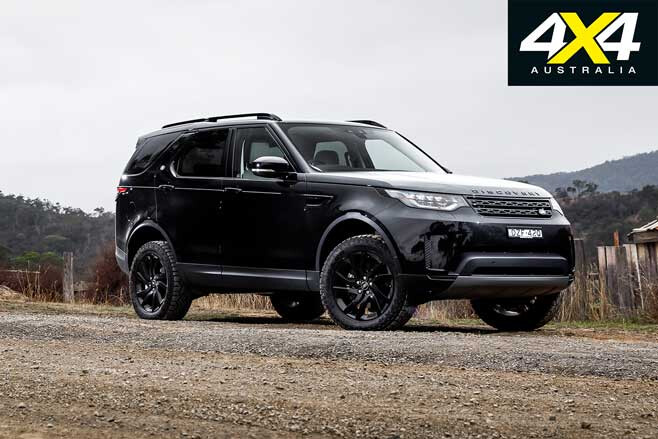
LAND ROVER DISCOVERY SPECS: Engine: 2.0-litre 4-cyl bi-turbo diesel Max Power: 177kW @ 4000rpm Max Torque: 500Nm @ 1500rpm Gearbox: Eight-speed automatic 4×4 System: Dual-range full-time Crawl Ratio: 45.7:1 Construction: Monocoque Front Suspension: Independent/air springs Rear Suspension: Independent/air springs Kerb Weight: 2019kg GVM: 2940kg Departure Angle: 30° Ramp-over Angle: 27.5° Approach Angle: 34° Wading Depth: 900mm Ground Clearance: 283mm Fuel Tank Capacity: 77 litres ADR Fuel Claim: 6.3L/100km
Suzuki Jimny – Mighty midget
Suzuki’s new Jimny might look very urban cool, but it’s still bush-ready and able.
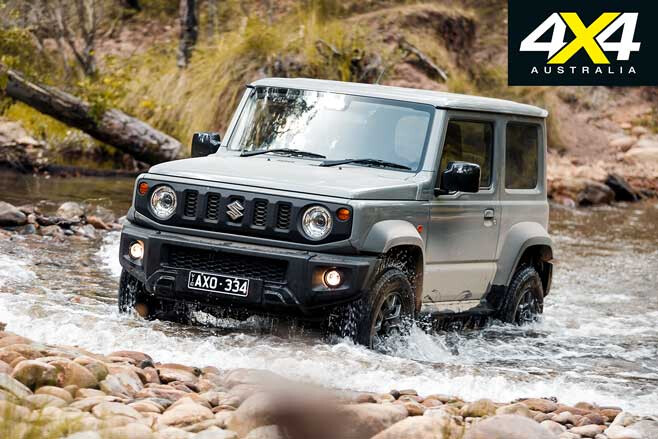
THE WORLD is lucky that Suzuki decided to build this latest Jimny and continue a rich 4×4 history that dates back some 50 years. Suzuki’s probably happy, too, that it produced this new Jimny, as it’s selling very well indeed; no doubt helped by the fact there’s nothing else even remotely like the Jimny on the market today. What else is this off-road capable, brick-dunny tough, city friendly and affordable?
Despite the flash new body, the Jimny is still a seriously old-school 4×4, as old-school as any of our seven (bar the LC70) thanks to its separate chassis and live axles back and front. This new Jimny has a 1.5-litre (four-cylinder petrol) engine (replacing the previous 1.3-litre engine), but is marginally heavier, wider and taller, and it rides on a wider track and on skinnier tyres.
The ‘new’ body looks old in some ways, with styling that harks back to the Jimny’s forebears from the 1970s: the LJ10, LJ20 and LJ50, the model that kicked off the success of the diminutive Suzuki here in Australia.
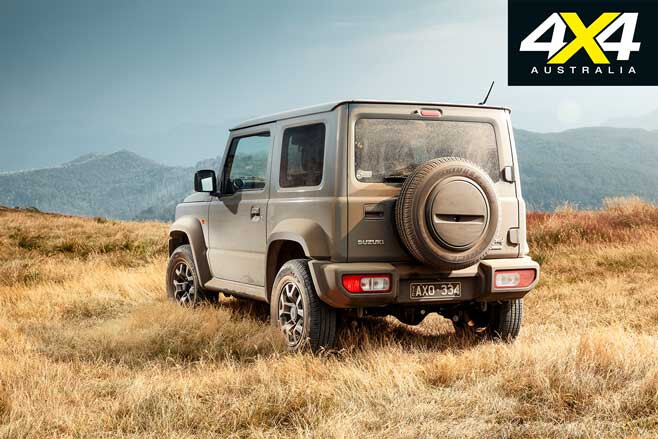
We aren’t entirely happy ranking the Jimny at number seven on this list because in some off-road environments it would be the most useful 4×4 here, even if it needs bigger, off-road-specific tyres. The standard 195/80R15s are too small and effectively a road-pattern tyre.
Soft sand or mud both come to mind as off-road environments where the Jimny has a distinct advantage in this company due to being so light, less than half the weight of most of the other vehicles in the seven. Less weight means less of a tendency to sink into any soft surface – everything else, namely tyre contact patch area, being the same – hence the need for a bit more rubber under the little Suzuki.
The Jimny’s light weight also means the modest 75kW from the 1.5-litre engine translates to a power-to-weight ratio that’s better than a few of the other vehicles here, a factor that again helps in soft sand.
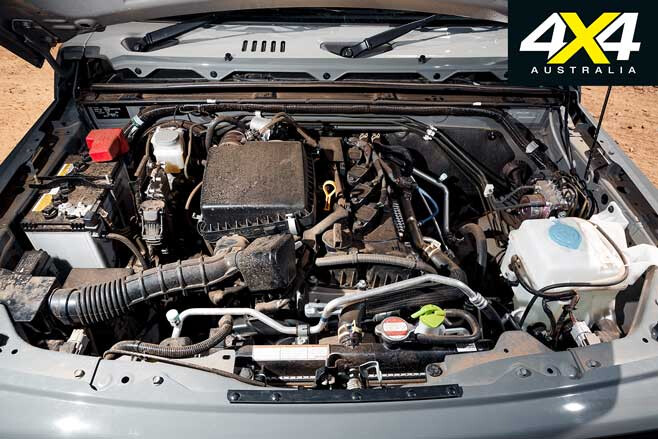
The Jimny’s other off-road party trick is its short wheelbase and extraordinarily steep approach, ramp-over and departure angles. Confronted with a sharp gully with steep entry or exits, or a steep mound to traverse, the Jimny is at a distinct advantage in this company.
Otherwise the Jimny is pretty straightforward in terms of its part-time 4×4 system, which has reverted back to lever operation. No diff locks as standard and while Jimny does have an electronic traction control (introduced in the final three years of the previous generation Jimny) its calibration seems more on-road than off-road specific.
The Jimny is the only one of our seven vehicles that’s available with the choice of manual and automatic gearboxes. Most of the others are automatic only, while the Land Cruiser 79 is manual only.
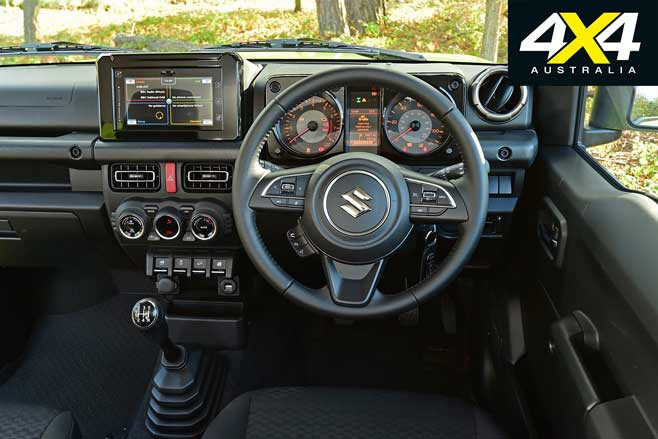
Unfortunately, the five-speed manual and the four-speed automatic transmissions are carried over from the previous generation Jimny and are arguably the weak link in this new model.
On paper, the manual might seem like the pick of two ’boxes thanks to its better driver ‘control’ and a lower crawl ratio, but the automatic’s gearing multiplier effect, courtesy of its torque convertor, makes it a better climber on steep tracks. The automatic also works better in soft sand.
Suzuki Jimny Off-Road Accessories
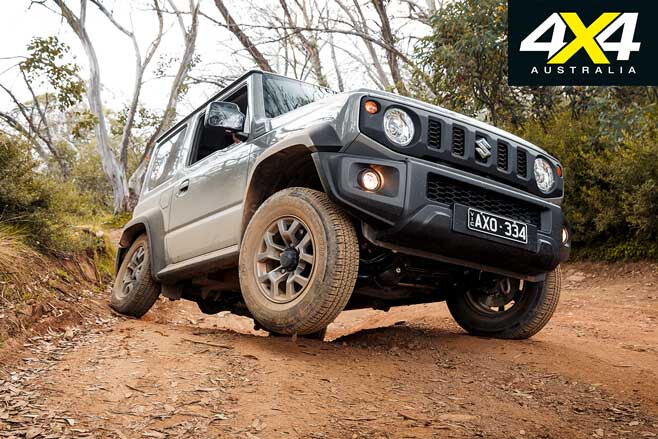
If showroom stock plus decent tyres doesn’t keep you happy, then there’s a plethora of off-road-specific upgrades for the Jimny through Suzuki specialists, none better than Melbourne-based Piranha Off Road Products.
You can swap the stock 15s for 16s, which opens up the choice of bigger off-road tyres and you can think about a suspension lift, or a body lift, or both, all made easy by the Jimny’s live-axle suspension and body-on-frame construction. Items such as snorkels, diff breathers, diff locks, heavy-duty axles, tank guards and lower-geared transfer cases are all readily available.
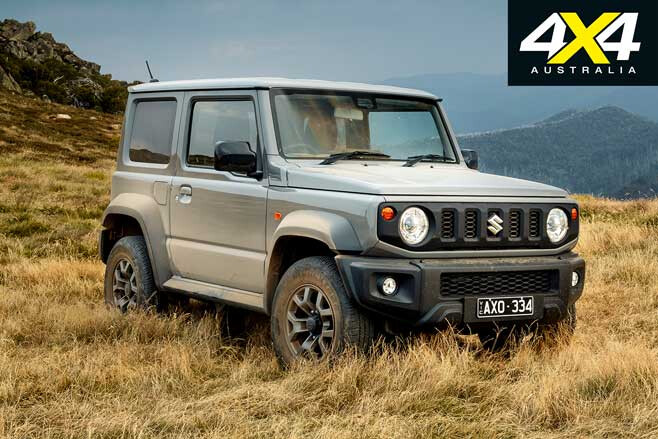
SUZUKI JIMNY SPECS: Engine: 1.5-litre 4-cyl petrol Max Power: 75kW @ 6000rpm Max Torque: 130Nm @ 4000rpm Gearbox: Four-speed automatic 4×4 System: Dual-range part-time Crawl Ratio: 32.7:1 Construction: Separate-chassis Front Suspension: Live axle/coil springs Rear Suspension: Live axle/coil springs Kerb Weight: 1090kg GVM: 1435kg Departure Angle: 49° Ramp-over Angle: 285° Approach Angle: 37° Wading Depth: N/A Ground Clearance: 210mm Fuel Tank Capacity: 40 litres ADR Fuel Claim: 6.9L/100km
IMPROVE your four-wheel drive’s bravado by upgrading it with new tyres, a new brake kit or a suspension overhaul. Here are a few new products to get you started.
Tough Dog AirAssist airbag
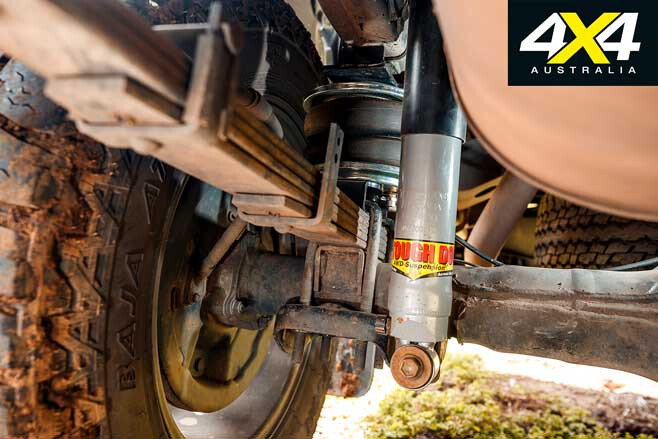
Tough Dog’s AirAssist airbag system is available for both leaf-sprung and coil-sprung vehicles. The AirAssist system is ideal for off-road tourers who use their rigs for unladen (or relatively lightly loaded) around-town duties and then for serious adventures, where all the essential gear is packed in.
By fitting AirAssist springs you can level out the rear ride-height of your fully loaded vehicle to help maintain ride and handling qualities. The Leaf Spring AirAssist features heavy-duty construction, a 5-100psi capacity, laser-cut and powdercoated brackets, zinc-plated roll plates (top and bottom) and in most applications you don’t need a drill to fit them.
The Coil Spring AirAssist also includes the laser-cut powdercoated brackets and zinc-plated roll plates as per the Leaf kits, as well as heavy-duty construction. The Coil Spring system has a 5-60psi capacity (in most cases). Both systems are offered with a three-year/unlimited kilometre warranty.
Website: www.toughdog.com.au
Continental CrossContact ATR
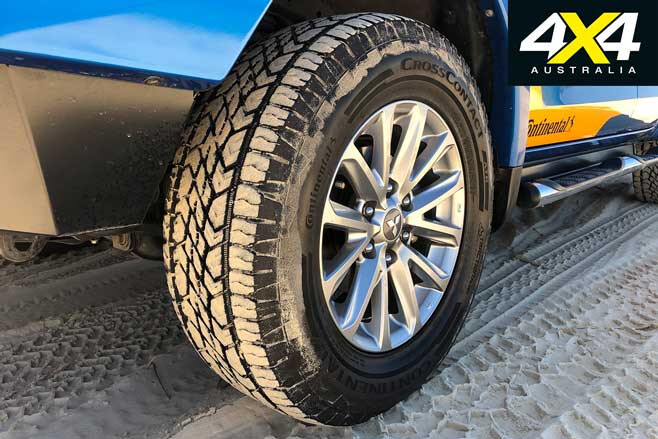
Tyre giant Continental has released the ATR, a tyre designed for off-road vehicles (4x4s and SUVs) that spend a fair chunk of their time on bitumen but also get off-road onto dirt tracks whenever possible (think: weekend escapes, week of camping).
The ATR features beefed up puncture protection via the sidewall protection wrap, and it also ups the traction levels on both wet and dry surfaces thanks to the multiple in-built sipes in the tread pattern, as well as the silica tread compound.
Additional off-road grip is also realised via the open tread pattern which ensures there’s plenty of bite, not only in the main part of the tyre but on the tyre edges as well. Add in reasonably large tread blocks and you’ve got a quiet on-road tyre (thanks to noise blockers that reduce sound coming from the tyre centre) that is more than up to weekend off-road adventures.
Website: www.continental-tyres.com.au
Ironman 4×4 Pro-Forge control arms
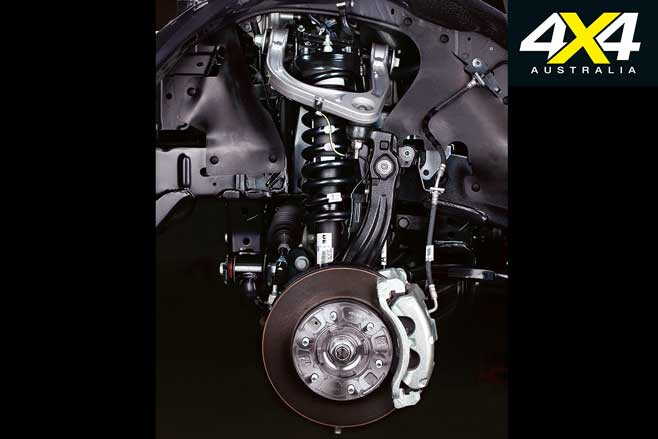
The gurus at Ironman 4×4 are behind this awesome new piece of kit. High-strength forged alloy control arms mean owners can fit larger tyres and increase lift without sacrificing optimal wheel alignment and operating clearance around the control arms.
The 6082 T6 forged alloy (with silver anodised protection for even better corrosion resistance) control arms are exceptionally strong, thanks to the drop-forged method of construction. This entails the alloy’s grain structure being aligned with the ‘new’ shape and the removal of any imperfections, and it results in a tougher and stronger arm than what you get from a cast, fabricated or machined variant.
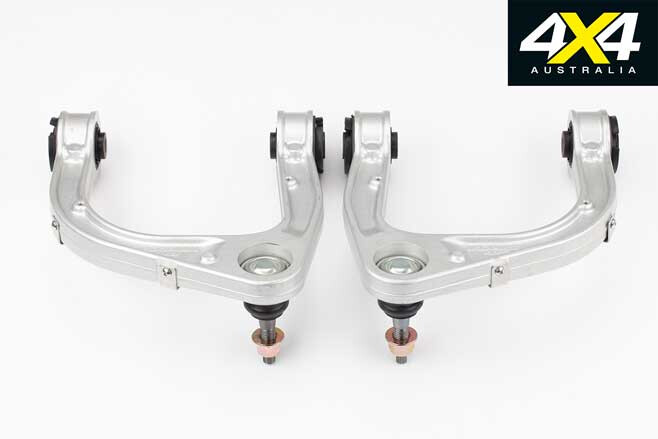
Designed to be used between standard-height and up to a three-inch lift (alignment settings are calibrated to centre around a 50mm raised ride height for optimum adjustability), the control arms feature OEM-compatible rubber bushes and ball joints (the ball joint position has been relocated) and they are a direct fitment.
Available for Ford Ranger, Ford Everest, Mazda BT-50 and Toyota’s Hilux, Prado, FJ and Fortuner.
Website: www.ironman4x4.com
Terrain Tamer suspension kit (Ford PX3 Ranger)
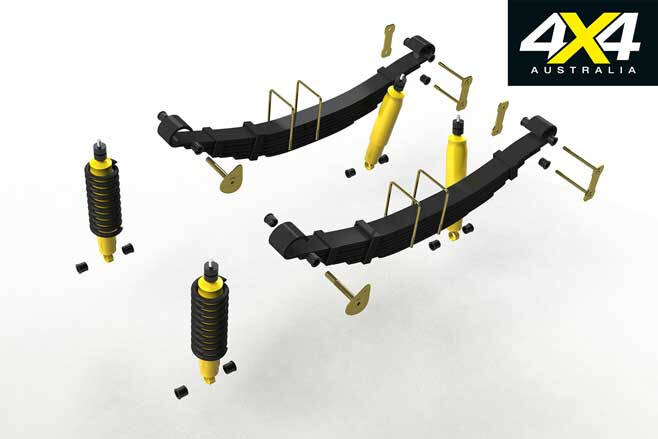
The new suspension kit from the gurus at Terrain Tamer 4WD has been designed for the Ford Ranger PXIII (the first on the market for this model). The kit comprises bushes (12), greasable shackles, greasable pins and U-bolts, as well as Terrain Tamer 4WD’s own leaf/coil springs and dampers.
The options within the kit include the choice of four different ratings of coil springs for the front end: up to 50kg; up to 100kg; up to 100kg (for Smart Col with bullbar); and 100kg-plus (for Smart Coil with bullbar and winch). The rear leaf also has three rated weight options: up to 100kg; up to 300kg; and up to 500kg.
The new kit is the latest in Terrain Tamer’s catalogue of more than 100 suspension kits, covering a wide range of both early and later model Toyota, Nissan, Mitsubishi, Mazda, Ford, Holden, Isuzu, Great Wall, Jeep, Volkswagen, Land Rover, Suzuki, and, more recently, LDV and Mercedes-Benz.
Website: www.terraintamer.com
Pedders Trakryder Extreme front brake kit
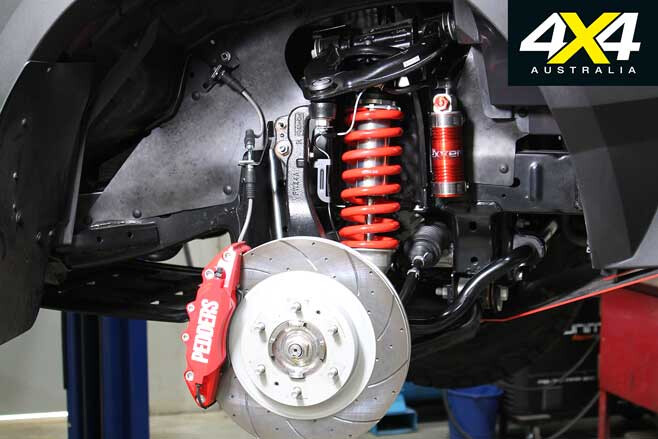
The gurus at Pedders have worked some magic to produce this new braking kit that includes a larger six-piston caliper design (finished in a robust red gloss and debossed Pedders branding in white), Kevlar ceramic brake pads and a schmick 10-slot dimpled and Geomet-coated larger diameter rotor.
A larger braking surface means enhanced stopping power and Pedders has ensured this is the case with the kit’s massive 356mm-diameter rotor, which represents up to a 40 per cent increase in swept area compared to the OE units (310mm on Ford Ranger; 300mm on Colorado and D-Max).
The kit has been designed for the Ford Ranger PX and PXII models, Mazda’s BT-50 UP and UR, Holden Colorado RG, and the Isuzu D-Max RT50 and RT85. The calipers are of a two-piece aluminium forged design, while the pistons are forged aluminium as well. Braided hose (stainless steel, of course) ensures optimum durability, as does the high-grade alloy steel brake pad insulators.
Website: www.pedders.com.au
COMPETENT off-road wagons are becoming harder to find these days due to the dominance of one-tonne utes in the new car market.
The Nissan Patrol changed focus with the demise of the GU, Land Rover’s Defender is no more, and there’s a big grey cloud over the future of the Land Cruiser 76 and 78 Series. Few companies are prepared to spend millions of dollars developing and engineering new 4x4s to meet ever-stricter emissions and safety regulations, which are dictating the style of vehicle we can drive now and into the future.
Three classic 4×4 nameplates that have seen recent development are the Suzuki Jimny, Jeep Wrangler and Mercedes-Benz G-Wagen, all of which debuted new models in 2018. The new Jimny arrived Down Under early in 2019, the G-Wagen is here only in AMG G63 form, while the JL Wrangler only hit our shores back in June.
Our friends over in Europe got them earlier with a few more variants than we do, and they gathered this trio for a bit of fun in a sand pit. We take a look at the same models here.
Suzuki Jimny
It’s funky, modern and fun off-road, but there are limits to the Jimny’s credentials when it comes to serious 4×4 touring.
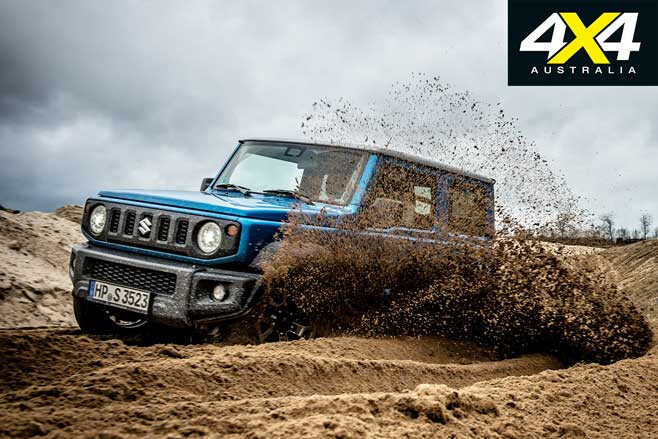
EVERYONE seems to love the diminutive Suzuki 4×4 and have a story about bumping along a beach in an old one, so it’s no surprise the new Jimny has been a hit with buyers. When it went on sale here early in 2019 the orders books were out to October/November, if you hadn’t ordered one last year.
The new Jimny stays true to the compact two-door body, ladder chassis and live axles the brand is known for, but there’s no longer a soft-top version or a long-wheelbase cab-chassis/ute offering. The leaf springs of the early LJ series are long gone and coil springs now support the body on the newer Jimny and Sierra, improving ride quality and wheel travel.
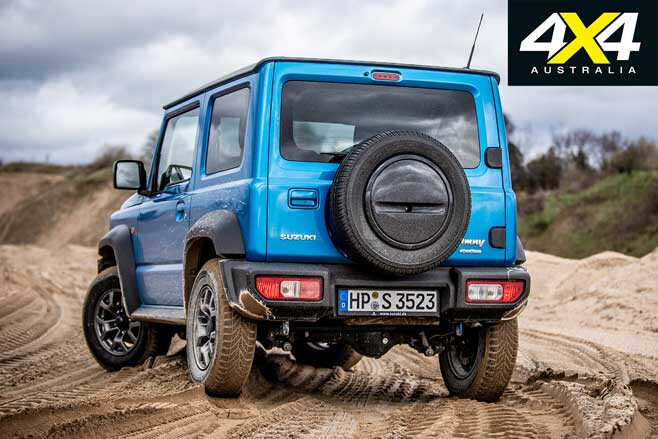
The new Jimny even features comfort, convenience and safety features that were unheard of in the past. Satellite navigation, Apple CarPlay, electronic stability and traction control all bring a look and feel of modernity to a car that traces its roots back to 1970.
In 2019, power comes from a new 1500cc fuel-injected petrol engine with a choice of five-speed manual or four-speed auto transmissions. The engine might be modern but the two transmissions could each do with an extra ratio or two, as the low-geared Jimny gets pretty buzzy at highway speeds.
A six-speed manual would be perfect in it. Of course, the Jimny comes with a dual-range, part-time 4×4 transfer case, which, with the aforementioned low gearing, is enough to give the pocket rocket plenty of climbing ability in steep, rough terrain.
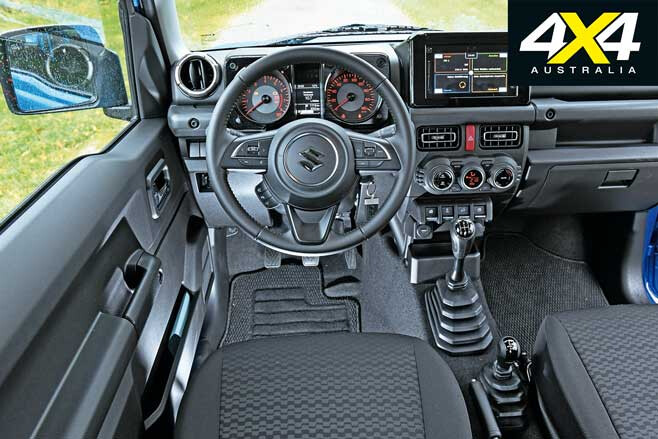
Due to its popularity the Jimny will be well-supported by the 4×4 aftermarket, which is just as well as there are a few areas that could be improved for off-road work. We’d start with a small suspension lift to provide more ground clearance, as we found it scrapes and bumps more than we hoped. We’d also step up the tyre size from the factory fitted 196/80 R15s, as these little tyres fall into every hole and bounce over rocks that a bigger tyre will ride over with relative ease.
Removing the rear seat and fitting a cargo barrier will allow solo travellers or a couple to maximise the limited load space available in the short-arsed Suzi. The back seat doesn’t offer much room anyway and it would never make a good family car, so you’d be better off without it. There’s also a range of bullbars, roof racks and protection equipment available from a range of quality 4×4 kit suppliers.
At just $23,990 (+ORC) for the manual, the Jimny may leave you with a bit of a budget to equip it for your needs. Interestingly, many pundits have compared the boxy look of the new Jimny to the Mercedes-Benz G-Class. For the price of the latest G63 AMG you could own a fleet of 10 Jimny 4x4s and have enough change to kit them all up.
Jeep JL Wrangler
The Jeep JL Wrangler offers plenty of choice with seven models, but scored only a one-star safety rating.
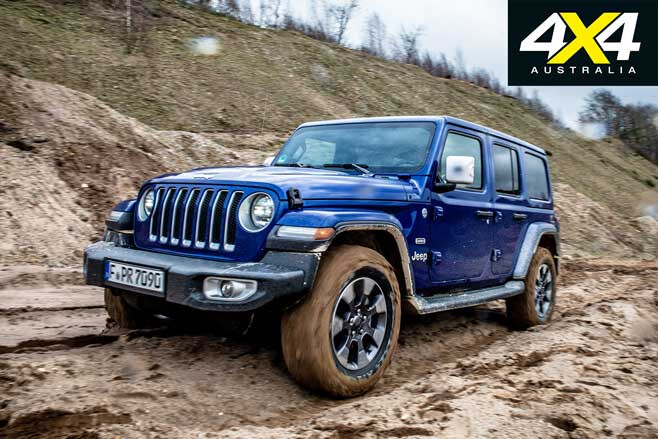
WHILE THE Jimny and the G-Class are only available in a small model range, the new Jeep JL Wrangler comes to Australia with a seven model line-up priced from $48,950 to $68,950.
The range comprises both two- and four-door body styles and a choice of petrol or diesel engines; although, the two-door only comes as the entry-level Sport S specification and the diesel engine is only available in top-priced four-door Rubicon guise.
All JL Wranglers come with a new eight-speed auto – there’s no manual gearbox offered in Australia – and a removable roof, be it soft- or hard-top, to give you that wind-in-the-hair motoring experience. Go back through the history of each of these three vehicles and you’ll find they were all offered with removable soft-tops at some stage, but only the Jeep retains this feature.
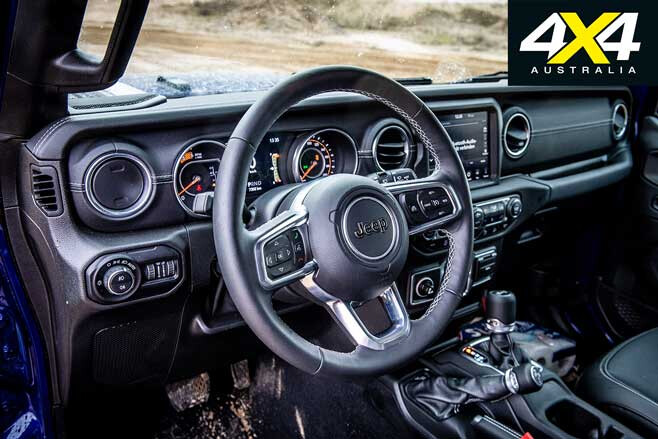
The petrol engine used in all bar one of the Australian JL models is the 3.6-litre Pentastar, which has always performed pretty well in terms of V6 engines. It’s made smoother and more fuel efficient with the new eight-speed auto.
Only the Rubicon gets the choice of the V6 or the new 2.2-litre turbo-diesel. For driveability and economy the diesel is the choice, but it comes at a $5000 premium over the V6 and is more expensive to maintain using Jeep’s fixed-price servicing.
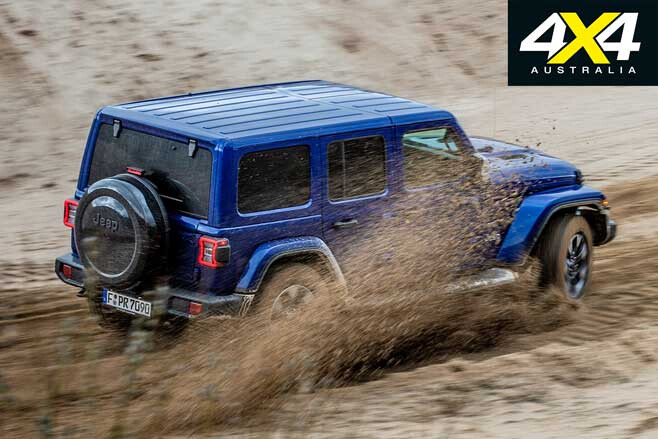
The Rubicon is also the most off-road-capable in the range and, when it comes to showroom-stock vehicles, it’s the most capable new 4×4 money can buy. Front and rear locking diffs, a disconnecting front swaybar for increased wheel articulation, low gears for crawling, extra underbody protection, and the standard BFGoodrich KM3 Mud Terrain tyres make the Jeep Rubicon near unstoppable. And that’s before you dip into the seemingly bottomless pit of aftermarket goodies that are available.
With their live axles and long-travel coil-spring suspension all Wranglers make good off-roaders, but the Rubicon is a step above anything else. However, it’s those same things that make them great off-road that compromise on-road manners, performance, safety and efficiency. Like the Jimny and G-Class the new JL Wrangler has gone some way to improving these characteristics, but it’s a case of ‘you can’t have everything in one car’.
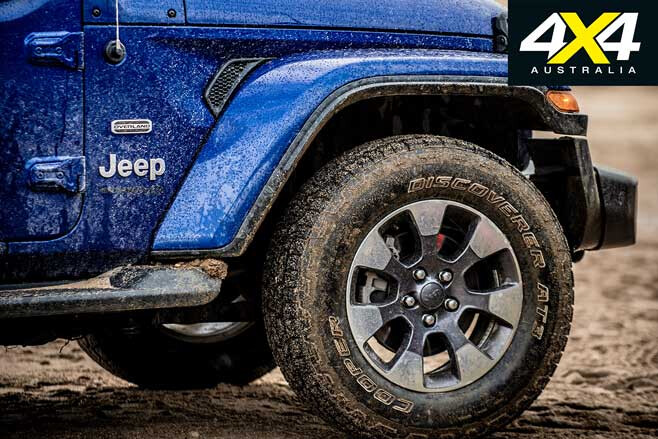
The JL uses aluminium for its body panels, which reduces weight and in turn reduces fuel consumption and improves performance. Couple this with the gain from the eight-speed transmission and the fuel savings are significant.
The JL also debuts new safety tech like autonomous emergency braking, rear cross traffic monitoring and blind spot warnings, on top of ESC, ABS and a complement of airbags; however, it only scored a one-star ANCAP safety rating.
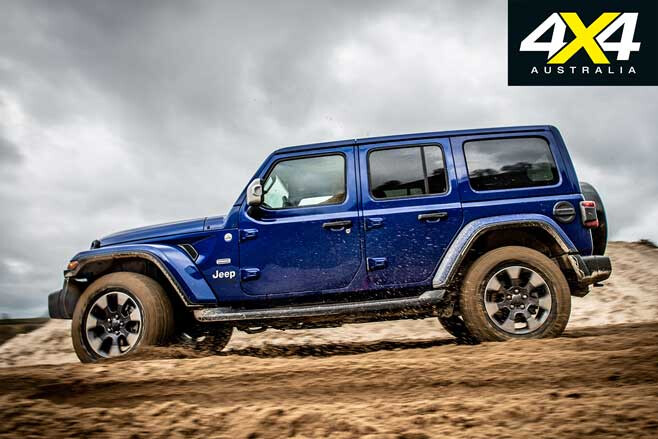
You could argue that continuing to build an old-school traditional off-road vehicle in a ladder chassis prevents it attaining an acceptable safety rating, but the 2019 Jimny scores three stars and the G-Wagen the full five stars – the latter at a much higher price.
The JL Wrangler represents the middle ground in this off-road trio and, with its wider range of models, should have the most appeal to buyers.
Mercedes-Benz G-Class
The 2019 G-Class sheds its 40-year design heritage.
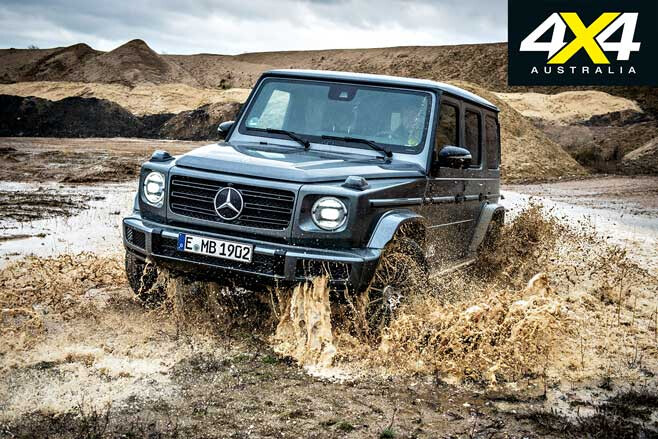
OF THIS TRIO the G-Class – or Gelandewagen, as it was known – is the one vehicle to stray away from the design of its previous generation, adapting independent front suspension (IFS) to its new ladder-frame chassis.
That previous generation was the original and has been with us for 40 years, and this is the most major change to the G in that time. It also comes with a new, bigger and more rounded body shell, as well as improved on-road manners.
So far we only get the twin-turbo V8 AMG G63 in Australia, while in Europe they also get the non-AMG-tweaked G350d, as seen in these images. We will be getting a more practical G in the future, but whether that is the G350d or the just revealed G400d is yet to be announced.
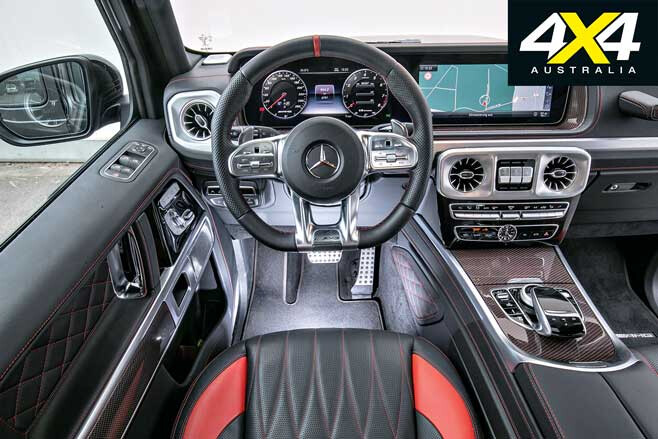
Official word from MB Australia is that the $250K+ G63 is selling so well they’re in no hurry to bring in the more affordable version. We expect something to appear in 2020.
For off-roaders after ability over celebrity status, there is still the utilitarian G300CDI Professional in both wagon and cab-chassis available here, priced from $110,000. This is built on the older W461 platform, with live axles and a squarer, smaller cabin.
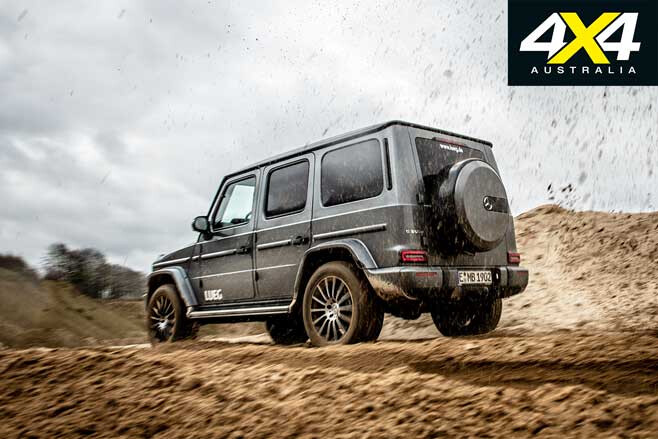
The changes to the W463 G for 2019 focus on improving on-road driveability and user friendliness. Face it, the old 461 was built as a military vehicle and designed four decades ago … how many other 40-year-old cars do you know are still sold today? Both Suzuki and Jeep have strong histories, but have been totally re-engineered and updated in that time, just as the 463 has been.
Despite the concessions to dynamics and comfort in the 463, including the integration of IFS, Mercedes-Benz assures us it hasn’t come at the expense of off-road ability. It still has a live rear axle and MB says there is more wheel travel at both front and rear ends, not that the older G had a lot of travel anyway. The G-Wagen has always relied on its triple set of diff locks to get through the toughest going, and the new Gs are no exception.
We’ve spent more time in the G300CDI Professionals, both wagon and cab-chassis, and they are basic 4x4s and not the luxury cars you expect. That said, there’s something special about driving them – they feel solid, the old-school dash layout and the awesome ability – that makes the experience unique.
The Professionals ride on practical 16-inch alloys with all-terrain tyres, have hose-out interiors with rubber mats and no carpets, and still have the triple diff locks and four-wheel coil suspension for rugged durability. The low-output 3.0L V6 and old five-speed auto let the overall package down in a big way, but the engine responds well to aftermarket tuning.
It might be the most expensive vehicle in this group and one of the priciest 4x4s you can buy, but the G-Wagen is a 4×4 like no other.
Verdict
Jimny, Wrangler or the G-Class?
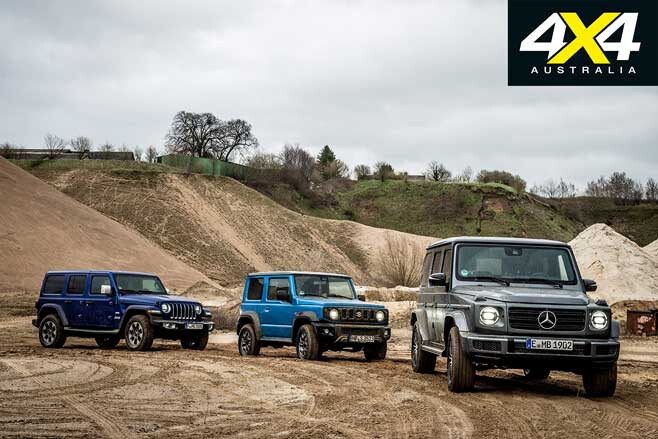
THESE three old-school 4x4s have more than a century of heritage combined, yet their target audiences are vastly different. Suzuki 4x4s have always been about cheap, affordable fun, and the new Jimny carries on that tradition; although, it costs a bit more than it used to and you can no longer drop the top off for beach drives.
It’s a small two-door wagon that would never work well as a family vehicle, and you would really want to be a fan of the little Zook to kit one up and embark on a lap of Australia. However, we have no doubt the budget alternative to the bigger wagons would be up to the task.
The Jeep Wrangler is the vehicle here with a model range to appeal to more buyers, the size and versatility to suit different applications, and an off-road ability that is unrivalled among new cars – all that in a vehicle that is moderately priced and with bucket loads of aftermarket accessories available. If you don’t want to kit your Wrangler up yourself, the Rubicon is off-road-ready straight off the showroom floor.
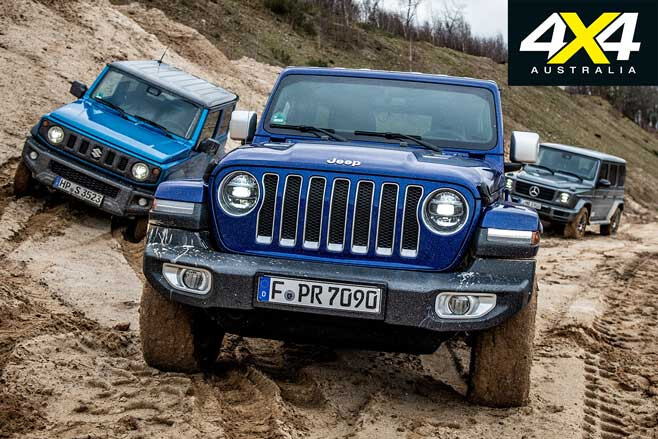
At $250K+ the list of people looking for an AMG G63 as an affordable off-roader is a short one, but it is a vehicle that is still selling well around the world. Even the G350 or G400, whichever one we get, will be priced on the heavy side of $150K; so, again, it’s unlikely to be bought as an off-roader.
The G300CDI Professional is still expensive but is the far more practical of the G-Class range, provided you can justify paying more than $100,000 for such a basic vehicle. Whichever G-Class you may be lucky enough to choose, you can be sure it will be more exclusive than either the Wrangler or the Jimny on both the street and off-road.
Specifications
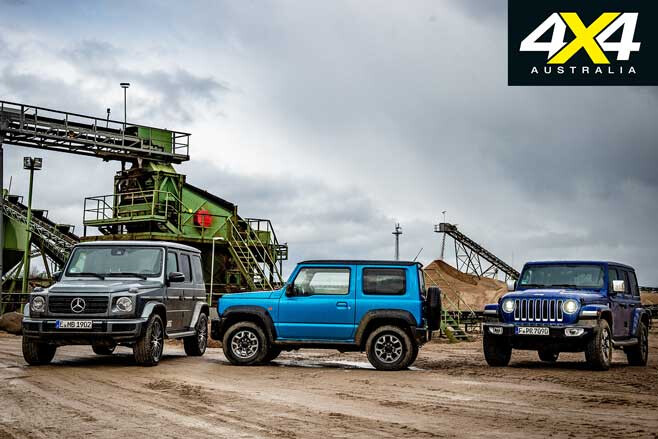
| u00a0 | Mercedes-Benz G350d | Suzuki Jimny | Jeep JL Wrangler Rubicon |
| Engine | 3.0-litre V6 turbo diesel | 1.5-litre inline-4 petrol | 2.2-litre inline-4 turbo diesel |
| Max Power | 135kW @ 3800rpm | 75kW @ 6000rpm | 147kW @ 3500rpm |
| Max Torque | 400Nm @ 1600-2600rpm | 130Nm @ 4000rpm | 450Nm @ 2000rpm |
| Gearbox | 5-speed automatic | 4-speed automatic | 8-speed automatic |
| 4×4 System | Dual-range full-time | Dual-range part-time | Dual-range full-time (+2WD) |
| Crawl Ratio | 35.6:1 | 32.7:1 | 70.3:1 |
| Construction | Separate-chassis | ||
| Front suspension | Live axle/coil springs | ||
| Rear suspension | Live axle/coil springs | ||
| Departure angle | 35u00b0 | 49u00b0 | 31.9u00b0 |
| Rampover angle | 22u00b0 | 28u00b0 | 21.2u00b0 |
| Approach angle | 38u00b0 | 37u00b0 | 41.7u00b0 |
| Wading depth | 650mm | N/A | 760mm |
| Ground clearance | 245mm | 210mm | 252mm |
| Kerb Weight | 2350kg | 1090kg | 2221kg |
| GVM | 3560kg | 1435kg | 2630kg |
| Fuel tank capacity | 97 litres | 40 litres | 81 litres |
| ADR fuel claim | N/A | 6.9L/100km | 7.5L/100km |
ANY off-road-capable four-wheel drive needs a decent bullbar – fact! Here’s a selection of some fresh bullbars for the Triton, Navara and Y62 Patrol. Plus, we’ve thrown in some heavy duty side steps for the Triton, too. Happy shopping!
ARB Summit bullbar (Mitsubishi MR Triton)
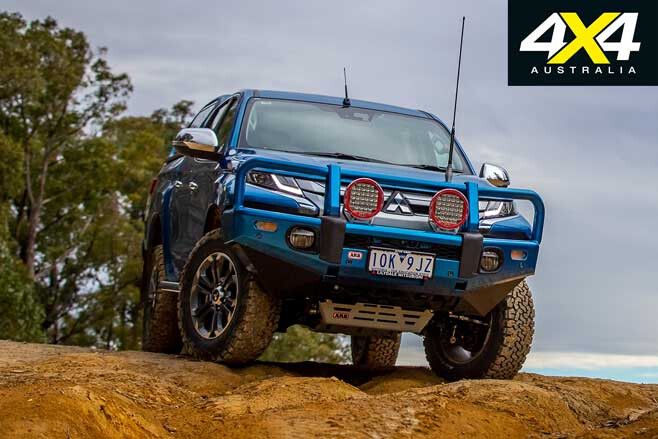
With the release of the new MR Triton and its unique front styling (and subsequent positioning of parking sensor and fog-light placement), ARB’s designers had to re-jig a number of elements of the Summit bar’s design to fit the Triton’s new face. As expected, the result looks great and there are no compromises to safety features or vehicle functionality.
The MR Triton Summit bar is airbag-compatible and of steel construction, and it incorporates a multi-fold upswept and tapered wing design to ensure the best approach angle and optimum strength. Added strength is thanks to the 60.3mm outer tubing and centre cross-bar.
The Summit bar can accommodate Warn, Bushranger, Smittybilt and Magnum low-mount electric winches of up to 10,000lb capacity. There’s provision for fitment of spotties and there’s an optional ARB fog-light kit available, too. The bar is coated with a zinc-rich primer for enhanced corrosion resistance and comes standard in black powdercoat with optional colour-coding.
Website: www.arb.com.au
EFS Stockman bullbar (Nissan Navara NP300)
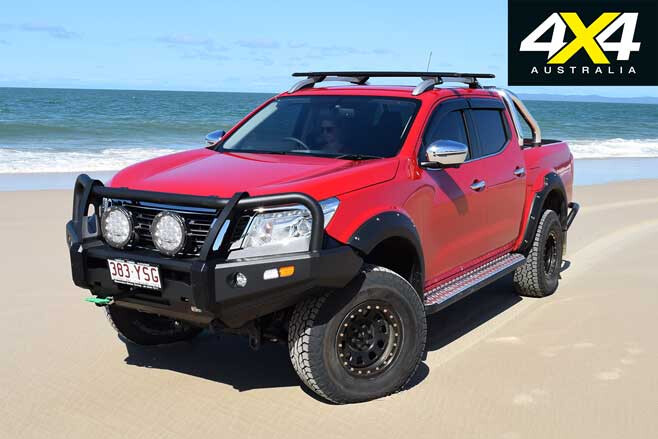
The team at EFS 4×4 Accessories has released a Stockman bullbar for Nissan’s Navara. The Stockman is available for all NP300 coil-spring cab (single and dual) models and also the king-cab leaf-spring variants from 2015 onwards.
The Stockman has been designed and developed in Australia to withstand our unique and tough driving conditions. To this effect, it has been subjected to salt spray and UV-metal coating testing. It is tested to comply with ADR69 and thus meets the vehicle’s airbag safety standards.
The bar is tough, too, being made from 63mm steel tubing. Plus, it’s winch-compatible thanks to its winch cradle-mounting bracket. The bar includes lower bash plates, super-bright LED driving lights and turn indicators, provision for fitment of twin aerials, and CNC headlight infill trims. The Stockman is a tough bullbar from a highly regarded Aussie company.
Website: www.efs4x4.com.au
ARB Summit bar (Nissan Y62 Patrol)
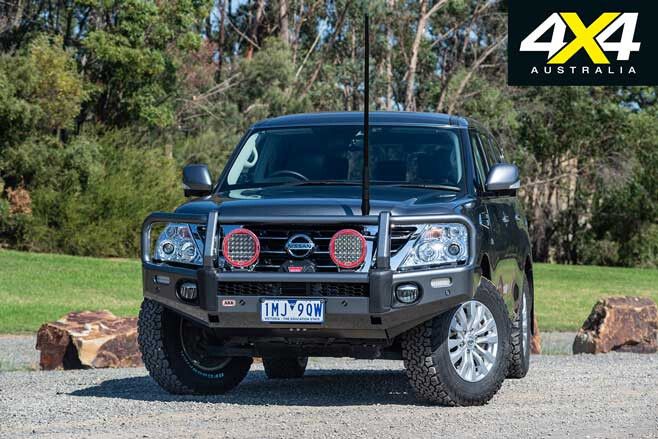
The new ARB Summit bar for Nissan’s Y62 Patrol is of tough powdercoated steel construction (which also includes a zinc-rich primer for corrosion resistance). The Summit bar allow for easy fitment of off-roading accessories (think: spotties, lightbars, etc.) and can be fitted to Ti and Ti-L spec Patrols.
It is compatible with a number of Warn, Bushranger and Smittybilt low-mount winches (there’s a cover panel in the bar for those who don’t fit a winch), and is parking sensor compatible while ensuring Intelligent Cruise Control, Forward Collision and Lane departure warnings and headlight washers.
It features a multi-fold upswept and tapered wing design to ensure optimum approach angle, combined with protection panels on the centre and both sides. The mount system is airbag compatible and there are twin ARB Jack or hi-lift jack points, along with two aerial brackets. Black powdercoat finish with optional colour matching.
RRP: $2890 (Aus east coast metro) Website: www.arb.com.au
Kingsley Rogue side steps (Mitsubishi MR Triton)
These tough new sidesteps by Kingsley Enterprises are body-mounted steps (and brackets) and are of heavy-duty steel construction and have been engineered in Australia to ensure vehicle-specific fitment and airbag compatibility.
The Rogue sidestep is coated with a high-grade polyester powder-coat that features a textured matte-black finish. The step pad design is nice and aggressive to ensure you don’t slip, regardless of weather conditions, when reaching up top for gear. These pads are – handily – bolted on so they’re easy to remove when you need to clean them.
Designed to protect your rig from rocks, mud and debris that is thrown up on- and off-road, the Rogue sidesteps cover the complete length of the Triton’s sill. Covered by a three-year warranty.
Website: www.bushranger.com.au