
LIKE its big brother, the LandCruiser 200 Series, the 150 Series LandCruiser Prado is getting long in tooth. Released in 2009 it was in fact more of a revision of the earlier (2002) 120 Series Prado rather than an entirely new-generation model, which makes it even older than it may first appear.
Of course, Toyota hasn’t stood still in all that time, with the 150 gaining many new features along the way, most significantly a new 2.8-litre diesel engine and six-speed automatic in 2016 and now a boost in power and torque for that 2.8, and even more equipment and features across the range.
In contrast, the Ford Everest is much newer and first appeared in late 2015 (for the MY16 model year) off the back of the mid-life upgrade of the T6 Ranger.
Upgrade your 4×4
-
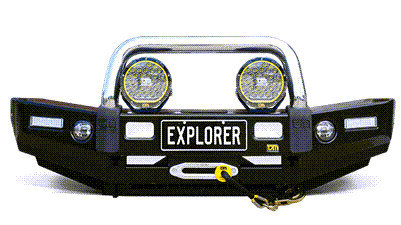
Bullbars
-
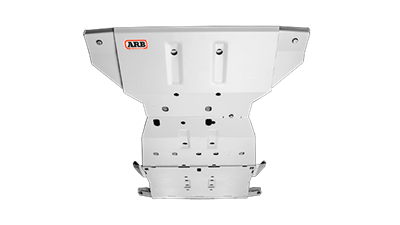
Underbody Protection
-
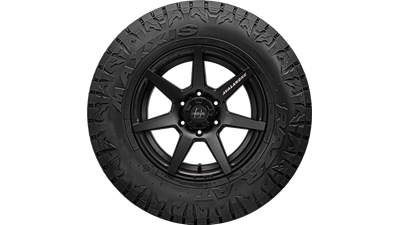
4X4 Tyres
-
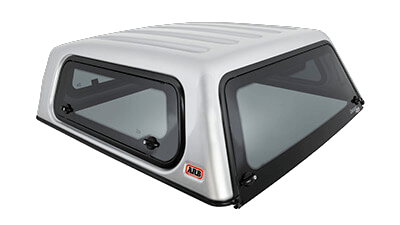
Canopies
-
Roof Racks
-
Storage
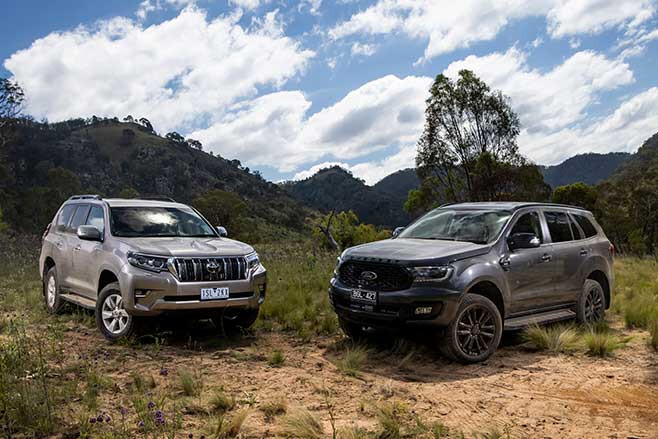
Initially available with just the 3.2-litre five-cylinder diesel and six-speed automatic from the Ranger, for 2019 it gained an all-new 2.0-litre four-cylinder bi-turbo diesel and ten-speed automatic, which was introduced via the Ranger Raptor and also offered across the wider Ranger line-up. What we have here is the 2.0-litre powertrain in the latest variant in the Everest range, the Sport.
The Prado GXL and Everest Sport we have here are both mid-$60K plus on-road costs and, while they have similarities in basic design and intended use, they are also very different. The question is, which one is best?
TOYOTA PRADO GXL
THERE are now nine models in the expanded Prado range, but only one powertrain. No longer can you get a manual gearbox or a petrol engine. The Prado comes in just one flavour, diesel automatic.
The expansion in the number of models comes from the GXL, VX and Kakadu models all now being available with the spare wheel mounted under the body, the advantage being a much lighter and easier to operate tailgate, and separately opening tailgate glass for more convenient loading of lighter and smaller items.
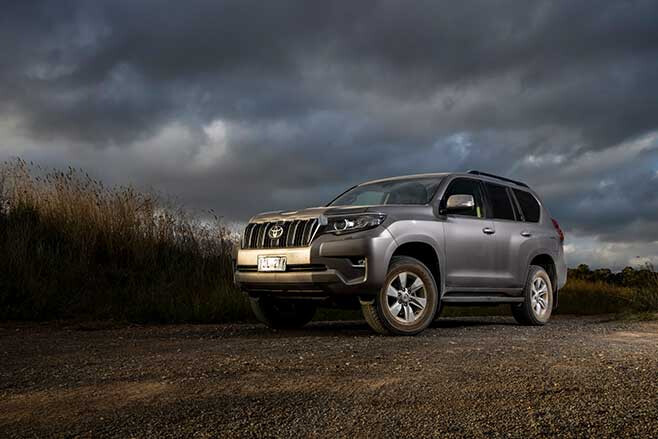
The disadvantage of having the spare wheel under your Prado is you lose the second fuel tank, which reduces the fuel capacity from 150 to 87 litres. So now there’s effectively a range of ‘suburban’ oriented Prados to complement the traditional ‘country and touring’ Prado. The relocation of the spare comes at no extra cost.
POWERTRAIN AND PERFORMANCE
IT’S not surprising that Toyota has breathed a bit more fire into the Prado’s 2.8 given it didn’t offer much more performance than the 3.0-litre diesel it replaced in 2016, just notably more refinement and cleaner emissions, which it had to do.
The performance wasn’t helped either with the then-new six-speed auto, which has two overdrive gears where the five-speed auto it replaced just had one overdrive. In fact, fifth gear in the six-speed is taller than fifth gear in the old five-speeder and then you still have the extra-tall sixth on top of that.
The extra output from the 2.8 comes essentially from a bigger turbo and higher injection pressures, but Toyota has also strengthened the cylinder block and revised the head, pistons and cooling system. On paper the power jumps from 130 to 150kW (both maximum figures at 3400rpm) while the maximum torque is now 500Nm, up from 450Nm. Importantly the maximum torque is still on tap from a low 1600rpm.
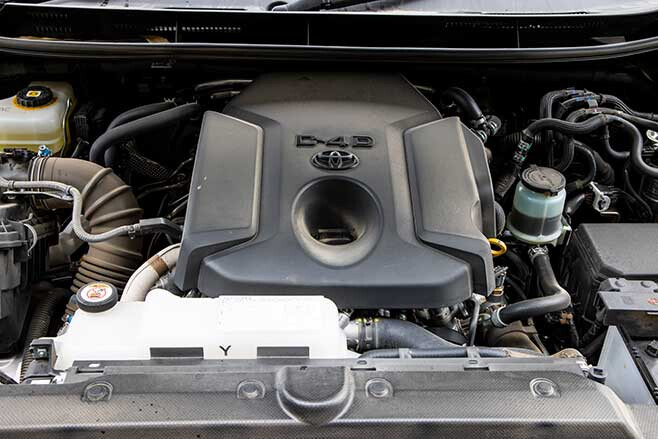
On the road this translates to noticeably less shuffling between fifth and sixth gears in give-and-take undulating country road legal-speed touring, which was a problem (and the biggest disappointment) with the lesser-output 2.8 and the six-speed auto. Obviously the two overdrive gears are all about economy but as with many such things, functionality is often sacrificed at the altar of fuel economy.
Pedal to the metal the revised 2.8 also goes noticeably harder than before, but it’s still no rocket given the economy orientated gearing and the vehicle’s overall weight and size holding it back. Certainly driven back-to-back with the Everest, the Prado feels comparatively lethargic due largely to the fact that the Everest has more gears to play with.
As ever the 2.8 is relatively quiet, smooth and refined, although with all of those attributes it still falls short of the Everest. Likewise the Prado’s refined and seemingly more proactive than before automatic is not as slick changing as the Everest’s 10-speed, at least most of the time.
There’s no mention of electronic tweaks to the Prado’s auto in Toyota’s press material but it stands to reason that the gearbox’s shift protocols would be retuned for the engine’s higher output.
ON-ROAD RIDE AND HANDLING
AS ever the Prado has a pleasantly comfortable and quiet ride largely thanks to its softly sprung long-travel suspension, but also helped by the 17-inch wheel and ‘tall’ tyre package that the GXL wears. Higher spec models wear 18s with marginally lower profile tyres.
The downside of this is that Prado doesn’t like tight winding roads and if pushed, suffers noticeably from body roll and understeer. In the company of the Everest Sport, which admittedly rides on low-profile 20s, the Prado feels soggy. Toyota has the answer to this with its brilliant KDSS system, but that’s never been available on GXL and was even dropped from the VX from 2018 on. The only Prado with KDSS now is the Kakadu, which also gets driver-selectable damping and auto-levelling and height-adjustable rear suspension, a complication not everyone may want.
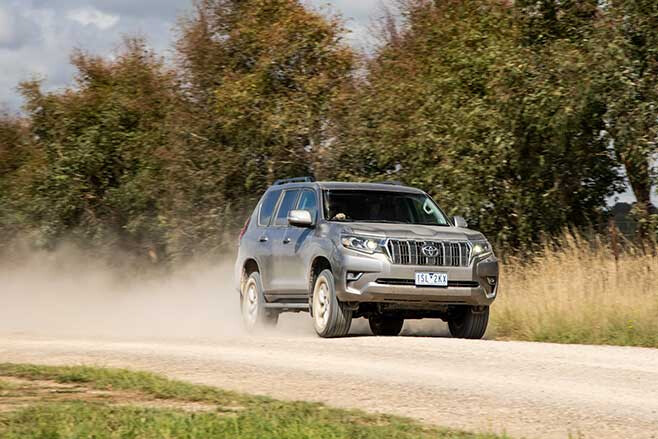
Still for all that the Prado’s steering response and general handling is more than acceptable, and its highpoint is the ease in which it eats up the miles even on bumpy and poor-quality roads. Full-time 4×4 helps too for more demanding touring conditions on wet or otherwise slippery roads.
Locating the spare under the car also makes for a slightly lighter Prado and one with a more handling-friendly weight distribution, but you would need to drive both variants side by side to learn the extent of the benefit. It counts for little against the Everest.
OFF ROAD
WHAT works for the Prado’s on-road ride, namely its compliant long-travel suspension, is also the secret behind its impressive off-road ability, even on the standard tyres. Change the tyres to something more robust and ditch the sidesteps and the Prado would be even more impressive, even if you change nothing else.
The Prado’s mechanical full-time 4×4 system has a Torsen limited-slip centre diff, which means that there’s no need to lock the centre diff for easier off-road excursions. Ramp up the difficulty and there’s a push-button lock for the centre diff, and there’s also a similar arrangement for the rear diff, although activating the rear locker cancels the electronic traction control (ETC) on both axles.
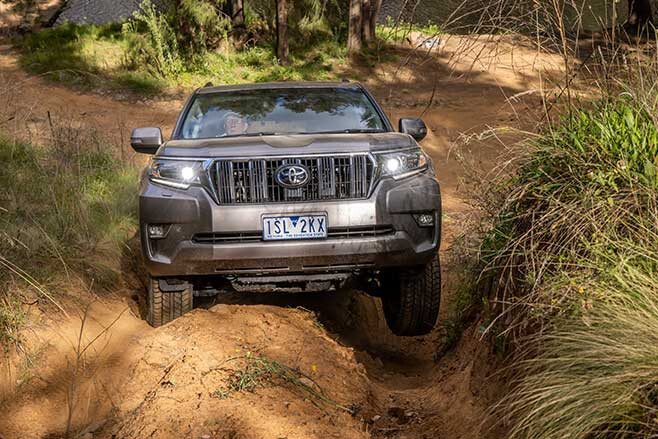
Given the Prado’s ETC works so well off road with specific calibration for when low range is selected, the rear locker is almost redundant.
The Prado betters the Everest for wheel travel but the Everest counters with a rear locker that doesn’t cancels the ETC on the front axle, which evens things up, although in this contest the Everest is severely hampered off road by its 20-inch wheel and tyre package. Points also for the Prado’s more solid-looking recovery hooks compared to the Everest, and with its engine air-intake location.
CABIN, ACCOMMODATION & SAFETY
CLIMB into the Prado and you’re greeted with a familiar and somewhat dated looking dash even if the touchscreen is a tad bigger. Still everything is easy to use with big, easy to read switchgear.Our test GXL was fitted with the ‘premium’ interior, which means leather, heated and cooled seats up front, rear heated seats and electric adjust for the driver’s seat. Up front the driver gets the benefit of both tilt-and-reach steering wheel adjustment, so one up on the Everest, which is tilt only.
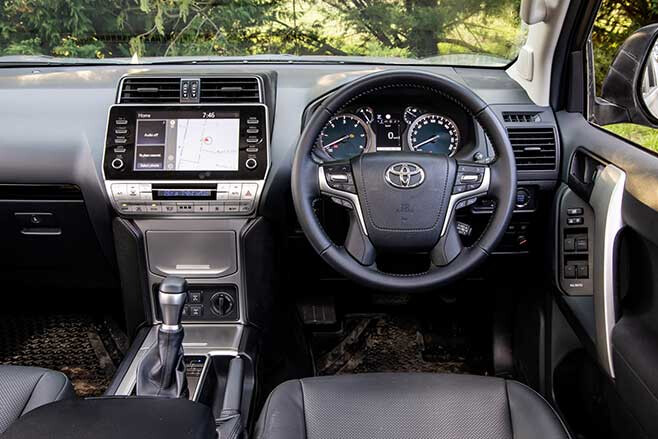
As ever the Prado is spacious and comfortable up front, while the rear seat is better suited to two adults and child, rather than three adults. The third row is easy to get in and out of and can take adults at a squeeze for a short distance, but the seats themselves are difficult to deploy from their underfloor position. And once the third row is deployed there’s little room left for luggage.
Automatic emergency braking is the headline safety act, while there’s also lane-keeping assistance via selective brake application – no electric steering for this, which is the norm with lane-keeping assistance. The GXL doesn’t however have blind-spot monitoring or rear cross-traffic at this spec level. For both you need to move up to the VX.
PRACTICALITIES
SINCE the 2018 model year, automatic Prado’s have been upgraded to a 3000kg towing limit, a notable improvement over the previous 2500kg limit, thanks to a Gross Combination Mass upgrade from 5370kg to 5990kg. The Everest is still rated to tow a little more at 3100kg, but the difference is largely academic.
Flat tailgate Prados are also 60kg lighter than comparable models with the spare on the tailgate, which gives the equivalent bonus in payload and betters the Everest.
WHAT YOU GET
THE Prado comes in GX, GXL, VX and Kakadu equipment levels and all but the GX come with the option of having the spare wheel either on the tailgate or under the car. All models get high-end safety features headlined by automatic emergency braking. All models also get a new-generation multi-media system with a 9-inch touchscreen, enhanced voice recognition and compatibility with Apple CarPlay and Android Auto, and automatic wipers.
Key equipment on the base GX includes sat-nav, keyless entry and start and 17-inch wheels. Third-row seats are optional on the GX but standard on the GXL, which also gains side-steps, roof rails, three-zone climate control, and LED headlights, fog lights and daytime running lights.
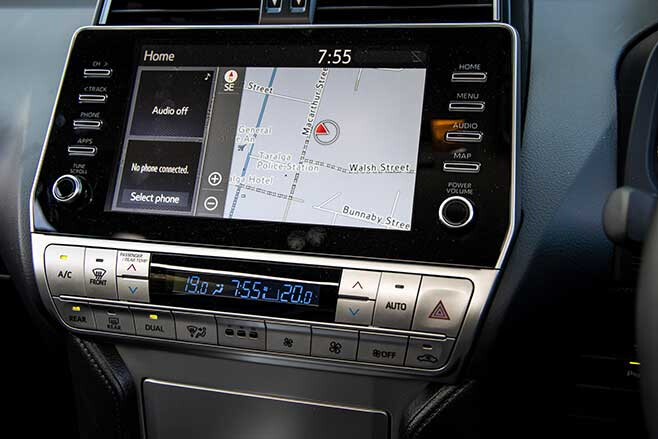
Optional on the GXL but standard on the VX is leather, heated front and outside mid-row seats and electric adjust on the front seats. The VX also gains 18s, premium sound (with digital radio), terrain monitoring cameras, blind-spot monitoring and rear cross-traffic alert.
From there the Kakadu adds a sunroof, KDSS, adaptive and adjustable suspension with rear auto-levelling, Crawl Control, terrain-specific electronic chassis controls and rear-seat entertainment.
TOYOTA PRADO PRICES
GX: $59,840 GXL: $66,540 VX: $76,380 Kakadu: $87,030 Prices do not include government or dealer charges.
SPECS: TOYOTA PRADO GXL (FLAT TAILGATE)
ENGINE: 2.8-litre 4-cyl turbo diesel MAX POWER: 150kW at 3400rpm MAX TORQUE: 500Nm at 1600 to 2800rpm GEARBOX: Six-speed automatic 4X4 SYSTEM: Dual-range full-time CRAWL RATIO: 36.1:1 CONSTRUCTION: Separate-chassis FRONT SUSPENSION: Independent/coil springs REAR SUSPENSION: Live axle/coil springs TYRES: 265/65R17 112S KERB WEIGHT: 2225kg GVM: 2990kg PAYLOAD: 765kg TOWING CAPACITY: 3000kg GCM: 5990kg FUEL TANK CAPACITY: 87L ADR FUEL CLAIM: 8.0L/100km TEST FUEL USE: 13.5L/100km GROUND CLEARANCE: 220mm APPROACH ANGLE: 32º RAMPOVER ANGLE: 22º DEPARTURE ANGLE: 25º WADING DEPTH: 700mm
FORD EVEREST SPORT
THE Sport joined the Everest line-up for the 2020 model year and is effectively a ‘blacked out’ styling exercise based on the Trend.
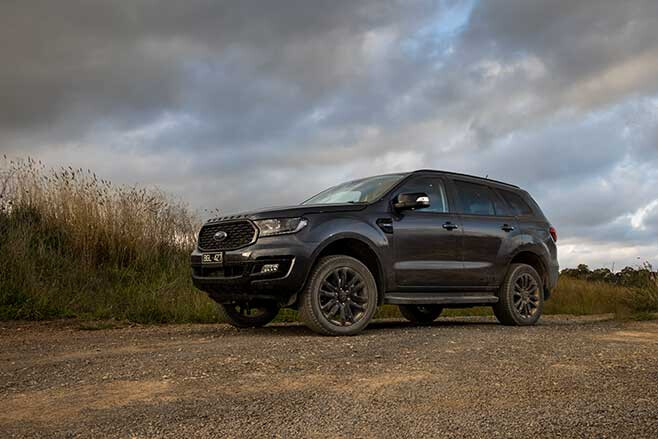
Mechanically, the only change is the adoption of 20-inch wheels in place of the Trend’s 18s. The Sport also has the new Bi-LED headlights and automatic high-beam lighting system, also introduced on the Trend and top-spec Titanium models for 2020.
The Sport is 4×4 only (no budget rear-drive-only model) and only come with seven seats. There is however the choice of two powertrains, the familiar 3.2-litre five cylinder diesel and accompanying six-speed automatic or the 2.0-litre bi-turbo diesel with its 10-speed automatic, which we have here.
POWERTRAIN & PERFORMANCE
THE Sport’s 2.0-litre bi-turbo diesel and accompanying 10-speed auto is at the pointy end of diesel design and incorporates the sort of technology that could well see out the diesel’s final days as emission regulations become tighter, and bans on diesel and petrol engines potentially kick in at the end of the decade. At this stage the thinking is that this engine will power the new generation Ranger (due 2022) and the next Everest, assuming of course there is one.
Fire up Everest’s four-cylinder bi-turbo diesel and the first surprise is how quiet and smooth it is, on both counts better than the Prado, which is still a refined diesel in its own right.
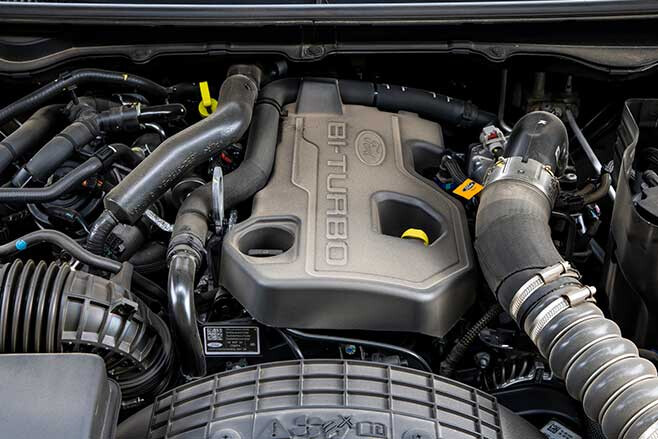
Once underway this is no small engine struggling to push a big and heavy 4×4. In fact it’s a small engine that feels like a big engine and certainly more punchy than the considerably bigger 2.8 in the marginally lighter Prado, although having 10 close-spaced gears in what is a sporty gearbox compared to the Prado’s more economy-focused six-speed certainly plays a major part here.
The Everest’s trick is of course, it’s bi-turbo system where a fast-spooling little turbo gets the engine up and running off idle before handing over to the big turbo to do the heavy lifting at middle and high rpm. Despite its relatively diminutive capacity the Everest actually makes more peak power than the Prado (157kW vs 150kW) and matches the Prado’s 2.8 in terms of peak torque (500Nm) at close to the same low rpm.
Meanwhile, the Everest’s 10-speed automatic offers slick and well-timed shifts 99 per cent of the time although it can be caught out at times, hesitate for a second, then shift with a jolt. ‘Manual’ gear selection, if you want it, is via a switch on the side of the shift lever.
ON-ROAD RIDE & HANDLING
THE Everest is a little heavier than the Prado, but feels much lighter and more nimble. Less understeer when pushed hard too. The feel and the feedback from the Everest’s electric power steering is also better than the Prado’s hydraulically assisted steering and offers much reduced effort at parking speeds (and off-road speeds).
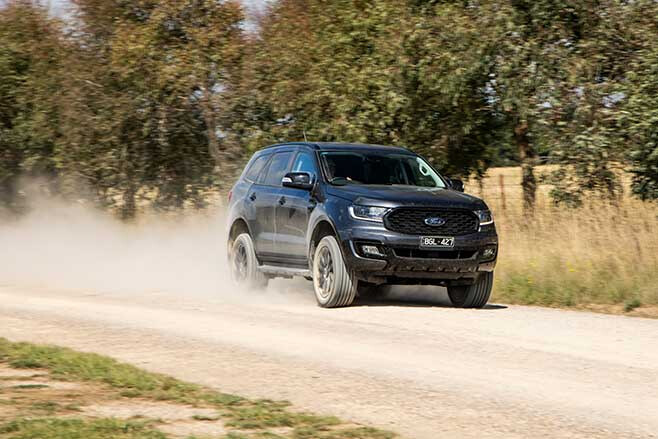
Generally tidier handling too on faster bumpier roads due in part to the Everest having a sophisticated ‘engineer’s solution’ Watt’s Link rather than a cruder ‘production-cost solution’ Panhard rod to laterally locate its rear axle, which eliminates the rear bump-steer that can trouble the Prado on bumpier roads. On the downside the Sport’s ride is firmer than the Prado and the road noise more noticeable, much of which you can put down to the Sport’s 20-inch wheel-and-tyre package.
OFF ROAD
THE Everest’s on-road finesse doesn’t come at the expense of its off-road ability. Far from it, in fact. The Everest may not have as much wheel travel as the Prado but the electronic traction control stays active on the front axle when the driver-activated rear locker is engaged, which is not the case with the Prado.
Unlike the Prado, which has a mechanical centre diff, the Everest has an electronically controlled clutch-style centre diff that can vary the amount of torque sent to either axle. It’s effectively a full-time system in as much as the driver doesn’t have to select 4WD. On a high-traction surface the Everest splits the drive 40/60 front to rear, but can reduce or increase the drive to the front as needed.
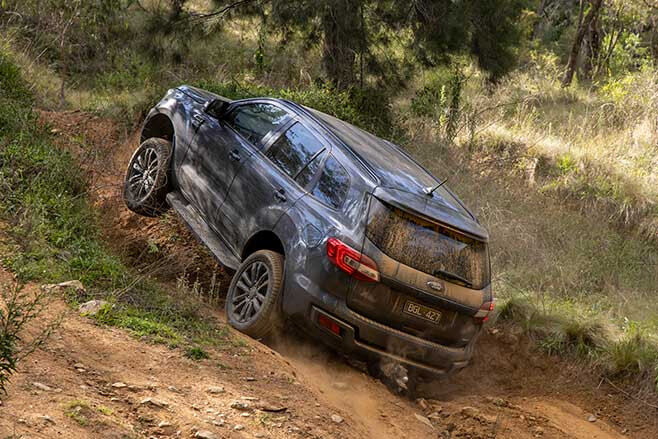
The electronically controlled centre ‘diff’ also plays a part in the Everest’s terrain-specific drive models, namely ‘Snow/Mud/Grass’, ‘Sand’ and ‘Rock’, as well as a ‘Normal’ mode. The only problem here is that when low range is selected you can’t also select ‘Sand’.
The Sport’s 20-inch wheel and tyre package also do it no favours off road, but at least the tyres don’t have a notably high speed rating, which would make them even more unsuitable for off-road use. Either way, it is easy enough to swap to a more practical wheel/tyre combination. In fact Ford offers an off-road wheel-and-tyre package for the top-spec Titanium, which also comes with 20s as standard. Bespoke black 18s with all-terrains from the factory would be a nice option on the Sport.
The Everest claims 100mm more wading depth than the Prado despite the engine air-intake being more exposed and its recovery hooks don’t look as heavy-duty as those on the Prado.
CABIN, ACCOMMODATION & SAFETY
LIKE the Prado, the Everest has smart-key entry and push-button start and once inside, you’ll find a cabin that’s nicely detailed and finished with detailing to the (leather) seats and door trims that’s unique to the Sport. As ever, some of the Everest’s switchgear is too small and not user friendly, the HVAC controls being the notable offender.
There’s no steering wheel reach adjustment for the driver but it’s not hard to find a comfortable driving position given the front seats are more comfortable than the Prado’s.
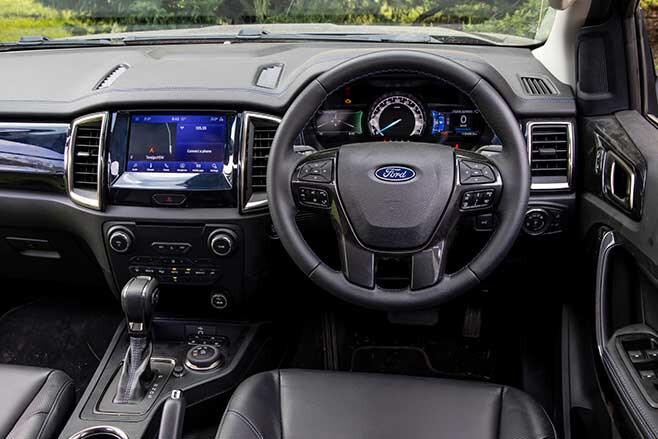
The second row seat offers more shoulder room than the Prado and a better centre pew but the legroom isn’t as good, even if there’s room for a six-foot passenger to sit behind a six-foot driver. Like the Prado, the Everest’s middle-seat can be adjusted fore and aft, which allows you to balance the legroom between the second and third rows.
The third-row seats have electric deployment, an improvement on Prado but aren’t as easy to access. The comfort and room in the third row is comparable to Prado, but there’s more luggage room behind the third-row seat in the Everest when the third row is deployed.
Like the Prado, the Everest gets automatic emergency braking and a similar range of other safety equipment, but like the Prado GLX the Everest Sport doesn’t have blind-spot monitoring.
PRACTICALITIES
THE Everest claims more towing capacity than the Prado but for heavy-duty towing, an Everest with the 3.2-litre five-cylinder engine will tow better than both the 4x4s here, despite the fact that the 2.0-litre claims more power and torque than the 3.2L. What works on paper doesn’t’ necessarily work on the road, as previous testing has shown.
The Everest is a little short of the as-tested Prado’s payload but that difference evaporates if you opt for the slightly heavier spare-on-the-tailgate GXL variant.
The Everest’s 80-litre fuel capacity is well short of the 150 litres you get with a rear-mounted-spare Prado and still 7 litres short if you opt for the spare under your Prado.
WHAT YOU GET
INTRODUCED for the 2020 model year, the Sport sits between the mid-spec Trend and top-spec Titanium in the Everest line-up. Standard equipment on the Sport extends to smart-key entry and start, leather, power-adjust driver’s seat, dual-zone climate control, an 8-inch touchscreen, sat-nav, 10-speaker audio with digital radio, rain-sensing wipers, Bi-LED auto headlights with automatic high beam, third-row seats, LED DRLs, and a rear locker.
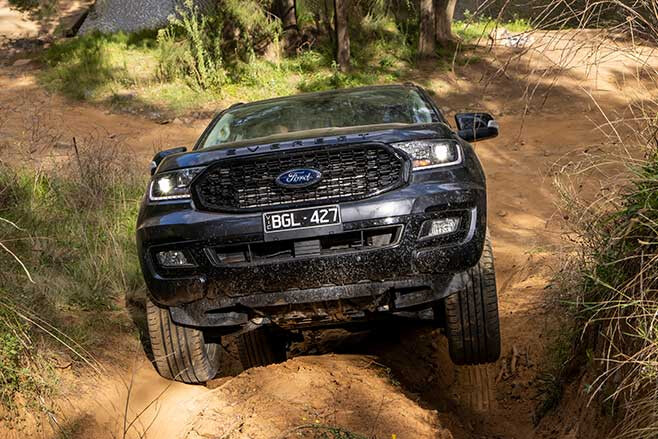
The Sport is distinguished by black lower bumper sections front and rear, black exterior mirrors, black window surrounds and black roof rails. The Sport also rides on bespoke black 20s. Safety kit includes autonomous braking, radar cruise, lane-keeping assist, traffic-sign recognition, and front, side, full-length curtain and driver’s knee airbags
FORD EVEREST 4X4 PRICES
3.2 Ambiente: $55,090 3.2 Trend: $60,890 2.0 Trend: $62,390 3.2 Base Camp: $63,090 2.0 Base Camp: $64,590 3.2 Sport: $62,890 2.0 Sport: $64,390 2.0 Titanium: $73,190 *Prices do not include government or dealer charges.
SPECS: FORD EVEREST SPORT 2.0L
ENGINE: 2.0-litre 4-cyl bi-turbo diesel MAX POWER: 157W at 3750rpm MAX TORQUE: 500Nm at 1750 to 2000rpm TRANSMISSION: Ten-speed automatic 4X4 SYSTEM: Dual-range on-demand CRAWL RATIO: 42.2:1 CONSTRUCTION: Separate-chassis FRONT SUSPENSION: Independent/coil springs REAR SUSPENSION: Live axle/coil springs TYRES: 265/50R20 107T KERB WEIGHT: 2406kg GVM: 3100kg PAYLOAD: 694kg TOWING CAPACITY: 3100kg GCM: 5900kg FUEL TANK CAPACITY: 80L ADR FUEL CLAIM: 7.0L/100km TEST FUEL USE: 13.5L/100km GROUND CLEARANCE: 227mm APPROACH ANGLE: 29.5º RAMPOVER ANGLE: 21.5º DEPARTURE ANGLE: 25º WADING DEPTH: 800mm
THE VERDICT
CHOOSING a winner here may come down to you being a ‘Toyota’ person or a ‘Ford’ person. Both brands tend to generate loyal followers and strident detractors.
In one way the choice is simple. If you’re a keen driver who places a premium on dynamics, handling and performance, there’s only one choice and that’s the Everest. And the Everest’s superior on-road performance doesn’t mean it can’t match the Prado off road. The Everest’s interior packaging is also a little better, even if the Prado looks a little bigger from the outside.
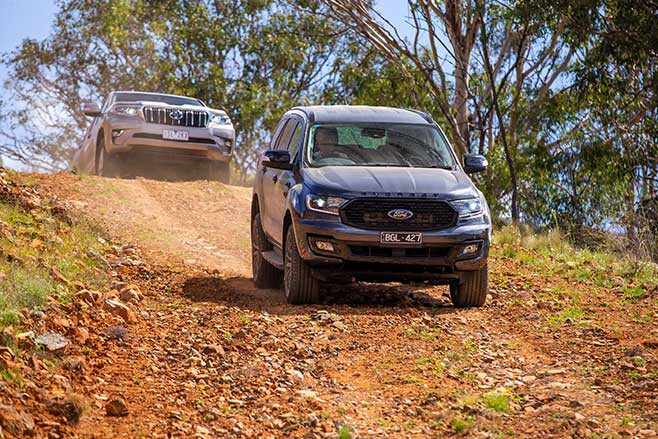
The Prado comes back into the contest in the way that all Toyota’s tend to do. It has a simpler, lower-stressed engine and a well-proven Aisin automatic gearbox widely used by Toyota and others. Even the Prado’s 4×4 system is simpler and doesn’t rely on electronics.
For those interested in remote-area travel the 150-litre fuel capacity that you get with the Prado when the spare is mounted on the rear door is also a major bonus. The extensive range of aftermarket enhancements available for the Toyota is also a bonus even if there’s a fair range of extra kit for the Everest.
So while the Everest is a better 4×4 to drive, the Prado may be a better 4×4 to own. The choice is yours.
4X4 Australia's project builds
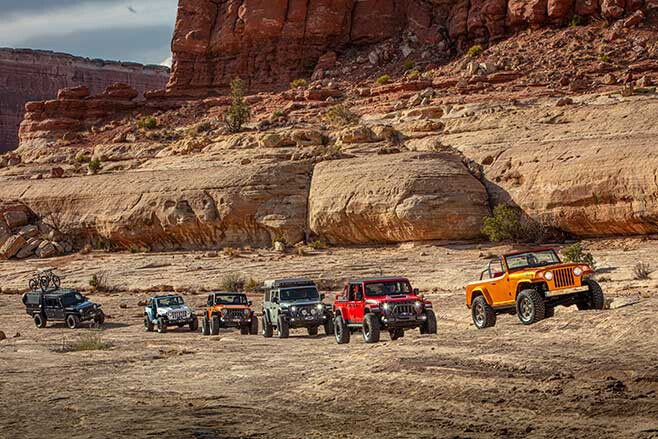
IF YOU are not into Jeeps, well, we feel sorry for you. But we love ’em, and when Jeep and Mopar show up at the Easter Jeep Safari (EJS) with their current corral of creations, we are first in line to take ’em for a spin.
Each of the rigs this year hit the trail with a unique spin, ranging from a roaming football tailgater and overland camper, to a retro-modern Commando and the first fully electric Wrangler.
EJS: Bronco crashes the Easter party
If COVID put the kibosh on your plans for attending EJS, no worries, we’re bringing it to you.
MAGNETO
LET’S start with the Jeep we thought we’d never see: a zero-emission fully electric Wrangler Rubicon. Our first impressions were, “this is a little weird,” as it sounded like a high-performance golf cart. You also couldn’t tell if the engine was running. But when I pressed the clutch and shifted it in gear – yes, it has a six-speed manual and two-speed transfer case – I realised Magneto is probably one of the most high-tech Jeeps ever built.
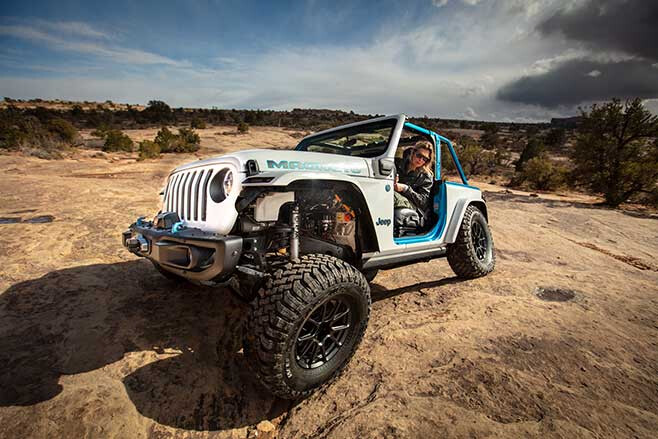
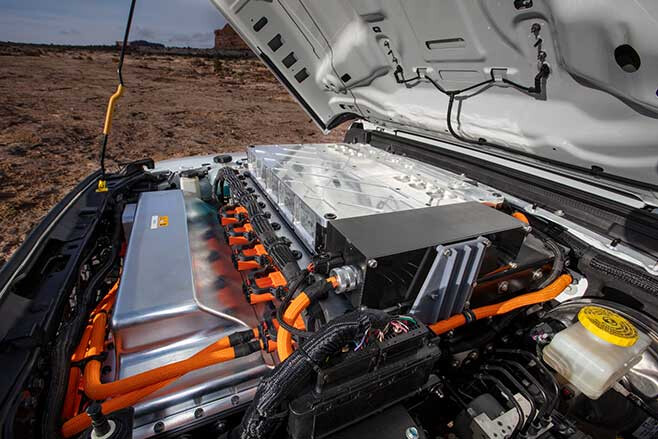
Its axial flux motor draws juice from four lithium-ion battery packs dispersed throughout the vehicle (a combined reserve of 70 kW/h), and generates 213kW and 370Nm – nearly identical to the stock 3.6-litre Pentastar V6. Power curve calibrations were designed to match its internal-combustion counterpart, but being electric it won’t stall at 300 or even 25rpm. Try this with a petrol manual.
Batteries and control modules are environmentally sealed, allowing for a fording depth of 762mm, and skid plates protect the full underbelly. An inverter converts DC to AC power for the motor, while the radio, lighting, nav system, and other 12-volt accessories are powered by a separate battery, as are the 10kW heater and Warn winch.
In technical terrain the Magneto crawled with the best of them, but there was a learning curve. The two-inch JPP suspension and KM3 Mud-Terrains did what they should, but without combustion chambers there is zero compression braking. If when ascending a ledge you let up on the accelerator – Freudian slip there – without applying the brake, backwards you roll.
While we won’t see an EV Wrangler in showrooms in the near future, Jeep executives said technology is advancing quickly, and a Magneto-based production model is on the horizon. By the way, Magneto will do 0-97km/h in an electrifying 6.8 seconds!
ORANGE PEELZ
THIS capable lad lands in the trail-ready category. The base platform is a two-door Rubicon, but it received a facelift with heaps of JPP accessories and one-off concept goodies. We first noted the custom half-doors and side graphics. But rather than one-offs, both will soon be found in the JPP catalogue.
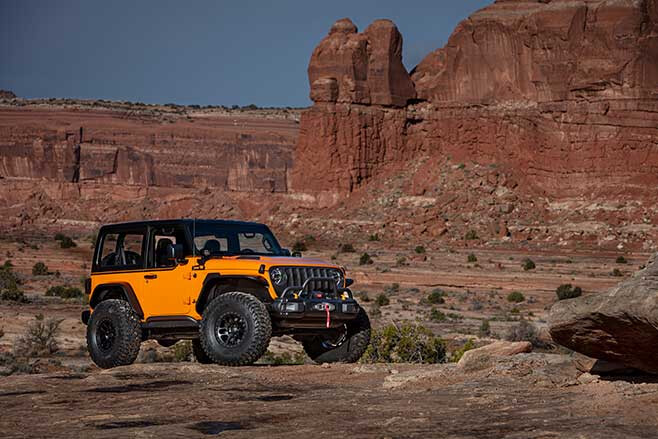
Climbing behind the wheel, the carroty orange peelz tint flowed across the dash and throughout the interior. Ample light poured in from above via the removable glass Freedom Top and rear side panels. Protecting us from getting a mouth full of bugs was a new chip-resistant windshield made from Corning Gorilla Glass.
Under the bonnet is a 3.6-litre Pentastar petrol V6, which receives fresh air from a cold-air intake system. It’s not a HEMI, but has proven itself as a reliable powerplant and its 213kW is more than enough for the average bloke. A set of LED driving lights complement each A-pillar, and High-Top fenders protect upper sheet metal from damage.
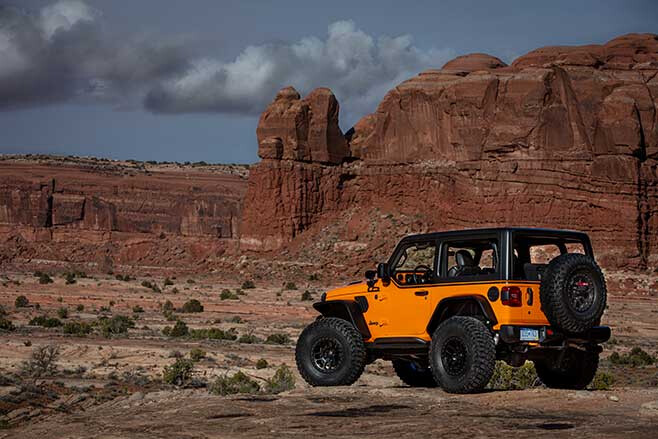
Fox shocks mated to a two-inch lift keep the 37-inch BFGoodrich KM3s and beadlock wheels on the ground. You might notice the hood appears to be a one-off creation, but it too will soon be available from JPP, as will the “Willys” themed latches.
OFF-ROAD WEAPON? Wrangler 4xe
We also liked the new centre-mounted brake light and reinforced swing gate, which will accommodate the weight of a larger spare. Body protection and recovery gear is right out of the Rubicon’s lineup, and includes steel bumpers, modified rock rails, and a Warn 8000-pound winch. Lastly is the cat-back dual-tip exhaust system, another new offering from JPP. On the trail, Orange Peelz was simply fun to drive It’s a Jeep, right!
FAROUT
LAST year Jeep teased us with Farout, brethren to the 2018 Gladiator Wayout. It embodies the ethos of independent backcountry travel, and does it in style. Up top is AT Overland Equipment’s Habitat, a voluminous abode that flips open to provide room for an entire family to sleep in comfort.
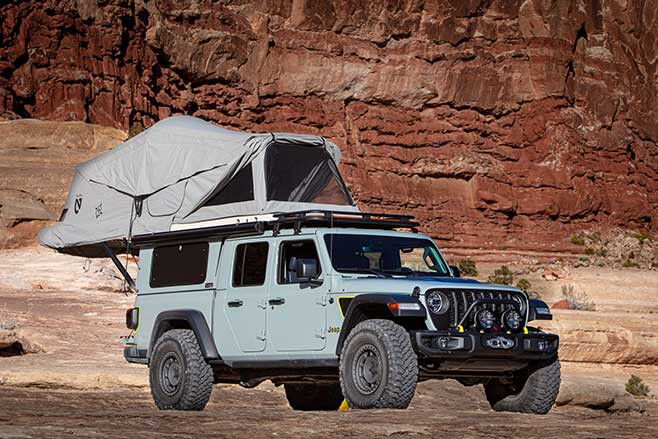
Down below, the bed was fitted with wood floors, custom cabinetry, and warm LED track lighting throughout. Mindful of having a proper gally, a National Luna fridge-freezer and Partner Steel stove is accessed via a Goose Gear slide-out system.
Farout rides on a two-inch JPP suspension with Fox shocks, and 37-inch Falken Wildpeak MTs fitted to alloy wheels put the rubber to the trail. Rock rails and bumpers, the front cradling a Warn 12,000 winch and a pair of IPF LED auxiliary lights, are modified Rubicon units.
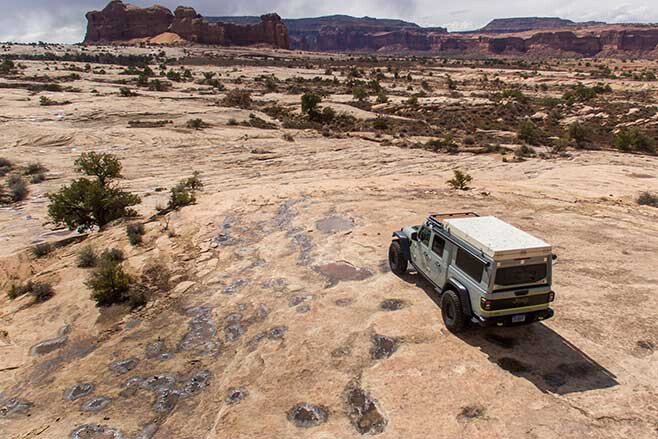
Above the cab is a rack for additional storage, and under the bonnet is a third-gen 3.0-litre EcoDiesel V6 that generates 194kW and 599Nm.
Combined with the 70-litre fuel cell, even with the additional weight of the buildout, we’d expect 560km of backcountry range. If the sun was setting low on the Simpson Desert, Farout would be the ideal platform for popping up the tent and settling down around the campfire.
TOP DOG
MOPAR’S Gladiator-based Top Dog gets is moniker from the electric hot dog grill mounted outback, and is set up for the outdoor adventure lifestyle.
Up top are a pair of Trek mountain bikes and dual Rhino racks for additional gear, while JPP/Rigid LED work lights provide illumination when the sun goes down.
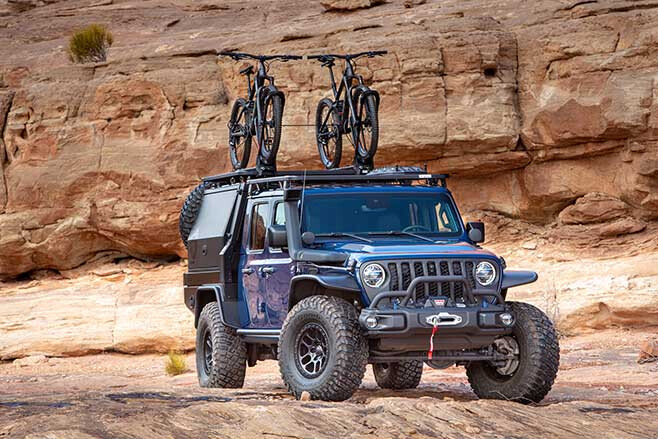
The OE bed was removed and replaced with a custom PCOR utility box. Inside we find the aforementioned hot dog grill, along with storage compartments, an electronics panel and inverter, and 12-volt refrigerator. Pullout drawers and power options abound, and LED track lighting will keep you from burning your snags.
Recovery gear includes a 12,000-pound Warn winch up front and an 8,000-pound unit in the rear, both of which are wrapped in Spydura synthetic rope. Mounted to starboard are a pair of MaxTrax traction boards, and inside is JPP’s new recovery kit.
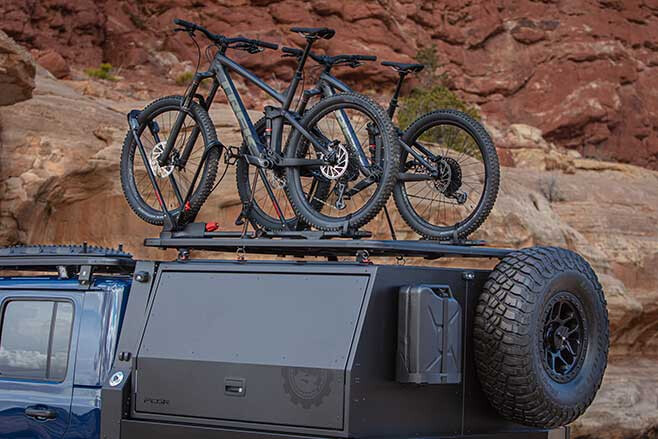
A walkaround reveals a Rubicon front bumper, customised rock sliders and High-Top fenders, and a spare jerry can. Top Dog hits the trail on BFGoodrich KM3 and beadlock-capable wheels, and a JPP/Fox suspension keeps you on track.
Lastly is a raised air intake system complemented by Mopar’s new A-pillar light brackets and driving lights. We’re more comfortable behind a steering wheel than a set of handlebars, but if we decide to pedal our way to Perth, Top Dog would be a great support vehicle.
RED BARE
WE WERE told that Red Bare was the inspiration of Jeep Vice President Jim Morrison, and by the Canadian maple leaves subtly tucked in here and there, we believe it … ay?
Crafted from a Gladiator JT, its charter is to be a hard-working truck for folks that like an open-air feel. Half doors all around and the removable soft top quickly transform Red Bare into a warm-weather convertible.
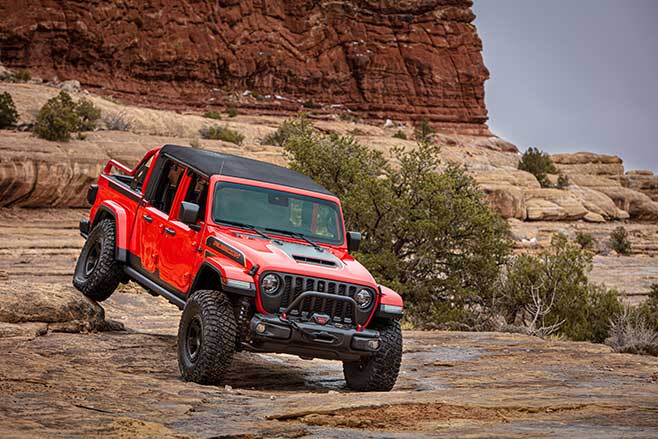
The firecracker red and matte-black colour scheme runs throughout, including Canadian-style flannel on the dash, instrument panel, and Katzkin leather seats. The heart of this beast is a 3.0-litre EcoDiesel V6 mill, which will provide solid fuel economy and range in the field.
With the exception of 4.88:1 ring and pinion gears, which provide a 91:1 final crawl ratio, the running gear is all Rubicon – Gen III axles, e-lockers fore and aft, TorqueFlite 8HP75 eight-speed transmission, and Rok-Trac transfer case.
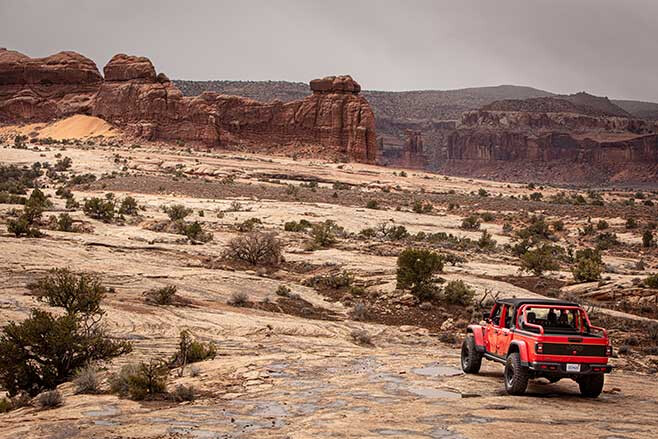
The hood and cowl inserts are off of the Gladiator Mojave menu, and armour includes JPP Sand Slider side rails, steel bumpers, and a Warn winch. Behind the cab is a custom rack system and bed cover, and other goodies include BFG KM3s on alloy wheels. With all this torque, low-range gearing, and a 3000kg towing capacity, you’ll be able to move just about anything around the back forty.
JEEPSTER BEACH
WE finally come to our favourite from this year’s crop of concepts, the Jeepster Beach.
Paying respect to the beloved Commando, this retro-modern sand rod inspires the surfer dude in all of us. Its red leather interior, Hawaiian leis, old-school decals, and Mr. Tiki overseeing operations, takes us back to a simpler time when a slab of coldies, a long board, and your sweetie at your side was all that mattered.
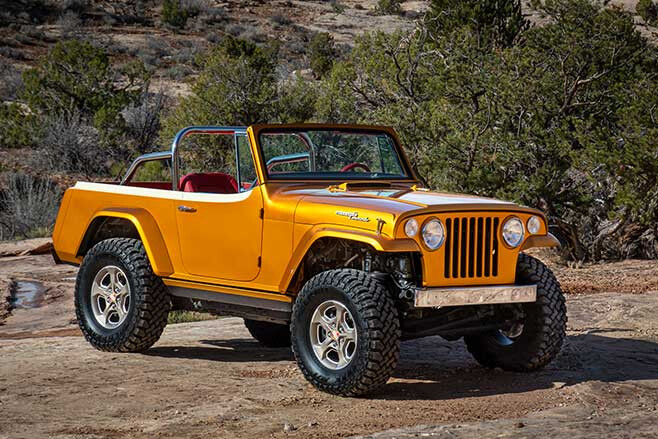
What began life as a 1968 C-101 Commando, was brilliantly blended with a 2020 Wrangler Rubicon. The body was customised, but a wealth of details have been left intact to retain the Jeepster’s vintage persona. Chrome bumpers, rear gate, front grill, hood, and old-school latches are all Commando to the casual observer. Even the half doors, wind wings, and hand-crank windows. But peeking inside, the Rubicon locker switch, gauges, and Uconnect screen reveal what lay beneath the sheet metal.
Under the hood is a turbocharged 2.0-litre four-banger rated at 201kW…perfect for getting down the beach when the tide is coming in. The eight-speed automatic follows tradition, as the Commando was the first compact SUV with a slush box transmission. A 4.0:1 transfer case distributes power to Dana 44 axles, and Falken 35-inch Wildpeak MTs will provide plenty of floatation when things get dicey.
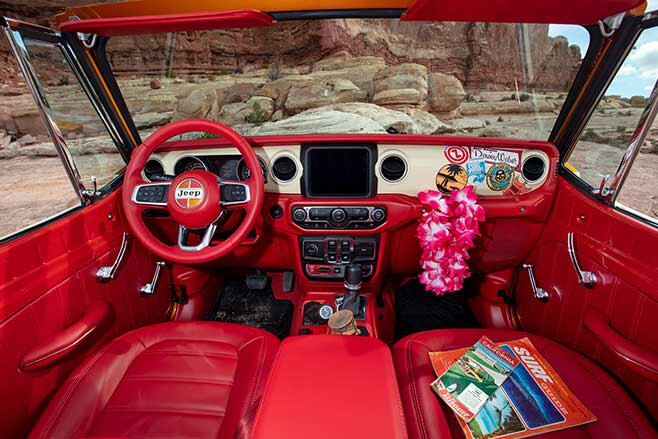
Like retro? Check out the badging on the wheels and fenders. And don’t worry about dragging sand in on your feet … the Jeepster is sans carpet. Just grab a hose and wash her down. So climb in, toss responsibility to the wind, and throw your hands up.
The Jeepster Beach was designed for fun in the sun, and the only thing between your straw hat and the heavens will be a custom chrome roll bar. Catch a wave and hang ten bro!
WOW! Where do you start with the new Land Rover Defender? When we say the Defender is all-new, we mean it. It’s new from the concept forward and the only carry-over part on it is the model name.
4X4OTY CONTENDERS 2021 ISUZU D-MAX MAZDA BT-50 XTR TOYOTA HILUX SR5+ JEEP GLADIATOR RUBICON
The 2020 Defender arrived in very limited numbers of 110 5-door wagons and most of them were the P400 petrol model. In fact the few 4-cylinder diesel variants have since been discontinued and will be replaced with a new 6-cylinder diesel from April, along with the arrival of the 3-door Defender 90.
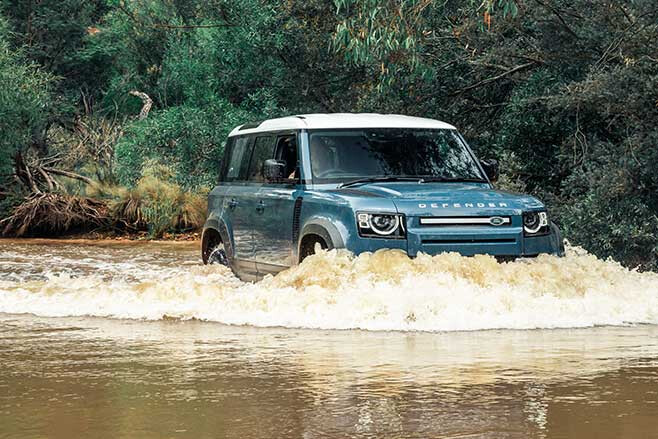
The Defender supplied for 4x4OTY is an SE-spec P400 which starts at $102,736 but with a heap of option packs fitted, this one comes in at $126,917. While we would consider most of the options non-essentials, the few worthy of mention include the Towing Pack ($3207) which gets you: All Terrain Progress Control (ATPC), Terrain Response 2, Configurable Terrain Response, Tow Hitch Receiver and Advanced Tow Assist, plus the $806 auto-locking rear differential.
WINNER NAMED: Hilux wins 2021 4X4OTY
DRIVETRAIN & PERFORMANCE
LIKE everything about the new Defender, its 3.0-litre 6-cylinder petrol engine is a technical tour de force. It’s what Land Rover calls a mild hybrid with 48-volt engine electrics feeding an electric supercharger to boost performance at lower engine revs before an exhaust-driven turbocharger takes over at higher revs.
That’s keeping things simple but it all adds up to 294kW and 550Nm, which is close enough to 400-horsepower in the old money, hence the P400 nomenclature.
4X4 ROUTE: From Werribee to the High Country
That’s enough to make the 2400kg Land Rover feel pretty sporty when you put your foot down. The engine delivers a sweet howl and a push in the back when you hold it flat, and the transmission slips through its eight ratios. It’s effortless power delivery making for a high-performance drive on mountain roads and plenty of grunt for low-range mountain climbing.
The performance is enticing and the Defender recorded the highest fuel use on our test week at 19.3L/100km, meaning we were looking to refill the 90-litre tank after two days of High Country driving.
ON ROAD RIDE & HANDLING
THE Defender features height adjustable, fully independent suspension to attempt to give the driver the best of both worlds – on and off road. The on-road drive is exciting and the Landy hunkers down over its 20-inch tyres and makes the most of the engine’s performance. It’s still a big, heavy 4×4 wagon, but its dynamics defy its mass.
OPINION: Is the new Defender a worthy replacement?
The standard 255/60-20 highway tyres still have a pretty good sidewall so the ride isn’t as bad as you might imagine on 20-inch wheels. Overall it’s firm without being uncomfortable and supple enough to soak up the bumps and undulations.
OFF-ROAD
DEFENDER’S Terrain Response 2 system is now configurable so you can set it up to your liking, but it also has an Auto setting so you can forget about it altogether. That’s a good thing as the settings are now in a menu and not as easy to access as they were when they were on a simple dial.
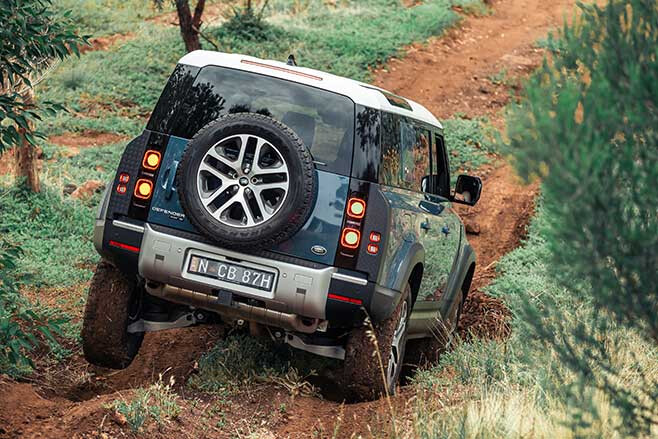
We’ve found the easiest way to get the best off-road performance out of the Defender is to simply push the button to put it in low range, and the button to turn off hill descent control, raise the suspension to its off-road height and away you go. In this mode the Defender feels unstoppable and it walked up our hill climb without raising much dust. Once you get out on the rocky trails, the higher suspension setting can feel a bit harsh and tends to top out the dampeners over bumps, but you can drop it back down one setting if that bothers you.
CABIN AND ACCOMMODATION
THE inside of the Defender is spacious, accommodating and well-equipped. Even without carpet on the floors it felt luxurious in this company but in the context of the modern Land Rover model range, it is far from it. It has everything you need and plenty more making the Defender one of the best long-distance touring vehicles.
The rear cargo area is spacious with room for all your gear, a couple of decent tie-down points and a 12-volt power outlet. The seats fold flat to increase cargo space and the 110 is available as either a 5, 6 or 7-seater.
PRACTICALITIES
THE Defender is one of the few 4×4 wagons to have a 3500kg towing capacity to match the utes, and the 110 P400 has around 880kg payload depending on the features fitted.
The smallest wheel rim you can fit over the brakes on the P400 variant is a 19-incher limiting your tyre choices. Buyers wanting off-road rubber would be best to opt for the 20s as they offer more tyre options. Diesel Defenders can be fitted with 18s because of the smaller rear brakes.
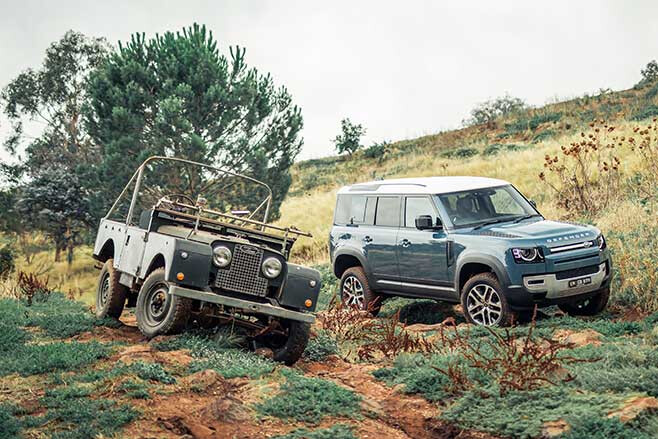
There is a range of factory accessories available for the Defender including an intake snorkel and a winch compatible front bar, but we are yet to see much for it from the aftermarket.
SPECS
ENGINE: 3.0-litre IL6 bi-charge petrol* MAX POWER: 294kW at 5500rpm MAX TORQUE: 550Nm at 2000 to 5000rpm GEARBOX: Eight-speed automatic 4X4 SYSTEM: Dual-range full-time CRAWL RATIO: 44.3:1 WHEEL/TYRE: 255/60R20 113Q KERB WEIGHT: 2286kg GVM: 3165kg PAYLOAD: 879kg TOWING CAPACITY: 3500kg GCM: 6665kg FUEL TANK CAPACITY: 90 litres ADR FUEL CLAIM: 9.9L/100km GROUND CLEARANCE: 291mm APPROACH ANGLE: 38⁰ RAMPOVER ANGLE: 28⁰ DEPARTURE ANGLE: 40⁰ WADING DEPTH: 900mm
The next-gen 2022 Ford Ranger has been spied testing in NSW, Australia, with a photo posted to Facebook showing a convoy of camouflaged utes in a KFC car park.
The development team can be seen wrapping the Rangers in covers, in a foiled attempt to hide the highly anticipated new model.
Still, the Rangers remain under heavy disguise, and little can be learned from the spy shots – other than a redesigned headlight cluster.
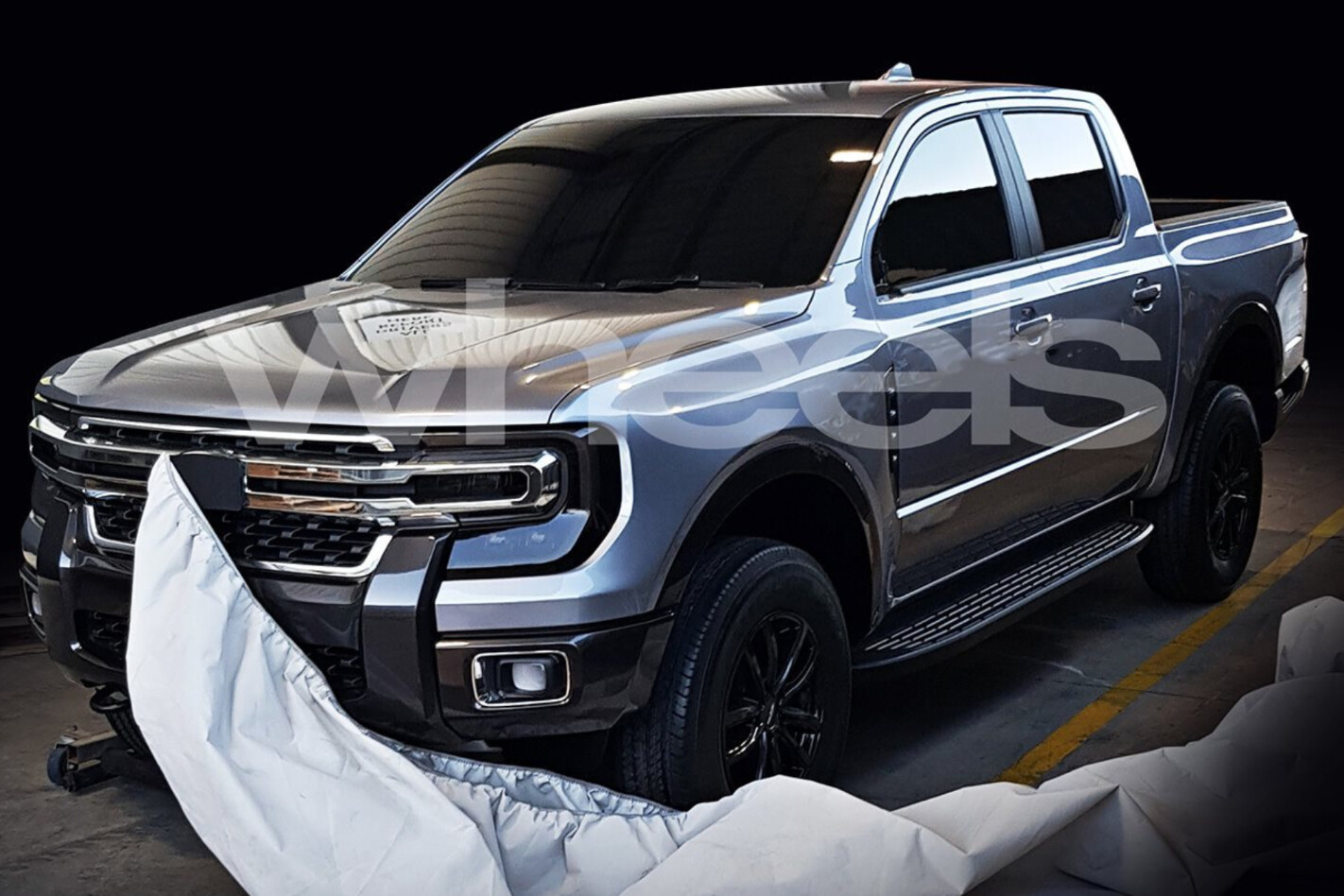
Above: A look at the new Ranger, revealed exclusively by Wheels in 2019
Our earlier coverage suggests the Ranger will be available with both turbocharged petrol and diesel engines, with the 3.2-litre five-cylinder expected to be dropped.
These engines will run through a 10-speed automatic gearbox, with no word as yet on whether there will be a manual transmission.
The Ford Ranger remains in a tit-for-tat battle with the Toyota Hilux in the 4×4 sales race, with the latest VFACTs report indicating the Hilux is on track to be the sales leader for 2021.
The Australian launch of the next-gen Ford Ranger was pushed back due to COVID-19, with the model expected to be revealed later this year and in local showrooms early in 2022.
MORE: Ranger stories MORE: All Ford stories
JEEP dropped the JT Gladiator pickup in Australia mid-year to deliver something all-new and fresh to the 4×4 market. Basically a ute version of the well-known Wrangler wagon, the Gladiator rides on a longer wheelbase and incorporates a bit of Ram truck rear-suspension design under it’s back end.
4X4OTY CONTENDERS 2021 ISUZU D-MAX MAZDA BT-50 XTR TOYOTA HILUX SR5+ LAND ROVER DEFENDER
Not a 4×4 ute in the same sense as the popular rigs like the Hilux or D-MAX, the Gladiator is more of a lifestyle ute rather than a workhorse due to its relatively low payload and towing ability.
The Rubicon is the off-road champion in the three-variant Gladiator line-up, and also the most expensive at $76,450. This one came with optional Punk’N paint ($1035); the Lifestyle Adventure Group ($3835); black wheels ($975); the Luxury Package ($2535); and a steel Front Bumper to take the total price to $86,455 (+ORC).
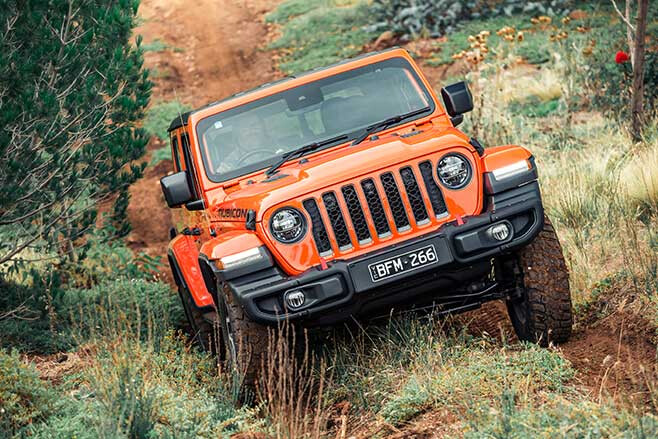
POWERTRAIN & PERFORMANCE
JEEP only offers the Gladiator in Australia with the one drivetrain, the 3.6-litre petrol V6 engine backed by the ZF 8-speed auto transmission. As the off-road variant, the Rubicon backs that up with the Rock-Trac 4×4 system that is fitted with 4.1:1 low-range gearing, on-demand (auto) 4WD, locked 4×4 high and low range; 4.11:1 geared, lockable final drives; a disconnecting front sway bar; extra underbody protection; and BF Goodrich KM3 mud-terrain tyres.
2021 4X4OTY: The winner revealed
The 209kW V6 surprises with its performance in the relatively large JT, helped no doubt by the low overall gearing that makes it sprightlier at the expense of fuel consumption. This aging engine received a new lease on life when Jeep fitted the 8-speed behind it, and the combo is a winner in both the JT Gladiator and JL Wrangler models.
ON ROAD RIDE & HANDLING
NO Gladiator is particularly a great on-road car but the Rubicon variant is even less so. It steers and rides better than the Wrangler wagon, thanks to its longer wheelbase and the addition of Fox Racing shock absorbers on the Rubicon only. But the JT remains a body-on-chassis light truck with a high centre of gravity, live axles and on the Rubicon, mud-terrain tyres, so it’s never going to be a sports car. Nor does it pretend to be – the Rubicon is made for off-road use.
OFF ROAD
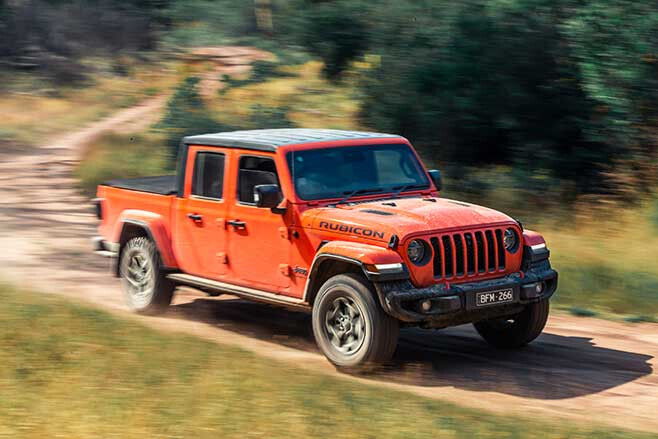
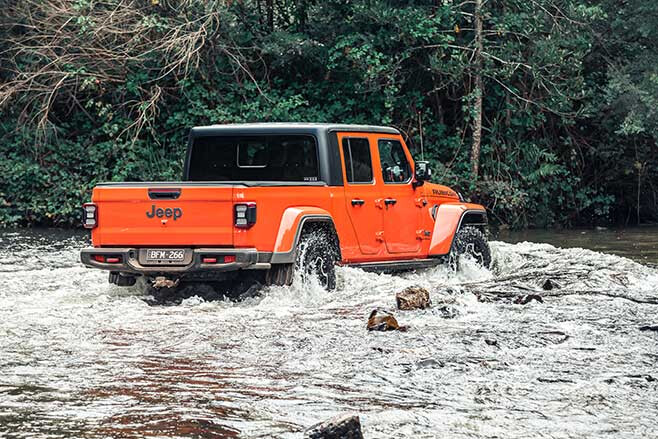
LIKE so many other off-road vehicles that feel a bit lost when riding around town, the Gladiator Rubicon feels a lot more at home once you leave the blacktop behind. Again, the long wheelbase and quality shocks deliver a nice ride on gravel roads and good control over corrugations.
4X4OTY ROUTE: Vic High Country and beyond
The low gearing and disconnecting front sway bar allow the Rubicon to slink its way over rough and uneven ground without lifting a wheel, while the lockers ensure the mud tyres make the lost of the available grip. On our hill climb, it scrabbled a bit when nothing was employed but low range, yet still drove it easily. With the lockers in and the sway bar out it drove up there without spinning a tyre, something no other car has done.
The long wheelbase compromises the ramp-over angle and the Gladiator found the top of every erosion mound on High Country tracks, even getting the rig high-centred on one of them requiring a push off. Thankfully, full-length rock rails protect the sills in between the doors, while an extra set of rails at the rear protect the ends of the bed which does overhang a fair bit.
CABIN AND ACCOMMODATION
THE Jeep is one of those strange vehicles that manages to have an interior that feels smaller than the exterior size of the vehicle suggests would be the case. Climbing in to the Gladiator from any other double-cab ute and it instantly feels cramped and closed in by the large pillars, but once you get settled in you find it’s not so cramped and everything is well laid out and easy to reach. Except for the driver’s footwell – that’s cramped! The rear passengers’ seat is more spacious than most double-cab utes and has plenty of handy storage under it.
GLADIATOR READY: Sport S
In this Rubicon trim with the luxury pack, the Jeep is very well-equipped with heated leather seats a big AV screen with Apple CarPlay and Android Auto.
The one big thing the Gladiator has over any other double-cab ute currently on sale is that you can enjoy it as an open top, or which the roof removed all together.
PRACTICALITIES
THE Gladiator Rubicon only has a 620kg payload, so you are very restricted as to what you have onboard and in the tray, so need to keep it under consideration when loading up and equipping the JT. Likewise, the 2721kg towing capacity falls way short of the popular 4×4 utes available, so this really isn’t a load-carrying truck.
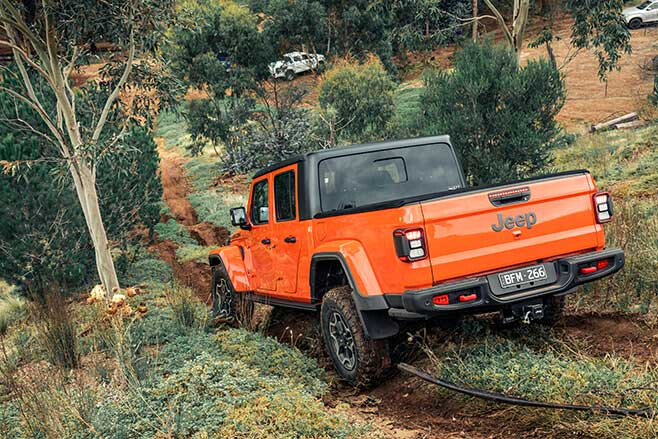
The tray is large in size but can’t carry a lot of weight, and it’s disappointing that there isn’t a 12-volt power outlet in there at this price. The fuel tank holds a 83 litres of petrol and you eat through that in two-and-a-half days of High Country driving before you’re looking for a refill. Thankfully the aftermarket should support this model well, so you should be able to get a long-range tank for it.
The Gladiator has heavy-duty front (only with the optional steel bumper) and rear tow hooks fitted, and wading depth is quoted at 760mm.
SPECS
ENGINE: Pentastar 3.6-litre petrol V6 MAX POWER: 209kW at 6400rpm MAX TORQUE: 347Nm at 4100rpm TRANSMISSION: 8-speed automatic TRANSFER CASE: Rock -Trac with full-time and part time 4×4 and low range CRAWL RATIO: 77.24:1 STEERING: Electro-hydraulic SUSPENSION: Live axles on links, coil springs, stabiliser bars (F/R) TYRES: 255/75-R17 KERB WEIGHT: 2215kg PAYLOAD: 620kg TOWING CAPACITY: 2721kg GVM: 2835kg GCM: 5284kg ADR FUEL CLAIM: 12.4L/100km FUEL USE ON TEST: 18.2L/100km FUEL TANK: 83L DEPARTURE ANGLE: 25.1° RAMPOVER ANGLE: 18.4° APPROACH ANGLE: 40.7° WADING DEPTH: 760mm GROUND CLEARANCE: 249mm
THE eighth-generation Toyota Hilux has been around for five years now and, after the first facelift came in 2017, this second one arrived in September 2020.
4X4OTY CONTENDERS 2021 ISUZU D-MAX MAZDA BT-50 XTR JEEP GLADIATOR RUBICON LAND ROVER DEFENDER
More than just a facelift though, the update came with significant changes to the 1GR engine to improve output and performance.
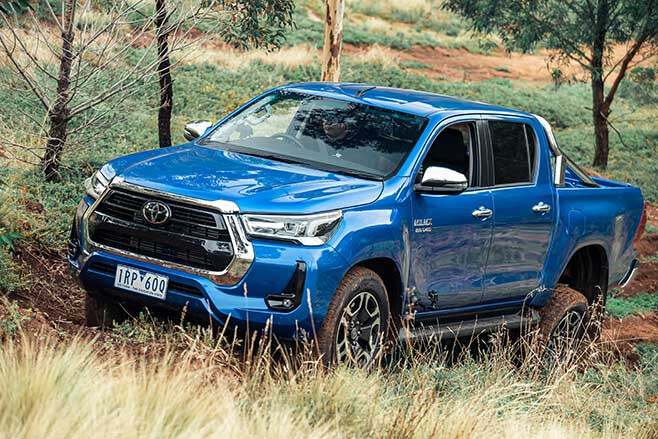
For 4x4OTY we have an SR5+ on the test. This starts at $59,920 for Double Cab Pickup SR5 Automatic, but add $600 for premium paint and another $2500 for the premium (leather seats) interior and we’re up to $63,020 (plus ORC).
POWERTRAIN & PERFORMANCE
TOYOTA replaced its 3.0-litre four-cylinder 1KZ series of diesel engines with the all-new 2.8-litre four-pot 1GR series with the introduction of the eighth-gen back in 2005, and it disappointed drivers with lacklustre performance and frustrated them with an ongoing series of problems around the diesel particulate filter (DPF) which is part of the mandated emissions control system.
The fact that Toyota claims to have fixed the DPF issues in Hilux and other diesel-fuelled Toyota vehicles is something we can’t substantiate in our testing, except to say we had no problems with it. What we can say is the upgrades to the 1GR-FTV engine have made a world of difference to it, bringing life to what was the most mundane of powerplants.
WINNER: How the Hilux won 4X4OTY
The 2020 changes includes a new cylinder head, turbocharger and higher pressure fuel-injection system among other new components. These changes improve the power and torque from a best of 130kW and 450Nm (pre-September 2020) to 150kW and 500Nm with the updates. The 500Nm of torque is up there with the best four-cylinder engines in its class, and you can really feel the changes in the Hilux.
ON-ROAD RIDE & HANDLING
The upgrades to the 2.8 engine are well-appreciated on road where the noticeable extra pick-up in the middle of the rev range makes overtaking and powering through corners both easier and more comfortable. It brings performance where there was nothing before and is chalk and cheese over the previous engine.
4X4OTY ROUTE: Vic High Country and beyond
But it’s not all about grunt. Revisions to the suspension see the rear leaf springs lengthened to make them more compliant and mounted farther outboard on the chassis to improve stability. The longer springs have softened what was widely regarded as too stiff a ride – not a lot, but definable – and their placement makes the chassis feel more planted on mountain roads and gravel corners.
OFF-ROAD
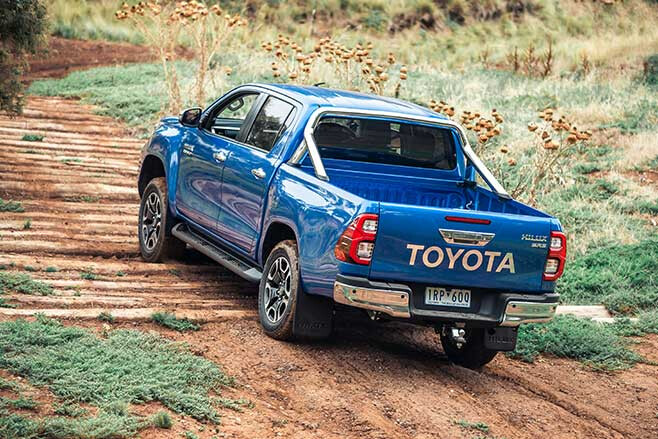
THOSE longer rear leaf springs work just as well off-road, improving the Hilux’s already impressive (by OE standards) rear-axle travel. This lets the rear wheels walk in and out of ruts and holes in the track to maintain tyre contact and hence traction.
The front end impresses with its compliance as well, yet it was still firm enough to keep the skid plates from grounding out on the long, steep descent down the Billy Goat Bluff Track. That’s pretty good for an OE IFS ute.
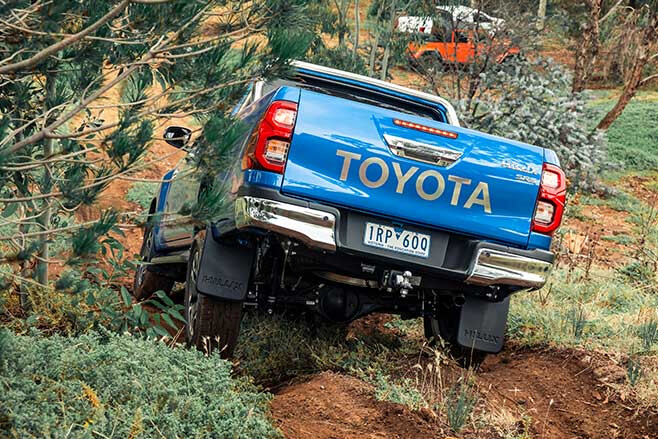
Combine this with the Lux’s excellent ETC calibration and this SR5 walked smoothly up our set-piece hill climb. As we’ve found on this hill in past experience, the Hilux climbs better using just the ETC than when engaging the RDL. With the RDL in the ETC is fully cancelled, making your front axle basically a single-spinner; and as soon as you lift a front wheel, you’re going nowhere. There might be other off-road situations where the RDL would be more beneficial than the ETC on the Hilux, but we haven’t found them yet.
CABIN & ACCOMMODATION
THE Hilux cabin has always been a comfortable place to ride, but it was let down by a few niggles with some components. It sounds like Toyota listened to the complaints and addressed them with the 2020 upgrades.
The AV screen is a new eight-inch unit that integrates better into the dash. It has an excellent factory sat-nav system that shows more High Country tracks than Google Maps does, but the system also includes Apple CarPlay and Android Auto if you prefer Google. Best of all, Toyota has fitted a nice, big volume dial to the unit – so full marks there.
The leather seats are a nice upgrade as part of the optional premium interior package, while the new gauge binnacle is clear and easy to read and scroll through the information menus.
The Hilux does fall short of some newer utes in the class in terms of safety kit. It still has ABS, ETC, ESC, AEB and a lane-departure system that uses the brakes to prevent wandering rather than the steering as most vehicles do. This makes this system less intrusive for the driver and is due to the Hilux retaining hydraulic power steering assistance in lieu of electric. The valuable rear cross-traffic alert is not offered on Hilux.
PRACTICALITIES
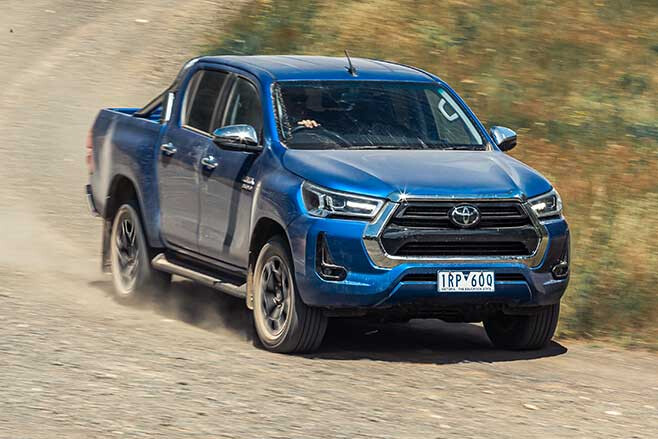
IN SR5+ spec the Hilux has an 1105kg payload and 3500kg towing capacity. It has a 700mm wading depth and good air-intake placement inside the fender. Toyota offers heaps of factory-backed accessories and, being the best selling car in Australia, it is massively supported by the aftermarket off-road gear businesses The OE tyre size is a 265/60-18, although you could fit 17s as on the lower grades.
SPECS
ENGINE: 2.8-litre 4-cyl turbo diesel MAX POWER: 150kW at 3400rpm MAX TORQUE: 500Nm from 1600 to 2800rpm TRANSMISSION: 6-speed automatic TRANSFER CASE: Part-time 4×4 w/ high/low range STEERING: Hydraulic-assist rack and pinion FRONT SUSPENSION: IFS w/ upper and lower control arms, coil springs REAR SUSPENSION: Live axle, leaf springs, stabiliser bar TYRES: 265/60-R18 KERB WEIGHT: 2093kg PAYLOAD: 1105kg (cab-chassis) TOWING CAPACITY: 3500kg GVM: 3050kg GCM: 5850kg FUEL TANK CAPACITY: 80L ADR FUEL USE: 7.9L/100km TEST FUEL USE: 12.96L/100km APPROACH ANGLE 29° RAMPOVER ANGLE n/a DEPARTURE ANGLE 27° WADING DEPTH 700mm GROUND CLEARANCE 216mm
MAZDA ended its decades of one-tonne-ute product sharing with The Ford Motor Company in 2020, but didn’t want to give up on the popular sales segment.
With Ford gone, Mazda partnered with Isuzu early on in the development of the new D-MAX to share the platform, powertrain and most of the vehicle.
4X4OTY CONTENDERS
2021 ISUZU D-MAX TOYOTA HILUX SR5+ JEEP GLADIATOR RUBICON LAND ROVER DEFENDER
Mazda has added its own styling to the interior and exterior to give the BT-50 its family face, feel and style.
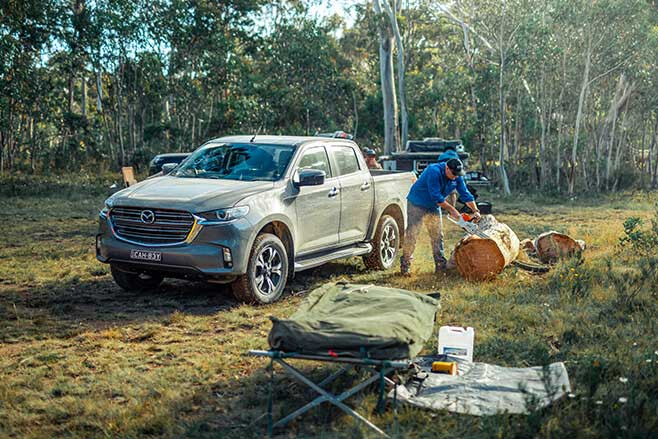
The third of four BT-50 specifications, the XTR variant was supplied for 4x4OTY. This lists at $57,210 but floor mats, a tow bar, electric brake controller and black alloy wheels took the price as tested up to $60,780 (plus ORC).
? Hello from the future! You can continue reading this story, or you can visit our latest BT-50 Range Review linked below.
REVIEW CONTINUES…
POWERTRAIN & PERFORMANCE
THE BT-50 shares its full drivetrain with the new D-MAX, so that means an updated 3.0-litre diesel engine and six-speed auto transmission. While the power and torque of the Isuzu engine are down on the old Ford 3.2-litre five-cylinder that was in the previous generation BT-50, the new generation is marginally lighter overall, so any performance deficit is negligible.
2021 4X4OTY: Hilux wins the title
The BT does miss the loping, lazy mannerism of the five-pot Ford engine, while the new four-cylinder is more buzzy and noisy. The transmission does everything you ask of it, giving nothing to comment on.
ON-ROAD RIDE & HANDLING
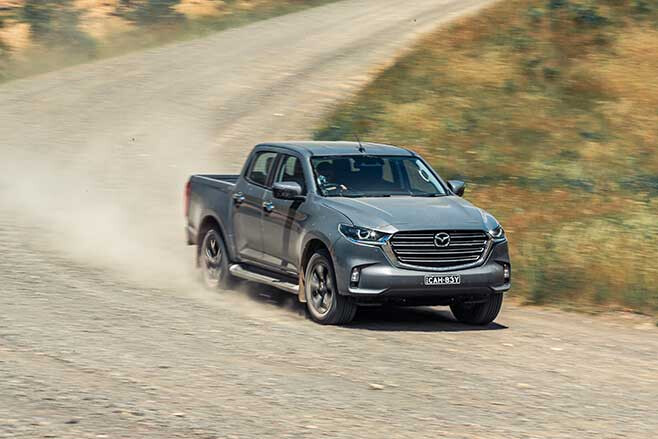
WITH the shared chassis and suspension, the performance of the BT closely mimics that of the D-MAX. The XTR Mazda does feel a bit softer in the ride suggesting that it uses the lighter rear leaf pack, and it rides on the 18-inch alloy wheels as opposed to the 17s on the Isuzu LS-M. However, any differences in ride and handling are marginal.
OFF-ROAD
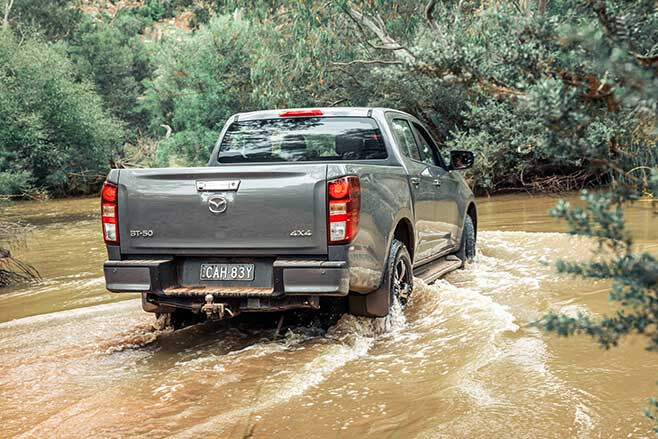
AGAIN the hardware here is all shared with the Isuzu D-MAX, so you would expect very similar performance. We were surprised then when the BT-50 struggled more on the set-piece hill climb, failing to get beyond the first rut in the right-side wheel track without the RDL activated.
4X4OTY ROUTE: High Country and beyond
It soldiered on and went up the hill with the RDL in, but made more of a show of it than any other vehicle on the test.
The only thing we can put this difference in performance to is the 18-inch wheels and 265/60 tyres on the Mazda compared to the 255/65-17s on the Isuzu; unless there’s a difference in the calibration of the traction control between the two cars that we don’t know about.
CABIN & ACCOMMODATION
THE difference in specification between the D-MAX LS-M and the XTR seems more significant than the few thousand dollars in price, making the Mazda feel like a better value-for-money package. This isn’t just because of the level of equipment the Mazda has, but because the stylish way Mazda does things. It just feels a lot better and more complete.
Significantly noted by our judges were the comfortable seats and the improved feeling of the switchgear over the Isuzu. The fact that this more expensive spec has dual-zone climate control over the old manual air-con in the lower grades was appreciated, as it gives a feeling of higher quality in its tactility. Still no volume control dial, though!
The BT-50 gets the same class-leading level of safety equipment as the D-MAX, which is a huge plus over any previous Mazda ute. Unfortunately, all the same annoyances with warning beeps and chimes are carried over from the Isuzu.
PRACTICALITIES
THE BT-50 XTR has a 1070kg payload, a 3500kg towing capacity and large cargo tub. You could say it loses points for having carpet over vinyl floors, but that’s up to personal preference. The difference in performance on the hill climb when compared to the Isuzu would suggest the 18-inch wheels and lower profile tyres are definitely less practical.
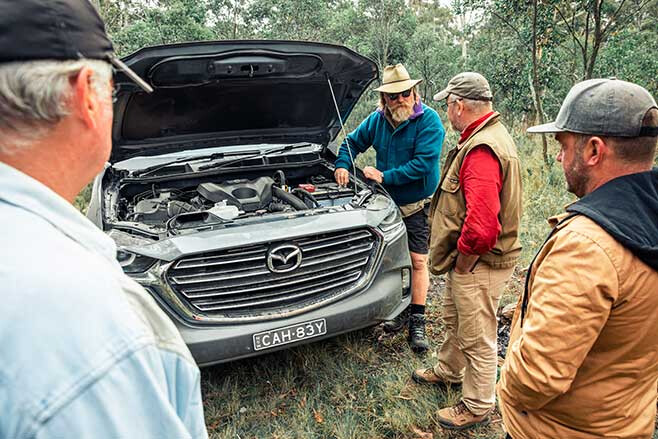
Something that became a significant problem was the push-button start in the Mazda. This is only in the XTR and GT grades of the BT-50 range, while the lower spec has key-in-ignition starting. When the BT-50 failed to start on the morning of day three of our test because the vehicle systems wouldn’t recognise or find the remote key, it was game over for the Mazda, requiring a tow-away from our High Country camp.
The car had power and everything else apart from the starter not working, and it was diagnosed as the key not being found or recognised. A situation where technology failed the car in the bush could have been a lot more costly if it were in a remote outback location.
SPECS
ENGINE: I4 3.0L diesel MAX POWER: 140kW at 4000rpm MAX TORQUE: 450Nm from 1600 to 2600rpm TRANSMISSION: 6-speed automatic TRANSFER CASE: Part-time 4×4 w/ high/low range CRAWL RATIO: 33.3:1 STEERING: Electro-hydraulic FRONT SUSPENSION: IFS w/ upper and lower control arms, coil springs, stabiliser bar REAR SUSPENSION: Live axle under leaf springs, stabiliser bar TYRES: 265/60-R18 KERB WEIGHT: 2030kg PAYLOAD: 1070kg TOWING CAPACITY: 3500kg GVM: 3100kg GCM: 5959kg ADR COMBINED FUEL USE: 8.0L/100km TEST FUEL USE: N/A FUEL TANK: 76L DEPARTURE ANGLE: 24.2° RAMPOVER ANGLE: 23.8° APPROACH ANGLE: 30.4° WADING DEPTH: 800mm GROUND CLEARANCE: 240mm
WITH international travel halted, more people than ever are preparing for a lap of the map, so it’s a great time to update your off-road arsenal with the latest and greatest 4×4 gear.
SUBSCRIBE TO 4X4 AUSTRALIA NOW
To this end we’ve just released the 2021 4X4 Australia Gear Guide, and it’s loaded with new products, reviews, advice from folks with plenty of touring experience, and a handful of custom 4x4s to inspire your own build.
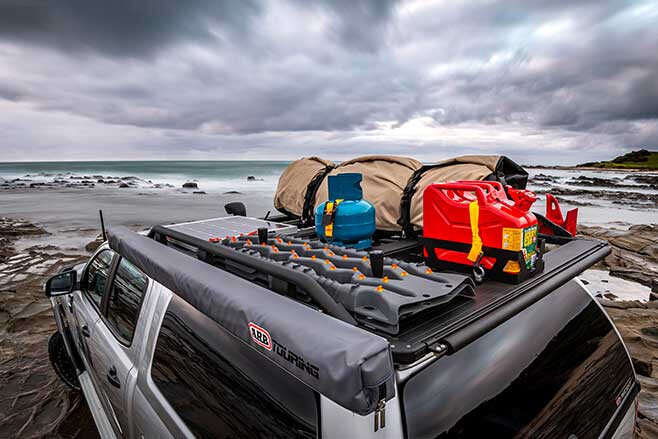
Fact: Packing for a 4×4 trip is one of the least enjoyable experiences of said trip. Also a fact: it doesn’t have to be. We’ve included a comprehensive guide on how to load up a 4×4 for both a weekend escape and a multi-month sojourn.
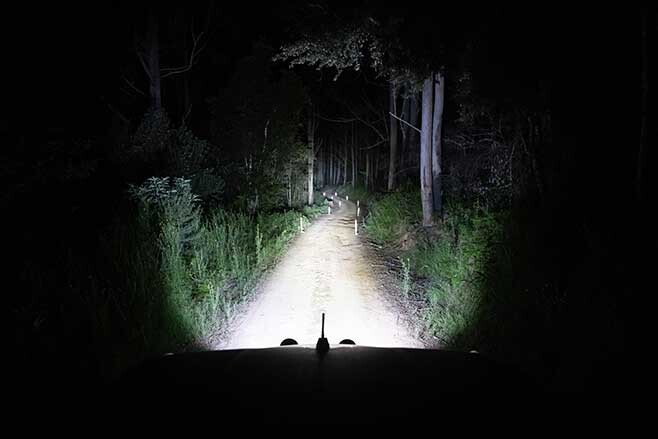
We analyse the humble tent: if you need one, why they’re still so popular, and what to look for. Plus, we take an in-depth look at awnings, dual-battery systems, air compressors, mud-terrain tyres and lithium batteries. Evan also puts nine seven-inch LED driving lights to the sword in a real-world comparison.
We’ve sampled plenty of new gear recently, so the 2021 Guide is loaded with plenty of product reviews, including a close look at Maxxis’ Razr muddies, Yakima’s LocknLoad platform and Jackson’s Carry Me Camper.
On the custom front, we’ve run the microscope over a behemoth 79 Series and Bruder EXP-6 combo, as well as one of the toughest Ford Rangers on the planet.
To read all about it – and much more – pick up a copy of the 2021 4X4 Australia Gear Guide. Out now!
ISUZU delivered an all-new D-MAX one-tonne ute early in 2020 and it is a huge step up from the previous generation.
4X4OTY CONTENDERS MAZDA BT-50 XTR TOYOTA HILUX SR5+ JEEP GLADIATOR RUBICON LAND ROVER DEFENDER
With a new chassis, suspension design, vastly upgraded engine, class-leading safety equipment, new exterior and interior; this is the ute that Isuzu Ute Australia (IUA) hopes will take the fight to the crowd favourites Toyota Hilux and Ford Ranger.
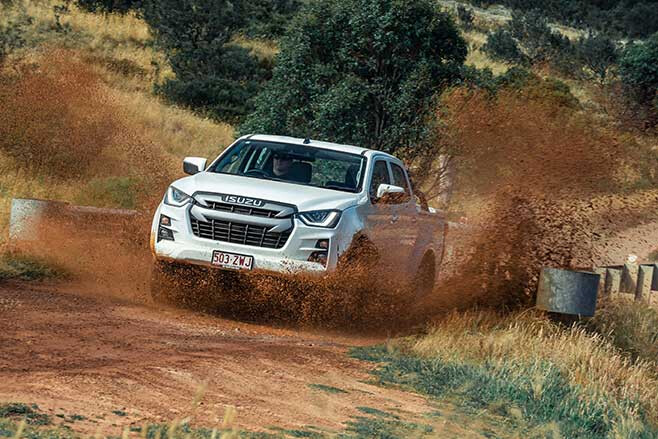
IUA supplied us with a $55,970 LS-M specification D-MAX for 4x4OTY testing, the second up from four specification grades. The LS-M is a model which we find particularly appealing as it comes with all the mechanical upgrades and new hardware, but you’re not paying for bling or add-ons you don’t really need.
2021 4X4OTY: The route
This vehicle is fitted with the optional tub liner, satin black sports bar, hard tonneau, tow bar, 12-pin plug and electronic brake controller, bringing the drive-away price up to $64,574.
POWERTRAIN & PERFORMANCE
ISUZU’S venerable 4JJ 3.0-litre diesel engine has always been a strong selling point for its cars in Australia.
It might be getting on in years and unable to match the latest engines in outright performance but it has a great reputation for durability and fuel economy and, in this age of diminishing engine capacities, the 3.0-litre is considered one of the larger engines in this class of car.
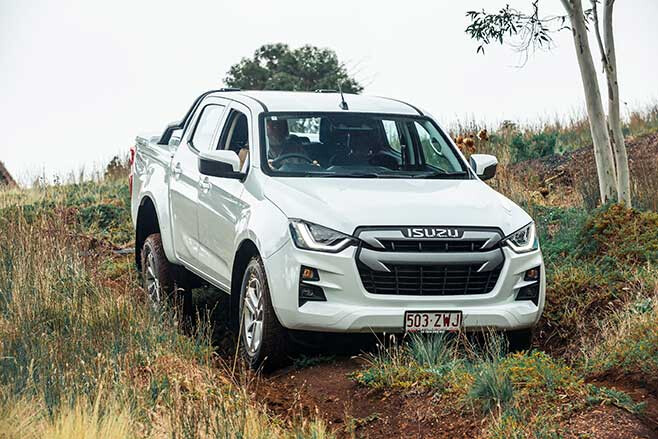
Isuzu gave the mill a thorough working over for this latest generation of the 4JJ, called the 4JJ3-TCX, with a new cylinder head, engine block, turbocharger, fuel injection system and a raft of upgrades that really make it all-new.
These changes up the power and torque to 140kW and 450Nm respectively, which, while still short of the 500Nm some of its competitors are claiming, helps get the now heavier new D-MAX along. It’s also slightly more refined with less of that four-cylinder NVH reaching the cabin.
ON-ROAD RIDE & HANDLING
THE suspension changes made to the 2020 D-MAX totally revise the front-end design for a more-planted and direct feeling on road. As a result, it steers and handles much better than the old model.
The rear end retains a unique three-leaf spring pack which is firm and jittery in the unladen ute, but expected of a vehicle designed to carry a tonne or 3.5-tonne in tow. The LS-M gets a heavier-duty rear spring pack than the two upper-spec models.
2021 4X4OTY: And the winner is…
The new interior in the D-MAX makes it a much nicer place to be for long hours behind the wheel, especially the new front seats. It’s better at isolating road and wind NVH, gives more relaxed touring and the standard equipment is well-appreciated. Some might feel the LS-M with its vinyl floor coverings, manual air-conditioning and small AV screen are a bit too working-class, but there are always the better equipped LS-U and X-Terrain variants for those folks.
OFF-ROAD
THOSE chassis and suspension changes also work well to improve the off-road performance of the D-MAX, notably a bit more wheel travel at the rear, but still not a lot. More significant is the inclusion of a rear differential lock (RDL) as standard across the 4×4 D-MAX range, something not offered in the past.
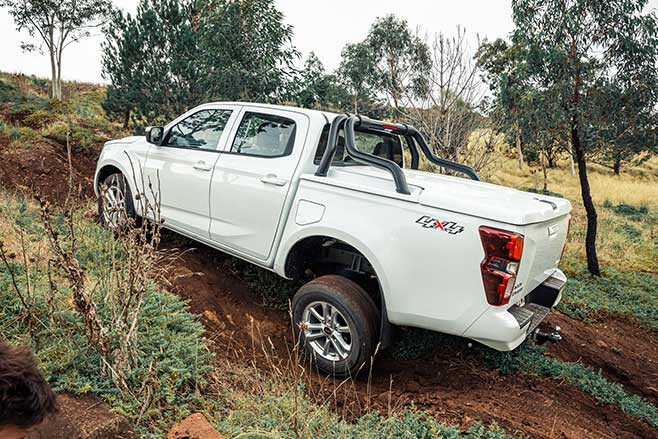
The Isuzu needed that diff lock on our rutted set-piece hill climb which has deep holes placed in the wheel tracks designed to test tractive ability. The standard electronic traction control (ETC) struggled to keep the D-MAX moving once the front wheels lifted as it’s slow to react, but enabling the RDL got it there without too much trouble; although it disables the ETC.
CABIN & ACCOMMODATION
AS mentioned, the interior of the D-MAX is all-new and a big improvement over the previous model. The level of standard equipment is up and the front seats are more supportive, while the rear seats are best for two adults or three kids at best.
While the LS-M model as tested does feel very sparse and workmanlike, the upper-spec models are not so. Notable here is that the LS-M has an old-school key that you have to put in the ignition barrel and turn to start the car, while the LS-U and X-Terrain models have keyless entry and push-button starting.
The D-MAX boasts one of the most extensive lists of safety equipment in this class of ute and it is standard across all models. Most of them go unnoticed but we do like the rear cross-traffic alert setup. Lane keeping correction and self-steering is intrusive at times and when you least expect it, so it pays to be ready for it.
Also intrusive is the number of chimes and bells the D-MAX has, not just from the driver’s aids but even things like unlocking the doors. It double-beeps when you unlock the doors to put something in the passenger side or rear seat, double-beeps again as it self locks while you walk around to the driver’s door, requiring you to unlock it again with more beeps. It all becomes more than a bit annoying for you and your neighbours.
Another annoyance is the lack of volume dials on the sound system and only slow-responding small buttons for adjustments.
PRACTICALITIES
WITH its wipe-out vinyl floors and 17-inch alloy wheels, the LS-M is more practical than some of the upper-spec D-MAX variants, with upwards of a one-tonne payload, 3500kg towing capacity, a deep, long tub with tie downs (no 12-volt outlet) and 800mm wading depth.
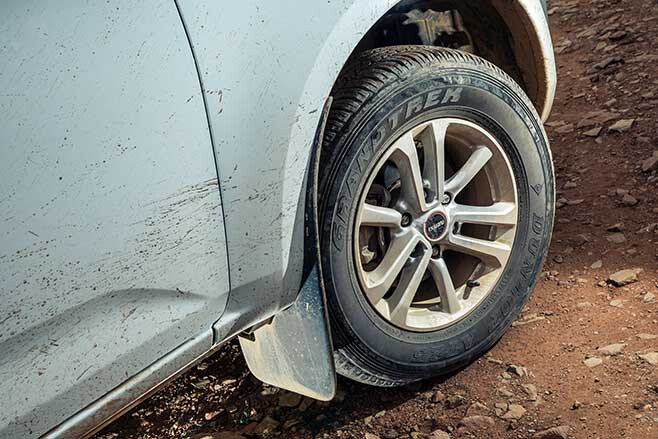
It is a working-class model but doesn’t miss out on any essentials, which is what we’re looking for in a 4×4 ute.
SPECS
ENGINE: 3.0-litre 4-cyl turbo diesel MAX POWER: 140kW at 3600rpm MAX TORQUE:450Nm at 1600 to 2600rpm TRANSMISSION: Six-speed automatic 4X4 SYSTEM: Dual-range part-time CRAWL RATIO: 33.3:1 CONSTRUCTION: Separate-chassis FRONT SUSPENSION: Independent/coil springs REAR SUSPENSION: Live axle/leaf springs WHEEL/TYRE: 265/60R18 110S KERB WEIGHT: 2131kg GVM: 3100kg PAYLOAD: 970kg TOWING CAPACITY: 3500kg TOWBALL DOWNLOAD: 350kg (max) GCM: 5950kg FUEL TANK CAPACITY: 76L ADR FUEL CLAIM: 8.0L/100km TEST FUEL USE: 11.2L/100km GROUND CLEARANCE (CLAIMED): 240mm APPROACH ANGLE: 30.5⁰ RAMPOVER ANGLE: 22.7⁰ DEPARTURE ANGLE: 23.8⁰ WADING DEPTH: 800mm
THE automotive segment is leading the economic recovery in 2021, with new vehicle sales continuing an upwards trend.
The Toyota Hilux is storming towards reclaiming its top-selling 4×4 status for the year after the Ford Ranger took the mantle in 2020 and 2019 – year-to-date, the Hilux is up 39.8 per cent on where it was this time last year.
2021 4X4OTY WINNER: Toyota Hilux
Ford might be rolling out new variants and special edition Rangers, but with the all-new Ranger not due until the end of 2021 it’s hard to see the Ranger retaining the title.
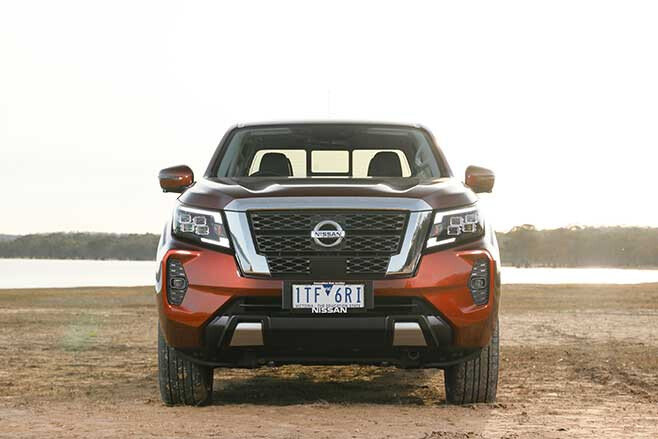
Another model eagerly awaiting its new update is the Nissan Navara, which languishes as the poorest-selling of the ‘popular’ 4×4 utes. It’s only just ahead of the LDV T60, which sold 809 units in March. The facelifted Navara went on sale in March, so it will be interesting to see if it can work its way up the tables.
There’s an updated LDV due soon too, so Nissan cold be in for a run for its money.
If you believe everything you read then they’ve stopped making LandCruiser 200s in Japan and the replacement is only months away from being unveiled. With the prospect of no more V8 Cruisers being made – aside from the 70 Series – LC200s have become hot property and you’ll be hard-pressed to find a 2021 LC200 available new.
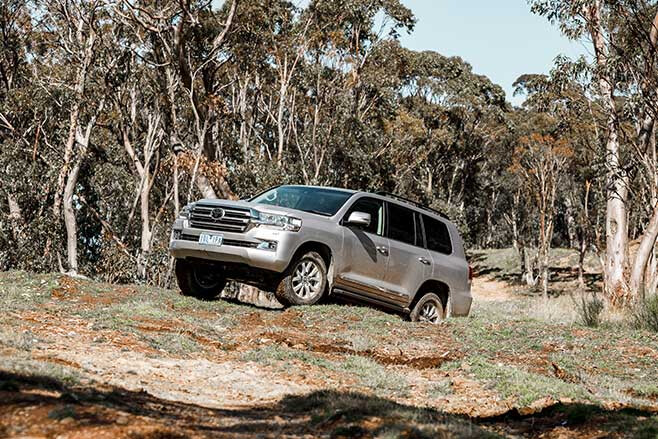
LC200 sales are up 60.7 per cent on where they were at the same time last year, and even prices of second-hand ones have gone through the roof. Even sales of the commercial 70 Series Cruisers are up 62.5 per cent on the first three month of 2020
We wait with baited breath to see what the new Cruiser wagon brings, but the prospect of no new Cruisers on sale for a few months might even give the Nissan Patrol a look in. For the record, just 878 Y62s have been sold to the end of March against the LC200’s 5069.
TOP 4X4 SALES: MARCH 2021
- Toyota Hilux: 4086
- Ford Ranger: 3710
- Toyota LC200: 2244
- Mitsubishi Triton: 2223
- Isuzu D-MAX: 1338
- Toyota Prado: 1211
- Isuzu MU-X: 1179
- Mazda BT-50: 1177
- Toyota LC79: 1148
- Nissan Navara: 909
TOP 4X4 SALES SO FAR IN 2021
- Toyota Hilux: 10,876
- Ford Ranger: 9,115
- Mitsubishi Triton: 5506
- Toyota LC200: 5069
- Isuzu D-MAX: 4034
- Toyota Prado: 3977
- Toyota LC79: 3232
- Mazda BT-50: 3083
- Nissan Navara: 2495
- Isuzu MU-X: 2465