
We take a closer look at some aftermarket kit released by PCOR 4×4.
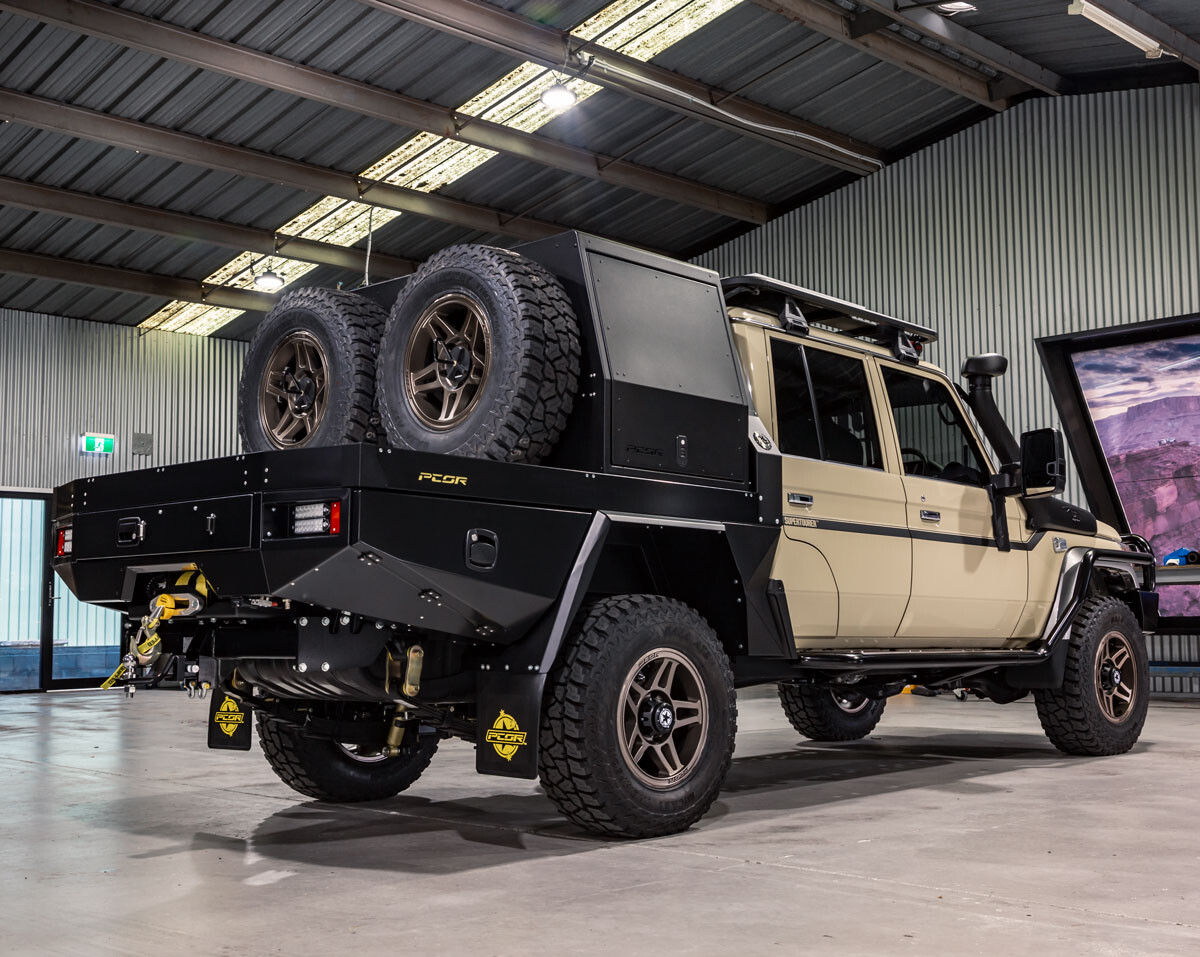
Tray for Toyota LC79
Specifically designed for the 79 Series, the PCOR tray moulds neatly around the Toyota cab for a stylishly clean finish.
The tray’s customised dimensions allow the vehicle to maintain its approach angle, while also maximising storage space. The tray is constructed from lightweight powder-coated aluminium, allowing for greater load capacities. The materials used in the build are sourced in Australia and constructed to Australian manufacturing standards.
It comes with a 70-litre water tank, as well as a central locking system to ensure tools and gear remains protected from dodgy folk.
RRP: From $14,990
Tray for Toyota Hilux
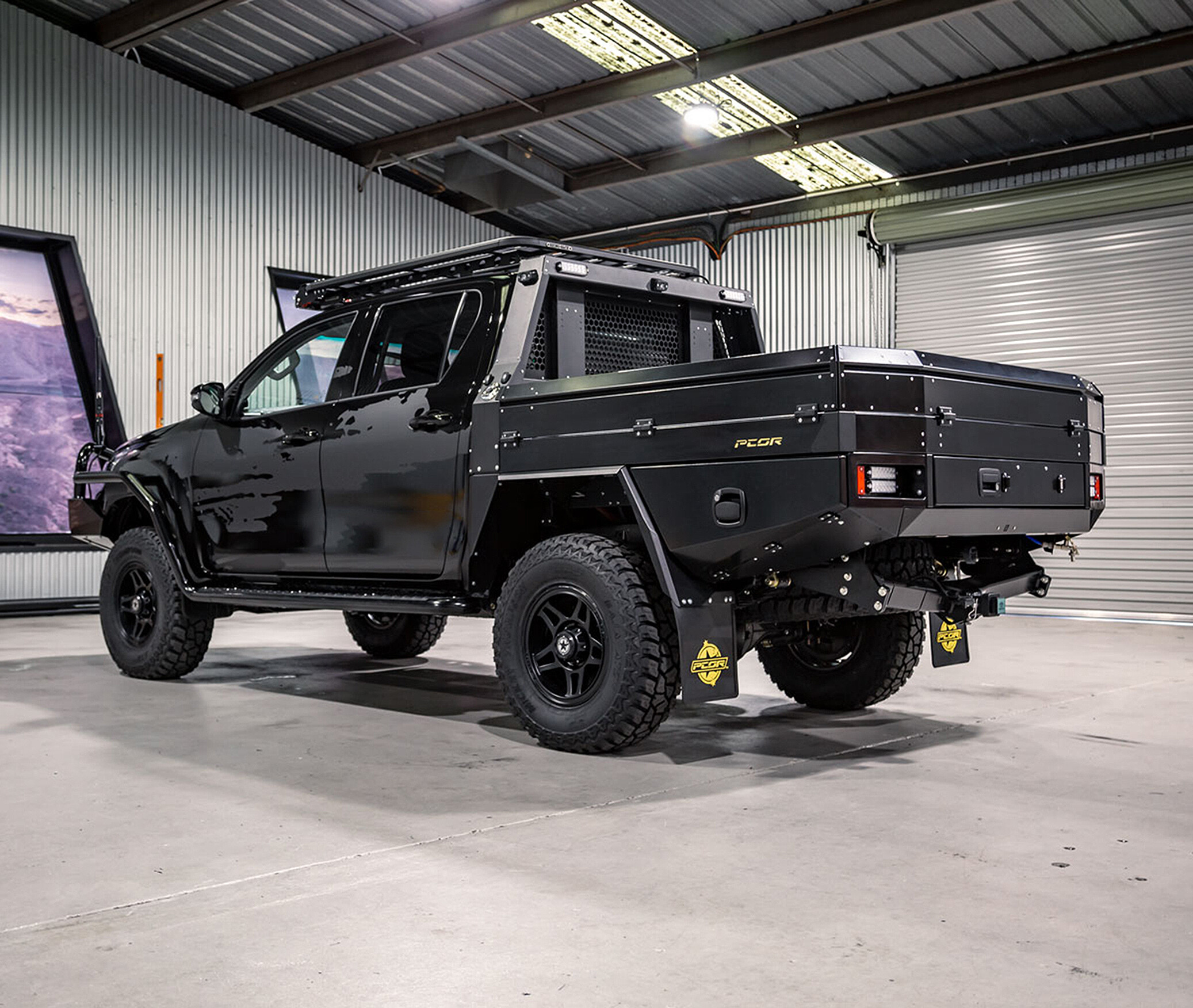
The highly skilled team at PCOR 4×4 has specifically designed a premium-quality tray for the Toyota Hilux.
As with all of its trays, PCOR’s Hilux tray moulds around the cabin for a clean finish ─ plus, the design maximises usable tray space and maintains the vehicle’s original approach angles. The tray is constructed from lightweight powder-coated aluminium, which means it is lighter than most standard and aftermarket trays on the market. The tray features clever built-in central-locking storage areas and a 70-litre water tank with easy-access tap.
Materials are sourced in Australia and constructed to Australian manufacturing standards.
RRP: From $14,990
Pro Eagle two-tonne big wheel off-road jack
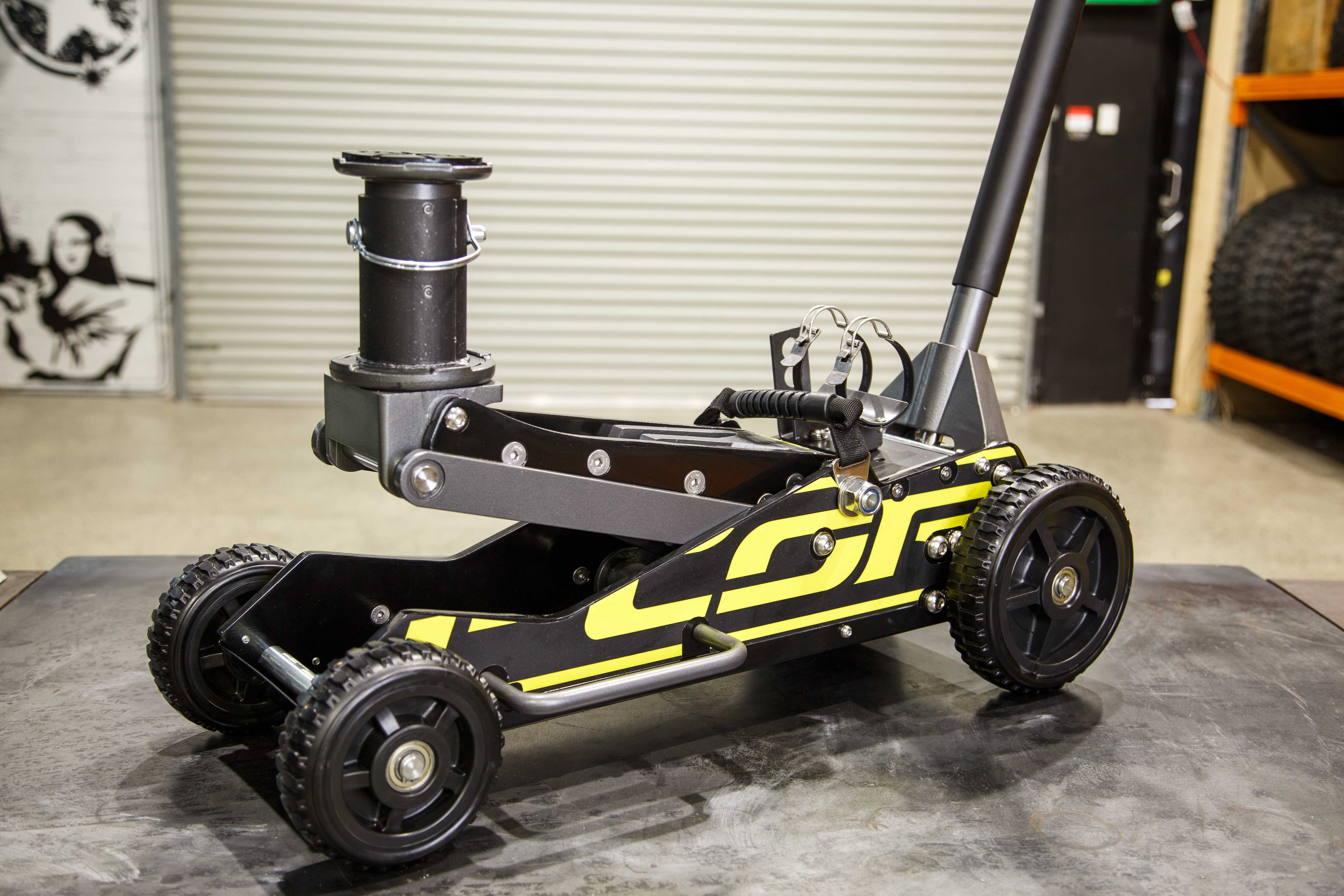
Patriot Campers has added strong solid axles and large non-pneumatic wheels to give its jack a lift, so that it can now be easily dragged over terrain without snagging on obstacles.
Features include a full-length steel skid plate to prevent sinking on sand and damage to internal components; 205mm adjustable extension with rubber grip pad; detachable aluminium handle that fits into the optional mount; sealed ball bearings; and 660mm of overall lift height.
It weighs 23.6kg, measures 736mm long x 330mm wide x 152mm tall, and comes with a two-year warranty. Remember, this is not a bolt-on wheel kit.
RRP: $999
PCOR Maxtrax
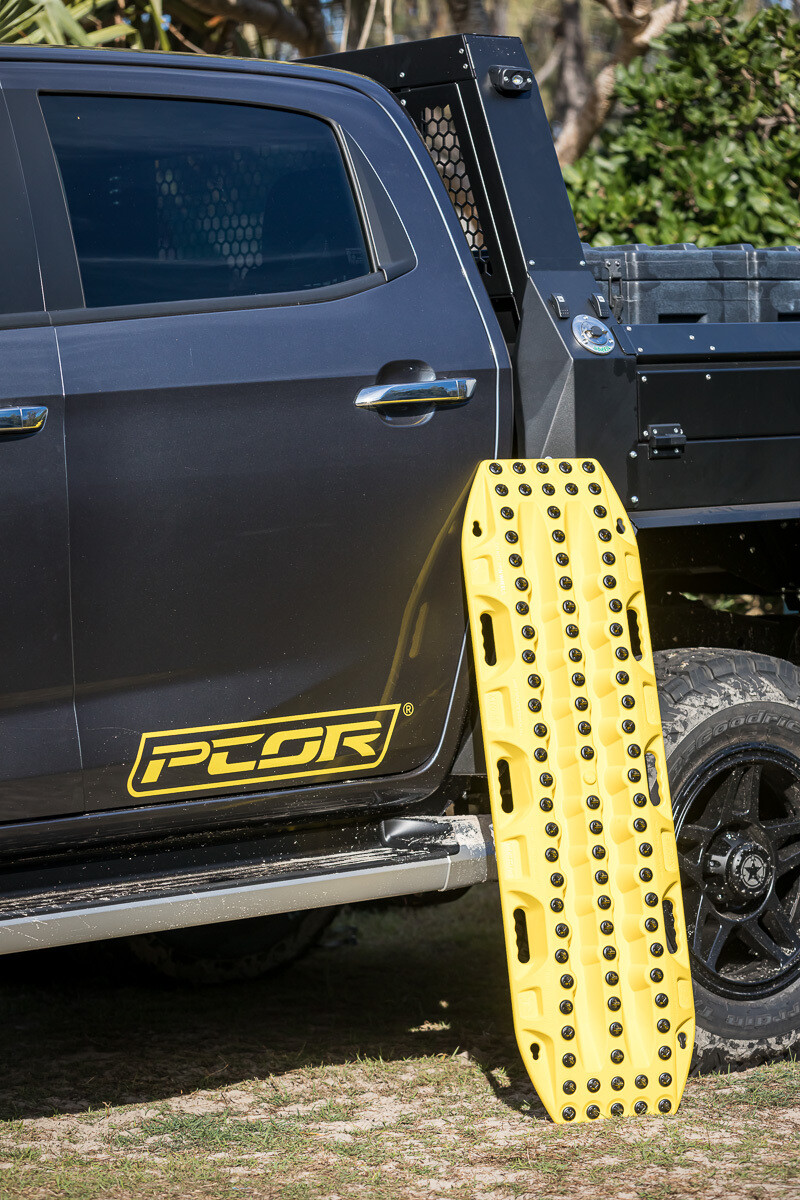
The Patriot Campers team has combined forces with MaxTrax to design a set of recovery boards to suit the Patriot Camper range of products – specifically the boards have received a fresh lick of PCOR’s signature yellow.
MaxTrax boards are Australian designed, engineered and manufactured, and feature 88 replaceable anodised alloy teeth, engineering-grade reinforced nylon, and six glove-friendly handles.
RRP: $499 (set of 2)
Limited-edition 17-inch wheels
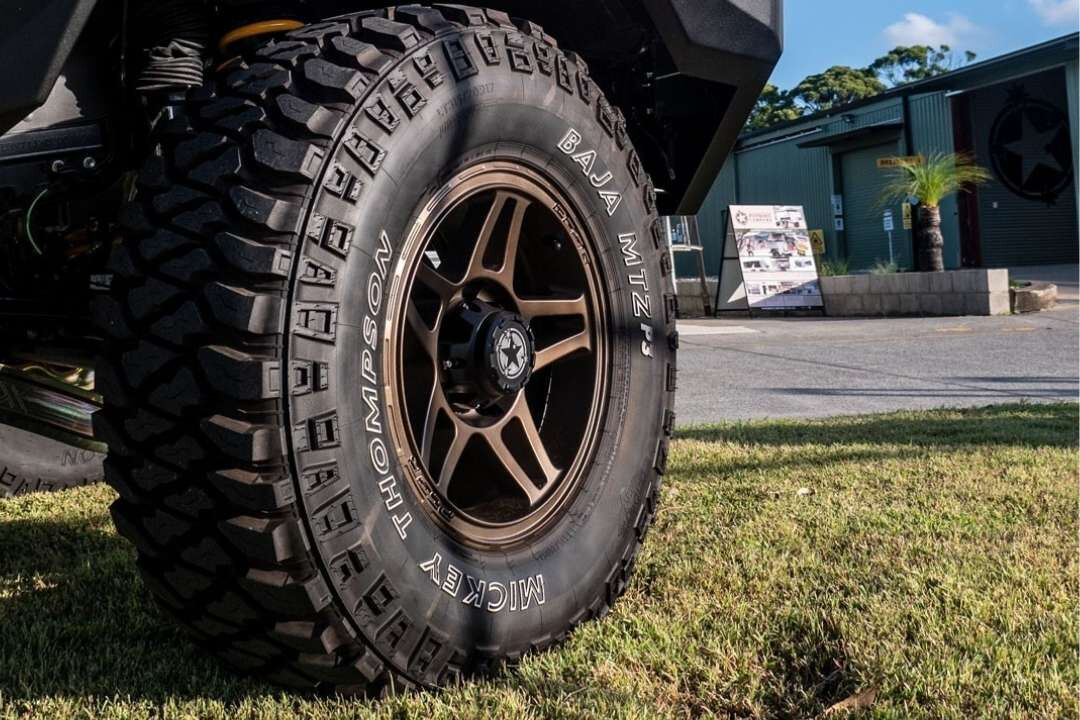
Patriot Campers has revealed a limited-stock 17-inch multi-vehicle 6X139.7 10P offset wheel, suitable only for the Hilux, Prado, Fortuner, D-MAX, MU-X and Colorado.
Available in black only, the six-lug wheel comes with a recommended tyre size of 265/70/R17. M12 wheel nuts are sold separately.
RRP: $449 each
WEBSITE: www.pcor4x4.com
We taken an in-depth look at some quality new aftermarket equipment from Carbon Offroad.
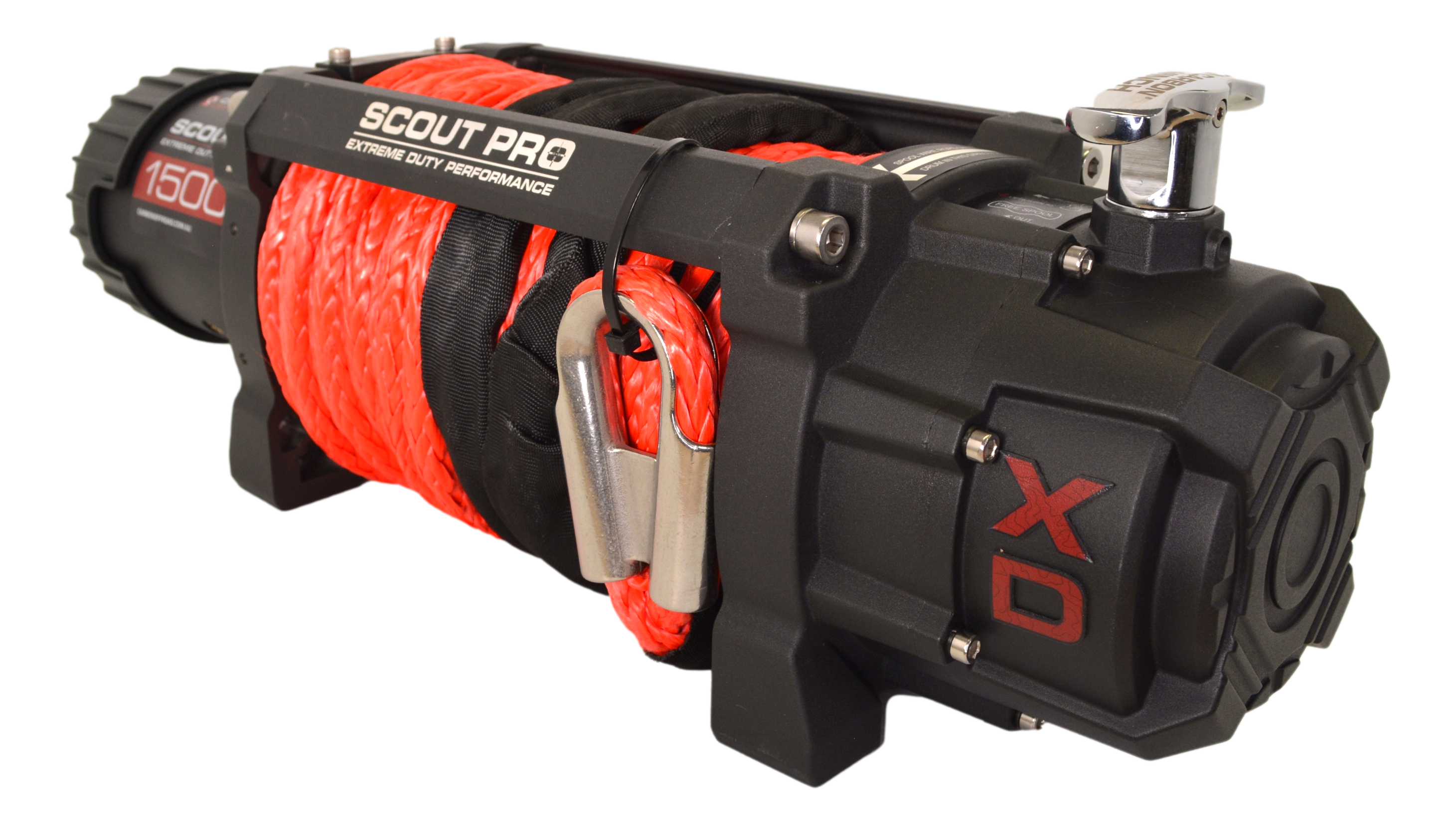
15,000lb Extreme Duty Scout Pro
With larger modulus gear-sets and increased motor horsepower, Carbon Offroad’s new 15,000lb Extreme Duty Scout Pro 7hp motor has been designed for heavy-duty applications, such as 79 Series, 200 Series and RAM vehicles tasked with hauling heavy campers.
The Scout Pro features a 7hp motor; 218:1 heavy-duty performance gearbox; 12mm synthetic rope with HD-braced rope thimble; MEGAPRO Premium CNC billet type-3 hard-anodised multi-position fairlead; and a MEGAPRO 16-tonne soft-shackle compatible winch rope thimble.
The high-performance heavy-duty upgraded solenoid unit is rated to 100amp more than the CW-12K solenoid unit.
RRP: $1395
Premium monotube MT2.0 shocks
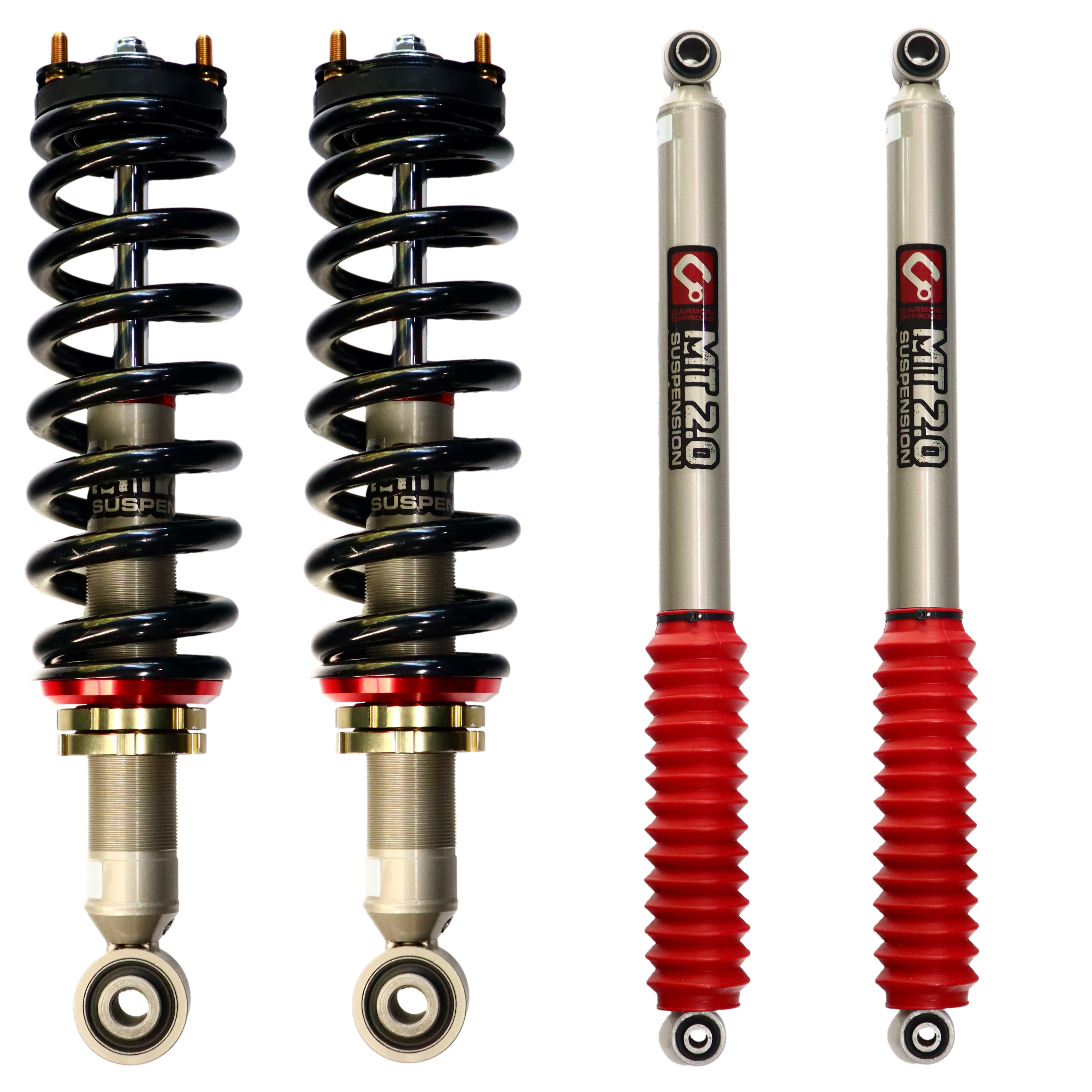
The Premium Monotube MT2.0 shocks have been designed with a focus on comfort and control for Aussie 4×4 dual-cab utes and full-size 4WD wagons.
Utilising advanced technology, the MT2.0 features an Internal Floating Piston (IFP) to help smooth out harsh bumps. Plus, the IFP actively senses the terrain and adjusts according to the driving conditions. The Carbon MT2.0 Monotube shock also features a H/D 3mm brushed steel nickel-plated body; 52mm outer body; 20mm hardened chrome H/D shaft; piston rings; five levels of sealing; 46mm piston valve; and a multi-stage velocity-sensitive piston valve.
RRP: From $1695 (4 x shock set)
Megapro 5000kg 50mm tow bar hitch receiver
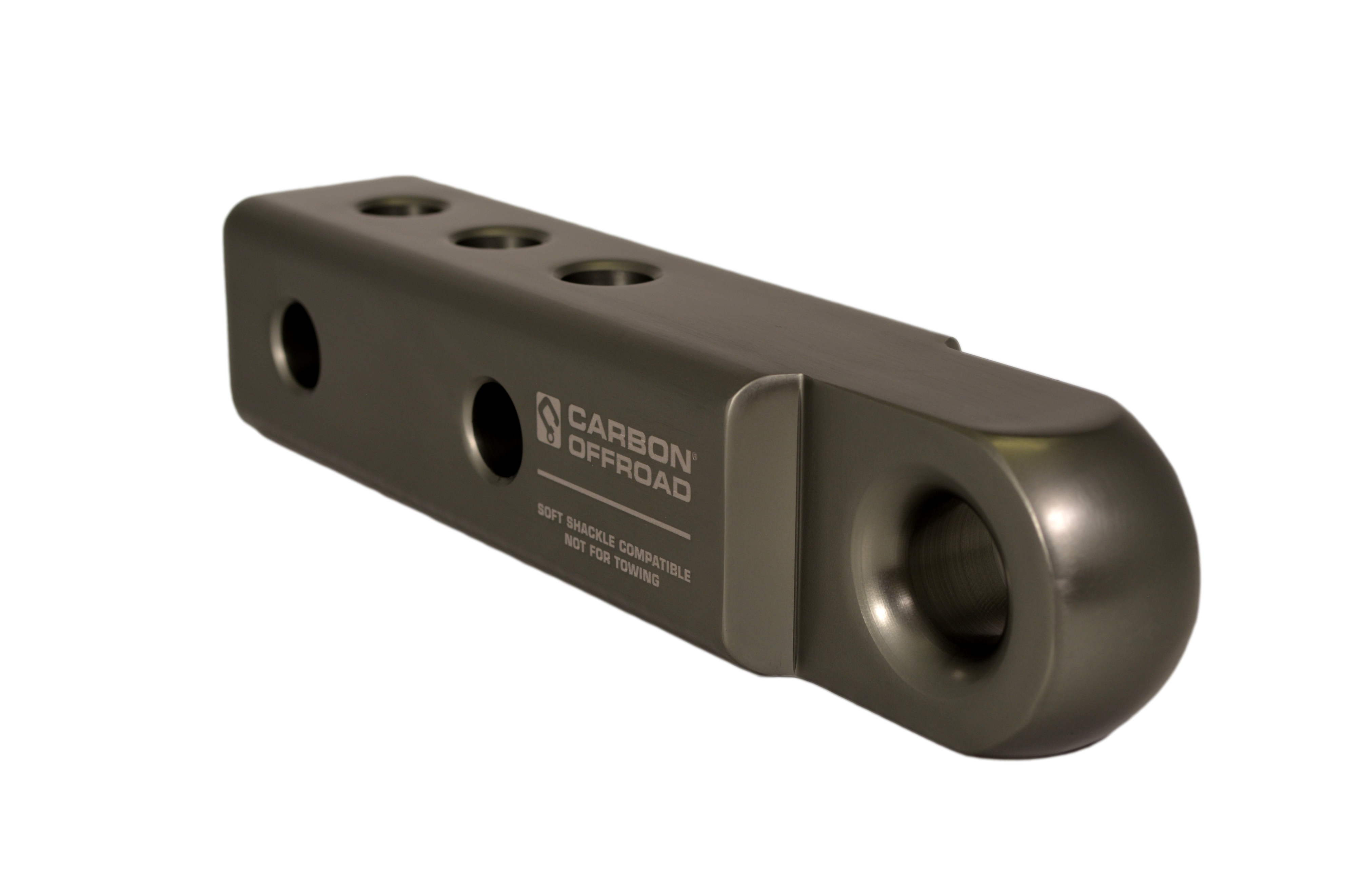
This all-new 50mm tow bar hitch receiver from Carbon Offroad is designed to suit both soft shackles and bow shackles ─ it has curved edges for soft shackles and a flat internal surface for bow shackles.
Its multi-fit design means it can be turned. The Megapro comes with a 5000kg rating and a Type 3 hard anodised finish.
RRP: $69.95
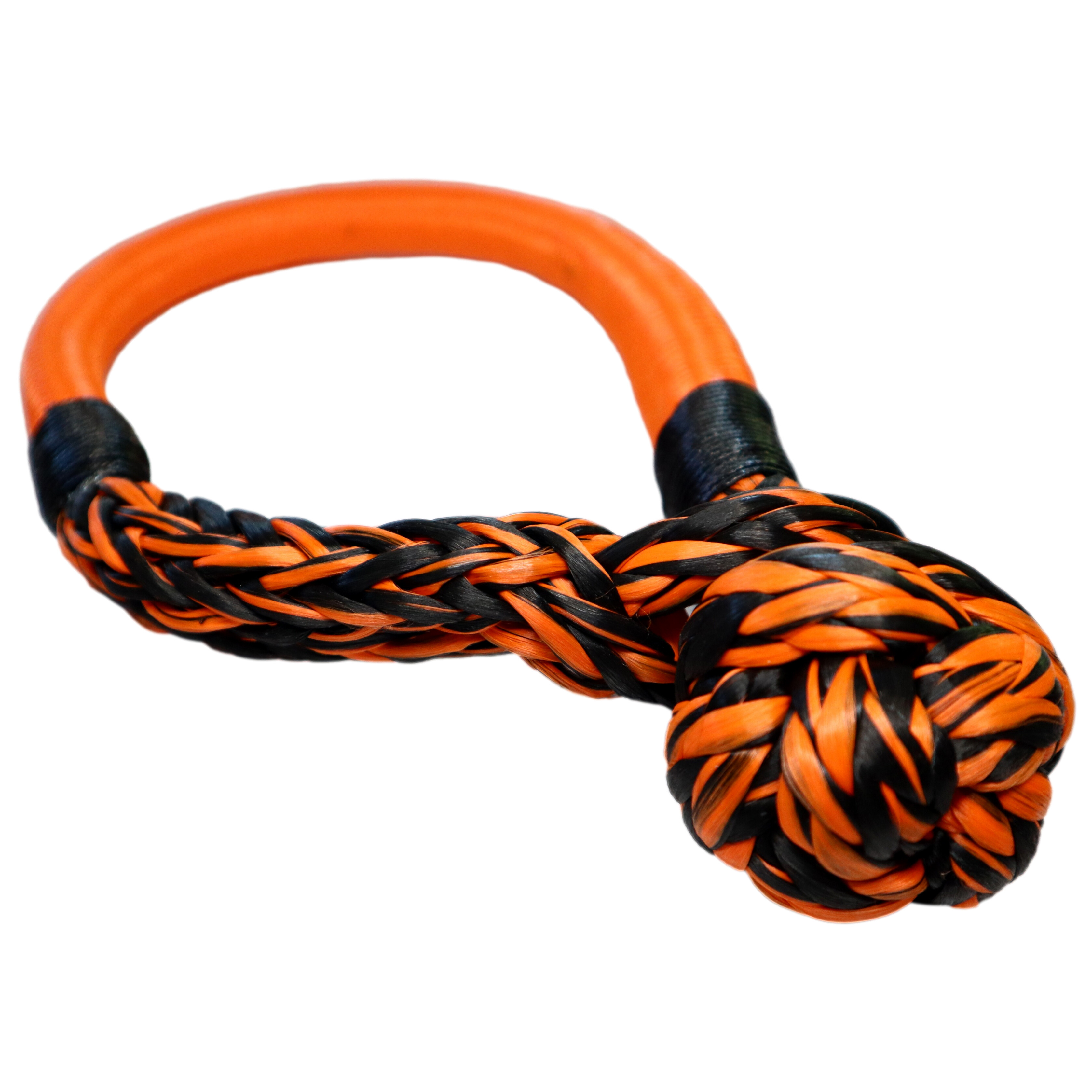
Monkey Fist 13,000kg synthetic soft shackle
Lightweight, safe and easy to store, synthetic shackles are hugely popular with off-road tourers for the simple reasons, being they: are light in weight, offer high user-safety, are versatile and easy to store in your vehicle.
The new Carbon Offroad Monkey Fist synthetic shackle offers a heady 13-tonne minimum breaking strain rating (actual breaking strain figure is 13,209kg), thanks to its 10mm UHMWPE rope-fibre and heavy-duty braided tight sheath over the core. This sheath allows you to go straight through a regular recovery point. You can connect the soft shackle to another shackle, a tree-trunk protector, snatch strap and kinetic rope for recovery.
It can also be used as an attachment point around a crossmember or chassis rail. This handy recovery tool is as easy to disassemble as a steel shackle and comes with its own storage bag. RRP: $49.95
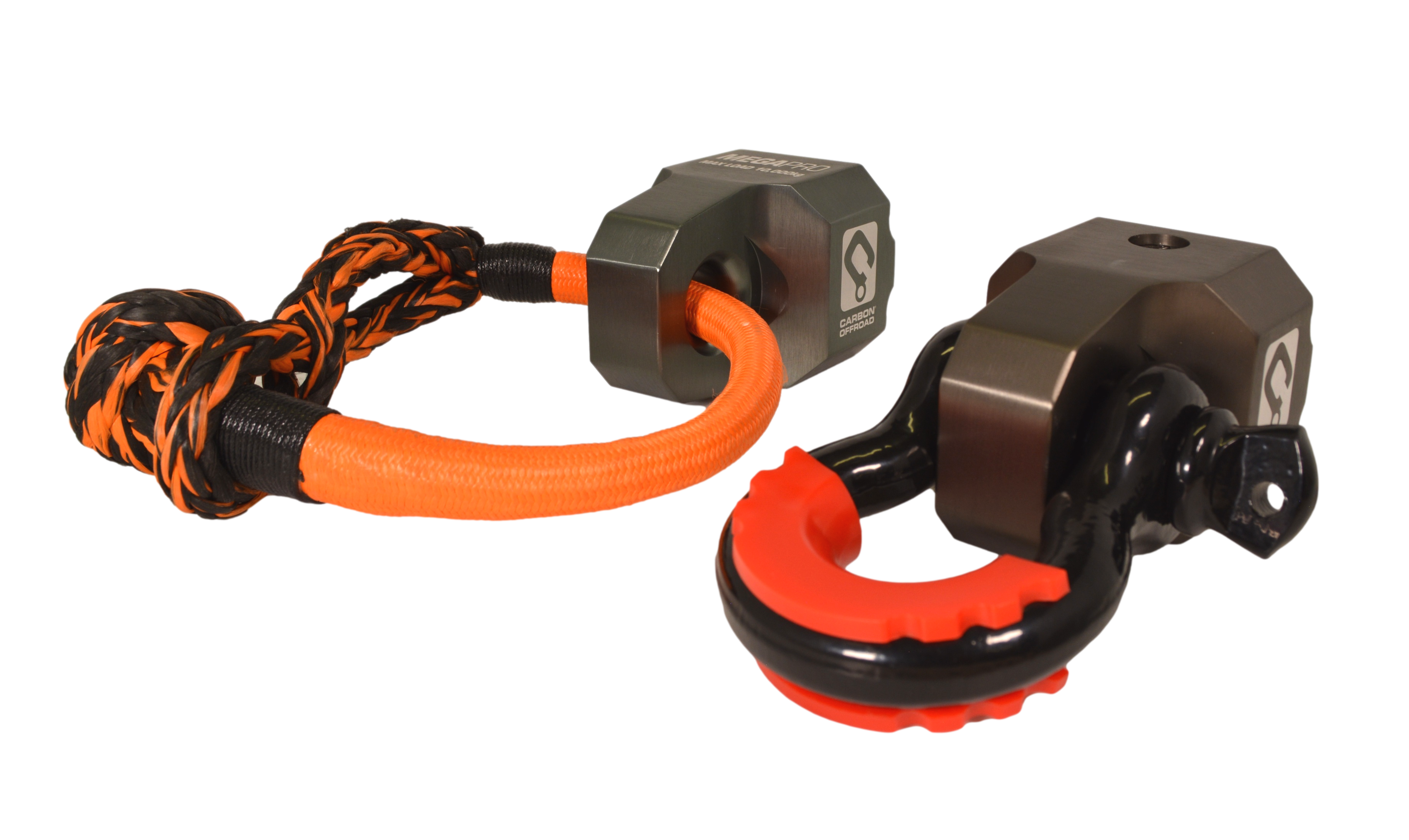
10,000kg premium winch rope thimble shackle
This Australian designed and developed winch rope thimble shackle is made from billet aluminium 6061 T6 and comes with a Type 3 hard anodised finish.
The 800g unit allows safe use of both a synthetic rope soft shackle and a traditional steel bow shackle. Plus, the thimble can be pulled up to the fairlead for easy storage of the attachment point. Soft radii locators on the back-end ensure the thimble is centred on the rope outlet when stowed.
The attachment point is a simple loop with a large radius edge and incorporates a flat inner section, to spread the load of a steel bow shackle pin.
The shackle has been load tested to more than 16,000kg and is comfortably able to handle loads up to 10,000kg. Available in dark grey and silver.
RRP: $119.95
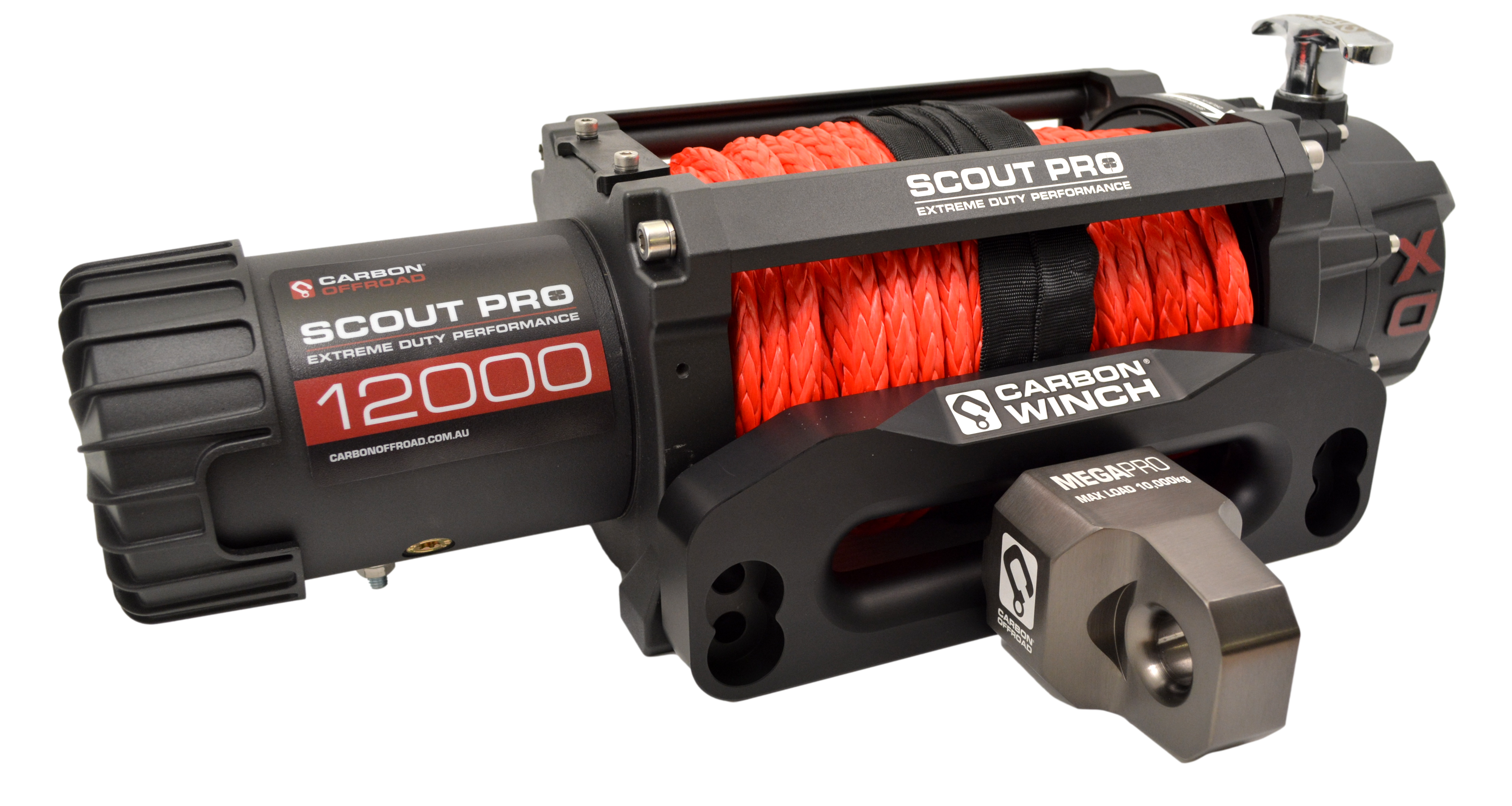
Scout Pro Extreme Duty 12K winch
The Scout Pro Extreme Duty 12K winch is said to come with a super-fast line speed for a quicker recovery.
Utilising a beefy 7hp motor, the new model is based on Carbon Offroad’s new and upgraded V2 platform and comes with a 180:1 gear ratio and a 12mm synthetic rope with a nine-tonne rating.
The unit is packaged with an upgraded closed loop Carbon Megapro Winch Thimble, and comes complete with all wires, control box, isolator switch, wired/wireless remotes and fitting hardware. Features an IP68 waterproof rating
WEBSITE: www.carbonoffroad.com.au
Snapshot
- Alpine and Alpine Plus packages to launch from Q2 2022
- On sale from $6090
- Seikel-developed kits won’t void existing warranties
Volkswagen Australia has launched a limited-run package for its Amarok dual-cab, further boosting the 4×4’s off-road credentials.
Capped at 100 units each, the Alpine and Alpine Plus off-road packages are available across the Amarok V6 Core Auto, V6 Sportline, Highline and Aventura line-up, launching in the second quarter of 2022.
Developed by German aftermarket manufacturer Seikel, the Alpine packages include a host of off-road specific parts, with the base Alpine scoring a Koni RAID suspension kit – increasing its ground clearance by 25mm thanks to Eibach springs at the front, twin-tube shocks, cast steel shock retainers, front spring plates and a 25mm spacer for the rear leaf springs.
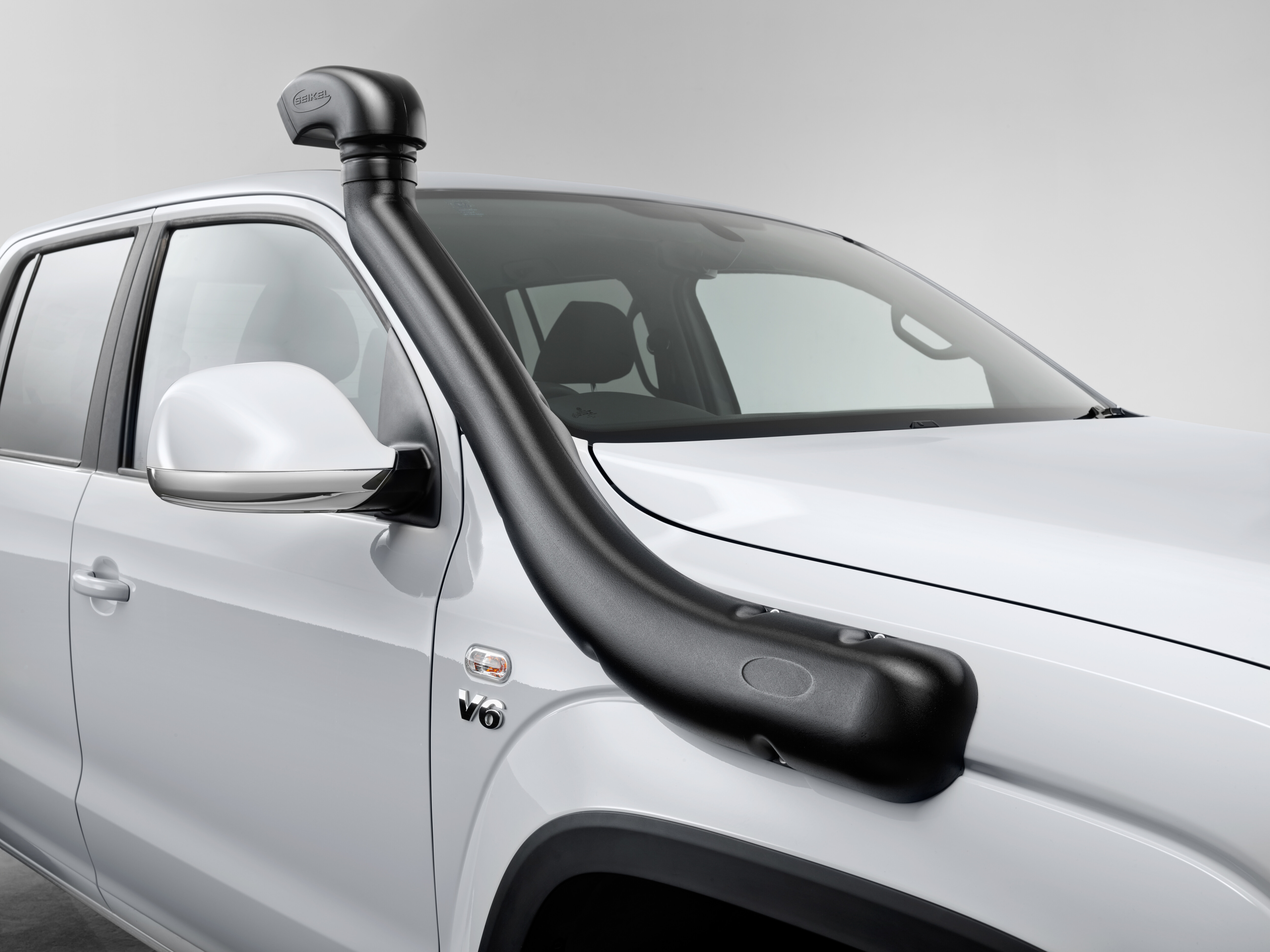
A polyethylene snorkel and protective cladding are also a part of the Alpine pack, all of which carries across to the Alpine Plus which also gains rock sliders, protective cladding for the doors and wheel arches, a breather kit for the front and rear differential, transmission and transfer case, plus protection plates on the engine, trans and rear diff.
The cost? Including GST, the Alpine pack retails for $6090 on top of the aforementioned Amarok variants, while the Alpine Plus adds another $6000 to the price, going on sale for $12,090.
Volkswagen will also offer an off-road tyre package for the Sportline and Highline variants, which includes five General Grabber AT3 255/60R18 tyres for an extra $1590.
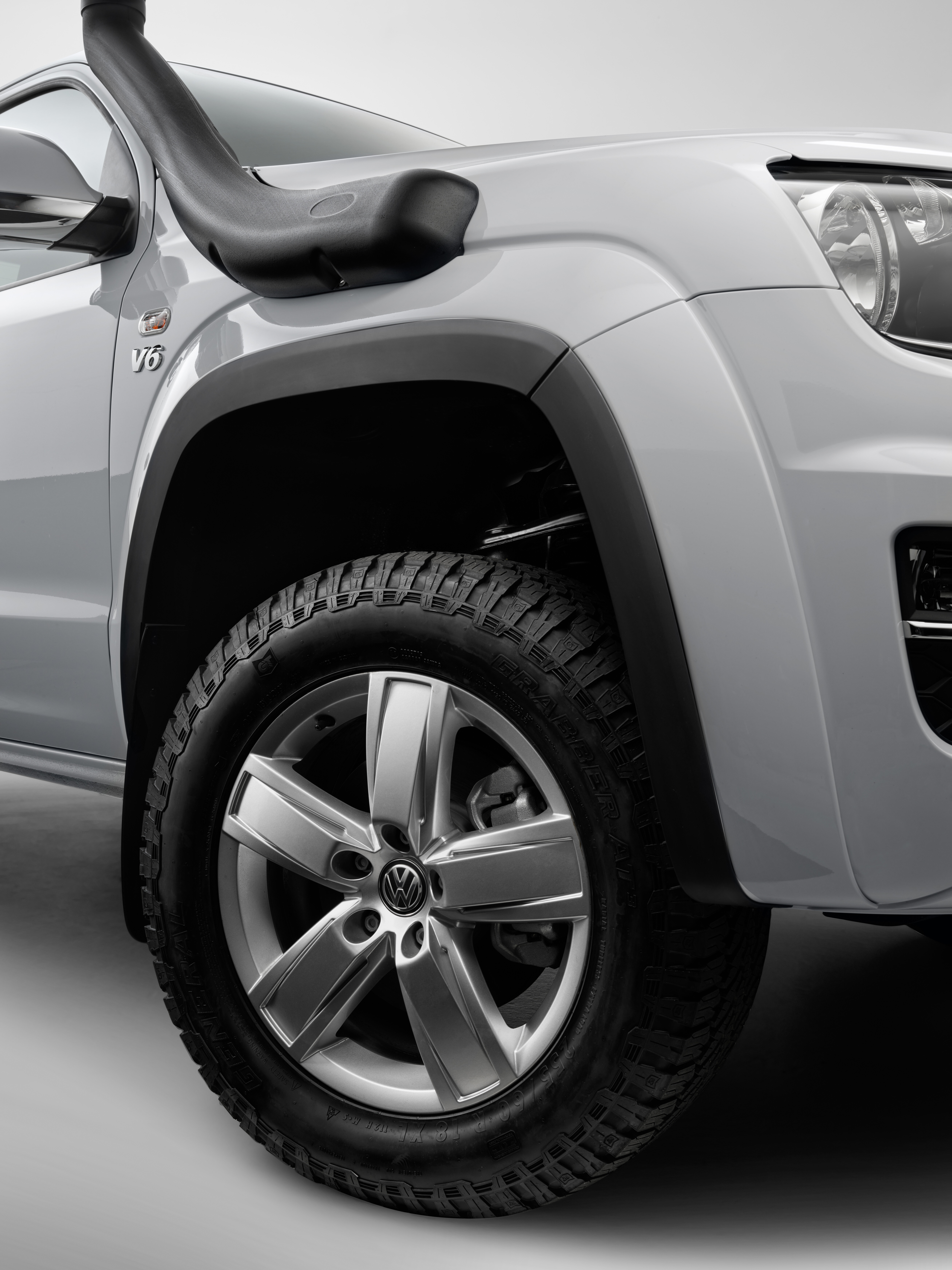
Volkswagen Commercial Vehicles brand director Ryan Davies said the addition of the Seikel-developed parts to the model, “ensures the Amarok V6 even further broadens its appeal for customers wanting a high-output powertrain with even stronger off-road capability”.
“From a V6 Core Auto with an Alpine or Alpine Plus off-road package, through to our flagship Walkinshaw-enhanced models, the Amarok offers a breadth of choice to match its breathtaking performance,” said Davies.
The Alpine packages allow Amarok owners to retain their five-year, unlimited-kilometre warranty.
2022 will be the final year for the first-generation Amarok, with its replacement set to be revealed in the coming months, based on the new Ford Ranger.
Well, it has certainly been a longer process than we would have liked, but the 4X4 Australia D-MAX is ready to hit the tracks.Basically, we wanted to be one of the first to build a new-shape 2020 Isuzu D-MAX, transforming it into a capable and reliable mode of transport to assist with creating content for 4X4 Australia. Yep, a good old-fashioned touring four-wheel drive build.
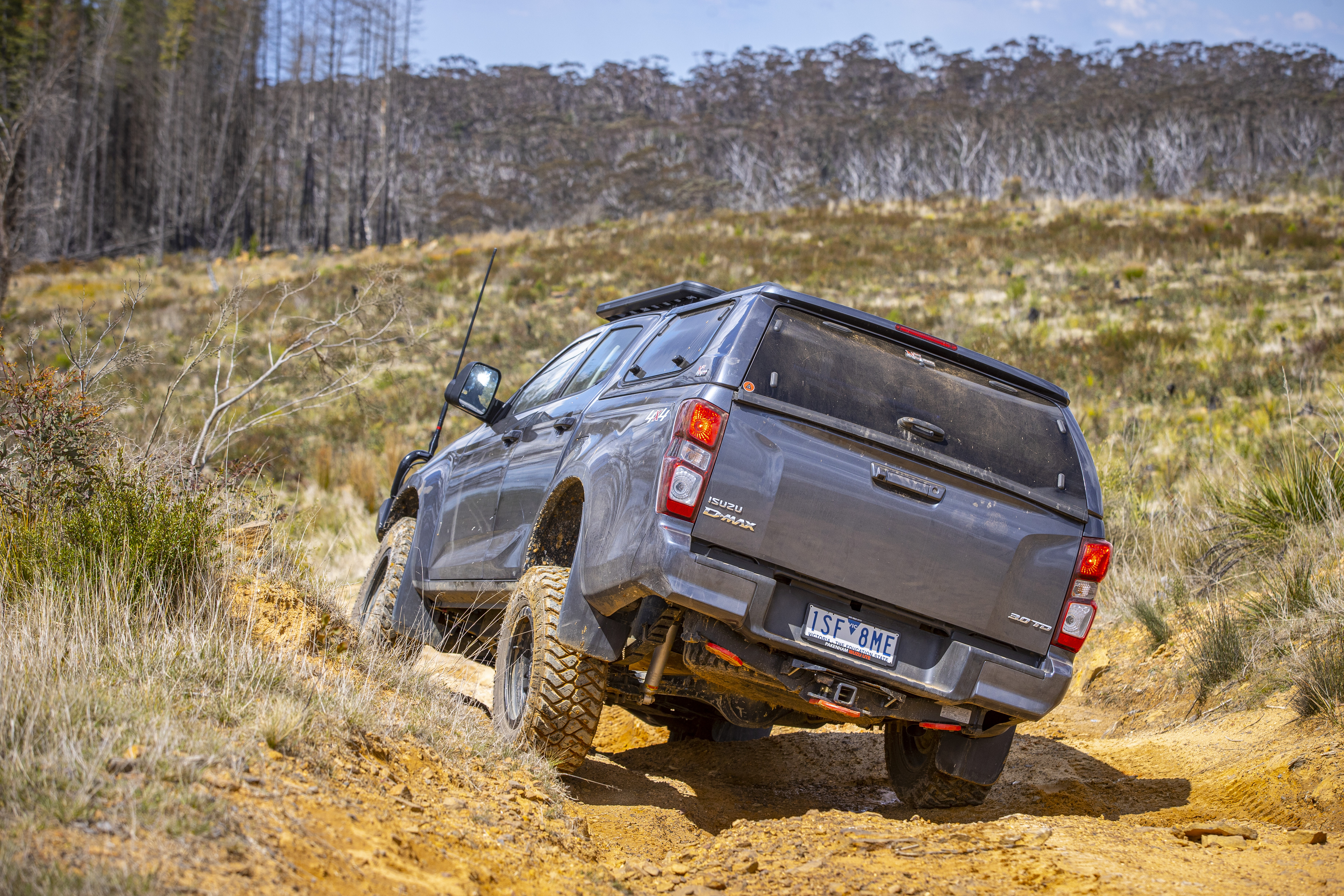
We need to depend on this vehicle for work; it has to be reliable and capable. Only the best gear would work for our requirements, and the hard work has certainly paid off. 4X4 Australia’s D-MAX is the very definition of a jack-of-all-trades.While some say a four-wheel drive build is never truly done, we’re now at the stage where we’re confident to take the D-MAX anywhere we’d want to go. I’m sure you’ll agree … it’s not a bad looking rig either.
Protection
One of the very first things we did to our D-MAX was install an Ironman 4×4 Commercial Deluxe steel bullbar to the front. This allowed us to determine how much weight we had added to the front of the vehicle, then select the right suspension for our needs (we’ll discuss suspension later on).As well as the stout frontal protection, we also had an Ironman 4×4 12,000lb winch with synthetic rope and Ironman 4×4 rated recovery points fitted at the same time. As the tools were out and the front-end in pieces; it makes sense to think ahead and get everything done at once to save time and money.
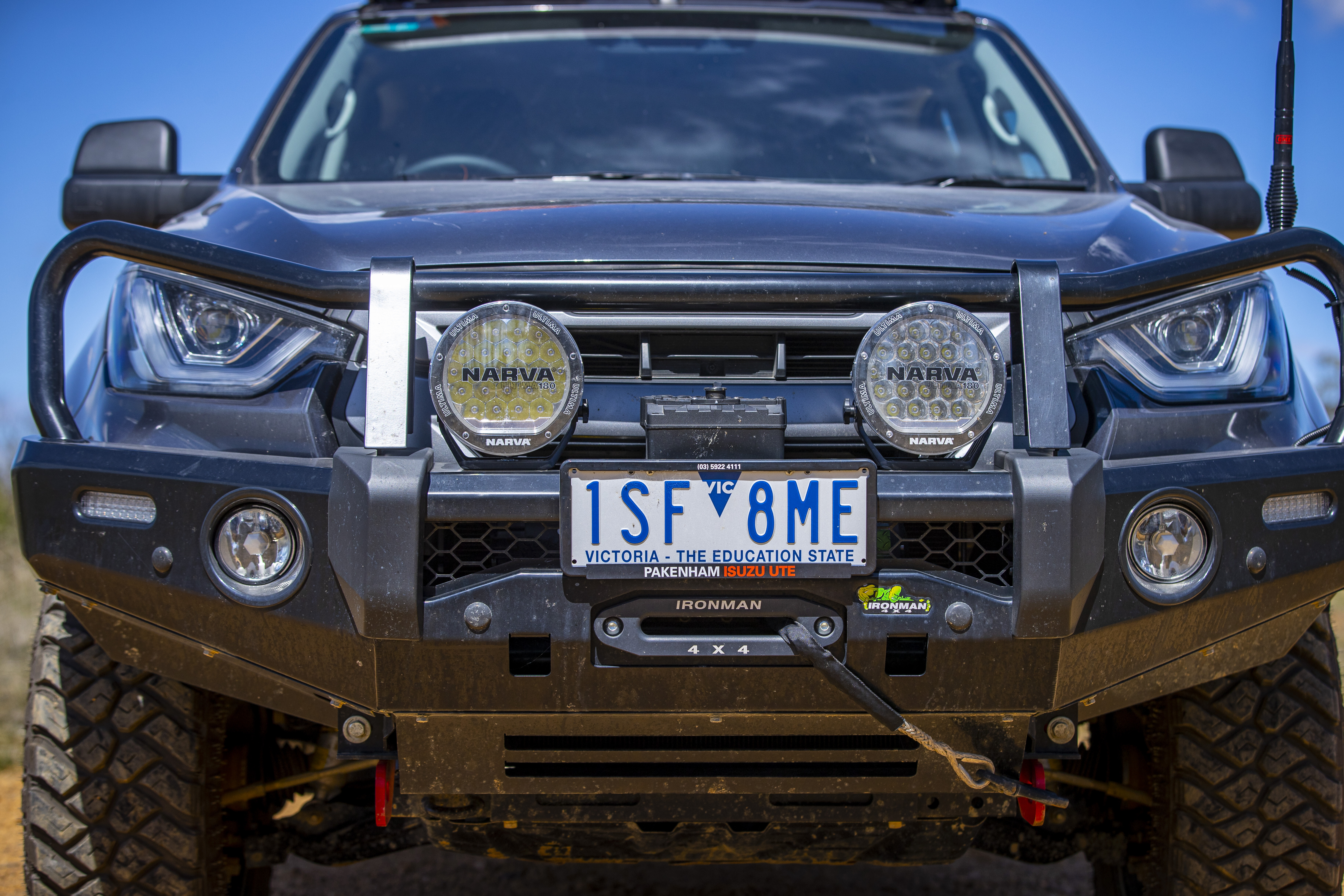
One such example is that we had a set of Narva Ultima 180 MK2 LED driving lights fitted at the same time as the Ironman 4×4 bar. It saved us a bit of coin, and meant we had a complete package ready to roll. Speaking of the Narva spotlights, I’m genuinely impressed with how bright they are for a seven-inch LED driving light. They take up less real estate on the bar over larger nine-inch lights, thus allowing more air flow, which is a good thing. I don’t see us needing any more light than they provide, even on dark outback roads.With the front-end of the ute protected, it was time to look to the back of the D-MAX. Naturally, we wanted recovery points on the rear of the vehicle as well as the front, and this ute will be used for towing − which made our decision to install a Hayman Reese X-Bar an easy one.
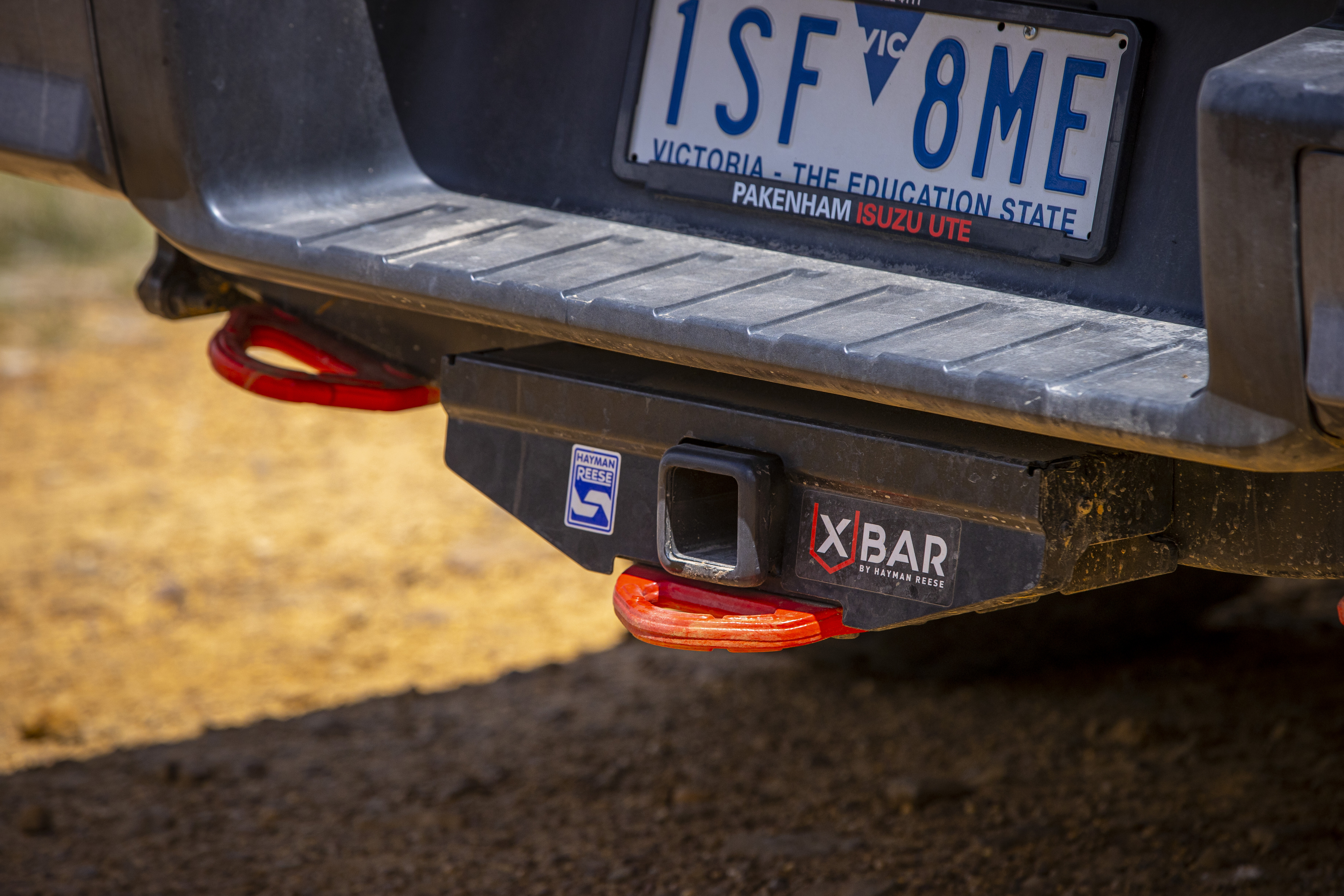
The X-Bar is rated to tow 3500kg and has three rated recovery points built into the towbar. These recovery points are soft-shackle compatible too, which allows us to use our MaxTrax soft shackles in recovery situations. The bar also sits up nice and high, offering maximum clearance when off-road.As mentioned, the D-MAX is built to tow, so as well as the Hayman Reese X-Bar we bolted up some awesome MSA towing mirrors. They were easy to install, look like a factory fit (well, better actually), retain all safety gear from Isuzu, and are super simple to use.
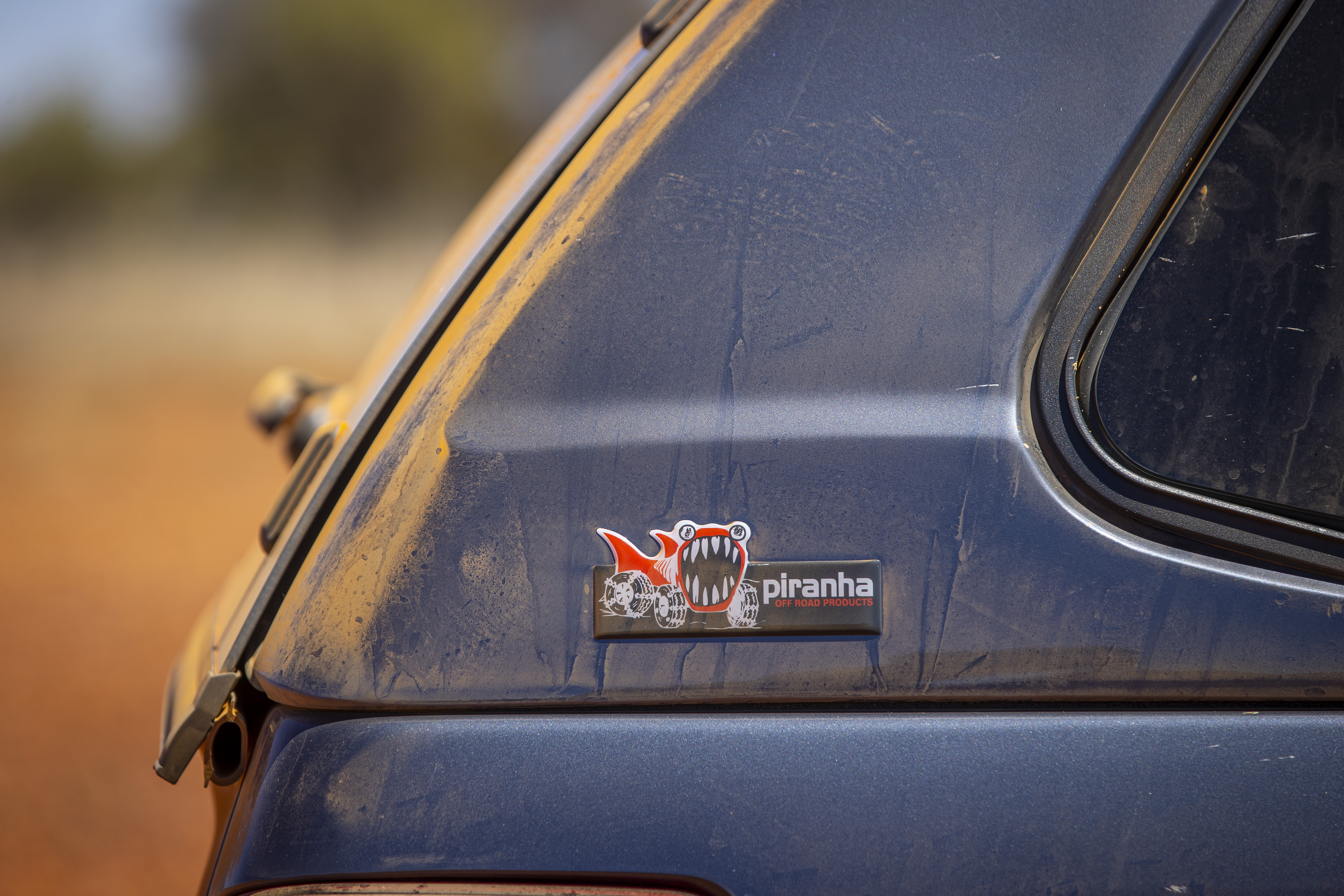
We wanted to retain the factory tub on our D-MAX, but didn’t like the idea of leaving it exposed to the elements. After digging around online for a few weeks, we decided a fibreglass canopy from Piranha Off Road would fit the bill nicely.Firstly, it looks the part and suits the lines of the D-MAX. Secondly, it has plenty of very useful features we use regularly such as central locking, rear demister, lift-up side windows and rated roof racks. It’s also fully lined inside with marine carpet, which is a neat touch.I was surprised at how easy it was to install, the supplied wiring loom made it a quick job to hook up electrical connections, and the clamp mounting system meant no holes had to be drilled.
Touring mods
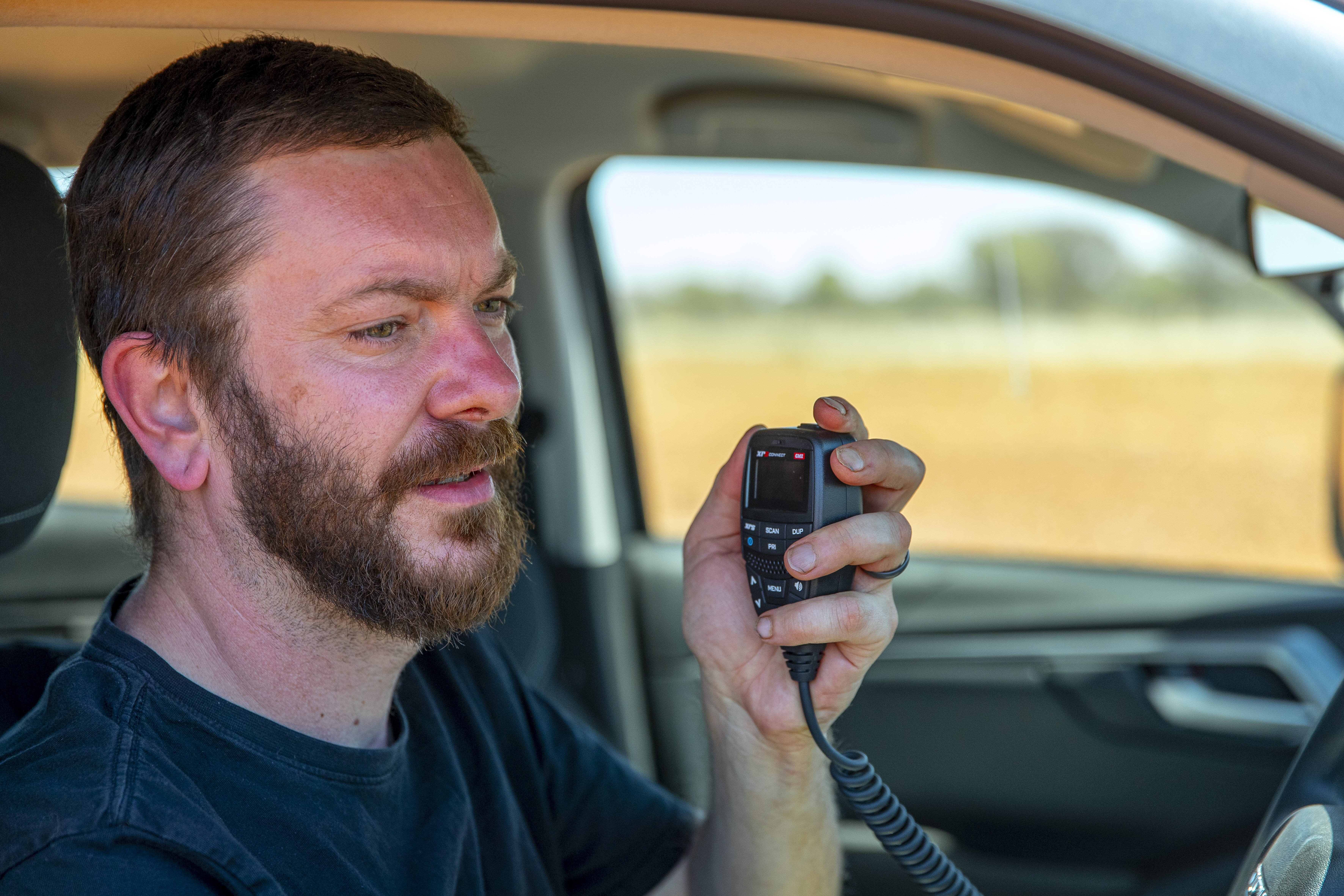
An XRS 330C UHF from GME was selected for communication duties, and is a quality bit of kit that gets used almost daily. It was also easy to install in the D-MAX thanks to a nice, big firewall grommet on the passenger’s side to pass cables through.The unit itself sits under the transmission trim panels, so it tucked neatly out of the way. The handpiece sits on a magnetic mount on the dash, which was easy to install and works great compared to traditional mounts.
One of my favourite additions to the 4X4 Australia D-MAX, would have to be the dual-battery system. The brains of the dual-battery system is a 100amp/h slimline lithium battery from Invicta. This can be controlled via an app, so we can monitor charge and battery temperatures, and it provides more than enough grunt to power our fridge, charge camera gear and could run a decent sized inverter too. As well as being able to power our accessories, I’m amazed at just how light this Invicta slimline lithium battery is and just how fast it recharges.The Invicta battery has been mounted on a trick Piranha Off Road battery tray, which was actually custom made for our vehicle and the Invicta battery. They are now in production and available to buy, which is super cool. The battery tray secures the battery to the rear wall of the D-MAX, and sits behind the back seat. This not only utilises otherwise wasted space, it protects the battery from the elements too.
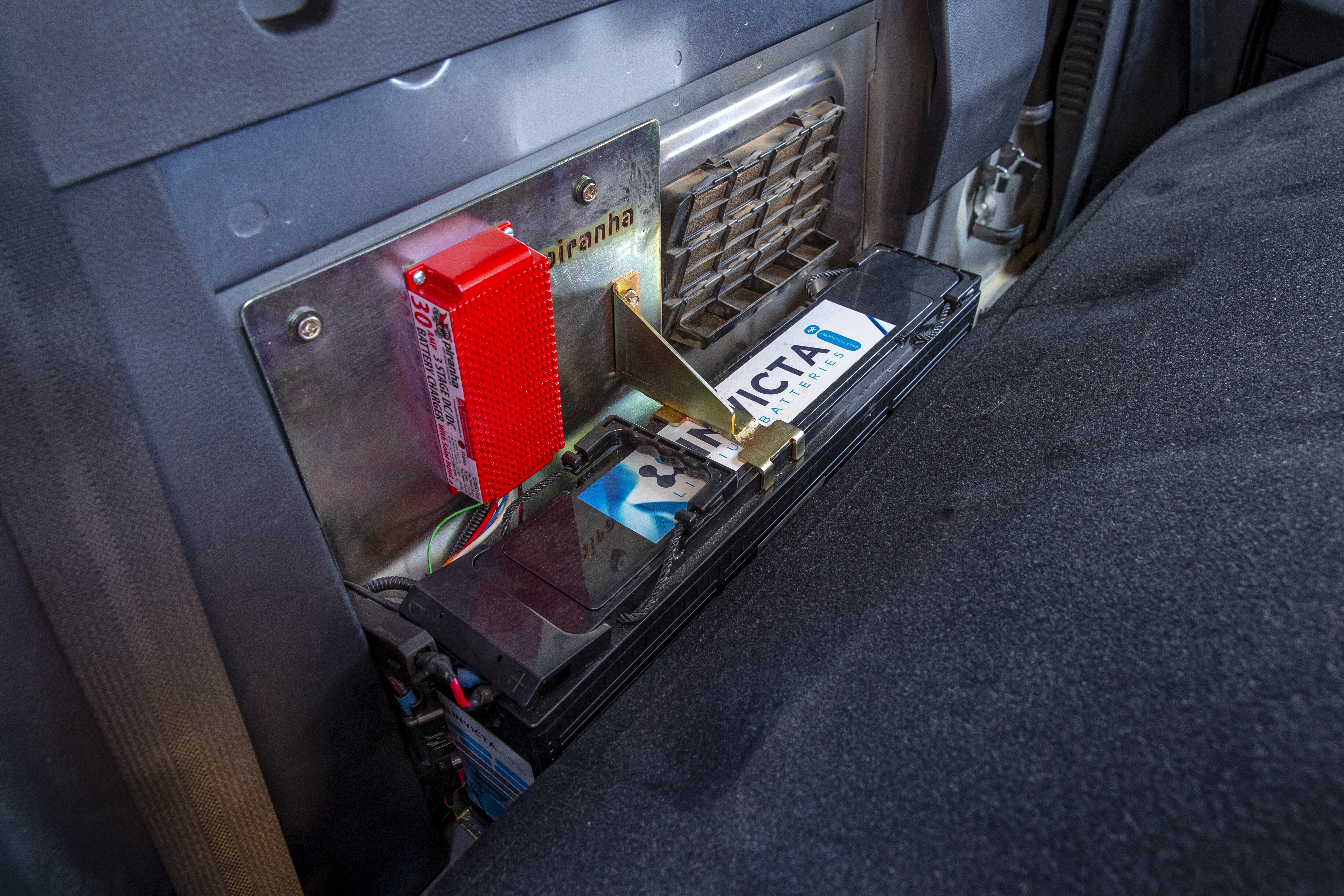
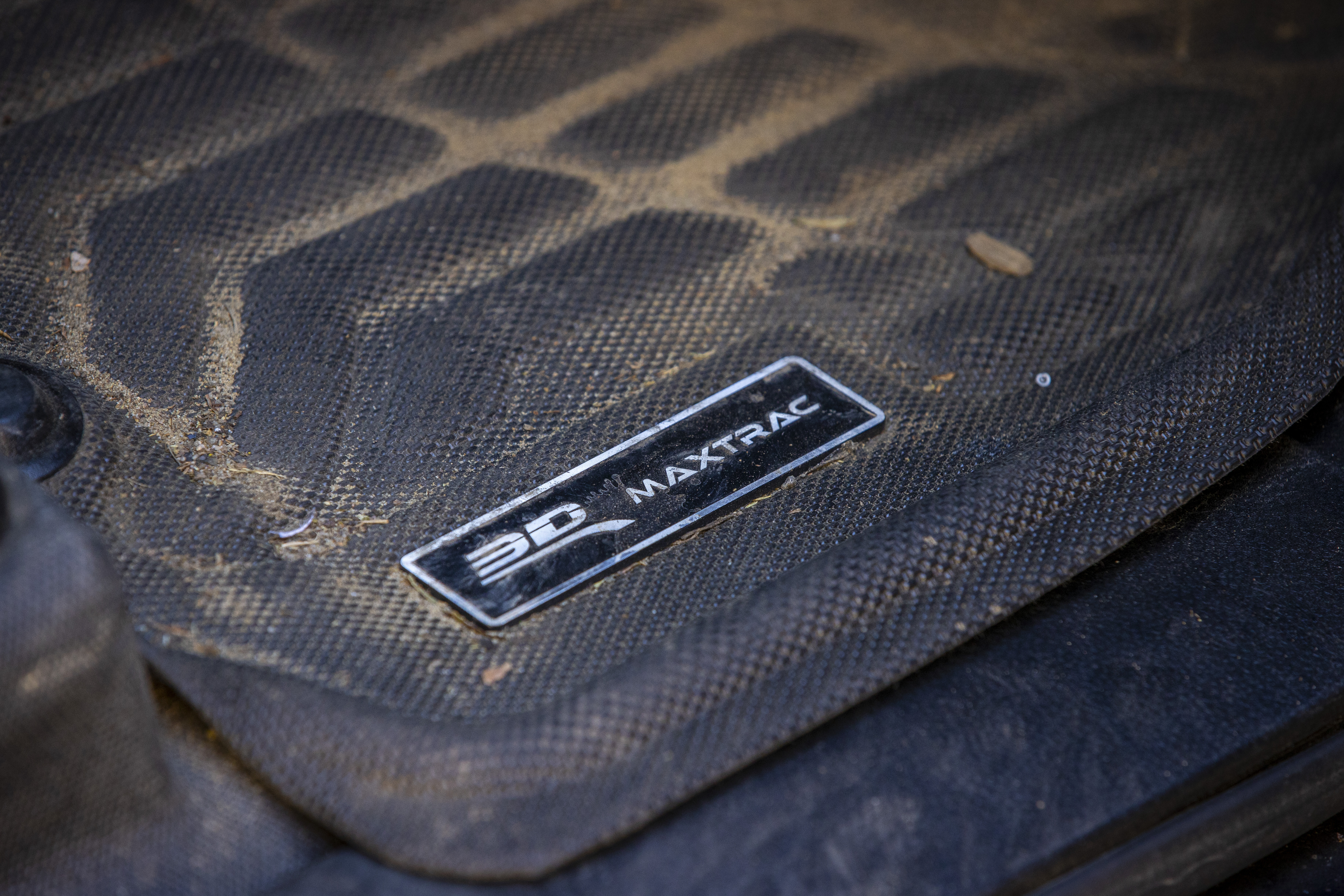
Powering the dual-battery system is a lithium-compatible 30amp DCDC battery charger from Piranha Off Road. It mounts directly to the battery tray, so it was an easy choice for us to make from a packaging point of view.One other addition – which might seem like a small thing but has been an absolute game changer – is the TruFit 3D Maxtrac brand floor mats we installed before heading out for our recent run to Cobar. Honestly, the floor of the D-MAX would be utterly trashed without these floor mats. A simple hose off once we arrived home, and the vehicle looked like new again inside. A wise investment indeed!
It’s also worth noting, we’ve taken out an insurance policy with Club 4X4 to cover all the accessories we’ve fitted to the D-MAX. It’s reassuring to know we also have $1500 worth of off-road recovery coverage available, in the event something goes wrong and we aren’t able to self-recover.
Performance upgrades
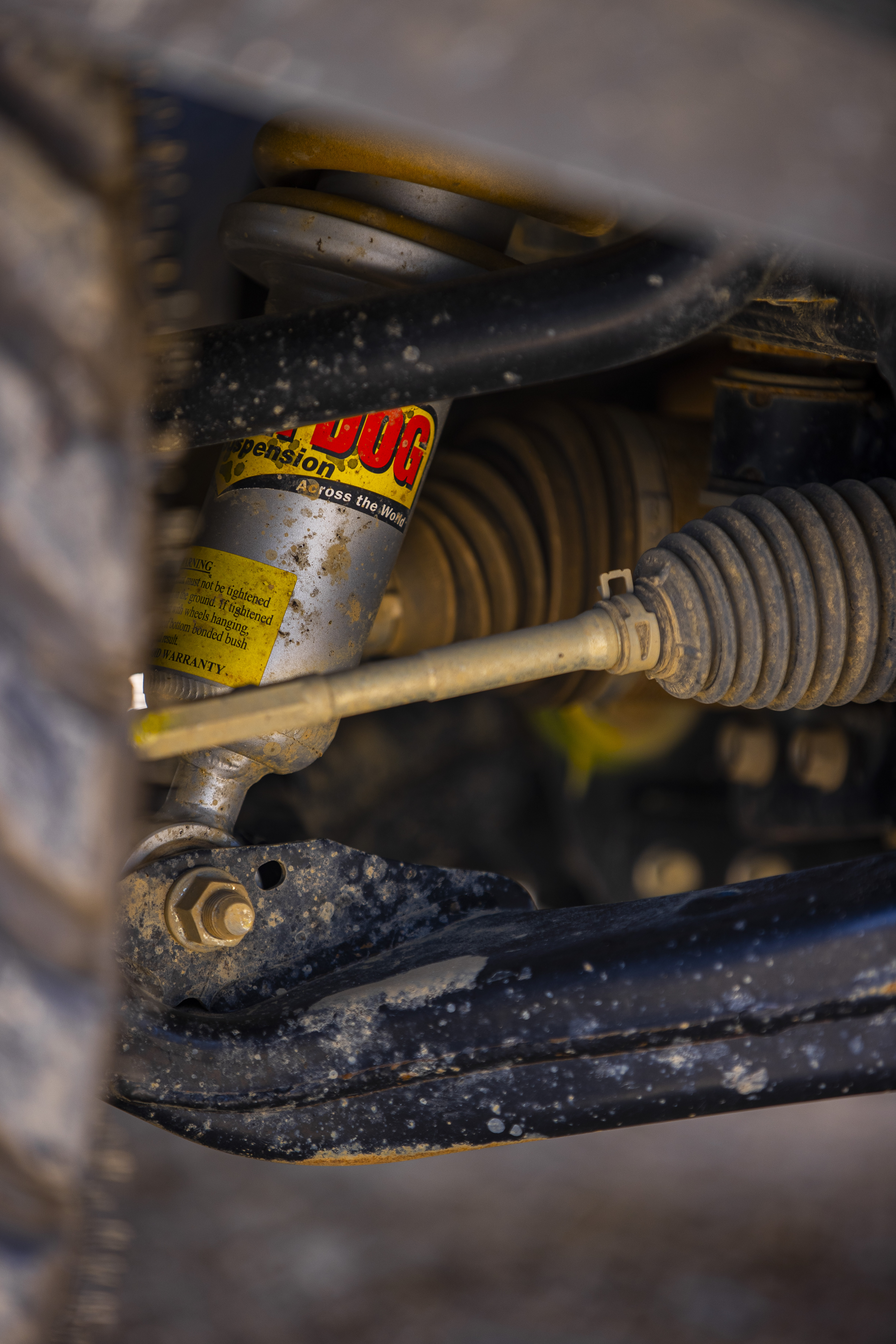
One of the most impactful additions made to our D-MAX would have to be the Tough Dog suspension. It not only gave us a roughly 40mm lift over stock, it completely transformed the way the D-MAX rides and handles. No more jarring over bumps, it simply absorbs whatever we throw at it. This suspension kit also handles the additional weight we’ve added without complaint, which is no easy task.
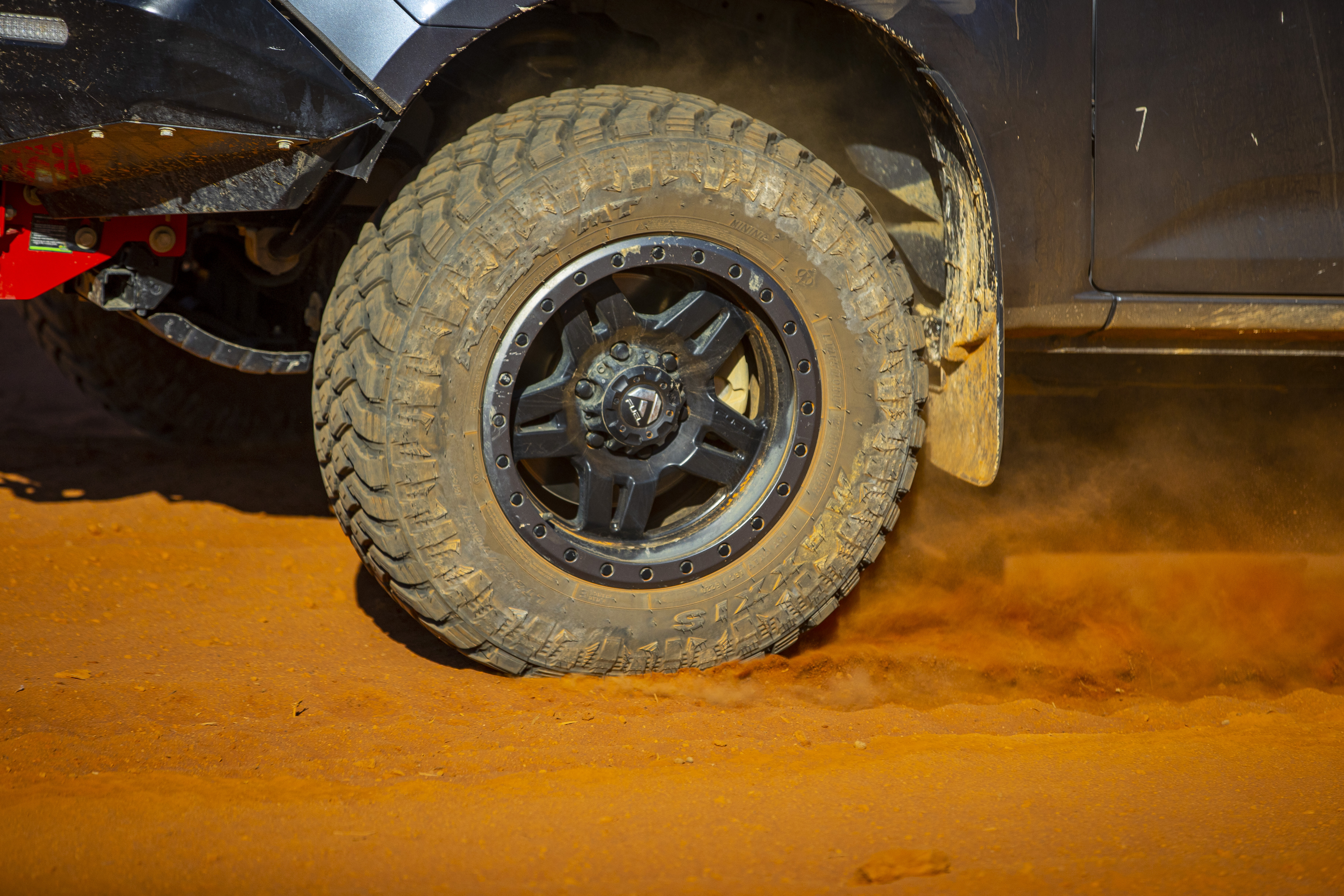
With some extra space in the wheel arches to fill, a set of 265/70R17 Maxxis RAZR mud-terrain tyres were selected. These have been on the vehicle for close to 15,000km now and have been an absolute joy so far. They aren’t noisy for a mud tyre, they aren’t sketchy on wet roads at all, and they grip like super glue when the going gets tough.The Maxxis tyres have been mounted to 17-inch Fuel Anza alloy wheels from Wheel Pros Australia, which look amazing on the car. We wanted a dark wheel to match the dark colour of the D-MAX, but with a bit of silver to break it up so it’s not too dark. They not only look the part, but gave us a little bit of extra track width, which is always a good thing for stability on- and off-road.
To get a little bit more power from the venerable 3.0L turbo-diesel motor, we had the team at Pacemaker Exhausts build a three-inch King Brown exhaust system for the vehicle (which is now also in production). This not only sounds great without droning at highway speeds, it has helped lower EGTs, meaning that if we were to do a performance tune to the engine down the track (which we’d love to do), things will be nice and safe.
Storage
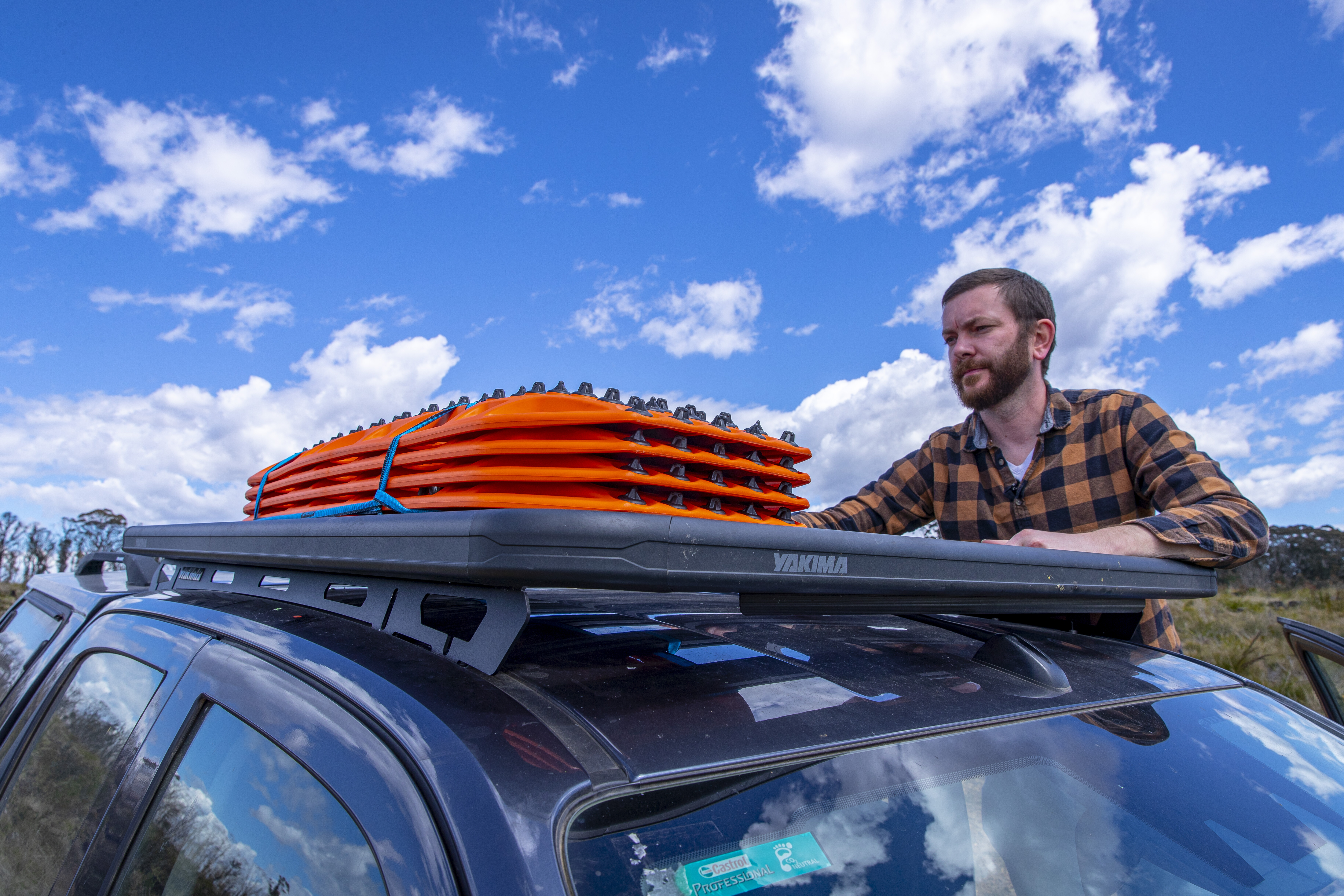
A solid touring four-wheel drive needs a solid storage system if you are going to retain your sanity on a long trip. It’s safe to say we’ve nailed the storage side of things.The first storage modification we made was to fit an alloy Yakima LockNLoad roof platform with its RuggedLine mounting system to the roof of the D-MAX. This was a really easy install, providing a place to tie down our MaxTrax recovery boards and swags when on longer trips. Best of all, it’s whisper-quiet on the highway.
If we head to the tub area, things get pretty serious with a suite of gear from MSA. We selected its Explorer alloy drawer system, which is just first-class quality wise. On top of that, we fitted one of MSA’s drop-down fridge slides and fridge barrier to protect our 60L Companion fridge-freezer, which allows us to stack gear on top and around the fridge safely.The Companion fridge is pretty special too, as it has a built-in lithium battery, meaning you can run it without being plugged into power for a claimed 16 hours. It also means, when combined with our 100amp Invicta lithium battery, we have more than enough juice to power our 12V needs. Nobody wants warm beer … nobody.On the passenger side of the drawers, we also decided it made sense to install an MSA power panel, which allows us to power accessories as well as monitor battery voltage. Inside the drawers there’s plenty of room for tools, cooking gear, food and spare parts.
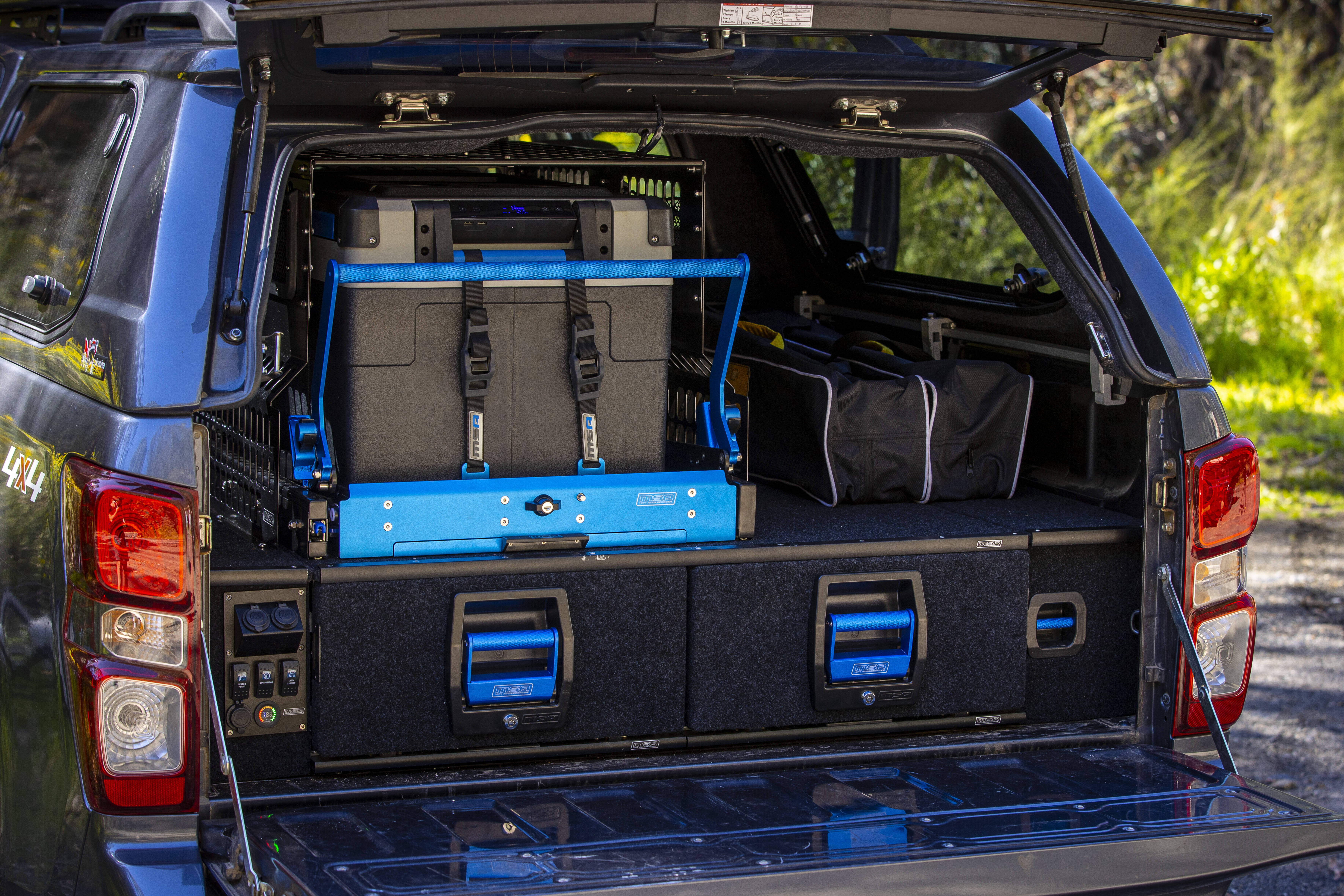
We also managed to squeeze some of our MaxTrax recovery gear in there, but we also have a bag filled with MaxTrax recovery gear such as soft shackles and recovery ropes that lives inside the cabin of the D-MAX, in the event we get really stuck and can’t access the drawers easily.Not that we’ll be getting stuck too often, as our Isuzu is now set-up for just about anything. All that’s left to do is fill up the tanks and hit the road.
UPDATE, January 30, 2022: GX off-road review
This time Evan Spence is testing out the GX grade to find out how it stacks up against both the other LandCruiser 300 variants and its rivals from other manufacturers.
Find out how it fared in Evan’s review for 4×4 Australia by clicking the link below.
UPDATE, January 25, 2022: Production delays hit
Since December last year, the 2022 Toyota LandCruiser’s production has been blighted by issues, mostly stemming from the COVID-19 pandemic and subsequent chip shortage.
Read our article providing the latest rolling updates here.
UPDATE, January 12, 2022: Five-star ANCAP rating
Australia’s independent crash testing authority, ANCAP, has awarded the new 2022 Toyota LandCruiser 300 a five-star rating.
The large SUV performed well across all categories, with all variants being evaluated apart from the GR Sport.
Read more in our news story here.
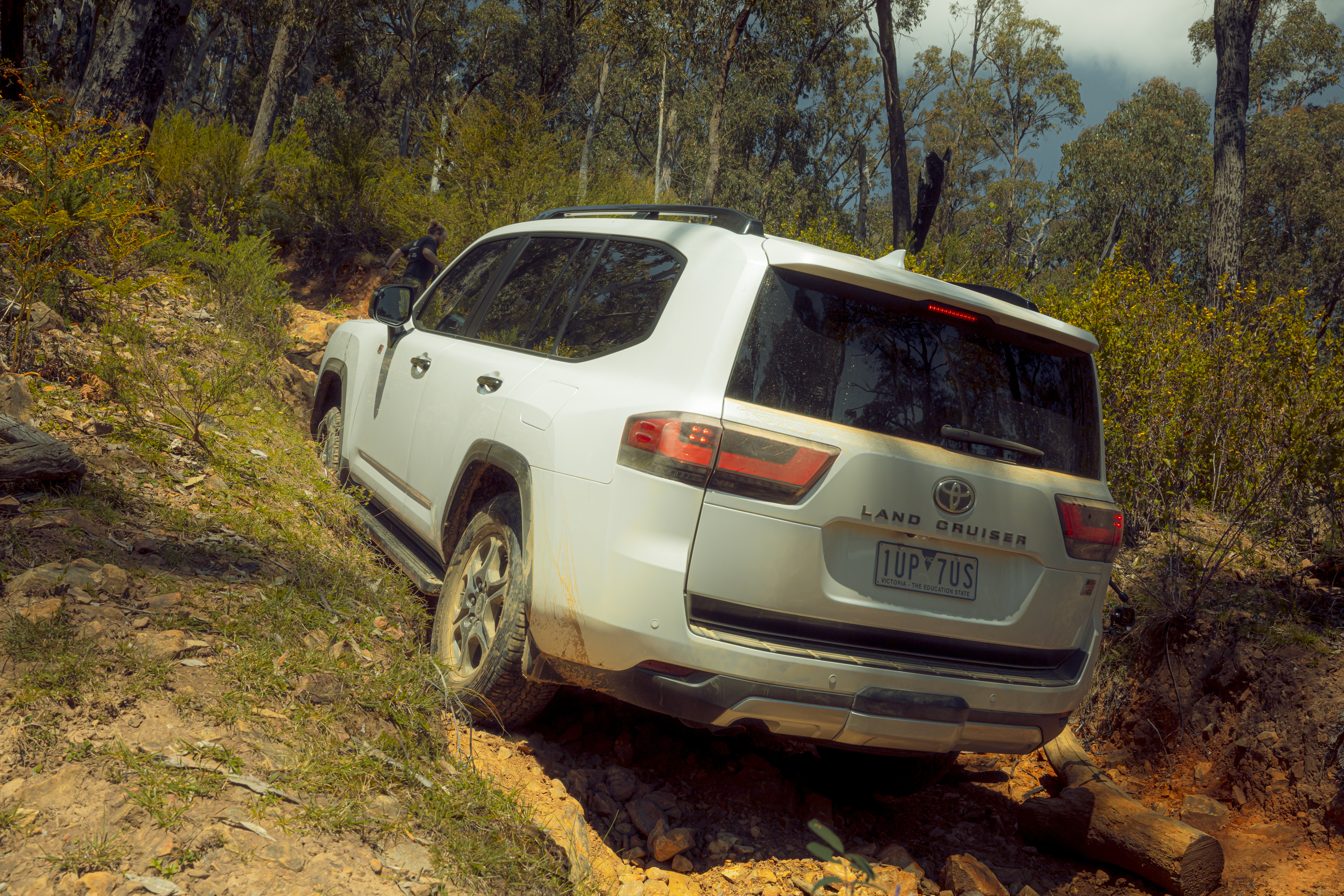
UPDATE, November 11, 2021: GR Sport review
The new 2022 LandCruiser 300 is properly here, and now we’ve had a little more time to get to know it, our first full review is live.
We’ve gone for the GR Sport variant, which is marketed as the more off-road focused option in the six-strong LC300 range, as it – along with the range-topping Sahara ZX – is new to the nameplate.
You can read Matt’s review here.
UPDATE, October 14, 2021: First drive review
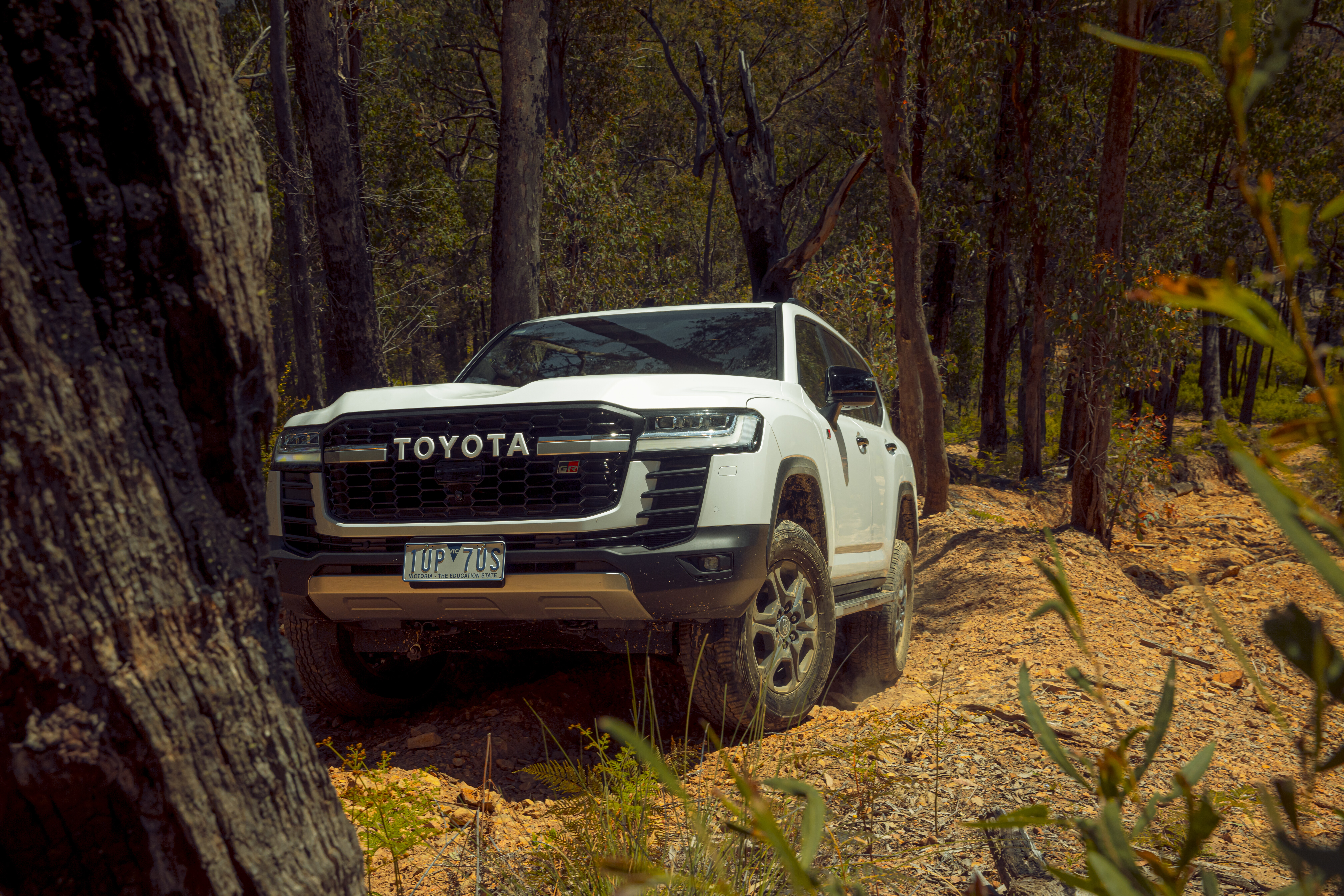
It’s here. The 2022 Toyota LandCruiser 300 is now in Australia, and Evan Spence has put the new off-roader through its paces for 4×4 Australia.
Key Points
- Off-road ability is right up there
- Comfortable and willing on-road
- Expensive price tag, especially higher-end models
Read Evan’s full review at the link below.
UPDATE, October 5, 2021: First look at revamped interior
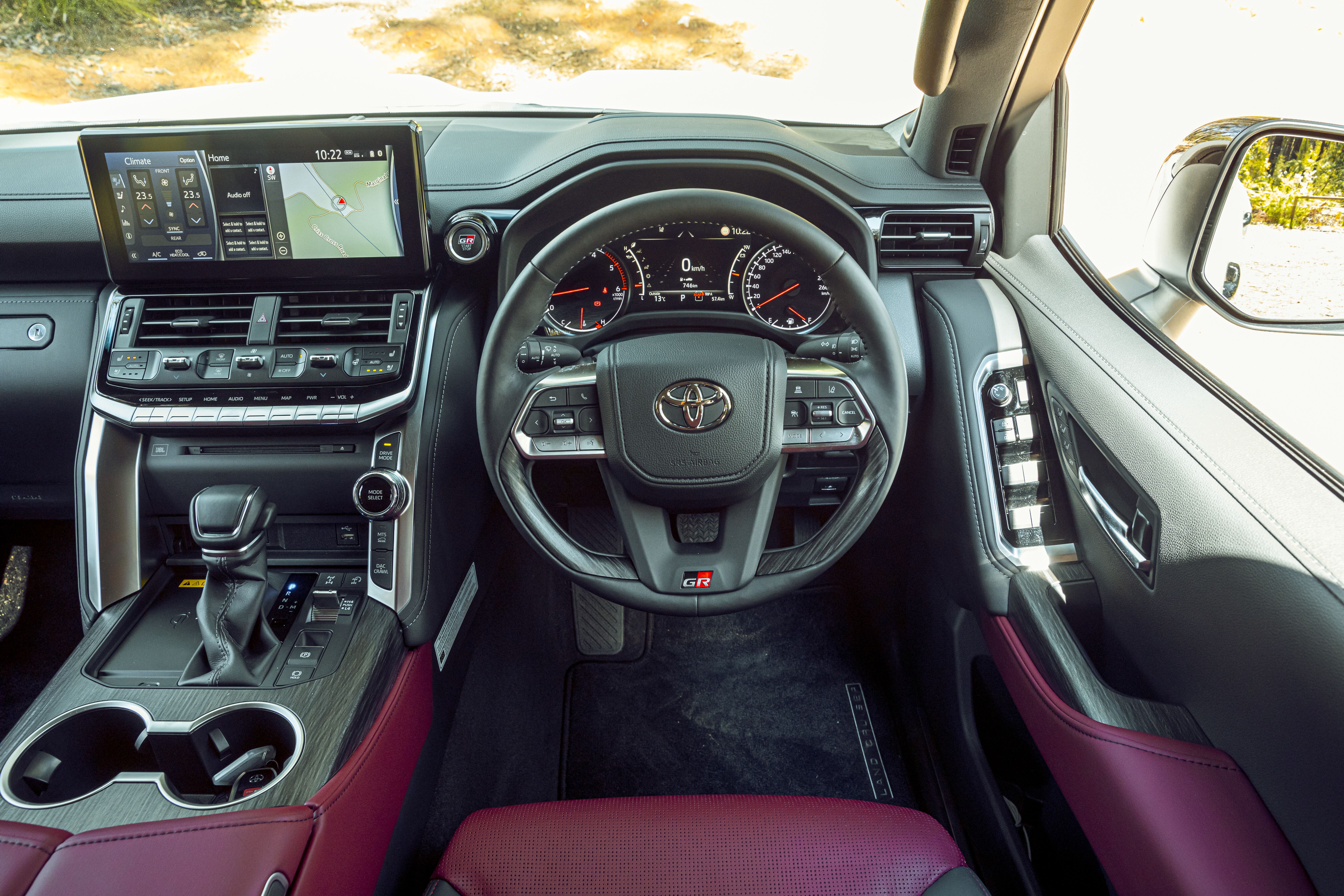
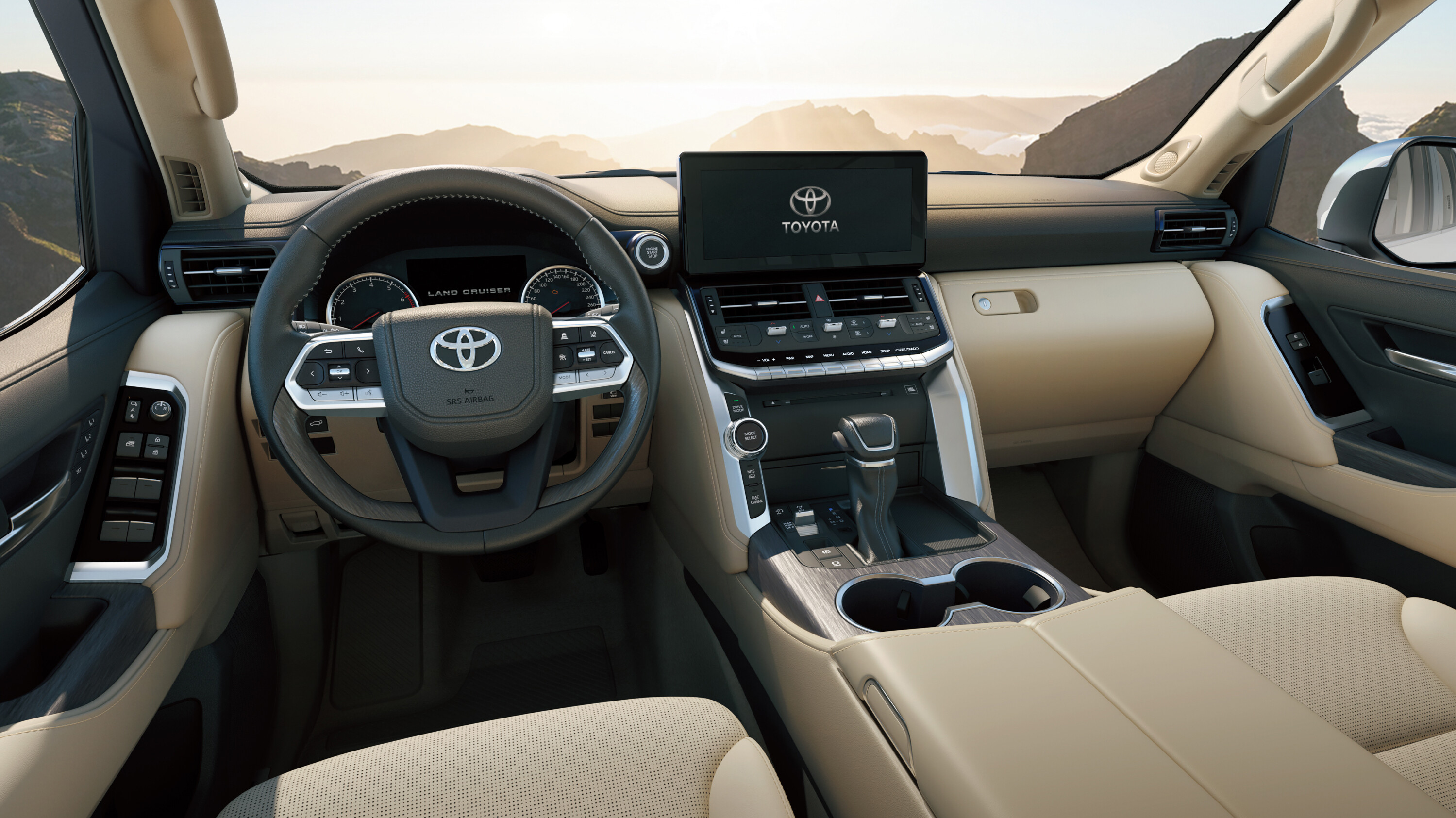
Toyota has equipped its all-new LandCruiser 300 Series with the latest technology and premium gear, and it is awash with soft-touch materials and functional design.
A new-look centre console features a redesigned drive-mode selector (on models above GX), drive-mode and off-road functions, a parking brake, and a pair of cupholders.
In a common-sense approach, all dashboard switches are grouped and positioned according to function. For example, the driving mode functions are grouped on the driver’s side of the centre console.
Get all the details at the link below.
UPDATE, August 13, 2021: First drive of prototype
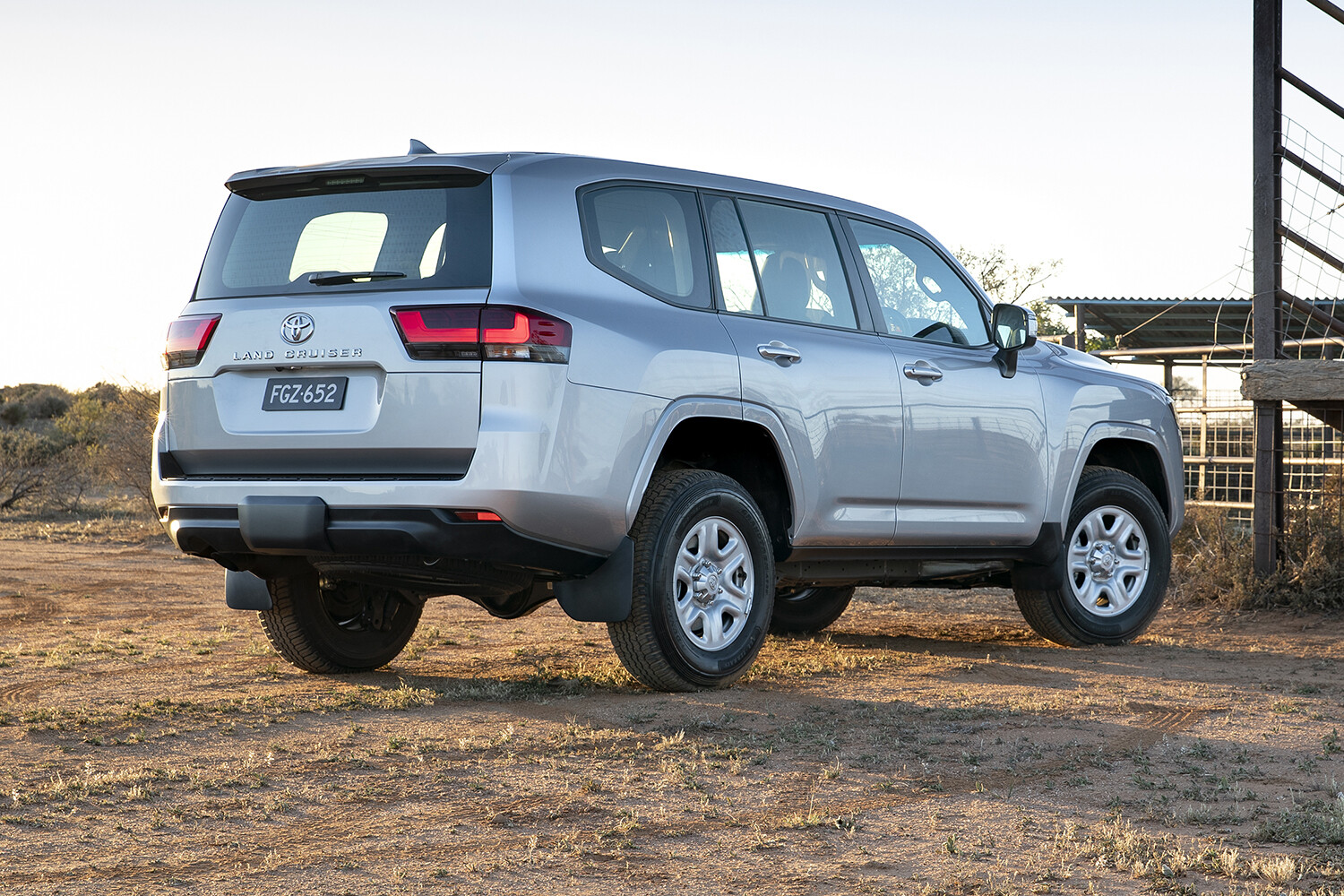
The 300 Series is just months away from hitting showrooms, but we were lucky enough to score a day behind the wheel of a prototype, months before the production cars were unmasked.
Read Matt’s take on it here.
UPDATE, August 4, 2021: Full pricing and features revealed
Toyota has confirmed the price and specifications of the Australian-delivered LandCruiser 300 Series ahead of its arrival later this year.
After the vehicle’s initial unveiling at the beginning of June, Toyota remained tight-lipped surrounding exactly which trim levels would come to the local market, only confirming Australian models would exclusively be powered by the new 3.3-litre V6 diesel engine, replacing the outgoing V8.
Although it was first believed there would only be five variants to arrive Down Under, Toyota has added a sixth trim to the LC300 range, now topped by the Sahara ZX which is placed just above the highly-anticipated GR Sport.
Get all the details at the link below.
The story to here
June 10, 2021: New LandCruiser 300 revealed
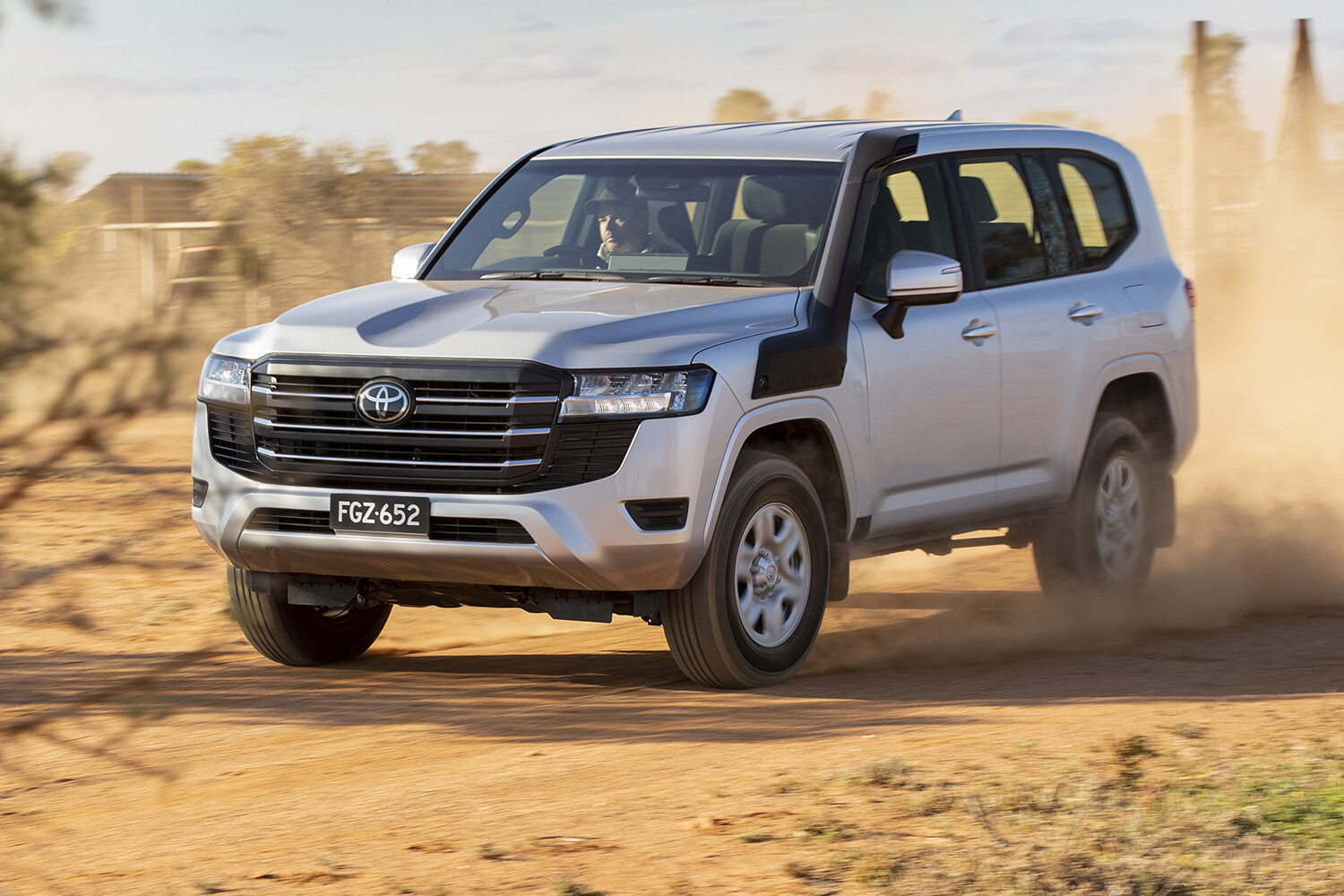
Here it is folks. After all the leaked spy photos and years of delays, Toyota has officially pulled the wraps off its new LandCruiser 300 Series four-wheel drive wagon.
As you see, the leaked photos left nothing to the imagination and clearly showed what the all-new vehicle would look like.
What they couldn’t show you though was the engine, which was speculated on just as much as photos were leaked. The official word it that the LC300 will be powered exclusively by a new F33A-FTV 3.3-litre V6 diesel engine using a pair of turbochargers to boost its outputs to 227kW and 700Nm.
Those figures are up 27kW and 50Nm respectively on the 1VD-FTE V8 that powered the current 200 Series LandCruiser, but will the number alone be enough to convince the V8-loving Cruiser owners that the new V6 is a better engine? Only time behind the wheel will tell.
While a turbocharged 305kW/650Nm 3.5L V6 petrol engine has been mentioned for non-Australian markets to replace the 5.7-litre petrol V8, there’s no mention of it arriving here, and why would they bother. When Toyota offered the choice of a petrol engine in the LC200 it accounted for less than two per cent of total sales. The petrol V6 is expected to gain some form of EV hybridisation at some time in the future and that could pose a more interesting proposition for Australian buyers concerned about fuel use.
The LC300’s V6 engines will be backed by a 10-speed automatic transmission and is expected to continue with full-time four-wheel drive and a two-speed transfer case. Documents leaked out of South Africa a few months back suggested that some variants of the LC300 will be offered with front and rear locking differentials, although there is nothing in this official release to confirm that.
The TNGA chassis is all new and retains IFS with a coil-sprung live rear axle. The chassis is claimed to be 120 per cent stiffer in terms of torsional rigidity, while the body and chassis combination is claimed to be up to 200kg lighter than that of the 200 Series. Much of the weight saving is expected to come from the use of lightweight panels replacing steel in some areas.
Toyota has lowered the centre of gravity of the 300 by using the lighter V6 engines and dropping the engine 28mm lower in the chassis and 70mm further back, to improve the car’s dynamics. The chassis also benefits from a new version of the KDSS system called E-KDSS which is capable of disconnecting both the front and rear sway bars for improved axle articulation when driving off-road.
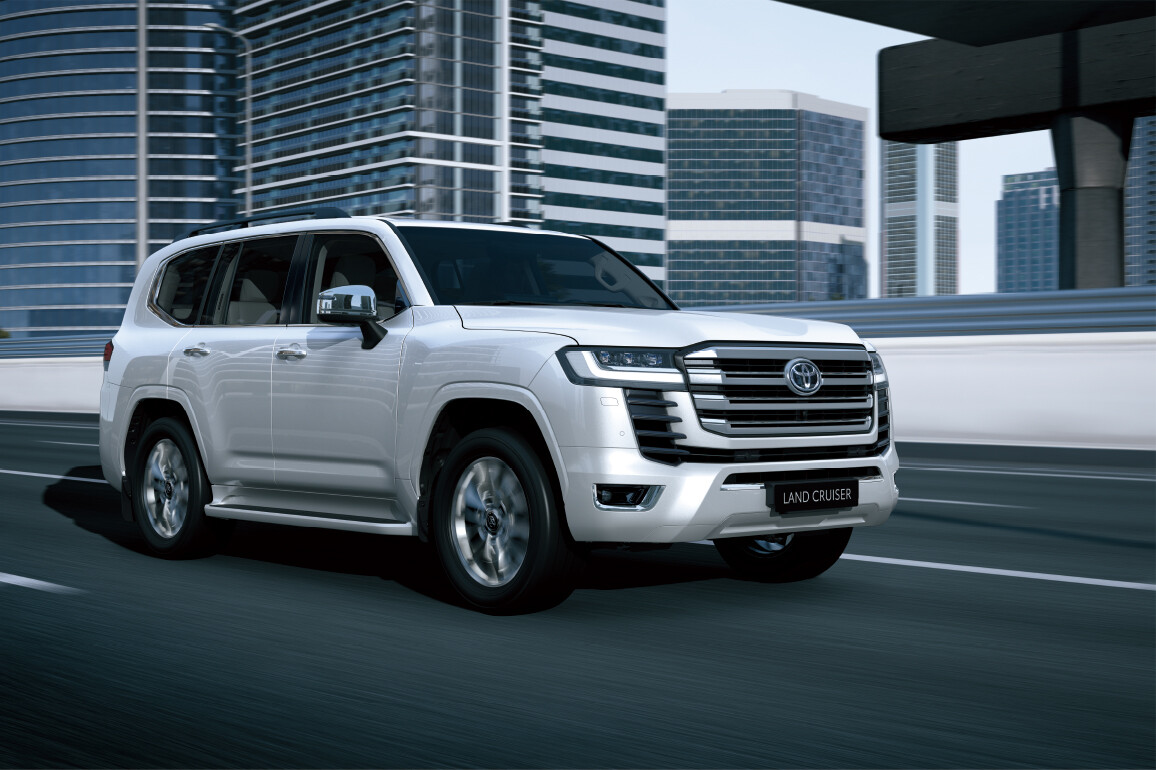
While it’s difficult to gauge scale from these images, the 300 appears similar in size to the 200 which it will replace. Toyota says the actual size including the length, total width, and wheelbase, as well as both the departure and approach angles have been kept the same as the previous model.
The look is much squarer, with a bold, blocky front end and sharper lines down the sides and to the rear. Front and rear light assemblies are slimmer, suggesting LED lighting will be used, while the rear-most side window is partially obscured by the up-swept bodyline.
The images inside the 300 show a three-row seating for seven passengers, and they show that the third-row seat folds flat in to the rear floor when not in use instead of up to the sides, where they took up valuable cargo space.
Also inside, the large centre dash screen features a new Multi-Terrain Monitor that displays obstacles as viewed from the driver’s viewpoint. A forward-facing camera can be seen in the large grille on the 300. A new Multi Terrain Select system has been configured to automatically judge the road surface and selects the best driving mode.
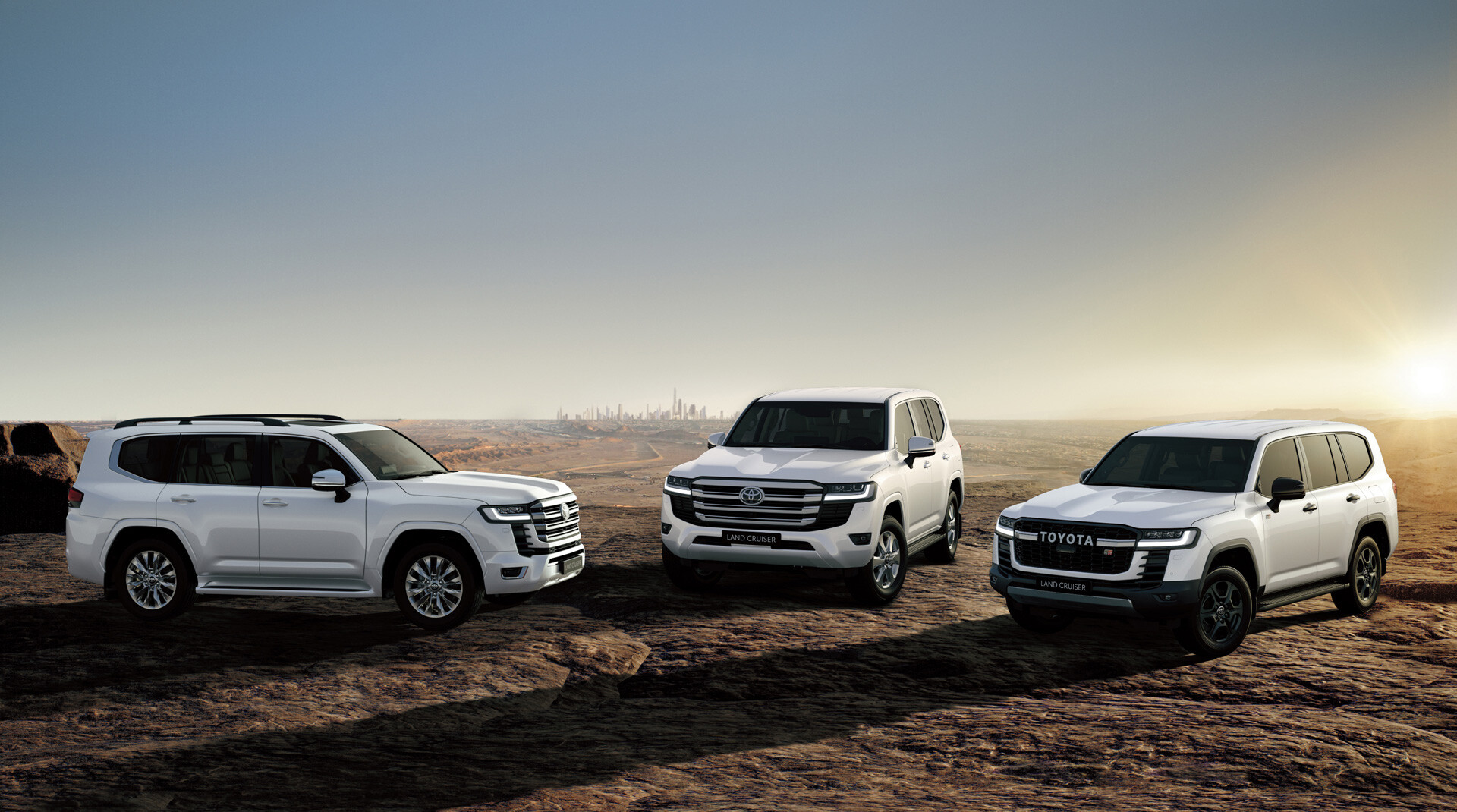
The global reveal information shows SX, ZX, VX-R and GR Sport models, although Australian model specifications, naming and pricing won’t be revealed until closer to the release date which will be in Q4 this year.
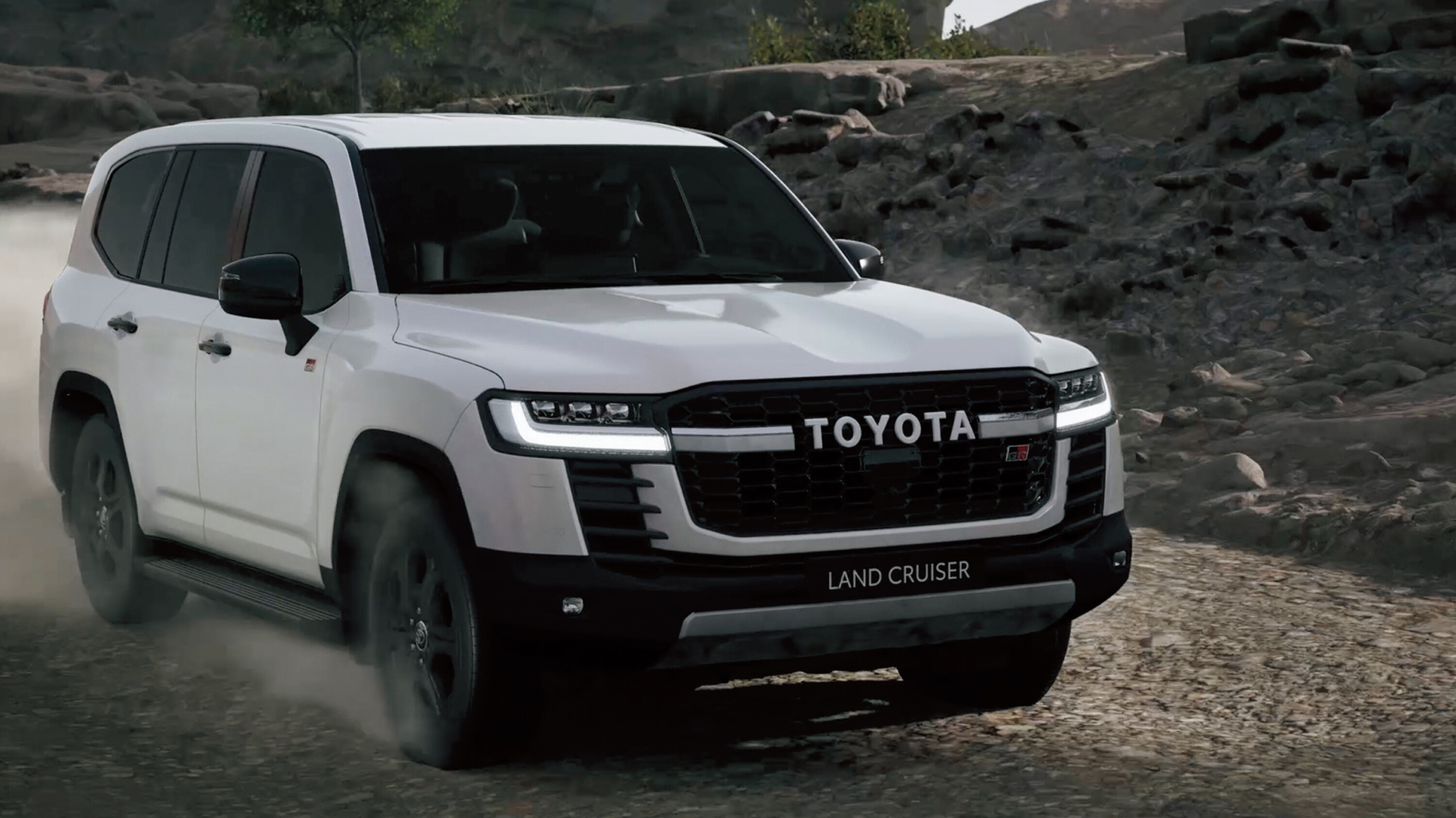
Of particular interest is the GR Sport model, which, with its blacked-out bumpers and wheel arches, make it look like a smaller car, but it also looks to ride higher with more clearance at the front bumper. This should be an appealing model to off-road enthusiasts.
The bullbar manufacturers will be happy to see those joint-lines in the lower front bumper, which suggest it can be removed up to around the level of the bottom of the grille. The front parking sensors also appear to be in the next upper part of the plastics and not in the lower section of the bumper. These factors will allow easier design of bullbars without too much cutting of the factory plastics.
Toyota is also expected to offer its own range of bullbars and accessories for the LC300.
While the official information was limited in this initial reveal, we expect more to come to hand as the on-sale date approaches including those all-important model specifications and prices.
As the saying goes, “what goes up, must come down” and this is obviously true of four-wheel driving; if you drive up a hill, eventually you’re going to have to come back down. And depending on the conditions, driving downhill can be a lot scarier than driving uphill.As the vehicle speed picks up on descent, your instinct will be to apply the brakes to slow down, but in particularly steep and slippery conditions this can result in the front wheels locking, which will lead to a loss of steering control … and you definitely don’t want this to happen. Even if the vehicle is equipped with an anti-lock braking system (ABS), stomping on the brake pedal can be next to useless if there’s not much traction available.
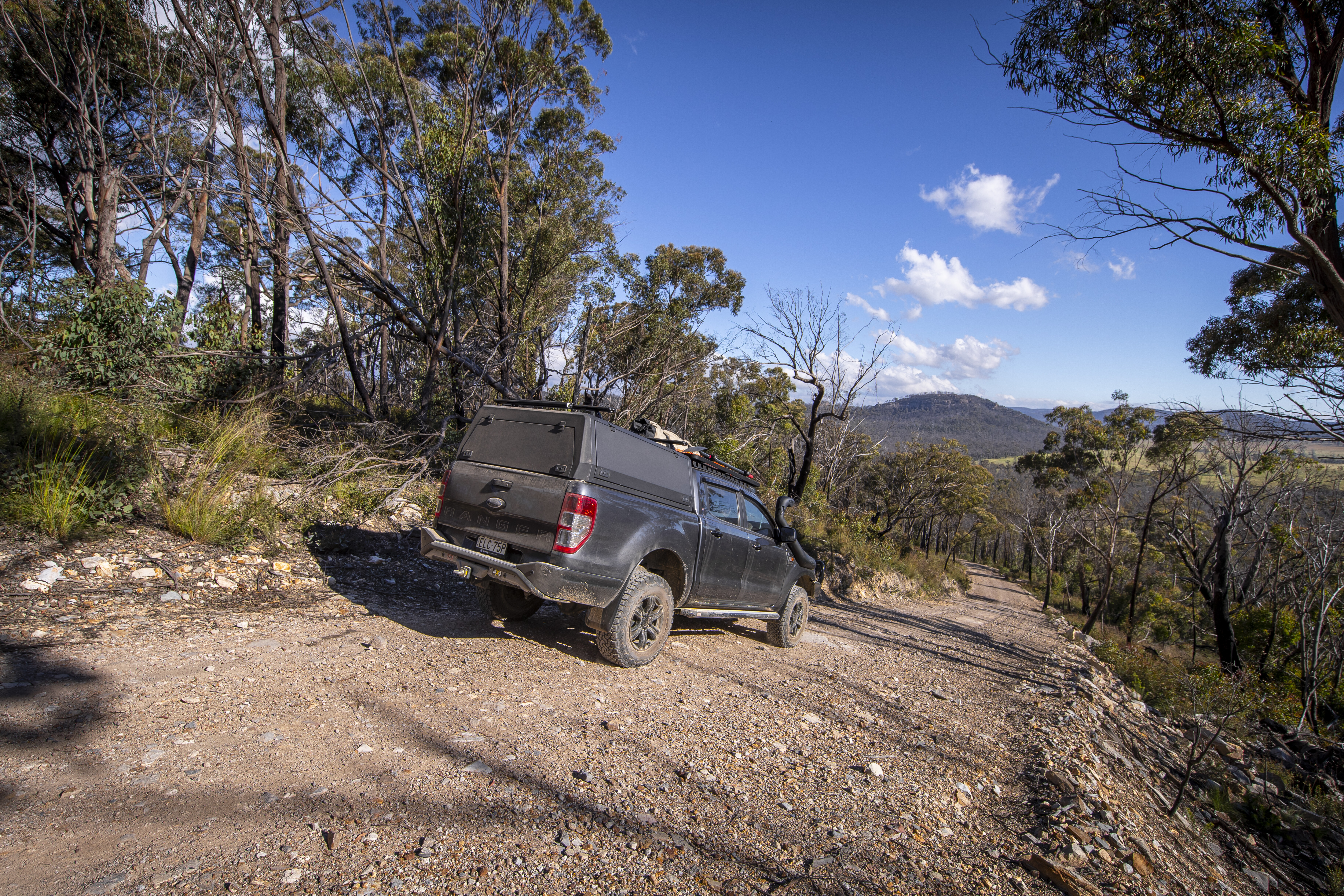
There are a few critical things to be aware of before attempting a steep off-road descent. Firstly, take a good look at the terrain ahead, so you are aware of what to expect when driving down the hill and what you need to avoid.You also need to understand how your vehicle works, what features it is equipped with that will aid your descent, and how to best set it up for the terrain ahead.
The terrain
In any off-road driving situation, it is important to have a handle on the terrain you’re about to drive. Sometimes you can judge this from the driver’s seat, by looking out the windows and by feeling how the vehicle responds to steering, accelerator and brake inputs; but sometimes the best way to see what’s coming up is to get out of the vehicle and walk the track first.In the case of descents, you will need to ascertain how steep the hill is and what condition the track is in, looking out for off-camber sections, undulations and washouts, as well as obstacles such as rocks, holes, muddy sections, vegetation and tree roots.
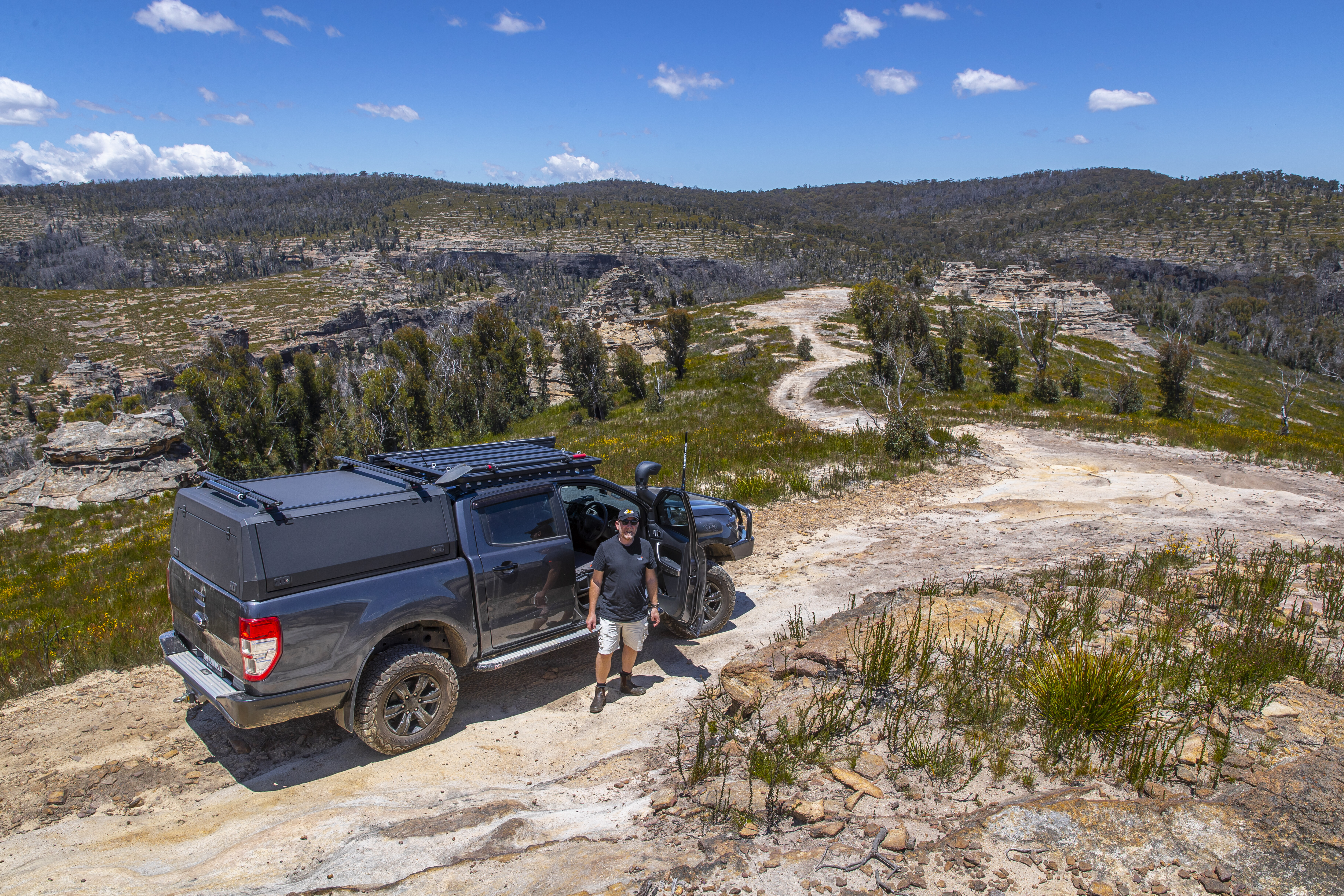
You should also look for potential hazards off to the sides of the track, such as rocks or trees that may cause a problem if you stray from the track, or dangerous drop-offs that need to be avoided. While you’re walking the track, feel around with your feet to gauge how much traction is available.You should also keep an eye out for run-off areas and suitable anchor points in case you need to use recovery gear to belay the vehicle safely down any treacherous sections.If you have a capable person travelling with you who can act as a spotter to direct you from outside the vehicle, find a good place for them to stand so they are visible to you but will not be in danger if you lose vehicle control. Make sure the driver and the spotter understand the hand signals that will be used, and if radios are available they should communicate with each other via in-vehicle and handheld UHFs.
The vehicle
The more intimate the knowledge you have of your vehicle, the easier you will find it to drive in off-road situations. In the case of steep descents there are certain vehicle attributes to be aware of and to know how to use, such as how to lock hubs (where fitted) and engage four-wheel drive in part-time 4×4 vehicles, or how to ensure the centre diff is locked in full-time 4×4 vehicles.Most 4x4s with genuine off-road capability will also have low-range gearing, and you will need to know how to engage this before starting a descent. In old-school 4x4s, low range is mechanically selected via a lever, whereas many modern vehicles will have an electronic dial or a button to select low range.
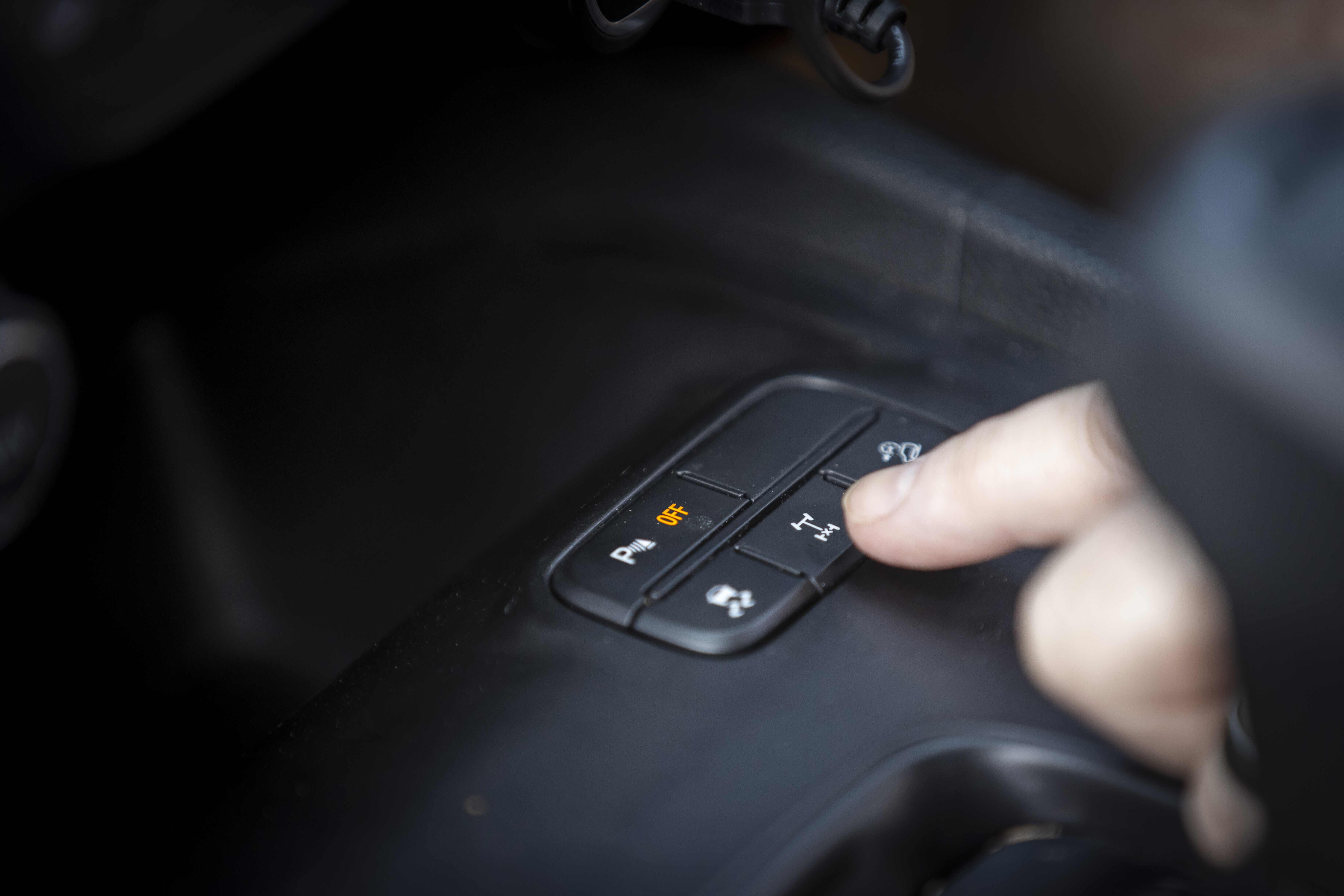
No matter what type your vehicle is equipped with, make sure you know how to use it and ensure that low range is selected when you need it to be; there’s usually a light on the dash to indicate this.There are a few 4×4 vehicles with genuine off-road capability that don’t have low-range gearing, such as some Volkswagen Amarok models. These will usually have a super-low first gear ratio, sometimes called a crawler gear, and this should be selected for steep descents.Other vehicle features that can aid safe descents include electronic traction aids such as ABS, traction control, hill descent control and selectable drive modes, while mechanically locking diffs are also beneficial.
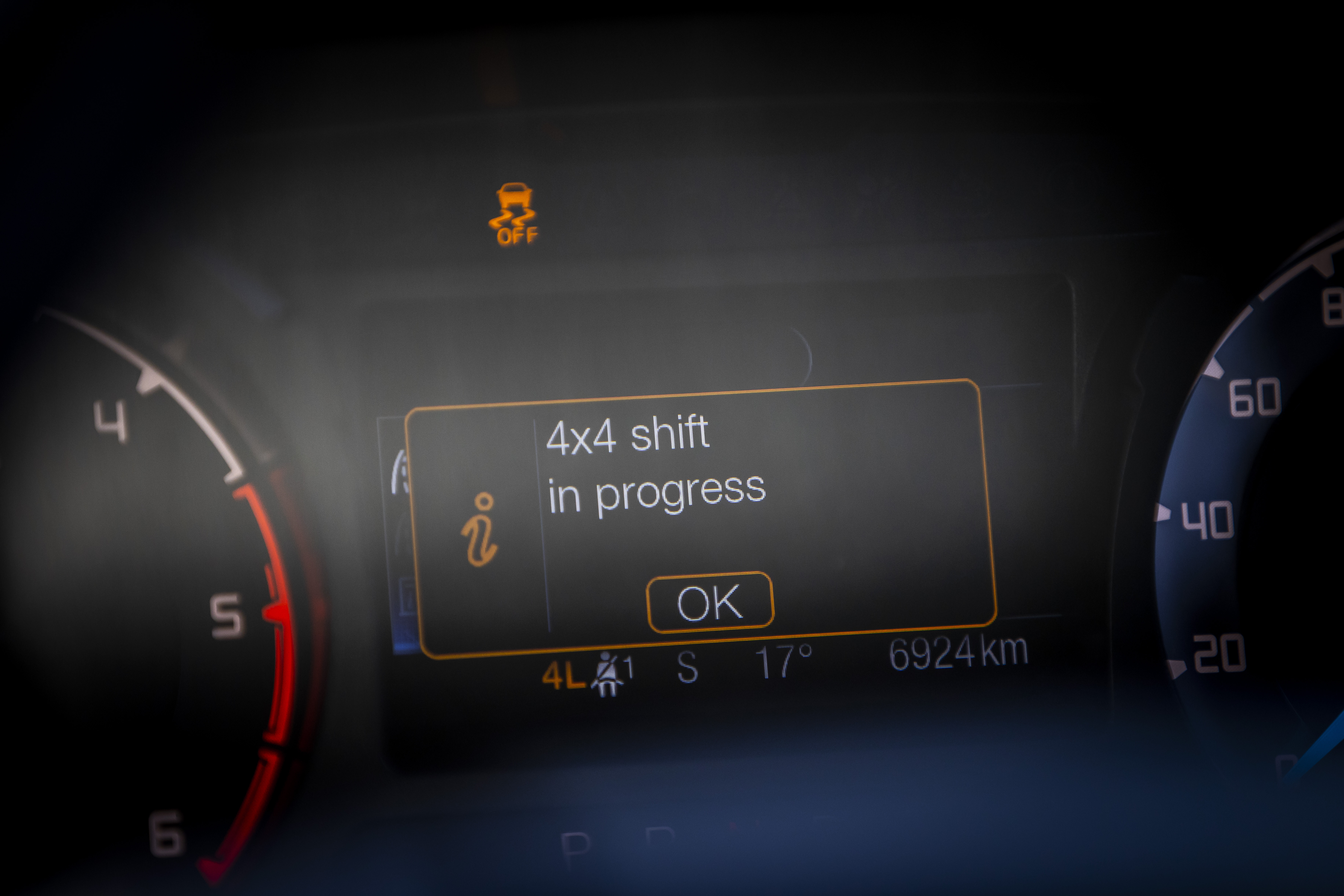
On some vehicles, even the handbrake (or park brake) can be a useful tool for steep descents, but this is of greatest benefit on vehicles where the handbrake is a transmission-mounted drum set-up, so when applied it operates on all four wheels.An effective handbrake that only operates on the rear wheels can also be helpful, as it can retard progress without affecting steering, but such a set-up doesn’t really offer a lot of braking effect on steep descents, as most of the vehicle weight is over the front axle.You should also be aware of the vehicle’s ground clearance and have an idea of how much suspension travel it has when tackling steep descents, as you will have a better understanding of what type of terrain you’ll be able to drive over before grounding the underside or running out of wheel travel.Of course, this only comes with experience; the more you drive the vehicle in different off-road situations, the easier it will become, and soon even the gnarliest descents will become second nature. But let’s not get ahead of ourselves…
Tyre pressures
In every 4X4 Australia ‘How To’ instalment, we have discussed the importance of setting the correct tyre pressures to suit different terrain types, and driving down steep off-road descents is no different. Lowering tyre pressures for off-road terrain lengthens the tyre footprint and provides more traction, and good traction is critically important on steep descents.
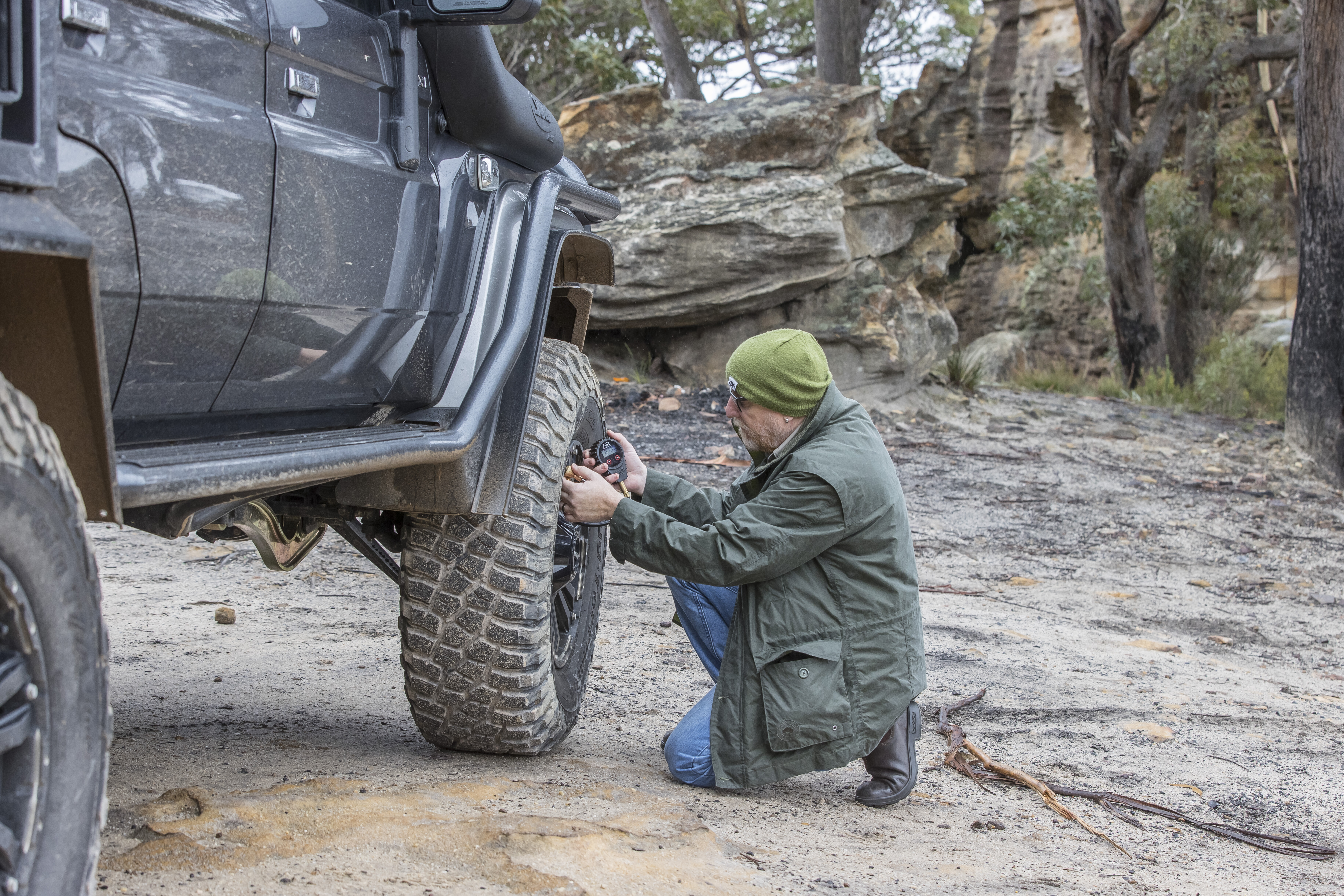
Dropping air pressure also allows the tyres to more easily flex as they drive over uneven terrain such as sharp rocks and tree roots, which minimises the chance of tyre damage. If your vehicle is equipped with tough Light Truck (LT) tyres, you will be able to lower tyre pressures more than if it’s fitted with Passenger (P) construction tyres.As a general rule, if your usual road pressures are around 35psi, and you’re running LT tyres on your vehicle, you can drop pressures to around 22psi for rough off-road tracks. For more detail on tyre pressures, see the 4X4 Australia’s ‘How to select correct tyre pressures’ guide.
Ready to roll … almost
Once you’ve examined the descent and you’re happy to proceed, you need to set up your vehicle for the task at hand.Make sure your tyre pressures are set and your hubs are locked (if fitted), and then engage low range and select first gear, no matter whether your vehicle has a manual gearbox or an automatic transmission. If you find that first gear is too slow for the descent, you can always upshift to second, but if you start off in too-high a gear and the speed starts getting away from you, you won’t always be able to shift back down to first.If the descent is quite undulating and there’s a chance you will exceed the vehicle’s suspension travel, engage the rear locker if fitted. This will ensure both rear wheels will rotate at the same speed even if one of them is lifted off the ground, which will give you more vehicle control on the descent. It will be much more difficult to steer the vehicle if you engage the front diff lock, so try to avoid doing so unless you become stuck.
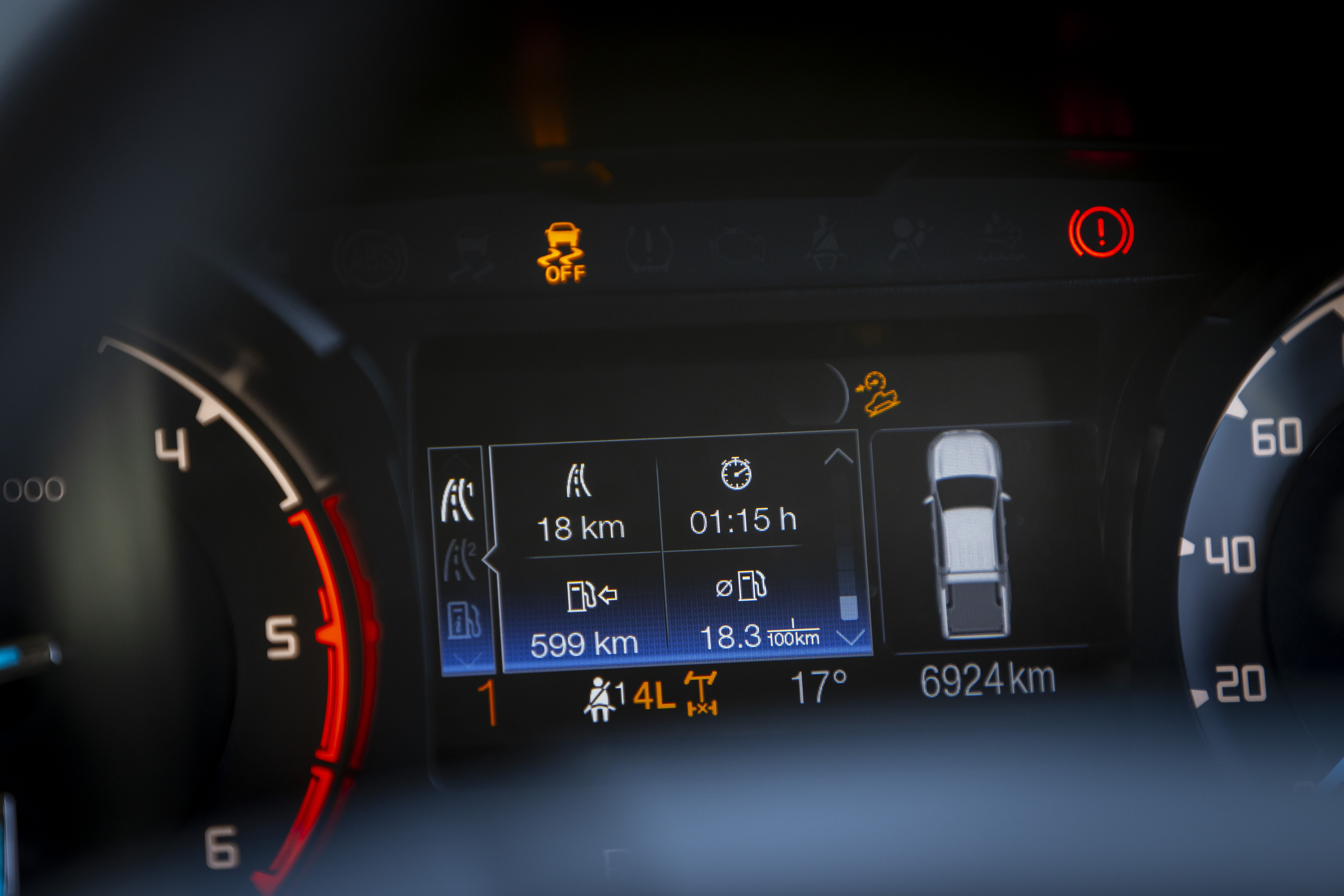
If your vehicle is equipped with selectable drive modes such as ‘sand’, ‘rocks’ or ‘mud and ruts’, select the mode that best describes the terrain. These modes tailor the vehicle’s throttle response, traction control levels and ABS sensitivity to best suit the terrain. If you have height-adjustable suspension, select the highest mode for rocky or undulating descents where you think you’ll need all the ground clearance you can muster.What about Hill Descent Control? The better HDC systems on the market allow you to adjust vehicle speed using the up and down cruise control buttons, usually in 1km/h increments down to as low as 1km/h, but even these systems are not suited to all steep descents.HDC systems rely on the vehicle’s brakes to keep speed in check, and although they can do this without the wheels locking up, on very long descents, such as those you might find in alpine regions, using the brakes will generate a lot of heat. This heat not only affects the brakes themselves but also other mechanical components such as wheel hubs and axle seals.Bear in mind that you’ll occasionally find water crossings at the bottom of steep descents; if you do, give your vehicle’s mechanical components time to cool down before plunging into cold water. If you don’t, water can get sucked in through the seals, contaminating the oil in the engine, gearbox, transfer case and diffs.
Beginning the descent
Once you’ve set the vehicle up to tackle the descent, gradually release the brakes, drive slowly over the edge, and let gravity do the work for you. Unless the hill is extremely steep and the vehicle’s low-range gearing isn’t keeping speed in check, try to avoid applying the brakes.On a long descent, you might feel the speed is too slow in low-range first, but only shift up to second or third if you know you’ll be able to safely slow down again if you need to, such as for a tricky section of track up ahead. As you descend the hill, you will need to adjust the speed to suit the changing track conditions.If the track is muddy, make sure any vehicles ahead have cleared the descent before you set off. There will often be visible wheel tracks in muddy terrain; if you can see that these tracks lead to where you want to go, and you think you have enough available ground clearance, drive in the tracks rather than trying to fight them. If the tracks are too deep or they spear off into the scrub, you’ll want to straddle them as much as possible, and then try to drive out of them if you slide in.
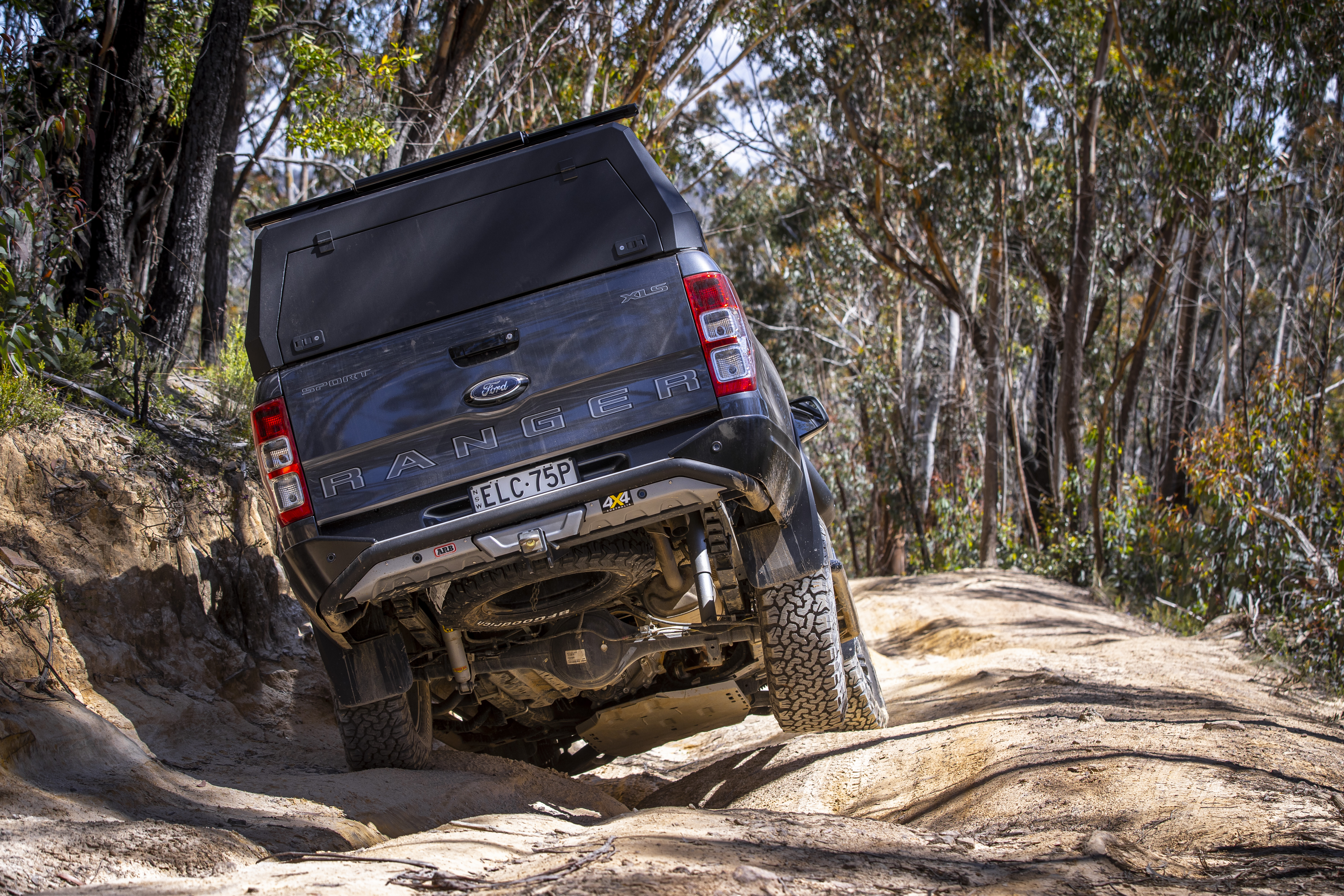
On a rocky descent with reasonable traction, you’ll probably need to use the brakes to ease over big drop-offs without damaging the vehicle, but don’t stab at the pedal, gently apply brake pressure to avoid wheel lock-up.If driving a manual 4×4 vehicle and you’ve slowed down so much you’re going stall the engine, don’t worry; it’s better to stall than to push on the clutch pedal, because once that clutch is disengaged the vehicle can begin to roll down the hill and you will have little control over it. If you do stall, again don’t push on the clutch pedal; simply turn the key in low first with the clutch pedal out and the vehicle should start driving down the hill again.On steep descents, you won’t always be able to see what’s directly ahead such as when driving over obstacles or cresting drainage mounds, so keep your speed in check in case there’s a steep drop on the other side. If you have a spotter and can stop before a tricky section of track, ask them to get out and direct you.If you are able to and want to stop on a steep descent for any reason, get on the UHF and let others in your party know what you’re up to so following vehicles don’t proceed until the track is clear.Descending vehicles generally have right of way when they encounter oncoming vehicles climbing a track, but if there’s room and you are able to safely pull up, let oncoming vehicles go past.Finally, try to keep the vehicle pointed down the hill at all times and try to avoid driving across steep tracks or you could roll your vehicle.
Sand dunes
Driving down steep sand dunes is very different to any other kind of descent. Sand dunes have a shallow windward side and a steep leeward side, and the latter, sometimes called the slip face, can be up to 34 degrees steep.The method of safely descending a steep slip face is to slowly drive over the edge in low-range first or second gear and then let gravity do the work. You won’t need to apply braking pressure as the soft sand on the slip face will arrest vehicle speed, so stay off the brake pedal and point the vehicle directly down the face of the dune.
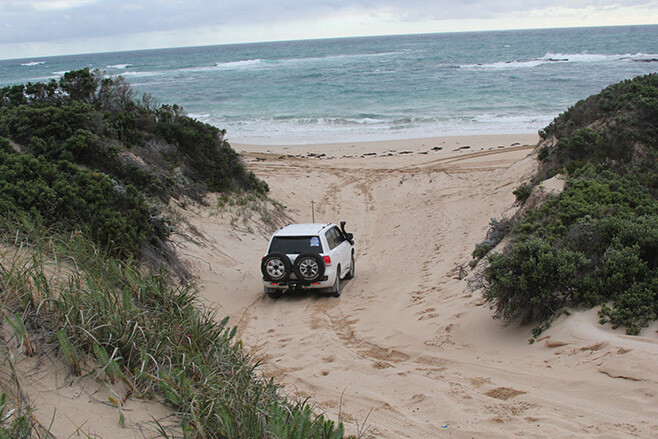
As you approach the base of the dune, get ready to accelerate, as this is where the sand is often at its softest, and the last thing you want to do after you’ve pulled off an impressive dune descent is get stuck at the bottom.Look out for abrupt drop-offs or step-ups though, as these could see the front of your rig digging into the sand if you hit them too fast.
If you get into strife
The most difficult aspect of steep descents is keeping your speed in check, especially in slippery mud. If you start off nice and slow, you will have a better chance of maintaining a steady speed on the descent, but if you start too fast it can be nigh impossible to slow down once your speed has picked up.Whatever you do, try to avoid applying brake pressure, because if you lock up the front wheels, not only will you be unable to slow down, you also won’t be able to steer. Although it might seem counter-intuitive, sometimes the only way to regain steering on slippery downhill sections is to get on the accelerator and drive your way out. Once you have regained steering control, ease off the accelerator as soon as possible and try not to get on the brakes until there’s more traction available.If you find yourself stopped halfway down a slippery, muddy hill, and you’re terrified by the prospect of completing the next part of the descent, try dropping your tyre pressures some more. I once dropped pressures to about 5psi to get out of a super slippery situation and was amazed at the traction it afforded me; but make sure you re-inflate the tyres as soon as it’s safe to do so to avoid damaging them.
Job complete
Once you’ve made a safe descent, don’t forget to return vehicle settings to suit the terrain ahead, and reinflate your tyres if necessary. If you heard any bangs and crashes on the way down, take a look around and under your rig to inspect for damage. Oh, and if you left your spotter halfway up the hill behind you, don’t leave without them.
Recovery gear
If you end up in a situation where you have no steering control or you have inadvertently driven off the track, you’ll need to turn to your recovery gear.On muddy hills a shovel can be used to dig artificial wheel tracks that can help you steer the vehicle, and on rocky tracks recovery boards can be used to bolster sections of track that might need building up.
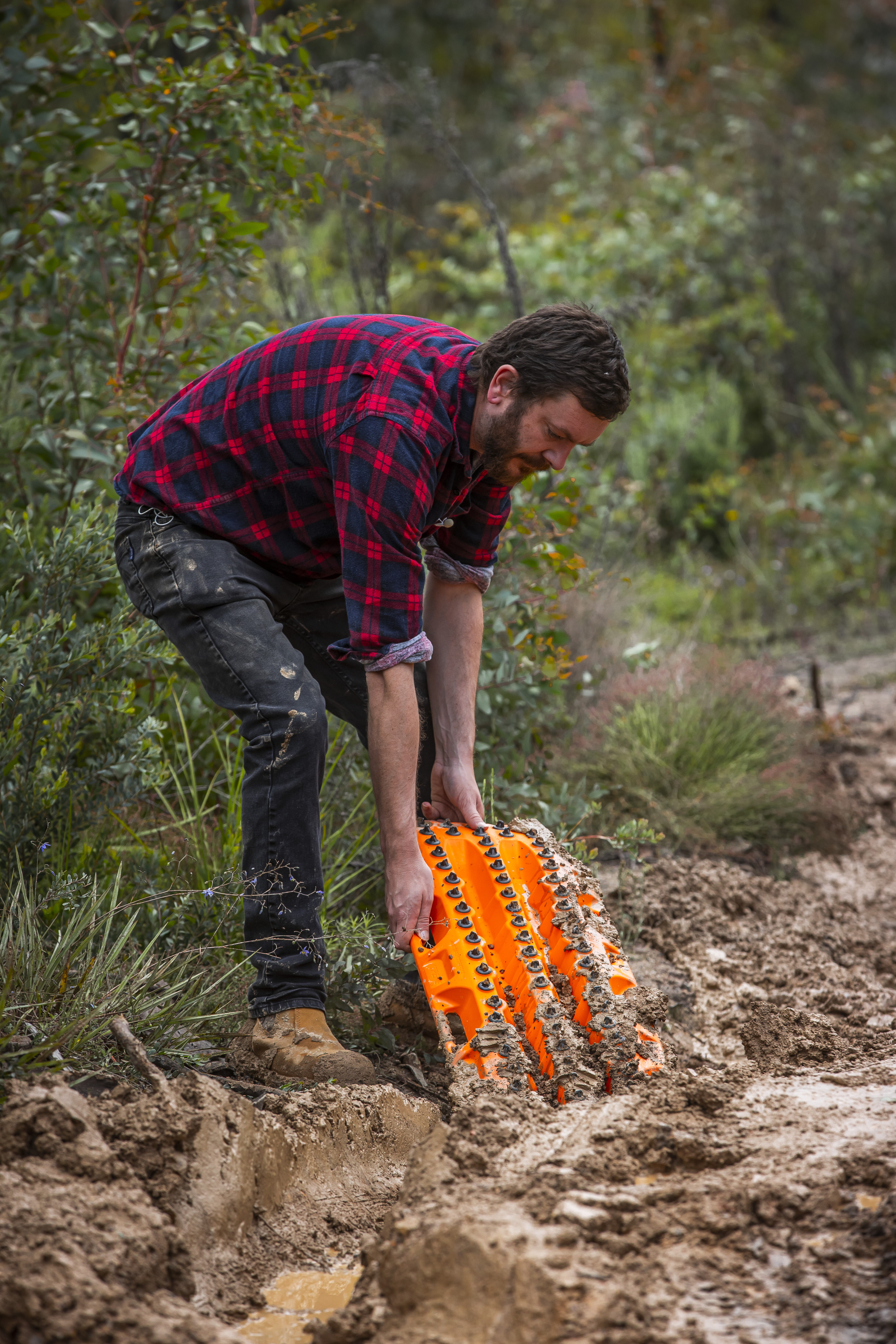
If you’re in a convoy, sometimes the safest way to descend a steep bit of track hill is to belay off another vehicle using a winch. This can be slow and laborious, but it’s better to take your time than damage the vehicle. Winch-extension straps can be invaluable in such scenarios.Always carry a complete recovery kit when driving off-road and make sure you know how to use it. A winch should be complemented by a winch-extension strap, a tree-trunk protector, snatch blocks and shackles.Make sure you have a long-handle shovel and recovery boards, and if travelling in convoy a snatch strap or kinetic recovery rope … and always wear protective gloves when using recovery gear.
Do
- Study the terrain ahead and walk the track if necessary
- Know your vehicle systems and how to best use them
- Adjust tyre pressures to suit the terrain
- Use low-range gearing to keep your speed in check
- Adjust vehicle speed to match the terrain
Don’t
- Apply brakes and lock up the steering wheels
- Descend the hill until vehicles have cleared the track
- Stop on the track without warning others in your convoy
- Disengage the clutch on a steep descent
- Leave your spotter behind in the bush
Snapshot
- Toyota LandCruiser 300 Series outsold by Patrol throughout February
- LC300 still holds the lead year-to-date
- Patrol registrations over double Feb 2021
The battle for the title of Australia’s most popular luxury 4×4 is heating up, with the Nissan Patrol taking the top spot over the Toyota LandCruiser during February.
New car sales data shows a total of 670 Patrols were sold last month compared to the 612 examples of the new LandCruiser 300 Series, as Toyota deals with stock shortages thanks to production cuts.
The pair are classed as the only ‘upper large’ segment SUVs under $100,000 – however all LC300s above the GX and GXL break through the $100k barrier – and both comfortably outsell a majority of the large SUV market, beaten only by the sub-$70,000 Toyota Prado (2778), Isuzu MU-X (855), Toyota Kluger (664) and Ford Everest (652).
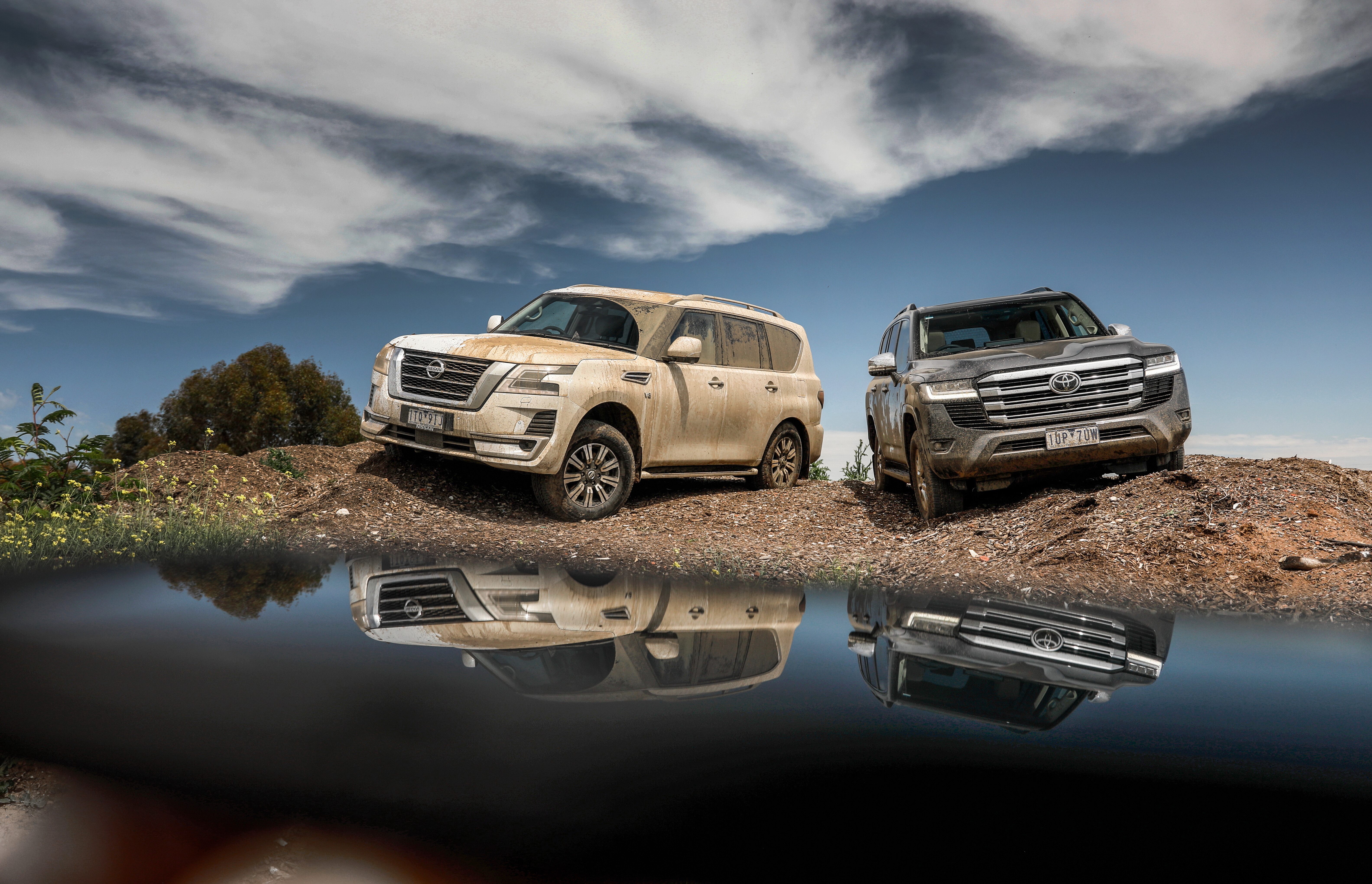
Toyota only launched its latest iteration of the LandCruiser last year, but it has already taken the sales lead for 2022 courtesy of a strong opening month, with 1342 units sold so far compared to Nissan’s 785 Patrols shifted after it only managed to sell 115 examples throughout January.
The new-generation LandCruiser is the first to adopt Toyota’s 3.3-litre, twin-turbo diesel V6 engine, contrasting against the Patrol – which still utilises the same 5.6-litre, naturally-aspirated petrol V8 available at launch for the Y62 in 2010.
A potential contributing factor to the Patrol’s February success is Nissan’s revised 2022 update, which launched at the start of the month, bringing a minor front-end redesign along with a $1000 price increase (now starting at $82,160 before on-road costs – which has aided sales to jump from 332 in the same month last year to 670, an increase of 102 per cent.
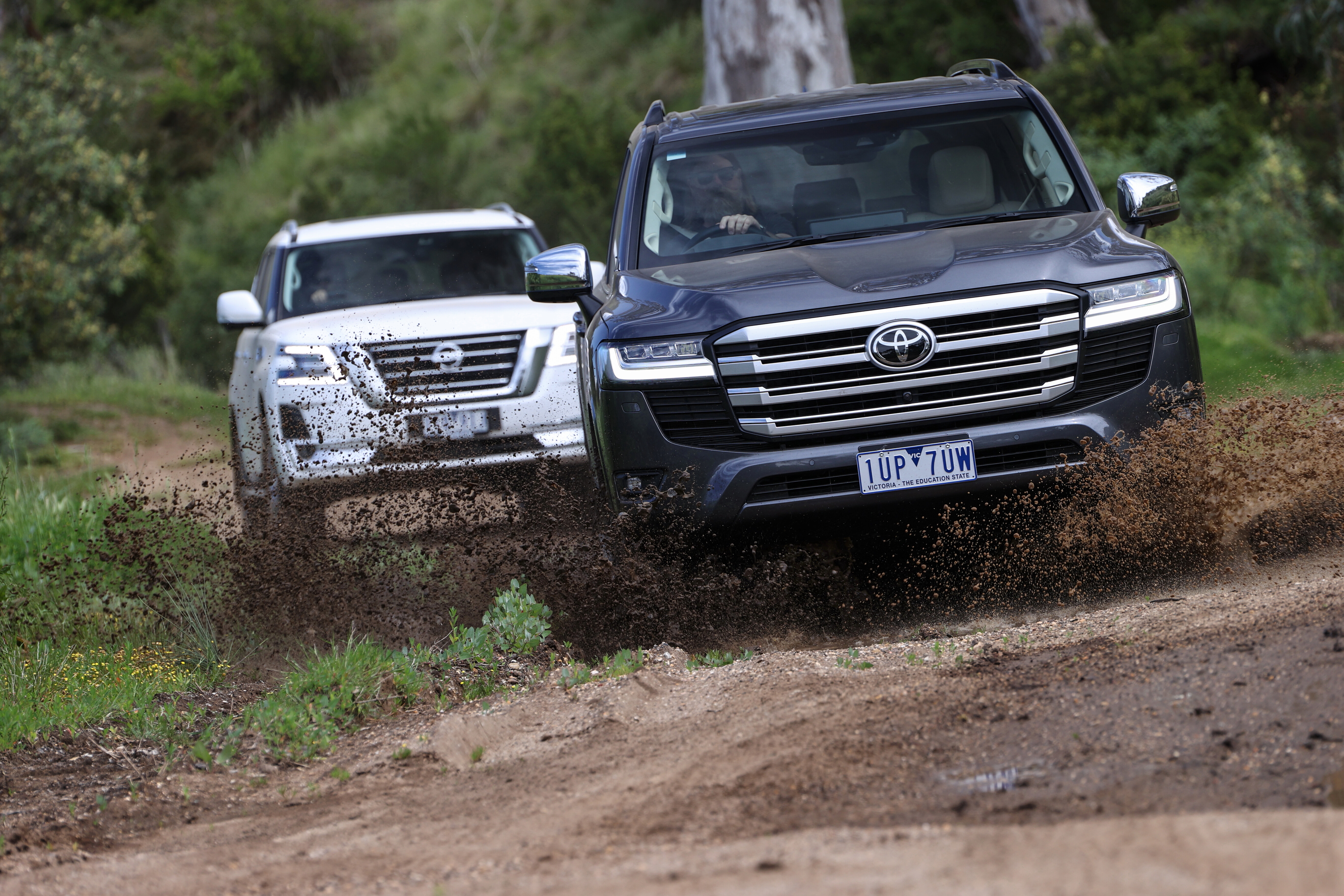
The Patrol has been comprehensively beaten in the sales charts by the LandCruiser since the global pandemic began, with Nissan managing to sell only 3333 units in 2021 (vs. 14,356 for LandCruiser) after a painful 2020, where it was outsold 2820 to 15,078 by the Toyota.
In its native Japan, Toyota has advised local customers of four-year long waiting times for LC300 deliveries, with its Australian division previously confirming a 12-month waiting list for the luxury SUV.
When you have a business called Seriously Suzi that does nothing but develop and sell products for Suzuki 4x4s, you’d think the all-new Jimny would be the best thing since low range.That would be the case if production shortages from Japan didn’t leave would-be owners with months of waiting to get a new Jimny, and the demand for them pushing prices up way beyond what they were originally listed for.
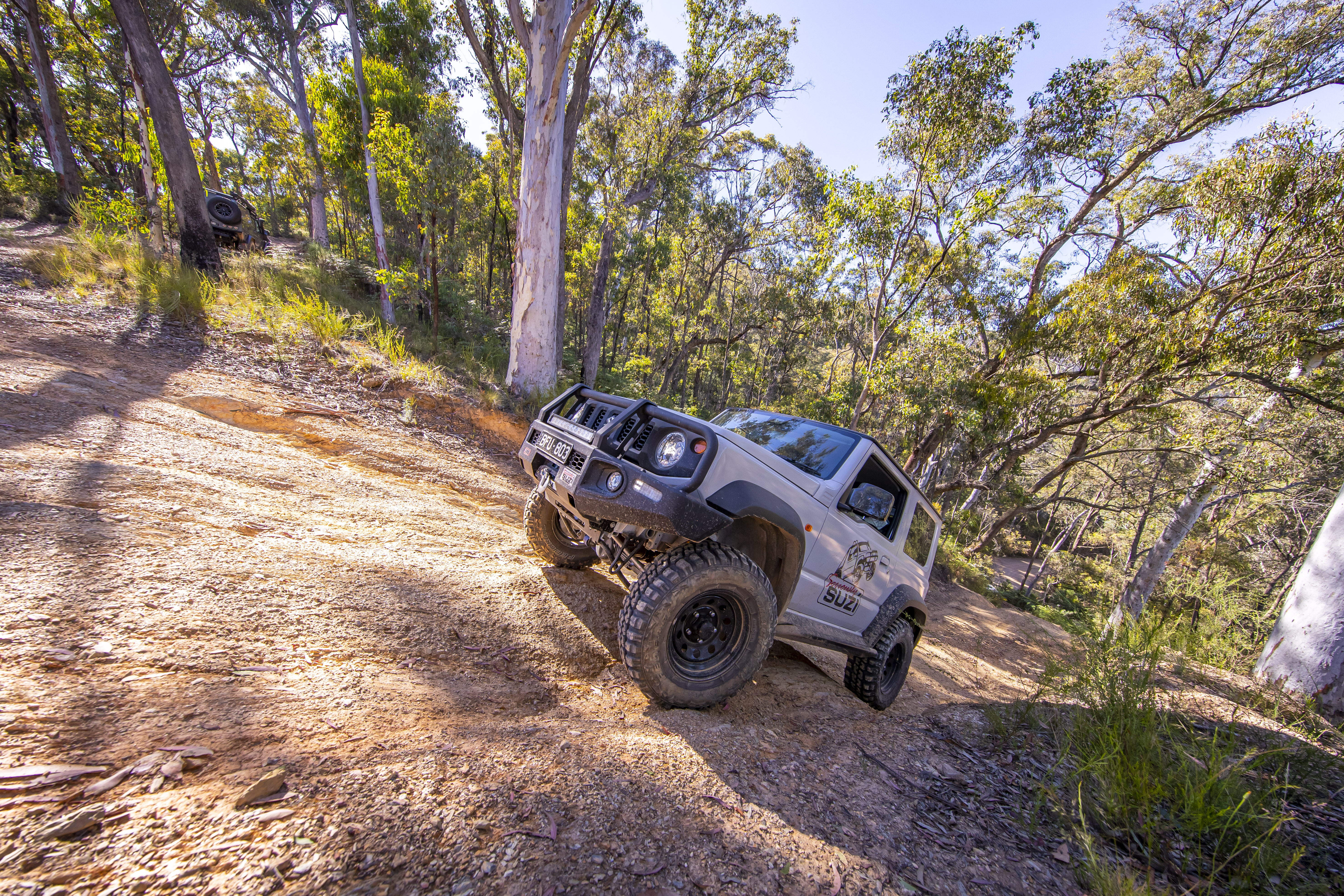
The JB74 Jimny is a great little thing and it has attracted a whole new group of enthusiasts to the Suzuki brand. Not all of these people are four-wheel drivers or people who want to modify and take their Jimny off-road, but that hasn’t stopped Seriously Suzi’s Alan Johnson from developing products to improve the diminutive off-roader.Alan’s collection of Suzuki 4x4s extends from the earliest LJ models through to the Stockman, Vitara, Sierra and the latest JB74 Jimny, and he loves modifying them to improve their ability. In fact, we challenge you to find anyone more passionate about Suzuki 4x4s than Alan.He’s even driven a solar-powered Suzuki across the Simpson Desert using nothing but the sun!
Improving the breed
When we bumped into Alan at Woods Point and he took my seat in the Sandy 60, he tossed me the keys to his latest creation and led us up into the hills.Alan’s JB74 has been an ongoing development for almost two years now, taking his vast experience with previous Suzukis and adapting it to the latest model to make a good thing better.
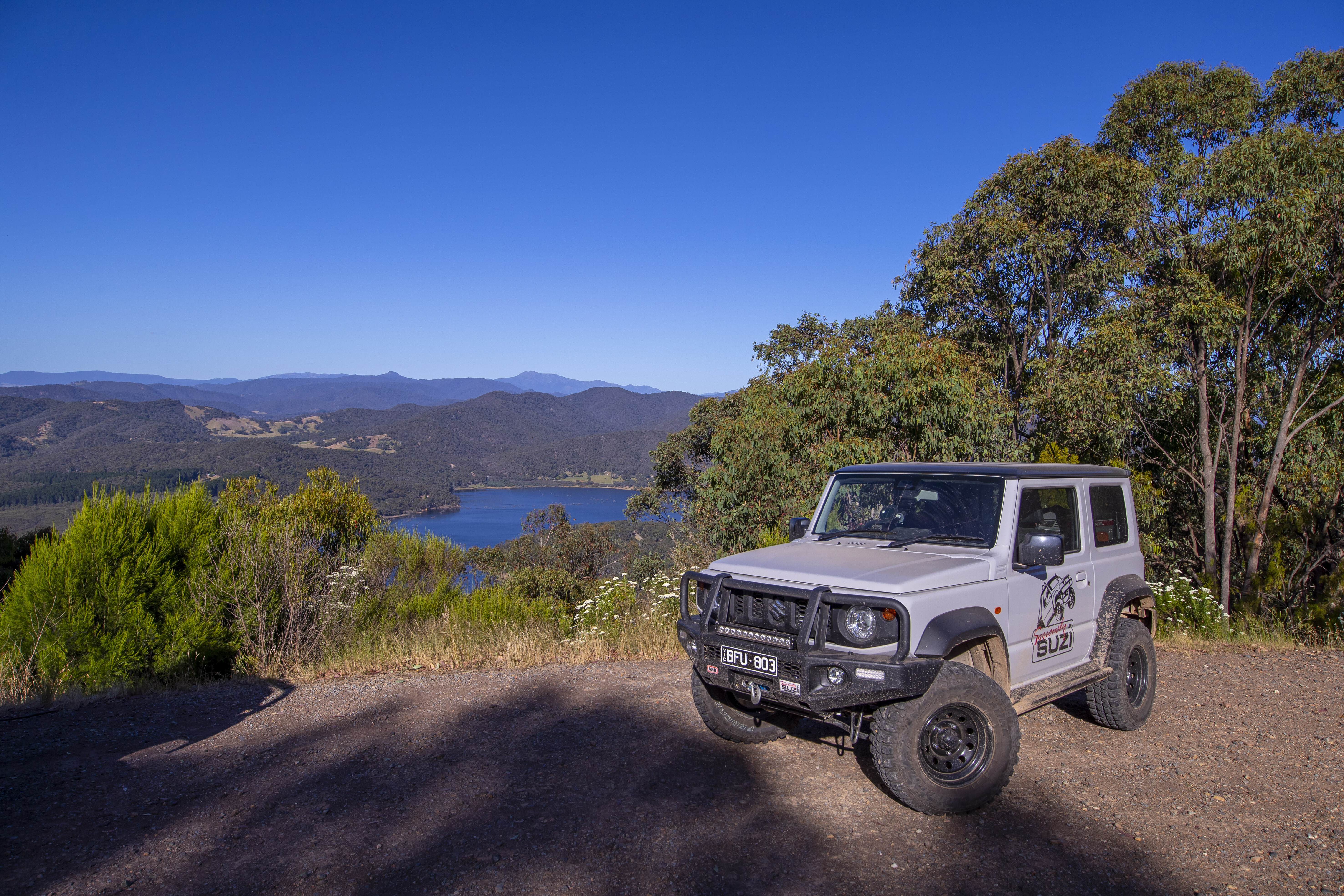
Having driven stock standard JB74s in the High Country previously, we found them to be very capable and a lot of fun, but also that the factory suspension is compromised and produces a very jiggly ride with not much axle travel, and the small wheels and tyres that come standard fall in to holes and hop over rocks to make tough going of the tracks. We’re happy to say the Seriously Suzi JB74 has well and truly addressed these problems with the standard car.“We went and bought off-the-shelf suspension kits from four of the known aftermarket suppliers and tried them all out,” Alan told 4X4 Australia. “They all had their good and bad points but none of them got it all right, so I’ve used those lessons to develop our own suspension for the Jimny.”Alan played with many spring and shock absorber combinations before settling on what he has now, which are around 50mm longer than the factory parts. This required custom-made front lower arms and a dropped front crossmember kit to give the needed clearance plus extended brake lines, to cope with the added height and travel.
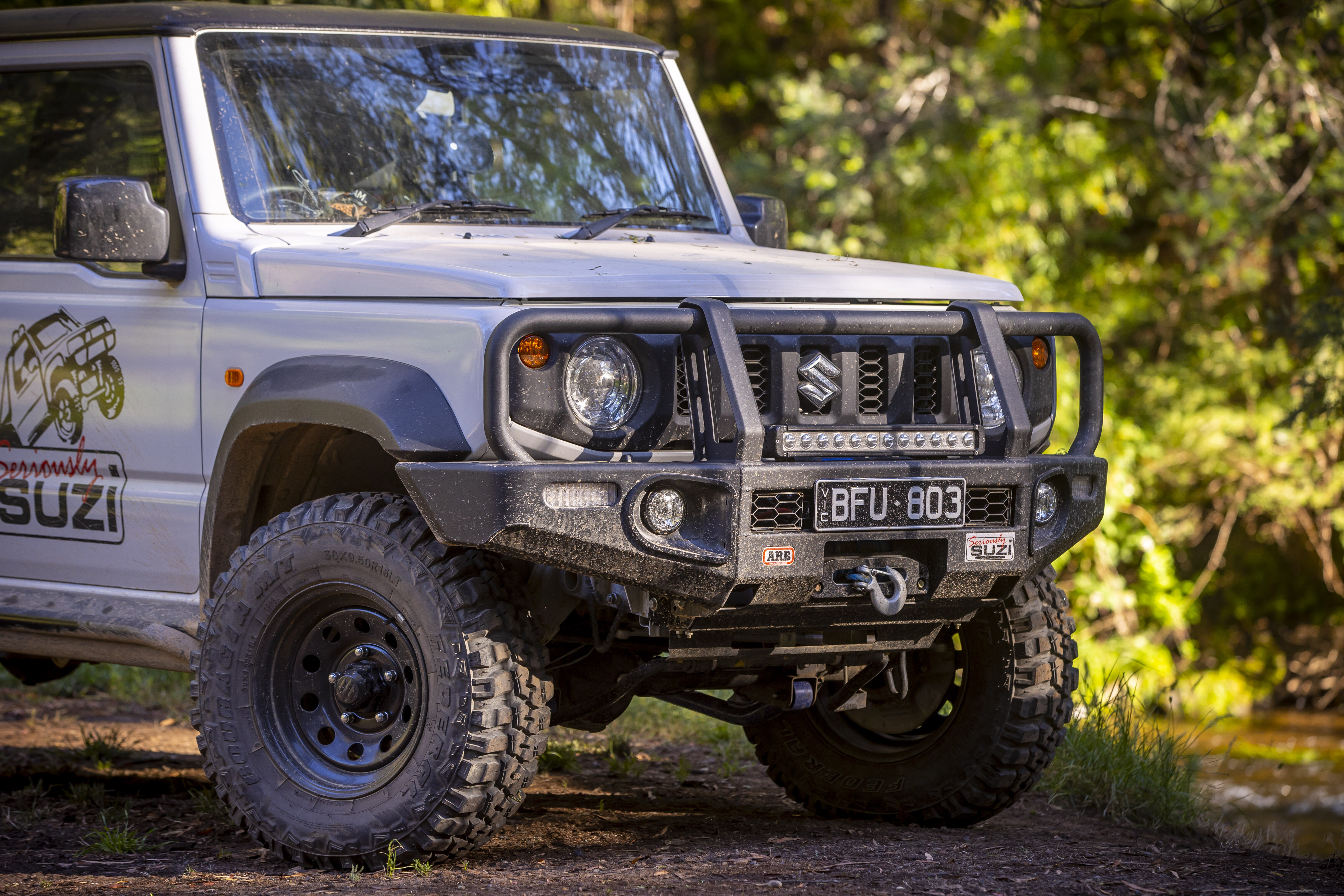
For wheels and tyres, Al again played with a few combinations and the Zook now wears 30×9.5 – 15 muddies mounted on -12mm offset steel wheels.“We tried bigger tyres but they killed the gearing for off-road use” Alan says.He also told us he’s happy with the way the suspension has turned out and that Seriously Suzi is now at the stage of working out pricing for the full kit. We say it’s a kit you’d seriously look at for your own Suzuki, even if you never go off-road. It’s a great improvement in ride quality and control in any conditions.
On tour
Alan’s Jimny modifications don’t end with the suspension. Also on the car are an ARB bullbar with a VRS winch in it, while the rear bumper is a prototype ‘recovery bar’ that is under development. It’s designed primarily to give users a place for rated recovery points, but also includes a towing hitch receiver.After our drive, the bar was taken off and sent for lab testing to quantify the ratings before it goes into production and becomes available. Not only does the bar provide recovery points, but it’s tucked up high so it doesn’t affect departure angle and adds some heavy-duty protection to the back of the Jimny.
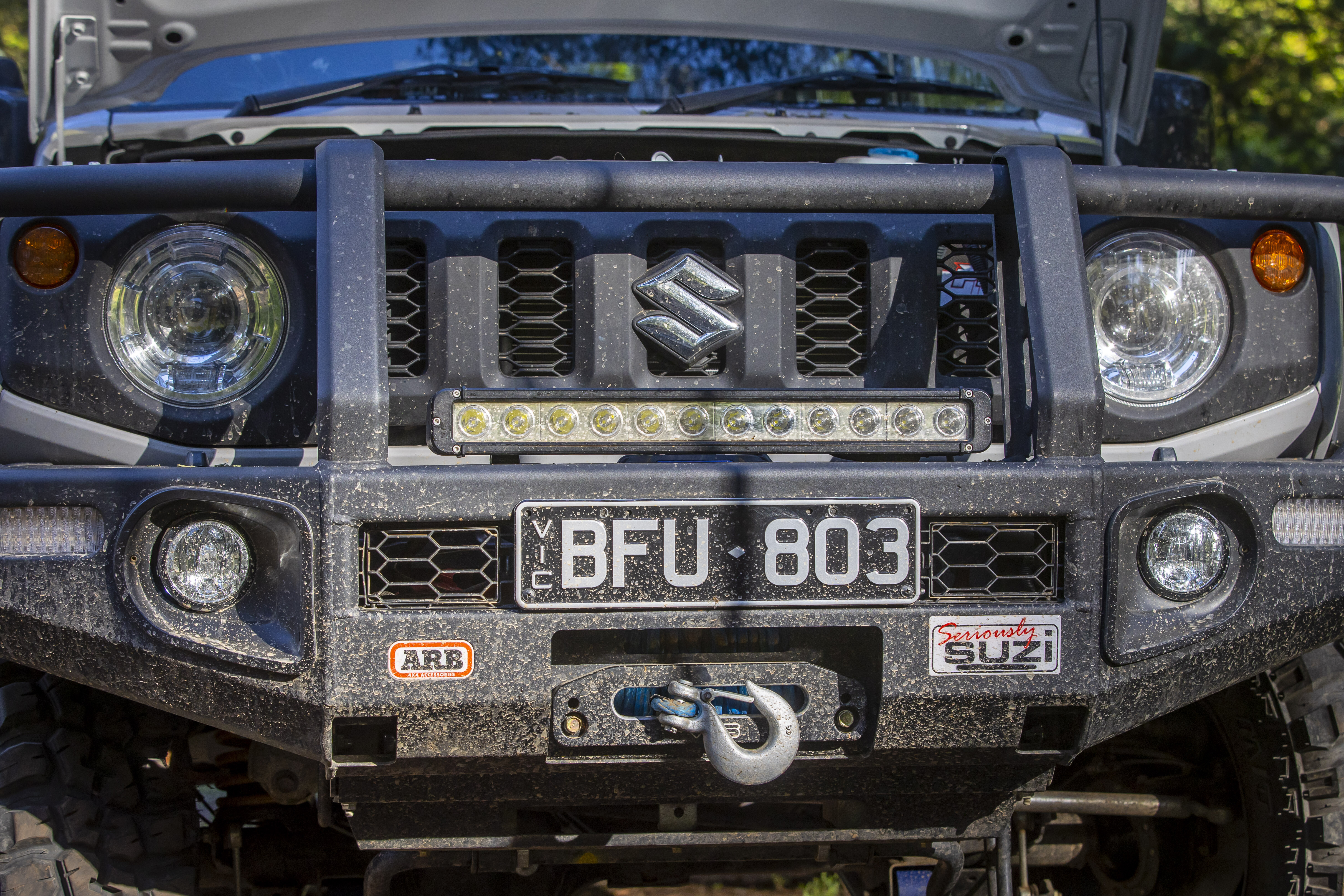
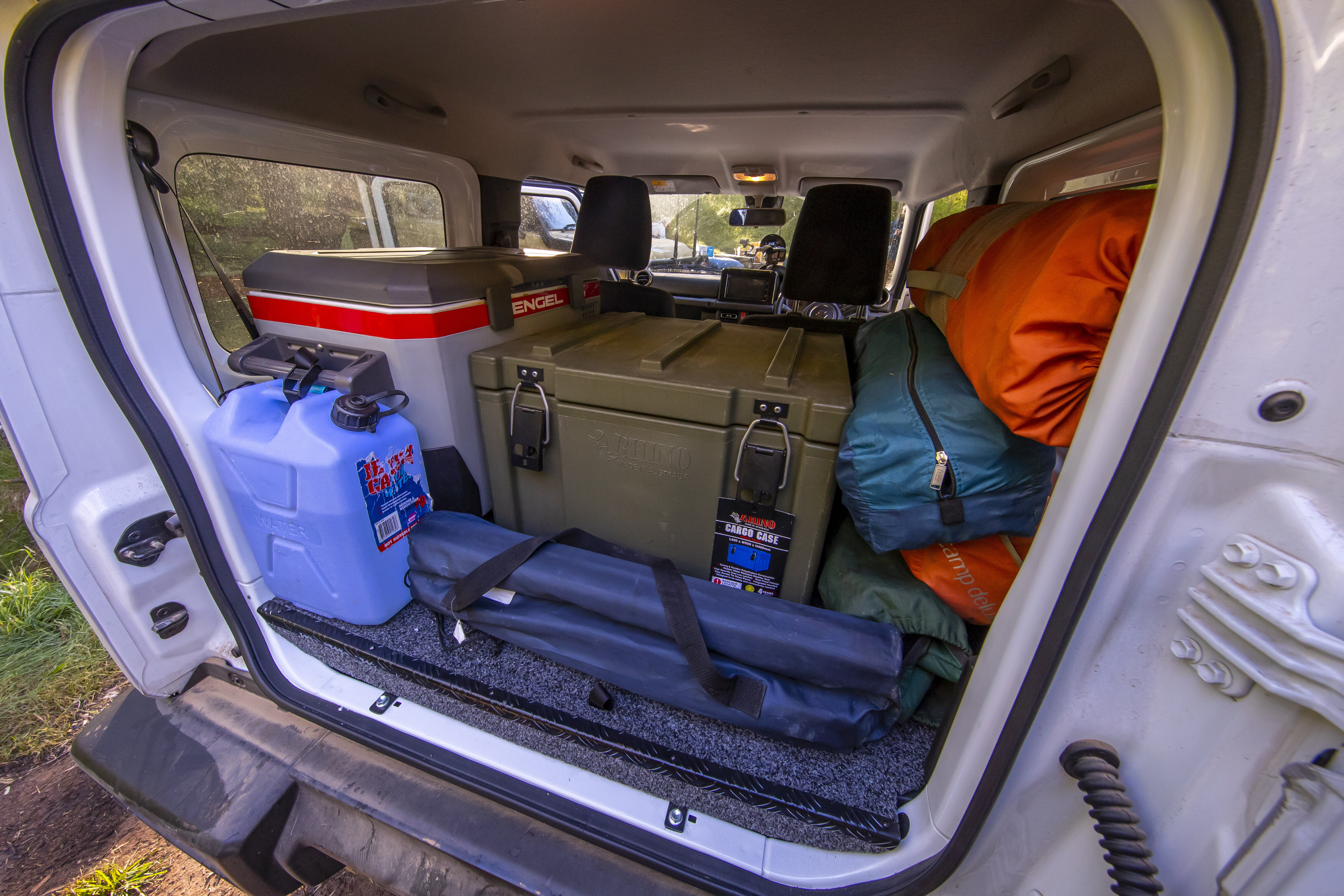
Running down the sills are a set of Seriously Suzi rock sliders which are a 50mm twin-tube design and made to tuck up high, to give protection without compromising the ramp-over angle.In the back of the Jimny, Al’s installed a storage shelf that sits over the folded rear seat and allows him to securely carry a fridge, a Space Case and a few extra bits of adventure kit. There’s an ARB air compressor under the driver’s seat, to power the front and rear air lockers as well as tyre-inflation duties.
Below the factory switchgear in the centre stack of the dash is a Seriously Suzi auxiliary switch panel housing a couple of power outlets, a voltmeter, and Carling-type switches for the compressor, winch, extra lights and the auxiliary fuel tank. That’s right, Al has supplemented the Jimny’s paltry 40-litre fuel tank with an extra 30-litre unit under the back to increase the car’s touring range.The red aircraft-style switches alongside the park brake don’t launch rockets, they activate the air lockers to launch the Jimny over the toughest terrain.
Form following function
The modifications to Alan’s Suzuki are well-planned, expertly executed and work as they should. The Jimny is already a capable little vehicle, thanks in part to its relatively low weight.The mods fitted to this car address the ride and handling issues we’d experienced on stock Jimnys in the past, improve the on- and off-road ability from good to unstoppable, and increase the smiles per mile you’ll find on the face of anyone who gets their JB74 out on the tracks.
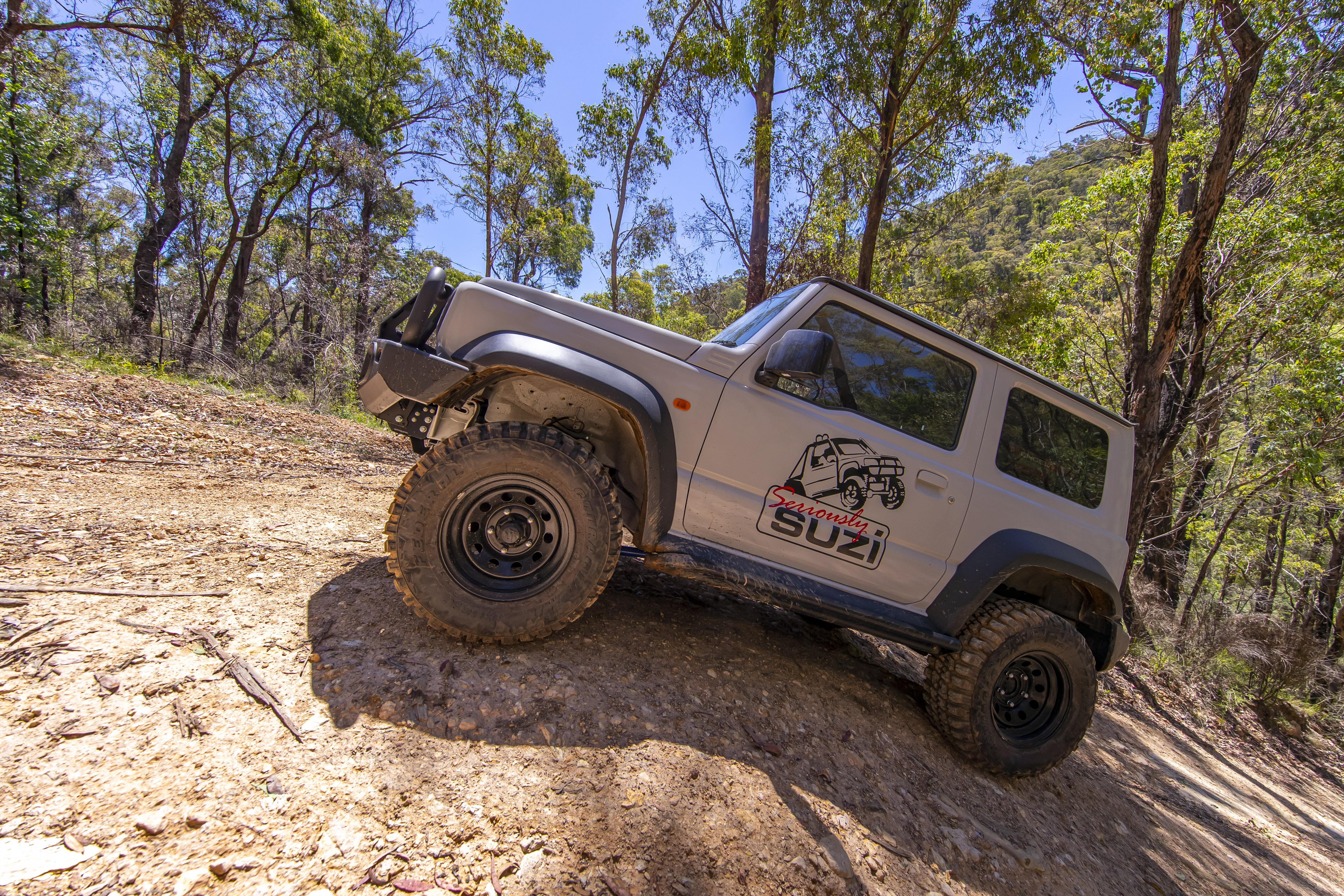
Our couple of days in the Woods Point and Mount Terrible area of the High Country were in convoy with the Offroad Images portal-axled LC79 and the hugely capable Sandy 60 with its thumping V8 diesel, and never was the little Zook left behind. While the big V8 diesels generally loped their way up hill and down dale, the Jimny needed a few more revs from its relatively tiny 1500cc petrol engine.The superbly set-up suspension not only improved the ride quality in spades, but its compliance gives more axle articulation resulting in less wheel lift on deep ruts and more control in the rougher stuff. Only once did I employ the rear air locker to ensure an easy ascent on a steep and rutted track, and the Zook felt unstoppable! It was never left behind by those bellowing V8s.
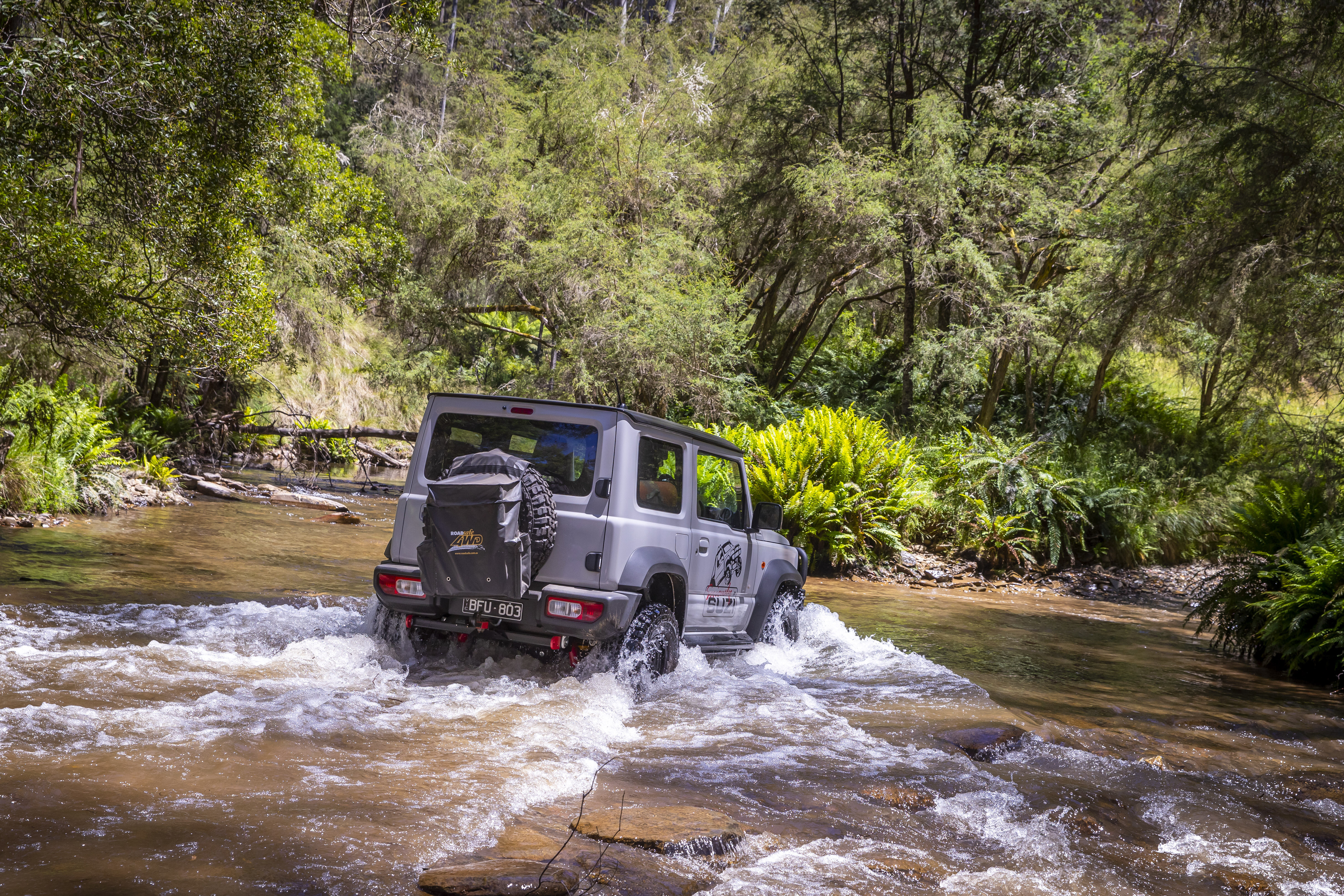
While the typical buyer of the latest Jimny might not be an avid off-road enthusiast, it’s reassuring to know that for those who are and want to use their JB74 to the best of its ability, Alan Johnson and Seriously Suzi are passionately developing specialised equipment to ensure they can. The gear on this car takes the standard Suzuki to another level and I had a ball driving it.If you want the same performance and smiles from your Jimny check out www.seriouslysuzi.com.au or hit up its Facebook page.
A stretched and chopped Y62 Patrol that straddles perfection headlines a massive March 2022 issue of 4X4 Australia magazine.
With optimised V8 power and strengthened suspension, the jaw-dropping dual-cab Y62 runs an ever-growing list of top-grade accessories.
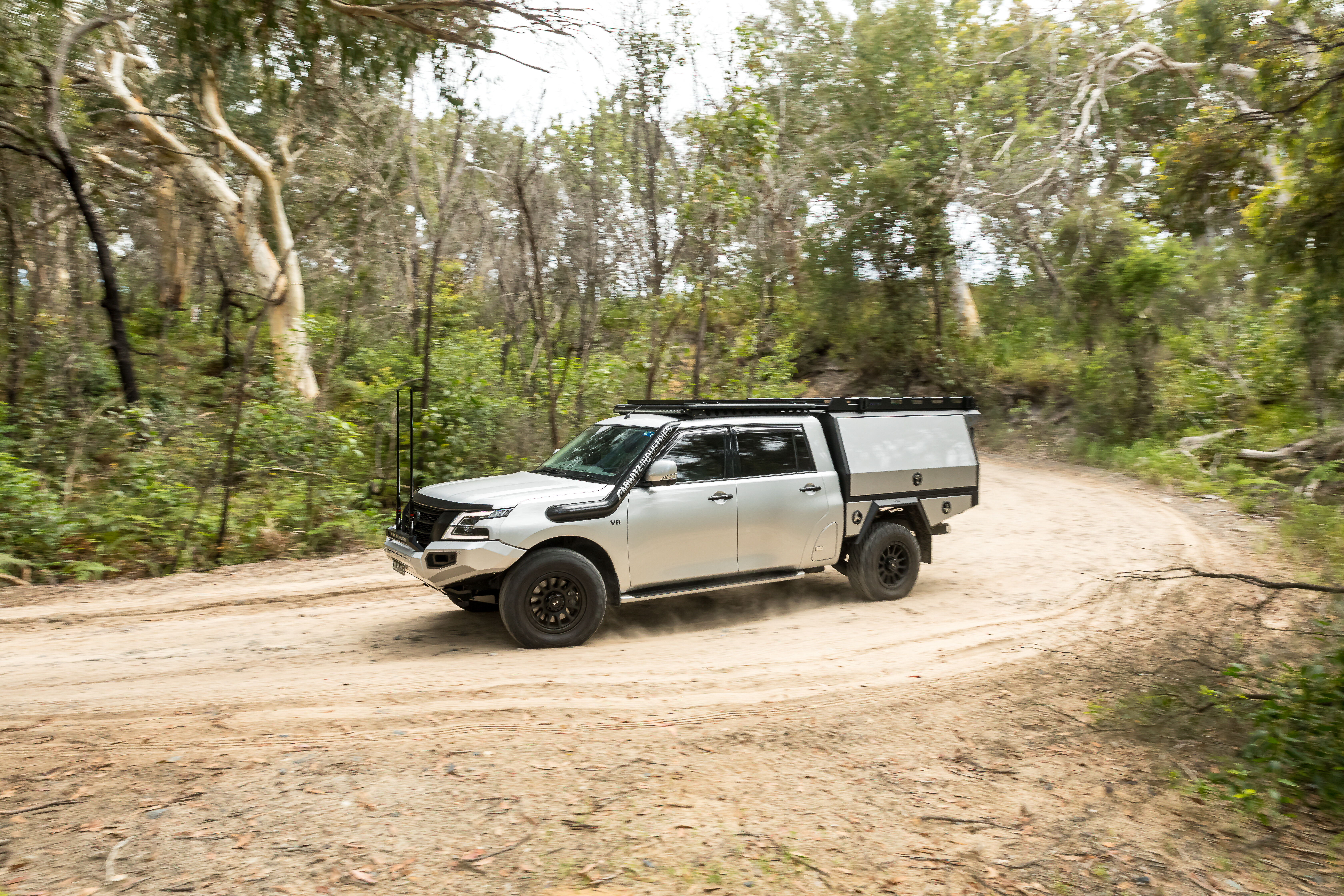
Giving it a run for its money is a beach-born Ranger Wildtrak, built for endless summer days. The Wildtrak lives on Queensland beaches and is decked-out in aftermarket kit to suit.Regular readers will be familiar with the superb snaps of contributor Michael Ellem from Offroad Images. Mick has spent the last couple of years resto-modding a stunning 60 Series, before it embarks on a people-pleasing adventure around Australia. We’ve taken a closer look at the immaculate build in this issue, as part of an ongoing series.
Alan Johnson from Seriously Suzi even stole the keys to share his views on the build, and editor Matt took Alan’s JB74 Jimny and joined him for a spin in the High Country.On the new-metal front, we take the Premcar-fettled Nissan Navara PRO-4X Warrior off-road, and Chris Collard gets behind the wheel of the looming next-gen Jeep Grand Cherokee.In the latest ‘How to 4×4 with Deano’ instalment, we explain how to safely descend steep tracks.
What else is there?
- How to protect your paint
- High Country and Plenty Highway explored
- Fishing in the Top End
- Rambler’s stunning 200 Series
- Columns, product reviews + more
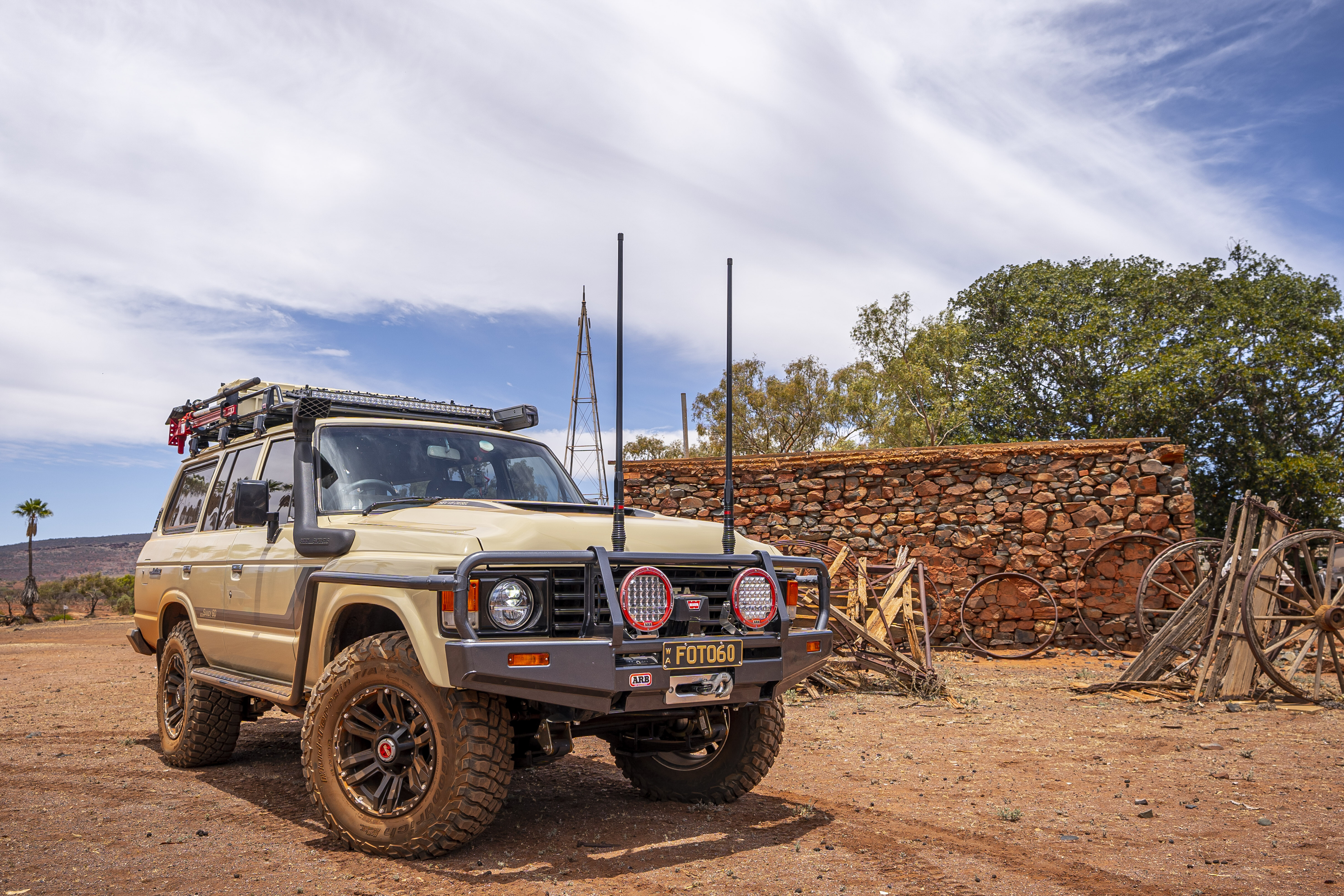
Michael Ellem from Offroad Images might own this stunningly restored 60 Series, but he assures us it’s not just his 4×4 – it belongs to the peopleYou’d have to be living under a rock if you haven’t seen this awesome Sandy 60 online or on various social media accounts. This build is the brainchild of Offroad Images founder Michael Ellem, who also owns the Mighty 79, a highly modified 79 Series LandCruiser on portal axles.
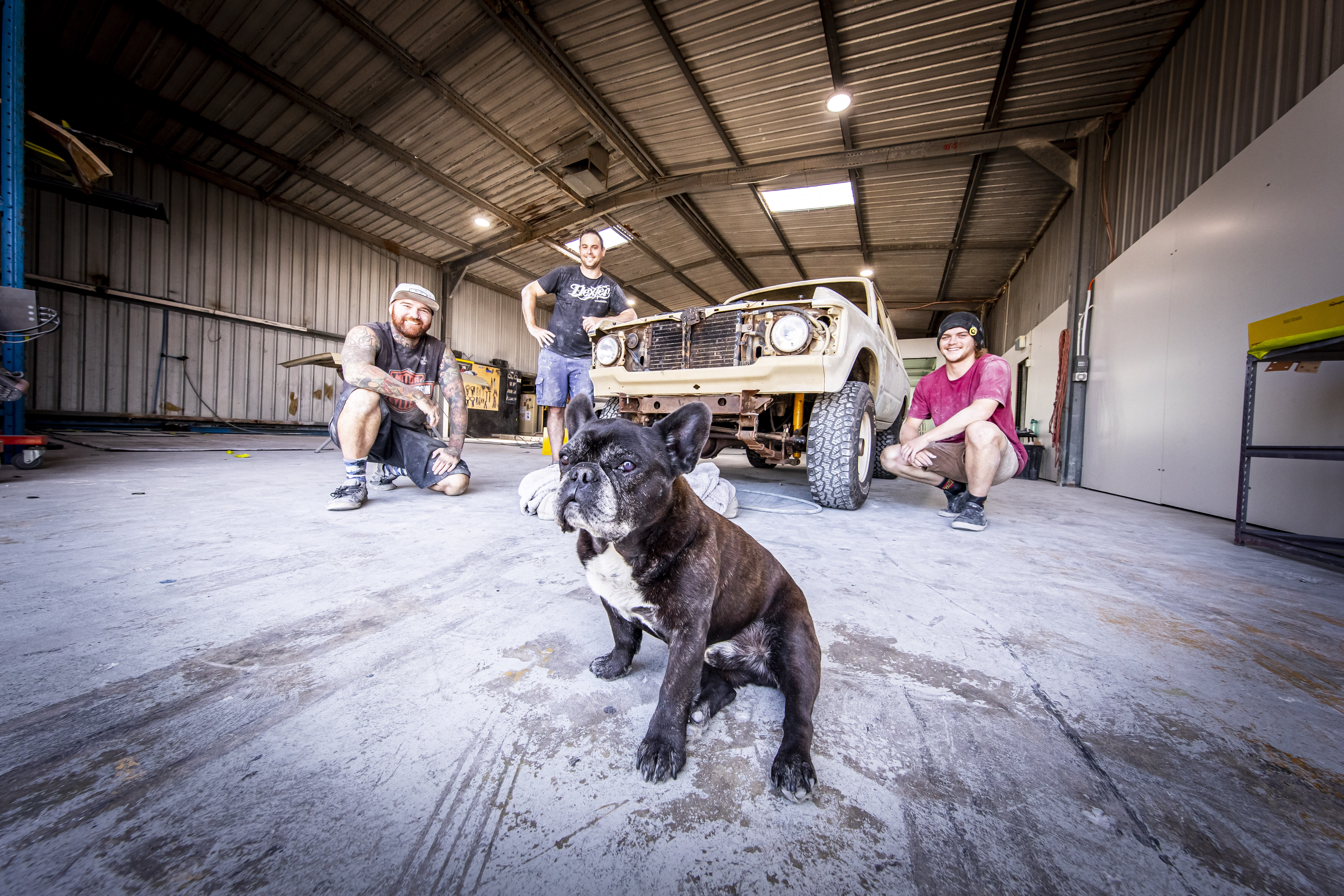
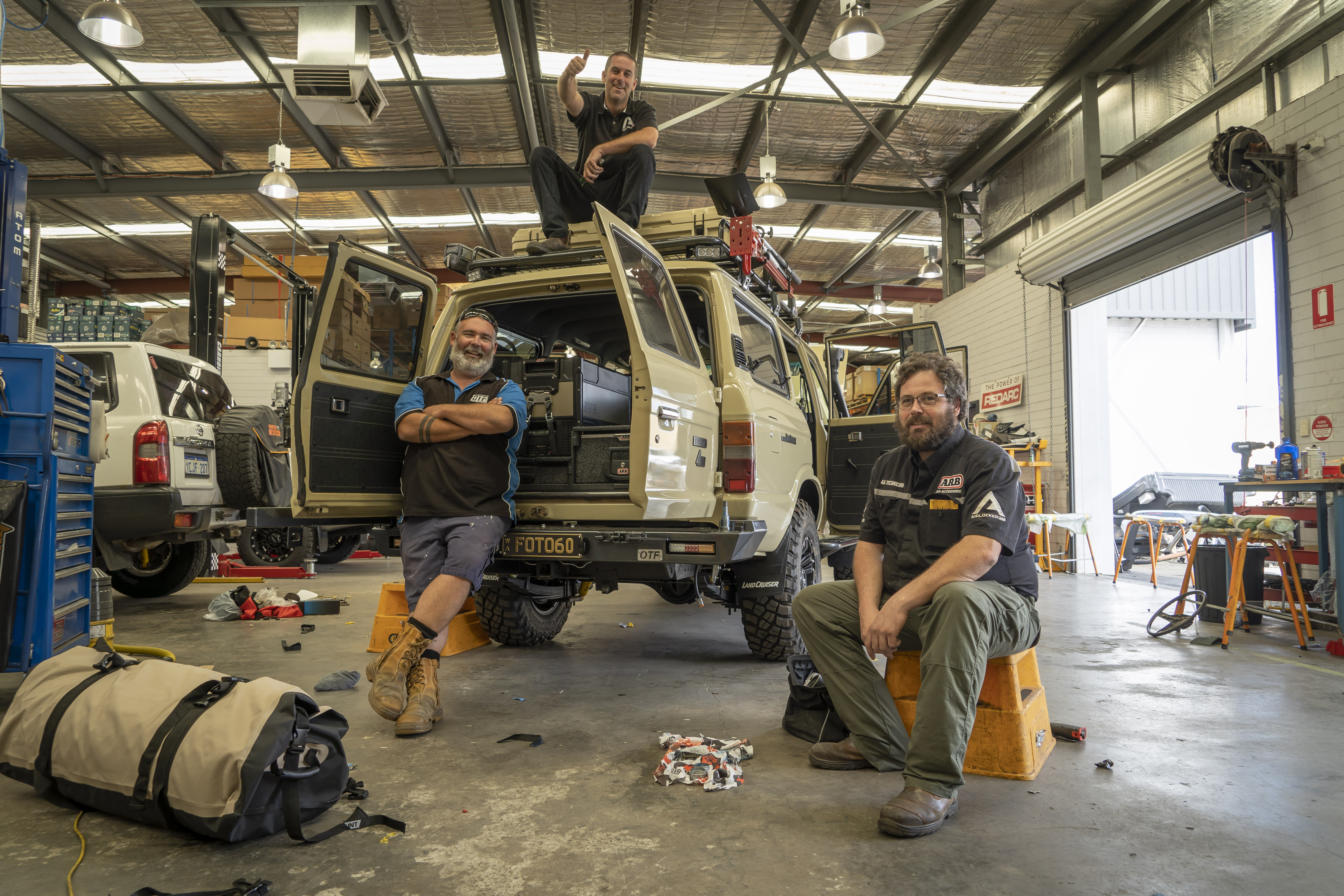
When Michael found this particular 60 Series in a car park out in Kalgoorlie, it was a far cry from what it looks like today. The owners were having trouble even getting it started, rust had well and truly crept into the body, and the interior looked more like a dog’s breakfast than a place to sit comfortably. They agreed to sell it to Michael and the rest, as they say, is history, but only under the condition he would restore the 60 and they’d get to drive it one last time when it was finished. It was a done deal, and Michael set to work assembling a team of expert tradespeople and companies in the off-road game.Starting with this well-used 1985 60 Series LandCruiser, Michael set out to enlist expertise from the best of the best in the automotive trade to transform the old girl. When we say transform, we really mean it too … from rust repairs to engine swaps, there isn’t a single nut or bolt that has been left untouched.
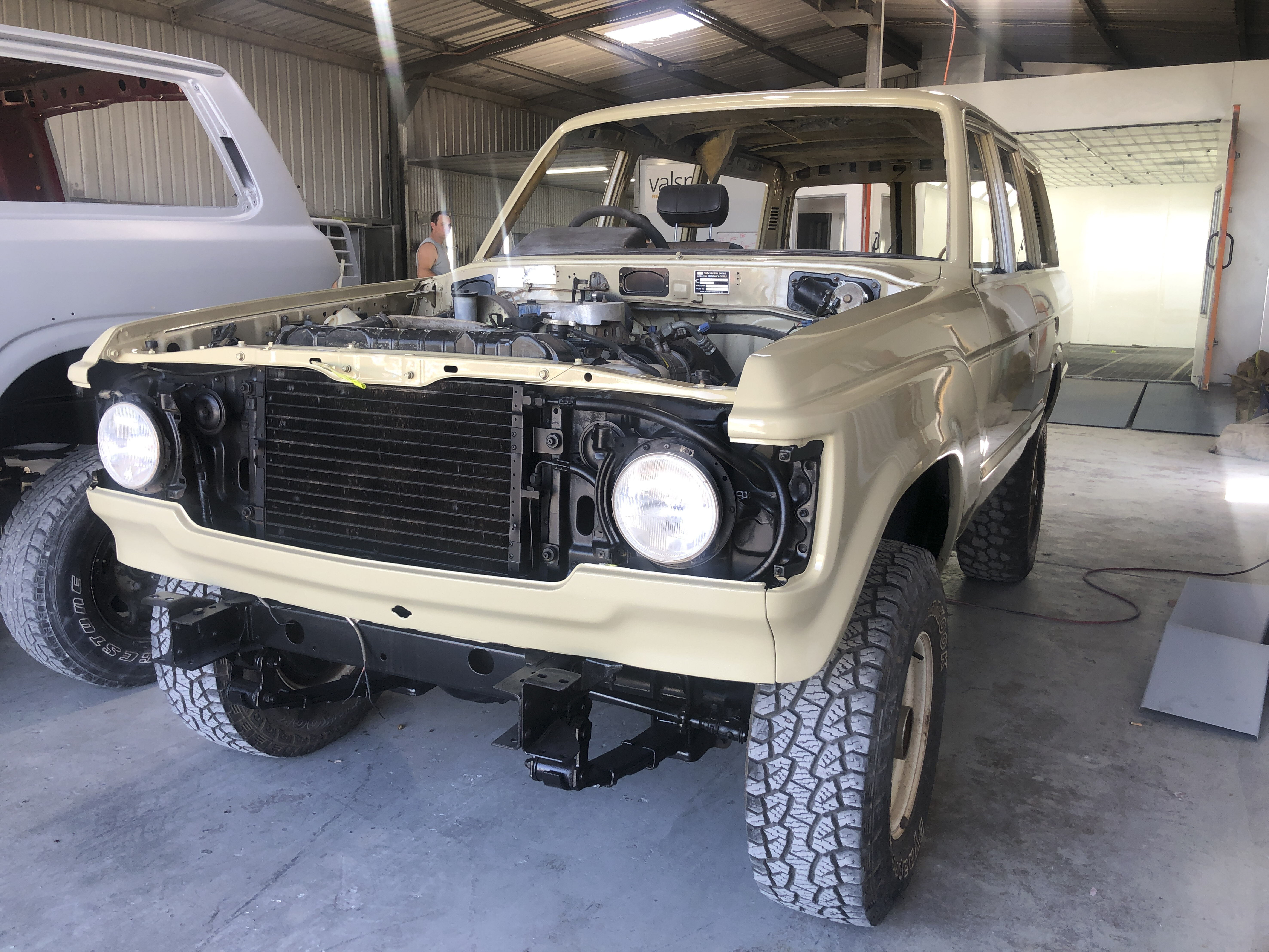
So, what are the plans for Sandy 60? Well, you’ll have to stay tuned for that, as 4X4 Australia is running a complete series on this wonderful vehicle. Mick wants the Sandy 60 to travel this country, telling the story of not only the fantastic locations we are lucky enough to have, but also the stories of some amazing people behind the four-wheel drive community.This is going to be an epic series brought to you by 4X4 Australia, which we are beyond excited to show you in the coming months.
Resto-modded
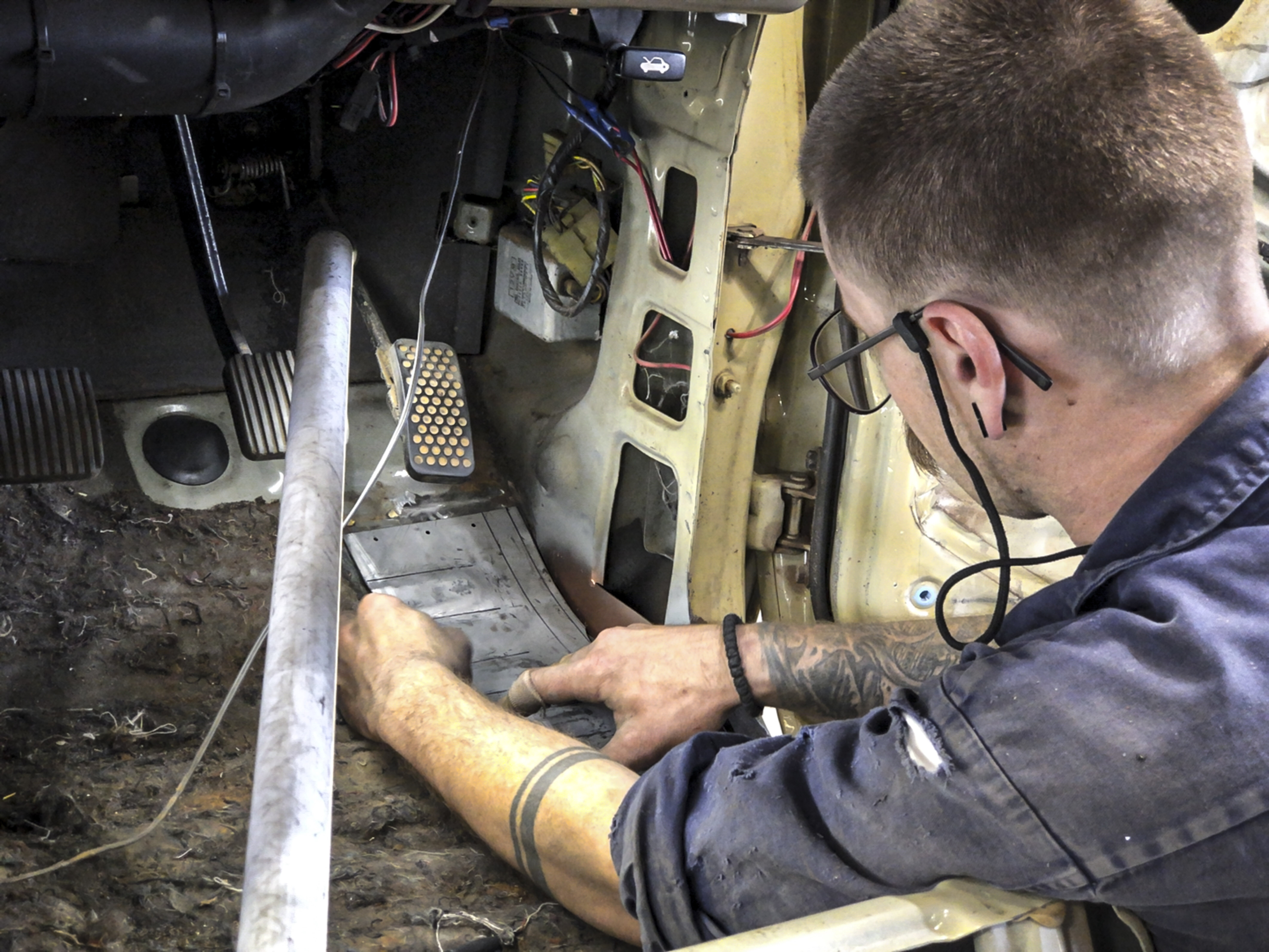
Rust is the enemy of older four-wheel drives. While this 60 Series looked like a fairly decent unit, it quickly became clear it was going to need some serious surgery to make it better than new.“Some of the floor needed plenty of work, and basically had to be cut out and made from scratch,” says Michael. “This was one of the most interesting parts of the process, watching these skilled fabricators create new custom parts and panels from raw material.”
On Track Fabrication handled the body work and also fabricated the awesome custom rear bar, which Michael insisted had to match the body lines of the 60’s rear end. One of the more striking design elements of the Sandy 60 is the bonnet. This was a labour of love, grafting a 79 Series scoop on to the 60 Series bonnet – you’d have to agree, it’s a work of art. Paint work and this bonnet graft were completed by the wizards of colour at Distorted Paint & Restoration.“Initially, I just wanted to do a basic closed-door respray,” Mick explains. “Once we had the vehicle stripped out and ready to spray, Jayden from Distorted Paint said it would have been a crime not to, to do the vehicle justice … We’re really stoked with how it turned out and glad we went the extra mile there.”
The entire interior received plenty of attention, with a new custom darker-coloured headliner being the most obvious. Car Builders sound deadening was applied to the flooring once all rust was removed; and as the factory vinyl looked like it had been sitting in a swamp, it was thrown in the bin and replaced with new (much neater looking) carpet.
American Muscle
When Michael picked up the 60 Series, the engine had already been swapped out for a 6.2-litre Chevy V8 diesel. While that sounds good on paper, this particular engine was well past its use-by date and just wouldn’t do it justice.
That’s the last thing anyone wants to deal with halfway through what is essentially a ground-up rebuild, both from a time and financial point of view.Michael, ever the optimist, saw this as an opportunity to upgrade and make the vehicle better. As such, he had the experts at Brunswick Diesels rebuild and fit up an Optimiser 6.5-litre diesel V8 motor from an American Military Humvee.
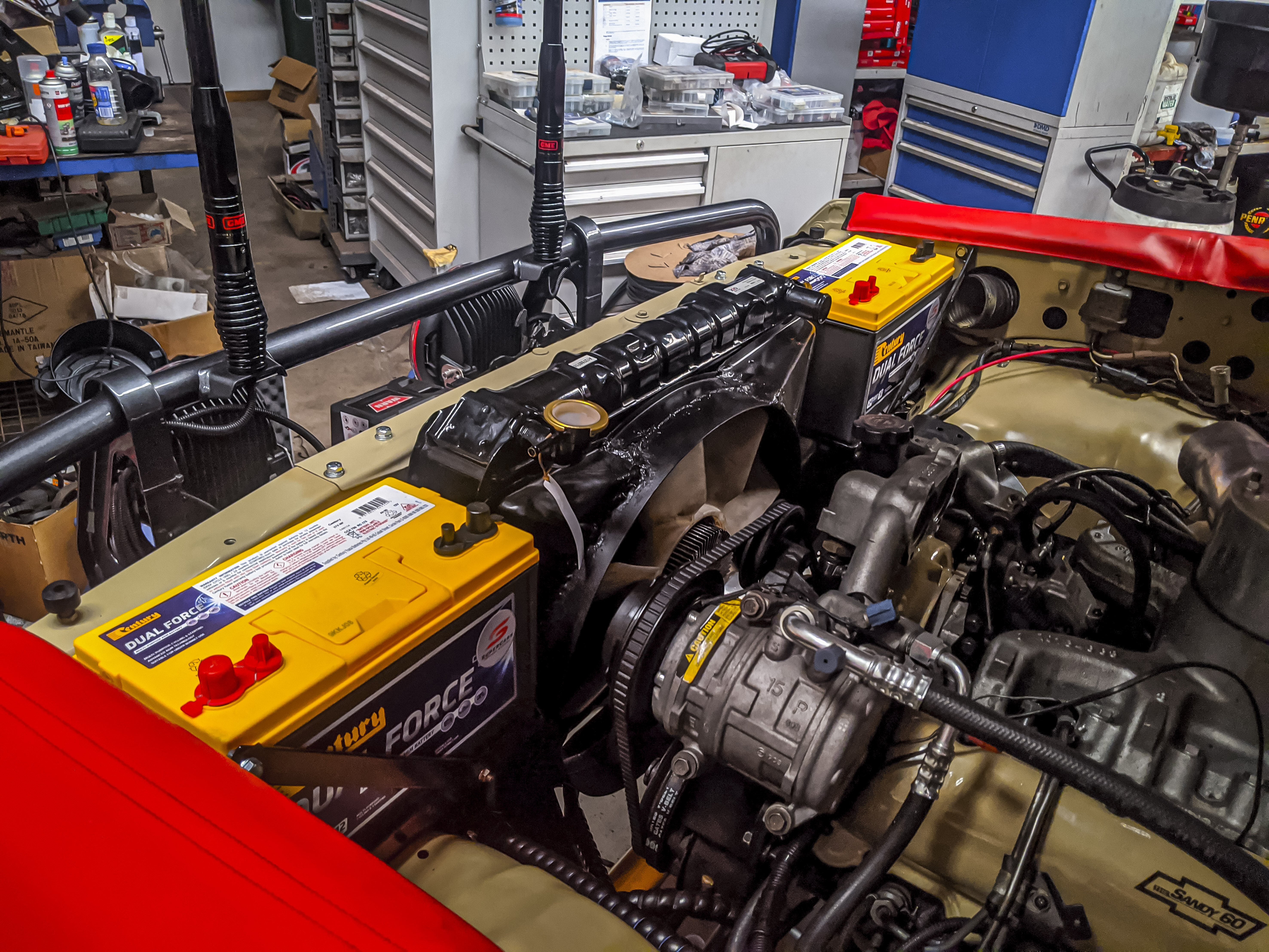
“What I like about this motor, is it has no computers and it is all mechanically controlled,” Michael tells us. “Not only does it sound the part, it produces torque basically from idle, which is handy for steep technical off-roading.”This engine is mated to a fully rebuilt five-speed gearbox and transfer case, which the team at Marks 4WD Adaptors handled with great success. They also fitted up a set of transfer reduction gears, so you know this 60 Series is a serious mountain goat on steep tracks.
Springs and things
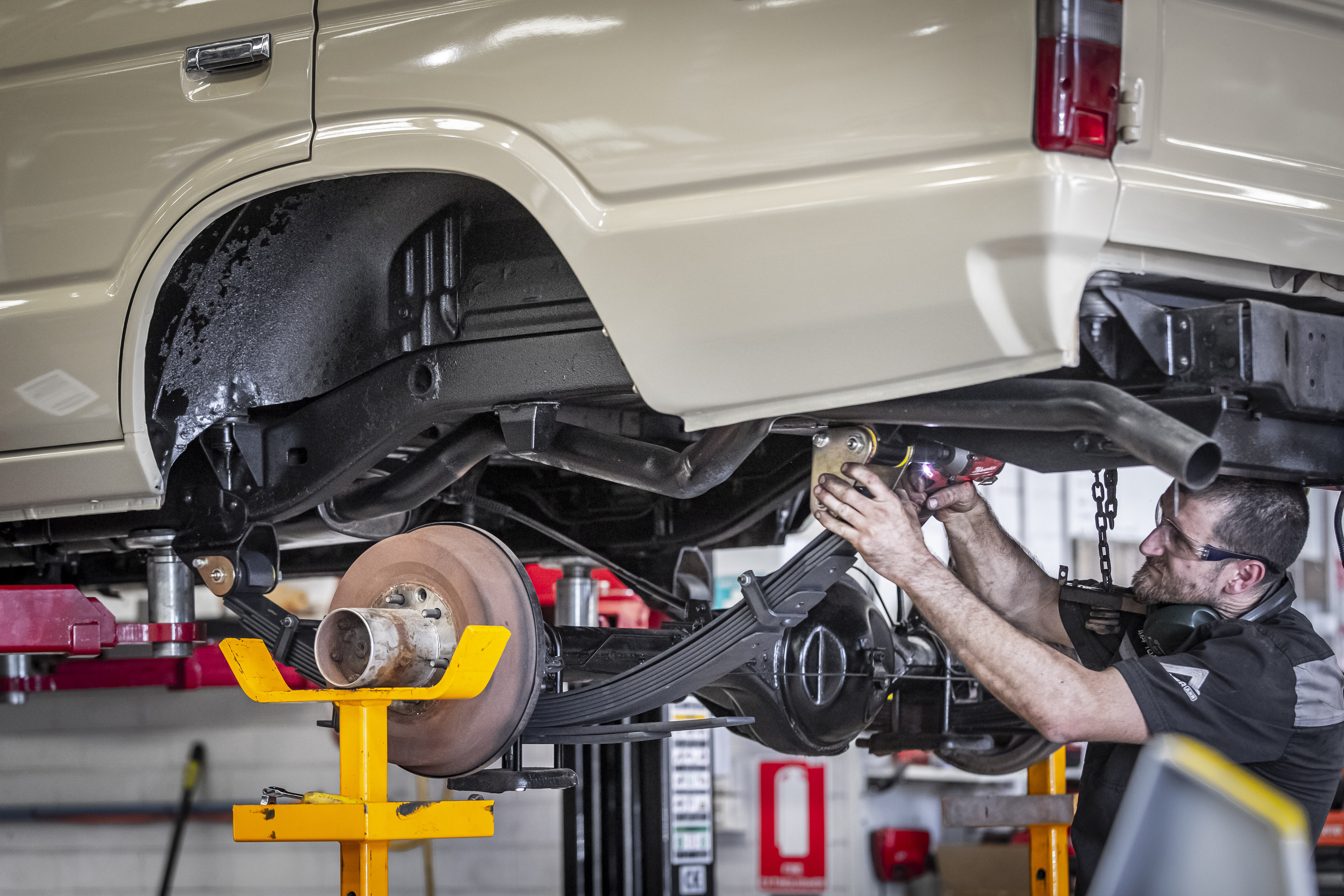
ARB Old Man Emu suspension was given the nod for the Sandy 60, with all suspension components replaced and upgraded. As well as the Old Man Emu shocks and leaf springs, Michael has opted for a pair of Airbag Man airbags in the rear, which can be easily adjusted via the ARB LINX system on the fly.
Tyre wise, Michael is a big fan of his BFG KM3 mud-terrains, and after racking up huge mileage on his other ’Cruiser, the Mighty 79 he saw no reason to change.“As well as the 285x75R17 BFG muddies, I also selected a set of ROH Vapour alloy wheels,” Mick says. “I run the same wheels on my 79 Series, and as far as I’m concerned, changing wheels is one of the quickest and most effective ways of personalising your vehicle, making it your own.”
Touring mods
Wagons are cool, especially restored and modified 60 Series LandCruisers, but accessing gear in the back can be a chore. Mick has opted for a smart set of gull-wing windows from 3XM, which allows him to quickly and easily reach in and grab a beer or his camera (never at the same time). Speaking of the back of the Sandy 60, to keep all of his gear secured and organised, a set of Outback Touring Solutions drawers has been fitted with custom side-wings made by the team at ARB Wangara. One drawer is a lower half-height unit, so Mick could secure his ARB fridge and provide easier access.At the front of the drawer system, the team wired in the Redarc Manager 30 system, 700W Redarc Inverter, the ARB LINX system, as well as a 100amp/h Revolution lithium battery to charge camera gear and laptops on the road. There are also two batteries in the engine bay, so there should be more than enough 12V power on tap.
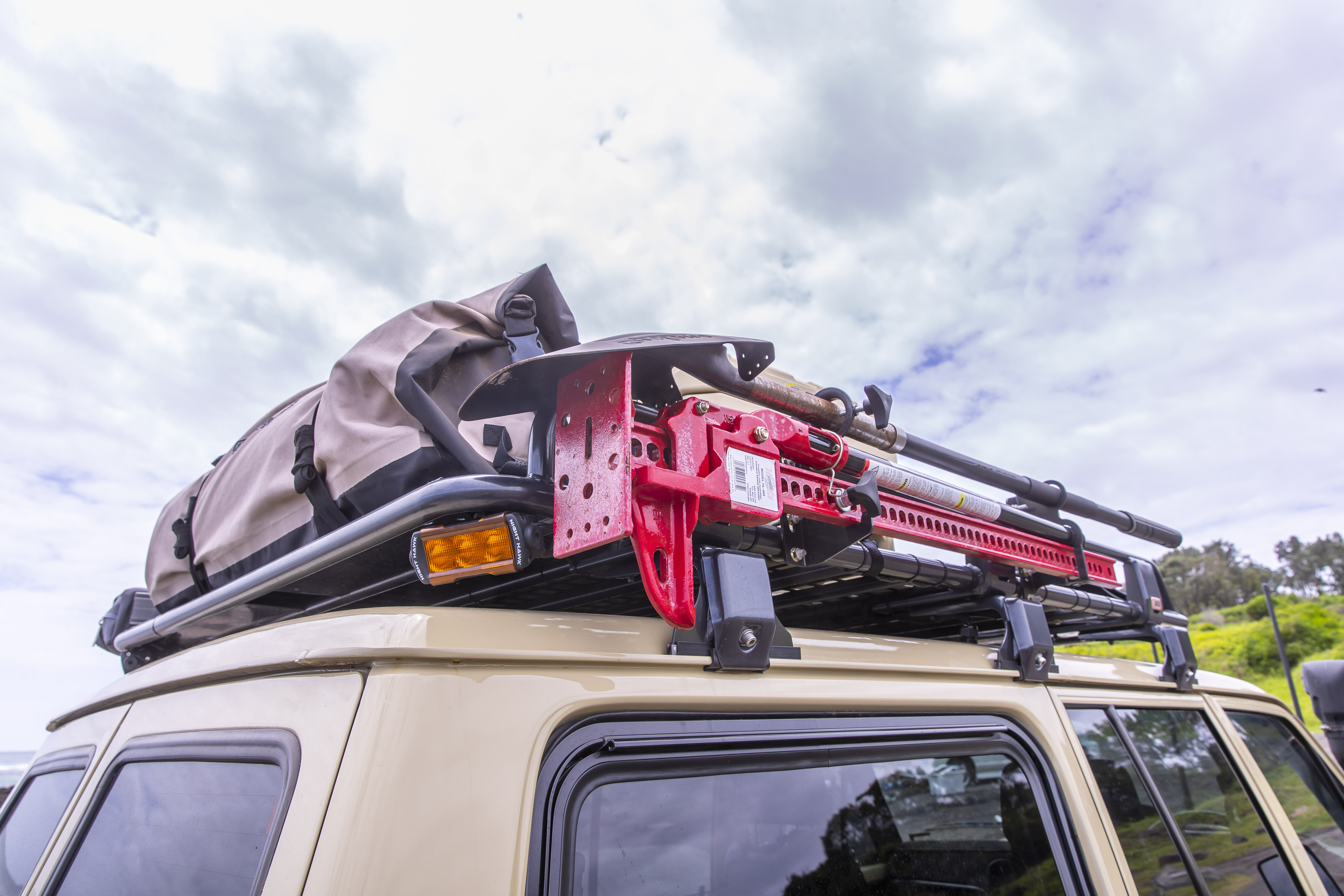
Mick tells us that anything that could be rebuilt or replaced, was. Most hard parts came from Terrain Tamer, who have basically anything you could need for an older Toyota 4×4. For example, while the ARB diff locks were being installed, all bearings and seals were freshened up with new gear from Terrain Tamer. Mr Ellem takes reliability and maintenance seriously; in case you hadn’t picked up on that fact.On the roof, you’ll notice an ARB roof rack, which has been very cleverly decked out with touring mods. There’s a pair of Redarc solar panels to charge the batteries; and you can also see a Bushranger LED light bar, which helps with spread on dark outback roads. A set of TREDs sit behind the light bar for recovery duties, and behind that is a large storage case for odds and ends with a swag strapped down behind it. There’s also an ARB awning on the passenger’s side, making for one cool-as-ice yet superbly practical touring vehicle.
Second opinion
Alan Johnson from Seriously Suzi drives Sandy 60 and shares his thoughts
When the 60 Series LandCruiser was born in August 1980, it came with a four-speed manual gearbox and a choice of the very slow 2H diesel or the fuel-hungry 2F petrol motor.Some 42 years on, and Michael Ellem and crew have rebirthed this serious 60 with a 6.5-litre V8 Humvee military motor matched to a five-speed gearbox – and what a magnificent rebirth it is.
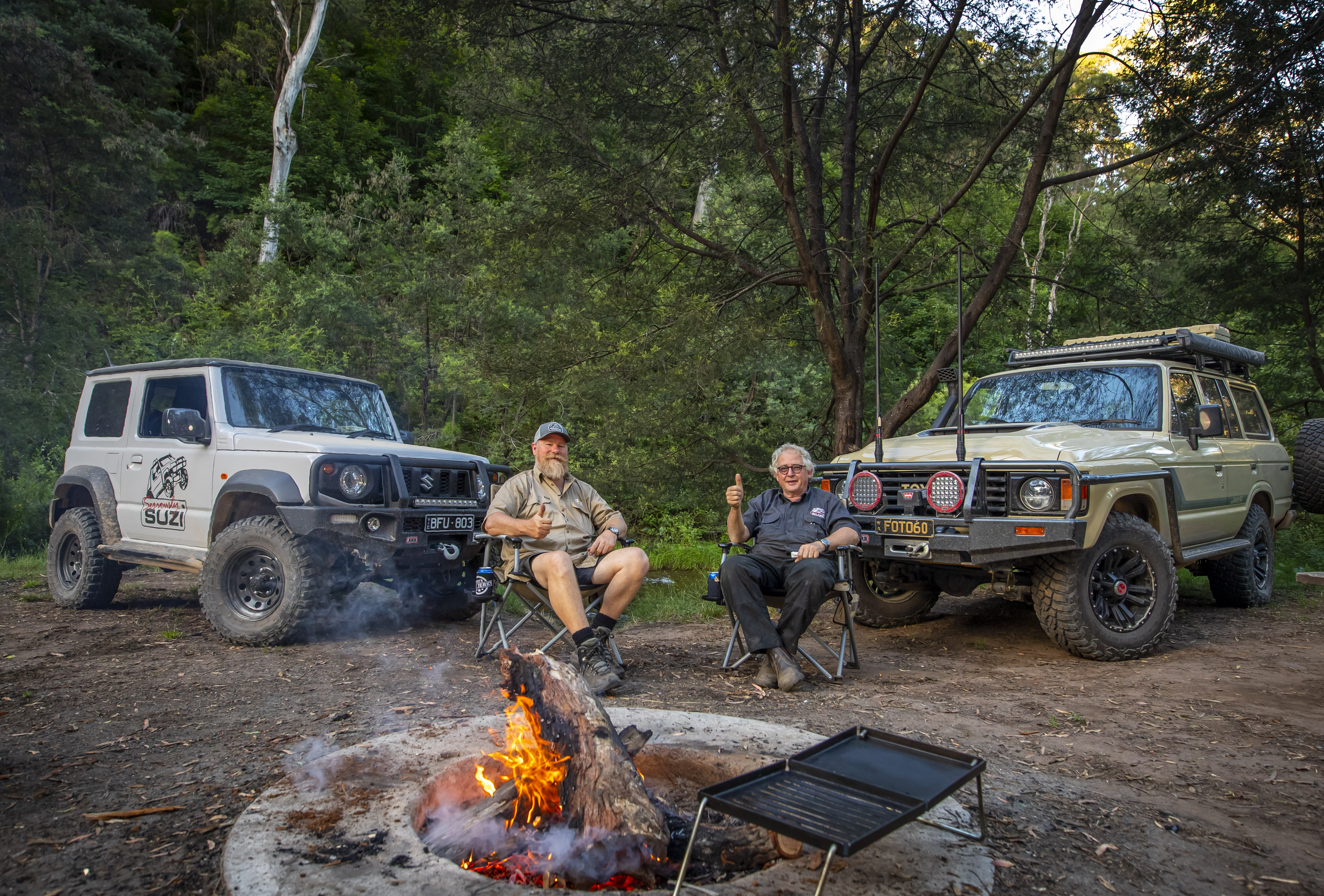
From under-powered to massive gobs of torque with the V8, it is a thrill to drive, but don’t forget about the great restoration work from Michael’s team. From the painstakingly created hybrid 79 Series bonnet, aftermarket seats and modern electronics, this is no ordinary Cruiser. It’s a time machine that takes me back to the 1980s, driving to the Woods Point area where some things change, some things don’t. The Commercial Hotel and Main Street is virtually unchanged, the tracks change every season but the great memories of four-wheeling are never forgotten.My time in the driver’s seat will be a cherished memory; just point this beast, let the clutch out and it’s a mountain goat on steroids. Thanks for a great trip in a great recreation of one man’s vision of what a 60 Series could and should be.There is just one massive problem with this car: there is only one and it’s not mine. I own a 12HT 60, and it’s a great car that I love; but, seriously, the Sandy 60 is in a league of its own.
With thanks
- Rust repairs, custom rear bar and seat mods plus assistance with project management … Luke, Riss and the team at OTF @ontrackfabrication_otf4x4
- Custom 79 Bonnet and all Paint restoration by Jayden and the team @distorted_paintandrestoration
- 60 Series knowledge, Build project management assisted by @4x4sean
- Air Lockers, Linx, Suspension, rear drawers, fridge and protection equipment by @arb4x4
- Communications UHF and Cellular: @gme_au
- 6.5L V8 diesel (6500 Optimizer) conversion by @brunswickdiesel
- Custom Exhaust by @mantaperformance
- Long range fuel tank @longrangerfueltanks
- Dual batteries engine bay @centuryyuasabatteries
- Lithium battery cabin @revolutionpowersolution
- Battery management, Inverter and solar @redarc_electronics
- Brakes, gears and old school parts replacement @terraintamer4wd
- Wheels … ROH Vapours by @roh_offroad_wheels
- Tyres … BFG KM3s by @bfgoodrichtires
- Gearbox rebuild and reduction gears by @marks4wd
- Custom centre console and roof consoles by @consoles.com.au
- Stereo Alpine Halo and speakers by @Alpineau
- Stratos seats
- Upholstery and custom steering wheel by Tyson @prostitchtrimming
- Side pop-out windows by @3xmcanopies
- Rear seat covers by @msa4x4
- Insured by @club_4x4
- Mechanical installation and wiring by @goldfieldsoffroad
- Steering links (Superior) by @allbarredup4x4
- Seat storage by @navigatorgearau
Photography
@offroadimages