
Nissan to cease most petrol engine development,” said the headline recently splashed across the mainstream automotive media. As ever, the devil is in the detail.Nissan is only stopping development for most markets – the USA being the notable exception – of petrol engines used in petrol-only powertrains. It will be still developing new petrol engines – perhaps via its alliance partners – but these will be used in petrol-electric hybrid powertrains.New petrol engines developed by Nissan and/or its alliance partners (and more broadly across the auto industry) designed for use in petrol-electric hybrids will be somewhat different from existing petrol engines, and not just because they will be able to utilise the latest technology. For a variety of reasons, future hybrids will predominantly be petrol-electric and not diesel-electric – although don’t discount diesel-electric hybrids altogether.
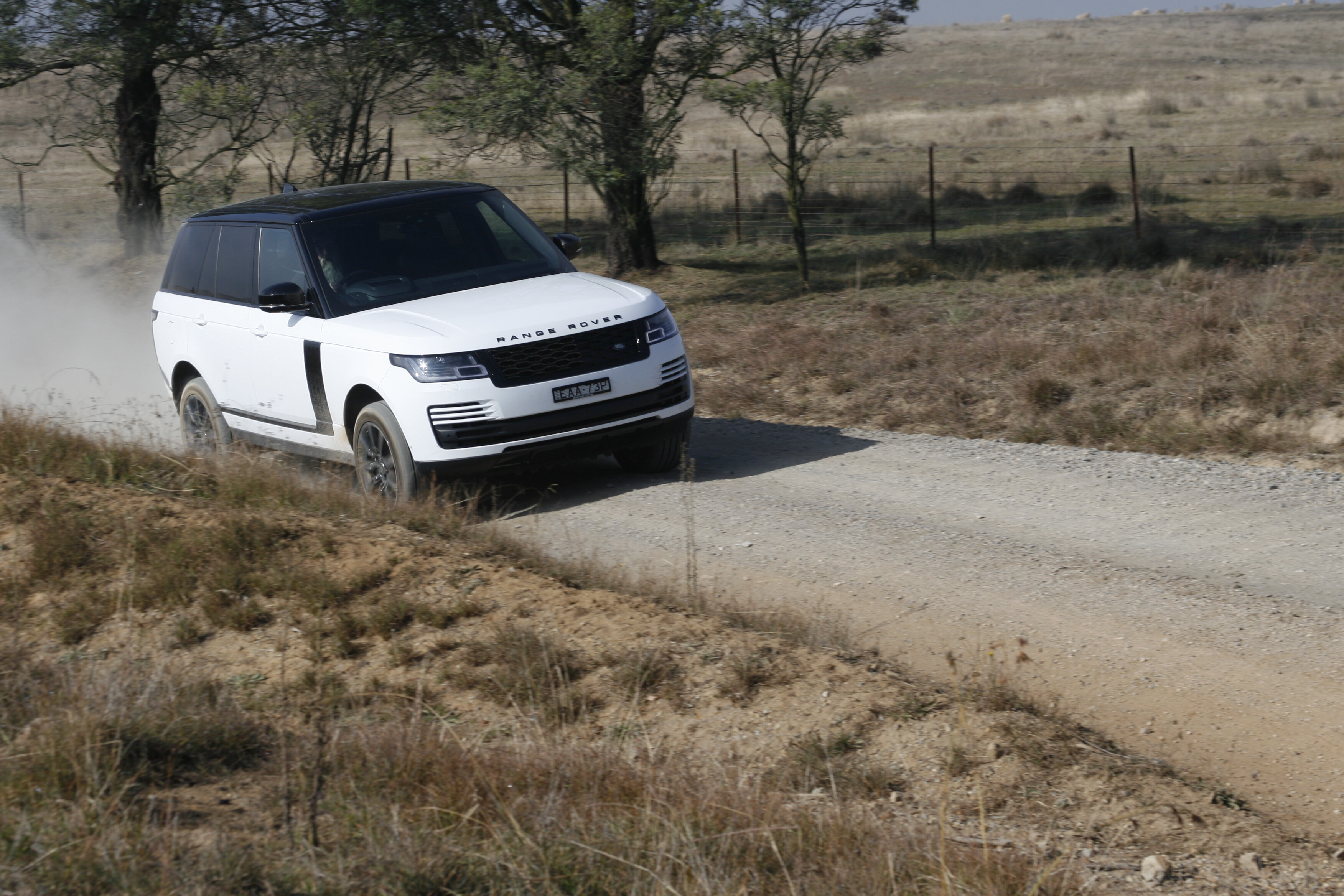
The marriage of a petrol engine to an electric motor in a hybrid – any hybrid, Mild, Plug-In or otherwise – is fortunately a happy one, as an electric motor is at its best where a petrol engine is at its worst, namely accelerating a vehicle away from standstill.If you live and drive in a city, urban or suburban environment, which a majority of people in the world and most people in Australia do, the process of moving off from a standstill and accelerating up to something like 50, 60 or 80km/h for a short period before having to stop for the next traffic lights or intersection, is an all too unfortunate and oft repeated occurrence. It’s the reason why urban-use fuel consumption is so very much higher than highway-driving consumption, despite the higher average speeds under highway conditions.At off-idle and low engine speeds with even moderate throttle loads (let alone heavy throttle loads), a typical petrol engine, especially if it’s normally aspirated, is at its least efficient. At higher engine speeds and under light, constant road-speed throttle loads, a petrol engine’s efficiency is much improved.
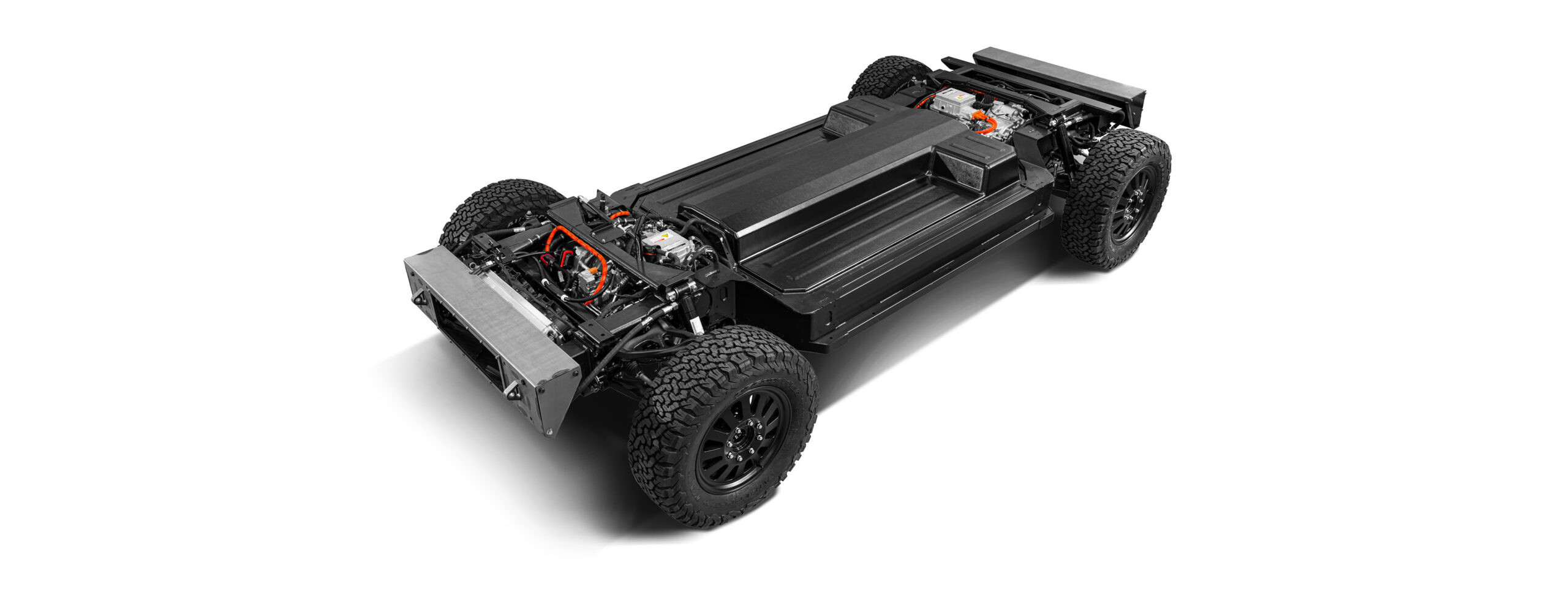
An electric motor, on the other hand, with its full measure of torque available from zero rpm, is ideally suited to providing the initial effort to accelerate a car off from a standstill. As an electric motor’s rpm increases, its efficiency decreases, but once the petrol engine it’s teamed with is building revs, this is of no great consequence.The exact ‘working relationship’ between a hybrid’s electric motor (or electric motor-generator to be more correct) and its internal combustion engine, in terms of ‘what does how’ share of the required work, is dependent on the type of hybrid in question.In a Mild hybrid the electric motor plays a relatively minor role in doing the work required to propel the vehicle, but it plays a relatively significant role in a Plug-In hybrid, and something in-between in a conventional hybrid.
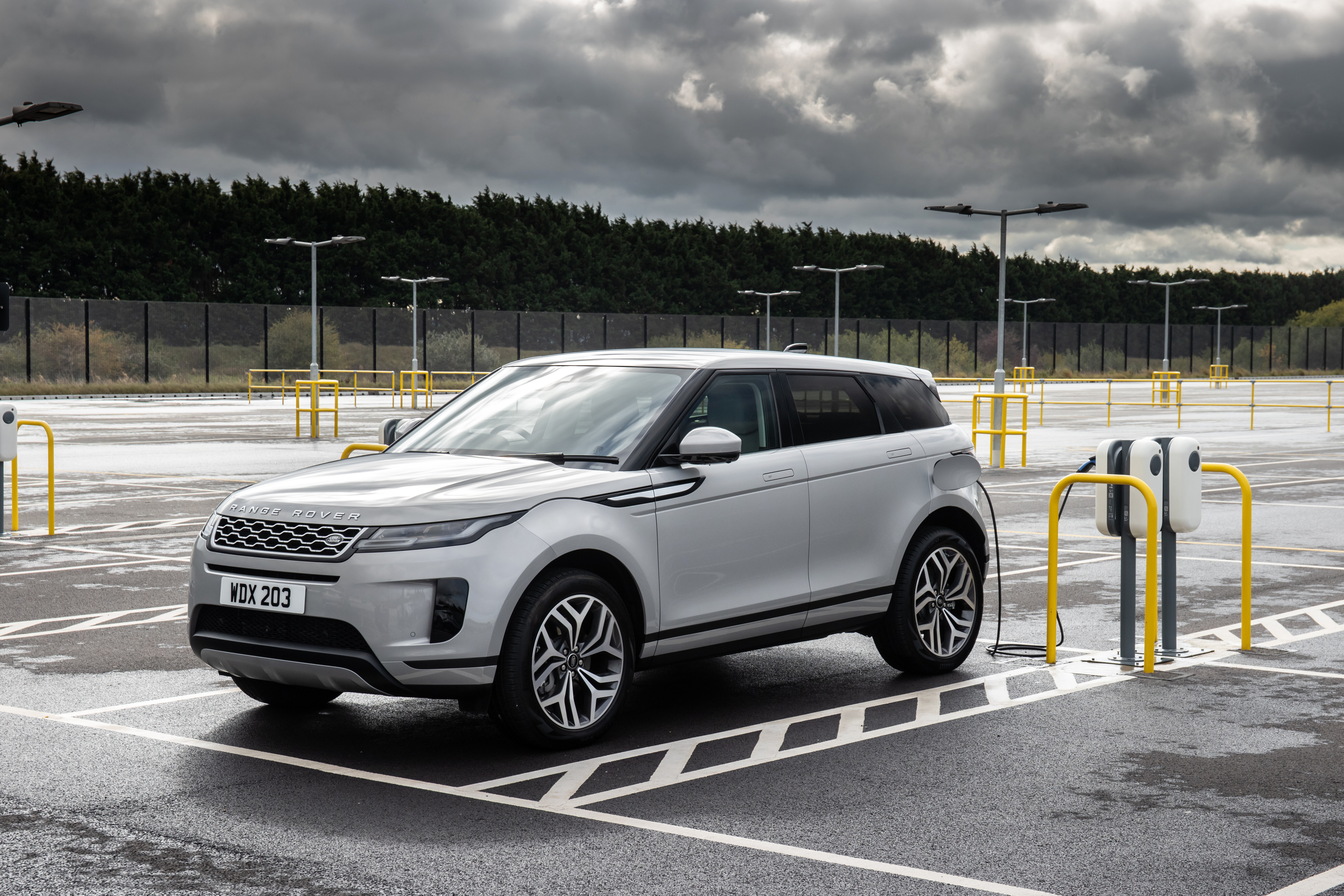
New petrol engines designed to work in a hybrid application will notably be both smaller in capacity and lower in cylinder count than stand-alone petrol engines as they can get away with less torque, given the electric’s motor is adding torque to the combined system. With all internal-combustion engines, torque and engine capacity have a direct linear relationship, everything else being equal. So expect to see more engines of two litres or less and the emergence of three-cylinder designs.Diesel-electric hybrids will be more the exception than the norm (despite diesels being inherently more efficient than petrol engines) given the problem with diesel emissions, NOx and particulates being the prime offenders. And while hybridising a diesel will reduce overall volume of tailpipe emissions, the percentage of NOx and particulates in the exhaust emissions won’t change.Hybridising a diesel also has a theoretical disadvantage compared to a petrol engine, given a diesel’s higher pumping losses due to higher compression ratios. That means there’s less energy to recoup and store via the hybrid’s generator and battery system, although this doesn’t appear to be an insurmountable problem.
People have ‘discovered’ that their backyards often have the best attractions − camping, four-wheel driving, swimming, birdwatching and more. So it is not surprising that weekend escapes, mostly due to COVID-19 restrictions, are all the rage now, with national parks, forest reserves, waterways, impoundments and beaches more popular than ever before.On such a place is the Wet Tropics World Heritage Area (WTWHA) which ranges north of Townville’s Paluma Range to the Black Mountain Range south of Cooktown − an unbroken 450km long corridor that contains rainforest, woodlands, mangroves, streams and wetlands.It contains the highest mountain range in Queensland and the largest tract of tropical rainforest in Australia, which supports the highest biodiversity of life in Australia. The area has more than 3000 species of plants, including 700 endemic plants, 700 species of vertebrate animals, and 88 species that occur nowhere else on the planet. Think about it for a moment and find yourself in a wonderland of unbridled wilderness like nowhere else.
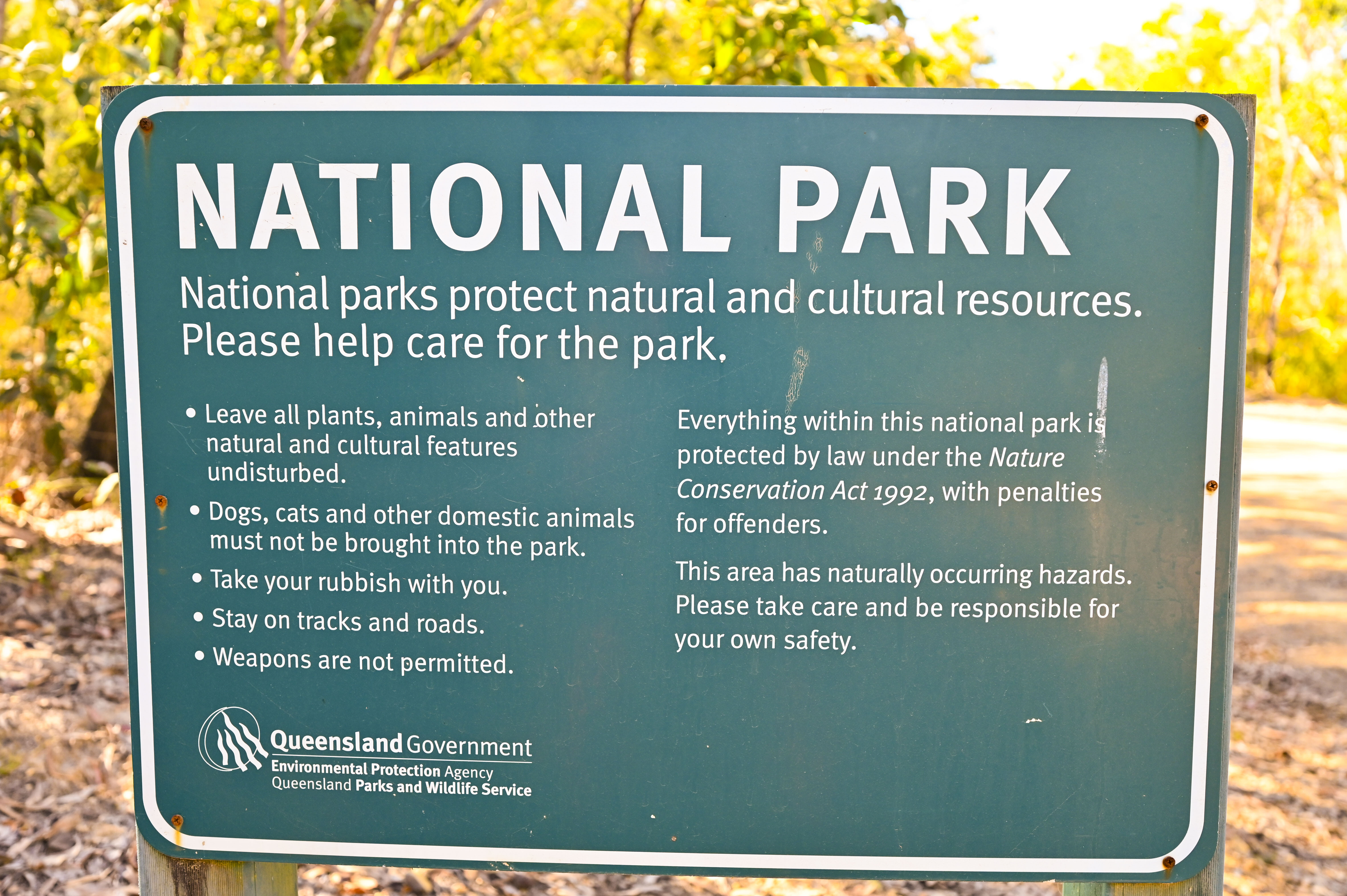
The Wet Tropics has the oldest continual rainforests in the world, its Gondwana heritage well-proven in the evolution of plants and animals. It also housed Aboriginal people who lived in the forests for thousands of years. The tribal groups comprise 120 clans and eight language groups that include 20,000 people who have cultural connections to the region. Many are directly involved in the management of the WTWHA.Interspersed in the Wet Tropics are several national parks and reserves that are managed by the Queensland National Parks & Wildlife Service. The best known is the Daintree Rainforest and its parks − lowland parks that are easily accessible from the coastal route between Mossman and Cooktown.However, there are several upland parks that remain largely unnoticed by visitors, even though their attractions are without par.
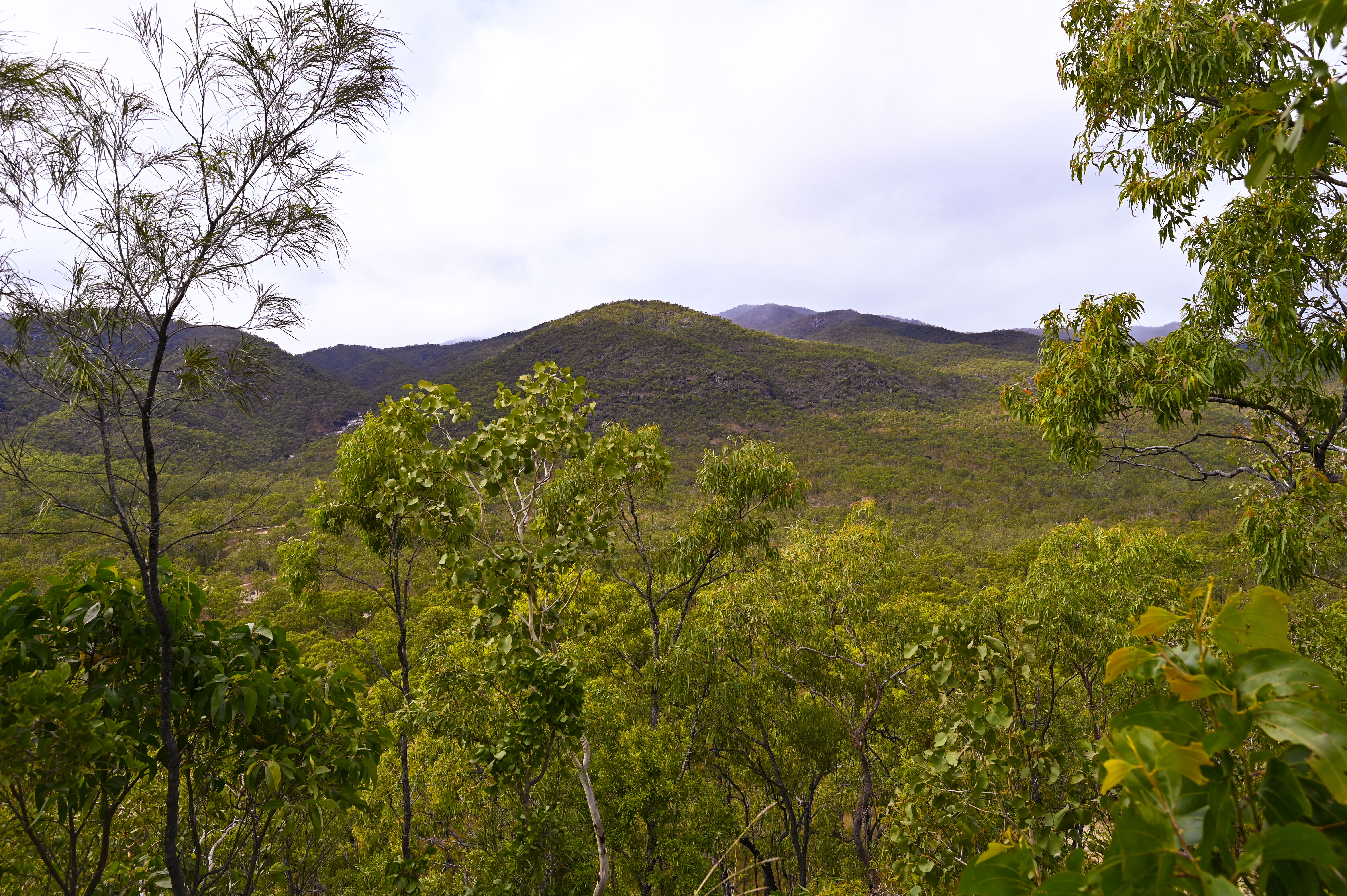
At some 1200m Mount Lewis National Park has the highest vehicle track in Queensland and many outstanding natural attractions, especially for bird watchers. As elsewhere in the WTWHA, these tracks were pushed across the ranges and in to the rainforest by timber cutters who once logged the forests, with red cedar being the most valuable harvested timber. Logging came to an end when the WTWHA was declared in 1988 to ensure full protection of one of our most valuable natural assets − one that matches the Great Barrier Reef.However, many travellers en route to the Cape York Peninsula ignore the magical wilderness of the WTWHA, apart from a brief encounter across the Daintree River on the Bloomfield and CREB Tracks. But there is much more, and if you want to unwind and relax with nature or just lay back with a coldie in a bubbling stream while breathing pure mountain air, please follow me on epic adventures in to the magical world of the upland Wet Tropics.
Dinden National Park
Located 50km by road west from Cairns, between Kuranda and Mareeba, and straddling the 1300m-high Lamb Range, Dinden NP (east) has amazing streams and cascading waterfalls, while its flora is outstanding in terms of biodiversity.It was gazetted as a national park in 2005 when it was upgraded from its forest reserve status and includes both Davies Creek NP and Dinden West Forest Reserve (Emerald Creek Falls). It is an attractive escape for city people escaping the heat and humidity of Cairns during the ‘build up’ of the wet season.
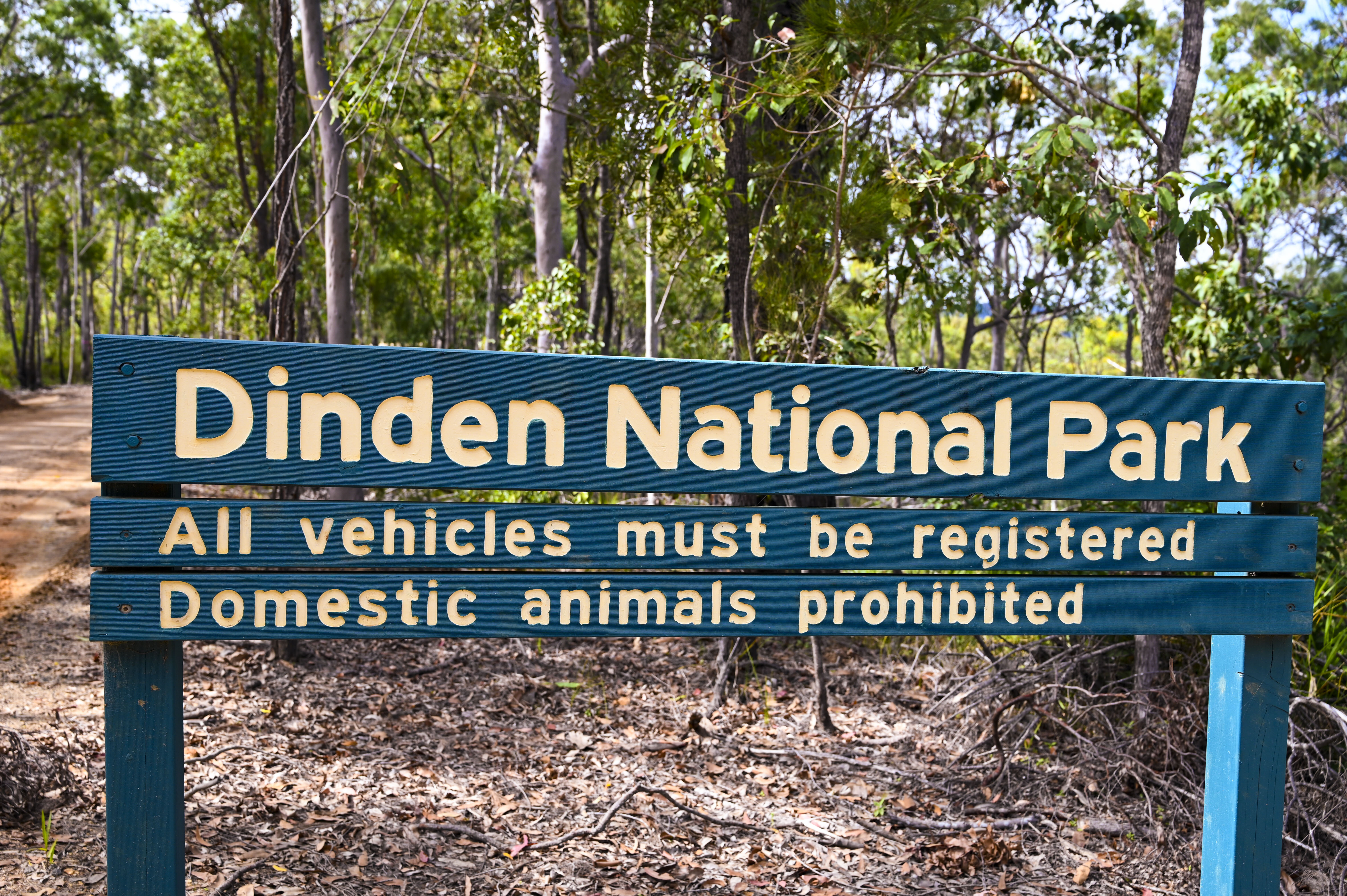
The entrance to the park is 15km southwest from Kuranda on the Kennedy Highway by taking the unsealed Clohesy Road. The first section traverses through foothills timbered by open grassy woodlands before another track turns off to a couple of resorts, one that caters for naturalists if you are in to that sort of thing. It has caravan sites, but don’t pull a ’van in to the national park beyond the junction as the road farther on is a 4WD-only track that, while unchilling for most 4WD vehicles, is unkind to ’vans due to its narrow confines and lack of passing, parking and turning space on the steep mountain slopes. No camping is allowed in the Dinden National Park.There are several stony streams on the track that are easy to cross in the dry season, but they turn in to raging unbridled torrents in the wet season when up to five metres of rain or more falls on the Lamb Range in a three- to four-month period. All tracks are closed in the park during the wet.One of the attractions in the park is a massive fig tree on the Clohesy River boardwalk. Fig trees are also known as strangler or banyan trees. While they appear parasitic, they are not, because they begin life in the upper canopy of a host tree when a seed deposited there by a bird sprouts and sends its roots spiralling down the trunk in to the soil. Once done, more roots grow and in time, the host tree is strangled to death and rots away leaving the hollow-trunked banyan on its own legs, so to speak. It just keeps on growing with trailing roots ever expanding. Some are more than 1000 years old and no doubt the massive Clohesy River banyan is that or more.
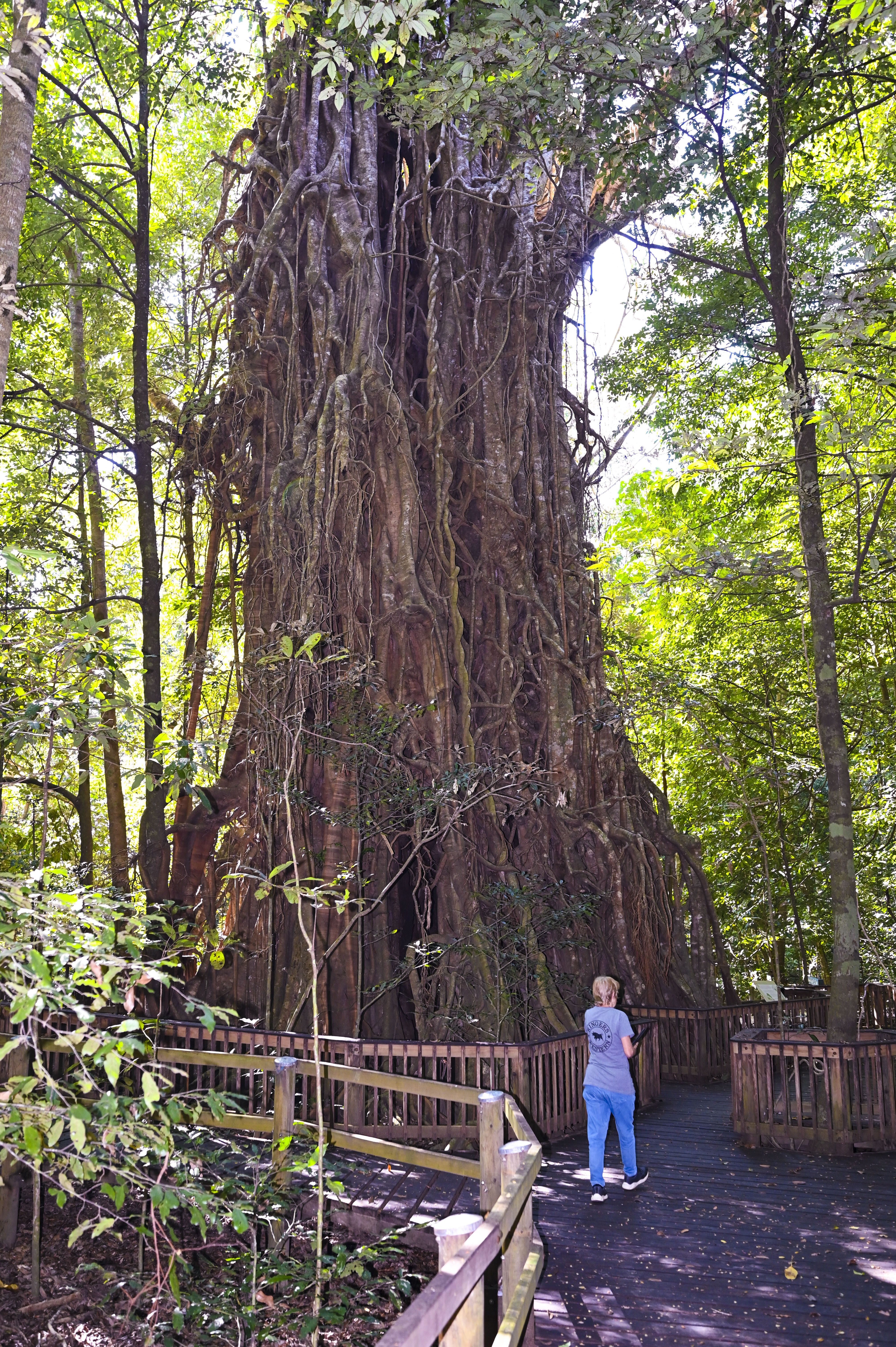
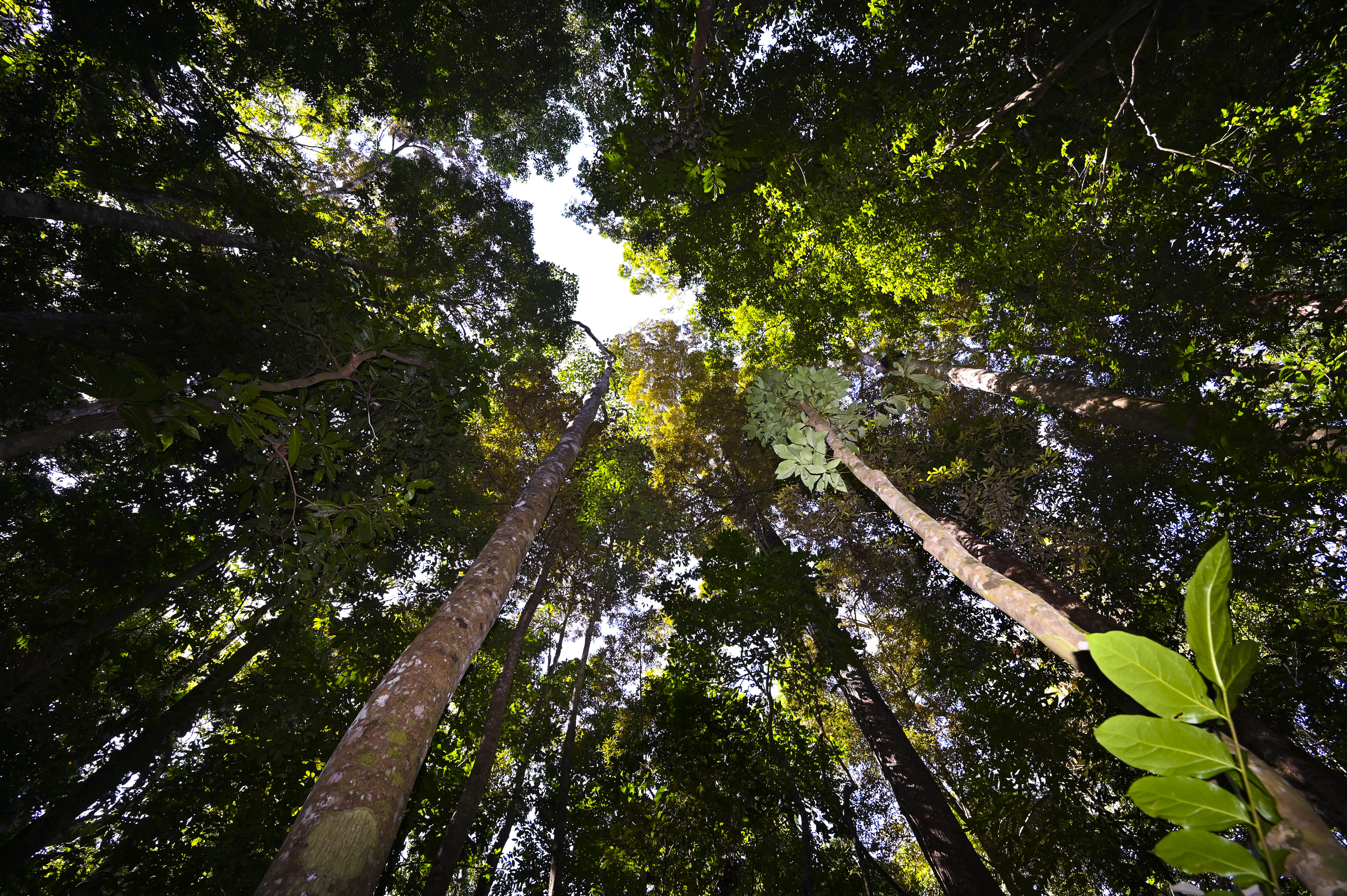
The boardwalk circuit takes you past a large scrub fowl nesting mound and huge trees that rule this fascinating rainforest – an encapsulated time vault, the home of epiphytes like ferns and orchids, climbing plants and lianas.Fancy a swim? Do so from one of the day-use areas in safety in this upland region as crocs are absent, though beware of ticks in the dry and leeches in the wet. Another danger you must be aware of is the most poisonous plant in the world, the stinging tree. Contact a leaf and it’s akin to having petrol lit on your skin. The pain is instant and may last for up to six weeks with spasms occurring for up to two years. Having been stung a few times, the best remedy I can offer is to use spray bandage to prevent air from contacting the hollow slivers of poisonous silicon that the plant injects in to the skin. Other ‘cures’ like waxing may help, but I’ve found it far from doing so, even though it’s recommended by medics – your call.The track continues to Lake Morris, the main water impoundment for Cairns, but it’s closed a short distance past the boardwalk where it meets the divide of the streams that feed the dam to protect it from soil run-off. The Bridle Creek Road, which connects it to the Davies Creek NP, enters a few kilometres past the fig tree boardwalk, but it’s also closed to vehicles.
Several gravelly creek crossings on the track are not to be missed. If you love birds and their sounds, the open canopy of most streams is magical due to the many different species that hang about water and their strident calls, especially during the fruiting season from August on. Keep an eye open for colourful butterflies, reptiles and more.On a recent escape, our way was barred by several large trees that had fallen over the track during a storm, just before the Bridle Creek track junction. Despite someone cutting away the bottom branches to allow vehicles to pass under the massive trunks, my Hilux’s canopy was about 30cm too high, so we turned back on to the Kennedy Highway and in to the Davies Creek NP some distance west towards my hometown of Mareeba.
Davies Creek National Park
This is a popular park for local people looking for a weekend and school holiday – camping, swimming, hiking and mountain biking escapes. During the week, it’s largely devoid of people and a great day-trip destination.The Park is highlighted by massive granite outcrops on the summit of the Lamb Range, open monsoon woodlands on the foothills, and, most of all, the perennial crystal streams that flow from bountiful springs high in the rainforest and its pure mountain air.For the fit, there are several trails that cater for both mountain-bike riders and hikers. The bike tracks are on the lower foothills and provide riders with a choice of steep trails that range from ‘easy’ to ‘hard’, in sections that are more than 10km in length. They traverse tracks that have rocks, jumps, creek crossings, dips and cliffs that connect with the Davies Creek and Clohesy River NP tracks, via the Bare Hill Conservation Park.
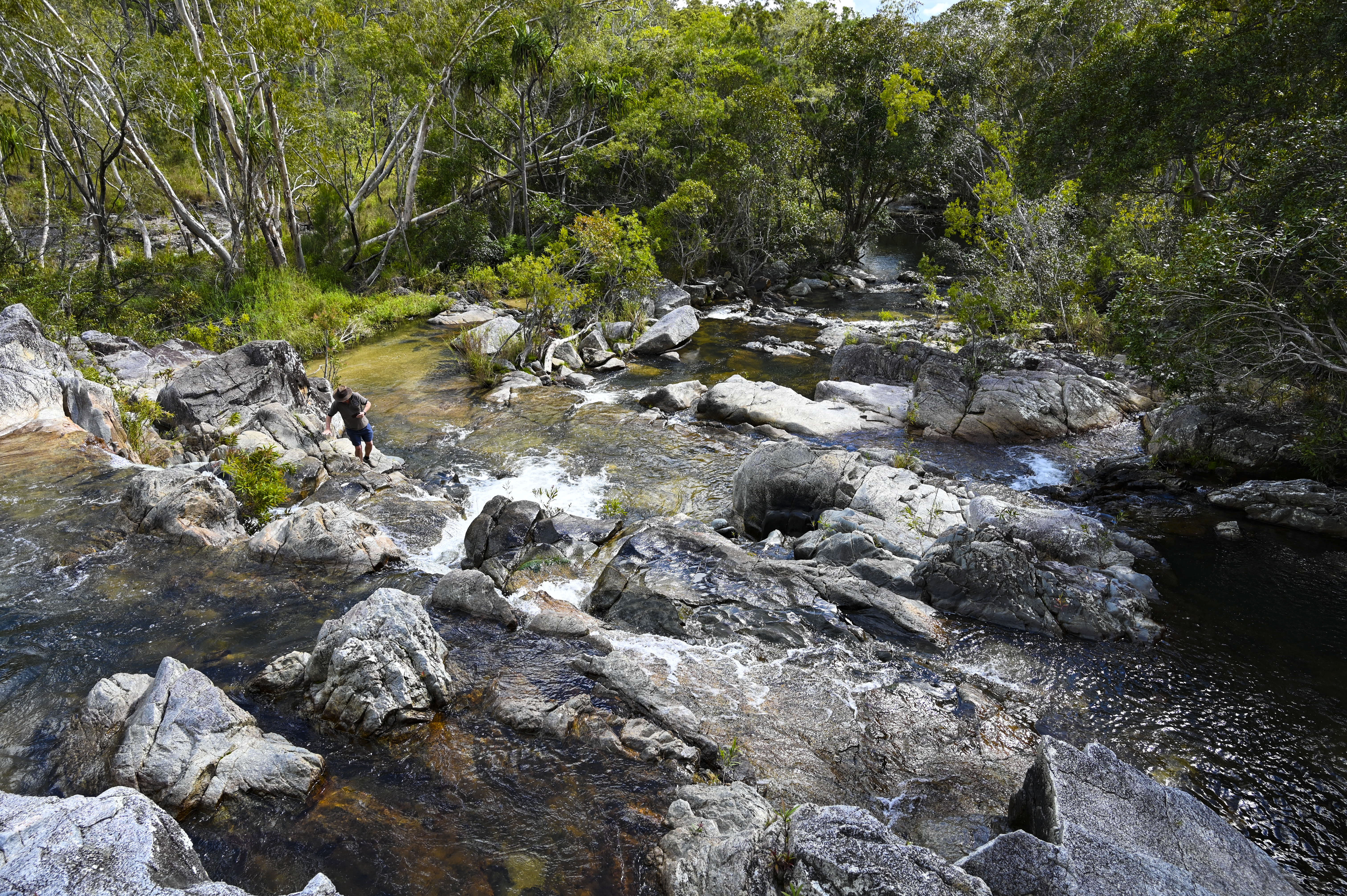
Hikers can walk the mountain-bike tracks or take the circular full-day hike of the upper Ridge Trail to the imposing 1289m high Kahlpahlim Rock on the summit of the Lamb Range. The shorter 899m-high Turtle Rock circuit trail is also popular with walkers. You need to be seriously fit as the highest point reached is at 1200m, where imposing panoramas of the mountains and the Atherton Tablelands are revealed.The first section entry of the park is sealed to where the open eucalypt forest of the foothills are entered. It also marks the start of Bridle Creek Track, which turns off and junctions with the Clohesy River Track, but again, a locked gate bars further progress a few kilometres farther on.There is a lovely rainforest-fringed creek at the gate that is popular for swimming and day picnics, while a short walking trail terminates under the lee of a high escarpment that shelters Indigenous rock art; a legacy of the Djabugay Clan, who shared a common boundary with the Bulwai people who resided in the foothills and the open forest below, most of which is now farmland. It’s estimated that the paintings may be as old as the Egyptian pyramids.
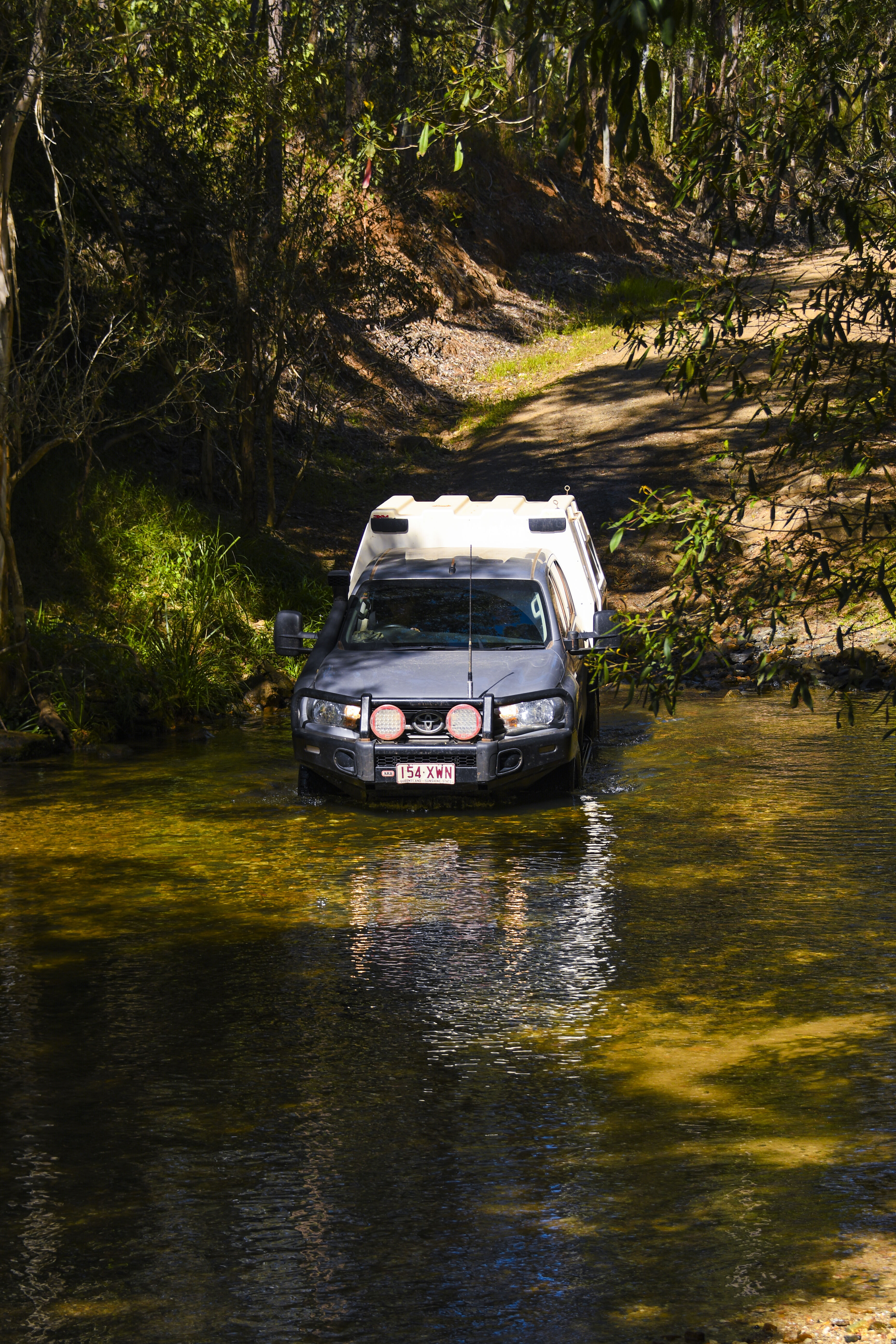
Unlike Dinden NP, Davies Creek has several camping sites that must be booked online. The road is suitable for campers and off-road ’vans. Compared to Dinden NP, there are few creek crossings as the road closely follows Davies Creek, which consists of fast-flowing rapids with short, shallow pools and several roaring waterfalls that offer a restful lullaby to those who are lucky enough to score a campsite nearby. Plenty of picnic and day-use areas are available.After passing the monsoon forest-clad hills, you enter a narrow strip of eucalypt forest that is highlighted by stately 30m tall gums and little undergrowth. This type of forest separates the rainforest proper from the drier monsoon woodlands of the lower western slopes along much of the western WTWHA. It is known officially as wet sclerophyll forest and is in recovery from past logging activities.Birdlife, especially colourful vociferous fruit-eating doves, are prolific in the rainforest, while flocks of chestnut manikins and seed-eating doves abound in the foothills. There are others, too numerous to mention, but the park is well patronised by serious birdwatchers as it offers some outstanding sightings.
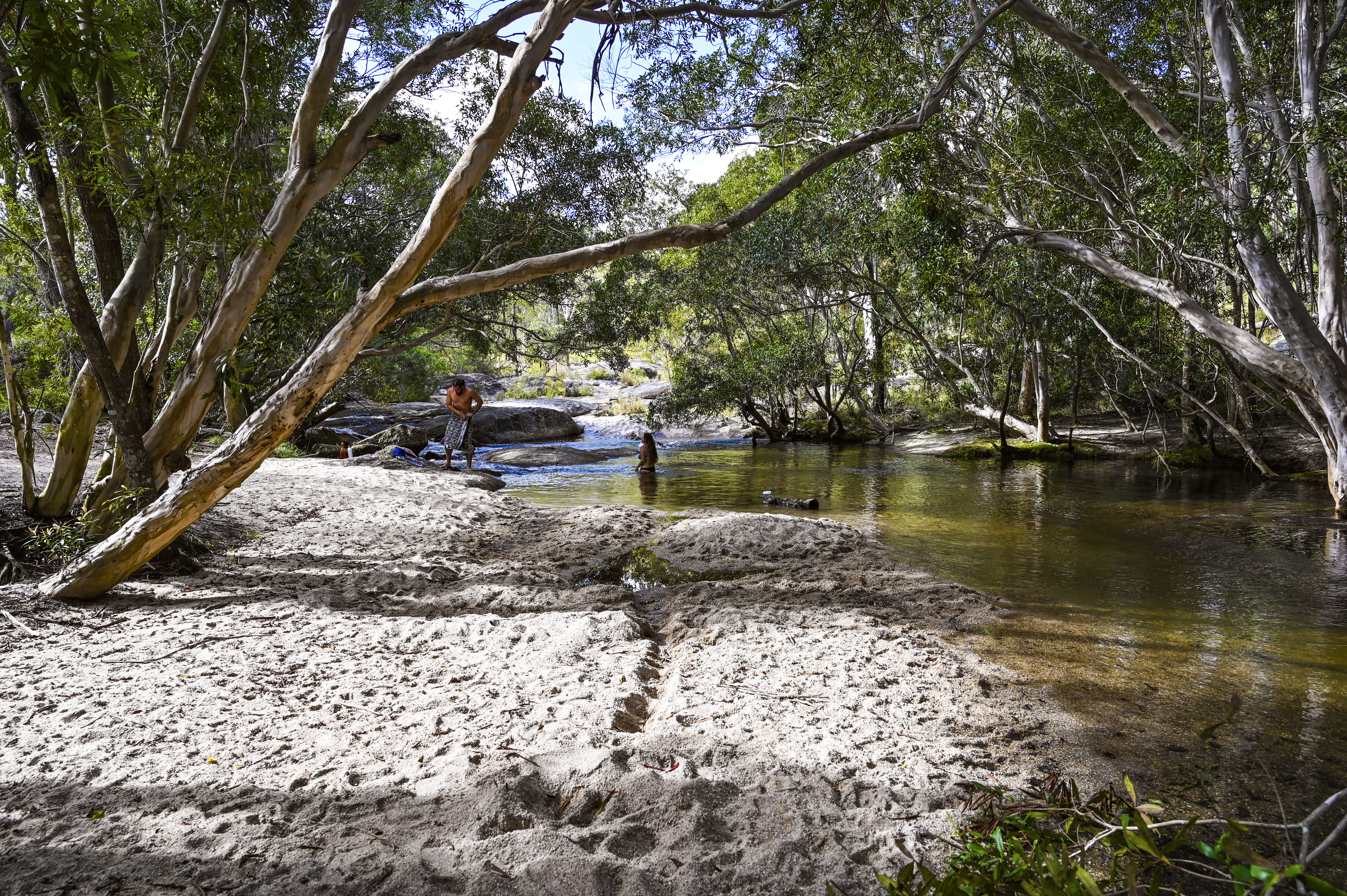
The highlight of Davies Creek NP is the creek itself. Just after the wet, when the park is reopened, the sound of roaring rapids and cascading waterfalls dominates over all. There is no escape from the roaring cascading of water on its suicide journey down the mountains on to the lowlands of the upper Atherton Tablelands and in to the Barron River where the water’s final plunge is at the Barron River Falls at Kuranda, something not to be missed if you are fortunate enough to be here in the wet.There are two camp areas in the park. The Lower Davies Creek Camping Area has facilities that include wheelchair access, toilets and benches. Wood fires are discouraged − bring your gas cooker. The Upper Camping Area, which is in the rainforest proper, caters more for wilderness escapes. But all camps are situated on the creek or close by for swimming. Apart from minnows, there are no fish in the mountain creeks, so leave the rod and yabby pots at home.Campers enjoy the company of possums, lemurs, tree kangaroos, frogs and the occasional reptile – scrub pythons that are longer than the average 4WD – at night …The creek is fringed by torrent-pummelled eucalypt and bottlebrush trees with trailing roots that cling with precarious footholds on rocks. Be aware that during the build-up season, sudden storms on the mountains turn streams in to raging torrents that have no respect for man or beast – and certainly not for a 4WD should you risk fording one. Stay home when the tempest rages. Log falls create upstream ‘dams’ that burst with disastrous effect. The released water roars down without warning, taking anything in its path down the mountains.
Emerald Creek Falls (Dinden West Forest Reserve)
Take the Tinaroo Creek Road, just before entering the Mareeba east entrance traffic control zone and turn towards the beckoning Lamb Range. The road is well signposted. While an unofficial sign says that no caravans are allowed past this point, a 4WD towing one should have no problems on the steep foothills. An option is to book in at the comfortable Trinity Plains Tourist Park at 186 Tinaroo Road for the night as no camping is allowed in the Dinden West Forest Reserve, being day-use only.
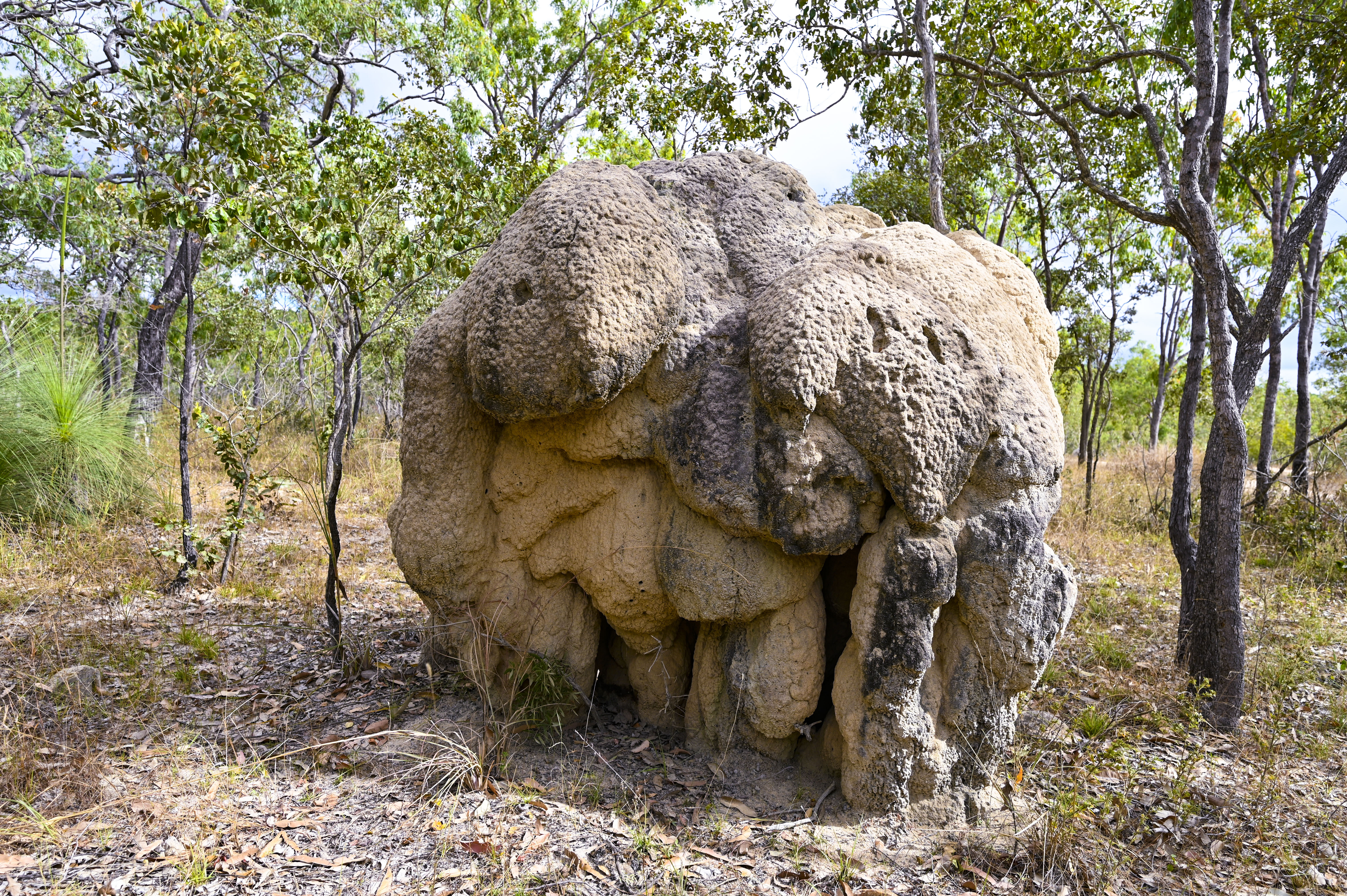
The maintained road terminates at a large parking area that has an amenities block. It is situated along beautiful Emerald Creek, where shallow pools, divided by short sections of rapids, have safe swimming, especially for children. From the parking area a walking trail continues up the mountains to the Emerald Creek Falls. It’s for the fit only as there are stiff, steep slopes.Of note is bordering Emerald Escape Camping, a private enterprise that has 14 secluded camping sites. Activities include swimming in a large dam and local creeks, walking trails, bird watching and more. Pets are welcome. It’s a nice option if you wish to stay a little longer in this awesome wilderness.
Climate and weather
The best time to sit back and relax in the upland parks is in the dry season when balmy weather conditions and cool, often cold frosty nights prevail. May to November is favoured by locals, most of whom are wise to stay out of the mountains once storms light up the skies over the Lamb Range and when trees are blown down blocking treacherous tracks.
Rains can also occur in the dry when the onset of the southeast trade winds pushes moisture from the Coral Sea on to the coastal ranges and beyond. It’s not the best time to be on these rainforest tracks as the clay soils are slippery and treacherous, while raging mountain creeks roar and sweep anything away that nature has no need for – including anyone dumb enough to cross one.
Five things to see and do
01: WET TROPICS WORLD HERITAGE AREA In the forested ranges behind the FNQ tourist hotspot of Cairns are the easily accessible Davies Creek NP, Dinden NP and Dinden West Forest Reserve. These are part of the WTWHA protecting the remnant rainforests, woodlands, mangroves, streams and wetlands of the ancient Gondwana supercontinent.
02: DAVIES CREEK CAMPING Davies Creek is the popular choice for locals to camp on weekends and school holidays offering swimming, hiking and mountain biking escapes. There are two sites available, but both are e-permit camping areas and all sites must be booked in advance.
03: CLOHESY RIVER BOARDWALK Within Dinden NP is a wheelchair-accessible boardwalk (a 300m return walk) encircling the magnificent Clohesy River fig tree, said to be more than a 1000 years old.
04: EMERALD CREEK FALLS There are two walks to Emerald Creek Falls. From the car park, the walk to the lookout is a 1.9km return trip, while the second 1.6km walk takes you to the bottom of falls.
05: OFF-ROADING For 4x4ers, explore the Shoteel Creek and Clohesy River valleys on the Clohesy River Road. This 33km unsealed road has river crossings and the opportuning to visit many clear-flowing creeks, and the Clohesy fig tree.
After a lengthy process, plenty of kilometres behind the wheel and intense deliberation, our judges have settled on the two 4X4 Of The Year winners for 2022.
Best 4×4 Ute: Ford Ranger XLT
The mid-size four-door, 4×4 ute market is one of the biggest in Australia these days, so it deserves a class of its own at 4X4OTY. There was a time in the past where 4X4 Australia used to do separate events and awards for utes and wagons, but that was because the utes lacked the tractive and safety technologies of the 4×4 wagons and it was almost impossible for them to compete on the same tracks.As utes became more popular with recreational users and family buyers, auto manufacturers started equipping them with all the same tech the other vehicles got – and now they are on par with each other. They have become so popular they dominate the 4×4 sales landscape and warrant a class of their own.
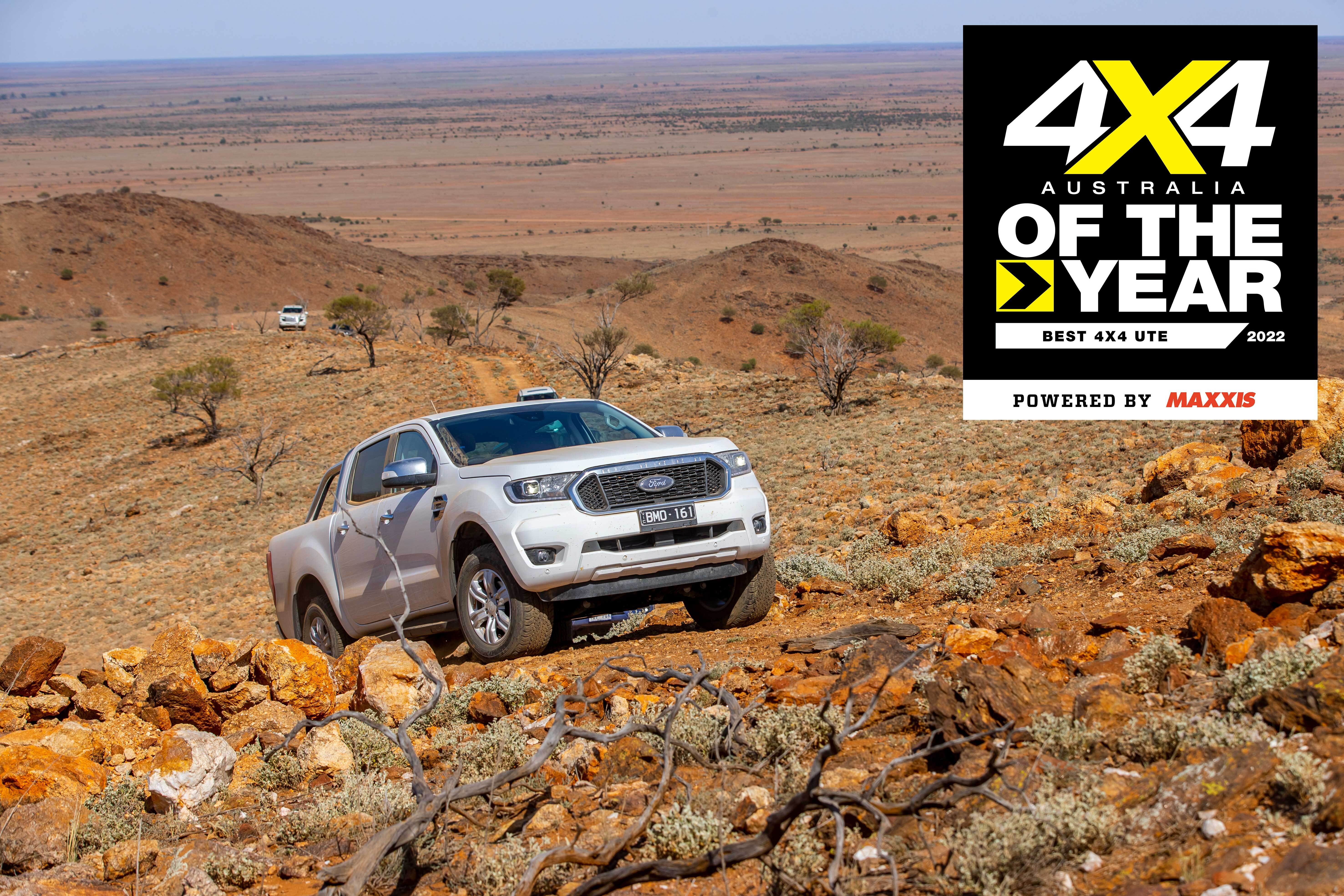
They say the cream rises to the top and it was no surprise that the two biggest-selling 4×4 utes – by a long shot – also led the charge when our drivers selected the two finalists in the category. What was surprising was that the ‘tuned’ utes – the Ranger Raptor, Navara Warrior and Amarok W580 – were looked over in favour of the more affordable offerings from the middle of the range.As such, it was last year’s overall 4X4OTY winner the Hilux SR5 up against the Ranger XLT, and of them the Ford proved the winner. In fact, the Ranger XLT was the highest scoring finalist vehicle overall and the Hilux was the lowest, so it was pretty much a unanimous decision; all our drivers scored the Ranger higher than the Hilux.From the moment the drivers hit the tracks at the AARC, it was obvious the Ranger was impressive. Comments referring to how well it handled the corrugated Second Class Road and how well it rode for an unladen ute over such a road were common, as was the feeling that the cars were engineered and set-up for Australian road conditions.
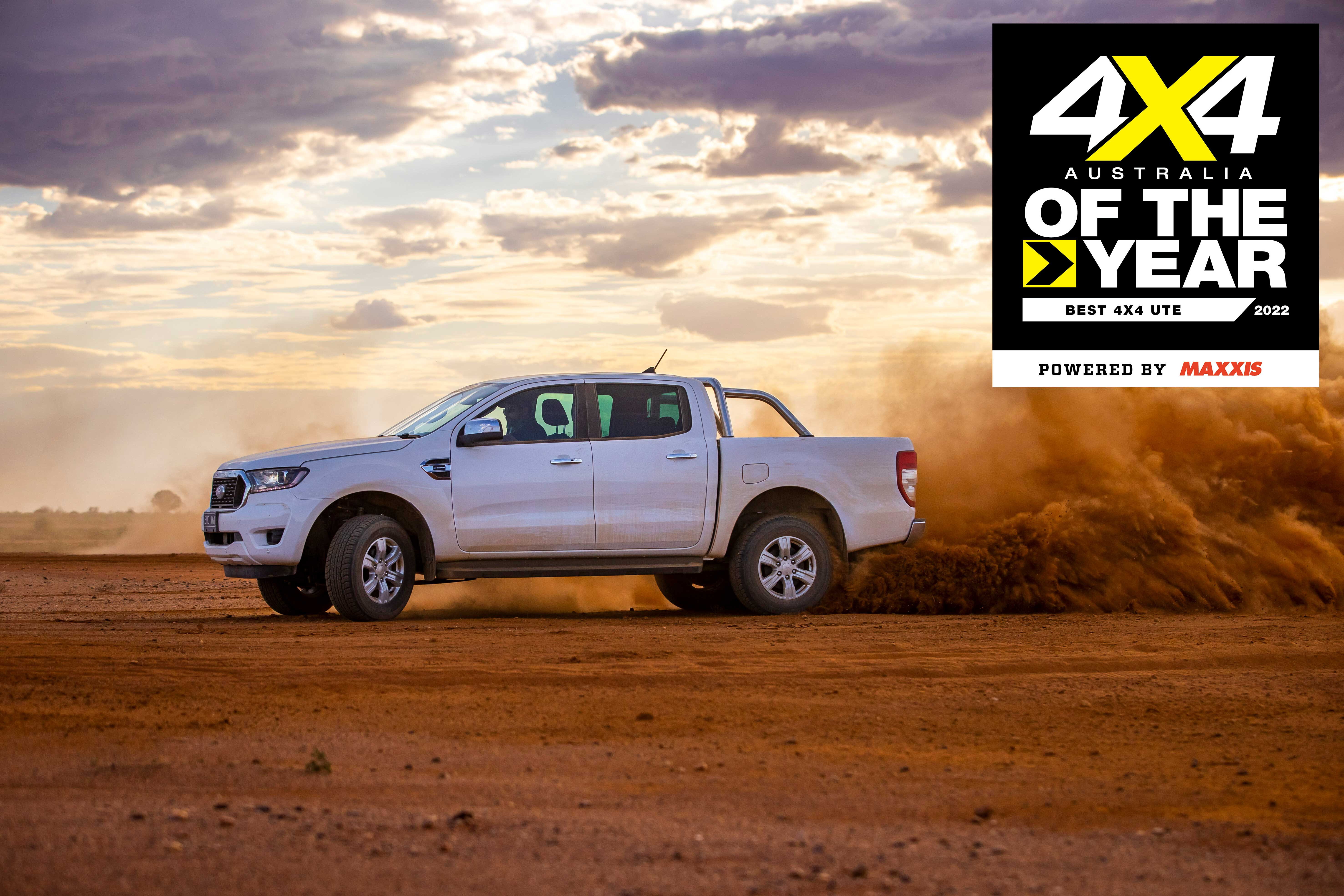
Dex said, “The Ranger was by far a better platform to drive over just about every terrain than the Hilux. It rode better, it braked better, it had better gearing, the seats were comfier – it’s number one in sales for a reason, folks.”Ron echoed those comments, saying, “The Ford Ranger is superior to all others in this category, climbing to the top of the ute pile for 2022.”While Evan said, “The Ranger is more comfortable on- and off-road than the Hilux, used similar amounts of fuel, and was capable off-road.”I really felt the Australian engineering and input that went in to the T6 platform under both the Ranger and Everest as I drove them around the tracks at the AARC, and it’s no wonder the Raptor drives so well when this is the platform it is based on.
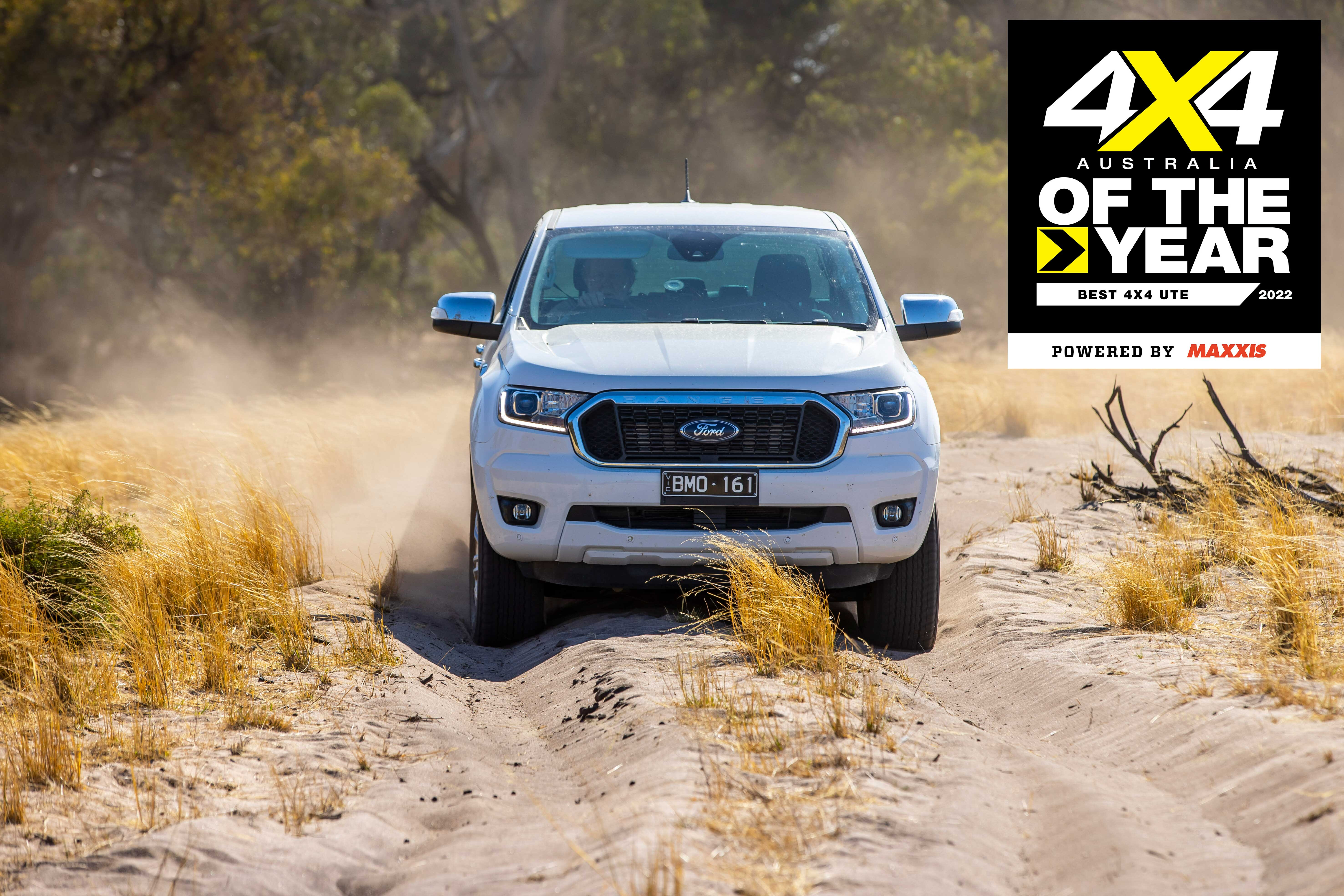
The Ranger backed up those impressions as we left the coast and headed up in to the desert country and it tackled the sand hills with relative ease, the bumpy tracks in comfort and was simple and easy to drive on open roads.As it displayed on the rutted hill climb at AARC, the importance of keeping the ETC active across the front axle when the rear diff lock is engaged, again showed its worth on the sand dunes and the rocky mountain climbs in the Barrier Ranges. The Hilux’s ETC calibration might be close to the best, but with the diff lock in and once it lifts a front wheel, you’re basically relying on the rear axle alone for drive. The Ford system is how it should work.It’s interesting to think that the Ranger is one of the oldest platforms in the ute segment, having first appeared under the PX Ranger in 2011. It has evolved over the ensuing years to what it is now, and the exciting thing for ute buyers (and scary for Ford’s competitors) is that there’s an almost all-new Ranger just around the corner, arriving mid year on the next-generation of T6 and with a V6 engine in its arsenal. It promises to be hard to beat!
FINAL SCORES
Ford Ranger XLT: 223
Toyota Hilux SR5: 210
Best 4×4 Wagon: Toyota LandCruiser 300 Series VX
The range of 4×4 wagons we had on test was so large and diverse we had to split them in to groups either side of the $100,000 price point before testing. Then after test drives at the AARC, we whittled them down to four vehicles as finalists, again trying to include both sides of the $100K divide.We ended up with the Toyota Prado VX, Nissan Patrol Ti-L, Land Rover Defender D300 and the Toyota LandCruiser VX. The fact the Prado was the lowest scoring vehicle of this quartet speaks volumes for the quality of the group, as it impressed us all with its performance as the week went on. The Prado’s way of getting on with whatever you throw at it without fuss or fanfare, with ease and a can-do confidence, drew surprising remarks from those who didn’t think it could be so good. But the competition was newer and better.
The Defender 110 D300 was a favourite for a few of the drivers from the outset – and in the final scoring. It covered any and all obstacles easier than any of the 18 cars we started with, and it does so with an air of luxury and grace that no other could match. However, it was let down by its lack of available touring equipment, 20-inch wheels and tyres, and perceived complexity, which concerned some as to how well it would stand up to extended touring. Thus, it didn’t score well in bushability and fell behind.If there was a fun-factor element to the judging criteria, then Nissan’s Patrol would have scored on top. The V8 engine is a hoot to drive, the suspension does a mind-blowing job of mastering both on- and off-road conditions, and its space and comfort both received positive comments. However, its fuel use relative to the diesel vehicles was a concern for our experienced long-haul drivers, and the way the electronics appeared to derate the engine to protect the powertrain under some tricky situations was also worrying.
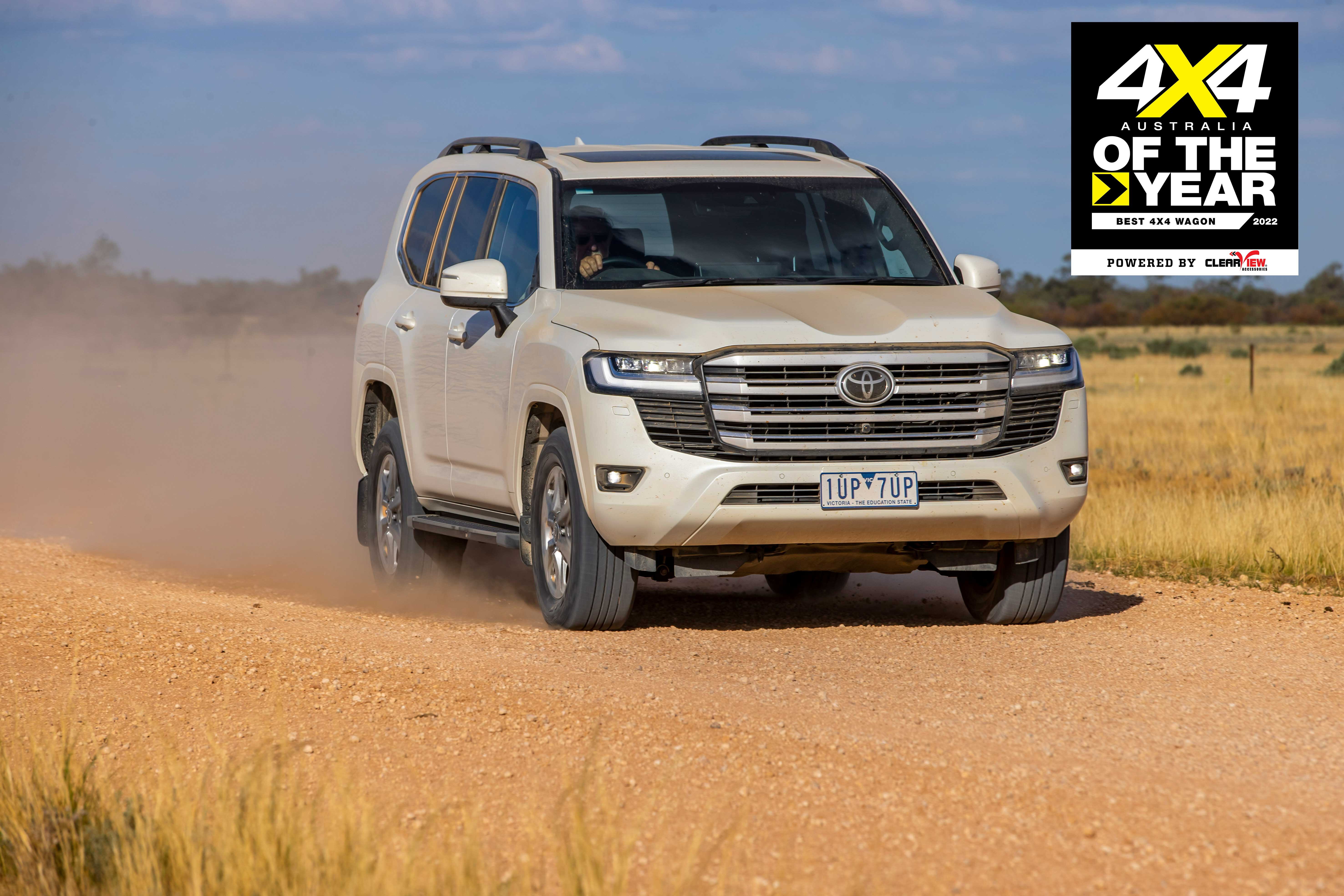
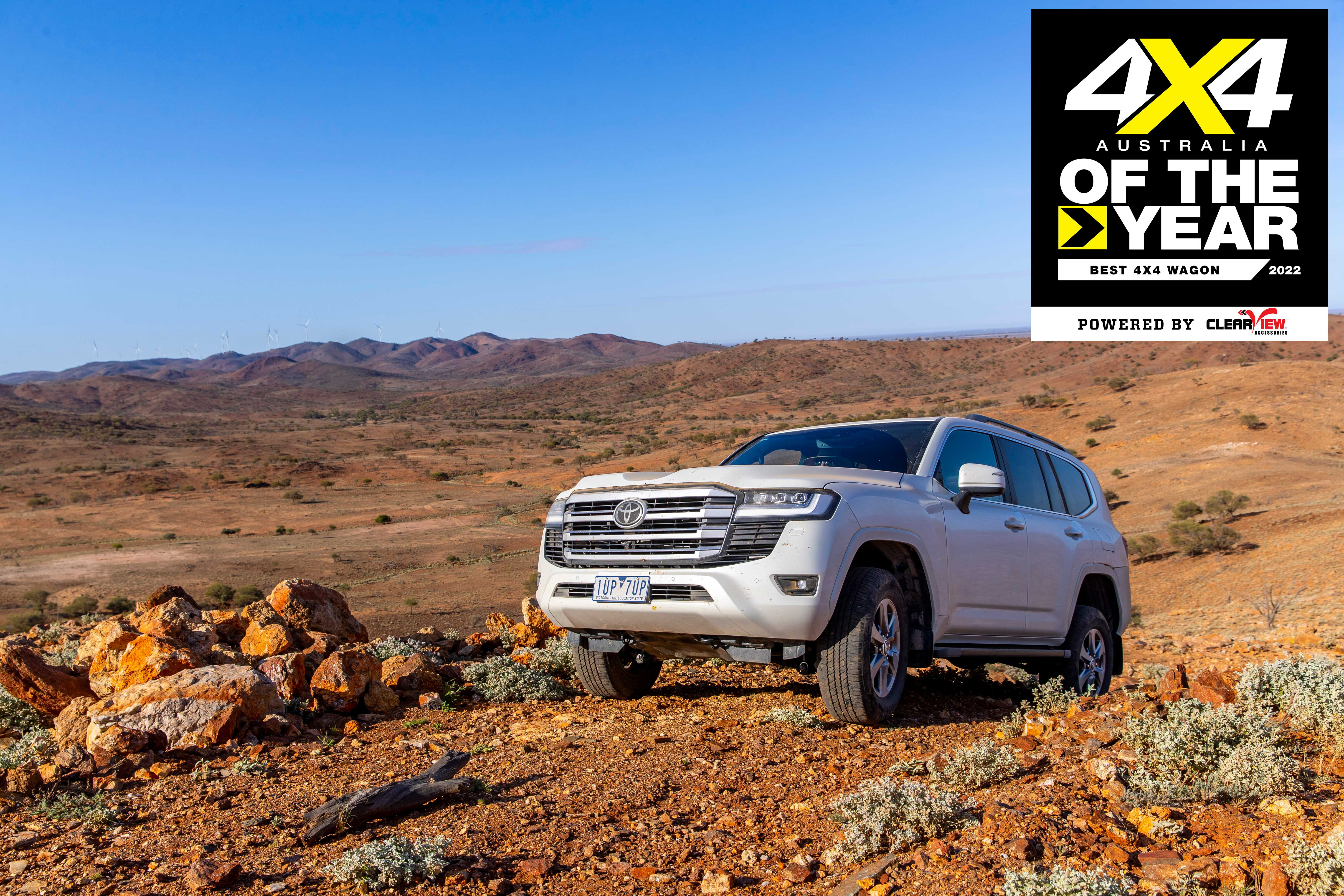
That left us with the LandCruiser VX which, in typical Toyota fashion, didn’t do anything outstandingly, but never put a foot wrong, never hesitated to get on with the job and didn’t give us anything to be concerned about.“It’s very comfortable on outback dirt roads and capable on the sand dunes,” said Evan of the Cruiser. “It’s built for Aussie conditions.”Ron had a similar opinion, saying, “The all-new Cruiser exhibits great NVH, a responsive engine, a slick gearbox and a suspension that gives a fabulous ride over all sorts of terrain.”
And from Dex, “It’s just so suited to touring the Aussie bush, which is probably the big reason it beat the Defender. It’s got plenty of power and torque for whatever you want to do with it, and surprisingly good fuel economy.”While our drivers all liked the 300 and the way it tackled the conditions, we were split evenly with three of us scoring the Defender higher than the Cruiser when looking at the over $100,000 vehicles. The tally of its scores put it atop the wagon offering, just two points ahead of the Patrol but one shy of the Ranger ute.
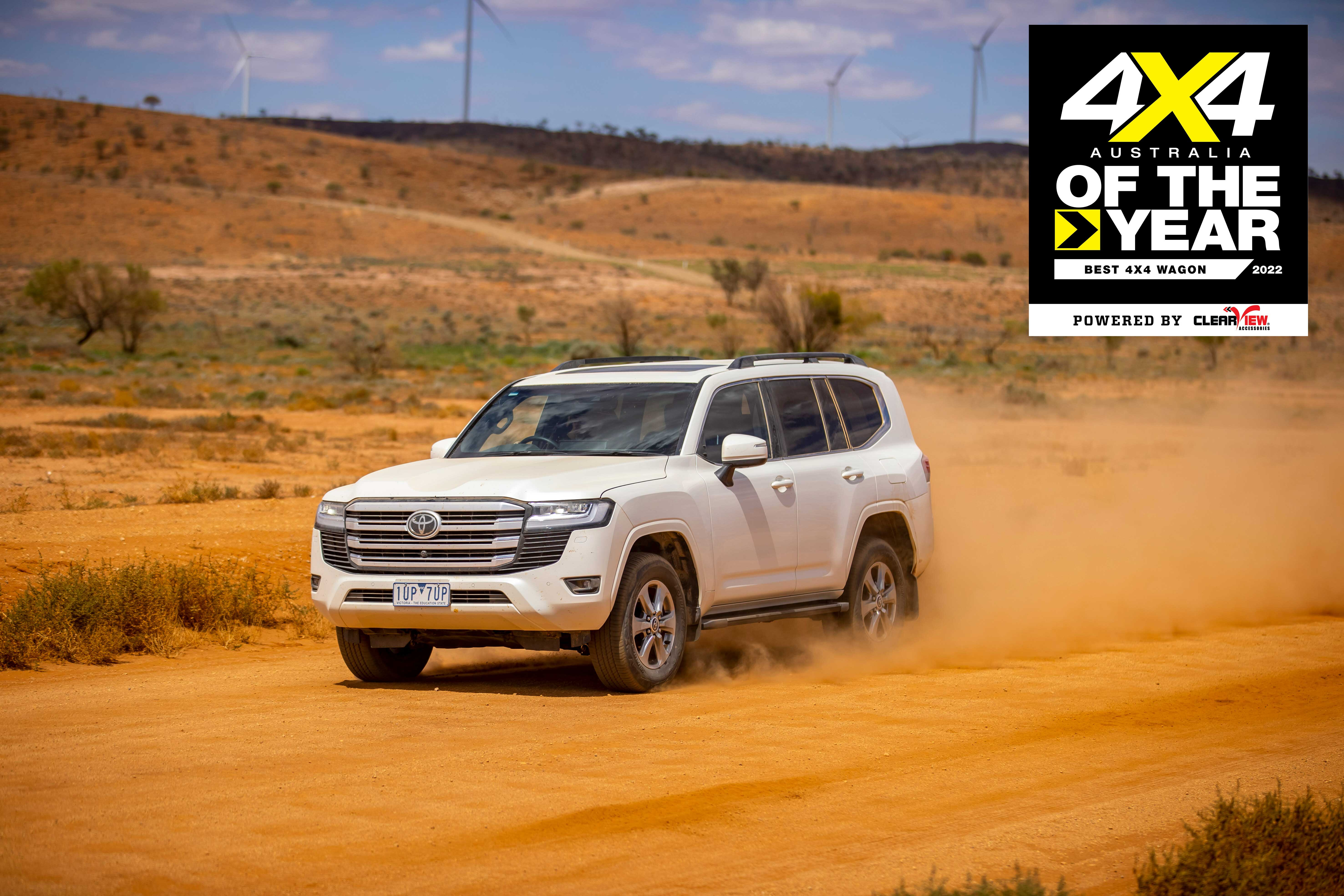
The 300 Series LandCruiser might be all-new, but it is an evolution of the 200 and all the generations before it. Seventy years of experience and development have chiselled and shaped the Cruiser to what it is now, and that heritage shows in the way the 300 handles whatever you point it at. Toyota knows the recipe for success here and it didn’t stray too far from what has worked before, simply refining and improving it just enough to create an industry leader for another generation of off-roaders.There were a few criticisms of the LandCruiser, with most thinking it is very expensive but justified that against its ability on all terrains. Some noted the way the lightweight aluminium bonnet vibrates as you drive along; visible from the driver’s seat but not hear or feel it, so it’s only a visual thing and doesn’t detract from the car’s refinement to driving experience.It’s nitpicking and if that’s the worst we could throw at the Toyota, then it’s obviously a good thing and a deserving winner of the 4X4 Wagon of 2022.
FINAL SCORES
Toyota LandCruiser 300 VX: 222
Land Rover Defender D300: 216
Nissan Patrol Ti-L: 214
Toyota LandCruiser Prado: 214
What we learnt
New car buyers are spoilt for choice in 2022. We know a lot of them you can’t get due to stock shortages, and even if you order them now you’re looking at a six to 12 months (or longer) waiting list. It’s a pretty crook situation if you are wanting to get in to a new 4×4 right now, but if you are prepared to wait for what you want the choices are mind boggling.There’s a new 4×4 on the market for just about anyone. The mid-size 4×4 ute field is ever expanding, with new brands and models arriving every month and more waiting in the wings to get in, while wagon buyers are faced with a showroom that includes everything from ute-based budget beaters to luxury wagons like the Gelandewagen, Range Rover or even Bentley and Rolls-Royce SUVs. It’s only limited by your budget.
Some might still say you get what you pay for, but there are plenty of new vehicles on the market now that appear on paper to be great value for money but don’t always work so well. Some of the newer brands on the market offer extensive features lists that read like the car is great value, but it appears the features are only there to tick them off on a list and they don’t work as they should.Electronic traction control systems that are so slow as to be useless in rough terrain; electrically-assisted power steering that feels completely removed from the front tyres; and huge touchscreens that look impressive on the dash but you almost need to poke your finger through them to get them to work. These are just some of the things we found through our testing in the lead-up to 4X4OTY.The 18 vehicles we brought on the test were the best of the bunch, even if some of them weren’t the specification we’d asked for. Still, some of them failed at the first hurdle.
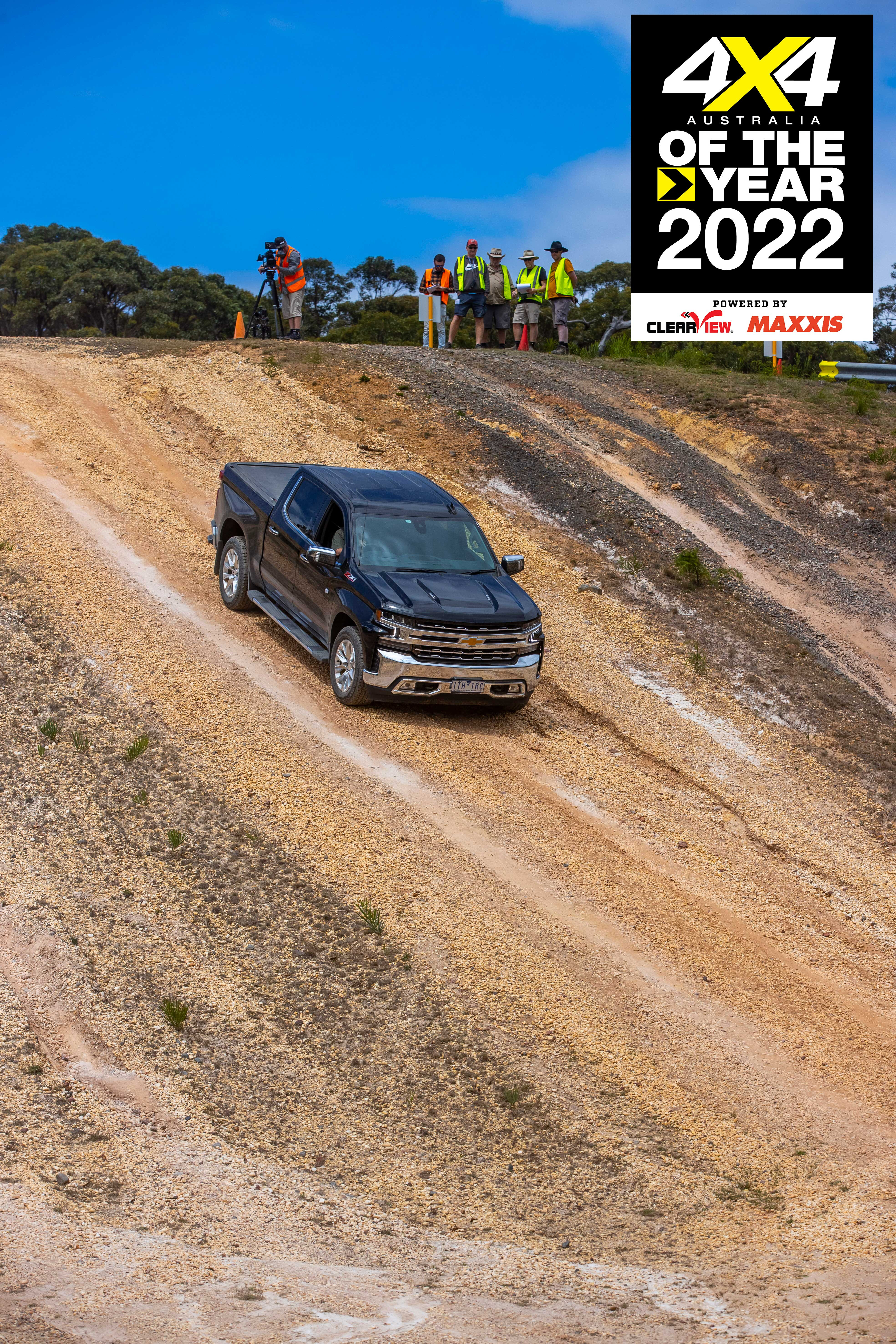
The Chevy Silverado LTZ was an early disappointment. We’d asked for the Trail Boss model as it would have been more suitable to our needs and represents better value for money, but GM couldn’t supply one. While the big pickup is a beautiful beast on the open road and should make a great tourer, the way it shook and rattled on the corrugated Second Grade Road was horrendous and you wouldn’t want to take it on any outback track. I wonder how the Trail Boss would have gone on its better tyres and suspension?The rutted hill climb at the Australian Automotive Research Centre looked challenging but we considered it to be fairly standard fare for any capable 4×4 vehicle. Yet some of those lower-priced ute-based wagons failed to proceed past the first hump in it, while others got to the biggest part of the rut and the ETC gave up as soon as a front wheel lifted off the ground.
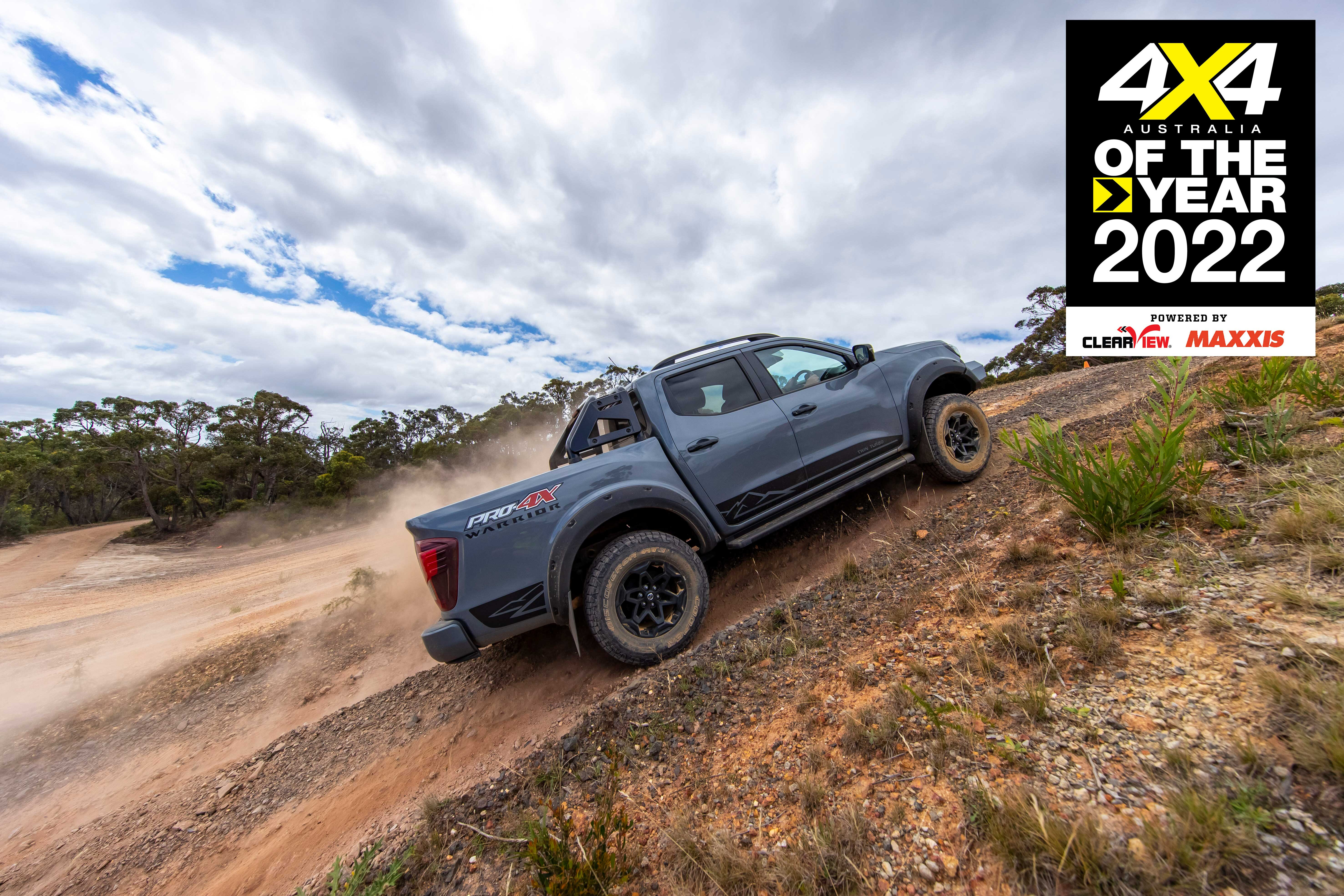
Riding on the same T6 platform as the Ranger and with a shorter wheelbase – which in theory could make it a better off-roader – we expected more of the Ford Everest, but it stopped at the rut with wheels spinning. We put that down to a couple of things: the low-profile tyres it wore on 20-inch wheels, the wheelbase placing the tyres in the ruts, and the on-demand 4WD system that can’t be manually locked at the centre diff.Likewise, the Navara PRO-4X Warrior which behaved superbly on the rough Second Grade Road and eventually made it up the hill climb, but it sure made hard work of it and struggled furiously all the way.
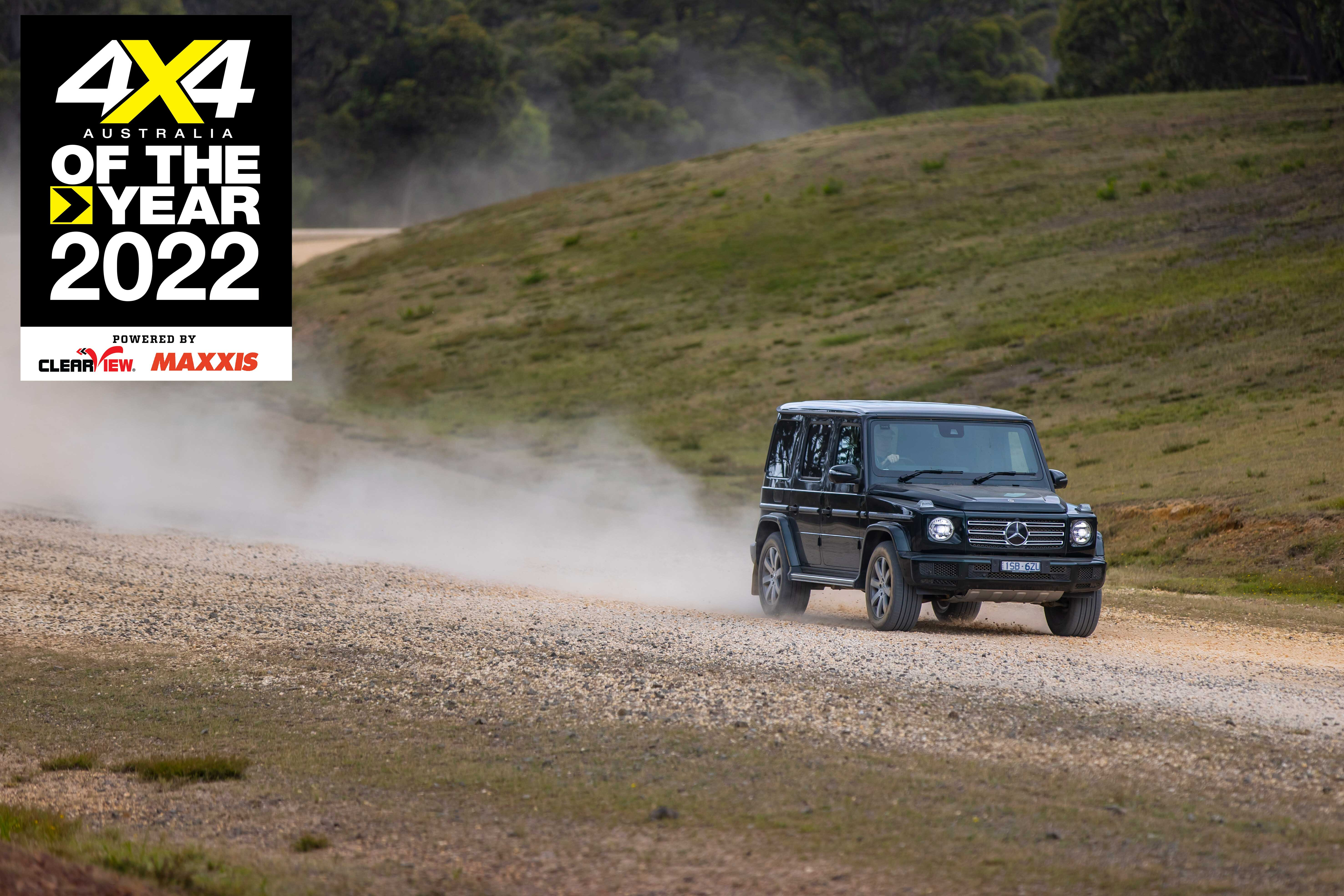
Even the triple-locked and mud tyre-equipped Gladiator Rubicon had its issues here. It made it up without fighting for traction but it was scraping its undercarriage most of the way, and then it almost got hung up cresting the rise where none of the other cars touched down.We didn’t even try to drive the Silverado up here as it is way too low and would have only resulted in damage.We didn’t want to take the G400d up the hill because it, too, is relatively low and, with its price tag, we sure didn’t want to scratch it. But as many of the other vehicles drove up, we thought it unfair on them not to try it on the hill. To the amazement of all watching, the G-Wagen drove up easier than any other car, barely spinning a tyre with its diffs locked and pointed straight up. It’s an amazing vehicle, but the price discounted it from our list of finalists.The same for any car that didn’t make it up the hill. If it couldn’t drive up that hill, it could never be 4X4OTY, and that’s what sorted our dirty half-dozen.
A golden age of engines
Just as buyers are spoilt for choice in new cars, we are spoilt by the engines that are available in them right now. In this time of EVs being shoved on to the market, it truly is a golden age of the internal combustion engine. From the simple two-valve-per-cylinder pushrod V8 of the Silverado, the high-tech direct injection V8 in the Patrol, to the sublime performance of the in-line six cylinder engines in both Land Rovers and the G-Wagen – these mills sure put a smile on our dials. And they should do the same for any driving enthusiast.The supercharged and turbocharged petrol engine in the Land Rover Discovery P360 is a driver’s delight, delivering the bottom-end torque of a diesel engine and the top-end charge of a highly-tuned petrol, all with the wail of a performance car and diesel-like fuel economy.
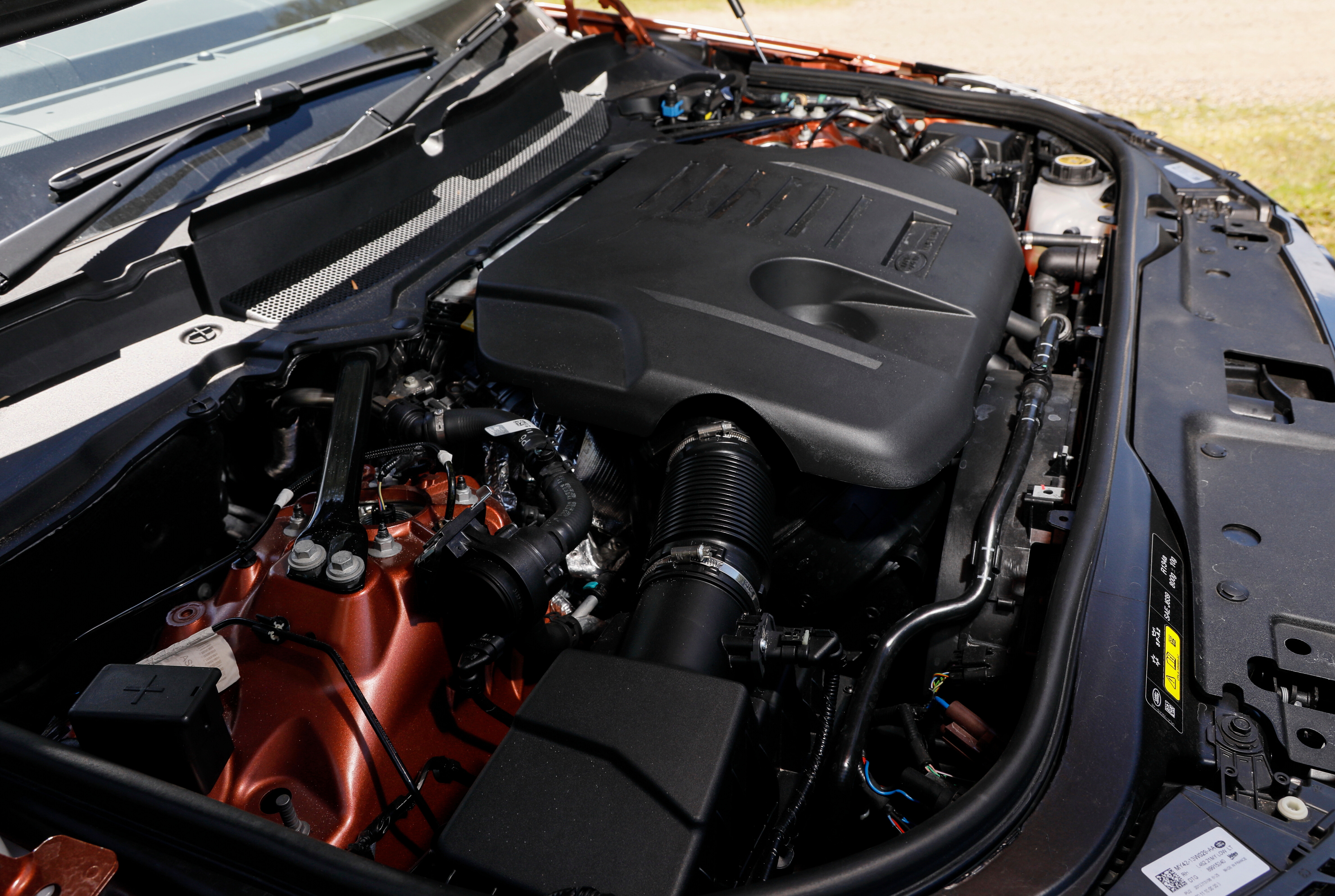
The new V6 diesel engine in the LandCruiser might not have the sound of the old V8, but it out-accelerates, has a broader spread of torque and uses less fuel than the engine it replaces. It is part of the package that makes the 300 more of a driver’s car than the 200 Series and more rewarding to drive. It’s early days for the F33A-FTV and time will tell how it performs long-term, but remember the problems that the 1VD-FTE V8 had when it first arrived?Nissan’s VK56 engine could be the last of the great naturally aspirated V8s as it is truly rewarding to drive and it works so well with the Patrol’s relatively dynamic chassis, while the 700Nm of roaring grunt that comes from the Mercedes-Benz in-line six has to be felt to be appreciated. Even VW’s ageing V6 diesel in the Amarok is a joy to put the pedal down.While we can’t say that about any of the four-cylinder diesel engines that come in most new 4x4s – they are all noisy and uninspiring – as long as the range of EVs is limited by the lack of infrastructure in this country, the internal combustion engine will remain the only choice for four-wheel drivers and others who like to venture beyond the daily commute. Enjoy them while we can, people!
The tucker truck and its accompanying trailer was bogged, the five-minute shortcut turning in to an hour-long recovery, before we were again carving up a dust storm behind each set of vehicle wheels.
Our adventure had started a few days earlier when our judges and film crew gathered, along with the 18 vehicle contenders for this year’s 4×4 of the Year awards, at the Australian Automotive Research Centre, inland from the surf coast south of Geelong.
We were a long way away from any surf though, as we took each and every vehicle for a spin around the bitumen road loops and then around the gravel-road section of the test tracks that make up this world-class vehicle test facility.
With lots of miles slipping under our belts, we then took the vehicles to the steep hill section of the test facility comprising accurately measured gradients and a few different surface conditions. These varied from smooth concrete on the steeper slopes (more than 45 degrees!) to rutted and pot-holed scrabbly tracks that tested suspension travel, traction controls and diff locks to the maximum.
Mallee country
Once we left the research centre with our finalists, we followed back roads, staying mainly on second-class bitumen along with all its variables, as we passed through rolling farmland to Cressy and then Skipton before hitting the Western Highway at Ararat.The highway miles slipped away quickly before we were again back on second-class blacktop as we pushed north from Dimboola, through paddocks that had been stripped of their golden grain to the small town of Yaapeet. Here we found our way to Turkey Bottom Lake, where the tucker truck had already set up for our arrival with a few beers and dinner.
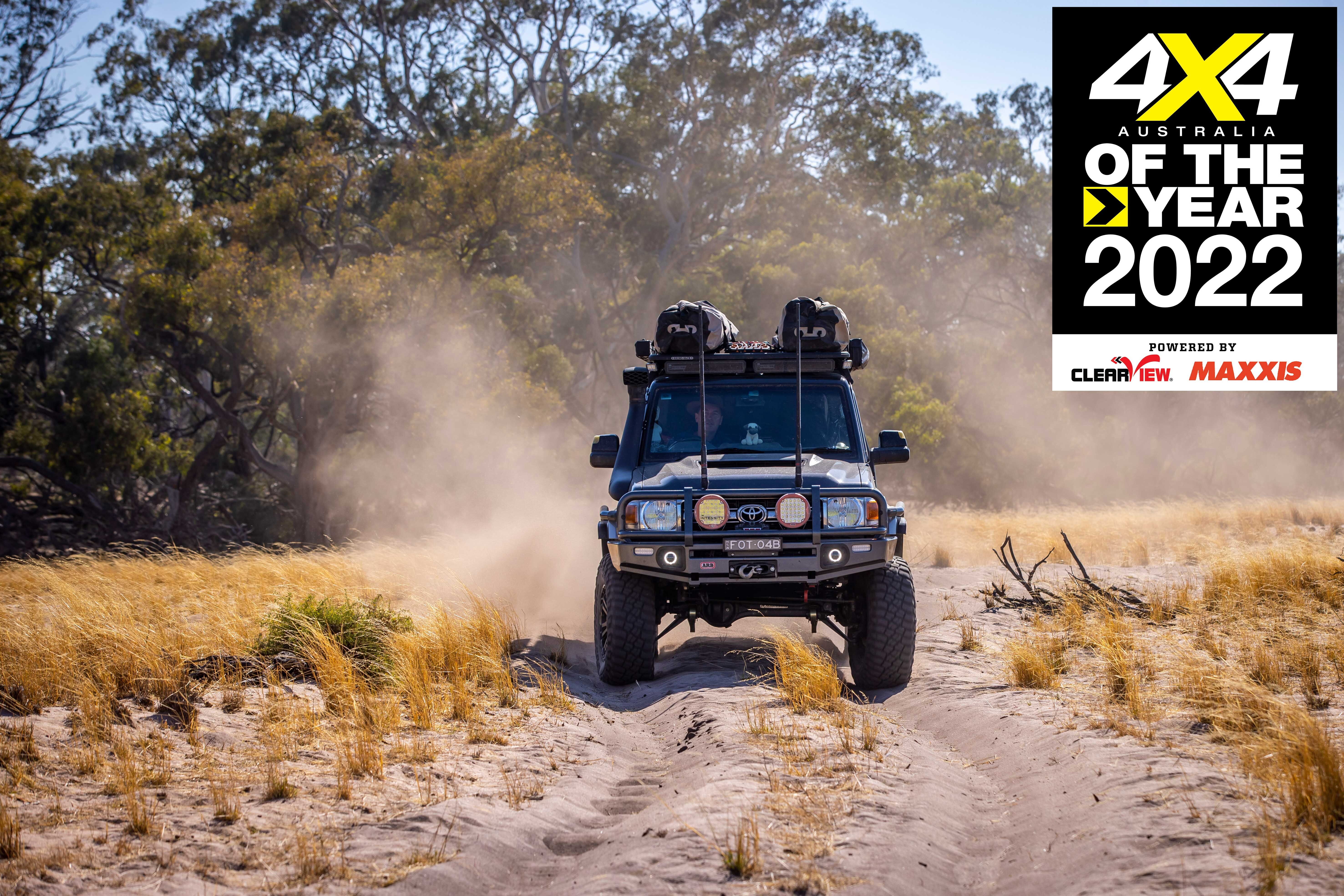
This community-established lake is a cracker and features a sandy beach and well-maintained basic facilities, while the lake itself has been stocked with a few thousand silver perch to add another attraction to the area. Be sure to leave a few dollars in the donation tin.Just west of Yaapeet we were dodging around the southern shores of Lake Albacutya, taking a track that was a shortcut instead of sticking to the main road when the aforementioned bogging occurred. Lake Albacutya itself is rarely a lake as such – the last time it had meaningful water in it was in the 1970s!
Still, it does offer a few spots to camp, but, sadly amongst the line of signs at one entry point it read, ‘Vehicle based-dispersed camping is not permitted’. Maybe the powers that be think that such shenanigans may pollute the non-existent water or scare the ducks that haven’t visited for years.
The ‘rock’
After leaving the lake shore, we were again on gravel roads before turning on to the Milmed Rock Track that passes through the heart of the Wyperfeld National Park.Leaving the cleared farmland behind, the route winds over dunes and among mallee scrub, heath and broombush, interspersed with the occasional claypan and semi-cleared area dotted with native pines and taller red mallee trees.
It passes through the rarely wet Round Swamp (where there is a camping area) to Arnold Spring, which was once used as a watering point for stock, and on to Milmed Swamp (another camp spot) before coming to Milmed Rock.
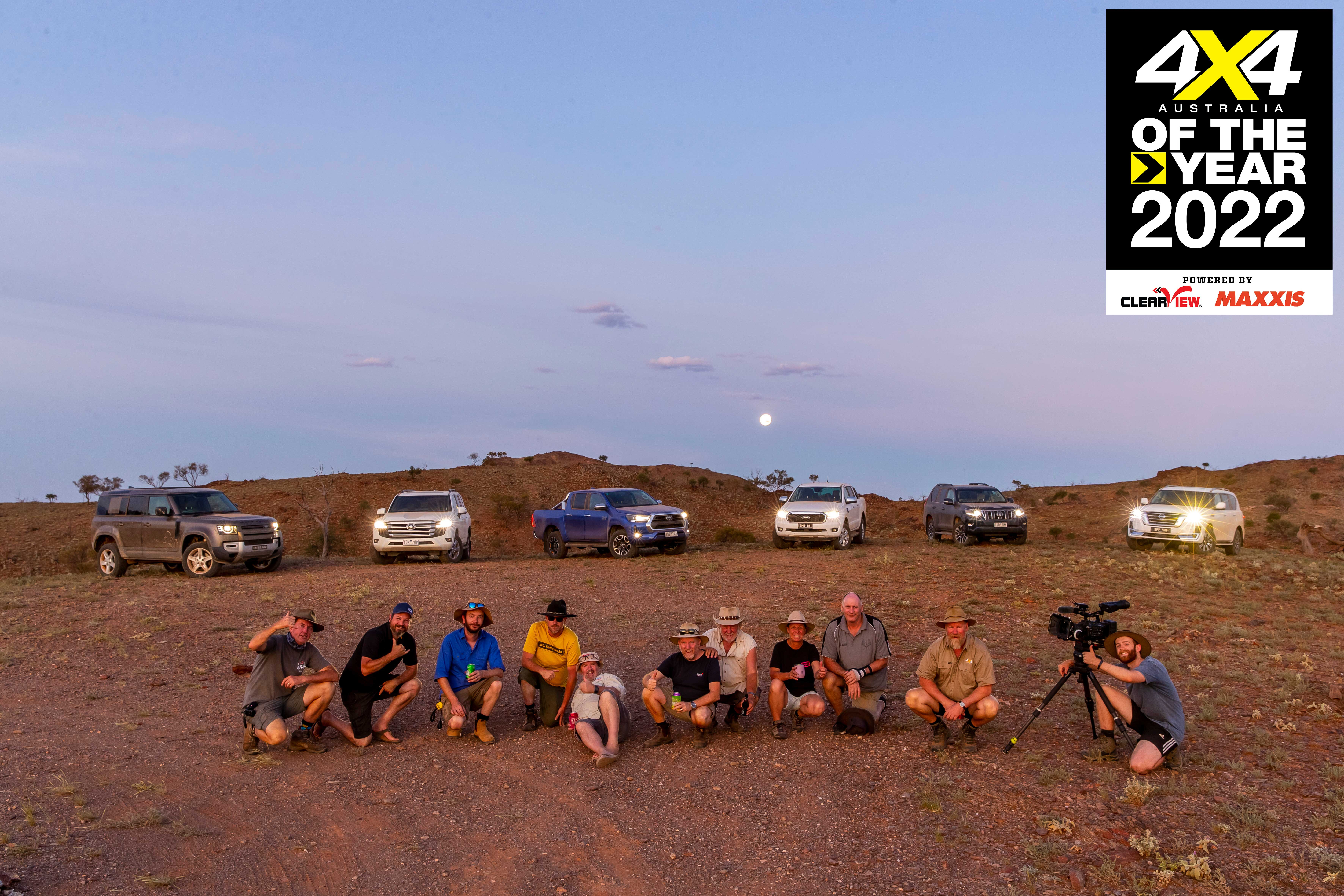
You don’t want to get too excited about the rock as it is only a few metres in diameter and just over a metre high, almost hidden by the surrounding small trees. Still, it’s the biggest ‘rock’ you’ll see in this part of the desert!By now the weather was warming up, the sun beating down, and the sand fine and dry. The route had also seen a fair amount of traffic and in places it was plagued by whoopty-doos, which makes any suspension work hard trying to keep the oscillations of the vehicle in check.Hitting the good dirt of the Murrayville-Nhill Road we turned north, stopping briefly at Big Billy Bore for a change of vehicles (an hourly occurrence during testing). A short distance north we turned in to the Big Desert State Forest and took Delisio Track and Big Dune Track to White Springs Track, the route again across soft, bumpy sand with the occasional biggish dune, while the vegetation had changed to mainly native pine and broombush heath country.
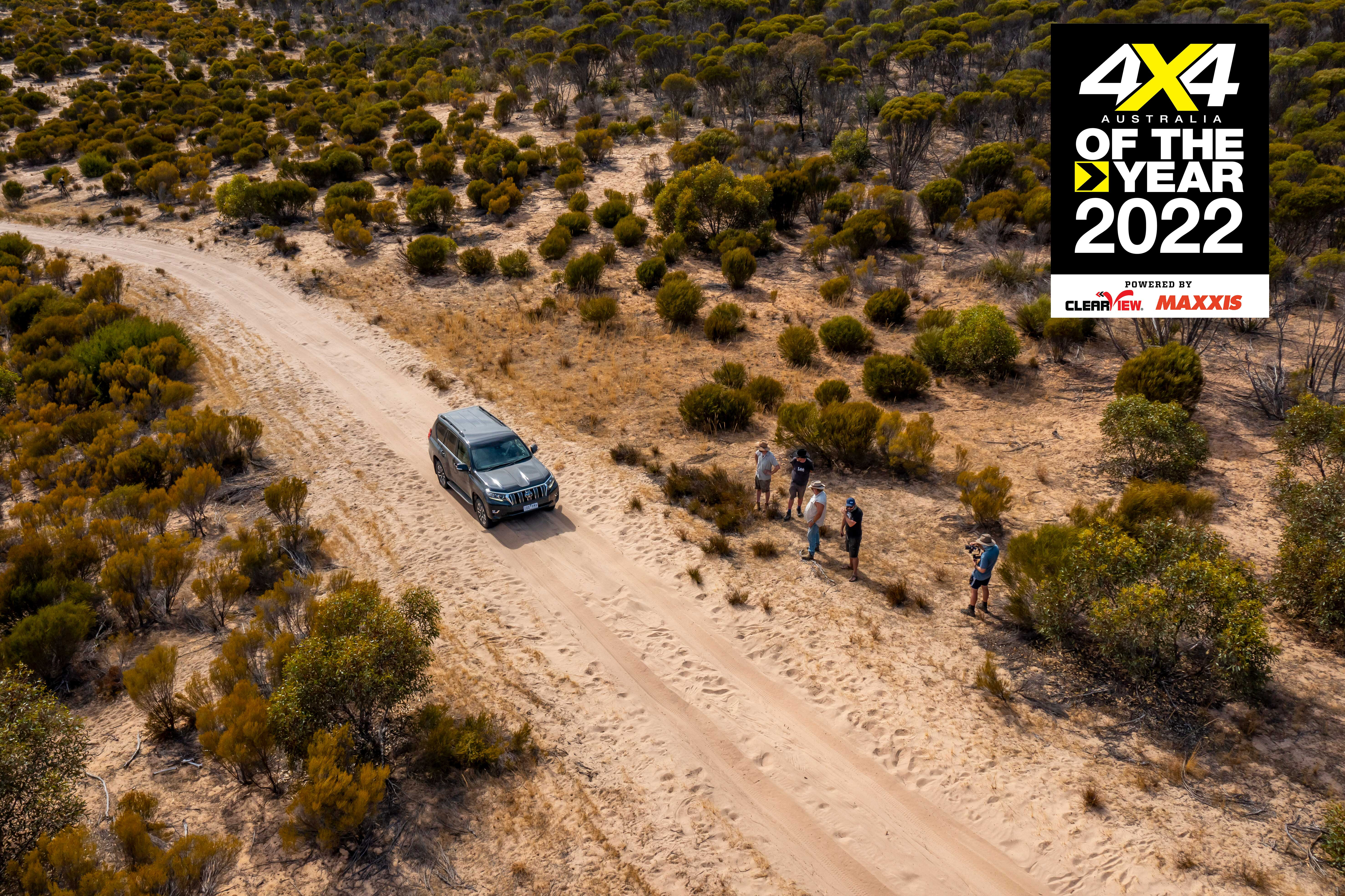
At so-called Lone Pine, we burst out in to a large flat clearing before entering scrub country again, passing the now derelict John’s Bore before turning west along Firebreak Track. This track climbs and dips over some big dunes, with the sun making tracks to the western horizon, the crest of one particular beauty made for a top spot to shoot some video sequences.That evening our camp was a hurried, last-minute affair, close to the junction of the Murrayville Road. Next morning, with no fuel available in Murrayville we made the short detour interstate, along the blacktop to Pinnaroo, where once refuelled we retraced our steps back to Murrayville before continuing on to the small community of Cowangie.Back on dirt, we struck north passing through the heart of the Murray-Sunset National Park on what is a pretty good dirt track. Near the northern boundary, we dodged around and passed along the edge of Rocket Lake, one of the standout features of this park, before again passing through farmland to the bitumen.
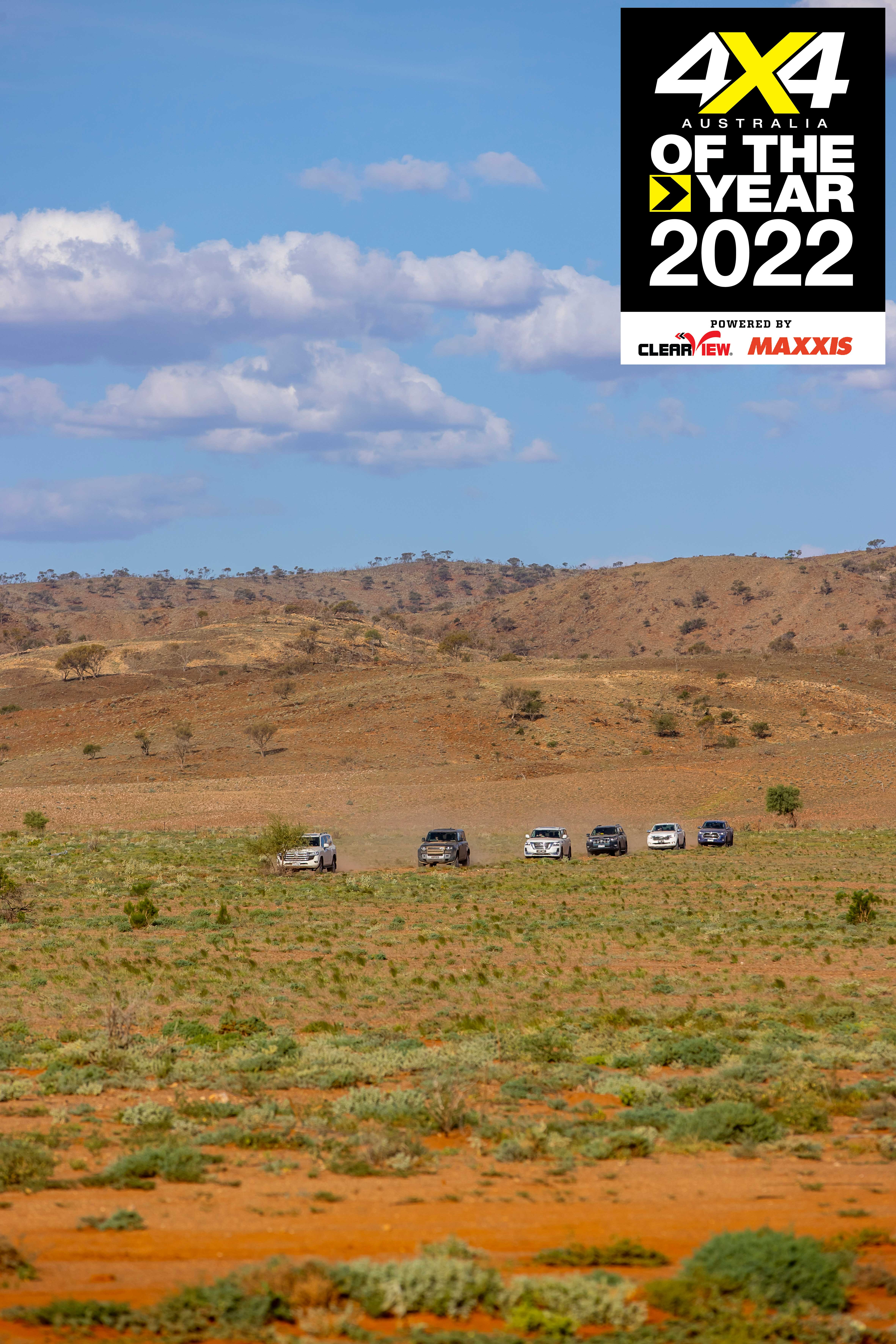
Bypassing the market gardens, vineyards and built-up areas of Mildura and surrounds we crossed the Murray River, went through Wentworth without stopping at the local bakery and then took the High Darling Road to the pleasant, historical, one-time port of Pooncarie. It was late by the time we pulled in to enjoy a meal on what had been a very hot day, it was to be an unpleasant hot night for sleeping in a swag.
Mighty Darling
The mighty Darling River was ‘mighty’ once more and flowing a banker, so most of the campsites I knew and treasured along the stream were either inundated with water or muddy from the water’s relentless advance and then retreat. But it was magical to see water flowing around giant red gums and giving a sheen of green wherever the water touched.Next morning, we headed north tracing the Darling’s route to Menindee and the lakes that make this area of western NSW such an iconic place to visit and enjoy. At this time of the year with the daytime temperatures in the 40s, there were few people camping along the shores.
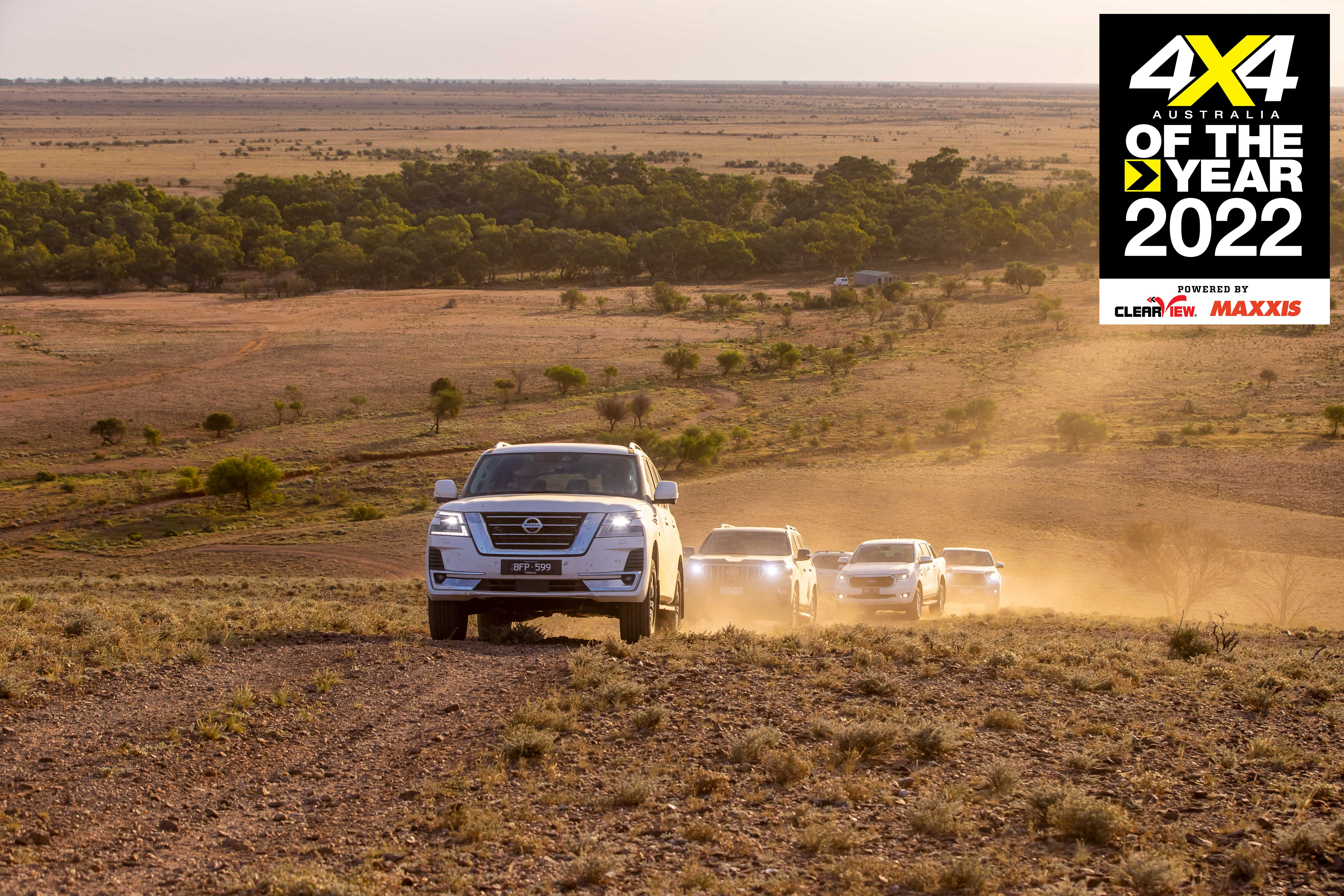
Still, our film crew, as they are known to do, found a few spots for filming and photography before we pulled in to the shade at Copi Hollow for lunch, beside the lake which has been a popular holiday spot for Broken Hill locals for generations.Broken Hill was our next quick fuel stop as we pushed on to our final destination, Eldee Station on the edge of the vast Mundi Mundi Plains and tucked in close to the rocky hills and defiles of the Barrier Ranges. It’s a great spot to stay and we threw down our swags on the lawn of the small campground and enjoyed the hospitality of the owners, Steve and Naomi.
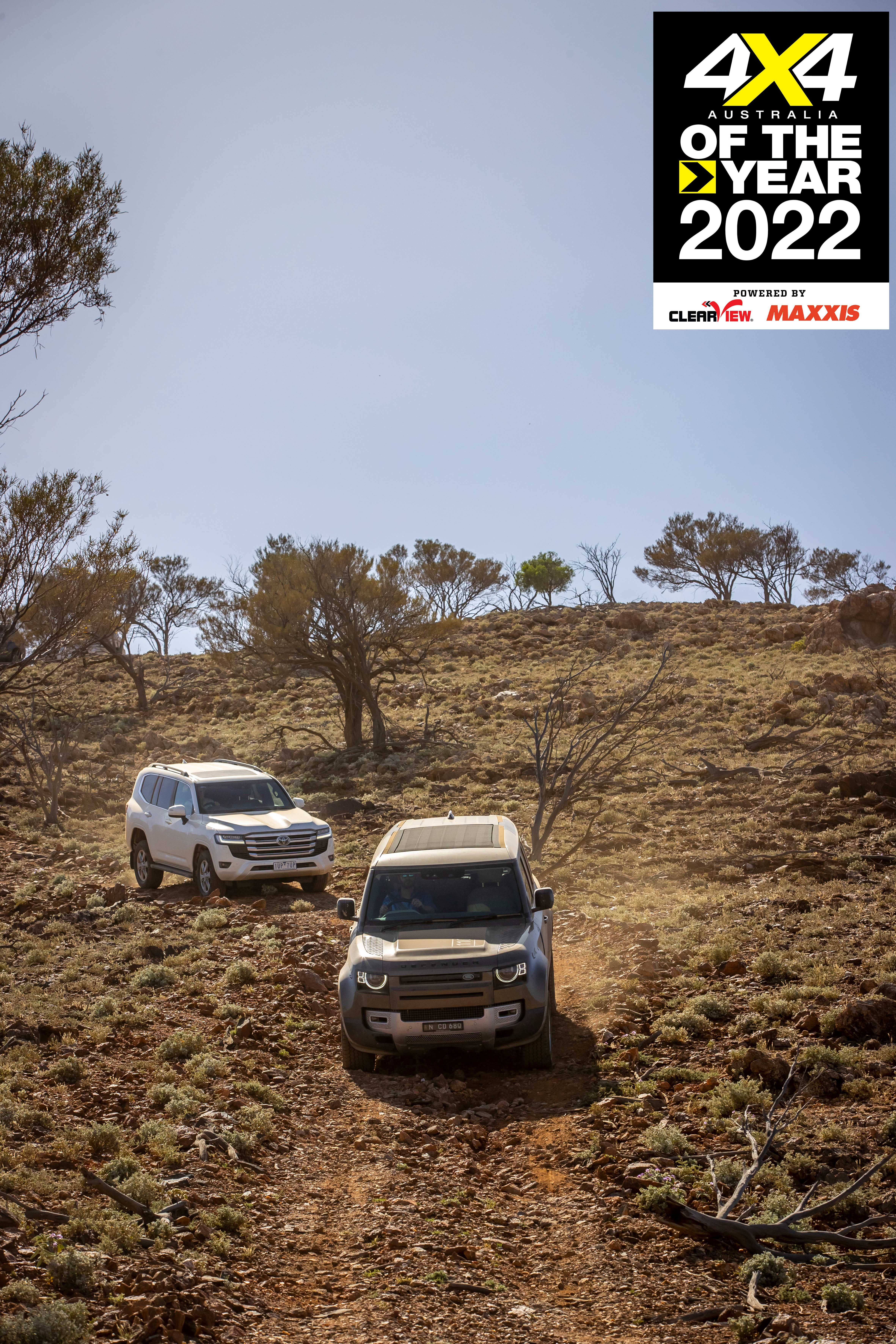
For the next day-and-a-half we ploughed through bulldust, climbed rocky and rutted tracks over the rounded hills and cruised along sandy creek beds that had been washed clean by recent flooding rains. Sometimes it was hard to think that we were working, but we struggled on, preferring to spend the hot times of the day in the air-conditioned vehicles while the sweating video crew tackled both the filming and the heat. Sadly, for all of us, the heat didn’t relent too much overnight.On the last day we refuelled the vehicles in Broken Hill, sorted out final mileage figures and fuel economy figures for the days of testing, before our experienced crew of testers, film crew and catering staff split up for the long run home, some heading for Sydney, while others turned south for Melbourne.
There’s no doubt all of the judges look forward to 4×4 Of The Year testing, but it’s not all beer and skittles, with long hours behind the wheel of each of the vehicles over seven very long days.
For the first time in 4X4OTY’s 38-year history, we used the fantastic Australian Automotive Research Centre (AARC) at Anglesea in Victoria to whittle down our 18 4×4 of the Year contenders to six finalists over three days.
Those finalists would then be subjected to four more days of punishing real-world testing that would replicate the conditions just about any Aussie four-wheel driver might encounter on an outback adventure.
The great thing about the AARC facility is that it allowed the judges to test each vehicle in controlled conditions, both on a closed-loop sealed road and a closed-loop high-speed dirt road, as well as on set-piece off-road hills that required the use of low-range gearing.
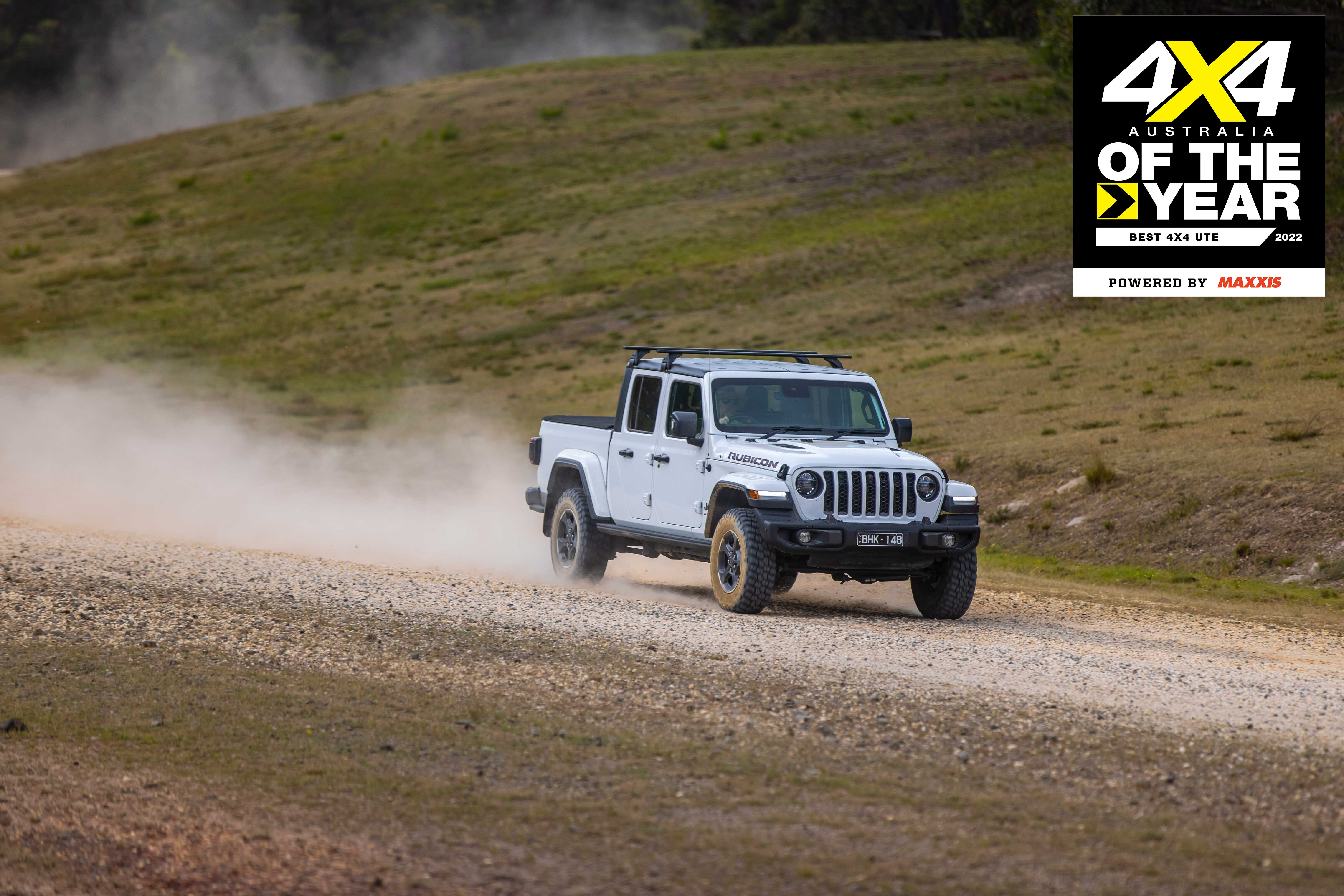
Sealed roads
The sealed road section replicated many mountain roads that you might expect to encounter throughout hilly country in Australia.
The road surface itself was smooth and in good condition, but the course wended its way down steep descents and up long climbs, and it had plenty of twists and turns with some interesting off-camber sections. And being a closed-loop road, we didn’t have to worry about oncoming traffic … although there were plenty of wallabies about to keep us on our toes.
In a sign of the times, all our 2022 4X4OTY contenders were equipped with automatic transmissions
The great thing about this road course is that it allowed us to test the ride and handling of each vehicle, to see how compliant and controlled they felt over bumps and undulations, to examine how they turned in to corners and how well they held a line, to feel how much body roll they exhibited, to test the effectiveness of the brakes after repeated heavy braking tests, and to ascertain how traction- and stability-control systems operated when the vehicles were driven on the limit of tyre adhesion.
Performance was also tested on the sealed-road course, as was the way each vehicle’s engine and transmission combination worked together. We could discover how smooth gear shifts were, whether transmissions were willing to shift when prompted with a prod on the accelerator, or if they would hold on to tall gears up long climbs rather than hunt through the ratios when you didn’t want them to. Oh yes, in a sign of the times, all our 2022 4X4OTY contenders were equipped with automatic transmissions.
High-speed gravel
The high-speed dirt road at the AARC proved very informative. The surface started with a smooth left-hand bend which was followed by a heavily corrugated right-hander, before a long stretch with loose gravel, undulations and strategically placed depressions.
The initial left-hand corner allowed the judges to feel how each vehicle’s stability-control system behaved, while the corrugated right was a real test of suspension systems and NVH (Noise, Vibration and Harshness) levels. Some of the vehicles went through that corrugated right without fuss and in complete control, while others would have speared off the road if it wasn’t for electronic intervention.
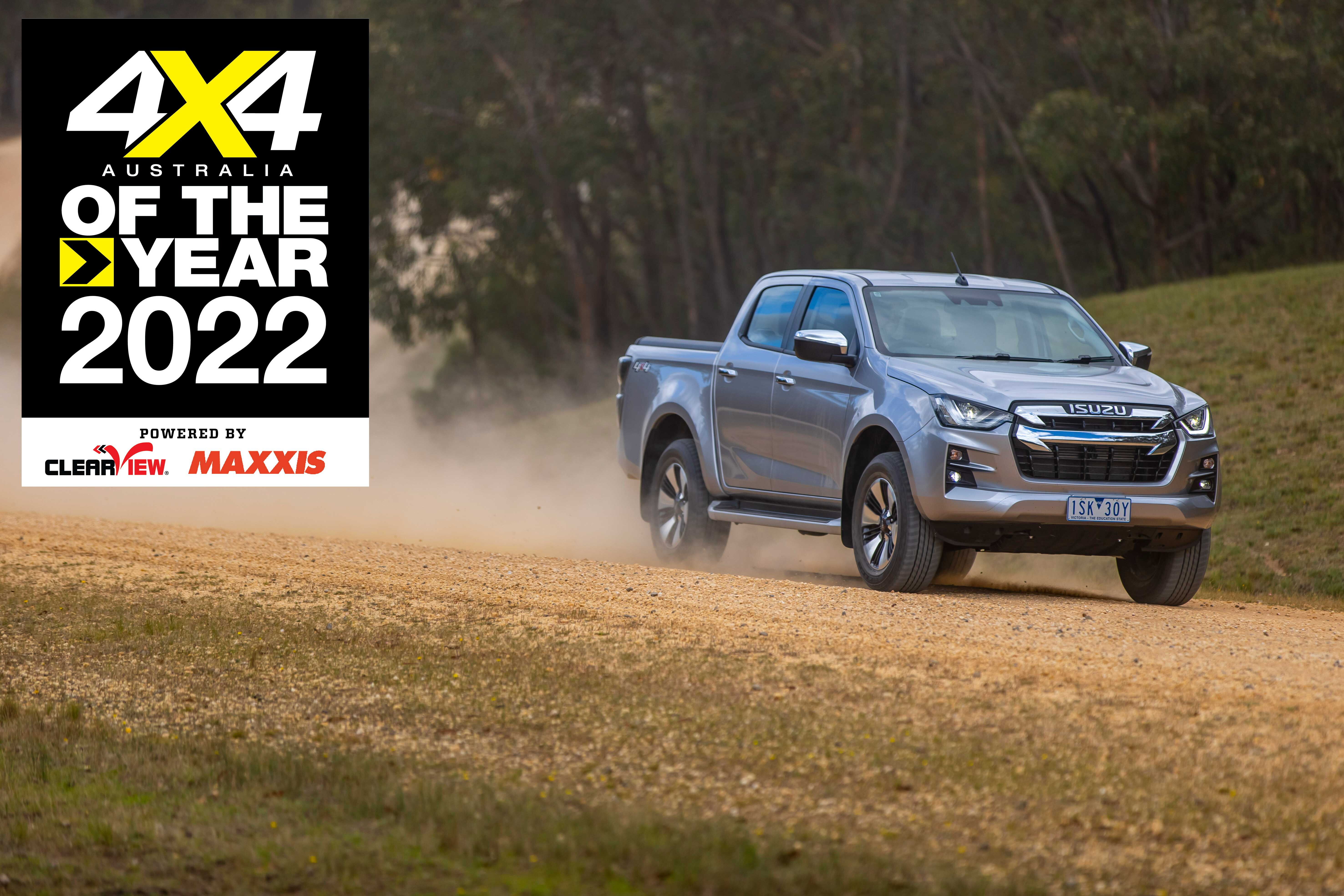
As for NVH levels, when some vehicles were driven through the corrugated corner, they exhibited excessive noise throughout the cabin and rattling through their steering racks that would drive you mad on a long drive on crook outback roads. Suffice to say, those vehicles didn’t make it through to the final six.
The off-road component of our testing at the AARC consisted of a series of steep hills covered in loose gravel. There were marked 30° and 40° gradients, while one of the hills had deep ruts and undulations.
Not all of the vehicles were tested on the latter of these hills as we didn’t want to damage bumpers or rip off side-steps, but with those that were driven up it, we were able to examine ground clearance and wheel travel, as well as test the operation and effectiveness of traction-control systems and diff locks.
Final six
The testing procedure at the AARC over three days allowed us to easily choose the six finalists and, after a surprisingly civil discussion amongst the judges, the choice was surprisingly unanimous. There’s usually some argy-bargy when it comes to choosing the final six, but there was none of that after our AARC test.
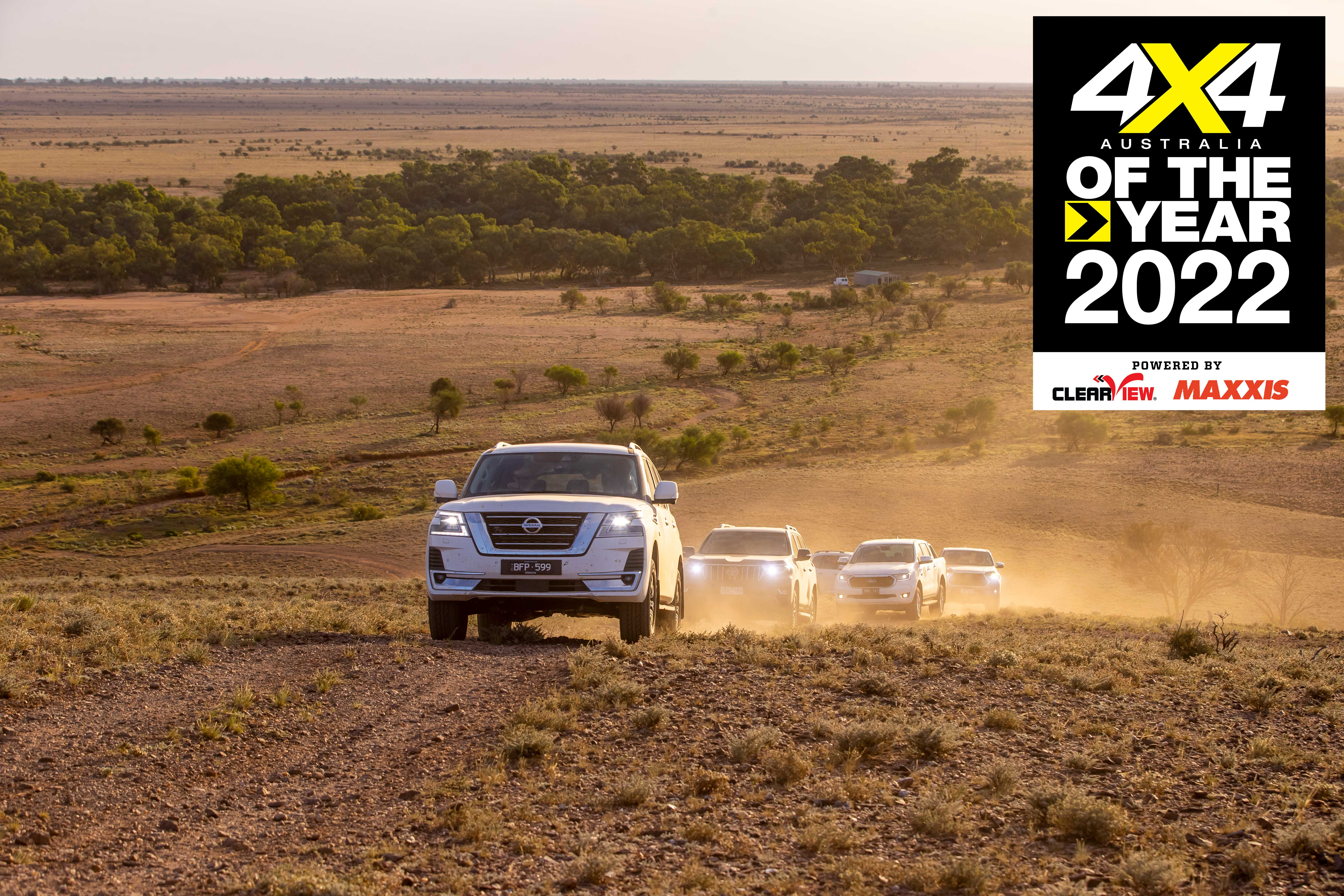
We got away from the AARC in the afternoon of the third day and headed up the highway to our camp in the Mallee country. This drive consisted of a few hours of highway driving before we got on the dirt, and the judges swapped vehicles every hour or so on the way to our campsite which, incidentally, was like an oasis in the desert. This drive gave the judges time to acclimatise themselves with vehicle controls and set-up, and gauges and screens.
The following day we got into some sandy country and, as the sun climbed higher, so too did the mercury, with the ambient temperature hovering around the 40°C mark for much of the day. This made the sand particularly soft in sections and we dropped tyre pressures to around 20psi, not keen on going any lower due to the standard passenger-car construction tyres fitted to each of the vehicles. Only the Defender came equipped with all-terrain rubber, but even these were not LT (Light Truck) tyres.
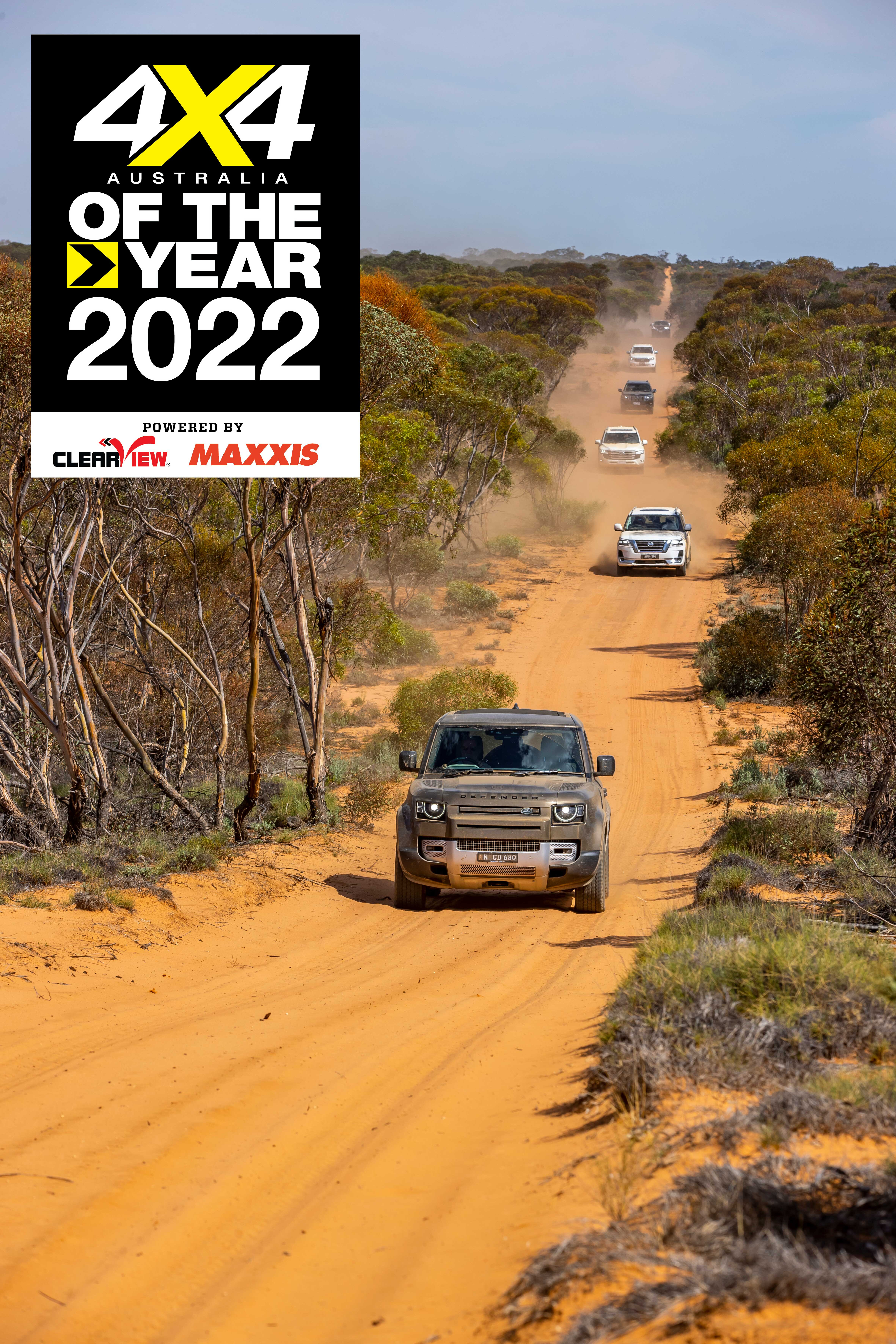
As we meandered along the sandy tracks on the way to our lunch stop, we had to keep a keen eye out for sticks and tree roots poking out of the sides of the track so we didn’t suffer any tyre damage. That’s the problem with standard rubber and low pressures; when chasing a longer tyre footprint by dropping pressures, the light sidewalls bulge out, making them prone to damage. Our tucker truck was the only victim, with a tear in the sidewall of one of its standard rear tyres.
As we neared our campsite late in the afternoon, we came across a particularly soft section of sand on a long hill that certainly tested the capability of our final six. The sun was quickly dropping towards the horizon by this stage, so we made the call to set up camp and come back to this hill first thing the following morning.
Once back, we stopped each vehicle on the softest part of the sandy hill and then attempted to drive up it. In most of the vehicles we had to back down the hill a bit to get a run up, but those with advanced crawl-control systems (the Defender and the LandCruiser) were able to cleverly inch their way up the sandy track until they picked up enough momentum to complete the climb to the top.
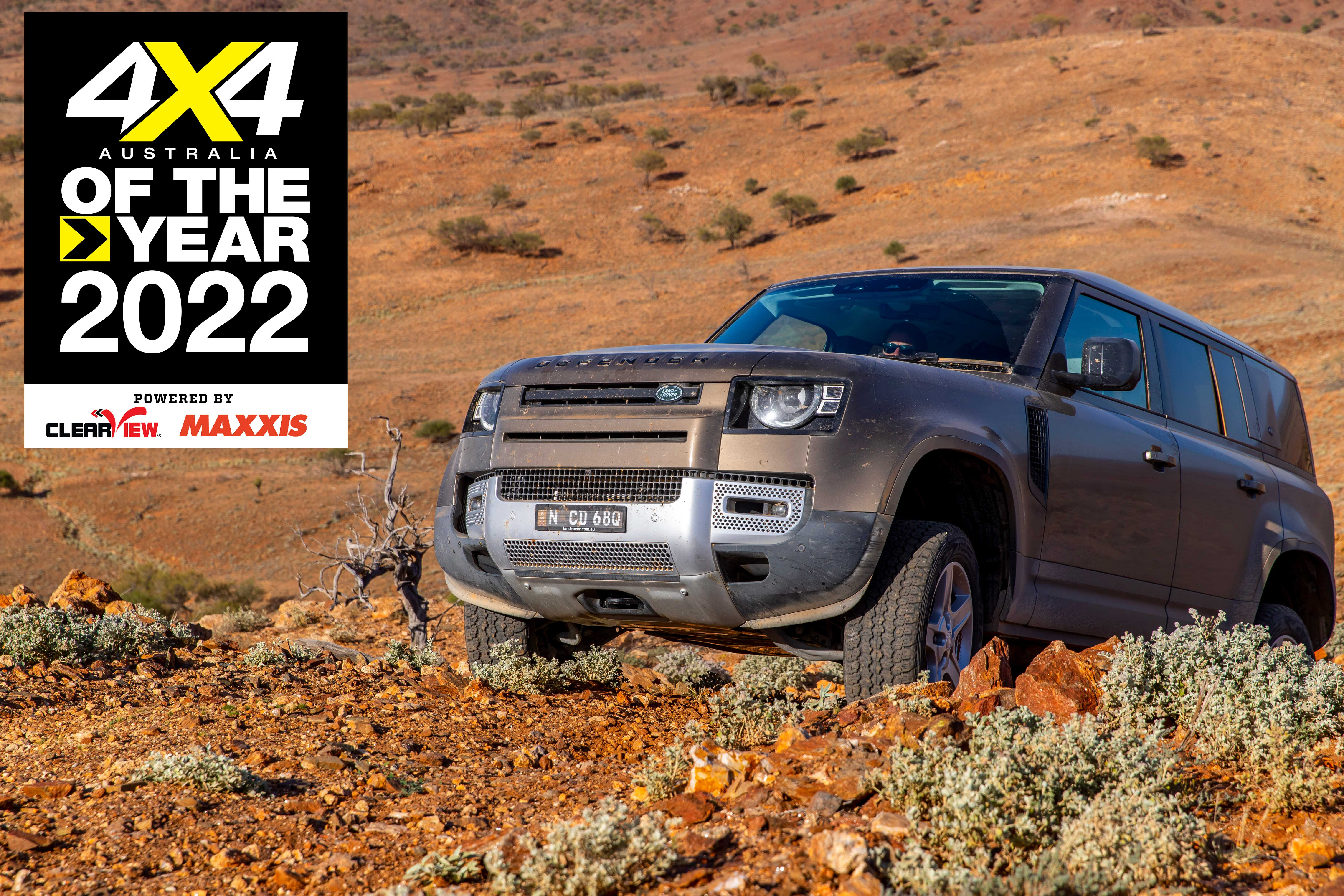
If you ever find yourself driving in sand by yourself, this technology is impressive, allowing you to drive out of seemingly stuck situations without the need for recovery equipment. Of course, you can still get stuck, so always take your recovery gear when driving off-road.
After our morning test in the soft sand, we continued along outback roads and tracks for much of the day, seeing how the vehicles performed when driving through bulldust, over cattle grids and along corrugations of varying frequencies. Swapping vehicles every hour or so allowed us to make direct comparisons of each vehicle.
To the hills
The next day we headed for our final destination, which would allow us to test the vehicles in rocky, mountainous country. That meant more outback roads – both sealed and unsealed – before we arrived at a property we have used several times before for 4X4OTY testing.
The terrain here is extreme, with steep climbs that test each vehicle’s low-range gearing and traction aids, as well as the compliance of suspension systems, ground clearance and off-road angles.
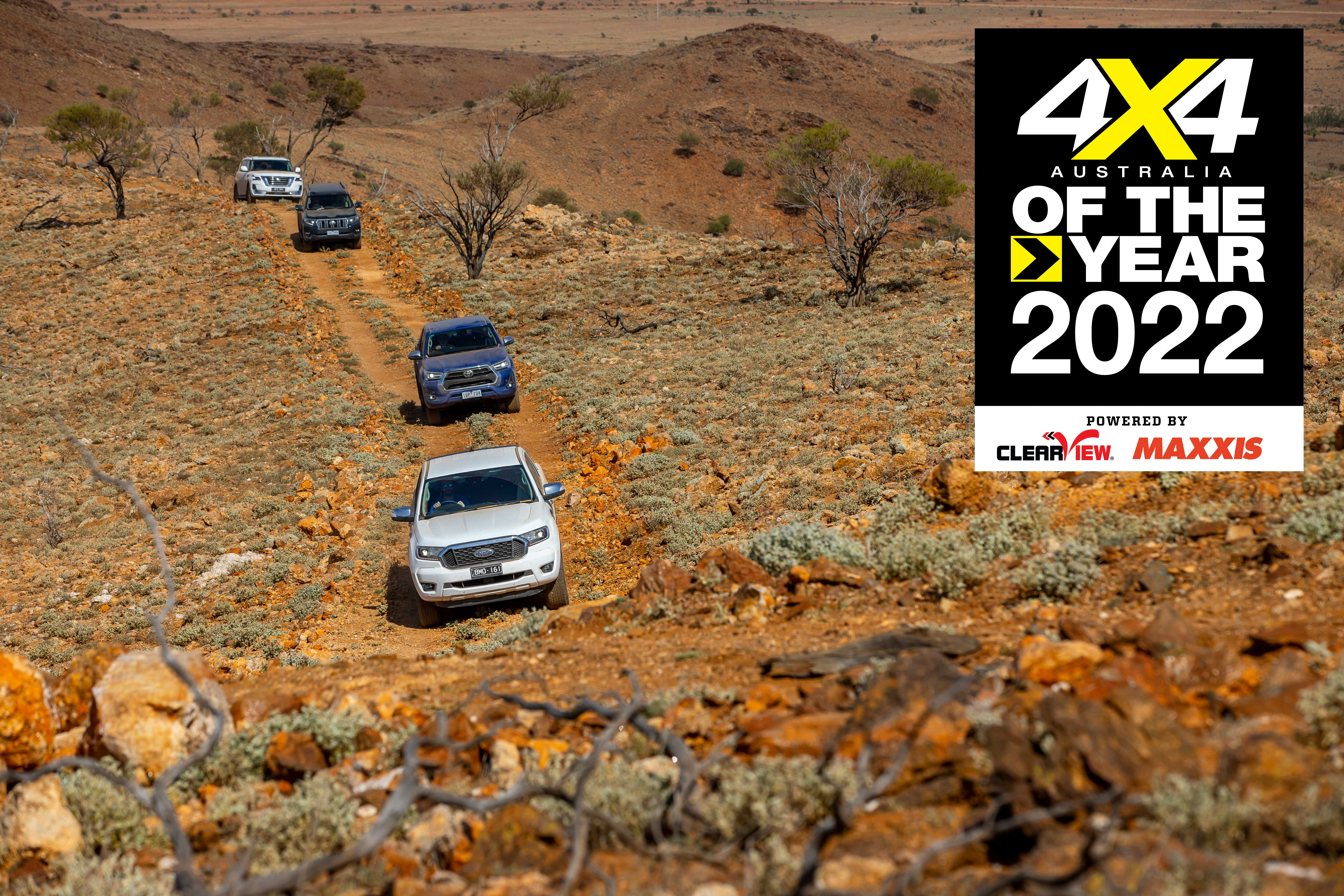
Despite taking care over the rocky climbs and descents, we suffered more tyre sidewall damage on the final day of testing, highlighting the inadequacies of standard passenger tyres in off-road terrain.
It was now time for the judges to add up their scores and a final discussion to decide what vehicles would take out of the respective categories in the 2022 4X4 Of The Year. There would still be plenty of driving to do the next day as the judges headed off to their respective home bases. Despite the big distances travelled and the 12-hour days, we’re all hanging out for next year’s 4X4OTY test. Bring it on!
Our judges have slashed the 18 contenders down to six finalists. The Toyota Hilux SR5 and Ford Ranger XLT will battle it out for Best Ute; while the Toyota Prado VX, Nissan Patrol Ti-L, Land Rover Defender 110 D300 and Toyota LandCruiser 300 VX will clash for Best Wagon.
Toyota Hilux SR5
As the overall winner of 4×4 of the Year in 2021, the SR5 was a walk-up start in 2022 and it edged its way through the first stage of testing with the same ‘does everything well but nothing exceptionally’ manner.
VALUE FOR MONEY
For a four-door 4×4 ute that starts at less than $60K and does everything you ask of it so well, you can see why the Hilux SR5 remains so popular with buyers both in town and out in the bush.
Our car was fitted with an automatic transmission and the Luxury pack, which adds leather-covered power seats and some fancy interior trim – but even with these additions and their cost, the Hilux remains strong value.
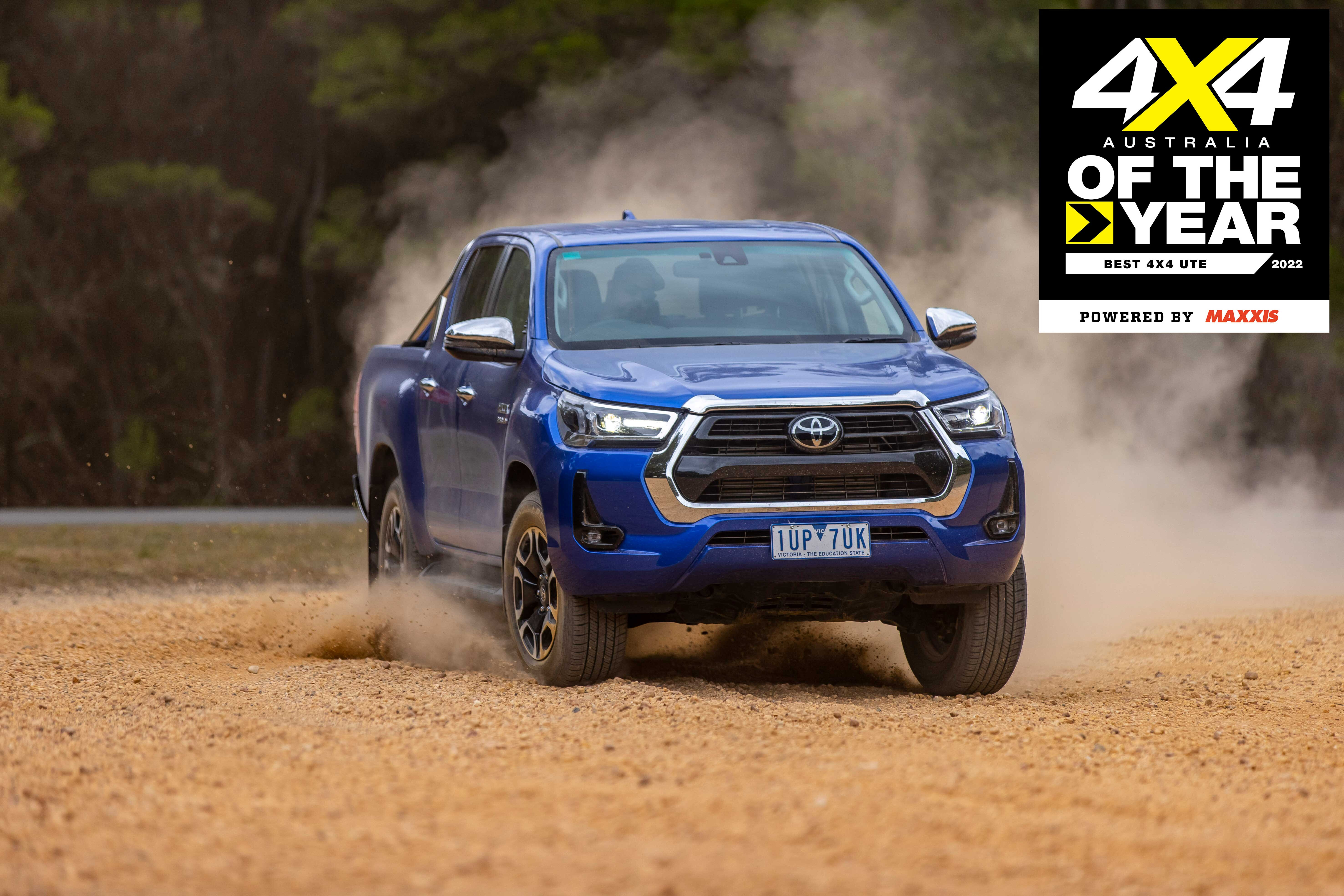
In fact, we reckon the lux-pack really adds to the SR5’s interior, giving it a more premium feel and finish that was appreciated by the drivers. It was certainly something you noticed when switching between it and the Ranger XLT.FULFIlMENT OF INTENDED FUNCTION
The job of any four-door ute is to carry passengers and a load, and the Hilux accomplishes both these tasks well. The interior is adequate in size for four adults, or two up front and three kids in the back seat.
It isn’t the biggest cabin in its class and loses out a bit on shoulder room, but none of these mid-size utes really accommodate three adults across the back seat comfortably.
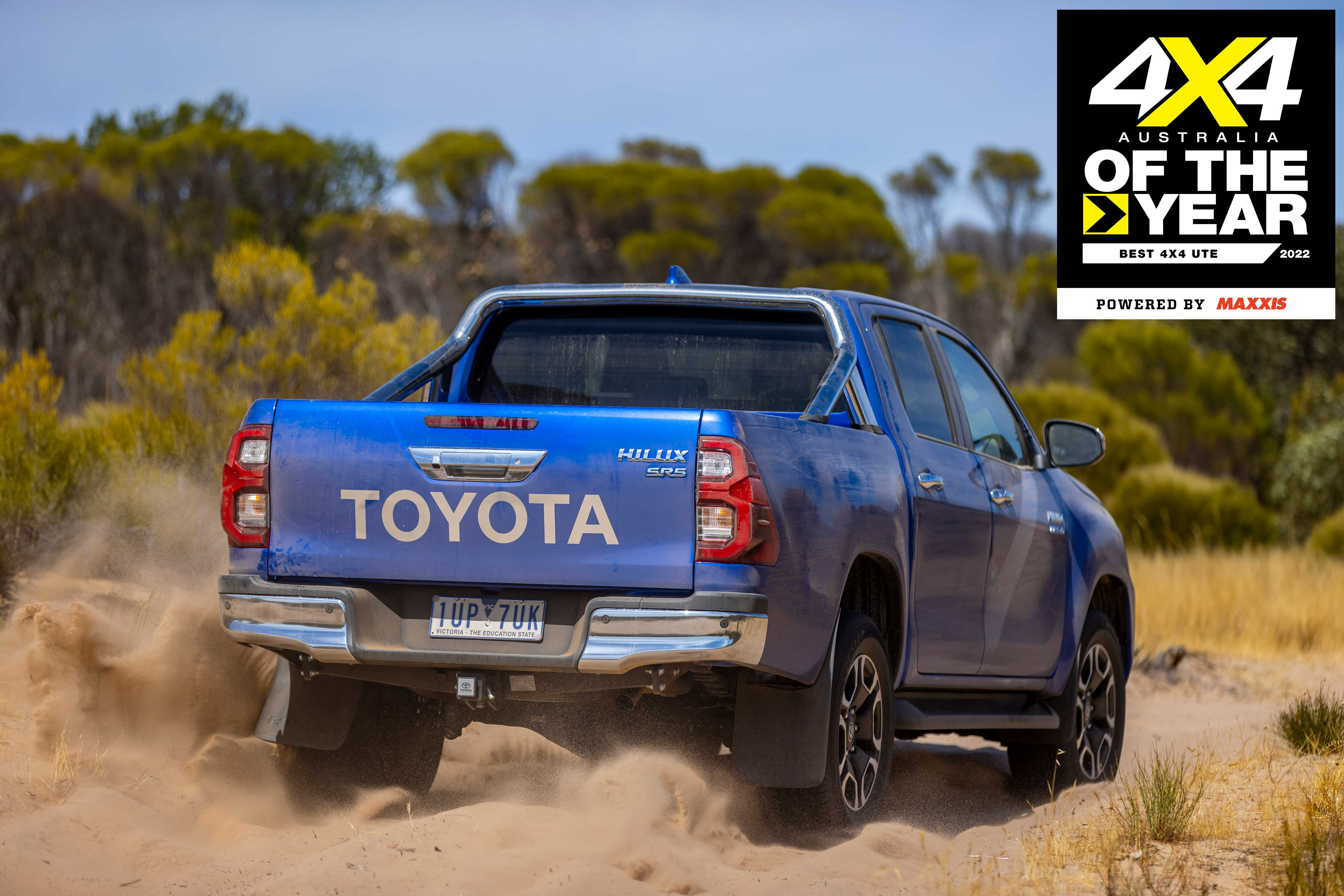
The SR5 has a 995kg payload and 3500kg towing capacity, which are pretty good numbers for a high-grade ute with this level of standard equipment. Its load bed is easy to access and has tie-down points low in the corners, but there’s no power outlet in the tub as standard equipment.
“This is the best Hilux ever but still not as good all-round as the Ranger,” said Jason Lock while out on the tracks. “It’s let down by its suspension tune and smaller size than the Ford ute.”
SOUNDNESS OF ENGINEERING
Believe it or not, this is still a huge strong point for Toyota vehicles. Its reputation for dependability and durability is well-earned, and with a look underneath the Hilux you can see why. They are built to last!
Despite the problems with DPFs in Toyotas in recent years, we’re not hearing anywhere near the same complaints from owners or fleet about this, and the 1GD-FTV engine is proving to be a reliable and strong performer.
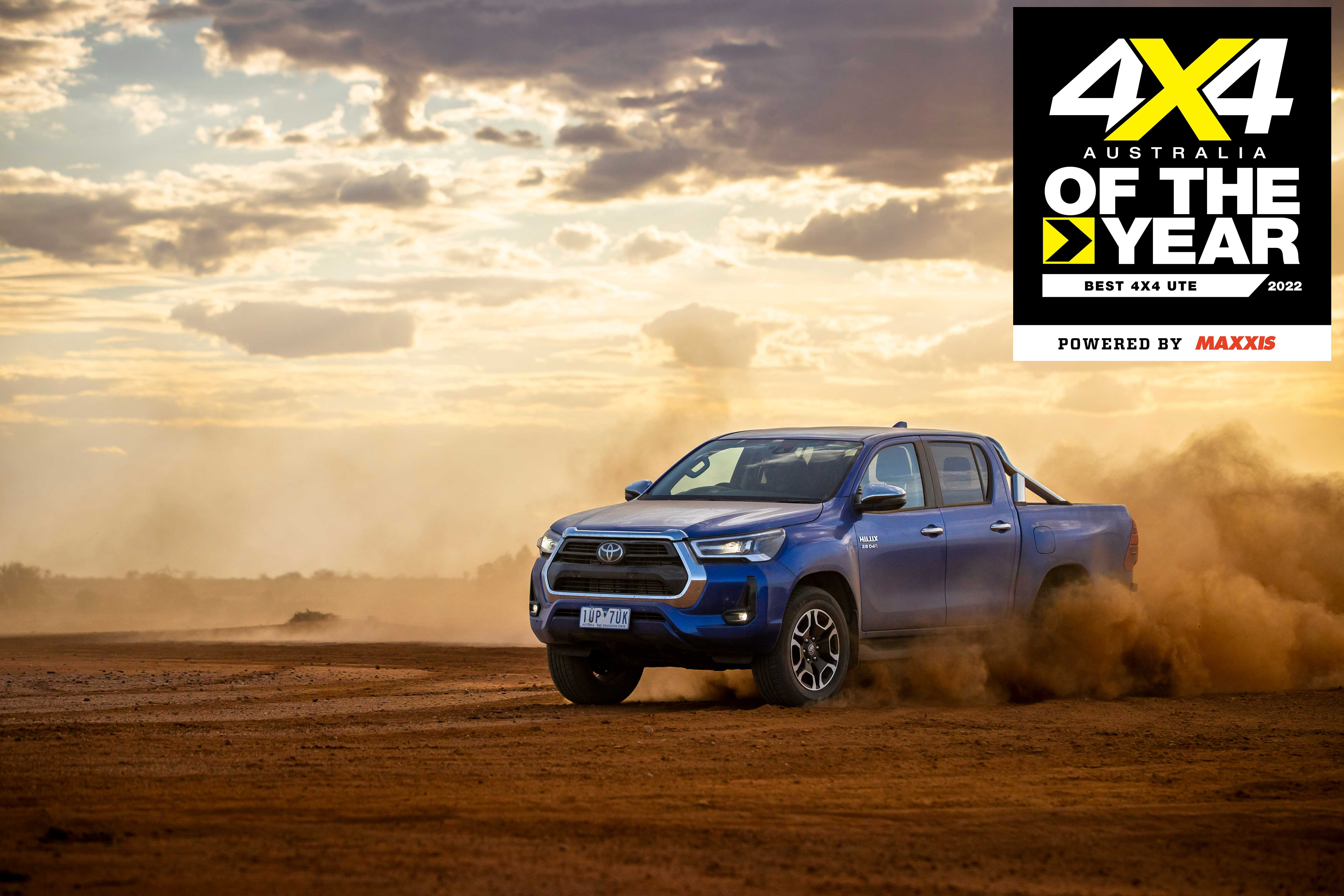
Toyota does a huge percentage of the testing and development of its 4×4 vehicles in Australia, so they are bred for our harsh conditions. This is why the Hilux is the perennial favourite with fleet buyers and those that use them for work.
BUSHABILITY
With its stout payload and towing capacities, sensible wheel size, and functionality that comes from decades of building this style of vehicle, the Hilux ticks all the boxes for a bush vehicle.
Toyota now offers an extensive range of genuine accessories to kit the Hilux up to the owner’s requirement, be they for work or play. Plus, as a vehicle that is consistently a top seller, it is heavily supported by the aftermarket industry with just about every accessory and modification you could want.
Ford Ranger XLT
The Ranger was the best-selling 4×4 in Australia in 2021, and early indications suggest it will repeat that this year. The Ranger Raptor was a previous 4X4OTY winner, but this year the mid-grade XLT won favour for its all-round package.
VALUE FOR MONEY
The 2.0-litre bi-turbo diesel engine adds around $2K to the cost of the Ford Ranger where you can get it with the 3.2 diesel; and while it wouldn’t be our choice of powerplant in this car, it’s what we were given to test. That extra cost tips the Ranger over the $60K mark, whereas our preferred 3.2 costs less than $60K and is more comparable to the Hilux SR5.
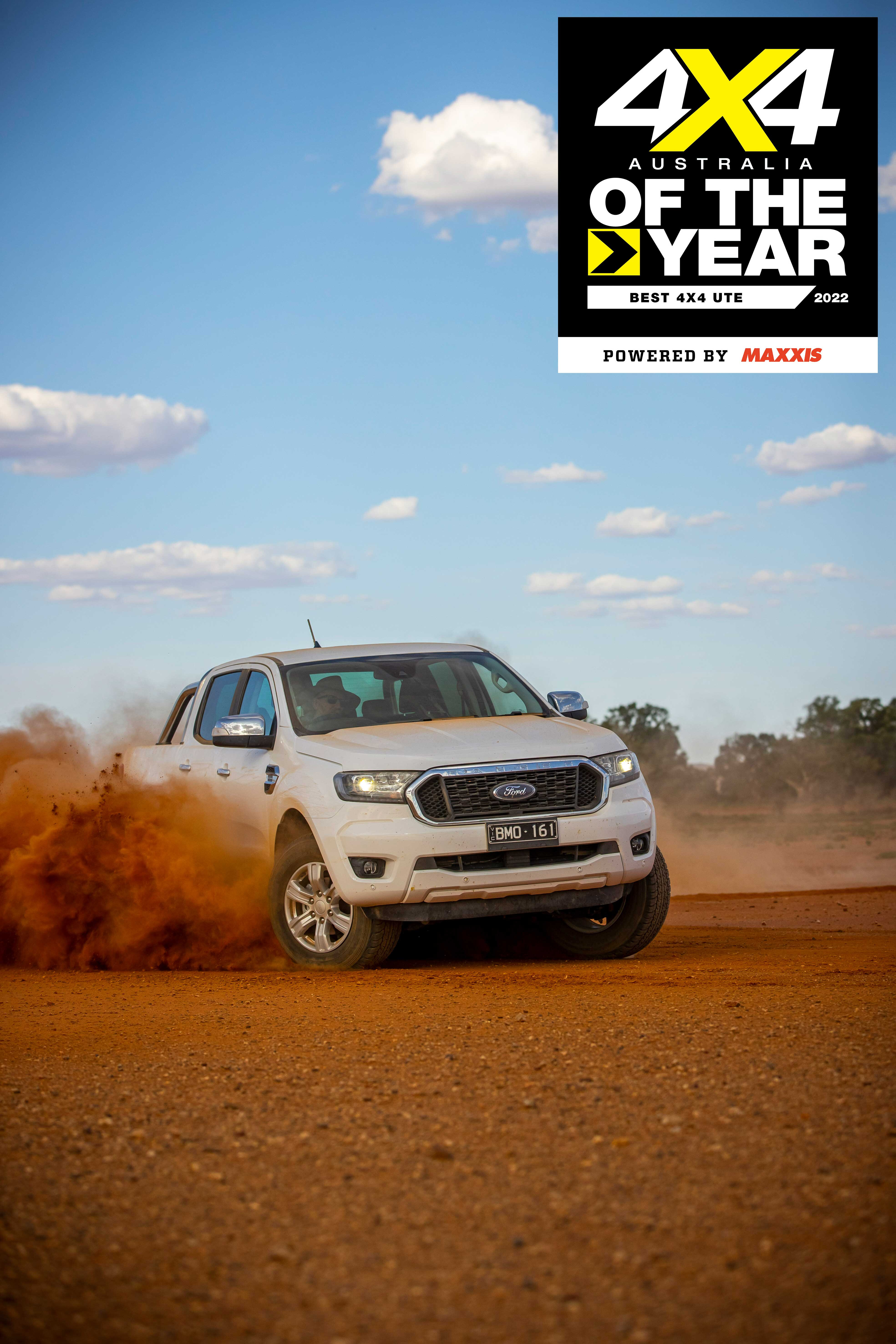
That said, the XLT remains well-equipped with all the comfort, convenience and safety features you could want in a ute.
The Ranger Raptor might be better appointed and way better performing, but it also costs a lot more and compromises on payload and towing capacities, so it was edged out by the mid-grade XLT this time around.
FULFIlMENT OF INTENDED FUNCTION
The Ranger has one of the bigger cabins in the mid-size ute class and is up there with the Volkswagen Amarok in that regard. This makes it more comfortable to ride in and better to carry back-seat passengers than most of its competitors. Sure, the back seat is still not ideal for three adults across its width and – the seat back is quite upright – but it’s better than most in this class.
Front-seat passengers get a great place to ride, with plenty of space, comfortable pews and all the HVAC and audio features at easy reach. As a load hauler the XLT has a 1003kg payload, 6000kg GCM and a 3500kg towing capacity, to get those jobs done well.
SOUNDNESS OF ENGINEERING
A common comment among our drivers while testing at the AARC, was how well the Ranger felt on the Second Grade Road which simulates the best and worst of Australian outback roads. Ford nailed the chassis and suspension tune of the Ranger when setting it up for local conditions and you can feel that Australian input wherever and whenever you drive it.
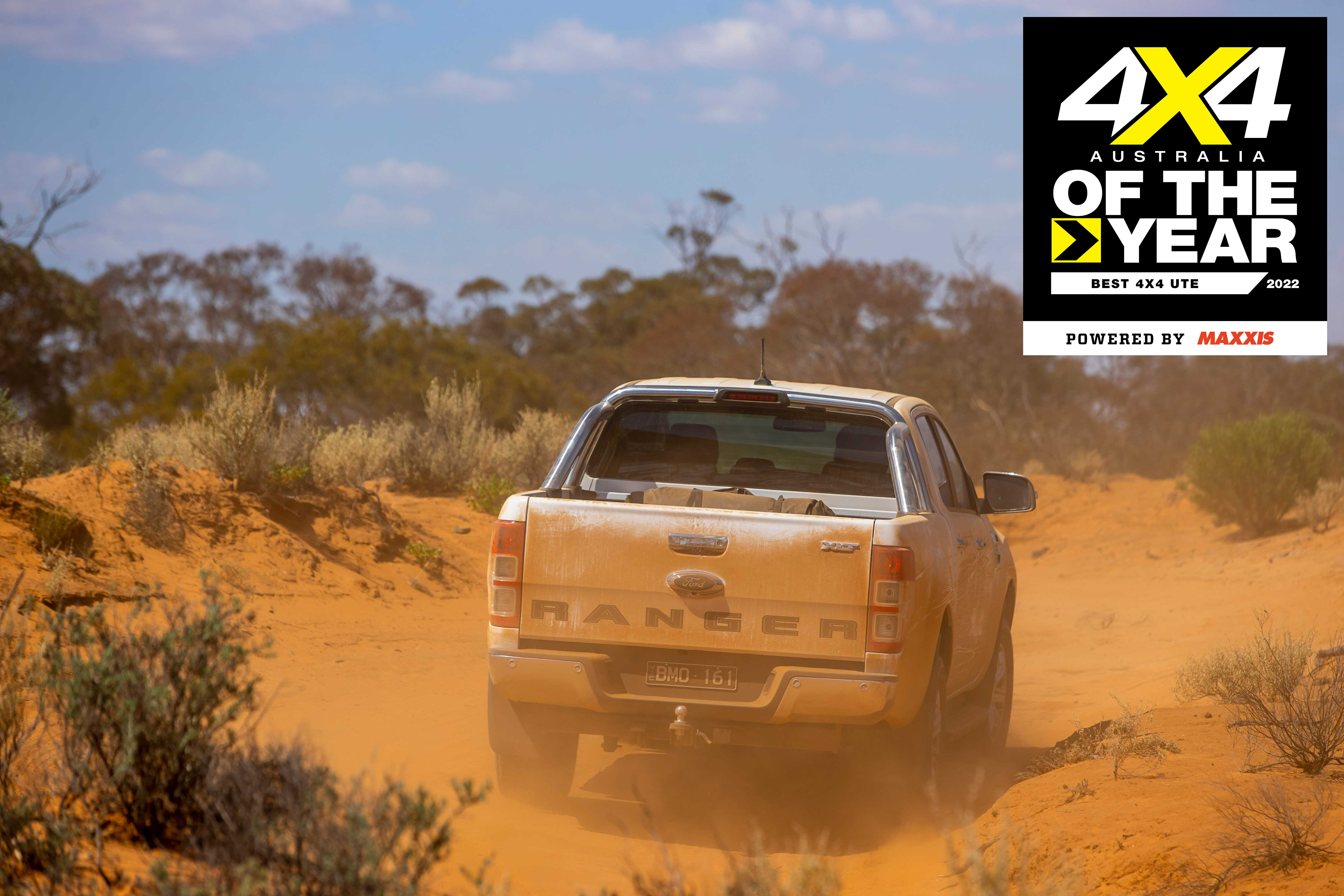
Another comment was that it’s no wonder the Raptor is so impressive to drive when the car it’s based on is this good. The Ranger is the most Australian new car on the market, so it’s made tough for Australian conditions. You can see it when you look under the car and feel it when driving it. This thing is solid.
The cargo area is wide and easy to access via a soft-lift tailgate, and there’s a bed liner and 12V power outlet there to power the fridge or other accessories.BUSHABILITY
With its locally tuned suspension, spacious cabin, generous payload and towing capacities, and the performance of the 500Nm 2.0L engine and 10-speed automatic transmission combination, the Ranger will get the job done in the bush.
The way the drive system maintains the electronic traction control across the front axle when the rear diff is locked is the best application of this technology short of having front and rear locking diffs – this in combination with healthy rear-axle travel gets the Ranger over and up most obstacles.
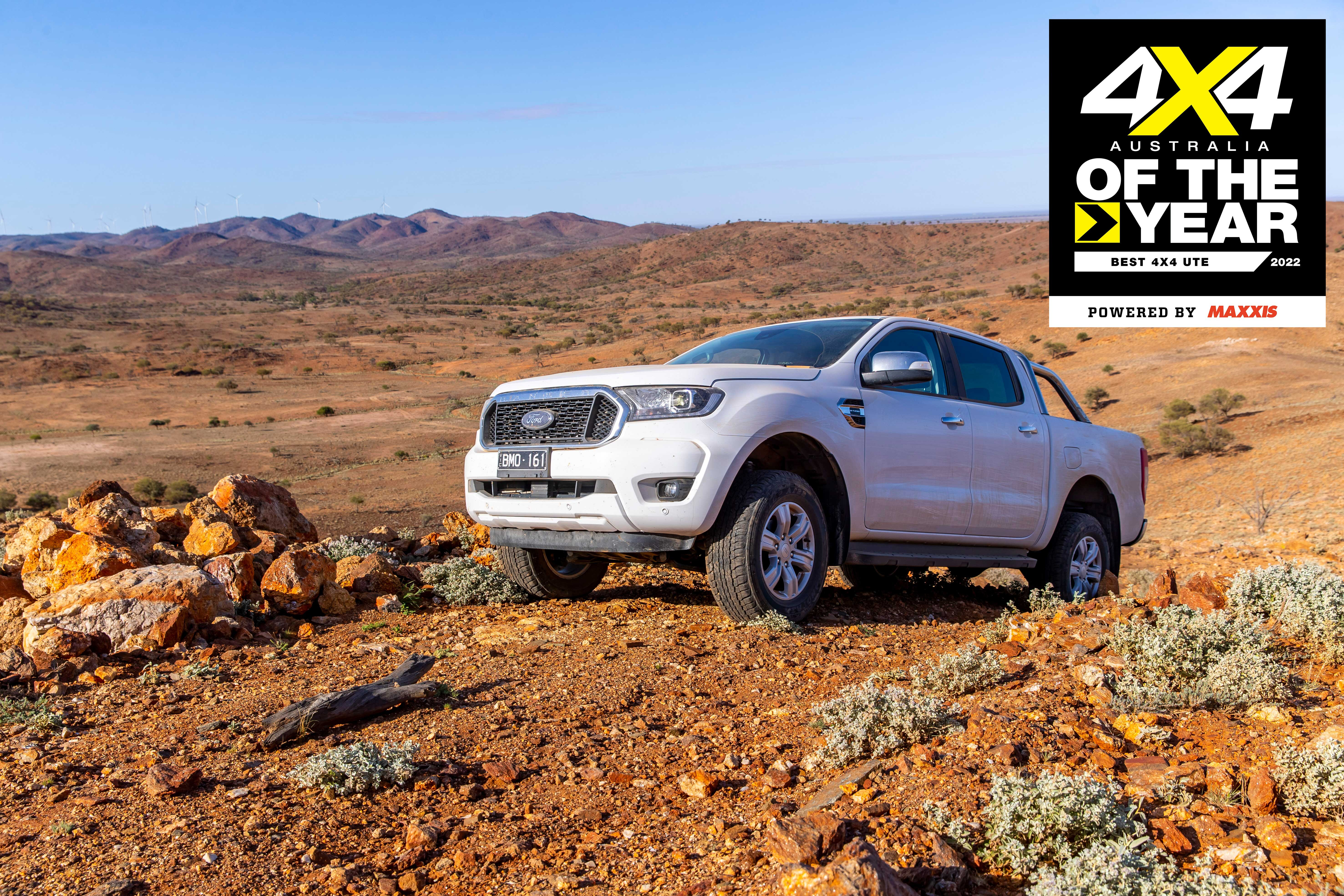
Ford quotes the Ranger’s wading depth as 800mm, but we don’t like the way the air intake faces forwards over the headlight and have heard of instances where it has let water into an engine. This is disappointing on the 2.0 engine, as the 3.2 breathes through the inner guard where it is better protected.
Again, the popularity of the Ranger means the aftermarket accessories trade produces and stocks just about everything you could ever want for your Ranger – and if they don’t make what you want yet, someone soon will.
Ron Moon said of the Ranger XLT, “With good off-road credibility, a smooth engine and a suspension that was bred and refined in Australia, all take the latest Ford Ranger to the top of the ute pile for 2022.”
Toyota Prado VX
The Prado might be an elder statesman of the 4×4 showroom, but it remains a standout best-seller in the mid-size 4×4 wagon segment, eclipsing anything else in that category when it comes to sales. Its popularity is warranted, as it’s a well-proven package that has evolved over the decades to be a solid family touring wagon capable of any conditions.
The Prado got its last upgrades back in August 2020 when the power and torque of the 1GD 2.8L diesel engine were increased to 150kW and 500Nm, in line with that engine in the Hilux and Fortuner, and it resurrected the performance back to life, as the first iteration of the engine was sorely lacking a pulse.
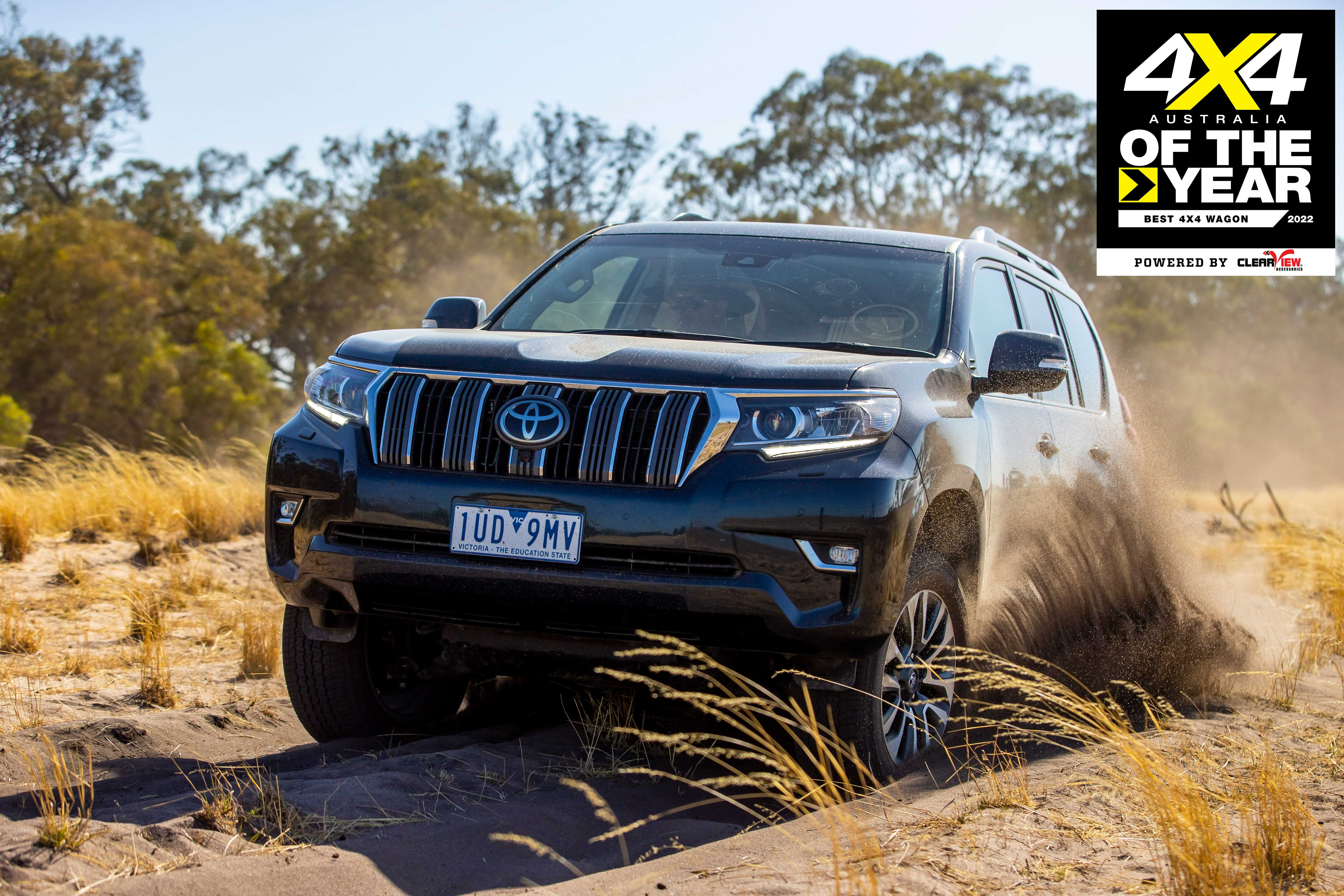
We were given a Prado VX for 4X4OTY testing; one with the no-cost option of a flat tailgate and no fuel sub-tank. This is an option, and the standard car still mounts the spare on the tailgate and comes with 150-litre fuel capacity.
VALUE FOR MONEY
At $76,380 the VX is getting up there in the range in terms of cost, but it does bring extra features and luxury to match the price. The Prado range starts with the mechanically identical GX model, at $59,640.
All Prados are powered by the updated 2.8 diesel backed by the Aisin six-speed automatic and full-time, dual range 4×4. The base model GX is a five-seater, while the rest have seven seats across three rows.
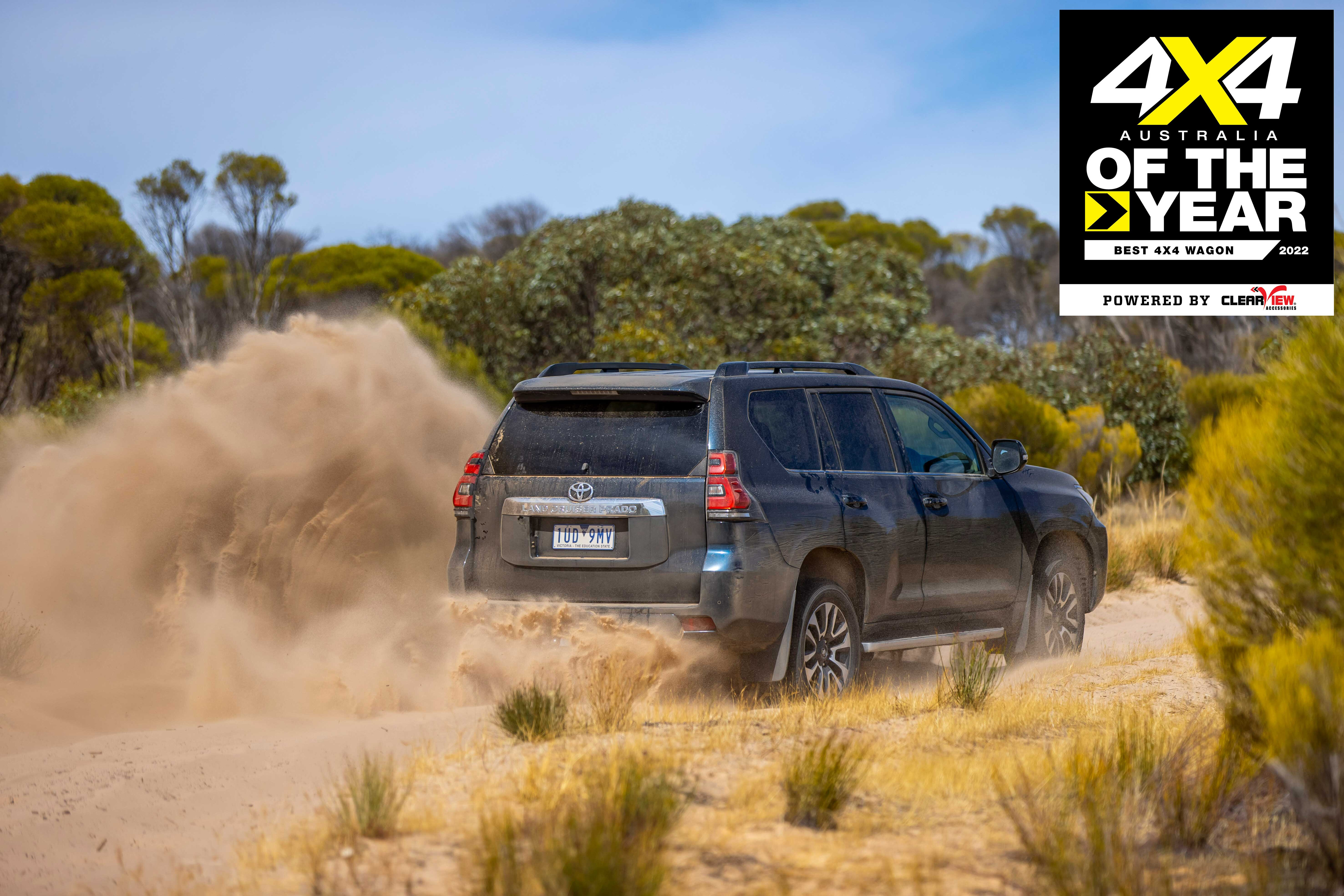
The VX as tested is a seven-seater, although the third-row seat space is tight and best left for kids or small adults. The third row folds in to the floor to leave a sizable cargo space with tie-down points and a power outlet. A part of the 2020 upgrade included a new AV system with a bigger nine-inch screen and access to Apple CarPlay and Android Auto.
The VX has three-zone climate control, heated and cooled leather seats, and a 14-speaker JBL sound system that really cranks. It has a premium feel to the interior and you can see where the extra money for the VX goes.
FULFILMENT OF INTENDED FUNCTION
The Prado is the budget alternative to a LandCruiser. It’s smaller but it still has seven seats; has a smaller engine but doesn’t lack in performance; and it is far more affordable than the equivalent model in an LC300.
The Prado doesn’t compromise on off-road ability or load carrying, as healthy rear-axle articulation and good ETC are enough to get it over most situations, even if the tech isn’t Toyota’s latest as found in the LandCruiser and Hilux. The towing capacity of 3000kg is sensible but not up to the 3500kg many large ’van owners will expect.
SOUNDNESS OF ENGINEERING
Typical Toyota quality in every Prado is the reason folks keep coming back to them. They might not be sexy, fast or exciting, but they are solid and dependable wagons, which is more important in a family touring or towing vehicle.
Smart buyers come back to Prados as a sensible choice, and again it’s those decades of evolution that have brought the model to where it is now. The original Prado was created to compete with the Mitsubishi Pajero, and 30 years down the track it has outlasted the once popular Paj.BUSHABILITY
If there was one negative to Prado’s 2020 updates, it was the switch from 18- to 19-inch alloy wheels on the upper spec models such as the VX, as this heavily restricts alternative tyre choices for anyone wanting to venture off the black top. The 19-inch wheels are not a popular size, so there are not a lot of tyre options offered for them. The Prado and the Defender were the two vehicles that copped punctures when we were exploring the harsh rocky terrain of the Barrier Ranges on Eldee Station.
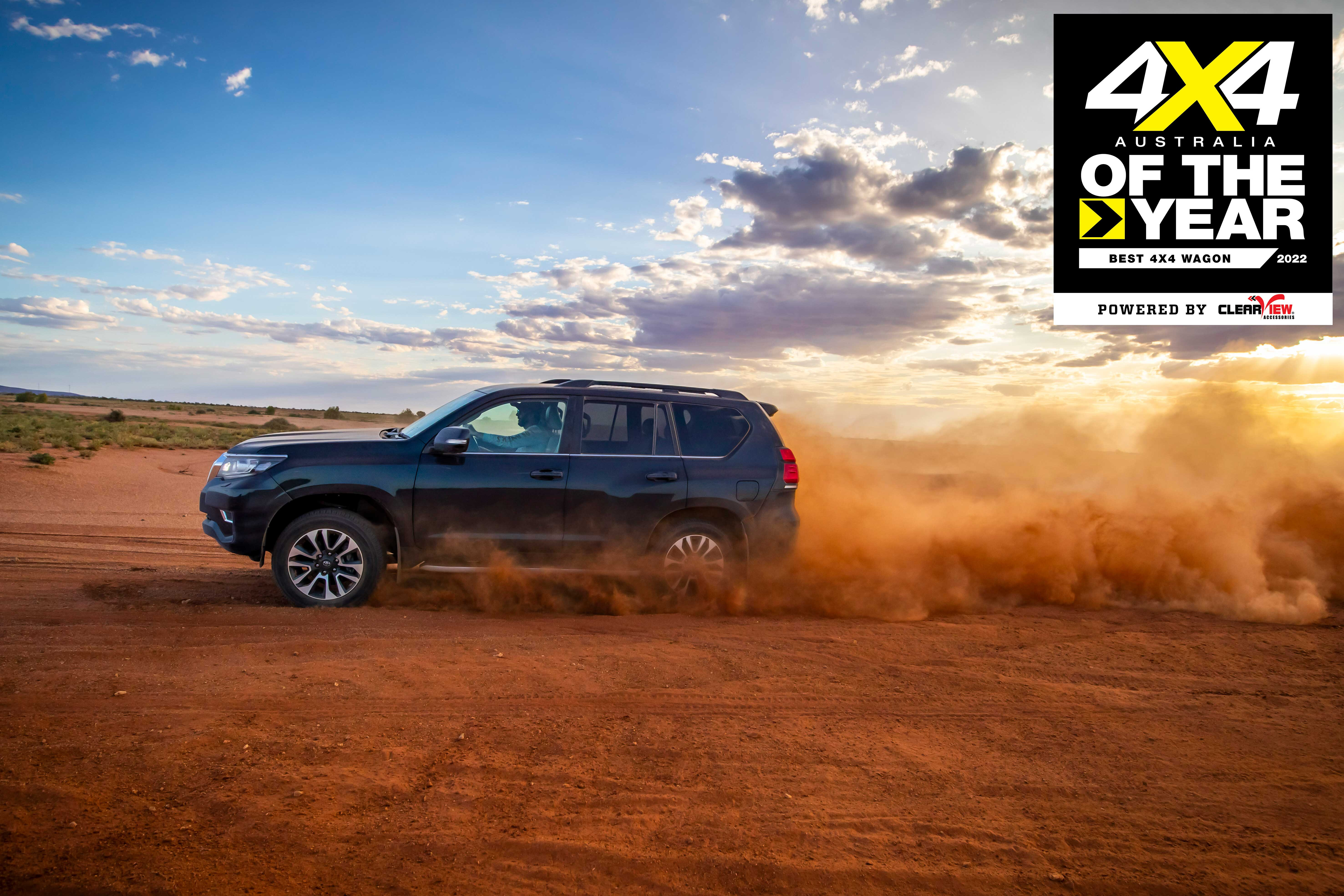
Tyres aside, the Prado’s standard fuel capacity is the biggest in any standard 4×4, and combine that with its frugal consumption – 10.6L/100km – and you have excellent touring range on a tank of diesel.
Toyota has a range of genuine accessories for the Prado, and as such a popular model there’s heaps of aftermarket kit available for them.
It might be ageing, but the Prado remains a sensible buyer’s touring 4×4, and this was appreciated by all our drivers when it came to scoring it in the outback.
“The Prado quickly became a favourite among the judges and, despite not really offering anything new or flash, its ability to just get the job done makes it one of the perennial contenders in this category,” said Dex Fulton after the week-long test, which reflected the comments of most of us.
Nissan Patrol Ti-L
Like the Prado but not as old, the Patrol is getting on in years – but ongoing facelifts and updates have kept it in the watch-house of many 4×4 buyers. It’s a large wagon that competes in size with the 300 Series, but priced from $82,160 to $95,115 it falls in to the same category as the Prado, Everest and many smaller 4×4 wagons.The Patrol’s strong point of value-for-money is its stonking V8 engine, and its overall dynamics has seen it grow in popularity, especially since the second-generation facelift came along to give it a sharper and more aggressive look that seems to have drawn in buyers.
VALUE FOR MONEY
We have the top-spec Ti-L Patrol for this test, and at $95K it represents a hell of a lot of car for the money. It’s bigger than a LandCruiser 300 externally and, most importantly inside, has most of the luxury features you expect of a top-spec variant, and it delivers a driving experience that anyone who loves driving cars should appreciate.
Three rows of leather seats – heated and cooled up front – up-to-date safety tech and the dynamics to leave any LandCruiser behind on a mountain road ensure this is the driver’s car of large 4x4s, and it’s just as rewarding once you leave the roads and get in to the rough stuff.
The one point we find lacking in the Patrol is the design of its dashboard which, with its shiny faux wood and chintzy chrome trim, looks to come from the 1990s, and it’s so old it doesn’t have Apple CarPlay or Android Auto, which is almost unheard of in any new car today.
The Nissan Patrol of 2022 represents much better value than it did when the Y62 first launched in Australia and the three models offered were all priced upwards of $100,000. The price is now right, and the newfound popularity of this model reflects this.
Evan summed it up saying that, “The Patrol is good value for money, comfortable and capable on- and off-road. The petrol engine proved to be thirsty, but not by a crazy number.”FULFILMENT OF INTENDED FUNCTION
The Patrol does the large three-row wagon thing very well. Not only does its cabin size allow plenty of room for seven passengers, but there’s still space behind the third-row seat for luggage; something you won’t find in a LandCruiser. The Patrol cabin has the space and luxury to satisfy most families.
The launch of the Y62 Patrol might have set the Nissan faithful in to a spin when it was revealed back in 2010 featuring independent suspension both front and rear – and the only engine offered would be a petrol V8 – but they soon came around once they experienced what the new car offered.
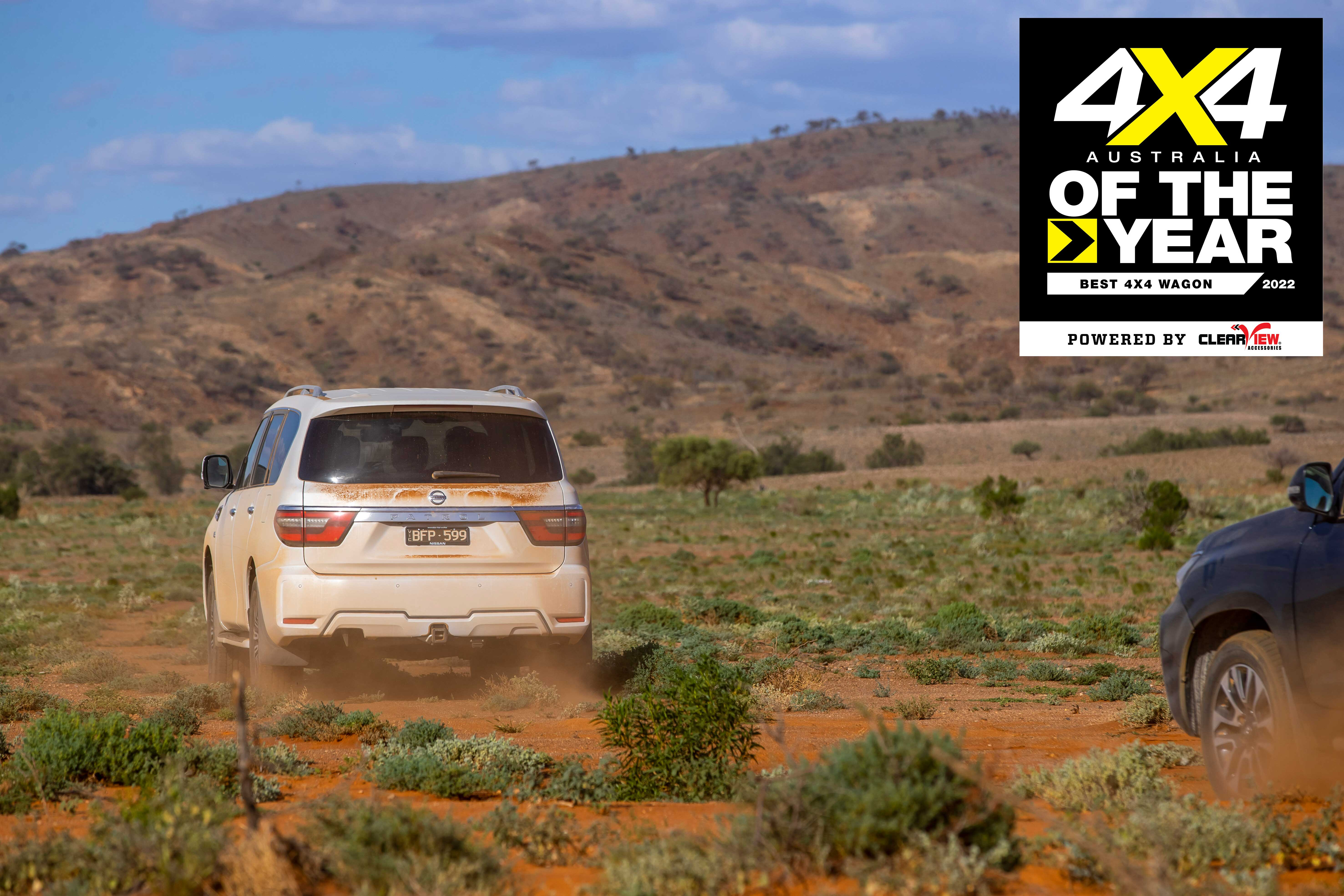
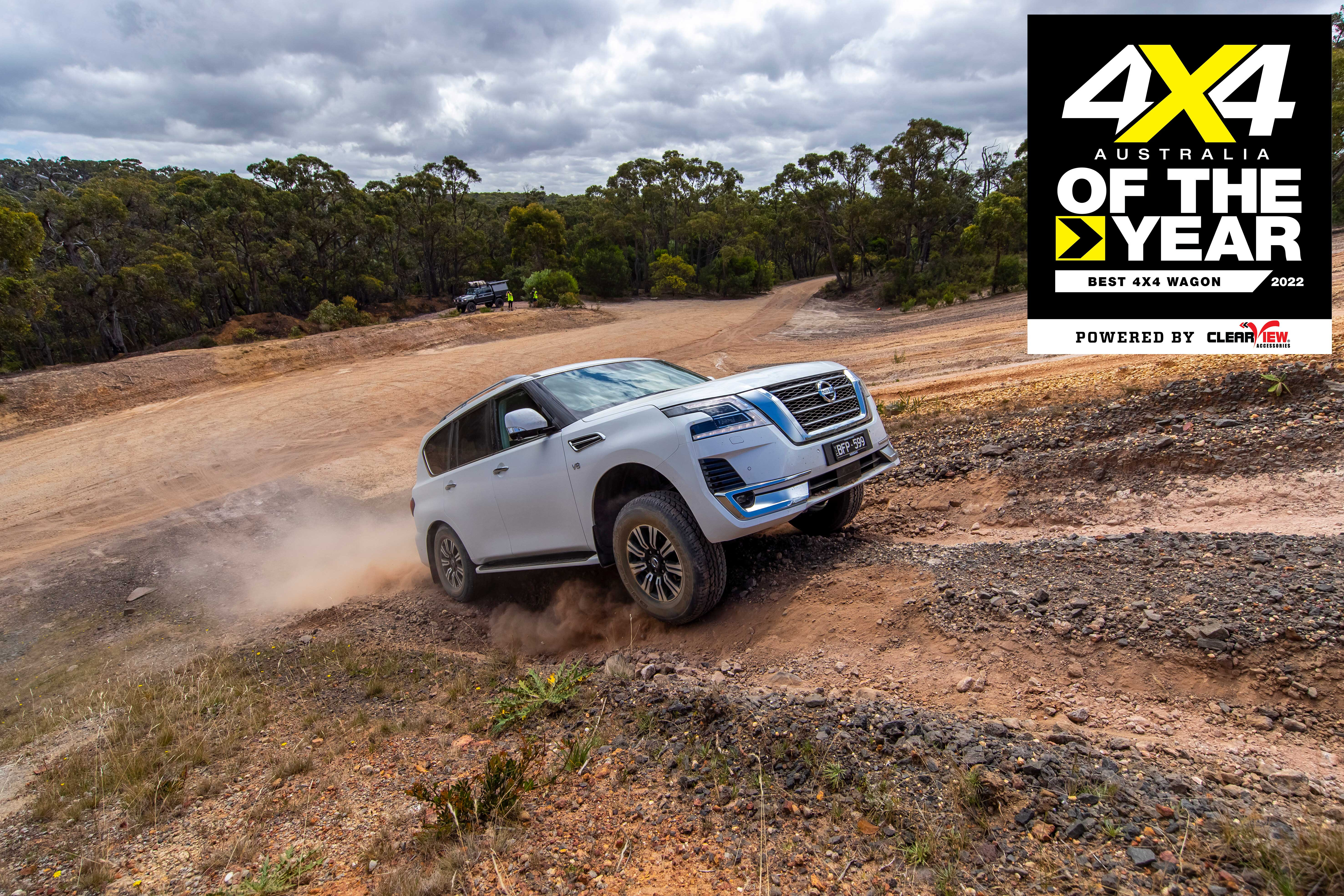
To the surprise of many, the suspension gives nothing away off-road and the Patrol clambered up our rutted hill without raising a sweat. The ETC is responsive but the Patrol seems to respond better with the rear differential lock engaged.
The one drawback of the Patrol as a touring vehicle, is its fuel range. Yes, it has a 140-litre tank as standard, but all that V8 performance does come at a cost at the pump. As the only petrol-fuelled car on test, the Patrol was the thirstiest among our top six, using 17.0L/100km over the week of testing.SOUNDNESS OF ENGINEERING
Many questioned the Patrol’s 298kW V8 engine and fully independent suspension, but both have proven themselves over a decade now and demonstrated their on- and off-road prowess.
A 5.6-litre naturally-aspirated V8 engine might sound like something from Jurassic Park in this day and age, but it works well and is so much fun to drive. With its T-Rex-like roar when you put your foot down, we’d happily accept any dinosaur comparisons.
Just because the VK56 uses displacement rather than forced induction to create its abundance of power, doesn’t mean it’s old technology. It’s a DOHC design with variable valve timing and lift, and direct fuel injection to attain optimum performance.
For many travellers, not having any turbochargers or the complexity of the emissions-control systems that are fitted to modern diesel engines, more than makes up for the fact you are using a bit more fuel at the pump – and I reckon there’s a good argument in that.BUSHABILITY
Patrols have been tough bush vehicles for 70 years now and, despite what naysayers might think, the Y62 continues on that heritage.
The independent suspension not only makes it handle better but also gives the Patrol more ground clearance. The way it is sprung maintains that clearance well; even when dropping down steep descents, the front end doesn’t compress enough to compromise diff clearance, something you find in many stock IFS vehicles. The Patrol uses an automatic on-demand 4×4 system that also gives you lock high and low range 4×4, a rear diff lock and multiple drive modes for sand driving, rock crawling and so on.
Even though it has independent suspension, the Patrol still has heaps of wheel travel so it doesn’t work its ETC too hard. It seems to work better with its rear differential lock engaged than relying on the ETC.
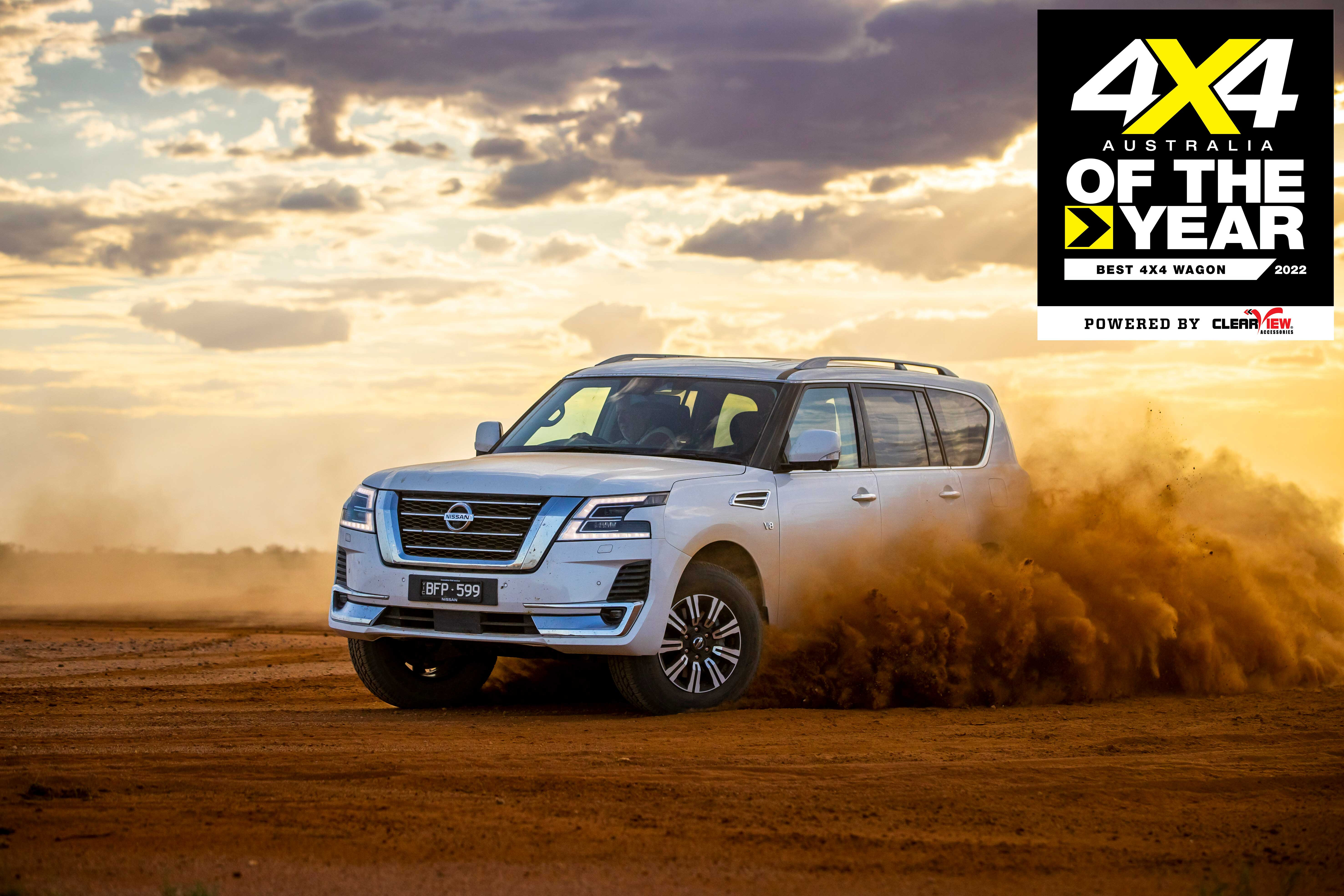
If there’s a niggling complaint when driving the Patrol (and the Navara) off-road, it’s that you need to pull up to a complete stop to tap the transmission back to first gear when you are in low range. This is annoying when you crest the top of a hill ready to go down and you want to tip it back to first to achieve maximum engine braking and vehicle control. Thanks to its relatively large capacity, the VK56 engine exhibits pretty strong engine braking for a petrol engine and the gearing is just right.
The Patrol rides on 18-inch wheels and its standard 256 tyres still have a healthy sidewall so are well-suited for gravel and off-road use. The great thing is that you can tuck a set of 35s on there without having to mess with the suspension – and 37s aren’t uncommon on them with the right mods.
Due to their relatively low sales numbers, the Patrol has been slow to be embraced by the aftermarket and it can take some time to get gear for them every time Nissan does an update or makes changes that affect the accessories. But there is a lot of stuff out there for them and certainly all the kit you could want to build a long-distance tourer or a serious off-roader.
One of those accessories will want to be a long-range fuel tank, because even though the 62 carries 140 litres standard, there’s no hiding the fuel use of a V8 petrol engine. The Patrol required a ‘betweeny’ fuel fill when the other cars didn’t need it on this trip, but that’s something that can be worked around with extra fuel capacity.
“The Patrol Ti-L could be a fully modded outback tourer for less than the cost of a stock Cruiser or Defender and it’ll drive (and sound!) like a million bucks while doing so,” said Dex.
The Patrol is a capable, fun to drive and spacious 4×4 that at less than $100K represents a helluva lot of bang for your bucks.
Land Rover Defender 110 S D300
The new Defender has been with us for a year now, but at last year’s 4X4OTY it was only available with the petrol engine. In 2021 the Defender received the diesel engine it deserves (not that there’s anything wrong with the P400 engine) and one that would be most appealing to Australian travellers.After Land Rover Australia discounted the great value D250 model, we’ve opted for the low-spec S model D300 in the Defender 110 range, as it is the most affordable but doesn’t miss out on any kit you really want for touring.VALUE FOR MONEY
Starting at $102,000 the D300 isn’t cheap and by the time the options – both worthy and not so worthy – are added, this vehicle tips the till to the tune of $122,000, making it a suitable comparison to the LandCruiser VX.
It might be a costly and less luxurious model by Land Rover standards, but the D300 Defender has the gear to get you places with very little fuss and doesn’t want for much.
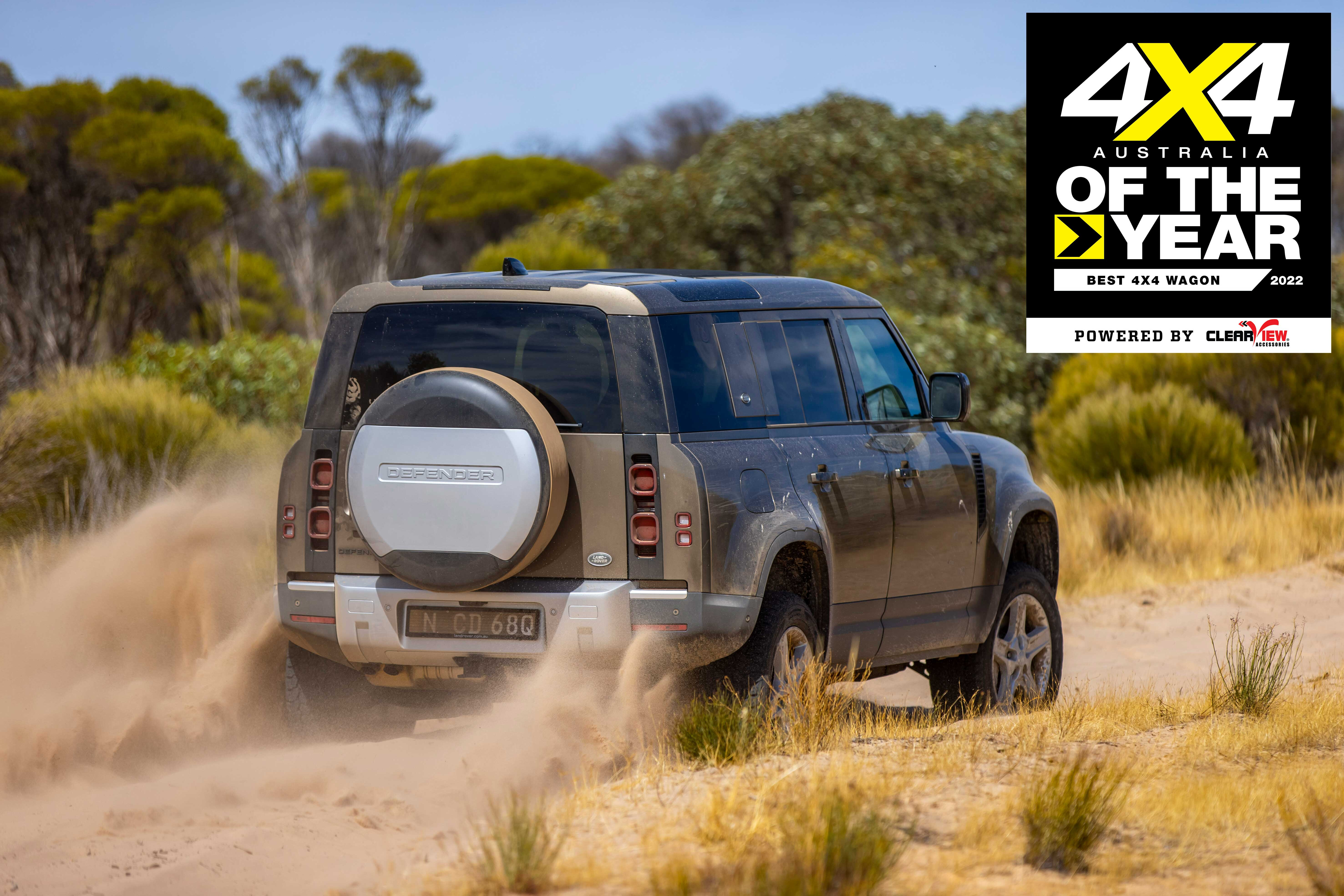
An excellent bi-turbo diesel engine that makes 650Nm of torque, a smooth eight-speed automatic transmission and clever full-time 4×4 system, and height-adjustable suspension that raises the Land Rover over all but the gnarliest of obstacles, make the Defender a supreme touring vehicle and capable off-roader. When you look at all the useful hardware and technology in the Defender, it starts to look like excellent value for money.FULFILMENT OF INTENDED FUNCTION
The Defender 110 is a large wagon that can be configured to seat three, five or seven passengers, and it accommodates any of those configurations with aplomb. Its third-row seat isn’t as accommodating as that in its Discovery stablemate, but it is sufficient for shorter trips.
With its tall, boxy body the 110 offers plenty of interior space should you use it for passengers or cargo, and it will carry all of your family camping kit. The second and third rows fold completely flat, allowing you to make the most of that long load space.
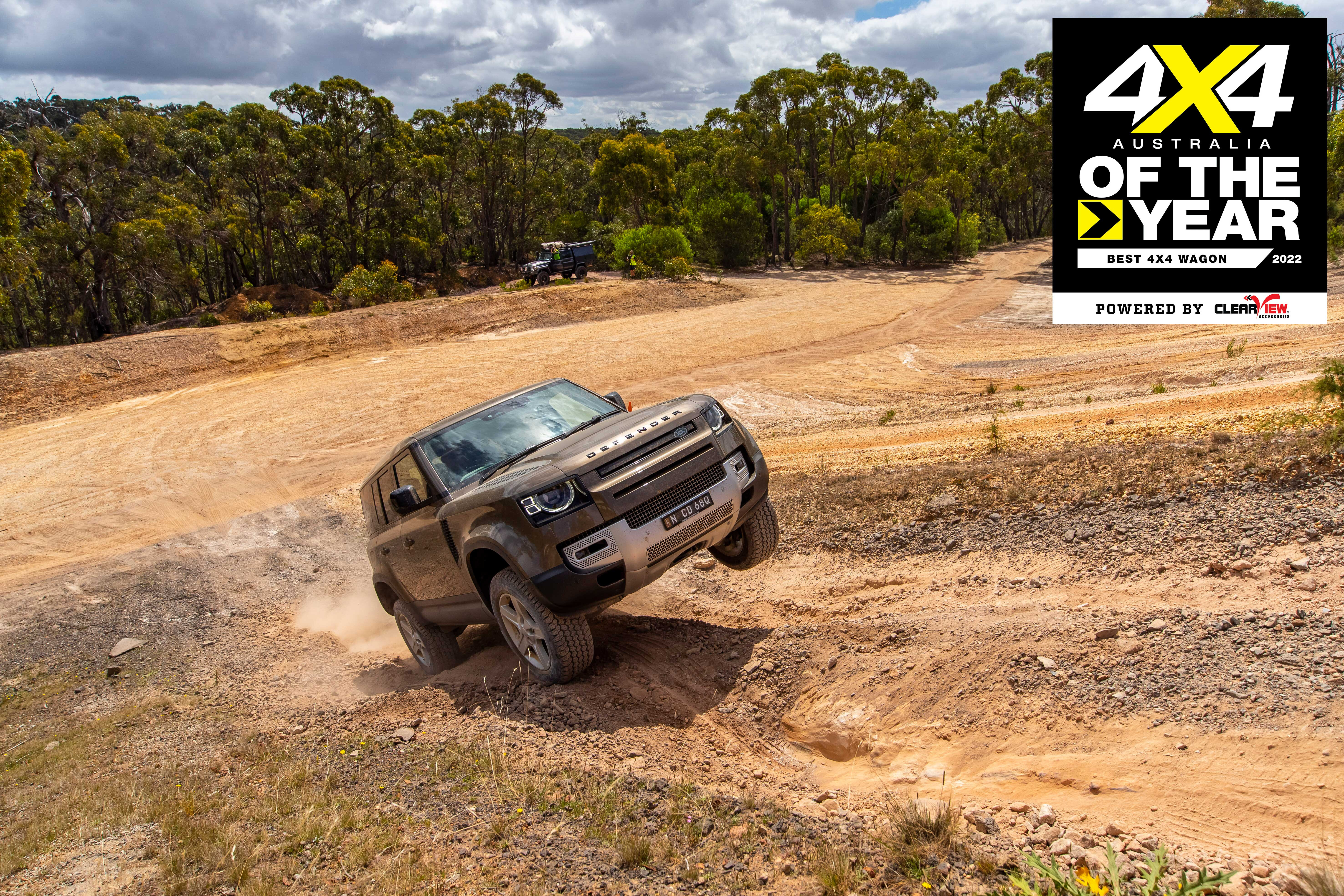
The Defender is an exceptionally capable off-road vehicle and with its suspension cranked up and the Terrain Response set accordingly, it walked up our steep, rutted hill climb with relative ease. It also conquered a challenging sand hill where it was clearly visible how well the electronic traction control and locking centre and rear diffs were operating. This hill provided an excellent opportunity to see how the technology works on each of the cars.
“This vehicle does everything and goes everywhere you could want it to,” said Dex. “Despite my best efforts to look down on it with haughty scorn, I wound up falling in love with it.”SOUNDNESS OF ENGINEERING
Like all current Land Rover vehicles but in deference to its predecessor, the current Defender employs the latest technologies, engineering and systems to give it such a broad range of abilities.
Over and above other current Land Rover models that use the same architecture, the Defender has a beefed-up suspension and, to make it more durable, rides higher on its suspension (up to 283mm) to make it more capable. Its simpler interior puts practicality ahead of style and luxury, to make it more usable.
It still feels more luxurious than other 4×4 wagons on the market, yet it is capable of towing 3500kg and feels at home in the desert, the rainforests or the suburbs.BUSHABILITY
While the Defender comes factory equipped with outstanding off-road hardware, solid payload and towing capacities, and a broader range of capabilities than any other new 4×4, it is left behind in terms of accessories and being adaptable to what four-wheel drivers like to do with their vehicles.
Land Rover does offer a factory bullbar, intake snorkel, roof racks and plenty of other accessories for the Defender, but it is relatively ignored by the aftermarket gear suppliers.
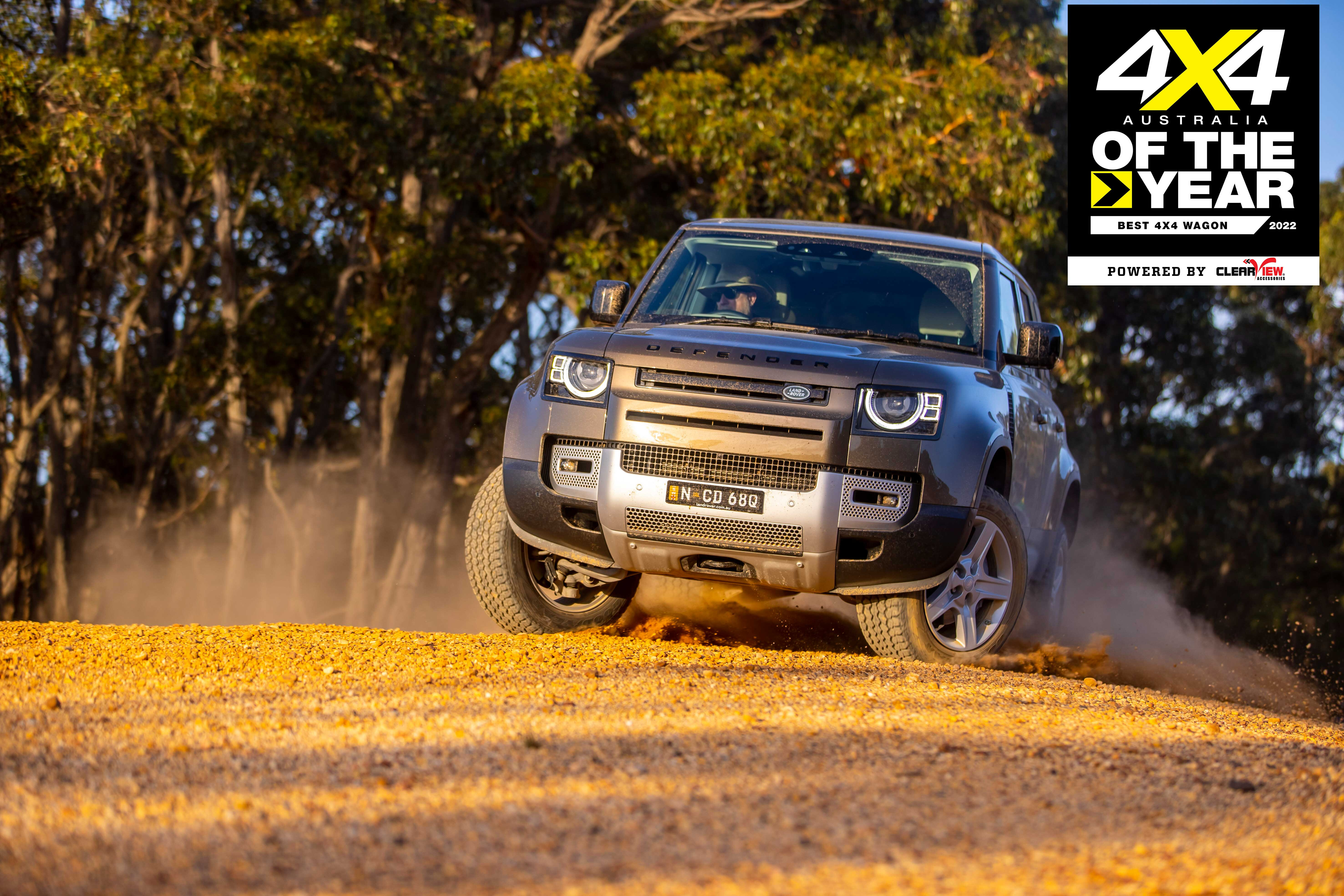
The standard 90-litre fuel tank is only just adequate but more would be better; and the wheels on this model are 19s or 20s and fitting 18s requires modifications to the rear brakes. We’re sure the Defender would attract a lot more buyers if it was more widely catered for by the big aftermarket accessories brands.
While the amount of technology in the Defender will also spook many buyers, it is a sign of the times and the same in any new vehicle, but the access to dealers or service providers in remote places when compared to more mainstream brands poses a concern for many.
“Even though the Cruiser is the heavyweight title-holder and is well-proven and designed for Aussie conditions, the new-kid Defender still gave it a hell of a run for its money,” said Dex.
Toyota LandCruiser 300 VX
We were presented with two LandCruiser 300s for 4X4OTY testing, but neither of them were the specification we asked for. We ended up testing the LC300 VX model, which at $122,51, is a better value package than the $140,570 Sahara that was the alternative.All LC300s are powered by the same new V6 diesel and 10-speed auto powertrain, with the same chassis; it’s just the levels of bling and equipment that vary depending on cost. Who knows what could have happened if we had the $140K GR Sport with its front and rear lockers and e-KDSS?
VALUE FOR MONEY
At $122K the VX Cruiser was seen as better value than the $140K Sahara. Sure, the Sahara might have some more features, but mechanically the two are identical and the VX is still pretty loaded and doesn’t miss out on anything you might want.
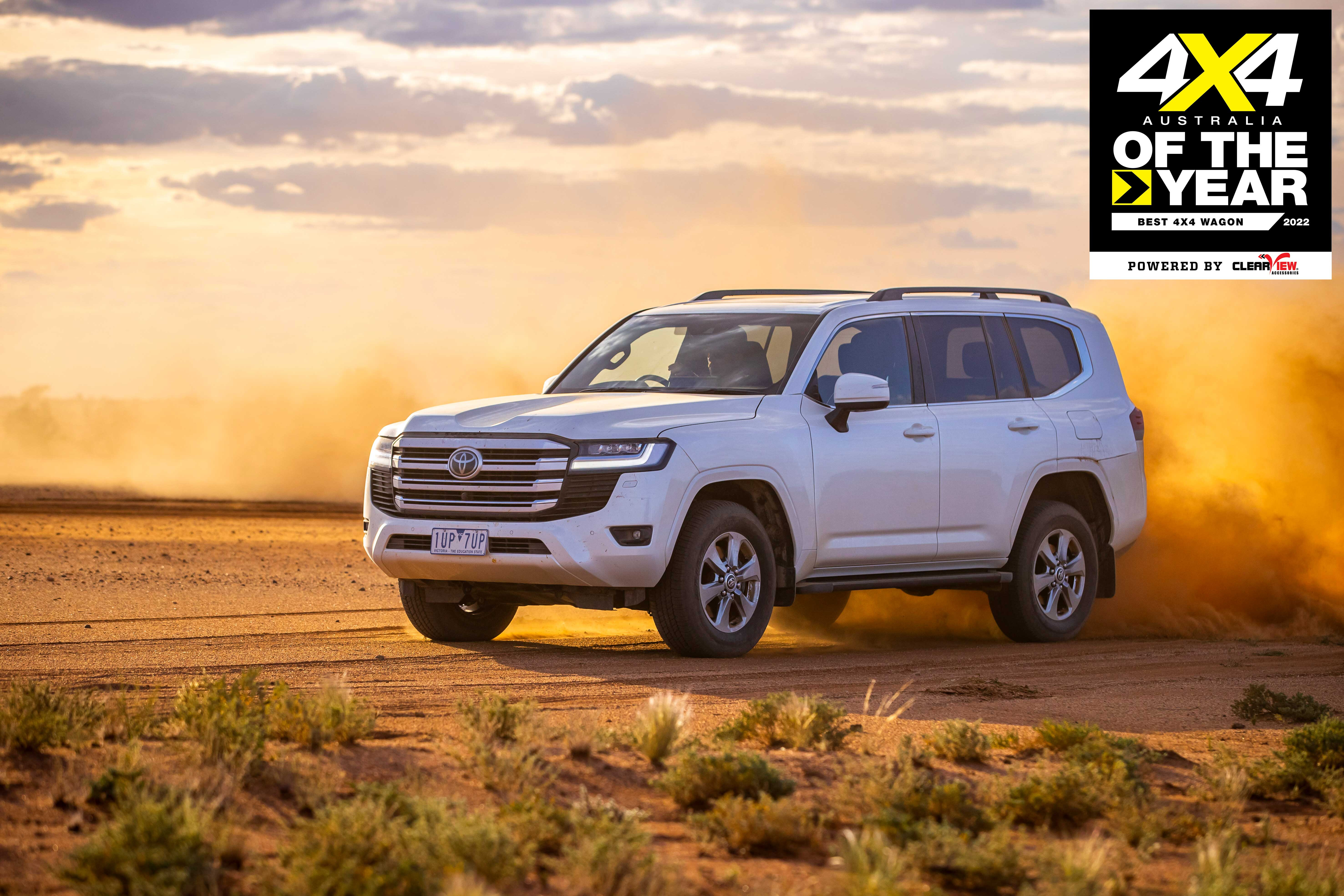
In fact, Toyota says that towards the end of the LC200 era, the VX became the best-selling model in the range and it expects that to continue once it can get stocks of the 300 in the country and out to customers.
Like any LandCruiser the VX is built to tour, and this spec adds some luxury with heated and cooled faux-leather seats, sunroof, big screen in the dash, four-zone climate control and the full suite of safety technology. It also rides on the 18-inch wheels, so they are still a practical size compared to many other luxury models.
With seating for seven the VX is the LandCruiser for family buyers looking for a bit more luxe in their touring rig.FULFILMENT OF INTENDED FUNCTION
Toyota certainly stuck to its proven formula when creating the 300 Series and didn’t step too far away from its successful 200 Series for the new model. In fact, what it has done is fix and improve upon the things that let the 200 Series down; just as any successive new model should.
The new V6 diesel engine is more powerful, more refined and, most significantly, more economical than the V8 engine in the previous generation. The LC300 used 13.3L/100km over the length of our test, where we reckon a VDJ200 would have been in the 17s.
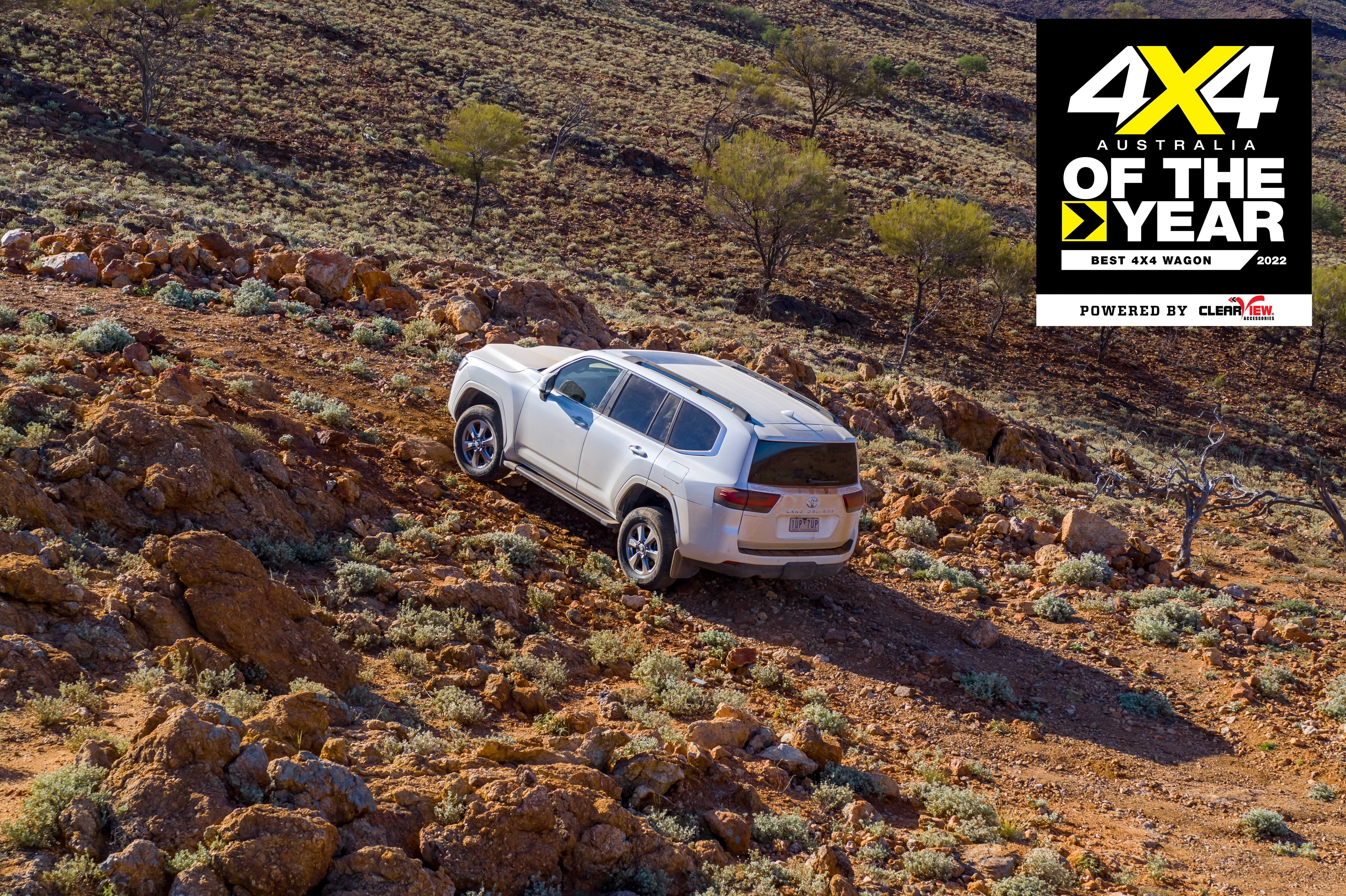
“Any ideas you may have had about the new V6 diesel not measuring up to the superseded V8 – forget them! This thing is better in every way,” said Dex Fulton after some time behind the wheel of the 300. “It’s everything you would expect from the Toyota flagship and I’d wager a hefty sum we’ll be seeing big builds of these rigs before long. It’s just so suited to touring the Aussie bush.”
The new LandCruiser remains a big and comfortable touring vehicle but it rides and handles better than the 200, making it more relaxing and comfortable to drive over long distances and spend hours behind the wheel. The suspension sticks to the same design but is heavily revised, and the use of aluminium and other lightweight materials allowed the engineers to lower the centre of mass in the vehicle to achieve these goals.
It does so without compromising on off-road ability. In fact, it’s improved with the latest tech used in the ETC and Crawl Control functions. Add in extra wheel travel at the rear axle and the Cruiser remains an off-road icon.SOUNDNESS OF ENGINEERING
The 300 still feels very much like a LandCruiser, and that means solid and reliable; aside from the somewhat dull sound when you tap on the aluminium body panels. Again, Toyota has stuck to what works and refined and improved on the hardware and technologies.
The V6 engine pulls strongly and doesn’t have the lazy feeling of the old V8. Take that how you may, but the new powertrain feels well-suited to a touring and off-road-capable 4×4. The electronics improve not hinder the performance, and exploring their capabilities rewards the driver. The Cruiser crawled up the rutted hill climb and was one of the better performing vehicles over the tricky sand hill.BUSHABILITY
Toyota calls Australia the home of LandCruiser, which is why it does so much of its testing and development here. It’s a wagon that’s made for travelling our big country, no matter what roads you are using or if you want to tow a large trailer. The 300 is built tough to take on the conditions and also be able to be accessorised to suit your needs.Toyota has even gone as far as including the trailer wiring harness as well as the integrated tow bar in the 300 Series.
Toyota has also come out with a range of products such as steel and alloy bullbars, roof racks, a snorkel and other genuine accessories, while the aftermarket has been quick to develop a bigger range of products to suit the Cruiser.
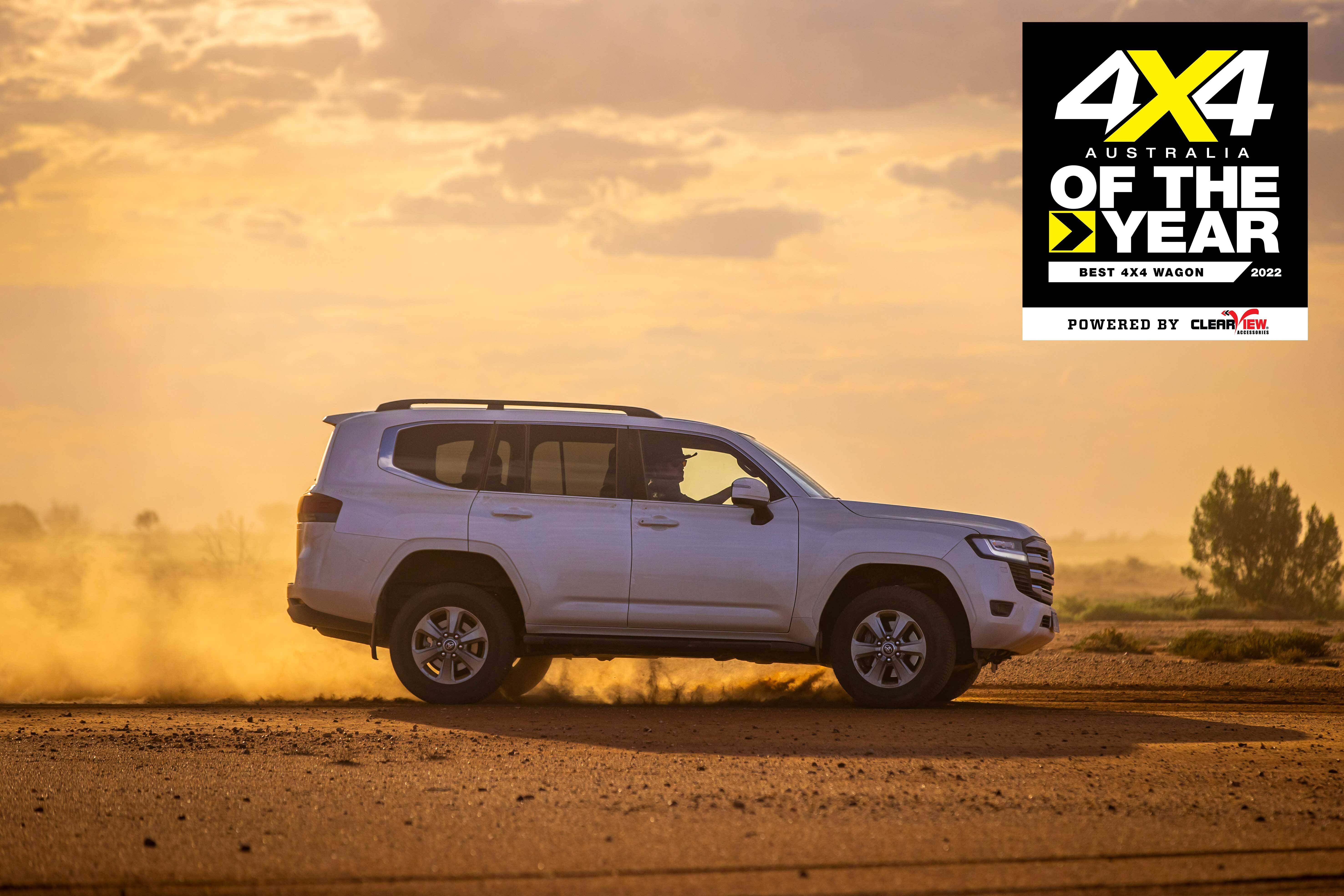
One downside to the 300 compared to the 200 is the drop in fuel capacity, with its now 110 litres via an 80-litre main tank and a 30-litre sub tank. The towing capacity remains at 3500kg, while the payload for the VX could be better at 650kg. A few of our drivers mentioned they miss the old split tailgate of previous LandCruisers.
It’s this suitability to the Australian conditions, the access to aftermarket equipment and the way the LandCruiser drives that impressed our drivers and they scored it higher than the Defender it was up against. In fact, the Cruiser was the second highest scoring vehicle among the finalists, falling just one point shy of the Ranger.
Snapshot
- V6 diesel engine to produce 184kW and 600Nm
- V6 and I4 diesel engines in regular models
- Manual gearbox axed
- 2022 Ranger orders open in April
UPDATE, July 2022: New Ford Ranger review – it’s here at last
The new 2023 Ford Ranger is now on sale in Australia, and the local media launch has been run. The Wheels and 4×4 Australia teams have both driven the new Ranger, and you can find their stories at the links below.
Story continues…
UPDATE, April 7, 2022: Australian pricing for the new 2023 Ford Ranger has now been revealed. Get the full details at the link below.
The story to here
Ford has released more details of the engines that will power the next generation of Ranger ute and Everest wagon models in Australia. Specifically, it has revealed the outputs on the new 3.0-litre V6 diesel engine that will be available on upper specification models of both the 4×4 Ranger and Everest.This latest version of the ‘Lion V6’ engine has been tuned to put out 184kW of power at 3250rpm and 600Nm of torque which will make the Ford pair the most powerful 4-wheel drive models in their respective categories.The Lion V6 is not a new engine having first debuted as a 2.7-litre capacity in the Land Rover Discovery 3 and some Peugeot and Citroen passenger cars back in 2004. In this capacity it was even used in Ford Australia’s Territory wagon. The capacity was increased to 2993cc in 2009 and both single- and dual-turbocharger variants have been used, producing up to 700Nm of torque in some Range Rover models.
Upgrade your Ranger
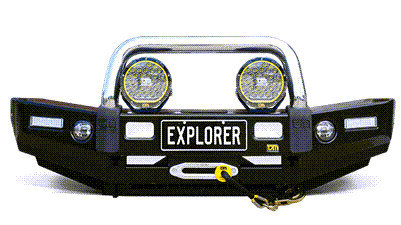
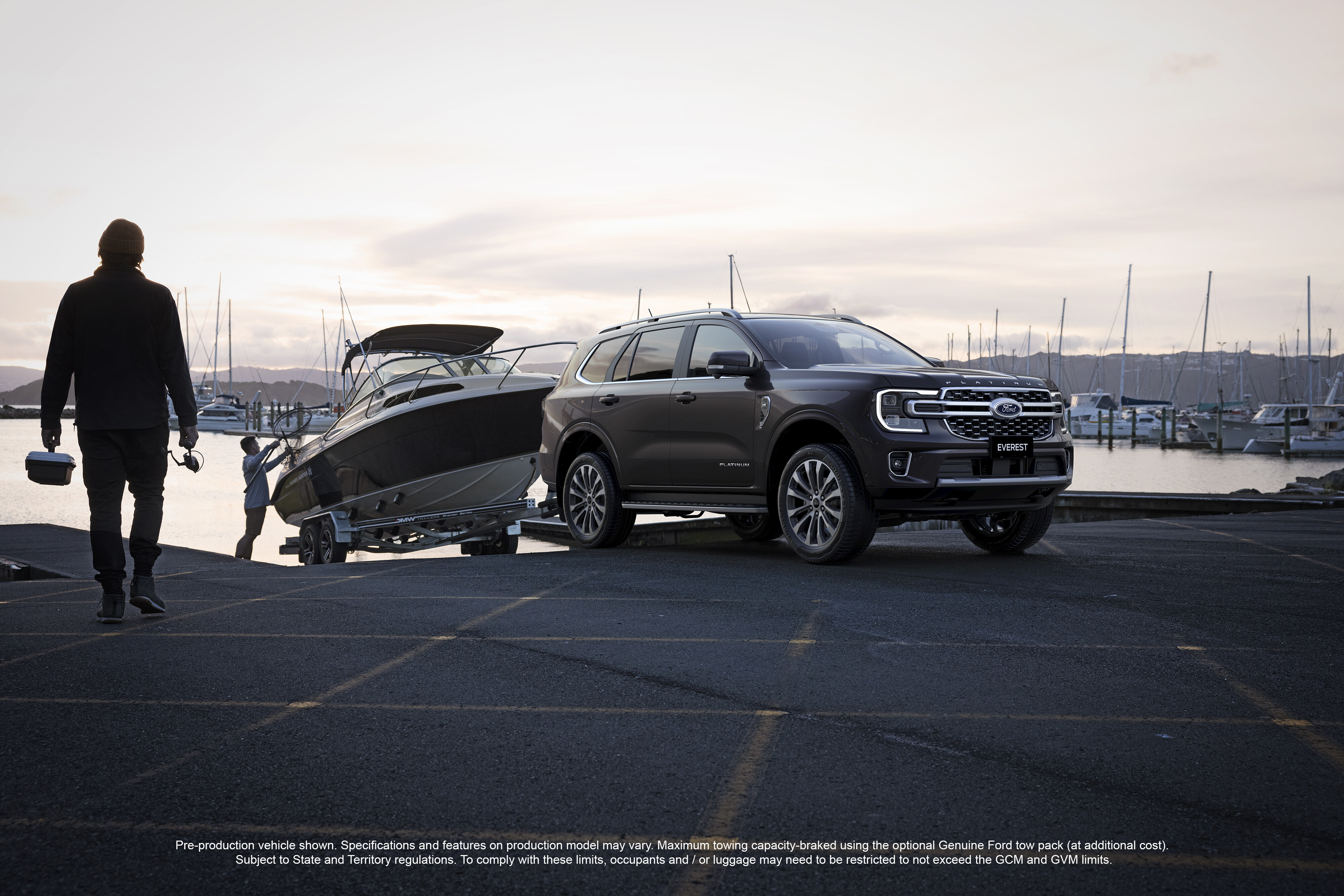
The 3.0-litre V6 was most recently used with a single turbocharger in the Ford F-150 where it was called the Power Stroke V6 and made 185kW and 597Nm, similar to what it makes for this new application for Australia.Ford says it treated the Lion V6 like a new engine for this latest application in the T6-based vehicles – namely the Ranger and Everest, even though the outputs are similar to the F-150 specifications.“We did a lot of application calibration and validation work in both the US and Australia to make sure it would meet the needs of Ranger and Everest customers,” said Pritika Maharaj, Ranger and Everest program manager.

“The 3.0-litre V6 turbo-diesel delivers,” added Maharaj. “When you drive a Ranger with the V6 turbo diesel, it feels strong in the sense that it’s got plenty of power and torque, which is exactly what our customers told us they wanted.”Ford also announced more details of the payload and towing capacities. Ranger continues to have a 3500kg towing on all (both 4×4 and 4×2) variants bar the petrol-fuelled Raptor which will remain limited to 2500kg. GCM is 6350kg across the 4×4 range, but 5370kg for the Raptor.Ford has previous revealed that the new Ranger will be well-equipped for towing with an inbuilt electronic brake controller and a clever function for checking the trailer lights without needing a second person to ‘spot’ them for you. The inbuilt safety systems such as blind-spot monitoring and rear cross-traffic alerts will also be able to account for the extra length of a trailer behind the vehicle when signalling vehicles behind you.

Interestingly, the highest payload for a V6 Ranger comes in the top-spec Wildtrak model with 997kg. This drops down to 980kg for the Sport double-cab 4×4, while in the XLT V6 it’s 995kg. This comes thanks to the higher GMV that the Wildtrak enjoys over the other models.It appears that the V6 Ranger 4x4s are only around 58kg heavier than the I4 powered models. That’s’ going off the kerb weights of the Ranger Sport double-cab 4×4 with both engines (2300kg vs 2242kg).As mentioned, the Ranger Raptor continues to be restricted to 2500kg towing and 753kg payload due to its bespoke suspension design which has been engineered more for off road performance than for towing and load hauling.The Raptor will be powered exclusively by a 293kW-583NM V6 twin-turbo V6 petrol engine and will take its off-road prowess to the next level with electronic controlled Fox Racing shocks, more suspension travel, and front and rear driver-selectable locking differentials.

V6 powered Rangers and Everests will be backed exclusively by Ford’s 10-speed automatic transmission and a new full-time on-demand 4×4 system. This system is different to that in the current Everest in that it will allow users to manually lock the centre differential in 4×4 high and low range as well as offering full-time 4×4 on any road surface in auto mode.Aside from the new V6 engines, Ranger and Everest will be offered with the now familiar 2.0-litre I4 bi-turbo diesel engine producing 154kW at 3750rpm and 500Nm from 1750 to 2000rpm and backed by the 10-speed automatic and part-time 4×4 in the Ranger and on-demand 4×4 in Everest.A single turbocharger variant of the 2.0L diesel engine is offered in 4×2 and XL 4×4 model Rangers. It produces 125kW at 3500rpm and 405Nm from 1750 to 2500rpm and will be backed by the 6-speed automatic transmission carried over from the current generation Ranger.
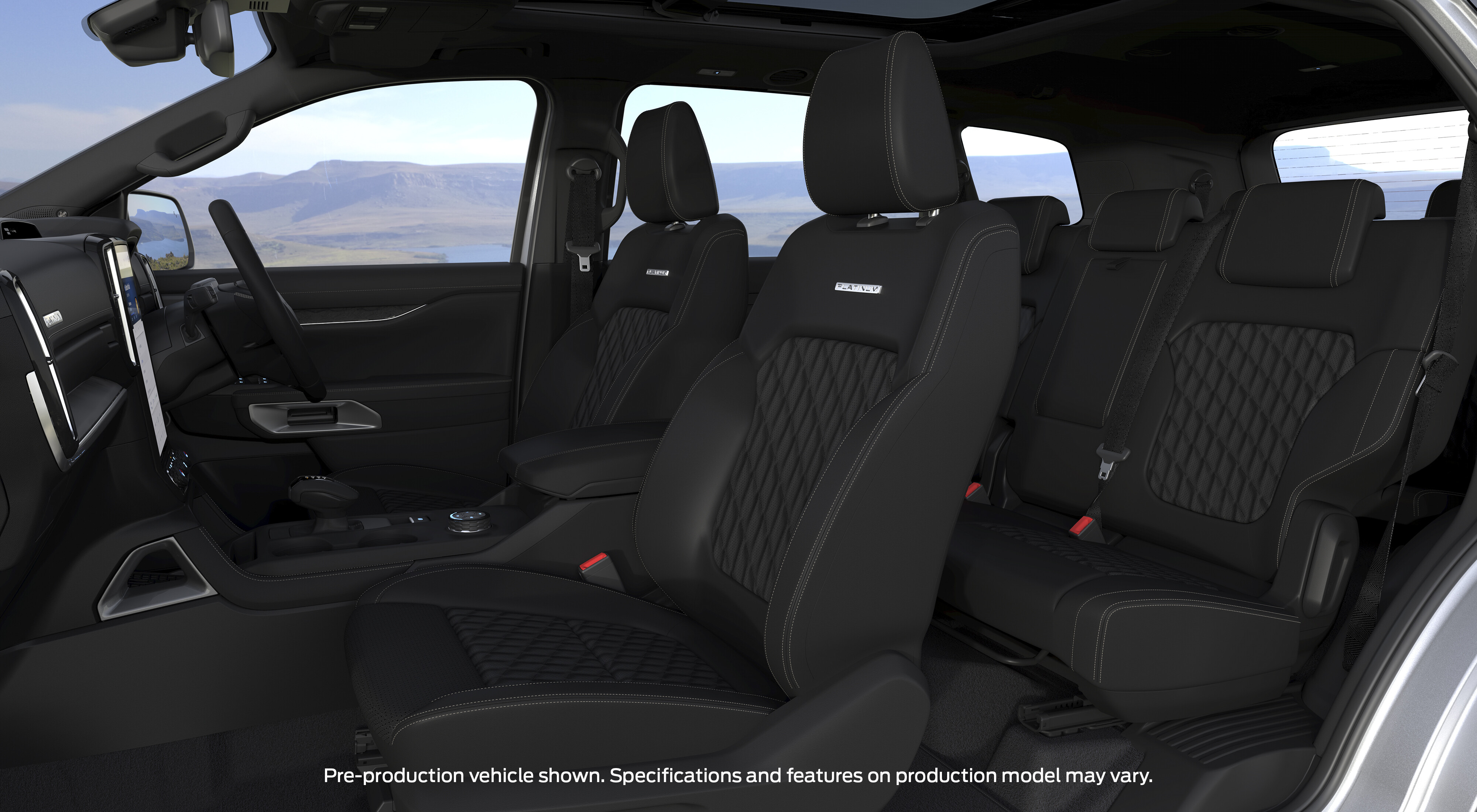
Note that there is no manual gearbox offered in next generation Ranger, something that will be a disappointment to many drivers. This comes as a reflection of market demands as drivers like their cars simplified and put more importance on phone connectivity than how a car actually drives.Four-wheel drive Rangers will all have a driver operated rear locking differential, but only the Ranger Raptor gets a front locker as well. Multi Terrain Select will now be available on more Ranger variants beside the Raptor and Everest wagon, although Ford is now calling its system Selectable Drive Modes.There are now up to seven modes in the system: Normal, Eco, Tow/Haul and slippery for on-road use, with Mud/Ruts and Sand modes for off road. Ranger Raptor is the only variant to turn the dial up to 11 with Baja mode. These modes select the optimal calibration for systems such as traction control, transmission shifting, stability control and accelerator response to suit the driving conditions.Ford says that the order books for the next-gen Ranger open in April even though dealers have reported huge interest and orders since the new model was revealed late last year. The company has also confirmed that the first new Ranger deliveries to customers will happen in June this year.
4X4 Australia project builds
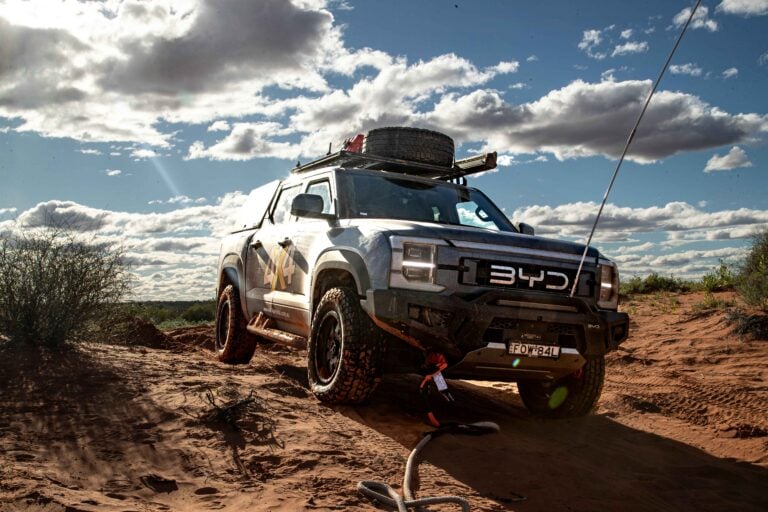
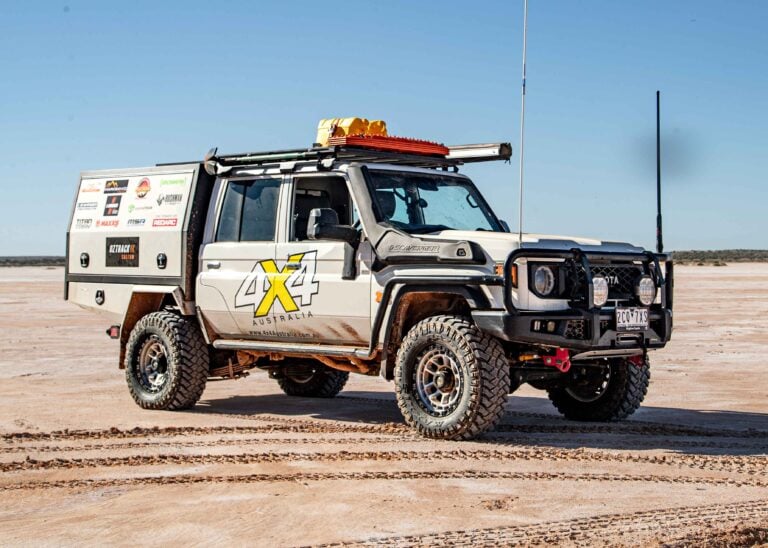
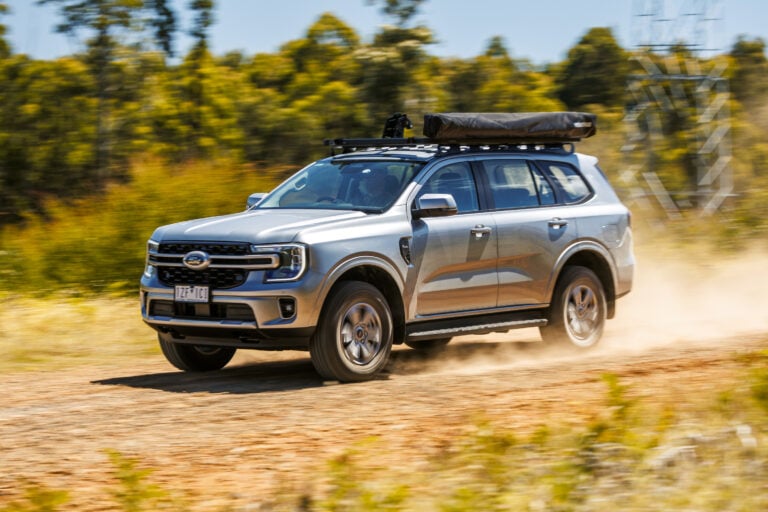
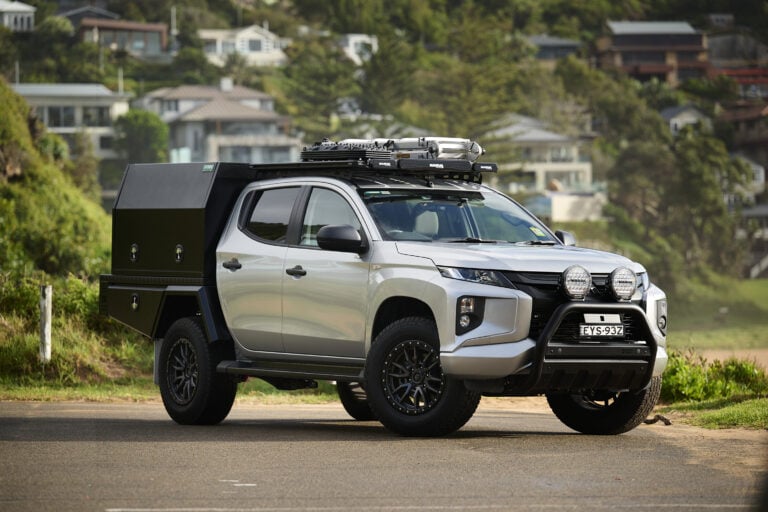
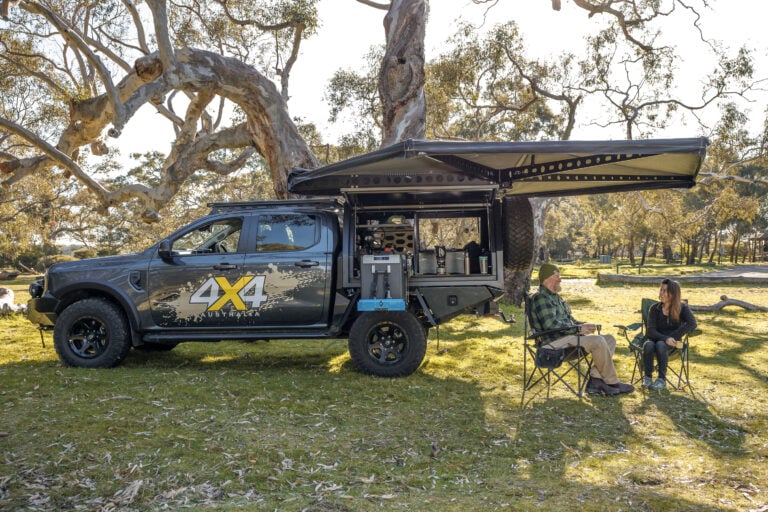
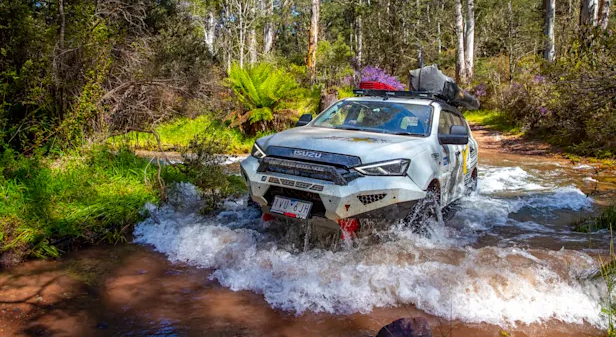
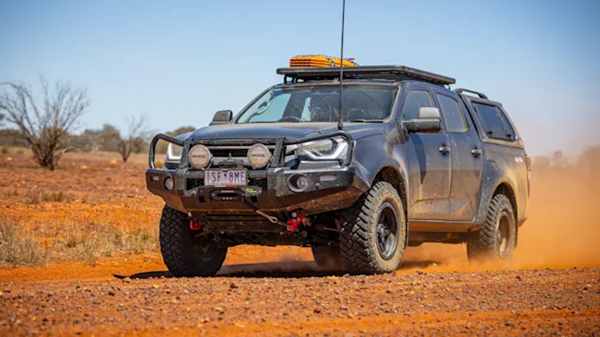
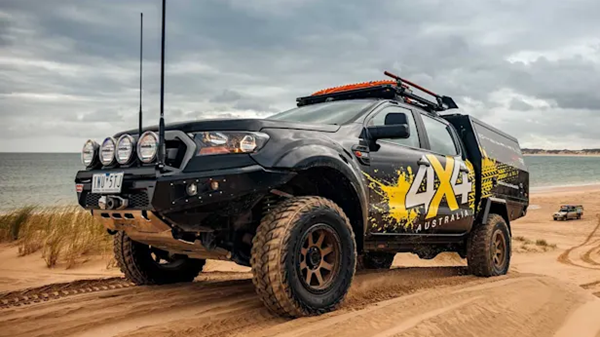
4×2 XL HR 2.0L single-turbo AT
| Single C/C | Super C/C | Double C/C | Double P/U | |
|---|---|---|---|---|
| Gross Combined Mass (GCM) – kg | 6200 | 6200 | 6200 | 6200 |
| Gross Vehicle Mass (GVM) – kg | 3060 | 3060 | 3060 | 3060 |
| Payload – kg | 1271 | 1167 | 1102 | 958 |
| Vehicle Tare Weight – kg | 1725 | 1829 | 1894 | 2038 |
| Kerb weight – kg | 1789 | 1893 | 1958 | 2102 |
| Maximum Towing Capacity (braked) – kg | 3500 | 3500 | 3500 | 3500 |
4×4 XL 2.0L single-turbo AT
| Double C/C | Double P/U | |
|---|---|---|
| Gross Combined Mass (GCM) – kg | 6200 | 6200 |
| Gross Vehicle Mass (GVM) – kg | 3190 | 3190 |
| Payload – kg | 1144 | 1000 |
| Vehicle Tare Weight – kg | 1982 | 2126 |
| Kerb weight – kg | 2046 | 2190 |
| Maximum Towing Capacity (braked) – kg | 3500 | 3500 |
4×4 XL 2.0L Bi-turbo AT
| Single C/C | Super C/C | Super P/U | Double C/C | Double P/U | |
|---|---|---|---|---|---|
| Gross Combined Mass (GCM) – kg | 6350 | 6350 | 6350 | 6350 | 6350 |
| Gross Vehicle Mass (GVM) – kg | 3230 | 3230 | 3230 | 3230 | 3230 |
| Payload – kg | 1327 | 1223 | 1063 | 1158 | 1014 |
| Vehicle Tare Weight – kg | 1839 | 1943 | 2103 | 2008 | 2152 |
| Kerb weight – kg | 1903 | 2007 | 2167 | 2072 | 2216 |
| Maximum Towing Capacity (braked) – kg | 3500 | 3500 | 3500 | 3500 | 3500 |
Ranger XLS and XLT
| 4×2 XLS Double P/U 2.0L bi-turbo | 4×4 XLS Double P/U 2.0L bi-turbo | 4×2 XLT Double P/U 2.0L bi-turbo | 4×4 Super P/U 2.0L bi-turbo | 4×4 XLT Double P/U 2.0L bi-turbo | 4×4 XLT Double C/C 3.0L V6 | 4×4 XLT Double P/U 3.0L V6 | |
|---|---|---|---|---|---|---|---|
| Gross Combined Mass (GCM) – kg | 6250 | 6350 | 6250 | 6350 | 6350 | 6400 | 6400 |
| Gross Vehicle Mass (GVM) – kg | 3140 | 3230 | 3140 | 3230 | 3230 | 3280 | 3280 |
| Payload – kg | 1013 | 1014 | 1003 | 1052 | 1005 | 1151 | 995 |
| Vehicle Tare Weight – kg | 2063 | 2152 | 2073 | 2114 | 2161 | 2065 | 2221 |
| Kerb weight – kg | 2127 | 2216 | 2137 | 2178 | 2225 | 2129 | 2285 |
| Maximum Towing Capacity (braked) – kg | 3500 | 3500 | 3500 | 3500 | 3500 | 3500 | 3500 |
Ranger Sport, Wildtrak and Raptor
| 4×4 Sport Double P/U 2.0L bi-turbo | 4×4 Sport Double P/U 3.0L V6 | 4×4 Wildtrak Double P/U 2.0L bi-turbo | 4×4 Wildtrak Double P/U 3.0L V6 | 4×4 Raptor Double P/U 3.0L TT V6 | |
|---|---|---|---|---|---|
| Gross Combined Mass (GCM) – kg | 6350 | 6400 | 6350 | 6400 | 5370 |
| Gross Vehicle Mass (GVM) – kg | 3230 | 3280 | 3280 | 3350 | 3130 |
| Payload – kg | 988 | 980 | 985 | 997 | |
| Payload (Max Tare) – kg | 753 | ||||
| Vehicle Tare Weight – kg | 2178 | 2236 | 2231 | 2289 | 2377 |
| Kerb weight – kg | 2242 | 2300 | 2295 | 2353 | 2431 |
| Maximum Towing Capacity (braked) – kg | 3500 | 3500 | 3500 | 3500 | 2500 |
In keeping with the tumultuous times of the past few years and the difficulties that it has created for the new-car industry around the world, we’ve given the awards, now in their 38th year, a shake up to reflect the times.
Whereas in the past few decades 4X4 Australia has given its highest accolade to just one model each year, for 2022 we branched out to introduce two awards, reflective of the diversity of the new 4×4 market in the 21st century. 4×4 of the Year will now be awarded to two vehicles, one for utes and one for wagons.
For those interested, the first 4X4OTY winners back in 1984 both came from the Mitsubishi showroom, with the 4×4 L300 Express taking the gong for sub $15K and the Pajero getting the plus $15K award.
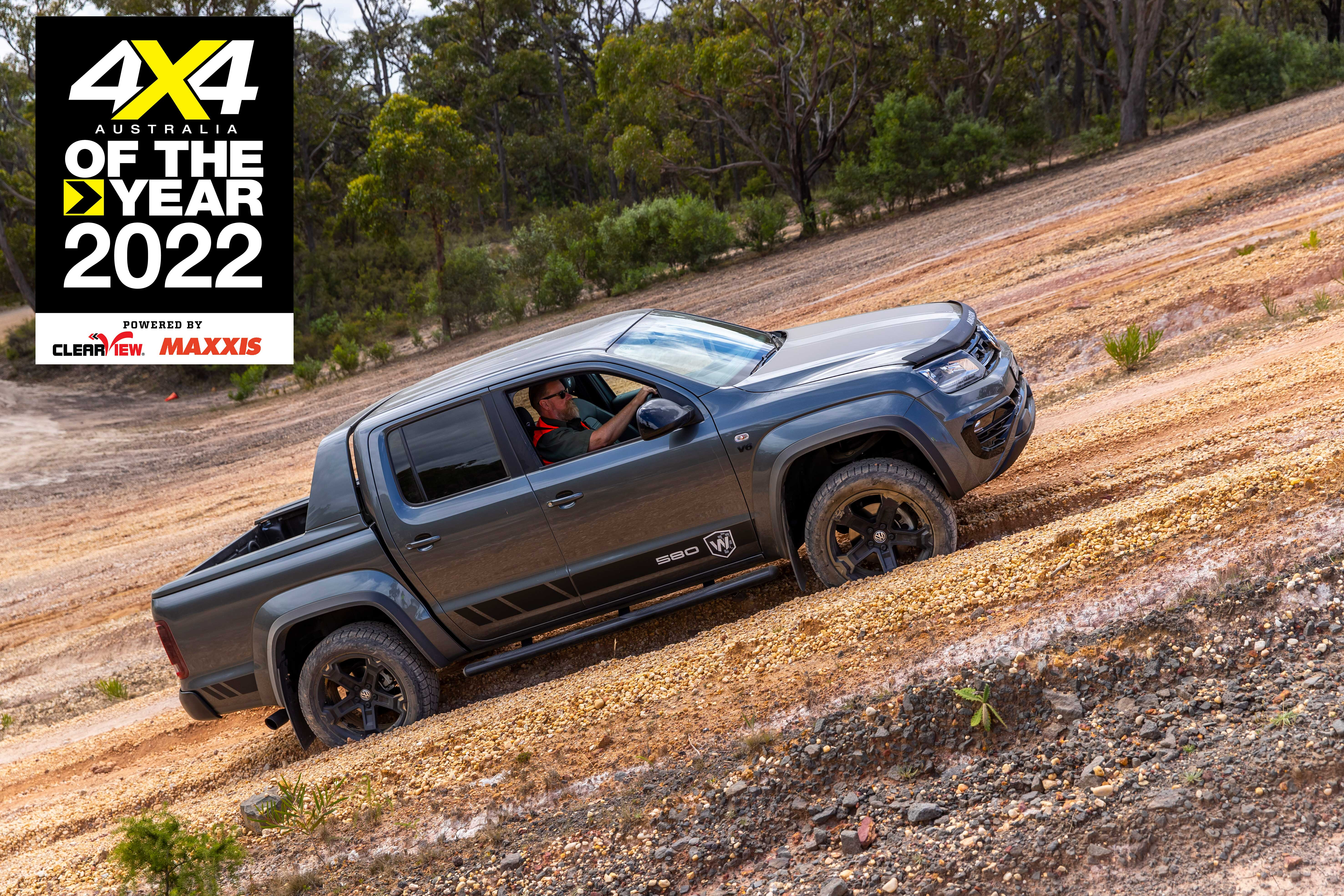
Also new in 2022 is the fact that the vehicles no longer need to have been launched or updated in the last 12 months. We’ve opened it up to all those new vehicles, plus significant other 4×4 models that are still on the market.
By significant, we mean sales leaders, previous 4X4OTY winners, winners of our comparison tests throughout the year, or just models we feel are at the pointy end of their respective categories.
Something that hasn’t changed is the criteria that we score the vehicles against.
They have been developed over the decades to create an even playing field for all the vehicles selected, and after the week of testing our assessors score the vehicle out of 10 points in each of the criteria. This gives each vehicle a score out of 50 from each assessor, and these are added up to find the two winners.
Judging criteria
VALUE FOR MONEY Judged according to a vehicle’s equipment level, safety features and price relative to its direct competitors. Just because a vehicle has a high price doesn’t mean it’s not good value, in the same way a cheap car doesn’t always represent good bang for your buck …BREAKING NEW GROUND Refers to advancements in technology and design. How a vehicle has raised the bar in the class it fits in and taken 4x4s to a higher level. If a vehicle has the latest safety features, worthy engine technology or an advanced driveline, it will score well here.
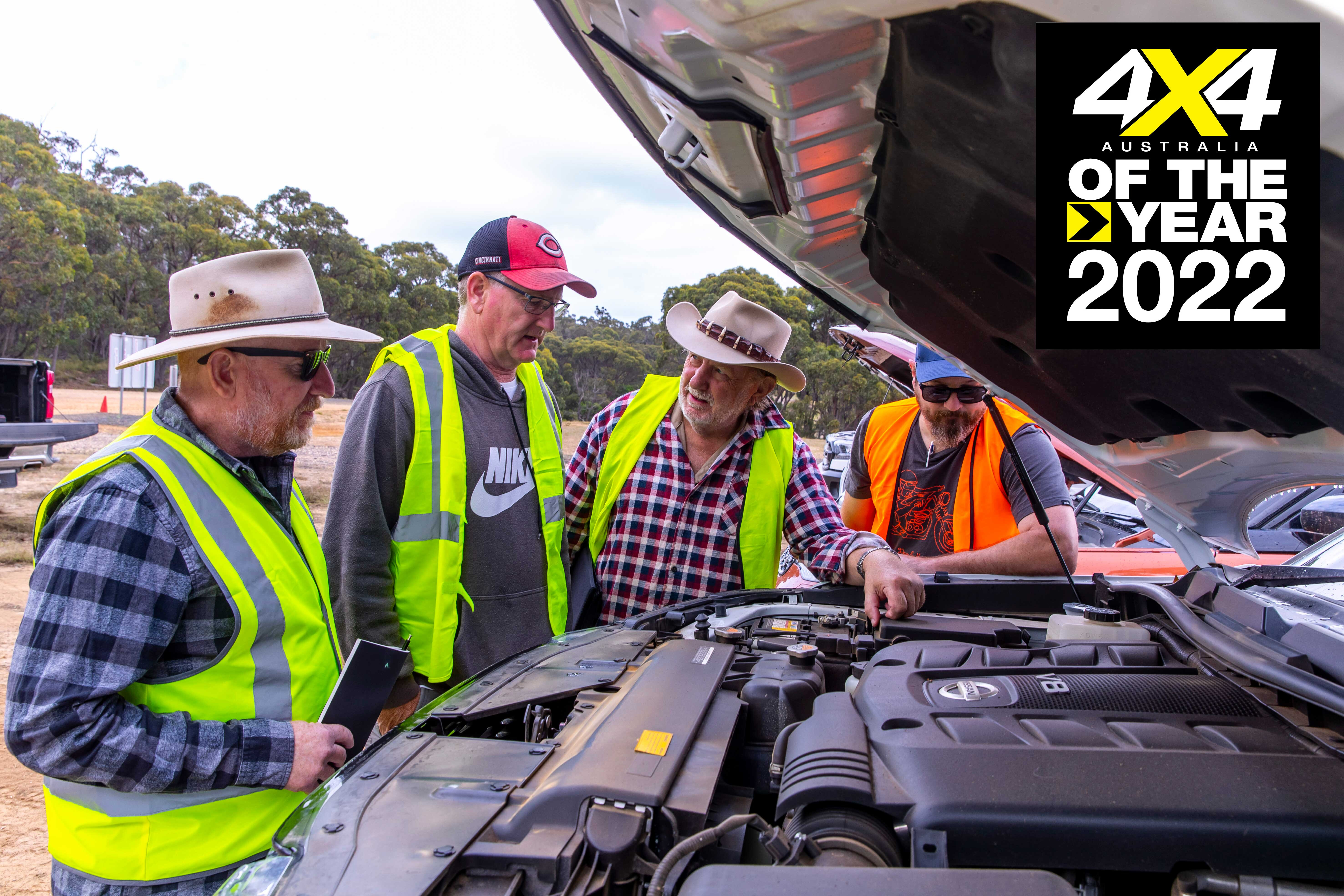
BUILT TOUGH Refers to how strong a vehicle is and how well it will cope with the rigours of tough off-road driving environments. Will it be up to the task of carrying loads and outback travel, or fall apart at the first hurdle?BUSHABILITY How well a vehicle is equipped for off-road travel. Suitability of the standard tyres for rough roads, touring range, available accessories and underbody protection are just some of the factors considered here. Is this a vehicle you would choose to drive around Australia the rough way, or is it best left to the suburbs?DOING THE JOB Judged according to a vehicle’s design brief. Does a luxury vehicle have all the latest in comfort and convenience features and do they work in the real world? How well a ute carries a load, or a seven-seater accommodates a family will all come in to play here.
Contenders
We’ve split the 4X4OTY award into two categories for 2022, with top honours now going to the Best Wagon and the Best Ute.
WAGONS
MERCEDES-BENZ G400D
The G400D is the most expensive four-wheel drive on this test, so it will be interesting to see if it’s actually the best performer. You just have to close the doors on the G400D to know this is a quality vehicle; they have that satisfying thud of an old Merc.
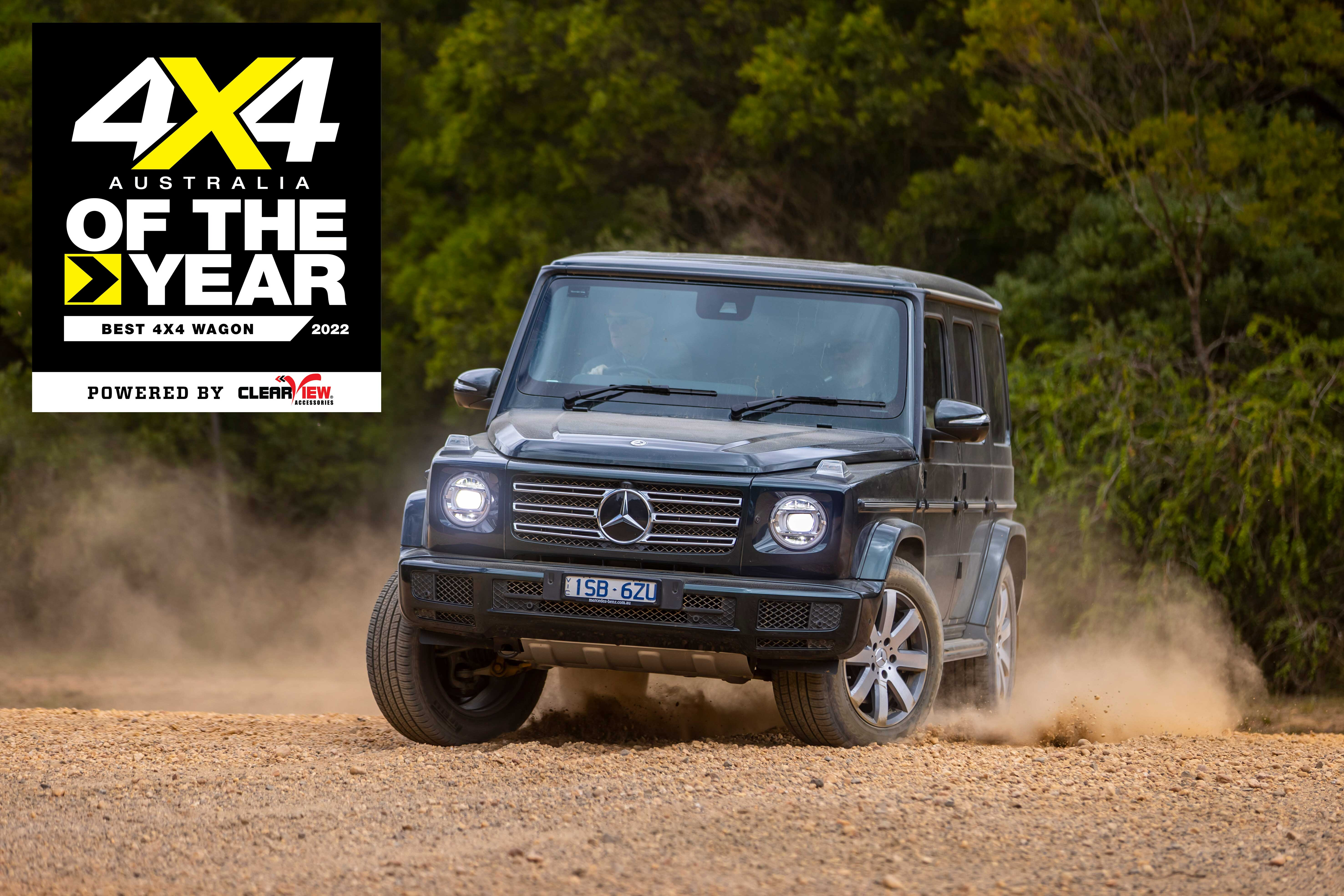
With triple locking diffs the G400D could very well be the perfect mix of on-road comfort and off-road ability … you’d really hate to scratch it though, considering the price tag. At the end of the day, it was the price tag that eliminated the G400d from our finalists.LAND ROVER DISCOVERY P360
With 265kW of power available, this turbo petrol-powered six-cylinder Discovery looks to be a fun yet practical off-road wagon. Being a newish Land Rover product, the interior quality and design is first class, as you’d expect, making this a luxurious and capable family wagon with a bit more wow factor than some other offerings on test.
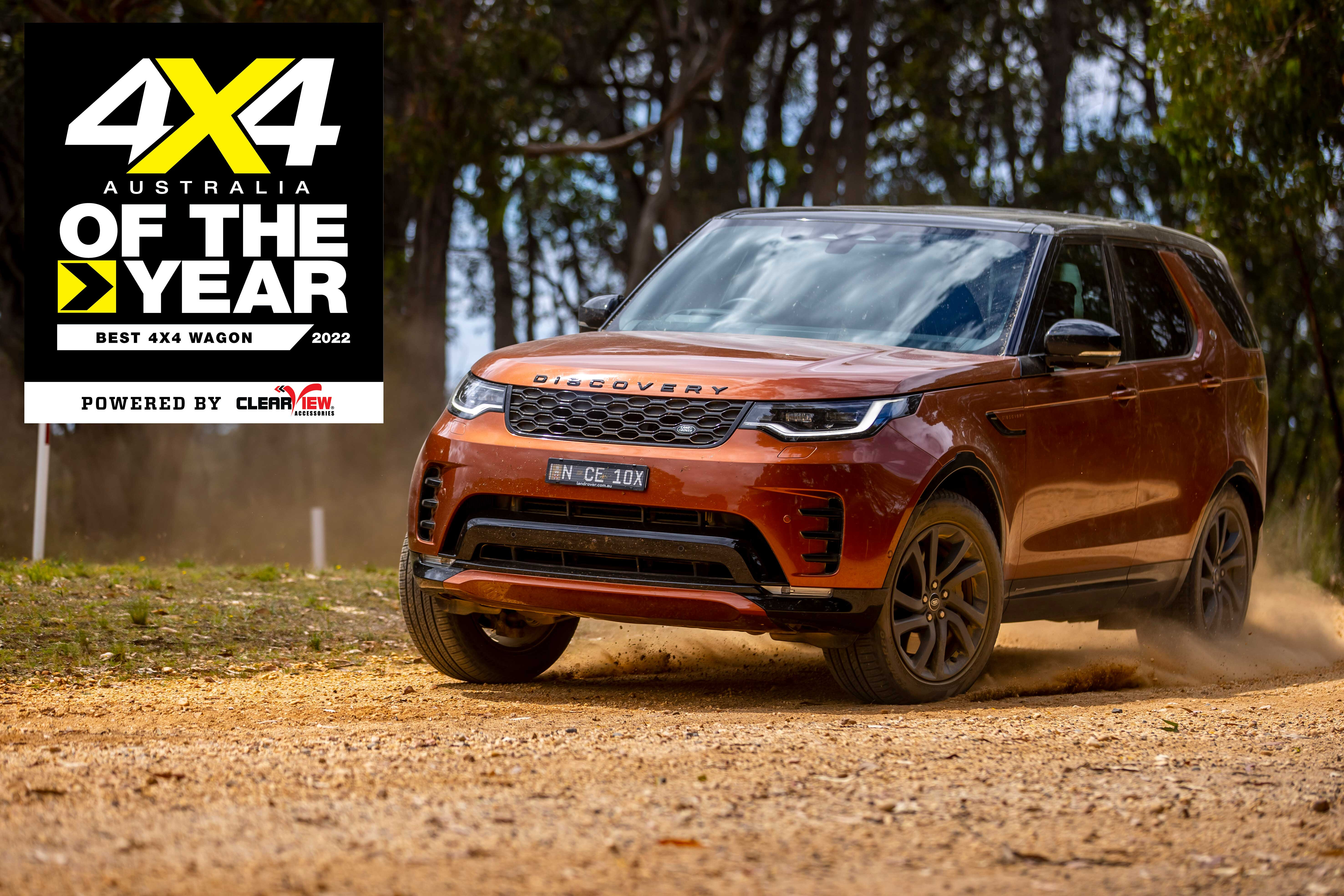
The question is, can it outperform the new Land Rover Defender when the going gets tough? And is it worth the $130,149 price tag when the Defender comes in nearly $10,000 cheaper as tested? Our team thought it was not, and it was eliminated for its low-profile tyres and lack of off-road touring equipment.LAND ROVER DEFENDER D300
The Defender would have to be one of the most polarising 4WD releases in recent years. It’s no longer a Defender in the traditional sense, it’s a modern and extremely technical 4WD that can no longer be fixed with a hammer and a screwdriver.
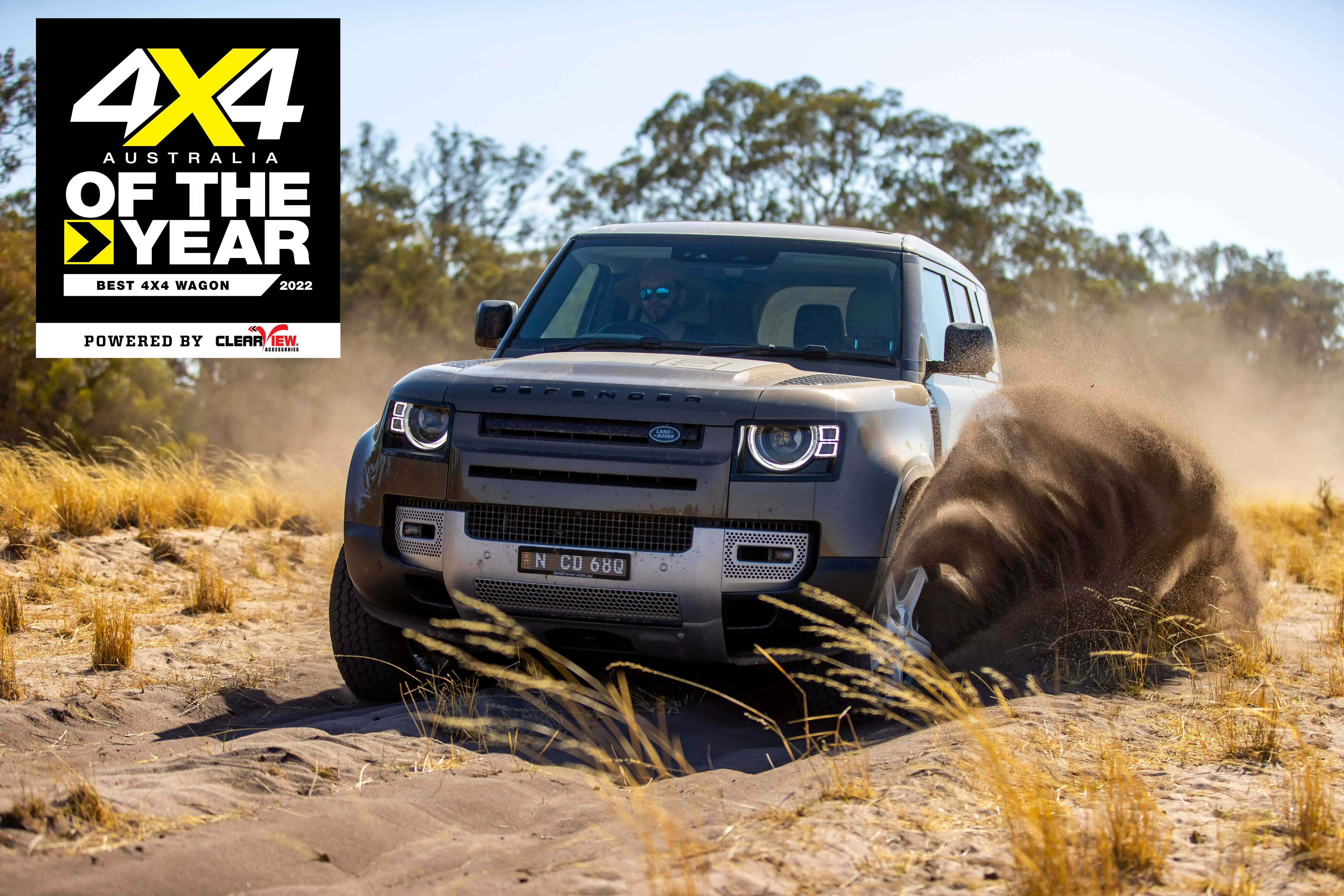
As tested, this D300 Defender was loaded up with factory accessories, bringing the price point to over $120,000, so it’s certainly not a cheap vehicle. With a plush interior full of off-road-friendly practicalities, modern tech and safety features, can this new-found on- and off-road capability secure the D300 Defender a place on the podium? The judges liked it and voted it into the Top 6.LANDCRUISER 300 VX
The VX 300 Series LandCruiser is bound to be one of the most popular models in the new LC range, coming in much cheaper than the Sahara, but it is still well-appointed. It’s also safe to say, the 300 Series is one of, if not the, most popular four-wheel drives available in Australia at the moment … if you can get your hands on one, that is.
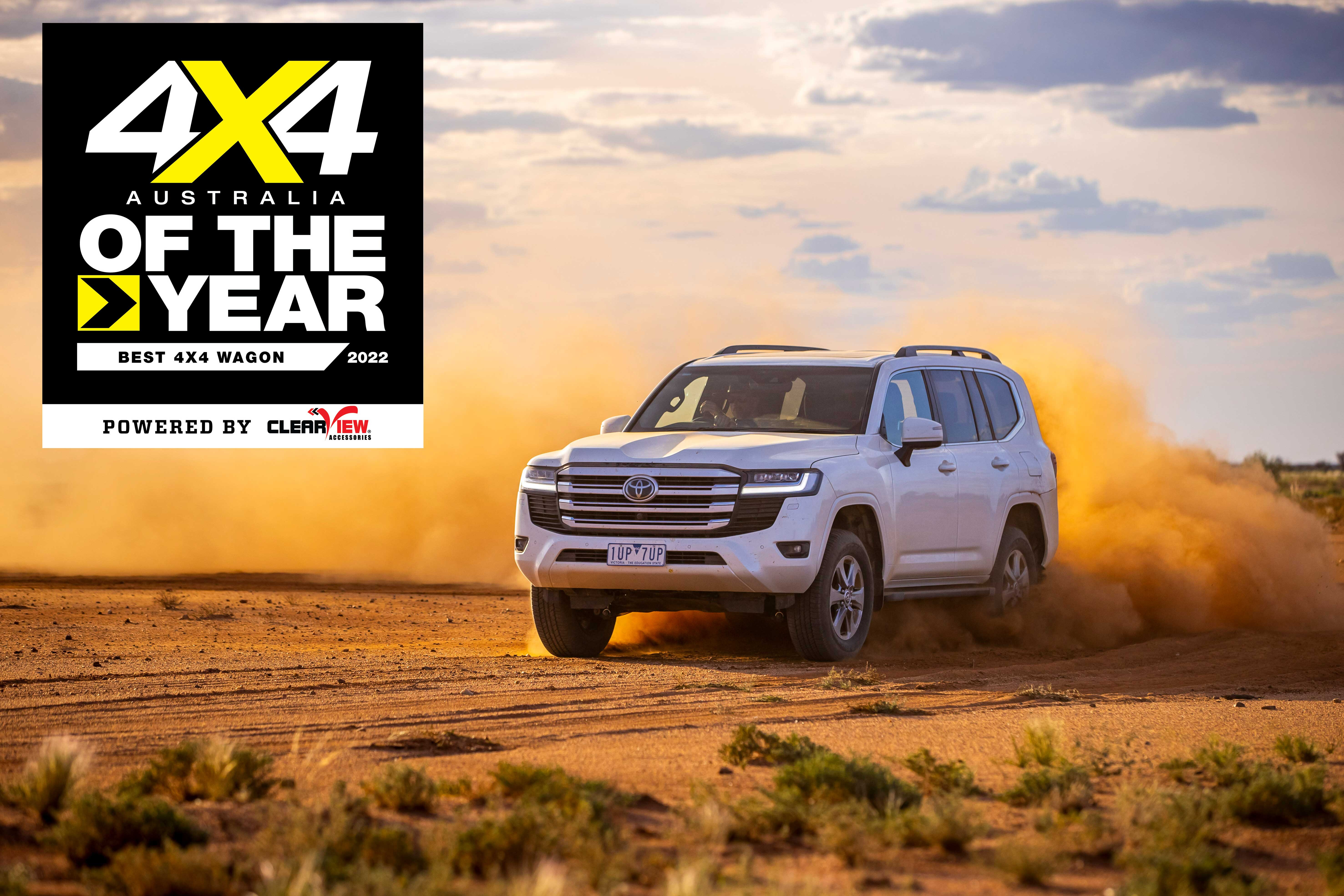
With its 3500kg tow capacity, 700Nm of torque and a 10-speed automatic gearbox, the VX 300 Series has plenty to offer as a tow rig or family off-roader. We’re particularly interested to see how it performs over our gruelling test loop, and if it is as solid in the outback as the ever-popular 200 Series it replaces.NISSAN PATROL TI-L
It’s big, it’s wide and it has a screaming V8 petrol motor that produces great power. It’s also getting a bit long in the tooth having been with us since 2013, however recent revisions have kept the big Patrol alive, and popular thanks to keen pricing. The Y62 has also proven to be popular with off-road enthusiasts, despite the lack of a diesel powerplant and solid axles.
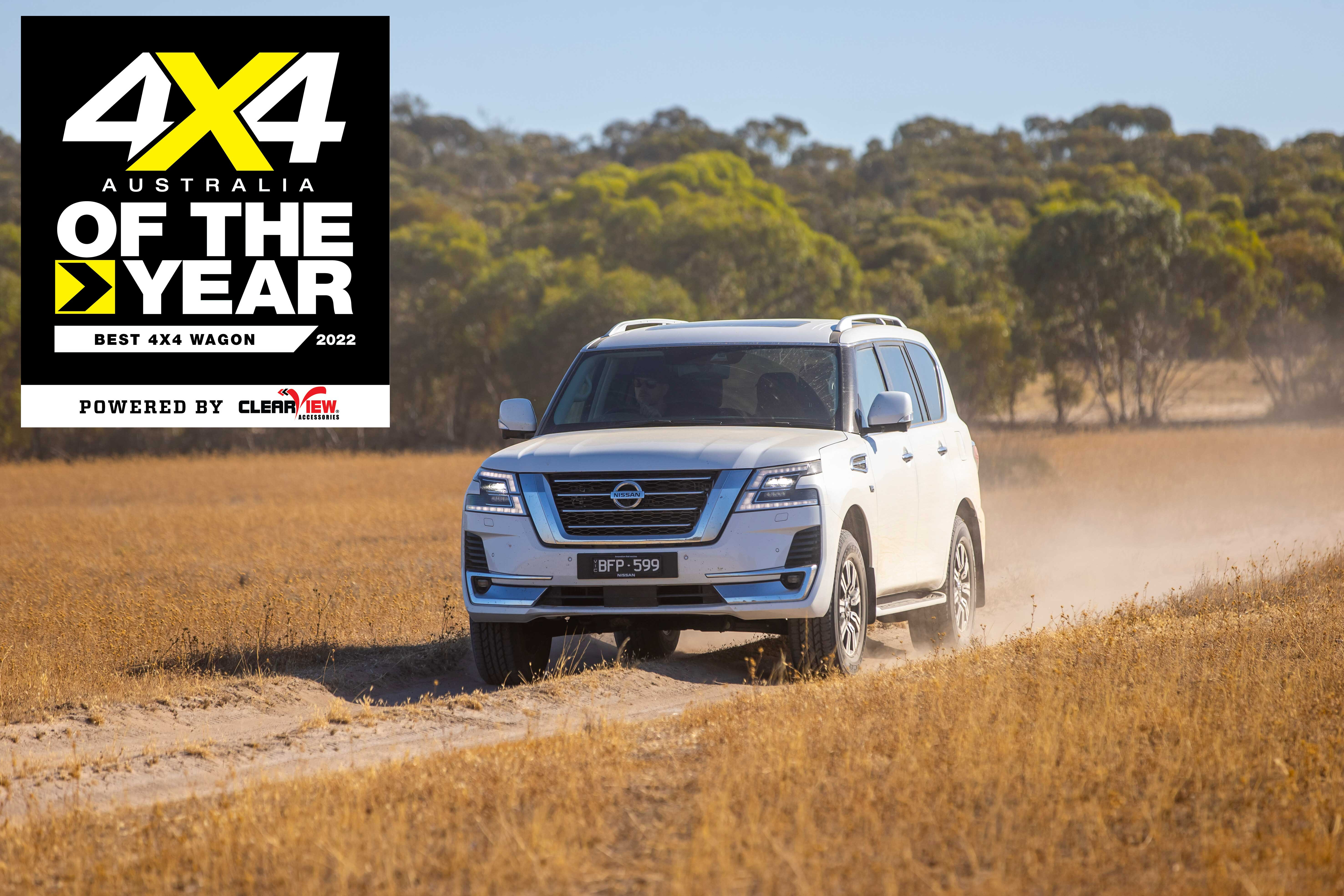
Will petrol power reign supreme on this test, and will the older Y62 keep up with the newer players in the field? That’s what we’re here to find out. One thing is for sure, we’ll have plenty of fun trying to answer that question. Straight to the Top 6 for the Nissan!MITSUBISHI PAJERO SPORT EXCEED
The Pajero Sport is popular with families wanting a seven-seater that won’t break the bank. Thanks to the clever Super Select II 4WD system, rear diff lock and three off-road modes, there’s plenty of potential as an off-road tourer as well. For this test we’ve selected the higher spec Exceed Pajero Sport, which has niceties like leather seats.
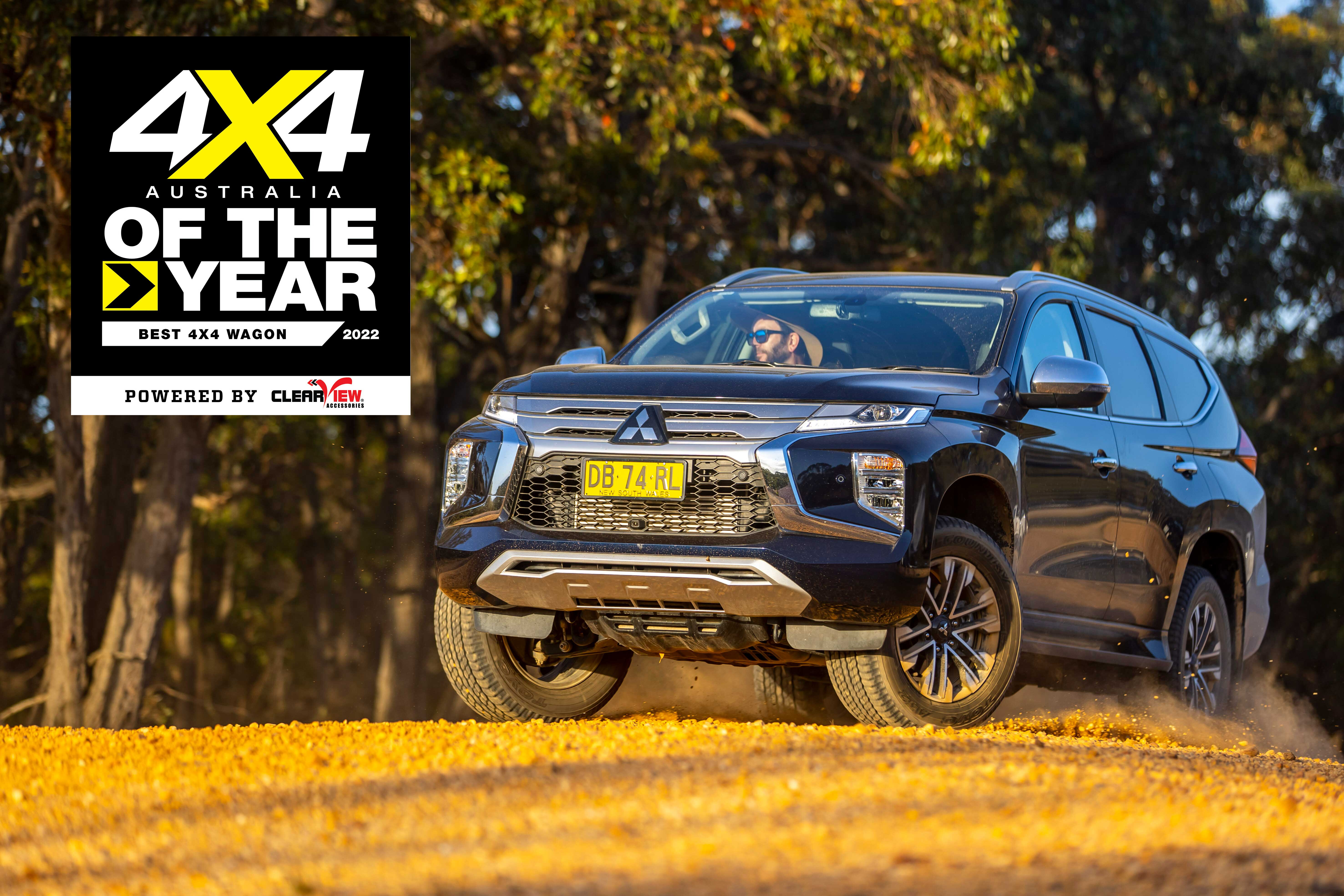
However, if you’re looking for a bargain, and don’t need seven seats, park yourself in a Pajero Sport GLX from just over $48,000. Now that’s dirt cheap, considering the 10-year warranty. We’re looking to see if the nicer interior and extra seating make the Pajero Sport Exceed the 4X4 Wagon you should buy … maybe if you’re not going off-road.TOYOTA PRADO VX
Toyota’s Prado has always been a hit with Australian families, combining comfort, reliability and off-road ability in one package. Thanks to its recent update, the Prado now makes a decent amount of torque too, with a claimed 500Nm available which seems to be the sweet spot for off-road power figures.
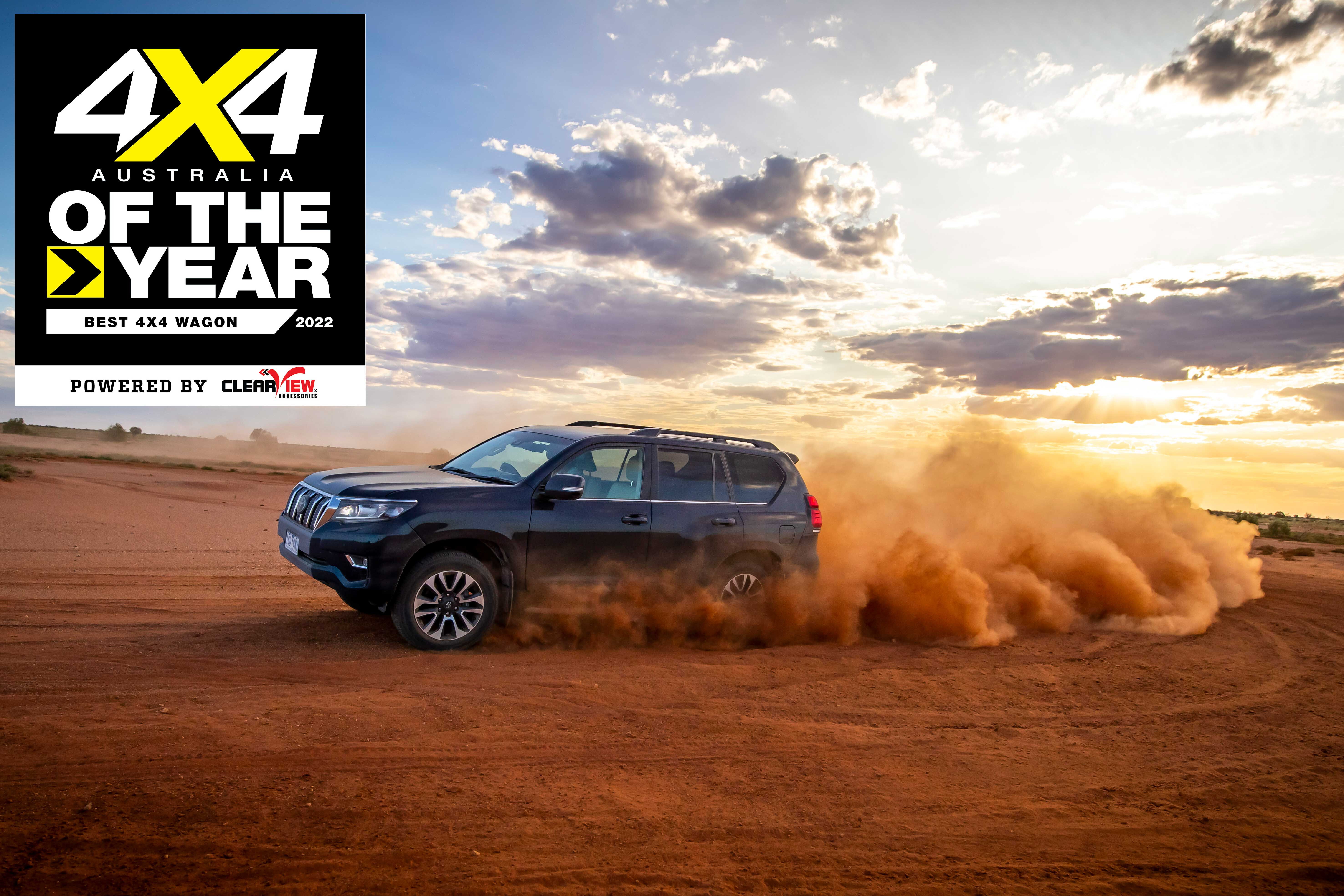
Inside this VX spec Prado, the interior is practical as well as luxurious, as you’d expect from an upper-spec model. You are definitely paying for that luxury though, with a price tag well over $80,000. The competition in this segment has never been tighter , so is the Prado still the family seven-seat 4×4 wagon to beat?ISUZU MU-X LS-U
This is quite literally a new Isuzu MU-X, redesigned from the ground up from its predecessor. Featuring similar running gear as the current D-MAX, it goes a step further by offering a rear diff lock (as does the new D-MAX range), Rough Terrain mode for improved off-road traction control calibration, and seven seats to lug a growing family around in a more premium interior.
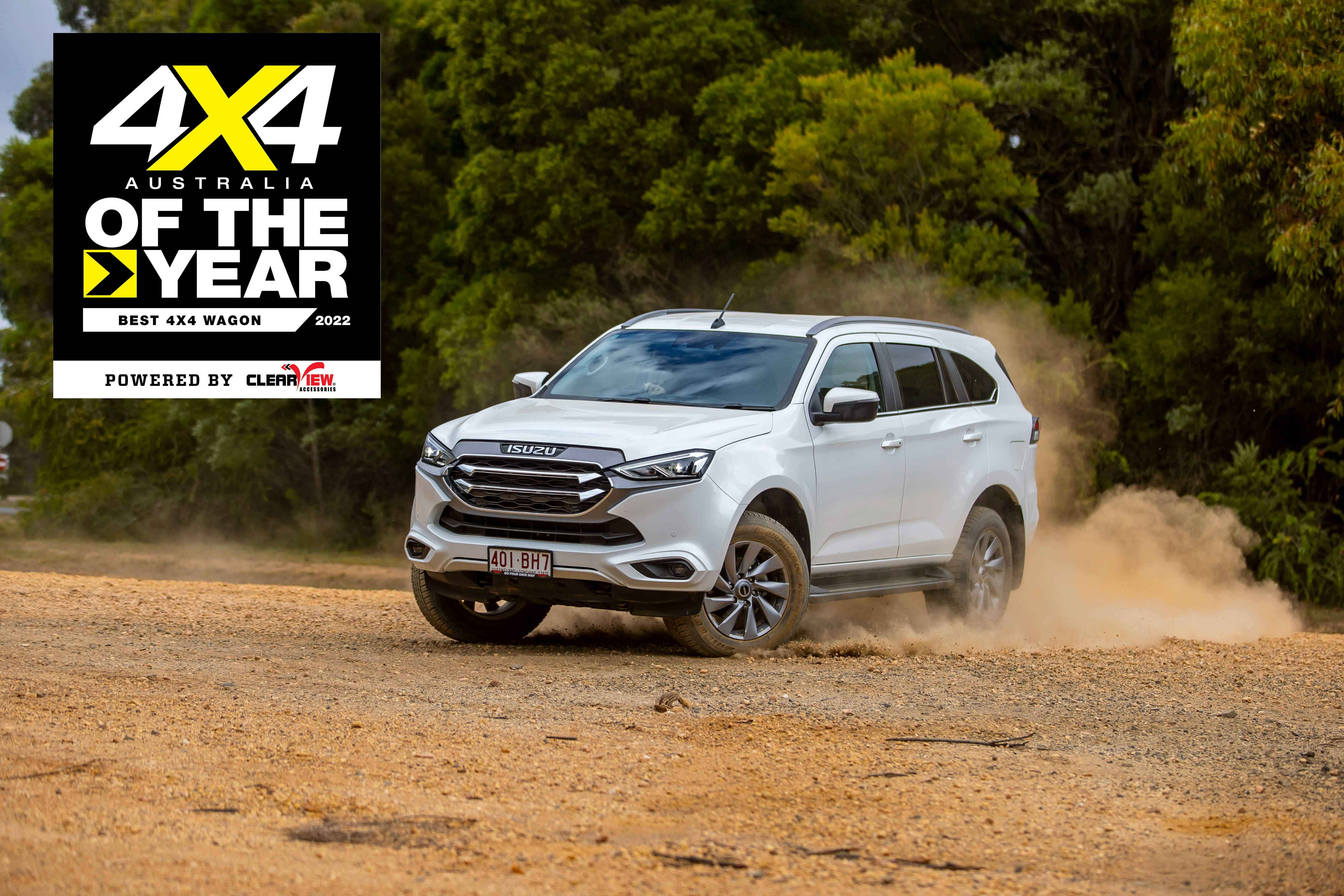
Price hikes on the entire 2022 Isuzu MU-X range mean that you are paying for these upgrades though, the MU-X is no longer a simple and affordable 4WD as it once was. In saying that, these upgrades are certainly a welcome addition, bringing the Isuzu MU-X closer to the competitors in this space.SSANGYONG REXTON ELX
With seven seats, a 3500kg towing capacity and premium-looking interior, this Rexton has plenty to offer Aussie families on paper. Just like its ute counterpart, the Musso, Ssangyong’s Rexton also has one of the best warranties in the business coming in at seven years. We’re interested to see how it copes when the going gets rough, though; limited ground clearance and suspension travel will be the biggest limitations for the Rexton off-road.
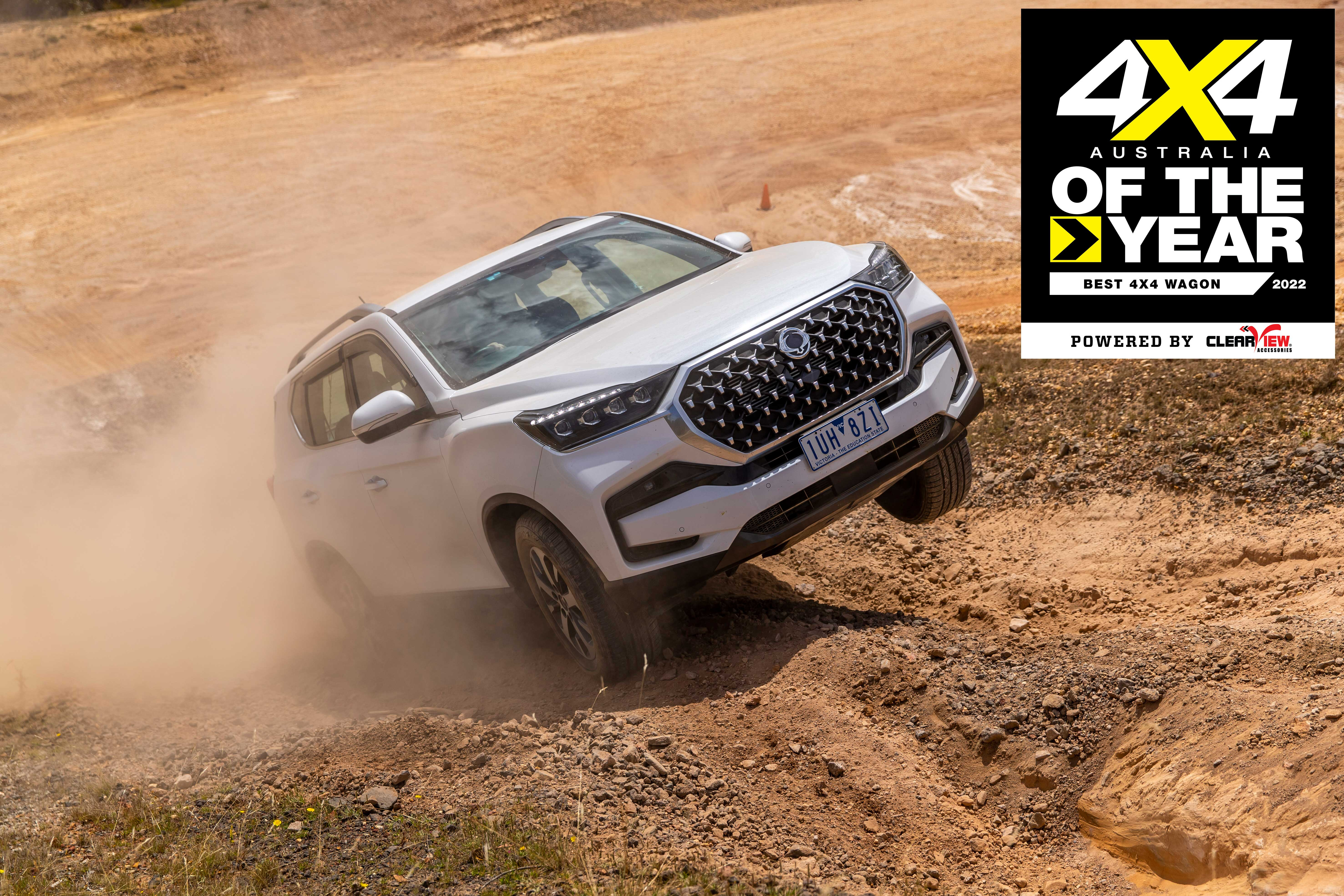
If you are looking for a family wagon to drive daily then take camping, fishing or through dirt-road trails on the weekend, the Rexton certainly is an affordable option to consider. It was the lack of suspension travel and slow-to-react ETC that stopped the Rexton on the hill and eliminated it from 4x4OTY contention.FORD EVEREST TITANIUM
Ford’s Everest has proven to be a vehicle with solid road handling, as well as offering family practicalities for day-to-day duties. Thanks to extensive development in Australia by Ford engineers, the Everest really has been designed and built for Australian conditions, and that shows.
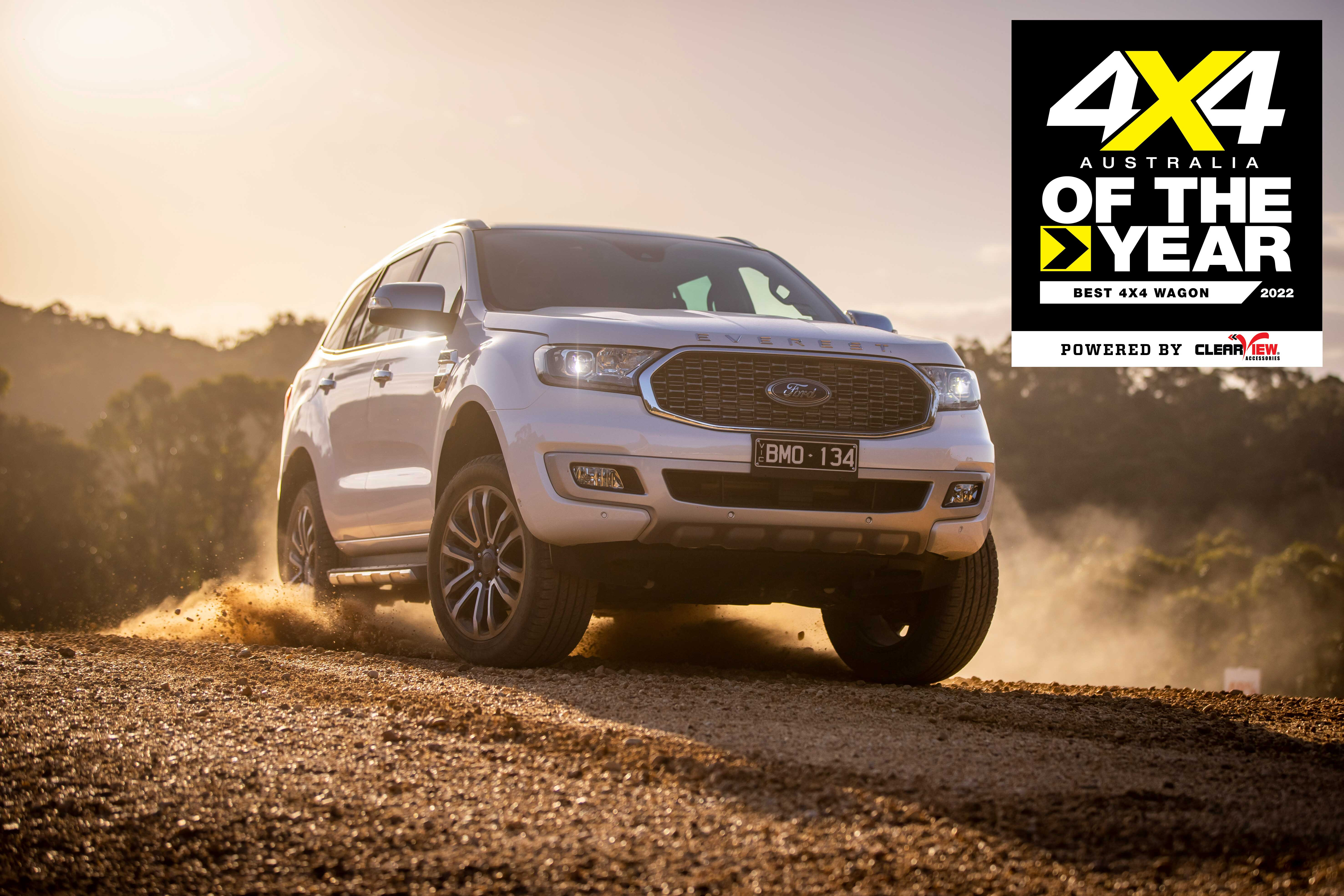
It’s also no slouch when the going gets rough on proper off-road terrain, even though this Titanium spec is rolling on 20-inch wheels. Coming in at close to $79,000 though, it needs to be brilliant to outdo the competition. It was let down by its inability to make our hill climb, which surprised and disappointed our team.
UTES
CHEVROLET SILVERADO LTZ
There aren’t many vehicles around that do what the Chevy Silverado LTZ can do. It’s not only a luxury vehicle with a premium interior, it’s a full-sized ute that can tow huge amounts of weight without even flinching. There’s a 6.2L petrol V8 matched to a 10-speed automatic gearbox, which produces more than enough grunt for work or play and sounds amazing in the process.
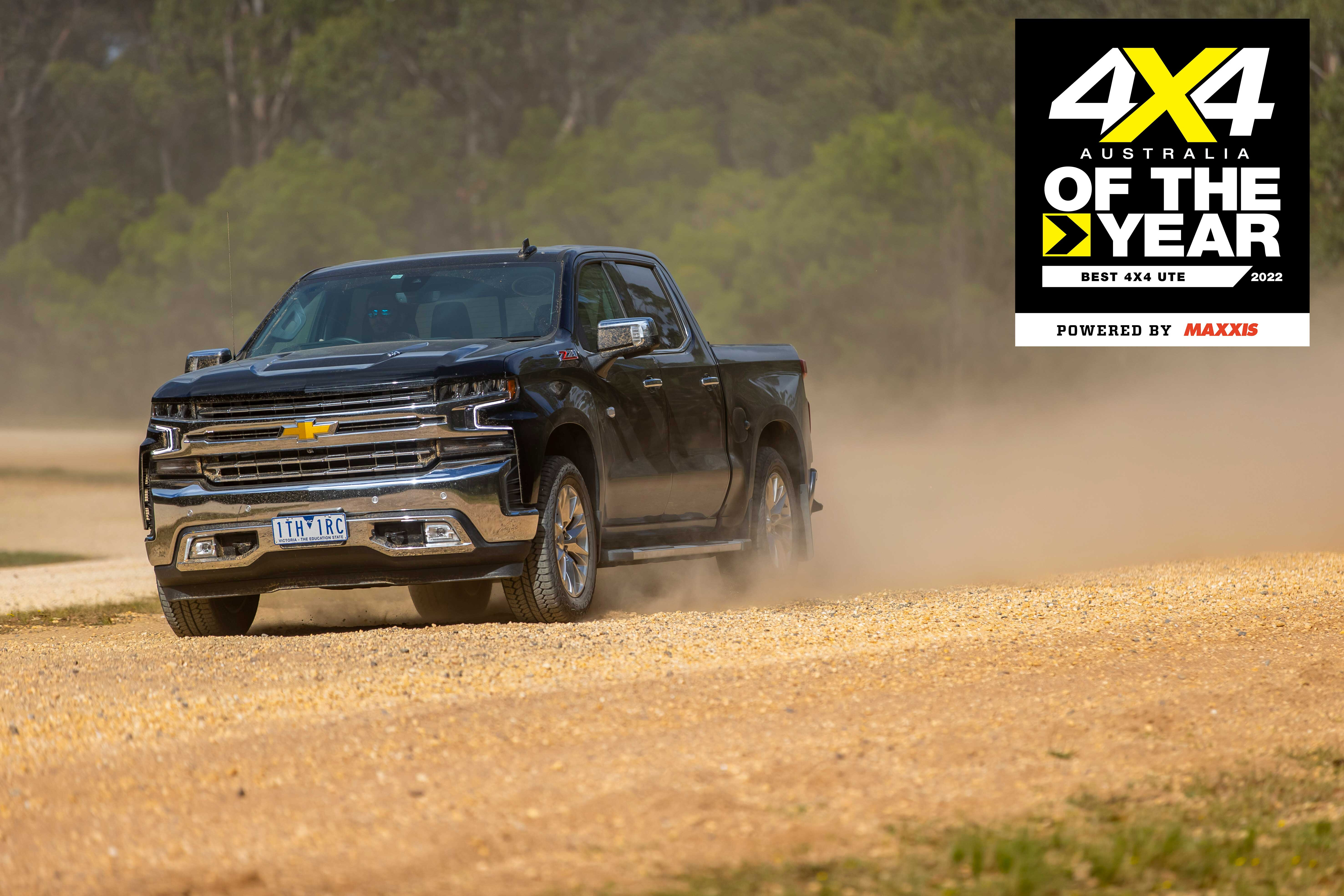
It’s also a massive four-wheel drive physically, which is something you do get used to out on the open road. Is it simply too big and low for Australian off-road conditions though? The Chevy’s performance on dirt roads and low ride height cut it from the list.
JEEP GLADIATOR RUBICON
If off-road capability, the ability to further customise a vehicle and the fact you need a ute are some of your new-vehicle purchase priorities, it’s hard to ignore the Gladiator Rubicon as a solid option. Front and rear diff locks, mud-terrain tyres and a removable roof from the factory make this the most unique vehicle on test.
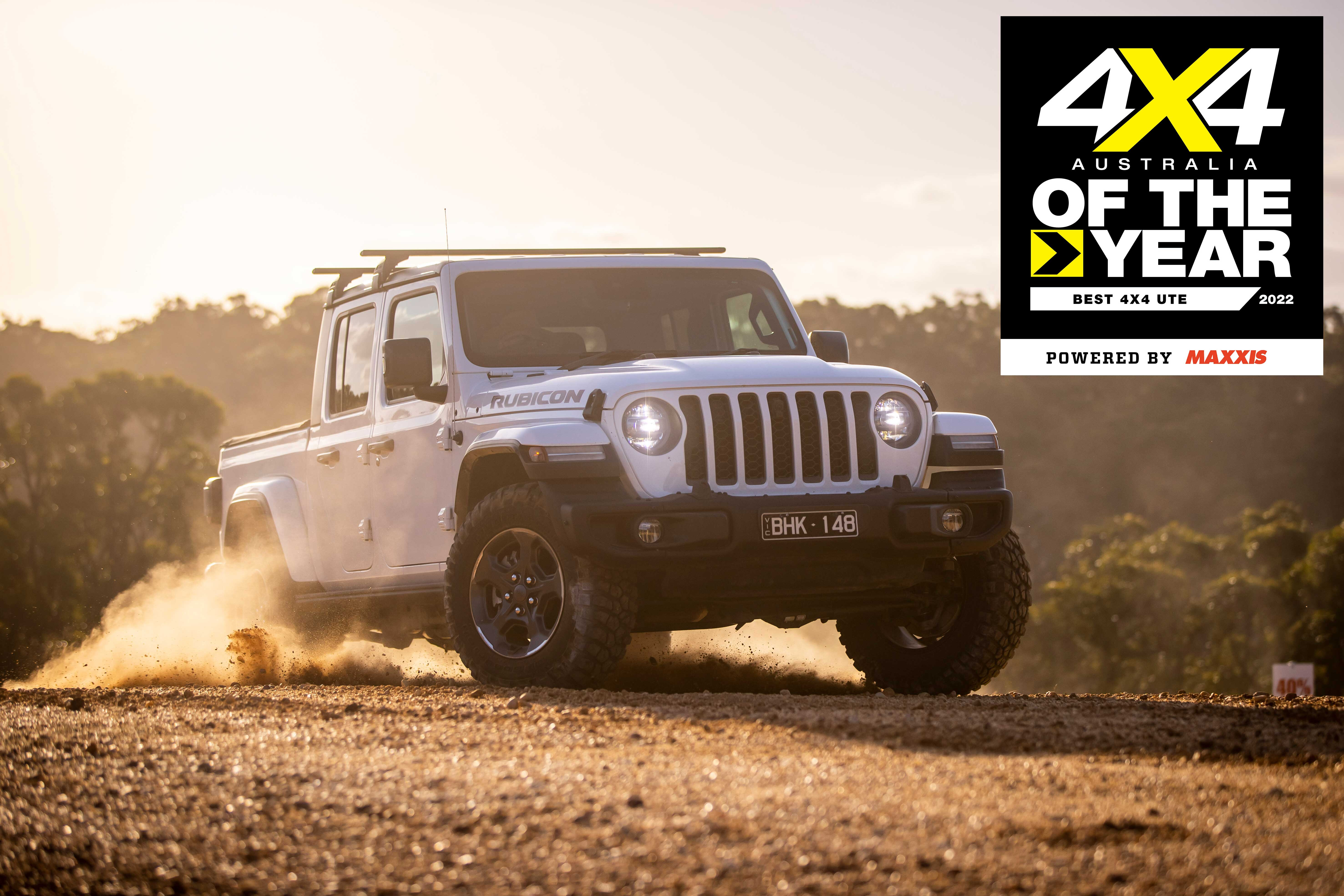
Now fitted with an eight-speed automatic gearbox, the 3.6L V6 petrol motor doesn’t have to work as hard, saving fuel in the process. While it is clearly focused on being a competent off-roader, the extra wheelbase makes the Gladiator handle better than any Wrangler ever made. The big Jeep’s low ride height and cost eliminated it from our final testing.
TOYOTA HILUX SR5
The Hilux took out top spot at last year’s 4X4OTY award, and for good reason. We said it then, this Hilux is the best Toyota has produced. It now makes good power, the off-road ability is right up there, and it’s a proven platform for work or play.
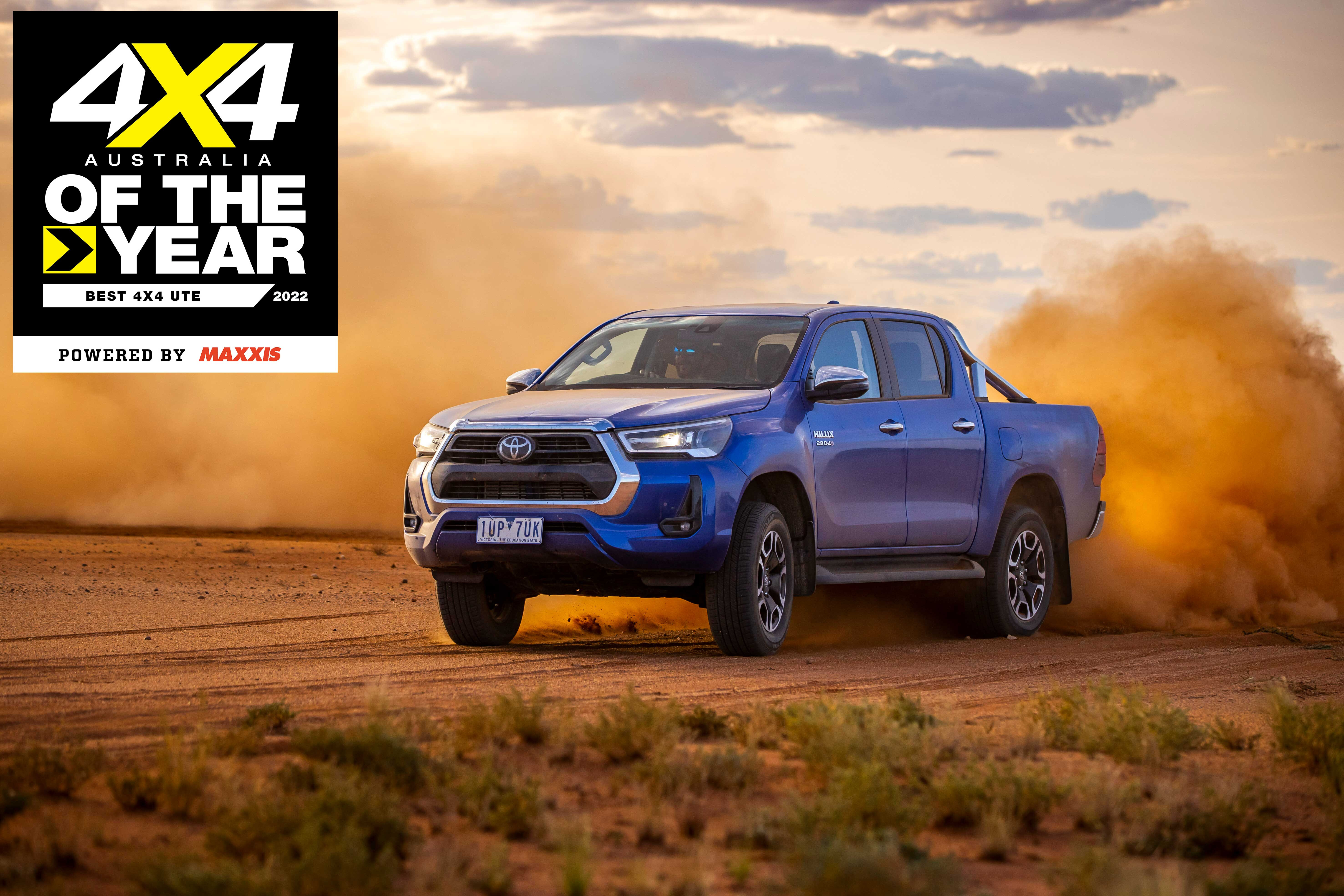
Speaking of off-road capability, Toyota has a proven reputation for having a ripper traction-control system, and when combined with the rear suspension travel will get you most places you’d ever want to go. Getting your hands on one is the hard part at the moment, they’re still selling like hotcakes. So, while it’s proven to be a good thing and has been recently refined for more power in all settings, is Hilux starting to show its age?
FORD RANGER XLT
The Ford Ranger won last year’s 4×4 ute Mega Test, striking a balance between good off-road ability and excellent ride comfort on road. Despite being one of the oldest platforms on the market still for sale, the Aussie-engineered Ford Ranger still just plain works in the harsh Australian conditions.
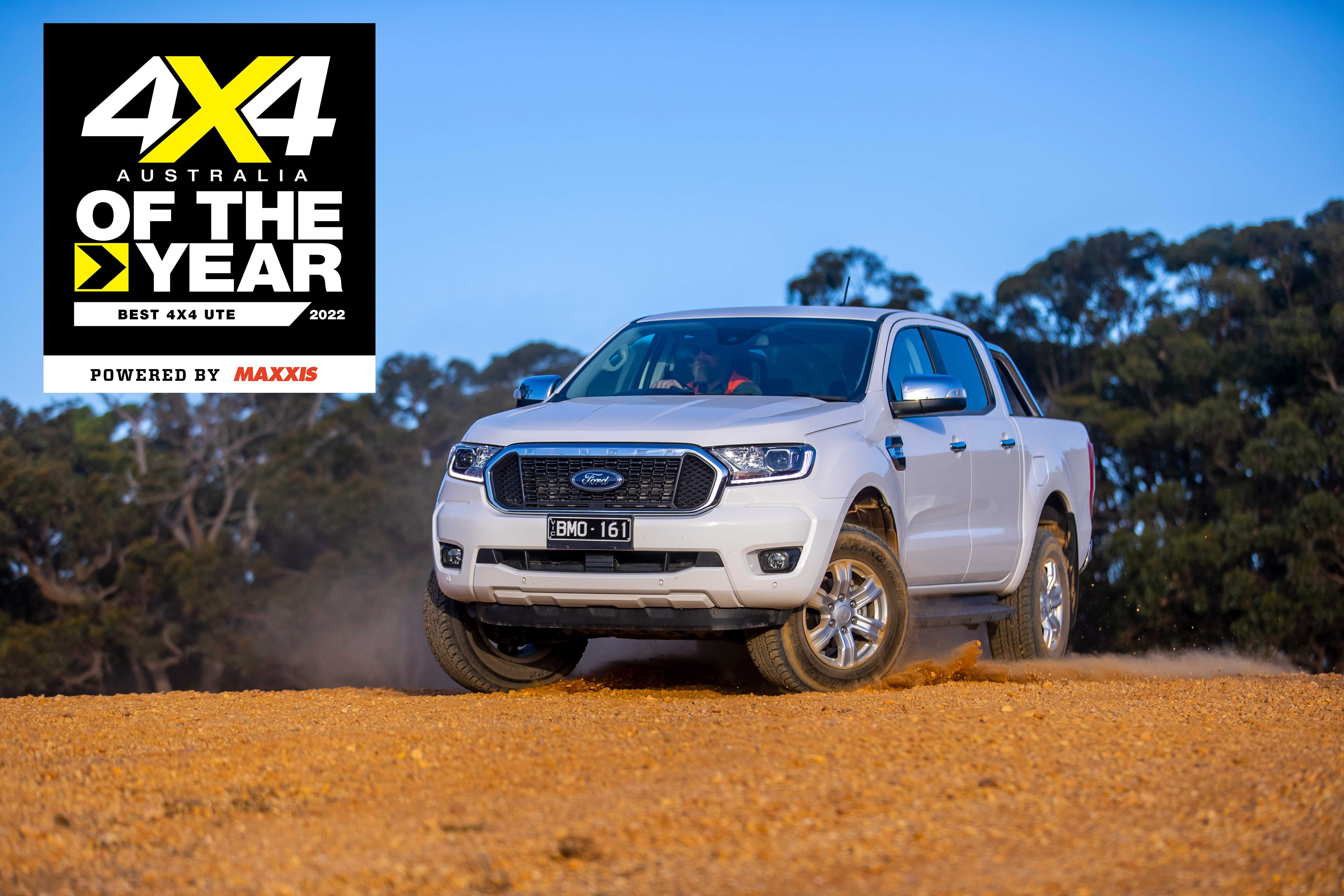
We tested the bi-turbo diesel powered Ranger with the 10-speed automatic gearbox this time around, which would have to be the more popular driveline package currently offered in the Ford Ranger stable. With an all-new model Ranger looming in the distant future, does this current model Aussie-engineered ute still stand towards the front of the pack, or should you hold off for the new Ranger when it arrives?
FORD RANGER RAPTOR
There’s not much else like the Ranger Raptor on the Aussie car market, a fun utility loaded with premium Fox off-road suspension and BFG all-terrain off-road rubber from the factory. With its sporty interior design, it’s basically begging to be driven hard and fast over rough terrain.
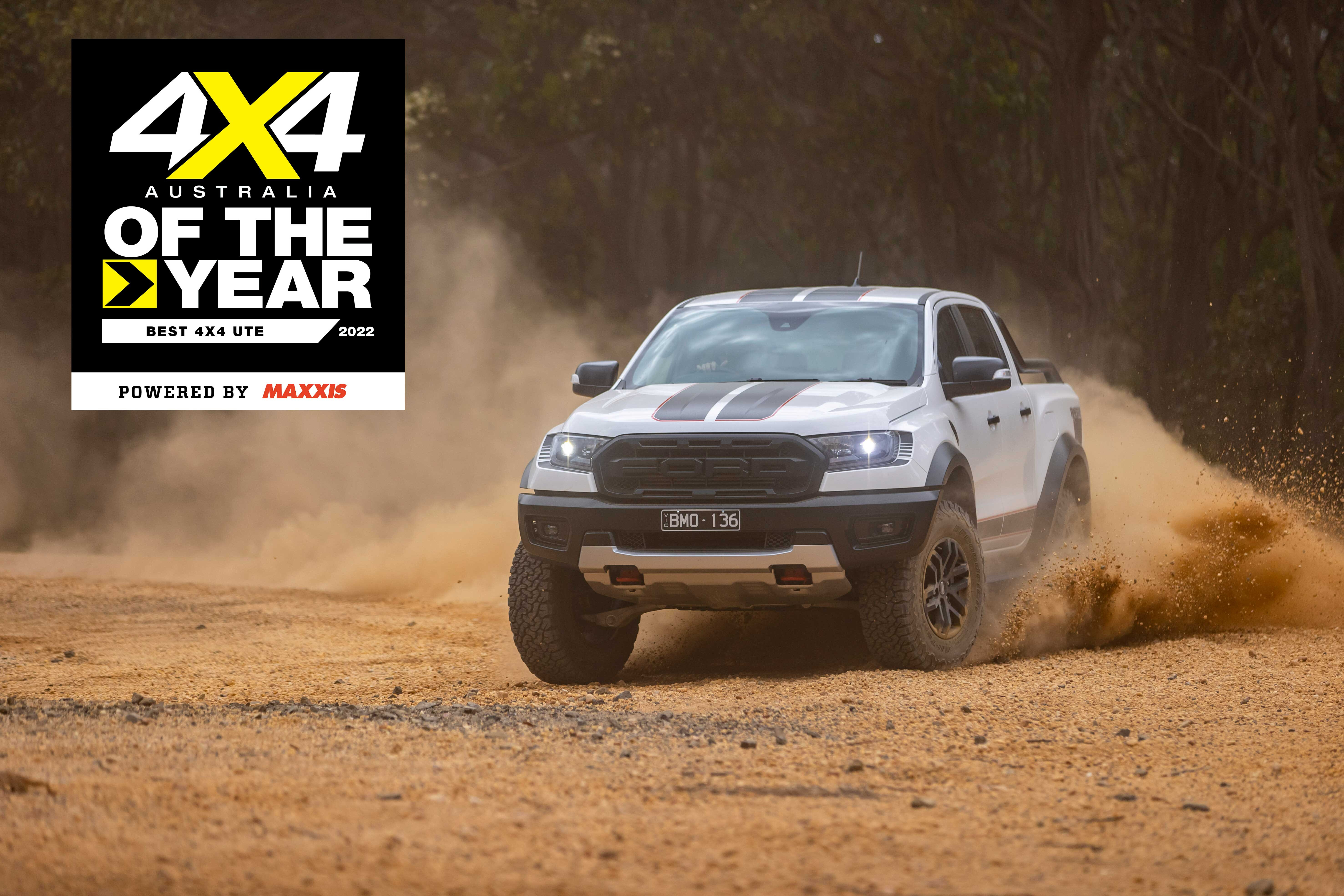
It is wider than a normal Ranger, and also has a lower 2500kg towing capacity which is a negative for off-road tourers. If that doesn’t bother you and you want an enjoyable vehicle that is still mostly practical as a ute for work or play, the Raptor is definitely worth consideration. In saying that, can this fun factor alone be enough to net the Raptor a win? Not this time around.
NISSAN NAVARA PRO-4X WARRIOR
The PRO-4X Warrior is unique in the dual-cab market, and one we were keen to take a closer look at. With 40mm of extra ground clearance, 30mm wider track compared to a stock Navara, and factory fitted 4×4 accessories thanks to the team at Premcar, the PRO-4X Warrior has off-road credentials by the truck load.
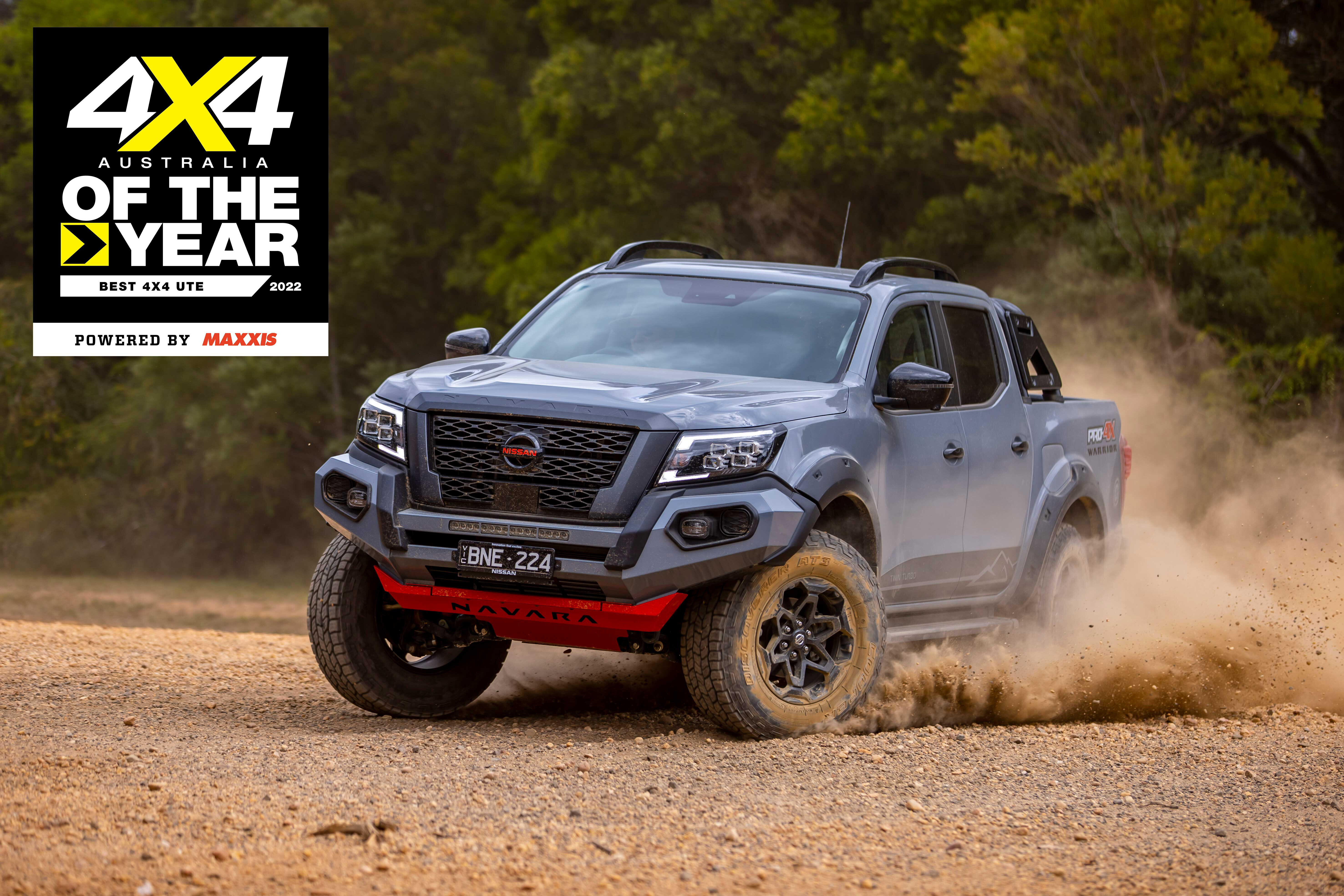
This is basically a 4WD modified enough to take nearly anywhere in Australia safely and comfortably. The Navara is an ageing platform, but has been constantly evolving throughout its production cycle. The team thought the Warrior was a good vehicle, but the way it struggled on our hill climb discounted it from the Final 6.
VW AMAROK W580
Another platform that is showing its age. It might be getting on in years, but new life has been breathed into the Amarok 580 thanks to this collaboration with Walkinshaw Performance to bring you the W580. The performance from that V6 turbo-diesel is still leading the pack, producing up to 580Nm of torque when required.
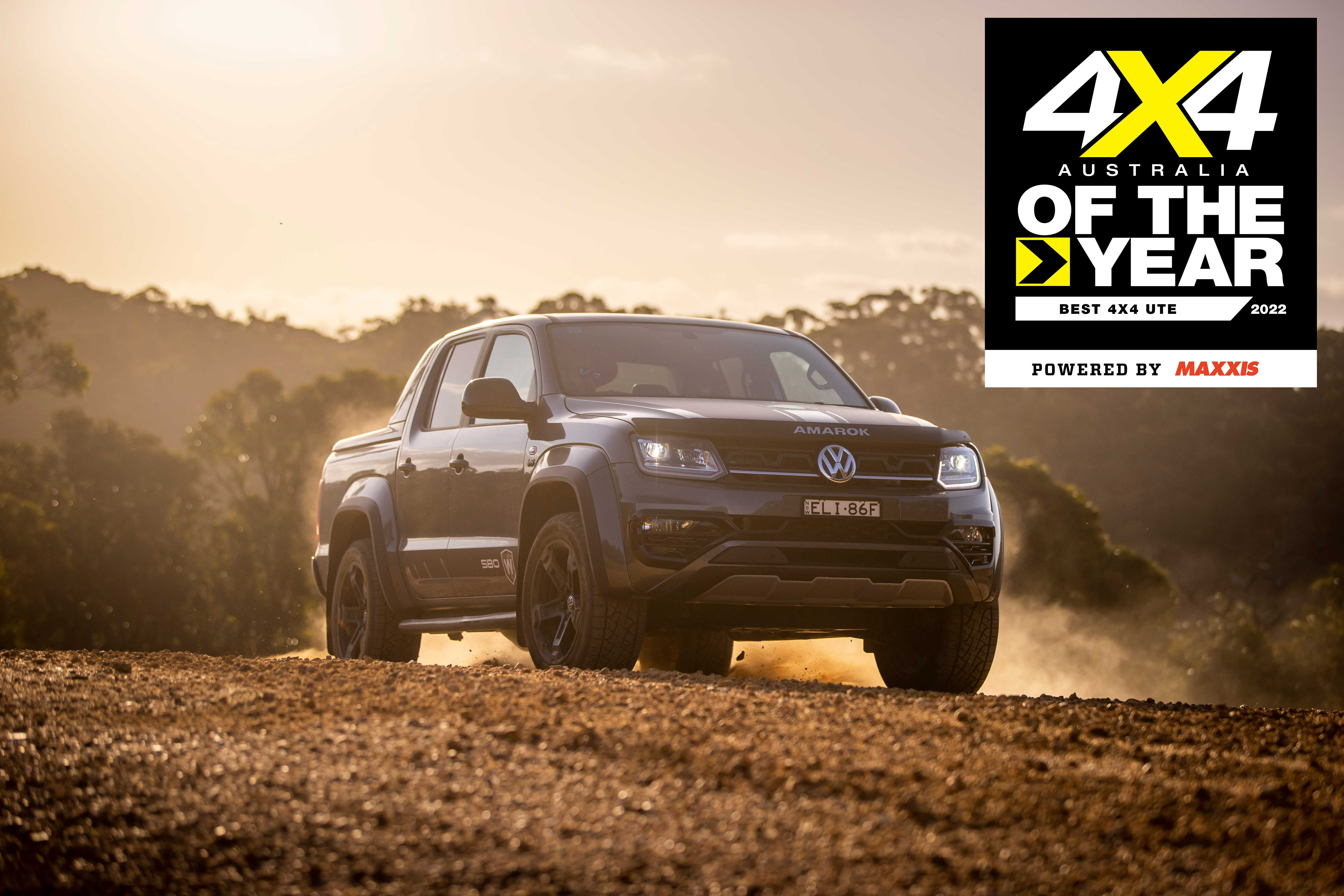
It’s not just the performance of the engine that shines, though; the Amarok handles corrugated roads and bitumen like a dream thanks to an excellent chassis and suspension package. As the only V6 ute the Amarok is a great performer, but the judges thought it too pricey for its age and equipment.
ISUZU D-MAX LS-U
Isuzu has built a reputation for reliability thanks largely to its 3.0L turbo-diesel engine, something that has proven popular with everyone from tradies to grey nomads. It now has the off-road credentials to keep up with the competition, thanks to a factory fitted rear diff lock, something the D-MAX was absolutely begging for.
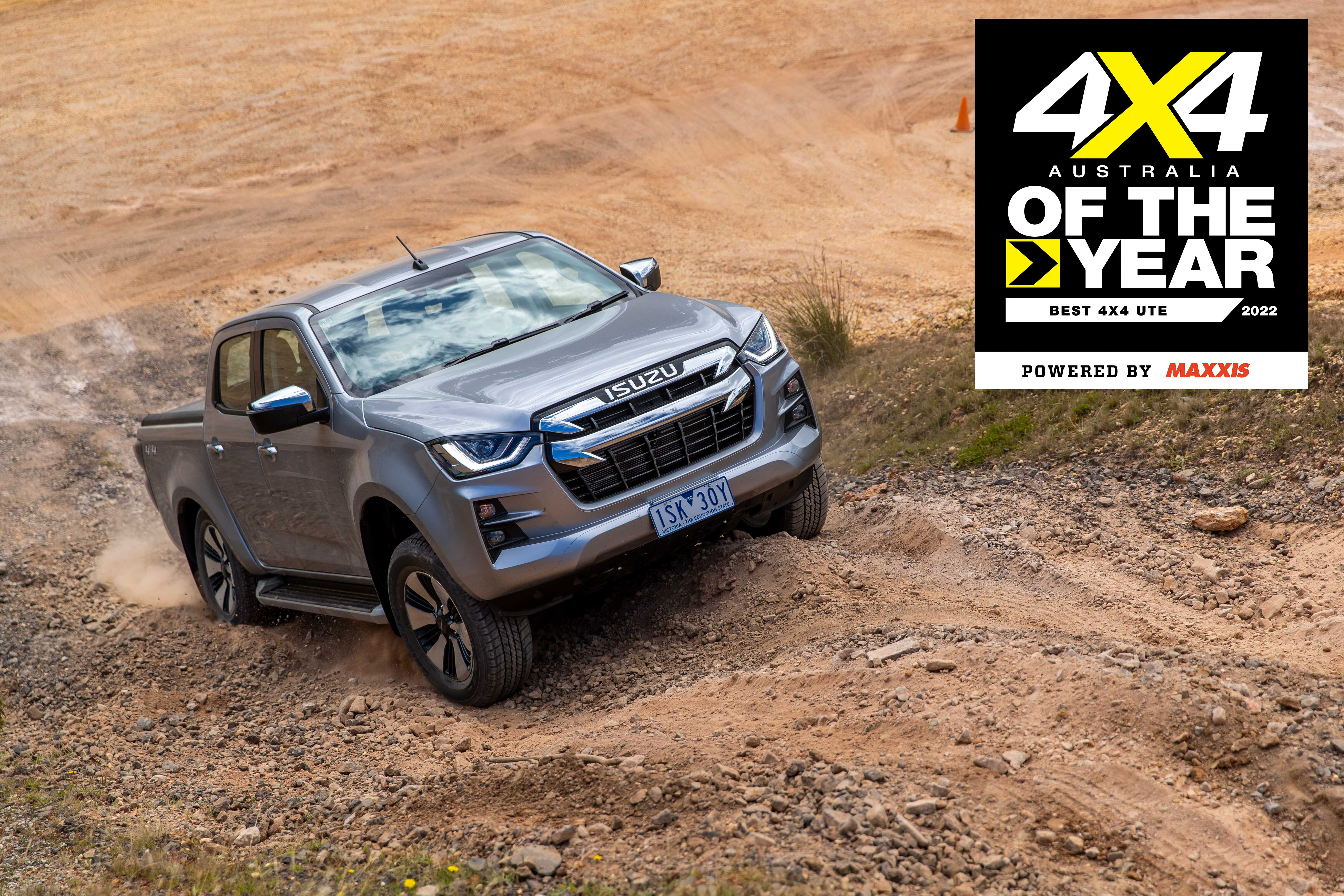
You also see a more modern interior as well as exterior restyling, which really brings the Isuzu into the modern age. It’s also safer than ever with a massive list of inbuilt technology, yet sadly more expensive than ever, stepping away from the more basic and cheaper model D-MAX this current unit replaces. It was this price hike and a poor showing on the hill climb that cut the D-Max from contention.
UPDATE, March 23, 2022: The 2022 GWM Tank 500 has finally been launched in its home country of China.
The Tank 500 carries high hopes, with GWM looking to fill the space of the LandCruiser and Prado in Chinese and Thai markets – potentially stealing customers away from Toyota in Australia in the future.
A total of six variants are on offer, priced from ¥335,000-395,000 (AU$71,200-$84,000), all of which are powered by a 3.0-litre turbocharged V6 petrol engine with a 48V mild-hybrid system producing 260kW and 500Nm.
A part-time four-wheel drive system is partnered with a nine-speed automatic transmission and three differential locks to improve off-road capability.
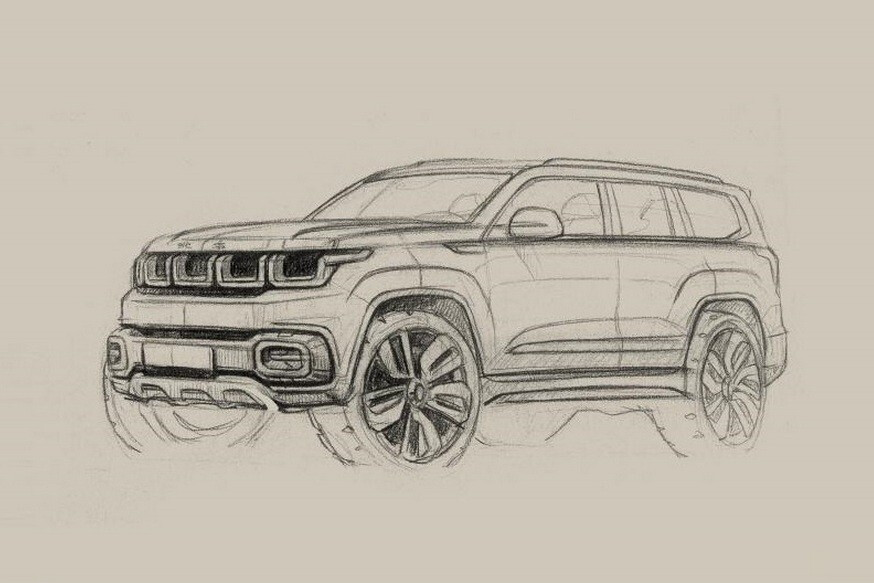
At the same time, domestic carmaker BAIC has announced it will be developing an SUV to compete with the Tank 500, known as the BJ60.
While BAIC isn’t as well known in Australia, it was the parent company for Foton, which sold the Tunland ute locally between 2013 and 2019. Despite this, there’s little chance we’ll see the brand make a return in the foreseeable future.
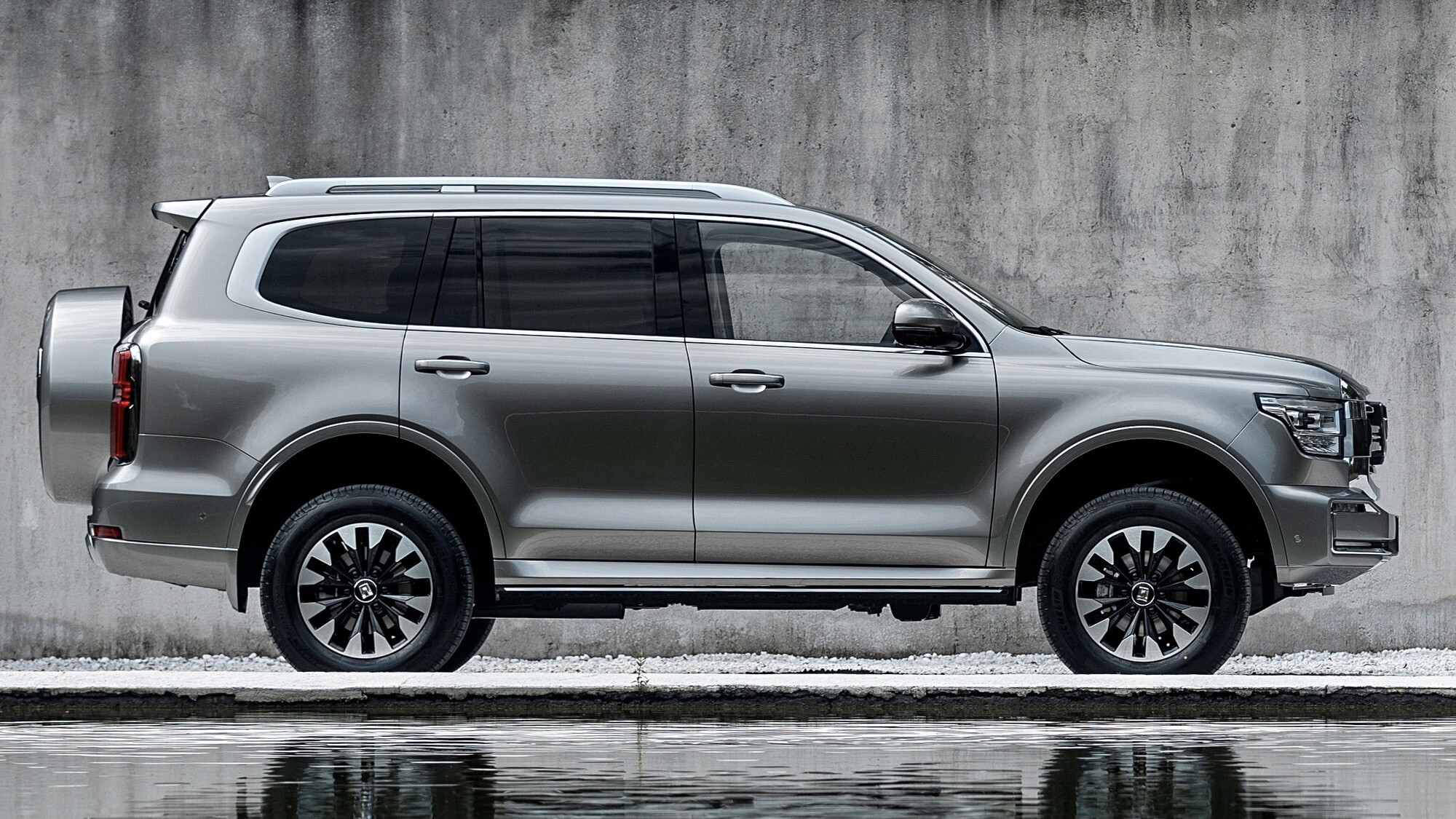
The story to here
December 23, 2021: The 2022 GWM Tank 500 will make its Australian debut next year, with buyers expected to have the choice of a mild-hybrid turbo V6 or hybrid turbo four-cylinder powertrain.
Along with a patent application for the 500, the company has trademarked GWM Tank and the Tank badge for use in Australia – bringing the brand into line with its sibling, GWM Haval.
“[The] ‘Tank series’ will be officially launched in Australia next year,” the company wrote in a statement.
“In order to bring diversified choices to consumers, the fuel version and hybrid version of the Tank series will be launched at the same time.”
While the company stopped short of naming the Tank 500 specifically, it’s believed to be the only model in its range with a hybrid powertrain.
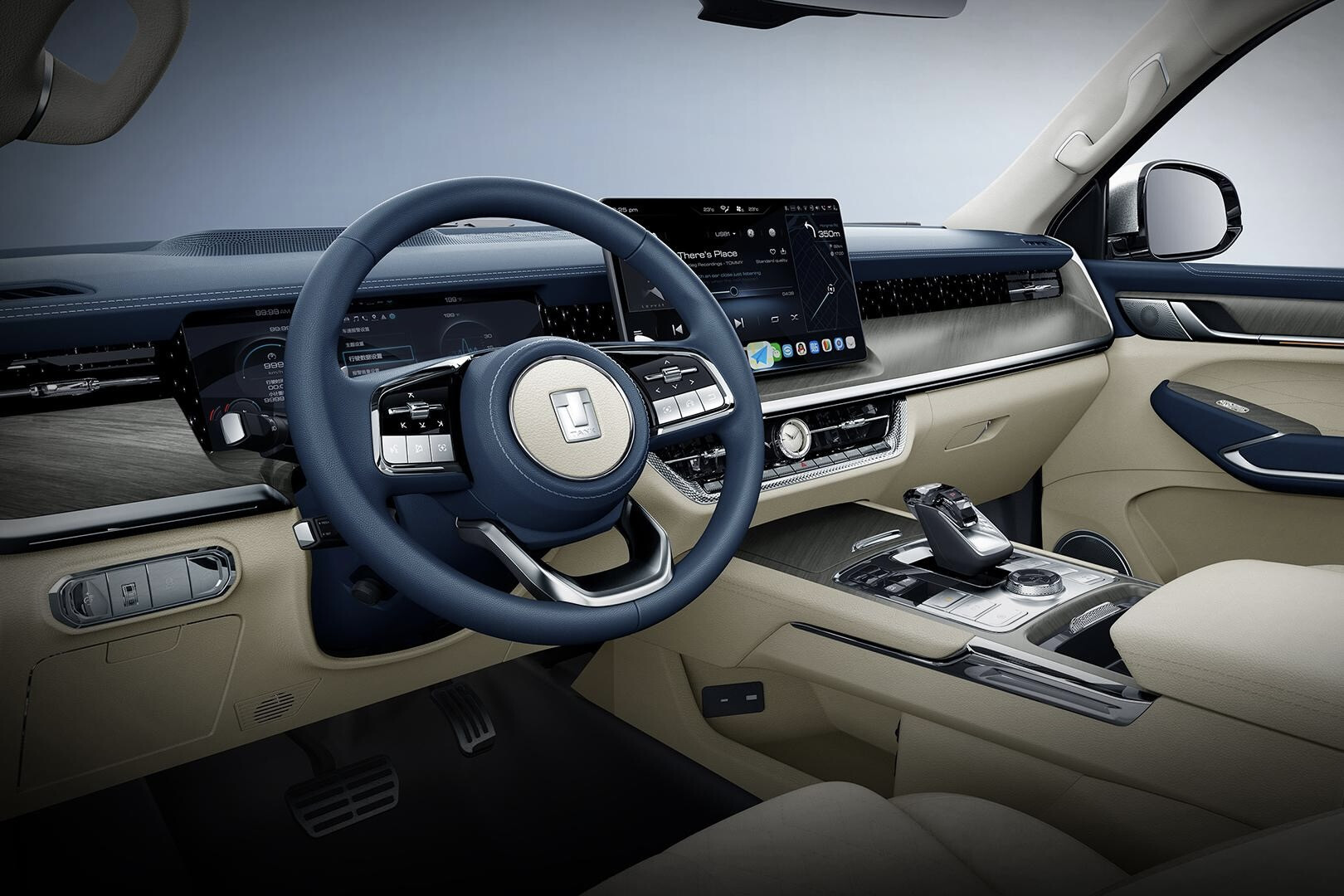
“[It] will be the only off-road model equipped with [a] hybrid power system in the Australian market,” the company explained.
The Tank 500 is similar in dimensions to the new V6-powered Toyota LandCruiser 300 Series, but debuted in its native China with a price tag closer to that of a LandCruiser Prado.
The 500 is powered by either a mild-hybrid 3.0-litre turbo-petrol V6 producing 260kW and 500Nm, or a hybrid 2.0-litre turbo-petrol four-cylinder with 180kW and 380Nm in the 500 HEV.
Both engines use the company’s nine-speed automatic transmission, with media reports suggesting the Tank 500 offers a low-range four-wheel drive system with optional front and rear locking differentials.
At the Tank 500 HEV’s debut in Thailand earlier this month, the company suggested the vehicle’s off-road mode may be able to be changed using voice commands.
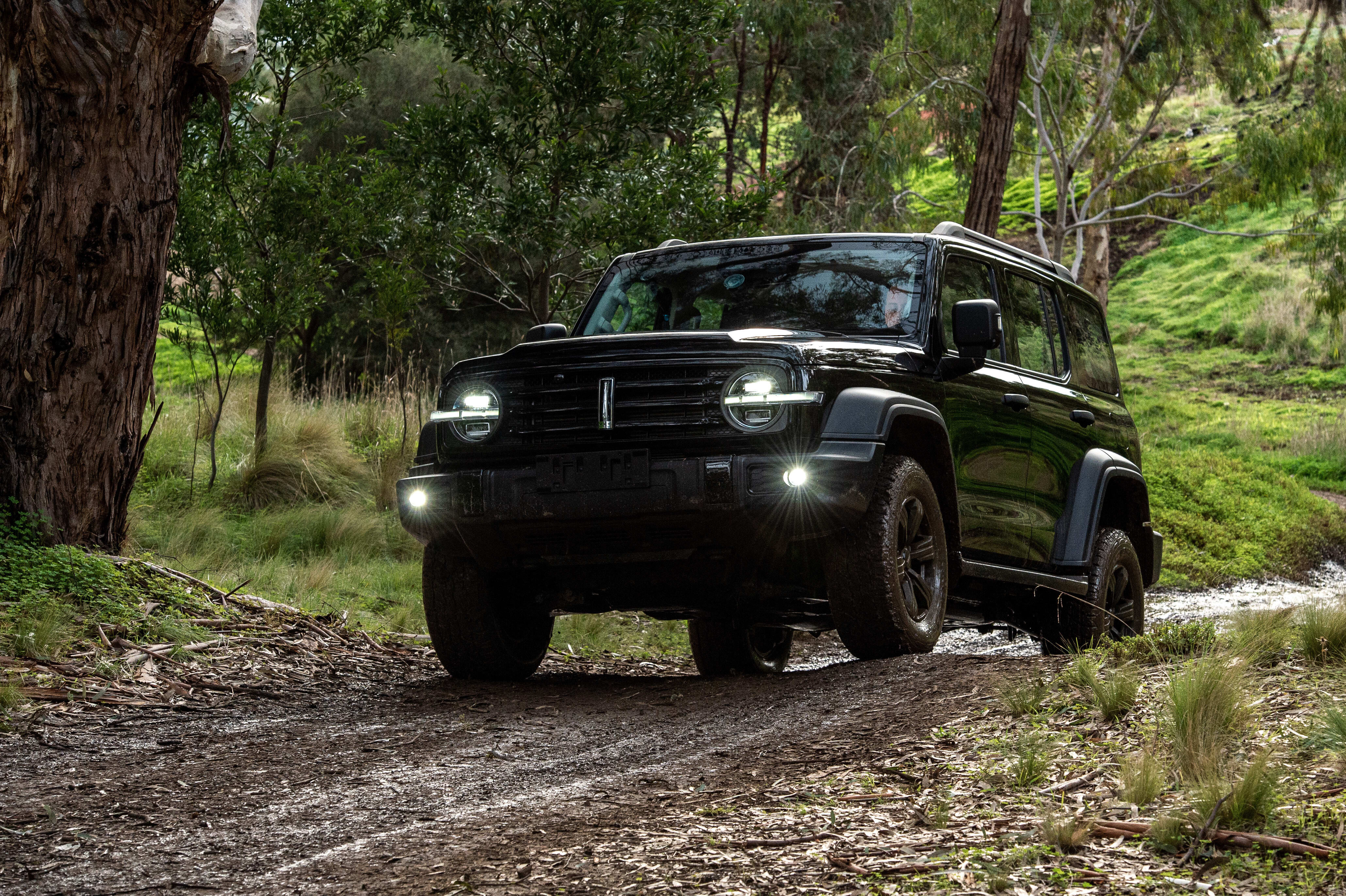
The Tank 300 is also expected to be offered in Australia. Based on the GWM Ute, the four-wheel-drive would be pitched directly against the Ford Everest, Toyota Fortuner, Mitsubishi Pajero Sport, and Jeep Wrangler.
A Tank 300 was brought to Australia in June for evaluation by GWM Haval, alongside a Haval Big Dog – which is thought to be marketed locally as the Haval Dargo when it’s launched in 2022.
GWM is looking to maintain its current trajectory, with a 253 per cent increase in sales across Australia and New Zealand year-on-year resulting in the two countries becoming the largest joint export market for the Chinese carmaker.
I tend to carry the tools I use relatively regularly in a tool roll and, with the demise of my old kit, I have been looking at buying and trying a few different tool rolls on the market.I finally found the Crashpad tool roll on the web and ordered one, as it looked pretty good and the price wasn’t too out of this world – and I was suitably impressed when it arrived.Measuring 32cm wide and 120cm long, the tool roll is made from 410gsm heavy-duty canvas and features 18 individual pocket slots in two layers. Two of these slots are extra large for tools such as hammers, and there are 10 medium-size pockets and six small slots for screwdrivers and the like.
At one end of the roll are two removable, small zippered bags, while at the other end is a single zippered bag, and these are ideal for carrying items such as tape, fuses, jeweller screwdrivers, etc; they are very handy.The sewing is neat and seemingly strong, while the zips in the removable pockets are first class. If there is any criticism of the roll it’s that some of the slots are pretty tight once they have a biggish tool in them such as the handle of a hammer or a large set of pliers.I’ve managed to squeeze about 30 tools ranging from files and a steel ruler to side cutters, spanners, screwdrivers and a couple of hammers; all the tools I use on a regular basis. Still, the resultant photo doesn’t look as tidy as those on the web but, nonetheless, it works well.
Loaded as it is with the tools, the roll is around 20cm in diameter, easily carried with the inbuilt handle and, when not in use, resides beside the back seat of the Cruiser or the Patrol.Apart from the purchase price you’ll be up for a few extra bucks for shipping, depending on where you live. Still, the costs are pretty reasonable and you get a bloody good product delivered to your door.
AVAILABLE FROM: crashpadgear.com.au RRP: $145 plus shipping