
This is my second drive of the new-generation 2023 Ford Ranger, after spending a week in the top-of-the-line V6 Wildtrak not too long ago.
I must say, I really wish I drove this lower-spec XLS first, as the Wildtrak is a work of art – well, for a ute – and that makes it hard to not feel somewhat disappointed climbing into a variant with cloth seats and no V6 engine. Spoiled much?
You see, I have a genuine love affair with base-model four-wheel-drives, and actively encourage people to look at them and use the savings from purchasing a lower-spec model for four-wheel drive accessories and diesel.
Not this time around, folks. I absolutely feel the V6-powered Wildtrak is the one to buy in the next-gen Ranger line-up; it just does everything well.
Upgrade your Ranger
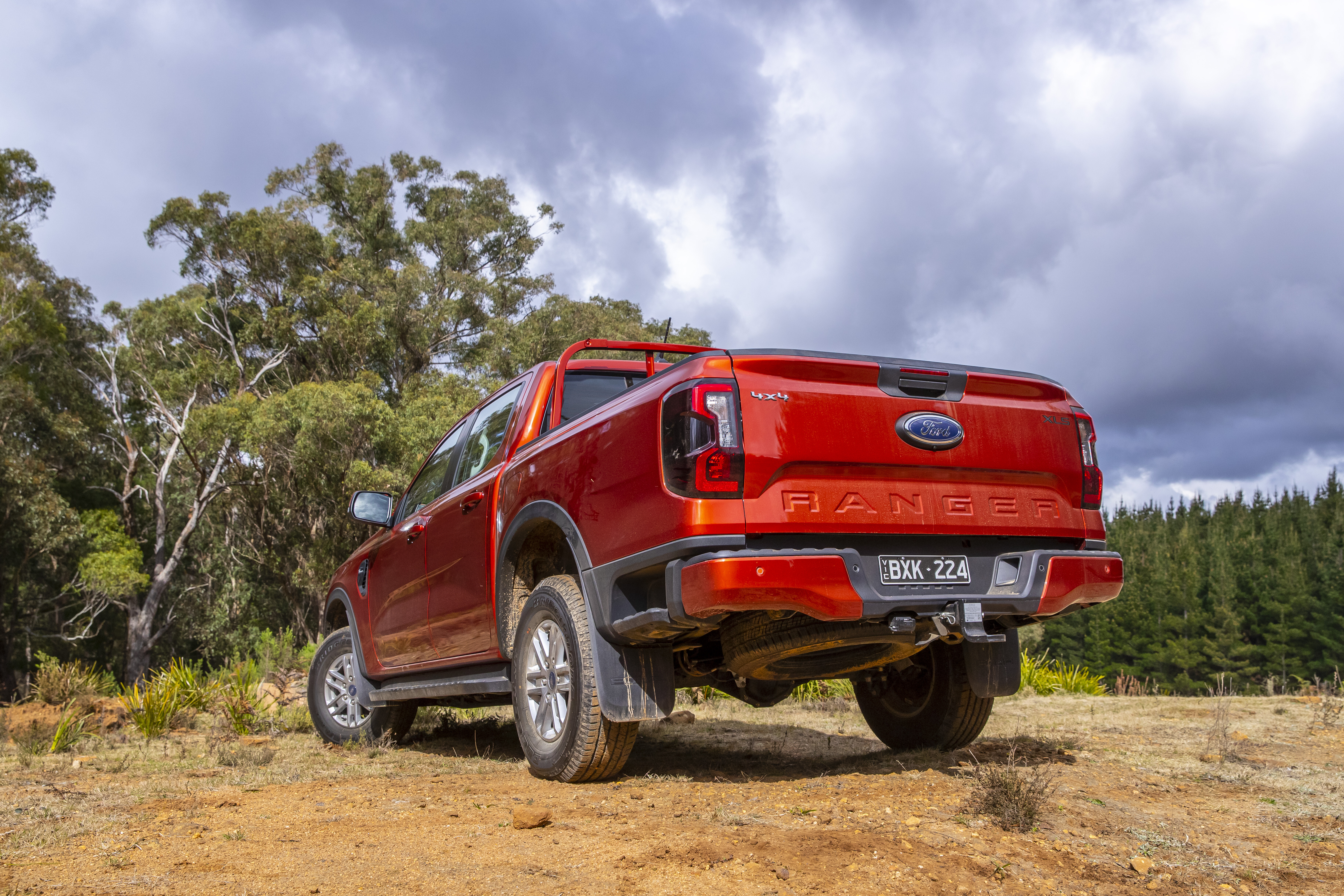
You aren’t here to read a Wildtrak review though. You’re here to take a closer look at the Ranger XLS, which is the second lowest grade offered. We’re talking cloth seats as mentioned, a smaller 10.1-inch touch screen infotainment unit, and a four-cylinder twin-turbo diesel engine with a part-time four-wheel drive system.
We need to determine who the XLS is made for. Can it offer more than just being a cheaper Ranger for tradies, mine sites and four-wheel-drivers to beat up on?
With my initial emotional response out of the way, it must be said the XLS is a good thing, and certainly isn’t left behind when looking at the competition. You can feel this platform is an evolution of the previous Ford Ranger, and you can tell it has been designed and engineered for Australian conditions. These are my thoughts on the XLS Ford Ranger, after living with it on-road, off-road and on long highway stretches.

Powertrain
I really liked the V6 engine found in the Wildtrak, not just because of output but the overall smoothness experienced in operation. When you start up the four-banger Ford Ranger though, that smoothness is gone and replaced with a familiar diesel rumble.
In terms of engine specs, this four-cylinder diesel engine produces a claimed 154kW @ 3750rpm and 500Nm between 1750-2000rpm. Those specs are fairly impressive from such a small capacity engine, thanks to the inclusion of two turbochargers which would no doubt be pushing serious levels of boost into the motor.
Performance-wise, the twin-turbo engine offers more than enough grunt, and delivers power quickly without much lag, but you definitely notice it’s not as refined as the V6 however.
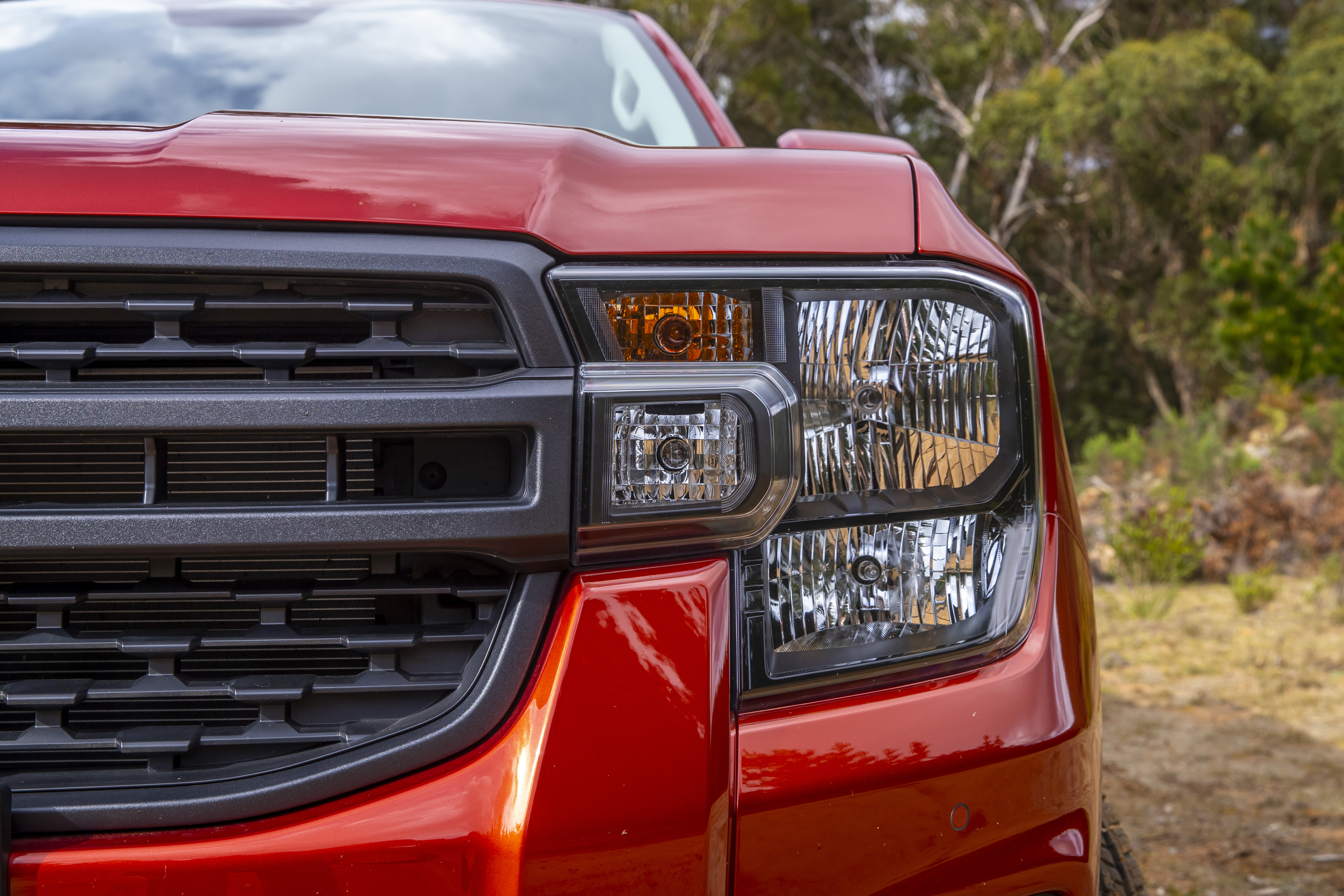
With a 10-speed auto to play with, there’s a gear for every occasion. Off-road, this means snail’s pace like crawling ability when in low-range four-wheel-drive.
On-road, having so many options for gearing makes the most out of the smaller capacity 2.0-litre engine, propelling the vehicle from a standing start with gusto.
Highway cruising is effortless with this combo, the Ranger barely breaking a sweat when cruising at the posted speed limit of 110km/h, sitting at around 1800rpm – which certainly helps fuel economy figures.
Speaking of, our 2023 Ford Ranger XLS returned a combined fuel use figure of 9.1L/100km after a week of off-road, highway and urban use.
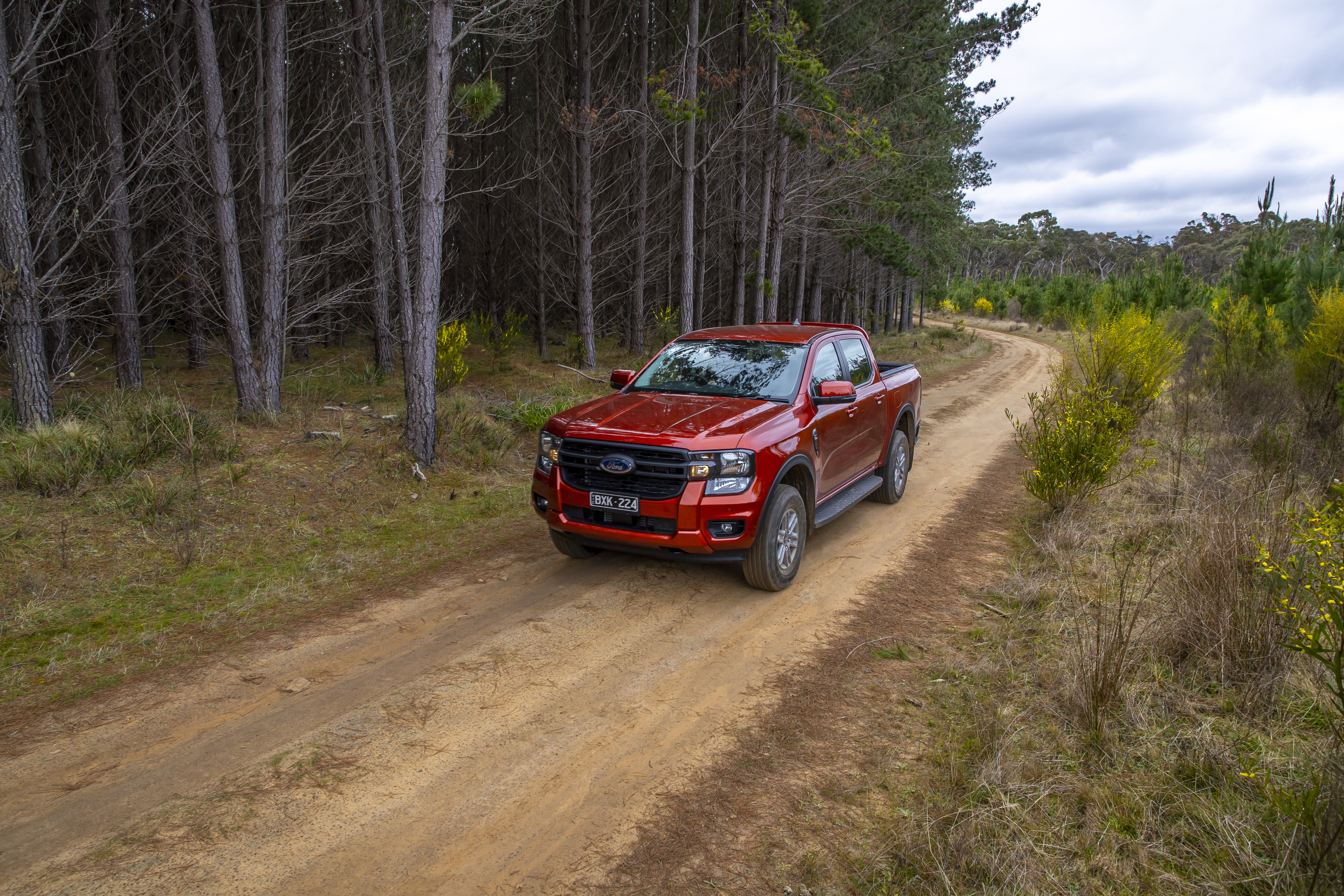
On-road
With drum brakes on the rear of the XLS Ranger, and smaller disc brakes on the front compared to the Wildtrak, it’s not surprising that braking feel and performance in the XLS wasn’t as good as the V6 Wildtrak.
It felt as though there was physically more play in the pedal before the brakes bit, which is to be expected. This is the joy of back-to-back testing; you pick up on quirks immediately.
Braking performance was still more than adequate, especially on dirt roads where the ABS calibration worked well. It’s times like these you really appreciate the Australian design and engineering input, as I’ve driven some vehicles on dirt that just don’t want to pull up due to poor ABS calibration.
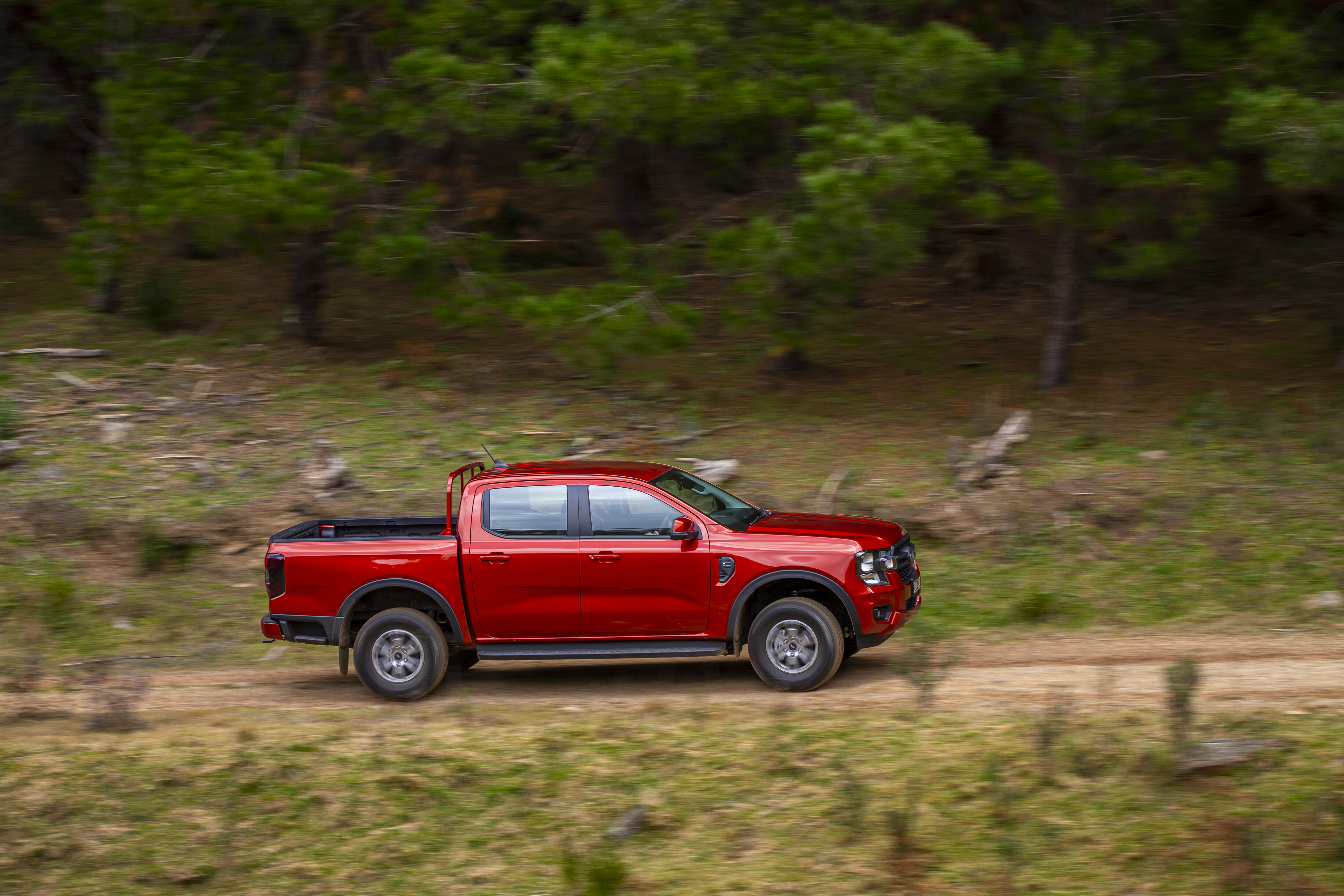
Ride and handling on-road is remarkable for a ute, although I did miss the full-time four-wheel drive system I experienced in the Wildtrak, namely as we’ve been dealing with massive amounts of rain in NSW of late.
At no stage however did the XLS Ranger feel sketchy in wet conditions when in rear-wheel-drive, and even in this base trim, daily driving proved to be a comfortable and relaxing driving experience.
I feel the strong on-road performance can be attributed to the combination of an excellent suspension tune and the bigger dimensions.
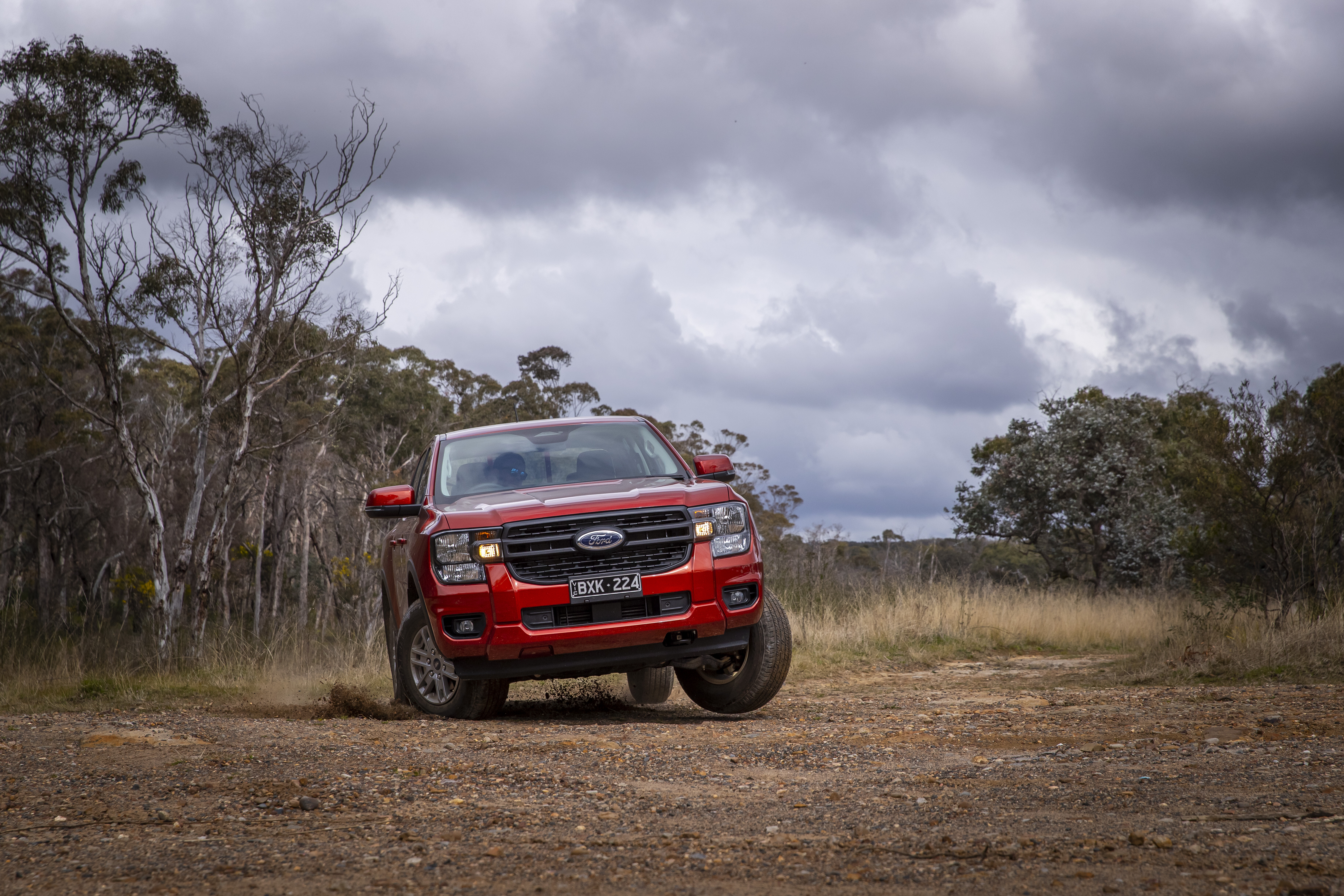
The 2023 Ford Ranger is 50mm wider than its predecessor, as well as being longer in wheelbase (3220 to 3270mm). This gives the Ranger a more planted feeling through corners and over bumps at speed.
Overall, the XLS is an easy ute to live with day-to-day, even when you take into consideration it is a lower-spec model in the Ranger line-up. If you don’t need heated seats, wireless phone charging and are happy with a more basic interior with cloth seats, the XLS could be for you.
Off-road
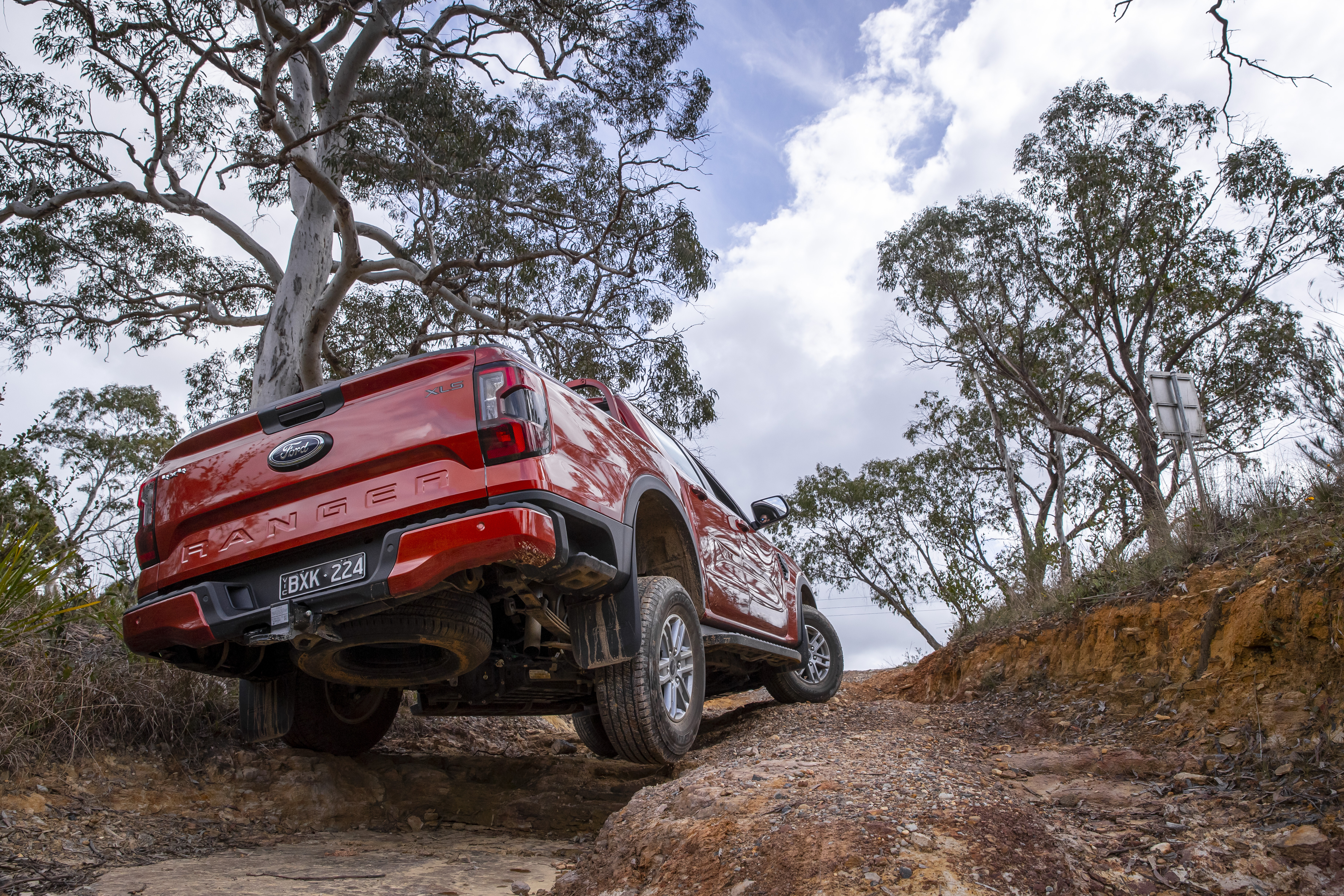
I still believe the HiLux is the most capable four-wheel-drive in this category when it comes to technical four-wheel driving – but, in saying that, the Ranger is a better overall vehicle in terms of features, comfort and liveability.
While traction control remains active on the front end of the Ranger when in low-range 4×4 with the rear diff lock engaged, it is slower to react compared to the HiLux if we take the diff lock out of the equation.
This is being really picky though, and not something that will be a cause for concern off-road, especially once you find the sweet spot for throttle input to keep power going to the wheels with traction.
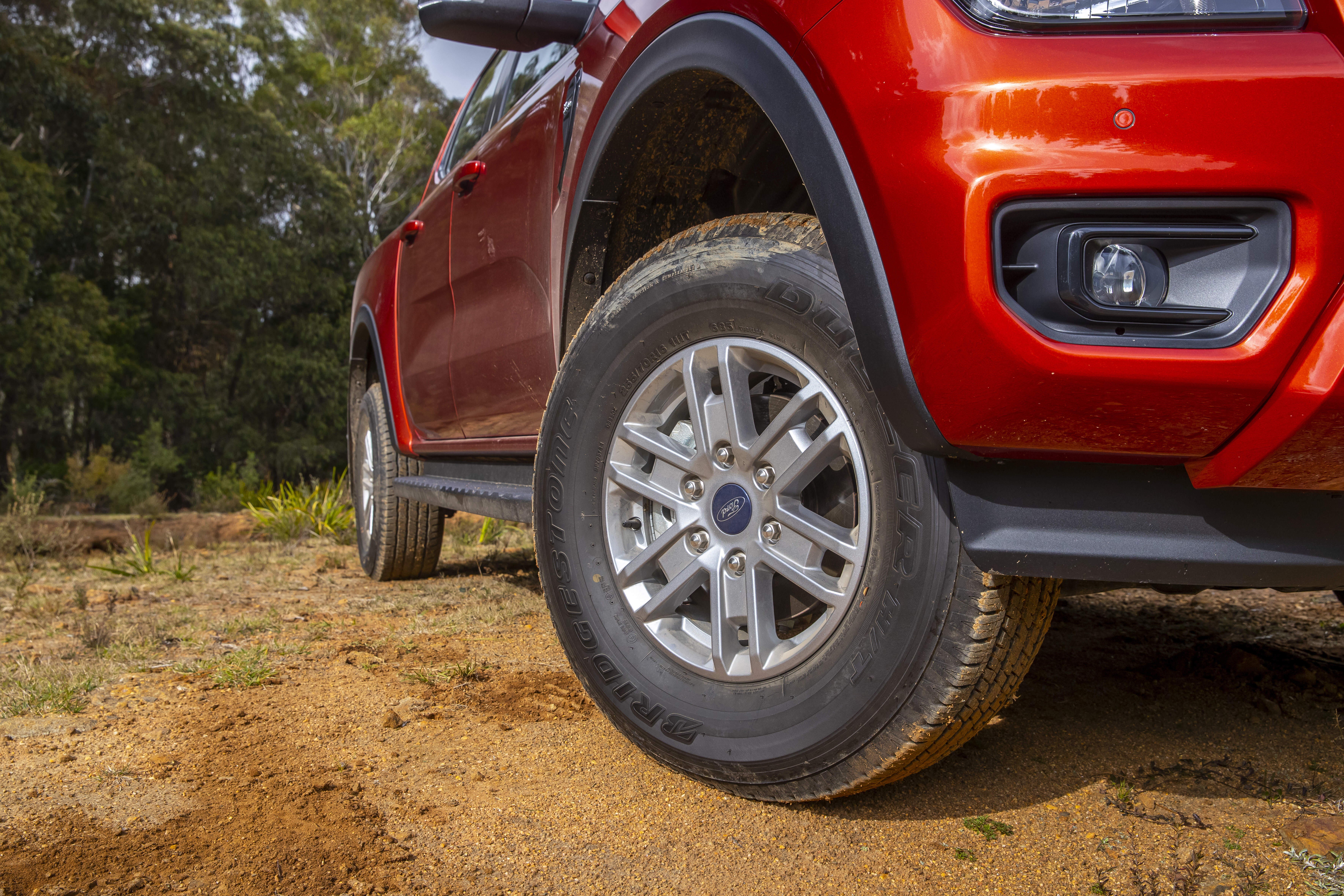
Ground clearance is the biggest limitation of the 2023 Ford Ranger, in-part due to the larger physical dimensions. A set of bigger tyres and a suspension lift would really transform this platform. For general four-wheel-drive touring though, I see the additional width and wheelbase is a benefit.
One item I found a bit strange, was the positioning of the exhaust exit point. It points down at the tip and looks to be in a vulnerable spot that could cop a whack off-road. We didn’t hit it on test, but it was a concern.
I’d prefer to see it dumped at the diff like the Amarok, or extended further and raised higher. Again, I’m being picky, but it is worth mentioning.
Interior
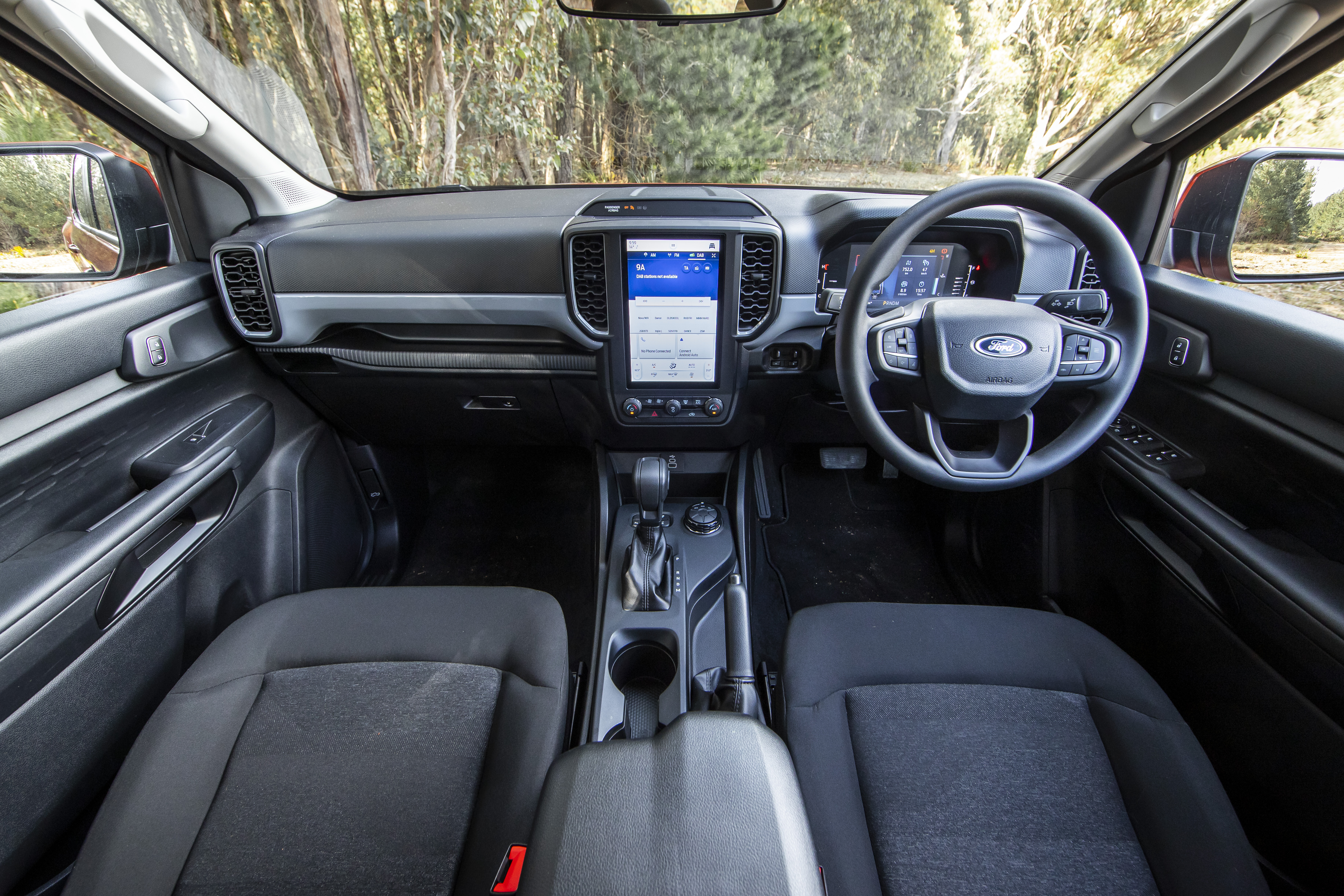
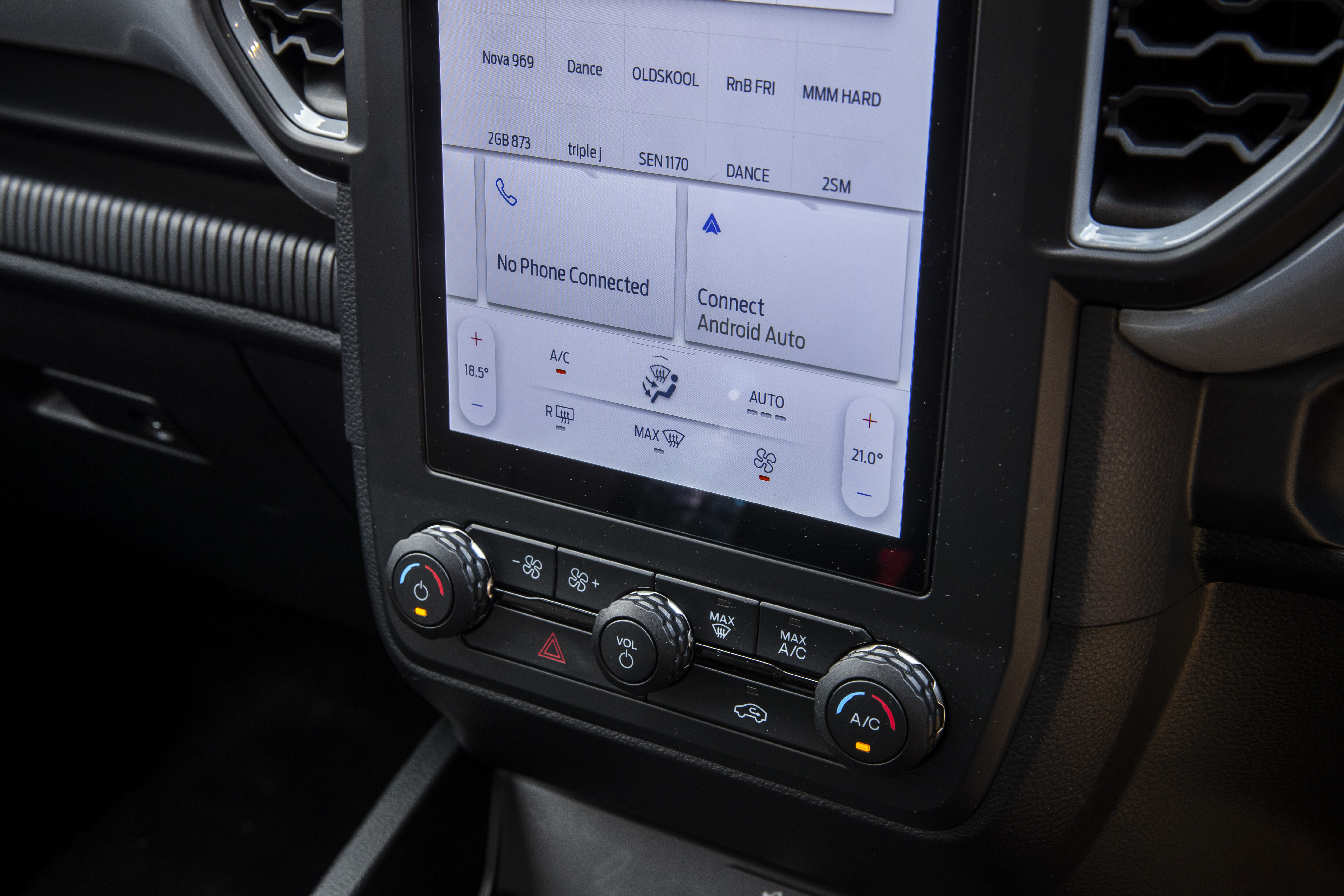
The first thing you’ll notice climbing inside the XLS Ranger, is the comfortable cloth seats, followed by the 10.1-inch centrally mounted infotainment screen that features wireless Apple CarPlay and Android Auto. It’s nice to see physical dials and buttons for essentials like volume control and heating/cooling, with the infotainment screen left to control things such as navigation.
I much prefer the older-style gear selector found in the XLS, compared to the complicated Wildtrak unit, which I found difficult to operate the first few times. When you are stuck in mud and need rapid movements from forward-to-reverse to get out, a simple gear shifter is much appreciated.
The same can be said for a traditional manual handbrake lever instead of the increasingly-popular electronic handbrake selector found in most modern vehicles. As the old saying goes: if it ain’t broke, don’t fix it…
Our photographer extraordinaire, Adam from Offroad Images, summed the interior of the XLS Ranger up perfectly while photographing it. “Geez it’s dark in there.”
And it is, thanks to the dark cloth-covered seats, black carpet and black plastics used throughout the dash. Thankfully a lighter colour headliner has been included, which brightens the mood somewhat.
Otherwise, there is a sea of black plastic which certainly reminds you this is a lower-spec vehicle. While it might not be as visually exciting as the Wildtrak, this is an interior designed for work, perfect for four-wheel-drivers and tradies who will be getting these things dirty.
Practicalities
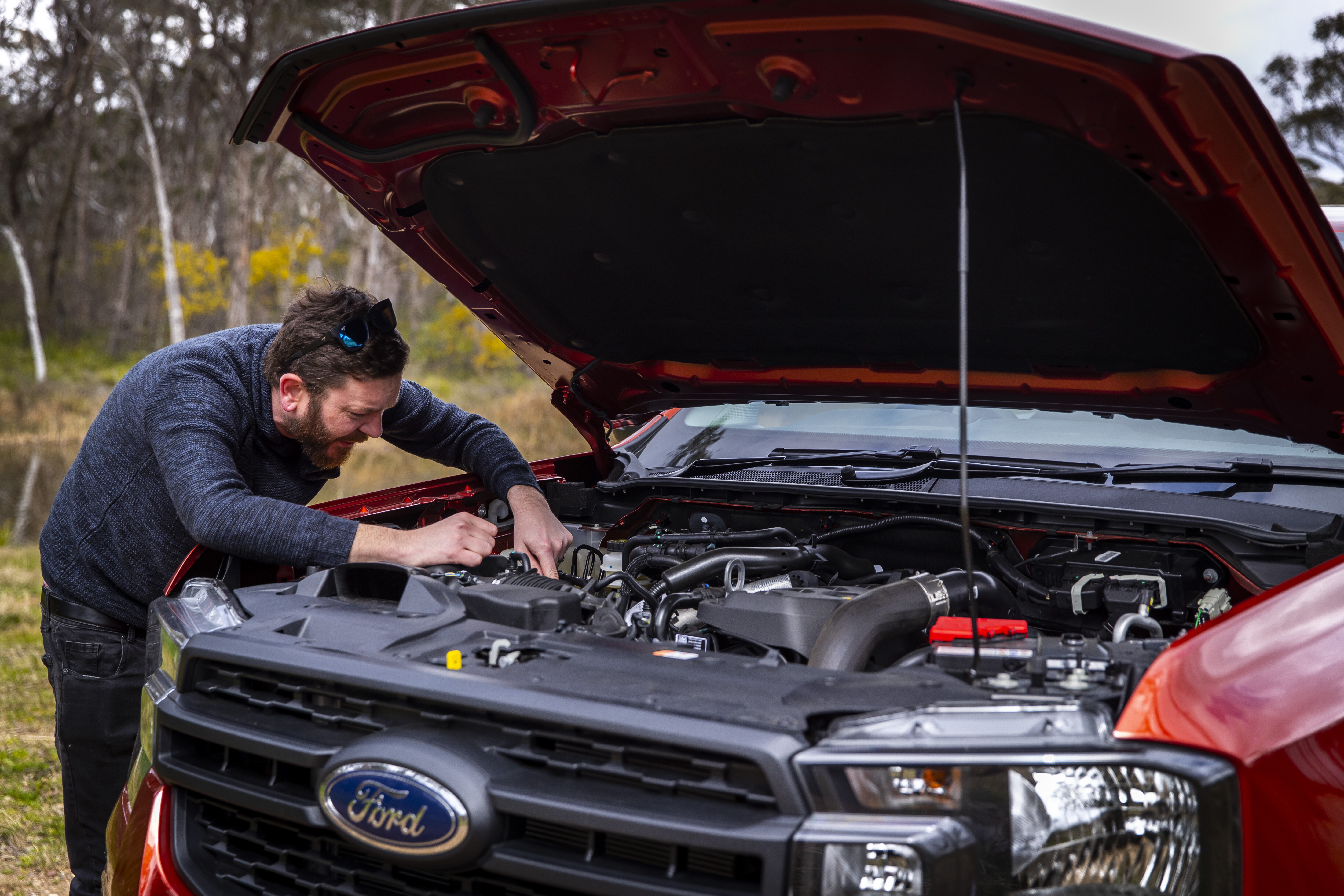
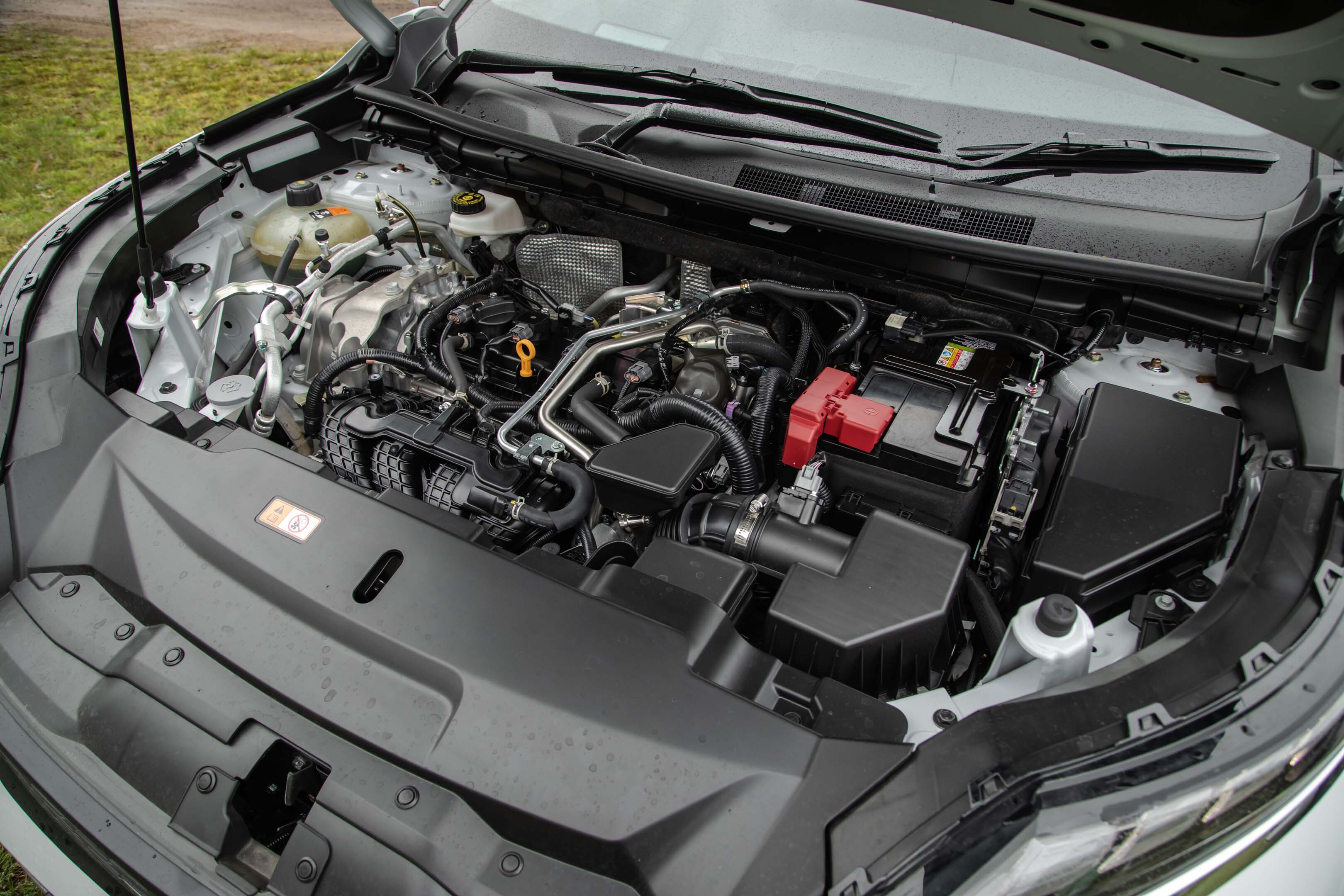
Eureka, there’s space to easily fit a second battery in the engine bay of the 2023 Ford Ranger. This can be a real battle with modern vehicles, with engine bays becoming more and more cramped. Not the case with the Ranger.
I personally would fit a slimline lithium battery behind the backseat, as lithium battery technology is so good these days, but the fact there is a dedicated spot for a second battery should be celebrated.
Speaking of the backseat, there is plenty of space behind it to store longer items, or mount a slimline battery as mentioned. That isn’t the only party trick however, as the seat base can be lifted up, giving access to additional under-seat storage.
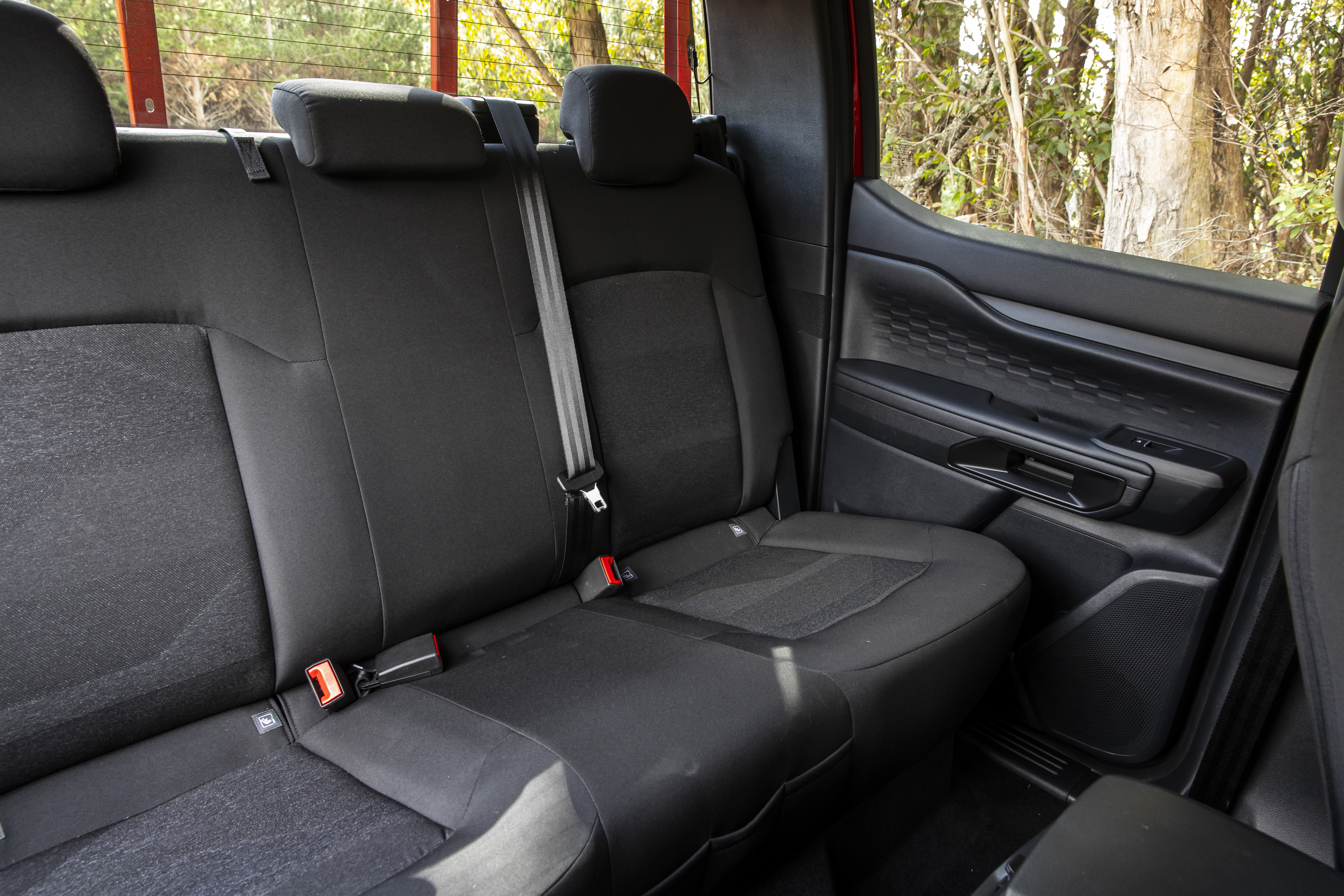
Maximising space is key for touring four-wheel-drivers, and it’s neat that Ford has put the thought into providing additional dedicated storage in the vehicle.
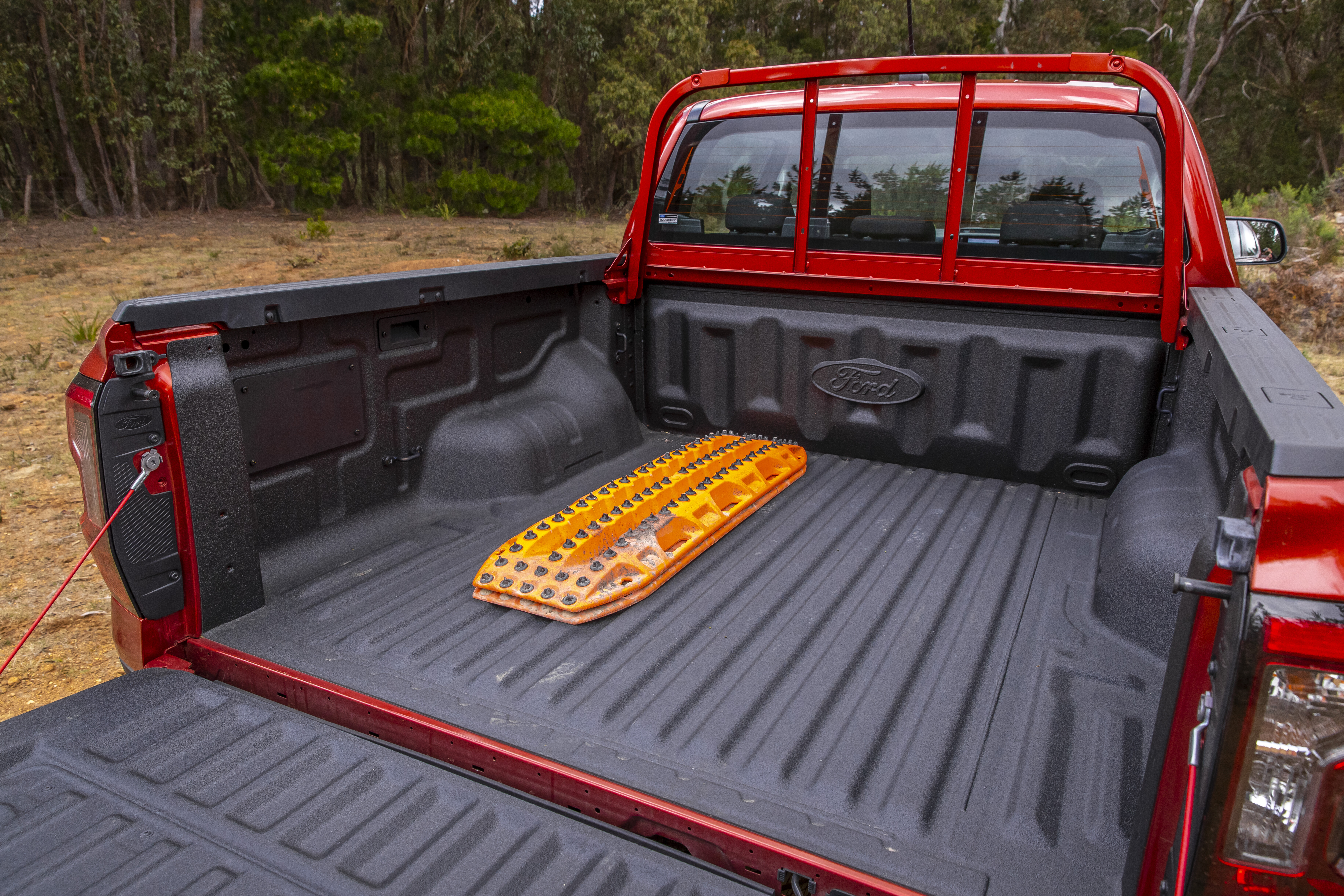
When you think of practicality and utes, you really have to look to the tub area. This 2023 Ford Ranger’s tub is 1584mm wide, 529mm deep and 1547mm long with 1224mm between the wheel arches.
This is an impressive amount of space, which can comfortably accommodate a Euro-spec pallet for those who need to transport building supplies. This might sound like a pub trivia fact, but if you need to load heavy items regularly with a forklift, it’s quite a handy addition.
Cost of ownership
Service schedules for the 2023 Ford Ranger are every 12 months or 15,000km, with the first four services capped at $329.
These capped price services cover the first four years of ownership, or up to 60,000km. The warranty period for the Ranger is five years, with unlimited kilometres. It’s also worth mentioning the new Ford Ranger has a five-star ANCAP rating.
VERDICT
The XLS Ford Ranger doesn’t really do anything wrong – it’s an extremely easy ute to live with, especially when you consider where it sits on the pecking order.
Sure, the interior is fairly basic and you miss out on some tech, but as a vehicle to use for work or play, I think this is the one most fleet operators and serious off-roaders will go for.
At the time of publishing, Ford has the V6 Wildtrak Ranger listed at $75,990 driveaway, the XLS at the time of publishing is $59,653 driveaway. So, the $16,337 question is should you pocket that cash difference and spend that money on four-wheel drive accessories and fuel to get out there exploring?
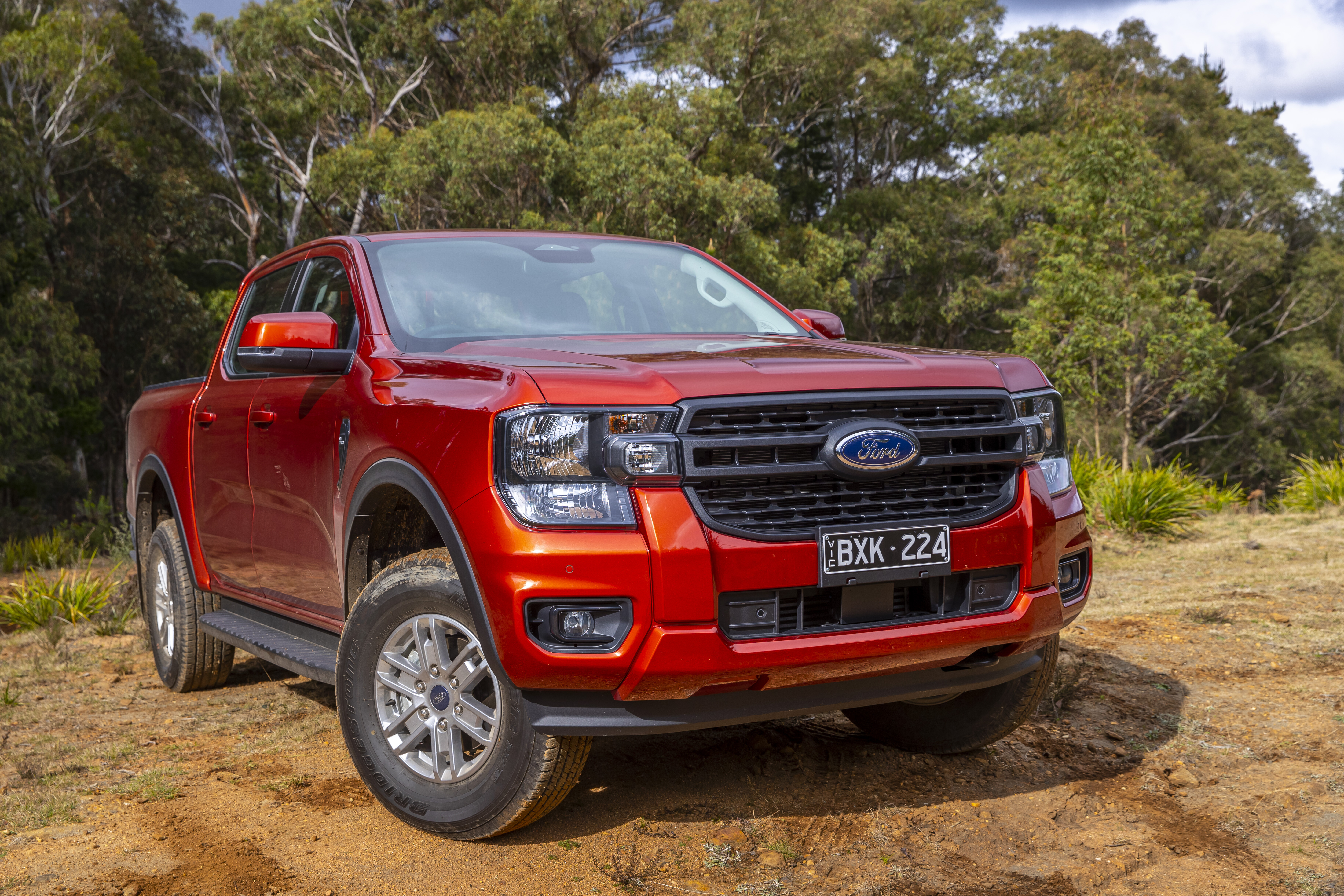
My head is saying yes, absolutely. You’d be mad not to. The XLS is comfortable, still has a decent list of inclusions and the performance of the twin-turbo four-cylinder is more than adequate.
My heart however, says keep saving and buy the Wildtrak with its V6 engine, all-wheel-drive ability and better specced interior.
I would, however, strongly recommend you drive them both to see if the V6 is worth the extra money for your needs – if you find yourself wanting a new dual-cab 4×4 ute. The new Ford Ranger should be at the top of your test drive list too, as I do strongly believe it is the best 4×4 ute platform on the market today, regardless of specification.
2022 Ford Ranger XLS 4X4 specifications
4X4 Australia's project builds
Production of the Ineos Grenadier has begun, with the first models rolling off the assembly line in Hambach, France.
It’s a significant milestone for the British brand, as it means customers will begin to receive their orders in December this year despite ongoing global supply chain disruptions.
Ineos’ local arm told 4X4 Australia that if shipping goes well, the first Australian deliveries could come as early as December but most likely early in the new year.Mark Tennant, Ineos Automotive’s Commercial Director, said the company has come a long way since the project kicked off in 2017.
“This is a landmark moment for Ineos Automotive as a vehicle manufacturer,” Tennant said.
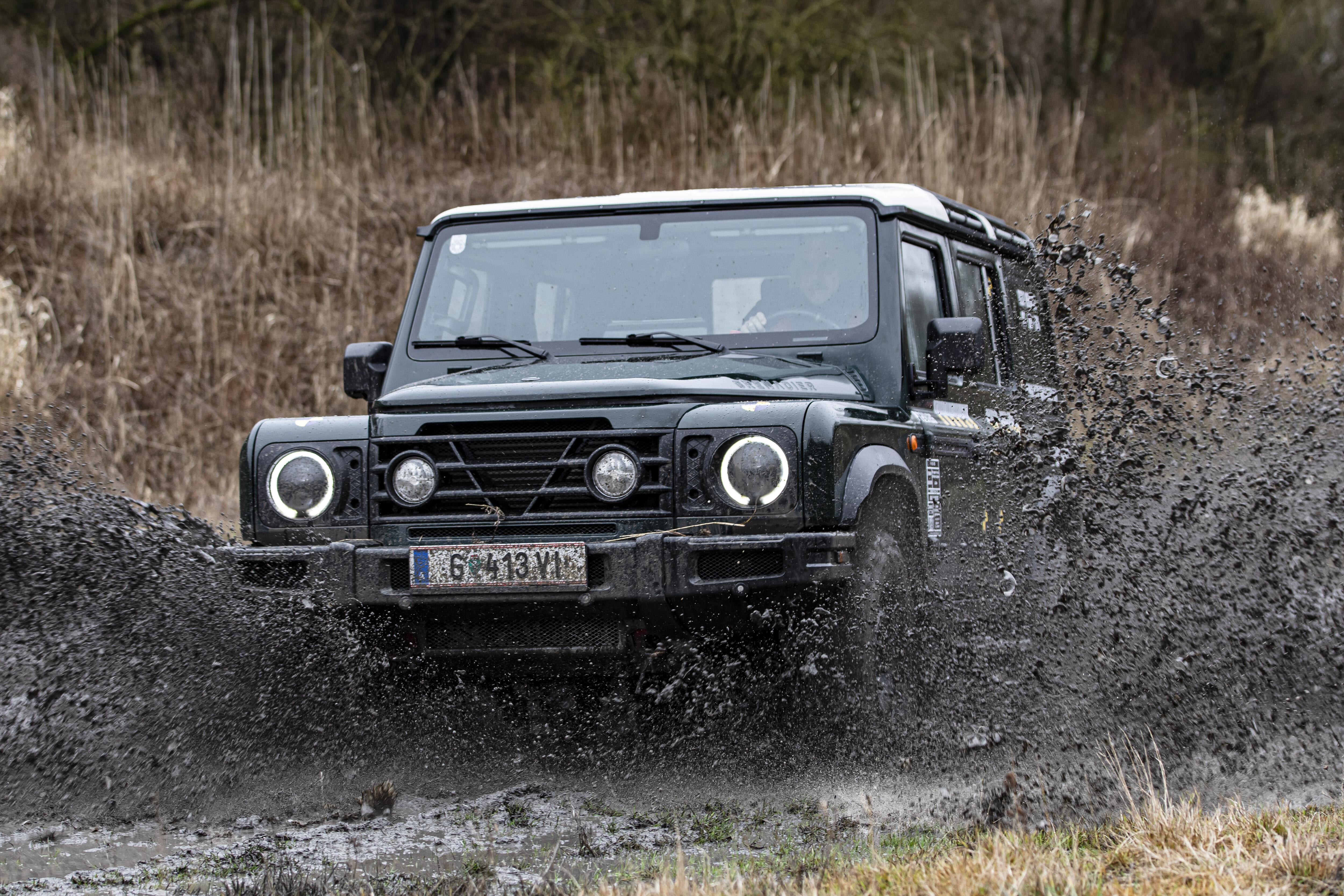
“To get to this point is a testament to the resilience and hard work of the entire Ineos Automotive team, our development partners and our suppliers – for which we thank them all as we now look forward to making our first deliveries to customers.”The six-model Grenadier range consists of three five-seat station wagon models, and three two-seat utility wagons. All models are available with either petrol or diesel BMW 3.0-litre turbocharged six-cylinder engines.Model nomenclatures include Grenadier, Grenadier Trialmaster Edition and Grenadier Fieldmaster edition, with prices starting at $84,500 before on-road costs for the base utility wagon. Prices top-out at $96,495 for the range-topping Fieldmaster station wagonOrder books opened in Australia back in May 2022.
I’m always on the look-out to improve my first-aid kit and knowledge, and over the last couple of years there has been some interesting developments with equipment and skills to do just that.
While shark attacks are pretty bloody rare – even here in Australia – they gather a lot of media attention and comment. Recently, a doctor came up with a method to stem the chronic blood loss from a shark attack, and while the attention was all on shark attack victims, the method could be used for anyone who has been involved with an accident and suffering from severe bleeding from the lower limbs.
Severe bleeding is life-threatening and takes priority over airway and breathing and needs to be controlled immediately. If immediate action is not taken, the victim will quickly bleed out and die. If bleeding from the leg, ‘Push hard halfway between the hips and bits’.
Interestingly, while tourniquets have long been frowned upon for first aiders, they seem to be becoming more acceptable in severe bleeding circumstances as pressure bandages just don’t stem the blood flow enough.
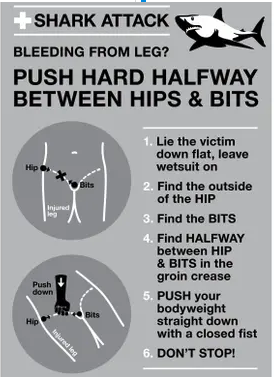
How the first-aid treatment is managed initially at the scene can have a dramatic effect on the victim’s chance of surviving an attack or accident. The Australian Resuscitation Council (ARC) is the peak body which makes recommendations that all first-aid programs follow in Australia. Its guidelines recommend firm direct pressure, sufficient to stop the bleeding, over the bleeding site. The ARC suggests you could use a pad or your hands.
If bleeding continues, you should apply another pad and a tighter dressing over the wound site. If a limb is involved, then you need to check circulation to the hand or foot regularly.
Other things that will help control bleeding are elevation of the bleeding part, restricting movement and of course, you should have the patient remain at rest.
The CAT 7 tourniquets are considered by many to be the best and quickest tourniquet on the market for the initial treatment of shark bites and the like where blood loss is great from a torn or shredded limb. You can buy one of these online. I’ve now added one of these tourniquets to my first-aid kit.
The first-aid treatment of stroke has been simplified as well in recent times, with a few simple steps to assess the victim. Act F.A.S.T as the diagram below indicates.

On our recent outback trip which I led for Moon Tours, I was pleasantly surprised to find a number of the guests were carrying a defibrillator. I’ve been carrying one for a couple of years now and with prices of these heart-starting machines being under or around two grand, I reckon every tour operator and 4WD club outing should have one on hand, even if you don’t reckon it’s worth carrying one for yourself or your loved ones. St John Ambulance Australia has them for sale along with a number of online outlets. They are simple to use.
The other item I’ve started carrying is ‘Boost Oxygen’. It comes in a small lightweight bottle and is 95 per cent oxygen and is readily available. Designed to boost performance, reduce fatigue and enhance recovery, it’s not really advertised as a first-aid product but it has to help if someone is suffering an asthma attack or even a heart attack or stroke. It can’t do any harm, so I carry a few bottles of the stuff – the weight is negligible!
These are the latest items and techniques I’ve added to my first-aid repertoire – they could save my life, or the life of a friend or relative … or a complete stranger. Maybe you should think of adding them to your first-aid kit – they gotta be worth it!
Don’t look now Hilux, but the Ranger now has full-time 4×4. Although – fortunately for you – only on V6 models, so for the time being you’re off the hook. But the clock is ticking.
Part-time 4×4 just doesn’t cut the mustard if you want the best. Just look across the showroom to your stablemate LandCruiser, Toyota’s premium 4×4.
To be totally fair, there’s nothing particularly wrong with part-time 4×4. It does the job and it’s been doing the job since day one. And, compared to full-time 4×4 it has less moving parts, and less parts moving much of the time. But it’s still inferior to full-time 4×4 in the critical measures of safety, driveability and user friendliness.

Of the mainstream utes up until the 2022 Ranger, only the Amarok and the Triton have offered full-time 4×4. With the Amarok, it’s then only with the eight-speed automatic gearbox and with a single-speed transfer case (not that it needs low range thanks to its cleverly tweaked torque convertor), while only up-spec Triton models offer full-time 4×4 via their unusual ‘Super Select’ transfer case (a copy of Jeep’s Selec-Trac system) that also offers rear-wheel drive only.
The essential mechanical difference between part-time 4×4 and full-time 4×4 is full-time 4×4 requires a third and centre differential, whereas part-time 4×4 has just the two axle differentials.
The centre differential of a full-time system allows all four wheels to be driven all the time even on high-traction surfaces. Do that with a part-time 4×4 system for long enough and you’ll break it.
It’s far better to have all four wheels driven if there’s a quick and unexpected change in available traction
Having all four wheels driven all the time means there’s no thinking “should I engage 4WD now or is 2WD okay” as the driving environment changes and traction conditions deteriorate.
This is not as simple as being ‘on road’ or ‘off road’ as there’s a full and continuous spectrum of driving environments where the infinite variables of weather meet the infinite variables of road surface.
In all that mix, the benefit of full-time 4×4 over part-time 4×4 is most commonly enjoyed on wet bitumen or concrete roads, but the benefit obviously extends through to any sort of unsealed road as well, more so if it’s wet. For towing in the wet, full-time 4×4 is no-brainer benefit.
In a part-time 4×4, when a road is wet enough to be genuinely slippery you can engage 4×4 without fear of damaging the transfer case but that’s a crucial decision to make just at the time when you are best concentrating on the road!

Experienced and confident drivers may not see this as an issue, but not everyone is so blessed. And even if you’re an experienced driver, it’s far better to have all four wheels driven if there’s a quick and unexpected change in available traction such as water run-off across the apex of a blind mountain sealed-road corner or a notably slippery patch in an otherwise good traction unsealed road.
Part-time 4×4 also has an inherent design compromise in as much as rear drivetrain components (driveshaft, diff and axles) have to be built strong enough to take 100 per cent of the engine’s torque output, whereas with a full-time system these components can be made with 50 per cent less strength, and therefore lighter, and still be as comfortable in handling the engine’s output.
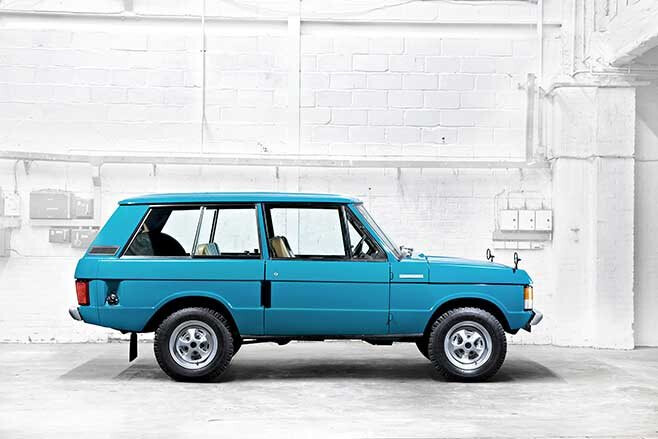
Given the components in question all contribute to the unsprung mass, a reduction in weight here provides critical benefits in handling and ride quality – especially on rougher and bumpier roads – something not lost on Charles Spencer King when he designed the original Range Rover (in 1970) complete with its game-changing full-time 4×4. Optimising the steering geometry of a 4×4 that can either drive just the rear wheels or all four wheels also means a compromise.
Interestingly in its PR on the new Ranger, Ford doesn’t promote the V6’s full-time 4×4 as hard as you may think it might … perhaps as the four-cylinder Rangers are still part-time 4×4?
As for Toyota and its Hilux, the good news is full-time 4×4 is as close as the nearest Prado, with which it already shares many key components. And in key ways, the Prado’s full-time 4×4 system is superior to the new Ranger’s.
It’s simpler (mechanical centre differential rather than an electronic clutch centre differential) and doesn’t bother with a 2WD option, which seems more marketing than engineering good sense on Ford’s behalf.
The November 2022 issue of 4X4 Australia is on shelves now.
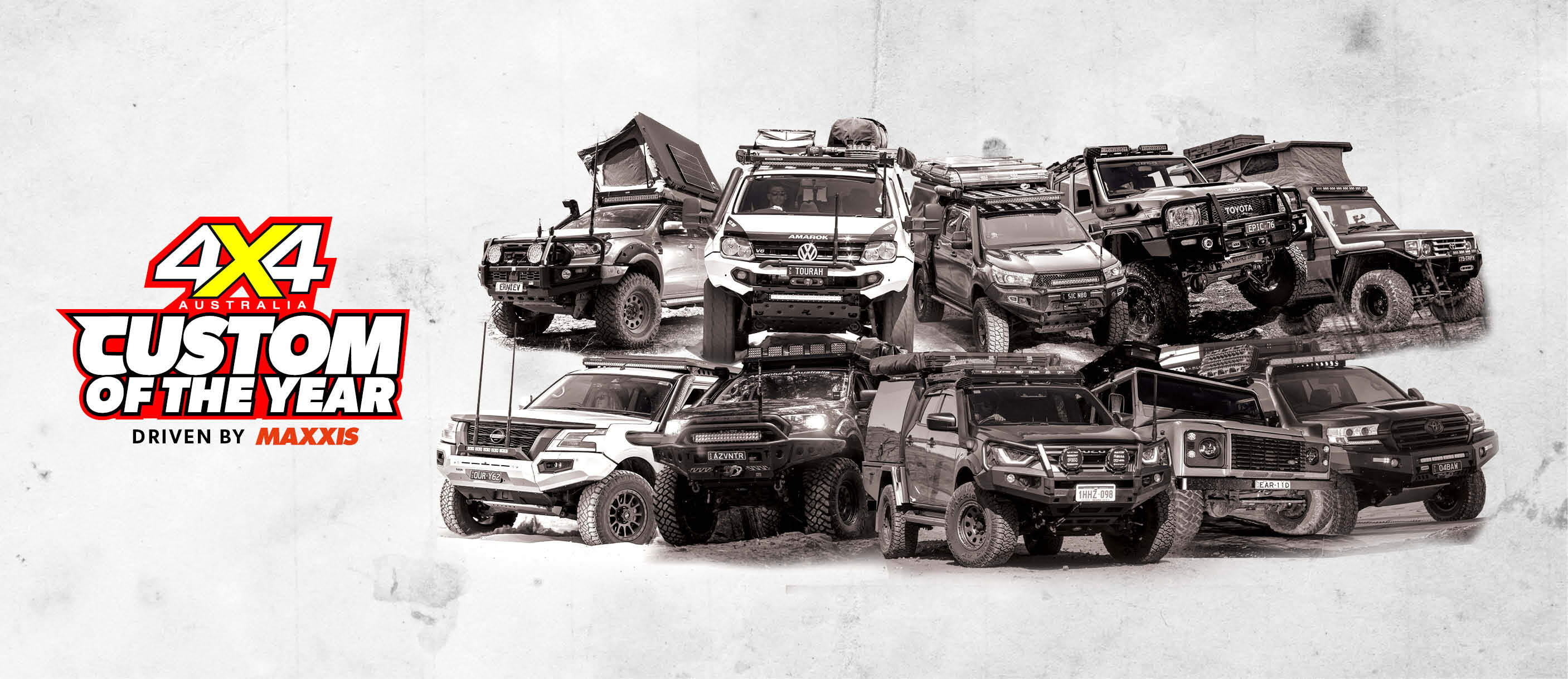
This magazine kick-starts our 2022 Custom 4×4 of the Year campaign, with 10 of the best custom creations from the past 12 months vying for your vote to be crowned the custom champ. Vote now for a chance to win prizes available from Maxxis, MaxTrax and Clearview Accessories.
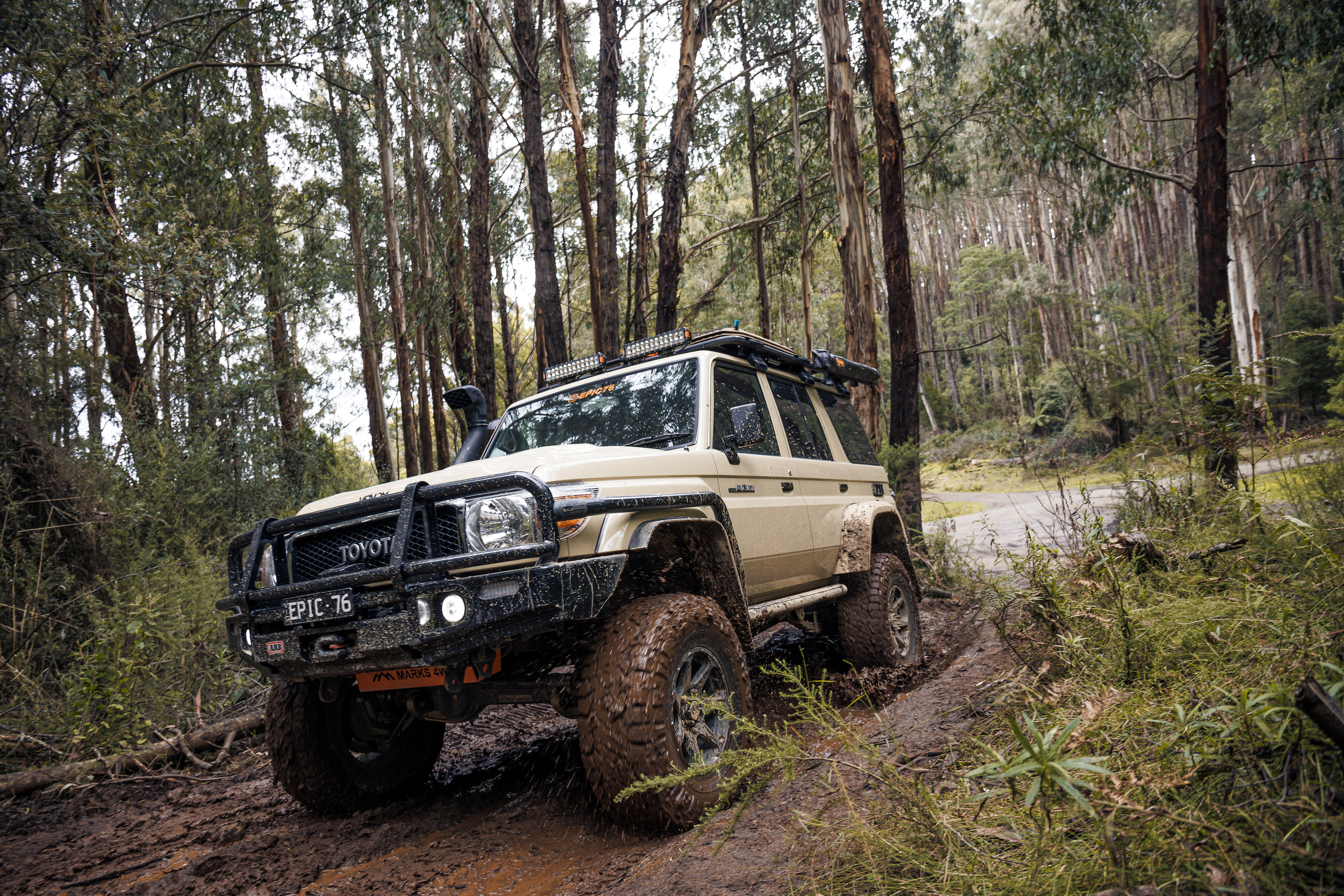
We also ran a microscope over one of the Custom 4X4OTY contenders this month, with a portal-axled 76 Series LandCruiser proving to be an off-road weapon. Does the Epic76 have the chops to sit on the throne?
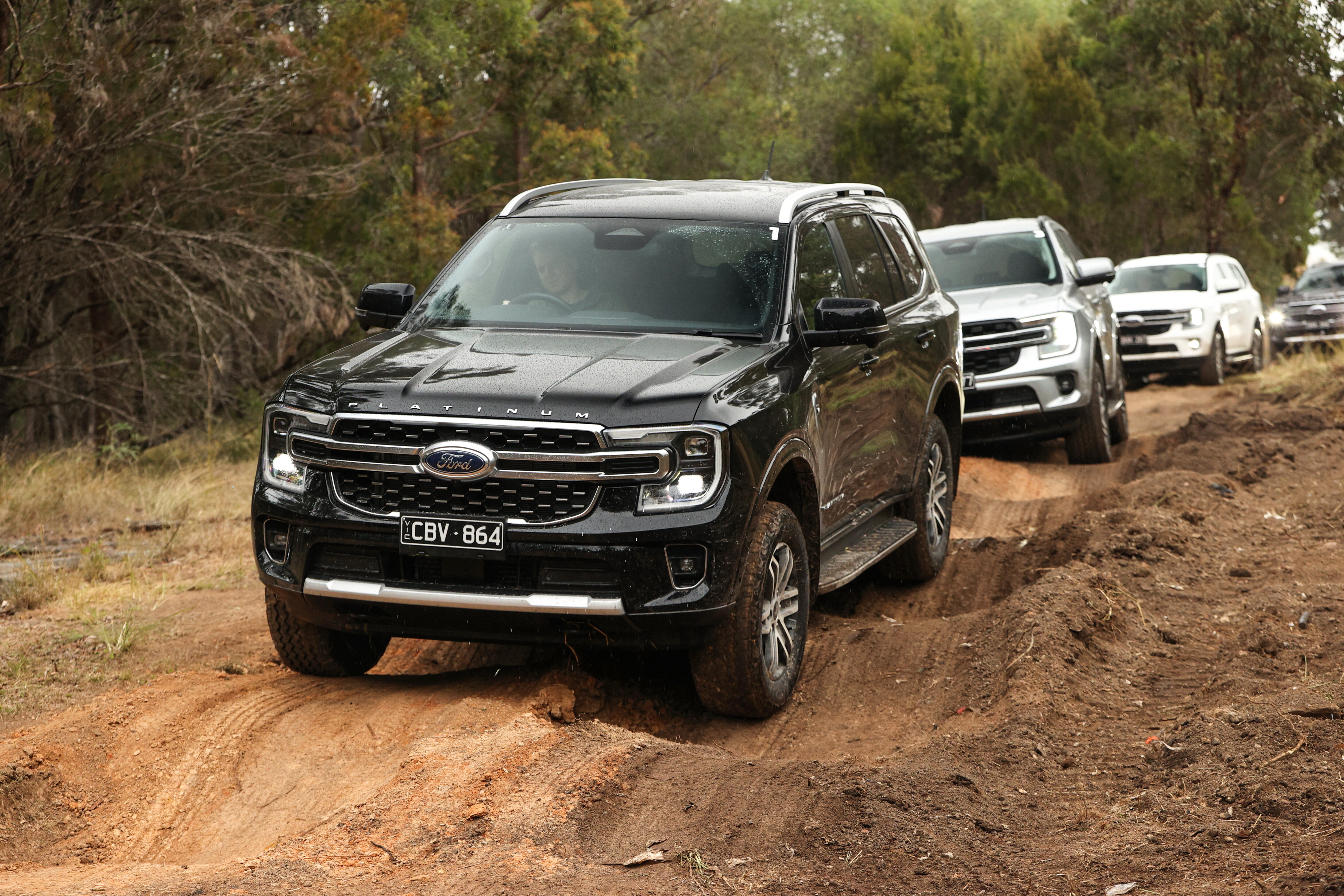
Following the successful release of the next-gen Ford Ranger earlier this year, the Blue Oval also brought out a new Everest. We drove the off-road wagon at the launch of the vehicle, and initial impressions are positive. Plus, we’ve included an extensive off-road test of the range-topping 2023 Ford Ranger Wildtrak.
Work has ramped up with our MU-X build this month, with the wagon receiving suspension treatment from Tough Dog, and a Rola tray and mount package. Our MU-X is starting to look the part, and there’s more quality kit still to come.
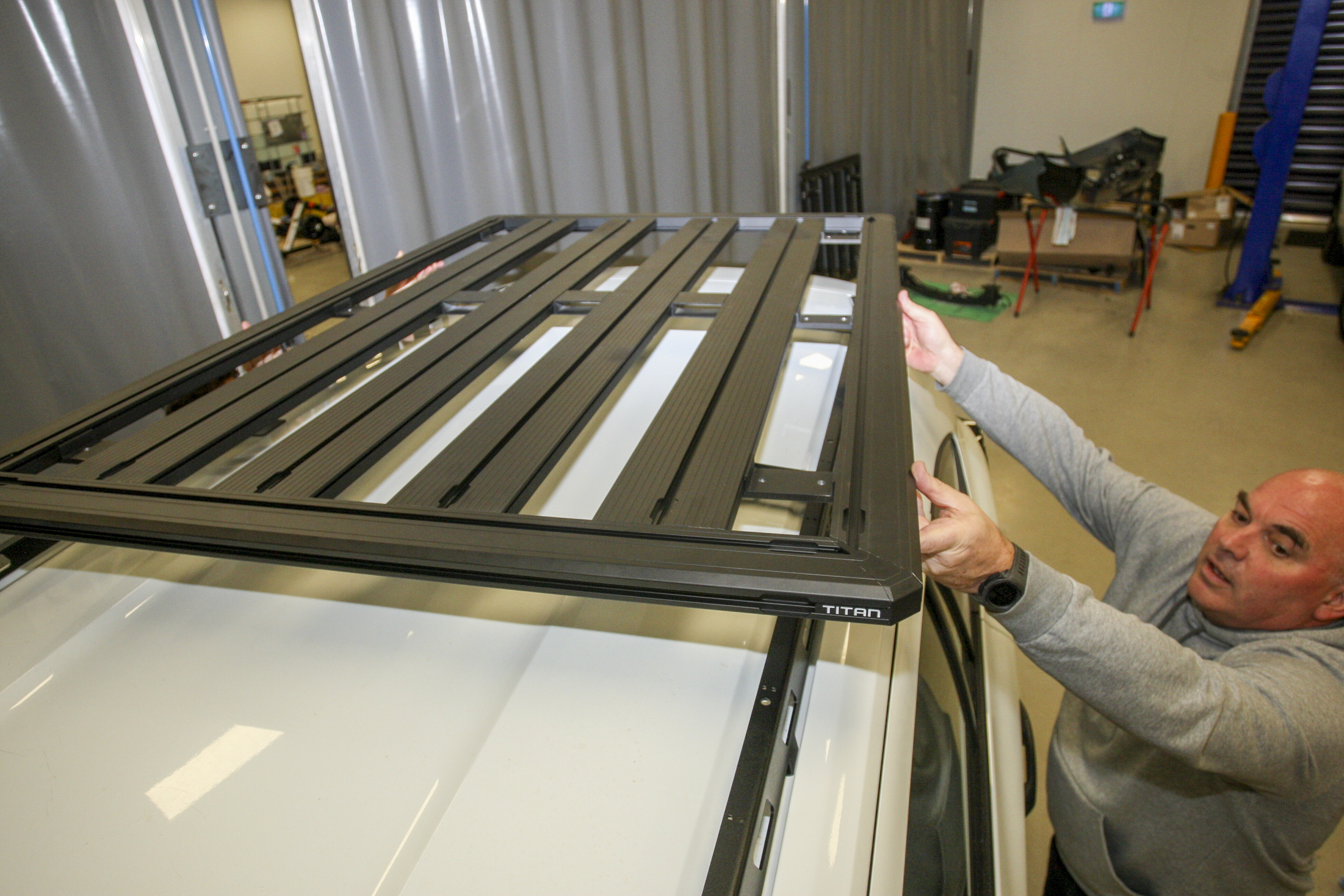
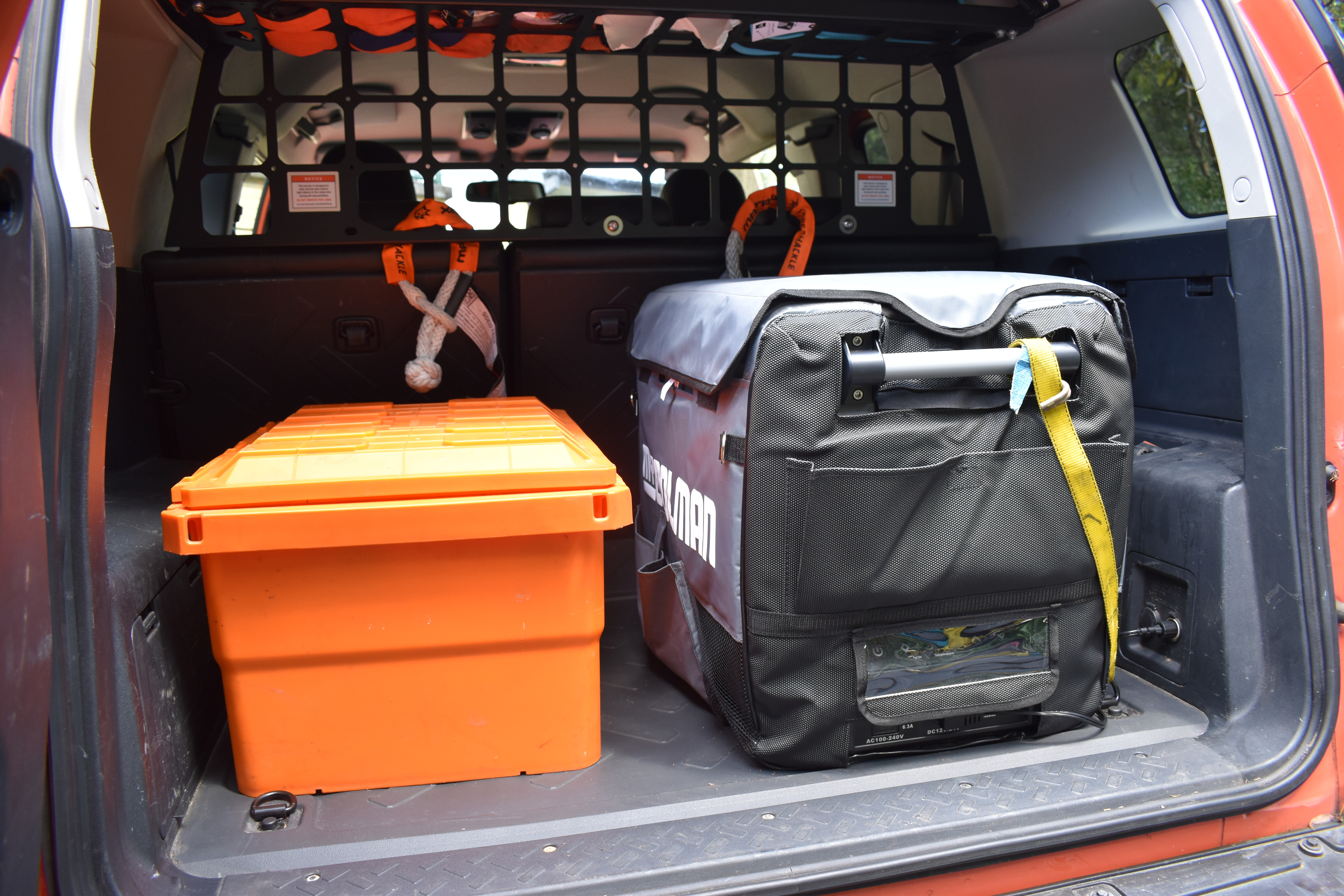
Plus, we fit a set of Clearview Accessories’ neat-looking compact mirrors to a 200 Series LandCruiser, and Evan installs a myCOOLMAN 47-litre Roamer fridge in the back of his FJ.
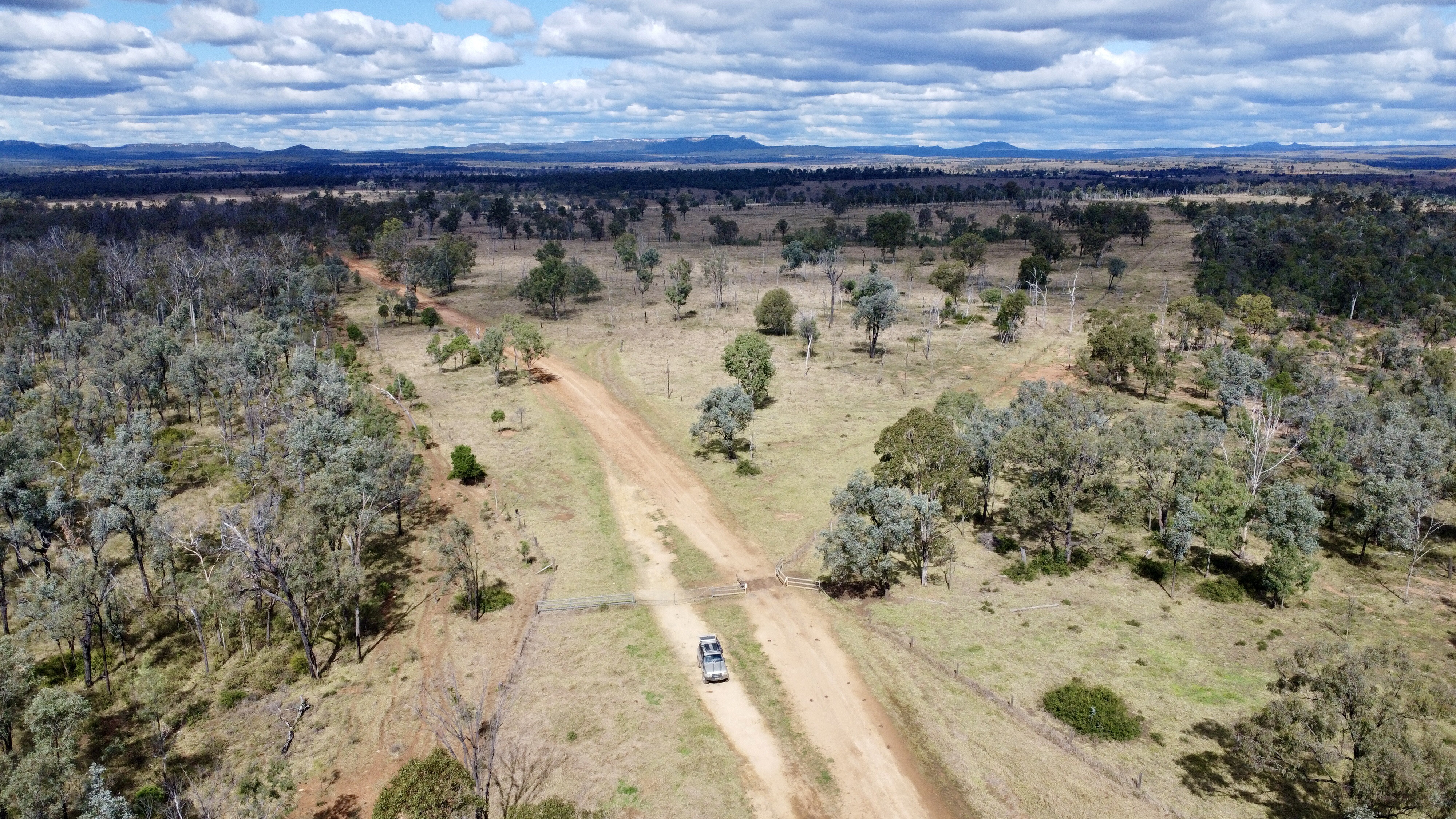
Expedition National Park in Queensland is right in the heart of sandstone country, and, while it might be overshadowed by the more popular Carnarvon Gorge, it’s a park that is not to be missed.
What else is there?
- All the action from the Mundi Mundi Bash
- FJ Cruiser in the shed
- Readers’ Rigs and New Gear
- Opinions and more!
The November 2022 magazine is OUT NOW.
When we took delivery of the Isuzu MU-X as our new project car, we knew we’d be faced with some challenges for cargo space compared to the utes we’ve built in the past.
The MU-X is a relatively small wagon and the back of the car is also compromised by the third-row seating. In my opinion, third-row seating has no place in a 4×4 vehicle and should be limited to buses and people movers allowing us to maximise the usability of the rear of the car, both inside and underneath it.
The MU-X also has a measly 625kg payload and 2800kg GVM, so anything we added to the back of the car or on the roof would need to be carefully considered. This is in no way a criticism of the Isuzu directly but just highlights the challenges of prepping a mid-size wagon for a touring 4×4.
The easiest way to improve your payload is to lose some weight, and ditching those rear seats helped save a few kilos there. This allowed us to plan a more usable cargo space incorporating a travel fridge.
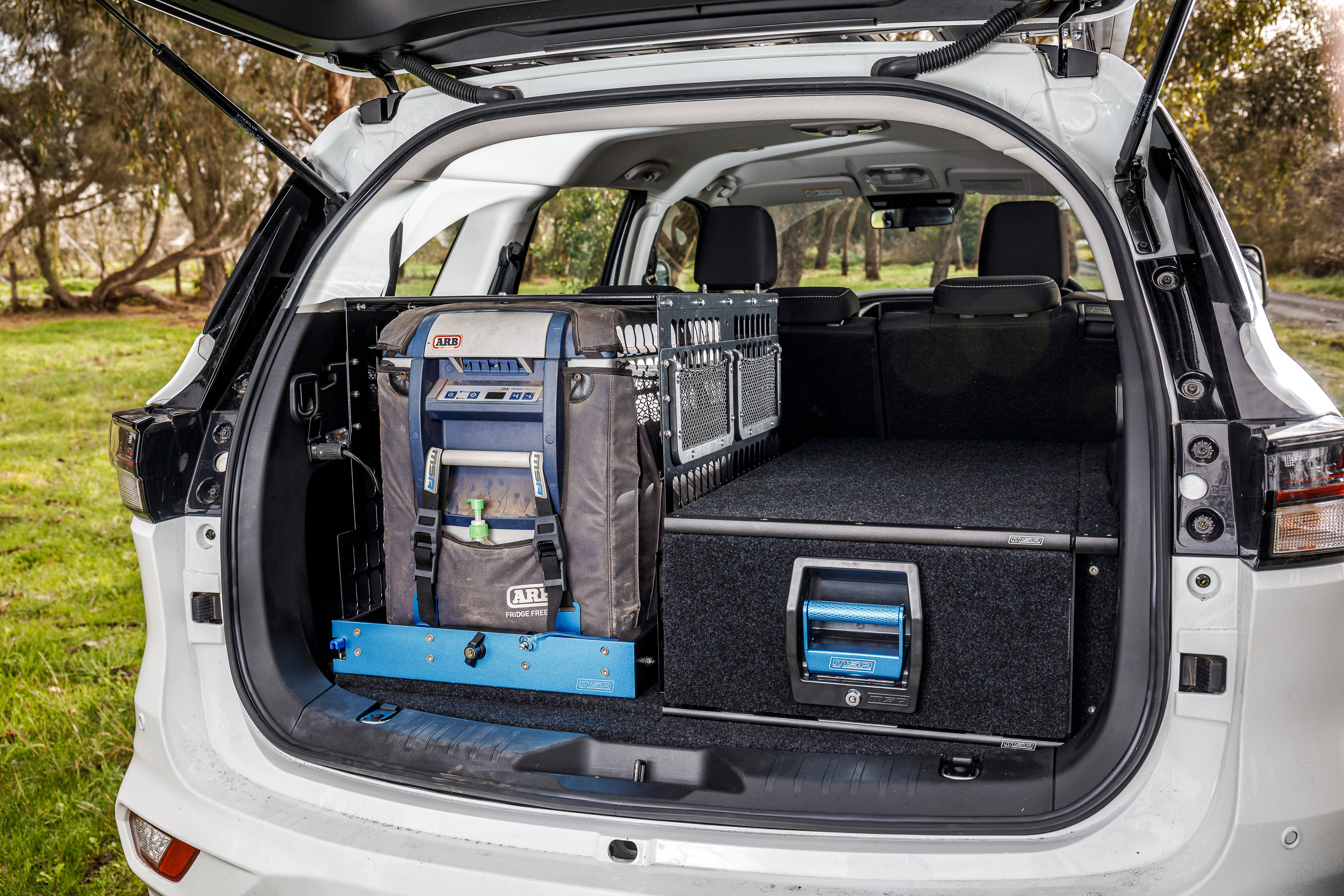
Again we partnered up with our mates MSA 4×4 Accessories to help with a system but they were yet to develop one for the MY22 MU-X and needed our car to do the R&D. This allowed us to get an in-depth look at what’s involved in designing and building a cargo system that is both secure and safe, while maximising the available space.
MSA is the only manufacturer of rear cargo systems that we know to have actually crash tested its designs to ensure they stay secure in the event of a road accident. Think about it for a minute – that fridge full of cold cans or drawers stocked with recovery gear could be deadly if it were to come adrift in an accident and some methods we’ve seen of attachment don’t give a lot of confidence in their security.
MSA drawers and fridge slides don’t just bolt on to the existing floor in the back of the wagon. With the third-row seats out of the way, the Queensland-based MSA team designs and fabricates a steel frame to attach to the floorpan of the vehicle body and this is what the drawers and/or fridge slide are fastened to.
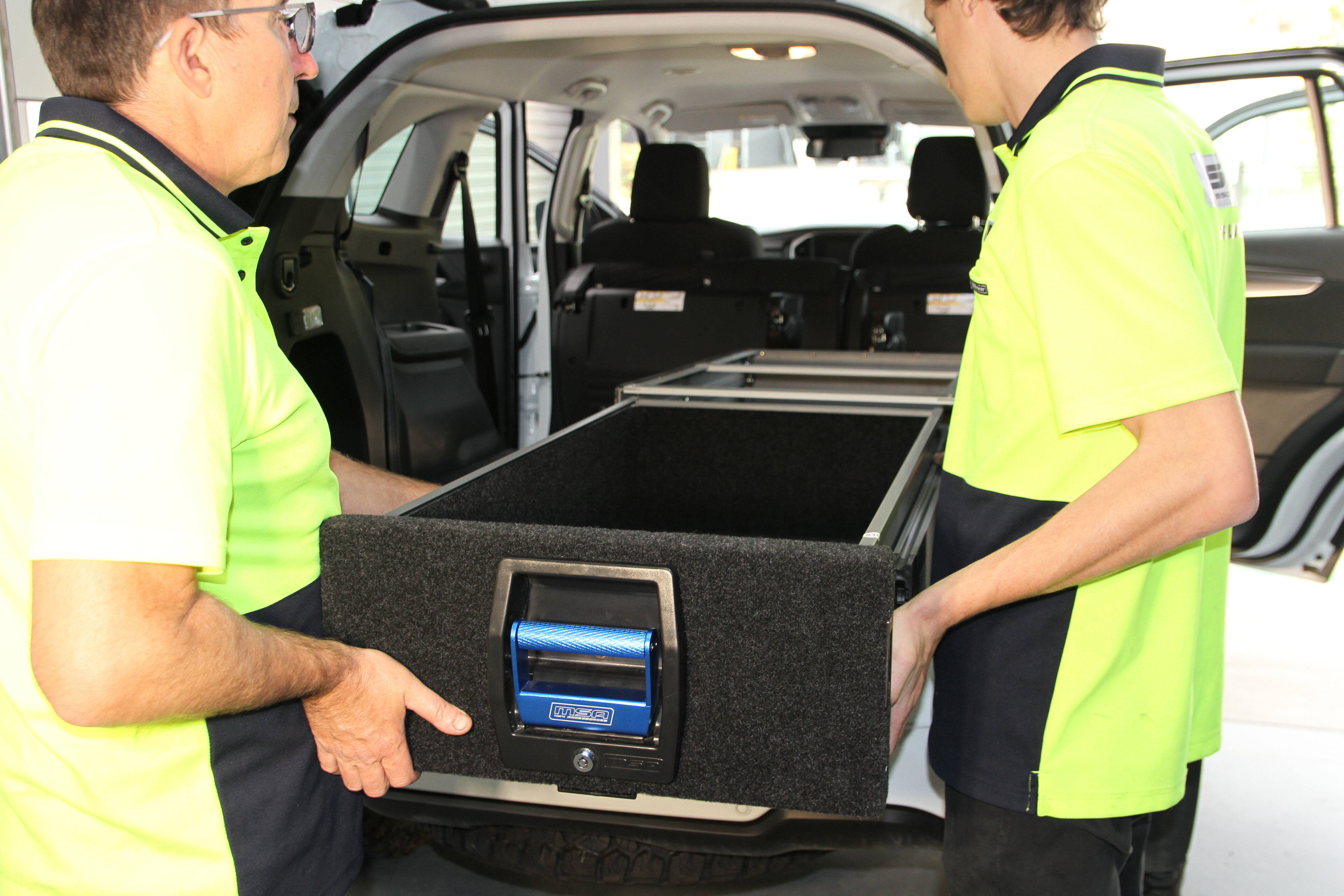
With our car being the guinea pig for this installation, creating that frame involved old-school measuring, cutting and welding to get the right fit. Once this prototype was made, it was sent to the manufacturing team to be finished up.
The install is done with rated hardware and reinforcing in key areas to ensure the frame is solid and secure. Any drawers or slides are then mounted atop the frame with new floor sections made to give a factory-finished look and feel.
This was the first MU-X that MSA had done and, aside from the custom mounting frames, the products used are generic MSA fridge slide and single Explorer drawer. Whether this set-up goes in to full production will depend on demand.
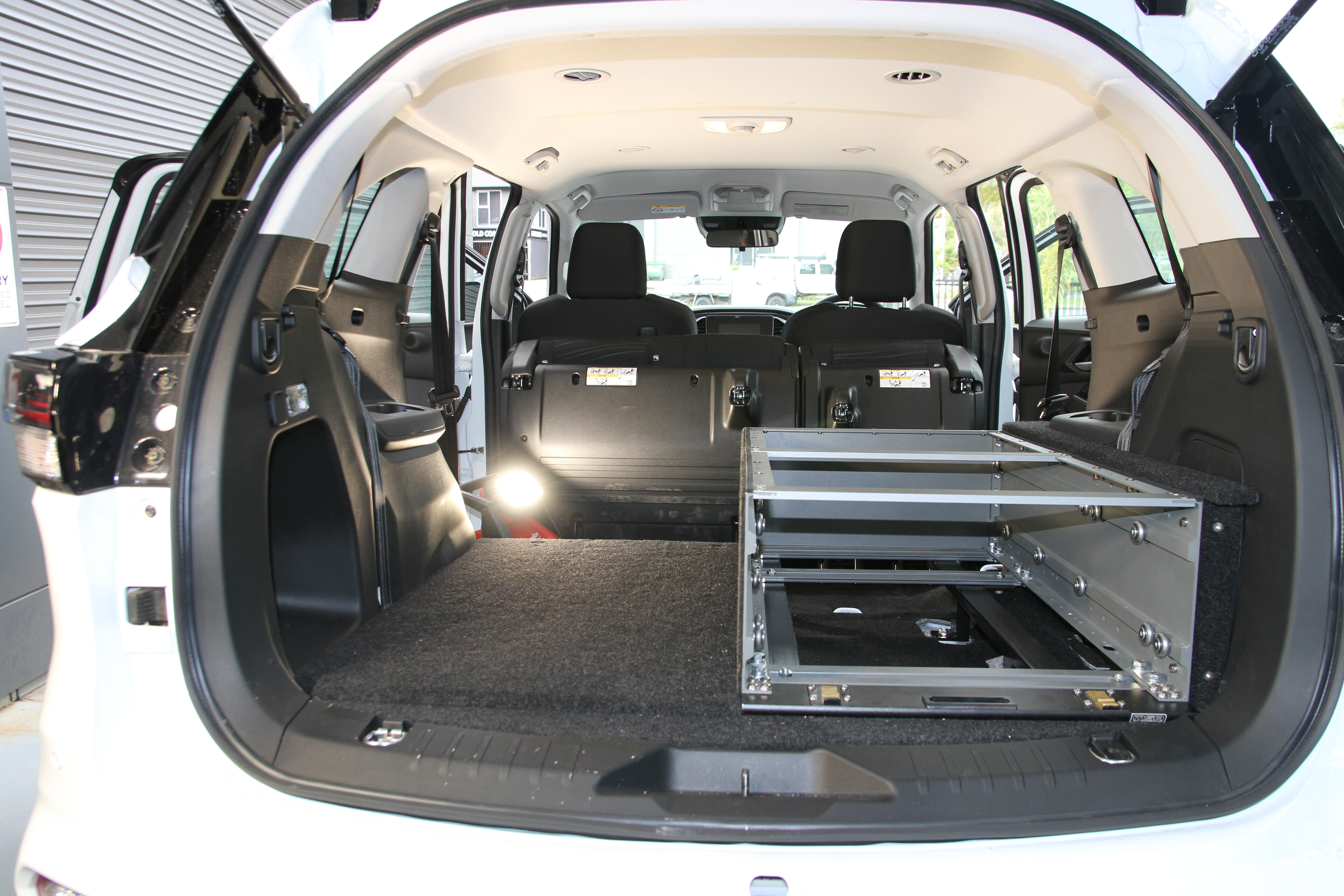
With the limitations imposed by available space, weight and the size of the rear door opening, we elected on a single-roller drawer on the driver’s side and a straight pull-out fridge slide on the passenger’s side. The size of the door opening prevents stacking a fridge on top of the drawers with a drop-down slide, but we reckon we’ve made the most for the space here, with plenty of room in the drawer for kit and cargo, space on top of it to throw a swag, bag or other large item, and the slide for a 40-litre fridge.
The space around the fridge is protected by a metal barrier, keeping any luggage off the fridge to ensure reliable operation of the fridge motor and protect it from overheating if it were to get covered up.
There’s space enough ahead of the installation to allow the rear seats to recline back to their farthest position and you can access under the cargo floor for a bit of extra storage. We’ve stowed the jack and tools under there, as the installation covers the factory storage space and they are easy to get to by folding the seats forward.
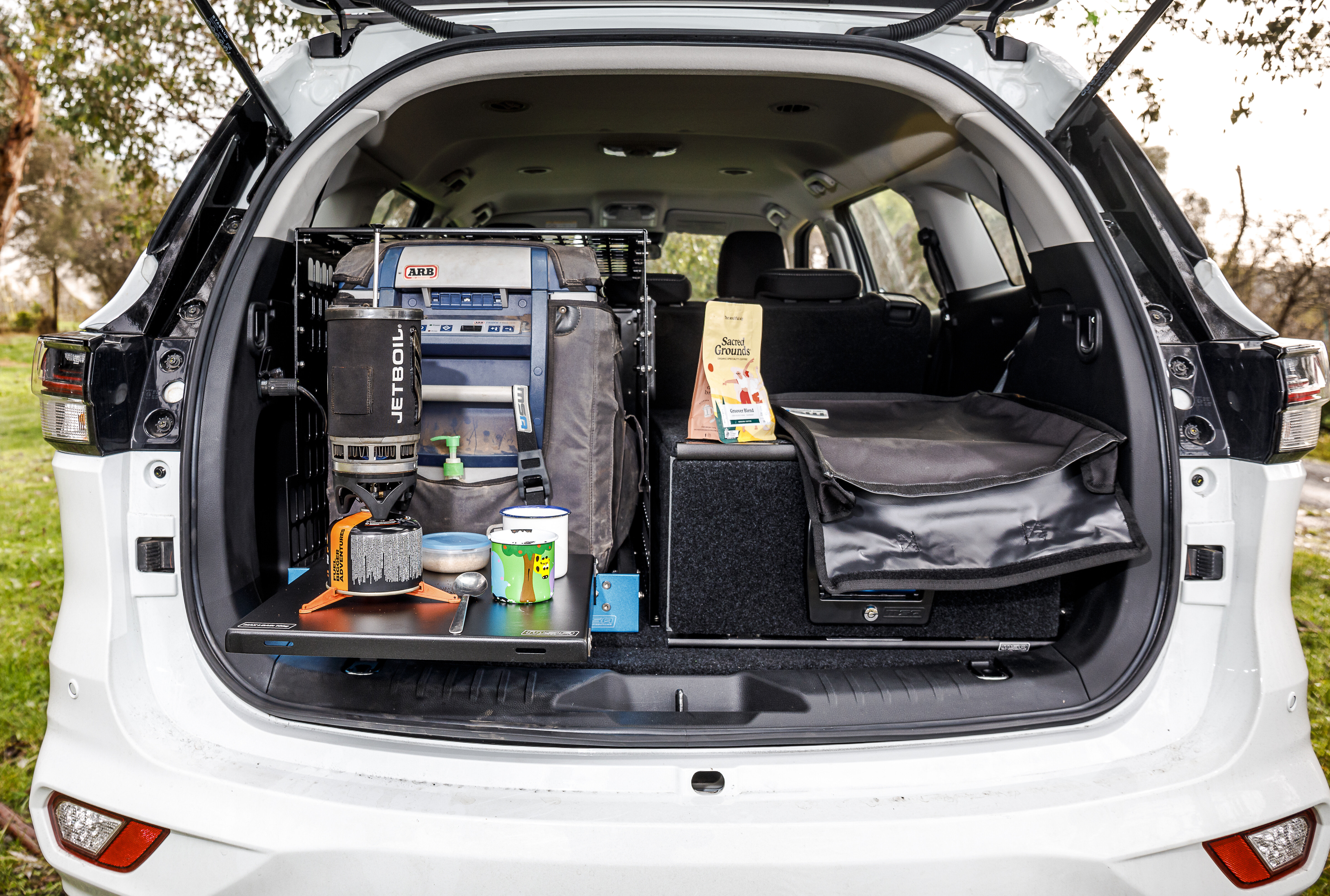
We’ve been super impressed with MSA’s Explorer drawer system ever since we saw the prototypes many years ago. Made from aluminium to be light and strong, the drawers use a unique roller-bearing system for smooth and easy running. This system also allows the drawers to extend out their full length, so there’s no more digging and diving to find things at the back of the drawers as you need to with those that don’t come all the way out.
Even the feel and function of the knurled and anodised pull handles and the detents that hold the drawers open even when the car is on a slope, show the thought and detail in developing the Explorer drawers. Then you have the LED light strips inside the drawer that automatically come on when you pull out the drawers that show thought, practicality and quality.
These features and the fact that they have been crash tested to ADR standards give a feeling of security when fitting them and quality when using them.
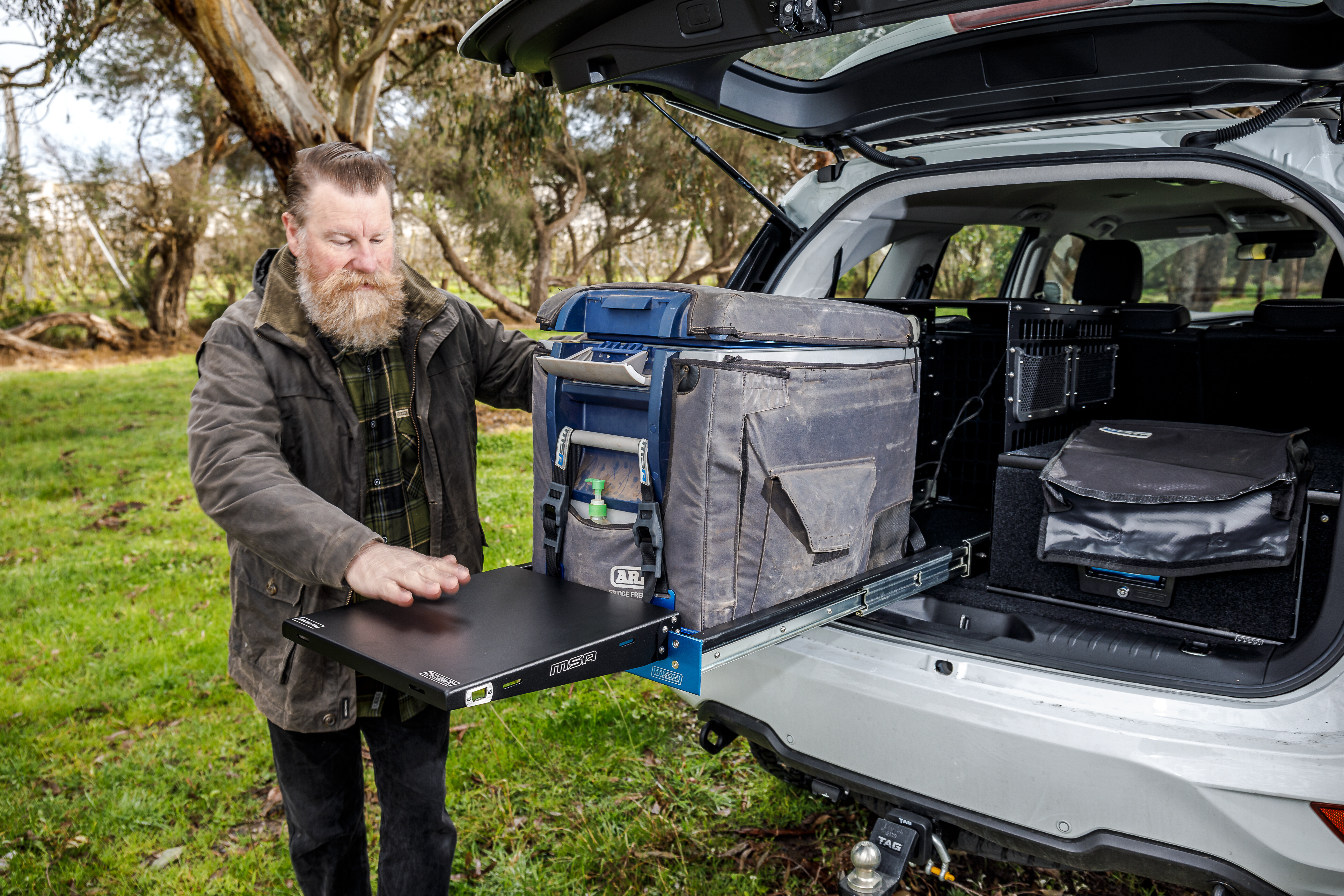
The same quality and functionality is there on the fridge slide as well. It does everything you ask of it and the attention to detail in the manufacturing is all top shelf.
We also grabbed an MSA fridge-slide table that simply clips on the end of the slide. It provides a convenient space to place items as you take them from the fridge or as a handy place to make a roadside cuppa. It comes with MSA’s canvas cutlery roll that attaches to the front of the table for easy access and then rolls up and stows in its own canvas pouch along with the table. Simple but clever thinking to create products that work.
They guys also fitted a set of the MSA Towing mirrors and we’ll tell you more about them later, but it’s safe to say we’re rapt with the extra rear visibility they give for everyday use.
Pricing
Single Explorer Drawer: $1338 Straight Slide SL40: $446 Clip-On Table 30009: $145 Fridge Barrier FBSL40N: $419 Towing Mirrors TM900: $887
Website: www.msa4x4.com.au
Pitting a 2023 Mitsubishi Outlander Exceed Tourer medium SUV against a 2023 Pajero Sport GLS is not how we’d usually roll at Wheels.
Typically, we’d spend weeks in advance locking in rivals from the same segment with matching fuel types and driven wheels before honing in on the perfect variant match up, with as little cash difference between them as possible.
But when you start peeling back the layers, these two have plenty in common. Both seat seven, drive all four wheels, have automatic transmissions, hill-descent control and start in the mid-$50K bracket.
We’re not trying to be silly here. If you need to tow regularly or want to push a car’s limits out bush, the Pajero Sport is obviously the choice. Essentially the question here is:
Which SUV makes you deal with greater compromise?

In the soft-roader corner is the range-topping Outlander Exceed Tourer ($53,490 before on-road costs). The new Outlander is streets ahead of the old one when it comes to road manners and cabin presentation. It also boasts a handy 210mm of ground clearance, so it should be alright off-road – if the marketing is to be believed.
The Pajero Sport ($55,190 before on-road costs), on the other hand, is an SUV by the original definition. A ladder-frame chassis, live rear axle, switchable 4×4, low-range transfer case and an unrefined powertrain.
In theory, the Outlander should be far superior in the suburbs. Our test took in not only Sydney’s usual tight suburbs, broken tarmac and unsighted country roads but also a bit of dirt, to give the Pajero Sport a chance.

JUMP AHEAD
- Pricing and features
- Comfort and space
- On the road
- Off-road
- Safety
- Fuel efficiency
- Ownership
- VERDICT
- Specifications
Pricing and features
We weren’t able to price match these variants exactly, so we have the range-topping Outlander Exceed Tourer and an upper-mid Pajero Sport GLS – a long-termer run by 4X4 Australia – optioned with the Deluxe Pack and premium paint. The Pajero Sport is dearer by $4650, yet the spec sheet is a lot less healthy.
Although we have the MY22 Pajero Sport here, changes are minor. Only a $1000 price increase and the addition of tyre pressure monitoring are added from February 2023 onwards.
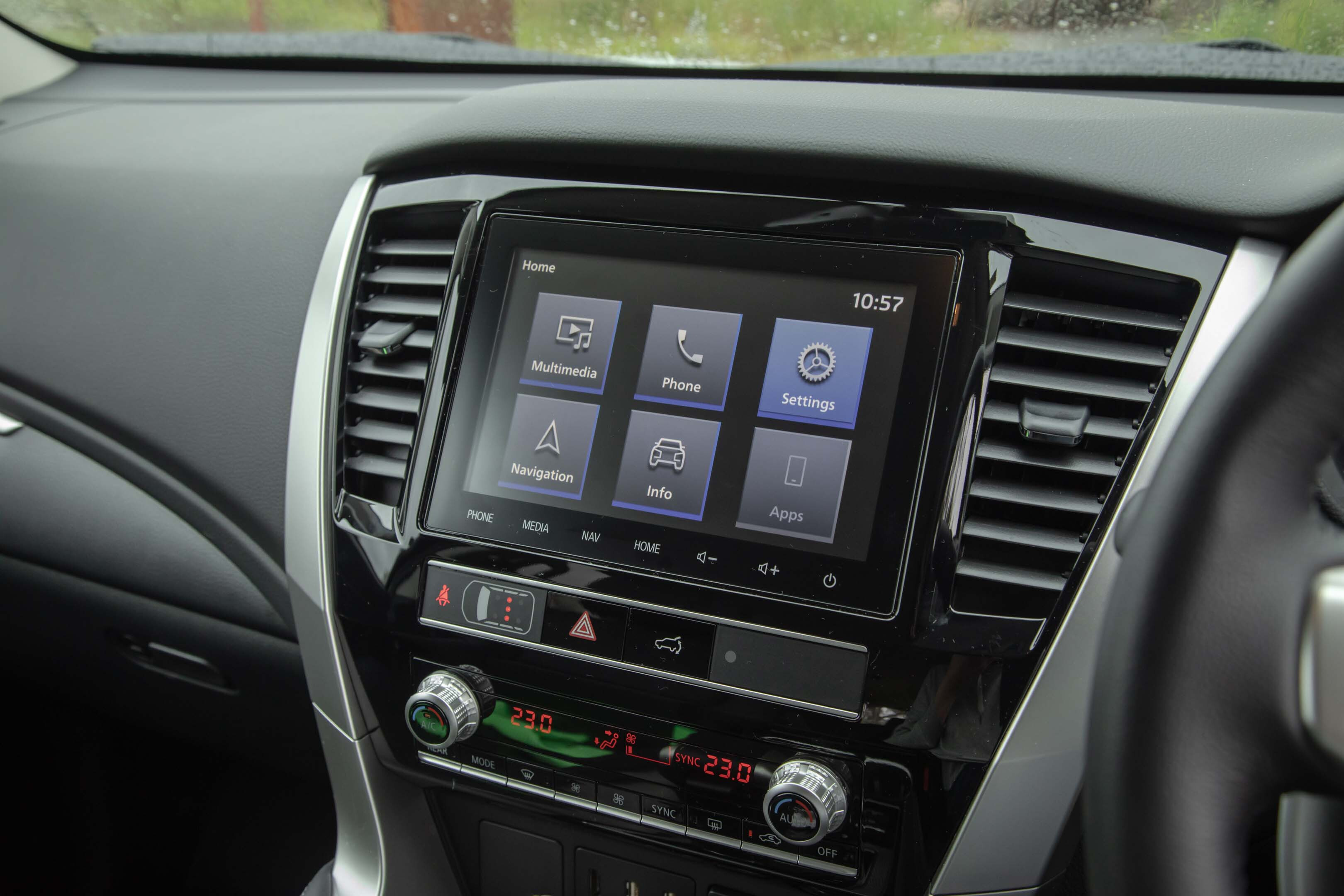
The Pajero Sport gets analogue dials with a 4.2-inch TFT screen (lacking a digital speed readout), 7.0-inch touchscreen that’s hard to see in the Australian sun, wired Apple CarPlay and Android Auto, a six-speaker sound system and no seat heating.
Positively space-age in comparison is the Outlander, rocking a 12.3-inch digital driver’s display with funky startup animations, wireless Apple CarPlay and Android Auto, and a far clearer 10-speaker Bose sound system. A wireless charging pad, USB-A, USB-C and 12-volt sockets give more charging flexibility than the Pajero Sport’s front seat.
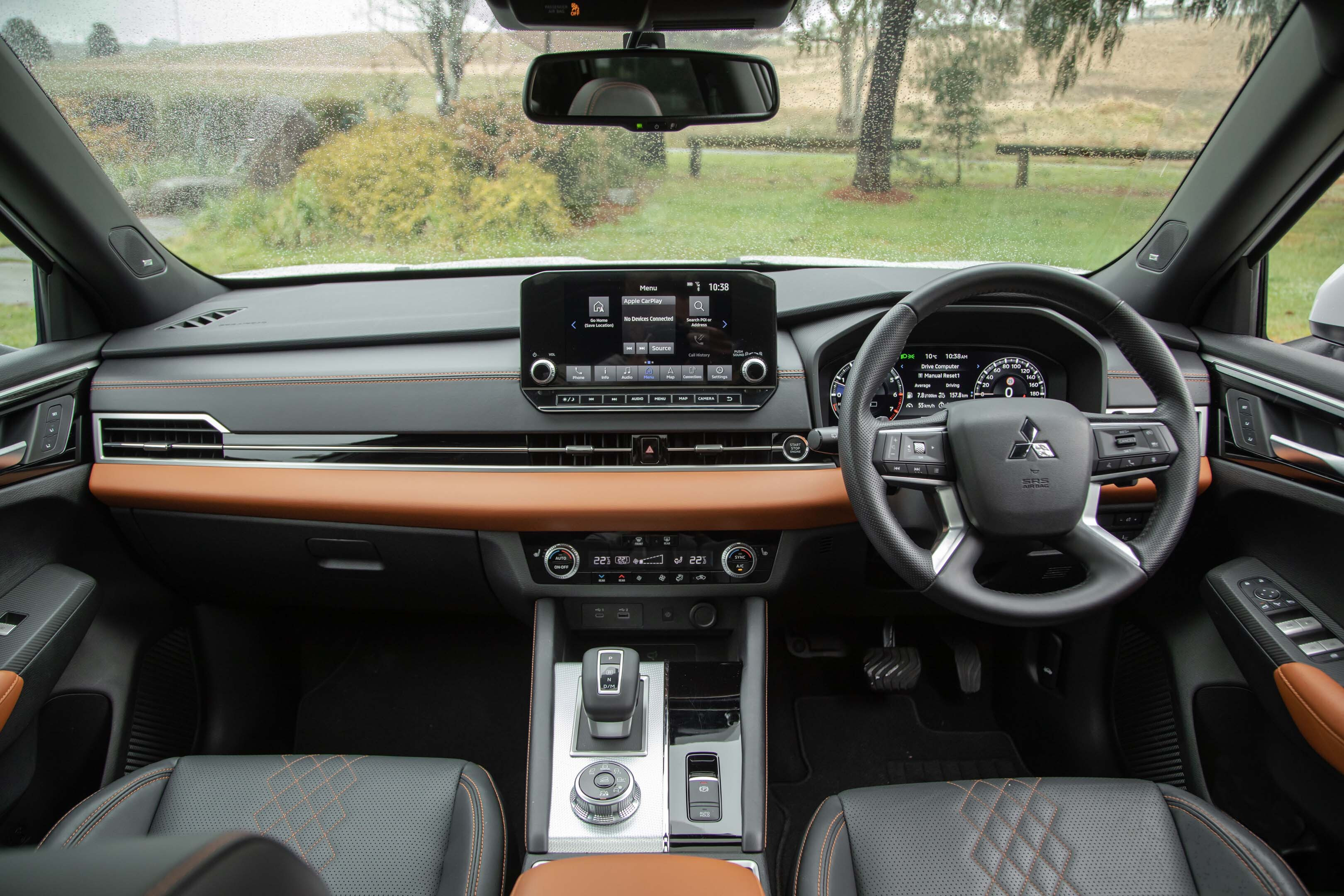
To illustrate the tech difference, the Outlander’s processor meant the infotainment screen was switched on and ready to select your favourite tune in 10 seconds, against the Pajero Sport’s 18-second boot time.
Both the Mitsubishi Outlander and Pajero Sport are equipped with power tailgates, though, which is nice considering the QF Pajero Sport’s seven-year vintage.
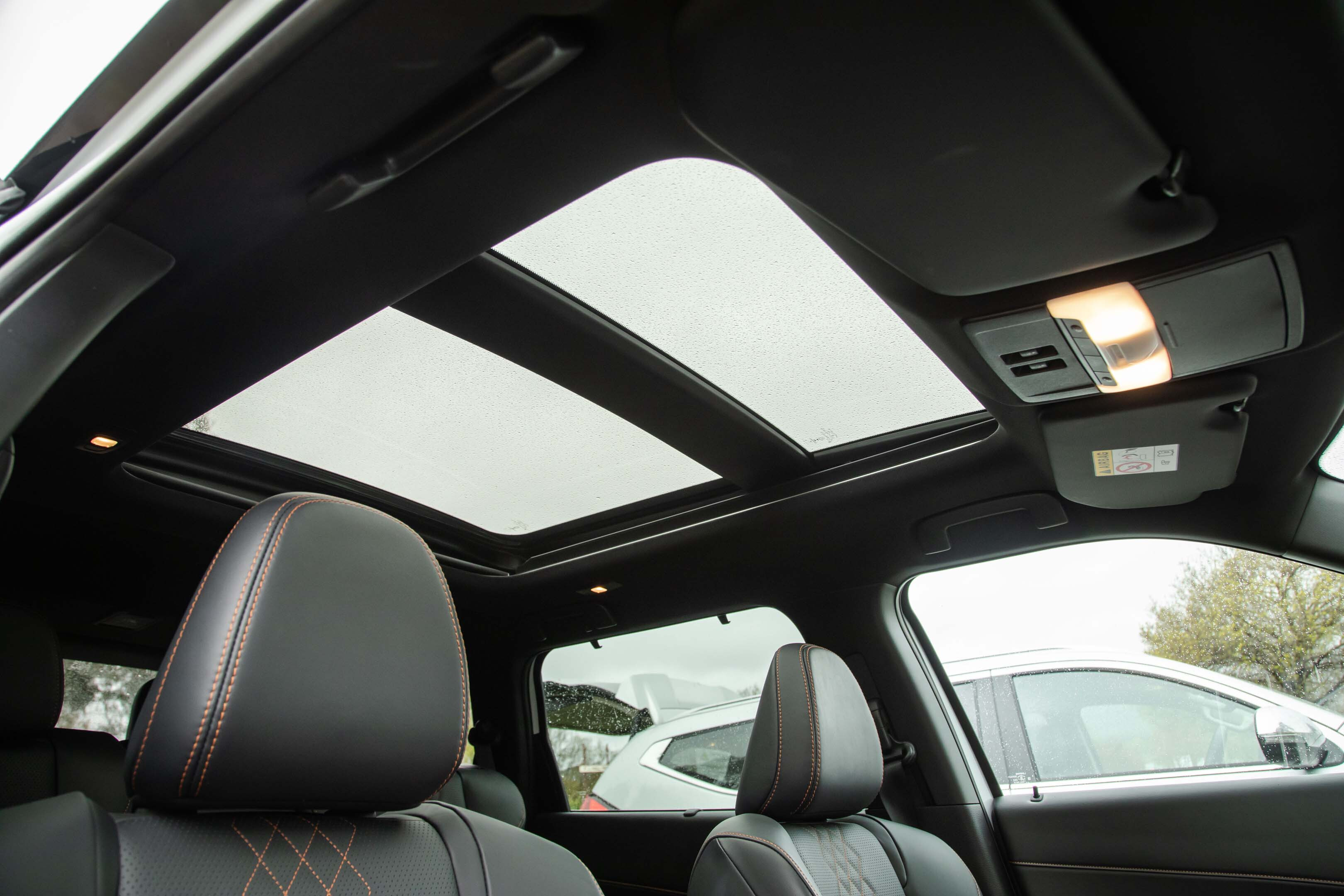
The interior design is far more eye-catching in the Outlander with its two-tone upholstery, quilted leather-appointed seats and slick, contemporary dials. The Pajero Sport, on the other hand, is unpretentious. This car had leather seats with power adjustment but apart from some aluminium trim on the centre console, even in GLS trim it’s very similar to the Triton ute inside.
Mitsubishi’s MY23 updates to the Outlander are more extensive than Pajero Sport, the soft-roader gaining improved air conditioning, steering wheel heating and animated front indicators for a $1000 extra.
Outlander and Pajero Sport features
| Outlander Exceed Tourer | Pajero Sport GLS Deluxe |
|---|---|
| $53,490 as tested + on-road costs | $55,190 ($58,140 as tested*) + on-road costs |
| 9.0-inch touchscreen | 7.0-inch touchscreen |
| Wireless Apple CarPlay/Android Auto | Wired Apple CarPlay/Android Auto |
| 12.3-inch digital driveru2019s display | 4.2-inch TFT readout |
| 10-speaker Bose sound system | 6-speaker sound system |
| 14-way power-adjustable heated seats | 8-way power-adjustable seats |
| Quilted Nappa leather upholstery | Leather upholstery |
| Tri-zone climate control | Dual-zone climate control |
| Keyless entry and go | Keyless entry and go |
| Power tailgate | Power tailgate |
| Projector LED headlights | Projector LED headlights |
*Premium paint ($740), Deluxe Pack ($1500)
Comfort and space
In size terms, these two are spread across the mid-size and large SUV categories.
The Pajero Sport is longer and taller by 115mm and 90mm respectively. However, the Outlander is actually 47mm wider (1862mm) than a Pajero Sport. Both offer similar cabin space in reality.
The Outlander is a nicer place to be inside, though. The driver is set low and the quilted, leather-appointed, massaging seats are supremely supportive. Having three-stage heating and dual-zone climate control makes temperature regulation easy.
In the front, there’s a pair of central cup holders, generous door bins with enough space for a one-litre camping bottle and covered storage under the plushly padded armrest.
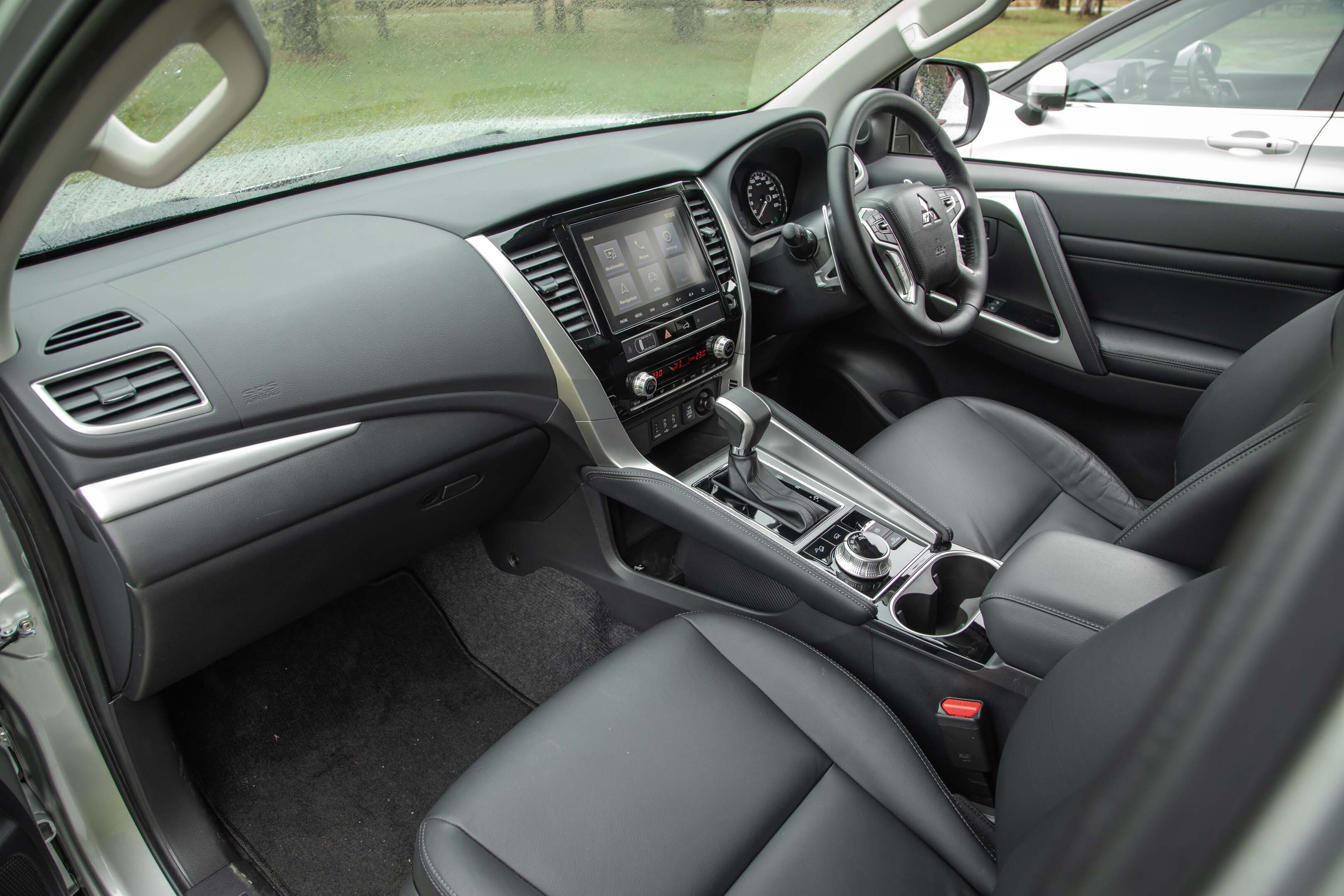
There’s a thin veneer of plushness within the Pajero Sport’s cabin that separates it from a Triton. The leather-appointed seats do have lumbar adjustment but, on long hauls, they don’t envelop and cosset like the Outlander’s. Storage is less clever, with no great spot to leave a large smartphone. Door bins are still well-sized, and there’s good covered storage beneath the armrest.
Moving into the second row, the Pajero Sport is limited in its adjustment by not having a sliding bench. The backrest is adjustable but it doesn’t provide quite as much flexibility as the Outlander. Space is also tighter; headroom isn’t great and the body-on-frame construction means the floor is quite high.
The Pajero Sport’s roof-mounted vents are adjustable so will keep second-row riders cool, though there isn’t a separate climate zone. USB-A charging points and a 220V household-style socket provide plenty of charging flexibility. The three-pin socket is great for camping applications, too.
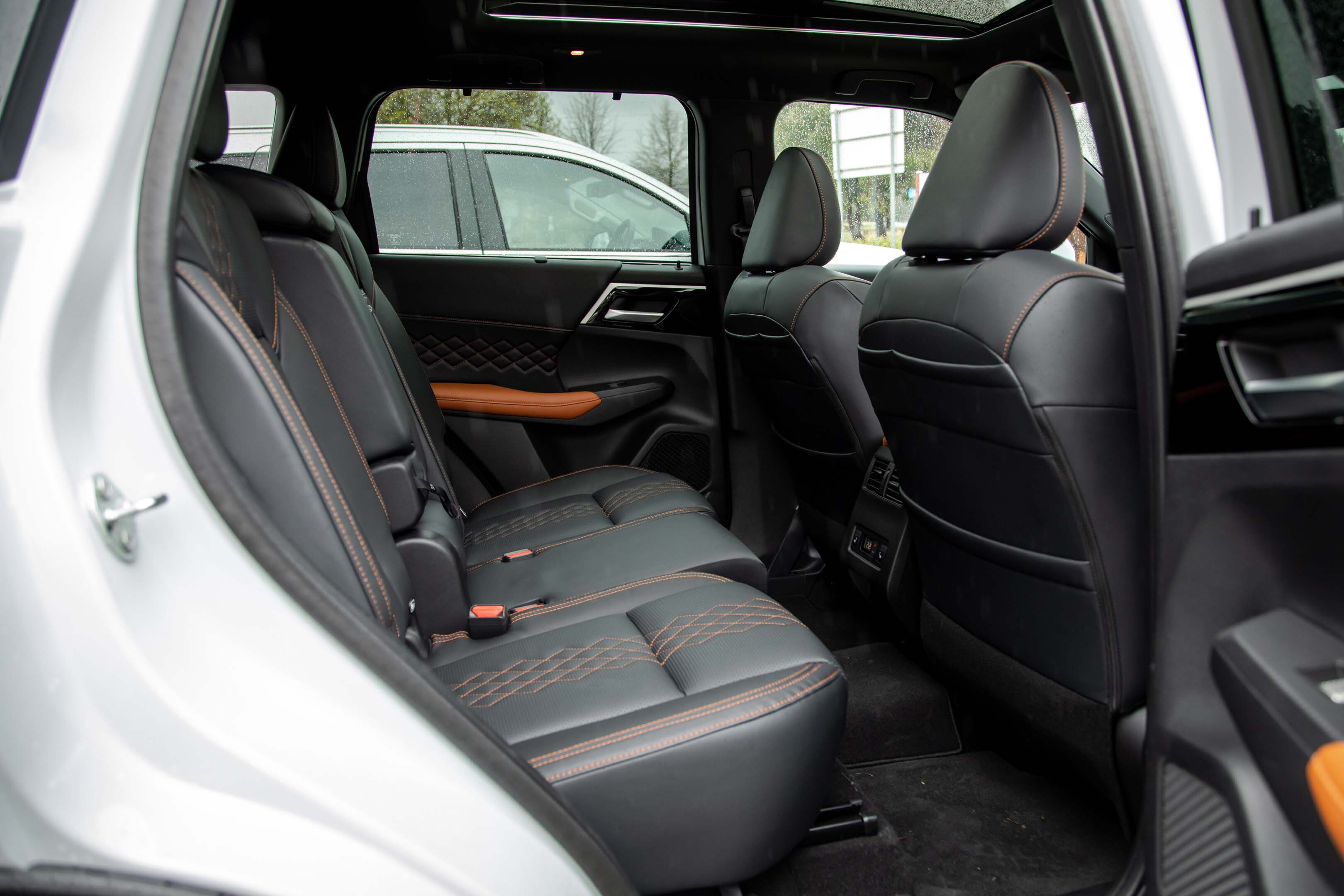
A cavernous second row in the Outlander provides an extra 40mm of legroom for me at 188cm tall.
The sliding bench and tilting backrest provide flexibility. When in the more upright position though, I found my headroom was heavily compromised by the full-length panoramic sunroof.
There are plenty more soft-touch surfaces in the back of the Outlander, as well as a separate climate zone, two more USB-A charge points and a 12-volt socket. This flagship Exceed Tourer also has luxurious integrated sunblinds.
Neither SUV provides huge flexibility when it comes to fitting child seats. There are only enough ISOFIX and top tether points for a maximum of two infant seats in both the Pajero Sport and Outlander.
The third row of the Outlander is well known to be child-sized. This is an SUV for five mostly, with the bonus of seven seats at a pinch. Third-row travellers do still get easy access to a 12-volt socket and a cup holder, even if space is tight.
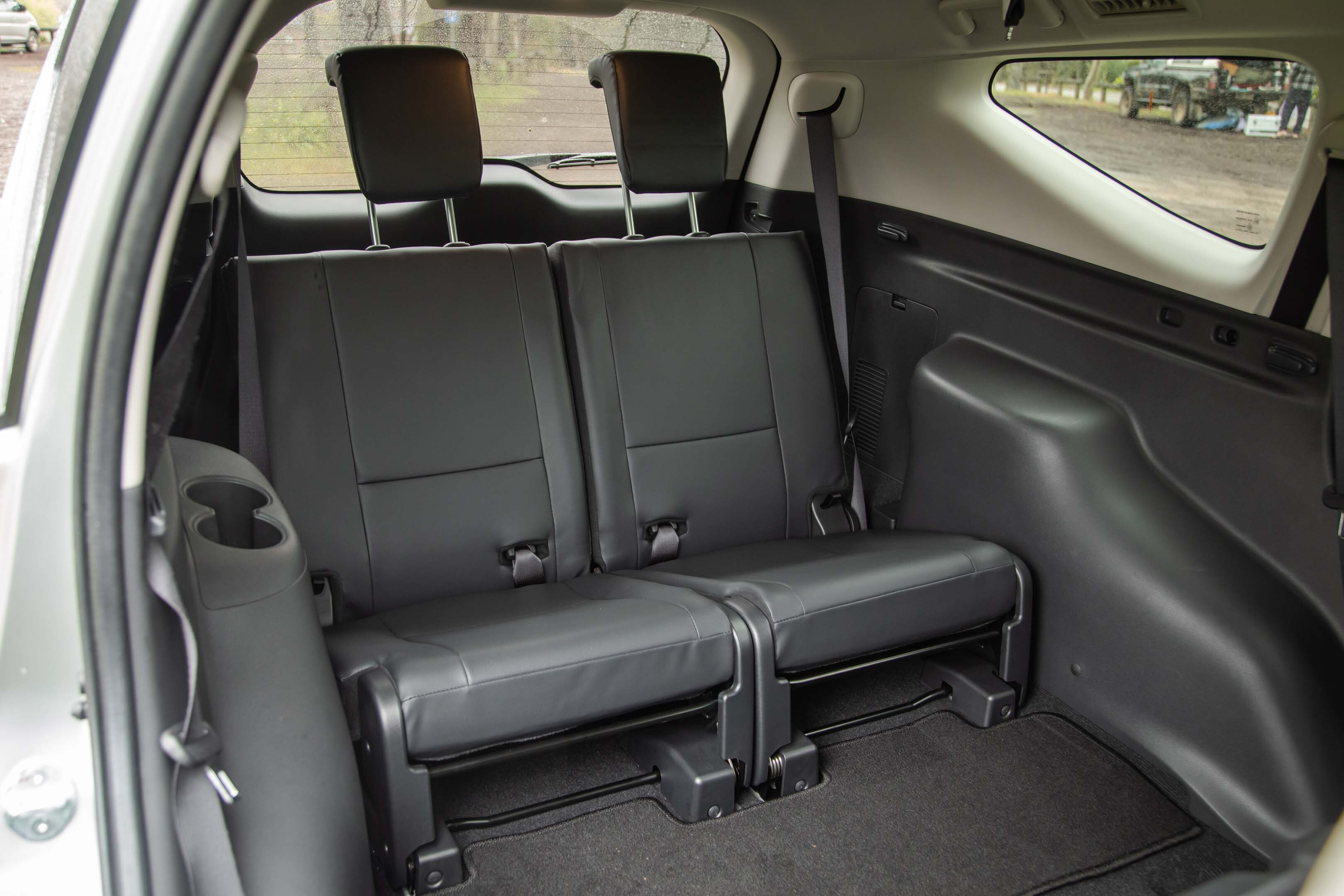
It’s actually in third-row space and packaging that the Pajero Sport really surprises. Despite being set a little higher than the second row, there’s still reasonable headroom twinned with an excellent view out – there are even roof-mounted air vents and two cup holders on each side. The tumble-forward second row makes for much easier ingress than the Outlander, too.
The Pajero Sport also packages a full-size spare tyre under the vehicle; great peace of mind for touring. The Outlander only gets a space-saver spare. Under the boot floor, there is thankfully storage for the Outlander’s ridiculous headrests that could double for backyard cricket bats in a pinch.
In carrying terms, both are fairly close with the Outlander’s payload capped at 595kg, though the Pajero Sport wins with 695kg.
Outlander v Pajero Sport: Boot space
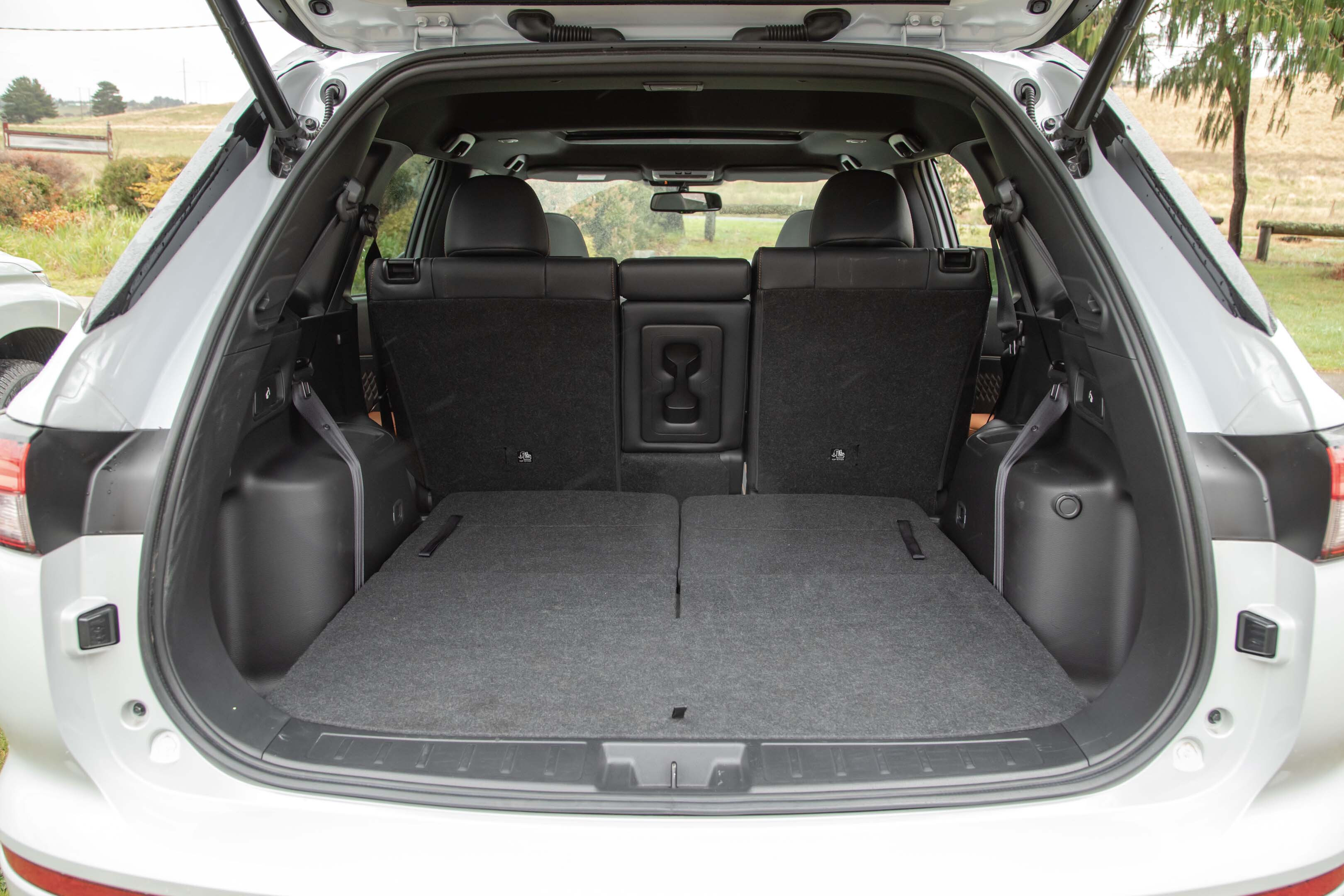
Cargo space is also very similar, the Outlander winning with seven seats up at 163L vs 131L owing to the Pajero Sport’s high boot floor. With five seats, the Pajero Sport edges back into the lead at 502L vs 478L.
Outlander and Pajero Sport boot comparison (VDA)
| Seats in place | Outlander | Pajero Sport |
| Seven seats | 163L | 131L |
| Five seats | 478L | 502L |
| Two seats | 1461L | 1488L |
On the road
After kicking around Sydney’s suburbs in both SUVs, I teamed up with 4X4 Australia Deputy Editor Evan Spence for a trip west of Sydney to test the mettle of each Mitsubishi.
Being the Wheels journo, it was my job to evaluate each car’s on-road manners.
You’d think the Outlander would run away in town, being a more sophisticated monocoque design featuring struts up front and a multi-link independent rear end with a focus on tarmac comfort. In many ways, it does. The Outlander is a particularly softly suspended SUV with a plush ride on smooth roads.
The basics
| Outlander | Pajero Sport | |
| Power & torque | 135kW / 245Nm | 133kW / 430Nm |
| Gearbox | CVT auto | 8-speed auto |
| Weight | 1760kg | 2080kg |
| Fuel/tank | 91 RON / 55 litres | Diesel / 68 litres |
| Economy | 9.2L/100km (tested) | 8.8L/100km (tested) |
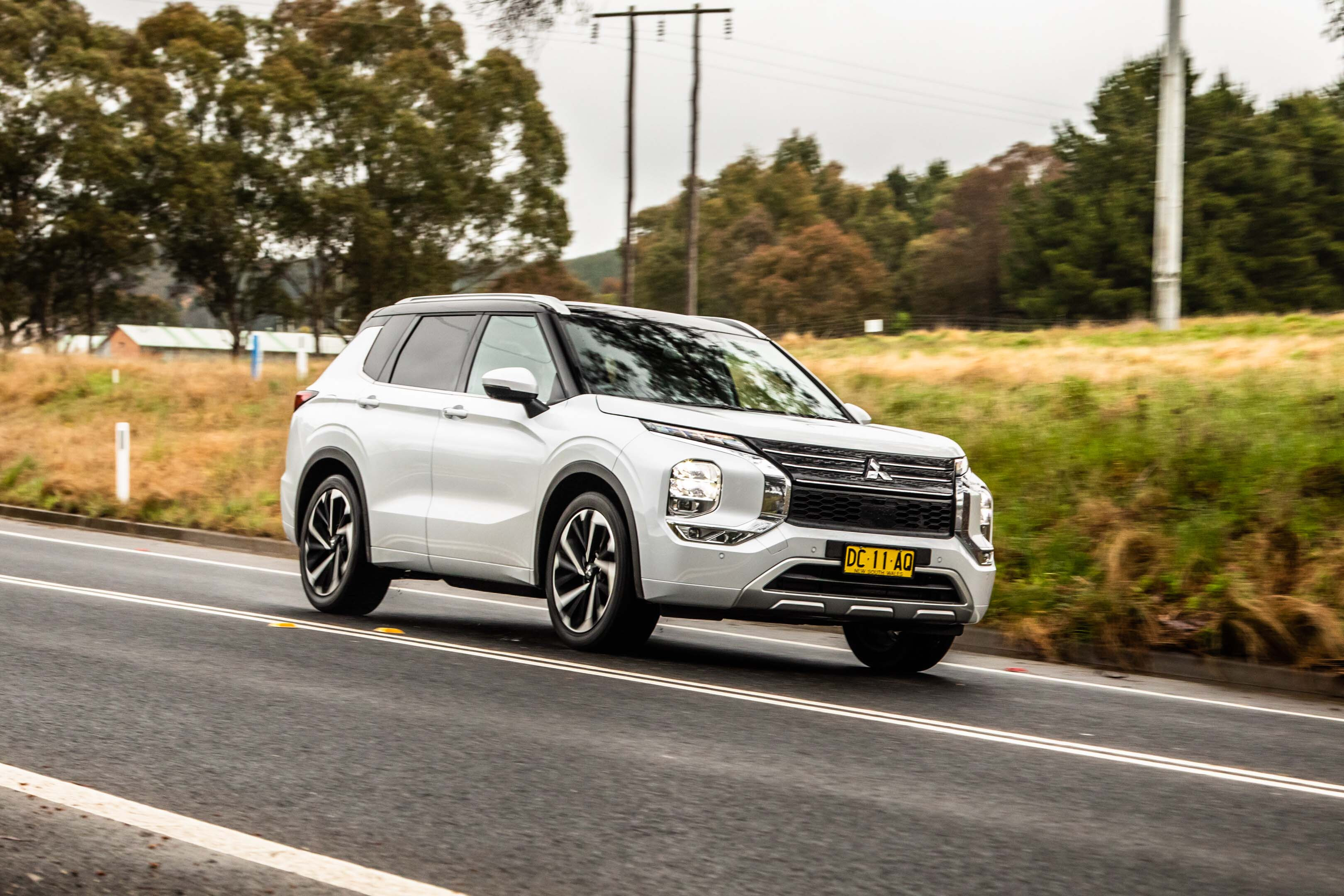
Unfortunately – whether it’s the weight of the 20-inch alloys or short suspension travel combined with an over-soft chassis – the Outlander tends to find its bump stops pretty regularly, be that coming off speed humps around town or clobbering through potholes. Interestingly, the heavier Outlander plug-in hybrid seems to strike a better balance than the petrol vehicle.
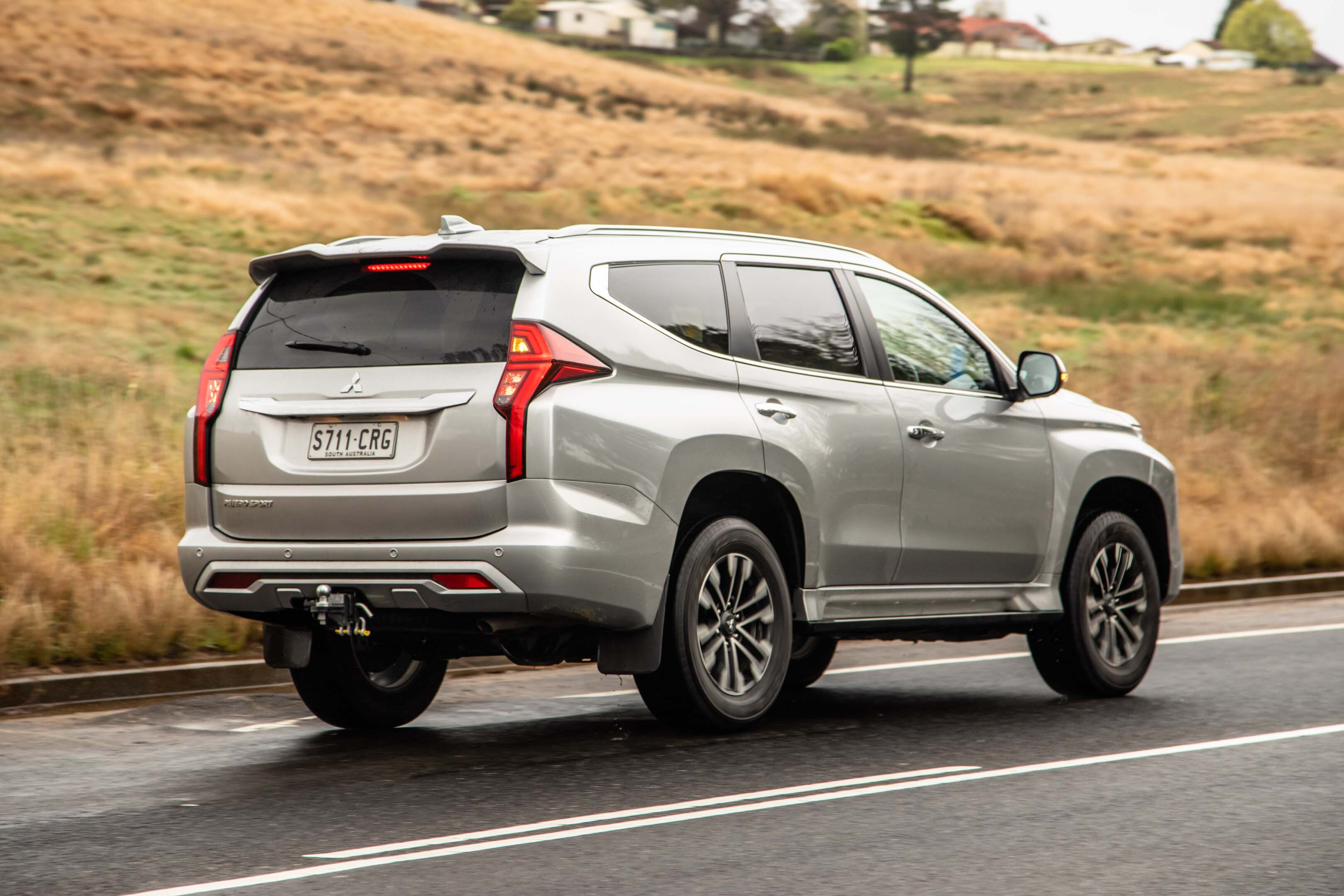
What the Outlander never has, though, is the Pajero Sport’s shimmy over bumps – a common characteristic of body-on-frame vehicles. Despite extra travel, the Pajero Sport has more suspension support. This pays off the faster you go, with it resisting bottom-out well, but this four-wheel drive isn’t what you’d call plush around town.
Neither of these engines is a stand-out. The Outlander’s 2.5-litre direct-injected naturally aspirated petrol four-cylinder develops 135kW/245Nm, which is just about adequate. It’s quite smooth at low revs but when asked a little more while climbing – such as the steep grades in NSW’s Blue Mountains – the Outlander struggles as the automatic continuously variable transmission (CVT) flares the revs.
There’s also an unnaturally sharp throttle response that can make the Outlander feel jerky when parking in town.
The Pajero is no faster. Its 2.4-litre turbo diesel makes similar power (133kW) and torque is higher (430Nm), but it has an extra 320kg to tug. The doughy throttle response makes it seem slower too.
As referenced earlier, however, the Pajero Sport has a major advantage in braked towing capacity: 3100kg versus the Outlander’s 1600kg.

Out in the country, the Pajero Sport’s handling matches its power delivery with a lazy 3.6 turns lock-to-lock from its steering system. The Pajero Sport is ultimately benign and, unlike many of its classmates (save for the far dearer Ford Everest V6), the Super Select 4×4 system allows all four wheels to be driven on tarmac without killing the drivetrain, greatly increasing security in wet and changeable conditions.
The Outlander’s on-demand all-wheel-drive system uses a viscous coupling to send power rearwards when slip is detected at the front. It’s a lighter, more fuel-efficient system that works well in this application.
Undeniably more dynamic on the road, the Outlander is no doubt helped by the quicker 2.5-turn steering rack and low profile 255/45 R20 Bridgestone Ecopia tyres.
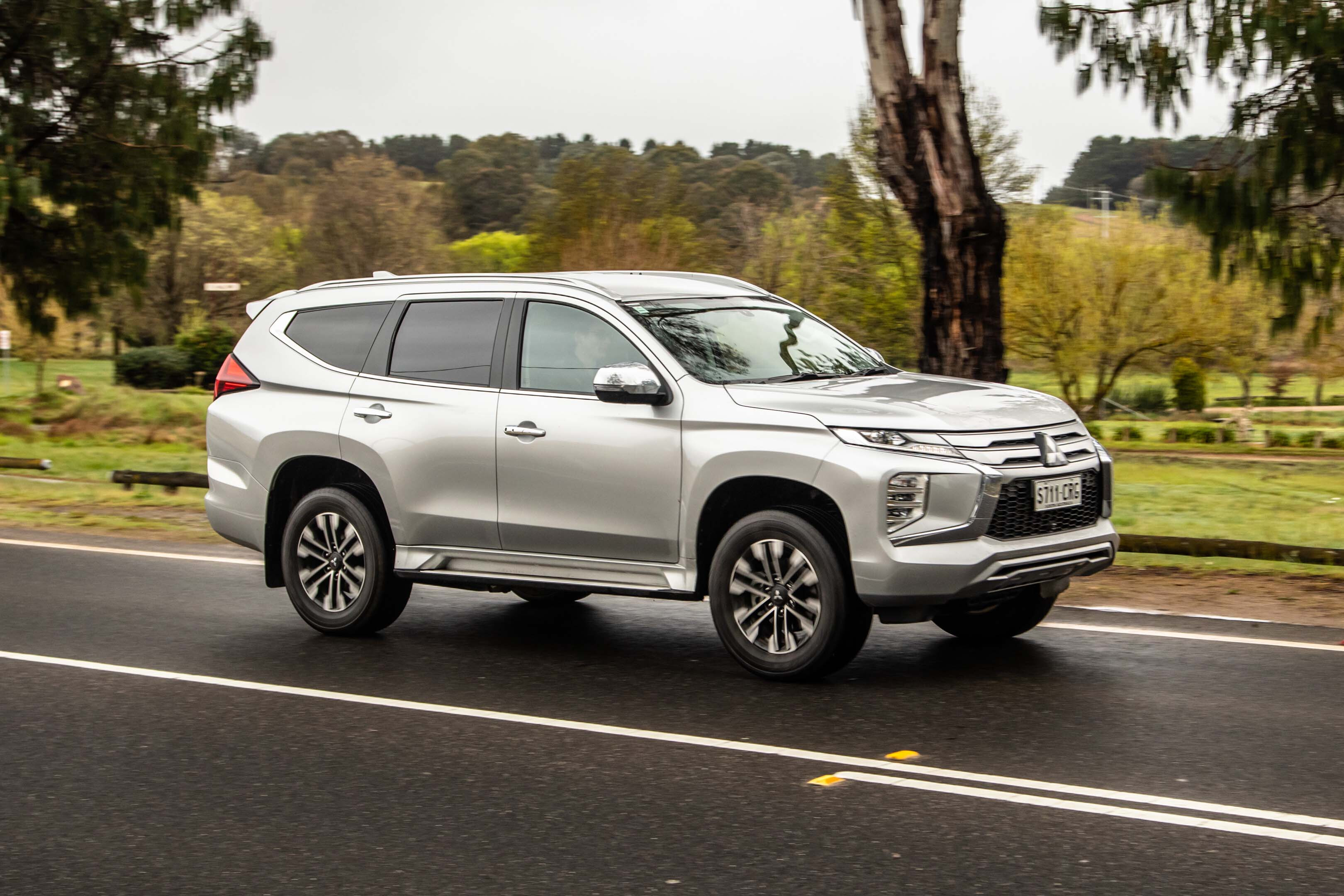
Off-road
The Outlander has some styling features that suggest off-road capability, not to mention a terrain selector very similar to the Pajero Sport’s Super Select controller. The 210mm ground clearance figure isn’t far off the Pajero Sport (218mm), but in practice the Outlander can’t hang with good old-fashioned locking diffs and live axles.
Check out the droop (negative travel) and approach angle comparison between the Outlander and Pajero Sport.
You can read Evan’s full off-road report here, but essentially the Outlander can be decent if you choose the right line; it just doesn’t have the depth of ability to get you out of a sticky situation and lacks some of that classic Mitsubishi grit and determination that the Pajero Sport has in spades.
There also isn’t enough suspension travel or support to have confidence bombing down dirt roads, where the Pajero Sport excels. We were left wondering if the more powerful Outlander plug-in hybrid with the ES grade’s 18-inch alloys and chubby tyres might have been a better match-up off-road.

Safety
The Pajero Sport and Outlander were both awarded a maximum five-star ANCAP rating. However, the former’s rating was awarded in 2015 when testing wasn’t as strict.
Standard equipment on the GLS includes front auto emergency braking (AEB) with pedestrian detection, adaptive cruise control, front and rear parking sensors, a low-resolution 360-degree monitor and reversing camera.
To get all the safety gear you’ll need to move up to the Pajero Sport Exceed ($60,690 before on-road costs) with its standard blind-spot monitoring and rear cross-traffic alert.
Meanwhile, the Outlander’s 2021 five-star rating means it is equipped with pedestrian and cyclist detection for its AEB, blind-spot monitoring and rear cross-traffic alert.
Safety features only improve in the MY23 update with the addition of life-saving reverse AEB across all grades and ‘Mi-Pilot’ semi-autonomous driving mode with much-improved lane-trace assist programming as well as stop-and-go for the radar cruise control.
Both cars have very similar passive assistance systems. We noted decent ABS and ESC tunes on both tarmac and dirt for both vehicles. The Pajero Sport with its higher-set driving position and more upright A-pillars provides better visibility in urban environments.
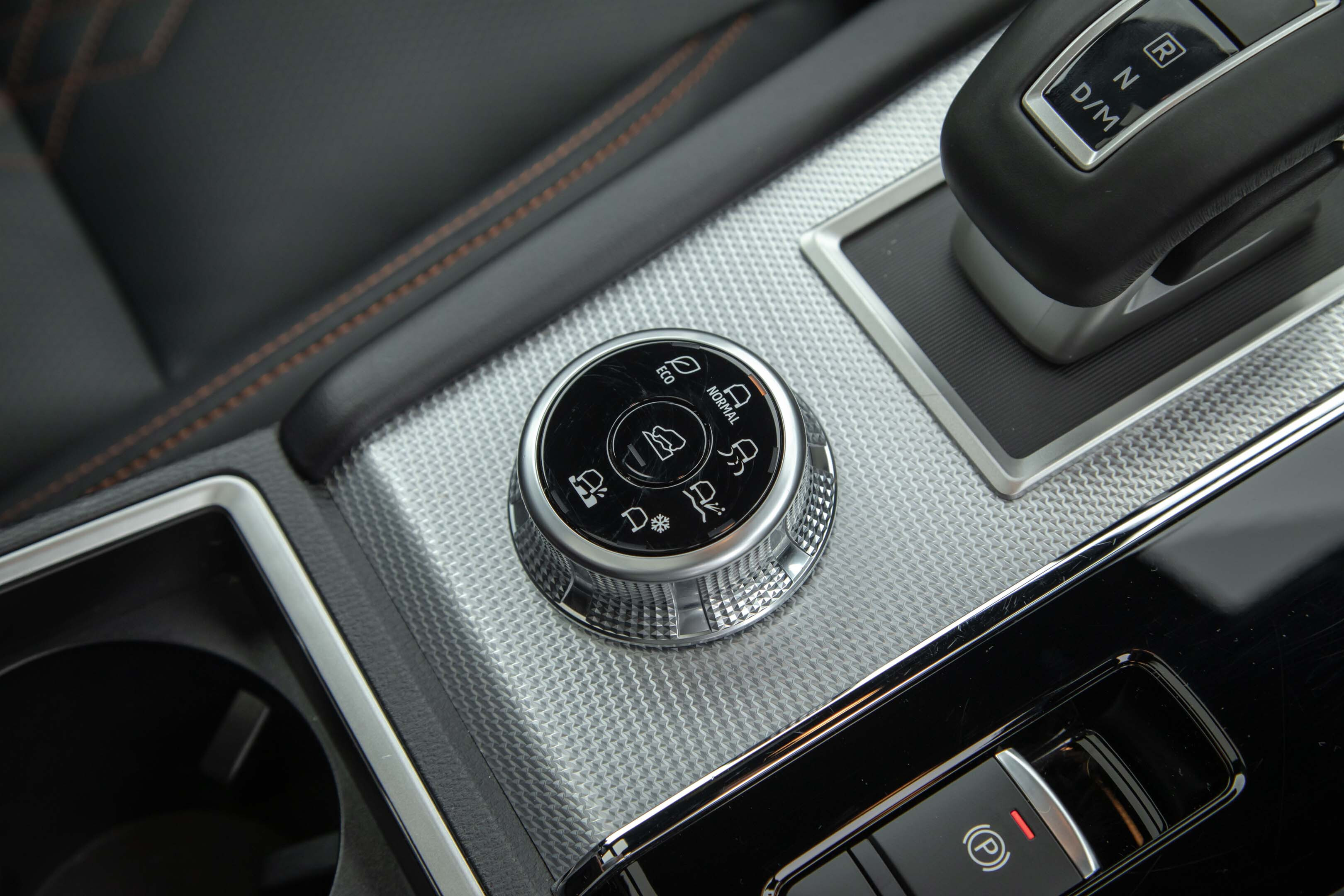
Fuel efficiency
Official fuel efficiency ratings are very similar for both Mitsubishis, the Pajero Sport returning 8.0L/100km and the Outlander 8.1L/100km in the ADR 81/02 combined cycle.
We thought the Outlander might beat the Pajero Sport in fuel efficiency in the real world, but the two ended up closely matched: the Pajero Sport’s diesel proved slightly more economical over the 350km test day, returning 8.8L/100km against the Outlander’s 9.1L/100km.
The Outlander will be cheaper to fuel as it accepts 91 RON unleaded, but its 55-litre fuel tank shortens roving range a lot compared to the Pajero Sport. Being petrol, the Outlander should also release fewer particulates into the atmosphere.
Ownership
The Pajero Sport and Outlander are both covered by Mitsubishi’s 10-year/200,000km Diamond Advantage warranty.
It’s the longest in time terms across the industry but does stipulate that the vehicles are serviced at a main dealer. Otherwise, the duration reverts to a more industry-standard five years.
Maintenance is due every 12 months or 15,000km for the Outlander. Mitsubishi prices up 10 years of servicing, avoiding any nasty surprises.
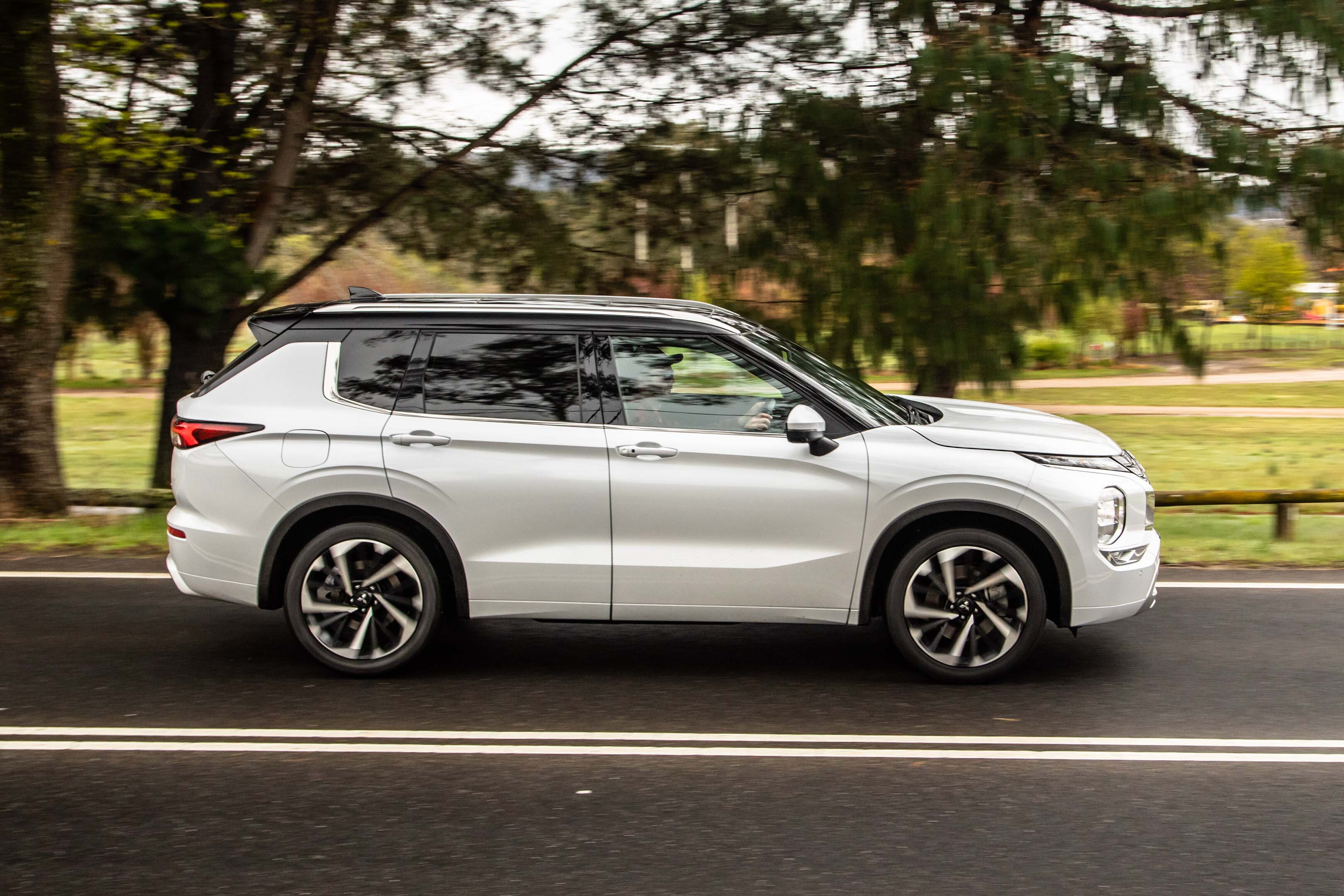
For ease of comparison, the Outlander measures up favourably against Toyota RAV4 after five years or 75,000km costing $995. As every service is capped at $195, 10 years will cost a very reasonable $1990.
Considering the Pajero Sport has a turbocharger, more complex off-roading gear and knowledge that it will probably live a tougher life, its service intervals are the same 12 months/15,000km as the Outlander.
The Pajero Sport will cost $2495 to maintain over a five-year span, though, climbing to $5990 for 10 years with the most major $999 scheduled service coming in the eighth year of ownership.
VERDICT
The Pajero Sport is a refreshingly honest vehicle … The Outlander is a nicer, more luxurious vehicle to live with, of course.
The Pajero Sport is a refreshingly honest vehicle. The cabin’s design and technology package may be dated next to the Outlander, but that’s not where the value lies in this vehicle. The Pajero Sport is about all-road capability and off-road competence.
Even if you don’t mean to stray too far off the beaten track, with all the rain forecast to hit Australia this summer I’d rather take the Pajero Sport out to watch an event like the Bathurst 1000 because I know I won’t get stuck.
The Outlander is a nicer, more luxurious vehicle to live with, of course. For most, its lower urban fuel consumption, plusher cabin, slick tech package and more adaptable packaging will make it the winner.

It’s for those reasons that Mitsubishi’s Outlander wins the Wheels portion of this comparison – especially if this is your only car in the suburbs.
But I’d argue if you were going to have a two-car garage, then the Pajero Sport would be better paired with an efficient, well-packaged small SUV. That way – as Hannah Montana would say – you get the best of both worlds.
SCORING
Outlander Exceed Tourer
Things we like
- Interior presentation
- Technology package
- Sharper on-road handling
Not so much
- Weak lane-keep assist
- Abrupt urban ride
- Not great on dirt
Pajero Sport GLS Deluxe
Things we like
- Go-anywhere ability
- Spacious third row
- Strikes a good compromise
Not so much
- Unrefined engine
- Lacks safety aids
- Tight second row
2023 Mitsubishi Outlander and Pajero Sport specifications
| Feature | Outlander | Pajero Sport |
| Engine | 2.5L petrol 4cyl | 2.4L turbo-diesel 4cyl |
| Power | 135kW | 133kW |
| Torque | 245Nm | 430Nm |
| Gearbox | continuously variable automatic | 8-speed automatic |
| Body | steel, 5 doors, 7 seats | steel, 5 doors, 7 seats |
| L/W/H/Wu2013B | 4710/1862/1740/2706mm | 4825/1815/1830/2800mm |
| Approach angle | 18.3u00ba | 30u00ba |
| Departure angle | 22.2u00ba | 24u00ba |
| Ground clearance | 210mm | 218mm |
| Weight | 1760kg | 2080kg |
| Fuel/tank | 91 RON / 55 litres | Diesel / 68 litres |
| Economy | 9.2L/100km (tested) | 8.8L/100km (tested) |
| Suspension | Front: struts, coil springs, anti-roll bar. Rear: multi-link, anti-roll bar | Front: double wishbone, coil springs Rear: 3-link, coil spring, live axle, anti-roll bar |
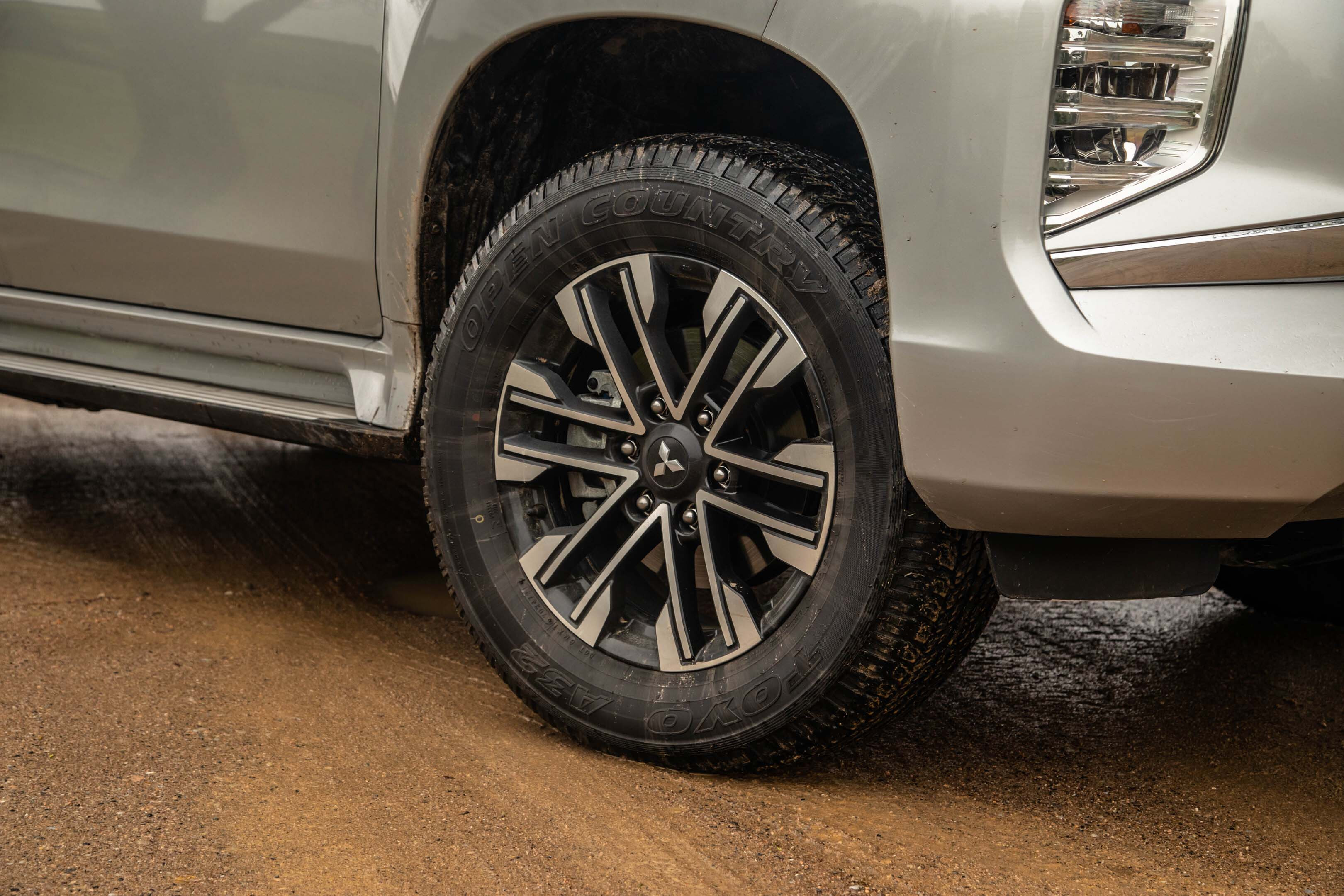
| Tyres | Bridgestone Ecopia H/L 422 | Toyo Open Country A32 |
| Tyre size | 255/45R20 | 265/60R18 |
There’s no denying it, building a four-wheel drive into a capable off-road tourer takes time, money and skill.
Sure, you don’t need to have all the latest and greatest gadgets, and you can compromise on cheaper gear if it works for your needs, but here at 4X4 Australia we need our vehicles to be reliable and simple to use. Only the best gear gets fitted to our 4WDs, as we rely on them daily to produce content for the magazine and website.
As such, we decided it was time to sit down and calculate how much the parts fitted to the D-MAX added up to, and give you a closer look at the final tally. The aim here is to give you the information required to help with your own 4WD build, so you can better make choices on the gear you actually need for the trips you want to do.
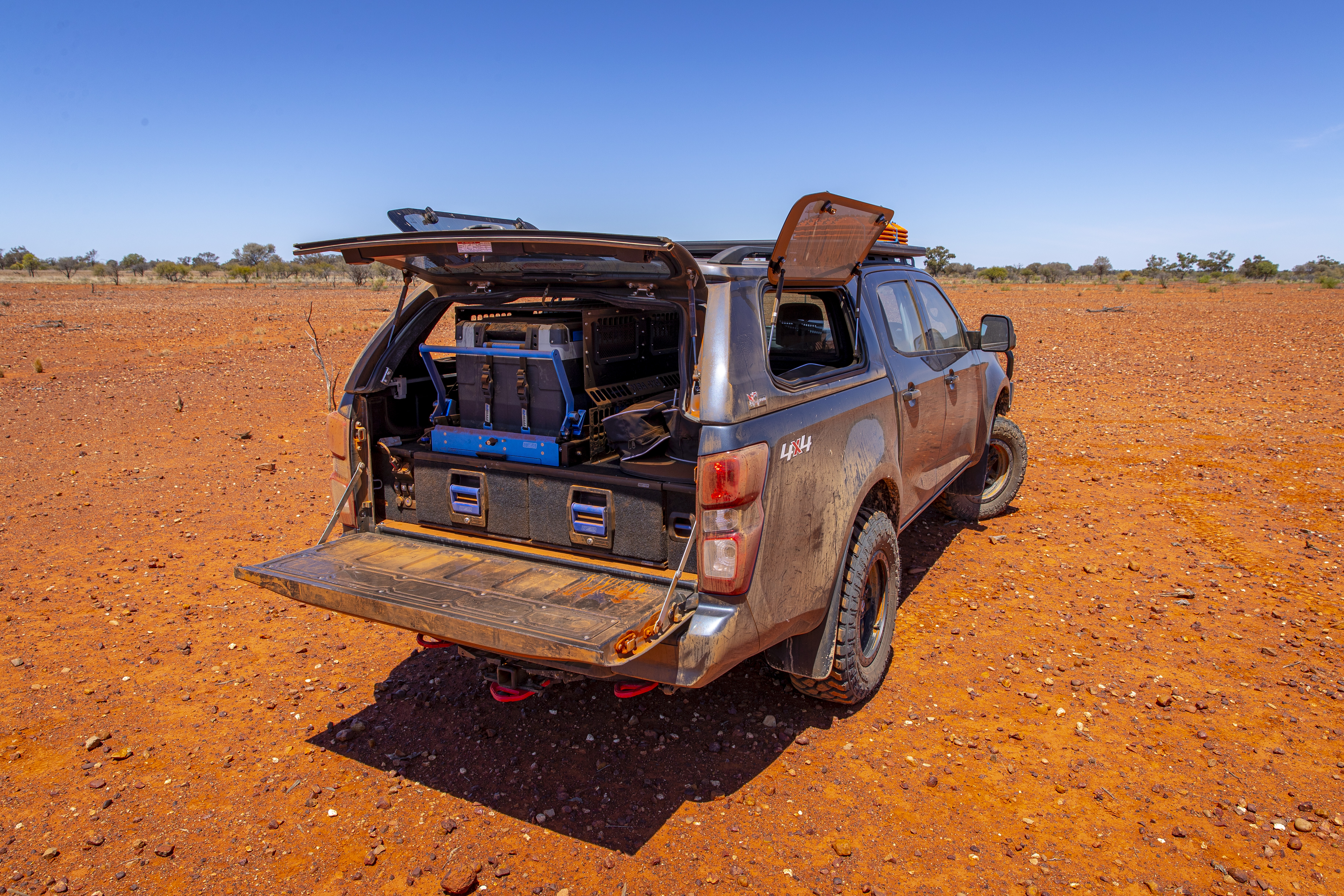
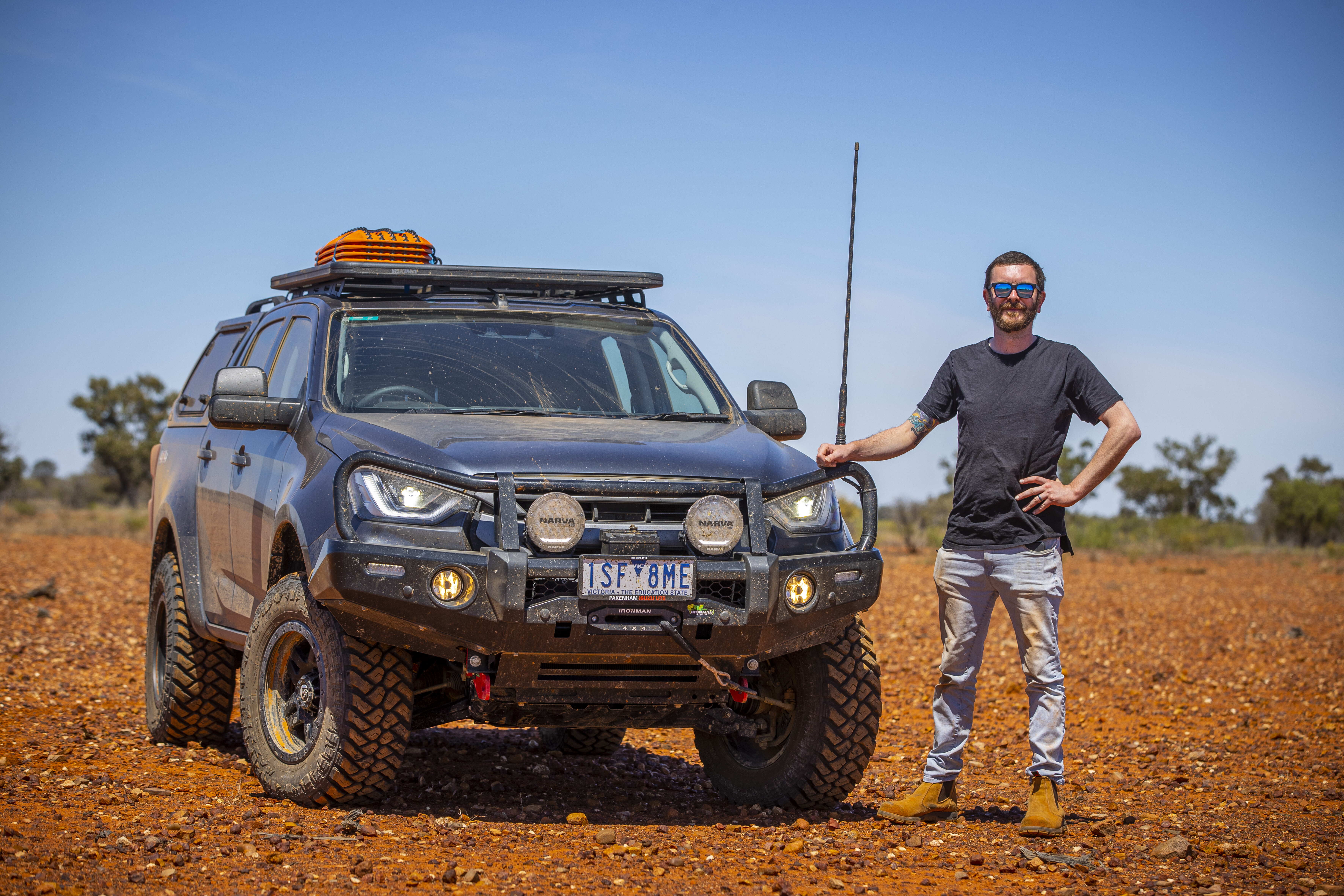
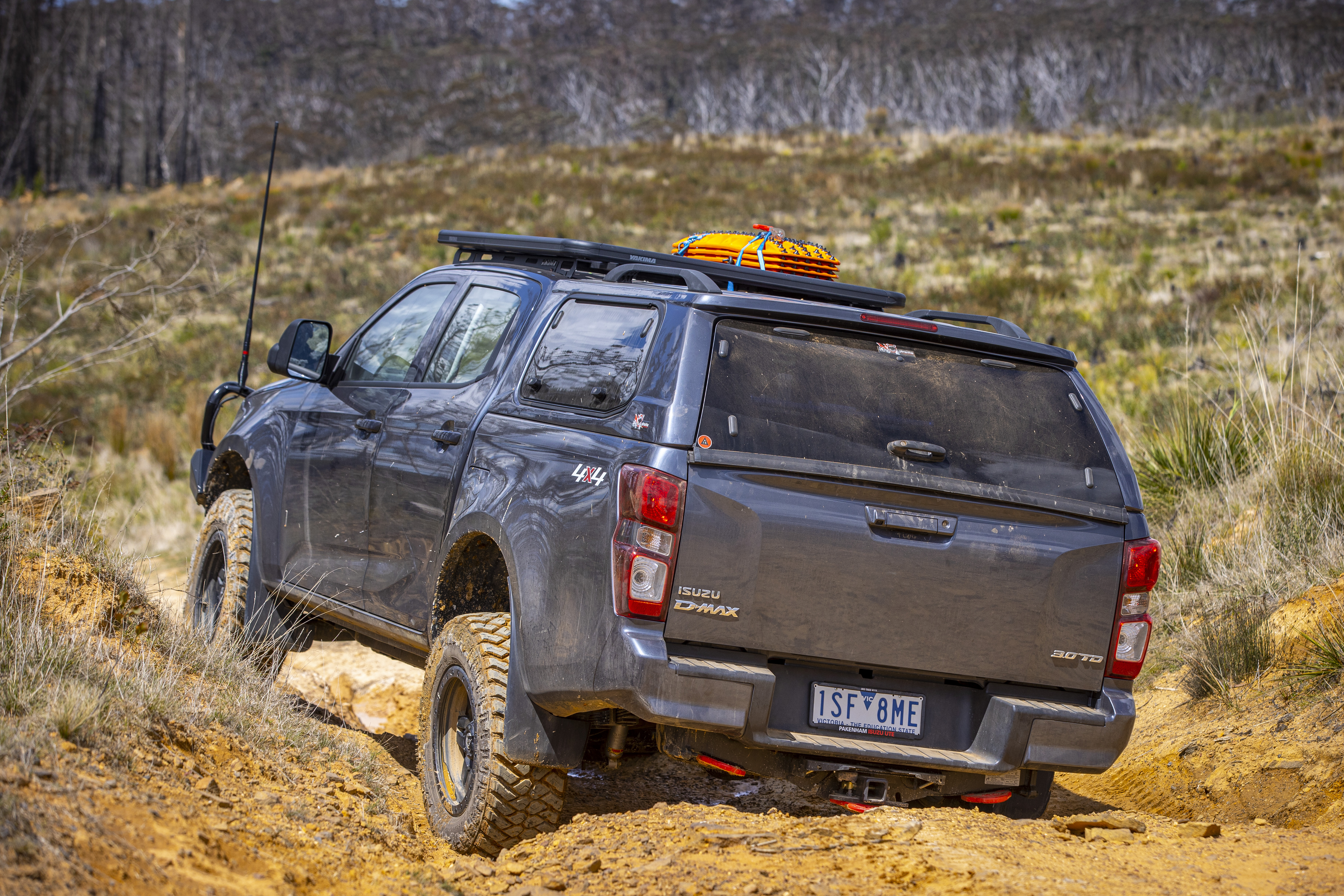
Now, these prices don’t take into account fitting, as we are in the fortunate position of being able to install most of the equipment ourselves, and being able to borrow workshop space from mates in exchange for beer and food (the system works). This just gets the conversation started on just how much 4WD accessories cost for a modern four-wheel drive like our 2020 Isuzu D-MAX.
| Accessory | Price |
|---|---|
| Ironman 4×4 Commercial Deluxe Bullbar | $2284 |
| Ironman 4×4 12,000lb Monster Winch w/ synthetic rope | $1223 |
| Ironman 4×4 rated recovery points | $217 |
| Tough Dog 40mm suspension lift kit | $2340 |
| Narva Ultima LED 180 driving lights | $1210 |
| GME XRS-330C Connect UHF radio w/ twin-pack antenna | $768 |
| TruFit 3D floor mats | $179 |
| Piranha fibreglass canopy | $3400 |
| Piranha dual-battery tray and DCDC | $675 |
| Invicta 100amp/h slimline lithium battery | $1599 |
| Yakima RuggedLine mounting system and roof platform | $1430 |
| Hayman Reese X-Bar tow bar | $1450 |
| Fuel Anza alloy wheels x4 | $1364 |
| Maxxis RAZR MT772 mud-terrain tyres x5u00a0 | $1645 |
| MaxTrax Bush recovery kit | $899 |
| Pacemaker King Brown 3-inch DPF back exhaust | $899 |
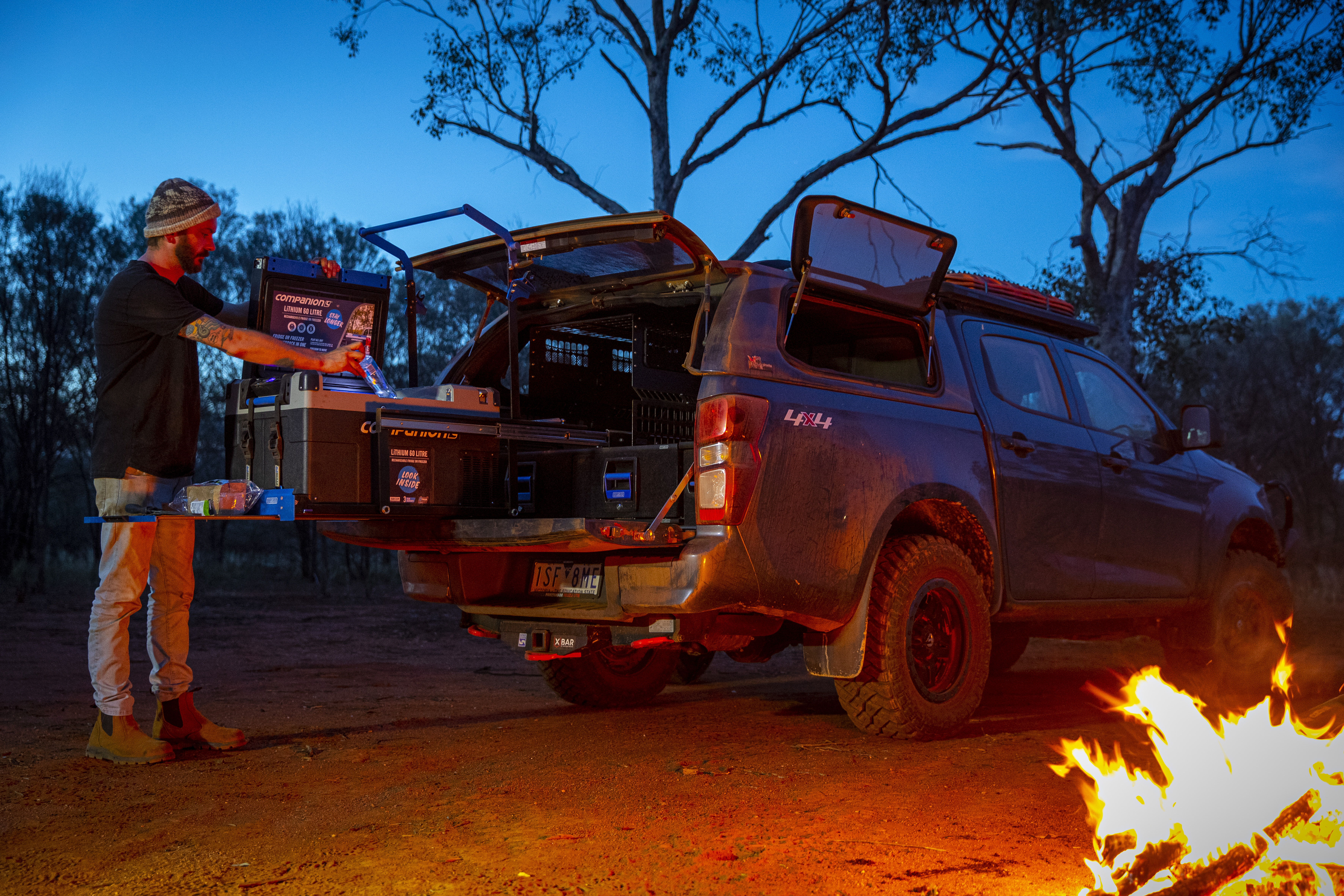
| 60L Companion fridge/freezer | $1569.99u00a0 |
| MSA storage drawers w/ drop fridge-slide power panel and fridge barrier | $5042.01 |
| MSA towing mirrors | $887 |
| Parts Total | $29,580 |
| Vehicle Purchase Priceu00a0 | $55,970 |
| Total Figure | $85,550 |
Club 4×4 insurance policy
We insured the Isuzu D-MAX with Club 4X4 Insurance for a few very important reasons. Firstly, it specialises in four-wheel drive insurance, and understands what we do with the vehicle.
We are covered anywhere you are legally allowed to take your 4×4 in Australia, including 4×4 beaches, 4×4 tracks and private property, which is a really important point to note.
Secondly, with its policy we are covered for $1500 worth of off-road recovery should we need to be rescued from a sticky situation.
Thirdly, there were provisions in the policy to cover up to $2000 worth of personal effects, which cover items such as our MaxTrax recovery gear and the Companion fridge in the back of the D-MAX. We rely on our vehicle for work, so protecting the investment we’ve put into the D-MAX with Club 4X4 really was a no-brainer.
This is really a reminder, that if you have accessorised your four-wheel drive, and put money into it, you really should contact your insurance provider to make sure these expensive additions are covered in your policy.
Here are some nuts and bolts to see what just how little the price difference is with our insurance policy with Club 4X4 covering the stock 2020 Isuzu D-MAX, versus what it would cost to cover our vehicle with all the extra fruit we’ve put on it:
Stock D-MAX
Vehicle Agreed Value: $53,970
Annual Club 4X4 Insurance Policy: $1801.28 (net of statutory charges) with $850 excess
Modified D-MAX
Vehicle Agreed Value: $53,970 + $24,967 in modifications
Annual Club 4X4 Insurance Policy: $2393.37 (net of statutory charges) with an $850 excess
Complete coverage
So, for an extra $592.09 a year, we have fully covered our D-MAX which, if I’m completely honest, is an absolute bargain. I wasn’t expecting the policy increase to be so little, considering how much more we are covering.
If you are good at quick maths, you might have noticed the amount covered is slightly lower than what we’ve spent, and it makes complete sense, it comes down to a few simple things.
Firstly, tyres aren’t covered under this policy, which is absolutely fair enough as they are a consumable item. Next, items such as our Companion fridge and MaxTrax recovery gear are covered under the $2000 Personal Effects provision. So, these items are still protected, and Australia wide too.
There is also the option of tailoring the policy further if we are carrying expensive camera equipment or would like more coverage for off-road recoveries.
For example, if we wanted to add additional off-road recovery, it would cost $323.98 per year extra for $15,000 of coverage or $471.39 for up to $30,000 of coverage. That’s excellent peace of mind, especially if you have a big trip on the horizon.
We also have the option of increasing our Personal Effects Cover from $2000 up to $5000 for just $235.62, which is more than enough to protect my camera gear, as well as our fridge and other camping equipment. If we needed to stretch that to $10,000, the increase would be $412.34 per year, which I feel is very reasonable.
I must mention how professional the Club 4X4 staff were to deal with for someone who isn’t savvy when it comes to reading a PDS
Other options to consider include additional vehicle hire cover if the D-MAX can’t be driven due to damage arising from an insured event (see, I have been reading the PDS), which for up to $90 a day for 14 days is $111.92 per year, or for $180 a day for 14 days is just $176.83 per year.
Roadside Plus roadside assistance is also available for $144.95 a year, as well as excess-free windscreen or window glass cover ($1000 limit and you can only claim once per policy period) is just $59.81 a year.
It certainly goes to show that you can really make the policy what you need, rather than a ‘one size fits all’ approach. Keeping in mind these prices might be different for you, and have been provided to me given my age (I’ll never tell) and driving history.
Coverage includes
• Off-road recovery up to $1500 (as mentioned, which goes towards the cost of recovering the D-MAX and we can increase this figure)
• Australia-wide coverage for our touring gear up to $2000 (our fridge and recovery gear fall under this category – again, this figure can be easily increased for a small cost)
• We’re covered Australia wide, so anywhere we are allowed to drive we are protected
• All of our accessories (except tyres as mentioned) and mods as disclosed by us are covered
• Discounts for multiple policies – perfect timing as we are building up our next 4WD.
Basically, if you have recently invested money in modifications on your four-wheel drive, you would be mad to not get on the phone to your insurer, and have a discussion regarding adding them to your policy. I’m sure glad I picked up the phone and gave the team at Club 4X4 a call.
It was seriously painless to do, and I must also mention how professional the Club 4X4 staff were to deal with for someone who isn’t (how do we say) savvy when it comes to reading a PDS or knowing what an excess is.
If you are considering taking out a new insurance policy, give the team at Club 4X4 a call for a quote or check out its website for more information.
Club 4×4 contact information
Phone: 1300 296 296 Website: www.club4x4.com.au
Club 4X4 Pty Ltd (Club 4X4), AR 1235616 of Lifestyle Insurance Group Pty Ltd (Lifestyle) AFSL 246937, distributes this insurance as an agent of The Hollard Insurance Company Pty Ltd AFSL 241436 (Hollard), the product issuer. Hollard pays Lifestyle a commission on sold policies which is a percentage of your premium. Any advice provided is general only and does not take in to account your individual objectives, financial situation or needs. Consider the PDS and TMD available to decide if the product is right for you. T&Cs, limits, exclusions and excesses apply.
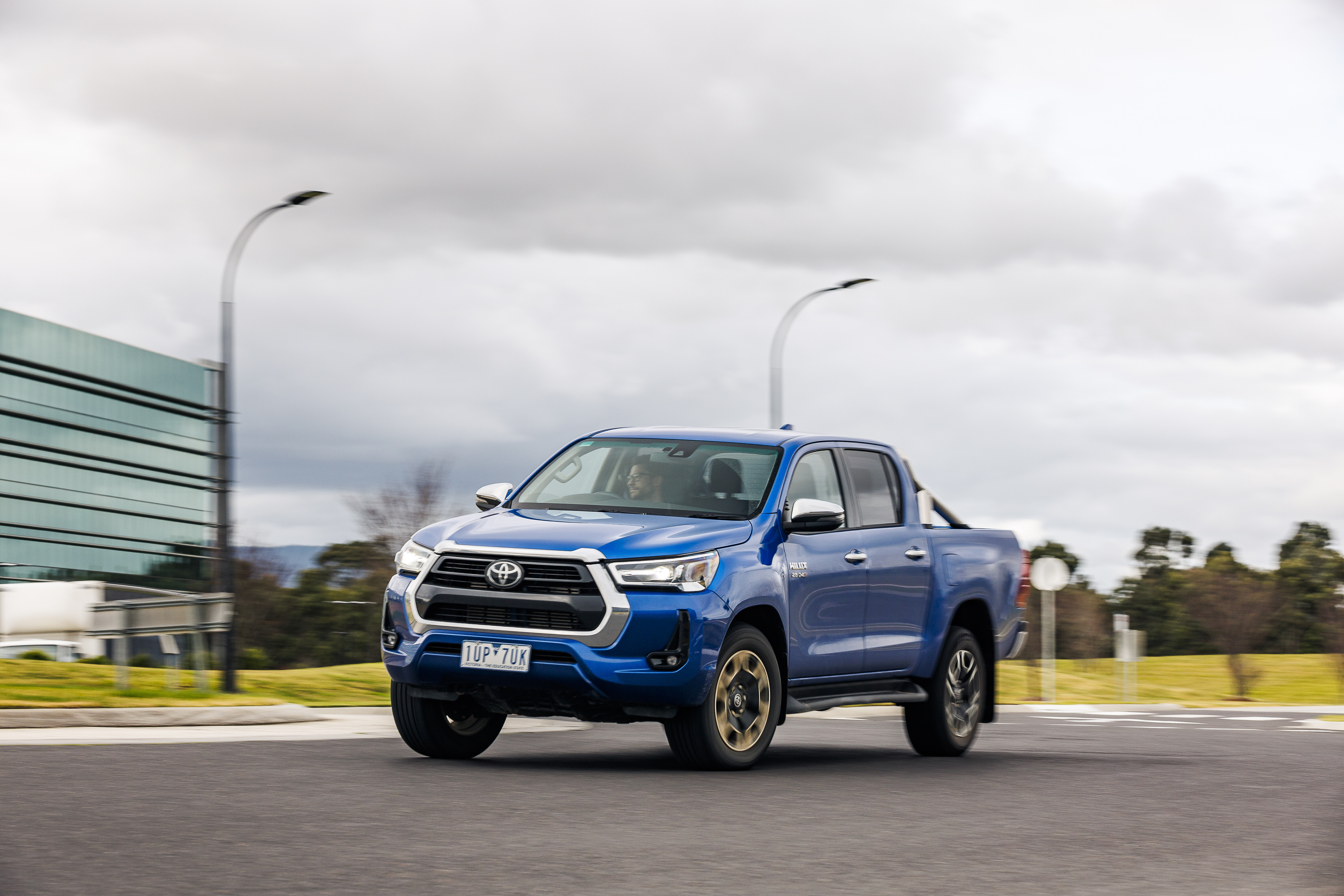
The 2022 Toyota Hilux continues to be Australia’s most popular new car, and when it comes to mid-size 4×4 utes the Hilux SR5 is a perennial favourite.
We’re driving the 2022 Hilux SR5 here which is fitted with the Premium package and automatic transmission to take its price to $64,430 plus on-road costs. The Premium package adds heated leather seats and trim to give the ute’s interior a more upmarket rather than a totally utilitarian feel.
The current model of Toyota’s venerable ute is the N80 Hilux; the eighth generation of Toyota’s mid-size ute which, over more than 50 years has developed in to one of the world’s leading and most recognised vehicles.
The N80 Hilux was introduced in 2015 and it was only back in 2020 when it received its latest updates including the all-important improvements to the 1GD-FTV engine.
Upgrade your 4×4
-
Bullbars

-
Underbody Protection
-
4X4 Tyres
-
Canopies
-
Roof Racks
-
Storage
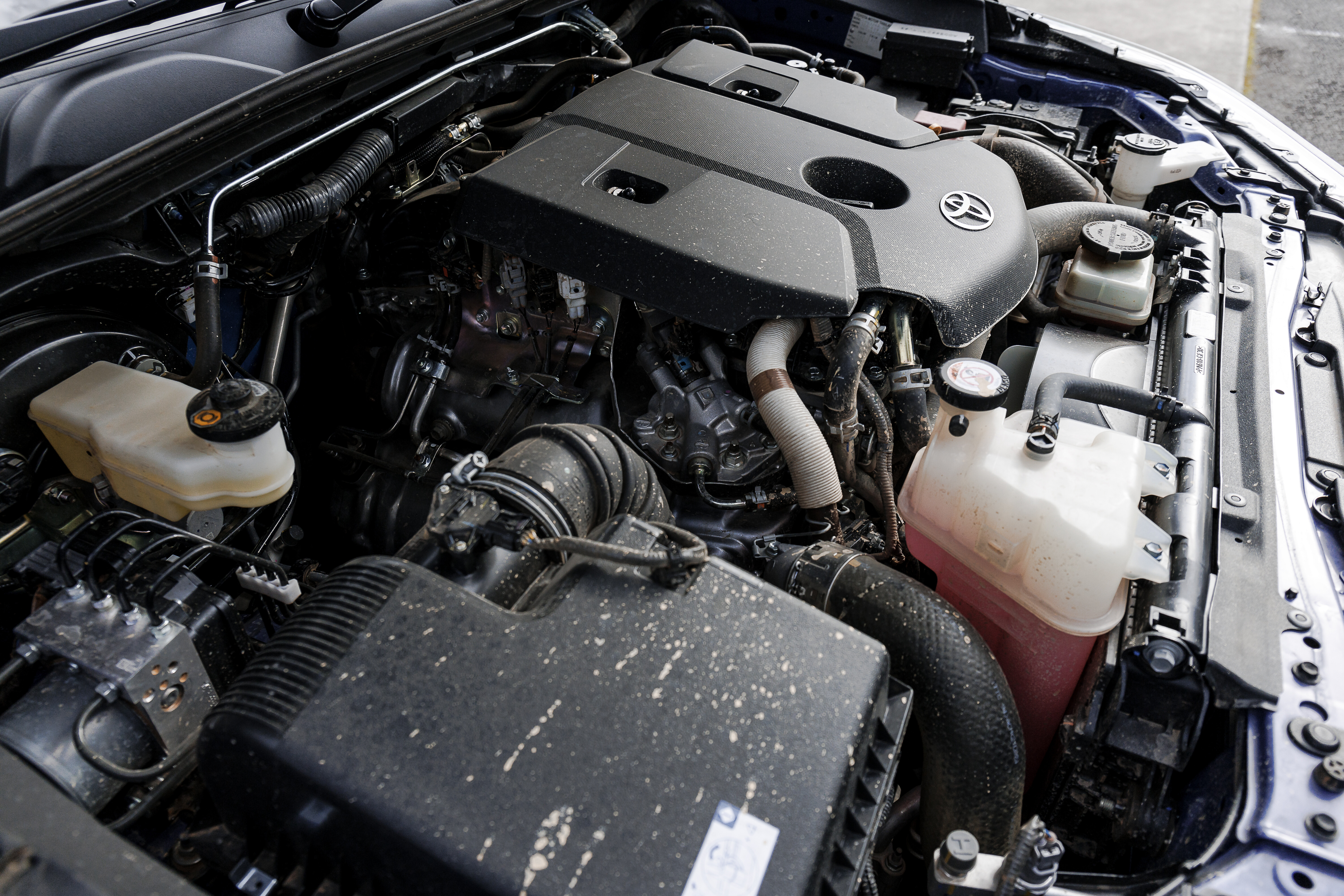
Powertrain
The 4×4 Hilux is available with a choice of 2.4 and 2.8-litre versions of the four-cylinder diesel engine depending on the model grade chosen.
The high-spec models such as the SR5 we’re testing here, are all powered by the bigger 2.8-litre version. There is also a choice of manual or automatic transmissions, bother offering six speeds.
The 1GR 2.8-litre engine received a considerable improvement as part of the 2020 model updates, notably in its torque output which jumped up to 500Nm to match its class-leading competitors.
It wasn’t just about peak torque for the Toyota engine as the extensive upgrades improved the engine’s performance right through its delivery range, dramatically improving the Hilux’s drivability. This was especially true when matched to the 6-speed automatic transmission where in the past, it had hunted through the gears while trying to find the sweet spot in the engine.
There’s none of that indecisiveness in the current iteration of the power train, the engine is punchy and delivers plenty of grunt, placing it at the pointy end of the four-cylinder powered 4×4 utes in terms of performance, and the transmission is perfectly matched to its output.
The only real criticism of the Toyota engine is its harshness and noise which sounds and feels very much like a noisy old diesel rather than a totally modern one. There’s still room for improvement in this regard.
On road ride and handling
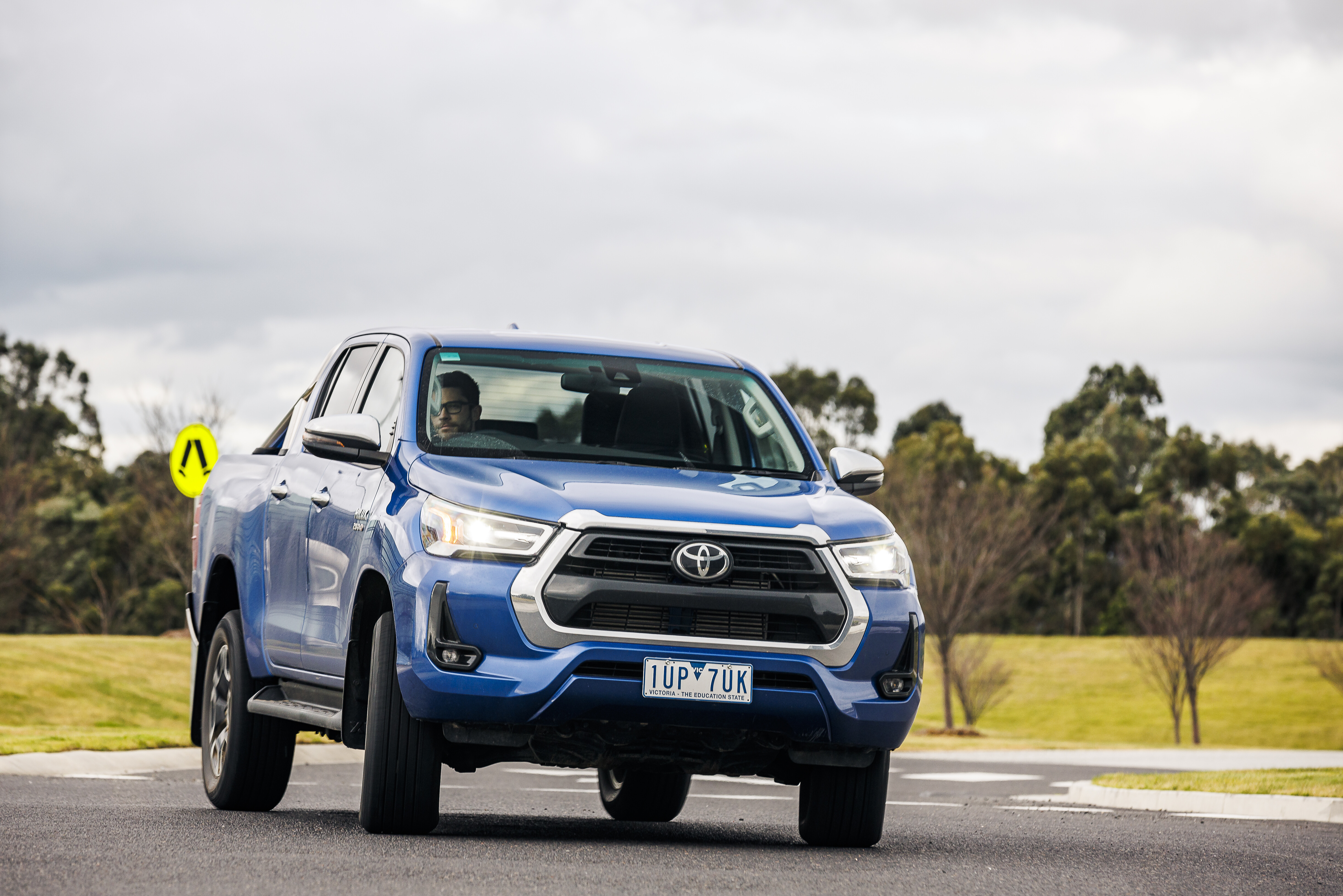
The Hilux has always felt firm in its suspension, and this is following Toyota revising the spring rates in 2020 to soften the ride of the unladen vehicle.
It’s better than it was but it still feels stiff and tall when driving on road, reflecting its working truck roots and load carrying abilities.
There’s nothing wrong with the way the Hilux rides and drives, it’s just that some newer utes are changing the way cars in this segment perform to make them more passenger friendly, although sometimes that is at the expense of laden performance.
Off road
Like any Toyota 4×4, the Hilux’s strengths lie in its gravel road and off-road performance.
To this end, Toyota has given the Hilux class leading rear-axle articulation and the sharpest electronic traction control calibration (ETC) in the segment to ensure it gets over most rough terrain without fuss.
There are no fancy drive modes or tricks to the Hilux’s superior tractive abilities just quality suspension and ETC tune developed over decades of use in the harshest conditions.
The Hilux does have a rear differential lock (RDL) but engaging it kills the ETC across the front axle leaving the car a three-wheel drive instead of four. Once one of the front wheels starts spinning, the front axle become useless so it relies on the locked rear end. As such, the Hilux will often get over tricky obstacles easier using just the excellent ETC and not the RDL.

Interior
The Hilux’s cabin is another part of the car that has been upgraded through the life of this eighth-gen model, and each time it is an improvement.
The dash’s eight-inch screen was updated to give a dial for volume control and made easier to use, but many people we speak to don’t like the way the screen sits on the dash as opposed to being more integrated. Personally, I have no problem with it.
The system features wired access to Apple CarPlay and Android Auto, and Toyota’s factory sat-nav system has excellent mapping which is often more detailed than Google maps.
The gauge binnacle is simple and easy to read with none of the configurable customisation that other brands feel is necessary these days. It still tells the driver everything he or she needs to know at a quick glance that doesn’t require your eyes to leave the road any longer than they should.

The leather-trimmed seats that form the Premium package combine with the piano-finish black trims to add a feel of luxury and quality to the ute’s cabin. The SR5 Premium’s front seats are also heated.
The SR5 was rated as a winner as a family vehicle in our recent mid-size ute ‘Daily Living’ comparison test because getting the child seats in it was easy and they felt most secure. It also had the largest amount of space for an adult sitting in the middle between two child seats, a decent amount of room in the doors for storing drinks and toys, and the test vehicle was fitted with easily wipeable optional leather upholstery.
There’s a 220V power outlet in the cabin for charging devices in addition to the usual USB and ciggie lighter power outlets.
The Hilux does drop behind in not having all the latest safety technology. It has the essentials like ABS, ESC, ETC, AEB buts its lane-departure system doesn’t offer proper steering correction, nor does it have features like blind-spot indicators or rear cross-traffic.
This deficiency in safety tech is as much to do with the age of the current model Hilux when compared to newer models like the Ranger, Triton, BT-50 and D-MAX.
Practicalities
The SR5 has a 995kg payload, a 2980kg GVM, 3500kg towing rating and 5850kg Gross Combined Mass (GCM). These are all reasonable figures for a 1-tonne double-cab ute with a premium interior.
Those interior inclusions like powered leather seats all add weight and eat in to your payload and GCM.
The Hilux SR5 rides on 265/60R18 tyres which are becoming a common size for utes, but you can fit the smaller and more practical 17-inch wheels off the lower grades for better tyre choices.
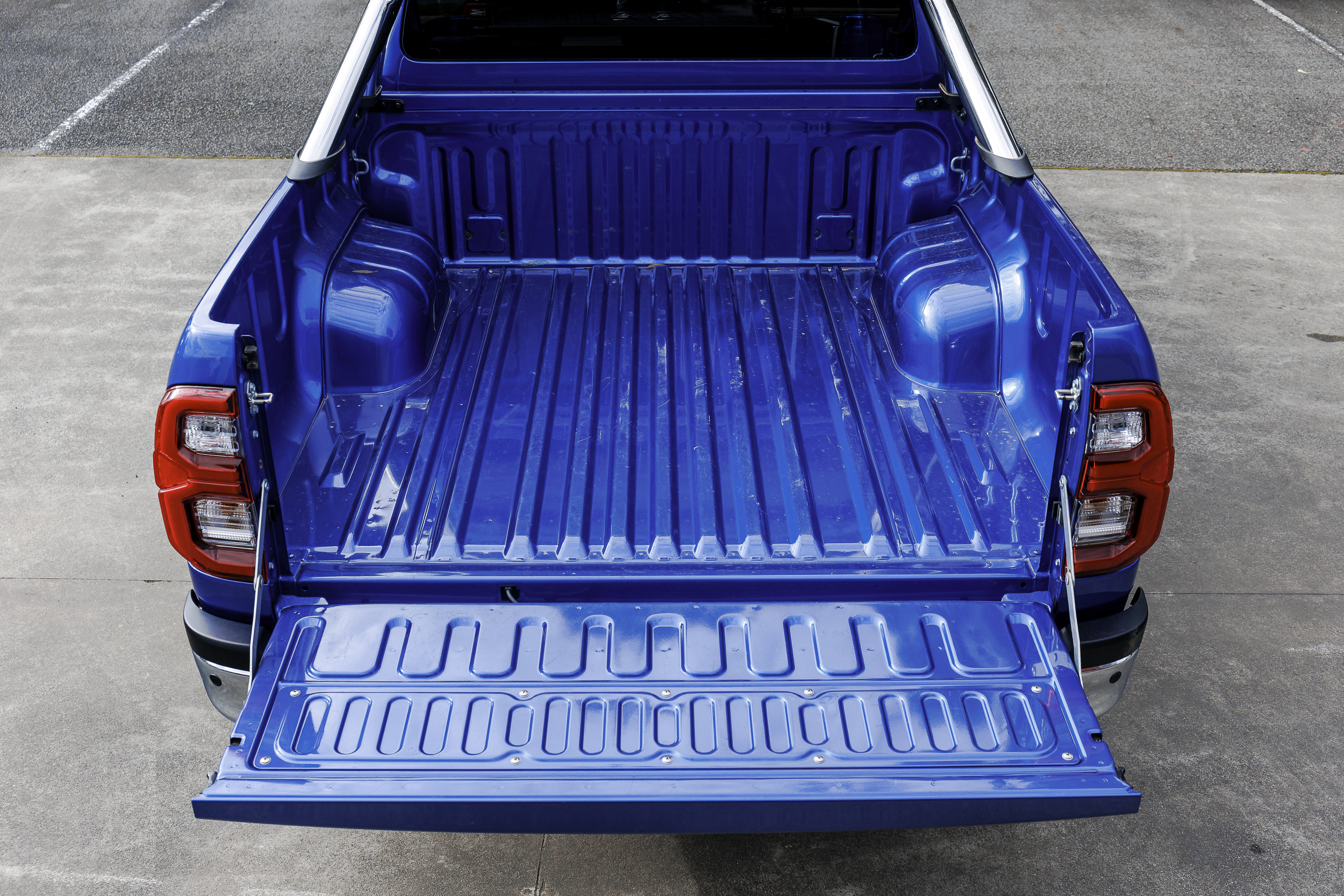
The Hilux’s cargo tray is smaller than that of some in this class but has tie-down points low in the four corners where they are most useful but no 12V power outlet for powering accessories.
The Hilux’s engine bay has space for a second battery and the air intake is well-placed where it draws from the inner ’guard.
As one of the worlds most popular vehicles, the Hilux is extremely well-supported by aftermarket accessories manufacturers and Toyota offers a healthy range of factory kit for the ute including steel and alloy bullbars.
These accessories allow owners to tailor the ute to their own requirements be it as a work vehicle, touring around the country, or a combination of both.
VERDICT
The Hilux has long been a favourite for both private and fleet buyers, and there are good reasons for this.
Those decades of development have ensured that the Hilux remains near the top of the mid-size 4×4 1-tonne ute class due to its solid engineering and feeling, capability straight out of the box, and user-friendliness and functionality. All attributes you want on a ute that serve you for work, play and family duties.
4X4 Australia's project builds
2022 Toyota Hilux SR5 specs
| PRICE | $64,430 |
|---|---|
| ENGINE | I4 Diesel |
| CAPACITY | 2775cc |
| MAX POWER | 150kW at 3400rpm |
| MAX TORQUE | 500Nm from 1600 to 2800rpm |
| TRANSMISSION | 6-speed automatic |
| CRAWL RATIO | 36.11:1 |
| 4X4 SYSTEM | Part-time w/ high and low range 4×4 |
| CONSTRUCTION | 4-door ute body on ladder chassis |
| FRONT SUSPENSION | IFS w/ dual control arms and coil springs |
| REAR SUSPENSION | Live axle riding on leaf springs |
| TYRES | 265/60R18 on alloy wheels |
| KERB WEIGHT | 2093kg |
| GVM | 3050 |
| PAYLOAD | 995kg |
| TOWING CAPACITY | 3500kg |
| SEATS | 5 |
| FUEL TANK | 80L |
| ADR FUEL CLAIM* | 8.1L/100km |
| ON-TEST FUEL USE | 11.6L100km |
| DEPARTURE ANGLE | 28u00b0 |
| APPROACH ANGLE | 29u00b0 |
| WADING DEPTH | 700mm |
| GROUND CLEARANCE | 216mm |
The latest batch of reader-submitted four-wheel drives has landed at 4X4 Australia HQ. Get involved by heading to our Facebook page and posting a few photos of your 4×4. It may end up in the next magazine.
1984 Suzuki Sierra LWB
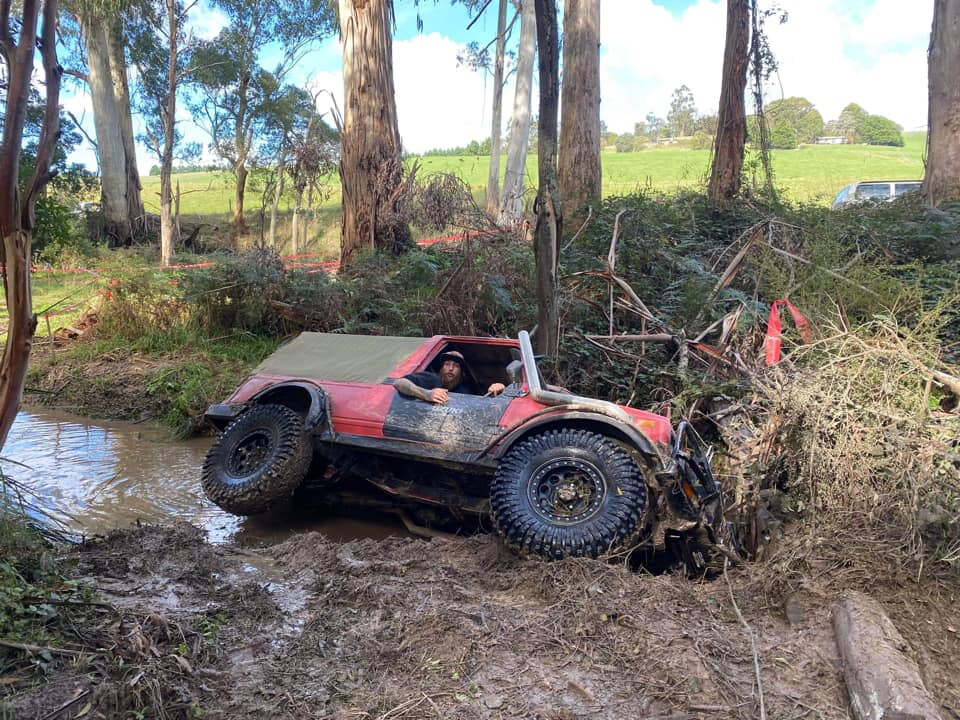
This photo was taken on private property when I was helping set up for the Drivetech 4×4 Wild Dog Winch Challenge in Gippsland, Victoria. It has stock suspension, 32-inch tyres, twin lockers, reduction gears, all the usual bar work, winch, UHF and more. – Dean Notman
1993 Land Rover Defender
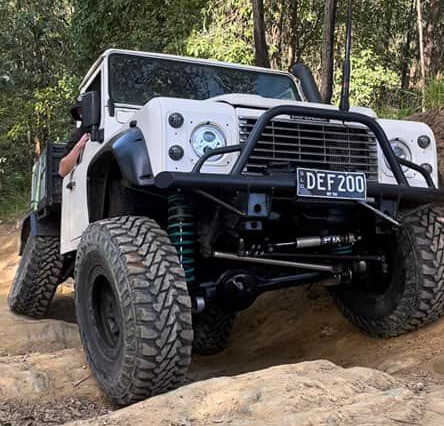
At the start of the year I did a Tasmanian trip from Brisbane, and along the way went in to the Vic High Country ─ then plenty of 4WDing in Tassie, and back again. I’m regularly 4WDing in the Glasshouse Mountains, Queensland. It’s twin-locked, and mods include a fully upgraded driveline to turn the 37s. Plenty more fun things, too! Not your average Cruiser or Patrol! – Kyle Stewart
2001 Nissan Patrol
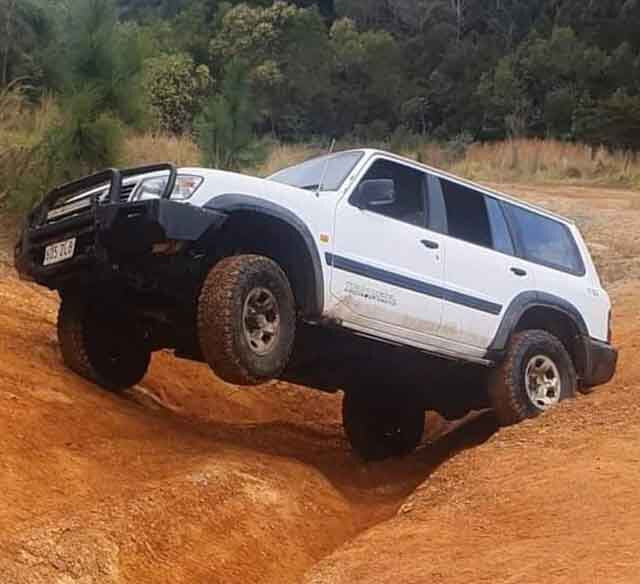
She’s a Patrol ZD30DI ─ aka the Grenade ─ and so far she’s taken me to Glasshouse and Kenilworth in Queensland. As for mods she’s a pretty basic set-up, with a two-inch suspension lift and a set of BFGoodrich 285/75/16s (-13 offset).
Engine-wise there aren’t any mods yet, but, for an unlocked girl, the places I’ve driven so far she loves it. She’s also sporting a Domin8tr Xtreme 12,000 winch, a pair of nine-inch driving lights, an Oricom UHF and Kings Titan drawers. No flex and she screams like a three-year-old on boost! – Mitchell John Deakin
2017 Isuzu D-MAX
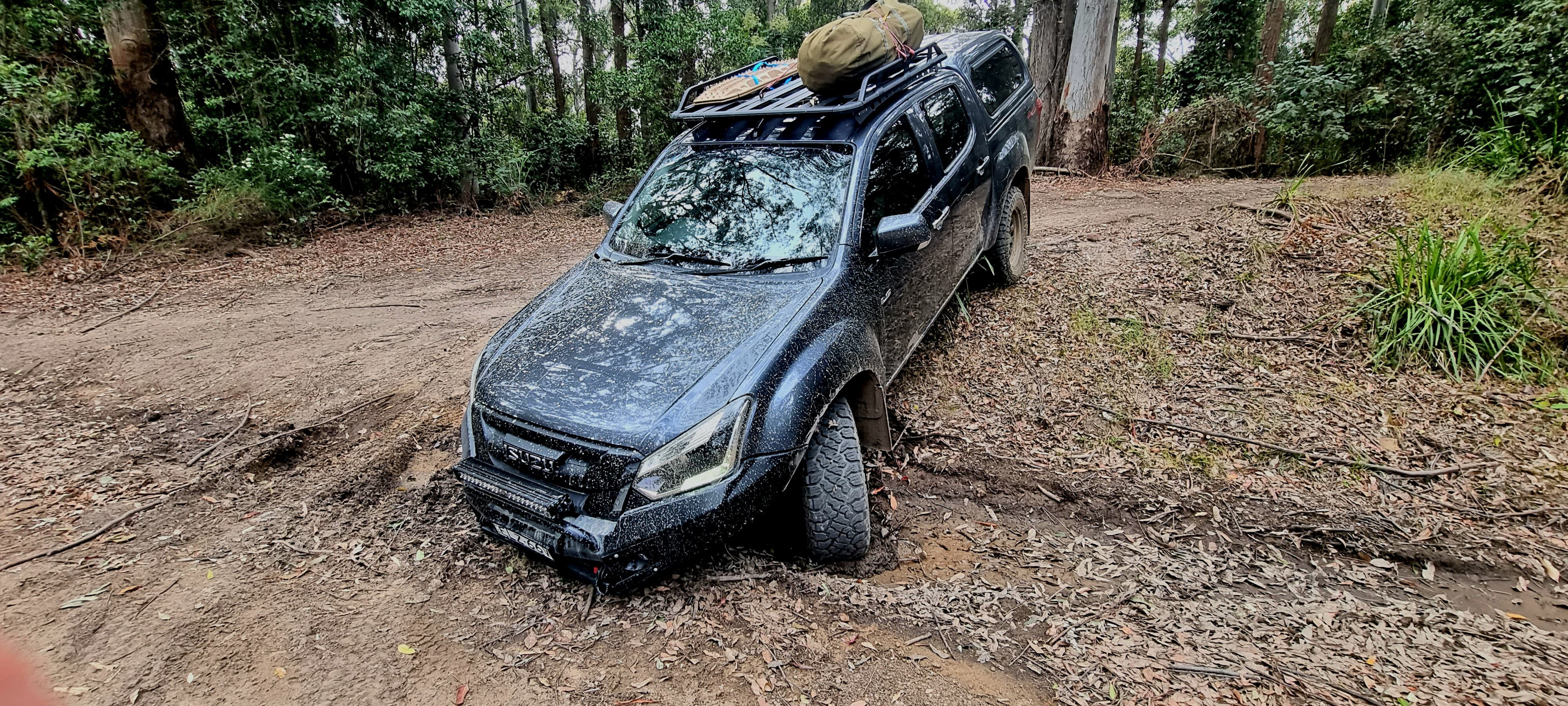
Mods include a two-inch lift (Dobinson shocks and springs) at the front, as the back was already high; 32.5-inch Kenda Klever wheels with steel rims; Shoreline bullbar; Kings light bar; Carbon 12,000lb winch; EGR canopy; dual battery set-up; slimline lithium battery; Itek bluetooth DC-DC charger; shunt with digital readouts; Hard Korr LED lights; and two USB and USB-C charging ports.
Other kit includes a 12-volt cig socket port; two 50amp Anderson outlets; 12-volt water pump and shower; XRS GME UHF radio; ProVent catch can; Meredith Metalworks snorkel; and a Rhino-Rack with the Backbone system. Recovery gear comprises a soft shackle, Kinetic winch-rope retainer ring, XTM tree saver, XTM 9m snatch strap, and XTM tow rope. – Shai Ler
LDV T60
Hands down, the best place we’ve been would have to be through the Bathurst/Hill End area. It has a two-inch Tough Dog suspension lift, TJM snorkel, diff breathers, VRS bullbar, Uniden UHF, Kings winch, dual-battery set-up and solar, Rhino racks, and Falken ATs. – Mitch Vowles
2014 Jeep Grand Cherokee Limited
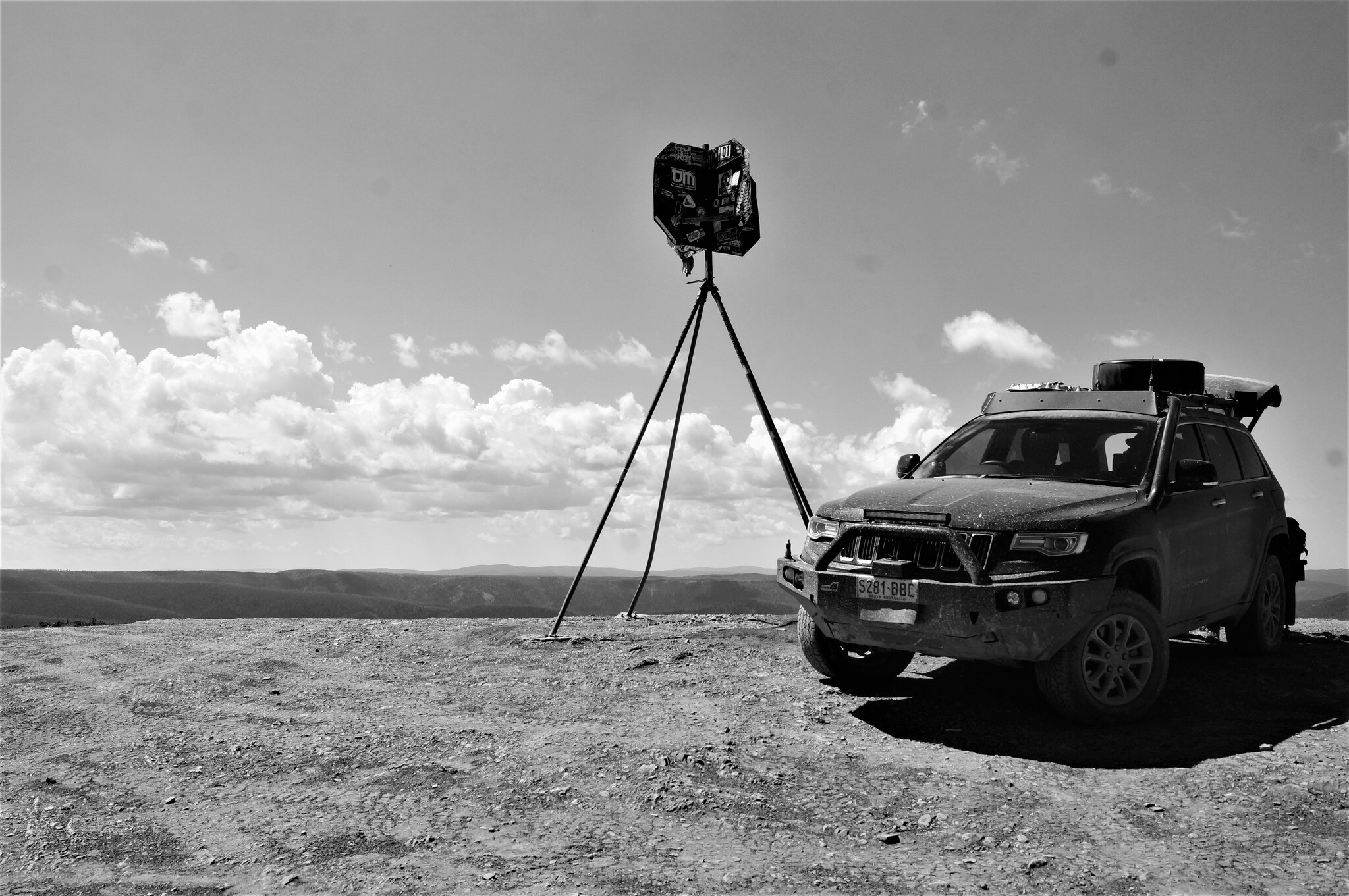
Enjoying the views at the top of Billy Goat Bluff track in the Victorian High Country. It drove up easily ─ what it lost in articulation it made up for in traction. Our vehicle of choice is a Grand Cherokee Limited with the Offroad pack, as well as a few other accessories. – Brenton Bowley