
You see it more often than not on the holiday trail. Dual cabs with overloaded canopies, or swaying wagons loaded to the gunwales, stressing the chassis and suspension well past any reasonable GVM limit.
We all know there’s only so much four wheels can take, given all that extra load needs to be supported by the often overlooked axle bearings doing their best not to explode on some remote track between paradise and the parts store.
In the case of the 2021 D-MAX you see here, Callum and Nicole McDevitt have plans to do some serious extended touring, but with daughter Mackenzie also in tow they wanted to make it a little more comfortable than a swag, fridge and gas stove.
This, of course, was going to level up their tonnage, so they chose to acknowledge the elephant in the room by realising a simple spring and shock upgrade wasn’t going to achieve what they had in store, especially when towing a fully loaded caravan nudging nearly four tonnes. Not only that, but it was all going to require a little more mumbo to shift it too.

After punting around in a 2015 D-MAX LS-U both Callum and Nicole were pretty happy with the Isuzu product, but weren’t completely set on just grabbing the newest model again.
They spent time looking through the usual long-haul options, which included LandCruisers, American trucks, and even a bigger upscale to a light truck, but in the end the features and looks of the newer D-MAX in X-Terrain trim had them frothing for one in a Volcanic Amber hue. They just needed to make a few adjustments before they set off on tour.
“We wanted it to be capable of touring around Aus, taking on the odd track or two, beach four-wheel driving and being able to sustain a couple of weeks off-grid,” said Callum. “To be able to unhook the van and go more remote with the car but still be comfortable and self-sufficient if needed.”
The Gibb Challenge
Hard to miss and mounted on its own pull-out tray is the full-sized Breville Oracle Touch coffee machine. It would be easy to think there might have been some over-indulgence with such a top-of-the-line bit of kit in a 4×4, but there was method to the madness.
“It started as a little side hustle idea,” the McDevitts tell us. “Make a dozen coffees or so for fellow travellers, and maybe offset the cost of fuel as we travel.

“Since having our car on display at Perth 4WD & Adventure Show and Core Off-Road’s grand opening of their new showroom, we have been asked to tag along with the Gibbsters in May, making coffee for all involved in the mornings and evenings.
“The Gibb Challenge is an annual charity bike ride from Derby to El Questro to raise money for the Royal Flying Doctor Service. When Simon Rimmer (event director) reached out to us, we jumped at the opportunity to be part of such a fantastic event for such a worthy cause.
We are currently shortlisting a few charity organisations, one of which we will partner with and donate a percentage of our coffee sales and online merchandise full-time as we travel Australia,” they said.
Six Wheeler Conversions

Ben and Julian at Six Wheeler Conversions (SWC) in Toowoomba, Queensland, soon had the new D-MAX on their hoist, with a third undriven axle mounted under the chassis. “(They were) so knowledgeable and helpful,” the McDevitts told 4X4 Australia. “The absolute foundation of this build! Absolute legends!”
Given a suspension lift isn’t easily done once the conversion is welded in, Callum and Nicole chose to have it set-up with a two-inch lift, matched at the front by a Formula two-inch upgrade to keep things level.
Adding an extra axle retains 60 per cent of the vehicle’s rear weight over the rear drive axle, which is left in the OEM position. The additional lazy axle helping to support the weight of the extended canopy and extra tow-ball weight from the caravan soon heading its way.
While the guys were able to handle the conversion with little fuss, getting it certified stalled its completion considerably.
“Our car was one of the first new D-MAXes off the line to have a conversion done, and SWC were waiting for a new SSM licence for the conversions and Canberra were in lockdown, so we waited and waited,” said the McDevitts.
With six-wheel braking also included, the GVM was raised to a sizeable 4630kg, with 4500kg towable. All up, a whopping GCM of 8130kg is able to be legally driven on Australian roads.
CORE Off-Road canopy
With the chassis now able to accommodate a much longer and heavier load, the newly converted D-MAX was turned over to the guys at CORE Off-Road in Rockingham, WA, who made room in their workshop to design their first dual-axle supported canopy.
“Without a doubt they turned our dream into a reality,” Callum said. “A special mention also to Paul who was a massive help and looked after the majority of our build.”
Given a clean slate but a list of needs and wants from Callum and Nicole, the design team fired up the computers and came up with a completely new design for their composite-based canopies. The Phoenix GT-U bears a list of features as long as your arm, but keeps everything easily accessible, as well as easily cleaned, while living life on the road.

Starting on the passenger side, there’s a 110L Dometic upright fridge sandwiched between the front bulkhead and the electrical control panel, the latter being filled with custom labelled breakers for all on-board accessories.
For outback tunes, there’s a Fusion stereo controller with speakers up in the canopy doors. An Enerdrive ePro Plus auxiliary battery monitor and an ePower 2600W Inverter controller round out the panel, with an Enerdrive 200Ah lithium battery and its 40amp DC2DC battery charger tucked away out of sight.
A Topargee counter keeps an eye on the water drawn from two 80L tanks, with the rest of the panel filled to capacity with various switches for lighting, rear-mounted water pump and high-amp USB-3 ports.

Swinging around to the rear inner bulkhead of the canopy you’ll find a huge slide-out pantry/kitchen, with drop-down shelves front and rear. The thickness of this assembly easily allows a Travel Buddy oven to be top-mounted and recessed, with a full-length slide-out cutlery drawer emerging from between the bottom rollers.
Both sides of the canopy are loaded with under-tray toolboxes, with a full-size trundle drawer complete with gas-lifted 3mm top shelf out back. Directly above are the Core dual wheel holders either side of the top-mounted rear-vision camera, sending a picture to the clip-on display attached to the now redundant rear-view mirror.

Moving to the driver’s side finds even more touring equipment and storage. While keeping the upper area relatively open for larger items, CORE designed two large lockable drawers to flank the lower edge and match the height of the Dometic CD30 fridge drawer ahead of them. More lighting switches are also available here, with a nine-metre retractable-reel air-hose located above, being fed by an ARB twin-pump compressor.
Hot water is provided by the Smartek Lite gas hot-water system mounted on a swing-out bracket. Core fitted its fixed gas system, which includes the 2kg gas bottle bracket, inside the driver’s side toolbox, before having the installation certified.
Engine mods
Getting the whole show on the road is the venerable Isuzu 4JJ3-TCX 3L. Undoubtedly to the relief of any trailing uphill travellers, the McDevitts have chosen to upgrade the powertrain.

Adding in a PWR front-mounted intercooler keeps intake temps down, while a Manta Performance three-inch exhaust funnels spent gasses away more efficiently. An MDP transmission valve body has the cogs shifting sweeter under load, while an HPD transmission cooler keeps its lifeblood from cooking.
A Direction Plus Fuel Manager Pre-Filter was chosen to further filter the diesel of contaminants before +30 injectors shoot it into the cylinders. Lastly, Modified Diesel Performance in Port Kennedy installed the Alpha Tech Firestorm ECU which piggybacks off the OEM unit, before tuning the whole shebang to a safe 263hp, with a sizeable 652Nm of twist.
With thanks
“The build needed the perfect balance of capability, functionality and have that wow factor,” says Callum. “I think we got pretty damn close. All the companies that had a part in this build have all combined to allow us to be able to live out our dream and hopefully inspire others to do the same.
“A couple of massive thank yous to Ben and Julian at SWC, Jimmy and Jodes at Core Off-Road, Perth Detailing Centre in Osbourne Park, Modified Diesel Performance, Toxic Tinting in Port Kennedy, and Fatal FX Panel & Paint in Rockingham.”

Now that the build is complete Callum, Nicole and Mackenzie are on to their final shakedown runs before heading off proper, already documenting their adventures through all main social media platforms, using their @luckycountryadventures moniker.
Check them out, and if you happen to be wherever they are, there’s a good chance there’ll be a great coffee and a chin-wag when you say hi.
Fast facts
Towing mirrors
Keeping towing their caravan legal, a pair of extendable Clearview Compact towing mirrors allow easy vision of what’s happening behind.
Roof rack
Rhino-Rack Pioneer Platform is mounted with a Core custom backbone mounting system, including a 42-inch Stedi light bar, four Stedi mini LED light bars and four side RGB party lights.
Wheels
A full complement of eight ROH Vapour wheels fitted with Falken Wildpeak AT3W in a 265/70R17 sizing.
Kitchen
A fully loaded kitchen complete with a portable induction cooktop, stand-up fridge, sink, and one hell of a coffee machine.
Rooftop tent
The iKamper 4X 3.0 rooftop tent, complete with iKamper solar kit using two 100W super-thin panels to top up the batteries. The 23Zero 270-degree awning throws a large shaded patch around the vehicle.
Front bar
An Offroad Animal Predator bar with stealth top hoop helps to fend off errant wildlife. It’s also loaded with a Runva 11XP electric winch with synthetic rope, and Dual Stedi ST1K 21-inch stealth-mounted light bars.
Accessories list
- Breville Oracle Touch coffee machine
- Six Wheeler Conversions (SWC)
- Formula two-inch upgrade
- CORE Off-Road canopy
- 110L Dometic upright fridge
- Fusion stereo controller
- Enerdrive ePro Plus auxiliary battery monitor
- ePower 2600W Inverter controller
- Enerdrive 200Ah lithium battery
- Enerdrive 40amp DC2DC battery charger
- Topargee counter
- Travel Buddy oven
- Dometic CD30 fridge drawer
- ARB twin-pump compressor
- PWR front-mounted intercooler
- MDP transmission valve body
- Direction Plus Fuel Manager Pre-Filter
- Modified Diesel Performance Alpha Tech Firestorm ECU
- Clearview Compact towing mirrors
- Rhino-Rack Pioneer Platform
- 42-inch Stedi light bar
- ROH Vapour wheels
- Falken Wildpeak AT3W
- iKamper 4X 3.0 rooftop tent
- 23Zero 270-degree
- Offroad Animal Predator bar
- Runva 11XP electric winch
The production vehicle class of off-road racing in Australia is set to get a lot more exciting, with Chevrolet showing interest in entering its new Silverado ZR2 pick-up truck.
Officially known as Class 7, the production vehicles are heavily restricted in what modifications can be done to them. Aside from the usual safety equipment such as the approved roll cage, safety seats, race harnesses and fire-suppression systems, there’s not a lot they are allowed to do to the vehicles. And Chevrolet believes its ZR2 could be the perfect truck to take on the category in Australia.
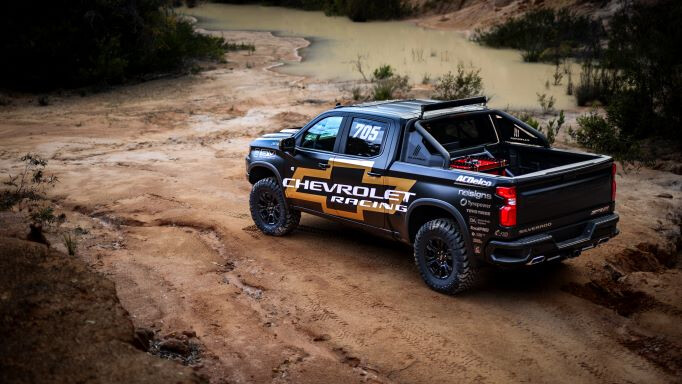
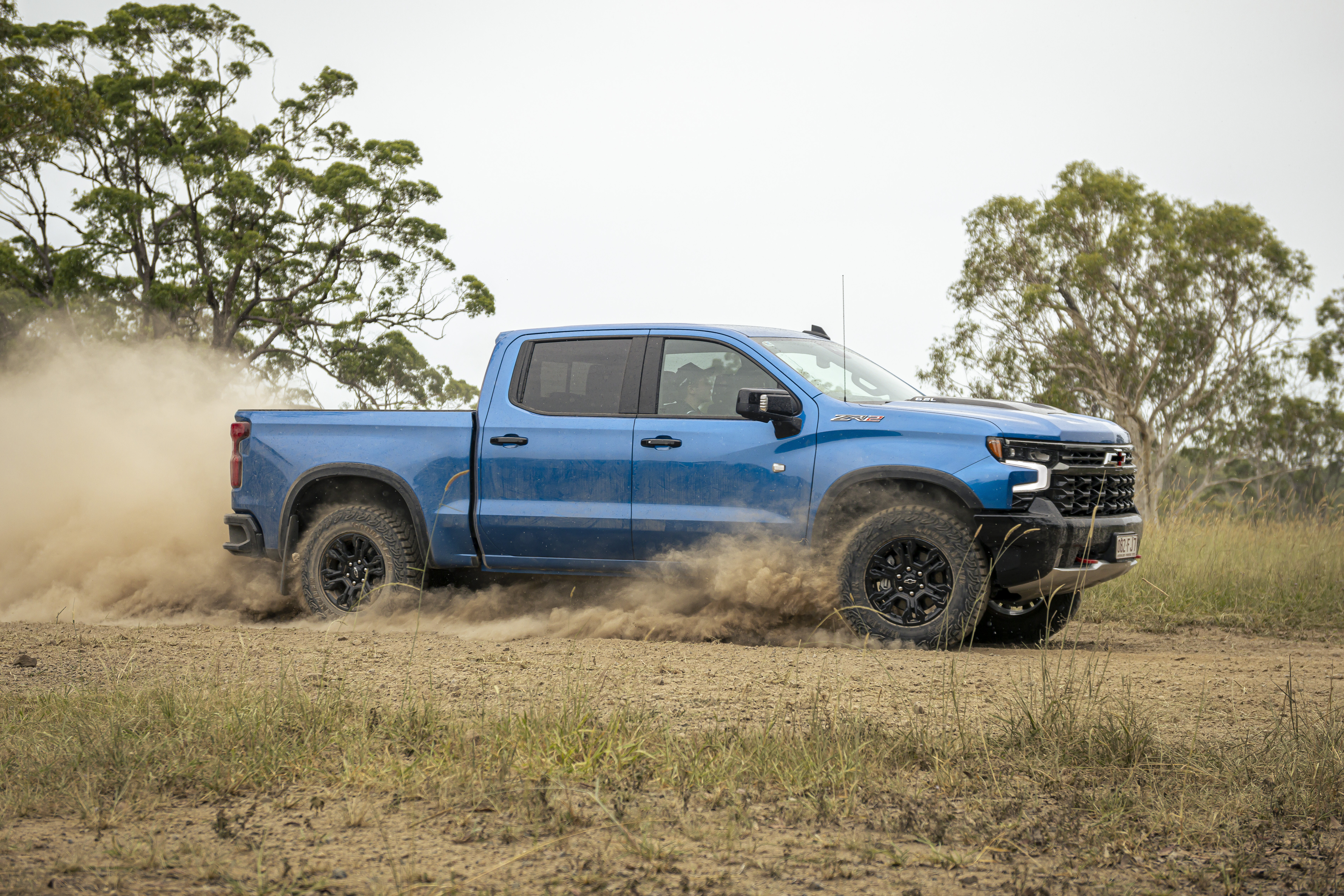
The ZR2 Silverado was developed with Chad Hall Racing in the USA’s ‘Best in The Desert Series’ and at big events like the Baja 500- and 1000-mile races. They ran the Silverado as a production vehicle for years before the introduction of the ZR2 road vehicle, developing components like the Multimatic DSSV dampers and other hardware to suit the tough endurance conditions. The Hall Racing ZR2 Silverado has made this class its own with multiple wins and championships.A small team of employees at GMSV’s Melbourne headquarters took it upon themselves, working after hours to build this Silverado to show what is possible and how it might look in Australia.Officially only a concept vehicle at this stage, it has been built to full-approved specification to race Class 7 in Australia. Aside from the as-mentioned safety equipment, the only other gear fitted to it include a larger fuel cell mounted in the tray of the vehicle, and taller 35s that replace the standard 33-inch tyres.
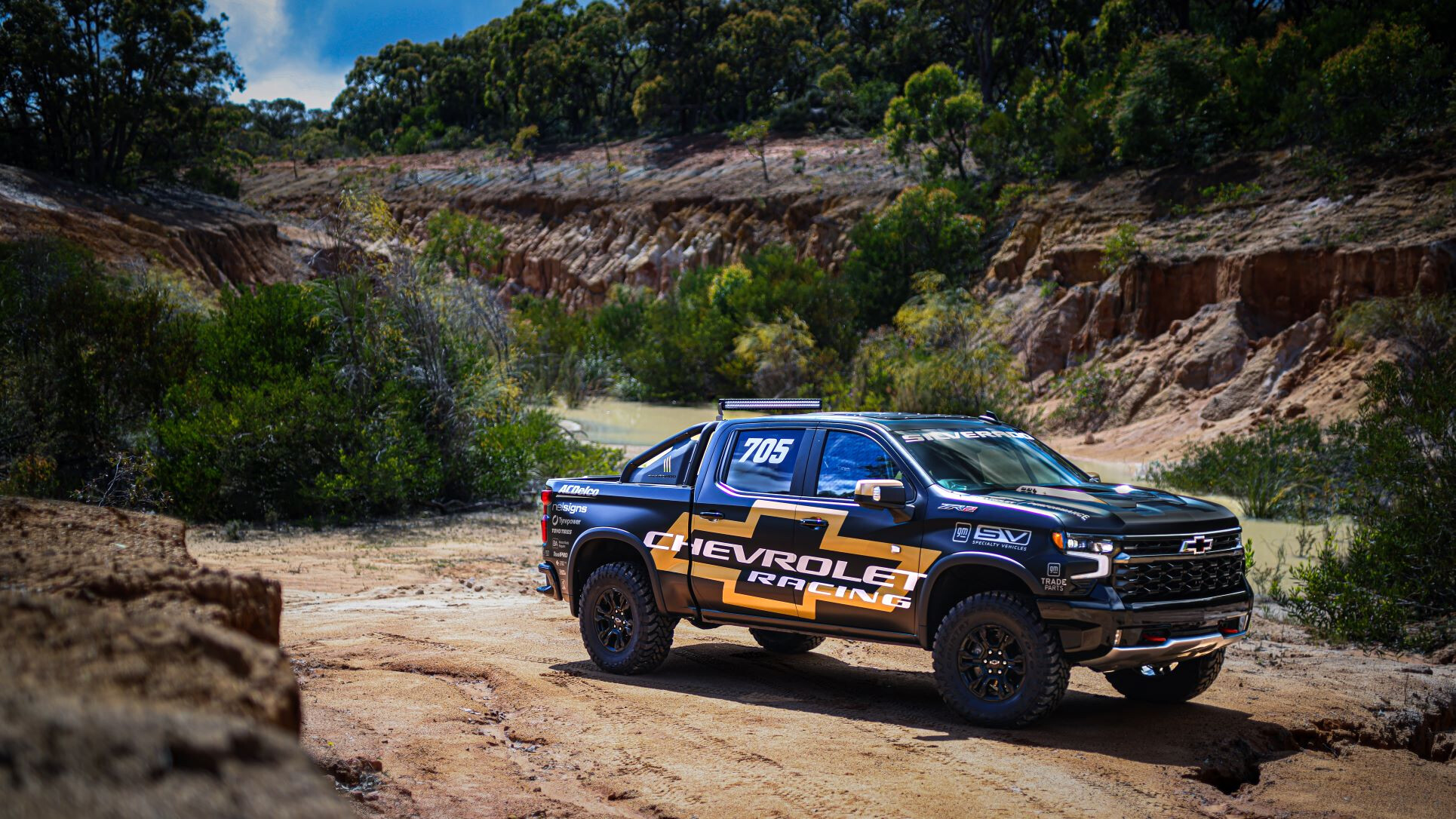
Suspension hardware remains standard, but the DSSV dampers have been re-calibrated for race use. GMSV was quick to point out that the single DSSV damper remains at each wheel, saying that one is enough with the multimatics, even though Class 7 regulations allow for two shock absorbers per tyre.The 6.2-litre V8 engine and transmission are also standard, but a freer-flowing and awesome-sounding exhaust system has been fitted.
A factory-backed ZR2 Silverado entry from GMSV could take the Ford versus Chevrolet rivalry from the circuits of V8 Supercars to the dusty tracks of outback Australia as soon as 2024
Class 7 vehicles are usually some of the slowest vehicles on the rough off-road racing tracks, but clever preparation and driving to the conditions and vehicle capabilities make for compelling racing for those involved. The class had been dominated in recent decades by Queenslander Geoff Pickering and his all-conquering Pajero, which enjoyed limited support from Mitsubishi Australia over the years. Bruce Garland also ran a Class 7 Isuzu MU-X at some events including the Finke Desert Race with support from Isuzu Ute Australia.
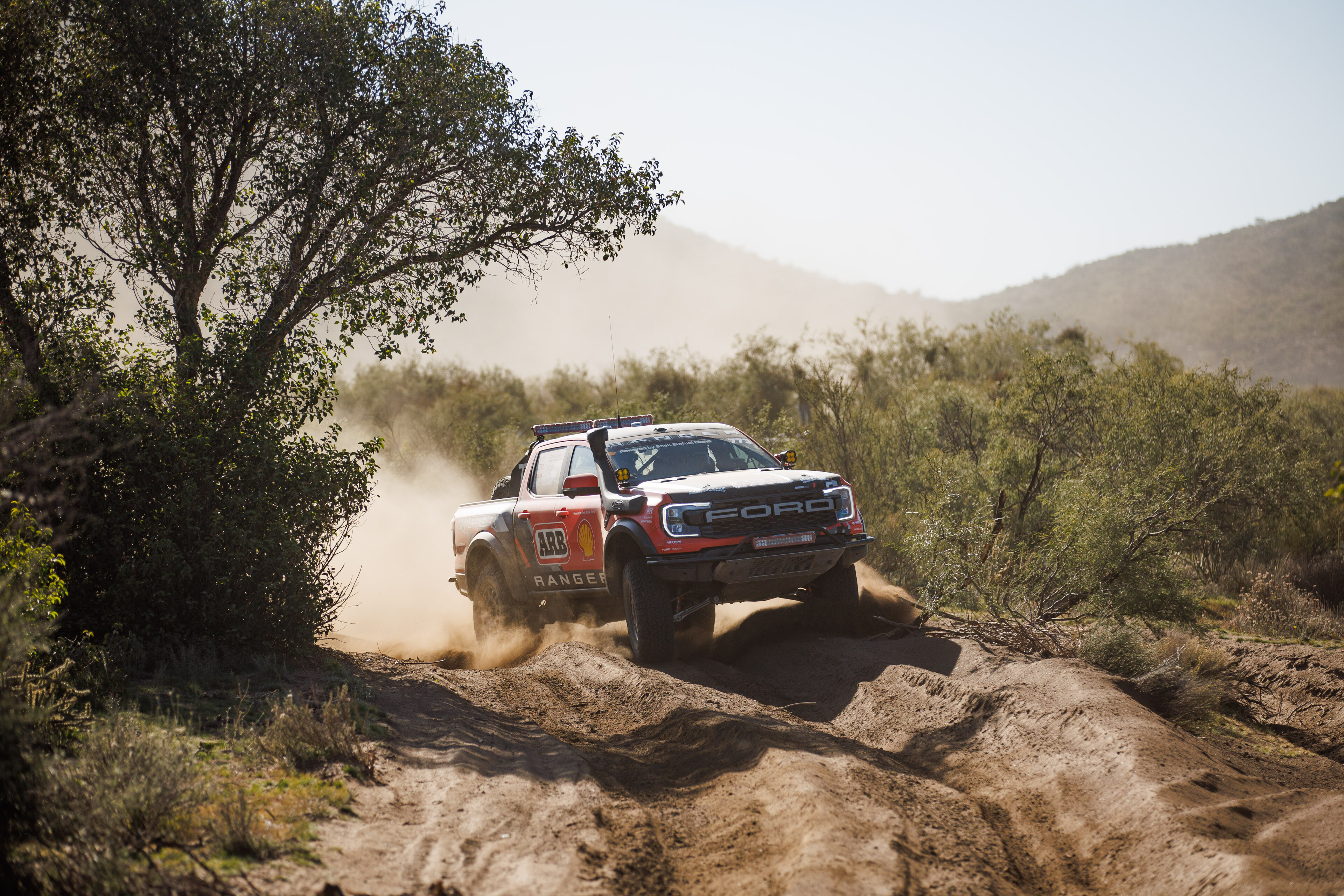
With Ford Australia taking a production class Ranger Raptor to Mexico last year, where it competed in and completed the gruelling Baja 1000 race – and with the possibility of Ford running a Raptor back in Australia – a factory-backed ZR2 Silverado entry from GMSV could take the Ford versus Chevrolet rivalry from the circuits of V8 Supercars to the dusty tracks of outback Australia as soon as 2024.The ZR2 concept vehicle will be shown at various events around Australia including this weekend’s National 4×4 and Outdoors Show in Brisbane (March 17-19) and hopefully we’ll see it tearing up the track at the Finke or in the Safari next year.
GMSV’s 2023 Chevrolet Silverado pick-ups have been revealed for Australia, and they come with a few changes. Gone is the previous entry-level model, the LT Trail Boss, with a new hero model now positioned at the top of the two-model range.
The Chevrolet Silverado LTZ Premium becomes the entry-level rig at $128,000 (plus on-road costs), while the new ZR2 tops the range from $133,000 (+ORC).Both 1500 trucks are powered exclusively by GM’s 6.2-litre petrol V8 engine backed by a 10-speed transmission and 4×4 transfer case that offers 2WD, on-demand 4WD and 4×4 in both high and low range. The engine makes a stout 313kW and 624Nm and is officially rated to return 12.2L/100km on the combined cycle.
All Australian-delivered LTZs come equipped with the Z71 package, which is an option in the USA. This ensures they get the two-speed transfer case, auto-locking rear differential and underbody protection, so it’s essentially an off-road package.
The DSSV shocks soften at low speed to allow a more compliant ride and free up wheel travel
The ZR2 was a new model for the Silverado back in 2022, and this is the first time we’ve seen it in Australia. It was previously applied only to the mid-size Chevrolet Colorado utes and designates the premium off-road models.Like the Colorado ZR2, the Silverado’s key components are the DSSV (Dynamic Suspension Spool Valve) dampeners from Multimatic. These shock absorbers were developed and used by high-end performance sports cars and even F1 racing teams, but Chevrolet revalved them for off-road uses on its trucks.Put simply, the DSSV shocks soften at low speed to allow a more compliant ride and free up wheel travel, and then firm up at higher speeds to improve control and dynamics no matter what the terrain. And they work extremely well.
JUMP AHEAD
- Signficant changes
- Exterior
- Heavy hauling
- On-road driving
- Off-road driving
- VERDICT
- Specs: LTZ Premium
- Specs: ZR2
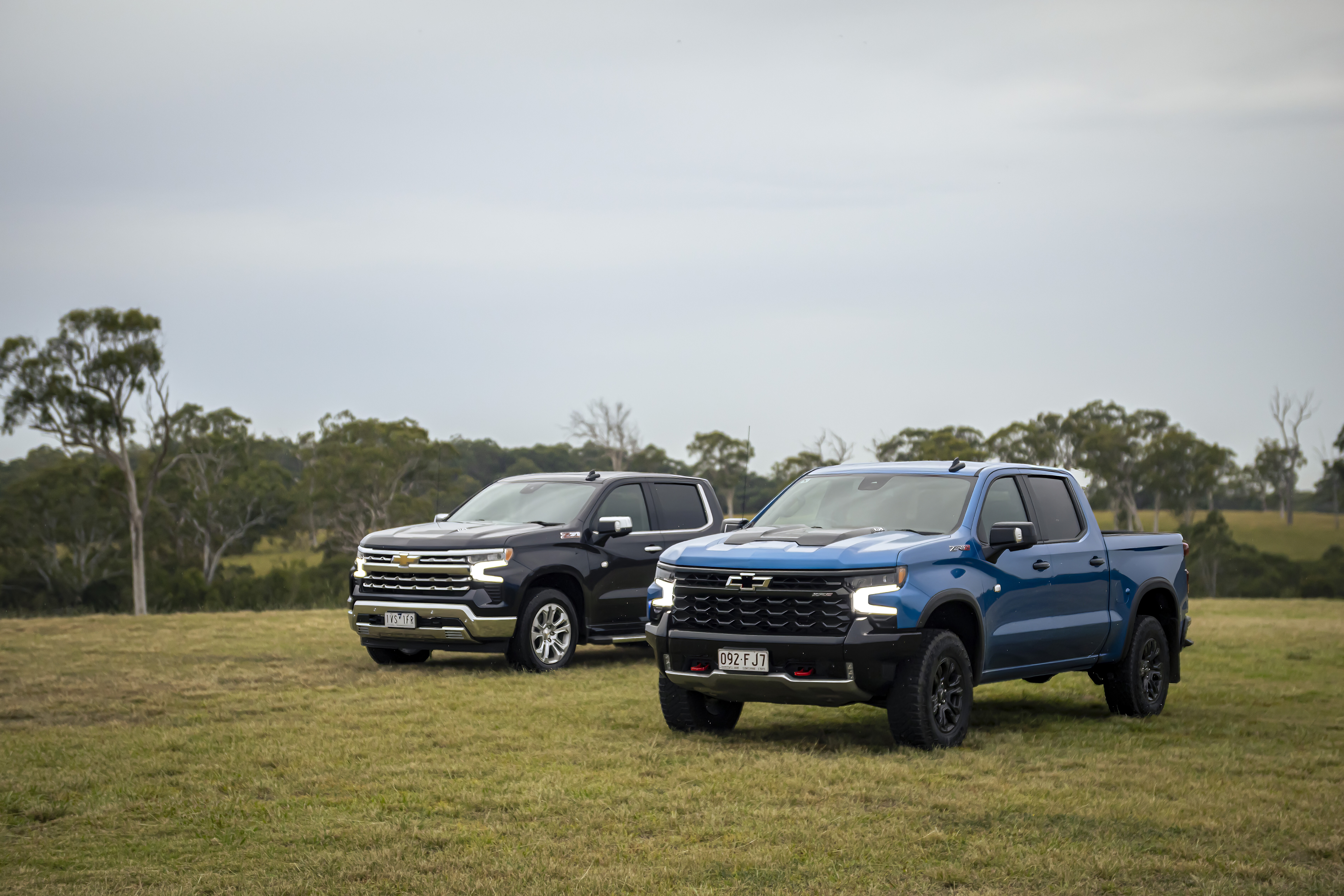
Significant changes
Both 2023 Silverado 1500s are essentially carried-over vehicles, but significant changes lie inside as both models get an all-new dash with a 13.4-inch colour touchscreen and 12.3-inch configurable instrument cluster, replacing the much smaller screen and analogue gauges of the older model.Apparently one of the reasons the LT Trail Boss – the better driving and value package of the past models – fell from favour, was that buyers of these rucks wanted a premium feel to the interior, and the LT’s standard cloth seats didn’t meet muster.
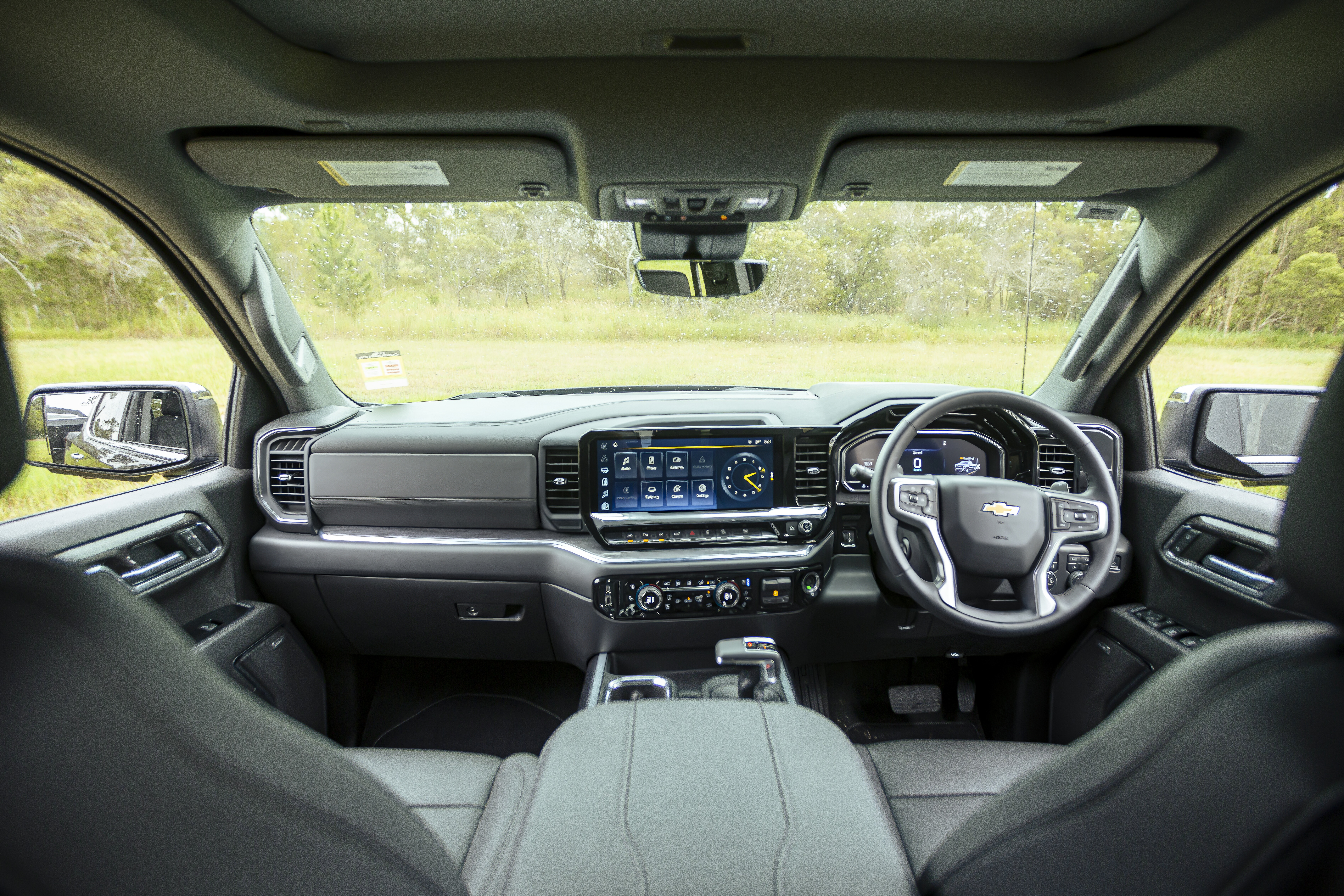
As such, both the 2023 models come with a premium interior including leather seats with heating and cooling on the front, power adjustment on the front and heating in the back. Rear-seat space is cavernous and accommodates three adults like none of the popular mid-size utes could ever achieve.The LTZ Premium still gets the most luxurious appointments, adding a power sunroof and Bose sound system over the ZR2, but driving and riding in both of these trucks is a comfortable experience. Both models get a full suite of safety kit including low-speed AEB (up to 80km/h) TPMS, rear cross-traffic alert, ESC, ABS, ETC, lane-keeping alert, and enough exterior cameras to populate a Hollywood film studio.
Exterior
The 2023 Silverado models are distinguished by a revised radiator grille and headlights, but you’d have to sit the old and new side by side to pick the differences.
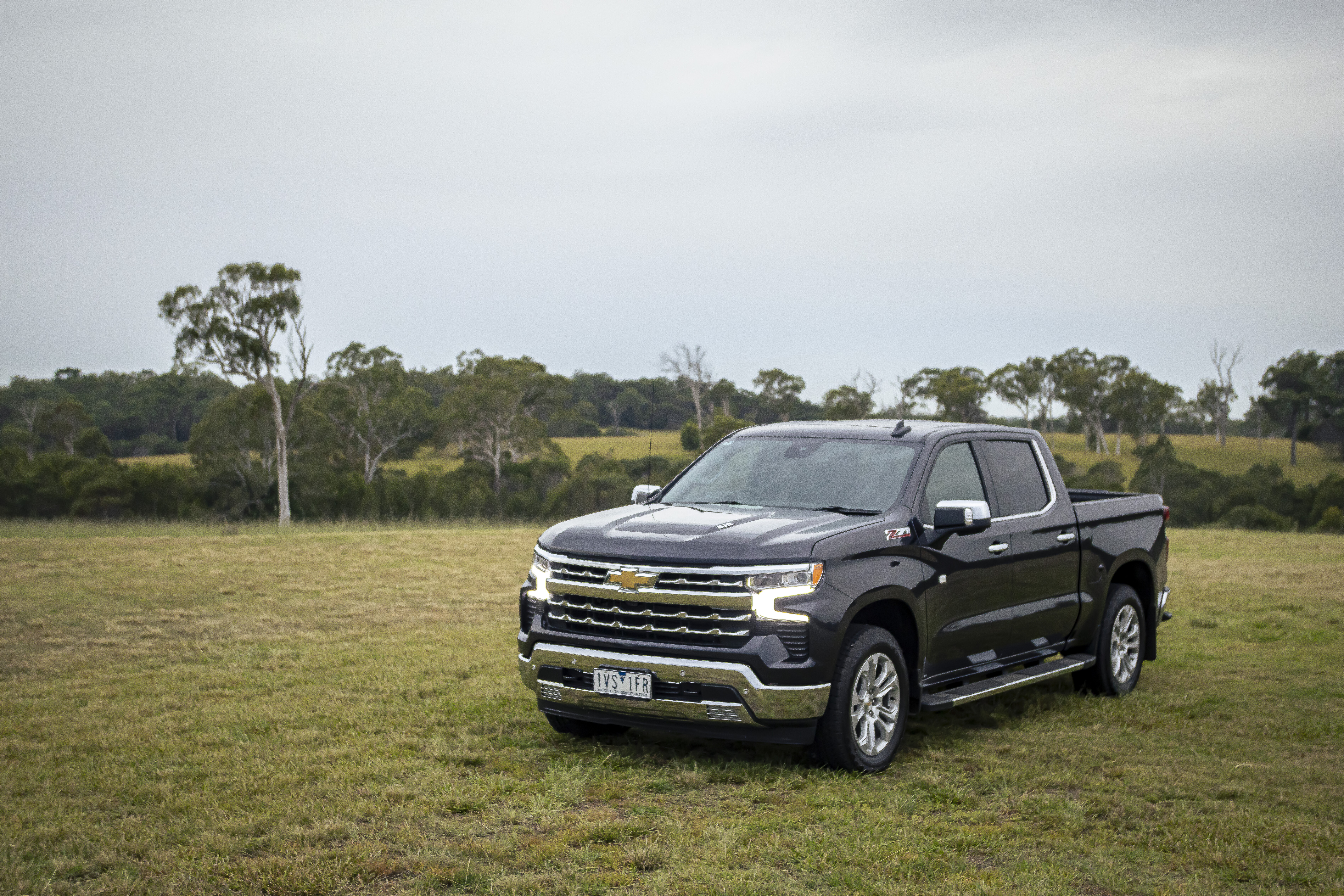
More significant are the visual differences between the LTZ and the ZR2. The ZR2 forgoes the LTZ’s chrome for blacked-out details, and it has a shorter front bumper that improves the truck’s approach angle. The ends of the front bumper are also removable for off-road use, which will make them more affordable to replace as you may not need to purchase an entire new bumper.
The ZR2 rides on 18-inch alloy wheels (black, of course) wearing practical sized 275/70-18 Goodyear mud-terrain tyres instead of the 20-inch wheels and low-profile tyres fitted to the LTZ Premium. The ZR2 also benefits from aluminium underbody plates to protect from damage when driving off-road, and its DSSV-equipped suspension rides 67mm higher than the Z71 suspension on the LTZ.
Heavy hauling
Many buyers seek out these full-size trucks purely for their towing capacity, which is generally up to 1000kg more than anything a mid-size ute or 4×4 wagon can legally haul. For the 2023 Silverado, the tow rating is 3500kg when towing on a standard 50mm tow ball; but step up to a heavy duty 70mm tow ball and the capacity goes up to 4200kg for the ZR2 and 4500kg for the LTZ Premium. With this in mind, both models come with factory-fitted electric trailer brake controllers.Despite their massive cargo beds, what these full-size trucks don’t deliver on is payload – the LTZ can only legally carry 757kg, and 717kg for the ZR2. Most of our popular 4×4 mid-size utes can carry 900 to 1150kg on board. The GVM of the Silverado is 3300kg, while the GCM is 7160kg for the LTZ and just 6851kg for the ZR2.
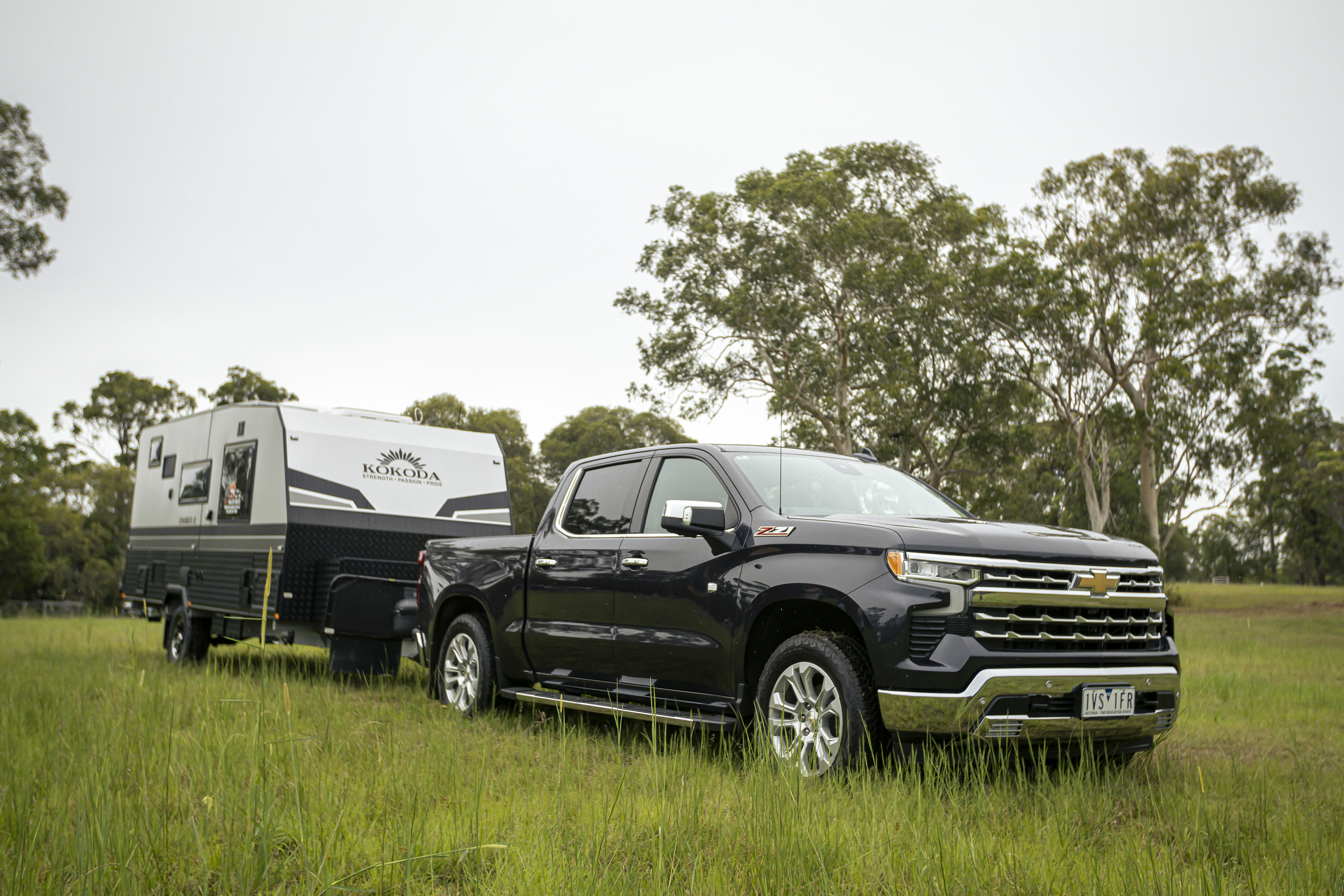
Look closer at these numbers and you’ll find that were you to load one of these trucks up to the maximum towing capacity – something that is never recommended, even if the numbers say you can – you would have barely enough payload left to put an adult driver behind the wheel. In the case of the ZR2, it’s just 68kg.We were given the opportunity to tow with both the LTZ and the ZR2, each with loads of around 3000kg. The V8 powertrain and driveline pulled the loads over the admittedly billiard-table-flat ground like they weren’t there, while the suspension and brakes performed well. The ZR2’s off-road-biased suspension more so, as the ride was much smoother and less affected by the trailer behind it.
On-road driving
Without the trailers behind them, the Silverados defy their size when you put your foot down, delivering surprising performance for such trucks. The petrol-fuelled V8 engine delivers diesel-like torque right off the bat and gets the truck moving in such a way that it’s easy to place it where you want it in freeway traffic.Around the suburbs it’s no trouble either, but parking in a shopping centre bay can be more of a challenge as the almost six metres of overall length will leave one end or the other hanging out.
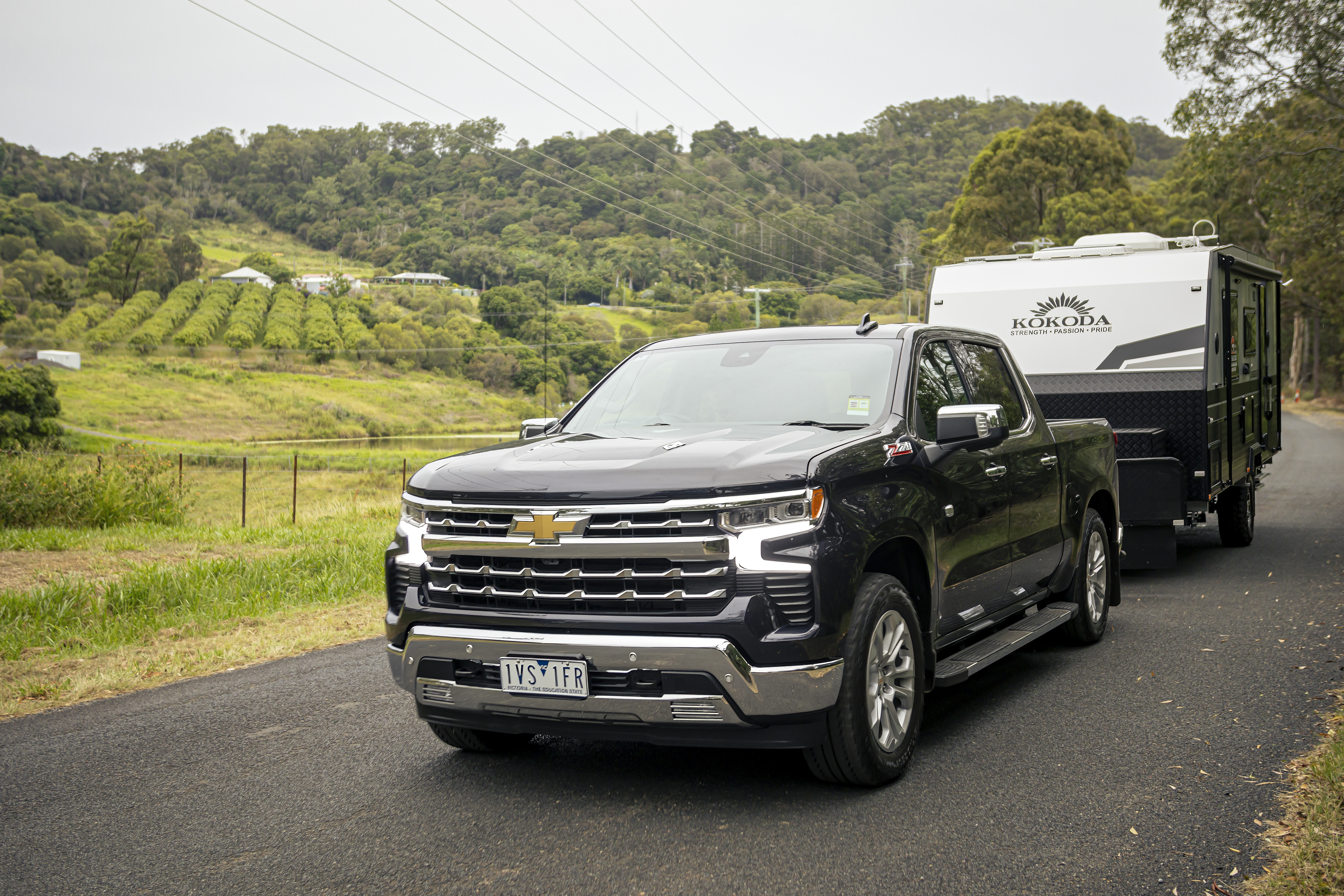
On less-than-perfect sealed backroads, the ZR2’s suspension was composed over undulations, but a little fussy crossing patched and repaired sections where the higher frequency small bumps were felt – but this is clutching at straws.It was more impressive over rougher terrain with bigger bumps which it handles well, controlling the trucks 2500kg of mass.
Off-road driving
Proper off-road, the ZR2 has a few tricks in its drive modes, which includes a Terrain mode that effectively make the brake pedal redundant. You press the accelerator to move at the speed you want, and when you lift off the vehicle automatically applies the brakes to bring the car to a stop, no matter the angle it is on.
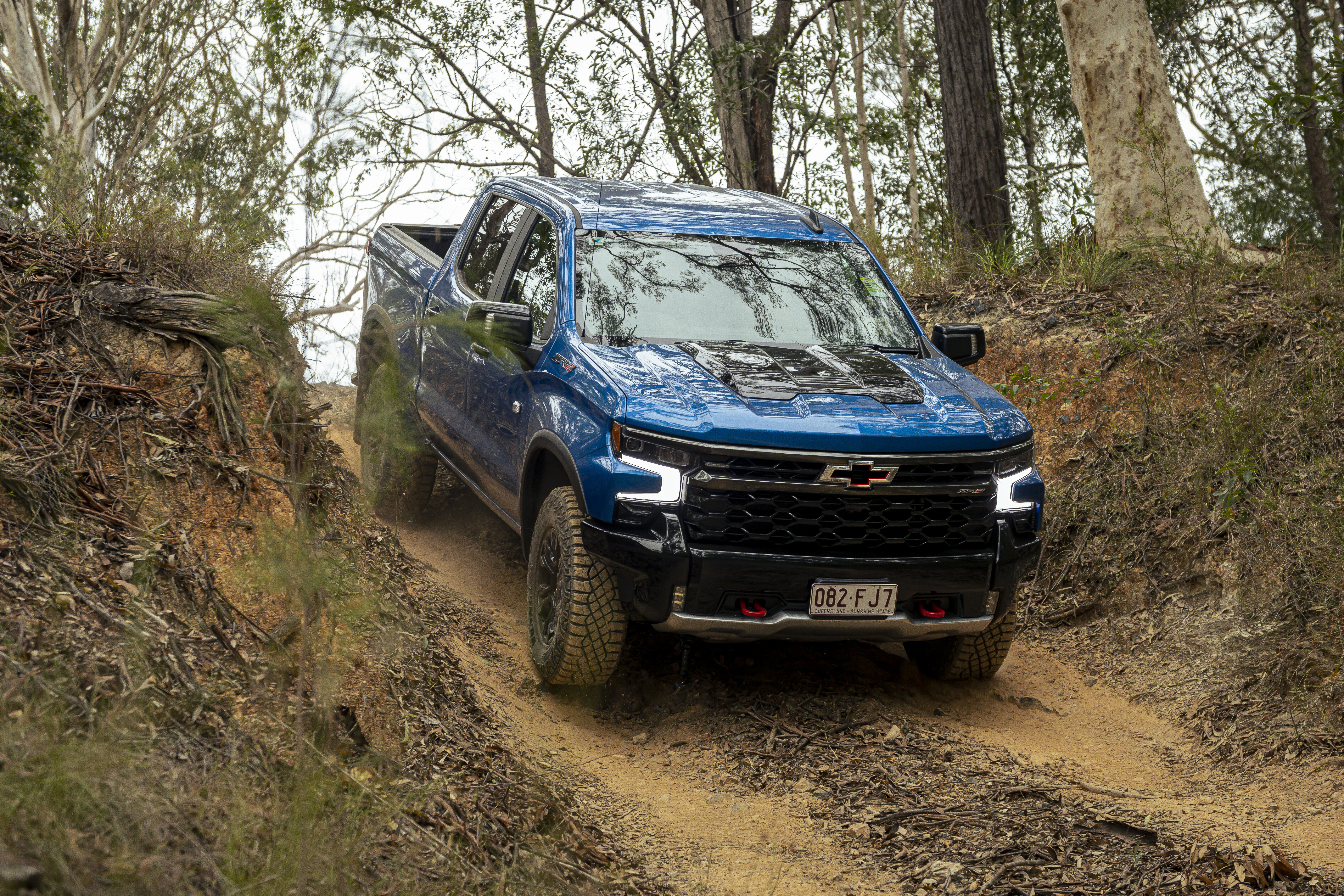
Another mode allows you to drive around at a set low speed using no pedals at all, like an off-road cruise control. While these modes seem like answers to questions nobody ever asked, they are there to make off-road driving easier for the inexperienced driver. More importantly, the ZR2’s mud-terrain pattern tyres, DSSV-equipped suspension and driver-actuated front and rear locking differentials are what make it a stand-out off-roader.
Verdict
The Silverado 1500 would be an easy vehicle to live with, particularly if you lived out of town and were not using it in congested or built-up areas, as there’s no hiding its sheer size and presence. It is a superb touring truck that will effortlessly eat up long-distance miles in comfort, towing most of what you could ever need to.The rear seat accommodation makes it ideal for families doing such trips, particularly those with older teenagers that will appreciate the legroom that can’t be matched by any of the smaller utes.The lack of a diesel engine will be a disappointment for many buyers, but it seems manufacturers and importers of these 1500 trucks seem to think we’ll be happy with petrol. The fact is, there are not many diesel offerings for them in their home country and the tiny market for them in Australia excludes any special models for us.
The 1500 class pick-up market continues to grow in Australia through both independent importers/convertors, as well as factory offerings. It is about to get a whole lot more competitive, with the official entry of the Ford F-150 to Australia later this year starting at just $106,000, and the likely introduction of the Toyota Tundra in the coming years.At the moment the only real competitor to the Silverado 1500 is the Ram 1500, which is the sales leader and offers a broader product range that includes a more affordable older generation of truck as well as the newer DT premium vehicles, including the $200,000 supercharged RAM TRX.The TRX is the only real competitor to the ZR2 in terms of all-road performance, but there’s a big difference there in terms of both price and performance, so they are both in a league of their own.
Specs: LTZ Premium
| Engine | 6.2L V8 |
|---|---|
| Max power | 313kW |
| Max torque | 624Nm |
| Transmission | 10-speed automatic |
| Transfer case | Dual range with electronic selectionu00a0 |
| Suspension | Z71 off-road package |
| Kerb weight | 2543kg |
| GVM | 3300kg |
| Payload | 757kg |
| Towing capacity | 3500kg (50mm ball); 4500kg (70mm ball) |
| Fuel tank capacity | 91Lu00a0 |
| Departure angle | 21.0 degrees |
| Rampover angleu00a0 | 20.0 degrees |
| Approach angleu00a0 | 21.0 degrees |
| Ground clearanceu00a0 | 228mmu00a0 |
| Price | $128,000 + on-road |
Specs: ZR2
| Engine | 6.2L V8 |
|---|---|
| Max power | 313kW |
| Max torque | 624Nm |
| Transmission | 10-speed automatic |
| Transfer case | Dual range with electronic selectionu00a0 |
| Suspension | ZR2 package |
| Kerb weight | 2583kg |
| GVM | 3300kg |
| Payload | 717kg |
| Towing capacity | 3500kg (50mm ball); 4200kg (70mm ball) |
| Fuel tank capacity | 91Lu00a0 |
| Departure angle | 23.3 degrees |
| Rampover angleu00a0 | 23.4 degrees |
| Approach angleu00a0 | 31.8 degrees |
| Ground clearanceu00a0 | 296mmu00a0 |
| Price | $133,000 + on-road |
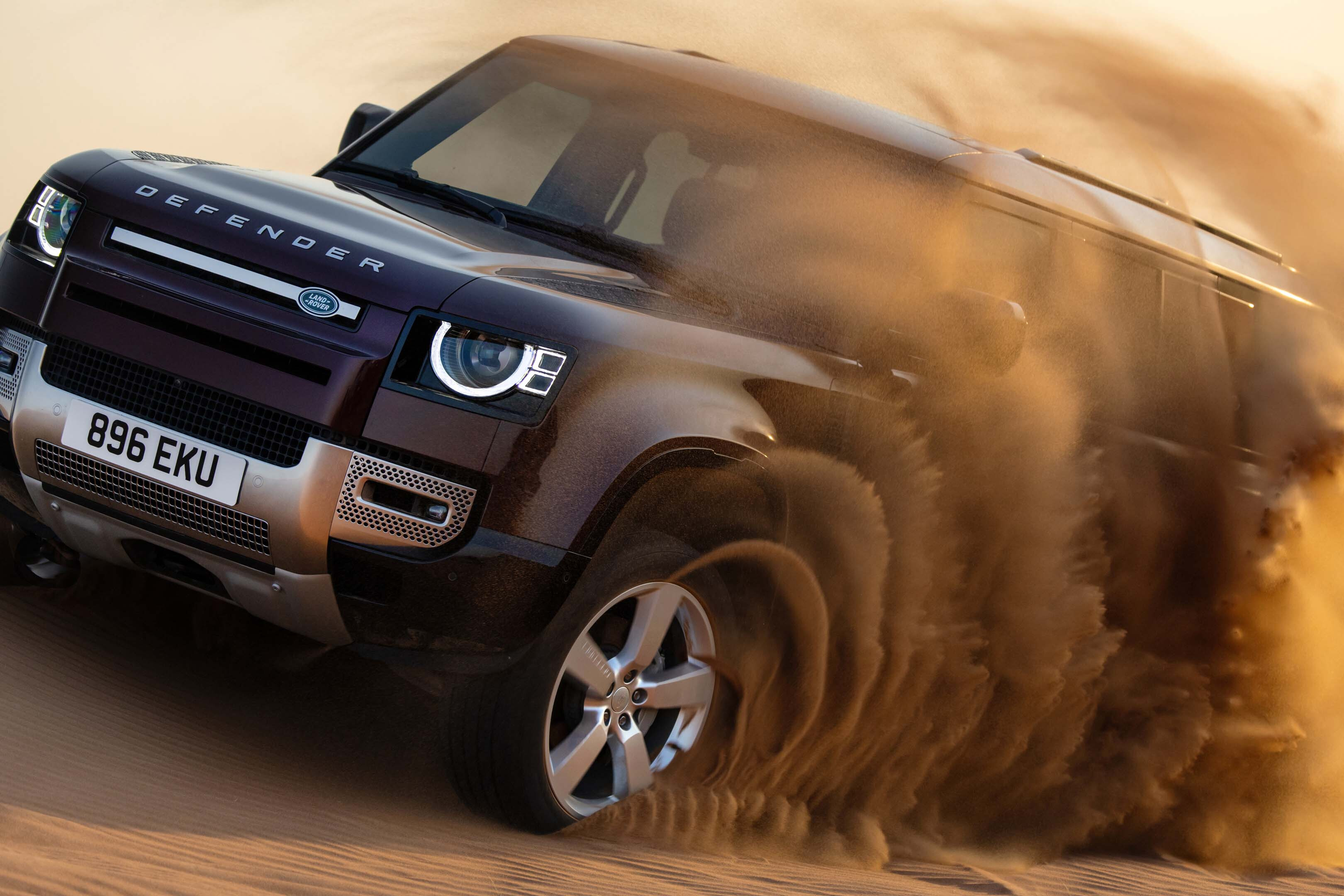
UPDATE: Defender 130 driven ahead of Australian launch
Before it gets to Australia, Wheels editor Enright has been out in the Middle East to test the new Defender 130’s mettle. Read about it at the link below.
The story to here
June 2022: Defender 130 Australian pricing revealed
Snapshot
- 2023 Land Rover Defender 130 revealed with eight seats
- Five-seat variant available overseas; eight-seater only for Australia
- Priced from $124,150 before on-road costs
The extended Land Rover Defender 130 has debuted with room for eight passengers.
Local order books open on August 1, with pricing starting from $124,150 before on-road costs.
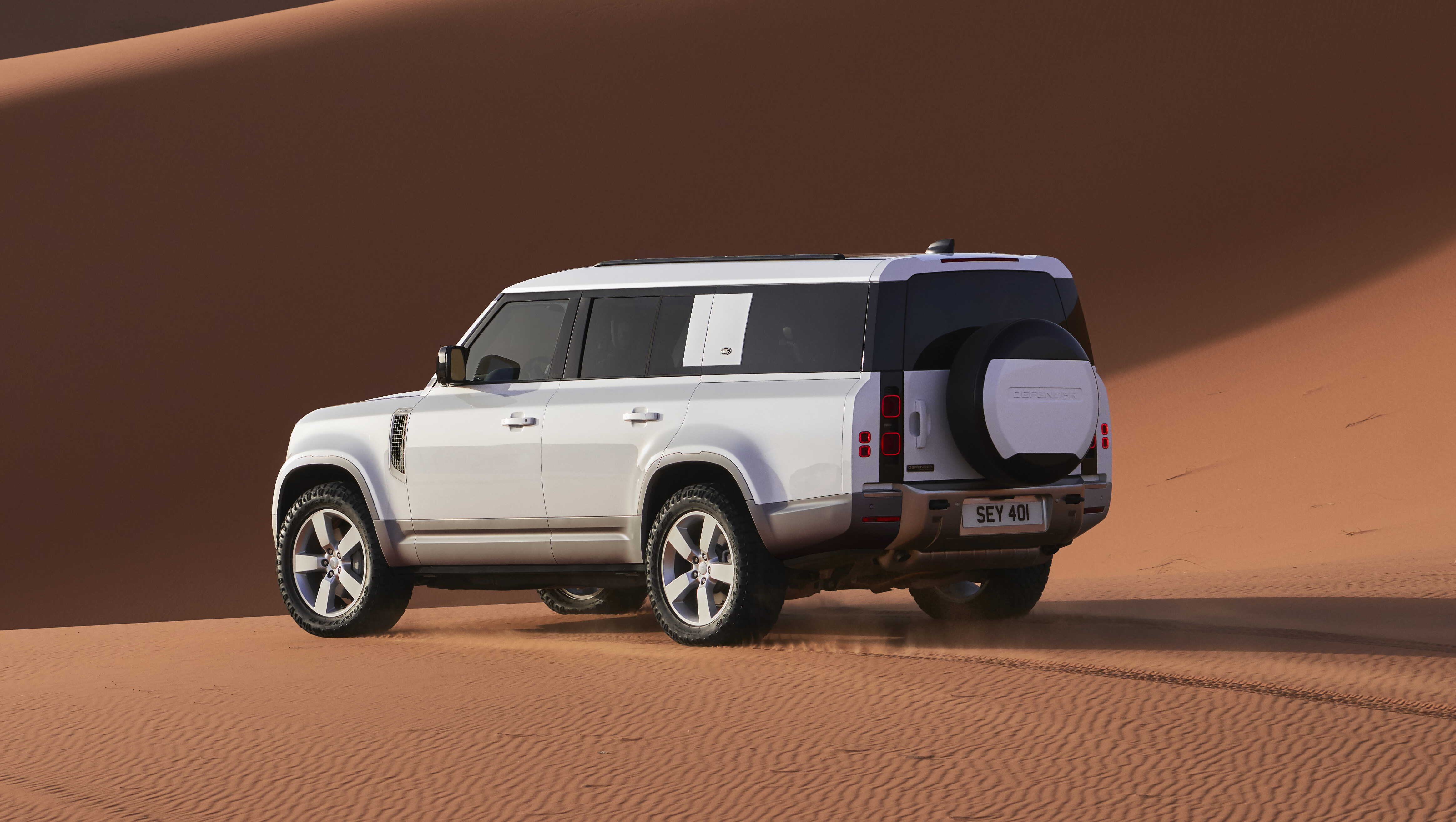
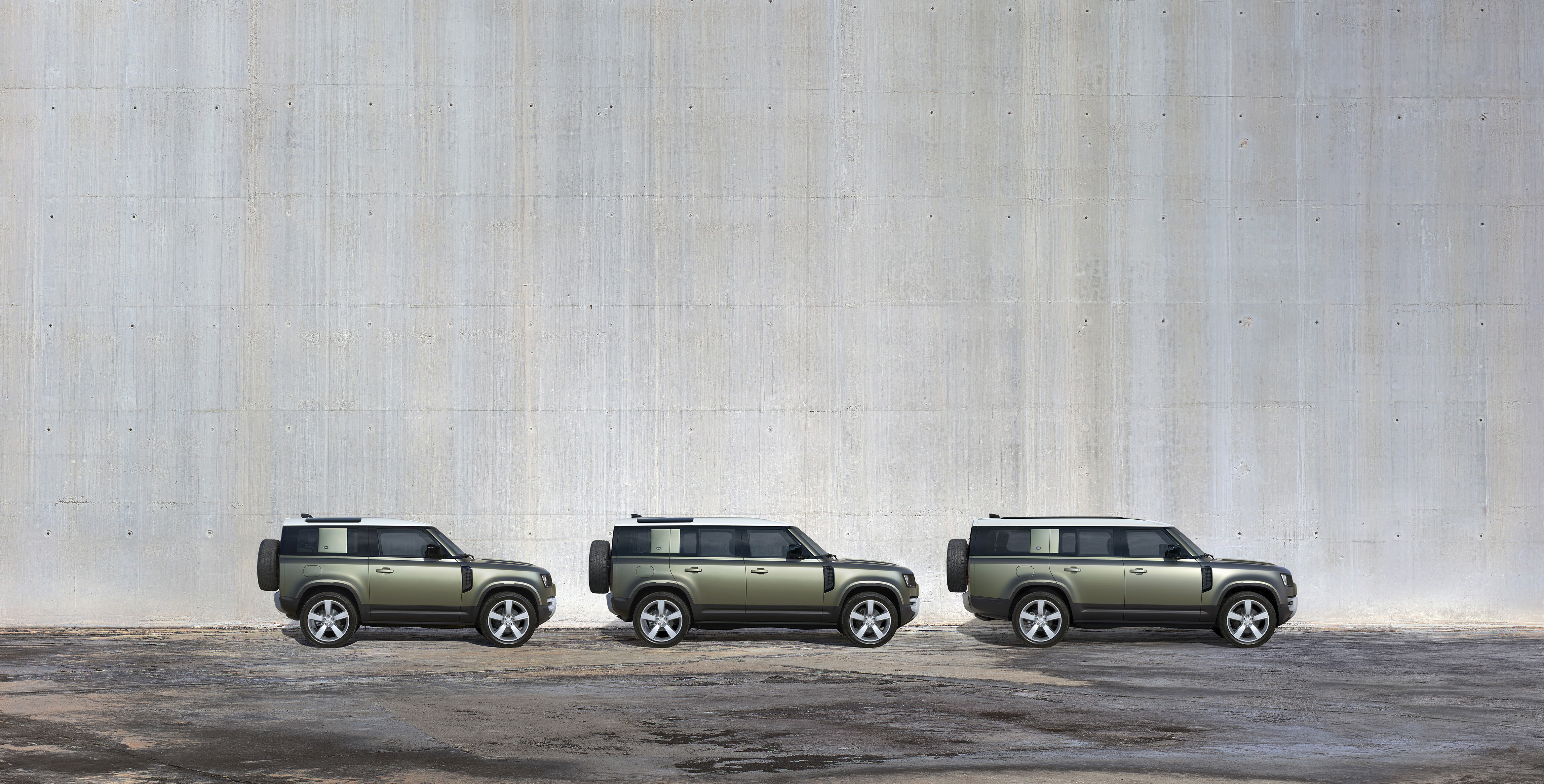
Unlike the previous Defender 130, which featured a 130-inch (3302 millimetre) wheelbase, the modern version rides on the same 3022mm wheelbase as the regular Defender 110 – but with added length behind the rear axle.
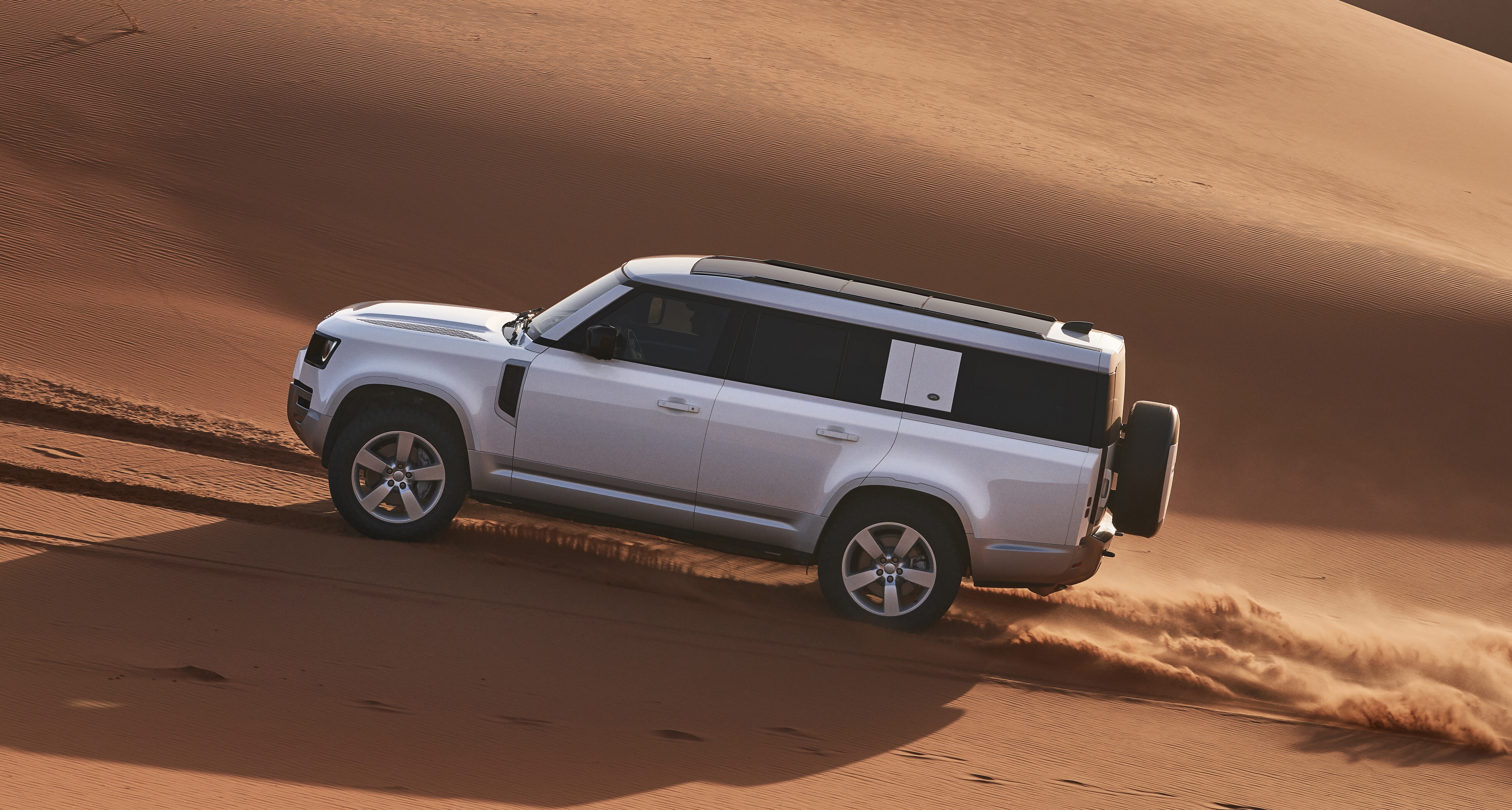
As such, it is 340mm longer at 5358mm in overall length, with identical width and height to the Defender 110.
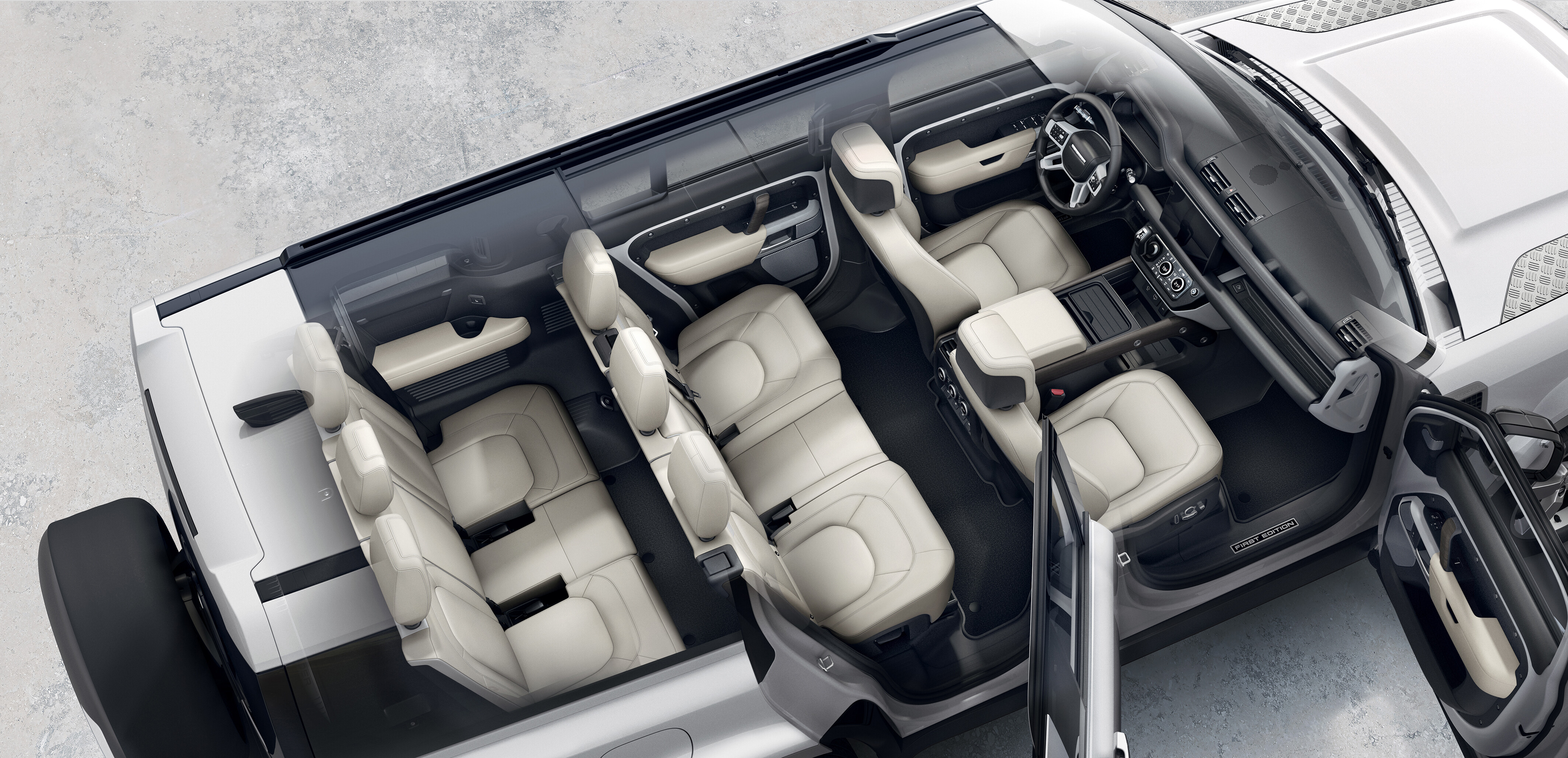
The additional sheet metal in the rear overhang has allowed Land Rover to cater for seating for up to eight passengers, with a third-row that is more comfortable for three adults – up from the two seats best suited for children in the Defender 110’s third-row.
Passengers seated at the very back are treated to; a second sunroof, air vents with four-zone climate control, padded outboard armrests, USB-C charging ports and optional heated seats. The brand has also introduced raised stadium-like seating in the second and third rows for greater visibility.
Isofix child seat anchor points are available on the outer seats in the second and third row, and the front passenger seat.
There is 389 litres of boot space with all three rows in position – up 100L over the 110. This can expand to 1232 litres with the third-row folded, which can be completed electronically, or 2291 litres with both rows down.
A five-seater version of the Defender 130 will offer additional luggage space, with room for 1329 litres behind the second-row, or 2516 litres with it folded down.
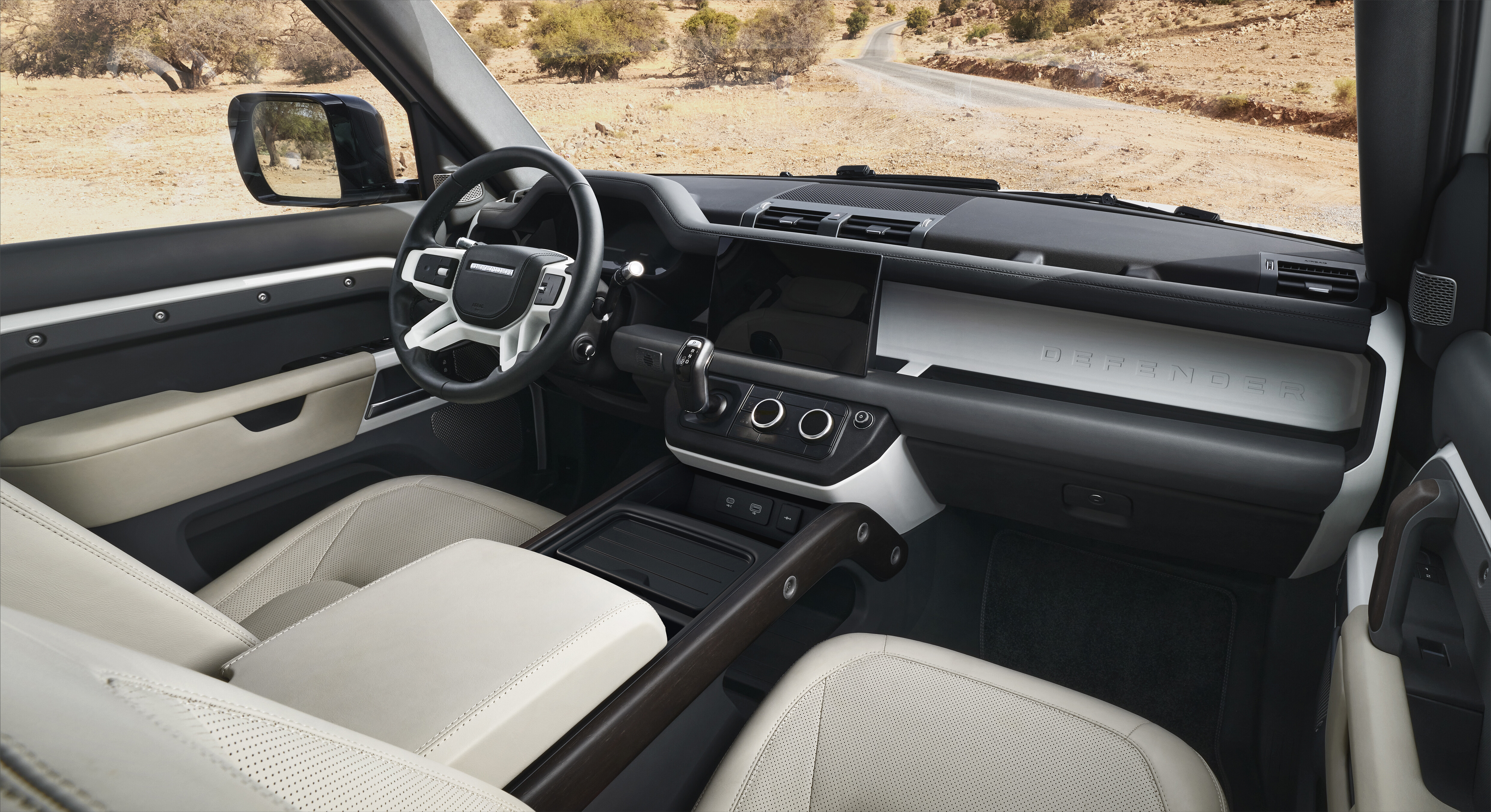
Unique finishes include; a new Sedona Red exterior paint colour, an Extended Bright Pack exterior trim package, and a natural light oak wood veneer inside.
2024 Land Rover Defender 130 pricing
Prices exclude on-road costs.
| Model | Pricing |
|---|---|
| Defender 130 SE D300 | $124,150 |
| Defender 130 SE P400 | $131,650 |
Features
SE
Engine, drivetrain and fuel economy
Locally, the Defender 130 will be available with 48-volt mild-hybrid petrol and diesel inline-six powertrains.
This includes a 3.0-litre inline-six petrol engine, available in 294kW/550Nm P400 guises, or a 3.0-litre six-cylinder turbo-diesel 221kW/650Nm in D300 form.
There is also a 221kW/470Nm petrol P300 and 184kW/600Nm diesel D250 tunes available overseas.
As with the Defender 90 and Defender 110, the engines are matched with an eight-speed ZF-sourced automatic transmission sending power to all four wheels.
Its 0-100km/h times are 6.6 seconds for the P400 and 7.5 seconds for the D300.
The 386kW/625Nm 5.0-litre supercharged V8, available on the Defender 90 and 110, will not be offered in Defender 130 guise – at least initially.
Safety
All variants of the Land Rover Defender, excluding the 110 Hard Top, are covered by a five-star ANCAP safety rating, based on testing conducted in 2020. However, ANCAP is yet to confirm if this rating will extend to the Defender 130.
Six airbags (dual frontal, side chest, side head) feature across the range.
The following active safety equipment is included as standard:
Off-road specifications
Standard off-road features include; adaptive air suspension with up to 71.5mm of additional lift at the front and 73.5mm at the rear, a low-range transfer case, and Land Rover’s Terrain Response system.
The additional rear overhang affected the departure angle of the Defender 130, with Land Rover installing a “subtle boat tail-style uplift” into the back end, for a 28.5-degree departure angle – compared with 40 degrees in a Defender 110 with air suspension.
A water wading depth of 900mm is claimed, while the approach and rampover angles remain identical to the Defender 110 at 37.5 degrees and 27.8 degrees, respectively. Braked towing capacity is rated up to 3000 kilograms.
Warranty and servicing
As with the wider Land Rover range, the Defender is covered by the marque’s five-year/unlimited-kilometre warranty.
A complimentary 12-month roadside assistance program is included, which can be extended every year with annual servicing at a Land Rover dealership for up to eight years.
Service pricing can be pre-purchased, consisting of a five-year package priced at $2250 for the P400 and $2650 for the D300.
Availability
MARCH 2023: The 2024 Land Rover Defender 130 is available to order now, with Australian deliveries likely to begin in around 12 months.
The best outdoor GPS device will let you navigate, track your route and monitor your performance wherever your sense of adventure takes you. If you’ve been thinking about getting a GPS device, we’ve reviewed seven of the best from Coros, Wahoo and Garmin.
From a range of watches, handheld and cycling GPS devices, we’ve reviewed the most versatile and functional. Those that are going to give you the best performance across a range of outdoor activities. The basic function of an outdoor GPS is to pinpoint your location, but these devices are capable of a whole lot more.
To find the very best, we’ve compared the main functions of each GPS device, as well as the features, size, weight and battery life. Whether you want to leave the trails behind, explore new destinations or just have a backup safety device – we’ve got you covered with these excellent outdoor GPS devices.
| Type | Screen size | Weight | Battery life | |
|---|---|---|---|---|
| Apple Watch Ultra | GPS watch – touchscreen | 49mm | 61.3g | 36 hours, or 60 hours on low |
| Garmin Enduro 2 | GPS watch – touchscreen | 35.56mm diameter | 70g | 34 days in smartwatch mode |
| Garmin fenix 7S | GPS watch – touchscreen | 33.02mm diameter | 79g | 18 days in smartwatch mode |
| Garmin epix (Gen 2) | GPS watch – touchscreen | 33.02mm diameter | 76g | 16 days in smartwatch mode |
| Garmin Instinct 2 Solar GPS Watch | GPS Watch – Black and White Screen | 23 x 23mm | 53g | 28 days |
| Casio G-Shock G-Squad Pro | GPS watch – touchscreen | 65.6 x 56.3mm | 103g | Approx 36 days |
| Coros Apex Pro GPS Watch | GPS Watch – Touchscreen | 1.2-inch | 59g | 30 days in smartwatch mode |
| Garmin Montana 700i | Handheld GPS – touchscreen | 6.48 x 10.80cm | 410g | 18 hours in GPS mode |
| Garmin GPSMAP 66i | Handheld GPS – colour screen | 3.8 x 6.3cm | 230g | 35 hours at 10-minute tracking |
| Garmin eTrex 32x | Handheld GPS – Colour Screen | 35 x 44mm | 141.7g | 25 hours |
| Wahoo ELEMNT BOLT Cycling GPS | Cycling GPS – Colour Screen | 2.2-inch | 68.38g | 15 hours |
| Garmin Edge 830 Cycling GPS | Cycling GPS – Touchscreen | 2.6-inch | 79.1g | 20 hours |
GPS WATCHES
Apple Watch Ultra
Apple has dived deeper into the outdoor adventure space with its Apple Watch Ultra. The Ultra combines exceptional technology with a host of easy-to-use features, in a GPS watch that you can take just about anywhere. It’s the merging of smartphone and outdoor adventure technology that we didn’t know we needed.
While it may not look too different to previous Apple Watches, the Ultra is made from aerospace-grade titanium and has a flat sapphire crystal display. This toughness will be appreciated when you start throwing yourself along a downhill track or carving up the slopes in winter.
The Ultra is designed with features for hardcore adventurers. Directly appealing to Garmin users with its new scuba-diving capacities and featuring sensors for everything from measuring blood oxygen and ECG readings, to altitude and water temperature.
But you don’t need to be Everest-ready to find a heap of useful features in this latest watch release from Apple. You can use Apple’s CarPlay on the Ultra to navigate on- and off-road, even when you are out of phone range. It also has the ability to detect a serious vehicle accident and call emergency services – and relay the coordinates if the wearer is unresponsive.
The Dual Band capacities make it a new market leader for pinpointing and navigating from your wrist. For exploring the trails you can use navigation apps including All-Trails and TopoMaps+. Plus, you can customise the Ultra’s bright orange Action button for instant access to whatever features you need the most at the touch of a button.
For hiking or riding trails, the Compass app has been redesigned, with options for either an analogue or digital view, plus options to see your latitude, longitude and elevation. Backtrack mode lets you retrace your steps, which is a standard feature across most GPS devices now. And no doubt a very handy one should you step off track.
Depending on what type of adventure you have planned, there are three interchangeable wristband options: a soft and flexible Trail loop band, a high-strength Alpine band and an Ocean band made from flexible fluoroelastomer.
What makes this GPS watch stand out from the others is the seamless communication features that Apple watches are known for. You can be camping and still call, message and send voice memos and emails from your wrist – without needing to be paired with a phone. Apple has even included a new wind-reducing technology to ensure clear phone calls wherever you are.
Downsides to the Ultra are that you will need an iPhone (if you don’t have one already) and the battery life is not – yet! – up to scratch for serious expeditions. The Ultra’s battery can last 36 hours – just a day-and-a-half – in normal mode, or 60 hours in Low Power mode, but you will lose functionality. While this is double the battery life of the previous Series 8, it is still only practical for a weekend adventure and not a long expedition.
Having said that, if battery power is not an issue for you, you are going to love the seamless functionality and endless features of the Apple Watch Ultra. Watch out Garmin – Apple is diving deeper.
Things we like
| Not so much
|

Specifications:
- Type: GPS watch – touchscreen
- Screen size: 49mm
- Weight: 61.3g
- Battery life: 36 hours, or 60 hours on low
- Type: GPS watch – touchscreen
- Screen size: 49mm
- Weight: 61.3g
- Battery life: 36 hours, or 60 hours on low
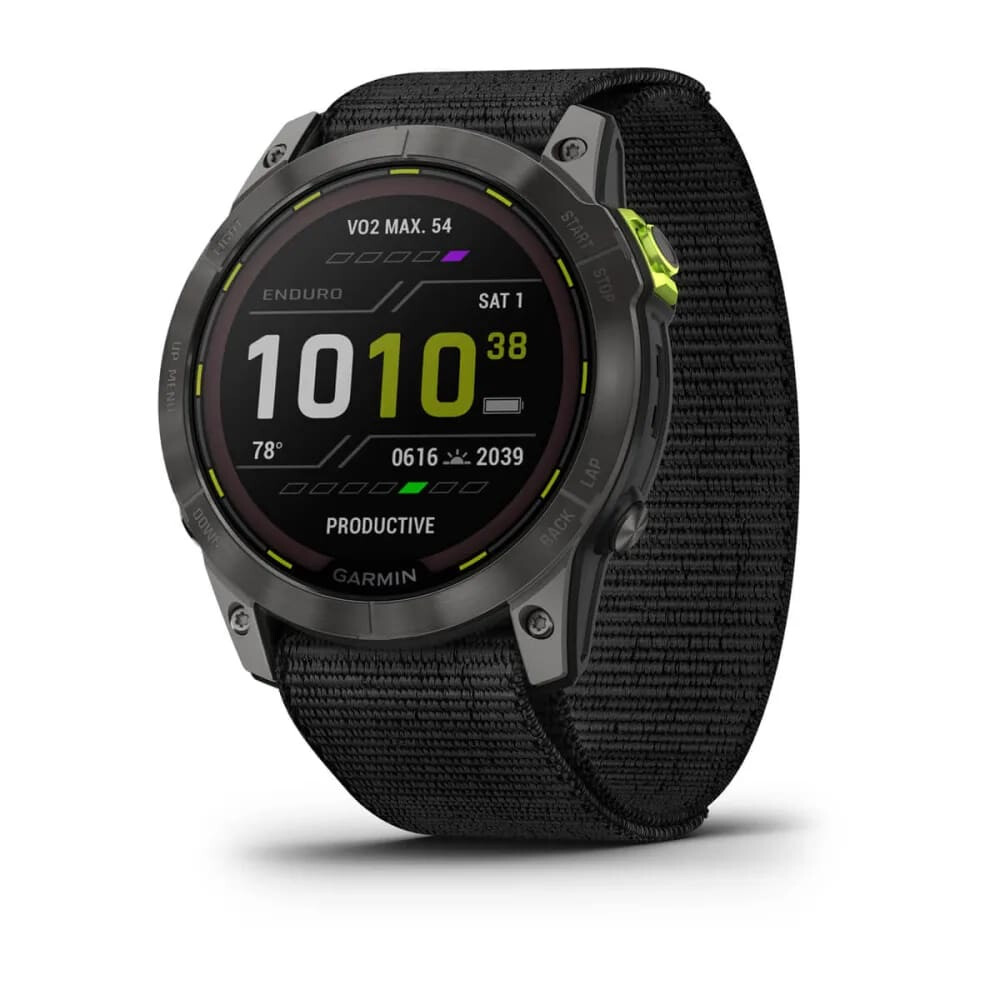
Garmin Enduro 2
If premium is the only way you roll, Garmin’s Enduro 2 is waiting to grace your wrist. It is rugged but lightweight and filled with the best features and sensors, yet still boasts excellent battery life. If you are not short on cash to splash on a GPS watch, the Enduro 2 is calling.
Garmin has made significant improvements to its Enduro GPS watch with this second version. It now has a touchscreen and topographical maps included – plus upgraded battery life. It boasts 34 days of battery life in smartphone mode, with an extra 12 days when solar charging via the tough Power Sapphire glass.
The topographical maps make navigating a breeze, with inclusions for trails and skiing. Plus, with the new touchscreen interface it is easier to find the right metrics and features for your day. It also has the bonus of a super bright flashlight, with adjustable light levels, perfect for camping – or those time you’re stuck without a torch.
The premium titanium construction brings all the toughness you need for the great outdoors, yet feels light on your wrist – because it is! If you need a watch for surfing or trail running, the 70g Enduro 2 is the lightest GPS watch we’ve reviewed.
All the Garmin features and functions are loaded on the Enduro 2 including Incident Detection, TracBack, navigation and elevation tools. There’s even a new SatIQ feature that automatically chooses the best GPS mode for your activity in order to conserve battery life.
Things we like
| Not so much
|
Specifications:
- Type: GPS watch – touchscreen
- Screen size: 35.56mm diameter
- Weight: 70g
- Battery life: 34 days in smartwatch mode
- Type: GPS watch – touchscreen
- Screen size: 35.56mm diameter
- Weight: 70g
- Battery life: 34 days in smartwatch mode
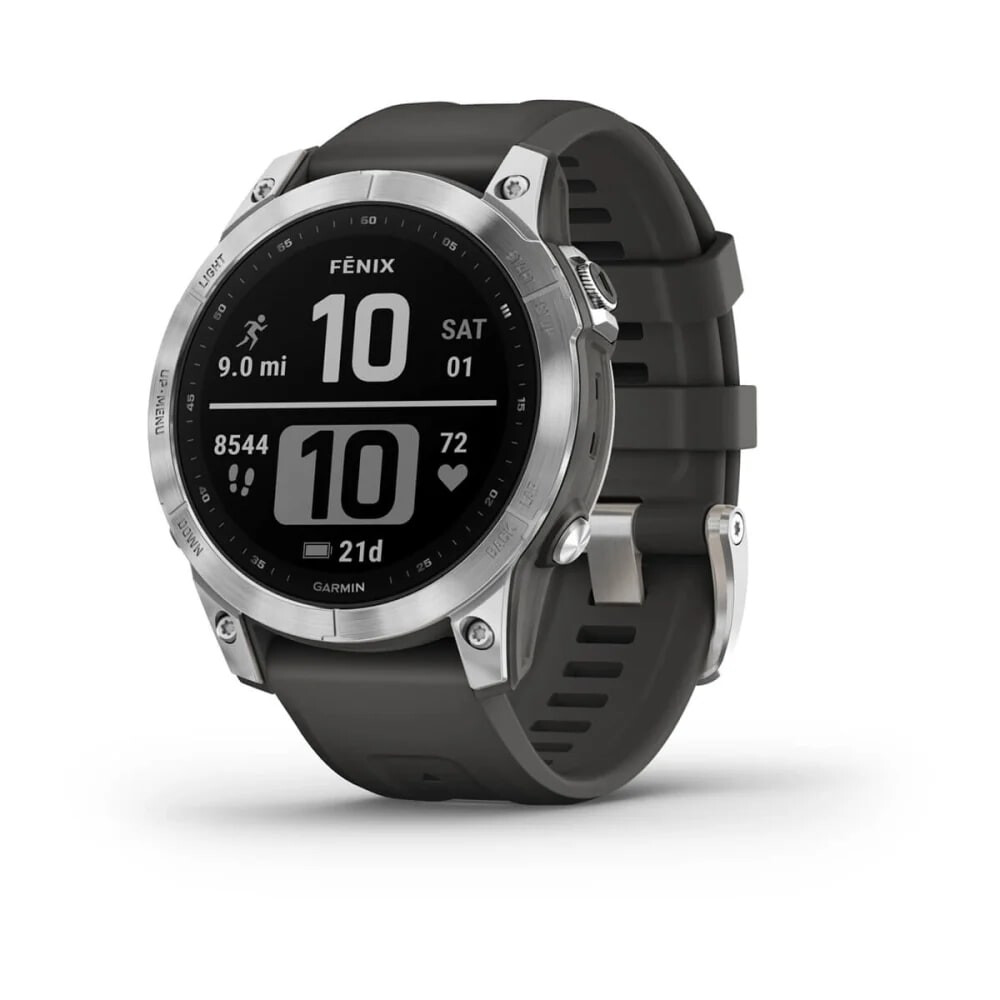
Garmin fenix 7S
Garmin’s fenix 7S should be your choice of GPS watch if you need a companion for extended backcountry adventures. The longer battery life, solar charging capability and all-round toughness make the best choice for off-grid trips.
The fenix 7S is housed in a fibre-reinforced polymer case and has been tested to USA military standards for thermal, water and shock resistance. Garmin’s Power Glass keeps the battery topped up during the day and will significantly extend the battery life. Despite its durability the responsive touchscreen is easy to use and navigate through the many different features on this watch.
If you do want a GPS watch for longer expeditions, and will rely on it when out of phone range, the fenix 7S can give you a lot more battery life – and therefore peace of mind – than many other watches. You can get 57 hours of battery life in GPS mode, 18 days in smartwatch mode, and up to 57 days in battery-saver mode.
You won’t be shy on features for outdoor recreation – the GPS connects to three satellite systems for accurate pinpointing and navigation. Waterproof rating makes it a good option for surfing, kayaking and fishing.
The 3-axis compass, altimeter and barometer can be used for hiking, climbing and mountaineering. It includes Garmin’s Incident Detection feature and can be used for sharing your live location – good safety features to have when exploring remote areas.
As a day-to-day smartwatch you can use Garmin Pay, get phone notifications and load your favourite tunes. For tracking exercise and sharing results, the fenix 7S pairs with smartphones and can be used with the Garmin Connect app.
This GPS watch is customisable with smaller or larger case sizes. Plus, if you don’t need extended battery life, and want to spend less, there is a version (fenix 7) without solar charging capabilities.
Things we like
| Not so much
|
Specifications:
- Type: GPS Watch – touchscreen
- Screen size: 33.02mm diameter
- Weight: 79g
- Battery life: 18 days in smartwatch mode
- Type: GPS Watch – touchscreen
- Screen size: 33.02mm diameter
- Weight: 79g
- Battery life: 18 days in smartwatch mode
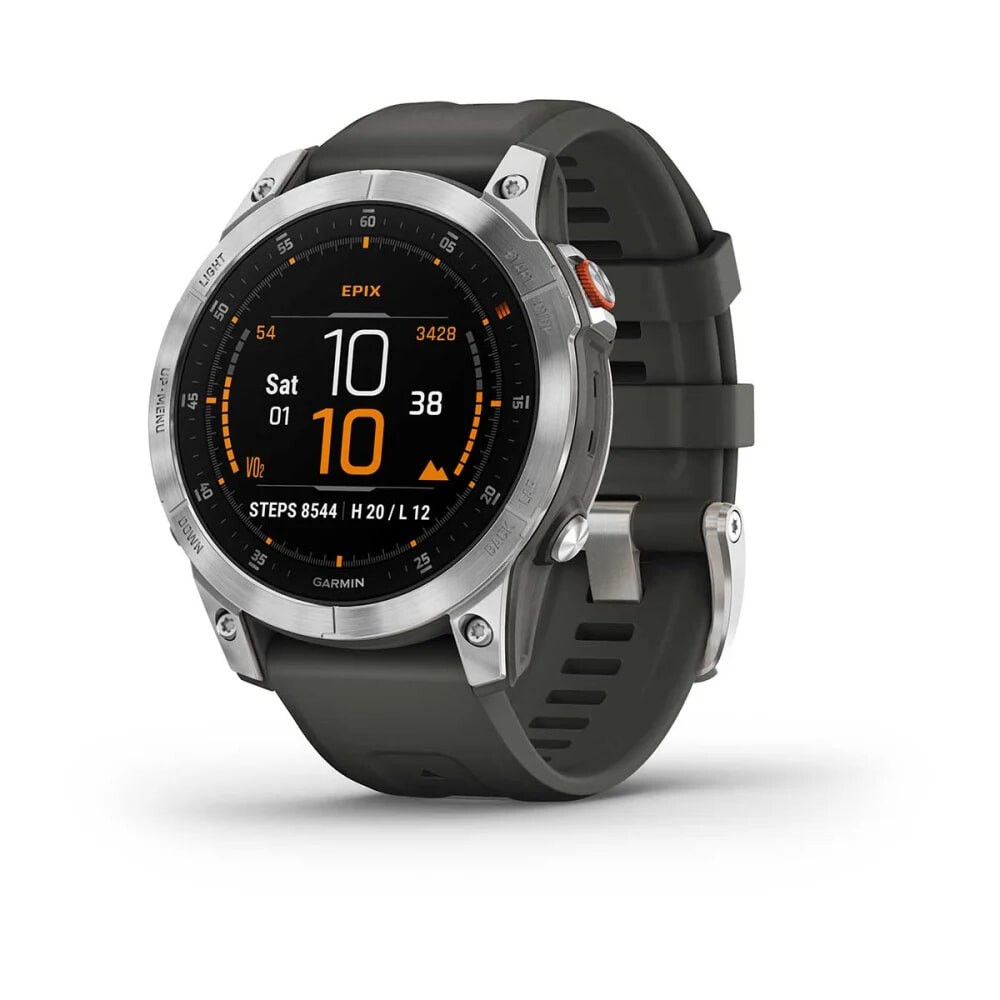
Garmin epix (gen 2)
The epix (Gen 2) has all the best Garmin features wrapped up in a super shiny, super sleek GPS watch. If you like your gear to be stylish, as well as built tough – it’s a great option.
The main point of difference in the epix (Gen 2) is the AMOLED screen which is easier to read in broad daylight. It means graphs, charts and maps are easy to read in all light levels – and at a glance, if you need to keep your eyes on the trail.
Compared to other Garmin models, the epix (Gen 2) doesn’t have solar charging, and seems geared more towards monitoring health and performance. However, it is loaded with presets for climbing, hiking, surfing and many more outdoor activities.
As you’d expect from a Garmin watch, it also has great satellite connectivity and navigation tools. There is an option for topographic maps for navigating and it has a flashlight that isn’t really suitable for the trails, but would no doubt come in handy in the tent when camping.
The sleek screen on the epix (Gen 2) does come with a downside – it drains your battery faster. However, there are a number of power-saving modes you can use it in, including Expedition mode which records your GPS coordinates less frequently and deactivates sensors to extend the battery life.
Things we like
| Not so much
|
Specifications:
- Type: GPS Watch – touchscreen
- Screen size: 33.02mm diameter
- Weight: 76g
- Battery life: 16 days in smartwatch mode
- Type: GPS Watch – touchscreen
- Screen size: 33.02mm diameter
- Weight: 76g
- Battery life: 16 days in smartwatch mode
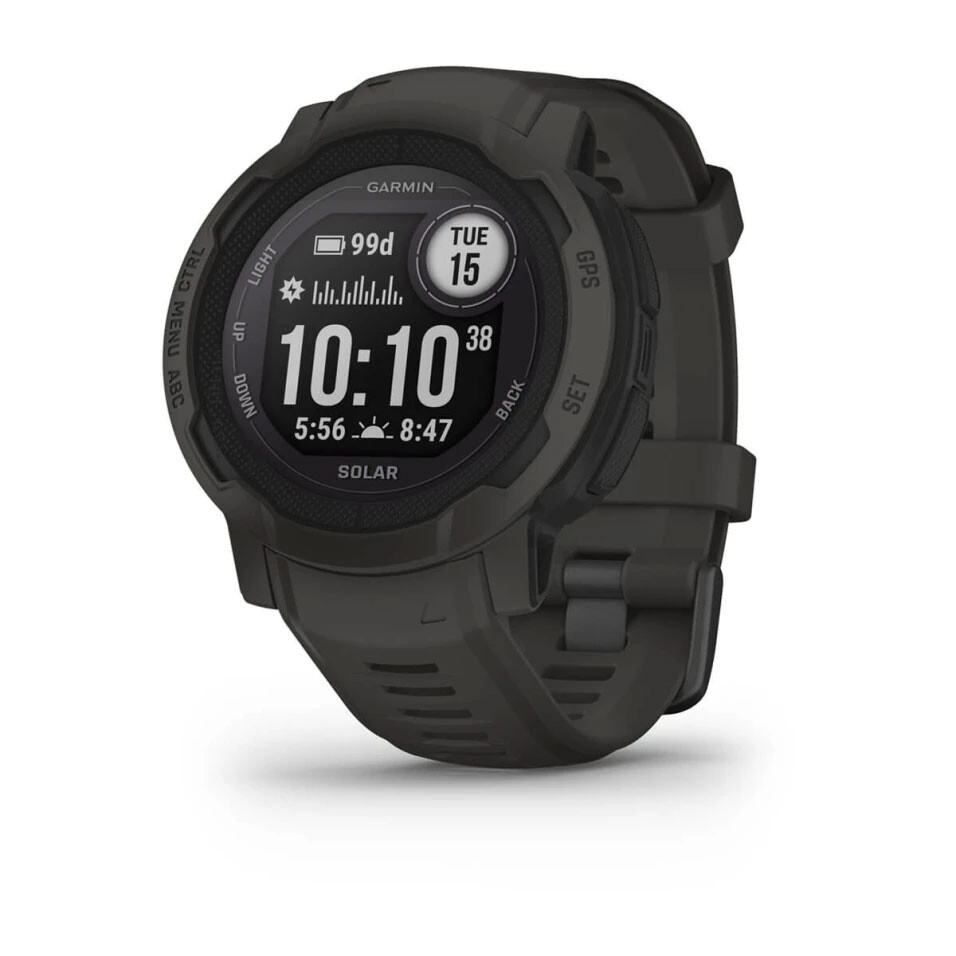
Garmin Instinct 2 Solar GPS Watch
Garmin’s Instinct 2 Solar watch has the potential for unlimited battery power and all the right features for your outdoor adventures. Garmin is the market leader when it comes to GPS and it’s hard to go past their reliability and performance.
The Instinct 2 Solar is one of the most durable watches in the Garmin range, with thermal, shock and water resistance built in. The case is made from fibre-reinforced polymer, while the screen has a scratch-resistant, high-contrast display for use in all levels of light.
In terms of GPS navigation and tracking, there is a built-in compass and barometric altimeter. It also connects to multiple satellite systems for more accurate coverage. You can use the Garmin Explore app to plan your route in advance, and the TracBack feature will help you return to your starting point if you get lost.
Additional features include heart rate, activity and stress monitoring, using a range of preloaded activity profiles. The battery life is up to 28 days in smartwatch mode. However, because it is solar rechargeable, you can charge while out on the trail, and won’t have to worry about low battery levels ever again.
Things we like
| Not so much
|
Specifications:
- Type: GPS Watch – Black and White Screen
- Screen size: 23 x 23mm
- Weight: 53g
- Battery life: 14 days in smartwatch mode
- Type: GPS Watch – Black and White Screen
- Screen size: 23 x 23mm
- Weight: 53g
- Battery life: 14 days in smartwatch mode
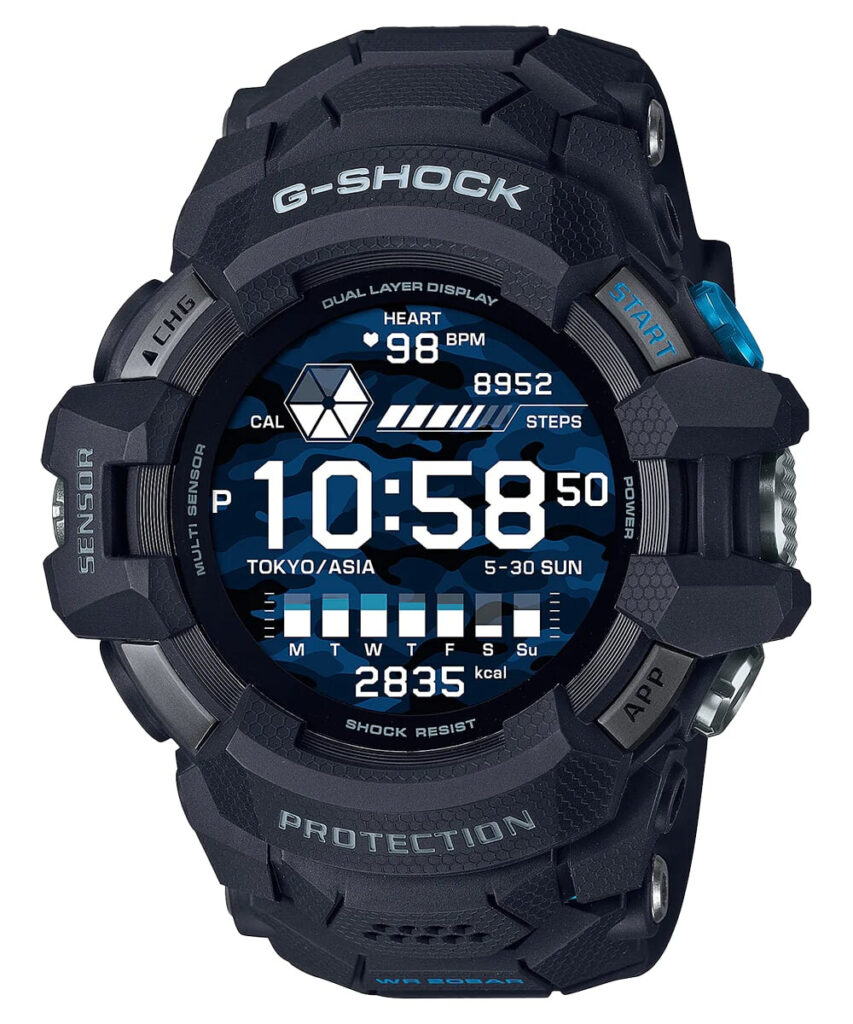
Casio G-Shock G-Squad Pro
Casio’s G-Squad Pro is for the weekend wanderer – a mid-range GPS watch with the right features to take you from your day-to-day, to out on the trails.
The G-Squad Pro is built tough with a titanium back and aluminium and urethane case. The smartwatch functions are boosted by Google’s Wear OS and it can be used with the G-Shock app on your phone to access a lot more features.
While the G-Squad Pro is geared up for exercising, it also has some handy features for explorers. The GPS pairs with three satellite systems, and along with the compass and sensors for altitude and barometric pressure, allows you to navigate trails and accurately detect your position.
From trail running and riding, to surfing, snowboarding and hiking – this watch can keep up with your weekend activities. What it can’t do is stay charged for long periods of time.
The battery life is approximately 36 hours on normal use, so if you are planning longer adventures and need a GPS watch that can go with you – the Coros and Garmin options will be better options.
Things we like
| Not so much
|
Specifications:
- Type: GPS Watch – Touchscreen
- Screen size: 65.6 x 56.3mm
- Weight: 103g
- Battery life: Approx 36 hours
- Type: GPS Watch – Touchscreen
- Screen size: 65.6 x 56.3mm
- Weight: 103g
- Battery life: Approx 36 hours
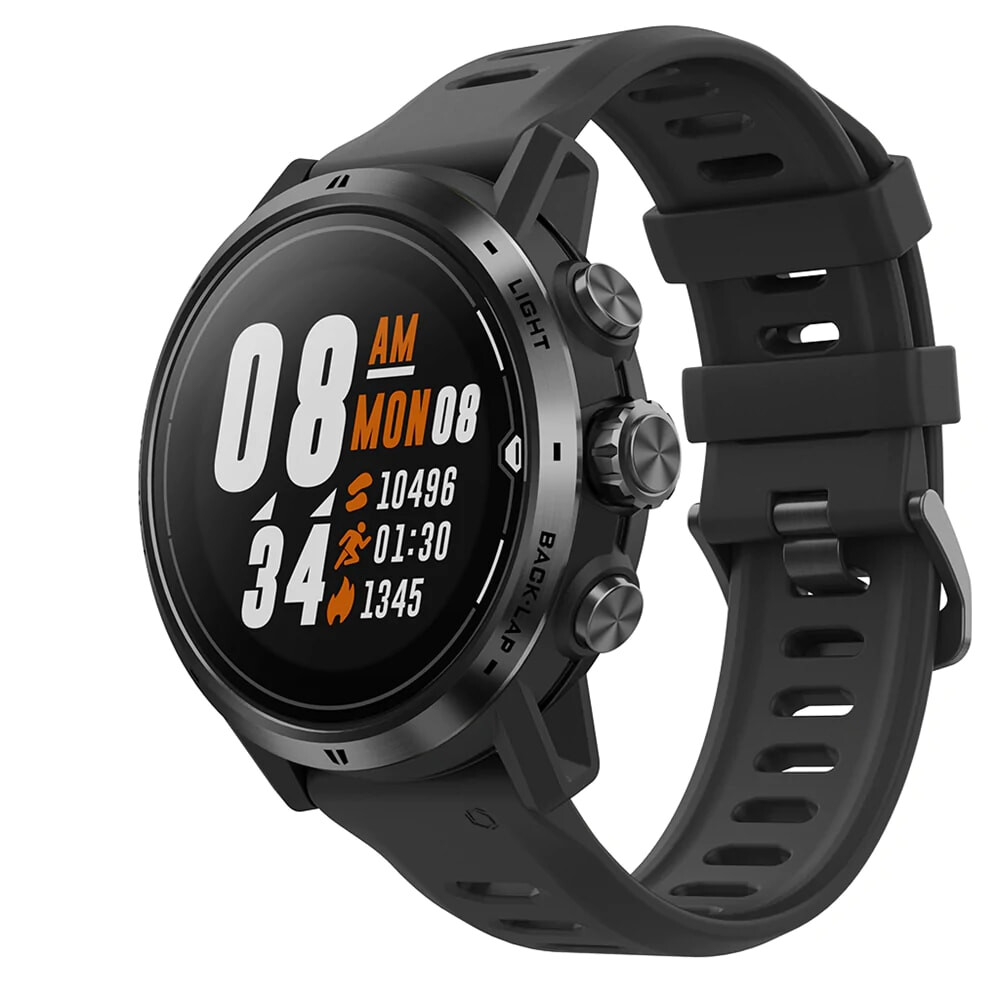
Coros Apex Pro GPS Watch
The Coros Apex Pro is a versatile outdoor GPS watch – that you can wear on just about any adventure. For a lower price, you still get great functionality and features that are usually reserved for higher-end GPS watches.
Coros builds devices for the outdoors, with constant upgrades to include the latest technologies. Its Apex Pro is an upgrade of the original Apex GPS watch and has an improved antenna design for better connectivity. It can connect to five major satellite systems and has dual-frequency GPS for better accuracy in tricky areas.
Other upgrade features include a pulse oximeter, altitude advisory and touchscreen, all which give this watch a whole lot more functionality. You can switch between the various modes and settings using both the touchscreen and outer digital dial.
The navigation system is boosted by features such as the barometric altimeter, compass, checkpoints, return to start navigation and alerts if you go off-route. It also has incredible battery life, ranging from 40 hours to 30 days depending on the profile you are using.
Things we like
| Not so much
|
Specifications:
- Type: GPS Watch – Touchscreen
- Screen size: 1.2-inch
- Weight: 59g
- Battery life: 30 days in smartwatch mode
- Type: GPS Watch – Touchscreen
- Screen size: 1.2-inch
- Weight: 59g
- Battery life: 30 days in smartwatch mode
Handheld GPS
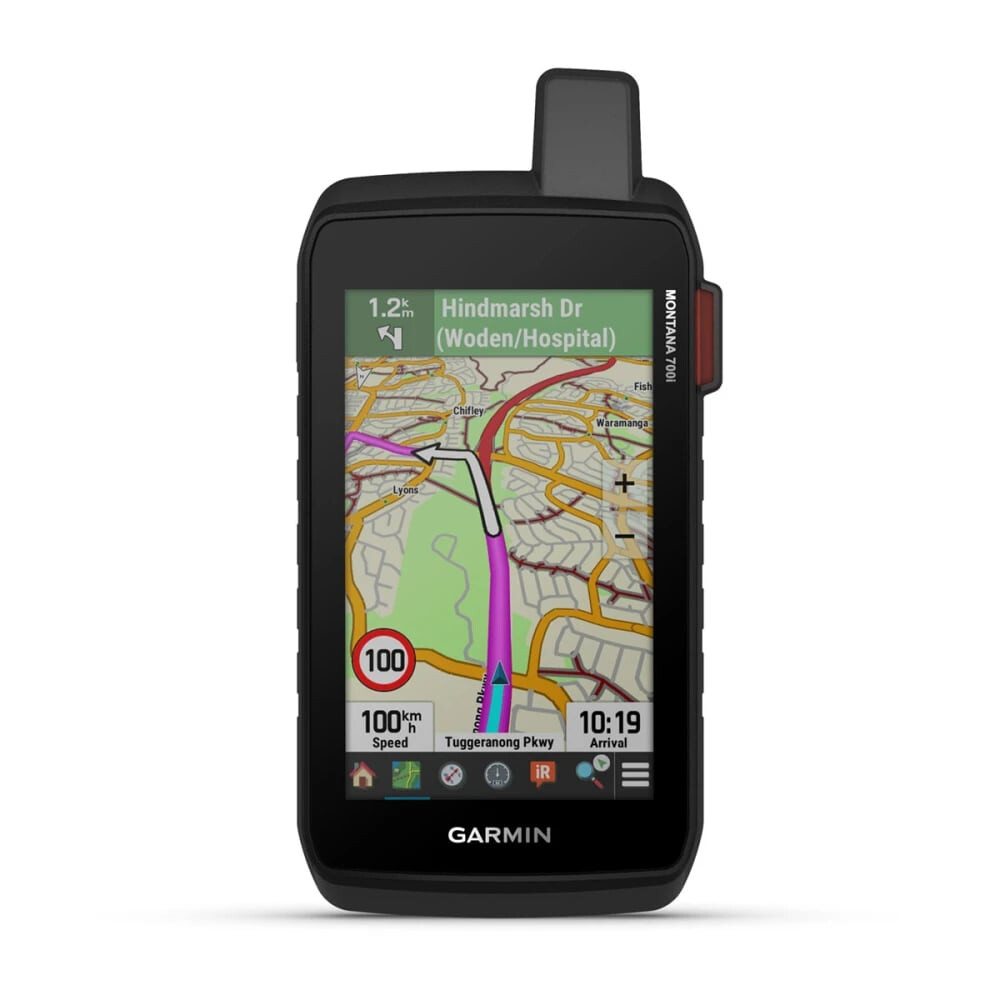
Garmin Montana 700i
The Montana 700i handheld GPS by Garmin can take you from hiking your local trails to off-road expeditions. With a large touchscreen, topographic maps preloaded and InReach communications – it is the ideal navigating companion.
If you want a small GPS device to slip in your pocket, this is not the one for you. The Montana 700i is big. Its 6.48 x 10.80cm touchscreen is a 50 per cent increase on other Montana models. This is a GPS you can mount on your dashboard or throw in your backpack. Or get bigger pockets.
Despite the large screen, the Montana 700i is ready to face the elements. It is durable and water resistant, plus the screen has been designed to use in wet conditions or while wearing gloves. It also boasts a full QWERTY keyboard so you can bang out messages faster and easier.
With Garmin’s InReach communications already loaded, you can use this GPS for messaging or 24/7 SOS in case of emergencies. It also includes a barometric, altimeter, compass and weather app.
The Montana 700i uses two satellite systems for accurate navigation. Plus the preloaded Australian and New Zealand topographic maps have roads, tracks, trails and many points of interest – perfect for a road trip.
Things we like
| Not so much
|
Specifications:
- Type: Handheld GPS – touchscreen
- Screen size: 6.48 x 10.80cm
- Weight: 410g
- Battery life: 18 hours in GPS mode
- Type: Handheld GPS – touchscreen
- Screen size: 6.48 x 10.80cm
- Weight: 410g
- Battery life: 18 hours in GPS mode
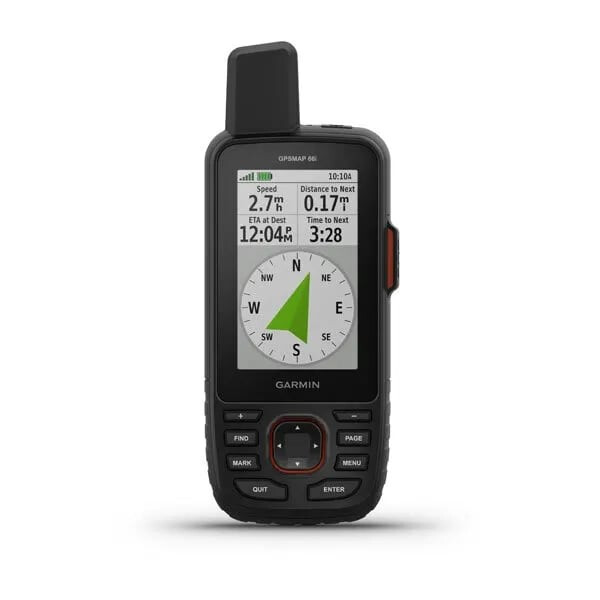
Garmin GPSMAP 66i
If, to you, a GPS is a reliable, touchscreen-free device that sits in the palm of your hand, not on your wrist – Garmin’s GPSMAP 66i might be what you’re after.
While other GPS units are getting flashier and more high-tech, the GPSMAP 66i is a rugged and reliable (we’re not saying ugly) device. This is the dependable GPS that you need in your kit if you venture out of phone range often.
The GPSMAP 66i uses both GPS and GLONASS for fast and accurate navigation and tracking. It has topographic maps preloaded, with plenty of points of interest and access to BirdsEye Satellite Imagery without needing a subscription.
For off-road adventures or stepping out on the trails, the 66i GPS has great durability and a long battery life – 35 hours in tracking mode and up to 200 hours in Expedition mode. You also have access to Garmin’s InReach technology for two-way communication and SOS alerts.
Things we like
| Not so much
|
Specifications:
- Type: Handheld GPS – colour screen
- Screen size: 3.8 x 6.3cm
- Weight: 230g
- Battery life: 35 hours at 10-minute tracking
- Type: Handheld GPS – colour screen
- Screen size: 3.8 x 6.3cm
- Weight: 230g
- Battery life: 35 hours at 10-minute tracking
Garmin eTrex 32x
A couple of models up from the eTrex 10, Garmin’s eTrex 32x is a mid-range handheld GPS with a great price point. Its connectivity, navigation systems and the inclusion of topographic maps make it suitable for a variety of outdoor adventures.
The eTrex 32x uses GPS and GLONASS systems for navigation and tracking. It also has a barometric altimeter and compass, and is preloaded with topographic maps. In addition, you can subscribe and download satellite imagery to integrate with your maps for more accurate mapping and navigation.
This is a device that you can use hiking, cycling, or even on ATVs and boats. You can also mount it in your vehicle to navigate while driving. The preloaded topographic maps include roads, trails and points of interest, plus you can upload extra maps if needed.
This GPS is built tough, with IPX7 waterproofing, a colour screen and toggle. The colour screen gives more clarity to the maps and data, while still being readable in sunlight. If you’re after a mid-range handheld GPS for navigating, the eTrex 32x provides the right features at a great price.
Things we like
| Not so much
|
Specifications:
- Type: Handheld GPS – Colour Screen
- Screen size: 35 x 44mm
- Weight: 141.7g
- Battery life: 25 hours
- Type: Handheld GPS – Colour Screen
- Screen size: 35 x 44mm
- Weight: 141.7g
- Battery life: 25 hours
Cycling GPS
Wahoo ELEMNT BOLT Cycling GPS
Wahoo brings simplicity to its ELEMNT BOLT cycling GPS through good design, usability and enough features to satisfy any rider. It’s the second evolution of Wahoo’s ELEMNT – which was the first app-enabled GPS bike computer.
The upgrades to the original cycling GPS by Wahoo include refined features and a sleek integrated computer and mount. This stylish GPS can be used with Bluetooth, ANT+ and Wi-Fi, meaning you can connect to a whole range of apps for better usability and more functionality.
The device itself is easy to use thanks to the quick set up, and it has a customisable interface so you can load it with your own preferences. The latest edition has colour added to the screen for improved graphics and an ambient light sensor to ensure the screen is readable in all light conditions.
The ELEMNT BOLT contains 16MB of memory and can store maps and routes, as well as reroute on the go. It has 15 hours of battery life and is compatible with USB-C charging so you can boost the battery even as you are riding.
Things we like
| Not so much
|
Specifications:
- Type: Cycling GPS – Colour Screen
- Screen size: 2.2-inch
- Weight: 68.38g
- Battery life: 15 hours
- Type: Cycling GPS – Colour Screen
- Screen size: 2.2-inch
- Weight: 68.38g
- Battery life: 15 hours
Garmin Edge 830 Cycling GPS
If you want Garmin value in a cycling GPS, the Edge 830 device will give you just what you are after. It is a touchscreen cycling computer with colour display and plenty of features packed in. One of the impressive new features is the ability to pair the Edge 830 with Garmin’s Varia rear-view radar and lights – for extra safety on the road.
The Edge 830 connects to GPS, GLONASS and GALILEO satellite systems and can be used for mapping and navigation, as well as for rerouting. The integrated Bluetooth and ANT+ allow you to connect to other devices and integrate a whole host of programs including Strava.
You can monitor your health and performance with features built for tracking VO2 max, hydration and recovery. There are also plenty of inbuilt metrics for on-road cycling as well as trail riding and mountain biking. It has a 2.6-inch touchscreen and three buttons which make it very easy to use while riding.
Overall, Garmin’s Edge 830 beats out the competition with its huge array of features and excellent functionality. If you don’t mind a higher price tag, we think you’ll find this cycling GPS well worth the investment.
Things we like
| Not so much
|
Specifications:
- Type: Cycling GPS – Touchscreen
- Screen size: 2.6-inch
- Weight: 79.1g
- Battery life: 20 hours
- Type: Cycling GPS – Touchscreen
- Screen size: 2.6-inch
- Weight: 79.1g
- Battery life: 20 hours
How we review products
4X4 Australia has been reviewing four-wheel drive vehicles, aftermarket products and camping gear for more than 40 years. When looking for the best outdoor GPS devices in Australia, there are some things that are essential to choosing the best device for your outdoor needs.
When we compared each of the GPS devices in the list with others on the market, we looked at the functions, size, weight, battery life and price. We also searched for additional features that make these GPS devices stand out from the rest.
We looked at hundreds of user reviews and drew on our own experience with outdoor GPS devices to make sure our recommendations are for the best on the market.
Disclosure: When you buy through our links, we may earn a commission. We also include products that we do not earn a commission from.
Buyers’ Guide to Outdoor GPS Devices
Types of outdoor GPS devices
There are a lot of outdoor GPS devices on the market in Australia. To choose the best one, you really need to consider what you are going to use it for. We’ve reviewed three different types of outdoor GPS devices – watches, handheld and cycling – with an aim to find the most versatile and functional ones on the market.
GPS watches
GPS watches allow you to have navigation, tracking and performance monitoring functions, all in a compact device on your wrist. They are most commonly used for tracking performance during outdoor activities, but they can also be used to navigate while hiking, riding, climbing or even skiing.
An entry-level GPS watch will allow you to track your speed and distance, in order to evaluate your performance afterwards. However, they are not always suitable for complex navigation purposes.
A more advanced GPS watch will allow you to navigate on and off trails, as well as monitor your performance in real time. They may also feature training modes and heart-rate monitoring, making them more versatile to be used across a range of outdoor activities.
Handheld GPS devices
Also known as a hiking GPS, a handheld GPS can be used for navigating almost anywhere. A handheld GPS device is most commonly used for hiking, trail running, climbing or mountaineering where there is no phone reception.
A basic handheld GPS will be able to pinpoint your location and track your route as you hike/run/climb. They usually come with very basic maps and allow you to upload a route to the GPS before you set out. SOS alerts and satellite messaging are great safety features to have included, but they usually require a subscription.
As you go up in price, there are plenty more features to add to handheld GPS devices. Navigation is a key one, including being able to set a route while you are out on the trails. Features like a compass and barometric altimeter will give you more accuracy while navigating. The inclusion of topographic maps or satellite imagery will vastly improve the user experience as well.
Cycling GPS devices
Cycling GPS devices, also known as cycling computers, are designed to mount on the front of your bike and use while you are riding. Navigation, tracking and performance monitoring are the main reasons to use these GPS devices.
An entry-level cycling GPS will allow you to upload a route before you start pedalling, as well as track your ride. Generally, it has features that allow you to monitor your speed, distance and overall performance.
A more advanced cycling GPS gives greater versatility out on the road or trails with features like rerouting, touchscreens and metrics for different styles of riding. Rerouting is key if there is an obstruction or if you take a wrong turn – as the GPS will allow you to get back on track.
What to consider before buying an Outdoor GPS device
When buying an outdoor GPS device, you want to make sure it is going to meet your needs in terms of durability, connectivity and price. Whatever type of GPS device you are planning to buy – watch, handheld or cycling – here are some things you should look for.
Size and Weight
The size and weight of an outdoor GPS is important. Ideally, it will be lightweight so you can wear it, carry it or mount it easily, without it being a burden to use. However, you also need to be able to see what’s on the screen clearly, which can be harder on smaller devices. Try to look for a device that is portable, but doesn’t limit your capacity to navigate with maps or see important information at a glance.
Touchscreen, Toggle or Buttons
GPS devices will generally come with either a toggle or buttons for navigating through the software. Buttons and toggles are easier to use in wet or cold conditions as they are not affected by rain and can be used while wearing gloves. However, a lot of new models feature touchscreens. Touchscreens will use more battery power – but they are generally easier to read and have the same usability as a smartphone.
Battery Life and Charging
The battery life and charging options of a GPS are something you need to check before buying. The longer the battery life the better, however, most GPS units will specify the battery life for the device while it is being used in different modes. It’s a good idea to consider what mode you will use the most, then check the battery life and charging options.
Durability and Waterproofing
All outdoor GPS devices will have different levels of durability. Consider what conditions you plan to expose the device to (including potential unplanned conditions) and find a GPS that is durable enough to meet your needs. To do this, check the materials it is made from and also the waterproofing level. In general, GPS devices with touchscreens are less durable and more likely to have screen damage than other devices.
Satellite system Connectivity
If a GPS device connects to more than one Global Navigation Satellite Systems (GNSS) it will greatly increase the speed and accuracy of your GPS features. The main three satellite systems that most devices will potentially use are:
- GPS – American satellite system
- GLONASS – Russian satellite system
- GALILEO – European satellite system
Wireless Connectivity to your Smartphone
A GPS device that connects to your smartphone offers a lot more versatility in how it can be used. Many GPS units have a smartphone app that allows you to use extra functions for navigation, tracking and on-route performance monitoring. Look for GPS units that have Wi-Fi, Bluetooth or ANT+ connectivity to get the most out of your device.
Price
Prices can vary drastically between GPS devices in Australia. To ensure value for money, it’s better to choose a GPS device from a reputable brand – such as the ones we have reviewed. It’s also important to consider exactly what you intend to use the device for. You might just save a few hundred dollars by selecting a device with only the features and functionality that you will actually use.
I have made no secret about how much I dislike the factory roof rack fitted to my FJ Cruiser. It’s noisy, ugly and pretty much useless at carrying loads, unless you spend a fortune on bits and bobs trying to upgrade it.
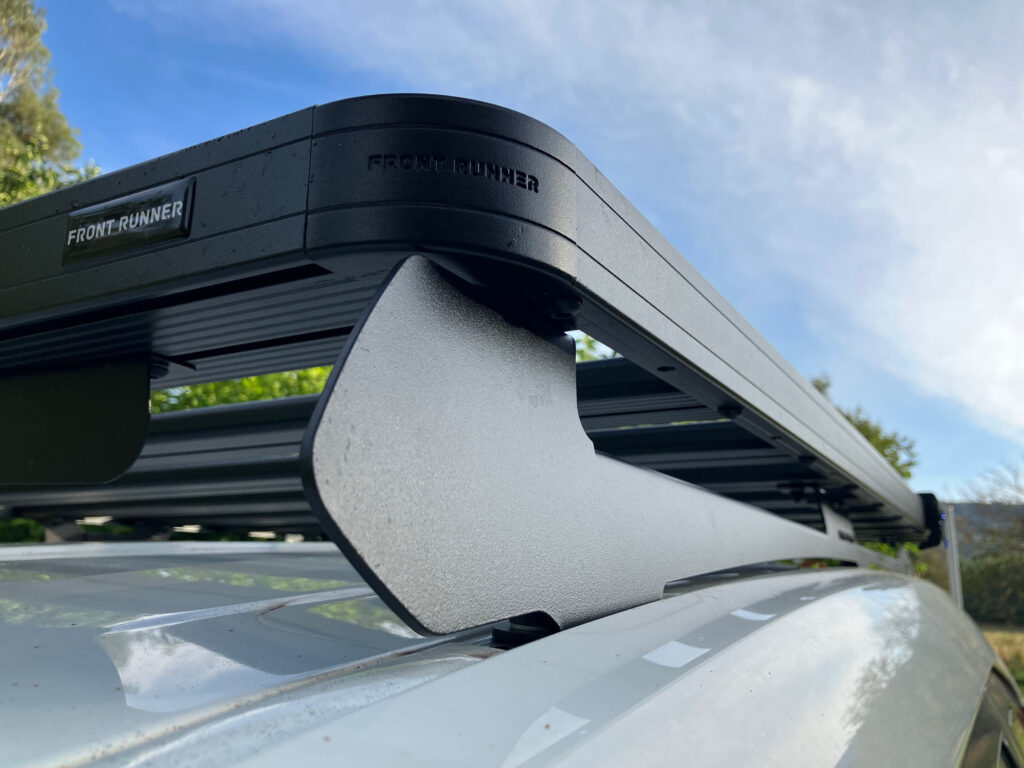
A high-quality roof rack that will last the distance. Looks terrific and has loads of optional accessories available to enhance your camping trips.
Rather than put lipstick on a pig, I decided I wanted to start from scratch and fit a flat tray-style roof rack to maximise storage space in what is a fairly small four-wheel drive.
Why Front Runner? Well, I’ve installed a few of them in the past and found them to be super-high-quality. Secondly, they look fantastic on the FJ. Another key reason for choosing Front Runner was the large number of cool accessories that are available, ranging from slide-out tables, recovery board mounts and a barbecue grill. I now have quite the wish list for future upgrades now that I’ve installed the roof rack. It was also in stock and ready to ship, which is half the battle these days.
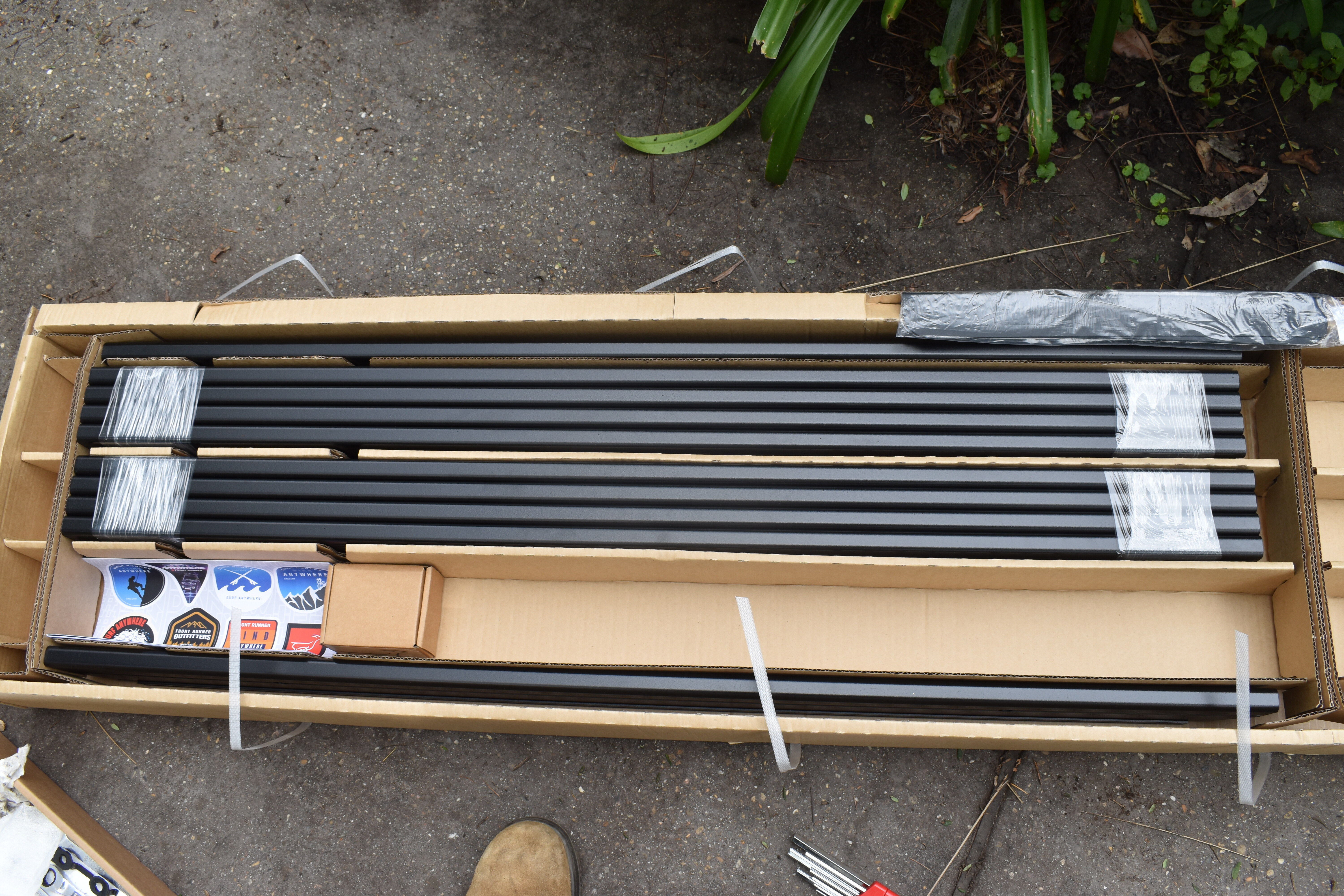
So, what did I learn about installing the Front Runner Slimline II roof rack to my FJ Cruiser on my own? First mistake was trying to do this on my own. The job itself isn’t hard, but having a helping hand to guide you through the instructions (which you really need to read), and then lifting the platform into position is required. Still, I managed to do it solo in my driveway, but I’d never do that again. Lesson learned.
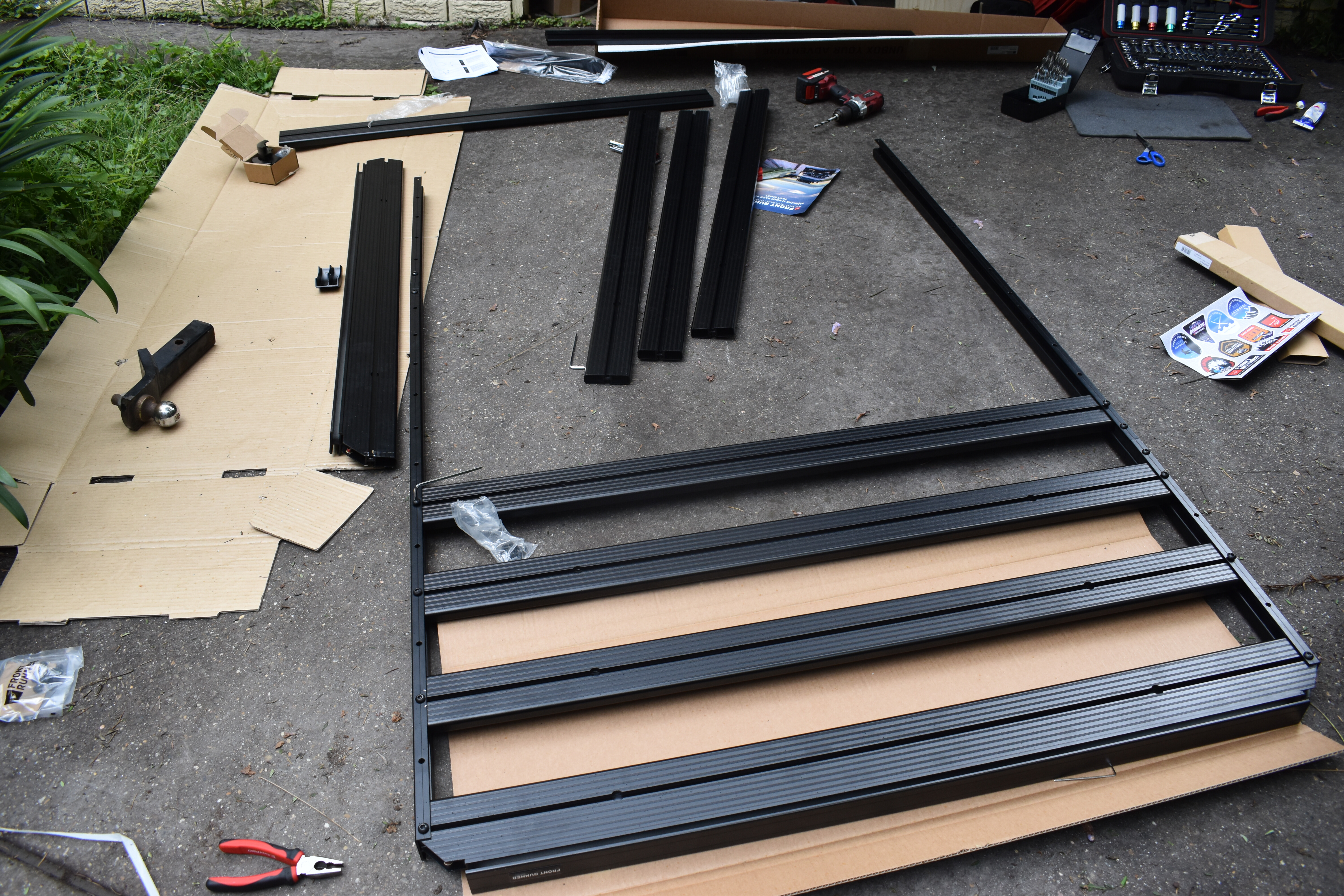
Secondly, you need really good quality silicone to seal the roof before installing the rack, and this isn’t included. Make sure you grab a tube of the good stuff from your hardware store before spinning spanners.
Tool-wise, you don’t need much more than a few basics like Allen keys, ratchet spanners and, in my case, a T40 torx bit to remove the factory roof rack. That was the second step in the process; the first being to ensure you clean the heck out of your roof before installing the new roof rack, especially a white roof like the FJ Cruiser.
With the factory roof rack removed and put on top of my rubbish bin where it belongs, I set about building the rails that secure the platform to the roof. These are a two-piece unit, so you need to bolt them together first. I applied a liberal amount of silicon around the captive holes in the roof, and then bolted the now-assembled rails down with the supplied hardware – which is of very good quality.
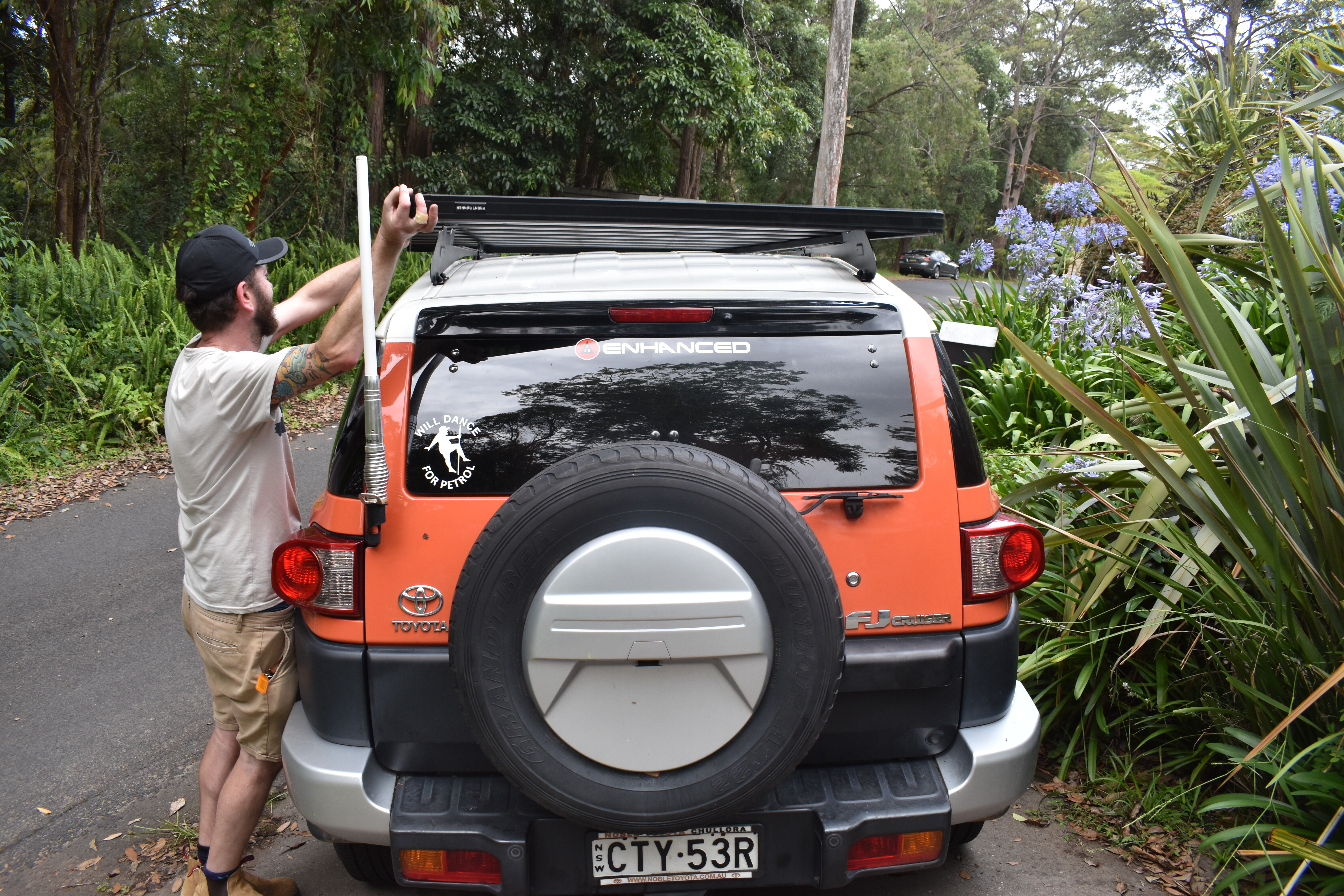
The next step was to assemble the Slimline II tray which comes as a flatpack – and installing a Front Runner roof rack is kind of like putting together an Ikea DIY pack but for four-wheel drivers. Find the two end pieces, arrange the slats to where they need to be, and bolt it all together. It takes a bit of time, but it’s certainly not what I’d call hard and I’d absolutely recommend you have a crack.
Now it was time to install the supplied wind deflector to the front of the tray and bolt it on the mounting rails. A helping hand sure would have been appreciated here, but I’m not a patient man. So once the tray was in position, it was simply a case of bolting it to the rails … and job done.
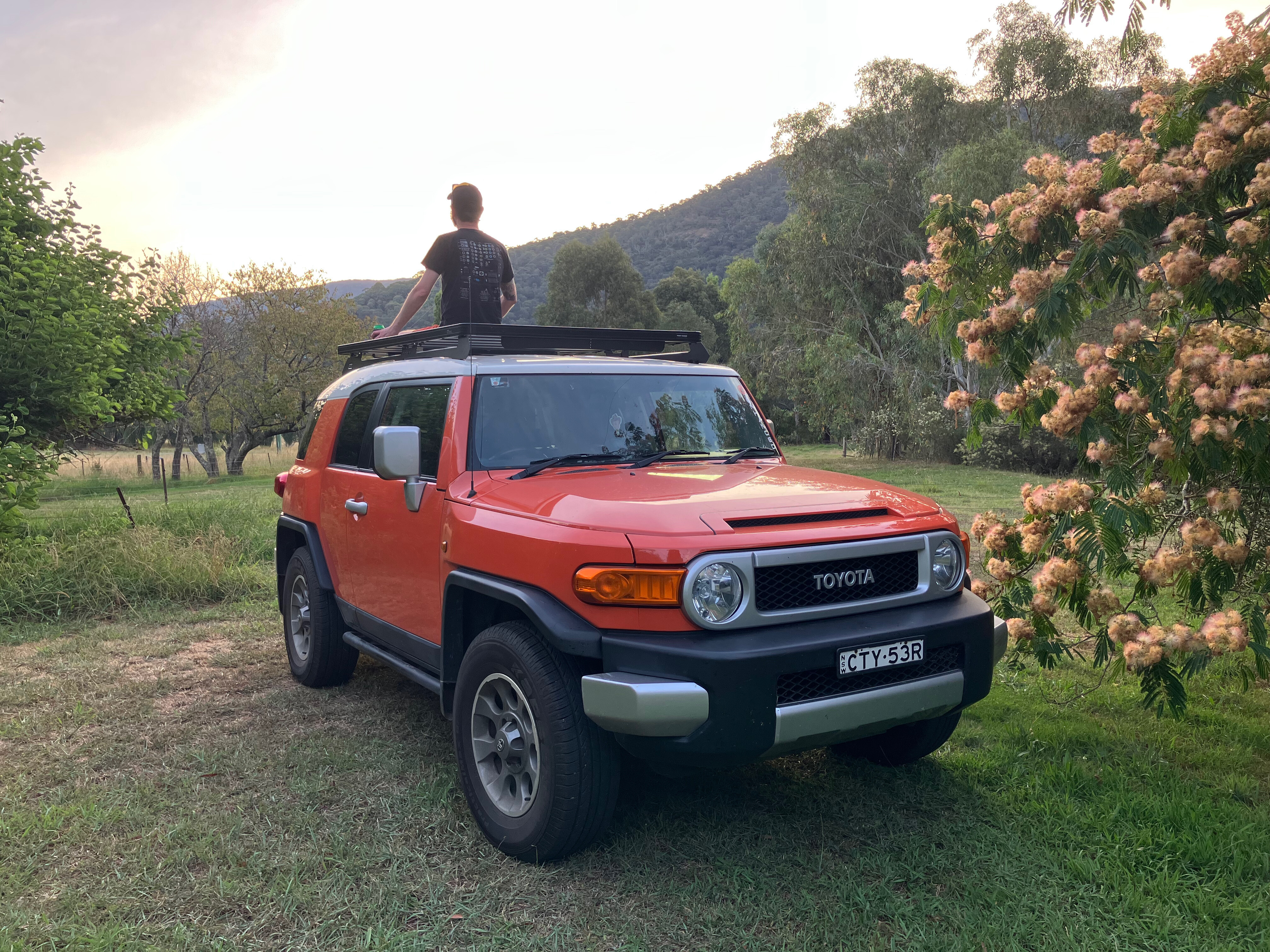
I’m stoked with how it came out. Not only does it look great, it’s not loud at all on the highway. Sure, there is a bit of wind noise, but it’s not an annoying howl. My fuel economy has risen slightly post-installation, going from 11.0L/100km to 12.2L/100km, but I fully expected that.
Next up, I’ll be installing a range of Front Runner accessories to the roof rack, and testing them out over the next few months. Stay tuned for a full review on the Front Runner Slimline II roof rack and accessories after I put them through their paces, with plenty of touring and camping trips planned.
A high-quality roof rack that will last the distance. Looks terrific and has loads of optional accessories available to enhance your camping trips.
When you’re setting up your tent, prepping a campfire or chopping wood for kindling, using a good quality hammer, shovel or axe is essential to having a safe and enjoyable camping trip.
Which is why we’ve reviewed seven of the best camping hammers, shovels and axes in Australia from The Forrest Tool Company, Mean Mother, Bushranger, Trojan, Elemental, HardKorr and Gerger Gorge.
Gone are the days of strapping a camping shovel to your roof racks. The latest camping tools pack down small so you can store them in your vehicle. We’re talking extendable handles, foldable shovels and multi-tools that give you the best of everything in one.
But you still need to look for quality and durability in these tools – not just so they last the test of time – but also so you don’t get caught out when you need them most.
So to help you choose the right tool for your camping adventures, check out our top picks for the best camping hammers, shovels and axes, and our Buyers Guide below.
| Type | Size (cm) | Weight | Good for | |
|---|---|---|---|---|
| The MAX Tool Kit | Multi-tool | 86 | N/A | Camping; 4×4 |
| Mean Mother 4×4 recovery shovel | Shovel | 165 | N/A | Camping; 4×4 |
| Bushranger Diggar shovel | Shovel | 147.5 (shovel); 96 (spade) | 3.3kg | Camping; 4×4 |
| Trojan folding camping shovel | Shovel | 35 | 0.83kg | Camping; 4×4; hiking |
| Elemental multi-use axe | Axe/hammer | 33 | 0.8kg | Camping; 4×4; hiking |
| Hardkorr multi-tool shovel | Multi-tool | 105 | 2.0kg | Camping; 4×4 |
| Gerber Gorge folding shovel | Shovel/hammer | 42 | 0.793kg | Camping; 4×4; hiking |
The MAX tool kit
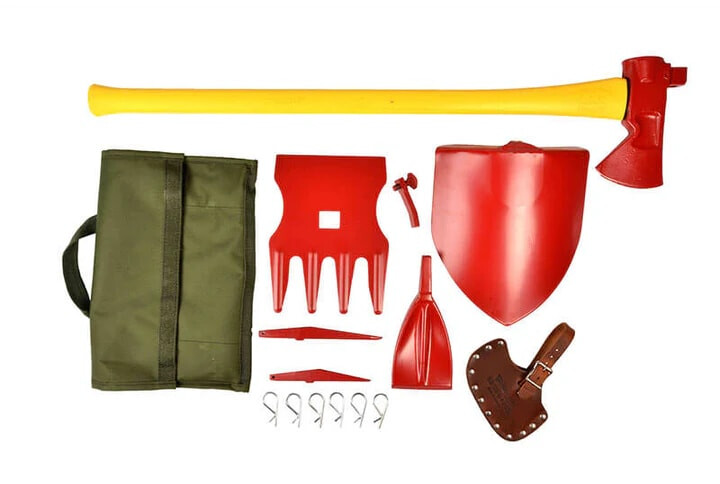
Taking on the Aussie bush or an off-road adventure just got a little easier with the MAX tool kit. The MAX is a heavy duty axe with a comprehensive set of tool attachments that will be useful for any camping or 4×4 adventure.
The Forrest Tool Company has packed seven different tool heads into one awesome case, giving you the right tool for the job – whatever the job is. The 86cm composite polyglass handle has an axe head and striking surface. This can then be topped with a shovel, pick, broad pick, mattock blade, or rake and hoe.
You can use The MAX for everything from 4×4 recovery to pitching a tent or clearing the ground for a campfire. When you’re done, slip the axe into the sheath and put the other tool heads away in the Cordura carry bag for easy storage.
For a multi-tool that is designed with interchangeable tool heads, the MAX is a sturdy unit. It’s made in the USA to a range of industry and government standards and is used by the military. If you’re a camper who needs a tool for any situation, the MAX will be a trusty companion for your adventures.
Things we like
- Range of tools included
- Quality
- Durability
Not so much
- Mid-length handle for shovel
- Price
- Not suitable for hiking
Specifications
- Type: Multi-tool
- Size (cm): 86
- Weight: N/A
- Good for: Camping, 4×4
- Type: Multi-tool
- Size (cm): 86
- Weight: N/A
- Good for: Camping, 4×4
Mean Mother 4×4 recovery shovel
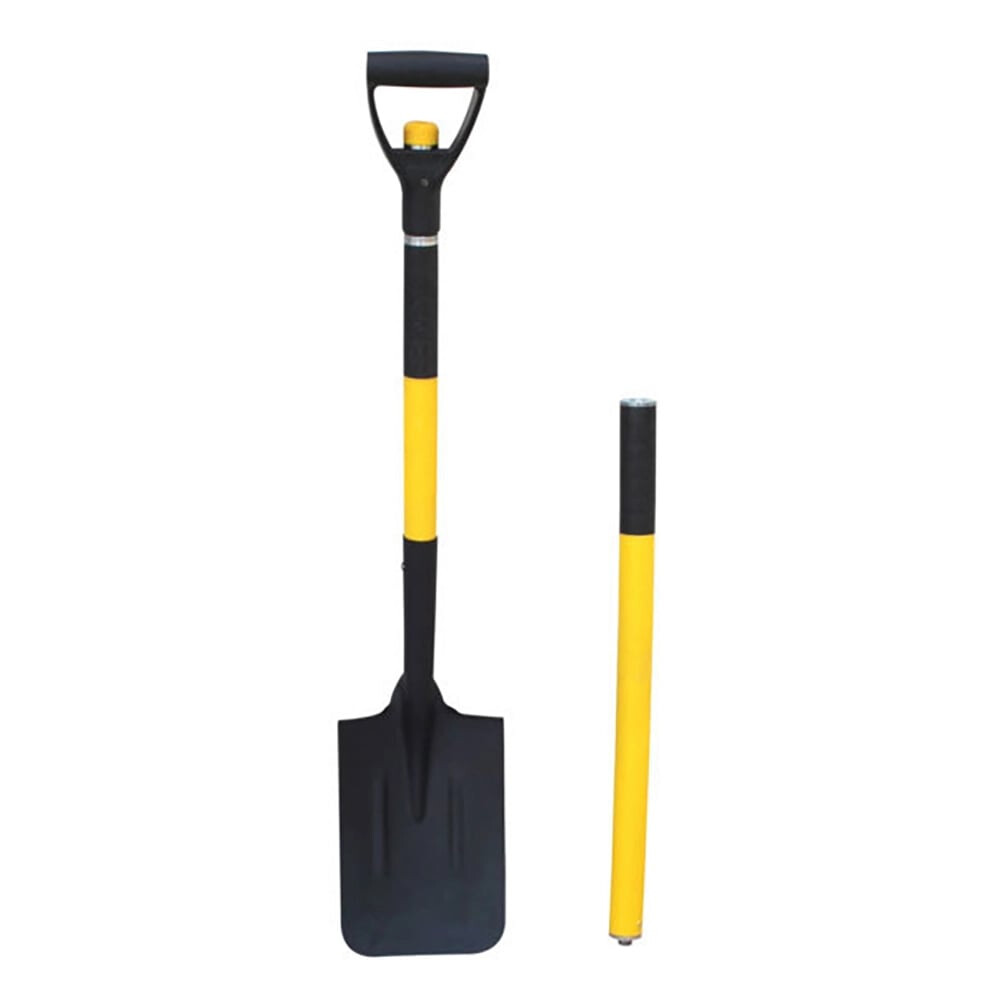
This 5-in-1 shovel by Mean Mother is a key piece of recovery gear that will also come in handy around the campsite. With five shovels in one, you’ll be pulling this one out anytime there’s a trench to dig, ground to be cleared or you’re bogged in the sand.
This Mean Mother shovel has been designed specifically for 4×4 recovery with a carbon steel blade and a long, reinforced steel handle with rubber grips. The included D-handle gives you excellent leverage and even better grip. Plus, the large shovel surface allows you to move a lot more sand or dirt than some of the smaller shovels.
The handle simply screws apart to become a small spade, which is perfect for camping. With a smaller handle you’ll have better manoeuvrability for digging a bush dunny or clearing the ground for a campfire. Plus it all packs down into a durable storage bag – with internal compartments – so you can easily transport it.
Things we like
- Versatile
- Durable
- Packs down small
Not so much
- Shovel only
- Price
- Not suitable for hiking
Specifications
- Type: Shovel
- Size (cm): 165
- Weight (kg): N/A
- Good for: Camping; 4×4
- Type: Shovel
- Size (cm): 165
- Weight (kg): N/A
- Good for: Camping; 4×4
Bushranger Diggar shovel
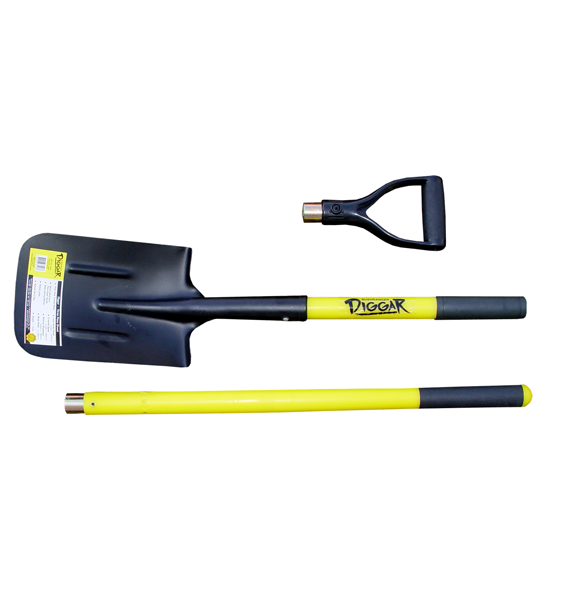
The Diggar shovel by Bushranger is an excellent option if you are after a 2-in-1 shovel. The durable shovel includes both a long and short handle and comes apart for easy storage.
You won’t be compromising on quality with the Diggar, it has a 2mm-thick heat-treated blade, and a fibreglass handle with rubber grips. The D-handle gives you the stability you need for the short handle and the long handle option provides plenty of leverage.
To take a long-handle shovel on your 4×4 trips you’ll appreciate that this one can be packed down small. You can take the Diggar apart into three pieces and slide it into the compact storage bag to keep it in your vehicle.
If you want a simple but high quality 2-in-1 shovel that will last many camping trips, we reckon you’ll be more than satisfied with the Diggar.
Things we like
- Durable
- Packs down small
- Carry bag included
Not so much
- Two sizes only
- Shovel only
- Price
Specifications
- Type: Shovel
- Size (cm): 147.5 (shovel); 96 (spade)
- Weight: 3.3kg
- Good for: Camping; 4×4
- Type: Shovel
- Size (cm): 147.5 (shovel); 96 (spade)
- Weight: 3.3kg
- Good for: Camping; 4×4
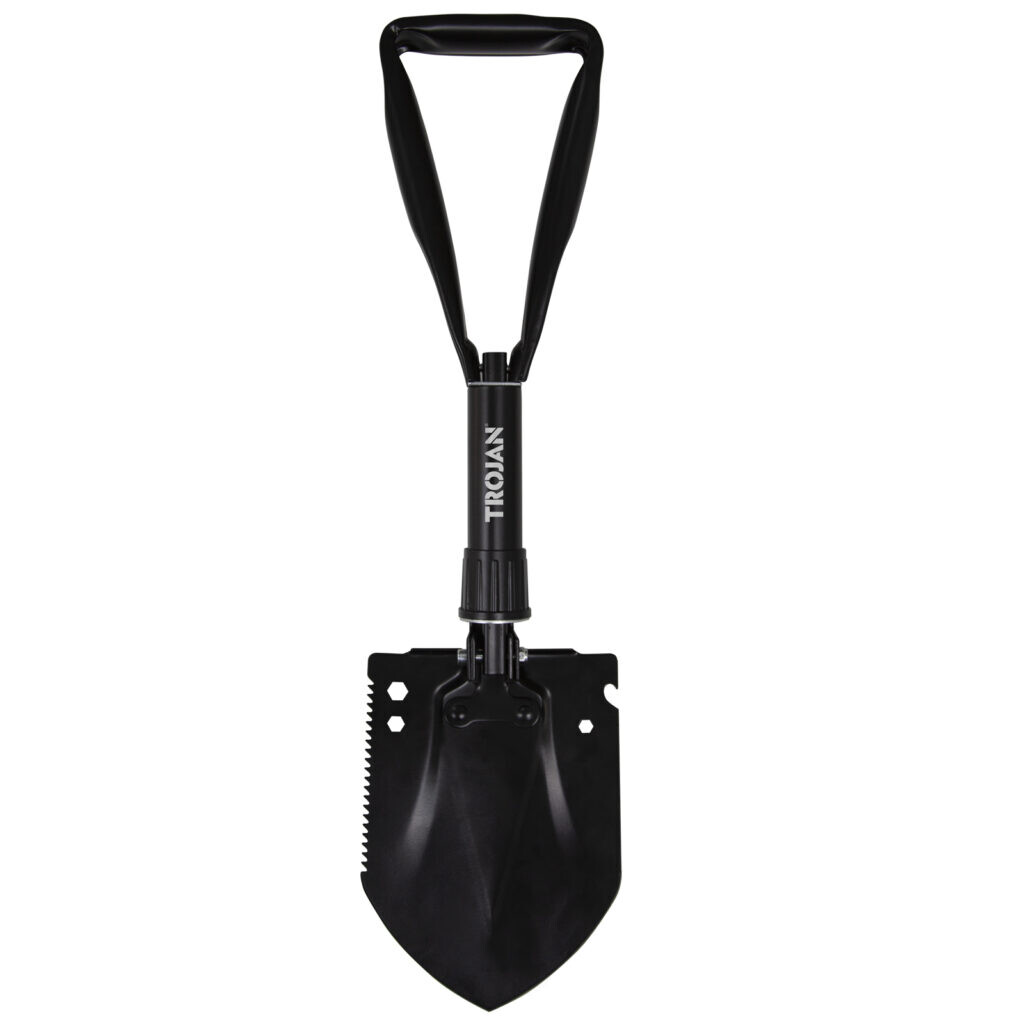
Trojan folding camping shovel
The Trojan folding shovel is ideal if you need a small, lightweight shovel for hiking and camping. While there are plenty of these folding shovels on the market, this one from Trojan is a winner with its durability and price.
Trojan’s Folding Shovel features a hardened steel blade for digging or shifting dirt and sand. The shovel has a pick end and a serrated saw edge, and can be adjusted to two angles. There’s also hex holes for screws and a bottle opener.
Weighing just 830 grams means you won’t hesitate to throw it in your backpack for hiking. If you need a small shovel that is easy to store and use on the go – just grab it from the carry bag, unfold it and get digging. Better yet, it comes with a lifetime guarantee, making it the perfect camping buddy.
Things we like
- Lightweight
- Portable
- Lifetime guarantee
Not so much
- Short handle
- Not for 4×4 recovery
- Shovel only
Specifications
- Type: Shovel
- Size (cm): 35
- Weight: 0.83kg
- Good for: Camping; 4×4; hiking
- Type: Shovel
- Size (cm): 35
- Weight: 0.83kg
- Good for: Camping; 4×4; hiking
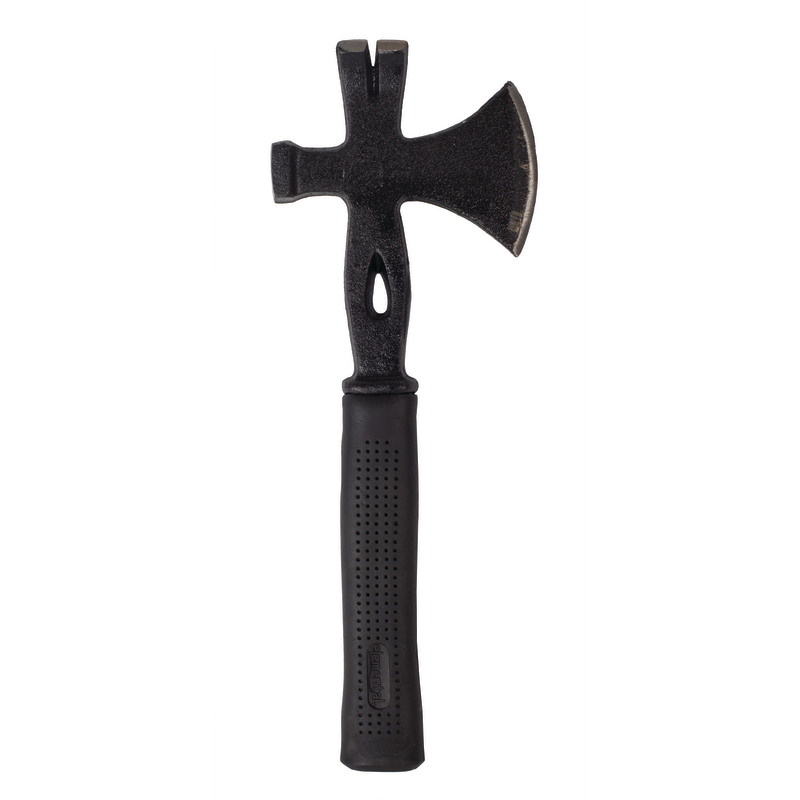
Elemental multi-use axe
The Elemental multi-use axe is a great camping companion for getting all those small jobs done around the campsite. For a great price and with multiple uses, you won’t regret adding it to your camping kit.
Elemental have designed this tool as an axe, but it has also thrown in a hammer, nail remover and pry bar for good measure. From driving in tent pegs to chopping kindling for the fire, this axe has you covered. Pair this with one of the 4×4 recovery shovels and you’ll be all set for the next camping trip.
To make packing even easier, this axe is lightweight and easy to throw in the rig with your other camping gear. But it’s also one of those tools you’ll use at home as well as at the campsite. So – for the great price – we can’t see a reason not to get one.
Things we like
- Lightweight
- Multi-use
- Price
Not so much
- No carry bag
- No sheath
- Not for 4×4 recovery
Specification
- Type: Axe/hammer
- Size (cm): 33
- Weight: 0.8
- Good for: Camping; 4×4; hiking
- Type: Axe/hammer
- Size (cm): 33
- Weight: 0.8
- Good for: Camping; 4×4; hiking
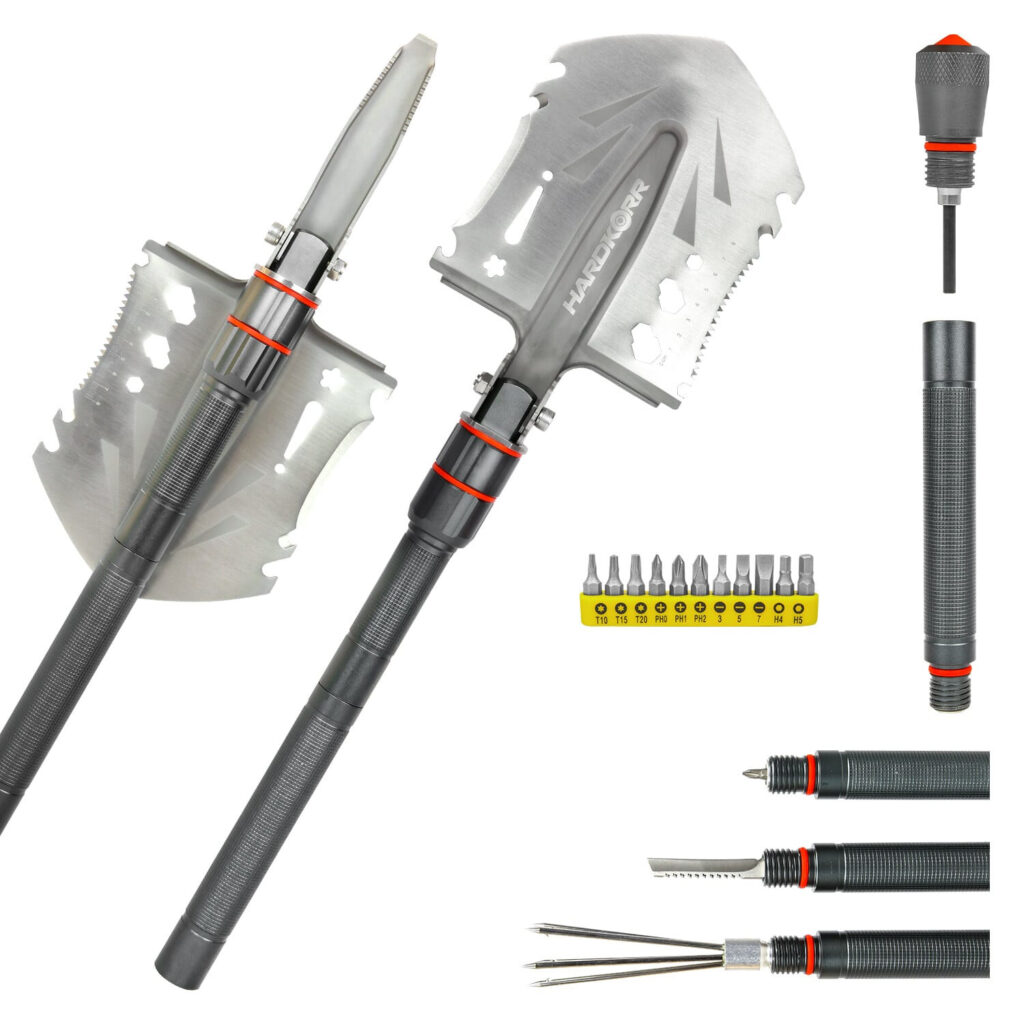
HardKorr multi-tool shovel
HardKorr’s multi-tool shovel wins the award for most tools packed into one compact unit. There’s 23 functions across 15 pieces – everything from a shovel to spearfishing attachment. This is one tool you’ll appreciate in many situations – both expected and unexpected – and you’ll probably have a bit of fun showing it off to your mates as well.
The stainless-steel shovel head features multiple blades, a nail puller, bottle opener, ruler and multi-size wrench. You can easily convert between this and the pick head. You’ll also find a serrated knife attachment to chop your veggies, a flint fire starter, a spearfishing attachment and a magnetic tool bit holder with 11 tools stored in the shovel’s handle.
The total length of the shovel is just over a metre, but it comes apart to pack down small and be stored away in the compact carry case. It’s backed by a three-year comprehensive warranty, so you can count on getting plenty of use out of it.
Things we like
- 23 functions
- Three-year warranty
- Packs down small
Not so much
- Pointed shovel head
- Mid-length handle
- Not for hiking
Specifications
- Type: Multi-tool
- Size (cm): 105
- Weight: 2.0kg
- Good for: Camping; 4×4
- Type: Multi-tool
- Size (cm): 105
- Weight: 2.0kg
- Good for: Camping; 4×4
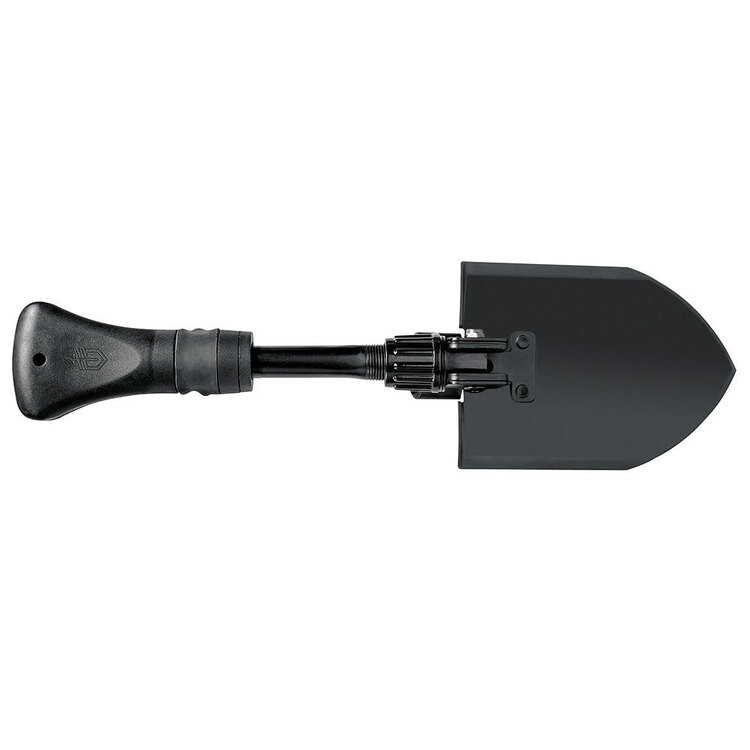
Gerber Gorge folding shovel
The Gerber Gorge folding shovel doubles as a hammer and – as the lightest camping tool here – you should have no worries packing it into your camping gear. It comes with a 25-year limited warranty, so you know you’re getting a great addition to the camping kit.
This shovel by Gerger Gorge is fitted with a push-button slide that makes it easy to switch between tools. The blade is made from carbon steel and folds back to reveal a hammer. The glass-filled nylon handle with rubber grip isn’t going to wear out your hand or slip through your fingers while you’re using it.
Portable, compact and simple to use – you can’t go too wrong here. Fold it down and pack it into the nylon bag for storing behind or under your seat, and it’s ready to go when you need it next.
Things we like
- Shovel and hammer combo
- Warranty
- Lightweight
Not so much
- Shovel head size
- Short handle
- Not for 4×4 recovery
Specifications
- Type: Shovel/hammer
- Size (cm): 42
- Weight: 0.793kg
- Good for: Camping; 4×4; hiking
- Type: Shovel/hammer
- Size (cm): 42
- Weight: 0.793kg
- Good for: Camping; 4×4; hiking
How we review products
4X4 Australia has been reviewing four-wheel drive vehicles, aftermarket products and camping gear for more than 40 years. When looking for the best camping hammers, shovels and axes in Australia there are some things that are essential to ensure you get a tool that will do the job you need it for and stand the test of time.
When we compared each of the hammers, shovels and axes in the list with hundreds out there, we looked at the durability, useability, size, weight and price. We also searched for additional features that make these camping tools stand out from the rest.
We looked at hundreds of user reviews and drew on our own experience to make sure our recommendations are for the best on the market.
Disclosure: When you buy through our links, we may earn a commission. We also include products that we do not earn a commission from.
Buyers’ guide to camping hammers, shovels and axes
If you’ve ever been caught out snapping a shovel in tough ground or pushing tent pegs in with your foot – you’ll know the importance of having the right camping tools. When it comes to hammers, shovels and axes, there’s a place and a use for all of them – but the quality is what’s really important.
Camping Hammers
A hammer is going to come in handy in more ways than you might think when camping. It’s not just about driving in tent poles; you can set up camp furniture, drive in stakes for cooking over an open fire, repair gear and even use it to build shelter if you need to.
Look for durable materials, because if there’s one bit of camping gear that will get banged around it’s – literally – this. Steel handles are tough but can be heavy, whereas fibreglass handles are more lightweight. Rubber or non-slip grips are good for using the hammer safely and comfortably in all kinds of conditions.
Camping Shovels
Camping shovels are useful for clearing out campsites, digging a bush dunny or digging a trench should rain pay an unexpected visit to your tent site. If you’re heading off-road, a long-handled shovel is a core piece of your recovery kit.
For durability, steel is a tough and long-lasting option, but, once again, it can be heavy. An aluminium or steel/aluminium combo will bring weight down whilst still providing the necessary durability.
Size is important, as a longer handle is going to give you a lot more leverage and make the job easier, especially if you are digging out your vehicle. A shovel with an extendable or foldable handle generally gives you the portability and useability you’ll need for camping and 4x4ing.
Camping Axes
Bush camping in Australia is rough at times, but a good camping axe will take the hard work out of clearing and cutting. An axe can be useful for cutting firewood, clearing brush or even doing some food prep.
The type of axe you need will depend on what you are going to use it for, so consider whether you’ll need a hatchet only – for smaller branches – or felling axes for tree or log cutting. A blade made from high-carbon steel or stainless steel will be the best options for durability and to prevent erosion.
The longer the handle, the more power you’ll have. Whereas the shorter handles provide more manoeuvrability. Both fibreglass and plastic are good lightweight options, but usually have less grip than wood. Look for a protective sheath or carry case included for portability and to prevent rusting.
Key things to consider when buying a camping hammer, shovel, axe or multitool
What do you need the camping tools for?
Think about what kind of camping adventures you plan on taking and consider what you are going to be using the tools for. Will you need to cut small branches, or large logs? Do you need to dig a latrine, or just clear the campsite to pitch a tent? Also consider the things you may not plan for – like a bogged 4×4 or fallen logs.
What material are the tools made from?
The materials used in each of these camping tools are going to determine quality and durability. The higher the quality of materials, the more peace of mind you’ll have packing them for your future camping trips.
Is size and weight important?
For most camping trips it’s a safe bet to say that the size and weight of your gear is important. For car camping, if you can find a hammer, shovel or axe that is light and packs down small – without compromising on quality – it’ll certainly be easier to pack and take with you.
If you are hiking and camping then the size and weight is all-important and you’ll want to be sure you are getting the most portable option.
What features do you need?
There’s no shortage of features on most pieces of camping gear these days. When choosing the right tools to add to your kit, check what features are available. For camping you’ll always appreciate the ability to pack it down small, whilst still having tough, reliable tools. The addition of a storage bag or case will prevent dirt and damage in your vehicle when you stow it away.
You can also find a range of multi-tools that simply have more than one tool in the product. But, when checking additional tools and features, consider if they will actually be of use to you. Otherwise you might end up paying more for things you don’t need.
Price
Hammers, shovels and axes are worth investing a bit of money to get something that will last you long-term. It’s also worthwhile buying from a reputable brand for peace of mind and to be able to return it or claim the warranty if needed.
The Northern Territory’s Limmen National Park sits on the edge of Gulf Country, between Roper Bar and Cape Crawford.
Access is via a seasonal well-graded road, with side tracks to camping and fishing areas. However, roads can be closed due to flooding from November until May when summer storms hit and create chaos across the Top End.
Limmen occupies 10,000km² on the eastern side of the NT, reaching out into the waters of the gulf in the adjacent Limmen Marine Park. Limmen is still managed by Parks NT and has its own ranger station, but the best part is the number of cheap and sometimes free campgrounds in the area.
This is remote country and very isolated, so trip and car preparation needs to be spot on. Limmen is also known for its massive sandstone formations aptly known as the Lost Cities, as well as access to the one-million-acre cattle station dubbed Lorella Springs Wilderness Park.
Our journey started from the eastern fringe north of Cape Crawford, but before hitting this remote section of the Gulf of Carpentaria I ensured I was full of fuel and groceries from the nearby settlement of Borroloola. There are two turns that head to Limmen and my choice was Ryans Bend Road that departs the Carpentaria Highway 26km out of Borroloola and bisects Nathan River Road, which is the main thoroughfare traversing Limmen NP.
Right from the start, the road is pretty average and a sign states it’s remote travel with no fuel for nearly 400km. The first 100 or so kilometres, you’ll travel through and pass old cattle stations in this rough country. The roads are rugged with endless corrugations, but that’s expected at the end of the dry season up here.
Naming rights
An interesting fact is that Abel Tasman named nearby Limmen Bight, Cape Maria and Arnhem Land in 1644, but it was explorer Willem Janszoon who sailed into the Gulf of Carpentaria in 1606.
In 1845, Ludwig Leichhardt followed and named the Limmen Bight River as he travelled upstream looking for a way west. Pastoralism started in the area around 1883, but because of the poor soil, limited water and resistance from the local Aboriginals, the cattle industry struggled. It does better today with modern grazing practices.
The scenery heading deep into the park is nothing short of spectacular. The roads are a deep red colour and the trees are covered in the same dust from months of dry weather, with stunning ranges cutting the skyline as the road finds a path between mountains.
The complex geology of this area makes the drive extremely interesting, with remnants of the Arnhem Land Plateau running north-south through the park and leaving an array of habitats from dry sandstone to vast woodlands, seasonal floodplains, billabongs and flowing rivers. Limmen is a scattered NP with sections broken in amongst nearby cattle stations, with the main section of the park farther to the northwest.
Lorella Springs
One of the most iconic places in the NT is the wilderness park and massive cattle station of Lorella Springs, which offers great camping, a maze of 4WD tracks, dozens of swimming holes, beautiful hot springs and amazing barra fishing in the many rivers. Plus, you can head out to the waters of the Gulf.
Arriving at Lorella, you’ll always receive the friendliest of welcomes from any of the staff members. During check-in they will give you a list of options on where to camp depending on your needs, plus hand you a great map of the property featuring tracks, waterholes, things to see and do, as well as any other interesting spots they think you’ll enjoy.
With so many tracks, rock formations, waterholes and lookouts to explore, it’s a bit overwhelming and you’ll need to spend more than a few days here. The ancient rock formations and old river beds have to be seen to be believed, where huge masses of conglomerate rock have formed together into sizable boulders, natural archways and rugged steep ranges that criss-cross Lorella.
It’s hard to recommend a favourite spot, as there is a different surprise around every corner and across every dry creek bed. Lorella is 15 degrees south of the equator and is claimed to be in one of the most remote and isolated places in the country, allowing for 20km of unspoilt ocean frontage with a huge array of fauna and flora – thousands of different species – on the property. Prehistoric dinosaur bones have been found on the property, and gold and diamonds have been unearthed too.
Lorella Springs closes during the wet season around the end of September, so expect the billabongs to be a tad low if you’re visiting late.
Lost cities
Back in Limmen, my first port of call was to the stunning Southern Lost City. You’re allowed to camp here for a small fee, and it gives you a good base to spend the day on the walking tracks that loop around these huge and eerie sandstone pillars.
These were formed nearly 150 million years ago as part of an old seabed – over millions of years, both water and wind have slowly weathered these columns into these incredible shapes. Most have different colours through them due to the complex mineral composition in the sandstone and ore, and when the sun hits the formations on different angles the colours are amazing.
The next stop after the Southern Lost City was Butterfly Falls. It’s another peaceful area to camp, with a short stroll to the beautiful falls and pool. The falls are at the base of a low sandstone plateau, with sheer rock faces surrounding this magical place.
It’s another short stroll to the gorge and falls, and it’s home to the Wagiman people who lived in the surrounding area. The water flows into the Douglas River and eventually the Daly River about 50km away.
One of the best vantage points to see across the gorge is along the 5km lookout walk that’s suitable for people with medium fitness. Butterfly Gorge gets its name from the huge amount of common crow butterflies that often shelter in the vegetation, taking advantage of the cool climate.
Heading out from Butterfly Gorge the next stop was the Nathan River Ranger Station. Not only does the station have a huge array of history and artefacts in its building, staff will also provide you with road conditions whichever way you’re heading. They’ll also give you the code for the gated entry for the Western Lost City Track.
Unfortunately when I arrived, the track – a 28km track to another group of stunning sandstone rock columns – was closed for maintenance. Reports at the time suggested the track was in poor condition all the way in. It’s a very remote track, so you need to sign in and out, giving the rangers an indication of where people are at the time.
The track has a few rough creek crossings, highlighted pastoral history, waterholes and 3.5 billion-year-old stromatolites, which are large rocks formed by algae and deposited on an ancient seabed.
Roper Bar
The next port of call was the Roper Bar general store, still some 200km away along Nathan River Road. It carries a few supplies and, most importantly, fuel. It’s not a challenging drive, but the corrugations get pretty average after a few days on them. Plus, there’s a couple of beautiful river crossings heading out.
Nathan River Road joins up to the Port Roper Road, where you can head out to the massive Roper River system. By swinging left, it’s a short drive to the Munbililla (Tomato Island) campground on the banks of the river, which has great facilities including phone signal. A couple of nights spent here is ideal to catch up with other travellers.
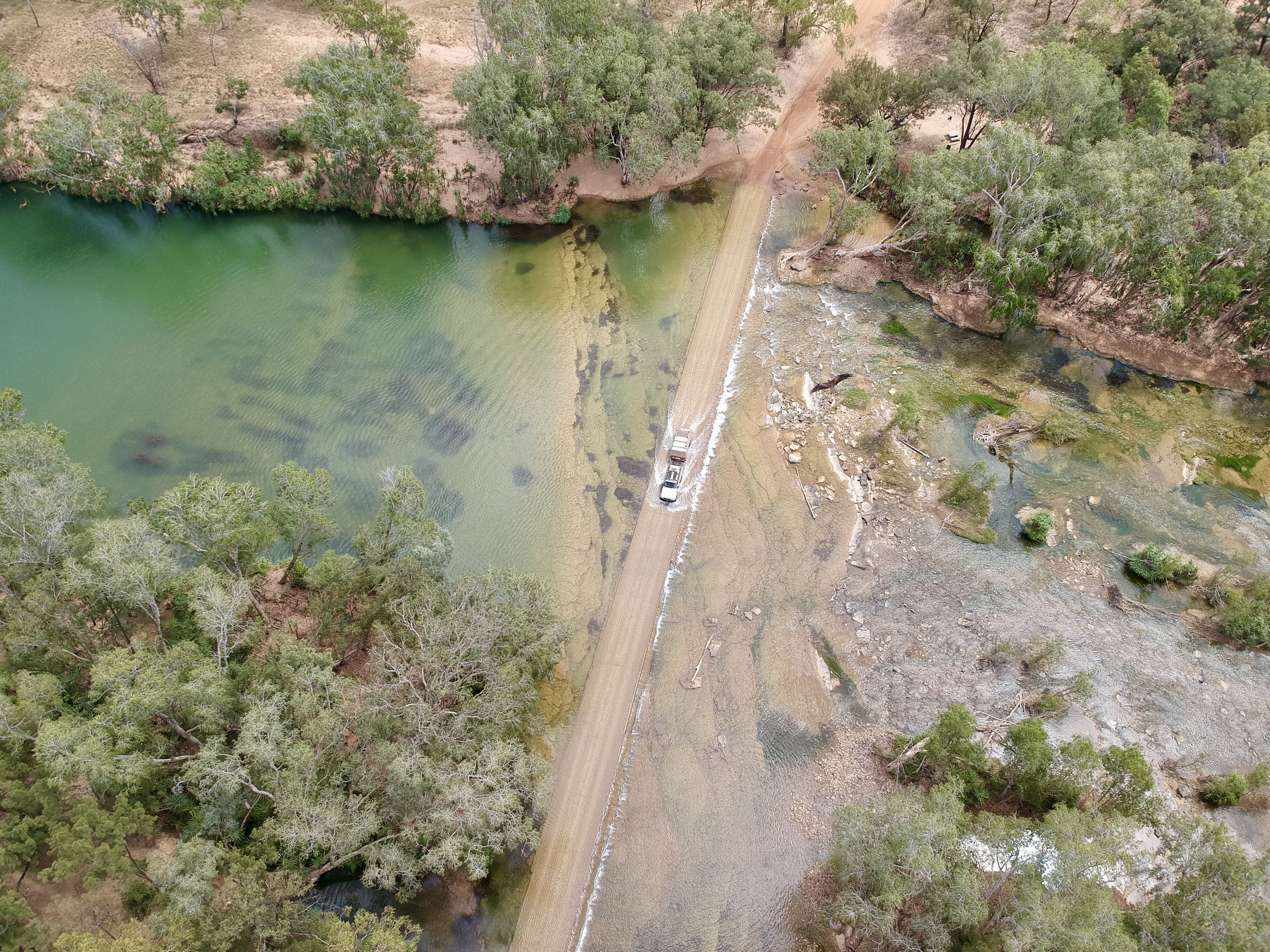
From here it’s another 50km to the Roper Bar store, with the route providing the chance to drive the old Roper River crossing and check out the ruins of the Roper River police station that operated from 1885-1980.
There’s heaps to read here, with plenty of relics to check out; plus there’s the memorial cairn commemorating the journey of Friedrich Leichhardt in 1845. From the store, it’s an easy, sealed 200km cruise out to the Stuart Highway and the town of Mataranka.
I wasn’t expecting so many beautiful areas along the 400km trek through Limmen National Park, but it’s definitely recommended for anyone who loves remote travel. It’s a breathtaking region where you could easily spend a month exploring a very special and unique place. It’s hard to believe such a spot can be so harsh yet have so many fragile elements.
Fast five facts
Getting there
Limmen National Park (incorporating Limmen Bight Marine Park) lies on the most western point of the Gulf of Carpentaria, some 275km south-east of Katherine and 65km west of Borroloola. Being isolated and remote, the NP requires visitors to be self-sufficient in fuel and food, and warns that all roads and tracks are unsealed and subject to seasonal closures. For road conditions, phone 1800 246 199, or visit: www.roadreport.nt.gov.au
Swimming
It’s always ‘summer’ in the tropics, and there is nothing better than a refreshing dip in many of the Top End’s noted swimming holes. Unfortunately, Butterfly Falls is the only place in Limmen that’s safe for swimming, but isn’t recommended near the end of the dry when it becomes stagnant. In fact, the rivers and creeks within Limmen are inhabited by saltwater crocs and authorities advise no swimming.
Fishing
As with everything across the tropical north of the continent, fishing is a major and extremely popular pastime for locals and visitors, and there are plenty of opportunities to wet a bait or flick a lure. The Limmen NP region contains several significant river systems including the Roper, Towns and Limmen Bight Rivers that flow east into the Gulf of Carpentaria. There are boat ramps at Towns River, Munbililla and the Limmen Bight Fishing Camp.
Camping
Within the park are short-term campsites with facilities at Towns River, Butterfly Falls, Limmen River, Southern Lost City, Yurrlmundji, Mountain Creek, Didi Baba and Munbililla. Fees apply and sites must be pre-booked online before arrival. There’s also camping outside the NP’s boundaries at the Limmen Bight Fishing Camp and Lorella Springs Wilderness Park.
Sightseeing
There are plenty of lagoons close to the NP’s main thoroughfare, Nathan River Road, regarded as a bird watcher’s haven. The intriguing pillars of the Lost City formations are home to the region’s more notable wildlife.
The booming popularity of double-cab 4×4 utes fitted with service body-style aluminium canopies on the back has revealed just how versatile these utes can be.
Fitting a canopy on the back of a ute gives you the security and accessibility of a wagon with a lot more space, capacity and functionality, making them a perfect touring set-up.
The problem for many though, is that the popular dual-cab utes are relatively small in the cabin and their off-road capability is not as good as many demand. Sure, you could opt for a LandCruiser 79, and there are plenty of those around with incredible set-ups on the back, but they are expensive and have their own inadequacies including comfort and space in the factory Toyota cabin.
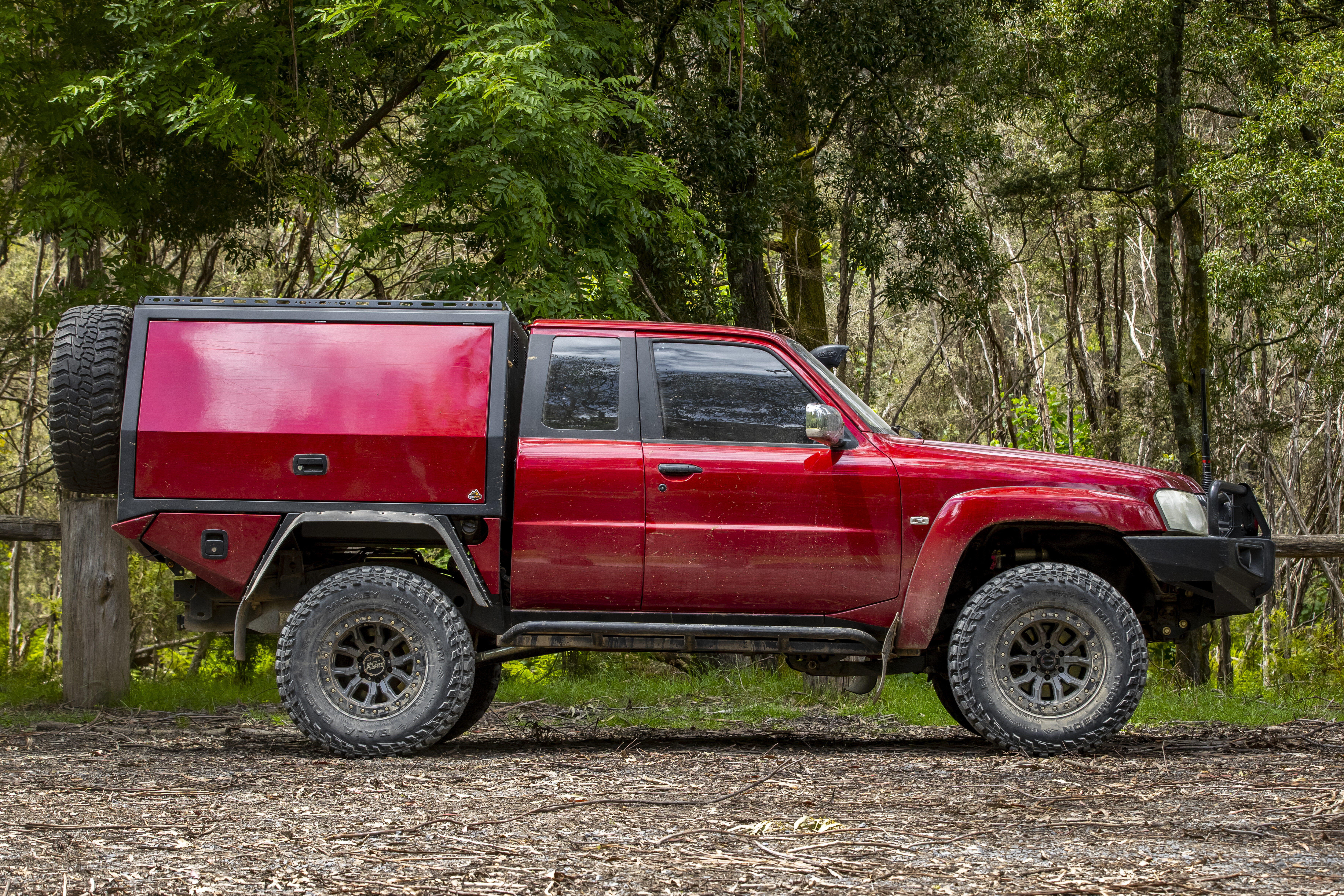
Cut-down LandCruiser 200 Series and Y62 Patrols fitted with canopies are also popular, but very costly and not everyone needs a four-door cabin and massive wheelbase.
Melburnite, Murray Brookes, was one such example of a four-wheel driver, and as the owner and head engineer at Trig Point Canopies, he well and truly knows the versatility and possibilities that a custom-made canopy can provide.
Trig Point canopy
Murray wanted a two-seat 4×4 but with more space than a single cab, live axles underneath and a petrol engine. It had to have a Trig Point canopy on the back, of course.
“I was looking to build an all-round car that was durable and capable enough to test new products, tackling the hardest tracks around, while remaining comfortable and reliable enough to be an everyday car,” Murray told us. “I didn’t need a five-seat ute, yet wanted enough space behind the front seats for Sam, the Trig Point dog.”
Murray says he considered cutting down a 105 Series, but they are relatively wide in the body and wouldn’t mate to the width of the canopies mainly made by Trig Point. So he went looking for a GU Patrol wagon, as it was just the right width to match.
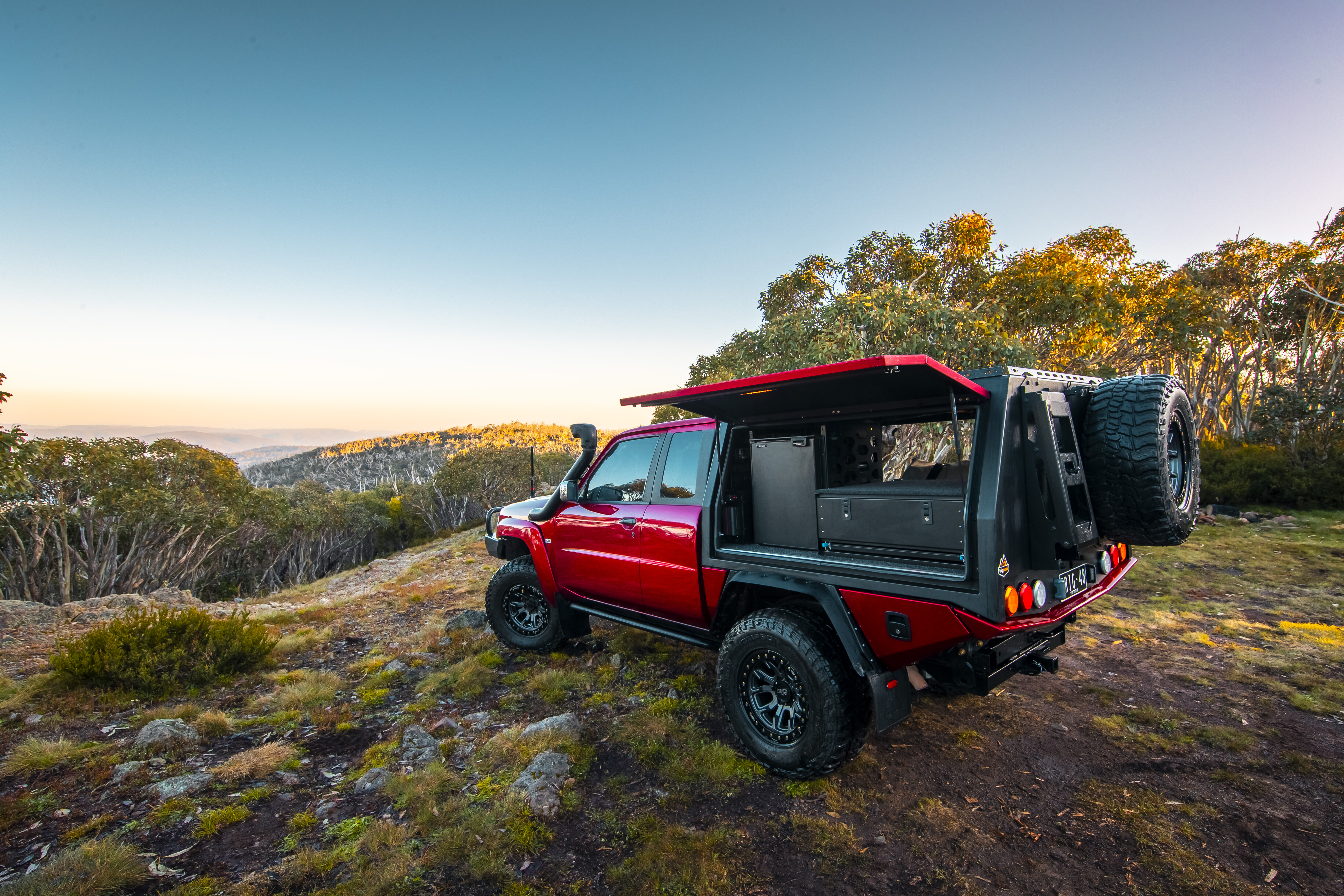
“We settled on a Patrol wagon cut down to an extra-cab ute,” said Murray. “This results in a length that fits a dual-cab canopy well. Aside from some shorter toolboxes, the canopy is our standard dual-cab canopy to fit a Hilux or Ranger. The profile happened to fit the GU perfectly!”
Having enjoyed the performance of a big petrol six in a previous Jeep, Murray again wanted petrol power for his Patrol and went looking for a suitable donor vehicle. One was found in Adelaide and shipped back to the Trig Point’s Knox, Victoria, workshop.
The burgundy, 4.8-litre, five-speed auto, GU Patrol ST-L model was in good condition for its age with just 150,000km, 33s, a suspension kit and bullbar. But all that was soon to change with the plans Trig Point had in mind. With the GU in hand and plans mapped out, it was sent to Tinman Fabrications to have the back end of the body chopped off and extra-cab conversion done.
Soul Red
Plans to repaint the cab in the factory burgundy were shelved, as Trig Point’s Sven and Pauly progressed on the body prep once back from Tinman. This work included fitting the D40 Navara rear windows in the pillars. They convinced Murray the car needed a colour that would really make it stand out and eventually they settled on Mazda’s popular Soul Red metallic.
“This is a three-layer paint process and applying it is an exceptionally difficult task,” said Murray. “The guys really did an amazing job; but now I cringe at every bush pinstripe it gets, as I know the effort we put into the body work.”
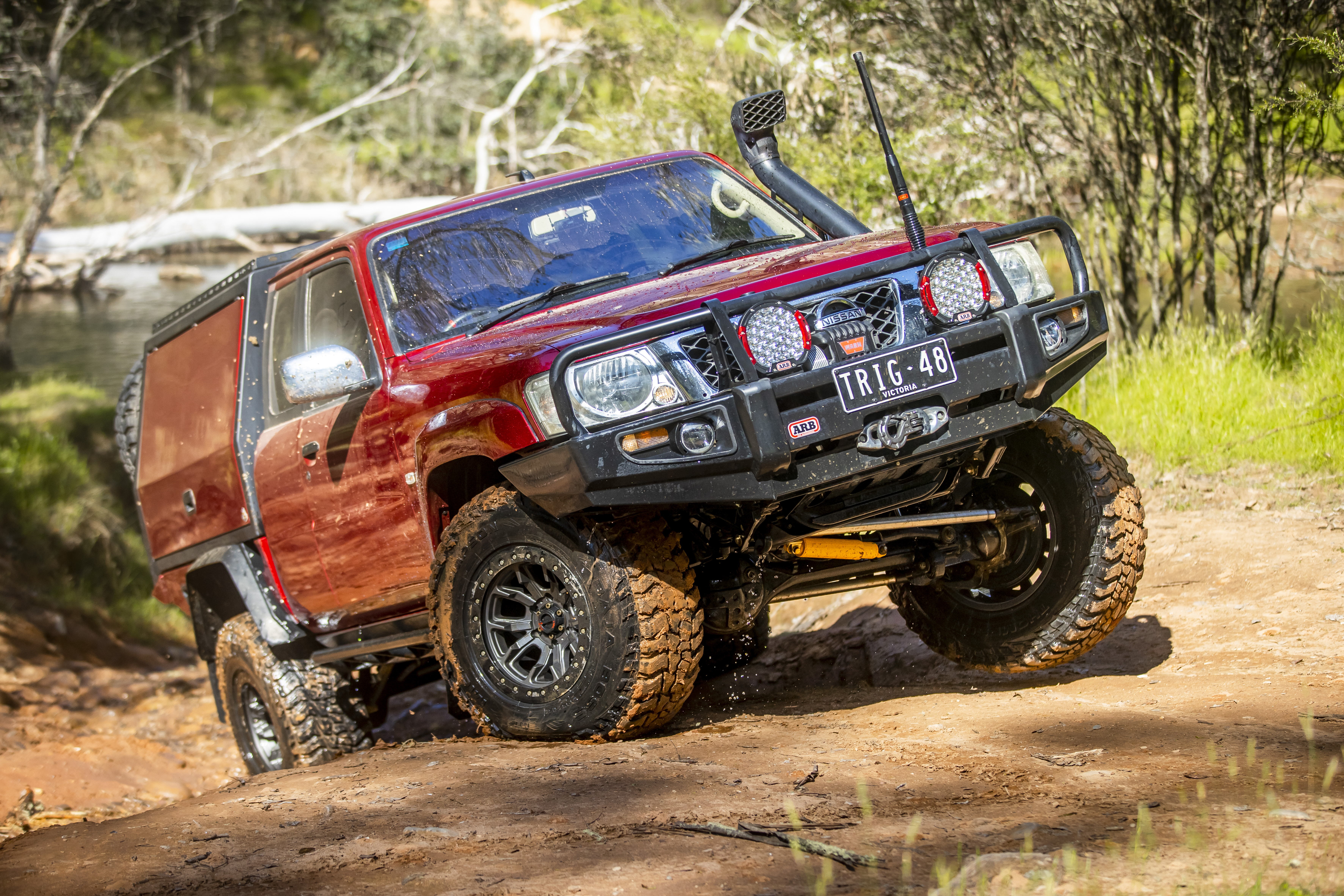
The doors on the canopy were also lathered in the red lacquer. Murray opted for what they call a two-tone colour treatment, where the frame and rear wall of the canopy are black and the side and tool-box doors and rear bumper are colour-matched to the vehicle.
The aluminium canopy is a full body replacement; that is, it mounts directly to the chassis and doesn’t sit on a tray. This design saves weight and allows for a lower floor height and more internal space, to make the most of what a canopy can offer. As mentioned, this canopy is the same size as the ones Trig Point makes for double-cab Hiluxes and Rangers.
Decked out
The Patrol’s GVM was a consideration when outfitting the canopy, so inside you’ll find a Bushman 85-litre upright fridge, a drawer containing a kitchen set-up, and the 12V system. For power, a 200Ah Invicta lithium battery is kept charged by a Redarc 50amp charger, and a 2000W inverter is used to power appliances.
What you can’t see in the canopy is a 70-litre water tank and pump that sits underneath it, while on the back are the rear bumper, spare-wheel mount and a ladder used to access the roof where sometimes there’s a Darche tent affixed to the inbuilt rails. The Trig Point roof rails are rated to 300kg and made to take different crossbars, roof tents or awning mounts.
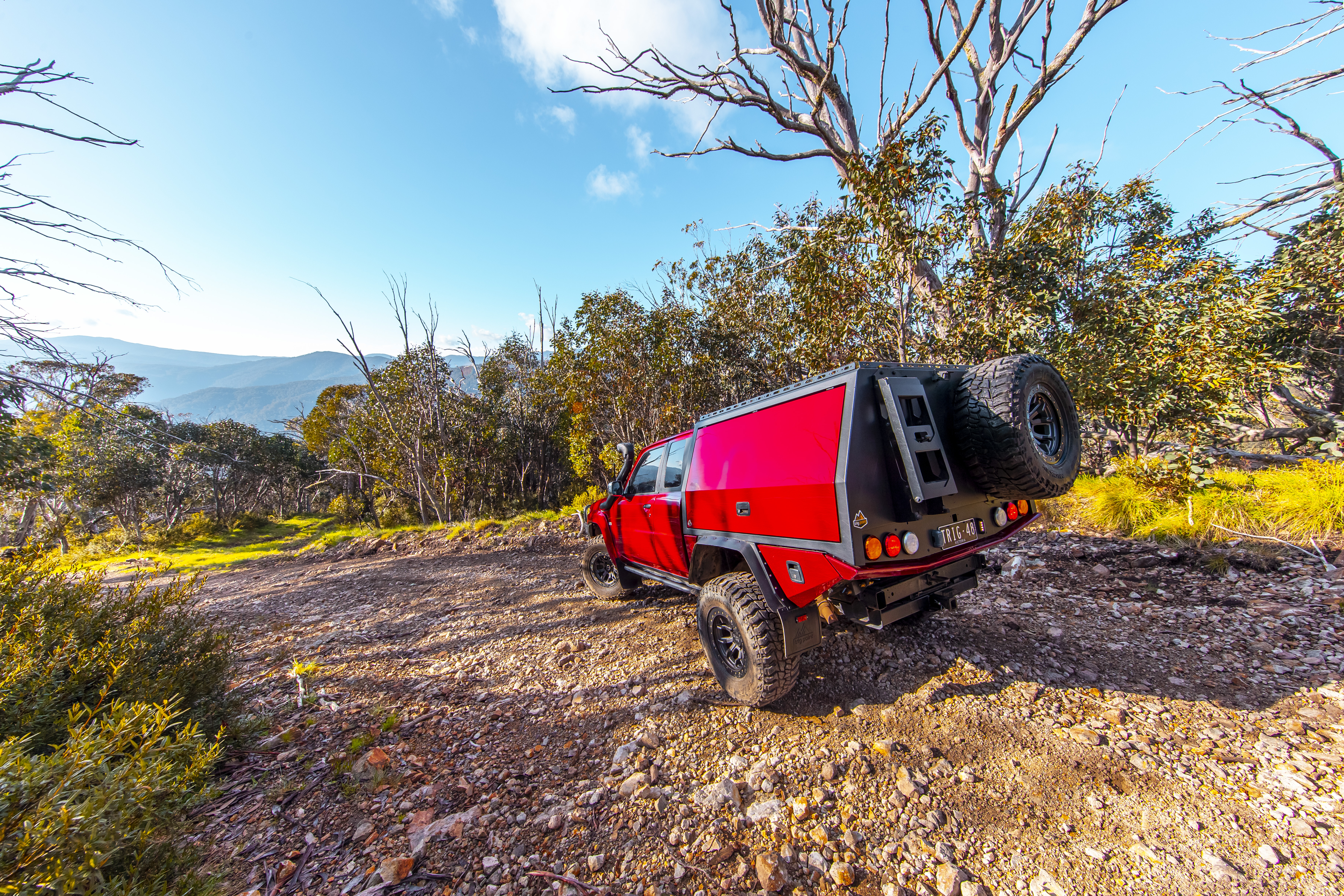
Protecting the sills on the Patrol are a pair of Southern Cross Fabrications rock sliders, while up the front is an ARB bullbar that was modified to accept an 8274 Warn high-mount winch. ARB Solis LED lights are also mounted up front.
Slide underneath the Patrol and you’ll spy ARB BP-51 shock absorbers at each corner with three-inch coils, progressive bump stops, and Superior Engineering control arms and rear sway bar suspending the big Nissan diffs. Those diffs are fitted with ARB Air Lockers and 4.11:1 gears for best performance on the highway and off-road.
Also underneath are Road Runner Offroad aluminium tie rod and draglink arms, as well as a Long Ranger 140-litre fuel tank in addition to the factory 40-litre sub-tank.
Loves a drink
THE super-cab Patrol needs extra fuel capacity for High Country adventures, as Nissan’s 4.8-litre engine is known to love a drink, and this one is no exception.
“The 4.8, although thirsty, is, in my mind, the pick of the (Nissan) engines for power and refinement,” said Murray. “I had a couple of diesel 4WDs previously, yet still really liked the old straight-six in the XJ, so I chose to go back to a petrol engine.”
Murray’s helped the efficiency by fitting a set of extractors and a Beaudesert 2.5-inch stainless-steel exhaust system plus an ECU tune by Bog Stock Conversions, but it’s still no fuel sipper.
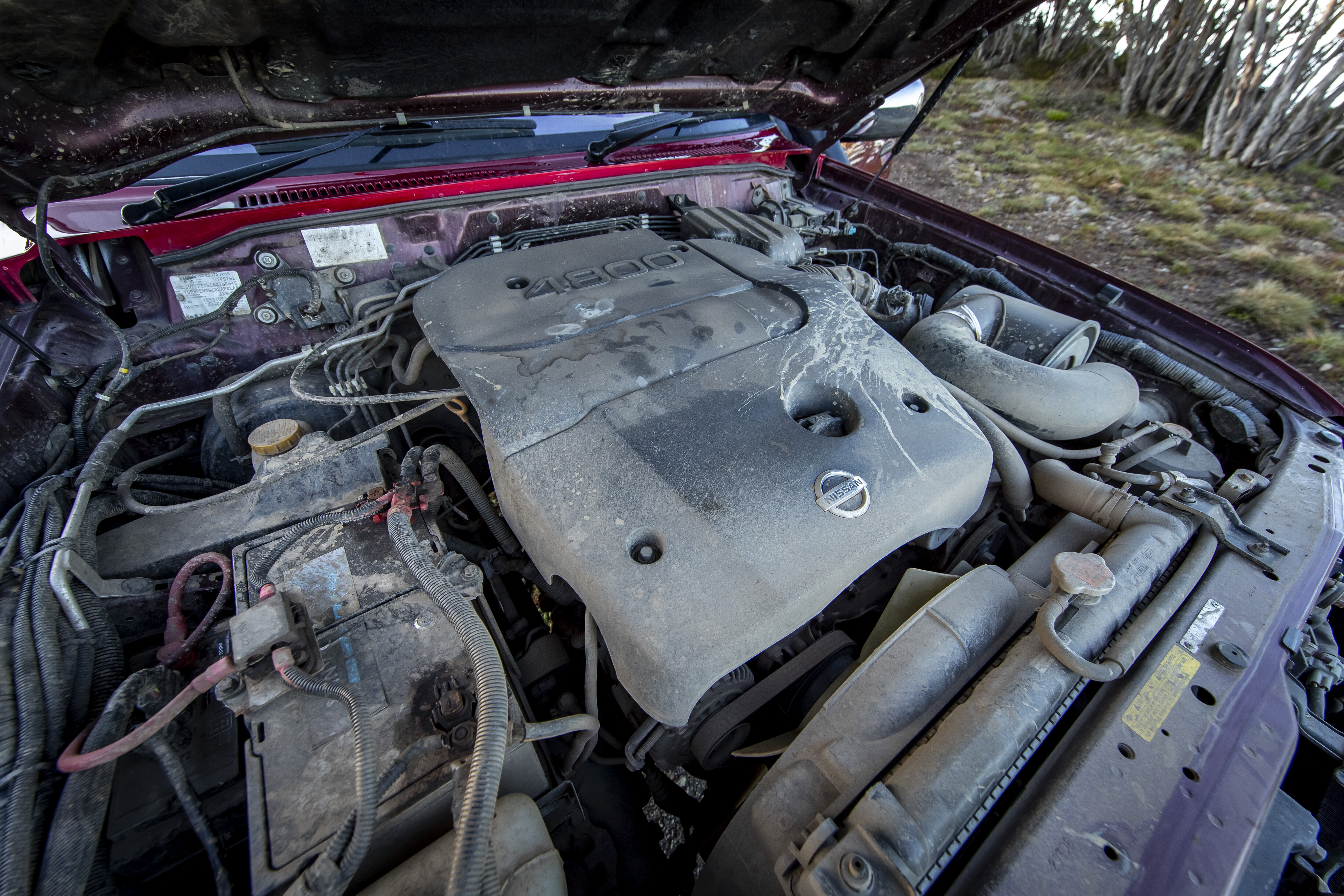
The engine breathes in through a Fatz Fab four-inch snorkel with a Safari head on top, to keep the intake noise down to an acceptable level. Inside the engine, the oil-pump gear was updated to a billet aftermarket unit to prevent possible failures of the factory unit that is a known weakness in these big sixes.
Heading into the drivetrain and the factory five-speed automatic transmission remains in place. A set of 43 per cent reduction gears from Marks 4WD adaptors have been fitted in the transfer case; the auto-locking front free-wheeling hubs were replaced with factory manual ones, and the hand brake, which is in the rear discs on 4.8-litre GUs, has been relocated to the back of the transfer case where it is in all other Patrols of the era.
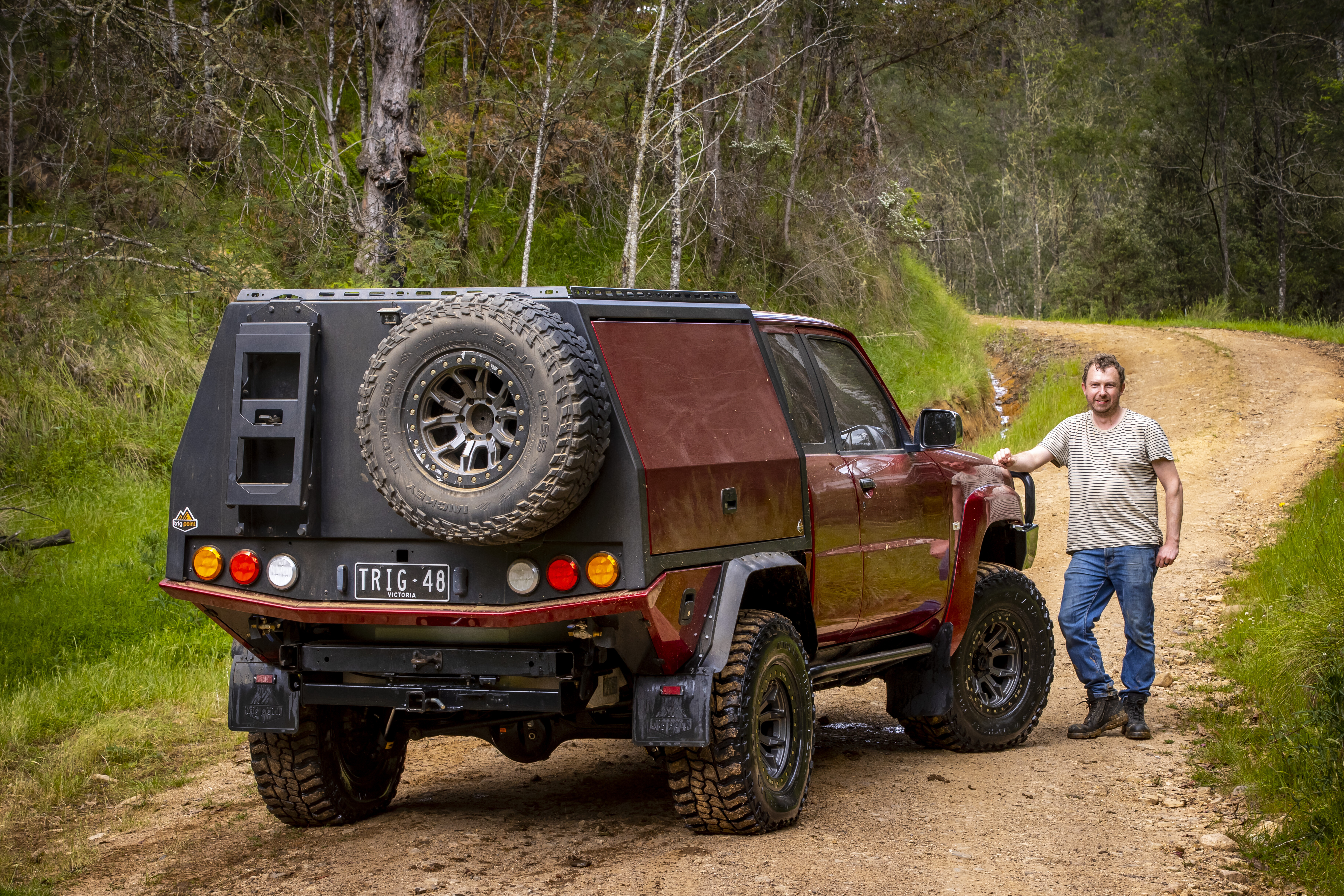
All of these mods were done with durability and practicality in mind, as this is a touring wagon that gets used plenty. With Trig Point’s HQ being in Melbourne’s east, Murray is only a short drive from the High Country where he likes to get away for weekends and longer trips.
He said he’s also looking forward to competing in nav-runs and other events, plus a Tassie trip over the New Year break. The way the Patrol has been set-up suits these purposes perfectly.
“The strength of the Patrols makes them very hard to overlook when you want to put together the most capable and durable car you can,” Murray told us, and we reckon he’s nailed the brief with this build.
Fast facts
Canopy
The body was chopped and the super-cab fabricated to allow the fitment of the canopy. Less visible body mods included removing and filling the OE radio aerial and replacing it with a stubby one from a Hilux.
Power
A Redarc DC-DC charger keeps the 200amp Invicta lithium battery charged in the back, while an Invicta hybrid lithium battery is used under the bonnet as the main battery.
Seats
The two-seat extra-cab interior has retrimmed seats and steering wheel, a GME UHF radio, Android head unit running maps on OziExplorer, and a signal repeater to improve the signal from the Hummingbird antennae on the bullbar.
Wheels
The clever thing with 315/70R17 Mickey T Baja Boss tyres on Dirty Life Dual-Tek alloys is you can legally run the tyres fitted conventionally on the inside bead, or, to get serious off-road, at low pressures on the outside using the beadlock rim.
Interior
Murray has kept the fit-out of his Trig Point canopy relatively simple with just the upright fridge and Tanami kitchen drawer on one side, and open storage space on the other.
Engine
The big Nissan petrol six isn’t everyone’s first choice of powerplant, but Murray likes the balance of power and refinement it delivers for his off-road adventures.
Winch
The ARB bar was modified to take the Warn high-mount winch; while Murray uses a recovery kit, also from ARB.
Accessories list
- Trig Point canopy
- Bushman 85-litre upright fridge
- 200Ah Invicta lithium battery
- Darche tent
- Southern Cross Fabrications rock sliders
- ARB bullbar
- ARB Solis LED lights
- ARB BP-51 shock absorbers
- Superior Engineering control arms and rear sway bar
- Road Runner Offroad aluminium tie rod and draglink arms
- Long Ranger 140-litre fuel tank
- Beaudesert 2.5-inch stainless-steel exhaust system
- ECU tune by Bog Stock Conversions
- Fatz Fab four-inch snorkel
- Marks 4WD adaptors reduction gears
- Redarc DC-DC charger
- GME UHF radio
- OziExplorer maps
- Hummingbird antenna
- 315/70R17 Mickey T Baja Boss tyres
- Dirty Life Dual-Tek alloy wheels
There’s a sign on the Stuart Highway, just north of Karlu Karlu (Devils Marbles), pointing to the Iytwelepenty/Davenport Ranges National Park and it’s passed by thousands of vehicles a day. Very few people take the turn-off and explore this stunning destination, which is a bonus for those of us who love remote destinations like this.
Kurundi Road leads to the scenic Iytwelepenty/Davenport Ranges NP, complete with permanent waterholes, great bush camping options and a challenging 4WD loop track. It’s also a haven for birds and fish.
The Davenport Range and nearby Murchison Range are unique to the other ranges in Central Australia because they receive relatively reliable rainfalls during summer. The Davenport Range also sits far enough north that it gets affected by the northern wet-season weather.
The region also enjoys warmer winters and a more humid climate than anywhere else in the Red Centre, which means there are several unique plants that include a mixture of tropical and desert species.
With its rugged beauty, Iytwelepenty is a photographer’s heaven, and its remoteness means you should be the only ones there.
Devils Marbles Hotel
I spent the night at the Devils Marbles Hotel, Davenport, where the beer was as cold as the pool, the chicken parma outstanding, and the bacon and eggs the perfect way to start the day. Hitting the road early is how I like to roll, avoiding the grey nomads towing oversized caravans slowly along the highway. There were plenty hanging out at Karlu Karlu and the Bonney Well Rest Stop.
Turning on to the gravel Kurundi Road, I dropped some air out of my tyres. In these conditions, I like to start the Kumhos at around 24psi in the front and 28psi in the rear, as the ride is significantly better, especially on corrugated sections.
As the road twists through a small range, the going is slow and rough. It’s only 50km to Kurundi Station, which has a store open seven days a week from 9am to 5pm with fuel, groceries, cold drinks and more.
Once past the short bitumen strip through the pass, the dirt road widens as it turns east across the plains. Just 17km past Kurundi, the signpost for Whistleduck Creek Road leads to the campground and gorge. The campground is in two sections along Whistleduck Creek, with pit toilets, firepits and tables.
Remember to book a campsite online before you arrive. A day visitor area has a shelter and table, and is only a short walk to Irrmweng Rockhole, a place to enjoy the scenery and birdlife.
After spending a couple of days relaxing in the shade of the gum trees, it was time to move on. I hadn’t seen another soul in my time here, which is part of the magic.
360 lookout
Retracing my steps to Kurundi Road and turning right towards Epenarra, it was good to see the red dust billowing behind the Prado again. Just a short way before Epenarra is Cloughs Bluff Lookout, and the short, steep drive to reach the top is well worth it. The space is rather flat, with a table and chairs, but the 360-degree views make this a special place to stop.
The road from here was in the process of being graded, so whilst smooth, speed was restricted. On reaching a tight right-hand bend, the track to the left leads to Epenarra Station which offers fuel and a store with a good range of supplies, hot food and free camping.
The staff are very friendly and happy to direct you to some great bush camps next to the Frew River. Telstra 4G is available here, and you can find out what the conditions of the tracks ahead are like, as Binns Track follows this same route.
The turn-off to the Old Police Station Waterhole is approximately 33km from here and, once the Frew River had been crossed, the gravel road was in decent condition with some corrugated sections. I really enjoy the drive to the waterhole, especially in the late afternoon when the sun bounces off the rugged outcrops.
There were a couple of groups set up at the first couple of campsites, so I drove to the end of the track to find an excellent spot amongst the saplings. Each site contains a firepit and there are a couple of drop toilets a short walk from all sites. There was plenty of water in the waterhole, and I enjoyed watching a large flock of budgerigars diving in to take quick drinks as the sun began to set.
I was awoken during the night by the sound of a rogue cow trampling through the long grass along the stony riverbed, before slurping from the waterhole. By morning, it had disappeared with the only evidence of its existence being cow dung that the hordes of resident flies enjoyed.
Frew River
On the opposite bank and a nice walk from either end of the campground, are the ruins of the first Frew River Homestead that was abandoned in the 1890s due to continual conflicts with local Aboriginal warriors and a long drought. When cattle arrived in the Frew River area in January 1889, it changed the lives of the local Alyawarr and Wakaya people dramatically. This was an important place from which they camped, fished and hunted for thousands of years, so conflict was inevitable.
When tungsten was discovered at Hatches Creek, hundreds of miners arrived to work the fields. A police presence was proposed when troubles arose in the 1890s and a mining warden was needed for the mines.
Constable Jones arrived in December 1918 and a police station was soon built on the site of the old homestead. The police presence didn’t last long past the end of World War I, when mining at Hatches Creek petered out and on September 4, 1921, the last constable closed the station.
If you enjoy some 4WD action, the Frew River 4WD Track is a good challenge and trailers aren’t recommended. The loop track takes you through some dry creek beds before you reach the bush camping areas by the waterhole. There are no facilities, so leave the place better than you found it. The waterhole had receded since my last visit but the views across to the colourful cliff face on the opposite bank were still excellent.
Once past the camping area, it’s not long before you start to climb the range. One section is best to walk first to help in choosing the right line, as it’s quite steep with lots of small rocks that can increase the chance of wheel slippage. Past this section, you’re then following the ridgeline with outstanding views across the range. There are plenty of spots to stop to get a better look; don’t forget the camera.
The 4WD track may only be 17km but it is slow going, so allow at least a couple of hours to take in the epic landscape. The track ends at a gate before the junction with Kurundi Road. Take a left to head back to the Old Police Station Waterhole, around 51km away. This section of Kurundi Road is less well-maintained, with plenty of washouts, corrugations and bulldust holes to contend with.
There’s an old windmill at Bull Creek Bore just off the track that is worth checking out, and if you need firewood there are some good opportunities before reaching the turn-off to camp. Now that you’ve explored as much of the park as you can, why not spend a few days relaxing by the water. If you decide a swim is in order, the good advice is not to jump or dive into the water as there could be submerged rocks and logs.
When it was time to hit the road again, I ventured back to Kurundi Road and turned right towards Hatches Creek. Keep an eye out for wild donkeys, and if you don’t see them, stop and listen for them braying, especially near Hatches Creek Outstation. There is still evidence of mining activity in the area, but take care if you decide to take a walk around the ruins as there are backfilled shafts that are difficult to spot. Around the next corner, an old headframe is fenced off and looks like there has been some recent mining going on.
From here, the road becomes rougher and is hard-going on vehicles and camper trailers. You’ll cross the Frew River several times as the track follows its path and eventually reach another beautiful waterhole. Once through the rocky riverbed, you’ll reach a gate that indicates the border of the national park.
An excellent remote destination for those who love adventure and want to experience a place unique to the Territory
Once through the gate (leave it as you found it), be alert for cattle hiding amongst the trees, they are young and jumpy and ready to run in front of you. Upon reaching a second gate (the same rule applies) you’ll find yourself at the junction with Murray Downs Road. If you’re following Binns Track, turn left as the quickest way back to the Stuart Highway is via Murray Downs Road, with fuel available at Ali Curung/Warrabri if you head this way.
Iytwelepenty/Davenport Ranges National Park is an excellent remote destination for those who love adventure and want to experience a place unique to the Territory. Managed jointly by Alyawarr and Wakaya people and the NT Parks & Wildlife Commission, there is a whisper that more of the park might soon be opened up for us to explore.
Travel Planner
Where
Iytwelepenty/Davenport Ranges National Park is located south-east of Tennant Creek and can be accessed via Kurundi Road from the Stuart Highway in the north or Murray Downs Road in the south.
Camping
There are three camping areas: Whistle Duck Creek, Old Police Station Waterhole and Frew River on the 4WD loop track. All campsites must be booked and paid for online before you go: www.nt.gov.au/parks/find-a-park/iytwelepenty-davenport-ranges-national-park
Permits
No permits are required.
Fuel
Wauchope and Ali Curung provide unleaded/opal and diesel fuel. Expect to pay top dollar for fuel at the remote places, with $2/litre and more for diesel.
Best time to visit
From June to September, as the weather is generally cooler and the wet-season waters should have receded.
More info
Paper maps, with the Hema Maps range providing excellent coverage. Some form of electronic navigation/mapping hardware/software is also recommended. Wikicamps is excellent for showing where all the good campsites are.