
Next-generation versions of the Nissan Patrol off-road SUV and Nissan Navara ute have been teased overnight.
The all-new 2025 Nissan Patrol will debut within the next 12 months, based on the latest Infiniti QX80 with a 3.5-litre twin-turbo petrol V6 replacing the current 5.6-litre naturally-aspirated V8.
A business plan presentation from Nissan confirmed the all-new Patrol – also sold as the Armada in North America – will launch between April 2024 and March 2025.
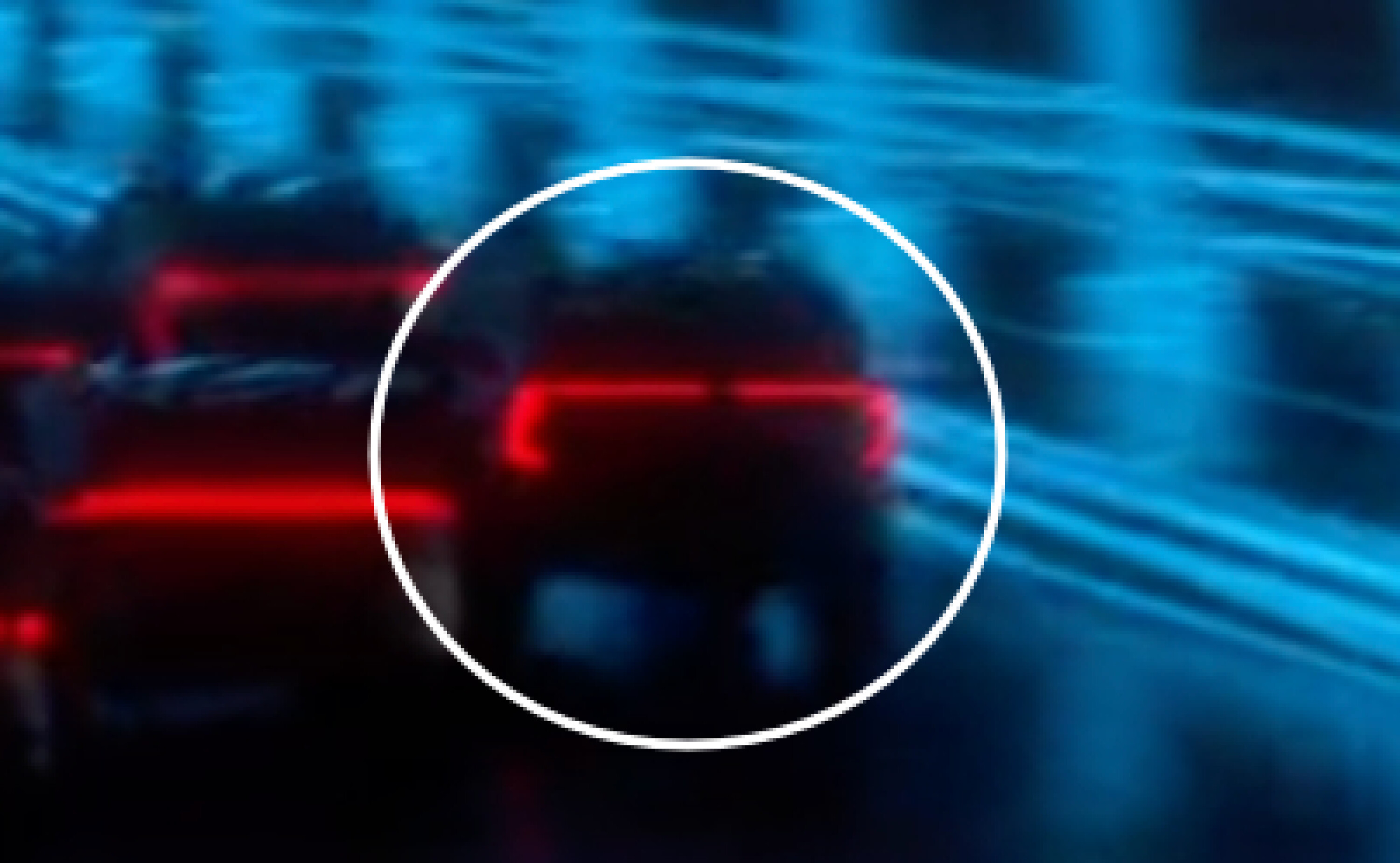
Local timing for the new Patrol has not been confirmed, as Nissan’s future product roadmap for Australia and New Zealand was void of any mention of the new model.
There is precedent for a delay with a new Patrol.
The current model was launched overseas in left-hand drive in 2010, but the right-hand drive version didn’t arrive in Australia until 2013 – meaning Australians could be waiting another two to three years to receive the new Patrol if a similar timeline is followed.
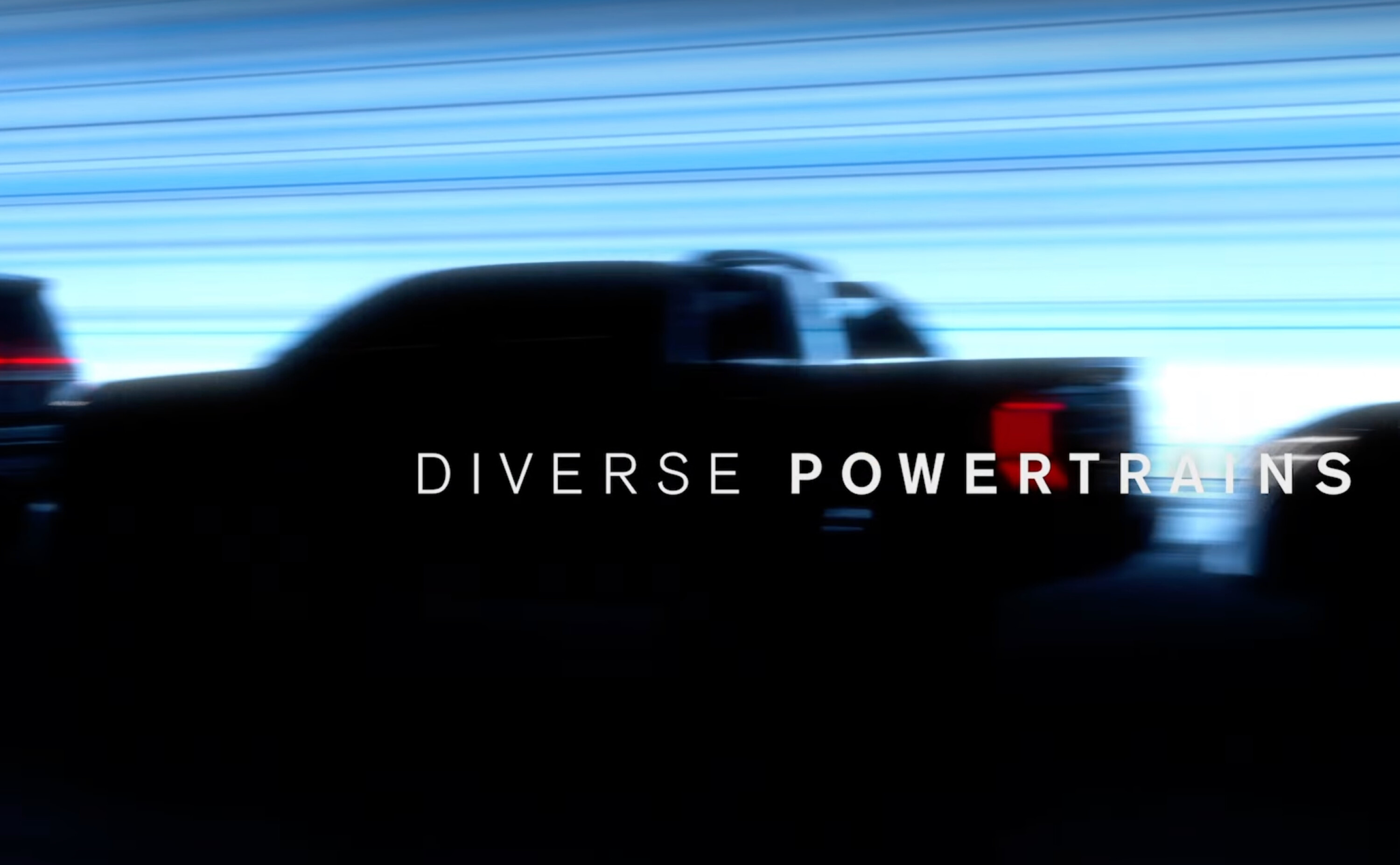
Meanwhile, the all-new 2026 Nissan Navara has been confirmed for Australia, with the new model to be built in Thailand with its Mitsubishi Triton twin-under-the-skin.
Nissan has confirmed a new one-tonne ute shared with Mitsubishi will offer an electric or plug-in hybrid option – likely including the forthcoming Navara bound for Australia.
Mitsubishi told WhichCar in July 2023 that all forms of electrification were on the cards for the newly designed frame platform that will underpin the latest Triton and Navara.
“[Hybrid] is really important because maybe we can rework our current frames, so that in the short term [HEV] can fit. It would be a very good solution for electrification and CO2 reduction,” said Mitsubishi’s engineering and product strategy vice president Hiroshi Nagaoka.

Mitsubishi has confirmed it will develop its own electrified technology for the Triton’s frame – rather than using Nissan’s E-Power series-hybrid system that is “kind of a problem in a bigger car” due to its lack of a traditional gearbox.
Nagaoka said a full-electric or plug-in hybrid option for the new Triton and Navara would likely appear once lighter and more compact solid-state batteries become available.
“Battery technology will improve, and then we can have more efficient, smaller batteries to package a plug-in hybrid. I think that’s really better than a battery EV because BEV pick-up trucks use so many batteries – think about the Ford F-150 [Lightning] – so we are also studying that solution,” added Nagaoka.
The partnership between Nissan and Mitsubishi will see the introduction of a next-generation one-tonne pick-up in North America. It will be built in Mexico and will likely replace the current Frontier that launched in 2021 as a reskinned D40 Navara-based model.

While Nissan did not confirm when the new Navara will launch, it should appear in Australian showrooms between April 2025 and March 2026 – with the global debut likely to occur several months before its local launch.
The Japanese brand also confirmed it will introduce a ‘C-segment’ electric SUV in Australia – though this is likely to be the delayed Nissan Ariya launched overseas in 2020.
Elsewhere, Nissan has announced it will introduce a half-tonne ute shared with Renault in Latin America, which should be based on the production version of the Renault Niagara dual-cab concept unveiled in late 2023.
Snapshot
- 2024 Isuzu MU-X: 1.9-litre turbo-diesel added to line-up
- More-affordable engine available in 2WD or 4WD
- Entry price less than before u2013 but cost up for 3.0-litre models
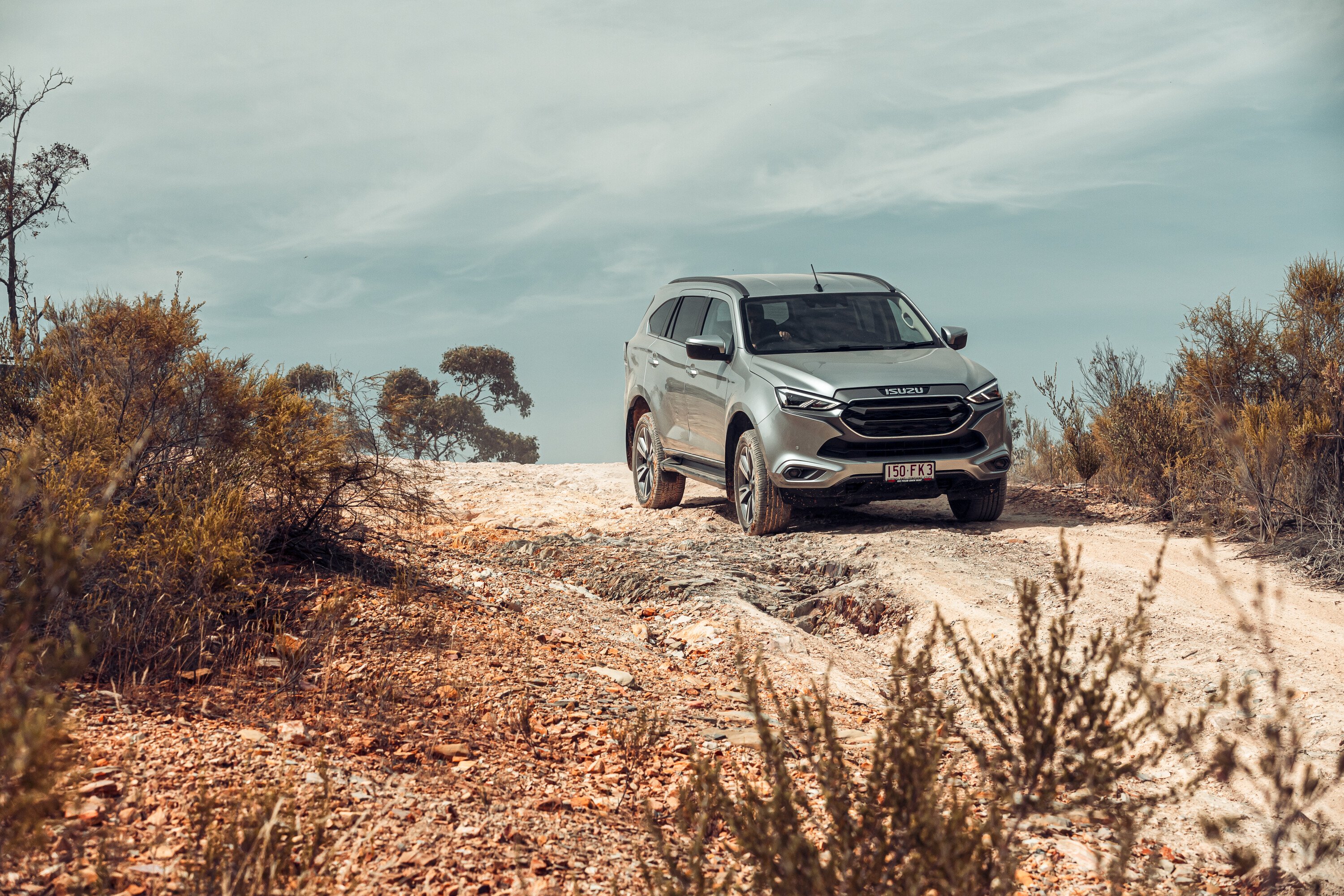
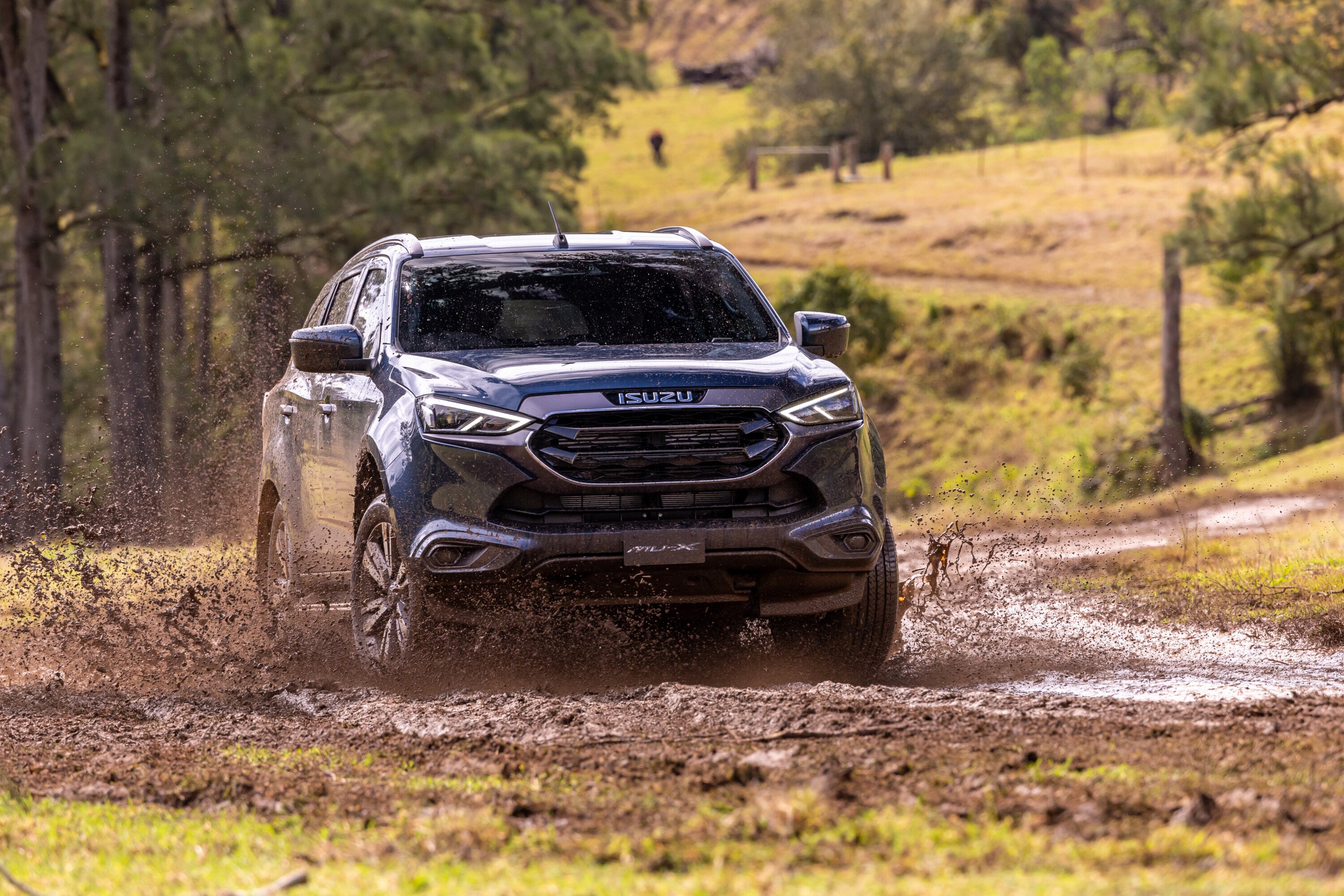
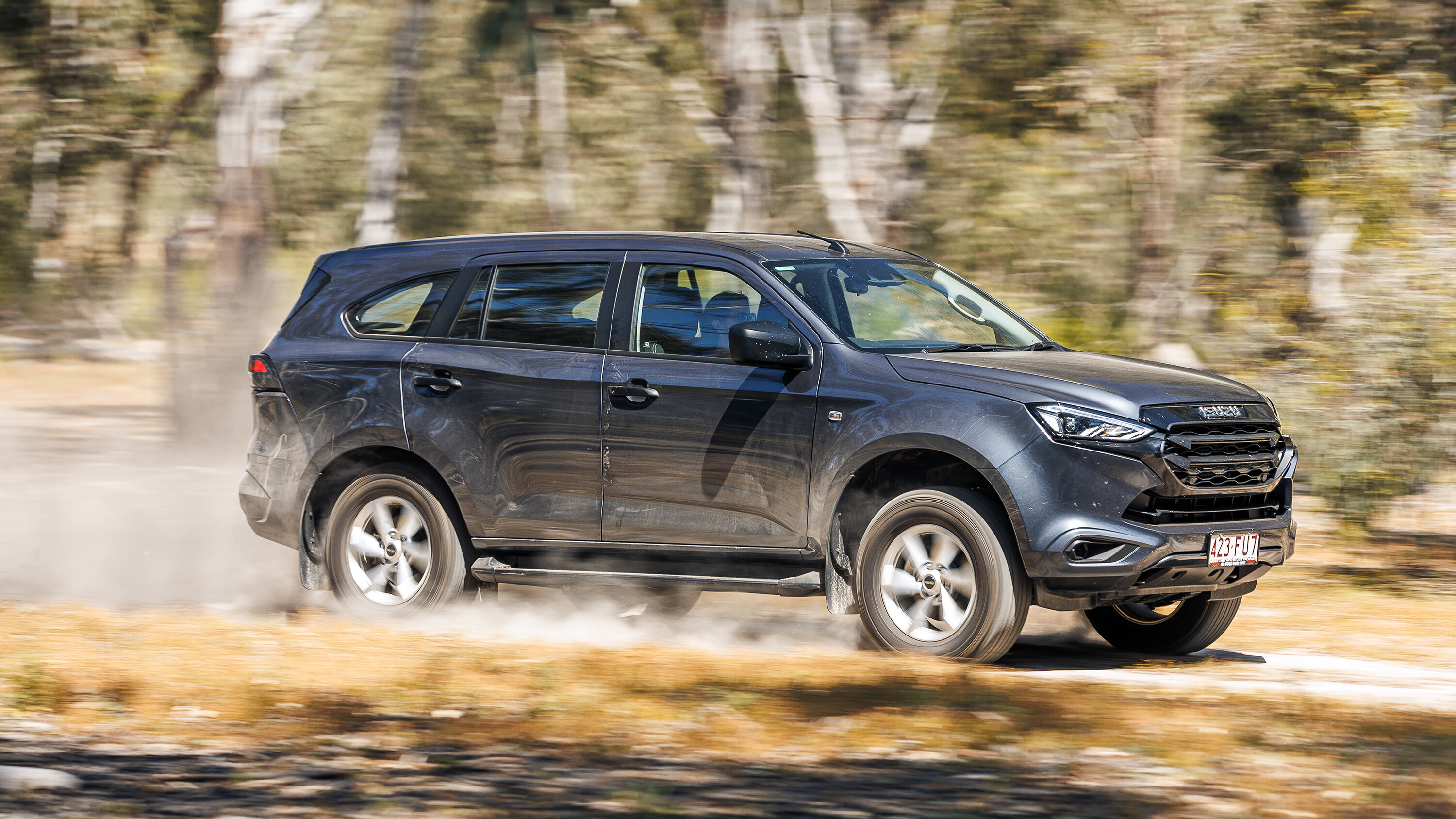
The 2024 Isuzu MU-X has arrived in Australia with a new 1.9-litre turbo-diesel engine option.
As announced in December 2023, Isuzu Ute Australia has introduced the smaller 1.9-litre engine to MU-X off-road SUV – which is borrowed from the related Isuzu D-Max and Mazda BT-50 utes – to reduce costs and provide a more fuel-efficient option.
Like the unit available in the D-Max and BT-50, the ‘RZ4E’ 1.9-litre diesel in the MU-X produces 110kW and 350Nm – down 30Nm and 100Nm compared to the familiar 150kW/450Nm ‘4JJ3-TCX’ 3.0-litre four-cylinder turbo-diesel.
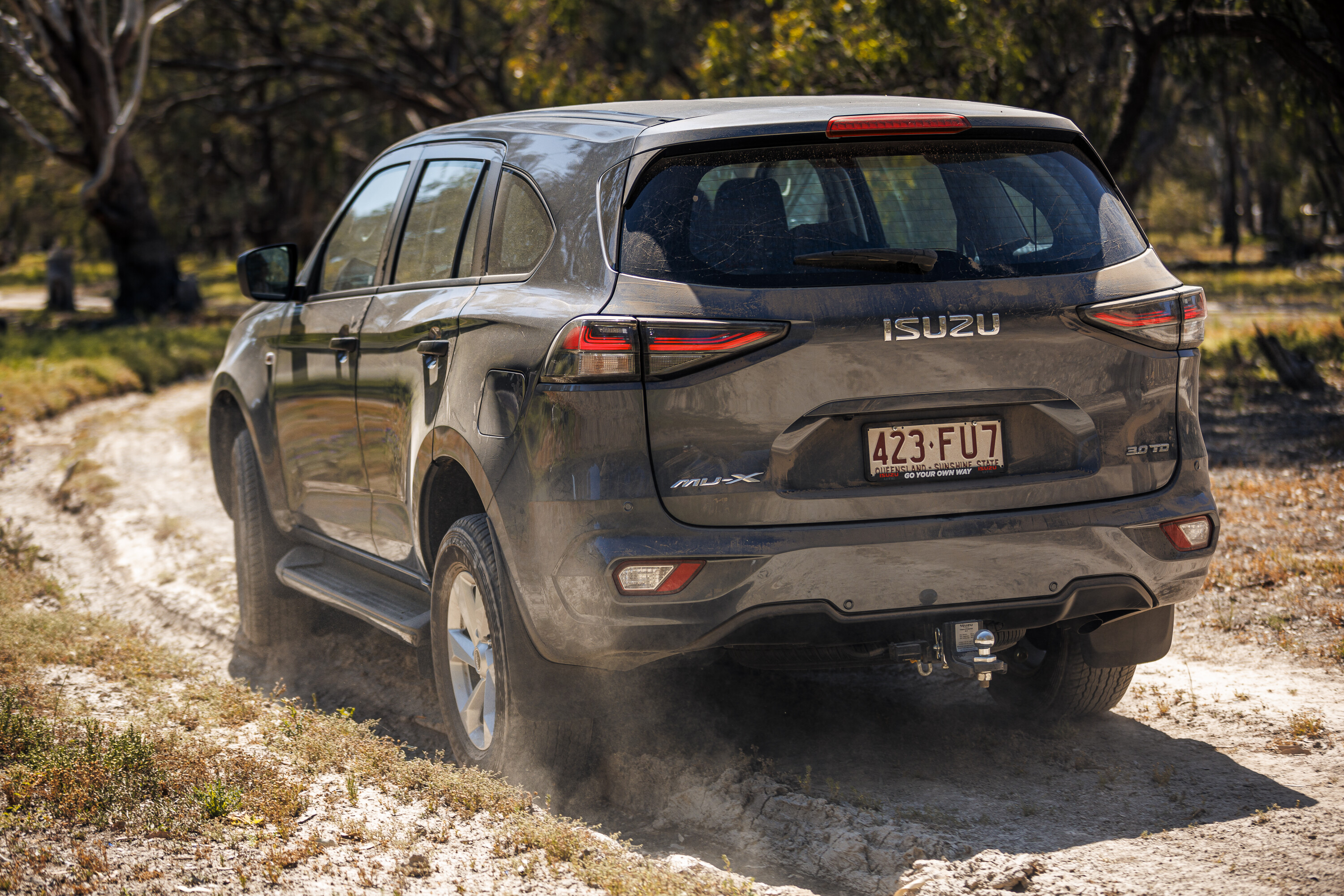
Both powertrains remain paired to a six-speed torque-converter automatic transmission with two- or four-wheel-drive options.
Braked towing capacity is limited to three tonnes for the 1.9-litre MU-X – equivalent to the soon-to-be-replaced Toyota Prado – compared to 3.5 tonnes for the 3.0-litre MU-X.
Available in LS-M and LS-U variants, the new powertrain sees the MU-X’s entry price fall $1500.
Prices have increased between $500 and $2000 for existing 3.0-litre MU-X variants, with the biggest increase applied to the flagship MU-X LS-T two- and four-wheel-drive models.
The MU-X LS-T 4WD, which was permanently offered for $65,990 drive-away nationally, is now available for $67,990 drive-away – a saving over the $69,400 recommended retail price.
Wheels crowned the Isuzu MU-X as the 2023 Best Value 4X4 SUV, with competition including the Ford Everest, Toyota LandCruiser Prado, Mitsubishi Pajero Sport, Toyota Fortuner, Ssangyong Rexton and LDV D90.
JUMP AHEAD
- 2024 Isuzu MU-X pricing
- 2024 Isuzu MU-X features
- 2024 Isuzu MU-X colours
- Engine, drivetrain, and fuel economy
- Safety
- Dimensions
- Warranty and servicing
- Availability
2024 Isuzu MU-X pricing
| Model | Pricing | Change |
|---|---|---|
| LS-M 1.9L 2WD | $47,400 | new |
| LS-M 3.0L 2WD | $49,490 | up $590 |
| LS-M 1.9L 4WD | $53,400 | new |
| LS-M 3.0L 4WD | $55,400 | up $500 |
| LS-U 3.0L 2WD | $55,900 | up $500 |
| LS-U 1.9L 4WD | $59,900 | new |
| LS-U 3.0L 4WD | $61,900 | up $500 |
| LS-T 3.0L 2WD | $63,400 | up $2000 |
| LS-T 3.0L 4WD | $69,400 ($67,990 drive-away) | up $2000 |
| Prices exclude on-road costs. MU-X LS-T 3.0L 4WD available for $67,990 drive-away nationally (+$2000).u00a0 | ||
2024 Isuzu MU-X features
| 2024 Isuzu MU-X LS-M features | |
|---|---|
| 17-inch alloy wheels | LED headlights, daytime running lamps and tail-lights |
| Dunlop AT25 all-terrain tyres | Rain-sensing wipers |
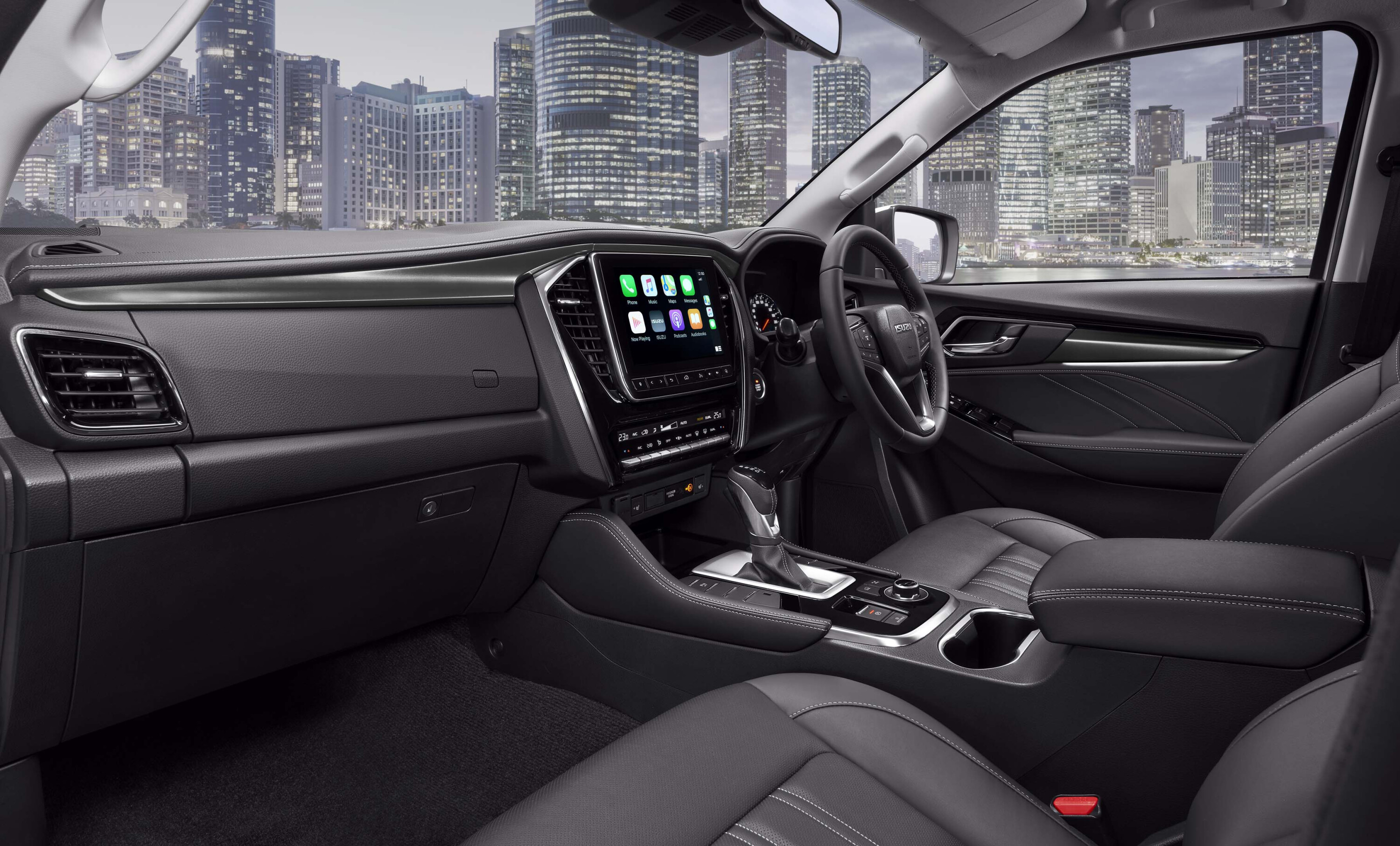
| 7-inch infotainment system | Plastic steering wheel and gear shifter |
| Wireless Apple CarPlay | Black door handles and side mirror caps |
| Wired Android Auto | Black side steps |
| Four-speaker audio system | Rear parking sensors |
| Manual air-conditioning with rear vents | Rear-view camera |
| Black cloth upholstery | Full-size steel spare wheel |
2024 Isuzu MU-X LS-U features
| In addition to LS-M | |
|---|---|
| 18-inch alloy wheels | LED fog lamps |
| Bridgestone highway terrain tyres | Front parking sensors |
| Larger 9-inch infotainment system | Hands-free electric tailgate |
| Eight-speaker audio system | Leather-accented steering wheel and gear shifter |
| Built-in satellite navigation | Body-coloured door handles and side mirror caps |
| Keyless entry and push-button start | Dynamic guidelines for rear-view camera |
| Walk-away auto-lock | Magnetite exterior and chrome window trim |
| Six-way manual driveru2019s seat with power lumbar support | Rear privacy glass |
| Dual-zone climate control | |
2024 Isuzu MU-X LS-T features
| In addition to LS-U | |
|---|---|
| 20-inch alloy wheels | Four-way power-adjustable passenger seatu00a0 |
| Black leather-accented upholstery | LED interior ambient lighting |
| Heated front seats | Remote engine start |
| Eight-way power-adjustable driveru2019s seat | Full-size alloy spare wheel |
2024 Isuzu MU-X colours
Engine, drivetrain, and fuel economy
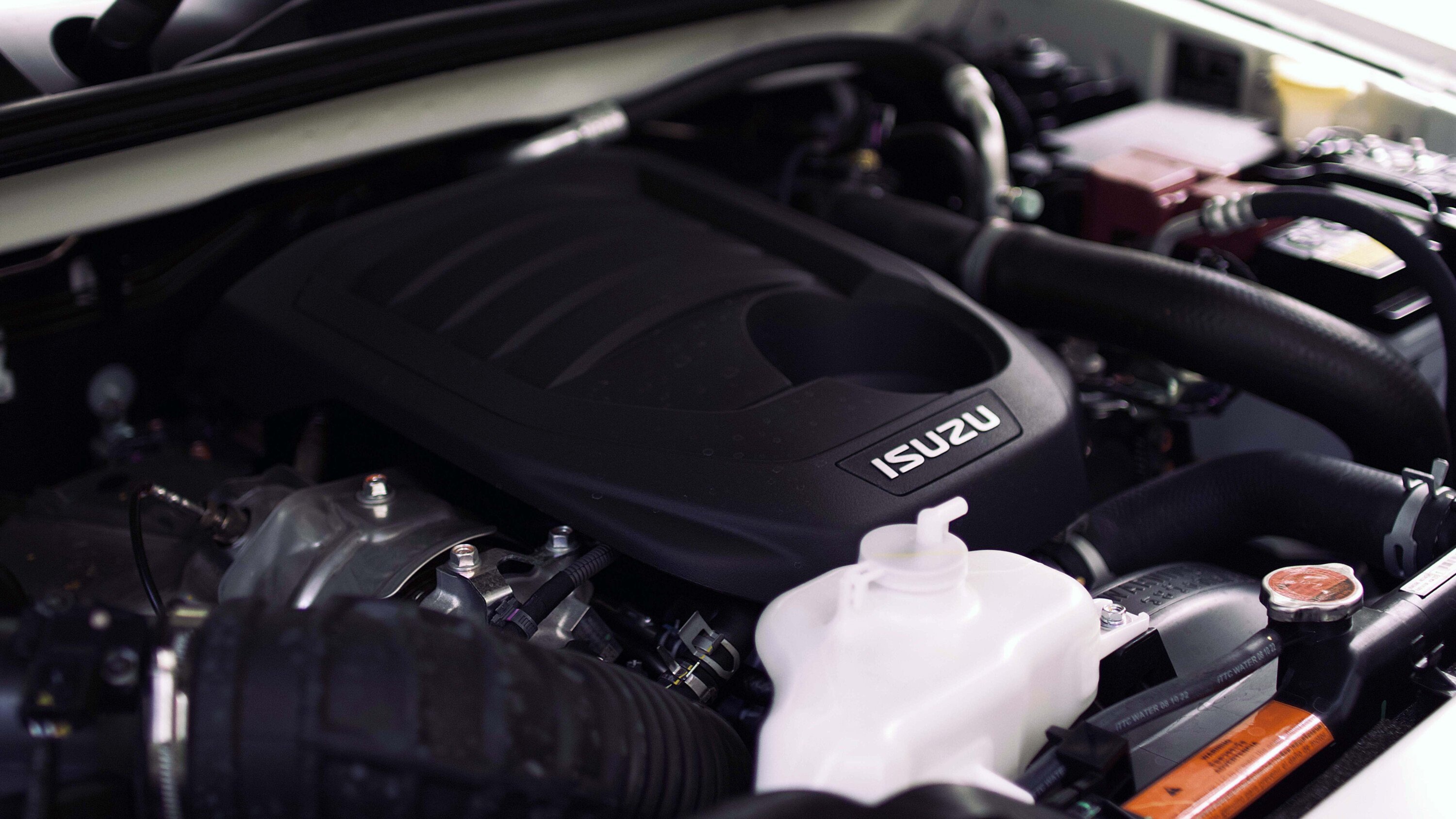
The Isuzu MU-X is now available with two four-cylinder diesel engines.
The entry-level option is the newly-introduced 1.9-litre RZ4E which produces 110kW and 350Nm. It is matched to a six-speed automatic transmission.
Stepping up to the venerable 3.0-litre 4JJ3 turbo-diesel pushes outputs to 140kW and 450Nm, also with a six-speed automatic.
While the 3.0-litre MU-X has a 3500-kilogram braked towing capacity, the 1.9-litre model is limited to 3000kg.
According to laboratory test results, the 1.9-litre Isuzu MU-X four-wheel-drive does not use more fuel than the two-wheel-drive model – while the 4WD 3.0-litre uses 0.5L/100km more than the 2WD.
| 2024 Isuzu MU-X fuel efficiency (combined cycle) | ||
|---|---|---|
| MU-X 1.9L 2WD | 7.4L/100km | 196g/km |
| MU-X 1.9L 4WD | 7.4L/100km | 196g/km |
| MU-X 3.0L 2WD | 7.8L/100km | 206g/km |
| MU-X 3.0L 4WD | 8.3L/100km | 220g/km |
Safety
The Isuzu MU-X is covered by a five-star ANCAP safety rating, based on updated testing conducted in 2022 when a minor driver’s knee protection improvement was introduced.
It received a score of 86 per cent for adult occupant protection, 85 per cent for child occupant protection, 69 per cent for vulnerable road user protection, and 84 per cent for safety assist.
Eight airbags (dual front, side, curtain, driver’s knee and centre) are fitted across the range.
| 2024 Isuzu MU-X active safety features | |
|---|---|
| Autonomous emergency braking (vehicle, pedestrian, cyclist, junction) | Post-collision braking |
| Lane-keep assist | Misacceleration mitigation |
| Lane departure warning | Adaptive cruise control |
| Emergency lane keeping | Traffic sign recognition |
| Blind-spot monitoring | Intelligent speed limiter |
| Rear cross-traffic alert | Automatic high beam control |
Dimensions
The Isuzu MU-X measures 4850 millimetres long, 1870mm wide and 1815-1825mm tall, with a 2855mm wheelbase.
2024 Isuzu MU-X boot space
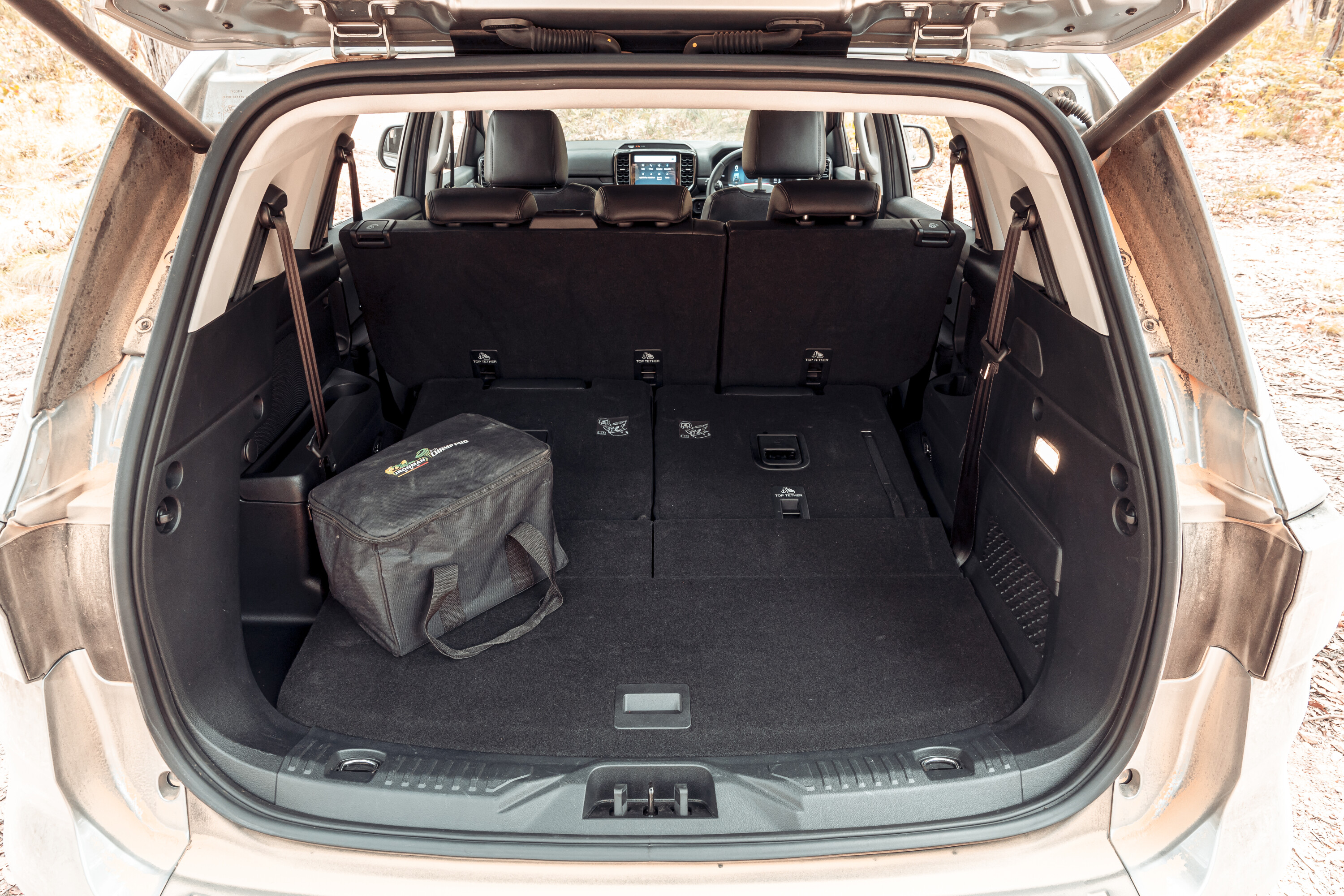
The 2024 Isuzu MU-X has a 311-litre boot space with the second and third rows in place.
With the third-row folded flat, it has an 1119-litre capacity to the roof, while this expands to 2138 litres with the second-row down.
Warranty and servicing
The MU-X is covered by Isuzu Ute’s six-year/150,000-kilometre warranty.
Servicing for the MU-X is required every 12 months or 15,000 kilometres, whichever occurs first.
Availability
The 2024 Isuzu MU-X line-up will arrive in local showrooms later this week, with customer deliveries set to commence on April 2.
They say that art is the application of human skill and imagination, and honestly, it’s difficult to come up with a better summation of this rig.
Meet Pete Newell, who owns Offroad & Outback in Romsey, Victoria. Pete has a long history with Toyotas owning no fewer than 10 of them over the years, most well modified.
Recently, he was shopping around for a new bus to turn into his version of the ideal tourer, so it was a no-brainer for him to grab this ex-demo 300 Series LandCruiser as a bit of a blank canvas. From there Pete got somewhat carried away, but the end result is nothing short of sensational.
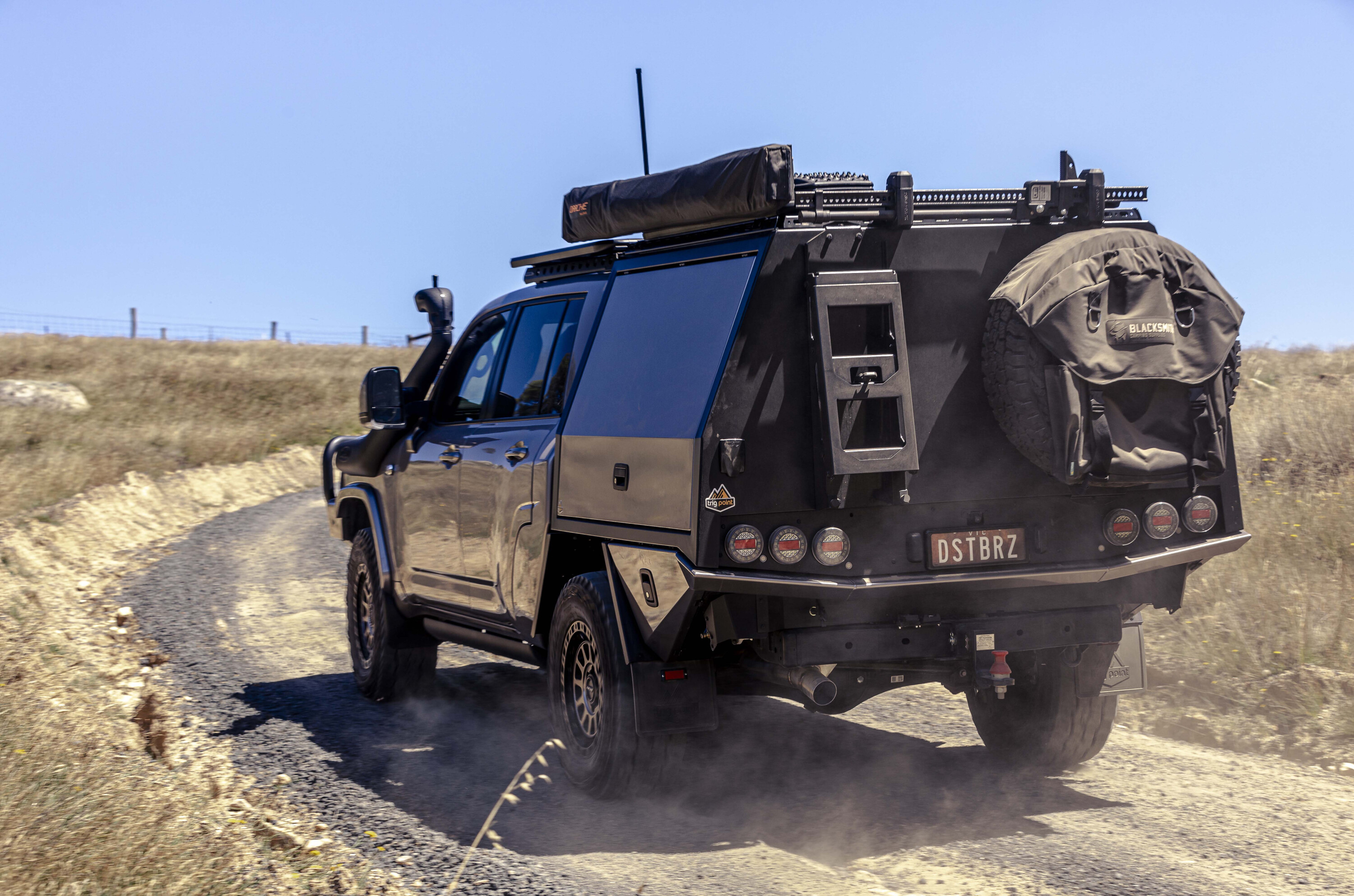
Not only is his steed among the first 300s in the country to get modified into a ute (that number is growing daily), but it also has to be one of the neatest conversions we’ve seen. Ever.
The details are often the difference between a hack job and something clean enough to eat off, and the longer you look at Pete’s Cruiser the more you start to appreciate the time taken and effort that’s gone into it.
It’s like if Leonardo Da Vinci, Ferrucio Lamborghini and Tony Stark decided to work together on a ute-chop.
It’s really about as good as they get.
Getting started
This was always going to be built into Pete’s perfect touring weapon, so the usual mods were quickly fitted up as soon as the ink was dry on the rego papers.
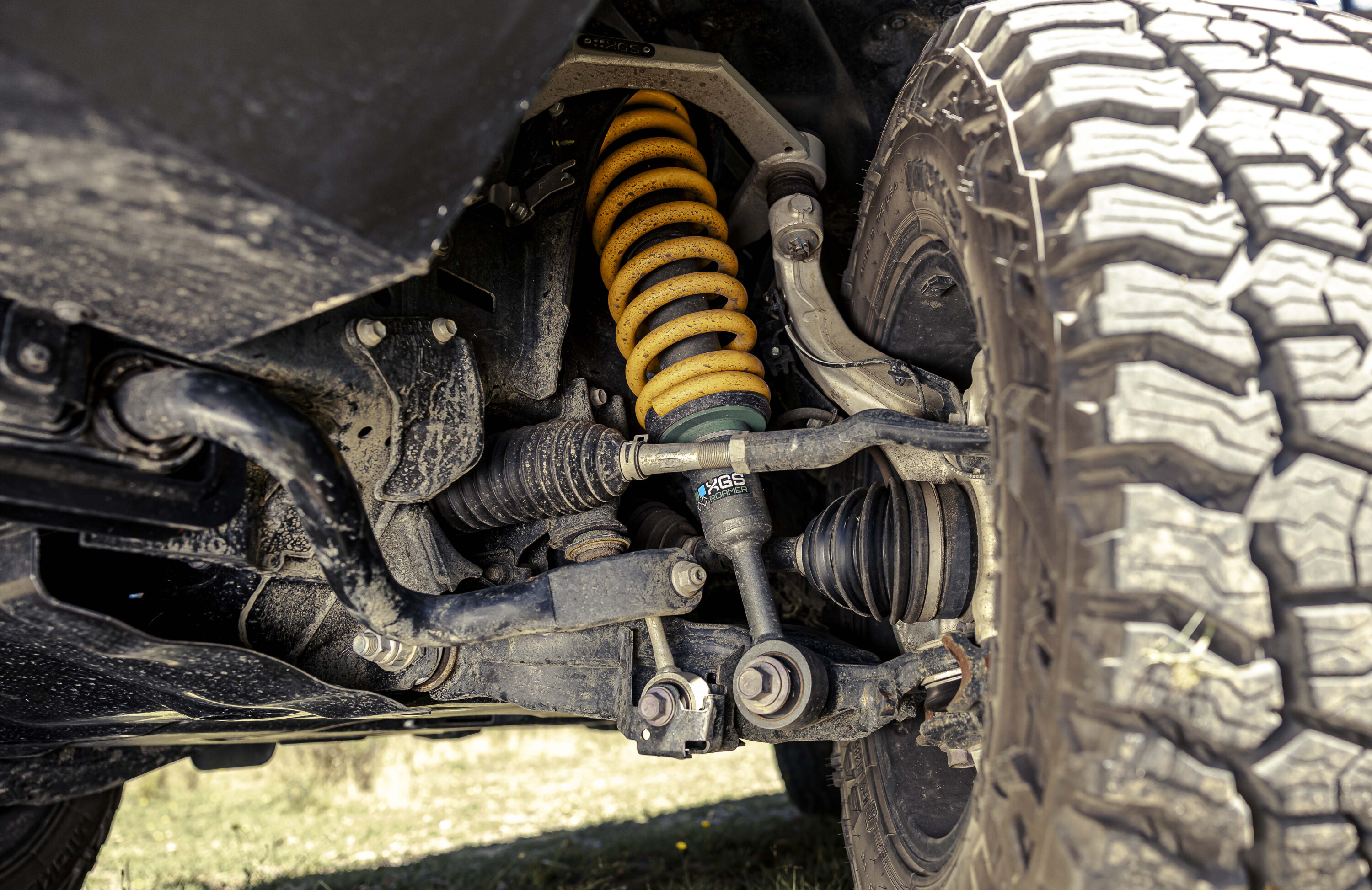
TJM was called upon to provide XGS Roamer struts and shocks at each corner along with matching XGS coils. Pete and his team at Offroad & Outback fitted them up in the workshop and, at the same time, the GVM was upgraded to 4200kg while the GCM was bumped up to 7700kg. This means the Cruiser can legally pull the maximum 3500kg behind it when fully loaded.
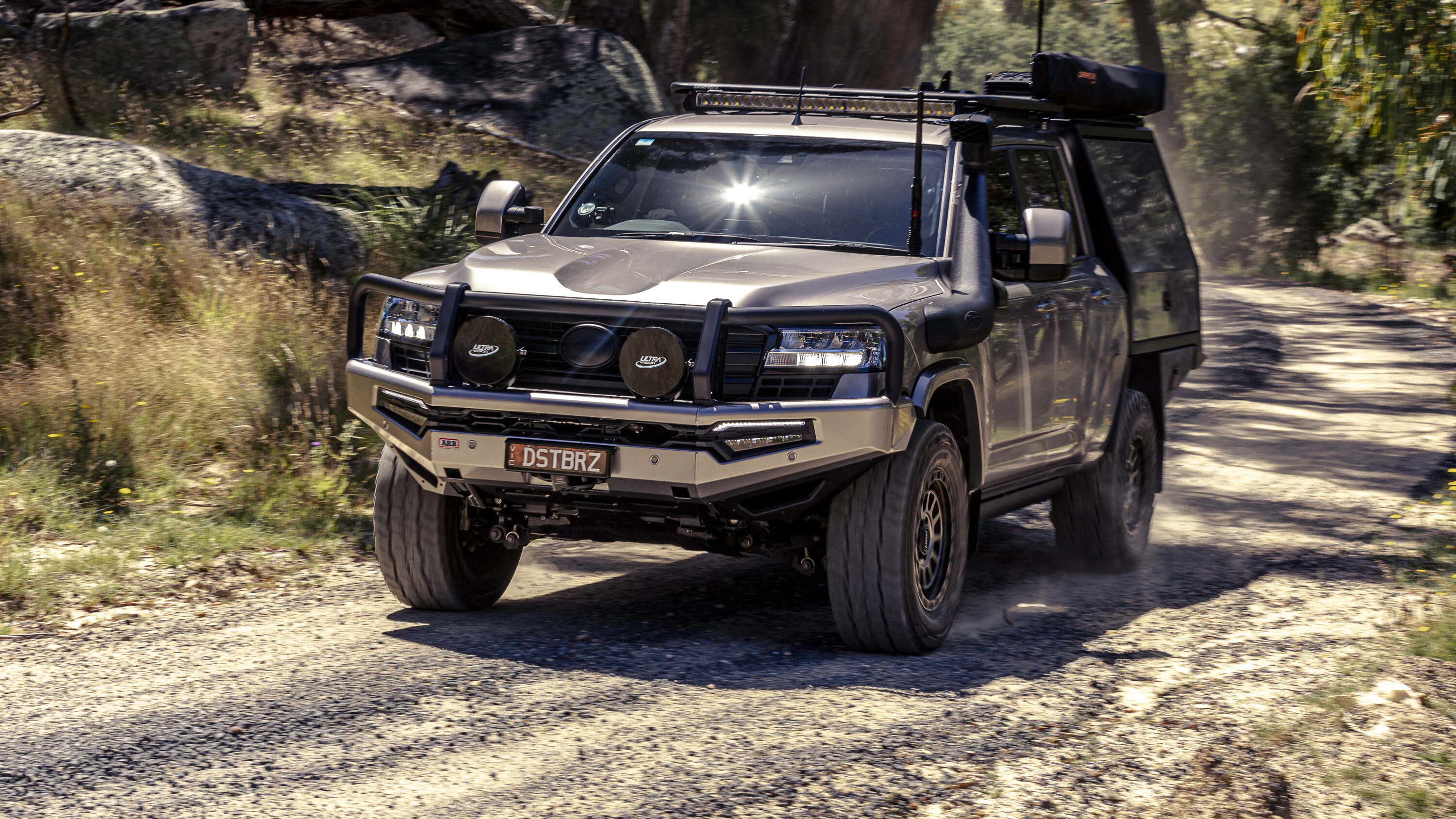
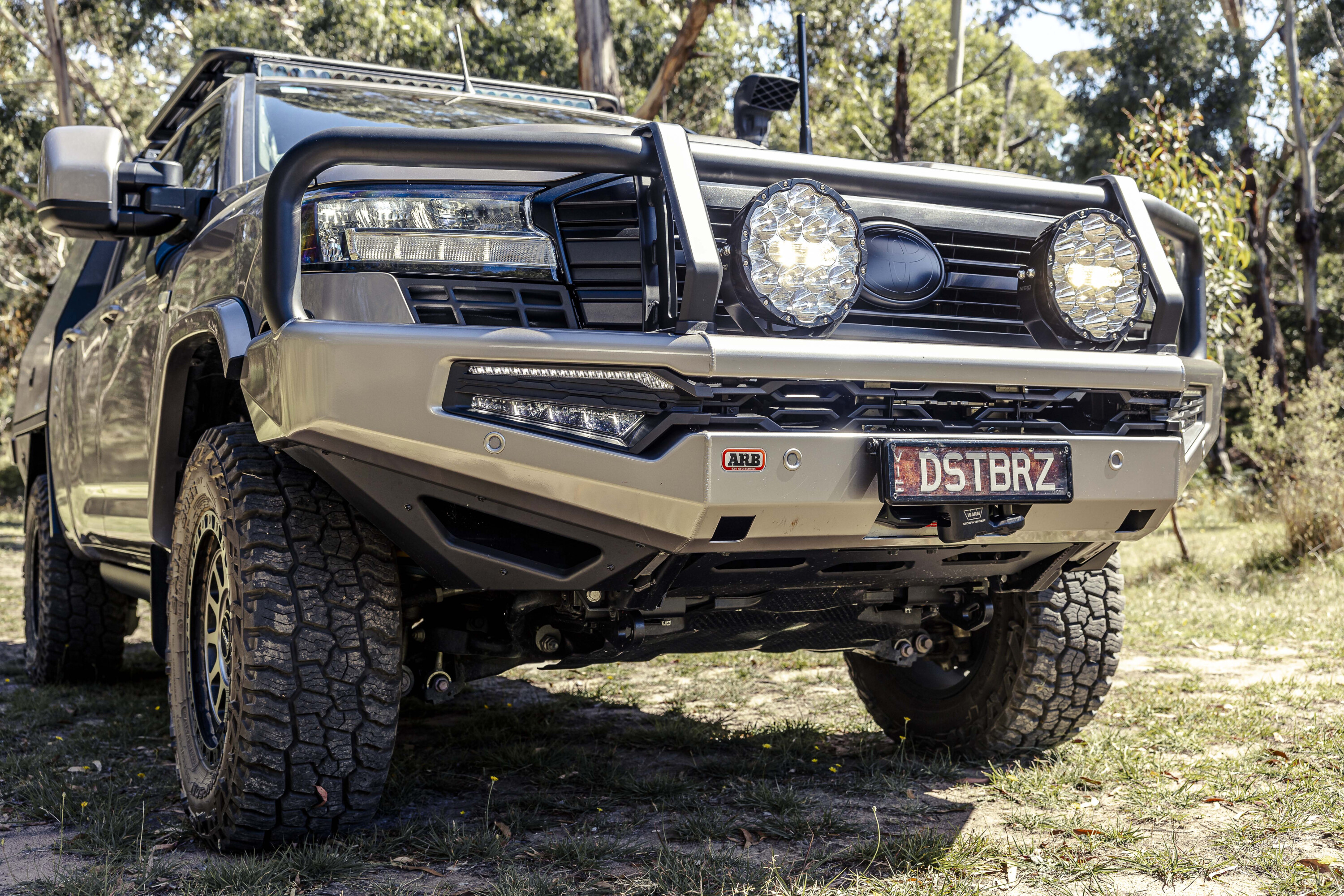
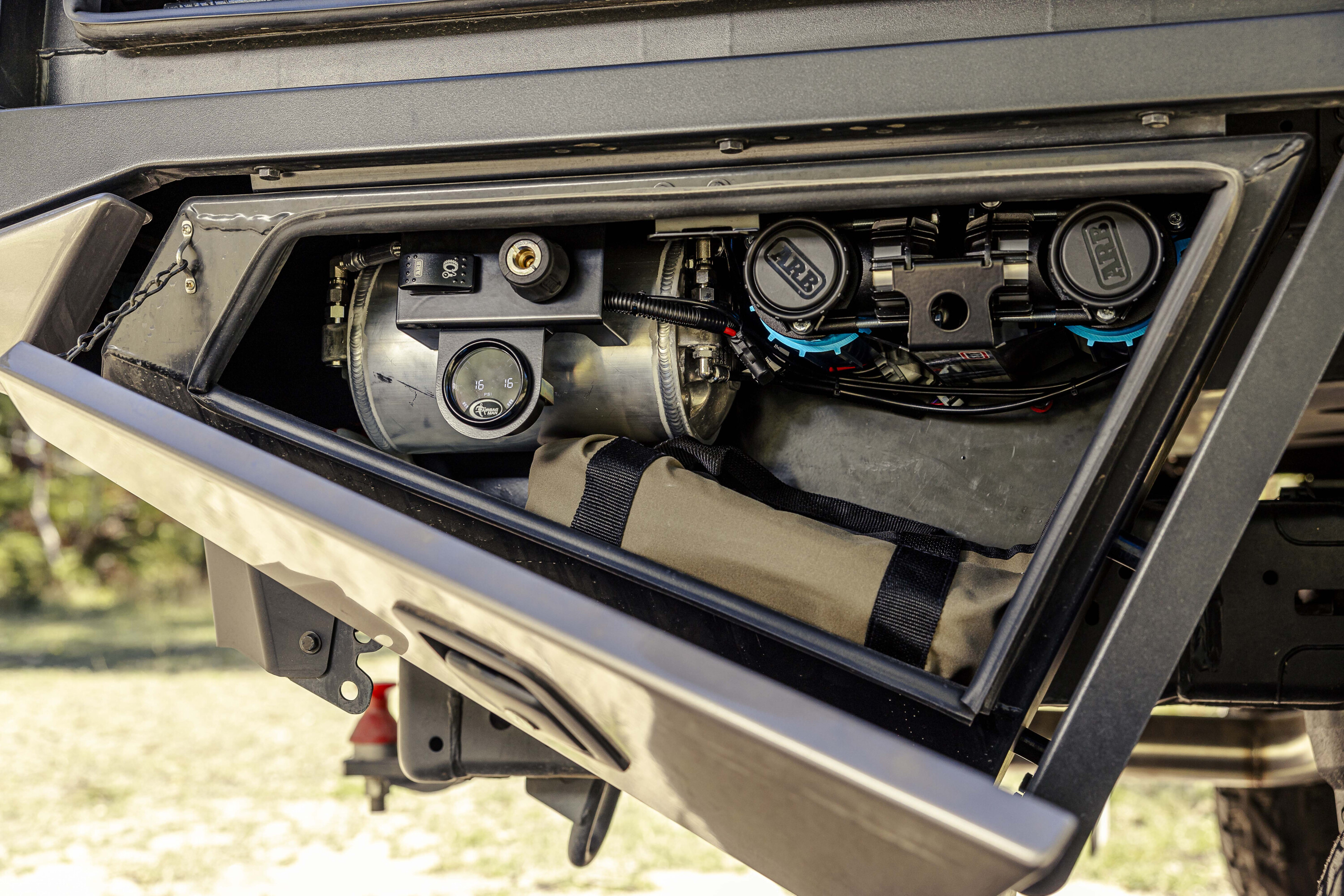
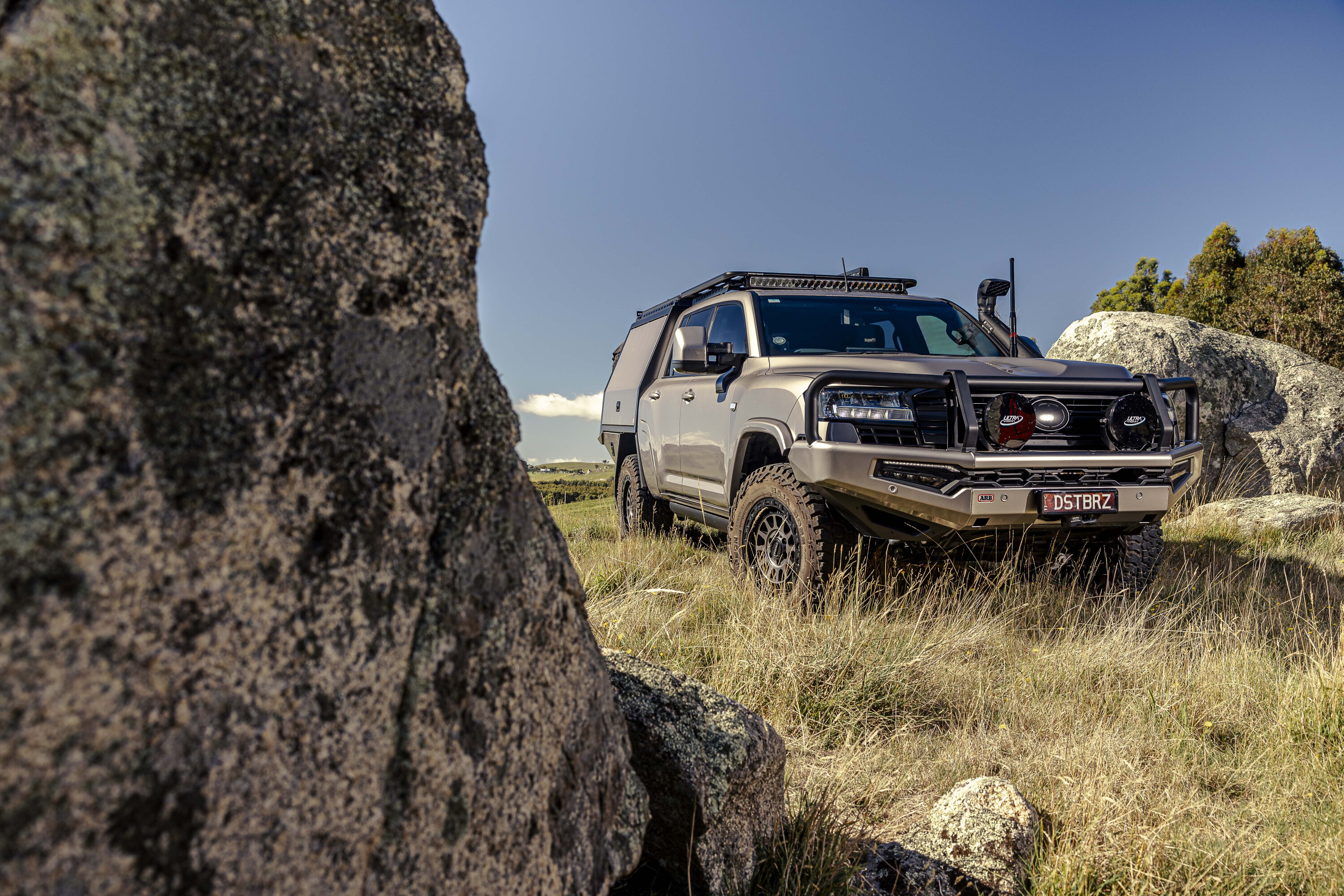
Airbag Man supplied the helper-bags out back, while a Roadsafe adjustable Panhard keeps the rear axle from going on walkabout after the lift went in. The rolling stock has also been upgraded to a set of Mickey T Baja Boss 285/65R18s and graphite ROH 18×9 Assault alloys.
A Warn Evo 12s winch has been bolted up out front and a set of Ultravision Nitro Max spotties keep the track from disappearing after the sun sets.
Inside is a comfy place to spend a few thousand kays of line chasing, so the mods have been fairly minimal, at least by Pete’s standards. Some custom-stitched Supafit seat covers, a Hema HX2 replacement rear-view and matching wi-fi camera, and a Redarc TowPro unit have all been installed for self-evident reasons.
Up top Pete and the team bolted on a Pioneer Series 6 platform from Rhino-Rack and a newly released Darche 180 free-standing awning provides protection when Mother Nature is in one of her moods.
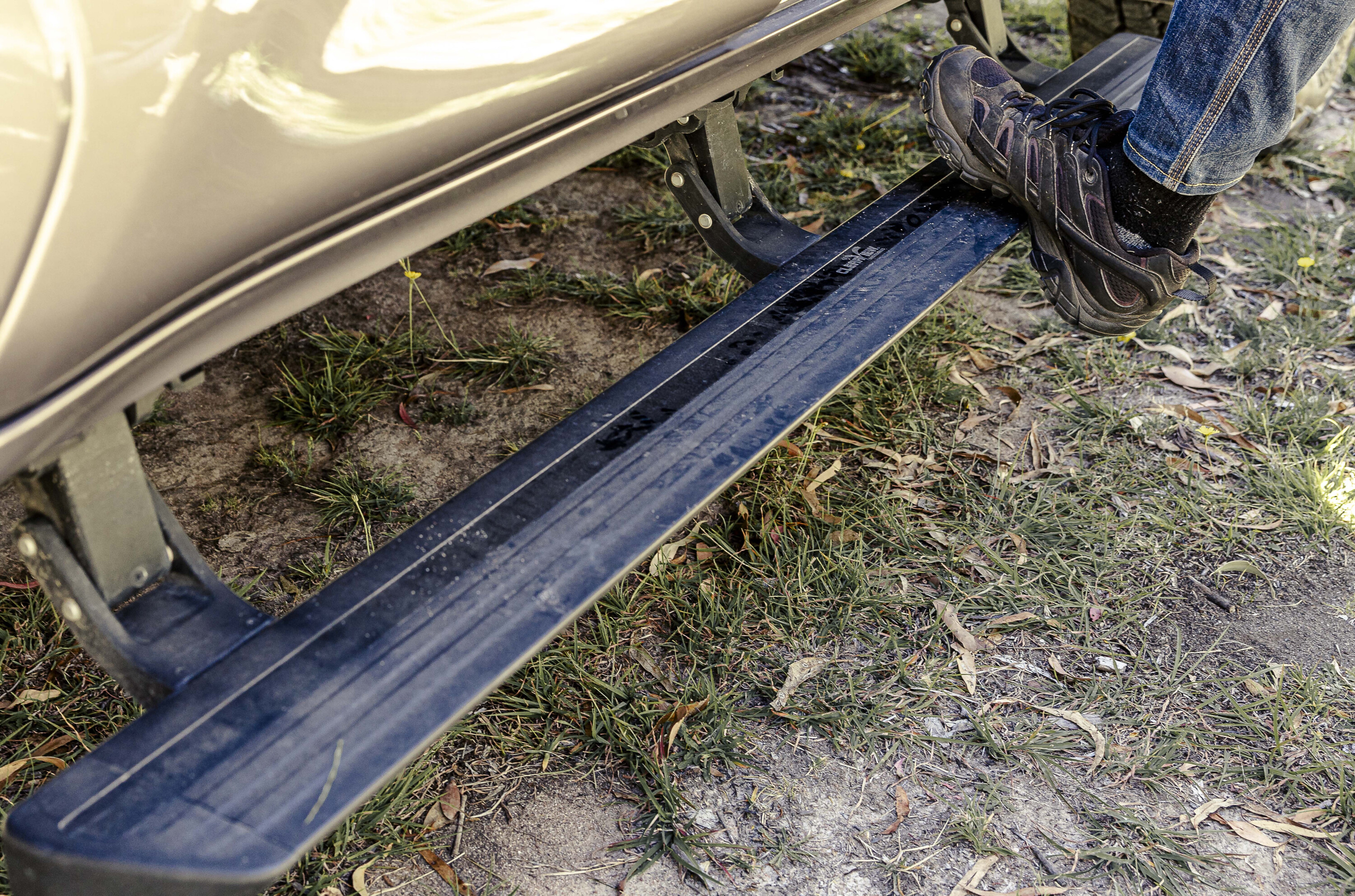
Clearview power boards make getting in and out of the Cruiser about as easy as it gets and add a touch of luxury for any vertically-challenged vehicle occupants.
A Brown Davis 110L sub-tank (giving 210L total, or around 1500km range) feeds the V6 diesel, while the Safari Snorkel provides the air for it to be mixed with.
By the time you read this, a Unichip power module will have also been installed, along with a 3.5-inch stainless steel exhaust and some dyno time to get it all working at full efficiency.
On the chop
As we already alluded to, there are chops and there are chops. Doing a ute conversion is not the most difficult thing in the world to do.
But doing a ute conversion properly – well, that takes some serious skill and effort.
Pete dropped the 300 off to ASG 4X4 and had the team work its magic on the body and frame. The result is something that truly has to be seen to be appreciated. The now-dual-cab’s chassis was lengthened 410mm before being welded back together and plated for extra strength.
When asked why he went for the 410mm extension over the more common 600mm of extra length, Pete pointed out that it’s still his daily driver, and the bigger stretch would make navigating places like carparks and tighter tracks a bit of a headache. It needed to maintain its practicality.
From there, the body was shaped to suit – just look at the continuation of the lower rear door line as it flows into the tray, or the angle of the rear bulkhead continuing the line of the leading edge of the mudguard.
It’s so seamless that you’d be forgiven for thinking they came from the factory like this, but it takes a hell of a lot of skill to create something so smooth. Hats off guys.
The canopy
To sort the fresh lack of bodywork on the back end, Pete entrusted the 300 to Trig Point Service Bodies, who bolted up one of its canopies after it had the doors colour-matched Dusty Bronze to match the rest of the vehicle.
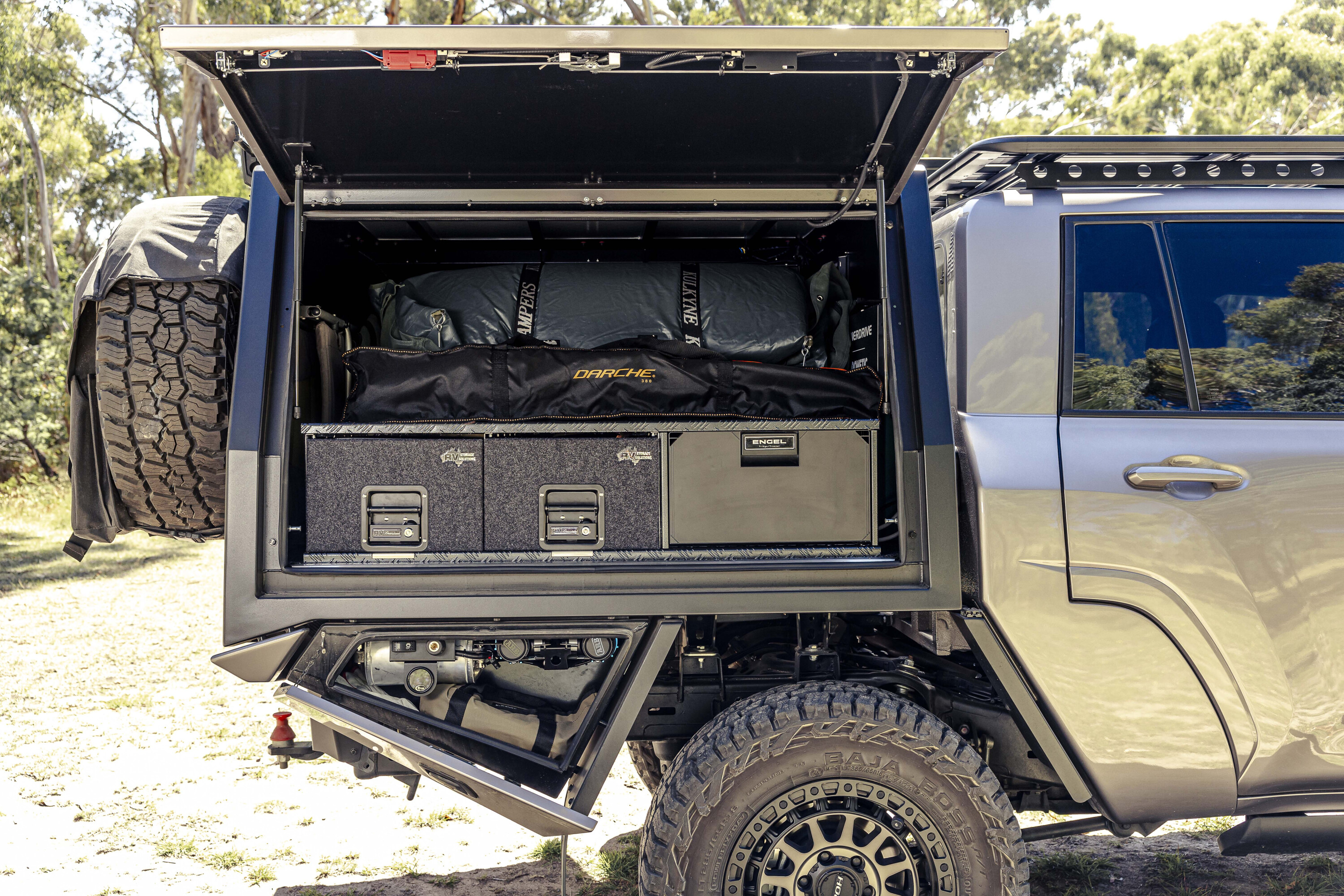
Again, the custom touches abound, and set it apart from a generic off-the-shelf build. Things like the flat base (so no lip to catch fridge doors or drawers), the single central locking-activated door handles, monocoque construction, recessed LED taillights, adjustable spare carrier and fold-down ladder, and contoured for maximum departure angle storage boxes are all indicators of a top-shelf unit.
Inside, Pete and his team bolted in a set of custom RV Storage drawers that house an Engel 30L drawer fridge and a pair of 1100mm deep storage drawers on the driver’s side.
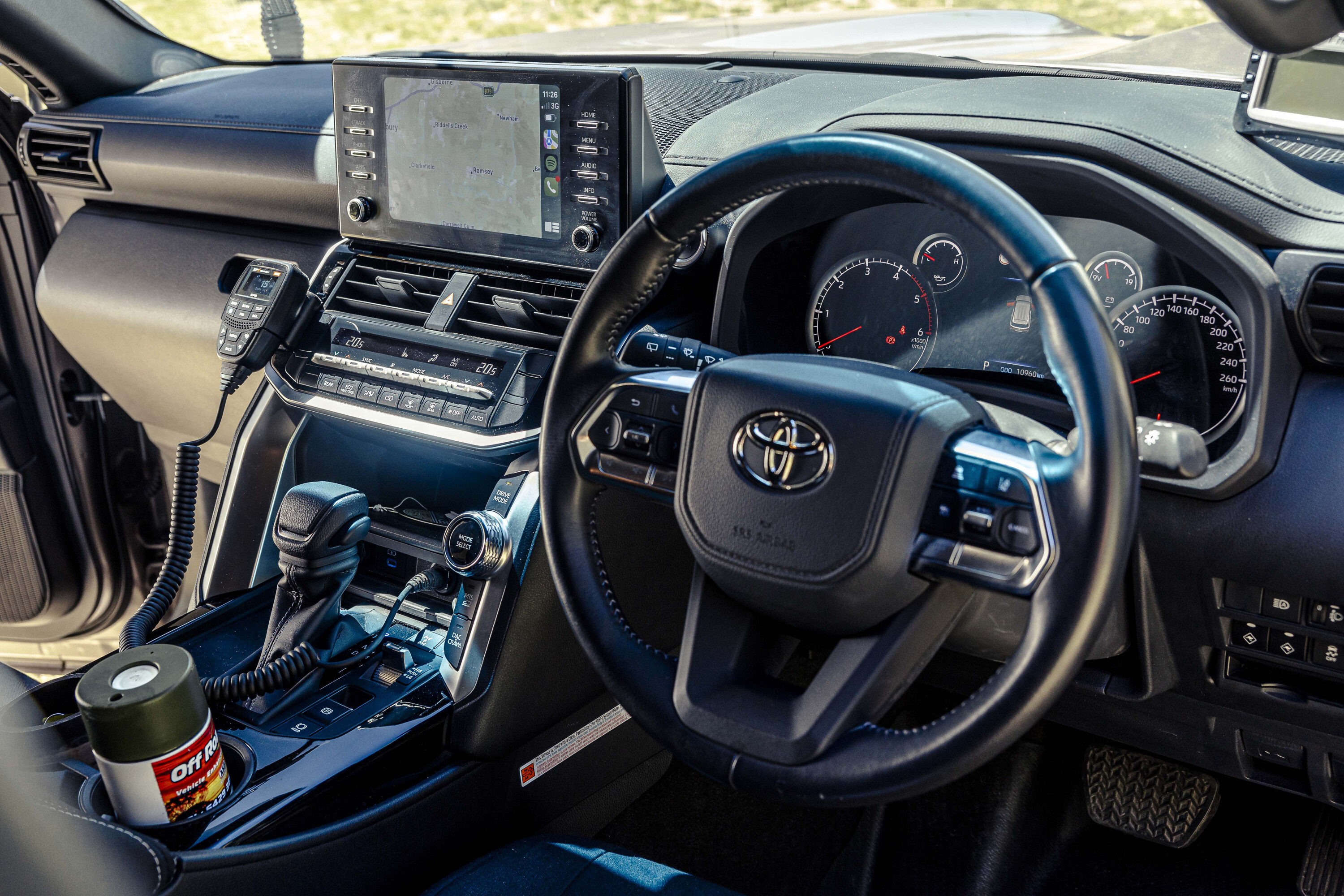
An Enerdrive Adventurer 200A lithium system keeps the amps flowing and is kept topped up by the slimline solar panel up on the roof.
There’s also a Bushman upright 85L fridge and a 70L water tank underneath so hydration should never really be a problem for Pete and his family.
Down the track
We all know builds like this are never finished. Pete’s to-do list is still longer than your arm and given how far he’s come in a relatively short window of ownership, don’t be surprised if things happen sooner rather than later.
In the meantime, he has plans to enjoy it with a trip to the Kimberley coming up in the dry season, towing his 19-foot Lotus caravan behind him. If you happen to see him out on the tracks make sure you say g’day and check this rig out for yourself.
But be warned, it’s pure art and you’ll probably end up more than a little jealous. Ask us how we know…
The Lexus GX will land on Australian shores in the second half of this year yet the Japanese luxury brand already has plenty of interest in its new off-roader.
“We’ve already taken over 500 pre-orders on GX and we’re getting 1500 units allocated for the first 12 months, so we think that it’s going to be in tight supply”, Lexus Australia chief executive John Pappas told 4X4 Australia.
Although a larger vehicle, the LandCruiser 300 is similar in price and power to the GX. Last year, Toyota delivered 15,035 LandCruiser models (a combination of 300 and 76 Series heavily skewed towards the former) and 20,710 Prados.
Priced between $116,00 for the Luxury and $128,200 for the Sports Luxury (both before on-road costs), Pappas revealed that GX deposits are coming both from the Lexus faithful and out of the woodwork.
“We’ve got very high loyalty in our brand and we never take that for granted. But what we’re finding at the moment with GX, the feedback we’ve been getting from dealers is that they’re talking to new customers with GX.”
“We’re very excited, the dealers are really pumped because of the new discussions they’re having with existing owners as well as totally new buyers”, John added.
Naturally, current Lexus owners are keen on the GX as well – not least because the brand no longer offers a seven-seat RX in Australia – but also because the GX is a striking vehicle.
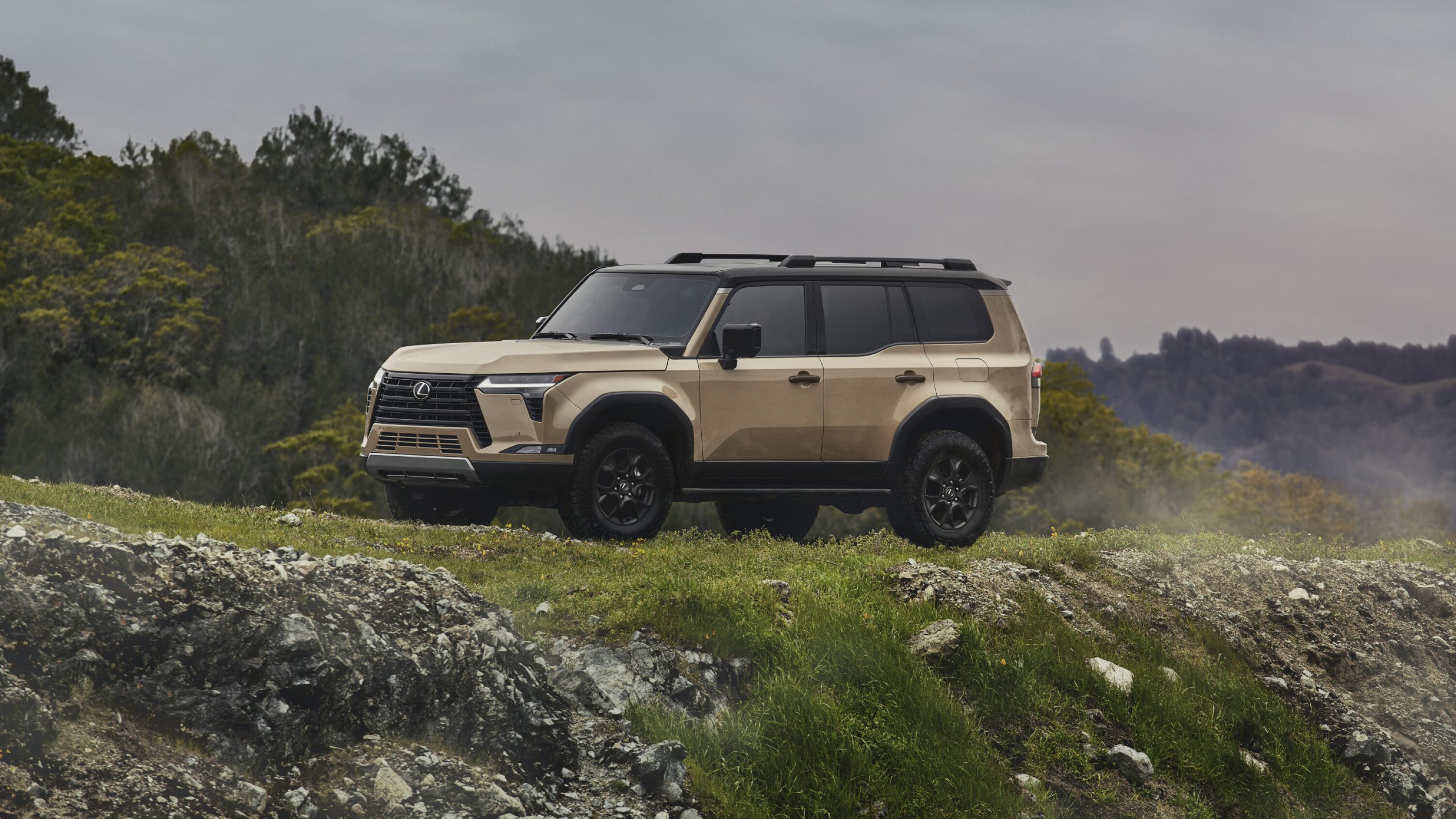
The body-on-frame Toyota cousin will launch with a 260kW/650Nm 3.5-litre twin-turbocharged V6 petrol though a future petrol-electric hybrid is possible.
Mr Pappas noted higher-than-expected demand for the off-road focused Overtrail trim ($122,250 before on-road costs), “We expected the off-road grade – the Overtrail – to be at about 20% of the sales mix”, he said, before confirming it accounts for 30 per cent of current orders.
“It’s going to be interesting to see how it shakes out in the first 12 months with GX but we’re really excited by it because by the middle of this year, we’re going to have a vehicle pretty much in every segment – obviously not the ute segment – that we want to”, said Mr Pappas.
As for whether the GX would affect LX sales, Pappas said that wasn’t the case right now and LX demand showed no sign of easing: “We used to sell 300 LXs a year”, or less than a third of the 982 examples registered last year – and the LX still has a 12-month wait.
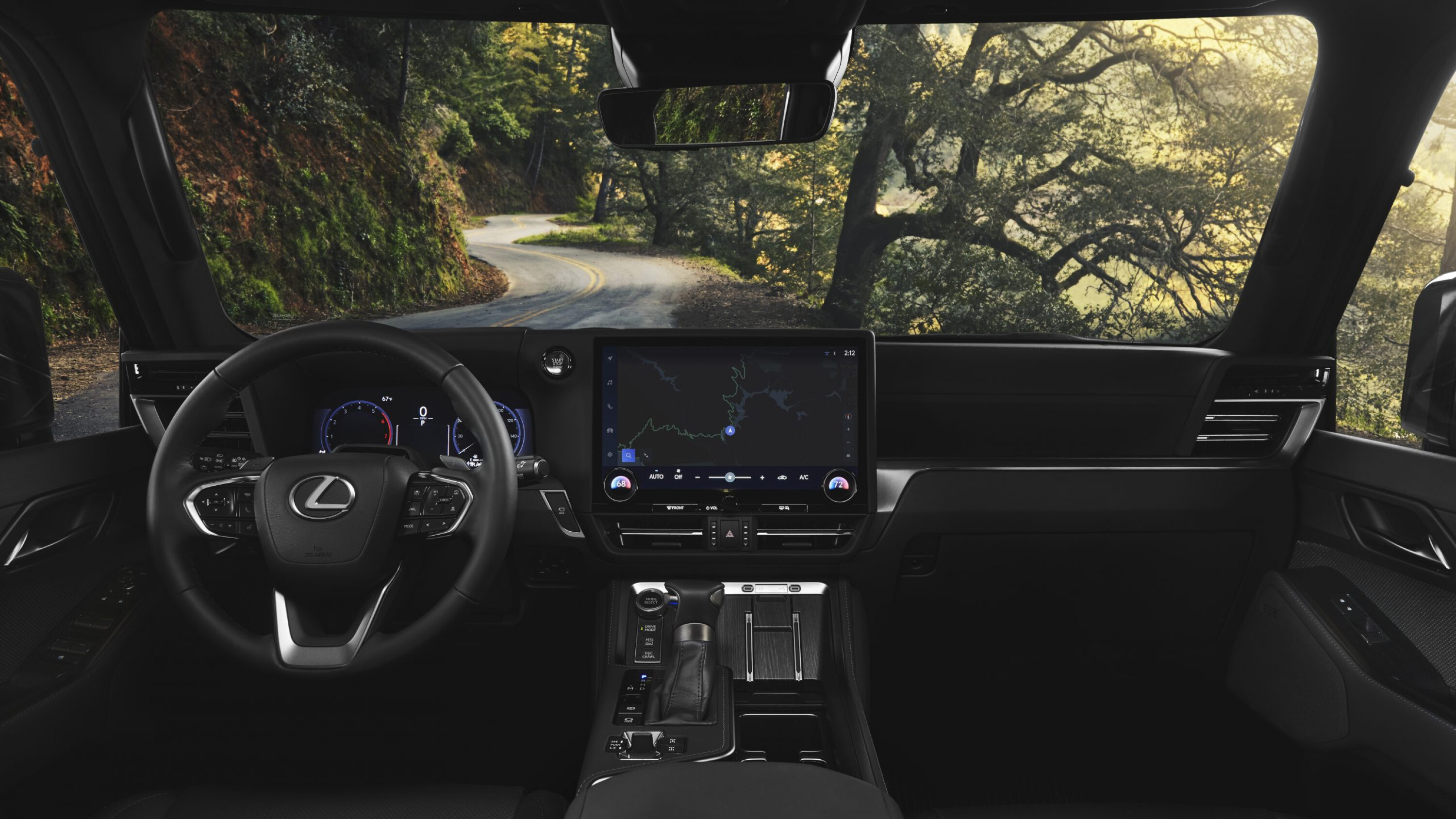
“We don’t see [LX and GX], at the moment, crossing over… LX is that bigger, more luxurious, spacious, more powerful SUV, whereas [GX] is more of an accessible seven-seater for that type of buyer”, Pappas added.
Once the GX is online, Lexus is confident in another bumper sales year lifting its ‘base’ expectation to 10K units. The brand registered a record 15,192 new vehicles in 2023 – more than double 2022’s figure – yet executives cautioned that last year was an anomaly.
With the collection of new models from LBX entry-level to LM people mover and GX off-roader, Lexus now covers a mighty broad share of luxury market segments in Australia. The brand is off to a flying start in 2024 already with 1882 sales – a 54.5% increase on 2022 – according to VFACTs.
The Lexus GX is due in June or July and will be available in three trim levels: Luxury seven-seat, Overtrail five-seat, and Sports Luxury seven-seat.
A modification that’s often overlooked by those upgrading their 4x4s is brakes.
With the added weight of accessories and gear, or when towing, most owners tend to focus on improving horsepower and torque, and while some more enlightened drivers will throw a set of upgraded pads in at their next service, in reality OEM brakes are barely adequate, especially on the trusty N70 HiLux.
There’s OEM and then there’s OEM
I have a 2006 KUN26 HiLux that I use as a daily driver, workhorse and tow rig.
I’ve always thought its stopping power was severely lacking, and I’ve jumped behind the wheel of other N70s and wondered how they’d survived as long as they had with brakes that were even worse.
With Toyota being the largest vehicle manufacturer in the world come some perks, like a huge model range accompanied by an equally large parts bin. In this case, when looking for stopping power, the 120 Series Prado can be pilfered for its front brake rotors and callipers, along with a suitable compound of brake pad to give the ol’ HiLux a bigger anchor when needed. The best news? It all bolts straight on.
Size matters
The first pre-facelift version of the N70 HiLux ran from 2005 to around 2012, and had the smallest brake rotors of the series at 297mm in diameter and 25mm thick.
When Toyota brought out the facelifted version (2012-2015) it upgraded the front rotors to a beefier 319mm diameter and 28mm thick. I’d managed to get my hands on a second hand set of these along the way, and after fitting them found them to be better, but they still fell short of providing decent stopping power. When they started to show wear I decided it was time for the Prado upgrade.
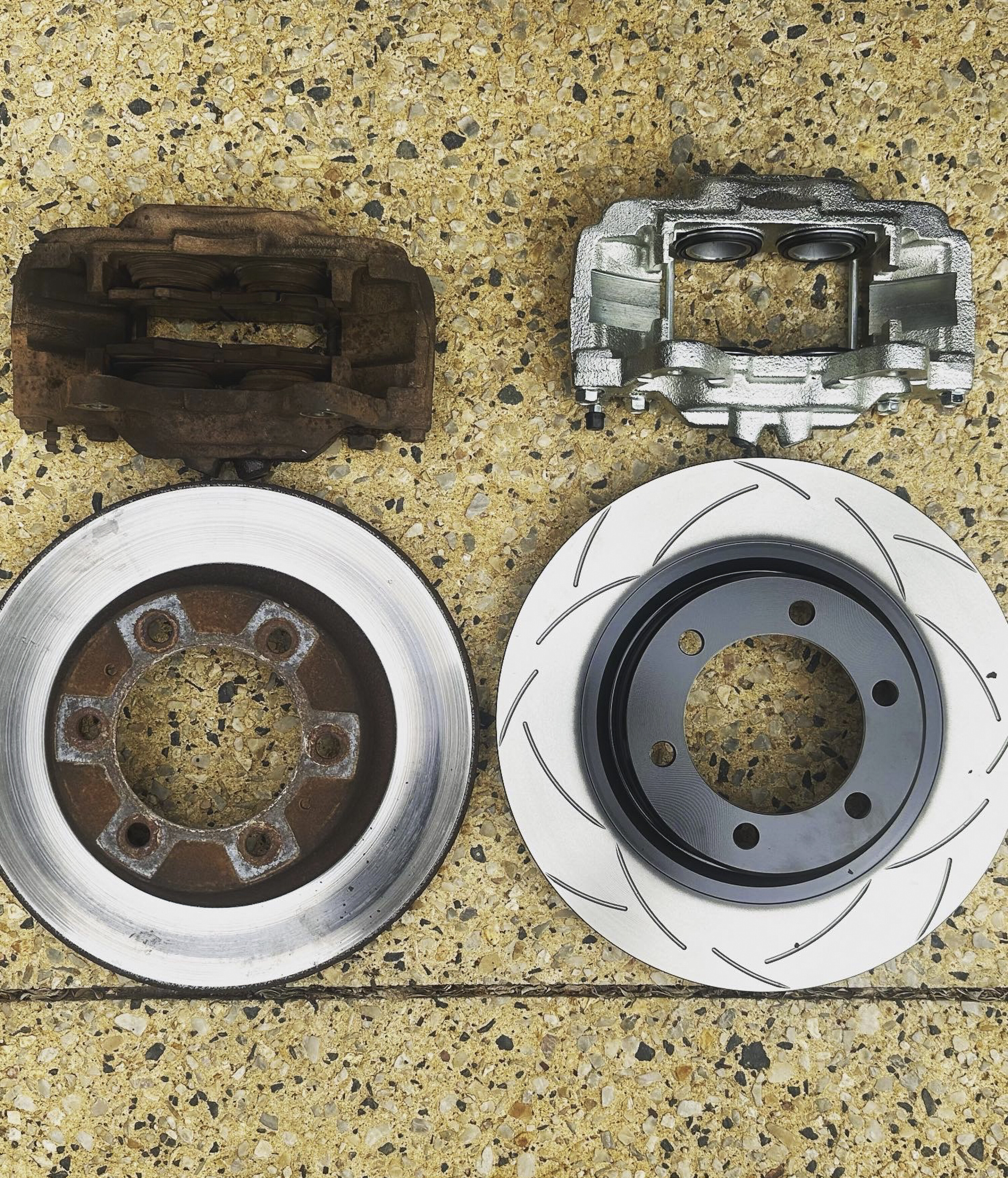
The 120 Prado ran from 2003 to 2009, but was blessed with decent-sized 338mm diameter brake discs that were 28mm thick. This represents a 41mm increase over the original rotors fitted to my HiLux. Why does rotor diameter matter? Think of it like using a normal sized ratchet, and then getting out the breaker bar. The extra leverage means less force needs to be exerted at the outside arc for the same twisting force at the socket. This equates to easier braking, or in the case of applying even more force, shorter stopping distances.
Taller tyres further inhibit braking performance as the extra distance from centre to tread requires even more force than the standard tyre did to slow it down. Of course, inner wheel diameter comes into play when upgrading rotor size, but in this case I already had 17-inch wheels fitted to my HiLux, giving plenty of room for the new calliper position.
What you’ll need
As soon as you start throwing on upgrades from another vehicle, simply having your rego on hand will be of no use when ordering parts, so check out the accompanying ‘Part Numbers’ below for the relevant part numbers that matter, which include brake callipers, disc rotors and brake dust covers.
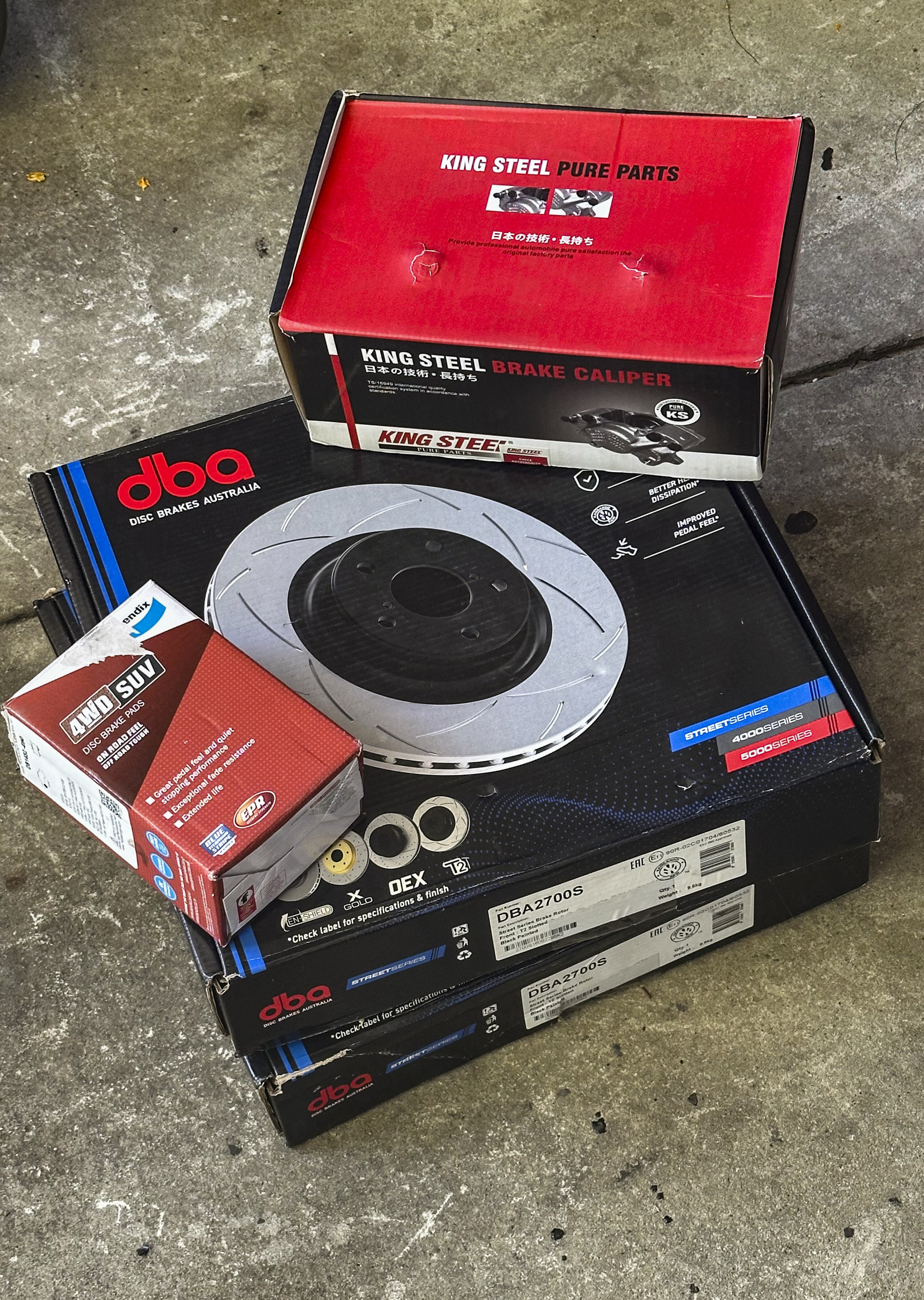
On my HiLux I chose to bend back the duct cover to clear the larger rotor, so ordering those parts wasn’t necessary. While I was at it, I upgraded to some DBA 2700S Street Series slotted rotors and Bendix 4WD/SUV pads.
How to do it
Changing over rotors, callipers and pads is relatively straightforward.
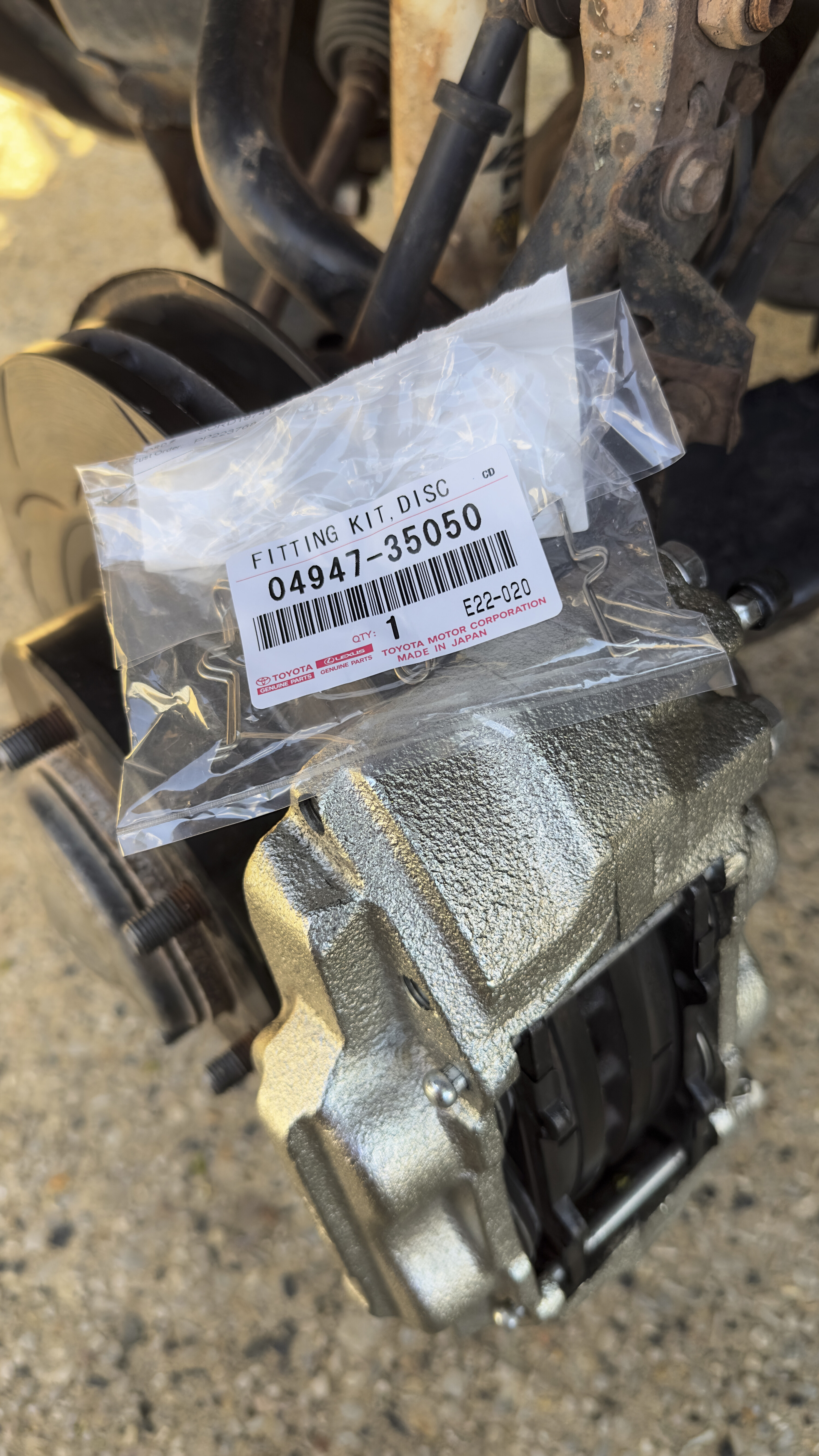
In a nutshell, clamp the rubber brake lines, take off the callipers and the rotors, replace with new rotors and callipers, and drop in your new brake pads with the anti-squeal plates facing the calliper pistons. If you have a pre-facelift HiLux you’ll also have to fit the newer style anti-rattle clips, and at around $14 a side from Toyota it’s well worth the effort. The later facelift HiLux came with the correct clips.
Once all bolts are torqued to spec and brake lines re-attached to the callipers, release the hose clamps and bleed the system. Sometimes the ABS module can retain air in the system so it’s a good idea to cycle the ABS motor or have a workshop bleed the brakes for you.
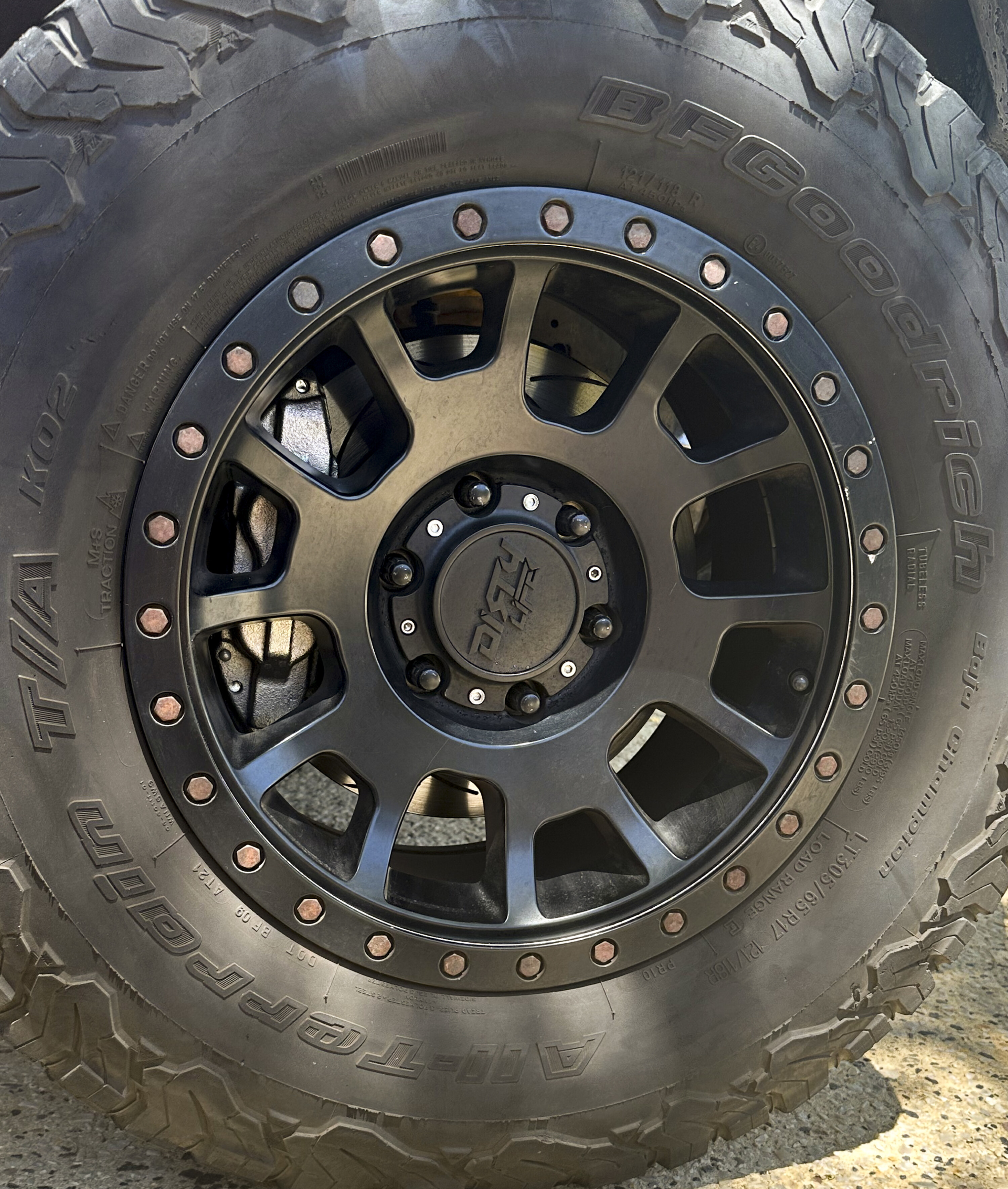
As far as braking performance goes, once bedded in the new brakes stood the HiLux on its nose, even with 33-inch tyres fitted. A good hard stab on bitumen had the front tyres howling and the ABS chattering away to prevent them from locking up, something both previous iterations of standard HiLux brakes could never do. Braking is now light and effortless, with far better initial bite and a lot less pressure needed to pull the 4X4 up, even when loaded or when towing, proving this simple modification is well worth the effort.
Part numbers
RHF Prado Brake Calliper: 4775060261 LHF Prado Brake Calliper: 4773060261 Prado Disc Rotors: 4351260151 RHF Brake Duct Cover: 4778160120 LHF Brake Dust Cover: 4778260120
In the age of convenience and creature comforts, the modern 4×4 features myriad accessories taking up crucial space.
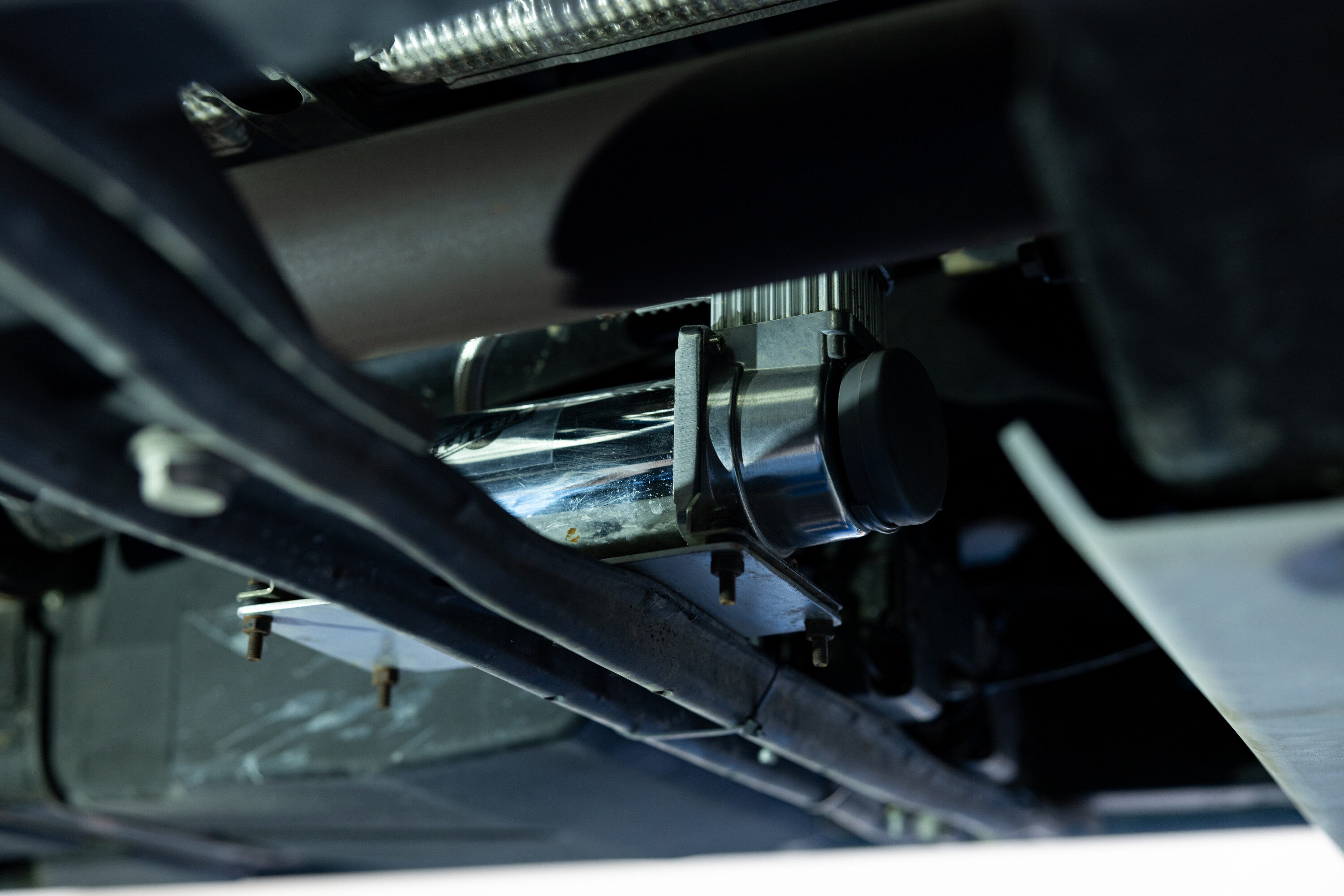
The new WirelessONE and WirelessAIR Ultimate kits feature Polyair’s popular on-board compressor system, to remotely control and monitor Polyair airbag pressures for load-levelling. They now also feature the addition of an air tank, air hose and upgraded compressor to use for all your compressed air needs.
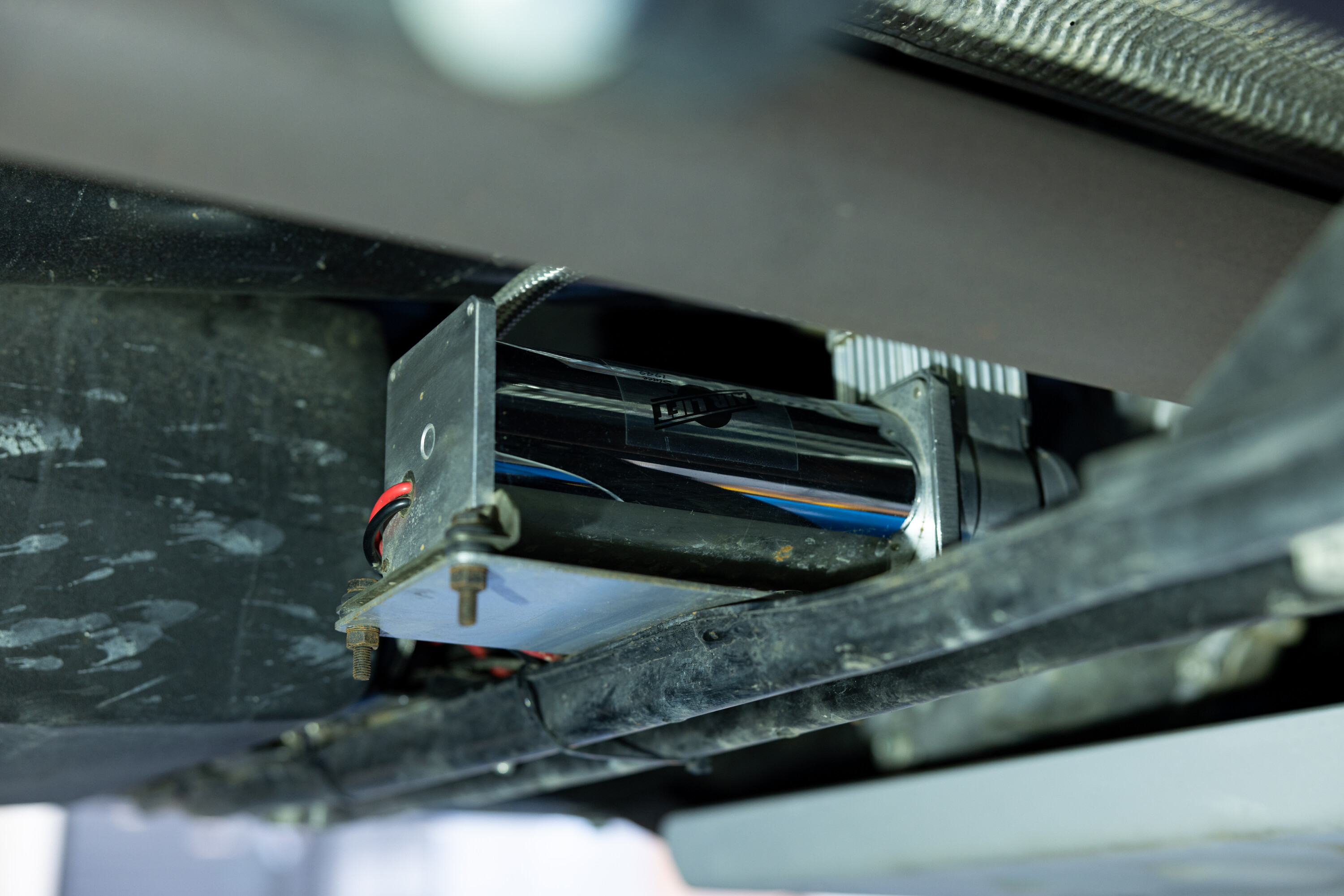
With the Ultimate systems, it’s no longer just about controlling and monitoring the Polyair airbags; you can now utilise the air tank and airline to inflate tyres, operate pneumatic tools, clean away dust or sand with an air blower, inflate an air mattress, and so much more. Where once a separate system for each was needed, now one onboard system can do it all at the convenience of a wireless remote or phone app.
Feedback from Polyair customers made it clear that a dual-purpose system is more beneficial for the end user. Having two systems is more expensive, takes up additional space, and there’s more wiring, controllers and components to monitor and service. A third party on-board compressor kit also requires you to manually inflate each airbag via the Schrader valve. The new Polyair Ultimate kits combine these two jobs into one easy-to-use system.
You can still control your airbags with either the Single Path or Dual Path control – this is a direct fitting from the manifold to the airbags, and the Polyair airbags are controlled and monitored via the wireless remote or smartphone app.
The air tank is filled via an upsized air compressor to inflate tyres or perform any task requiring air with the supplied hose, which has a universal quick fitting. The Ultimate kits, along with Polyair’s complete compressor kit line-up, will suit any vehicle that Polyair offers a load-levelling airbag or bellows for coils or leaf springs. They are also compatible with other load-level airbag brands.
WirelessONE Ultimate kit features
- Wireless remote to control your Polyair airbags on the fly, or control via the free iOS/Android phone app.
- Single Path manifold pre-mounted to an easy-to-install bracket. Pressures are adjusted equally across both airbags, perfect for those who mainly tow.
- Heavy-duty 444c air compressor.
- A 7.6L powder-coated steel air tank.
- Coiled air hose with universal quick-connect fitting.
- All wiring, hardware and fittings required for installation.
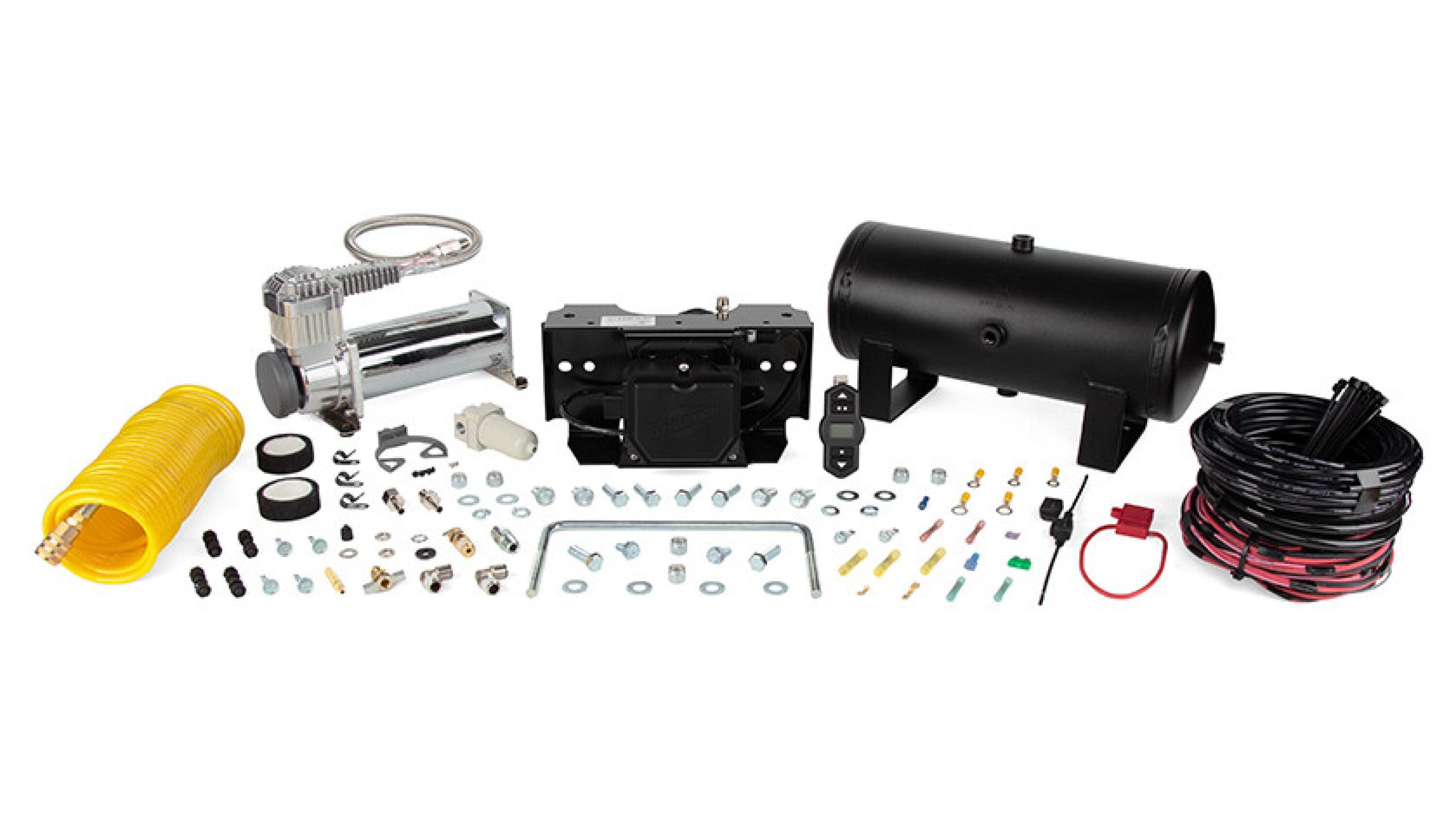
WirelessAIR Ultimate kit features
- Wireless remote to control your Polyair airbags on the fly. OR control via the free iOS/Android phone app.
- Dual Path manifold pre-mounted to an easy-to-install bracket. Pressures are adjusted individually on each airbag, great for those who may have uneven load weights.
- Heavy-duty 444c air compressor.
- A 7.6L powder-coated steel air tank.
- Coiled air hose with universal quick-connect fitting.
- All wiring, hardware and fittings required for installation.
Pricing
WirelessONE Ultimate kit: $2310 WirelessAIR Ultimate kit: $2970 Wireless Air Tank upgrade kit: $1485
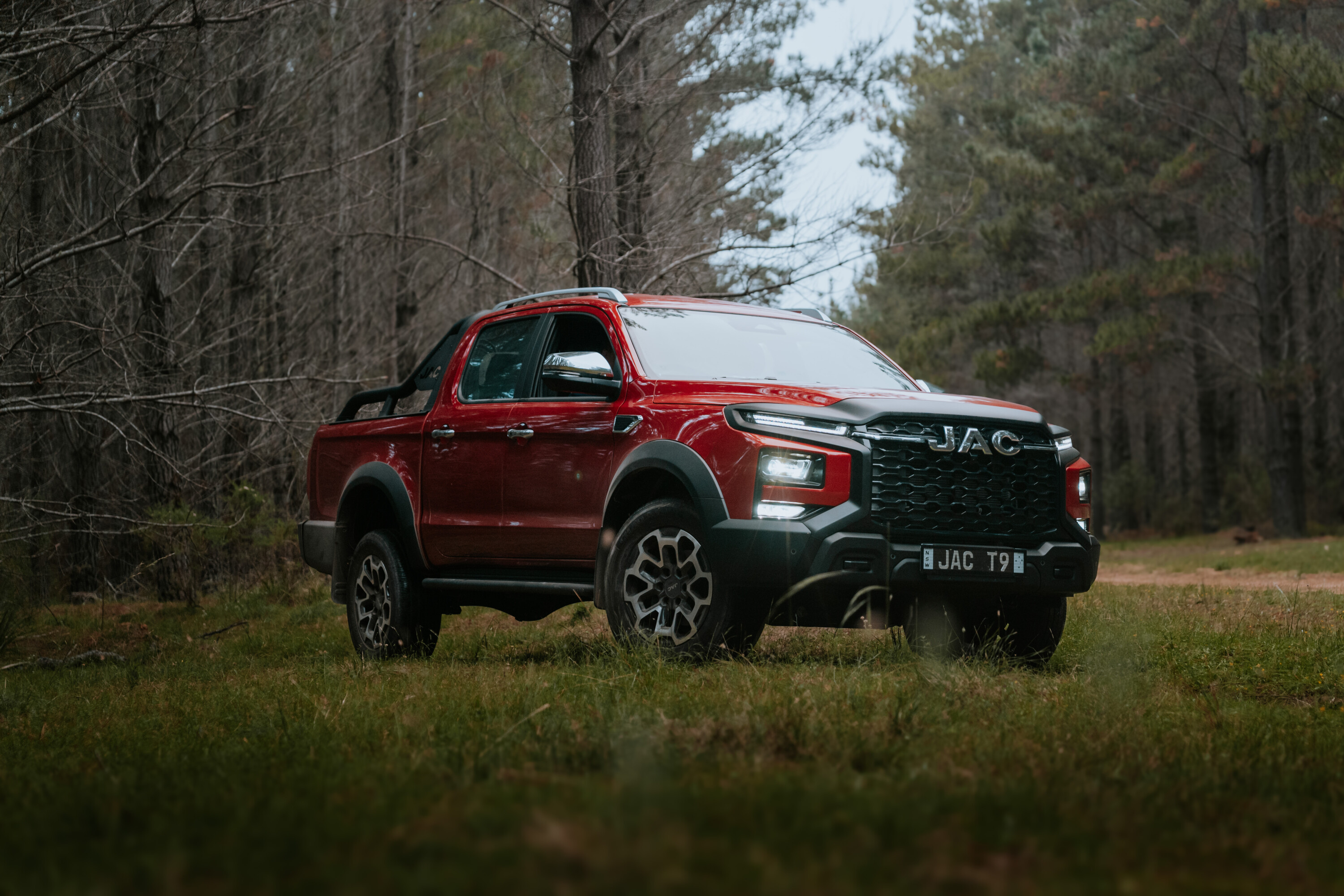
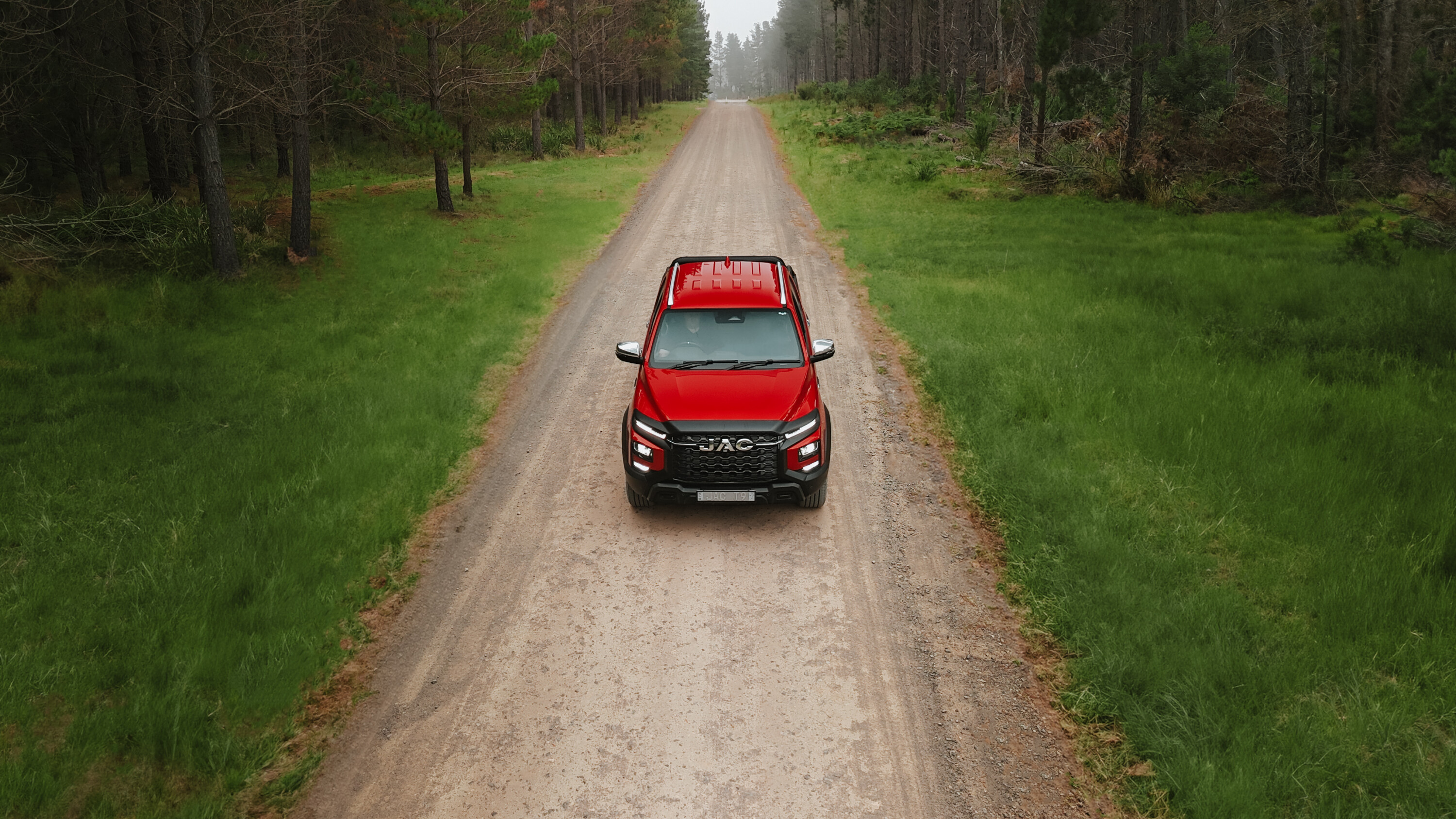
The 2024 JAC T9 four-wheel-drive has arrived in Australia as another budget-focused ute entrant.
JAC Motors – short for Jianghuai Automobile Group – is a Chinese brand, which has launched in the Australian market with the T9 ute via a new third-party distributor, LTS Auto.
The JAC T9 is a rival for the GWM Ute and LDV T60 Max four-wheel-drive utes from China, as well as South Korea’s Ssangyong Musso.
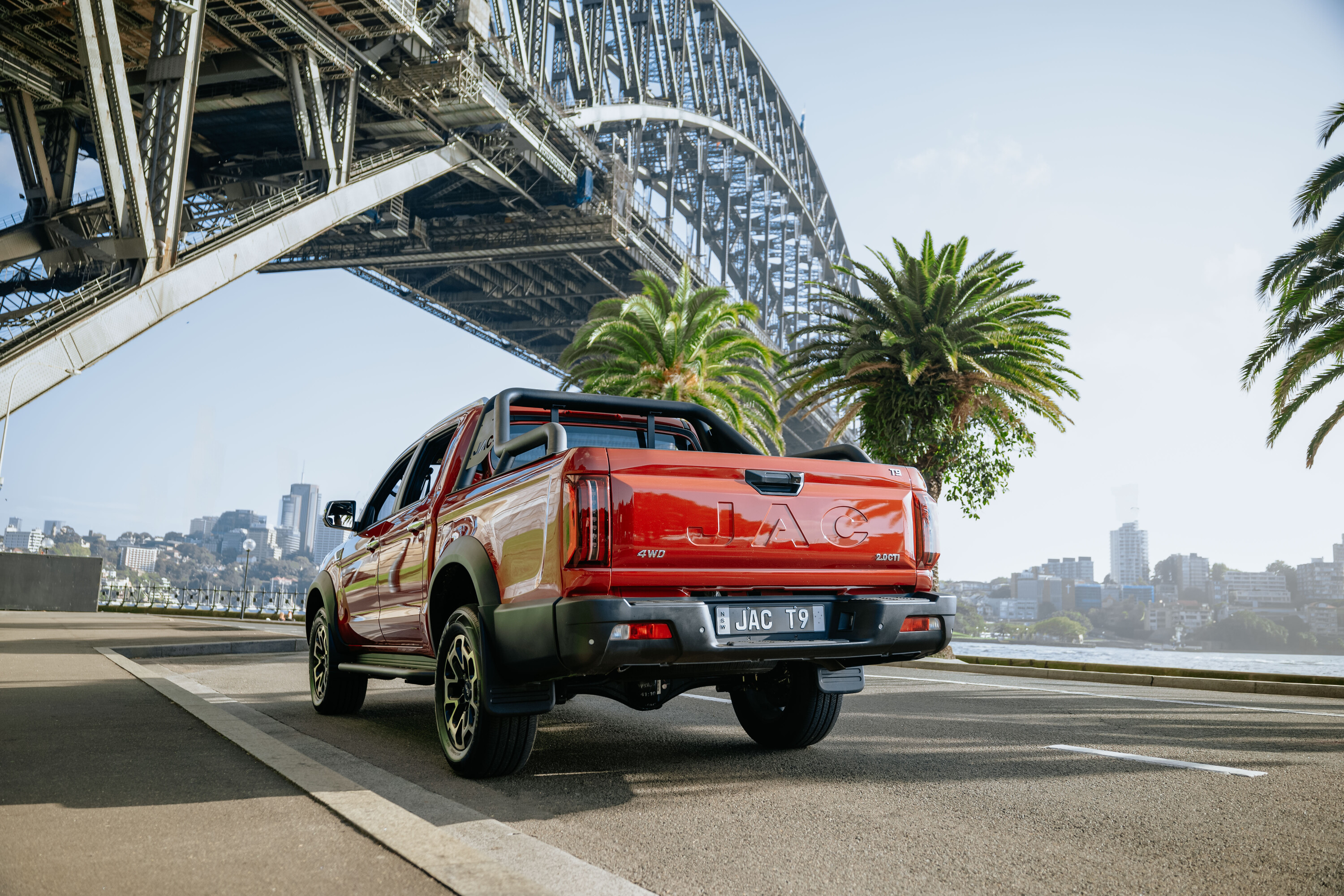
It is available in two variants, which are priced between $42,662 before on-road costs for the base ‘Oasis’ and $45,630 before on-road costs for the top-of-the-range ‘Haven’.
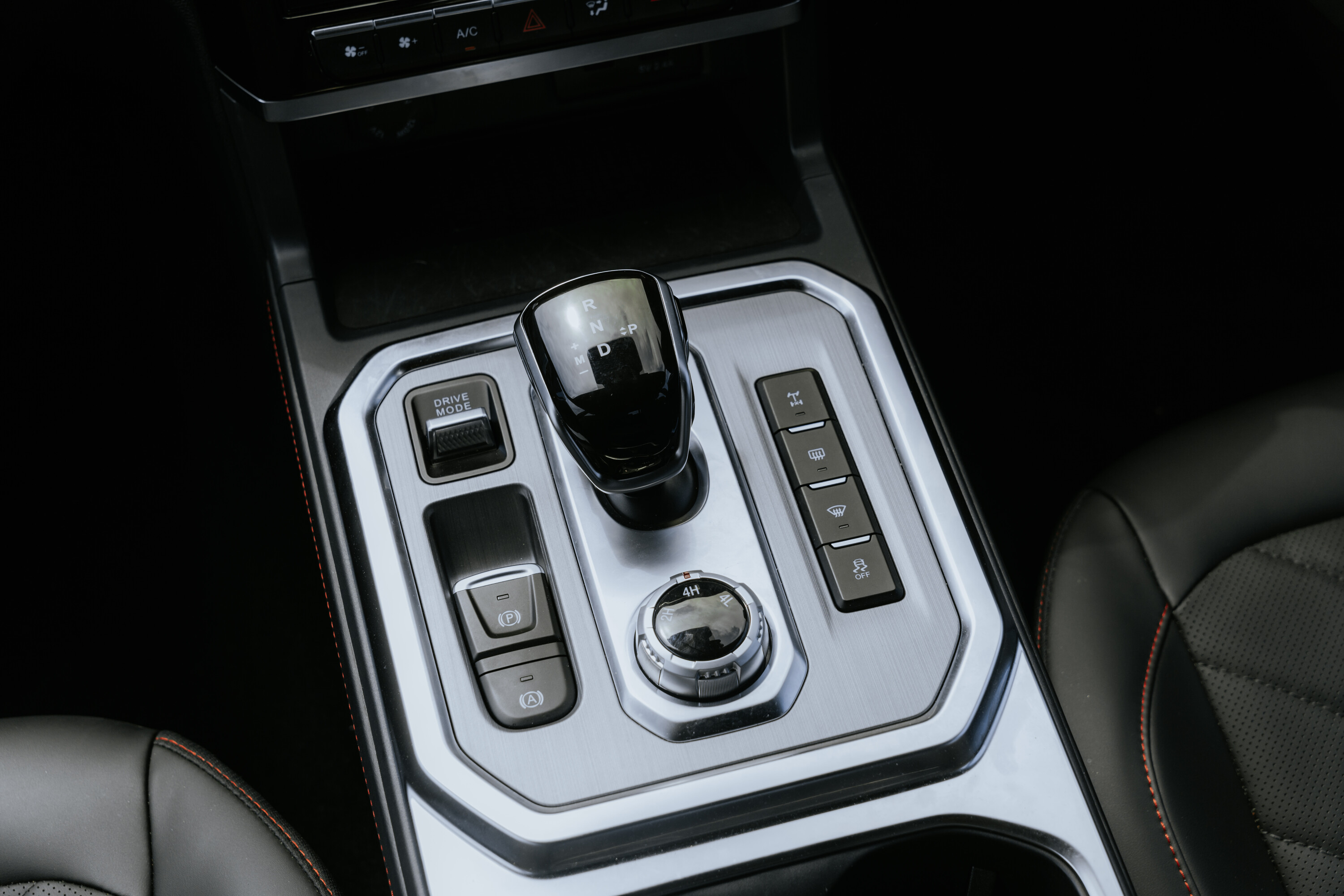
Under the bonnet, the JAC T9 features a 125kW/410Nm 2.0-litre single-turbo four-cylinder matched to an eight-speed automatic and a part-time four-wheel-drive system.
It has a 3.5-tonne braked towing capacity – more than the GWM and LDV – while the unbraked limit is 750kg.
Fuel consumption is rated at 7.6L/100km on the combined cycle with a 76-litre fuel tank, allowing for a theoretical 1000-kilometre range.
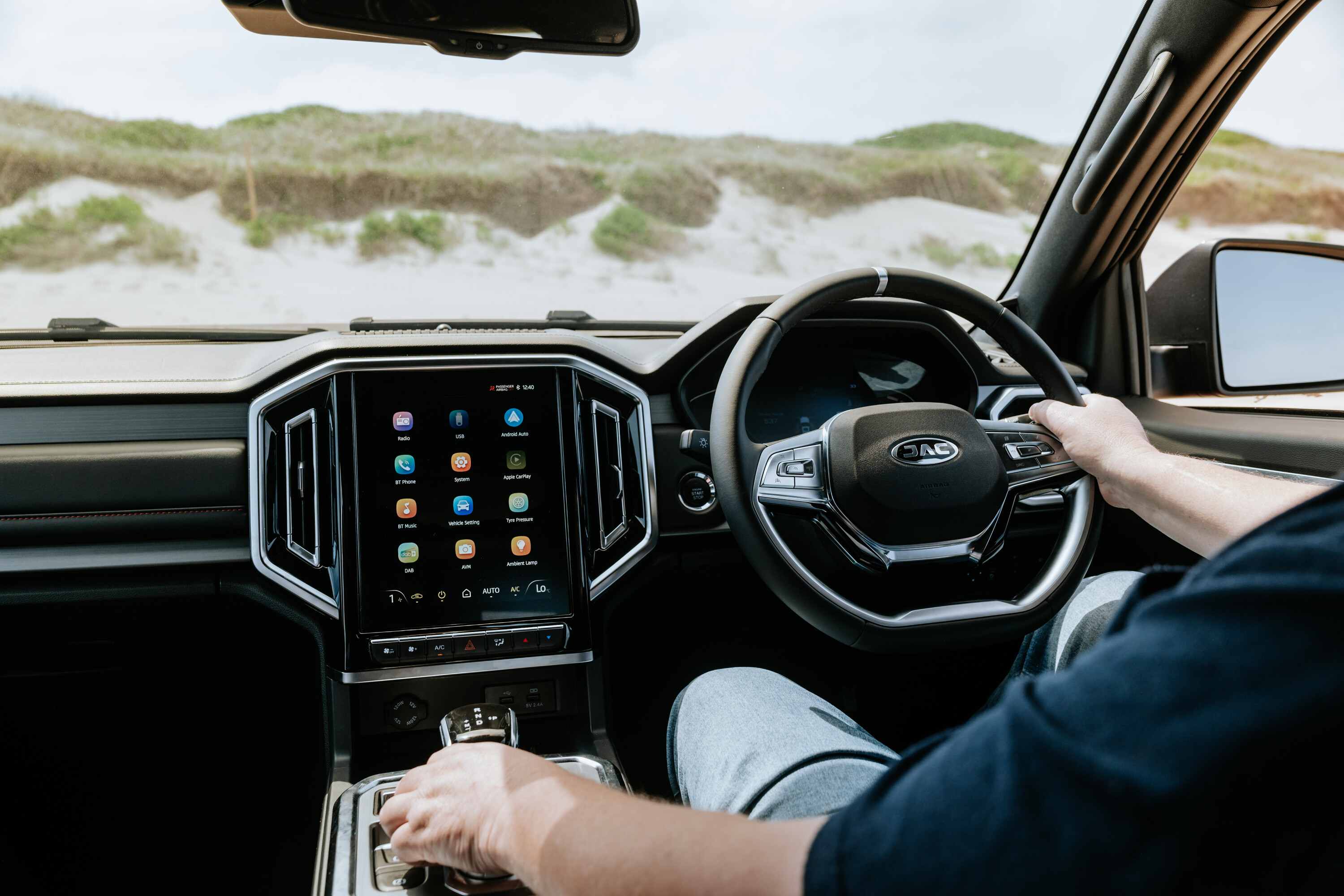
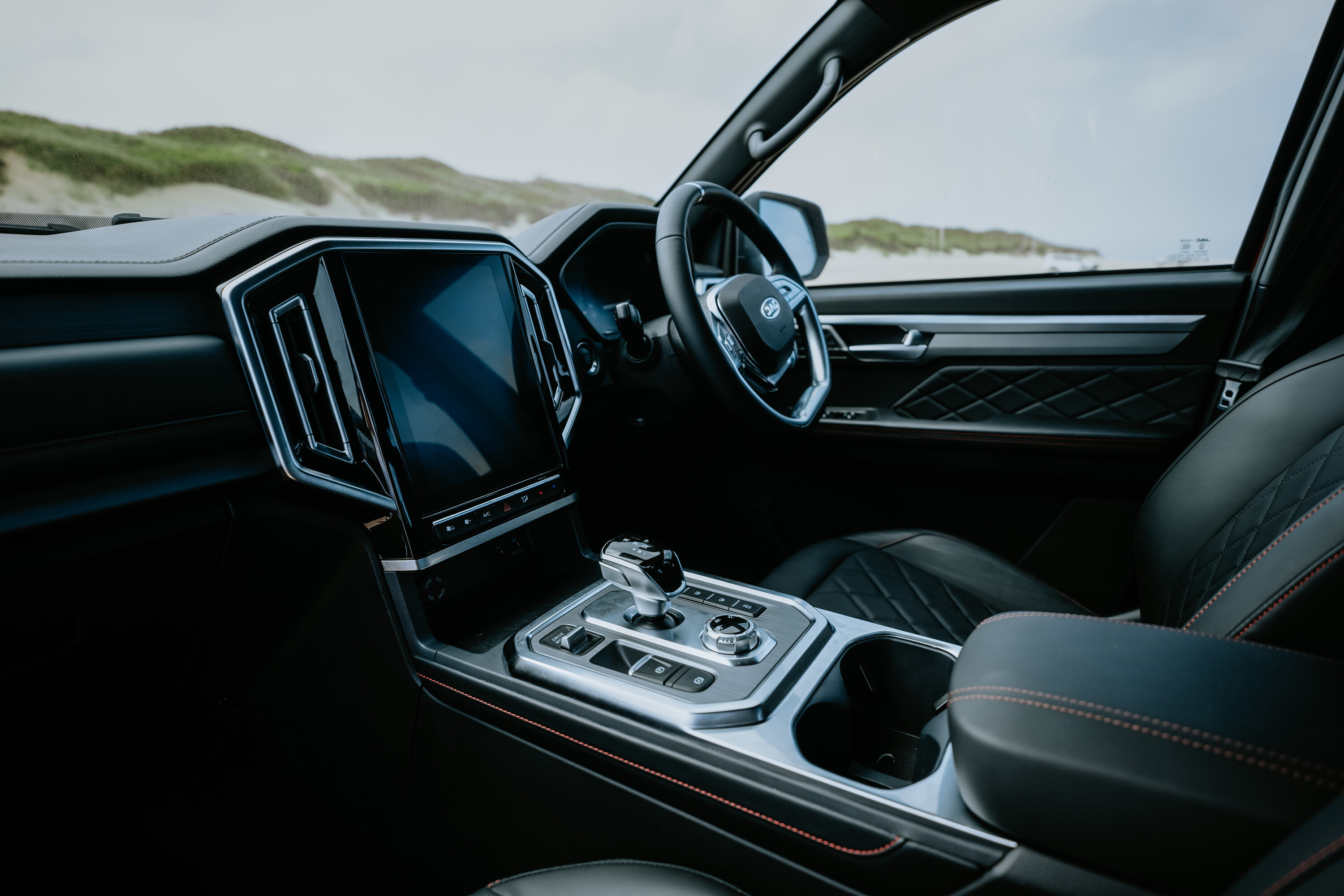
Standard equipment for the JAC T9 Oasis includes 18-inch alloy wheels, highway tyres, a 10.4-inch infotainment system, six speakers, Apple CarPlay and Android Auto, DAB+ digital radio, keyless entry and push-button start, and a wireless phone charger.
The Oasis is also equipped with exterior LED lights, black leather-accented upholstery, a 7-inch digital instrument cluster, a cooled or heated centre console, rain-sensing wipers, and tyre pressure monitoring.
Active safety features include forward and reverse autonomous emergency, lane-keep assist, lane departure warning, lane change assist, blind-spot monitoring, rear cross-traffic alert, traffic sign recognition, a driver monitoring system, and adaptive cruise control with traffic jam assist.
All variants have seven airbags, including a front-centre airbag. It is understood that JAC is aiming for a five-star ANCAP safety rating.
The T9 Haven adds front parking sensors, a 360-degree camera system, roof rails, rear privacy glass, puddle lamps, auto-folding side mirrors with chrome caps, black/brown leather-accented upholstery, and an auto-dimming rear-view mirror
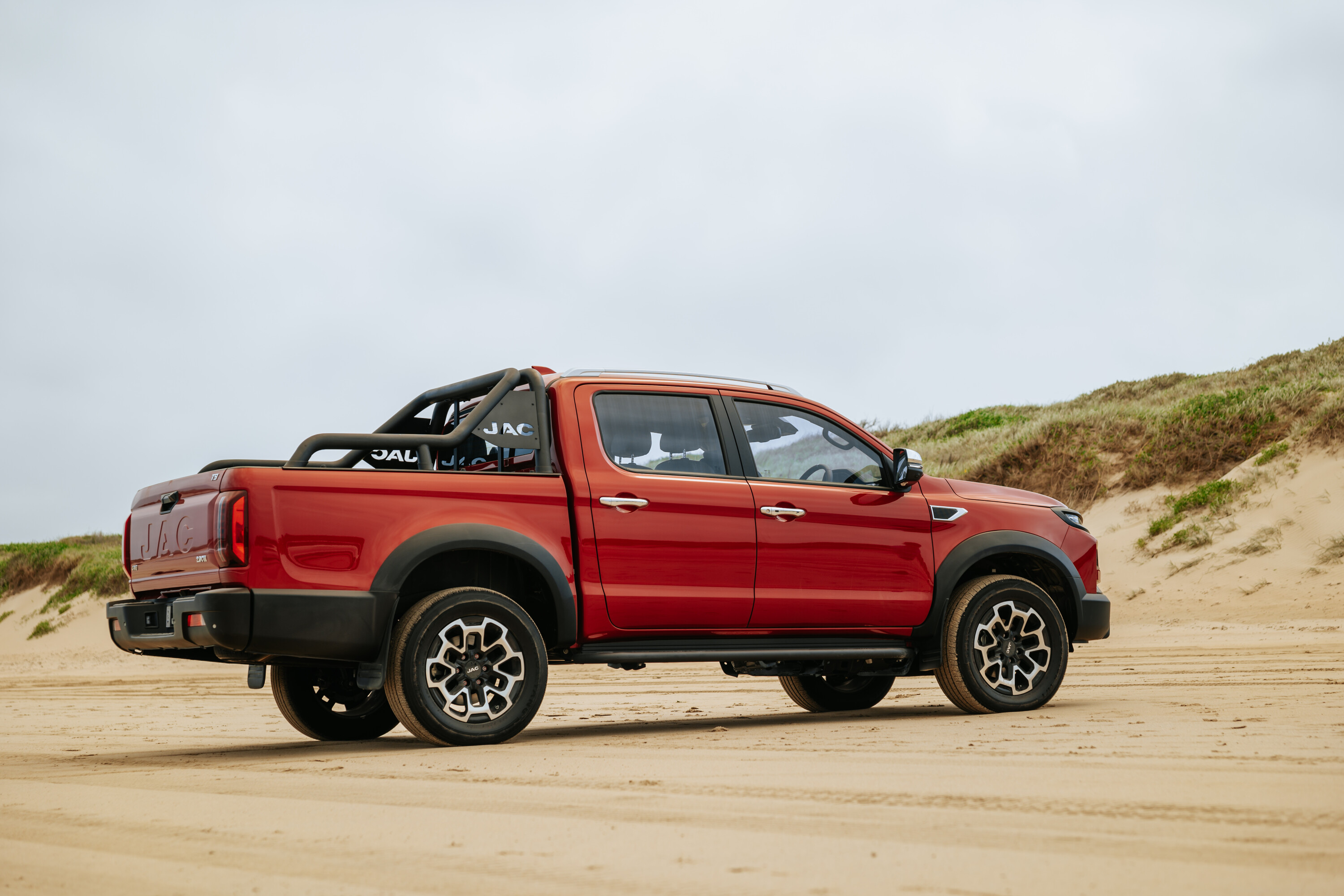
It also adds a four-way power-adjustable passenger seat, heated front seats, a rear USB charge port, and a rear 220-volt power outlet.
The JAC T9 measures 5330mm long, 1920mm tall and 1965mm wide, with a 3110mm wheelbase.
“The T9 is the perfect new ute for the Aussie after something they can drive to work through the week, before loading up all their gear for an off-road adventure on the weekend,” said JAC Motors Australia deputy managing director Danny Lenartic.
“We’ve put this ute through its paces, making sure it can handle our harsh climate and rough conditions and the feedback has been fantastic.
“The diesel T9 is just the beginning of what we have in store, so Aussies should keep their eyes peeled for more news soon.”
JAC has confirmed an all-electric version of the T9 will arrive in Australia later.
All JAC models will be covered by a seven-year/unlimited-kilometre warranty. The brand will also offer roadside assistance and capped-price servicing coverage, though exact details haven’t been confirmed.
Customer deliveries of the 2024 JAC T9 four-wheel-drive ute will commence in Australia around May or June.
2024 JAC T9 pricing
| Model | Pricing |
|---|---|
| JAC T9 Oasis | $42,662 |
| JAC T9 Haven | $45,630 |
| Prices exclude on-road costs |
2024 JAC T9 features
| 2024 JAC T9 Oasis features | |
|---|---|
| 18-inch alloy wheels | Remote window open/close control |
| Highway terrain tyres | Rain-sensing wipers |
| 10.4-inch infotainment system | Tyre pressure monitoring |
| Six-speaker audio system | Rear parking sensors |
| Apple CarPlay and Android Auto | Electronic parking brake with auto-hold function |
| DAB+ digital radio | Forward and reverse autonomous emergency |
| Keyless entry and push-button start | Lane-keep assist |
| Wireless phone charger.u00a0 | Lane departure warning |
| Exterior LED lights | Lane change assist |
| Black leather-accented upholstery | Blind-spot monitoring |
| Six-way power-adjustable driveru2019s seat | Rear cross-traffic alert |
| Leather-accented steering wheel | Traffic sign recognition |
| 7-inch digital instrument cluster | Driver monitoring system |
| Cooled or heated centre console | Adaptive cruise control with traffic jam assist |
| Power-adjustable side mirrors | Automatic high-beam |
2024 JAC T9 Haven features
| In addition to Oasis | |
|---|---|
| Front parking sensors | Black/brown leather-accented upholstery, |
| 360-degree camera system | Auto-dimming rear-view mirroru00a0u00a0 |
| Roof rails | Four-way power-adjustable passenger seat |
| Rear privacy glass | Heated front seats |
| Puddle lamps | Rear USB charge port |
| Auto-folding side mirrors with chrome caps | Rear 220-volt power outlet |
2024 JAC T9 colours
| White | Black |
| Silver | Dark grey |
| Light grey | Blue |
| Red | |
| Note: JAC has not confirmed colour names | |
Long Ranger has released a 152L sub-relocation diesel tank and a 60L water tank to suit the 300 Series LandCruiser range.
The company has been busy designing and manufacturing these products that maximise the available space under the 300 Series, without compromising the structural integrity or departure angle.
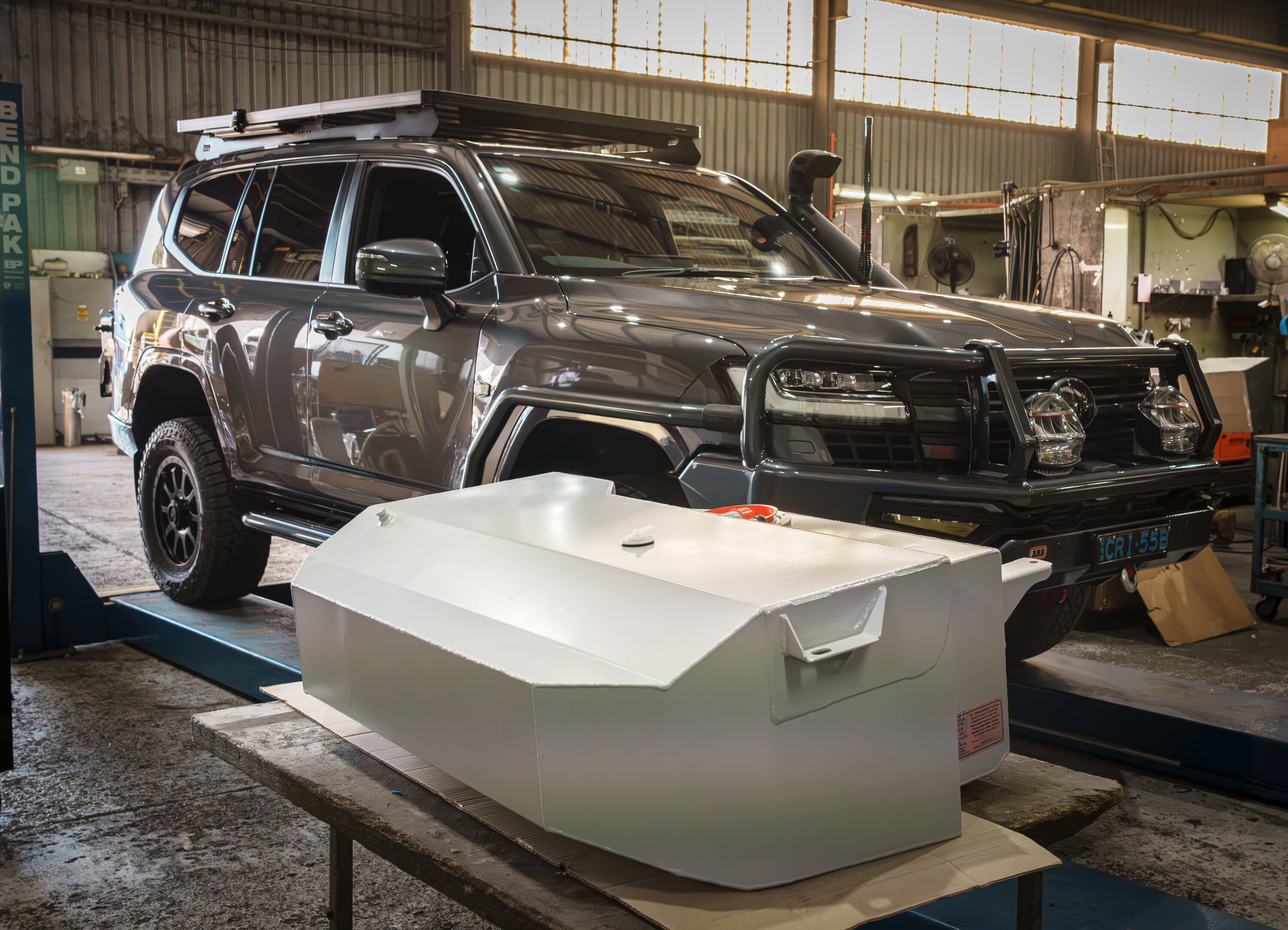
The 152L sub-relocation diesel tank is 100 per cent designed and manufactured in Australia, made from 2mm aluminised steel and finished with a two-step industrial-grade paint to provide added protection from rust and stone chips. The Long Ranger tank is designed to maximise available space without compromising structural integrity. Due to the new fuel tank location, the spare wheel will need to be relocated. This change also allows the 60L water tank option to occupy the OEM sub-tank space.
The benefits of the sub-relocation tank include increasing the original capacity of the 300 Series diesel from 110 litres to 232 litres, a capacity increase of more than 110 per cent. It also relocates the sub-tank to sit behind the rear axle and utilises all OEM sub-tank components.
The T-piece filler design ensures the refuelling process is not affected and works as per OEM setup. The new sub-tank is compatible with aftermarket diff housings such as DMW and with aftermarket exhausts such as TORQIT.
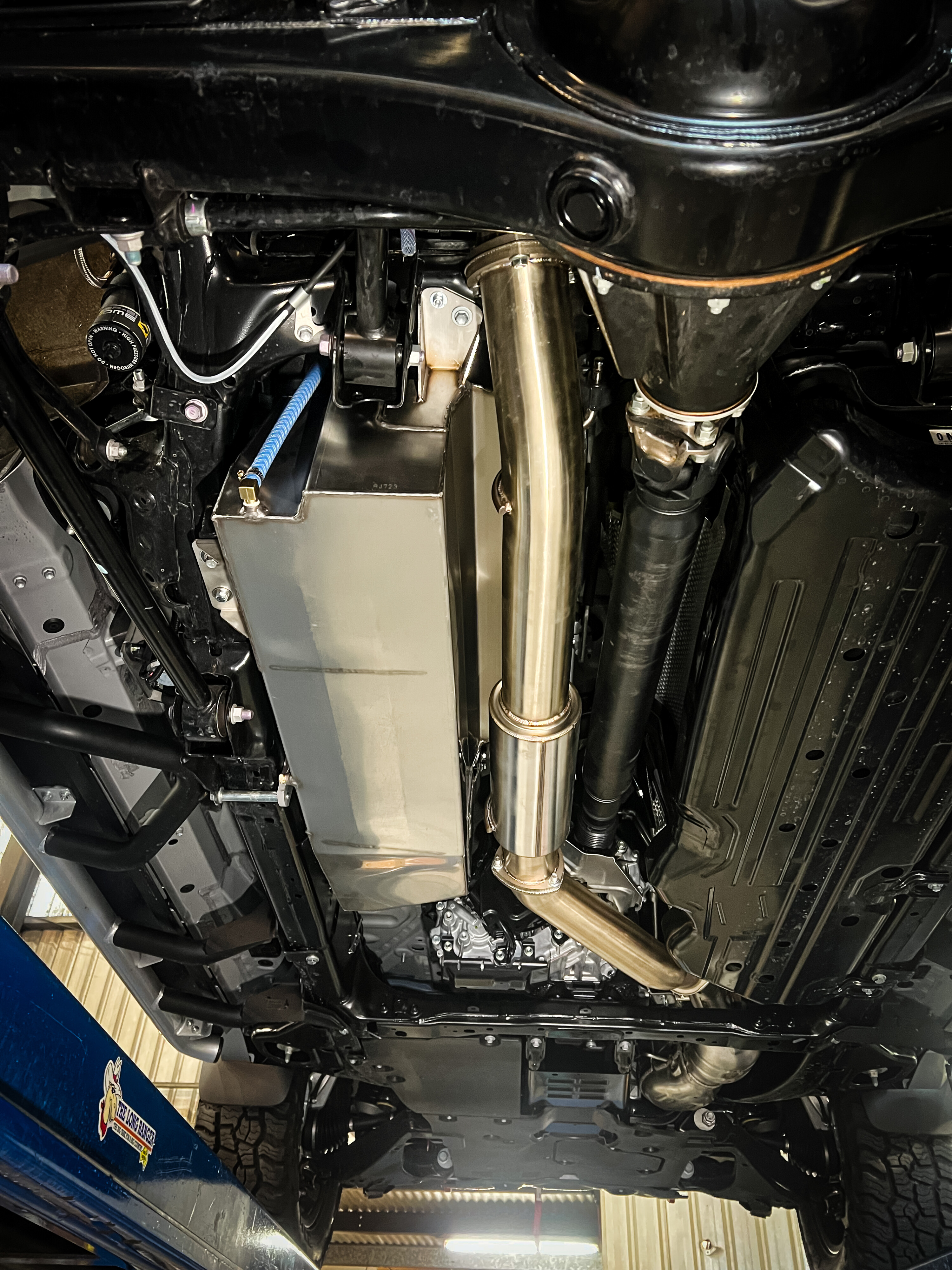
Long Ranger’s 60L water tank is made from 1.5mm stainless steel and requires fitment of the Long Ranger TR100D sub-relocation tank as it is designed to fit in the OEM sub-tank original location, with no modifications required. The water tank comes standard with a complete fitting kit which includes a pump, switch, hoses and all fittings required. Filling the water tank is simple with the under-bonnet filler.
Internal baffles provide additional strength and reduce liquid noise, and the position of the water tank keeps the centre of gravity low while removing the need to carry water in jerry cans on your roof rack or rear bar. The water tank is also compatible with ARB under vehicle protection.
Pricing
152L sub-relocation diesel tank (TR100D): $1632 60L water tank (TW23SS): $1567
The Isuzu D-Max electric ute has been confirmed for Australia.
Isuzu has unveiled the ‘D-Max EV concept’ ahead of the Bangkok International Motor Show next week, which previews the production ‘D-Max BEV’ model due to launch in mainland Europe in 2025.
While exact timing for Australia has not been confirmed, it will likely launch here sometime in 2026.
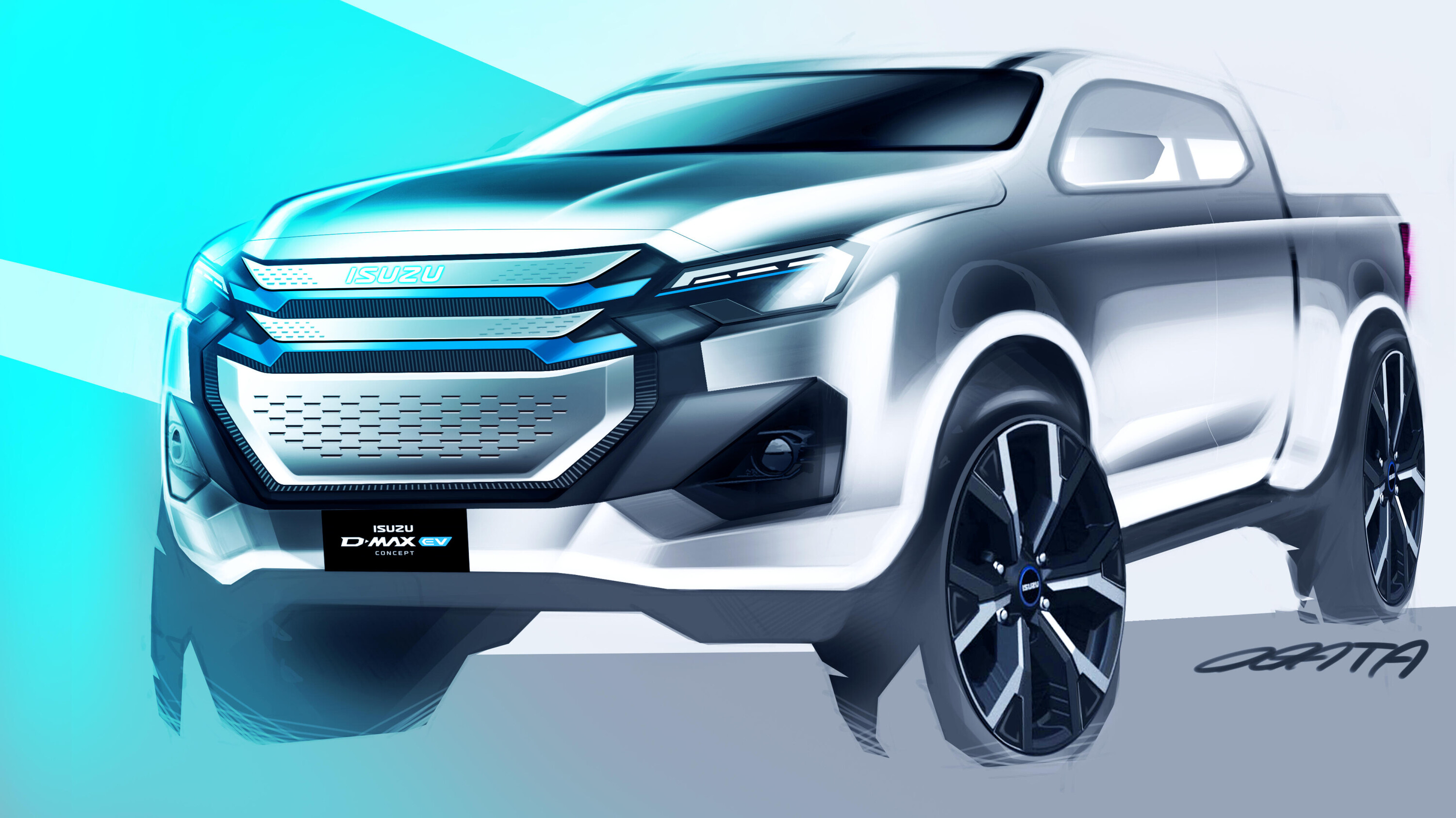
Based on the current D-Max ute launched in 2020, the EV concept features a 66.9kWh lithium-ion battery, full-time 4X4, dual electric motors with a 130kW and 325Nm total output, a one-tonne payload, and a 3.5-tonne braked towing capacity.
It has a maximum speed of “over 130km/h”.
Isuzu has not confirmed other technical specifications for the concept, such as its maximum driving range or charging speed.
“D-Max BEV [battery electric vehicle] has been developed to meet a broad range of commercial and passenger vehicle needs while retaining the tough underlying performance expected of pickup trucks,” said Isuzu.
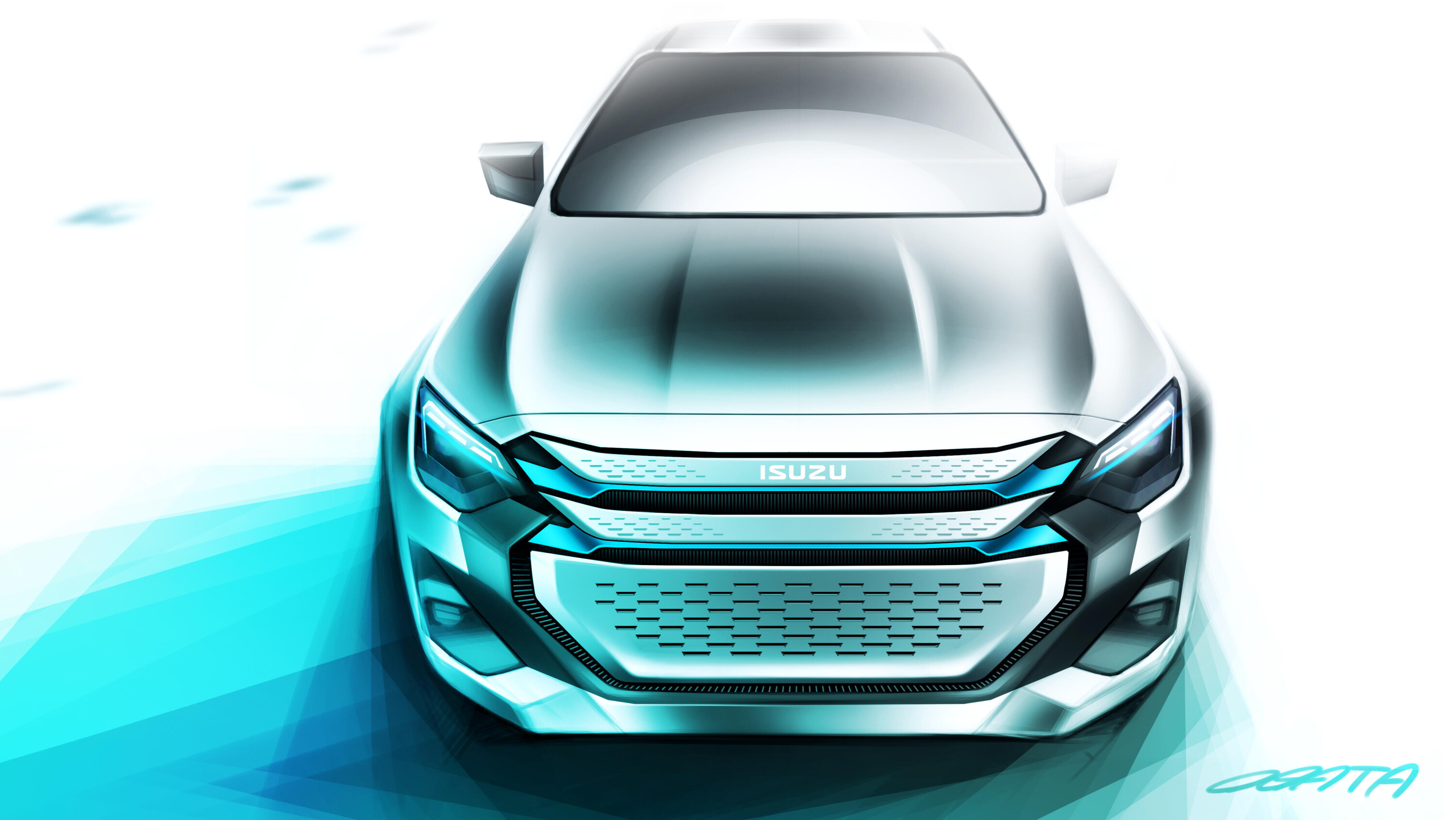
“The full-time 4WD system with newly developed e-Axles in front and rear offers excellent performance on rough roads and a linear acceleration feel characteristic of BEVs – all while minimizing noise and vibration.”
“Furthermore, high towing capacity is ensured by adopting high-power electric motors along with a robust frame and body design, allowing the D-Max BEV to perform just as well as existing diesel models.”
The Isuzu D-Max BEV will launch in “select mainland Europe markets such as Norway in 2025” followed by Australia, the United Kingdom, Thailand and “other countries based on market needs and the maturity of EV charging infrastructure”.
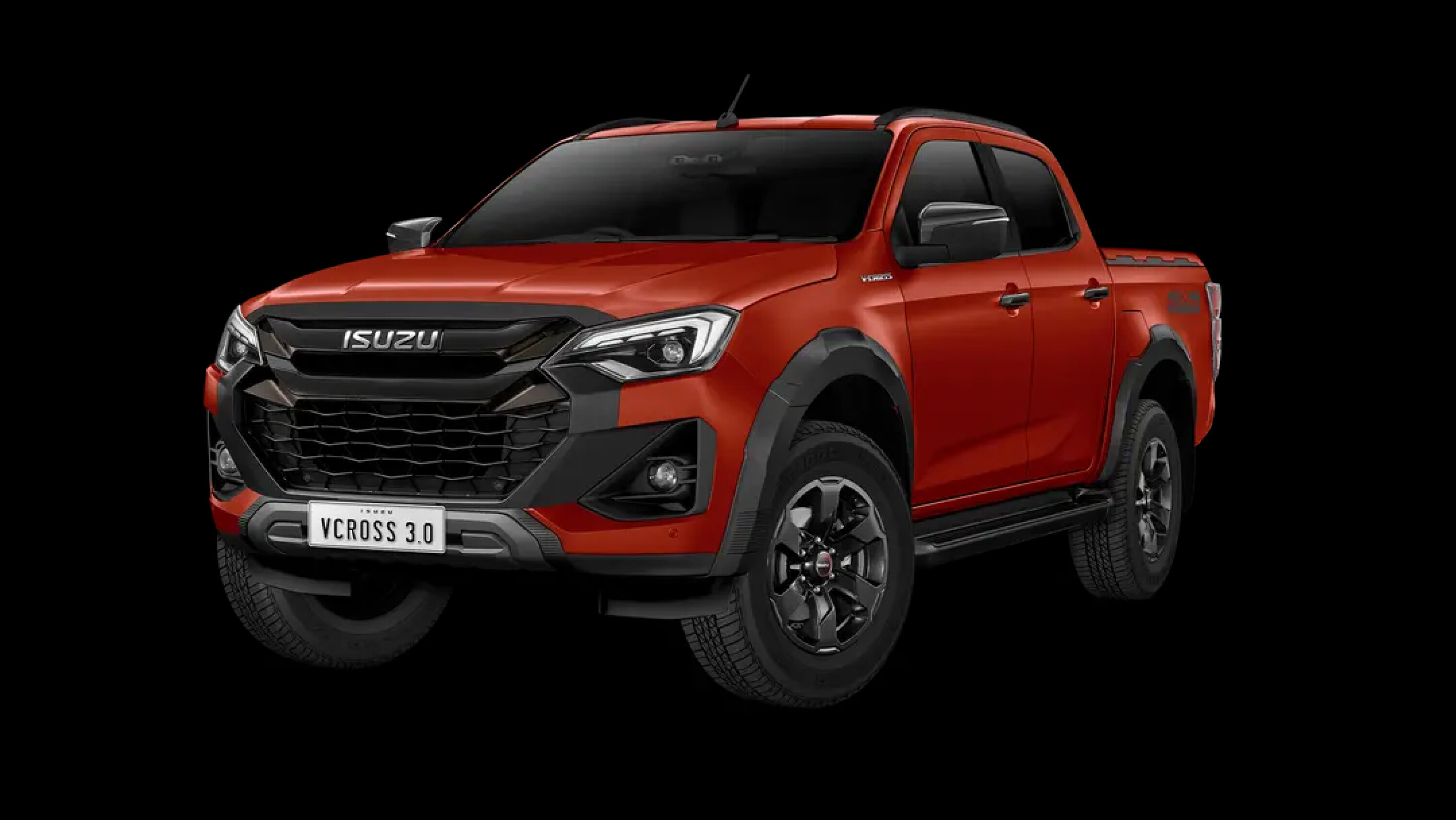
The design of the D-Max EV concept follows the facelifted diesel model due in Australia imminently – but adds a closed-off grille and darkened headlights with blue accents, as well as different alloy wheels.
In October 2023, Isuzu president Shinsuke Minami confirmed the brand would produce a battery-electric ute.
“Isuzu will first introduce it in Europe and then examine its gradual rollout by meeting the needs of each market, including Thailand,” he said.
The addition of an electric model will assist Isuzu in meeting increasingly strict emissions mandates, including Australia’s proposed New Vehicle Emissions Standard (NVES).
Isuzu Ute Australia said that – without further consultation from the automotive industry – the proposed policy would impact “many vehicle brands”, especially those that sell utes and larger SUVs in high volumes.
The Japanese commercial vehicle brand currently only sells two models in Australia, the D-Max ute and related MU-X off-road SUV. Both share their body-on-frame chassis and diesel powertrains with the Mazda BT-50 ute.
“The implementation of the NVES proposed by the Government presents timing, financial and engineering challenges for many vehicle brands, particularly those brands that provide Australians with utes and large SUVs as part of their range, and ultimately risks negatively impacting Australian consumers,” said the brand.
“Globally, Isuzu’s transition to low- and zero-emission vehicles is underway, with the brand committed to introduce an electric ute.
“However, the reality is that due to the infancy of zero-emission technology in light commercial vehicles, it will take more time to develop zero-emission utes and large SUVs that are both affordable and fit for the specific needs of Australians, including the ability to travel extensive distances, carry a load and tow.”
Isuzu Ute Australia has echoed calls from Toyota and other brands to classify large 4X4 SUVs such as the MU-X as light-commercial vehicles, which face less stringent emissions targets.
The Ford Ranger Tremor – a rival for the Toyota HiLux Rogue, Nissan Navara Pro-4X Warrior and Mazda BT-50 Thunder – has been confirmed for New Zealand following its debut in Europe 12 months ago.
While European versions of the Ranger Tremor are built in South Africa – which supplies the Volkswagen Amarok and upcoming Ranger Plug-In Hybrid for Australia – and based on a low-spec variant similar to our XLS, the version coming to New Zealand will be built in Thailand and adapted from the mid-spec Sport.
The Ranger Tremor hasn’t been confirmed for Australia, but it could join the local line-up in the coming months as a spiritual successor to the previous-generation Ranger FX4 Max, which was sold elsewhere as the Tremor.
A Ford Australia spokesperson told 4X4 Australia there is “no news” to share on the Ranger Tremor reaching our market.
Like the limited-run Ranger Wildtrak X offered in 2023, the Tremor features the 150kW/500Nm 2.0-litre bi-turbo four-cylinder diesel paired with a full-time automatic 4WD system from diesel V6 and Everest models.
It also has the same Raptor-lite wider frame that sees the front and rear track width increased by 30 millimetres over the Ranger Sport, while ride height is up 24mm.
There are also Bilstein-sourced position-sensitive dampers – as found in the Wildtrak X – which can automatically adjust to the terrain with ‘end stop control valve’ technology.
Other new additions include 17-inch ‘asphalt black’ alloy wheels, chunkier 265/70 R17 General Grabber AT3 all-terrain tyres with white lettering, and Trail Turn Assist – a Ford Bronco-derived feature – to reduce the vehicle’s turning radius by up to 25 per cent on narrow tracks by applying the brake to the inside rear wheel.
It can be engaged under 19km/h when the vehicle is engaged in either 4H or 4L, with the rear differential unlocked.
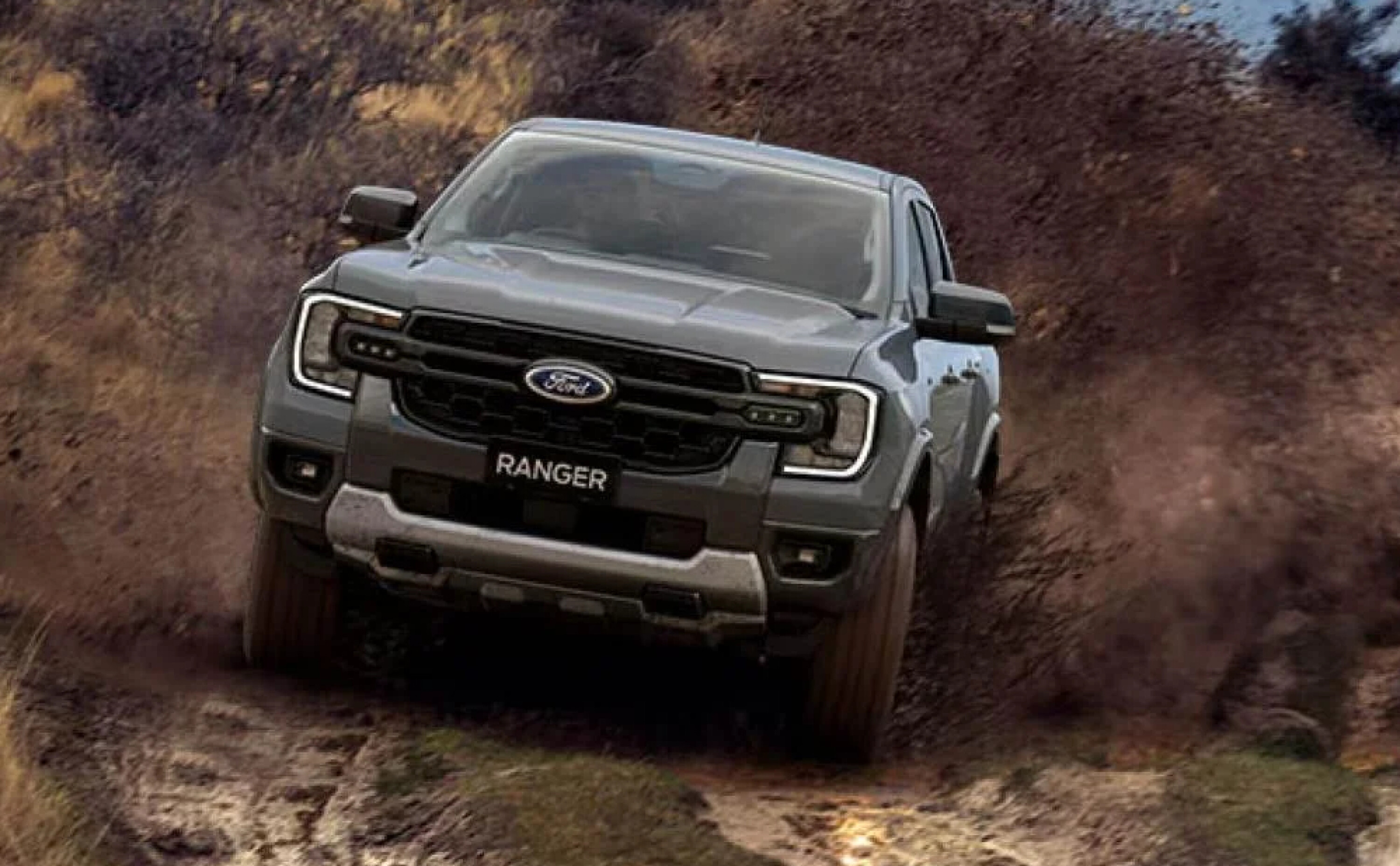
External revisions include cast aluminium side steps, boulder grey exterior accents, a darkened grille, and integrated LED auxiliary lamps. It is also available in conquer grey, a colour currently limited to the Raptor.
Inside, the Ranger Tremor has water-resistant black vinyl upholstery with ‘medium dark urban grey’ stitching and a Tremor logo embroidered in orange on the front seatbacks.
Unlike the Ranger Sport, the New Zealand-market Tremor reverts to vinyl flooring shared with lower-spec variants to make cleaning easier, while it also adds roof-mounted auxiliary switches as standard.
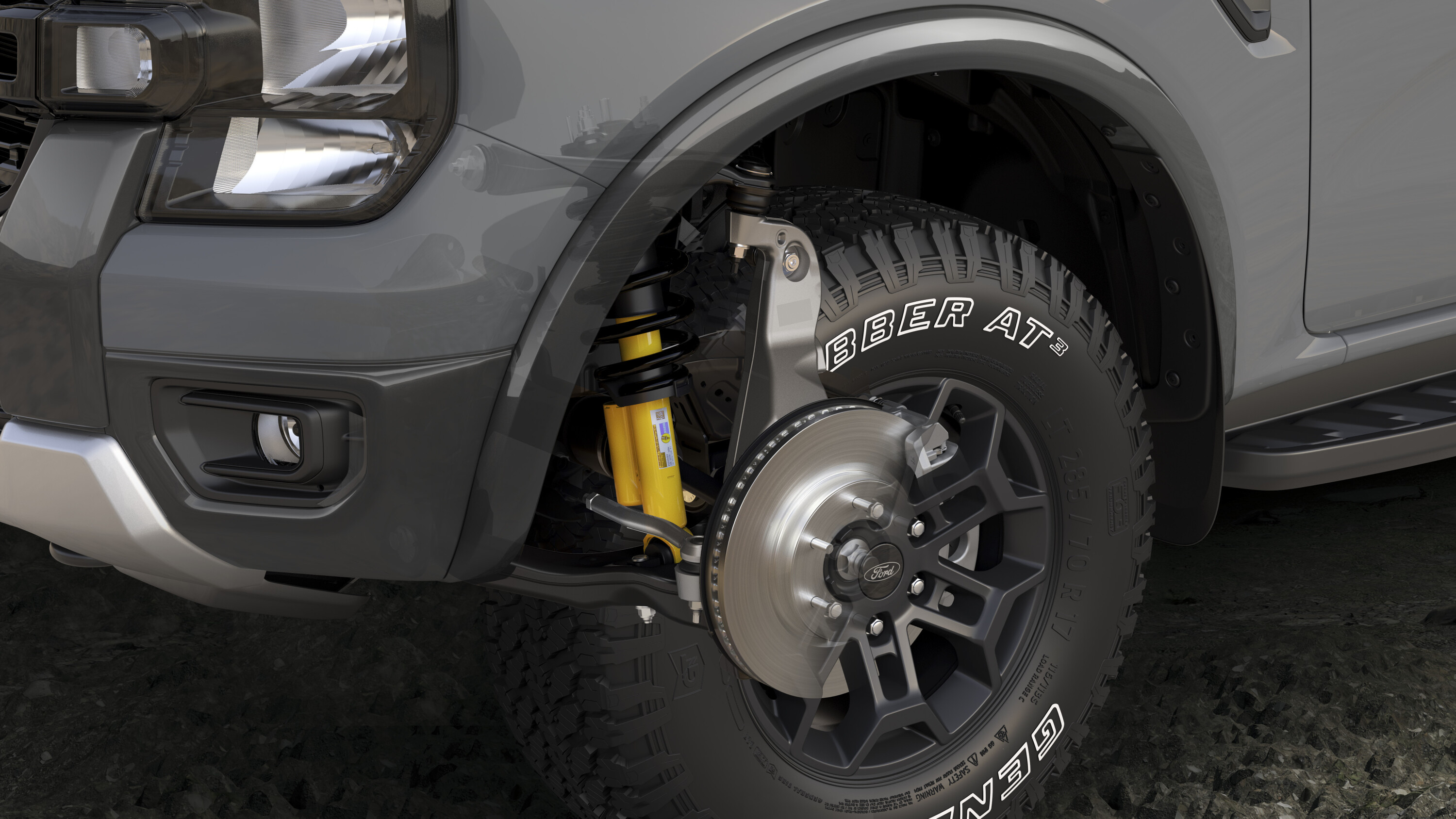
Across the ditch, the 2024 Ford Ranger Tremor is priced from NZ$74,990 (AU$69,500) – NZ$6000 (AU$5500) less than the Wildtrak X.
The Ranger Wildtrak X was priced at $75,990 before on-road costs when it was offered in Australia, which suggests the Tremor could be priced closer to $70,000 plus on-roads if it reaches our market.
A stock bi-turbo Ranger Sport 4×4 dual-cab is listed at $65,690 before on-road costs, while the just-updated Toyota HiLux Rogue with 48-volt tech is priced from $71,530 plus on-roads. The Nissan Navara Pro-4X Warrior auto starts from $70,765 and the Mazda BT-50 Thunder costs $74,095.
The Ford Ranger was the top-selling car in Australia in 2023, surpassing its HiLux rival, which had been the nation’s top-selling car from 2016 to 2022. Year-to-date, the Ranger remains in the top spot.