Advice

Gallery 1
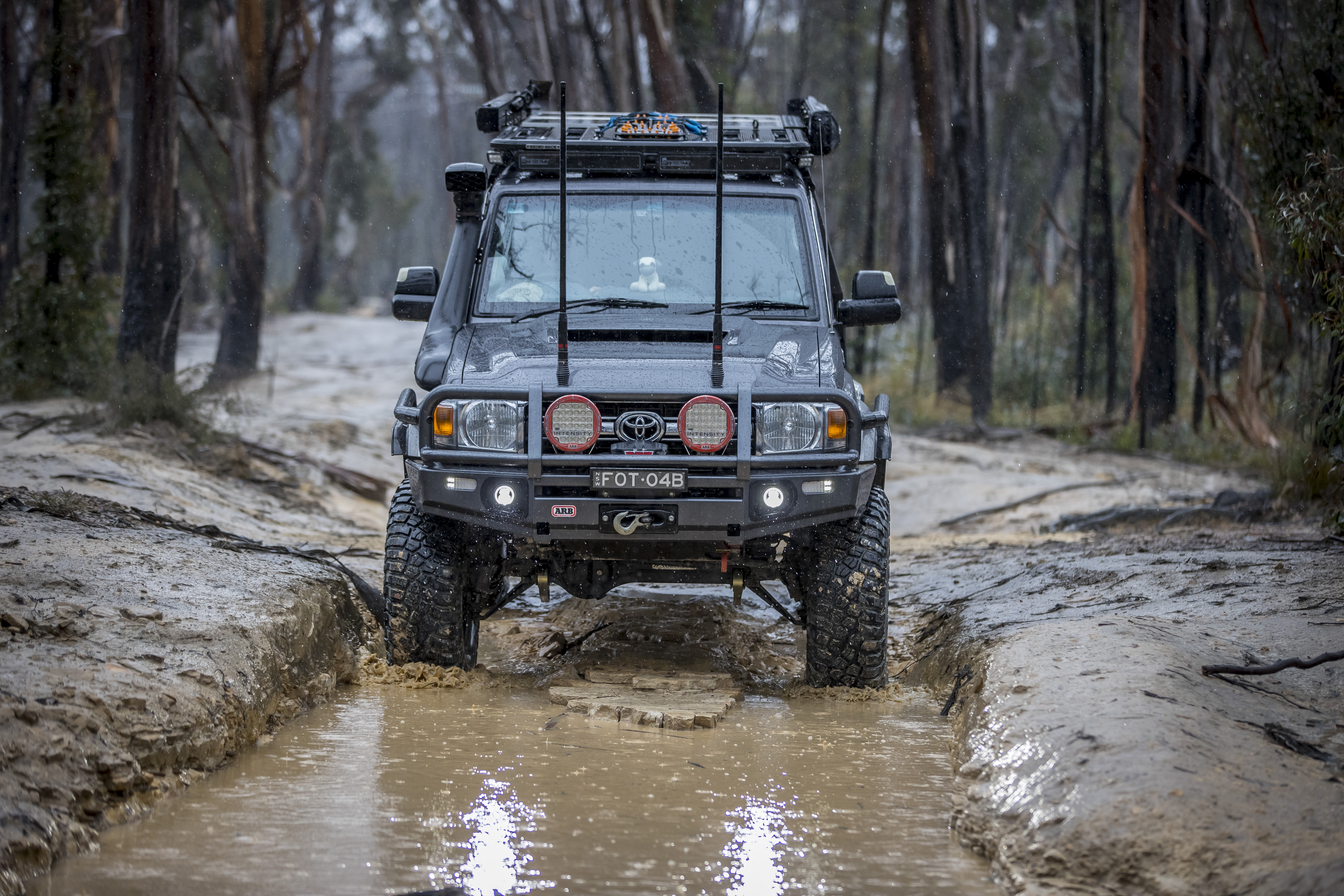
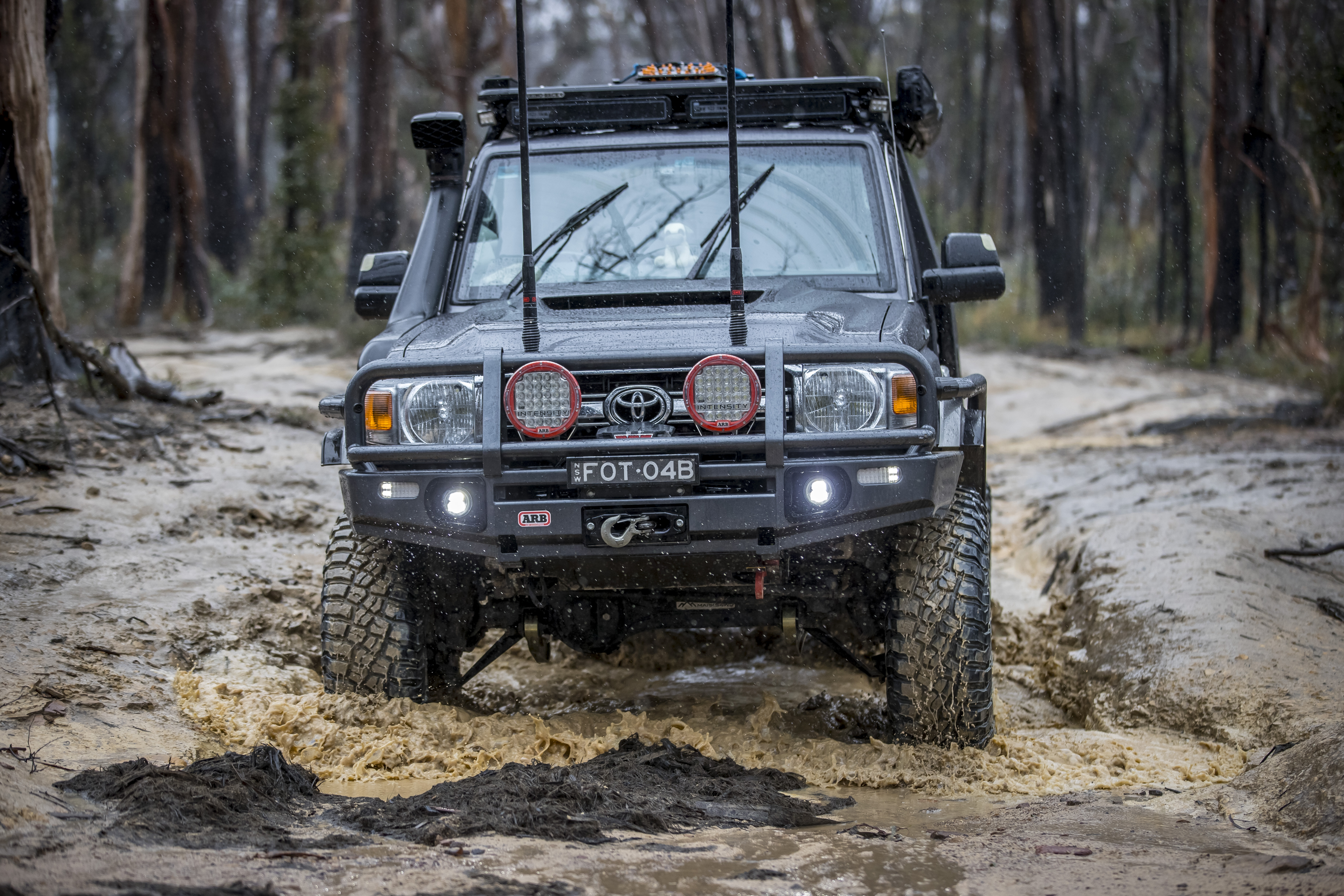
Mud wrestling might sound like fun, but it’s always a safer option to avoid the sticky, gloopy stuff if you can. Why? Because mud is no good for your 4×4; it can be damaging to paintwork, mechanical components, and your vehicle’s interior.
And it’s not just your vehicle that can cop damage when driving through mud. Aggressive mud-terrain tyres spinning furiously while trying to gain purchase can cause severe damage to roads and tracks, making it harder for following vehicles to get through – even after everything has dried up.
As well as vehicle and track damage, if things don’t go to plan in mud, you could end up stuck… and getting out can sometimes be extremely difficult.
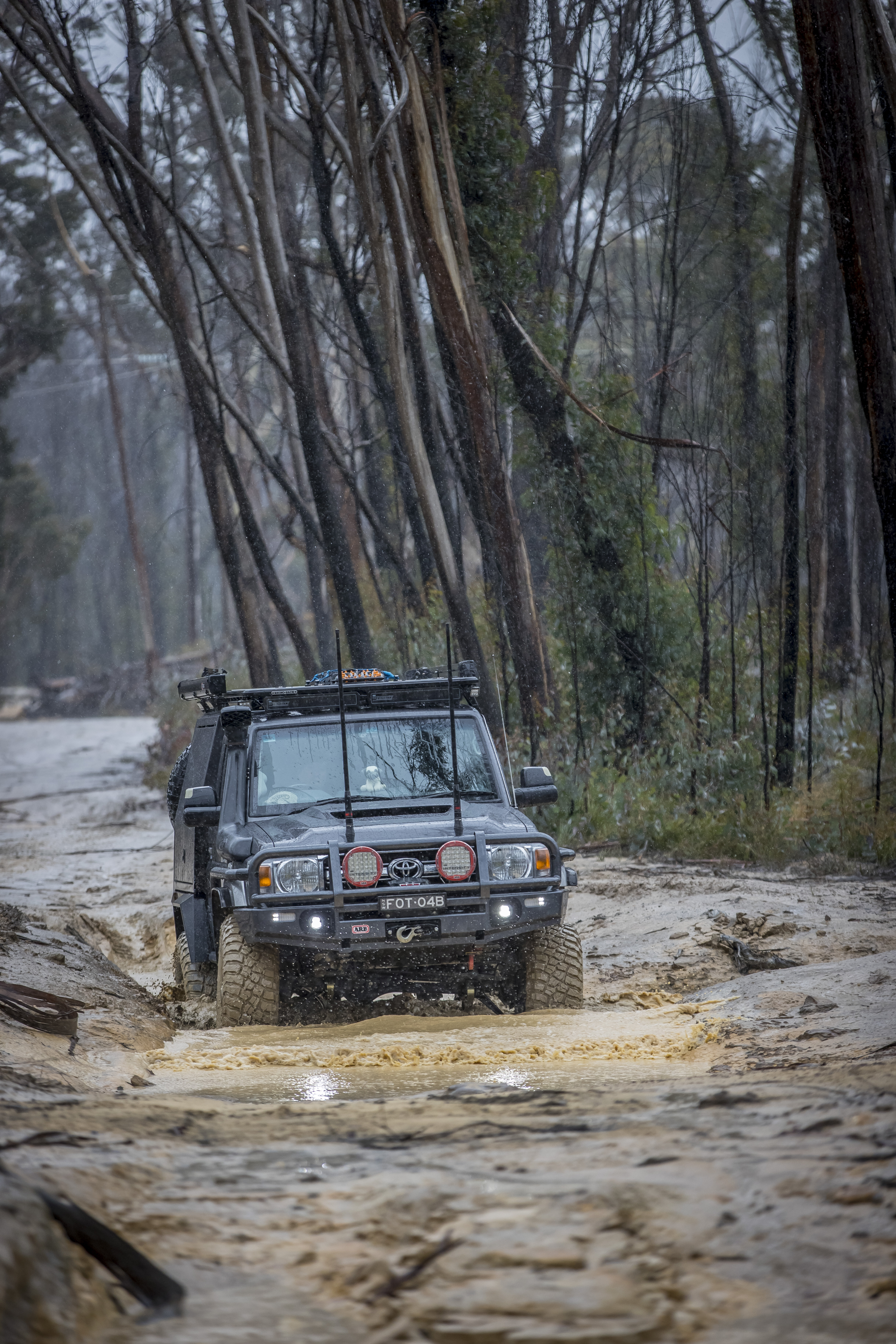
So, the next time you’re driving along a track and tempted to drive through a big mud hole, a better option is to look for a way around it. Of course, sometimes there won’t be an alternative route, or you just might not be able to help yourself, in which case here’s what you’ll need to do.
JUMP AHEAD
- Vehicle preparation
- How to assess a mud hole
- Tyre pressures and recovery planning
- How to drive through mud
- How to recover a 4WD stuck in mud
- Post-mud inspection
- Common mistakes
- Types of mud
- Warning signs you’re losing traction
- FAQs
Vehicle preparation: Tyres, clearance and recovery gear
Your 4×4’s tyres are critical when it comes to maintaining forward progress on any off-road surface, and mud is no exception.
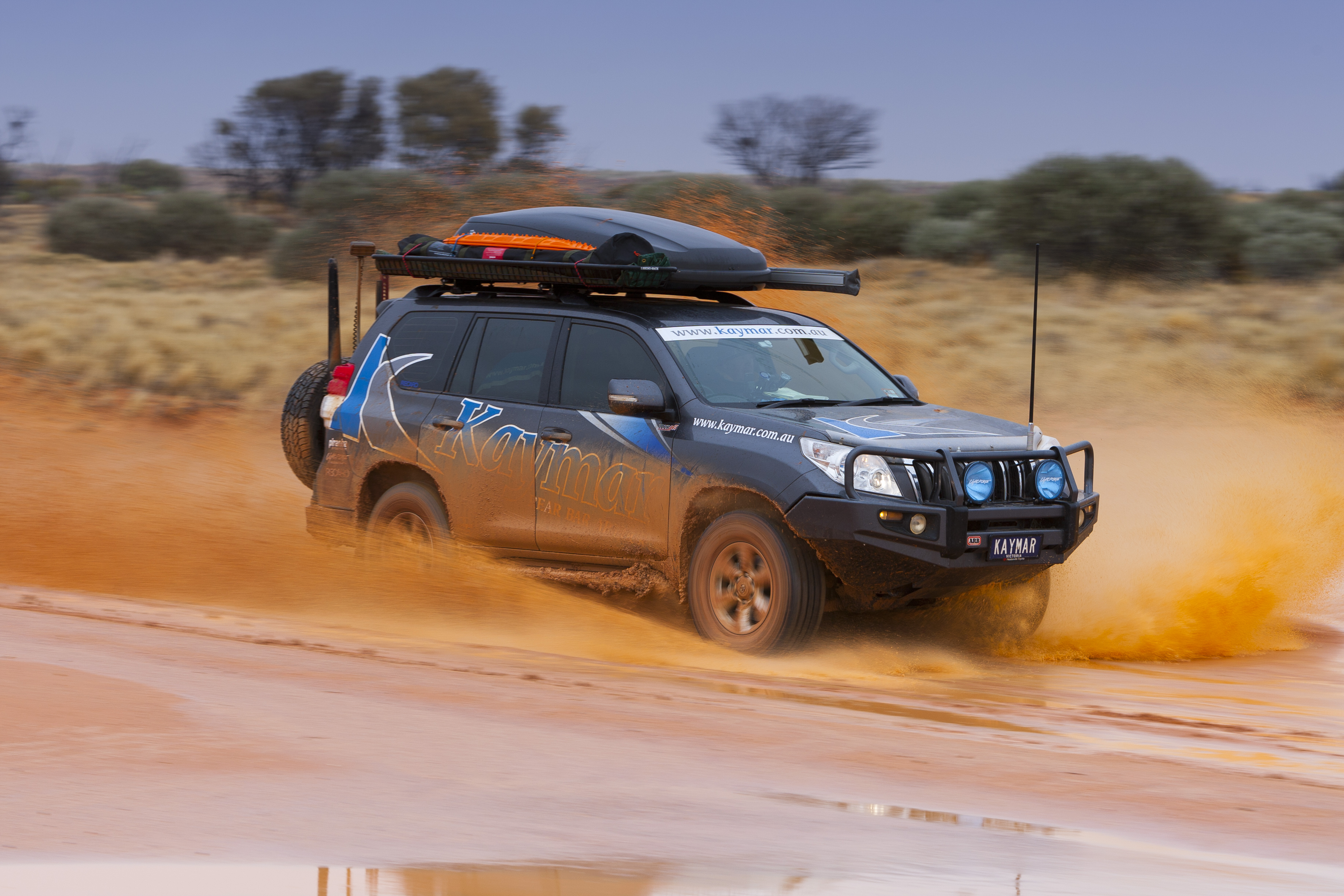
When driving in mud, aptly named mud-terrain tyres are the best choice. They have wide-open tread blocks that allow them to gain traction more easily in slippery mud, and they are also more able to clear mud when spinning than tyres with tighter tread patterns that can trap and hold on to mud. Some mud-terrain tyres also have tread blocks that continue over the tread face and onto the sidewalls (sometimes called side-biters) for additional traction in slippery conditions.
Mud-terrain tyres aren’t for everyone, however, as there are several compromises compared to less aggressive all-terrain or highway-terrain tyres. These include less on-road grip, increased road noise, and faster tyre wear. If you’re not willing to accept these compromises, all-terrain tyres are the next best choice for mud driving, but even highway-terrain tyres can still work well in mud if the correct tyre pressures are set… more on that later.
1
The next thing to consider is ground clearance. Mud is viscous and gets pushed around by spinning tyres, often resulting in deep wheel tracks. If your 4×4 drops into these, you can quickly run out of clearance and get “hung up” on the crown of a track. The more clearance you have, the less chance of getting stuck.
In most states and territories, you can legally increase ground clearance by up to 75mm by combining larger diameter tyres (+25mm) and a raised suspension system (+50mm).* You can go further in some areas with engineering approval or second-stage manufacturer compliance.
Other useful equipment includes front and rear differential locks, a quality snorkel, and extended breathers for differentials, gearbox, and transfer case. Ensure you have rated recovery points front and rear, and carry appropriate recovery gear.
How to assess a mud hole
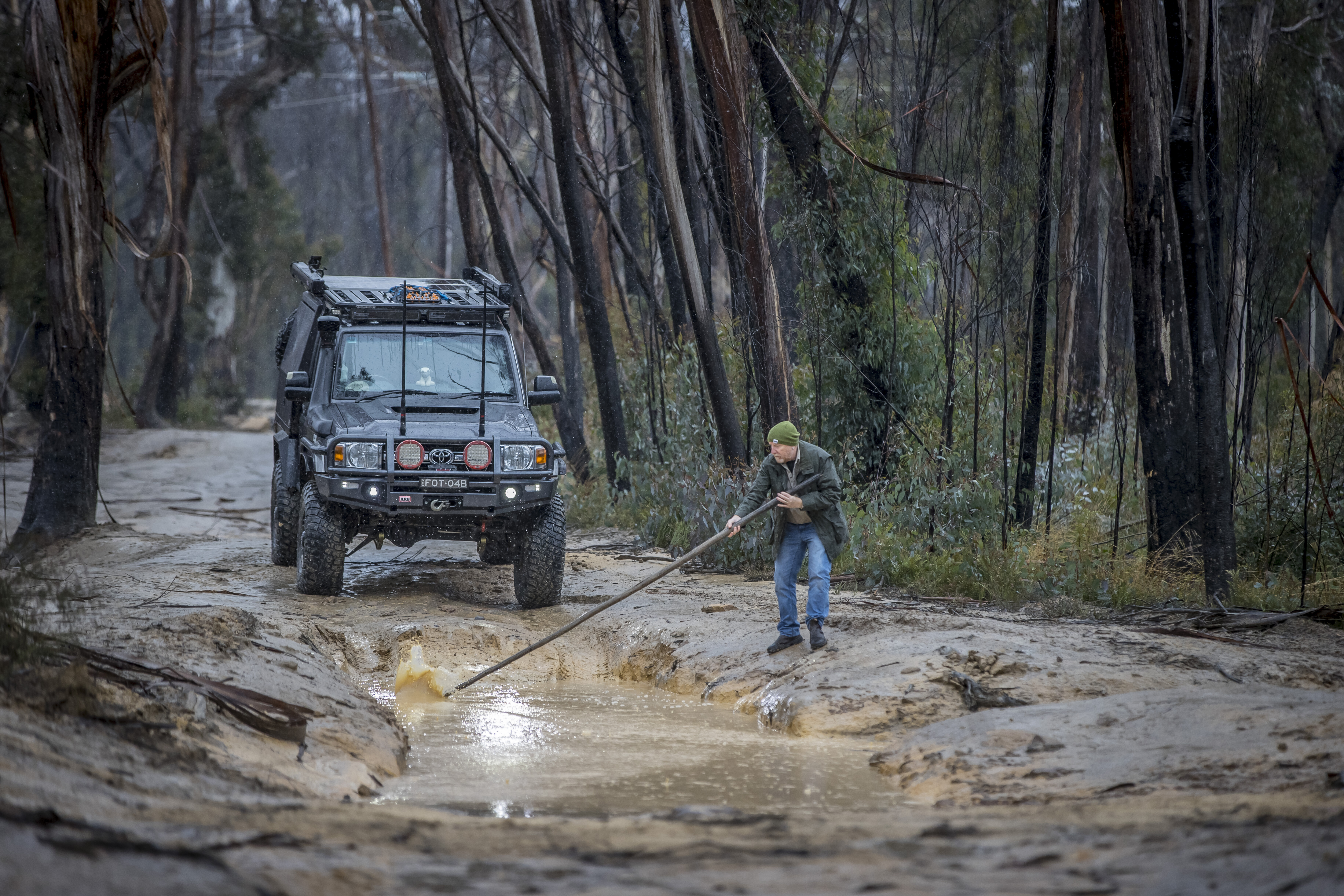
If you’re confronted by a big mud hole, you need to find out what’s beneath the surface. The best way to do this is with a big stick… unless you don’t mind getting wet and checking on foot. If you do, wear sturdy footwear.
Walk along each side of the mud hole and use your stick to gauge depth and firmness. Check whether the base is solid or sloppy, and assess how high the crown is to ensure you have enough clearance. Probe for hidden obstacles such as rocks, branches, or broken vehicle parts. You may need momentum to get through, so you don’t want to hit anything solid.
1
Also check for rocks or roots protruding from the sides that could damage tyres. This inspection also allows your vehicle time to cool. Dropping hot components into cold muddy water can cause rapid contraction and potentially suck mud past worn seals in gearboxes, transfer cases, and diffs.
If you’re on an outback road and encounter mud, slow down so you can choose your line carefully. Mistakes here can quickly lead to getting bogged. Even sealed roads in remote areas can hide mud along verges after rain, so be cautious when pulling off.
In desert regions, sticky mud can sit just below a crusty surface layer. If you break through, you could be stuck quickly. If you see existing tracks that exit the section, use them where possible as they’re likely to be compacted.
Tyre pressures and recovery planning
Tyre pressures are key. Lowering pressures increases the footprint of each tyre, helping them conform to uneven surfaces and gain traction.
How low depends on load and vehicle, but if you normally run 35psi on-road, you could safely drop to around 22psi for mud driving. Lower pressures increase the risk of tyre rollover or overheating, so avoid sudden steering inputs and excessive speed.
Always have an escape plan. If travelling with others, keep a snatch strap ready. If solo, ensure recovery boards and a shovel are accessible. If you have a winch, make sure all gear (extension straps, tree trunk protector, shackles, snatch blocks/rings) is ready and you have suitable anchor points.
How to drive through mud: Gear selection, momentum and technique
You’re now ready to tackle the mud, so lock your hubs if fitted, make sure your vehicle is in 4×4, lock the centre diff if fitted, and select the gear that you think will result in enough speed and momentum to get you through the muddy section.
Low-range second or third is often a safe bet, but it will depend on your vehicle’s overall gearing and the mud you’re faced with; the key is to maintain enough speed to get you through to the other side, but not so much speed that you might damage your vehicle.
If your 4×4 has selectable drive modes, select the appropriate one for mud, which on many vehicles is labelled ‘mud and ruts’. This will tailor throttle response, automatic gear shifts and the behaviour of the traction-control system to suit the conditions. If you have diff locks on rear and/or front axles, lock them before driving into the mud, but be wary that locking your front diff will make it more difficult to steer the vehicle.
1
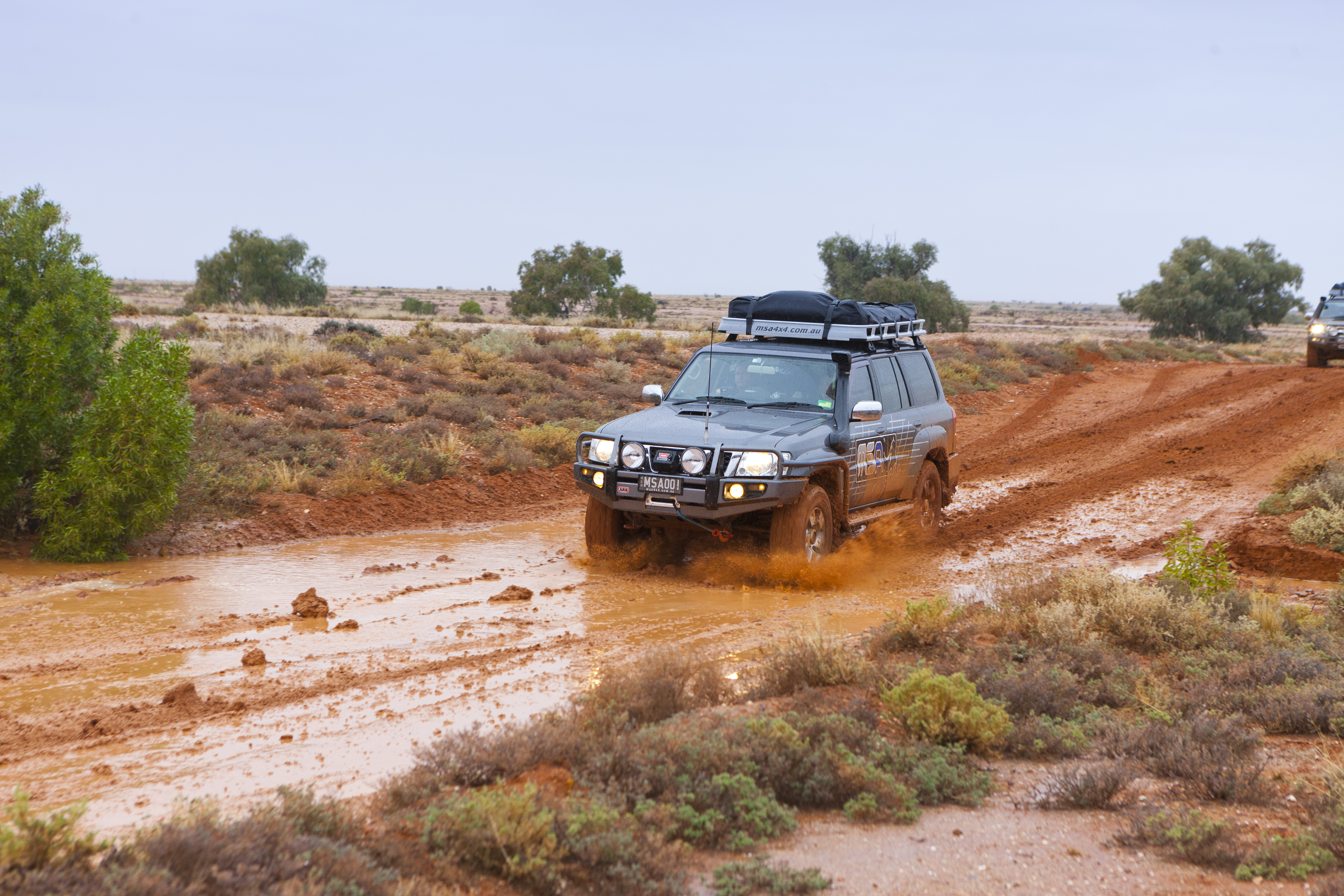
When driving through mud, keep engine revs up and try to avoid gear changes; in manual transmission vehicles, disengaging the clutch in mud can result in you losing momentum and quickly becoming stuck – you need to keep those wheels turning!
On the flipside, if you bury your wellie and your tyres start spinning furiously in mud, there’s a chance you could simply be digging yourself into the muck. If you start to lose traction, the trick is to find a happy medium between wheelspin and forward progress. There is an upside to your wheels spinning, and that is the rotational forces will help to clear mud from the tread blocks so the tyres will have more chance of gaining purchase.
If you start losing momentum but the wheels are still spinning, another trick is to quickly turn the steering wheel back and forth. This action gives the front tyres a chance to bite into the sides of ruts, which with any luck will help to drag your vehicle through the mud. The side-biters on mud-terrain tyres assist when employing this technique. You might have to straddle wheel tracks if they look too deep, but take care not to slide into the tracks.
Mud driving in hilly terrain can be fraught with danger, especially on steep descents. In these conditions you’ll want to rely on your vehicle’s low-range gearing as much as possible to keep speed in check instead of the brake pedal. On older vehicles without ABS, if you jump on the brakes and the front wheels lock up you will lose steering control. If this happens, dropping into existing wheel tracks can help point you in the right direction. On vehicles equipped with ABS, relying on the brakes can result in excessive braking distances. Slow and steady is the best technique for muddy descents.
How to recover a 4WD stuck in mud
The first thing to do if you get stuck in the mud is to try and reverse out. Often the reason you become stuck is because mud builds up in front of the tyres, so if you can back up a bit and have another go with a bit more gusto you might just be able to make it out of your predicament.
If you can’t move in either direction, chances are much mud has built up under your vehicle, so you’ll need to grab your shovel and start clearing the mud away. Start by shovelling away the mud on front of the tyres, and then underneath your rig. Now could also be a good time to use your recovery boards. Wedge them in front of the front tyres, select low-range first and try to gently drive on to the recovery tracks. Once up and on to the tracks, try to build up speed and maintain momentum until you’ve reached firmer ground. This can take several attempts.
If you’re fortunate enough to be travelling with other vehicles, a tug with a snatch strap or kinetic recovery rope is one of the fastest ways to recover a vehicle from mud, but make sure you know what you’re doing, and always follow proper safety procedures.
If you need to winch yourself out of the mud, make sure you find a solid anchor point and use a double-line pull if you’re really stuck. Before you start winching, clear away as much mud as possible from in front of the tyres and under the vehicle.
Essential recovery gear
- Recovery boards
- Shovel
- Rated recovery points
- Snatch strap / kinetic rope
- Tyre deflator and inflator
- Winch and rigging kit (if fitted)
Post-mud inspection, cleaning and maintenance
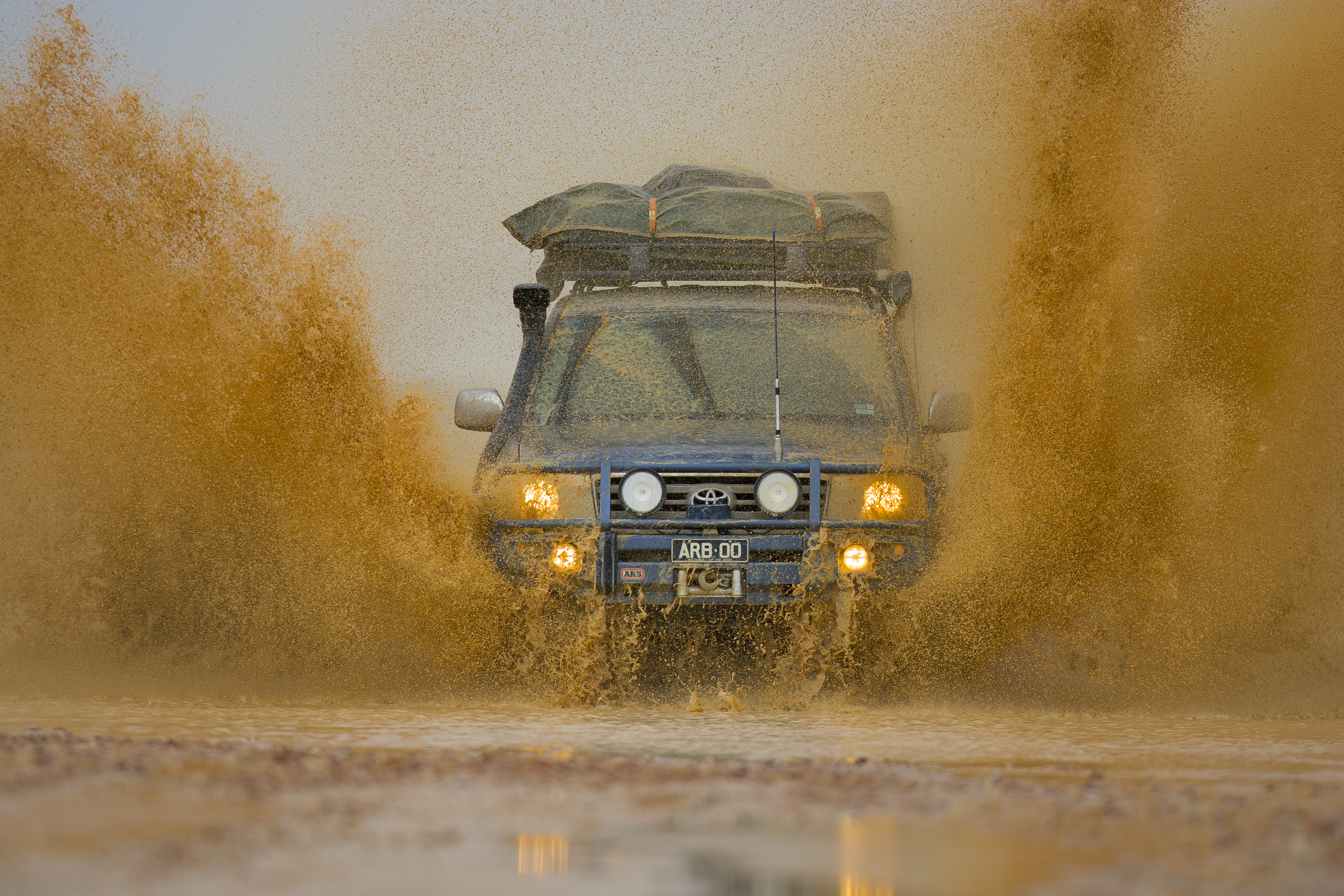
Once you’re out of the mud, have a good look over your vehicle to check for damage.
When reinflating tyres, have a good look to make sure they are not damaged and check that mud hasn’t worked its way in-between the tyres and the wheels. Also have a good look inside the wheel rims to ensure there aren’t big clumps of mud in there that could throw them out of balance.
Make sure your mudflaps and wheel-arch flares are all in place and secured, and that the licence plates are still attached and not covered in mud. Also make sure your headlights, tail-lights and indicators are clean, as well as your windscreen, windows and mirrors.
1
Once you get home, clean your vehicle as soon as you can. The abrasive nature of dried out mud is no good for your vehicle’s paint, chrome or plastics. Give your rig a good clean underneath too, as mud can be hell on components such as clutches, wheel bearings and CV joints. Also have a good look in chassis rails for built-up mud that could result in corrosion issues down the track, and hose away any mud between the body and chassis, and around suspension components and fuel tanks.
Lift the bonnet and make sure the radiator, alternator and other components aren’t caked in mud. If they are, thoroughly clean them to prevent engine overheating or electrical failures. If you’ve been driving in deep mud holes, you should also check the engine, gearbox and diff oils to make sure no contaminants have worked their way into these mechanical components.
As I said at the start of this guide, it’s always a good option to try to avoid mud rather than drive through it if you can.
What to do
- Try to avoid mud if possible
- Lower tyre pressures appropriately
- Engage 4×4 and correct drive modes
- Maintain momentum
- Carry and prepare recovery gear
What not to do
- Enter mud without checking depth
- Lose momentum through unnecessary gear changes
- Brake heavily on muddy descents
- Pull off into unknown soft verges
- Leave mud caked on your vehicle
1
Common mistakes when driving in mud
Even experienced 4×4 drivers get caught out in mud. Most recoveries aren’t caused by bad luck, they’re caused by avoidable mistakes.
- One of the most common errors is entering mud without properly checking the depth or base firmness. What looks manageable on the surface can hide soft, bottomless sections underneath.
- Overusing throttle is another classic mistake. Spinning the tyres aggressively might feel like progress, but it usually just digs the vehicle deeper into the mud.
- Stopping in the middle of a mud section is also a major problem. Once momentum is lost, the vehicle can settle quickly into ruts and become much harder to recover.
- Incorrect tyre pressures can also work against you. Running them too high reduces traction, while going too low without understanding load and terrain increases the risk of tyre rollover or de-beading.
- Finally, poor recovery preparation before entering mud is a frequent issue – having gear buried in the back of the vehicle or no clear exit plan often turns a simple crossing into a recovery situation.
Different types of mud and why it matters
Not all mud behaves the same, and understanding the difference can help you decide whether to proceed, reroute, or avoid it entirely.
- Sticky clay mud is one of the most challenging types. It packs heavily into tread blocks, builds resistance quickly, and can turn tyres into slicks almost instantly.
- Sandy mud, often found near beaches or desert fringes, can appear stable but collapse without warning. It tends to offer inconsistent traction and can change rapidly under load.
- Waterlogged topsoil is deceptive. It often looks firm enough to support a vehicle but will give way suddenly once weight is applied, leading to rapid bogging.
- Saltpan mud crust is particularly dangerous in remote areas. A hard surface layer can hide deep, soft mud underneath, meaning the ground can fail without any obvious warning.
1
Warning signs you’re losing traction in mud
Recognising the early signs of trouble can make the difference between driving through and getting stuck.
- A sudden loss of forward momentum, even while maintaining throttle input, is often the first indication that traction is fading.
- If the steering starts to feel heavy, vague, or unresponsive, it may mean the tyres are no longer biting into a firm surface.
- Increasing wheelspin without corresponding movement is another clear sign that the vehicle is starting to lose effective traction.
- You may also notice the vehicle beginning to “sit down” into the track as the mud compresses and builds underneath the chassis.
- Finally, if the ruts are rapidly deepening under your tyres, it’s a strong indicator that the surface is failing and recovery may soon be required.
FAQs: 4WD tips and safety
Do I need mud-terrain tyres for driving in mud?
Not strictly. Mud-terrain tyres perform best due to their open tread design, but quality all-terrain tyres can still work well if tyre pressures are adjusted correctly. Highway-terrain tyres can manage light mud in some conditions, but traction will be more limited.
How low should I drop tyre pressures in mud?
It depends on vehicle load and setup, but as a general guide, if you normally run around 35psi on-road, dropping to roughly 20-25psi can improve traction. Always balance grip with the risk of tyre rollover, overheating, or de-beading.
Is it better to drive fast or slow through mud?
Neither extreme works well. You need controlled momentum – enough speed to keep moving, but not so much that you lose control or damage the track. Excess wheelspin usually digs you in deeper.
Should I use 4WD high or low range in mud?
Low range is usually preferred for deeper or more technical mud as it helps maintain steady torque and control.
What’s the biggest mistake people make in mud?
Stopping momentum or overusing wheelspin. Both can quickly bog the vehicle. Poor line choice and failing to assess depth before entering are also common causes of recovery situations.
Can mud damage my 4WD?
Yes. Mud can damage paint, clog mechanical components, overheat brakes, and contaminate bearings or oils if it enters seals or breathers. It can also stress tyres and driveline components during recovery attempts.
Is it safe to use traction control in mud?
Yes, but it depends on the system. In some vehicles, traction control can help manage wheelspin. In deeper mud, however, it may reduce momentum, which is sometimes needed to keep moving.
What should I always carry for mud driving?
Essential recovery gear includes a shovel, recovery boards, rated recovery points, a snatch strap or kinetic rope (if travelling with others), tyre deflator and inflator, and a winch if fitted.
What’s the safest way to recover a stuck 4WD in mud?
Start with self-recovery: reverse out if possible, clear mud around tyres, and use recovery boards. If that fails, a controlled snatch recovery or properly rigged winch pull is next – always using rated gear and safe procedures.
How do I clean my vehicle after driving in mud?
Wash thoroughly as soon as possible, including the underbody, wheel arches, chassis rails, and engine bay (carefully). Dried mud is abrasive and can lead to corrosion and component wear if left untreated.
Follow 4X4 Australia on Google
Get more 4x4 news, reviews and gear stories from 4X4 Australia in your Google feeds.


We recommend
-
 Advice
4WD tyre pressures explained: Your off-road guide
Tailoring the air pressure in your tyres to suit different terrain types has many benefits, for both you and your rig
-
 Gear
GearTyre deflators and inflators explained: Why every 4x4 owner needs to know how to use one
Mastering tyre pressures is one of the easiest ways to boost your 4WD traction and comfort off-road
-
 Advice
4x4 at night: How to avoid wildlife and stay safe on outback roads
In a country as vast as Australia, night driving is sometimes unavoidable. Here’s how to do it safely