4x4 Comparisons

Gallery 1
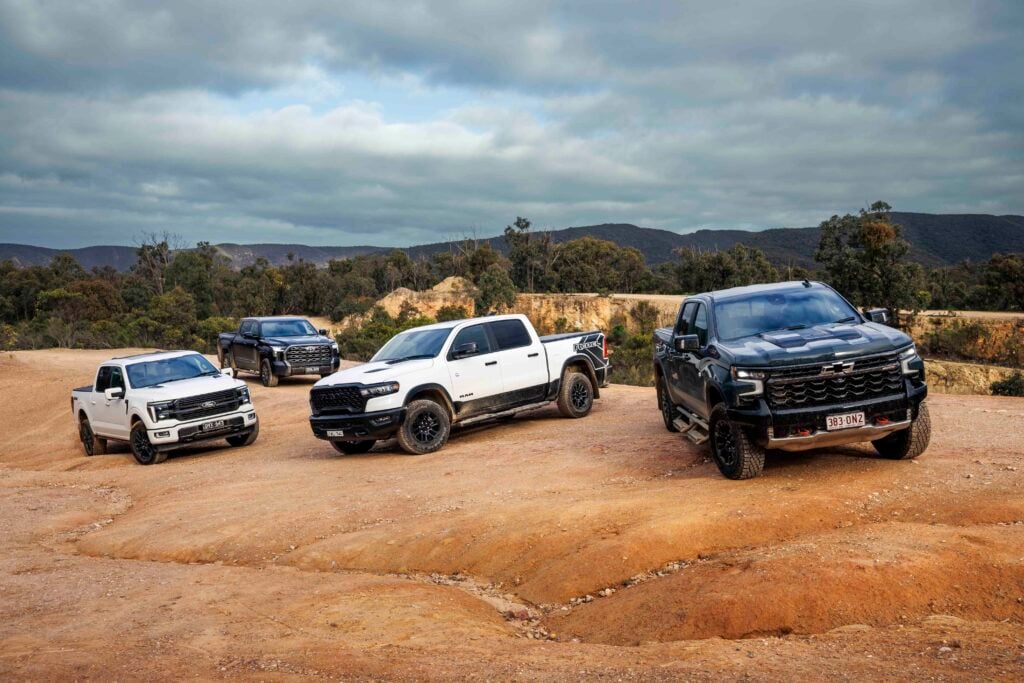
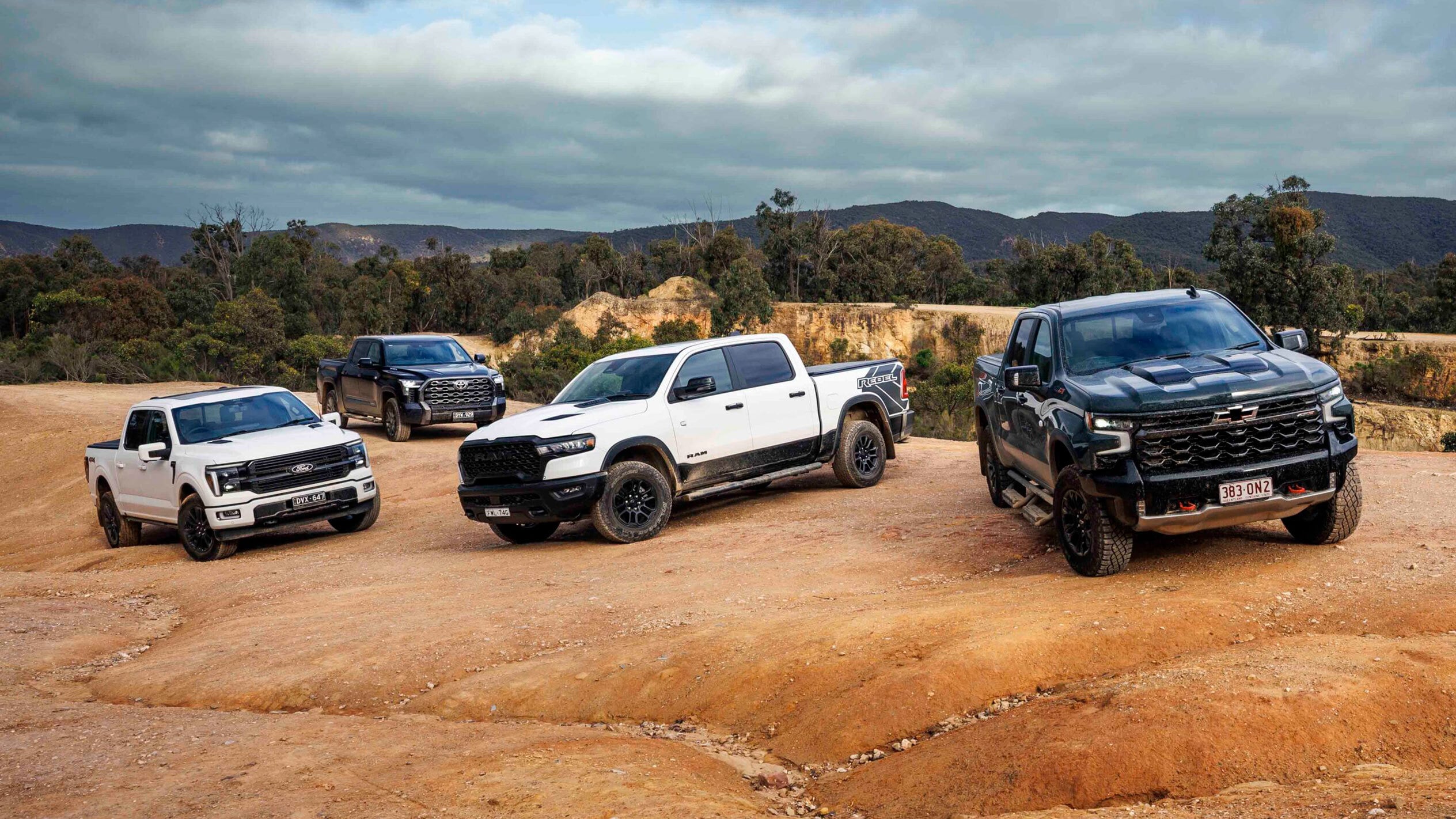
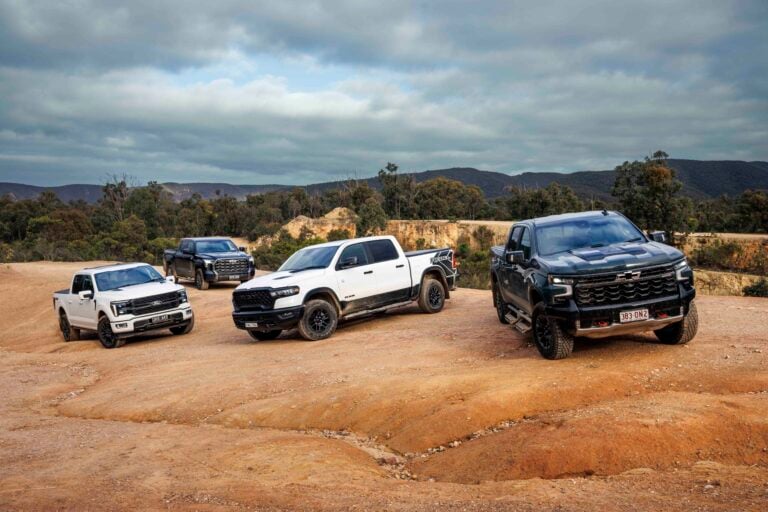
American pick-up trucks are bigger than the mid-size 4×4 utes that are popular in Australia, but does that mean they are any better? Sure, they are large, with spacious cabins and plunge pool-sized cargo tubs, but their actual payload and towing capacities are heavily limited.
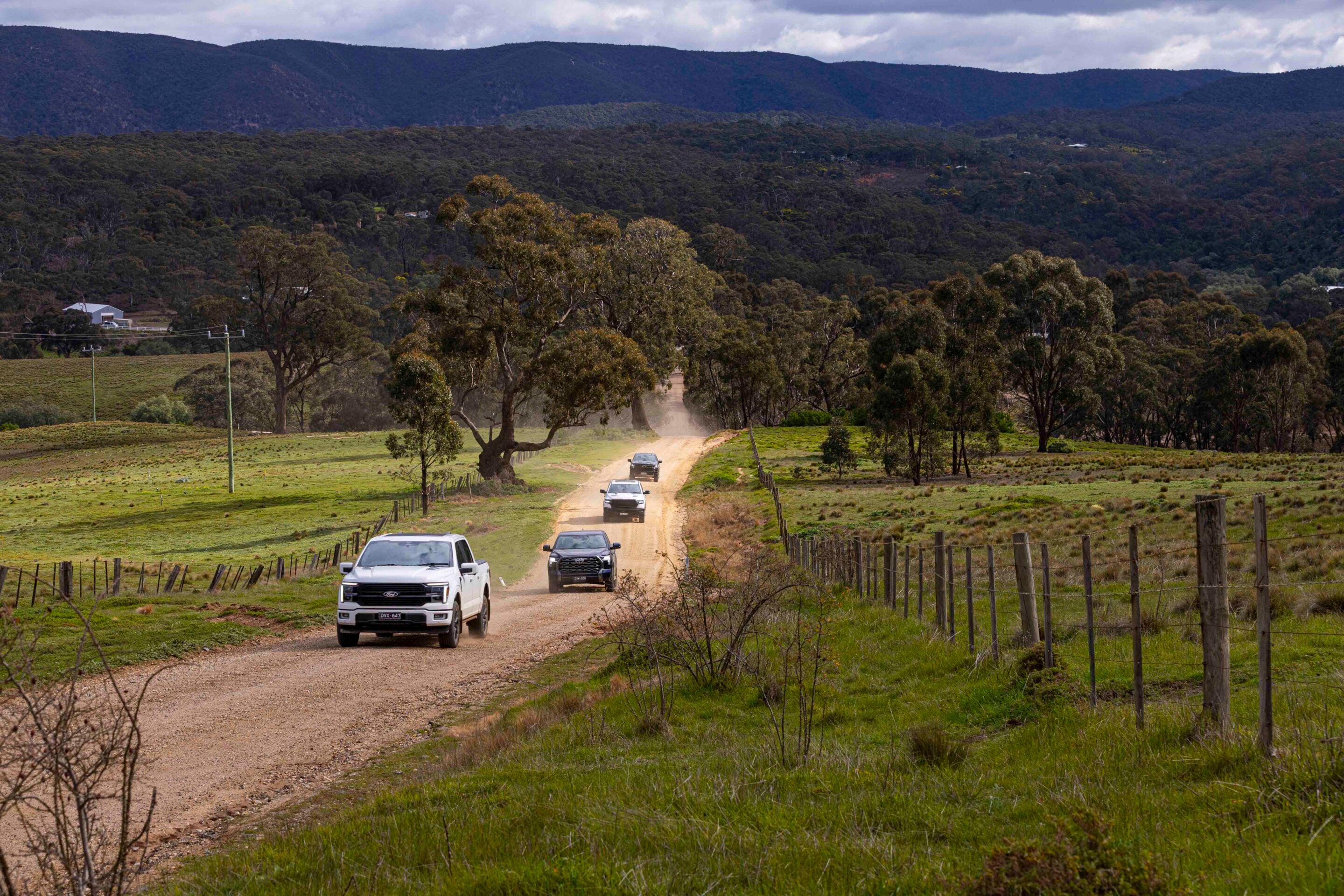
We’ve lined up models from each of the four brands selling 1500-class trucks in Australia for an on- and off-road drive, towing a trailer indicative of what many buyers will be looking at these trucks to haul.
Each of the trucks in our quartet is high-spec and very well equipped, with leather interiors, heated and cooled seats, high-end sound systems and big screens in the dash. Some of them have more than one screen and even panoramic sunroofs, but we’re focusing more on how they each perform in this test.
While they are all well equipped and priced between $140,000 and $173,000, they can be broken into two specific categories. The Silverado ZR2 and RAM Rebel are sportier in their styling and better suited to rough roads, with their 18-inch wheels and all-terrain tyres, while the Ford F-150 and Toyota Tundra are both Platinum grade and roll on 20-inch wheels and low-profile tyres. But they are all in the same marketplace; some will just appeal more or less to certain customers. Of course, both Ram and Chevrolet have premium models in their respective ranges that match the Platinum models from Ford and Toyota, if that’s your kink.
All of these trucks arrive in Australia as left-hand drive and are converted/re-engineered in Melbourne before heading to their respective dealers.
1
JUMP AHEAD
- Quick verdict
- How do they compare on- and off-road?
- Which is best for towing?
- Weights compared
- Kokoda XG1 C216 caravan
- Which American pick-up is best?
- Vehicle specs
Quick verdict
- 4th (but the biggest numbers): Toyota Tundra Platinum: It has the most power and torque (326kW/790Nm) and the highest GCM (7980kg), but its rear sagged the most under ball weight without Toyota’s recommended load distribution hitch.
- 3rd: Chevrolet Silverado ZR2: It’s the only truck here with front and rear diff lockers, and it towed far better than we expected. It has the lowest tow rating (4200kg) and a dated cabin.
- 2nd: RAM 1500 Rebel Hurricane: It has a superb twin-turbo six, used the least fuel on our towing loop and is the cheapest truck here. A 500kg combined tub and towball limit holds it back.
- Overall winner (and best for towing): Ford F-150 Platinum: Nothing here controlled our 3.3-tonne Kokoda caravan better, and it was polished on- and off-road. Its 7365kg GCM limits towing at the full 4500kg rating.
How do they compare on- and off-road?
Chevrolet Silverado ZR2
- $147,490 +ORC
- 6.2-litre naturally aspirated V8, 313kW/624Nm, 10-speed auto
- Front and rear diff lockers, DSSV dampers, 4200kg braked towing
- Our test: 3rd overall
GMSV is the local importer and outlet for a range of vehicles, including Silverado pick-up trucks, the GMC Yukon Denali 4×4 wagon, Cadillacs and Corvette sports cars.
It was the second operation to start importing, re-engineering and selling pick-up trucks in Australia, behind RAM Trucks Australia, and we’ve seen the Silverado range pass through a few model changes since its arrival. For this test, we have the 2026 Silverado ZR2, which could be considered the sports and off-road model in the Chevrolet truck range offered here.
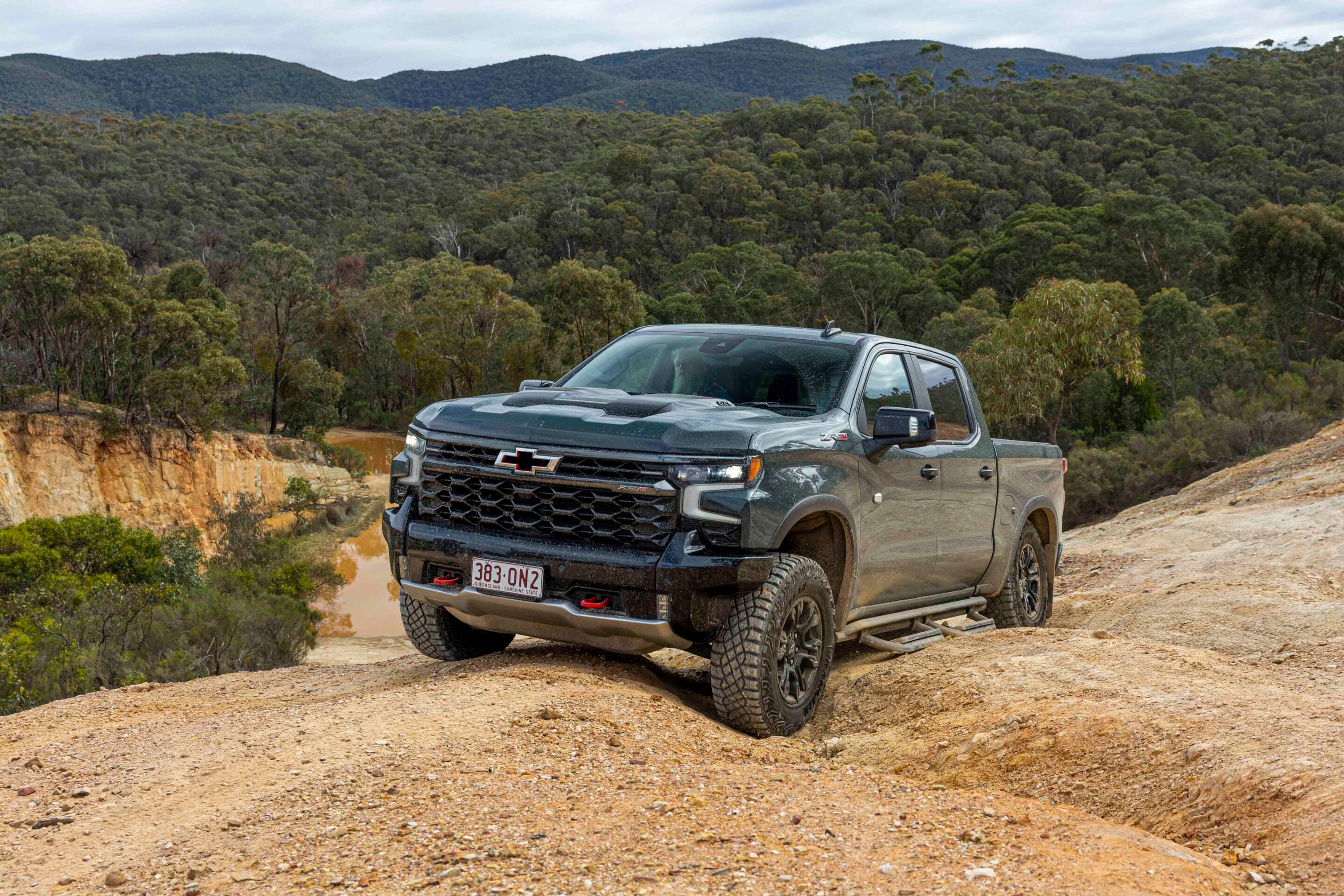
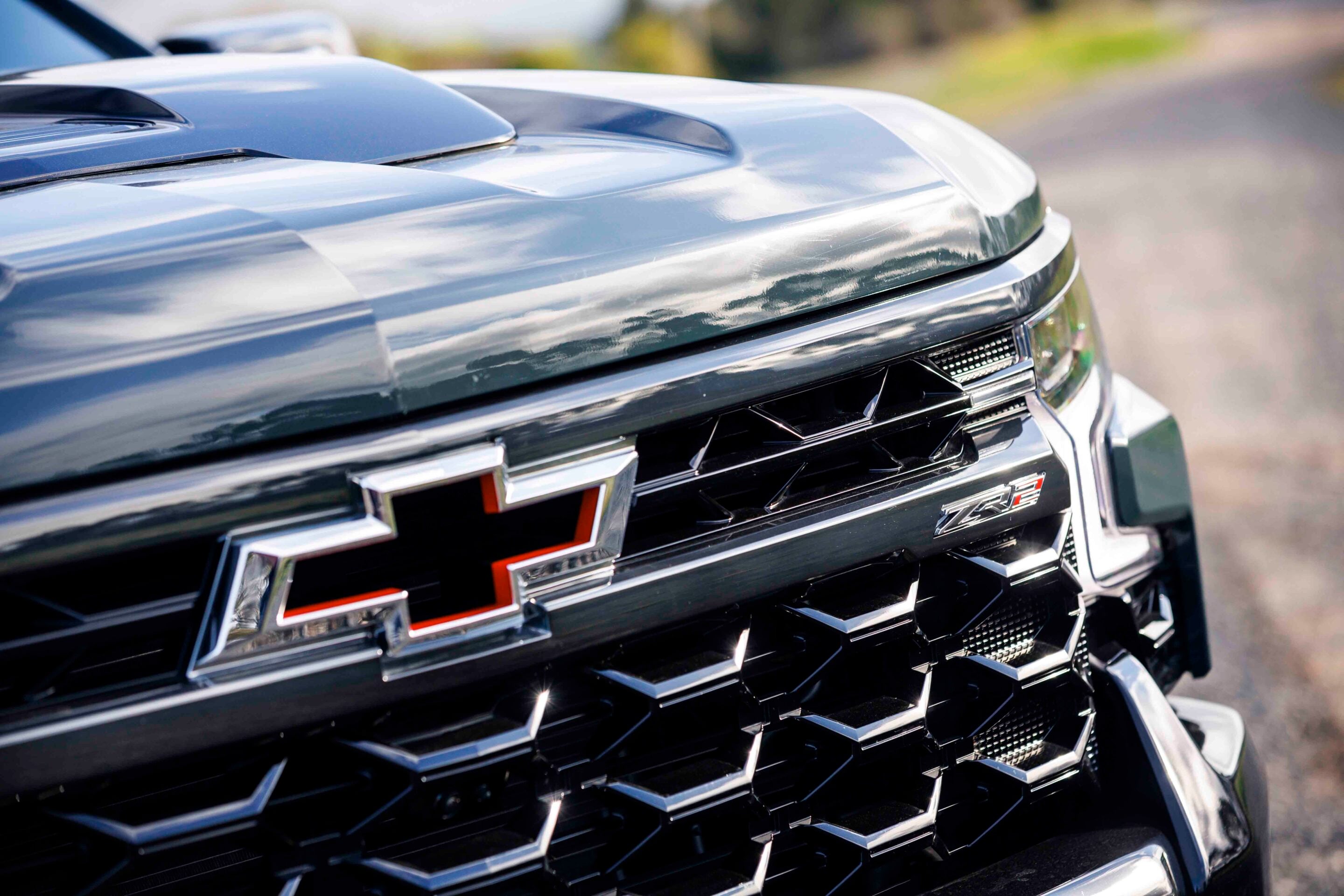
While all four of these trucks are petrol-fuelled, the Chev stands alone with the only naturally aspirated engine, its 6.2-litre V8 proving popular among our test drivers. It might not be the most powerful, economical or modern engine in the group, but it certainly is the one that delivers the most character. In fact, you can say that about the whole ZR2 package, as it feels like an old-school muscle truck, with its bellowing V8 offering plenty of get-up-and-go right off the hit and its off-road-developed Multimatic DSSV dampers and chunky tyres doing the best job on the rough unsealed road loop.
8
With its 33-inch mud-terrain tyres on 18-inch wheels and front and rear selectable diff locks, the ZR2 was also the best-equipped truck for off-road use. It’s worth noting that the ZR2 is the only vehicle in this group to come equipped with a front locker.
As you would expect of a naturally aspirated engine compared to the turbocharged mills in the other rigs, the GM V8 needs to be revved to get the most out of it, which again adds to the old-school feel. You drive it differently to the turbocharged trucks with their abundance of bottom-end grunt, but it’s still rewarding to get stuck into, probably more so than the other three.
With the bimodal exhaust system opened up when you select the Off-road driving mode, the GM V8 roared through the forested hills, while the ZR2 soaked up the ruts and bumps better than any of the other trucks here on the day.
1
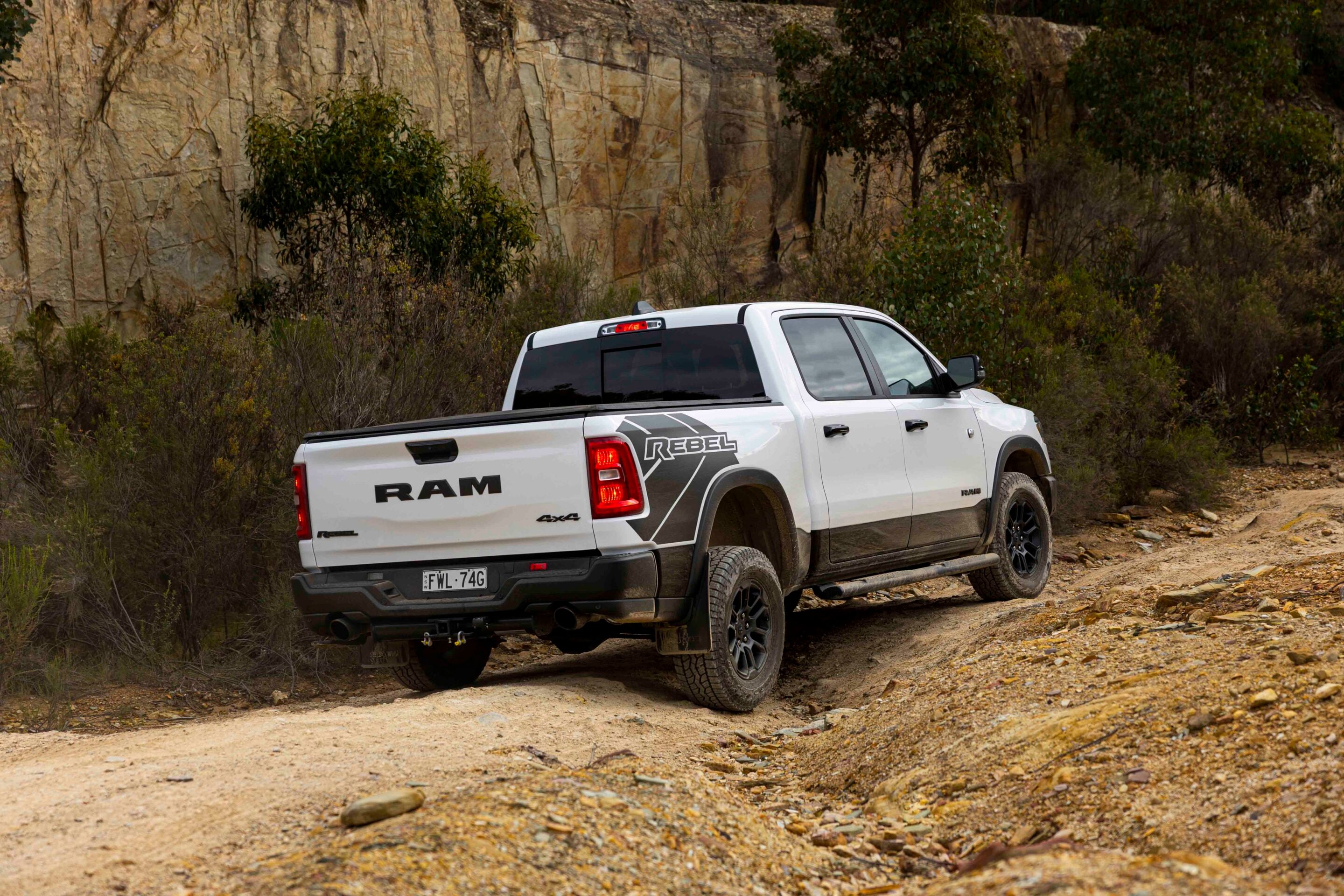
RAM Rebel Hurricane
- $141,950 +ORC
- 3.0-litre twin-turbo inline six, 313kW/635Nm, eight-speed auto
- Rear e-locker, Bilstein dampers, 4500kg braked towing
- Our test: 2nd overall
Like the Silverado ZR2, the RAM Rebel is considered the off-road and sports model in the RAM 1500 range offered here in Australia, although the RAM TRX will take that title when it blasts back into town in 2027.
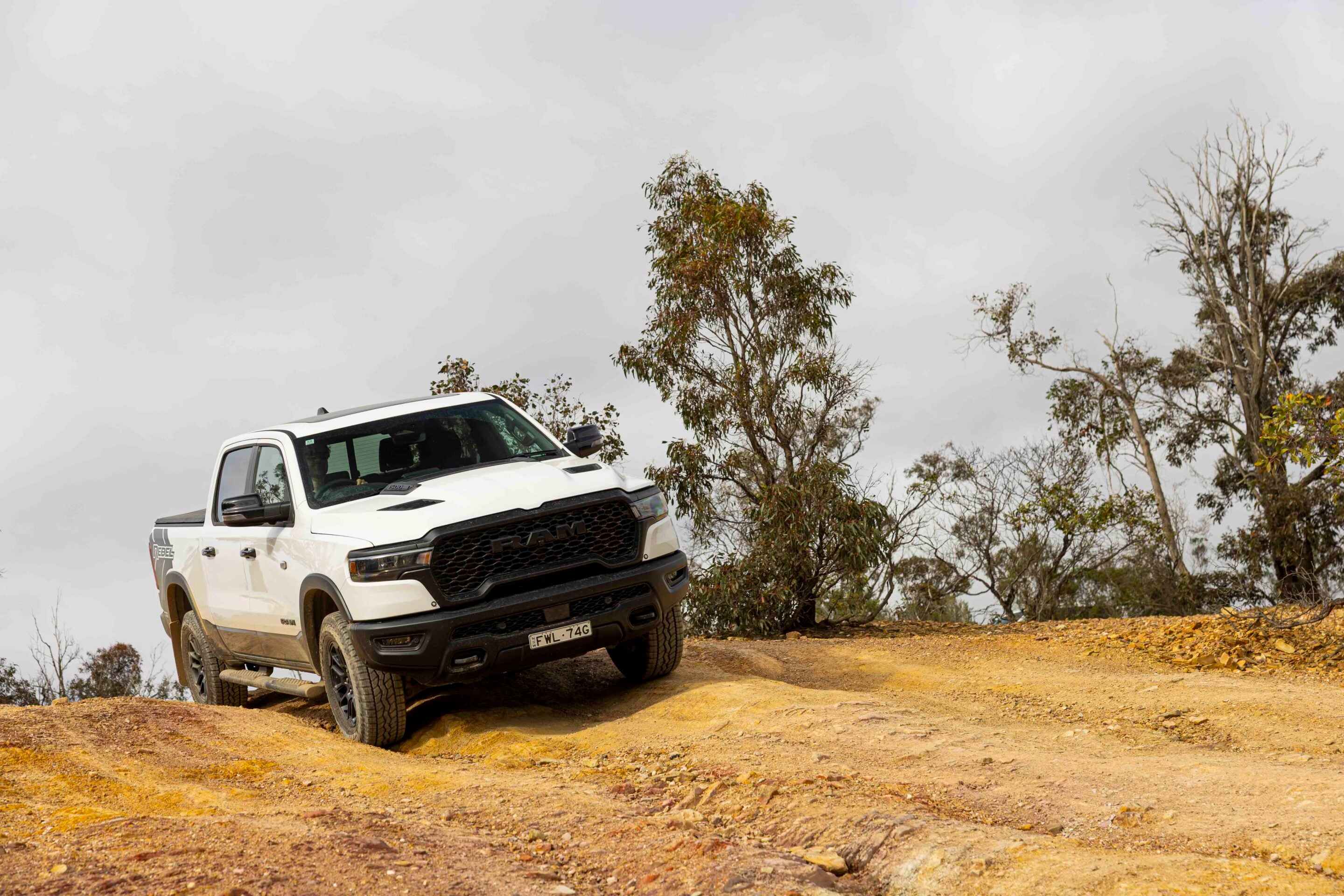
The RAM Rebel gets a styling pack plus all-terrain tyres on 18-inch wheels and an e-locker in the rear diff, but nothing for the front. The suspension is made to take on rough tracks, with Bilstein dampers front and rear, and it coped well with our rough unsealed track, even if not as competently as the ZR2. The RAM slammed into holes and ruts in the track a lot harder than the Chev, but it still coped better than the Ford and Toyota.
12
The RAM 1500’s high point is its sublime twin-turbocharged 3.0-litre inline six-cylinder engine. While many RAM buyers rue the loss of the Hemi V8 engine, the replacement Hurricane six outdoes the V8 in every respect except the engine sound. There’s nothing wrong with the sound of the Hurricane; it’s just not a V8. With 635Nm on tap, drivers will soon get over the aural deficiency. This is a truly superb engine. It works beautifully with the eight-speed automatic transmission, and using the 4×4 Auto setting in the transfer case allows smooth, controlled driving on all road surfaces.
The Bilstein shocks do a fine job of controlling the mass on rough tracks, and the tyres on those 18-inch wheels help soak up the jolts. This became more evident when it came time to drive the Toyota and Ford on the same road, where their low-profile tyres didn’t cope as well. The RAM’s taller tyre sidewalls improve ride quality both on and off the road, and with the condition of Victoria’s roads at the moment, you want as much tyre as possible protecting your expensive alloy wheels.
1
Ford F-150 Platinum
- $163,950 +ORC
- 3.5-litre twin-turbo V6, 298kW/678Nm, 10-speed auto
- Full-time 4×4, CCD adaptive damping, 4500kg braked towing
- Our test: overall winner and best for towing
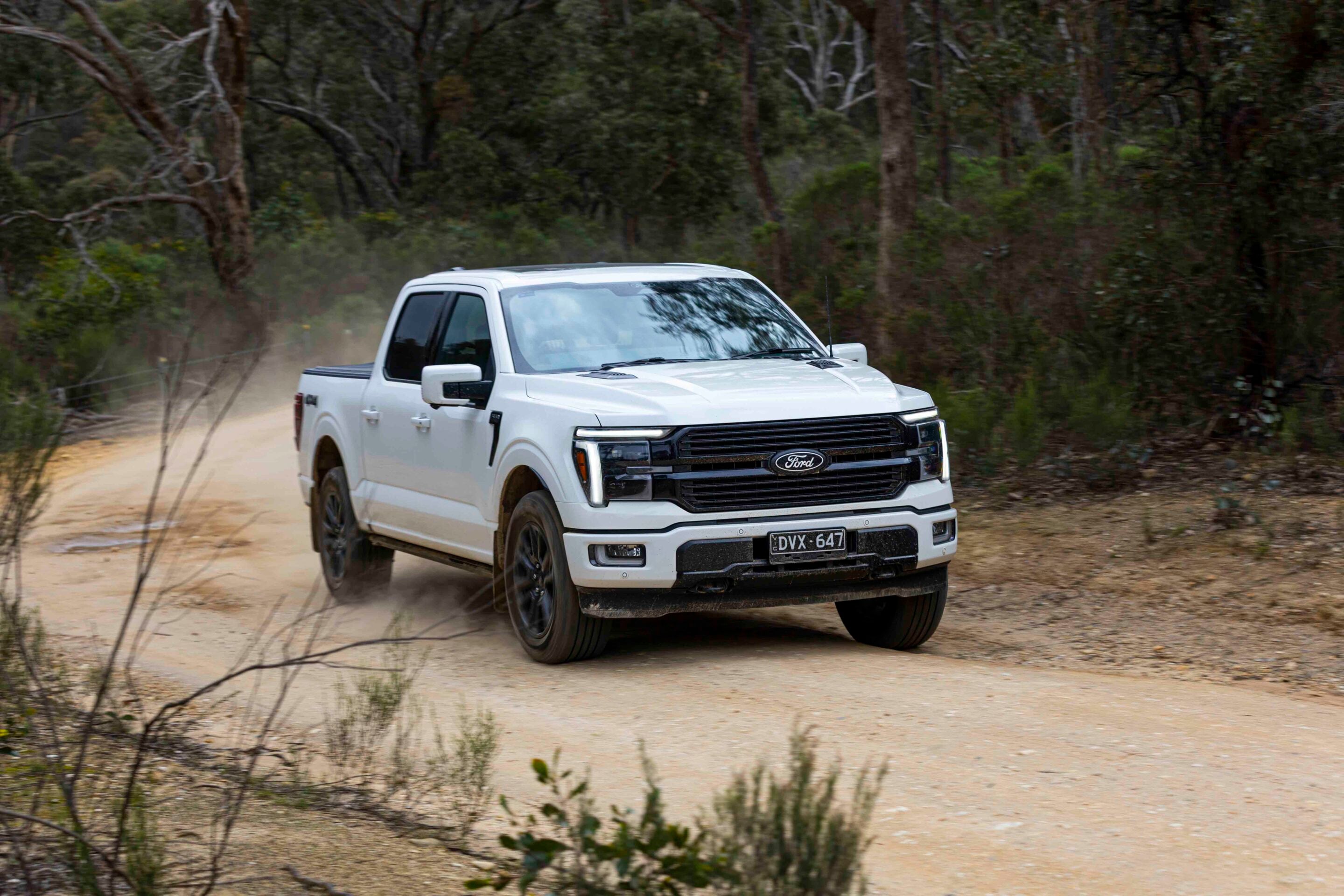
The Ford F-150 brings us our third different engine configuration, but one made to do the same job as the others. The 3.5-litre petrol-fuelled twin-turbo V6 engine makes 298kW and 678Nm and is backed by a 10-speed automatic transmission.
While it doesn’t have that traditional V8 rumble of the ZR2, the sneaky Ford technicians have endowed the F-150 with a synthesised engine sound that is reminiscent of a V8 when you put your foot down. The 10-speed auto is smooth and gives nothing to complain about, while the transfer case offers full-time 4×4 for everyday driving, plus locked high- and low-range 4×4 for off-road use. Only the base XLT model gets part-time 4×4 with 2WD for on-road use. Electronic drive modes include Sport, Eco, Tow/Haul, Slippery and Off-Road settings, and all variants get a locking rear differential.
11
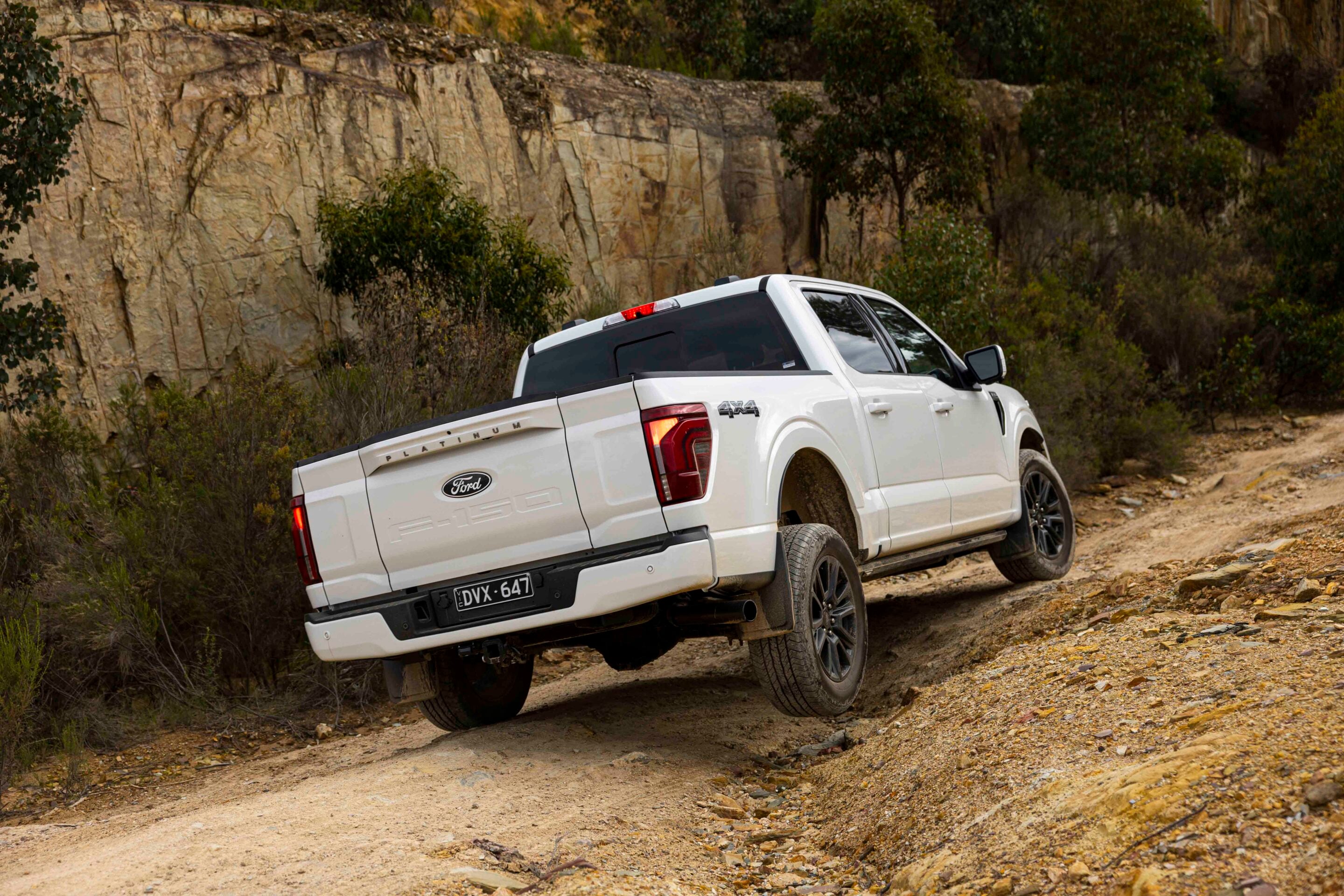
The adaptive suspension is comfortable on the road and gravel tracks, and a simple switch to the Slippery drive mode helped with traction when getting on with it on the rough tracks, although the big wheels and low-profile tyres weren’t so accommodating in the rough. The CCD adaptive dampers work with the selectable drive modes to give the best setting, but also react to the conditions and adapt for optimum performance, so they are always working to give the best ride and control.
All in all, the Ford put in a polished performance across the conditions, on and off the road and when hauling the Kokoda van.
1
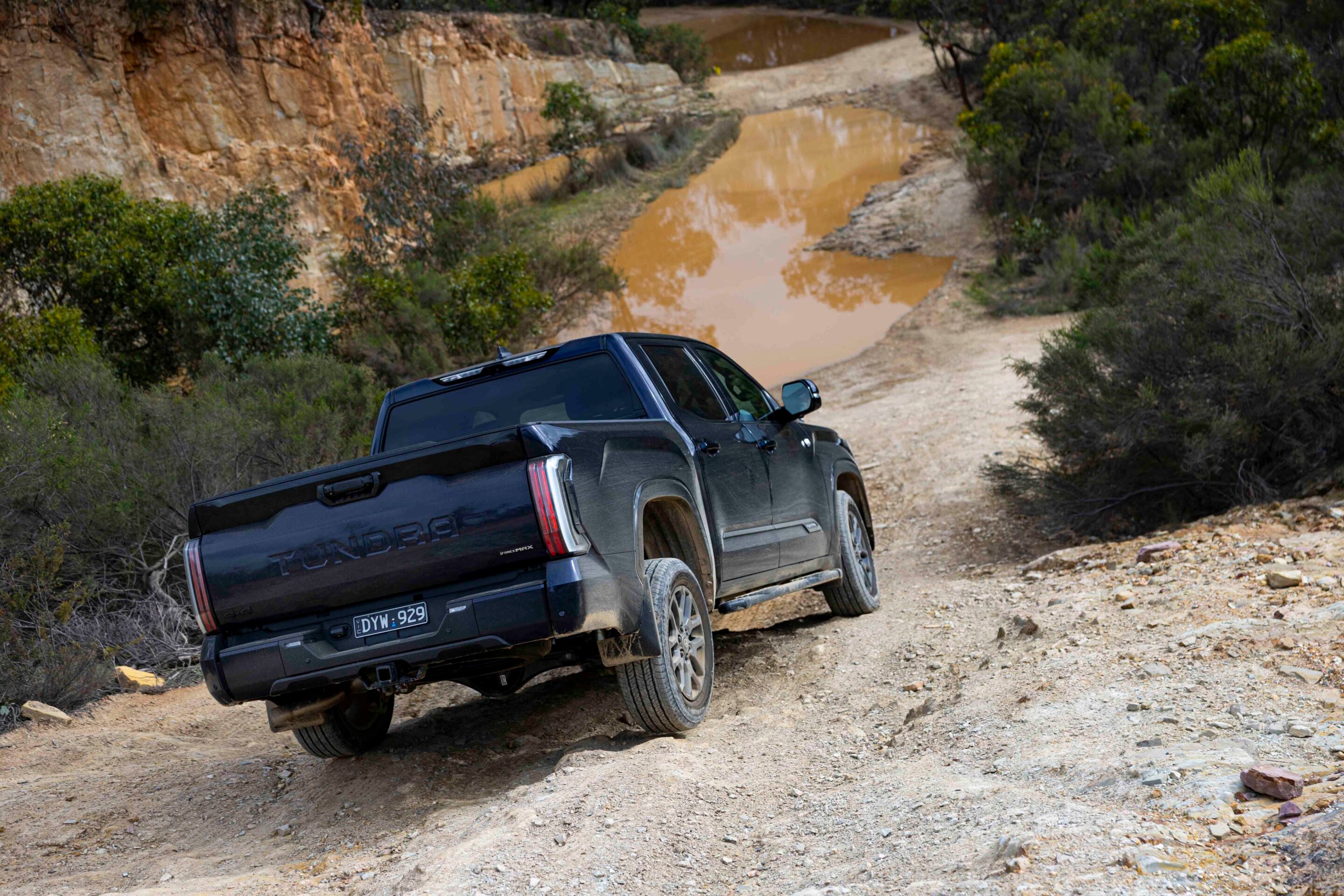
Toyota Tundra Platinum
- $172,990 +ORC
- 3.5-litre twin-turbo V6 hybrid, 326kW/790Nm, 10-speed auto
- Part-time 4×4, 4500kg braked towing, 7980kg GCM
- Our test: rated last despite great numbers
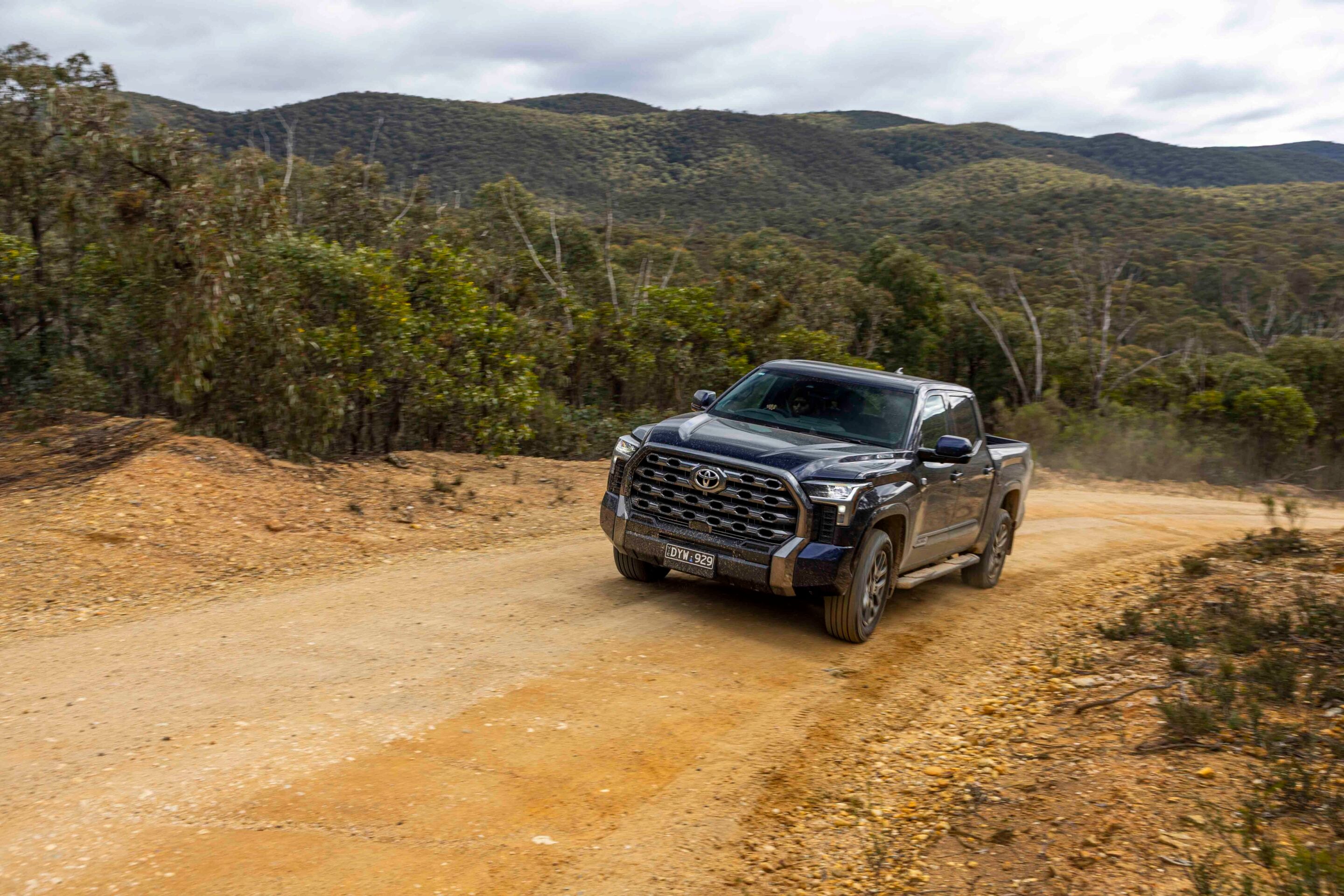
The Toyota Tundra might seem like the odd one out in this American quartet, but it is every inch a US pick-up truck. It’s made in the USA to compete with the home brands there, and it sticks to the familiar recipe. Where it does differ from the Stars ’n’ Stripes brands represented here is in its powertrain, which is a petrol-electric hybrid.
The i-FORCE MAX powertrain’s 3.5-litre twin-turbo petrol V6 produces 290kW and 649Nm on its own, but it is paired with a parallel hybrid system featuring a 288V NiMH battery and a motor-generator housed in the bellhousing of the 10-speed automatic transmission. Combined, the outputs jump to 326kW and 790Nm, giving the Toyota the highest outputs in this group.
8
This is the same powertrain used in the LandCruiser 300 Series Performance Hybrid, but the pick-up misses out on the Cruiser’s full-time four-wheel-drive system with its dual-range transfer case. With 790Nm on tap, full-time four-wheel drive sure comes in handy in the Cruiser. The Tundra makes do with a part-time system and a dual-range transfer case.
This was soon apparent on our unsealed track, where the Tundra lost traction when climbing washed-out hills, requiring high-range 4×4 to be selected. This isn’t a huge problem, but the other trucks were able to do everything on the day in 4×4 Auto without needing any switching of the transfer case. The suspension also thumped through ruts and potholes that the other trucks, particularly those on 18-inch wheels, rode across much more smoothly.
While the Toyota has the highest outputs on paper, this doesn’t equate to its performance on the road, where it feels heavy and lazy, lacking the oomph of the RAM’s Hurricane engine or the raw muscle of the ZR2’s V8.
1
Which is best for towing?
A 4500kg tow rating looks impressive on a spec sheet, but it tells you surprisingly little about how a vehicle actually tows.
We hitched the same heavyweight Kokoda XG1 C216 to the Ford F-150 Platinum, Toyota Tundra Platinum, RAM 1500 Rebel Hurricane and Chevrolet Silverado ZR2 to find out which one gets the fundamentals right, and which one we’d leave at home.
Our test route ran through the hills north-west of Melbourne, mixing 60, 80 and 100km/h zones with plenty of elevation change. A substantial descent on the way out became a climb on the return leg, giving us a balanced out-and-back route rather than flattering any truck with an easy downhill run.
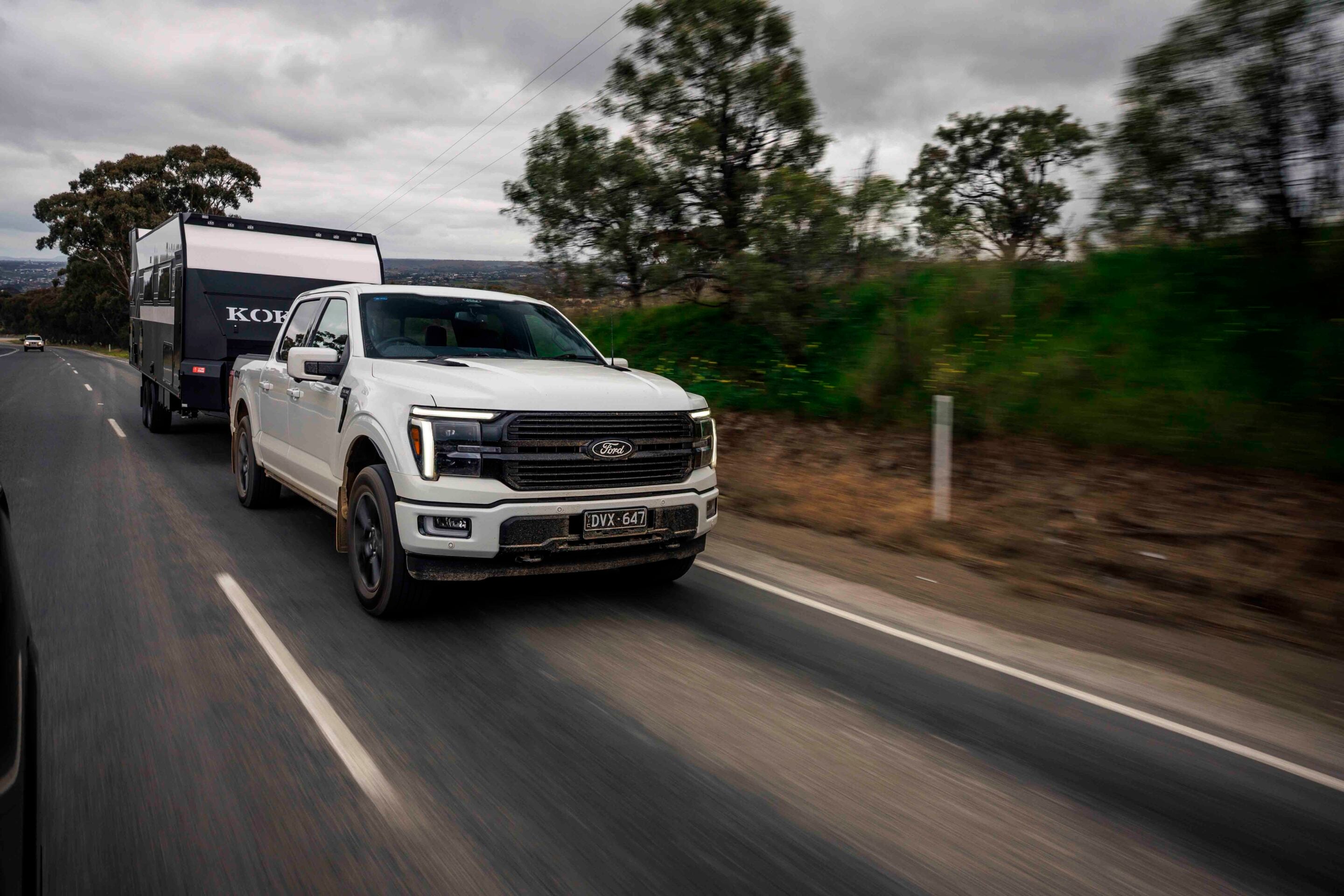
Ford F-150 Platinum: Towing champ!
The F-150 Platinum won the towing component of this test, and for me the margin was pretty clear. It wasn’t the most powerful, the most economical or even the nicest truck to sit in. It was simply the one that did the best job of controlling the Kokoda.
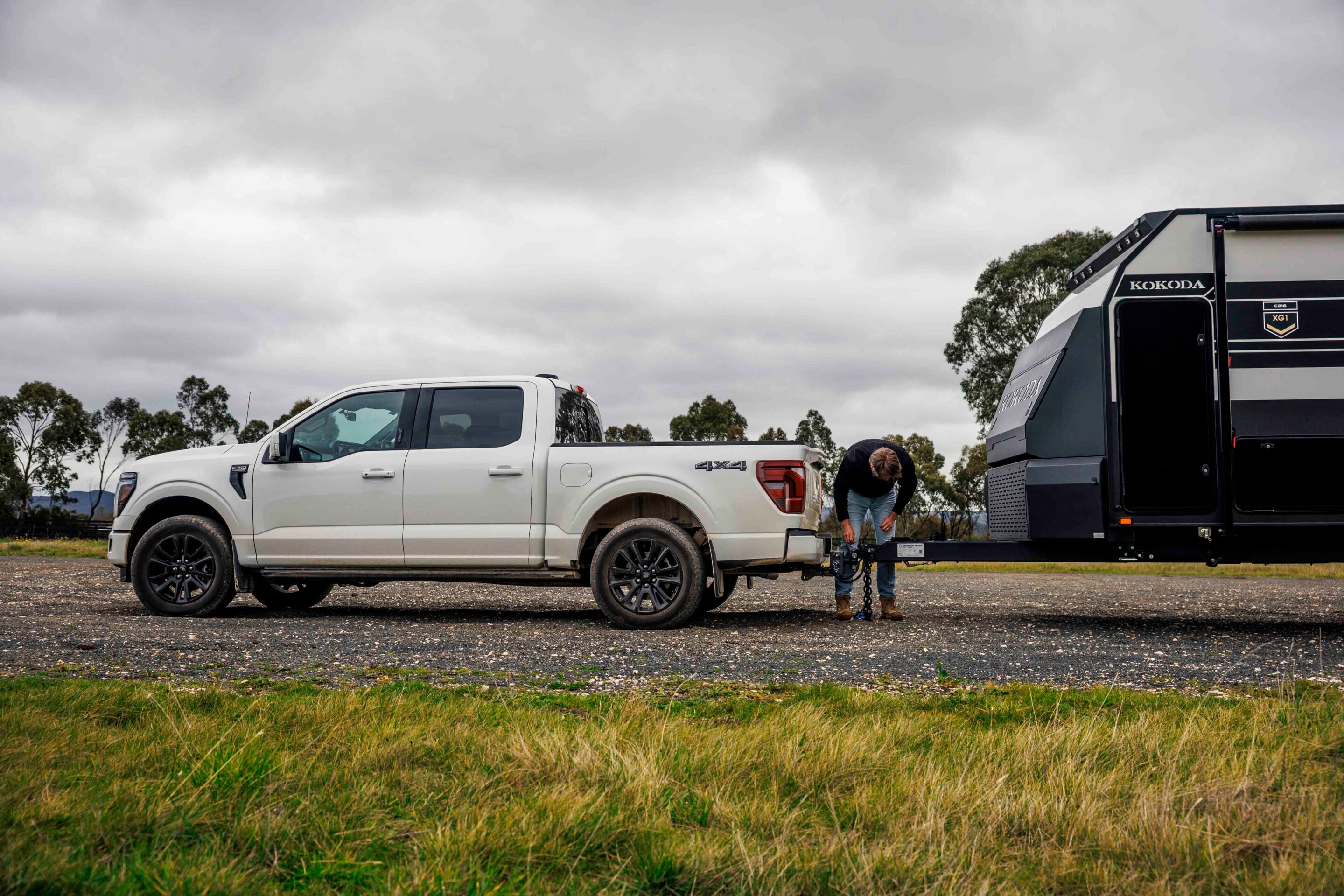
We had an early clue while hitching up, as the Ford dropped the least when we lowered roughly 280 to 300kg of ball weight onto each truck. The Ford was the best by quite a margin, particularly compared with the Tundra. That wouldn’t mean much if it didn’t translate to the road, but it did.
The Platinum is the only Australian F-150 fitted with Ford’s Continuously Controlled Damping (CCD) suspension, which electronically adjusts damping according to what the vehicle is doing and the load it’s carrying. With Tow/Haul selected and the Kokoda behind us, the Ford was noticeably firmer than the other three trucks, and I reckon that’s a good thing.
Big, softly suspended vehicles can get into an annoying rhythm with a heavy caravan behind them: the truck moves, the van responds, then the truck responds to the van. You feel it as pitching and rolling, and it can make a combination feel busier than it needs to be. The F-150 did less of that than anything else here.
The steering retained weight, the chassis settled quickly and the whole combination felt properly tied down. That’s what gave me confidence in the Ford. With more than three tonnes following me down a hill, I’ll take that over a plush ride every time.
1
Ford actually understands towing! The F-150’s towing technology helped rather than distracted. 4A is a big one for me. Our test was dry, so I’m not claiming it won the day for us, but being able to leave the truck in an automatic four-wheel-drive mode on sealed roads is something I’d absolutely want when towing in rain or across changing surfaces.
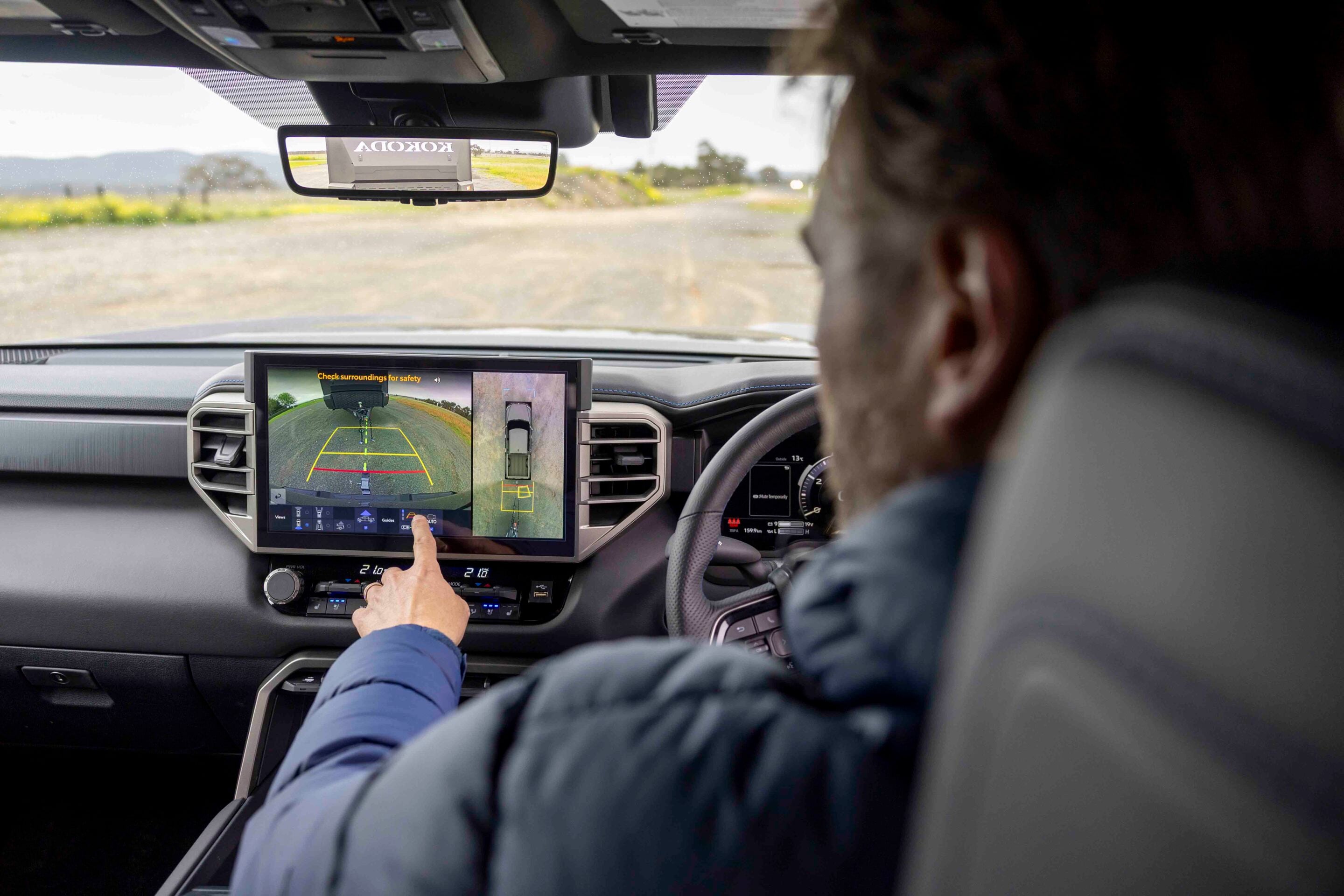
The trailer profiles, integrated brake controller and 360-degree cameras are useful rather than gimmicky, and there’s Pro Trailer Backup Assist. We didn’t use it during this test, but I have previously and I rate it. Tell the truck which way you want the trailer to go using the rotary controller, and it takes care of the steering.
It’s not the best engine here, but it’s still bloody good. Ford’s 3.5-litre twin-turbo EcoBoost V6 makes 298kW and 678Nm, driving through a 10-speed auto. The Tundra has more torque on paper and I preferred the character of the RAM’s Hurricane/eight-speed combination, but neither of those things made the Ford feel lacking. It has a broad, useful powerband for towing and rarely felt flustered by the Kokoda. Fuel consumption came in just under 30L/100km on our hilly test loop. That’s broadly where the Toyota and Silverado landed, although the RAM’s roughly 25L/100km result made all three look thirsty.
There is one number I don’t like: 7365kg GCM. The short-wheelbase Platinum is rated to tow 4500kg, but those two numbers don’t exist independently. Start with the truck at its 2611kg kerb weight, put a trailer loaded to 4500kg behind it and there’s only 254kg of additional capacity left before reaching GCM. That’s not much. Add people, accessories and touring gear and it disappears very quickly. So if your plan is to buy an F-150 because the brochure says 4500kg and then tow at that maximum regularly, do the maths first.
The Ford’s GCM is a genuine weakness, and one I’d want improved. It didn’t cost the F-150 this test because we weren’t towing at 4500kg. What we were testing was how these four trucks dealt with the same substantial load under the same conditions, and the Ford dealt with it best.
It sat flatter, controlled the Kokoda better and gave me more confidence behind the wheel than the other three. There wasn’t one killer feature that won it; the chassis, suspension, driveline and towing tech just worked together better. That’s the F-150’s strength.
1
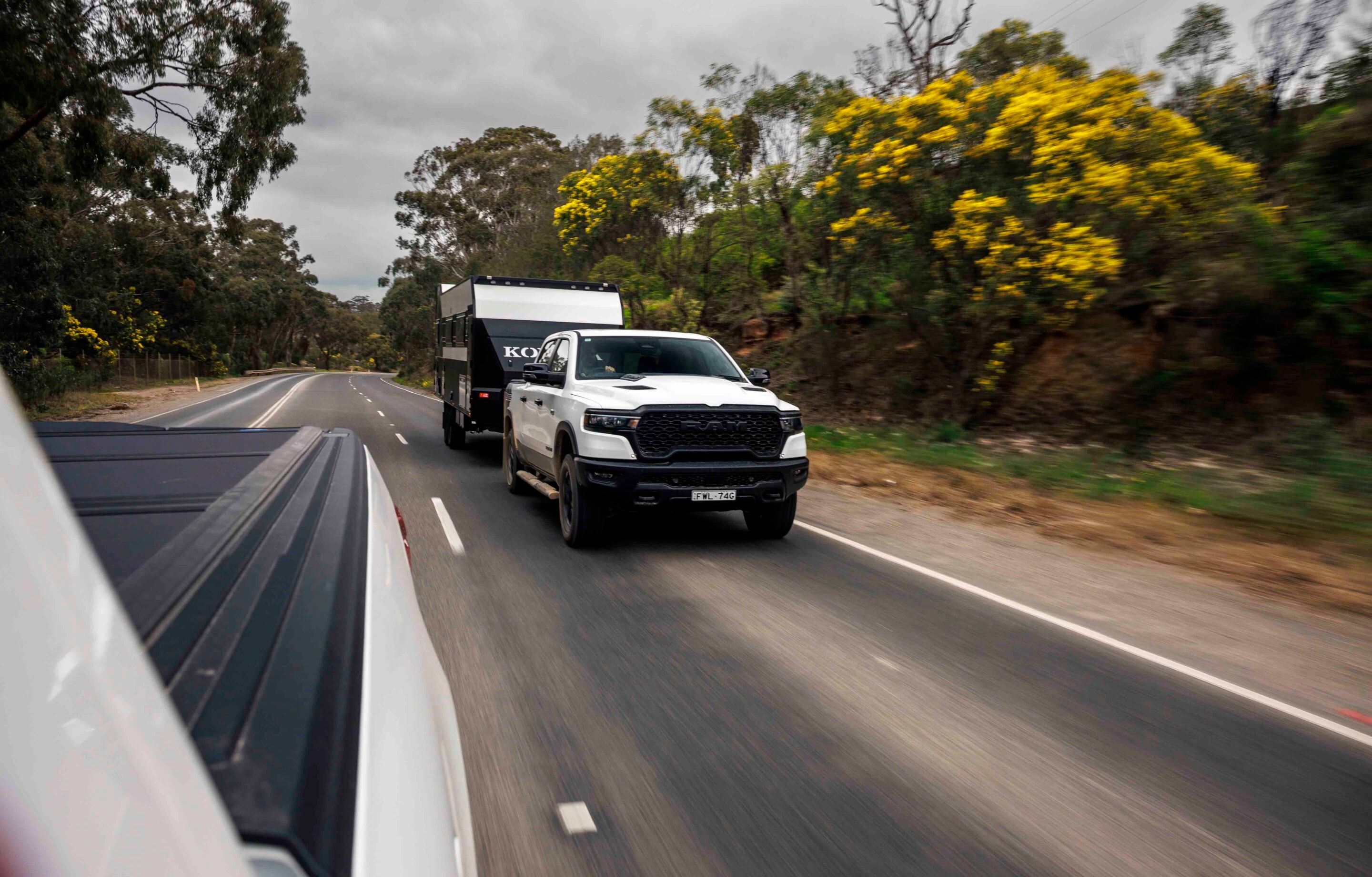
RAM 1500 Rebel Hurricane
The one I wanted to like more was the Rebel. It finished second, but there’s daylight between it and the F-150. That’s a shame, because in a couple of areas the RAM was actually my favourite truck here, starting with the driveline.
The Hurricane straight-six produces 313kW and 635Nm, and with the Kokoda attached it was a ripper. There’s always boost available, it pulls hard without feeling frantic and it doesn’t need to throw gears at the problem every time you ask for more. A lot of that comes down to the ZF eight-speed automatic. The other three trucks use 10-speeds, but I preferred the RAM’s eight. It holds a ratio, lets the Hurricane build boost and torque, then gets on with the job rather than constantly shuffling up and down the gearbox.
The surprise was how efficiently it did it. The other three trucks were clustered around 30L/100km on our test loop; the Rebel returned roughly 25L/100km. That’s a big enough difference that I want another crack at it over a longer, controlled towing test. If it can repeat that result, the Hurricane deserves some serious credit.
The Rebel also had the best cabin. Its seats are deep and supportive, the displays are excellent and the fit, finish and materials were the best of the four to my eye. Even the trailer brake controller is positioned sensibly, within easy reach towards the centre of the dash, and there’s an integrated trailer checklist.
1
Where RAM dropped the ball was cameras. Compared with the Silverado’s excellent multi-camera setup, the Rebel felt decidedly underdone. On something this bloody big, particularly with a big caravan attached, I want to see what’s around me. Still, give me eight hours behind the wheel and this is the cabin I’d choose. But then you do the maths.
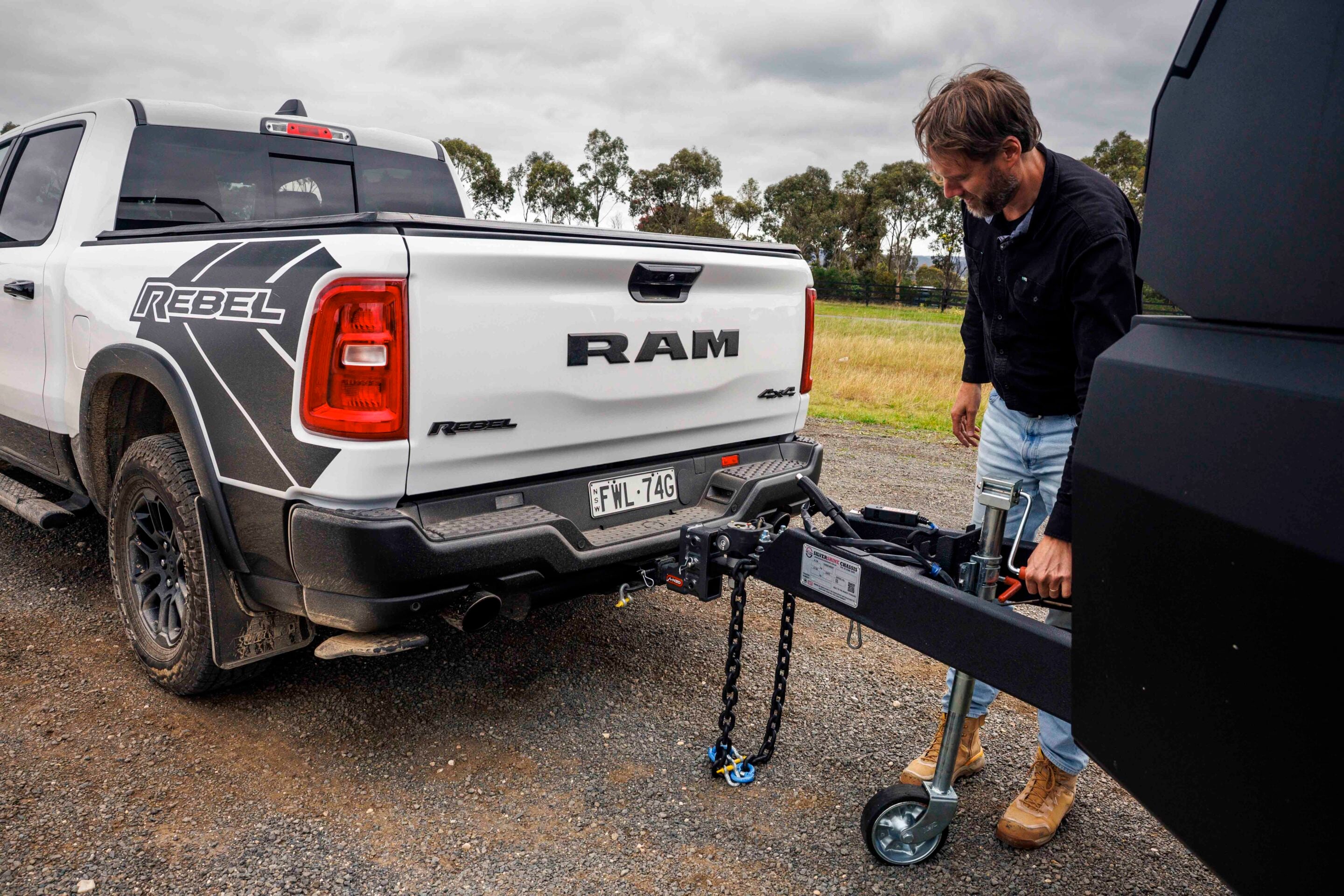
The Rebel didn’t carry the Kokoda’s ball weight as neatly as the Ford or Silverado, either. There was more squat at the rear than I’d like, although nothing approaching what we saw from the Tundra. It’s coil-sprung, so heavier-rate rear springs may offer a relatively simple way of improving its stance.
The 500kg combined tub-load and towball-download limit is a very different problem. That’s the figure I can’t get past with the Rebel. If you’re approaching its 4500kg maximum tow rating with, say, 450kg sitting on the ball, you’ve got just 50kg left for the tub under that specific limit. Fifty kilos. In the tub of a full-size American pick-up. For the sort of buyer who might throw a generator, fridge, recovery gear or a couple of e-bikes in the back before hitching up a big caravan, that’s not some obscure number buried in the specifications. It fundamentally changes how you can use the truck. And fitting heavier springs won’t make that load limit disappear.
That’s why the RAM finishes a fairly distant second despite me liking so much about it. I’d take its Hurricane engine over the Ford’s EcoBoost, its ZF over the Ford’s 10-speed, and its cabin over the Ford’s too. The fuel result was outstanding. But I’m judging tow vehicles here, and that 500kg limit is too restrictive for me to ignore.
1
Editor’s note
We reached out to RAM Trucks Australia to ask about the 500kg combined tub-load and towball-download rating, as we’re not aware of another manufacturer currently publishing an equivalent figure in Australia. A spokesperson for the brand told us:
“Ram Trucks Australia has begun listing Maximum Combined Tub and Tow Ball Load on certain models to better assist customers when setting up the weight distribution of their vehicles when towing.”
The spokesperson went on to say that RAM Trucks Australia would publish this figure for more models in the future, and that it is a recommendation only, rather than a legal requirement. GVM and GCM limits must still be strictly adhered to.
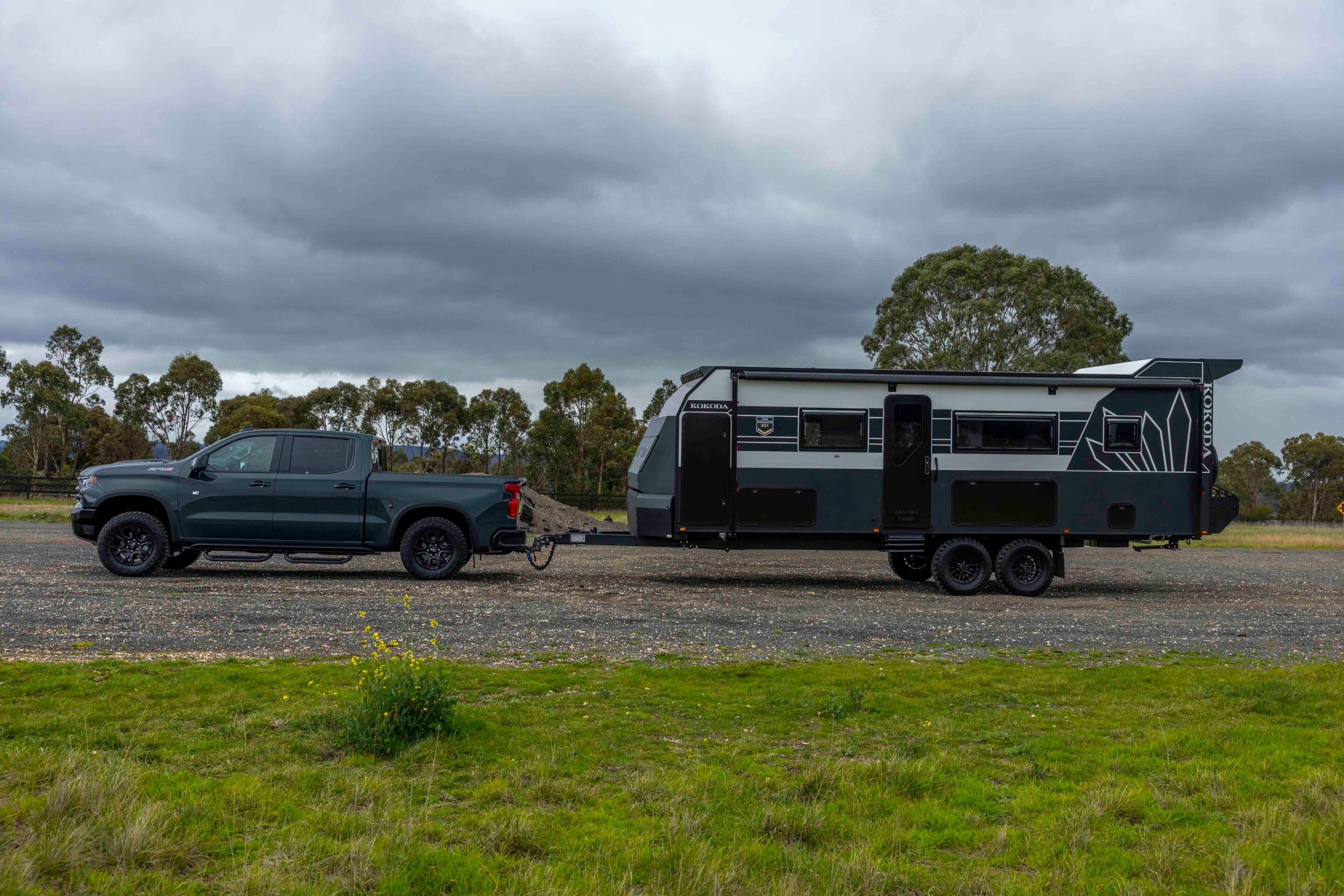
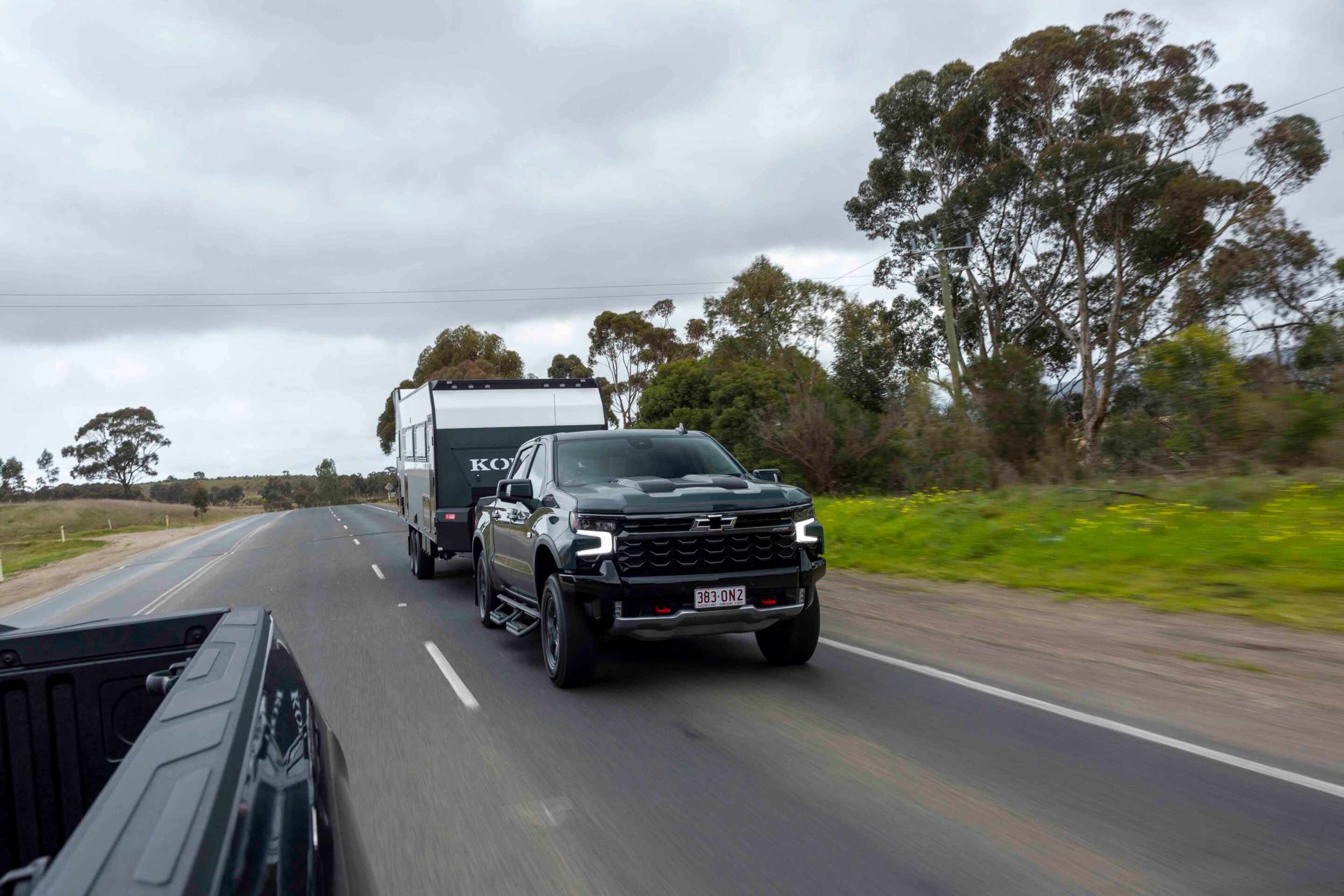
Chevrolet Silverado ZR2
Better than it had any right to be. I went into this expecting the Silverado ZR2 to be compromised as a tow vehicle. Not bad, necessarily, just compromised. It’s the off-road-focused truck here, wearing 18-inch wheels, Goodyear Wrangler Territory MT tyres and Multimatic DSSV dampers, and its 4200kg braked tow rating is the lowest of the four. It turns out I underestimated it.
The Silverado had the second-least rear suspension sag, beaten only by the F-150, and that ability to deal with load carried straight onto the road. The Kokoda never seemed to overwhelm the rear suspension or have the truck wallowing around underneath it.
I’ve rated Multimatic’s Dynamic Suspensions Spool Valve dampers for a long time, and this test gave me another reason why. The clever bit isn’t simply that the ZR2 rides well. It’s that GM has managed to give it genuine off-road ability without turning it into a blancmange when you put weight on the back. Over poorer surfaces it retained compliance, but when the caravan started putting bigger movements into the truck, the suspension got on top of them quickly.
The tyres suit that philosophy. Those Wranglers are probably my pick of the four from an off-road perspective, and I much prefer the decent sidewall you get with an 18-inch wheel on a touring vehicle. They’re not free performance, though. They’re noisy on bitumen, and I’d be thinking about that if most of my towing involved long highway days.
1
The other reason to buy the ZR2 is sitting under the bonnet. Chevrolet’s 6.2-litre naturally aspirated pushrod V8 makes 313kW and 624Nm, with a 10-speed auto behind it. Bloody hell, it’s hard not to like!
Against the Ford’s 678Nm and particularly the Tundra’s 790Nm, the Chevrolet is giving away plenty on paper. You notice it, too. Ask for serious acceleration with the van attached and the V8 needs revs where the boosted engines can lean harder on their mid-range torque. But I didn’t mind working it. The response is predictable, the soundtrack is fantastic and there’s something appealingly straightforward about a big naturally aspirated V8 doing exactly what you expect it to do.
Dave Morley and Matt Raudonikis also raised an interesting point during the test: simplicity. The Hurricane is a fascinating bit of engineering and Toyota’s hybrid is even more complicated, whereas this is still fundamentally a naturally aspirated pushrod V8. I’m not going to pretend a day of towing tells us anything about long-term reliability, but for someone heading properly remote, I understand the attraction.
GM has thought about the trailer. The Silverado’s towing tech is better than its ageing cabin might suggest. Trailer profiles and integrated towing functions are useful, but its camera system was the standout. With a caravan behind a truck this large, being able to see what’s happening around the combination makes manoeuvring noticeably easier. The rest of the interior is less convincing. Beside the RAM and Ford it feels dated, and at this money that’s difficult to ignore. It was also our thirstiest truck, creeping above 30L/100km on the test route.
Yet the ZR2 still walked away with more respect from me than I expected. It’s an off-road-biased truck with the lowest tow rating here, chunky tyres and a naturally aspirated engine that has to work for its living. And somehow, when we hitched up the Kokoda, it just got on with the job.
1
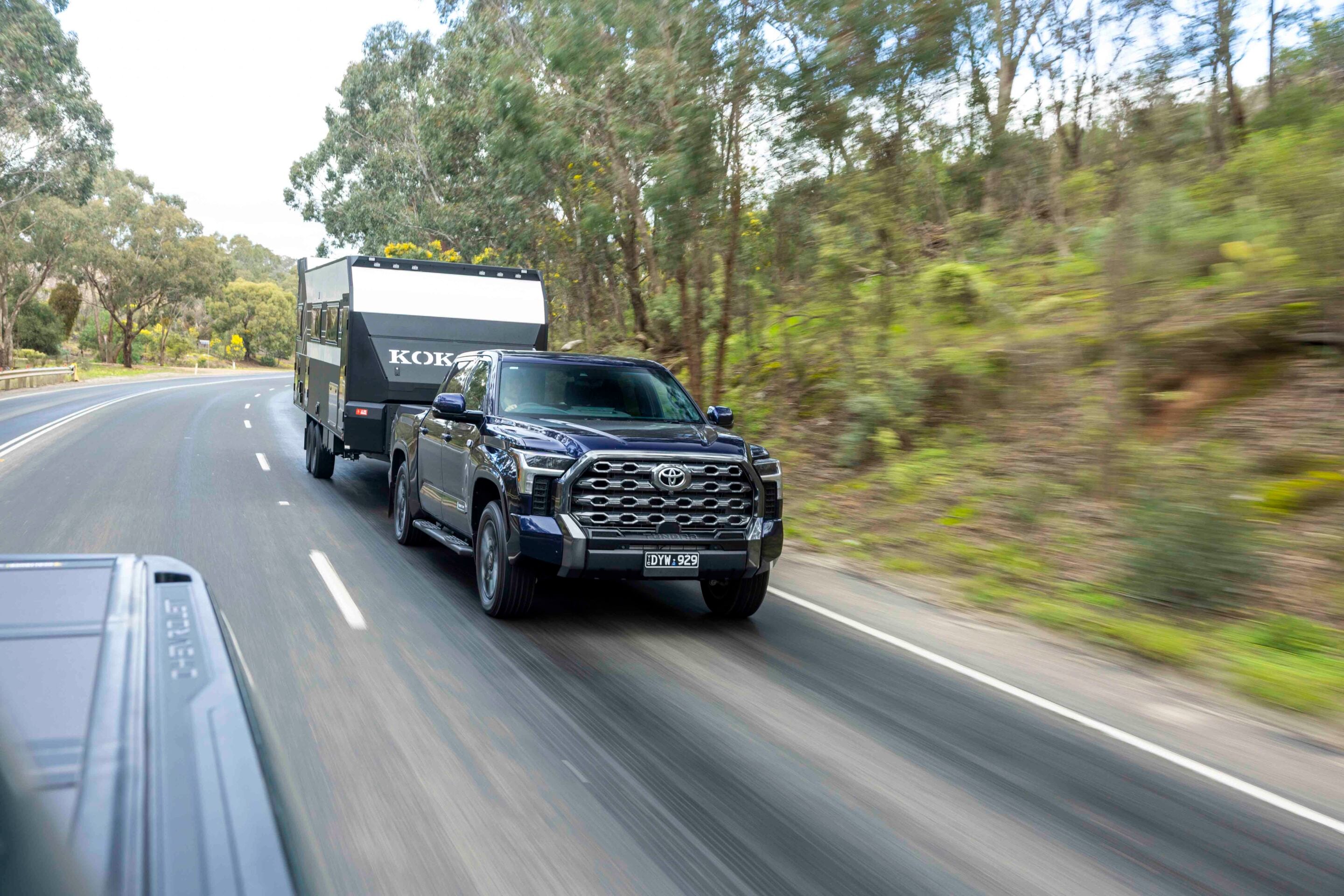
Toyota Tundra Platinum
Houston, we have a sag problem. The Tundra annoyed me more than any other truck here because the numbers say it should be good at this.
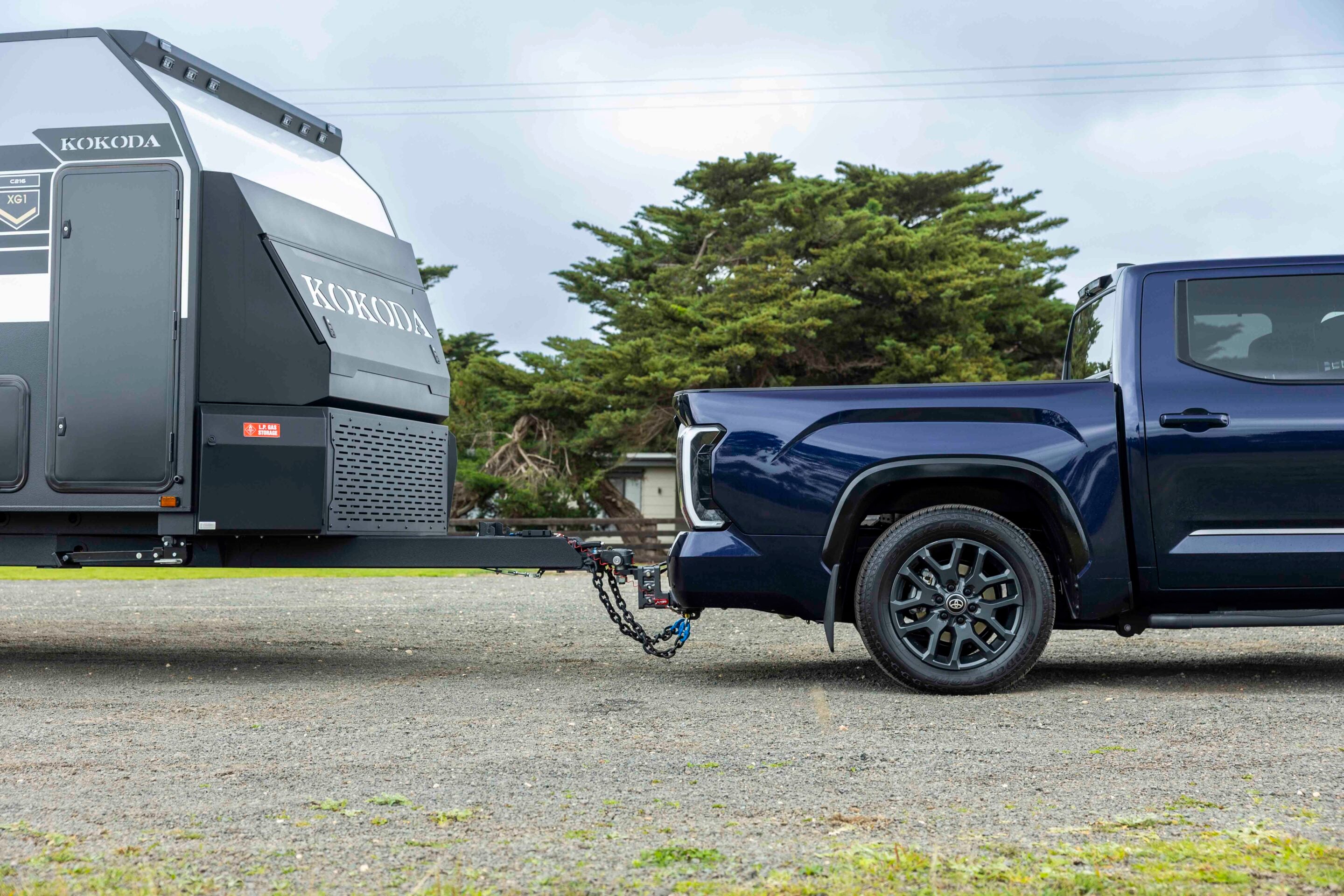
We were towing the Kokoda at around 3300kg with roughly 280–300kg on the ball, and the Tundra reacted to that load more dramatically than anything else. We didn’t bother with a tape measure against the rear wheel; the difference in squat between the Tundra and F-150 was obvious. The Tundra dropped far enough that we had to move the adjustable GEN-Y hitch one position higher just to get the caravan sitting level. The Ford, RAM and Silverado all ran it in the same middle position.
The rear sag was only half the problem. It took enough weight off the nose that you could see the change in front-wheel camber and toe, and you could feel it through the steering. The front end became lighter, and that’s exactly what I don’t want when there’s more than three tonnes of caravan behind me. To be fair, Toyota knows this can happen. It recommends its Load Distribution Hitch (LDH) when towing 2200kg or more, specifically to redistribute weight towards the front axle. We were obviously well past that.
Should we have fitted Toyota’s LDH? For an owner towing this sort of weight, it’s absolutely worth considering. For this test, we chose not to. We were comparing four factory trucks with the same caravan under the same conditions and kept the towing setup consistent. That means we haven’t assessed how the Tundra performs with Toyota’s recommended LDH fitted.
1
One thing Toyota absolutely got right is Tow+. The Tundra offers Tow and Tow+ modes and, although Toyota doesn’t explicitly tie Tow+ to that same 2200kg threshold, this is exactly the sort of load where it makes sense. I really liked it. Tow+ noticeably changed throttle response and the 10-speed’s shift strategy, holding gears longer and making the whole powertrain more responsive.
On paper, I’d probably pick this powertrain, and this is what makes the result so strange. The twin-turbo 3.5-litre V6 hybrid produces 326kW and 790Nm, giving the Tundra the highest torque figure here. The electric motor gives it a lovely initial shove, although once we were properly leaning on the combination I thought the Ford and RAM felt more effortless.
The weight numbers are arguably even more impressive: 4500kg towing capacity, 3536kg GVM and 7980kg GCM. Start with its 2834kg kerb weight, add a trailer loaded to 4500kg and you’re at 7334kg, leaving 646kg before reaching GCM. A theoretical 450kg ball download also leaves 252kg of its nominal 702kg payload for occupants, accessories and gear, subject, of course, to its 1850kg rear axle limit. In other words, Toyota hasn’t slapped a 4500kg number on the brochure that disappears the moment you start doing the sums. The Tundra has a genuinely useful set of towing numbers.
Maybe it just needs a set of replacement springs. That’s why I wouldn’t completely write it off. The Tundra uses a multi-link, coil-sprung rear axle, and changing spring rate isn’t major mechanical surgery. Once the aftermarket gets properly stuck into these things, heavier rear coils could potentially make a substantial difference to how it carries ball weight.
We haven’t tested that, so I’m not saying a set of springs fixes the Tundra. Nor does changing springs alone increase its rated GVM or axle limits. But I’d much rather be dealing with potentially soft springs than a fundamental deficiency in GCM or load ratings.
Unfortunately for Toyota, we test the truck we’re given, not the truck it might become after a visit to a suspension shop. As supplied and tested without the LDH, the Tundra had some of the best towing numbers here and did the worst job of carrying the Kokoda. That’s why it finishes last.
1
Weights compared
| Ford F-150 Platinum SWB | RAM 1500 Rebel Hurricane | Chevrolet Silverado ZR2 | Toyota Tundra Platinum | |
|---|---|---|---|---|
| Kerb weight | 2611kg | 2624kg | 2583kg | 2834kg |
| Payload | 704kg | 881kg | 922kg | 702kg |
| GVM | 3315kg | 3505kg | 3505kg | 3536kg |
| GCM | 7365kg | 7711kg | 6851kg | 7980kg |
| Max braked tow | 4500kg | 4500kg | 4200kg | 4500kg |
| Rear axle limit | 1882kg | 1860kg | 1866kg | 1850kg |
| Tub + towball limit | – | 500kg | – | – |
Kokoda XG1 C216 caravan: the 3.3-tonne test weight
If you’re going to test four American pick-ups as tow vehicles, you may as well hang something properly substantial off the back.
Enter the Kokoda XG1 C216 (↗), a towering 21ft 6in couples van made to tackle the outback. This thing has presence. At 9.4m overall, 3.35m tall and 2.48m wide, it looks every bit the heavyweight behind even a full-size American pick-up. More importantly for us, its 3100kg tare, 4490kg ATM and 280kg tare ball weight made it an ideal and very realistic test platform.
We ran it at an estimated 3300kg, rather than loading it anywhere near its maximum ATM. That’s significant: plenty of Australians towing a serious off-grid caravan will operate around this weight, so our test represented something owners might actually do rather than an exercise in chasing maximum numbers.
And the C216 is much more than dead weight. Underneath is Kokoda’s TerraGlide TG-X-1 semi-trailing-arm airbag suspension with 230mm of travel, while the body uses heavily insulated Xcore composite construction. There’s 330L of fresh-water capacity, 920Ah of lithium battery capacity, 1720W of solar and a 5000W Victron inverter. It’s an absolute weapon of an off-grid couples van.
- RRP: $230,100 (as tested)
- Phone: 1800 577 430
- Website: www.kokodacaravans.com.au (↗)
3
Which American pick-up is best?
Four big trucks, one big van and a surprisingly clear result.
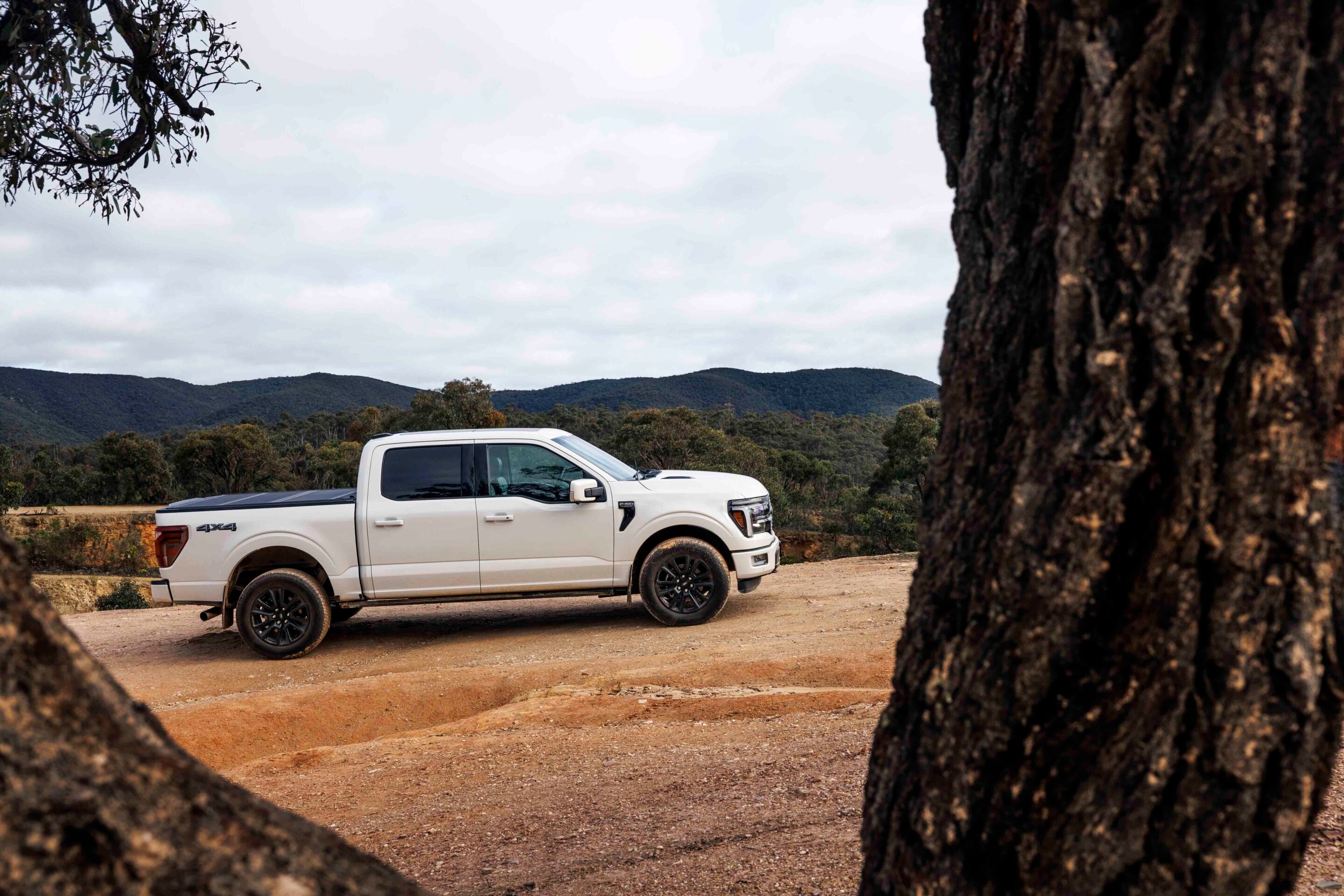
The F-150 Platinum wins because composure breeds confidence, and nothing here controlled the Kokoda better. The Rebel takes second, brilliant but held back by RAM’s combined tub-load and towball-download recommendation. The ZR2 finishes third, surprising us with just how well it towed. And the Tundra comes last: great numbers, but disappointing load control in our test without Toyota’s recommended LDH.
1
Vehicle specs
| Specification | Chevrolet Silverado ZR2 | RAM Rebel Hurricane | Ford F-150 Platinum | Toyota Tundra Platinum |
|---|---|---|---|---|
| Engine | Petrol V8 | Petrol twin-turbo I6 | Petrol twin-turbo V6 | Petrol twin-turbo V6 hybrid |
| Capacity | 6200cc | 2993cc | 3.5L | 3445cc |
| Max power | 313kW | 313kW @ 5200rpm | 298kW @ 6000rpm | 326kW @ 5200rpm |
| Max torque | 624Nm | 635Nm @ 3500rpm | 678Nm @ 3100rpm | 790Nm @ 2400-3600rpm |
| Transmission | 10-speed automatic | Eight-speed automatic | 10-speed automatic | 10-speed automatic |
| 4×4 system | Part-time, dual-range with 4×4 Auto | Part-time, dual-range with 4×4 Auto | Full-time, dual-range 4×4 | Part-time, dual-range |
| Construction | Four-door cab and bed on ladder-frame chassis | Four-door cab and bed on ladder-frame chassis | Four-door aluminium cab and bed on ladder-frame chassis | Four-door cab and bed on ladder-frame chassis |
| Front suspension | Coil-spring IFS | Coil-spring IFS | Coil-spring IFS | IFS with wishbones and coils |
| Rear suspension | Coil-spring live axle | Coil-spring live axle | Coil-spring live axle | Multi-link live axle on coil springs |
| Tyres | 33-inch mud-terrain tyres on 18-inch wheels | 275/65-18 on alloy wheels | 275/60 R20 | 265/60R20 on alloy wheels |
| Kerb weight | 2587kg | 2612kg | 2611kg | 2834kg |
| GVM | 3300kg | 3505kg | 3315kg | 3536kg |
| GCM | 6851kg | 7711kg | 7365kg | 7980kg |
| Towing capacity | 4200kg on 70mm ball | 4500kg on 70mm ball | 4500kg | Up to 4500kg on 70mm ball |
| Payload | 713kg | 893kg | 704kg | 702kg |
| Seats | 5 | 5 | 5 | 5 |
| Fuel tank | 91L, PULP | 98L, PULP | 136L, PULP | 122L, PULP |
| ADR fuel consumption | 12.7L/100km | 10.74L/100km | 13.4L/100km | 10.74L/100km |
| Approach angle | 31.8 | 20.9 | 31.8 | 23 |
| Ramp-over angle | 23.4 | 19.2 | 23.4 | N/A |
| Departure angle | 23.3 | 22.2 | 23.3 | 21 |
| Ground clearance | 296mm | 240mm | 269mm | 216mm |
Follow 4X4 Australia on Google
Get more 4x4 news, reviews and gear stories from 4X4 Australia in your Google feeds.

We recommend
-
 4x4 Comparisons
Ford F-150 vs Ram 1500 vs Silverado 1500 vs Toyota Tundra: towing and payload compared
Full-size US pickups: towing and payload cheat sheet
-
 4x4 Comparisons
Ford Ranger Super Duty vs Toyota LandCruiser 79: Can Ford topple the ultimate work ute?
Has Ford's new Ranger Super Duty got what it takes to knock the iconic LandCruiser 79 off the top of the mountain?