Gear

Gallery 1
Picture your fuel gauge dropping to empty right in the middle of the Simpson Desert. You’d be stuck by the track for days, just waiting and hoping someone brings you more fuel.
That’s not something I want to risk. I’ll take a long-range fuel tank every time. This is the first time I’ve used a plastic long-range tank. In the past, all my 4x4s had steel tanks or came with enough fuel capacity from the factory for remote trips. My Troopy had two 90L tanks and my 105 Cruiser had 145L.
I didn’t need much convincing to go with the ARB Frontier fuel tank (↗). Once I learned about the new material it’s made from, I was happy to give it a go.
JUMP AHEAD
- The benefits of plastic long-range fuel tanks
- The potential downsides
- The verdict
- Similar products to consider
- Pricing
- FAQs
1
The benefits of plastic long-range fuel tanks
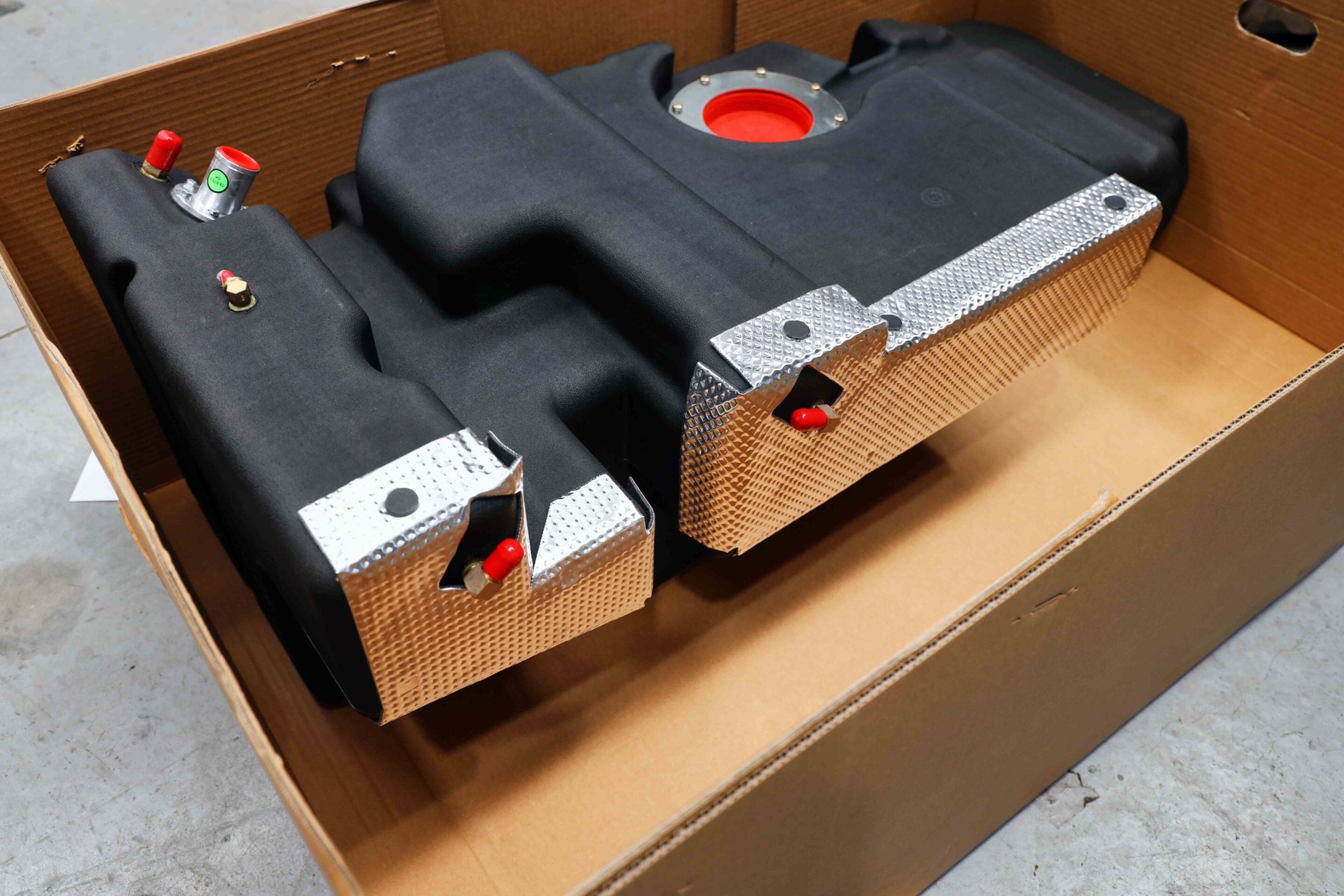
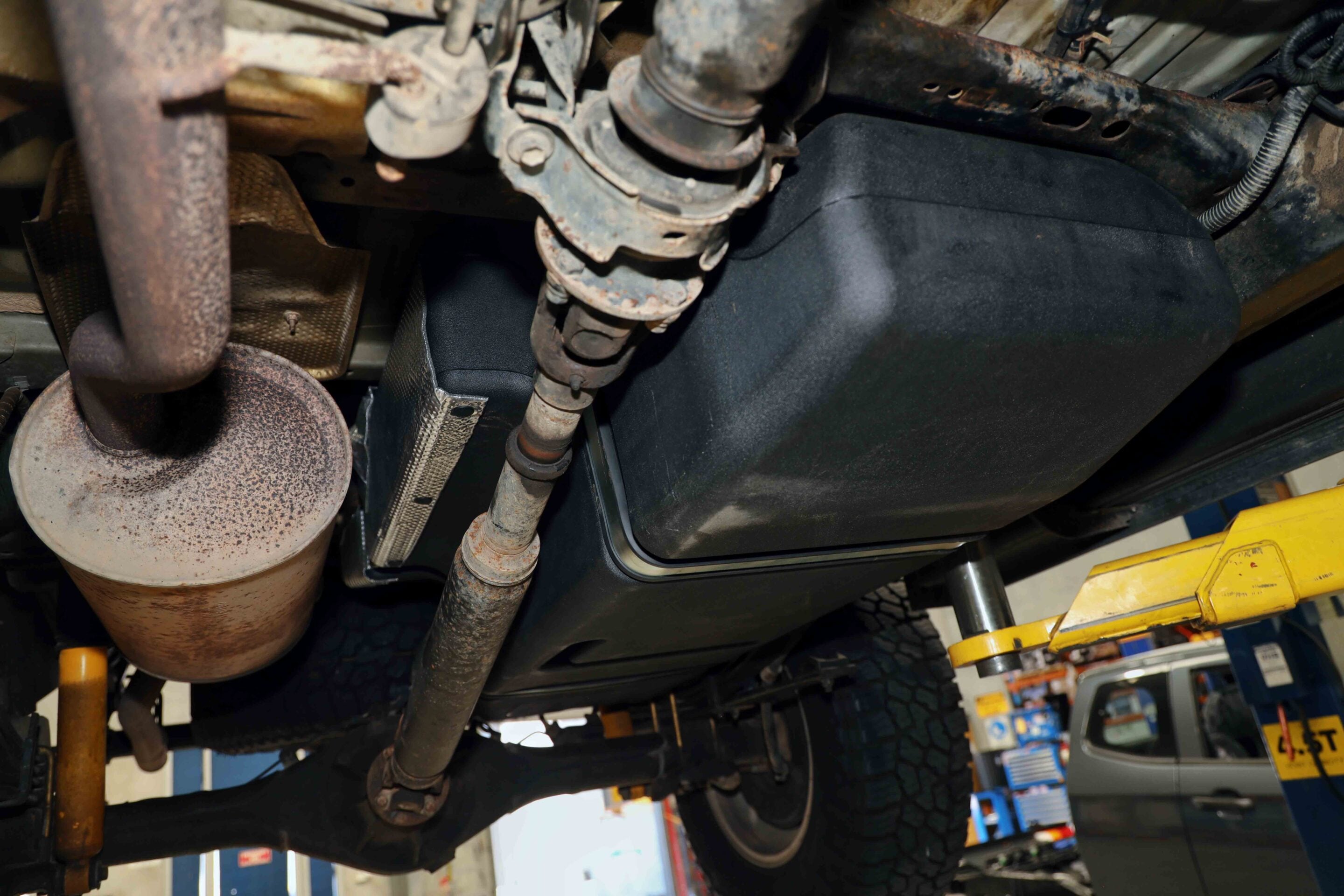
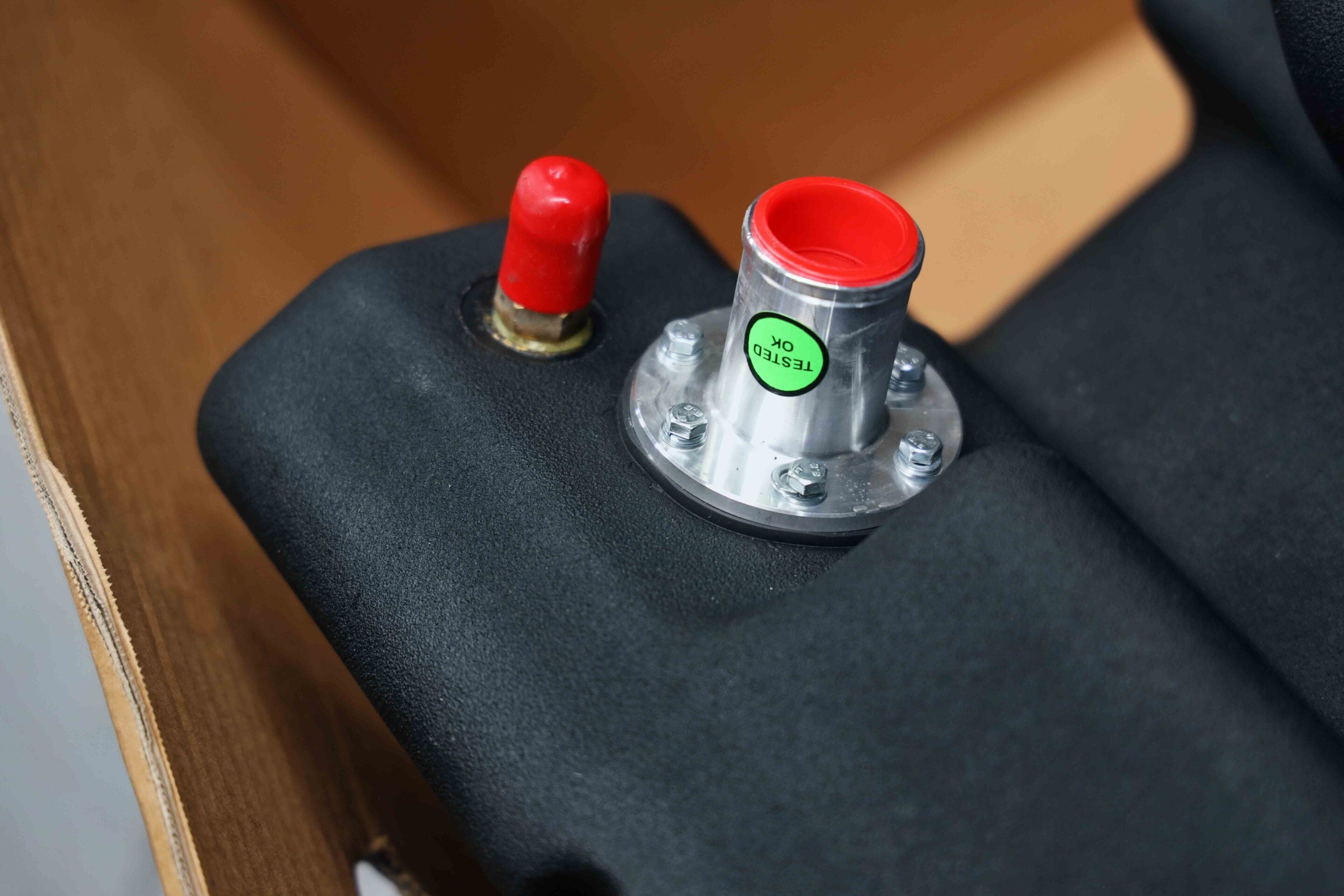
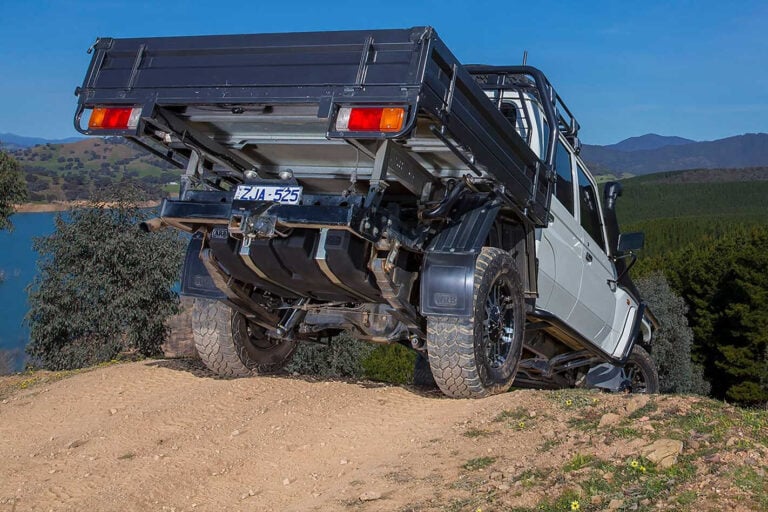
Let’s talk about the plastic. It’s not a flimsy, thin-walled black tank like you’d find in a caravan. This one is made from a seamless, rotomoulded, cross-linked polymer. The walls are 8mm thick and the corners are about 11mm, so it’s built for strength and durability.
The weight saving is enormous over a steel version. My 145L ARB Frontier tank (↗) weighs just 28.5kg. A Long Ranger tank for my HiLux, also sold through ARB, is a well-respected tank I’ve used successfully before. That model is 140L and weighs 48kg. That’s a saving of 19.5kg, plus the Frontier tank comes with an extra 5L. The ARB plastic tank was a few hundred dollars cheaper than the alternative. Win, win!
Plastic tanks don’t transfer heat like metal ones, so there’s much less chance of condensation building up within the tank, meaning less chance of algae growing. The plastic tank is tough, too. There’s a video online showing a 60-tonne army tank driving over the ARB tank; it deforms but pops back into shape and still works. A steel tank wouldn’t survive that. In real off-road use, the plastic tank handles scrapes and knocks better than steel, and it’s less likely to develop stress fractures after long trips on rough roads.
The inside bottom of the Frontier tank has a rippled, raised texture that keeps fuel stable when you speed up, slow down or tackle rough tracks. These ARB tanks don’t need any ongoing maintenance; just make sure you use clean fuel and you’re set.
1
The potential downsides
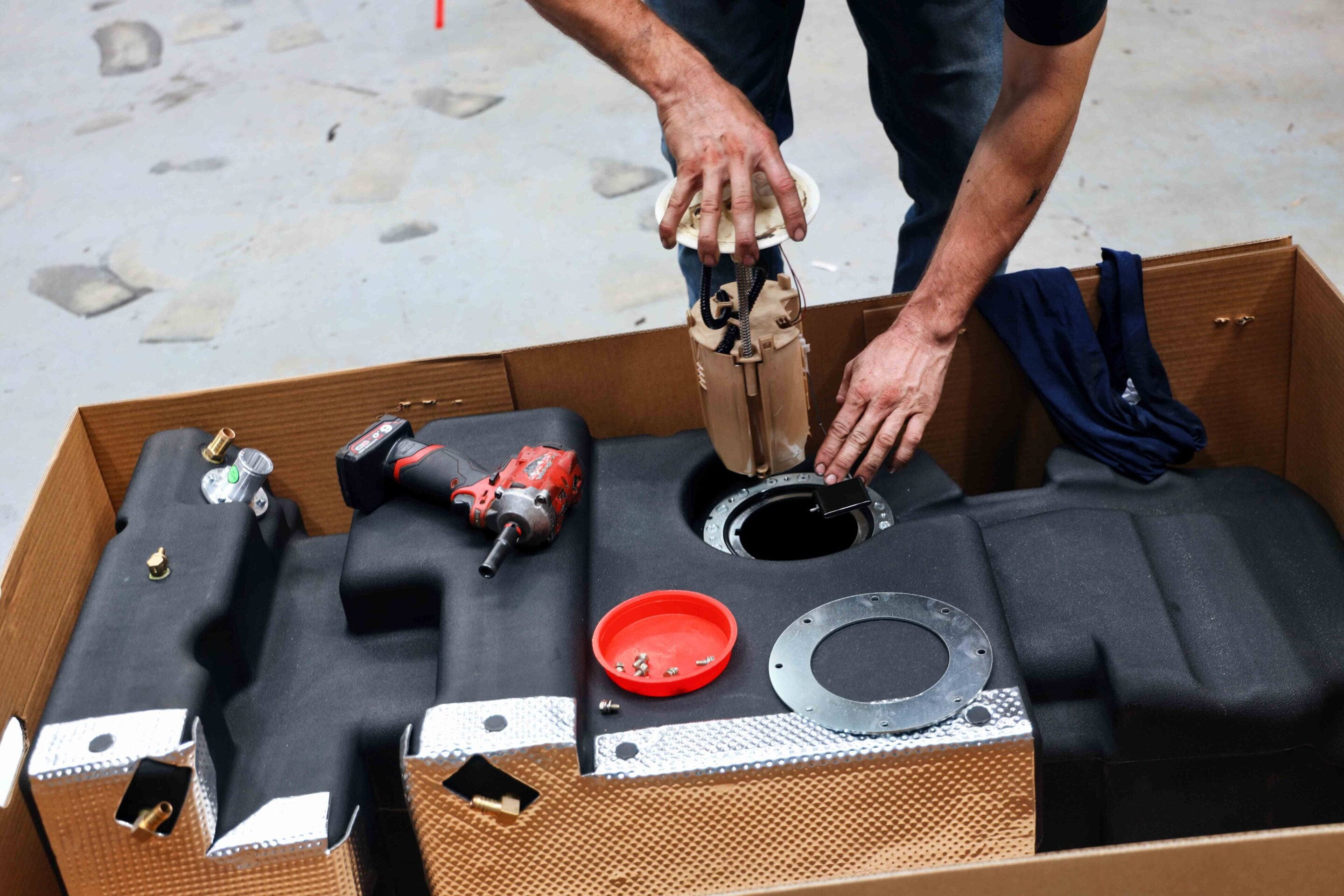
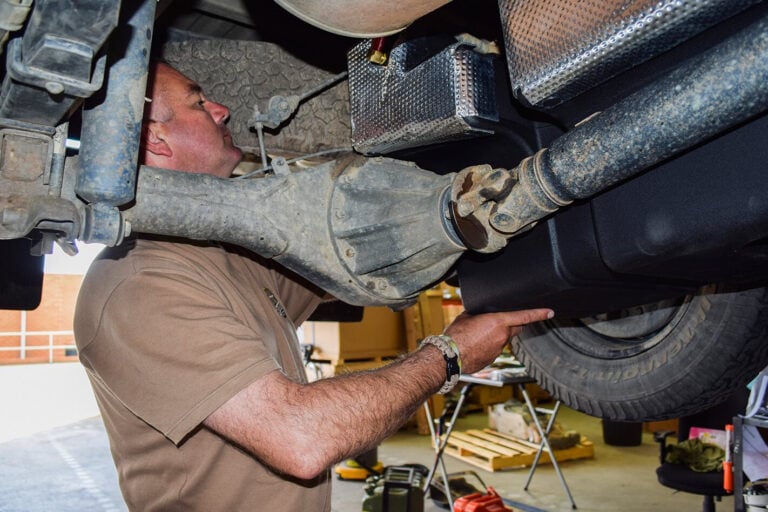
Some people hesitate because this tank doesn’t have a drain plug, though newer-vehicle Frontier models do.
You could remove the tank and tip it out to clean it, but that’s a tough job compared to just undoing a plug. You can also pump it empty using the vehicle or an aftermarket fuel pump.
The only times you’d really need to empty the tank are if it gets contaminated or you accidentally fill it with petrol. For contamination, your fuel filter should handle it, and with almost no condensation in the plastic tank, bacteria shouldn’t be a problem. If you put in the wrong fuel, your only options are to pump it dry or take the tank out.
My original HiLux tank, like most 4×4 fuel tanks today, is plastic with no drain bung, negating arguments that plastic tanks can’t handle 4×4 grit and grind. Plastic offers no size alternatives. In contrast, steel is available from numerous manufacturers, each providing different capacities and pricing tiers.
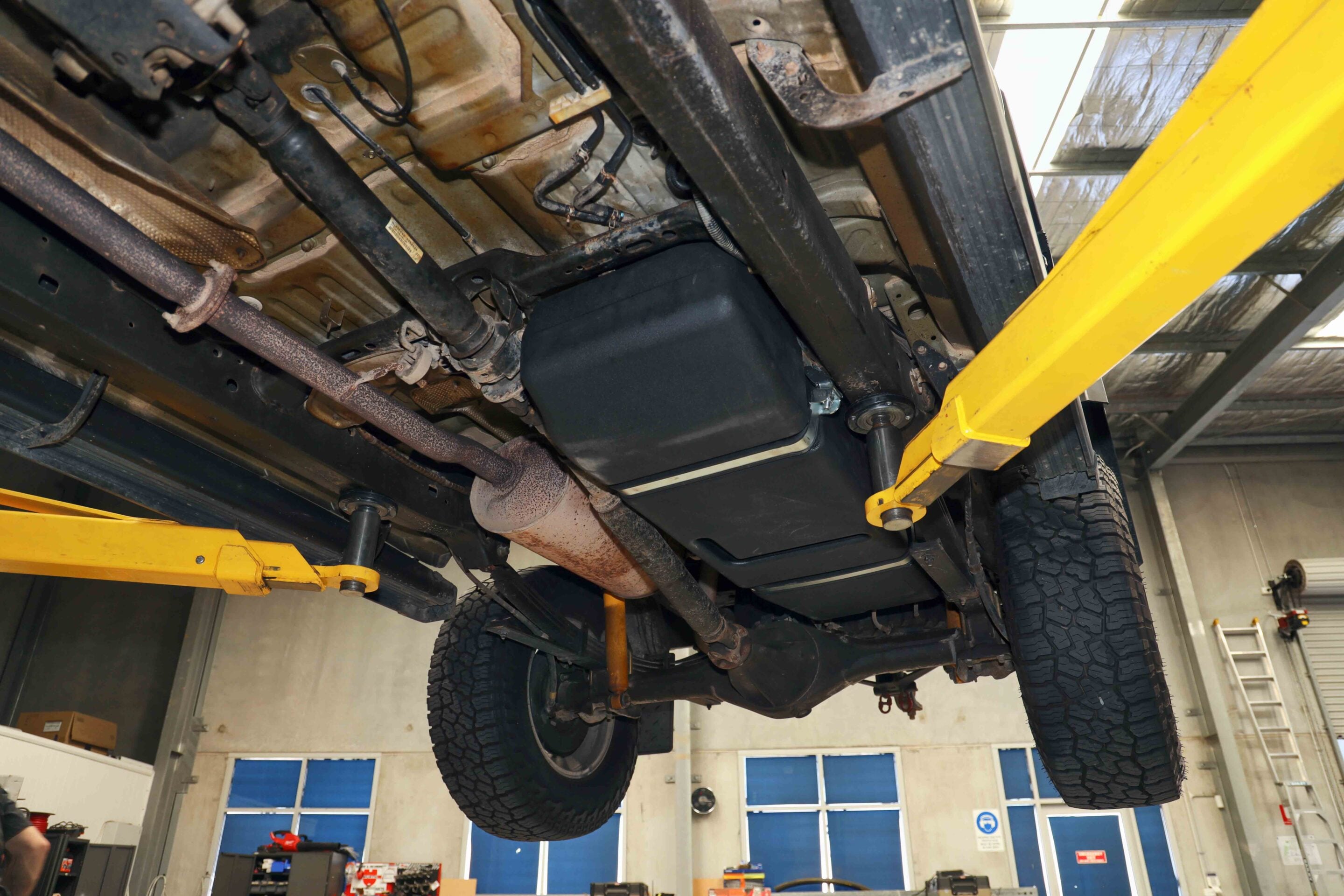
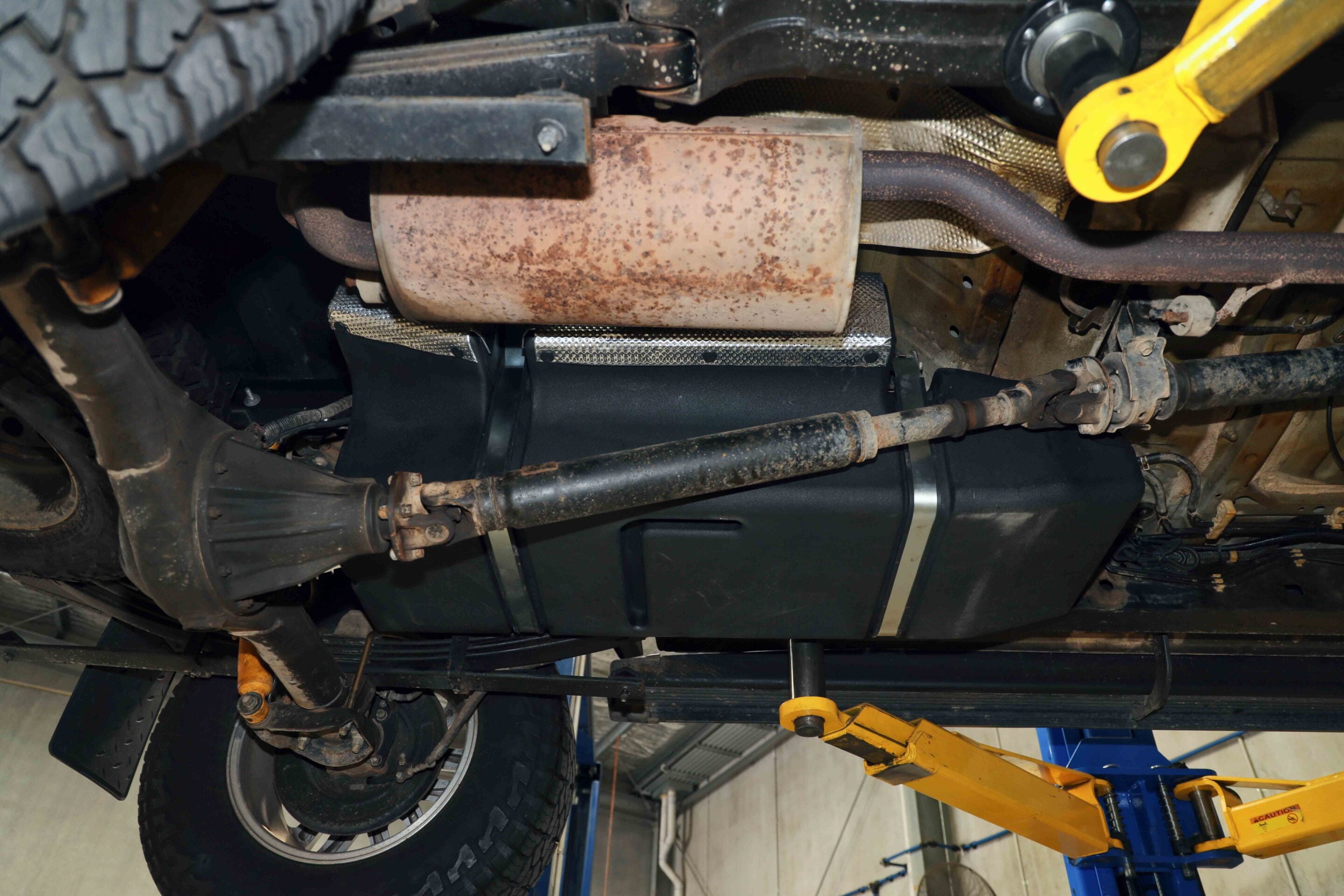
Filling a 145L tank isn’t cheap, but you can fill up when fuel prices are lower and go roughly twice as far between refuelling compared to my OE tank. This means you can travel further on outback trips, which is my main goal, and you’re not limited by a tank that might get damaged. My tank sits a bit lower than the OE version, but not enough to worry about.
1
The verdict
I’ve put my money where my mouth is and purchased the ARB Frontier 145L diesel fuel tank (↗), and had it fitted at my local ARB store.
My tank has only been fitted for a few weeks, so I can’t comment on how it holds up long-term. But I can say it’s high quality and has a good track record in tough off-road conditions. I did plenty of research before making my choice, so I’m confident it will be the right one.
I plan to add an aftermarket exhaust system soon, and I’ve checked that it and other accessories will fit with this plastic tank.
I didn’t buy this tank just to save money on fuel, though filling up less often and at lower prices is a bonus. My main reason was to make longer, safer trips into the outback without carrying extra jerry cans or extra weight. Knowing I can travel at least 1000km, or up to 1400km, gives me real peace of mind.
11
Similar products to consider
- 4WD Systems offers a 144L steel long-range tank for $1117.75 (↗)
- Brown Davis offers a 153L steel tank for $1243 (↗)
- Brown Davis offers a 145L poly tank for $1243 (↗)
- The LongRanger offers a 140L steel tank (↗)
Also consider using one or more 20L steel or plastic jerry cans, priced from $20 upwards. Remember they will be mounted higher than a dedicated underbody long-range fuel tank and need to be secured for rough travel, preferably not on your roof racks due to the high centre of gravity. Be sure to purchase a dedicated diesel jerry can, not just a water jerry, and check your state’s regulations for where they can legally be carried on your vehicle.
Pricing
- RRP: $1490 (N70 HiLux)
1
Frequently Asked Questions
Q: What is the ARB Frontier long-range fuel tank made from?
A: The ARB Frontier long-range fuel tank is made from a seamless, rotomoulded, cross-linked polymer. The tank walls are 8mm thick, with corners around 11mm thick for added strength and durability.
Q: How much does the ARB Frontier 145L fuel tank weigh?
A: The ARB Frontier 145L fuel tank weighs 28.5kg. Compared with a 140L steel long-range tank weighing 48kg, it saves around 19.5kg while offering an additional 5L of capacity.
Q: Are plastic long-range fuel tanks strong enough for off-road use?
A: Yes. The ARB Frontier tank is designed to handle tough off-road conditions, with the plastic construction better able to handle scrapes and knocks compared with steel. It is also less likely to develop stress fractures after long trips on rough roads.
Does the ARB Frontier fuel tank need maintenance?
No ongoing maintenance is required. The tank simply needs clean fuel to operate reliably.
What is the benefit of fitting a 145L long-range fuel tank?
The larger fuel capacity allows longer travel between refuelling stops, with the review vehicle able to travel around 1000km, or up to 1400km, depending on conditions. This reduces the need to carry extra jerry cans and provides greater confidence on remote trips.
Follow 4X4 Australia on Google
Get more 4x4 news, reviews and gear stories from 4X4 Australia in your Google feeds.

We recommend
-
 Gear
GearFuel tank buyers' guide
An aftermarket fuel tank could prove a lifesaver on that next remote-area adventure.
-
 Gear
GearARB Frontier Long Range Tank: Product test
Bypass the servos by fitting an ARB Frontier long range tank.
-
 Gear
GearFord Ranger: OEM v Aftermarket comparison
Is it worth spending big bucks to spruce up your 4x4? We line a stocker up against a tickled Ranger to find out.