Advice
Gallery 1
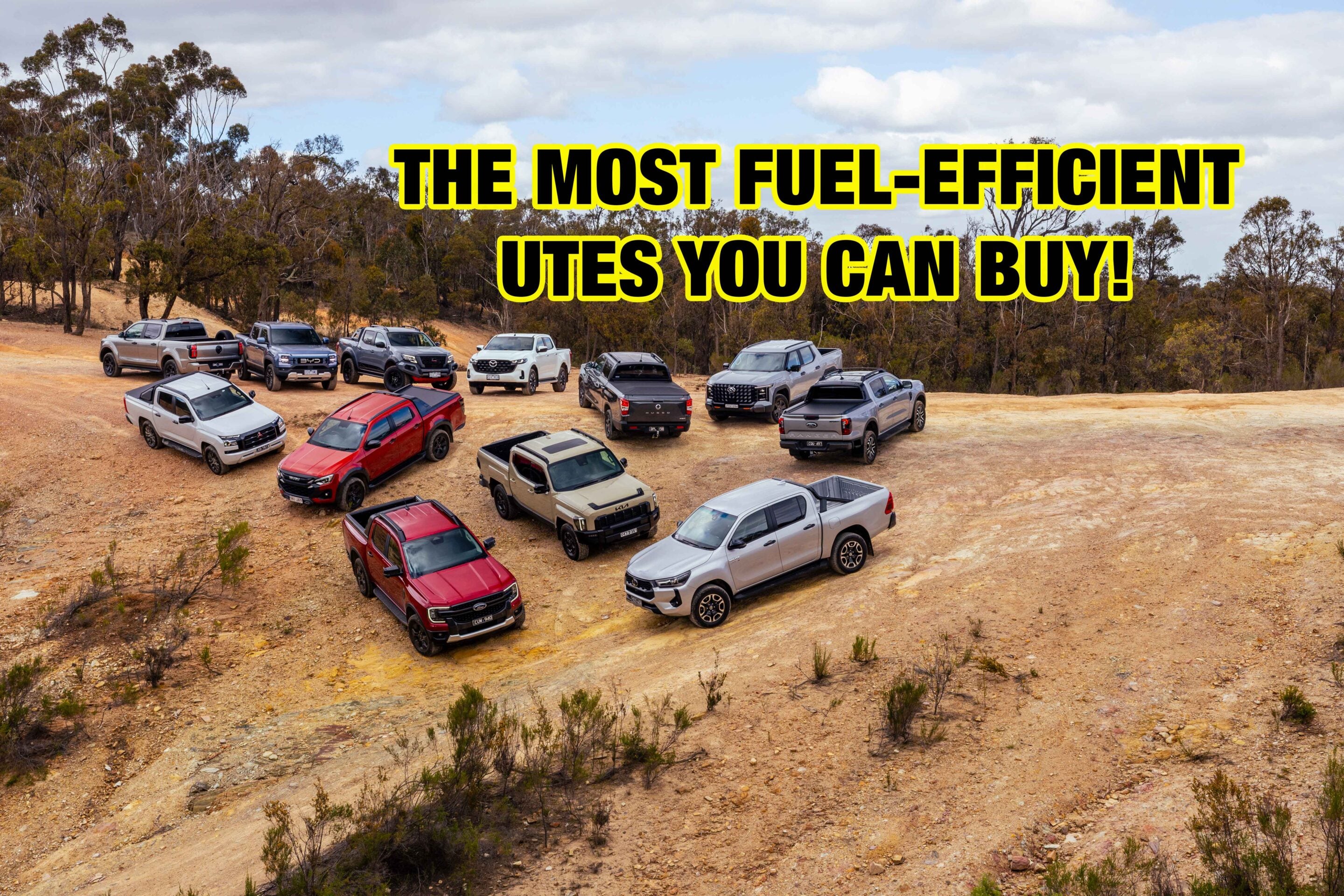
Utes remain a cornerstone of the Australian vehicle market, valued for towing, payload and off-road ability. But with rising running costs, fuel efficiency has become just as important as capability for many buyers.
While real-world consumption varies depending on load, accessories, terrain and driving style, most modern diesel dual-cab 4×4 utes cluster within a relatively tight efficiency window. In today’s market, around 7.0-8.5L/100km (ADR combined) is generally considered fuel-efficient for this segment.
These figures are based on the Australian Design Rules (ADR) combined-cycle testing procedure, which measures fuel consumption under controlled laboratory conditions designed to reflect a mix of urban and highway driving. However, real-world figures can vary significantly, particularly when vehicles are fitted with accessories such as bull bars, roof racks, larger tyres, or when used in sustained off-road or towing conditions.
All figures below refer to ADR combined-cycle fuel consumption for the most efficient diesel variants available in Australia, in no particular order.
Why plug-in hybrid and electric utes are excluded
This comparison focuses on conventional diesel utes using comparable ADR combined-cycle figures. Plug-in hybrid and electric utes have been excluded because their efficiency results are not directly comparable under standard usage conditions.
Models such as the Ford Ranger PHEV and BYD Shark can achieve very low official consumption figures when regularly charged, often under 3.0L/100km. However, real-world fuel use varies significantly depending on charging habits and battery depletion, and can overlap with efficient diesel utes once operating outside of charge-assist conditions. For this reason, they are best assessed separately within electrified or hybrid-focused comparisons.
Isuzu D-MAX and Mazda BT-50 2.2-litre
- ADR: 6.6L/100km
The Isuzu D-MAX and Mazda BT-50 are both now available in Australia with a 2.2-litre four-cylinder turbo-diesel (RZ4F-TC), paired with either a six-speed manual or six-speed automatic and part-time 4×4 across selected variants.
In both applications, the engine produces 120kW and 400Nm, positioning it as the efficiency-focused alternative to the larger 3.0-litre diesel. It delivers strong low-end torque for everyday driving while prioritising lower fuel consumption and reduced running costs over outright towing capacity.
In the D-MAX, the 2.2-litre engine is tuned for durability and efficiency across urban, highway and light-load use, with a clear emphasis on predictable operating costs and compliance with tighter emissions requirements. It represents the most fuel-efficient engine in the current D-Max lineup.
In the Mazda BT-50, the same mechanical package is carried over but tuned with a stronger focus on refinement and road comfort. This results in quieter operation and a more road-biased driving character, while maintaining broadly similar efficiency outcomes to the D-Max in real-world use.
Ford Ranger 2.0-litre
- ADR: 6.9-7.9L/100km
The Ford Ranger 2.0-litre bi-turbo diesel, available across XLT, Sport and Wildtrak variants, is one of the most efficient full-size ute powertrains in Australia.
Its twin-turbo diesel setup allows a smaller-capacity engine to deliver strong low-end torque while maintaining strong efficiency at highway speeds. The 10-speed automatic transmission helps keep engine revs low during steady cruising, contributing to its competitive ADR figures.
In real-world use, the 2.0-litre Ranger is most efficient in light- to medium-load driving and highway touring. Higher-spec variants fitted with the 3.0-litre V6 diesel prioritise towing and performance, with noticeably higher fuel consumption.
Toyota HiLux 2.8-litre
- ADR: 7.1-8.0L/100km
The Toyota HiLux is powered by a 2.8-litre four-cylinder turbo-diesel (1GD-FTV) across SR, SR5, Rogue and GR Sport variants, paired with either a six-speed manual or six-speed automatic.
In current specification, it produces 150kW and 500Nm with the automatic transmission (420Nm with the manual), delivering strong low-end pulling power suited to towing and load carrying.
The engine is tuned for durability and broad torque delivery rather than outright efficiency gains, which is reflected in its mid-range ADR consumption figures. Fuel use remains relatively stable across mixed driving conditions, including when carrying loads, although heavier 4×4 dual-cab automatic variants typically sit toward the upper end of the range.
Volkswagen Amarok 2.0-litre
- ADR: 7.2-8.0L/100km
The Volkswagen Amarok is offered with a 2.0-litre four-cylinder TDI turbo-diesel in Life, Style and PanAmericana variants, paired with a 10-speed automatic and full-time 4MOTION all-wheel drive.
In Australian specification, this engine produces up to 154kW and 500Nm, matching its Ford Ranger counterpart but with model-specific calibration.
The powertrain is tuned for smooth on-road performance and relaxed cruising, with strong mid-range torque delivered at low revs. Fuel consumption is most efficient during highway driving, while remaining broadly in line with other dual-cab utes in mixed-use conditions.
Mitsubishi Triton 2.4-litre
- ADR: 7.4-7.7L/100km
The Mitsubishi Triton is powered by a 2.4-litre four-cylinder turbo-diesel (4N16) across GLX, GLS and GSR variants, paired with either a six-speed manual or six-speed automatic and Mitsubishi’s Super Select 4WD system.
In current specification, it produces up to 150kW and 470Nm, delivering a strong spread of usable torque for everyday driving. Its relatively low kerb weight, combined with efficiency-focused engine and transmission tuning, helps keep fuel consumption competitive across urban, regional and mixed conditions. While capable, the Triton prioritises efficiency and drivability over outright towing performance compared with some larger-capacity rivals.
Nissan Navara 2.3-litre
- ADR: 7.2-8.1L/100km
The Nissan Navara is powered by a 2.3-litre four-cylinder twin-turbo diesel (YS23) in variants such as SL and Pro-4X, paired with either a six-speed manual or seven-speed automatic.
In Australian specification, it produces up to 140kW and 450Nm, with the twin-turbo setup designed to deliver strong low-end response and improved mid-range torque.
The engine is tuned to balance drivability and efficiency, with fuel consumption remaining competitive across mixed driving conditions. Efficiency is strongest in light- to moderate-load use, particularly during steady highway driving where the engine operates in its optimal range.
Isuzu D-MAX and Mazda BT-50 3.0-litre
ADR: 7.0-8.0L/100km (BT-50) | 7.4-8.0L/100km (D-MAX)
The Isuzu D-MAX and Mazda BT-50 are closely related dual-cab utes that share the same 3.0-litre four-cylinder turbo-diesel (4JJ3-TCX), paired with either a six-speed manual or six-speed automatic transmission and part-time 4×4.
In both applications, the engine produces 140kW and 450Nm, delivering strong low-end torque suited to towing, load carrying and off-road use. The calibration prioritises durability and consistent performance over peak output, contributing to steady and predictable fuel consumption across a wide range of conditions.
The D-MAX is tuned with a stronger focus on robustness and long-term reliability, with conservative engine and drivetrain mapping designed to support consistent efficiency under load, including commercial and regional use. Lower-grade variants are also offered with a 1.9-litre turbo-diesel (110kW and 350Nm) in some markets and previous specifications, prioritising lower running costs and improved efficiency in lighter-duty applications.
The BT-50 uses the same core mechanical package but is tuned more heavily toward refinement and road comfort, resulting in quieter operation and a more road-biased driving character. Despite this, fuel consumption remains broadly similar between the two models, with differences in efficiency being marginal and largely dependent on specification, accessories and driving conditions rather than mechanical differences.
Australia’s ute market is now defined by tight efficiency clustering rather than wide separation between models. Most modern diesel dual-cab 4×4 utes fall within a 7.0-8.5L/100km ADR combined range, with differences increasingly driven by engine size, weight and drivetrain tuning rather than fundamental efficiency gaps.
Smaller-capacity engines such as the Ford Ranger 2.0-litre bi-turbo and Mitsubishi Triton 2.4-litre tend to sit at the more efficient end of the spectrum, while larger 3.0-litre diesels prioritise towing capability and durability with only a modest fuel consumption trade-off.
Follow 4X4 Australia on Google
Get more 4x4 news, reviews and gear stories from 4X4 Australia in your Google feeds.

We recommend
-
 News
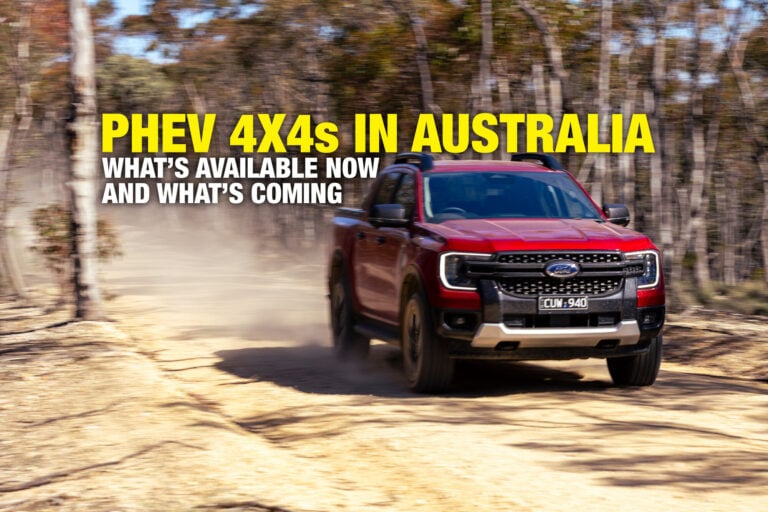
NewsAustralia’s PHEV 4x4 line-up: What’s available now and what’s coming soon
Australia’s PHEV 4x4 market is set to expand, with plug-in utes and SUVs on sale now and more models on the way
-
 News
NewsAustralia’s cheapest 4x4 utes in 2026: Budget dual-cab guide
Looking for a capable 4x4 ute in Australia without breaking the bank? Here’s a rundown of the most affordable dual-cab options
-
 News
NewsAustralia’s electric utes: Current models and future launches
What's out, what's coming and what's likely, in what is currently a very shallow segment