Advice


Gallery 1
Like many things, sharing your adventures when you’re out four-wheel driving is better than doing it on your own.
So whether you’re four-wheeling with mates, touring with your local 4×4 club or are part of an organised tagalong group, whenever you travel in company with other vehicles, all drivers should agree on and stick to a set of rules to ensure everyone stays safe and no one gets lost. These rules are commonly referred to as convoy procedure.
Having set rules when you head out bush might sound a bit draconian, but if the convoy is just a rabble of travellers without any organisation – or the ability to communicate with each other – some in the group could soon become hopelessly lost. The other advantage of adhering to proper convoy procedure is that all travellers can be alerted to potential hazards along the route.
Not only will following a few simple convoy rules ensure all convoy participants safely find their way to the intended destination, it will also minimise stress and ensure everyone has a good time while out on the tracks … and isn’t that what four-wheel driving is all about?
Establish clear communications
Once everyone has met up for the start of a trip, it’s important to get everyone together for a briefing to go through proper convoy procedure.
First up, a trip leader needs to be assigned, and this person needs to be an experienced four-wheel driver who knows what they are doing and where they’re going. A trip leader who doesn’t know where they’re going can lead the whole convoy into precarious situations, or even become lost.
With the leader assigned, their first job is to, in turn, assign a tail-end Charlie, who should also be an experienced four-wheel driver. Both the trip leader and tail-end Charlie should have high-quality UHF radios so they can communicate clearly with each other.

1
Depending on how many vehicles there are in your group and the conditions encountered, it’s entirely possible the convoy might spread out beyond reliable radio range between the leader and tail-end Charlie, so it will be up to other drivers in the convoy to relay messages up and down the line.
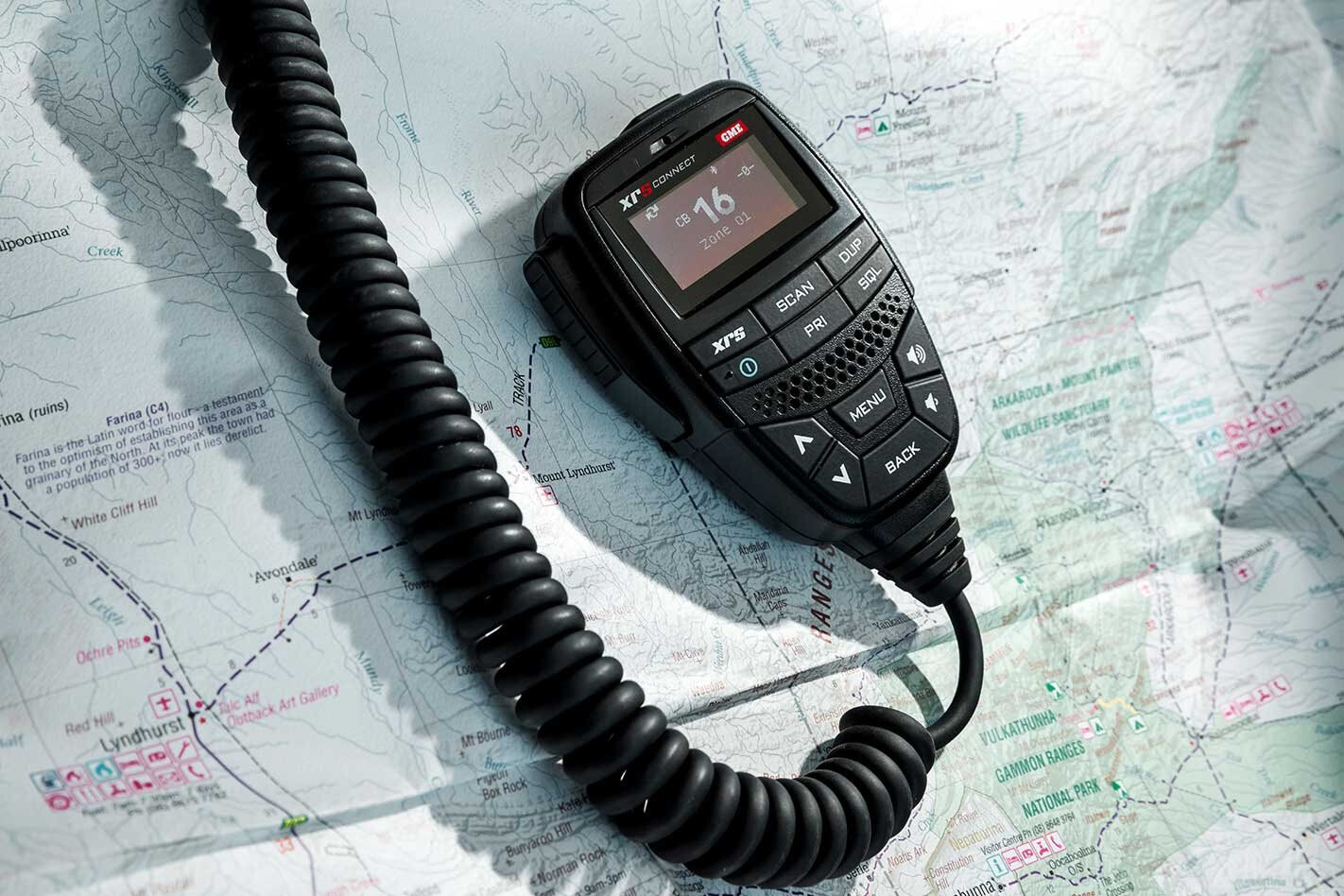
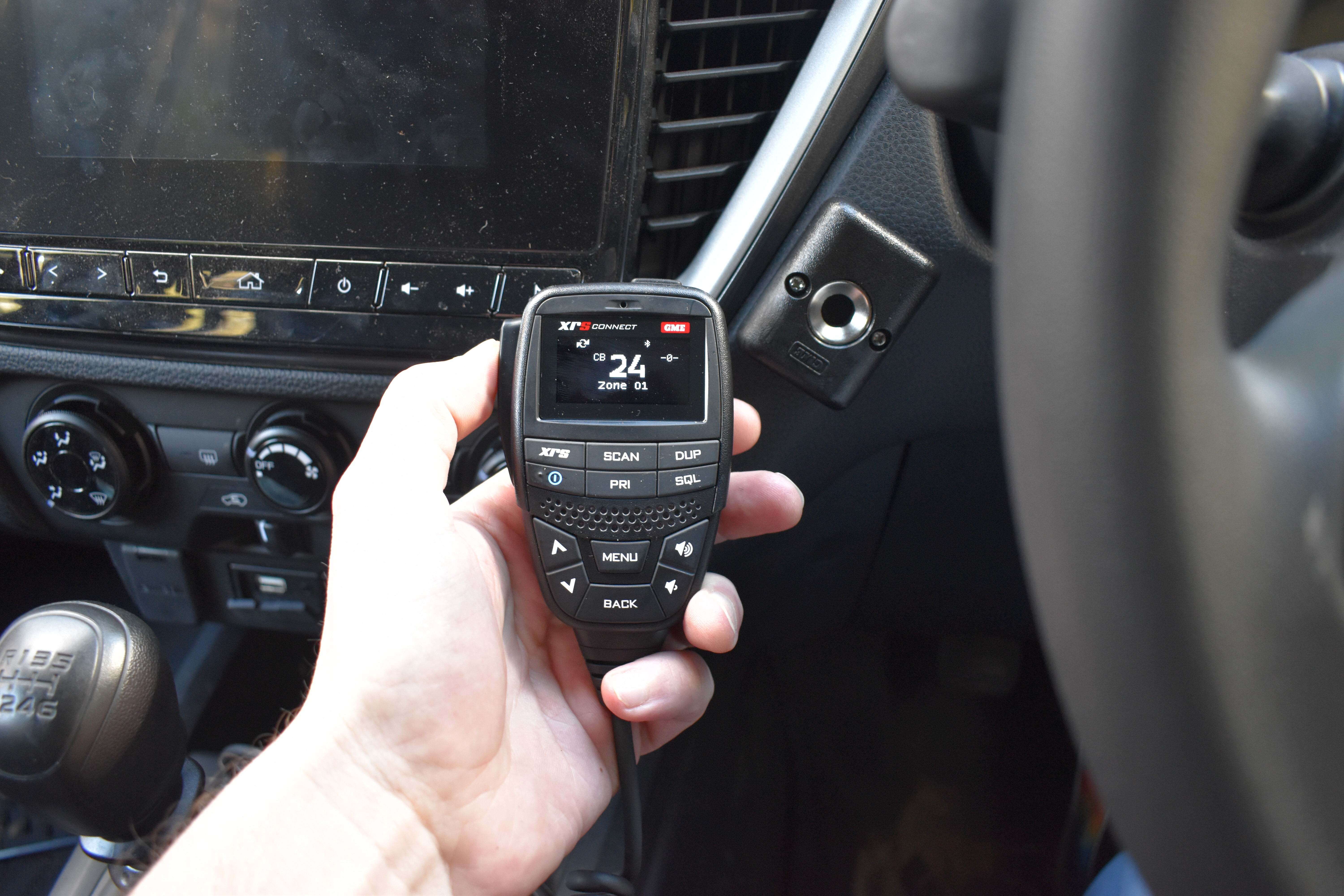
Once it has been confirmed that everyone has a UHF radio, a channel needs to be agreed upon. Make sure the convoy uses a channel other than UHF channels 5 and 35, which are reserved for emergency communications, and ensure that everyone knows what channel will be used for the trip.
Before setting off, the trip leader should ask for a radio check; the second vehicle should respond, followed by the third and so on down the line until the tail-end Charlie has responded. The leader will then know that everyone has a working radio and is on the right channel.
1
While general chit-chat on the UHF can be hugely entertaining, it should be kept to a minimum so that more important messages can be communicated between vehicles in the convoy, such as whether there are oncoming vehicles or other hazards to look out for, like terrain anomalies, wildlife or unfenced livestock.
As with the radio check, information regarding such hazards should be passed down the line. In the case of oncoming vehicles, pass on as much useful information as possible, such as the number and type of vehicles that are coming. In the case of large oncoming trucks, it might be a good idea for the leader to pull the convoy over in a safe spot to let big trucks pass.
Speaking of safe spots, when the trip leader wants to pull the convoy over, they should make sure there’s enough space for all the vehicles in the convoy to safely get off the road or, if driving on a track, that there is enough space for other vehicles to drive past.
1
As well as hazards, the trip leader should use the UHF to communicate navigation information, such as when a left or a right turn is coming up. In addition to communicating this information via UHF, each vehicle also needs to physically ‘mark’ each turn by pulling up in a safe spot where possible, with the appropriate indicator on, and waiting there until the following vehicle signals it has spotted the marked turn, either by a call on the UHF or a flash of the high beam.
If every vehicle in the convoy marks every turn, then the convoy should always stay together. Having said that, sometimes distracted drivers can still miss turns, so if you’re marking a turn and you see the following vehicle just drive on by, get on the UHF quick smart and let them know they missed the turn.
Assuming all vehicles have successfully made the turn, the tail-end Charlie should acknowledge this on the UHF and other vehicles should relay that information up the line to the trip leader. If you do become separated from the convoy, stop and contact the trip leader rather than continuing on an unknown route.
1
If a vehicle becomes stuck or breaks down, the convoy should stop in a safe location and the trip leader should coordinate the next steps over the UHF.
Other things the trip leader should communicate to the group include providing a general overview of the plan for the day. Important information to share with the convoy includes the expected overall distance to be travelled and expected trip duration, fuel requirements, the location of rest stops and what facilities will be available (food, water, fuel, toilets etc.) en route, and what conditions can be expected.
Drivers should also know the planned route and destination rather than relying solely on the vehicle in front. The trip leader should also allow the convoy plenty of time at rest stops to check or adjust tyre pressures to suit varying terrain. For remote trips outside mobile coverage, consider carrying a satellite communicator or personal locator beacon rather than relying solely on UHF radio.
1
Maintain safe spacing
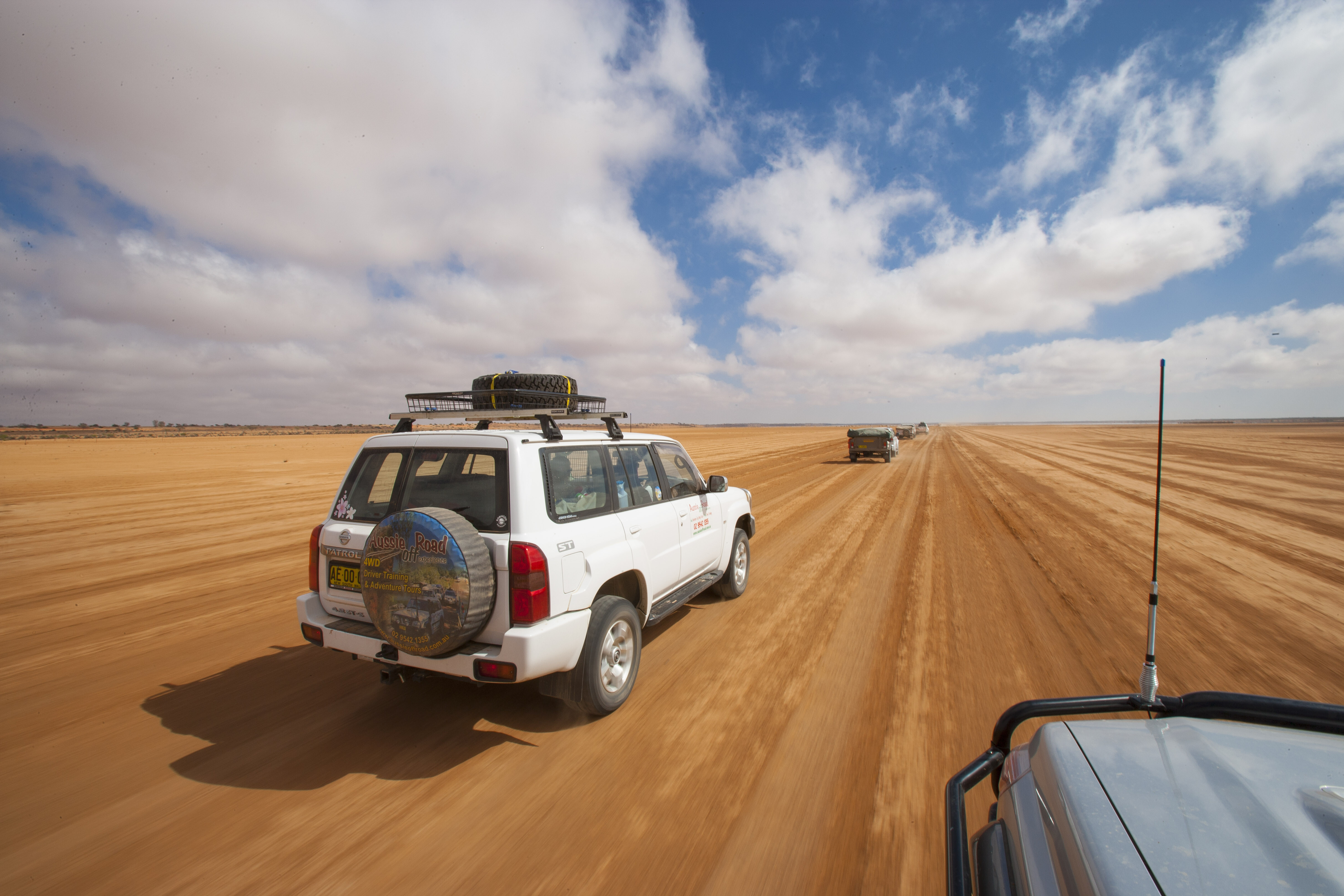
When you’re travelling in a convoy, all vehicles should maintain a safe distance from each other, and this distance will vary depending on vehicle speed and road/track conditions.
When driving on sealed roads, you might feel that another driver is too close to you, or that a following driver has dropped back so far you can’t see them anymore. If they’re too close, politely tell them you feel uncomfortable with the gap between your vehicles and ask them to drop back a tad; if they’re too far back, advise the trip leader that they might need to slow the convoy to allow the vehicles to bunch up a bit.
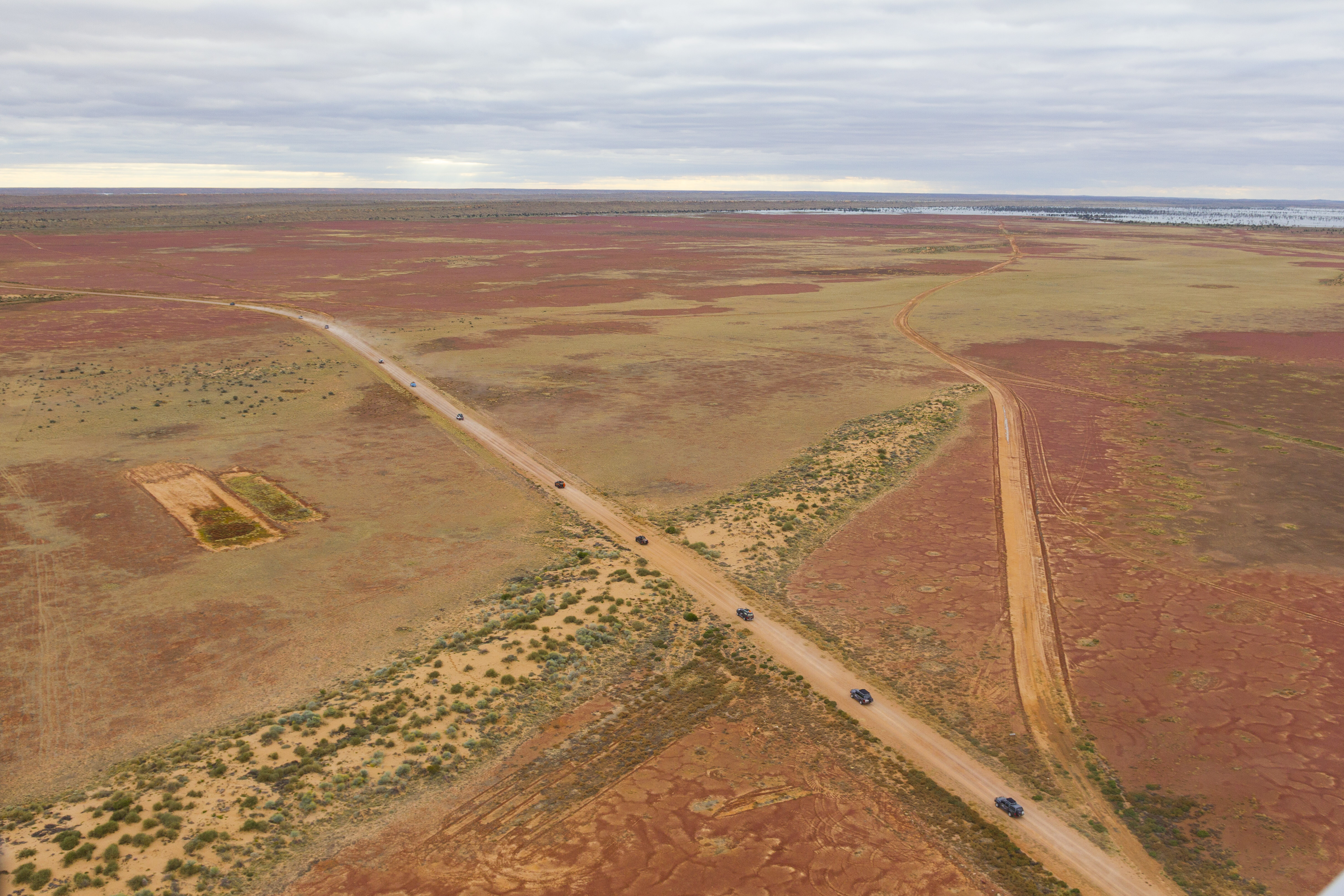
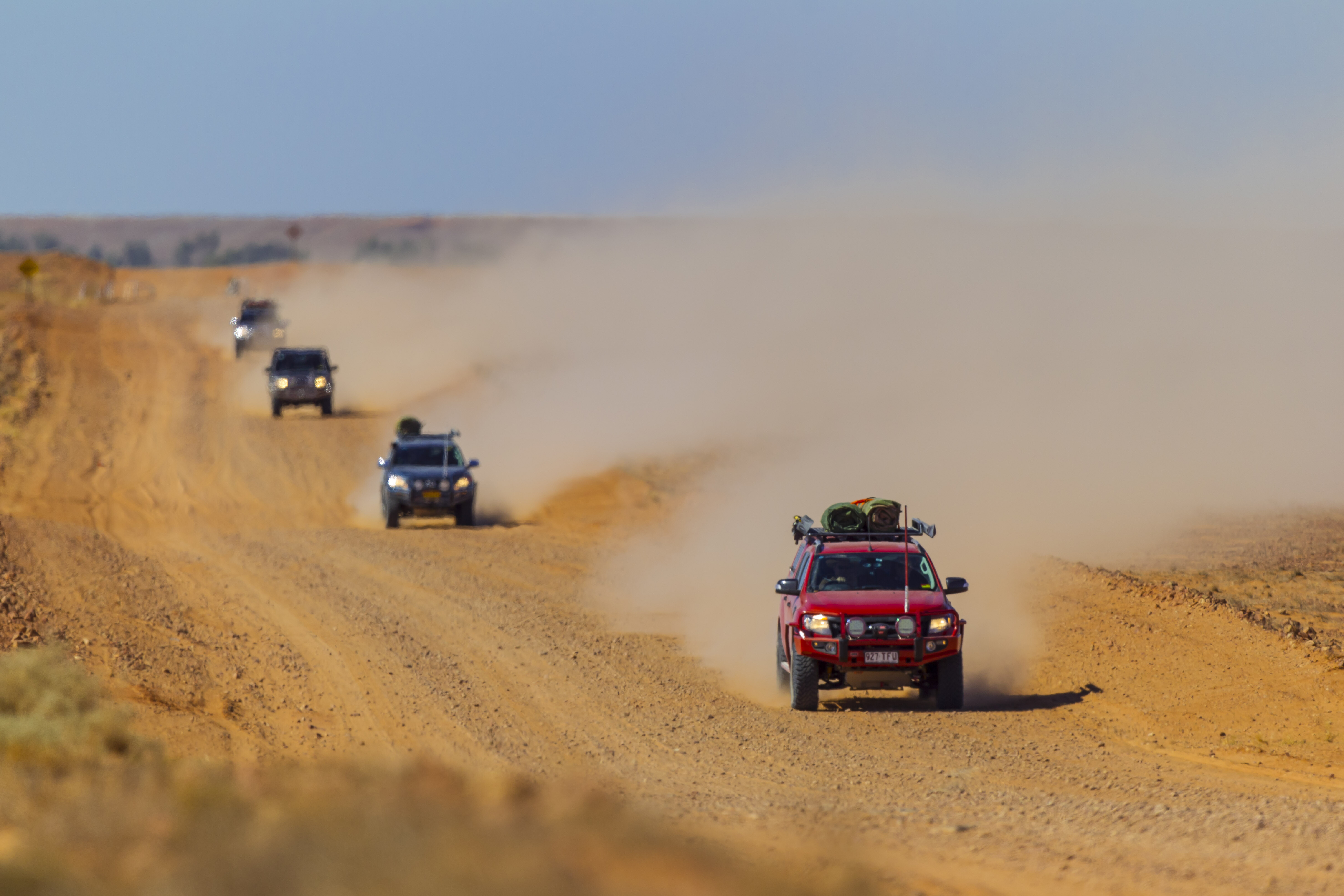
On gravel roads, there is plenty of incentive to keep a decent gap between vehicles. In dusty conditions, you should always leave enough space between you and the vehicle in front to maintain a clear view of what is ahead.

1
Driving in the dust cloud of the vehicle in front can be dangerous because you won’t be able to see where you are going, and you won’t be able to spot hazards. In addition, driving in dust clouds is no good for your vehicle as the dust can get sucked into the engine’s airbox and clog the air filter, decreasing engine performance and increasing fuel consumption.
If the convoy catches up to a slower vehicle that is generating a large dust cloud, it could be a good time to pull up in a safe spot and put the billy on rather than everyone trying to overtake with limited visibility.
Likewise, if there is an oncoming vehicle that is generating a large dust cloud, it’s often wise to pull over and stop if there is space to do so, to let that oncoming vehicle pass. The trip leader must always clearly communicate the intention to pull over.
1
Approach off-road obstacles and water crossings safely
When tackling off-road terrain, each vehicle in a convoy should wait for the preceding vehicle to clear an obstacle before setting off themselves.
On steep and slippery hills, for example, make sure the vehicle ahead has successfully climbed gnarly sections before having a go yourself; if they don’t make it, they might need to back up to have another go, and they won’t want your vehicle filling their mirrors when they are trying to reverse down a slimy track.
When tackling water crossings, ensure the vehicle ahead of you has safely made it across to the other side … and has successfully exited the water before proceeding yourself. If they haven’t completely made it out, they might be blocking the only exit point, in which case you could find yourself stuck in the drink with nowhere to go.
Regroup at rest stops
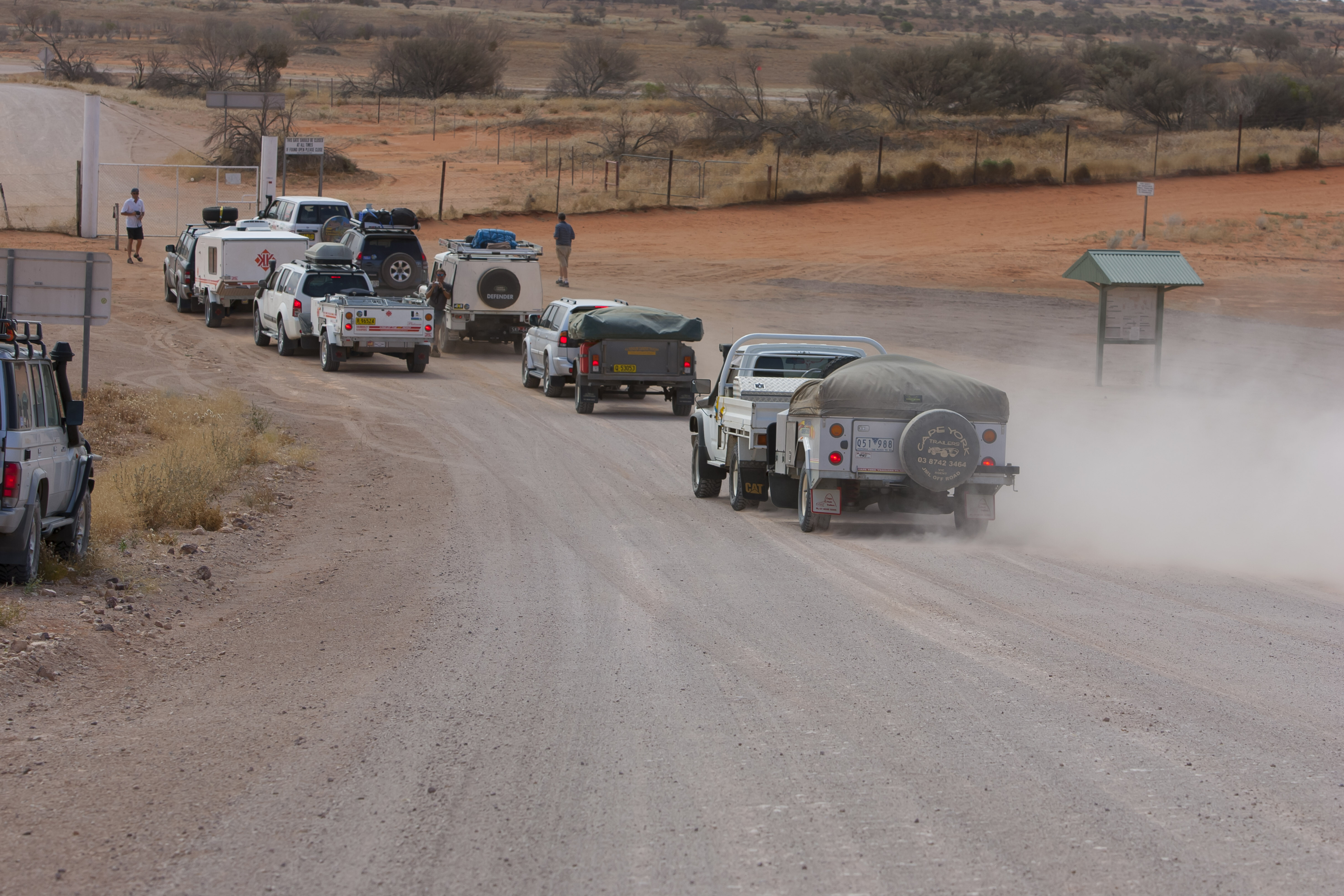
It is important for the convoy leader to factor in enough rest stops for the convoy. In addition to giving everyone a break, pulling up for a rest stop is a good way to regroup a spaced-out convoy.
Allow enough time at rest stops for the last few vehicles to have a decent break; even if the trip leader has been waiting around for 10 minutes, they shouldn’t head off again as soon as the tail-end Charlie rolls up, as they’ll be looking forward to a break too.
With a spaced-out convoy, the trip leader and tail-end Charlie may not have communicated directly with each other for some time, and rest stops present the perfect opportunity for them to get together and have a chat.
They can discuss how things are progressing, if the convoy speed is appropriate, if anyone is not communicating effectively or if some drivers need reminders on procedural issues; and if any problems need addressing, these can be sorted out in private rather than over the air where the whole group can listen in.
1
Use a second UHF radio when required
On occasion, you might be driving through areas where there are road works, or industry such as logging is in operation. There will usually be signage advising which UHF channel is being used in the area.
Rather than your whole convoy switching UHF channels, if your convoy leader has access to two UHF radios, they can switch one to the channel for the area and then relay any relevant information via the convoy’s channel. That second radio might be a handheld that is usually used for off-road spotting or for use when doing other activities around the campsite.
Follow procedures and have fun
Discussing procedures and rules doesn’t really promote a fun vibe.
However, when it comes to travelling in convoys, if everyone sticks to the program there’s a far greater chance of having a fun trip. On the flipside, if convoy participants don’t follow procedures and rules, people can get lost and hurt … and that certainly isn’t any fun.
Apply a little focus whenever you’re driving in a convoy and it will soon become second nature, ensuring you always have fun and safe trips, whether that’s with old mates or newfound friends.

1
4WD convoy rules to remember
What to do
- Choose an experienced and capable trip leader and tail-end Charlie
- Make sure your UHF is working and on the right channel
- Always mark turns and ensure the following vehicle sees you
- Call out hazards and oncoming traffic on the UHF
- Make sure there is plenty of safe space for all vehicles to pull over
What not to do
- Drive in the dust cloud of preceding vehicles
- Drive too close to vehicles in front of you
- Attempt an off-road obstacle until the vehicle ahead is out of the way
- Block the radio channel with chit-chat for hours on end
- Forget to turn on your headlights when driving on dirt
Convoy FAQs
What communications do you need when four-wheel driving in a convoy?
A UHF radio is the main communication method for a convoy, allowing drivers to communicate hazards, navigation information and other important messages. For remote trips outside mobile coverage, consider carrying a satellite communicator or personal locator beacon rather than relying solely on UHF radio.
Who should lead a 4WD convoy?
The trip leader should be an experienced four-wheel driver who knows the route and understands the conditions expected on the trip. The convoy should also have an experienced tail-end Charlie responsible for the last vehicle.
What UHF channel should a 4WD convoy use?
The convoy should agree on a UHF channel before setting off. UHF channels 5 and 35 are reserved for emergency communications, so the convoy should use another channel. Every vehicle should perform a radio check before departure.
Why do 4WDs need to mark every turn in a convoy?
Each vehicle should mark every turn so the following vehicle knows which way the convoy has gone. The vehicle marking the turn should wait in a safe spot until the following vehicle confirms it has seen the turn.
What should you do if you get separated from a 4WD convoy?
If you become separated from the convoy, stop and contact the trip leader on the UHF rather than continuing along an unknown route. Convoy communication and turn-marking procedures are designed to minimise the chance of this happening.
Follow 4X4 Australia on Google
Get more 4x4 news, reviews and gear stories from 4X4 Australia in your Google feeds.


We recommend
-
 Gear
GearHow to perform a winch recovery
How to use an electric winch to perform a basic vehicle recovery
-
 Gear
GearHow to perform a difficult winch recovery
To escape tricky off-road traps, you’re going to need some advanced winching techniques in your arsenal
-
 Advice
How to safely tackle steep descents in a 4x4
Steep descents can be more challenging than climbs, so here’s how to set up your 4x4, manage speed and tackle downhill tracks safely