
Nissan is reportedly developing five new body-on-frame SUVs and utes, including a revived Xterra and next-generation Frontier.
As reported by Automotive News (↗), the program is expected to span Nissan and Infiniti, with the Xterra, next-generation Frontier, a body-on-frame Pathfinder and two Infiniti SUVs reportedly making up the five-model family.
The Xterra is the first model to be confirmed, with Nissan targeting a late-2028 US launch. It will use the new body-on-frame platform and is expected to be offered with V6 and hybrid powertrains. The Xterra name was last used in 2015, and its return will put Nissan back into the rugged midsize SUV market alongside vehicles such as the Ford Bronco.
The next-generation Frontier is also expected to use the new platform, while reports indicate Nissan could offer a body-on-frame Pathfinder alongside the current unibody model. The two Infiniti SUVs would take the same architecture into the premium market.
For 4×4 buyers, the move would give Nissan a much larger range of truck-based SUVs and utes built around the same basic architecture. Nissan has not yet confirmed all five vehicles or provided a detailed rollout schedule, so the broader plan could still change. The Xterra, however, gives us the first look at what the new platform will bring. With the Xterra due from 2028, Nissan could soon have a much stronger presence in the increasingly competitive off-road SUV and ute market.
What does this mean for Australia?
For Australia, the big question is whether any of the new models will be adapted for right-hand drive. There is no confirmation of Australian availability at this stage, but a larger body-on-frame range would give Nissan more options in a market where capable 4×4 SUVs and utes remain hugely popular.
When it comes to rock driving, no matter whether you’re confronted by sandstone steps, limestone boulders, a river stone-strewn creek bed or a shaly hill climb, there is a common element: Rocks are hard and unforgiving on your vehicle and equipment.
To drive in rocky terrain safely and successfully you need a capable four-wheel drive with plenty of ground clearance, appropriate traction aids and comprehensive vehicle-protection equipment. In addition, you will need to survey the terrain ahead and drive it with the correct technique, and carry appropriate vehicle recovery gear in case things don’t go to plan. Here’s our guide to becoming a rock star.
Choose the right vehicle
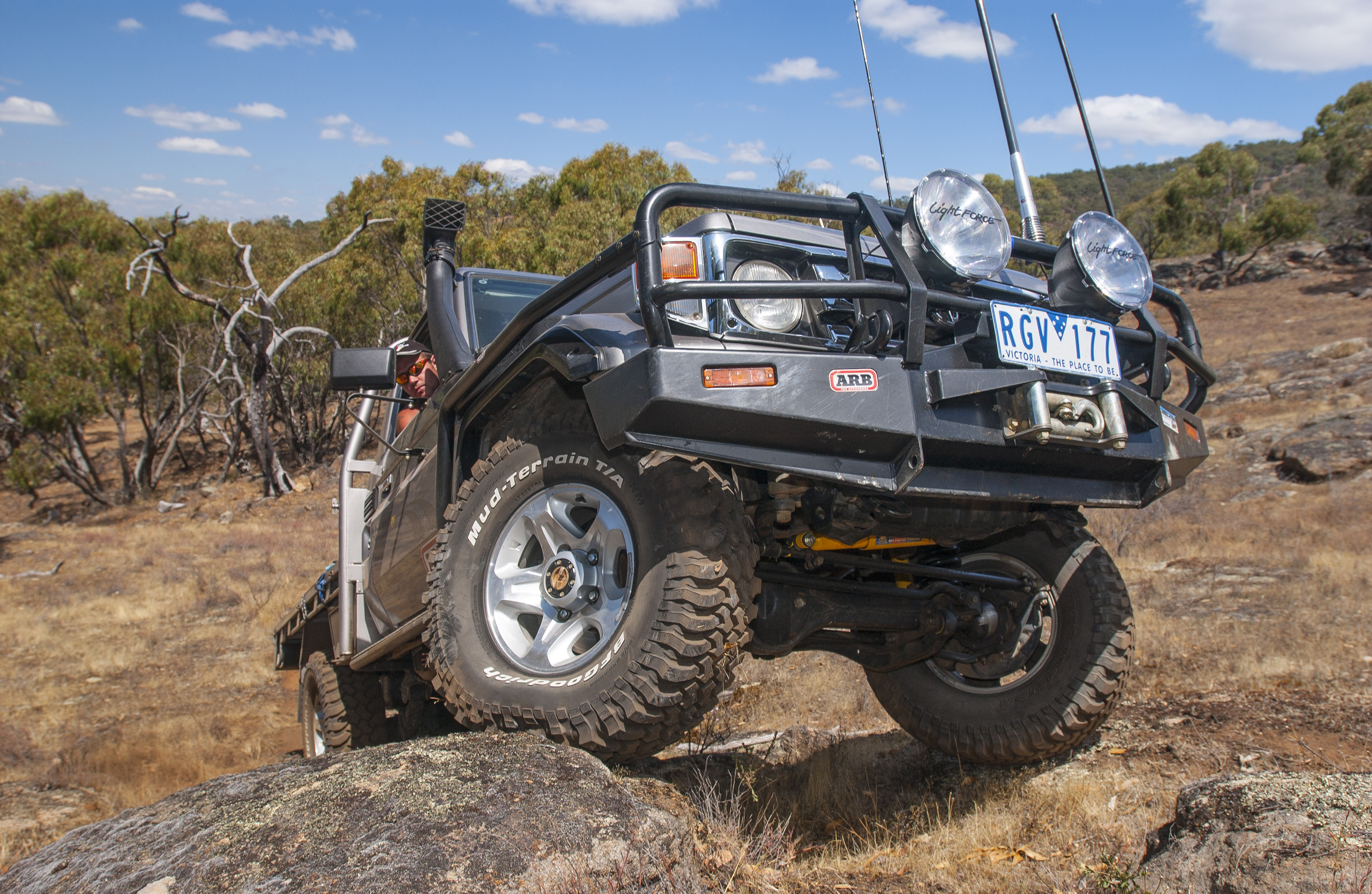
When it comes to vehicles that work well in rocky terrain, common characteristics include ample ground clearance, long suspension travel, effective traction aids, minimal front and rear overhangs, decent low-range gearing, an engine that makes strong torque from low revs and, most importantly, the right tyres.
Rocks are hard, abrasive and many of them have odd shapes with sharp edges, and these can be hell on tyres; so it’s vital when driving in rocky terrain that your vehicle is fitted with Light Truck (LT) construction tyres. Unlike the Passenger (P) rated tyres that many standard 4x4s come with from new, LT tyres have a much tougher construction, with multiple layers across the tread face and in the sidewalls, which makes them more resistant to damage driving in rocky terrain.
Whether you opt for all-terrain or mud-terrain tyres is not so important for rock driving, but selecting an LT construction tyre is. You can tell the difference between a P-rated tyre and an LT tyre by looking at the markings on the sidewall. There is plenty of information moulded on the sidewall of a tyre. Here is what it means in the case of an LT285/70R17 tyre. For example: ‘LT’ stands for Light Truck; ‘285’ for tyre width in millimetres; ‘70’ for sidewall height as a percentage of tyre width; ‘R’ for radial; and ‘17’ for rim diameter.
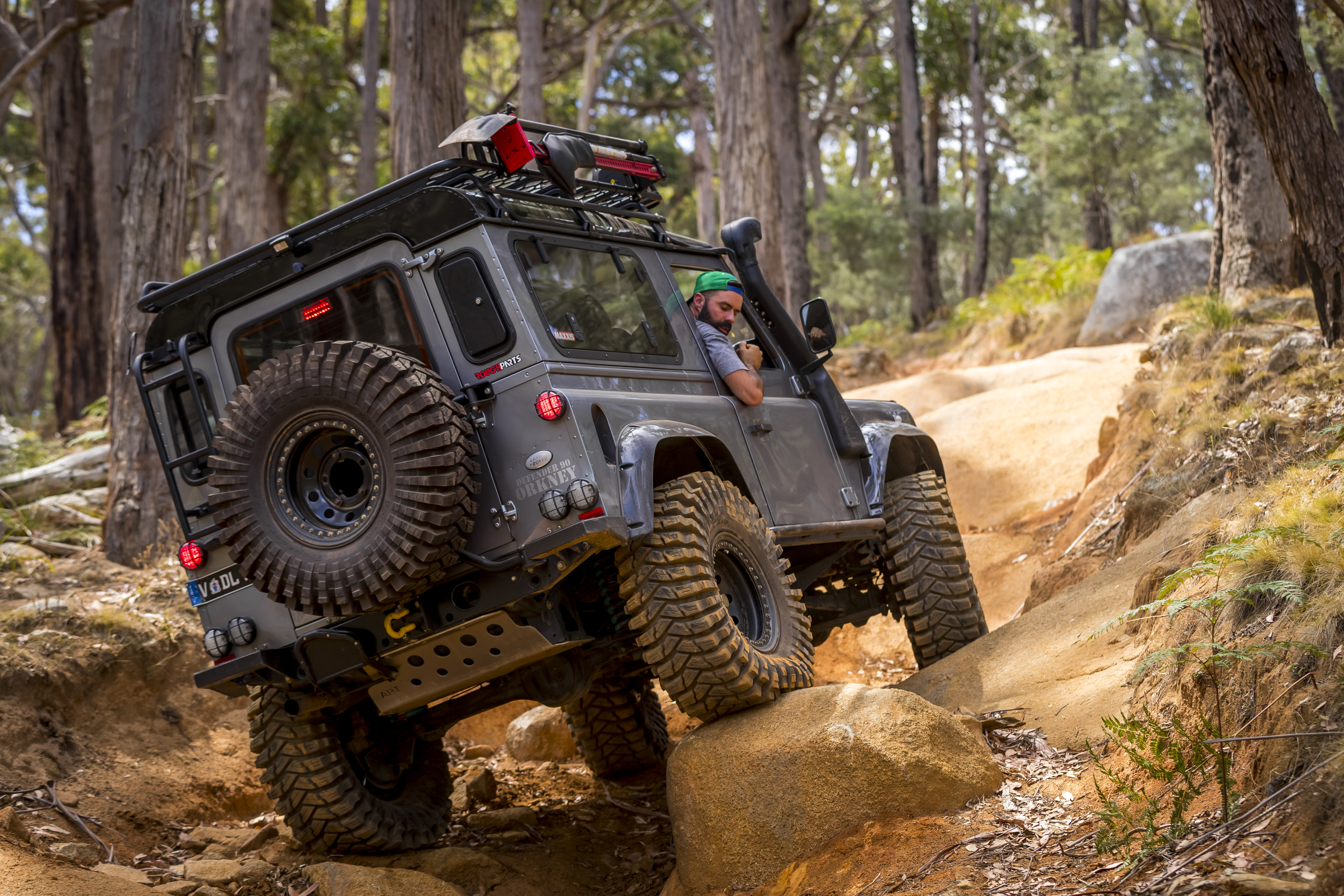
Note that not all tyres marketed for off-road use have a Light Truck construction. It might look like a tough all-terrain or mud-terrain tyre, but if the sidewall marking says 285/70R17 without the ‘LT’ in front of it, the tyre is most likely a Passenger (P) rated tyre, with a light construction that will be more susceptible to damage when driving in rocky terrain.
When clambering over rocky terrain you don’t want the underside of your 4×4 grounding on hard rocks, and the best way to avoid this is to ensure the vehicle has plenty of ground clearance. In the case of vehicles fitted with live axles front and rear, the diff housings will be the lowest points, and the only way to increase clearance under these is to fit larger diameter tyres or, in extreme cases, portal axles.
Nevertheless, a raised suspension will make it less likely for other underbody components to ground on rocks, such as the lower edge of the radiator, the engine sump, the transmission and the transfer case, as well as body components like the vehicle’s sills and front and rear bars.
When it comes to ground clearance, vehicles with independent suspension, or a combination of an independent front suspension (IFS) and a live-axle rear, also benefit greatly from the fitment of a raised suspension and larger diameter tyres.
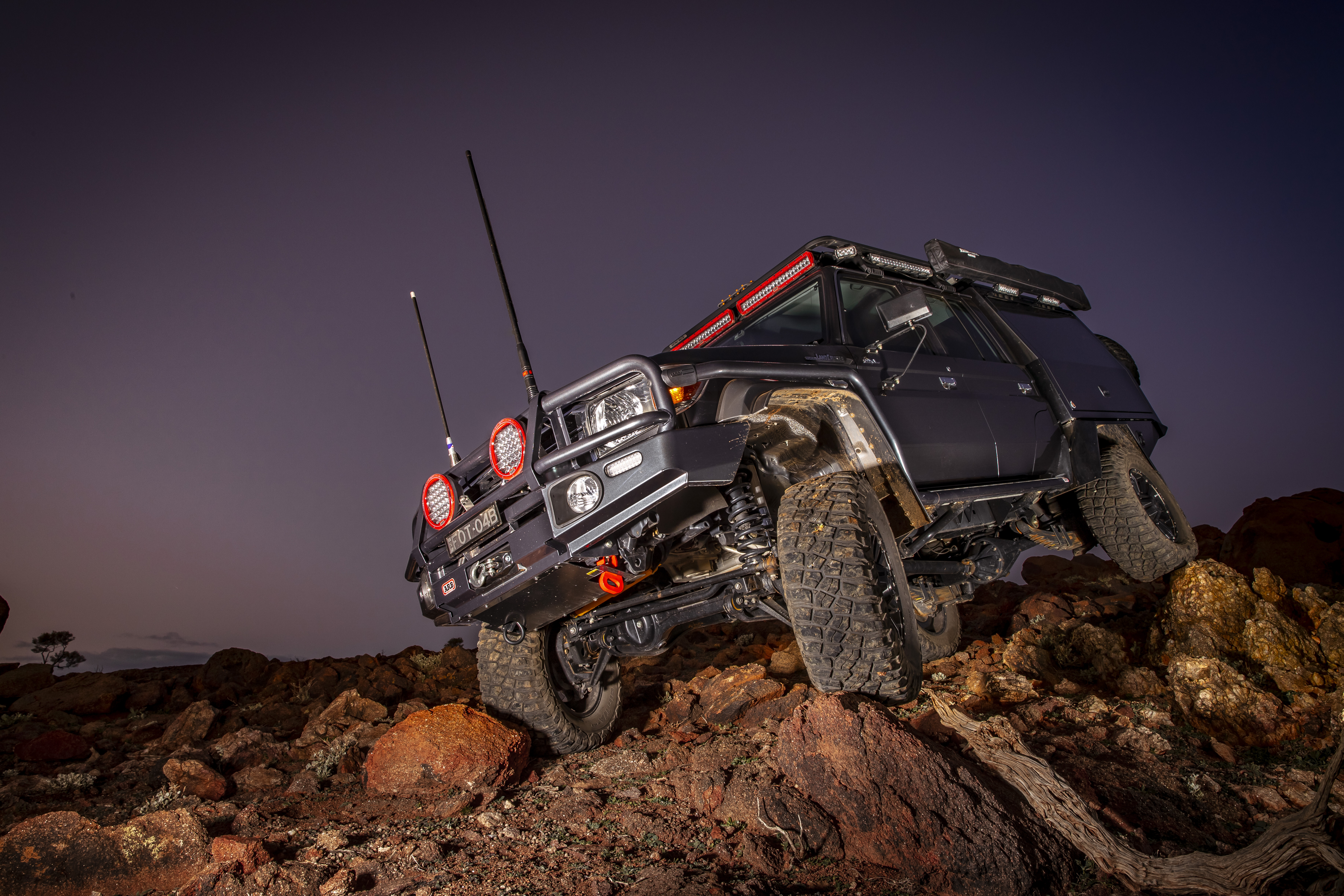
Another benefit of well-engineered aftermarket suspension systems is they provide additional wheel travel, which means your vehicle will be less likely to lift a wheel off the ground when clambering over uneven, rocky terrain, maximising available traction.
Driving too fast over rocky terrain is a sure-fire way to damage your vehicle, so you really want to drive as slowly as you can and only as fast as you need to, which is why you want a vehicle with good low-range reduction. This will allow you to crawl over obstacles at a snail’s pace while maintaining enough engine revs to prevent stalling in the case of vehicles with a manual gearbox. While you are unlikely to stall the engine of a vehicle with an automatic transmission, low overall gearing is still beneficial, giving the driver more control at slow speeds and minimising the strain on mechanical components.
Finally, a vehicle with an engine that delivers peak torque low in the rev range is better suited to crawling over rocks at slow speeds than an engine that needs lots of revs to deliver peak output. The idea when rock driving is to keep progress smooth and slow.
Protect your 4×4
Even with big tyres and a massive suspension lift, if the terrain is gnarly enough there is still a good chance the underside of your vehicle will ground on rocks, which is why you need decent underbody armour to protect vital mechanical components and body work.
Up front, a decent bash plate should provide protection for the radiator, steering components, engine sump, gearbox and transfer case. It needs to be manufactured from thick enough material (usually steel but sometimes alloy) to provide good protection, but it should also be designed in such a way that it doesn’t overly reduce ground clearance or impinge on the vehicle’s cooling system. It should also be securely mounted to the vehicle’s chassis at various points so it can handle big hits when driving over rocks.
Diff housings are also susceptible to damage when driving in rocky terrain. There are a couple of options when it comes to protecting your vehicle’s diffs; the standard housings can be replaced with stronger aftermarket items, or diff guards can be fitted over the OE housings. Fuel tanks and water tanks (where fitted) can also be damaged when rock driving, so if they hang low and look vulnerable, ensure they are also adequately protected by appropriately positioned bash plates.
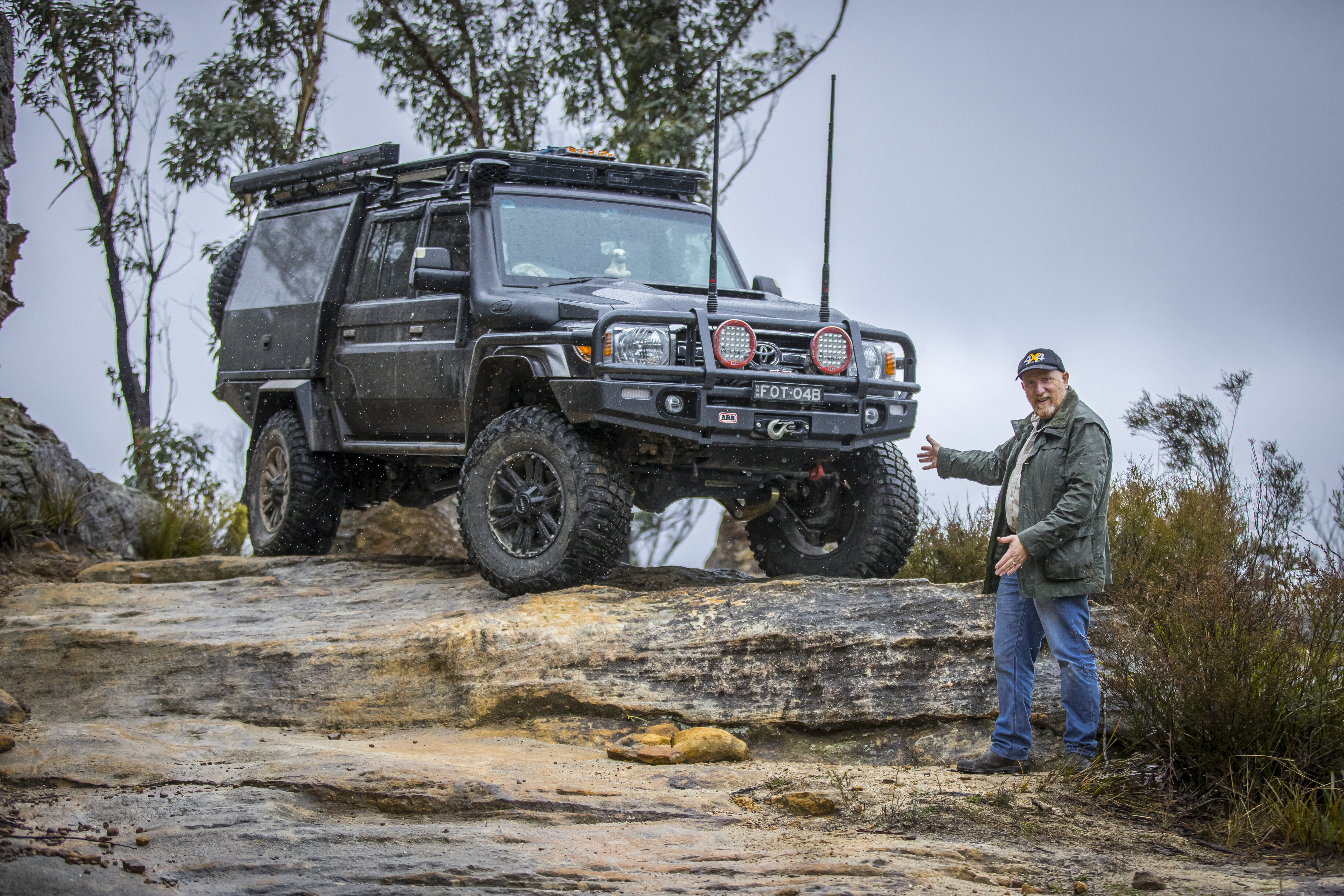
The sills of your vehicle are also susceptible to damage when driving off road, even if your vehicle is fitted with factory side-steps. In fact, the side-steps on many modern vehicles are manufactured from thin aluminium or plastic, and while they might support your body weight when you step inside, they will not support the weight of the vehicle when it lands on a rock.
Not only will the side-steps themselves be damaged, but they will offer little protection for the under-door sills. The solution is to fit a set of aftermarket steel-tube side-steps, or, even better, some rock sliders. If you opt for side-steps, make sure they are well-designed and engineered, with an underside profile that maximises ground clearance and several attachment points to the vehicle’s chassis. Well-engineered rock sliders will be able to support the full weight of the vehicle and won’t ‘catch’ on obstacles as they slide along rocks when driving off road.
No matter what style of frontal protection you go for, ensure the bar has a profile that will maximise the approach angle of your 4×4. Most bars are designed with wings that angle up at the sides, providing greater clearance at the steering wheels while maintaining protection in the centre of the vehicle, as well as a place to mount a winch. Bars made from steel offer the best protection when rock crawling, and while some alloy bars are able to cope with big hits, most have a steel subframe so are almost as heavy as a steel bar anyway.
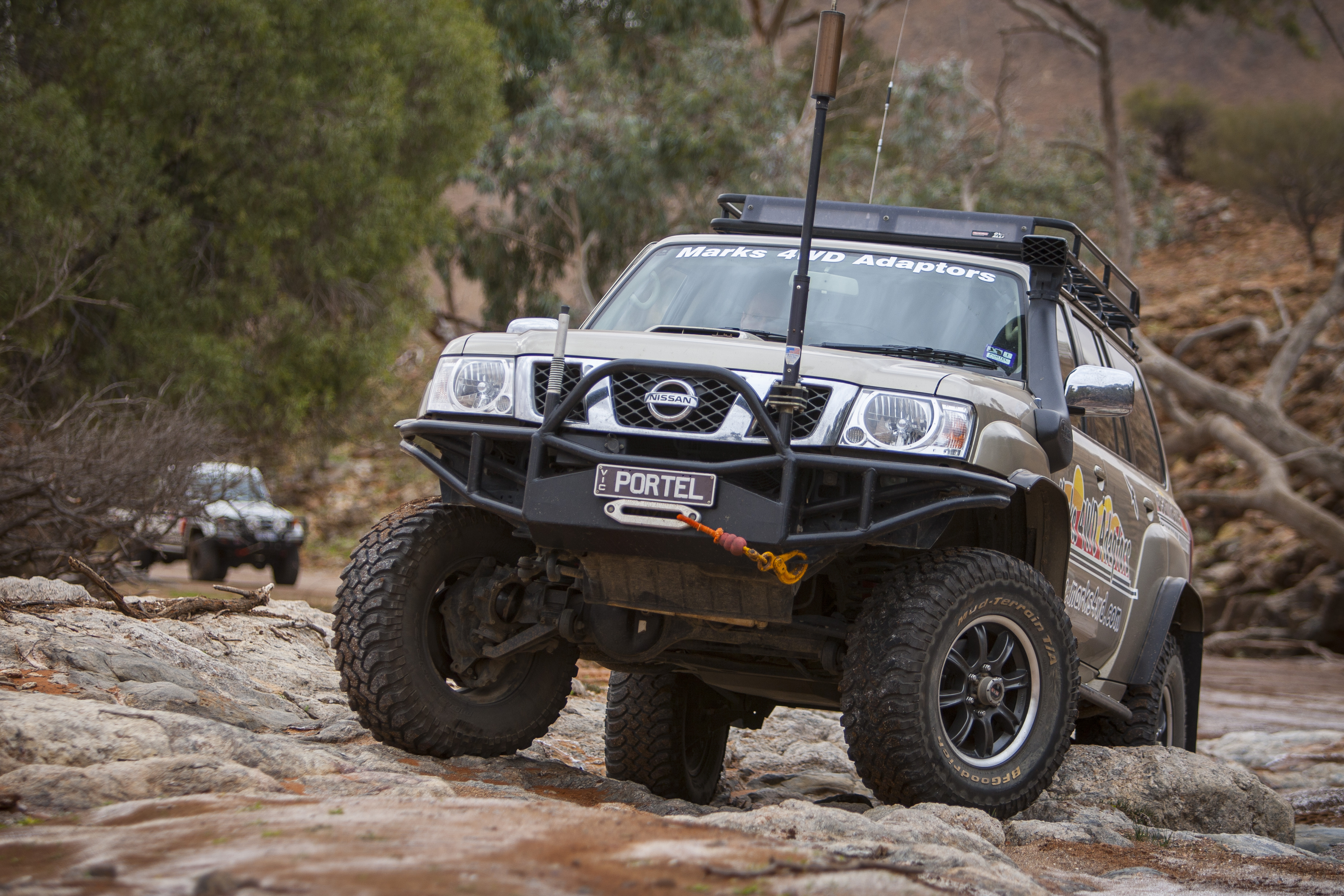
Many modern 4x4s have long rear overhangs, especially utes, and standard bumpers are pretty much ready for the scrapheap after their first off-road foray. There are plenty of aftermarket rear bars to choose from and, like the front bar, opt for a steel rear bar that is designed to maximise ground clearance.
Oh, and if you’re about to order a new 4×4, avoid ticking the towbar option when you’re on the website’s vehicle configurator; some OE tow bar designs are horrendous, and not only do they look awful but they compromise the vehicle’s departure angle. There are plenty of well-designed aftermarket options on the market.
Set up your vehicle
As soon as you head off road, the first thing you should do is to set your vehicle’s tyre pressures.
The correct pressure for rock driving will depend on several factors, including the terrain type, the weight of your vehicle and the kind of tyres fitted. Assuming your rig wears quality LT tyres and you run them at 35psi on the road, for driving in rocky terrain you will want to lower pressures to around 22 to 28psi.
Lowering tyre pressures offers several benefits: it results in a longer tyre footprint, which means more traction; it allows the tyres to conform to uneven terrain, which minimises the chance of impact damage across the tread face; and it improves ride quality for vehicle occupants. When running lower pressures off road, always be wary that the tyre sidewalls will be more susceptible to damage as they bag out, and there is even a chance you could peel a tyre off the rim if you make sudden and aggressive steering inputs.
The next thing to do is to select the appropriate gear and the best traction aids for the terrain. If you are clambering over big rocks, you will want to do so as slowly as possible, so first gear low range should be selected; but if you need to climb a steep hill over shaly rocks, you might be better off in second gear low range so you can build and maintain momentum. Remember, you want to go as slow as you can and only as fast as you need to.
In challenging terrain, engage all the traction aids available to you. Bear in mind, however, that on some vehicles, engaging the rear diff lock will switch off the traction control, which can make it more difficult to climb over rocks if you exceed maximum wheel travel. So, if you’re struggling to climb over an obstacle with the rear diff lock engaged, you might want to try it without to see if that helps. If your vehicle is set up like this, you should consider fitting an aftermarket front diff lock.
Master your driving technique
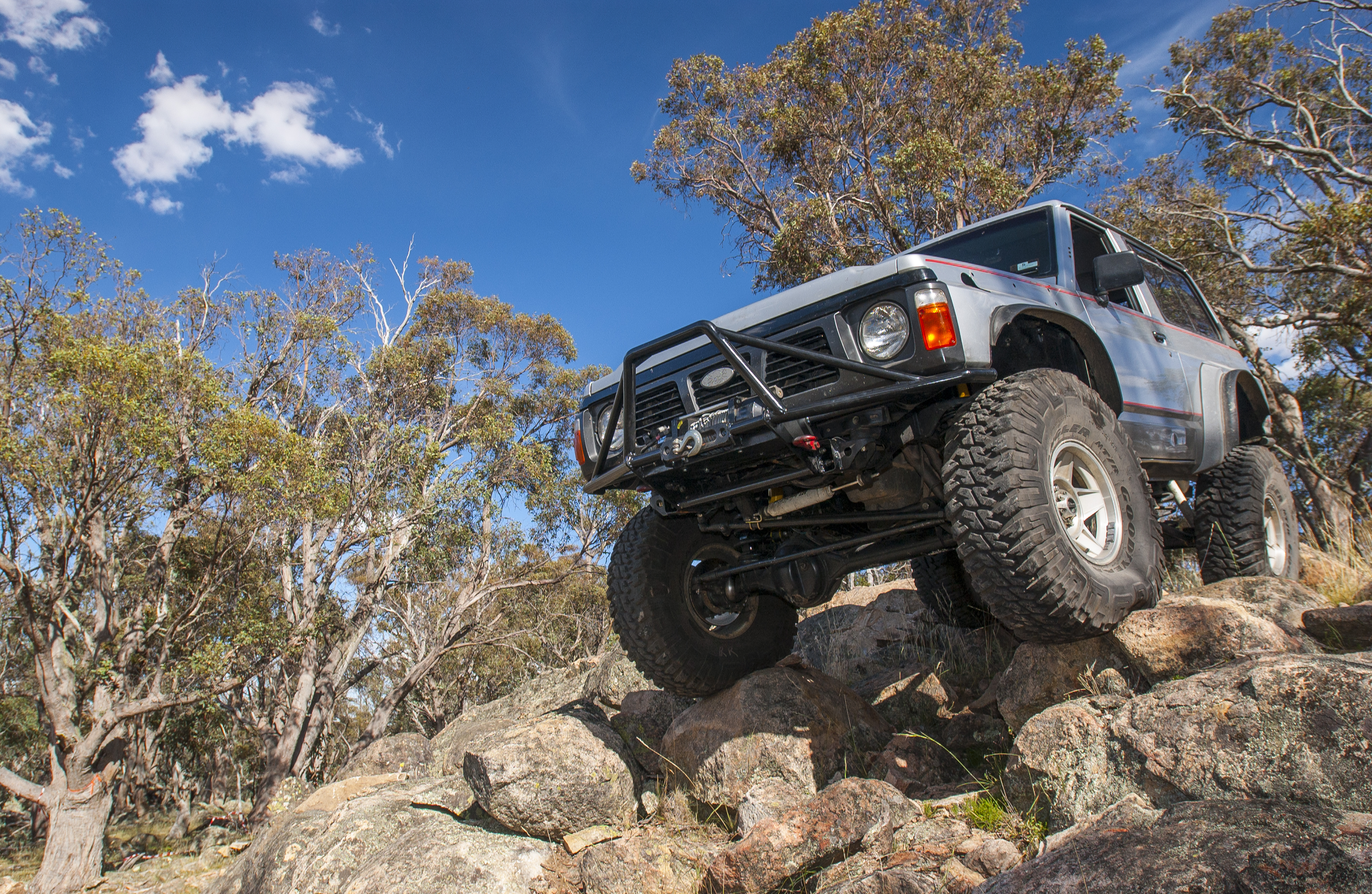
As mentioned, the key to successfully negotiating rocky terrain is to do it as slowly as possible, but in some circumstances you will need enough momentum to make it over rocks. With practice, you will discover the best gear to select and the best speed to drive over different types of rocky terrain.
Look well ahead when driving over rocks and plan your route. Also keep an eye out for an escape route if things don’t go to plan. In particularly tricky terrain, it’s advantageous to have a spotter outside of the vehicle who can keep an eye out for obstacles and direct the driver to take the safest route.
For the driver and spotter team to be effective, however, it’s vital they communicate clearly with each other, whether they are using hand signals, a UHF radio or a combination of both. Always have a chat before tackling difficult terrain to ensure both the driver and spotter understand and agree on signals.
The other advantage of a spotter is they can be used to clear obstacles and perform track-building duties when required. It’s vitally important the driver can always see the spotter, and the driver should stop immediately if the spotter can’t be seen. Do not resume driving until visual contact has been established and the spotter has given the all-clear.
What to do if you get stuck
Sometimes things don’t turn out as envisaged, no matter how much thought and planning is involved.
If you get stuck when driving over rocky terrain, you will obviously need recovery equipment to get out. If you are travelling with other vehicles, a snatch recovery might be a quick and safe solution; but if travelling on your own, you might need to do some track building to get out, using whatever is available whether that includes rocks and branches, recovery boards or a combination of those items.
A vehicle-mounted winch is an invaluable tool when rock driving, especially if you’re on your own, as is a high-lift jack, which can be used to lift a vehicle to manoeuvre it into a better position, or to pack up the terrain under the wheels. Bear in mind that high-lift jacks are inherently unstable, so you really need to know what you’re doing if you use one. And never put any part of your body under a vehicle that has been elevated using a high-lift jack. As well as recovery gear, you will need to ensure your vehicle is equipped with rated recovery points front and rear.
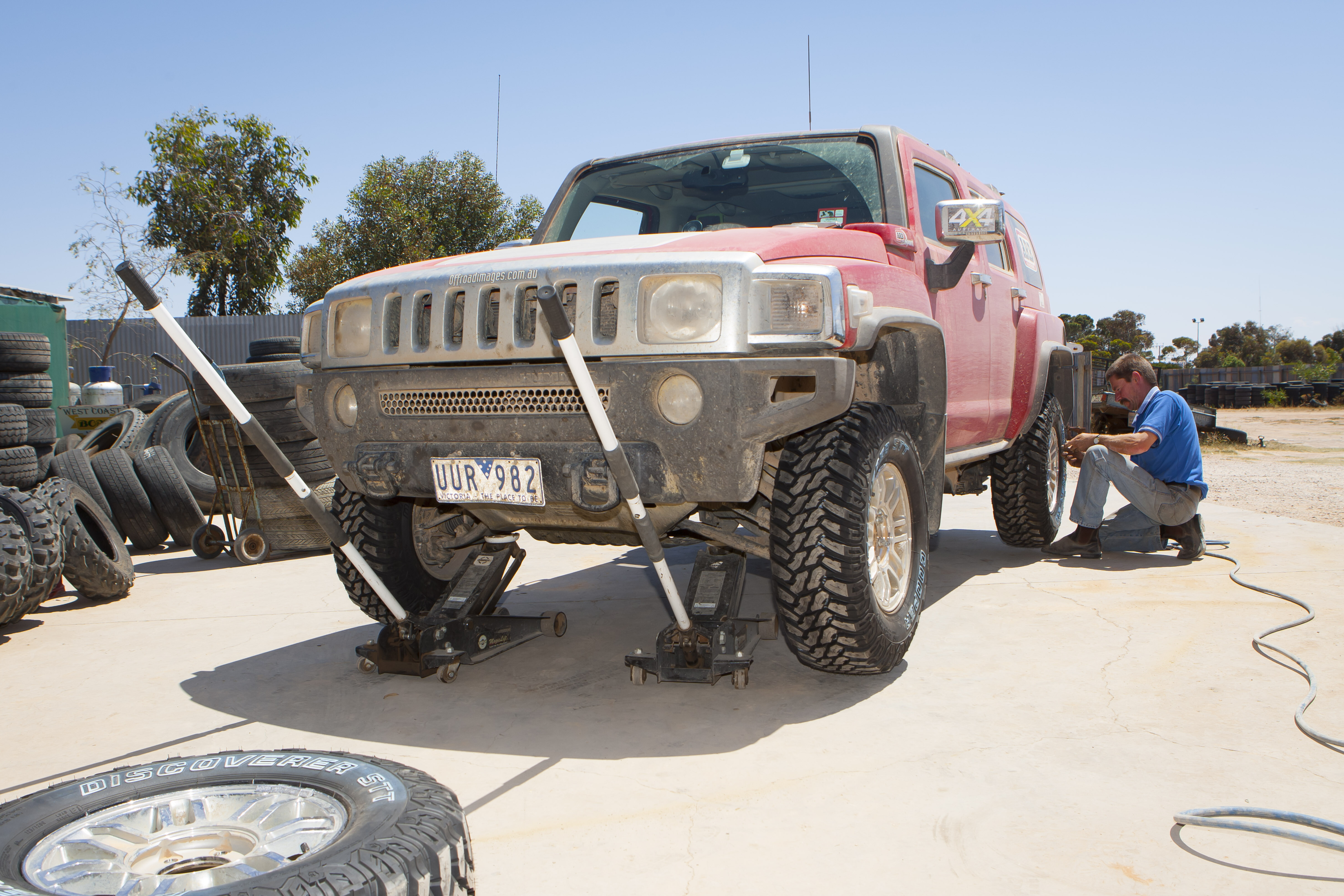
Tyre damage is common when driving in rocky terrain, so you should always carry a tyre repair kit, a quality air compressor and gauge, and at least one spare tyre. Also make sure your vehicle’s jack is in good working order and that you know where your wheel-changing tools are.
There are plenty of other things that can break when rock driving, so having the mechanical knowledge, the tools and the components to make trackside repairs will be advantageous. As will having a communication device that works when you are out of mobile phone range, such as a satellite communicator or a sat phone. And it’s not just vehicles that can be damaged in rocky terrain, so carry a first-aid kit, and know how to use it.
Rock crawling is bloody good fun
After reading this you probably think you’d have to have rocks in your head to go rock driving.
Sure, rocks are hard on your vehicle and on your gear, but successfully tackling rocky terrain can be bloody good fun, and sometimes unavoidable depending on where you want to get to. However, with the right vehicle set-up, the right gear and a bit of knowledge, you too can become a rock star, so get out there and enjoy it.
What to do
- Fit LT tyres and lower tyre pressures
- Fit lifted suspension and under-vehicle protection
- Survey terrain ahead and use a spotter if possible
- Drive as slowly as possible and only as fast as needed
- Carry tyre repair kit, compressor and recovery gear
What not to do
- Drive too fast for the terrain
- Drive where you can’t get out again
- Proceed without clear communication with your spotter
- Drive if you can’t see your spotter
- Get under a vehicle that’s been elevated with a high-lift jack
FAQs
What type of vehicle is best for rock crawling?
A capable four-wheel drive with plenty of ground clearance, long suspension travel, effective traction aids, minimal front and rear overhangs, decent low-range gearing, strong low-rev torque and appropriate tyres.
What tyres are best for driving on rocky terrain?
Light Truck (LT) construction tyres are best suited to rocky terrain because they have a tougher construction and are more resistant to damage. All-terrain or mud-terrain tyres can both be suitable, but LT construction is important.
What tyre pressures should I use for rock crawling?
If your vehicle runs quality LT tyres at around 35psi on the road, you will want to lower pressures to around 22 to 28psi for driving in rocky terrain.
How fast should you drive when rock crawling?
You should drive as slowly as you can and only as fast as you need to. In some circumstances, you will need enough momentum to make it over rocks.
What protection and recovery gear do I need for rock crawling?
Decent underbody armour, bash plates, diff protection, strong side-steps or rock sliders, appropriate frontal and rear protection, rated recovery points, a vehicle-mounted winch, recovery boards and other recovery equipment can all be useful.
Should I use a spotter when driving over rocky terrain?
In particularly tricky terrain, it is advantageous to have a spotter outside the vehicle who can keep an eye out for obstacles and direct the driver to take the safest route.
For most Australians, their introduction to Arctic Trucks (↗) would have come via the 2007 episode of Top Gear in which the lads attempted to drive a pair of Arctic Trucks AT38 HiLuxes to the Magnetic North Pole.
The balloon-like 38-inch tyres fitted to the specially prepared Toyotas gave them the ability to drive over soft snow, ice and even rivers on their odyssey, with all the usual Top Gear shenanigans and humour. For Aussies watching the adventure, the idea of a HiLux riding on such massive tyres was simply a dream that would never be realised due to local vehicle regulations. Well, that’s all about to change with the introduction of Arctic Trucks to Australia.
While fitting 38-inch balloon tyres to a HiLux might be stretching what is possible on Australian roads and tracks, the Arctic Trucks models heading our way will bring new levels of big-tyre capability to our 4x4s – and they will be road-legal Australia-wide.
The Arctic Trucks story
Arctic Trucks was formed in Iceland more than 30 years ago through a collaboration with Toyota Iceland to develop vehicles for exploring the glaciers, snowfields and volcanoes of the Land of Fire and Ice.
Their ability to traverse soft snow and rugged terrain came largely from the massive tyres, which allowed the vehicles to ‘float’ over soft snow and irregular surfaces. To fit the oversized tyres to otherwise standard Toyota vehicles without resorting to massive suspension lifts, Arctic Trucks opened up the wheelarches, fitted flares and enlarged the wheel openings. This allowed the big rubber to fit beneath the vehicles while maintaining a low centre of gravity and widening the wheel track to improve stability.
Of course, suspension and driveline components also had to be strengthened and optimised to cope with the additional loads and terrain, but the design proved successful and was soon applied to a range of vehicle makes and models across Scandinavia.
Over time, Arctic Trucks conversions have evolved to such a high level of design and engineering that they have been accepted by original equipment manufacturers including Toyota, Isuzu, Nissan and more. This has allowed Arctic Trucks vehicles to be offered through Toyota and Isuzu dealerships in some countries. Arctic Trucks also has divisions and OEM distribution in Norway, the UK, US, Sweden, Poland and South Africa, and now it is here in Australia.
Marks 4WD is a Melbourne-based company many Australian 4×4 drivers will know, if not for its extensive catalogue of engine-conversion kits and components, then for its portal-axle conversions for LandCruisers, both locally and for export around the world. Marks is part of a larger engineering firm, giving it the equipment and technical capability to build just about anything. Now, it has become the Australian agent for Arctic Trucks.
General Manager of Marks 4WD, Matt Greenhill, had this to say regarding the new partnership: “When engineering-led brands come together with a shared vision, the results are often greater than the sum of their parts, which is precisely what this partnership between Marks 4WD and Arctic Trucks promises to deliver.
“We’re excited to combine our extensive engineering expertise, local manufacturing capability and reputation for innovative driveline solutions with Arctic Trucks’ record breaking history of off-road design, development and deployment across earth’s most extreme environments to bring these ‘cool and capable’ OEM-level high mobility vehicle conversions officially to Australia.
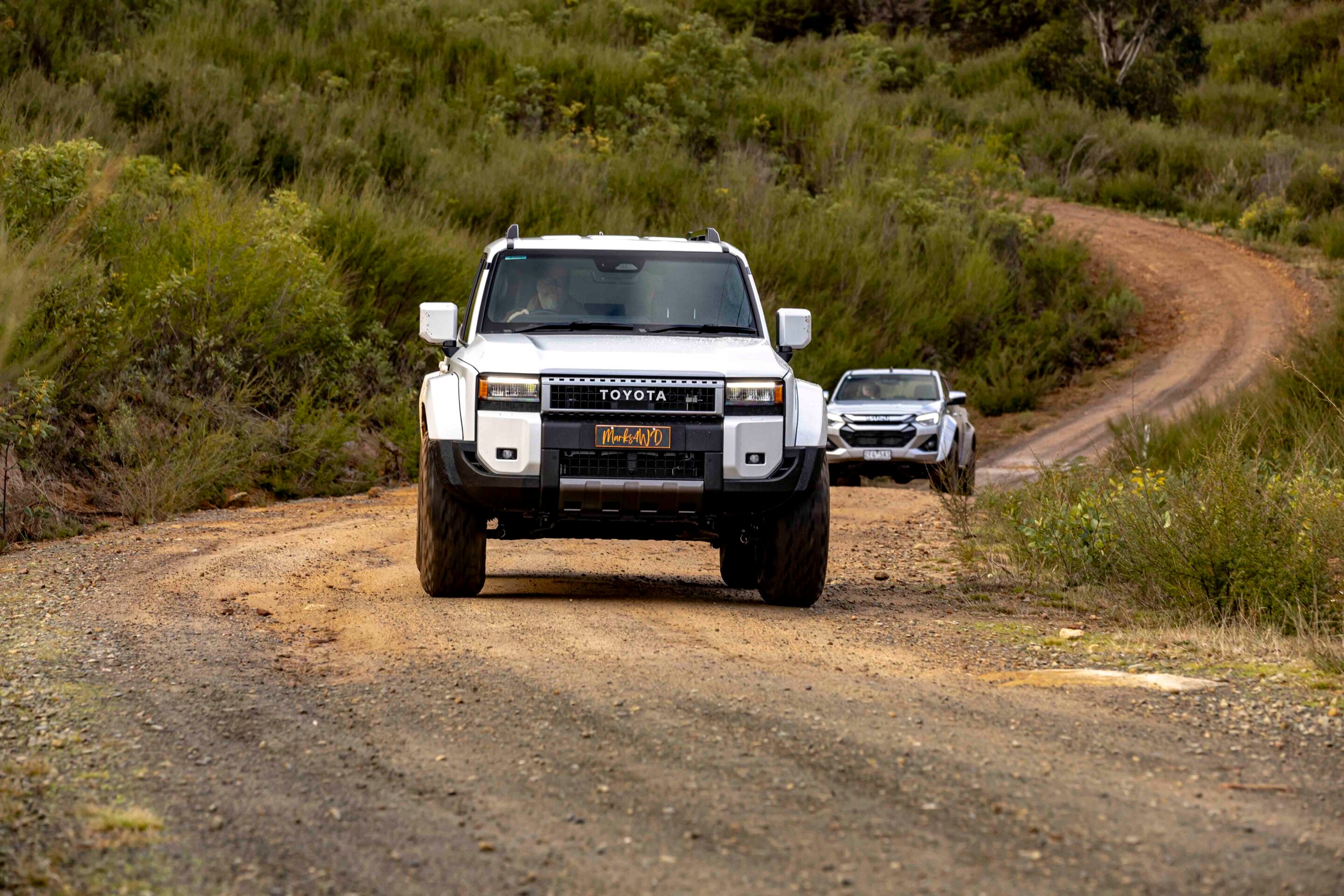
“Over the past 12 months, our teams have worked closely together to achieve major milestones, including successful proof-of-concept builds, and associated engineering, testing, validation and compliance activities.
“With SSM approval for the Isuzu D-Max AT35 already secured and the Toyota Prado 250 AT37 soon to follow, we are demonstrating that world-class expedition vehicles can be built for Australian conditions without compromising compliance, quality or performance.
“For customers, that means more than just an upgraded four-wheel drive; it means vehicles backed by two trusted engineering brands, combining global expedition capability with Australian design, testing and ADR compliance.
“The result is daily-drivable comfort, control and composure, combined with exceptional off-road performance, reliability and confidence, both on and off the beaten track.
“As the range continues to expand, Marks 4WD and Arctic Trucks aim to set a new benchmark for owners and operators who demand uncompromising capability, engineering excellence and the confidence to go further.”
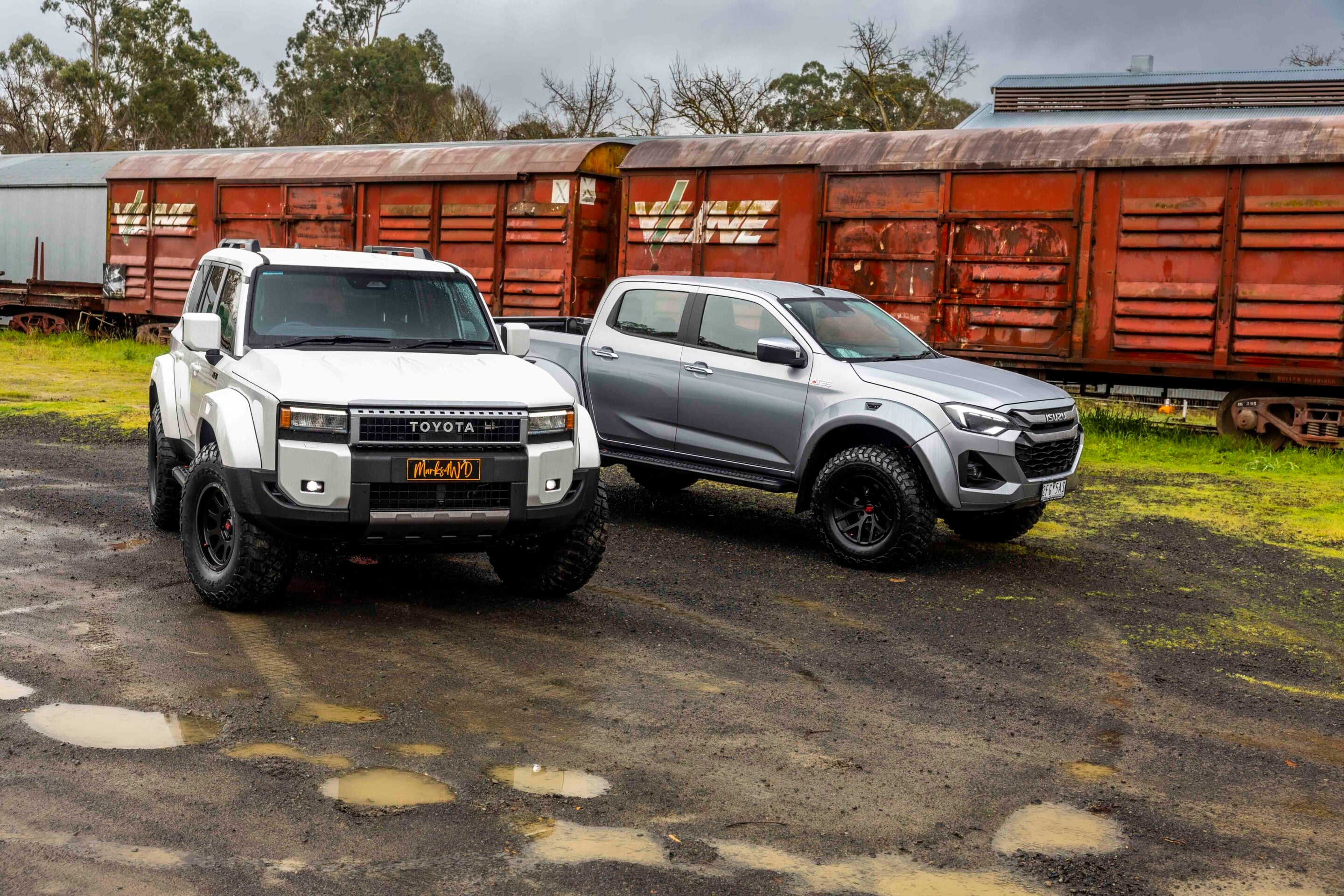
Carrim Bundhun, Project & Commercial Development Lead at Arctic Trucks added: “We’re excited to finally introduce Arctic Trucks officially to Australia in partnership with Marks 4WD… and our teams have worked long and hard to do so in the right way.
“Australia’s vast scale, extreme terrains and rich off-road culture demand ultimate comfort, premium performance and reliable long-range mobility. All of these things are at the core of everything we do at Arctic Trucks, and we look forward to our AT vehicle versions and conversions offering even more choice for Aussie owners and operators to ‘Explore Without Limits’ with complete peace of mind, whatever their challenge.”
AT35 and AT37 launch in Australia
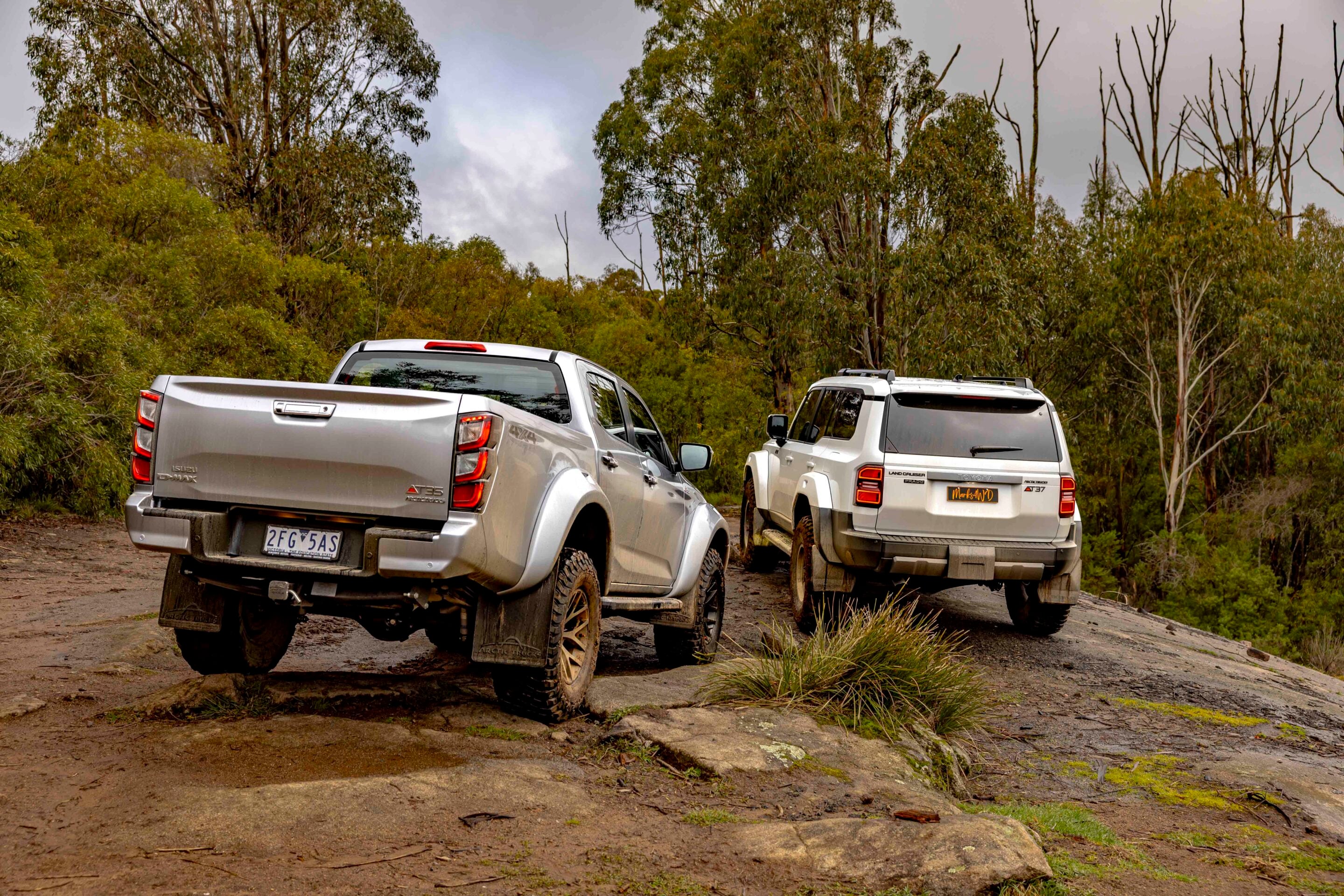
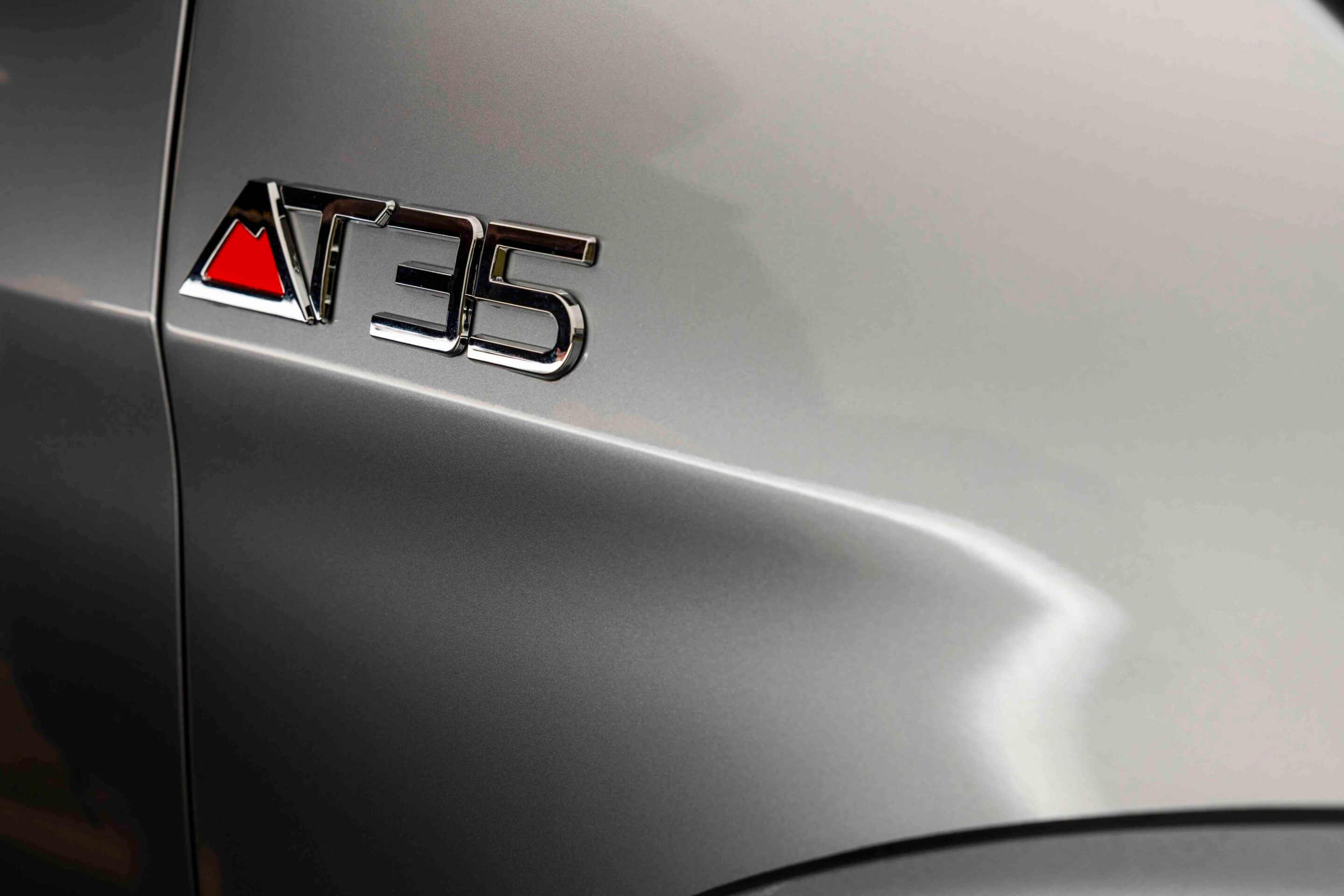
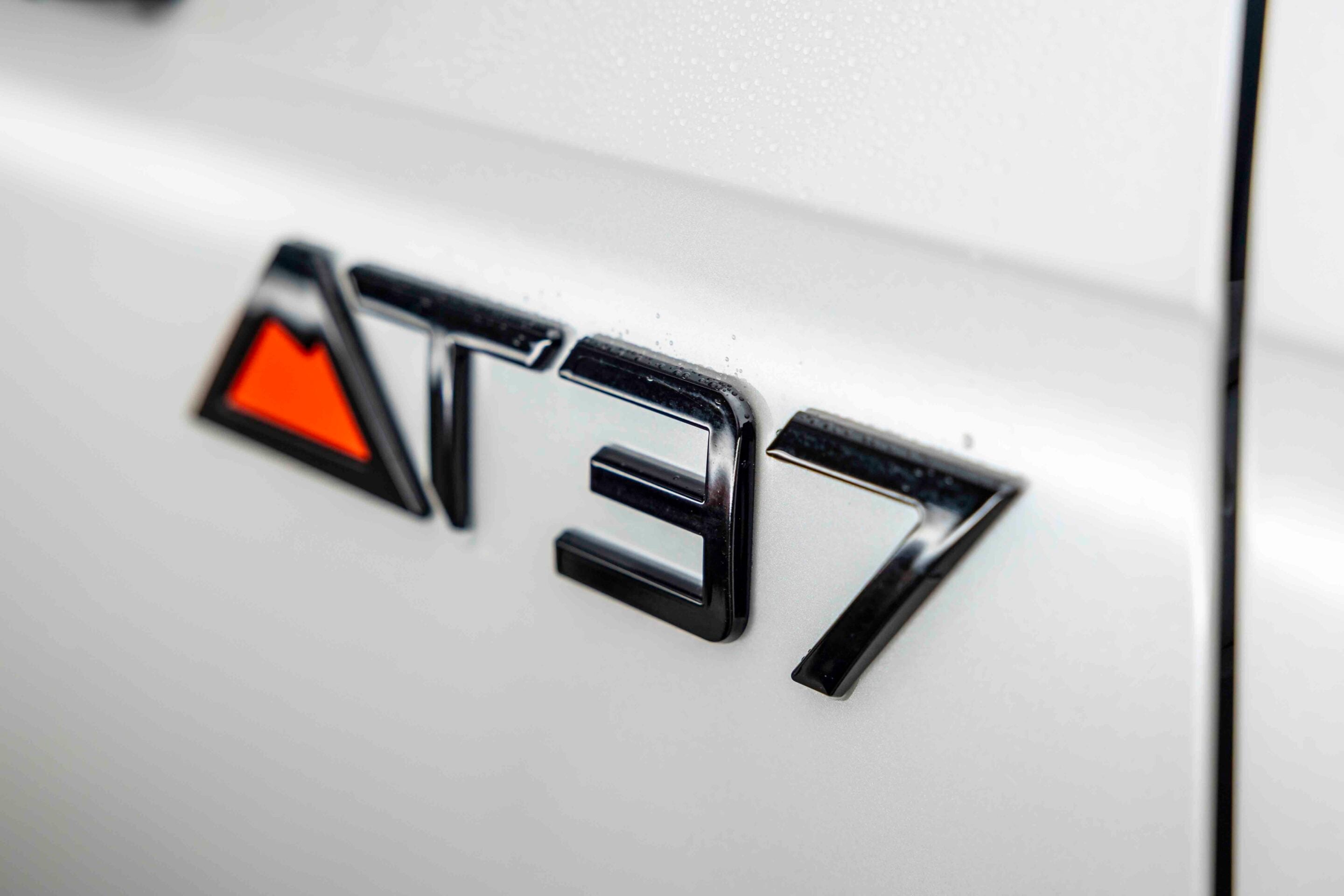
Marks 4WD will launch Arctic Trucks in Australia with two models: the AT35 Isuzu D-MAX and the AT37 Toyota LandCruiser Prado 250 Series. As the names suggest, these two 4x4s ride on 35- and 37-inch tyres respectively.
Both will be sold with full Australian compliance and registration under the Second Stage Manufacturer (SSM) scheme, meaning the modifications are certified Australia-wide.
Arctic Trucks offers conversions for a wide range of 4x4s, but the Toyota and Isuzu products are the ones built to standards that allow them to be sold through original equipment dealerships in some countries. That won’t be the case in Australia, where they will be offered exclusively through Marks 4WD.
While only the D-MAX and Prado will be available at launch, we have to think the AT35 Toyota HiLux will follow at some stage. Arctic Trucks was still developing its conversion for the ninth-generation HiLux when the Australian deal was finalised, so it will be interesting to see the latest model receive the AT treatment.
Ahead of their official Australian unveiling, Marks 4WD was kind enough to give us a closer look at the AT35 Isuzu and AT37 Prado, and put us behind the wheel of both.
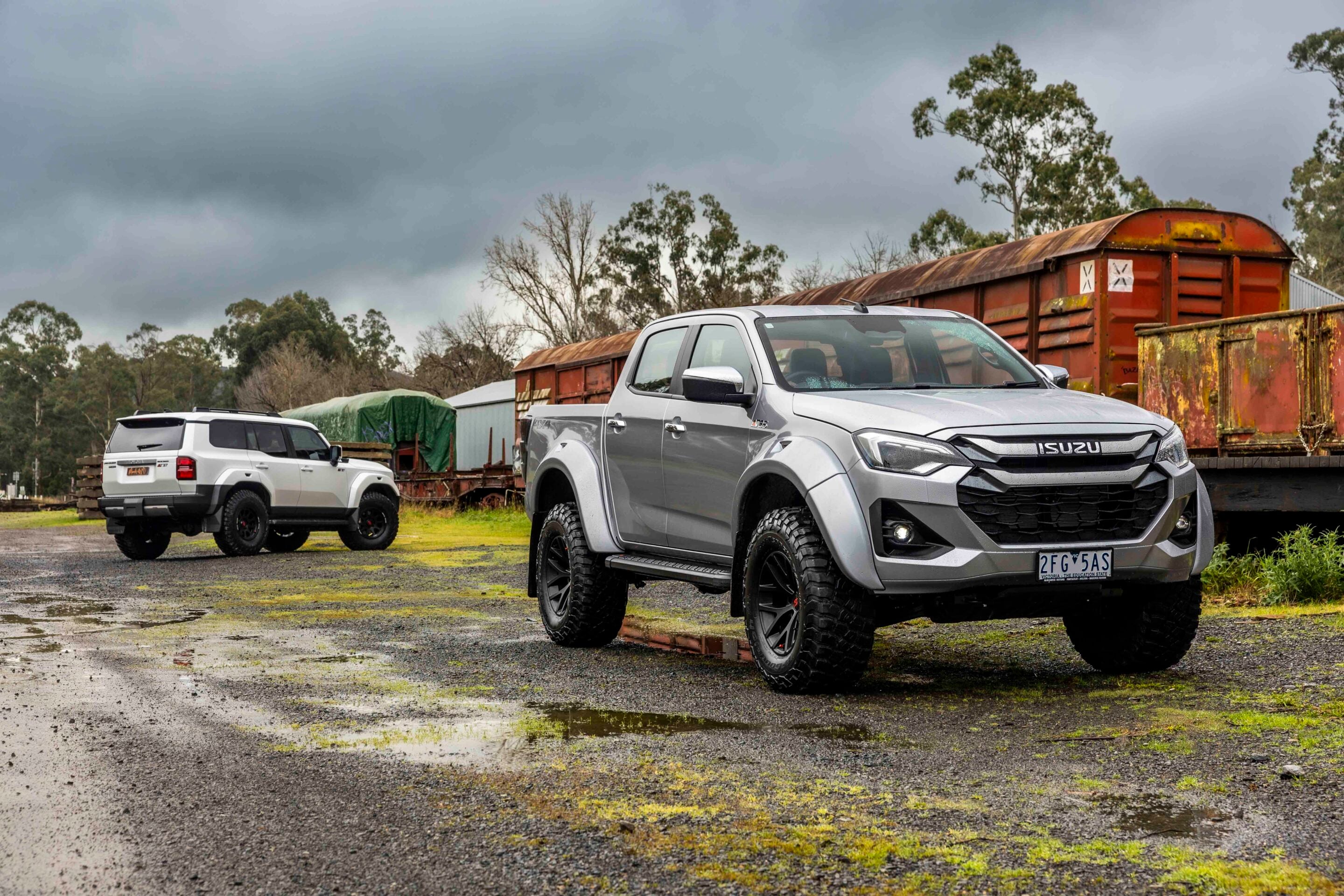
AT35 Isuzu D-MAX
It was a cold and wet Melbourne morning when we arrived at Marks 4WD headquarters to pick up the Arctic Trucks. It wasn’t quite arctic weather, but it was certainly heading that way. The AT37 Prado and AT35 D-MAX sitting clean in the carpark weren’t going to stay that way for long.
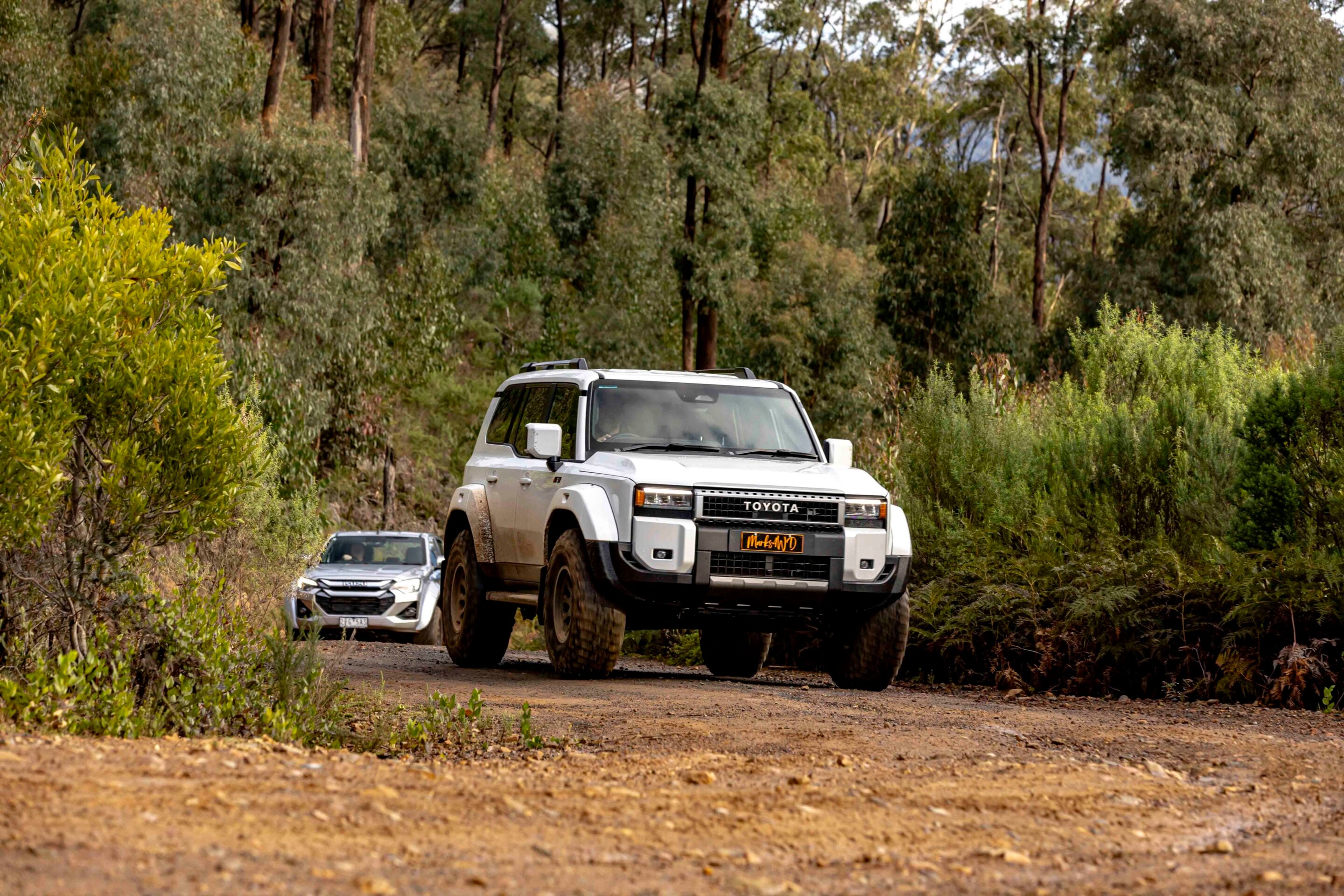
The vehicles look impressive standing tall on their oversized BFGoodrich mud-terrain tyres, with massive wheel-arch flares covering the rubber. The flares are big, but they appear well integrated into the vehicles and don’t look out of place.
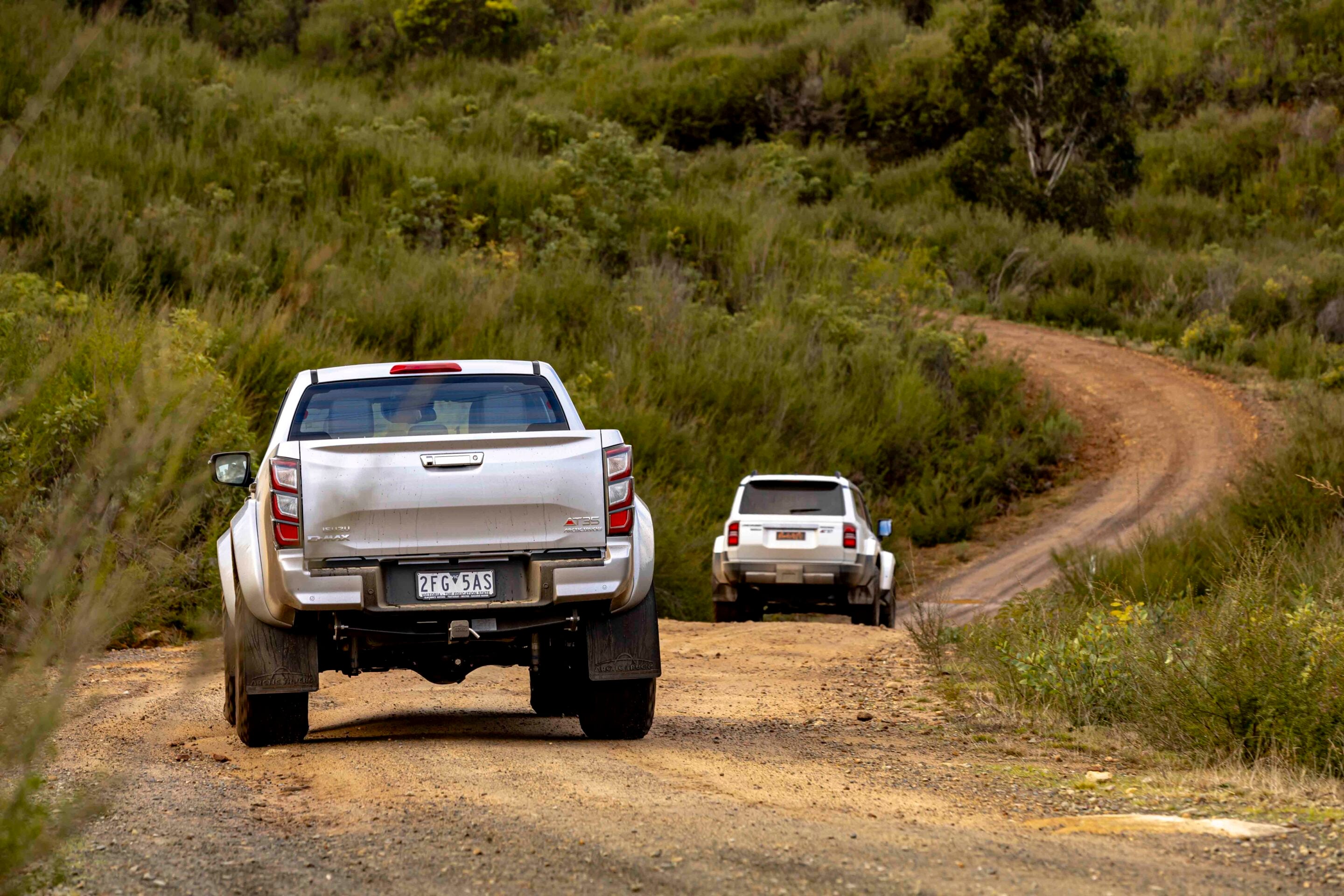
My first stint was in the AT35 Isuzu, and stepping up into it was unlike climbing into any D-MAX I’d driven before. The AT side steps and rock sliders are definitely needed when getting in and out of these vehicles. This is a high-grade D-MAX with leather seats and all the trimmings. Aside from the AT logos on the floor mats and trim, the cabin is just like that of any other new Isuzu 4×4. Only the view down over the bonnet signals the vehicle’s increased ride height.
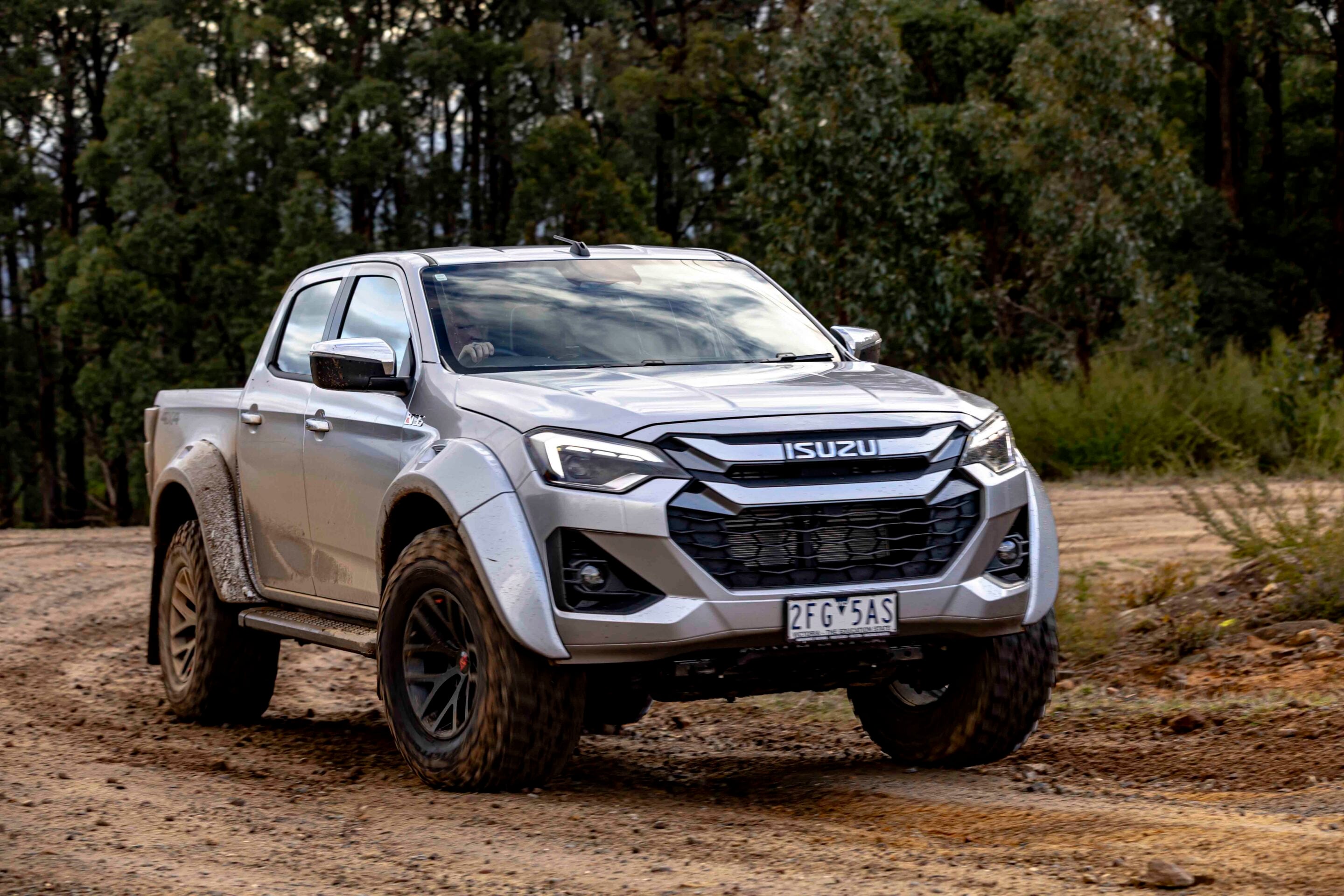
Heading out on the road, you can feel and hear the BFGs beneath the vehicle, and the steering feels a touch heavier than I remember it being in a standard ute, which is to be expected with bigger and heavier tyres. Aside from this, it drove very much like a normal D-MAX.
An early observation was that the Isuzu seemed to have lost the annoying transmission aggressiveness that has always bothered me in the standard vehicle. Whether this was due to the change in overall gearing caused by the larger tyres or something else, it was much appreciated on the road.
There are no mechanical or calibration changes to the drivetrains of either vehicle, aside from recalibrating the speedometers to reflect the increased tyre size. Both AT models retain their standard gearing and didn’t seem to suffer too much from the move to larger-diameter tyres. Marks 4WD will be able to offer final-drive gearing options if owners feel they need them.
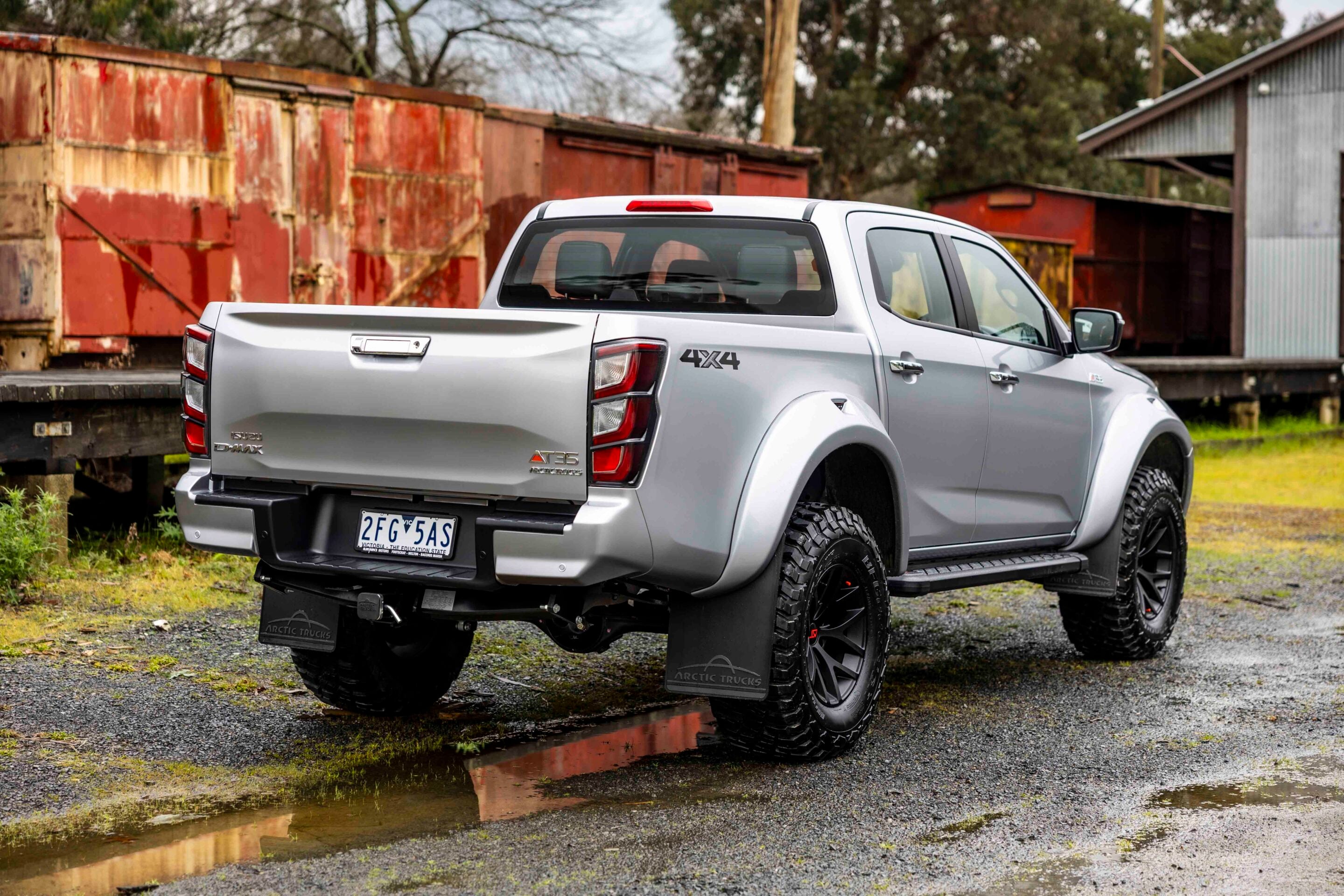
While the AT35 D-MAX has been available through Isuzu dealers in the UK for many years, the base vehicle there is not offered with the 3.0-litre 4J diesel engine that is the popular choice in Australia. As such, this particular AT35 uses a suspension calibration developed by the Arctic Trucks team in South Africa, where the same engine is available and road conditions and vehicle use are similar to ours.
The suspension uses Bilstein struts up front, with Bilstein shocks working with Terrain Tamer parabolic leaf springs at the rear. Rougher sections of road reveal that the D-MAX is stiffly sprung, as though it has been set up to carry a constant load. As part of the SSM approval, Marks has included an increase in GVM to 3650kg. The increase is taken up slightly by the additional mass of the AT35 conversion but, at only a 120kg difference, this still gives the additional payload expected of a vehicle in this category.
The firm ride was also evident on gravel and rocky unsealed roads, but the big tyres and wide track gave the D-MAX a sense of stability the standard vehicle never had. It felt poised and purposeful on these roads and made light work of a muddy and rutted low-range track, with the factory rear differential lock engaged for added security.
A standard D-MAX, or any other midsize 4×4 ute, would have dragged its rear differential along the rutted track, if it didn’t become hung up on it altogether. This clearly demonstrated the advantage of the taller tyres over the original-equipment size.
AT37 Toyota Prado GXL
The AT37 Prado was getting all the looks and attention as we negotiated the morning peak-hour traffic on the way out of town.
It truly is a spectacular-looking rig and the hero vehicle of this duo. Its boxy wheel-arch flares perfectly complement the slab-sided retro styling of the vehicle, and the 37-inch BFGs look like they were made to fit inside them. The Arctic Trucks alloy wheels complete the look of the wagon.
If the AT35 Isuzu made light work of the muddy tracks, the AT37 Toyota positively owned them, crawling through the ruts without the underbody or rear differential touching down at all. The Prado rides on high-end suspension from a company called R53. R53 is a UK company specialising in performance suspensions for military and motorsport applications, from prestige supercars to GT race cars, rally cars and Dakar-racing rigs. The three-way remote reservoir, internal bypass dampers and hydraulic bump stops are tailor-made for the specific application and fully adjustable to fine tune them for the job at hand.
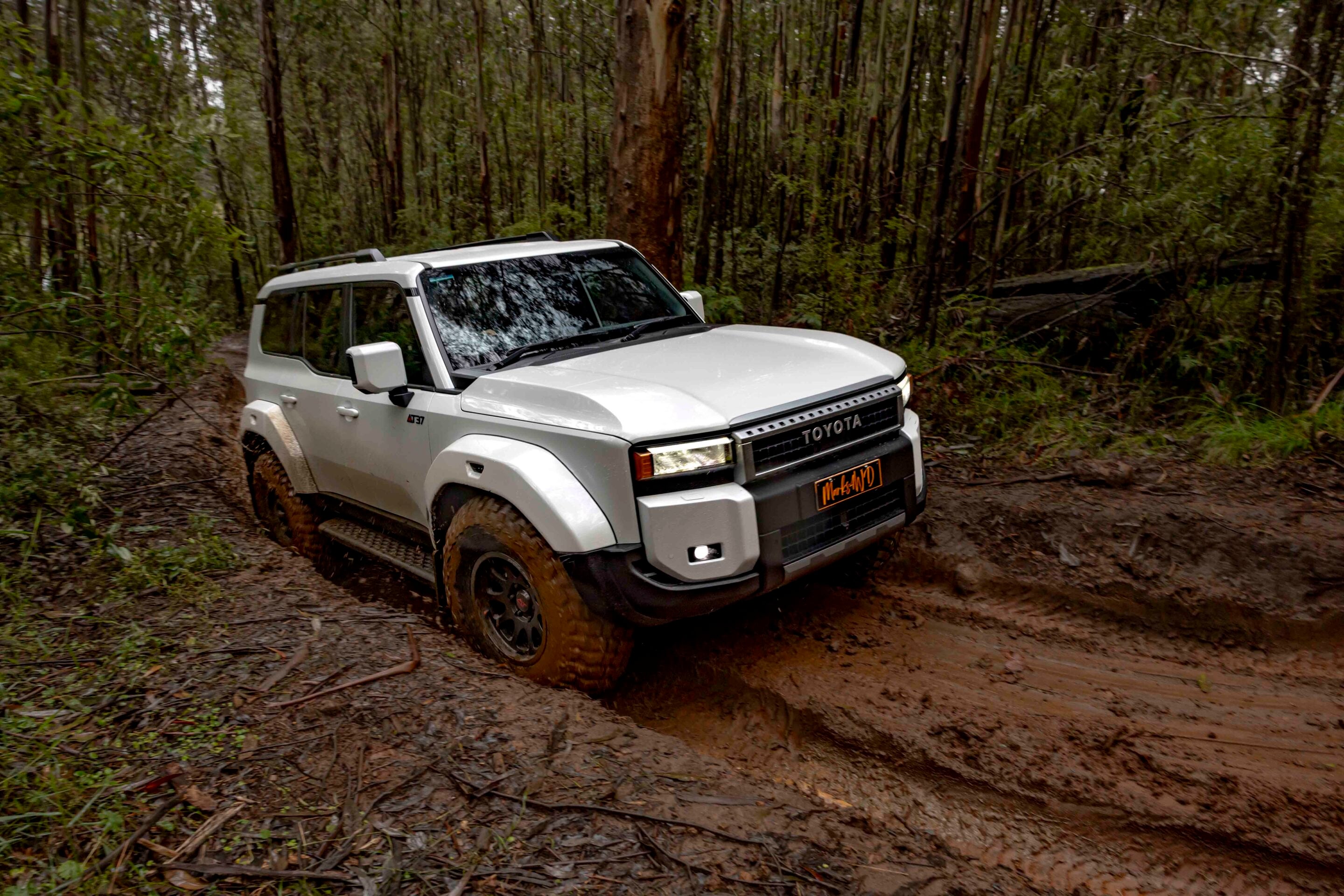
One difference between the Isuzu ute and Toyota wagon conversions is that the Prado’s wheelbase has been increased by around 40mm to move the rear axle rearwards, allowing the tyres to clear the rear passenger-door openings. It was easier to relocate the rear coil-spring and shock mounts than to cut and modify the door openings. Custom-made upper mounts, longer suspension arms and a spacer in the tailshaft make the axle relocation possible.
Driving the Prado on open gravel roads, you can appreciate the quality of the suspension and the control and balance it affords the vehicle. Even on 37-inch tyres, the Prado was composed and settled over bumps and potholes, and stable through bends and tighter corners.
The Arctic Trucks philosophy of keeping mass low and widening the wheel track to maintain a low centre of gravity could really be appreciated on sweeping gravel roads like these. On some sections of track that were akin to driving over cobblestones, I again thought the suspension was too stiff for my liking, and this would likely also be the case on outback roads. But that’s the beauty of a fully adjustable suspension package, as it can be customised to suit your requirements and driving style.
I should also note that this drive was all done with road pressures in the tyres. With these lowered to off-road pressures, which Arctic Trucks advise as low as 8psi for slow speeds over soft terrain, comfort would be significantly improved.
Testing the AT35 and AT37 off-road
A final track before the light faded completely presented us with a steep climb and a large undulation mid-corner that loaded the tyres and tested articulation and traction.
The AT35 D-MAX came to an abrupt halt as soon as it unloaded the inside rear tyre and the electronic traction control couldn’t rein it in. Engaging the factory rear differential lock allowed it to climb over the obstacle.
The AT37 Prado, with its larger tyres, more compliant rear suspension and sharper electronic traction control, simply walked over the obstacle as though it wasn’t there. Being a GXL, this Prado has only a locking centre differential, with no front or rear lockers, and relies on its electronic traction control to get through. It made the climb look easy.
Complete Arctic Trucks packages
Arctic Trucks conversions for the D-MAX and Prado look and feel like original-equipment vehicles. The standard of fit and finish is on par with, or better than, what the original manufacturers deliver, and everything works as intended to improve the vehicles’ capability.
Staff from Arctic Trucks’ UK headquarters came to Melbourne to train the team at Marks 4WD and oversee these first two builds. The Marks team was impressed by the use of original-equipment materials, sealants and ancillaries throughout the conversions. It’s this level of quality that has enabled Arctic Trucks vehicles to be sold through manufacturer dealerships in some countries.
While that won’t be happening in Australia any time soon, the AT35 D-MAX and AT37 Prado will be available through Marks 4WD by the time you read this.
Marks 4WD’s SSM approvals cover all models and variants of the current Toyota Prado and Isuzu D-MAX 4×4 ranges, and apply only to new vehicles before registration. Marks will look to secure approval for post-registration conversions in the future, but these are unlikely to be as extensive as the work carried out on these two vehicles. The team will also work with other local brands to develop compatible suspension components and accessories, including bullbars.
Arctic Trucks pricing
As you would expect of such a comprehensive, high-quality conversion, the Arctic Trucks product isn’t cheap.
The AT35 Isuzu D-MAX conversion costs $44,000 including GST, drive-in, drive-out, for D-MAX Styleside variants, although pricing will vary depending on the model. The AT37 Toyota Prado conversion costs $55,000 including GST, drive-in, drive-out, for a five-seat GXL with Bilstein suspension. The R53 suspension fitted to this vehicle attracts a $10,000 premium, and pricing will again vary slightly depending on the model.
At the time of writing, the Prado approval process was in its final stages, while the Isuzu had been signed off and fully registered in Victoria. The SSM approval is nationally recognised.
Arctic Trucks-converted 4x4s won’t suit everyone’s budget, but buyers can be confident they’re getting a comprehensive, high-quality conversion. The result is a vehicle that delivers the off-road benefits of larger tyres while keeping its mass low and retaining good on-road dynamics and drivability.
FAQs
How are Arctic Trucks 4x4s different from standard vehicles?
Arctic Trucks 4x4s are modified with larger tyres, widened wheel tracks, wheel-arch flares and suspension upgrades to improve off-road capability while maintaining a low centre of gravity. The vehicles are also engineered to handle the additional loads and terrain associated with the larger tyres.
Where does Arctic Trucks come from?
Arctic Trucks was formed in Iceland more than 30 years ago through a collaboration with Toyota Iceland to develop vehicles for exploring glaciers, snowfields and volcanoes.
Which Arctic Trucks models are available in Australia?
Marks 4WD will launch Arctic Trucks in Australia with the AT35 Isuzu D-MAX and AT37 Toyota LandCruiser Prado 250 Series.
Where can I buy an Arctic Trucks 4×4 in Australia?
Arctic Trucks vehicles will be offered exclusively through Marks 4WD in Australia. Check out Marks 4WD (↗) and Arctic Trucks (↗) for more details.
Are Arctic Trucks vehicles road-legal in Australia?
Yes. The AT35 D-MAX and AT37 Prado will be sold with full Australian compliance and registration under the Second Stage Manufacturer scheme, meaning the modifications are certified Australia-wide.
How much does the Arctic Trucks AT35 D-MAX cost?
The AT35 Isuzu D-MAX conversion costs $44,000 including GST, drive-in, drive-out, for D-MAX Styleside variants, although pricing varies depending on the model.
How much does the Arctic Trucks AT37 Prado cost?
The AT37 Toyota Prado conversion costs $55,000 including GST, drive-in, drive-out, for a five-seat GXL with Bilstein suspension. The R53 suspension fitted to the vehicle attracts a $10,000 premium.
Will there be more Arctic Trucks models in Australia?
The range is expected to expand. Arctic Trucks was still developing its conversion for the ninth-generation Toyota HiLux when the Australian deal was finalised, while Marks 4WD and Arctic Trucks aim to continue expanding the range for Australian owners and operators.
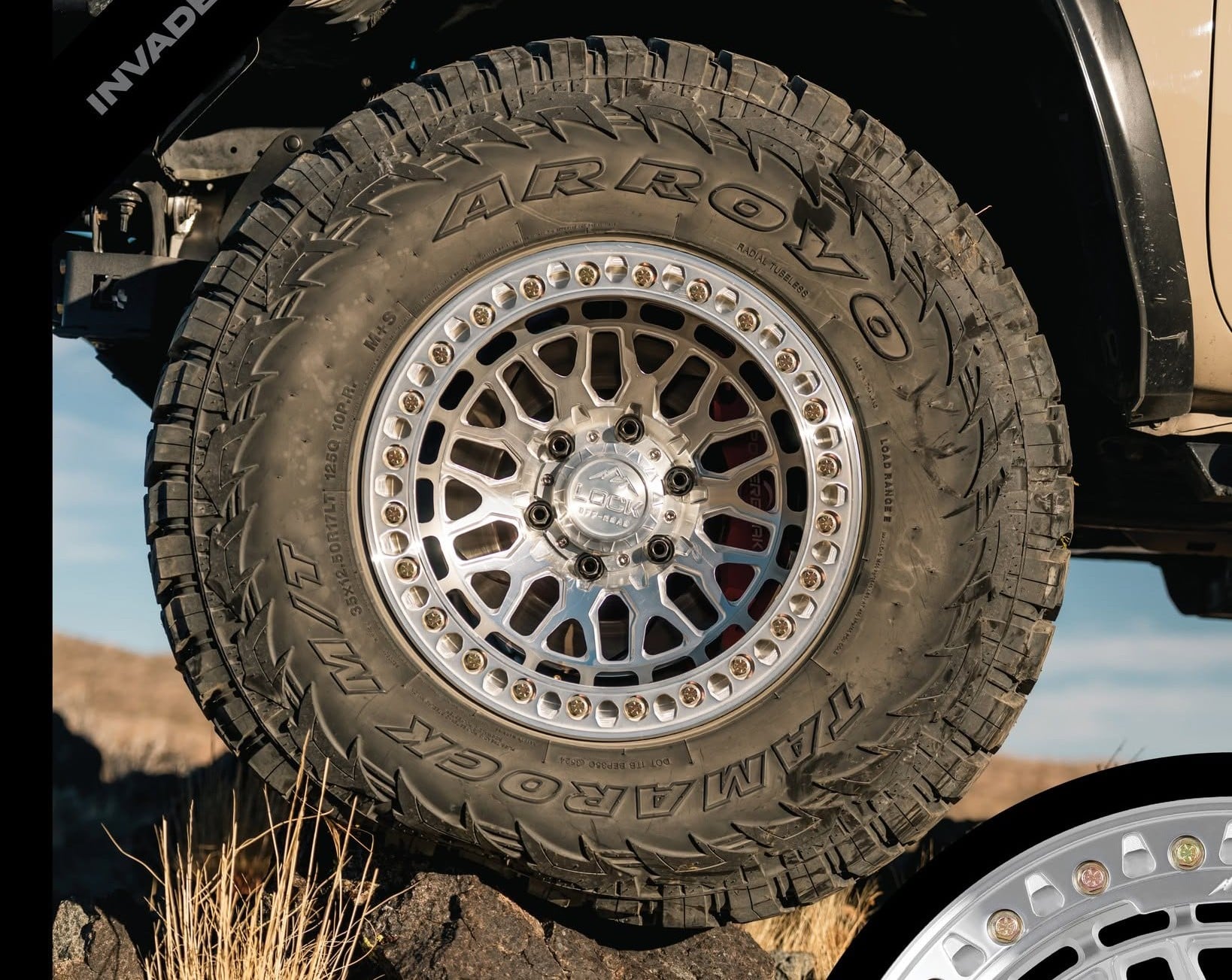
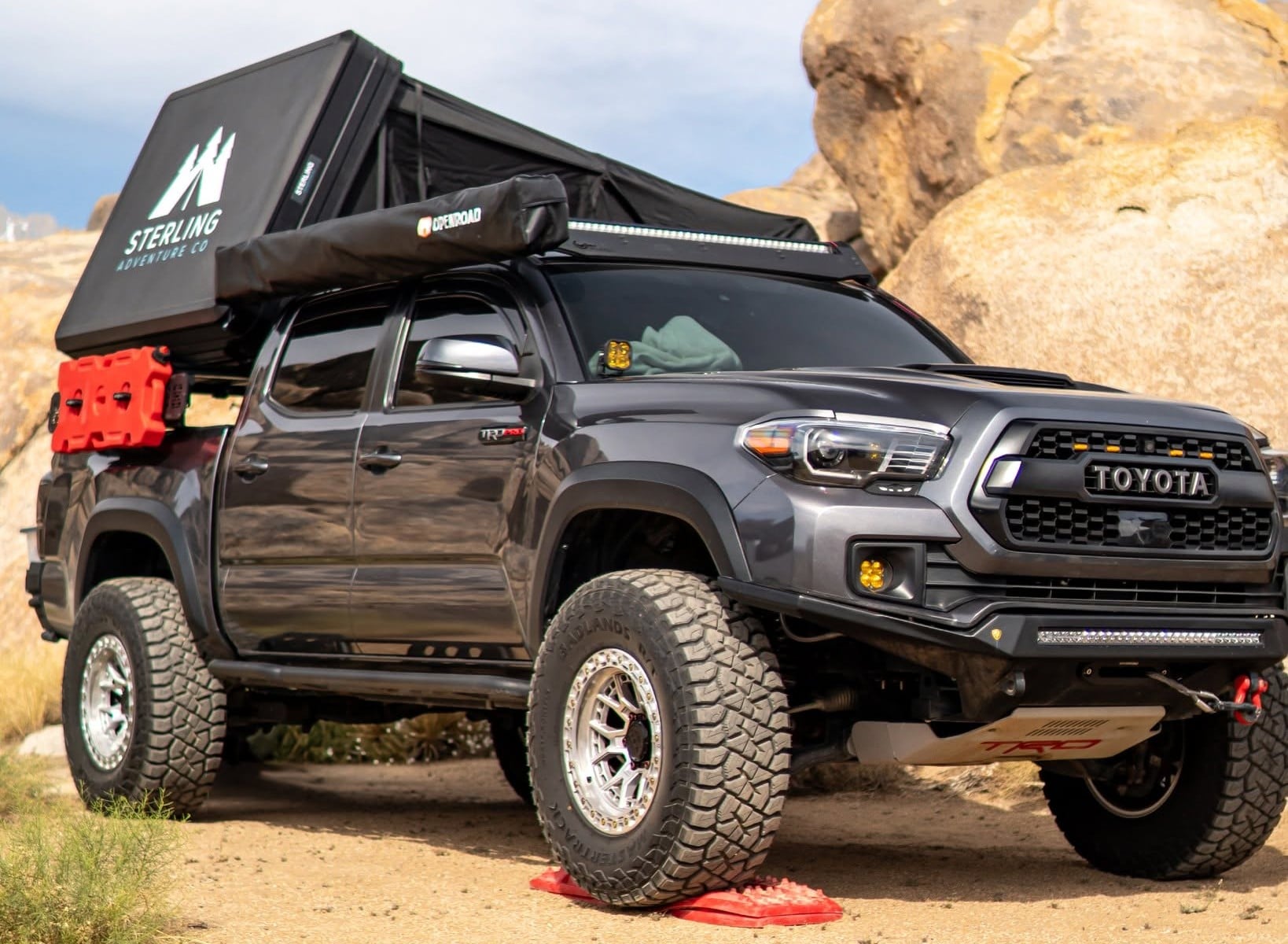
Dynamic Wheel Co. (↗) has been appointed the exclusive Australian and New Zealand distributor for US off-road wheel brands Lock Offroad (↗) and Lock X-Treme.
Owned by American Wheel Group, the brands produce alloy wheels for 4WDs, trucks and adventure vehicles. The wheels use TACT (Tough Application Chemically Treated) coating technology, which is designed to improve corrosion resistance and durability in harsh conditions.
Dynamic Wheel Co. will supply the brands through its dealer network, with stock held across its nationwide warehouse network and supported by technical assistance.
“This appointment reflects the company’s commitment to bringing world-class products to the Australian aftermarket,” Chris Bellero, Executive General Manager, Australia & New Zealand at Dynamic Wheel Co. said.
“The Australian off-road market continues to evolve, with consumers demanding products that not only perform in the toughest conditions but also reflect their lifestyle and individuality. Lock Offroad and Lock X-Treme perfectly complement our existing portfolio.
“We are incredibly excited to exclusively introduce these brands to Australia and look forward to supporting our dealer network with another market-leading offering backed by industry-leading service, stock availability, and technical expertise,” Bellero added.
Founder of Lock Offroad, Vahe Ara Tchaghlassian, added: “Australia was a key strategic market in the company’s international growth plans. And finding the right distribution partner was critical to our expansion into Australia. Dynamic Wheel Co. stood out through its reputation, technical expertise, nationwide distribution capabilities, and strong relationships throughout the aftermarket industry.
“Together, we’re committed to building Lock Offroad (↗) and LOCK X-TREME into one of Australia’s premier lifestyle wheel brands while delivering the same quality, innovation, and customer experience that has driven our success globally.”
Dealer orders are now open, with the first shipment of Lock Offroad and Lock X-Treme wheels due to arrive in Australia in August 2026.
Buying a 4WD usually comes with a plan.
Maybe it’s weekends on the beach, tackling your local state forest tracks or finally taking that long-awaited trip across the Simpson Desert. Whatever the destination, most four-wheel drives spend at least some of their lives away from sealed roads.
But before you air down the tyres and head for the sand, there’s one question worth asking: Will your insurance still cover you once the bitumen ends? For a lot of owners, the answer isn’t as obvious as it should be.
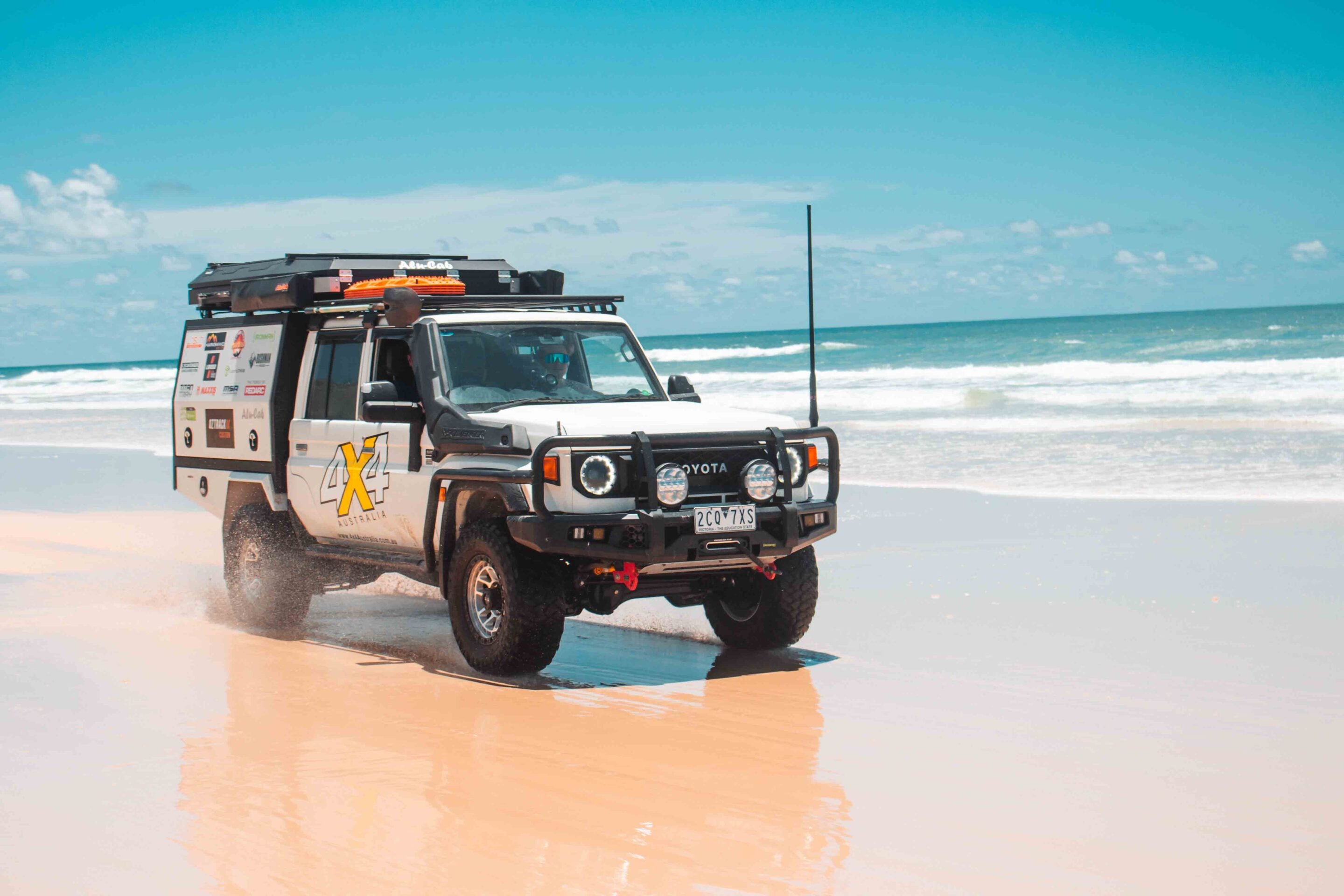
Off-road driving is what 4WDs are built for
Unlike a conventional passenger car, a modern 4WD is designed to leave the highway behind.
Beach driving, rocky climbs, forestry roads, station tracks and remote touring routes are all part of the appeal. Yet plenty of owners never check whether their insurance reflects the way they use their vehicle. It’s easy to assume comprehensive insurance covers every situation, but policies can vary depending on the insurer and the circumstances around a claim. So it’s worth knowing exactly where your cover starts, and where it stops.
Beach driving is one of Australia’s favourite 4WD activities, and thousands of four-wheel drivers head onto the sand every year. With Club 4X4 (↗), beach driving is covered provided you’re driving somewhere you’re legally allowed to be and operating within the terms of your policy.
The same principle applies whether you’re on a beach, bush track, unsealed road or remote touring route. One of Club 4X4’s biggest points of difference is that its policies are designed specifically for vehicles that spend time beyond the blacktop.
Whether you’re exploring High Country tracks, crossing the Outback or travelling remote station roads, the policy follows the vehicle wherever you’re legally allowed to travel in Australia. That’s important if you’re building a vehicle for touring, rather than just commuting.
Water crossings and getting stuck
Water crossings are part of many iconic Australian 4WD destinations, and they’re a regular part of touring for many owners.
Club 4X4 (↗) covers water crossings, provided you’re legally allowed to be there and you’re operating within the terms of the policy. That’s not a blank cheque for every water-related incident, though. Like any insurance policy, exclusions still apply, so it pays to read your Product Disclosure Statement (PDS) rather than assume every situation is treated the same.
Sometimes the biggest expense isn’t repairing the vehicle. It’s getting it home. Anyone who’s organised a professional recovery from a remote beach or bush track knows the costs can climb into the thousands, especially when specialist recovery equipment is needed.
Every Club 4X4 4WD policy includes $1500 of off-road recovery cover, with higher limits available for those travelling further into remote Australia. For many tourers, that’s just as valuable as the repair cover itself.
Modifications matter too
Most off-road vehicles don’t stay factory standard for long. Bull bars, suspension upgrades, winches, canopies, rooftop tents, dual-battery systems and recovery equipment all become part of the build.
Club 4X4 (↗) lets you insure modifications separately from the vehicle itself, including the labour involved in fitting them. If you’ve spent years building your dream touring rig, that’s important.
No insurer provides unlimited cover for every possible situation. Club 4X4’s approach comes down to a simple principle: if you’re somewhere you’re legally allowed to drive, the policy goes with you. Driving on closed tracks, trespassing on private property or using your vehicle outside the policy terms is a different matter entirely. As always, read the PDS so you know exactly how your cover applies to the way you use your vehicle.
Peace of mind for the adventures ahead
For most four-wheel drivers, leaving the bitumen isn’t the exception, it’s the reason they bought a 4WD in the first place.
Whether that’s a weekend on the beach, exploring the High Country or tackling a remote desert track, it’s worth knowing your insurance is designed for those adventures rather than simply hoping it is.
Here at 4X4 Australia, our own project vehicles regularly find themselves on beaches, bush tracks and remote touring routes while carrying thousands of dollars’ worth of modifications and gear. It’s one of the reasons we insure them with Club 4X4. Because when the adventure starts where the road ends, it makes sense to have insurance that’s built with exactly that in mind.
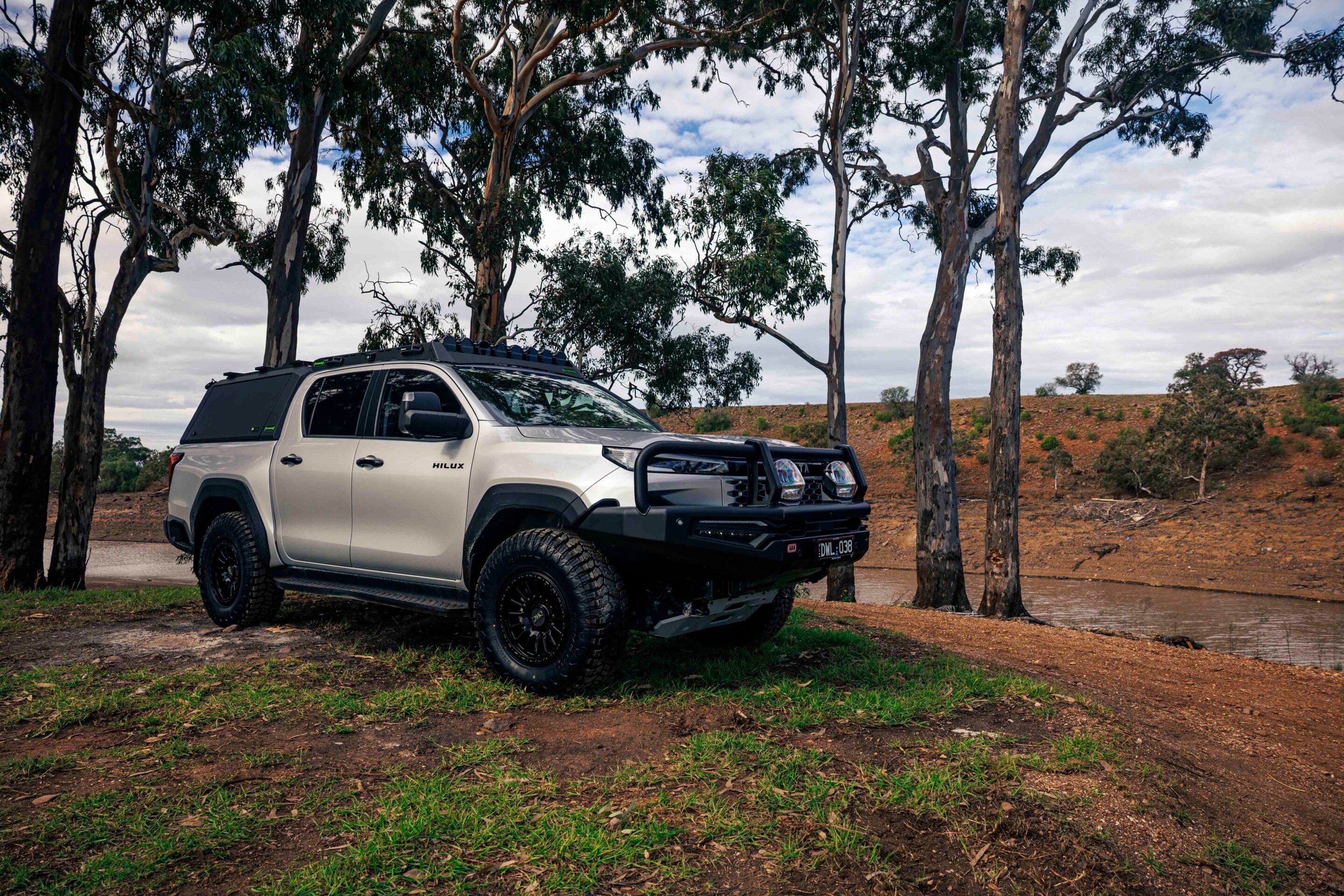
FAQs
Does Club 4X4 cover beach driving?
Yes, provided you’re driving somewhere you’re legally allowed to be and operating within the terms of your policy.
Does Club 4X4 cover bush tracks and remote touring?
Yes. The policy covers vehicles travelling on bush tracks, unsealed roads and remote touring routes where you’re legally allowed to travel in Australia.
Are water crossings covered by Club 4X4?
Yes, provided you’re legally allowed to be there and operating within the terms of the policy. Exclusions still apply, so check the Product Disclosure Statement.
Does Club 4X4 cover off-road vehicle recovery?
Every Club 4X4 4WD policy includes $1500 of off-road recovery cover, with higher limits available for those travelling further into remote Australia.
Are 4WD modifications covered?
Club 4X4 lets you insure modifications separately from the vehicle itself, including the labour involved in fitting them.
What is the key thing to check before going off-road?
Make sure you’re driving somewhere you’re legally allowed to be and understand the terms and exclusions of your policy by reading the Product Disclosure Statement.
We’ve been at the Melbourne 4×4 Show today (↗) (more specifically, the National 4×4 Outdoors Show in Melbourne), catching up with the who’s who in the four-wheel-drive industry, checking out the latest and greatest parts and accessories, and scoping all the wild 4×4 builds that are in attendance.
If you’re heading to the show over the weekend, be sure to stop by the Marks 4WD stand to see the new Arctic Trucks AT35 D-Max and AT37 Prado builds that are ready to go on-site in Australia. See the latest products from all the big 4×4 outfitters like ARB, TJM, Opposite Lock, Ironman 4×4 and many others, and get a quote on a fit-out for your own 4×4.
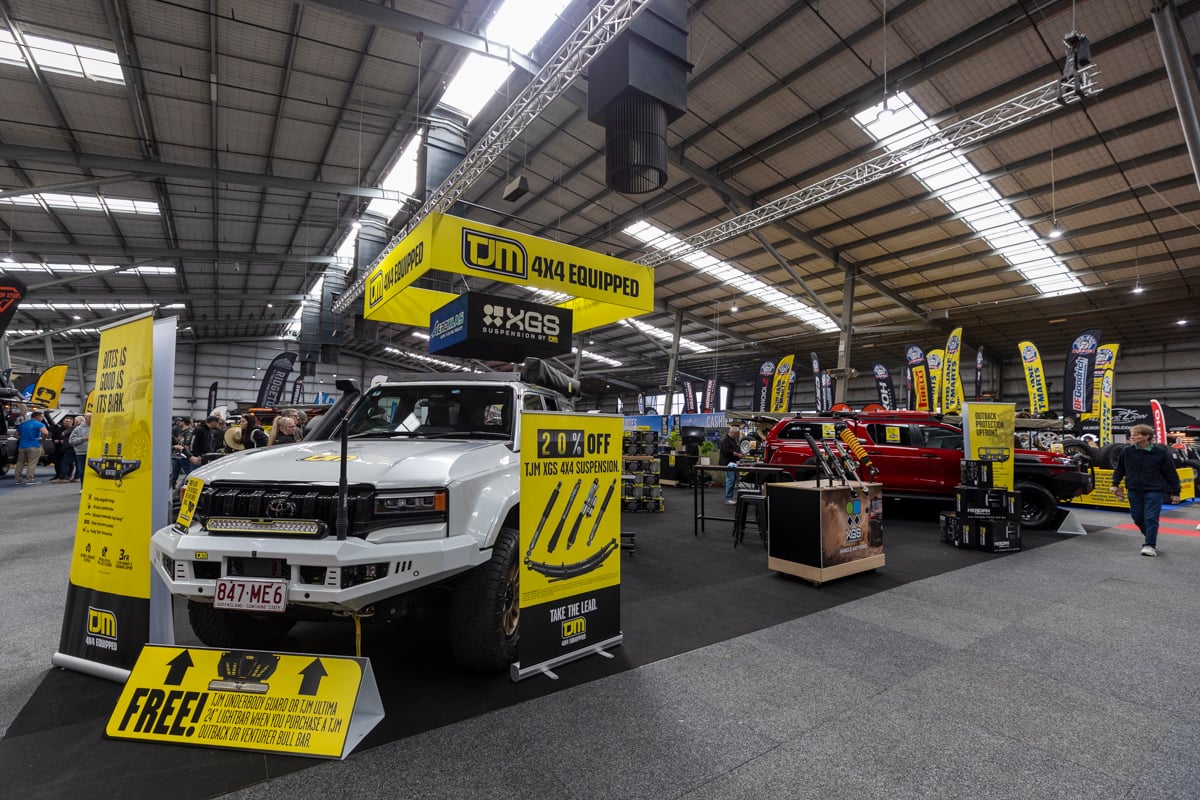
Again, restored classic 4×4 vehicles were the stars of the show, with classic Cruisers, Land Rovers and Patrols showing up looking better than they ever did back in the day, along with some neat restorations as well.
There’s plenty to see across the show, with new products, modified 4x4s and plenty of familiar names from the industry all on display. It’s a good chance to walk around, check out what’s new and see some of the builds that have made the trip to Melbourne.
The show, which runs from 21-23 August 2026 at Melbourne Showgrounds, still has another two full days to run, and Saturday is shaping up to be huge, so get your tickets online in advance (↗) to skip the queues at the gate.
Ford is reportedly developing a Bronco-based ute that could go head-to-head with the Jeep Gladiator, according to a report first published by Automotive News (↗).
The report, which cites people familiar with Ford’s future product plans, suggests the pick-up could enter production towards the end of the decade. Ford has not confirmed the project or released any specifications.
The reported ute is expected to be built at Ford’s Michigan Assembly Plant in Wayne, Michigan, which currently produces the North American-market Bronco and Ranger. That could see Ranger production move elsewhere in the US, with reports indicating the next-generation Ranger could instead be built at Ford’s BlueOval City complex in Tennessee.
The change has prompted speculation that the Bronco ute could replace the Ranger in Ford’s North American line-up. However, that does not mean the Ranger is being phased out globally. Australia’s Ranger is built primarily in Thailand, while Ranger PHEV production is based in South Africa, meaning any change to Ford’s North American production strategy would not directly affect Australian Ranger supply.
The Bronco ute would give Ford a more recreationally focused alternative to the Ranger, with the Jeep Gladiator its most obvious competitor.
The existing Bronco shares Ford’s T6 architecture with the Ranger and Everest, making a connection between the vehicles technically plausible. However, Ford has not confirmed whether the reported pick-up would use the same architecture or what hardware would sit underneath it.
There are currently no confirmed details on engines, transmissions, suspension, payload, towing capacity or dimensions. Ford has previously explored the idea of a Bronco ute. An earlier program was reportedly cancelled in 2021 before reaching production, meaning the latest reports represent a revival of a concept Ford has already considered.
The reported pick-up would also form part of a broader expansion of the Bronco nameplate. A hybrid Bronco SUV is expected to join the North American range around 2027, with Ford looking to broaden the model family beyond its existing SUV variants.
There is no confirmation yet that the reported Bronco ute will come to Australia. Ford has been exploring opportunities to expand the Bronco nameplate into right-hand-drive markets, but the pick-up currently appears to be a North American-focused program.
If it reaches production, the Bronco ute would give Ford a factory-built rival to the Gladiator while allowing the Ranger to continue serving as the brand’s mainstream mid-size pick-up.
For now, the reported 2029-30 timeframe remains the clearest indication of when the Bronco ute could arrive, with Ford yet to officially confirm the model.
Approximately 306 KGM Musso EVs sold to Australian consumers are affected by a safety specification discrepancy, according to a Consumer Alert released by ANCAP.
Musso EVs sold since the Australian launch in November 2025 are not fitted with a centre airbag or driver knee airbag, despite both being advertised by KGM as part of the ute’s standard eight-airbag package.
KGM has since updated its marketing materials, with the affected brochure and website information amended on July 31, 2026 to reflect the actual specification of vehicles on sale.
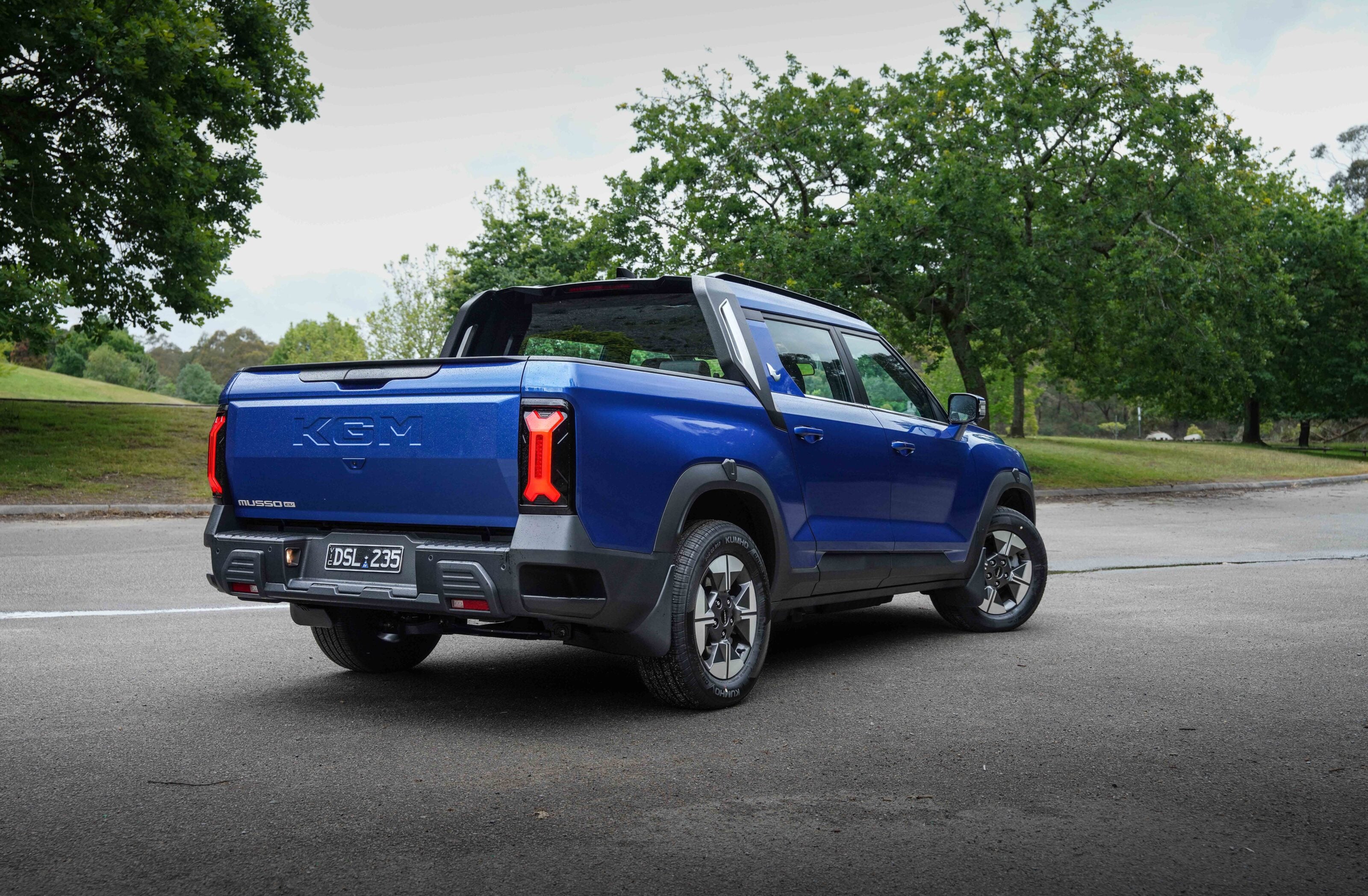
The centre airbag, described by KGM as a “front row far-side” or “front seat centre airbag”, is generally positioned inboard within the driver’s seat back and is designed to reduce occupant injury in a side-impact crash. The driver knee airbag is housed beneath the steering column and is designed to manage occupant movement and loading during a crash.
ANCAP identified the omission and says the difference between the advertised and actual safety specification may affect occupant safety in front and side-impact crashes. The safety body is encouraging KGM to introduce a production change that would see both airbags fitted to Musso EVs supplied to Australia.
The Musso EV is a separate model from the diesel-powered KGM Musso, which has been sold in Australia since 2019 and is not affected by the Consumer Alert. Neither model currently carries an ANCAP safety rating.
The KGM Musso EV launched in Australia in December 2025 as the brand’s first fully electric ute, available in 2WD and AWD variants from $60,000 drive-away. It uses an 80.6kWh LFP battery, with outputs of 152kW/339Nm in 2WD and 175kW/630Nm in AWD, claimed ranges of 420km and 380km respectively, plus 300kW DC fast charging, Vehicle-to-Load capability and self-levelling rear suspension.
It retains the Musso’s existing tub dimensions and adds an electric-focused cabin with dual 12.3-inch displays.
What do you get?
Musso EV
- Adaptive Cruise Control (ACC)
- 17-inch alloy wheels
- LED headlights, taillights and DRLs
- Self-levelling rear suspension
- Dual-zone climate control
- Integrated panoramic display with 12.3-inch dual display LCD instrument cluster and touch screen infotainment
- Apple CarPlay and Android Auto
- 3D 360-degree camera
- Leather look eight-way powered front seats with powered driver seat lumbar
- Sliding, folding and reclining 60/40 rear seats
- Heated front and rear outer seats
- Ventilated front seats
- Ambient interior lighting
- Leather heated steering wheel
- Heated, power adjustable and power folding door mirrors
- Rain-sensing wipers
- Wireless phone charger
- Durable rear tub liner with lighting and bumper corner steps
Musso EV Black Edge adds
- Leather and suede seats
- Suede headrests and door trim section
- Black 17-inch alloy wheels
- Black exterior highlights:
- Bonnet garnish
- Door mirrors
- Tailgate badge
- Sail plane
- Front bumper trim
- C-Pillar emblem
- Black steering wheel bezel
- Dark wood grain dash trim
Specs
| KGM Musso EV AWD | |
|---|---|
| Drivetrain | AWD |
| Electric motor type | Interior permanent magnet synchronous motor |
| Maximum power (front/rear) | 152kW / 152kW |
| Maximum torque (front/rear) | 339Nm / 339Nm |
| Combined system output (power/torque) | 175kW / 630Nm |
| Transmission type | 1 Speed automatic (reduction gear) |
| Driven wheels | All Wheel Drive |
| Battery Type | Lithium Iron Phosphate (LiFePO4) |
| Battery Capacity | 80.6kWh |
| Battery Voltage | 371.2V |
| AC Standard Charging (0-100%, 11kW charger) | Approx. 10h20m |
| Onboard charger power | 10.5kW |
| DC Fast Charging 10-80% (300kW charger) | Approx. 36min |
| DC Fast Charging 10-80% (100kW charger) | Approx. 46min |
| Electric range (Combined) | 380km |
| Electric energy consumption (Combined) | 260Wh/km |
| Length | 5160mm |
| Width | 1920mm |
| Height | 1750mm |
| Wheelbase | 3150mm |
| Minimum ground clearance | 181.4mm |
| Approach / Departure / Ramp breakover angle | 20.2 / 24.3 / 15.1 |
| Tub length | 1345mm |
| Tub width | 1515mm |
| Tub depth | 510mm |
| Kerb weight | 2285kg |
| Gross Vehicle Mass (GVM) | 3090kg |
| Gross Combined Mass (GCM) | 4890kg |
| Maximum payload | 805kg |
| Towing capacity (unbraked) | 750kg |
| Towing capacity (braked) | 1800kg |
| Max. tow ball download | 180kg |
It’s new rolling-stock time for the secondhand Lux. With the tyres sorted, we thought we’d let a little more of the budget loose and upgrade the wheels at the same time.
There’s nothing exactly wrong with the factory steelies, but we’ve got a bunch of cosmetic upgrades in the pipeline for this rig, so the wheels could definitely use some sprucing up.
We wanted something super strong. This is an off-road rig first and foremost, and we can’t be worried about gouging a wheel that’s worth more than an air locker. They also needed to look the part. We can’t be rocking up to camp with something heinous that looks like it’s fresh out of Auto Salon 1997. We also didn’t want to worry about checking wheel-nut torque every 1500km. We were after something that was set-and-forget.
After a brief search, we came across an old favourite: Dynamic Wheels (↗). We’ve used the company on a bunch of previous builds, and its steel wheels are still the ones to beat. A quick phone call later, we had a set of Dynamic Imitation Beadlock Sunraysia steel wheels (↗) that well and truly ticked the looks and toughness boxes.
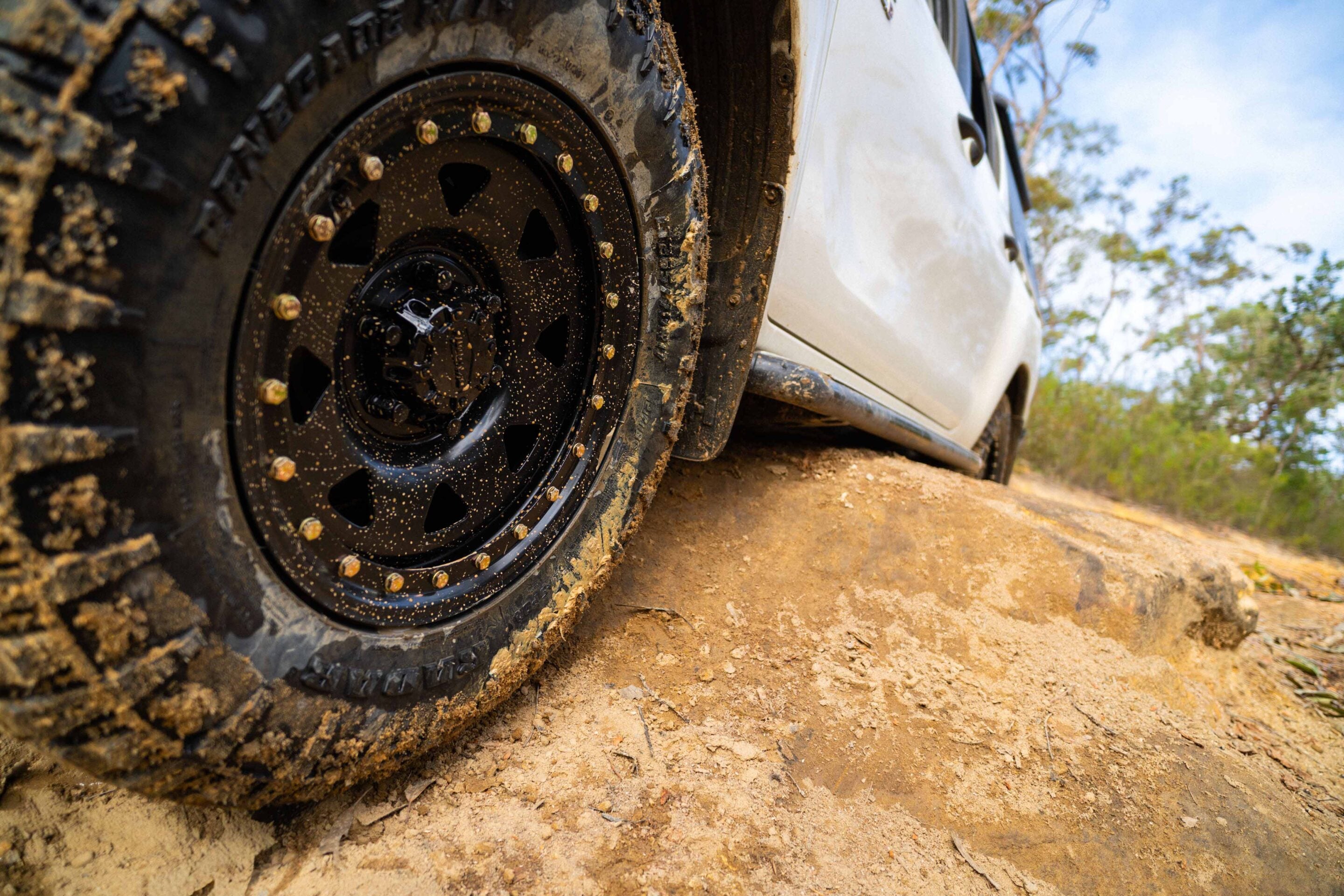
Why we chose steel
It’s the age-old question: Steel wheels or alloys? While neither is necessarily the right or wrong choice, both have their pros and cons.
In our case, we wanted something tough that could take an absolute thrashing on the tracks without losing its shape or damaging a fancy anodised finish. Even if you do manage to seriously dent a steel wheel off-road, you can usually knock it more or less back into shape with a hammer and a little Sydney-rush-hour-traffic level of aggression.
Then there’s the fact that this remains a budget build. While a nice set of alloys is definitely a great choice for plenty of people, steelies are significantly less of a blow to the bottom line in our case, and the savings free up funds for more important things.
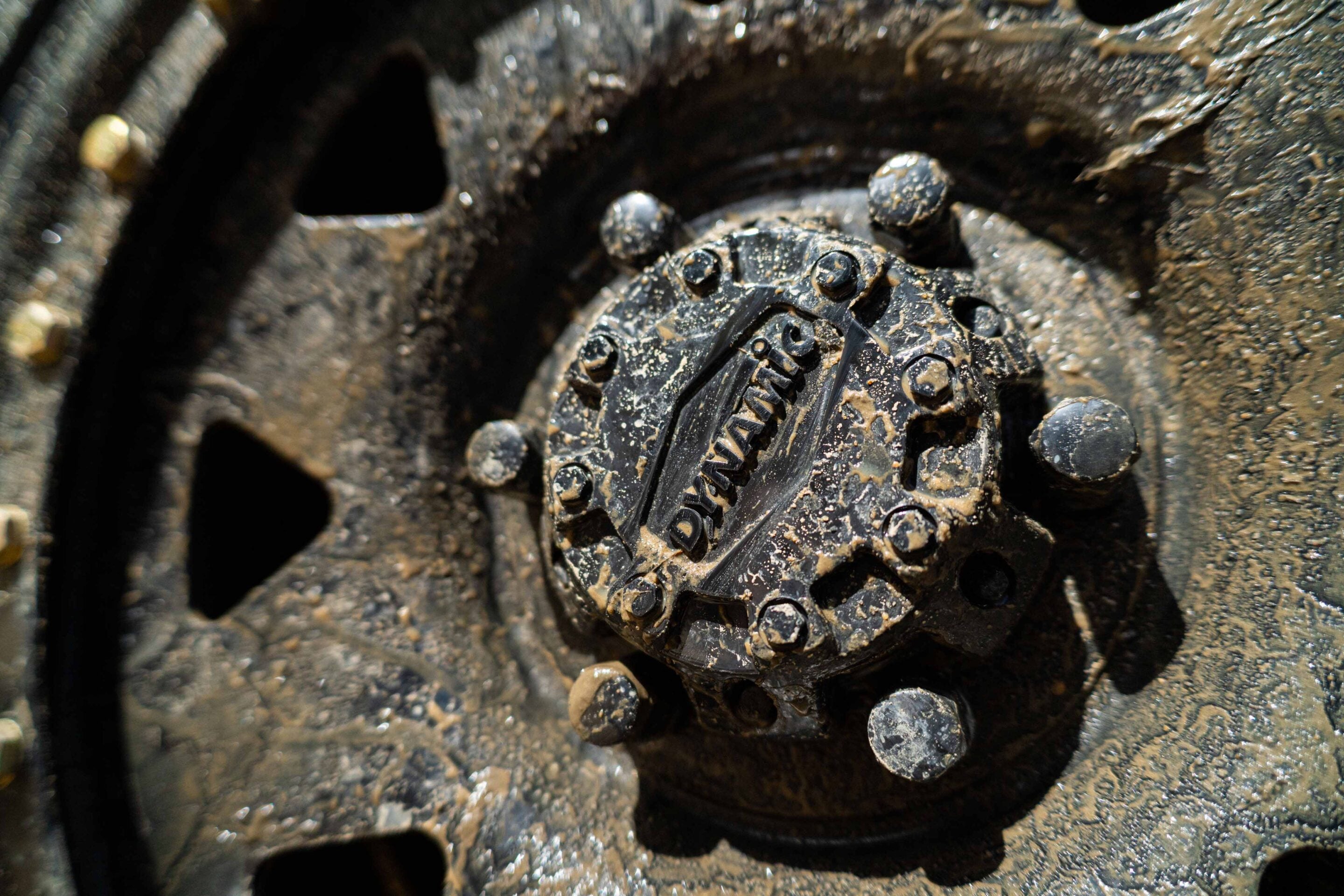
The difference is in the details
We live in an age of cheap imports and corner-cutting to maximise profits. We went with Dynamic Wheels because the company has been around in Australia for decades and its products are well proven.
Features include centre bores machined twice to ensure a precise fit and help the wheels balance properly, along with 3.5mm- or 4mm-thick outer rims that are stronger than those used on many cheaper alternatives. Dynamic also offers an extensive range of vehicle fitments and backs its wheels with a lifetime warranty.
While the beadlock-style ring isn’t a functional locking ring – which would make it illegal for road use in Australia – it does provide an unexpected benefit by helping protect the inner spokes from rock damage… which gives our egos a boost when people ask, as we’re airing down, whether they’re legit.
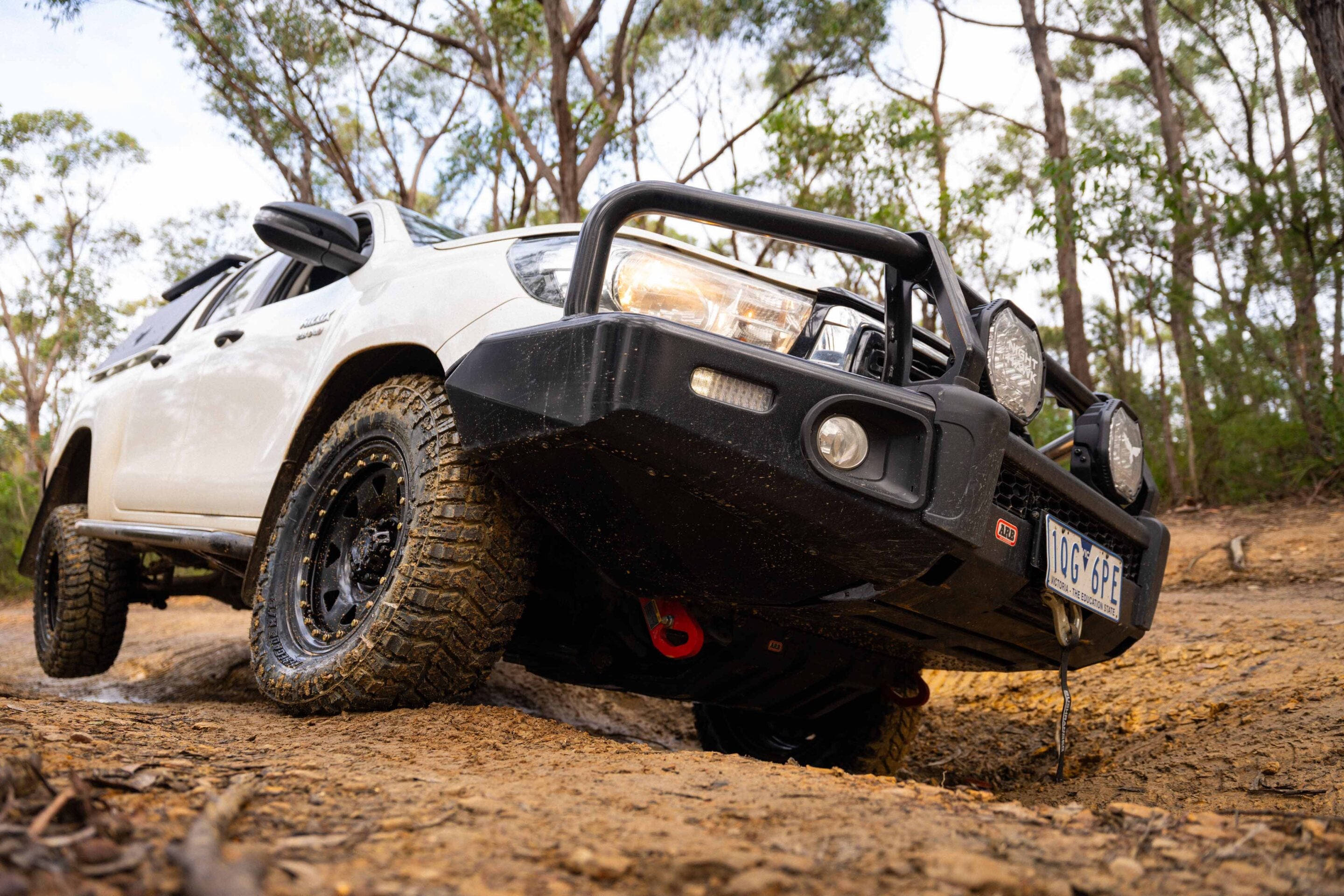
Putting them to the test off-road
Outside of a functional beadlock, wheels don’t do much to improve a vehicle’s off-road capability.
Still, our wheel-and-tyre package balanced up nicely and, despite being subjected to mud scrapes, rock abrasions, ruts filled with sharp shale, branch-strewn water crossings and just about everything else you can imagine, the Dynamics still looked like new after a post-wheel hose-down. There wasn’t even a paint chip to report.
On top of that, we reckon they look killer against the HiLux’s white paint and work nicely with the black Bossco canopy. It’s still hard to beat a white ute with black highlights, if you ask us.
Overall, we’re stoked – not only with the Dynamic steel wheels, but with how our Luxy is shaping up. There’s plenty more to come, though, folks; we’re only just getting started.
Pricing
If you’ve ever been inside a HiLux of just about any age, you’ll know its stereo is probably best described as cutting-edge tech for the 1990s.
Our 2019 model didn’t come equipped with satellite navigation, Apple CarPlay or Android Auto, much in the way of Bluetooth functionality or anything too far beyond a radio and super-basic MP3 player. That’s not necessarily a problem if you’re only doing short drives, but on long days behind the wheel, covering big distances on the way to a remote destination, you want more from your in-vehicle entertainment.
That’s where our new Aerpro AMDTO2 head unit (↗) comes in. The company offers a range of replacement touchscreen units with features including additional camera inputs, dashcam compatibility, a GPS antenna, a microphone for phone calls and full integration with your preferred smartphone operating system.
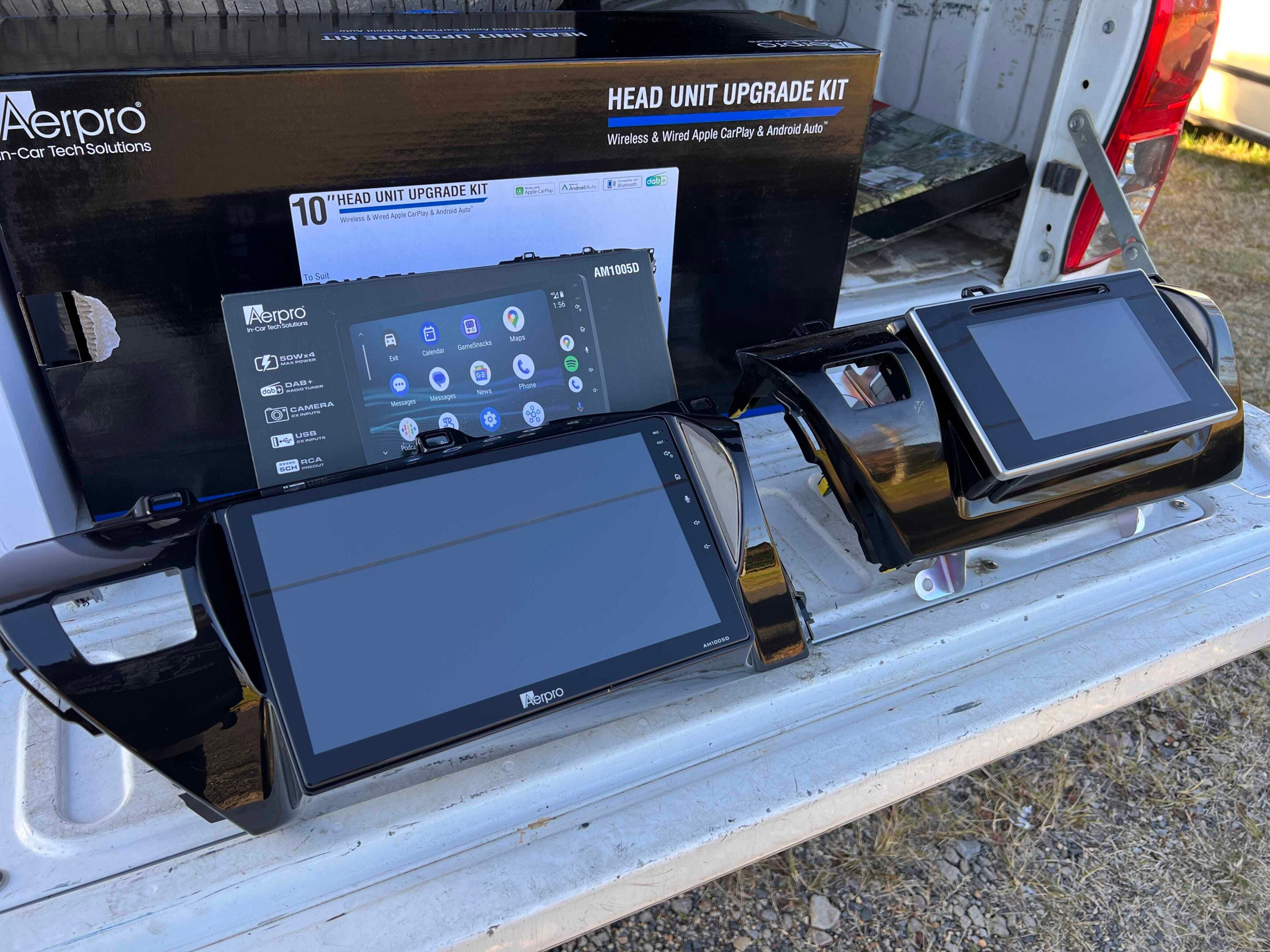
Aerpro also supplied one of its fascia kits for the N80, along with a plug-and-play wiring harness that made installation about as straightforward as it gets.
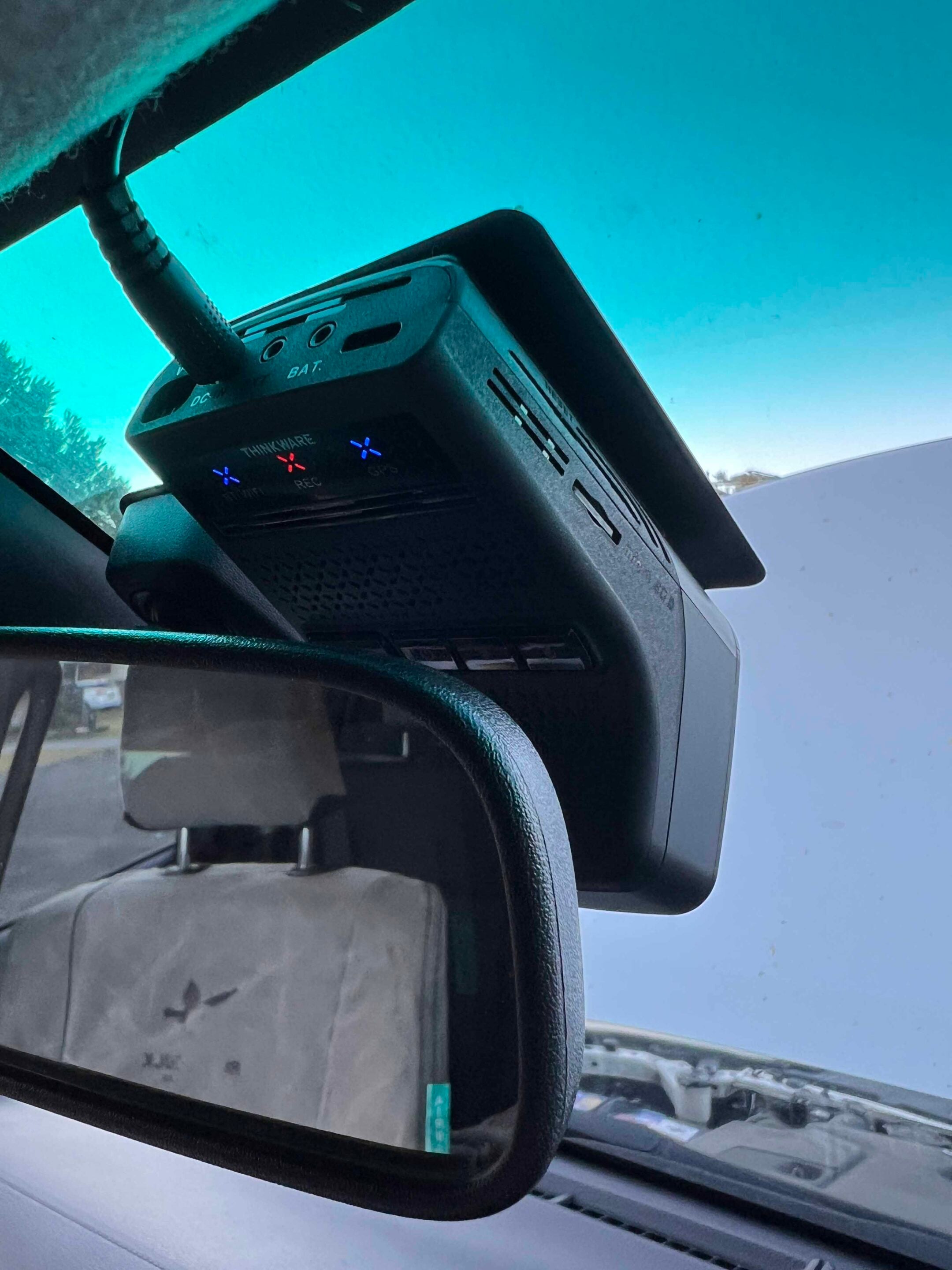
The company also sent us one of its Thinkware U3000 Pro dashcams (↗) with a U3000 Pro LTE module (↗), so we’re protected – at least from an insurance standpoint – against below-average city drivers, while also being able to record our off-road adventures.
While we understand we haven’t gained much in terms of off-road capability, apart from now having access to GPS mapping through Apple CarPlay, the upgraded infotainment unit has made the cabin a much nicer place to spend a few hours at a time.
With an external microphone, second camera input, GPS antenna, full compatibility with the steering-wheel controls and a much-improved 10-inch touchscreen, it’s one of those upgrades you appreciate every time you climb into the driver’s seat.
The AMATO2 head unit as fitted to our HiLux is available through retailers nationwide. To find out more visit the Aerpro website (↗) and enter your vehicle’s make and model.
Pricing info
- Aerpro AMDTO2 head unit (↗): $899.99
- ThinkWare U3000 Pro dashcam (↗): $999.99
- Thinkware U3000 Pro LTE module (↗): $229.99