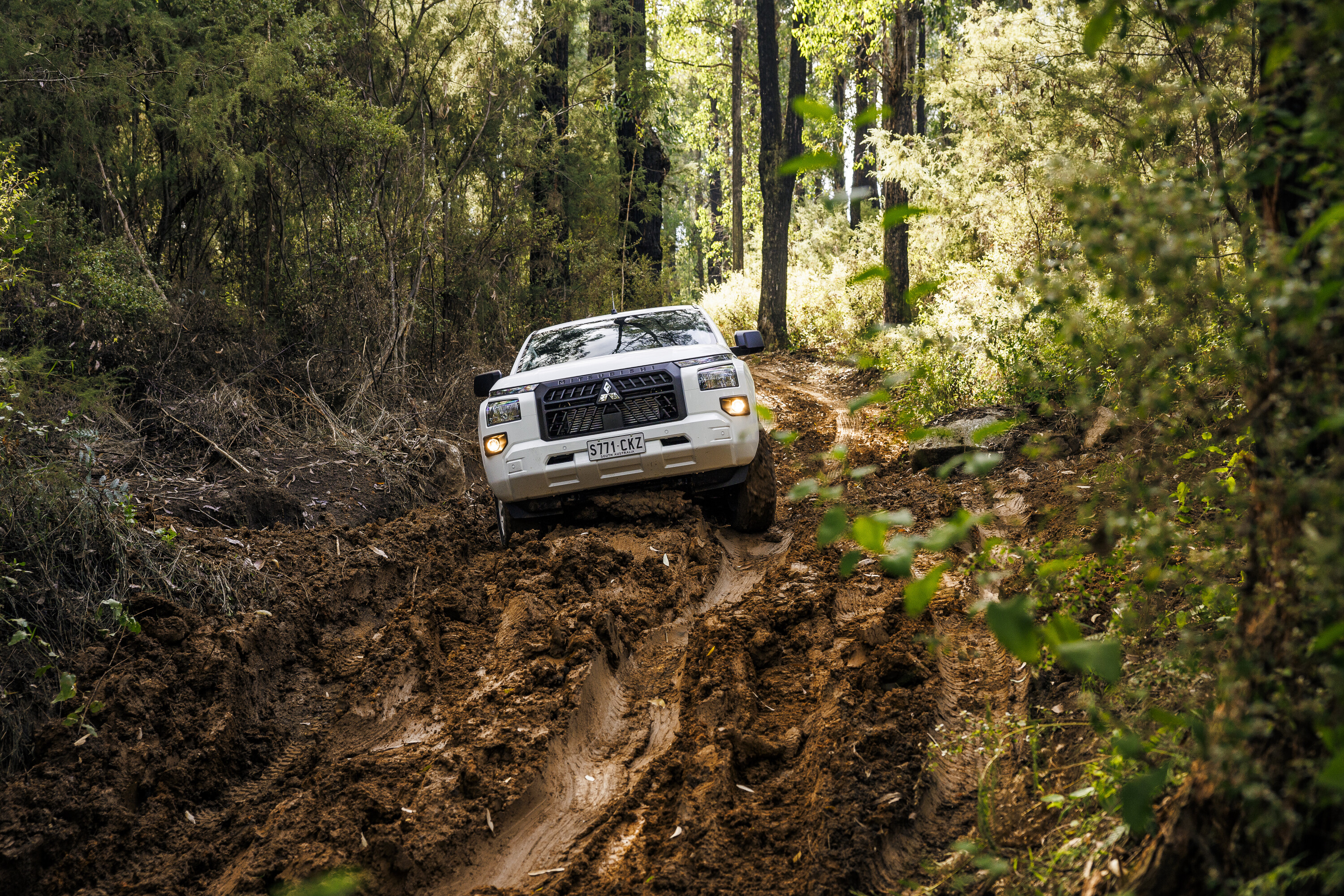
The most frustrating thing about buying a brand-new car is that you often need to wait a long time for it to arrive.
The new Prado is still a few months away from launch, and even longer for customer deliveries. So close, yet so far. If you can’t wait for the Prado, here are the best alternatives ?
JUMP AHEAD
- Ford Everest
- Isuzu MU-X
- Mitsubishi Pajero Sport
- Toyota Fortuner
- Ssangyong Rexton
- GWM Tank 500
- Mahindra Scorpio Z8L
- Lexus GX
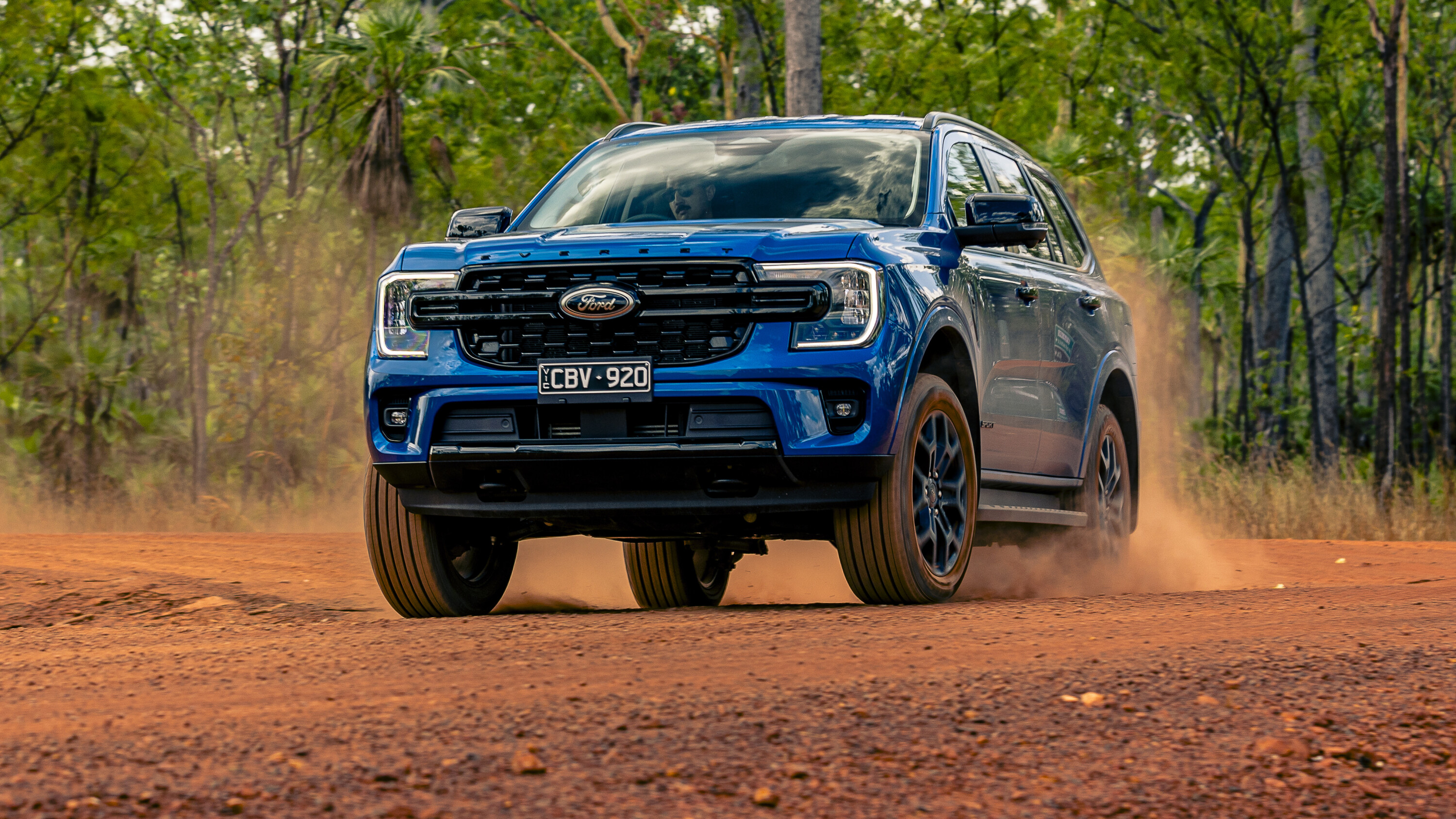
Ford Everest
The Ford Everest was fresh on the market in late 2022 and, of the large five-door, three-row SUVs available, it is one of the best.
It offers a spacious and comfortable interior for up to seven, and the choice of two (2.0 4cyl or V6 diesels) smooth and refined powertrains. No wonder it won Wheels Car of the Year for 2023. Even though it shares much with the Ford Ranger ute, you’d almost never know – unlike the shared-platform models of other brands.
It is without a doubt the best ute-based SUV to drive, and you’re not sold short on safety (it has a five star ANCAP safety rating) or towing capability (3500kg braked capacity). Nothing really replaces Australian development for a vehicle, and here the Everest shines with much of its core engineering done here.
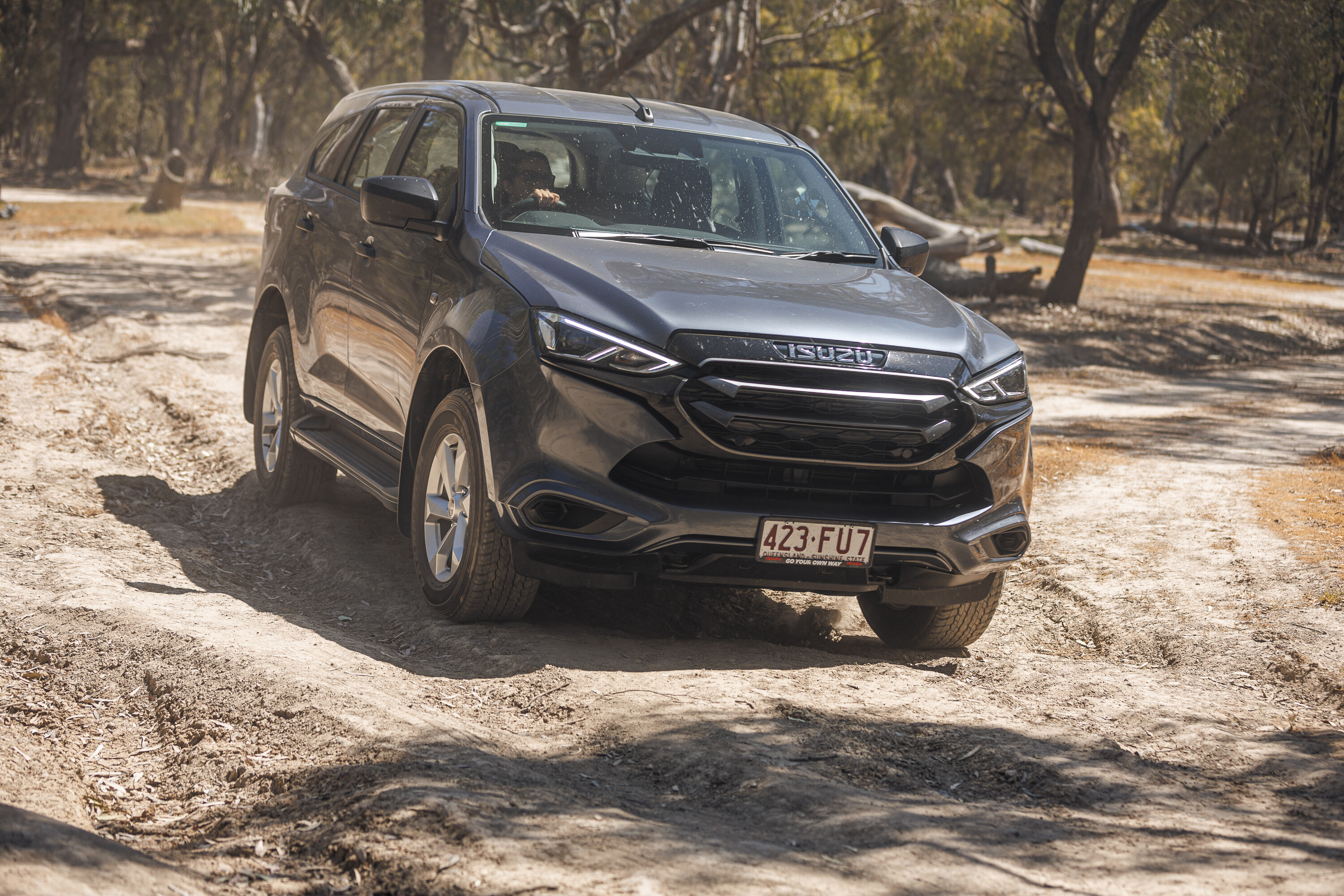
Isuzu MU-X
When the second-generation Isuzu MU-X arrived in 2021, it was a big step up in safety, refinement, performance and features.
Like Everest, the MU-X is based on a ute, but this is an SUV that you’ll grow to like for its driver engagement and high degree of active and passive safety features. The bonus here is that the MU-X makes for a solid towing platform, with 3500kg (braked) capacity.
The MU-X’s powertrain, a 140kW/450Nm 3.0 diesel and six-speed auto, in 4×2 or 4×4 versions, provides a good spread of torque and acceptable power with good fuel economy.
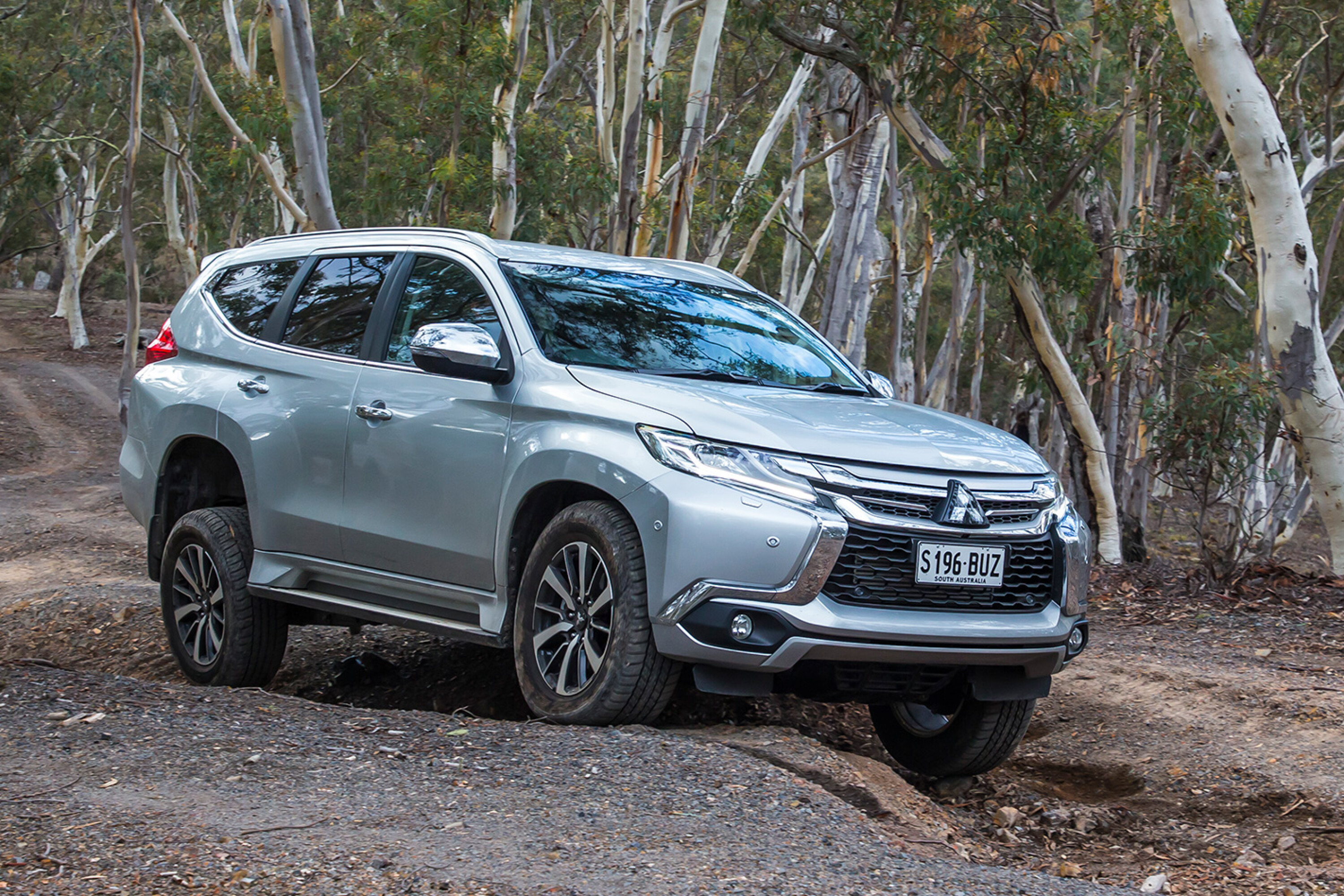
Mitsubishi Pajero Sport
With the new Pajero Sport expected in 2025, you don’t have long to get in with this venerable current-gen Pajero Sport, which has been around in one form or another since 2015.
The Pajero Sport is big on value with its smooth 133kW/430Nm turbo-diesel running through an eight-speed auto and sophisticated 4WD system that gives you the benefit of a 4WD setting that can be used on dry, paved roads. If towing is important, note that Pajero Sport is one of few in this class that cannot tow 3500kg; its maximum capacity is 3100kg.
Despite its ANCAP safety rating expiring, the Pajero Sport is filled with most of the safety equipment you expect. While low on price compared to some, the Pajero Sport doesn’t feel cheap – particularly the upper-tier Exceed and GSR models with their digital dash and leather seating.
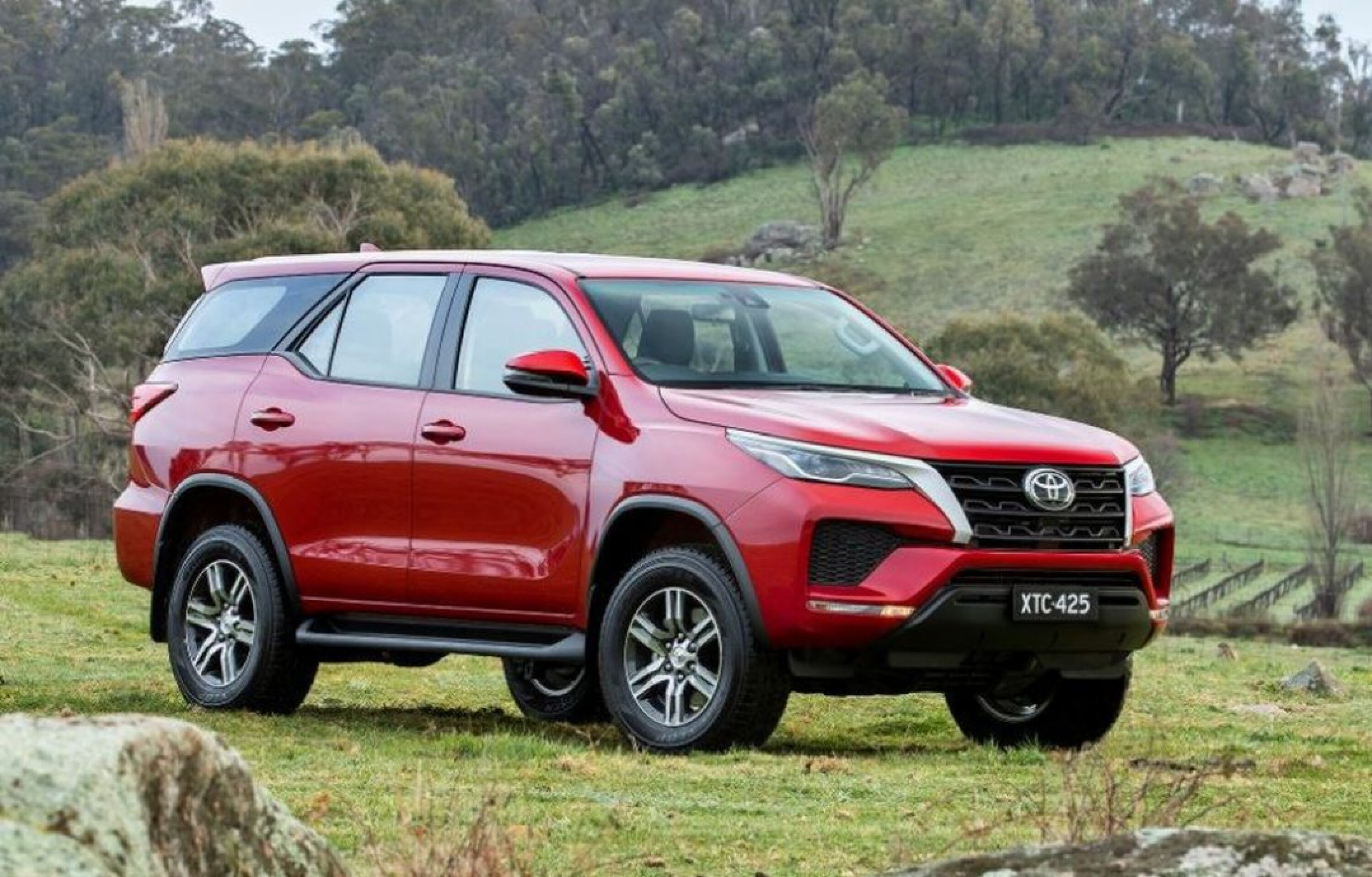
Toyota Fortuner
Like the Pajero Sport, the Toyota Fortuner is a bit of an older model, but it has been revised a few times since its 2015 arrival.
The Fortuner will continue on for a while longer, with an all-new model expected here in 2026. For now though, this is a seven-seater off-road SUV that’ll do the job with the ample Toyota network and resale values to underpin it. The cabin is roomy and comfortable, and the controls simple and easy to navigate.
The 3100kg/310kg (braked) towing limit is 400kg less than the best in class, but its 150kW/500Nm 2.8-litre diesel makes light work of most driving duties and this is a comfortable highway cruiser and capable off-roader.
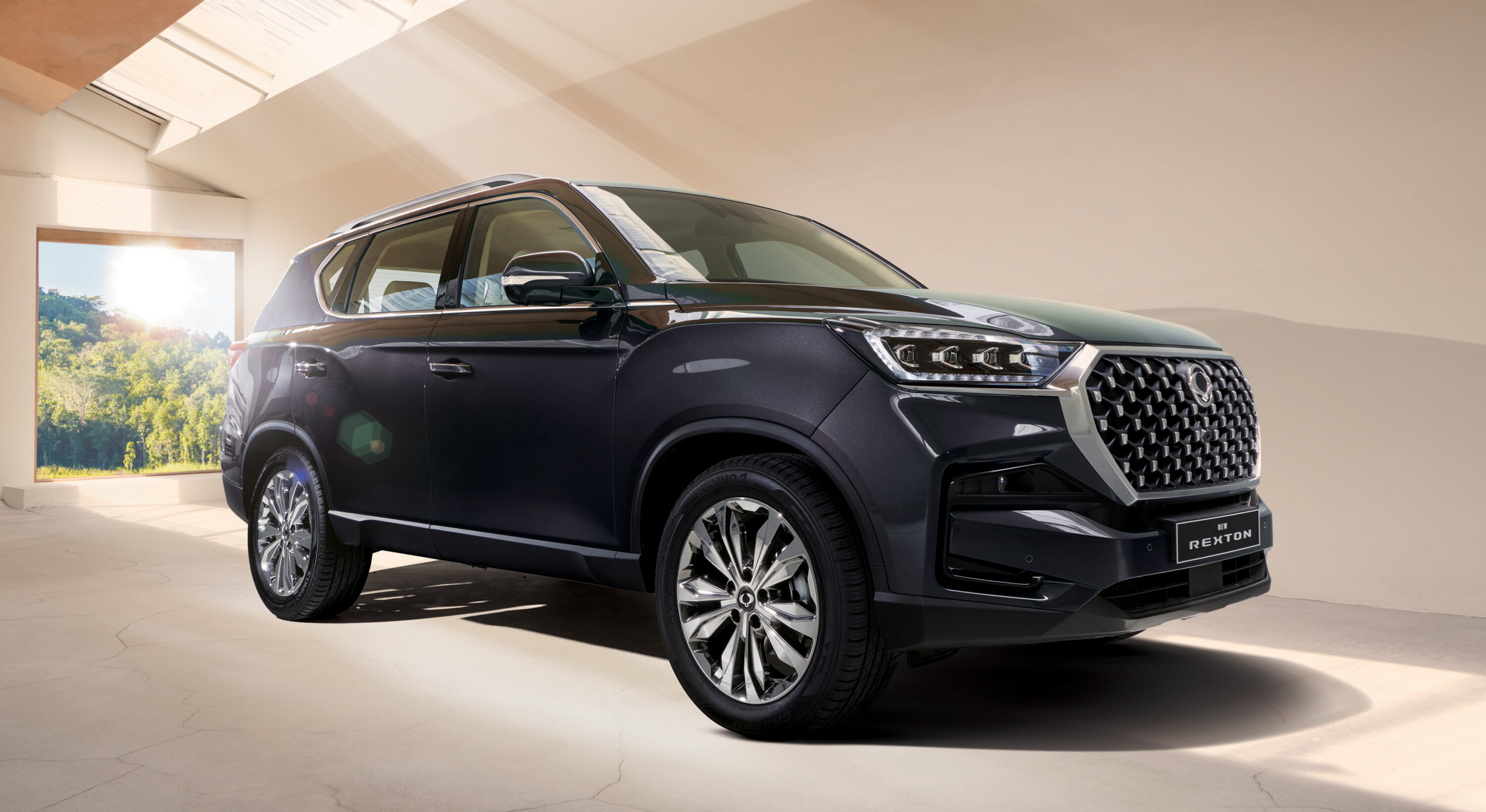
SsangYong Rexton
An SUV that for years has sat in the shadow of more popular models, the Rexton now looks like very good buying compared with those established seven-seater SUVs, with a price starting at about $47K drive-away.
The model received a light makeover for MY24, with a new high resolution, 12.3-inch touch screen with improved functionality and clarity, new exterior colours and a new Adventure model.
A well-presented, feature-filled interior and up-to-date tech are the good points, as is the 3500kg towing capacity and the reasonably healthy (if a touch laggy) 148kW/441Nm 2.2-litre diesel tied to an excellent eight-speed auto. However, the SsangYong is a little harsh-riding and doesn’t quite offer the rewarding handling of the best in the class.
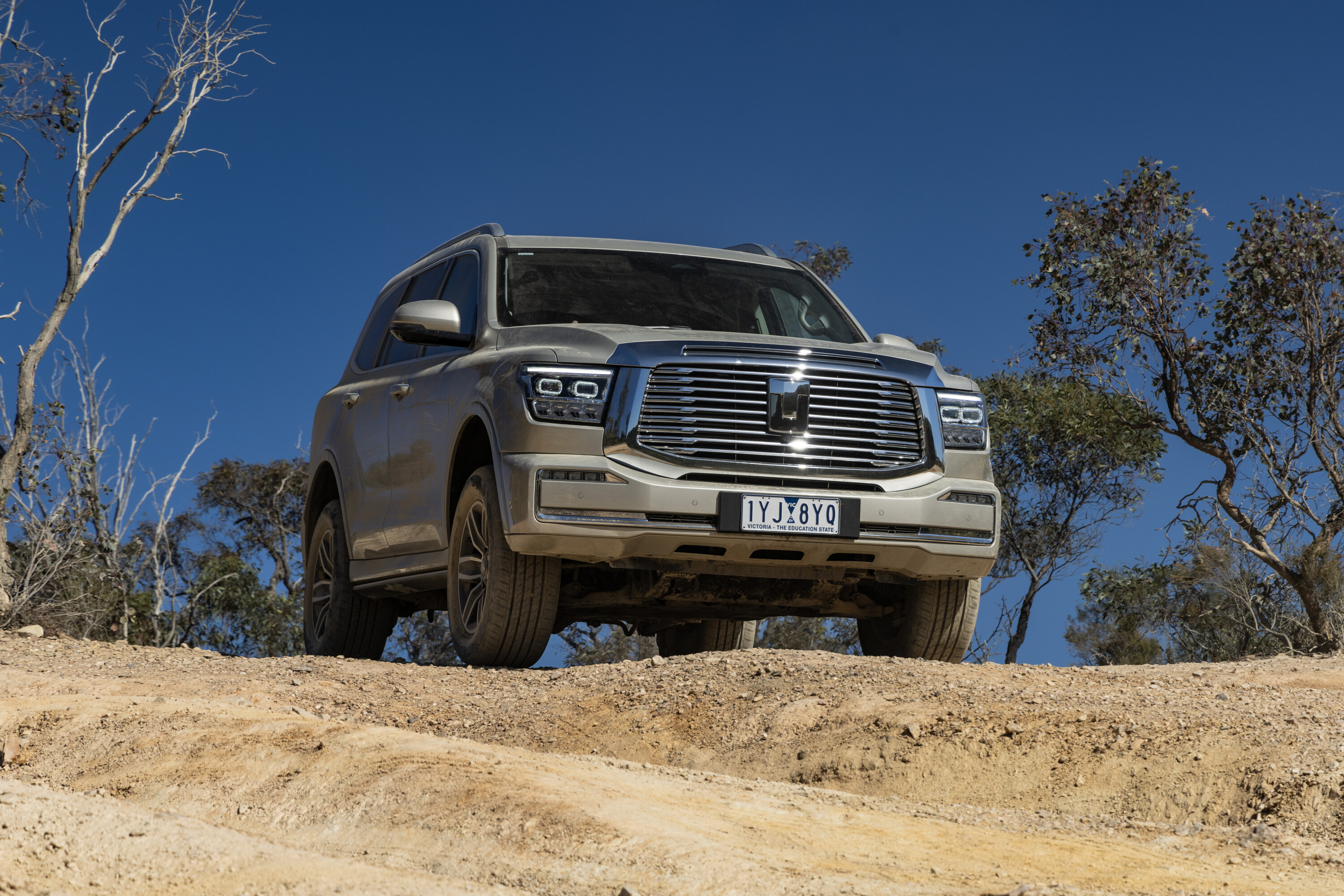
GWM Tank 500
Competing with the LandCruiser 300 Series in terms of dimensions but at a significantly lower price, the GWM Tank 500 offers 100mm more length than the smaller Tank 300.
The three-row, seven-seater is powered by a 2.0-litre turbocharged petrol engine hybrid powertrain that produces a combined 255kW and 642Nm with a claimed combined fuel consumption of 8.5L/100km. The budget-friendly SUV is designed with a luxurious interior, boasting four sculpted bucket seats, leather upholstery, and stylish brushed-aluminium and woodgrain-look trims.
The Tank 500 is available in two grades: the Tank 500 Lux, which is $66,490 drive-away; and the Tank 500 Ultra, which is $73,990 drive-away.
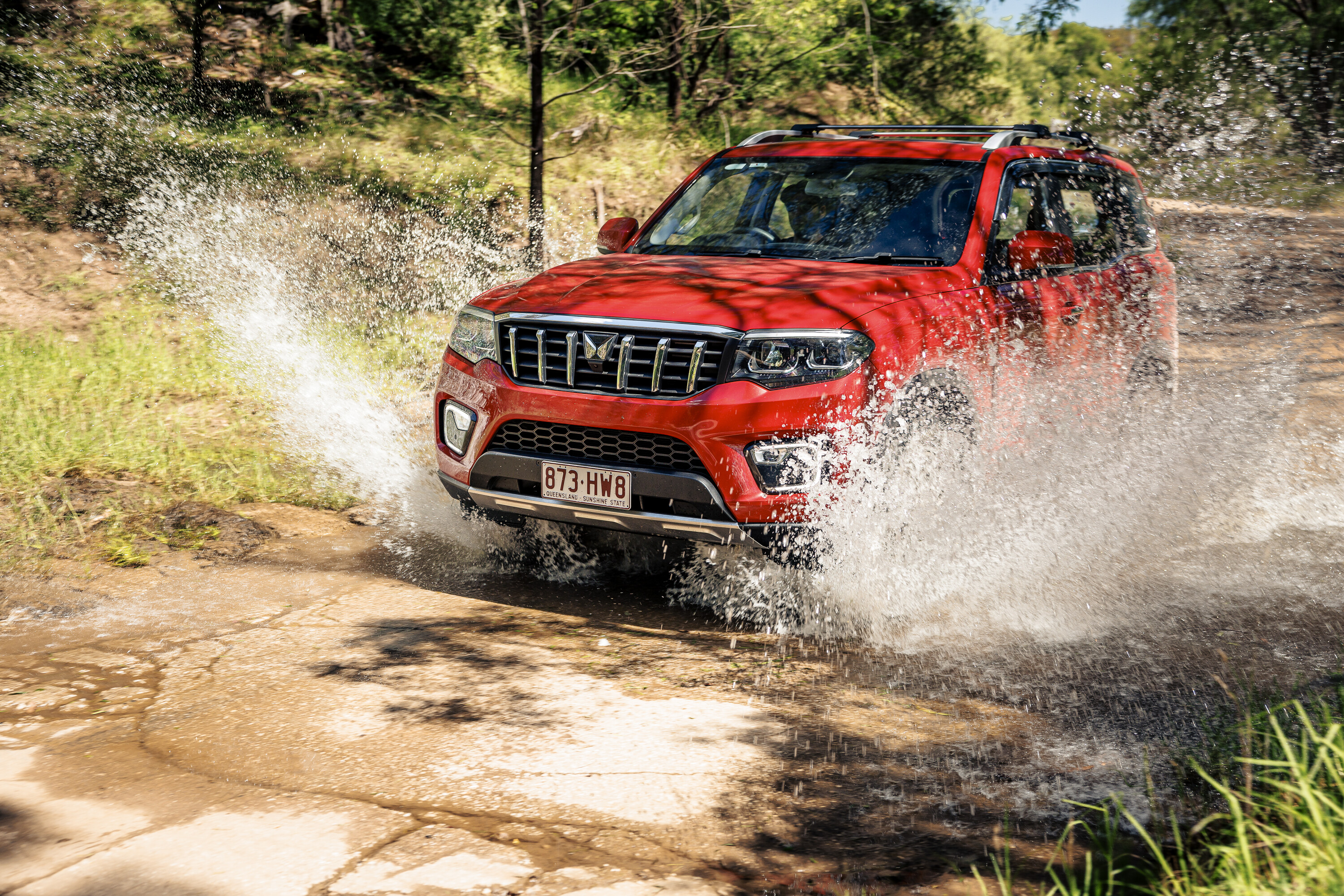
Mahindra Scorpio Z8L
At $44,990 drive-away, the Z8L six-seater gets a 12-speaker Sony sound system, a front camera, front parking sensors, a seven-inch driver’s display, a wireless phone charger, six-way power-adjustable driver’s seat, and wireless connectivity for both Apple CarPlay and Android Auto.
Its 2.2-litre diesel engine is paired with a six-speed automatic transmission, but with only 129kW and 400Nm it’s not particularly powerful. In terms of size and rugged construction, the Scorpio is smaller than the Isuzu MU-X and Ford and is more comparable to the Mitsubishi Pajero Sport.
However, it lacks essential safety features such as AEB, lane-keeping assist, and radar cruise control. It flunked its ANCAP safety test as a result, receiving zero stars.
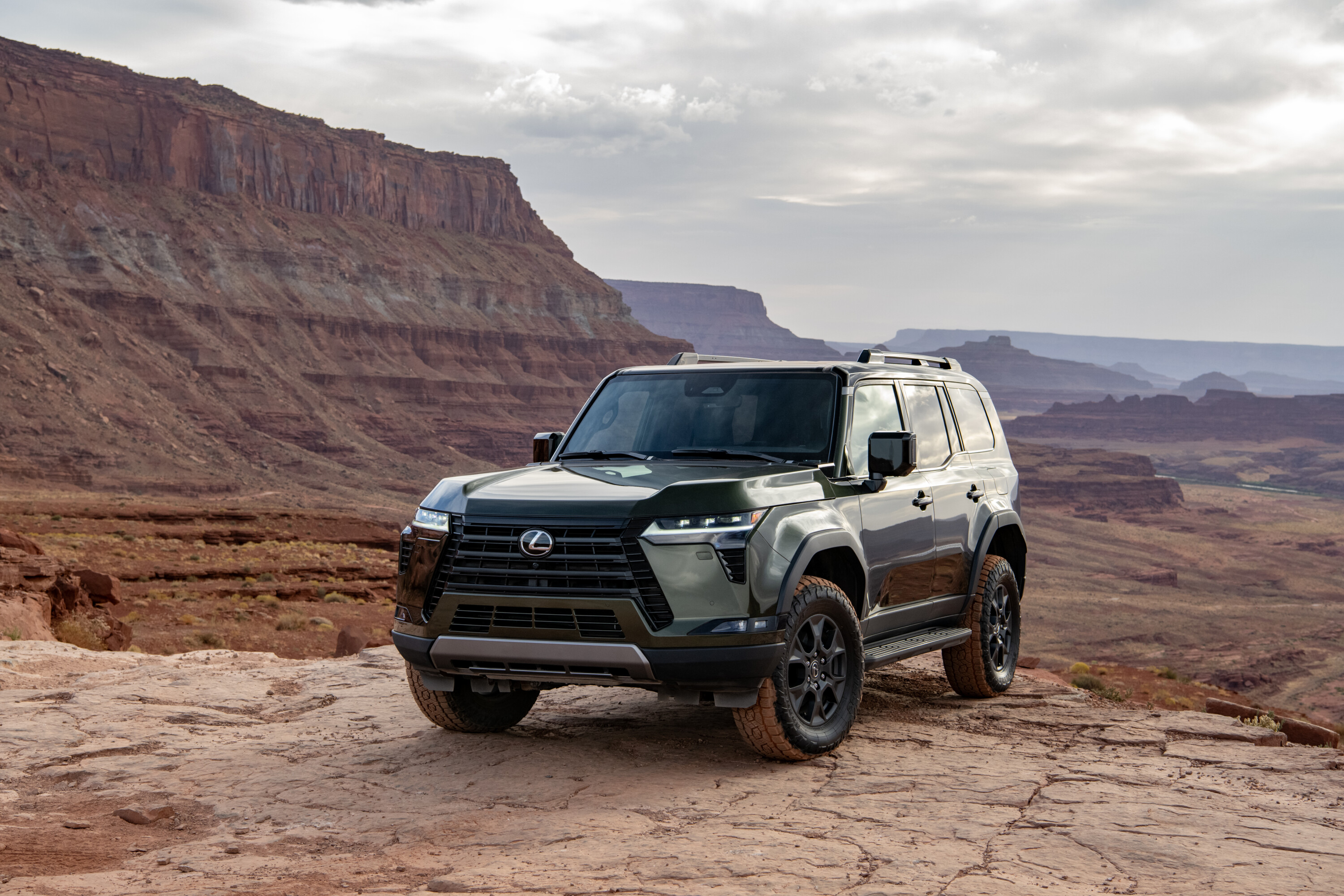
Lexus GX
The upscale Prado twin has already debuted in the Australia!
The GX550 comes equipped with a 260kW/650Nm 3.4-litre twin-turbocharged V6 petrol engine and a 10-speed automatic transmission. A 2.4-litre turbo-petrol hybrid option is slated to join the line-up at some stage in the future.
Like the Prado, the GX is built on Toyota’s latest TNGA-F body-on-frame platform. All GX variants feature full-time all-wheel drive, a low-range transfer case, and a locking Torsen limited-slip centre differential.
The GX550 starts at $116,000 for the Luxury (seven-seater); and then bumps up to $122,250 for the Overtrail (five-seater) and $128,200 for the Sports Luxury (seven-seater).
One of the perks of living in Brisbane is that there are picturesque island retreats within 50km of the city centre. As a bonus, the state capital is also surrounded by vast national parks.
If North Stradbroke and Moreton Island don’t appeal to you (somehow!), perhaps a jaunt south to the hills of Border Ranges National Park is more to your liking. Either way, a wide variety of destinations around Queensland’s capital city is available to suit your palette.
There’s some essential touring to be had close to Brisbane, but if we’ve missed any please remind us in the comments section below.
The best 4×4 tracks close to Brisbane
Explore by state








The 2024 Ranger Tremor utilises the same wheel, tyre and suspension package that was previously used in the Wildtrak X model from last year.
However, where the X was based on the top-of-the-range Wildtrak, the Tremor adapts the added hardware to the lower-spec Ranger Sport. As a result, it is priced $4000 lower at $69,690 (+ORC).
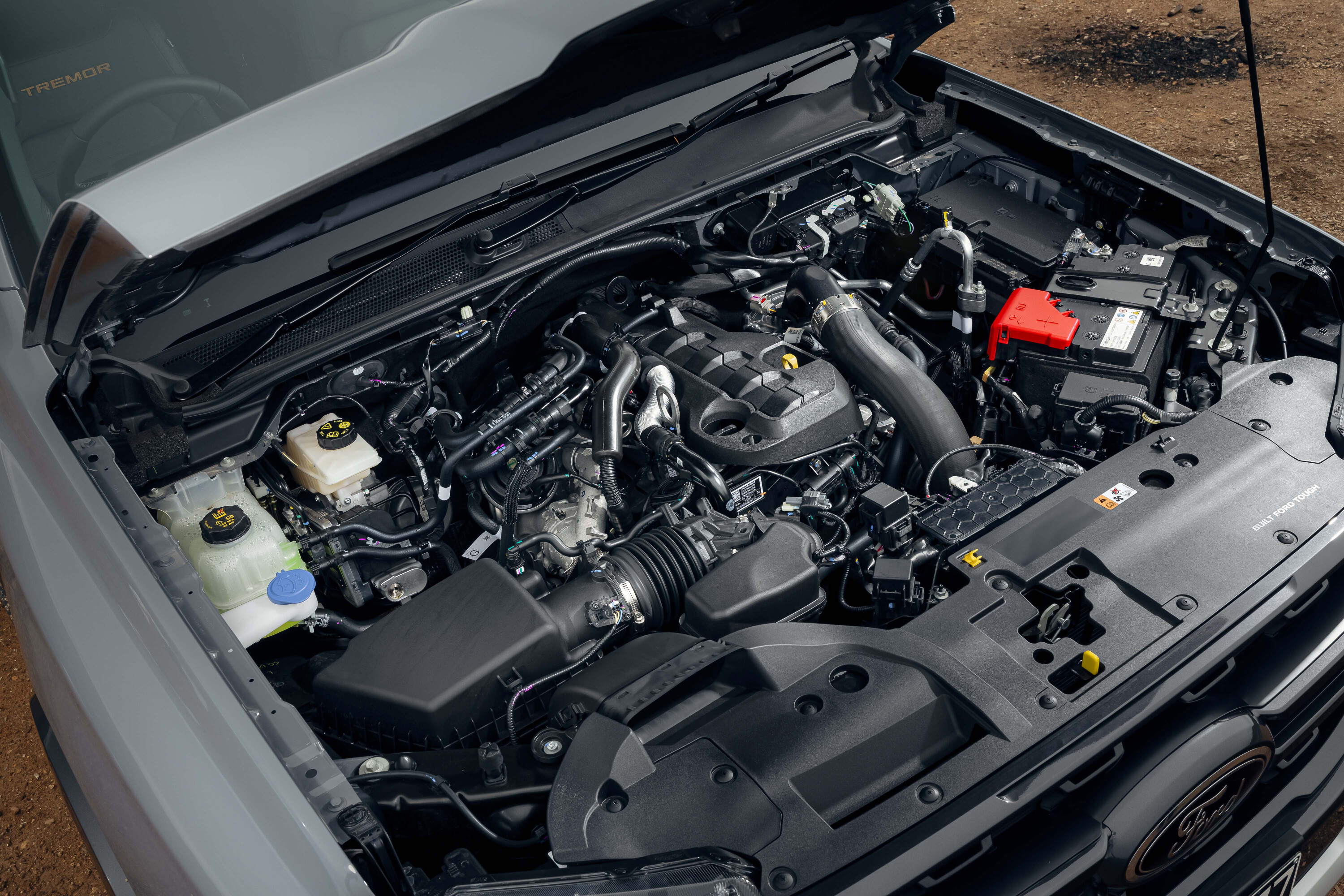
As was the case with Wildtrak X, the Tremor is powered exclusively by the 150kw/500Nm 2.0-litre four-cylinder bi-turbo diesel engine backed by a 10-speed automatic transmission and full time, dual-range 4×4 system.
Also like the Wildtrak X, the Tremor’s suspension package includes Bilstein remote resevoir position-sensitive dampers with the upgraded springs, and rolls on a set of LT265/70R17 General Grabber AT3 all-terrain tyres to give a 26mm boost in ground clearance.
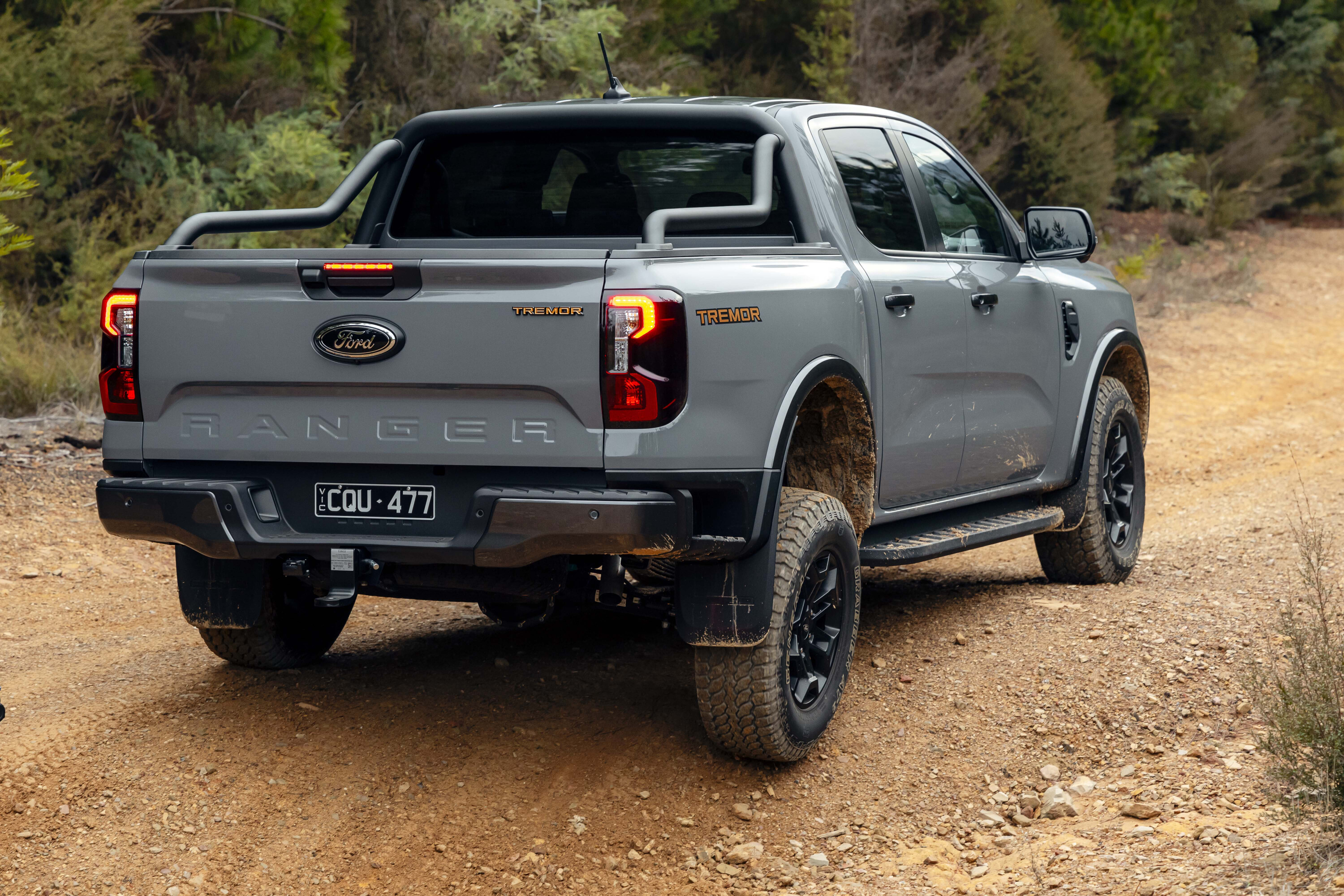
In addition, the model-specific alloy wheels have a more negative offset to give the Tremor a 30mm wider wheel track over a standard Ranger.
The stiffer light-truck construction all-terrain tyres and the suspension give the Tremor a firmer ride than a regular Ranger and it can feel a bit choppy over high frequency bumps in rough terrain. The Ford boffins tell us that the suspension was tuned to work best with a load on board and that it was set up at close to half GVM, which suggests it would ride best with around 400-450kg on board. Our test vehicle was unladen with just two passengers in the cab.
The Tremor’s off-road chops are further boosted by systems borrowed from the Ranger Raptor that include Trail Turn Assist, Rock Crawl mode, and Trail Control, however the Tremor still only has an open differential in the front axle so Rock Crawl mode won’t be as effective as that in the Raptor, which has locking diffs front and rear.
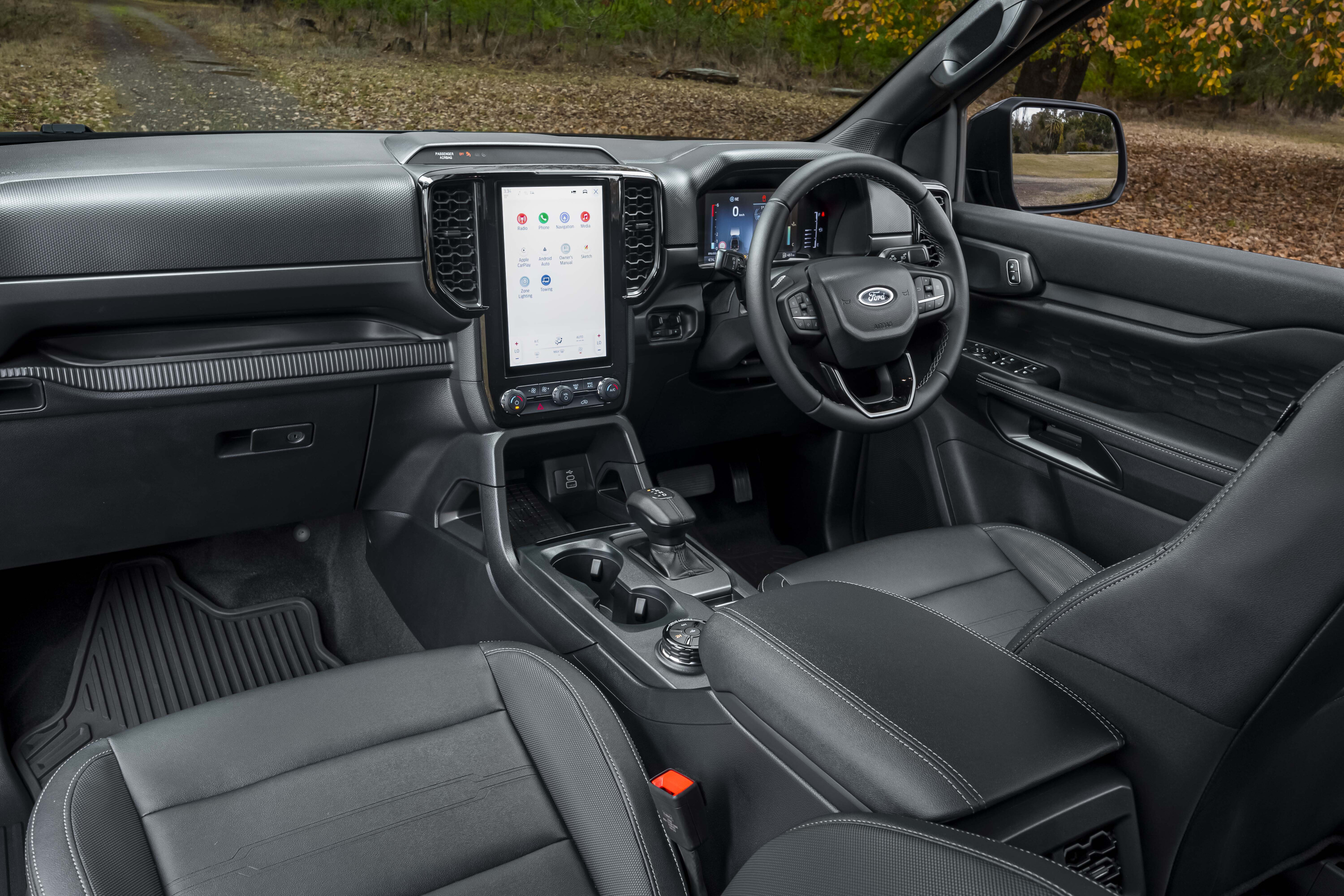
When activated, Trail Turn Assist locks the inside rear wheel when you turn the steering to full lock to ‘pull’ the Tremor in on a tighter radius for sharp turns. It works well when off road on tight tracks.
Trail Control is what the marketing types like to call cruise control for off-road use. As the description suggests it allows the driver to set a target speed and the vehicle keeps to that speed when you are driving off road at low speeds, meaning the driver only needs to focus on steering.
The best part of Trail Control is that the Tremor’s electronics can apply the accelerator in far more miniscule increments than you can with your right Blunnie, giving better traction control in low-grip terrain. Another technology borrowed from elsewhere in the Ford trucks range is optional Pro Trailer Back-up Assist, this time taken from the F-150 full-size pick-ups.
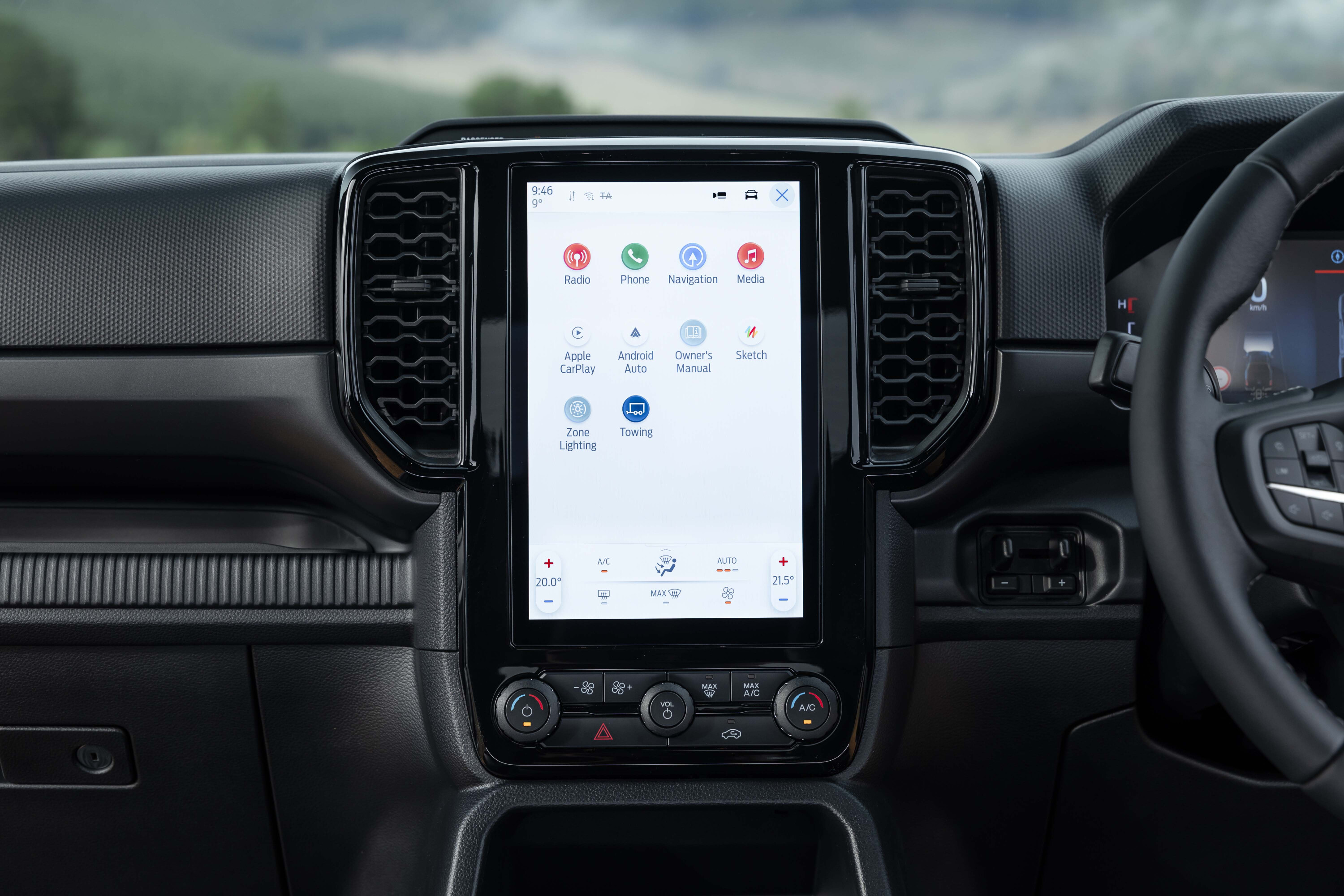
This system is said to take the mystery and hard work out of reversing a trailer by allowing the driver to reverse it into position using a dial on the console and directions via the multimedia screen.
Unlike when you reverse a trailer in the conventional way using the steering wheel, when using Pro Trailer Back-up Assist, if you want the trailer to go to the left you turn the dial to the left, or turn it right to make the trailer go right.
It’s clever tech but not for everyone, and this is the first time we’ve seen it offered in a Ranger, and on the Tremor it is a part of the $1650 Touring Pack, which also includes 360° camera, puddle lamps, zone lighting and cargo management system. The Tremor retains Ranger’s 3500kg braked towing capacity.
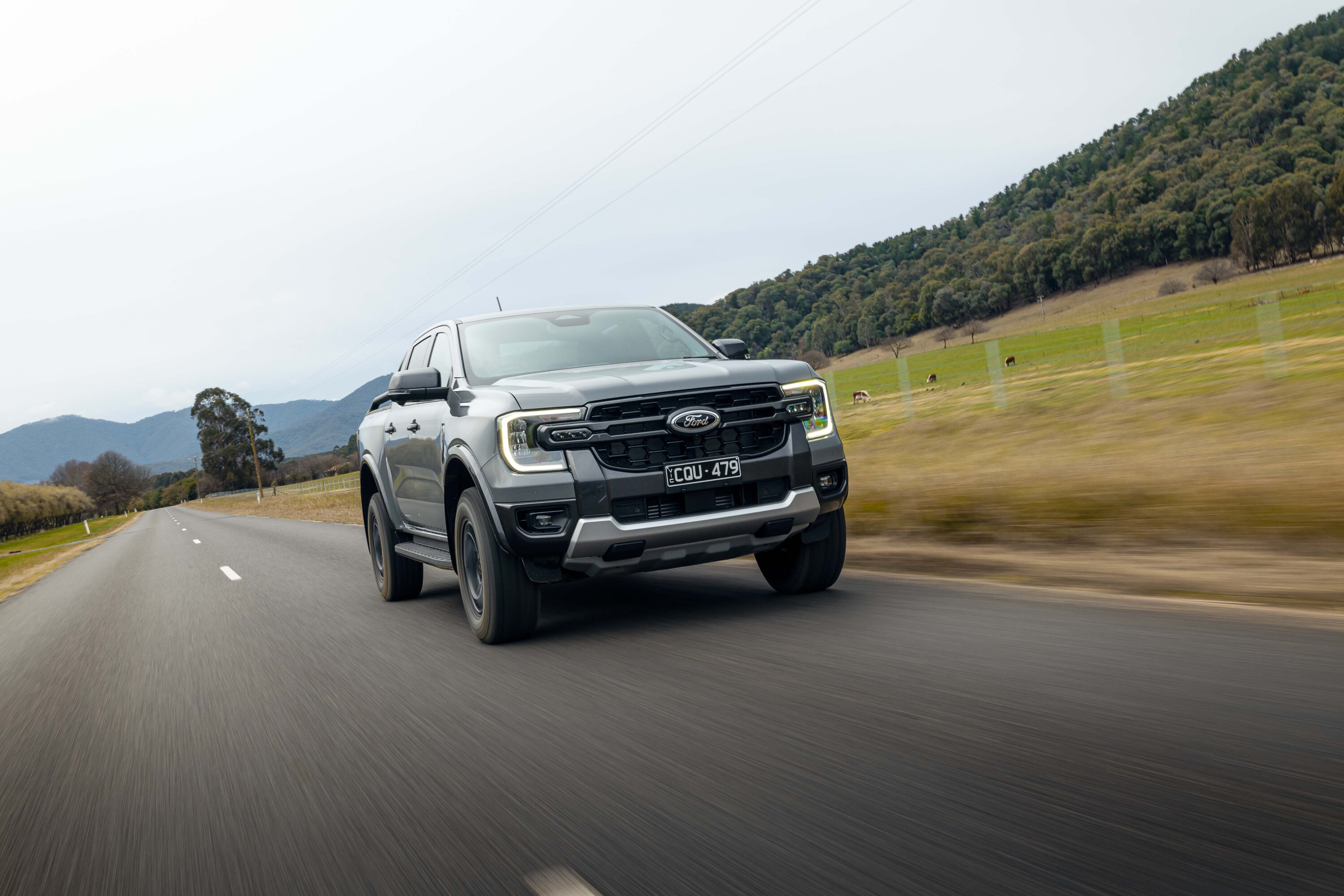
Ranger Tremor gets a unique look with model-specific wheels, badges and trim. The side steps are taken from the Raptor, as is the Conqueror Grey colour.
The Tremor is also available in Blue Lightning, Arctic White, Shadow Black, Aluminium and Meteor Grey. Up front there’s a bespoke radiator grille that holds auxiliary driving LED lights, and a steel bash plate is mounted underneath for off-road protection. Out the back, the cargo tub gets a sports bar, drop-in plastic liner and 12-volt power outlet, while the Ranger Platinum’s clever, flexible rack system and a hard cover are available as factory options.
Inside you get model-specific faux leather seats, the Sport model’s standard 10-inch multimedia screen, Tremor-branded floor mats and an overhead auxiliary switch panel. These features add to the Sport’s already well-appointed interior.
Some question why Ford went with the four-cylinder bi-turbo engine in the Tremor rather than the V6 diesel that is popular in the Ranger Sport, but there were a number of factors involved here.
Firstly, the Tremor was designed to be a lower-priced package than the old Wildtrak X model that preceded it, and the 2.0-litre engine is not only cheaper but also more affordable to run than the V6.
The Tremor is also designed to be a global vehicle and it will be sold in markets that require it to meet Euro 6 emissions regulations, which is why you’ll also find that the Tremor employs AdBlue SCR in its emissions reduction system.
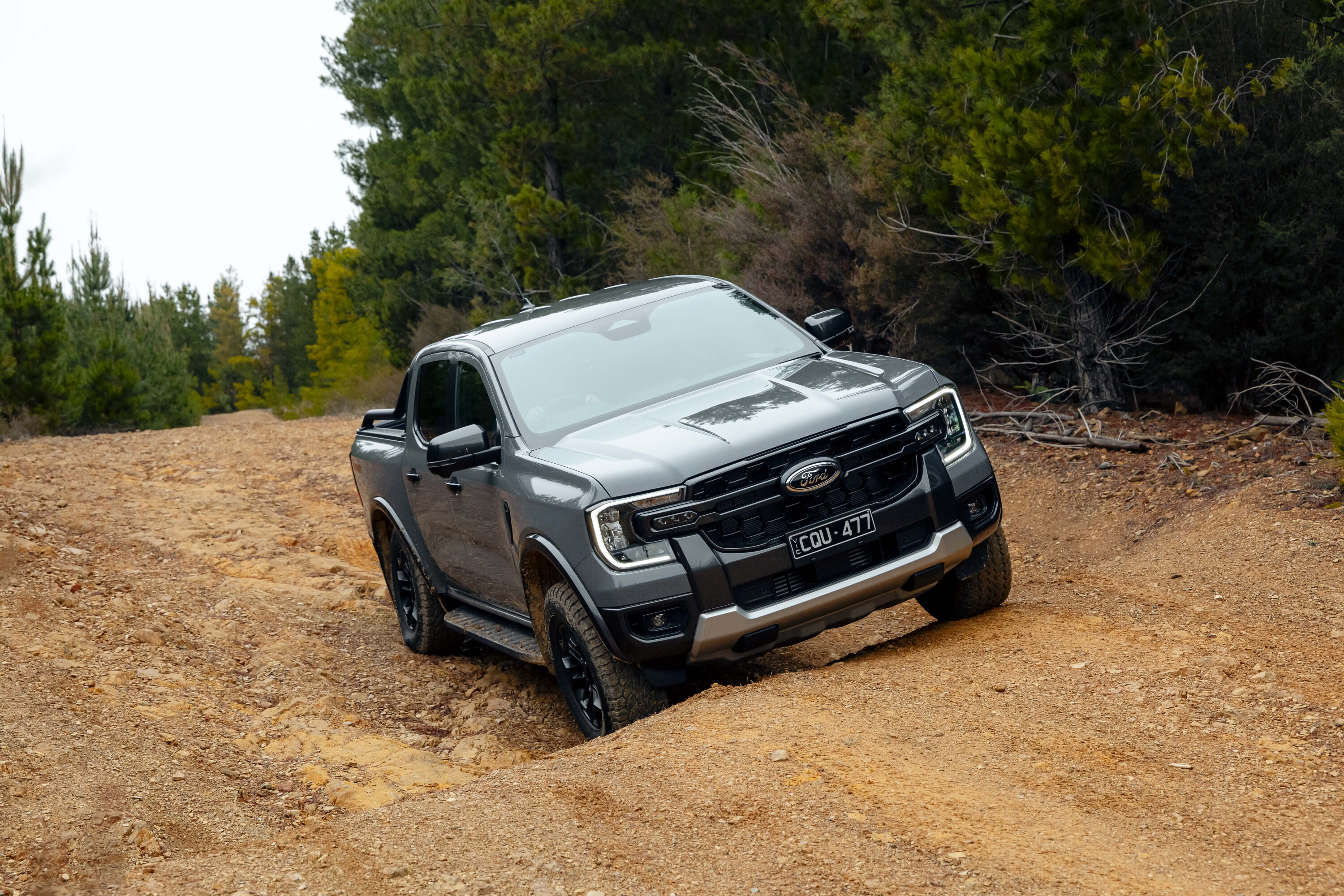
Regardless, the 2.0-litre has plenty of grunt for touring, off-roading and towing, and it really only misses out on the refinement of the V6 for most driving scenarios.
Just 1150 Ranger Tremors will be made available and they will fill a small gap in the current Ranger line-up for those looking for a Ford ute with improved off-road performance thanks to revised suspension, tyres and electronic driver aid upgrades, along with some styling tweaks to make it stand out.
If you think that there couldn’t be any further gaps in the Ranger model range, the Tremor does leave us wanting a variant powered by the V6 diesel engine, and with the improved off-road suspension package.
| 2024 Ford Ranger Tremor specifications | |
|---|---|
| Price | $69,690 (+ORC). |
| Engine | Inline 4-cyl diesel, twin turbo |
| Capacity | 1995cc |
| Max power | 154kW @ 3750 |
| Max torque | 500Nm from 1750-2000rpm |
| Transmission | 10-speed auto |
| 4×4 system | On demand 4×4 with auto and high and low range |
| Crawl ratio | 36:1 |
| Construction | 4-door ute body on separate chassis |
| Front suspension | IFS with wishbones and coils |
| Rear suspension | Live axle on leaf springs |
| Tyres | LT265/70R17 on alloy wheels |
| Kerb weight | 2432kg |
| GVM | 3350kg |
| GCM | 6350kg |
| Towing capacity | 3500kg |
| Payload | 918kg |
| Seats | 5 |
| Fuel tank | 80L |
| ADR fuel consumption | 8.7L/100km |
| On test fuel consumption | N/a |
| Approach angle | 32u00b0 |
| Ramp over angle | 24u00b0 |
| Departure angle | 24.1u00b0 |
| Ground clearance | 261mm |
| Wading depth | 800mm |
Scout Motors has confirmed it will reveal its next generation of vehicles on October 24, 2024.
The Volkswagen-owned company teased the news on its social media pages, announcing the vehicles will be revealed 44 years to the week after the last Scout II rolled off the production line.
“The time is right. On October 24, 2024 – 44 years to the week after the last Scout II rolled off the line – we’ll officially reveal the next generation of Scout vehicles to the world,” the Scout Motors Facebook post read.
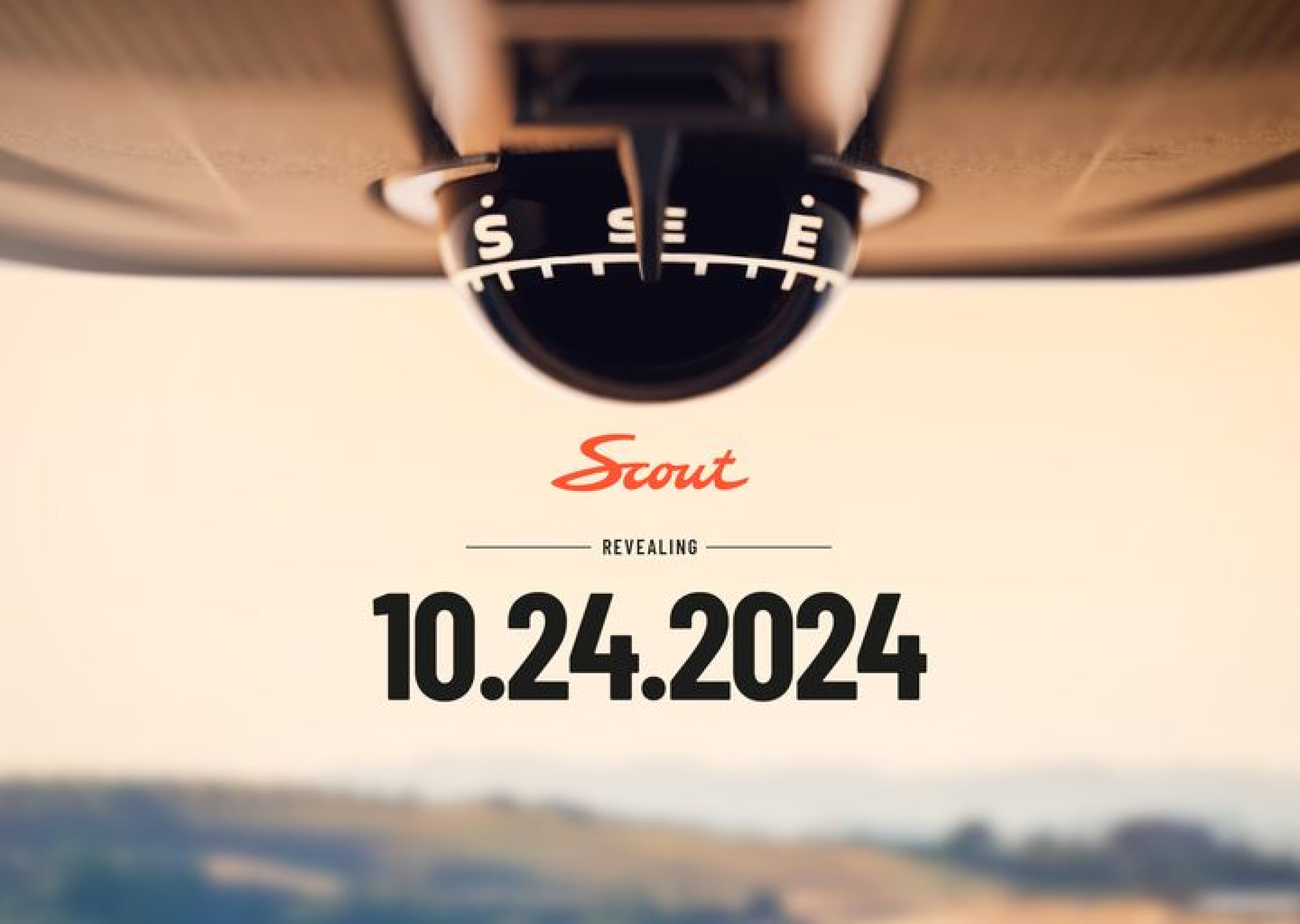
“To the makers, doers and everyday explorers, and our loyal Scout community, we look forward to showing you our new SUV and truck concepts we’ve been hard at work crafting behind the scenes.”
The Scout nameplate was officially acquired by Volkswagen in 2020 and revived in 2022, following decades of absence, with VW announcing at the time that the Scout brand will apply to a range of off-road focused electric vehicles.
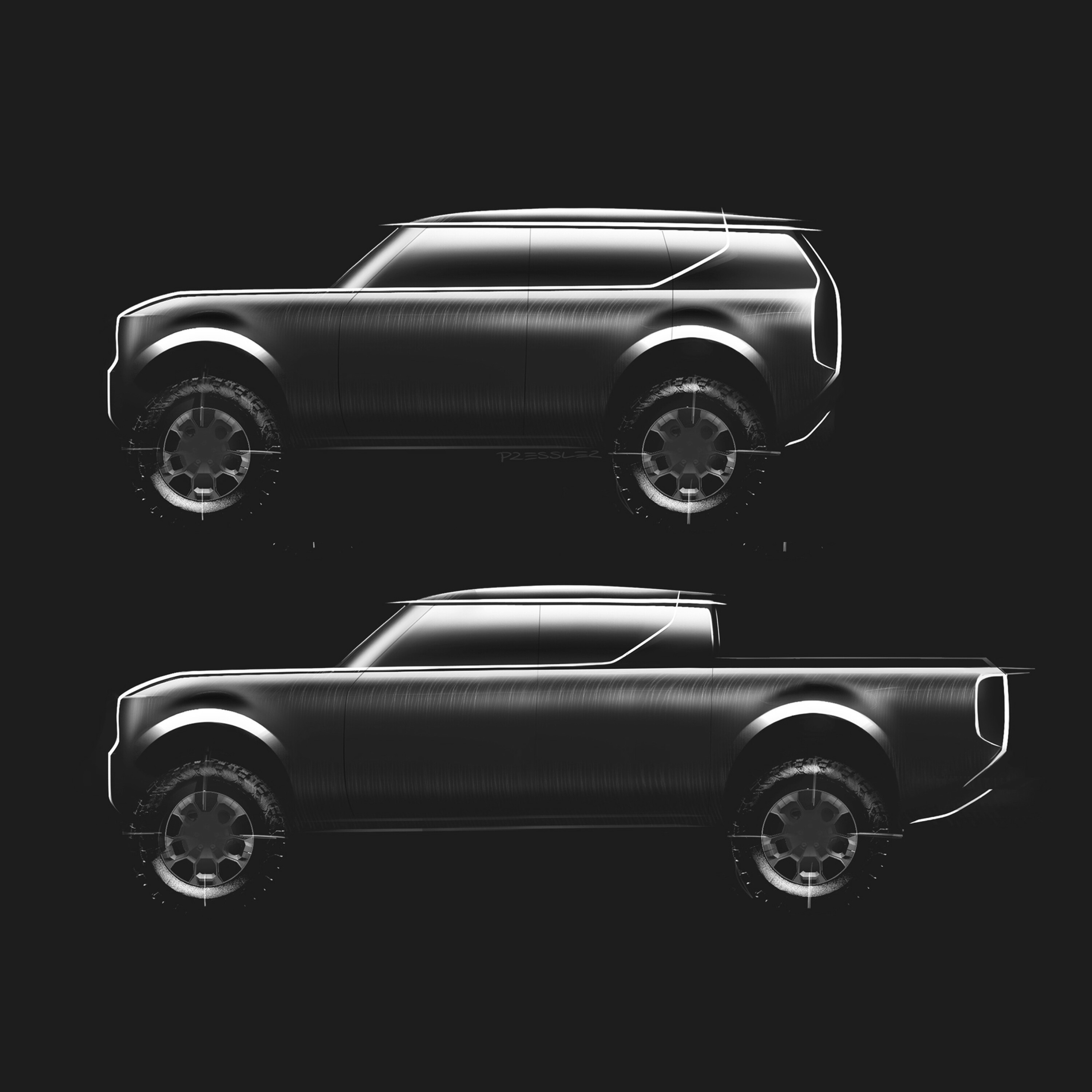
Two vehicles are expected to be shown on October 24 – a large SUV, and a pick-up ute – with both vehicles to enter production in 2026 for the North American market. Volkswagen Group confirmed production will take place at a manufacturing plant in Columbia, South Carolina.
Technical details about the vehicles are to be determined, but it’s expected that the cars will be built on a newly designed all-electric platform.
What is certain, though, is that if the vehicles follow in the footsteps of the two-door SUV and pick-up manufactured by International Harvester between 1961 and 1980, then they will be formidable off-roaders.
Stay tuned for more info!
A couple of decades ago camping was not nearly as optioned up as it is today.
Rooftop tents were the province of the hardcore tourer, a pair of spotlights on your steel bullbar meant you were fair dinkum about off-road travel, and aggressive tyres and a winch let everyone know that you were legit about exploring remote locations.
Even back then though, most folks ran a second battery – not for the same reasons we do today such as LED lighting, coffee machines and electric blankets – solely for the fridge. Yep, almost from the get-go, having a 12v fridge onboard meant you were ready to head off-road for an extended period of time.
JUMP AHEAD
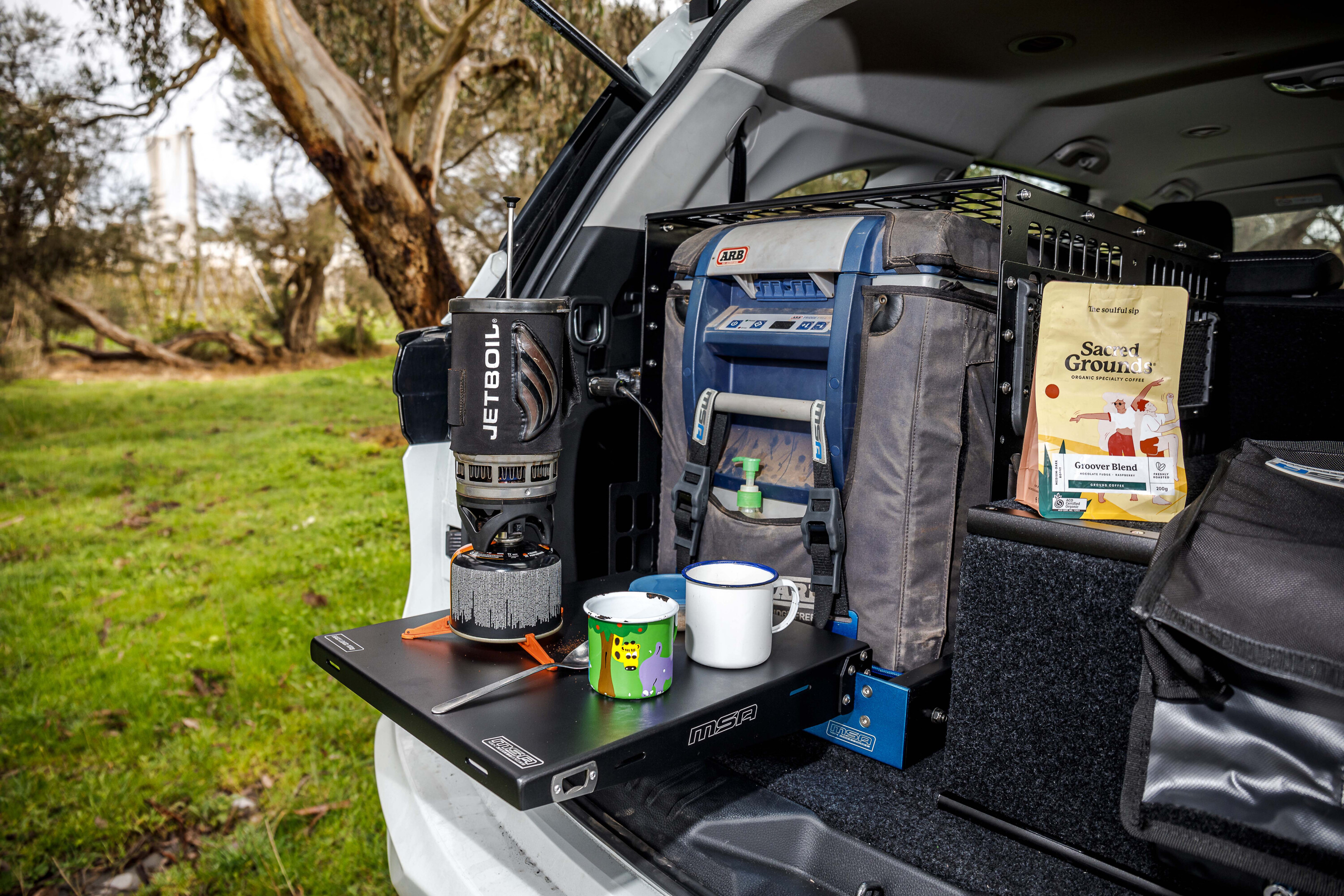
Portable fridges are arguably the most essential and convenient accessory money can buy.
They allow for food to be kept almost as long as you need it, provide storage for fresh meats and produce, and let’s not overlook the feeling of cracking a cold one during summer at your favourite beach camp. Yep, 12V fridges allow such memories to be made.
Just like the rest of our camping gear, the humble Esky with a compressor has been updated, too. Where you once had to choose between a 12v compressor fridge or a three-way (which weren’t really suited for off-roading), you now have multiple options, and to be honest, none of them are bad. Good problems to have, sure, but it does add a layer of complexity to your purchase decision when it comes time to buy your next beer-storage box.
If you’ve ever been around gas-powered vehicles or machinery, you’ll probably know that when the LPG is drained quickly from the tank it gets really cold.
Same if you’re filling your LPG-powered vehicle up at the servo and the filler nozzle gets icier than Sir Edmund Hillary. That same heat transfer principle is used in your fridge.
A 12v-driven compressor does what its name says and compresses a gas refrigerant, which heats it up. This gas is then circulated through the coils (external to the fridge compartment) which cools it down, turning it into a (now cold) liquid. This liquid is circulated through the coils inside the fridge, as the pressure lowers, the liquid evaporates into a gas again and cools the internal compartment – just like our LPG tank. The gas charge arrives back at the compressor ready to start its cycle over.
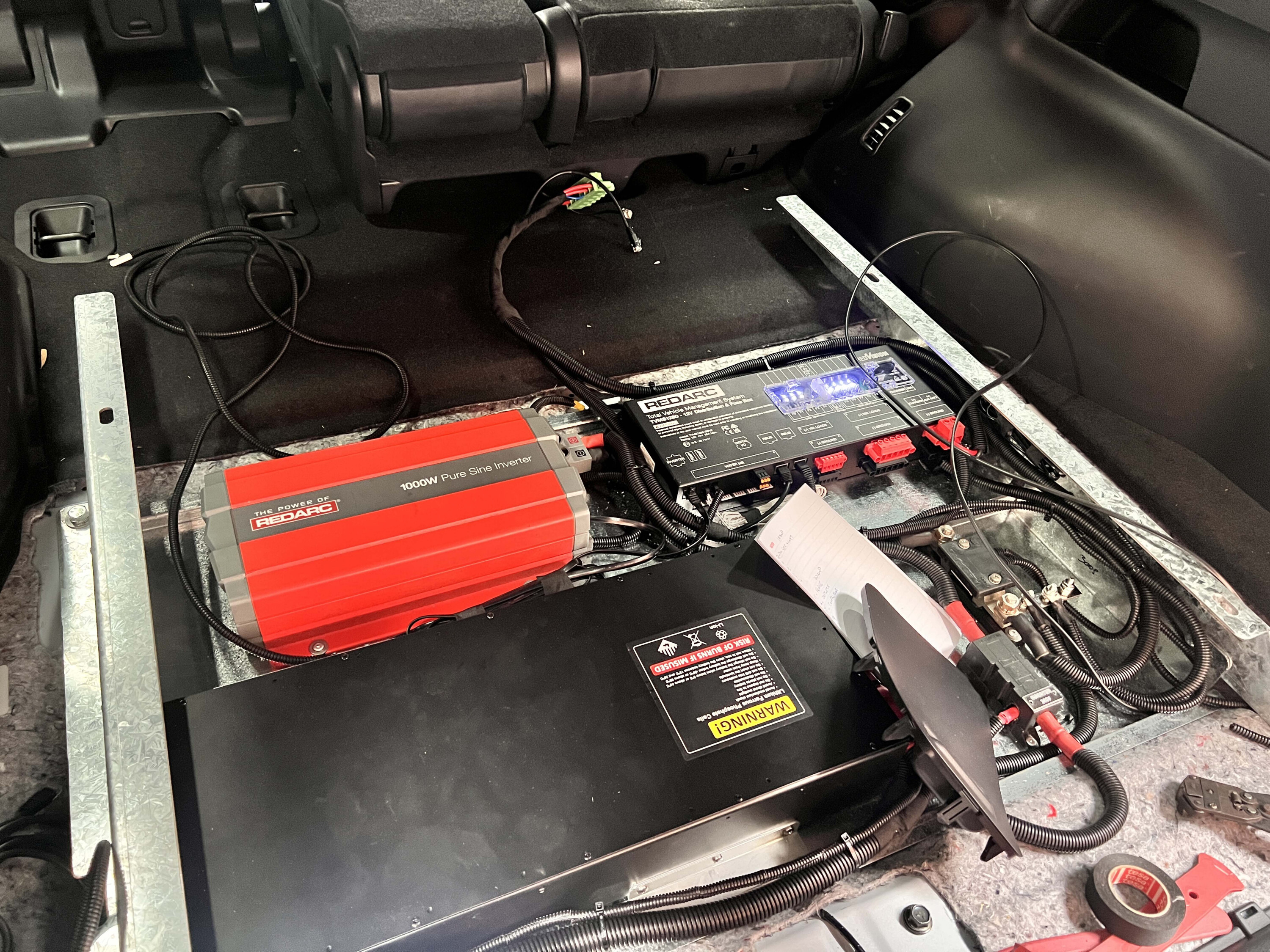
Essentially, the gas sucks hot air out of the fridge’s internal compartment and releases it into the external atmosphere via the coils.
Now, without getting too deep into thermal dynamics, heat transfer properties and other stuff nerds talk about during dork lunch, the trick to minimising the power draw on your fridge comes down to (broadly speaking) two key things: keeping it out of direct sunlight so the ambient temps are as low as they practically can be, and keeping it full.
Yep, a full fridge is a happy fridge. Less internal air to cool (displaced by food and drinks) means it doesn’t have to work as hard to keep things cold. It’s considered good fridge-keeping to minimise door openings and to replace anything you remove while the door’s open. Realistically, the science behind running your fridge optimally is a whole another article, so let’s get back on track and take a look at your fridge options.
Chest fridges
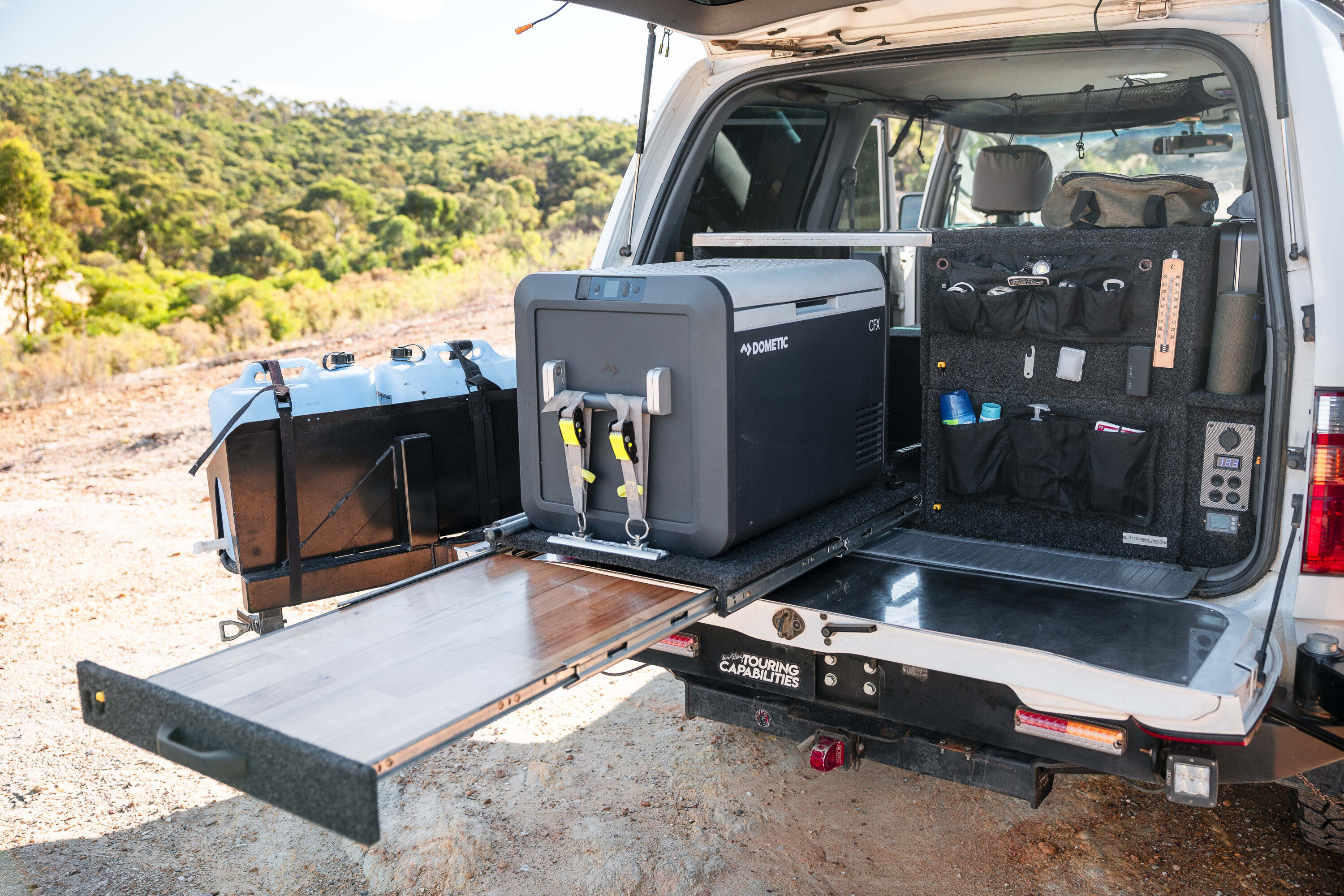
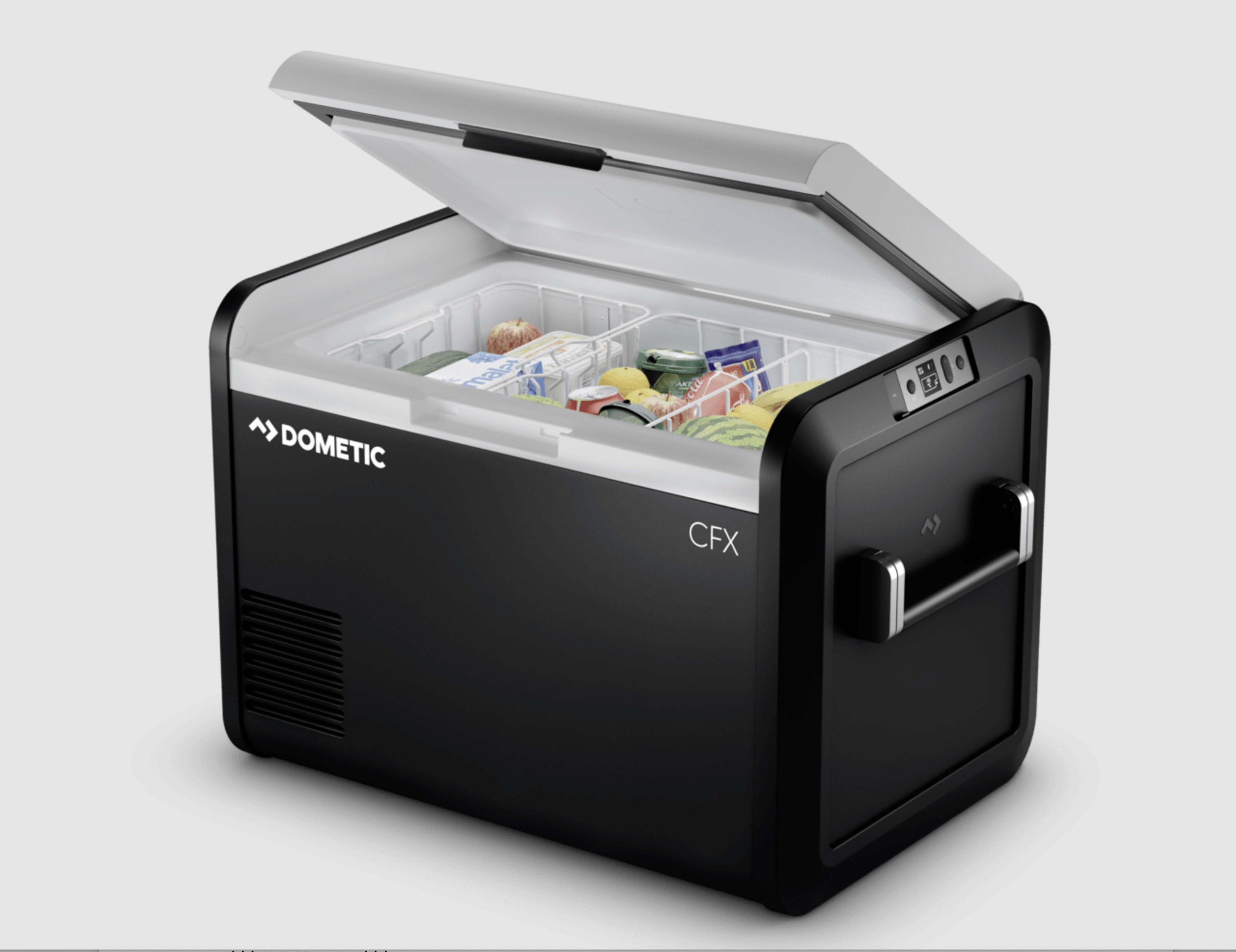
The original portable fridge, and arguably still the most versatile.
Able to be stored pretty much anywhere they’ll fit (including out in the elements on a ute’s tray), chest fridges also keep the cold in by their design (cold air is heavy air, it can’t really escape when you open a chest fridge) and have been a mainstay for campers for years.
With some packing features like dual-zones, which allow you to run half the fridge as a freezer and the other half as a cooler, chest fridges are the one-size-fits-all option for pretty much any 4×4.
Advantages
- Can be mounted pretty much anywhere
- Do not let cold air escape
- Come in any size you need
Disadvantages
- Often need a fridge slide for easy access, which is extra weight and cost
- Contents can become disorganised when driving over rough terrain
| Case study: Dometic CFX3 55 | |
|---|---|
| Size | 55L |
| Dimensions | 455x480x720mm |
| Weight | 21.2kg |
| Power draw | 1.1Ah per hour (internal @ 4C; ambient @ 32C) |
| Price | $1409 |
Upright fridges
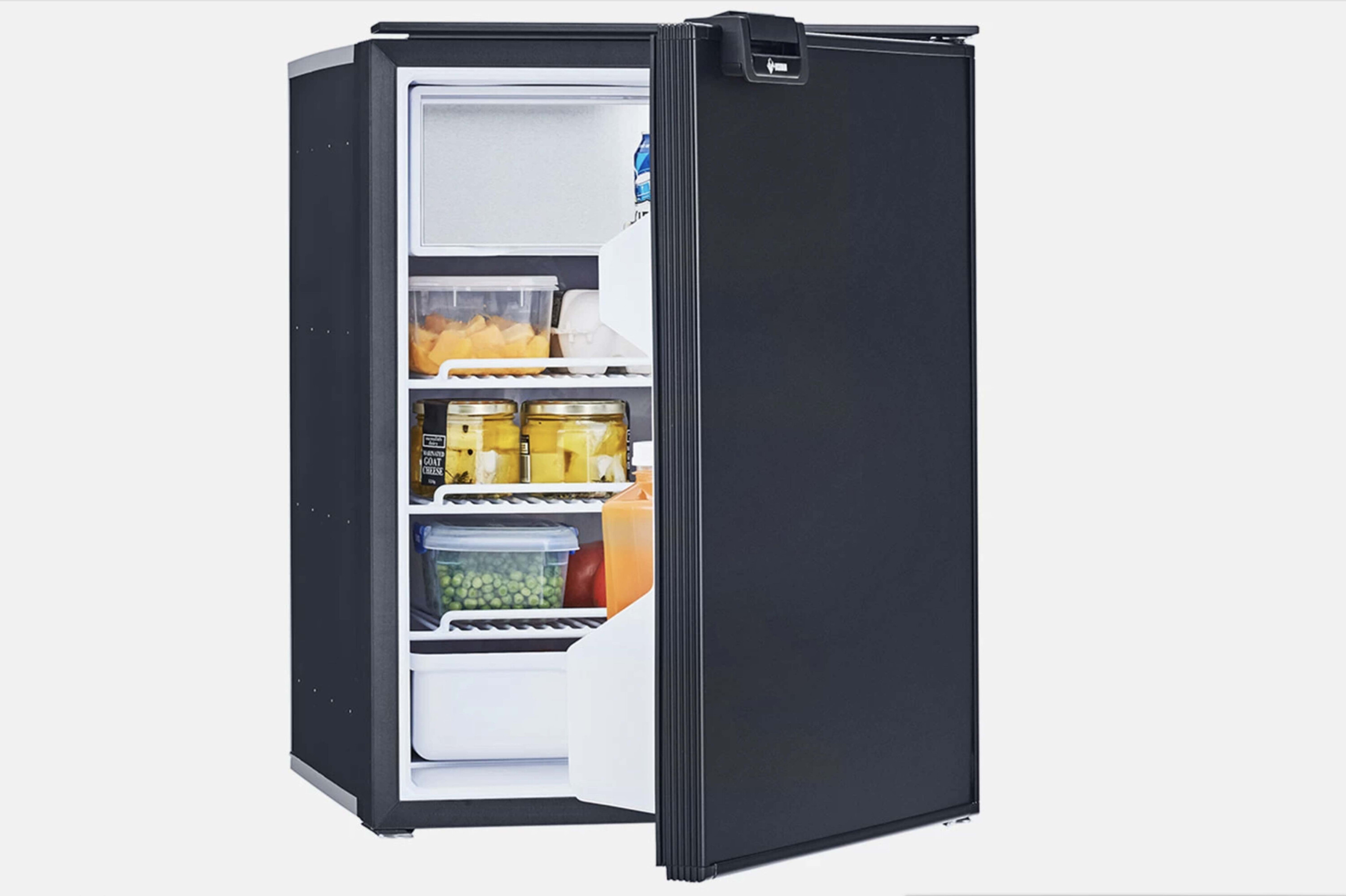
Comparatively new on the scene, uprights have exploded in popularity in recent times, mainly because they keep everything organised inside and offer unmatched accessibility.
Just like the fridge at home, open the door and everything is right there, easily reached. No more having to dig under 35 cans of lolly water to find those snags you’re planning on eating out of that loaf of white bread from the servo.
Uprights do have the perceived disadvantage of the cold air “falling out” every time you open the door, but this is largely offset by keeping them full and their relatively quick cooling times. They are, however, not suited for external mounting, which leaves them for wagons or utes with canopies only. If that’s you, though, they’ll change your life.

Advantages
- Theyu2019re lighter and donu2019t require a heavy fridge slide making them cheaper overall
- Ultra-easy access to everything
- Increased power efficiency
Disadvantages
- Not able to be mounted to every vehicle
- Cold air drops out when door is opened (negligible, but stillu2026 )
| Case study: Bushman DC85-X | |
|---|---|
| Size | 85L |
| Dimensions | 550x475x625mm |
| Weight | 26.2kg |
| Power draw | 1.25Ah per hour (internal @ 4C; ambient @ 25C) |
| Price | $1495 |
Drawer fridges
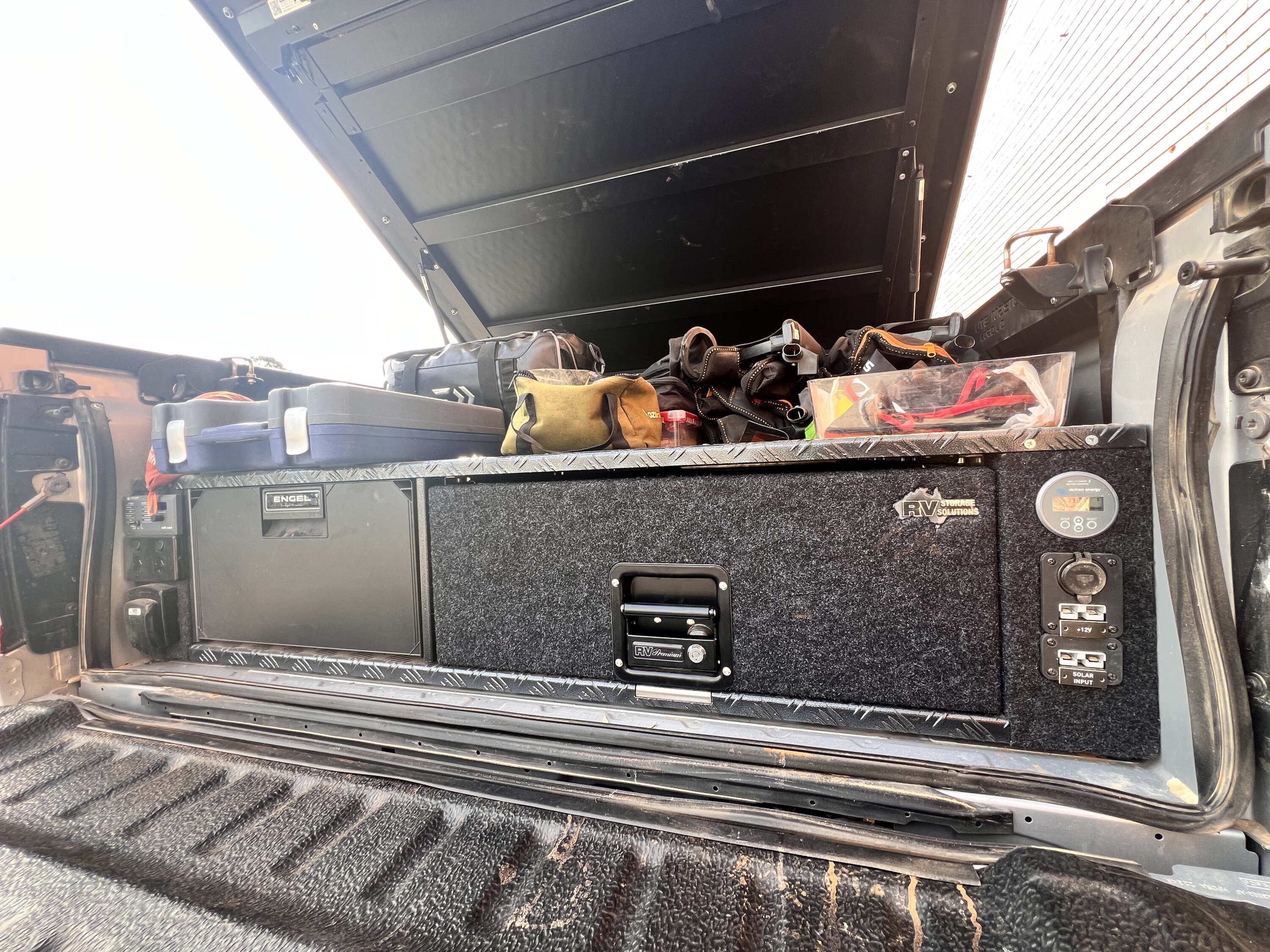
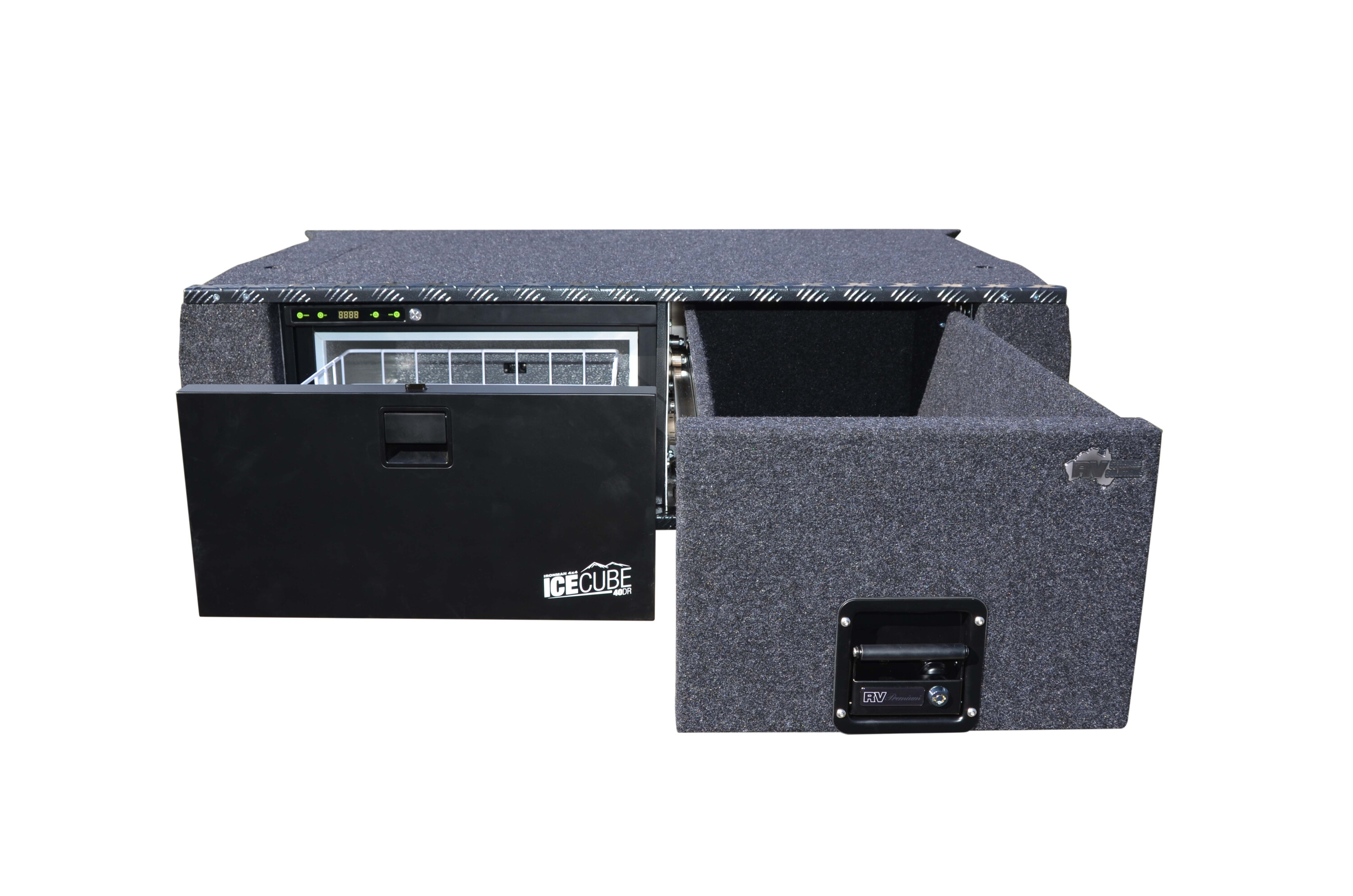
The new kid on the block, drawer fridges may not seem like the best option at first glance, but they’re becoming increasingly popular for a variety of reasons.
Yes, they’re typically smaller than a chest or upright fridge, but a lot of folks have learned they simply don’t need 80L or more of fridge when all they’re doing is taking a couple nights of food and drinks away with them.
Conversely, a bunch of seasoned travellers are also fitting them up as a dedicated freezer or drinks-only unit. Regardless, the ease of fitment, either in a drawer set-up or standalone (or some even build custom mounts under seats) and the ease of access are the two big drawcards, but while they may not be the greatest thing for an extended trip, they’re quickly gaining popularity among solo travellers and couples as a space-efficient and wallet-friendly alternative.
Advantages
- Easy accessibility and often cheaper
- Low power draw
- Don’t take up cargo space when fitted in place of a drawer
Disadvantages
- Not much vertical room (milk bottles wonu2019t stand up etc.)
- Generally smaller in size than a chest or upright (although not necessarily a negative)
| Case study: Engel drawer fridge | |
|---|---|
| Size | 30L |
| Dimensions | 250x440x716mm |
| Weight | 21.5kg |
| Power draw | 3.4Ah per hour (internal @ 4C; ambient @ 25C) |
| Price | $989 |
The right choice
There’s no really wrong choice here, it’s more about whittling the options down to suit your vehicle and your needs. Got a tray-back that gets the swags and surfboards chucked on twice a year for the run up to Double Island?
Grab yourself a chest fridge and drop-slide. Got a decked-out camping canopy and roof-topper that regularly sees a few weeks in the bush at a time? Right this way to the uprights, sir/madam. Got a Sierra that’s tight on space that’s your commuter-turned-camping-bus over the long weekend? A drawer fridge is calling your name, pal.
Whatever you end up with, just remember to take the leftover meat out once you’re back home before it gets thrown in the corner in the shed for a few weeks. The clean-up job is heinous, and the smell is the gift that keeps on giving. Don’t ask us how we know.
Some of the best 4×4 destinations are located in Australia’s biggest state. Here are five fantastic WA experiences for the adventurous four-wheel driver ?
JUMP AHEAD
1. Pemberton
Words by: Kev Smith
Rich in history and natural beauty, Pemberton is a gateway to the spectacular coastline in D’entrecasteaux NP.
Pemberton is a quiet town known for its local boutique wines and beers, handmade pies and cakes, and shops with a country feel. The old restored railway station at the back of the town is a highlight, featuring a steam engine, turntable, diesel engines, a low-loader crane, and a disused tram that once ran tourists along the line.
Although the trains and tram no longer run, the area remains a fascinating place to visit and explore.
The rail line was built in 1926 through the forest to Northcliffe during the timber industry boom, transporting goods to new farmlands and moving timber. It operated at heavy losses for 50 years, sustained only by the timber industry.
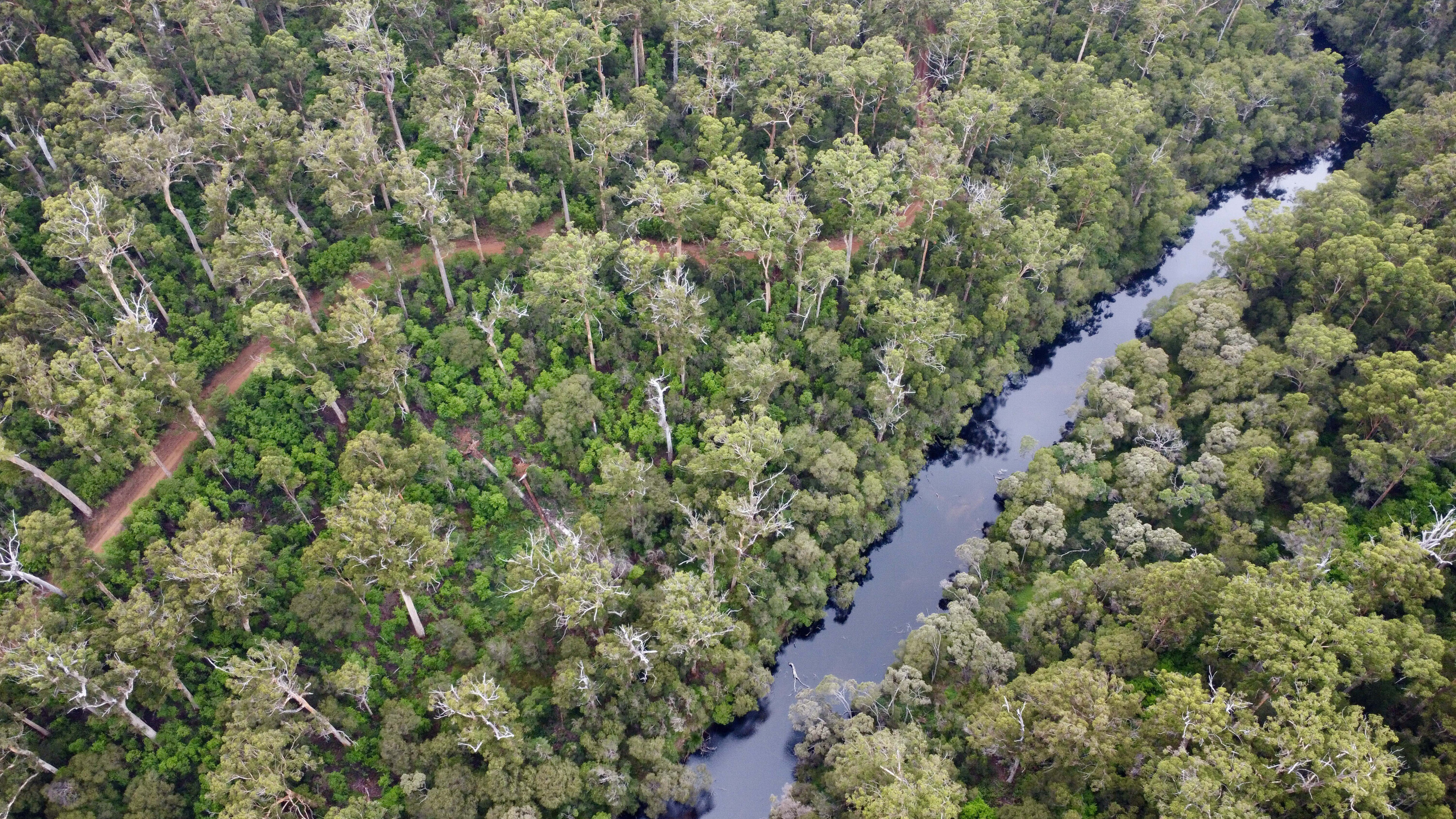
By 1961, things started to decline due to bridge fires, and buildings were sold and relocated. The last train ran in 1986.
Today, many bridges, sheds and the station are heritage-listed or recognised as highly significant. A tourist tramway operated here until February 2023.
A popular route in Pemberton is the Karri Forest Explorer scenic drive, looping around the town’s attractions. National Parks surround the area, offering timber-related points of interest. One significant feature is the fire lookout trees, an idea conceived in the 1930s by local forester Don Stewart.
Tall karri trees were used to spot fires, with large steel pegs forming ladders to small cabins high up in the trees. Today, two of these trees can still be climbed: the 53m Gloucester Tree with 153 pegs and the 65m Dave Evans Bicentennial Tree with 182 pegs. A third tree, the Diamond Tree, has been declared unsafe to climb due to decay but there is a replica hut nearby.
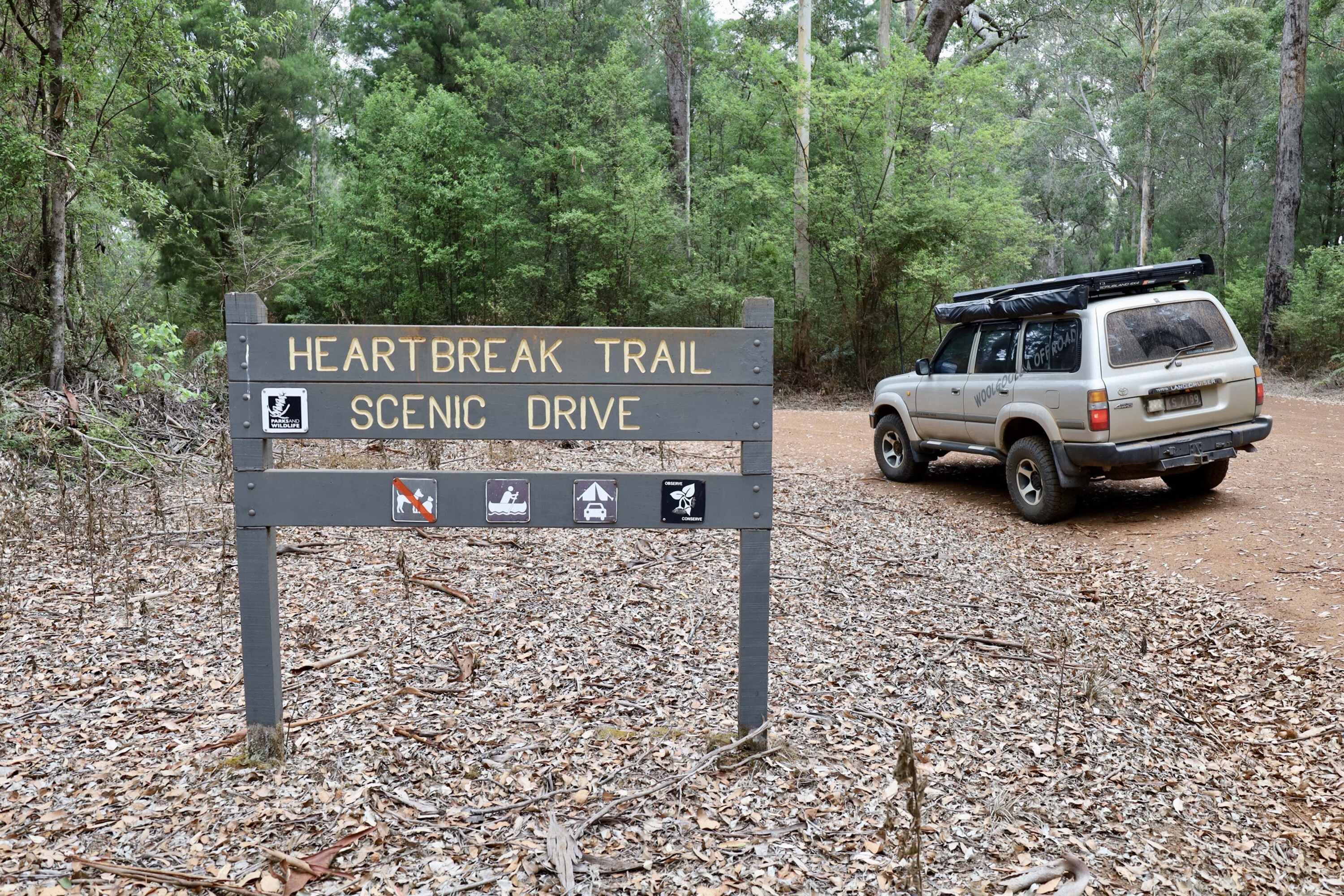
The 4×4 trails and camping options here are appealing. Heartbreak Trail in Warren National Park is a 12km one-way track descending into the Warren River Valley.
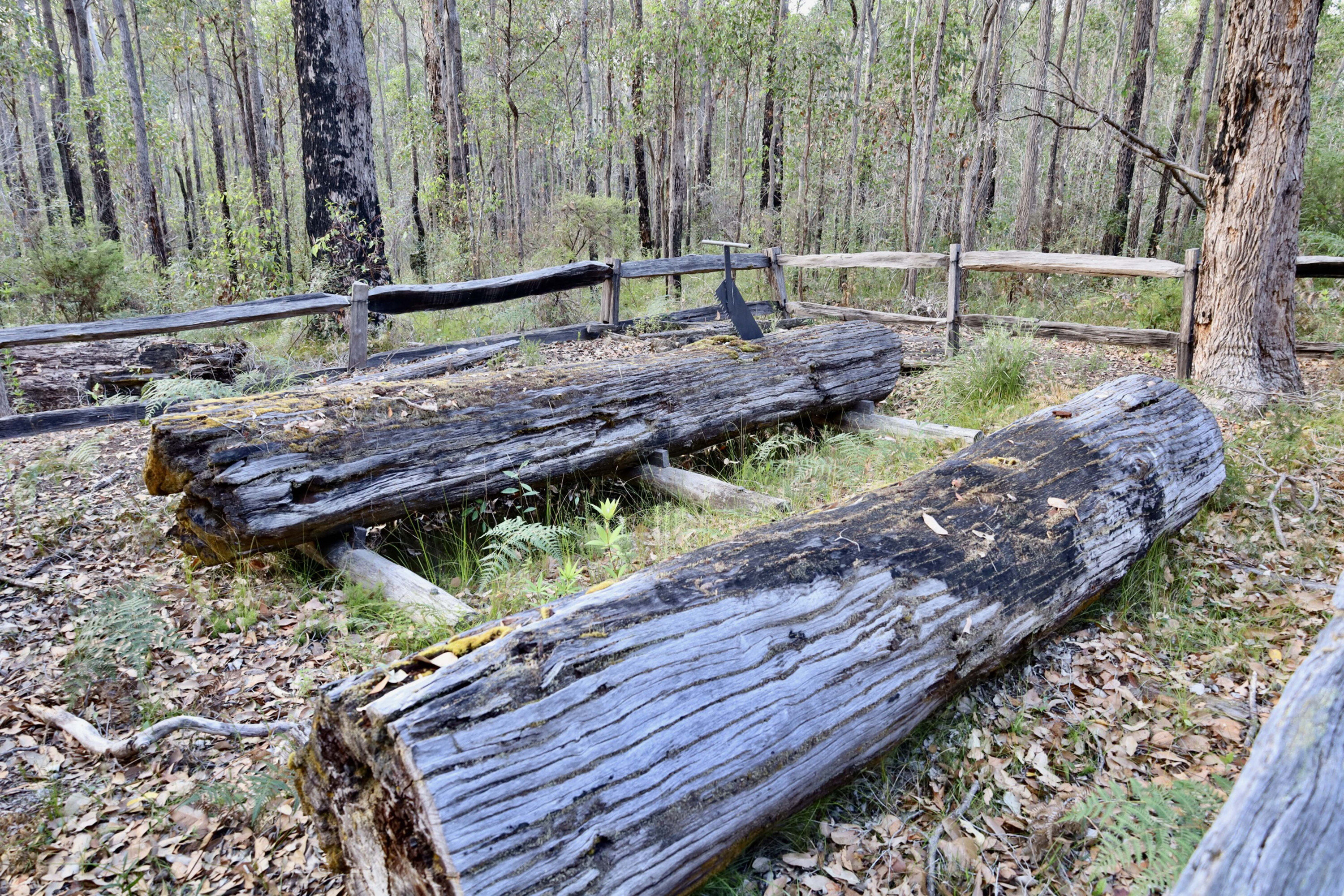
It’s not very steep, but is quite challenging in the wet. The valley has two campsites, Drafty’s and Warren, offering river access for canoeing. Nearby is Brockman Sawpit, dug by convicts around 1865 and rediscovered in 1972 with jarrah logs and tools still intact.
Water-related attractions around Pemberton include Beedelup Falls, which is most impressive in winter, and Cascades, known for transforming into a raging torrent after heavy rains. Big Brook Dam, constructed in the 1920s as the town’s water supply, is now used for swimming and fishing.
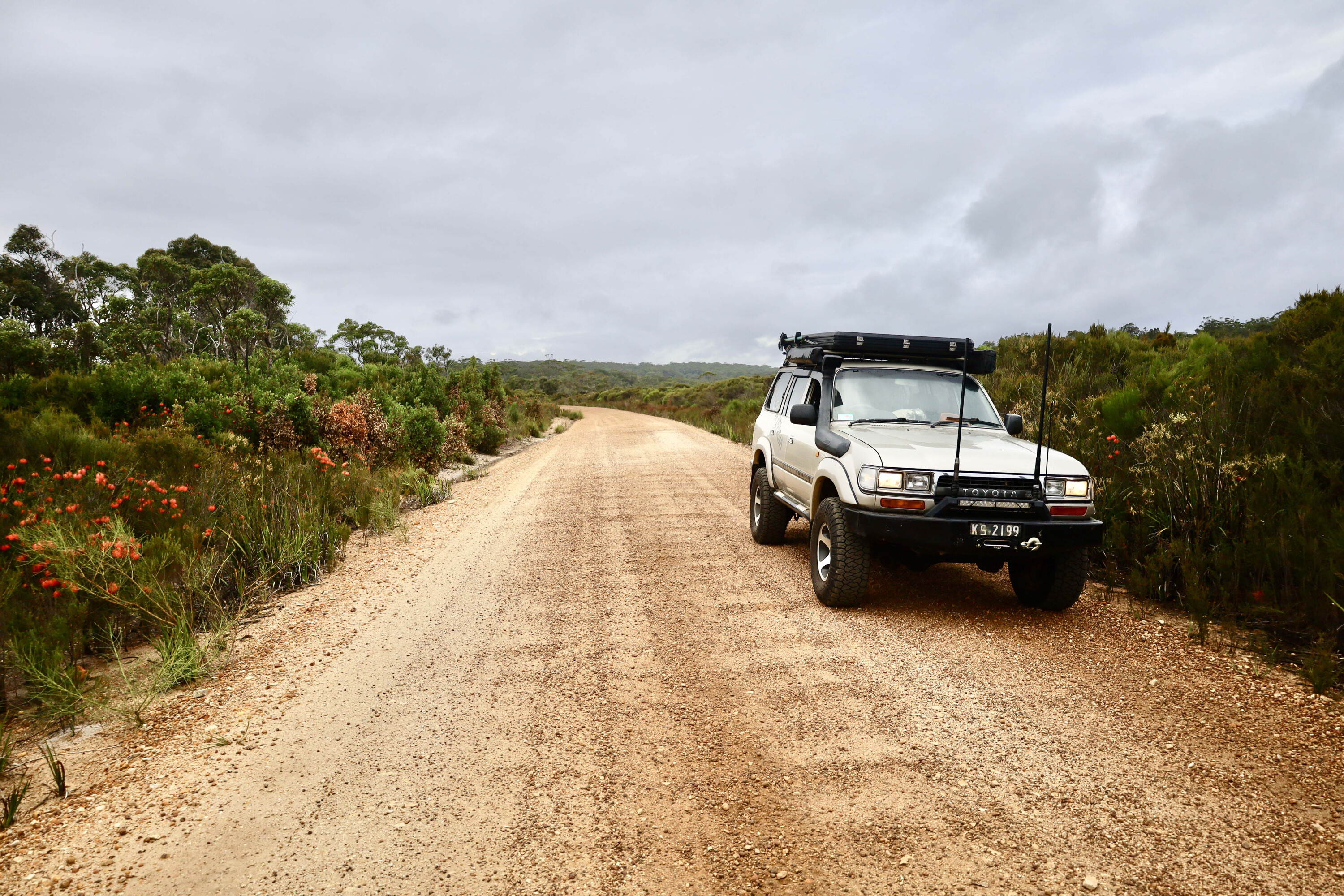
Kayakers often paddle down the Warren River, getting picked up downstream towards the ocean.
Exploring further afield, D’entrecasteaux National Park, 40km south of Pemberton, offers a maze of sandy 4×4 tracks. The park, named by a French Admiral in 1792, features 130km of coastline, lakes, rock formations, and various activities like fishing and camping.
While it may not be a hardcore off-road destination, the park is stunningly beautiful and perfect for relaxing and exploring over several days.
Pemberton is a place where time seems to stand still, offering a mix of historical charm, natural beauty, and outdoor adventure.
2. Karunjie Track
Words by: Kev Smith
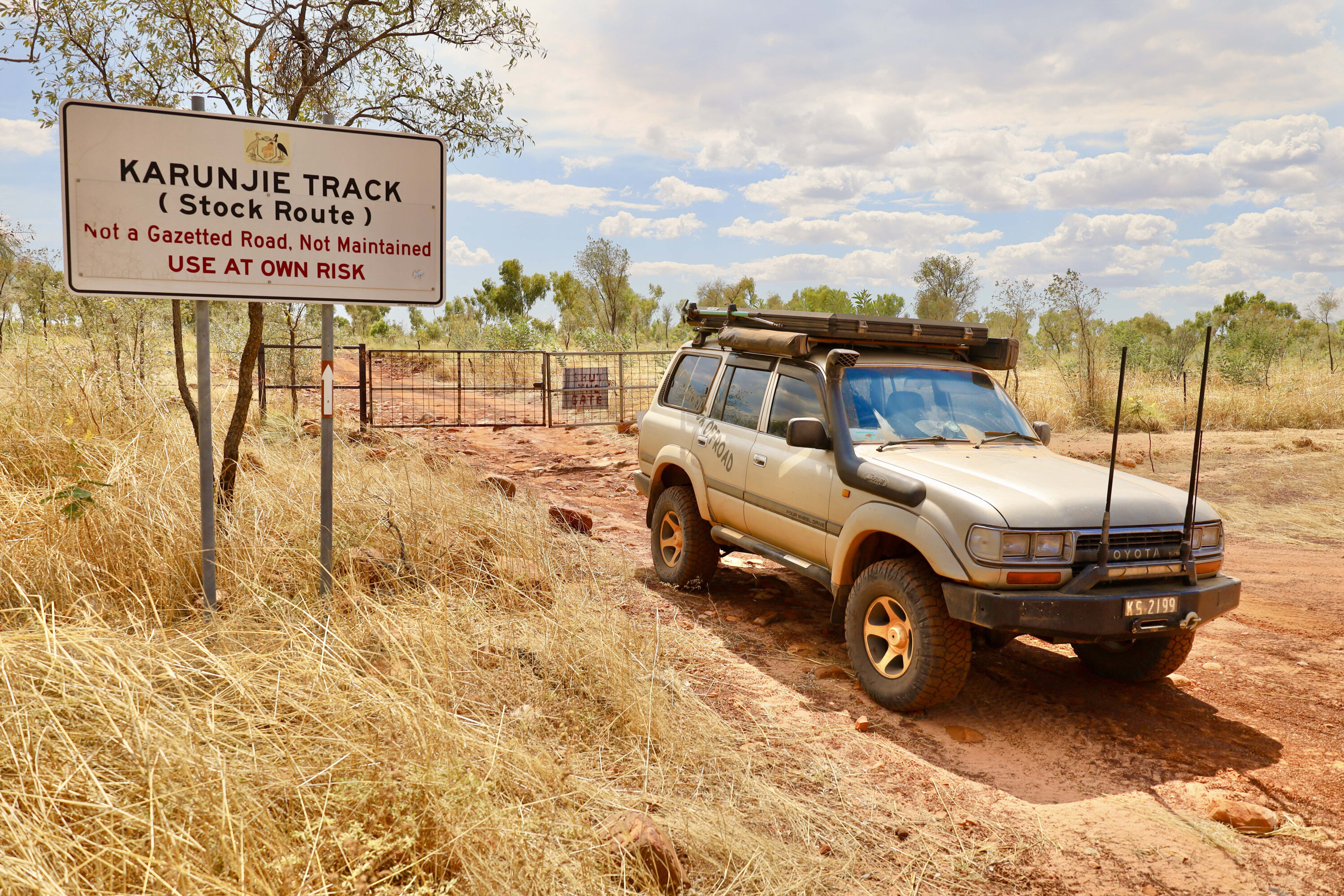
Karunjie Track runs between the Cockburn Range and Pentecost River in the East Kimberley.
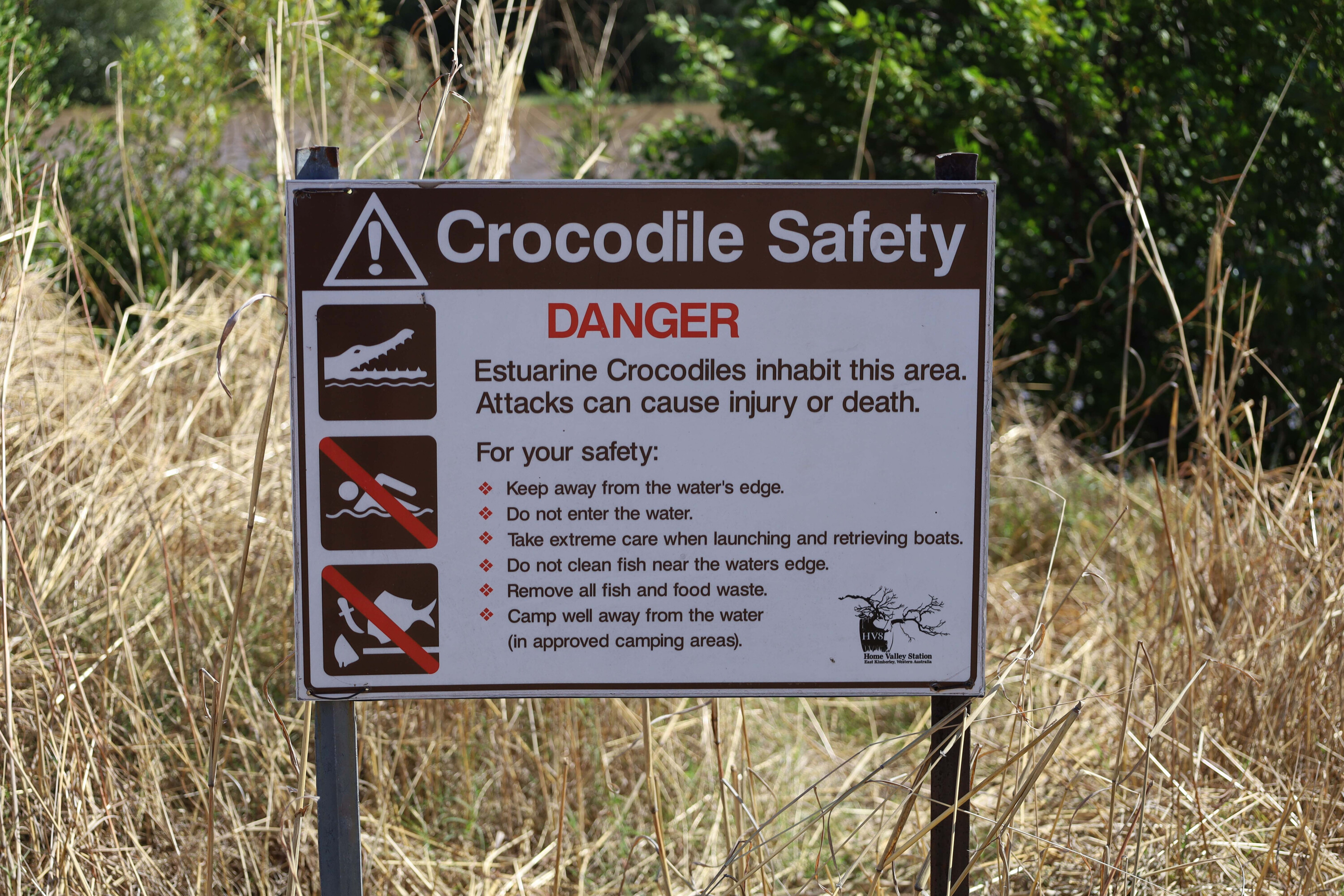
Over a century ago, the Karunjie Track in the far north of Western Australia was used by drovers to move cattle across the Kimberley, from the south up to Wyndham for export. Our journey starts at the end of the Gibb River Road, at the Home Valley Station in Balanggarra Country.
There are two camping areas on offer, a great bar and grill, as well as tours with traditional owners showing off their stunning waterfalls and rock art, with the majestic Cockburn Ranges as a backdrop.
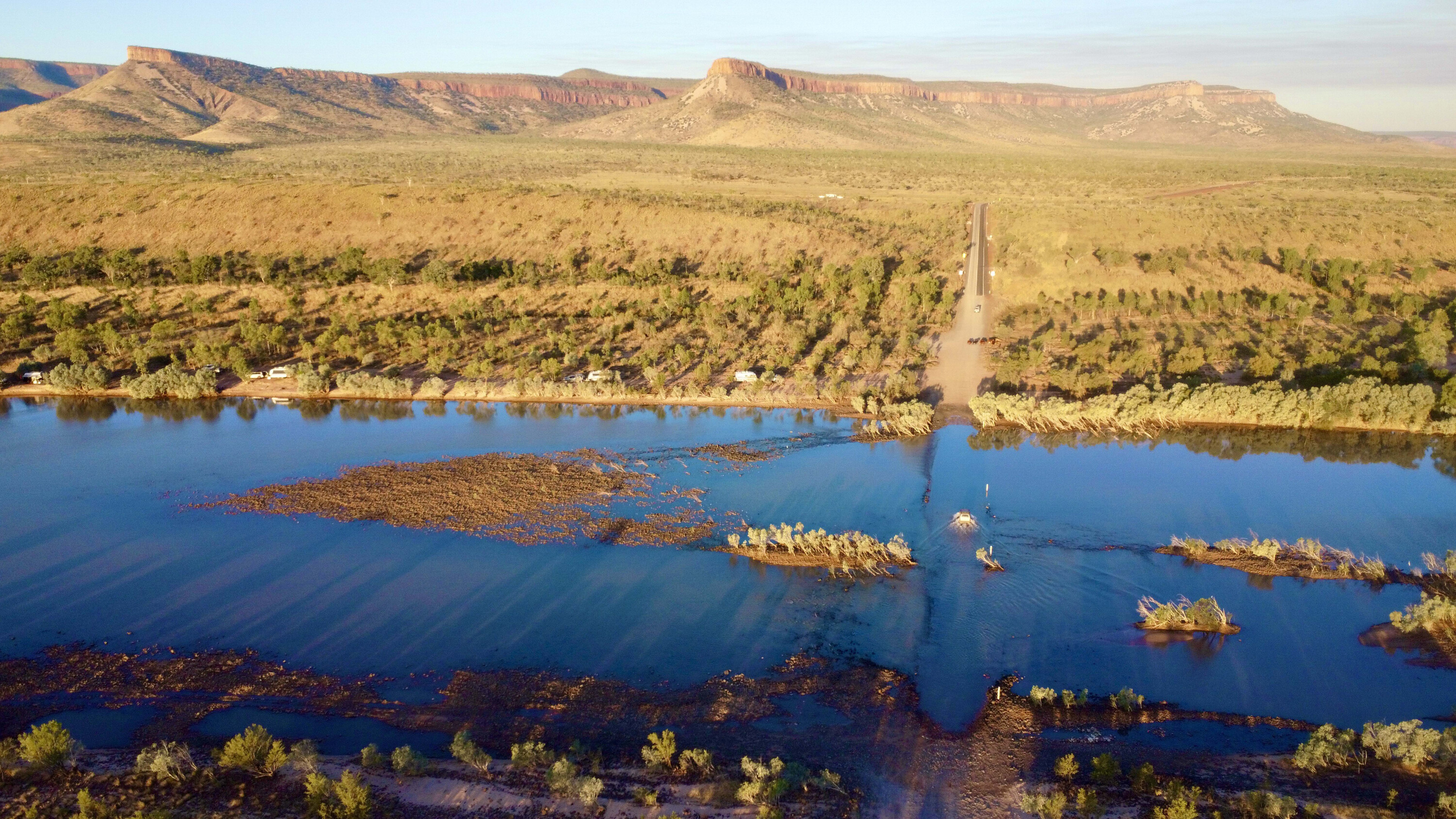
The Pentecost River crossing – a 10km drive from Home Valley – is several hundred metres wide and has a hard rocky base.
If the water isn’t too deep, most 4x4s easily get across in the dry season. On the eastern side of the river is where the blacktop starts (or stops, depending on your direction) on the Gibb River Road, all the way to the east coast.
Cross the mighty Pentecost River and turn left to follow the river along the 80km-long Karunjie Track. At the start of the track is a popular free camping spot where travellers pull up either before or after tackling the Gibb River Road.
Once a stock route, today Karunjie Track is a remote 4×4 track that is only traversable in the dry season, and it is not maintained for its entire length. Departing the Pentecost River the track is slow-going for the first 20km, with deep ruts and plenty of washed-out sections.
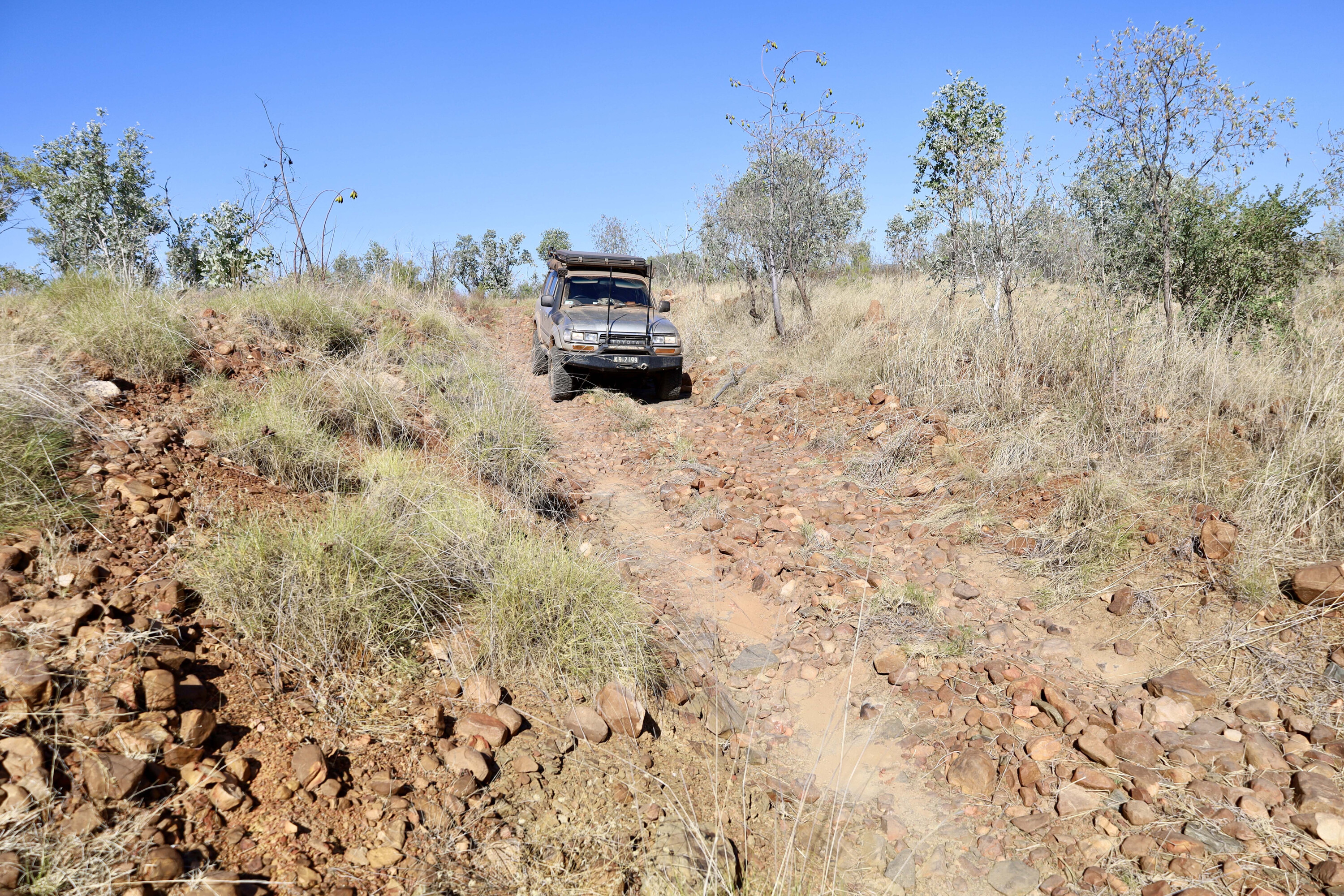
The first gate leads to private property, owned by El Questro Station. Once down on to the floodplains, the track smooths out and you can pick up the pace, but the massive floodplains become an impassable quagmire in the wet season.
The flats soon give way to some higher rocky country and the boundary gate signifies the end of the Karunjie Track. Officially, no camping is allowed between the two gates, only near the Pentecost River, as El Questro is still a working cattle station.
Once through the last gate you’re now on the King River Road where, if you turn left, will take you to Diggers Rest campgrounds, or straight on towards Wyndham. Not far along this road, an historical marker signifies the infamous Boab Prison Tree, also known as Hillgrove lockup.
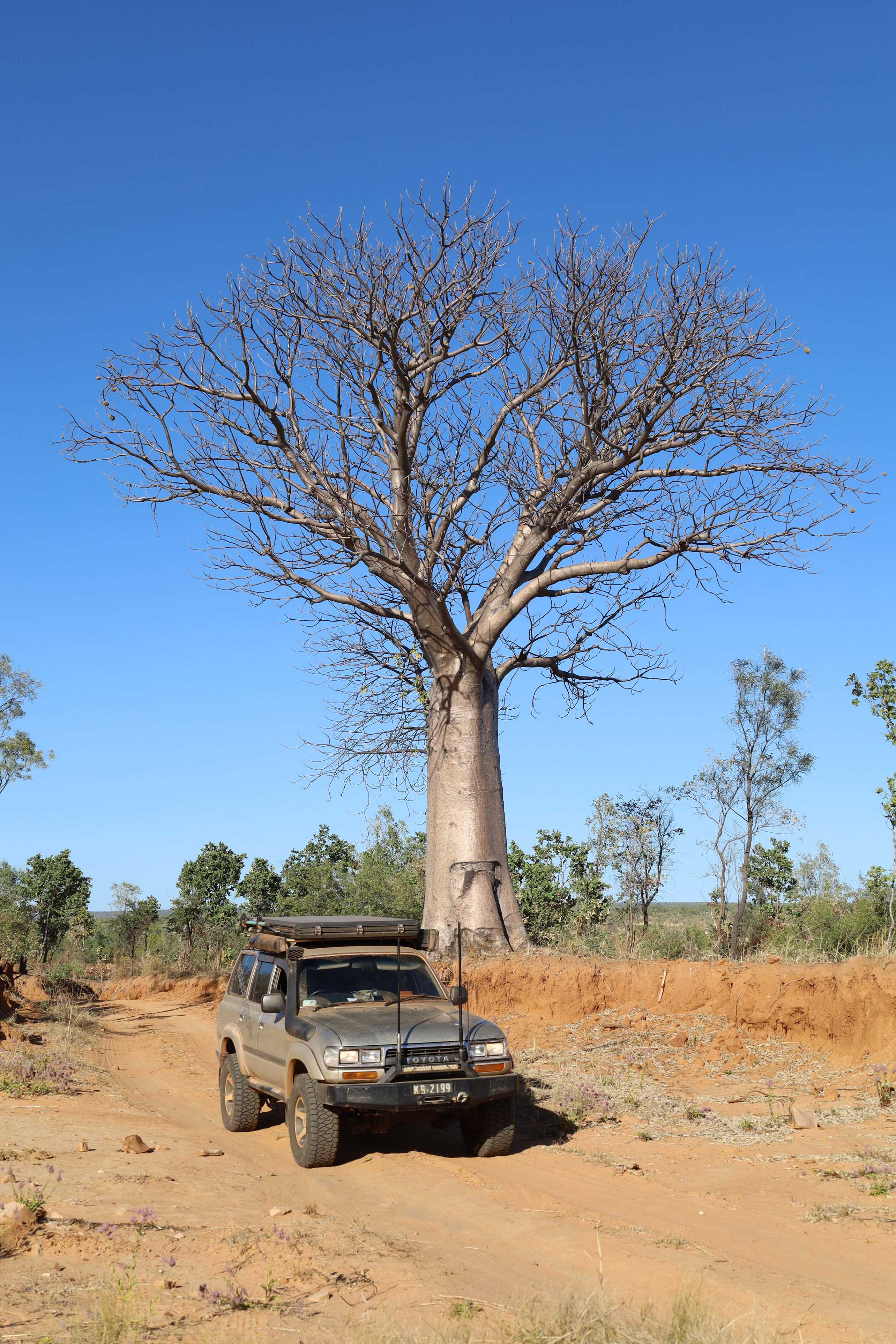
In 1890 this boab was hollowed out and used as a holding cell for Aboriginal prisoners on their way to Wyndham for trial.
Crossing the King River, Moochalabra Dam is just 10 minutes down the road. The rock art on the ceilings and walls include depictions of animals, handprints and other shapes. This site is important to the Balanggara people, where there are also depictions of Wandjina spirit ancestors, all painted with natural ochres found in the cliffs.
Following the King River Road for another 30km will lead to the Wyndham to Kununurra road. At the beautiful old town of Wyndham, the Pentecost River ends its journey into the Cambridge Gulf, and the best viewing point is up at the Five Rivers Lookout about 15 minutes drive out of town.
From here, there are five rivers that drain into the gulf: the Pentecost, Durack, King, Forrest and the Ord rivers.
Below the lookout is Wyndham Port, where drovers used to move their cattle after traversing the Karunjie Track. Established in 1885, the port was a hub with slaughterhouses, a freight centre and the nearby original town of Wyndham. While the new town is situated away from the port, the waterways are still used for the export of fuel, freight and live cattle, and occasionally cruise ships visit here.
While the Karunjie Track may only be 80km long, it’s a fascinating part of East Kimberley that is well worth exploring.
3. Connie Sue Highway
Words by: Ron Moon
The Connie Sue Highway is a brilliant drive for those after a remote outback experience.
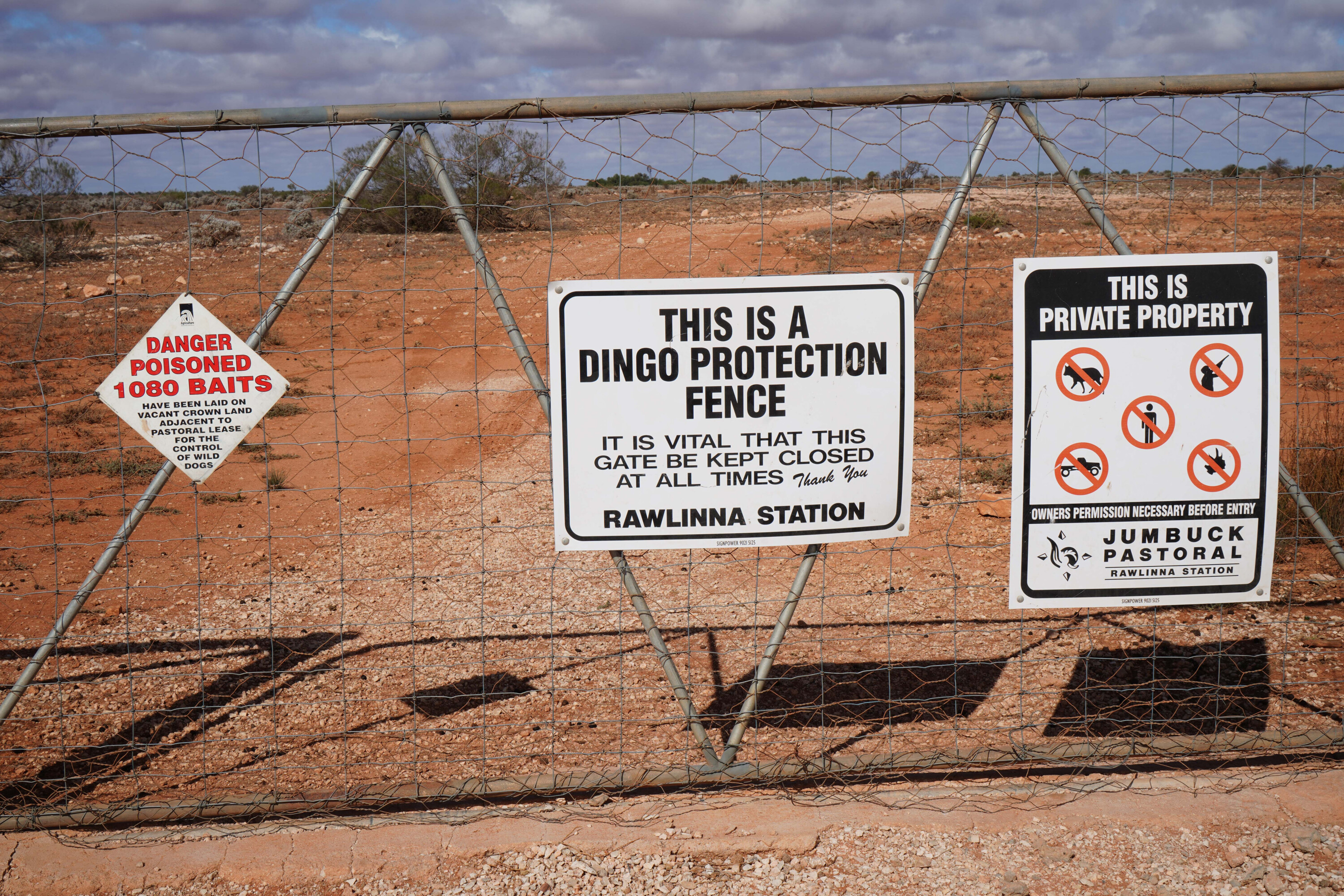
Rawlinna Station, the largest sheep property in Australia, covers over 10,000km² and operates between 60,000 and 80,000 sheep. Established in 1962, it predates the Connie Sue Highway by only a short time.
Reaching Rawlinna is an adventure. The easiest route is from Kalgoorlie, a 380km drive on a graded road parallel to the railway. Alternative routes include a rough track from the east or a limestone-studded path from Cocklebiddy. All routes intersect the 370km-long dingo-proof fence surrounding the sheep property.
You can join the Connie Sue Highway (CSH) on Rawlinna’s eastern side. The road, established by Len Beadell and his Gunbarrel Road Construction Party in 1962, was part of the A-bomb and ICBM test routes. It offers one of Australia’s great 4×4 desert adventures.
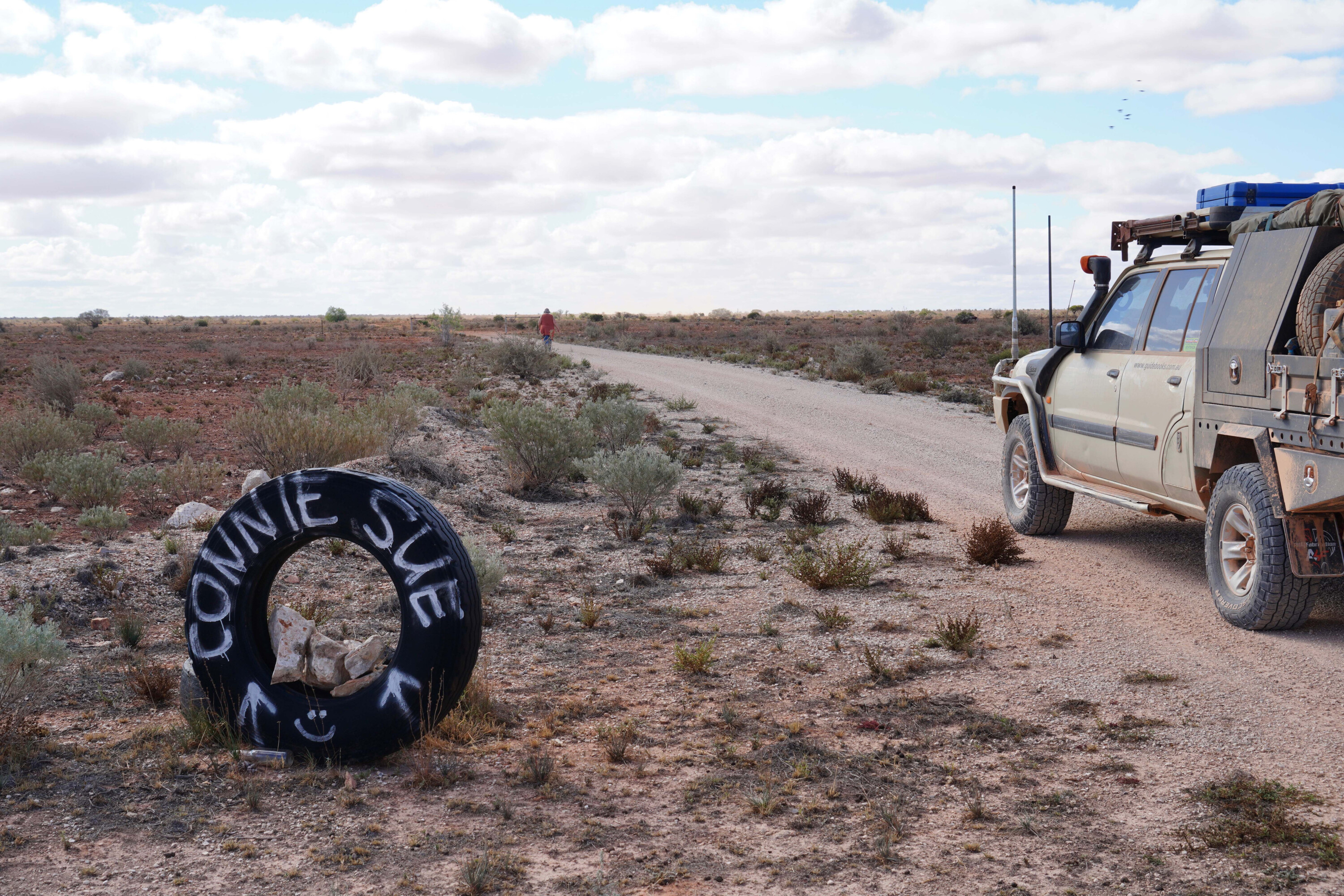
Initially, the CSH crosses near-treeless limestone plains on the edge of the Nullarbor Plain.
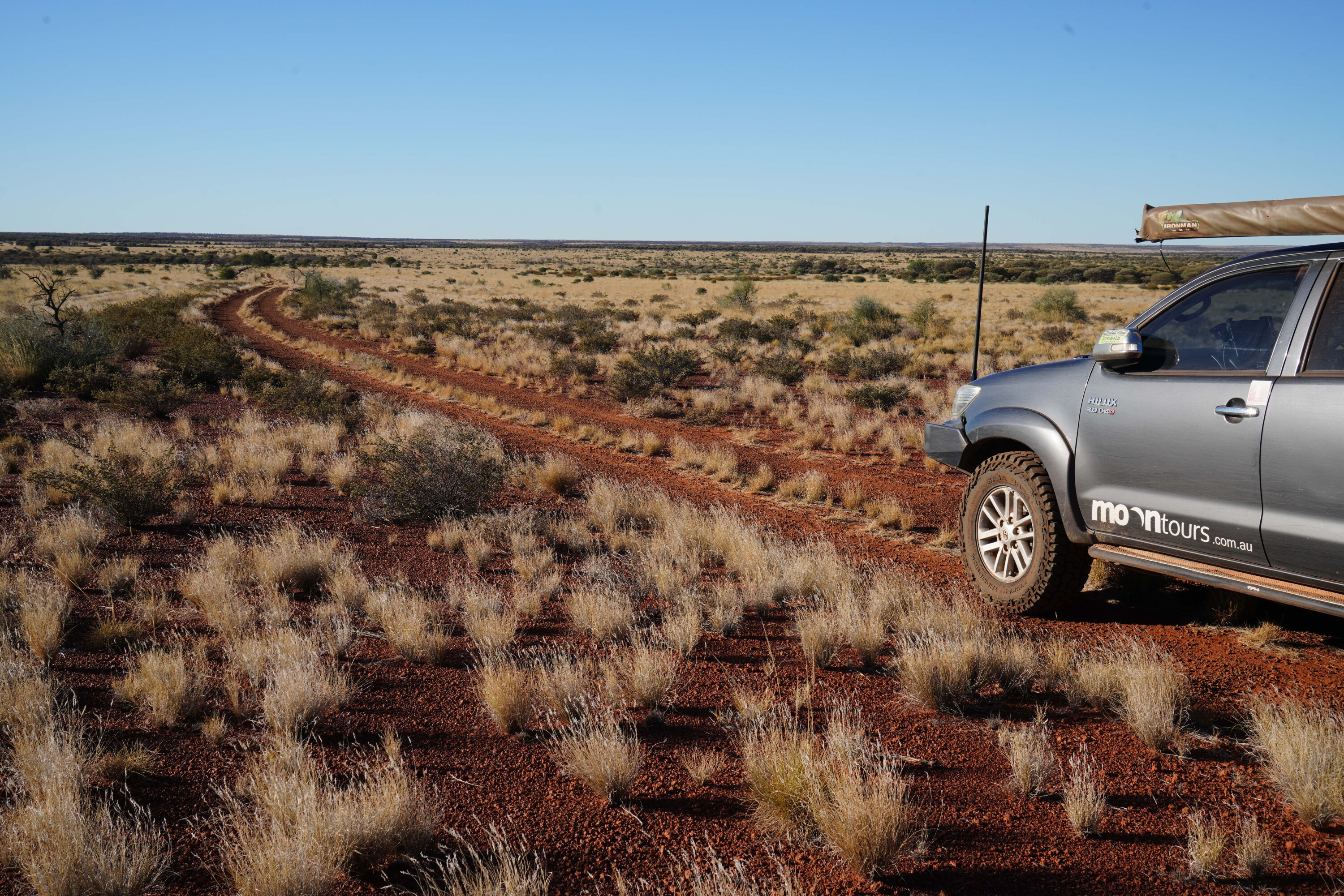
The terrain gradually becomes more varied, transitioning from bluebush plains to mulga and mallee scrub, with a thick covering of spinifex. On our most recent visit we camped 90km north of Rawlinna after an easy run.
The next morning, the track remained straight and reasonably smooth. About 15km from our camp, an Aboriginal Business Road joined the CSH, improving the road condition significantly. A shelter and water tank nearby were popular with campers, but we pressed on. North of the business road, the CSH veers towards the Aboriginal community of Tjuntjuntjara, marked by another shelter and water tank.
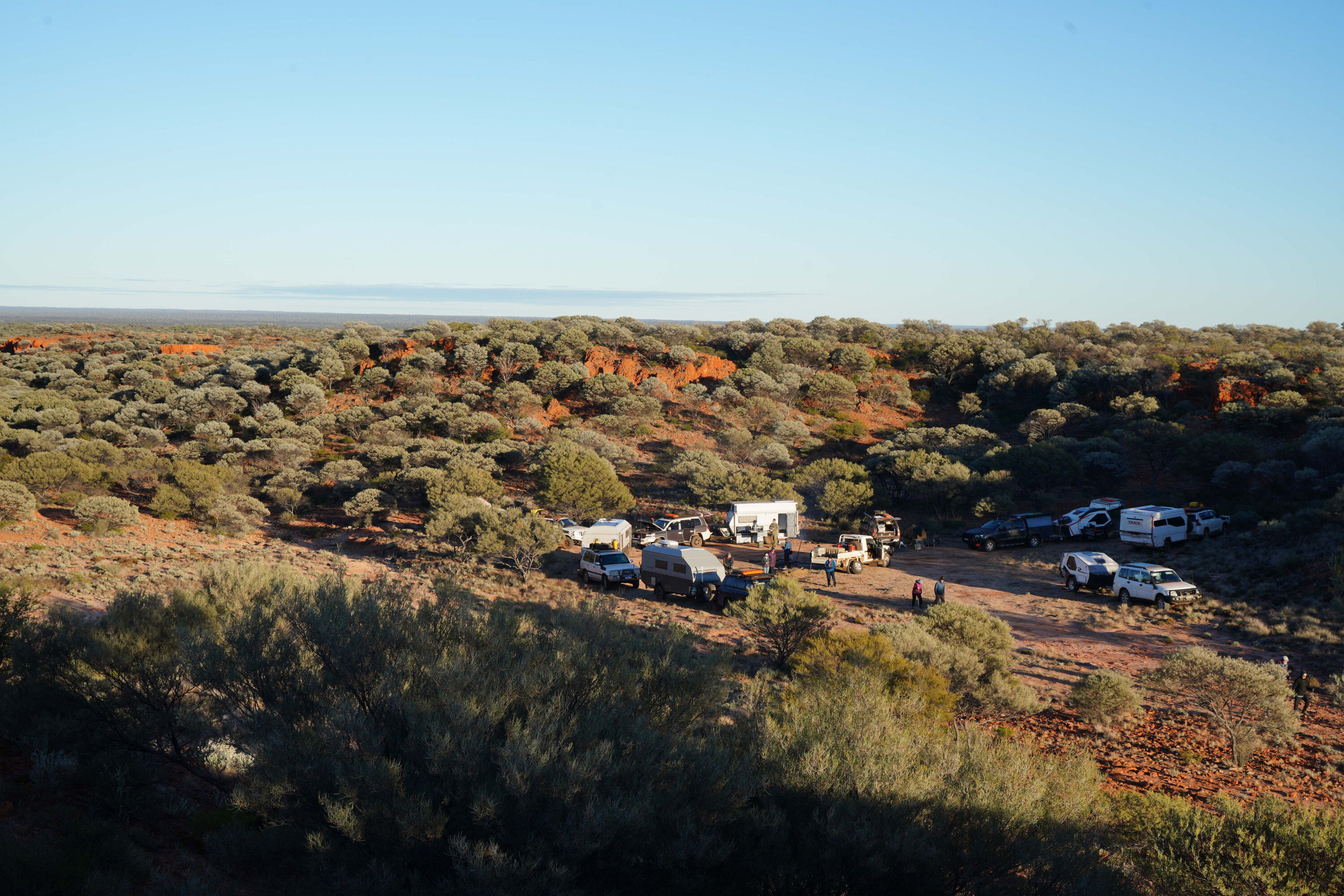
The vegetation varies as you continue north, passing through bluebush plains, mulga scrub, and mallee scrub before encountering red dunes that signal you are truly in desert country.
The CSH is a well-formed double track, smooth except for occasional corrugations and rocky outcrops.
Crossing into the Great Victoria Desert, Australia’s largest desert, you will encounter diverse flora and fauna. The desert features open woodland, marble gums, black oak trees, and various animals including camels and dingoes.
Historical explorers like Ernest Giles and Frank Hann traversed this area in the 19th and early 20th centuries, facing harsh conditions and discovering vital water sources.
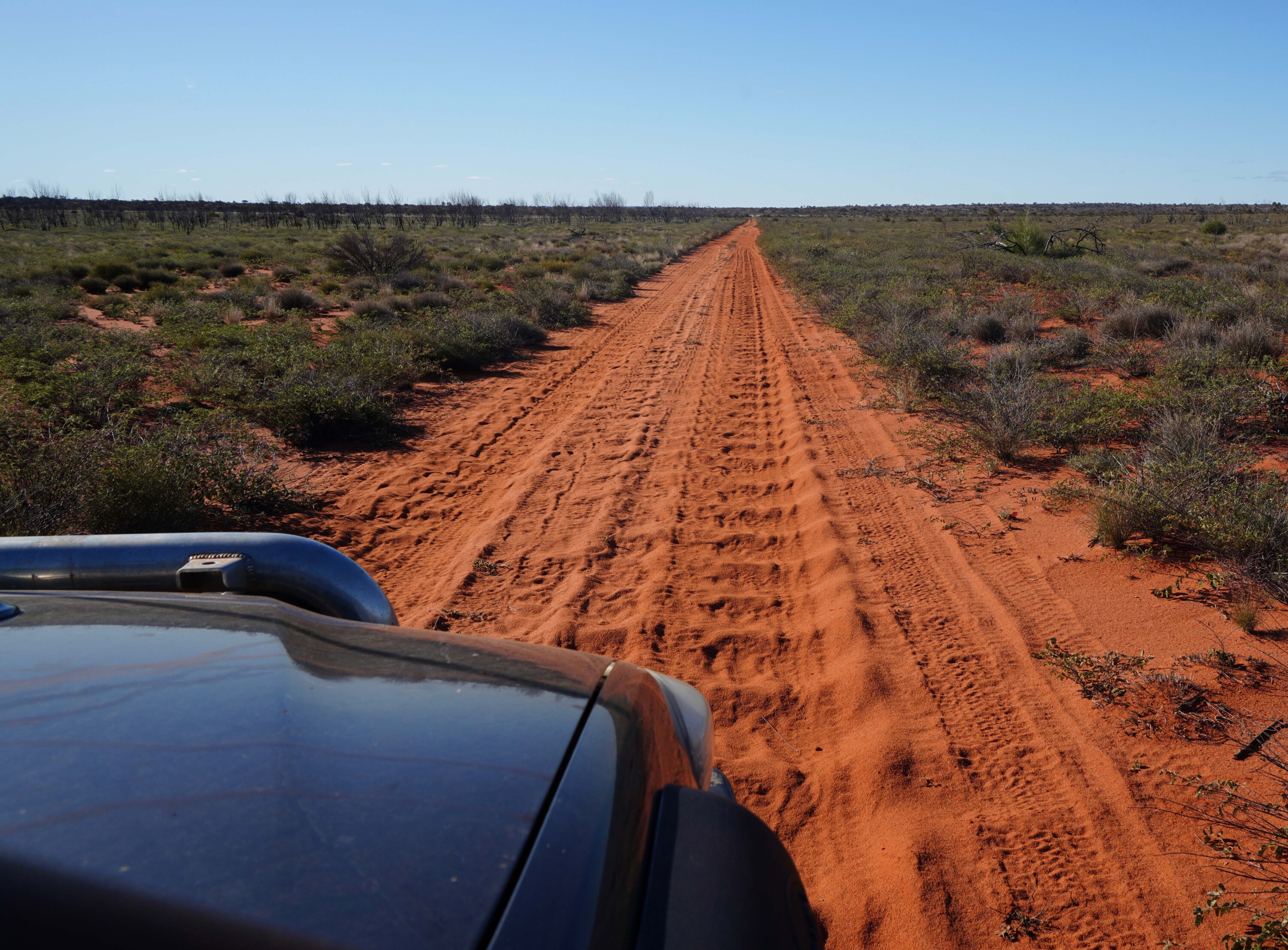
The camp at Neale Junction, where the Anne Beadell Highway intersects the CSH, has a shelter, water tank, and fireplaces, making it a good spot for rest.
After a night camped here, we navigated through dunes and undulating sand plains, dealing with washouts and corrugations. We turned off the main track into thick vegetation, eventually reaching Point Lillian, where Frank Hann first arrived in 1903. We explored the area, including a cave with ancient Aboriginal rock art.
Continuing north, we passed landmarks named by Hann, such as Point Sandercock and Ryans Bluff, and checked out Cooper Hills Bore, where we managed to get the solar-powered pump working for a flow of fresh water.
Further north, we passed Hanns Tabletop Hill and noted tracks to Sydney Yeo Chasm and Waterfall Gorge, both now restricted by traditional owners. We camped at Mackenzie Gorge, enjoying the sunset.
The next day, track conditions varied from easy to corrugated. We veered right at a junction, and the route became smoother, with introduced buffel grass replacing spinifex. We soon reached the Great Central Road and drove the final stretch to Warburton.
After a few repairs and a much-needed shower at the roadhouse, our journey along the Connie Sue Highway came to an end. It had been a memorable trip through the Australian outback.
4. Dirk Hartog Island
Words by: Kev Smith
The pristine Dirk Hartog Island feels like the edge of the world.
Dirk Hartog Island is off WA’s west coast adjacent to Steep Point, the most westerly point of mainland Australia. Now classed as a national park, Dirk Hartog is being returned to its natural habitat thanks to the eradication of all feral pests.
It’s a logistical effort to get to the island where only 20 vehicles are allowed at any one time, so once there it’s peaceful, isolated and remote. The Island is part of the UNESCO Shark Bay World Heritage Area.
The nearest fuel stop is over 200km from the barge departure point, and the same distance from the drop-off point.
Considering the 100km of island tracks to cover, you need to be prepared for nearly 500km of four-wheel driving with low tyre pressures. A fuel drop can be arranged on the island but it comes at a premium.
When we visited, with both fuel tanks full and a top-up shop at Denham on the Cape Peron peninsula, we headed to Steep Point, the barge pick-up point. The drive to Useless Loop Road was 100km, initially on sealed roads, but soon required lowering tyre pressures for the sandy, rough tracks.
Parks WA advises lowering tyres to 28psi and switching to low range for the sand-dune and corrugated sections. The road to Steep Point was among the roughest we’ve encountered in 30 years. With daylight fading, we reached Steep Point, ready for the morning departure to Dirk Hartog Island National Park.
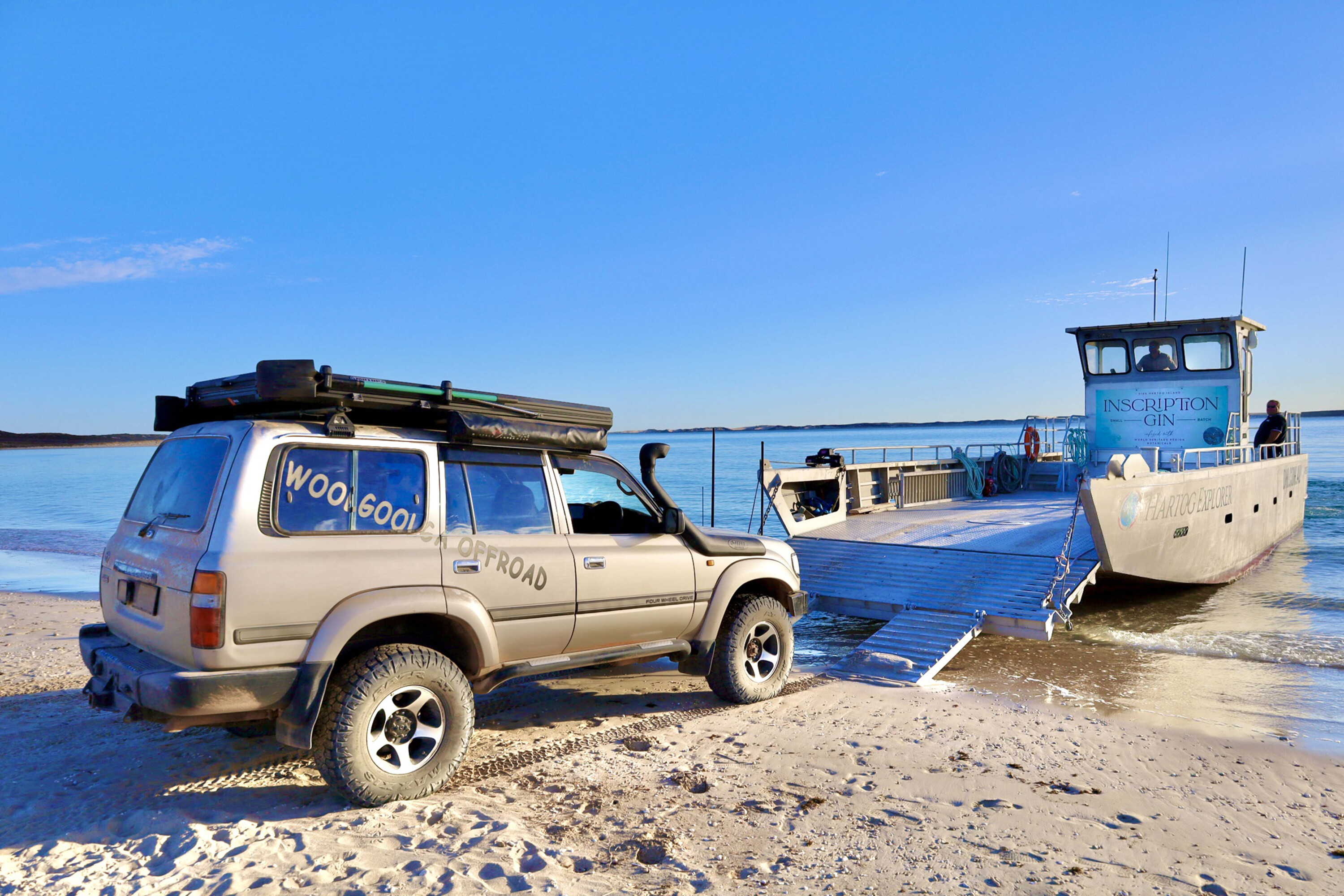
The barge operates with a 30-minute turnaround, transporting one vehicle at a time, including camper trailers of a specified length. Vehicles must lower tyres to 20psi to avoid getting bogged when unloading.
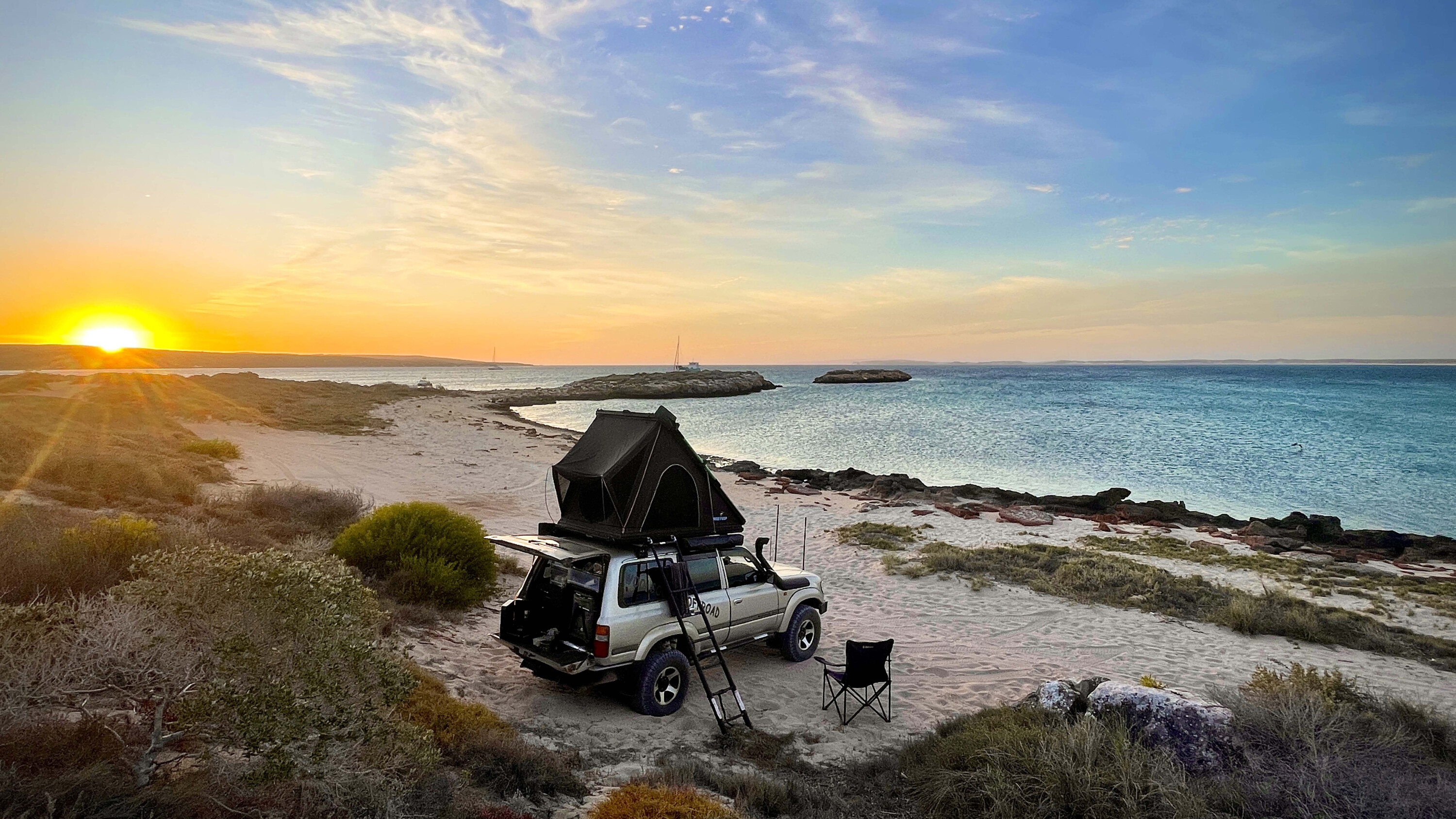
The island is roughly 70km long and 20km wide, with only about a dozen tracks. There are eight campsites, seven remote and one near the Eco Lodge, which offers a bar, coffee, souvenirs and luxurious stone cottages. For our five-night stay, we chose various remote camps to experience the island’s isolation and beauty.
Each camp has a water view: calm and sandy on the east, and rough and rocky on the west. The island, shaped during the Pleistocene epoch, features shifting dunes and calcified remains of vegetation and shells, especially visible on the west coast.
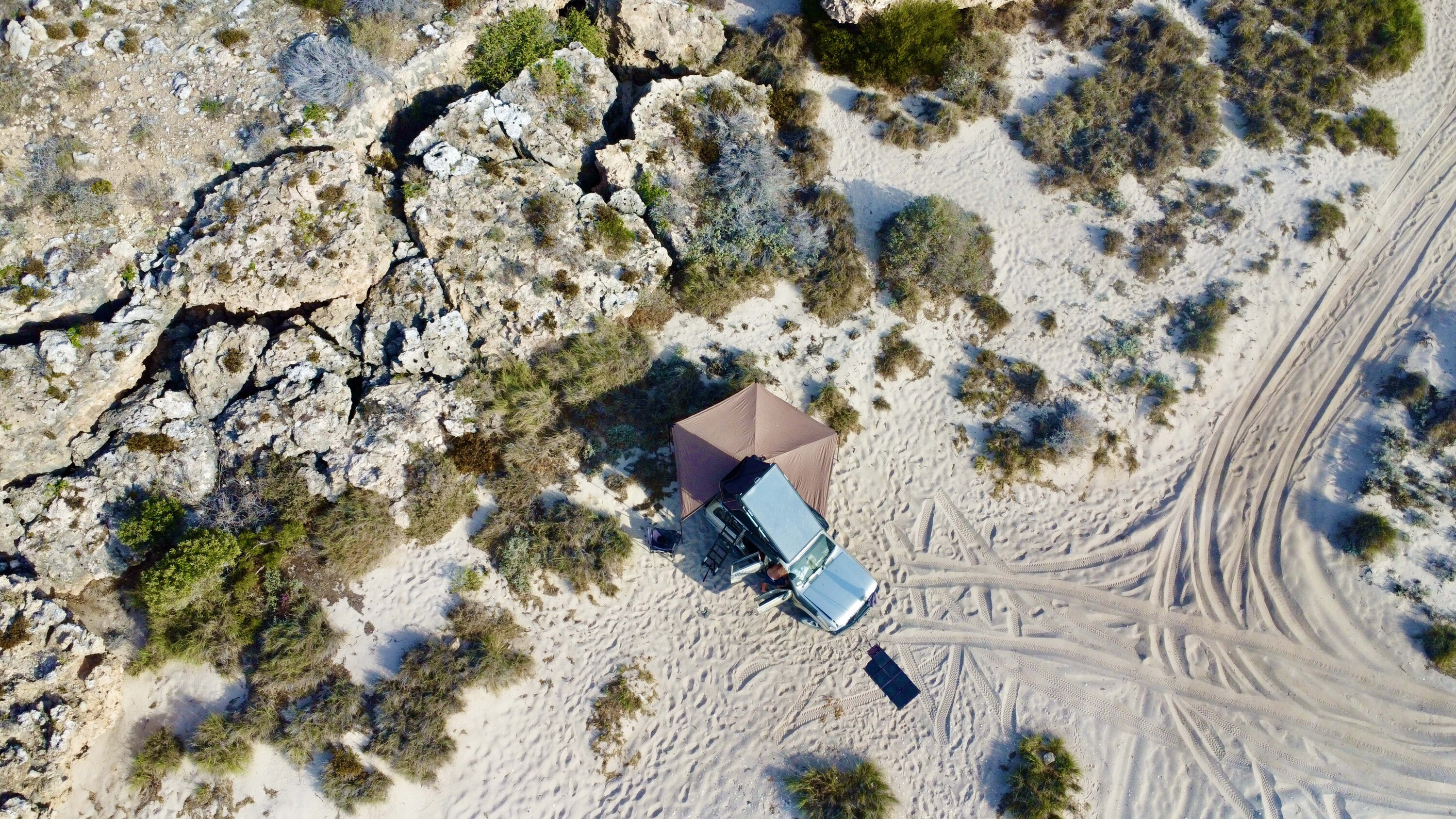
We explored from Notch Point, enjoying sunrises and bird activity, to William Dampier’s landing site in 1699, and the eroding west coast at Quoin Head, where we spotted sharks below the cliffs.
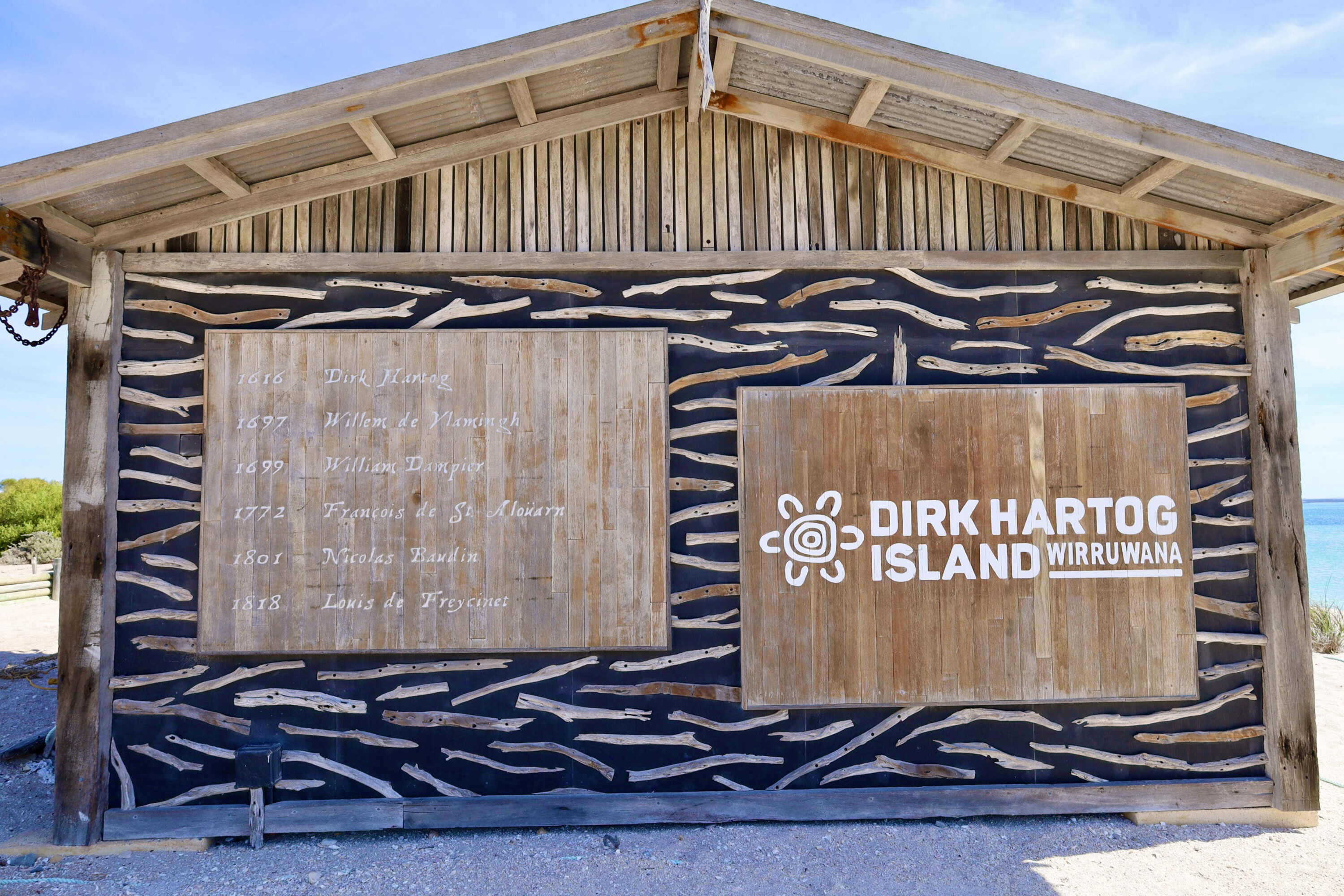
At Inscription Point, we visited the site where Dutch skipper Dirk Hartog first landed in 1616, leaving an inscribed pewter dish. Hartog sought a faster trade route and ventured farther east than any of his time. Over 200 years, explorers like Willem de Vlamingh and Louis de Freycinet visited, with the latter’s vessel wrecked but the dish saved and brought to Paris.
The 123-year-old lighthouse at Inscription Point is now solar-powered, with interpretive boards explaining its history. Construction began in 1908 to aid navigation, and nearby Turtle Bay was linked to the lighthouse by a tramway.
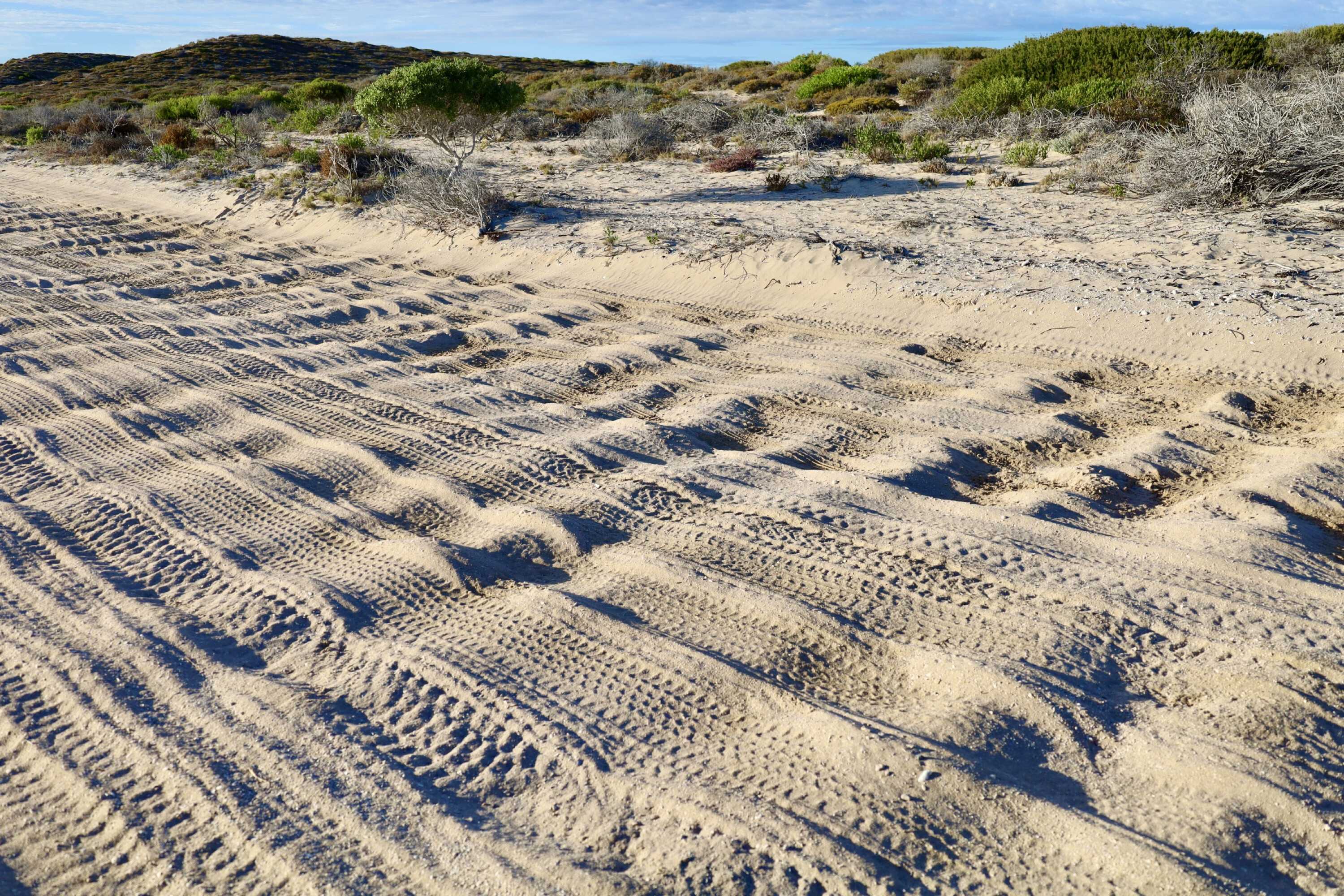
Dampier’s Landing is a key nesting area for loggerhead sea turtles, the largest in Australia.
The island’s ‘Return to 1616’ project aims to eradicate pests introduced since Hartog’s arrival, including goats, sheep, foxes and cats. Grazing has devastated native species’ habitats. A feral animal fence divides the island, aiding in the project’s success. Ten native species have been reintroduced across the island.
Make sure you spend time exploring the whole island; it can’t be done in one day with nearly 200km worth of tracks to explore. It is a beautiful but challenging place, recognised as a World Heritage site for its future preservation.
5. Buntine Highway
Words by: Glenn Marshall
Does the Buntine Highway live up to its poor reputation, or is it a next-level drive?
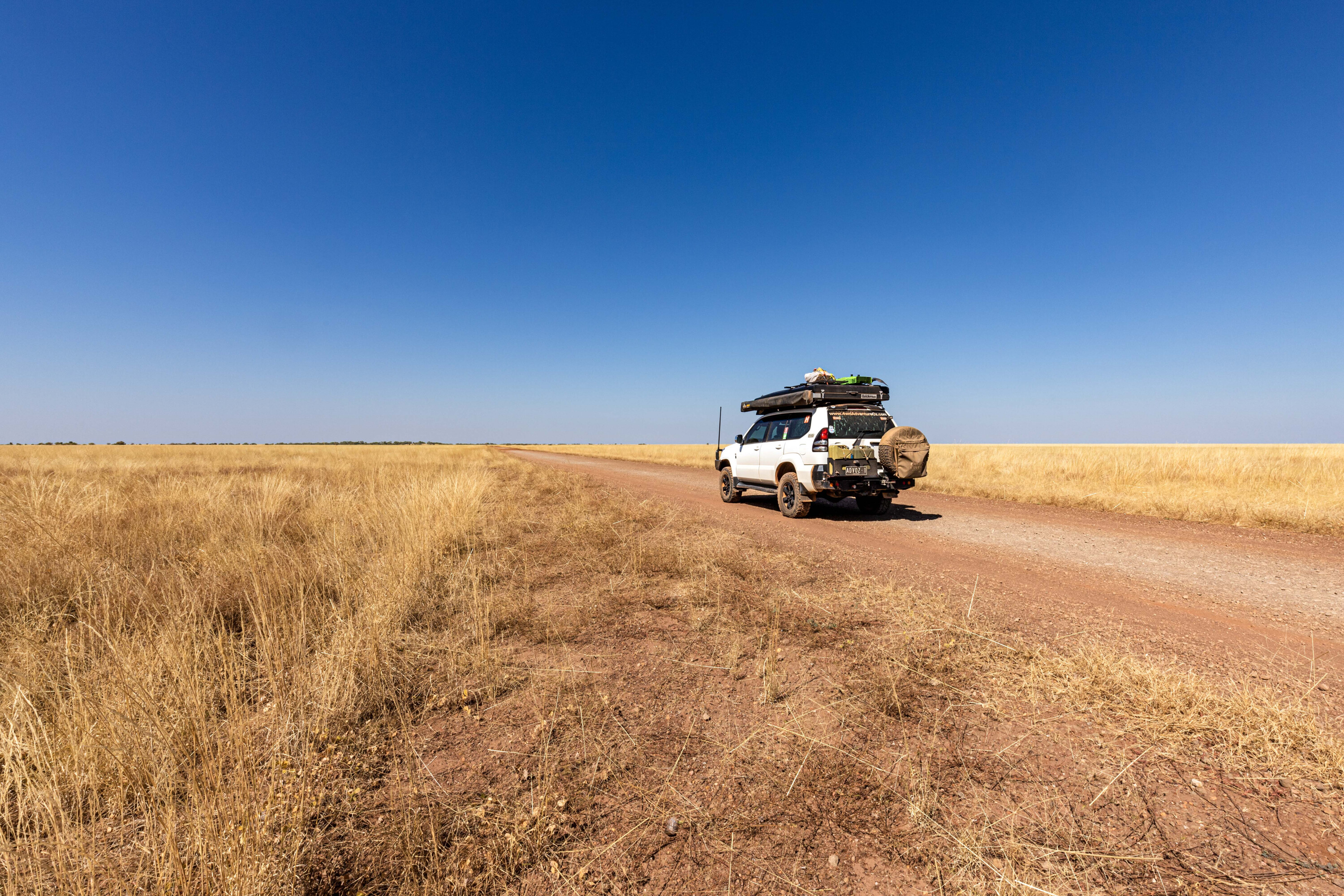
The Buntine Highway runs 600km from Duncan Road in WA to the Victoria Highway in the NT, and this journey begins at Halls Creek. Once a bustling gold-mining town, Halls Creek experienced a brief gold rush before the town relocated due to the highway’s construction.
Today, a discovery walk around the old town site and the preservation of the mud-brick post office highlight its heritage. Basic camping at The Lodge offers solar showers and rudimentary toilets, popular among fossickers still finding gold in the area.
Leaving Halls Creek, the journey through the Albert Edward Range involves slow progress due to tight bends, washouts, blind crests and corrugations.
Crossing the Black Elvire River brings the travellers closer to Palm Springs, a picturesque oasis with palms and reeds.
The turn-off to Sawpit Gorge reveals a rewarding campsite despite a rough access road, while the Black Elvire River, overlooked by a dramatic cliff face, is particularly beautiful at sunset. The main camping area, high on the bank with bins and drop toilets, contrasts with the more desirable spots on the riverbed. A relaxing swim followed by a fire would make for a pleasant stay.
Continuing towards the Buntine Highway, the road straightens and the valley flattens. The next 35km traverses the Ord River Regeneration Reserve, aimed at revegetating degraded sections and reducing silt flow into Lake Argyle.
Approaching the Buntine Highway, the landscape becomes bushier alongside the Nicholson River.
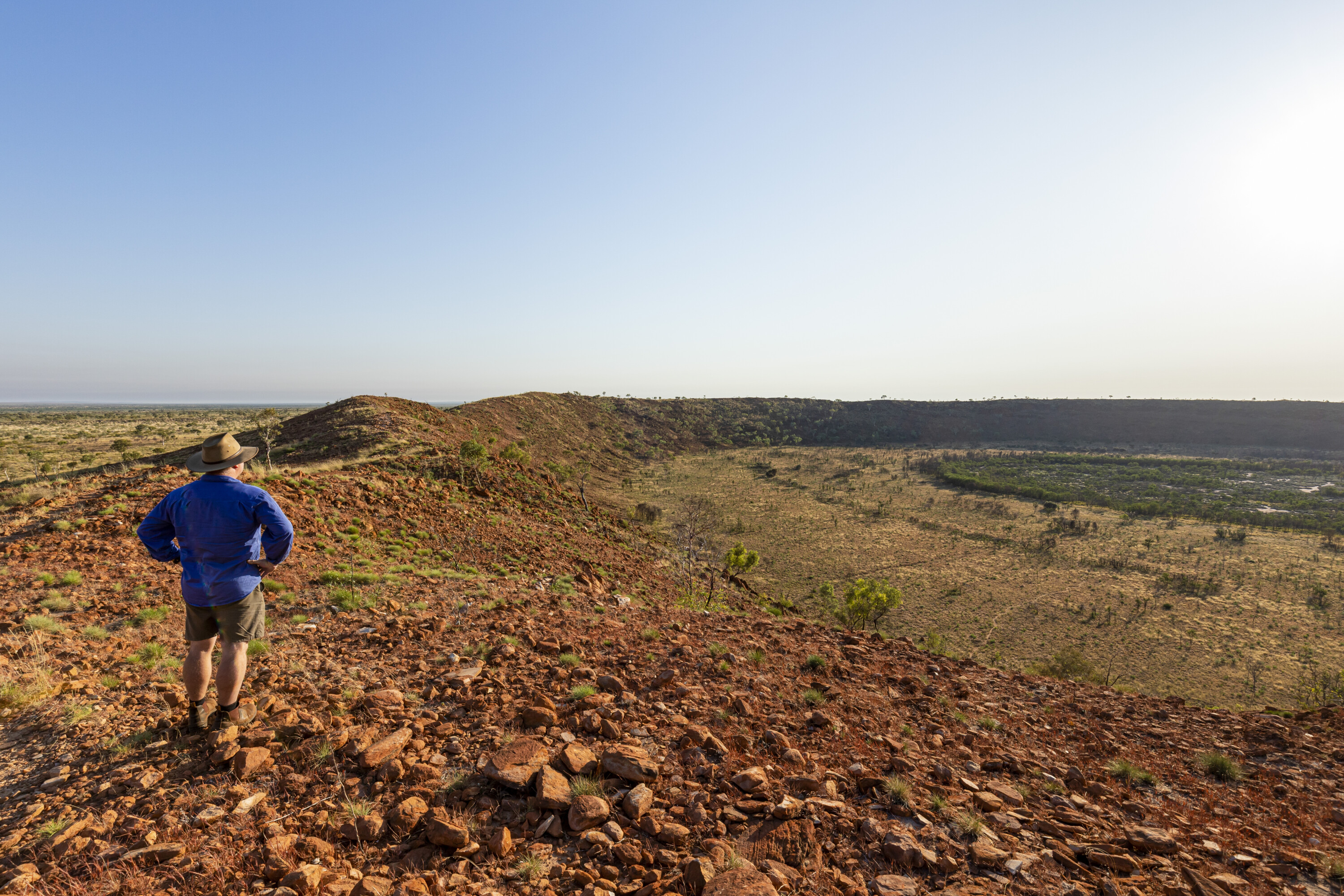
Marella Gorge, once a challenge to find, now has restricted public access due to new ownership. Recently maintained, the Buntine Highway offers a smooth drive to the WA-NT border.
With Kalkarindji still four hours away, finding a camping spot along the Buntine can prove challenging. Kalkarindji has a rudimentary caravan park. The town is historically significant; on 23 August, 1966, Gurindji, Mudburra, and Walpiri people walked off Wave Hill Station in protest, led by Vincent Lingiari.
This event led to the 1974 land rights legislation, allowing First Nations people to claim land titles, marking a significant step in Australian history.
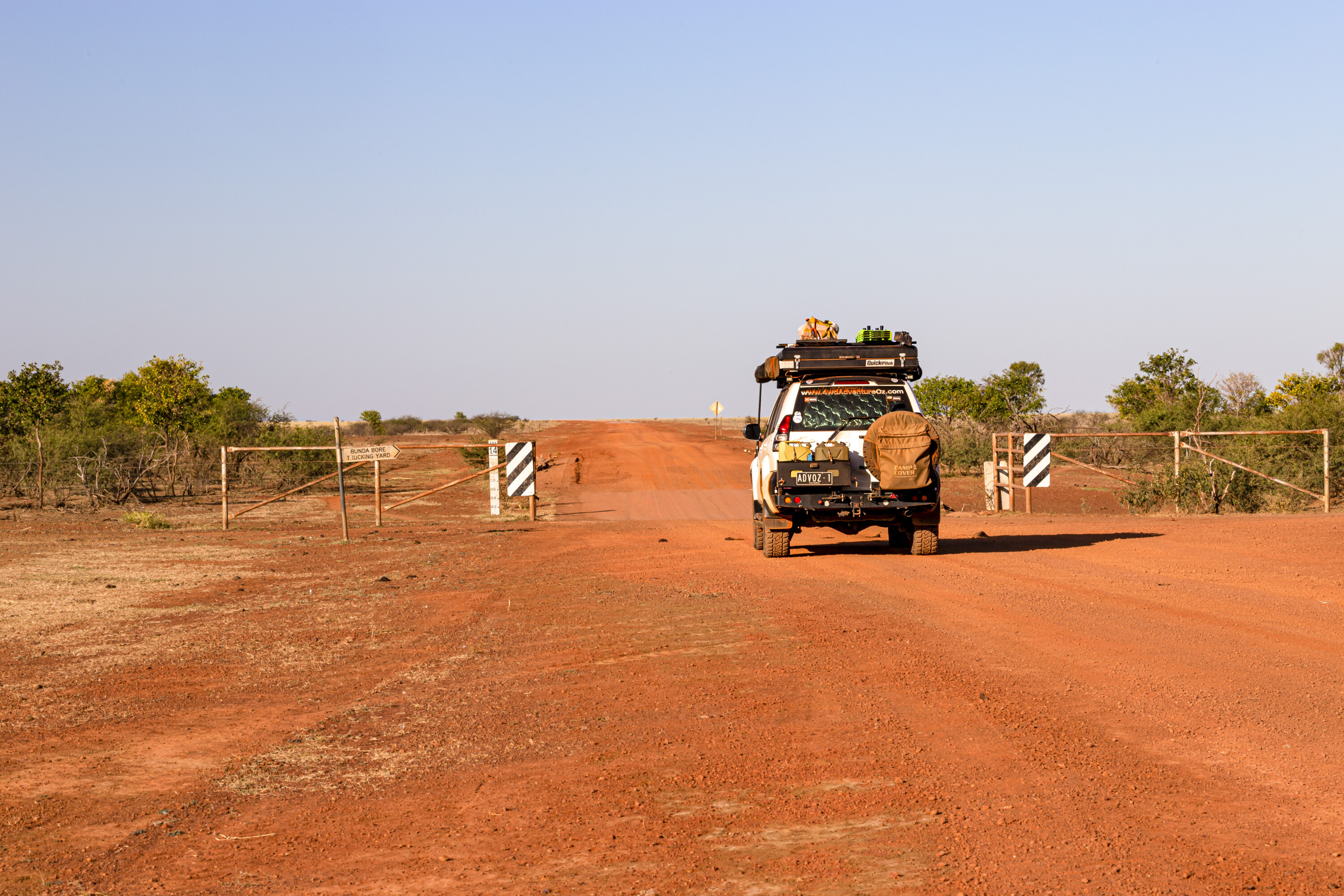
The route then leads to Top Springs Hotel, where the storyboard highlights Noel Buntine’s vision for a reliable cattle transport system in the 1950s, evolving from a single Model B Mack truck to a fleet of 50.
From Top Springs, the Buntine Highway, often dual-lane, extends 165km north to the Victoria Highway. Termite mounds, golden grasses, and sapling gums line the road, with Telstra coverage around the Delamere Air Weapons Range.
The road is well-maintained, offering a better experience than anticipated and serving as a useful shortcut between Halls Creek and Katherine.
Toyota Australia is obviously getting on top of the supply issues it was having last year and in the first part of 2024.
Its RAV4 small SUV was the best-selling new car in the country for the second month in a row with 6714 of the little wagons finding new homes in Australia during August. Significantly that is the best monthly sales figure for the RAV4 in its 30 years of history, and almost 95 per cent of them were the hybrid model. It wasn’t that long ago that buyers wanting a hybrid RAV4 were facing waiting lists of a year and longer.
It was a similar story for buyers waiting for an LC300 this time last year; but with 1442 of them sold in August and the LC300 being the fifth best-selling 4×4 so far this year, it seems those orders are getting out.
I bet Toyota wishes it still had buyers queuing up to get HiLux 4×4 utes, as the once-market-leader falls further behind the Ford Ranger with just 3851 Hiluxes moving off the lot in August compared to 5142 Ford Ranger 4x4s. With Ranger leading HiLux 4×4 by more than 7000 units year-to-date with just four months of selling left, it looks like the Ranger will retain its best-selling 4×4 title this year.
Ford is also kicking goals with its Everest wagon, which outsold popular competitors the Toyota Prado, Isuzu MU-X and even the LC300 again this month. In the Prado’s defence, the new 250 Series is due to hit showrooms before 2024 ends and there will be a lot of buyers waiting to see that.
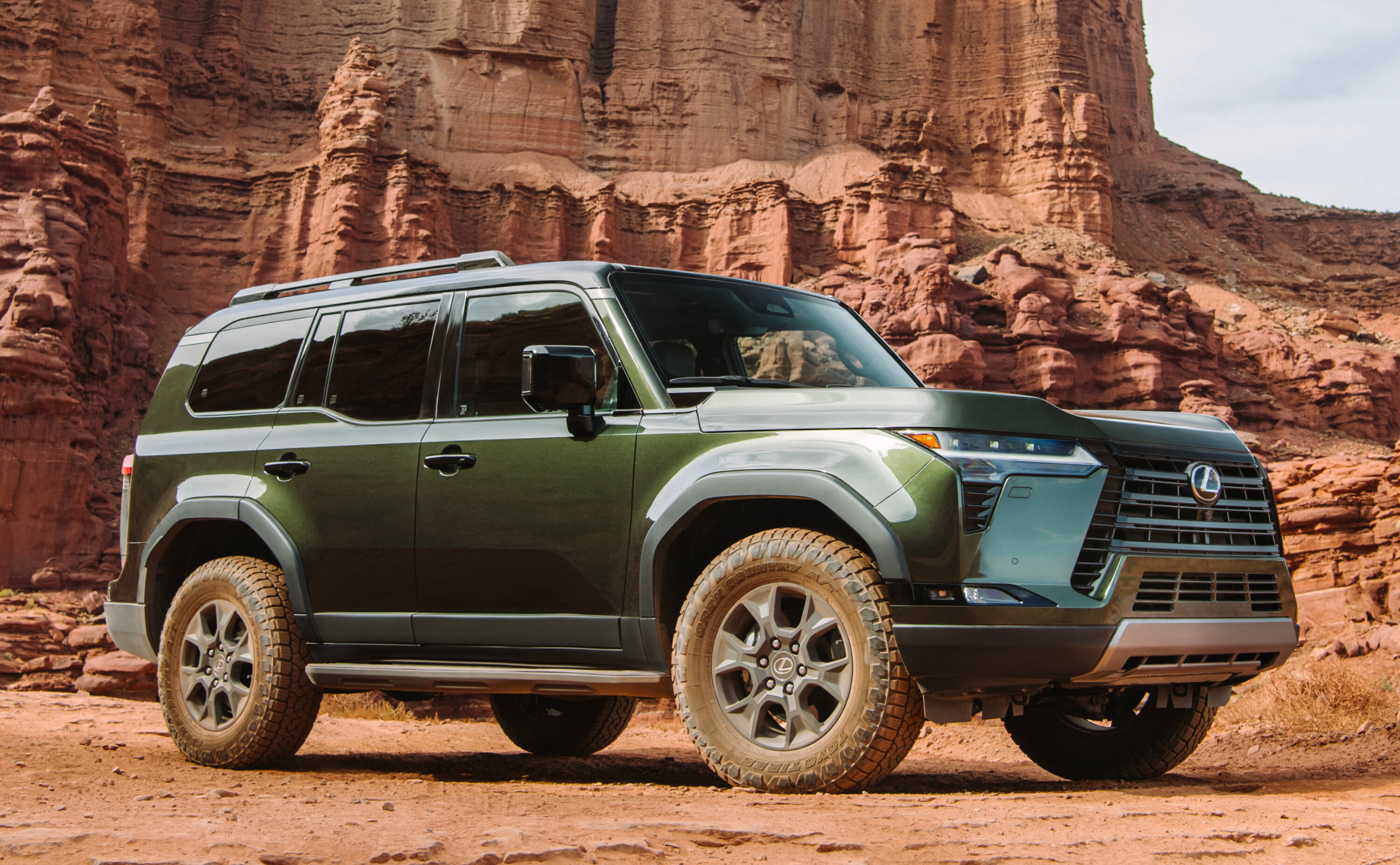
The Lexus version of the 250 Series, the GX550, started going out to owners at the end of August with 102 of them sold. It will be interesting to see how the new model goes as it’s the first time we’ve had the Lexus GX sold here. The closest competitor to the Lexus GX on price and ability would be the Land Rover Defender, and this reborn nameplate continues to be LR’s best-selling model with 301 of them sold in August, contributing to a total of 2118 sales this year.
At the other end of the 4×4 scale, the Suzuki Jimny has the small wagon segment all to itself and the five-door model of that car is certainly boosting its popularity. Its sales are up a whopping 62 per cent year-on-year and, with 923 of the fun wagons being sold, the Jimny almost made its way into the top 10 sales chart this month. The Jimny has always been the little wagon that could.
Best-selling 4x4s in August 2024
| 1: Ford Rangeru00a0 | 5142 |
|---|---|
| 2: Toyota HiLuxu00a0 | 3851 |
| 3. Ford Everestu00a0 | 2273 |
| 4: Isuzu D-MAXu00a0 | 1941 |
| 5: Toyota LC300u00a0 | 1442 |
| 6: Isuzu MU-X | 1376 |
| 7: Toyota Prado | 1103 |
| 8: Toyota LC70u00a0 | 1062 |
| 9: Mazda BT-50 | 1060 |
| 10: Mitsubishi Triton | 976 |
Best-selling 4x4s YTD
| 1: Ford Rangeru00a0 | 40,372 |
|---|---|
| 2: Toyota Hiluxu00a0 | 32,956 |
| 3: Isuzu D-MAXu00a0 | 16,241 |
| 4: Ford Everestu00a0 | 15,711 |
| 5: Isuzu MU-Xu00a0 | 12,911 |
| 6: Toyota LC300u00a0 | 11,181 |
| 7: Mitsubishi Tritonu00a0 | 9657 |
| 8: Mazda BT-50 | 8221 |
| 9: Toyota LC70u00a0 | 8185 |
| 10: Toyota Prado | 6964 |
Nissan has officially unveiled its all-new Patrol, but there’s no confirmation on when we should expect to see the off-roader in Australia.
Revealed overnight in Abu Dhabi, the seventh-generation Patrol wears a strikingly different design compared to its predecessors; employs a V6 twin-turbo engine paired with a nine-speed automatic transmission; and features customisable adaptive air suspension.
“The seventh generation is a bold leap forward, blending unparalleled performance, cutting-edge technology and a commanding presence to redefine what an SUV can be,” said Makoto Uchida, president and CEO of Nissan.
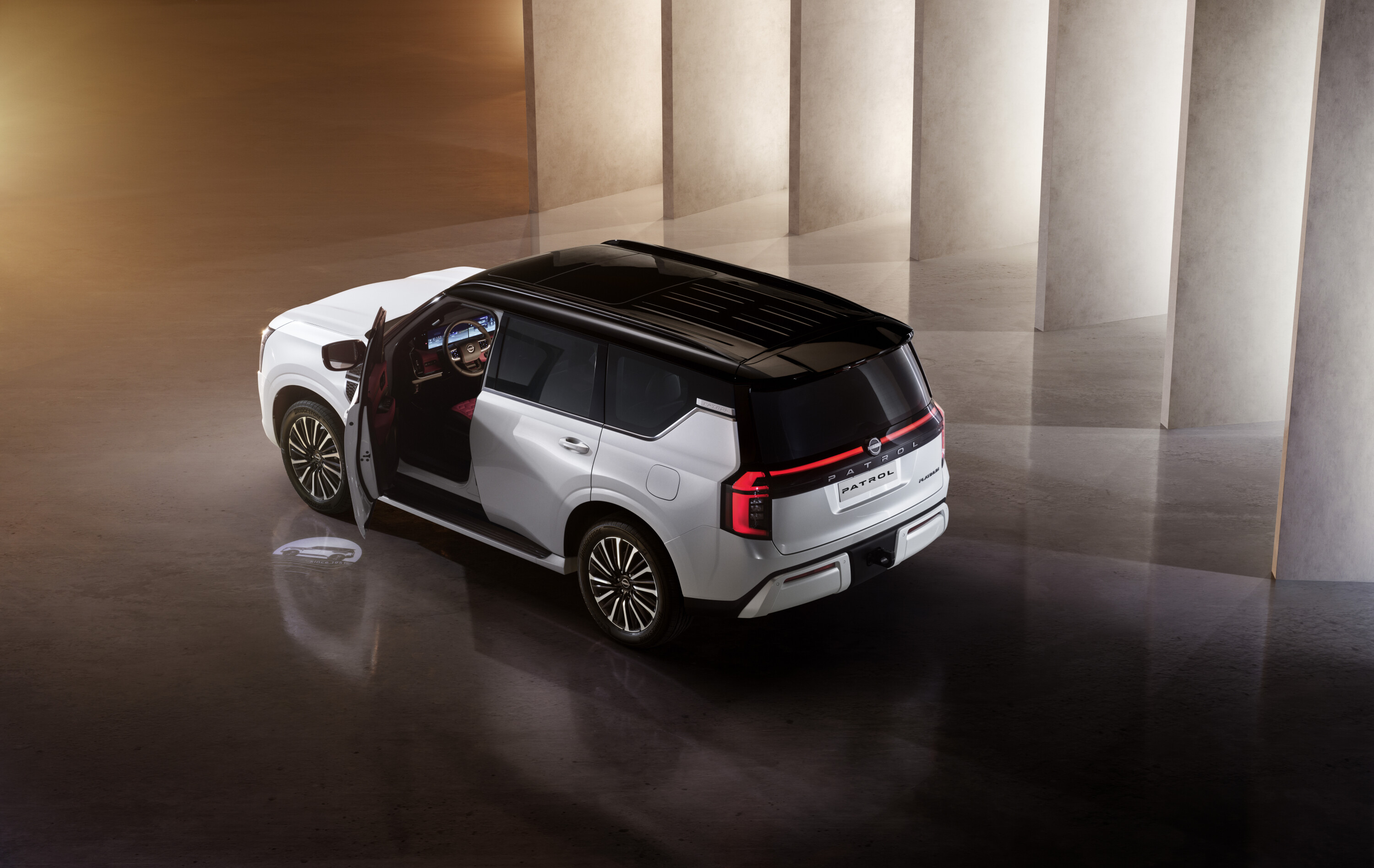
Engine
Building on more than 70 years of heritage, the new Patrol replaces the venerable Y62, which debuted in 2010 and was popular on local 4×4 tracks due to its off-road prowess and stonking 5.6L V8 that delivered 298kW and 560Nm. The recently revealed Patrol loses that V8 mite, but replaces it with two engine options: a 3.5-litre V6 twin-turbo petrol engine, and a 3.8-litre naturally aspirated V6.
The 3.5-litre V6 twin-turbo generates 425hp (317kW) and 700Nm – that’s an increase of 7 per cent (kW) and 25 per cent (Nm) compared to the V8. Plus, Nissan says it is 24 per cent more fuel efficient than the eight cylinder. The 3.8-litre naturally aspirated V6 produces 316hp (236kW) and 386Nm.
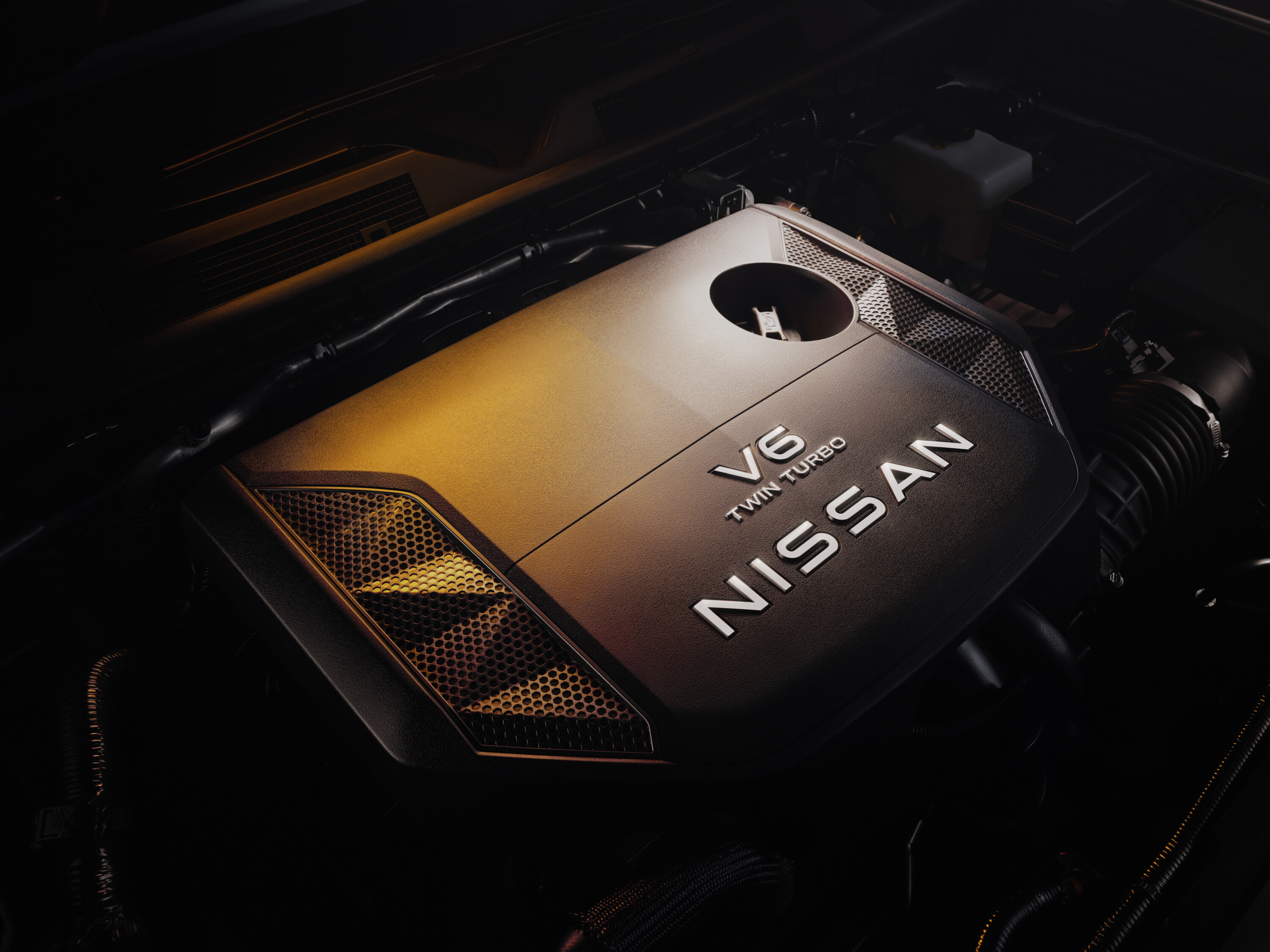
Nissan also states the V6 twin-turbo also benefits from improved throttle response for quicker acceleration; high combustion efficiency to maximise power output; and mirror bore coating to enhance thermal efficiency. It’s paired with a new nine-speed automatic transmission – that’s two more cogs for those playing at home – controlled via a horizontal “Piano Button” e-shifter.
It may no longer have V8 power, but the new Patrol is now the most powerful factory Patrol ever.
Suspension
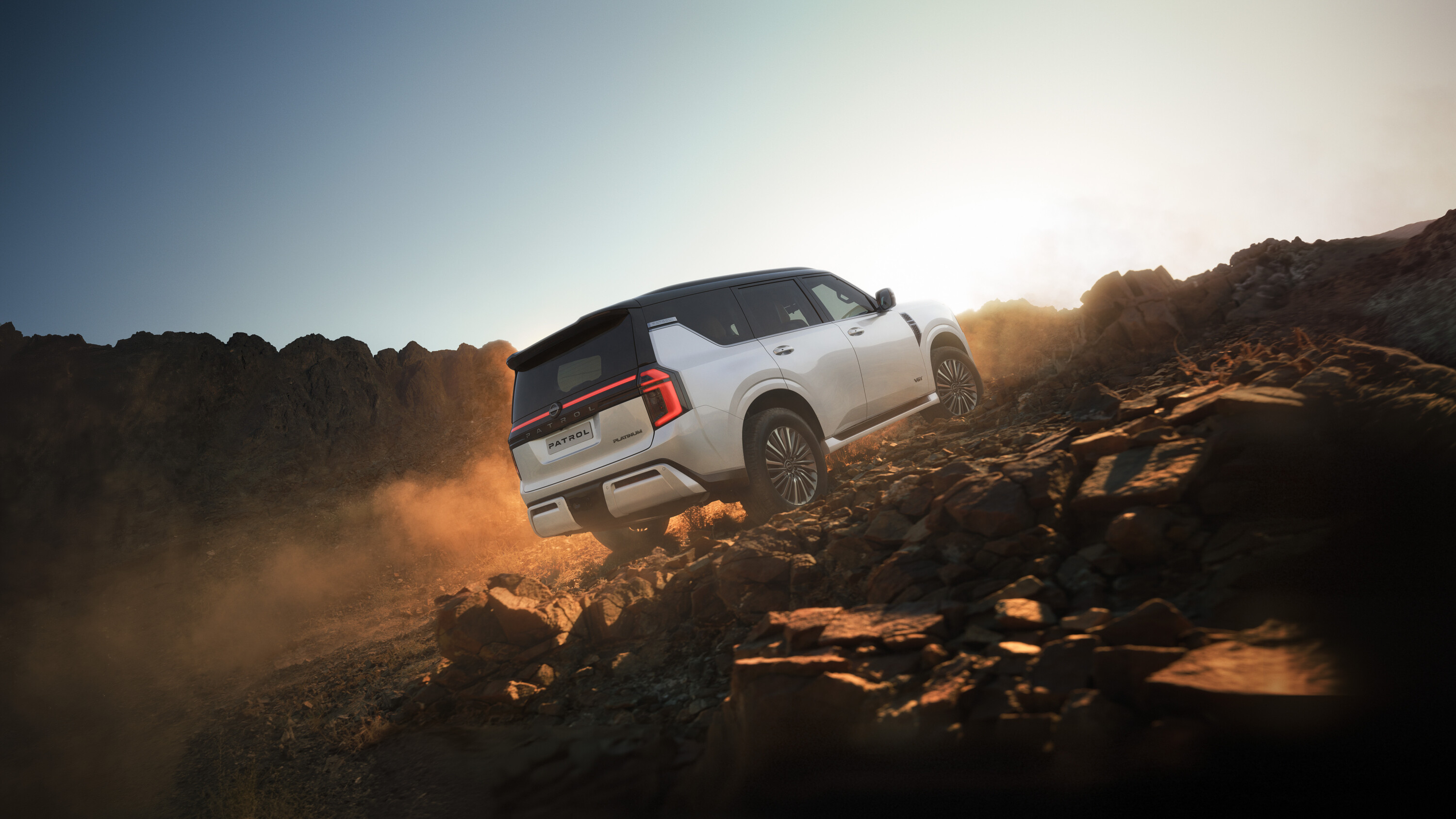
Nissan has integrated – as standard across the range – an all-new customisable adaptive air suspension. This set-up utilises e-damper technology, which automatically adjusts damper settings, to provide a comfortable and seamless journey between on- and off-road adventures.
The Patrol features six drive modes – standard, sand, rock, mud, eco and sport – as well as a 4WD transfer mode interlock system. This is a first for Nissan and allows drivers to easily transition between modes. In addition the Patrol is equipped with Vehicle Dynamic Control, Traction Control and a Tyre Pressure Monitoring System.
Interior
The Y63’s large interior has also been comprehensively updated, combining modern technology. refined comfort and more cargo space – up to 30 per cent more room than the Y62. The quilted leather seats, for example, have massage functionality and are inspired by the traditional Japanese wood craft, dubbed Kumiko (yep!). In fact, the first- and second-row pews are equipped with NASA-inspired spinal support technology, said to promote optimal posture and minimise fatigue.
The cabin is also said to be generously quieter, thanks to a combination of improved dynamic torsional rigidity and the addition of damping acoustic glass.
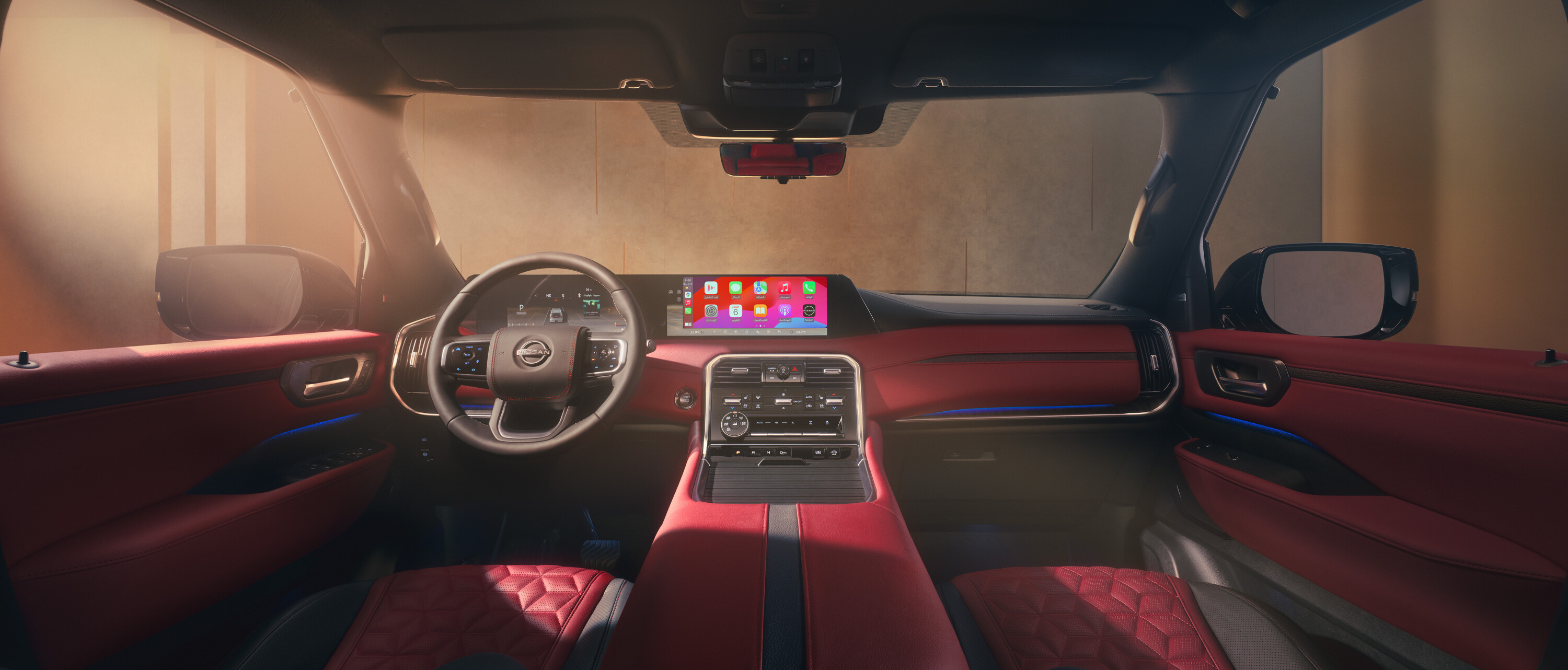
A cornerstone of the spacious interior is a 28.6-inch horizontal Monolith display, featuring twin 14.3-inch screens, on the front dash. Rear passengers aren’t neglected either, with the rear seats sporting dual 12.8-inch touchscreens. Sound booms through the cabin (select models only) courtesy of a 12-speaker Klipsch Premium Audio system.
Other key interior features include a combined nine litres of storage across the glove and console box; Biometric Cooling tech, that can detect body temperatures and adjust settings accordingly; clever EZ flex seats, which allows access to the third row without removing a child seat; a third-row power-fold function, which can fold and return the third-row seats via a touchscreen control; USB Type-C ports in every row; a wireless phone charger pad in the front centre console; and a panoramic sunroof is standard across the range.
Exterior design
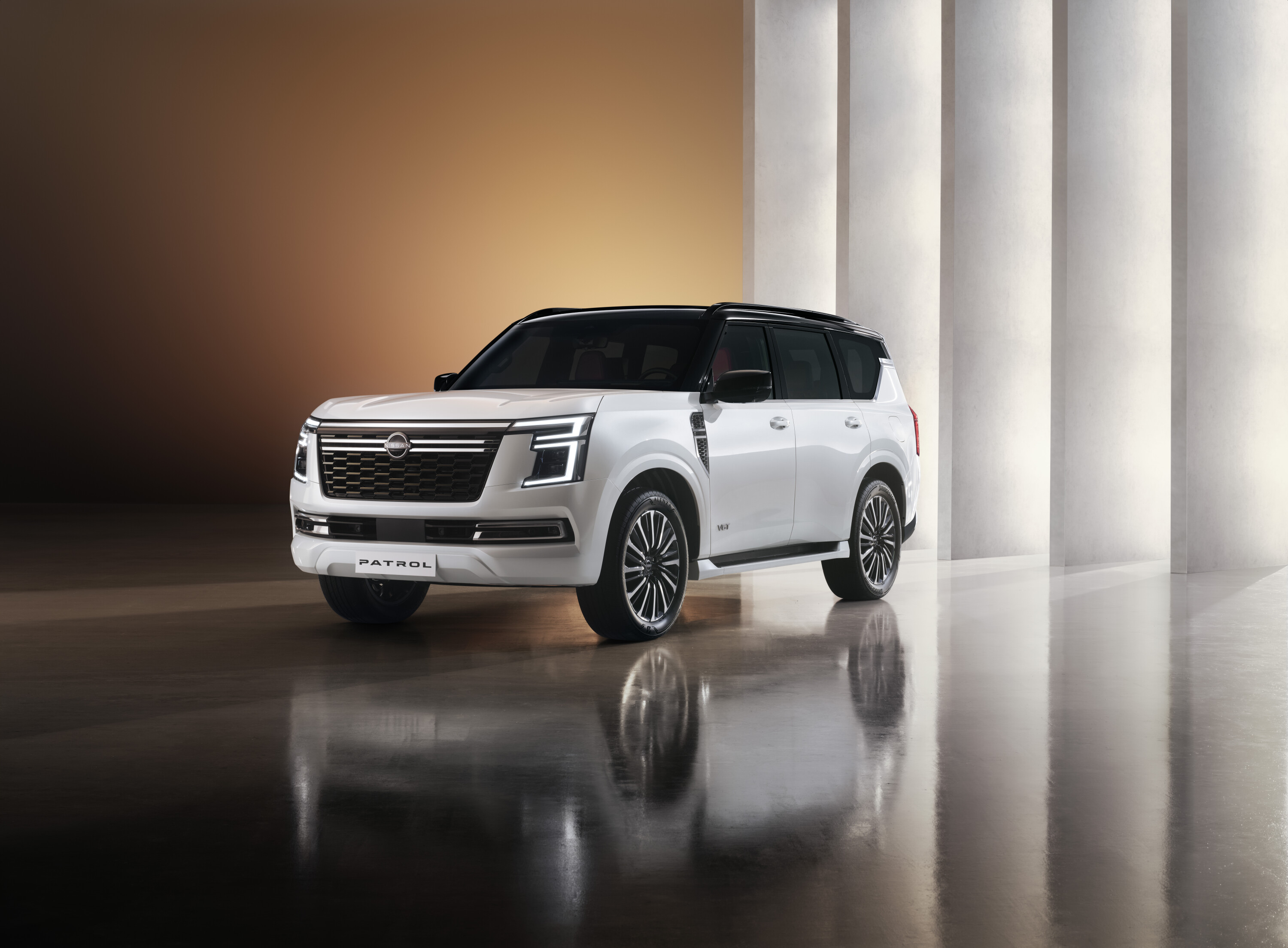
The new-look Y63 Patrol features a wider V-motion grille, flanked by Double C-shaped headlights embedded with Adaptive Driving Beam (ADB) technology. The rear-end features a full-width light bar, while the Patrol can be optioned with 22-inch wheels.
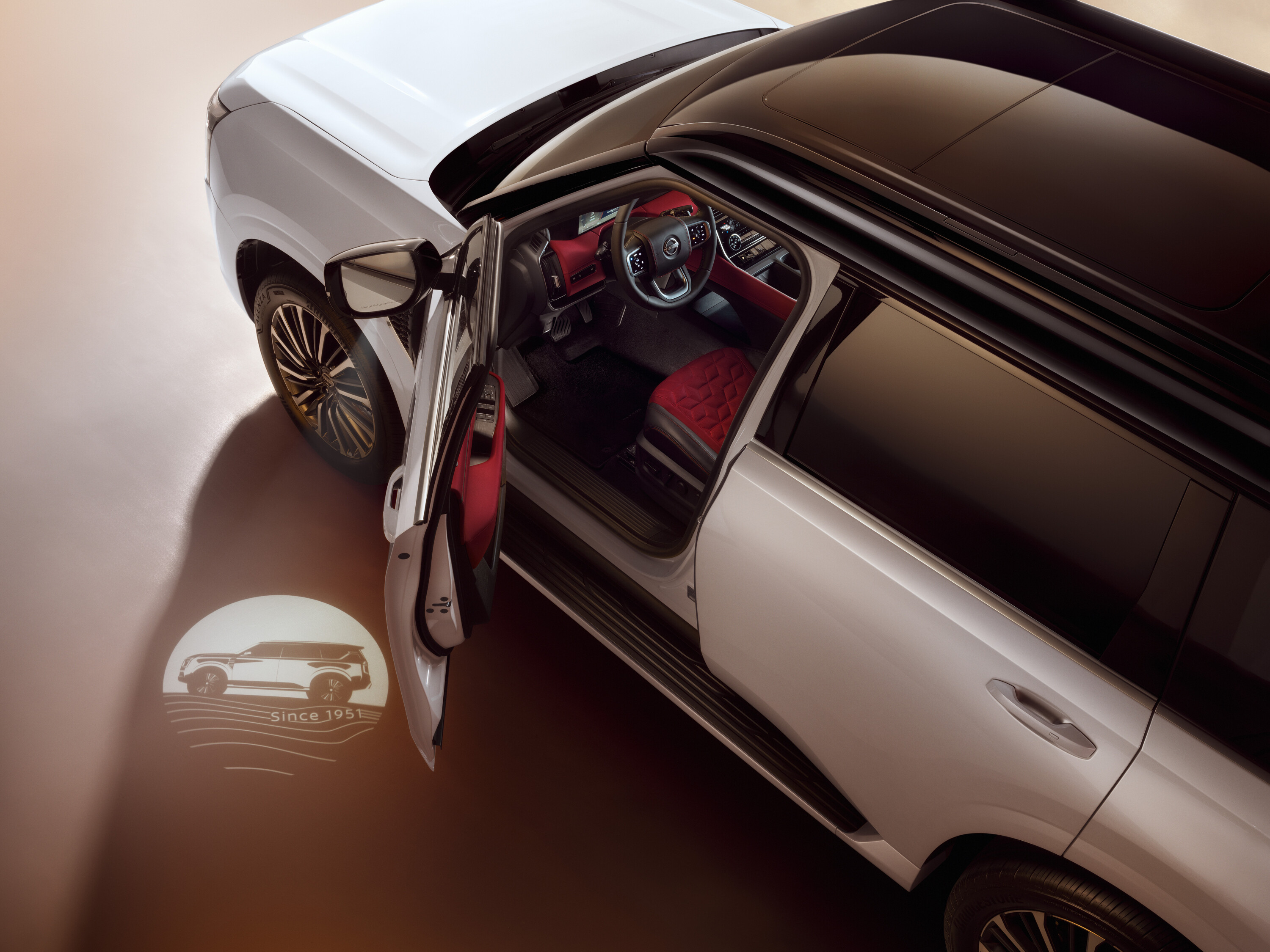
A neat addition are the puddle lamps, which illuminate the Patrol silhouette in the desert, and the text “Since 1951” signifying the vehicle’s long production history of more than 70 years.
“The all-new Nissan Patrol projects strength, poise and confidence. We have worked hard to ensure that it continues to be instantly recognisable globally as the icon of premium off-road adventure,” said Alfonso Albaisa, Senior Vice President for global design at Nissan.
“Its new design carries the heritage of six generations of unmatched all-wheel drive capability, comfort and prestige. It raises the bar in terms of attention to detail, materials and fit and finish. Customers who love effortless exploration will immediately fall in love with the new Patrol,” Albaisa added.
Further details including exact measurements and specifications will be revealed closer to the Patrol’s local launch.
Safety and technology
At the forefront of Nissan’s safety suite is ProPILOT technology, which will make its debut in the Patrol. Nissan says the tech blends adaptive cruise control with lane-keeping assistance; and it “leverages navigation data to adjust vehicle speed for curves and interchanges”.
A Panorama View function, with its ‘Ultra-Wide’ and ‘Invisible Hood’ views, will aid off-road pursuits. By utilising cameras and technology to project real-time images and obstacles, the Ultra-Wide view expands the field of vision to 170 degrees; while Invisible Hood – similar to Land Rover’s – provides a view of the area directly beneath the bonnet, making it ideal for ascending steep crests.
The Y63 Patrol is also equipped with seven airbags (driver’s knee airbags included); a 3D Around View Monitor; Smart Rear View Mirror; Rear Zoom View; Automatic Emergency Braking with Pedestrian Detection, Predictive Forward Collision Warning; and Rear Automatic Emergency Braking. A new body structure with increased use of high-strength steel is said to improve frontal crash and pedestrian protection.
The Y63 Patrol will also introduce NissanConnect 2.0, a technology suite that integrates Google to combine navigation, security and entertainment in one convenient location.
“This latest model captures the true spirit of what makes this iconic nameplate legendary – an enduring legacy of deep connections built over decades of shared experiences and memorable journeys across diverse terrains,” said Thierry Sabbagh, Divisional Vice President, President Middle East, KSA – Nissan, INFINITI.
“It reflects Nissan’s dedication to creating automotive experiences that resonate with our customers – and we are proud to present this next chapter in the Patrol’s remarkable journey,” Sabbagh added.
The 2024 Chevrolet Silverado 2500 was exposed to extensive local testing in preparation for its Australian launch earlier this year.
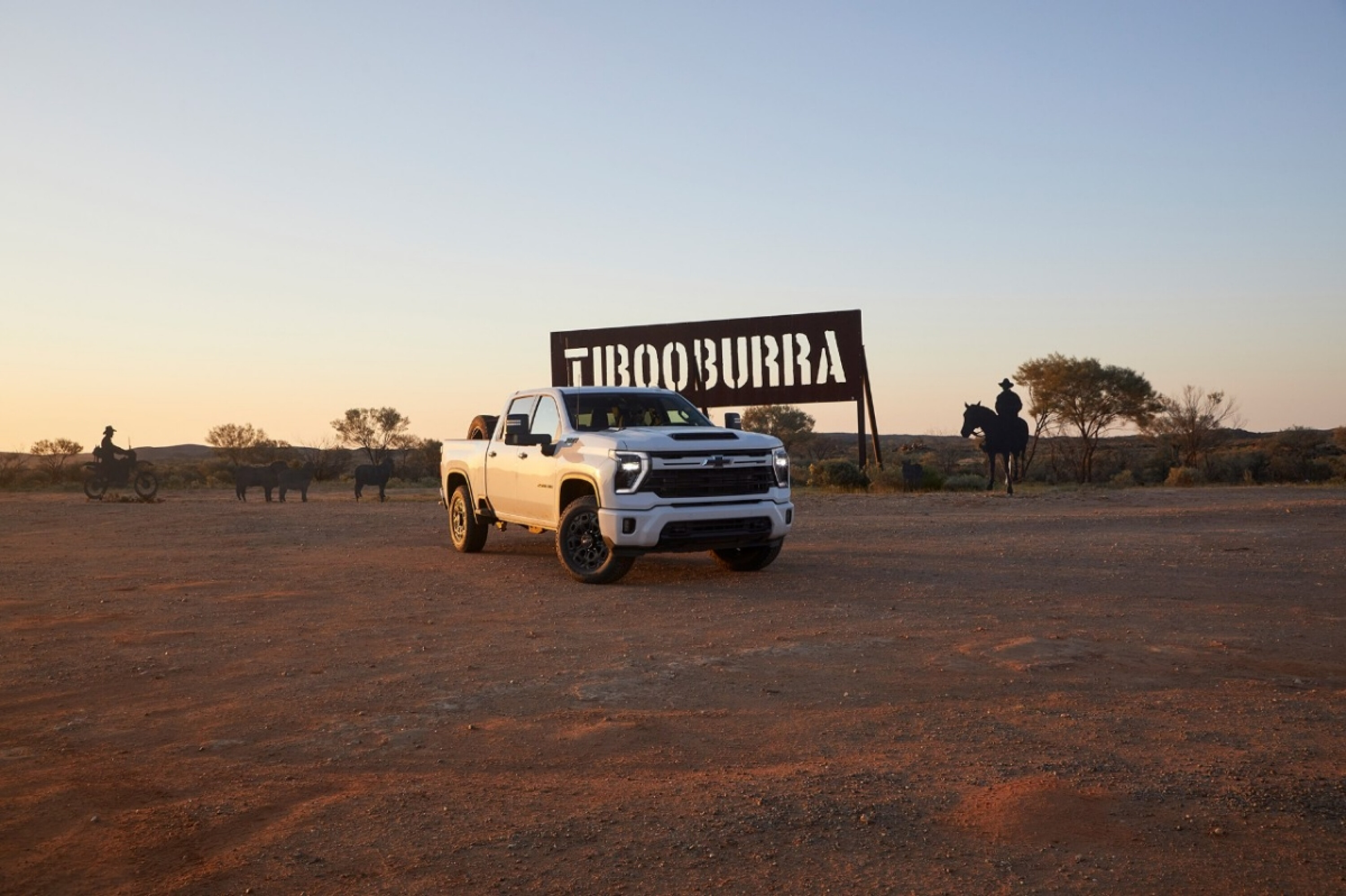
GMSV in collaboration with remanufacturing partner, Premoso Engineering, completed a 14-day testing schedule that included a 7800km return trip from Melbourne to Cairns. The team included six Premoso and two GMSV engineers.
“Leg one included 1200km of dirt roads and corrugated driving and total distance was 4200km. Our longest day saw the team drive the entirety of New South Wales, from the southern to the northern border,” said Trevor Barallon, Chief Engineer at Premoso Australia.
A number of specific validation activities were conducted by the team. These included powertrain diagnostic performance; verification of right-hand drive pilot vehicle assembly; noise and vibration assessment; ride and handling, including stability while towing on varied road surfaces; overall vehicle performance; adBlue consumption; and local calibrations for HVAC performance, infotainment, lane keep assist, and adaptive cruise control (with and without a trailer).
“New model certification testing includes 15,500km of accelerated rough track durability and an additional in-country validation test trip including maximum towing conditions of approximately 15,000km involving two vehicles,” said Barallon. “All up, more than 10 vehicles were involved in the engineering development fleet and the cumulative mileage exceeded 150,000km.”
At a fraction over $160,000, the 2024 Silverado 2500 isn’t cheap, but it does get revised front-end styling, a new dash layout and a stonking 350kW/1322Nm diesel V8 engine. Read our full review here ?
The current, sixth-gen 2024 Mitsubishi MV Triton landed locally early in 2024, replacing the outgoing MR generation.
It launched with four familiar variants – GLX, GLX+, GLS and top-spec GSR – in club- or dual-cab configurations, with a six-speed automatic transmission standard across the board. However, the line-up is expected to expand with the addition of a manual transmission and an array of cab-chassis variants.
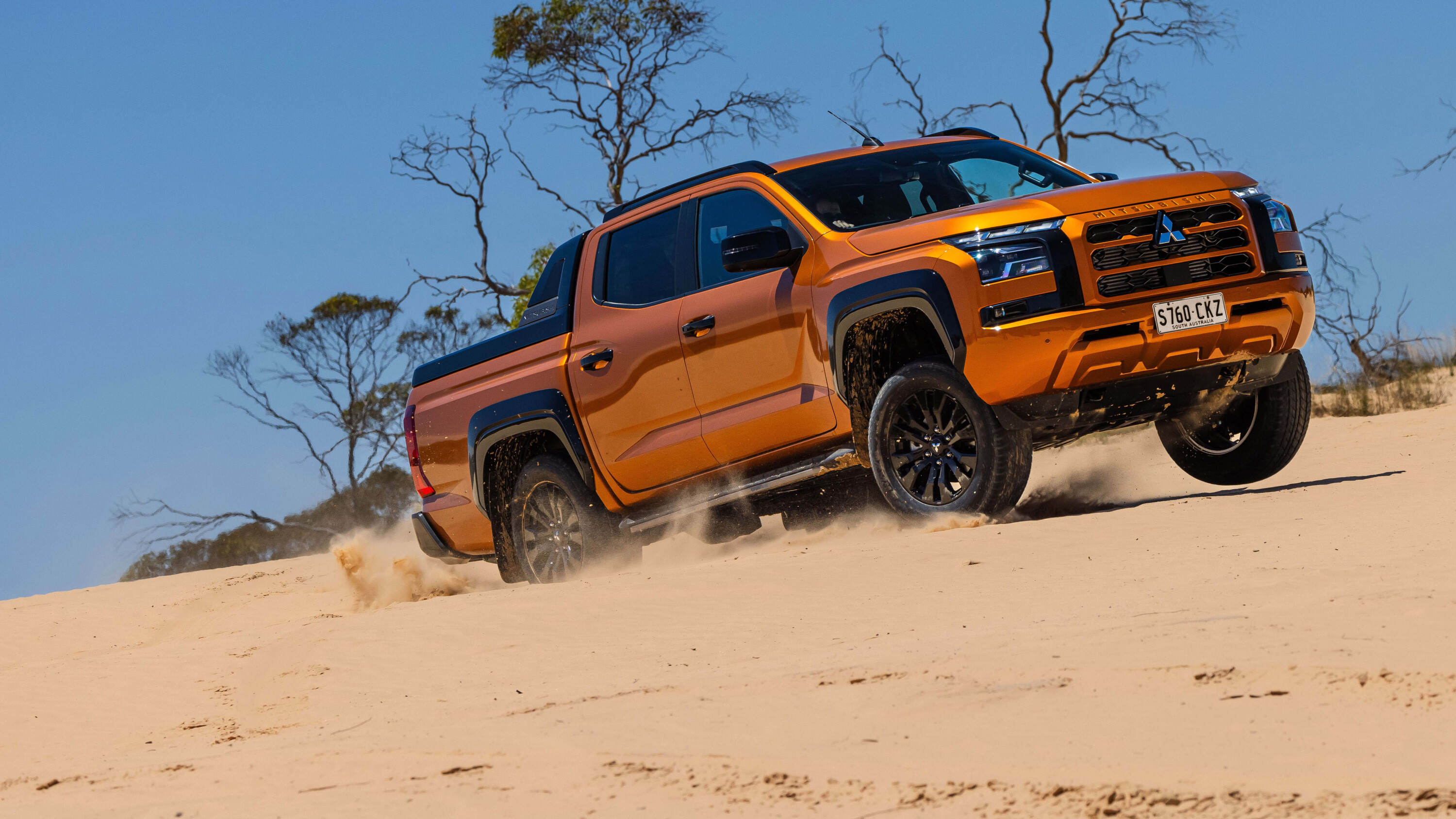
The bigger and better Triton is powered by a more powerful 150kW/470Nm twin-turbo four-cylinder diesel engine. It gets a reimagined interior and a suite of active safety systems. Let’s take a closer look! ?
JUMP AHEAD
- Pricing
- What body styles are available for the Mitsubishi Triton?
- What features are standard in every Mitsubishi Triton?
- What key features do I get if I spend more?
- How safe is the Mitsubishi Triton?
- How comfortable & practical is the Mitsubishi Triton?
- How big is the tray/tub?
- I like driving, will I enjoy the Triton?
- Which Mitsubishi Triton engine uses the least fuel?
- What is the Mitsubishi Triton’s towing capacity?
- How long is the warranty and what are the Mitsubishi Triton’s servicing costs?
- Which version of the Mitsubishi Triton does 4X4 Australia recommend?
- What are the Mitsubishi Triton’s key rivals?
Pricing
| Model | Pricing |
|---|---|
| GLX 4×2 dual-cab pick-up | $43,690 |
| GLX+ 4×4 club-cab pick-up | $50,340 |
| GLX 4×4 dual-cab pick-up | $50,940 |
| GLX+ 4×4 dual-cab pick-up | $53,290 |
| GLS 4×4 dual-cab pick-up | $59,090 |
| GLS Leather 4×4 dual-cab pick-up | $60,590 |
| GSR 4×4 dual-cab pick-up | $63,840 |
What body styles are available for the Mitsubishi Triton?
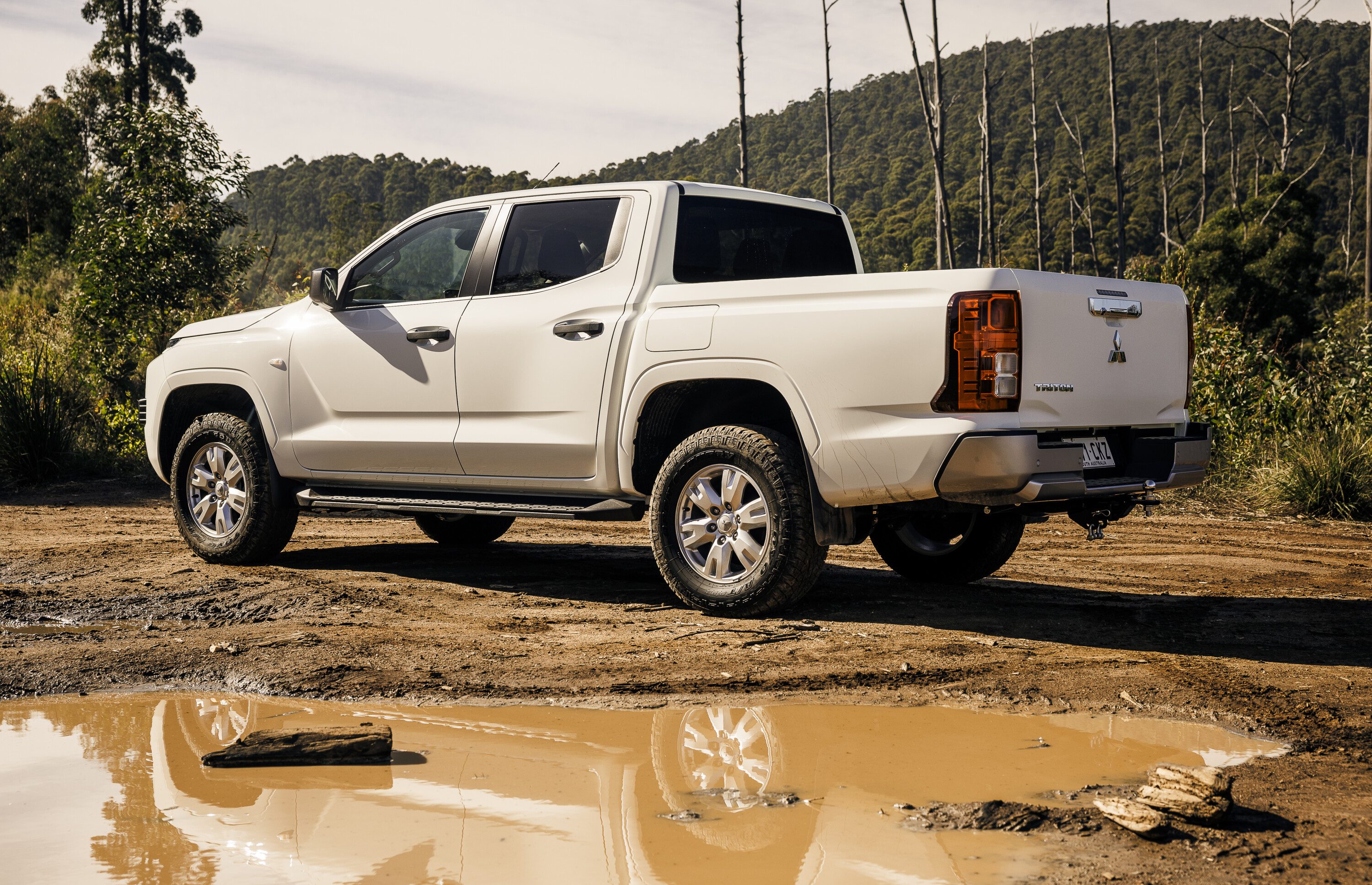
Mitsubishi Australia initially released the current Triton with one club-cab (GLX+) and six dual-cab pick-ups. The base-spec GLX is the only vehicle currently available with the option of 4×2; the rest of the models are all 4×4. All vehicles run an automatic transmission.
However, Mitsubishi has confirmed the line-up is set to expand with the addition of a manual transmission option and a selection of single-cab and cab-chassis variants.
What features are standard in every Mitsubishi Triton?
The features listed below are standard in the entry-level model and will appear in higher-grade models, unless replaced by more premium equivalent features.
| 2024 Mitsubishi Triton GLX features | |
|---|---|
| 17-inch steel wheels | Driveru2019s seat power lumbar support |
| 9-inch infotainment system | Vinyl flooring |
| Wireless Apple CarPlay | Manual air conditioning |
| Wired Android Auto | Two front USB ports (USB-A, USB-C) |
| Built-in satellite navigation | Two rear USB ports u2013 dual-cab only (USB-A, USB-C) |
| Four-speaker audio system | Seat back pocket including phone and tablet storage u2013 dual-cab only |
| 7-inch semi-digital instrument cluster | Front and rear parking sensors |
| Halogen exterior lighting | Rear-view camera |
| Black cloth upholsteryu00a0 | Tyre pressure monitoring |
What key features do I get if I spend more?
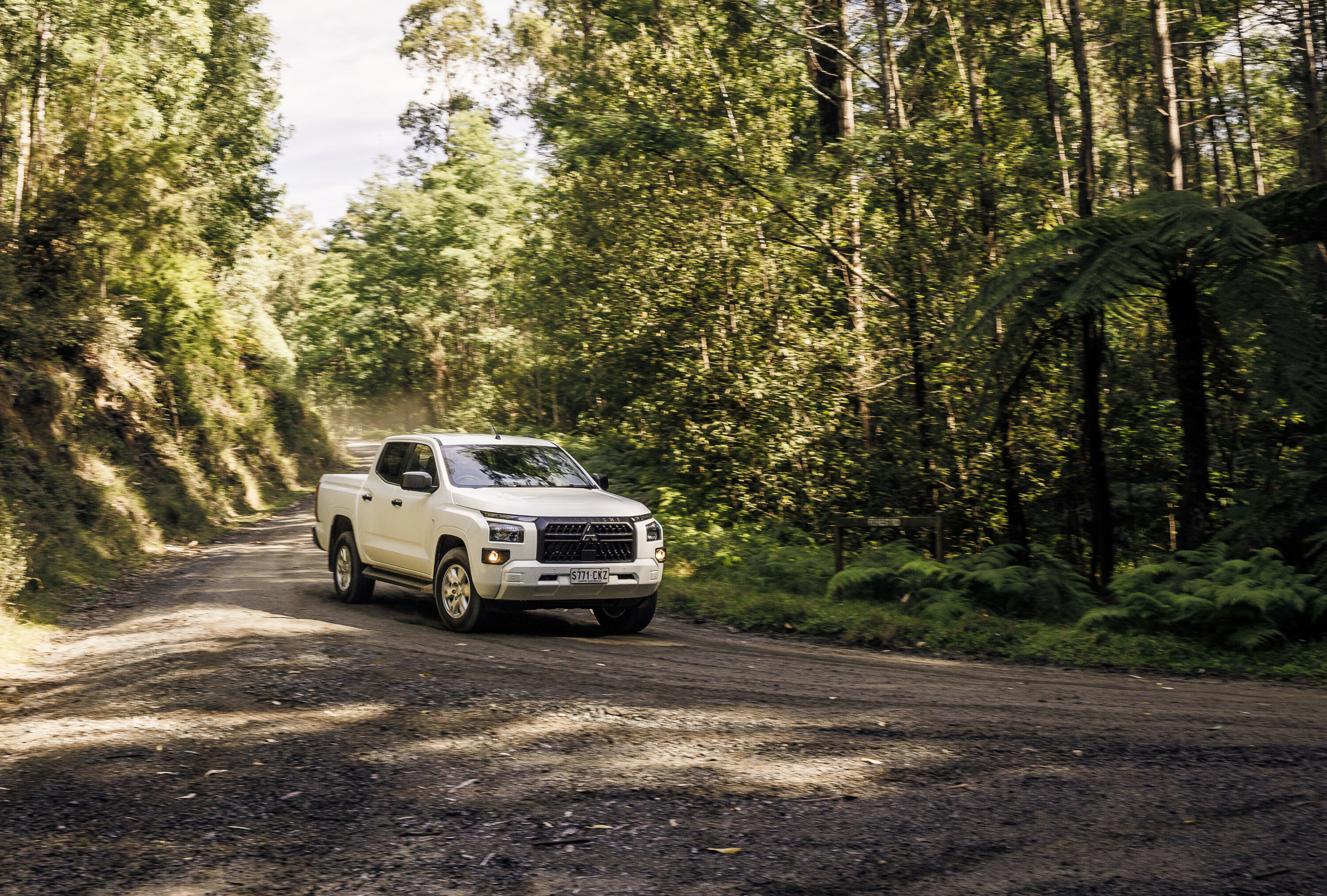
The GLX+ adds:
| In addition to GLX | |
|---|---|
| 17-inch alloy wheels | Front fog lamps |
| Rear differential lock | Rear privacy glass |
| DAB+ digital radio | Reverse autonomous emergency braking |
| Side steps | 360-degree camera system |
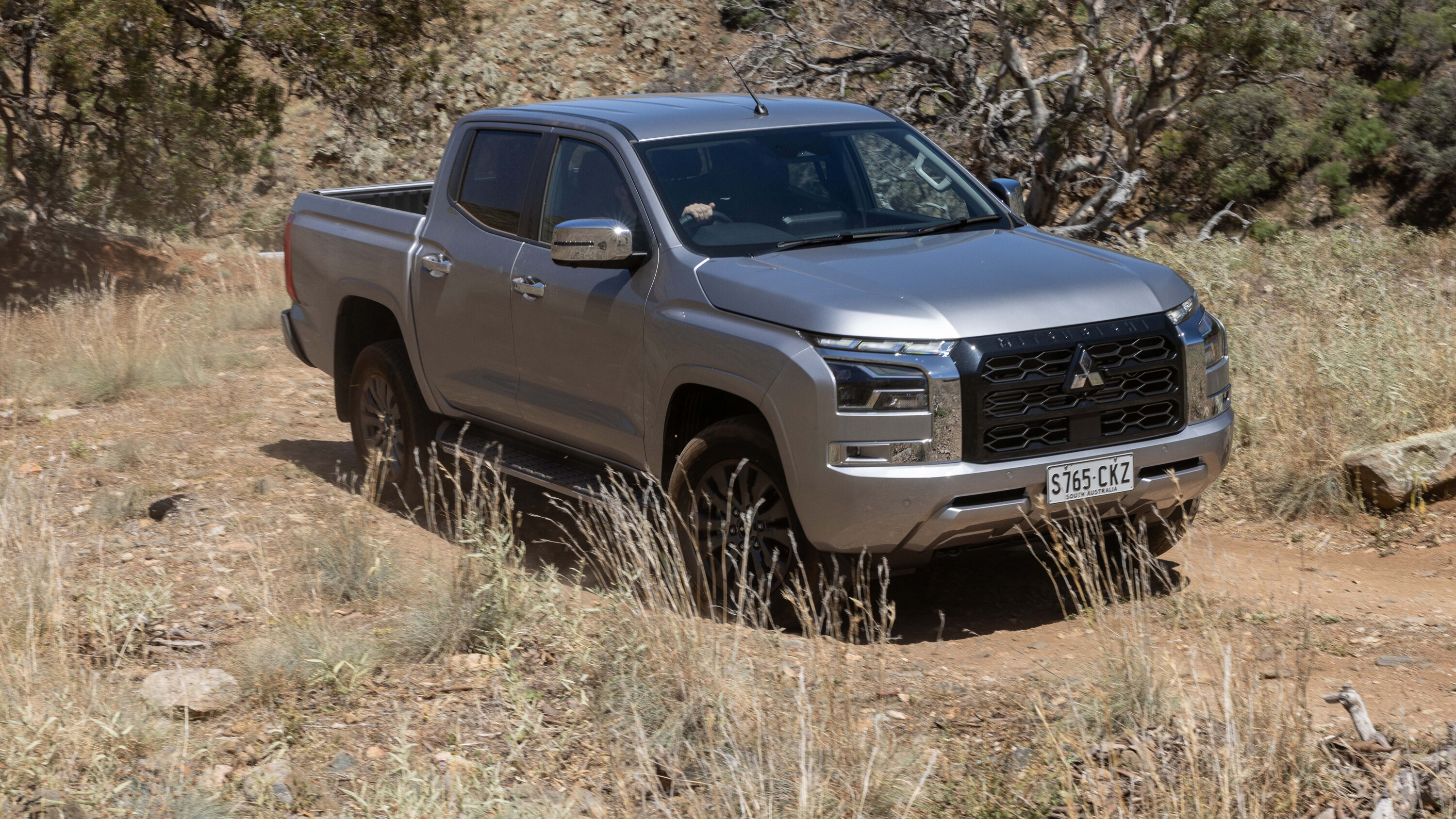
Upgrading to a GLS adds:
| In addition to GLX+ | |
|---|---|
| 18-inch alloy wheels | Wireless phone charger |
| Super Select II 4WD system with 2H, 4H, 4HLc and 4LLC | Tray bed liner |
| Standard-duty rear suspension | Heated, electrically-adjusted side mirrors with LED indicators |
| LED exterior lighting | Mitsubishi-embossed gloss black grille |
| Dual-zone climate control | Terrain control |
| Keyless entry and push-button start | Hill descent control |
| Auto-dimming rear-view mirror | Soft-padded interior surfaces with silver accented stitching |
Paying more again for the GLS Leather option adds:
| In addition to GLS | |
|---|---|
| Black leather upholstery | Power-adjustable driveru2019s seat |
| Heated front seats | |
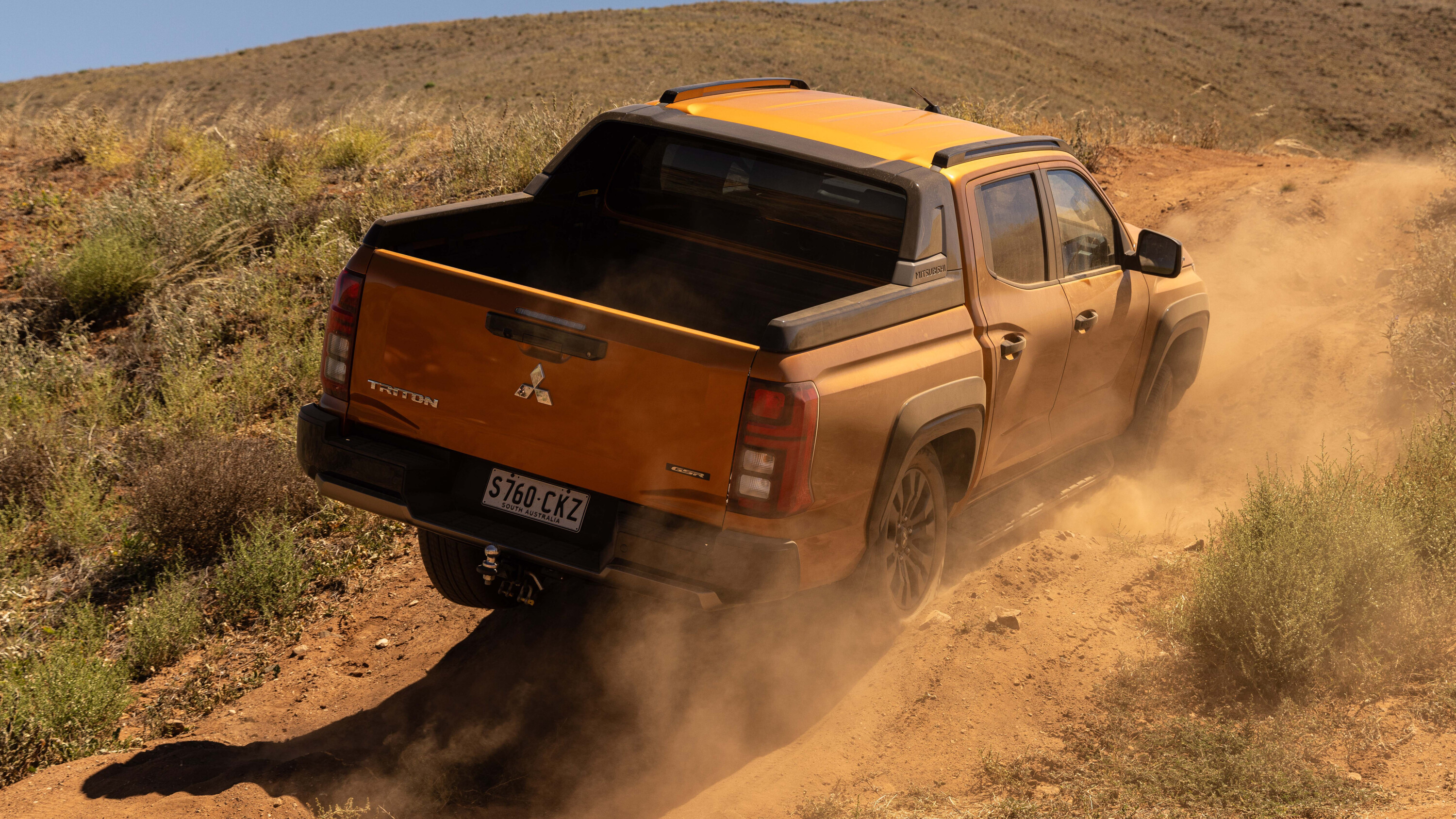
The GSR, the most expensive version, comes with a few aesthetic differences, including:
| In addition to GLS Leather | |
|---|---|
| 18-inch alloy wheels (black) | Roof rails |
| Leather upholstery with orange stitching | GSR-specific carpet floor mats |
| Body-coloured grille | Two dash-mounted cup holders |
| Wheel arch moulding | u2018Dark titaniumu2019 interior accents |
| Styling bar | |
How safe is the Mitsubishi Triton?
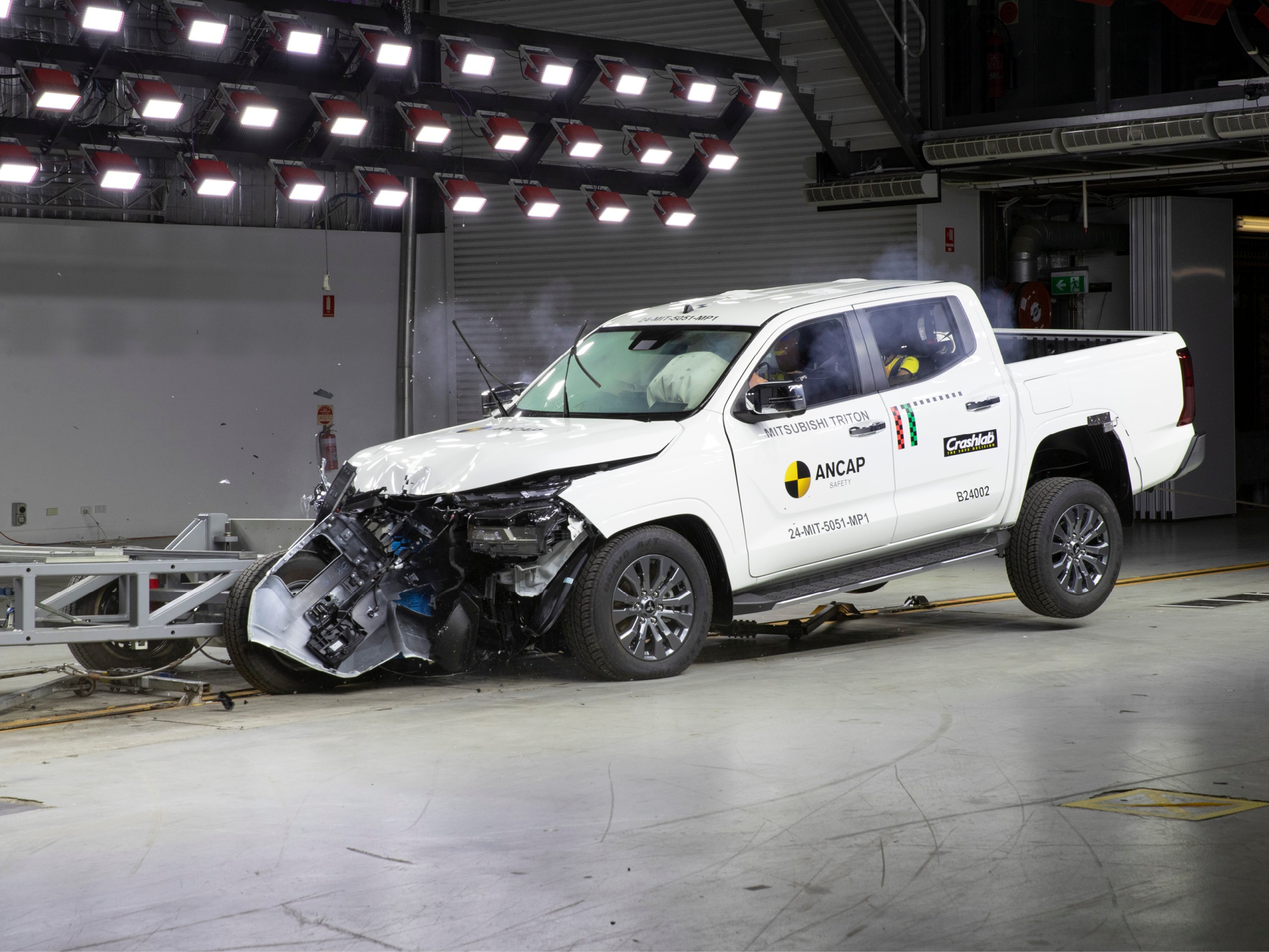
The sixth-gen Triton received a five-star ANCAP safety rating in April 2024, becoming the first dual-cab ute to receive full marks under new, stricter testing criteria.
ANCAP gave the Triton scores of 86 per cent for adult occupant protection; 89 per cent for child occupant protection; 74 per cent for vulnerable road user protection; and 70 per cent for Safety Assist.
ANCAP noted that while the Triton’s Autonomous Emergency Braking (AEB) system can detect and respond to other vehicles, pedestrians, cyclist and motorcyclists, it doesn’t have the capability of more advanced AEB systems to avoid a crash at a T-bone intersection or a head-on collision.
The Mitsubishi Triton has eight airbags including: dual front, side chest, side head, centre and one for the driver’s knee. The five-star result applies to all 2WD and 4WD dual-cabs variants on sale in Australia.
| 2024 Mitsubishi Triton active safety features | |
|---|---|
| Autonomous emergency braking (vehicle, pedestrian, cyclist, junction-turning) | Driver monitoring camera |
| Lane-keep assist | Driver attention alert |
| Lane departure warning | Multi-collision braking |
| Lane change assist | Traffic sign recognition |
| Blind-spot alert | Intelligent speed limit assist |
| Front and rear cross-traffic alerts | Automatic high beam |
| Adaptive cruise control | |
How comfortable and practical is the Mitsubishi Triton?
The Triton cabin has been comprehensively updated compared to the previous generation.
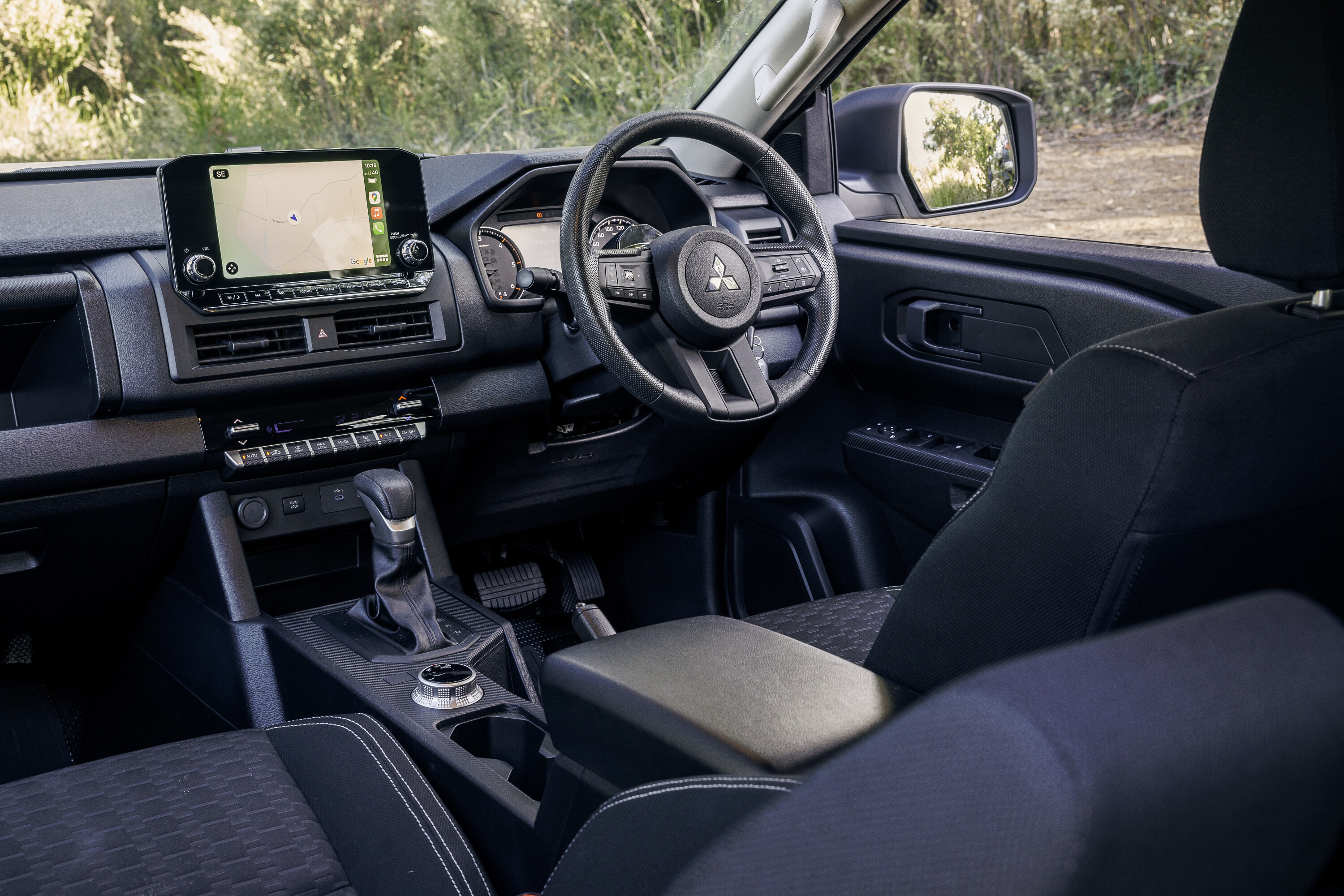
The base-spec GLX and GLX+ variants are equipped with a 9-inch infotainment system that features Apple CarPlay and Android Auto (only CarPlay is wireless); two front and two rear USB ports (A and C) for dual-cab models; vinyl flooring; cloth seating; and ample storage bins and pockets.
Step up to the GLS and the interior benefits from dual-zone climate control; LED lighting; an auto-dimming rear-view mirror; keyless entry and push-button start; a wireless phone charger; and soft-padded interior surfaces with silver-accented stitching. Plus the tray is no longer naked and comes equipped with a bed liner. A GLS Leather model, rather unsurprisingly, adds black leather upholstery, heated fronts, and a power-adjustable driver’s seat.
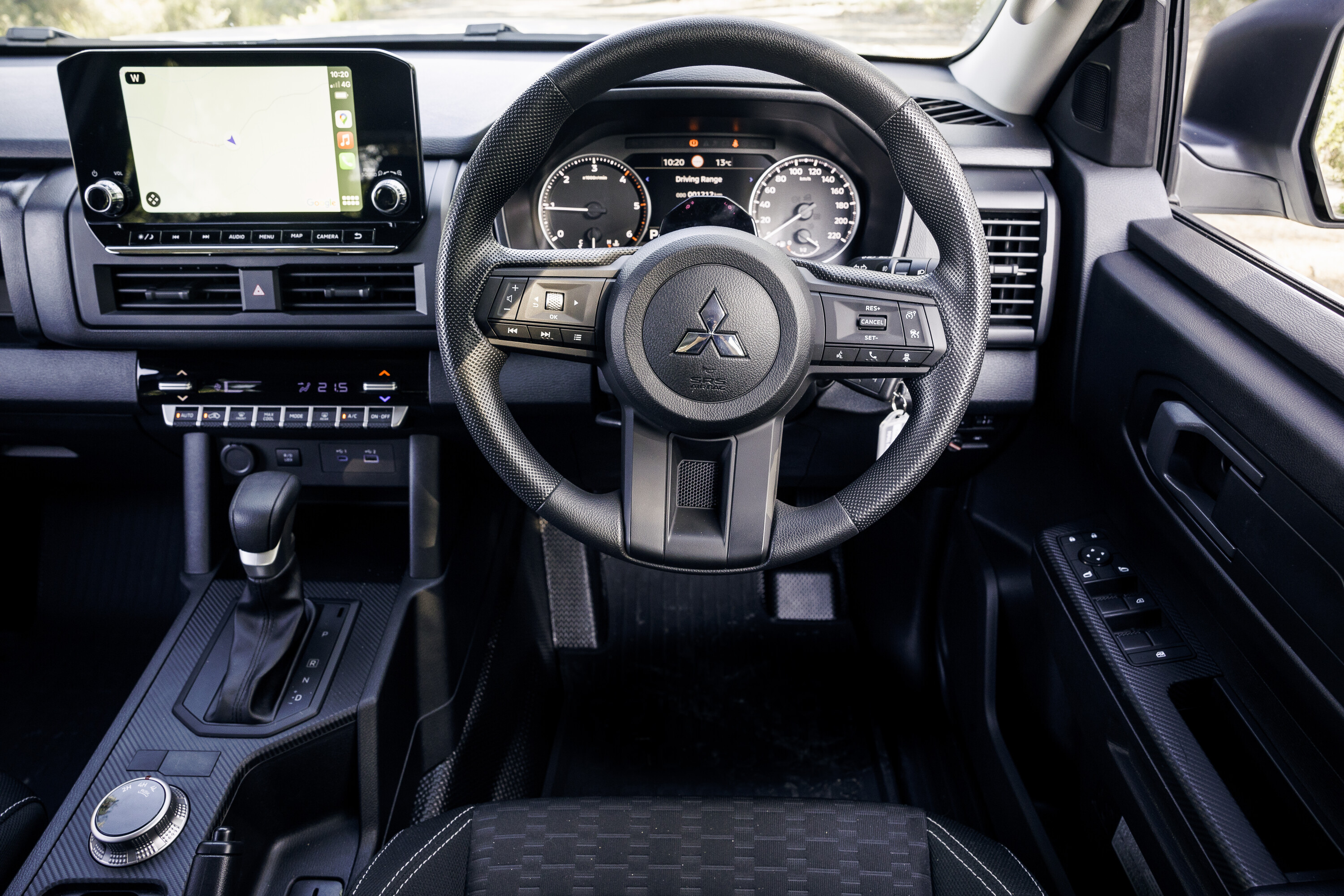
Upgrading to a top-spec GSR gets the buyers a few more interior goodies including leather upholstery with orange stitching; GSR-specific carpet floor mats, two dash-mounted cupholders, and dark titanium accents throughout the cabin.
The cloth upholstery (available in GLX and GLS trims) is comfortable, but the leather (offered in GLS leather and GSR trims) is not only easier to clean but also adds a touch of class.
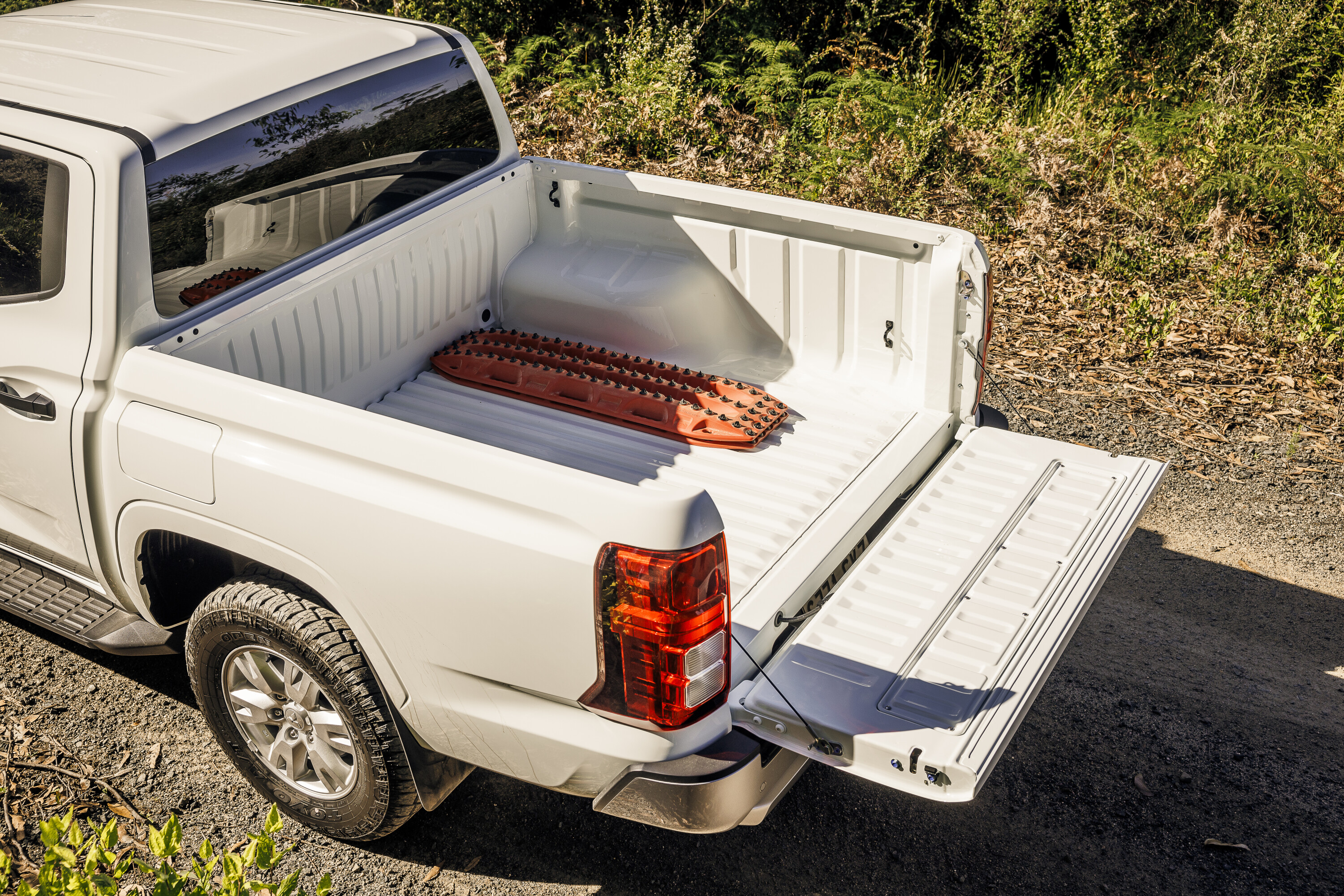
The new Triton matches competitors with a 3500kg braked towing capacity and proves its workhorse credentials with the GSR model offering a 1030kg payload. All models have space for a single 1200x800mm Euro pallet in the bed. Practical features include spray-in bed liners, four tie-down points, and sports bars.
How big is the tray/tub?
The dual-cab Triton is 15mm longer and 50mm wider than the model it replaced, resulting in a larger overall profile. To this end, the tray has grown by 35mm in length (to 1555mm) and measures 1545mm at its widest point.
A new rear axle location also improves its load-lugging ability, while the load height is now 45mm lower at 820mm. Plus, the bumper has a flattened grip-taped area atop it to stand on when loading objects. The wheelbase now also extends beyond 3000mm to 3130mm, improving occupant space.
I like driving, will I enjoy this car?
The Triton’s 2.4-litre diesel engine offers smooth performance, though its torque is slightly less than the Ranger’s. The Triton’s twin-turbo system ensures strong torque from 1500rpm to 2750rpm, enhancing its responsiveness. An idle-stop system is included to save fuel, but our reviewers have stated that it can operate roughly, affecting the driving experience.
The Triton’s engine is somewhat noisy compared to competitors, and the six-speed automatic transmission can be overly aggressive in its shift patterns. The part-time 4×4 system in the GLX works well, but the full-time 4×4 system in GLS and GSR models offers additional convenience.
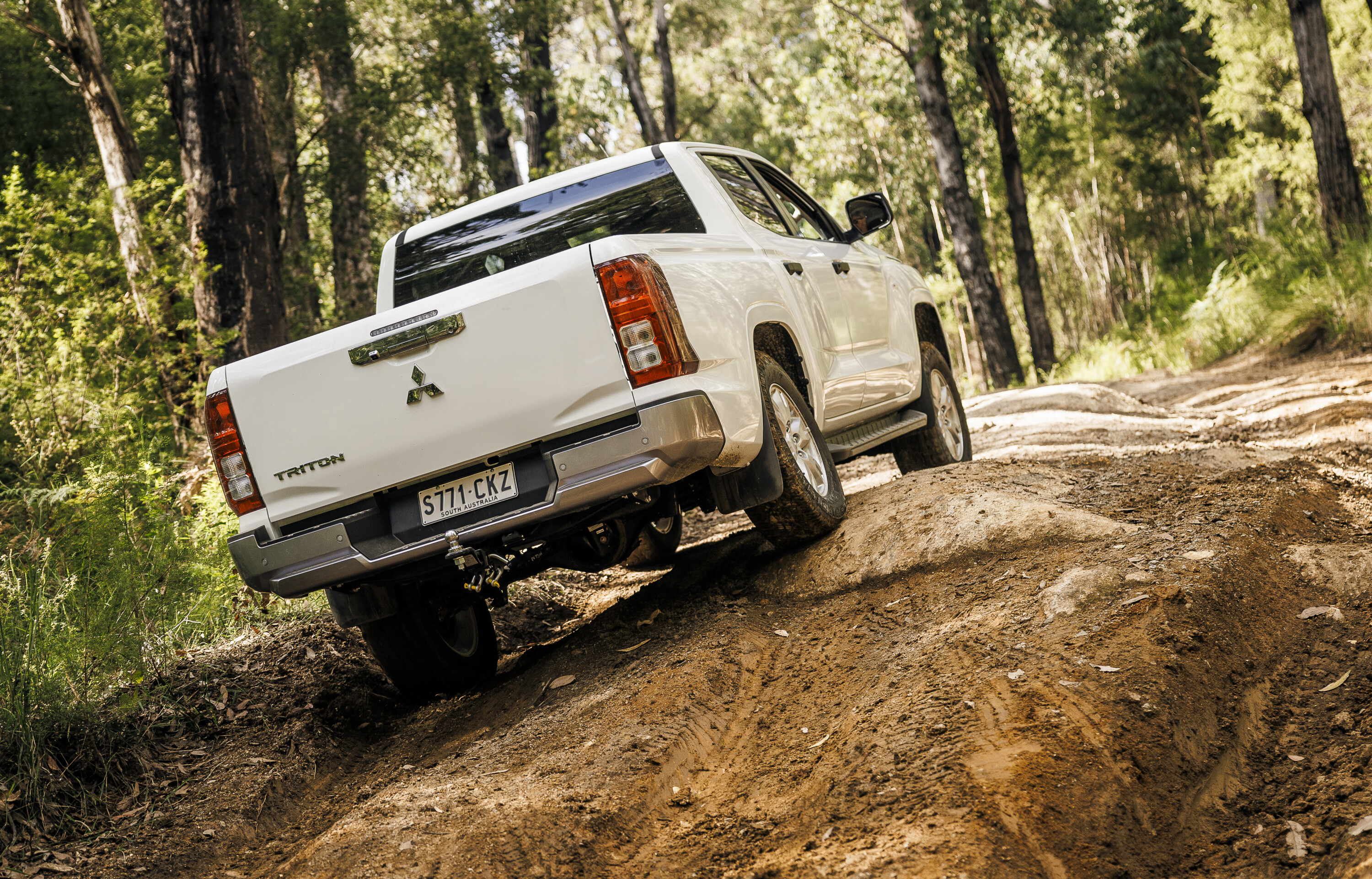
The Triton’s ride quality is commendable on hilly terrain. Its 3.3-turn lock-to-lock electric power steering proves effective, providing light handling at low speeds and stable control at higher speeds. Despite the rear drum brakes, braking performance is also satisfactory.
The Triton also handles off-road conditions well, with the traction control system managing moderate moguls without needing the rear diff lock. The Triton’s Super Select II 4WD system, available in GLS and GSR trims, offers permanent four-wheel drive and multiple modes (Normal, Eco, Gravel, Snow, Mud, Sand, and Rock), adapting the vehicle to different terrains.
The new Triton features an updated suspension, including larger dampers and a revised rear leaf spring setup, tailored for Australian conditions, and comparisons with fifth-gen Tritons showed noticeable improvements. The GLX and GLX+ models have heavier rear leaf springs for load-carrying, while higher trims offer a softer ride.
Which Mitsubishi Triton engine uses the least fuel?
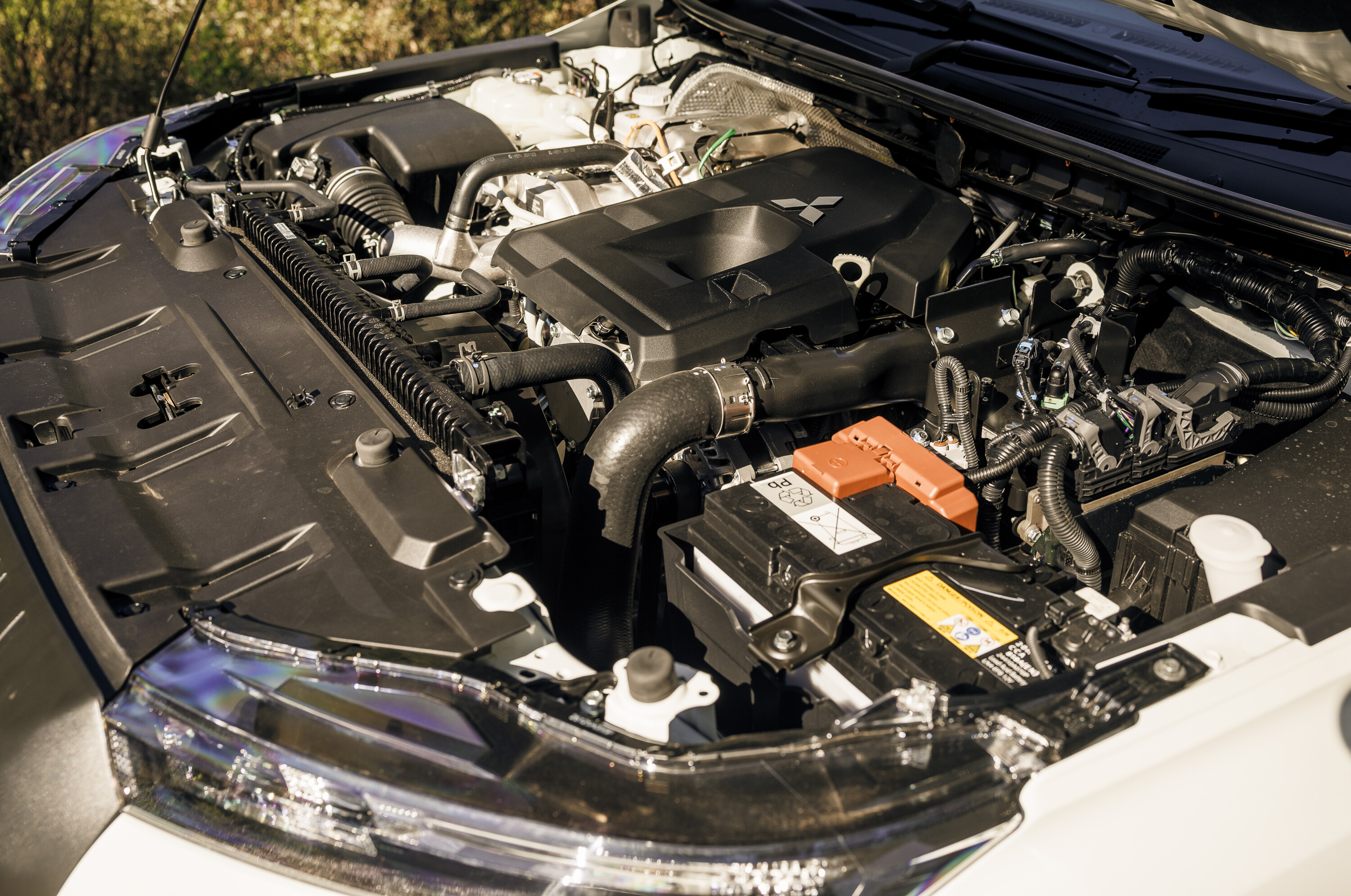
All current-gen Tritons are powered by a 150kW/470Nm twin-turbo ‘4N16’ 2.4-litre turbo-diesel four-cylinder engine, lifting outputs by 17kW and 40Nm compared to the past generation.
The new Triton gets a six-speed torque converter automatic transmission, but a six-speed manual – with a new cable linkage to improve NVH suppression and lighten the shift – is slated for an arrival by the end of 2024.
Lower-spec GLX and GLX+ models feature Mitsubishi’s Easy Select 4WD system, while the upper-spec GLS and GSR get the more premium Super Select II system that allows the vehicle to be driven in 4H on all surfaces.
The 2.4-litre twin-turbo diesel (4×2) has a fuel economy rating of 7.5L/100km; while the 2.4-litre twin-turbo diesel (4×4) is slightly thirstier at 7.7L/100km. Both more efficient than its predecessor.
What is the Mitsubishi Triton’s towing capacity?
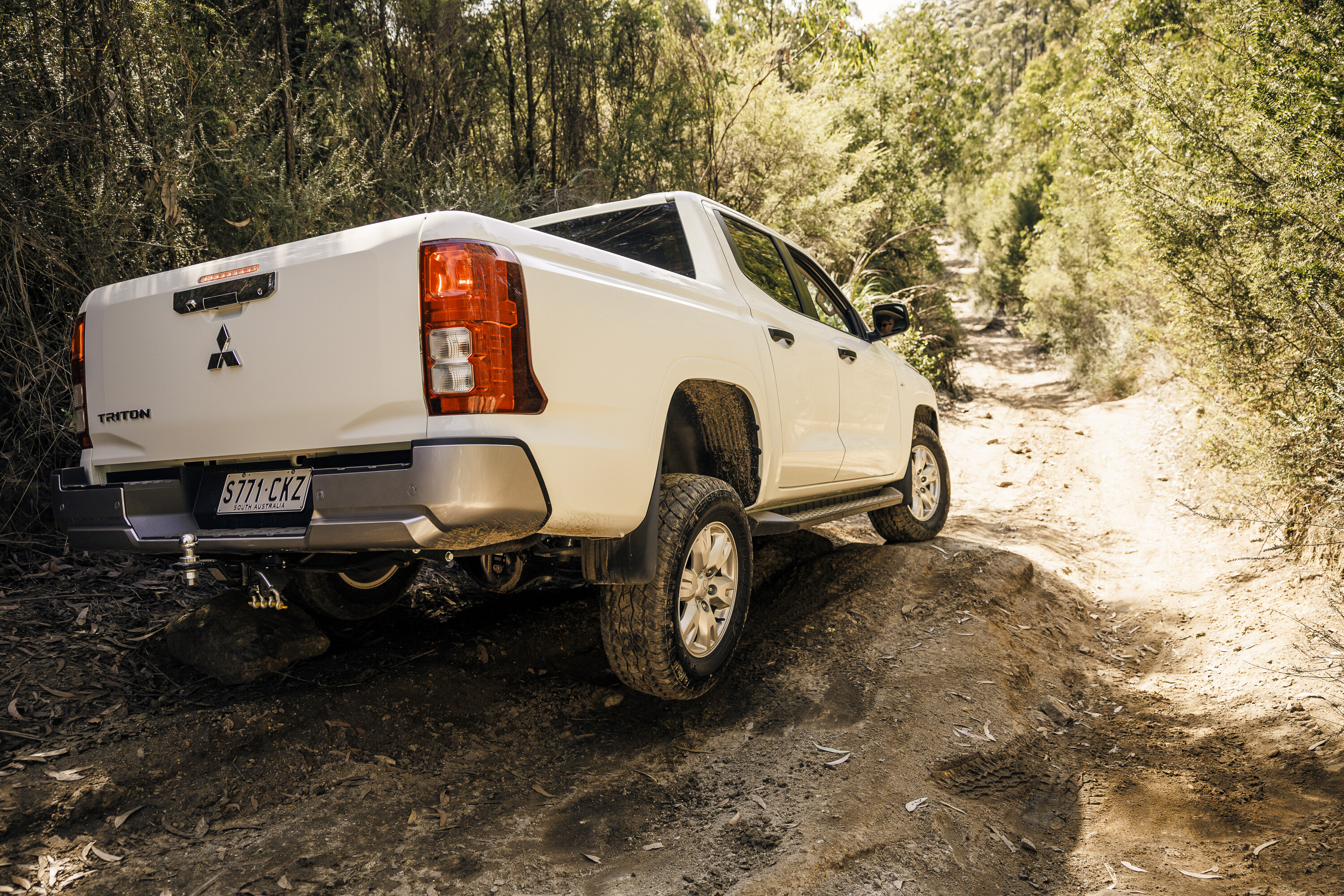
For this generation, Mitsubishi has fixed a nagging compromise Triton owners once had to deal with: the Triton suffered from a lower maximum towing capacity compared to its rivals.
This is no longer the case, with the Triton now rated to tow a maximum of 3500kg, which is the industry standard – that’s an increase of 400kg compared to its predecessor.
How long is the warranty and what are the Triton’s servicing costs?
The Mitsubishi Triton comes with the industry’s longest factory warranty – ten years / 200,000km.
The Mitsubishi Triton comes with 15,000 km / 12-month service intervals and an industry-leading 10-year capped-price servicing scheme, with the first interval priced at $489. Prices then fluctuate between $489 and $949 for the length of the servicing program.
Which version of the Mitsubishi Triton does 4X4 Australia recommend?
The lower-spec Triton GLX+ sits a rung above the working-class GLX by replacing the steel wheels will alloys and adding side steps, rear privacy glass, front fog lights, some interior updates (silver stitching), and a rear diff lock.
The GLX+ 4×4 dual-cab pick-up retails for $53,290, which, at about $10,000 cheaper than the GSR, makes it the sweet spot in the range.
However, it does miss out on dual-zone climate control, as well as Mitsubishi’s Super Select II which adds full-time 4×4 to the transfer case – you’ll have to make do with the more rudimentary part-time dual-range 4×4 system.