
An elaborate and unlawful operation hidden deep within one of Queensland’s most ecologically sensitive areas has been exposed, with 18 individuals fined for constructing and regularly using an illegal cabin inside Curtis Island National Park.
Queensland’s Department of Environment confirmed that the unauthorised hut – built in a remote section of the park using illegally felled trees – was used by the group as a private retreat for months before being discovered. In total, rangers issued 22 fines amounting to $7606 for a range of serious breaches.
The ABC has reported the cabin included a barbecue area and verandah, and was regularly accessed by members of the group using unregistered vehicles including buggies and motorbikes, often towing dinghies or trailers into restricted zones.
Curtis Island, located 16 kilometres northeast of Gladstone and within the Great Barrier Reef World Heritage Area, is home to endangered and vulnerable wildlife. The illegal activities posed direct threats to this protected ecosystem. Authorities say the group’s actions endangered native wildlife and undermined conservation efforts. Fires were lit, trees were cleared without permits, and firearms were used for recreational hunting – all of which are forbidden in national parks.
The irony isn’t lost that between 2010 and 2015 the government permitted the construction of three major liquefied natural gas (LNG) plants on Curtis Island, all within proximity to protected areas including Curtis Island National Park and the Great Barrier Reef World Heritage Area.
Rangers first noticed signs of unusual activity in mid-2023 and launched targeted patrols. The hut was found in August, triggering an investigation that revealed the extent of the environmental damage and non-compliance.
Despite the group being identified and fined, the structure remains in place due to prolonged wet conditions that have delayed its removal. A public notice issued in January sought the owner’s cooperation, though none came forward.
Curtis Island is Queensland’s third-largest continental island, made up of beach ridges, salt flats, and sand dunes. It is a popular destination for experienced four-wheel drivers, with rugged beach access tracks, soft sand conditions, and limited facilities requiring full self-sufficiency.
Access is typically via barge from Gladstone, with 4WD vehicles needed to explore the island’s remote bushland and coastal terrain. Vehicle access is restricted in national park zones, and a permit is required to bring a 4WD into designated camping or recreational areas.
The cabin will be dismantled and the area rehabilitated once conditions allow.
Garig Gunak Barlu National Park is as far north as you can go on the mainland in the Northern Territory, and the reward is pristine white beaches, sparkling blue waters, spectacular scenery and saltwater crocs.
Better known to many adventurers as the Cobourg Peninsula, this park sits on the Van Diemen Gulf and the Arafura Sea. Getting here is challenging – the roads are only open during the dry season and access is limited – however, this place is worth visiting time and time again.
This adventure began at Cahills Crossing, the notorious river crossing on the South Alligator River on the edge of Kakadu National Park. You would expect to see a plethora of saltwater crocodiles guarding the crossing, but on this occasion, there were none to be seen on the causeway – plenty floating about upriver, though.
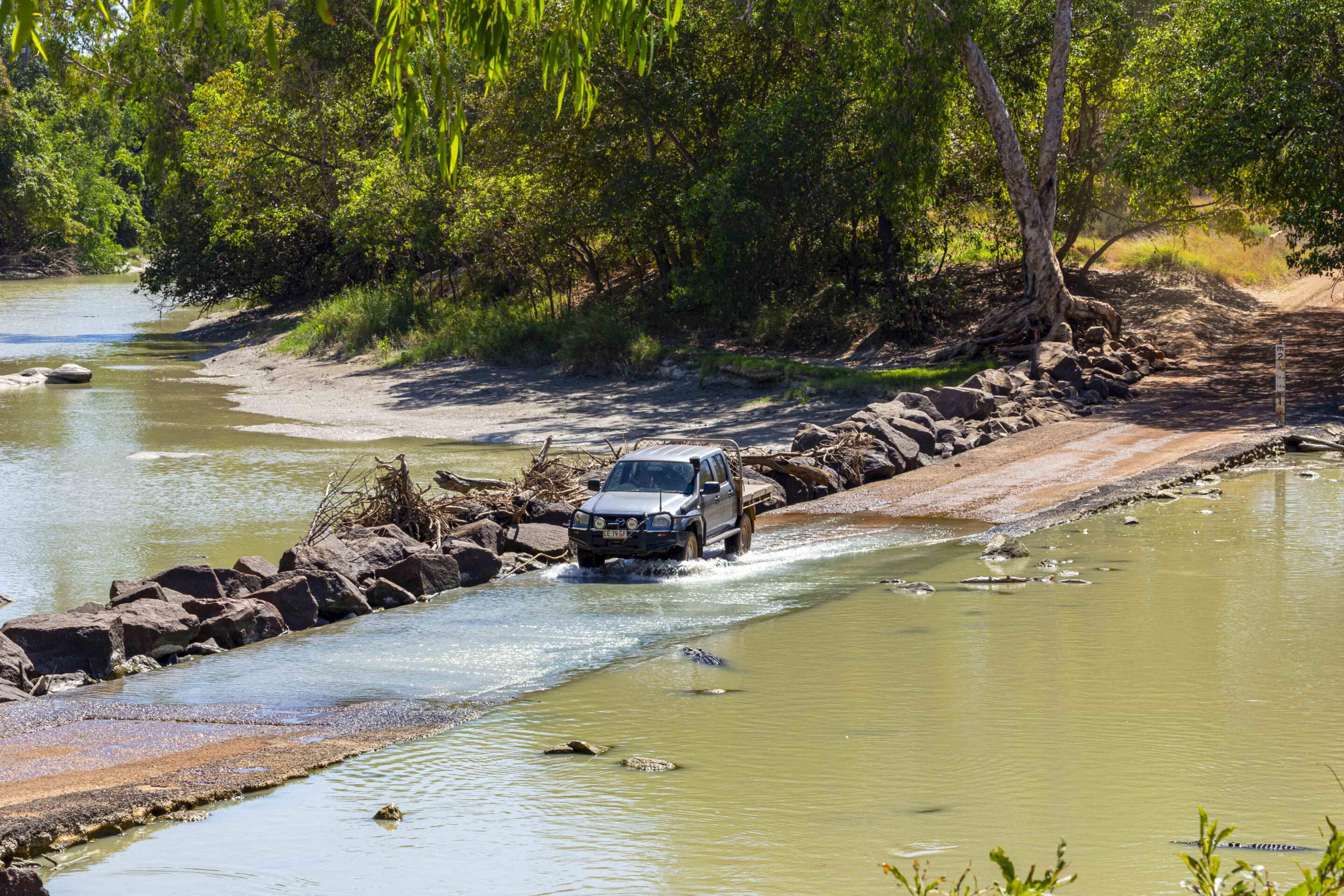
I expected the water to be higher – according to the tide chart provided as part of my Cobourg information pack, it was close to high tide in this neck of the woods. It was, in fact, hardly flowing. You receive the information pack when the required permits have been accepted and paid for.
The unsealed Arnhem Highway runs past Red Lily Lagoon and some stunning rocky outcrops, and once past the Gunbalanya community turn-off, the conditions improved after a few bulldust holes and corrugations. The backdrops in this section are jaw-dropping, especially for a landscape photographer, but time was against me so I couldn’t spare the time waiting for the right light.
Into the park
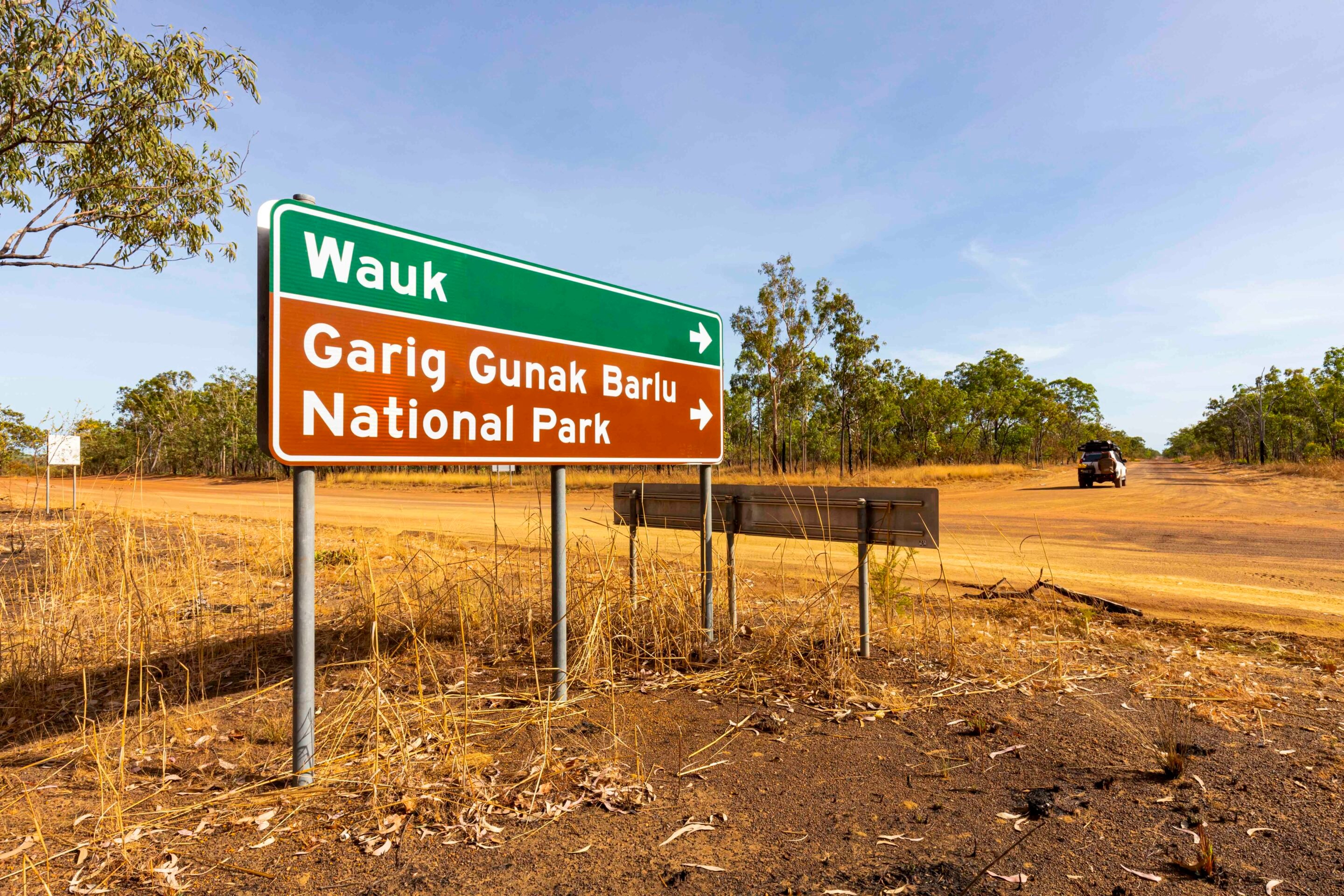
It didn’t take long to reach the turn-off towards Garig Gunak Barlu NP, some 235km north.
Murgenella Road was a little rougher, but dropping some more air out of the tyres helped a lot. Once the track smoothed out, it was good going, but keep an eye out for the Outback Spirit buses; they don’t like slowing down and stick to the middle of the track regardless of oncoming traffic. There are sections of bad corrugations and patches of bulldust, but for a remote Arnhem Land road, I found the conditions to be surprisingly good.
It’s interesting the number of trees that have had strips of bark removed along this section of road – I assume for use in creating bark paintings by the local Indigenous people. Also, I couldn’t get over the number of feral donkeys that roam Arnhem Land, and I wondered where they had all come from. The landscape is dominated by woollybutt and termite mounds, recent slow burns having cleared away the grasses and weeds. There was a section with Livingston palms and pandanus mixed with some native grevillea that reminded me of the Mitchell Plateau.
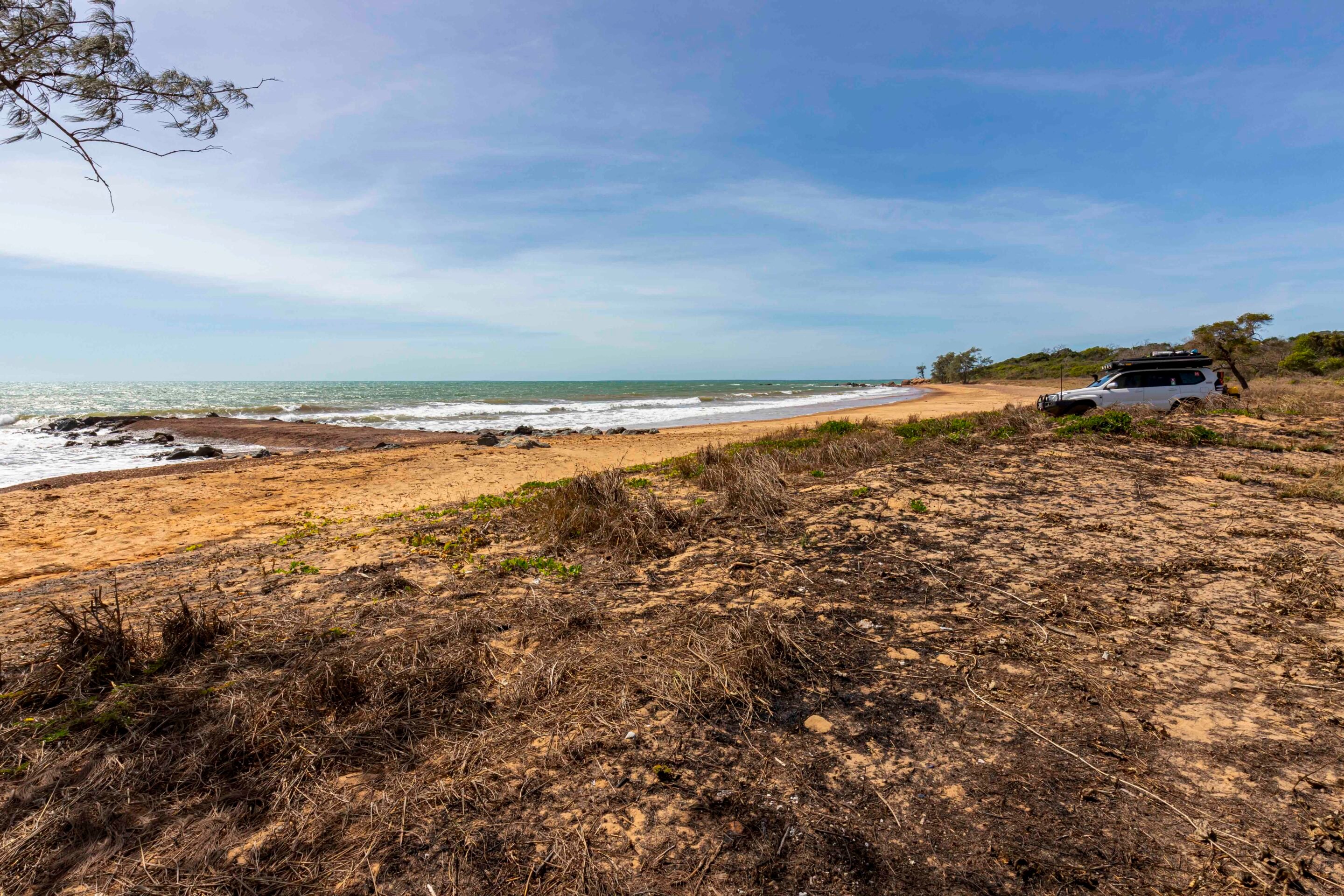
There is a signposted track that you can follow a short way to Wanyu Beach, which is extremely wind-swept, coming straight off the Arafura Sea. Here you will find what appears to be an old barge landing point, and the sand is deep and soft, so take care that you don’t get bogged. Retracing your steps back to the main road, you will track close to the coastline along this section before suddenly sweeping west towards Murgenella.
The river crossing just before the small community is pretty and there were plenty of pied herons, ibis, nankeen night herons, and a large school of fish enjoying the water. It is stunning – except for the resident crocs hiding in the shadows. The road continues west before heading north again towards Wiligi Outstation. Once past the Wiligi turn-off, the road narrows as it crosses over the range. It is slower going as the track winds its way through, with sharp bends and plenty of thick bulldust.
Upon reaching the national park boundary, the track becomes a single lane, and depending on when it was last graded, it can be rough going, so drive with caution. Only 20 vehicles are allowed into the national park at any time, which is why it’s such a serene place to visit.
Indigenous and introduced fauna
The park is populated with water buffalo, saltwater crocodiles, wild pigs and banteng – the latter introduced from Indonesia between 1829 and 1849 at Victoria Settlement… and they have since proliferated throughout the park and are an important resource to the Aboriginal people. They look like stocky cattle but have a characteristic white rump. They are full of fat, and while the park ranger didn’t enjoy the taste, his elders did – drinking hot tea while eating, as the fatty meat would stick to the roof of their mouths.
Having survived the corrugations and massive bulldust holes, I reached the Black Point Ranger and Cultural Centre. It is worth spending some time here, with plenty to learn from the storyboards. You’ll discover that the national park lies within various clan estates of the Iwaidja-speaking people of the Cobourg Peninsula and that custodianship is shared between the clans. There is a spiritual link between the land and sea and their ancestors from the Dreamtime that created the land and all it contains. The name of the park translates as Garig (a local language name of the Madjambalmi and Ngandjaharr clans for the central areas of the Peninsula), Gunak (land), and Barlu (deep water).
The park protects rare species that include the dugong and six marine turtles (green, loggerhead, hawksbill, olive ridley, leatherback and flatback turtles). The park was also the world’s first wetland to be recognised as a RAMSAR site on 8 May 1974. The Cultural Centre is also the start of the Wuwwurdi Walk, an easy 2km loop around a small coastal wetland. The walking track is a mix of hardened surfaces and sandy patches, and the early part of the day is the best time to walk it before it gets too hot.
If available, a ranger will check you in and provide directions to your campsite – and if not, your campsite will be on your booking confirmation. It is a corrugated track that leads around Smith Point to the designated Camping Areas No. 1 and 2. I was in Area No. 1, with most campsites containing shade cover over a table and a rubbish bin, and only a short walk to the ablution shed that houses composting toilets and a cold shower. Firewood can only be collected within the park, not Arnhem Land, and you are only allowed to collect fallen timber.
The rangers are continually cleaning up the beaches and nearby islands from all the rubbish that comes from Indonesia. They struggle to find volunteers to come up and assist, so Clean Up Australia or a few 4×4 clubs would do well to get involved and lend a hand.
Exploring the area
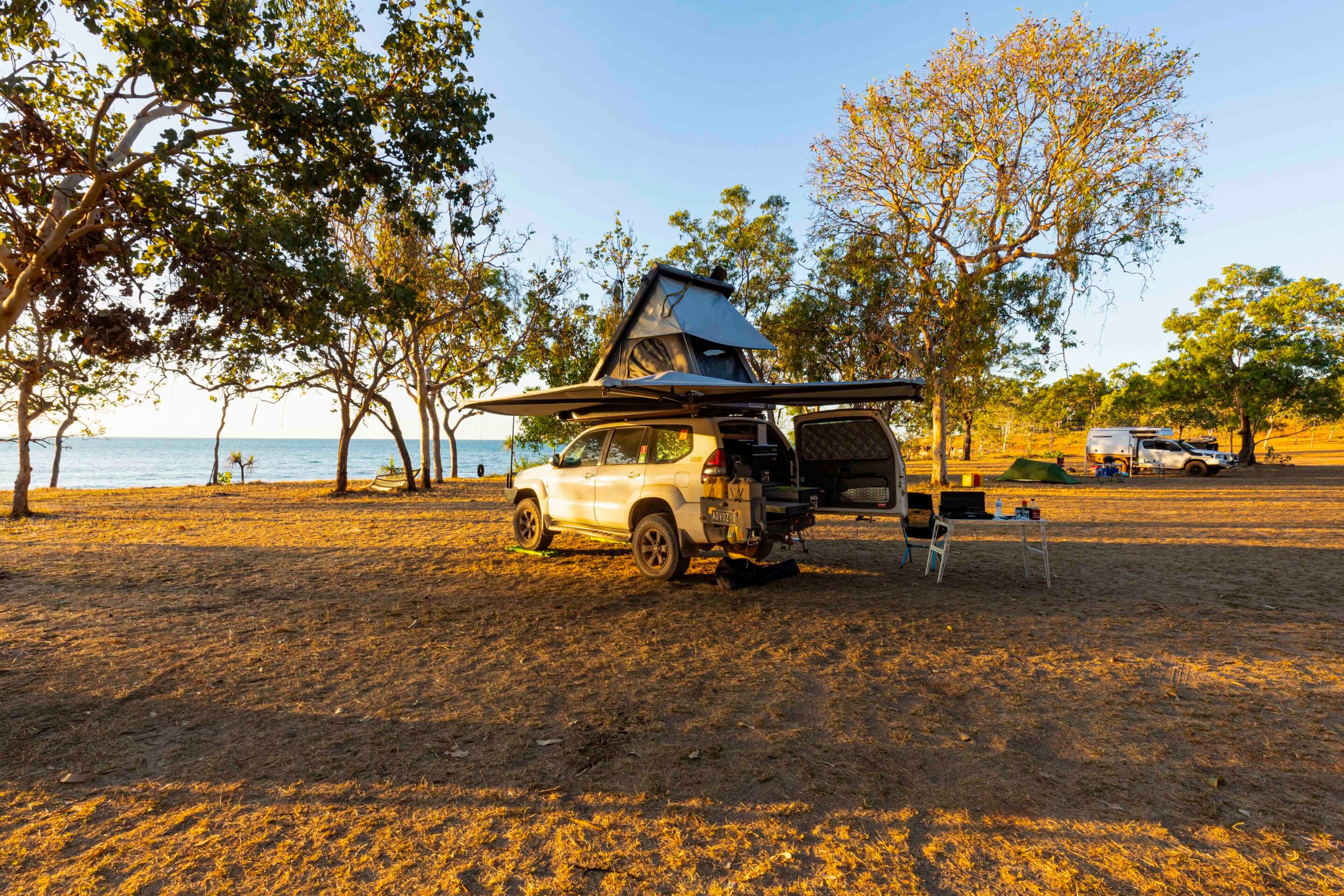
It had been a long day of driving, so my afternoon was spent setting up camp and relaxing before enjoying a refreshing shower at the ablution shed to wash off the sweat and dust. Once dinner was consumed and the dishes were done, I climbed up into the rooftop tent and enjoyed an early night.
There are a couple of self-drive loop tracks that show off some of the highlights of this remote park, and I also recommend checking out the historic beacon at Smiths Point, which was originally constructed in December 1845 by Royal Mariners from the Victoria Settlement to assist vessels navigating around the reefs as they approached Port Essington. If you are lucky enough to book a boat that visits the Victoria Settlement ruins, I’m told it is well worth it, as this was one of two failed British settlements on the Cobourg Peninsula.
The wetlands drive is best undertaken in the early morning or late afternoon to fully experience the colours and see a variety of water birds feeding. You can expect to see brolgas, herons and whistling kites, and also plenty of evidence of banteng. October is when the pelicans arrive at the wetlands. The track is tight in places as you scout around the wetlands in a loop that takes you from the campground across to the ranger’s station; the woodlands are predominantly melaleucas and it is certainly a great experience tackling this drive.
The coastal drive is a 40km loop that takes you along the coast, with beautiful scenery and then onto Banteng Plain. There is a waterhole with plenty of birdlife including ibis and spoonbills. This drive provides plenty of options to pull over so you can get out and explore the beach. Just remember that you are in croc country, and they may be watching you without you even knowing it.
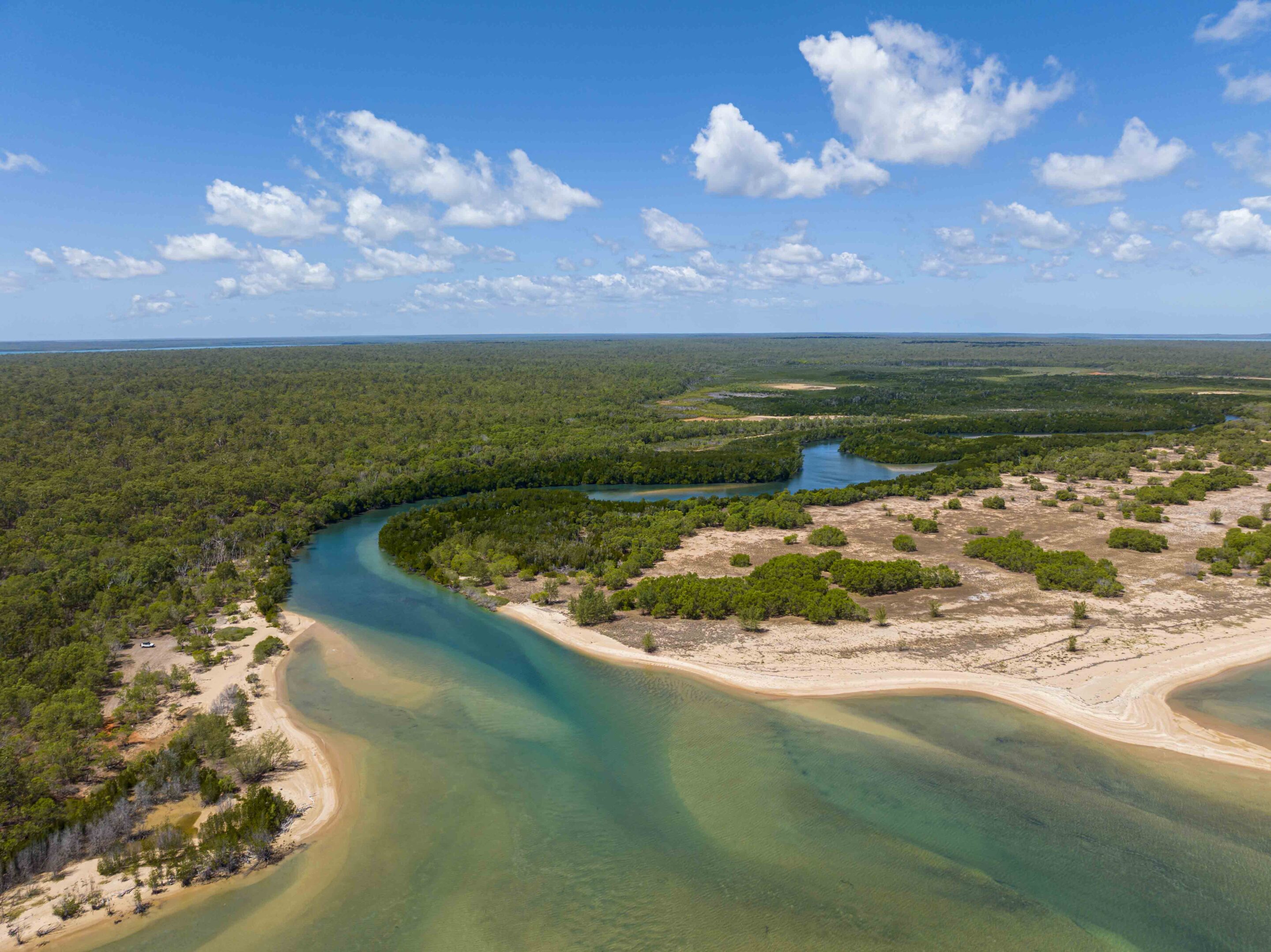
Upon leaving Stewart Point, the track heads into the woodlands before providing a final viewing of the bay. From all appearances, it looks like the sea floor is covered with grass and so would be a feeding ground for dugongs.
The coastal track then cuts across the peninsula to come out onto the main road into the park. Expect to cop some bush pinstriping as you wind your way along the track. Some sections are a little bit washed out, so take your time and enjoy. Keep an eye out for banteng because this is the type of terrain and bush they like.
The drive to Caiman Creek is a doozy because there are plenty of tree roots growing in the track, washouts, water diversion humps and the occasional rock or two. At the end of the 2.9km track is a very inviting-looking creek with crystal clear water and beautiful colours that is home to a big crocodile – not that I could find him, even with the drone. This is a beautiful spot for a picnic; it just needs a table and a shelter and it would be perfect.
On the way out of the park, you may spot small wallabies and kangaroos to add to your wildlife count – which will be exciting seeing as the banteng are so reclusive. I only saw one in the whole time I was here. Don’t forget that the care you took coming in should also be taken on exiting the outstanding Garig Gunak Barlu NP.
Wiligi Outstation and back to Kakadu
If you can’t obtain a camping permit for Garig Gunak Barlu NP, a great option is Wiligi Outstation, which is approximately a three-hour drive from Smith Point. This remote outstation is nestled on a cliff overlooking Mount Norris Bay and Copeland Island. Here you will be welcomed by Reuben and Liz, and there is a choice of accommodation options, including a log cabin, two safari tents with a kitchen and ensuite, two small cabins with ensuite, or bush camping along the beachfront with flushing toilets and cold showers.
You can drive down the beach to Crocodile Creek to try and spot the five-metre resident male saltwater crocodile or his smaller girlfriend; I spotted plenty of footprints, but that was all. You can bring a boat or hire the Wiligi boat for fishing. The Wiligi Outstation beach is stunning with its white sand, and while people do swim there, I didn’t take the risk.
The return journey to Kakadu via Cahills Crossing isn’t complete without a visit to Injalak Arts Centre in Gunbalanya. A permit is required from the Northern Land Council and Injalak Arts prefers that you make contact before you plan a visit by calling (08) 8979 0190 or emailing [email protected].
Injalak Arts has more than 200 active artists, weavers and craftspeople from Gunbalanya and the surrounding homelands, and you can spend hours browsing the bark paintings, carvings, paintings, prints and weaved products. Local artists are often onsite creating new works and they are very happy to have a chat and tell the story of their works.
Arnhem Land is such a special place and I felt privileged to be able to spend time exploring the remote Garig Gunak Barlu NP, Wiligi Outstation and Injalak Arts Centre. The people I met were so welcoming, the country so diverse, the scenery spectacular and the drive breathtaking. If you get the chance to visit this special part of the Northern Territory, know that you are one of the few people who have had the chance to do so.
Travel Planner – Garig Gunak Barlu National Park
Where
Location: Garig Gunak Barlu National Park is located 570km northeast of Darwin on the Cobourg Peninsula.
Entry and permits
Park Permit
- From $232.10 per vehicle (includes transit and camping for up to 5 adults for 7 nights)
- Children under 16 are free
- Must be booked at least six weeks in advance
Injalak Arts Centre Permit
- Apply via NLC
Kakadu Parks Pass
- Required for access to Kakadu National Park
- Valid for 7 days
What to see and do
- Remote 4WD self-drive tracks
- Excellent fishing and boating
- Birdwatching and wildlife viewing
- Beachside and bush camping
What to take
- Water, food and fuel (self-sufficient travel required)
- First aid kit, tool kit, spare tyres, vehicle spares
- Shade awning, fishing gear, camera, binoculars
- Sunscreen, insect repellent, suitable clothing and footwear
- Satellite phone or Starlink (no mobile coverage past Gunbalanya)
- A well-maintained boat and extra fuel are highly recommended
Other Useful Links
- NT Road Conditions: roadreport.nt.gov.au
- Kakadu Road Updates: kakaduroadreport.wordpress.com
I used to think the Sport model grade hit the sweet spot in the Ranger line-up, but with this latest generation it has gone upmarket with a corresponding increase in price.
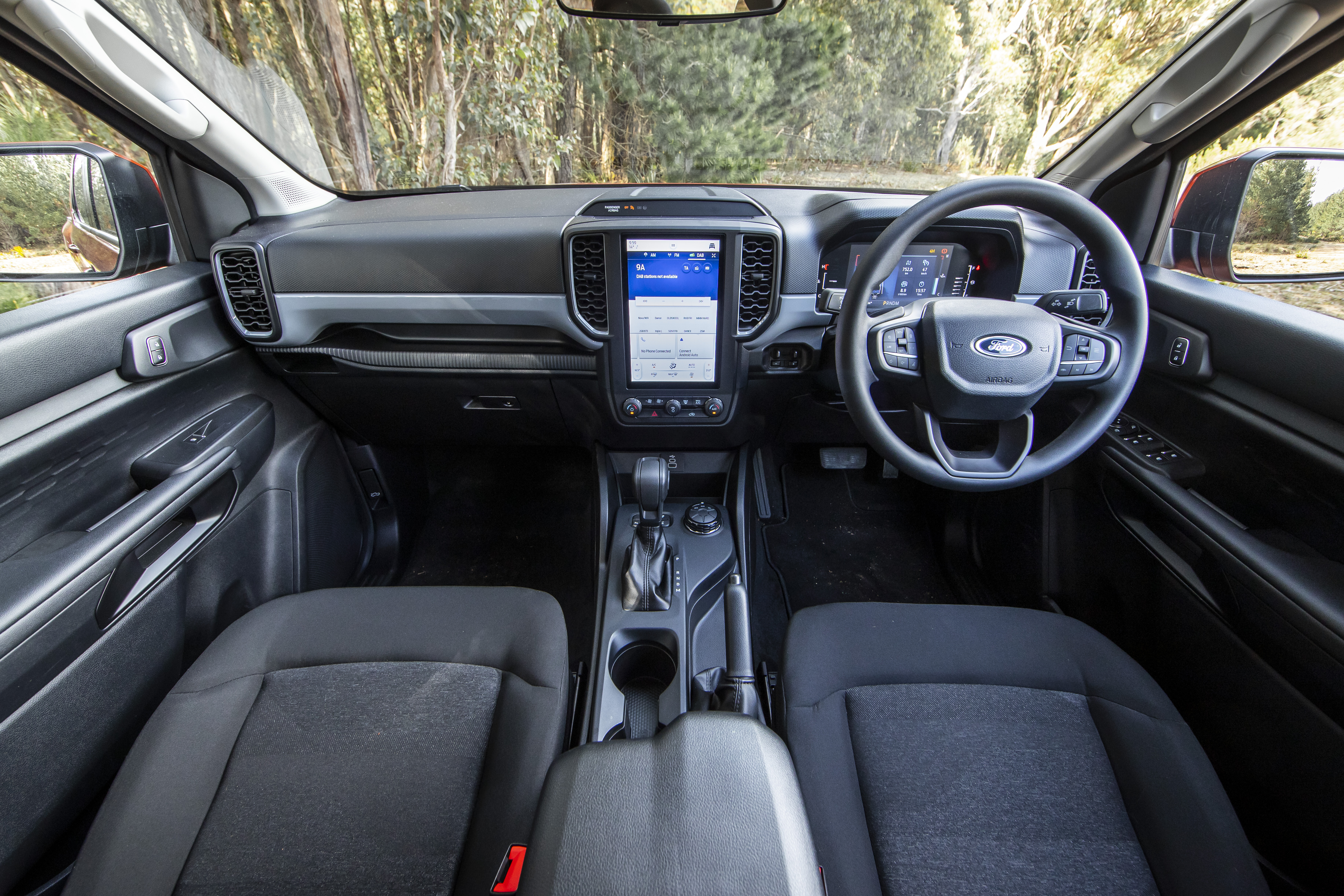
So for my money the Ranger XLS now represents the best value for money for those looking for a double-cab ute for 4×4 touring. You should be able to pick one up for around $64k drive away, depending on where you live and what colour/options you want. Personally, I’d splurge $700 on premium paint (Meteor Grey or Aluminium) so it didn’t look like a workhorse.
The Ranger XLS is offered solely with the 2.0-litre bi-turbo diesel engine mated to a 10-speed automatic transmission. While not as potent as the V6 model, with a claimed 154kW and 500Nm on tap and a sweet-shifting 10-speed automatic transmission, the 2.0L driveline still offers plenty of performance… even when fitted with accessories for touring and with a load on board.
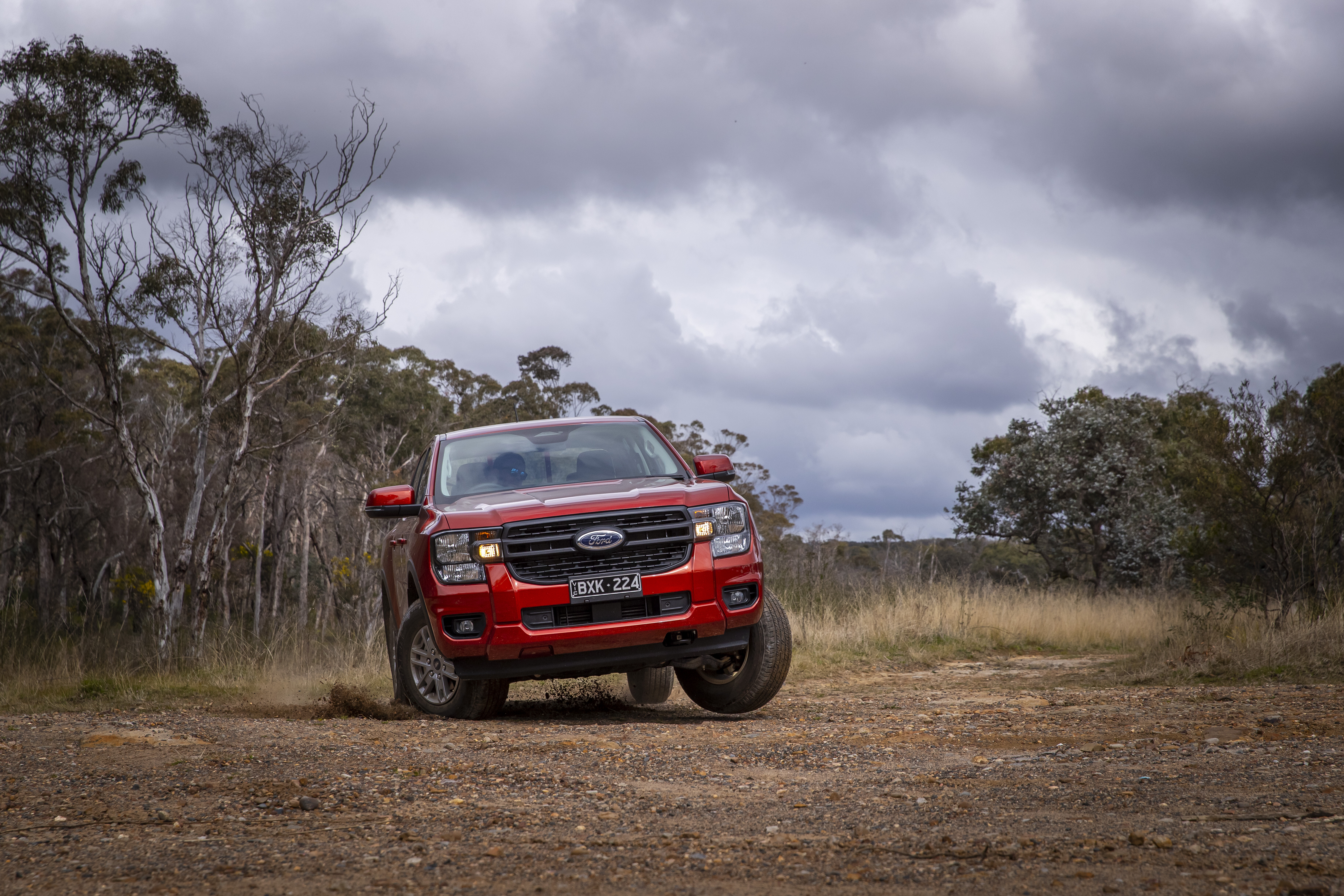
The Ranger XLS offers a good mix of tech and equipment but without many of the superfluous features of higher-grade models. Standard convenience and safety kit includes a 10.1-inch portrait touchscreen with FordPass Connect and built-in satnav, an eight-inch digital instrument cluster, dual-zone climate control air conditioning with rear vents, adaptive cruise control, lane keeping assist, blind spot monitor, cross traffic alert, AEB, nine airbags, cloth seats with eight-way driver adjustment and four-way passenger adjustment, and a power tailgate lock. Not bad for a lower-grade variant.
One of my favourite aspects of the XLS spec is the off-road friendly 16-inch wheel size, which allows for fitment of a wide range of all-terrain and mud-terrain tyres. Also beneficial for 4×4 touring is the standard tow hitch with integrated brake controller and the 400W power outlet in the tub.
Despite its decent list of standard equipment, there are still many improvements that can be made to the Ranger XLS for those who want to use it for 4×4 touring. First up, you’ll need to fit a decent aftermarket suspension kit that will cope with the added weight of accessories and gear.
Most suspension manufacturers will have kits designed to handle certain loads such as a vehicle with no accessories, a vehicle with a bull bar fitted, and a vehicle with a bull bar and winch fitted, as well as the load you expect to carry in the tub, such as a 0–300kg load or a constant 300kg load, or even a GVM upgrade. Suspension upgrades vary greatly in quality and price, with budget options starting from as little as $1300 plus fitting, to high-end kits at more than $3500 plus fitting.
On the Ford Ranger XLS, I would fit a quality steel bull bar for protection against animal strikes and to house a 9000–12,000lb electric winch ($1200–$3000) for vehicle recoveries. For those who want their bull bar covered by their new vehicle warranty, Ford is now a reseller of ARB products, and for a Summit Bar MkII you’d be looking at around $4700 fitted. You will also need a decent set of LED driving lights ($700+ a pair) or an LED light bar ($350+) to complement the Ranger XLS’s not-so-fab halogen headlights.
While utes are great for carrying a lot of gear in the tub, without a tonneau, a roll-top or a canopy, they don’t offer any protection for said gear. For 4×4 touring, a canopy is an ideal solution as it provides a large and secure storage area. There are plenty of options on the market such as fibreglass canopies from the likes of ARB, TJM and Ironman 4×4 ($3000–$4000), and aluminium or steel tub toppers ($2000–$4000).
Other accessories you’ll need for 4×4 touring include five decent all-terrain or mud-terrain Light Truck (LT) tyres ($2000+), a snorkel ($700), a quality UHF and antenna ($400–$700), a dual-battery setup with lithium battery and charger ($1500+), a winch recovery kit ($200+), and perhaps a drawer system with a fridge slide ($400–$2000).
As you can see, it’s not hard to drop another $20k-plus on accessories to transform a Ford Ranger XLS into a well set up 4×4 tourer, but once you’re done you’ll have a comfortable vehicle with excellent off-road capability that can take you almost anywhere in the country.
When heading off-road, especially on long hauls like a run across the Simpson Desert, having the right setup on the vehicle makes all the difference.
On a recent trip, our LandCruiser 79 Series and BYD Shark project vehicles were both fitted with Rola Titan MKIII roof racks – and they pulled their weight.
First up, they look the part. The BYD Shark already has a clean, modern look, and the Rola racks ties it all together with a tough, streamlined finish. Same with the 79 – adding the racks gave it that functional, ready-for-anything appearance without going overboard. The sleek design really makes the Cruiser look like a beast.
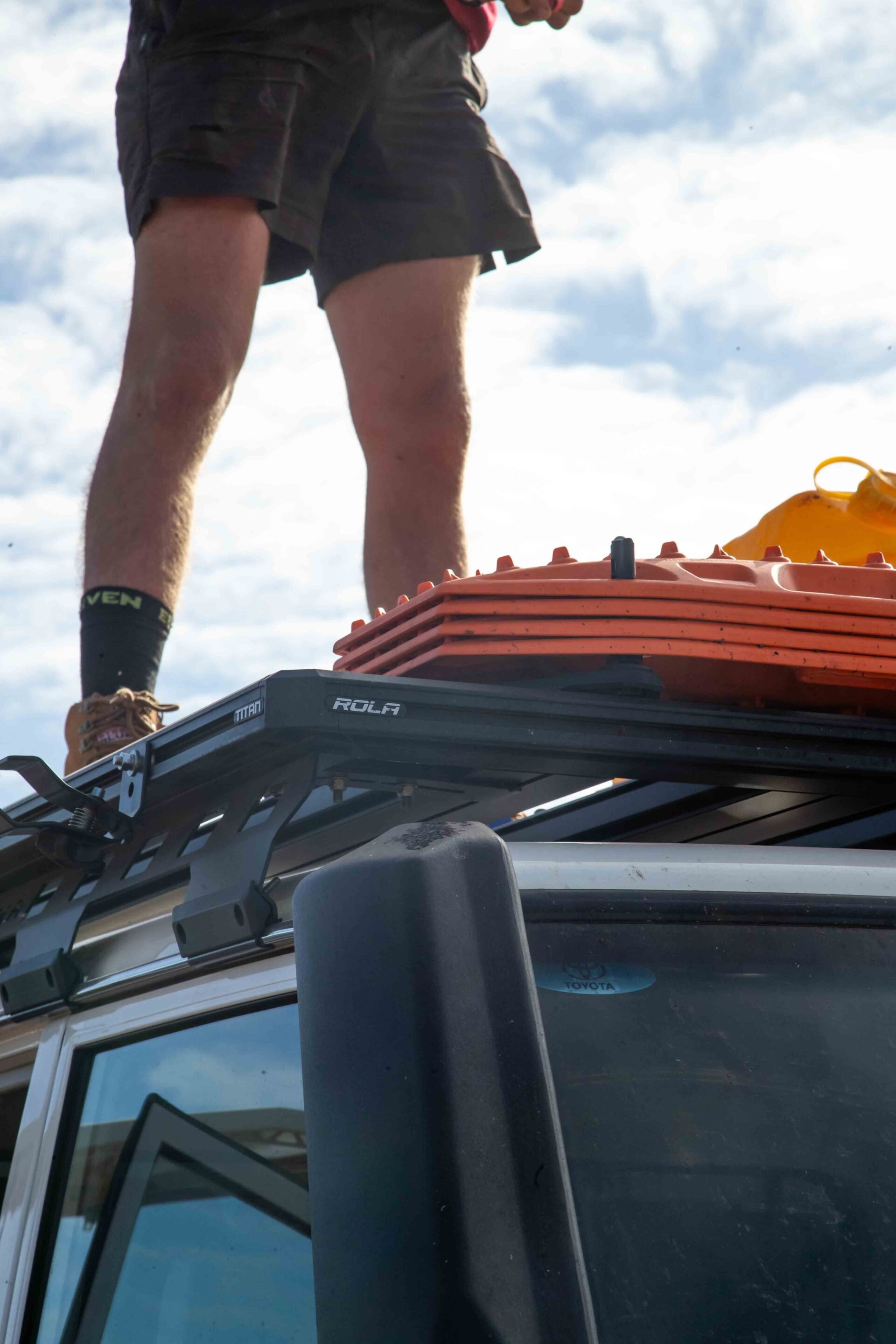
But it’s not just about looks. The real standout with the Rola system is how easy it is to work with. The LandCruiser was set up with a shovel mount, and both vehicles ran awnings and jerry can holders. The jerry can holders stood out – they’re adjustable, so you can run the cans upright or on their side depending on your loadout and available space. The wide range of mounting accessories also makes it easy to tailor the setup to whatever’s needed.
Installation and setup were straightforward. The channel system is simple and intuitive, letting you bolt on gear, shift it around, or take it off without much fuss. Re-arranging mounts and accessories on the fly is also super easy – no tools needed, and no time wasted. It’s the kind of system that works just as well in the driveway as it does in the middle of nowhere.
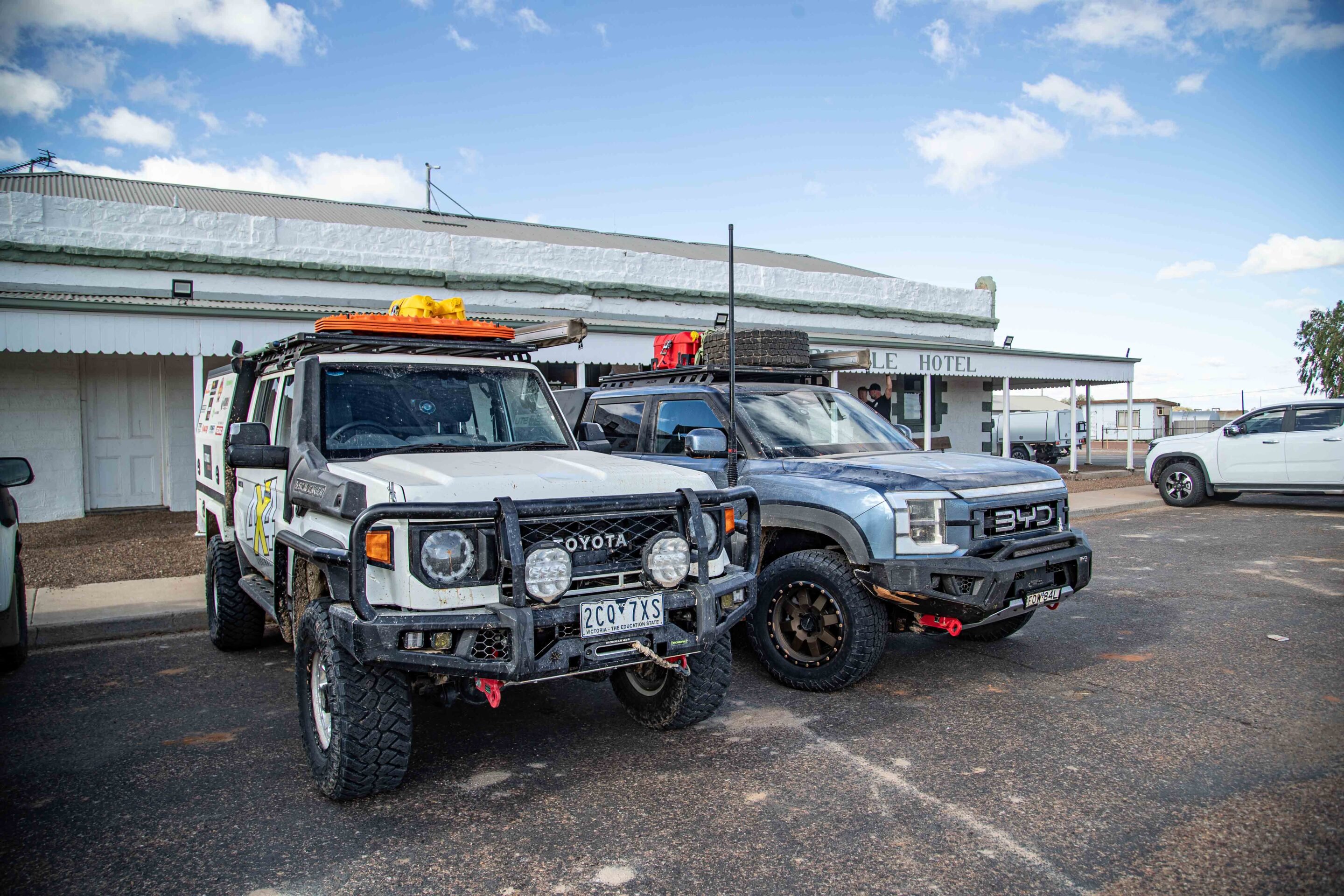
And for those wondering about wind noise – there’s none to speak of. Can’t really tell on the Cruiser, to be fair, since it makes plenty of noise on its own. But on the Shark, it stayed dead quiet the whole way.
The Rola Titan MKIII roof racks handled everything thrown at them. They’re strong, functional, and don’t add unnecessary bulk or weight. For anyone setting up a 4×4 for touring, camping, or work, they’re well worth a look. No drama, no gimmicks – just solid gear that does what it’s meant to.
When you’re hundreds of kays off the blacktop – crawling across gibber plains or picking your line up a rocky ridgeline – communication isn’t just handy; it’s essential.
Whether you’re spotting for your mate behind you, calling out a cattle grid, or just bantering over convoy chat, your UHF needs to be reliable, clear, and built to handle a bit of dust and heat. We’ve been running the ICOM in-cab UHF radio on a few recent trips – from the Victorian High Country to the red guts of the Simpson – and here’s how it stacks up.
Right off the bat, this ICOM IC-410PRO unit is built solid. You can feel the quality in the buttons and overall construction. It’s got that proper mil-spec vibe – the kind of gear you’d trust in the glovebox of a bush-fire truck or under the dash of a mining LandCruiser. Reception is crisp, and it holds signal well, even in hilly terrain or tight gullies where cheaper units tend to drop out. The display is easy to read, even under harsh midday glare, and the menu system is simple. You’re not fumbling through weird key combos just to change channels or tweak the squelch.
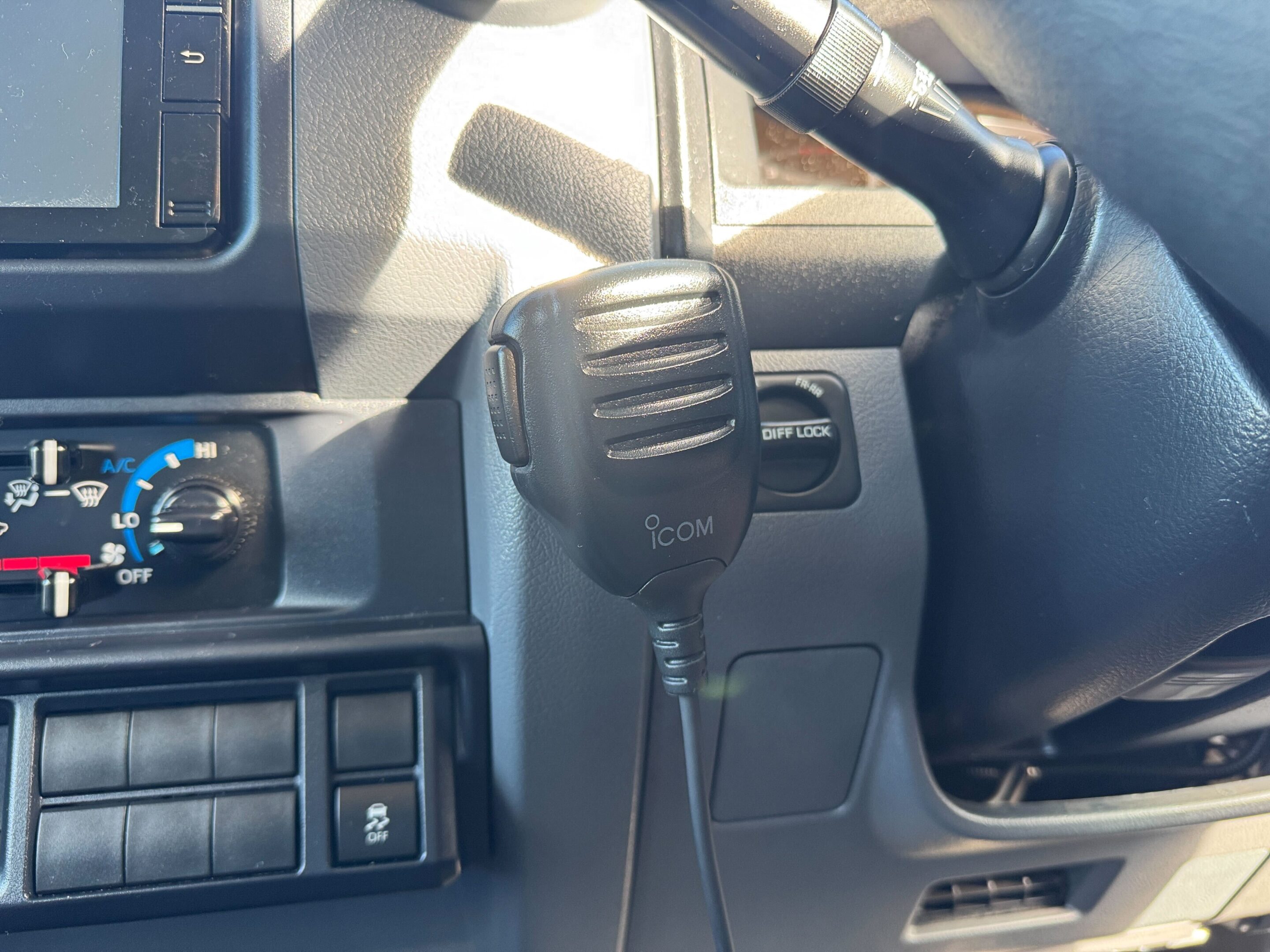
Now, here’s the rub. For a unit at this price point – and with ICOM’s pedigree – not having a speaker in the handheld mic feels like a bit of a miss. If you’ve mounted the main unit low under the dash or tucked away in a console, the audio can get muffled, especially with the engine humming and a bit of wind sneaking in through the snorkel or a cracked window. A speaker mic would make life much easier, especially when you’re bouncing down a track and want to keep your eyes up, not lean forward just to hear what Baz in the Prado is barking on about.
Also worth noting: the unit doesn’t come with an antenna, so you’ll need to factor that into the setup cost. Bit of a bugger, really. For new players or those building a rig from scratch, a ready-to-go kit with a whip antenna included would be a welcome addition – one less thing to chase down at the local 4WD shop.
Verdict
The ICOM IC-410PRO in-cab UHF delivers rock-solid performance where it counts – clear reception, tough-as-nails build, and intuitive controls that don’t get in the way when the tracks get rough.
While the lack of a speaker mic and included antenna are small let-downs at this price, the overall package is hard to fault for serious remote touring. If you’re after reliable comms that can handle heat, dust, and distance, this one’s worth a spot in your dash setup.
The Isuzu D-MAX has long been a favourite with four-wheel drive tourers and those who tow vans and the like thanks to its rugged simplicity and great reputation for reliability.
For my money, the D-MAX LS-M crew cab ute is the pick of the range for those tasks as it is mechanically identical to the higher-grade models but is more affordable and fitted with off-road friendly 17-inch wheels instead of 18s. You should be able to pick up a new D-MAX LS-M crew cab for around $61K drive away, depending on your location and colour preference.
Notably, the LS-M isn’t fitted with factory side steps that you would likely bin anyway in favour of aftermarket steel ones, and it isn’t fitted with a factory tow hitch, which you would need to get rid of if you fitted an aftermarket rear-step tow bar, which offers the added bonus of protecting the rear bodywork when dropping off rock shelves or exiting steep gullies.
The D-MAX LS-M is powered by a proven 3.0-litre four-cylinder turbo-diesel engine that makes a claimed 140kW and 450Nm, and while no match for the class leaders, it still offers decent performance and is mated to a smooth-shifting six-speed automatic transmission.
A part-time 4×4 system with high and low ratios and a rear diff lock is complemented by an effective traction control system, which provides decent off-road capability, and the D-MAX LS-M offers the class standard 3500kg maximum braked towing capacity.
It might be one of the lower grade D-MAX models but even in LS-M spec it is loaded with standard convenience and safety equipment including emergency brake assist, lane keeping assist, hill descent control, adaptive cruise control, LED headlights, eight air bags, blind spot monitor, emergency brake assist, lane keeping assist, rear cross traffic alert, traffic sign recognition, hill descent control and more.
It gets a smaller 4.2-inch (instead of seven-inch) multi instrument display than higher grades and a smaller eight-inch (instead of nine-inch) touchscreen, as well as single-zone manual air conditioning instead of dual-zone climate control.
Thanks to its 17-inch wheels, you can easily (and economically) go up from the standard 255/65R17 tyres to a set of LT285/70R17 all-terrains or mud-terrains at around $400 to $500 a pop. You can also fit an aftermarket suspension kit tailored to the accessories you will fit to your D-MAX and the load you expect it to carry. If you’re intending on 4×4 touring, or even towing a van around the country, those accessories should include a bull bar ($1500-$3000), under vehicle protection ($300-$600), side rails and steps ($500-$2500) and the aforementioned rear step tow bar ($1000-$2000).
A quality 9000lb to 12,000lb winch ($1200-$3000) will help get you out of any strife when driving off-road, while some decent LED driving lights ($700) will hopefully give you enough warning that you won’t have to test the strength of your new bull bar.
How you kit out the tub of your D-MAX will depend on what you need to use it for. If you still want the convenience of an open tub for carrying stuff to the tip on the weekends then a lockable roller shutter ($1300-$2000) or a hard lid ($1500-$3500) is a good idea, as you’ll have a secure and weatherproof load space when you need it. Bear in mind that you might need to fit a dust-seal kit around the tailgate ($70-$100). If you don’t need that ute versatility, a fibreglass canopy ($3000-$5000) or an aluminium or steel tub topper ($2000-$3000) is a good option that will provide a large and secure storage space.
Although the D-MAX LS-M has a decent payload capacity of 1070kg, a towing capacity of 3500kg and a GCM of 6000kg, those who want to tow very large caravans or other big trailers while carrying weight in the vehicle might want to consider a GVM/GCM upgrade, which is best fitted prior to the vehicle’s initial registration. This will set you back around $6K installed, but really is a good investment for those with heavy hauling in mind.
Other than that, you will need the usual 4×4 touring accessories such as a decent snorkel ($600-$1000), a dual battery system and lithium battery ($1500+) and perhaps a roof platform ($1500-$2000) for extra gear and awning fitment.
Land Rover’s revived Freelander range will be led by a full-size, tech-focused SUV expected to launch in the second half of 2026, according to reports.
The original Freelander – a compact, entry-level SUV – was produced from 1997 to 2014 before being replaced by the Discovery Sport. Nearly a decade later, the nameplate is set to return through the Chery Jaguar Land Rover (CJLR) joint venture. This 50/50 collaboration between Jaguar Land Rover (JLR) and Chinese automaker Chery was formalised in June 2024 and will spearhead a new line of electric vehicles in China under the Freelander name.
According to Autocar UK, the new Freelander will be built on Chery’s T1X platform – a flexible, steel-based architecture that supports internal combustion, hybrid, and fully electric powertrains. Already used by Chery’s Jaecoo and Omoda brands, the platform will first underpin a plug-in hybrid SUV.
Production of the debut model – an electrified crossover with genuine 4×4 capability – is due to begin in late 2026, with the vehicle launching first in China before expanding to global markets. It will initially be offered with a plug-in hybrid setup, with fully electric and range-extender (REx) versions planned to follow.
Manufacturing will take place at CJLR’s plant in Changshu, China. While the first models are aimed at the Chinese market, the Freelander line-up is expected to go global before the end of the decade. The brand will operate independently from Land Rover’s core line-up.
By positioning Freelander as a standalone, EV-focused marque, JLR aims to expand its electric offerings without diluting the premium image of its established models. The revived Freelander range will not carry the traditional Land Rover badge.
In addition to the vehicle’s development, a new Freelander logo has been revealed (as seen above), marking the brand’s fresh identity in the electric vehicle market.
Denza, the premium sub-brand of BYD, will make its UK debut at the 2026 Goodwood Festival of Speed – running from July 10 to July 13.
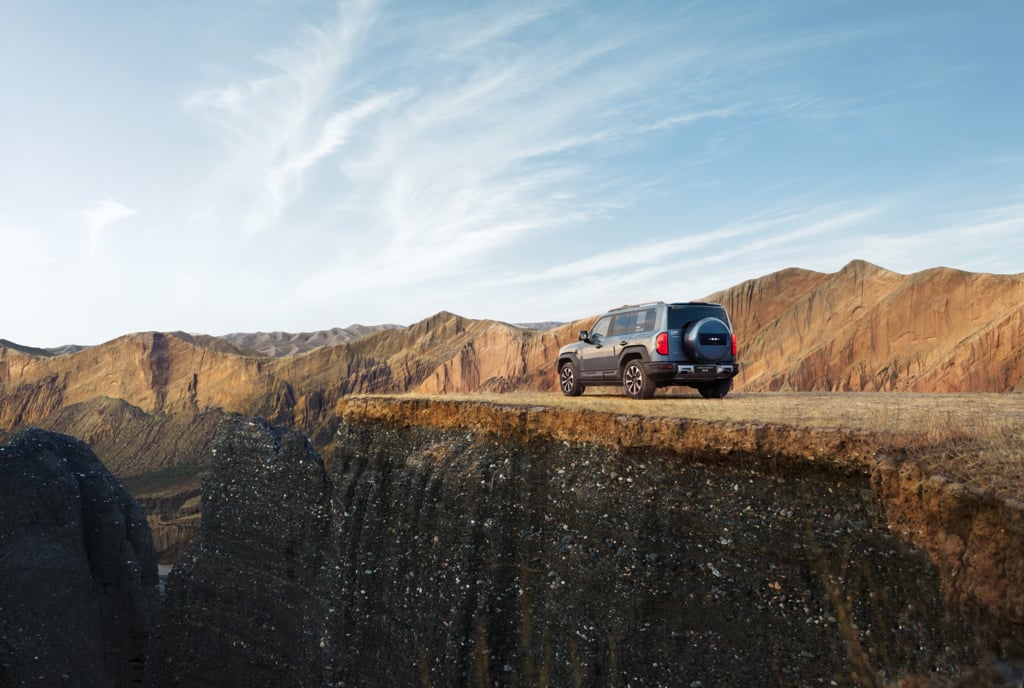
Taking centre stage alongside the Z9GT Grand Tourer and D9 MPV will be the new Denza B5, a plug-in hybrid SUV aimed squarely at segment staples like the Toyota Prado, Ford Everest and Isuzu MU-X.
To compete with these names, the B5 will almost certainly be priced sharply – much like the BYD Shark ute, which launched in Australia with a sub-$60,000 price tag. In China, the B5 is currently priced between 239,800 and 302,800 yuan (around AU$52,000 to AU$66,000), giving it an edge if that pricing translates to export markets.
“We’re thrilled to be introducing Denza to UK customers, especially at the iconic Goodwood Festival of Speed,” said Stella Li, Executive Vice President of BYD. “This is a brand that has always had its roots in European design in particular, and we’re confident that British car enthusiasts will find inspiration in how DENZA blends that influence with our sophisticated technologies, the finest craftsmanship and, for the first time in this segment, a true focus on efficient, sustainable new-energy powertrains.”
Built on BYD’s rugged DMO (Dual Mode Off-Road) platform – the same one underpinning the Shark – the Denza B5 combines a 1.5-litre turbocharged petrol engine (135kW) with a dual-motor electric setup (485kW) for a combined output of 505kW and 760Nm. For comparison, the Shark makes 321kW and 650Nm. This setup is said to launch the B5 from zero to 100km/h in just 4.8 seconds.
Packing a 31.8kWh Blade battery and 85-litre fuel tank, the B5 offers a claimed range of up to 1200km, while electric-only driving sits at around 125km.
For tourers, the B5 includes a virtual locking centre differential, simulated low-range mode, and electronically locking front and rear diffs. Its approach, departure, and breakover angles come in at 35, 32 and 20 degrees respectively, and it has a wading depth of up to 700mm. The height-adjustable hydraulic suspension allows ground clearance to stretch as high as 310mm. The B5 measures 4890mm long, 1970mm wide, and 1920mm tall, with a 2800mm wheelbase
The interior layout is similar to the BYD Shark, with a 15.6-inch rotating touchscreen, 12.3-inch digital instrument cluster, and four-zone climate control. High-quality leather trim and soft-touch materials feature throughout the cabin.
An official Australian release date hasn’t been confirmed, but the B5 is expected to arrive in the second half of 2025. BYD has reportedly confirmed plans to bring a large 4×4 SUV to Australia, and it’s widely expected to be the B5, likely carrying the same nameplate.
Further hinting at an imminent Australian launch, camouflaged Denza B5 test vehicles were spotted earlier this year undergoing road testing in New South Wales.
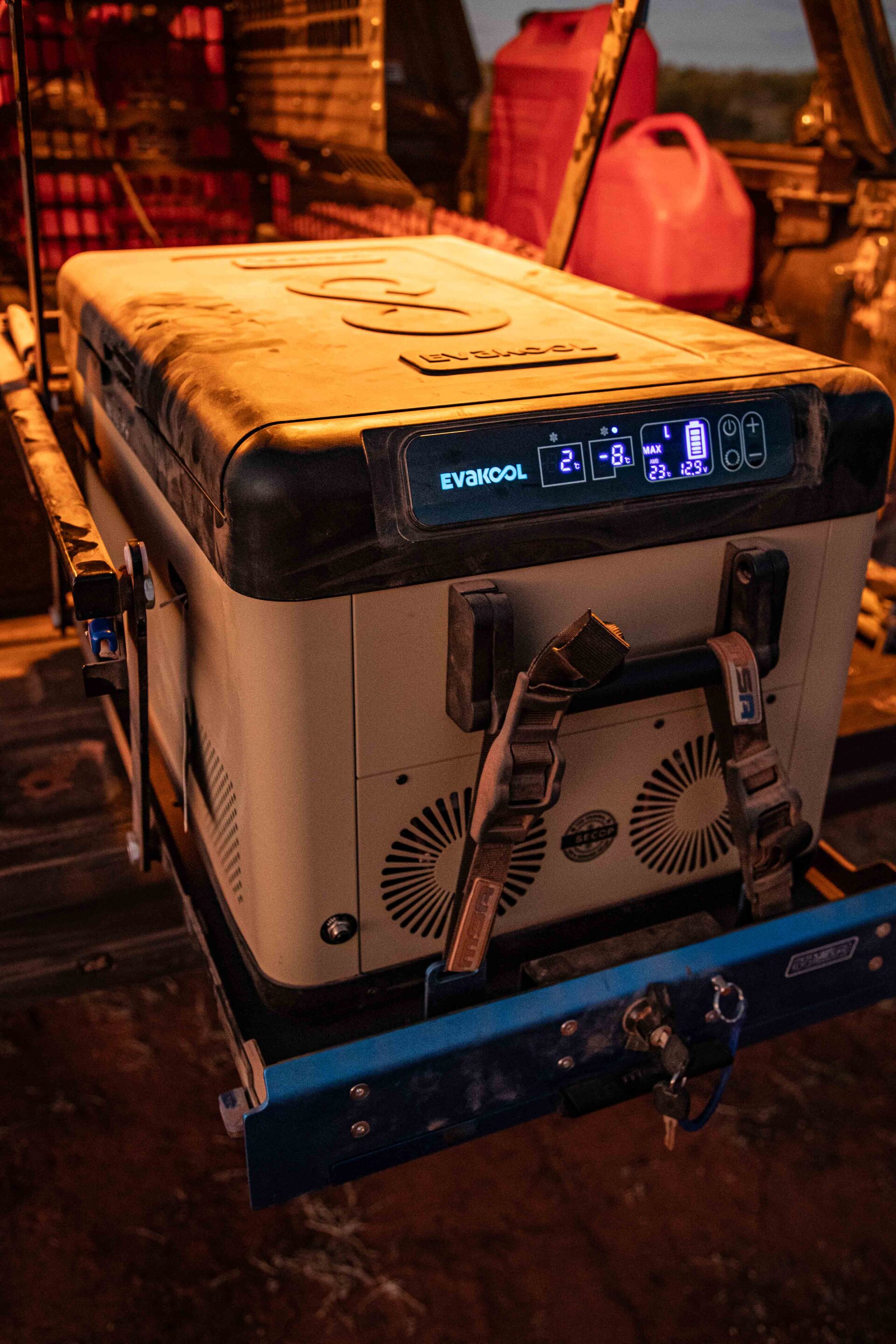
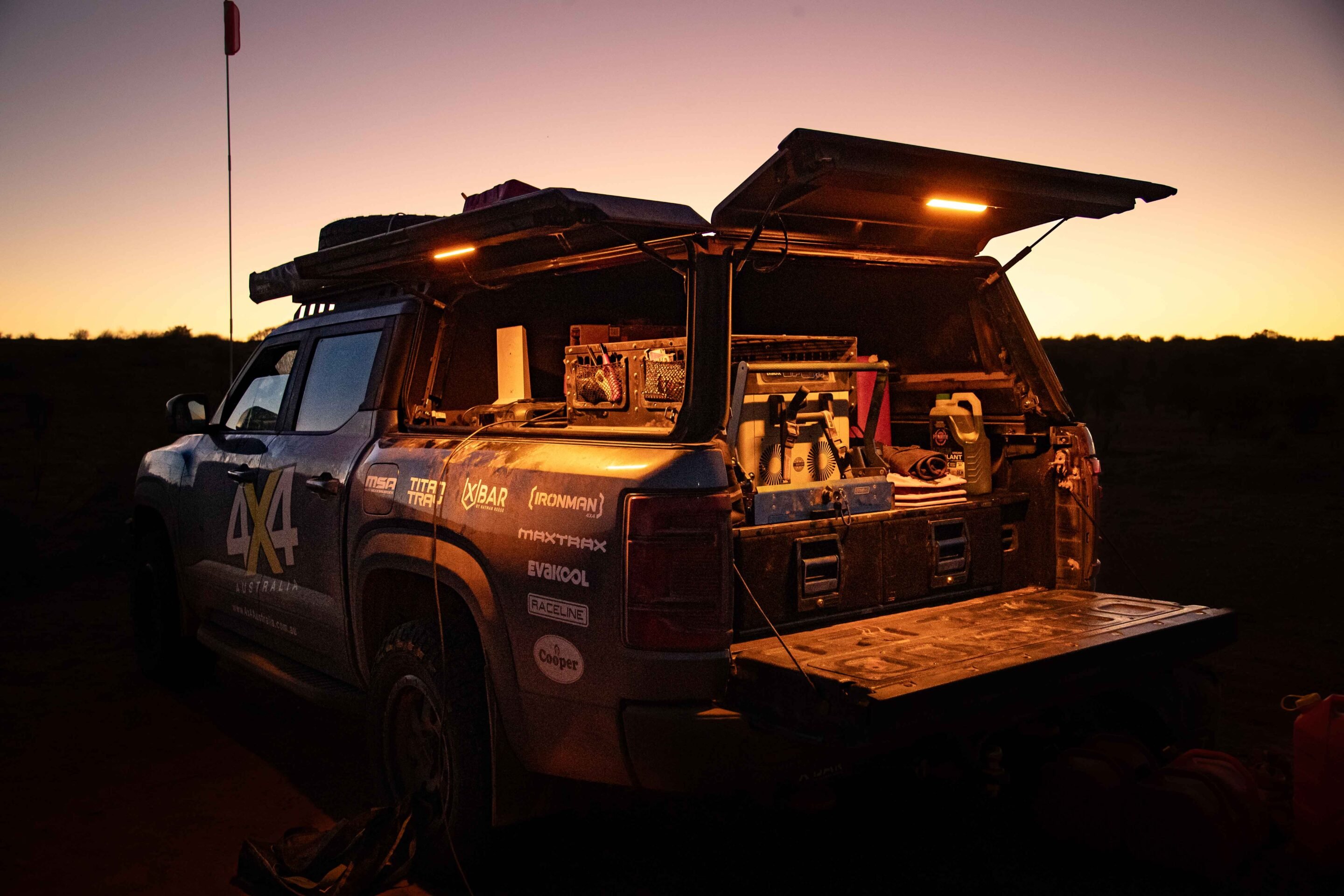
The Evakool Down Under II 50L fridge was put to the test during a full Simpson Desert crossing, loaded into the canopy of a BYD Shark.
This model is genuinely Australian-made – not just assembled locally or designed here. It’s manufactured onshore, which makes a difference when reliability is critical in remote conditions.
Another standout feature is the weight – or lack of it. In an era where many rigs are pushing the limits of their GVM, a lightweight fridge that can be easily lifted in and out of a canopy, even when full, is a major advantage. No lifting injuries or awkward two-person operations required.
Key features of the Evakool Down Under II 50L
One of the most useful features is the dual-zone functionality. A removable divider allows the fridge to be configured as a dual-zone (fridge and freezer), or converted into a single-zone unit. The setup is quick and intuitive, and during extended desert use, it maintains temperatures flawlessly. One side kept drinks icy cold, while the other kept meat frozen solid for days.
The dual-lid design also deserves mention. Lids can be opened from either side or removed completely, which proved invaluable when working around packed gear in a canopy or drawer system.
Power management is another strong point. The fridge offers both Eco and Max modes, allowing users to balance energy efficiency and cooling performance. Even during 40°C days on the French Line, the unit maintained consistent temperatures in Eco mode, drawing minimal power from solar.
Is the Evakool fridge worth it?
The Evakool Down Under II 50L impressed with its practical design, low weight, dual-zone flexibility, and genuine Australian manufacturing. It performed reliably in harsh conditions and offers excellent value for money.
Based on this test, it’s a unit well suited for serious off-road touring and long-distance travel – and one that deserves a permanent spot in any touring setup.
What we love
✅ Aussie-made
✅ Super lightweight
✅ Dual-zone flexibility
✅ Lid opens both ways or pops off entirely
✅ Power-saving modes actually work
A crackdown on illegal camping in Noosa has resulted in more than 30 travellers being fined, after community reports guided authorities to known hotspots.
Frustrated residents, fed up with public spaces being misused by overnight campers, provided key information that helped Noosa Council and Queensland Police carry out an enforcement blitz. Officers issued 31 fines of $322 each at popular locations including Noosa Spit, Noosa Junction, and Noosa National Park.
Locals have grown increasingly frustrated as beaches, parks, and gardens are frequently taken over by camper vans and used as temporary accommodation. Complaints have surged in recent months, with residents claiming they can no longer enjoy public areas that are being treated as campgrounds and public toilets.
As part of the operation, council rangers and police patrolled high-traffic areas, knocking on windows and directing illegal campers to move on. Authorities say the crackdown is just the beginning, with further enforcement planned along the eastern beaches and Noosa River in the coming weeks.
Illegal beachfront camping is not unique to Noosa. Tourist towns across Australia are grappling with the same issue, as travellers in RVs and vans seek free overnight stays in scenic spots. Reporting platforms such as Snap Send Solve receive thousands of complaints each year about unlawfully parked campers nationwide.