
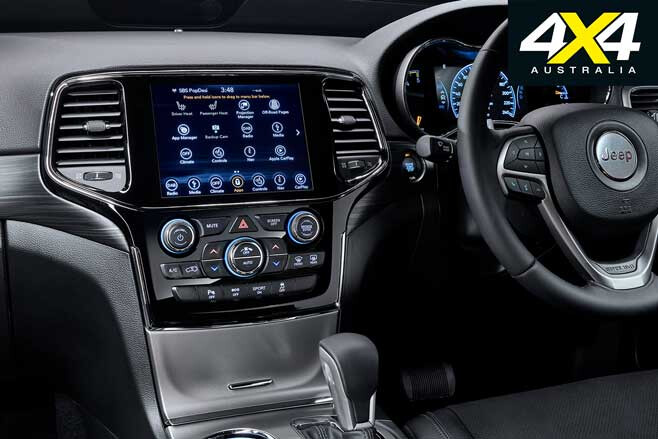
IN PREPARATION for the new Jeep Grand Cherokee that’s just around the corner, Jeep Australia has refreshed its model line-up for 2020, adding updated advanced safety features, Apple CarPlay and Android Auto across the range, and a new entry-level variant.
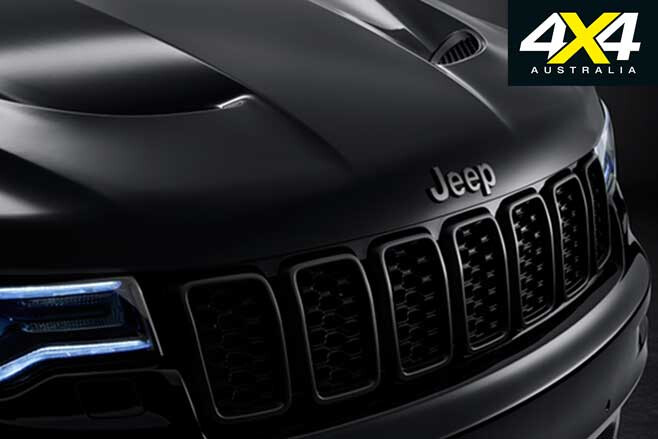
That new entry variant replacing the Laredo is the Night Eagle, previously a limited-edition model. Clad with black exterior accents and black leather seats, the MY20 Night Eagle adds Advanced Brake Assist, Lane Departure Warning plus, Auto High-beam Control and Full Speed Forward Collision Warning plus to its otherwise unchanged spec sheet.
Much like the Laredo, the Night Eagle can be optioned with either the 3.0L V6 petrol or 3.0L V6 turbo-diesel.
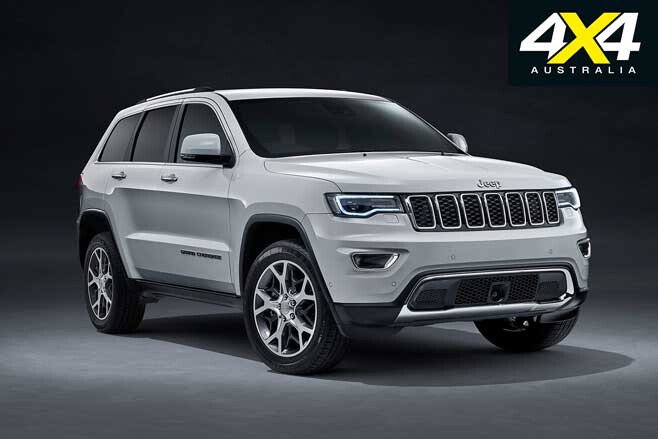
Another change to the Grand Cherokee model line-up is that the S-Limited can now be had with the 3.0L V6 diesel engine, as well as the HEMI-powered 5.7-litre V8. Further to this, the Limited is now a V6 petrol-only proposition. The S-Limited also now gets a 220amp alternator and rear road-levelling suspension as standard. The other models in the Grand Cherokee shed – Trailhawk, Overland, Summit, SRT and Trackhawk- remain unchanged.
“The Jeep Grand Cherokee is renowned for its broad capability. The updated technology, safety advancements, refreshed exterior design and interior features ensure it remains one of the best offerings in its segment,” said Guillaume Drelon, Jeep Australia Director, Brand & Product Strategy.
In addition, customers who opt for a 2020 Grand Cherokee will be privy to Jeep Australia’s refreshed Capped Price Servicing program.
“Each 2020 Jeep model, including the revised Jeep Grand Cherokee range, will have a Capped Price Service cost from just $399 per service for the first five years,” explained Guillaume Drelo.
2020 JEEP GRAND CHEROKEE PRICING
– Night Eagle (petrol): $59,950 – Night Eagle (diesel): $65,950
– Limited (petrol): $63,950
– S-Limited (diesel): $72,950 – S-Limited (petrol): $72,950
– Trailhawk (diesel): $75,950
– Overland (diesel): $79,450
– Summit (diesel): $85,950
– SRT (petrol): $92,450
– Trackhawk (petrol): $134,590
REMEMBER the amphibious Jeep – ‘Seep’ – which travelled around the world back in the 1950s? Well, on a recent late-night social media binge, we stumbled on an amphibious ATV built by a Ukrainian-based mob.
Before we get into the nitty gritty, read all about the classic amphibious Jeep, piloted around the world by Australian Ben Carlin, here.
The Ukrainian-built example your eyeballs are currently feasting on is called SHERP The Ark, an “amphibious” all-terrain vehicle said to be capable of ferrying bulky cargo – or up to 21 people – over long distances under extreme conditions, and it can “move on any surface”.
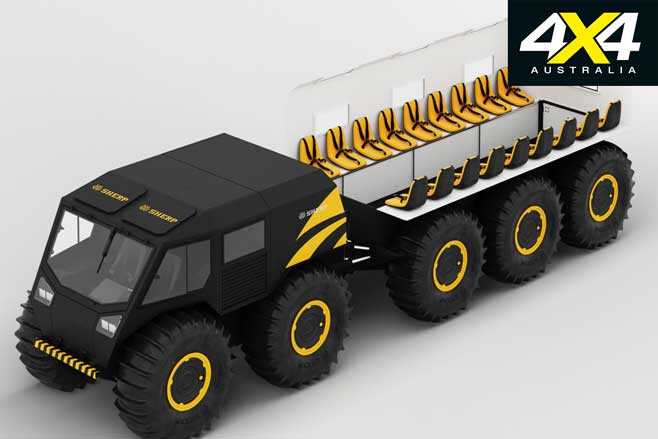
Giving the SHERP The Ark its amphibious status is its ability to travel over water, at a speed of up to 6km/h, and on land, at a speed of up to 30km/h. The Ark can also overcome obstacles that are 1.5m high, and it can descend and climb 40-degree slopes.
Interestingly, to save them knees, the vehicle comprises of an air-circulation system that uses exhaust gases to inflate/deflate tyres, which are all connected via a pneumatic circuit.
In another neat touch, the trailer can be personalised for different purposes. For example, SHERP offers a universal loading platform (to lug cargo); a personal transportation unit (to transport up to 21 passengers and the driver); a dwelling module (to live in); a medical module (for rescue operations); and a tank unit (to ferry fuel, water, etc.).
Watch the above video to see the SHERP The Ark in operation, or click on the SHERP ATV YouTube channel to learn about the other machines the Ukrainian-based company is cooking up.
When poring over maps there’s no doubt the Corner Country is a fair hike from Brisbane, but if you break up your drive it won’t seem that far at all.
We started our journey from Brisbane and headed southwest via Goondiwindi and Moree, where there is a free camp just out of Brewarrina situated on the Barwon River that gives you a prime waterfront spot perfect for the first stop on your travels. Take a refreshing swim in the river or a shower in the amenities that are available here and you’ll be raring to go onto your next stop.
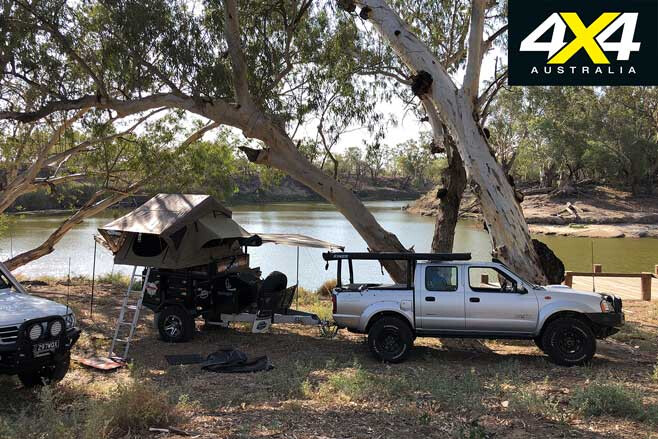
We got on the road early and pointed towards Tilpa. We know a station owner with a property on the Darling River and we were treated to a wonderful free camp on his property. The drought has had a big impact on this area and the bulldust out here is so thick you can almost cut it with a knife; the toll on all the farmers out west has been huge and there’s no doubt they appreciate travellers spending some coin in the area, either at the local pub or corner store.
Without the tourists, these small towns and businesses cannot keep their doors open. If you need basic supplies here, like ice or fuel or a cold beer, the Tilpa Pub has you covered.
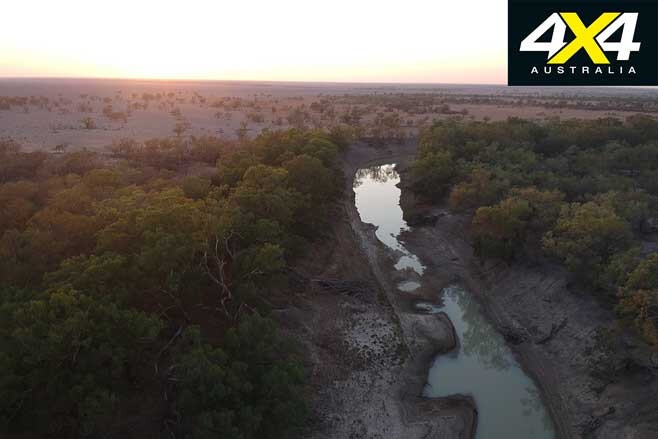
There’s plenty of history to be found along the banks of the Darling River if you know where to look. As well as the graves of two young girls who tragically drowned in the river in the 1800s, there’s the grave of John Mark (a manager of a property called Marra) who was murdered in 1887. These are perched high up on the banks overlooking one of the winding bends that snake through this property. Time and seasons have taken their toll on them and there isn’t much left to see, but there’s enough left to have you thinking about how hard life would have been like back in those days.
Our next stop was farther west through Wilcannia, and then on to Broken Hill, before we stopped in the world-famous town of Silverton which was the location for the filming of Mad Max 2. Silverton is also famous for its scattered mining ruins, art galleries and pub, and now also boasts a bakery.
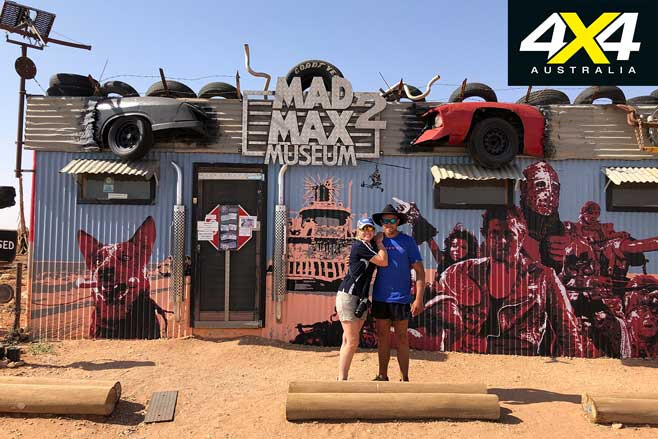
If you’re into sunsets, then Mundi Mundi lookout is the place to go, although you might have to share it with all the other travellers that pass through. The lookout stands over the spot where the famous tuck crash was filmed for Mad Max 2.
We set up camp at Penrose Park Camping Area, about 2km out of Silverton. You need a permit to camp here, but the rewards include the clean amenities and generous space to fit everyone in. It’s great for one night or more and highly recommended.
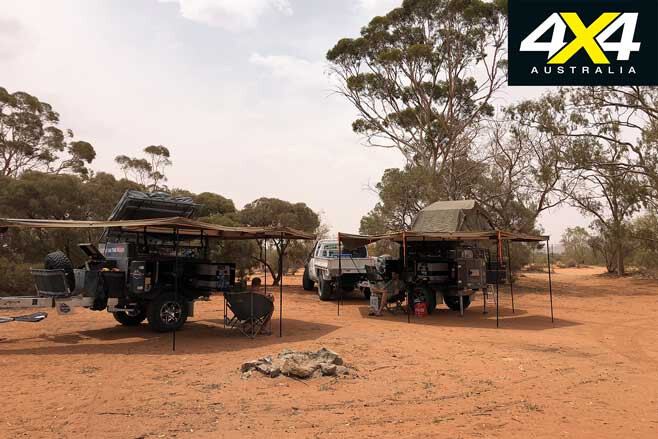
On the road again we headed back to Broken Hill to refuel and get some supplies driving north towards Tibooburra. Halfway along, we stumbled on the Packsaddle Roadhouse where we pulled up stumps for the night. The temperature was climbing into the mid-40˚Cs and the showers here were a nice way to cool down. After a good rest we got away before sunrise and then arrived in Tibooburra, the ‘Capital of Corner Country’, ready for the New Year’s Rodeo, which was a fantastic way to ring in 2020.
Leaving Tibooburra for Cameron Corner, you’re soon off the blacktop and are met with sections of soft red dirt, with ruts that can swallow your wheels right at the top of blind rises. Airing down is advisable, as is driving to the conditions, remembering that despite the isolation there’s always the chance of encountering oncoming traffic. You know you’ve made it when you’re greeted by the dingo fence; if you open a gate you must close it … and this is non-negotiable.
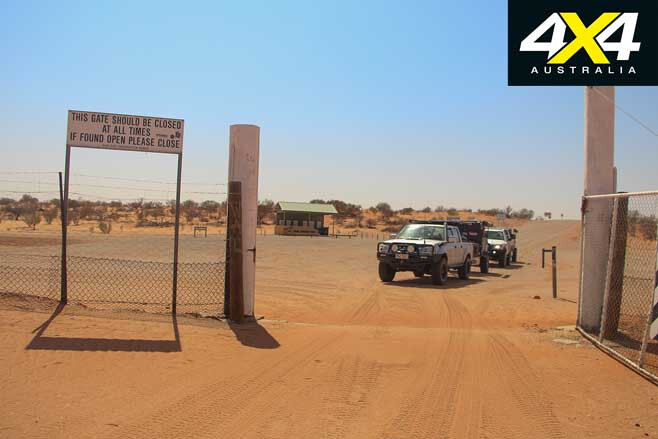
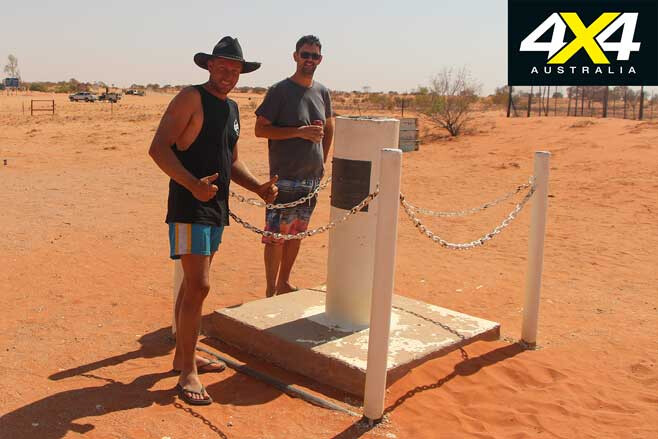
To stand in three states at once is a great feeling and for us it was a great feeling to know that we’d made it to the border of New South Wales, Queensland and South Australia, but then we realised how much farther we had to go to get back home!
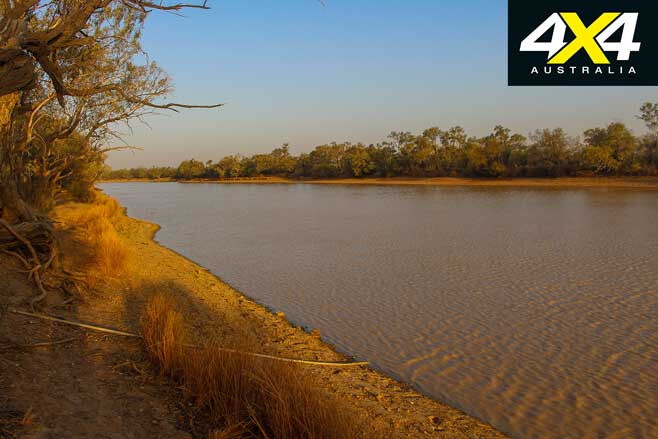
The road northeast from Cameron Corner to Noccundra proved worse (read: rougher) than the road from Tibooburra, and the 240km trek took us six hours to complete. Cracking that first beer, once we arrived at our campsite along the Wilson River in Noccundra, was a godsend … and what a scenic place to sip on an ale while watching the sun go down. We had the whole place to ourselves, which wasn’t really a surpise seeing as we hadn’t seen another car since leaving Cameron Corner. The Noccundra Pub is a good spot for a feed, refuel and refresh, with showers available.
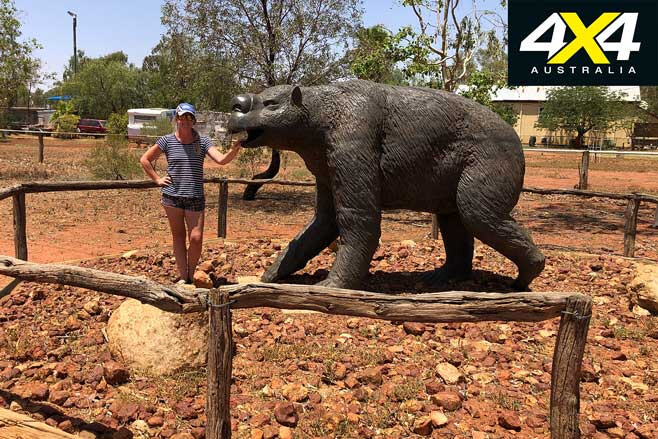
Heading east, we passed through Eulo and stopped for a photo with the Big Wombat and a beer at the Eulo Queen Hotel where had a chat with the publican who said it was pretty warm outside … 48°C to be precise! Let’s just say the beers went down a treat. After just over 500km done and dusted, we stopped at another free camp in Bollon on the banks of the Wallam Creek, which proved to be a nice spot to relax after the long, hot day on the road.
Another iconic pub to stop at is the Nindigully Pub, which provided another opportunity for a cold beer while checking out the plethora of memorabilia on the walls. From here we headed home, but only after reflecting on what was one epic 3650km bucket-list trip that we can now tick off. Not to mention we did it in the hottest part of the year, and while towing brand-new off-road camper trailers.
The small towns out west need us. Whether you just stop for a beer or do a whole grocery shop and fill up with fuel, every little bit counts. And what a beautiful country we live in … so vast, so dry and so breathtaking.
Travel Planner
Camping: We only paid for camping at Penrose Park at Silverton: $10 pp/pn (with very clean amenities and heaps of space). The rest of our campsites were free.
Facilities: Toilets and showers at Penrose Park, Silverton. Toilets and showers at Noccundra. Toilets at Bollon.
Trip Standard: Mostly red dirt, dusty, rocky, rutted, shaley, corrogated roads.
Fun Facts: 10 days on the road – 3650km
Hottest places: Hottest camp: Packsaddle Roadhouse at 44°C. Hottest place we drove through: Eulo at 48°C – we had a beer at the pub there!
Normally getting bitten or stung by an insect like a bee or wasp is a minor inconvenience, and generally not life threatening, but they can be irritating and even painful. In some cases, if you are allergic to a particular bite or insect or get stung somewhere like the mouth, then it can have fatal consequences.
When Viv and I were driving across Russia a few years back and I poured Viv a G&T, a bee landed on the lemon in the drink and when Viv drank from the glass she was promptly stung on the lip. What happened next wasn’t very nice; she had an allergic reaction to the sting and her face blew up like a balloon.
We immediately administered a cold compress to the area, found some antihistamine medicine and then got the EpiPen out of Viv’s kit, which she always carries. Luckily we didn’t need it as much of the swelling subsided after about an hour or so, but Viv had a swollen face for well over three weeks (I’m under strict instructions not to have the photos printed!). Some people aren’t so lucky and if the bite or sting happens farther down the throat then it can quickly become a life-threatening episode.
A number of years ago we were rafting the Murray River and somewhere above Tom Groggin homestead, in what is one of the remotest areas of the Victorian High Country, one of our gang was bitten by a ‘jumping jack’ ant. Until then he had no idea he was allergic to them. Anyway, he started to have breathing difficulties so we gave him a dose of antihistamine medicine and with nothing else to do we plunged him into the cold mountain stream and left him there for an hour so. He survived the ordeal and now carries a small survival kit with him whenever he is in the scrub.
More recently I picked up a tick, which hid in my belly button for a couple of weeks before I found him…or at least the doc found him. While all I got from my unwelcome visitor was a bit of pain and a burning sensation around the bite site, it never progressed any further than that. But sometimes ticks can cause much more serious issues including difficulty with breathing. And they can really knock the family pooch around something terrible!
Just recently, while we were down in Tassie, I was about to lay down and slide under the ol’ Patrol to place a jack in position when one of the crew noticed a small scorpion that had been upset by our moving of rocks, twigs and sticks. Now, unlike what you may have heard about scorpions in other countries, there have been no recorded deaths in Australia because of scorpion stings.
It also seems the most venomous ones are the smallest ones, and those that reside in the NT. Still, you can suffer from severe pain around the site of the sting for a number of hours while other side-effects may include redness, tenderness, numbness, nausea and headaches.
There are about 110 land-based snakes in Australia along with more than 30 sea snakes, and many of these are venomous and have the ability to cause moderate to severe symptoms from a single bite. All snake bites should be treated seriously and if you go bush you should know the first aid for a snake bite and have the gear to carry out the first aid. A good place to start is here.
So, do you have the right stuff and the skill to handle any bite or sting, or know what to do if somebody suffers from an allergic reaction from such a bite or sting?
Check out out the St John’s Ambulance website blog for the latest info on bites and stings.
At 4X4 Australia we want our roof racks to do everything and then some more, so we’ve been keeping an eye on low-profile roof platforms as they’ve progressed from welded steel to alloy to composite with present-day systems offering an accessory list longer than your mate’s rusting winch cable.
The idea behind these nifty rooftop trays is they should be just as at home halfway across the Tanami as they are dodging the sprinkler system of your local undercover carpark. They should brace a mountain bike for Friday arvo rides with mates or a kayak for a spot of estuary fishing, but also tote a spare wheel and high-lift jack for those off-road exploratory camping sojourns. It needs to offer simple attachment and removal of accessories, even a roof box … and of course be relatively easy to fit, quiet, aerodynamic and look sleek but tough.
A tall ask, but if you’re forking out more than $1.5K for some powder-coated aluminium to bolt to our roof, it’s gotta be better than some rusting tradie-bars and a couple of frayed bungees.
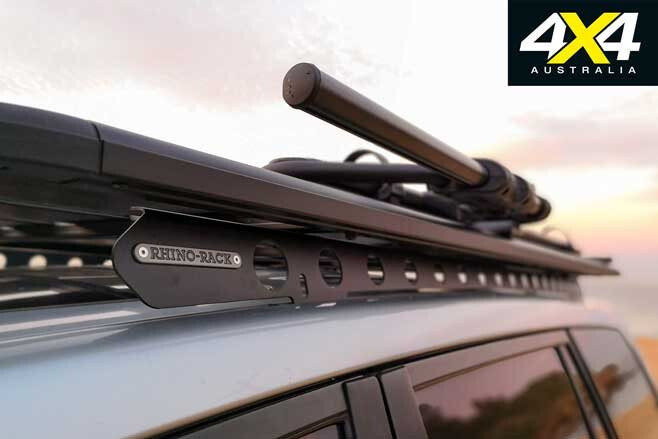
In Rhino’s favour is the fact it has been manufacturing roof racks since Richard Cropley developed the first prototype in 1992. The Pioneer system emerged in 2010 and has been refined over the last decade with the present-day iteration made from non-corrosive reinforced nylon and aluminium, delivering an extremely lightweight but durable product.
For our review we opted for Rhino’s 2128mm x 1236mm Pioneer Platform coupled with a Rhino-Rack Backbone to replace the Prado 120 Grande’s existing factory roof rails. This combination provides us with the lowest possible profile and max load capacity for our vehicle. In fact, when fitted via the Prado’s existing ditch mounts, the backbone sits at the exact same 50mm midpoint-ditch-mount roof clearance as the Toyota factory rail.
With our Pioneer Platform installed atop the backbone, the overall vehicle height is increased by 90mm at the midpoint, a mere 40mm over the original roof rails (without accessories), delivering one of the market’s lowest profile offerings.
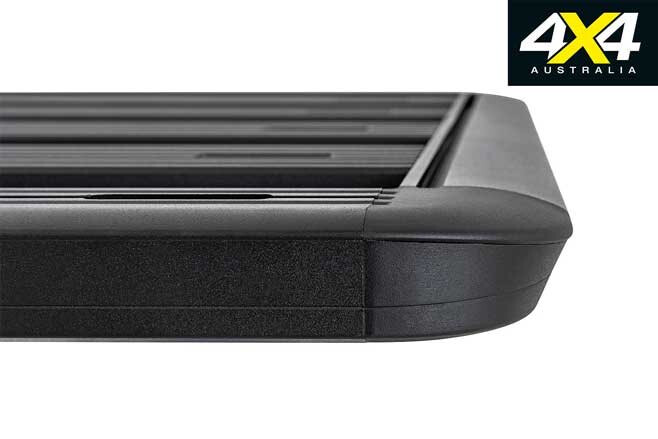
For the Prado fit-out, the backbone and Pioneer Platform deliver a maximum on-road vehicle allowance of 120kg, while offering a staggering static roof allowance of 360kg and off-road allowance of 96kg. This adds an extra 20kg allowance from the factory rail’s on-road allowance of 100kg.
Additionally, the Rhino-Rack Backbone has been tested to International Standards ISO PAS 11154-2006 Road Roof Load Carriers and Australian Standards AS1235-2000 Road Vehicle Roof Bar Testing, which is important for both insurance and safety purposes.
For those who want a simpler installation and aren’t as concerned with vehicle clearance and load capacity, Rhino-Rack’s Heavy Duty Removable Rail Mount CXB or SX legs fit directly to factory rails. When combined with the platform itself, however, this combination on the Prado sits nearly 40mm higher than the backbone mount (without accessories) while also limiting the platform’s on-road cargo capacity to under 75kg.
Installation is reasonably straightforward and Rhino-Rack offers clear and concise instructions with detailed diagrams for every product so fitting can be carried out at home with a mate and a good set of tools, but you’ll need to be patient and precise when fixing the backbone channel-nuts to the platform. The 2020 platform (now available) with an integrated measuring strip makes things easier on this front.
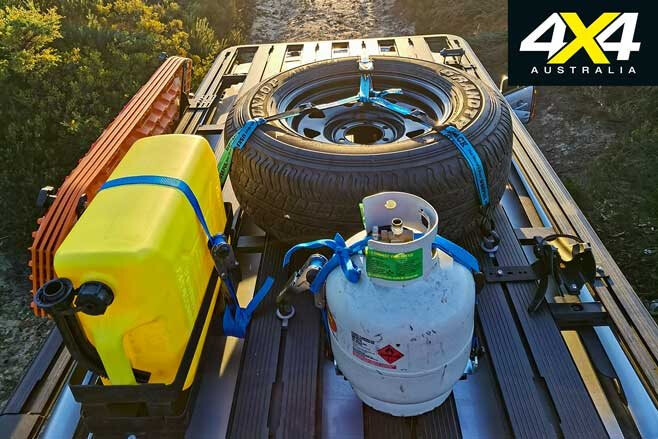
With a backbone and platform installed, the roof becomes a base for your next adventure, and for our 4×4 setup we chose a Spare Wheel Holder, Gas Bottle Holder (4kg), Horizontal Jerry Can Holder and Recovery Track Holder to fix our tools. For fixing toys, we installed a bike mount, kayak mount and roof box option as well as a Pioneer Roller and a load of eyebolts.
Bicycle
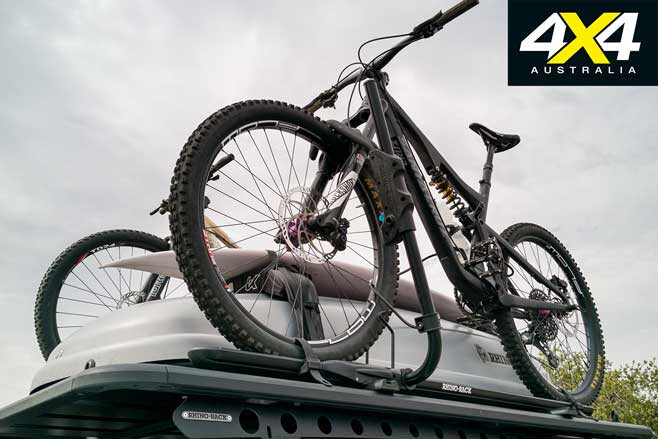
For the bike we trialed both the new Thru Axle Bike Carrier and the existing Hybrid Bike Carrier. The Thru Axle offers a simple low-profile design that keeps your bike sturdily in place. The cons however are the need to remove and find a place for the front wheel and the need to purchase the appropriate Thru Axle insert for varying axle diameters. Once setup though, it is a breeze to use.
The Hybrid Bike Carrier on the other hand is a beast of a bracket and requires quite a bit of finicky installation to fit to the Pioneer platform (which was accentuated when our Whispbar bike carrier secured tool-free in seconds). After initial installation however the Hybrid Bike Carrier is easy to use, sturdy and secure and has ability to accept a host of different bikes, all lockable in place with the integrated locks and without removing any wheels.
Snow Gear
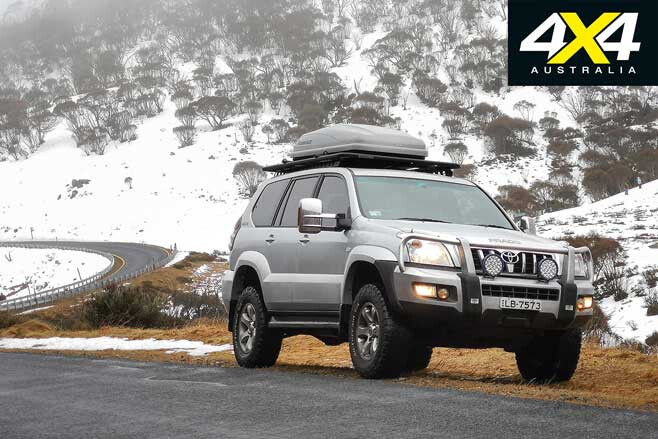
For the snow we opted to use our existing Rhino Masterfit 440 Roof Box. We’ve had this for a number of years and it has been on multiple outings without missing a beat. The ABS/ASA thermoplastic roof box is lightweight and easy to install with tool-free brackets clamping firmly to most roof racks, or in this case the Accessory Bars. Our small complaint with the roof box is any equipment packed against the side of the box can obstruct the internally exposed locking mechanism forcing some last-minute gear manipulation to get it to.
Kayaks
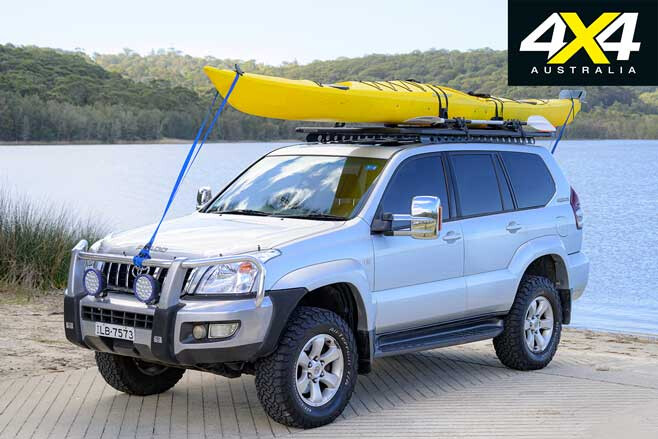
For our kayak we chose to go with the tried and trusted Nautic 581 Rear Loading Kayak Carrier. This allowed us to fix our 5m, 30kg Dagger 6.10 Exodus Sea Kayak to the roof of the Prado. It’s a hefty kayak to haul atop a 4×4 and after a few outings we opted to install the Pioneer Roller.
Fixed in mere minutes to the rear of the Pioneer tray, the roller allows our kayak to roll onto the Nautic brackets where it can then be settled to sit flush and fixed securely. The Nautic system is tool-free with the only downside being it can be difficult to tighten the turn-wheel brackets enough to accommodate a heavy sea kayak and can be hard to undo. All-in-all the system works as it should.
Verdict
The Rhino-Rack Backbone and Pioneer Platform combination comfortably delivers on what it has been designed for. It is low-profile, rugged and hard wearing, with a high build quality. The platform is quiet on road, looks stylish and most importantly offers a plethora of options for everything from trade to 4×4 to adventure accessories.
The Pioneer Platform loses some points for small frustrations such as limited tool-free options, the need for a multitude of tools to fit accessories, and design issues surrounding the use of accessory bars. Fortunately, and perhaps unsurprisingly, the practicalities of the platform far outweigh its minor annoyances and when, on occasion, we found ourselves scratching our heads in frustration, we were relieved to discover the Pioneer Platform is as much about practicality as it is about prettiness.
All-in-all, the Rhino-Rack Pioneer Platform does exactly what is asked of it, performs admirably and delivers an extremely capable roof-carrying system for those who demand a solid tray to excel in the harshest of Australian conditions.
LDV has broadened its seven-seat D90 line-up, slotting in a bi-turbo diesel-powered variant to compete with the likes of the Isuzu MU-X, Toyota Fortuner and Ford Everest.
The 2.0-litre four-cylinder engine – designated D20 and designed in-house by Chinese-owned company SAIC – sends 160kW and 480Nm through an all-new eight-speed ZF gearbox.
Compared to its diesel contempories – MU-X (130kW/430Nm), Fortuner (130kW/450Nm) and Everest (143kW/470Nm and 157kW/500Nm) – the D90 diesel donk’s 160kW and 480Nm makes it one of the most powerful in its class – not bad for a sub-$50K price tag.
“We’re delighted to broaden our offering in the large SUV segment with the arrival of a diesel alternative,” says Dinesh Chinnappa, General Manager LDV Automotive.
“At over 120,000 units per annum, the Large SUV segment is significant and dominated by diesels. Now, with a powerful new bi-turbo diesel offering, our seven-seat D90 family SUV offers even greater versatility for our target market.”
The D90 diesel option is only availble with the Executive nomenclature – The D90’s flagship offering – and it runs standard kit including BorgWarner transfer case and LDV’s Terrain Selection system.
The LDV D90 has a selection of active safety features to compliment its five-star ANCAP rating, as well as a 3000kg towing capacity and plenty of storage space (1800 litres with the rear seats folded down).
“Our target market is hard-working Australian families. Now, more than ever, they need value for money, but they also still demand safety, quality, features and performance,” said Chinnappa.
“With childcare costs, rising energy bills, inflation, static wage increases and worries about the future, the family purse is being squeezed. Hardworking Australian families can’t afford to be flippant or wasteful with money. The new LDV D90 bi-turbo diesel fits the bill perfectly.”
LDV D90 Driveaway Pricing (4×4) – LDV D90 Executive 4WD Automatic Petrol $43,990 – LDV D90 Executive 4WD Automatic Diesel $47,990 *Option Premium Paint $500
I’VE OWNED a Carry Me Camper for the last 14 years, and back when the campers were produced by Candy Campers of Tintinara, South Australia, with the steel canopy built by Jacksons. A few years back when Phil and Sandy Candy wanted to retire, Jacksons bought the Carry Me Camper product and shifted the whole operation to its huge Murray Bridge HQ.
For the last 30 odd years or so, Jacksons has been building silos, storage bins, animal shelters, pig troughs and a host of other sheet metal products, including ute canopies and trays, so it has a huge amount of knowledge and design experience on such products. A camper was a natural progression, especially now it has a well set-up 4WD store in Murray Bridge as well. Jacksons 4×4 Accessories is an ARB retailer, while also supplying a range of other brands such as Redarc, Jmacx and others.
But back to the campers.
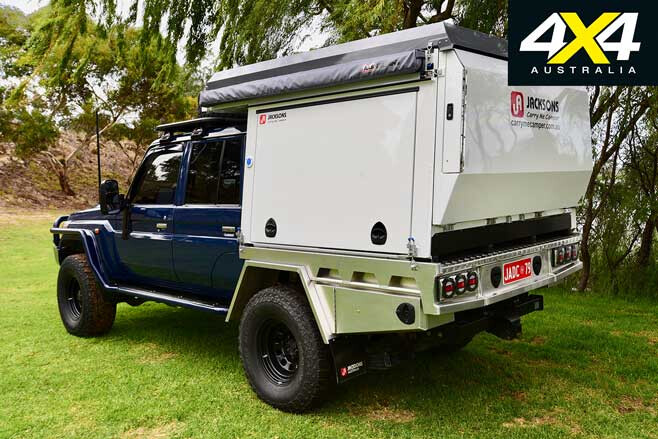
All Jacksons’ vehicle-based product, such as canopies, trays and slide-on campers are made from aluminium, significantly cutting down on weight. Back that up by the best cad-cam design, computer controlled machinery and fine welding, and you have the impressive basis for a great camper.
The company’s latest design of slide-on is a two-stage, hardtop camper, unlike anything else on the market, giving unparalleled space and ventilation in the sleeping area. Since its inception, not even 18 months ago, the hardtop two-stage camper has become the unit everyone wants and now Jacksons has released a model suitable for extra-cab and dual-cab utes and pick-ups.
This is a very impressive camper, the build quality being absolutely first class with some great design innovation that you just don’t see on other cheaper campers. The unit sits on an 1850mm x 1640mm tray and weighs-in, as a complete package for this top-of-the-line unit, at the 500kg mark. Expect to see a reduction in that of 50kg or so as the engineers at Jacksons look at ways to get rid of some excess weight. Even so, you’ll probably need to look at the suspension of your vehicle, perhaps a GVM upgrade for the best handling and ride comfort under all conditions, but something that Jacksons 4×4 can help you out with too.
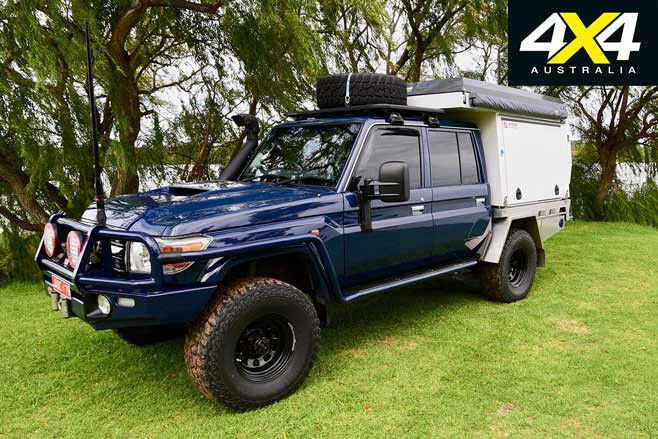
The canopy roofline is low, the top around 300mm above the roofline of the Cruiser the unit was sitting on. And I just loved the way the 250W CIGS solar panel (standard on this model) is integrated into the roof and lies flat within it – another well-thought-out design criteria of this camper.
The kitchen area is accessible at all times by opening the large easy-lift side door which exposes the fridge on a drop-down fridge slide, and in this top-of-the-line version there’s a large stainless steel kitchen work bench, plus a two-burner stove, again on a slide-out self-supporting tray.
The stove is not plumbed into the camper and could be moved away if and when required. The gas bottle can be stored on the far side of the camper or, if small enough, in the under-boxes of the tray. The storage pantry includes four heavy-duty boxes, three drawers and a pop-up wash bowl; everything you need for a quick lunch stop or an even quicker morning brew stop.
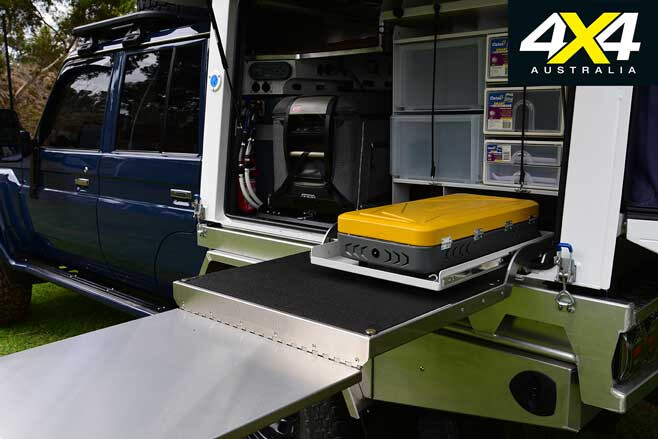
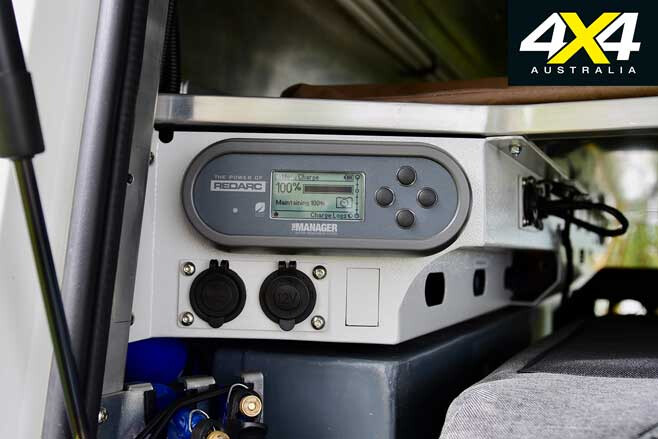
In the very front of the camper are two 54-litre water tanks with a hose and tap for each tank, located beside the fridge. A single, gutsy 100amp/h lithium battery is located on the opposite side, again at the front of the camper, while a Redarc battery management system is integrated into the whole 12-volt system. There are white and yellow LED dimmable lights on both lift-up doors which is great for illumination, while the yellow light helps keep bugs from being attracted to the area.
On the other side of the camper, lifting the door reveals a vast storage space that you can really set up any way you want. In our case we had mesh shelving along with some under-shelf storage boxes; many people opt for a second fridge slide. Above the aforementioned lithium battery is a 12-volt power distribution box with fuses and a circuit breaker. Scattered around the canopy, in handy spots, are a number of 12-volt and USB sockets for powering and charging all those power-hungry items we seem to have these days.
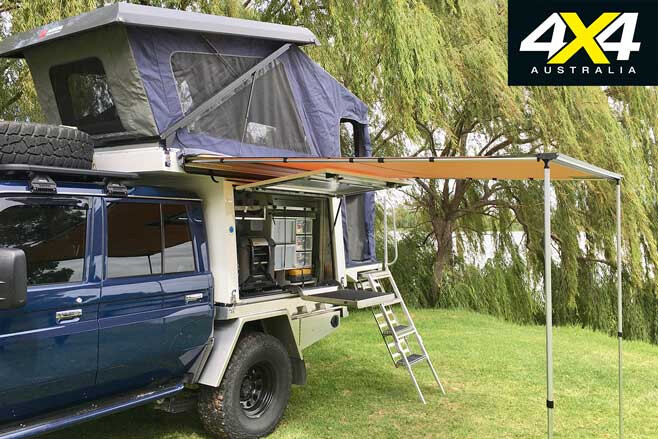
To open the camper for an overnight stop is easy and quick; just drop down the rear tailgate and slide out the self-levelling steps from their hideaway box in said tailgate – another unique Jacksons design. Then climb up onto the now horizontal tailgate which has also exposed the canvas area of the camper. Undo a couple of latches allowing the roof to raise to its normal position, sneak under the exposed rear canvas and unfold the canvas roof support, add a couple of legs and you’re done, the whole operation taking less than a couple of minutes. (Check out the speed of the set-up here).
The previously mentioned canvas roof support is another unique Jacksons development and also adds a layer of insulation to the tent area of the camper in addition to the roof insulation in the hardtop section. Here in this tailgate area of the camper you’ll also find LED lighting and an access hatch for an optional portable loo.
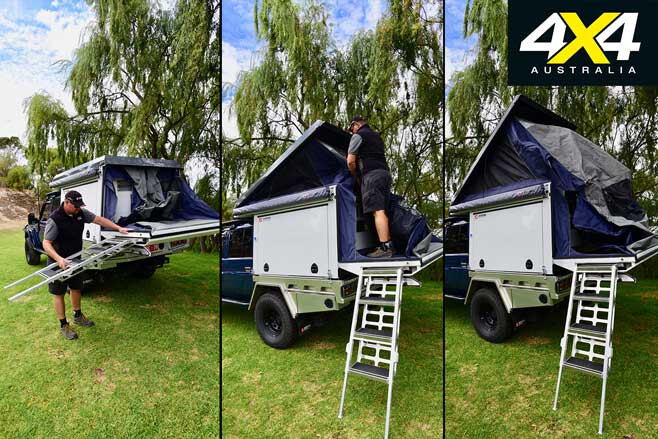
A fold-down step from the tailgate dressing area gives easy access to step up the short distance to the large north-south bed, complete with a 140mm thick innerspring mattress. At the head of the bed you’ll find lighting and 12-volt and USB power outlets, but what really impresses is the amount of ventilation and headroom this unit has; it is superb.
Oh, and a couple of more quality issues. The canvas is high-grade Aussie made, the zips top-quality YKK, the sewing first class, while the mesh is midgee proof to keep those blood suckers away from any sleeping souls.
This model of hardtop camper also comes with an exterior awning adding shade and protection over the kitchen area, although the lift-up doors seem to provide enough for all but the hottest or wettest of conditions.
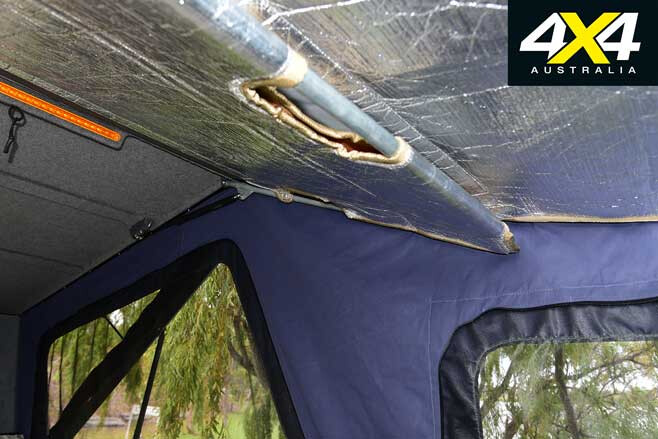
Slide-on campers are fabulous for long-distance touring. We have, as previously mentioned, an early-model Carry Me Camper on our Patrol and a Four Wheel Camper on our Ram in the USA. With a slide-on camper the capability of the vehicle is not compromised and if you want you can tow a trailer with your toys such as bikes or a boat. That opens up even more country and adventures for the daring souls amongst us.
The camper comes with four legs so you can unload it and have it freestanding for those forays into town, if you so wish. Some people may use them but in all my time with slide-on units I’ve never bothered; in fact, both my units are bolted to the tray of the vehicle and have rarely been lifted off!
Pricing for this Carry Me Camper starts at $38,830. The top-line unit we were testing comes in at $42,780 and includes everything we’ve yarned about as well as dual fridge slides. Optional extras included diesel cabin heating and hot-water systems, an LPG hot-water heater if you prefer, storage/rubbish bags and a bike carrier and the like.
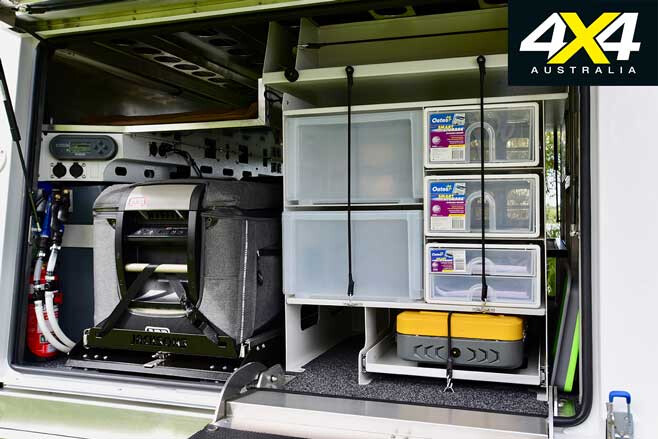
Currently the spare wheel needs to be carried on a roof rack, as shown in the pics, which I’d hate to put up there on my own in the scrub. However, Jacksons is working on a drop-down tailgate version of a tyre carrier and it would be one I’d be opting for.
You are probably thinking that 40 odd grand for a rooftop camper is a lot of money … and it is. But, I’ve gotta tell ya, in my 35 years or more of being in the 4WD touring industry, I haven’t seen a better designed or manufactured slide-on camper anywhere, at any time. Some of the innovation is fantastic to see … and will, no doubt, be copied by others. This unit looks the goods, works extremely well with a minimum of effort and will give you many years of useful and faithful service.
Now, if I could just convince Viv it would be great to upgrade…
Product Enquiries
– Jacksons Carry Me Camper Phone: (08) 8531 2700 Website: carrymecamper.com.au
– Jackson 4×4 Accessories Website: jacksons4x4.com.au
PICTURE this, you’re trundling down a well beaten track way out past nowhere when you clock the rising plume of dust ahead signalling a fellow traveller approaching at speed.
2020 CUSTOM 4X4OTY: Vote now for a chance to win!
The track’s been pretty hard going on the fourby so your mind starts to speculate as to what kind of rig is also up to the task. With the mindset of most four-wheel drivers following the same tried and tested models it would be safe to say seeing a Toyota LandCruiser Prado 150 at this point would be a big surprise, and without a soccer field or schoolyard anywhere in sight!
Tom Ledger was tired of seeing the same vehicles being used on tourer builds, and saw the trusty Prado as an alternative. “Going against everyone’s opinions was a big risk but in the end I thought why not? I’ll just do it,” he says.
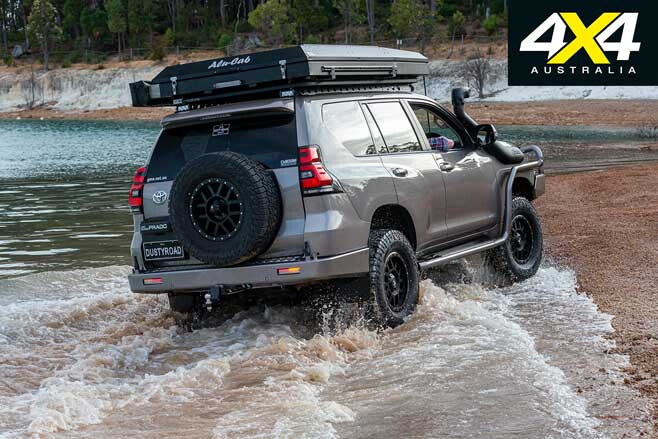
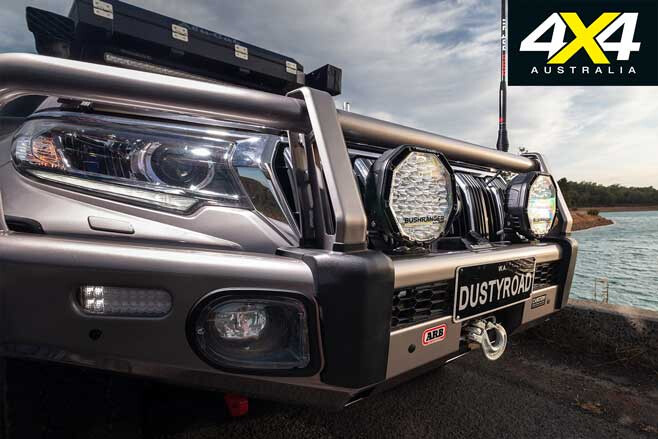
Tom shook hands on a brand-new 2019 Prado, before then enduring a two-month wait to collect his new Dusty Bronze ride, as his chosen colour had to be specially ordered. “I liked that it had dusty in its name so I took a gamble,” he said. “The dealership wasn’t helpful, the website was terrible, but I liked the name. I wasn’t too sure on the colour when I first saw it, and thought I’d made a huge mistake. But once I started fitting the black accessories to it, it really grew on me.”
Of course, the Prado was nicknamed ‘Dusty’, and Tom was soon on a mission to improve it and within a month of picking it up a plethora of gear had been fitted.
Starting with the colour-coded ARB Summit bar, and ARB 8-tonne recovery points; Bushranger 10,000lb winch, Nighthawk VLI LED spotlights, 43-inch light bar and 5.5-inch camp lights; Rhino-Rack Pioneer Platform and Backbone roof Rack system soon changed the look of the wagon. When it’s time to head out for extended trips away an Alu-Cab Gen 3 rooftop tent bolts on complete with a matching 270-degree Batwing awning.
“I love it,” Tom told us. “It takes me less than 15 seconds to set (the tent) up, and another 15 seconds to pack it down. It’s got LED interior lights and USB charging points too. I can leave all my bedding in there when it’s closed. I don’t have to worry if I hit the tins too early either. The amount of times I’ve fallen asleep on a swag that’s not properly set up because I was too drunk to do it, I don’t know. It does still require some accuracy getting up the ladder though.”
With many modified vehicles you’ll hear the build “got out of hand”, but not in this case. After previously modifying several other 4x4s, Tom had a plan that would allow for some serious touring once the rattle guns and drills were put away. The end result had to accommodate everything needed for up to a month at a time.
“I don’t like being around people. I really enjoy being in the outdoors and heading bush. Growing up in the bush I’ve always favoured the isolation over the population,” says Tom.
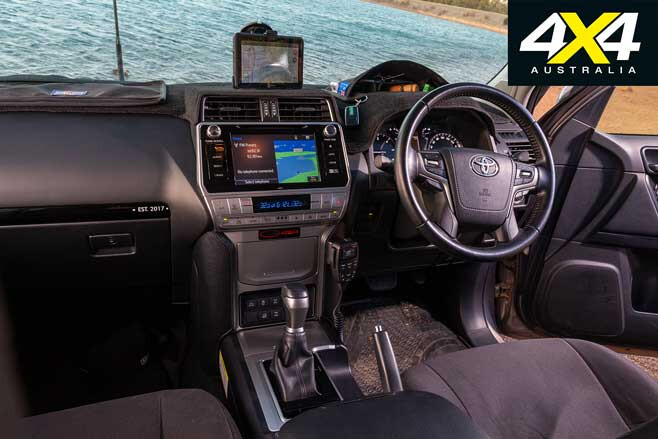
Having previously owned a 79 Series single-cab, one of Tom’s biggest problems was trying to pack all the gear he’d grown accustomed to carrying inside the smaller 150 Series. “The Prado’s cabin space is basically one-metre deep by one-metre wide, so the ability to utilise every bit of space in the back of that car in an organised fashion is sensational.”
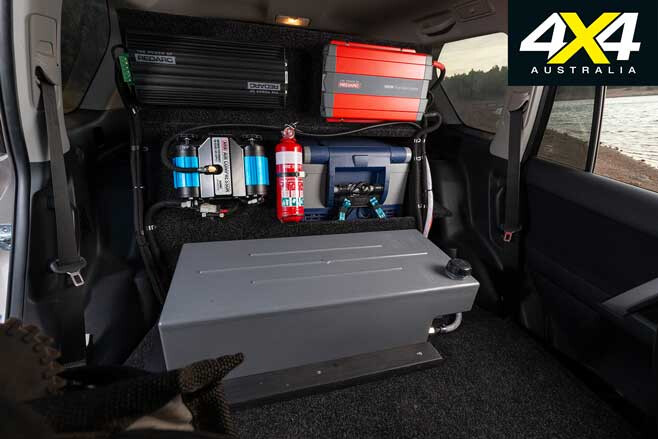
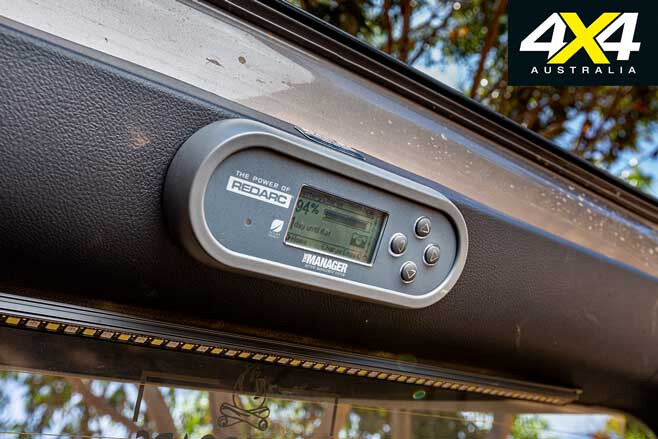
By removing the centre seat row and panelling out the space Tom was able to increase his useable cargo space considerably, allowing the fitment of a 60-litre water tank that operates through a pump to the Nitto food grade outlet just inside the tailgate. Above this sit the Redarc S2 Manager30 and a 1500W pure sinewave inverter, ARB twin-cylinder compressor, and fire extinguisher. “The inverter allows me to run all the camping accessories, and also charge my 56V chainsaw, the drone batteries, charge a laptop, and my missus likes to run her hair dryer off it.”
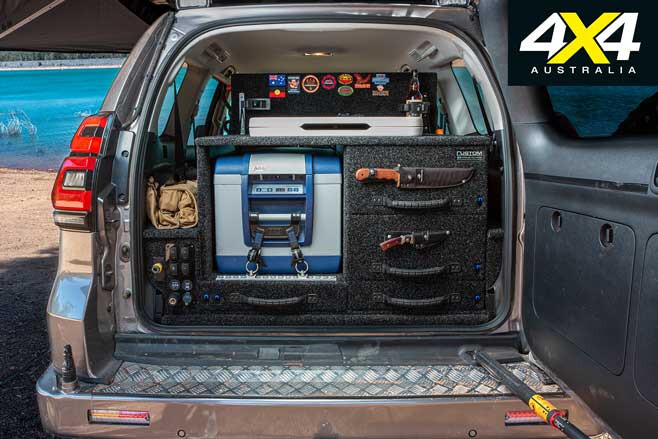
Chris Teirling from Custom Installations was called on to screw together the tailgate fitout, complete with custom drawers and enclosed fridge specific to Tom’s specifications. A dedicated panel houses switches for the water pump, compressor, auxiliary lights, USB/12V charging points, and ARB compressor outlet, keeping clutter to a minimum.
An Atlas 46 Yorktown tool roll fits perfectly into the space above the panel allowing Tom easy access should things go awry out on the track. One of ARB’s 60L fridge/freezers keeps the steaks cold with access gained by a custom lockable slide complete with a further slide-out workbench beneath it. Three different-size drawers house all of Tom’s camping and recovery equipment, while doubling as easily accessible knife mounts, with twin rum-bottle holders standing atop the whole arrangement.
Without a doubt loading a new car up with a swag of electrical accessories is going to place a hefty load on any existing automotive electrical system. Risking any interference to the shedload of new car electronics can result in a stranded traveller, so with the previous builds experience under his belt, Tom elected to keep the new accessories completely isolated from the vehicle’s existing electrical system − smart thinking.
In fact the only non-factory item you’ll find under the bonnet is the secondary deep-cycle Optima blue-top battery locked down in an Outback 4X4 Accessories auxiliary battery tray. This is fed by the Redarc Manager30 and powers all added accessories while keeping both starting and auxiliary batteries charged and in a workable condition.
A remote monitor is mounted high on the rear door’s inside trim, this area being Tom’s ‘hub’ once camp is set up. “I’m always at the back of the car when I’m camping. Whatever I need, whether it be food, water, air, cooking equipment, rum, it’s all within arm’s reach,” he said. “I don’t have to wander around and open doors or muck around with lights.”
Keeping the dash free of a bunch of obvious aftermarket switches and gauges was paramount to the clean look Tom was shooting for, so with this in mind he fitted QVEE Toyota-style switches to the existing Prado switch panel below the start button. These control the spotties, light bar and camp lights, while the wireless winch controller hides away in the glove box. “I hate dash clutter,” Tom admits. “It’s the absolute worst, especially on a newer type vehicle. It’s all good on a GQ or an 80 series to fit a tin box full of switches, but on a new car it looks absolutely terrible.”
Toyota sadly never made allowances for the easy fitment of a UHF radio however, but now that GME has released its XRS330C with all its display and controls contained on the hand piece, Tom was able to simply mount it where it was easily accessible. A GME 6.6db antenna complements the installation.
Rounding out the interior are a pair of custom made SupaFit padded denim seat covers.
“Between myself and Ken, the WA state manager at SupaFit, we wanted to come up with something that pays respect to ANZACs,” Tom said. “He went through six or seven attempts at getting the stitching on the Rising Sun right, but once he got it, it was like ‘take my money!’”
Knowing the Prado had serious touring kilometres ahead, and not having a lot of info available on what best works, proved a real challenge in getting the suspension right. Starting with each corner a set of Falken Wildpeak 285/70R17 AT3W All Terrain tyres were stretched over satin black 17×8 King wheels chosen for their ease of cleaning, but also as their +20 offset sat wider than standard inside the guards without the need for flares.
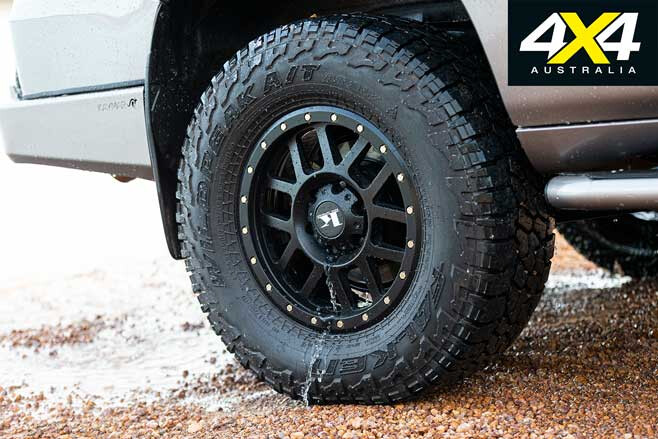
With a little more than 20,000km under their collective belts, Tom says: “They’ve been absolutely faultless. I needed a tyre that could handle corrugations, bull dust, limestone and sand exceptionally, and these Wildpeaks have been bloody brilliant!”
Nothing is ever a simple ‘bolt-up’ though, so to help the wheels maintain proper alignment and clear those fat tyres a pair of Blackhawk upper control arms were bolted on. The final item on the list being the remote reservior Old Man Emu BP-51 adjustable bypass shocks. These are a coil-over unit for the front combined with Old Man Emu H/D coils which raised the nose 65mm.
The extra load of the camping accessories necessitated a pair of Ironman 4X4 500kg springs for the rear, raising it 50mm. Having an internal bypass system located inside the OME BP-51 shock body allows the circulation of the shock’s oil within itself, paired with the adjustable bump and rebound allowing for maximum control when pushed to extreme temperature levels. This was tested to the limit when tackling the Anne Beadell Highway recently.
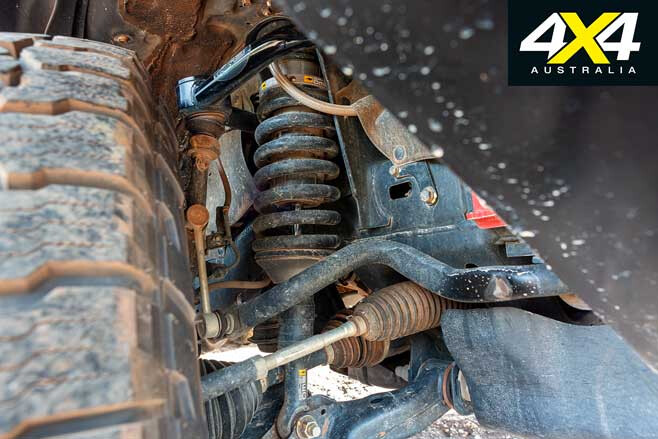
“Winding the compression right down and the rebound right up allowed the car to handle the corrugations effortlessly with no bottoming out of the vehicle. They’re bloody expensive to buy, but worth it,” says Tom. To further cope with extra loads or towing, a pair of Airbag Man helper airbags were also fitted inside the rear springs, their feed valves being mounted to the Kaymar rear bumper valance.
With all those mods onboard it’d be easy to assume Tom has tickled the driveline too, however this is not the case. The Prado remains standard Toyota from radiator to rear e-locker. This was done to prove a point that the OEM fare is more than enough to handle the punishment outback touring has to throw at it, and let’s face it, way back when folks were forging the 4×4 tracks we all know and love today, they were doing it in close to stock-standard rigs.
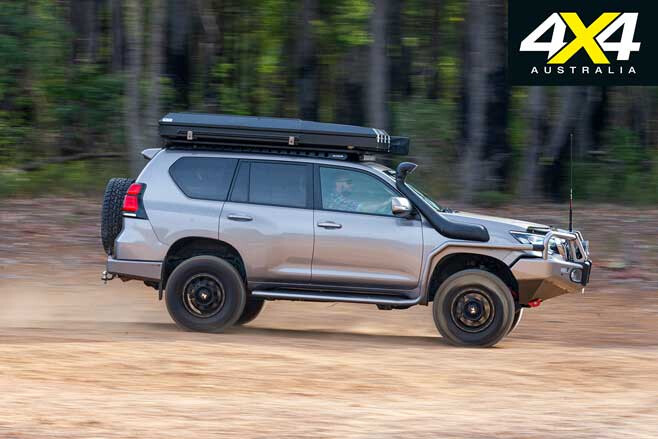
In the 26,000+ clicks so far, Dusty has given faultless service navigating tracks like the Cook, Nullabor and Great Australian Bite, with the aforementioned Anne Beadell Highway the toughest to date. The Canning Stock Route, Tanami and Finke are up in the near future.
What Tom has really done here is show how the norm is something to be challenged at all times. The reward being the satisfaction of proving the doubters wrong cannot be underestimated. Even moreso, the contentment from having the confidence to follow through with your vision, while taking you to all the places you’d rather be.
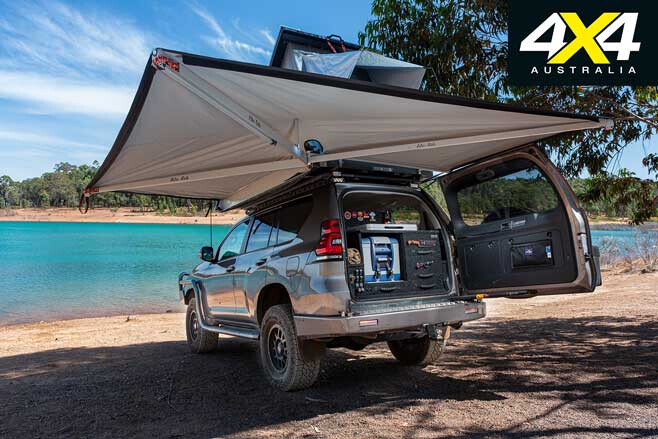
Thanks • Offroad Equipment Myaree (4X4 accessories). • Dave Cobban (Auto electrician). • Tammy at Busselton Toyota. • Ken at SupaFit Seat Covers. • Scott Montgomery at Redarc Electronics. • Chris Teirling at Custom Installations. • The doubters, for giving Tom the push to build Dusty his own way.
- Introduction: Meet the Project Ranger
- Update 1: Weapon of choice
- Update 2: Hitting the tracks
- Update 3: Geared up
- Update 4: Ronny’s Ranger
- Update 5: Box and Dice
- Update 6: Tow Ready
- Update 7: Head for the Hills
- Update 8: Rear Renewed
- Update 9: Branded!
- Update 10: Tassie Tiger
Introduction: Meet the Project Ranger
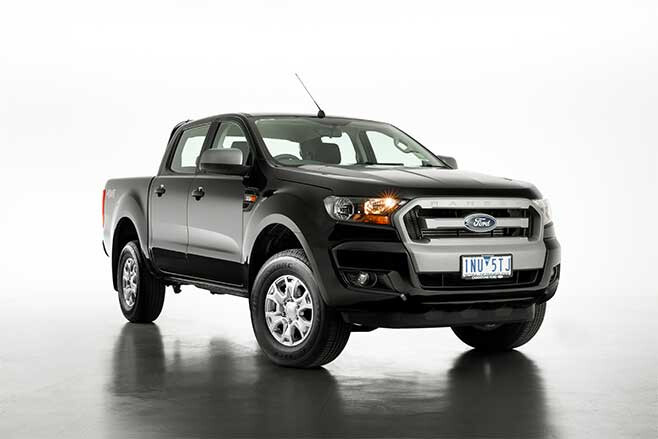
WE’RE PRETTY excited here at 4X4HQ after taking delivery of this new Ford Ranger. We say new, but it’s a 2018 model we scored as a demo with only 250km on the clock … so, as good as new.
We’ve got big plans for the Ranger which are swinging into action as we speak, with some of the biggest names in the 4×4 business helping us out.
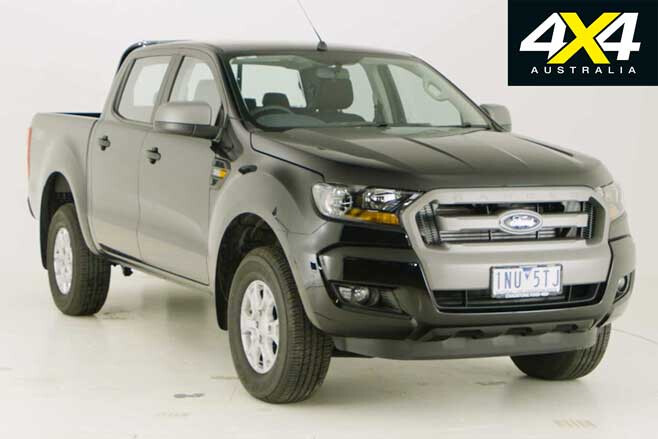
The Ranger will primarily be the support vehicle for our 4×4 Adventure Series trips, so we need to kit it up to be expedition ready. We put a wishlist of accessories together and, before we head out to the Red Centre in July, we’ll be fitting the Ranger with Ironman 4×4 suspension and a long-range fuel tank, Maxxis RZR tyres on KMC wheels from Wheel Pros, an AFN bumper housing a Warn winch and Bushranger Nighthawk lights, a Cel-Fi phone signal booster, and a Water Watch fuel monitor. The whole lot will be covered thanks to Club 4×4 Insurance.
There’s more to come when we get back to town including the exciting aluminium body from AMVE and Redarc power system, so keep an eye for updates on WhichCar along the way. And keep an eye out for us on the tracks and say G’day if you see us.
Update 1: Weapon of choice
We welcome our new Ford Ranger project car and waste no time loading it with accessories.
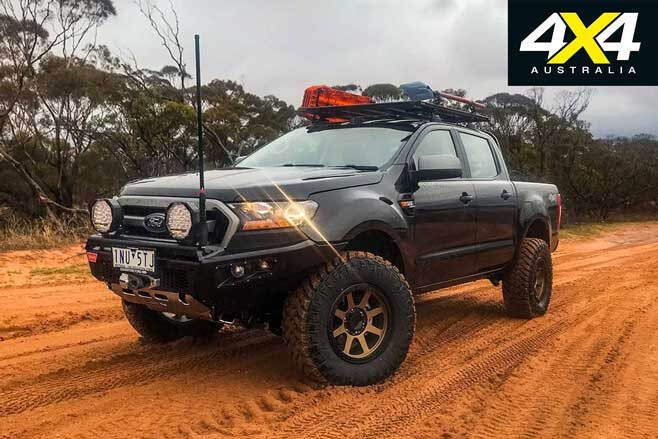
WHILE MOST of the cars we feature in our ‘Garage’ are our personal old bangers and long-term road-test vehicles owned by the car companies, this ‘newish’ Ford Ranger is actually ours to keep. Yep, the magazine owns it, and we’ll be kitting it out with some awesome gear over the coming months and using it on our adventures.
I say ‘newish’ as it is a 2018 PXII Ranger, but it was a demo model and arrived to us with only 250km on the clock. Basically, it has sat in a Ford dealership just around the corner from our HQ for the past eight months and barely been driven.
So we got a good deal, but it also ticked all of the boxes for us: a 4×4 Ranger with the 3.2-litre engine and manual gearbox were our only prerequisites.
Why a 3.2-litre with a manual transmission? Because that’s my preferred choice of Ranger engine, and I like manual gearboxes. We chose a Ranger because it’s currently the best-selling new 4×4 to private buyers and there’s a shed-load of great accessories available for it.
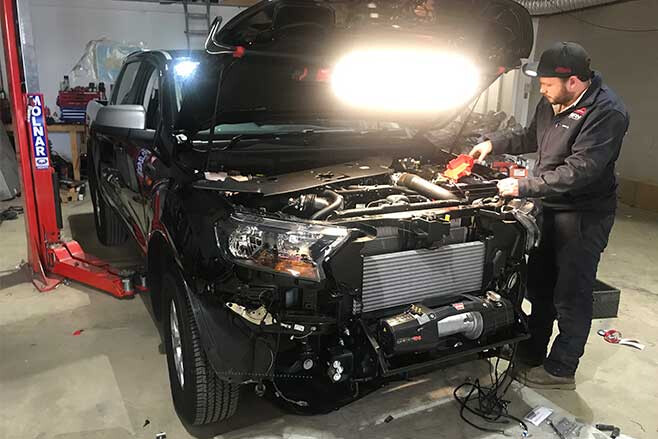
Before we even drove it off the lot we called Club 4X4 to cover the insurance, and we’ll be updating that policy regularly as more kit goes on the ute. Then it was straight down to our mate Phil at Ontrack Automotive in Ferntree Gully to have a Water Watch pre-filter fitted to catch out any contaminants in the diesel fuel.
With a deadline fast approaching on a Red Centre 4×4 adventure we took the car to the crew at No Limit 4×4 & Outdoor in Dandenong, where they installed an AFN loopless front bumper with full underbody protection plates, as well as a Warn Zeon 10-S winch and a pair of Bushranger Night Hawk LED driving lights.
Just around the corner from No Limit 4×4 is Freeway Car Audio Visual, and the Ranger went there to get a Cel-Fi phone signal booster from Powertec fitted.
Ironman 4×4 fitted a full suspension kit, including its Foam Cell Pro shocks and new forged alloy UCAs, plus a long-range fuel tank for added touring capacity. While it was up on a hoist we bolted on the bronze Wheel Pros KMC Addict 2 alloy wheels wrapped in Maxxis RAZR muddies, which should be tough enough to take on any terrain. They certainly look the part.
With a Rola Titan Tray roof rack up top and a MaxTrax full recovery kit on board, we hit the highway for Alice Springs. We’ll be reviewing these products and more on the Ranger over the next year or so, and it promises to be a lot of fun. We look forward to racking up the miles and bringing you these real-world reviews, so stay tuned.
Update 2: Hitting the tracks
We escape town to put our Ranger and its new accessories to the test in the Red Centre.
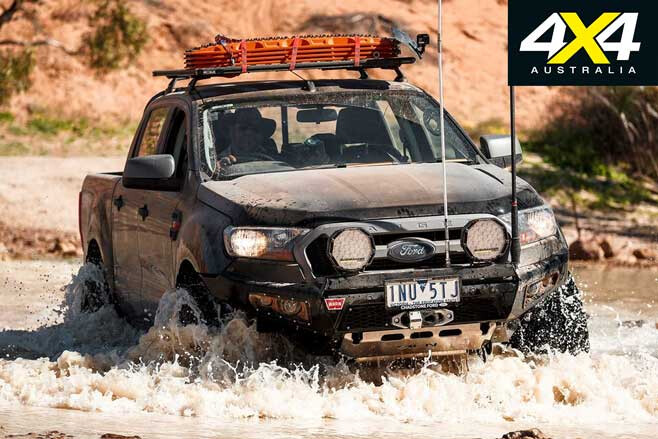
AS SOON as the last bolts securing the Rola Titan roof racks were tightened, and the winch rope and Factor 55 FlatLink were fitted, we were loading our Project Ford Ranger up with gear for a three-week trip to Central Australia and the Simpson Desert.
The tray area in the XLS-spec Ranger doesn’t have a 12-volt outlet, but the rear seats fold up neatly to provide a flat space that snuggly fits our 40-litre ARB fridge/freezer on one side and leaves enough space behind the passenger seat (and in the tray) for more cargo, including swags, camp chairs, stretchers and so on. Even though I was travelling solo, I was meeting a crew in Alice Springs and had all of their camp gear onboard.
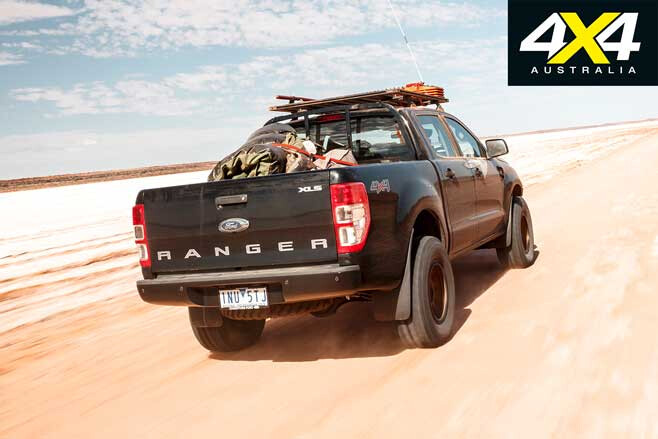
It was a highway run to Alice, with the Ranger easily eating up the miles; the Maxxis RAZR muddies humming along on the black-top, and tunes flowing from the Ford sound system. The Ranger XLS only has a basic stereo with two front speakers and no sat-nav in the dash, but it sufficed on long days on the tracks.
I’m normally a big fan of automatic climate-control systems, but the XLS misses out on this feature. Still, I was pleased with the ease of use of the old-school HVAC system and its big dials for temperature and fan control, as opposed to the tiny buttons used on the higher-spec XLT and Raptor models. The cabin of our low-spec Ranger proved to be a nice place to spend long hours on the road.
With the oversized tyres throwing the speedometer and odometer out by around five per cent, and the Ironman 4×4 long-range fuel tank leaving the fuel gauge imprecise, we couldn’t get accurate fuel-use figures, but we estimate it was returning around 13 to 13.5L/100km on the highway. The 140-litre tank provided around 900km of safe fuel range.
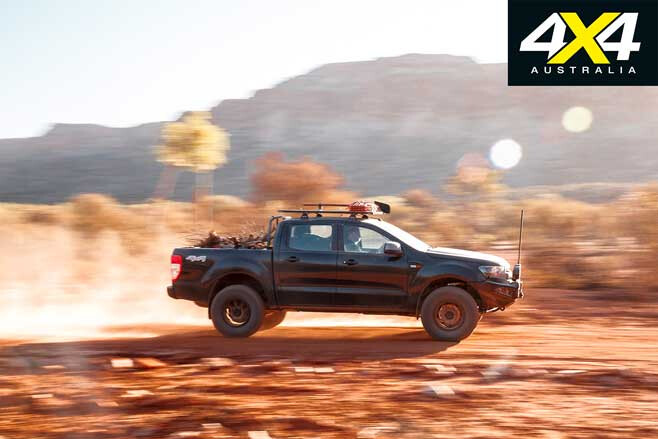
Once in Alice Springs we dropped into Ironman 4×4 fitters, Stuart Highway Auto, for a spanner check of the new suspension. This is always recommended at around 1000km after installation, and we’d logged up more than 2300km heading to Alice. It all checked out okay, and it was then only a matter of picking up the crew and heading on our way.
You’ll read more about our Red Centre adventures, as well as reviews of the gear fitted to the Ranger, in upcoming issues of the magazine. We’ll also tell you how well the Ranger took on the deserts. With it now back in Melbourne, it’s overdue for its 3000km service; plus, we have more gear to be fitted before we leave the black-top behind for another trip.
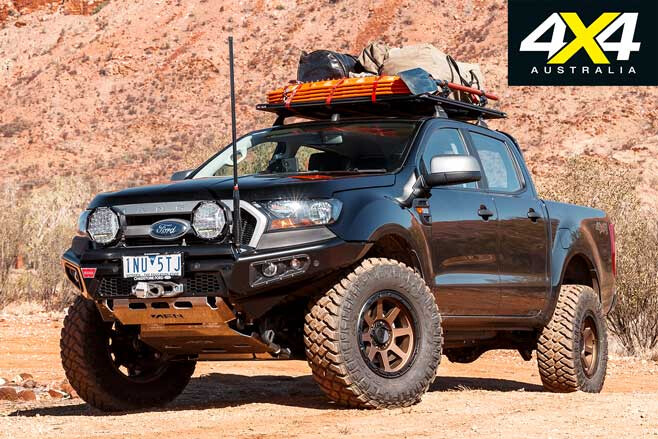
4×4 Shed Log 1: 2018 Ford Ranger XLS Current mileage: 6112km Date acquired: June 2019 Price: N/A Mileage this month: 5737km Average fuel consumption: N/A
Update 3: Geared up
The Ranger gets its first service and more accessories.
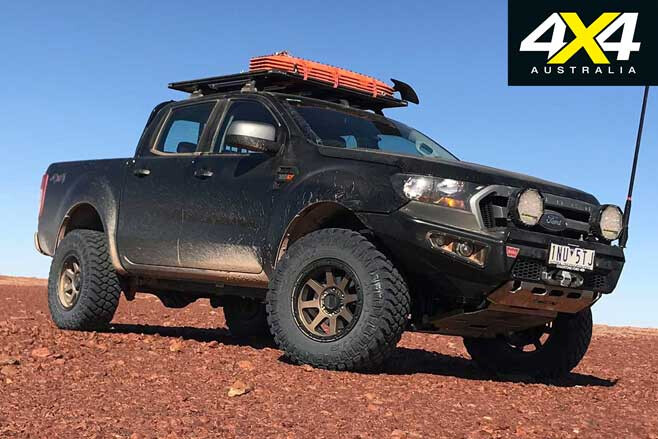
With the Ford Ranger back in town after the Central Australia trip, it was way overdue for its 3000km service. This is a complementary service from Ford and is basically a check-over to make sure everything is running right. We had a couple of small things that needed attention while it was in the shop.
We ordered a set of factory colour-coded flares to cover the bigger Maxxis tyres we’d fitted, but they didn’t arrive before the trip so the Ranger was running with a bit of tyre poke on that run. These arrived at the dealer and were fitted while it was in for the service. The flares cover the tyres now and it shouldn’t spray so much mud up the sides when driving off-road, as it did in the desert.
While we were away we had a sway bar link rattle loose from the front left upright, and this allowed the bar to drop onto the CV joint and tear the rubber boot. Most of the outback trip was done with the sway bar removed which wasn’t a problem, but the torn boot let dust into the CV joint so we asked Ford to replace that. This is a $690 part and replacing it along with refitting the sway bar meant that the service set us back $980.
The Ford dealer also replaced the inverter under warranty, as it started showing a fault and stopped working while we were on our trip.
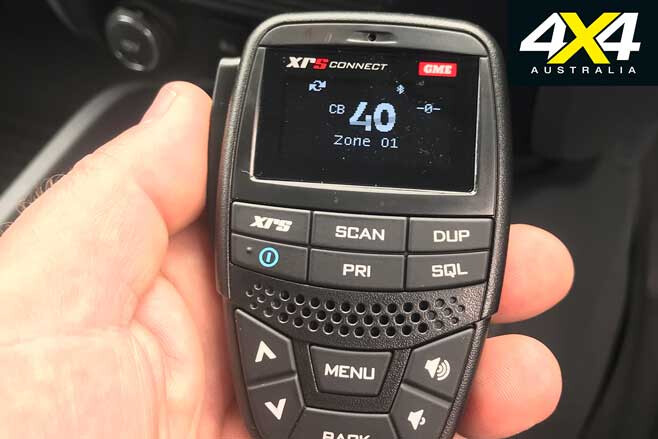
More accessories arrived at the office while we were away, so after the dealer visit we sent the Ranger back to Ontrack Automotive in Ferntree Gully to have the GME XRS 330CTP UHF kit ($629) and King Brown three-inch cat-back exhaust system (from $760) fitted. With a lack of space for additional switches in the Ranger’s cabin, we also fitted switch-panel fascia from Lightforce ($135) that gives us that facility while retaining a factory-fit look.
Lastly, a set of tough 3D floor mats from Tru-Fit carpets were installed to protect the factory carpets from dust and mud. We should have fitted these before the dusty Red Centre trip, but we’re heading to South Australia next month so they’ll be put to good use. These hard-wearing, waterproof ‘Maxtrac’ 3D mats fit like they were moulded directly to the floor pan, and the clever hook system on the back of them grips the carpet so they don’t move around in the footwell like many other mats do. The full set of mats for front and rear sells for $279.
With this new gear onboard we’re again loading the Ranger up for another adventure. This time we’re off for two weeks in the Flinders Ranges.
4×4 Shed Log 2: 2018 Ford Ranger XLS Current mileage: 6434km Mileage this month: 322km Average fuel consumption: N/A
Update 4: Ronny’s Ranger
Ron drives Our Ford Ranger on an outback jaunt. By: Ron Moon
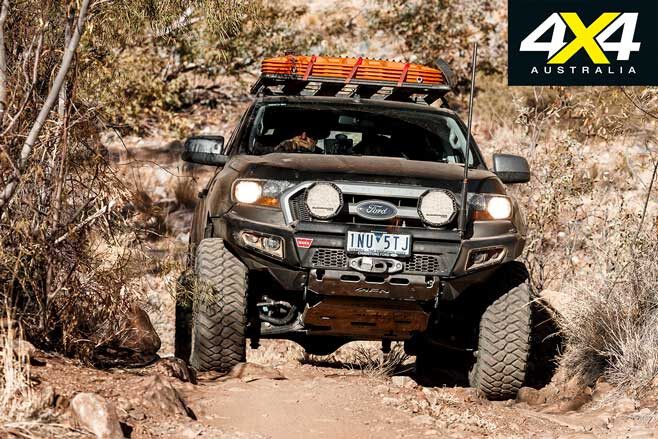
When I picked up the Ford Ranger from the 4X4 Australia office, it had been with the mag for a few months and had already seen a bit of outback action, but this was the first chance I’d had to drive it for more than an hour or two.
It’s a smart-looking beast, accentuated with a good-looking AFN front bumper that hides a Warn Zeon 10-S winch, while also wearing a pair of Bushranger Night Hawk LED driving lights. With a set of Wheel Pros KMC Addict 2 alloy wheels fitted with Maxxis RAZR muddies, and all propped up by an Ironman PXIII suspension kit with foam cell shocks and Pro Forge upper control arms, it certainly looks the business.
A Rola Titan Tray up top can hold a load of gear; although, we only seem to carry a set of MaxTrax, a shovel and the occasional swag up there.
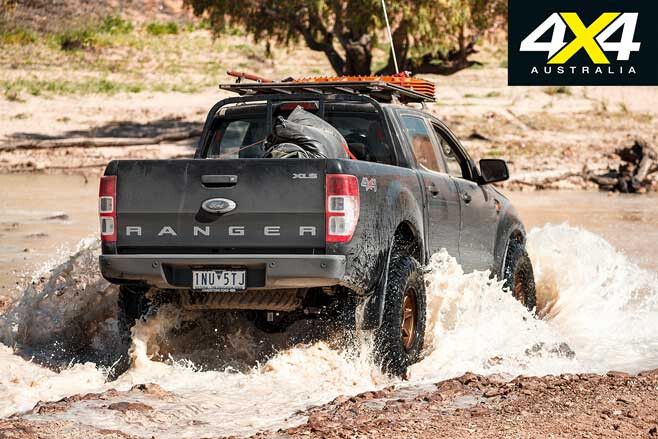
In the cab of the XLS-level Ranger you don’t get too much fancy stuff, but I kinda like it that way. It has air-conditioning and a stereo with a couple of speakers, which is more than sufficient to make long-distance cruising a doddle; and we’ve done a fair amount of that!
For inter-vehicle comms we have fitted a GME XRS 330CTP UHF radio, tucked away out of sight, with all the controls, mic and speaker on the handpiece. I don’t normally like such handset speaker mics, but I was surprised at the clarity, tonal and volume response from this unit; it is without doubt the best I have ever used.
So what were my impressions after two weeks of driving over 4000km or so under a variety of conditions and road surfaces? First up, while humming along over a variety of bitumen road surfaces, there was just the slightest feel of coarseness in the ride quality over what you get from a standard Ranger.
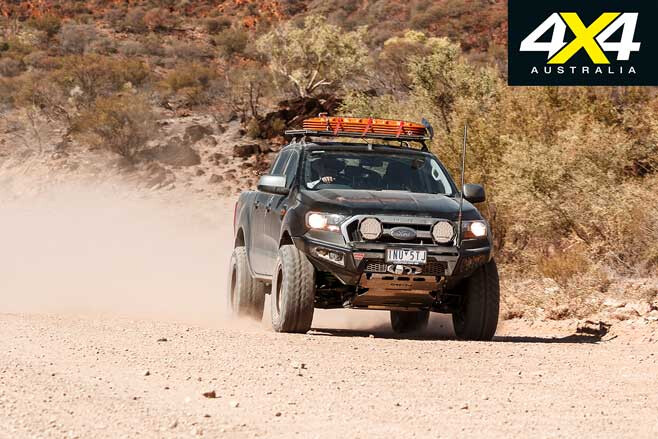
I put this down entirely to the difference in the tyre package over the standard, more road-orientated rubber fitment. I had also been driving a few vehicles in the previous few weeks all fitted with far less aggressive tyres than the Maxxis units, so it wasn’t any real surprise.
Still, it didn’t take much time before I was oblivious to the slight change in ride quality and the extra noise, and by the time we had clocked up a few hundred kilometres on a variety of dirt roads and tracks, where the tyres were in their element, any differences were really a non-issue.
What really impressed me with the Ironman 4×4 suspension package was the new upper control arms, which allow more clearance for the larger tyres we have fitted, and have resulted in improved ride and capability when in the rough stuff.
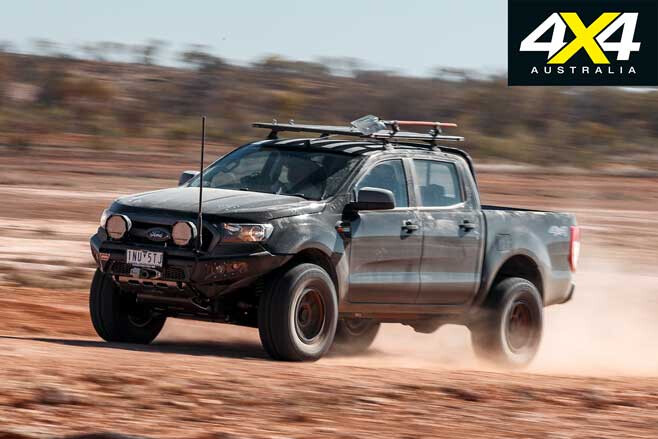
We found plenty of tracks in the Flinders that were rocky, with some good-size steps and some scrabbly sections of loose rock and deep bulldust. The tyres, combined with the improved lift and articulation of the suspension, made this the best, most capable Ranger I have driven off-road.
On high-speed dirt, or through long sections of fast corrugations, the suspension package exhibited good control and as good a ride as you can get in such circumstances, with no sign of fade from the hard-working foam-cell shock absorbers.
In all, it was a delight to drive … and I didn’t want to hand this smart-looker back. But the editor insisted!
4×4 Shed Log 3: 2018 Ford Ranger XLS Current mileage: 10,434km Mileage this month: 4000km Average fuel consumption: N/A
Update 5: Box and Dice
Our Ranger gets its canopy fitted and then heads for the hills on the NSW North Coast.
We had to pry the keys to the Ranger out of Ronny’s hand after the Flinders Rangers trip, where he sounded suitably impressed with its performance in the rocky terrain. It had a date with a new body back in Melbourne, as one of the major components of the build was ready.
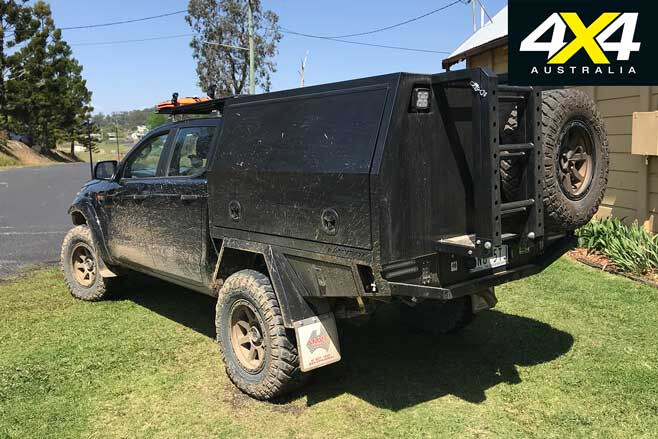
From the outset we wanted to fit a full aluminium box body to the back of the Ranger, and Jamie and his team at Allsafe Mine Vehicle Equipment in Brisbane (AMVE) designed a unit specifically for us. AMVE has done a few canopies for Rangers and BT-50s in the past, and they are all built to order to perfectly suit the customer’s needs.
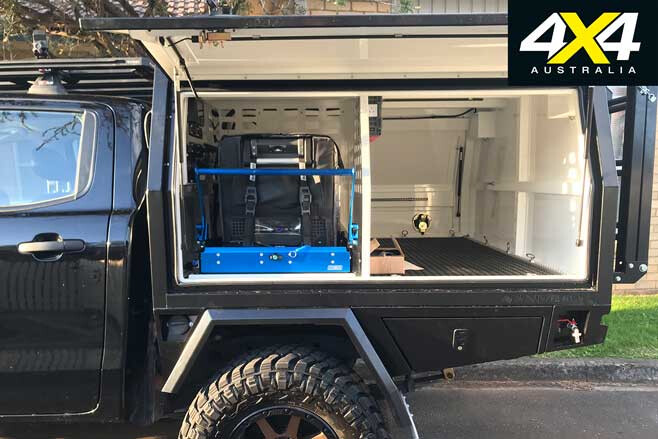
We were conscious of weight in our build, and a full aluminium replacement body – not one that sits on a tray – is the best way to maximise space while limiting additional weight. In fact, by the time you remove the Ranger’s original steel ute tub and replace it with the AMVE aluminium body, there’s not a whole lot more mass to it.
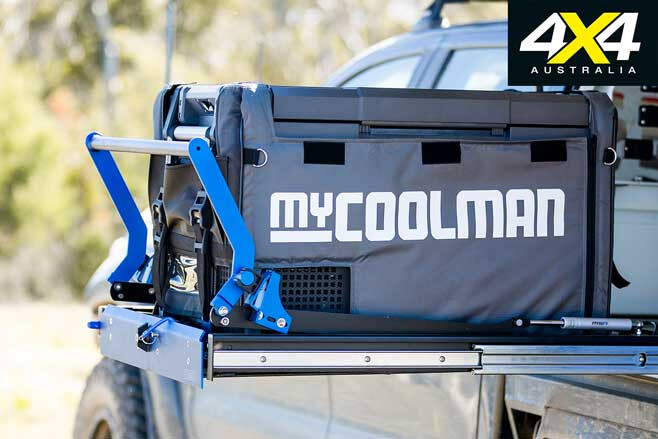
We kept the internal features to a minimum with just an MSA Drop Slide to mount the myCoolman fridge, a full Redarc power system including a BCDC charger, 2000W inverter and RedVision control centre, and a bank of lithium-ion batteries. That left us with plenty of space for swags, Pelican cases and such. We’ll have a full review of the AMVE canopy in the mag soon, but suffice to say, we love it so far.
No sooner had Jamie fitted the canopy with some help from the team at the TJM Dandenong store, including use of their workshop, the Ranger was back on the highway headed for another adventure.
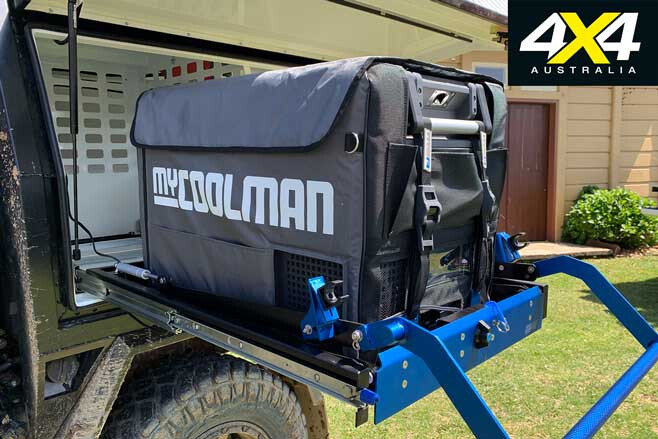
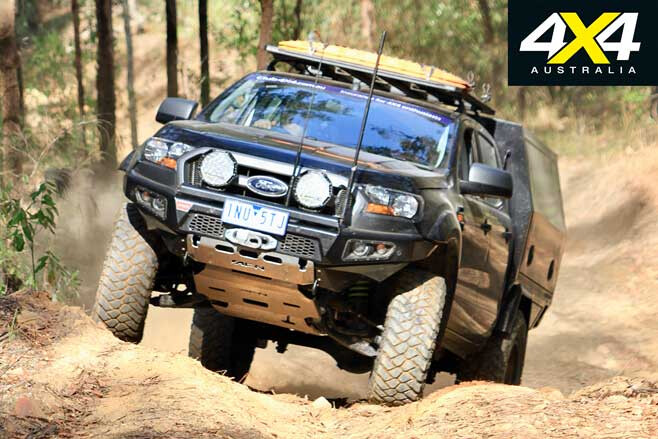
Each year we invite a handful of our supporters away on a trip for a few days of off-roading and just hanging out. No business talk, no video BS, just good vibes for days. This year we headed for the hills west of Coffs Harbour, where the forests hide all manner of terrain.
Plenty of steep climbs, ruts and washouts, with a bit of local history thrown in thanks to our guide Kevin Smith. This is just the sort of driving the Ranger has been built for and it does it easily. The only thing to complain about is its crappy, old phone Sync system that constantly cuts out, requiring you to unplug and re-plug the USB, interrupting the good vibes when highway touring.
4×4 Shed Log 4: 2018 Ford Ranger XLS Current mileage: 13,666km Mileage this month: 4250km Average fuel consumption: N/A
Update 6: Tow Ready
More pieces to the puzzle for our Ford Ranger
The RANGER hasn’t seen much action this month since we got back from the advertisers’ trip in Coffs Harbour (Summer 2020 issue). However, we’ve managed to get some more pieces of the puzzle in place before we head out again.
With the AMVE canopy now in place we could head back to Hayman Reese/Rola to get the X-Bar rear bumper fitted. Up until now these have only been available to suit cab-chassis utes – and not those with a tub on them – which is why we had to wait, but there is a new ute tub version of the X-Bar now hitting the market.
Even so, the fitment to the back of our car wasn’t straightforward. We set up our canopy to sit low on the chassis and it hangs back a fair way behind the end of the chassis rails, which posed a problem.
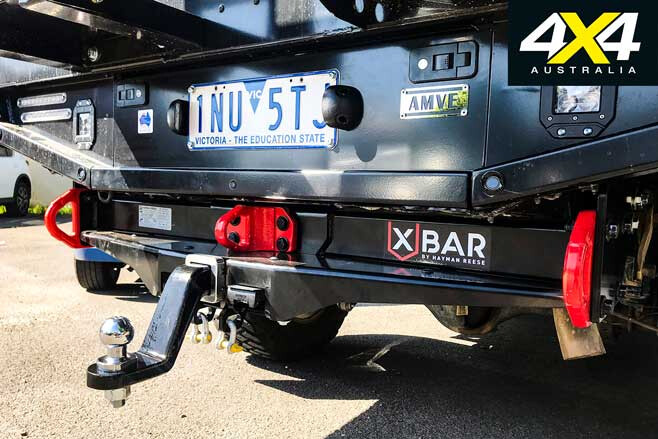
However, the guys at Hayman Reese sorted that out with some custom-made brackets that move the bar back and down a little. The great thing about the brackets is that they still leave the X-Bar high enough that it won’t infringe on the departure angle when we are driving without the towing hitch in place.
Our Ranger now has three solid, rated recovery points on the back for helping to drag other vehicles out of trouble. The centre recovery point on the X-Bar is rated to 8000kg, while the points at either end are 4000kg a piece.
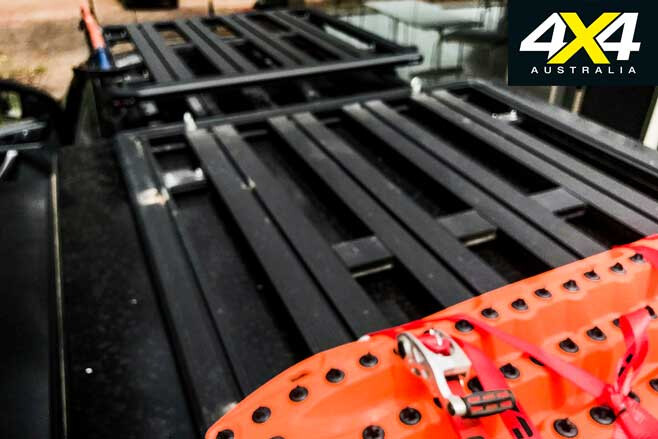
While it was in the shop we had the guys take the 1500mm-long Rola Titan tray off the Ranger’s cab and move it atop the canopy. This too required some custom mounts, as we wanted to keep the tray as low as possible, but the guys just modified the standard mounts to suit. They also fitted a shorter 1200mm tray above the cab, so now the Ranger has plenty of storage space, inside and out.
The next trip for the Ranger will be as a support vehicle on the 4×4 of the Year road test and, with almost 15,000km on the clock, it was time for a service. We again entrusted Chris and Phil at Ontrack Automotive in Ferntree Gully for this work and asked them to give the car a thorough spanner check. Chris noted the air cleaner was pretty blocked up and replaced both its element and the fuel filter as part of the service. This is why we prefer to have our car serviced by a specialised 4×4 workshop and not a dealer who doesn’t understand what we do with our vehicles.
Chris also fitted a ProVent oil catch can, to protect the intake from clagging up. This is essential equipment for any modern diesel four-wheel drive that uses an EGR emissions system, as they are prone to gunking up. We got our catch can in a complete kit from the team at Direction Plus.
4×4 Shed Log 5: 2018 Ford Ranger XLS Current mileage: 15,098km Mileage this month: 1432km Average fuel consumption: N/A
Update 7: Head for the Hills
The Ranger gets loaded up to serve as support vehicle for a trip to the Victorian High Country.
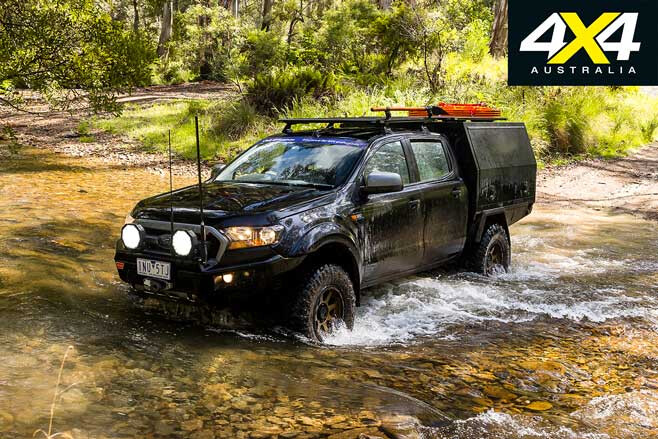
With its new Rola Titan roof racks, X-Bar and Provent catch can recently fitted, it was time to load up the Ranger and head bush again. Just a local trip this time, up into the Victorian High Country as the support vehicle for our 4X4OTY testing, but it was the first time out with the AMVE body loaded up.
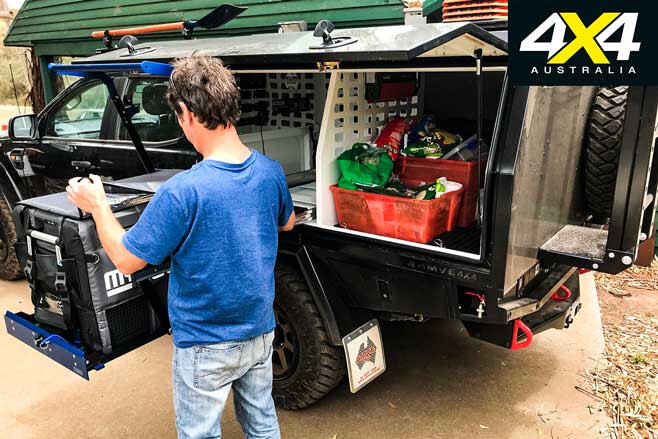
GT was using the Ranger for camp catering, so it was carrying all the food, drinks, water and cooking kit to keep 11 blokes fed and watered for a week. This included 30-odd litres of water in the AMVE water tanks and a myCOOLMAN fridge full of beers. It also had all the recovery gear onboard in case any of the new cars got stuck in the hills.
When we originally fitted the Ironman 4×4 suspension to the Ranger, the guys used relatively soft rear springs commensurate with the types of load we’d be carrying. We knew then that the AMVE body would be a few months off and didn’t want the Ranger to ride too hard, and we planned to fit stiffer springs once the body was fitted.
When the body went on and we drove the car to Coffs Harbour we liked the supple ride. The weight of the canopy didn’t seem to affect the suspension adversely, either, but now with the canopy loaded, the rear leafs were almost flat and it wallowed a bit when up in the mountains … time for those stiffer rear leafs in the New Year.
The Ranger chugged along at the back of the new-car convoy for a week without any dramas. We did bust off the power plug for the fridge when sliding it out on the MSA Drop Slide and this shorted out the Redarc unit, but nothing that can’t be fixed. We want to wire the fridge power directly into the RedVision unit anyway, along with a few other new accessories to be fitted before the next jaunt.
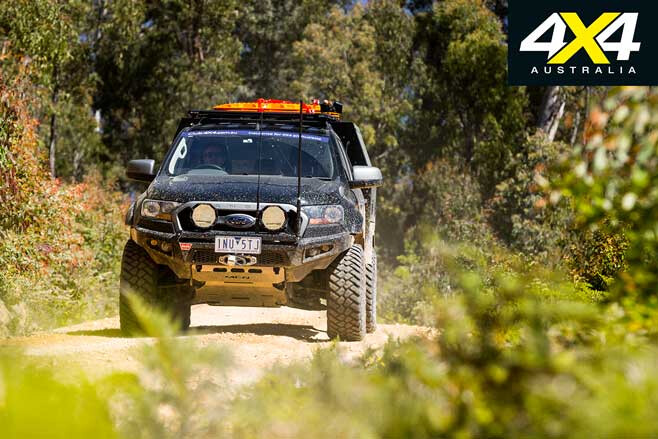
4×4 Shed Log 6: 2018 Ford Ranger XLS Current mileage: 15,585km Mileage this month: 487km Average fuel consumption: N/A
Update 8: Rear Renewed
The Ranger gets new leaf springs and shocks for the back end.
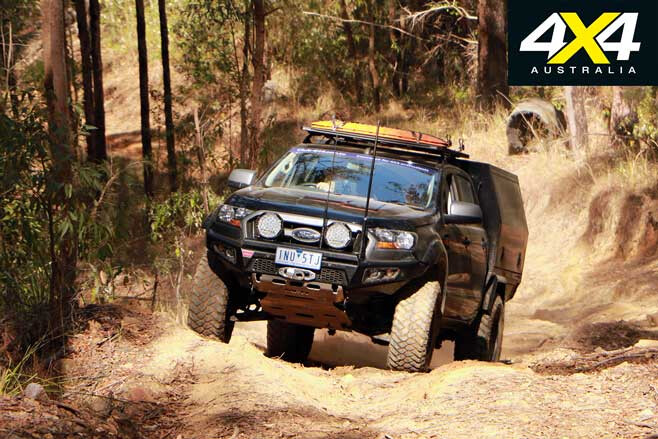
No action for our Ranger over the New Year period as it was parked up for the holidays, but no sooner than we were back in town and it was in the shop getting new parts fitted.
First stop was back to Ironman 4×4 HQ in Dandenong to get the rear leaf springs replaced. When we first had the Ironman suspension fitted it was set up with the standard tub on the back, not the AMVE aluminium canopy. With the canopy on and loaded the medium rate (200kg to 400kg) leafs were at their limit so they’ve been replaced with Ironman’s Constant Load springs rated to 400kg+.
The team at Ironman 4×4 also upgraded the rear shocks to match the higher-rated springs, again using the company’s Foam Cell Pro shocks, but with the new Professional Valving which offers improved performance under heavier loads.
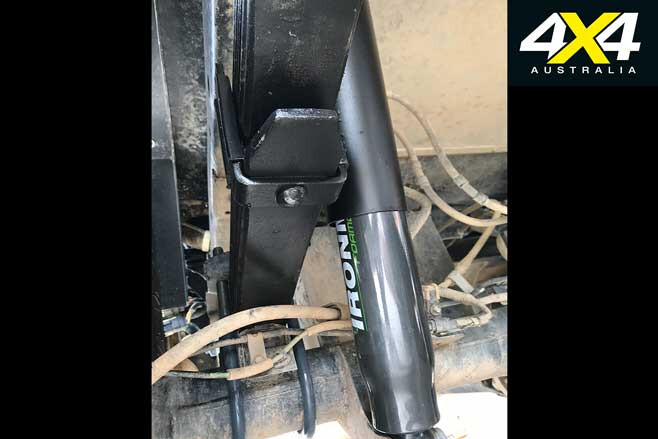
Released late in 2019, the Professional Valving shocks are designed for those who use their vehicle as a fully loaded workshop on wheels or regular tourers who load up for extended off-road adventures. The Professional Valving Series dampers are available across Ironman’s Nitro Gas, Foam Cell and Foam Cell Pro ranges.
Our tenure with the Maxxis RAZR muddies is up and after a little more than 15,000km on them I’ve got to say we have been very impressed. They’re relatively quiet on road, never struggled off road, and suffered no punctures or signs of damage after some torturous rocky tracks in the Flinders; they’re right up there with my favourite mud-terrain tyres, and at a price that comes in a fair bit cheaper than the competition.
We have replaced the RAZRs with Goodyear’s MT/Rs, again in the 285/70R17 size. I’ve had great service out of the old-style MT/Rs going back a few years so I’ll be keen to see how these newer ones perform on and off the road.
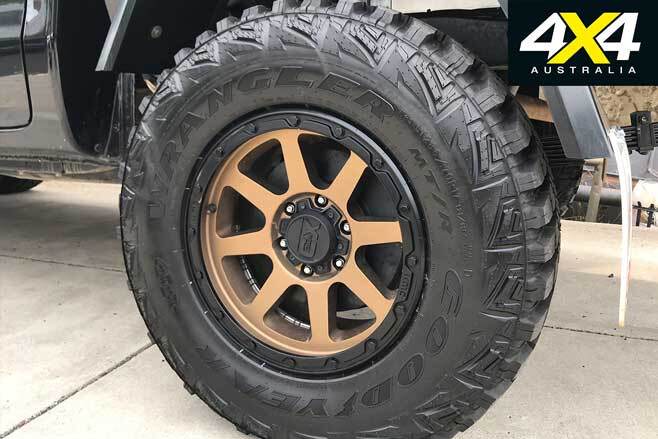
Initial impressions of the new rear suspension and Goodyear tyres has only been from ferrying it around town, but so far so good. We’ll have to wait until we load it up for a few more off-road kays before we can give a full report.
Before we head off again we’ll fit a set of MSA 4×4 adjustable towing mirrors and we’ll swap out the driving lights with a new setup.
4×4 Shed Log 7: 2018 Ford Ranger XLS Current mileage: 15,859km Mileage this month: 274km Average fuel consumption: N/A
Update 9: Branded!
The Ranger gets new gear from Narva and MSA 4×4, before being branded and sent to Tasmania.
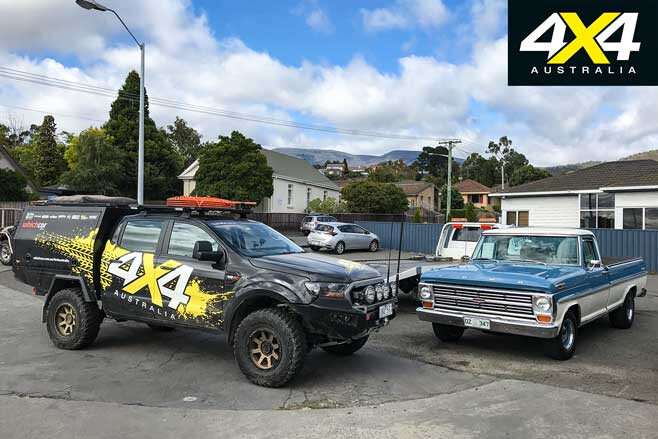
Before we sent the Ranger off on its first adventure for 2020 we had a few bits to fit to it. After installing the new Ironman 4×4 rear springs and shocks and Goodyear MT/R rubber, it went back to Phil at Ontrack Automotive to replace the driving lights with a new combo from Narva, update the Redarc Redvision system and install a long-awaited set of MSA 4X4 towing mirrors.
We’ve been lucky enough to follow the development of the MSA 4X4 mirrors since their early prototypes and knew back then that these would be an exciting addition to the market. They offer buyers a larger mirror that is extendable for use when towing yet they aren’t as big and ungainly as some of the US pick-up truck style towing mirrors. In fact, with them folded in they look just like OE offerings.
We’ve seen the prototypes go through months of testing and development and were keen to see them come to market. Once we had the AMVE aluminium body fitted to the Ranger we knew we needed a set as the aluminium canopy is wider than the old tub, restricting rearward vision.
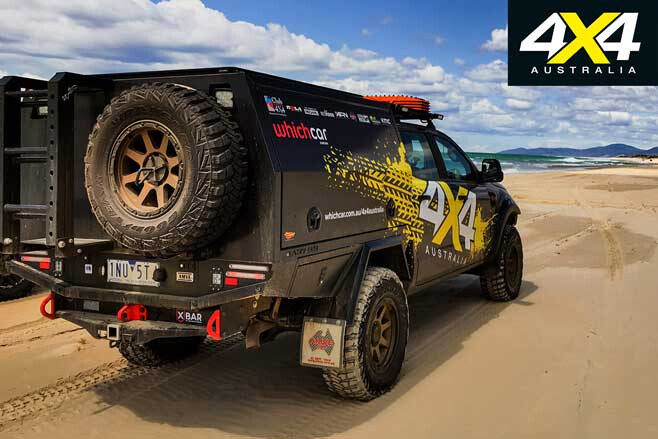
The MSA 4X4 mirrors finally arrived to market over the New Year break and we had them fitted ASAP. Even on the drive back from Phil’s workshop the better visibility via the MSA 4X4 mirrors was evident. We’ll have a full review on these once we’ve put some more miles on them.
From the outset of the Ranger build, I wanted the AFN 4×4 loopless steel bar with a quartet of smaller LED lights across the front. Bushranger wanted us to try out its Nighhawk driving lights first and we were very impressed with them and their variable power output, but I still wanted the smaller lights. I have a pair of Narva Ultima LED 180s fitted to my Land Cruiser and thought they would be the perfect size for our Ford. Ontrack fitted the four of them for us and we’re keen to give them a blast at night.
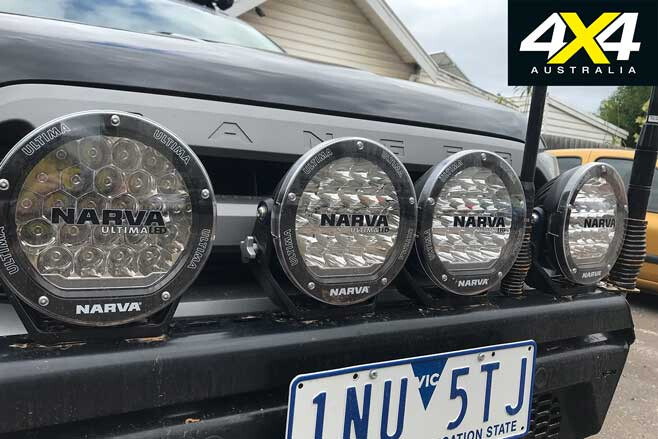
Ontrack also fitted four slimline Narva LED work lamps to the Rola Titan roof tray to use when we are in camp, and these have been wired in through the Redarc Redvision system. This allows them to be switched individually for the driver or passenger side of the car via the Redvision control panel which is mounted in the canopy, or via the Redvision App on a mobile phone.
Lastly, we sent the Ranger down to the team at Fleeting Image for the vehicle wrap and branding that will ensure the Ranger doesn’t go unnoticed wherever it is driven, before Deano loaded it up and joined Ron Moon and the crew for a trip to Tasmania. We’ll see how the Ranger performed in Tassie when the crew get back from their adventure.
4×4 Shed Log 8: 2018 Ford Ranger XLS Current mileage: 15,894km Mileage this month: 35km Average fuel consumption: N/A
Update 10: Tassie Tiger
The Ranger completes its lap of Tasmania.
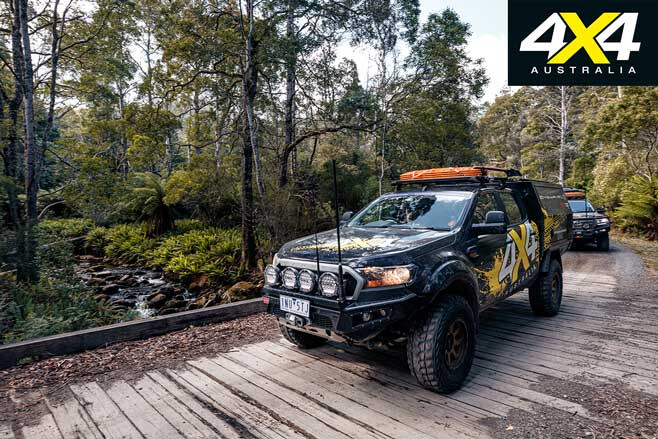
The Ranger scored several upgrades prior to its Tassie trip, and when I picked it up in Melbourne from Editor Matt Raudonikis it looked resplendent in its new 4X4 Australia wrap, applied just in time by the team at Fleeting Image.
As well as the gear already fitted to the Ranger, new stuff for the Tassie trip included a set of Goodyear MT/R tyres, four new Narva Ultima 180s, MSA 4X4 towing mirrors and upgraded 500kg constant-load Ironman 4×4 springs in the rear. These upgrades added to the Ranger’s existing arsenal of 4×4 touring gear which includes an aluminium AMVE canopy with a built-in water tank, Revolution Power lithium batteries, Redarc battery management system including a RedVision controller and 2000W inverter, a myCoolman 60L fridge, an MSA 4X4 drop slide and Rola roof racks with Narva work lights.
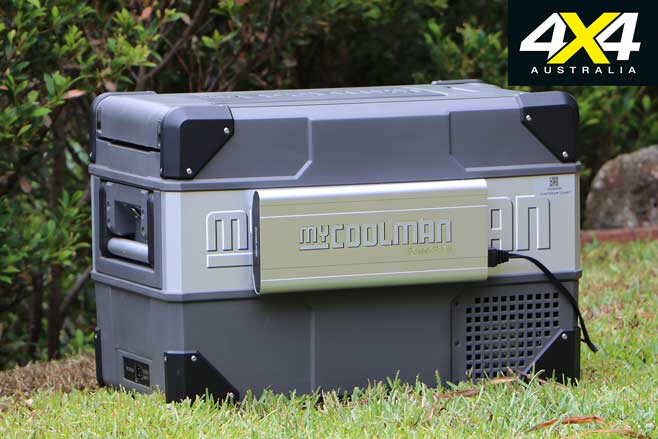
Having not driven the 4X4 Australia Ranger before, I knew that all this kit would take some getting used to, but the first thing I learnt about was an OE Ford feature: the vehicle’s perimeter alarm with motion sensor. The Spirit of Tasmania I had barely got underway when I heard a car alarm sounding from the bowels of the boat, and then the call came over the loudspeaker system: “Would the driver of Ford Ranger registration number 1NU-5TJ please head down to Deck 5 to turn off their alarm?”
I went below decks and one of the ship’s staff guided me through the Ranger’s menu system so I could quickly turn off the motion sensor. Over the next 30 minutes or so another half-dozen Ranger/BT-50 owners were called downstairs to perform the same task.
Once off the ship we had a highway run to Lonsdale before setting up camp in drizzling rain. As well as my swag, clothes bag and camp chair, the canopy was jam-packed with photographer Ellen Dewar’s gear, along with some other stuff Matt had thrown in there for the trip including recovery equipment, a shovel, four MaxTrax, an (ancient) air-compressor, a power lead, a hose, a couple of other camp chairs and a few other bits and pieces. Sorting everything out would have to wait until morning.
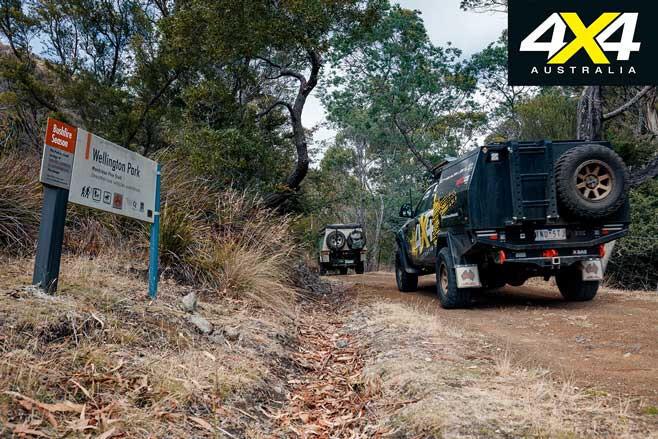
The next day we had a bit of time up our sleeves so I pulled everything out of the Ranger and repacked it to easily find stuff when needed. I also tried to familiarise myself with the operation of the Redarc RedVision system and I downloaded the RedVision app so I could operate it via my phone. I also mated my phone’s myCoolman app to the 60L fridge so I could monitor and adjust cabinet temperature remotely as required. Sure, a lot of these things sound gimmicky, but once you’ve used them, you’d be amazed at how easy they can make life.
Once fed and packed, we soon found ourselves on winding country roads to Jacob’s Ladder. It continued to rain for much of the morning and the Goodyear MT/Rs offered surprisingly good grip on wet bitumen, no doubt partially attributed to their asymmetric design with plenty of sipes on the outer tread area. I was also impressed by the Ranger’s laden ride quality, which felt firm enough to offer good control yet compliant and comfortable over bumps.
The Ranger’s five-cylinder engine has loads of bottom-end torque, and it works well with the slick-shifting six-speed manual gearbox. The clutch is light and progressive and there’s a gear for all occasions.
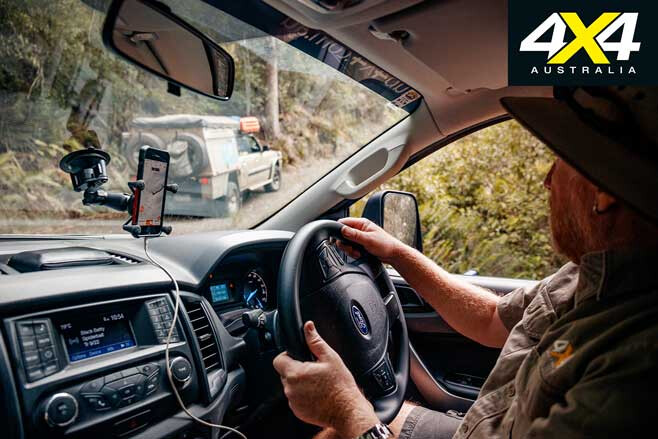
On the highway I found myself using fifth gear more than sixth, as the latter is quite tall and doesn’t really lend itself to speeds below 100km/h, and fifth is tall enough for most highway touring scenarios anyway. I probably shifted up and down through the ratios more than necessary in the first couple days due to the novelty of driving a manual Ranger – most of the Rangers I’ve driven in the past have been autos.
Despite the amount of gear onboard, the Ranger felt light and nimble thanks to its firm suspension, good steering feel and more than adequate performance. I ran 35psi in the tyres on the bitumen and dropped down to 28psi once we hit the dirt, which offered a more compliant ride. The MSA 4X4 towing mirrors proved their worth when driving in convoy, as extending them afforded an excellent view to the rear which was handy when marking turnoffs and the like, and then retracting the mirrors in tight off-road spots to prevent them whacking on tree branches.
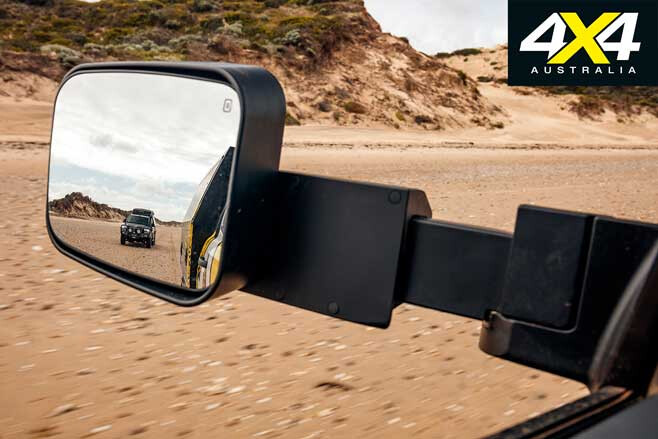
Once into gnarly off-road tracks, the Ranger really started to shine. The combination of strong bottom-end torque, excellent low-range reduction, ample ground clearance, good wheel travel and the grippy MT/Rs made light work of just about every type of terrain we threw it at.
On muddy tracks I ran the MT/Rs at around 22psi and then when we hit the beach I dropped them down to 16psi. The only time I had to go lower was on the run out to Sandy Cape Lighthouse in the Arthur Pieman Conservation area – the sand is super soft here in spots and after snatching our tucker truck out of a stuck predicament, I dropped the MT/Rs down to 13psi to avoid any potential for embarrassment.
Living out of the Ranger became easier as the trip wore on; we started to figure out the best places to stow gear and photographer Ellen and videographer Mark became accustomed to powering and charging equipment using the RedVision system and the 2000W inverter.
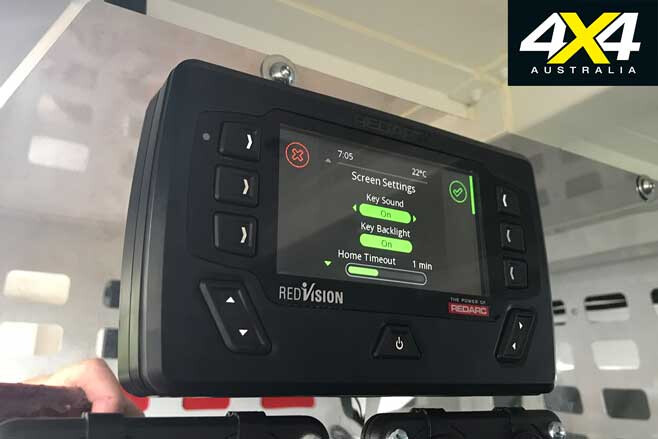
Having the Redarc RedVision on the wall behind the fridge isn’t ideal, as it can be a little hard to access, but this can be overcome when connected via the Bluetooth app. And being able to switch the work lights on and off from a smartphone is fantastic when you don’t want to get out of your swag. The multicoloured LED strip lights fitted to the canopy awnings were also great, as the yellow mode provided light without attracting insects.
There’s no doubt that dual-cab utes make for great 4×4 tourers, especially when set up right, and while there are a couple of minor things I’d change on the 4X4 Australia Ranger, I reckon it’s almost spot-on.
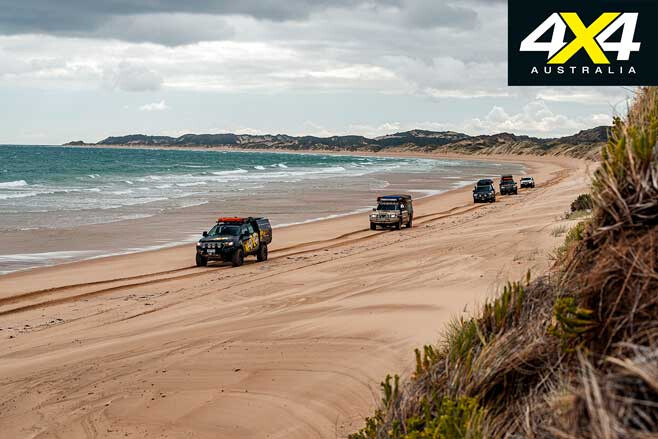
4×4 Shed Log 9: 2018 Ford Ranger XLS Current mileage: 18,359km Mileage this month: 2500km Average fuel consumption: N/A
THANKS TO
www.redarc.com.au www.club4x4.com.au www.amve.com.au www.atecoequipment.com.au www.maxxistyres.com.au www.wheelprosaustralia.com.au www.ironman4x4.com www.pxwholesales.com.au www.afn4x4.com.au www.bushranger.com.au www.ontrack4x4.com.au www.titantray.com www.maxtrax.com.au www.powertec.com.au www.gme.net.au www.lightforce.com www.pacemaker.com.au www.3dmats.com.au www.x-bar.com.au www.mycoolman.com.au
Expedition 4×4 specialists, Arctic Trucks, have made a name converting Japanese utes and 4×4 wagons into polar-region-bashing expedition vehicles, and this time the Iceland-based company has turned its attention towards outfitting a Ford F-150.
The donor F-150 Lariat copped what Arctic Trucks designates as the ‘AT44’ treatment or ‘Arctic Truck 44 inch’, pertaining to the fitment of massive 44-inch Nokian winter tyres.
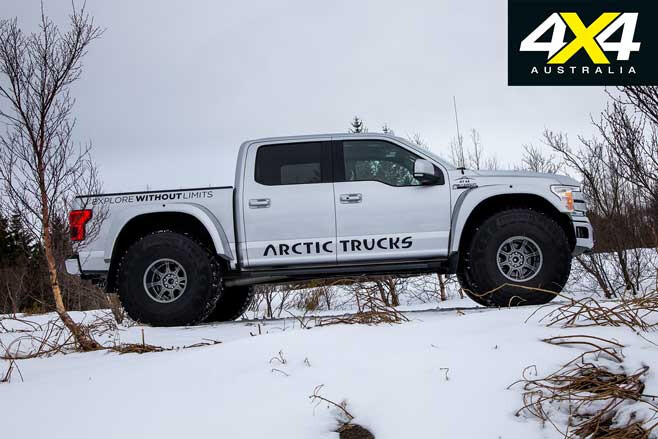
To accommodate those tyres, Arctic Trucks technicians cut and removed the F-150’s wheel arches to give it enough clearance for the wheels and replace it with the fenders used for its Hilux AT44 builds.
Aside from the bigger wheels and wheel arches, the F-150 AT44 retains the same 280kW/637Nm 3.5-litre turbocharged EcoBoost V6 petrol and would only need a suspension upgrade to prepare it for any serious 4×4 expeditions.
According to Emil Grimsson, Arctic Trucks’ chairman, the F-150 was not considered as an ideal base for one of its expedition vehicles until Ford started making it lighter with the use of aluminium in its construction.
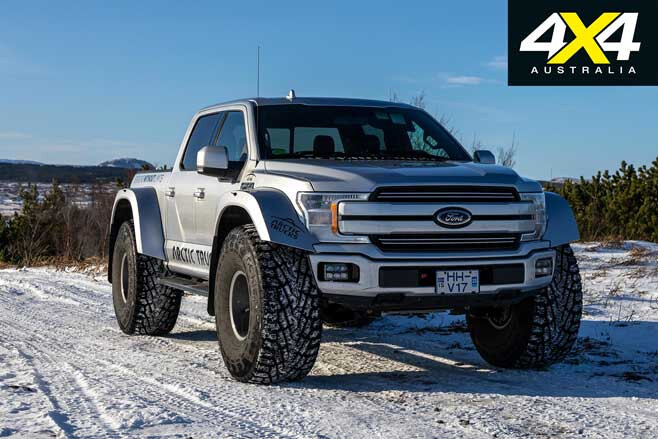
For the conversion, Grimsson chose the Lariat spec, rather than the high-performance F-150 Raptor, as it was able to retain its street-legal status in Iceland, even with the fitment of the massive 44-inch tyres.
With a track width of 1877mm, the F-150 Raptor is a whole 160mm wider than the Lariat-spec F-150.
For now, Grimsson plans to continue testing the F-150 AT44 and prepare it for future expeditions in Antarctica before the end of 2020 or mid-2021.