
THE corks keep popping over at Range Rover for its 50th birthday celebrations, with the British marque unveiling the limited-edition Range Rover Fifty.
In a nice touch, the run will be limited to just 1970 vehicles globally to pay homage to the year the original Range Rover was launched.
Now in its fourth generation, the Range Rover first arrived in Australia in 1972. Click HERE to read all about the brand’s 50-year history.

“In the world of luxury vehicles, the Range Rover has always stood apart as peerless and enduring,” said Gerry McGovern, Land Rover’s Chief Creative Officer. “Its unique and pioneering sensibilities together with an unrivalled engineering approach have been the intrinsic values which our customers have admired since the first of the breed was revealed in 1970.”
The limited edition Fifty is built on the SWB Autobiography platform, with the addition of bespoke ‘Auric Atlas’ exterior accents and the choice of two unique 22-inch wheel designs.
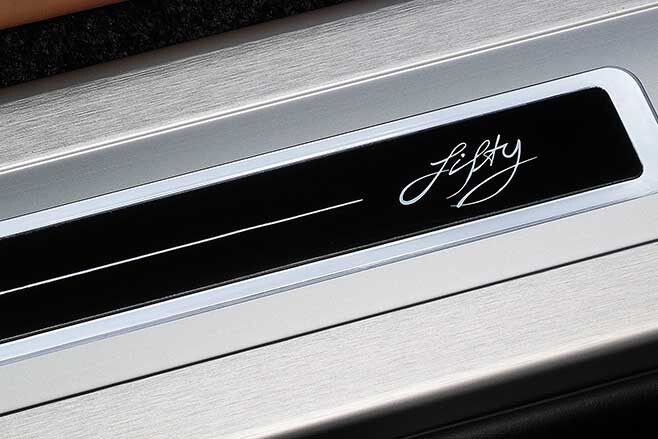
Giving the Fifty a heightened sense of distinction is the badging, which features a ‘Fifty’ script personally penned by Gerry McGovern. The script appears on the exterior, as well as on the headrests, dashboard, illuminated tread-plates, and on a unique ‘1 of 1970’ centre console commissioning plaque.
A handful of limited edition Fifty vehicles will be available in Australia, in SWB configuration. They will be powered by the 386kW/625Nm 5.0-litre supercharged V8 engine. The V8 Auto SWB it’s based on is priced at $274,210.
Four colours are available: Carpathian Grey, Rosello Red, Aruba, and Santorini Black.
IN A VIDEO recently uploaded to the NBN Television Facebook page, two vehicles can be seen absolutely sending over a sand dune at Stockton Beach in Newcastle.
Source: www.facebook.com/watch/nbntelevision
Luckily, it seems nobody was hurt performing the incredibly stupid – and illegal – stunt, with the only casualties most likely being destroyed suspension and a totalled Lexus – good luck getting insurance to cover that…
The Ford Ranger Raptor fared much better than its SUV counterpart – albeit, with much less air time – but its Fox shocks probably didn’t come out unscathed, either.
Hitting the apex of a sand dune at speed can be dangerous for two reasons: it can be followed by a potentially fatal fall; and facing skyward creates a huge blind spot, increasing the risk of colliding with approaching vehicles.
The problem with hooning over sand dunes isn’t solely a safety issue, either, as beaches can be closed for public access due to poor behaviour. This ultimately means law-abiding citizens are the ones who get banned from driving such tracks and areas. So remember, air down and play it safe!
The stunning Stockton Beach is immense, with a formidable sand-dune system stretching as far as the eye can see – some dunes are even said to be more than 100-feet tall.
Source: NBN Television
AMERICAN hydrogen-electric hybrid semi-truck developer, Nikola Motor Company, has revealed its first entrant into the zero-emissions pick-up truck ring, the Nikola Badger, is coming to Australia.
The company’s founder and executive chairman, Trevor Milton, also confirmed via Twitter that the EV pick-up will be available to pre-order in the USA from June 29, 2020.
“We open up reservations for the most bad ass zero emission truck on June 29th,” said Milton. “See the Badger in person at #nikolaworld2020 this year.
“You’ll get to see a real operating truck, not a fake show truck. Expect stamped metal panels, functioning interior w/ HVAC, 4×4, etc.”

Milton also posted a pre-production interior CAD of the Badger, adding: “Notice the floor mounting system? It’s throughout the truck and made to secure any loads within the vehicle safely. See quality of everything – waterproof. Hidden Fridge too.”
According to Nikola, the Badger is designed to accommodate either a 120kW hydrogen fuel-cell powertrain or a pure 160kWh battery-electric system. Both systems are said to deliver a claimed peak power output of over 675kW, 339kW of continuous power, and 1329Nm of torque.

While these figures land the Badger in-between Rivian’s 522kW/1120Nm R1T and General Motors’ 746kW/15,592Nm Hummer, Nikola claims that its pick-up will be proficient at tackling off-road challenges and meeting the outdoor and towing needs of truck owners.
Some of the Badger’s operational targets include climbing grades of up to 50 per cent without motor stalls, launching from a 30 per cent grade without stalling, deliver a towing capacity of more than 3630kg, and be able to operate in -29°C environments without major performance or battery charge losses.
The Badger will also be outfitted with 15kW power outlets for tools and lights, which Nikola claims would be enough to “assist a construction site for approximately 12 hours without a generator”.

On top of that, the Badger will still do the scintillating electric performance times, with a 0-96km/h time of “approximately 2.9 seconds”, which is close to Tesla’s Cybertruck in its range-topping tri-motor form, and able to handle 0-160km/h launches with “minimal loss of performance”.
As for range, with the hydrogen-electric hybrid powertrain Nikola claims the Badger would have an operating range of 965km, while the pure battery-electric spec would be only able to achieve 480km of range.

“Nikola has billions worth of technology in our semi-truck program, so why not build it into a pickup truck?” said Trevor Milton, CEO, Nikola Corporation.
“I have been working on this pickup program for years and believe the market is now ready for something that can handle a full day’s worth of work without running out of energy. This electric truck can be used for work, weekend getaways, towing, off-roading or to hit the ski slopes without performance loss. No other electric pickup can operate in these temperatures and conditions.”
According to Nikola, the Badger would be built in conjunction with another OEM, though the party in question has yet to be revealed, as is its projected production date. The Badger is set to make its first public appearance at Nikola World 2020 in September.
Founded in 2014, the Nikola Motor Company started out developing all-electric utility vehicles and semi-trucks. The company later moved on to developing hydrogen-powered semi-trucks and has recently unveiled an all-electric and hydrogen-powered truck for the European market that will be built in partnership with Italian truck maker, Iveco.
Original article published 12/02/2020
WHILE MANY visitors to the Territory’s Top End focus their travels on the well-known Kakadu and Litchfield National Parks with both a short drive from Darwin, just 320km south along the Stuart Highway the city of Katherine has a few parks also worth your time.
Gregory and Nitmiluk National Parks are close to Katherine and each has its attractions to make your time there worth the effort. Nitmiluk NP borders on the southern edge of Kakadu NP and we chose to spend a couple of days there to extend our fly-in fly-out (FIFO) Top End visit.
If you’re coming from the southern end of Kakadu, Katherine is just 90km south of Pine Creek once you’ve hit the highway. If you’re lucky enough to be driving north on a bigger adventure, Katherine is 1200km north of Alice Springs or 685km from Tennant Creek.
Katherine is a large regional town with all the facilities to restock your vehicle for the next leg of your journey, including supermarkets, bottle shops and camping supplies. Gregory NP is 160km south-west of town, while Nitmiluk is accessible right from the edge of town making it perfect for our short visit.
GORGE COUNTRY
IF 4X4 tracks are what you’re looking for, Gregory NP is where you’ll want to head as there are no off-road tracks in Nitmiluk.
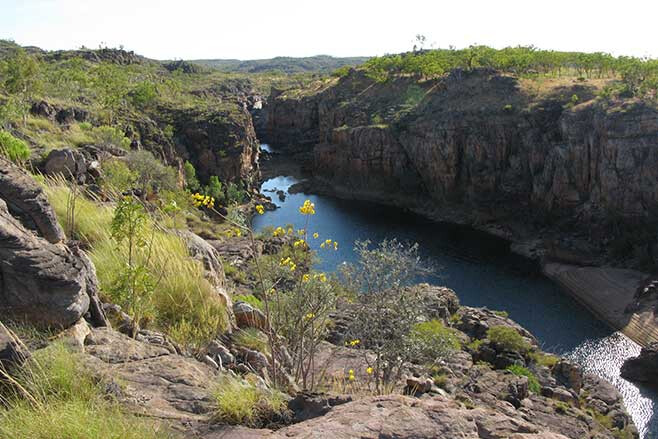
As mentioned, Nitmiluk covers the area from the southern border of Kakadu down to Katherine and takes in the escarpments and gorges created by the Katherine River. The main NP office and visitor centre is just 30km from Katherine at the southern end of Katherine (Nitmiluk) Gorge, the natural feature that the park is best known for. The visitor centre has a kiosk, information booth and is the kick-off point for activities such as boat, helicopter and walking trips in the gorge.
There are many walking tracks (including extended overnight hikes), campsites and other facilities in the park; the river and its gorge systems also popular for fishing, including for the prized barramundi.
JAWOYN GUIDES
The park is on the land of the Jawoyn traditional owners and uniquely, all the park rangers are indigenous folk, most of them from the Jawoyn people. We joined a boat tour heading up the gorge where the ranger was able to point out many points of interest, traditional art sites, and wildlife, including crocodiles which are plentiful in the lower sections of the gorge.
During the dry season, the gorge is broken up in to sections by natural rock fords which allow the rangers to search out and remove crocs from the upper reaches making them safer for visitors. This also allows park visitors to canoe or kayak in the gorge.
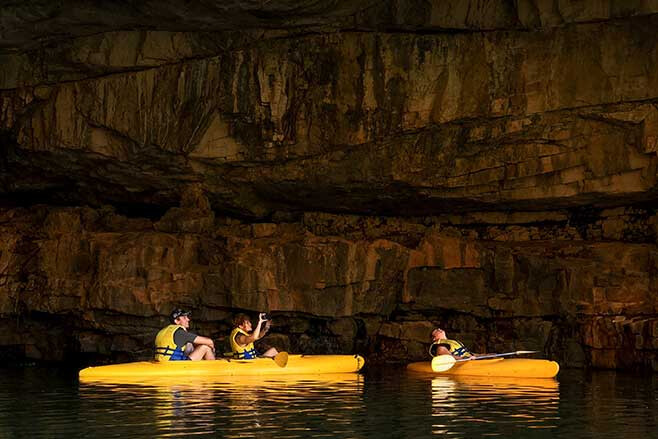
We hired kayaks from the visitor centre and the boat tour dropped us at the first ford from where we could paddle up the second section of the gorge. This is a truly unique experience as you slide through the waters below towering sandstone cliffs, passing beaches, inlets, and waterfalls dropping down from high above. Some of the beaches have signs on them warning visitors not to come ashore as these are known nesting places for crocodiles.
We paddled the 2.5km length of the second section of the gorge over a few hours before reaching the next ford. From here you can portage over the rocks to the third gorge and there are nine sections of gorge to explore in total traversing more than five kilometres with a few campsites along the way. But time was against us and we paddled back to the first ford to meet with the boat and return to the visitor centre.
Guided kayak tours are also available as are overnight camping trips up beyond the third and fourth sections.
From easing along the waters below the majestic gorge walls we took to the skies for a totally different look at the river system and its surrounds. Nitmiluk Scenic Flights fly from a base close to the visitor centre and offer flights of varying length and price to suit any visitor’s budget and schedule.
We did the Eight Gorge flight which took us over the reaches we had recently paddled and farther up the gorge over around 20 minutes. Again the pilot was super informative and pointed out points of interest along the way before putting us down on the gorge rim for a short leg stretch.
CROC WATCH
ONE OF the more interesting jobs the Nitmiluk chopper pilots do when not taking passengers on scenic flights, is scouting the gorge with park rangers after each wet season to find and isolate any crocodiles that may have entered and become trapped in between the rock fords while the water level was high. This involves flying low within the gorge walls to get the best view on the terrain below. The ranger can then trap and remove the crocs from these areas making them relatively safe for paddling and swimming.
Like anywhere in these parts no matter the season, you need to be croc safe and obey any warning signs or directives of the park rangers.
Viewing the gorge from above gives you a very different perspective of the area and the enormity of the river system. It also makes you think about how wild the river must be when millions of litres of water are surging through the gorge during the wet season.
All the exploring and paddling on the river sure builds up a hunger and we chose to checkout a spot for dinner that we spotted alongside the road from Katherine to the park.
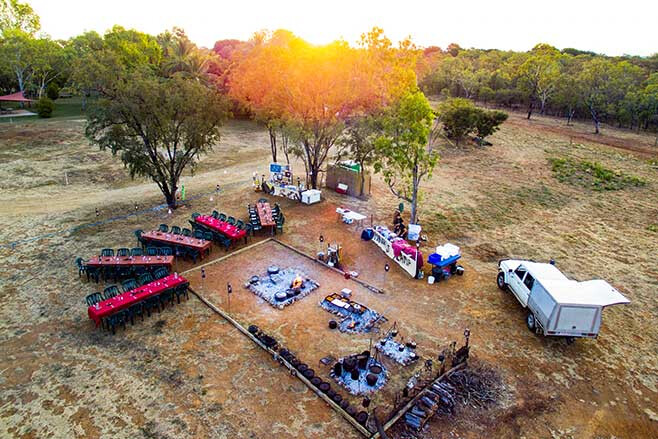
Marksie’s Stockman’s Camp Tucker takes visitors back to a time and place where the cattlemen worked the massive station properties of the Territory and the camp cook was the most popular bloke around.
Properties such as Victoria River Downs Station and Wave Hill Station covered thousands of square kilometres of land producing some of the world’s best beef cattle and employing hundreds of men. The stockmen’s camp cooks kept them fed and Marksie emulates these camps with his unique experience set under the stars just outside Katherine.
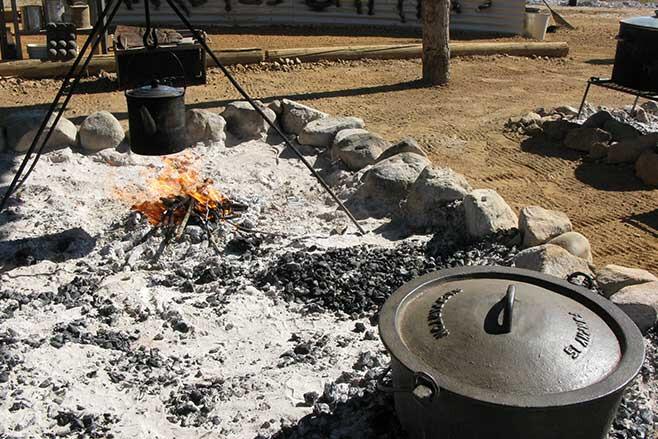
Using his massive collection of camp ovens, Marksie cooks up a mean stew using a selection of bush herbs which he explains in an entertaining talk before dinner. Served with fresh camp-oven cooked damper, the meal is tasty and filling but will have you going back for second and third helpings. Marksie’s stockman’s camp dinner is a great night out and a change from the usual pub fare in town.
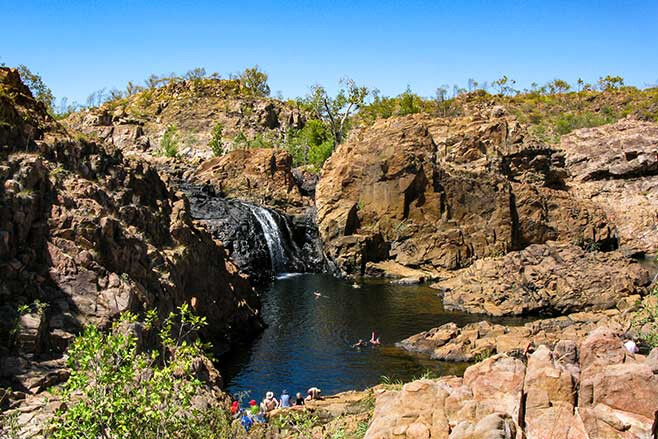
A popular walking track with multiple swimming holes can be found in Nitmiluk at Edith Falls (Leliyn). This is 42km north of Katherine and 20km down a road to take you back in to the park. Once again there are multiple walking tracks here at Edith Falls, but for the less energetic the massive plunge pool at the bottom of the falls has easy access close to the carpark and campground.
We chose to take the 2.5km Leliyn Trail which starts with a steep climb from the carpark and then loops down to the Middle and Upper pools, both of which have great swimming. For the more adventurous there’s a 4.5km walk (one way) to the Sweetwater Pool where there is the option of overnight camping.
The swimming holes were busy on the warm August day of our visit but there’s plenty of space to enjoy the cool waters beneath the rocky falls, before completing the loop track back down to the plunge pool and carpark.
There are unpowered campsites at Leliyn and a kiosk that serves a pretty good range of food. The campgounds can get busy during the peak season of May through to September so it’s best to book ahead to avoid disappointment on arrival.
If you’re on the road up the Stuart Highway and don’t have time to stop in Katherine or visit the gorge section of Nitmiluk NP, then a few hours spent resting in the pools at Leliyn would make a refreshing break from travel with just a short detour. For us it meant the end of our Top End Winter Escape and a 3½-hour drive back to Darwin for return flights to the freezing southern states.
For many travellers, Katherine might be just a fuel stop on the Stuart Highway but take the time to explore its parks and surrounds and you’ll find that Katherine can be a destination in itself. At the very least it’s worth a few days to experience what Nitmiluk has to offer.
At the time of writing both Nitmiluk NP and Marksie’s Stockman’s Camp Tucker were closed due to COVID-19 restrictions so best check the websites for more information on when they will be open to visitors and start planning your 2021 travels.
ESSENTIAL INFORMATION
WHERE Nitmiluk NP is 320km south of Darwin and 30km east of Katherine.
BEST TIME TO VISIT The park is open all year with the dry season from April through to October the best time to see most of the park and surrounds. During the wet season (usually around December to April) flooding can restrict access and activities to the park
GETTING AROUND It’s best to have a 4×4 vehicle when exploring the Northern Territory although it is not essential to visit Nitmiluk as there is two-wheel drive access to both the main Katherine Gorge and Edith Falls areas.
MORE INFORMATION www.northernterritory.com https://bit.ly/3cAFcss
Scenic flights, kayak and boat tours: Nitmiluk Tours www.nitmiluktours.com.au Phone: (08) 8971 0877
Marksie’s Stockman’s Camp Tucker: www.marksiescamptucker.com.au Phone: 0427 112 806
SOME folks will tell you that the noise, heat and vibration of driving an old 4×4 is all part of the experience; a part of the character that makes owning and driving an old fourbie fun.
While I do agree with that sentiment, the noise that gets through to the cab of my old BJ73 does have its limits, especially at highway speeds.
The 13b-turbo 3.4-litre four-cylinder engine in the BJ is essentially a truck engine and was used in Dyna trucks and Coaster busses as well as the old Cruisers. It’s a large capacity for a four-cylinder engine, and those big pots create a lot of noise and vibration. After many years of putting up with it, I thought enough was enough and, while the seats were out to get a refit, the time was right to recover the floors and add some insulation. Maybe I’m getting soft in my old age.
This is a 1985 LandCruiser, the first year for the new 70 Series, and these were built as commercial vehicles. Hence the use of a truck engine and the lack of any real sound-deadening material or insulation beneath the floors. This one did have carpet, but it was worn-out and haggard and I wanted to replace it with easy-care vinyl covering.
Vehicle restorers and anyone who owns and drives old cars are spoilt for choices when it comes to replacement or aftermarket floor covering, but one name I knew from decades back in the street machine and muscle car days is Tru-Fit Carpets of Melbourne. Like so many clever companies, the team at Tru-Fit has seen the 4×4 market booming and now manufactures and sells its products to suit a range of vehicles.
Tru-Fit Carpets has been in business for more than 30 years and these days trades under the Vision Auto umbrella, manufacturing replacement floor coverings in carpet or vinyl, floor mats and insulation products. As part of its extensive range it even has products specifically for rare vehicles like the mid-wheelbase LandCruiser.
MADE TO MEASURE
TRU-Fit’s replacement vinyl and carpets are specifically cut and moulded to suit each vehicle. They are heat-shaped over a mould to best meet the contours of the floor pan, to give a factory fit and appearance and make them easier to fit.
For the BJ73 Middy, the covers, be they carpet or vinyl, are full width and come in sections: the front which covers the footwells and back under the front seats; the rear which runs back to where the rear seats would go; and then the cargo area. This car has the rear seats removed with a cargo carrying floor installed, so we just went with the front and rear sections to cover the ‘cabin’ area of the interior.
Neville from Tru-Fit also recommended some sound-deadening to improve driving the old bus and showed us the Resomat sound deadener and Premium Underlay products, which he said would be ideal.
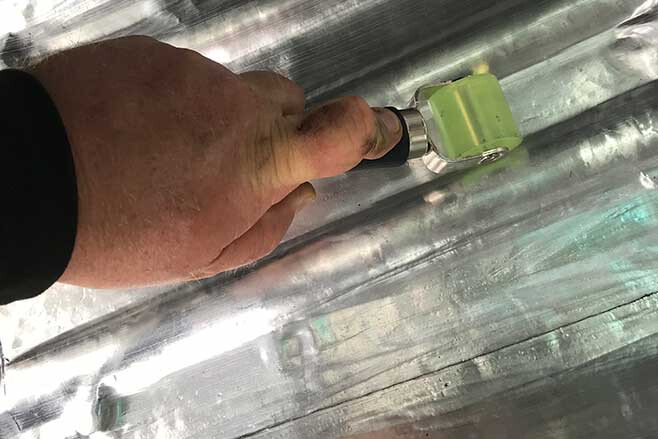
Resomat is a self-adhesive sheeting that is applied to the floor and other panels to insulate against noise and heat. It’s around 2mm thick and quite heavy, so you can feel how it will absorb the NVH by reducing resonance in the sheet metal panels and reflecting heat with the aluminium coating. It comes in sheets, which you cut to size using a box-cutter and stick directly to the panels.
This is the same stuff used in many European luxury vehicles, it’s not bitumen- or butyl-based, so it doesn’t give off any foul smells and is allergy free. It’s also easy to cut and shape into place.
Tru-Fit premium underlay uses two layers of sound-absorbing material, with a further insulating layer of vinyl laminated between them to provide the best sound-deadening qualities. Again, it’s odour free and cuts to size to sit under the carpet, or in this case, vinyl flooring. The underlay also adds to the premium cushioned feeling to whatever floor covering you put over it.
EASY FIT
FITTING the insulation and floor is a DIY job that most folks should be able to achieve with basic tools. Aside from whatever tools you need to remove your seats, floor console and anything else that is on the floor, you’ll want a sharp box cutter knife and a small roller to press the Resomat in to the shape of the floor.
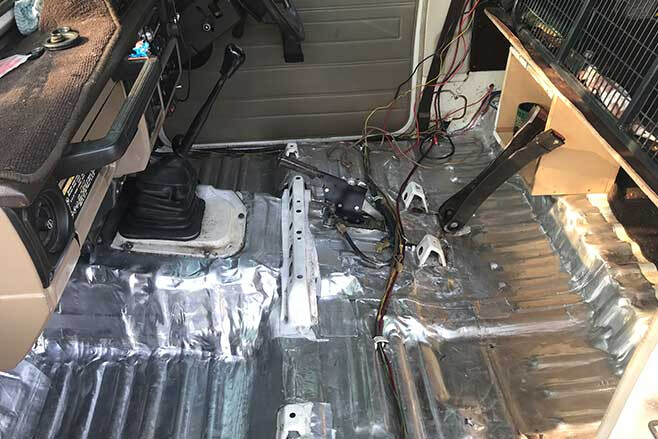
With the seats, belts and scuff plates removed from the front of the Cruiser, it was simple to pull out the old carpet. I have to admit I was worried about the condition of the floor panels in the 35-year-old car, but I was pleasantly surprised that they were rust-free. A thorough clean-up with truck wash, a bit of wire brushing a few spots of surface rust where the carpet had worn through, and finally a quick coat of rattle can paint had the floor ready to be re-covered.
The Resomat was cut into fairly large squares to cover the footwells, areas behind the seats and over the transmission hump, and then smaller pieces cut to fill in all the spaces left. You just peel the backing off the adhesive and press the material into place and then use the small roller to really press it into the shape of the floor, filling in to the corners.
I pulled out any floor bungs and grommets, and cut holes in the Resomat material before replacing them; some of them needing new ones. Be sure to mark out any bolt holes where the seats, belts and anything else goes in to the floor. Once covered they could be hard to find.
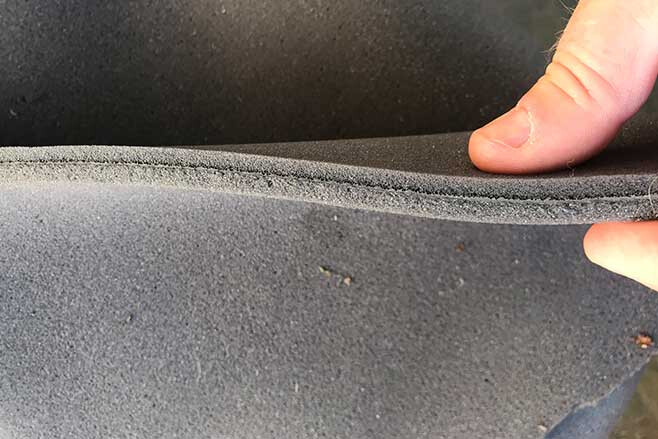
Aluminium tape is then used over any joins and around the edges to keep it all on place, but the adhesive backing does the job. I also worked as far up the firewall as possible and around the pedals to insulate the engine noise and exhaust heat.
The underlay can be cut into bigger lengths and laid directly over the Resomat, right out to either side of the cabin. Again, be sure to mark your bolt holes and cut around the park brake and shift levers.
The floor covering is moulded to be close to the shape of the floor, but you need to cut the holes for shift levers, seat bolts, seat belts and anything else that comes through from the floor. It’s also made wider than the cabin, so you need to trim the edges to suit and also up around the pedals.
Measure twice and cut once and you should be able to do a better job than I did. Press the covering into all the nooks and corners (use the roller again here) over any lumps in the floor to get it snug before making the final cuts. A bit of double-sided tape was also needed to hold the vinyl in place around the pedals.
BETTER THAN NEW
REFITTING the front of the Middy’s floor was easily done in a weekend; you could probably do it in a day. The result is a floor that looks as good as new and, in this case, is now covered in easy-to-clean vinyl rather than the dirt-collecting carpets. With the refurbished seats bolted back in, it felt like a new truck.
Fire up the rattly old engine and it’s noticeably quieter at idle, but the real difference is out on the road where the cabin is much quieter and a nicer place to ride in. The suppressed noise actually makes the vehicle more solid and refined and less like the 35-year-old commercial vehicle that it is. Now if I could fix all the other rattles in it!
I used one roll of premium underlay and a single box of Resomat on the floors, which is designed to cover 3.5sqm. There’s a bit left but not quite enough to line the inside of the doors, so I’ll be going back to get some more to apply there, plus a replacement for the under-bonnet insulation.
All up with the new vinyl it cost around $500 in materials from Tru-Fit, and the result is a much better appearance with reduced NVH to give an overall more enjoyable driving experience. It’s given the ol’ Cruiser a new lease on life; at least from the driver’s seat.
WHEN the 4X4 Australia crew ventured to Tasmania earlier this year for our latest adventure, we had in the convoy two of Australia’s more remarkable off-road touring vehicles.
The six-wheel drive LandCruiser 200s of Shane Miles and Brad McCarthy have each been featured on the pages of this magazine in the past but having them along on the same trip, we just couldn’t resist comparing the duo.
While both of these remarkable rigs are similar in concept, and they both came out of Michael McMillan’s Australian Expedition Vehicles (AEV) workshop in Townsville, they each have their unique features.
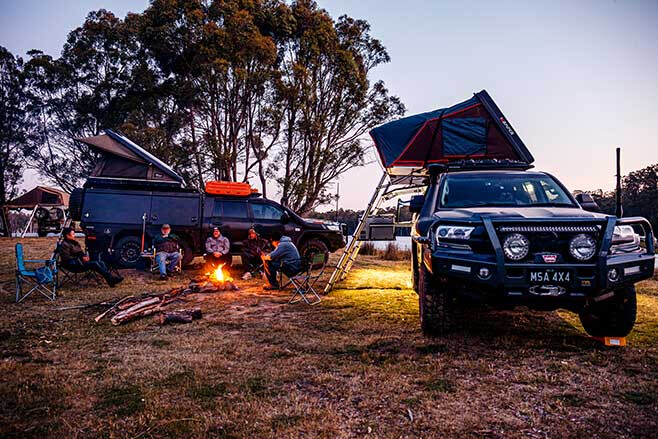
The biggest difference in the two is the cabin space within them. While Brad’s Cruiser chop followed the design of most wagon-to-double-cab ute chops that cut the wagon body behind the second row of seats and have a custom rear wall fitted there, Shane needed a vehicle to carry his family and wanted to retain the third row of seats and accommodation for seven passengers. That presented a unique challenge to the body builders at AEV.
“It’s not our normal conversion,” explained AEV’s Michael McMillan at the time of the build. “There’s a lot more custom manufacturing in panel beating than we initially anticipated … we’ve had to rely on the skill of a tradesman to put the many bits and pieces together.”
The guys worked through the many challenges, such as needing to relocate the rear air-conditioning unit and reroute the drain channels for the factory sunroof among others, and retained the third row leather seat just as you’ll find in any regular LC200 VX wagon.
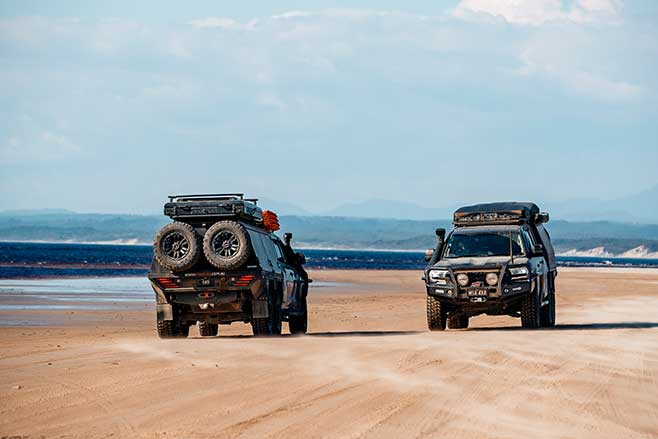
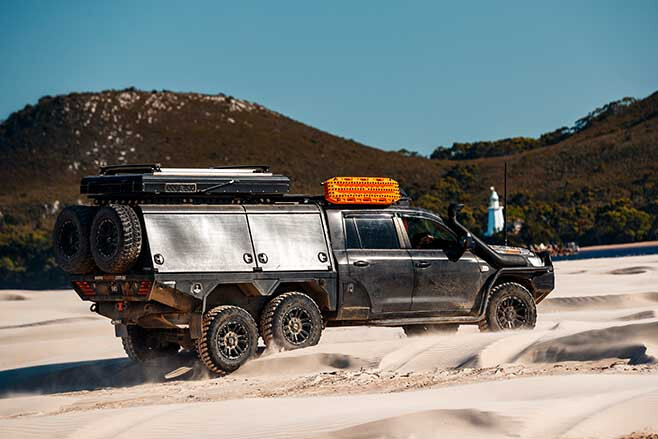
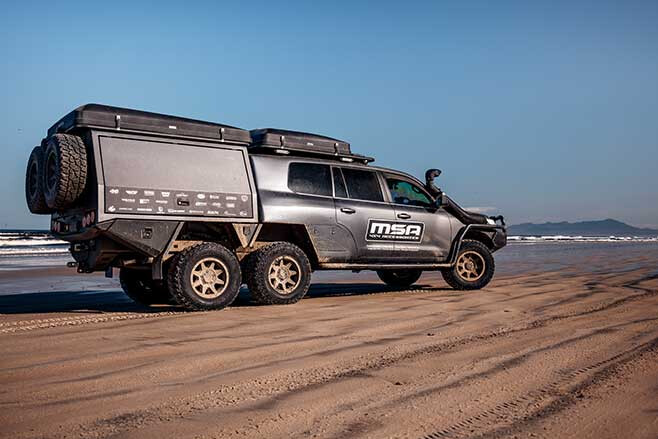
As a result of keeping the back seats intact, Shane’s Cruiser has a shorter cargo area than Brad’s and its fitted with a single aluminium canopy from Trig Point in Melbourne. As the manufacturer of the best fridge slides and drawer systems in the business, it’s no surprise to find that Shane’s canopy is loaded with MSA products.
The driver’s side of the canopy has four drawers stacked plus a drop slide and SnoMaster fridge, while on the other side is another drop slide and fridge/freezer plus a custom drop slide that pulls out to reveal a full-size gas barbecue.
Just as the inside of the Cruiser needs to accommodate the whole family, so does the roof where there are two iKamper rooftop tents fitted; one on the top of the canopy and the other on the Cruiser’s roof. Both tents are affixed to Rhino-Rack Pioneer platforms.
Brad’s Super Cruiser makes the most of its longer tray area with two separate canopy boxes from Outback Customs that can be fitted or removed as required. The boxes are relatively empty of shelving or drawers allowing further flexibility whether they be used for carrying camping gear, a load of MaxTrax or, as the front box is set up here, as a sleeping quarters. With the rear box removed, a quad bike can be carried on the back or take both boxes off to carry the side-by-side Polaris or Brad’s vintage Willys Jeep.
“We can take both those canopies off,” Brad said. “So we can lift them off and just use the tray. The tray is about three-and-a-bit metres long.”
SIX-WHEEL DRIVE: OFF-ROAD
BOTH monster 6x6s use the axles JMACX working in conjunction with Mick at AEV developed for the 6×6 setup. JMACX started with its coil spring and width-corrected axle for the 70 Series LandCruiser and doubled it up with a pass-though housing for the second diff to send drive to the rear diff. It’s a true 6×6 system and not a lazy axle as some would have you believe.
“The system is basically a double JMACX with a drive-through centre diff,” Brad explained. “So you’ve got good articulation, and the six-wheel drive system just happens automatically. So, normally, if you’ve got it in four-wheel drive, it’s driving just the four wheels.
As soon as there’s 20mm of slip in that middle axle it engages that centre diff and locks in the rear axle, and then you’ve got six-wheel drive. You don’t have to press any buttons or engage anything, it just automatically occurs as you need it.”
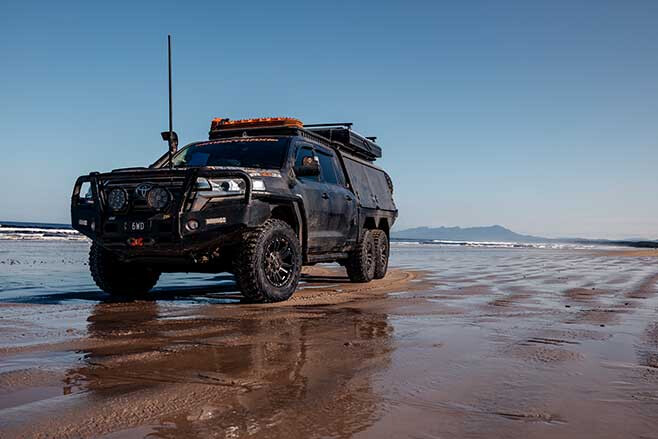
Mick proposed this system for the 70 Series after working with the 6×6 G-Wagens as used by the defence force, and knowing that it could be better done in a Toyota.
The 6×6 was originally set-up for AEV’s 79 Series patrol vehicles built for military use and these progressed to recreational owners and then adapted to the 200 series. The entire back section of the 200’s chassis is replaced with a new frame made to take the JMACX suspension and axles setup.
A lot of folks will tell you that you don’t need 6-wheel drive to go off road in Australia and they would be right. Where you do need 6×6 is when you want to go off road while carrying more weight than your standard 4×4 LandCruiser is rated to, even if it has had a regular GVM upgrade.
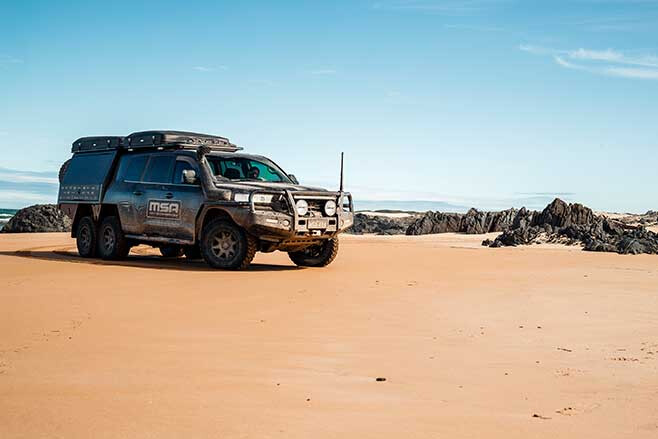
Brad and Shane’s Cruisers weigh in at more than 5000kg and have a 6000kg and 7000kg GVM rating respectively. This required registration as a heavy vehicle and a Heavy Rigid licence to drive them. And if the guys want to tow, the GCM on each is a massive 10,000kg! For comparison, a standard 4×4 VDJ200 has a 3350kg GVM and a payload as low as 645kg for the Sahara model.
Shane reckons the turning circle of the 6×6 200 is better than that of a standard 79 Series double-cab. “The turning circle (14.2m) is fantastic,” he said. “It’s my daily driver and I haven’t had any issues driving or parking it.”
Brad backed that up stating, “The turning circle is surprisingly good for something that size. I haven’t measured it, but you can sort of do a pretty quick turnaround – except on a narrow track where you’ve got to do a 48,000-point turn. But, yeah, for beach and desert work, which is what I have mainly built it for, it is perfect.”
Both vehicles ate up the beach sections of our Tasmania trip and as expected, were challenged on the tighter forest tracks where more care was needed in vehicle placement. What wasn’t expected though was driveshaft failures for both vehicles.
AEV has already upgraded the specs of the driveshaft with heavier duty universal joints, splines and collars, but both of these cars were earlier builds with the older shafts in them.
“As it turns out, I broke the splines on my shaft and Brad did the unis on his,” recalls Shane. Both vehicles were able to get back on the road in Tassie and have since been fitted with the uprated shafts back in Queensland.
It was soon after the Tassie trip that the world went in to lockdown so both Shane and Brad are itching to get their 6x6s out on the tracks.
Shane was hoping to do a Simpson Desert trip back in 2019 but delays in the build meant he missed the season, so he was keen to get out there this winter. Brad’s cars are usually covered in red dust right though this part of the year so like Shane and most of us, he can’t wait to get out to the Red Centre again.
SEASON 6 of the 4X4 Adventure Series sees us explore the vast, rugged landscape of South Australia’s Flinders Ranges.
Beginning at the southern edge of the Flinders, we headed north from Mount Remarkable to Alligator Gorge, before pointing the tyres toward the iconic Bendleby Ranges.
Other locations and tracks visited during the journey include Quorn (and its famous Pichi Richi Railway), the Willochra Plains, the Skytrek Track at Willow Springs, Brachina Gorges, Wilpena Pound, Beltana, Moro Gorge, Gammon Ranges and Chambers Gorge.
And what better way to finish a trip than atop the Arkaroola Ridgetop Track.
Season 6 Episodes
- Episode 1: The team tracks the Flinders Ranges north, stopping at iconic outback destinations.
- Episode 2: In Episode 2, the crew travel from Willow Springs to Moro Gorge.
- Episode 3: The team travels to the Gammon Ranges and beyond to Arkaroola.
Season 6 Articles
- Part 1: The Southern and Central sections of the Flinders Ranges have much to offer the adventurous four-wheel traveller.
- Part 2: The northern section of the Flinders Ranges offers a more isolated experience and more remote camping, in a spectacular setting of red, raw rock.
Regardless of who you are insured with, here are some tips on things to consider before you take care of the annual insurance shop-around and renewal.
We’ve identified five ways you can help manage your insurance premium, and we’ve also detailed a few things you need to consider to ensure it is adequate for your requirements, because, after all, it’s a balancing act.
Consider what ‘extras’ you need, right now
Windscreen options? Hire-car after accident? Roadside assistance?
With most of us using our pride and joy a little less right now, it might be worth asking yourself if you need all the extras on your policy. Remember, though, while you’ll save money, removing each of these will likely reduce the cover available in the event you need to claim.
Does anyone young drive your vehicle?
Driving experience is a big factor in calculating premiums.
Generally, the younger a driver the higher the risk and the associated premium. Insurers being the clever people they are have developed an ‘age restriction’ to help manage premiums.
This means that if someone younger doesn’t drive your car, you can save premium by excluding cover for anyone under a certain age. For most insurers, 25 seems to be the magic age, but some offer graduated scales with greater savings available based on excluding from a higher age threshold.
Are you making the most of the discounts available?
Club membership? Multi-policy discounts? Driver/towing training discounts?
There are a multitude of discounts available through insurers. There is the multi-policy discount, which is a discount for having multiple policies with one insurer. Beware that some apply it differently. Some require two or more policies, others three or more, some apply the discount to all items you insure with them, and others only apply the discount to subsequent policies (i.e. only a discount on additional policies, not the first one).
Some insurers will offer a discount for driver training, which can be quite generous. If you have completed this kind of training, you could be eligible for a significant discount.
Other insurers offer discounts for being a member of an organisation. It could be through your work, or even because you are a member of a 4WD club. It is worth asking any potential insurer about this because it could be another five per cent or so, and there isn’t really much you need to do.
What excess are you prepared to pay?
Taking a higher excess is another way to relieve premium pressure. It means you have more to pay upfront in the event you need to claim, but it can be a way to reduce your premium if you really need to. Upping your excess during these times where vehicles may not be getting used as much, if at all, can be a great way to manage your premium until the dust settles (sorry, bad pun)!
Can you pay annually rather than by the month?
This is a really simple way to save. Many insurance companies charge you more to pay monthly rather than annually, because, believe it or not, there is a difference in claims incidence between these groups. If you can find the cash to pay up front, you could save somewhere between five and 15 per cent over the year. Again, another thing to consider!
Beware the pitfalls
While the above can help provide some relief to your hip pocket, there are some really important things to ask yourself before you make any changes, to ensure you make an informed decision here.
What is important to you?
As consumers we’ve been conditioned to care about price alone, but for most of us price isn’t really the most important thing in the equation; value is. While there is the old saying ‘you get what you pay for’, it is important that you don’t over-pay either. Before you make any decision, you need to consider what value represents to you.
Does your sum insured reflect what your 4WD and everything on it would cost to replace, if it was a total loss or stolen?
This is making sure that you are adequately insured to replace your 4×4 if you woke up and found it had been stolen – this point matters regardless of your choice of insurer.
It is very easy to underestimate what your 4×4 would really cost to replace, so ensure you know what this value is and that you review the quote with the sum insured and that value in mind. Club 4X4 has a handy calculator on its website which can help you with this, and sites like Redbook are also handy tools.
Does your policy cover your mods and accessories?
The question here is: Does your policy cover all of your mods and accessories? Most insurers will cover some of your accessories to a point (bull bar/roof rack, etc.), but a lot of them will not cover ‘modifications’.
So if you’ve added a catch can, remapped the ECU, changed the suspension set-up, or done anything to the driveline, then you’ve ‘modified’ or performance-enhanced it, which may not be covered. It is important to know an insurer’s position on this so you don’t get surprised when you need to claim, and know what risk you are carrying personally if you choose to insure with a company that won’t cover all of the mods and accessories.
Do you have choice of repairer if you need to claim?
One way insurers manage premiums is to keep claim costs down. The challenge with a 4WD though is it can be more complex to repair than a standard vehicle. You might be able to find cheaper insurance, but the cost might be that you are forced to use the insurer’s repairer. This could translate to re-work and inconvenience, not to mention frustration.
Many of us will have a mate or someone trusted that has worked on our fourbies, and getting to choose who works on your vehicle might well be worth paying a little more for up front. For others, who completes repairs on your 4×4 may not matter at all, but it is prudent to know this now rather than at claim time.
Time for a policy health check?
Now is a great time to review your current cover in light of the above and ensure your insurance is not only right for your needs, but that it works for your current situation. Your existing insurer should only be too happy to review your policy to see if you can make some savings, but it is also worth reaching out to a few others for a comparative quote!
In the third and final episode of the Flinders Ranges adventure, Ron and the crew leave the gorges behind and head for Gammon Ranges and Arkaroola.
This leg of the trip begins at the remote and harsh Chambers Gorge, where its major attraction is the Aboriginal rock art.
From Chambers Gorge the convoy points their tyres toward Gammon Ranges NP, where they turn towards Balcanoona and Lake Frome and the nearby Beverley Uranium Mine.
From here, tyre treads are marked on the road toward Illinawortina Pound to Mainwater Well and onto the deserted homestead of Idninha, before the guys throw down their swags at the famous Arkaroola Resort – which comprises of plenty of great 4×4 tracks.
The Flinders Ranges adventure ends atop the Arkaroola Ridgetop Track, and as Matt says, “is there a better track in Australia?”
Keep an eye out for the next Adventure Series, where the team tackles wild tracks of Tasmania.
THE world’s gone crazy over a virus named after a Mexican beer and everyone is in lockdown creating a side-effect known as ‘wallclimbitis’.
Thankfully, once things settle down and we’re finally allowed to leave our homes, this great land of ours has some of the best locations to head to and get your travel juices flowing.
Towns will welcome you with open arms and there’ll be no issues getting any toilet paper, rice or alcohol. Permits will be given out again for access to Aboriginal lands and National Parks; while caravan parks and farm stays will all be open again. This will be Australia as we know it: open borders, no travel restrictions and the freedom to choose what we do and where we go. Don’t despair, we will get there.
These five destinations were chosen because they’ll take a bit of effort to get there, but the reward on making it will blow you away.
DIRK HARTOG ISLAND
WHAT better place to recharge than a remote island on the West Australian coast, accessible only by boat. I can’t think of a place I’d rather be than Dirk Hartog Island. First discovered by the Dutch sea captain Dirk Hartog, who climbed the cliff face at Inscription Point and used a copper nail to mount an etched pewter dish to a pole; the year was 1616.
The only way to access the island with a 4WD is via the barge that travels across the strait from the mainland at Blackies Beach Steep Point, a challenge in itself to get to. With the island being so isolated, you’ll need to be self-reliant and fires aren’t permitted within the national park, so pack a portable gas cooker. The ecological environment is fragile, too, so leave only footprints, take only photos and remove all rubbish.
Kieran Wardle and wife Tori have turned The Homestead area into an accommodation precinct for visitors, that include the rustic luxury Eco Lodge, an Ocean Villa and camping sites. In fact, they’re currently offering a Self-Isolation Package at Jed’s Camp on Homestead Bay. For $250 per night, you’ll get camp fees for up to 10 adults, private bathroom and fresh hot-water showers and camp kitchen overlooking the ocean (w/ tables and chairs, gas barbecue and cooker), just BYO 4WD and fishing gear.
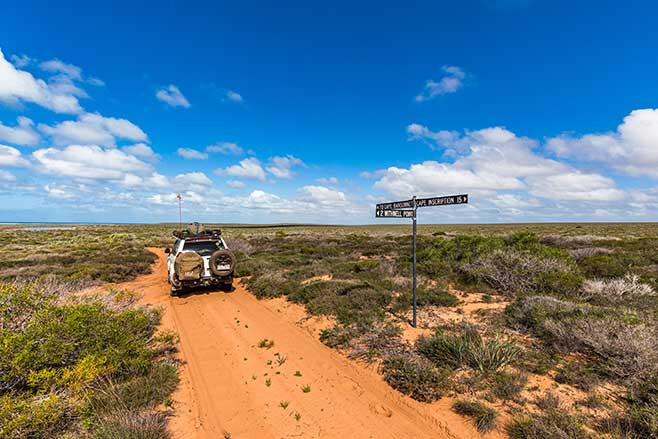
One of the island’s highlights is the Blow Holes, and after conquering a couple of rough dunes you’ll get to drive across one of the massive drifting sand dunes before the Indian Ocean comes into view. How active the Blow Holes are is dependent on the ocean swell, purring like a kitten some days but roaring like an angry dragon on others.
The National Park offers 4WD adventurers some amazing camping destinations and, while caravans are not permitted on the island, an off-road camper trailer will eat up the sandy tracks. Grab a site at Louisa Bay on the beautiful east coast of the island, it’s the perfect spot for the kids to swim, snorkel or paddleboard in the shallow water.
Just you and your partner? Try the seclusion at Turtle Bay and get some romance back in your life during these difficult times, with long walks along the white sandy beach or swimming in the turquoise Shark Bay water while keeping an eye out for whales, rays, dolphins and, of course, sharks.
If throwing in a line to wile away your self-isolation woes, Withnell Point, Urchin Point or The Block are the best spots; although, only Withnell Point is suitable for small children. Don’t forget to explore what curious items have been washed up on Mystery Beach and top off your visit by enjoying the last sunset in Australia at Herald Heights (it’s the most westerly point in Australia to watch the setting sun).
KARLAMILYI NATIONAL PARK
AS the largest and most remote national park in Western Australia, Karlamilyi (Rudall River) is the perfect place to get back to nature. The corrugations at the Talawana Track end are savage and last for 30-odd kilometres, so less air in your tyres will help here. Check out the vistas as you hug the Fingoon Range, they’re absolutely stunning. Access from the north is via the Telfor/Kiwirrkurra Road.
The park is accessible by high-clearance 4WD only and has no facilities, few signs and rough, unmaintained tracks and you’ll need to be self-sufficient and carry adequate water, food and fuel. A satellite phone or HF radio is highly recommended; although becoming more popular with overlanders, you still may not see anyone for days out here.
Rudall River was named by explorer Frank Hann when he met government surveyor William Rudall, who was searching for lost members of a scientific expedition. The traditional owners of the land, the Martu people, call the upper reaches of the river Waturarra and the lower reaches Karlamilyi.
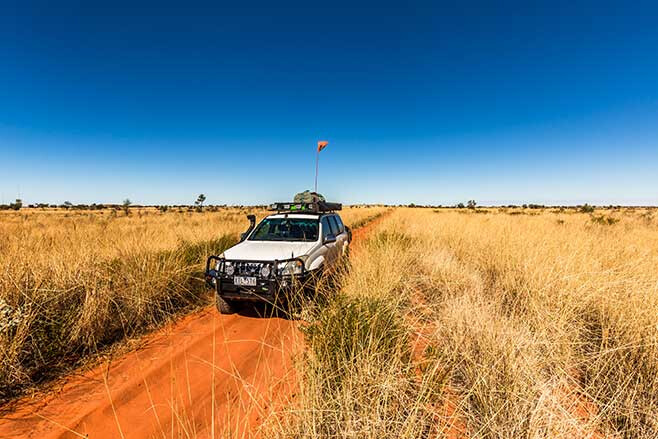
The track into Desert Queen Baths is low-range stuff, but going slow allows you to soak in the natural beauty on show. Camping is permitted at the end of the vehicular track, with some shade available from the saplings. From here it’s a walk into the Desert Queen Baths via an unmarked, rocky trail. Many like to swim here, though the water is always extremely cold.
Camping is also allowed on the banks of Watrara Pool, a permanent waterhole lined with river gums on the Rudall River. You’re likely to spot mobs of camels roaming the plains out here. This is the better of the two camping areas as its more secluded and the waterhole has a sandy base, ideal for a swim. From here, it’s easy to take day trips out to Desert Queen Baths.
It’s not just the remoteness of this national park in the Pilbara that makes it so special, it’s also the beauty of the landscape with the desert oaks, bloodwoods and spinifex, and the permanent pools that attract more than 140 species of bird. The reptiles are hardy, too, bred tough for these conditions and more likely to be spotted during the cooler times of the day from dusk to dawn.
VICTORIAN HIGH COUNTRY
WE are spoilt with the expansive area available to explore in the Victorian High Country, and there are a plethora of camping spots where you can enjoy pure isolation. Some areas have been affected by the recent devastating bushfires, and while many communities are crying out for visitors and emptyesky.com.au is all the rage, please don’t buy all the toilet paper, hand sanitiser, rice or pasta.
The Wonnangatta Valley is a superb place to ride out the pandemic and there is plenty to explore while you’re there, especially the 4WD tracks. Tackle the challenging Zeka Spur Track that leads you up to Howitt Hut, or the Wombat Range Track, one of the steepest climbs in the High Country. If you’re towing an off-road camper trailer, the Abbeyard/Lake Buffalo option is the easiest way in.
There’s a fair bit of history in the Valley itself, including a murder mystery that has never been solved. The old Wonnangatta Station site explains the story of James Barclay and John Bamford, and here you’ll also find the old cemetery and old homestead ruins. With plenty of distance between the riverside campsites, you’ll certainly be safe from contamination.
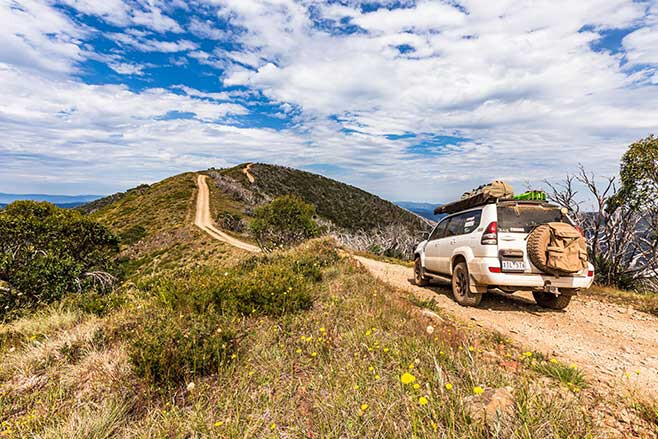
The township of Omeo is a great jump-off point to find a special campsite. Whilst the free camping behind the Hilltop Hotel is tempting, I reckon Davies Plain Hut would be a safer option. Limestone Track is not to be taken lightly and a better option is the Buckwong Track. Keep a sharp eye out for wild brumbies, and the hut has some resident gang-gang cockatoos that are extremely photogenic; with the nearby creek offering crystal-clear High Country water. Take out what you bring in and ensure your fire is out before you leave.
Another great spot to refresh is in the Dargo district, where you can grab some fantastic grub and top up your beverage supply at the Dargo Hotel. There are plenty of sites along the Dargo River to choose from, or you could head out to Talbotville and set up beside the Crooked River.
There is plenty of history to discover, especially from the early gold mining days; and the old Grant townsite has a great walking trail that highlights the challenges these people endured. Another great day trip is via the Dargo High Plains Road up to Blue Rag Track, one of the High Country’s most iconic 4WD tracks, where you can enjoy the most superb views across the ranges.
DIAMANTINA NATIONAL PARK
ONE of the top campsites in Outback Queensland is at Hunters Gorge in Diamantina National Park, and being so remote makes it one of the best locations for rejuvenation. Just getting here can be a challenge, but having the opportunity to relax and enjoy what the national park has to offer is a real bonus.
The old homestead and ranger base offer an information centre that explains the history of the place, from the first interaction between Aboriginals and the Europeans in the early 1800s. The traditional owners still consider areas of the Diamantina National Park to be significant sites relating to the Dreamtime. The rangers are not always on-site, so a satellite phone is an important tool out there.
There are great views across the Diamantina Gates from Janets Leap. The ‘gates’ are the shortest distance between the Hamilton and Goyder Ranges, about one kilometre, which squeezes the Diamantina Channels into one before the water spreads into five main channels again. During a flood, it’s an incredible phenomenon to witness as the water plunges through this gorge.
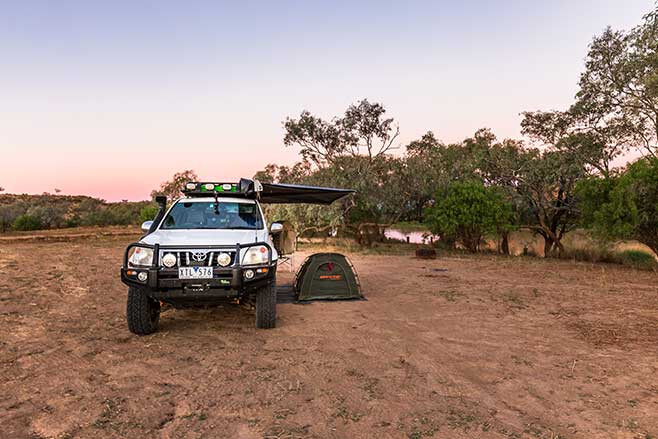
A self-drive tour on the Warracoota Circuit Drive is approximately 90km in length and will take you at least four hours to take in the experience. Mitchell grass plains, old rodeo yards, ruins, desert red sand dunes, gibbers, waterholes and boggy holes, it has it all. There is even a set of ruins three kilometres from the Warracoota Waterhole, thought to have been built by early settlers, but, as you’ll see, the layout looks more like a battlement.
There are two designated camping areas within Diamantina National Park, with pit toilets the only facility at both sites. The best being Hunters Gorge, an open and spacious area that sits beside a permanent waterhole and is suitable for off-road caravans and camper trailers. Gum Hole has small individual sites with plenty of shade provided by the coolabah and bauhinia trees that line Whistling Duck Creek.
Both sites are perfect for a canoe or kayak, especially at dawn and dusk when the resident birds are active. Expect to see Hall’s babblers, whistling kites, black falcons and oriental plovers, and as you drive around the park you’re sure to encounter emus, and western grey and red kangaroos. If photography is something you enjoy, the sunrises and sunsets are often extremely vibrant, as are the burnt orange sand dunes and colourful wildflowers.
PURNULULU NATIONAL PARK
AS a natural wonder, Purnululu (Bungle Bungles) National Park has only been a tourist hot spot for a few of decades, but Aboriginals have known about it for thousands of years. These days it’s one of the most visually stunning, world-heritage-listed national parks in Australia.
The road into the national park is notorious for being rough, but deflate your tyres a bit, reduce your speed and you’ll get to enjoy the views of the Osmond Range on the way. A high-clearance 4WD is recommended and only single-axle off-road caravans or camper trailers are permitted. Once you’ve entered the park, a visit to the ranger station to check in is a requirement. They’ll want to see your WA Park Pass and campsite booking, and there is a Wi-Fi hotspot outside the station that enables you to pay your park entry and camping fees online.
There are two camping areas within this remote wilderness: Walardi is closer to the Cathedral Gorge and Piccaninny Creek; while Kurrajong is nearer to Echidna Chasm and Mini Palms Gorge. Both sites have pit toilets and a non-potable water tap, so you’ll need to be self-reliant and bring in all your food, water and fuel.
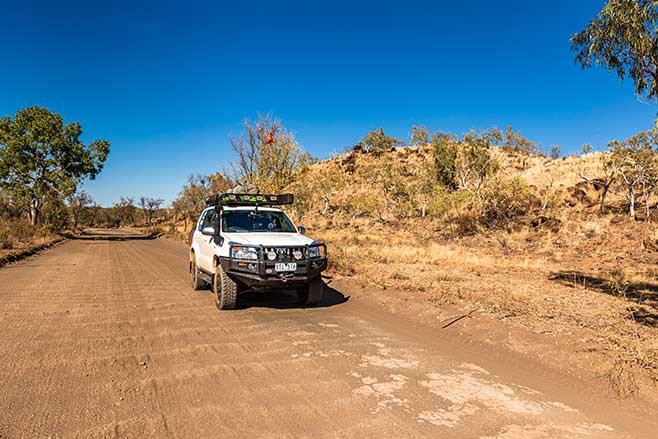
If a bit of luxury helps you to relax and rejuvenate, the Bungle Bungle Savannah Lodge is the place to stay. Located within the national park you’ll enjoy the ambience and comfort of a modern cabin with en suite. The lodge relies totally on solar power to keep it running and the hot water is backed up by LPG gas as it can be very cold in the mornings.
All meals are prepared on-site by the experienced chefs with breakfast, lunch and dinner available. The Bungles Bar is open daily and there’s no better way to finish the day sitting next to a fire with a beverage, chatting with fellow travellers.
It’s the ancient geological wonders that make this national park so special and having time to explore it makes it even better. At Echidna Chasm you can watch its walls change colour as the sun moves across the sky, while Mini Palms Gorge is full of prehistoric Livistona palms within its natural amphitheatre.
Cathedral Gorge has stunning acoustics and The Domes have weathered over thousands of years to get a banded look like a beehive.
Piccaninny Creek is an attraction all on its own as the trail leads you to The Window, a natural hole in the sandstone, and onto Whip Snake Gorge with its small permanent pool feeding rock figs, ferns and mosses. For the experienced walkers, Piccaninny Gorge is a one- or two-night trek that you must register for at the visitor centre, carry sufficient food, water and clothing and carry a satellite phone or Personal Locator Beacon (PLB).
The best way to experience the expansive wonders of Purnululu is in the air, and HeliSpirit offers several packages flying from within the park at Bellburn airstrip. It also offers a full-day heli-hike that lands you near the mouth of Piccaninny Gorge where it splits into five fingers. An Aboriginal guide then leads you on a 10km return hike explaining the cultural significance of Purnululu.