THE purpose of CB radios as a communications device hasn’t really changed much over the years, but the radios themselves have evolved.
The two radios in my old LandCruiser partly shows this evolution, as one was an old AM/477meg dual-band jobby and the other an older 40-channel GME GX3200. Neither were working particularly well on a recent trip in convoy, so it was time for a more modern replacement.
AM CB radios are pretty well redundant now and the common 477meg units have advanced to 80 channels. Compact units have become the norm and allow you to mount the main body away from the fascia, and some are even controlled by Bluetooth.
I like to keep things simple with a basic radio and never thought I would use a unit with Bluetooth connection or the ability to locate you and other users with similar tech on-board. I also didn’t like the idea of UHF radios with the speaker, microphone and all of the main controls in the handpiece, as I didn’t imagine the sound quality of the speaker would be all that good.
This opinion changed when I used the GME XRS 330-CTP combination in the 4X4 Australia Ranger. It features the all-in-the-handpiece design, with the main body mounted behind the dash; and the revelation that the sound from the inbuilt speaker was excellent and changed my mind on such UHF units.
The XRS 330C radio itself retails for $499 when not sold in a kit.
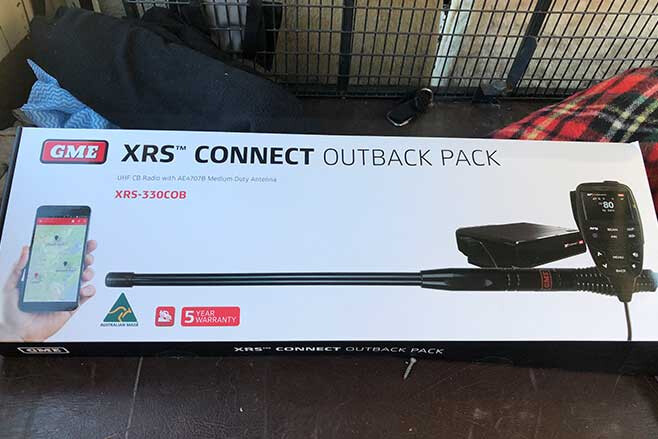
When GME released the XRC Connect 330-COB Touring package it seemed to be the perfect kit to update the Cruiser’s comms. This package uses the same XRS Connect 330C radio unit as fitted to the Ranger but is paired with a stubby 2.1dBi radome antenna as opposed to the 6.6dBi one on the Ranger.
This lower gain antenna is better suited to the hilly and mountainous areas I like to visit in the High Country, while the high-gain 6.6dBi antenna works better over long distances, in flat terrain like the outback.
The XRS 330-COB kit comes with the radio unit and mounting bracket, antenna with spring base, antenna cable, handpiece/microphone/speaker, handpiece mounting bracket, power cable and all the required hardware.
Installation is something most folks should be able to do at home with basic tools, although I had a bit of a head start as I was replacing one of the older units and already had power running to the location where the new radio would go. Once you get the antenna and 12 volts to it, the GME radio is simply plug-and-play.
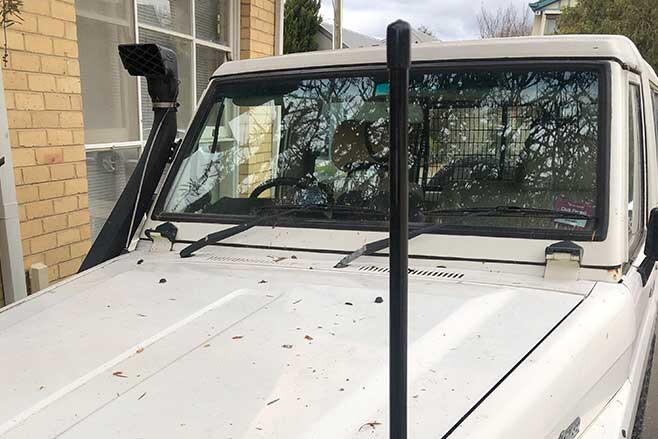
I started the install by mounting the antenna base on the bullbar and running the cable back through the inner ’guard, passing through an existing grommet in the firewall and up to where the radio main body would be mounted in the overhead console.
With no buttons or controls on this unit, it can be mounted anywhere but I put it up here where there was plenty of space and, as mentioned, I already had power running to it. Unfortunately the power plug on the new XRS Connect unit is different to the old one and required reconnection; alternatively, I could have replaced the wiring with the new harness that comes in the kit.
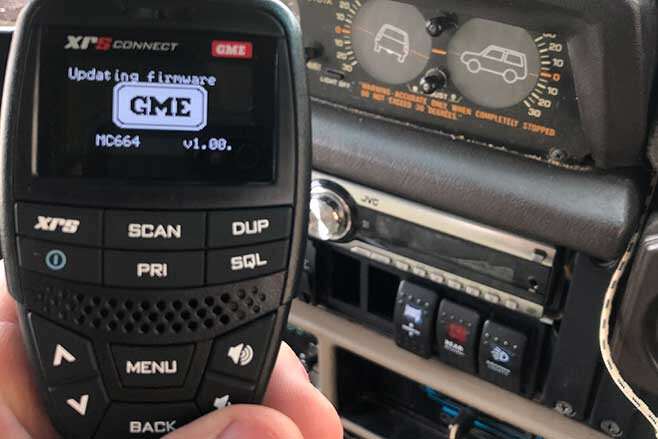
Having the handpiece mounted up high on the roof console makes it very easy to grab when you need to use it, so I chose to put the new one up there again. The kit includes an extension cable and adaptor to allow you to mount it wherever best suits you and the interior of your car. This is particularly handy in more modern cars that don’t have so many flat surfaces to mount the bracket.
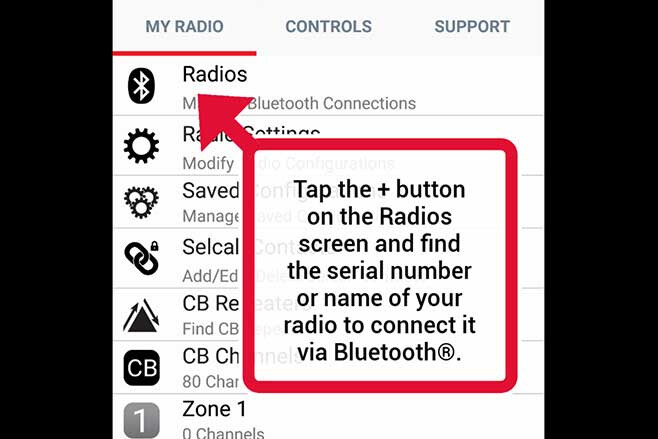
With the install out of the way, it was time to delve in to the unknowns of modern technology. There are two apps to download to your smartphone or iPad that are used to set up the XRS Connect radio and its tracking function. The connection is via Bluetooth and once made gives you access to all the set-up functions. It also has a walk-though of the functions that give someone like me a bit of an idea of what’s going on. This includes setting favourite channels, Selcall settings, and customisable buttons on the handpiece, voice playback and location services, among other things.
Firmware updates are also delivered via the app and an update came through when I recently went back to it. Updating the unit then took a few minutes to automatically complete before I could access the settings.
I thought the location service would be bit of a gimmick, but after looking at it I can now see it would be of great use. When switched on it uses the inbuilt GPS to show the location of your radio/4×4 and that of others in your network. How often have you asked someone where they are over the radio and they couldn’t give you a precise location? If they are using an XRS radio you can see them on the map on your phone or tablet and you can then find your way to them. It’s clever use of technology.
As for the most important use of the radio – as a communication device – it’s so far so good, with the XRS giving strong signal and clear sound. The inside of the old Cruiser is a pretty noisy place, but the sound from the 2-Watt speaker in the handpiece is always clear. Having it mounted up high places it close to my ear as well, so that probably helps for an old bloke. The sound quality has never been an issue in the much quieter late-model Ranger.
The screen on the handpiece uses an OLED display, so it remains clear whether I’m glancing up to it in its mount or in my hand; even when wearing polarised glasses.
One of my favourite reasons for using the GME product is that they are made in Australia, and the XRS radios come with a five-year warranty. I’ve also retained the old 40-channel GME unit in the Cruiser as a backup or for when I need to be using two radios at a time. Such an occasion is when you are traveling in convoy and have a chosen channel, yet you need to be keeping an ear on the local channel such as Ch10 when in the desert.
They say you can’t teach an old dog new tricks, but if you give him some new toys to play with he’ll certainly pick a few up. Such is the case with fitting this latest tech GME radio to the old LandCruiser for it’s even older driver.
ESSENTIAL INFO
Website: gme.net.au RRP: $629 We say: Quality Australian-made radio with features you never knew you wanted.
Two of Australia’s biggest aftermarket companies – TJM and Ironman 4×4 – have kit ready to fit to your 2021 D-MAX.
TJM GEAR FOR 2021 D-MAX
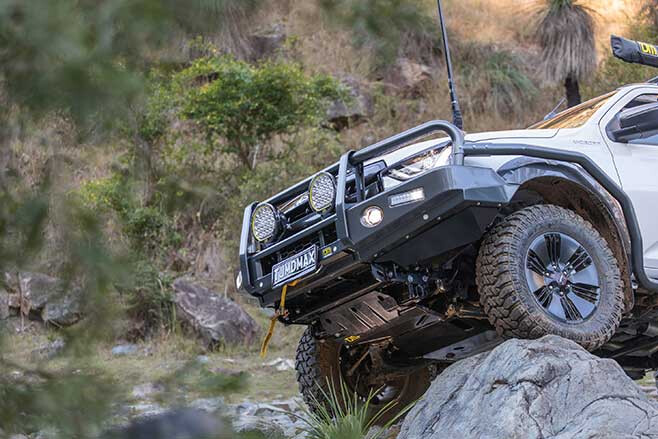
TJM has a full suite of aftermarket equipment ready to fit to the all-new Isuzu D-MAX. “TJM is ready to gear up those vehicles with premium accessories that have been painstakingly designed to suit this specific model,” said Matt Logan, TJM’s head of customer experience.
Among the long list of equipment are the TJM Outback bar (as well as other bars); underbody protection, side-steps, side bars and a rear bar; and XGS suspension. Punters will also be able to purchase Aeroklas accessories for the new D-MAX.
Website: www.tjm.com.au
IRONMAN 4X4 SUSPENSION FOR 2021 D-MAX
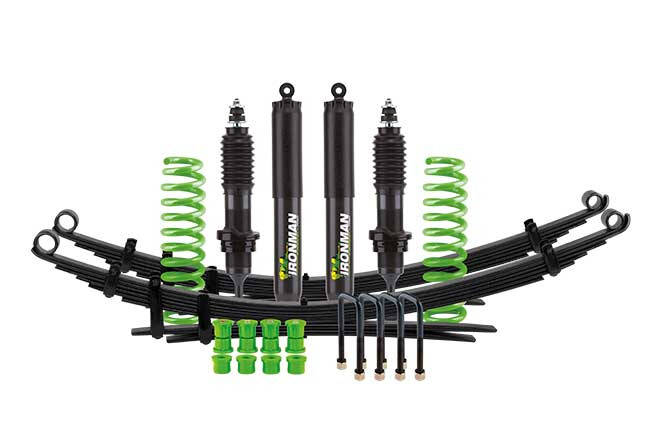
Ironman 4×4 has added a full range of suspension upgrades for the all-new D-MAX to its catalogue. The contents of the kit include front coil springs, rear leaf springs, front and rear shock absorbers (three options available, including Foam Cell Pro and Nitro Gas), Polyurethane Spring Bushes, a Brake Hose Relocation Kit and U-Bolts.
Optional components include Pro-Forge Upper Control Arms, Strut Mounts and Greasable Shackles. For complete pricing and suspension options, visit the Ironman website.
Website: www.ironman4x4.com
IT WAS the biggest gold robbery ever in Australian history.
In June 1862, a coach with a driver and four police escorts along with more than 2700 ounces (77kg) of gold and 3700 pounds in cash were on their way between Forbes and Orange, NSW, when Frank Gardiner and his gang of seven other bushrangers held the coach up, wounding two of the policemen in the process.
Helping themselves to the haul (the gold alone valued at over A$4.8 million today) the bushrangers fled but the police, along with black trackers, were soon on their tail. Surprised at their hideout the heavily laden horse with most of the gold was soon abandoned as the gang fled into the hills.
While most of the culprits were soon captured including Frank Gardiner, who, interestingly, after 10 years in gaol was exiled out of the colony and after a short time in Queensland fled to the USA where he lived till the age of 74, dying in 1904.
The others weren’t so lucky. Ben Hall, probably the most famous bushranger in NSW, ran the police ragged with his bold deeds throughout the colony till he was ambushed in his camp and shot, first in the back and then a further 30 odd times in May 1865, aged 27. John Gilbert, another member of the gold heist gang only survived another two weeks after Hall’s demise, being shot near Forbes at the age of just 23.
ESCORT ROCK
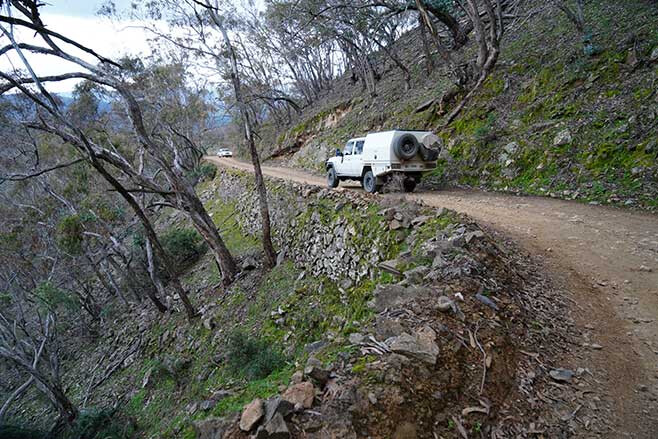
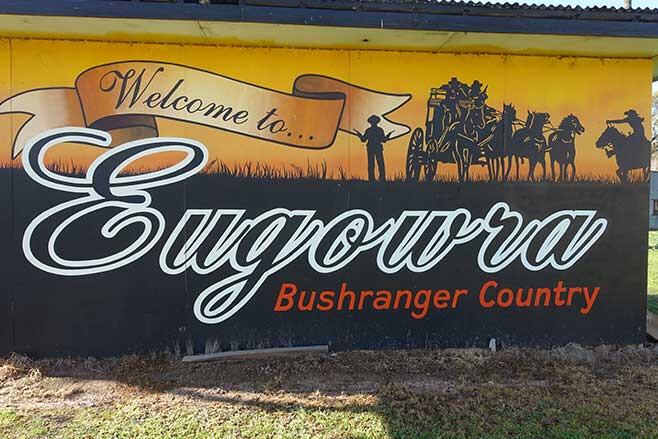
TODAY you can visit the place of the robbery now known as Escort Rock, which lies just off the main highway, east of the small, delightful village of Eugowra. Take the time to check out the many murals in the town, one of which, as you’d half expect, depicts the gold robbery.
At Escort Rock itself, which is well signposted, it’s a short walk from the carpark to where the infamous deed was carried out, while the old route of the stage coach and the ruts the passing traffic wore into the ground can still be seen near the rock.
The place where Ben Hall was shot can also be visited, some 15km northwest of Forbes. It’s a bit of a dog’s breakfast getting there though, as the route wanders through delightful farmland and light forest, turning this way and that along dirt roads before stopping near a non-descript patch of trees in an otherwise cleared paddock. Best to get a mud map from the local museum in Forbes which, by the way, is an excellent museum with a fabulous display on Ben Hall and his life.
A few cows looked on as we opened the creaky gate and walked the short distance to the copse of trees where a couple of signs testify that it was here that Ben Hall met his fate. The country doesn’t look anything like it did though when Ben threw down his swag and tethered his horse nearby.
The surrounding country was heavily timbered back then and the police had plenty of cover to sneak up on him during the night. Called on to surrender Ben turned to run for his horse when the police opened fire; some say he was murdered!
We headed back to town and in the Forbes cemetery found his grave which is well tendered with flowers lying beside the headstone. As a couple of asides, just nearby is the grave of Kate Kelly, the sister of Ned Kelly, while the town itself has a magnificent central square with all the notable buildings lining its edge, much like a ‘Plaza Central’ in an old Spanish city.
BANG BANG HOTEL
EARLIER, we had come up through Young and stopped at the small township of Koorawatha where in 1864 old Ben and his gang, which included John Gilbert, arrived to have a bit of fun holding up the Bang Bang Hotel and its patrons for a few dollars and a cheap drink.
The trouble was there were a few policemen around and a furious gun battle ensured, the outlaws deciding to escape while the going was good. Today the site is marked by a couple of signs, the old hotel having succumbed to time and the odd fire or two.
From there we had wandered over to the Weddin Mountains NP and the surrounding state forest, which back in the day was a hideout for Ben and his men, a cave high in the steep, rocky hills overlooking the plains reputed to be his hideout and observation spot.
Today, in this sea of semi-cleared farmland, the parks gives an indication of what the area was once like, and it is delightful country, dotted thickly with native pine, fuzzy box and red gum, while short green grass covered the ground in between.
The Ben Hall campground in the national park is well set-up and offers just a few campsites. We hadn’t booked so we wandered a short distance away into the state forest and found a spot to ourselves to enjoy the rich birdlife and the pleasant atmosphere.
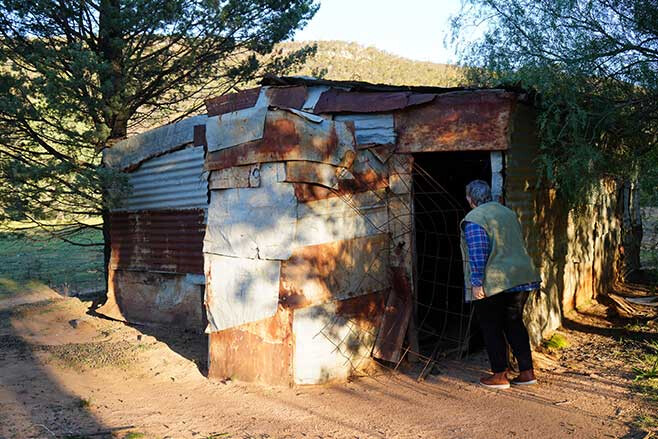
On the east side of the range is the Holy Camp camping area and from each camping area radiate a number of walking trails for those so inclined. Not far from where we stopped for the night is the remains of Seaton’s Farm and this area is well worth a wander. This small farm of just 150 acres (60ha) backed by the red cliffs of Black Gin Gully was owned by Jim and Bertha Seaton from the 1940s through to the 1980s.
It was a tough land to make a living from and they only had a couple of hundred sheep with their biggest woolclip being a bale and a half. Today you can see how rough they lived, with their hand-built homestead and even handcrafted fencing, but with their milking cows, chooks and goats helping them get by, Bertha was often quoted as saying how much she loved living here. Jim died in 1983 and Bertha then sold the farm to the national parks before passing away in 2002.
OPHIR
AFTER our wandering around the Weddin Mountains and Forbes we headed to where all this gold fever had begun. Ophir, northeast of Orange. The site of Australia’s first payable gold discovery it was considered, until fairly recently, to have been discovered by Edward H Hargraves.
Certainly, that’s what we learnt in school and what the obelisk on the hill overlooking the Lewis Ponds Creek states. But it wasn’t as clear cut as that and controversy raged for years about the finding and while Hargreaves got the reward and refused to share it with his so-called partners, it has become apparent that Hargreaves was not much more than a con man.
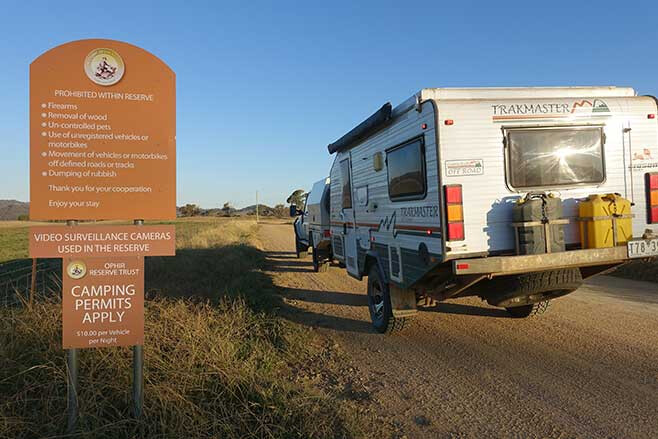
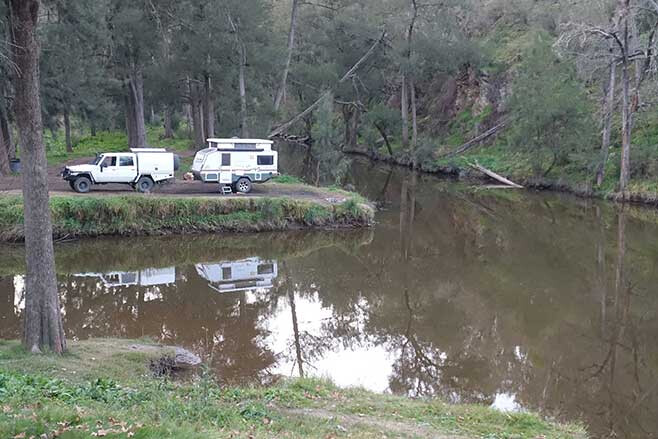
Still, a gold rush set in and while the gold didn’t last long at Ophir and the prospectors quickly moved on, the scene was set and the history of Australia changed forever. Today the reserve surrounding the junction of Lewis Pond Creek and Summer Hill Creek is a top spot to visit with a number of camping spots to enjoy along the small, narrow waterways. We pulled up for a couple of nights near the junction and explored the surrounding area by vehicle and on foot.
There’s a few short walks to old mine sites, tunnels and the like while a brief drive up the winding dirt road will take you to the area’s first cemetery. There’s surprisingly few graves which is probably more of an indication of the areas short-lived prominence than of anything else, but the few remaining headstones do show a violent history with one, a Charles Corse, who was shot in 1872 after a savage argument with another local.
BATHURST
FROM Ophir there are a number of ways to find your way to the popular 4WD destination of Hill End and the Turon River. On forestry trails it’s a bit of a hodgepodge of tracks but we wanted to check up on ol’ Ben Hall’s exploits in Bathurst so we headed that way first. Ben and his gang had raided the town twice in October 1863, in some brazen attempts to embarrass the police, more than anything else, it seems.
They first robbed a jeweller’s shop before hiding in the Sportman’s Arms Hotel and having a few coldies while the police rushed around looking for them. Two days later they were back plundering a few pubs and their hapless patrons, while the police wandered this way and that, seemingly helpless to catch them. Their cheeky good luck deserted them in the end though.
Befitting a town with such a rich history, especially in mining and gold terms, Bathurst now hosts the Australian Fossil & Mineral Museum. This collection of some of the finest and most historic minerals, gemstones and incredible fossils you will find anywhere is the lifetime work of Warren Somerville.
This amazing collection, which was valued at more than $15 million, 20 years ago, was gifted to Bathurst and is now housed in a spectacular series of displays in the 1876 Public School building in the heart of the city.
Being a bit of a dinosaur nut (who isn’t?) we were particularly interested in viewing the skeleton of ‘Rex’, the mighty Tyrannosaurus rex, which is probably the best rex skeleton in Australia. Originally discovered in Arizona where it roamed the swamps and forests some 70 to 65 million years ago, he (or she?) is amazing!
HILL END
FROM Bathurst and its history we headed to the once thriving gold town of Sofala and then took the main road to Hill End. Sadly, the old historic Bridle Trail that skirts close – sometimes too close – to the edge of the Macquarie River remains closed at Monaghans Bluff about 20km south of Hill End.
Wanting to be close to the centre of this famous town we settled on staying at the national park campground, a stone’s throw from the heart of the historic borough. Not your normally old gold mining town, Hill End with its wealth of notable old buildings and the extraordinary 3500 photos of the Holtermann Collection, that were rediscovered in the 1950s, shows what the town and area was like during its heady boom days around 1872.
That was also when a German immigrant, Bernhardt Holtermann, discovered a single great hunk of reef gold weighing in at 286kg and containing 93kg of pure gold; it turned the sleepy little village into the biggest town in inland NSW.
Today it doesn’t matter what your particular bent is in life you’ll find something that will endear yourself to this place. While photographers and artists still flock here – it was made famous by such masters as Brett Whiteley, John Olsen and Russell Drysdale – those with a more adventurous or enquiring mind will revel in the tracks in the area that lead to interesting old mine sites, tumbled down smelters, deserted towns and poignant graveyards.
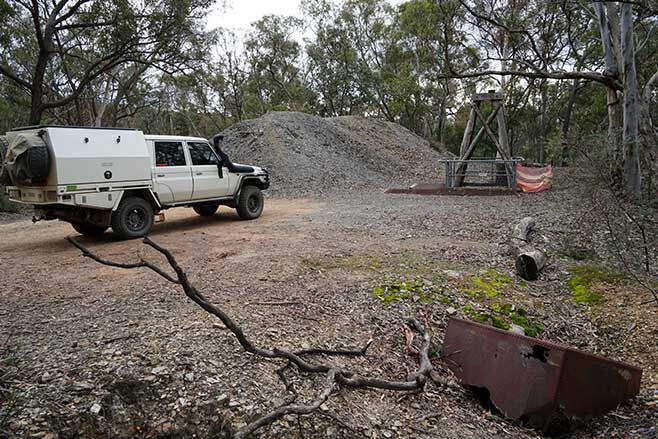
For fossickers there is a designated fossicking site just north of the town. Walkers on the other hand can enjoy an easy stroll around the town, a more interesting walk through Golden Gully or a longer stroll, with some great bird watching interspersed with old mine sites, stampers and the like around the 4km long Bald Hill Walking Trail.
For those who want to camp in a bit more isolation there are a heap of sites along the Macquarie River (both north and south of Monaghans Bluff) as well as at the Glendora Campground just outside town. No matter what you do, you should always start your visit at the Hill End Heritage Centre and then take a short wander to the town’s old hospital with its display of mining equipment, Cobb & Co coach and historic farm machinery along with a pleasant barbecue area.
Of course, just across the road from the heritage centre is the one and only pub still standing (out of near 30), the Royal Hotel, built in 1872 and still serving a cold beer and a fine meal, so you mightn’t get far on your town wander.
We tore ourselves away from Hill End after three pleasant days exploring the town and surrounding area, but we’ll be back. Once you experience the region, you will return!
ESSENTIAL INFO
- Weddin Mountains National Park requires a camping permit only booked on-line.
- Forbes is about a five-hour drive from Sydney and among its many attractions it also has the impressive McFeeters Motor Museum.
- Ophir, about 24km from Orange, and has an on-site booking station for those who want to bush camp in the reserve.
- History nuts will get lost in Bathurst for days and while it has a somewhat famous motor racing circuit the town also features the National Motor Racing Museum.
- Hill End, an easy two-hour drive from Bathurst, is a step back in time and extremely popular. Bookings for the camping grounds are essential.
Aussie tuning house Walkinshaw Performance has unleashed a couple of Performance packs to toughen up HSV-converted Chevrolet Silverado 1500s.
The two Fury packs available now via Walkinshaw Performance are suited specifically to Chevrolet Silverado 1500 (6.2L) models remanufactured by HSV.
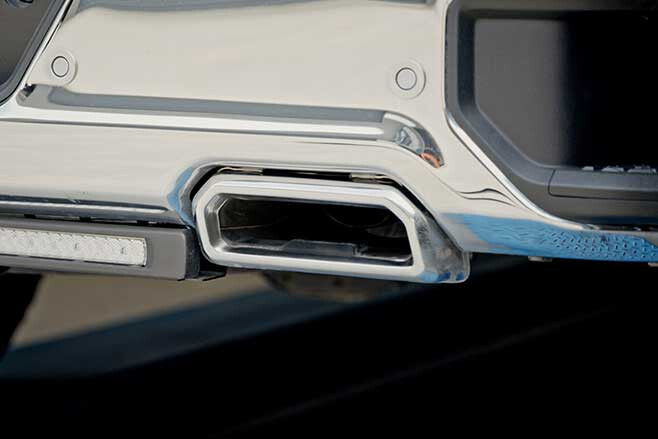
Both packs add a two-inch lift kit, custom Fury decal, a unique Fury build plate, and a shadow chrome tailgate badge. Helping the 313kW/624Nm6.2-litre V8 deliver a more aggressive howl is a Walkinshaw Performance cat-back sports exhaust system.
Fury Pack 1 wears Goodyear all-terrain tyres (295/65R18) wrapped around 18-inch Method Rims; while Fury Pack 2 is fitted with bigger 20-inch Method Rims inside 285/60R20 all-terrains. The wheels are co-branded with Walkinshaw Performance.
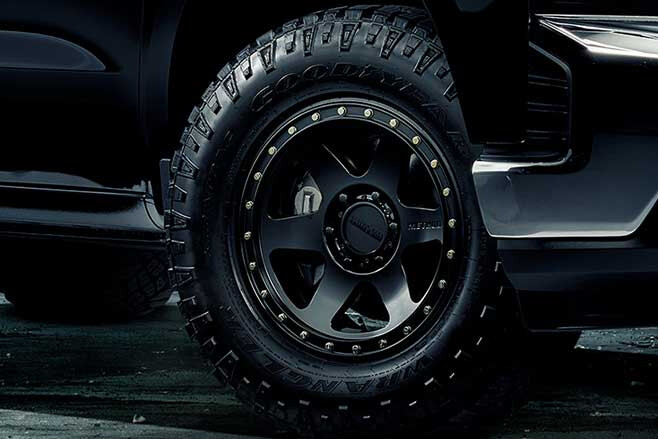
In addition, Fury Pack 2 gets a six piston brake upgrade kit, with 410mm rotor up front.
Customers will also pocket a Walkinshaw Performance Gift Pack.
WITH the summer touring season just around the corner, we’ve loaded our November 2020 magazine with plenty of beach-based content.
Headlining this issue is a coastal-dwelling custom GQ Patrol, built specifically for carving up sand and taking its owner to some of the best beach campsites on the planet. The 1996 LWB Patrol has had its RD28 diesel engine yanked, replaced by a naturally aspirated ‘silver-top’ TD42.
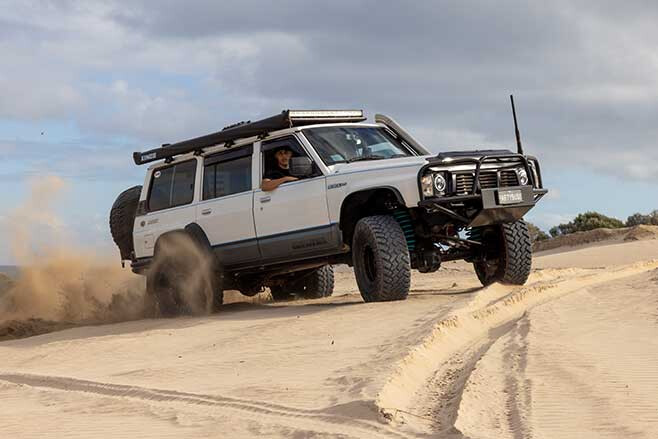
To get you in the right mood for your next coastal jaunt, we’ve listed some of Australia’s best beach drives – from Fraser in the east to Dirk Hartog in the west. And to help you when you get there, we’ve included some essential sand-driving tips and techniques.
In this issue, you’ll also find something you don’t see every day: a 200 Series single-cab custom with a 1HD-FTE Toyota engine and the associated 5-speed auto transmission.
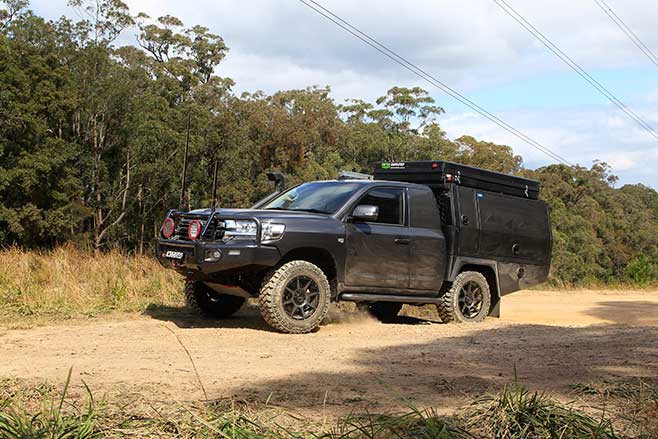
We then benchmark the all-new D-MAX against the segment’s forerunner, the Ford Ranger Wildtrak. Can the new-gen Isuzu ute match the perennial fan favourite? We find out in this extensive head-to-head.
Plus, we chat to a few industry experts about the latest trend in 4×4 canopies: tub toppers. They’re a cheaper alternative to a full canopy build, and they’re starting to sell like hot cakes in the aftermarket.
WHAT ELSE IS THERE?
– Defender P400 driven. – 2021 Defender range explored. – Musso + Hilux in the shed. – Winching and touring at Lima. – New 4×4 products tested.
The November 2020 magazine is OUT NOW!
Same but different – the new Isuzu D-Max and Mazda BT-50 may not look like twins on the outside, but make no mistake, the Mazda BT-50 is simply a re-skin of Isuzu’s D-Max.
For those who don’t know, the new Mazda BT-50 and new Isuzu D-Max share fundamentals of chassis, engine and drivetrain, bulk interior architecture and are even built upon the same factory line.
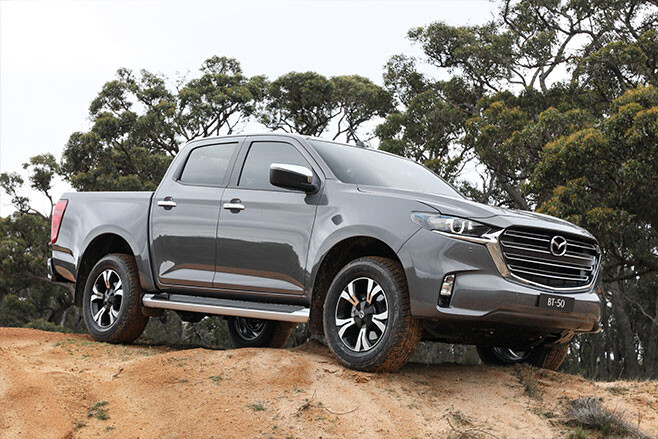
With all those similarities, it could be difficult to decide which one is the better buy.
Let’s dig into the details to lay out all the differences and analyse which is the right purchase.
What’s shared between the Isuzu D-Max and Mazda BT-50?
Given the shared underpinnings, both cars offer same base level of performance of 140kW/450Nm from a 3.0-litre turbo-diesel four-cylinder engine.
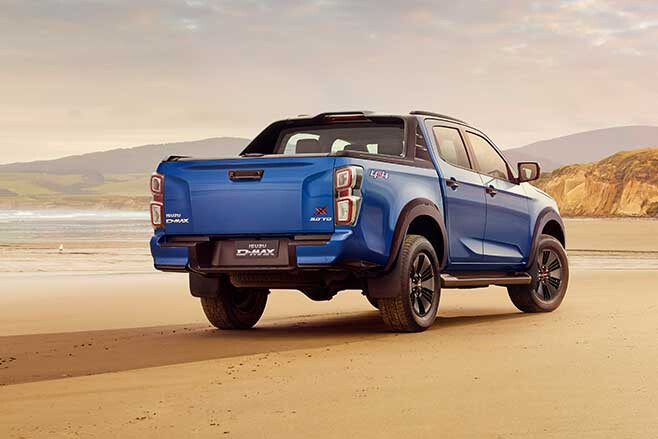
This engine is a wholesale revision of the previous Isuzu 3.0-litre turbo diesel engine, which traditionally found favour from the 4×4 crowd who valued it for its reliability and durability.
Quoted fuel consumption is the same for both, with an 8.0L/100km combined claim for auto transmissions which is bettered slightly if you opt for a manual (7.7L/100km).
Both utes have a maximum braked towing capacity of 3500kg – pretty standard for a 4×4 dual-cab ute – and both have payloads of nearly 1100kg dependent on variant and body style.
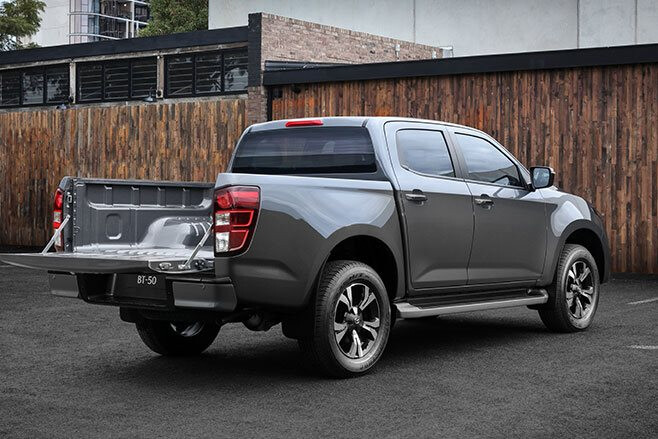
Off-road wise, both the Isuzu D-Max and Mazda BT-50 share approach, departure and ramp-over angles of 30.5, 24.2 and 23.8 degrees, respectively.
Each is able to wade in depths up to 800mm, and is equipped with a rear locking differential for the tough spots.
What are the differences between the Isuzu D-Max and Mazda BT-50?
Many differences lie in the specification and variant offerings.
Mazda for example, isn’t bringing a single-cab or space cab version to market until 2021, and currently offers a three-tiered range including the XT, XTR and GT variants.
Isuzu is now selling an entire range of body styles in four main grades including SX, LS-M, LS-U and X-Terrain.
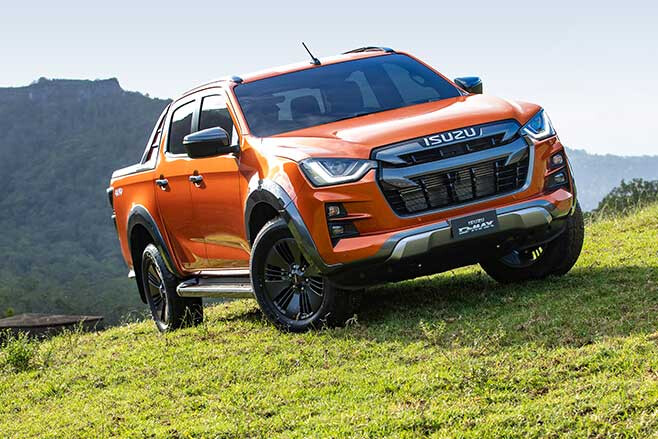
If you’re after a more specific variant or body style, there’s no doubt that Isuzu is the clear choice – at least for the moment.
Things start to change more when you get inside, though you’ll have to look hard to spot the differences.
Both cars have taken a step forward in terms of ambience and feel compared to their predecessors.
Each receives a 9.0-inch infotainment screen which runs Apple CarPlay and Android Auto on top-spec models, and a smaller digital read-out finds itself nestled within the instrument cluster to provide key vehicle information. Entry-level variants in each range equip a 7.0-inch infotainment screen.
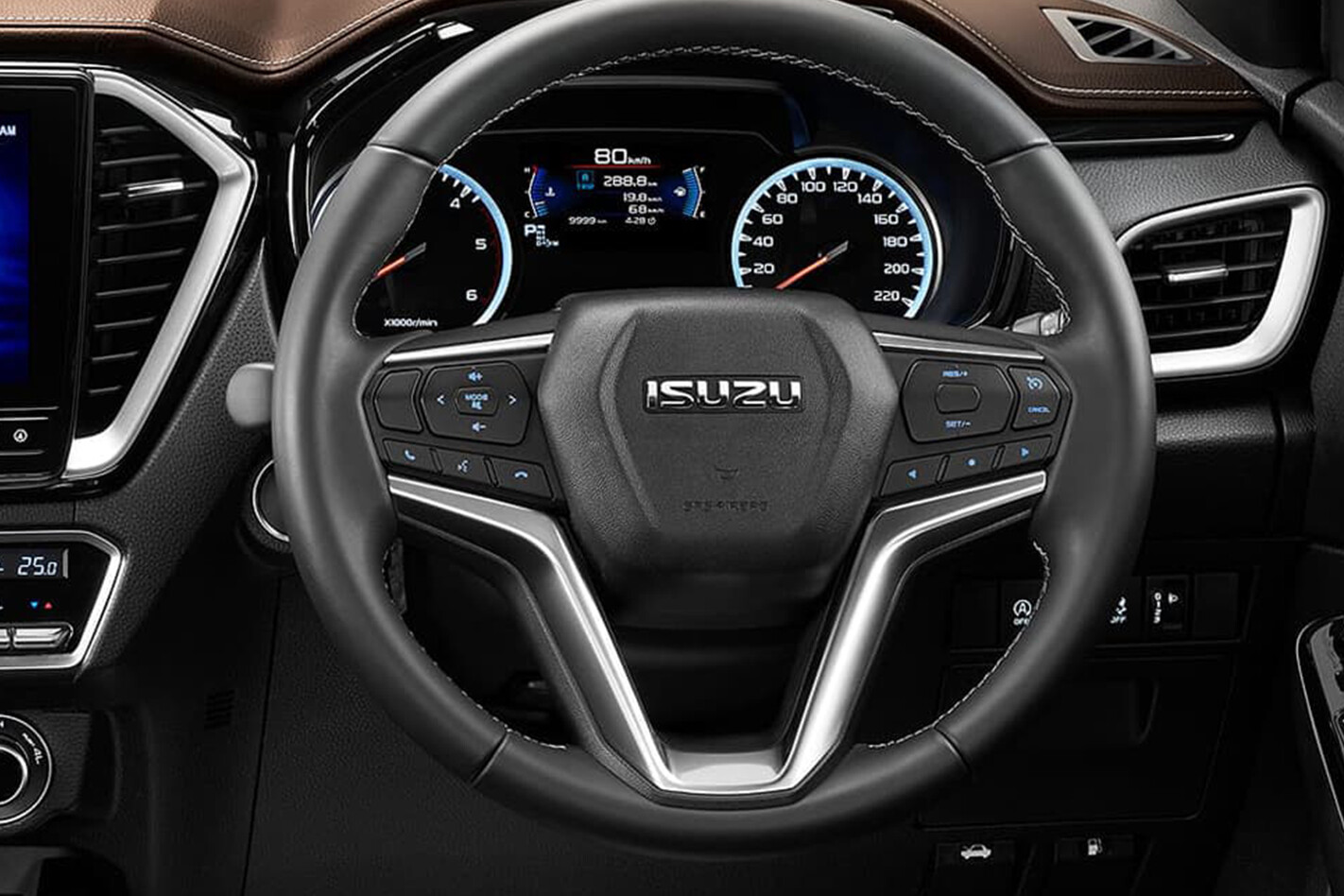
Dual-zone climate control, rear air vents, leather-appointed seats and keyless entry are some other hallmarks of the updated specification on top spec Isuzu D-Max and Mazda BT-50 models.
Pretty line-ball between the two, no doubt. The top spec Mazda BT-50 GT does use brown part-leather seats with added seat heating in place of the Isuzu D-Max X-Terrain’s part-leather non-heated black seats.
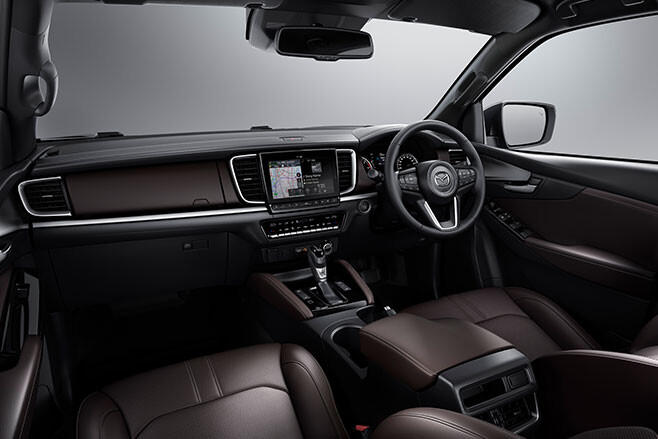
Materials are largely the same between the two, and of course the main difference will be the branding on the steering wheel.
Instant asset write-off scheme extension a lifeline to car industry
A full suite of active safety tech including autonomous emergency braking (AEB), blind-spot monitoring, rear cross-traffic alert and reversing camera and lane departure warning is standard on both utes.
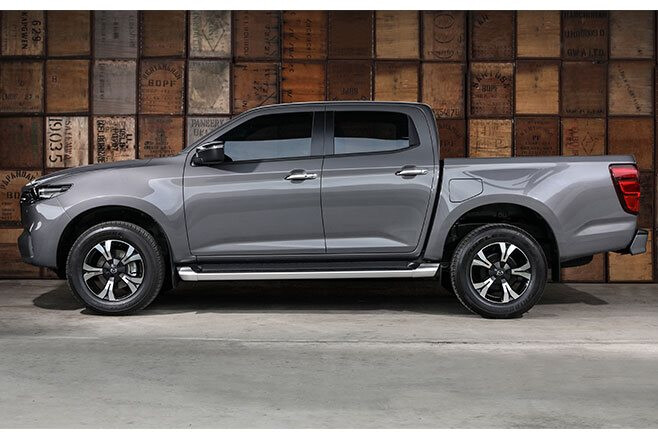
In most cases, the BT-50 offers slightly more equipment than the closest equivalent D-Max variant, though these additions are small.
For example, keyless entry and start is standard on XTR and GT spec BT-50s, but only on the top-spec D-Max X-Terrain.
The BT-50 is sold with a spare alloy wheel, where the D-Max only ships with a steel spare.
Pricing for Mazda BT-50 and Isuzu D-Max
Price-wise, they don’t make it easy to compare like-for-like. Model variants don’t quite match up for cross-shoppers, but some inferences can be made.
At the top end of their respective ranges, the $59,990 BT-50 GT compares favourably against Isuzu’s range hero, the X-Terrain ($62,900).
On the other end of the scale (talking 4×4 drivetrains and entry-level specifications), it’s the $47,900 D-Max SX manual 4×4 dual-cab that’s more affordable than the $50,760 BT-50 XT manual 4×4 dual-cab.
In terms of add-ons, Isuzu charges $500 for metallic paint whereas Mazda offers it at no cost.
Conversely, Mazda charges $2500 for an automatic transmission which Isuzu only charges $2000 extra for.
There are some big differences to consider after the purchase as well, with both pros and cons to each’s warranty period.
Mazda provides a better deal for owners who’ll go the distance with a five-year/unlimited-kilometre warranty, whereas Isuzu provides an additional year but caps the distance with a six-year/150,000km deal.
At the end of the day, the purchasing decision weighs more heavily in the ‘subjective’ column rather than the ‘objective’.
Which one should you buy – the Isuzu D-Max or Mazda BT-50?
Go for the Isuzu D-Max if you’re after a greater range of choice, lower price of entry and longer warranty.
Or you could pick the Mazda which counters with a slightly higher spec level for its three variants as well as a few extra bits of fruit on the top-spec.
The latest batch of Readers’ Rigs has landed at 4X4 HQ. To include your 4×4, send a photo with a brief description to our Facebook page.
2015 PX RANGER XLS

It’s the 3.2-litre, six-speed manual combo. Work includes a six-inch lift, coil-overs, adjustable upper arms, a diff drop, and Dobinson leafs in rear with Superior shackles.
Other kit includes 37-inch Mickey T Baja Claws, SW Diesel chip, three-inch exhaust, four-inch stainless steel snorkel and custom airbox, Xrox bar, aftermarket bash plates, Kut Snake flares, rock sliders, bonnet protector, Rhino-Rack roof rack, Kings 3m awning, aftermarket centre dash surround, GME UHF, two nine-inch LED spotties, two Hella Rallye 4000s, a tow bar, tub liner and sports rack – Tom Vinnie Auton
DION KNOWLES: ISUZU MU-X
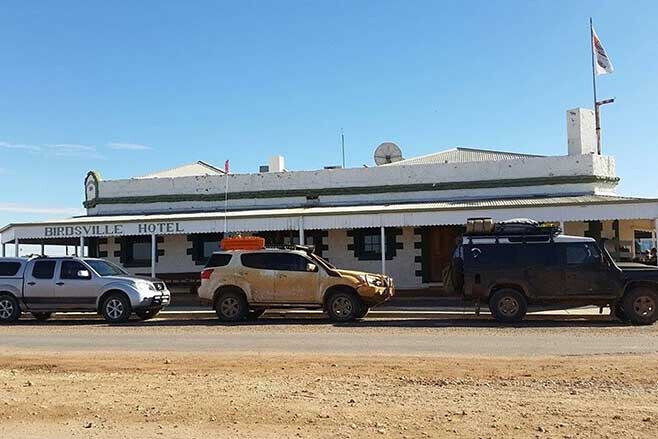
The MU-X has taken us to some amazing places already, but there’s so much more to see in years to come. It’s set-up for family touring with LT tyres, beefier suspension, long-range tank, bullbar, winch and driving lights, not to mention a big Rhino roof rack for the swags -Dion Knowles
2015 FORD RANGER XL
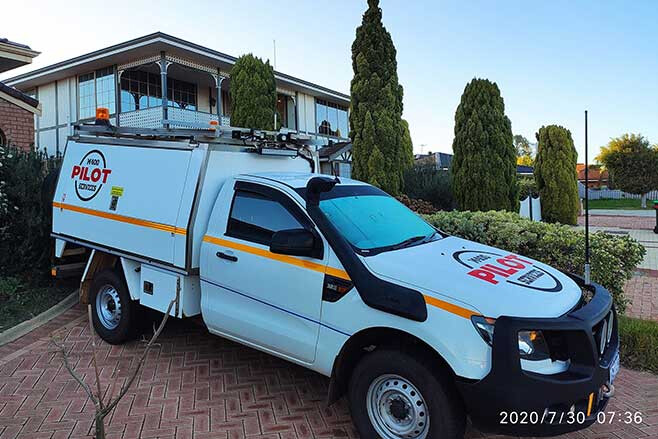
It’s ex-Telstra and now used as a pilot vehicle. Rear body fitted out for sleeping and holding all my kit for going away, such as food, cooking stuff, etc. It has a bullbar, Warn winch, spotties, UHF, second battery, solar panel, inverter, long-range tank, second spare wheel, factory diff lock and heaps of other stuff. It has clocked up 38,000km since February. Trouble-free -John Hetherington
IVECO 4X4
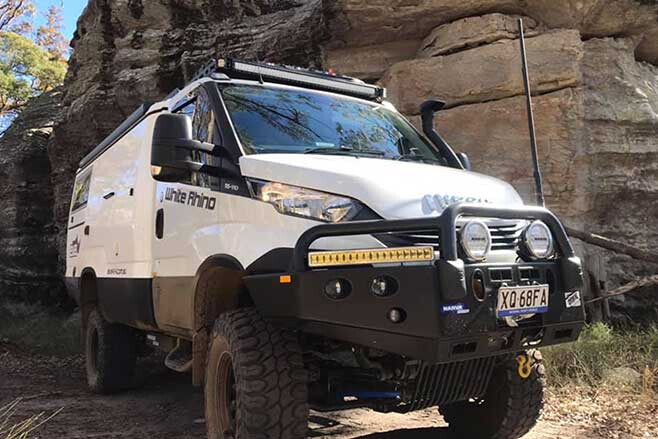
My Expedition Vehicle Australia motorhome is set-up for two people. It has a hot-water shower, 37 x 13.5 Gladiator rubber, Kings Racing suspension, NARVA driving lights, and long-range fuel and water. Off road in comfort! -David K Smith
1970 NISSAN PATROL
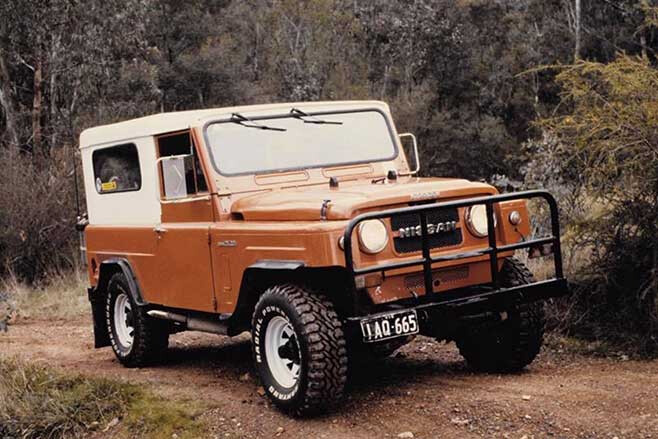
My old bus has been everywhere in the Victorian High Country including Wonnangatta Station and Tom Groggin. Plus it has been up to Fraser Island -Darren Gross
JEEP WK II LIMITED
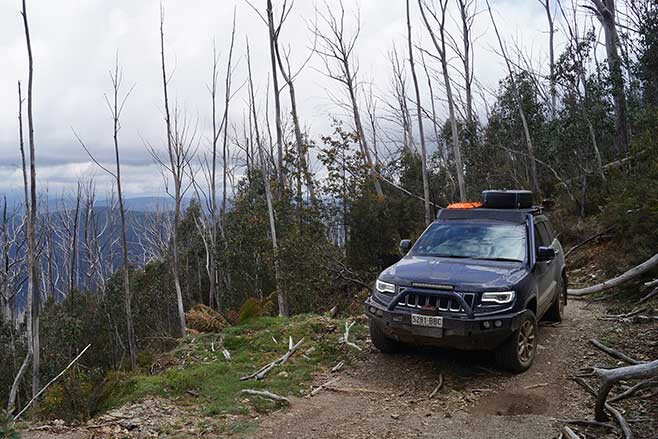
The Jeep is fitted with touring necessities and underbody protection, which was reassuring having had to climb over a few fallen trees in the High Country last trip -Brenton Bowley
WITH no word yet from Isuzu UTE Australia on its next-gen MU-X, the Japanese marque has instead revealed the special edition ONYX.
Erring towards an on-road rather than an off-road focus, the ONYX adds shadow chrome and black gloss treatment to the range-topping MU-X LS-T, in addition to an updated interior suite.
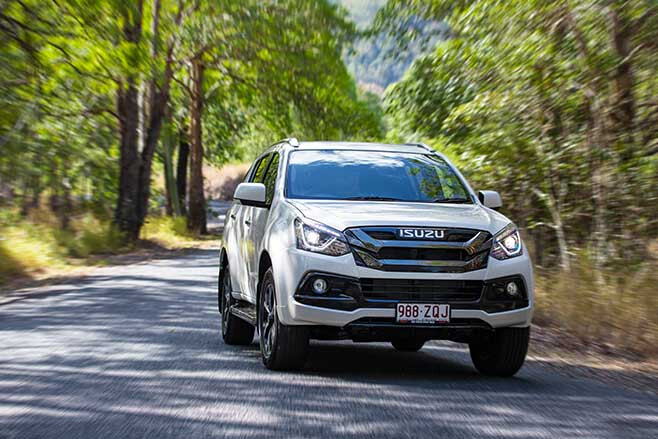
Both the rear tailgate and front grille have been sprinkled with the shadow chrome treatment, with the front grille and side steps enhanced with gloss black elements.
The other notable changes relate to the infotainment set-up, with the ONYX getting a high-definition 6.8-inch system with DAB+ Radio, Sat-Nav, Android Auto and wireless Apple CarPlay.
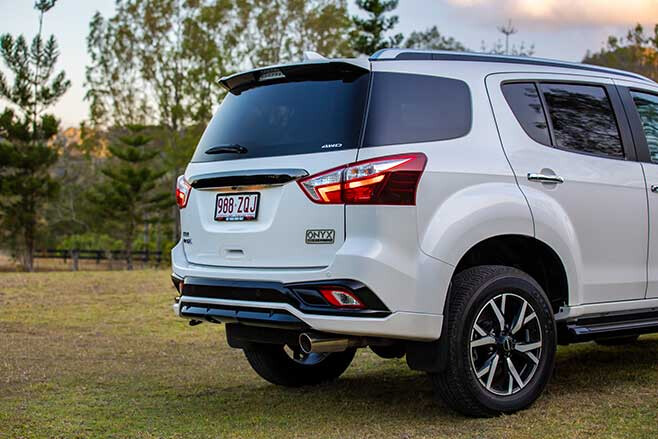
“This is our first ever special edition MU-X, and the MU-X ONYX Edition is our boldest and most connected SUV to date; with sat-nav, DAB+ radio, Android Auto and wireless Apple CarPlay, among styling enhancements that customers have been longing for,” said Isuzu UTE Australia Managing Director, Hiroyasu Sato.
“For 2020, we’ve taken it a step further with bold and impactful exterior enhancements and the latest in smartphone connectivity, to make the MU-X ONYX Edition the most desirable MU-X to date,” he said.
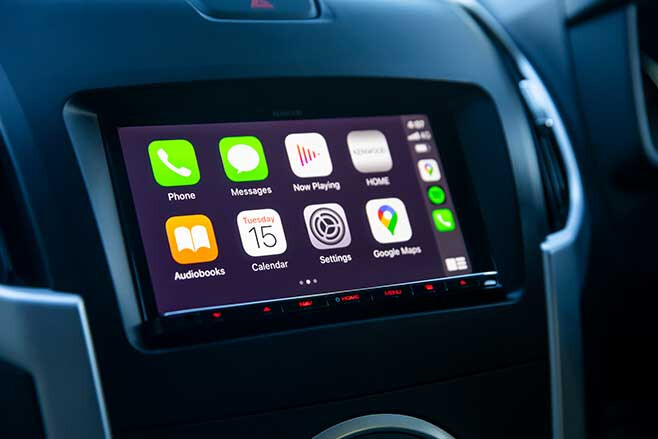
These tweaks aside the MU-X ONYX remains unchanged, still served by Isuzu’s venerable 130kW/430Nm 3.0-litre turbo-diesel 4JJ1 engine still running through a six-speed automatic transmission.
The ONYX is initially limited to a run of just 420 examples and is on sale now with a $56,990 drive-away price tag.
WHILE we were playing with tyre pressures and compressors, we grabbed another unit that had recently arrived at 4X4 Australia HQ: Ryobi’s One+ inflator-deflator air pump.
The unit is part of the brand’s One+ range of power tools, so it is powered by the same 18-volt battery packs that fit more than 100 different tools.
The cordless unit has both a low-pressure, high-volume pump for inflating things like footballs and air mattresses, and a high-pressure pump for inflating tyres. The deflator part of it is on the low-pressure side for sucking the air out of mattresses when it’s time to pack up camp.
A cool feature of the Ryobi pump is its digital pressure gauge that allows you to preset a desired pressure to inflate the tyres, just like the pumps at a service station. It makes getting the correct pressure easy and the readout can be set to show kPa, bar or psi to suit your needs.
We were sceptical of the compact battery-powered unit’s ability to inflate a 4×4 tyre, so we put it to the test. The tool doesn’t come with a battery and, instead, we charged up a 4Ah lithium One+ battery before we started.
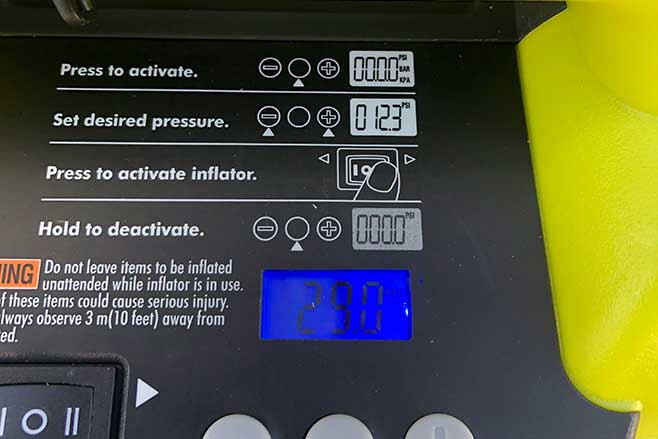
With a 265/75-16 all-terrain deflated to 10psi, we set the desired pressure to 30psi and switched it on. The first minute of operation added 5.5psi to the tyre which climbed to 8psi after two minutes, 10psi after three minutes, and 15psi at five minutes. As the pressure increased, the time it took grew longer and it took seven minutes and 18 seconds to reach the 30psi setting.
That’s slow-going compared to the 12-volt compressors most of us use, and it would take you more than 30 minutes to reinflate four tyres after a beach drive.
For that reason we wouldn’t want to rely on the Ryobi pump for our 4×4 tyre needs, but it does have the added uses of pumping up your sporting and camping goods as well.
If you need it for jobs other than pumping up tyres and you have other Ryobi One+ tools, it would be worthwhile carrying it in your kit. It will get you out of trouble in an emergency, but it takes a long time to do it and there are better compressors available for this task.
The Ryobi pump comes with an assortment of nozzles and attachments for inflating various products and the tyre chuck on the high-pressure line, all of which stow neatly within the unit.
ESSENTIAL INFO
AVAILABLE FROM: www.ryobi.com.au; Bunnings stores RRP: $109 (sans battery or charger) WE SAY: Handy for emergencies but not ideal for 4×4 tyres.
WITH hundreds of kilometres between stops, a 4×4 pub crawl isn’t exactly a Saturday night spent staggering between fuel stops. Instead, the cold beer and warm food at an outback pub is a well-earned reward for long days spent behind the wheel covering vast distances of red dirt.
Australia is famous for its rural pubs, with most iconic establishments on this list servicing off-the-grid tourers for decades, keeping them well-fed and showered. Many of the publicans and locals are also more than happy to advise passers-by on track information and nearby attractions, or to simply have a general chit-chat.
Considering the vast amount of bush pubs servicing folks as we speak, we’ve tried to tick off six of the more iconic and famous pubs in Australia. So get out there, stop in for a beer, and support these rural communities.
CAMERON CORNER STORE
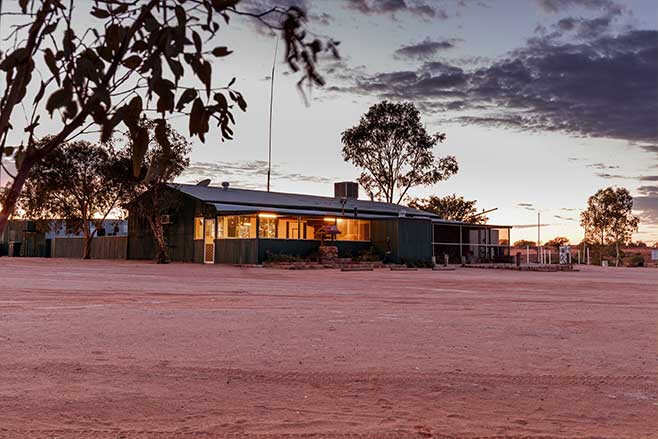
THE peculiar Cameron Corner Store is positioned where the three states of Queensland, South Australia and NSW meet, at the eponymous junction named after James Cameron who surveyed the area in 1880.
Despite the pub’s isolation, it’s positioned on a busy tourist circuit popular for outback expeditions and travelling parties, so it’s often bustling with tourists heading in crisscrossing directions. Patronage numbers typically spike during mid-winter when the annual Birdsville Races – 480km to the north – take place.
Things quieten during the warmer months – from about October – due to the searing outback heat, but ramp again from late March/early April with people escaping the cooler climes – we’re looking at you Victorians.
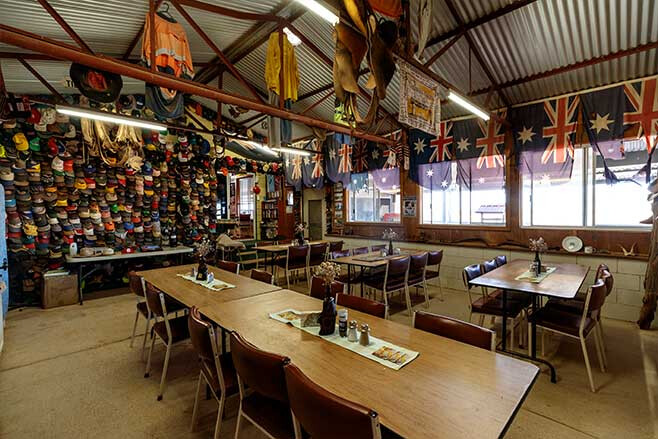
The Cameron Corner Store’s fridges house more than 20 varieties of bottled beer (and cider), with the establishment also selling basic groceries and fuel (petrol and diesel).
Accommodation options include single, double and family cabins; with both powered and unpowered campsites also available. Breakfast, lunch and dinner can be purchased from the pub.
Cameron Corner Store is a famous outback establishment that is linked by many iconic outback tracks and destinations. Just remember to pack the fly repellent.
CONTACT: (08)- 8091 3872
PUB IN THE PADDOCK
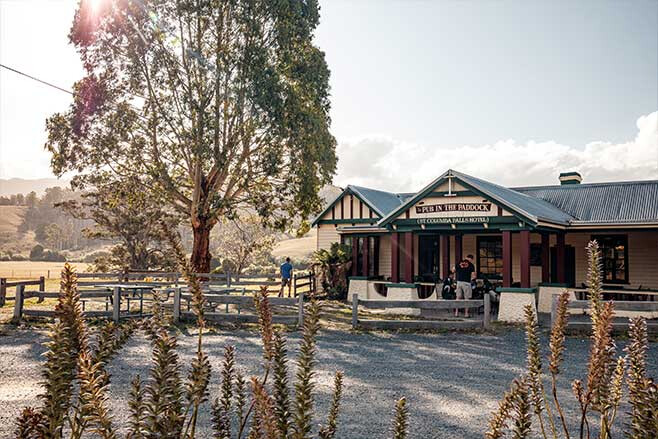
AN Apple Isle 4×4 trip isn’t complete without a stopover at the Pub in the Paddock in Pyengana, a small rural village located about two hours’ drive from Launceston.
The picture-perfect pub has James Boag’s Draught and Iron Jack on tap, as well as a selection of food in its restaurant including pies, parmas, pork sausages and steaks, many of which is sourced locally.
The walls of the pub itself are lined with memorabilia from the region, highlighting the area’s rich local history.
However, the pub is perhaps better known for its resident pig Priscilla, who lives out the front of the pub and is famous for her drinking habits. Priscilla has become quite the celebrity of late, known for her appreciation of watered-down beer.
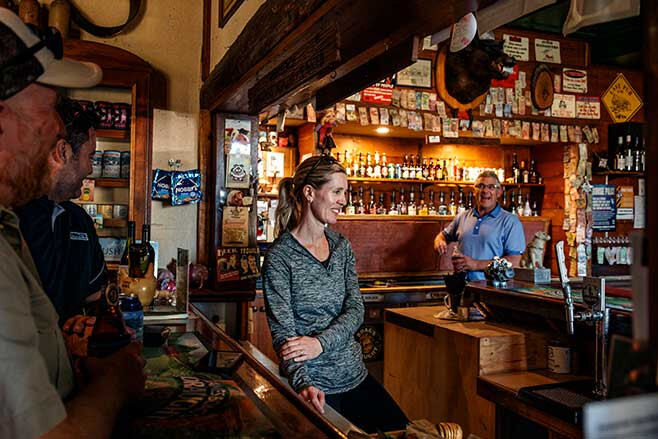
For tourers wanting to stay the night after one too many brews, there are six rooms available with shared facilities. Plus, there’s plenty of camping space in the Pyengana Recreation Area which has toilets and hot showers.
An alluring attraction of many rural pubs is the hospitality of staff and owners, and the Pub in the Paddock’s current owners, Rowena and Scott Codyre, are warm and welcoming. Case in point, on a Tassie trip earlier this year for our 4X4 Adventure Series, we popped in to the pub to find the doors locked. However, Rowena and Scott showed up 10 minutes later and let us in for a brew.
CONTACT: (03) 6373 6121
SILVERTON HOTEL
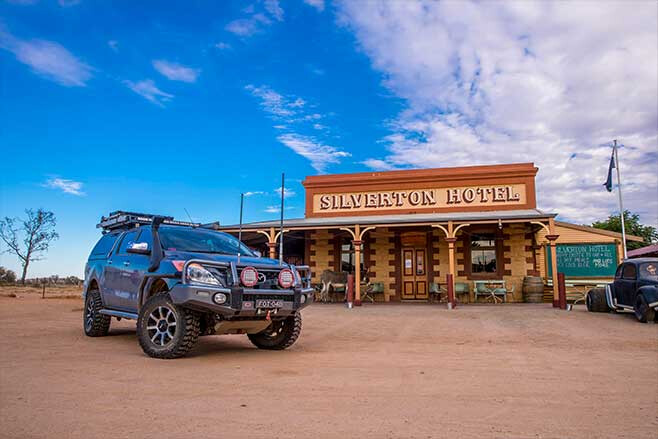
STEP into the iconic Silverton Hotel and you’ll be touched by its quirky charm, with the main bar’s walls packed with hats, guitars, funny signs and plenty of old memorabilia.
“It’s a hotel and a museum all mixed together,” publican Peter Price told us back in 2017.
The pub, only 25 odd kilometres from the well-known outback town of Broken Hill, was originally built in 1884 by John Debaun during the area’s successful mining era.
It was then moved into a two-storey building that burnt down in 1918. The pub moved to its current building, formerly the town’s post office.
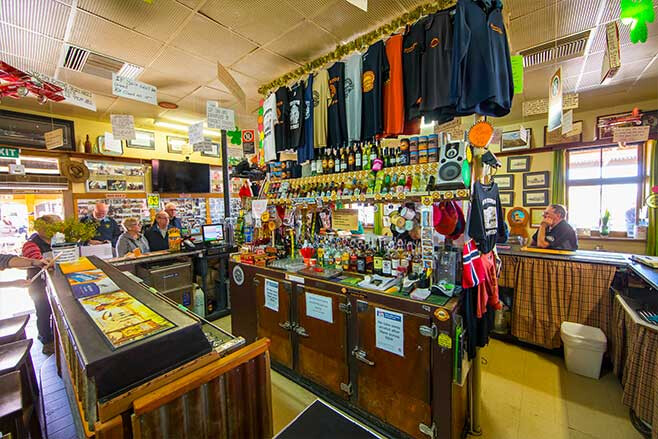
Live music and decent pub grub draws in punters, with seven self-contained motel rooms nearby for those who wish to spend the night in a comfy bed.
Don’t forget about the grog, with XXXX Gold, Tooheys New and Old, and Hahn SuperDry all on tap, as well as a selection of cans, stubbies, and red and white wines.
A nearby attraction is the Mad Max Museum, a recommended stop-over when you’re in outback NSW.
CONTACT: (08) 8088 5313
MUNGERANNIE HOTEL
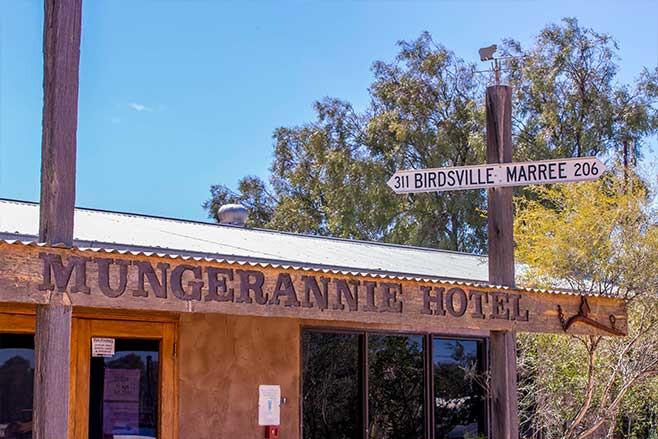
IF you’re travelling from Marree to Birdsville along the Birdsville Track, a stop at the Mungerannie Hotel is inevitable, as it’s the only stop along the way.
The pub is well-known for its collection of hats that cover the ceiling, many once owned by people who have worked on the Birdsville Track. Perhaps disturbing to some, you’ll even find human hair hanging from the ceiling, cut from those who once downed a beer or two here. Like many outback pubs, the walls are lined with paraphernalia including flags, stickers, old signage and stubby holders.
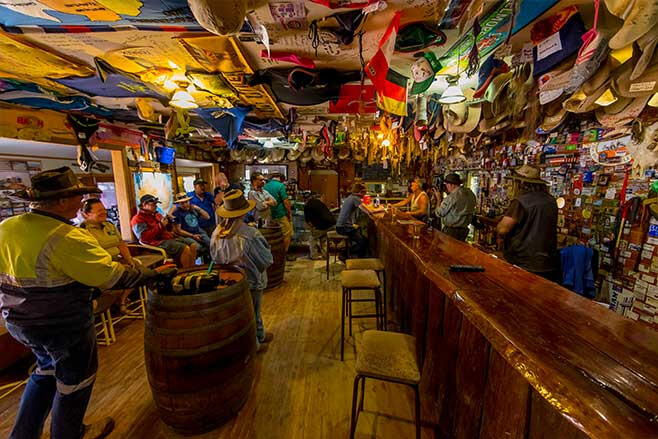
As well as cold beer, the pub serves plenty of food – rolls, pies, burgers, schnitzels and steaks – for lunch and dinner. Plus, you can hunker down for a night at the unpowered campsite, or spoil yourself for a night in one of the dongas complete with an en suite.
In addition, you can rejuvenate yourself at the nearby hot spring bath, or refuel and repair your vehicle at the nearby garage.
If travelling north, the Birdsville Hotel is about a six-hour drive; if travelling south, you’ll arrive at the Marree Hotel after about three hours behind the wheel.
CONTACT: (08) 8675 8317
PINK ROADHOUSE
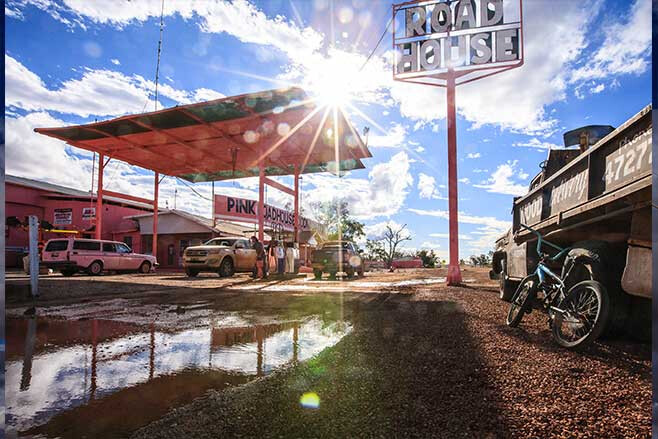
THE iconic pink outback locale stands out when driving along the remote Oodnadatta Track, and the call of the roadhouse’s famous ‘Oodnaburger’ is often too strong for many pundits.
Known as the gateway to the Simpson, the roadhouse’s origins date back to 1978, when Adam and Lynnie Plate set up a motorcycle repair business and a shop called the Tuckerbox that sold snacks and supplies to passersby.
In 1983, fuel was added to the service and the place was renamed the Oodnadatta Traders. Shortly after it was painted pink and renamed the Pink Roadhouse, a name it retains to this day.
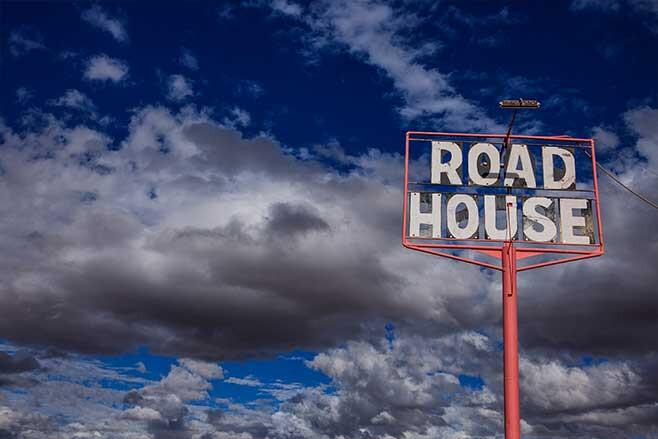
In addition to the memorable food on offer – the as-mentioned Oodnaburger – the Pink Roadhouse has cold beer, wine and spirits, groceries, and plenty of pink clothing, hats and merchandise.
The Pink Roadhouse also has camping sites, powered caravan sites, budget rooms and self-contained cabins. Plus, there’s a mechanical workshop for basic repairs; spare tyres in stock; and a 24-hour recovery service.
CONTACT: 1800 802 074
TILPA HOTEL
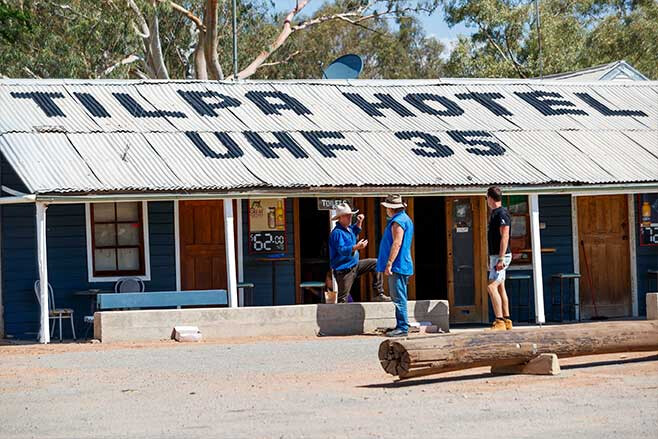
IF you know a four-wheel driver who loves to plaster stickers on the back of their 4×4, then they’ll more than likely have a Tilpa Hotel sticker.
The famous little bush pub is positioned on the bank of the Darling River, originally established in 1894 to service the boats running freight up and down the river. Nowadays, the main building houses a small bar and a room out the back with a pool table. There’s also a quiet lawn area, a peaceful place to sip a beer while overlooking the river.
Step inside and you’ll notice the walls and ceiling are covered in graffiti, and you can write your own message for a small fee which gets donated to the Royal Flying Doctor Service of Australia.
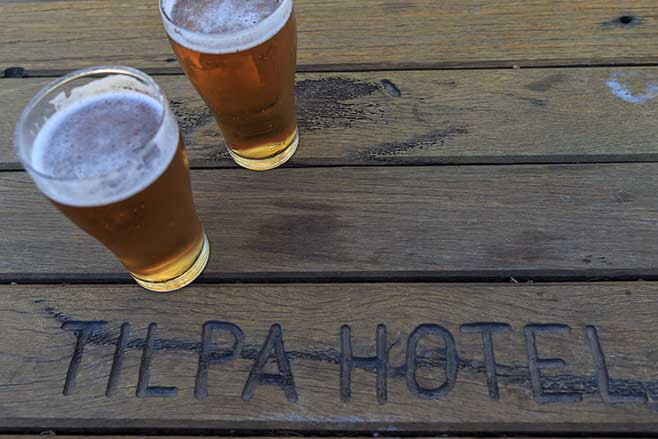
The bar serves cold beer on tap – Great Northern, Carlton Dry, Tooheys New and XXXX Gold – while lunch and dinner options range from toasties, chips, sandwiches, pizza and steak. The hotel also has four rooms available for digs, or a gold coin donation will allow you to set up camp over the road for the night.
In addition to the Tilpa Hotel sticker, you can also purchase other branded items such as stubby holders and clothing.
CONTACT: (02) 6837 3928