
THIESS Brothers, an earth-moving construction firm, introduced Toyota 4WDs into Australia in 1958.
The first batch was used in the construction of the Snowy Mountains Scheme where Thiess was one of the principal contractors. It also had a contract to remove overburden and ore from the massive Black Rock open-cast mine at Mount Isa Mines, and introduced Toyotas to the Isa and the Gulf country when I worked in the pit.
Mining and Toyotas were cheese and wine, but, not to be outdone, the grazing industry replaced ageing ex-military Jeeps, Willys Jeeps and British Land Rovers as quickly as they could afford it with the more powerful Toyotas. However, there was much scepticism in the bush about the Toyota – “Jap crap” according to some.
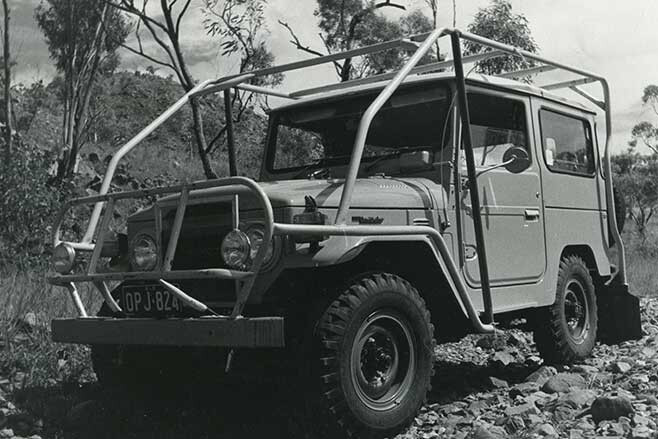
How anyone could possibly believe that a Japanese-made vehicle could compete in the bush with the time-proven British Land Rover was beyond the imagination of most bushmen. The Land Rover was introduced into this country in 1948. It was an instant success, having no competition, apart from few clapped-out WW2 ex-military Jeeps. To many, the Land Rover was the pinnacle of British engineering; but that was to change.
By the mid-seventies, the Toyota had all but replaced the Land Rover. Only wannabee city-based ‘bushmen’ drove Land Rovers. The drivers could be identified by ex-army slouch hats that were clipped to one side, wore surplus military-issue clothing, sole-ribbed or ex-military desert boots, and carried big Puma Hunter knives on their belts, arguably the first survival blade. Land Rover drivers smoked curved pipes and when you met a mob in a bush pub like Gregory Downs or Kajabbi, the smoke and smell was enough to make one puke.
HAMBURGER BULL
ON the vast cattle stations, though, things were changing when the US market demanded hamburger meat and the best burger meat comes from bulls. Yes, you read that correctly – bulls. Now it so happened that the highest numbers of shorthorn Hereford bulls on the planet roamed wild across the Cape York Peninsula, the Top End of the Northern Territory and the Kimberley, on stations that had been neglected for years due to the lack of sales, distance and costs. But suddenly they were tossed a lifeline, someone wanted bulls and they had heaps; big ugly bastards with huge horns and bad tempers.
Bull-catching created a whole new career for ringers. Horses where first used to knock bulls off their feet. The ringer leaped off his horse, grabbed the bull by the tail and when it turned on him, it would be off balance. In that spilt second the ringer twisted its tail and the bull fell on the ground. A strap carried about the ringer’s waist was then used to secure the hind legs: “Easy as, ’ey …”
But horses and sometimes ringers were gored and killed. There had to be a better way.
LIMITED EDITION: Jeep Wrangler Unlimited Willys
The answer lay in old Toyota ‘shorties’. They were resurrected, stripped-down and mechanically rebuilt, fitted with a sturdy steel bullbar – now you know where the name comes from – the sides enforced with strong steel plates and rails that connected to the bullbar which sat well forward to protect the radiator from bull horns and scrub.
Not that the Toyota shorty had the market covered; a bloke in Katherine used a Range Rover, but when it was opened up like a sardine can by a bull he stopped using it. The Austin Champ was another vehicle used as were Willys Jeeps, Land Rovers and others, though the drivers preferred Toyota.
“If it broke down, you could always fix it and get home,” said an old mate. “It was all busted-arse gear to start with. We broke a lot of engine mounts chasing bloody bulls through the scrub. And don’t talk bloody tyres to me, those money-hungry bloody bosses used to haunt the tyre shops begging for old tyres, which were then fitted to the bull catchers. Talk about changing flats or blown tyres on the job. Bloody hell, don’t remind me.”
CLASSIC: BJ/FJ Cruiser
The FJ25 short-wheelbase Toyota was well-suited for the job and from the mid-1960s on they underwent all sorts of modifications. A good bull-catching shorty had a 155hp petrol engine and a three-speed gearbox. Others had multi-throat Stromberg carburettors, and later five-speed gearboxes, for extra pick-up and power. But it was generally recognised that the three-speed gearbox was ideal. Some mechanically-minded drivers even dropped Chevy V8s into their shorty.
“They went like the blazes,” said old mate. “But we did not really need that much power.”
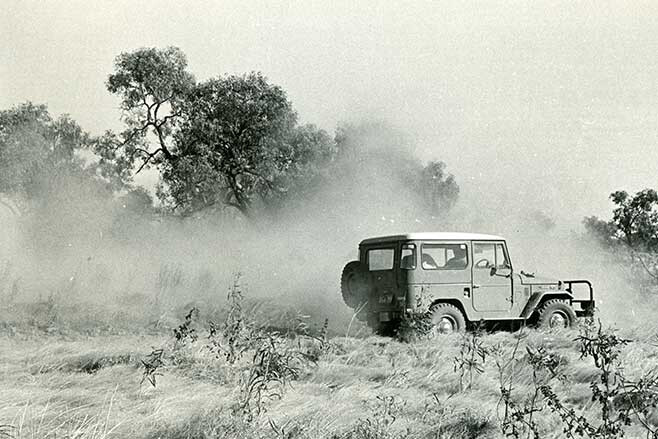
The three-speed was favoured because the driver could concentrate on the bull instead of having to change gears. It enabled the driver to change gears with a simple forward and rearwards movement, handy when you were stuck in a gully or mud. The second gear was ideal for running the bull until it tired.
The bullbar was used to knock the bull over and, with the vehicle almost parked on top of the unfortunate bovine, it was ‘easy’ to tie the hind legs and immobilise it. Next, the bull was tied to a strong tree trunk by the horns and the leg rope released. It was later picked up with a truck – generally an old 4WD ex-army Blitz – but if the country was too rough for it, a trayback Toyota did the job.
There were various methods of loading bulls onto trucks. One was to winch or pull it partly up a tree and back the trayback under it. The other was to use a purpose-built truck slide and either winch the animal on the truck bed or pull it in with the bull catcher, the same method as is used today.
Bulls were dehorned at the spot or had the horn tips removed to stop them from killing each other when yarded. There is nothing meaner than a mad scrub bull when yarded with a mob of cattle and calves. When one goes berserk they mainly kill cows and calves. If it can’t be separated quickly, the only other option is to shoot it …
A very expensive problem that faced the bull catchers was the fact that they drove clapped-out vehicles. For most contractors the cost of maintenance was outstripping the profits. Spares were carried and most drivers were outstanding bush mechanics, but fixing a vehicle in the bush meant downtime for others on the job.
NEW THINKING
A FEW contractors bit the bullet and purchased brand-new FJ25s that cost more than $3000, stripped them down and rebuilt them as bull catchers. That was enough to make grown men cry, but the new vehicles paid for themselves in a month if bulls were caught and, best of all, they did not have any major breakdowns for several seasons.
The bull catcher kept evolving; someone, probably an American cowboy who had immigrated to Australia and the Top End, constructed a horse saddle seat next to the driver, or in the rear, from where he lassoed bulls from his lofty height. This worked well until the driver hit an anthill or a washout. Pub legend has it that one roper fell forward when the driver hit a log hidden in tall grass. His head went through the glove-box opening and the only way they could extract him was to grease his head and ears and pull hard …
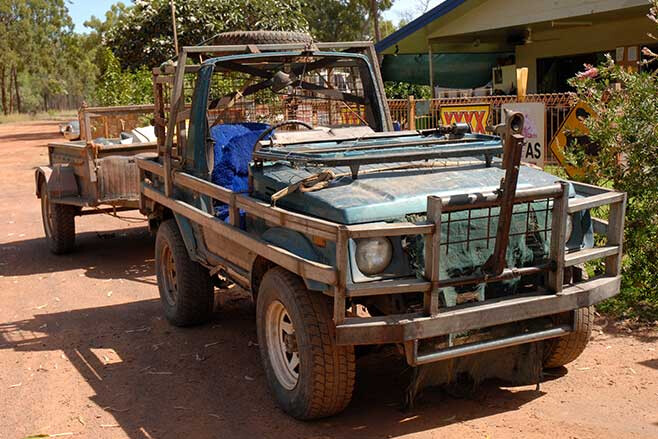
The freedom, adventure and lifestyle of bull catching, especially buffalo, attracted adventurers from all over the world. There were Americans, Germans, Dutch and English in the mix of local Aborigines.
Next came pole catching, where a long bamboo pole with a rope noose on the end was placed over the bull’s head. It took a great deal of skill and strength because of the unwieldy long-pole weight. You also had to have complete trust in the driver, even though the catcher was supported by a purpose-built rail where the passenger seat normally is. Once the noose was over the bull’s neck, the brakes were slowly applied and the bull knocked off his feet with a tail twist, before being tied and left for the truck to collect it.
Later, some say after the African movie Hatari starring John Wayne, a seat was fixed on the bullbar. The catcher, a very brave man indeed, would sit on it and use a bamboo pole and noose to snare bulls. But some Territory old timers claim that the Hatari idea was already in use in the Top End before the movie was made and that Hollywood got the idea from us. Who knows?
HISTORY LESSON: Homage to the FJ Cruiser
It had inherent dangers, apart from being catapulted from the seat as seat belts had not yet been invented. Old mate, Indigenous catcher Matt Sullivan, told me he had a big-horned buffalo lassoed. When the driver slowed down it gave the bull a bit of space and he managed to get his horns under the Toyota and tip it over on its side. Matt was trapped under the vehicle with a broken leg.
“That bloody bull looked at me and snorted snot all over me before stepping out of the rope and running away,” said Matt, who sported the legacy of the encounter with a permanent limp. Other catchers, including Sonny Smeaton, who it was said was as mad as a buffalo bull, were not too lucky and were killed on the job.
Rollovers were common, as was hitting deep buffalo and pig wallows, anthills and logs, all demanding a heavy toll on vehicles, catchers and drivers.
BUSH ENGINEERS
BUSH innovation created the natural evolution of the bull catcher, and it is legendary when northern cattlemen gather about campfires and in bush pubs. Like the horse that went before it, the bull catcher’s vehicle is now part of life in the outback.
A Yank, Kel Carrick, came up with the idea to fit a contraption on the bullbar that was fitted with a swinging arm that was swung over the bull’s neck instead of knocking him over. You just drove alongside the bull and placed the arm over its neck and gave it a hug. Once secured, the bull wore himself out trying to tip the vehicle over. Buffalo were sometimes strong enough to do that.
What a great idea, it saved on labour and prevented bruising of valuable meat, while it was much easier on the driver and the animal. Thus, the bionic arm was born. It has undergone several innovations from the original, but almost every bull catcher’s vehicle used today is fitted with a bionic arm.
THE BUFFALO
OUT on the flood plains, east from Darwin, grazed untold riches in the form of buffalo that were so thick that “they are like cloud shadows,” wrote a visiting journalist. While they had been shot for skins for decades, the demand for burger meat and the German game market attracted the bull catchers. They used the same vehicles and methods as they did for cattle.
At about this time a new innovation were portable steel yards, which were set up in strategic places and had ‘wings’ consisting of two-metre-high hessian walls that guided mobs of cattle or buffalo into the yards.
The bovines won’t go through the ‘wall’ that confronts them, though getting them in the yard is not always easy, as there is always one that breaks and turns back towards the bull catchers, sometimes taking the whole mob with it. While cattle are easier to push into yards, buffalo are much harder to control.
Heli-mustering was introduced about this time and it made the job of mustering whole herds much easier. They would be driven near the yard where waiting bull catchers guided them into the hessian wings, almost hidden in clouds of dust.
“You have to line the bull catchers up like a single unit and push the buffalo forward. If there is a gap between the vehicles, a bull will rush through and get away,” said Jay Pendarvis, an American who owned Mudginberri and Mummalary Stations and a buffalo-meat export abattoir on Magela Creek in the 1980s.
I experienced firsthand buffalo musters on Mudginberri, Mummalary and Goodparla Stations, where I enjoyed exhilarating rides in bull catchers, hanging on for dear life with one hand and a Nikon camera in the other. What fun that was …
The three stations became part of Kakadu National Park when they were forcibly taken from the owners in the 1980s.
But the end of a way of life began when the BTEC (tuberculosis) program commenced in the 1970s. Whole herds of cattle and buffalo were destroyed and left as carrion in the bush and on the plains. By the mid-1980s it had marked the end of bull catching and mustering wild scrub cattle, ending the buffalo and scrub-bull meat export industry and the closure of abattoirs that employed hundreds of people. All were tossed on the scrap heap by the Federal Government.
I witnessed the slaughter of more than 30,000 buffalo in Kakadu and bid goodbye to good mates that worked at the Mudginberri abattoir near Jabiru. It broke the hearts, and for some their will, of good people employed in the meat industry.
Station owners and people who worked with cattle and buffalo were in distress, not only by the waste of it all but that it also marked the final chapter in an era of wild bulls and men. It was the end of a frontier and it took years to recover. The success of the TB program is still being debated when cattlemen meet at bush races, while old-time buffalo hunters at the Humpty Doo and Howard Springs pubs reminisce of times past roaming the buffalo plains of Marakai, the Mary, Wildman and Alligator Rivers.
FLYING MUSTERS
THESE days stations operate under very different conditions, with Brahman cattle dominating and, instead of free grazing, fences now control their movements. On the Marakai Plains out of Darwin domestic buffalo graze on rich grasses, though numbers are low. Feral buffalo are controlled by contract shooting in national parks and in Arnhem Land, where the last wild herds roam.
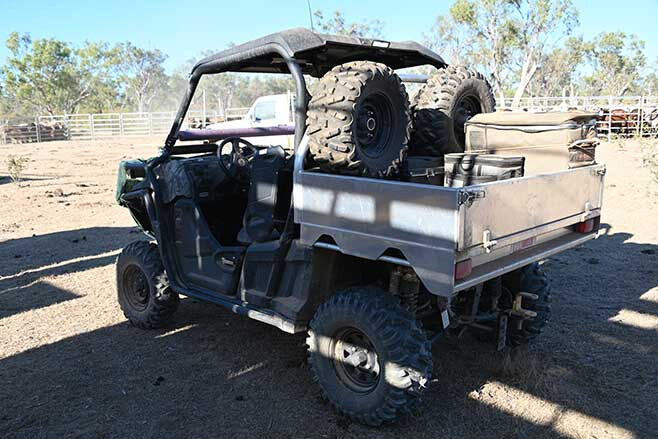
Nowadays helicopters are used to round-up distant mobs of cattle, or buffalo, and drive them to portable holding yards where ringers in bull catchers take over and yard the tired animals. This has now been highly refined with buggies and quad bikes doing the job, though some stations continue to use horses when working calm cattle.
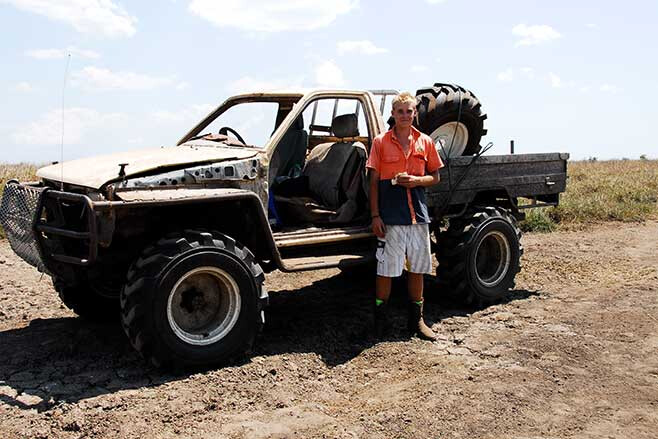
But in the wild backblocks of many properties, scrub bulls that have never seen a human are still being hunted by ringers that mostly use quad bikes to catch them. They often work alone, marking the tied-up bull location with a GPS, or their memory, to pick up the bulls later with a truck.
Buffalo are more dangerous, and the safety features of Toyota bull catchers continue to dominate the final muster. Most are now based on the longer model 70 long chassis .These days on a busy cattle station you will often see a combination of ringers on horses, bull catchers, quads, buggies and hovering helicopters, when cattle are mustered on the big runs of the outback.
In the bush Toyota bull catchers still rule, as ringers round up cranky scrub bulls. Others use quads, an even more dangerous job, but as the bush saying goes “most ringers are as mad as the bloody bulls, ’ey …”
FACT BOX
THE Toyota LandCruiser FJ25 was available in soft, metal and fibreglass hardtop configuration. Originally powered by a 3.8-litre six-cylinder petrol engine, it was designed as a basic workhorse. It was only available in green colour until 1972 when beige was introduced. Later a 3.4-litre four-cycinder diesel engine was added and a five-speed gearbox with low- and high-range capability.
It was very popular, though it gave a hard ride and was prone to rollovers if cornered too hard or driven on steep hills. Bull catchers preferred the diesel engine, but many petrol engines did sterling service in the bush. It was discontinued in its original form in 2002.
FORD has left no doubt that it is chasing the market that has traditionally been dominated by the Jeep Wrangler with its new Bronco as it gate crashed the annual Easter Safari in Moab with a range of Bronco concept vehicles.
Traditionally the event where Jeep shows off its wild and exciting EJS concepts, Ford has invaded the Utah red rock with some Bronco customs of its own.
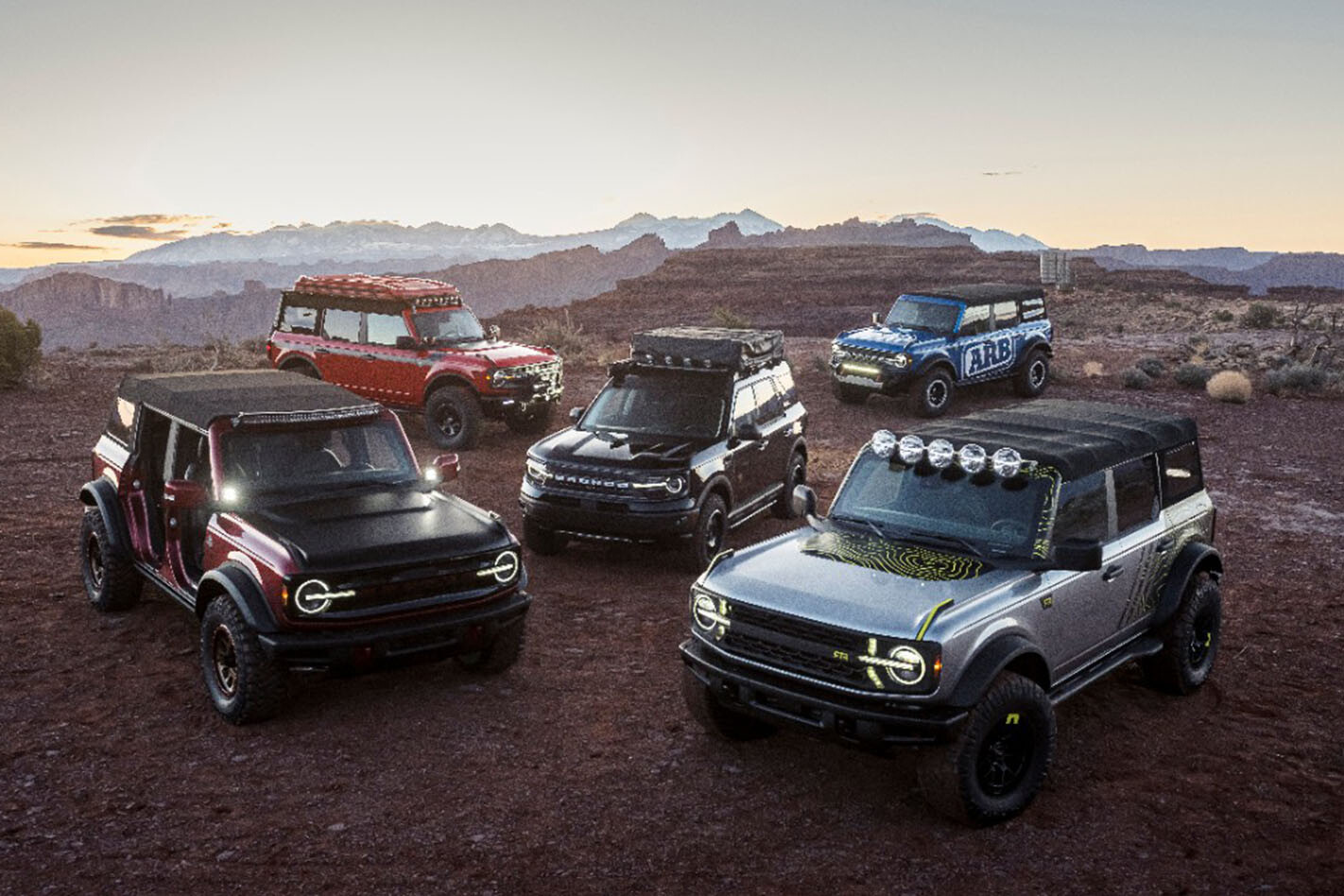
Teaming up with known aftermarket suppliers and manufacturers such as ARB 4×4, 4-Wheel Parts and Vaughan Gittin Jnr’s RTR Vehicles, Ford had four Bronco and Bronco Sport special builds of its own.
While we haven’t heard yet what the Jeepers think about Ford Bronco crashing their Easter Parade, we reckon there’s room on the road rock for all the best off road vehicles – and it’s great to see another manufacturer getting behind off-roaders.
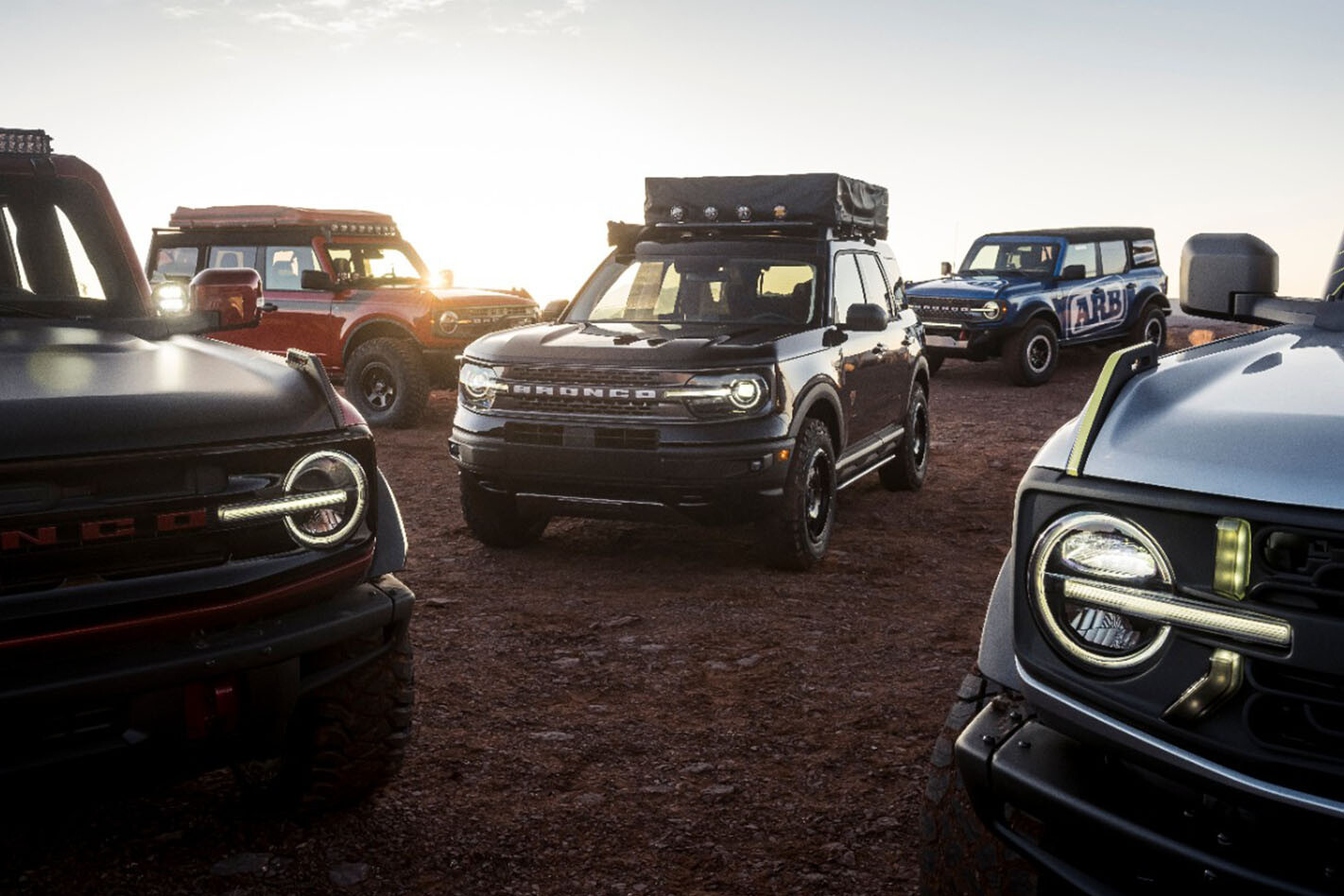
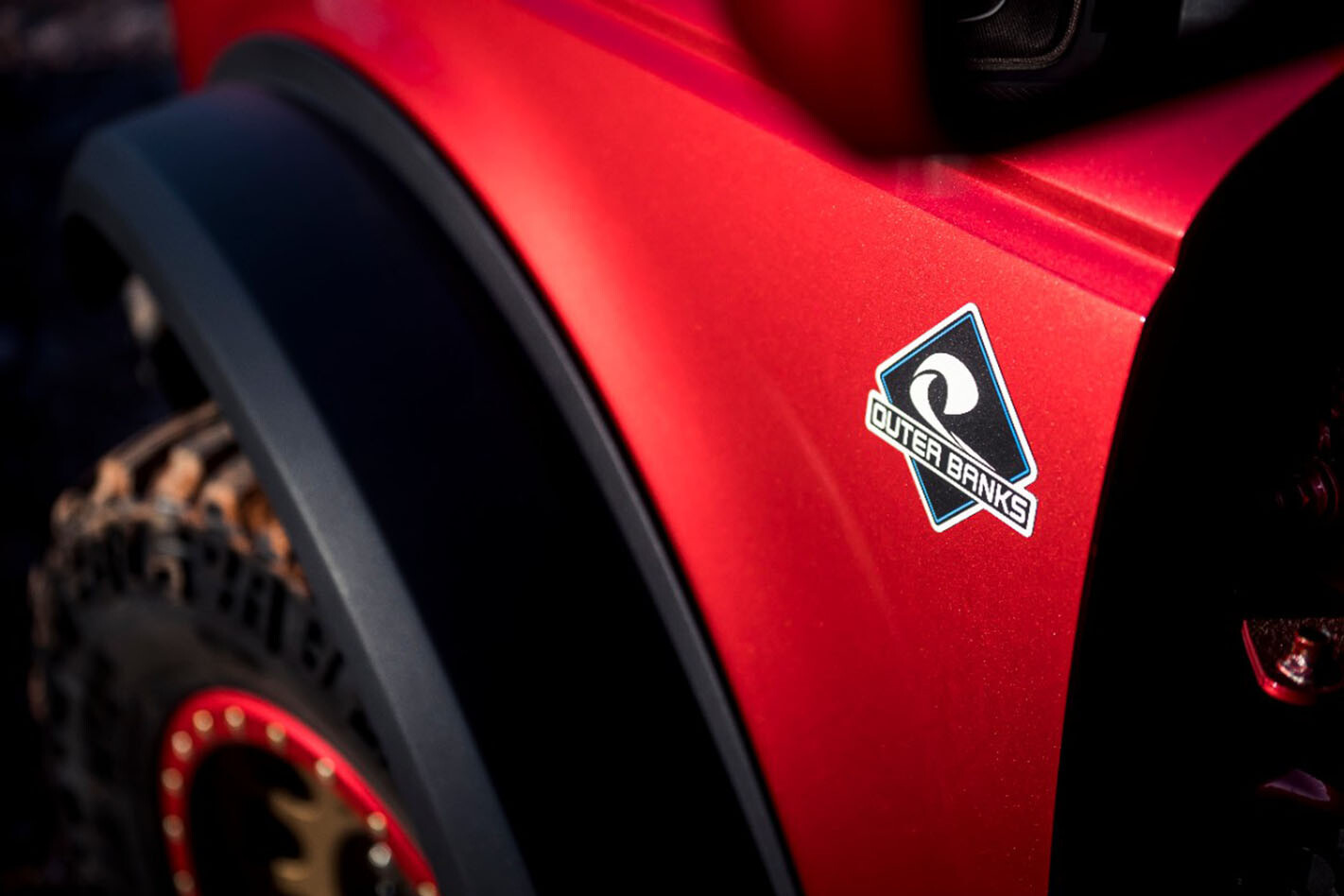
The custom Bronco four-door Outer Banks with Sasquatch Package on display mixes high-tech luxury features with rugged off-road Ford-licensed accessories, including JAC Products rock rails, fender flares by Air Design and Trail Armor rocker panel covers by Lund, with a 40-inch curved LED lightbar by Rigid on top and a retractable full-roof soft-top by Bestop.
Inside, rugged off-road accessories that optimise space and make for secure stowage include a DC Safety rear cargo organiser p and first-aid kit, a Tufty MOLLE straps and security drawer below, along with a Console Vault centre console.
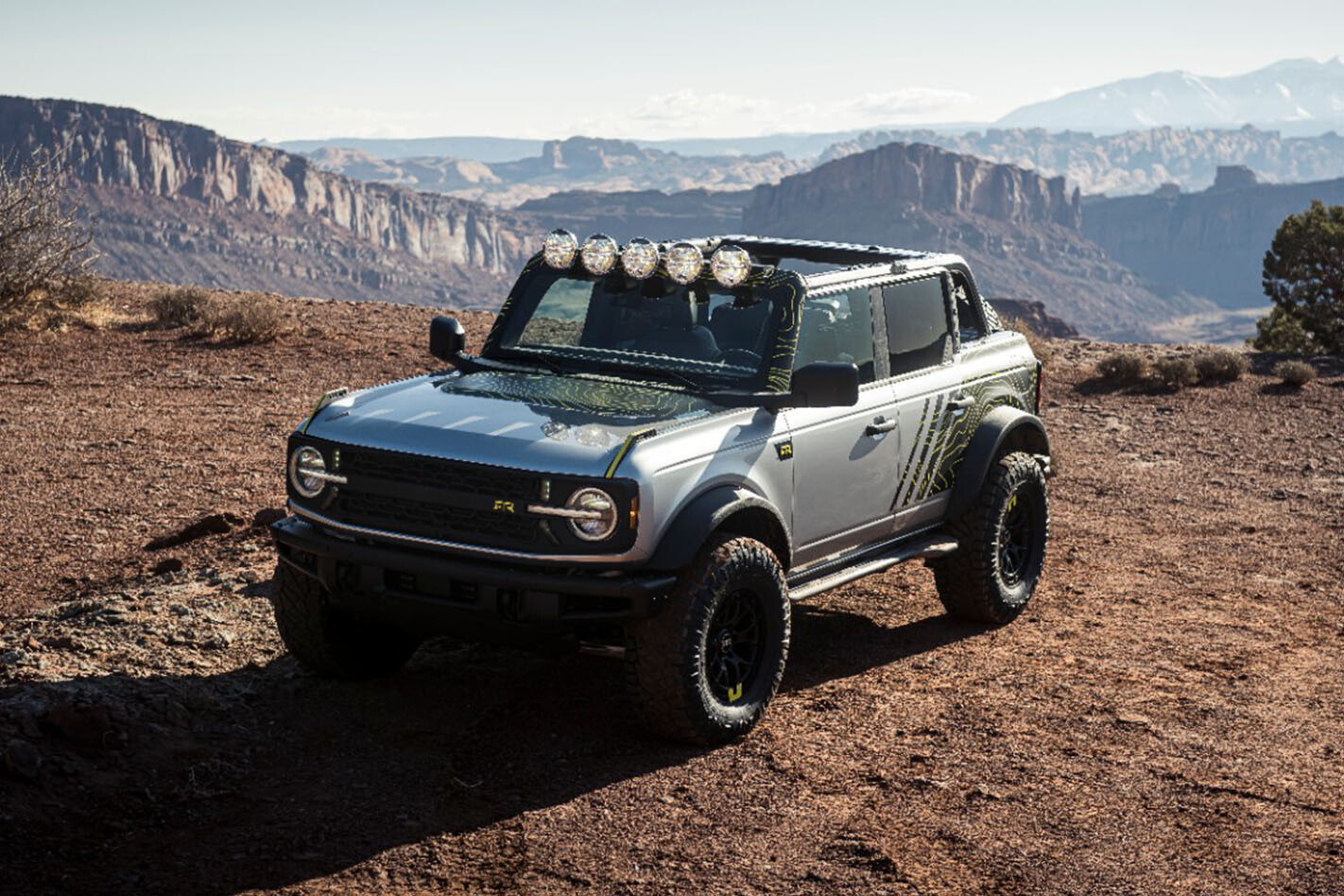
Custom Bronco four-door SUV by RTR Vehicles
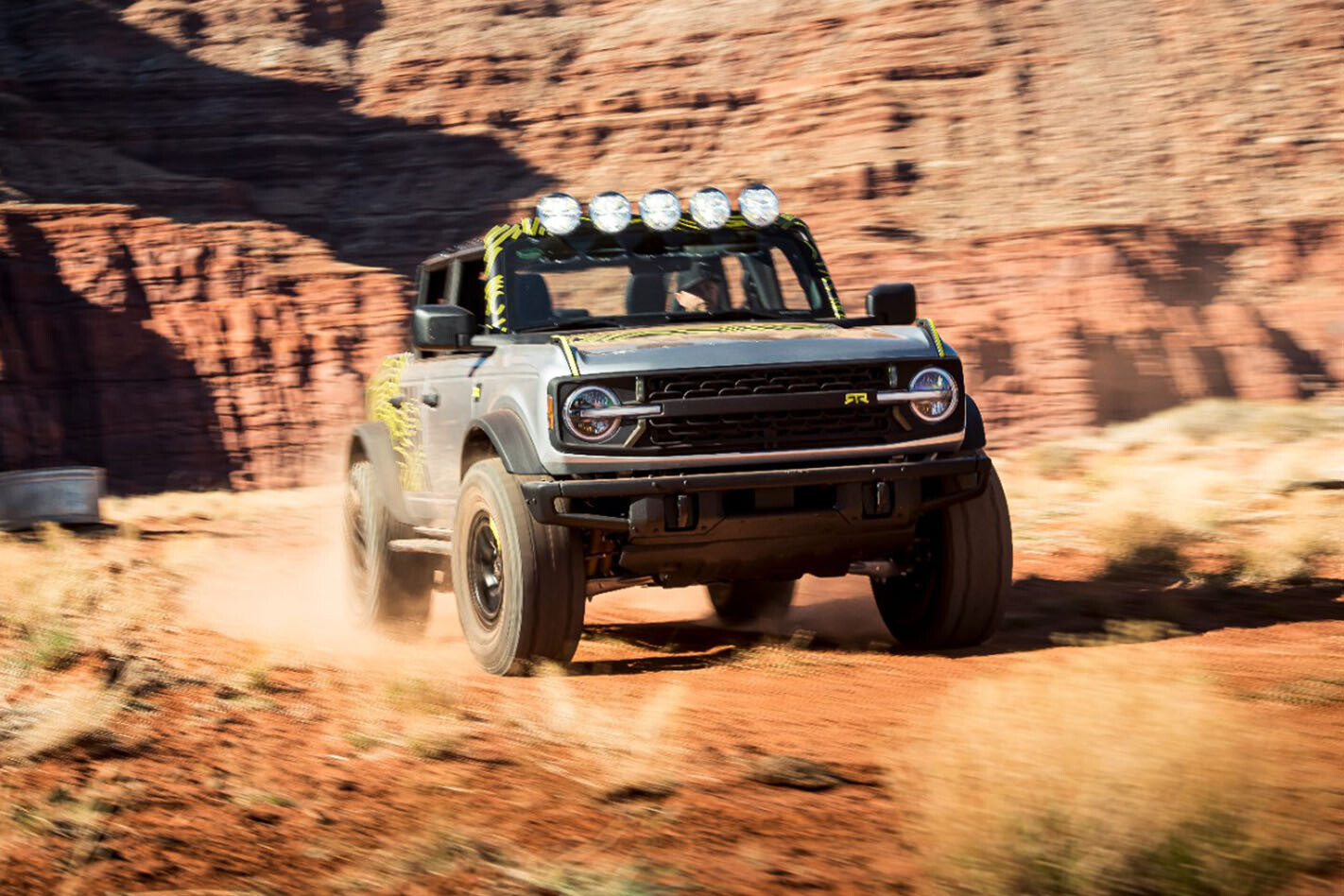
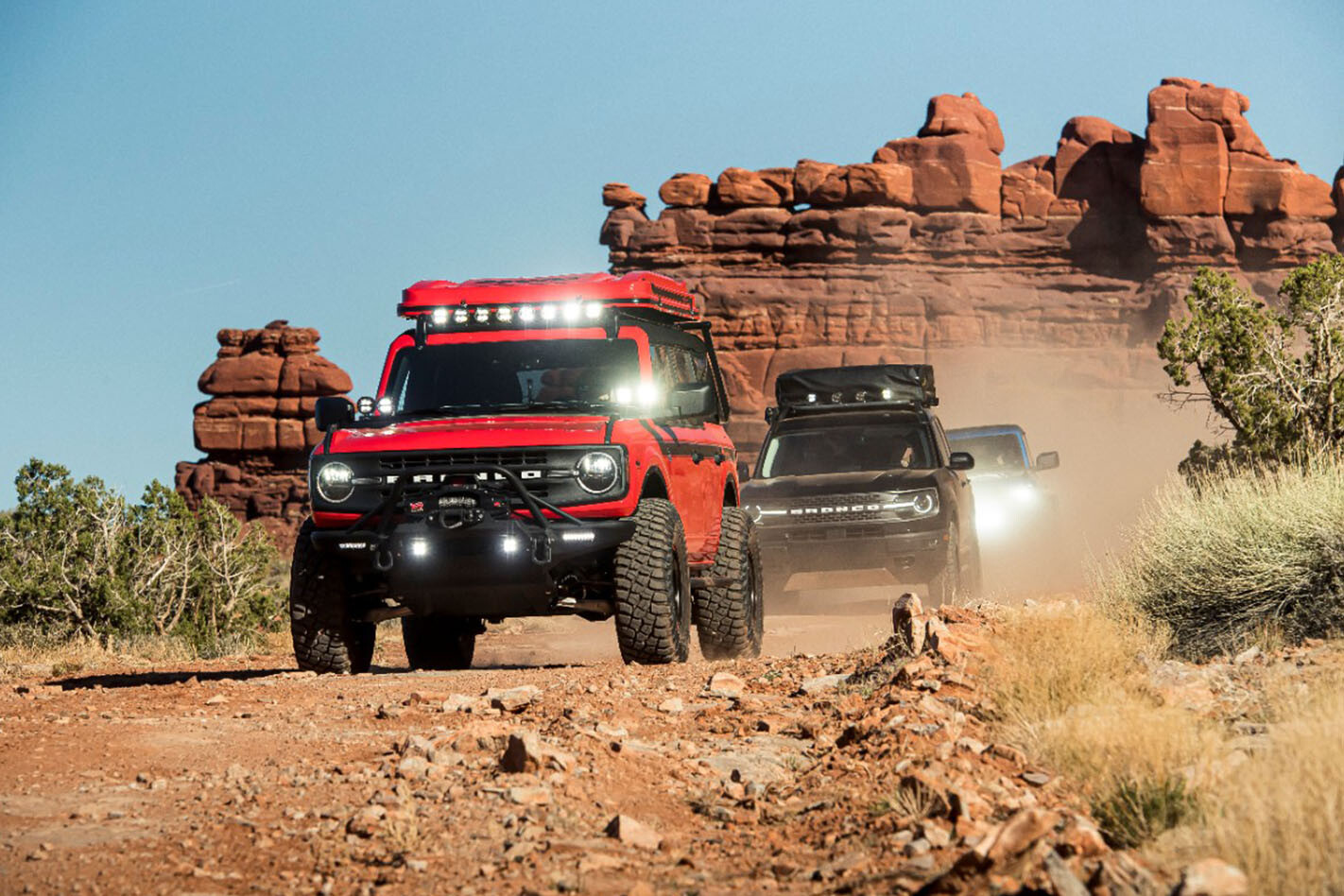
This multipurpose heavy-duty Bronco four-door Badlands SUV by RTR Vehicles sports custom RTR rock sliders and rear bumper, RTR 3D-printed grille with simulated accent lights, plus 35-inch Nitto Ridge Grappler tires mounted to RTR Tech-6 wheels. A roof-mounted Project X lightbar, custom RTR graphics and 12-volt Type S Blizzard Box refrigerator/freezer in back complete the package.
“Ford absolutely knocked it out of the park with its all-new Bronco SUVs, so we’re pouring our passion into blending our unique experience with Ford Performance and King of the Hammers racing to create our best possible turnkey vehicle packages and performance off-road parts,” said Gittin Jr., RTR president. “RTR products are designed to turn heads and engineered to take off-road enthusiasts to their favourite destinations and beyond.”
Custom Bronco SUV by ARB 4×4 Accessories
High-performance off-road parts designed by Australia’s ARB specifically for Bronco two- and four-door are featured in this custom Bronco Badlands four- door SUV including airbag-compliant front and rear bumpers, heavy duty rock sliders and differential cover, plus essential off-road accessories like an ARB twin compressor, jack and Zero refrigerator/freezer.
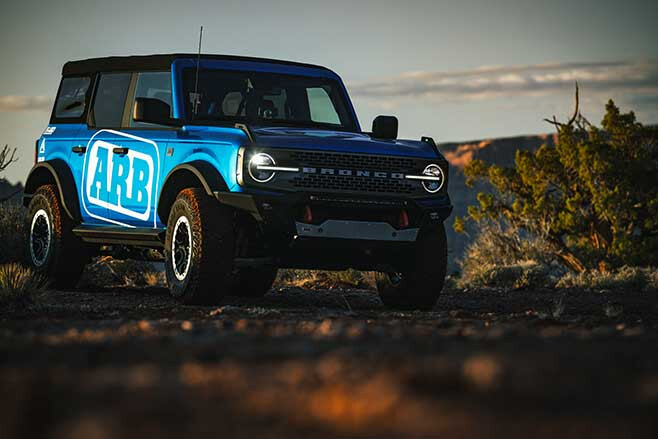
“These accessories represent years of design and engineering collaboration with the Ford team to build parts driven by the Bronco SUV off-road heritage and styling,” said Doug Pettis, president, ARB USA. “This design represents a practical yet capable vehicle that improves performance and enhances comfort off-road.”
Custom Bronco by 4 Wheel Parts
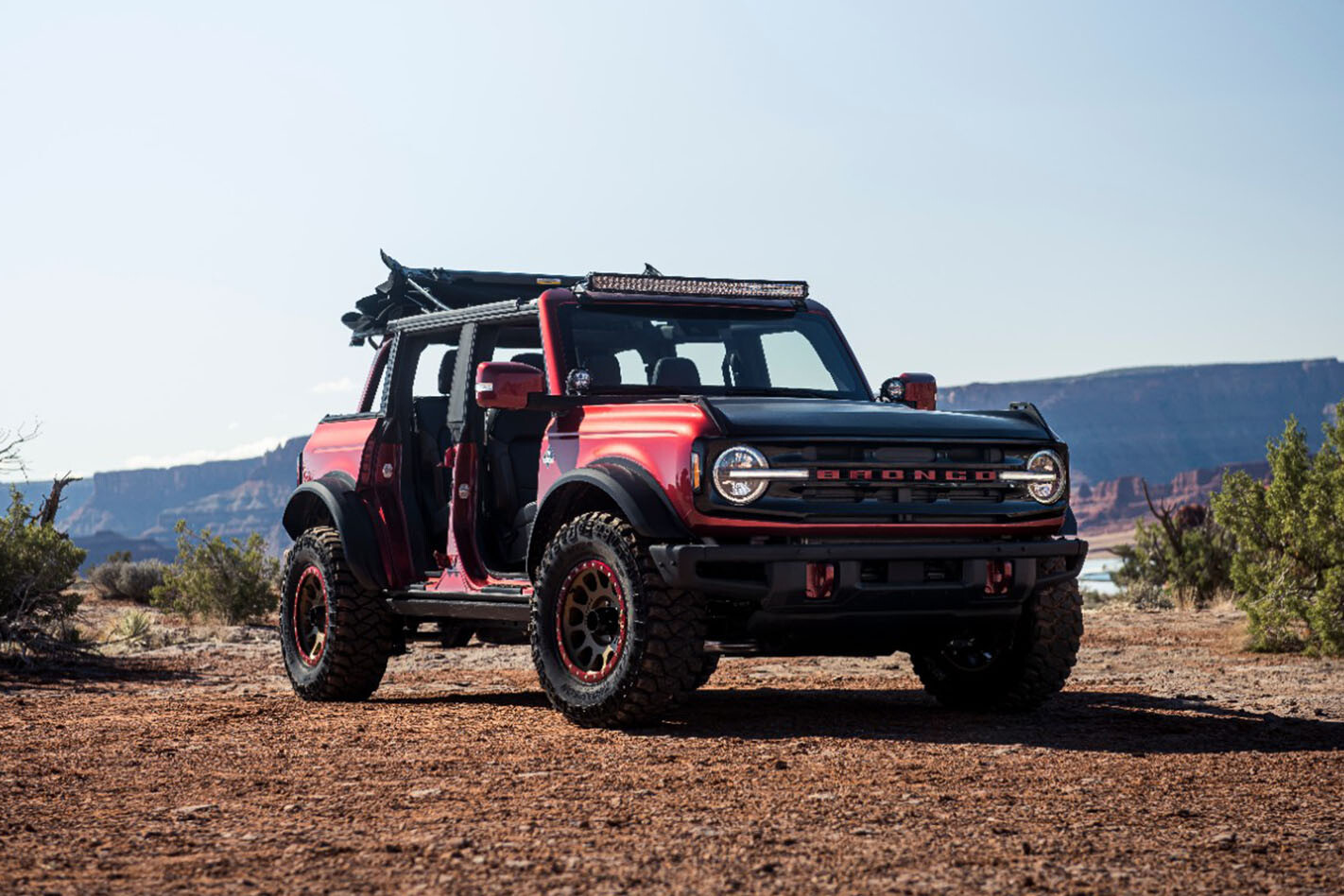
The custom Bronco four-door Black Diamond series SUV features a mix of 4 Wheel Parts factory brand parts including a modular front bumper, skid plate and winch platform, heavy-duty suspension components, custom roof rack and light mounts, plus a Smittybilt overhead tent and camping gear, awning and refrigerator/air system. It rides on 37-inch BFGoodrich® mud-terrain tires mounted to 17-inch Method alloy wheels.
“To date, we’ve already added more than 30 new 4 Wheel Parts brand products that take advantage of the Bronco modular design,” said Kathryn Reinhardt, senior marketing manager, 4 Wheel Parts. “We expect that list to grow as we aim to give our customers innovative products for every type of off-road lifestyle.”
I HAVE a confession to make. Despite owning many 4x4s over the last 19 years, I’ve never had a set of all-terrain tyres. Sure, I’ve driven on them, but never on my own vehicle. I’ve owned Boggers, ’Pedes, Swampers and Claws. I’ve always gone silly with off-road rubber, and I think it’s time to start acting my age.
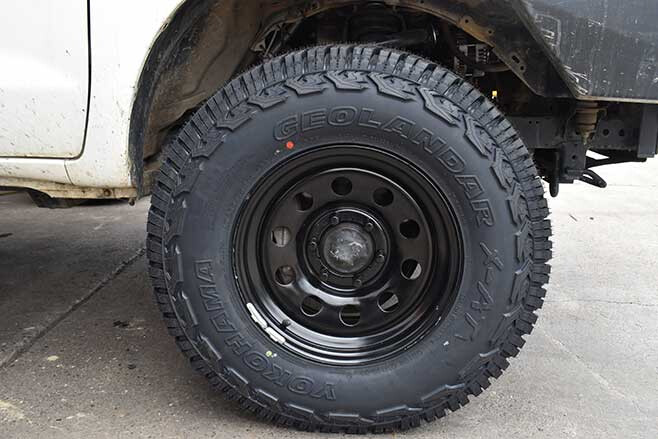
Where I live, in the NSW Blue Mountains, we have plenty of different terrain to experience, but with just a few millimetres of rain everything turns to clay. So, in my head I’ve always needed mud-terrain tyres. Well, maybe I’m getting soft, or just wanted to prove myself wrong, but I’ve decided I wanted a quieter ride on my old Hilux. Enter the relatively new-to-market Yokohama X-AT G016 tyres.
ON ROAD
AFTER rolling around on a very worn set of muddies, I found myself literally laughing out loud within the first 10 metres of driving on the new rubber. They are dead silent on road. Naturally a new tyre will be quiet, but these are next-level quiet and haven’t gotten any noisier.
Grip is next level too – before, I couldn’t drive up the infamous Old Bathurst Road in the wet without single-pegging like a P-plater in a busted-ass Commodore. Now, even when pushing in the wrong gear, these Yokohamas remain confident. Solid 10/10 here, and considering this is where the majority of time will be spent in our vehicles, I don’t regret the decision to switch from mud-terrains … yet.
ON THE DIRT
THOSE familiar with the Turon River area in NSW will know it’s famous for two things: being insanely beautiful and incredibly dusty. The roads are dirt, from Capertee to Sofala, and are chopped out. I’ve just returned from a trip there and have to say I’ve never used a tyre with more grip in the dirt than these Yokohamas. I could safely cruise around in 2WD in most cases, whereas with my old (albeit worn-out) muddies, I’d need to use four-wheel drive high-range to take corners with confidence.
WATCH: Yokohama Geolandar A/T GO15 in the 4×4 Garage
When things turned to clay, the tread surface did fill with mud, as I’d expect any all-terrain tyre to do. In saying that, the X-ATs were able to eject this evil stuff quickly, and dug for traction well thanks to the square shoulder lugs on the edge of the tyres.
OFF-ROAD
THE advantage these tyres have over some other all-terrains is that the tread compound is relatively soft. This, in my opinion, is a good trait in an off-road tyre. They actually grip. On rock and high-traction surfaces, I’ve had no issues. While I avoid mud like COVID-19, we’ve had lots of rain lately and have been forced to get dirty.
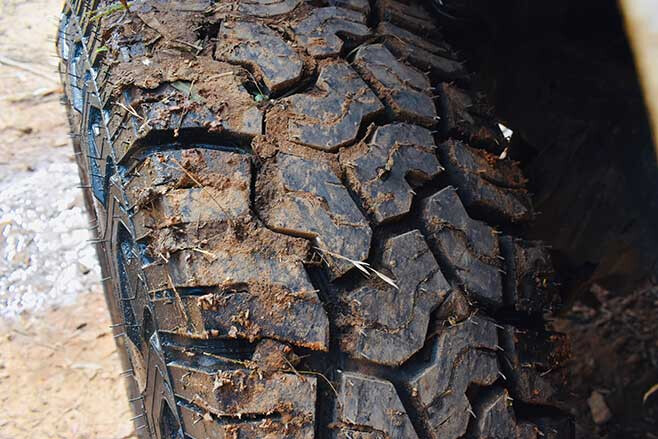
I haven’t been stuck … yet. Sure, they won’t perform in really sloppy stuff as well as a full-blown mud terrain (there are other options if that’s your scene) but they have performed better than expected.
CONCLUSION
I THINK I’m a convert to all-terrain tyres on a daily driver. Being able to clearly hear passengers or chatter over the UHF is a new sensation for me. The ride is buttery smooth, and I’m yet to find traction to be a limiting factor when off-road. Sure, it’s early days, but I’ll report back in six months to show you how they are holding up.
AVAILABLE FROM
WEBSITE: www.yokohama.com.au RRP: $319 each (265x75R16) WHAT WE SAY: Compared to some other all-terrains, the tread compound is relatively soft and provides good grip for an off-road tyre.
A LOT of Jeepers were left disappointed when Jeep Australia left the short-wheelbase Rubicon variant out of the line-up when it introduced the JL model locally back in 2019.
For many, the soft-top shorty is the true Jeep 4×4 and the one variant that harks back to the original Jeep which is celebrating its 80th birthday in 2021.
The good news is, Jeep saw the error in its ways and reintroduced the shorty Rubicon late in 2020 with the Wrangler Rubicon Recon. The bad news is, it only imported 40 of them and they were all sold by the end of January. We asked Jeep if this apparent desire for the best variant of the JL Wrangler would prompt them to bring it back on a more permanent basis and they said it was up for consideration, but nothing is confirmed as yet.
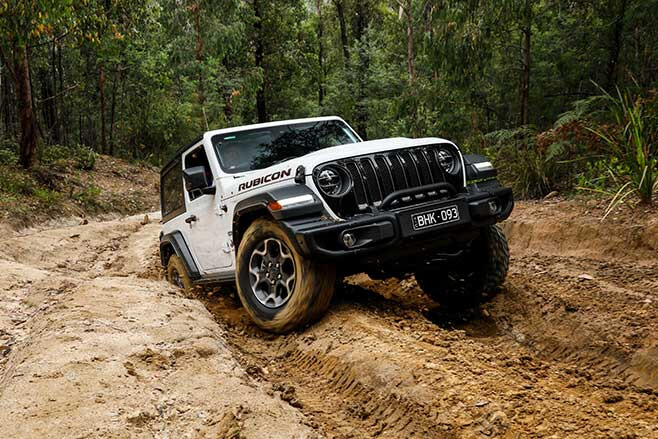
There were actually 100 JL Rubicon Recon models brought in to the country, but only 40 of them were SWB. The other 60 were the LWB 4-door Unlimited model, so nothing really special about them. It was the shorty that had us excited and we managed to nab a steer of one before they were all gone.
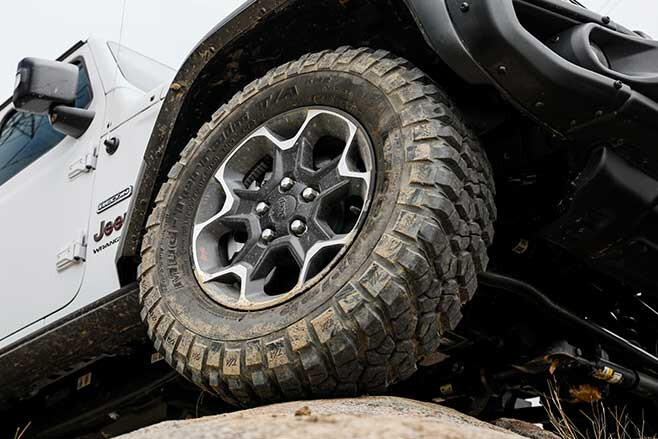
The Recon part of the name is really just another accessories and dress-up package adding black bits to the exterior and red bits inside. The real stuff comes with it being a Rubicon, so the 4.1:1 geared final drive and low-range gear sets are there, as are the disconnecting front swaybar and locking front and rear differentials. The tyres are BF Goodrich’s excellent KM3 muddies, even if they are a paltry 255/75-17 size and not the 33- and 35-inch rubber that the American Rubicons are available with. This is the one big let down of the Rubicons off-road hardware on the ‘International’ models.
The Rubicon Recon Jeeps were priced at $66,950 for the SWB and $71,450 for the Ultimate, so they weren’t cheap but then, none of them are. A regular Wrangler Rubicon Unlimited starts at $67,450 so you’re forking out $4K for the Recon pack. To look at it another way, a shorty JL Overland starts at $61,450 so $5500 for the Rubicon goodies sounds pretty sweet.
POWERTRAIN & PERFORMANCE
JL Wranglers are only offered in Australia with the one drivetrain, that being the 3.6-litre petrol V6 engine backed by an 8-speed automatic transmission. That mill puts out 209kW of power and 347Nm of grunt which in the shorty feels relatively spritely, putting a pep in the step of the little Jeep.
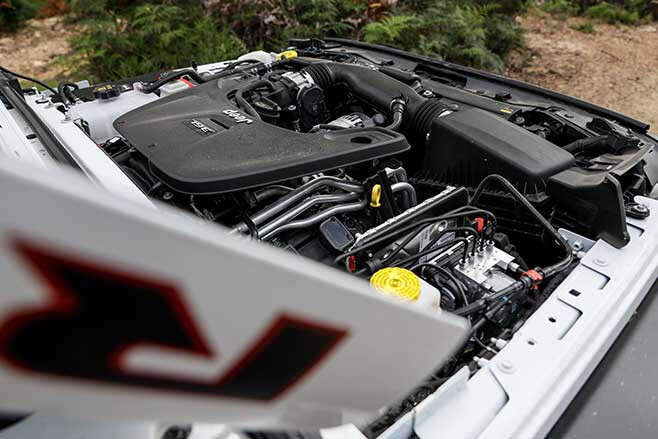
This acceleration is in no doubt helped by the lighter weight of the SWB compared to the 4-door and the low 4.11:1 gears in the final drive. The Pentastar V6 loves a rev and again, the low gearing helps get it up in to its happy place and motoring along briskly.
The 8-speed ZF auto offers nothing to complain about other than it would be nice to have a manual gearbox available as well.
ON-ROAD RIDE & HANDLING
AS the ultimate showroom off-roader, the Rubicon’s on-road manners leave a lot to be desired. Soft, long-travel suspension, a high centre of gravity and mud-terrain tyres are all best off the beaten track. All these factors are amplified in the short-wheelbase model as it pitches fore and aft and leans heavily in to corners. The punchy acceleration lifts the nose and steering inputs are direct and sharp.
The SWB Wrangler is a very engaging vehicle to drive, so much so that it will bite you if you let your guard down so you need to keep your mind on the drive. We’ve said in the past that you need to constantly chase the steering when on the highway in a Rubicon and again, this effect is amplified in the SWB.
If there’s a good thing to be said about the Rubicon’s suspension on the road, it’s that its soft and supple so you get nice ride quality.
OFF-ROAD
ALL the things that mess with the Wrangler’s on-road performance are the same things that make it so good off road. The compliant long-travel suspension offers plenty of articulation, which is improved again by hitting the button to disconnect the front sway bar and really letting the Jeep flex its live axles.
The front and rear factory lockers are fast-acting and work to get you out of most situations, but it is surprising at how quickly the Rubicon grounds out when out on the tracks. Yes, it’s nice that Jeep fits muddies from the factory but the tyres need to be taller to stop the diffs grounding on rutted trails and scraping on rocks.
The location of the steering damper under the front diff is an issue on all JLs and the shorty Rubi is no exception. Thankfully there are aftermarket kits to relocate this up higher out of harm’s way. Likewise, the design of the plastic panel surrounding the rear number plate is poor as it hangs low and is the first thing to scrape on the track and will easily break the plastic parts.
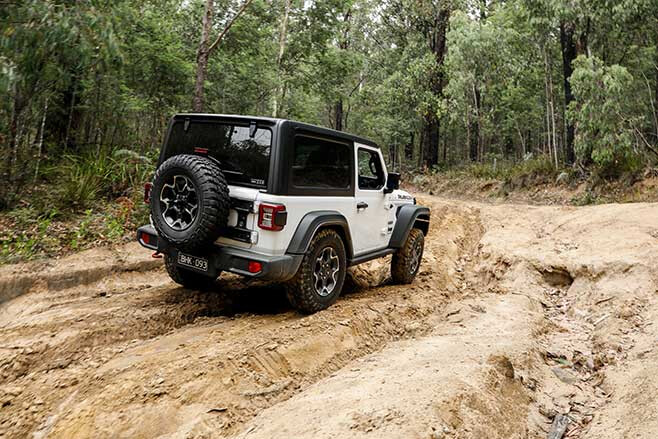
A steel front bumper is fitted as part of the Recon package so it isn’t as vulnerable, and has built-in recovery points. There are also recovery loops at the back of the car.
The shorty feels like it will pull a U-turn on the spot as it spins around its back axle that is tucked almost under the driver’s seat making it super manoeuvrable on bush tracks. The windows are big and low offering a good view outside, but the pillars are thick and the bonnet high in the driver’s line of sight.
The Wrangler Rubicon remains the best vehicle for off-road use directly off the showroom floor and the shorter wheelbase improves the ramp-over angle and manoeuvrability to make the shorty the better of the two models. Drop the tyre pressures, lock the diffs, disconnect the sway bar, pick a line, and this is the little Jeep that could!
CABIN & ACCOMMODATION
TO anyone not familiar with Jeeps who normally drives a more conventional 4×4 vehicle, the cabin of a Wrangler will feel pretty weird. The upright seating, massive pillars, lack of space in the driver’s footwell and relatively cramped feeling are not really welcoming. But spend some time behind the wheel and it all falls in to place and you soon realise that it’s all very functional, practical and not all that cramped – except for the footwell.
The vertical dash places the gauges, AV screen and all the controls within easy sight and reach and with familiarity, it soon all makes sense. A small complaint is that the buttons for the lockers and sway bar are still located on the left side of the console as they are in the USA, so you have to reach over and down for them.
The upright windscreen (which can be folded down on to the bonnet for that open-vehicle feel unique to Wrangler) gives a great view out over the bonnet but the large pillars (needed as the roof is removable) do restrict vision to the back and sides.
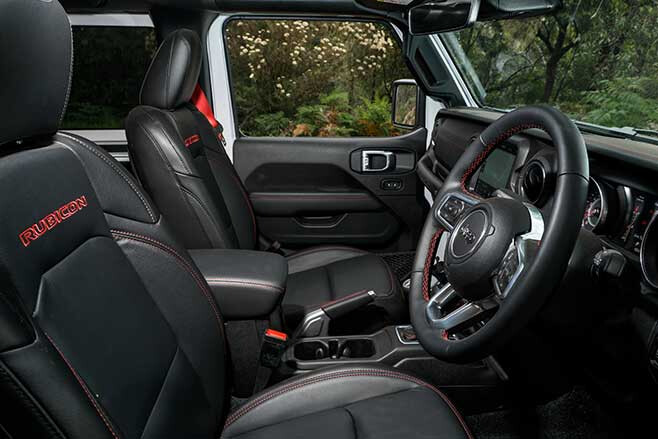
The rear seat in the shorty is really a stupid idea. It offers very little space, is difficult to access and leaves little room behind it for gear. A smarter option would be to do away with the back seat and give yourself some usable cargo carrying capacity. You want more space – buy the 4-door Unlimited.
The interior is well-equipped with heated leather seats as part of the Recon package, while the standard dual-zone climate control, large U-Connect AV screen with Apple CarPlay and Android Auto are well appreciated.
The Rubicon Recon comes with the removable hardtop, and removing completely is a big, two- or three-person job but thankfully, the two panels over the front seats are easily removed and stowed to let the sun and wind it. Don’t knock it until you’ve tried it!
We need to mention the Wrangler’s 3-star safety rating which is pretty poor by anyone’s standards and should be considered if you’re thinking of driving a Wrangler. Sure, safety might not be a priority for the off-road vehicle buyer and there are plenty of unique reasons to consider the Jeep, including its capability and the ability to remove the roof, doors and fold the screen down.
PRACTICALITIES
A SHORT wheelbase Wrangler might be a lot of fun but practical it isn’t; especially with the rear seat in place. It makes more sense as a 2-seat weekend off-roader. Short wheelbases don’t make for good towing vehicles and the little Rubi is only rated to haul 900kg, while payload is around 500kg.
With its low gearing, petrol engine, mud terrain tyres and the aerodynamics of a Besser block, the Wrangler can slurp through its 66-litre fuel tank pretty quickly, which further limits its usability as a touring 4-wheel drive.
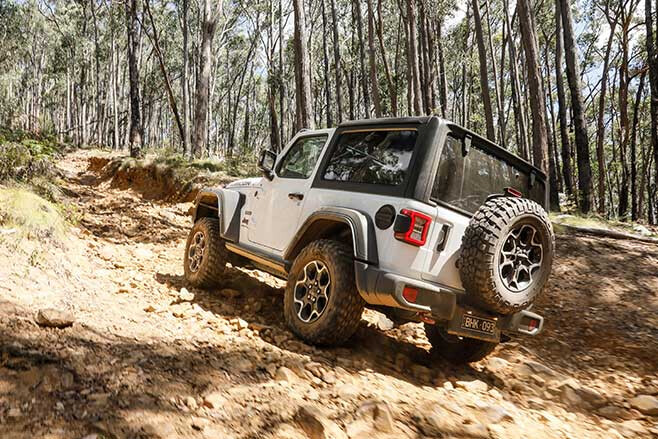
The off-road usability makes more sense with water fording at 750mm, solid underbody protection, class-leading capability, front and rear recovery points, practical 17-inch wheels offering plenty of choices for tyre sizes and more aftermarket accessories available than any other 4×4 on the planet. The sky really is the limit when it comes to modifying your Wrangler, even though it is a pretty good package right out of the box.
SUMMARY
SO the shorty Rubicon might not be the vehicle to take the family on a trip around Australia in, but it remains the most capable and fun vehicle for day trips and weekend off-roading. Rear cargo solutions and roof racks might give you more capacity but this isn’t a vehicle to load up.
It’s a pure off roader in every sense, from its unrivalled capability to its top off and windscreen down open-air feeling. On the beach or in the bush, the little Jeep is a lot of fun.
One thing is for sure; if you manage to snare yourself one of the 40 SWB JL Rubicon Recons in Australia, you’ll have yourself a rare vehicle here.
JEEP JL WRANGLER RUBICON RECON SWB SPECS
ENGINE: Pentastar 3.6-litre V6 MAX POWER: 209kW at 6400rpm MAX TORQUE: 347Nm at 4100rpm TRANSMISSION: 8-speed automatic TRANSFER CASE: Rock-Trac with full-time and part-time 4×4 and low range CRAWL RATIO: 77.24:1 STEERING: Electro-hydraulic SUSPENSION: Live axles on links, coil springs, stabiliser bars (F/R) TYRES: 255/75-R17 BASE WEIGHT: 1887kg PAYLOAD: 500kg TOWING CAPACITY: 900kg GVM: 2427kg GCM: 3636kg TEST FUEL USE: 16.2L/100km FUEL TANK: 66L DEPARTURE ANGLE: 25.1° RAMPOVER ANGLE: 18.4° APPROACH ANGLE: 40.7° WADING DEPTH: 750mm GROUND CLEARANCE: 249mm
THE long wait is over! COVID-19 may have forced us to delay the running of 4X4 of the Year, but we can finally bring you the results in our April issue, which is out now.
Find out how the updated Hilux managed to keep ahead of the competition, a field of just five this year: BT-50, D-MAX, Defender, Gladiator Rubicon and, of course, the Hilux.
SUBSCRIBE TO 4X4 AUSTRALIA MAG!
Read all about our exhaustive testing process in the April mag!
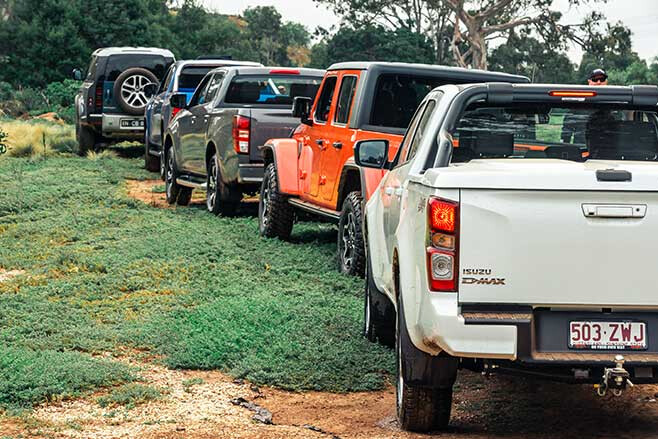
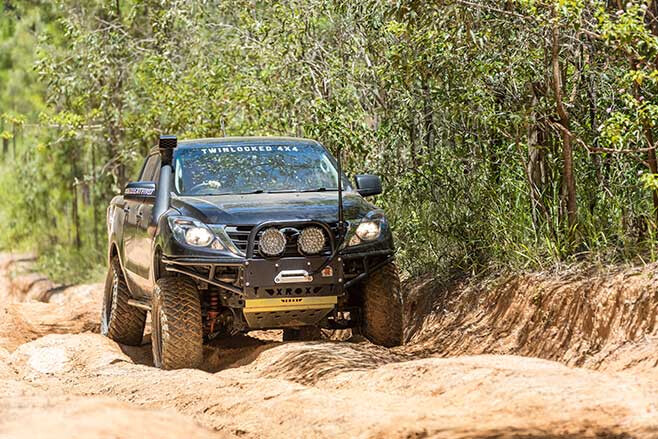
In addition, we also run the ruler over a couple of wild custom creations: a kitted-to-the-max BT-50 built by taking more than a few risks; and a near-on perfect 105 Series LandCruiser that was pretty much built from scratch.
WE also discovered Mount Isa in Queensland is way more than just a mining town, and there’s plenty to of fossicking to be done in Victoria’s northern goldfields.
Plus, we had an off-road squirt in Nissan’s new Navara ST-X and GWM’s budget-priced Cannon-L. Are they worth it?
WHAT ELSE IS THERE
– Cub Camper tested – What tools to pack in your 4×4 – BFG KM3 muddies tested – New products analysed – Long-term shed updates – Columns, news and more!
The April 2021 issue of 4X4 Australia is out now!
YOU’VE got to admire the optimism of some 4×4 owners. Pushing through the air what could only be described as a folded apartment, bolted to some equally optimistic roof racks, while valiantly striving for country speed limits.
Possibly the greatest idea since poles and canvas were invented, the rooftop tent (RTT) has given the masses a simple above-ground bedding alternative with quick set-up and pack-down times. They have, however, suffered a bit of a middle-age spread with bigger and more complex examples increasing their size, while increasing the fuel bill for good measure.
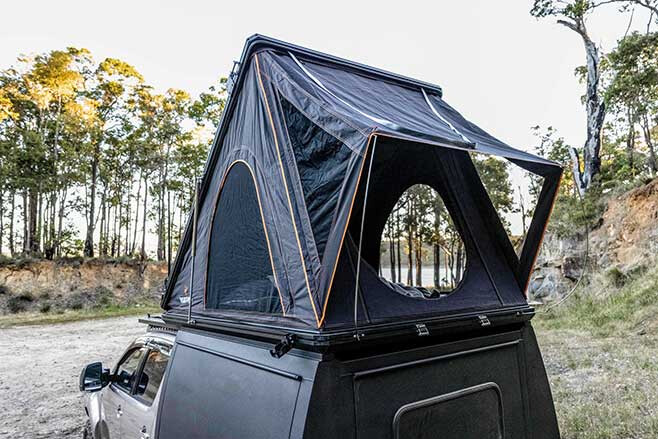
Motop decided a simpler approach was needed, and took a razor to the norm, shaving their overall packed height to a slimline 160mm.
Two widths are available with the narrower MT-120 spanning 1200 x 2170mm internally, and the MT-135 giving you and yours a bit more wriggle-room at 1350 x 2170mm. The raised internal height is a generous 1450mm across the range. External measurements add an extra 80mm to the width and length.
The first version of the Motop was launched to the Australian market just over a year ago, but Motop has listened to customer feedback leading to several tweaks and improvements. Currently in its third incarnation, these improvements have included storage netting, a carpeted ceiling, easier to close compression locks, anti-condensation mat, thickening the breathable canvas from 265gsm to 285gsm, and increasing overall length an extra 100mm.
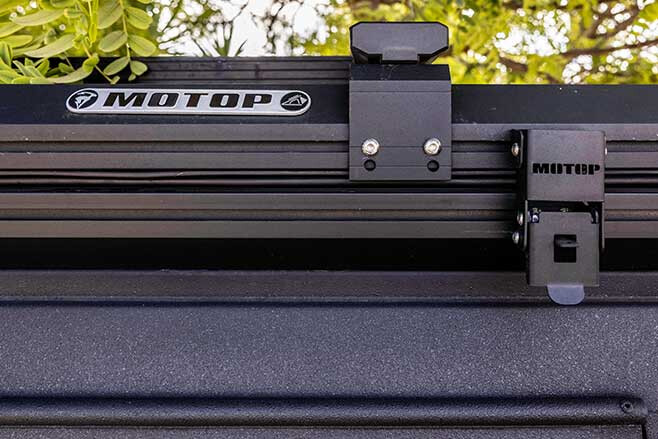
Consisting of two 20mm-thick powder-coated panels, the internal honeycomb structure remains light but adds strength. Joined by three stainless-steel hinges, an extruded edging runs along all four edges of each panel, with a central channel holding captive nut plates which allow mounting of the gas lift struts, compression locks, ladder mounts, handles, or just about anything you’d like to bolt to the sides.
Two mounting rails run the full length of the lower shell, with clamps included to mount to an existing roof rack. Keep in mind your roof-rack’s loaded capacity on and off road, however. While Motop tents are relatively lightweight at 69kg and 73kg respectively, once off road most racks have a reduced load-carrying capacity due to the extra stresses.
Once at camp it’s a simple matter of attaching the 2.3m collapsible ladder, unlocking the latches, and gently pushing up. The gas struts do the lifting until the top panel pulls the canvas tight. A pair of stainless-steel flex poles are inserted into holders to stretch out the rear awning and you’re good to go. After using the tent for several trips I’ve found it seals well in wet weather, whilst keeping the amount of movement in the canvas to a minimum when it’s blowing a gale outside.
Entry windows are available on three sides via the lightweight collapsible ladder, with zipped midge netting keeping insects at bay. The main canvas gives an almost total block-out of light should the need to sleep-in be greater than catching the sunrise, and inside is a large storage net on the ceiling good for magazines or clothes once you’re ready for bed. There’s also small storage pockets on each side, handy for easily misplaced items like keys or phones, and a shoe bag to hang off the ladder.
With such a low profile, the high-density foam mattress comes in at 70mm. The firmness isn’t to everyone’s taste, but I personally found it okay, being identical in thickness to my longtime swag. Motop has again listened to feedback and provided a solution to this (see breakout). If storage is more important than a slimline height, then the MT Plus+ range may interest you. Just announced with an extra 40mm worth of closed space on both models, this can accommodate most bedding and the ladder internally.
Our own standard example had the optional Motop roof racks installed, with an aftermarket solar panel attached between. Motop has since released its own 219W 1050 x 1170mm PV with brackets designed to match the sides and width of the Motop, allowing fitment of up to two PV panels. The beauty of the tent design means I was able to accurately angle the PV towards the sunrise, efficiently recharging the auxiliary batteries from first light.
Since release, the Motop has proved popular amongst campers of all kinds, and importer MW Toolbox Canopy & Trailer has distributors in every state with supplies frequently sold out before shipment arrivals. The strong slimline design combined with the client-driven improvements and comparatively low price compared to other hard-shell designs, sits it well in the marketplace as a great option that works.
AVAILABLE FROM
WEBSITE: www.mwtoolboxqld.com.au
RRP
MT-120 $3099; MT-135 $3299; 219W solar panel w/ brackets $350. Roof racks: MT-120 $199 pair; MT-135 $219 pair.
VERSION 4
VERSION 4 due for release at the beginning of autumn, comes with a ra:ft of upgrades and optional accessories after taking onboard suggestions from its worldwide customer base:
* 60mm self-inflating mattress allowing some storage of bedding when packed down * Internal LED light strip * Rivets deleted along the roof top for better weather sealing * Six canvas storage pockets to replace the ceiling net * Custom designed solar panel with brackets (optional) * Shower tent (optional) * Awning brackets (optional)
The good news for early adopters is that all upgrades (except the rivets) can be retrofitted to previous iterations of the Motop.
EVERY now and then you come across a manufacturer located within our girt vastness, that makes you ask: “Why aren’t more people doing it like this?”
Located in the Darling Downs region of Queensland, Lachlan ‘Lux’ Shields at Lux Fab has been producing bespoke stainless-steel exhaust systems for the Australian 4×4 and streetcar community since 2019. Combining his ideas on how to construct a better system with a well-developed sense of quality and customer service, Lachlan’s systems are meticulously pieced together using art-like TIG welding, stainless-steel V-band joins, and perfect fitment for their intended vehicle.
Starting with 304 grade stainless steel chosen for its ability to handle heat cycles better than 316 grade, an on-car system is first constructed while ensuring the best clearances around the body/chassis and from the ground. The completed system is then removed to construct a detailed jig, allowing Lachlan to build multiple systems to whatever a customer’s requirements may be.
The inaugural Lux Fab offering being the KUN26R N70 Hilux, chosen for the common chassis between single- and dual-cab models and a long 10-year (2005-15) production run.
Kicking off a business producing a quality aftermarket exhaust for one of the highest selling 4x4s in Australia was a wise move, setting the foundations for Lux Fab to expand into the 79 Series LandCruiser as well. Future models in planning are the 200 Series, Ram and Isuzu D-MAX currently scheduled for production.
The shoot-rig Hilux required a new exhaust so a call was made to Lux Fab to discuss what would suit its requirements best. Paramount being that it flowed a lot better than the OEM system, allowing the turbo to spool up as quick as it could while not droning or being obnoxiously loud on the highway. Plus it had to do all that while looking the goods and resisting rust.
A short time later, a big box arrived with a brushed stainless-steel system divided into four components inside. An added bonus being Lux Fab chooses to wrap its new systems in a full-length packing blanket instead of bubble wrap, and this doubles as an excellent ground sheet when laid under the 4×4 while fitting the new pipes in your driveway.
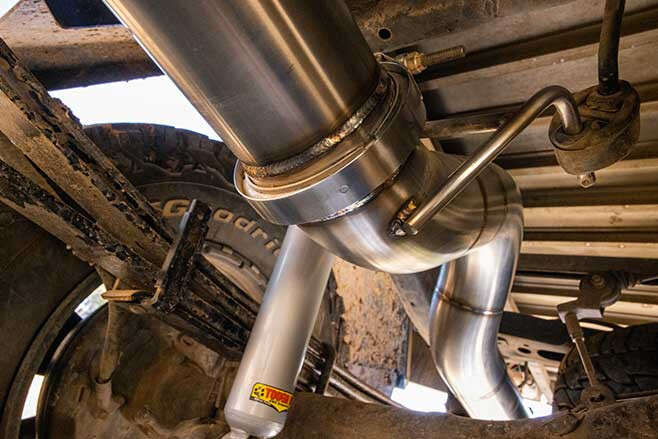
From the turbo flange a three-inch mandrel-bent pipe connects to a 200-cell catalytic converter, with a braided flexi-join about halfway between to absorb any engine movement. Provision is also made for an Exhaust Gas Temperature probe to be screwed in just after the turbo, but it comes with a brass bung should you not require it. From the converter the pipework flares out to a whopping four inches, continuing all the way to the downturned tip, while incorporating a six-inch straight-through resonator just before the diff arch.
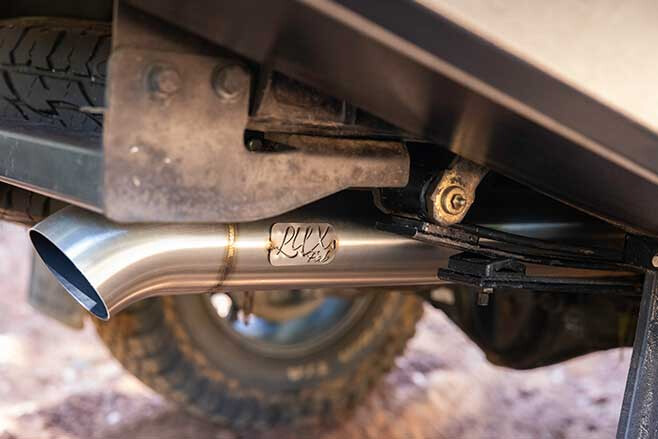
Joining the four sections are not the normal nut-and-bolt secured flanges, however, but machined V-band joins. Among their many benefits these are more slimline than the more agricultural flange joins, do not require gaskets, flow perfectly and do not leak, plus allow for rotation should you need to tweak the alignment of your exhaust from its standard path. After watching USA-based builds using these for a decade it’s a wonder why more manufacturers Down Under haven’t incorporated them in their offerings.
Fitment was as straightforward as they come and took less time than removing the old exhaust. Once all pipework is hung in place, it’s as simple as flicking open the V-band clamp and placing it over the machined male/female V-band pipe ends, before re-securing the clamp, nipping it down just enough to maintain its position but still allow some rotation of the joints. Get all the pipework in the desired orientation before final tightening of the V-bands, and Bob’s your mum’s brother.
THE END RESULT
AFTER driving beach dunes, mud holes and across heavily rutted tracks for around 2000km so far, the Lux Fab exhaust has performed flawlessly, doing everything asked of it when first ordered while delivering a nicely rugged note only slightly louder than standard. It really is a shame something so well put together is hidden under the 4×4.
AVAILABLE FROM
Website: Lux Fab on Facebook Phone: 0431 652 837 Email: [email protected]
RRP
Full exhausts for the N70 Hilux start at $1285 through to $1650 for the full-spec system.
IT’S not often I get excited by ‘just’ a road, but after spending a week checking out so much history in a stunning location, I’m sold on the area. While in Cape York we thought we would just shoot over to the much talked about Chilli Beach to see what all the commotion is about.
The Portland Road turnoff is 30km north of Laura Roadhouse and 100km south of Coen, along the Peninsula Developmental Road (PDR to the locals). Like nearly all other roads around here, it’s dirt pretty much all the way across to the coast, and well signposted to Lockhart River and Portland Roads.
The majority of the Cape has Traditional Owners protecting the land, and at the start of Portland are a couple of very informative boards explaining their history, ownership and other valuable insights. There are pretty strict rules in the area, so by studying and obeying the boards here you’ll keep on the right track.
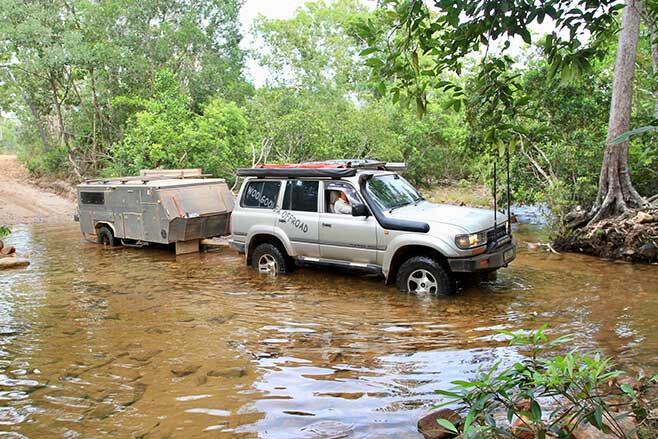
The bone-jarring corrugations start straight away, and bulldust holes are everywhere along the first part of Portland Road. Some of the holes are that deep and wide there are bypass tracks around the original bypass tracks. However, saying that, we did this trip at the end of the dry season, so hopefully graders will fix up the start of the road seeing as there are a few communities along the way.
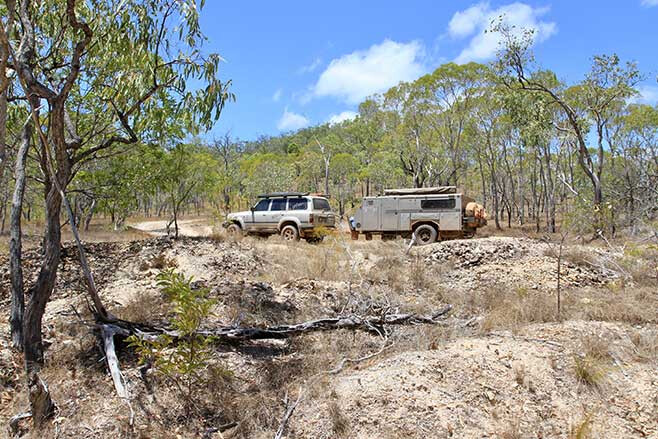
The first 20km passes through dry scrub bushland not unlike most of the Cape. Tall anthills and patches of grass trees break up the scenery between the gums, and all are covered in dust – either red, white or grey – from the long dry season they’ve had.
VIDEO: FJ40 in Cape York, 1975
At the Cape during the wet season (generally late spring through summer) everything is bigger, especially the storms, the wind and the water flow. The first mind-blowing indication of this is when you approach the infamous Wenlock River crossing.
It’s not until you reach the top of either side of the crossing that you realise how steep it actually is, to allow the massive amounts of water to flow through during the wet. These days the actual water crossing has a concrete base for better traction.
CAPE GOLD
ANYONE doing research for a trip to the Cape will learn there is plenty of history in the north, including from the war, the goldfields and right down to pastoral. One very significant area that I wanted to explore was the Batavia or Wenlock Goldfields. The shiny stuff was found in the Cape as early as 1876, but the Batavia area was proclaimed later on in 1892. There was that much gold found here that it was declared the most productive goldfield in the Cape during the depression, around 1930.
After crossing the Wenlock heading towards the coast, there are two miners’ tracks to the left, and either one leads to the fields and can loop out on the other. The first road in follows the Wenlock, and we soon found one of the camps with a series of mango trees – the ground had also been levelled, where veggies were grown in long rows beside the river to feed up to 130 men and families working in the field.
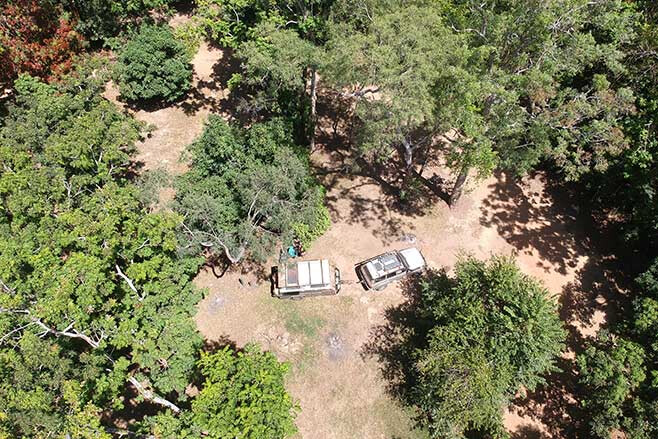
There are several small concrete slabs around and a bottle dump. An interesting find was the lone grave of Thomas Power, who apparently died in a gunfight back in 1930. The road in doesn’t see much traffic these days, so we found there were plenty of trees and washaways to avoid; but that’s all part of the adventure. Farther around on the loop road (about 3km) the main mining work area can’t be missed … literally.
TOP TRACKS: Cape York’s best 4×4 tracks
There’s a staggering amount of relics trackside and the more we looked, the more we found. Away from constant rainfall and the salt air, most of the equipment still looks pretty good, including steam boilers, water tanks with handmade pop rivets, old trucks, trolley lines, and even a rare Huntington roller stamper.
Normal stampers have tall rods and a heavy head where they’ll crush the rock in the bottom; this one has a series of weights that go around a huge round tank, crushing the rock and then feeding it out. I’ve seen many stampers in my time, but never one as impressive as this. One of the early stampers here was a three-head stamper that ran 24 hours a day – imagine trying to sleep with the constant thud all night.
It’s mind-boggling how they managed to transport the gear here, especially when a lot of this gear was made and shipped from London before 1900.
Originally there was only one field, but in 1915 an Aboriginal women, Kitty Pluto, was pushing a barrow and found a large nugget in the wash. It was then that the lower fields were discovered and named Pluto. Kitty also found gold in several other areas, becoming one of the most successful Aboriginal prospectors in Cape York and the only woman recorded as discovering a goldfield in Queensland.
Strangely, in 1942 the Australian Army dismantled some of the mining gear and mines, thinking that if there was an invasion from the north, the Japanese could not utilise this area. Some five years later the mines kicked off again and the Portland Road was properly constructed all the way to the coast and the new settlement of Portland Roads.
Right up until the late 1940s the mining was producing some pretty impressive gold figures, but in the massive storms of 1950 the whole area flooded and mines filled up with water. This was the demise of the Batavia goldfields, and work soon started to wind down.
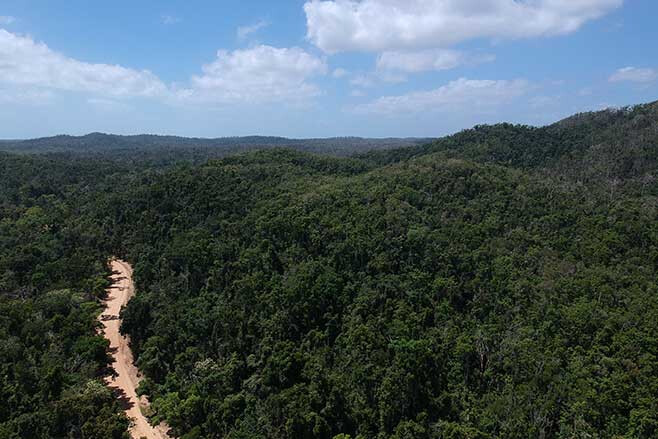
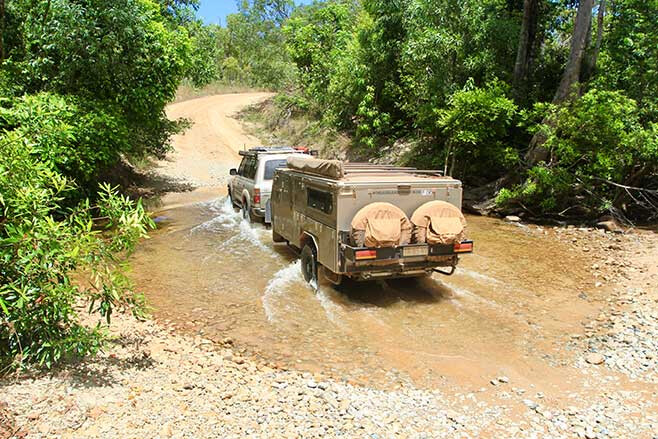
The road out is 4WD only (depending on which way you come from), with several dry creek crossings where the going can be a bit tough. Portland Road continues towards the coast, crossing creeks and winding its way up, over and around several small ranges; sometimes getting down to single-lane tracks but other sections as wide as a freeway. Keep an eye out when crossing Garraway Creek for the massive central pier, used for the bridge construction in 1946 when a proper road was built to the coast.
TO THE NORTH: Northern Cape York
Continuing on and a huge mountain range looms, feeling like it was peering down around every corner. Midway along there’s a pull-off area with a short, signposted walk highlighting flora, fauna and local aboriginal history. It leads to a viewing deck looking towards the Tozer Range. Age-old granite volcanoes spewed out red-hot pumice millions of years ago, leaving layers of ash across the landscape; over time it fused together to form welded tuffs, just like a hard volcanic rock.
The most prominent landmark is Mount Tozer, standing 545m high. Other bands of rock can be seen in the ranges where the heath grass won’t grow in the poor soil; it’s part of the Kutini-Payamu National Park, or the Iron Range NP.
For another 15km Portland Rd is sealed, with views in both directions toward the range and to the wind-shaped trees and low heath. There are only a couple of designated camping areas in this part of the world, and if you haven’t booked online you’ll need to detour towards Lockhart and stop at the QNPWS office. There’s no reception along the way, so we had to call in to book – with a self-registration computer system, the process works … very slowly.
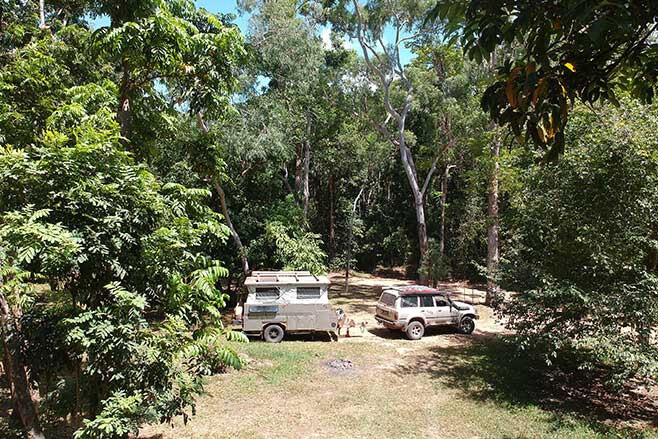
Our camp for the night was back along Portland Road at the Rainforest Number 1 area. Surrounded by thick, almost impenetrable forest it’s a stunning area with plenty of shade and a small walk to the toilets. At night we were greeted by the elusive cuscus, which looked like a large, yellow possum scurrying around and eating the mangoes. From camp there’s a stunning 5km walk through the rainforest to discover more of the area and its unique animals and plant life found only in this part of Cape York.
CHILLI BEACH
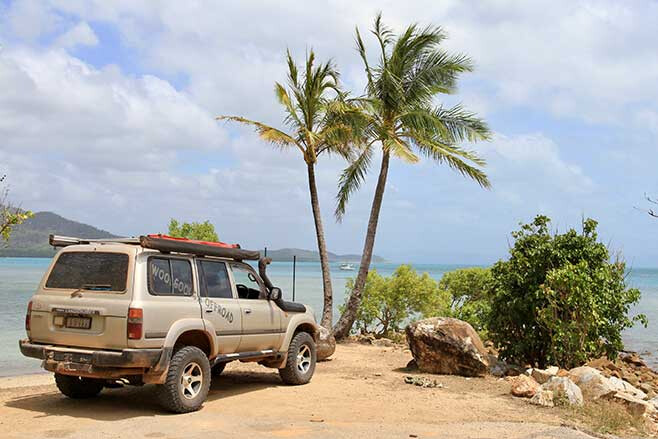
THIRTY minutes along Portland Road is the amazing Chilli Beach, known for its windswept and bent coconut trees, 7km of stunning white and desolated beaches, and views across to Restoration Island where Cook explored back in 1789. Before we headed here people told us the east coast trade winds were making things uncomfortable and there weren’t too many campsites out of the wind. Don’t get me wrong, it’s a ripper of a spot jammed in between the reef and rainforest, but it frequents a lot of rubbish from the ocean currents.
To the north of Chilli Beach and some 10km away is the community of Portland Roads. On a good day there are about 10 people living here around the bay and you can walk the streets in about 10 minutes, but it’s the underlying history that makes this place pretty special.
Prior to WWII a jetty extended from the shore and was a base for local fishing boats trading along the coast, but during the war effort there was a need for a berthing point for large navy ships serving the nearby Iron Range Air Force Base. Today only timber stumps protrude at low tide from the ocean sands, and steel beams lay rusting on the nearby shores. To protect this valuable jetty, naval fort structures were built in the headland overlooking the north, but, thankfully, this area was never targeted.
Portland Roads played a key role in keeping supplies to the bomber groups that operated nearby delivering strikes on Japanese installations. This was a turning point in WWII and pushed the front north. Overgrown and lost in the thick scrub, the only remnants left are concrete bases, an observation post and where the gun placements were.
TO THE SOUTH: Southern Cape York
Heading back towards camp, some 30km, a turnoff to the Lockhart River township caught my eye, but not before noticing huge cleared areas in the middle of the rainforest. It’s here, back in 1963, that Australia’s only ‘nuclear’ blast was set off. Named Operation Blowdown, the government at the time wondered what such a blast would have on a tropical rainforest during the Cold War.
Some 17,000 trees surrounding the central blast area were tagged and recorded to see what effect the blast would have. Huge steel platforms were erected and finally a 50-tonne bomb was placed 140 feet in the tower. Thankfully only TNT was used, but it destroyed the area and, even today, only grasses grow where the jungle once stood.
Closer towards Lockhart, the historical Iron Range Airport is a must-see. Relics, memorials and a plethora of information are on hand to inform how significant this area was in the protection of our country during war times.
Lockhart itself has a checkered history which dates back to 1789, when William Bligh made contact nearby, and later when explorer Edmund Kennedy passed by in 1848 on his ill-fated attempt to reach the Gulf. From early pearl divers through to sandalwood trading and war expositions, it all happened nearby. Aboriginal culture is strong and alive at Lockhart, where the entire community has a strong identity as one.
What started off as a ‘quick’ detour, turned out to be a huge adventure exploring masses of history, finding relics and whetting my appetite for another exploration along Portland Road in Cape York.
The Jeep Easter Safari is a nine-day event located in the scenic Moab area of Utah. Hosted by Moab’s Red Rock 4 Wheelers four-wheel drive club, it’s made up of trail rides through this iconic and demanding area.
It’s also the perfect setting for Jeep to unveil their wild concept vehicles for the year.
“Moab Easter Jeep Safari has long been our testing ground for both our newest Jeep 4x4s and for showcasing new Jeep brand concepts, Jeep Performance Parts and Ideas that truly resonate with our most Passionate customers – the die-hard off-road enthusiasts who attend this event every year,” said Jim Morrison, Vice President of Jeep Brand North America.
“This year’s Safari shines a spotlight on what makes Jeep vehicles unmistakably distinctive and undeniably capable – a variety of powertrains that deliver superior power, performance, torque and, above all, fun. Moab’s demanding trails are a worthy opponent for our Jeep Wrangler and Jeep Gladiator concept vehicles.”
This year, Jeep certainly isn’t mucking around, with such a wide range of concept vehicles on offer. Let’s take a closer look at what they have been working on for the event.
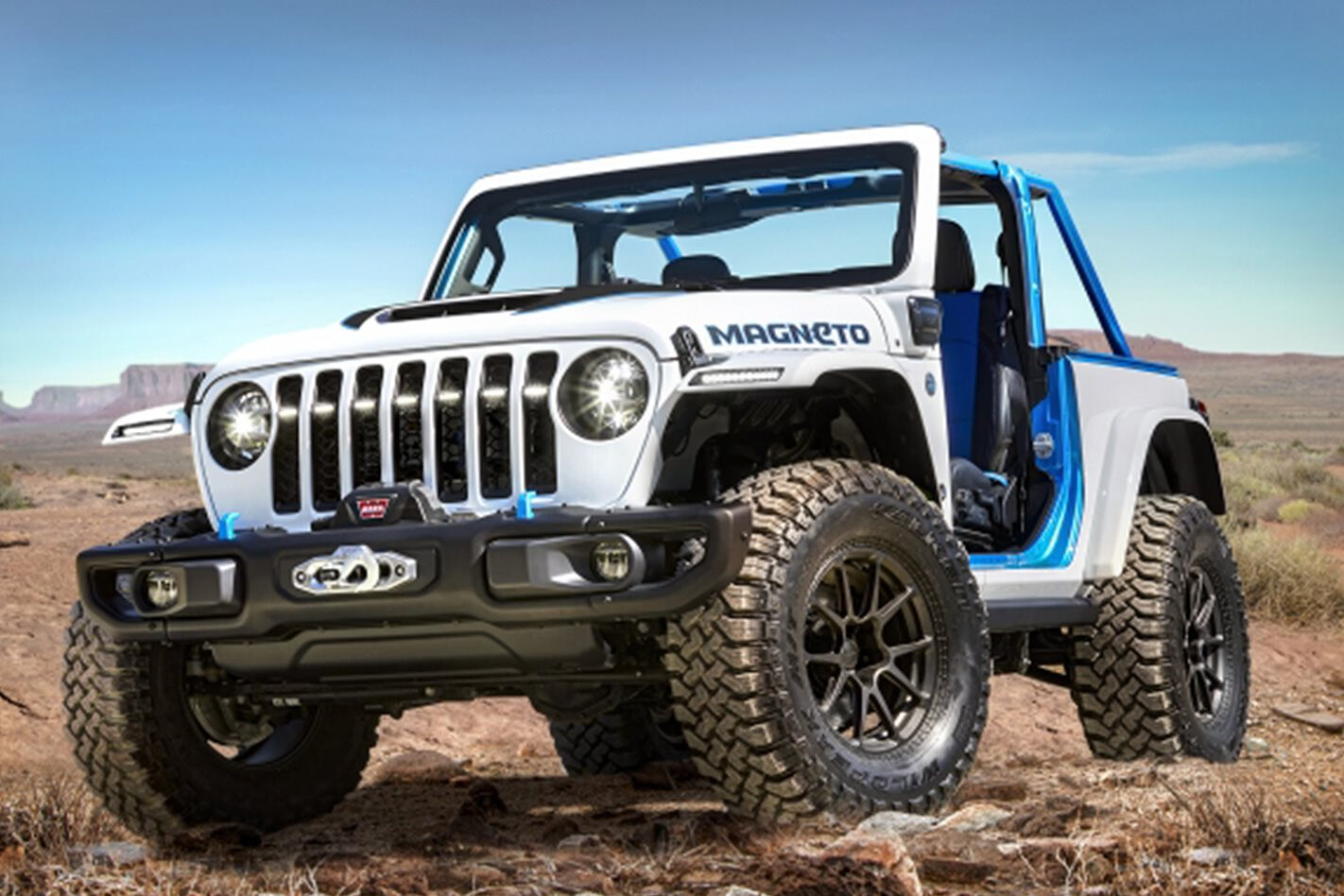
The Jeep Magneto is an all-electric concept based on a 2020 two-door Wrangler Rubicon that Jeep tells us is quiet, quick and an unmistakable rock-climbing force. A zero-emissions vehicle with the same 4×4 capability you’d expect from any Wrangler.
A custom-built axial flux electric motor can operate up to 6,000rpm, capable of moving the Jeep from 0-60mph in 6.8 seconds. The Magneto is powered by four lithium-ion battery packs. It is also equipped with a JPP 2.0-inch lift, 17-inch wheels, 35-inch tyres and a wide range of off-road armour.
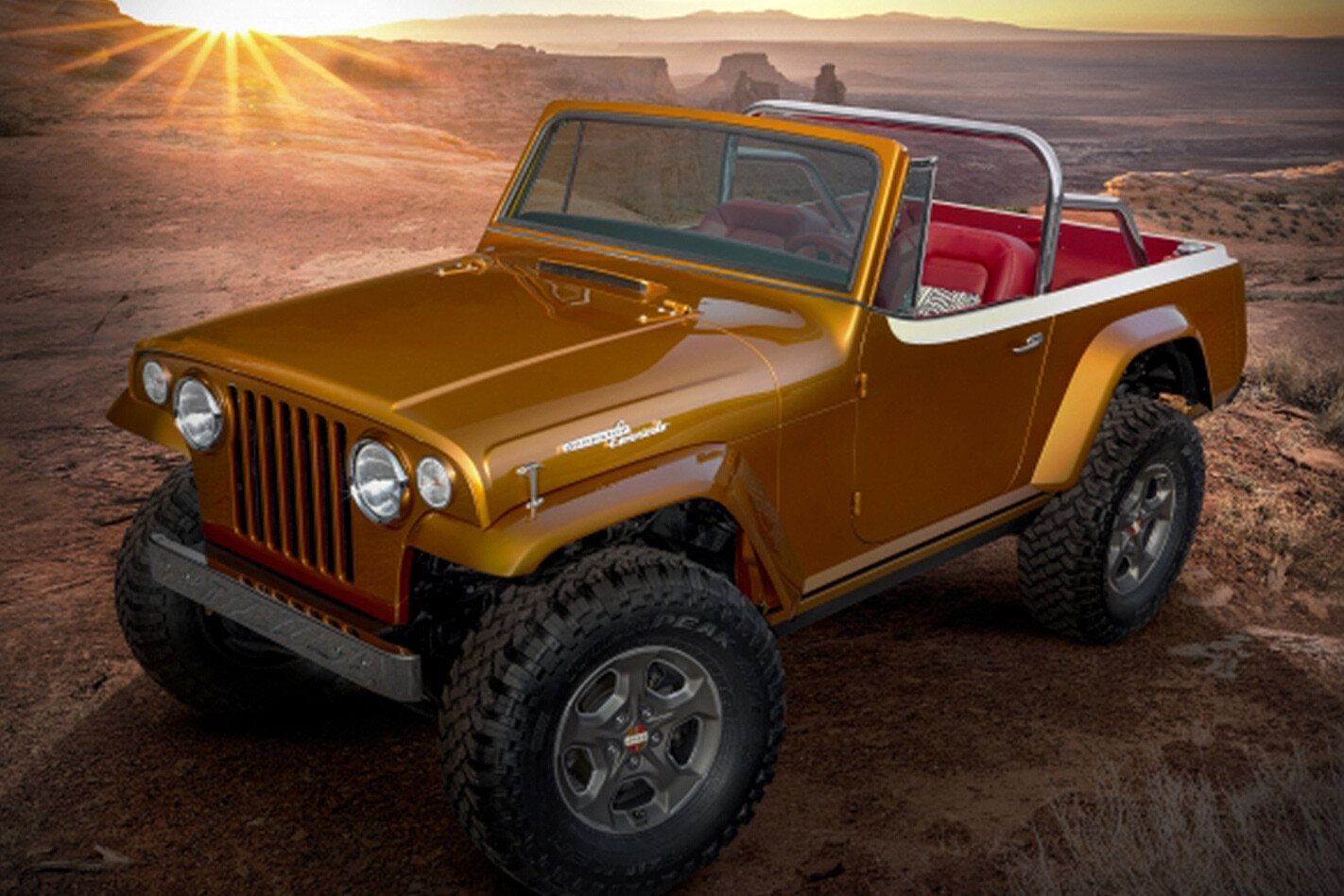
Jeepster Beach is a nod at the ever-popular resto-mod scene, and is a throwback to the second generation Jeepster. It started out as a 1968 Jeepster Commando (C-101) and has been blended with a 2020 Wrangler Rubicon to bring it up to speed.
Speaking of modern, it’s powered by a 2.0L turbocharged four-cylinder motor which has been tweaked to increase output by 25 per cent to 340 horsepower (253kW). 4.1 ratio transfer gearing helps turn the 35-inch tyres, and a custom red interior (with chrome roll cage) really sends the resto-mod image home.
Next up is the Jeep Red Bare, designed to be a combination of hard-working ute and capable off-roader. It’s powered by a 3.0-litre EcoDiesel V6 engine, with 8-speed automatic transmission.
The concept features front-and-rear Dana 44 axles, which have been upgraded with 4.88 ratios for greater performance.
It also has a very impressive 91:1 crawl ratio, making this a serious workhorse, yet with all the fun features of a Wrangler including half doors and a black soft top for that familiar open-air experience.
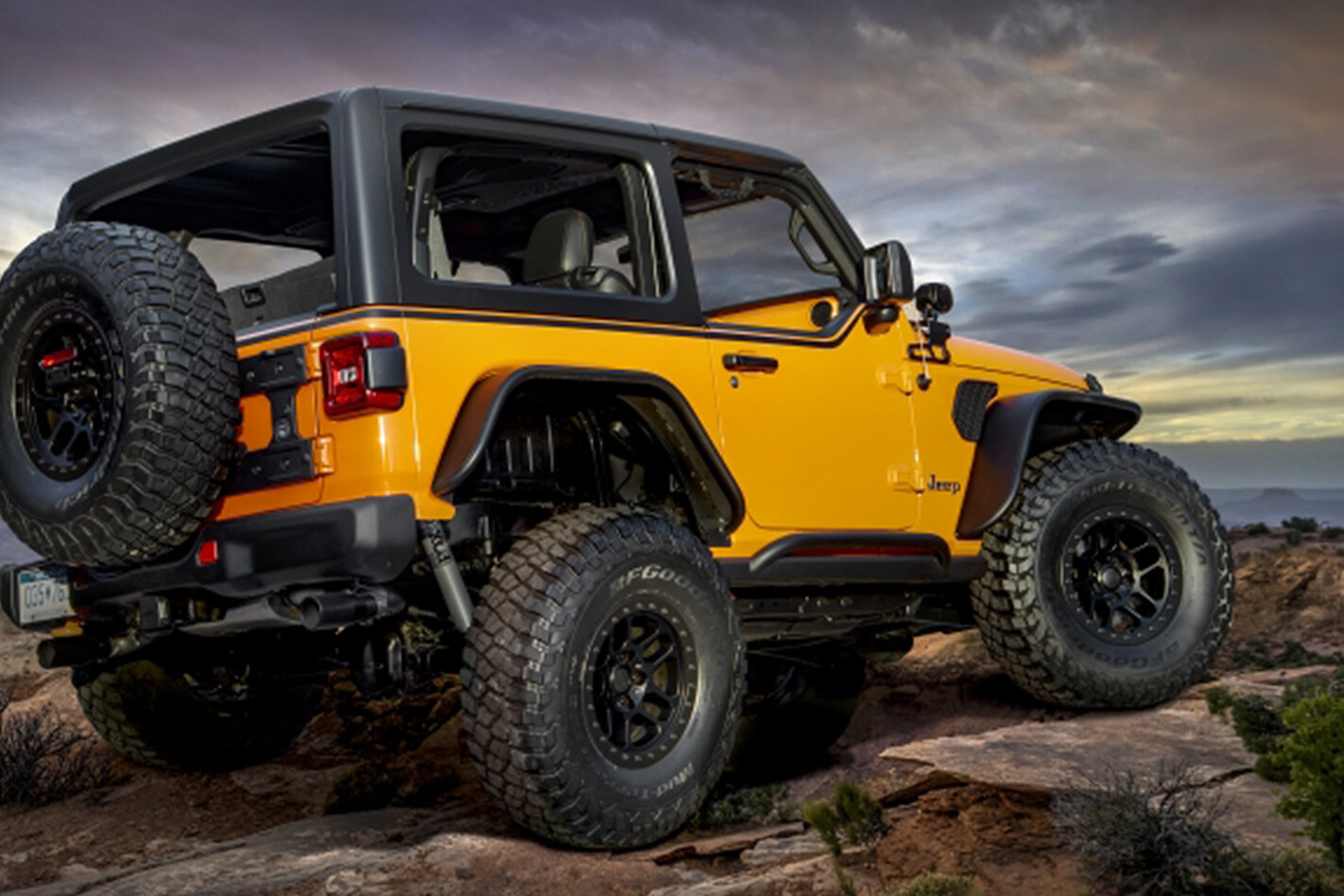
Jeep Orange Peelz is all about fun. Riding high on 37-inch tyres, it’s the one you’d pick for a play in the rocks. Powered by the 3.6L Pentastar V6, performance has been tweaked with the addition of a JPP cold-air intake and cat-back exhaust system.
A JPP swing Gate Hinge Reinforcement allows the larger spare tyre to fit, as well as body coloured tow hooks to pull out lesser vehicles on the tracks. Side and rear windows have been removed, with prototype JPP half doors and a custom removable one-piece Freedom Top glass sunroof completing the package.
Jeep Farout is the overlander of the group, based on the Gladiator platform powered by a 3.0L EcoDiesel V6. The standout feature here, is a customised AT Overland Equipment Habitat Truck Topper, a 16-foot-long and 7.5-foot-tall camper that sets up in just seconds, and sleeps four people. It also rides on 37-inch tyres, with Fox performance shocks for amazing ride quality and an integrated roof-rack system for additional storage.
Jeep Wrangler Rubicon 392 needs no introduction, as this is the V8-powered Rubicon we all want to drive. Powered by a 6.4L V8 engine, which makes a screaming 485 horsepower (361kW) with most power available just above idle where you want it.
A dual-mode performance exhaust furth adds to the ridiculousness, switching between wild and outrageous.
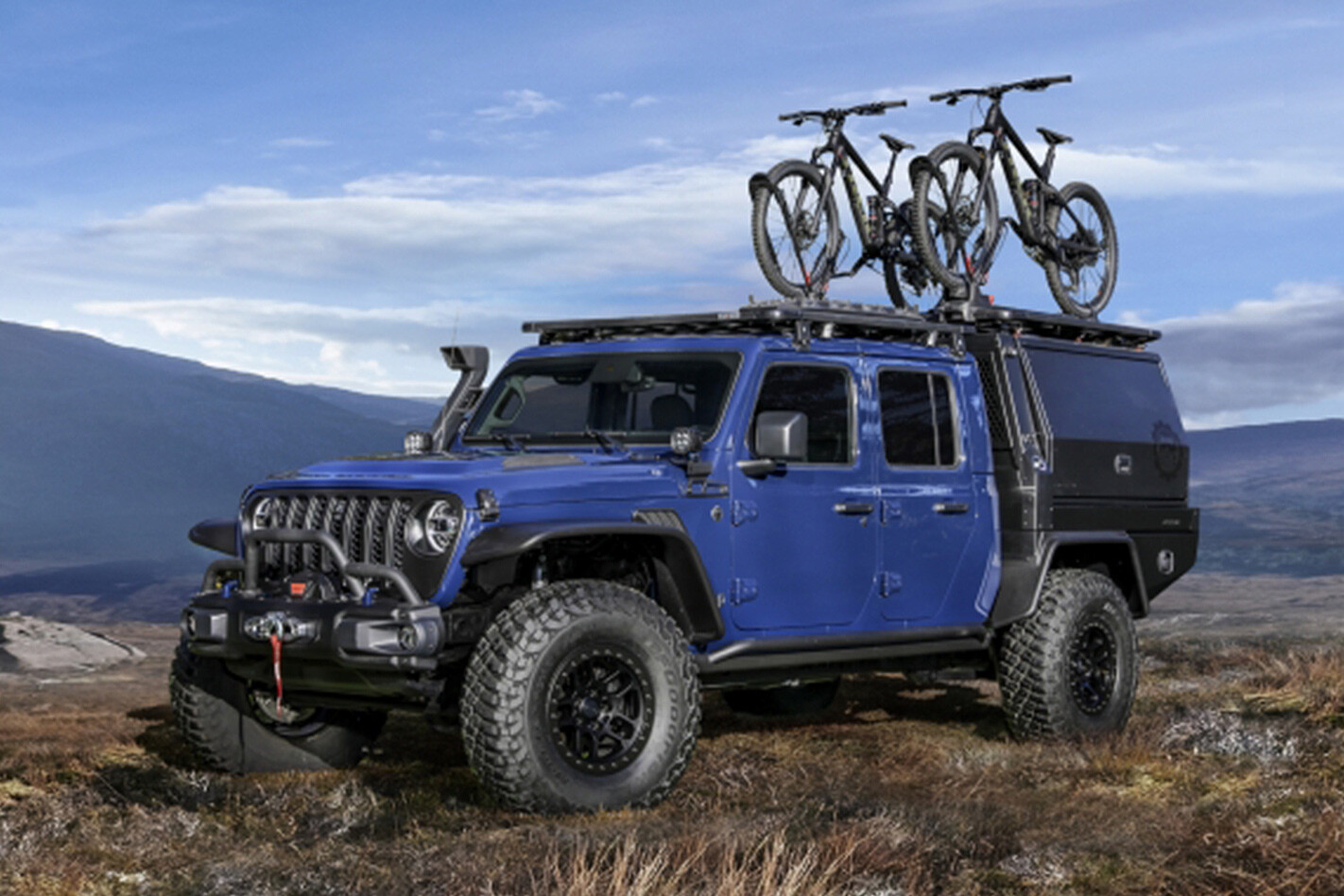
Jeep Top Dog has been designed primarily with mountain bikers in mind, and has been decked out extensively with additional cargo capacity with the use of a custom (and Aussie-made) PCOR flatbed storage system.
There’s pull-out drawers, a battery-powered refrigerator and even an electric hot dog roller grill stand for when you get hungry out on the tracks.
Above the cab, two Rhino Rack structures offer additional storage for tools or perhaps additional hot dog supplies.
We are certainly excited by this range of Jeeps, and are looking forward to seeing which concepts become a reality in Australia in the coming years.
PICTURE this: crystal-clear water, stunning beaches rich in piscatorial delights, secluded coves, rocky headlands with cliff-top single tracks, and some of the best sand-dune driving you could possibly hope for … oh I forgot one thing, no crowds!
Sounds ideal, doesn’t it? Well, it is as close as you can get to four-wheel driving Mecca and it should definitely be on your destination list.
We had just come off the fantastic Googs Track and restocked in the coastal town of Ceduna, and with a few weeks of leave still left it made perfect sense to push on for some more of South Australia’s treats.
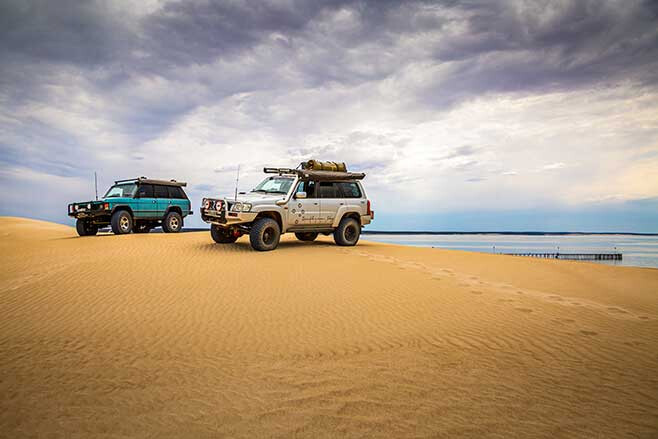
After a short Eyre Highway leg, we turned off for the tiny township of Fowlers Bay. There is not much here, other than a small basic van park and a little store and café, so after a quick exploration of the long jetty (from which one of the best southern right whale watching tours departs during the season) we headed for the entry in to the dunes which form the backdrop of the town. Airing down to 16psi and selecting low range, we climbed up into the dune system for our first taste of the incredible 4WDing to follow.
When you are only two minutes into the driving and already stopping to grab the camera, you know you are on to a winner, and that’s exactly what we were doing. Perched atop the dunes above the town with panoramic views over the ocean and surrounds, we all got some incredible images and the smiles were abundant and genuine – this is what owning a 4×4 is all about.
Staying in the dune system we tracked onward and within a few kays were greeted with the first of many stunning beaches on this trip. We needed to travel the length of this beach to the distant headland to reach our first camp, and it is here that I will give you a handy warning.
A TRACTOR AWAITS
THROUGHOUT the year in certain conditions, ribbon seaweed gets washed up on the shore, creating a deep blanket that covers the sand. Over time the weed that does not get washed back out to sea becomes covered in sand.
The danger here is that it may seem like you are driving on hard-packed, smooth sand below the high-tide mark, which is common practice on many beaches across Australia (particularly the east), but in fact you may only be driving on a thin, sandy crust suspended on a vehicle-swallowing bed of rotting weed. Believe me, the old tractor you see parked up in Fowlers Bay makes a solid living, not from farming, but from 4×4 beach recoveries!
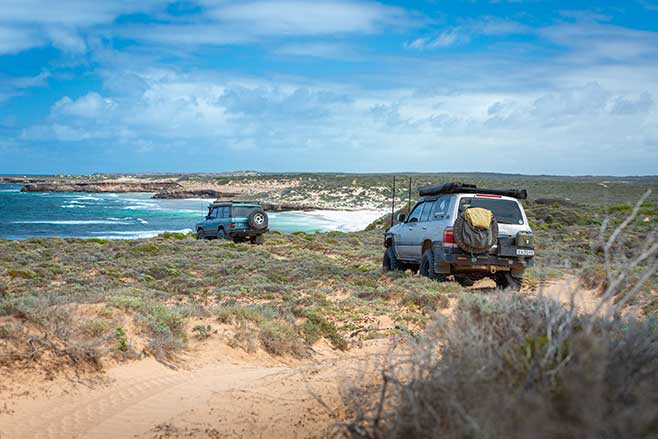
There is a well-worn beach track above the high-tide mark that is your safest bet for avoiding strife, but remember, this is generally not advisable or even allowed on many beaches as it is home to nesting shorebirds and is hard, thirsty going for a 4×4.
TOP 5: Tips for driving on sand
I decided to once again test this out to demonstrate to my travelling companions who had not seen this before, and gingerly started to dip the BFGoodrich paws lower toward the water as I was driving along, and pretty quickly the rig began to sink requiring some full-throttle and corrective steering to get back onto the harder stuff. It’s a strange phenomenon and completely opposite to what you would experience on Fraser Island’s beaches for example.
With that fun out of the way, it was time to really appreciate what we had here, a nice sunny day, with a mildly stiff onshore breeze on this beautiful golden beach and water clarity to rival the best in the country. Stunning – and we had not seen another soul.
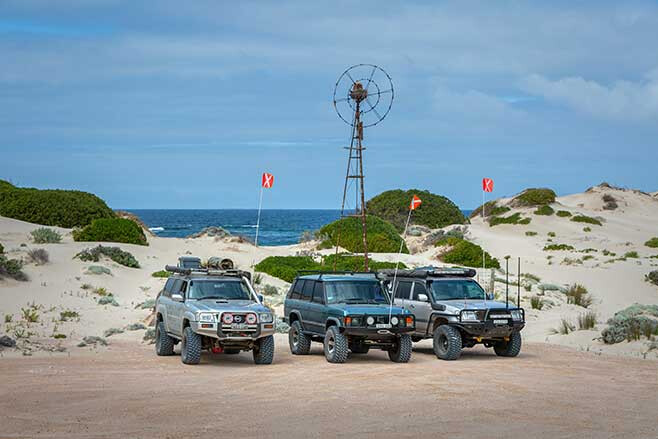
Tucked in behind the dunes of the next beach along are several bollard-ed campsites, one with a long-drop toilet. Typical of the Great Australian Bight, tall trees are not to be found close to the shoreline due to the frequent high winds, but there is a solid smattering of saltbush, grasses and shrubs that offer mild protection but no shade. So, if travelling in the hotter months anywhere along this coastline, make sure you take your own robust shelter that can handle high winds.
The plan for the rest of the trip was to head west, following and exploring as many of the coastal tracks as possible. The following morning, our minds were blown away as we neared the shore to discover we were atop a cliff with a rocky, single track only metres from the steep drop-off to the ocean below. Wow, this is as good as off-roading gets.
Once again, the cameras were out to capture these stunning views and, honestly, we just spent the rest of the next few days eating up the endless cliff-top, beach and dune driving at a leisurely pace. I have travelled most of Australia in a 4×4 and I would rate this as one of the top three touring experiences in this land. Let me put it this way, at times it felt so good it felt illegal, but rest assured it is not. Perhaps the notable absence of other travellers added to the charmed feeling.
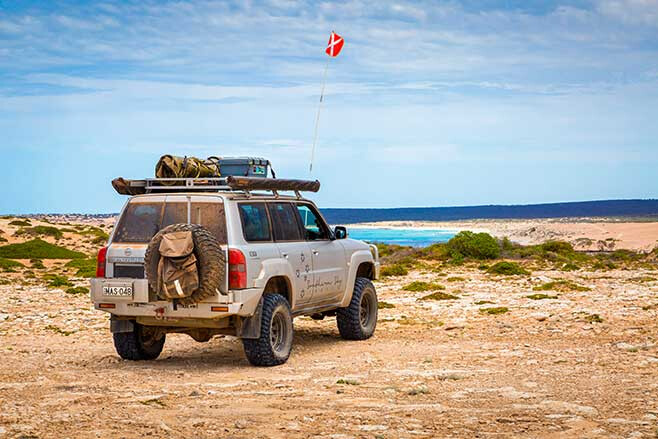
At times we came across beautiful secluded and sheltered little beaches, surrounded by steep headlands, some we stopped in to wet a line or, in one case, simply drift asleep on the sand bathed in sunlight and the sounds of breaking waves. Bliss. At the end of each day we managed to easily find an idyllic bush camp, most of these happened to be along the inland tracks in amongst thicker and taller vegetation, as we wanted to escape the wind, but we were never far away from the coastline.
DOG FENCE
SOMEWHERE along the way we realised that as much as we wanted this to last forever, it could not. We needed to put a punctuation mark on it, so looking at the maps we decided we would start our trip home after reaching the very end (or start) of the Dog Fence. Its origin traces back to the early pastoralists in the late 19th century (who constructed the original dingo-proof cells) and a Royal Commission in 1894 on the impact of dingoes and other vermin upon grazing lands – which subsequently led to a more concerted effort in fencing.
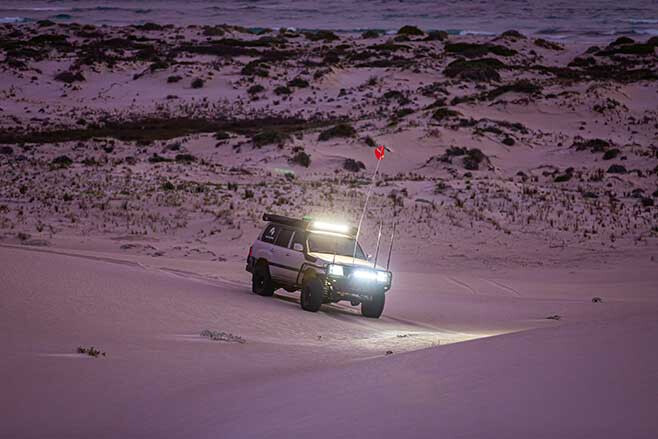
So, with that locked in and with growing heavy hearts, we made our way past one last notable landscape, the Wonginya Sandhills. Well, apparently not many people venture out here, as the track was so overgrown, littered with fallen timber and reclaimed by the movement of the dunes that we were frequently stopping to clear the way ahead and scout out a driveable line in the dense timber and encroaching sand at the back of this extensive system.
While challenging at times and most certainly harsh on the paintwork (don’t even think about it if you are precious about your Duco) it was seriously fun and engaging driving, with one last stunning bush camp to boot before finally reaching that famous fence.
I said it years ago and now I find myself saying it again, “Fowlers Bay, I will be back again.” It is incredible!