Get up to speed on the new Prado
The stories below will give you a guide to everything we learned about the new Prado when it was unveiled. All fresh stories published since then will be found on our Toyota Prado model page here.

There’s no denying how popular the JB74 model Suzuki Jimny is, both locally and internationally. Suzuki has done a marvellous job of creating a new model that somehow is modernised, yet with a strong nod to the heritage of the previous incarnations of Suzuki’s off-roaders.
While Zooks have always been capable four-wheel drives, it’s plain to see they are on the small side, especially if you intend on carrying basic things like people or cargo.
The JB74 Jimny is also a relatively new model, so sourcing gear can be an added challenge. For Darren Young, the owner of this highly modified example, that was almost part of the appeal to build his idea of the ultimate (Little) Rig.
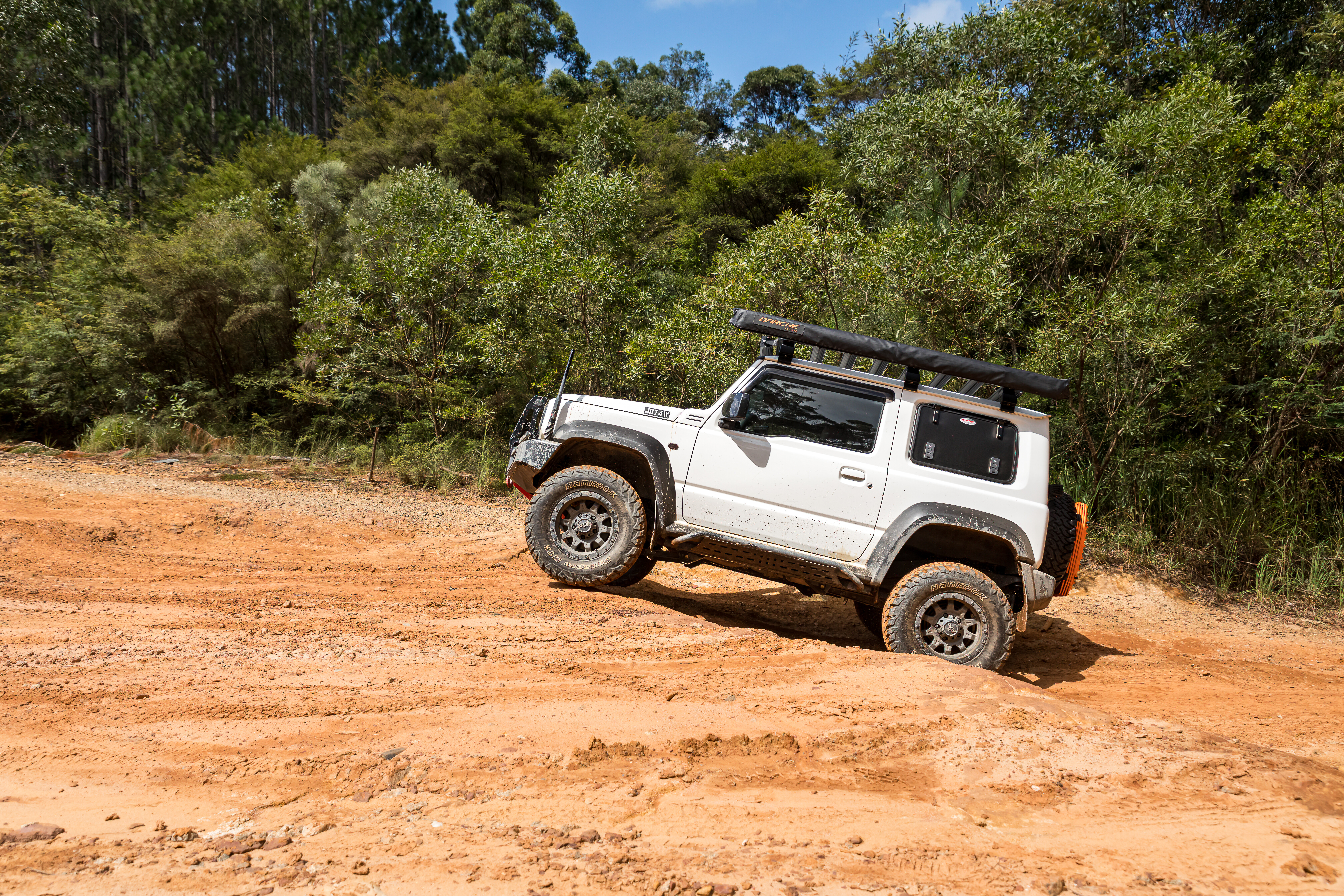
“A friend was talking to me about the Jimny, and how good they are off-road,” Darren tells us. “I started watching videos on YouTube, and was instantly hooked. I sold my 2016 Ford Ranger and ordered the new model.
When I first picked up the vehicle, there weren’t many aftermarket accessories available yet. So customising it meant plenty of trial and error. I’ve been trying to find that perfect balance between a mini tourer and an off-road weapon. I’ve got a pretty good balance so far, I think. I wanted something that could do it all basically.”
Despite owning a Ford Ranger previously, Darren’s background is actually in high-performance street cars. It must have been a shock jumping out of a worked V8 into a Jimny. In saying that, you can also see how his love of street cars has transferred into four-wheel drives, as the attention to detail in this little Jimny is next level. He also hints that he’s seen the light, and the off-road way of life is now something he has well and truly embraced.
Starting at the pointy end, the engine has been left alone for now, except for the addition of a custom stainless-steel snorkel from Vogue Industries. When asked about the performance of the stock 1.5L motor, Darren was blunt: “It makes about 100 horses, 100 very slow and very tired horses.”
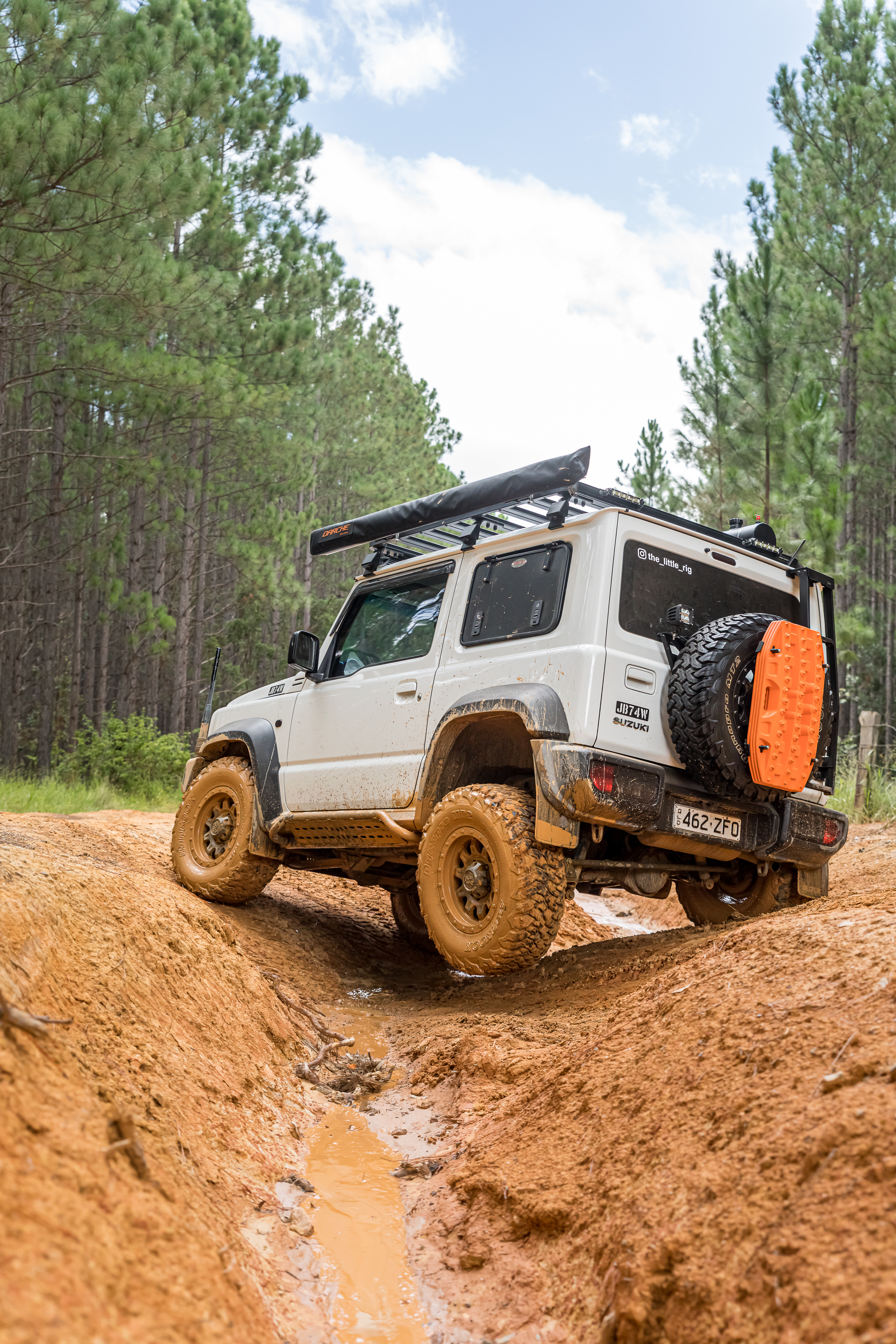
It makes about 100 horses, 100 very slow and very tired horses
To get around that, Darren is planning on installing a Turbo World turbo kit in the near future. Now that would be fun. As well as the turbo, Darren is keen on fitting an 80L long-range fuel tank to double the touring range of the Jimny without the need to cart Jerry cans around.
When the going gets tough, this Jimny has all the right off-road credentials to keep up with the big boys. While the traction-control system used in these JB74s is pretty good, Darren had front and rear ARB air lockers installed for the ultimate in traction. To help navigate tough obstacles, he is in the process of installing reduction gears, which will make this micro-weapon damn near unstoppable. Those reduction gears will provide 87 per cent reduction in low range, and 17 per cent in high range.
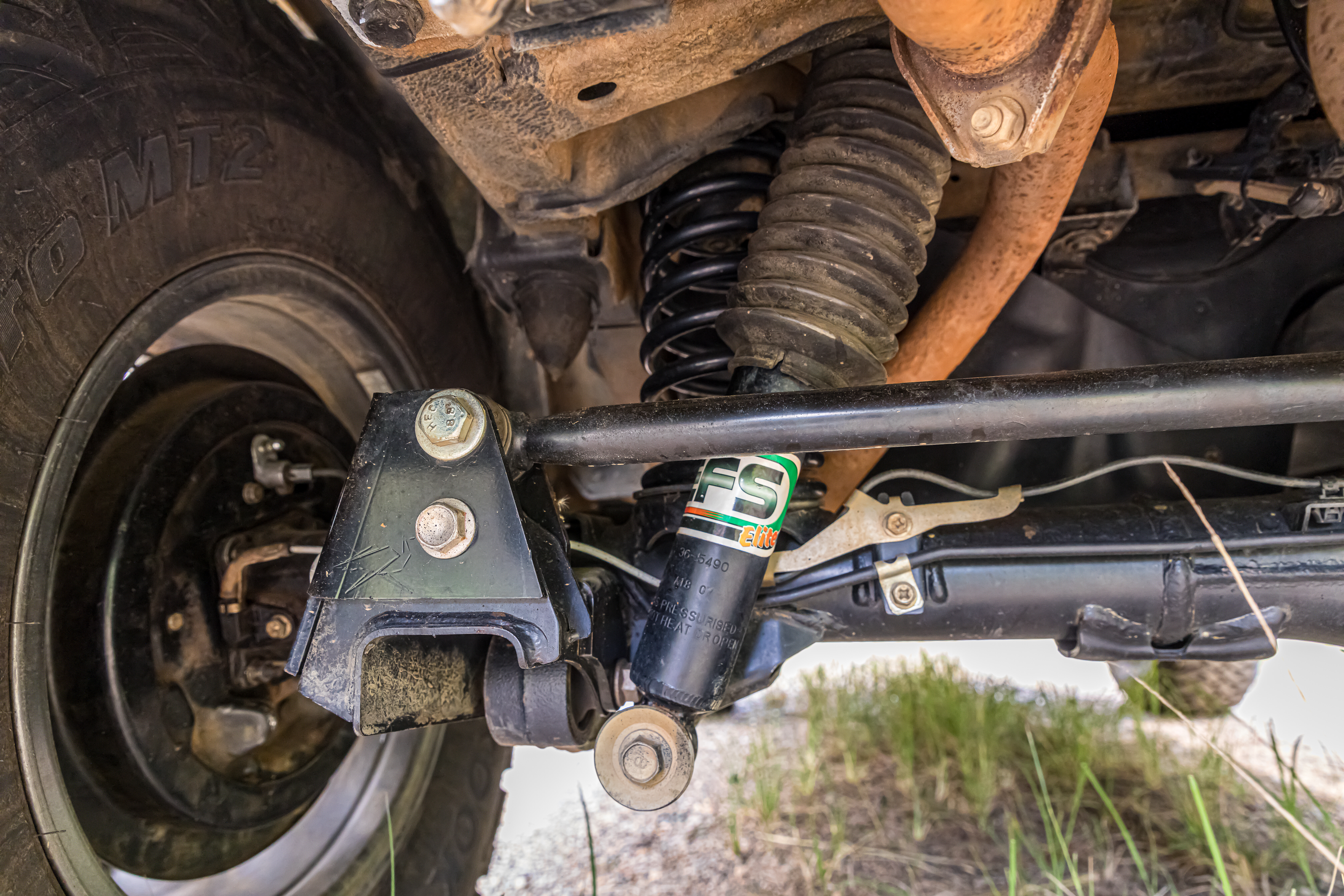
The factory suspension in the JB74 model Jimny is notoriously soft, which is great in slow off-road settings but not ideal anywhere else. Darren opted for an EFS 50mm suspension lift to provide more clearance, and he says it is still very softly sprung which suits him to a tee. He didn’t just whack in some new springs and shocks, though, but a complete suspension package. This is made up of a lowered chassis brace (to stop the front driveshaft hitting on down travel), rear Panhard rod extension, castor correction bushes and a Tough Dog return-to-centre steering damper.
Filling out the newly found real estate in the ‘guards is a set of Dirty Life 15×7 wheels with 30×9.5r15 Hankook Dynapro mud-terrain tyres. While that might sound small compared to a Patrol or Cruiser, that’s a big tyre on such a little vehicle. In saying that, now that Darren has invested in transfer reduction gears, he’s eyeing off a set of 32-inch tyres for off-road work, to really take things to the next level.
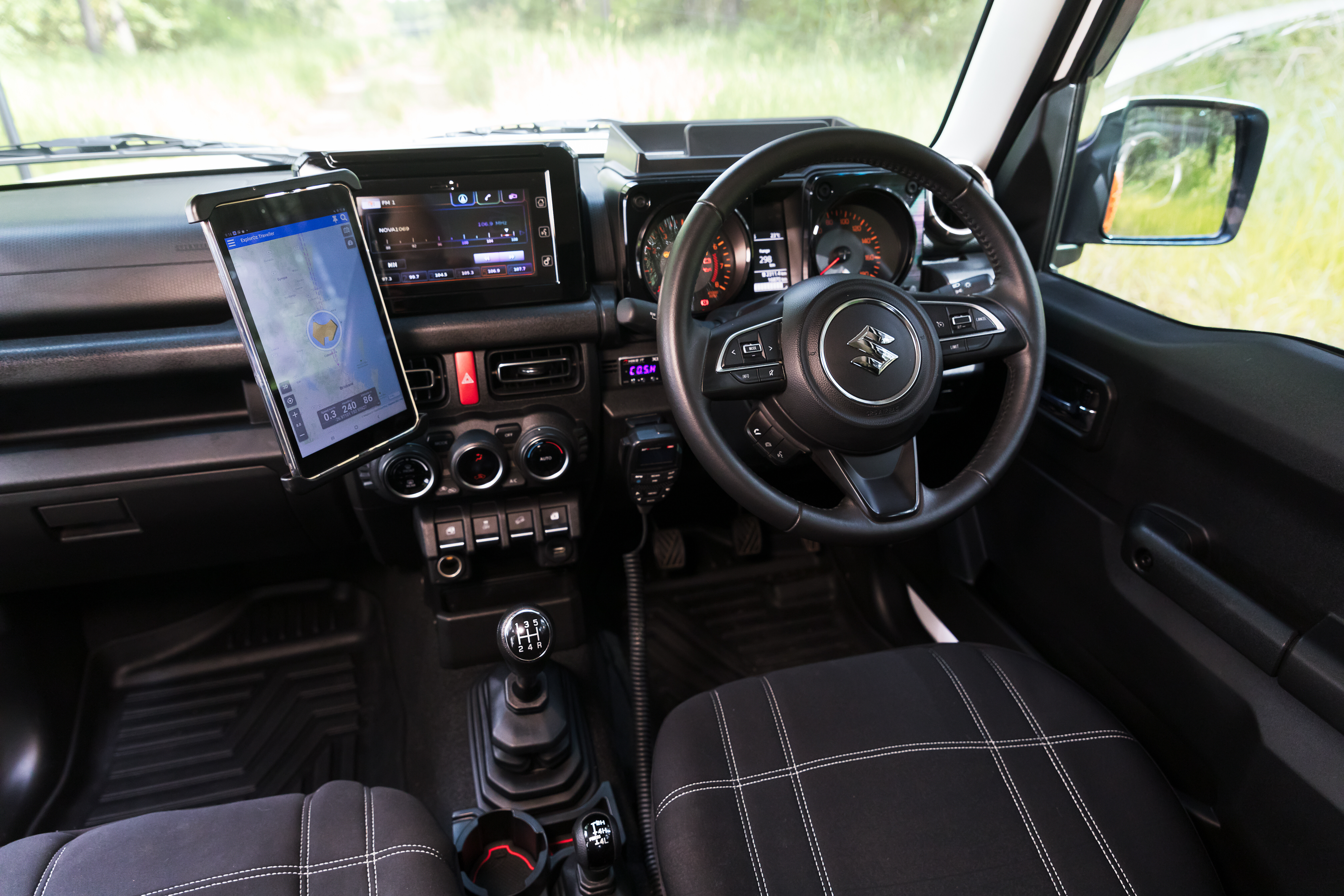
As previously mentioned, the Little Rig isn’t just a play toy, it’s a proper tourer as well. As such, Darren had it wired up with a lithium battery to power any accessories. There’s also an ARB compressor stashed under the driver’s seat, which is used for the lockers and tyre inflation. Darren selected a GME UHF radio for communications, and uses a Samsung tablet for off-road navigation and mapping. BushTek gullwings are another neat addition, making access to the small cargo area possible from nearly any angle.
Darren has taken no chances when it comes to protecting his pride and joy, with an extensive amount of off-road armour. BEI House bash plates and rear tyre mount (with MaxTrax carrier) get the party started, and a pair of Jimnybits rock sliders keep the sills looking like sills. He also had a set of neoprene seat covers installed early in the piece, to protect the factory cloth seats from stains and damage.
One of the most obvious bits of gear fitted to the Jimny would have to be that AFN front bar. This provides frontal protection, but also a platform to mount a 9500lb Carbon winch with synthetic rope. Darren has a rather intricate lighting set-up on the Jimny too, with LED driving lights from KC HiLiTES, as well as two 13.5-inch Stedi light bars and a further 40-inch LED light bar on the roof.
Speaking of the roof, you’ll also notice a Front Runner roof rack mounted on the factory rain gutters. To that, Darren has fitted a Darche awning for protection from the elements, as well as a Kickass shower tent for privacy in the bush. A Bazooka water tank can also be seen, which is heated by the sun and provides decent water pressure when supplied with a few psi from a portable air compressor.
When asked what he would do differently, Darren mentions that Ironman 4×4 now offer a GVM upgrade, and that would have been the first thing he would have done to the vehicle if it was available at the time.
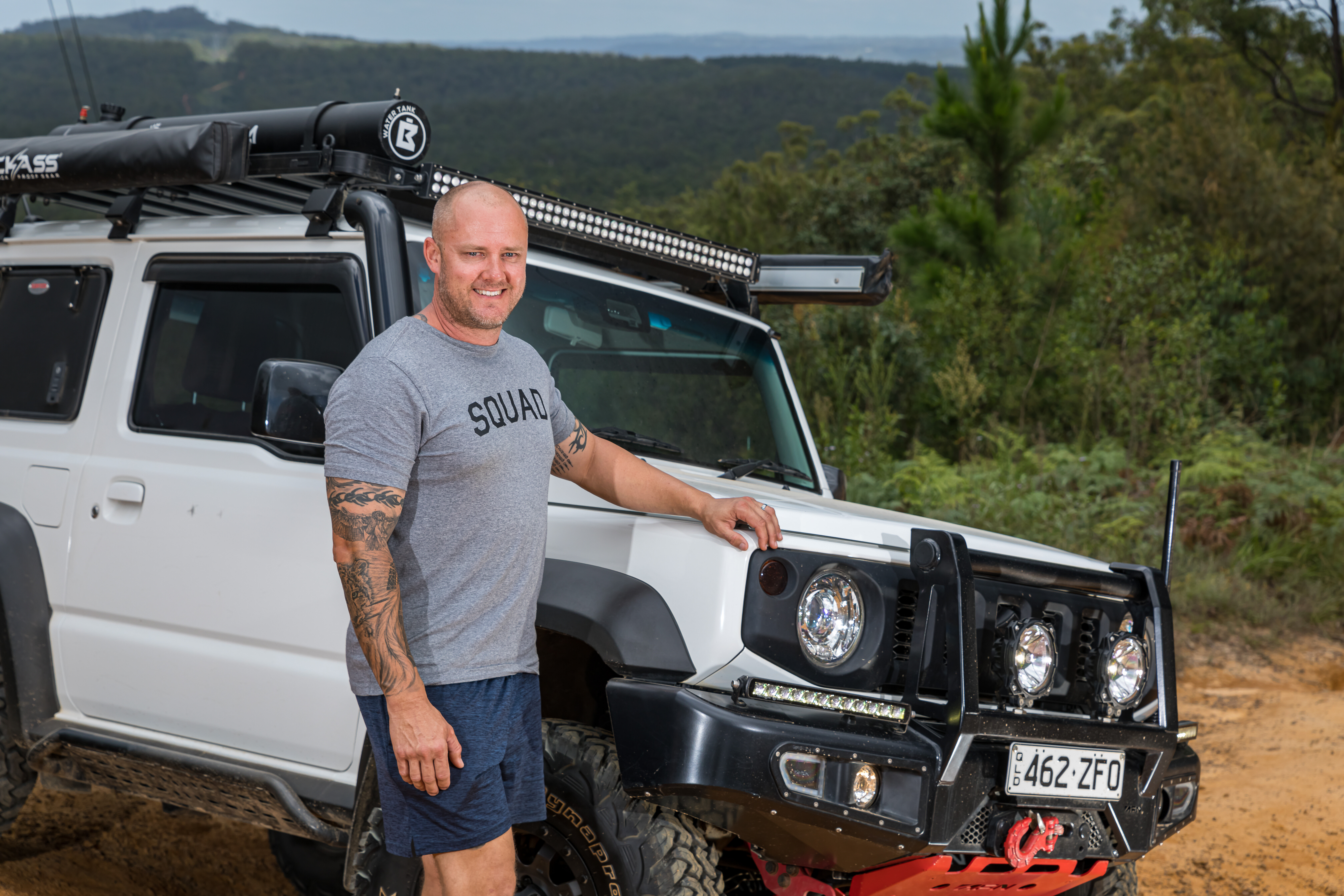
Darren spent 15 months to get the Jimny where it is today, and he estimates the total cost of the build (including vehicle purchase) is around the $60,000 mark. “It was very difficult for the first six months or so to find aftermarket parts to suit the vision I had for the build,” says Darren. “But I must say, it’s so rewarding to be the first one out on the tracks with these mods.”
So, what is the best thing about the Jimny according to the man himself? “It’s just heaps of fun to drive,” he replies. “It puts a smile on everyone’s face when they see it.”
If you are keen to check out more of this brilliant off-roader, check out The Little Rig on YouTube or Instagram.
The Blue Oval is on something of a charge in North America at the moment, releasing a range of new trucks such as the Maverick and F-150 Lightning recently, and also expanding its off-road oriented line-up with the Explorer Timberline and Bronco.
American publication CarBuzz has discovered a trademark registration application from Ford for another brand name, with the Detroit-based manufacturer filing to stake its claim on “Rattler” – expected to end up on an off-road based model.
Submitted to the United States Patent and Trademark Office, the trademark application is “intended to cover the categories of motor vehicles, namely, automobiles, pick-up trucks, electric vehicles, sport utility vehicles, off-road vehicles, and their structural parts.”
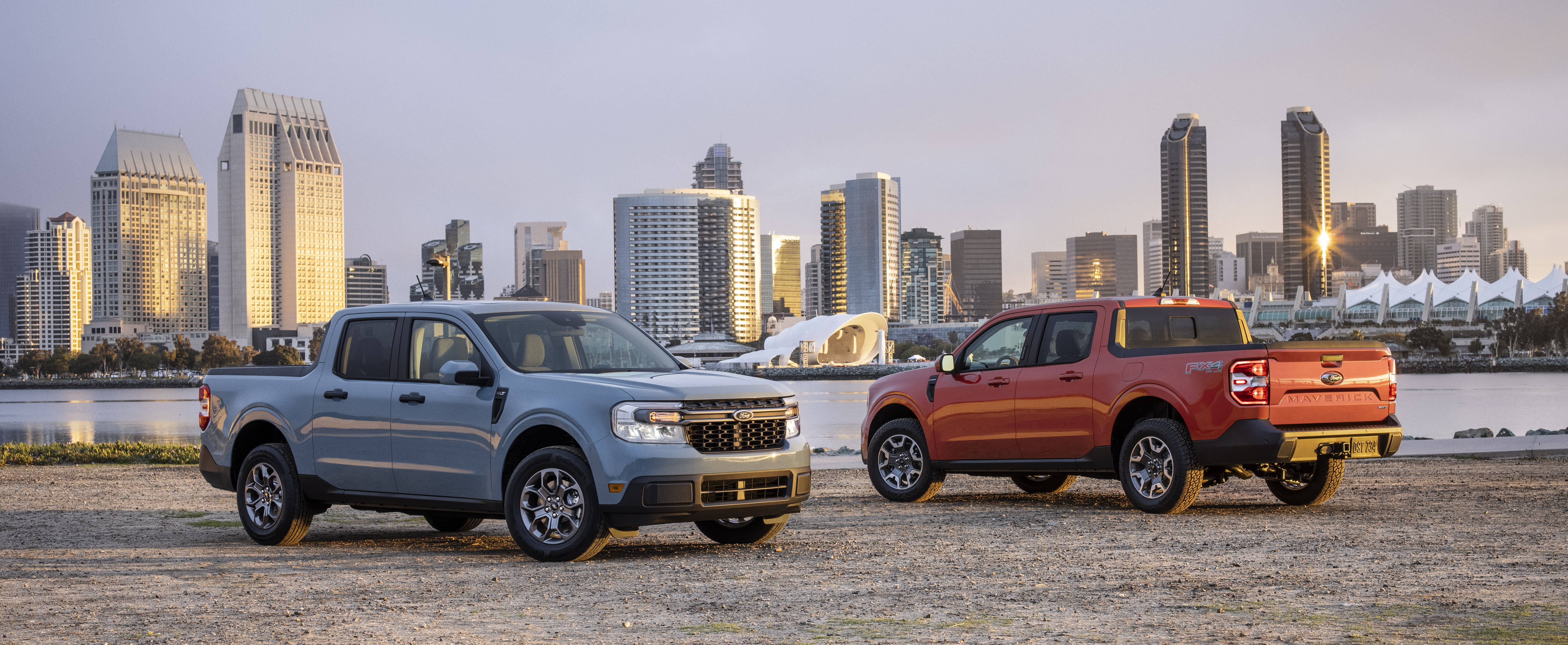
The new Maverick could be a prime candidate for a Rattler upgrade, available out of the box with either a 2.5-litre four-cylinder hybrid engine or 2.0-litre EcoBoost turbo-petrol, each making 142kW/210Nm and 186kW/376Nm respectively.
Though it’s unlikely Ford would try to shoehorn something like a V8 into the Maverick, it’s not out of the question for a hotter-tune version of the EcoBoost to make its way into a Rattler upgraded variant, with extra gear being added on top of the already available all-terrain tyres, underbody protection and off-road tuned suspension.
As the smallest truck in Ford’s model line-up, the Maverick is even smaller than the Australian-designed Ranger but is expected to take sales away from the ute, being aimed at customers who want a light-duty vehicle with its 680kg payload capacity.
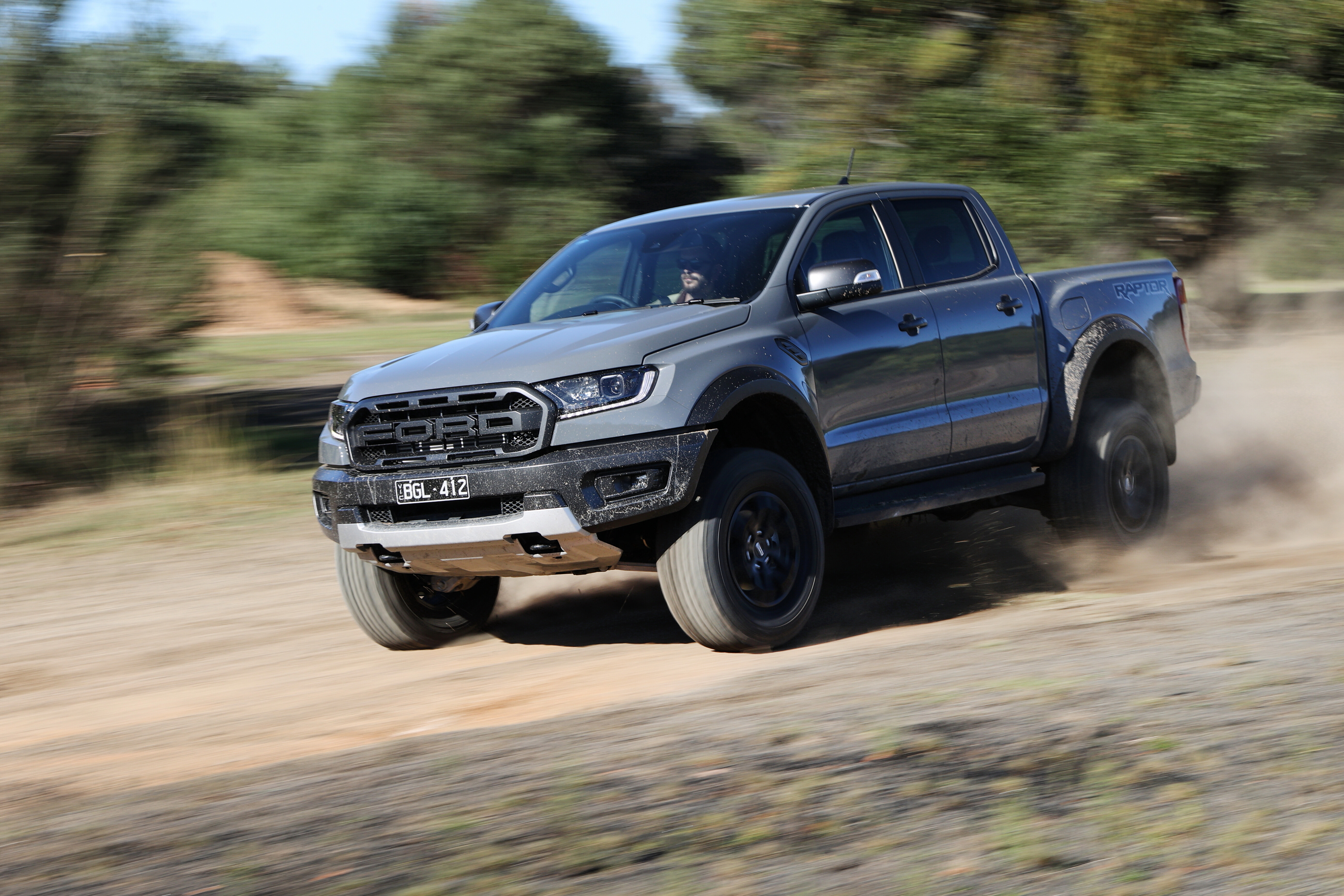
Currently, the Raptor nameplate serves as Ford’s range-topper for off-road models, being applied to the F-150 and Ranger, while its Mustang pony car has adopted snake-related variants since the 60s, the Cobra being used as a symbol for the high-performance Shelby range.
They had been available in the past through a range of importers, but these vehicles, each re-engineered to right-hand drive by Walkinshaw in Melbourne, are as close as you can get to direct from the manufacturer here in Australia.
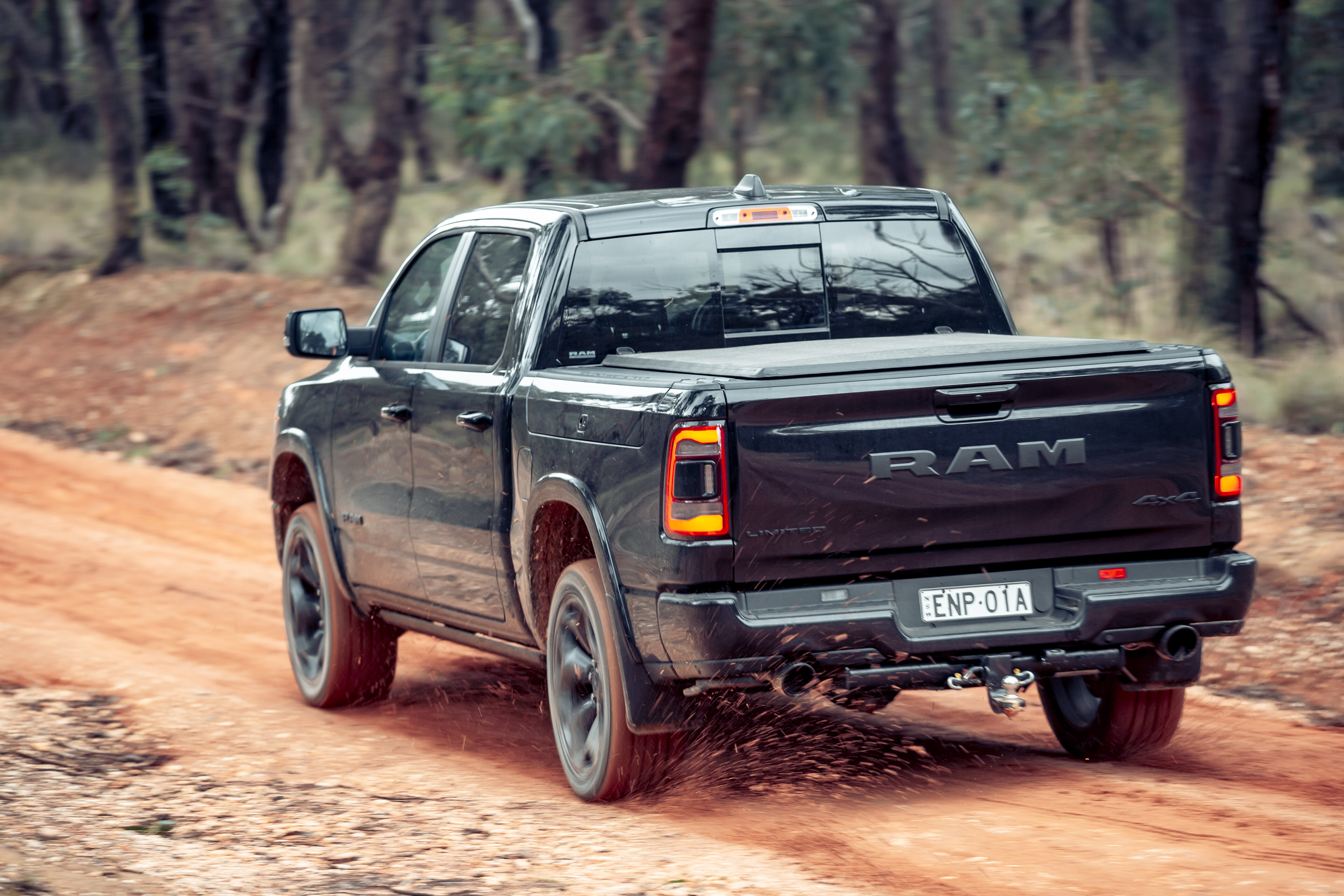
Ram Trucks Australia (RTA) is a product of huge vehicle importer Ateco Automotive and has, until now, only been importing the older DS version of the Ram 1500. In 2019, Ram released the new DT series 1500 in the USA which it sells alongside the older DS series vehicle, while Australian buyers have had to wait until now to get a DT directly through RTA.
The DT Ram is available in two specifications from RTA: the Ram 1500 Laramie starts at $114,950, while the Ram 1500 Limited, which we have on test here, starts at $139,950. Ram 1500 DS ‘Classic’ Express and Warlock variants are still available from as low as $79,950.
?♂️ Australia’s most outrageous utes face off in a rock-spraying, fuel gargling celebration of excess. Strap in, it’s about to get noisy!
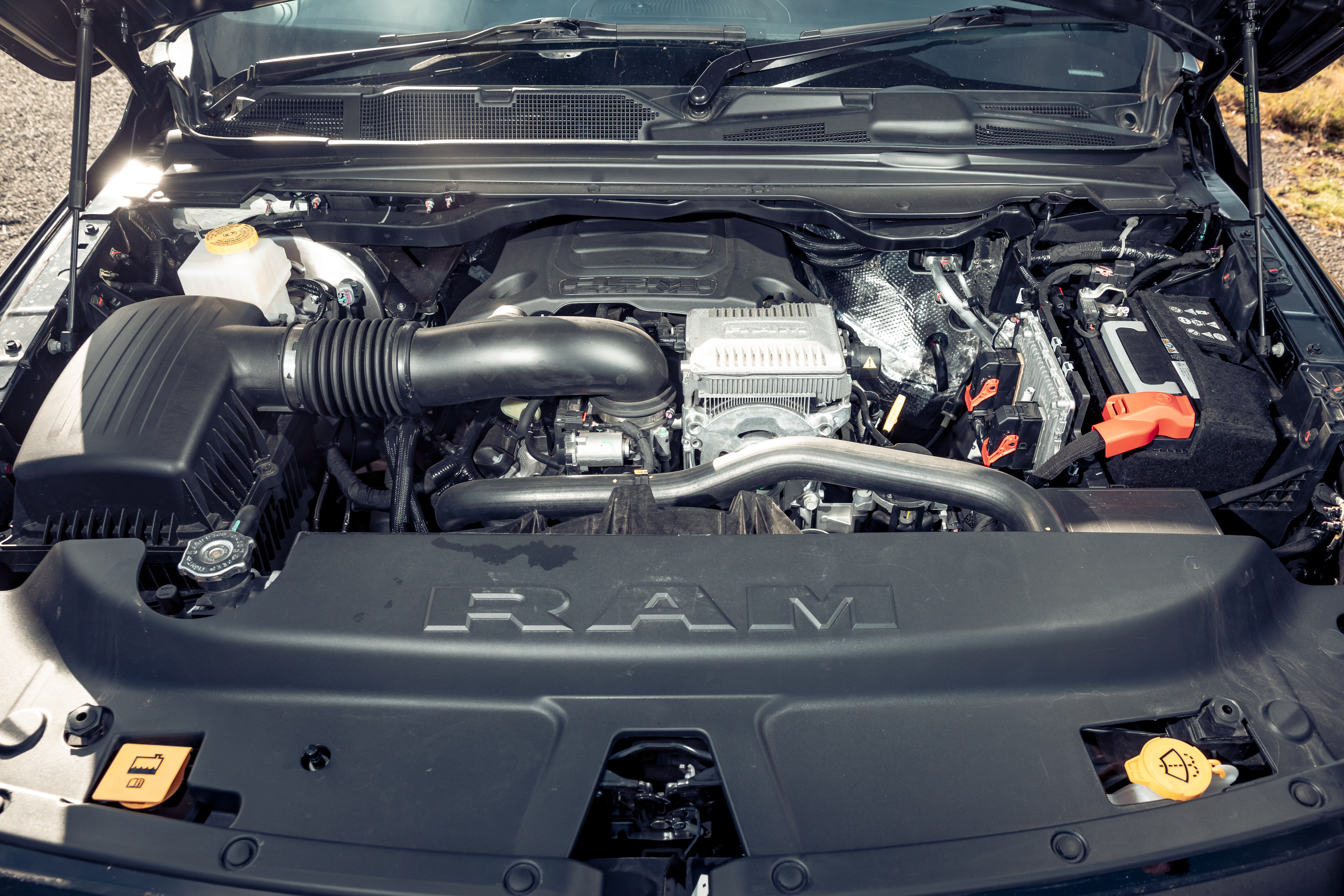
This system uses 48-volt electrics and a belt-driven generator to ease stop/start operation and be able to send torque back to the crankshaft for brief intervals for a mild boost in performance.
Ram calls this system eTorque, and on the V8 it is claimed to be good for around 175Nm of extra grunt as the 66Nm at the generator is multiplied through the drive-belt ratio. That said, RTA still quote both the eTorque and non-hybrid version of the 5.7 Hemi as making 291kW and 556Nm.
You’d be hard-pressed to feel any difference in the performance of the eTorque Hemi over the regular version without putting them to the stopwatch, but it does feel to have better throttle response with zero lag before it gets its boogie on. The power delivery is smooth and direct, with a kick down of a ratio or two in the eight-speed ZF automatic transmission. The combination of engine and transmission gives a refined drive, with just a muted V8 growl when you put your foot down.
A minor complaint about the transmission is the gear selector dial which is located on the dash near your left knee. It works okay for set-and-forget driving, but when making lots of gear selections – such as multipoint U-turns, negotiating tight tracks or backing a trailer – its operation isn’t as simple as that of a regular T-bar shifter, or, even better, the column shifter as used on the 2500 trucks.
The Ram uses a few technologies to help suppress fuel consumption if you are easy on the throttle. These include cylinder deactivation which can ‘switch off’ four of the eight cylinders when they are not needed, and grille shutters which block airflow to the engine bay to improve aerodynamics when suitable. It is claimed that the eTorque system allows the engine to deactivate cylinders for longer periods of time when cruising.
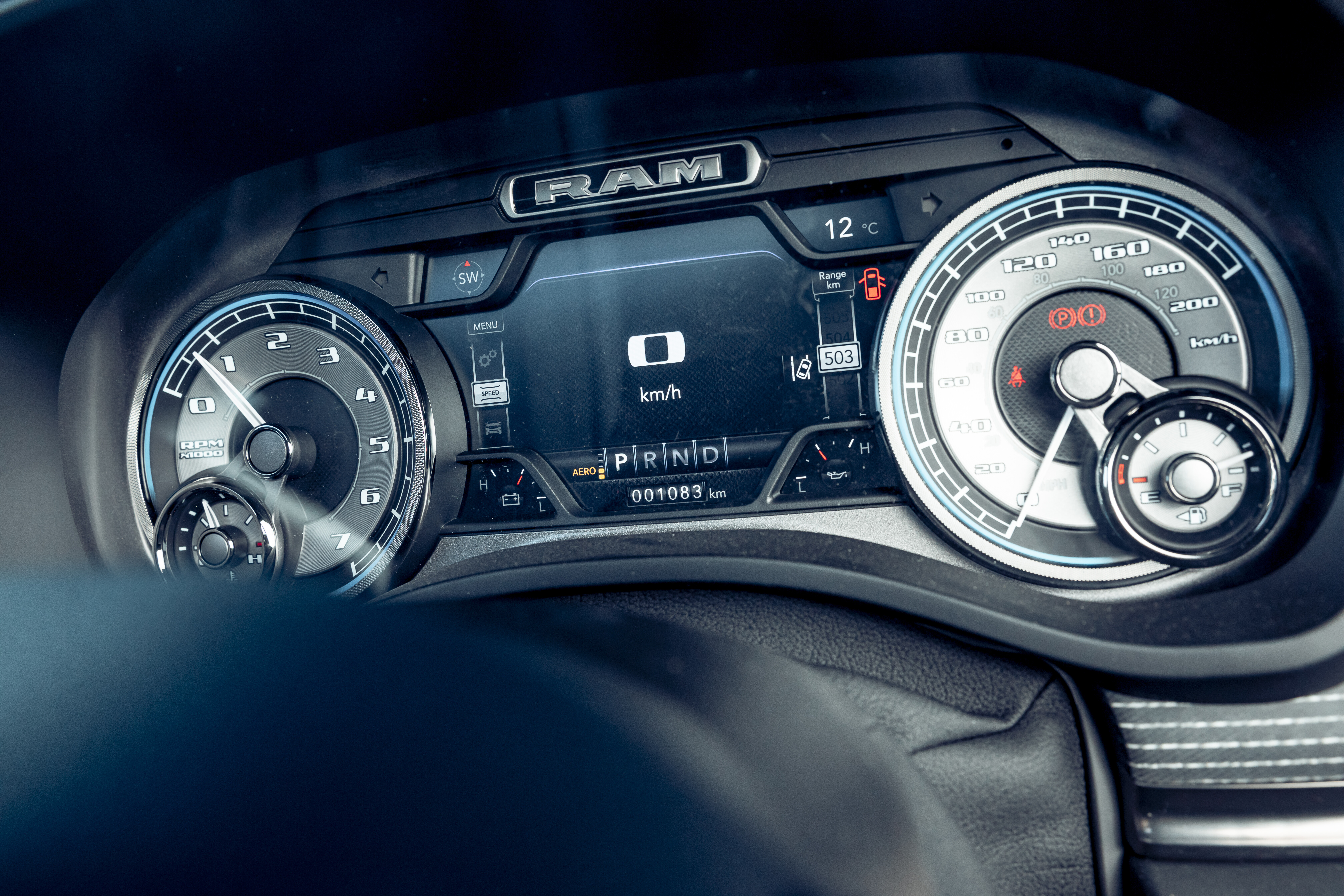
This is a big 2749kg truck and it’s not something you’d buy if fuel saving was on your agenda. Ram quotes consumption at 12.2L/100km combined cycle, which it gives to both non-eTorque DS models and the eTorque-equipped DT 1500. We returned 16.28L/100km during our week with the car.
With marginal – if any – improvements in fuel consumption and performance to be gained by the eTorque system, other than its seamless start/stop, you have to question its validity on this truck.
The air-spring suspension is firm without being harsh to add to that feel of comfort. This is never going to be a corner-carving sports car, but it rides flat and neutral when pushed.
The height-adjustable air suspension, which is only available on the Limited, lowers the vehicle at speed to improve both vehicle dynamics and aerodynamics, neither of which are fortes of large pick-up trucks. The Limited rides on 22-inch alloy wheels wearing 285/45 highway tyres, which were surprisingly smooth and quiet on the sealed roads.
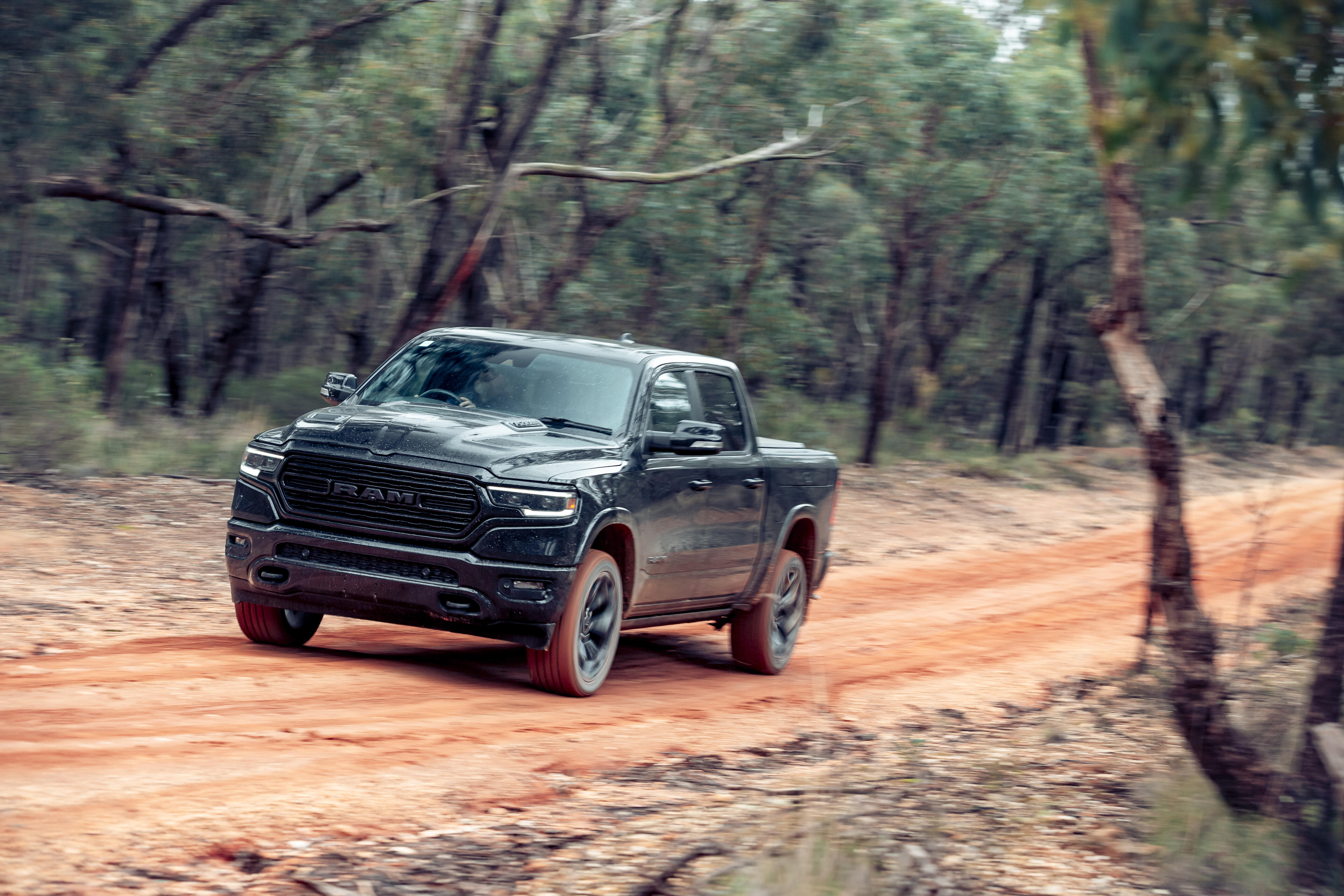
They transmit bumps and potholes through to the otherwise well-insulated cabin worse than a set of smaller diameter wheels with taller sidewall tyres would. This means you need to tiptoe along gravel roads if you want to keep the fillings in your teeth. They also offered very little traction on the damp gravel roads, which kept us from doing any real off-roading in the Ram.
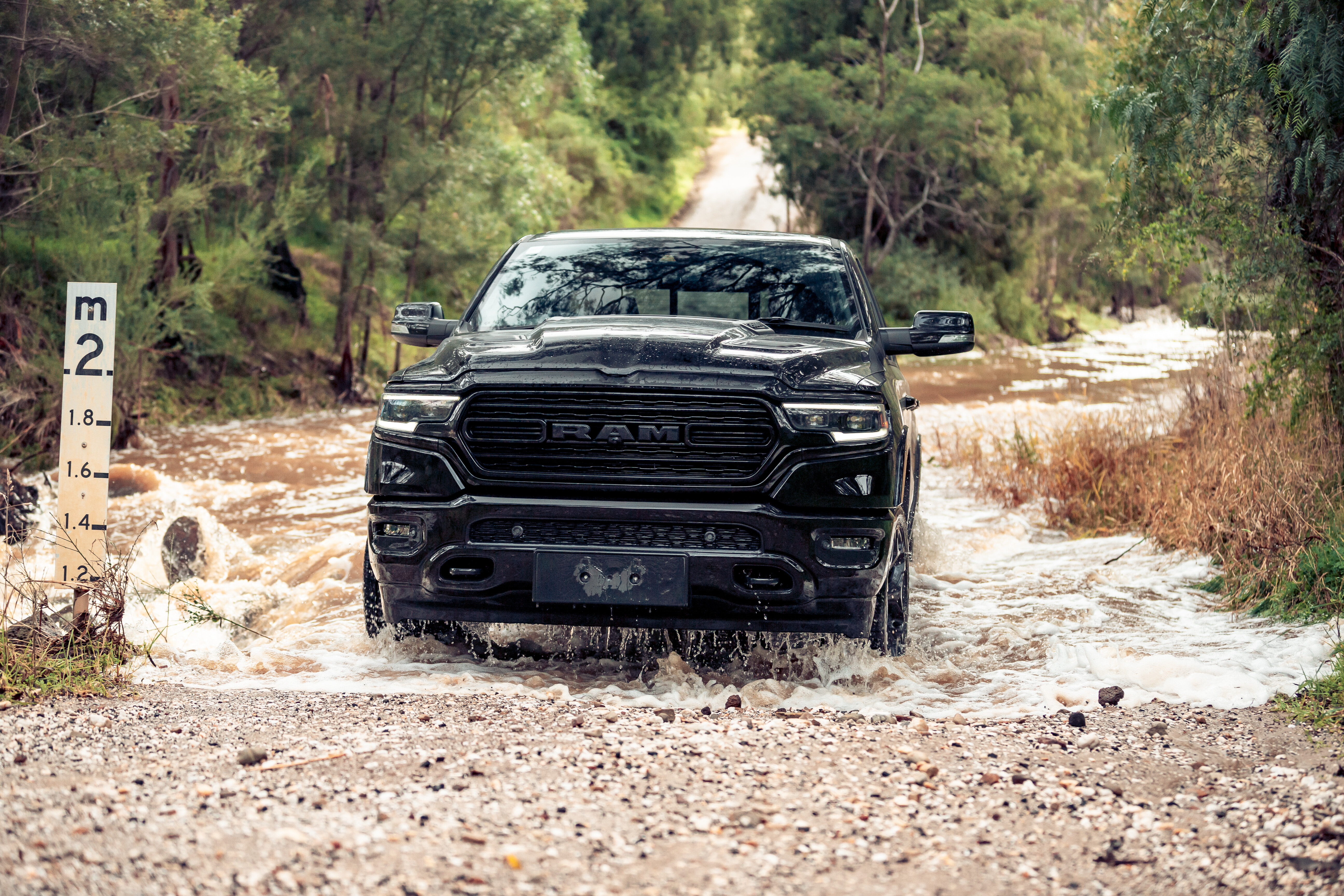
The four-wheel drive system offers 2WD, 4WD auto (on-demand), 4WD high and 4WD low range. There is no locking differential available in this specification, so the Limited relies on its electronic traction control. The ETC or any other traction aid, became worthless once the highway tyres got mud on them. It wouldn’t drive up a relatively steep (but usually simple) climb on this day. If off-road driving is in your Ram plans then you might want to opt for the smaller diameter wheels and more appropriate tyres.
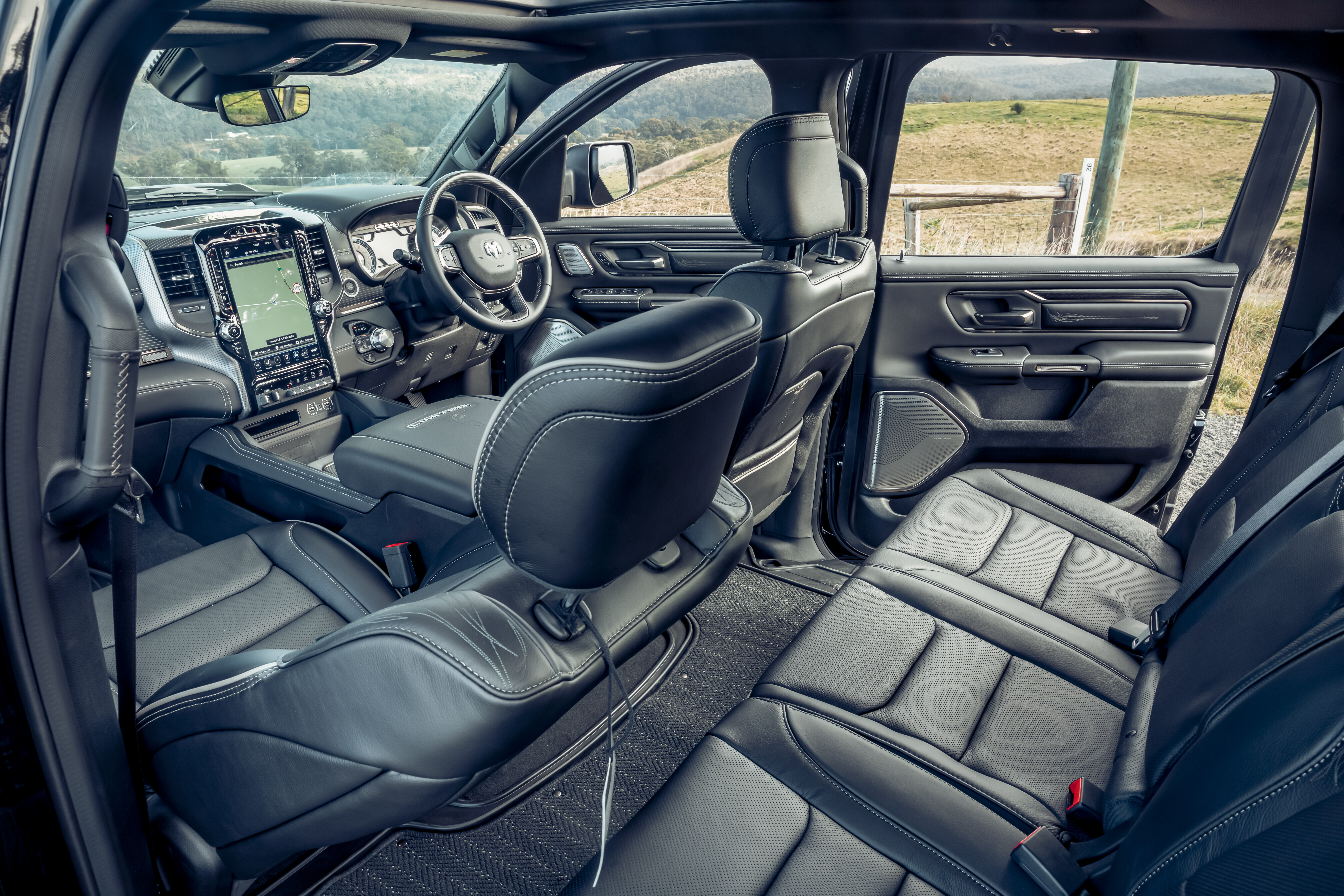
The cabin feels 50 per cent wider than a regular one-tonne ute, and there’s room between the two front seats for another pew. In the Limited, that space is taken up by a massive centre console with multiple configurations and storage options. This is fantastic for anyone who spends long hours in their car and appreciates having somewhere to store all your things.
The front seats are 10-way power adjustable leather items with heating and cooling, while the rear seat easily accommodates three adults, something not so easy in regular one-tonne utes. Above them is a full-size sliding glass sunroof and cover.
In and around the console are five USB and four USB-C ports, 12V plugs, and a wireless charging point for your compatible phone. Ahead of the console is a 300mm touchscreen AV system which is new on the DT Ram. This massive system houses all the controls for the audio, navigation, seat heating and ventilation, Apple and Android links, and configurable apps. All the cabin functions you need to control are accessed within this impressive system; although, it can be annoying to have to go through menus to reach some functions or when switching between audio sources. A simple button would suffice.
The audio system in the Limited is also worth a mention as it’s a 19-speaker, 900W Harman Kardon set-up which again is the stuff of luxury vehicles. The Limited benefits from active noise cancelling to block unwanted road and wind noise, meaning that when riding inside the Ram, the tunes are all you hear.
With the level of comfort and convenience features and the quality of the ride within the Ram Limited, the $140,000 price tag starts to look like good value when compared to any other such-equipped vehicles; and none of those vehicles could match the Ram’s 4500kg towing ability.
It features most of the latest electronic aids such as forward collision warning with active braking (AEB), lane-departure warning, rear cross-traffic alerts, front and rear ParkSense assistance, trailer sway control, adaptive cruise control and blind-spot monitoring, and six airbags. The Ram trucks on sale in Australia have not been given an ANCAP safety rating, however the 2021 Ram 1500 is rated as the top pick in its class for safety by the IIHS in the USA.
The rear ParkSense system, which automatically brakes the truck when reversing too close to an object or person, is a great feature considering the number of kids hit in driveways or car parks, but annoying on the tracks when reversing – it brakes for long grass, dirt banks and large puddles. Thankfully, you can switch it off in the bush or when hooking up a trailer, but we’d leave it active at other times.
These locking storage compartments are great for stowing gear you want easy access to, without having to get into the back of the ute. They are waterproof and have a drain plug in the bottom, so you can fill them with ice and use them as cool boxes for drinks.
The cargo area is massive and includes an adjustable load divider, four tie-down points and a bed liner for protection. There’s a fold-out step at the rear of the tub on the passenger side to make stepping into the back easier, and the Limited gets a folding tonneau cover.
While there’s heaps of space for cargo, you are limited by a relatively low payload of just 701kg. Unlike the mid-size utes that are popular in Australia, the full-size American 1500s don’t carry so much and it won’t take a lot to reach that load capacity. If you want to carry more, you need to step up to the 2500 which is a heavier duty vehicle throughout.
While the payload is low, the towing capacity is much better. Up to 4500kg when using a 70mm towball. A 7713kg GCM allows for some heavy hauling in the Ram.
Those 22-inch tyres are not going to be easy to replace when you tear one apart on the Birdsville Track, so stepping down to the Laramie’s 20-inch tyres or smaller (down to 18-inch is possible) would be a good option. There are plenty of good tyre options for the 20s, as this is the standard size for most US trucks.
This truck was also fitted with the $1950 optional power side-steps, which drop down when you open a door and automatically fold-up again when you close it. These are great if you need sides-steps as they tuck up out of the way when not in use, but I found them trying to trip me over or take out a shin every time I went to get in or out of the truck. Maybe shorter folks would like them.
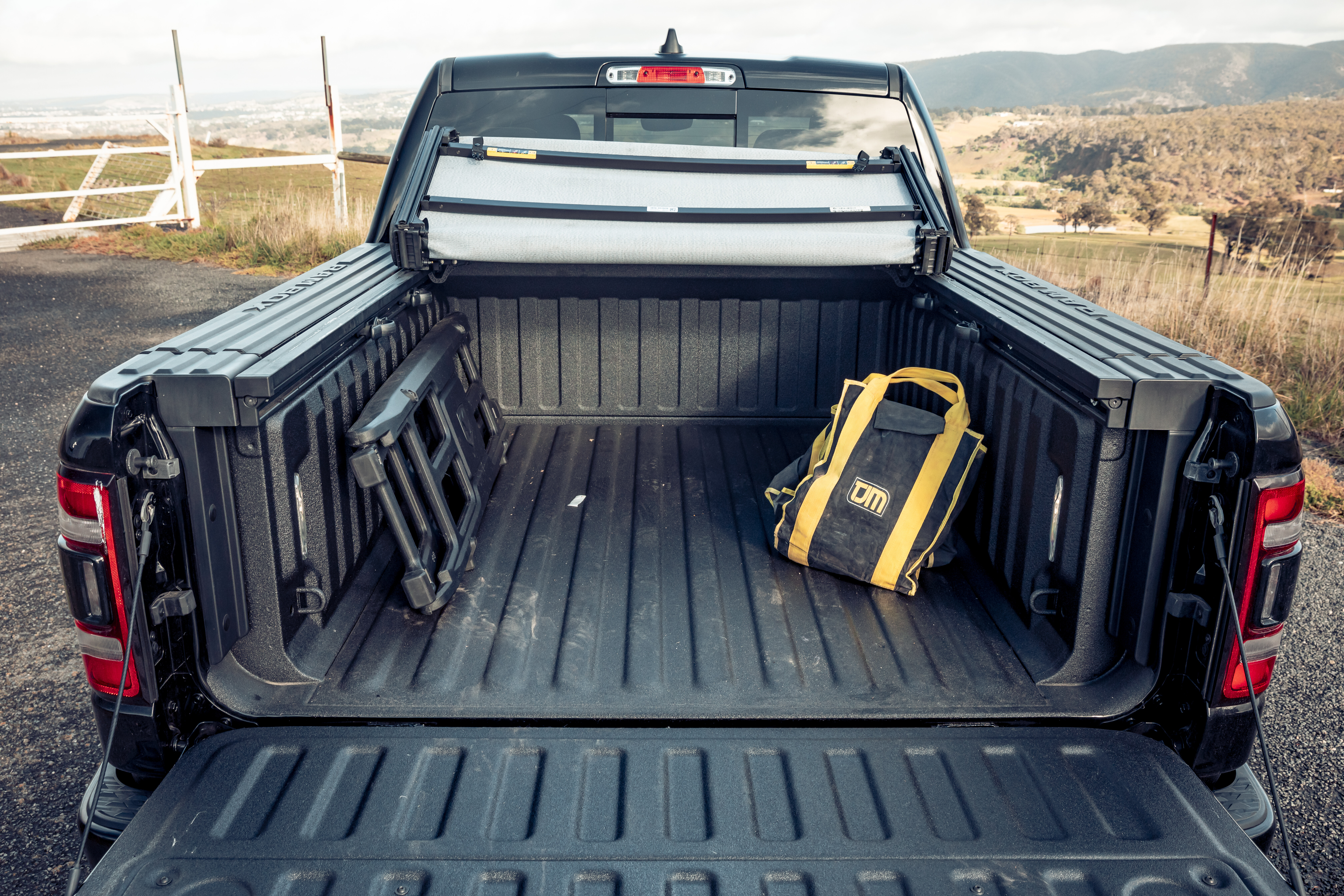
If on-road presence accounts for anything, then the look of this triple-black beast is worth the price alone. Then you add in the 4500kg towing ability, the massive passenger cabin with its luxury-level appointments and features, and the ease of which you could spend long hours of mile-munching touring behind the wheel, and it all starts to add up.
The only obvious competitor to the Ram is the Chevrolet Silverado 1500 from GMSV, which comes in a bit cheaper in LTZ specification. Its 6.2-litre engine also has more power and torque on paper, but in terms of features and refinement, the Ram would be hard to beat.
To the outside observer, the world of 4x4s and 4×4 modifications has never heard of the term ‘less is more’. We’re almost obsessed with adding. Bigger motors, bigger tyres, bigger batteries, bigger driving lights. And while a couple of tonnes of 4×4 mobbing down the track might look impressive, it’s not always the right tool for the job, you wouldn’t hang a picture hook with a sledgehammer now would you?
Enter Lal’s insane BT-50 – one of the most modified BT-50s you’ll find anywhere in the country, and also one of the smallest. Let us explain.
Starting with a bone-stock 2014 single-cab BT-50, Lal set out to build something a little different than the rest, and he started from the frame up. Where a stock BT-50 has a huge 3226mm between the front and rear axles, Lal called in the guys from Ultimate Stretches to cut his pride and joy in half, remove 300mm from the chassis behind the cab, and stitch the whole lot back together better than stock.
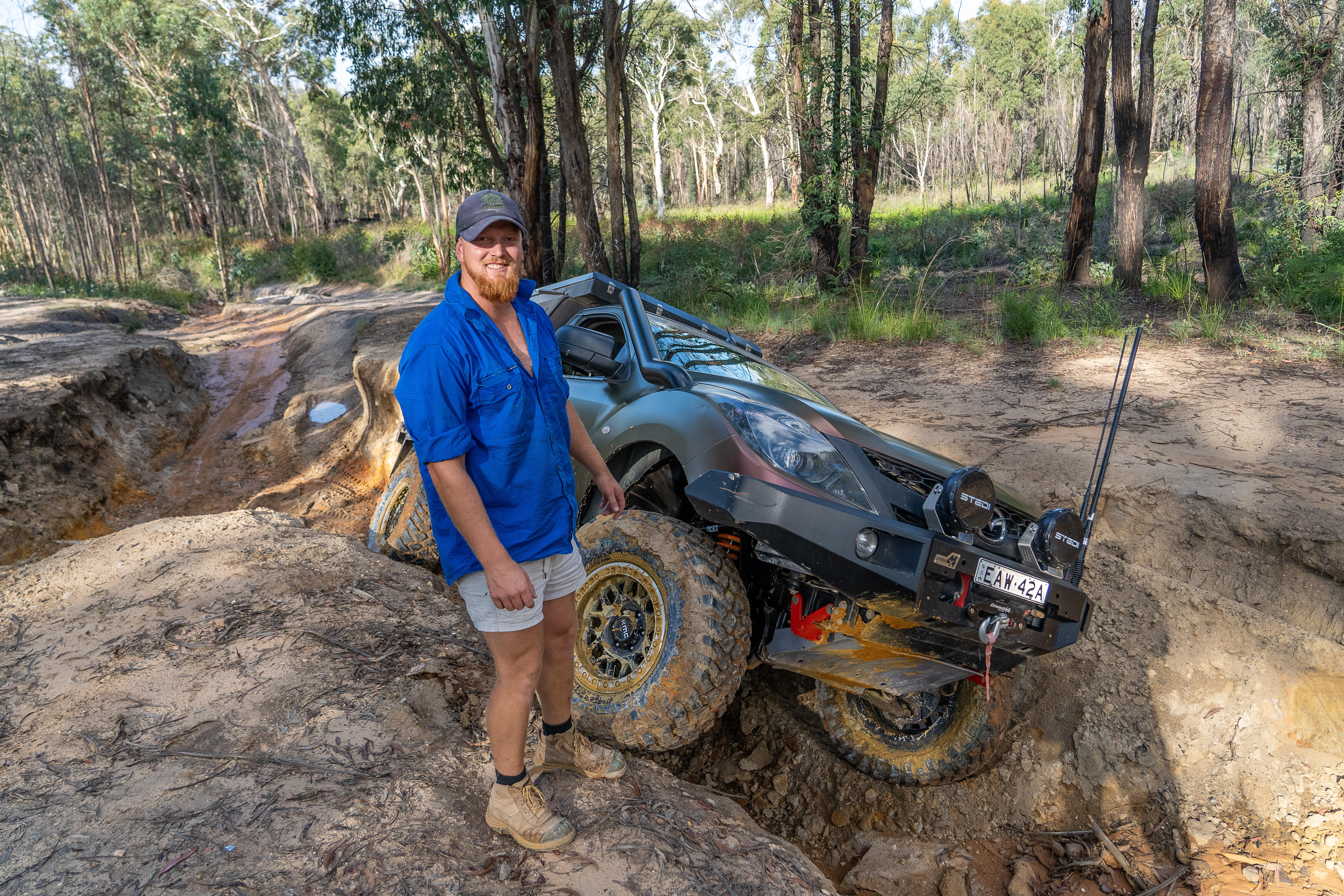
The new wheelbase gets the off-road ability more in line with the classic 80 Series LandCruisers and GQ Patrols and helps make the BT far more nimble on tight tracks. While the grinder was out, the overhang at the rear of the frame was knocked back all the way to the leaf hangers, giving a useable tray size closer to a dual cab – we weren’t kidding when we said Lal had built something unique.
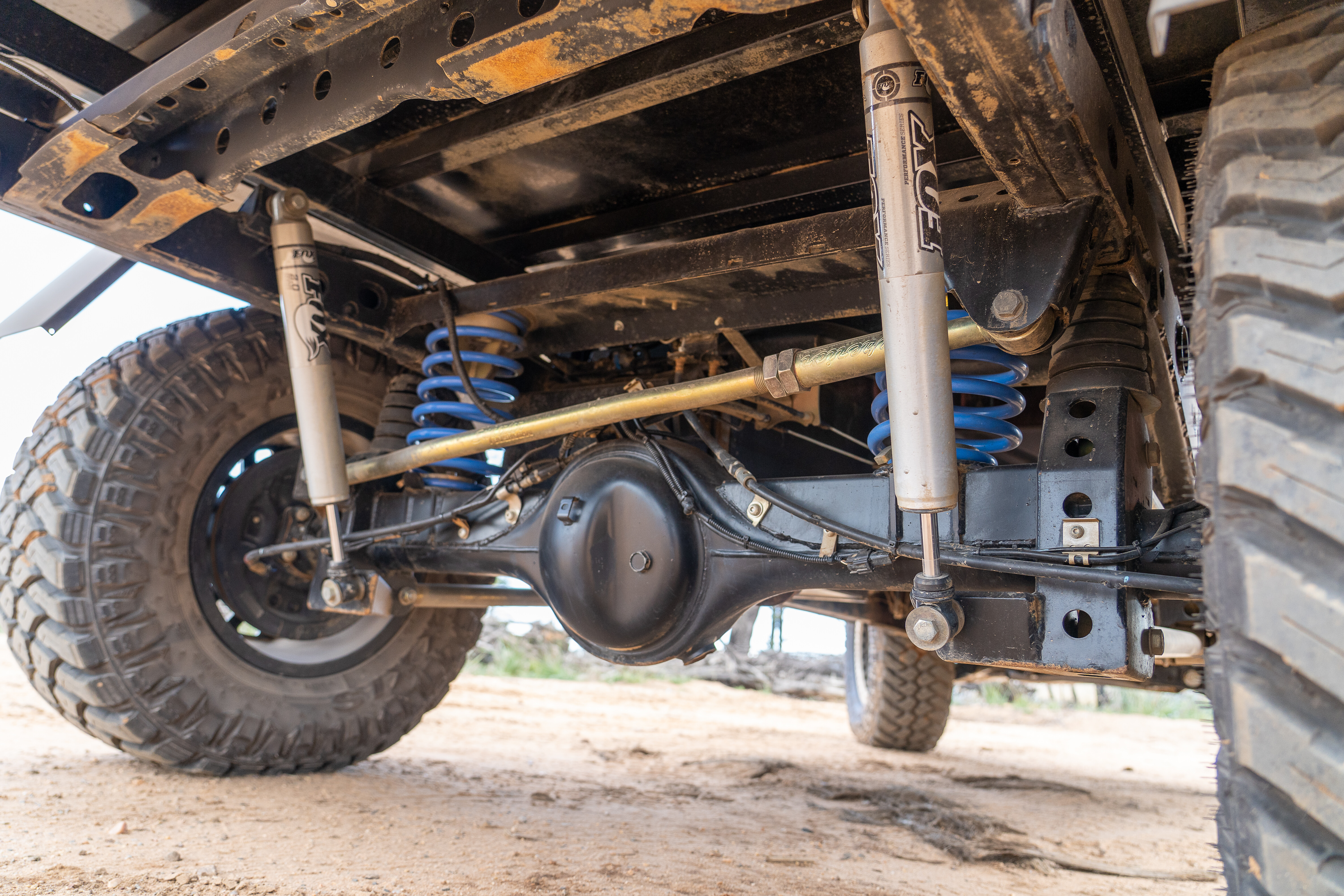
Of course, a shorter wheelbase isn’t the only key to Lal’s success. One of the biggest weak links in any modern ute’s off-road ability is the stiff-as-a-rock rear leaf-spring suspension, but that’s nothing a grinder and welder couldn’t fix. Lal and his mate Creedo rolled the BT into the shed and set about installing a Superior Engineering coil rear-conversion.
The weld-in 5-link set-up gives the same insane articulation Patrols and Cruisers are known for, as well as a far smoother ride on- and off-road. Adjustable upper control arms let the boys dial the pinion angle in perfect for the set-up, with the adjustable Panhard rod getting the diff smack bang on centre again to suit the three-inch suspension lift. Lal also spec’ed up a set of 11.6-inch stroke Fox shocks from the guys at Solve Offroad and teamed them up with progressive bump stops to smooth out the bigger hits.
Up front has received a similar three-inch bump in altitude. This time with a set of Fox struts doing the heavy lifting. They’re teamed with Solve Offroad coil springs, and paired with a set of Blackhawk upper control arms on either side getting camber and castor back in to line. To give the CV joints a fighting chance, Lal fitted a weld-in diff-drop kit as well.
To make sure the full off-road ability of the chassis and suspension makes its way into the ground, Lal’s not pulled any punches in the traction department either. Keeping both rear tyres digging together is the factory electronic rear locker, while up front an ARB air locker is called into action at the flick of a switch giving the BT true four-wheel drive. Tyre slip is rarely an issue either. Each corner is shod with aggressive Maxxis Razr mud tyres shaping in at 35×12.5-inch, and they’re typically operating in single-digit pressures thanks to the beadlock KMC Desert Grenade wheels locking the tyres to the rims.
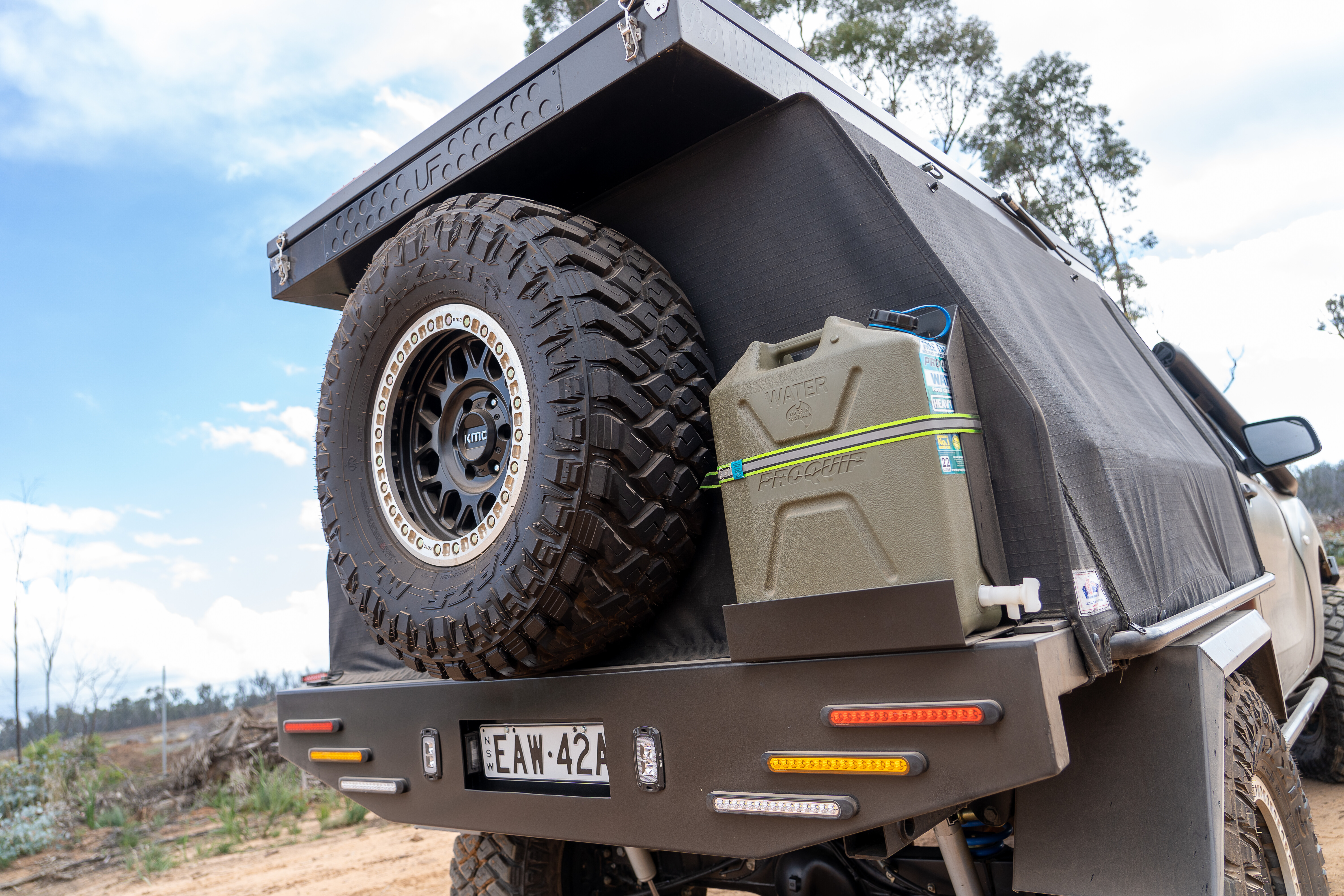
Moving up, Lal managed to nailed the balance between off-road ability and serious camping rig too. A month of weekends on the welder pieced together a custom stubby tray, with a custom canvas canopy keeping it water and dust tight while still coping with the abuse Lal throws its way.
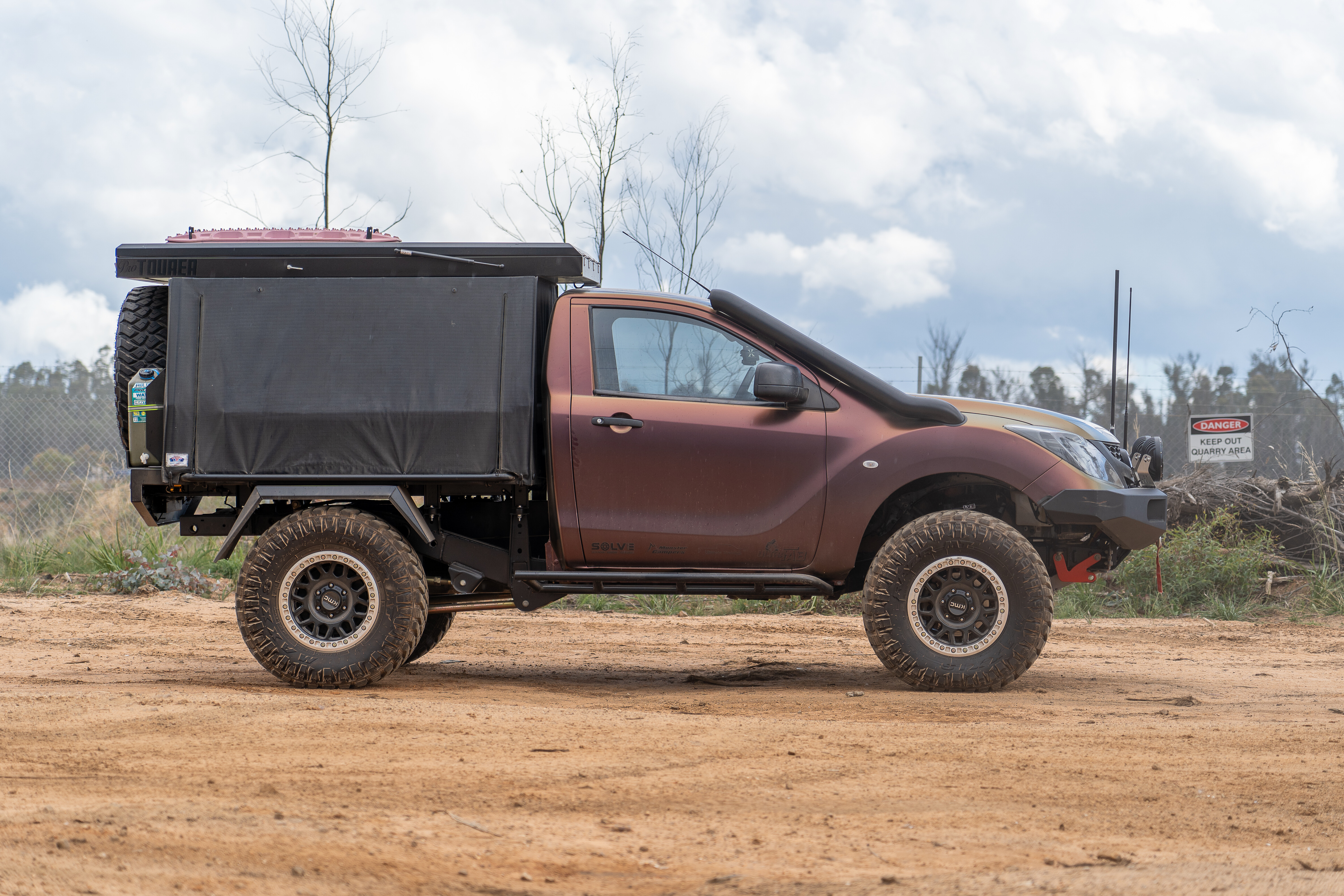
Rolling up the passenger-side canvas gets you straight into the kitchen set-up. There’s a 130L Bushman upright fridge up against the headboard, with a custom-built slide-out pantry tucked in next to it playing host to every sauce and spice you can imagine. Rounding out the rest of the minimal kitchen space is a Dunn & Watson kitchen slide, giving a convenient prep space as well as somewhere to stash bulkier food items.
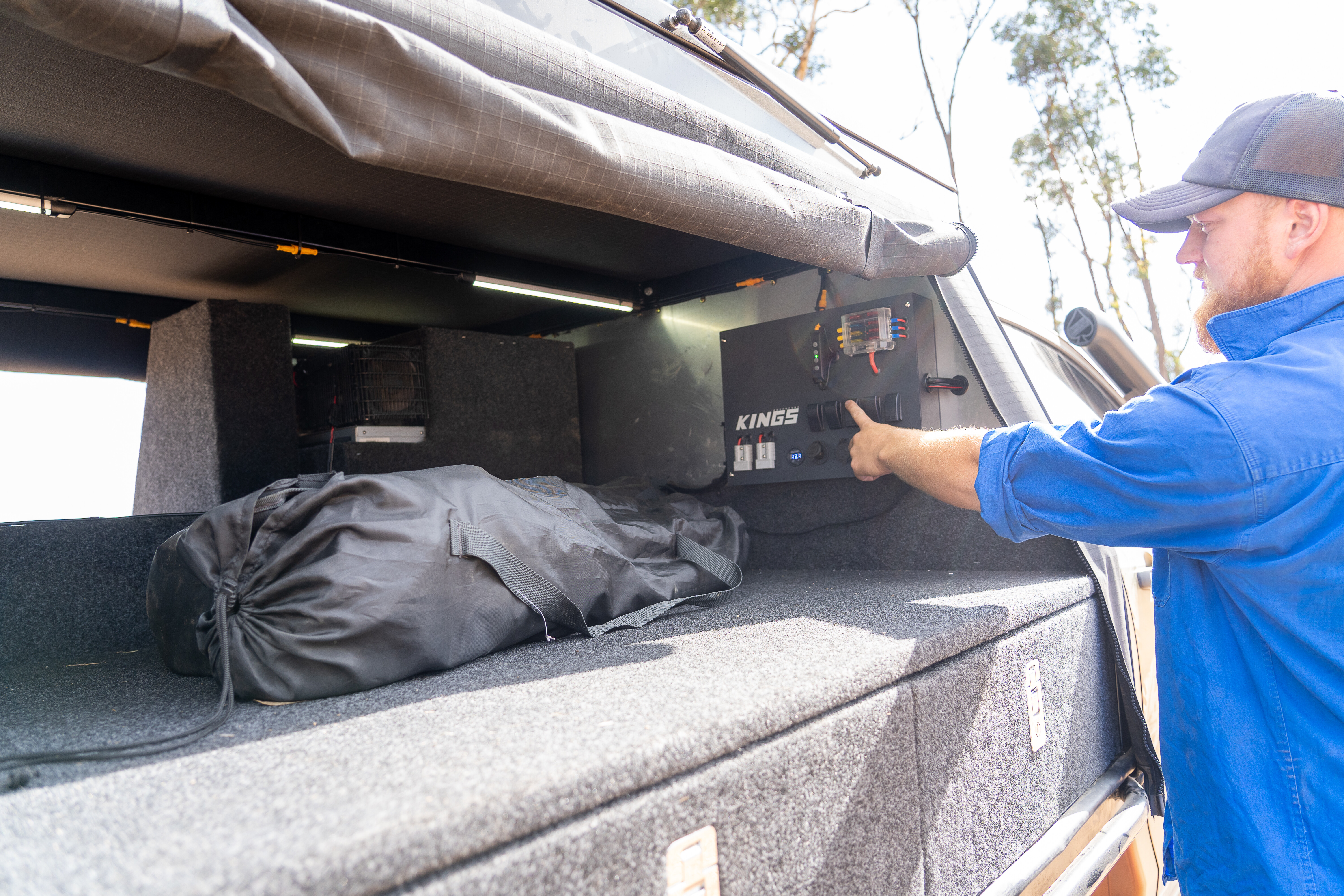
On the driver’s side are a couple of custom drawers Lal keeps stocked with spare parts and tools, a huge storage area for clothing and a 12-volt control panel feeding the Korr LED lighting and various power outlets via the 126amp/h Monster Campers Lithium battery. The cap on it all is a quick and easy place for Lal to lay his head with an Ultra Fab hard-shell rooftop tent.
With the rear well and truly protected thanks to the heavy-duty steel tray, Lal set his sights farther forward to protect the vulnerable sheet metal. Along each flank are a set of matching custom tube rock sliders bolted on to mounting plates on the frame, while aluminium Rival bash plates protect the driveline underneath right up to the Uneek4x4 ‘Crawler’ bar up front.
Tucked inside the hoopless bar is Drivetech 4×4’s dual-speed 9500lb winch (geared for light work at high speeds, or lower speeds with higher loads). The bar houses the OEM fog lights in new mounts, but Lal’s fitted a set of laser beam-bright Stedi Type-X LED driving lights up top to help light the way. The whole bar work arrangement from front to rear not only gives the BT a sleek look, but protects the colour-changing ‘rising sun’ 3M vinyl wrap that covers over the original battleship-grey paint.
Under the constantly changing colour bonnet, Lal’s kept things relatively simple. The stock five-cylinder 3.2L turbo diesel still takes pride of place, backed up by the manual cog-swapper six-speed; and Lal’s got it breathing far better thanks to an In-House fabrication stainless-steel snorkel feeding down into a high-flowed standard turbo.
On the inside Lal’s kept things looking stock but functional again. Riding in the factory bucket seats he’s got full control over a whole host of communications and electronics upgrades. Behind the driver’s seat is a Cel-Fi phone reception booster ensuring he’s always in range on his long runs up and down the coast. A GME UHF sits above his right knee, keeping him in communication on the trail with his mates or out scouting for the perfect campsite.
On the right of the dash an iDrive throttle controller lets him desensitise the throttle for bouncy rock crawling, or dial the sensitivity right up for instant response in soft sand. The final piece to the puzzle is a Roadpower eight-way customisable switch panel that not only keeps all the extra wiring out of the cab, but also controls everything from lockers to winch controls and even interior lighting.
Lal’s BT might be smaller than the average modern ute, but there’s no arguing he’s crammed not only a lot of capability into a small size, but comfort as well. Despite being nearly half the length of many of the other tourers on the track, he’s got everything he could ever possibly need for an off-road adventure, and enough capability to adventure wherever he wants.
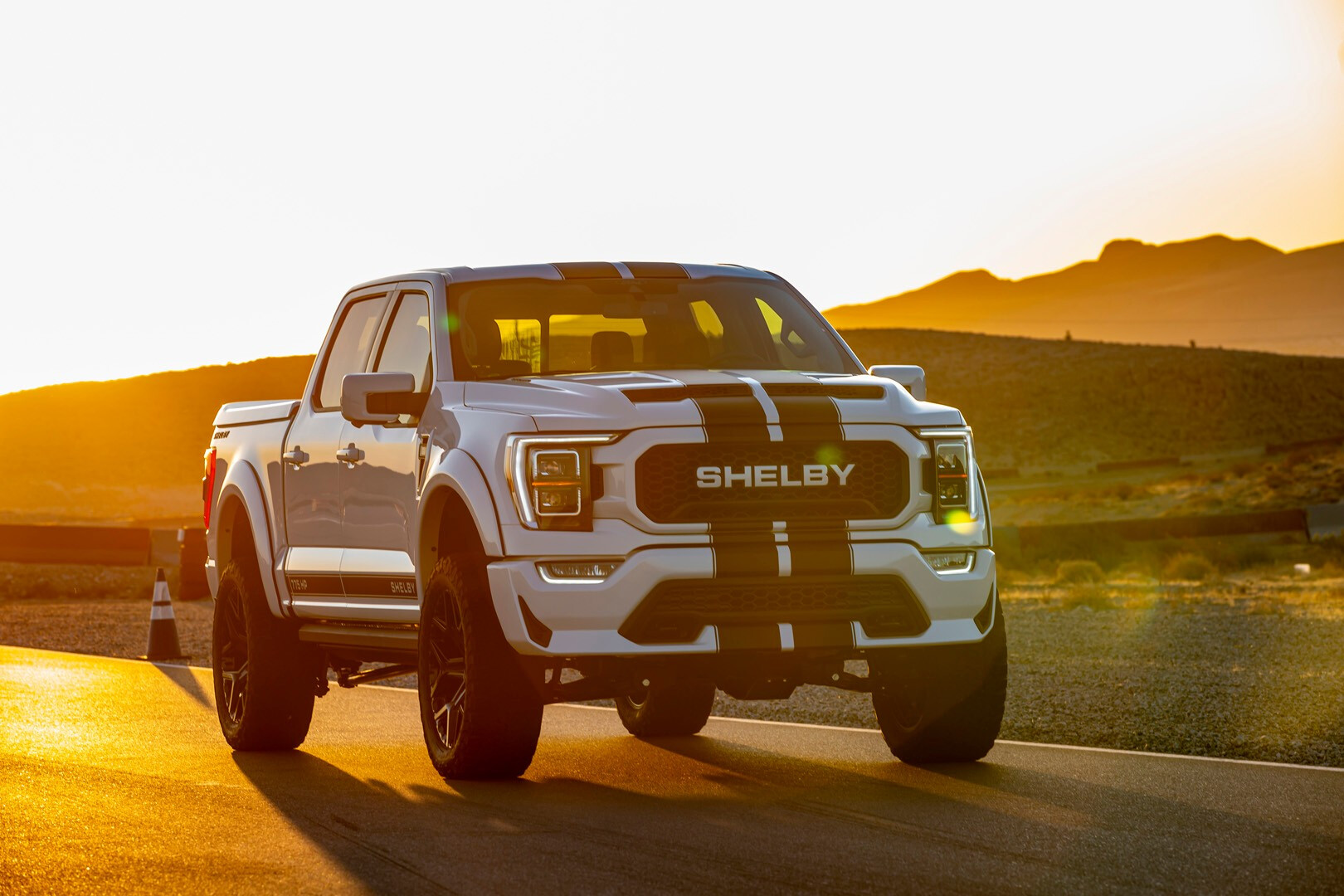
America’s most iconic tuning house, Shelby, has just unveiled its latest creation – the Shelby F-150.
The performance brand has gone to town on the Blue Oval’s best-selling vehicle, turning the pick-up into an extroverted horsepower machine capable of conquering both bitumen and the road less travelled.
Based on Ford’s already punchy F-150 Lariat 4×4, Shelby then adds a suite of performance, dynamic, and aesthetic features to take the pick-up truck into a different realm of capability.
Chief among the upgrades is a custom-tuned set of Fox Racing aluminium dampers at all four corners of the imposing truck.
According to Shelby, this trick suspension utilises Fox’s internal bypass technology and adjustable dual-speed control, ensuring the F-150 will offer a cosseting ride quality on-road and an imperious level of control off-road.
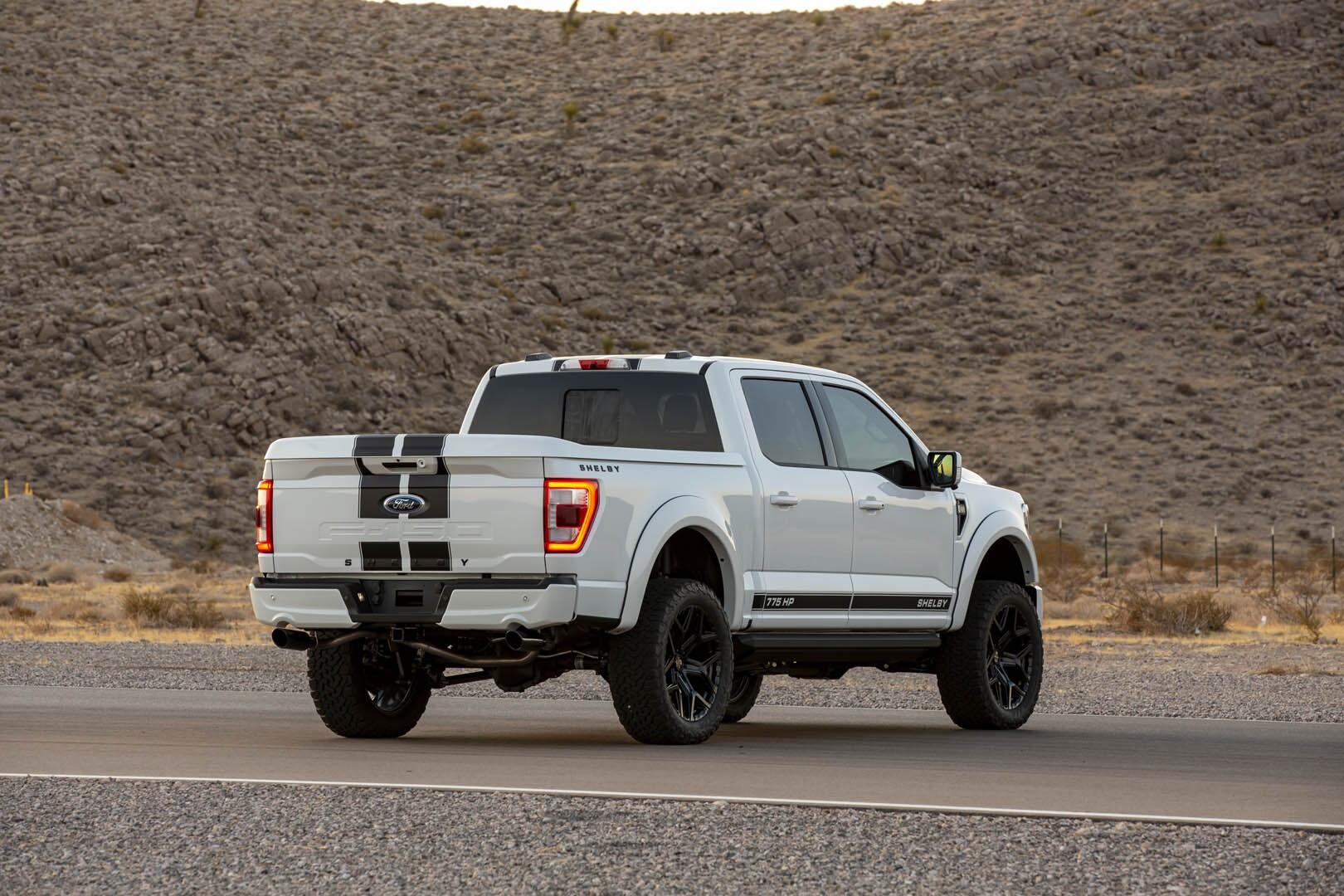
Other features include a BDS lift kit, unique ‘Shelby’ badging, custom bodywork, and a bespoke set of 22-inch alloy wheels wrapped in BFGoodrich KO2 all-terrain tyres.
Inside, the interior quality has also been dialled up, with Shelby fitting a two-tone leather scheme, machined billet pedals, carbon fibre trim accents, and signature Shelby badging.
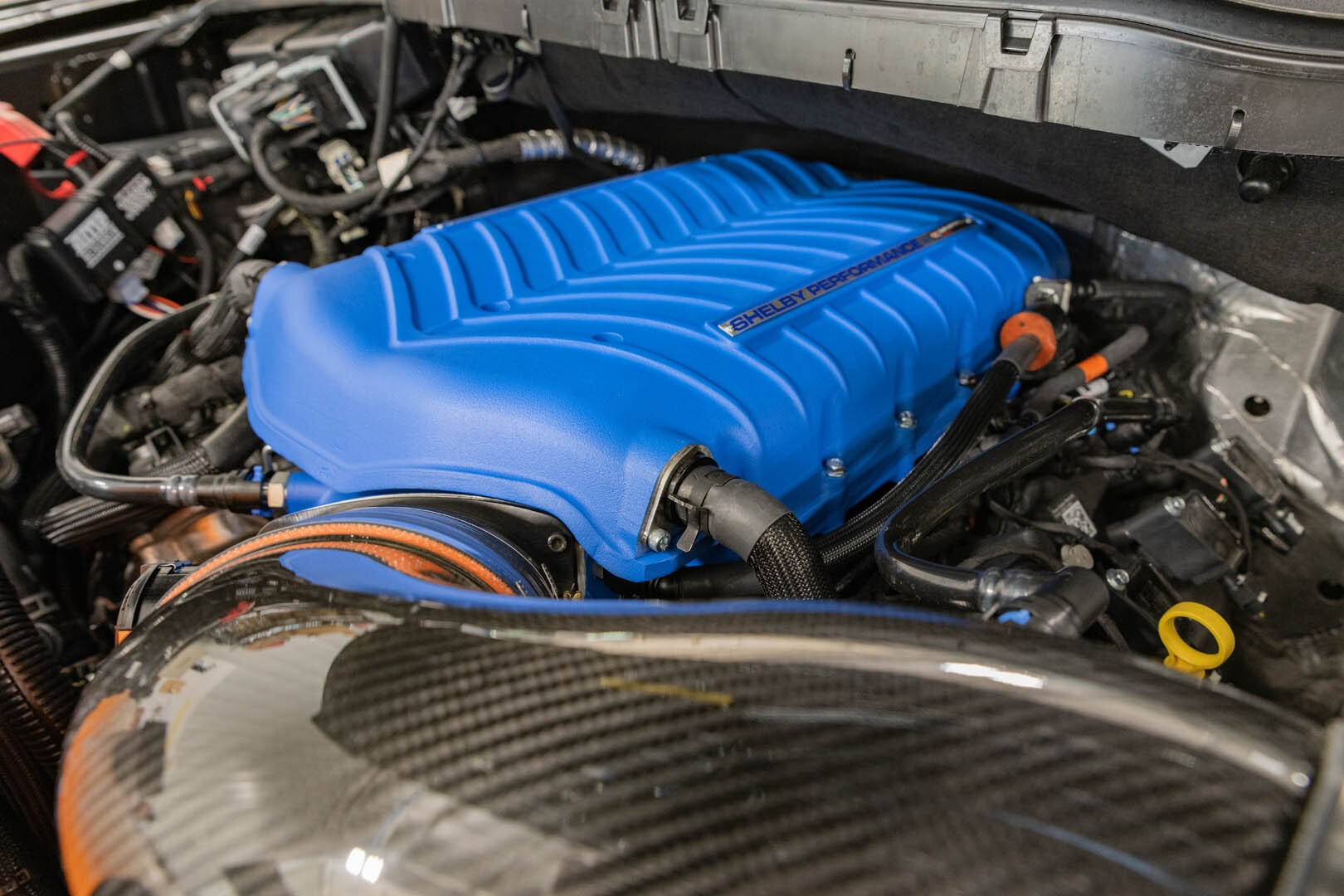
Under the hood, as standard, the Lariat’s factory 5.0-litre V8 remains scores a host of performance upgrades such as carbon-fibre air intake, new injectors, upgraded throttle body, upgraded heat exchanger, and a performance Borla exhaust.
Throw Shelby an extra US$7900 (AU$10,600), however, and the tuning house will equip the bent-eight donk with a supercharger which turns the ICE into a 578kW juggernaut.
Limited to just 600 units in 2021, the Shelby F-150 N/A variant starts from US$107,080 (AU$144,000) and the blown version from US$114,980 (AU$154,000).
As I write this I’m about to head out to our vast western desert country. It seems I won’t be alone going by the interest on TV and social media – this year is going to be a busy one in outback Australia, in fact right across the continent from Sydney to Perth and from Darwin to Tassie.
But for those who are preparing to head out to desert country and are getting their info from social media, I really do despair. There are so many self-proclaimed experts out there spruiking their wares on FB, Instagram and Twitter, who may have done a single lap of Australia or one trip across the Simpson Desert and they know everything … or so they say!
So, what’s my qualification you may ask … and it’s a fair one to throw back at me. Without going into too much detail, I’ve been driving a 4WD since 1965 when I joined the army and have been touring and travelling across Australia and the world for the last 40-odd years.
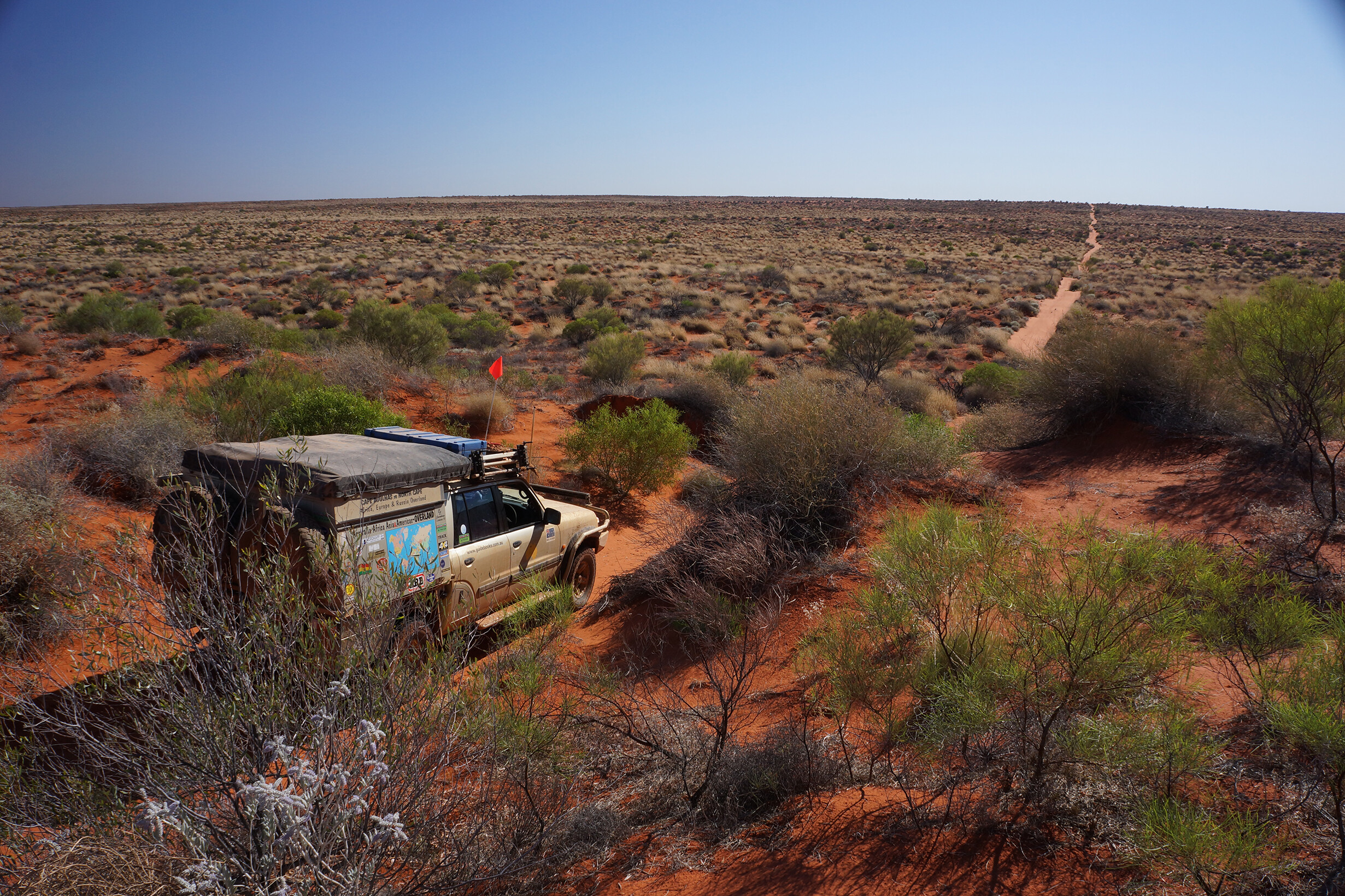
So, here are my thoughts on what you need to know or do for a desert trip in Australia.
I’m already assuming you know how to four-wheel drive because you’ve done a training course or joined a 4WD club. Likewise, your vehicle is well-maintained and set up with good suspension for the loads you are carrying or towing, while the tyres you’ve fitted are All-Terrain (or better) and of Light Truck (LT) construction.
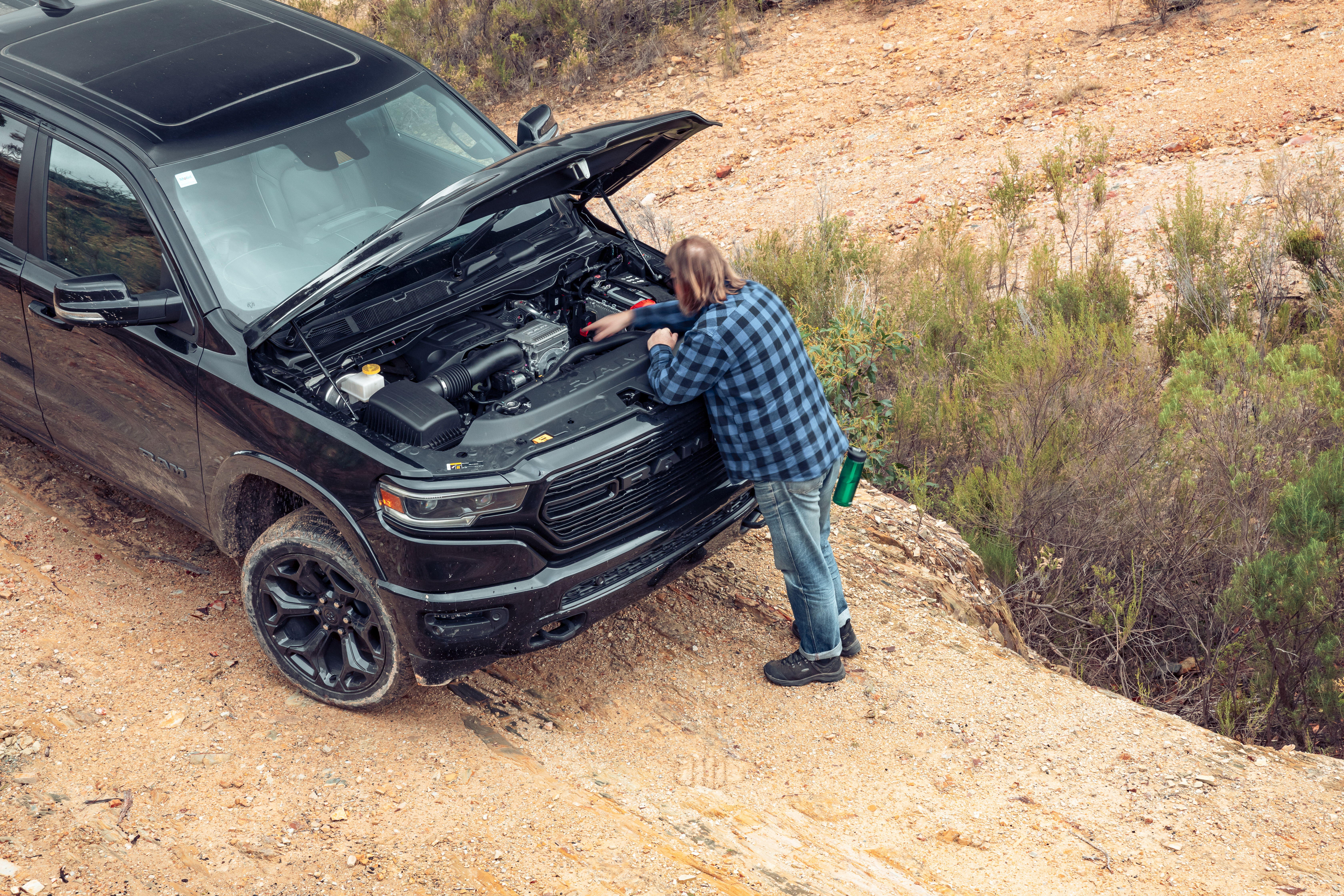
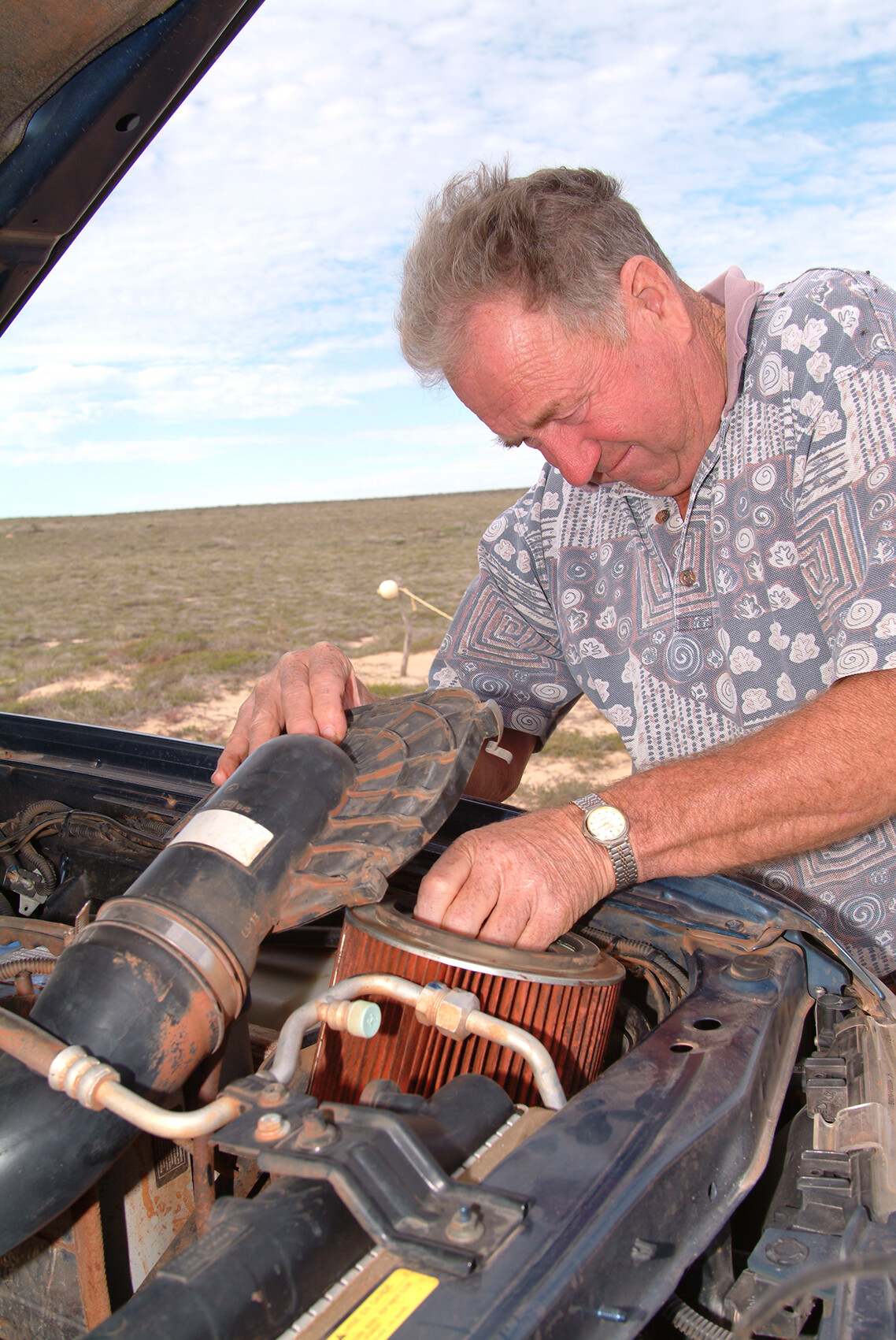
Now, you may have a brand-new car and camper, but that doesn’t make you immune from breakdowns and punctures. Do you know how to do the basic stuff or even what to look for under the bonnet if something does go wrong? Can you find the fuse box and have you got the right-size fuses – in both physical size and current-carrying capacity – to replace any if one does blow?
Do you know how to clean an air cleaner, change a fuel filter or, most important of all, how to change a tyre? Have you got the basic tools for such jobs? If you don’t know any of these basic repairs, it’s best to learn a little before you head off.
Also, before you go, have you got all your bases covered in regard to a first-aid kit, recovery gear and communication equipment – a normal mobile phone won’t cut the mustard. And in case of an emergency (having a blown tyre or being stuck on the side of the road should not be considered an ‘emergency’) who are you gonna call? And how?
What about water and fuel? If you do break down on a lonely road, it’s best to stay with the vehicle and it’s even better when the vehicle has a good supply of the liquid aqua.
How about your plans for the trip; where to go and what to see? A good guidebook will help here and for $50 or less (way less than one tank of fuel) you’ll have all the major spots to see and explore without asking mundane, stupid questions on FB.
With good planning and preparation and a bit of training, you’ll be able to handle most things that unexpectedly come your way on your next desert jaunt. However, please don’t rely on social media experts for all your information; ask someone that has more than a single-trip experience and join a club and get trained – or at the very least join a tag-along tour operator for your first long desert trip.
You may be surprised at what you don’t know!
North American buyers of Ram pick-up trucks have been given two more options with the Stellantis-owned company adding the Laramie G/T and Rebel G/T to the 1500 model range.
The light-duty trucks are available as crew cabs only, featuring a number of upgrades over the regular 1500 which includes some gear from the range-topping TRX.
A Mopar exhaust and cold-air intake are standard on the G/T package, bolting on to the 291kW/556Nm 5.7-litre Hemi V8 engine with mild-hybrid assistance.
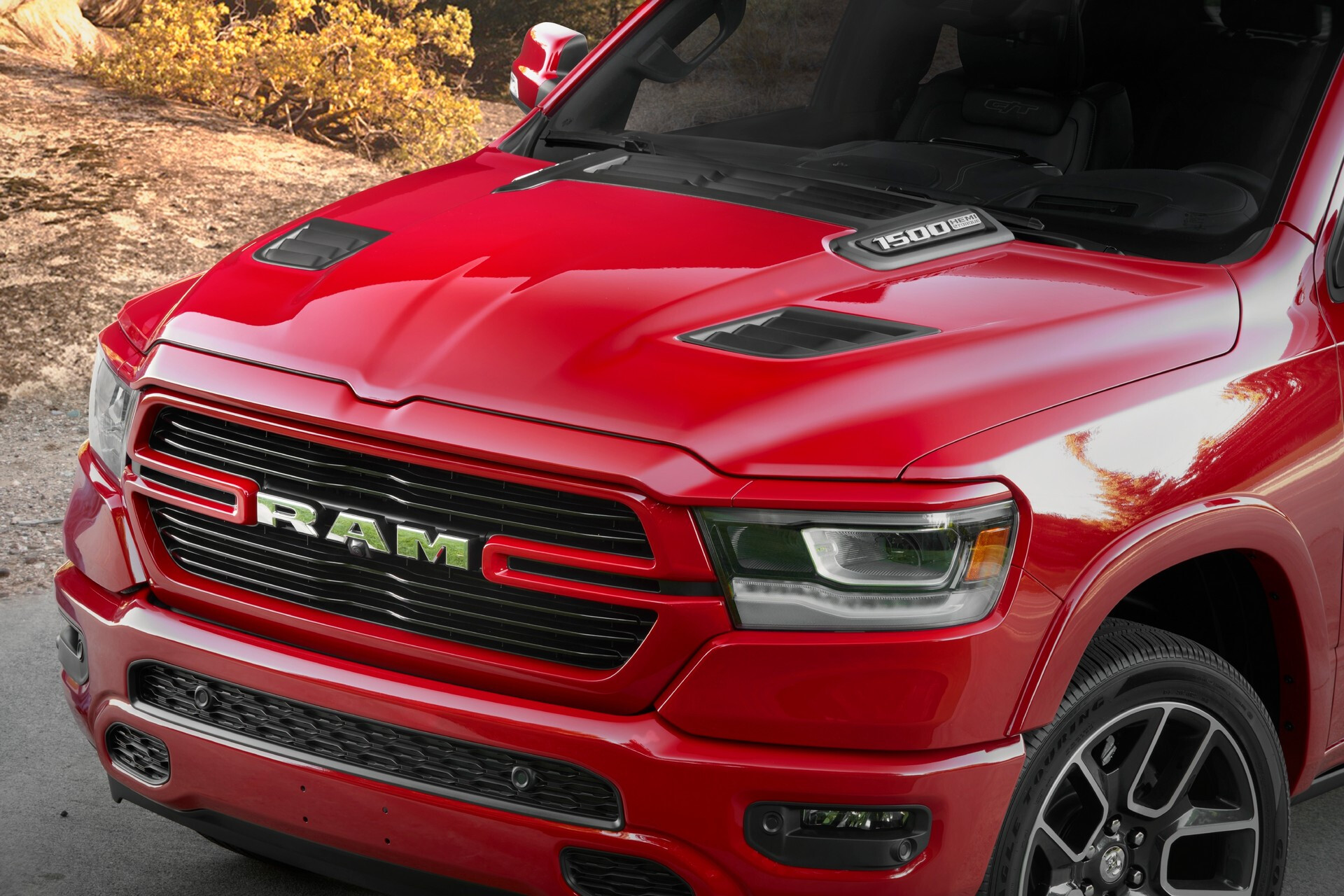
Visual changes include a ‘sport performance hood’ and G/T branding over the truck, distinguishing it from the regular Laramie and Rebel variants upon which they are based.
Inside the cabin, drivers have the ability to utilise performance pages in the infotainment system to log 0-100km/h acceleration times and see the vehicle’s real-time performance figures, with the ability to download it all to a USB.
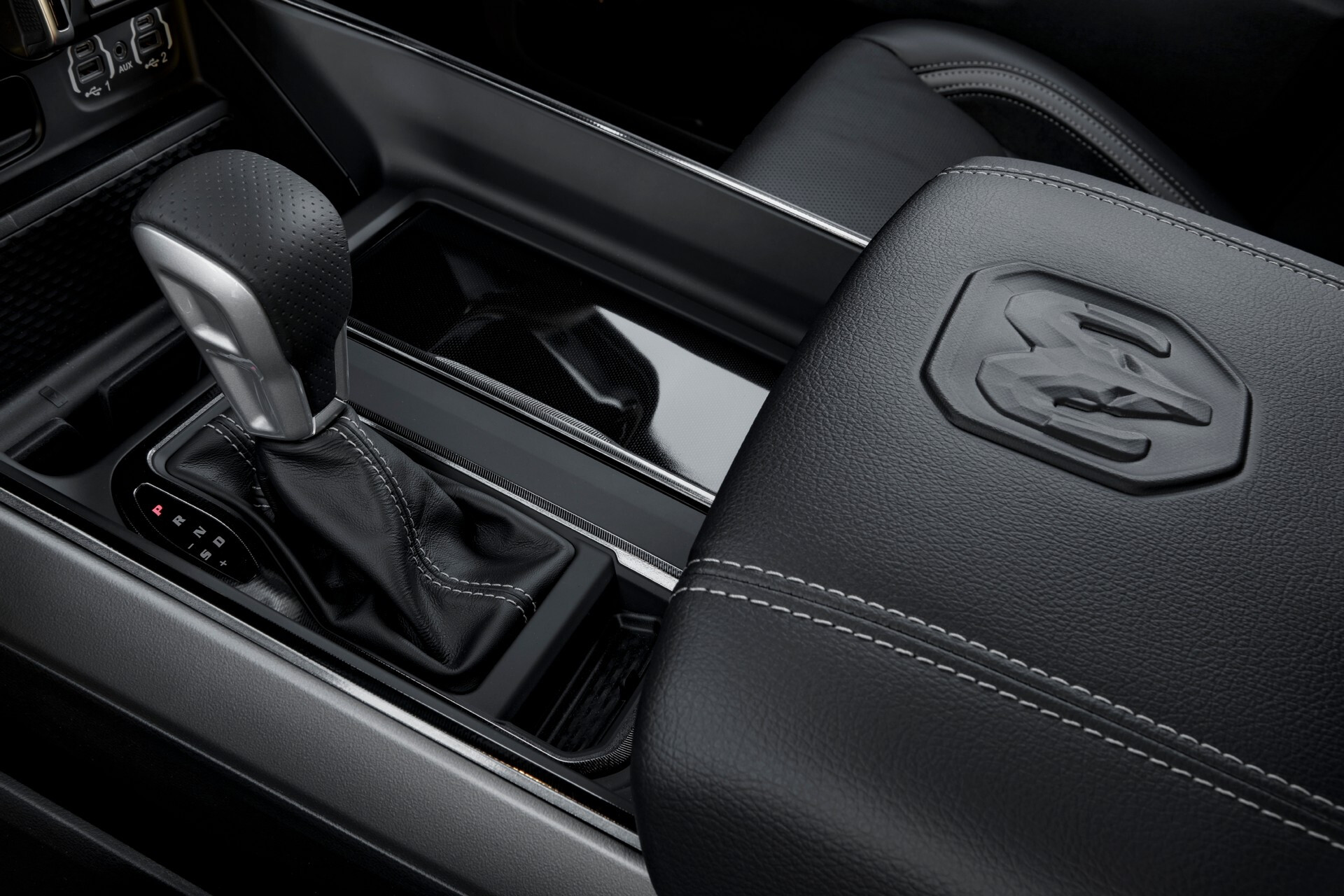
Gone is the rotary knob gear selector from the standard 1500, a console-mounted shifter now sits in its place with paddles attached to the back of the steering wheel, a first for non-TRX variants.
G/T logo embossed bucket seats are available exclusively on the new variants, as are the Mopar all-weather floor mats.
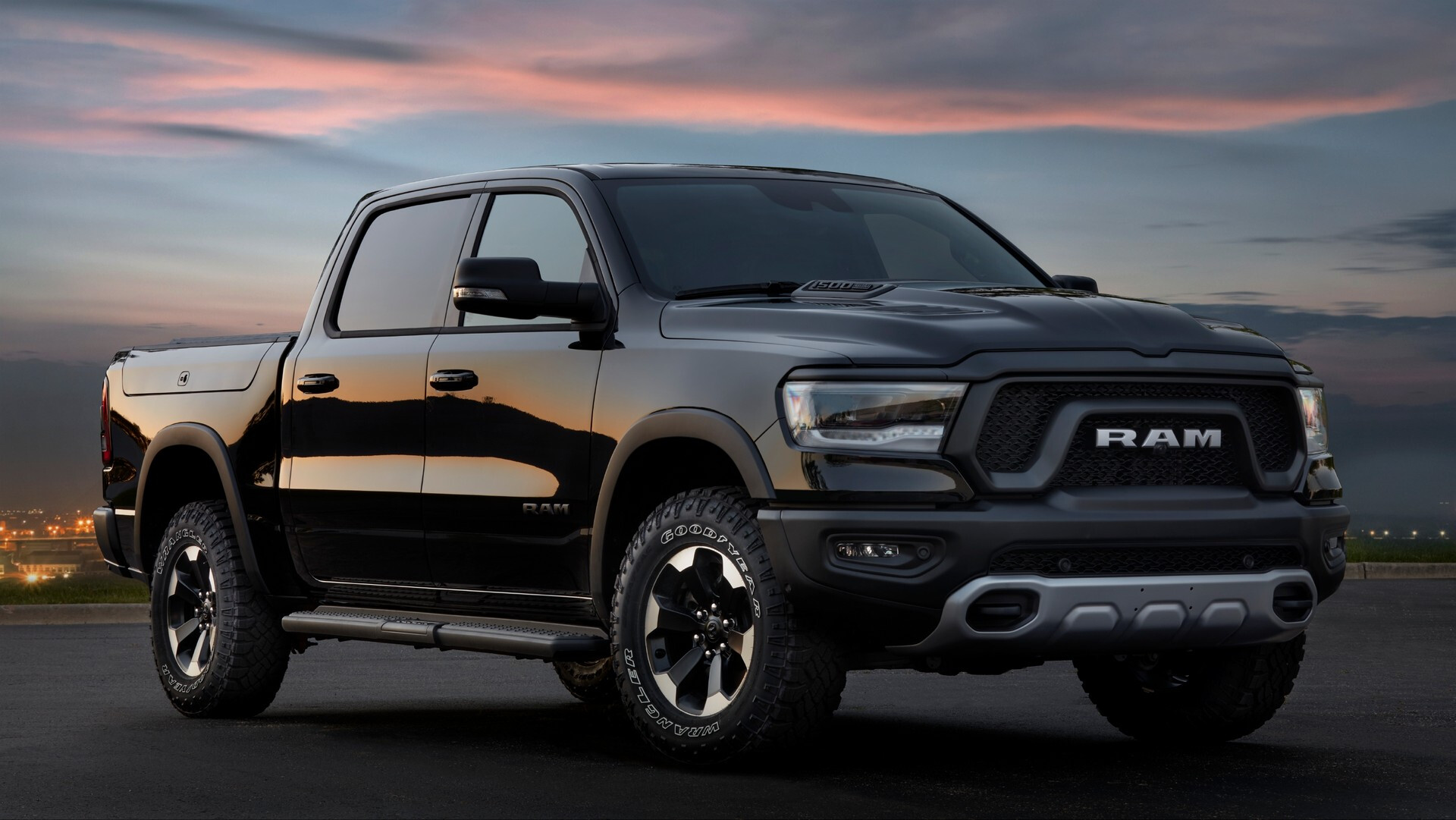
A spokesperson from Ram Trucks Australia couldn’t confirm plans on bringing the G/T trim Down Under, saying “we’re concentrating on the newly-launched 1500 and upcoming 2500 at this stage.”
Available from US$55,480 (AU$74,400, Laramie G/T) and US$55,375 (AU$74,250, Rebel G/T), the upgraded models are over a third cheaper than the standard 1500 Laramie in Australia, which starts from AU$114,950 excluding on-road costs.
1885 Ram 1500 trucks have been sold in Australia so far this year, representing a 10 per cent in sales over the same time last year.
Off-road insurance specialist Club 4X4 is running its own 4X4 of the Year competition, and a great prize is up for grabs for one lucky voter.
To vote, simply head to the competition page, enter your details and vote for your favourite fourbie in each category.

By voting, punters will go into the draw for a chance to win $5000 worth of Opposite Lock 4X4 Accessories and five Toyo Open Country tyres valued at up to $2500.
The competition has been split into six 4×4 categories: Tourer, Tradie, Rock Crawler, Comp Truck, Classic 4×4, and Mall Crawler. The vehicles in each category were shortlisted by a handful of industry experts including our very own Matt Raudonikis, Editor of 4X4 Australia.
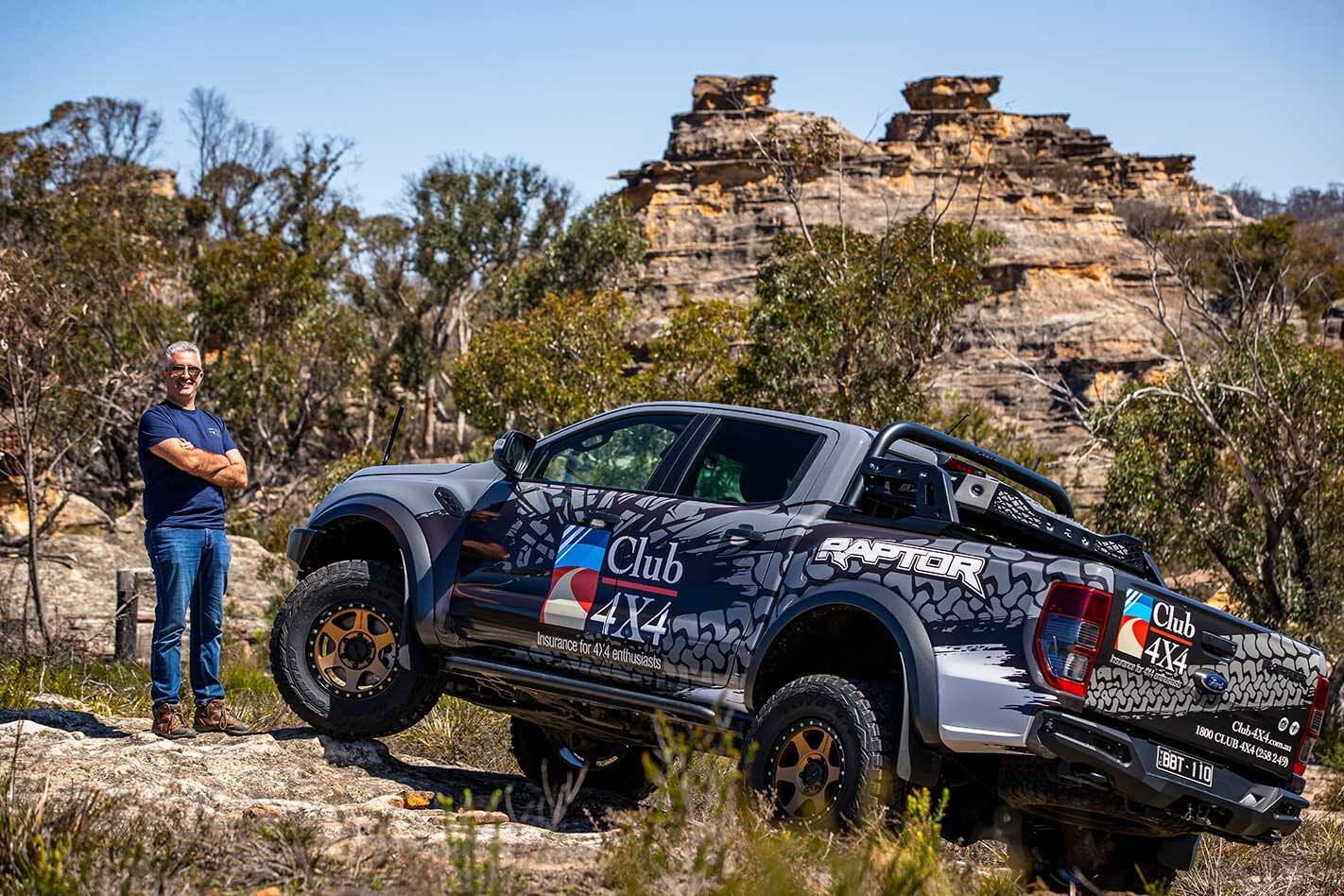
The other experts are Kalen Ziflian, General Manager of Club 4X4; David Carter, Marketing and Content Producer at Toyo Tires; Blake Jones, Commercial Manager at Tough Dog Suspension; and Aiden Frost, Marketing Manager at Club 4X4.
The competition is supported by Rhino-Rack, Toyo Tires, Opposite Lock, Autobarn and Tough Dog Suspension.
Here it is. If you’re patient and keen on Toyota’s very latest 4×4 offering, the links below hold everything you need to know.
The stories below will give you a guide to everything we learned about the new Prado when it was unveiled. All fresh stories published since then will be found on our Toyota Prado model page here.
After last being given an update in the back end of 2020, the Prado’s biggest upgrade comes for the entry-level GX and GXL trims, now featuring blind-spot monitoring and rear cross traffic alert systems – adding to the range of safety features such as active cruise control, lane departure waring and pre-collision safety systems.
Both the GX and GXL variants have been given exterior design tweaks, with chrome-accented grilles and puddle lamps, while the VX and Kakadu trim options now feature 19-inch wheels, with the designs called ‘Active’ and ‘Prestige’ respectively.
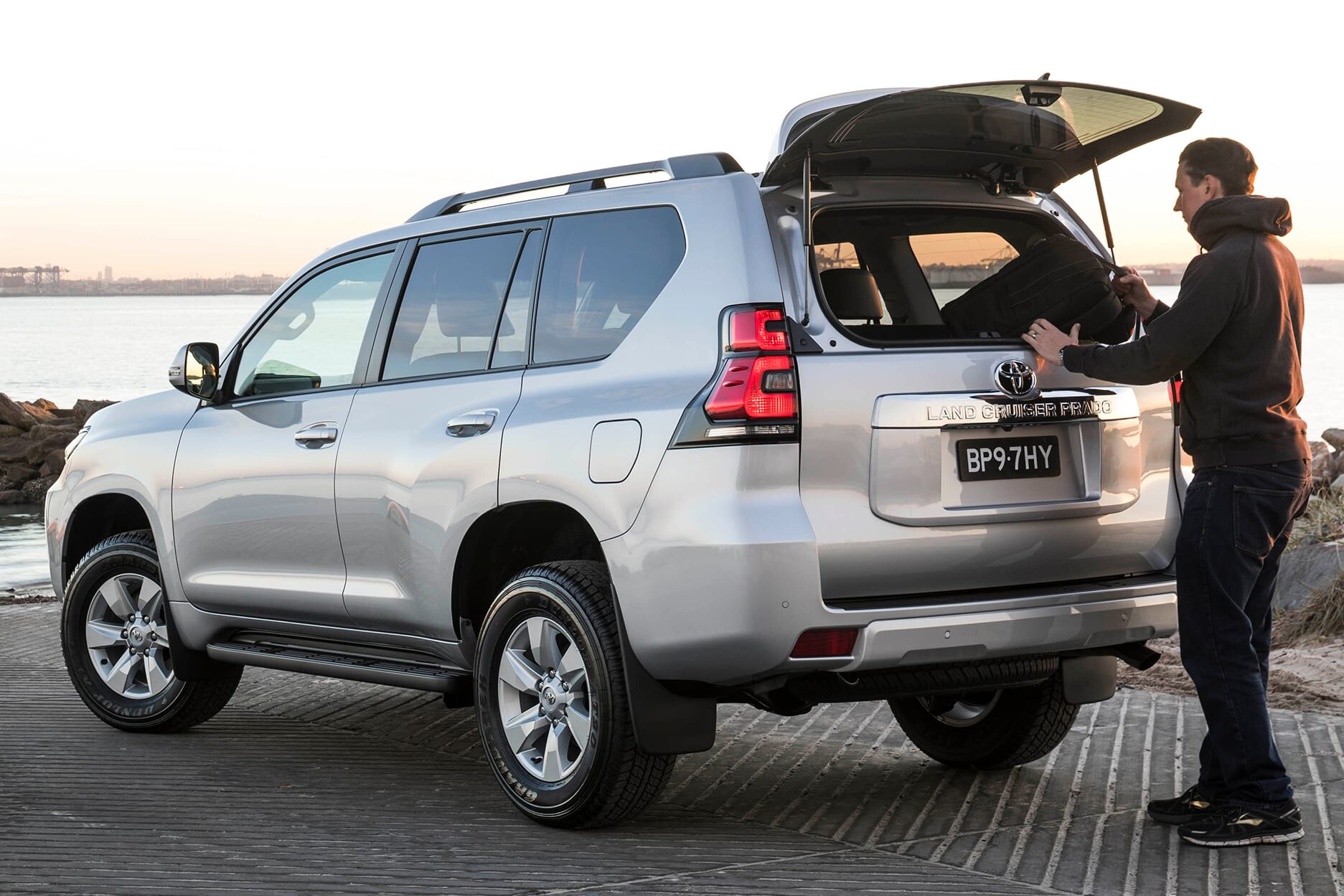
The Prado range is still powered by a 2.8-litre, four-cylinder turbo diesel producing 150kW/500Nm, paired with a six-speed automatic transmission after the manual ‘box was dropped from the line-up last year.
Toyota Australia’s Vice President of Sales, Marketing and Franchise Operations, Sean Hanley, says the safety upgrades and exterior updates will provide customers with extra value from their Prado purchase.
“We are committed to ensuring our customers benefit from the peace of mind which comes with the latest advanced safety features,” said Hanley.“These safety updates, along with the range of visual enhancements, ensure there has never been a better time to explore Australia’s vast backyard in a Prado.”
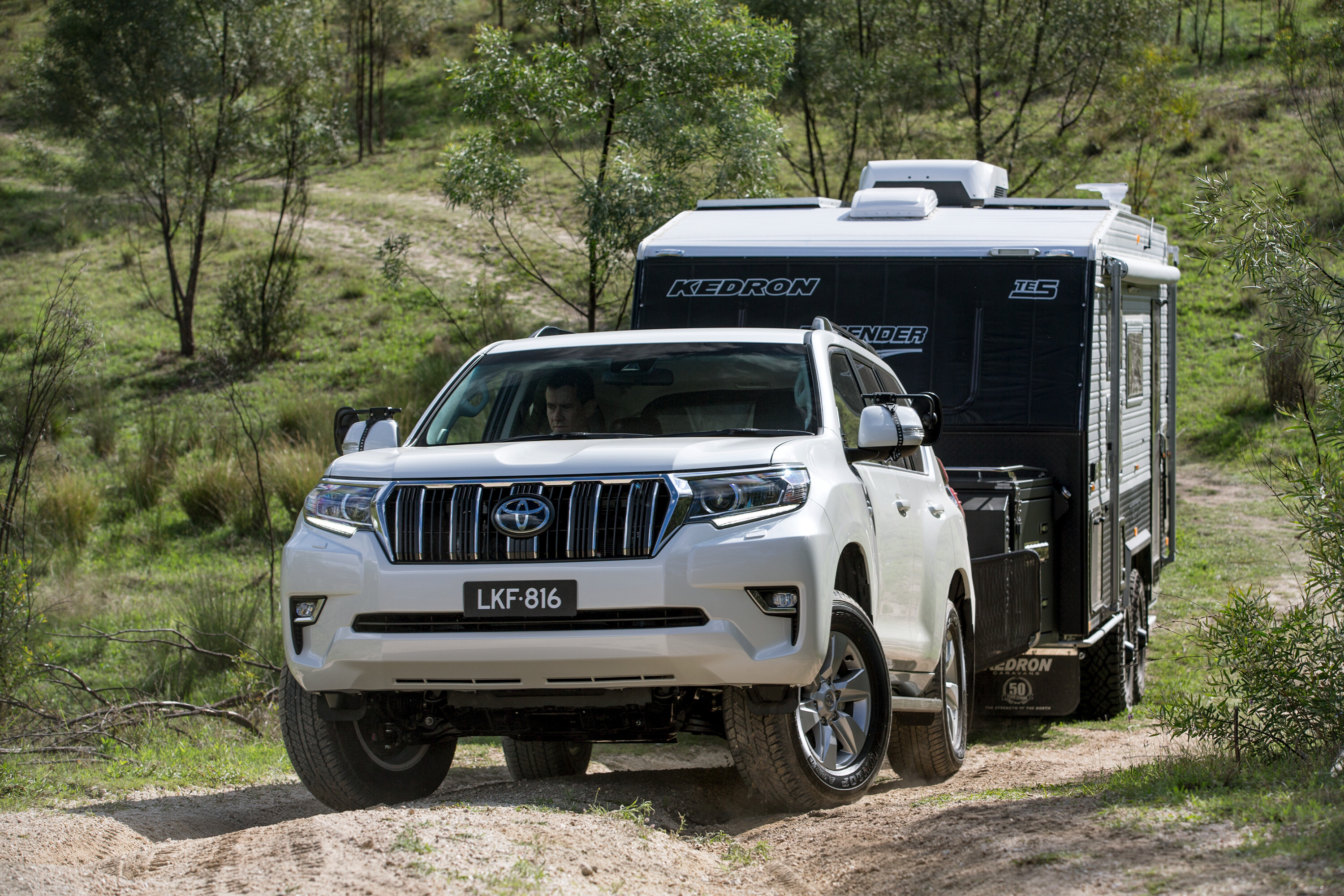
Toyota has sold 10,171 Prados up until the end of June this year, representing a 17.8 per cent increase over 2020 sales year to date.
| LandCruiser Prado GX (5-seat) | $60,830 (up $990) |
| LandCruiser Prado GXL | $67,530 (up $990) |
| LandCruiser Prado VX | $77,157 (up $777) |
| LandCruiser Prado Kakadu | $87,807 (up $777) |
| Third-row seat (GX only) u2013 $2550 |
| Leather-accented premium seats (GXL only) u2013 $3470 |
| Premium paint u2013 $675 |
| Flat Tailgate (GXL, VX, Kakadu) u2013 $0 |
The Ford Ranger remains the hot-ticket item on the new-car sales lists as we pass the mid-way point of 2021, increasing its lead over arch-rival – the Toyota Hilux 4×4 – by 1310 units in June.
Has the Blue Oval horse bolted or will the Hilux claw its way back through the second half of the year? Part of that answer will depend on when Ford brings its new Ranger to market, if that is to be this year or early in 2022. It’s always exciting between these two veterans of the 4×4 market.
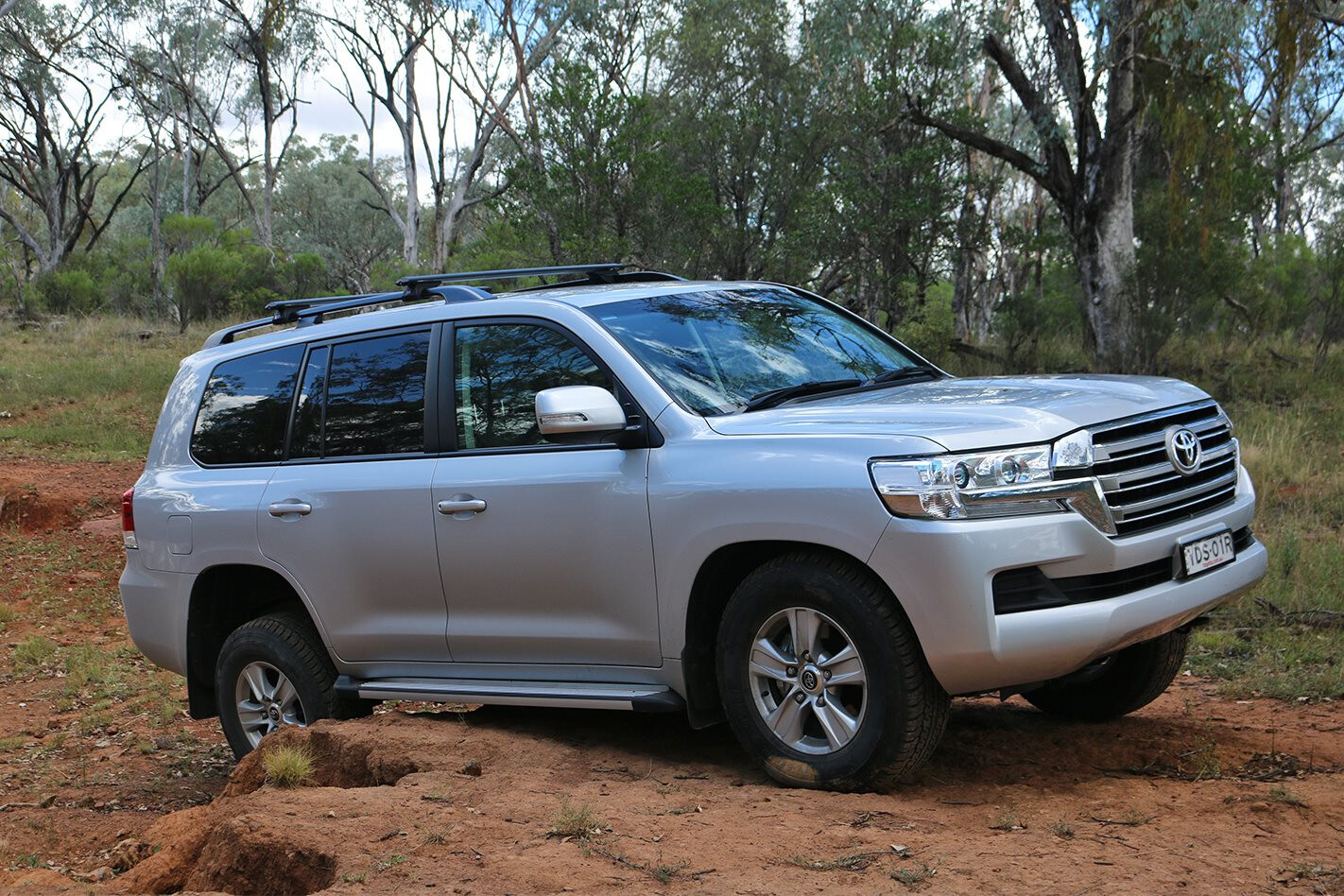
It seems stock of the LandCruiser 200 has finally run out, as the big wagon toppled down the rankings in June, selling less than half the numbers it did in each of the previous three months. We’ll see how much further they fall as stock dries up in the lead up to the launch of the LC300 before year’s end.
Isuzu MU-X numbers were also down in June, with its all-new model landing in August. It seems Isuzu Ute Australia might have managed its stock number perfectly in the lead up to the replacement wagon.
Mid-size 4×4 utes continue to be Australia’s favourite cars, but sales of American full-size pick-ups are also doing well.
Ram Trucks Australia sold three times as many 1500s than Jeep has Gladiators, year to date – 1885 versus 572. Meanwhile, GMSV has moved 902 Silverado 1500s through its dealers in the first half of the year.
Interestingly, Ford Australia says it can’t build a case for importing and selling the F150 in Australia, yet its third biggest-selling model, after the Ranger and Puma (1989 units to the end of June), the Mustang , has moved just 1792 units so far in 2021.
You reckon Ford would like 1500 or so high-margin trucks like the Effie rolling out of its showrooms every six months?