
In a report released in March 2021 from the Australian Institute of Health and Welfare (AIHW) it was stated that 3500 Aussies were hospitalised in 2017-18 due to interaction with venomous plants and animals.
Bees accounted for 26 per cent of those hospitalisations, while 12 of the 19 deaths caused by bites and stings were also blamed on bees. It doesn’t come as a surprise to me, even though you rarely hear about bee-sting deaths in the media.
We had an encounter with a bee sting a few years back that was anything but pleasant. It was in remote Russia on our overland jaunt across that vast country when Viv was stung by a bee, which had settled in a gin and tonic she was enjoying camped in a sunny glen beside a lovely flowing stream. Stung on the lip, the reaction was quick and frightening with a dramatic skin reaction, swelling of the face and a weak and rapid pulse.

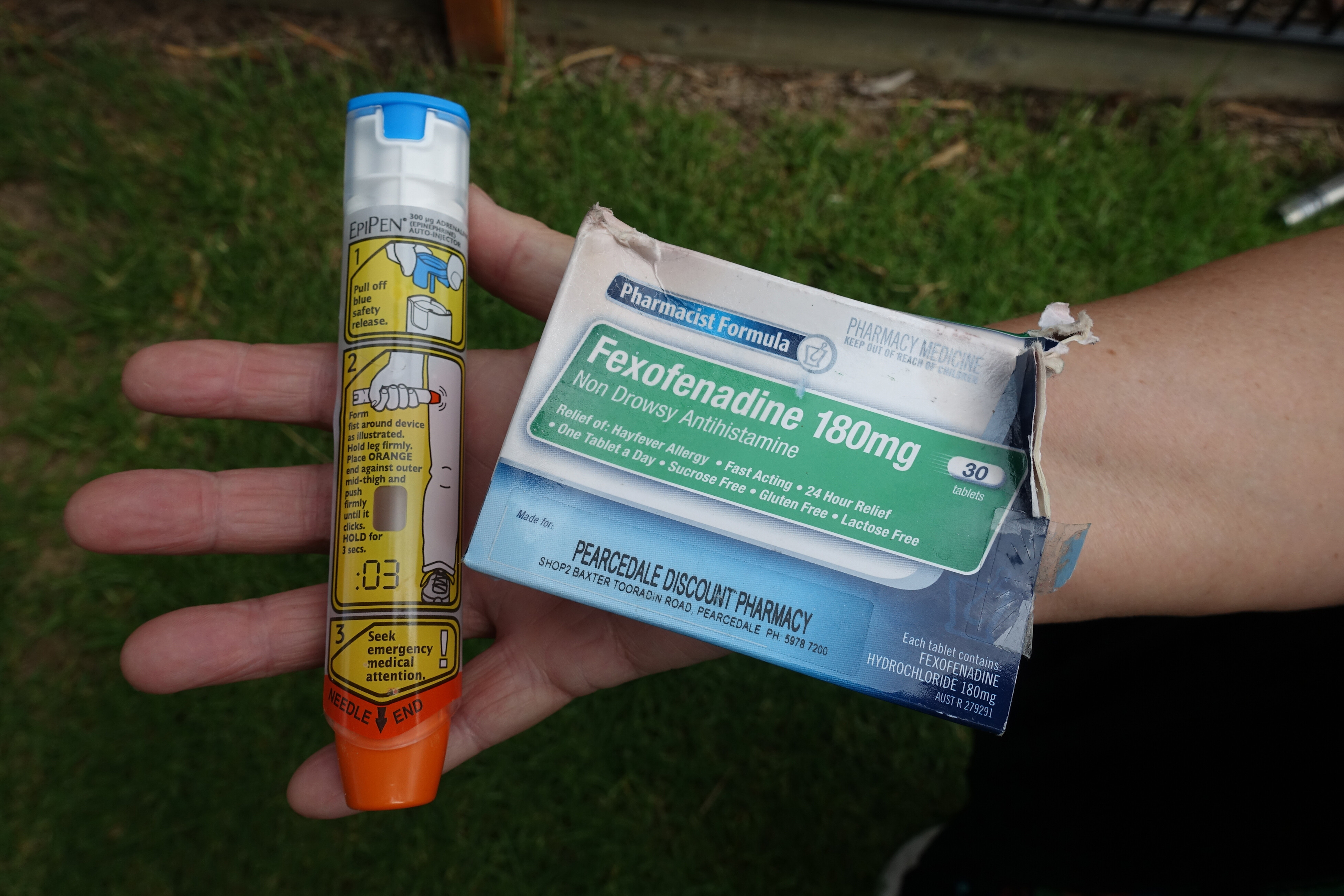
We immediately administered some antihistamine medicine, applied a wet, cool cloth to the face and stood by with an EpiPen in case the swelling started to move down to her throat and airways. Luckily it didn’t, but the swelling of the face lasted for weeks.
On the other hand, shark attacks are big news with each and every bite being recorded, even though in the 10 years up to 2018 more people were killed in Australia by bees and wasps – 27 all told, compared to shark fatalities that numbered 26.
Spider bites put 666 people in hospital during 2017-18, with nearly half of them caused by redbacks. White-tailed spiders and funnel-web spiders were the next in line as culprits. Interestingly, there were no deaths reported from spider bites, which is a good thing.
Snakes accounted for just over 600 hospitalisations and, while in more than a third of cases the snake couldn’t be identified, of those that could 215 were by brown snakes, 83 by black snakes and 65 by tiger snakes. Sadly, seven deaths were caused by snake bites that year.
Some 393 people were hospitalised due to marine animals and plants including box jellyfish, Irukandji jellyfish and blue-ringed octopus.
Interestingly, in the AIHW report, it was young and middle aged men (61 per cent in total) who were most likely to get bitten or stung; while people living, working and travelling in remote or very remote locations also topped the list.
So to be prepared, we now carry a range of antihistamines and an EpiPen, plus an extensive first-aid kit whenever we go bush, for its not only bees and wasps but ants – jumping jack ants are notoriously bad – for causing allergic reactions.
We also use a free phone app – Australian Bites and Stings: First Aid Guide to Australian Venomous Creatures. Make sure you get it, and a first-aid kit – you never know whose life it’ll save!
Following the launch of the 2022 LandCruiser 300 earlier this week, Toyota has marked the occasion by providing a glimpse of its early design sketches of the iconic four-wheel-drive.
With the final design of the LC300 a revolutionary step above its 200 Series predecessor, the sketches provide an interesting glimpse at the process involved in developing the newest LandCruiser.
A hexagon-inspired design is the focus of one proposal, with images showing a plan for a massive grille, split headlight design, square taillights, X-shaped wheels and four square roof mounts.
The design, captioned ‘[hexagon] for GEN-Y’ and ‘oh baby, you’re so HEXY-Y’, demonstrates a focus on the Generation Y demographic (those born in the 1980s and 1990s).
https://www.instagram.com/p/CSG6F6yM-mo/?utm_medium=copy_link
Another drawing shown by Toyota is the ‘World Runner’ – sporting a look more in line with the final 300 Series design, albeit with a futuristic focus.
Characterised by bolder angles at the front and rear, the World Runner features sleeker headlights and tail-lights, bulging wheel arches and side air vents in comparison to final product.
Other ideas shown by Toyota include an off-road focused model with a snorkel, tougher front and rear bumpers, and roof-mounted auxiliary lights.
The Toyota LandCruiser 300 Series is set to arrive in Australian showrooms in the fourth quarter of 2021, with pricing ranging from $89,990 before on-road costs for the base GX to $138,790 for the flagship Sahara ZX.
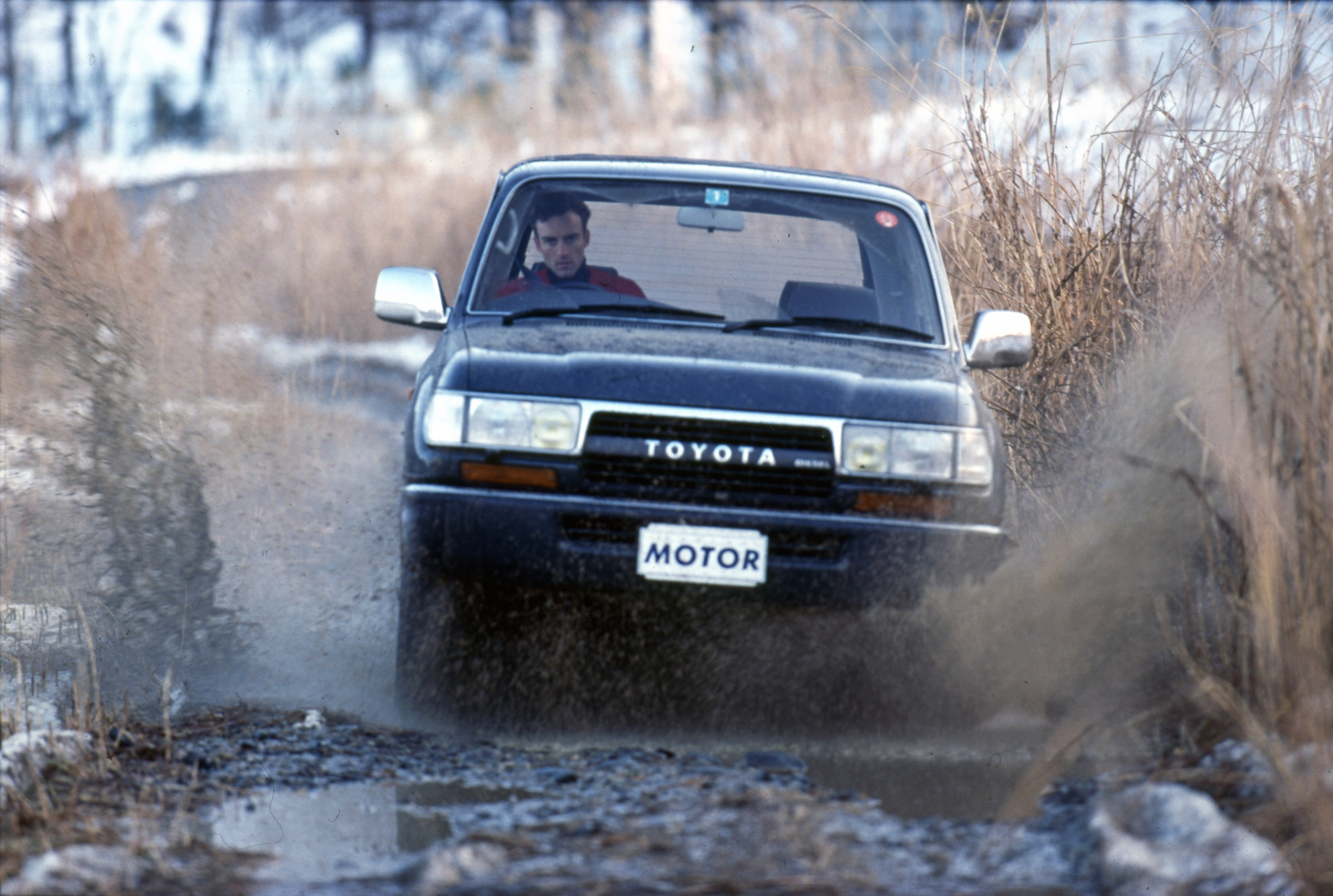
If you have watched Toyota’s official global presentation of its upcoming 300 Series LandCruiser you would know that special praise was directed at the LandCruiser 80 Series and its honoured and unique place in LandCruiser history.Toyota 300 Series chief engineer Takami Yokoo said that in designing and developing the 300, the engineering team “used the 80 as a guidepost”. He went on to say “even 30 years after it first appeared, it has the best rough-road performance of any LandCruiser”.
By ‘rough-road’ performance you can read ‘off-road’ performance and given the 100, and more so the 200, bought significant advances in off-road performance enhancing chassis and powertrain electronics, that’s a big call.
These electronic driver’s aids have culminated in off-road specific electronic traction control complete with driver-selectable terrain-specific programs, and so-called ‘Crawl Control’ where all the driver has to do is steer and the vehicle ‘smarts’ do the rest, even in the most difficult and demanding off-road situations.
LIVE AXLE BONUS
THE 80 had nothing like this of course, so what made it so good off road?
Chief engineer Yokoo didn’t elaborate in the 300’s presentation but most obviously, the 80 had a live axle up front where the 100 adopted independent front suspension, a feature carried over to the 200. The only exception here was the 105, which was effectively the mechanicals of the 80 carried over as a 100 Series model.
Independent front suspension bought on-road civility to the 100 and 200, but at the expense of the generous and off-road enhancing wheel travel offered by the 80’s front live axle, or more specifically the 80’s coil-sprung front live axle.
Building on this, the 80 had driver-switchable front and rear differential locks. These were standard on VX Sahara and optional on the GXL at the Series launch in 1990, but eventually worked their way down to the entry-level RV model. Front and rear lockers (and driver lockable centre diff on full-time 4×4 models) combined with long-travel coil-sprung live axle suspension front and rear proved to be a formidable combination.
If the 80 offered some sort of benchmark for the future (chief engineer Yokoo made special mention that the 300 shared the 80’s “golden-ratio wheelbase”, it also marked a significant departure from its predecessor, the 60 Series, in what turned out to be a critical turning point in LandCruiser history.
Where the 60 rode on leaf springs front and back and had part-time 4×4, the 80 introduced coil springs and full-time 4×4, which set the pattern for the LandCruiser’s future. And while the 55 Series is generally accepted as the first LandCruiser to be pitched at the private leisure market (effectively as a 4×4 station wagon) rather than at commercial (construction, farming, forestry, mining, etc.) markets, the 80 was the first LandCruiser to finally cut all ties with its working-class and original military roots.
FULL-TIME 4X4
THE change to coil springs from the 60’s leaf springs allowed the use of spring rates some 25 to 40 per cent (model dependant) lighter than the 60, which was critical in producing family-car comfort, while the introduction of full-time 4×4 meant a more user-friendly 4×4 system, again enhancing its family appeal and practicality.But things weren’t all rosy from the start. The 80 arrived in 1990 feeling a bit not quite finished. As one harsh critic wrote, quoting Shakespeare’s Richard III, “… sent before my time. Into this breathing world, scarce half made up.”
At the time, there was speculation that Toyota was caught off guard by the arrival of Nissan’s groundbreaking GQ Patrol in 1987. With its all-coil suspension, the GQ made Toyota’s 60 Series feel very agricultural and buyers right around the world weren’t slow in catching on.
There was much evidence to suggest the 80 was rushed to market before all the finer details were sorted. On bumpy and winding roads the handling was that unsettled it led to the much-publicised term the ‘LandCruiser Lurch’, an unfortunate combination of excessive body roll and rear bump-steer.
The ‘specifically developed’ 265/75R15s Dunlop Grandtreks on GXL and VX Sahara models also proved very damage prone and even lost out in on-road steering and handling to the old-school tall and skinny (7.5R16s) Dunlop Road Grippers fitted to the base-spec models.
Things got worse with lower rear-suspension damper mounts breaking off the rear axle housing, even on road-test vehicles supplied to the media, surging and idling problems of the 1HD-T engine and the poor shift quality of the manual gearbox.
The petrol engine, a pushrod straight six from the 60 Series, was also underpowered and thirsty in both its fuel-injected (3F-E) and carburettor (3F) iterations.
To Toyota’s credit, these issues were addressed within two years when a revised model with a new, thoroughly modern and powerful 4.5-litre twin-cam straight-six petrol engine arrived along with a new manual gearbox, newly calibrated suspension and a revised wheel and tyre package. Although it was only when the 1HD-FT replaced the 1HD-T in 1995 in the 80 that the turbo-diesel issues were finally laid to rest.
But after that somewhat rocky start, which seems now a mere hiccup, the 80’s reputation as a tough, go-anywhere and refreshingly simple 4×4 has only grown.
THE BEST EVER
A few years back, 4×4 Australia asked all of its regular writers to name the most significant 4x4s of all time and it was no surprise that the 80 Series drew plenty of praise.
Ron Moon, the longest-serving editor of 4X4 Australia and regular contributor to this day, reckons “the 80 Series was the best LandCruiser wagon ever built – they’ve gone downhill from that pinnacle! Ooh, the latest might be smoother, faster and more refined, but they are far less a real 4×4!”
Bush icon John Rooth (aka Roothy) was on the same wavelength when he said, “all LandCruisers are good, but the 80 Series is the best of the lot. Get a good one and play in the dirt forever!”
Perhaps the last word should be left to someone who owns what’s been described as the “most photographed 80 Series on the planet”, 4×4 travel photojournalist Kev Smith who said of his 80, “with 520,000km on the clock the old girl is so simple to work on, and if you service them every 5-10,000km they will go forever. Now while it’s no power house the 80 series is super reliable …”
80 SERIES TIMELINE
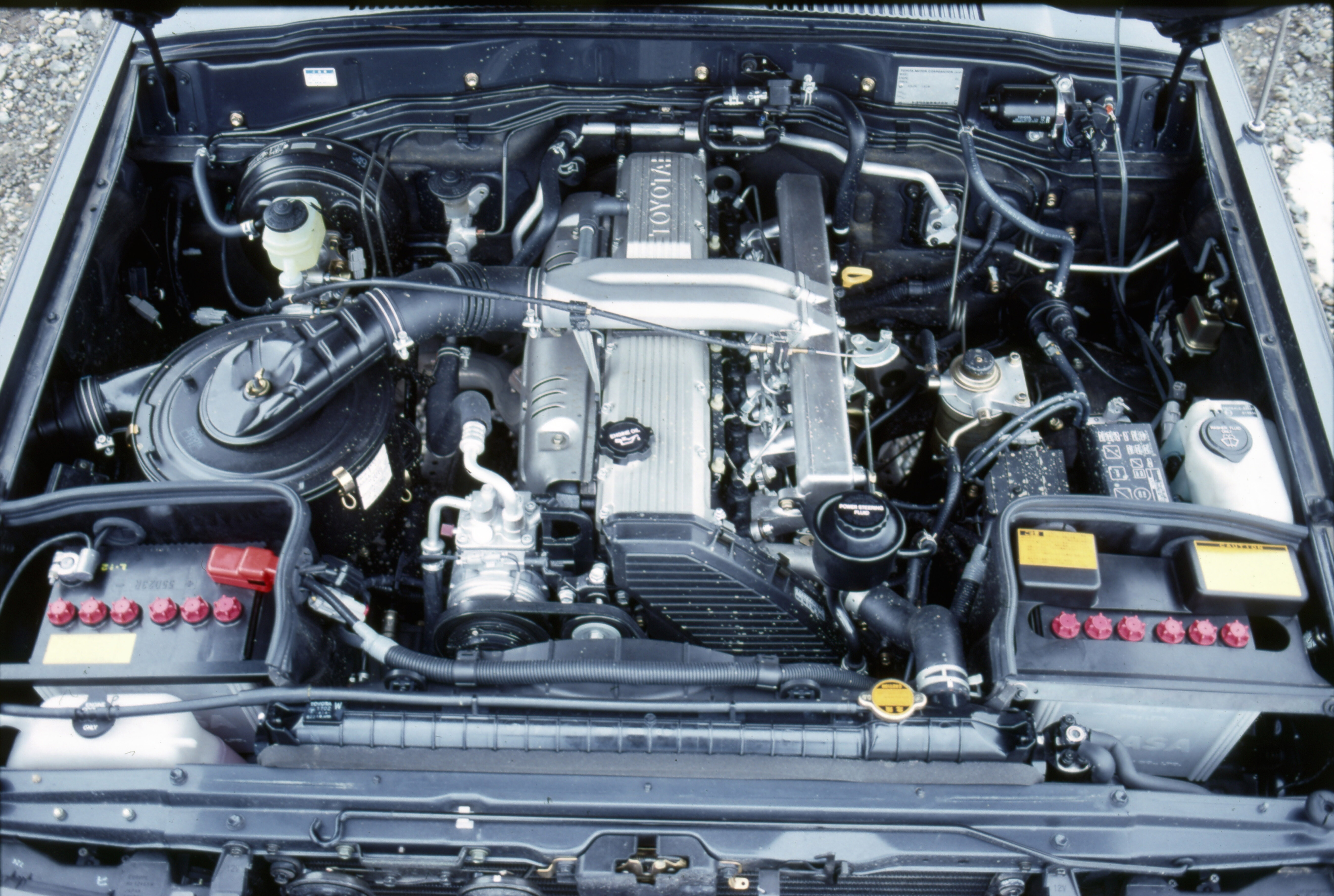
1990 The 80 Series arrives in Australia mid-year with a ten-model-strong line-up that spans $33K to $78K. The two base-spec Standard Vans have vertically split rear doors and use the 75 Series powertrains, so part-time 4×4, manual-only but with the choice of straight-six 4.0-litre petrol or 4.2-litre diesel engines.
The mid-spec GXL and top-spec Sahara VX bring full-time 4×4 and expand on the powertrain choice with a turbo-diesel engine and automatic gearboxes for all three engine options. The two diesel engines, the naturally aspirated 1HZ and the turbocharged 1HD-T are family siblings and both brand-new.
The turbo claims 115kW and 357Nm while the atmo is good for 94kW and 271Nm. The 4.0-litre pushrod petrol engine is essentially carried over from the 60 but gains electronic fuel injection (as the 3F-E) when mated to the automatic gearbox, which bumps it to 112kW and 290Nm from the carburetted (3F – mated to the manual) version’s 110kW and 284Nm.
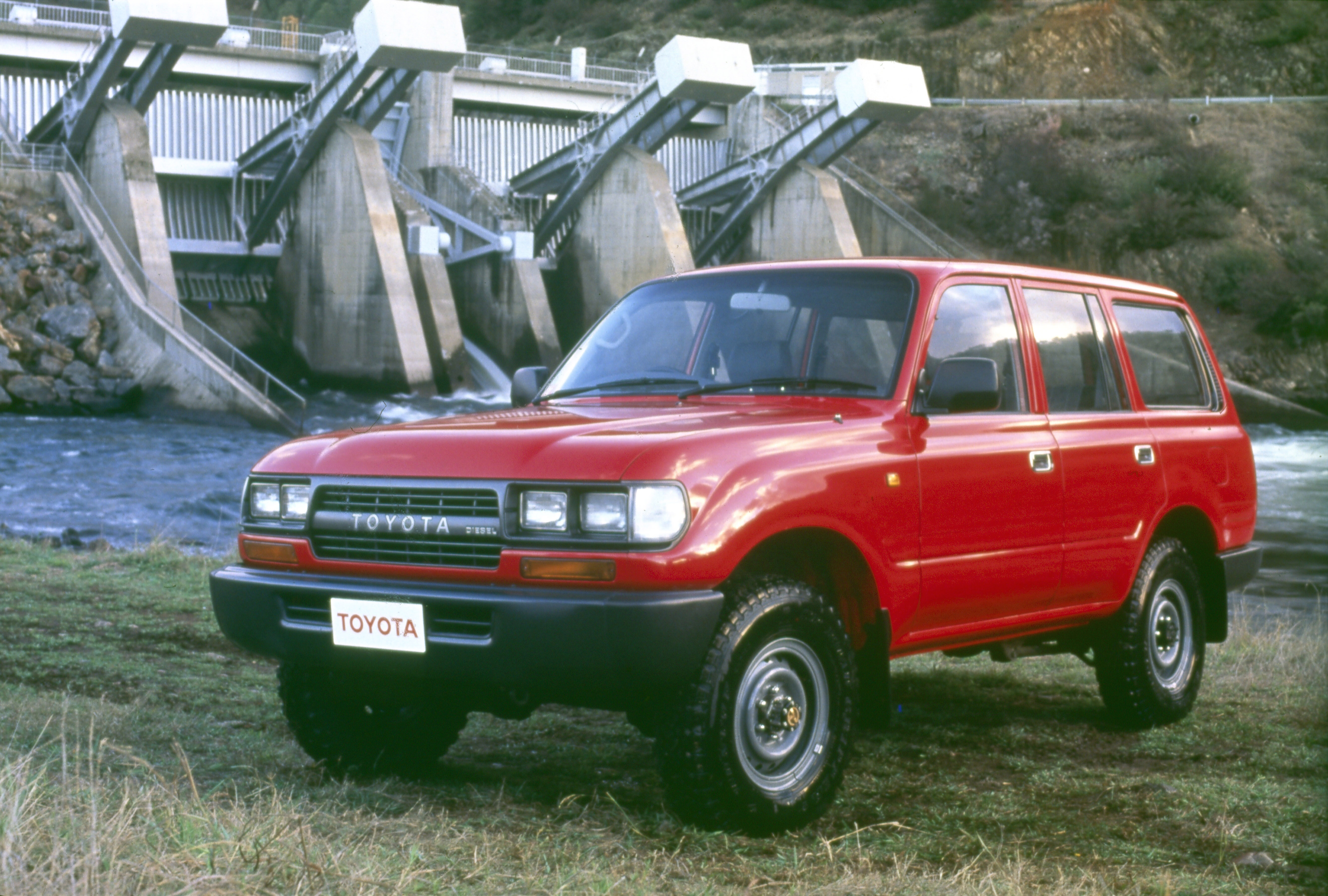
1992 Not before time the 3F and 3F-E engines are consigned to history as Toyota takes the wraps off its brand-new 4.5-litre straight-six petrol engine, the IFZ-FE. Complete with twin overhead cams and four valves per cylinder it makes a mighty 158kW and 373Nm and brings serious performance to the 80.
Toyota also introduces an RV spec 80 (only with the new petrol engine strangely) and drops the petrol Standard Van and the manual gearbox option from the Sahara VX. Across the range improvements include revised suspension (although with a lower rear ride height), a new manual gearbox, bigger brakes, and side-intrusion bars, while the Sahara VX gets anti-lock brakes and the option of a sat-nav system! Prices span from $40K to $87K.
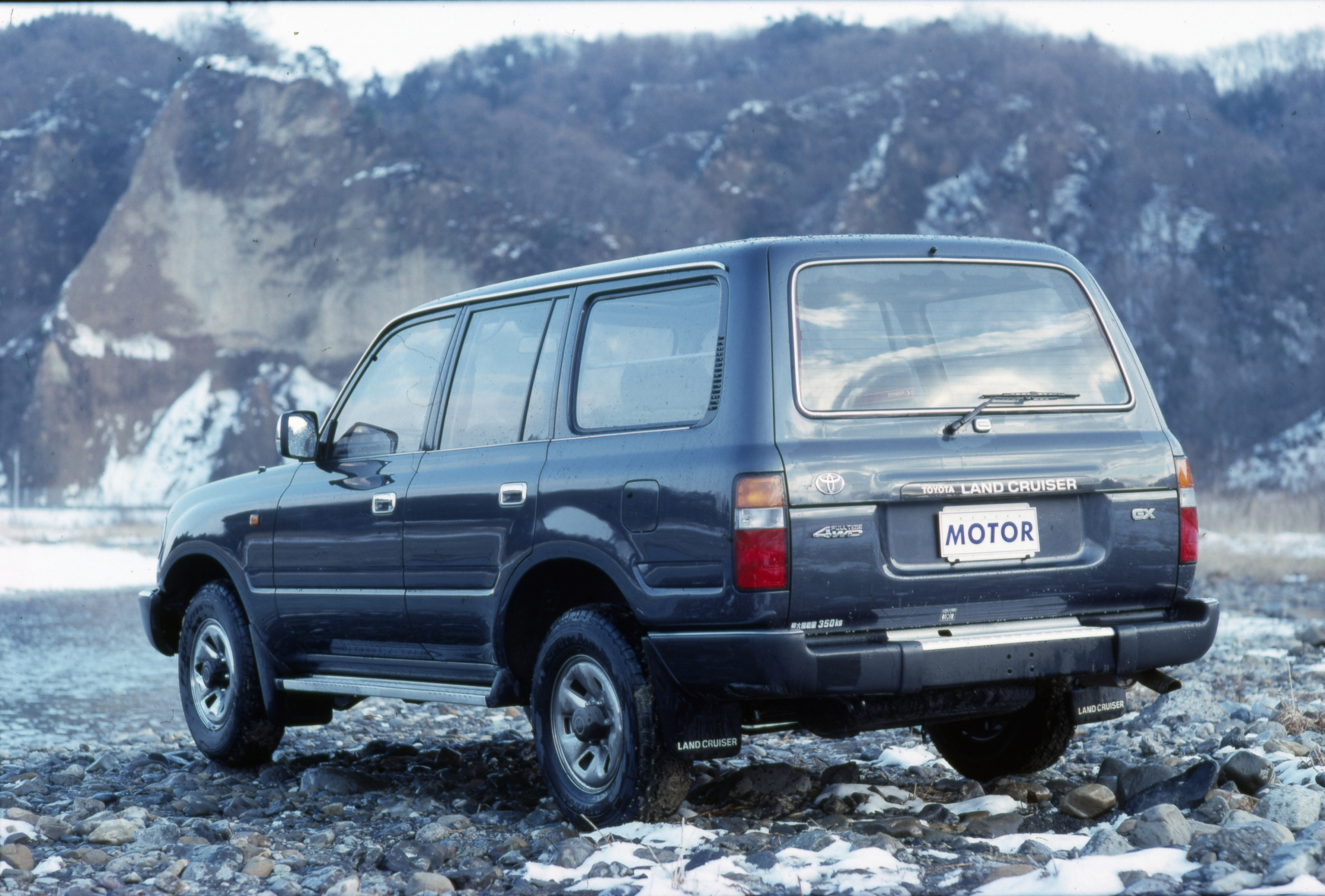
1995 With the imminent introduction of Euro 1 emissions standards, Toyota drops the 1HD-T turbo diesel in favour of the 1HD-FT. The new turbo diesel’s headline act is the adoption of four valves per cylinder (the F in the engine code) but in reality, the 1HD-FT is a from-the-engine-block-up revision of the IHD-T. It claims 125kW and 380Nm.
The updates also run to new front-end styling, a new dash, and new wheels and tyres. Prices now run from $49K (RV petrol manual) to a heady $112K (Sahara VX TD automatic) over the nine-model line-up.
COLLECTOR’S ITEM?
The 80 Series sold in huge numbers over its eight-year life span in Australia, but finding one second-hand now isn’t easy. Perhaps if you own an 80, you just want to keep a hold of it, as there are still plenty on the road it seems.
At the time of writing, a quick check on Australia’s biggest used-car sales website revealed just 36 examples of the 80 Series for sale nation-wide. The least expensive was a 1995 GLX 4.5-litre petrol auto with 360,000km on the clock at a seemingly bargain basement $8500. At the other end of the price range was a very tidy looking 1997 GXL turbo-diesel manual that had racked up 370,000km and was asking for $51,500. Ouch!
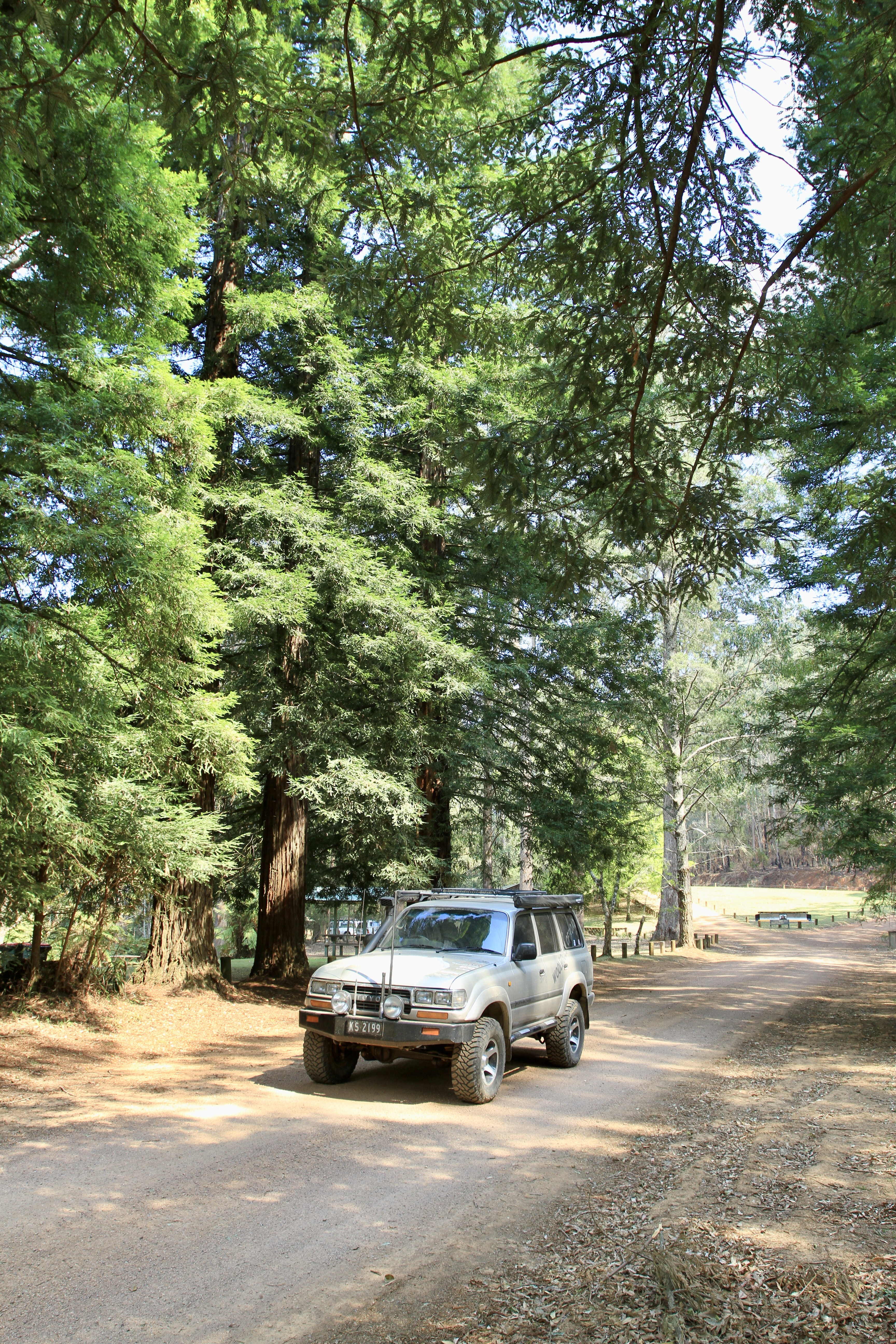
SPECS: 1990 80 SERIES (GXL DIESEL MANUAL)
| ENGINE | Straight-six SOHC diesel |
| CAPACITY | 4.2-litre |
| COMPRESSION RATIO | 22.7:1 |
| MAX POWER | 94kW at 4000rpm |
| MAX TORQUE | 271Nm at 2000rpm |
| GEARBOX | Five-speed manual |
| 4X4 SYSTEM | Dual-range full-time |
| CRAWL RATIO | 46.2:1 |
| CONSTRUCTION | Separate chassis |
| FRONT SUSPENSION | Live axle; coil springs |
| REAR SUSPENSION | Live axle; coil springs |
| FRONT BRAKES | 286mm discs |
| REAR BRAKES | 312mm discs |
| WHEELS | 15-inch steel |
| TYRES | 265/75R15 |
| WHEELBASE | 2850mm |
| GROUND CLEARANCE | 235mm |
| APPROACH ANGLE | 37u2070 |
| DEPARTURE ANGLE | 25u2070 |
| KERB WEIGHT | 2070kg |
| GVM | 2960kg |
| PAYLOAD | 890kg |
| TOWING CAPACITY | 2500kg |
| FUEL TANK | 145L |
| ARCHIVAL FUEL USE | 14.8L/100km |
The Isuzu MU-X has long been an endearing vehicle in the Australian 4WD landscape – simple, reliable and fairly affordable for larger families needing extra seats as well as those who enjoy towing small houses on wheels.
While some have described the MU-X as agricultural, with a loud diesel engine and few modern luxuries, there is an argument from the other camp that a simple four-wheel drive is a good four-wheel drive. Hence its popularity with families and nomads.
Well, we are now saying goodbye to an old friend and hello to an all-new generation of MU-X in 2021. And when I say all new, I really mean it. This vehicle has been redesigned from the chassis up, with every major component upgraded along the way. We’re talking more safety, more power, more off-road ability and a stronger driveline. And while that’s all well and good on paper, the big question is what is it actually like to drive?
We set out on a mixed loop of highway, urban, rural and off-road conditions to really put this mid-sped LS-U MU-X through its paces over the space of two weeks, and the verdict? C’mon now, I’m not going to give that away so early in the piece.
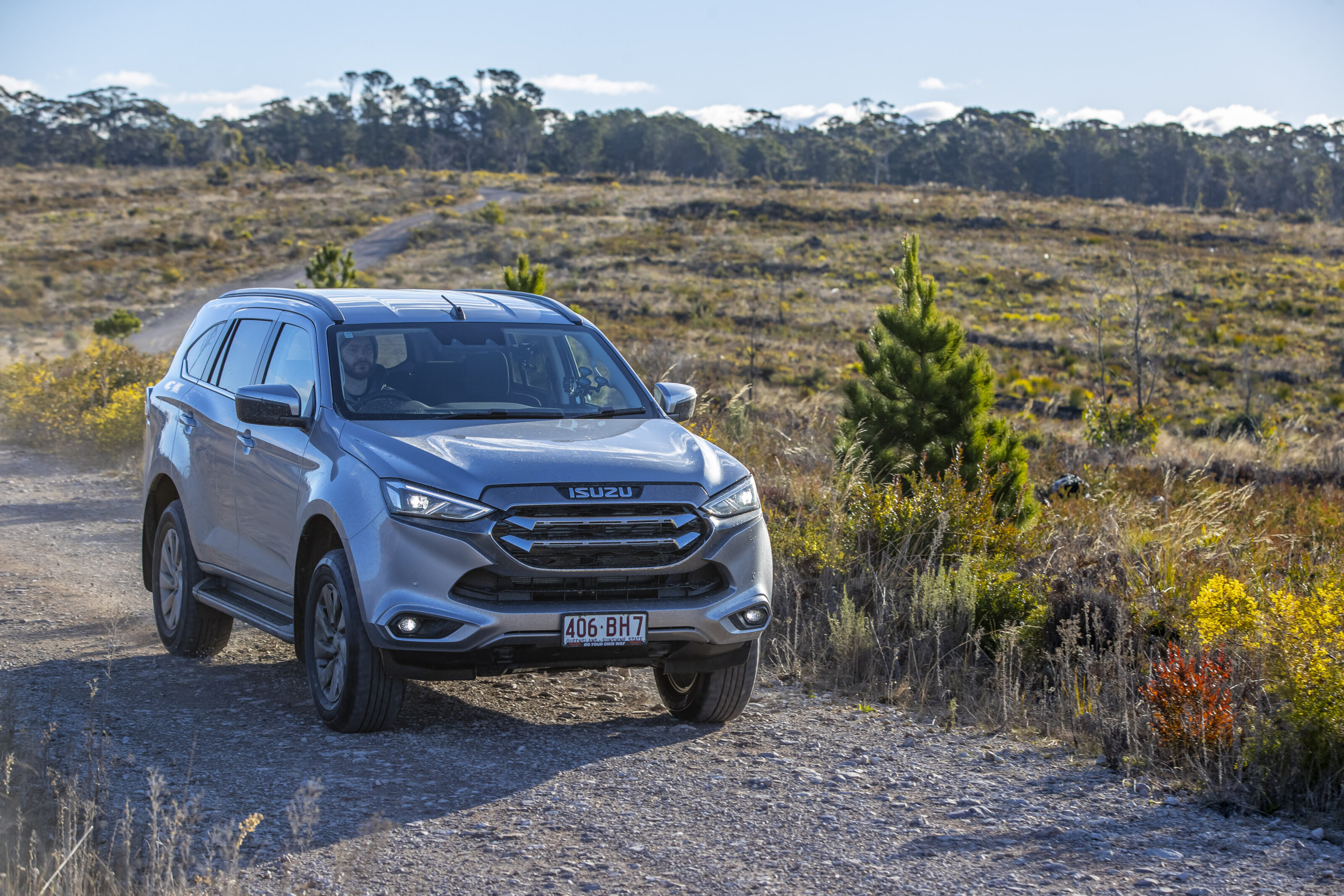
POWERTRAIN & PERFORMANCE
The powertrain in this 2021 model has been borrowed from the current model Isuzu D-MAX. And you won’t hear me complain about that. The 3.0L 4JJ3-TCX motor is revered around campsites for its strong work ethic and reliability. It pulls well too, despite only having 450Nm and 140kW to its name. Don’t get too bogged down with those numbers though, as the way this engine makes power is low-down and rock solid. It feels like it could tow a mountain up another mountain.
Something I was particularly interested in seeing mentioned on the initial press release was stronger drivetrain components, namely CV joints in this 2021 model. Always a good thing to see. A 15.3 per cent stronger transfer case output-shaft, larger one-piece tail shaft and a stronger front shaft, round out the driveline upgrades for this new MU-X.
Now only available with a six-Speed Aisin automatic gearbox, which I have no complaints with performance-wise. While a manual gearbox option would be good to see, I’m not sure it would be a popular choice with many. Strangely, I’m not wanting for more than six gears either; it’s well-suited to the motor and the way it makes power.
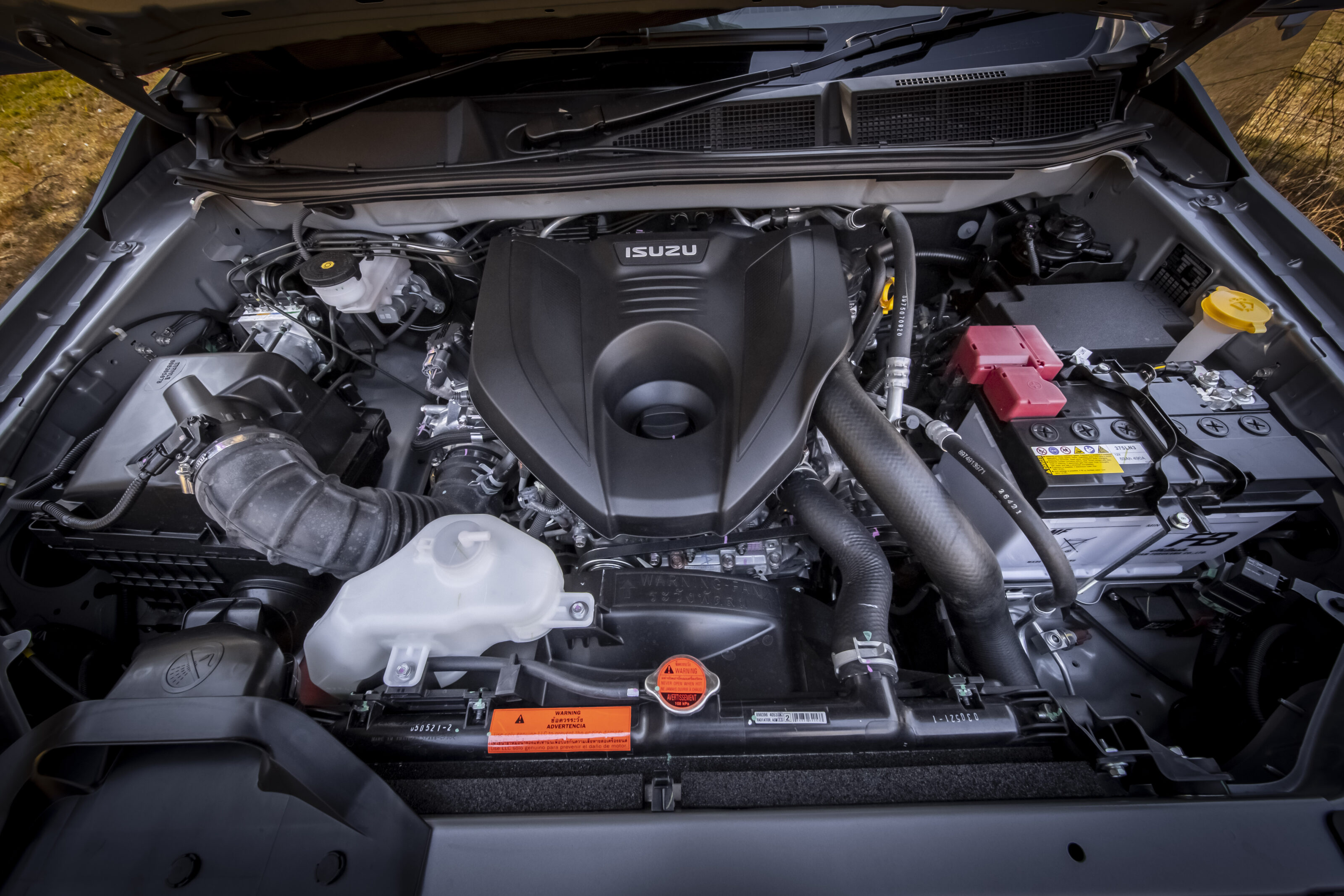
“It feels like it could tow a mountain up another mountain”
ON-ROAD RIDE & HANDLING
That new chassis and suspension package is a winner. While the previous MU-X felt a little floaty on-road, this 2021 LS-U Isuzu MU-X is planted and feels remarkably solid around corners. This is no doubt due to the suspension revisions, including geometry changes, a higher spring rate and thicker sway bars front and rear. Hit a speed bump with a little too much gusto and the car absorbs the shock … not your spine. They have dialled in the suspension package well, but I’m sure the aftermarket industry can make it even better again – a bit of lift would do wonders.
Electronically controlled power steering replaces the more traditional hydraulic system of old, and it’s well-weighted and responsive. Isuzu have done a great job there, as it can be a challenge to tune these high-tech steering systems to be light enough yet still offer positive feel when cornering.
So, while the old MU-X was criticised for being agricultural, I don’t think many people will be saying that about the 2021 model. Yes, there is still a bit of engine noise when you are hard on the loud pedal, but at idle and when cruising, this is a much more refined four-wheel drive in comparison.
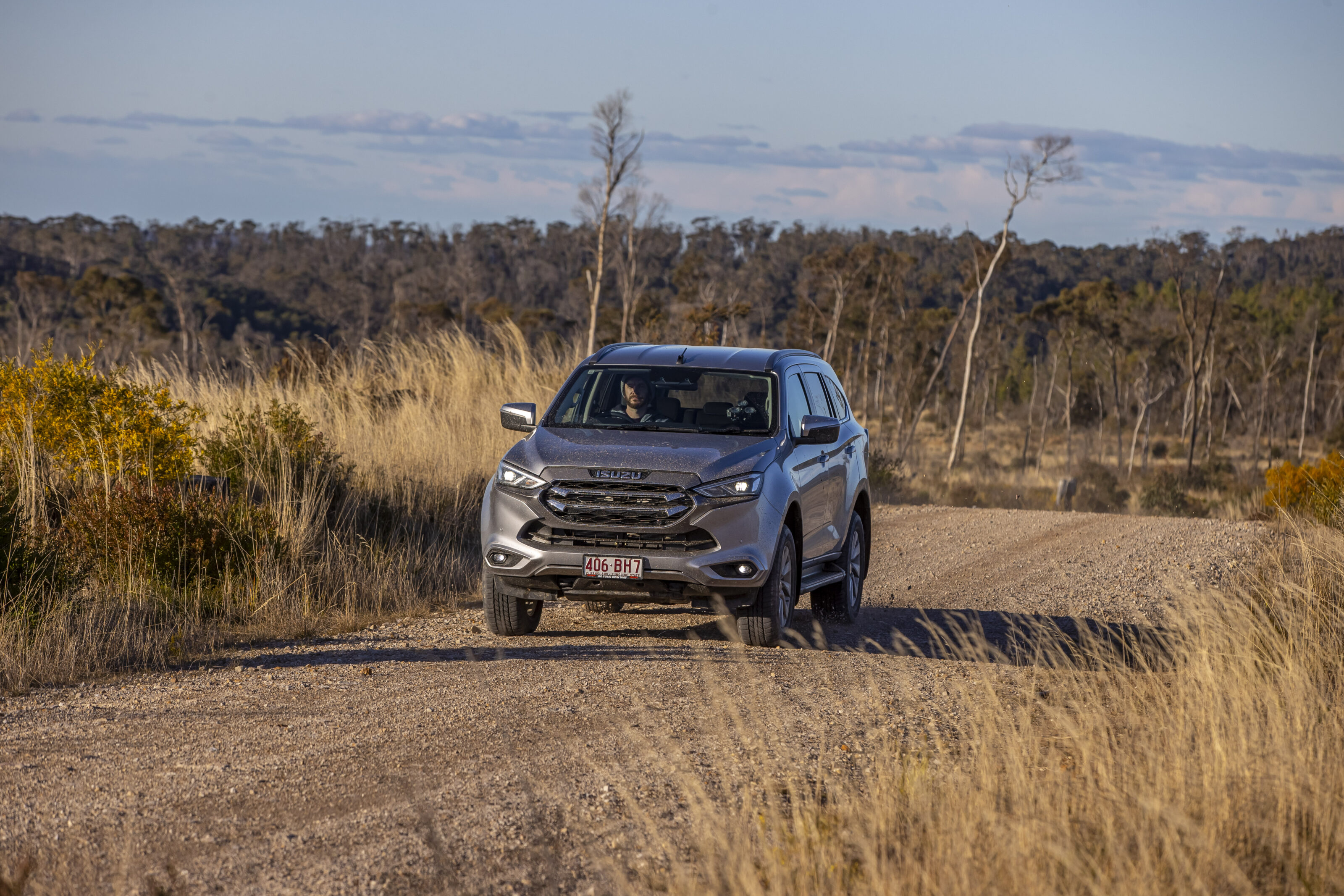
OFF ROAD
Finally, Isuzu has listened to feedback from media and owners and has fitted a rear differential lock as standard across the 4×4 range. It doesn’t end there though, as the 2021 Isuzu MU-X now has a selectable off-road mode called Rough Terrain, which improves the calibration of its traction-control system for off-road duties. It works, too – really well.
Without pressing the Rough Terrain mode button, when crossed up the MU-X was going nowhere fast. A simple touch of this magical button and the 2021 MU-X made forward progression, and rather easily I might point out. This is now a very capable four-wheel drive wagon, something that couldn’t be said about the old MU-X, without spending some money at your friendly local 4×4 accessory store having an aftermarket diff lock fitted.
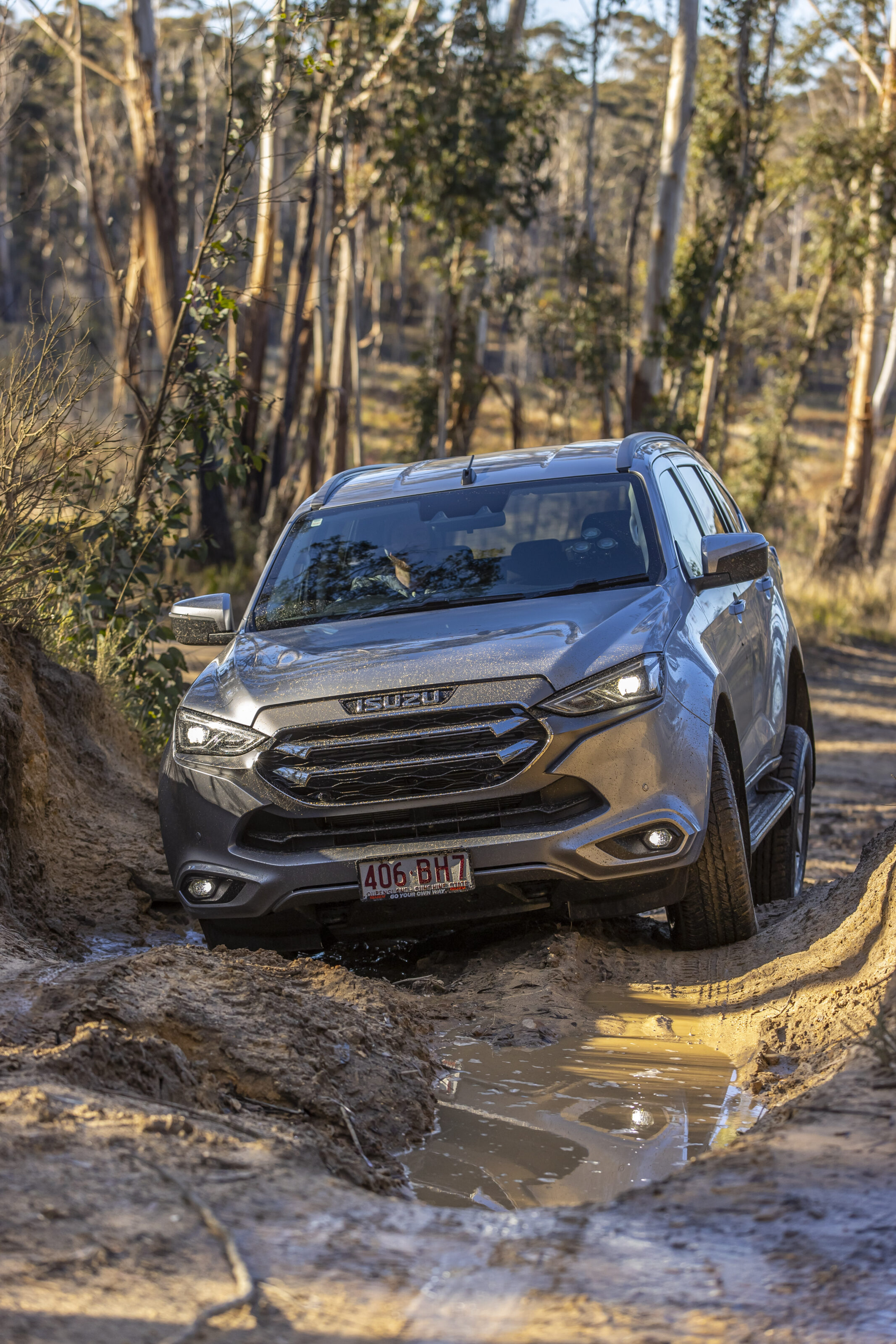
Front and rear suspension has been revised for the 2021 model and, as mentioned, it rides really well on-road. The same can be said when off-road. Suspension travel on all four corners has also been improved over the previous generation. Combine this with solid low-range reduction gearing and all those new traction aids, you can take this MU-X pretty damn far off-road.
This is probably as good a time to mention the factory underbody protection plates, too; they are made up of a combination of 1.5mm thick steel and some 5mm thick poly-composite plates. This vehicle ticks many boxes for the off-road enthusiast.
CABIN & ACCOMMODATION
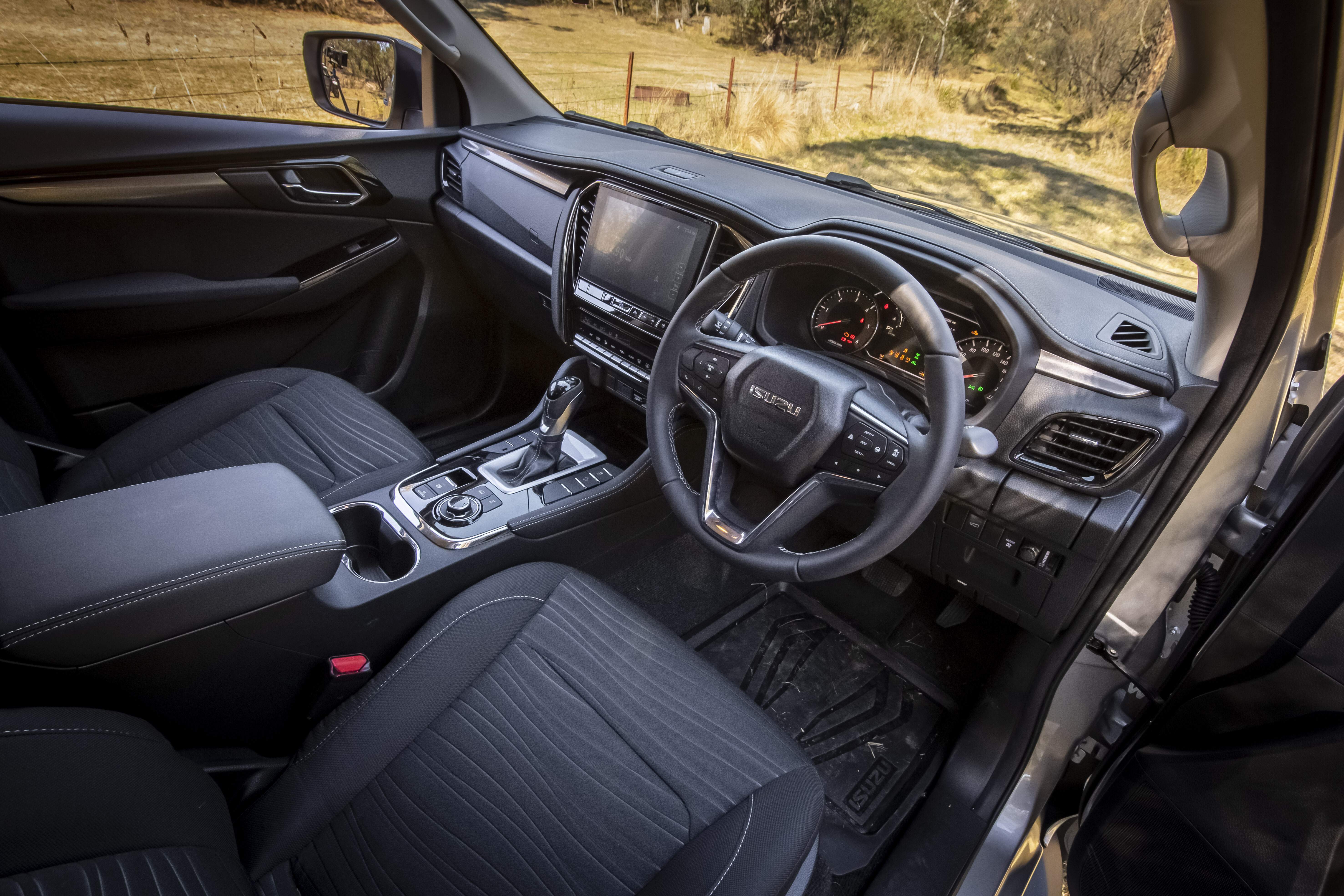
The first thing I noticed when opening the electronic-operated tailgate (standard on LS-U and LS-T models) was how, when the third-row seating is folded flat, it is really folded flat. This gives a great platform for storing fridges or camping gear, as well as prams and other associated bulky items.
The second thing I noticed was how low the tailgate sits when fully opened. Combined with the curved shape of said tailgate, if you are a taller person, you could find it a challenge to not bang your head on it when putting the shopping in the back. Our photographer found that out the hard way.
The front seats in this LS-U spec are supportive and comfortable. There’s even adjustable lumbar support in this LS-U spec, which my poor old back appreciated. They look great, too. As I’m not a fan of leather seats, this interior works for me personally. There’s a nine-inch infotainment screen, which is (as you’d expect) Apple CarPlay and Android Auto compatible. The system works well, but if you opt for the lower spec LS-M, you’ll land a smaller seven-inch unit.
In terms of second-row seating, there’s plenty of room and comfort to be found. One neat feature is the cup holder which is stored in the centre armrest. Fold the armrest down, and the cup holder slides out. Something that isn’t so neat is the lack of visibility out of the small rearmost side glass section in the boot area. The roof line, while more modern in its appearance thanks to its sloping lines, reduces the real-estate for glass. Not a deal breaker, but it’s certainly something you’ll notice if you’ve driven the previous MU-X.
Third-row seating, while comfortable enough, is really limited to smaller folk. I’m nearly two-metres tall, and my head was firmly pushed into the roof of the MU-X. Leg room was adequate, though. If you don’t need all seven seats, folding them back down was a simple and quick affair.
PRACTICALITIES
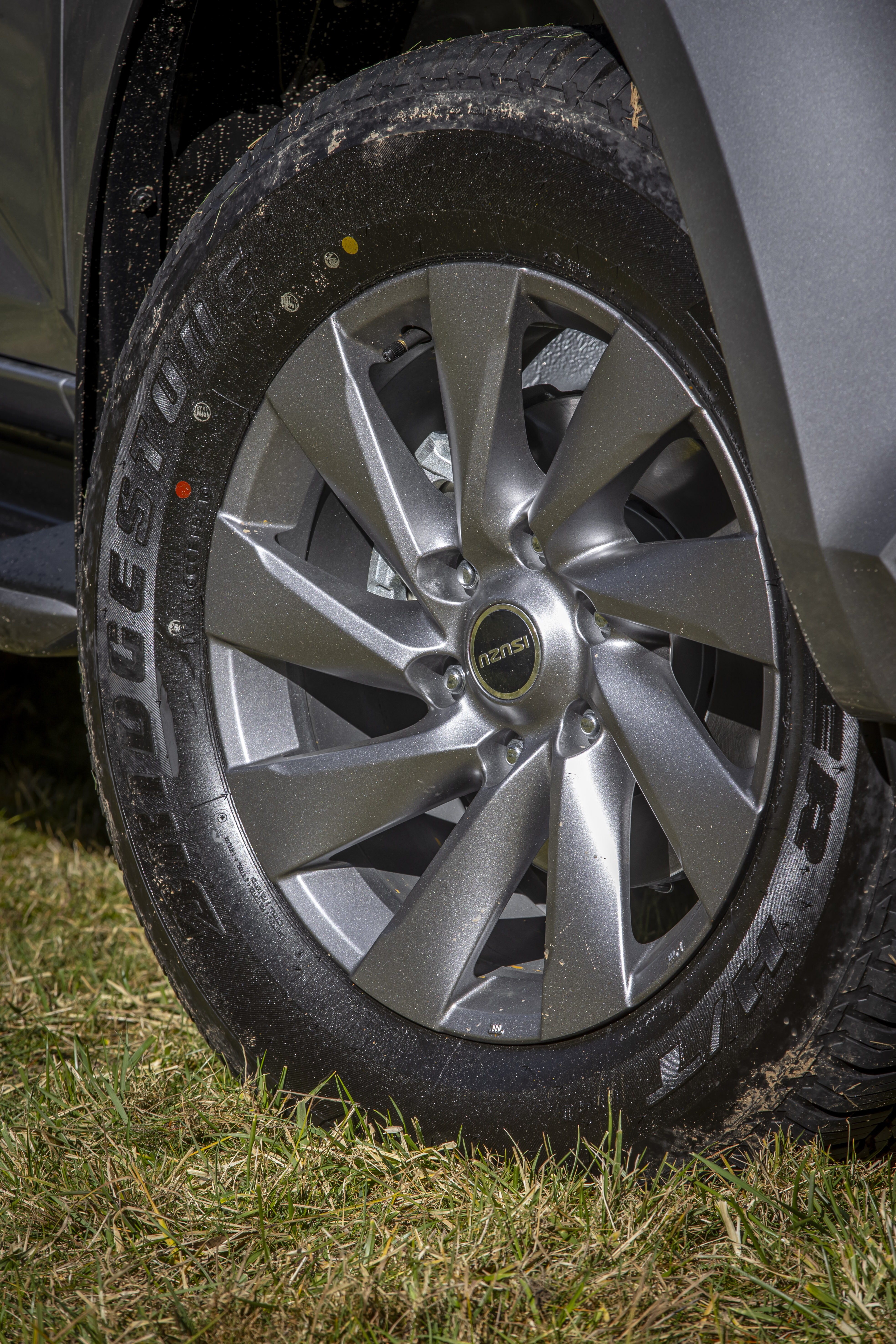
It is a shame to see 18-inch wheels on the LS-U and 20-inch wheels on the LS-T models, even though we know this is due to the upgraded brakes found on this 2021 model. The 17-inch wheels are my personal rim size of choice, as a good balance between on- and off-road handling. Thankfully, there are a wider range of all-terrain tyres available these days in 18- and 20-inch wheels. On the topic of brakes, there is also now an electronically controlled handbrake instead of a traditional manually operated unit.
Payload has been increased, thanks to the new stronger and lighter chassis and firmer spring rate in the suspension. This LS-U can carry 645kg, and the 3500-tonne towing capacity is standard across the range.
Speaking of range, the 2021 MU-X now has an 80L fuel tank. Sure, it’s not as good as say the Prado, but it is still an improvement. Considering how frugal that 3.0L turbo-diesel engine is, that should represent solid touring range. No doubt there will be larger aftermarket fuel tanks available in the very near future, too. Another improvement is a factory rating of 100kg load capacity for the roof, if you decide to fit roof racks.
All in all, this is a very easy vehicle to live with daily. Especially when considering how much safety technology has been incorporated into it, under Isuzu’s banner of IDAS (Intelligent Driver Assistance System). This showcases an absolute stonking amount of modern safety, which would have to be class leading (or very close to) in this wagon category.
SUMMARY
Yes, the new 2021 Isuzu MU-X is a better vehicle to drive in every way compared to the previous model. Yes, it is more expensive and more complex, but you are also getting so many more inclusions for your money. It’s now rather capable off-road thanks to the addition of the Rough Terrain traction-control mode and the rear differential lock across the 4×4 range. It is also a (much) more refined package on road compared to the MU-X of old. Special mention must go to the suspension tune in the 2021 MU-X, as it rides brilliantly on-road and in the rough stuff.
The 2021 Isuzu MU-X is safer and more practical for families. With a larger fuel tank and 100kg roof capacity, there’s plenty of good news for off-road tourers as well. We’re looking forward to driving the other models in the range, to work out where the sweet spot is when it comes to ownership. So far, I’m impressed.
Snapshot
- Prices for LC300 start at $89,990
- GR Sport lands from $137,790
- Range-topping Sahara ZX begins at $138,790
Toyota has confirmed the price and specifications of the Australian-delivered LandCruiser 300 Series ahead of its arrival later this year.
After the vehicle’s initial unveiling at the beginning of June, Toyota remained tight-lipped surrounding exactly which trim levels would come to the local market, only confirming Australian models would exclusively be powered by the new 3.3-litre V6 diesel engine, replacing the outgoing V8.
Although it was first believed there would only be five variants to arrive Down Under, Toyota has added a sixth trim to the LC300 range, now topped by the Sahara ZX which is placed just above the highly-anticipated GR Sport.
UPDATE, October 14 2021: The LC300 has now made its proper Australian debut, and you can read and watch our full first-drive review here.
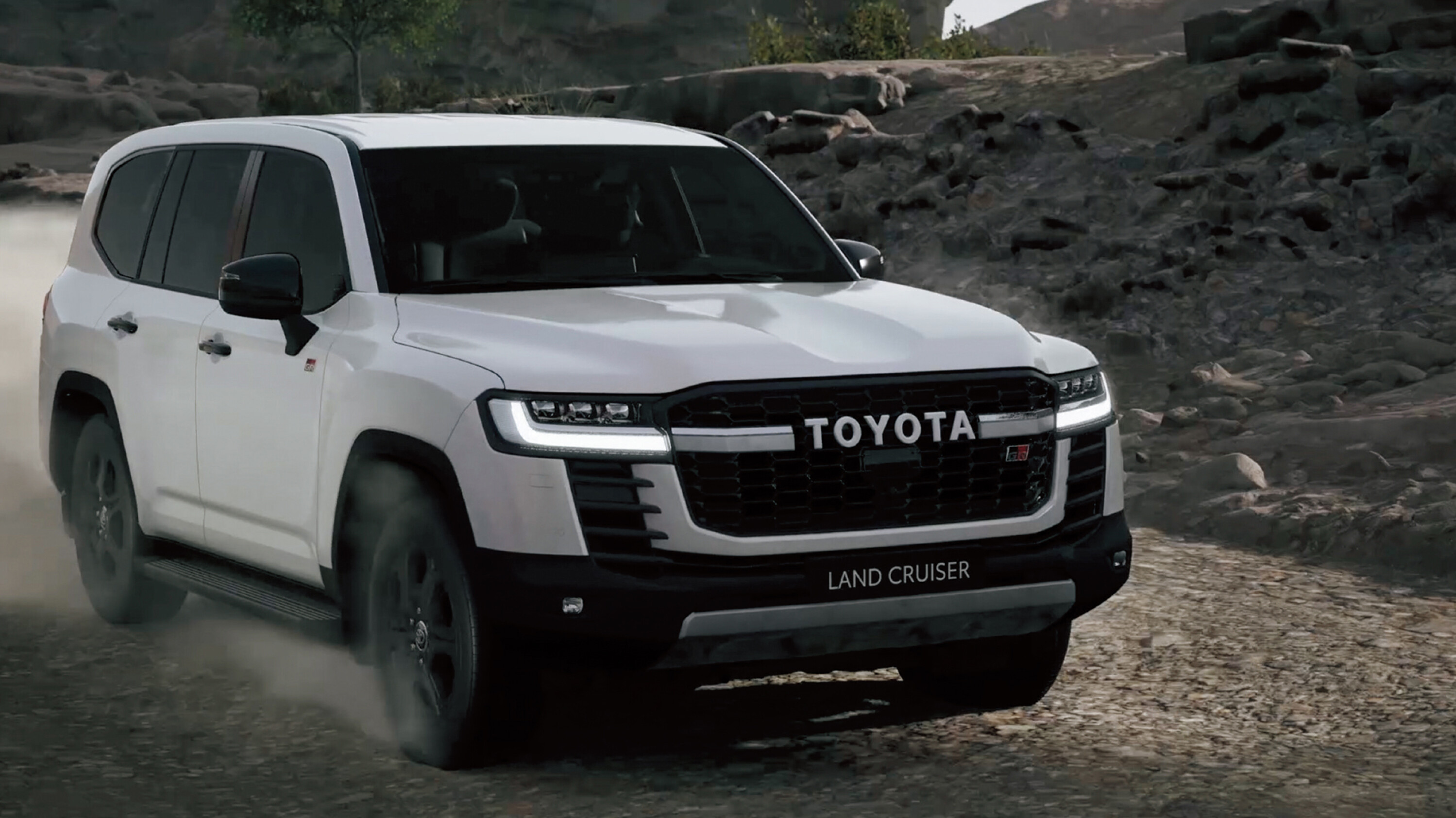
2022 Toyota LandCruiser 300 pricing for Australia
All new LandCruiser 300 variants have undergone a price increase over the outgoing 200 Series, ranging from just over $9000 in the case of the GX to around $10,000 for the VX.
Of the six trim levels available, three are offered with five seats (GX, GR Sport, Sahara ZX) as the remaining three are fitted with seven seats as standard (GXL, VX, Sahara).
| GX | $89,990 |
| GXL | $101,790 |
| VX | $113,990 |
| SAHARA | $131,190 |
| GR SPORT | $137,790 |
| SAHARA ZX | $138,790 |
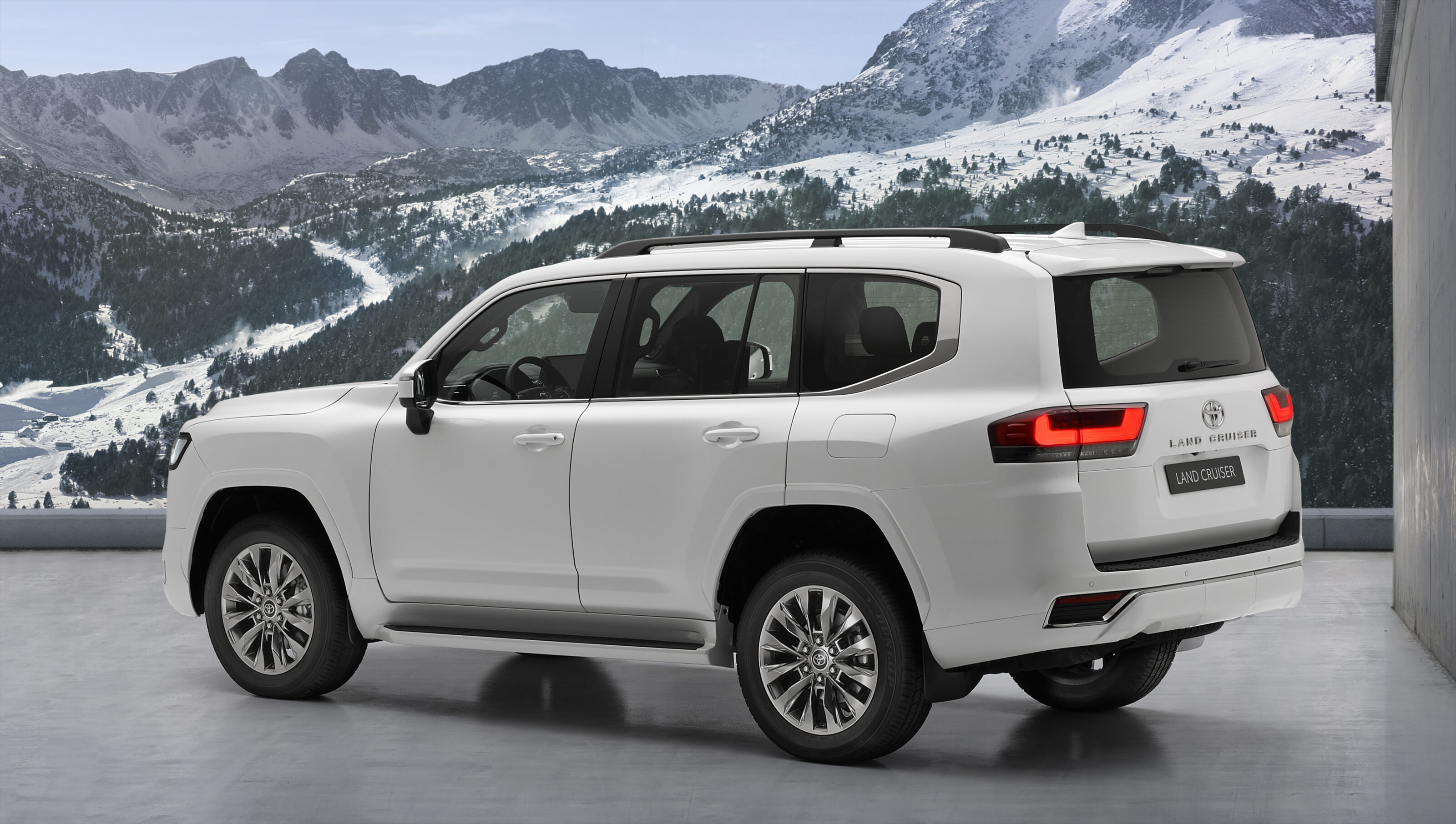
Features
Starting off with the entry-level GX, the base model includes as standard:
| 17-inch wheels |
| LED headlights with auto high beam |
| Single-piece tailgate |
| 9-inch infotainment touchscreen with smartphone integration |
| Apple CarPlay/Android Auto |
| Keyless entry and ignition |
| Dual-zone automatic air-conditioning |
| Single-touch power windows |
| Autonomous emergency braking |
| Adaptive cruise control |
| Lane assist |
| Toyota Connected Services automatic traffic collision notification, SOS and stolen vehicle tracking |
Moving up to the GXL, the larger capacity trim gains:
| 18-inch wheels |
| Rear cross-traffic alert |
| Blind-spot monitor |
| Auto-dimming rear view mirror |
| Qi wireless phone charger |
| Multi-terrain select |
Next, the VX, another seven-seater but with more kit on top of the GXL, including:
| 12.3-inch touchscreen |
| 10 speaker audio system |
| 7-inch multi-info display within the instrument cluster |
| Quad-zone automatic climate control |
| Remote power windows |
| Power-adjustable steering wheel |
| Heated and ventilated front seats |
| Rear parking support brake |
| Panoramic view monitor |
| Vehicle Dynamics Integrated Management. |
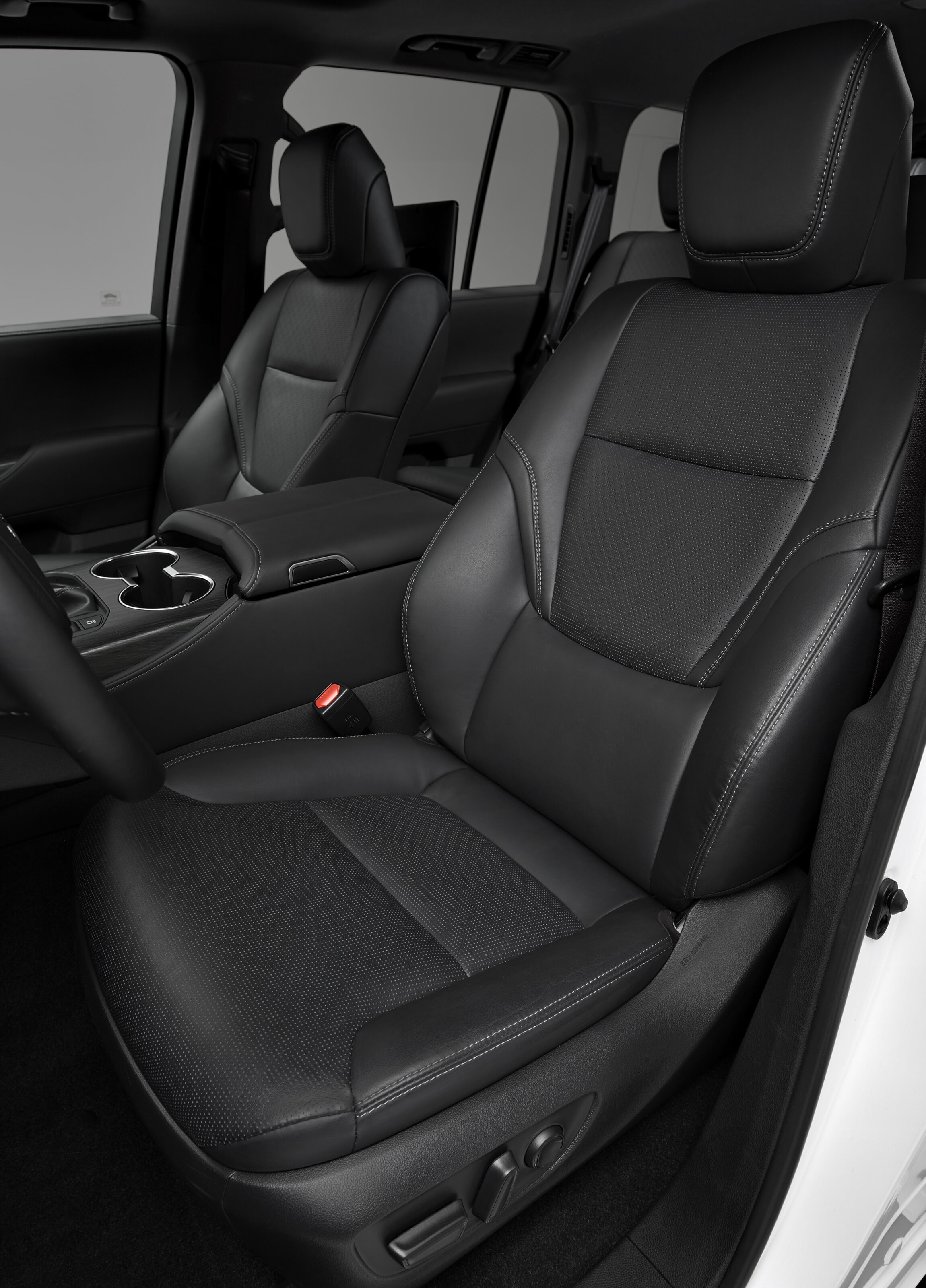
The former range-topping Sahara has given up its title as the highest-price variant in the range but still features some impressive kit such as:
| 14-speaker JBL premium audio system |
| Head-up display |
| Heated steering wheel |
| Ventilation for second-row seats |
| Power folding third-row seats |
The GR Sport takes a different approach to the LandCruiser experience, developed to take on the Dakar Rally but not skimping on features, adding:
| Honeycomb black grille with Toyota lettering |
| GR Sport badges on the grille, doors, tailgate, steering wheel, front-seat headrests and ignition button |
| Black 18-inch wheels |
| Black wheel arches, side steps, door handles, mirror and window trims |
| Unpainted front and rear bumpers |
| Black leather seats with carbon or red highlights |
| Toyota e-KDSS (electronic Kinetic Dynamic Suspension System) |
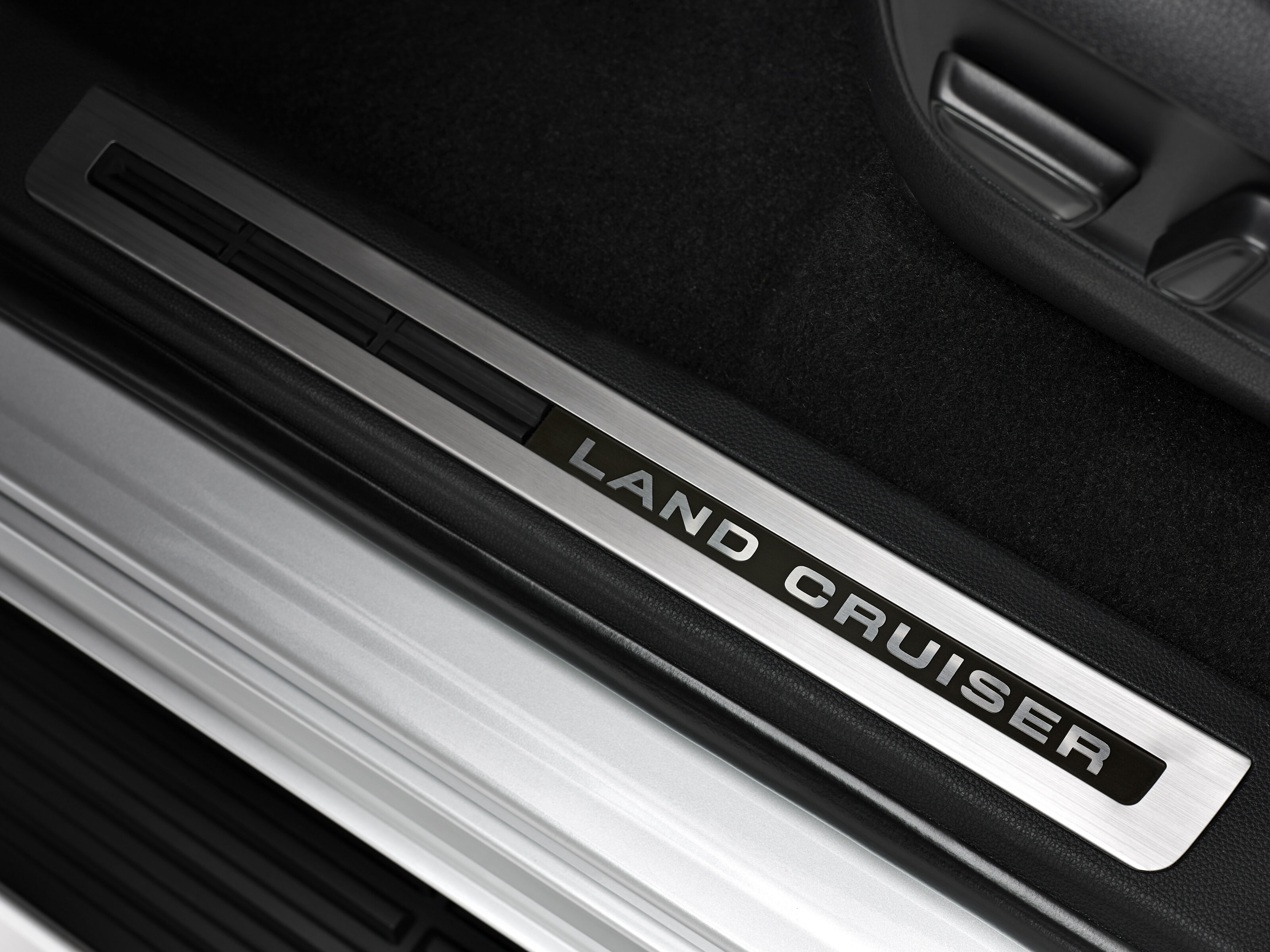
Finally, the five-seat Sahara ZX, intended to be the premium offering, has:
| 20-inch wheels |
| Sahara ZX-specific front bumper and chrome rear bumper |
| Body-coloured wheel arches |
| Illuminated side steps |
| Front scuff plates |
| Rear mudguards |
| Unique sleek headlights and taillights |
| Chrome grille |
| Remodelled tailgate |
| Four heated and ventilated seats |
| Hands-free tailgate with kick sensor |
| Torque-sensing limited-slip rear differential |
Engine, drivetrain and fuel economy
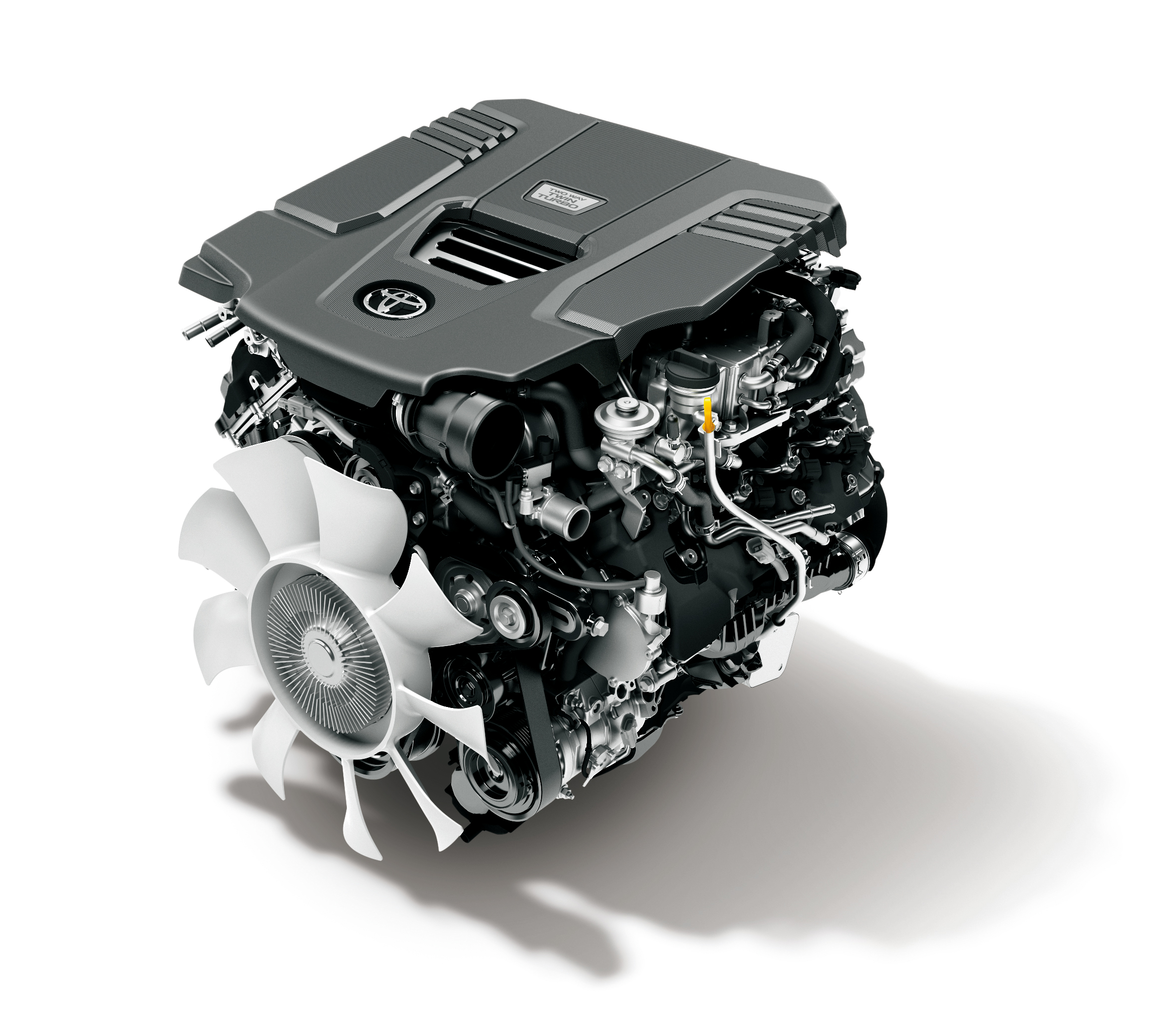
Featuring Toyota’s new F33A-FTV donk, the LandCruiser drops the 4.5-litre, twin-turbo V8 diesel in favour of a 3.3-litre, twin-turbo V6 diesel unit, producing 227kW of power and 700Nm of torque, a 27kW/50Nm increase over the outgoing engine.
Fuel economy has also improved over the 200 Series, dropping from a combined 9.5L/100km to 8.9L/100km, due in part to the LC300’s ten-speed automatic gearbox which features four more ratios over the LC200’s six-speed.
Power is sent to all four wheels through Toyota’s AWD Integrated Management system, linking the steering assist, brake and throttle control, transmission and drive torque distribution to optimise power delivery and overall handling.
The GX, GXL, VX and Sahara feature centre differential lock, with the Sahara ZX gaining the aforementioned torque-sensing rear LSD – although the GR Sport has the most comprehensive system, with front, centre and rear diff lock thanks to solenoid actuators.
Dimensions
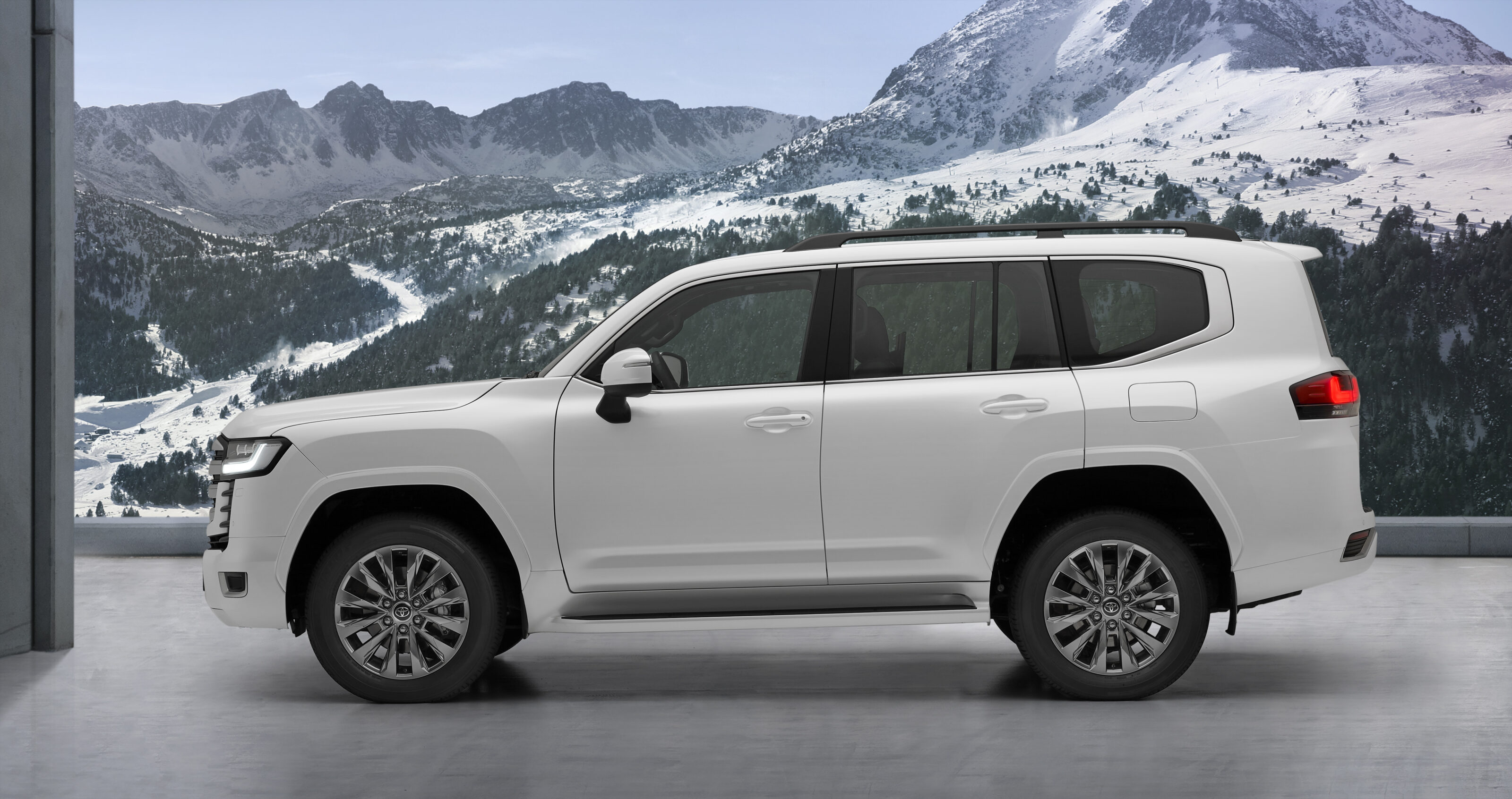
The LC300’s dimensions vary depending on spec, with the GR Sport tipping the scales as the heaviest variant of the six available.
| u00a0 | Length (mm) | Width (mm) | Height (mm) | Wheelbase (mm) | Tare Mass (kg) |
|---|---|---|---|---|---|
| GX | 4980 | 2000 (w/snorkel) | 1950 | 2850 | 2410 |
| GXL | 4980 | 1980 | 1950 | 2850 | 2545 |
| VX | 4980 | 1980 | 1950 | 2850 | 2525 |
| Sahara | 4980 | 1980 | 1950 | 2850 | 2495 |
| Sahara ZX | 5015 | 1980 | 1950 | 2850 | 2570 |
| GR Sport | 4995 | 1990 | 1950 | 2850 | 2580 |
Gross vehicle mass for the range is reduced to 3280kg from the LC200’s 3350kg, while towing capacity remains the same, standing at 3500 braked and 750kg unbraked.
Availability
The LandCruiser 300 Series is currently available to order with deliveries expected to begin towards the end of 2021.
As with the rest of Toyota’s range, the LC300 will be covered by a five-year/unlimited-kilometre warranty.
Snapshot
- Hilux with slender sales lead in July
- Ranger still leads on the YTD charts
- Budget boomers
The Toyota Hilux has outsold the Ford Ranger on the 4×4 charts in July, with 4×4 vehicles continuing to sell well on the Australian market.
Despite the lingering presence of COVID-19 across the country, sales of new 4×4 vehicles continues its steady incline, with 16,147 4×4 vehicles sold in July 2021.
With 11,069 4×4 units sold in July 2020, this represents an increase of 20.6 per cent month-to-month. This is indicative of the YTD trend, where 117,744 units have been sold so far in 2021 compared to 86,838 at the same time last year.
On the overall Light Commercial Vehicles (LCV) charts, 20,994 units sold in July 2021 compared to 14,898 in July 2020 – and 154,501 units have been sold YTD compared to 115,512 in 2020.
This represents an increase of 40.9 per cent month-to-month and 33.8 per cent YTD.
“The Light Commercial segment increased by 40.9 per cent on July last year while SUV sales are up by 15 per cent. We are also seeing the trend of restocking in the rental segment, with growth of 231.4 per cent reflecting the increasing demand for local tourism and travel,” said FCAI’s Chief Executive, Tony Weber.
Total LCV sales for the month comprise of 6837 private sales, 12,423 business sales, 968 government sales and 766 rental sales.
Diesel still dominates the LCV market, accounting for 19,628 sales. 1362 petrol-powered LCVs were sold, and four electric LCVs.
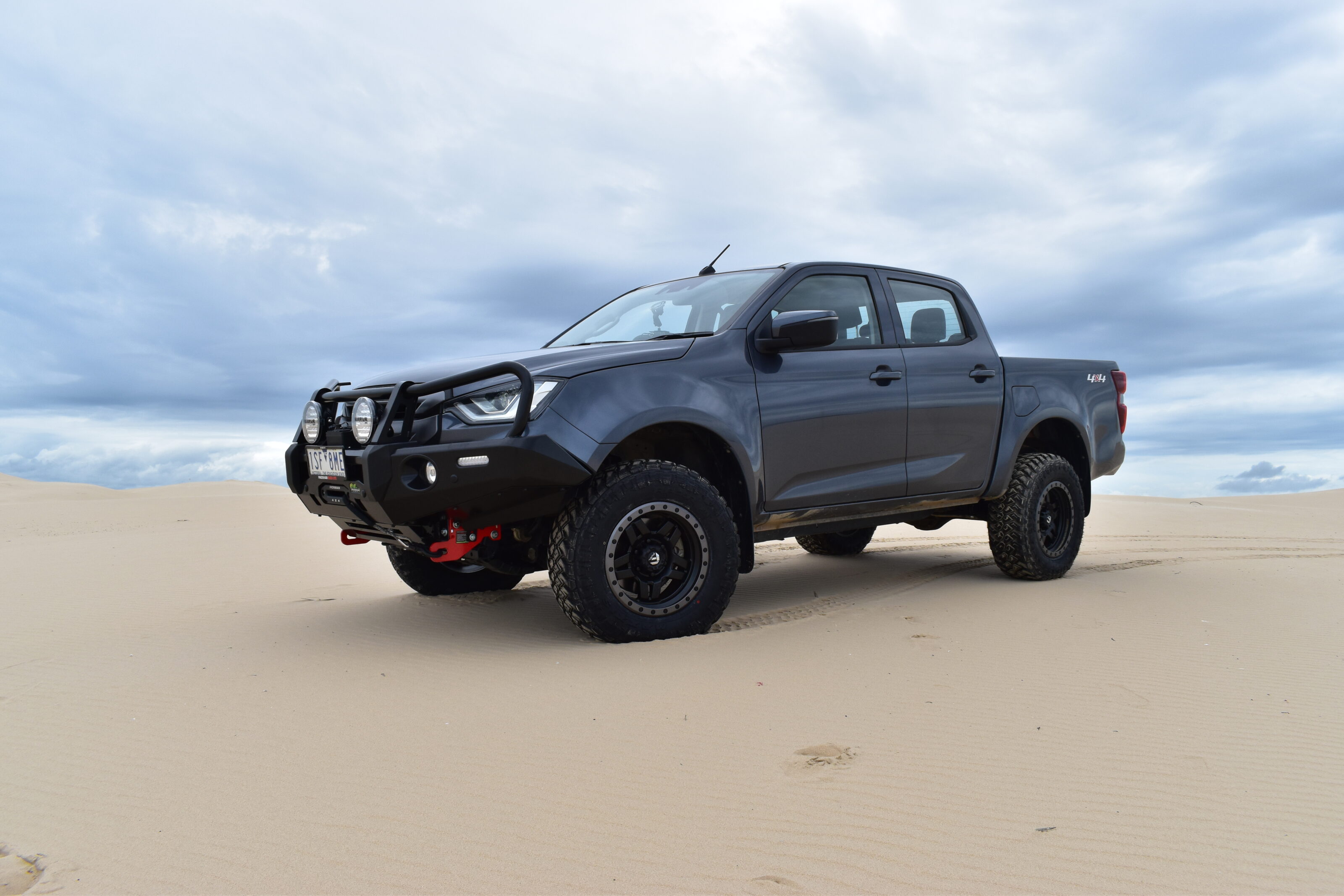
A total of 3790 Hilux 4x4s were sold in July 2021, giving it a slender lead over its arch rival (Ranger; 3683 sales) on the monthly charts. The Prado continues to be Australia’s favourite off-road wagon, shifting 2251 units for the month.
The new D-MAX continues to truck along, netting 1795 sales. This once again puts it in the top three selling dual cabs, behind the Hilux and Ranger. And with the arrival of the all-new MU-X in August, it’ll be interesting to follow sales of the Japanese marque in the back end of 2021.
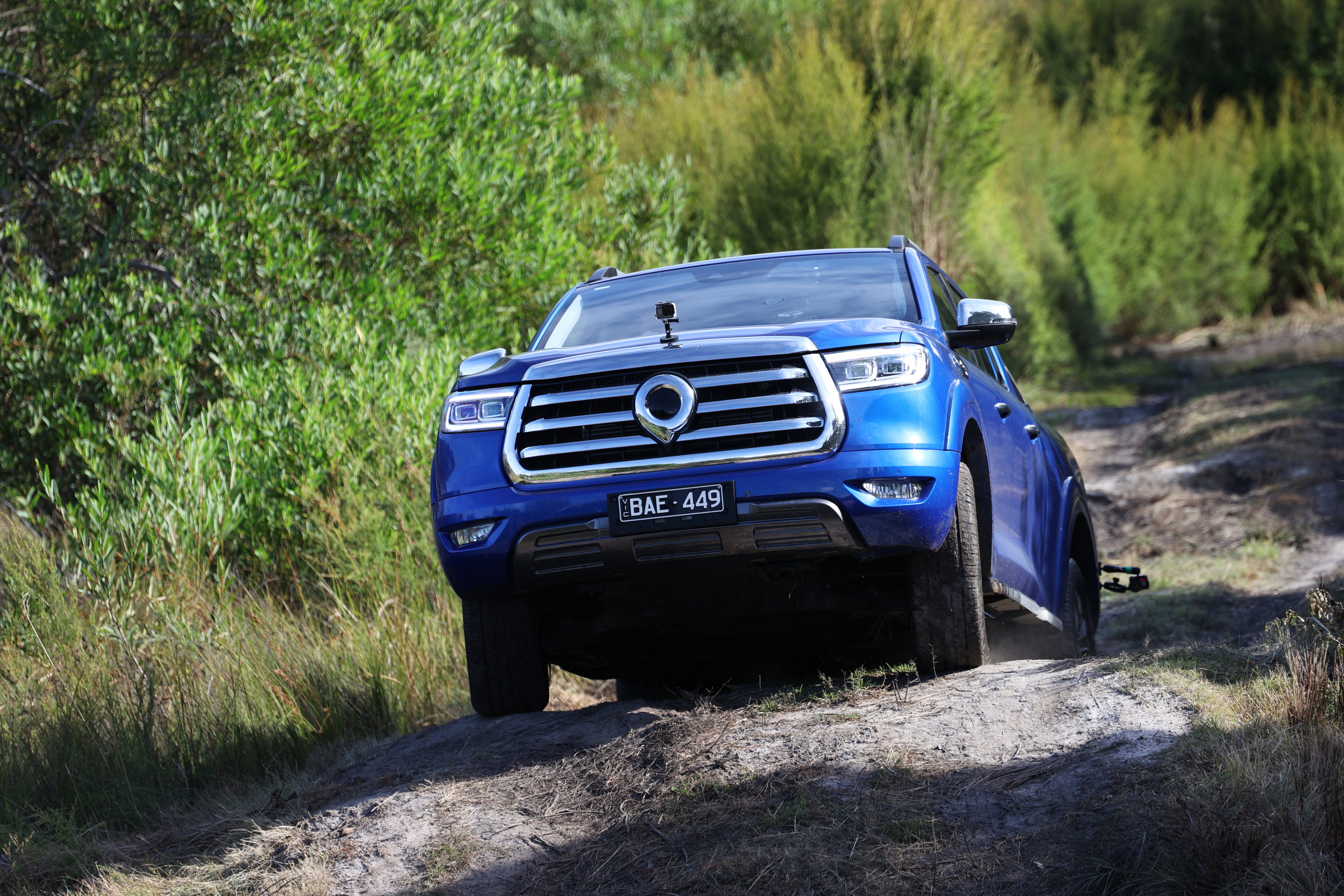
Sales also boomed at the budget end of the 4×4 market, with both the LDV T60 and SsangYong Musso recording considerable spikes in July. LDV sold 647 T60 vehicles (+48.1 per cent month-to-month) and Ssangyong sold 157 Musso/Musso XLV models (+41.4 per cent month-to-month). GWM sold an impressive 762 Ute units in its first month on the charts.
4X4 SALES: JULY 2021
| 1 | Toyota Hilux | 3790 |
| 2 | Ford Ranger | 3683 |
| 3 | Toyota Prado | 2251 |
| 4 | Isuzu D-MAX | 1795 |
| 5 | Mitsubishi Triton | 1290 |
| 6 | Toyota LC79 | 984 |
| 7 | Nissan Navara | 983 |
| 8 | Mazda BT-50 | 977 |
| 9 | Isuzu MU-X | 976 |
| 10 | Ford Everest | 772 |
Snapshot
- Six variants confirmed to land locally
- All LC300 trims to be powered by V6TT diesel
- Five and seven-seat options available
The new Toyota LandCruiser 300 Series has been officially homologated for Australia ahead of the model’s release later this year, with the Japanese manufacturer receiving Government clearance to sell its latest off-roader.
Officially unveiled in June, the LC300s will be exclusively powered by the new F33A-FTV 3.3-litre, twin-turbo V6 diesel engine which produces 227kW and 700Nm, mated to a ten-speed automatic transmission which sends power to all four wheels.
While international models will wear SX, ZX and VX-R badging, it is likely the Australian arrivals will adopt the existing GX, GXL, VX and Sahara names, with the GR Sport and Sahara ZX expected to arrive as the model’s range-topping variants.
UPDATE, October 14 2021: The LC300 has now made its proper Australian debut, and you can read and watch our full first-drive review here.
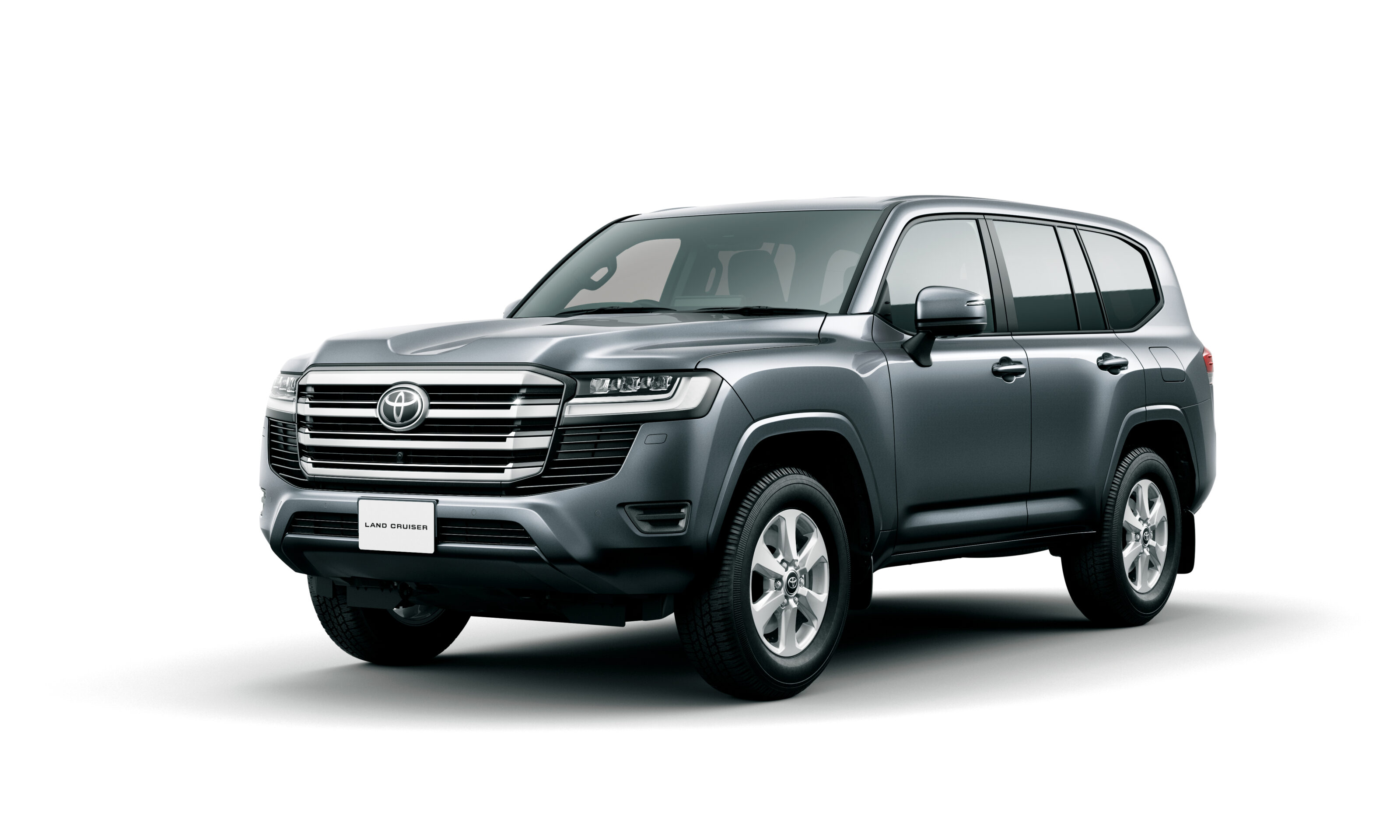
Government documentation shows six variants have been homologated for local release, with at three of the trims to be offered as seven-seat options as the remaining three are only available as five-seaters.
Below is a breakdown of the six variants and their potential names.
| u00a0 | Length (mm) | Width (mm) | Height (mm) | Wheelbase (mm) | Tare Mass (kg) |
|---|---|---|---|---|---|
| GX | 4980 | 2000 (w/snorkel) | 1950 | 2850 | 2410 |
| GXL | 4980 | 1980 | 1950 | 2850 | 2545 |
| VX | 4980 | 1980 | 1950 | 2850 | 2525 |
| Sahara | 4980 | 1980 | 1950 | 2850 | 2495 |
| Sahara ZX | 5015 | 1980 | 1950 | 2850 | 2570 |
| GR Sport | 4995 | 1990 | 1950 | 2850 | 2580 |
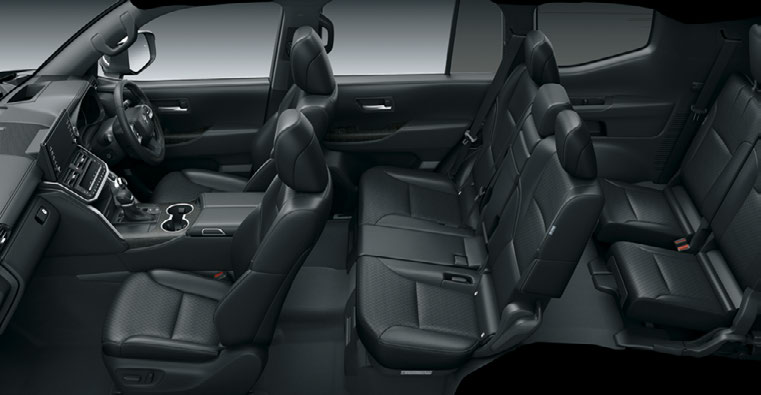
The entry-level GX is set to ride on 17-inch wheels with 245/75 tyres, stepping up to 18-inch alloys and 265/65 rubber on the GXL, VX, Sahara and GR Sport while the Sahara ZX gains 20-inch wheels, shod in 265/55s.
Toyota has also confirmed international versions of the LC300 will feature an engine start button with a fingerprint sensor, only turning on the vehicle if the finger used is registered to the vehicle.
Having recently celebrated 70 years of LandCruiser, Toyota announced it will also be producing limited edition 70 Series models to mark the occasion, based on the single cab, dual cab and wagon body shapes.
Snapshot
- Toyota to start reproducing parts for 40 series
- Parts include engines, drivelines and exhaust
- Available from early 2022
Toyota is set to expand its GR Heritage Parts Program, with its Gazoo Racing performance wing announcing it is to remanufacture parts for the LandCruiser 40 series.
The move forms part of Toyota’s celebration of the LandCruiser’s 70th birthday, which also includes some special editions of the 70 series LandCruiser announced earlier this week.
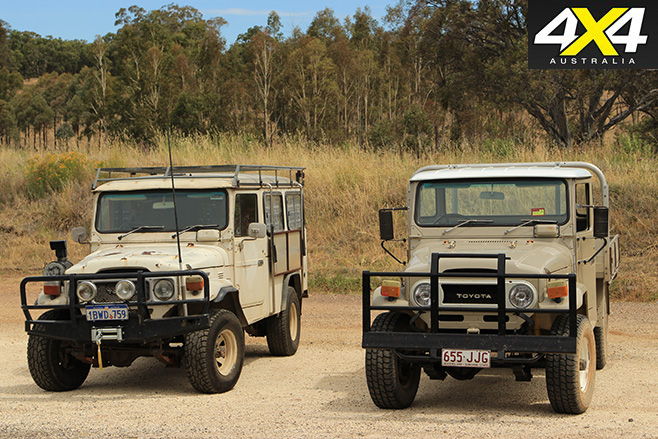
At this stage there is no exact parts list of what will be reproduced, but in its statement, Toyota said the program will include “engines, drivelines, and exhaust systems.”
According to the carmaker, parts sold will be “related to the critical functions of driving, turning, and braking for the 40 Series LandCruiser.”
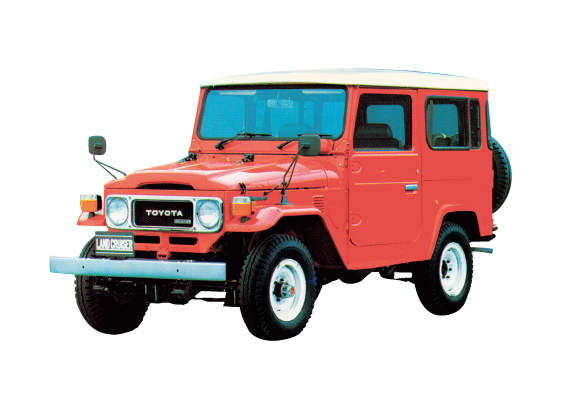
Toyota expects the parts will be available from the beginning of 2022, with the company preparing a questionnaire whereby LandCruiser owners can submit their wish-list of the reproduction parts they’d like to see made available.
Toyota said “this feedback will be used in the selection of the next parts to be reproduced.”
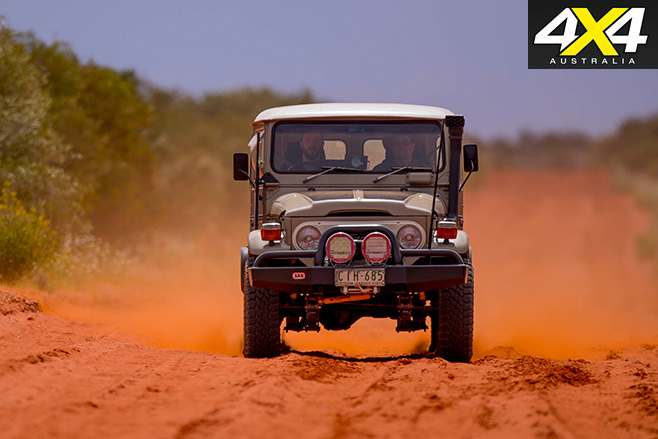
Owners of later-model LandCruisers won’t need be left out either, as Toyota states: “In addition to the 40 Series, the company intends to discuss reproduction of parts for later generations of the model.”
The 40 series LandCruiser will be the fourth car to have parts reproduced by Toyota, the company already remaking parts for the A70 and A80 Supra along with the highly valuable 2000 GT.
Toyota may just have saved best until last.
The first official details on the new 300 Series LandCruiser have been announced and it’s coming with a brand-new high-tech 3.3-litre V6 diesel that, on paper at least, makes any previous diesel engine Toyota has produced look decidedly underwhelming. And that even applies to the recently updated 2.8-litre four in the Hilux and Prado. This new engine will also be backed by a 10-speed automatic, again a very significant leap forward.
To invest this heavily into new diesel technology when seemingly the vultures are already circling over the carcass of the internal-combustion engine, is a stunning move by Toyota and challenges any suggestion that the diesel engine (or the petrol engine for that matter) won’t have a future beyond this decade. And no doubt electric-vehicle zealots will see this investment in new diesel technology akin to building a new coal-fired power station, but best not tell them …
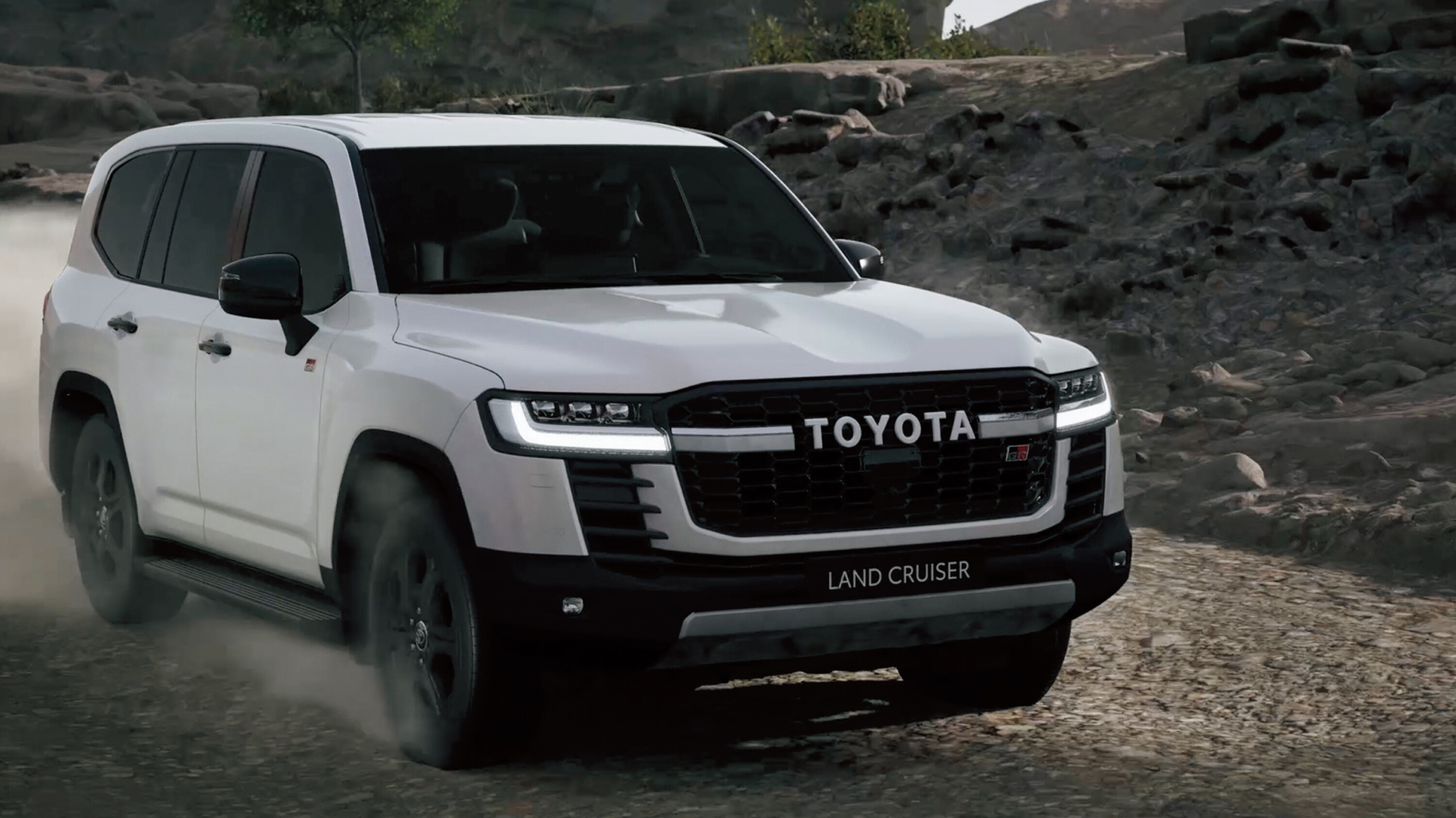
There was, of course, much speculation that the 300 wouldn’t even be offered with a diesel engine but with a petrol-electric hybrid powertrain, which is still likely to happen sometime down the track. For mine, I was convinced Toyota would revise the 4.5-litre V8 twin-turbo diesel and carry that over … perhaps not make it Euro 6 emissions standard-compliant but at least Euro 6-ready, as is the case with Toyota’s current 2.8.
Of course, Toyota could have carried over the 200’s diesel V8 without upgrading any of its emissions technology, as Euro 5 compliance is all that is required currently given the introduction of Euro 6 in Australia is only flagged for 2027.
The case for the 200’s V8 being carried to the 300 was further strengthened by the fact that in the recent evolution of the LandCruiser, Toyota’s general practice with both diesel and petrol engines is to have them span more than one LandCruiser generation.
So for the 4.5 V8 (in twin-turbo form at least) to come and go in one generation, the 200, is a notable departure from previous Toyota practice. (Note the 4.5-litre V8 engine in single-turbo form will continue in the 70 Series for the time being)
“For the 4.5 V8 (in twin-turbo form) to come and go in one generation is a notable departure from previous Toyota practice”
The fact that the 300 has been such a long time coming (arriving some four years after expectations) may in part explain this entirely new engine. At the same time it’s probably fair to say the 4.5 V8 isn’t the best diesel Toyota has ever made, with problems early on with oil consumption (especially with the 70 Series’ single-turbo version), gearbox shift protocol matching, and somewhat indifferent fuel consumption and refinement.
The refinement issue is important here as Toyota sees the LandCruiser as very much a premium product (not just as a tough 4×4) as witnessed by the fact that it benchmarked 300 Series prototypes against the Range Rover and Range Rover Sport here in Australia during its development.
The new 3.3-litre V6 diesel will make 227kW and 700Nm. To put that in to perspective and to show unequivocally what a huge step forward this is, if the current Hilux/Prado 2.8 was tuned to the same specific power and torque outputs it would make around 193kW and 594Nm instead of 150kW and 500Nm. And if the 4.5 V8 in the 200 was tuned to this level it would make 309kW and 954Nm instead of 200kW and 650Nm.
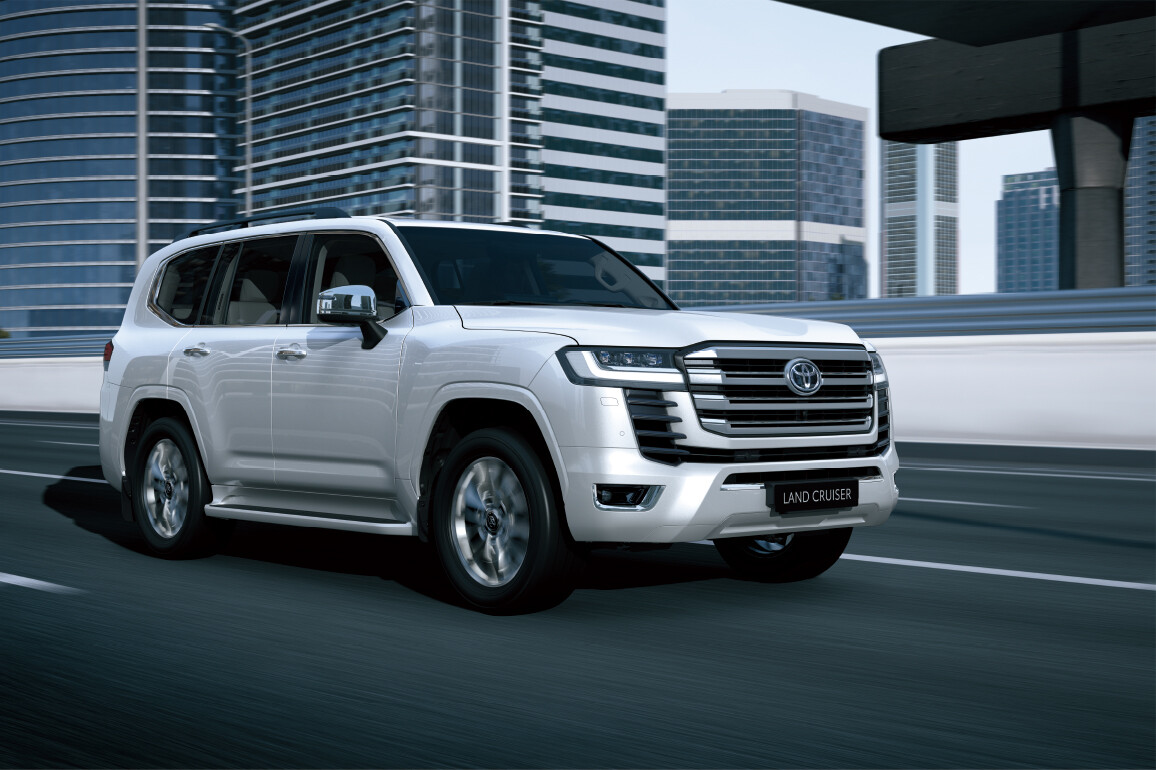
Not only is this new engine Toyota’s first diesel V6 but it’s also very much an adoption of European diesel technology, as the Europeans, especially the Germans, have been producing diesels with very high-specific power output for a good time now.
Some 20 years ago I was in Japan on Toyota’s invitation test-driving a prototype 120 Series Prado. At the time BMW had just released its first generation X5 with its in-line 3.0-litre six-cylinder diesel that made a stunning (for the time) 135kW, some 40 per cent more power than the same capacity diesel in the 120 Series Prado that made 96kW.
When I asked LandCruiser Prado chief engineer Kunihiro Hoshi at the time if he had driven the X5 diesel he said, “Yes, we bought one to try.” When I asked if Toyota would entertain similar new diesel technology he said, “Yes, we are looking.” Seems they did.
Snapshot
- To be based on GXL model
- Single-cab 79 pick-up, double-cab 79 pick-up and 76 Series wagon variants
- Priced from $78,500
Toyota Australia is expected to mark 70 years of building 4×4 vehicles with a number of 70th anniversary LandCruisers, and it has confirmed the first of them to get the treatment will be the most iconic of all surviving models: the 70 Series.
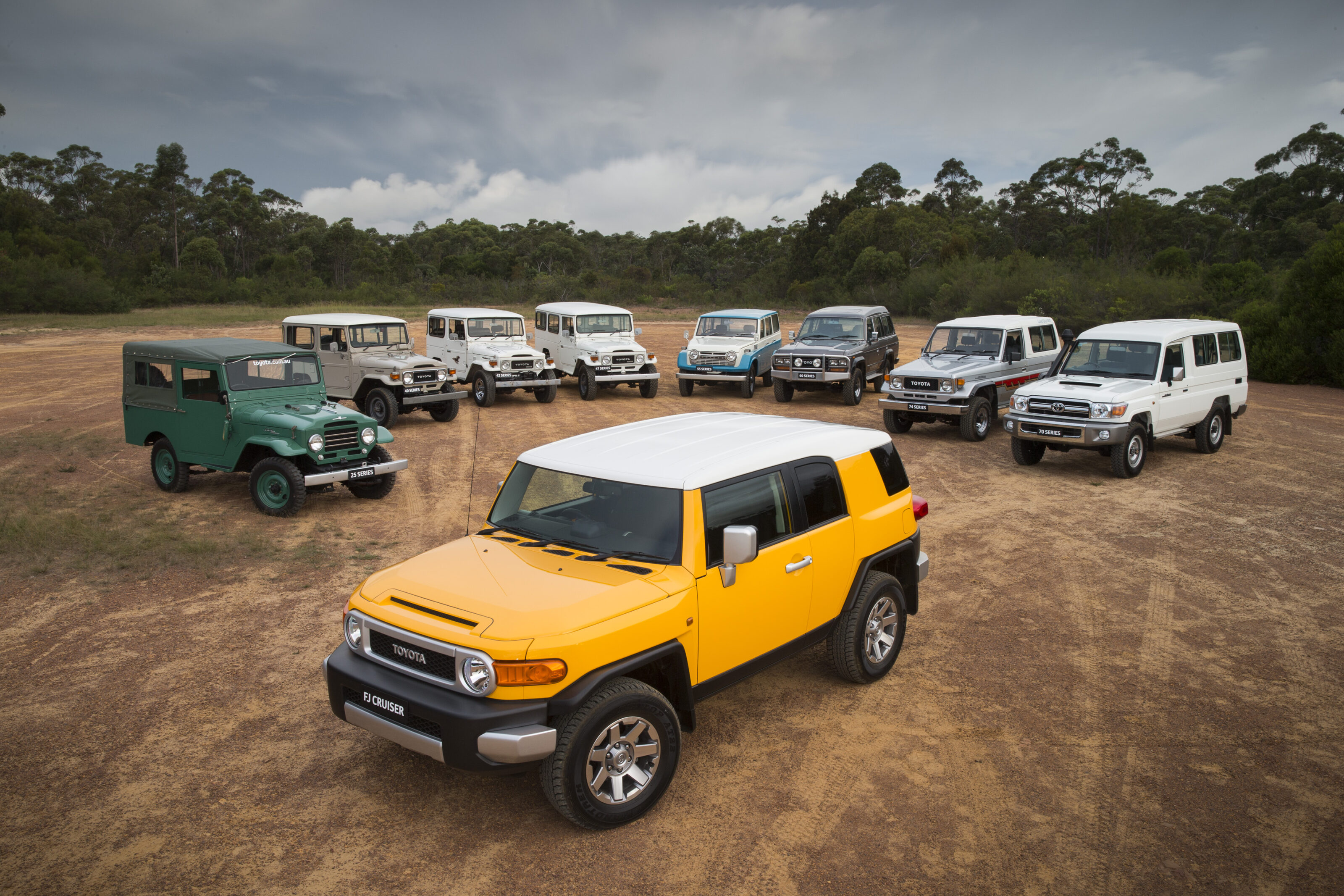
Toyota began building its BJ 4×4 in post-war Japan in 1951, but it wasn’t until 1954 that the name LandCruiser was placed on them after Willys filed a trademark on the name Jeep. Around this time the first petrol engine was introduced to the model, and thus the first FJ LandCruiser was born.
The 70 Series is the one remaining LandCruiser model that can truly trace its heritage back to those early vehicles, as it stayed true to the rugged and commercial offerings that were built to take on any condition.
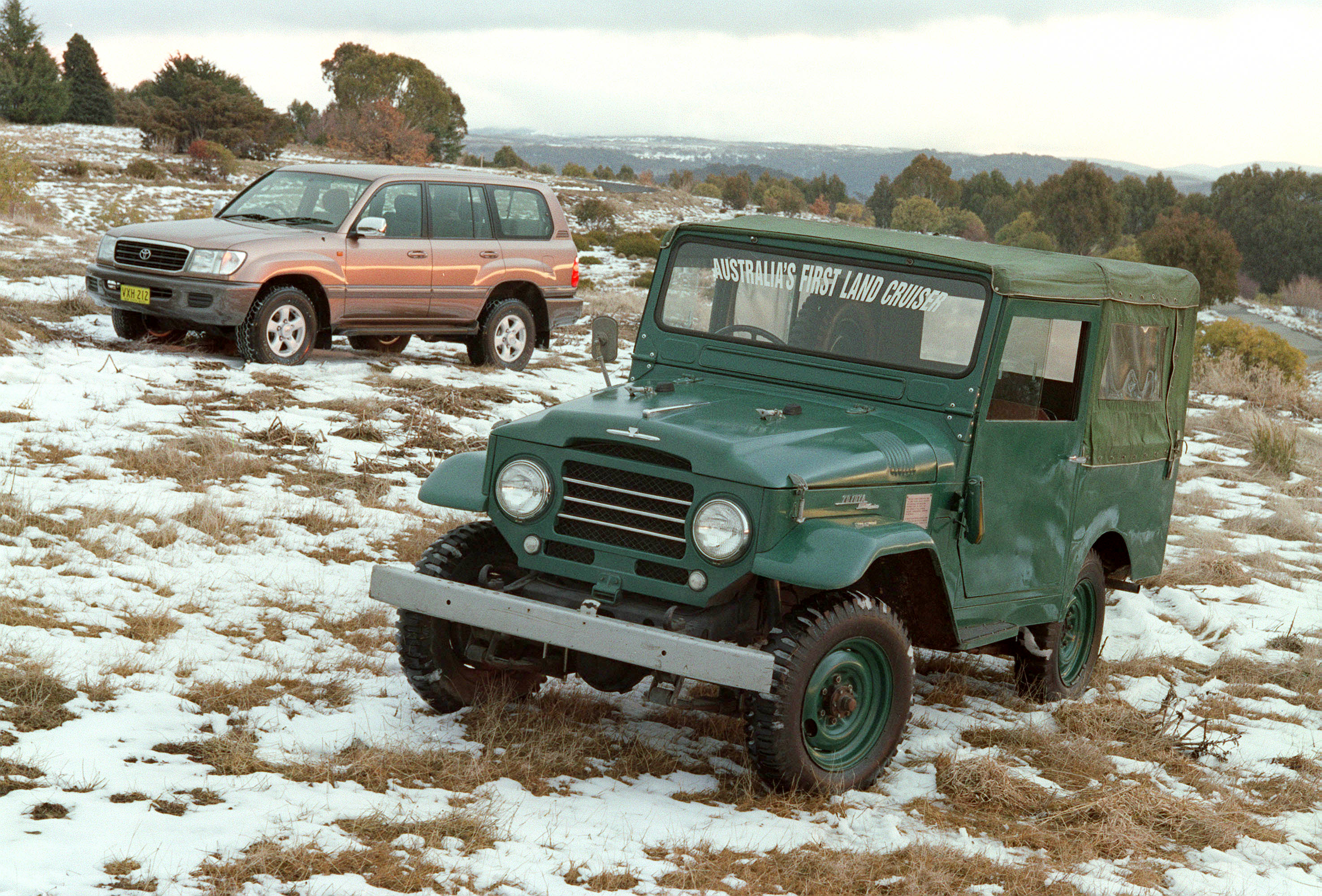
Ever since the 60 Series debuted in 1980, the subsequent LandCruiser wagons have taken on a more comfortable and user-friendly design than the commercial-grade 70s.
The 70 Series has been there for 36 of the LandCruiser’s 70 years, and today it’s more popular than ever.
The 70th Anniversary edition 70 Series will be based on the GXL model available in single-cab 79 pick-up (200 units), double-cab 79 pick-up (320 units) and 76 Series wagon (80 vehicles) variants.
They will be priced at $78,500 for the 76 Series wagon, $80,050 for the single-cab 79, and $82,600 for the double-cab 79.
The special edition models will feature a black heritage grille with ‘TOYOTA’ lettering surrounded by darkened headlight bezels and LED fog lights and DRLs. A black front bumper, wheel-arch flares and darkened alloy wheels continue the dark look. A ‘Heritage’ LandCruiser badge is applied on the front guard, along with a ‘70th Anniversary’ emblem.
The interior of the 70 Series Cruisers remain quite Spartan, in keeping with their commercial use, but the Anniversary edition gets dolled up with black seats, black leather-accented door trims, and a black leather-wrapped steering wheel and gear shift knob. Faux wood-grain trim and instrument panel, silver accents for the air vents and black treatment for the switch trims on the doors complete the look.
A new centre console with two additional 2.1-amp Type-A USB outlets and a pair of cup holders surrounds the gear shifter. Traditional 70 Series owners will wonder what the world in coming to with such luxuries.
All 70 Series LandCruisers retain the 1VD-FTE 4.5-litre single turbo V8 diesel engine backed by a five-speed manual gearbox and dual-range, part time four-wheel drive. Word on the street is that, while the all-new 300 Series LandCruiser wagon has dropped its V8 engine for a more powerful twin-turbocharged V6 diesel, the 70 series will keep the V8 for the foreseeable future.
The 70th Anniversary 70 Series LandCruisers will only be available in Sandy Taupe, Merlot Red and French Vanilla and are due in Toyota dealerships in September.
With the growing popularity of the 70 Series and the fact vehicles of this style are in decline and can’t be with us forever, you would have to think these limited-edition anniversary models could one day be valuable collectables.
Early leaked photographs of the forthcoming 300 Series showed some cars wearing 70th Anniversary badging, so you can bet we’ll see that model here when the new wagon arrives before year’s end.
4X4 OF THE YEAR
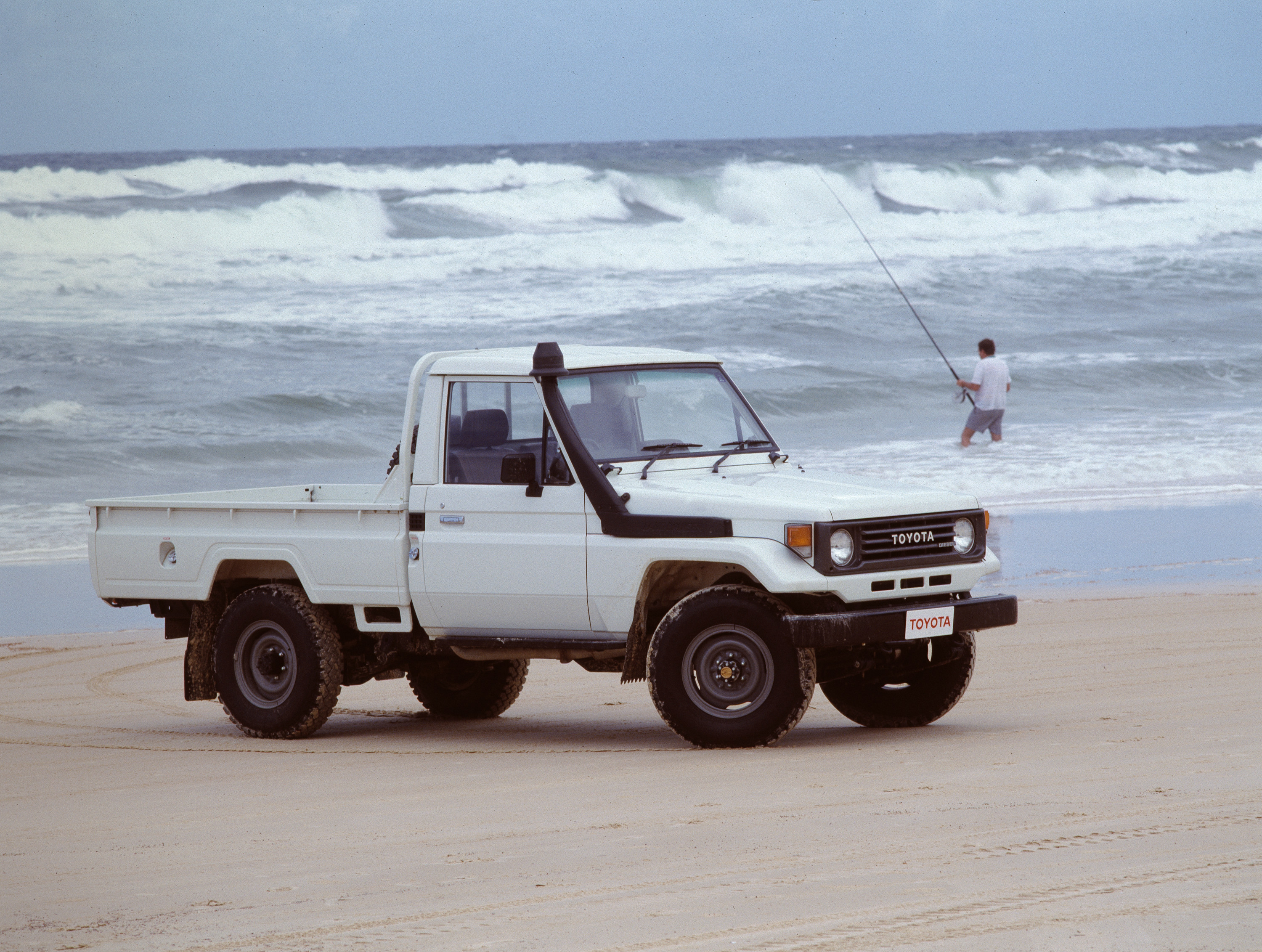
Over its 70 decades the LandCruiser has won 4X4 Australia magazine’s 4X4 of the Year award six times.
The 80 Series took the award in both 1992 and 1993; the 100 Series won it in 1998 and then again in 2001 when the turbo-diesel was introduced and in 2003 for the 4.7-litre V8 100 Series. The 200 Series has never picked up a gong, while the VDJ79 single-cab won it in 2016.
Interestingly the LandCruiser Prado GXL diesel won 4X4OTY in 2005, and in 2001 the polarising FJ Cruiser beat the 200 Series GX.