
Imagine being a billionaire for a minute. Not even a go-to-bloody-outer-space kind of billionaire like Elon Musk or the bald fella who looks suspiciously like the bad guy from the Superman movies.
I’m talking your run of the mill billionaire. The hedge fund managers and bitcoin nerds. There’s about 2700 of them at the moment and they’re all capable of spending dumb amounts of money on whatever their hearts’ desire.
What would you park in your garage? I reckon I’d have an F150 Raptor for a daily runabout, parked next to a big Ram 3500 with a canopy for a tourer, and a soft-top FJ40 on coil-overs and 37s as a weekend toy.
Hell, if I was a billionaire I reckon I’d have an aeroplane hanger full of every kind of 4×4 imaginable from wild to mild – rock crawlers, racers, big comfy tourers.
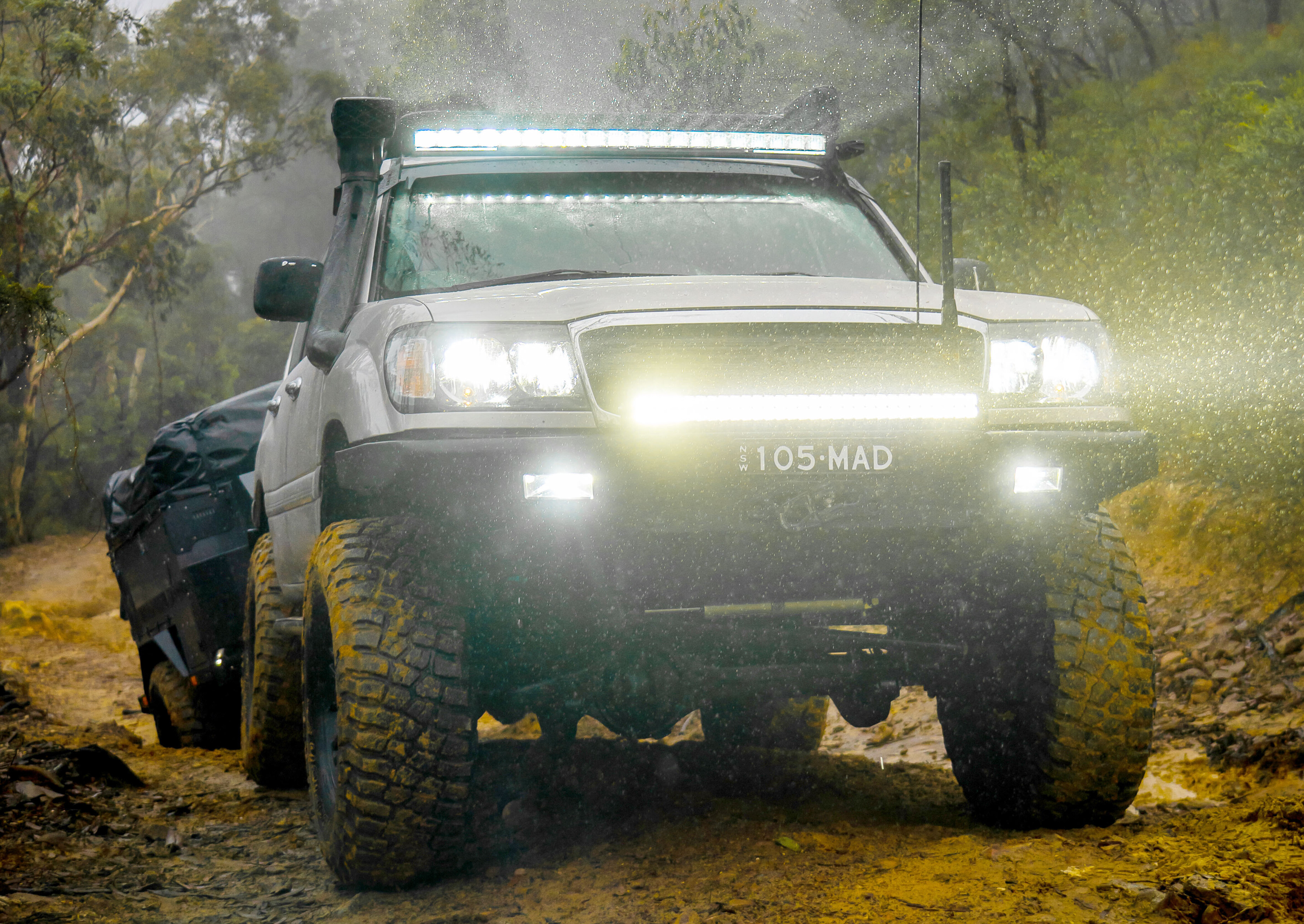
Sadly, the last time I checked my bank account I had a few less zeros than Jim Walton’s $60,000,000,000. About 10 less now, if I think about it. That means I have just the one 4×4, and it means I have to choose my modifications carefully – I can’t afford to be redoing things, and I sure as hell can’t buy a second 4×4 to suit my whims.
We’re taking a wild stab in the dark here and figuring you’re probably not a billionaire either, so a handy guide on how to build a 4×4 once and build it right should help keep your hard-earned in your pocket.
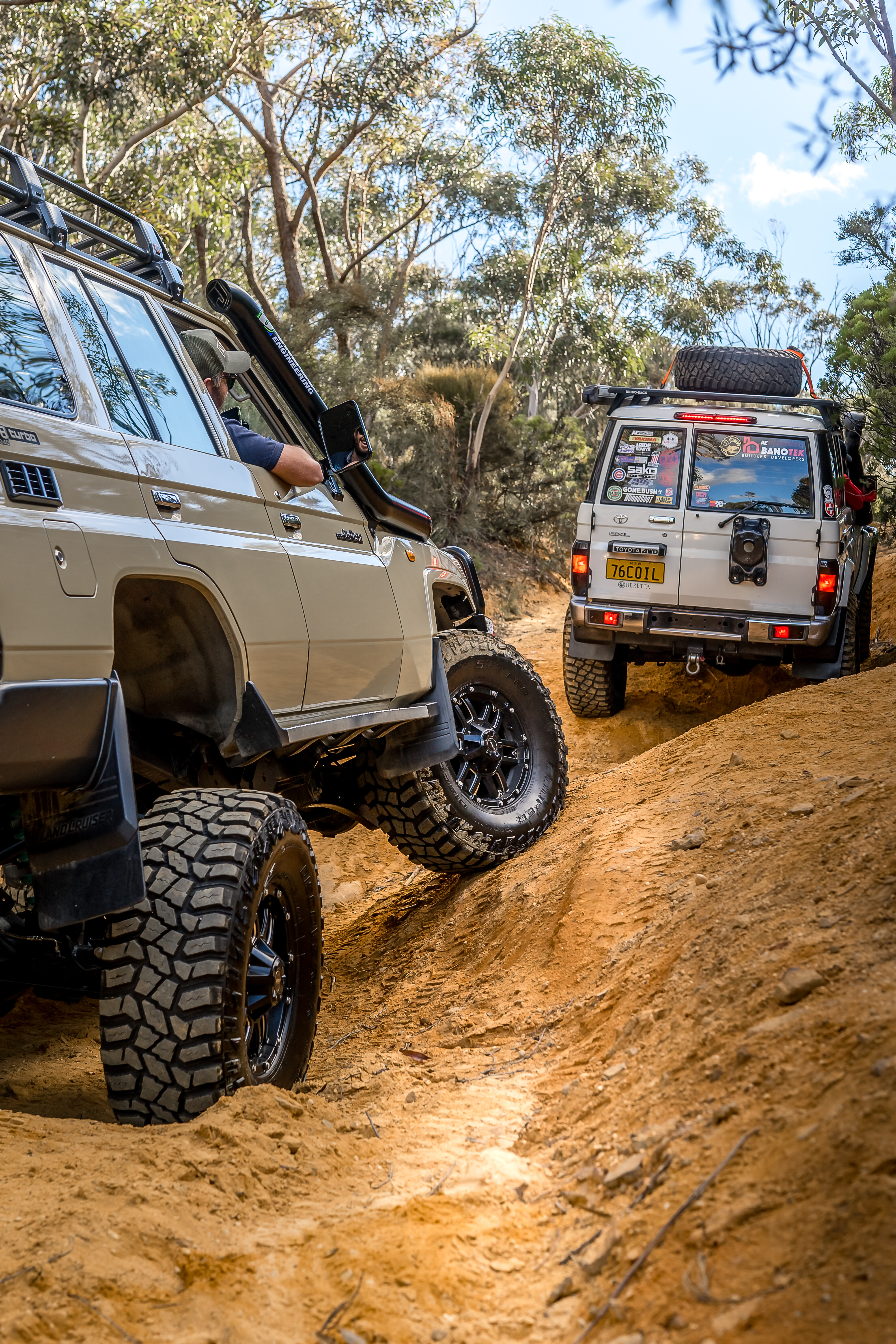
Here, we’re talking everything from the material your roof racks are made from to how many pillows you stuff inside your swag. Thousands of dollars of hard-earned lessons from 4WDing in just about every region of the country. It’s not going to be pretty, and there’s going to be some uncomfortable truths, but you’ll be one step closer to that billionaire list after our advice.
What’s the game plan?
In the age of FOMO (fear of missing out), people are more and more frequently building a 4×4 based on something they’ve seen rather than their own specific needs. It’s not really an issue we saw before everyone was glued to their phones 24/7.
Back in the day you’d go camping with your mates, it’d inevitably rain, and you’d get wet. The next time your mates saw you, you’d either have an awning bolted to the side of your roof rack, or a tarp and a couple of poles shoved in the back. The need would present itself, and you’d modify your 4×4 to suit.
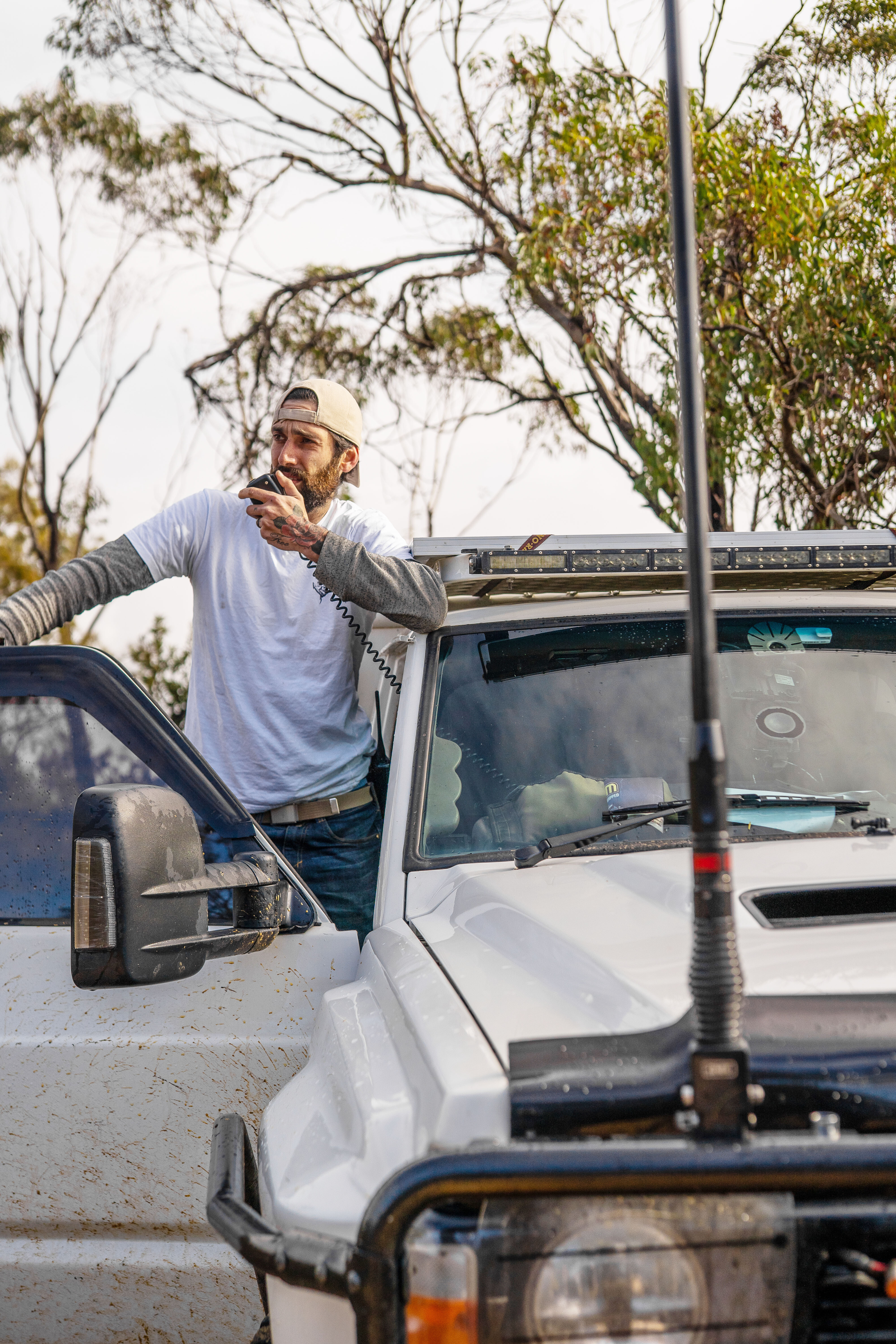
These days people will see a rig with a big, slinky suspension and decide they need the same. Forgetting they’ve spent the last 12 months decking out a big camping canopy and rooftop tent that all raise their centre of gravity.
By trying to make their tourer a rock crawler, they’ve made it worse at both and spent a fortune in the process. The result is more money wasted. Buying a new suspension again, or selling the canopy at a massive loss second-hand because they’ve decided they want to rock crawl now.
It might sound a little basic, but there’s a reason we’ve put this one front and centre. Before you buy a single accessory for your 4×4, or even the 4×4 itself, decide what your goals are and if the modifications you’re doing will actually help you towards the end goal.
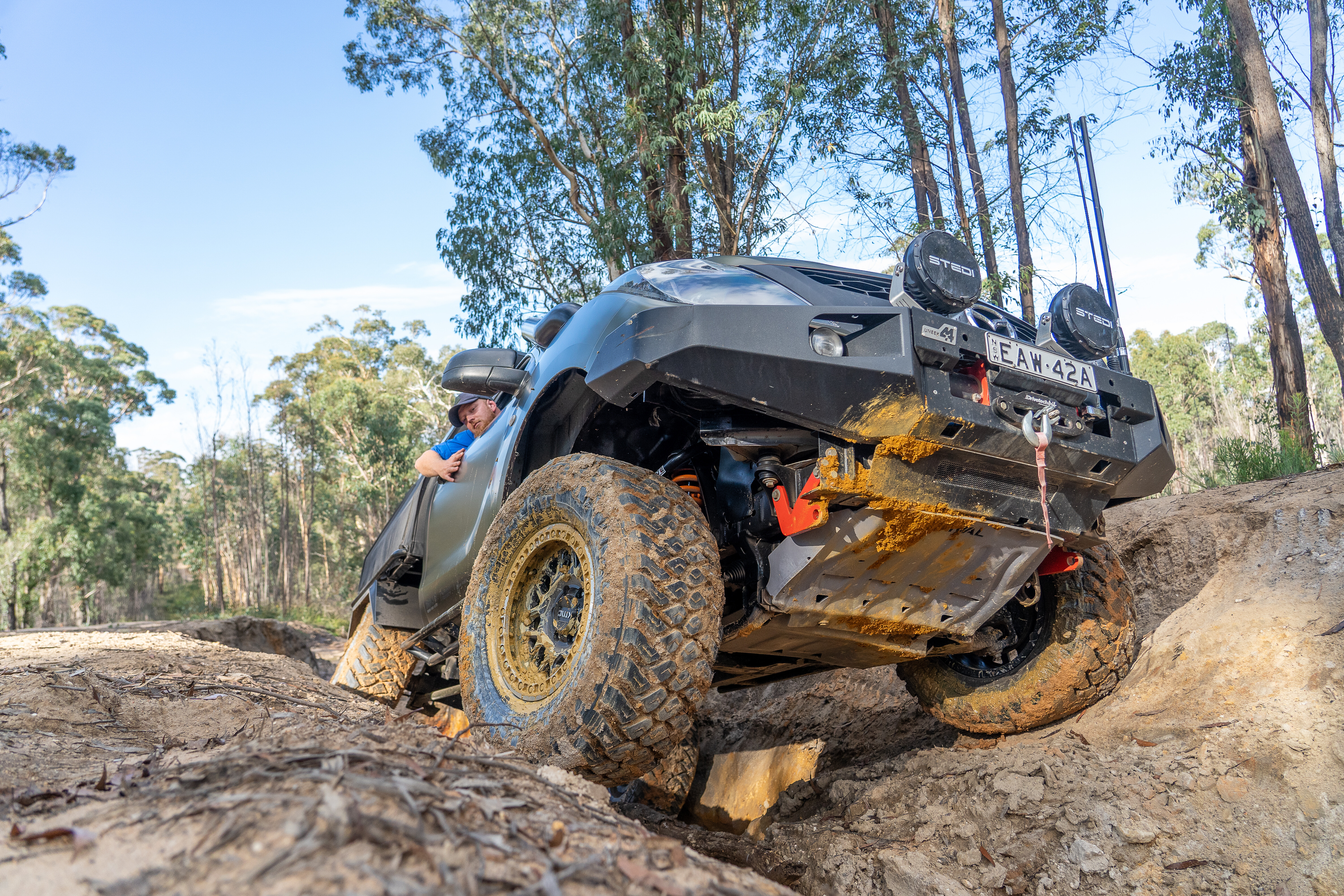
That comp-spec low-profile bar will look a million bucks, but if you’re building a tourer you’ll probably find yourself selling it at a loss to buy another bar at retail with headlight hoops for ’roo country.
Best foot forward
No, the 4×4 you like isn’t the best option for everything. A Prado doesn’t go “everywhere the big boys go”, and a GQ isn’t the most comfortable tourer around just because it’s got coil springs and expensive shocks. Different 4x4s have different pros and cons, and starting with the right platform can save you an absolute fortune in the long run.
Let’s throw out an example here. Dave wants a tourer he can drive from one side of the country to the other in comfort, then punt it up the hard tracks on the weekends. An IFS dual-cab ute ticks both boxes, they’re outstanding for noise, vibration and harshness (NVH). They’ll make a dual-cab Cruiser look like a dinosaur by comparison, and are around $20K cheaper. Throw in a locker and some mud tyres and they’re pretty damn capable too.
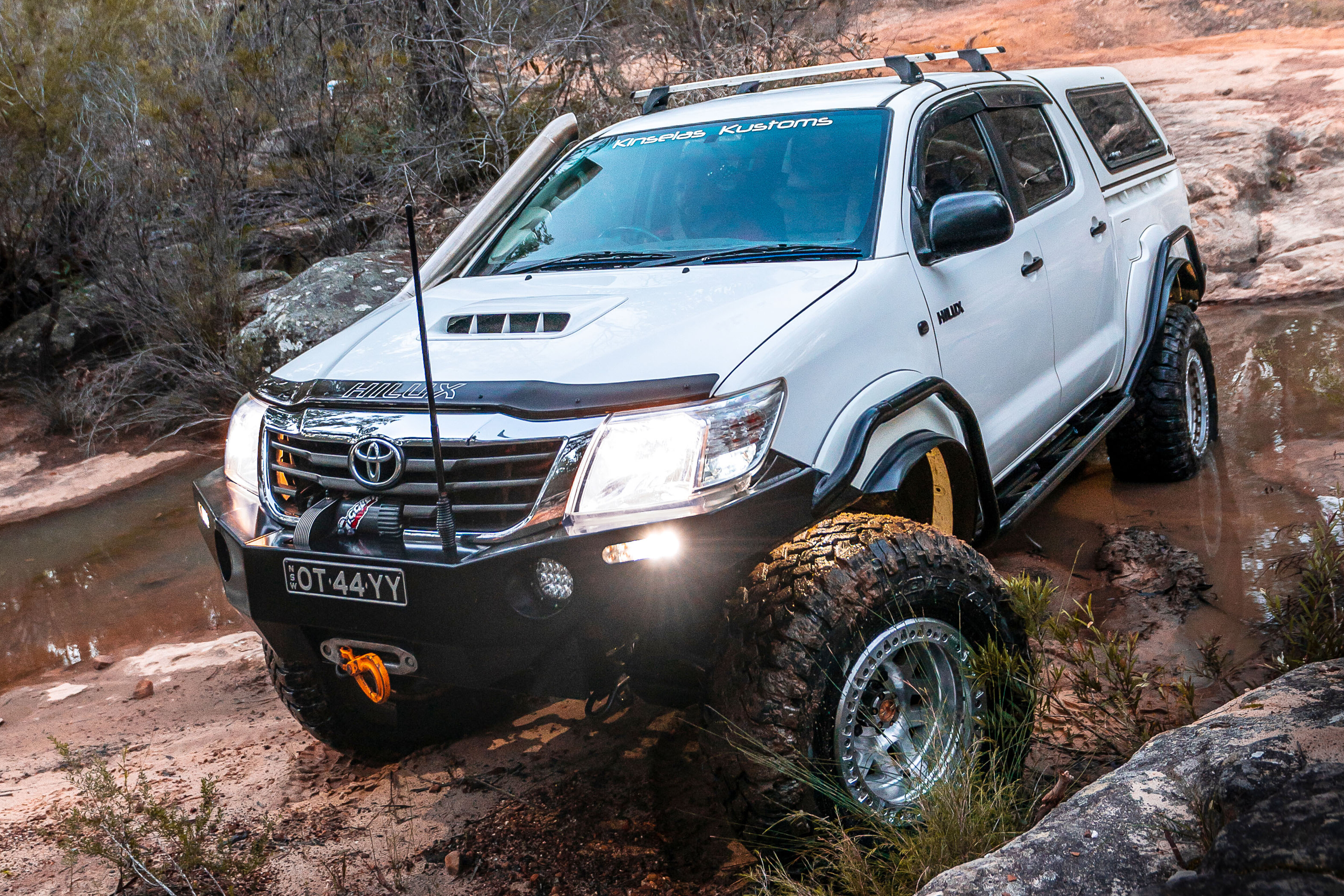
Want to go to the extreme and do a solid-axle swap on your dual cab? You’re looking at $30K to do that mod, making you $10,000 more expensive than the Cruiser. And $10K buys a lot of sound deadening and a very fancy stereo to nice up the Cruiser. Our mate Dave would have saved money and had a more reliable rig out of the gates by buying the platform suited to his needs.
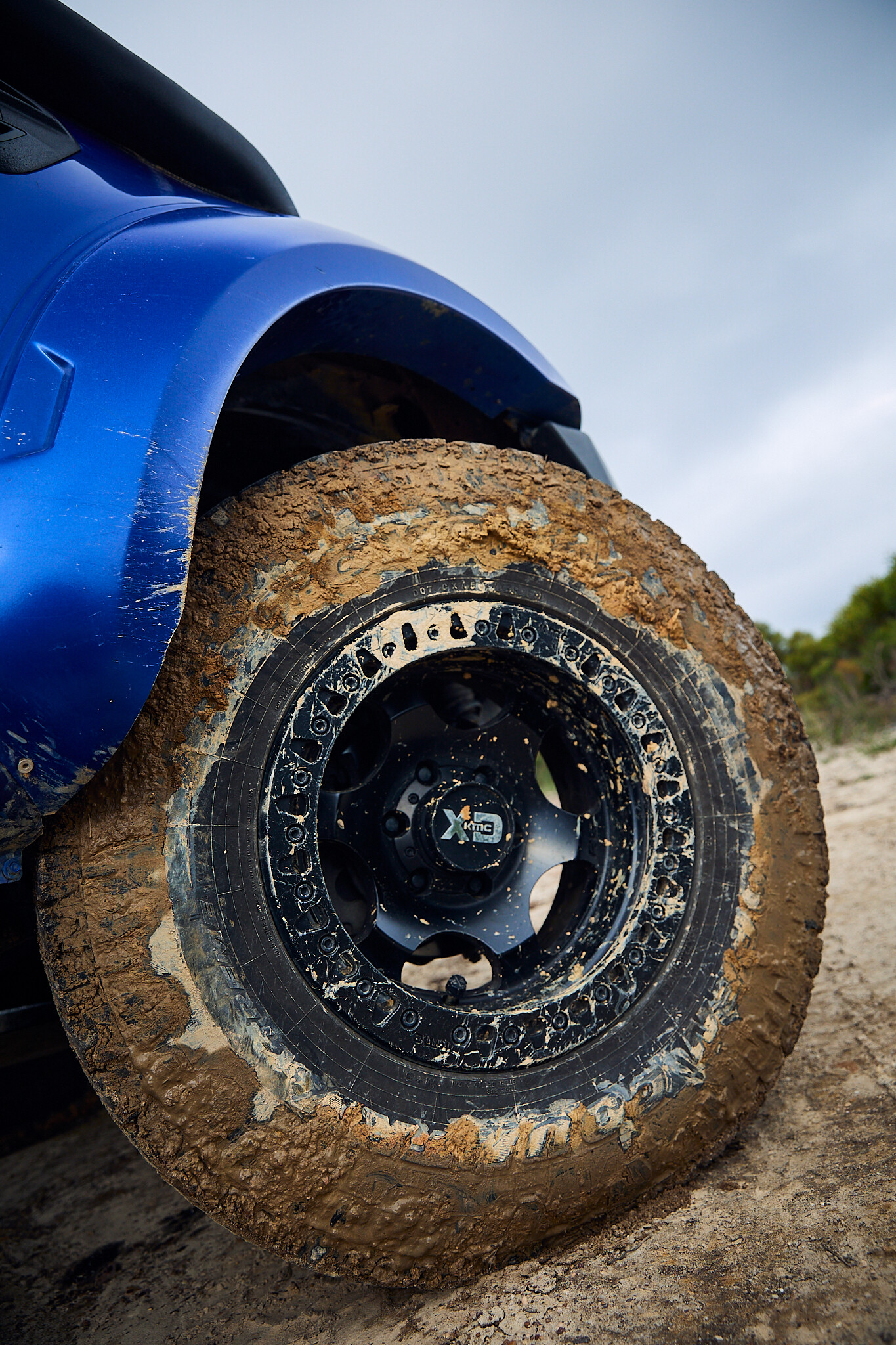
It’s not that one is better or worse than the other; it’s that one is more suited to the job you’re asking of it and will achieve it easier with bolt-on parts. That solid-axle Hilux may get two inches more articulation, but it’s gotta be engineered, will be off the road for months for the work, and is full of custom parts you won’t find at Oodnadatta. It’ll be cool as hell, but is cool worth $30,000 to you when a near stock TJ Wrangler would be just as capable for $15,000?
Ask yourself seriously if the 4×4 you like is the right 4×4 for your needs. The opposite is true as well. As cool as a decked-out Cruiser looks, a mildly modified dual-cab ute will be far nicer to live with every day, especially when your focus is beach runs and weekend camping trips.
Write down the pros and cons of the different options. Factor in parts availability, capability, what future modifications will look like if you get out of hand, and how much you’re financially willing to sink in to the project to achieve your goal. For some, a five-inch lifted GQ on 37s will be the right choice. For others, a Rav4 could be perfect.
Building on a solid foundation
You’ve chosen the 4×4 right for your project, begrudgingly accepted that you’ll probably spend more time driving it to work than wheeling double black diamond trails, and now you’re rolling out the spanners ready to start modifying it. Your 4×4’s suspension system isn’t just the part that dictates how high from the ground it’ll be. It affects how it’ll perform on- and off-road, how well it’ll deal with loads and towing, and how fatigued you’ll be after driving corrugations for 10 hours.
The first thing you’ll need to consider is how high your 4×4 needs to be. As a general rule of thumb (yes, there’s always exceptions) the higher your 4×4 the less stable it’ll be and the more you’ll have to spend to make it work right.
In most rigs, around a 50mm lift will let you step up a size or two in tyres, which is where the real capability comes from off-road. Live-axle rigs can typically be lifted to three or even four inches over stock with easy bolt-in kits, while independent rigs will typically require body lifts or goofy bracket lifts to go above two inches without maxxing out the stock suspension design.
A two-inch lifted vehicle on 35s with modifications to the guards will outdrive a comparable four-inch lifted vehicle with 33s, and all with a simpler suspension system and less concerns with legalities.When it comes to choosing the shock absorbers for your 4×4, it’s typically a case of the more you spend, the better the result. A spring’s job is to keep your 4×4 in the air and handle the weight, the shock absorber’s job is to smooth out the bumps. The better the shock is at smoothing out the bumps, the better the ride quality and the less you’ll have to fight the steering wheel to keep you pointing down the track.
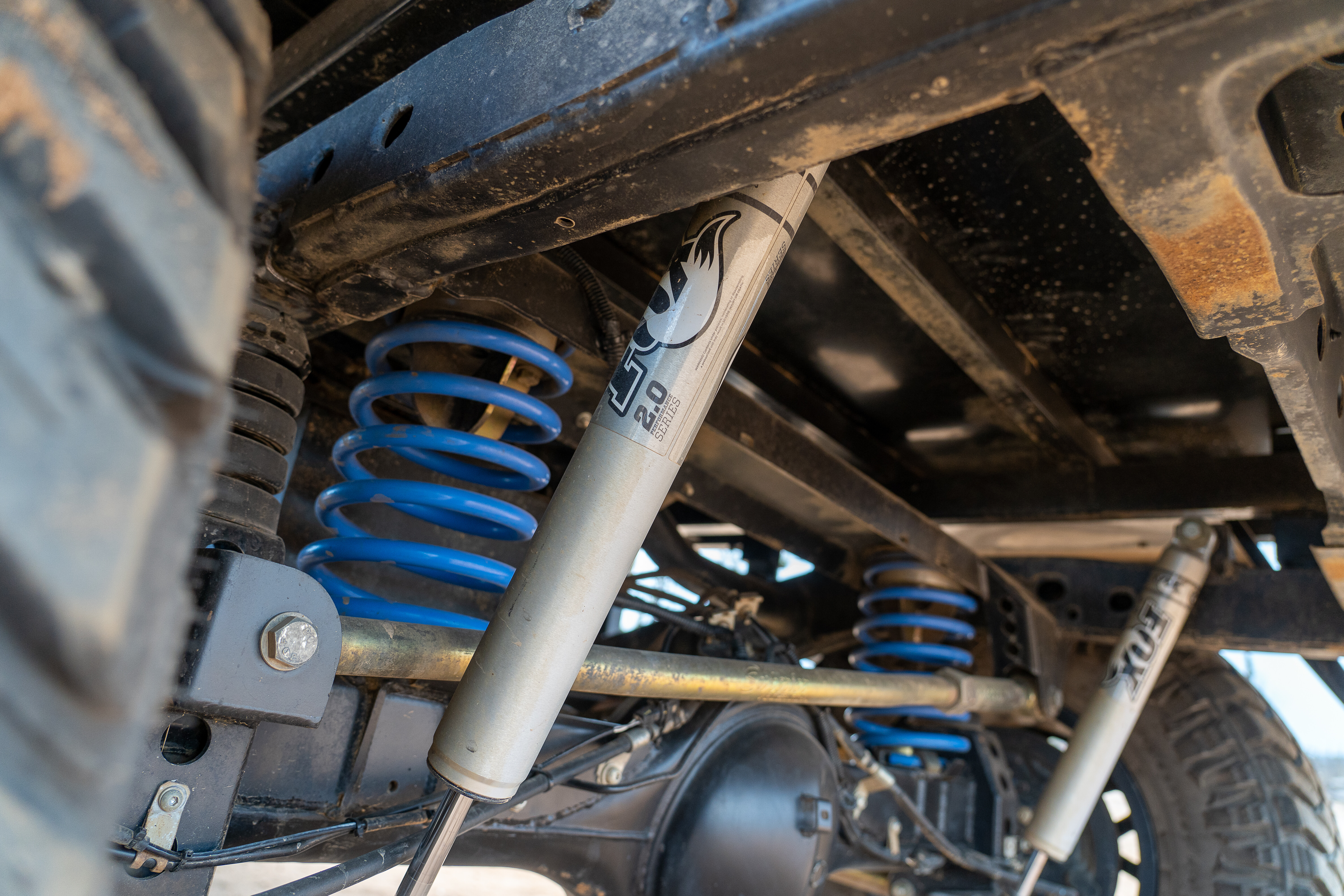
Typically, shock absorbers can be looked at in three tiers. The entry-level set-ups will cost around the $1000 to $1500 mark for shocks alone and can offer a slight improvement in ride quality and a boost in reliability.
From here, the $1500 to $3000 range starts introducing rebuildable shocks and increased oil capacity through external or piggyback reservoirs. The additional oil capacity helps stave off shock fade in corrugations and undulating terrain, and the higher quality valving will give a smoother ride.
From here you’re in to the high-end shocks where the sky is the limit. They’ll offer similar features on paper as the second-tier offerings, but will typically be fully rebuildable and tunable by a quality shop to get them dialled in exactly to your needs – more oil capacity, better valving, huge increases in strength. Big, fancy shocks predominantly benefit tourers rather than hard-core weekend wheeling, but both benefit from as low a ride height as you can get away with.

The final piece to the puzzle is your load-carrying ability. You can imagine how bad your 4×4 would ride if you put springs from a Mack truck in it; getting the spring rate wrong is no different. If your 4×4 is always loaded up the same, then constant-rate springs will be the simplest option. If you’re constantly changing what’s in there, or occasionally towing, an adjustable air-bag helper set-up can dial in your spring rates to suit the day.
All barred up
Short of the wheels and tyres, your 4×4’s bar work is one of the biggest deciding components for what your 4×4 excels at. You could have two identical GQ Patrols. Both three-inch lifted on 35s. Both with big angry turbos hanging off the side of a TD42.
One is sporting an ARB plate and post front bar, matching scrub bars and a Kaymar rear bar. The other has a custom tube bar tucked high and tight going in to custom rails and sliders from front to back with a one-off rear bar. It’s immediately obvious just from looking at the two side by side which spends its weekends wheels up and winching, and which one has seen more of Australia than the kangaroos.
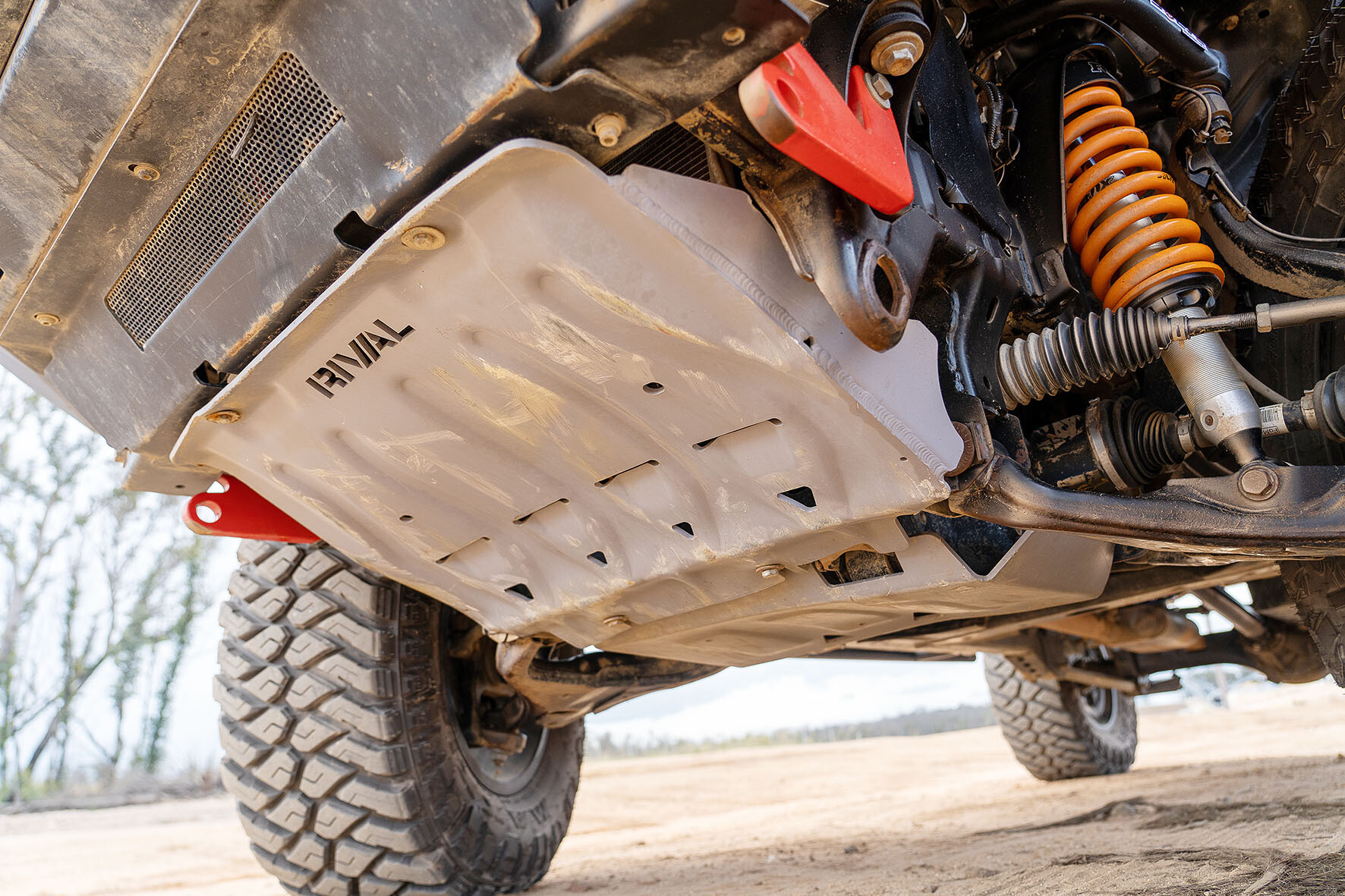
The two biggest choices you’ll have with your bar work is steel versus alloy, and low profile versus full hoops. Steel versus alloy is a question you’ll need to seriously ask yourself between your uses and desires.
Steel is a must if you’re doing remote touring and animal strikes are a real concern, but it will eat into your GVM, potentially tipping you over the scales into illegal territory. It’s also preferable if you’re punting your rig into rocks 300 times a weekend.
On the opposite end of the spectrum, alloy bar work can still give much needed protection to the radiator but won’t hold up to sustained strikes. Alloy bars can still mount driving lights, recovery points and winches with a fraction of the weight, so still have their place.
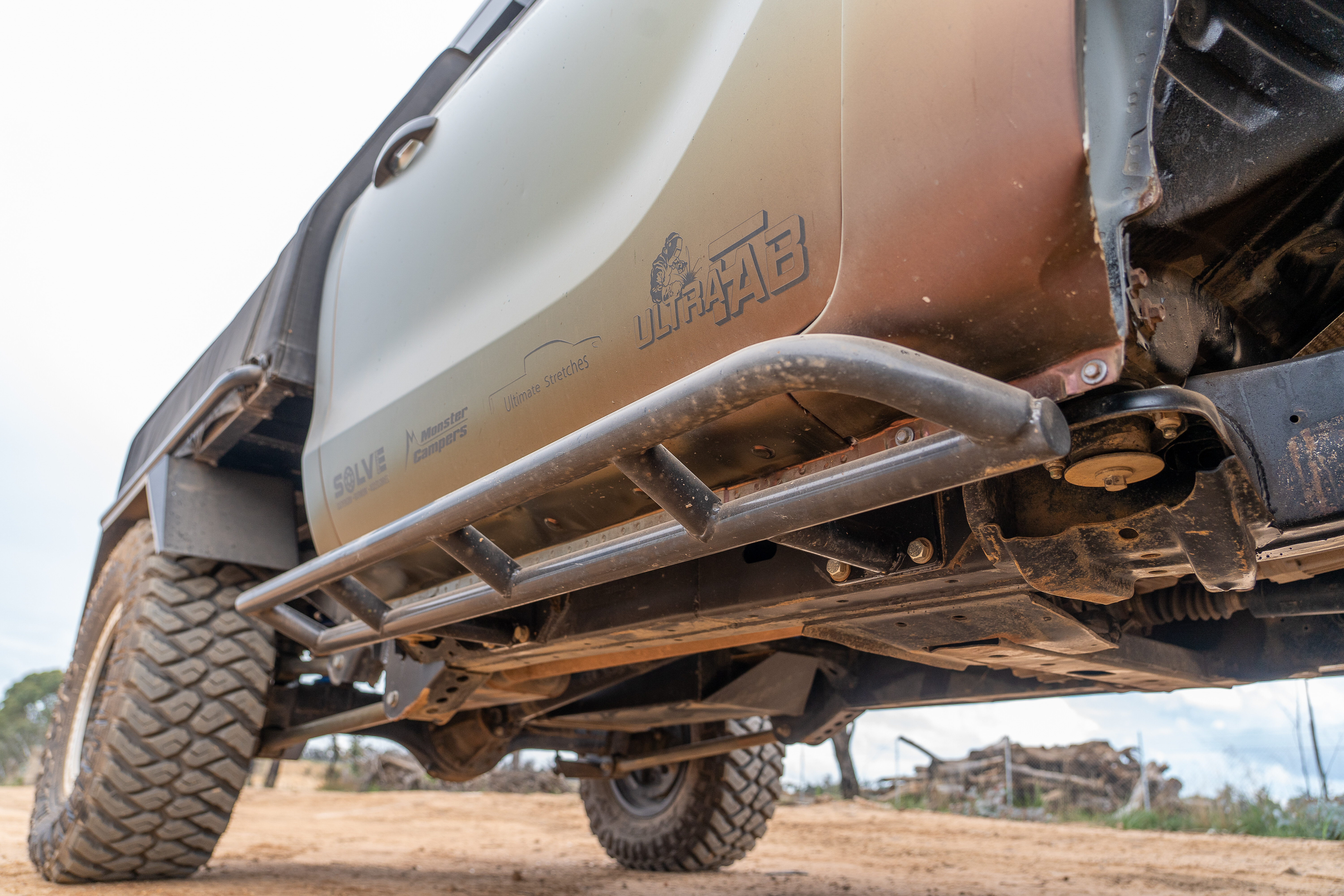
Ditching the factory side-steps is another common upgrade people tick the box for without considering their options. Heavy-duty rock sliders will give you the peace of mind you can tip your sill panels in to a rock or tree without serious damage, but there are not too many rock ledges in the Simpson Desert to give you grief, and you’d save yourself $1000-plus and 50kg out of your GVM running factory side-steps.
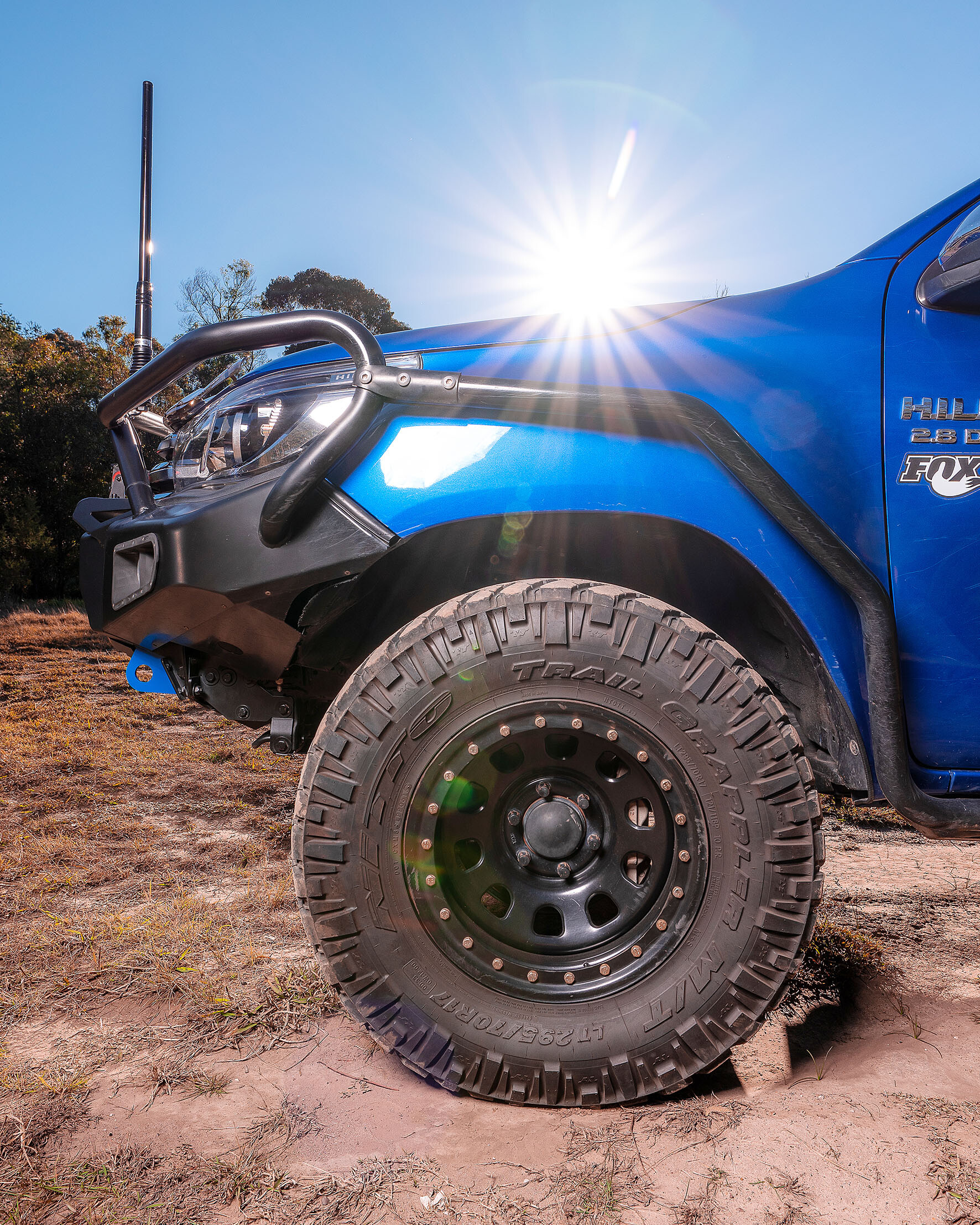
Likewise, the need-vs-want ratio needs to be considered when eyeing off a rear bar. They’re fantastic bits of kit if you need them, giving you a sturdier mounting point for your heavier spare tyre, mounting points for jerry cans and much needed rear-quarter protection. But if you don’t need those features, you’re spending thousands and eating considerably into your GVM purely for aesthetics. What you need is more important than what you want.

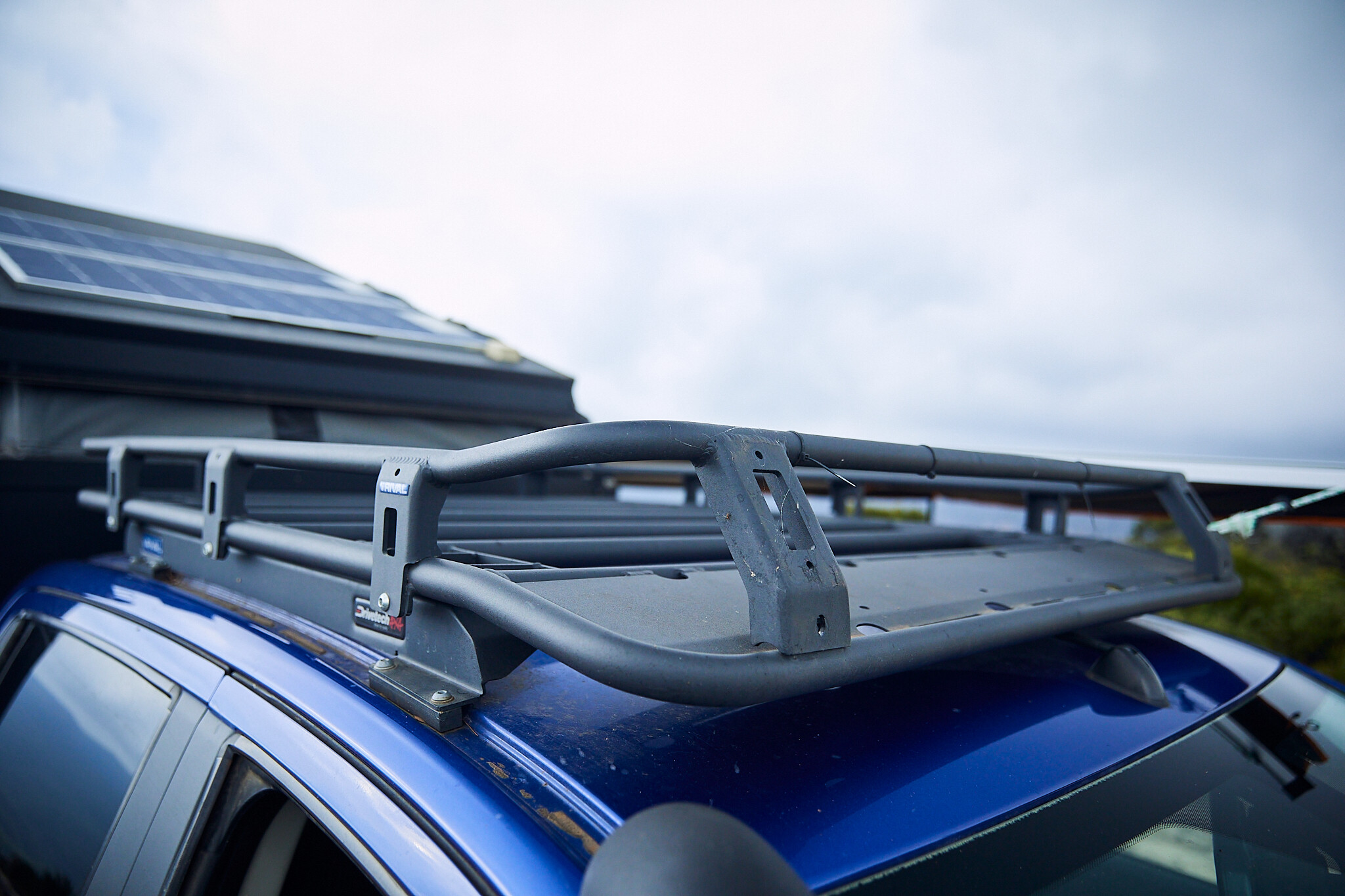
The final piece to the puzzle with bar work considerations is your roof rack. In years gone by they were all steel, all huge and all heavy. These days the prices have risen, but so have your options. Alloy flat racks promise huge versatility for bulky items without adding too much weight to the roof, while baskets provide a handy place to stash small items like camp chairs and firewood. There are few downsides to either option, so personal taste holds as much weight as practicality.
Pitching tents
When it comes to camping, more gear normally makes for an easier camp. Expensive lithium battery set-ups, 12V coffee machines, electric-opening tents and even inflatable swags are all the hottest trends of the day. But it all costs money and adds weight.
Take for example the latest trend of hard-shell rooftop tents. They’re one of the easiest camping systems on the market, being able to stash your bedding and full sleeping set-up in one box that takes 30 seconds to erect. The downside, and there’s always downsides, is that convenience will take up your entire roof rack, massively eating in to your storage space and practicality.
And with many of the hard-shell rooftop tents tipping the scales at 60kg, even if you’ve got a garage you can fit in and a winch to lift it on and off, odds are it’ll live on your roof until the day you sell it.
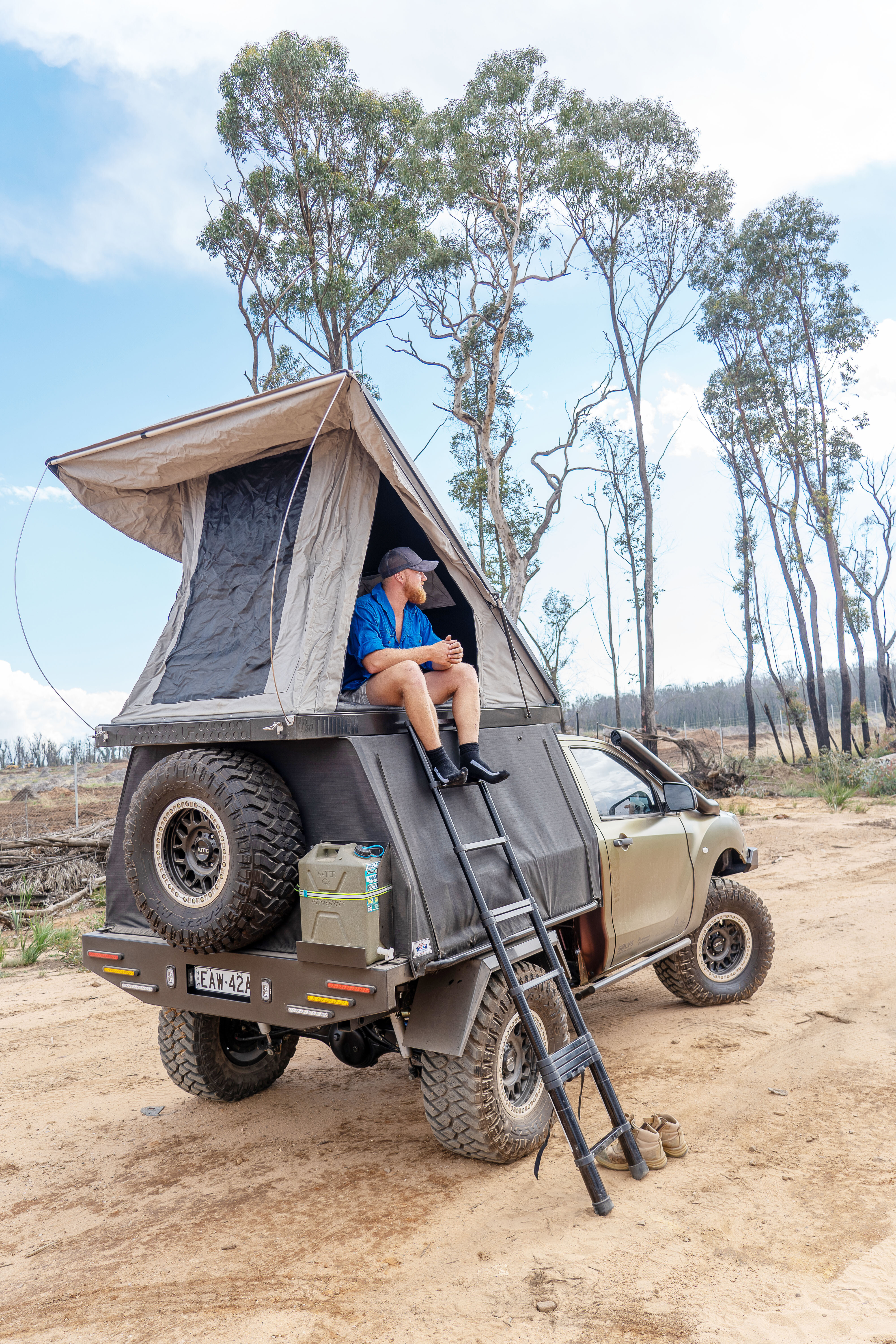
Once it’s up there, your roof is dedicated to sleeping. If you’re camping every second weekend the comfort and convenience can’t be rivalled; but if it’s your only vehicle, a single swag with a thin sleeping bag and inflatable pillow will cost roughly 1/8th of the price and can be thrown in the back seat.
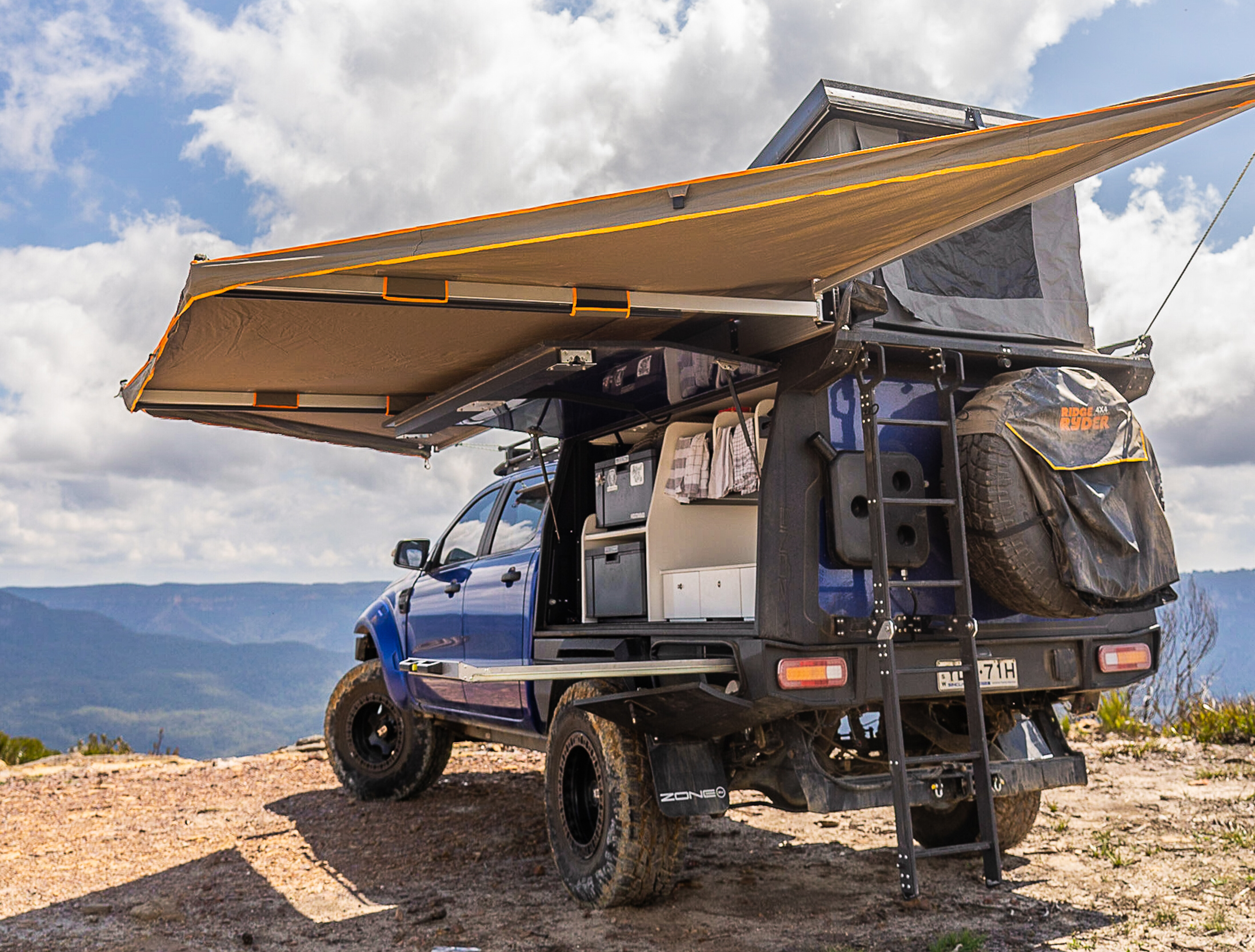
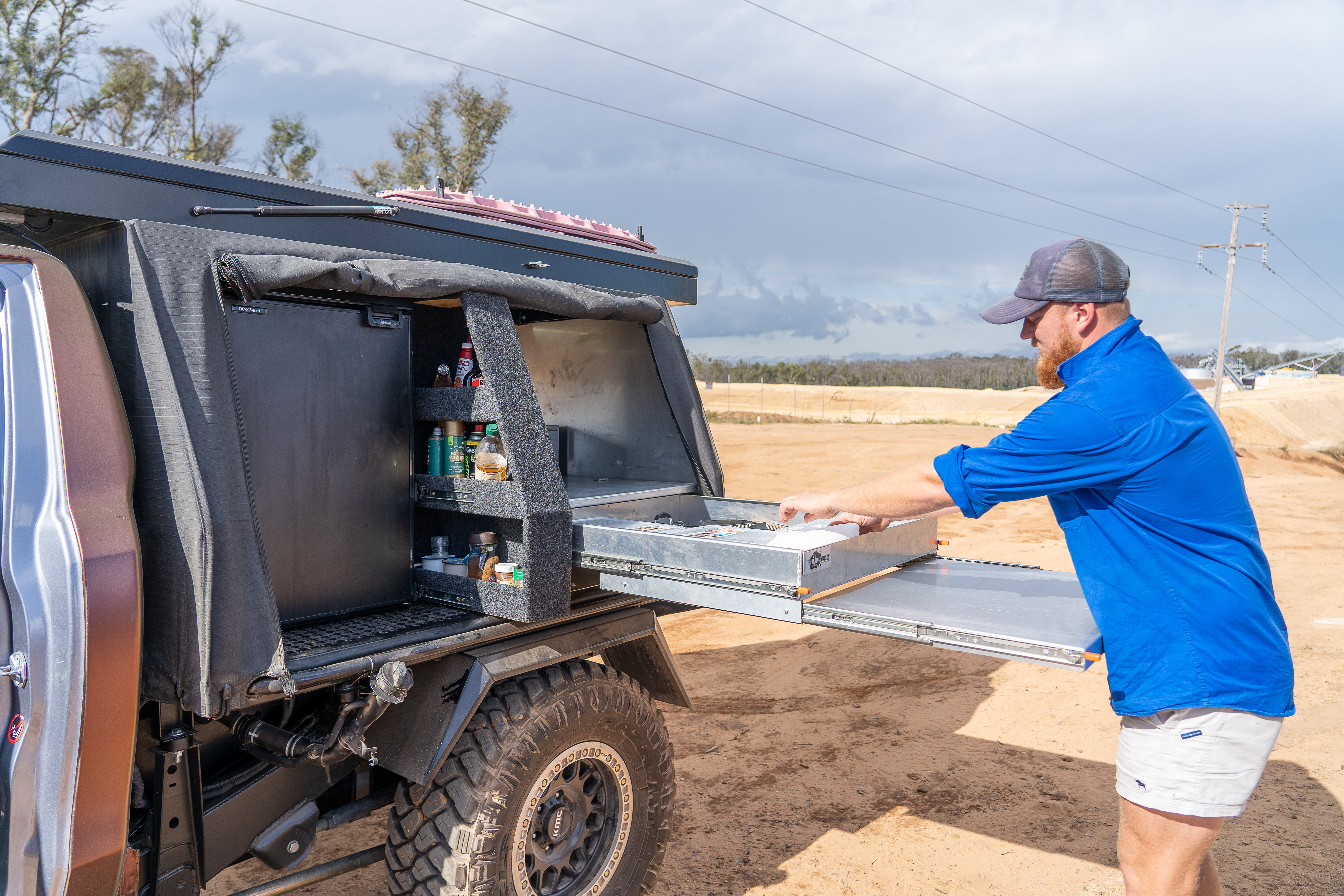
It’s just one analogy, but it rings true for every component you can think of when it comes to camping comfort. Convenience adds complexity, cost, weight, and limits how practical your 4×4 is when you’re not camping. From drawers to ute canopies, to fancy electrical systems. Decide where the balance point for you lies and don’t let yourself get carried away. It’s an expensive lesson to learn you’ve tilted your 4×4 too far in one direction.
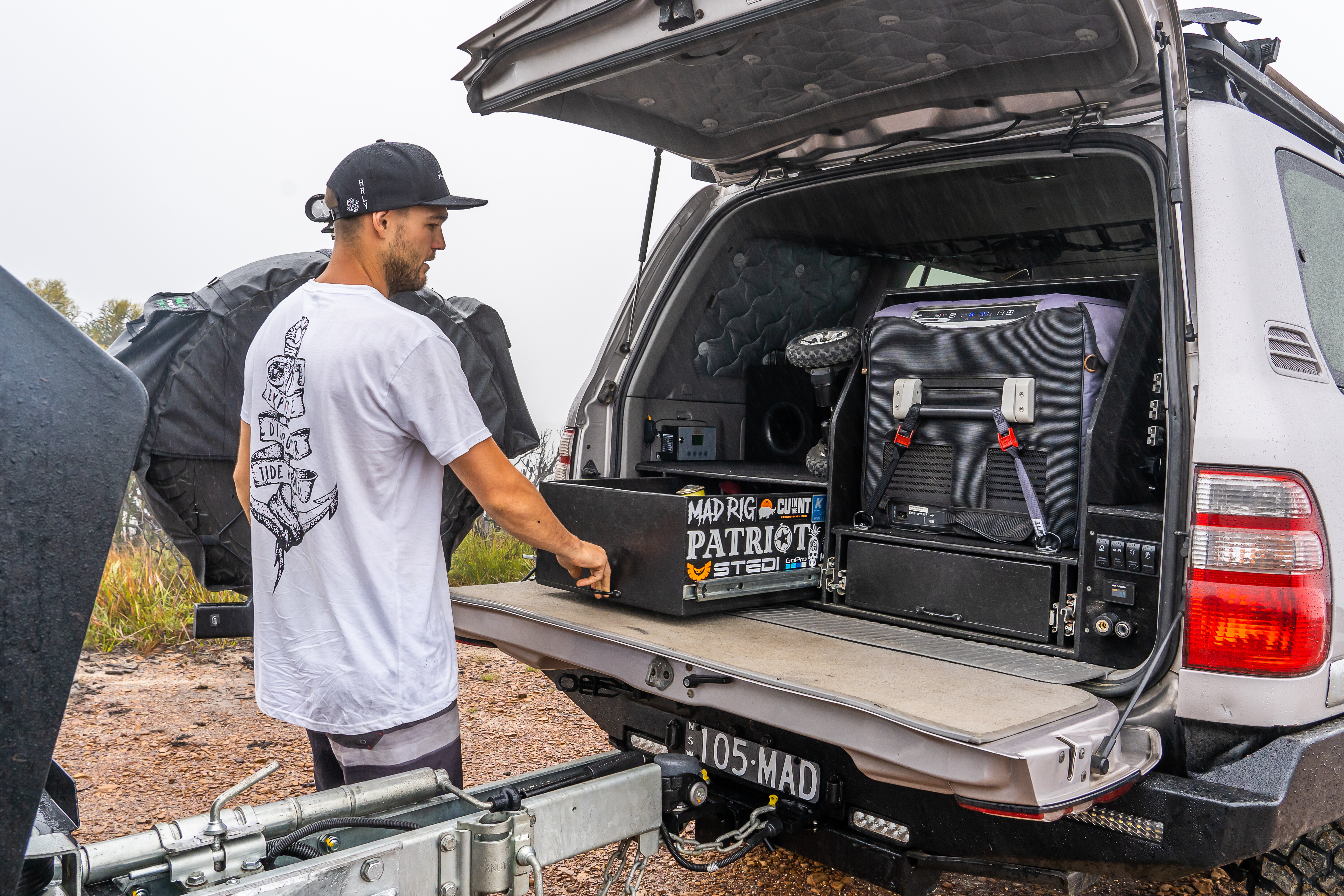
The other factor to consider is that an extensive camping set-up won’t just affect your GVM and storage space, but it’ll directly affect how capable your 4×4 is in every situation on and off the road. Heavier 4x4s are more likely to get bogged, work harder to drive through sand, and are more tippy when doing technical wheels-up 4x4ing.
You might be happy to spend the $4000 on that fancy rooftop tent, but are you happy with the instability it’ll introduce to your weekend wheeling set-up?
Under the bonnet
If ever there was one invention responsible for the ongoing keeping up with the Joneses’ syndrome it’d have to be the dyno. While numbers on a sheet of paper are always fun to look at, it’s transformed the goal of engine modifications away from how capable your rig is, to how impressed everyone will be by it.
Let’s get one thing straight, with very few exceptions reliability and engine modifications are at opposite ends of a straight line. The closer you get to one, the further you get from the other.
Of course, there are exceptions with upgrades like intercoolers, hard pipe kits, and transmission coolers that, while adding some level of complexity, far outweigh it with their benefits. But if you’ve got dreams of having a 4×4 that’s an absolute animal with the loud pedal, you’ll give up a little peace of mind in touring conditions.
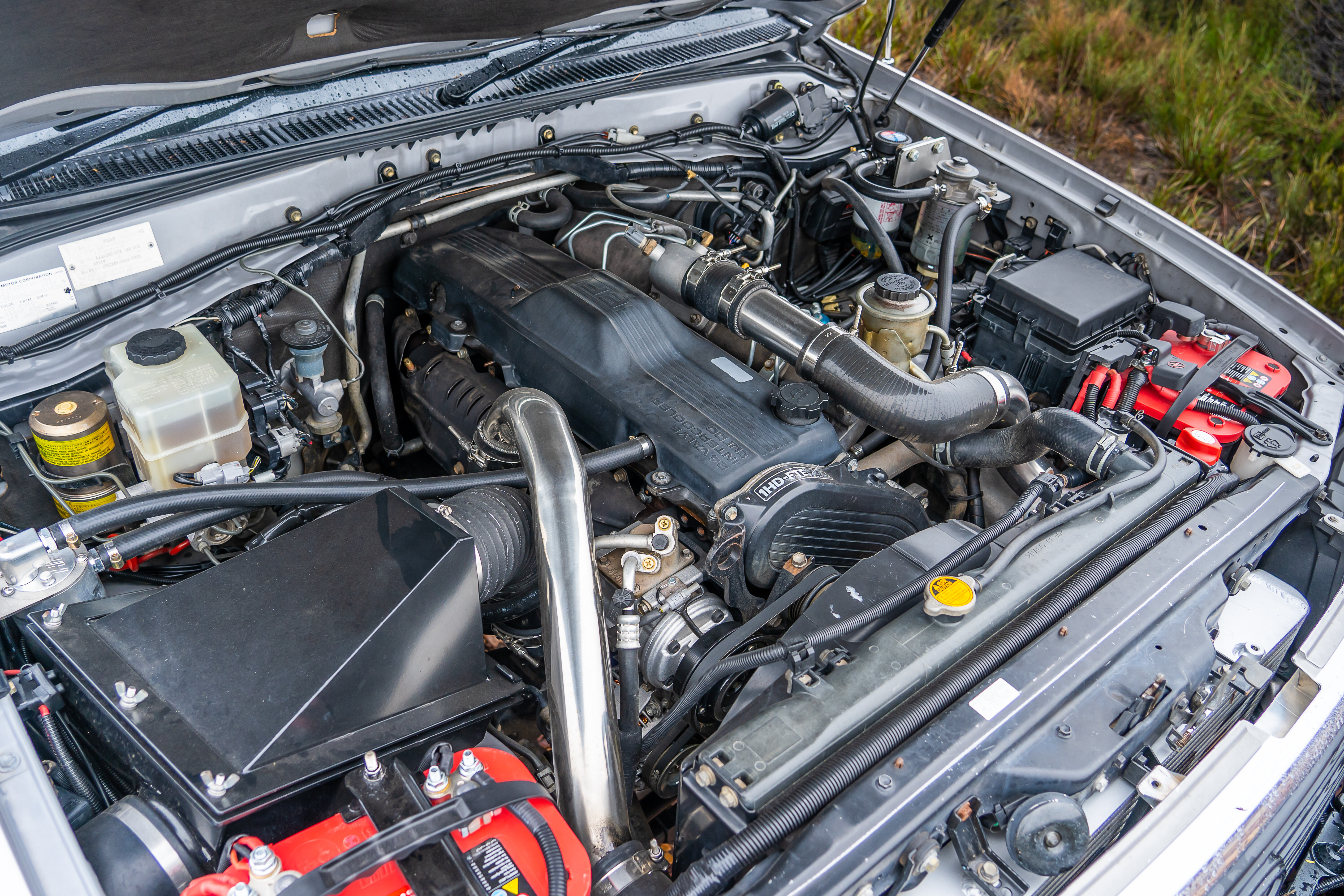
As a result, mild performance upgrades are the most common seen as they can have reasonable boosts in performance and driveability without drastically affecting reliability, as long as the work is done to a high standard. ECU re-mapping and turbo-back exhausts can be had for a few thousand dollars with 20 per cent increases in power and torque.
From here you’re looking at bigger injectors, bigger pumps and bigger turbos. Reputable shops can guide you towards reliable set-ups and advise on how far you can push your engine before you start running in to reliability issues. The budget you allocate won’t just dictate how much power you can expect to find under your right foot, but how reliable it’ll be.
Off-brand turbos, second-hand intercoolers, and suspect heavy-duty transmission valve bodies from AliExpress can all push out big numbers on the day of installation but aren’t something most people would feel comfortable crossing deserts with.

The Top End of Australia is so unique, with animals and plants that can only be found here, a wet season that can leave hundreds of billabongs and rivers full, while seasonal cyclones can destroy huge amounts of land, yet the balance in all this has to be seen to be believed.One of these delicate and often under-rated sections is the Mary River NP just 150km out of Darwin and very much shadowed by nearby Kakadu. Mary River consists of a handful of small reserve areas which protect part of the huge Mary River catchment area covering a staggering 8000km² and is one of eight rivers in the Top End with huge water systems.
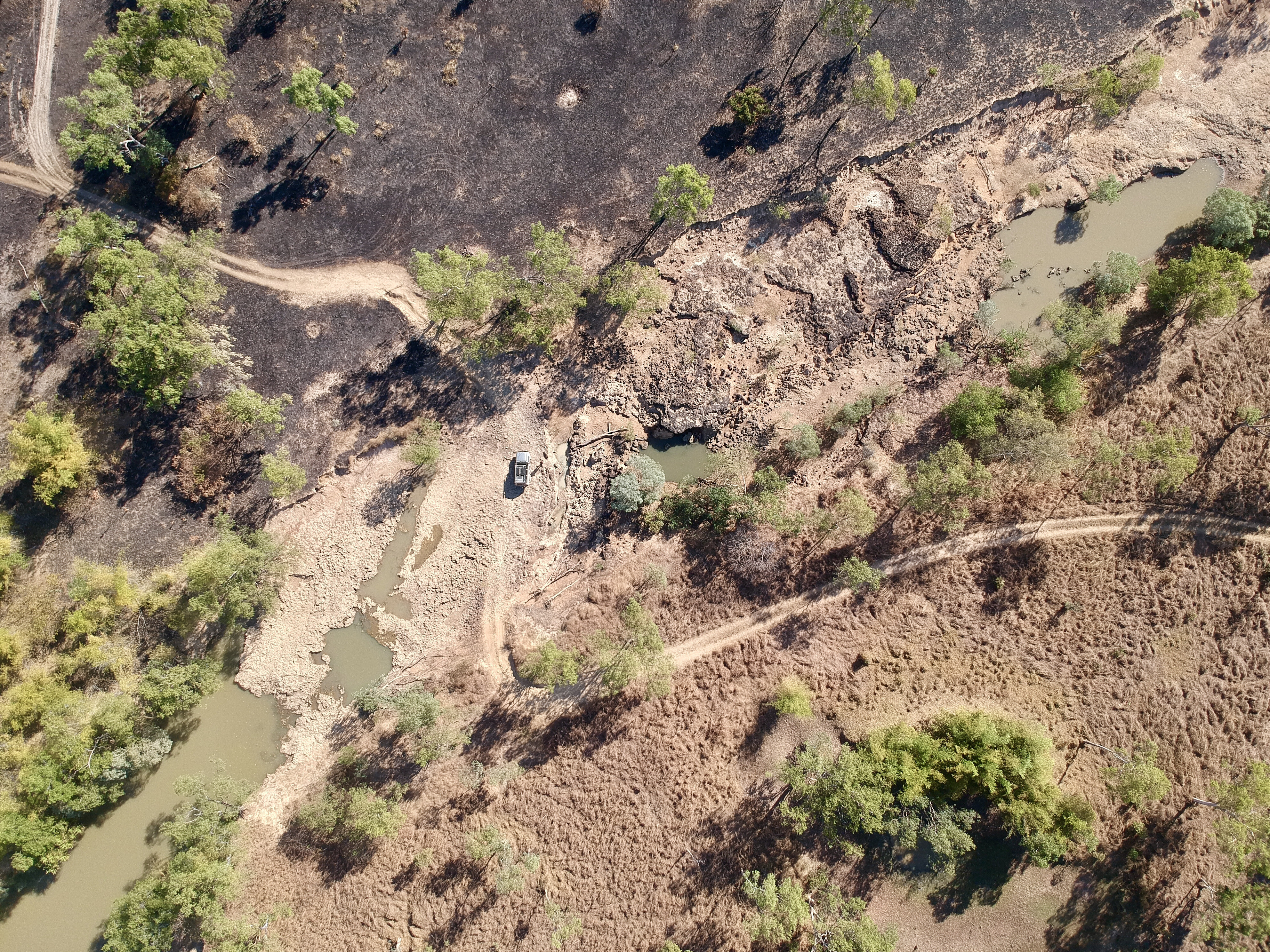
In the dry season from May to September, most areas are accessible to all vehicles, however many roads are unsealed. During the wet season from October to April, flooding can cause seasonal road closures. It has huge areas where monsoon forests, floodplains, savannah grasslands, paperbark and bamboo forests meet, and the best thing is it’s open to exploring − fishing, driving the 4WD tracks, getting back to nature and some of the best camping around.
SHADY CAMP
Getting to Mary River is pretty simple along the Arnhem Highway towards Kakadu for 135km, then turning north towards Mary River NP for another 55km. The road to the park is sealed for nearly 30km then turns in to a good, solid dirt road.
During the wet season, the road may be closed due to flooding, but huge signs at the start will say whether open or closed. My first target point was the well-known Shady Camp area that’s an iconic spot for fishos chasing big barra.Unfortunately, my effort was pretty dismal, but there’s always next time.
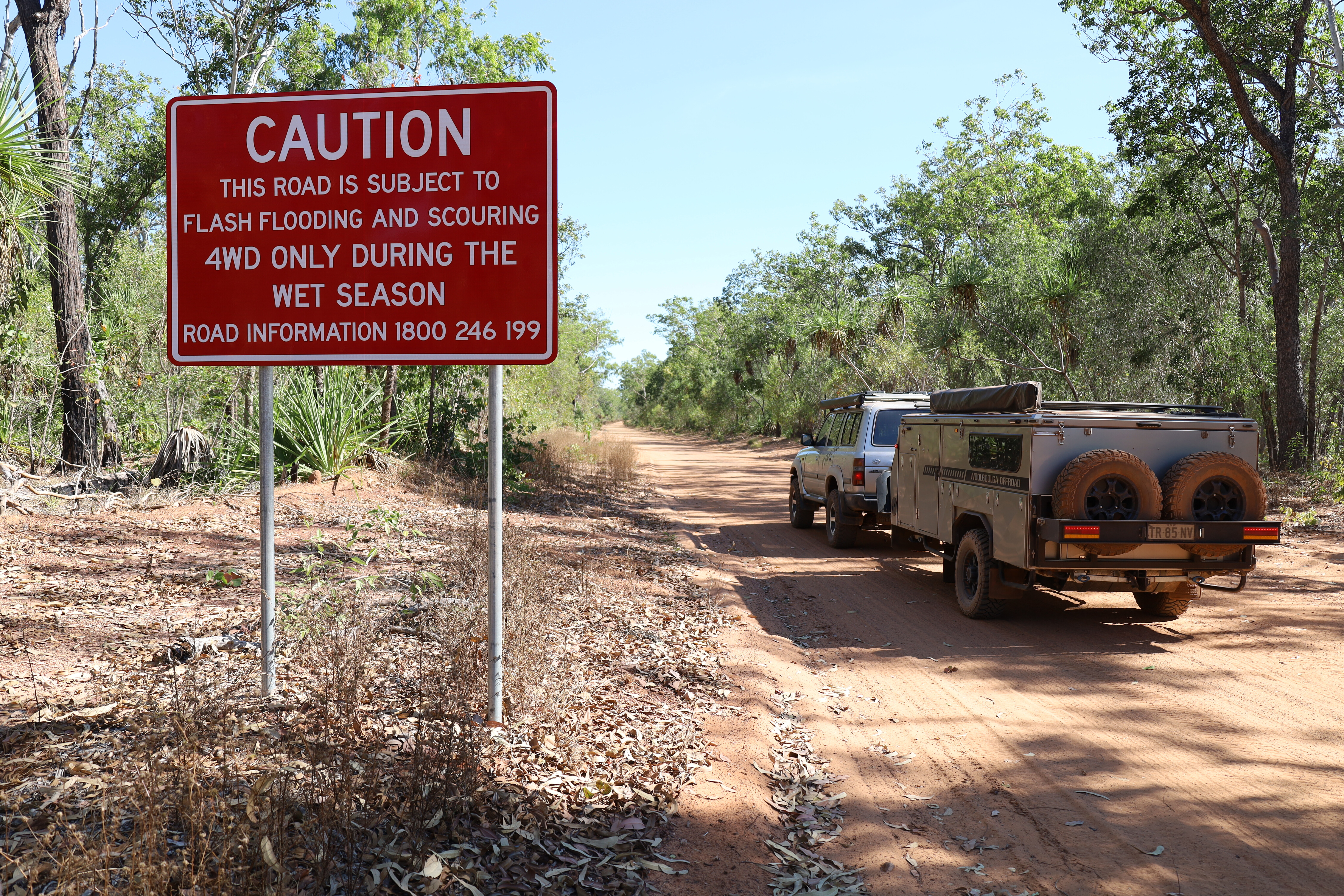
Camping out here is pretty good where the NP’s only charge is $3.30 per person for unpowered sites, but there are bins and compost toilets. At the boat launching ramps, a barrage has been installed to protect the wetlands.
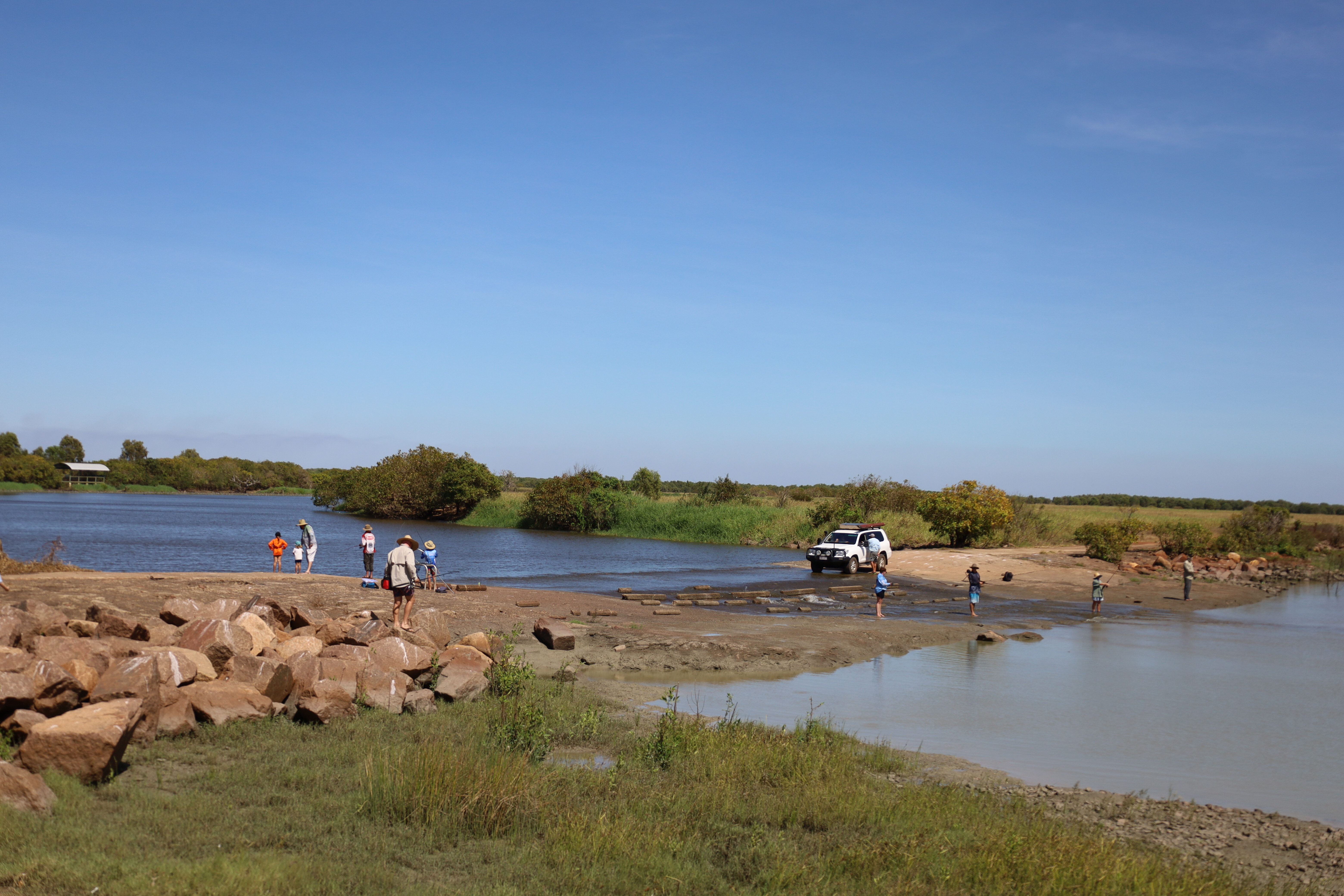
Much of the Mary River catchment is below sea level and up until the 1940s, this area was totally landlocked. For the past 80 years, huge sea levels, cyclones and wildlife have carved an opening out to sea allowing for the area to drain and allowing saltwater to destroy parts of the area. Due to this, a barrage (or low-level wall) was built to hold back the freshwater so it can regenerate through the estimated 250km² that has been destroyed.
The Shady Camp barrage is nearly 30km from the ocean to the north and at low tide, the saltwater drains away to nothing leaving just thick mud until the next tide. Yet at high tide, the water often flows over the barrage into the fresh side. If the barrage wasn’t built, huge amounts of saltwater would penetrate the upstream area causing devastation to the fragile environment.If fishing isn’t your thing and you need a day away from camp, go back out to Point Stuart Road and head north to the Point Stuart Coastal Reserve. The road soon turns to a single-lane track where the NP is only a thin sliver of land with private stations on either side.
Honestly, there’s nothing hard about this long dirt road but it does follow the trek that explorer John Stuart took on his last epic trip to the north of Australia back in 1862 looking for pastoral land and to be the first person to reach the Gulf. Back in the day, the government offered £2000 to the first person to do so and with this, Stuart and his party made the successful trip there and back.
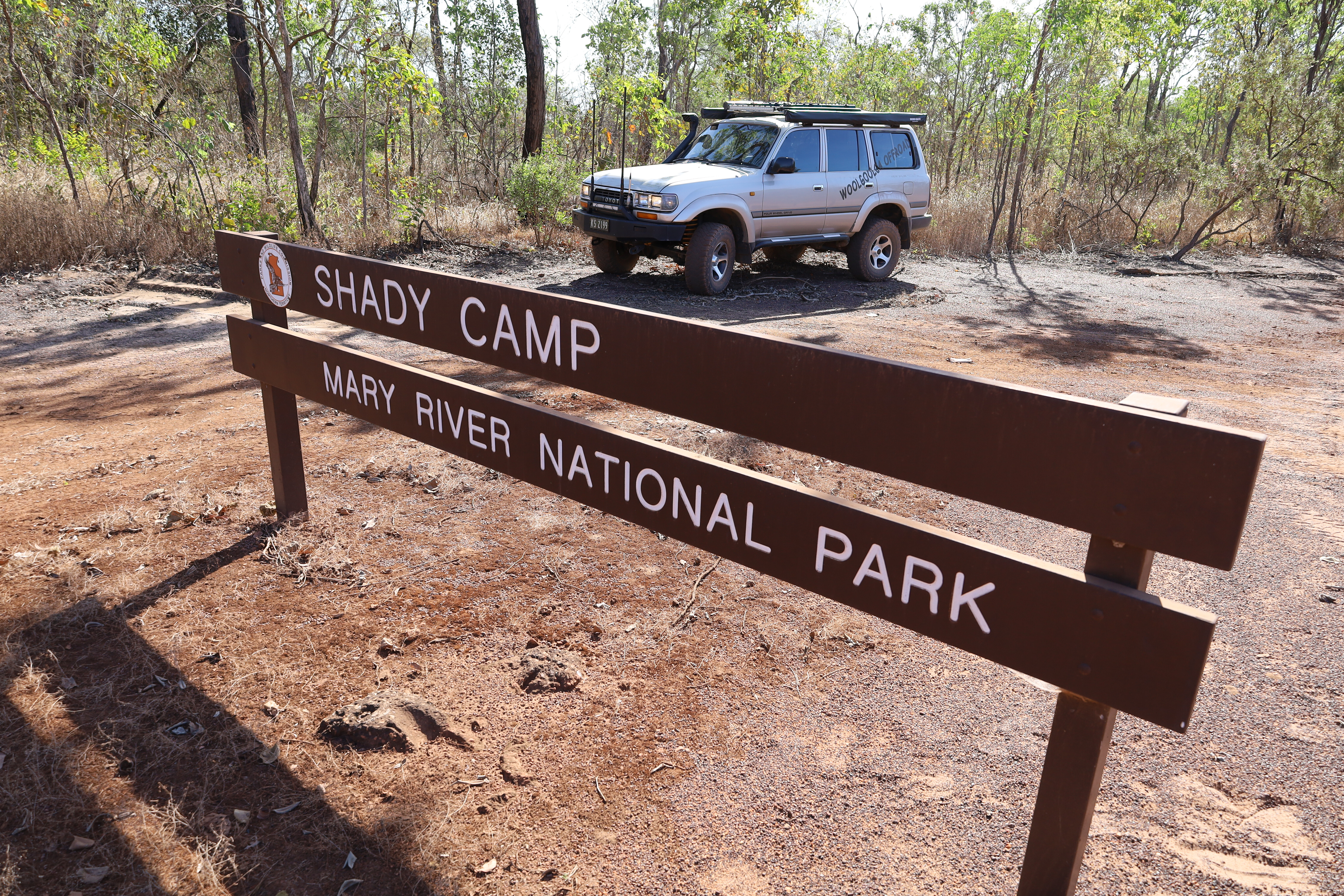
I was hoping to reach the rock monument right at the tip of the coastal reserve but was met with a locked gate, just a few kilometres short of the coast due to a seasonal closure – yet on the park’s website it was marked as open. Stuart’s mapping skills and records were so great that when others followed his trail, they found everything to be spot on.
Another significant area to explore relating to explorer Stuart is Mistake Billabong just south of Shady Camp. It is believed that his party camped here on his way north and the return journey for its water and possibly fresh food. A bird hide has been built overlooking the lagoon so visitors can view the birdlife, colourful lillies and crocs.
COUZENS LOOKOUT
Within the centre of the Mary River NP is another popular spot, Couzens Lookout campground that overlooks the stunning and huge river system of the Mary River.It’s located off the tar section of the Point Stuart Road, with a 19km dirt section that again may be closed in the wet season. The camping fees here are cheap too, but you’ll need to be self-sufficient.
A popular activity is to stroll up to the lookout at sunset to see the light change as the sun sets, plus with the high viewpoint you can see big crocs often cruise past stalking their next meal. Masses of lotus lily line the banks and in the distance, vast wetlands cover the area. During the night, the bellows of wild buffalo can be heard as well as wild dogs howling in the distance.
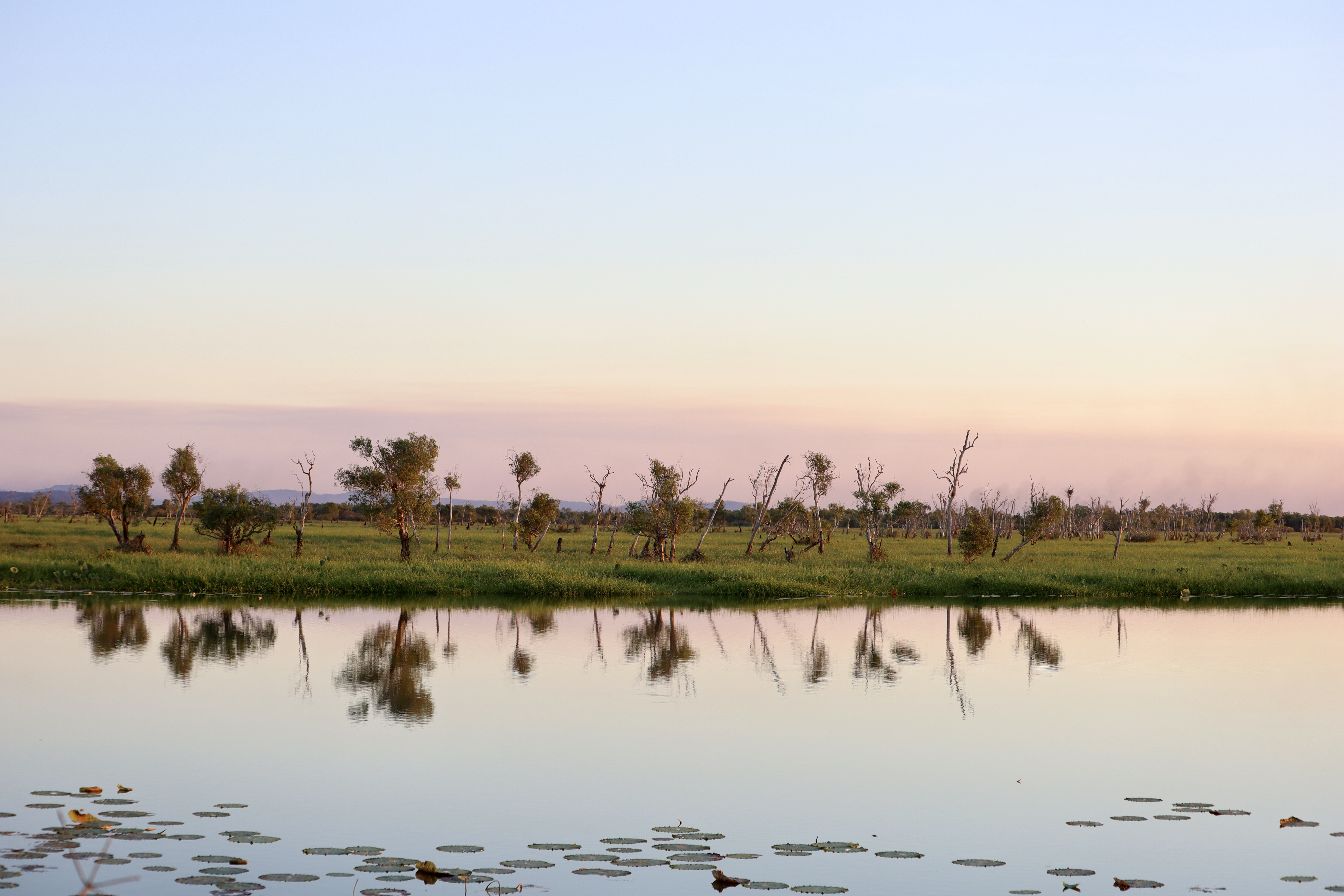
Nearby at the Rockhole, river cruises operate from here and it’s also great to fish for barra in the deep holes safely from the shore. It’s said that the Mary River system has the highest number of crocs per km than anywhere else in Australia, and here at the Rockhole I counted dozens with a mix between salties and freshwater crocs.
WILDMAN TRACK
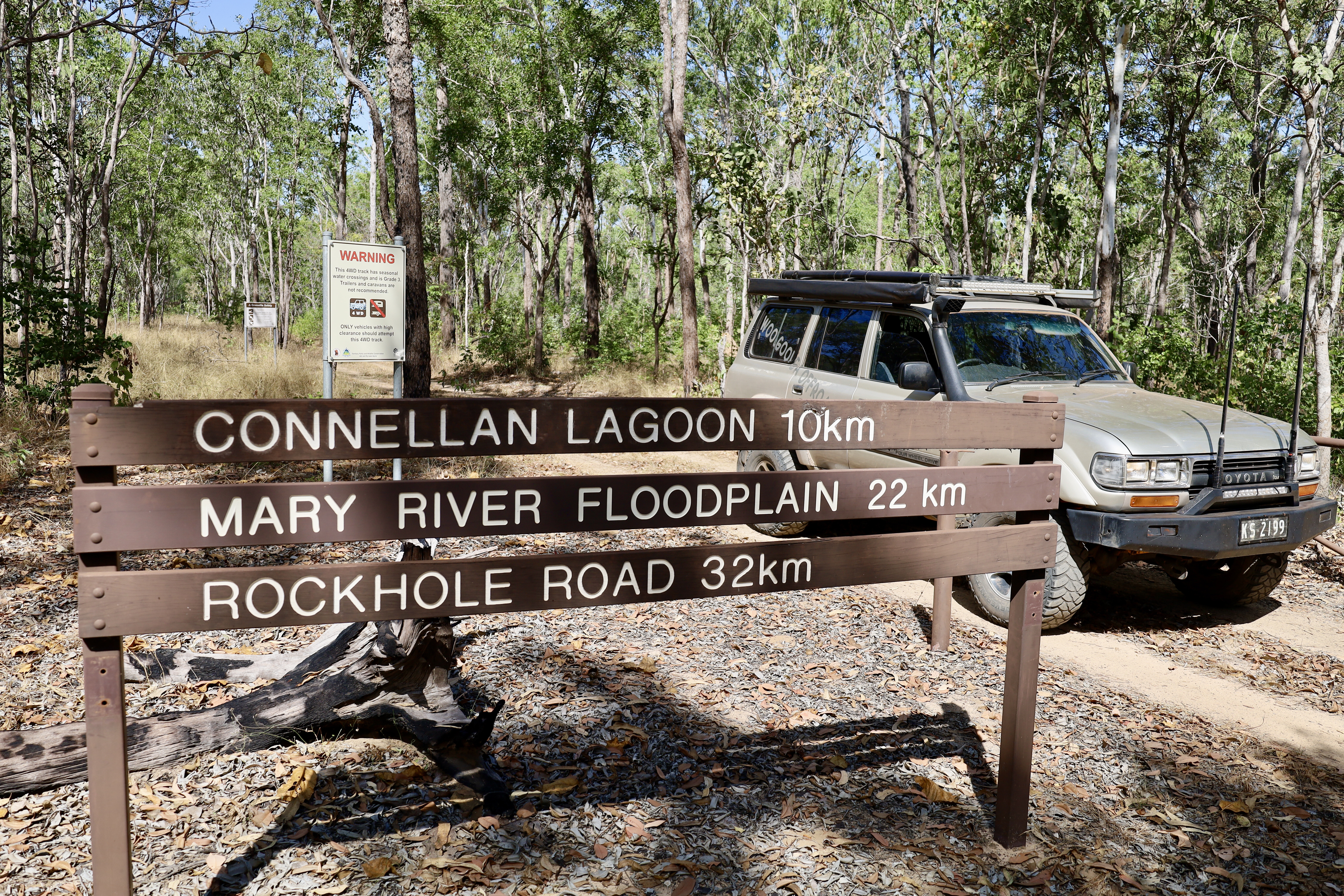
Starting at the Rockhole, the Wildman 4WD Track takes you from here 32km north to Wildman Road. Again it has seasonal closures, recommended for high-clearance 4WDs and definitely no trailers. The track meanders past huge billabongs full of birds, fish and crocs, plus you’ll see an array of different vegetation including massive native bamboo stands, stunning pandanus forests and tea tree-lined waterways.
The nearby Wildman River was named in 1866 and today is a protected waterway. Across the floodplains, don’t be surprised to see jabiru, magpie geese, masses of white herons right down to herds of feral buffalo who have made a mess of the swampy areas on the edge of the waterholes.
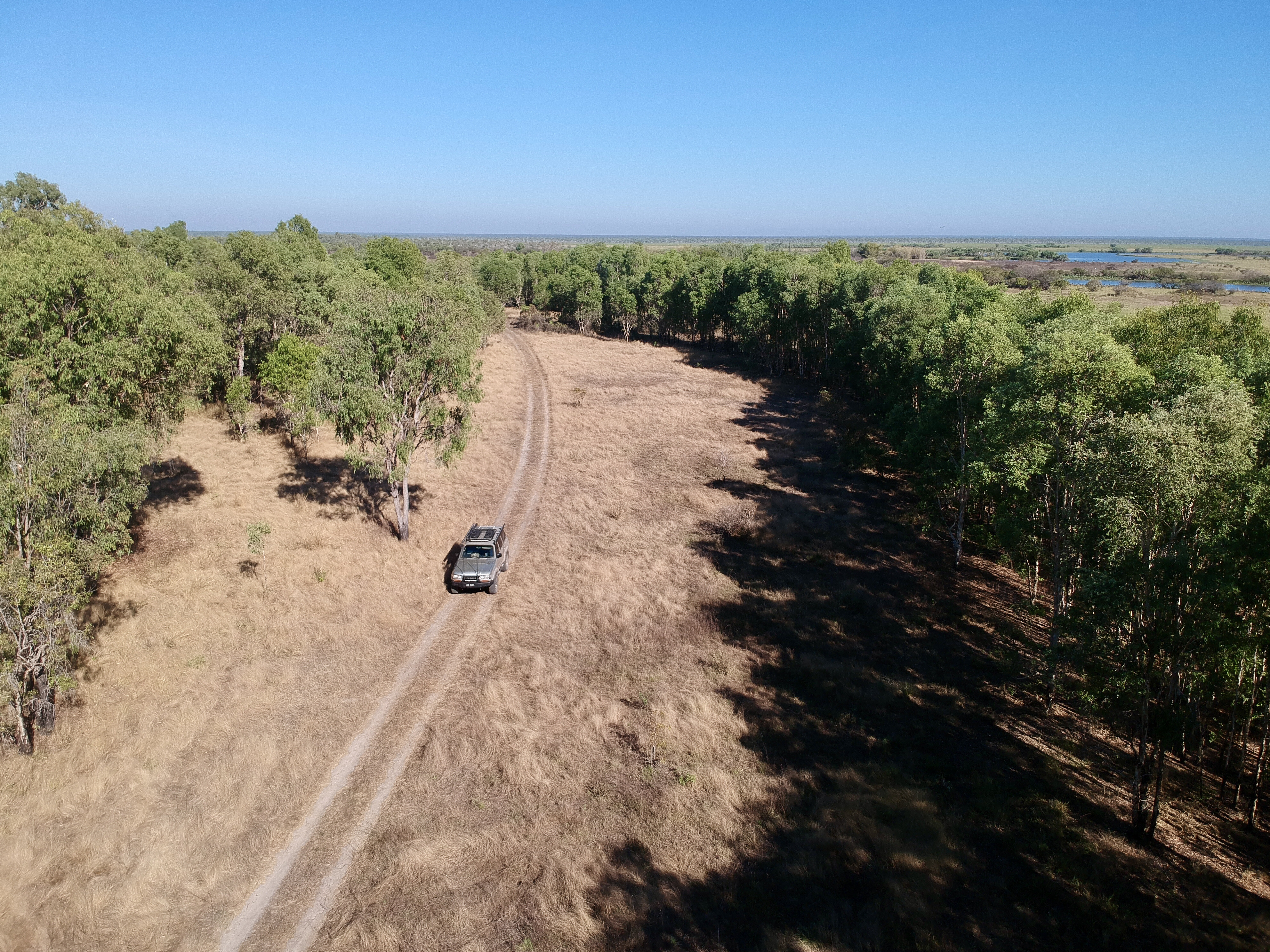
While not a hard track, allow several hours to enjoy the serenity and what the area offers. The Wildman Track joins back to the Wildman Road to the north, where it’s only a short drive back to the main road.
HARDIES 4WD TRACK
If you’re after something a little more diverse and even a little harder, Hardies 4WD Track is a must-do. An entry point is to the south near the Corroboree Tavern and Bark Hut Inn, and the track is around a 100km loop. It dives deep into the fertile and harsh area that Mary has to offer.
Only open during the dry season, the track sees extensive flooding across the plains with several deep river crossings that often close the track for months at a time when it’s been wet. Prior to the loop, the track used to cross at Clarkes Crossing before heading north through Annaburroo Station to nearby Couzens Lookout, but access is now blocked through the station.
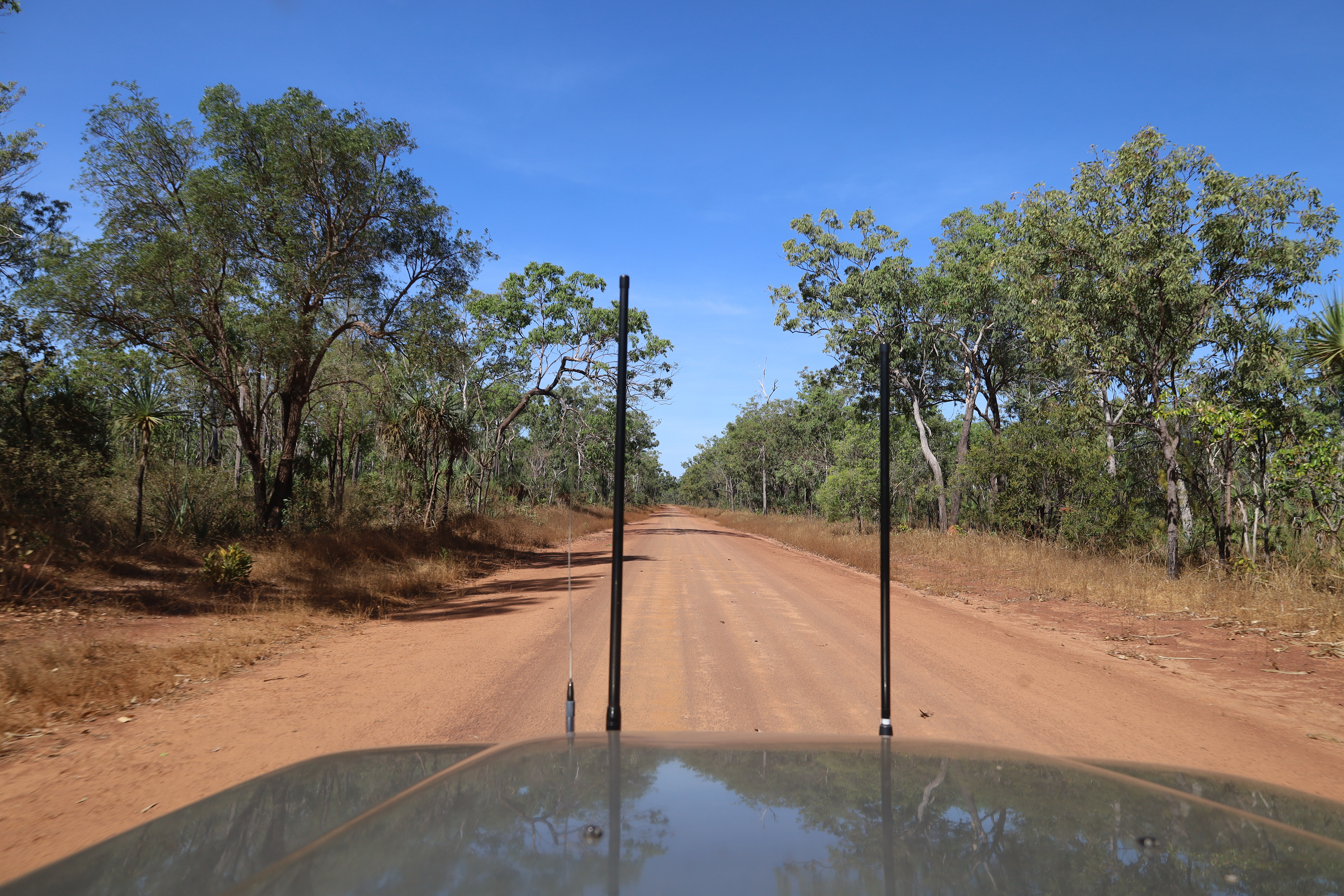
At the start of the track, Bird Billabong is a pleasant walk to see large numbers of birds, even in the dry ground where water used to be. From the moment you pass through the gate, the track narrows and winds its way through stands of tea tree towards a viewing point of the Mary River.
Along the way, keep an eye out across the other side for the massive Bambusa arnhemica stands, one of three bamboo species endemic to Australia. It lives for about 30 years, flowers, then dies.Soon the track heads westward towards the hills of Mount Bundey, these rock formations and lumps were important to the Limilngan-Wulna people of this land. The track follows the hills for some way before branching off through savannah grass which, before it’s burnt, can be as high as a 4WD’s bonnet.
There are a couple of river crossings to negotiate, but dependent on the water level and the time of the year. The water at Hardies Crossing flows for most of the year and it’s a narrow, rocky track through the water at the flowing end of the lagoon. Even though the water is flowing, be croc wise, as it’s a permanent waterhole and they are there … as I found out, lying in the pools of water on the track.
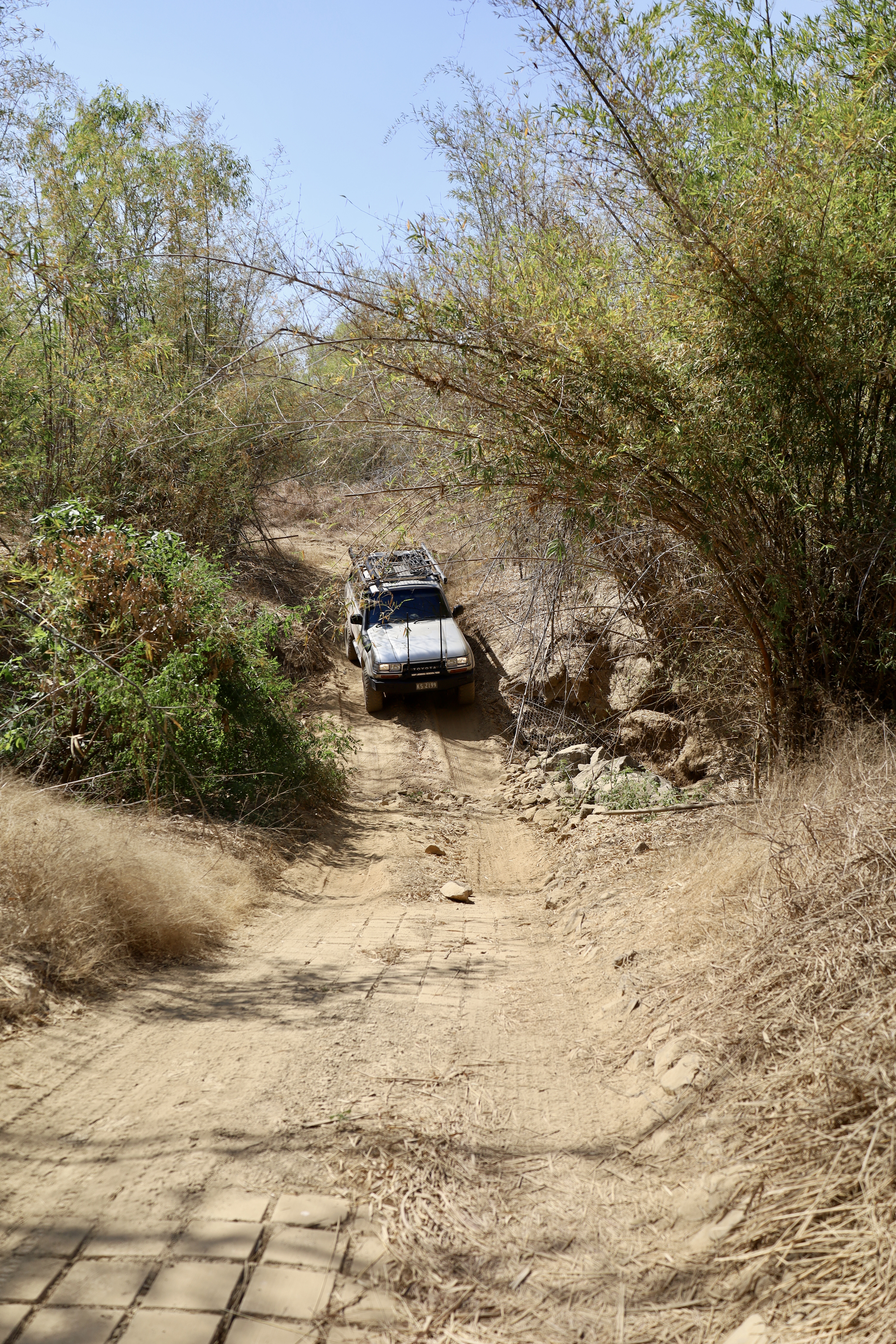
The loop follows the wet plains and heads to its farthest point at Corroboree Billabong where there’s a boat ramp but also a high point up the bank to have a break and croc spotting. Parts of the road were extremely rough, not from lack of maintenance but from the feral pigs and buffalo who use the road as their highway going from waterhole to waterhole.
At times, with tyres right down, driving it was only at a slow walking pace. Following the track was pretty easy though, with a stack of blue and red arrows along the way but really, there is only one main track. To fully enjoy and discover the Hardie loop track, allow a full day out with the many spots to enjoy and discover, you never know what you’ll see. My other advice is to get on to the track early in the morning as sections of it were that dusty, it was hard to see out the window.The Mary River NP is a must-do if you’re in the area, as it combines some good 4WDing, has a hint of the gulf country plus the attractions of nearby Kakadu.
FIVE PLACES TO VISIT
1. SHADY CAMP A popular barra-fishing departure point and campsite, with boat ramps either side of the barrage for fishing saltwater downstream or freshwater upriver.2. COUZENS LOOKOUT Enjoy secluded camping beside the Mary River, with only a short walk to the lookout for magic sunset views.3. WILDMAN 4WD TRACK This 32km track is limited to trailer-less and high-clearance 4WDs for exploring the wetlands, monsoonal forests and the wildlife within.4. HARDIES 4WD TRACK This dry-season only route is just off the Arnhem Highway and is one of a limited number of tracks with access to the floodplains.5. POINT STUART COASTAL RESERVE Only accessible during the dry, the drive to the reserve takes you through a variety of environments to Finke Bay. The track also takes you past Stuart’s Memorial Cairn.
Hands up anyone who thought that traditionally conservative Toyota would ever equip its iconic LandCruiser, the even more conservative bedrock upon which the company is built, with a leading-edge-technology 10-speed automatic transmission?
Or indeed equip it with an ultra-sophisticated sequential-parallel bi-turbo system, also at the pointy end of current diesel-engine tech? I certainly didn’t see any of this coming.Oh to be a fly on the wall in the numerous planning meetings that no doubt took place at Toyota HQ as engineers, marketers, bean counters and who knows whom else, nutted out the details of all this at the most difficult and uncertain time in the history of fossil-fuel burning cars. The end decision on this powertrain can’t be seen as anything but bold.
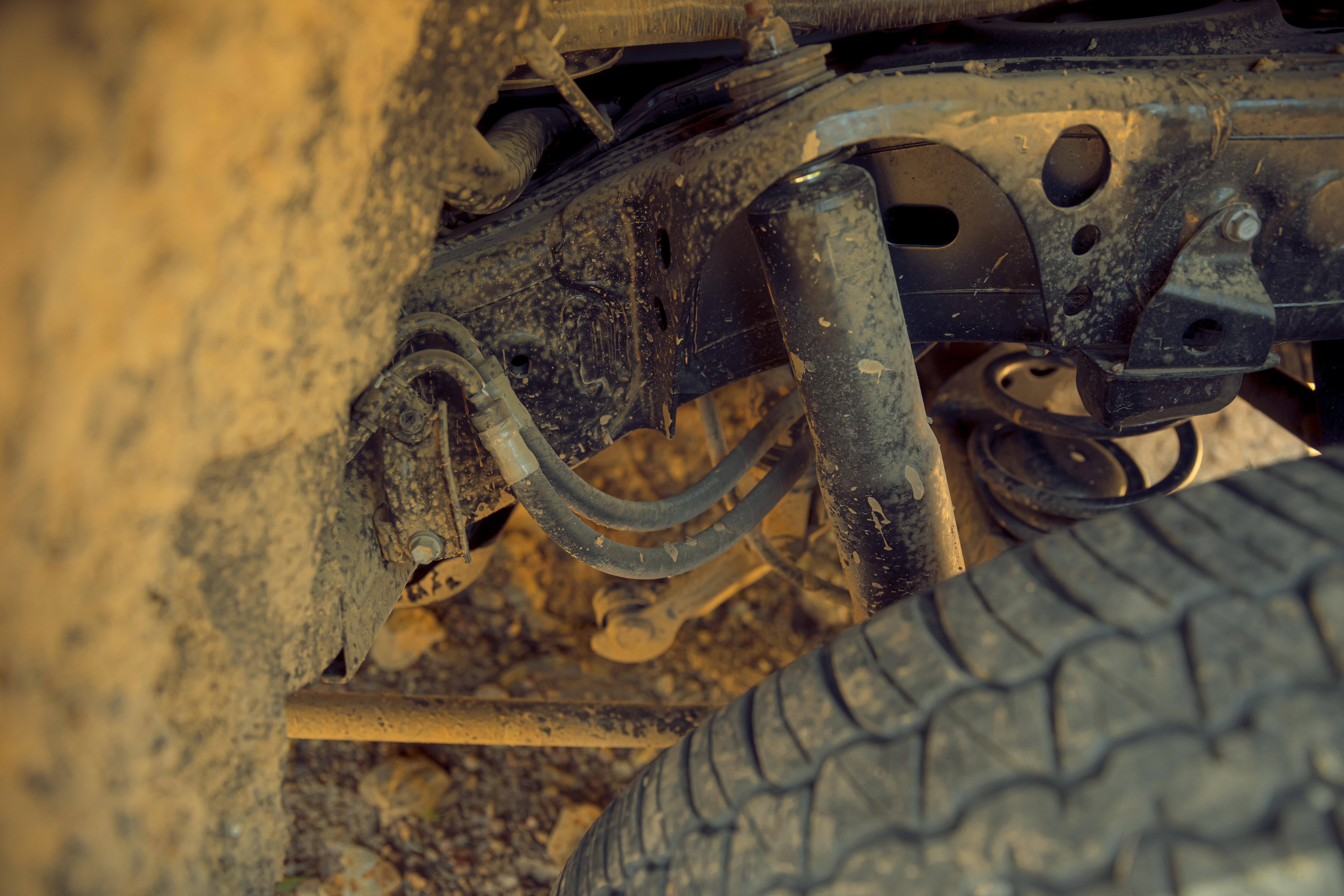
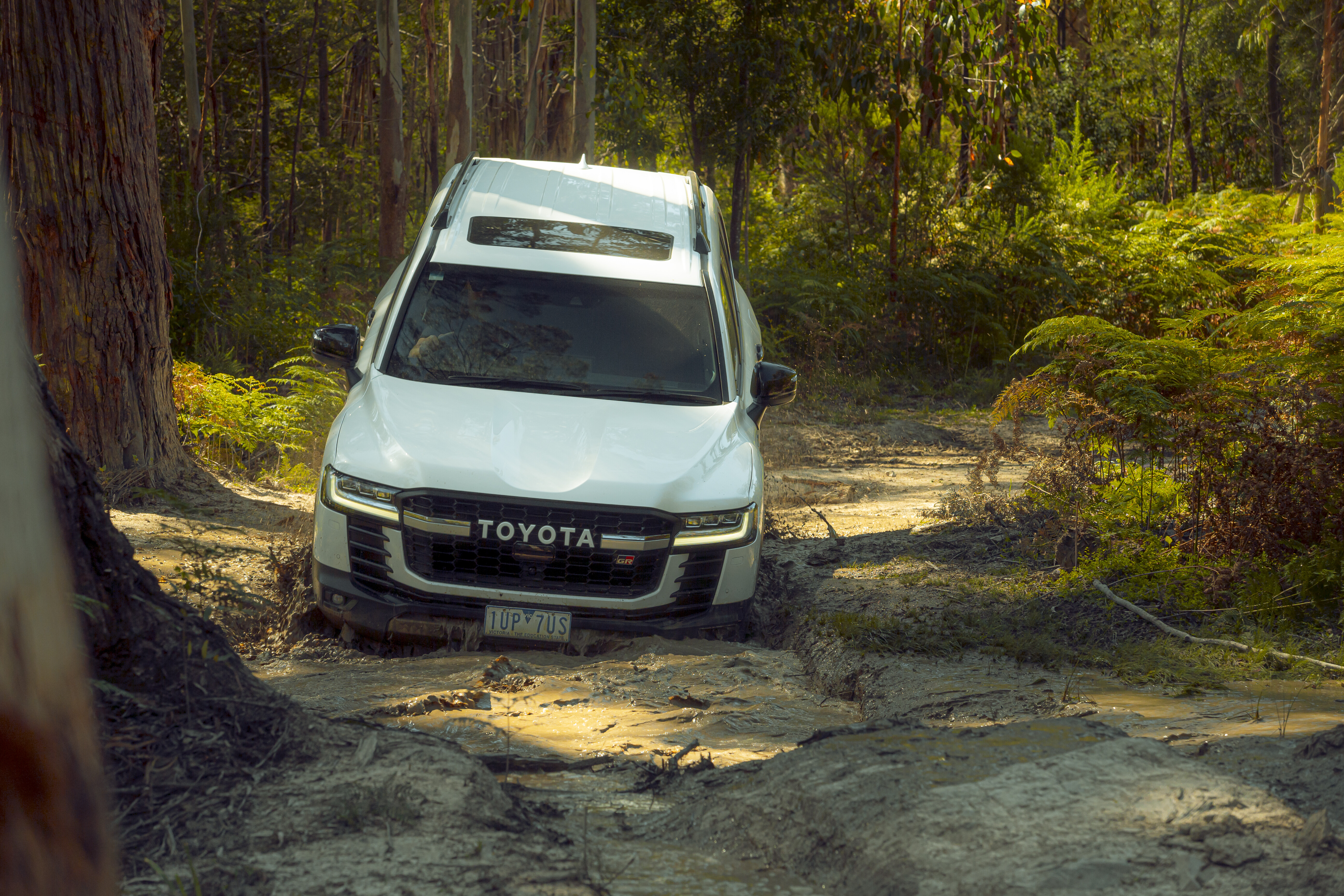
Toyota did, however, stay in its comfort zone with the general layout of the rest of the 300. Not only does it have a body mounted on top of a ladder frame, popularly known as separate-chassis construction, but it has a coil-sprung live axle at the rear and independent double-wishbone front suspension, also with coil springs. This is essentially the same arrangement as used by both the 200 and 100 Series LandCruisers, although the 300 does bring second-generation KDSS which is substantially different from the 200 Series’ KDSS.
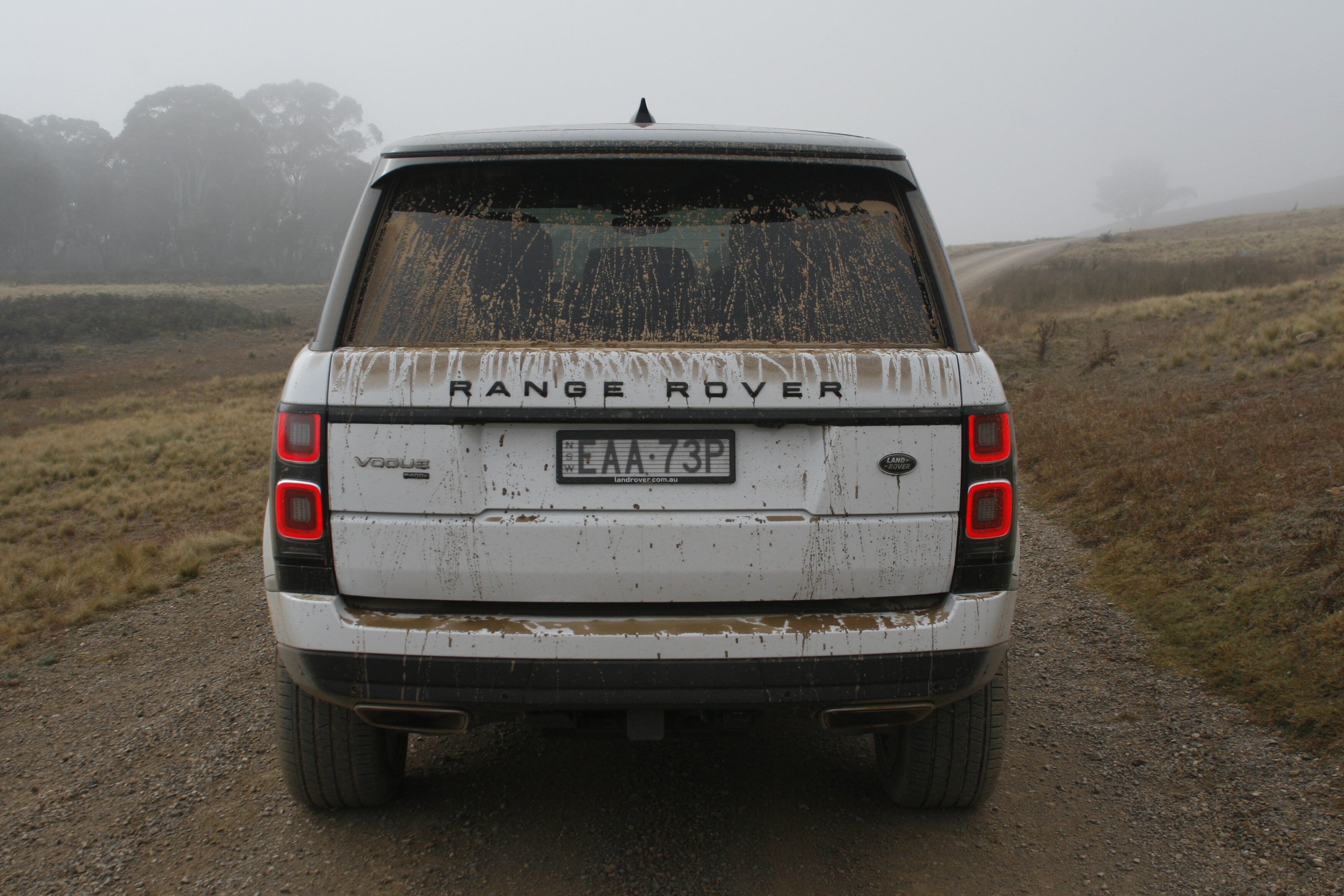
It could have even been different, of course. Toyota could have adopted monocoque construction or fully independent suspension, or both. And if it had of been as bold with the chassis as it was with the powertrain, that may have been the path chosen.Ironically, 300 Series prototypes were extensively benchmarked here in Australia as long ago as 2015 against both a Range Rover and the closely related Range Rover Sport, both monocoque 4x4s with fully independent suspension.
Toyota’s choice of separate-chassis rather than monocoque construction comes with good reason. Separating the body from the chassis isolates what’s happening with the tyres, wheel and suspension – all the noise and vibration – and limits its intrusion in to the cabin.
This is especially the case on high-speed gravel and other unsealed roads, which typically present noise and running refinement problems for monocoque vehicles. And while you may see the LandCruiser as just a tough and capable 4×4, Toyota also wants it to be a quiet and refined off-road limousine. The 300 wasn’t benchmarked against the Range Rover and RR Sport for nothing.A ladder frame, which accounts for most of the structural strength of a separate-chassis vehicle, also means this critical weight is placed low, which improves – among other things – the off-road side-sloping stability. With the 300, while the body shell is fabricated from various-grade steels, the exterior body panels are made from lighter aluminium alloy.
The pros and cons of the 300’s suspension versus a fully independent arrangement as per the aforementioned RR and RR S comes down to what’s happening at the rear, as the front is essentially the same.The major benefit of a rear live axle over an independent set-up is that there’s no change in ground clearance under the differential regardless of what the wheels are doing. Changeable ground clearance is, however, a problem with independent suspension.
The live axle’s exterior casting also protects the drive axles from damage, and there’s no need for CV or universal joints. So both simpler and more robust, both attributes that Toyota values.The downside of a live axle compared to independent suspension is more unsprung weight, while a road disturbance to either wheel effects the wheel on the other side of the axle. There’s also some bump-steer as the axle (located by a Panhard rod, as it is with the 300) moves slightly sideways back and forth as it moves up and down in response to road irregularities.A vehicle with rear independent suspension isn’t afflicted by any of this. Drive any of Land Rover’s serious 4x4s – from the Defender up – on a bumpy road, especially at higher speeds, and you can’t help but notice the difference. Ironically, Toyota has experience with a fully independent suspension on a serious 4×4. It’s called the Mega Cruiser. Perhaps next time …
Quick quiz: What do electric vehicles, hybrid vehicles, plug-in hybrids, mild hybrids and even some mobility scooters have in common? Some sort of electric motor, you suggest? Well, yes, you’re half right, but the correct answer is an electric motor/generator unit.
So just what is an electric motor/generator? Put simply, it’s something that can convert electrical energy to mechanical energy (that’s the motor ‘part’) or alternately, convert mechanical energy to electrical energy (that’s the generator ‘part’). Operating as a motor, it uses electrical energy stored in the battery to produce mechanical energy to propel the vehicle; while as a generator, it can harness the mechanical energy of the vehicle’s momentum to produce electricity, which is then stored back in the battery.
In an EV (or a mobility scooter for that matter) a motor/generator is all you have to power the vehicle. Obviously. All hybrids then combine the motor/generator with an internal-combustion (IC) engine – again, obviously – but vary in the significance of the roles the motor/generator and IC engine play in the vehicle’s operation.
The motor/generator plays the most significant role in a plug-in hybrid, a lesser role in a conventional hybrid (e.g. Toyota Prius) and only a minor role in a so-called mild hybrid like the Land Rover Defender.
Plug-in hybrids, such as Mitsubishi’s Outlander PHEV, have a motor/generator unit that can play a significant role in the vehicle’s operation, simply because the external charging (from the electricity grid or similar) allows it to have a much bigger battery than a conventional hybrid that can only charge its battery via the motor-generator unit. This effectively limits the size of the battery and the overall role the electric side of the powertrain can play in the vehicle’s operation.
In practice, this means a plug-in hybrid has more scope to be used as an electric-only vehicle without relying on the IC engine at all. The EV-only range afforded by a plug-in hybrid can be anything from 50 to 100km, and with reasonable performance. A recently tested Range Rover Sport PHEV had a 70km EV-mode-only range with easy highway driving, although the IC engine (petrol turbo four-cylinder) would automatically kick in under heavier acceleration or hill-climbing loads.
Conventional hybrids also typically have an EV-only mode, but this is generally very limited in speed (below 40km/h or so) and very limited in range (a few kilometres at best). With a conventional hybrid, the IC engine is still the main game, with the electric motor/generator playing an assisting role primarily with acceleration off the mark and at lower speeds, where the electric motor’s strong low-rpm torque serves it well.
With a mild hybrid, such as the Land Rover Defender P400, the electrical side of the powertrain can’t power the vehicle by itself nor contribute a significant part of the available power. With a mild hybrid, the motor/generator is notably much smaller than it is in a conventional hybrid and serves essentially as the IC engine’s starter motor and to charge the battery.
With the Defender, that’s a significant role, as its electrical system not only has to cope with the usual high electrical demands of a modern 4×4 that has electrical operation for near everything, but it also has to power the engine’s electric supercharger (which supplements its turbocharger) and power the electrically assisted steering.
The motor/generator of the Defender mild hybrid still feeds some mechanical energy back into the drivetrain, but only a very quick assistance just to help the initial transition from standing still to moving. With the Defender’s automatic engine stop-start function, the motor/generator is already engaged with the drivetrain at this point, so it’s a seamless interaction to also help get the car rolling.
Hybrids of all types will become a broader part of the automotive landscape as we transition to seemingly inevitable fully electric vehicles, most likely powered by batteries rather than hydrogen fuel cells due to the relative ease of delivery-infrastructure rollout, but plug-in hybrids are the only ones that point towards the future. Conventional hybrids and mild hybrids are just another way to make a more efficient petrol or diesel burner.
Travel restrictions over the past two years have seen folks who wouldn’t normally consider owning a 4×4, buying and equipping four-wheel drive vehicles for domestic travel because international travel was effectively banned. However, border closures within the country have stymied travels at home.
Still, it’s been a good time for the 4×4 accessories industry, stock shortage issues aside, as most of the shops I’ve spoken to have been flat-out during this time fitting out mainly new vehicles.
As we roll in to 2022, it’s easier to travel to the USA than it is to Western Australia, while travel among Australia’s eastern states seems to be a free for all. It has seen a lot of folks out on the roads over the New Year and popular camp spots are filling up fast.
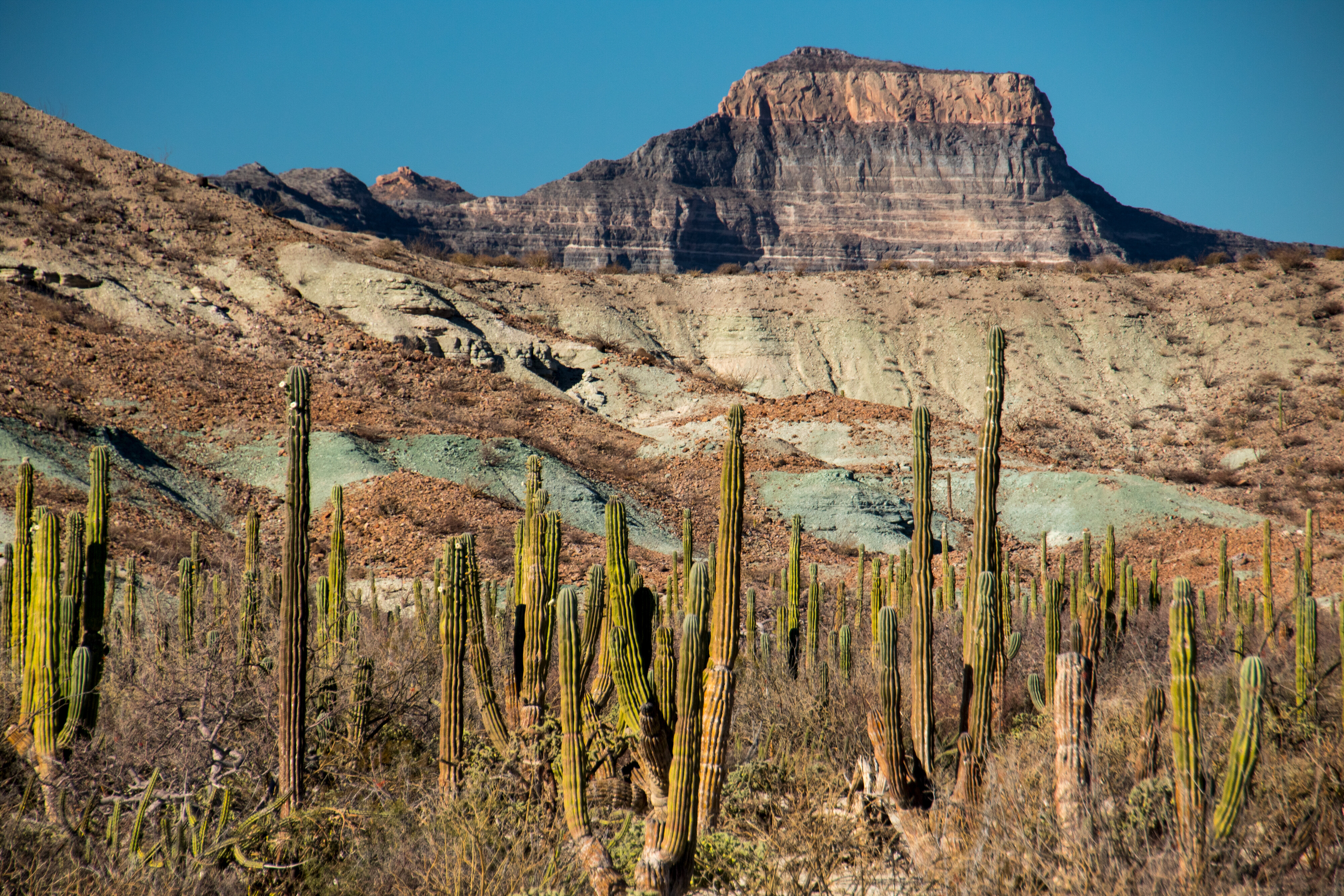
Have you ever considered an overlanding or off-road trip overseas and, if so, where is it you’d want to go? There are some incredible off-road challenges to be had through South-East Asia, endless sand dunes to explore through the Middle East, and an abundance of national parks and natural wonders to explore in the USA.
The USA is a particularly easy one for Aussies, as it’s a single flight from most of our capital cities to Los Angeles, from where you can hit the road and explore for as long as your budget allows.
A few years back, I turned south from LA and headed in to Mexico to explore the Baja Peninsula and it was an epic two-week trip. I wish I had more time there, but after years of watching off-road racing from Baja and reading countless surfing stories from there, I grabbed this opportunity to visit.
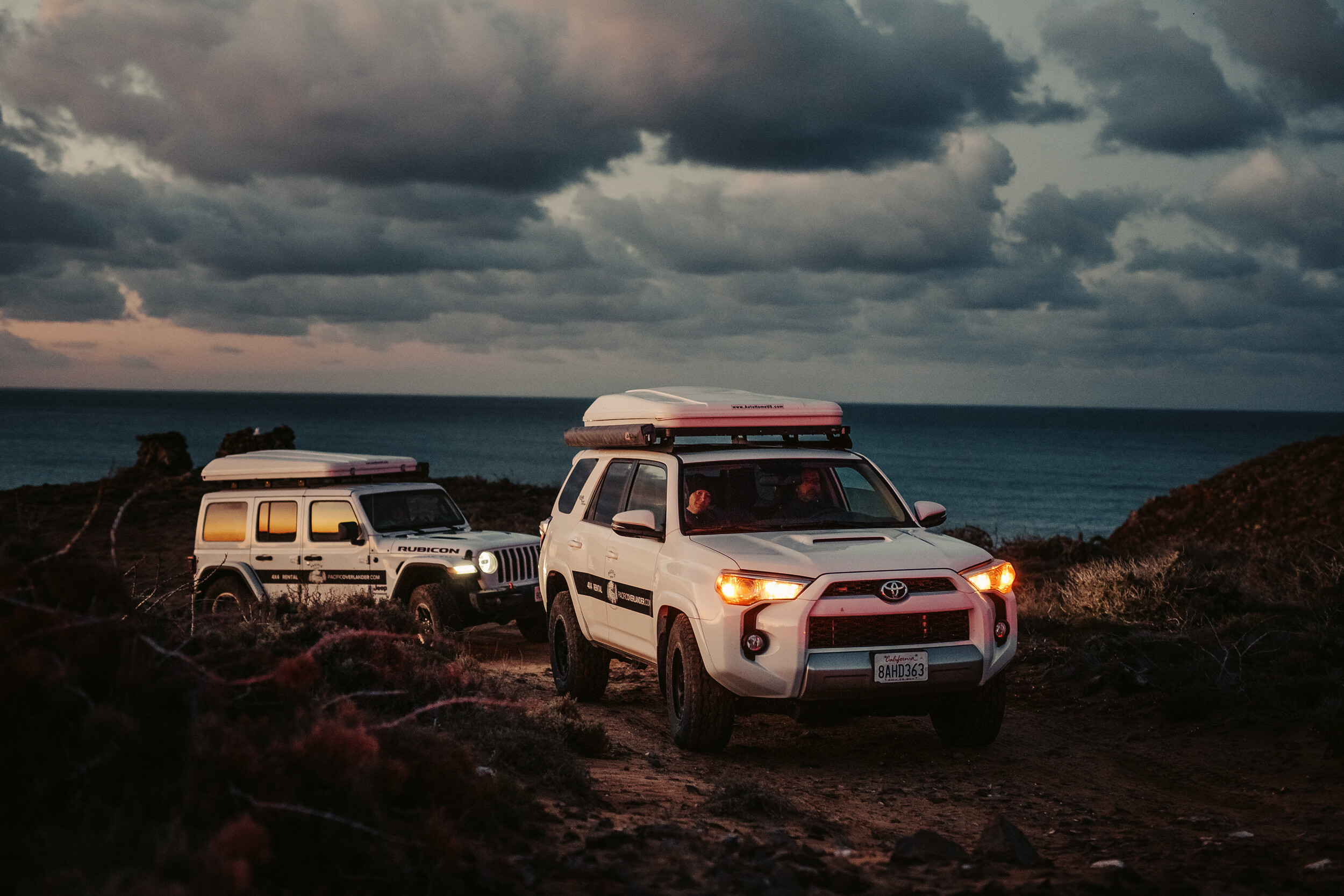
The chance was made easier when regular contributor to the magazine, Chris Collard, offered to show me around Baja. Chis has been travelling to Baja for decades and knows the place well, so he was the perfect guide.
After picking me up from LAX, we were across the border in to Mexico and sipping tequila in Ensenada within hours. It was the start of 10 days zigzagging up and down the peninsula, avoiding the sealed roads, chasing race cars, camping on remote beaches and meeting great people.
After being such a great travel companion on this trip, I asked Chris to put together a guide for others thinking about making a similar trip, and you’ll find it in our Jan 2022 issue – in stores January 6.
Speaking of the great people we met on the trip, two of them were Lucky and Cindy and we stayed at their place on the East Cape. Lucky has a Suzuki Samurai (Sierra) which we took for a run down the beach, while Cindy drives a mint CJ7 Jeep which she has owned since new.
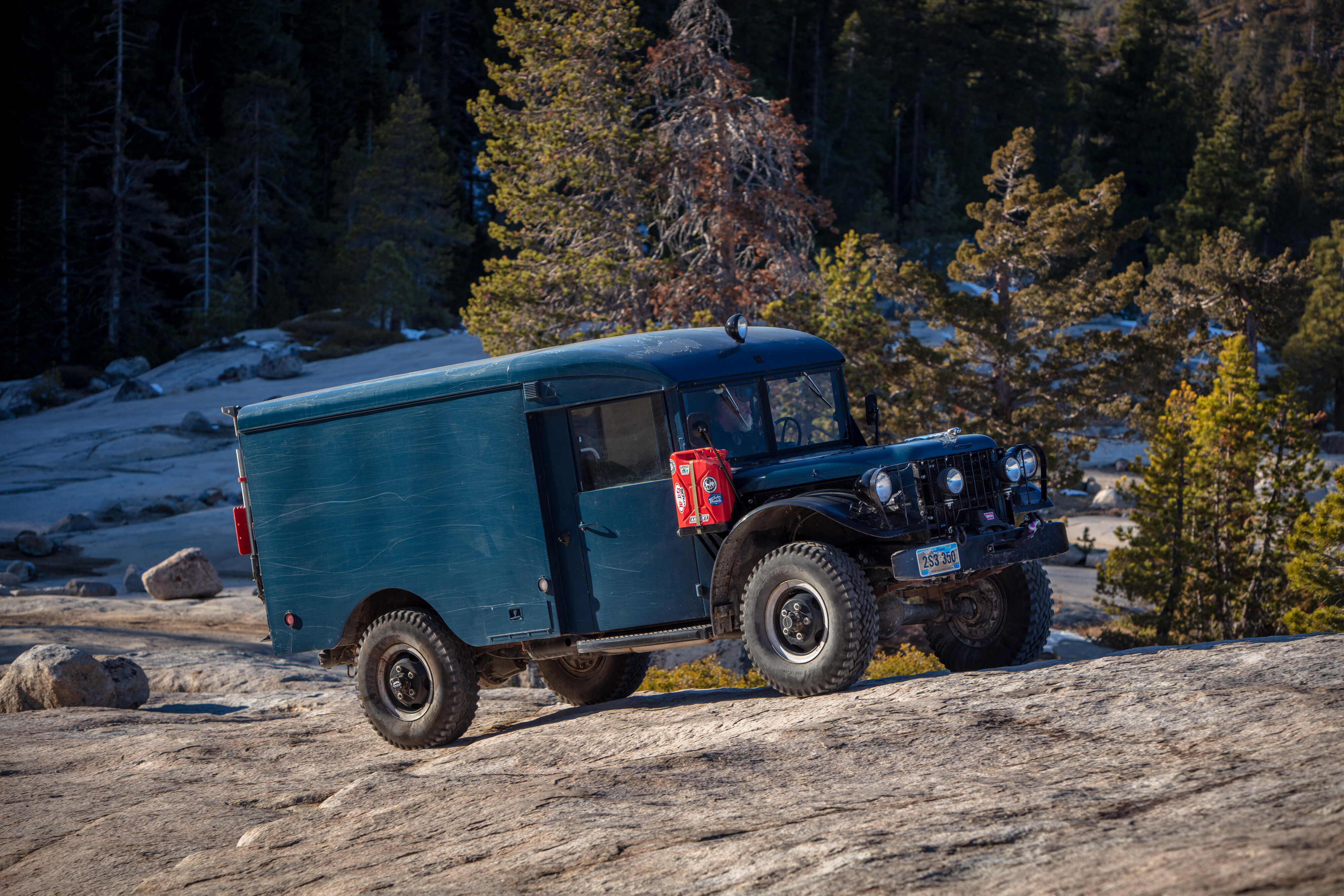
The car that wasn’t there when we visited was Lucky’s ex-ambulance Power Wagon and, after he told me about it, I had to see it. A few years on and Chris caught up with Lucky while he was driving it in the USA and photographed it for the Jan 2022 issue.
Great people, amazing places and cool 4x4s – there’s so much to see when you travel by 4×4, whether it’s home or abroad. What’s stopping you
Some people just want to do things differently, be that for the challenge, to stand out from the crowd or just because they don’t like more mainstream offerings available. Ken Miller is one of those people that really just wanted to try something a bit different for his next 4×4 project.
After previously owning a 200 Series Cruiser, Ford Ranger, a chopped dual-cab GQ Patrol and a wild LS3-powered GU Patrol (among other fourbies), the VW Amarok seems like a bit of an ‘out there’ choice, but in Ken’s own words, it’s perfect for his needs. So much so, this is actually his second Amarok. It’s safe to say he’s impressed with the platform, even though he’d love to build a Ram 2500 as a dream tourer, if someone was to make a decent offer on his Amarok … just saying.
When asked why he decided to start with an Amarok, Ken had this to say: “The Amarok is capable, comfortable and it’s just a bit different in Australia to see one so modified.
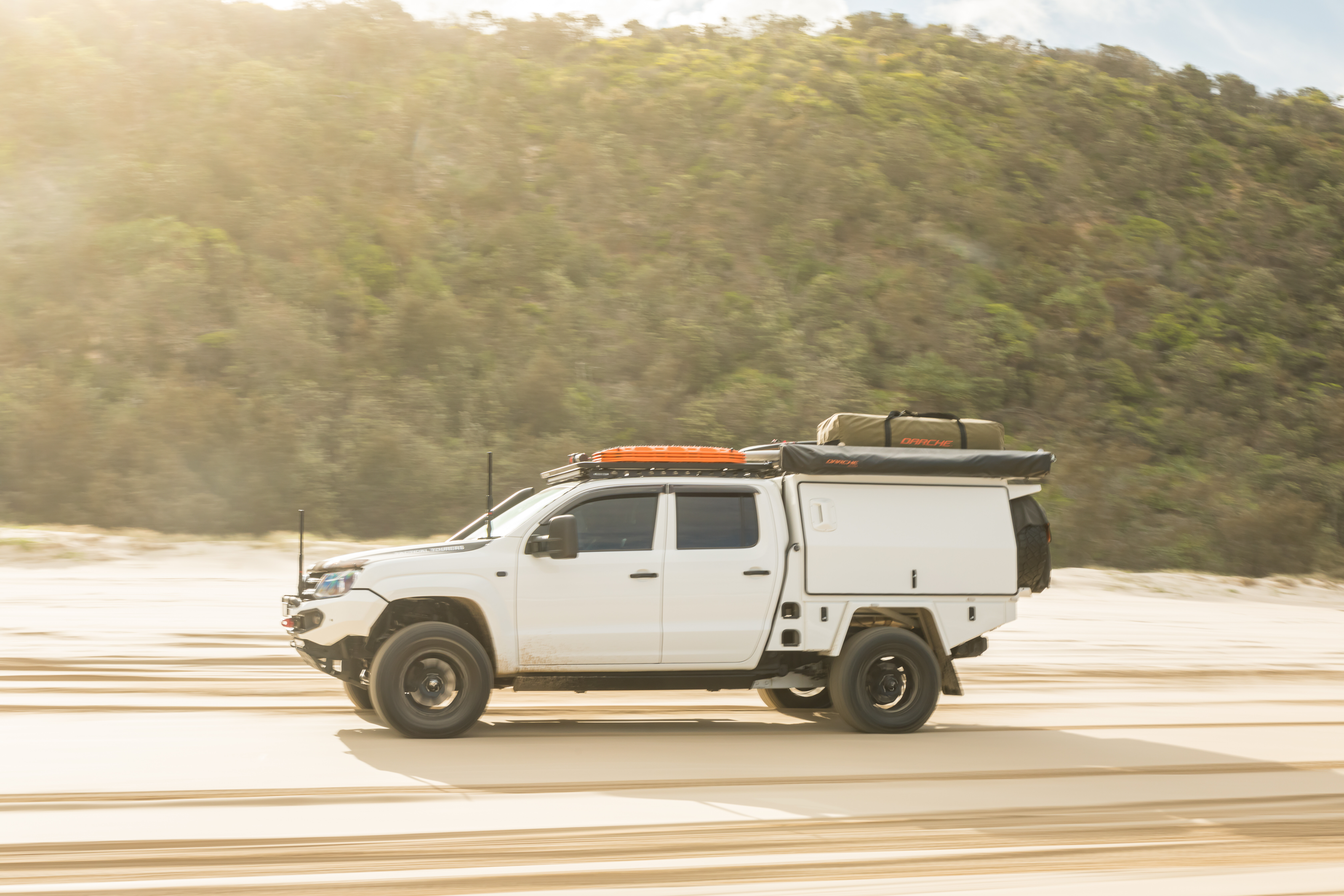
“I’m rapt with how the build turned out; it makes both short- and long-distance travel nothing but easy and enjoyable.
“I like to be different and don’t like to follow the crowd; I had been liaising with Jake from Tactical Tourers in regard to building me something special, something we could comfortably tour in, carry our boat, tow our van and most importantly, something we could live out of for a day at the beach or a month on the road.”
Now while that seems like an almost impossible task, it goes to show that if you plan right and involve the right people, you can create amazing vehicles that are built with an end goal in mind. The results certainly speak for themselves.
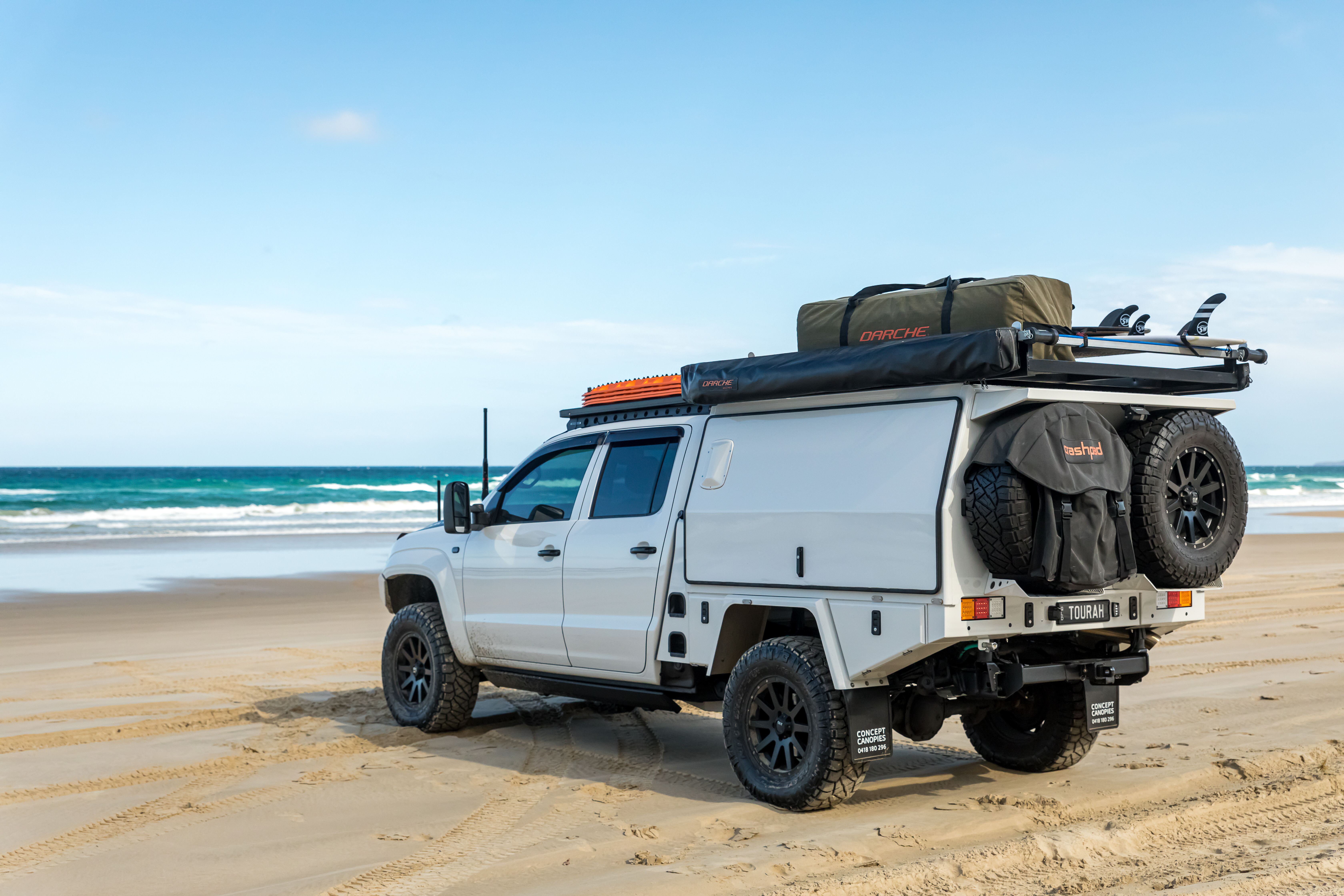
As we all know, every project has its challenges, and Ken’s Amarok is no different. When we asked him about any issues he experienced, it seems like things went as well as possible.
“The main thing to overcome was weight. I was very mindful of what I was adding to the vehicle, and keeping it under the upgraded 3500kg GVM,” Ken says.
“The Concept Canopy is an all-alloy construction, and offers high quality in my opinion, yet is still light. The 350mm chassis extension helps here, as it changes the driving experience, and distributes the weight so much better. It’s a pleasure to drive, and I actually use it as a daily driver and open road cruiser.”
FEELING STRETCHED
350mm was added to Ken’s Amarok, which also allowed for a 3500kg GVM upgrade. Ken also has the chassis braced, and a custom tail-shaft made up to handle the extra length, weight and power of the custom VW.
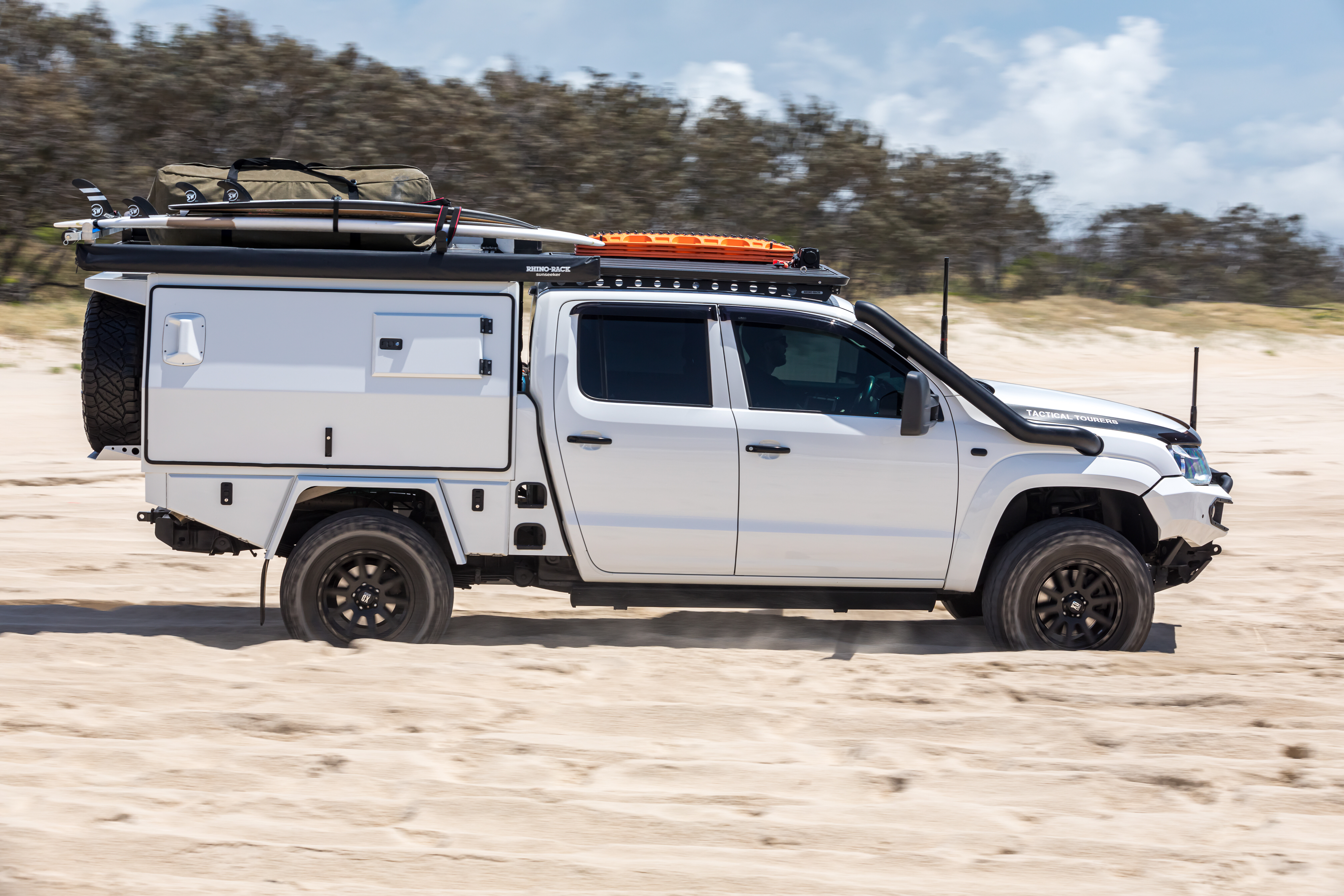
The wheelbase extension was handled by the skilled team at Creative Conversions, who Ken says did a great job of the process. While 350mm might not seem like a lot, it makes a huge difference to the way the vehicle drives and handles weight without being a monster on the tracks.
POWERED UP
The V6 Amarok is no slouch performance-wise from the factory, but we all know it’s possible to make a good thing even better. Ken paid a visit to Steve at Coolum Motors who has made a name for himself tuning Amaroks (and all diesel 4x4s) with great success.
And the results? Well, how does 201kW of power and 750Nm of torque at the wheels sound? Yeah, pretty sweet if you ask us. Best of all, post tune, the V6 is sipping just 11L/100km, a seriously impressive result.
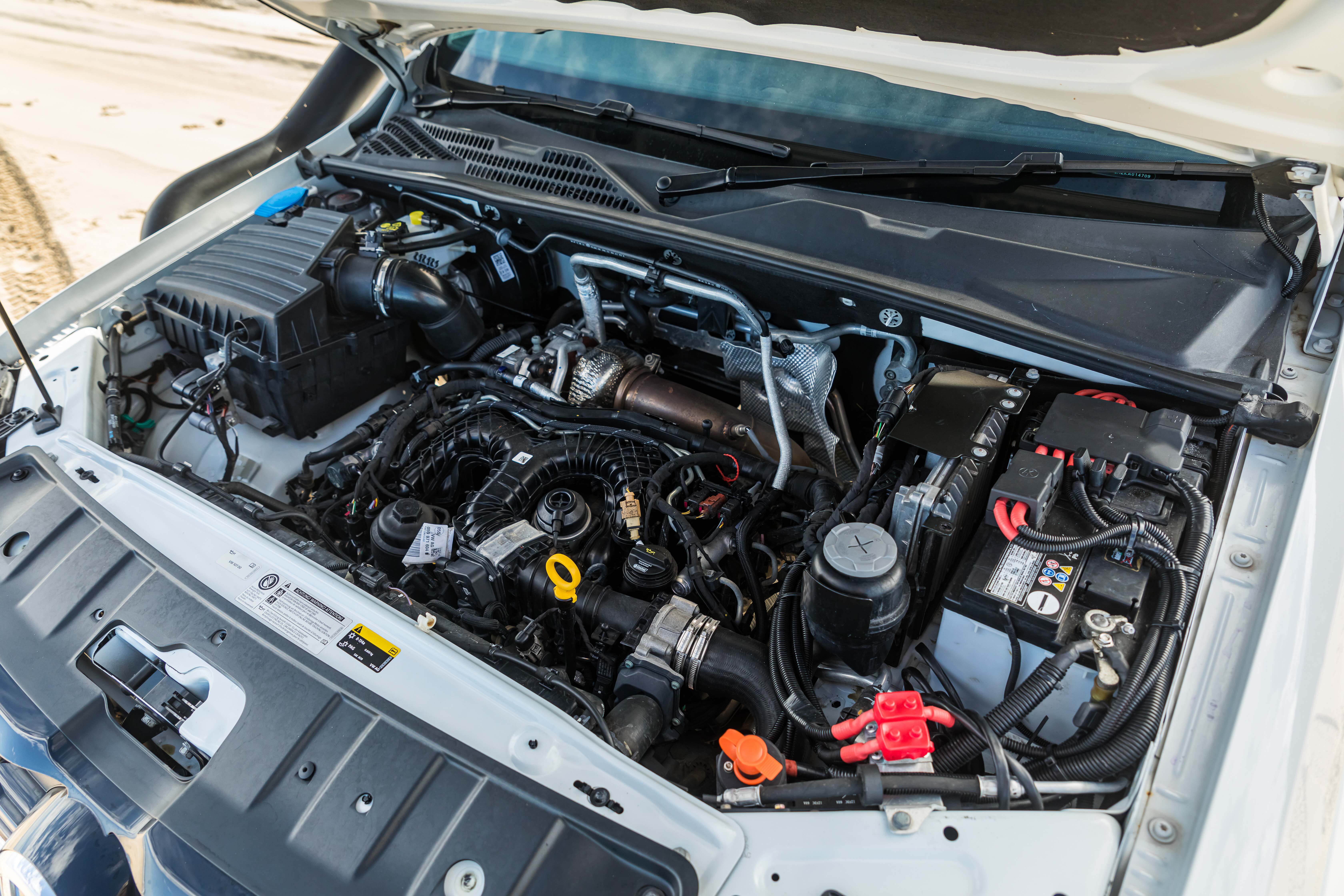
This power number was achieved with a custom dyno tune, as well as a suite of custom performance parts to make the most of the tune. Starting with a 3.5-inch turbo-back exhaust system to expel waste gases, custom-made out of stainless steel specifically for Ken’s Rok. Getting air in to the V6 is a four-inch Elite Exhausts stainless-steel snorkel with a black seamless finish. One would imagine you’d hear Ken’s air intake before you could see the vehicle, and there’s nothing bad about that.
To remove any lag from the Amarok’s throttle, Ken also added a Torqit throttle controller, which is handy both on- and off-road. While the tools were out, Ken also opted for a Wagner upgraded intercooler kit that has significantly reduced intake temps over the stock VW unit.
ROLLING STOCK
After adding a two-inch Outback Armour suspension kit with aftermarket upper control arms, and raising the Amarok a further two inches via a body lift kit, there was plenty of space for larger rubber. Ken has chosen to run the increasingly popular 295x70R17 sized rubber, in the form of Nitto Ridge Grapplers. These have been fitted to XD Heist alloy wheels; six in total counting the two spares Ken carries on the back of the canopy.
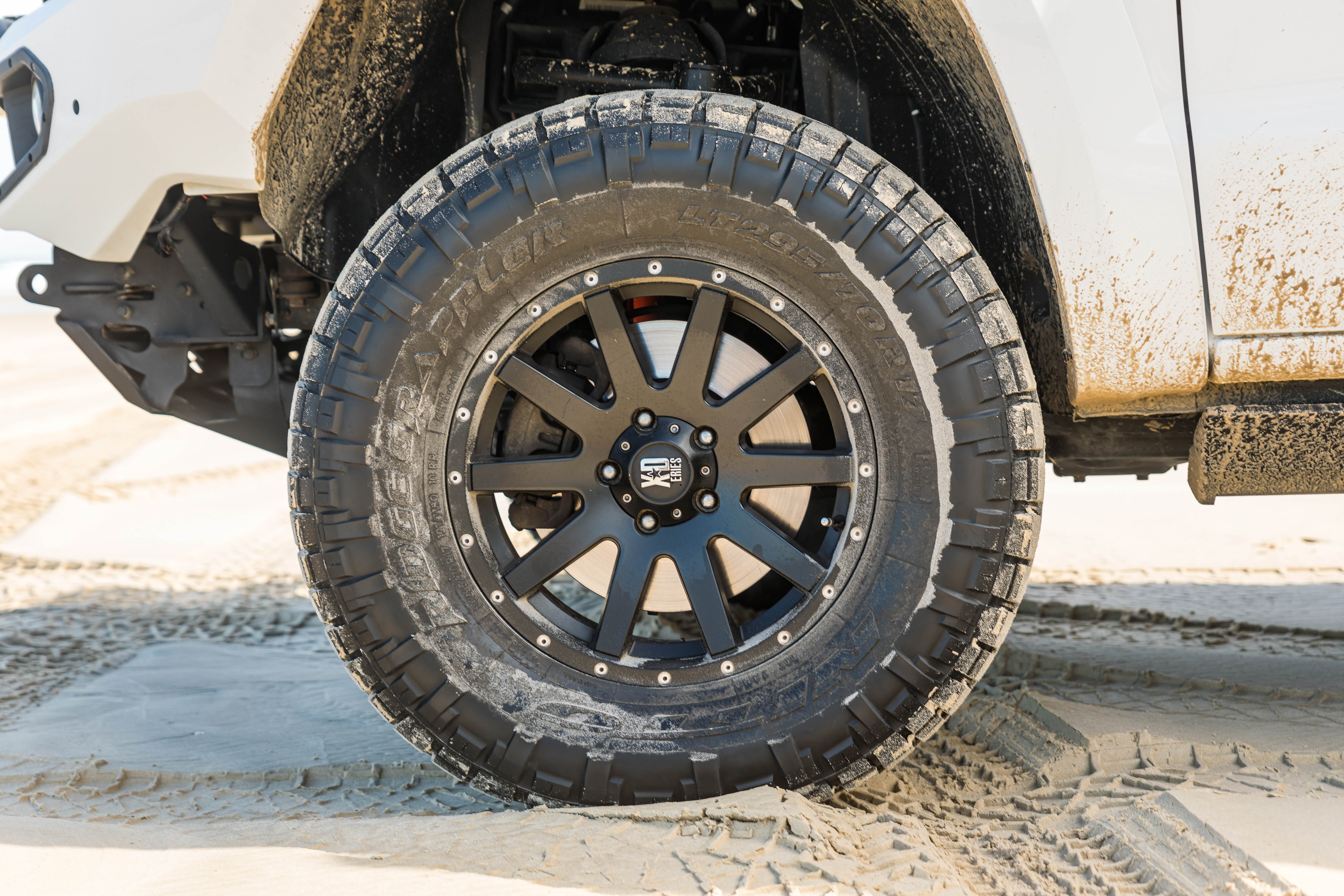
So far, this set-up has proven to be super reliable, although Ken admits to carrying a spare (unused) CV joint in the event something goes bang. With the weight of the additional accessories and canopy, Ken has also opted to fit a pair of Airbag Man airbags, with in-cab control. This allows him to tailor the spring rate and ride height of the Amarok, depending on the load he’s carrying.
TOURING MODS
Starting at the front of Ken’s Amarok, he fitted a Rhino 4×4 bar and one of their 12,000lb winches with synthetic rope. Stock Amarok headlights could at best be described as crap (sorry, but you know it’s true). As such, Ken has thrown the Stedi catalogue at his vehicle, with their HID replacement headlight bulb upgrade, as well as a roof-mounted LED light bar, and a smaller light bar mounted to the front bar.
On the roof of his Amarok, Ken decided on a Rhino-Rack platform, and has added more lighting with a few well-placed Stedi work lights for camp lighting. There are also two awnings bolted to the rack: a Darche 270-degree unit as well as a Rhino-Rack Sunseeker for ultimate coverage when the weather turns sour.
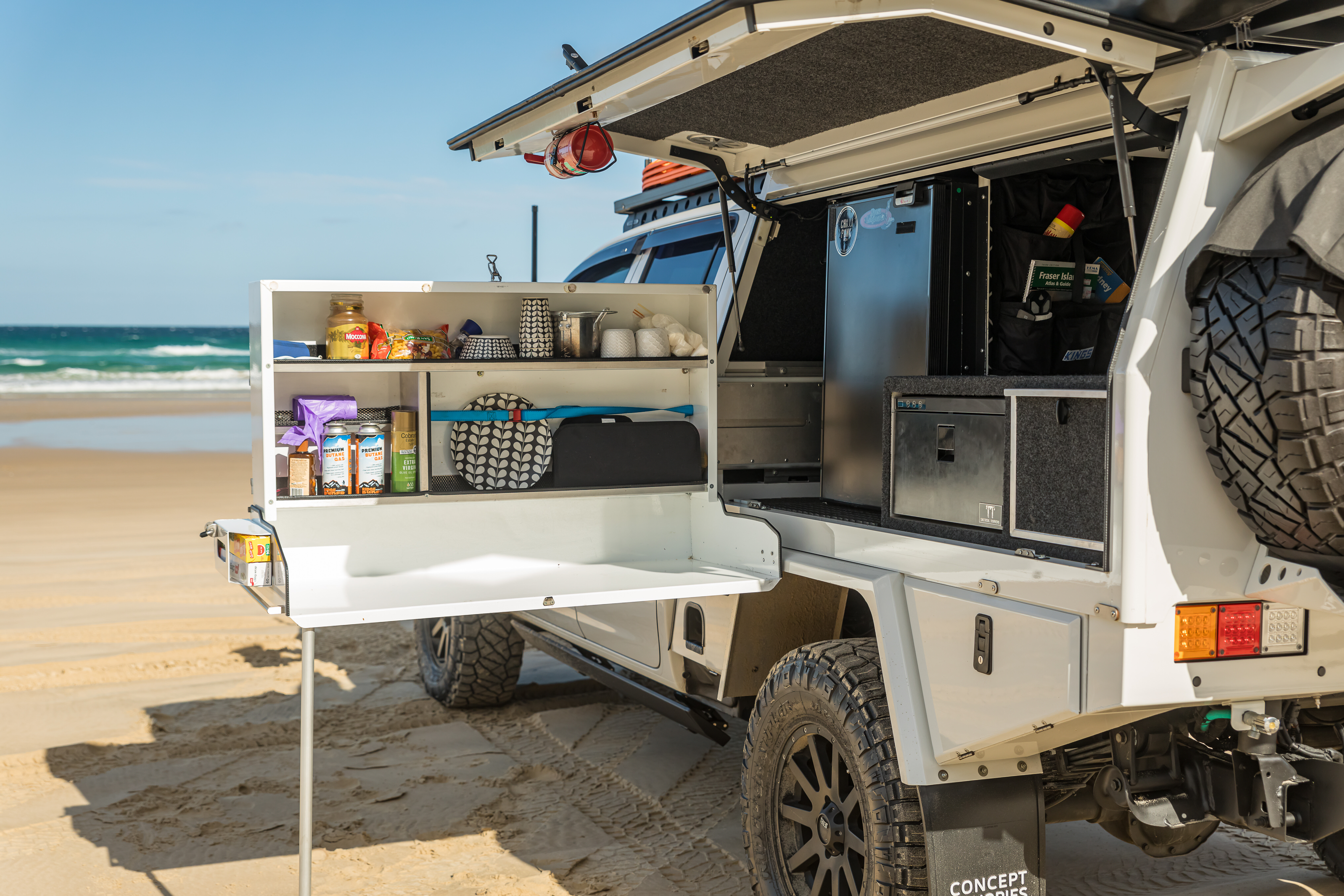
Even though this Amarok drinks so little diesel, Ken had a 140L Long Ranger fuel tank installed, giving him a massive boost in touring range. Considering he no longer has to stop that often for fuel, he decided to upgrade the front seats with comfy leather items, which also look mint in the interior. Other cabin upgrades include, a custom roof console, Redarc Tow-Pro Elite, GME XRS Connect UHF, LED interior lighting, and upgraded speakers with sound deadening in the doors.
The main talking point of this Amarok would have to be the Concept Canopies chassis-mounted alloy canopy. Complete with boat loader and roof-mounted winch for easy loading of the tinny. Inside the canopy, you’ll find a Travel Buddy pie oven, Cel-Fi mobile booster, multiple charging outlets and a twin ARB compressor with hose reel.
The 12V systems are important to get right in any touring 4×4, and Ken has taken no chances, fitting a range of Enerdrive gear including 200amp of lithium battery charged via an Enerdrive charger and 300W of solar when parked up at camp. There’s also a 1000W Enerdrive inverter to power 240V gear, and let’s not forget two fridges to keep food and drinks cool while out exploring. Ken has his priorities in life sorted it seems.
The second-generation Land Rover Defender is due to hit the streets and bush in convertible form next year, a nod to the original soft-top version – but in a much fancier guise.
The product of coachbuilder Niels van Roij Design, the Dutch company’s Heritage Customs arm has previewed the drop-top version of its Valiance – itself a modified version of the new Defender.

However, just five units will be produced, and at a price in Europe that’s equivalent to around $220,000.
Called the Valiance Convertible, it will be based on the short-wheelbase Defender 90 with the lower half of the body identical to the factory model, but a fabric top replaces the greenhouse with a hard lid.

So far, three of the customer Valiance Convertibles have been detailed and previewed.
The first is named ‘Cote d’Azur’, featuring bespoke blue paint and whitewall tyres, while the ‘Solihull sand’ version is an homage to the original 1948 model. The third model shown is the ‘Kokkini Paralia’ with dark matte red exterior paint. All feature bespoke detailing, customised interiors and magic metal interior and exterior packs.
Heritage Customs claims buyers can “work closely with the team of specialist designers and craftspeople via the personal commission guide called Architecture”. In this program customers can create or enhance their own unique Heritage Customs vehicle.
When we plan for a trip, our mind begins to picture what that trip will look like. Either camping with friends, kicking back around a campfire telling tall tales and having a laugh, or sitting with the family toasting marshmallows as the sun sets over the mountains.
What we rarely consider is the nitty gritty of the components needed to get our equipment there. You could imagine a roof rack loaded with gear, but you will probably never picture a tie-down strap securing the load.
Some of us may give a cursory thought to what we need, but, beyond that, we rarely think about how to secure the load and the best way to go about it. It’s hardly glamorous or exciting.
Tie-down straps are crucial to many a trip, and it never ceases to amaze me how many people use the wrong strap, or even lose their load before they make it to the end of the street.
I followed a camper trailer being towed up the highway once with a foldout table strapped to the top. Sure enough, a gust of wind took it completely off the trailer, launched it 50 feet in the air before it came skidding down on the road in front of me. That could have killed someone or at least caused a terrible accident. So, what are your options?
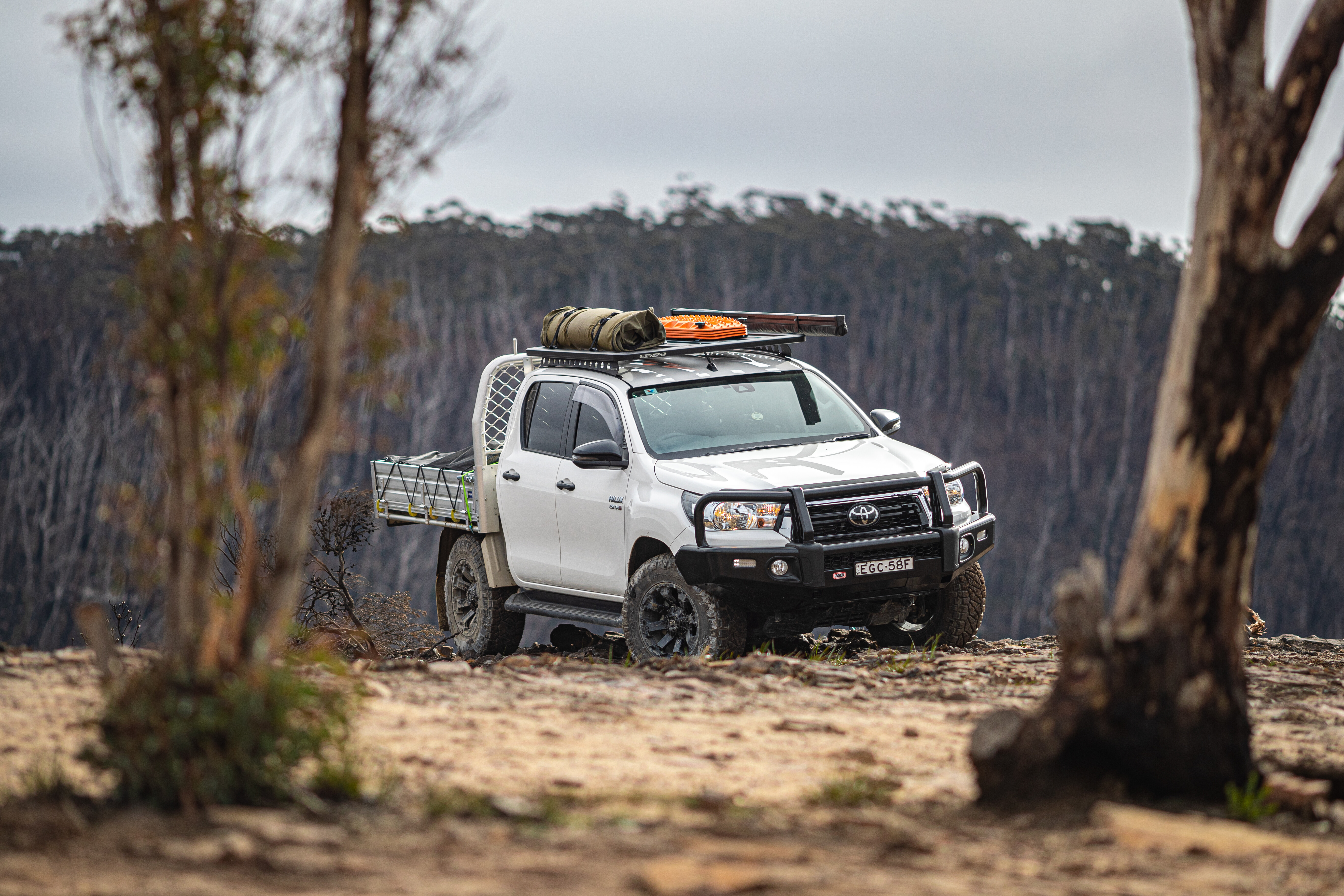
A tie-down strap is a length of webbing tensioned and used for securing cargo. They come in many shapes and sizes. An occy strap is not a tie-down and, despite your father using one to take the surfboards to the beach for 20-odd years without incident, they should not be used to secure loads, particularly when securing a load while off-road.
Occy straps have give and not even Governor Arnie, in his body-building heyday, could manage to stretch one out adequately to stop it from stretching further on a bumpy track. Once it stretches enough, your gear slides out and is all over the road. They also have no load rating.
Proper tie-downs, as described above, come in various lengths, with two ratings to indicate break strength and working strength. The break strength describes the maximum comfortable weight that can be supported before the strap fails, and working load describes the maximum weight that a tie-down can support with regular day-to-day use without becoming damaged.
They are not one and the same. The working load is generally calculated as one-third of the break strength. So, with that in mind, a strap with a 250kg break point should only be used to secure 75kg of load. Remember, that when off-road, inertia can cause a load to shift considerably and put more strain on any tie-downs, so it is best to err on the side of caution when choosing a tie-down strap for that reason.
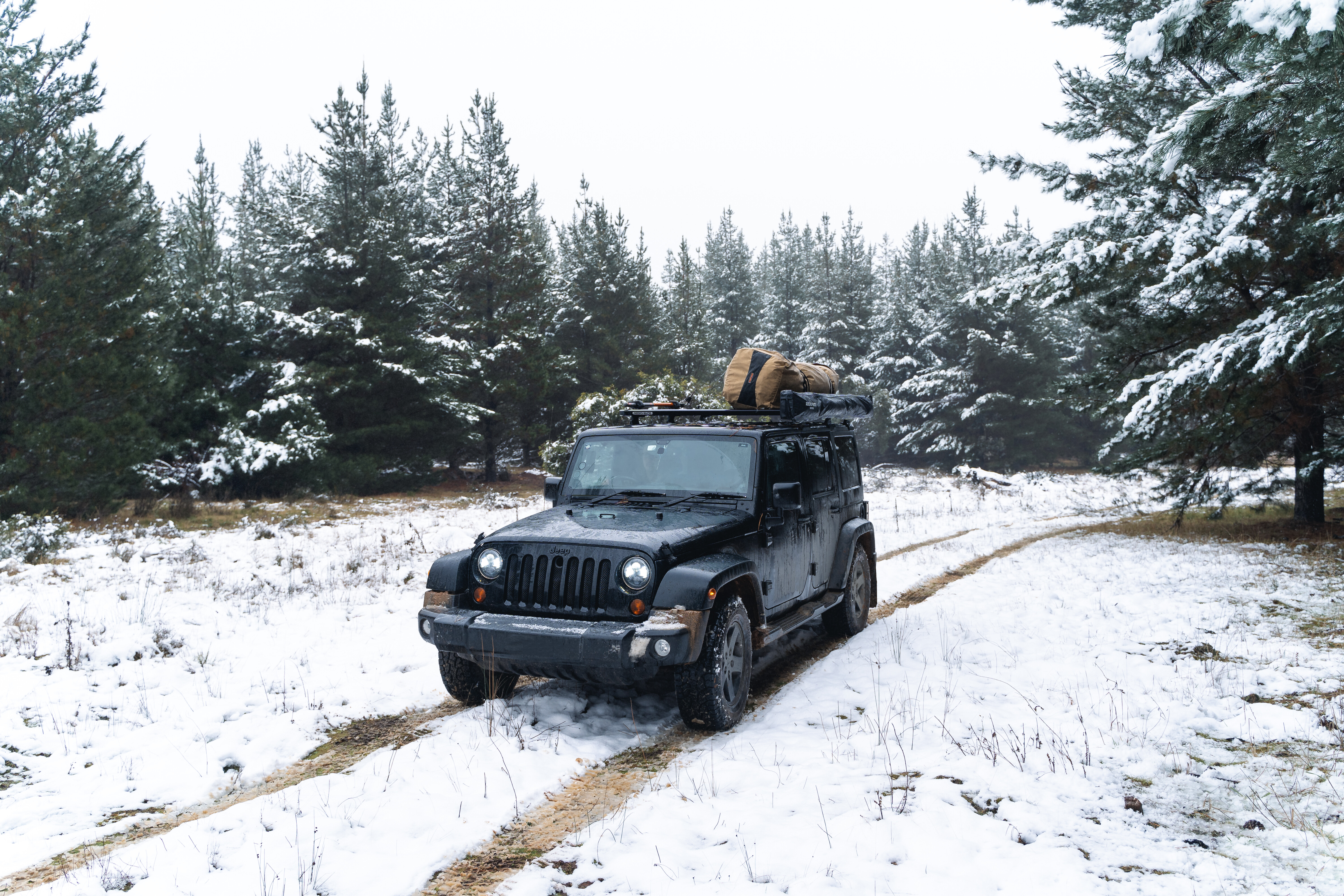
Generally, the wider the strap, or webbing, the stronger the strap will be.Straps are generally good for securing all types of loads from spare tyres to tarps and swags. They can even be used to secure fridges in vehicles. The type of strap you use will be determined by where you are going and what you are carrying.
WHICH STRAP FOR ME?
Standard light-duty straps or lashing straps are typically used when you are securing a load that does not require a lot of strength to stay in place and is unlikely to slide around. They feature a gator clip which clamps down on the webbing when you pull it tight. They are your small-load straps.
For example, a set of MaxTrax or a swag secured on a roof rack driving on mainly tarred roads and or graded dirt. Neither weighs a lot, maybe, so this strap is perfect.
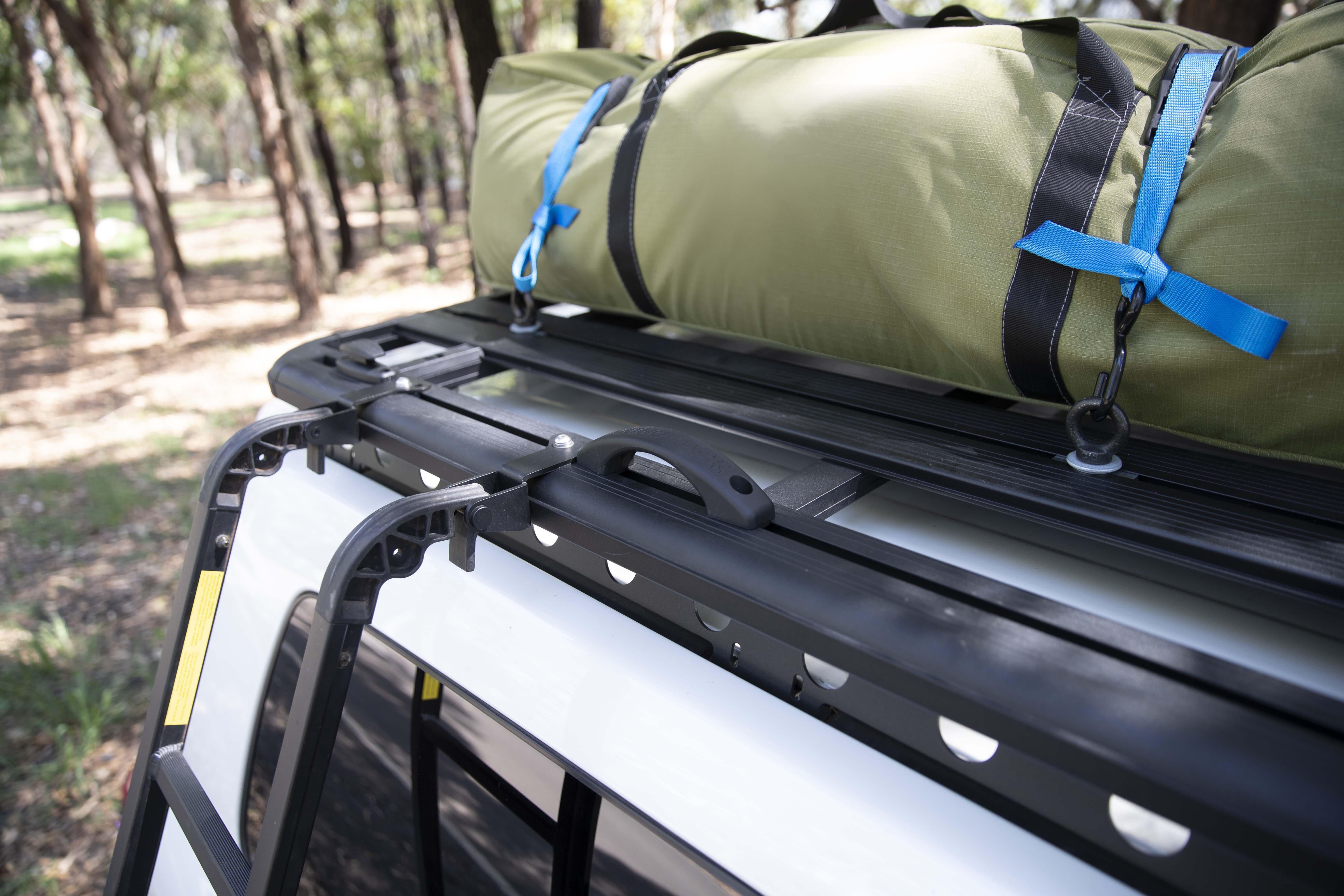
Next up is the Cam Buckle strap. These are lighter-duty than ratchet straps but heavier-duty than lashing straps. They have a higher rating and are perfect for heavier items such as dirt bikes and ATVs. Again, I would not use one to secure a load when doing heavy off-roading.
For heavy loads and loads that you cannot afford to have shift around, such as spare tyres on a rack or anything when off-road, the ratchet strap is the best option. These straps come in a variety of sizes, from light- to heavy-duty. They can also be purchased in stainless steel for an additional price; anyone working in a marine environment will know what that is about.
Ratchet straps can be tightened down with a mechanical buckle that ensures the strap is at maximum tension and tight enough that your load has no chance of moving. Therefore, I would recommend them for all off-roading. The two previous straps, no matter who you are, cannot be tightened enough manually.
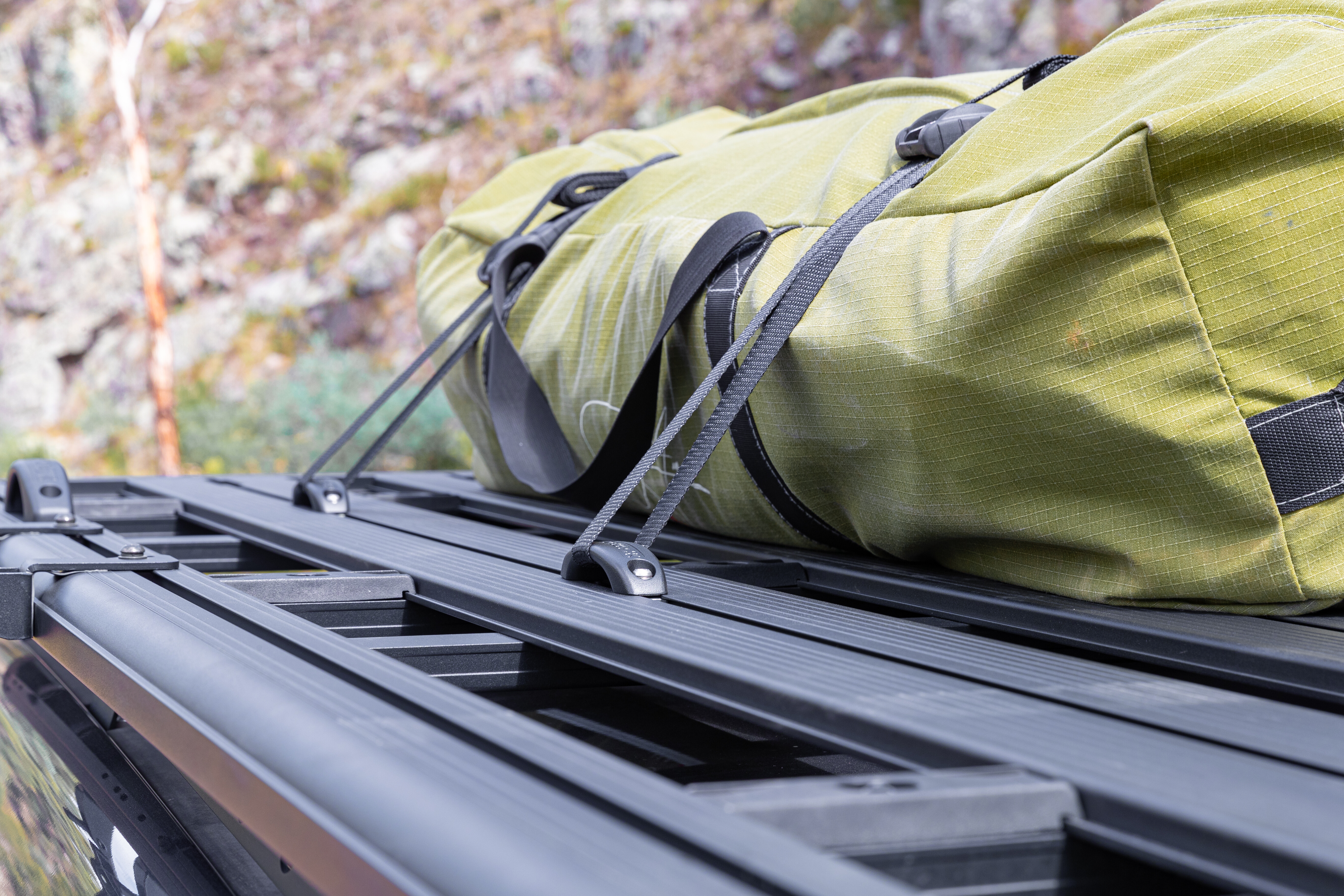
There are other straps, but these will be your primary go-to options. They can wear over time too, so what should you look out for?
All of these straps are made of webbing with a metal buckle. The webbing can fray if the strap gets a nick in it, so check them regularly. A frayed or half-cut strap should be thrown away. Similarly, the nylon and polyester fibres in straps will eventually break down under UV rays, so essentially the sun will wear out your straps. Check them often.
Also, do not store them wet in a box for next time, because there will not be a next time. They may go mouldy and rot. Finally, for the ratchets themselves, treat them with some lubricant like WD-40 after each use, to prolong their service life.
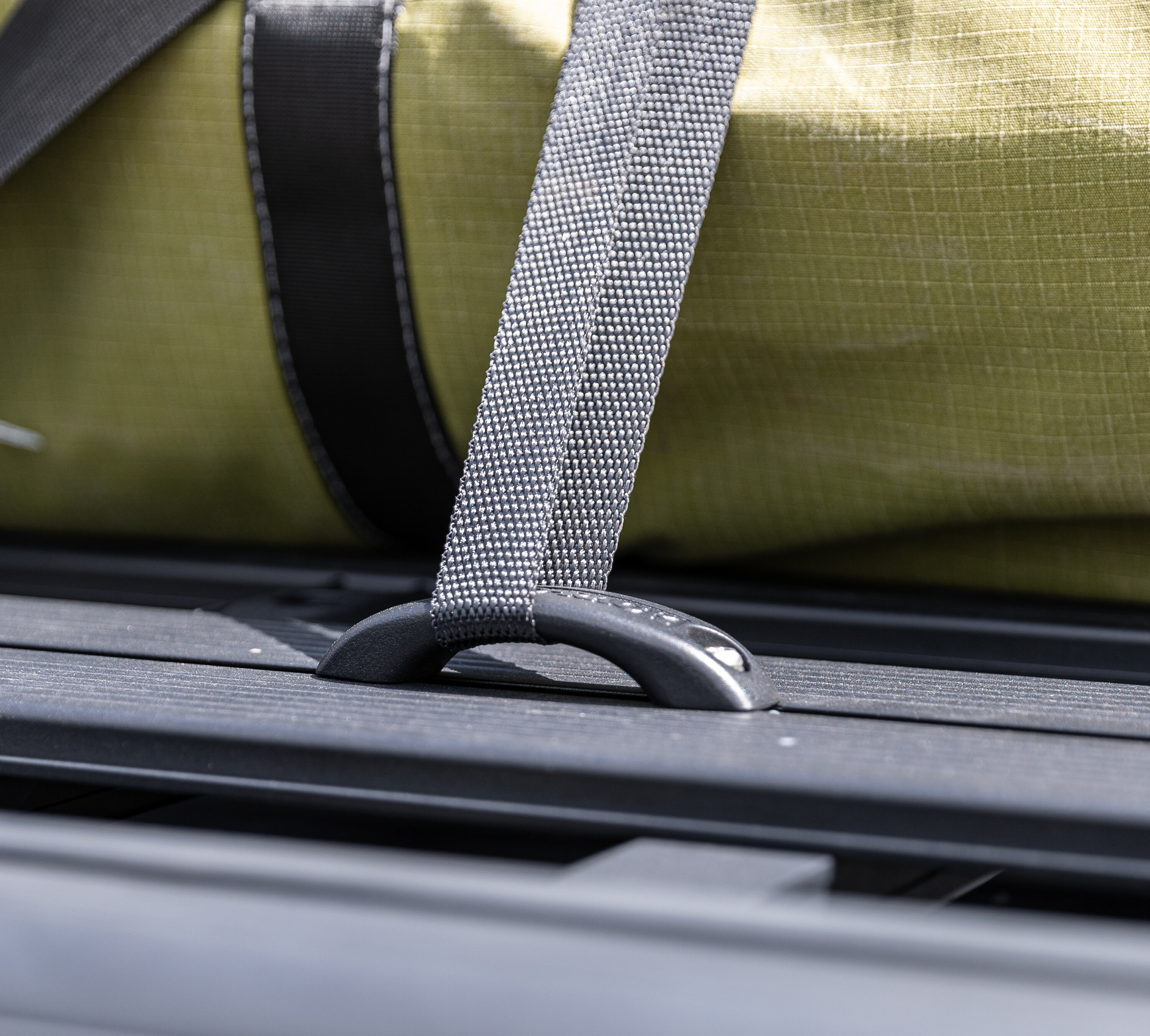
All this talk of tie-downs is great, but your tie-down is only as good as its anchor point. Make sure you are securing them to something secure. I have secured a fridge in a trailer once when moving house and put the strap around a thin piece of metal. Suffice to say, the metal broke, and so did the fridge − an expensive lesson.
QUALITY PAYS
There are so many types of tie-downs that a trip to any store that sells these straps can be daunting. For a simple standard lashing strap, you want to ensure that the buckle is of good quality. It should feel solid, with a strong spring in place that brings the buckle down on the strap.
Cheap options can use inferior quality springs, so make sure you know that they will stay secure when tied around any loads. I have been using a set of Rhino-Rack standard-duty tie-downs for a few years now and found them to be a good basic option.
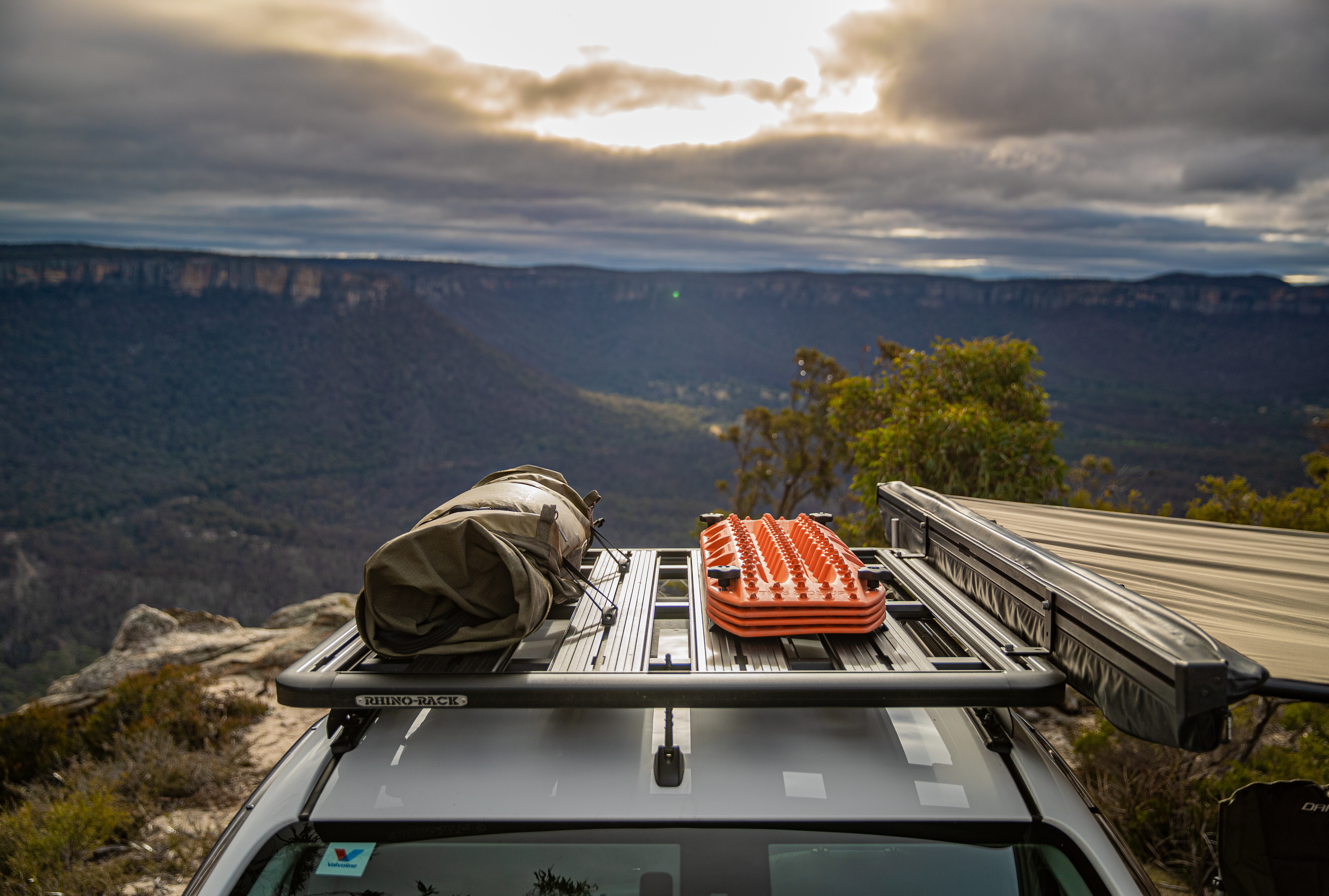
Cam Buckle straps are similar in that you want to look for quality hardware and a secure buckle. Ratchet straps come in an amazing variety of colours and price points. Like anything, you can get away with the cheap ones, but when you tighten them, sometimes the buckle cannot cope with the load. I always recommend buying a quality strap over a Bunnings’ special. You may pay a little more, but, if looked after, it should provide plenty of service.
THE WRAP UP
While tie-downs may not be a glamorous subject, even less glamorous is standing on the side of a track or road picking up all your gear while other motorists gawk at you. Don’t be that guy, use the right strap and buy quality ones.
The tow bar. You see it everywhere in Australia, and more than likely that tow bar attached to the back of that four-wheel drive wagon or ute will have a famous Aussie brand-name stamped on it: Hayman Reese.
The brand is celebrating its 70th anniversary this year and, for most of us, it is like it has always been prevalent in the local motoring scene, to the point where the name is literally a byword for a tow bar. It’s amazing really, when you think of where it all began …
A BEGINNING YOU’D NEVER GUESS
It’s all about happenstance, coincidence and wanting to help out a mate when it comes to the beginnings of an aftermarket brand that is now an icon of the Australian motoring scene. It is an origin story that is, if not quirky, certainly memorable and amazing rolled in to one.
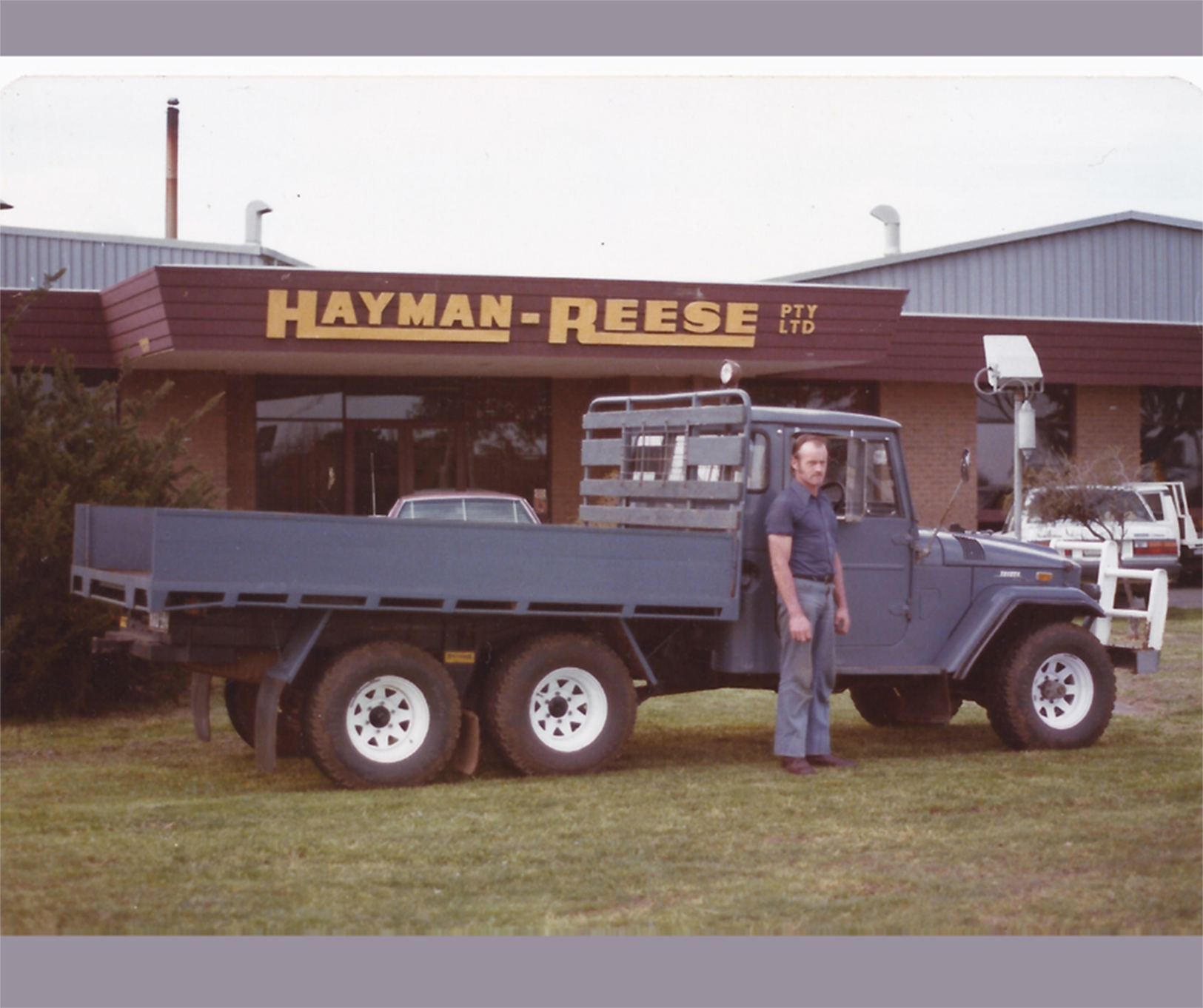
The quirky part? Before Eric Hayman answered a mate’s request for a tow bar, he worked making bicycle spokes in South Melbourne – yep, that’s right, pushy spokes. No, we can’t see the correlation either, but we (like millions of towing Aussies) sure are glad that Hayman’s original two tow bars (one went to his mate, the other he sold at a country show) soon became a whole lot more.
The successful sale (and the knowledge there was an untapped market out there) changed Hayman’s direction of work, seeing the establishment of a business that has expanded – and innovated, along the way – its product line and is now celebrating seven decades at the forefront of towing technology.
FROM ‘JUST TOWING’ TO SOMETHING MORE
For anyone over a certain age, their memories of towing are of a relatively simple but time-consuming process. Back in the 1960s and early ’70s, the tow bar was far from the quick and easy fix/detach set-up it is now (thanks to the 50mm square hitch – more on that later), with most tow bars bolted on to the vehicle, as Craig Smith, marketing manager of Cequent (the owners of Hayman Reese) recalls. “I actually remember seeing tow bars bolted on to the underneath of the car,” he laughs. “I remember Dad getting ready for holidays; he’d pull the tongue out of the boot or the shed … and climb under the car and bolt it on. You sort of look back to think, shit, that’s pretty bloody archaic.”
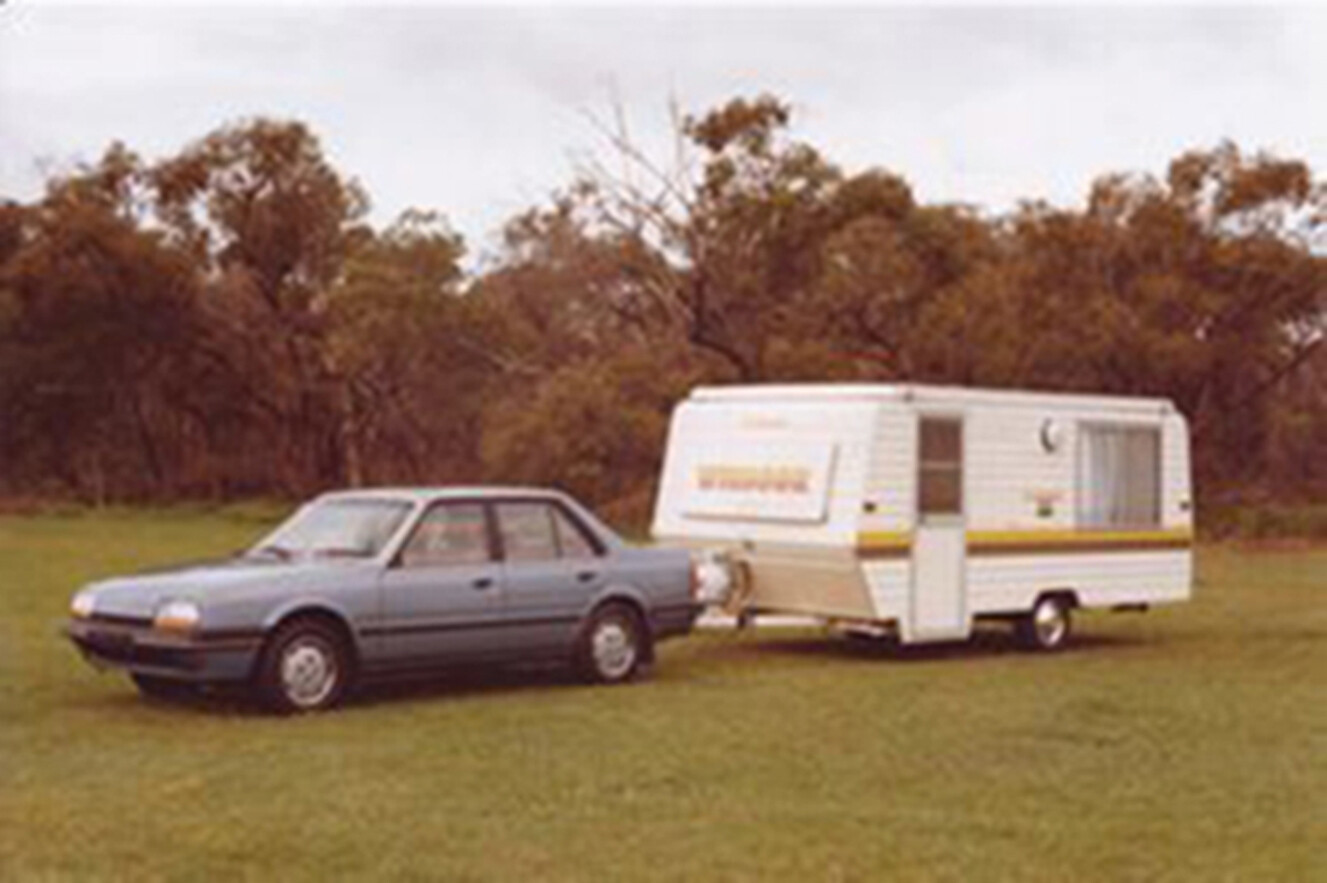
And it was, but in the ’70s that all changed, with what Smith calls one of the big historical changing points at Hayman Reese: the development of the two-inch (50mm x 50mm) hitch, which allowed for the tow bar to be easily detached when not in use.
The development and introduction of the two-inch hitch was the result of the company being bought out by USA-based Reese Products (hence the name change from Hayman to Hayman Reese).
It was accompanied by a new weight-distribution system, owing to the fact caravans were getting longer, larger and heavier, as were the vehicles towing them, as Smith explains: “That was a game-changer – the 50mm by 50mm hitch – and that’s seen as being a Hayman Reese proprietary.
“Obviously it’s not, but it identifies really close with the company,” he continued. “ The other thing is the weight-distribution side business and that’s a lot of stuff we introduced from America and modified to local conditions.”
These significant developments were just the first in what has become a veritable conga line of innovative towing products aimed at keeping up with the advancement in not only vehicle tech but user demands, ranging from ever-larger caravans/campers, to off-road towing, to families throwing a bike carrier on the back of their sedan or compact SUV.

Thankfully, Hayman Reese has been more than up to any challenge, thanks to a number of factors, including the major one of – still, today – designing, testing and manufacturing its products completely in-house at its Keysborough factory.
This is the company’s third premises; the original South Melbourne factory was superseded by a Dandenong site in the early ’70s, with Hayman Reese now notching up 10 years at Keysborough. It’s a complete in-house operation (with a staff count of around 300) and offers a huge advantage in terms of development times for new products.
HOW IT GOES DOWN, IN DA HOUSE
“Things get done in almost real time,” says Gregor Brown, sales and marketing director. “You don’t have the waiting for product to move from a different site or a different country. It comes off a computer, the CAD design is done downstairs and then the parts could be manufactured on the line within days.”
The Hayman Reese tow bars come with a lifetime warranty, so extensive testing is essential throughout the design and prototype stage, where the prototypes are thoroughly tested in a lab (and then on-vehicle), ensuring that when the consumer finally fits that new hitch/tow bar set-up to their rig, they can do so with optimum assurance.
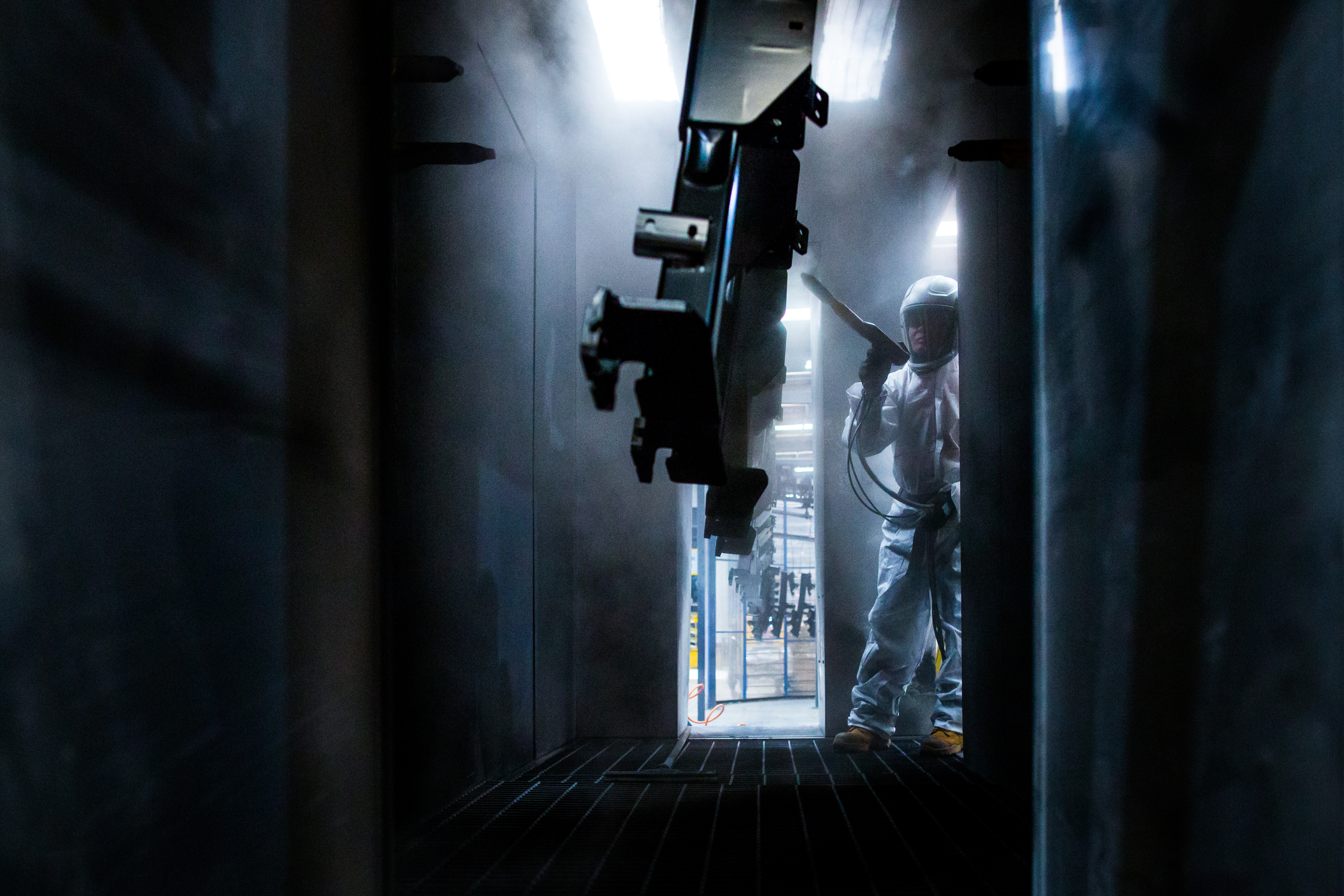
The quality control around a Hayman Reese product is exceptional and harks back to the company’s ethos of continuing to improve and fine-tune a design right through to the moment it is ticked off for production, as Brown explains.“Once a vehicle’s been launched, we would bring a vehicle in. We’ll measure it; we’ll fit it with a trial fitment. That’s where you do the tweaking. There’s so much that can be done in CAD and design, but then the tweaking comes from physically putting a bar on that vehicle and that’s when it’s a millimetre here and a millimeter there to be tweaked.”This attention to detail has seen Hayman Reese improve even the basics of tow bars, such as the product’s resistance to corrosion. From the ‘old days’ of the bar’s raw metal being simply painted over, each bar is shot-blasted, then given a protective coat, before being powder-coated.
Being so ‘local’ in its manufacturing and product applications also meant Hayman Reese was able to respond quickly to the unique towing (and recovery) requirements of 4×4-based touring – as well as the environment in which these vehicles are towing – as this pastime exploded in popularity, with the release of its popular X-Bar in 2018.
Designed to offer a towing and recovery solution for tourers, the ADR-compliant X-Bar sits higher up on the rear of the vehicle, ensuring departure angles are not affected (and often, are improved compared to competitor products) and is rated to 8000kg rear recovery.For Hayman Reese, it’s another product opportunity that reflects Craig Smith’s comment around the “company starting out as a tow bar company, and now it’s very much a towing solution company”, and also how it has adapted its knowledge to that new challenge.“I think X-Bars are really the example of products where you’re taking the traditional product (the tow bar) and then adapting and modifying it to needs as they change,” he says. “And more people are heading off-road and wanting to be able to tow, but also wanting to be able to four-wheel drive as well. We’ve been able to by-product both those needs.”The X-Bar is just one of those adaptions and changes the company has been at the forefront of …
ON TOP OF TOWING TECHNOLOGY, WITHOUT FORGETTING THE PAST
As motor vehicles have become more complex, so have the demands on towing systems. From brake controllers to simple things like indicators still functioning on your camper/trailer/van, the abundance of technology in today’s vehicles has meant plenty of development at Hayman Reese to ensure its tow systems function in tandem with the tow vehicle itself.This began in the early 2000s with the launch of the SmartClick wiring system, a vehicle-specific loom that ensures fitment and function of all related elements. Set-up is straightforward, through to its very impressive SmartCode system. As Gregor Brown explains, tech is, indeed, king in today’s towing world.
“That’s a huge piece now with what we refer to as ‘smart vehicles’,” he says. “So certain vehicles, you need to then code them once the towbar has been fitted. We have a tool that allows us to do that and that then means that all the functionality that is with that car is then maintained when you are towing.
“If you go and buy a new Ranger – or you buy a VW Touareg – they’re smart cars; they’ve got a lot of intelligence and as soon as you connect the trailer plug, the car then knows it’s towing. Whether it’s your parking sensors turning off, so you stick it in reverse and you don’t get deafened by a scream, because it thinks you’ve backed in to something.
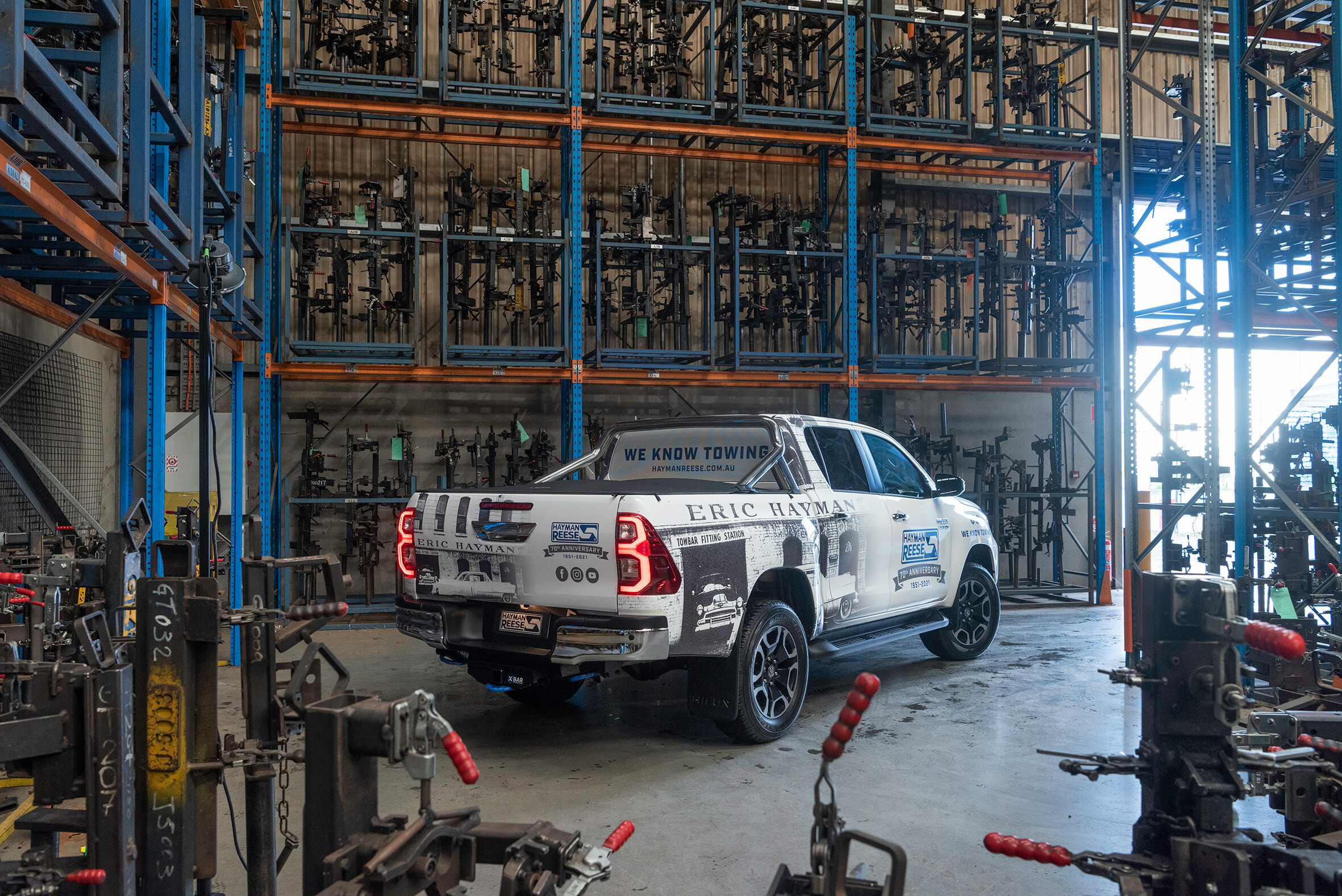
It could also be the lane-departure warning system, or it could be a gearshift ratio change when you engage trailer mode. If you don’t tell the vehicle that it’s pulling a trailer, it won’t engage the right gear-shift profile.”This focus on keeping ahead of vehicles as they continue to grow ‘smarter’ is testament to a company that is always looking forward but, at the same time, is not forgetting its core attributes – or, for that matter, it’s past.After all this talk about the latest towing tech, readers may be amazed (and impressed) by the fact that, due mainly to Hayman Reese always creating its products in-house, it can still deliver a brand-new tow bar for a vehicle that is far from shiny and new, building it off the original (often hand-drawn, for very old vehicles) blueprints. And yep, that even applies to vehicles from the 1950s …“If there’s a vehicle out there, if it’s an old Falcon, old Commodore, or old whatever, we’ve got the ability to make that tow bar,” Brown says. “We’ve got jigs … we’ve got what’s referred to as the Jig Jungle, where we have got all the back history for all these vehicles. If you were doing a restoration, or you happen to have that vehicle and you want a tow bar, we have got the ability to provide a towbar for it now.”
Yep, we agree, that’s pretty damn cool.
THE FUTURE IS ALWAYS NOW
It’s been 70 years but Hayman Reese shows no sign of slowing down. It’s factory pumps out thousands of towing products each week and its designers and engineers are constantly working on even more ways to improve the towing process, whether that is to continue to improve its highly regarded weight-distribution system (which, itself, has undergone a number of changes as a result of changes in caravan design over the years; the company still produces its original trunnion-style spring bar set-up alongside its ‘newer’ round-bar spring-bar set-up, to cater for different weight ranges) or to continue to keep up to date with the latest electronic wizardry installed as standard equipment in new vehicles.
Plus, it will also (as it always has done) keep an eye on how the towing market changes, in regards to the vehicle types used, and what type of towing they’re used for, something Gregor Brown notes when asked about the future.
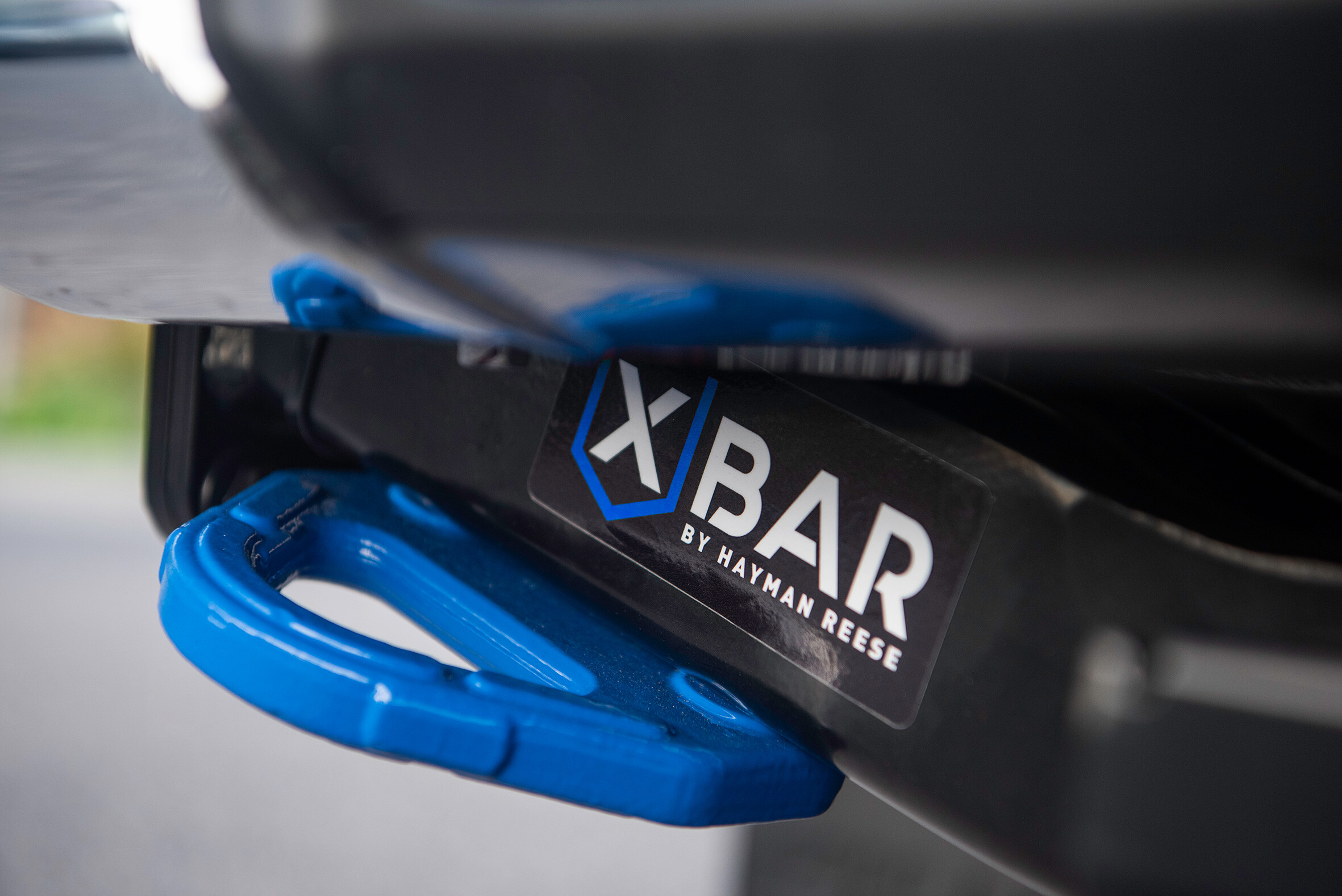
“People want to tow, but the car park has shifted,” he affirms. “There’s a higher share of what we call light commercial vehicles and SUVs in the market now compared to what there was 10 years ago. I think that’s evident if you look ’round the car park when you’re driving down the highway; you don’t see the old Commodore ute any more – it has become a Ranger, and the Ranger has got more towing ability.“From towing, we’re continually looking at where the future is, how the car park’s changing, and what the needs of towing are. We will continue to look at that. We will continue in SmartCode. That will get bigger and bigger as we work with the vehicles that come to market and understand how they evolve.“That’s where we see the market going. Our focus is on that space of keeping on top and up to speed with the changes in vehicle capability and requirement.”
It’s both comforting and exciting to see such an established and highly regarded brand not wanting to sit on its considerable laurels when talk turns to the future.
AVAILABLE FROM: www.haymanreese.com.au WE SAY: We reckon us Aussies will be wandering around the back of our rigs to attach that camper, caravan or bike rack to a tow bar with ‘Hayman Reese’ stamped on its side for many years to come.
The 2023 SsangYong Musso could return to its roots, with a new report suggesting the model is set to become an SUV once again.
While SsangYong continues to sell the Musso in Australia, the badge was retired in its native country of South Korea in 2005, where the ute is sold as a Rexton Sports Khan.
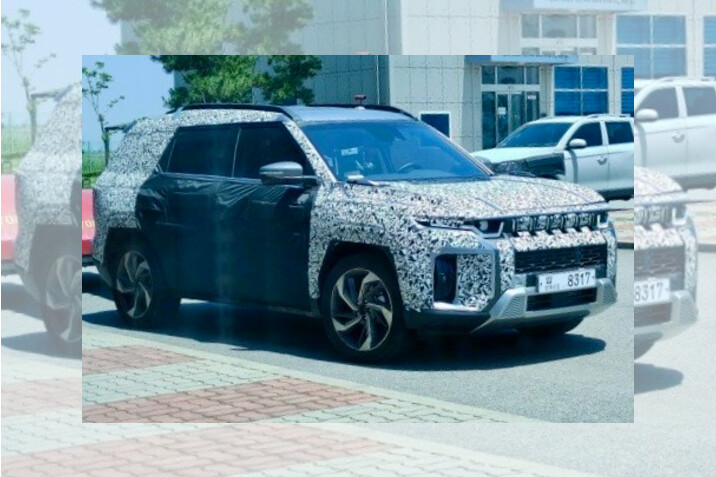
Local publication Daum cites a recent study showing Koreans would like to see the Musso nameplate make a return, with an expectation the J100 concept car will adopt the moniker when it’s unveiled in its production guise in July 2022.
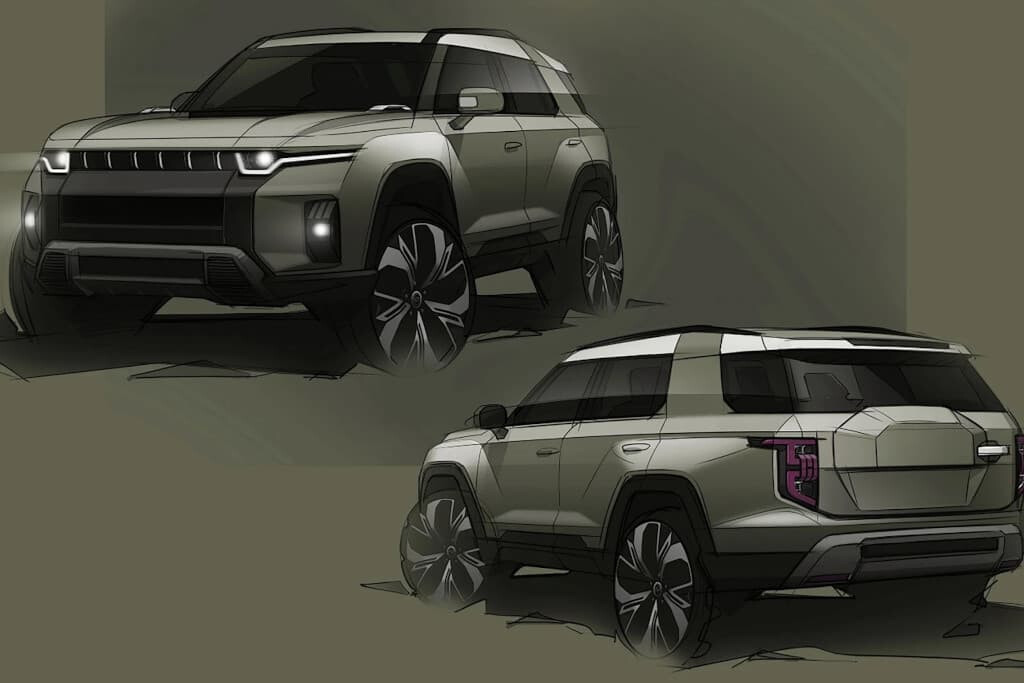
The Rexton will remain as SsangYong’s range-topping model, while the new-generation Musso will sit below it as a mid-size SUV – rumoured to be getting some off-road capabilities to match its rugged looks.
The J100 will follow the Korando E-Motion – the carmaker’s first all-electric model – which will launch in South Korea in the first quarter of the year. As reported by Wheels earlier this month, the E-Motion will be coming to Australia in early 2022 for evaluation by the company’s local arm.
The Korando E-Motion is the first of five electric models planned by 2025, with the J100 likely to be a candidate for a zero-emissions powertrain – possibly named the Musso E-Motion.
It’s all part of a ‘corporate rehabilitation’ for SsangYong, after filing for bankruptcy one year ago. A group of investors led by Edison Motors was successful in its takeover offer of US$260 million (AU$350m) in October, however the offer was adjusted down to US$256 million in recent weeks following closer scrutiny of the organisation’s accounts.
The Seoul Rehabilitation Court is overseeing the process, with SsangYong required to submit a feasibility plan to prove it can overcome its financial woes by March 1, 2022.
If the J100 does end up being badged as the Musso, it means SsangYong’s ute could be forced to undergo a name change in the Australian market.